January 20 – National Disc Jockey Day

celebrate-picture-books-picture-book-review-when-the-beat-was-born-cover

About the Holiday

National Disc Jockey Day commemorates the death of Albert James Freed, or Moondog, who was an influential disc jockey in the 1950s and is credited with popularizing the term “rock-and-roll.” The idea of using recorded music instead of live performances over the airwaves was tested in 1909, when sixteen-year-old Ray Newby, a student of Charles “Doc” Herrold at Herrold College of Engineering and Wireless in San Fernando, California, became the first to play records on the radio. The idea took off and soon radio broadcasters across the country followed suit. The term Disc Jockey was the brainstorm of radio commentator Walter Winchell in 1934. The 1970s and 1980s saw the rise of Hip-Hop DJs who began using multiple turntables and turntables as instruments to change the music.

When the Beat Was Born: DJ Kool Herc & the Creation of Hip Hop

Written by Laban Carrick Hill | Illustrated by Theodore Taylor III


Even as a child “Clive loved music”—all kinds of music. He loved the way it made him feel inside and “the way it made his feet go hip hip hop, hippity hop.” Clive lived on Somerset Lane in Kingston, Jamaica. One of his neighbors was a DJ nicknamed “King George,” who threw the “biggest and baddest” house parties every Saturday night. Clive was too young for parties, but he liked to watch King George and his crew setting up. Clive had never seen so many records in one place.
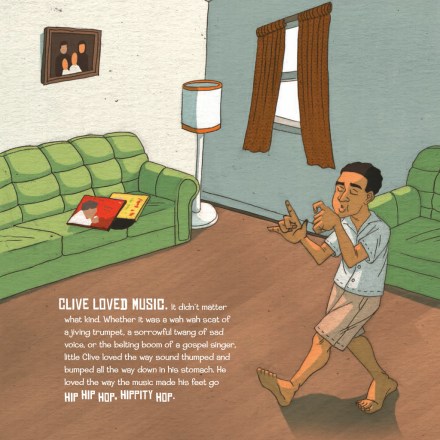
celebrate-picture-books-picture-book-review-when-the-beat-was-born-clive-loved-music

Image copyright Theodore Tayler III, 2013, text copyright Laban Carrik Hill, 2013. Courtesy of Roaring Brook Press.

“Clive imagined himself as a DJ surrounded by all those records.” He longed to choose just the right one to get the party started. He pictured himself toasting—rapping over the instrumental B side of records and getting people’s feet going hip hip hop, hippity hop, like his did. When Clive was thirteen he moved to Brooklyn, New York with his mom. At first he wasn’t sure he liked his new neighborhood, but then he discovered sports—track, weightlifting, and especially basketball. Clive grew to be six feet, 5 inches tall.
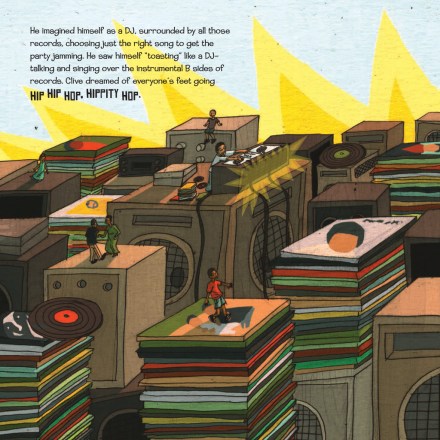
celebrate-picture-books-picture-book-review-when-the-beat-was-born-stacks-of-records

Image copyright Theodore Tayler III, 2013, text copyright Laban Carrik Hill, 2013. Courtesy of Roaring Brook Press.

He took to calling “himself ‘cool as Clyde’ after his favorite basketball player, Walt Clyde Frazier.” But to the other kids, Clive was “Hercules.” Clive shortened it to Herc and added “‘Kool’ to make it just right. Kool Herc.” Because of his size, he was able to go to house parties with his mother and listen to the music. One day Kool Herc’s father bought a “giant sound system” with six-foot-tall speakers. But when it was turned on, the sound was puny. Kool Herc worked on it until the sound came blasting out.
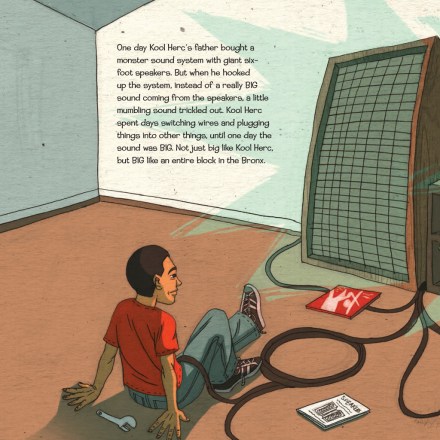
celebrate-picture-books-picture-book-review-when-the-beat-was-born-sound-system

Image copyright Theodore Tayler III, 2013, text copyright Laban Carrik Hill, 2013. Courtesy of Roaring Brook Press.

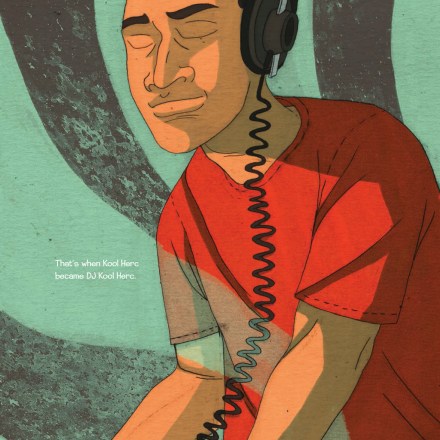
Kool Herc and his younger sister Cindy were ready to put on a party. They rented a rec room in their housing project, posted invitations, and set up the huge sound system. The night of the party, “everybody who was anybody made their way to Sedgewick Avenue for Kool Herc’s hot dance party. That’s when Kool Herc became DJ Kool Herc.”
celebrate-picture-books-picture-book-review-when-the-beat-was-born-DJ-Kool-Herc

Image copyright Theodore Tayler III, 2013, text copyright Laban Carrik Hill, 2013. Courtesy of Roaring Brook Press.

DJ Kool Herc noticed that people danced harder during the instrumental breaks. Kool Herc set up another turntable and put the same record on this turntable too. This way, when one record ended its break, he could play it again on the other. He was able to stretch a ten-second break into 20 minutes or more. Remembering how DJs toasted in Jamaica, DJ Kool Herc began shouting out the names of his friends, compliments about the dancers, and rhymes over the beat.
celebrate-picture-books-picture-book-review-when-the-beat-was-born-dance-party

Image copyright Theodore Tayler III, 2013, text copyright Laban Carrik Hill, 2013. Courtesy of Roaring Brook Press.

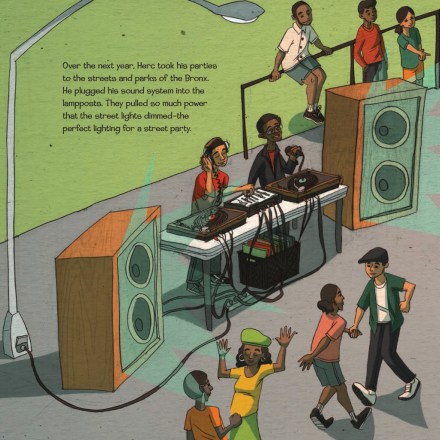
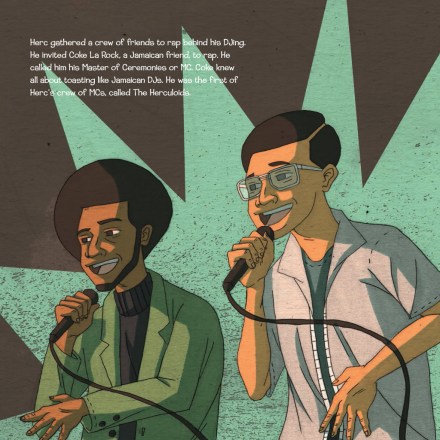
Over the next year, DJ Kool Herc moved his dance parties into the street. When he plugged the sound system into the street lamps, it pulled so much power, the lights dimmed. DJ Kool Herc’s music even turned some of the city’s gang members into the smoothest break dancers in the neighborhood. Kool Herc then invited friends to rap behind the DJ-ing. He called these friends the “Master of Ceremonies” or MCs.

Soon kids were coming from all over New York city to attend DJ Kool Herc’s “biggest, baddest dance parties.” Many “wanted to be DJs just like Kool Herc. Herc didn’t just rock the block. He put the hip hip hop, hippity hop into the world’s heartbeat.”
celebrate-picture-books-picture-book-review-when-the-beat-was-born-the-turtle

Image copyright Theodore Tayler III, 2013, text copyright Laban Carrik Hill, 2013. Courtesy of Roaring Brook Press.

Laben Carrick Hill’s modern biography of a Hip Hop pioneer invites young readers to discover the early years of and influences on the music they love today. Hill superbly structures his story so through the formative details of DJ Kool Herc’s life from childhood into adulthood, readers understand that they too can follow their hearts to achieve their dreams. When the Beat Was Born is inspirational in its depiction of an “ordinary kid” with ingenuity and self-confidence who changed the face of music by combining his multicultural experiences, being open to experimentation, including his friends, and sharing his vision. Straightforward storytelling is punctuated with verses of rap that make reading aloud fun and will engage listeners.
celebrate-picture-books-picture-book-review-when-the-beat-was-born-friends

Image copyright Theodore Tayler III, 2013, text copyright Laban Carrik Hill, 2013. Courtesy of Roaring Brook Press.

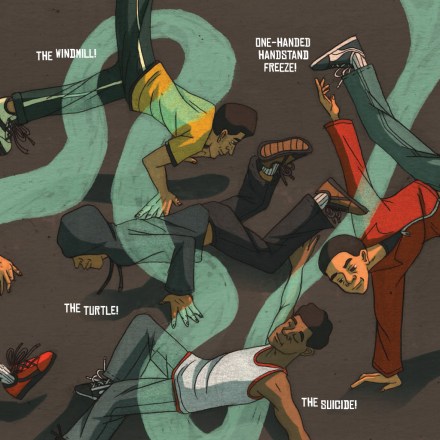
In his bold, vibrant illustrations, Theodore Tayler III lets kids in on the not-so-distant past that saw the rise of Hip Hop music, celebrity DJs, and new dance styles. Keeping the focus on DJ Kool Herc—just as Clive kept his eye on his future goals—Taylor reinforces the theme of the book. Scenes of kids lining up to attend DJ Kool Herc’s parties and dancing in the street give the book an inclusive feel. Images of skyscraper-tall stacks of records mirrors Kool Herc’s ambitions, and depictions of breakdancing moves will get kids wanting to try them for themselves.

When the Beat Was Born is a terrific biography for all children, whether they like music and dancing or quieter pursuits. In the classroom, the book would be a great addition to music, history, or biography units.

Ages 6 – 10

Roaring Brook Press, 2013 | ISBN 978-1596435407

Discover more about Laben Carrick Hill and his books on his website

To view a portfolio of artwork, book illustration, videos and more by Theodore Taylor III, visit his website.

National Disc Jockey Day Activity
celebrate-picture-books-picture-book-review-groovy-record-chalkboard-blackboard-craft

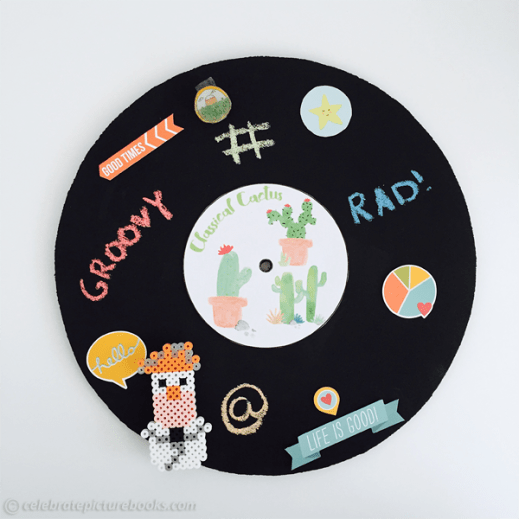
Groovy Record Chalkboard & Bulletin Board 


Do you play the piano or another instrument? Would you like to make a record some day? Why wait? In this fun craft you can create your own record bulletin board—and even create your own label art! While this record may not spin on turntables around the world, it will drop in a more important place—your very own room!

Supplies

  • Printable Record Label for you to design
  • Foam board, or a corkboard at least 12-inches x 12-inches square
  • Adhesive cork
  • A 12-inch round plate, record, or other round object to trace OR a compass
  • Chalkboard paint, black
  • X-acto knife
  • Paint brush or foam paint brush
  • Mounting squares

Directions

  1. Cut a section from the adhesive cork a little larger than 12 inches by 12 inches
  2. Affix the cork to the foam board
  3. Trace the 12-inch round object onto the cork/foam board OR use the compass to make a 12-inch circle
  4. With the x-acto knife, carefully cut out the circle (adult help needed for children)
  5. Cut out a ¼ -inch circle in the center of the record bulletin board
  6. Paint the cork, sides and inside the spindle hole with the black chalkboard paint. Let dry
  7. Print the label template and design your own record label
  8. When the paint is dry, glue your label to the center of the bulletin board
  9. Hang your bulletin board with the mounting squares
  10. Decorate!

Picture Book Review


December 23 – National Roots Day

celebrate-picture-books-picture-book-review-sing-don't-cry-cover

About the Holiday

As families gather for holidays this month, National Roots Day encourages people to talk about their collective histories, look at old photographs, and tell family stories. Sharing laughs, traditions, and those “remember when…?” stories with children helps give them a sense of connection and belonging and ensures that important events, customs, and relationships aren’t lost to time.

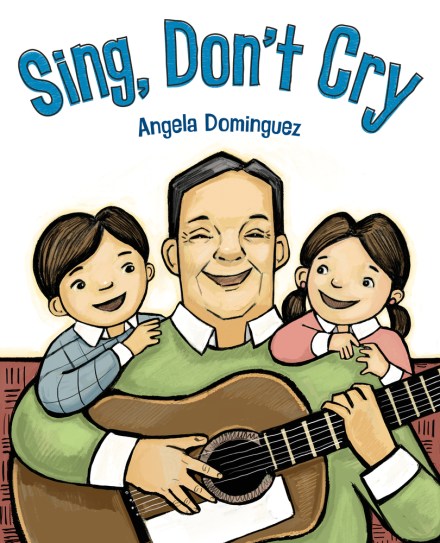
Sing, Don’t Cry

By Angela Dominguez


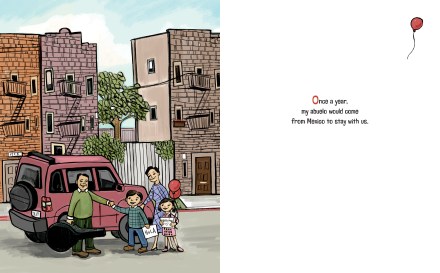
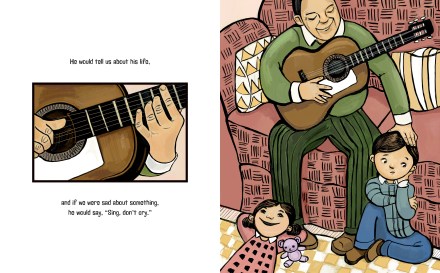
Once a year, Abuelo came from Mexico to visit his family in America. “He always brought his guitar,” and he sang to his granddaughter and grandson every night. Abuelo would talk about his life, and if the children were sad, his advice was “‘Sing, don’t cry. Because singing gladdens the heart.’”

celebrate-picture-books-picture-book-review-sing-don't-cry-abuelo-arrives

Copyright Angela Dominguez, 2017, courtesy of us.macmillan.com.

One of the stories Abuelo told was about a time when he was very young and his family “had to travel a long way to find a new home.” Just like his granddaughter and grandson’s family. He said that “singing made the distance seem smaller.” He also knew that when bad things happen, singing can make them better. “‘Some things may be lost forever,’” he said, “‘but maybe that makes room for new and wonderful things to be found.’”

celebrate-picture-books-picture-book-review-sing-don't-cry-playing-guitar

Copyright Angela Dominguez, 2017, courtesy of us.macmillan.com.

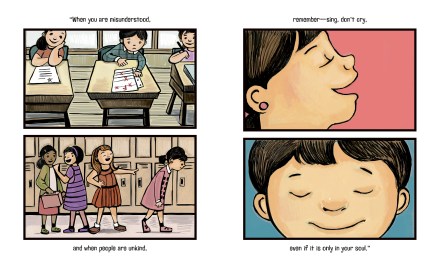
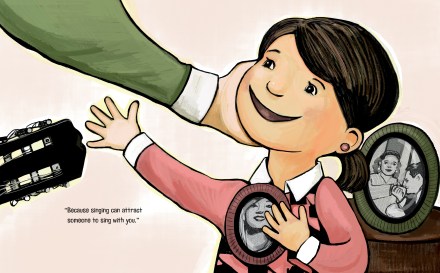
When you feel alone, Abuelo said, singing can attract friends. When there are days that are hard or when people are mean, singing—“even if it is only in your soul”—can cheer you. As Abuelo strummed his guitar and sang to his precious grandchildren, he reminded them that “‘I will always be singing with you.’”

celebrate-picture-books-picture-book-review-sing-don't-cry-singing-uplifts

Copyright Angela Dominguez, 2017, courtesy of us.macmillan.com.

Angela Dominguez pairs her heartwarming text with images that are at once simple and complex as they hold images that span the generations while also bringing them together. As Abuelo arrives as his daughter’s house, his grandchildren greet him enthusiastically with signs and balloons. The children are excited to see Abuelo get out his guitar, and as he sings, readers see that each child is comforted in different ways by their interactions with their grandfather.

celebrate-picture-books-picture-book-review-sing-don't-cry-singing-attracts-friends

Copyright Angela Dominguez, 2017, courtesy of us.macmillan.com.

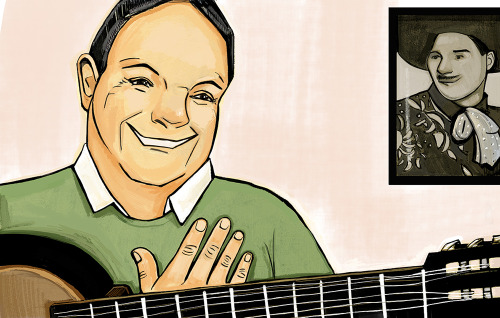
A sepia-hued portrait on the wall of Abuelo as a young man as well as clothing choices offer color-coded clues to Abuelo’s history and reassurance for events in the lives of his grandkids. As Abuelo reveals the restorative power of singing, Dominguez portrays examples of three situations on a tri-paneled page. The top, sepia-colored image depicts a boy sick in bed as a worried mother looks on; the second image is rose-colored and shows a single teddy bear; and in the aqua-toned third, a boy sits forlornly on the sidelines of an American football game.

celebrate-picture-books-picture-book-review-sing-don't-cry-young-abuela

Copyright Angela Dominguez, 2017, courtesy of angeladominguezstudio.com.

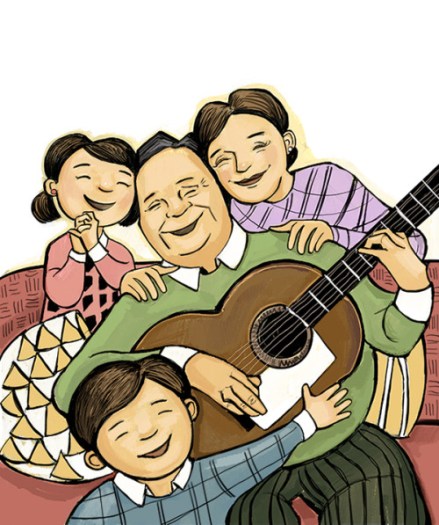
Turning the page, these three panels are more fully developed, letting young readers experience each characters’ disappointment in events that will resonate with them. Turn the page again, and children see that Abuelo’s assurance of brighter days comes true for all. Abuelo’s positive outlook is further revealed in cherished framed photographs, and the final image of the whole family gathered around Abuelo and his guitar is joyful.

celebrate-picture-books-picture-book-review-sing-don't-cry-family

Copyright Angela Dominguez, 2017, courtesy of angeladominguezstudio.com.

An Author’s Note includes the lyrics from Cielito lindo that inspired the story as well as a brief biography of Angela Dominguez’s grandfather, Apolinar Navarrete Diaz, that provides a deeper understanding of the story and the significance of Abuelo’s guitar.

An inspiring and uplifting story, Sing, Don’t Cry would be a welcome read for those times when encouragement is needed both at home and in a classroom setting.

Ages 4 – 8

Henry Holt and Company Books for Young Readers, 2017 | ISBN 978-1627798396

Learn more about Angela Dominguez, her books, and her art on her website.

National Roots Day Activity

celebrate-picture-books-picture-book-review-grandpa-fill-in-sheet

I Love Grandma and I Love Grandpa Pages


What are some of the favorite things you love about your grandmother and grandfather? Fill out, draw your and your grandparents’ faces, and color these printable I Love Grandma and I Love Grandpa Pages. They even make nice gifts that your grandparents’ will appreciate!

I Love Grandma | I Love Grandpa

Picture Book Review

October 22 – National Nut Day

celebrate-picture-books-picture-book-review-the-nuts-keep-rolling-cover

About the Holiday

No, no, no…we’re not going there. Today is a culinary holiday. Today we celebrate cashews, almonds, pistachios, hazelnuts, pecans, walnuts, and all the others. Nuts are nutritious, providing a good source of vitamins, protein, fiber, and important minerals. Eating nuts on a regular basis can also help keep your heart healthy. So crack open some nuts today and have a feast!

The Nuts: Keep Rolling!

Written by Eric Litwin | Illustrated by Scott Magoon


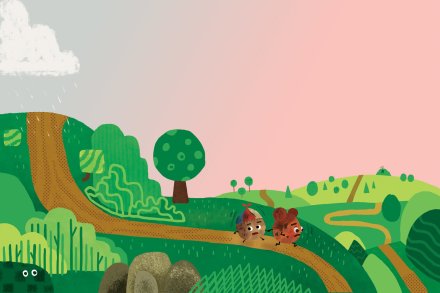
The nut family was enjoying a picnic in the beautiful, hilly outdoors. Everything was great, except Hazel really wished she was bigger and taller so she could reach the apples on a nearby tree. Wally also felt pretty small, but he had a plan. So while Hazel leaped from a rock to try and nab an apple, Wally was busy covering himself with mud. Hazel caught on and pat-patted mud on herself until she was encased in a nice, thick layer.

celebrate-picture-books-picture-book-review-the-nuts-keep-rolling-cat-sized

Image copyright Scott Magoon, 2017, text copyright Eric Litwin. Courtesy of scottmagoon.com.

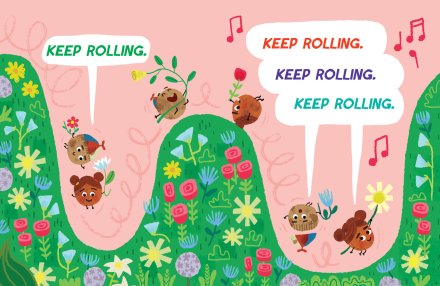
Then down the hill “they rolled through sticky / mud and goo. / The more they rolled, / the bigger they grew.” And while they bounced along, “they sang this song: “Keep Rolling. Keep Rolling. Keep Rolling.” As they rolled down the muddy lane they picked up layer upon layer of dirt, sticks, and leaves until “they were the size of cats.”

Being this big was fantastic “until…a pack of dogs came over the hill.”  Hazel and Wally rolled faster to escape, while all the time singing their song: “Keep Rolling. Keep Rolling. Keep Rolling.” Soon, they were as big as the dogs chasing them. They bounded along “until…the dogcatcher came over the hill. Oh, No!” What could they do? You know: “Keep Rolling. Keep Rolling. Keep Rolling.”

celebrate-picture-books-picture-book-review-the-nuts-keep-rolling-zoo-keeper

Image copyright Scott Magoon, 2017, text copyright Eric Litwin. Courtesy of scottmagoon.com.

They hurtled along over gardens and wood piles, growing bigger and bigger until they became as large as elephants. Their little giggles became big laughs “until…the zookeeper came over the hill. Oh, No!” But they were much too fast for him, and as they flew down the road they sang their song: “Keep Rolling. Keep Rolling. Keep Rolling.”

celebrate-picture-books-picture-book-review-the-nuts-keep-rolling-walking-down-hills

Image copyright Scott Magoon, 2017, text copyright Eric Litwin. Courtesy of scottmagoon.com.

But suddenly “It started to rain. / The sky turned gray. / The mud and the goo / were all washed away.” Hazel and Wally kept rolling, becoming “smaller and smaller and smaller.” They were back to their original size and discovered they were far from home. But Wally and Hazel knew the way back and knew how to get there quickly too. And all the way they sang their song: “Keep Rolling. Keep Rolling. Keep Rolling.”

celebrate-picture-books-picture-book-review-the-nuts-keep-rolling-walking-on-path

Image copyright Scott Magoon, 2017, text copyright Eric Litwin. Courtesy of scottmagoon.com.

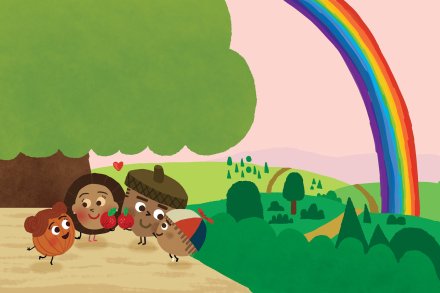
Their mama and papa were so happy to see them, and Hazel and Wally were glad to be back in their home so “cozy and bright.” Then Mama and Papa Nut / hugged them so tight.” Their adventure had taught them a thing about happiness, and now they knew “even though they were small…when you have each other, then you have it all.”

Little ones will giggle, laugh and love to roll with Hazel and Wally and this charming nut family. There’s even a free song and dance download provided. The Nuts: Keep Rolling! would make a much-appreciated gift and a fun addition to home bookshelves for read- aloud story times.

celebrate-picture-books-picture-book-review-the-nuts-keep-rolling-rainbow

Image copyright Scott Magoon, 2017, text copyright Eric Litwin. Courtesy of scottmagoon.com.

With his talent for writing catchy story/song mashups, Eric Litwin has created another rollicking picture book that little ones will want to hear again and again. Kids will love joining Hazel and Wally in the “growth spurts” that allow them to become as big as their imaginations. Litwin’s funny repartee and gentle suspense will excite kids as they read and sing along. The sweet message that even though they may be little, they play a big part in the family will delight children.

celebrate-picture-books-picture-book-review-the-nuts-keep-rolling-hazel

Image copyright Scott Magoon, 2017, text copyright Eric Litwin. Courtesy of scottmagoon.com.

Scott Magoon’s dazzling blue sky and green hills set this story in motion as Wally and Hazel find a way to make their wish to be bigger come true. Readers get an inside view as Hazel and Wally keep rolling and pick up layer upon layer of mud, leaves, and sticks. Magoon uses these natural accents to ingeniously define the eyes, ears, and noses of the cats, dogs, and elephants the little nuts become on their jaunt. Adorable Hazel and Wally smile, giggle, and laugh their way through the amusing-not-menacing “dangers,” letting little ones fully enjoy the fun of this boisterous story. The tender final spread is full of warmth and love as this diverse family reunites.

Ages 3 – 6

Little, Brown Books for Young Readers, 2017 | ISBN 978-0316322515

Check out all of the books, music, and fun stuff for kids by Eric Litwin on his website.

There’s a whole gallery of books and illustration work by Scott Magoon on his website.

You’ll go nuts for this The Nuts: Keep Rolling! book trailer!

National Nut Day Activity

celebrate-picture-books-picture-book-review-acorn-pumpkins-craft

Nutty Pumpkins and Jack O’Lanterns


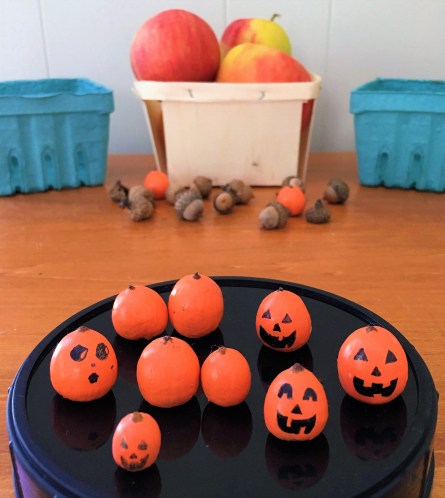
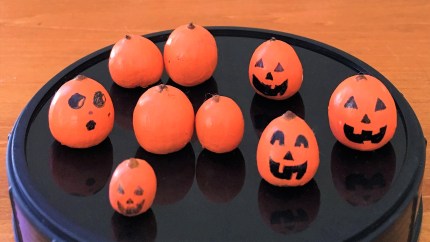
With acorns falling tap, tap, tap in bushels on the ground and other delicious nuts readily available in grocery stores and farmers markets, autumn is the perfect time for this craft that turns nuts into pumpkins!

Supplies

  • Acorns or walnuts
  • Orange multi-surface acrylic craft paint or spray paint  
  • Sandpaper
  • Paint brush
  • Black, fine tip marker

Directions

celebrate-picture-books-picture-book-review-acorn-pumpkins-craft (3)

For Acorns

  1. Remove the caps
  2. If using acorns for crafts that will be kept long-term, follow these Directions for Drying Acorns
  3. Hold the acorn with the flat side down. The little tip will serve as the pumpkin’s stem.
  4. Paint the acorn, leaving the just the tip brown, let dry
  5. With the flat side down, draw a face on your “pumpkin.” Let dry
  6. Use your little pumpkin in decorations around your house or make a tiny pumpkin patch in a box or jar lid with paper, sticks, leaves or other material

For Walnuts

  1. If you live in an area where there are no oak trees, you can use walnuts or other nuts available in grocery stores. These do not need to be baked before using.
  2. Paint and decorate according to the directions For Acorns

Picture Book Review
October 14 – It’s Bat Appreciation Month

celebrate-picture-books-picture-book-review-bats-in-the-band-cover

About the Holiday

It makes sense that October—when we celebrate all things spooky and nocturnal—is Bat Appreciation Month. But we don’t celebrate bats just because they’re cool around Halloween—bats are cool all the time! Scientists estimate that there are 1,300 species of bats, most of which are beneficial for the areas in which they live. Some bats are awesome at keeping the insect population under control. Fruit bats help distribute seeds, and other bats eat pollen, helping to pollinate foods, including bananas, guava, and agave. Unfortunately, bats are increasingly threatened by habitat destruction and pesticides. This month learn more about these fascinating creatures!

Bats in the Band

By Brian Lies


Huddled together a colony of bats sleeps through the winter, but as the icy weather warms they stretch their wings and take flight to find food. As they swoop through the air chasing the echoes they hear, these animals that live by echolocation sense “that something’s not right. / And then when a bugle blast shatters the night, / that one lonely note tells us just what is wrong: / We’re hungry for sound—we’ve been silent too long.”

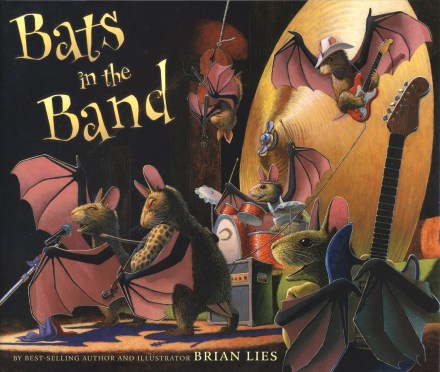
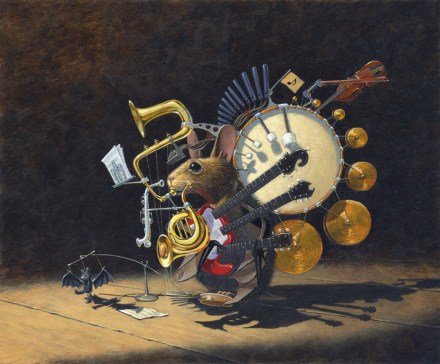
The bats swarm to a summertime theater now quiet and dark except for a small glow that invites them inside. They enter the building—passing hawkers of T-shirts, posters, and hats—and set up the stage and the lights. Some bats have brought their own instruments while others improvise with the leftovers of last season’s concertgoers. “Behind the stage curtain, they’re getting in tune, / making up things out of straws, out of spoons.”

celebrate-picture-books-picture-book-review-bats-in-the-band-one-bat-band

Image copyright Brian Lies, courtesy of Houghton Mifflin Harcourt (hmhco.com)

Finally, the conductor lifts his baton, and the concert begins. “We sing together as one voice. / It seems the very walls rejoice! / All together, rafters ringing… / it’s as though our souls are singing.”  Then the strings “change the mood to sweet and mellow” before a one-bat band takes over. “Next up, there’s a country song—/ some lonesome bat done someone wrong. / He’s  gone and broken someone’s heart. / Now everything has come apart.”

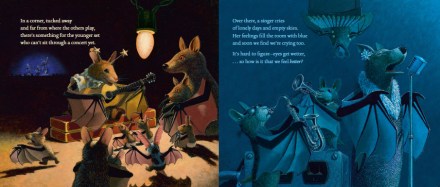
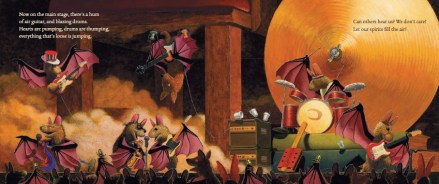
There’s even an entertainer for children far off in a corner where the pups can run and play. Now on stage a blues singer “cries of lonely days and empty skies” that make the bats cry. “It’s hard to figure—eyes get wetter, / …so how is it that we feel better?” There’s not much time for reflection though as a hard-rock band begins “blazing,” “pumping,” and “jumping.”

celebrate-picture-books-picture-book-review-bats-in-the-band-blues-singer

Image copyright Brian Lies, courtesy of Houghton Mifflin Harcourt (hmhco.com)

While everyone is dancing to the beat, the sun begins to rise signaling that it’s time for the bats to go. But in one last blast, all the musicians jam together. “The music soars. Finale’s here, the ending of the song. / It builds and builds—now here it comes! / It’s going…/ going…/ GONG!” With that last bang of the cymbal the bats, “worn out, wrung out, half asleep,” fly from the theater and out into the dawning day. In the air they discover the music in everything from “the roar of a car, or the bark of a pup—/ the sound of the rest of the world waking up.” As they fall into slumber up in their cozy rafters, the bats continue to sway unconsciously. “It’s not our intention, but you understand. / We’re dreaming of being the bats in the band.”

Brian Lies “Bat” books are well-known and well-loved. Bats in the Band continues the excellent storytelling and poetry of his other titles, this time to a musical beat. The idea of bats needing to hear sound after a long winter’s silence is a clever introduction to the concert theme, and these bats play almost as many different styles of music as there are species of bat. The rhyme scheme is true and musical, carrying the story well through its words and rhythm.

celebrate-picture-books-picture-book-review-bats-in-the-band-rock-n-roll-bats

Image copyright Brian Lies, courtesy of Houghton Mifflin Harcourt (hmhco.com)

Lies’ illustrations remain as enchanting as ever. The two-page spread of the bats choosing and tuning up their instruments is a joy. Bats make a xylophone from keys hanging on a peg board with two nails for mallets. Instead of a harp, a bat plucks the tines of a plastic comb, and a bendy straw serves as a fine wind instrument. The string section plays while hanging upside down (of course!). The pups’ entertainer will bring a smile to readers’ faces, and the blues singer performs under cool blue lights. Kids and adults will love lingering over the detailed pages, where allusions to actual concert atmospheres abound. Look for the bats holding aloft lightning bugs in a tribute to a long-held tradition.

Bats in the Band is a rockin’ addition to Brian Lies collection and will be welcome on any child’s shelf—whether they are completing the set or just starting it!

Ages 4 – 8

Houghton Mifflin Harcourt, 2014 | ISBN 978-0544105690

Visit Brian Lieswebsite to learn more about him, view his many books, and see a gallery of his artwork.

Bat Appreciation Month Activity

celebrate-picture-books=picture-book-review-spiral-bat-words-word-search

Spiraling Bats Word Search


Find the bat related words in this printable Spiraling Bats Word Search that dips and soars like the flight of a bat! Here’s the Solution.

Picture Book Review
October 6 – It’s National Carry a Tune Week

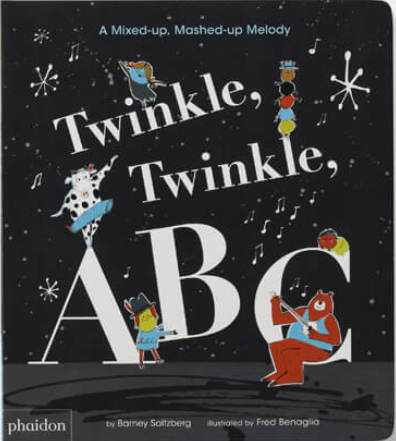
celebrate-picture-books-picture-book-review-twinkle-twinkle-abc-cover

About the Holiday

Celebrating its 17th year, Carry a Tune Week, sponsored by the Center for American Music Preservation (CAMP), invites everyone to enjoy American music from the past. If you have a favorite tune, today’s the time to sing, hum, or whistle it! If can’t choose a favorite, CAMP has you covered. This year’s tune is the theme song from the movie Casablanca. You must remember that! Oh! I mean…You must remember this: “As Time Goes By.” If you’d like to check out tunes from previous celebrations, visit the American Music Preservation website.

Twinkle, Twinkle, ABC

Written by Barney Saltzberg | Illustrated by Fred Benaglia


When you hear the words twinkle, twinkle, little star, it’s almost impossible not to think of the nursery song. When you hear the letters ABC, you might again think of a nursery song. In fact, you’re thinking of the same tune! And that tune? It sure is a catchy one! So catchy that once learned those songs, they stay with you forever. Barney Saltzberg has taken delightful advantage of this whimsy in Twinkle, Twinkle, ABC.

celebrate-picture-books-picture-book-review-twinkle-twinkle-abc-sliding-on-l

Image copyright Fred Benaglia, 2017, text copyright Barney Saltzberg, Courtesy of Phaidon Press.

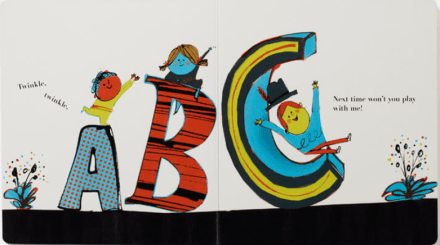
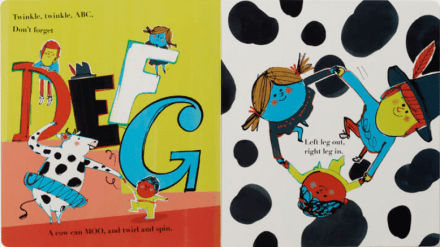
The sing-along, read-aloud starts like this: “Twinkle, twinkle, ABC, / A mixed-up, mashed-up melody. / A twinkly star, an alphabet, / Just how silly can we get? / Twinkle, twinkle, ABC. / Next time won’t you play with me?” From there the song takes flight with kids soaring over a city on the wings of birds. Next, the skyscrapers become multi-colored pillars for the kids to hop on and leap over. Coming back to the alphabet, readers are treated to: “Twinkle, twinkle, ABC, / Don’t forget D E F G. / A cow can MOO, and twirl and spin, / Left leg out, right leg in. / Twinkle, twinkle, ABC, A mixed-up, mashed –up jamboree!”

celebrate-picture-books-picture-book-review-twinkle-twinkle-abc-birds

Image copyright Fred Benaglia, 2017, text copyright Barney Saltzberg, Courtesy of Phaidon Press.

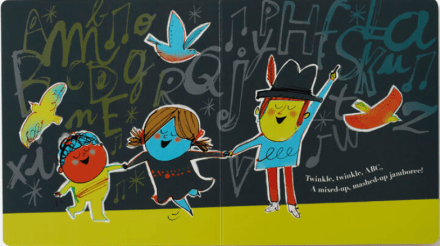
Now the children meet up with a bear, who leads them on a tightrope walk while they “Growl” and “GRRR.” That bear is pretty talented too, strumming a banjo on his knee to introduce H I J K L M N O P. Moving to the forest, the kids play a game of hide-and-seek with Q R S T U V and swing from branches like leaves blown in the wind. Just in the nick of time, a colorful caterpillar strolls by wearing sensible shoes, a jaunty hat, and the letters W X Y and Z. The jangly jingle begins again and the friends grasp hands and sing. But are they getting sleepy after their busy day? “We TWEET and MOO and GRRR and WHOOSH, / Singing, quietly, softly, shush. / Twinkle, twinkle, ABC. / A mixed-up, mashed-up, zzzzzz.”

celebrate-picture-books-picture-book-review-twinkle-twinkle-abc-dancing

Image copyright Fred Benaglia, 2017, text copyright Barney Saltzberg, Courtesy of Phaidon Press.

Barney Saltzberg’s exuberant combination of two favorite songs will have kids up and dancing on the first read and singing along on the second and all subsequent reads. Along the way Saltzberg uses familiar lines from both songs and even throws in a bit of direction from the Hokey-Pokey. Saltzberg’s perfect rhythm and rhymes make this book a joy to read or sing aloud. and his bouyant words will inspire plenty of action-packed story times.

celebrate-picture-books-picture-book-review-twinkle-twinkle-abc-holding-hands

Image copyright Fred Benaglia, 2017, text copyright Barney Saltzberg, Courtesy of Phaidon Press.

Adding to the fun are Fred Benaglia’s lively and fanciful illustrations in which three children ride birds, slide on the letters of the alphabet, and play on a tightrope. Along the way they meet an orange, banjo-playing bear, a tutu-wearing cow, and a snazzy caterpillar who also join in the fun. The rhythm of the song is even helped along with clever placement of the letters, as when Q R S are divided from T U V by a tree trunk, reminding singers and readers to pause for just a moment between the runs. Benaglia’s color palette is vibrant and his perspectives eye-catching, making this “mixed-up mash-up” a letter-perfect book.

Twinkle, Twinkle, ABC is a picture book kids will love to interact with. It would make a much-appreciated baby gift or birthday gift and an often-read or sung addition to classroom and home libraries.

Ages 1 – 4

Phaidon Press, 2017 | ISBN 978-0714875071

Discover more about Barney Saltzberg and his books on his website.

View a gallery of illustration and art work by Fred Banaglia on his website.

National Carry a Tune Week Activity

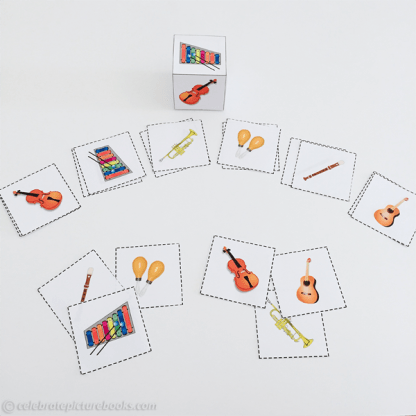
celebrate-picture-books-picture-book-review-it's-instrumental-game

It’s Instrumental! Game


Carrying a tune is easier when you’re accompanied by musical instruments. Play this game to acquire a full orchestra to back up your singing!

Supplies

Directions

  1. Print the Paper Cube Template, cut it out and assemble the cube die.
  2. Print the Musical Instruments cards, cut out cards, and separate the instruments into piles
  3. Players take turns rolling the die cube to collect musical instrument cards
  4. The first player to collect all 6 instrument cards is the winner

Picture Book Review
September 16 – It’s Classical Music Month

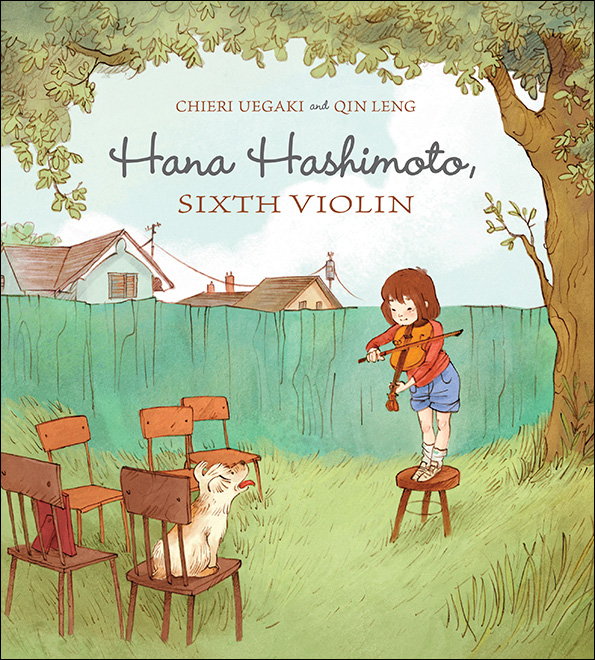
celebrate-picture-books-picture-book-review-hana-hashimoto-sixth-violin-cover

About the Holiday

Classical music has been an inspiration since the earliest instruments were created. The talent and imagination of great composers of the past has been passed down from generation to generation of music lovers, influencing new music all along the journey. To celebrate this month’s holiday, take in a classical music concert or performance or listen to your favorite (or a new) classical music station. If you’ve always wanted to learn to play the piano, violin, or other instrument, take the opportunity this month to sign up for lessons!

Hana Hashimoto, Sixth Violin

Written by Chieri Uegaki | Illustrated by Qin Leng


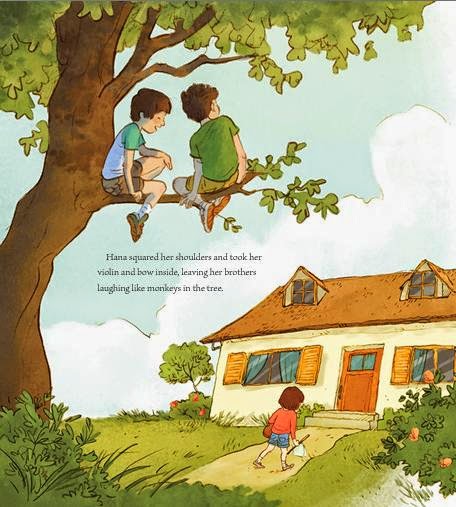
When Hana Hashimoto told her brothers that she had signed up to play her violin in the talent show, they laughed.  “‘That’s just loopy,’” Kenji said, and Koji added ‘‘You can barely play a note.’” They reminded her that it was a talent show and that she was just a beginner. But Hana didn’t listen. “It was true that she was still a beginner. She had only been to three lessons.” But playing the violin was in her blood. Her grandfather, Ojiichan, had once been Second Violin in a symphony orchestra in Kyoto, Japan and had even played for the Imperial Family.

celebrate-picture-books-picture-book-review-hana-hashimoto-sixth-violin-brothers-in-tree

Image copyright Qin Leng, 2014, text copyright Chieri Uegaki, 2014. Courtesy of Kids Can Press.

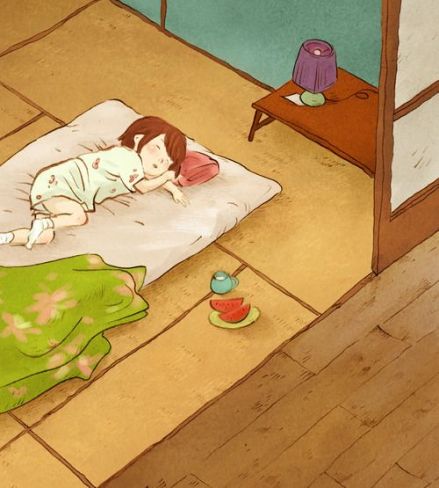
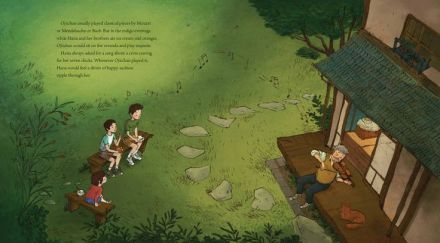
Hana had visited her grandfather that summer, and the sweet notes of his playing had coaxed “her awake as gently as sunshine” every morning. In the evenings her grandfather would take requests from Hana and her brothers. “Hana always asked for a song about a crow cawing for her seven chicks. Whenever Ojiichan played it, Hana would feel a shiver of happy-sadness ripple through her.”

celebrate-picture-books-picture-book-review-hana-hashimoto-sixth-violin-hana-sleeping

Image copyright Qin Leng, 2014, text copyright Chieri Uegaki, 2014. Courtesy of Kids Can Press.

Ojiichan’s playing was like magic. He could make the violin chirp like crickets, plink like falling raindrops, and send fireflies dancing. At the end of the summer, Hana had decided she also wanted to play the violin and her parents agreed. Hana practiced every day even though her brothers ran away with their hands over their ears. She played for her parents, for her dog, JoJo, and for a photograph of Ojiichan. Sometimes she pretended to play for “an audience so appreciative they called for encore after encore.”

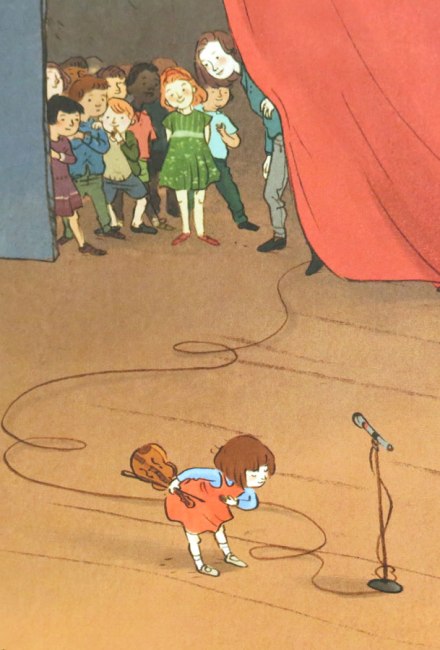
On the night of the talent show, Hana waited backstage for her turn “with a walloping heart.” Five other violinists had already gone before her. Finally, she heard her name. As she strode across the stage as wide as a desert, she had a fleeting feeling that her brothers had been right—that her performance was going to be a disaster. But when she reached her spot near the microphone and gazed out at the audience, she saw her best friend and her parents smiling at her.

celebrate-picture-books-picture-book-review-hana-hashimoto-sixth-violin-listening-to-grandfather

Image copyright Qin Leng, 2014, text copyright Chieri Uegaki, 2014. Courtesy of Kids Can Press.

Hana took a deep breath and let it out. Suddenly, “everyone seemed to disappear beyond the light shining down on her like a moonbeam” and she remembered her grandfather’s words: “‘Gambarunoyo, Hana-chan.’ Do your best.” Hana told the audience, “‘This is the sound of a mother crow calling her chicks.’” She “played three raw, squawky notes.” Then she played the yowl of her neighbor’s cat at night and the plucky droplets of rain on a paper umbrella. Hana played a world of special sounds, from buzzing bees to squeaking mice to croaking frogs. When she had finished, she said, “‘And that is how I play the violin.’” Then she took a bow.

Later that night Kenji asked Hana for an encore, and she happily played her piece again. Next year, Hana thought, she might be able to play one of her grandfather’s melodies. Before she went to sleep, Hana played another piece she had been practicing. “She imagined that the notes would drift out through the window, past the bright rabbit moon and beyond, and Ojiichan would hear them and smile.”

celebrate-picture-books-picture-book-review-hana-hashimoto-sixth-violin-hana-bows

Image copyright Qin Leng, 2014, text copyright Chieri Uegaki, 2014. Courtesy of Kids Can Press.

Chieri Uegaki’s gorgeously told story of a little girl’s first performance with her new violin rings true on every page, from her being inspired by her grandfather to her own inspirational performance. Uegaki’s descriptions of the melodies that capture Hana’s heart are as beautiful as the music itself and are a joy to read. Hana’s continued self-confidence in the face of her brothers’ teasing and her own fear is a wonderful lesson for all children. The brothers’ support of Hana after the talent show is a welcome show of familial love, and the touching ending offers encouragement and happiness.

Young readers will love Qin Leng’s evocative illustrations that follow Hana on her musical journey. Notes from the violin pieces Hana admires float from page to page—from her grandfather’s home in Japan to her own room—tying together not only Hana’s fondness for the violin but her love for her grandfather. Beautiful touches, such as an image of Hana reflected in a pastel blue rain puddle and a night sky twinkling with fireflies, mirror the wonder of childhood, when everything is new and possible.

Hana Hashimoto, Sixth Violin is refreshing encouragement for any child engaging in new experiences or activities. The book’s warmth and inventiveness make it a wonderful gift or addition to home libraries.

Ages 4 – 8

Kids Can Press, 2014 | ISBN 978-1894786331

Enjoy this Hana Hashimoto, Sixth Violin book trailer!

Classical Music Month Activity

celebrate-picture-books-picture-book-review-kids-playing-music-find-the-differences

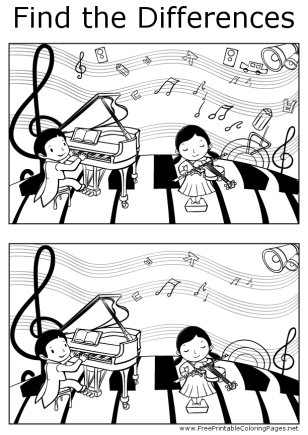
Musical Kids Find the Differences


These two kids are performing a duet! Can you find all of the differences in the second picture on this printable Musical Kids Find the Differences?

Picture Book Review
June 21 – Make Music Day

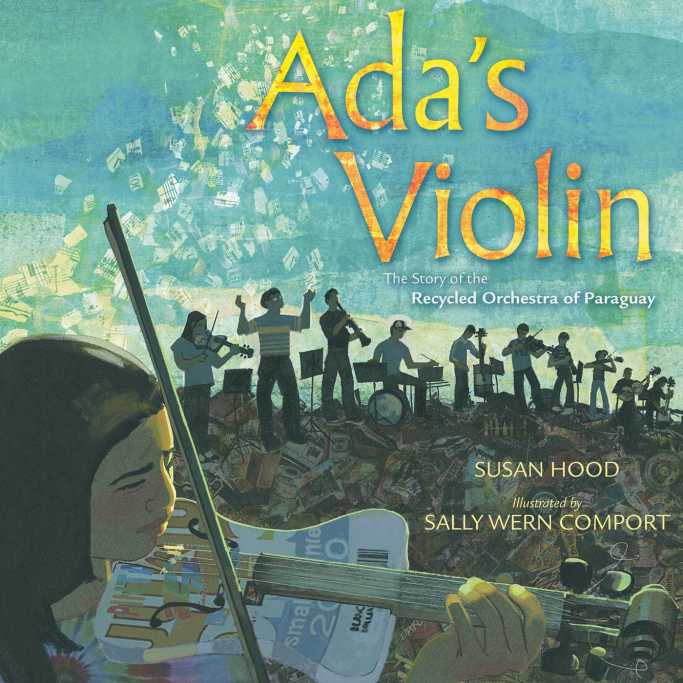
celebrate-picture-books-picture-book-review-ada's-violin-cover

About the Holiday

Make Music Day first rang out in 1982 in France as the Fête de la Musique. Celebrated by young and old, professional musicians and amateurs, the day invites all to make and share their music. People in more than 750 cities and towns in over 120 countries participate in this creative holiday.

Ada’s Violin: The Story of the Recycled Orchestra of Paraguay

Written by Susan Hood | Illustrated by Sally Wern Comport


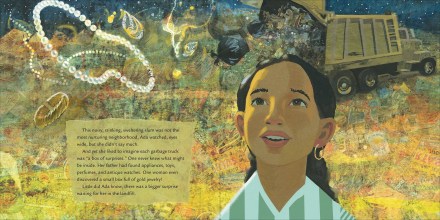
Ada Ríos is growing up in Cateura, a town built of trash as the main garbage dump for the capital city of Paraguay. Every morning the refuse trucks rumble into town to deposit their loads—1,500 tons of trash every day. The citizens of Cateura—gancheros or recyclers—go to work sifting through the mounds and tearing into bags looking for anything valuable enough to recycle or sell. Cardboard is worth 5 cents a pound, plastic 10 cents a pound.

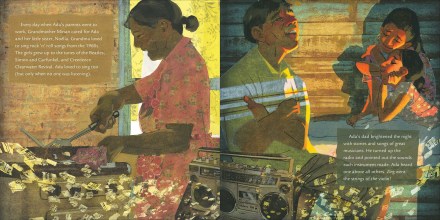
Ada knows the landfill can hold surprises—“Her father, a ganchero, had found appliances, toys, perfumes, and antique watches.”—but she can never imagine what it holds for her. When Ada and her sister were little, their grandmother watched them while their parents worked. They loved to listen to music, to sing, and to learn stories of musicians and the sounds of different instruments. Ada fell in love with the violin.

celebrate-picture-books-picture-book-review-ada's-violin-making-singing

Image copyright Sally Wern Comport, text copyright Susan Hood. Courtesy of simonandschuster.com

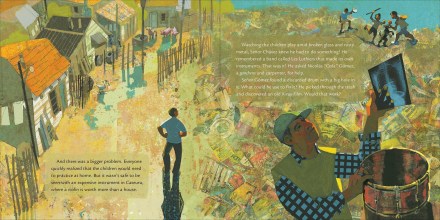
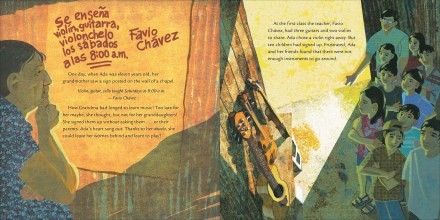
As the girls grow older and go to school, they venture farther into town, but there is little to fill their time. Many kids join gangs or get into fights. When Ada is 11 her grandmother signs her and her sister up for music lessons being offered by a new man in town named Favio Chávez. “Ada’s heart sang out” when she hears the news. On the first day ten children show up to play the five instruments available. But a bigger problem looms: the three guitars and two violins cannot be taken home for practicing as they are magnets for thieves. In Cateura a violin is worth more than a house.

But Favio Chávez has an idea. With help from Nicolás Gómez, a ganchero and carpenter, they pull bits and pieces from the landfill. An old broken drum and an X-ray film become a workable drum, water pipes become flutes, packing crates become guitars and violins, and oil drums become cellos. “Ada chose a violin made from an old paint can, an aluminum baking tray, a fork, and pieces of wooden crates. Worthless to thieves, it was invaluable to her. It was a violin of her very own.”

celebrate-picture-books-picture-book-review-ada's-violin-making-instruments

Image copyright Sally Wern Comport, text copyright Susan Hood. Courtesy of simonandschuster.com

The children practice tirelessly outside in 100-degree heat until the initial “screeches, twangs, and tweets hit all the right notes. Their class became ‘a small island’ where Chávez taught them to respect themselves and one another.” They become known as The Recycled Orchestra. Music now fills the air, adding a soundtrack of beauty to the grueling work. The orchestra is soon invited to play concerts in Cateura and the capital city of Asunción. When word spreads of their talent, the children receive offers to play from other cities and even other countries.

When Ada is 16 The Recycled Orchestra is invited to tour with a world-famous rock band. As Ada takes the stage in front of 35,000 people in Bogotá, Colombia, she is afraid, but the audience cheers for them and sings along as they play. On that night the children discover a new life. “Buried in the trash was music. And buried in themselves was something to be proud of.”

celebrate-picture-books-picture-book-review-ada's-violin-lessons

Image copyright Sally Wern Comport, text copyright Susan Hood. Courtesy of simonandschuster.com

An extensive author’s note plus a photograph of The Recycled Orchestra, lists of websites, videos and sources follow the text.

Ada’s Violin is also available in a Spanish edition—El violín de Ada: La Historia de la Orquesta de Instrumentos Reciclados del Paraguay.

Susan Hood has brought to light an incredible story of perseverance, hope, and the ability of music and other arts to provide opportunities and self-confidence that change lives. Told with unstinting honesty and sensitivity, Hood’s biography of Ada Ríos, Favio Chávez, and The Recycled Orchestra will inspire all who read it. The well-paced text offers revealing details on every page and flows with a lyrical quality that enhances the effect of the story and its impact. From the first sentence to the last, both children and adults will be riveted to The Recycled Orchestra.

celebrate-picture-books-picture-book-review-ada's-violin-hope

Image copyright Sally Wern Comport, text copyright Susan Hood. Courtesy of simonandschuster.com

Sally Wern Comport’s paintings beautifully capture the human spirit that shines through and drives people to astonishing achievements even in the most adverse conditions. With intricately created collages of rich hues, Comport depicts the town of Cateura and the mountains of trash the citizens work and play on. Warm lighting illuminates faces full of dreams and love. Readers will linger over depictions of the instruments workshop and cheer along with the concert audience as the children receive recognition. The full-bleed, two-page spreads echo the expanded world music gave to the children in the orchestra and the adults who heard them as music score confetti flutters throughout.

Both school classrooms and home libraries will benefit from the stirring message of Ada’s Violin.

Ages 4 and up

Simon & Schuster Books for Young Readers, 2016 | ISBN 978-1481430951 (English edition); 978-1481466578 (Spanish edition)

Discover more about Susan Hood and her books, plus fun activities for kids and information for teachers and parents on her website!

View a gallery of Sally Wern Comport’s artwork on her website!
Make Music Day Activity

celebrate-picture-books-picture-book-review-homemade-musical-instrument


Make Your Own Musical Instrument


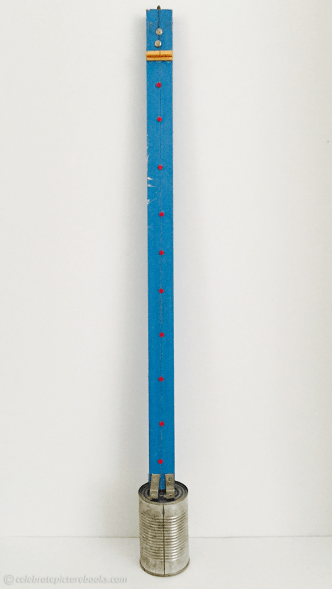
Inspiration for sound can come from almost any object! Look around your house or classroom and discover the music in boxes, cans, blocks of wood, plastic egg cartons or deli containers, and more. Add string or wire for plucking, sticks for drumming, or beans for shaking. With a little glue, tape, or hardware and some creativity, you’ll be making your own rhythms in no time!

Supplies for the stringed instrument shown in the picture above

  • Tin can
  • Two small L brackets
  • Piece of wooden molding, 2 1/2 feet by 1 1/2 inches by 3/4 inches
  • Five small strips of wood to raise the wire off the neck of the instrument. I used long wooden fireplace matches cut into 1 1/2″ sections 
  • Thin wire
  • Small circular hook screw or regular screw
  • Two tacks
  • A nail, screw, or piece of wood that will fit horizontally in the mouth of the can
  • a small nail to make a hole in the can
  • Hammer
  • Strong Glue
  • Paint
  • Foam decorative dots

Directions

  1. Paint the wood and let dry
  2. Paint the small strips of wood and let dry
  3. Decorate the can with paint, sticker, duct tape, or paper
  4. With the hammer and small nail, make a hole in the center of the bottom of the can
  5. Wrap one end of the wire around the nail and glue so it is firmly in place
  6. Feed the other end of the wire through the hole in the bottom of the can
  7. Screw or glue two L brackets to one end of the wood molding so that the bottom of the L is flush with the bottom of the wood molding and there is space between the brackets. This makes the neck of the instrument
  8. Screw the circular or regular screw into the top, center of the wooden molding
  9. When the wooden match strips are dry, glue three match strips side-by-side 3 inches from the top of the molding. Glue two more match strips, one on top of the other on the center strip.
  10. When the L brackets are dry, glue them (and the neck of the instrument) to the can, making sure the brackets are on either side of the hole in the can. Make sure the wire is out of the hole. 
  11. When the brackets are firmly attached to the can, pull the wire to the top of the neck. Settle it in the center of the small pieces of wood, so that the wire is not touching the neck.
  12. Wrap the wire around the screw at the top of the molding until it is firmly in place and the wire is taut. 
  13. Secure the wire to the neck with the tacks
  14. Mark the “frets” with the foam dots

Picture Book Review