January 8 – National JoyGerm Day

celebrate-picture-books-picture-book-review-how-to-cheer-up-a-friend-cover

About the Holiday

Believing that joy can spread from person to person on the strength of simple smiles and greetings, acts of kindness, upbeat moods, and general positivity, Joan E. White of Syracuse, New York, founded JoyGerm Day in 1981. The day officially became a national holiday in 1985, and is now celebrated around the world. The holiday inspires people to find ways today and every day to positively impact the lives around us at home, work, school, or even while shopping or going about one’s daily business.

To honor the day and the idea, find ways to start each morning with a positive attitude for the day to come. Need ideas for how to get started? Say “Hello” to those you meet, listen to and encourage others, happily help out where needed, share a special moment with your kids at home, or send a surprise letter, card, or text to a friend or family member far away. And, of course, don’t forget to treat yourself too! When you feel good, those around you will respond in kind. Happiness really is contagious!  

Thanks so much to Beach Lane Books for sharing a copy of How to Cheer Up a Friend with me for review consideration!

How to Cheer Up a Friend

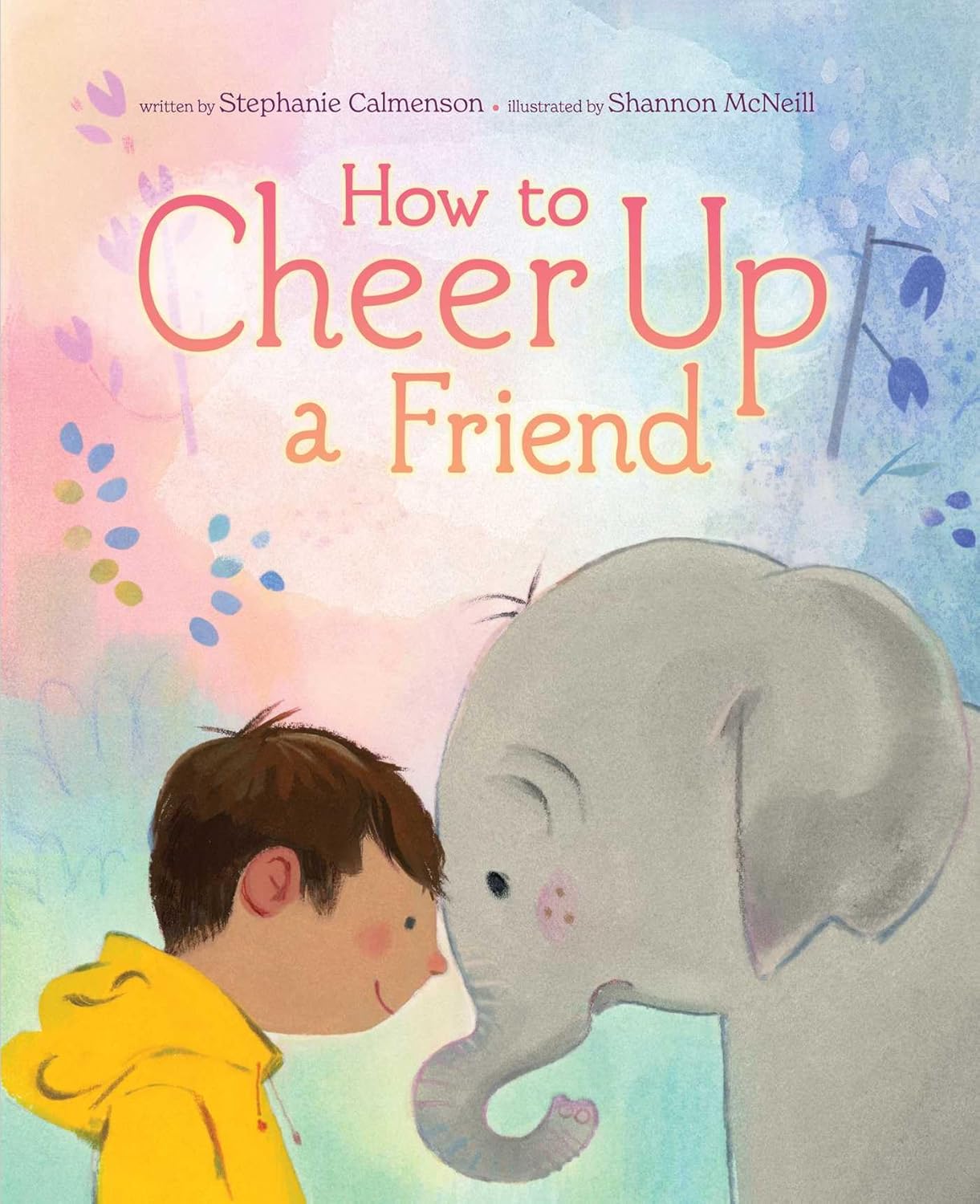
Written by Stephanie Calmenson | Illustrated by Shannon McNeill


Little ones have big feelings and even bigger hearts. When they see a friend or family member feeling down, they want to help. But “What do you do / when your friend feels blue?” In her sweet book in which the protagonist attempts to cheer up their elephant friend, Stephanie Calmenson offers refreshingly practical advice on how a child (or an adult) can really approach someone experiencing sadness or anger and help them find happiness again. 

Screen Shot 2024-12-31 at 4.50.06 PM

Image copyright Shannon McNeill, 2024, text copyright Stephanie Calmenson, 2024. Courtesy of Beach Lane Books.

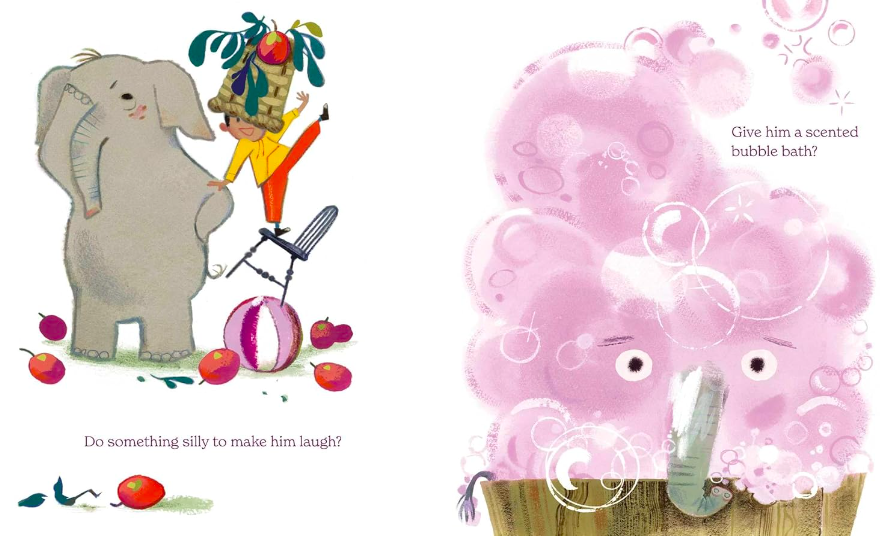
Writing in rhyming couplets, Calmenson starts out by suggesting a few ideas that will get readers giggling and invested in the story, such as “Do you tickle his trunk / to get him out of his funk?” and “Do something silly to make him laugh? / Give him a scented bubble bath?” Soon, the child opens his arms wide, offering a hug—but ready to happily accept either a “yes” or “no” answer.

Quieter ideas follow, including taking a walk or simply listening if he wants to “talk . . . and talk . . . and talk.” Then—only after all his feelings have been vented does the protagonist offer treats—or that hug, which now feels juuust right.

Screen Shot 2024-12-31 at 4.51.18 PM

Image copyright Shannon McNeill, 2024, text copyright Stephanie Calmenson, 2024. Courtesy of Beach Lane Books.

Stephanie Calmenson’s thoughtful look at the underpinnings of sadness or other strong emotions and how friends or family members can best help a loved one shines for its brevity and straightforward take on the issue. This approach will appeal to kids while giving them concrete examples of what to do and say (or not say) to elicit healing time or talk from friends, siblings, or others.

How to Cheer Up a Friend would be equally effective for adults looking for a book to help their own child through periods of sadness or anger as the story validates these emotions and provides a constructive solution for expressing them. The length of the story and its bookended format makes the book a perfect choice for parents, teachers, or other adults to reach for during those times when emotions may be running high or attention spans are short.

Screen Shot 2024-12-31 at 4.51.51 PM

Image copyright Shannon McNeill, 2024, text copyright Stephanie Calmenson, 2024. Courtesy of Beach Lane Books.

Shannon McNeill’s adorable elephant and empathetic child immediately win over readers’ hearts with their connection that is clearly based on mutual love and trust. In her soft-hued gouache, pencil, and cut paper illustrations, McNeill’s droopy, sad-eyed elephant is the picture of sadness, stubbornness, and even laugh-inducing perseverance as his friend tries various silly solutions to restore happiness. The image of the elephant hunkered down in its wash tub as it hides from a hug is an effective portrayal for children who prefer body autonomy or for the barrier some people present when experiencing strong emotions.

As the elephant begins to talk, his words and feelings fill the page as colorful shapes, and he begins to gesticulate, He cries, stomps, and flops down in a tirade to demonstrate those emotions he may not have words for. But as the storm abates, he feels better and can happily accept that big hug in a two-page spread that will delight young readers.

An endearing story that provides satisfying help with an emotion we all experience, How to Cheer Up a Friend is a valuable book for families and teachers to have on hand for those times when feelings are strong. The book is highly recommended for home, library, and classroom collections.

Ages 4 – 8

Beach Lane Books, 2024 | ISBN 978-1665910248

About the Author

Stephanie Calmenson is the acclaimed author of many popular books for young readers including Dinner at the Panda Palace; May I Pet Your Dog?; and the Ready, Set, Dogs! and Allie and Amy series written with Magic School Bus author Joanna Cole. A former early childhood teacher and children’s book editor, Stephanie feels fortunate to be able to teach, entertain, and encourage kids through her books. To read more, please visit StephanieCalmenson.com.

About the Illustrator

Shannon McNeill is a Canadian-born, San Diego-based illustrator whose books include Are We There Yet? by Dandi Daley Mackall, Wild & Wooly by Mary Jessie Parker, How to Cheer Up a Friend by Stephanie Calmenson, and her own Wheels, No Wheels. Her work is influenced by local nature, loitering in coffee shops, old books, child art, and long walks around the block. Learn more at LittleDrawings.com.

National JoyGerm Day Activity

celebrate-picture-books-picture-book-review-you're-groovy-happiness-card

Spread Happiness Cards

Kids can spread happiness to their friends, family, teachers, and other people in their lives with these cute Happiness Cards! Just print, cut, and give!

Spread Happiness Cards

celebrate-picture-books-picture-book-review-how-to-cheer-up-a-friend-cover

You can purchase How to Cheer Up a Friend at these booksellers

Amazon | Barnes & Noble | Bookshop

Picture Book Review

November 13 – World Kindness Day

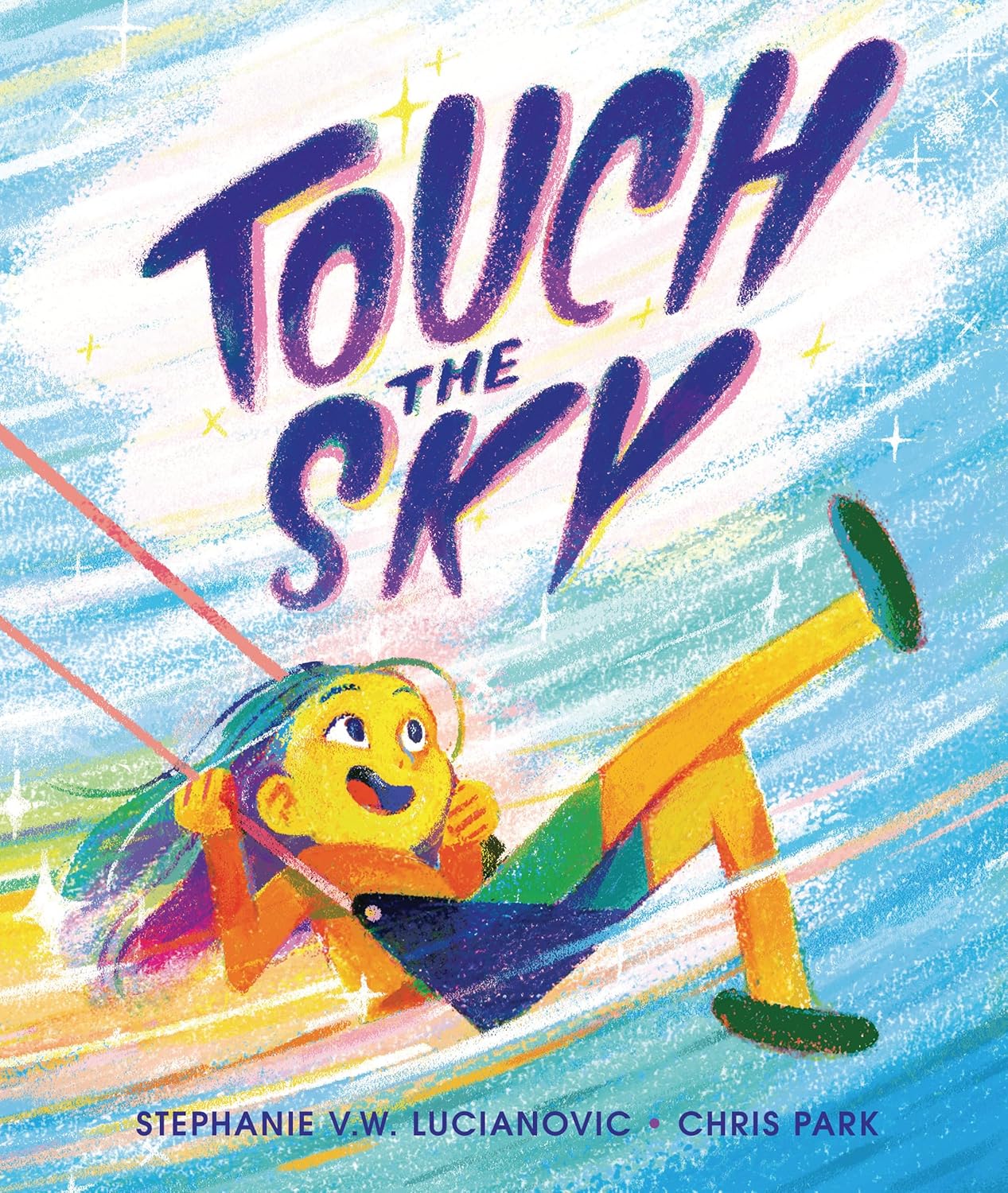
celebrate-picture-books-picture-book-review-touch-the-sky-cover

About the Holiday

World Kindness Day began with a conference in 1997 in which organizations from across the globe met in Japan for the purpose of uplifting and recognizing kindness on a global scale. From this meeting they created a “Declaration of Kindness” and, later, a nonprofit called the World Kindness Movement was formed to support and honor community-scale kindness initiatives. Kindness on any scale, on any day, is important to celebrate. To recognize today’s holiday, we follow a story that shows how just a touch of kindness from another person and a will to persist can help one child reach for the stars and, just maybe, end up touching the clouds. 

Thank you to Carolrhoda Books, an imprint of Lerner Publishing Group, for sharing a copy of Touch the Sky with me for review consideration. All opinions on the book are my own.

Review by Dorothy Levine

Touch the Sky

Written by Stephanie V.W. Lucianovic | Illustrated by Chris Park

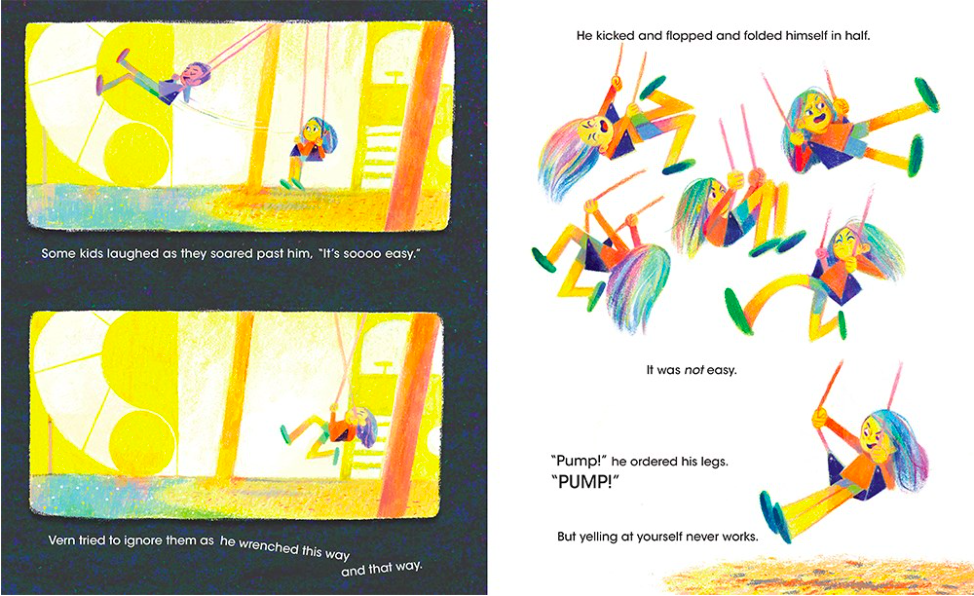
When Vern visits the playground, he yearns to be able to swing like the other children do, “to be one of the kids who swooped until their toes touched the sky.” The only problem is Vern does not (yet) know how to pump. And as much as he tries, yanking his body this way and that, ordering his legs with a scream, nothing seems to work. While Vern tries, other children on nearby swings laugh and swoop by him. 

celebrate-picture-books-picture-book-review-touch-the-sky-Vern-attempts-pumping

Image copyright Chris Park, 2024, text copyright Staphanie V.W. Lucianovic. Courtesy of Carolrhoda Books.

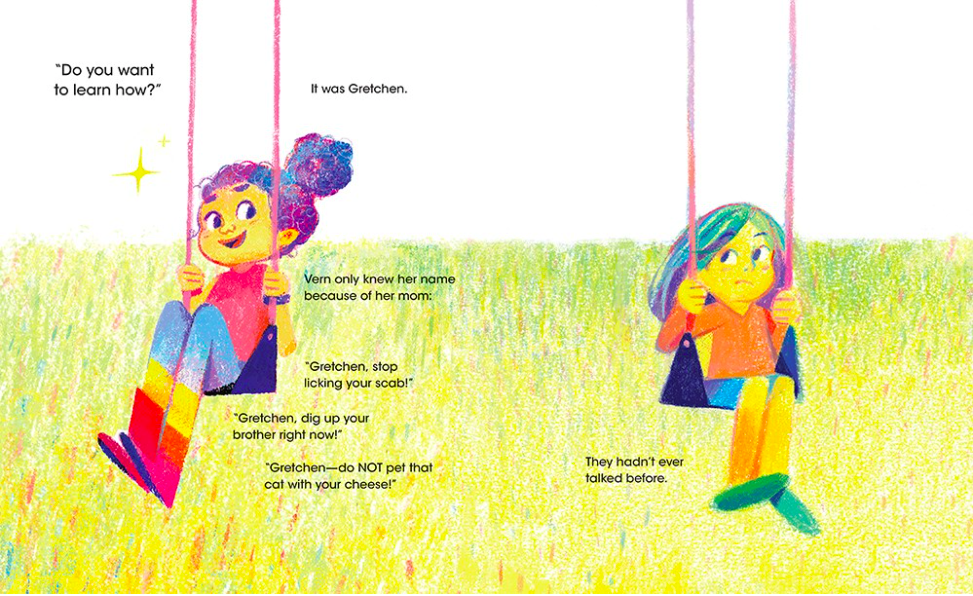
Vern is just about ready to give up, when Gretchen comes along. Even though Gretchen and Vern have never played together, Gretchen confidently snags the swing next to Vern and asks, “Do you want to learn how?”

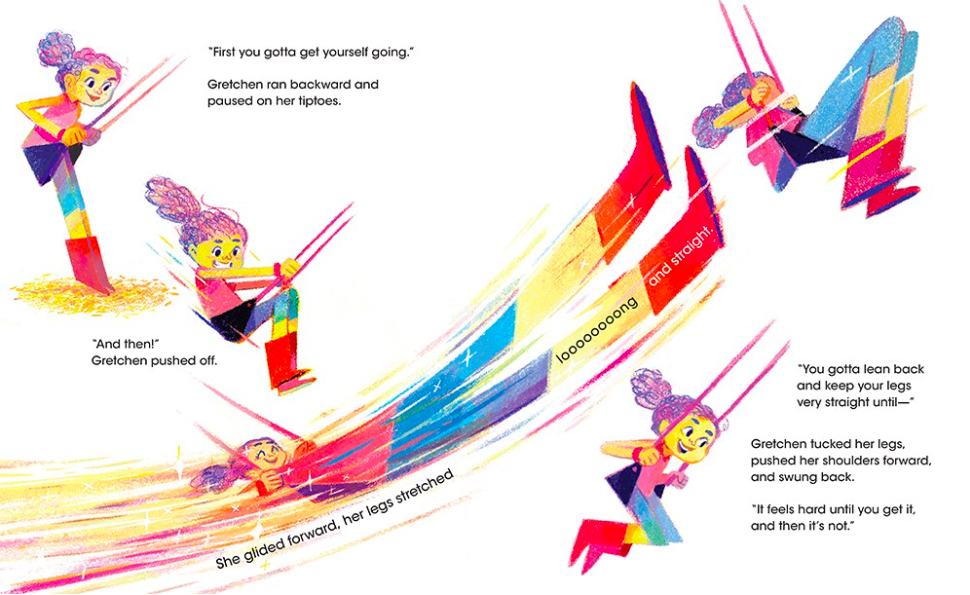
Through many attempts of running, pushing, swooping and trying again, Gretchen coaches and encourages Vern. When her verbal instructions land Vern in the wood chips a few too many times, she switches strategies, standing next to his swing and doing the motions with her own body upright.

celebrate-picture-books-picture-book-review-touch-the-sky-Gretchen-meets-Vern

Image copyright Chris Park, 2024, text copyright Staphanie V.W. Lucianovic. Courtesy of Carolrhoda Books.

Just as Vern starts to make progress, Gretchen must leave. Vern is left with a tough choice: to keep trying on his own or give up. When he decides to continue, the motions Gretchen taught tiptoe down the page along with Vern “Run / Hop / Lean / Stretch / Sweep / Pull / Tuck / Swing” until finally, wonderfully “He [takes] flight with the birds.”

The story then ends with this reminder of the cyclical nature of kindness: After a moment of basking in the meditative motion of pumping, Vern notices another kid in Gretchen’s swing watching him enviously. He repeats what Gretchen said when he felt stuck: “‘It feels hard until you get it, and then it’s not…Do you want to learn how?’”

celebrate-picture-books-picture-book-review-touch-the-sky-Gretchen-teaching

Image copyright Chris Park, 2024, text copyright Staphanie V.W. Lucianovic. Courtesy of Carolrhoda Books.

Touch the Sky brings to light a hurdle (learning to swing) that is common for many young folks but not often discussed in day-to-day life or in a picture book. While some new skills come with lessons (swimming, learning to ride a bike, reading) learning to swing is a challenge that children are often left to master on their own. Lucianovic creatively and accurately captures the process of learning to pump; her verbal instructions are catchy, succinct, and clear to follow. The composition of the words on the page mirrors the learning to pump process—sometimes twisting around like chains of a swing and other times flying colorfully across whole spreads. The story is centered in realistic dialogue, with age-appropriate humorous moments for readers (like when Gretchen’s mother admonishes her for petting a cat with cheese). The story is both literal and lyrical. Sweeping imagery of swinging for the first time adds a thrilling aspect to the tale.

Park’s illustrations add to the magical feeling of first coasting through a new skill. The illustrations are largely in crayon which gives the images a textured, child-like feel, adding a sense of wonder to the scenes. The pages of instructions include zoomed-in panels for readers to watch each step separately. These panels begin jumbled but then sort out into organized squares as Gretchen’s steps to pumping become clearer to Vern. Park’s use of rainbows and tiny stars when Vern’s situation metaphorically and literally begins to look up immerses readers in the journey he takes to “touch the sky.” 

A heartfelt tale of perseverance and kindness that can be appreciated by all who have struggled and received support from unlikely places, Touch the Sky invites readers to keep trying and to offer helping hands to others when they can. The book would be an excellent addition to home, public, and school libraries.

Ages 5 – 9

Carolrhoda Books, 2024 | ISBN 978-1728460451

About the Author

Stephanie V.W. Lucianovic writes books in the San Francisco Bay Area surrounded by a few kids, a few cats, and one husband. Her work includes The End of Something Wonderful, Hello Starand The League of Picky Eaters. Visit her at stephanielucianovic.com.

About the Illustrator

Chris Park has been a professional illustrator for over twelve years. Some of his previous clients include TBS, Team Coco, Rolling Stone, American Greetings Co., Cloudco Entertainment, Pro Publica, Sleeping Bear Press, Usborne Publishing and Lightspeed Magazine. He co-authored and illustrated his the picture books Little Sock and Little Sock Makes a Friend with his wife Kia. Chris lives in Minnesota with his wife and two sons. Visit him at chrispark.com.

World Kindness Day and World Kindness Week Activities

celebrate-picture-books-picture-book-review-school-of-kindness-bingo-card

Courtesy of the School of Kindness.

Kindness Bingo

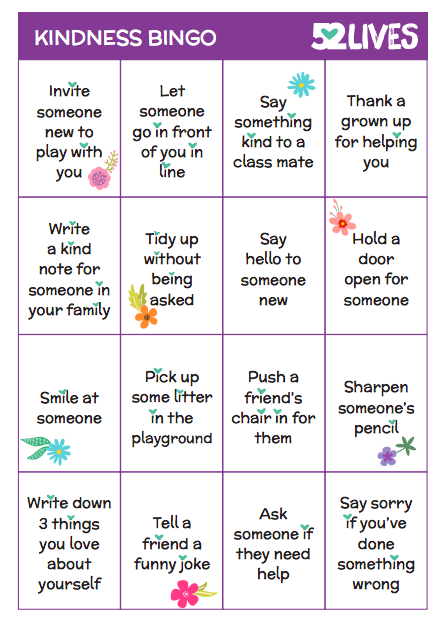
Invite your child or class to spend World Kindness Day, World Kindness Week, or any day playing Kindness Bingo from the School of Kindness at 52 Lives with this game that includes 30 bingo cards, each containing 16 acts of kindness. Visit the School of Kindness website to learn more about their teaching resources.

Also available for free download is the World Kindness Day Pack, which also includes activities that connect to Anti-bullying week, which this year coincides nicely with kindness week.

celebrate-picture-books-picture-book-review-touch-the-sky-cover

You can purchase Touch the Sky from these booksellers

Amazon | Barnes & Noble | Bookshop (to support your local independent bookstore)

Picture Book Review

June 21 – National Seashell Day

celebrate-picture-books-picture-book-review-sora's-seashells-cover

About the Holiday

Seashells are natural wonders! Curved and fluted, bleached and delicately hued, shells provide homes, create pearls, house culinary delicacies, inspire crafts—and if you hold a conch shell to your ear, you can hear the ocean’s song.  National Seashell Day was established in 2016 by the beaches of Fort Myers and Sanibel in southwest Florida to commemorate the amazing presence of seashells in the area. But you don’t have to live in Florida to find or appreciate beautiful shells or celebrate the holiday. If you live near a beach, take a trip to walk along the shore and find some treasures. And anyone can become a armchair beachcomber by checking out some books or websites about seashells. Today’s book reveals just what a gift seashells—and children—are.

Thanks to Candlewick and Barbara Fisch at Blue Slip Media for sharing Sora’s Seashells with me for review consideration. All opinions on the book are my own.

Sora’s Seashells: A Name is a Gift to be Treasured

Written by Helena Ku Rhee | Illustrated by Stella Lim and Ji-Hyuk Kim


Every summer, Sora’s grandmother came to visit. The first thing Sora and Halmoni did together was go to the beach to look for seashells. They found all types and sizes of shells, but “Halmoni chose the prettiest shell and tucked it into her pocket.” Then as they left the beach, Halmoni left the shell on a bench. When Sora asked why they couldn’t take it home, Halmoni told her, “‘It’s a gift for anyone who sees its beauty.'” Sora wanted to take the shell, but she got on the bus without it.

When they went to the beach the next day, Sora was sad to see that “their” shell was gone. But Halmoni reminded Sora that it didn’t belong to them, that it was a gift. As she and Halmoni combed the beach for shells, Sora hid pretty shells in her pocket, and when she got home she put them in a jar. By the time Halmoni’s visit was over, Sora’s jar was full.

celebrate-picture-books-picture-book-review-sora's-seashells-Halmom

Image copyright Stella Lim with Ji-Hyuk Kim, 2023; text copyright Helena Ku Rhee, 2023. Courtesy of Candlewick.

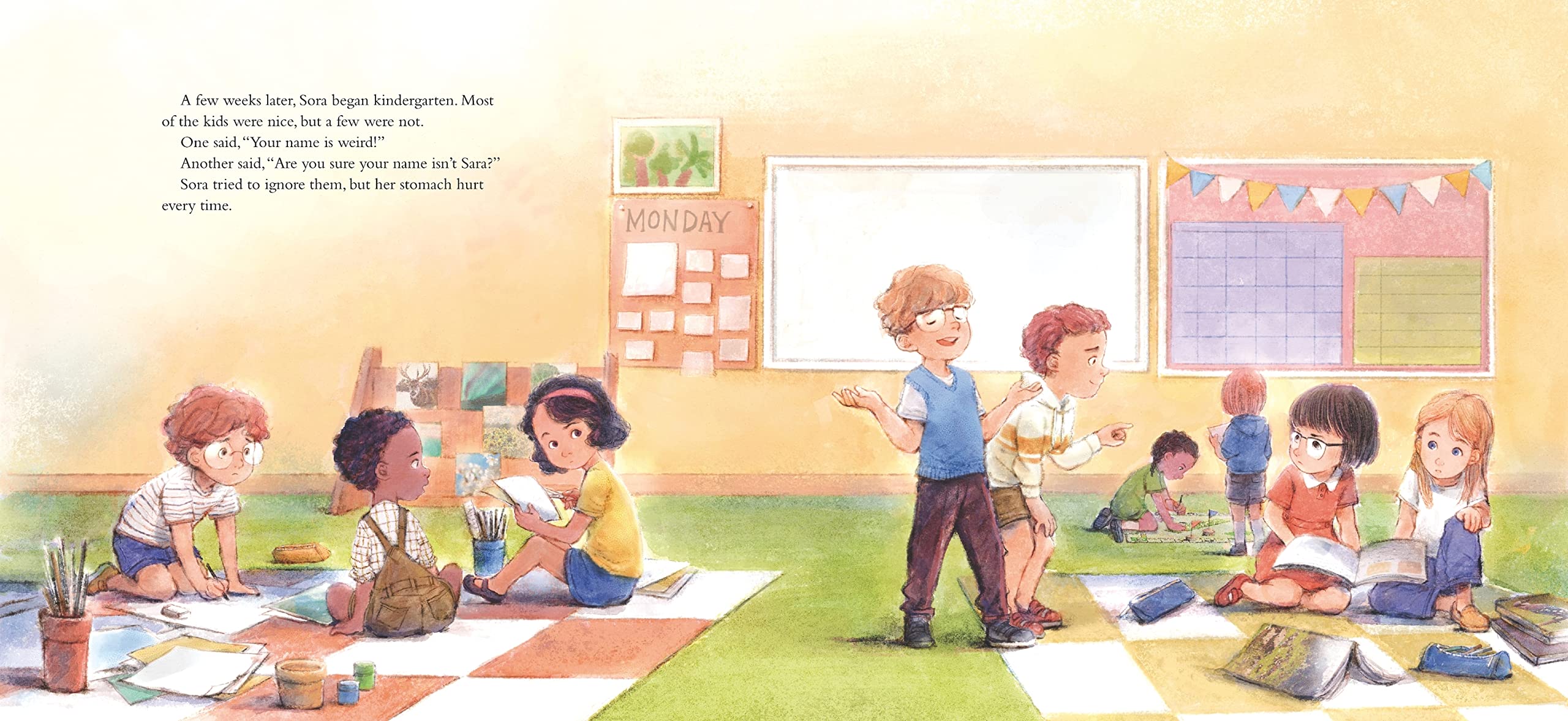
At the end of summer, Sora began kindergarten. While most of the kids were nice, a few made fun of her name. They called it “weird” and asked if it wasn’t really “Sara.” Their taunting gave her a stomachache. Sora never told her parents, and the teasing continued. Then one day the family got news that Halmoni had died. As Sora’s parents told her, she “thought of all the summers ahead without her grandmother” and how “she would say her name, with a soft s and a gently rolled r.” Suddenly all of Sora’s pent up emotions flowed out. Crying, Sora said, “‘I want to see Halmoni. And I hate my name. I want to be Sara!”

To take comfort Sora and her parents drove out to the beach. As they walked along the shore, Sora’s mother picked up a beautiful pink shell—just the type that Sora loved—and held it in her hands. She told her daughter that “‘Sora means “seashell” in Korean'” and repeated Halmoni’s belief that “‘finding a perfect shell is like receiving a wonderful gift.'” It was Halmoni who had suggested the name Sora. Then Sora’s parents hugged her and said, “‘You’re our greatest gift, Sora.'”

celebrate-picture-books-picture-book-review-sora's-seashells-kindergarten

Image copyright Stella Lim with Ji-Hyuk Kim, 2023; text copyright Helena Ku Rhee, 2023. Courtesy of Candlewick.

The next week for show-and-tell, Sora brought her jar of seashells and told the class the meaning of her name. She then handed a shell to her teacher and to her friends. Then she came to the kids who teased her. She gave each of them a shell too. One boy said her name made sense now; another told her Sora sounded like a superhero. Sora was surprised. She smiled and said, “‘Thanks.'” When she returned to her seat, she felt like she was soaring. 

After school, Sora went back to the beach with her parents. She had one shell left in her jar. She took it out and placed it on the bench—a “gift for anyone who could see its beauty.”

celebrate-picture-books-picture-book-review-sora's-seashells-bench

Image copyright Stella Lim with Ji-Hyuk Kim, 2023; text copyright Helena Ku Rhee, 2023. Courtesy of Candlewick.

Helena Ku Rhee’s heartwarming, multilayered story introduces readers to themes of family, kindness, loss, belonging, and the power of looking for beauty in the people and things around us as her gentle and straightforward storytelling wraps readers in the love Halmoni and Sora share. Sora’s journey throughout the story is profound, condensing what can be a lifetime of experiences and lessons into an impactful message on kindness and a simple truth that everyone and everything contains beauty waiting to be discovered. Ku Rhee also reminds children and adults alike that open communication is the key to understanding and appreciating others.

Stella Lim’s watercolor and digital illustrations, based on sketches by Ji-Hyuk Kim, set the tone of Sora and Halmoni’s tender relationship with soft colors, wide ocean vistas, and quiet scenes at home. In contrast, the school room’s yellow walls and lime green rug, scattered play areas and supplies, and teasing boys seems to mirror the turmoil in Sora’s mind and heart. After she presents her show-and-tell, however, the greens and yellows are more muted, the children calm. Likewise, elsewhere in the story, Lim employs shadowing and light and dark shades to represent Sora’s emotions. 

A standout story that will resonate with readers—children and adults—and provide many opportunities for discussion, Sora’s Seashells is highly recommended for home bookshelves and is a must for all classroom, school, and public library collections. 

Ages 4 – 8

Candlewick, 2023 | ISBN 978-1536209938

About the Author

Helena Ku Rhee grew up in Los Angeles and has lived in various parts of the United States, Asia, and Europe. She is the author of the picture books Rosa’s Song and The Paper Kingdom, both illustrated by Pascal Campion, and The Turtle Ship, illustrated by Colleen Kong-Savage. Helena Ku Rhee currently lives in Los Angeles.

About the Illustrators

Stella Lim studied fine art and graduated from Kingston University. She based her work for Sora’s Seashells on sketches from Ji-Hyuk Kim. Stella Lim lives with her family in Seoul, South Korea.

Ji-Hyuk Kim is the illustrator of the New York Times bestseller Through Your Eyes: My Child’s Gift to Me by Ainsley Earhardt as well as many book jackets and covers. Ji-Hyuk Kim lives in South Korea.

National Seashell Day Activities

Celebrate Picture Books Seashell Beach Combing Game

Gather Seashells Board Game


Beachcombers love to find different kinds of shells! You don’t need to take a trip to the shore to fill this game board beach with shells! Grab your friends, siblings, or the whole family and start collecting!

Supplies

Directions

  • Print Seashell Game Cards
  • Cut the shells from the cards so they will fit on the Beach Game Board
  • Assign a roll of the dice (2 through 8) to each shell, ex. Roll a 6 and pick up the sand dollar 
  • Choose someone to go first and take turns rolling the die to collect shells for your Beach Scene Game Board
  • The first person to fill their beach with shells is the winner

Celebrate Picture Books Seashell Matching Game Playing Cards

Seashell Matching Game


With this game you can match two, three, or even more shells to test your memory!

Directions

  • Print two or more Seashell Game Card sheets
  • Cut the cards apart
  • Place them face down on the table and shuffle
  • Turn one card over then choose another to try to find a match. If unsuccessful turn them both over and try again until you’ve found matches for all the shells


celebrate-picture-books-picture-book-review-sora's-seashells-cover

You can find Sora’s Seashells at these booksellers

Amazon | Barnes & Noble | Books-a-Million

To support your local independent bookstore, order from

Bookshop

Picture Book Review
November 9 – It’s Picture Book Month

celebrate-picture-books-picture-book-review-sleepy-happy-capy-cuddles-cover

About the Holiday

If you love picture books, you know the thrill of holding a new or a new-to-you book in your hands and opening up to that very first page. The children’s sections of bookstores and libraries draw you in with humor, fairy tales, poetry, biographies, science, and so much more—a whole universe of creativity, thought, knowledge, and imagination—that enlightens and entertains. This month take time to indulge your passion for picture books!

I’d like to thank Page Street Kids for sending me a copy of Sleepy Happy Capy Cuddles for review consideration. All opinions on the book are my own.

Sleepy Happy Capy Cuddles

Written by Mike Allegra | Illustrated by Jaimie Whitbread


The air in the rainforest rang with “squeaks, squawks, grunts, growls, hisses, harrumphs, and frenetic feather-and-fur-flying fury. It was quite the rumpus.” But all of these sounds didn’t make the animals happy, in fact, they were miserable and, even worse, all the noise “made them feel very alone—even though they weren’t alone.” But then one day, a visitor emerged from the river with sounds of her own—sounds the other animals had never heard before, like a “fwippa fwip of flickering ears” and a “shookita shimmy of a shaking booty bottom.” 

celebrate-picture-books-picture-book-review-sleepy-happy-capy-cuddles-fwippa-fwip-ears

Image copyright Jaimie Whitbread, 2022, text copyright Mike Allegra, 2022. Courtesy of Page Street Books.

Suddenly, the rainforest was silent as the animals stared at this unusual interloper as she yawned and stretched. A river turtle was the first to approach and ask what, exactly, she was. The answer came quickly (a capybara)—and with an invitation to “join my Sleepy Happy Copy Cuddle.” The turtle rebuffed this invite, thinking it would in some way soften his shell. When the capy reassured the turtle that he would stay as tough as ever, he relented. 

So they cuddled next to each other, and the river turtle had to agree that he felt better. “‘That makes me happy,’ said the capy. So she floofed. Floof!” Hearing this FLOOF, an iguana came by to see what was happening. The iguana did not want to get so close, and the capy let the iguana know this was perfectly all right. So she had another happy cuddler and enjoed another happy FLOOF. All this FLOOFing started to attract more and more animals, each wanting to cuddle in their own way. The capy agreed that all these ways of cuddling were valid and just perfect.

celebrate-picture-books-picture-book-review-sleepy-happy-capy-cuddles-crocodile

Image copyright Jaimie Whitbread, 2022, text copyright Mike Allegra, 2022. Courtesy of Page Street Books.

At last, all the rainforest animals were content. Then a dark shape came slowly moving into view just below the surface of the river, and in a moment a crocodile splashed onto shore with a “ROOOOOOAR!” Undaunted, the capy asked if the crocodile would like a cuddle. The crocodile was baffled, bewildered, and even a bit alarmed. But then he was touched, if a little confused. “‘No one ever wants to cuddle me,’ the crocodile sniffled.” The capy assured the crocodile that she did. Now everyone was capy cuddle happy. 

But what was this? More dark shapes and burbling bubbles were swimming their way. Was it? It was! “‘More Sleepy Happy Capy Cuddlers!'” Lots of them! Now there were plenty of cuddles—and FLOOFS—to go around for everyone!

In a short note Mike Allegra tells a little more about capybaras and includes a photo of the adorable cuddlers.

celebrate-picture-books-picture-book-review-sleepy-happy-capy-cuddles-floof

Image copyright Jaimie Whitbread, 2022, text copyright Mike Allegra, 2022. Courtesy of Page Street Books.

Mike Allegra, a very funny writer well versed in the magical gymnastics of language, dazzles with sentences energized with alliteration, assonance, and delightfully gleeful onomatopoeia. Add to that his recurring “sleepy happy capy cuddles” and infectious “Floofs,” and this is one story that will have kids and adults smiling from page one and long after the story is over. (Of course, adults should be ready to close the cover just to open it again immediately for at least one “one more time!”) What’s even more ingenious, perhaps, is that along with this giddiness comes some thought-provoking truths about feeling alone among a crowd, the diversity of ways to feel comforted, comfortable, and happy, how the most prickly of personalities may need love the most, as well as an education on capybaras and their behaviors.

Jaimie Whitbread brings this transformed rainforest to life with her realistic depictions of a wide variety of animals in all their glorious color and raucous, curmudgeonly, chill, or playful personalities. Her bold imagery clearly shows the difference in the stressed-out tension that existed pre-floof and the relaxed contentedness bestowed by the capy cuddles. Animal lovers and kids eager to do more research on the rainforest will find Whitbread’s illustrations particularly fascinating while the final floof-a-rama super cuddle is sure to inspire group snuggles at home.

A masterful combination of comical and educational that’s sure to be a favorite for kids and adults alike, Sleepy Happy Capy Cuddles is a joyful read aloud and a must for any home, classroom, school, and public library collection. If you’re looking for a gift for any child, this book is a superb choice.

Ages 4 – 8

Page Street Kids, 2022 | ISBN 978-1645675594

Discover more about Mike Allegra and his books on his website.

To learn more about Jaimie Whitbread, her books, and her art, visit her website.

Picture Book Month Activity

celebrate-picture-books-picture-book-review-take-a-bookworm-trek-maze

Take a Bookworm Trek! Maze


These two friends love reading! Can you help them through the maze to meet the bookworm? 

Take a Bookworm Trek! Maze Puzzle | Take a Bookworm Trek! Maze Solution

celebrate-picture-books-picture-book-review-sleepy-happy-capy-cuddles-cover

You can find Sleepy Happy Capy Cuddles at these booksellers

Amazon | Barnes & Noble | Books-a-Million

To support your local independent bookstore, order from

Bookshop | IndieBound

Picture Book Review
November 3 – It’s Picture Book Month

celebrate-picture-books-picture-book-review-a-head-full-of-birds-cover

About the Holiday

November is all about picture books thanks to Picture Book Month founder author and storyteller Dianne de Las Casas and co-founders author/illustrators Katie Davis, Elizabeth O. Dulemba, Wendy Martin, and author Tara Lazar. This month-long international literacy initiative celebrates print picture books and all that they offer to young (and even older) readers. With gorgeous artwork and compelling stories, picture books open the world to children in surprising ways as they entertain, explain, excite, and help children learn empathy and understanding.

I’d like to thank Eerdman’s Books for Young Readers for sending me a copy of A Head Full of Birds for review consideration. All opinions on the book are my own.

A Head Full of Birds

Written by Alexandra Garibal | Illustrated by Sibylle Delacroix | Translated from the French by Vineet Lal


Nanette is a little girl with “a head full of birds.” She mixed strange foods together, can spend hours looking at an empty spider’s web and “rocks back and forth, to and fro, fluttering her fingers like butterflies.” The kids at school taunt her, calling her “stupid” and treating her meanly. But Nanette doesn’t pay attention to them. One boy in her class, Noah, joins in. But one day while tossing paper airplanes during class, the teacher catches him and makes him sit up front.

celebrate-picture-books-picture-book-review-a-head-full-of-birds-butterflies

Image copyright Sibylle Delacroix, 2022, text copyright Alexandra Garibal, 2022. Courtesy of Eerdmans Books for Young Readers.

This means sharing a table with Nanette, which makes him angry. While pulling out his chair, “he pushes her out of irritation,” which causes her pencil to slide across her drawing of a bird. Nanette is disappointed, whispering “Oh. He won’t fly anymore.” Noah finds this ridiculous and tells her that drawings of birds can’t fly, but Nanette already knows. “‘The drawing doesn’t fly, the bird does,'” she answers.

That day after school, Noah watches as Nanette sets colorful little origami boats to sail down the rain-washed curb. He thinks it looks “so pretty.” The next day, it’s still raining, and during recess Noah sees Nanette standing in the middle of the school yard without her boots catching raindrops. His friends are calling him stupid, but he grabs her shoes and rushes out to bring her back in. But Nanette is happy. She takes her boots and fills them with water running off the roof. They both hide a boot in their coats and run back inside for class.

celebrate-picture-books-picture-book-review-a-head-full-of-birds-boats-on-curb

Image copyright Sibylle Delacroix, 2022, text copyright Alexandra Garibal, 2022. Courtesy of Eerdmans Books for Young Readers.

On the stairs, someone bumps into Noah, spilling his boot. Noah is angry that their plan is ruined, but Nanette tells him it’s okay, that one is enough. She passes him a tiny origami boat, and he drops it into her boot. “The boat twists and twirls, dancing merrily across the water. And it’s so pretty.” Now Noah and Nanette are friends, and “together, they look after the birds that nest in their heads.”

celebrate-picture-books-picture-book-review-a-head-full-of-birds-boot

Image copyright Sibylle Delacroix, 2022, text copyright Alexandra Garibal, 2022. Courtesy of Eerdmans Books for Young Readers.

While quietly straightforward, Alexandra Garibal’s story affects poignancy on multiple levels. Readers are first introduced to Nanette, a girl with neurodiversity who is happy in her observations and interactions with the world while also self-confident enough to ignore the comments of her classmates. Readers see Noah participating in the ridicule, but when he is moved to sit next to Nanette, readers begin to understand that it is he who needs to see the world differently, not Nanette. Children may feel that Noah already embodies this empathy as it doesn’t take long before he appreciates the beauty Nanette brings to their world. 

While he at first feels he must protect her, running out with her boots and aiming to take her back inside from the rain, he again learns that her actions have meaning, and when the boot he’s carrying spills on the way back to class, he now feels the same disappointment of a project ruined that Nanette felt with her bird drawing. With Nanette and Noah’s conspiratorial goofing off in class (and, bravely, in the front row!), Garibal brings the story full circle while infusing it with growth and joy for both characters as they go forward as friends.

celebrate-picture-books-picture-book-review-a-head-full-of-birds-filling-boot

Image copyright Sibylle Delacroix, 2022, text copyright Alexandra Garibal, 2022. Courtesy of Eerdmans Books for Young Readers.

Sibylle Delacroix’s lovely colored-pencil illustrations reveal Nanette as a shining light in the world and in her classroom. She is first shown gazing upward as if the sun is on her face, next with colorful butterflies, and then at school in a bright yellow raincoat, while the background is drawn in gray and the other kids in a single shade of red, all except Noah, who has brown hair and blue glasses, signifying to readers that perhaps he is a bit different as well. 

The two children’s growing friendship takes place against a gray-scale background, putting the focus on both their separation from their environment as well as their similarity to each other. Other visual clues in clothing and other elements also point to Nanette and Noah’s similarity, which can invite kids to find and talk about them. A particularly moving spread comes as the two children watch the little boat float in the boot, their two smiling faces reflected in the water. Turning the page, readers see the imagination Nanette and Noah share as they ride in an origami boat pointing out paper bird above.

This beautiful friendship story speaks not only to the acceptance and understanding of neurodiversity but of all the creative and different ways in which people see the world. A Head Full of Birds will fill your heart and resonate long after the story is over. The book invites multiple re-readings and will generate much thought and discussion. It is a must for all home, classroom, school, and public libraries.

Ages 4 – 8

Eerdmans Books for Young Readers, 2022 | ISBN 978-0802855961

About the Author

Alexandra Garibal is a French children’s author and editor. She has written over sixty picture books, novels, and magazine articles, and her titles have been translated for Chinese and Spanish readers. A Head Full of Birds is Alexandra’s English-language debut. Follow her on Instagram @alexandragaribal.

About the Illustrator

Sibylle Delacroix is the illustrator of Tears, Prickly Jenny, Grains of Sand, and Blanche Hates the Night (all Owlkids). She graduated from the ERG Saint-Luc School of Graphic Research in Brussels and worked for many years as a graphic designer before becoming a full-time illustrator. Sibylle lives in France. Follow Sibylle on Instagram @sibylledelacroix.

About the Translator

Vineet Lal is a literary translator of books from French to English, including A Perfect Spot (Eerdmans) and The Secret Life of Writers (Weidenfeld & Nicholson). He studied French at Princeton University and the University of Edinburgh. Vineet lives in Scotland. Follow him on Twitter @vineet_uk.

celebrate-picture-books-picture-book-review-a-head-full-of-birds-cover

You can find A Head Full of Birds at these booksellers

Amazon | Barnes & Noble | Books-a-Million

To support your local independent bookstore, order from

Bookshop | IndieBound

Picture Book Review
October 11 – Celebrating the Book Birthday of Madani’s Best Game

celebrate-picture-books-picture-book-review-madani's-best-game-cover

Thanks to Eerdmans Books for Young Readers for sharing a copy of Madani’s Best Game with me for review consideration. All opinions on the book are my own.

Madani’s Best Game

Written by Fran Pintadera | Illustrated by Raquel Catalina | Translated from the Spanish by Lawrence Schimel


“Our whole neighborhood knows it: no one plays soccer like Madani does.” Thus, a teammate of Madani’s begins the story about this friend who captivates the neighborhood (and sometimes it seems the whole world) with his barefoot ball-handling prowess. Madani has elevated the team’s game to “the best soccer we’ve ever seen.” After Madani has scored a “Gooooal!” the sound of the cheers soars above the playing field and “…crosses through doorways, rushes past the magazine stand, slips down alleyways, swirls around the fountain, and, growing fainter and fainter, climbs the steps up to Madani’s house.” 

celebrate-picture-books-picture-book-review-madani's-best-game-bare-feet

Image copyright Raquel Catalina, 2022, text copyright Fran Pintadera, 2022. Courtesy of Eerdmans Books for Young Readers.

There, his mother hears it and knows the cheers are for Madani. She wishes she could attend his games, but she’s a seamstress and has so many garments to sew by hand. After the game, Madani’s teammates can only imagine how much better he would play if he only had a good pair of cleats. Their team might even be able to beat the Southside team—their biggest rival.

celebrate-picture-books-picture-book-review-madani's-best-game-madani's-moves

Image copyright Raquel Catalina, 2022, text copyright Fran Pintadera, 2022. Courtesy of Eerdmans Books for Young Readers.

The members of the team know that Madani’s saving up money in a special tin that gets heavier every time he declines to buy a snack, walks to away games instead of riding the bus, and makes other sacrifices. They know that when the box is full, Madani’s going shopping. “…then our games will be better than ever!’” he says, and they all dream of the day Madani buys his new cleats.

celebrate-picture-books-picture-book-review-madani's-best-game-listening

Image copyright Raquel Catalina, 2022, text copyright Fran Pintadera, 2022. Courtesy of Eerdmans Books for Young Readers.

The big game against Southside is only a day away, but Madani doesn’t come to practice. Instead, his friends watch him head downtown with the tin under his arm. Without Madani at practice, the team falls apart, but they don’t worry. Finally, they thought, their dreams of new cleats and beating Southside would come true!

When Madani shows up at the game the next day, “he looks radiant,” but he’s still barefoot. His teammates question him about his new cleats, but Madani doesn’t know what they’re talking about. The money wasn’t for shoes but for a present for his mother so that “‘she’ll be able to finish her work faster and come watch me play every Saturday.’”

celebrate-picture-books-picture-book-review-madani's-best-game-mother

Image copyright Raquel Catalina, 2022, text copyright Fran Pintadera, 2022. Courtesy of Eerdmans Books for Young Readers.

Madani’s friends still don’t quite get it, but the game begins, and in moments Madani has already stolen the ball away from the Southside players, run downfield and scored. He looks into the stands, sees his mother, and shouts “‘This goal is for you, Mom!’” Madani makes another goal, but Southside scores too, and the game ends in a tie. It’s okay, though, Madani’s teammate says, “‘because now more than ever, everyone in the neighborhood knows … There’s no player like Madani!’”

Back matter consists of notes from Fran Pintadera and Raquel Catalina that reveal their creative journeys and connections to this story.

celebrate-picture-books-picture-book-review-madani's-best-game-mother-at-game

Image copyright Raquel Catalina, 2022, text copyright Fran Pintadera, 2022. Courtesy of Eerdmans Books for Young Readers.

Fran Pintadera, who based Madani’s Best Game on his experiences as a social educator in new immigrant housing, tells his story with open-hearted affection for his subject as well as the relationships between teammates and mother and child. Through his perceptive and humorously observed details and lyrical language, Pintadera captures the wide-eyed wonder of children in awe of a great player (or artist, singer, scientist, or other talent). When Madani gets the ball, readers will hold their breath along with the neighbors, traffic, and even pigeons while he entertains the crowd and scores a goal. Then the action begins again, but this time the suspense revolves not around the game but on what Madani will buy. The answer is joyous, affirming family devotion and revealing the pure giving nature of a child’s heart.

From their first introduction to Madani, smiling out from the page, his bare foot on a soccer ball, readers will be captivated by him, his teammates, his neighborhood, and the game. Raquel Catalina’s endearing pencil, gouache, and colored pencil illustrations charm with realistic images of kids on the soccer field surrounded by city onlookers. Catalina creates not only gorgeous visuals of Madani’s supportive neighborhood, but an almost auditory experience as well.

Readers can almost hear the players’ running feet, the sudden cheers, the flap of the rising pigeons’ wings, and – as the celebration reaches Madani’s mother’s ears – even the whisper of her sewing needle through the fabric on her knees. Catalina deftly weaves the theme of friendship, between people both young and old, throughout the pages, enhancing the bond between Madoni and his mom as well as Madani’s teammates’ understanding of the true importance of that long-awaited game.

A beautiful poignant, joyful, and affirming story of family and friendship, Madani’s Best Game is a read aloud that adults and kids will love to share over and over. The book is a must for all home, classroom, school, and public libraries.

Ages 5 – 9

Eerdmans Books for Young Readers, 2022 | ISBN 978-0802855978

You can discover more about Fran Pintadera and his work on his website and connect with him on Instagram.

To learn more about Raquel Catalina, her books, and her art, visit her website. You can also connect with her on Instagram.

You can connect with Lawrence Schimel and learn more about his writing and his translating work on Instagram and Twitter.

celebrate-picture-books-picture-book-review-madani's-best-game-cover

You can find Madani’s Best Game at these booksellers

Amazon | Barnes & Noble | Books-a-Million

To support your local independent bookstore, order from

Bookshop | IndieBound

Picture Book Review
Picture Book Revi

September 2 – National Food Bank Day

celebrate-picture-books-picture-book-review-saturday-at-the-food-pantry-cover

About the Holiday

National Food Bank Day was established by St. Mary’s Food Bank, the world’s first food bank, which was founded by John van Hengel in Phoenix, Arizona in 1967. The idea spread throughout the country, and now St. Mary’s Food Bank distributes 250,000 meals daily with the help of staff, volunteers, and partner agencies, making it one of the largest food banks in the United States. This year, a record number of families (nearly 150,000 in August alone) have sought help. Food banks across the country help millions of men, women, and children who live with food insecurity due to job loss, illness, and other circumstances. Many food banks offer educational opportunities that help people change their situation and begin anew. Often, those who have benefited from the programs return to volunteer and contribute to the very food bank that helped them. To learn more about St. Mary’s Food Bank, visit their website. To find a food pantry in your area to get help for yourself, to donate, or to volunteer, visit the Ample Harvest website.

I’d like to thank Albert Whitman & Company for sharing a copy of Saturday at the Food Bank with me for review consideration. All opinions on the book are my own.

Saturday at the Food Pantry

Written by Diane O’Neill | Illustrated by Brizida Magro


When Molly came to the table for dinner, she saw that they were having chili—again. She and her mom had eaten chili for two weeks straight. But there was “fancy milk too.” Molly smiled as her mom measured sugar and cinnamon into her glass and added milk.” There was only a splash of milk left when Mom put it back into the almost-empty refrigerator.

Tomorrow, Mom said, they’d go shopping. “Molly’s eyes lit up” as she imagined “chicken and spaghetti and ice cream.” But Molly’s mom tempered her expectations, saying that they’d be going to a food pantry. A food pantry, she explained, is “‘a place for people who need food…. Everybody needs help sometimes,’” she added. That night there was no warm milk before Molly went to bed and her stomach growled.

celebrate-picture-books-picture-book-review-saturday-at-the-food-pantry-milk

Image copyright Brizida Magro, 2021, text copyright Diane O’Neill. Courtesy of Albert Whitman & Company.

In the morning when Molly and her mom got to the food pantry there was already a line waiting for it to open. Molly had brought paper and crayons and sat down to draw. Then she saw a girl who was in her class at school. She called out a hello, but “Caitlin looked away.” When Molly ran over, Caitlin told her she didn’t want anyone to know that she and her grandmother needed help.

Molly went back to her mom, wondering if there was “something wrong with needing help.” She wanted to go home, but she was also hungry. Molly’s mom suggested she draw a picture, and the woman in front of them asked if she’d draw one for her too. Then everyone in line seemed to want a picture. Molly ran back to Caitlin to ask for help. Caitlin sat down and began to draw too.

celebrate-picture-books-picture-book-review-saturday-at-the-food-pantry-hungry

Image copyright Brizida Magro, 2021, text copyright Diane O’Neill. Courtesy of Albert Whitman & Company.

When the door opened, Molly and Caitlin each had a picture for the woman who welcomed them in too. Molly noticed that her mom had to sign in before she got a cart and they could begin shopping. They didn’t do that at the grocery store. The shelves at the food pantry were stocked with items she recognized from the store they usually shopped with. She ran over and took a box of sugar cookies off the shelf, but her mom told her “‘They—the people in charge—they’ll want us to take sensible stuff.’” Molly felt embarrassed and couldn’t understand why the cookies were there if they couldn’t take them. She sadly returned them to the shelf. As they went to look for food, Molly thought her mom didn’t want to be seen there, either—just like Caitlin. In a whisper, Molly reminded her that everyone needs help sometimes.

They went through the store taking one can, bag, or box of the food they needed. Then Molly’s mom reached for a box of powdered milk. They could have fancy milk that night. When they got to the checkout desk, Molly and Caitlin found their drawings hanging on the wall. The man at the counter bagged their groceries and then handed Molly’s mom a box of sugar cookies. “‘Saw your little girl looking at these. She can have them, if that’s okay with you, ma’am,’” he said. Molly noticed that her mom looked like she might cry.

celebrate-picture-books-picture-book-review-saturday-at-the-food-pantry-line

Image copyright Brizida Magro, 2021, text copyright Diane O’Neill. Courtesy of Albert Whitman & Company.

As they were walking home, Molly saw Caitlin and her grandmother coming the same way. They were all happy to discover that they were neighbors. Molly’s mom explained that she’d been looking for work since the factory closed, and Caitlin’s grandma said she’d been sick. Caitlin understood, but wished they didn’t have to shop at a food pantry. But then Molly told her that “everybody needs help sometimes” and reminded her that they had helped make the man at the checkout counter feel happy with their drawings. Caitlin hadn’t thought about it that way. She smiled. Then Molly invited her and her grandmother to have lunch with them—with sugar cookies for dessert.

Following the text, a note for parents, teachers, and other caregivers from Kate Maehr, the Executive Director and CEO of the Greater Chicago Food Depository, reveals more information about food insecurity, including recent statistics and a resource where people can find help and more information.

celebrate-picture-books-picture-book-review-saturday-at-the-food-pantry-shopping

Image copyright Brizida Magro, 2021, text copyright Diane O’Neill. Courtesy of Albert Whitman & Company.

Diane O’Neill’s well-executed story about two families who need the help of a food pantry is a poignant reminder of the many people—perhaps even readers’ classmates—who face food insecurity every day. Through the experiences of Molly and her mother and Caitlin and her grandmother, readers discover what it’s like to go to bed hungry, miss out on treats, and feel ashamed to ask for help. As this is Molly and her mother’s first trip to a food pantry, Molly’s questions and observations well reflect children’s own or reassures those who are familiar with these important resources.

O’Neill’s straightforward storytelling emphasizes the fact that at one time or another everyone needs help and demonstrates simple ways that children make things better through their generosity, optimism, and acceptance. Molly and Caitlin’s budding friendship makes for an uplifting and hopeful ending and may spur readers to recognize need in their midst and extend kindness.

Through her realistic illustrations of two families in need of assistance from a food bank, Brizida Magro helps children see and understand what food insecurity and food pantries look like. At home, Molly and her mom eat small portions of leftover chili and the last full glass of milk. When Molly’s mom puts the carton in the refrigerator, the shelves are nearly empty, and Molly lies awake in bed, too hungry to fall asleep.

The line outside the food pantry is made up of people from all walks of life, and inside the displays of food replicate a grocery store with the exception of signs asking shoppers to take one item only. These images can lead to meaningful discussions on the enormity of the issue. When Molly and Caitlin draw pictures that cheer up everyone in line as well as the food pantry workers, kids will recognize not only different ways of helping but their own role in making the world a kinder place.

Empathy shines on every page of O’Neill’s necessary and welcome story. Saturday at the Food Pantry is timely, heartfelt, enlightening and a must-buy addition to home, classroom, and school and public library collections.

Ages 4 – 7

Albert Whitman & Company, 2021 | ISBN 978-0807572368

Discover more about Diane O’Neill and her work on her website.

You can connect with Brizida Magro on Instagram.

celebrate-picture-books-picture-book-review-saturday-at-the-food-pantry-cover

You can find Saturday at the Food Pantry at these booksellers

Amazon | Barnes & Noble | Books-a-Million

To support your local independent bookstore, order from

Bookshop | IndieBound

Picture Book Review