June 8 – Upsy-Daisy Day

celebrate-picture-books-picture-book-review-a-crow-of-his-own-cover

About the Holiday

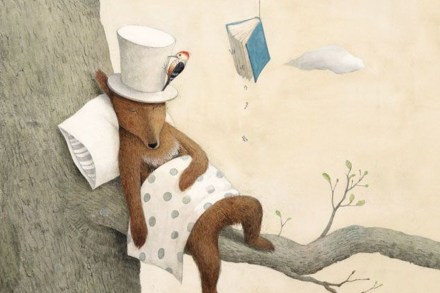
Do you wake up before the alarm or do you hit the snooze button a couple of times? Do you bound out of bed or do you pull the covers up tighter? Do you greet your family with a cheery “Good Morning” or do you mumble an incoherent “gmmmphngg?” If you’re more the latter type of person, then today’s holiday encourages you to be a happy “upsy-daisy” who starts the day with enthusiasm and an optimistic outlook. Beginning the day fresh as a daisy helps the whole day go better!

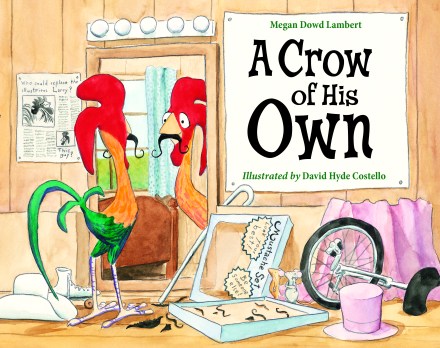
A Crow of His Own

Written by Megan Dowd Lambert | Illustrated by David Hyde Costello


When fame and fortune came calling for Larry, the charismatic rooster of Sunrise Farm, the daily routine turned upside down. “The animals overslept and no one knew what to do.” But while the cow, horse, sheep, chickens, and goose fretted, Farmer Jay and Farmer Kevin had a plan. One day they gathered all the animals and introduced Clyde, the new rooster. Looking at the “scrawny little guy” as he stammered his hello, the cow, horse, and sheep expressed doubt in his abilities, already comparing him to their beloved Larry.

Roberta, the goose, stepped forward, however, and reassured him that “they just miss Larry.” When Clyde asked who Larry was, the animals gasped. “Only the best rooster ever,” claimed the sheep. “Take it straight from my mouth: he was more than that,” said the horse. “He was a genius,” the cow chimed in.” And the chickens? In the dirt they scratched a heart with Larry and XOX in the center.
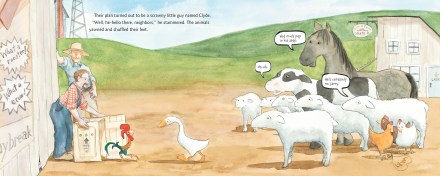
celebrate-picture-books-picture-book-review-a-crow-of-his-own-clyde-joins-the-farm

Image copyright David Hyde Costello, text copyright Megan Dowd Lambert. Courtesy of Charlesbridge

Clyde was worried—how could he ever live up to Larry? Roberta tried to soothe him. “‘Larry wasn’t a genius…he just made quite a show of it.” Emboldened and with an inkling of what he needed to do, Clyde thanked Roberta and dashed off. “Clyde spent the whole day gathering props, designing his costume, and choreographing a sublime two-step.” As Clyde gave himself one last look in the mirror in his top hat and cloak, he had misgivings. “Could he put on a show of a crow?” He went to bed, but hardly slept at all.

celebrate-picture-books-picture-book-review-a-crow-of-his-own-sleeping

Image copyright David Hyde Costello, text copyright Megan Dowd Lambert. Courtesy of Charlesbridge

In the morning…well…Clyde overslept. The animals were not happy. “Who ever heard of a rooster sleeping in?” baaad mouthed the sheep. “What a worthless chicken,” complained the horse. And the cow had issues of her own. Once again Roberta came to Clyde’s defense. With a wagon full of new props and material, Clyde rushed away to prepare for the next day. Up bright and early and balanced on a unicycle atop the coop while surrounded by promotional signs, Clyde “opened his beak, and…promptly fell to the ground with an undignified croak.”
celebrate-picture-books-picture-book-review-a-crow-of-his-own-skating-ramp

Image copyright David Hyde Costello, text copyright Megan Dowd Lambert. Courtesy of Charlesbridge

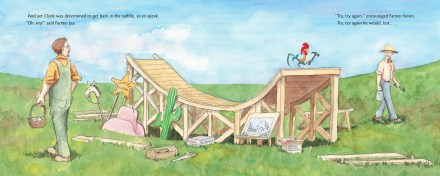
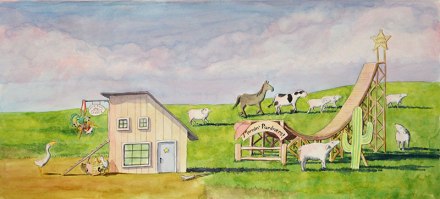
Poor Clyde! Humiliated and hurt he once again had to endure the slights of the farmyard animals, but their comments only spurred him on. Vowing to go bigger and better, Clyde built himself a ramp, ordered roller skates for birds and a parachute, and designed a colorful Western-themed set. “‘Oh, my!’” remarked Farmer Jay as he walked by. “‘Try, try again,’ encouraged Farmer Kevin.” But in the morning Clyde’s spectacular trick left him hanging upside down from the chicken coop, and the animals more “disgruntled and dismayed” than before.
celebrate-picture-books-picture-book-review-a-crow-of-his-own-ramp

Image copyright David Hyde Costello, text copyright Megan Dowd Lambert. Courtesy of Charlesbridge

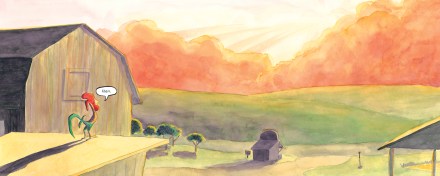
Clyde was distraught. “‘Forget about Larry.’” Roberta said. “‘Just crow your own crow.’” Clyde considered her advice. The next morning as the sky turned pink and orange with the rising sun, Clyde stood tall atop the chicken coop. He quietly cleared his throat and then—“COCK-A-DOODLE-DOO!” The newly awakened animals came running. Even Farmer Jay and Farmer Kevin came to see this new Clyde. The horse summed up their collective feeling: “It’s not so much like crowing, but crooning.” Roberta agreed. “‘Enough to give you goose bumps!’” she exclaimed. As an encore, “Clyde took a deep breath, gave a shake of his comb, and called out another crow of his own.”
celebrate-picture-books-picture-book-review-a-crow-of-his-own-sunrise

Image copyright David Hyde Costello, text copyright Megan Dowd Lambert. Courtesy of Charlesbridge

These days it’s nearly impossible for kids not to compare themselves or be compared to others—even those they’ve never met. All they need to do is jump on the Internet and discover that so-and-so has double, triple, or more friends and/or followers than they do; go to class and get their grade on that assignment they worked so hard on; or simply stand by their locker, go to lunch, or head out to gym and overhear the comments of other students. Avoidance isn’t the answer, but a good base of self-confidence and personal identity is. In A Crow of His Own Megan Dowd Lambert offers readers such a base in her entertaining and meaningful tribute to self-acceptance and love that hits all the right notes.

As soon as scrawny Clyde walks out of his crate to the scorn of his farm mates, kids will root for this underchicken. With a light touch and plenty of wordplay, Dowd deftly presents honest portrayals of the opposition Clyde is up against as well as Clyde’s distressed reactions. Clyde’s three attempts to act like Larry humorously demonstrate the difficulties of trying to be someone you’re not. When Clyde finally musters the courage to “crow his own crow” and is met with praise, readers will see that their own unique talents will find an appreciative audience.

celebrate-picture-books-picture-book-review-a-crow-of-his-own-sunrise-farm

Image copyright David Hyde Costello, text copyright Megan Dowd Lambert. Courtesy of Charlesbridge

David Hyde Costello knows how to put on a show! His Sunrise Farm is a gentle, bucolic spread still under the thrall of Larry. Humorous details, such as the valentines to Larry the chickens draw in the dirt, the movie house-style posters on the side of the barn, and the surprised and exasperated expressions of the animals, testify to Larry’s enduring legacy. But careful observers will notice that while Larry is a rather bland white rooster with some black tail feathers, Clyde is distinctively colorful from his comb to his feet. Kids will giggle at Clyde’s increasingly complex morning shenanigans even as they sympathize with his plight. When Clyde finally reveals his magnificent crow, readers will cheer.

A Crow of His Own is a winner on so many levels. It offers parents and children a way to discuss and begin building the strong sense of self so important to a happy and successful life. The book also presents a positive visual representation of diversity, and in Roberta and Farmer Jay and Farmer Kevin it shows that finding support helps. And it does all of this in a story that stands on its own as a funny, laugh-inducing romp. Because kids will want to hear this story over and over, A Crow of His Own would be a wonderful addition to libraries and home book collections.

Ages 4 – 9

Charlesbridge, 2015 | ISBN 978-1580894470

To learn more about Megan Dowd Lambert, her picture books, her Whole Book Approach to Reading, and more visit her website!

On David Hyde Costellos website you’ll find a gallery of artwork, a portfolio of picture books, videos, and more!

Upsy-Daisy Day Activity

celebrate-picture-books-picture-book-review-chicken-craft

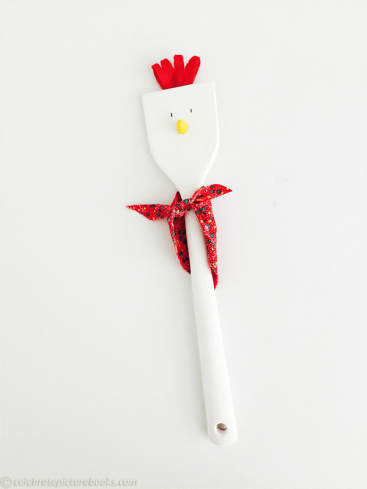
A Chicken to Wake Up To


A long-handled wooden turner makes a plucky decoration for your room or kitchen—and a great reminder to bring your passions to every job! In a few simple steps, you’ll have a cute companion you’ll want to crow about!

Supplies

  • Printable Comb and Scarf Template
  • Long-handled wooded turner, available in kitchen supply stores
  • Red felt, 2 inches by 2 inches
  • Yellow bakable clay
  • Fabric, 12 inches square
  • A small piece of white felt or fleece (optional)
  • White paint (or any color you would like)
  • Black marker
  • Fabric glue
  • Glue gun
  • Paint brush

celebrate-picture-books-picture-book-review-chicken-craft

Directions

  1. Paint the wooden turner, let dry
  2. Cut the scarf from the piece of fabric
  3. Make a beak from the yellow clay and bake it according to package directions

To make the comb

  1. Fold the felt in half and glue the end together with the fabric glue
  2. Cut short strips from the folded top of the felt, about ½-inch to ¾ -inch in length
  3. Round the corners of the strips slightly

To make the scarf

  1. Fold the fabric in half
  2. With the long, straight edge of the scarf template along the fold, cut out the scarf
  3. With the fabric glue, glue the two sides of the scarf together so that you have two “right” sides
  4. Let dry

To assemble the chicken

  1. Pinch the bottom of the comb together so that the strips open and the felt pleats a little
  2. With the glue gun attach the comb to the back of the painted turner, keeping the bottom pinched together
  3. Attach the beak to the front of the turner
  4. Draw eyes on the chicken with the black marker
  5. Tie the scarf around the neck of the handle, hold in place with a drop of glue in the back if necessary
  6. To make tail feathers in a turner with a hole in the handle, pinch together a small folded piece of white felt or fleece and push it through the hole in the handle of the turner.
  7. Cut or arrange to look like feathers

Picture Book Review

May 15 – Straw Hat Day

celebrate-picture-books-picture-book-review-miss-fannie's-hat-cover

About the Holiday
Straw hats are found in nearly every culture in the world and have been used since ancient times. Made from local materials, some are unique to and even iconic of the country in which they’re made. Woven loosely, straw hats can protect a person from the hot sun while also keeping their head cool. In rainy climates, tightly woven hats are good for staying dry. Of course, straw hats are a staple of women’s fashion and can be found in nearly every color and decorated with ribbon, flowers, feathers, beads, and more.

Miss Fannie’s Hat

Written by Jan Karon | Illustrated by Toni Goffe


“Miss Fannie has lots of hats. And each one is her favorite.” Miss Fannie is ninety-nine years old and has a closet full of hats that she has worn on special occasions throughout her life. When she tries on her “red felt with the big feather, she looks in the mirror and says ‘I just love this hat!’” It’s the same with her green velour hat that’s decorated with a fancy pin. She’s not the only one who loves her hats. When she wears them to church, people always tell her, “‘Miss Fannie, I sure do love that hat!’” But Miss Fannie has a favorite among her many hats: the pink straw with silk roses. Everyone else loves this hat too.

celebrate-picture-books-picture-book-review-miss-fannie's-hat-closet (2)

Image copyright Toni Goffe, text copyright Jan Karon. Courtesy of Puffin Books.

Miss Fannie is a tiny woman who now lives with her daughter, Wanda. Wanda takes good care of her mother. She makes her big breakfasts, and even though Miss Fannie always says its “way too much,” she always clears her plate. Every Saturday, Wanda helps her mother wash her hair in the bathroom sink. Miss Fannie is so small that she has to stand on a stool to reach. Afterward, Wanda rolls her mother’s hair in curlers, and on Sunday morning she “combs out her mama’s hair, which is all nice and soft and gray, like the feathers of a dove.”

Then Miss Fannie puts on make-up, dresses in her best clothes, and chooses a hat. Choosing can be difficult because “Miss Fannie has three black hats, two red hats, one green hat, two white hats, two navy hats, three beige hats, one brown hat, and the famous pink straw with roses. Because she never wears the same one twice in a row, some people think she has a whole closet full of hats. Which, of course, she does.”

One Sunday, Miss Fannie’s preacher comes to her with an earnest request. He asks her to donate one of her hats to the auction that will raise money to fix up the church for Easter. Miss Fannie wants to help, but how can she choose among her beautiful hats? When they get home, Miss Wanda helps her mother lay out all of her hats on the bed and dresser. Alone in her room, Miss Fannie looks over all her hats. As she holds each in her hand she remembers her past. “The green velour with the fancy pin was very, very old, and still very beautiful.” She had worn it during the great flood of 1916 when she “crossed the swollen river on a ferry to visit her mother and father. As she stood at the rail…a house had floated by, almost close enough to touch.”

celebrate-picture-books-picture-book-review-miss-fannie's-hat-breakfast

Image copyright Toni Goffe, text copyright Jan Karon. Courtesy of Puffin Books.

Next, she considers the red, wide-brimmed felt. The feather on this hat came from a hawk Miss Fannie had caught trying to nab one of her chickens. Then she picks up the brown velvet hat that “always reminded her of Flower, her grandmother’s cow.” She had begun milking Flower when she was seven years old and had learned to churn butter that was better than any found in a store. “Finally, Miss Fannie came to her most favorite hat of all: the pick straw with silk roses.” She had worn it every Easter for thirty-five years and it never failed to make her feel brand new. It was a tradition everyone else enjoyed too, “just as they looked for the tulips and daffodils to bloom in the spring.”

She puts the pink straw hat on, looks in the mirror, and sighs. “In her heart she did not want to giver her hat away. Not at all.” But as she places it back in its box and ties the ribbon, she discovers “she was very, very excited” about all the things it might be able to do. The old pipe organ needed fixing, there was a crack in the church bell, and the roof really needed to be replaced.

At the auction, when the preacher holds up Miss Fannie’s pink straw hat with the silk roses, “the bidding took off lickety-split.” With the bang of the gavel, the hat goes to a woman in the front row. The check she gives the preacher is “enough to really get things fixed,” Miss Fannie knows. She also knows “that she would not miss her favorite hat one bit.”

celebrate-picture-books-picture-book-review-miss-fannie's-hat-outside

Image copyright Toni Goffe, text copyright Jan Karon. Courtesy of Puffin Books.

On Easter morning Miss Fannie rises and fixes her hair. She looks at her hats—none of which seemed right. As she meets Wanda at the front door in her best dress, her best jewelry, her best gloves, and a white corsage, “Miss Wanda couldn’t believe her eyes. Her mama was going out the door without wearing any hat at all!” When they arrive at the freshly painted church, Miss Fannie and Miss Wanda are surprised and delighted to see pink roses planted everywhere around the building. “‘Oh, Mama!’ said Miss Wanda. ‘It looks just like your pink hat!’”

With tears in her eyes, Miss Fannie learns that they were able to fix the organ and the bell as well as planting all the roses. As the congregation looks on “they didn’t see an old woman at all. What they saw was a young girl with hair as soft as the feathers of a dove.” And now when people pass the church, they don’t see gardens of roses. Instead, they see Miss Fannie’s hat. “And it will always be her favorite.”

Jan Karon’s story of selfless love was a favorite in our house when my daughter was young. Not only is the well-paced narrative full of evocative sensory details, bits of history, and realistic dialogue, it centers around a unique plot involving the types of soul-searching decisions that are hard to make. No matter how many times we read the book, Miss Fannie’s choice to auction her favorite hat to benefit her church seemed to come as a surprise that both inspired and heartened. While the tale is primarily Miss Fannie’s, it is Wanda’s story of benevolence too as Karon affectionately describes the ways in which Wanda lovingly attends to her mother’s physical and emotional needs. Throughout Miss Fannie’s Hat, Karon demonstrates that a life well-lived is one abounding in joyous giving.

Toni Goffe takes readers into Miss Wanda’s home—and Miss Fannie’s memory—with his bright, delicate illustrations that fully satisfy little one’s love of realistic detail. My daughter enjoyed the textured feel to the images, where steam rises from a cup of tea and from the bathroom sink, Miss Wanda brushes out her mother’s soft hair, and the hats—made of velvet, velour, and straw and sporting feathers, flowers, nets, and ribbon—beg to be touched. In fact, with the first page and its tantalizing peek into Miss Fannie’s closet, readers will find themselves riveted to her hats and life story. Vignettes from Miss Fannie’s younger years as well as scenes of her now demonstrate her enduring courage and strength of character.

For kids who like to count, sort, and compare, a one-page illustration and a glorious two-page spread allow them to match the list of hats in the text with the contents of Miss Fannie’s closet. They are also invited to choose their favorite from among Miss Fannie’s hats.

Miss Fannie’s Hats is a wonderful story to share with young readers for its ideas of giving, multigenerational relationships, and friendship.

Ages 3 – 6

Puffin Books, 2001 | ISBN 978-0140568127

Discover more about Jan Karon and her books for children and adults on her website!

View a gallery of artwork by Toni Goffe on his website!

Straw Hat Day Activity

celebrate-picture-books-picture-book-review-hat-matching-game

Hat Matching Game


These hats come in pairs—or maybe even triplets—but somehow they’ve been mixed up! Can you find all the matching sets? Just put on your thinking caps and play this printable game!

Supplies

Directions

  1. Print two or more sets of cards
  2. Cut the hat cards apart
  3. Mix them up and lay them face down on the floor or table
  4. Choosing one card at a time, turn them over to try and find a match
  5. If the cards do not match, replace them face down and try again
  6. Continue play until all the hats have been matched

Picture Book Review

May 4 – Petite and Proud Day

celebrate-picture-books-picture-book-review-the-smallest-girl-in-the-smallest-grade-coverAbout the Holiday
Life’s not about how tall you are but about how big your heart is! Today we celebrate people who are 5’4” and under—the petite! There are many advantages to being on the smaller side—it’s easier to fit into tight spaces; airline, train, and other transportation seats are more comfortable; and we can blend into the crowd more easily when we’re having a bad hair day. All-in-all being petite is pretty perfect!

The Smallest Girl in the Smallest Grade

Written by Justin Roberts | Illustrated by Christian Robinson


Sally McCabe was so small that she was mostly overlooked. “She was the smallest girl in the smallest grade.” The other kids heard her name called every morning along with theirs, and they passed her in the hall on the way to class, but no one knew that “Sally was paying super extra special attention” to what went on around her. For instance, she noticed the kite someone had lost in the tree and had counted twenty-seven keys on the janitor’s ring.  She watched as the leaves turned “green to gold in the fall” and when “Tommy Torino was tripped in the hall.”

celebrate-picture-books-picture-book-review-the-smallest-girl-in-the-smallest-grade-classroom

Image copyright Christian Robinson, text copyright Justin Roberts. Courtesy of G. P. Putnam’s Sons.

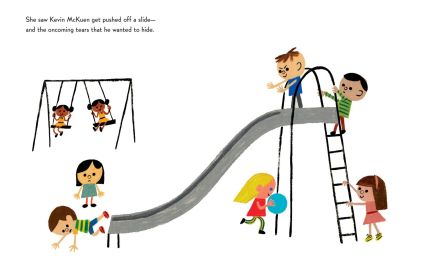
She saw wildflowers turn their face toward the sun and “was there when the stray cats who normally fought / conducted a meeting in the church parking lot.” On the playground she saw Kevin McKuen get shoved down the slide and knew of the “tears that he wanted to hide.” On Parent-Teacher day, too, she watched kids pulled down the hall by parents upset at what they had heard. But during all this, no one happened to see Sally watching or knew what that could mean.

celebrate-picture-books-picture-book-review-the-smallest-girl-in-the-smallest-grade-slide

Image copyright Christian Robinson, text copyright Justin Roberts. Courtesy of G. P. Putnam’s Sons.

Sally understood that these slights, mean words, and cruel actions kept building and building without any stop, and she finally decided that something must change. So one day during lunch she stepped out of line, stuck her hand in the air, and announced very loud, “‘I’m tired of seeing this terrible stuff. / Stop hurting each other! This is enough!’”

Some kids just giggled and ignored what she’d said, but many others joined in with their hands in the air. “Like waves rolling in, one after another— / first Molly rose up, then Michael’s twin brother. / It was Tyrone and Terence, then Amanda and Paul, / who pushed out their chairs and stretched their arms tall.” And they all felt connected “like the janitor’s keys. Fastened together with a heavy steel ring / that held all the secrets to unlock everything.”

celebrate-picture-books-picture-book-review-the-smallest-girl-in-the-smallest-jump-rope

Image copyright Christian Robinson, text copyright Justin Roberts. Courtesy of G. P. Putnam’s Sons.

After that day, things went back to normal—but with much welcomed kindness in small doses and places. Spaces were made for strangers to sit, doors held wide open, and many such “moments that get taken for granted—a wildflower appearing that no one had planted.” And so the world changed for this school and this town all because Sally was courageous and kind and paying attention.

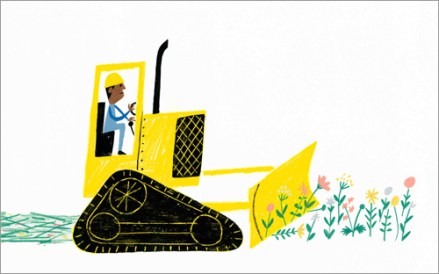
Justin Roberts’ rhyming tribute to the empathy and bravery of one little girl who takes notice and makes a difference shows kids and adults that anyone can create change no matter who they are. Readers of all ages will recognize the hurts that Roberts chooses to include, good examples of the small and large acts that cause physical and emotional pain. The infectious rhythm and the inspirations of kindness—from the alley cats’ truce to wildflowers to keys (objects that at once have familiarity and deeper meanings)—give the book resonance far beyond the immediate reading.

celebrate-picture-books-picture-book-review-the-smallest-girl-in-the-smallest-grade-bulldozer

Image copyright Christian Robinson, text copyright Justin Roberts. Courtesy of G. P. Putnam’s Sons.

Christian Robinson’s bright, wide-lens drawings of Sally’s schoolroom, cafeteria, and playground give young readers the same view Sally has, allowing them to also find the examples of arguing, pushing, whispering, and other slights that she reacts to. An illustration of Sally and her classmates sitting at their desks shows exactly how small she is in comparison to the other children; the rest of the pages demonstrate just how big her heart is. Each page offers opportunities for kids and adults to discuss the problems of bullying and options for how they can make a difference.

The Smallest Girl in the Smallest Grade is a wonderful reminder of how important each person is in making the world a happier place and would make an excellent addition to home libraries.

Ages 3 – 7

G. P. Putnam’s Sons, 2014 | ISBN 978-0399257438

Visit Christian Robinson’s website, where books and art are always fun!

Check out all the music, videos, activities, and other stuff by Justin Roberts on his website!

Petite and Proud Day

celebrate-picture-books-picture-books-review-kindness-cards

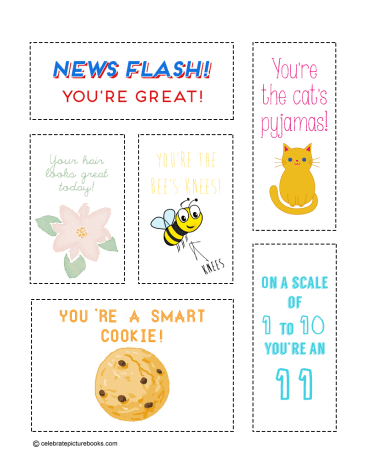
Kindness Cards


Being kind to someone can be as easy as slipping a friendly note into someone’s locker or backpack or leaving a card for a favorite teacher, bus driver, or librarian. If you notice someone who could use a pick-me-up, you could give them one of these cards too! Print out your Kindness Cards and start spreading some good cheer!

Picture Book Review

April 29 – National Go Birding Day

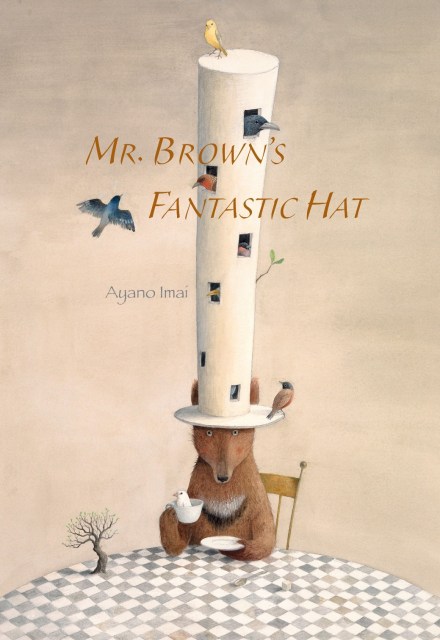
celebrate-picture-books-picture-book-review-mr-brown's-fantastic-hat-cover

About the Holiday
With all the bird activity going on right now as these little creatures build nests, lay eggs, and take care of new families, it’s a perfect time to go bird watching. The weather promises to be warm, and with a little stealth, a good sense of observation, and perhaps some binoculars, you should be able to spot quite a few lovely species. As the subject of today’s book found, if your home—or your hat—is inviting, feathered friends will come! So head out to a park, forest, beach—or even your backyard—and enjoy the beauty of the birds in your area.

Mr. Brown’s Fantastic Hat

By Ayano Imaí


Mr. Brown lived alone and, if you asked him, he’d tell you he liked it that way. He “had no friends and he didn’t want any.” If you were privy to his secret thoughts, however, you’d learn that Mr. Brown was actually very lonely. Mr. Brown liked to take long walks, and when he went out, he always wore his “smart,” distinctive hat. “One day while Mr. Brown was sleeping, a woodpecker flew down and started tapping a hole in his hat, thinking, ‘What a wonderful nest this hat would make!’”

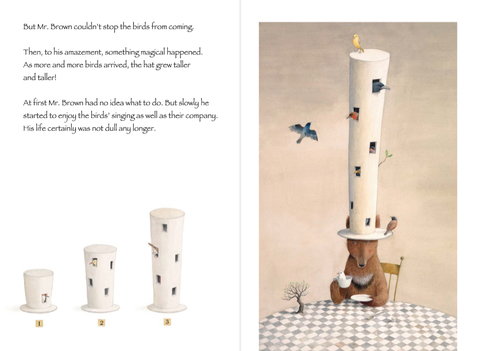
When Mr. Brown woke up he was shocked to discover that a bird had moved into his hat. Someone living this close to him was not what Mr. Brown had in mind at all. Then to Mr. Brown’s dismay the “woodpecker soon told all his friends about the wonderful new home and invited them all to join him.” Soon Mr. Brown’s hat was full of holes—and birds! You might think a regular hat would not have enough room for so many residents—but Mr. Brown’s hat was no ordinary one. As more and more birds moved in, his hat grew taller and taller!

celebrate-picture-books-picture-book-review-mr-brown's-fantastic-hat-birds-live-in-hat

Image copyright Ayano Imaí, courtesy of minedition, 2014

As the days went on Mr. Brown discovered that he was beginning to enjoy the birds’ singing and their company. Now Mr. Brown had renewed purpose in his daily walks: “He loved to show off his hat. Everywhere he went it was full of the music of singing birds.” People on the street took notice and wanted to emulate Mr. Brown. All over town people began wearing tall hats, “but the birds preferred to stay with Mr. Brown no matter how hard people tried to persuade them.”

One day as autumn settled in, Mr. Brown noticed that all the birds had flown away. He was sad and didn’t understand where they had gone or why they had left him. He wondered if he would see them again. The idea of a quiet life no longer held the appeal it once did, and Mr. Brown missed his friends. He tried to convince himself that he didn’t care that the birds had left, but he continued to fill the feeders and watch out for them every day.

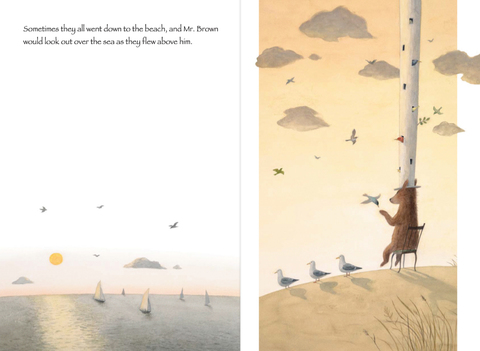
celebrate-picture-books-picture-book-review-mr-brown's-fantastic-hat-looking-out-to-sea

Image copyright Ayano Imaí, courtesy of minedition, 2014

Even though it was time for Mr. Brown to take a long winter’s nap, he tried to stay awake, worried that there would be no one to care for the birds if they returned. But nature took its course, and Mr. Brown fell into a deep sleep. One morning after a particularly vivid dream in which Mr. Brown could hear the birds singing, he woke to a tapping sound. He went to the door and peered out.

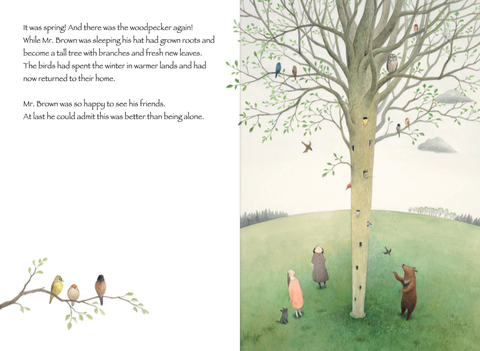
Spring had come and with it Mr. Brown’s hat had grown roots and sprouted branches and leaves. The old holes were filled with their previous tenants. The sight filled Mr. Brown with joy, and he finally could admit to himself that sharing his life with friends “was better than being alone.”

celebrate-picture-books-picture-book-review-mr-brown's-fantastic-hat-hat-grows-into-tree

Image copyright Ayano Imaí, courtesy of minedition, 2014

Ayano Imaí’s gloriously beautiful book plumbs the nature of solitude and loneliness as well as the value of friendship with an honesty that is at once heartrending and uplifting. For so many quiet, introspective people—children and adults alike—navigating the world of small talk, casual relationships, and making friends is similar to traveling uncharted territory, where the language and mores are foreign. It can become easier to tell oneself that it doesn’t matter, when in reality it matters a great deal. Many times happiness comes when one finds their niche or, in some surprising way, a niche finds them.

celebrate-picture-books-picture-book-review-mr-browns-fantastic-hat-sleeping-on-branch

Image copyright Ayano Imaí, courtesy of midedition, 2014

Imaí tells the story of Mr. Brown and his fantastical hat in straightforward narration, but more profound meaning is revealed in her illustrations. Mr. Brown, it is discovered, is a brown bear who has taken on the aspects of humans. He walks upright, carries an umbrella and bag, owns a home, and wears a hat. His fur is even the same color as the townspeople’s clothing. But while he may be among people, he is not of them. His home has a grass floor which sprouts mushrooms and weeds; another weed pokes out from the bristles of his brush; a tree branch juts from a wall; and mushrooms share space with the laundry on the drying line.

Mr. Brown comes from nature and belongs with nature, so it is no surprise that the birds flock to him and prefer him to humans, who in an ironic twist long to be like Mr. Brown. Mr. Brown’s hat is also symbolic of one’s heart, in that as a person embraces friends, their ability to accept and love others continues to grow.

I especially like the ending of Mr. Brown’s Fantastic Hat, in which Mr. Brown stays true to himself. He does not suddenly discover his “wild” side and become someone that he is not. He is able to remain a quiet, introspective bear while also embracing his friends, his love for them, and his place in the world. He finds inner happiness and loved ones to share it with.

Ages 3 – 8 (and up)

minedition, 2014 | ISBN 978-9888240845

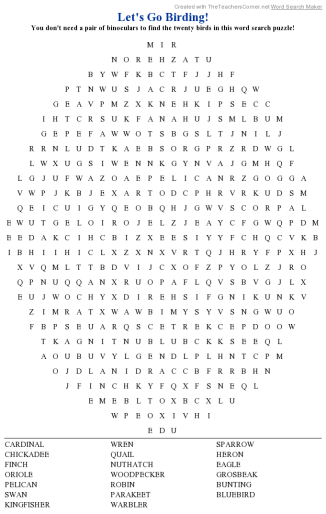
National Go Birding Day Activitycelebrate-picture-books-picture-book-review-mr-browns-fantastic-hat-lets-go-birding-bird-species-word-search

Let’s Go Birding! Word Search Puzzle


You don’t need a pair of binoculars to find the twenty kinds of birds in this printable Let’s Go Birding! Word Search Puzzle. Here’s the Solution!

Picture Book Review

April 21 – It’s Celebrate Diversity Month

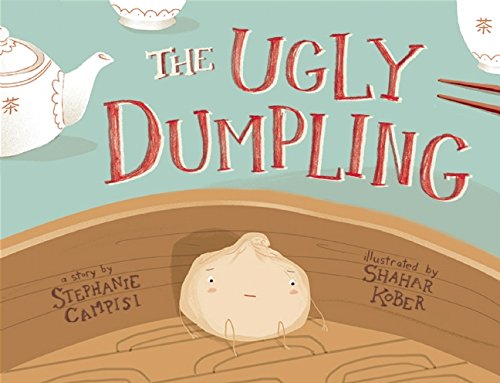
celebrate-picture-books-picture-book-review-the-ugly-dumpling-cover

About the Holiday
The month of April is set aside for people to recognize and appreciate the varied cultures and beliefs around the world. Instead of finding division and differences, we should celebrate the beauty and wonder of our multifaceted planet. This month offers a great opportunity to discover ways to incorporate acceptance and inclusiveness throughout your life.

The Ugly Dumpling

Written by Stephani Campisi | Illustrated by Shahar Kober


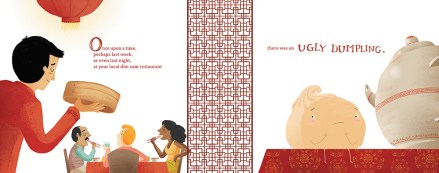
“Once upon a time, perhaps last week, or even last night, at your local dim sum restaurant…there was an ugly dumpling.” Sure, you might think all dumplings are ugly, but we’re talking about one particular ugly dumpling. It tried all sorts of tricks to make itself more attractive, but it still remained lonely and uneaten. It sat dejected until a cockroach traversing the kitchen caught sight of it and immediately fell in love.

celebrate-picture-books-picture-book-review-the-ugly-dumpling-interior-art-dim-sum-restaurant

Image copyright Shahar Kober, text copyright Stephani Campisi. Courtesy of Mighty Media Press.

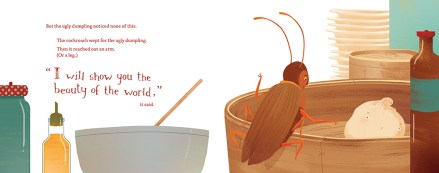
The cockroach “reached out an arm. (Or a leg)” toward the dumpling and offered to show it the beauty of the world. Together they traveled to cities near and far, experiencing them through culinary lenses—stacked-plate skyscrapers, piled-dishes skylines, and chopstick bridges that took them over flour mountains and folded-napkin peaks. Then, in a certain restaurant, the dumpling saw something astonishing! Not only one, but two, three, four, and more dumplings just like itself!

celebrate-picture-books-picture-book-review-the-ugly-dumpling-trying-to-fit-in

Image copyright Shahar Kober, text copyright Stephani Campisi. Courtesy of Mighty Media Press.

Suddenly the ugly dumpling realized that it was not a dumpling at all, but a “steamed bun—a golden-hearted, smooth-skinned steamed bun, exactly like all the other steamed buns in the world.” The ugly dumpling puffed with meaning, importance, and…yeast! The restaurant patrons and staff and even the other steamed buns took notice. The cockroach by the ugly dumpling’s side cheered to see its friend receiving so much attention.

celebrate-picture-books-picture-book-review-the-ugly-dumpling-roach

Image copyright Shahar Kober, text copyright Stephani Campisi. Courtesy of Mighty Media Press.

The people’s wide eyes and astonished expressions were not for the dumpling, however. Instead, they registered horror at the insect in their midst. The ugly dumpling was familiar with that look and did “something quite beautiful. It reached out an arm. (Or a leg.) And it led the cockroach out into the world, The beautiful, beautiful world.” And in that moment the ugly dumpling realized that it “was not like all the other steamed buns after all” and that “perhaps that was a good thing.”

celebrate-picture-books-picture-book-review-the-ugly-dumpling-leaving-together

Image copyright Shahar Kober, text copyright Stephani Campisi. Courtesy of Mighty Media Press.

Stephani Campisi’s The Ugly Dumpling is a fresh and delectable dish-up of the classic Ugly Duckling story for a new audience. Stuffed with charm and off-beat humor, this tale of friendship and diversity embraces all who feel at odds with their environment—with or without the recognition of why. Its sweet and insightful ending emphasizes the idea that finding your niche does not always mean fitting in with a certain crowd, and that having the courage to strike out on your own path leads to beautiful relationships and personal happiness.

celebrate-picture-books-picture-book-review-the-ugly-dumpling-different-dumplings

Image copyright Shahar Kober, text copyright Stephani Campisi. Courtesy of Mighty Media Press.

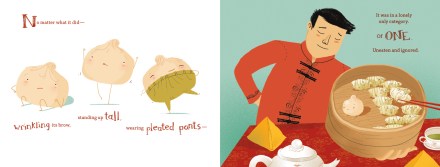
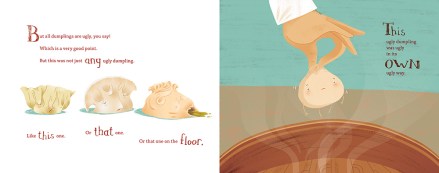
Shahar Kober’s dumpling is anything but “ugly.” His adorable puffed dough, lonely and ignored for not adhering to the mold, will melt readers’ hearts as he tries anything and everything—including green pleated pants—to fit in. Kobar’s stylish drawings are the perfect underscore to Stephani Campisi’s quick, dry wit—as in his rendition of three uglier-than-the-next dumplings—and if cockroaches were really as cute as Kober’s, we’d all set out a different kind of Roach Motel. A clever bit of typography transforms steam coming from a wok into the word HISS, and the restaurant scenes will make readers hungry for their favorite Asian eatery.

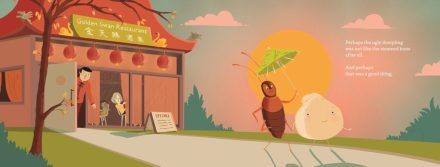
As readers turn to the last pages and watch the steamed bun and the cockroach leave the restaurant hand in hand (foot in foot?) under the shade of a paper umbrella, they will want to turn back to the beginning and start over again. The Ugly Dumpling is a must read and a wonderful addition to children’s bookshelves.

Ages 2 – 9

Mighty Media, 2016 | ISBN 978-1938063671

Get to know more about Stephanie Campisi and her work on her website!

To view a gallery of art by Shahar Kober for books, magazines, animation, and more, visit his website!

Check out the Mighty Media Press website for more about The Ugly Dumpling and a-dough-able coloring pages!

Take a look at the trailer for The Ugly Dumpling!

Celebrate Diversity Month Activity

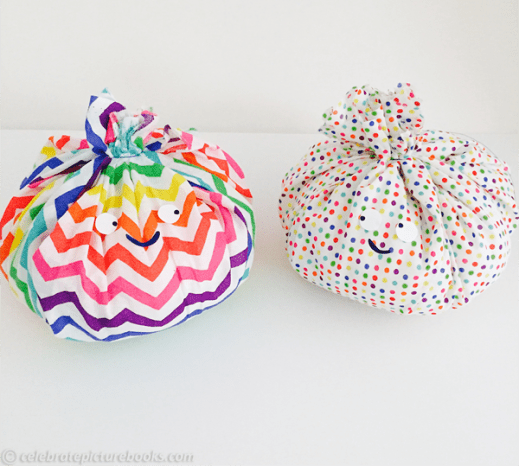
celebrate-picture-books-picture-book-review-dumpling plush craft

Embrace Your Inner Dumpling Plush


We are all beautiful “dumplings” in one way or another! With this easy craft you can create a huggable friend and show others what you’re made of!

Supplies

  • Square piece of cloth in any fabric and color. Size of plush depends on size of cloth (the plushes shown are made from 18”-square cotton fabric)
  • Poly fill (the plushes shown use about 1 1/8 ounces of fill)
  • White cloth for eyes and mouth
  • Twine or string
  • Fabric glue

Directions

  1. Cut the corners from the square cloth to make a circular piece of cloth
  2. Fill the middle with poly fill
  3. Pull the edges of the cloth up and around the fill
  4. Tie the top closed with the twine or string
  5. To make the face, cut small circles and a mouth from the white cloth
  6. Smooth out a section of the dumpling body
  7. Glue the face to the body with fabric glue

Picture Book Review

April 14 – It’s National Garden Month and Q & A with Author/Illustrator Wendy Wahman

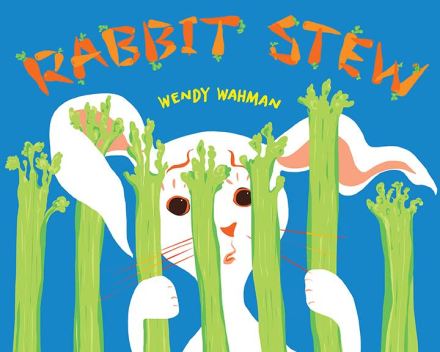
celebrate-picture-books-picture-book-review-rabbit-stew-cover

About the Holiday

One of the wonderful activities of spring and summer is gardening. As the sun warms, farmers and gardeners till their land and plant seeds with eager anticipation of the harvest to come.  April is Gardening Month, and the second week is designated especially for vegetable gardening. Our meals would not be as tasty and nutritious without carrots, squash, peas, beans, peppers, potatoes, and all the rest of these colorful foods. Today’s container gardens give even reluctant gardeners great ways to grow their own—without the work of a large plot. Whether you enjoy gardening on a large or small scale, take the opportunity of this month to start planting the seeds of a rewarding hobby!

Rabbit Stew

By Wendy Wahman


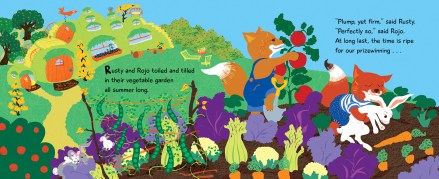
“Rusty and Rojo toiled and tilled in their vegetable garden all summer long.” But now the crops have ripened, and the two foxes are ready to enjoy the bounty of their hard work—so are their neighbors, the Rabbits. As Mommy Rabbit and the bunnies nibble away in a corner of the garden, Rusty gently squeezes the tomatoes and finds them “plump, yet firm.” “Perfectly so,” Rojo agrees as he lifts Daddy Rabbit from the carrot patch. “At last,” Rusty and Rojo exclaim, “the time is ripe for our prizewinning Rabbit Stew!”

celebrate-picture-books-picture-book-review-rabbit-stew-picking-veggies

Image copyright Wendy Wahman, 2017. Courtesy of wendywahman.com.

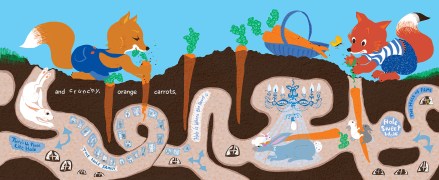
While Rojo picks “lean, green runner beans,” the Rabbits look on worriedly. Daddy tries to hide, but Rusty spies him in the wheelbarrow full of purple kale. Then, when the family dives back into their cozy “hole sweet hole,” they find that their convenient carrot snacks are being abruptly snatched away—only to be added to the pot of “splendid Rabbit Stew.”

celebrate-picture-books-picture-book-review-rabbit-stew-in-the-burrow

Image copyright Wendy Wahman, 2017. Courtesy of wendywahman.com.

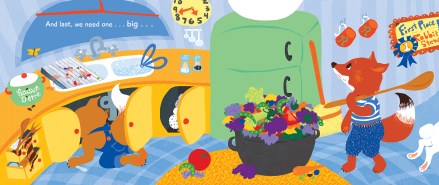
Next come raisins and celery “and roly-poly blueberries.” But what about those white and gray bits of fluff? Will they end up in the foxes’ buckets too? Of course “juicy red tomatoes, fresh sprigs of parsley, and sweet yellow peppers” are also musts for the foxes’ “finest-ever Rabbit Stew.” With the pot overflowing with colorful veggies, only one more thing is needed—“one…big…round…white…bowl…for our favorite Rabbit, Stew—and his family too!”

celebrate-picture-books-picture-book-review-rabbit-stew-kitchen

Image copyright Wendy Wahman, 2017. Courtesy of wendywahman.com.

With her fertile imagination and a clever play on words, Wendy Wahman offers up a delightful story that will have readers guessing until the very end. Along with the mystery and the yummy descriptions of each ingredient, Wahman presents a counting game for readers. As Rusty and Rojo pick their vegetables, children can count the ten runner beans on the trellis, nine purple kale leaves in the wheelbarrow, eight carrots from the burrow, and all of the other ingredients on down to one. But do Rusty and Rojo need one big white rabbit or something else? Kids will love the twist at the end and cheer to see Daddy Stew, Mommy Strudel, and their little bunnies—Dumpling, Biscuit, and Ragu—dining on the special meal grown and created just for them.

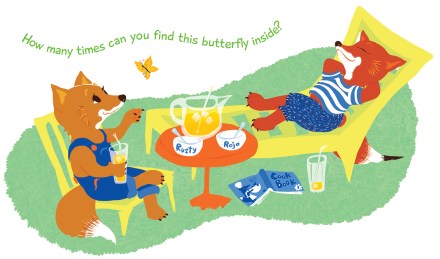
Everyone’s garden should look as deliciously vibrant as Wahman’s riotous patch of vegetables! The vivid colors jump off the page while providing texture and nuance to the illustrations. They also give kids another concept to learn and talk about. Little details, such as the tiny caterpillar and the yellow butterfly that follow the bunnies from page to page, as well as the fancy burrow lined with photos of friends and family will enchant readers. 

celebrate-picture-books-picture-book-review-wendy-wahman-interview-Fox-Lemonade

Image copyright Wendy Wahman, 2017, courtesy o f Wendy Wahman.

Welcome themes of friendship, diversity, and inclusiveness can also be found within the illustrations and the story.

Rabbit Stew is a bright, humorously sly story that would be a wonderful addition to any child’s library. The book also makes a perfect companion for trips to the farmers market, on picnics, or to spur interest in home gardening. The attention to the details of what rabbits can safely eat, as well as the number and color concepts provided in the illustrations, makes Rabbit Stew a great choice for school story times and spring lessons.

Ages 3 – 7

Boyds Mills Press, 2017 | ISBN 978-1629795836

You can download a fun Rabbit Stew Activity Sheets from Boyds Mills Press!

Discover more about Wendy Wahman, her art, and her books on her website!

You’ll dig this Rabbit Stew book trailer!

Meet Author/Illustrator Wendy Wahman

celebrate-picture-books-picture-book-review-Wendy-Wahman-head-shot

Today, I’m really happy to be chatting with Wendy Wahman about her art, her books, her inspirations, and a really sweet school visit she had recently.

Your bio mentions that you worked for the Seattle Post-Intelligencer until 2009. Can you describe your work there?

I worked in the art department doing maps, graphics, info-graphics and illustrations for every section of the newspaper. Ninety percent of the work was on deadline, so I learned to think and draw fast.

Our poor beloved P-I. It was 146 years old when Hearst closed it down. About 150 of us went down with the ship. Best job I ever had. I miss the variety and culture and importance — and honesty — of journalism. I miss my P-I family, very much.

How did you get started illustrating and writing books for children?

I was really just snooping around for illustration work. I had an idea for a book on dog body language I wanted to do, but imagined ‘a real writer’ should write it. I sent out some of the dog body-language art samples and heard back from four major publishers. Laura Godwin at Henry Holt called me, and was so passionate about dogs and kids—and my art. She asked to see a dummy. What dummy, right? I had no dummy, just an idea and some art samples. I took two weeks off from the P-I and put together a dummy. Laura helped me tremendously, as did my brilliant writer husband, Joe Wahman.    

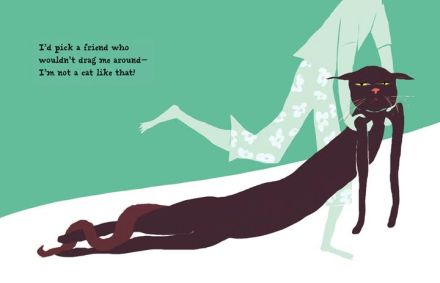
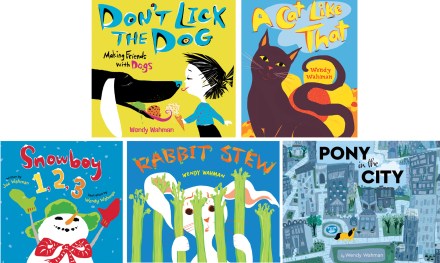
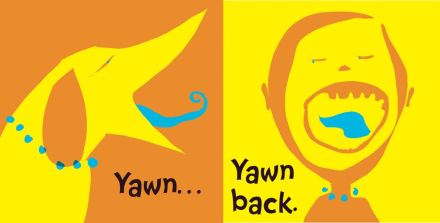
Don’t Lick the Dog is a how-to primer on being safe with dogs. We followed with the companion book, A Cat Like That. We never did do my dog body-language book. It’s sitting here patient as can be. “Good dog, book.”

celebrate-picture-books-picture-book-review-interview-with-wendy-wahman-yawn-back

Image copyright Wendy Wahman, Don’t Lick the Dog. Courtesy of Wendy Wahman.


celebrate-picture-books-picture-book-review-interview-with-wendy-wahman-cat-like-that

Image copyright Wendy Wahman, A Cat Like That. Courtesy of Wendy Wahman.

Your art is so varied—from humorous to infographics to striking, serious editorial work. You also work with crisp, clean lines and beautiful textures. Can you talk about your process and inspirations?

Thank you so much, Kathy. Well. I sit and think and read a lot. Mostly I just look and try to distract myself from thinking too hard. I like to thumb through my Thesaurus. When I’m stuck, I try to remember to move away. This can be physically—exercise or a walk; mentally—read or look through books; or emotionally—play with my dogs or call somebody. I say, try, because too often I sit rooted, thinking, thinking. Better to get up and move.

What was the inspiration for Rabbit Stew?

I feed my dogs a homemade stew of meat & veggies. Long ago, I was stirring up an enormous batch of dog food, when “rabbit stew” fluttered to mind. Rabbit Stew is also a counting book, counting down veggies from ten to one. It’s also a color book. It was a challenge to find ingredients safe for rabbits, in different colors and not give it away. Like, rabbits love dandelions and they’re very good for them, but I only know a couple of people who would knowingly toss dandelions into the pot. No potatoes; they are toxic to bunnies, and cabbage isn’t good for them either. 

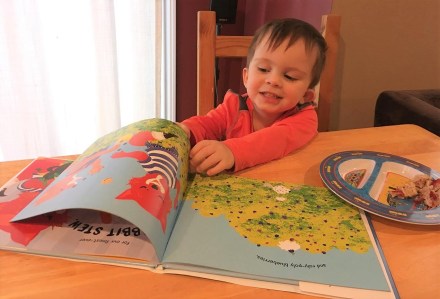
celebrate-picture-books-picture-book-review-rabbit-stew-fan

A happy fan enjoys reading “Rabbit Stew” with lunch! Photo courtesy of Wendy Wahman.

You give presentations at schools and libraries. Do you have an anecdote you’d like to share?

I did a school visit recently in southern California and got to take my mom to a presentation for 4th graders. I introduced her to the students, and they gave her a loud round of applause! Even more tender, when I was signing books (and the other stuff kids want signed), they asked if my mother would also give them an autograph. Is that the sweetest or what? Children can be so inspiring, healing, and wise. 

celebrate-picture-books-picture-book-review-interview-with-wendy-wahman-wendy-talking-to-a-class

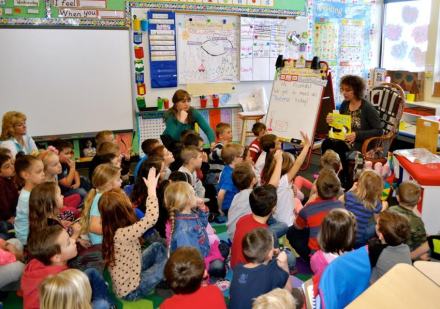
Wendy reads “Don’t Lick the Dog” to enthusiastic kindergarteners in Kennewick, WA. Photograph courtesy of Wendy Wahman

You also teach bookmaking to kids. That sounds fun and fascinating! Can you tell me a little bit about these classes?

I’m so glad you asked about these little books, Kathy. I love making them and sharing the process. Anyone can make one. I’ve taught them to kindergarteners through seniors. I call them “Insight Books,” because what comes out can be surprising, revealing, and often cathartic. Random lines inspire images and ideas. Some people write, others write and draw. Sometimes we collage. Even if you do nothing at all put look, the lines may stimulate ideas. These book are fun to make with a partner too. 

What’s up next for you?

I’m very excited about my next book, Pony in the City (Sterling Publishers). Kevan Atteberry’s book, Swamp Gas, releases the same day, Sept. 9th, and we’re talking about having a co- launch party.

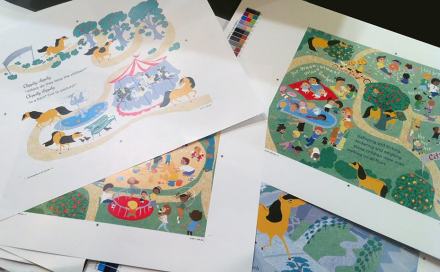
celebrate-picture-books-picture-book-review-interview-with-wendy-wahman-pony-in-the-city-proofs

Image copyright Wendy Wahman. Proofs of “Pony in the City” (Sterling, releasing Sept. 9 this year) courtesy of Wendy Wahman.

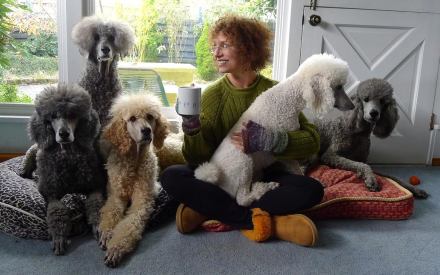
I’m working on Nanny Paws (Two Lions), a book inspired by my little white poodle, LaRoo, and the children next door. Here’s a picture of LaRoo and my other dog Jody with my friend Vikki Kaufman‘s poodles. Vikki is a breeder of beautiful silver and blue standard poodles. Vikki took the picture, can you tell?  Her dogs are staring straight at her. Poor LaRoo. She is a shy girl and just wants to get away from the masses.

celebrate-picture-books-picture-book-review-interview-with-wendy-wahman-poodles

Wendy with LeRoo and Jody and Vikki’s TinTin, Nickel and Eureka.

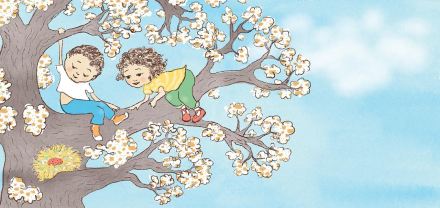
I’m also working on a dummy for a beautiful story written by Joe, “One Bird” (www.joewahman.com). I’m doing the art for both Nanny Paws and Joe’s story in a new/old style for me: pencil and watercolor.

celebrate-picture-books-picture-book-review-interview-with-wendy-wahman-one-bird

Image from “One Bird,” written by Joe Wahman, illustrated by Wendy Wahman. Courtesy of Wendy Wahman

 Do you have a favorite holiday?

Thanksgiving.

Do you have an anecdote from a holiday you would like to share

If you come over for Thanksgiving, prepare yourself for a vegetarian feast. We don’t eat animals here — but we do make them big, round, splendid bowls of stew.

Thanks so much, Wendy! It’s been a lot of fun! I wish you all the best with all of your books!

National Garden Month Activity

celebrate-picture-books-picture-book-review-garden-board-game

Grow a Vegetable Garden Board Game, copyright Celebrate Picture Books, 2017

Grow a Vegetable Garden Board Game


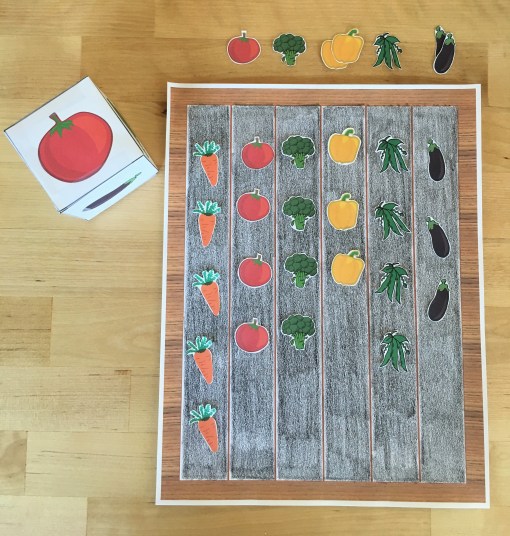
With this fun game you and your family and friends can grow gardens inside! Roll the dice to see whose garden will fully ripen first!

Supplies

Directions

Object: The object of the game is for each player to fill their garden rows with vegetables. Depending on the ages of the players, the required winning number of rows to fill and the number of vegetables to “plant” in each row can be adjusted.

  1. Print one Game Board for each player
  2. Print one set of Playing Cards for each player (for sturdier playing items, print on card stock)
  3. Print one Vegetable Playing Die and assemble it (for a sturdier die, print on card stock)
  4. Cut the vegetables into their individual playing cards
  5. Color the “dirt” on the Garden Plot with the crayon (optional)
  6. Choose a player to go first
  7. The player rolls the die and then “plants” the facing vegetable in a row on the game board
  8. Play moves to the person on the right
  9. Players continue rolling the die and “planting” vegetables until each of the number of determined rows have been filled with the determined number of vegetables.
  10. The first person to “grow” all of their veggies wins!

celebrate-picture-books-picture-book-review-wendy-wahman-interview-all-covers

You can find Wendy’s books at these booksellers:

Amazon | Barnes & Noble | IndieBound | Boyds Mills Press

You can connect with Wendy on:

BēhanceFacebook | LinkedIn | PinterestTwitter

Visit Wendy’s shops:

Cafe Press: http://www.cafepress.com/profile/109591016

RedBubble:  http://www.redbubble.com/people/wendywahman/portfolio

Zazzle: http://www.zazzle.com/wendoodles/products

Wendoodles coloring book: http://www.amazon.ca/Wendoodles-Wendy-E-Wahman/dp/1517403456

Picture Book Review

March 15 – True Confessions Day

celebrate-picture-books-picture-book-review-xo-ox-a-love-story-cover

About the Holiday
Today’s holiday encourages people to tell what’s on their minds even if it’s hard to do. Keeping a secret can be stressful as you ponder all the reactions that might result from its disclosure. But your imagination can run away with you! Instead of wondering and fretting, make that confession! If you’re divulging a secret affection, you may find that it is reciprocated! If it’s a guilty secret, you’ll probably discover that your apology is accepted easily. Either way, you’ll be relieved and able to move on to a new and better relationship.
XO, OX: A Love Story

Written by Adam Rex | Illustrated by Scott Campbell


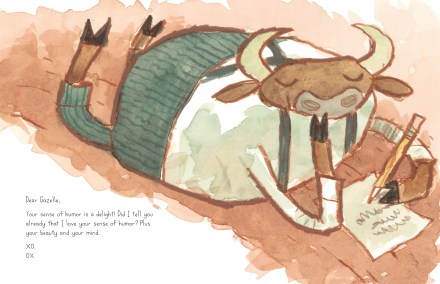
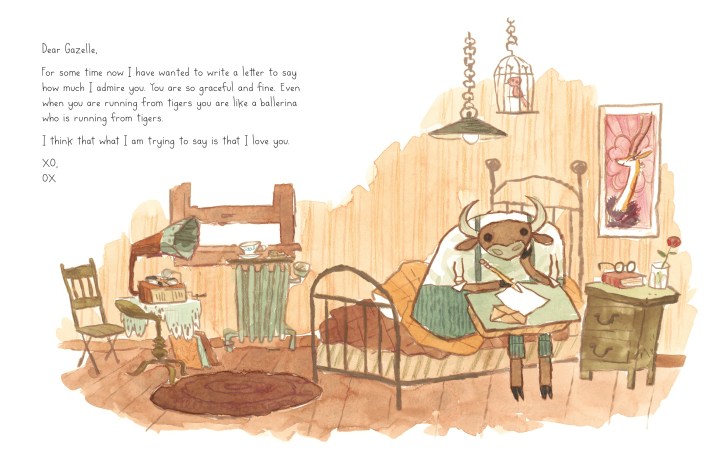
Ox has finally gotten up the courage to write to his heart’s desire. He sits on the edge of his bed, lap desk upon his knees scribbling away. “Dear Gazelle, For some time now I have wanted to write a letter to tell you how much I admire you.” He goes on to praise her gracefulness and remarks that even when she is “running from tigers you are like a ballerina who is running from tigers.” He ends with a declaration of love and XO, OX.

celebrate-picture-books-picture-book-review-xo-ox-a-love-story-ox-writes-letter

Image copyright Scott Campbell, text copyright Adam Rex. Courtesy of Roaring Brook Press.

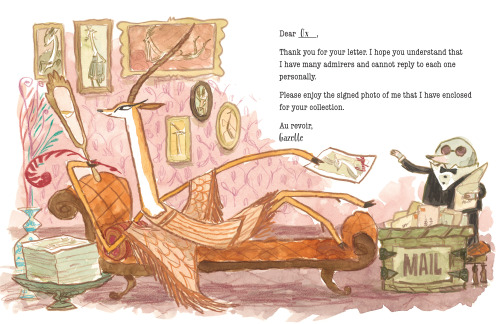
Gazelle, lounging on her daybed and admiring herself in a mirror nonchalantly hands her response to her assistant. “Dear Ox, Thank you for your letter. I hope you understand that I have many admirers and cannot reply to each one personally.” She says “Au revoir” with the gift of a signed photograph and moves on to the next letter in the overflowing box of fan mail.

The ever-optimistic Ox writes back while sitting on a park bench and enjoying a cup of steaming coffee. Gazelle’s picture is propped against a guitar, and little friends gather nearby. In his letter, Ox reveals that he does understand about the many other admirers and that makes it all the more meaningful that she responded to his letter personally. He signs off “XO, OX.” In return, Gazelle shoots off her standard letter and encloses another signed photo.

celebrate-picture-books-picture-book-review-xo-ox-a-love-story-gazelle-answers

Image copyright Scott Campbell, text copyright Adam Rex. Courtesy of Roaring Brook Press.

Ox is overjoyed to receive a second letter. The “coincidence” of the exact wording to the preceding letter only reinforces his opinion that Gazelle is “very smart” and has “a tidy mind.” He urges her reject the idea that he only loves her because she is pretty. He also loves that she is smart. Gazelle receives Ox’s letter (sealed with a big, red heart) while floating on a raft in the pool, a tall, cool drink floating nearby on its own poof. Her response is a departure from the usual, but only because she is insulted that anyone would think her “repetitive.” While she admits to many faults, this is not one of them. It seems she couldn’t be much clearer when she ends her letter with, “There is no need to write me again.”

Ox reads and rereads Gazelle’s note. Ignoring the last line, he focuses on the “ridiculous” thought that she has many faults. Ox assures her that she only has “one or two.” Gazelle takes offense and from her vanity table tells Ox that his “clumsy brain” has led him away from the usual response to her self-deprecation, which is that she has no faults. She then can’t help but mention the faults of other animals, such as being “too large and too stout” and having “strong smells about them and clumsy brains.”

celebrate-picture-books-picture-book-review-xo-ox-a-love-story-ox-writes-letter-on-floor

Image copyright Scott Campbell, text copyright Adam Rex. Courtesy of Roaring Brook Press.

Ox does not have such a “clumsy brain” and humbly accepts Gazelle’s criticism. In fact he states that he is glad to know what his faults are and tells Gazelle “you make me want to be the best Ox I can be.” His love for her—“the unflattering light of my life”—is undimmed, and he is looking forward to her next letter. Gazelle puts an end to it once and for all. She writes that there will be no next letter, clarifying that “this letter doesn’t count.”

HaHa, thinks Ox when he reads this. He quickly pens a note telling Gazelle how much he loves her sense of humor. Gazelle is brutal. She orders Ox to stop and tells him he is wasting his time. She lays out her reasons: “I could never love a clumsy thing. I could never love a smelly thing.” She goes on to list all of the aforementioned faults and adds that she could never love someone “so thick and ungraceful and awful and unlovely. And unlovable.”

celebrate-picture-books-picture-book-review-xo-ox-a-love-story-gazelle-asks-ox-to-stop

Image copyright Scott Campbell, text copyright Adam Rex. Courtesy of Roaring Brook Press.

You might think Ox would be devastated, but in this tirade he finds one of Gazelle’s faults—and he tells her that her ability to reveal it to him only makes him love her more. He closes with his usual XO, OX and includes a photograph of himself. Gazelle is incredulous. She rips the picture into bits, but then gazes at the pieces again and smiles. “Dear Ox,” she scribbles as she sits on the edge of her bed, lap desk upon her knees and with the taped-together photograph of her beau looking on.

There’s something for every age in Adam Rex’s XO, OX: A Love Story. Little ones will find the snooty Gazelle and humble Ox funny in their persistent writing and reactions to each letter. Older kids will understand the dynamics at work and will get the sly wordplay, the twist on whom exactly is “thick, ungraceful, and awful”, and the idea that perhaps the lady doth protest too much. And adults will never make it through without out loud guffaws on almost every page. Wondering how Ox will respond to each of Gazelle’s letters is such delicious suspense, and his kindness in the face of her derision will tug at readers’ hearts.

Scott Campbell’s softy colored line drawings offer hilarious touches to fill out the details of the homes and lives of these smitten pen pals. In a stroke of genius, Gazelle’s personal assistant is a sunglasses-wearing mole, suggesting Gazelle’s own perception of her dazzling brilliance. Clever contrasts in the lifestyles of barrel-bodied Ox, who writes at a rustic desk and relaxes by a pond, and lithe Gazelle, who writes from her elegant vanity and lounges in her pool, demonstrate that their similarities may outweigh their differences. The touching ending that brings the relationship between Ox and Gazelle full circle as he sends her a photograph and she responds is satisfying and sweet.

XO, OX: A Love Story would be a funny, fantastic addition to anyone’s home library—one that can provide laughs or balm for feeling hearts. 

Ages 4 and up

Roaring Brook Press, 2017 | ISBN 978-1626722880

Discover the world of Adam Rex, including his art, picture books, and books for older kids, on his website!

View a gallery of illustration by Scott Campbell on his website!

True Confessions Day Activity

celebrate-picture-books-picture-book-review-hexagonal-maze

Secret Tunnel Maze


Can you find your way through the secret tunnel to the truth in this printable Secret Tunnel Maze? Here’s the Solution!

Picture Book Review