January 9 – Poetry at Work Day

celebrate-picture-books-picture-book-review-a-river-of-words-cover

About the Holiday

Today’s holiday encourages people to consider their jobs, their office environment, their coworkers, and maybe even that snack in the desk drawer through the lens of poetry. You may find inspiration in today’s book about William Carlos Williams, who wrote many of his famous and well-loved poems while working as a physician. Whether you find poignancy or humor in your workplace, take a moment to jot down a few thoughts in free verse or rhyme and share your poem with your friends!  

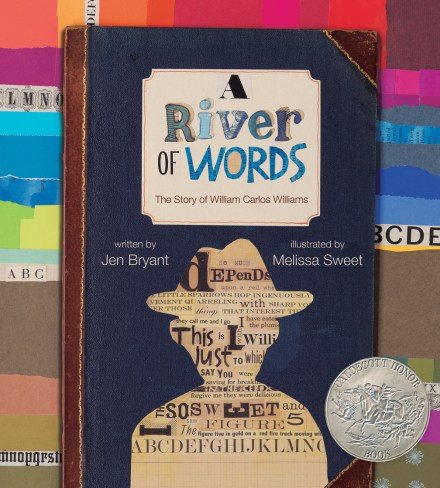
A River of Words: The Story of William Carlos Williams

Written by Jen Bryant | Illustrated by Melissa Sweet


Willie Williams was just like the other boys in his neighborhood—well, almost. When the other boys went home after a day of playing, Willie took off for the woods and fields behind his house. “As he walked through the high grasses and along the soft dirt paths, Willie watched everything.” He liked to sit next to the Passaic River and listen to the rhythm of the water as it “went slipping and sliding over the smooth rocks, then poured in a torrent over the falls, then quieted again below.”

celebrate-picture-books-picture-book-review-a-river-of-words-high-school

Image copyright Melissa Sweet, 2008, courtesy of Eerdmans Books for Young Readers.

But as Willie grew older, he didn’t have time for these leisurely pursuits. In high school, he was on the track team, attended lots of classes, and had even more homework. His was a rushed and hurried life. Except for in English class. There, when his teacher read poetry, he was taken back to the flow of the river. Each line created pictures in Willie’s mind.

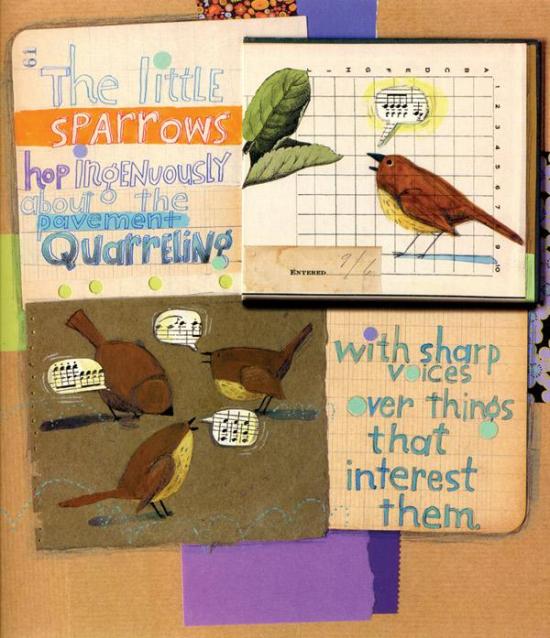
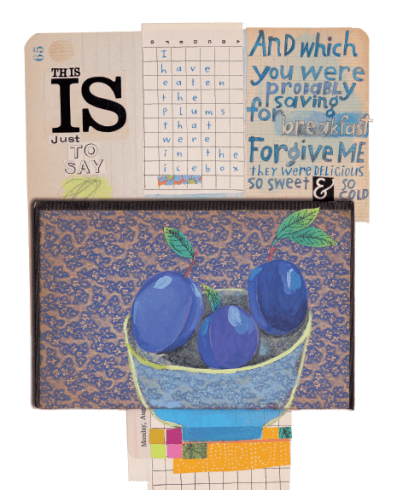
One night, Willie began writing his own poems. He copied the English poets he had learned about in school, using structured beats and rhyming endings. But soon these rules began to frustrate Willie; they didn’t give him the freedom to fully express his thoughts. He wanted to write about what he saw nearby, the things he was familiar with. Things, he said, like “plums, wheelbarrows, and weeds, / fire engines, children, and trees— / things I see when I walk down my street / or look out my window.”
celebrate-picture-books-picture-book-review-a-river-of-words-sparrows

Image copyright Melissa Sweet, 2008, courtesy of Eerdmans Books for Young Readers.

Willie began writing poems the way they came to him, with their own shape and sound. Writing this way made Willie feel free, and he filled notebook after notebook with poems. While Willie wished he could make a living as a poet, writing did not pay much, and he needed to be self-sufficient. Willie’s uncle had been a doctor, and Willie liked the idea of healing people. He wondered, though, if he could be a doctor and still write poetry.

When Willie graduated from high school, he went off to the university to study medicine. There he met the writers Ezra Pound and Hilda Doolittle and the artist Charles Demuth. Spending time with his new friends made his difficult studying easier. After college, Willie returned to his home town of Rutherford and opened his practice. He had so many patients that some people said he was “the busiest man in town.”
celebrate-picture-books-picture-book-review-a-river-of-words-attic-room

Image copyright Melissa Sweet, 2008, courtesy of Eerdmans Books for Young Readers.

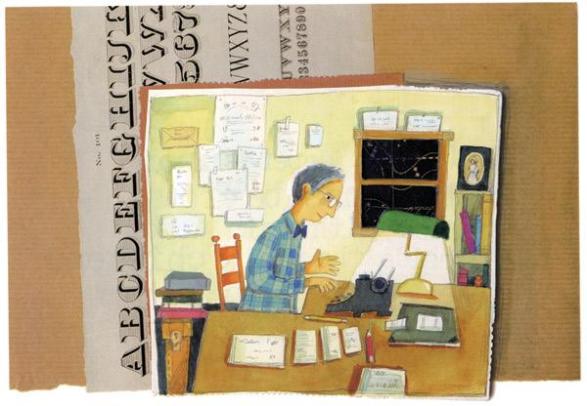
No matter how busy he was, however, he found time to write. Sometimes he jotted lines and ideas on his prescription pads. Then, after his long days at work, Willie climbed to his attic room where he studied the notes he’d made and wrote poems late into the night.

A Timeline, Author’s Note, and Illustrators Note about William Carlos Williams follow the text. The endpapers present a selection of Williams’ poetry.

A River of Words: The Story of William Carlos Williams is an inspirational book for children who have creative ideas of their own and would make an excellent addition to classroom and home libraries.

From the title through to the end of her lyrical biography, Jen Bryant captures the flow of William Carlos Williams’ creative and scientific life, which was as purposeful and free as the river that inspired him. Young readers and would-be writers will find much encouragement and insight in Bryant’s story, which reveals that talent and day-to-day life not only can co-exist but can enrich each other. By showing how Williams broke free from the structures of the poetry he copied, Bryant also motivates children to find their own voice.
celebrate-picture-books-picture-book-review-a-river-of-words-plums

Image copyright Melissa Sweet, 2008, courtesy of Eerdmans Books for Young Readers.

Melissa Sweet lends her distinctive collage style of illustration to this story, bringing to life the lines of and natural world reflected in Williams’ poetry. The busy-ness and business of Williams’ days are depicted in vibrant images of winding streets, classrooms, offices, and the outside world where he composed his uniquely revealing poems.

Ages 6 and up

Eerdmans Books for Young Readers, 2008 | ISBN 978-0802853028

Learn more about Jen Bryant and her books on her website!

Discover more about Melissa Sweet, her books, and her art on her website!

Poetry at Work Day Activity
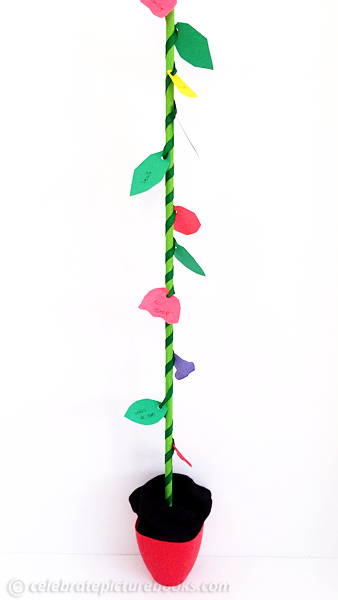
celebrate-picture-books-picture-book-review-grow-a-poem-craft

Grow Your Own Poem


A poem often grows in your imagination like a beautiful plant—starting from the seed of an idea, breaking through your consciousness, and growing and blooming into full form. With this craft you can create a unique poem that is also a piece of art!

Supplies

  • Printable Leaves Template
  • Printable Flower Template
  • Wooden dowel, 36-inch-long, ½-inch diameter, available in craft or hardware stores
  • Green ribbon, 48 inches long
  • Green craft paint
  • Green paper for printing leaves (white paper if children would like to color the leaves)
  • Colored paper for printing flowers (white paper if children would like to color the flowers)
  • Flower pot or box
  • Oasis, clay, or dirt
  • Hole punch
  • Glue
  • Markers or pens for writing words
  • Crayons or colored pencils if children are to color leaves and flowers

Directions

  1. Paint the dowel green, let dry
  2. Print the leaves and flower templates
  3. Cut out the leaves and flowers
  4. Punch a hole in the bottom of the leaves or flowers
  5. Write words, phrases, or full sentences of your poem on the leaf and flower templates
  6. String the leaves and flowers onto the green ribbon (if you want the poem to read from top to bottom string the words onto the ribbon in order from first to last)
  7. Attach the ribbon to the bottom of the pole with glue or tape
  8. Wrap the ribbon around the pole, leaving spaces between the ribbon
  9. Move the leaves and flowers so they stick out from the pole or look the way you want them to.
  10. Put oasis or clay in the flower pot or box
  11. Stick your poem pole in the pot
  12. Display your poem!

celebrate-picture-books-picture-book-review-a-river-of-words-cover

You can find A River of Words at these booksellers

Amazon| Barnes & Noble | Books-a-Million | IndieBound

Picture Book Review

January 2 – Motivation and Inspiration Day & Multicultural Children’s Book Day Review

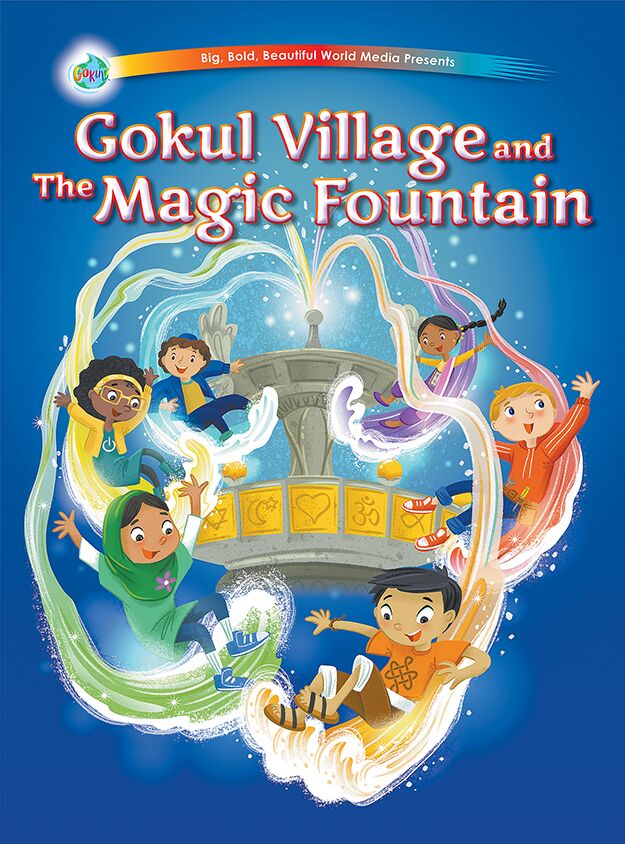
celebrate-picture-books-picture-book-review-gokul-village-and-the -magic-fountain-cover

About the Holiday

The beginning of a new year is often filled with optimism and excitement. We feel motivated and inspired to try new things, make positive changes, and accomplish goals—not only for ourselves but for the world around us. Finding new and diverse books is a fantastic way to get started.

To honor today’s holiday, I’m posting a review for Multicultural Children’s Book Day, an annual event that takes place every January and, this year, culminates on January 27 with a huge online celebration. Throughout the month bloggers, reviewers, and individuals post reviews of children’s books that offer multicultural themes, characters, and stories that inspire young readers and introduce them to peers, situations, and ideas around the world. To learn more about Multicultural Children’s Day and follow the fun, visit their website and see the information below.

Gokul Village and the Magic Fountain

Written by Jeni Chapman and Bal Das | Illustrated by Charlene Chua


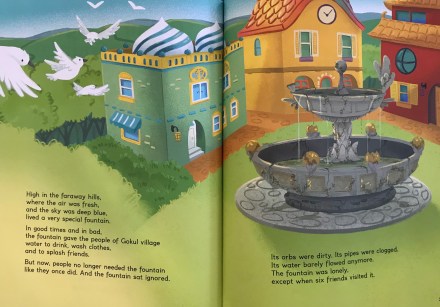
In a faraway land with fresh air and blue skies, Gokul Village was built around “a very special fountain.” The fountain had always provided the people of Gokul Village with “water to drink, wash clothes, and to splash friends.” But now the fountain had fallen into disrepair. The six orbs that circled the pool were dirty and broken, and the pipes were clogged so water could not flow anymore. “The fountain was lonely, except when six friends visited it.”

celebrate-picture-books-picture-book-review-gokul-village-and-the -magic-fountain-gokul

Image copyright Charlene Chua, 2017, text copyright Jeni Chapman and Bal Das, 2017. Courtesy of gokulworld.com.

The friends met at the fountain on the way to school and gathered there in the afternoons. Zoya was an artist and loved to paint pictures of “how beautiful the fountain could be.” Christopher loved to build and had “plans to fix the fountain one day.” Riya was inspired by the music of the dripping water when she played her flute, and Dalai rode his bike faster and faster as he circled the fountain. Jacob would bring his own homemade treats, and Noelle experimented with the drone iDEA that she had designed.

celebrate-picture-books-picture-book-review-gokul-village-and-the -magic-fountain-children

Image copyright Charlene Chua, 2017, text copyright Jeni Chapman and Bal Das, 2017. Courtesy of gokulworld.com.

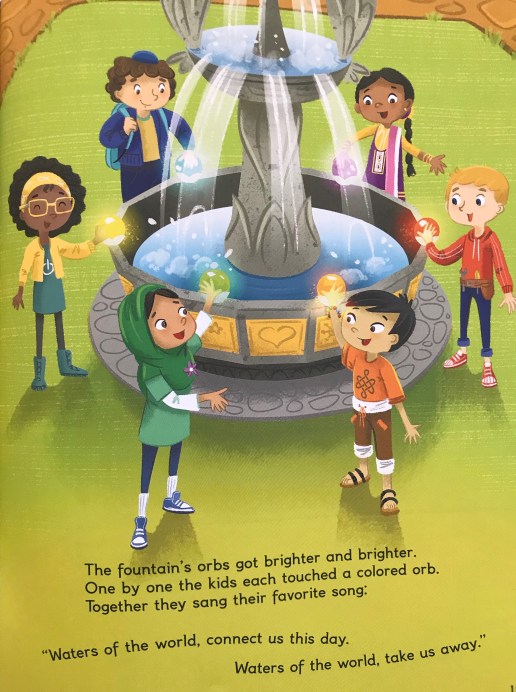
When the friends played together they imagined that the fountain connected to all the world’s waterways and could take them on adventures. They joined hands and skipped around the fountain singing, “‘Waters of the world, connect us this day. Waters of the world, take us away.’” New Year’s Day was approaching, and the children were looking forward to the big village party. Soon, they would be helping to decorate the square. But one day, Dalai brought bad news. The mayor had canceled the party because the fountain—the centerpiece of the celebration—could not be fixed in time.

The friends were disappointed, but then Christopher had an idea. If they all worked together, he thought, they could fix the fountain in time. They were all in! Riya gave each person a job to do. Noelle was to research the history of the fountain. She and Zoya were to find new orbs to replace the old ones. Christopher was going to fix the pipes. Dalai could restore the broken decorative stonework, and Jacob would keep them all working hard with his snacks.

celebrate-picture-books-picture-book-review-gokul-village-and-the-magic-fountain-fixed-fountain

Image copyright Charlene Chua, 2017, text copyright Jeni Chapman and Bal Das, 2017. Courtesy of gokulworld.com.

The next step was to convince the mayor that they could do it. Dalai, who loved talking with people, met with the mayor and got her approval. “If they could clean up the fountain, the celebration wouldn’t be canceled.” The kids went to work and in two days, the fountain was beautiful and the water flowed again. When the mayor came to look, she declared the New Year’s festival was “back on.”

Suddenly, “the fountain glowed with extra shimmer,” and the water glistened. The orbs shone and granted each child “an extraordinary gift. Notes from Riya’s flute transformed into singing birds.” Zoya could paint pictures in the air. “The beads of Dalai’s bracelet glowed with light.” Jacob’s backpack suddenly filled with all types of cooking ingredients and utensils. Christopher’s tools grew, and iDEA gained the ability to speak.

celebrate-picture-books-picture-book-review-gokul-village-and-the -magic-fountain-song

Image copyright Charlene Chua, 2017, text copyright Jeni Chapman and Bal Das, 2017. Courtesy of gokulworld.com.

iDEA told Noelle to look in the heart of the fountain for its hidden words. There, the kids found an invitation: “The world is big, are you bold? / With my help you’ll soon know. / Say the words. Watch me glow / 1, 2, 3…and off you go!” Then each orb shone with a different color. The children each placed a hand on an orb and sang their song. All at once, they found themselves floating to places they’d always wanted to see. They “saw the jostling, jolly New York City crowd” and watched the ball drop in Times Square to celebrate “the arrival of the New Year.” They joined the Chinese New Year parade and “watched millions of people clap and sway together, hoping for happiness and good fortune for all.” Then they found themselves in the midst of the “dazzling glow of the Diwali festival in India, signifying the power of light over darkness.”

celebrate-picture-books-picture-book-review-gokul-village-and-the -magic-fountain-back-from-travels

Image copyright Charlene Chua, 2017, text copyright Jeni Chapman and Bal Das, 2017. Courtesy of gokulworld.com.

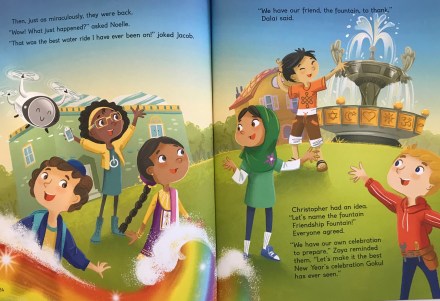
Just as quickly as they had left, the children were back at the fountain. To commemorate their magical adventure, the children decided to name the fountain “‘Friendship Fountain.’” But they had no time to waste! They made decorations inspired by all the celebrations they had seen and hung them in the town square. The next day, Gokul Village’s New Year’s celebration was the best ever.

The six friends were eager to have another adventure. Since Dalai had set the adventure in motion the first time, he whispered, “‘Friendship Fountain awake, Friendship Fountain activate.’” With that, Dalai’s bracelet glowed. Each child touched one of the fountain’s orbs and sang their song. As their voices soared into the sky, they felt themselves being lifted up too. “Where in the world would they go this time?”

celebrate-picture-books-picture-book-review-gokul-village-and-the -magic-fountain-bracelet-glowing

Image copyright Charlene Chua, 2017, text copyright Jeni Chapman and Bal Das, 2017. Courtesy of gokulworld.com.

There is much to entice young readers in Jeni Chapman and Bal Das’s enriching story of six friends who have their sights set on their connections to each other and the world and the positive things they can accomplish. As the diverse group of children is introduced along with their unique talent, readers will recognize their various personalities and be eager to learn more about them. The children’s enthusiasm is infectious as they team up to fix the fountain and are rewarded with magical gifts and a special power to travel the world. Organically incorporating ideas of inclusiveness, cooperation, compromise, volunteering, and teamwork through realistic dialogue, this story is upbeat and affirmative and one that readers will respond to.

celebrate-picture-books-picture-book-review-gokul-village-and-the -magic-fountain-all-kids

Copyright Charlene Chua, 2017, courtesy of gokulworld.com.

Upon opening the book to the first page, children are welcomed into the heart of Gokul Village where homes, each representing a different style of world architecture, circle the fountain. The effect is immediately inviting while introducing the story’s theme of unity. Each of Charlene Chua’s vibrant illustrations is infused with a joyful harmony as the children of diverse ethnicities pursue their individual talents while embracing each other as friends.

For today’s children, the Friendship Fountain—decorated with symbols of love, direction, and world religions—is a fitting metaphor for the global community, and the friends are excellent role models. The children of Gokul have inherited a monument that they love, that can provide for their needs, and that gives them a place to come together. The children want to improve it for all the townspeople, and without hesitation, they go about fixing it. Images of the festivals the children visit are full of light and cheer, and the decorated square shows that there is room for all traditions.

celebrate-picture-books-picture-book-review-gokul-village-and-the -magic-fountain-orbs

Image copyright Charlene Chua, 2017, text copyright Jeni Chapman and Bal Das, 2017. Courtesy of gokulworld.com.

Gokul Village and the Magic Fountain is the first in a planned series of books and other entertainment, including digital shorts, an animated series, and interactive games that prepare “children ages 4 -7 for success by fostering exploration, understanding and celebration of cultural diversity.” The book would be a welcome and relatable addition to home and classroom libraries to foster discussions, learning, and creative projects.

Ages 4 – 7

Big, Bold, Beautiful World Media, 2017 | ISBN 978-0692917381

Discover a portfolio of illustration work by Charlene Chua on her website.

You can find Gokul Village and the Magic Fountain at:

Gokul World | Amazon | Barnes & Noble | Books-a-Million | IndieBound

Motivation and Inspiration Day Activities

celebrate-picture-books-picture-book-review-friendship-bracelet-craft

World Friendship Bracelet


Like Dalai in the story, you can make and wear a special bracelet with colorful beads that represent your friends, your dreams, or various places in the world that you would like to visit.

Supplies

  • Wooden or plastic beads in six colors. For the center beads, get one of each color in a medium size. For the rest of the bracelet, get beads in a smaller size. (Dalai’s bracelet has red, purple, blue, yellow, green, and orange beads.)
  • Elastic, embroidery thread, or string
  • Scissors
  • Sewing needle with a large eye

Directions

  1. Measure your wrist and cut a length of elastic, embroidery thread, or string, leaving it long enough to tie on the first and last beads (and make a loop clasp if using thread or string).
  2. Thread the needle with the elastic, embroidery thread, or string.
  3. Thread the first bead onto the elastic, thread, or string, leaving about a half-inch at the end.
  4. Pull end of thread over bead and tie a knot with the end and the length of string.
  5. Approximate the center of your bracelet and thread several small beads in a color pattern onto the elastic, thread, or string.
  6. Thread the medium beads onto the bracelet in the same color pattern.
  7. Follow with more small beads to finish the bracelet.
  8. Tie the last bead onto the elastic, thread, or string.
  9. To make a loop clasp on the end if using embroidery thread or string, loop the thread or string.

celebrate-picture-books-picture-book-review-a-world-of-friends-word-search-puzzle

A World of Friends Word Search Puzzle


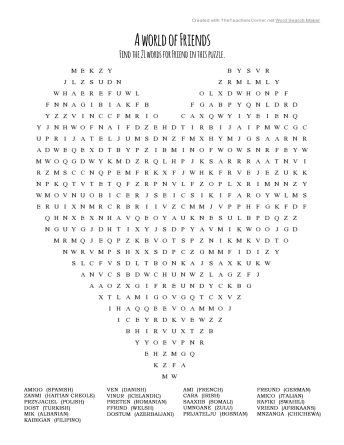
There are friends all over the world waiting to meet you! Learn the word for “Friend” in twenty-one languages and find them all in this printable A World of Friends Word Search Puzzle!

A World of Friends Word Search Puzzle | Word Search Puzzle Solution

celebrate-picture-books-multicultural-children's-book-day-logo-2018

About Multicultural Children’s Book Day

Multicultural Children’s Book Day 2017 (1/27/18) is in its 5th year and was founded by Valarie Budayr from Jump Into A Book and Mia Wenjen from PragmaticMom. Our mission is to raise awareness of the ongoing need to include kids’ books that celebrate diversity in home and school bookshelves while also working diligently to get more of these types of books into the hands of young readers, parents and educators. 

MCBD 2018 is honored to have some amazing Sponsors on board. View our 2018 MCBD Medallion Sponsors here: http://multiculturalchildrensbookday.com/2106-sponsors/mcbd2018-medallion-level-sponsors/

We’d like to also give a shout-out to MCBD’s impressive CoHost Team who not only hosts the book review link-up on celebration day, but who also works tirelessly to spread the word of this event. View our CoHosts: http://multiculturalchildrensbookday.com/about/co-hosts/

TWITTER PARTY Sponsored by Scholastic Book Clubs: MCBD’s super-popular (and crazy-fun) annual Twitter Party will be held 1/27/18 at 9:00pm.

Join the conversation and win one of 12 5-book bundles and one Grand Prize Book Bundle (12 books) that will be given away at the party! http://multiculturalchildrensbookday.com/twitter-party-great-conversations-fun-prizes-chance-readyourworld-1-27-18/

Free Multicultural Books for Teachers: http://bit.ly/1kGZrta

Free Empathy Classroom Kit for Homeschoolers, Organizations, Librarians and Educators: http://multiculturalchildrensbookday.com/teacher-classroom-empathy-kit/


Social Media

Don’t forget to connect with us on social media! Be sure and look for and use our official hashtag #ReadYourWorld.

Picture Book Review

December 10 – Jane Addams Day

celebrate-picture-books-picture-book-the-house-that-jane-built-cover

About the Holiday

Today’s holiday was established in 2007 and commemorates the day in 1931 when Jane Addams became the first American woman to win the Nobel Peace Prize for her work to bring about social change, equality, and peace. Each year the Jane Addams Peace Association presents awards to outstanding children’s books that promote peace and justice. To learn more about Jane Addams and the Jane Addams Peace Association, visit janeaddamspeace.org.

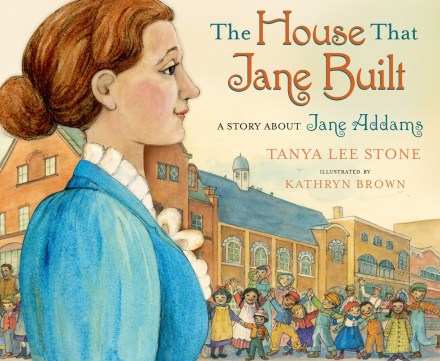
The House that Jane Built: A Story about Jane Addams

Written by Tanya Lee Stone | Illustrated by Kathryn Brown


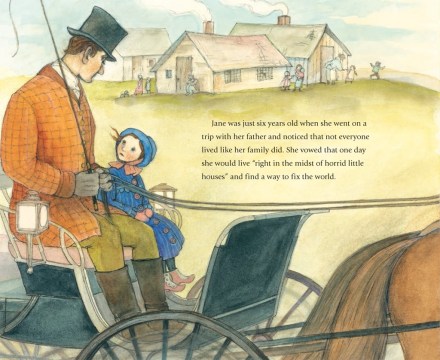
On a busy street stands a very special house where anyone is welcome and some find a home. In 1889 Jane Addams, a wealthy young woman, bought an elegant house in one of Chicago’s poorest neighborhoods. Why? At just six years old on a trip with her father, Jane “noticed that not everyone lived like her family did.” Right then she vowed that when she grew older, she would live in a poor community and “find a way to fix the world.”

celebrate-picture-books-picture-book-the-house-that-jane-built-trip-with-father

Image copyright Kathryn Brown, 2015, text copyright Tanya Lee Stone. Courtesy of us.macmillan.com.

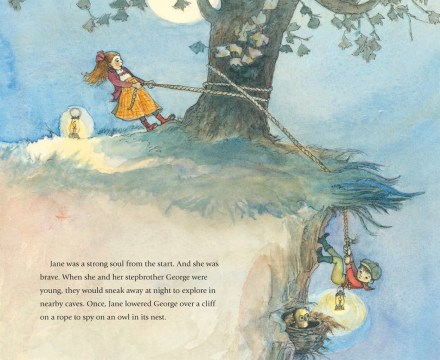
Jane was brave and strong. Sometimes she and her stepbrother George would “sneak away at night to explore in nearby caves.” Jane was also smart and “read and read her father’s book collection,” which also served as the town library. Unlike most women at the time, Jane went to college. She attended Rockford Female Seminary and “graduated at the top of her class.”

celebrate-picture-books-picture-book-the-house-that-jane-built-exploring-with-George

Image copyright Kathryn Brown, 2015, text copyright Tanya Lee Stone. Courtesy of us.macmillan.com.

After graduation, she didn’t know what she wanted to do, and when her father died that same summer, “Jane felt lost.” Two years later some friends invited her to travel to Europe with them. Although they went to the opera, museums, and many beautiful places, it was an experience in London that stuck with her. There she saw many “people in ragged clothes with outstretched hands, begging a cart vendor to buy his rotten fruits and vegetables that hadn’t sold at the market.” 

celebrate-picture-books-picture-book-the-house-that-jane-built-London-settlement-house

Image copyright Kathryn Brown, 2015. Courtesy of us.macmillan.com.

When Jane returned home, the question of how she could help nagged at her. She returned to London to learn about Toynbee Hall, where poor and wealthy people lived together and learned from each other. Here, skills, such as cooking, were taught to provide people with the education to find jobs. Toynbee Hall was called a settlement house, because the rich people who worked there lived there as well.

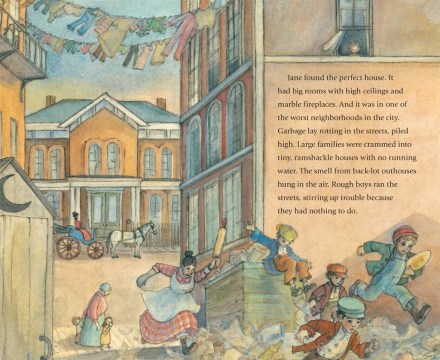
celebrate-picture-books-picture-book-the-house-that-jane-built-Chicago-neighborhood

Image copyright Kathryn Brown, 2015, text copyright Tanya Lee Stone. Courtesy of us.macmillan.com.

Jane now knew what she wanted to do. In 1889 Chicago was a diverse city with a large immigrant population. Many didn’t speak English, which made it hard for them to find jobs. “Large families were crammed into ramshackle houses with no running water.” Garbage lay in the street, and tough kids ran wild with nothing else to do.

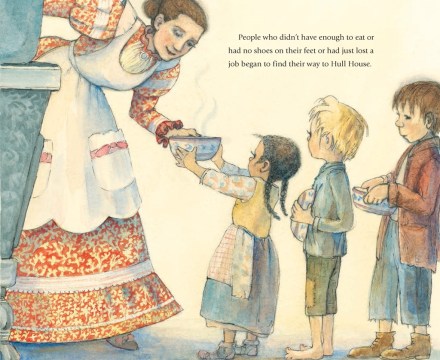
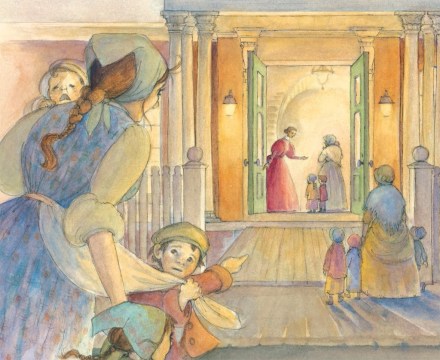
Jane found a large house in the middle of one of these areas that had once belonged to Charles J. Hull and upon his death had been given to his cousin, Helen Culver.  When Helen discovered what Jane wanted to do, she donated the house for free. Jane left the house unlocked, letting people know that they could come there whenever they needed. In time, people did find their way to Hull House when they were hungry or out of work. Jane also had her own way of dealing with unruly children or those who didn’t understand her generosity. Once when a man broke into Hull House twice because he had no job and no money, Jane gave him a job.

celebrate-picture-books-picture-book-the-house-that-jane-built-feeding-hungry

Image copyright Kathryn Brown, 2015, text copyright Tanya Lee Stone. Courtesy of us.macmillan.com.

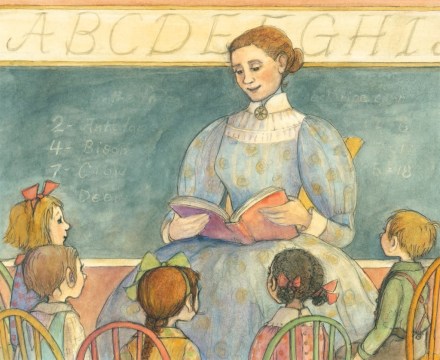
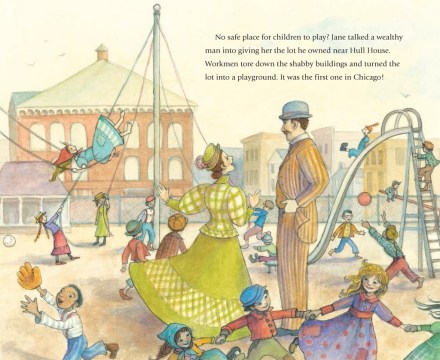
Jane helped the neighborhood in other ways too. She built a public bath so that people could stay clean and avoid illness. She convinced “public officials to build more public baths.” Because children had nowhere to play, Jane convinced a neighbor to give her his unused lot near Hull House. She tore down the buildings and built Chicago’s first playground. For kids whose parents worked long hours, she started a morning kindergarten and after school clubs. She also began offering evening classes for children who worked during the day.

celebrate-picture-books-picture-book-the-house-that-jane-built-kindergarten

Image copyright Kathryn Brown, 2015. Courtesy of us.macmillan.com.

Jane had help with her endeavors. Her friend “Ellen Gates Starr was her partner from the start.” Many other people also helped. They moved into Hull House and “taught literature, art, English, math, science, and cooking.” Hull House continued to grow, and by 1907 Jane oversaw thirteen buildings, including “a gymnasium, coffee house, theater, music school, community kitchen, and an art gallery.”

By the early 1920’s more than 9,000 people visited Hull House every week. Jane’s work “changed a bad neighborhood into a great and strong community.” Today, you can still see Jane Addams’ commitment to others in the community centers that bring people together in nearly every city and town.

An Author’s Note with more information on Jane Addams follows the text.

celebrate-picture-books-picture-book-the-house-that-jane-built-playground

Image copyright Kathryn Brown, 2015, text copyright Tanya Lee Stone. Courtesy of us.macmillan.com.

Tanya Lee Stone brings the story of Jane Addams’ work in Chicago to children in a compelling biography that gives readers a fully developed portrait of this most amazing woman. Stone’s active and evocative language puts children in the Hull House neighborhood, allowing them to get a feeling for and understanding of the issues of the time. Stone’s excellent examples of how Jane Addams responded to a variety of problems facing her community and even Hull House itself, demonstrate how generosity, empathy, and kindness can make positive changes in people’s lives. Depictions of Jane’s early compassion and commitment give children a sense that they too can make a difference in areas that are important to them.

celebrate-picture-books-picture-book-the-house-that-jane-built-front-door

Image copyright Kathryn Brown, 2015. Courtesy of us.macmillan.com.

Kathryn Brown’s riveting illustrations capture Jane’s early moments of concern for others, bravery, and study that informed her adult life; times of decision and cooperation that led to the establishment of Hull House; scenes of poverty, upheaval, and need that touched Jane’s heart; and images of her successes in Chicago that inspired others around the country. Brown’s softly hued watercolors are beautifully infused with realistic period details and honest emotion that provide readers with a strong foundation for understanding and appreciating the life of Jane Addams.

The House that Jane Built: A Story about Jane Addams is an inspiring choice for children with a philanthropic heart and to open discussions on how one person can make a difference. The book would be a welcome addition to home and classroom libraries.

Ages 6 – 10

Henry Holt Books for Young Readers, 2015 | ISBN 978-0805090499

To learn more about Tanya Lee Stone and her books, visit her website.

You can view a gallery of illustration work by Kathryn Brown on her website

Jane Addams Day Activity

celebrate-picture-books-picture-book-jane-addams-coloring-page

Jane Addams Coloring Page Poster


Jane Addams is an inspiration to all! Print this Jane Addams Coloring Page and hang it in your room or locker to inspire you to make a difference and be a positive influence in your community!

Picture Book Review

November 2 – It’s National Gratitude Month

celebrate-picture-books-picture-book-review-now-antoinette-portis-cover

About the Holiday

November has been designated as a time for reflecting on our lives and being grateful for our family, friends, opportunities, and the things we have. Often—as today’s book emphasizes—it’s good to look closely at the Now and not worry so much about the future in order to truly appreciate our particular gifts and the positive things in our lives. To celebrate Gratitude Month, take time to count your blessings and thank those who are important in you life.

Now

By Antoinette Portis


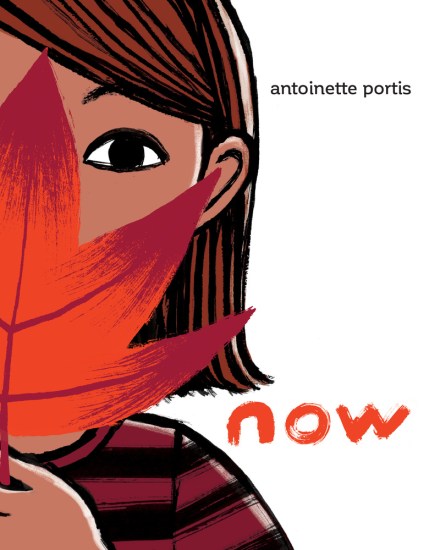
A girl, barefoot and with her arms raised high, runs through a field, feeling the exhilaration of the wind on her face. “This is my favorite breeze,” she says. She finds an apple-red maple leaf, which, at this moment, is her favorite. At the beach, she has dug hole after hole, but her favorite is the one she is making right now.

celebrate-picture-books-picture-book-review-now-antoinette-portis-cloud

Copyright Antoinette Portis, 2017, courtesy of us.macmillan.com.

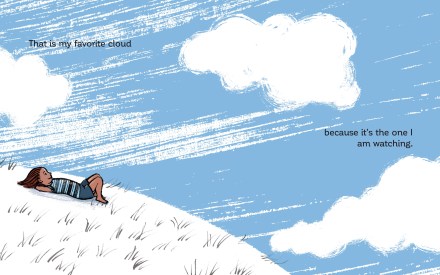
In the mud that has splattered her ankles, she finds a pink, wriggly worm that tickles her palms when she picks it up. As the girl stretches out on a hill to watch the clouds float by, she decides that her favorite is “the one I am watching.” The best rain is one that creates a river in the street for her paper boat—the one that was her favorite until it sailed into the grate

celebrate-picture-books-picture-book-review-now-antoinette-portis-tree

Copyright Antoinette Portis, 2017, courtesy of us.macmillan.com.

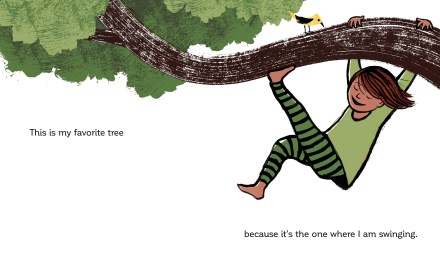
The most marvelous tree has sturdy branches for the girl to swing from, and a delicate, bell-shaped flower produces her “favorite smell.” There are many birds to feed at the park, but the one she likes the best is the one that comes close enough to eat out of her hand. Her favorite song is the one that swells inside her heart and bursts out with joy, and the most delicious gulp and bite are those that quench her thirst and calm her hunger.

Her favorite tooth leaves a gap in her smile “because it’s the one that is missing.” She and her squeezed-tight cat may differ on the best hug, but they probably agree that their favorite moon is the crescent outside the window tonight. But what is her favorite “Now?” It is this moment, because she is having it with you.”

celebrate-picture-books-picture-book-review-now-antoinette-portis-boat

Copyright Antoinette Portis, 2017, courtesy of us.macmillan.com.

Antoinette Portis lends her unique perspective to this uplifting book that encourages kids—and, as readers see in the final image, adults—to live in the moment and become fully conscious of the present object, feeling, experience, or sensation. As the little girl’s favorites build on each other, readers become aware of a growing appreciation for all the small joys that make up a day. The theme of the book is revealed on the first page as the girl welcomes the refreshing breeze. The simply drawn, unencumbered illustrations mirror the simple pleasures that she finds everywhere. But look closer and there is more profound meaning in each.

celebrate-picture-books-picture-book-review-now-antoinette-portis-elephants

Copyright Antoinette Portis, 2017, courtesy of us.macmillan.com.

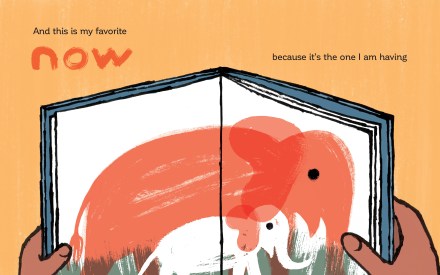
The veins in the maple leaf become the girl’s smile as she holds it to her face; her song radiates from her in a golden sun-shaped swirl; and the girl’s clothing changes through a year’s worth of experiences as it also matches the color of her feeling or activity, allowing her to become one with it. As readers reach the end of Now, they see two hands holding a book open to an image of an elephant and her calf, animals known for their strong family ties. This illustration leads into and strengthens the final page, where the girl and her mother sit reading that book together. The text and picture work in tandem to embrace the reader while letting both children and adults interpret the previous images in their own way.

Now is a beautiful, quiet book that reminds children and adults to slow down and truly enjoy the fleeting moments of life. It is a wonderful book to share and will open discussions of “favorite things” for home, classroom, and library story times.

Ages 3 – 6

Roaring Brook Press, 2017 | ISBN 978-1626721371

To learn more about Antoinette Portis and her books, visit her website.

National Gratitude Month Activity

celebrate-picture-bks-picture-book-review-thanksgiving-worksheets-i-spy-alphabet

Alphabet I Spy Gratitude Game


Things to be thankful for are all around you! What do you see? Find an entire alphabet of favorite things with this printable Alphabet I Spy Gratitude Game Page!

Picture Book Review

October 23 – Mole Day

celebrate-picture-books-picture-book-review-eeny-meeny-miney-mole-cover

About the Holiday

Today’s holiday has a very strict time structure. From 6:02 a.m. to 6:02 p.m. we celebrate Avogadro’s Number (6.02 x  10 to the 23rd), a basic measuring unit in chemistry. This measurement states that for a given molecule one mole is a mass (measured in grams) that is equal to the molar mass of the molecule. Take the water molecule: since its molar mass is 18, one mole of water weighs 18 grams. How many molecules are in that mole? Ah! This is where Avogadro’s Number comes in. One mole of any substance contains Avogadro’s Number of molecules. The association of the chemistry mole and the animal mole came about as a fun way to get kids interested in this area of discovery.  For more information on Mole Day and this year’s theme: MOLEvengers visit Moleday.orgMoleday.org. Today’s book also surprises with a little mole making her own discoveries.

Eeny, Meeny, Miney Mole

Written by Jane Yolen | Illustrated by Kathryn Brown


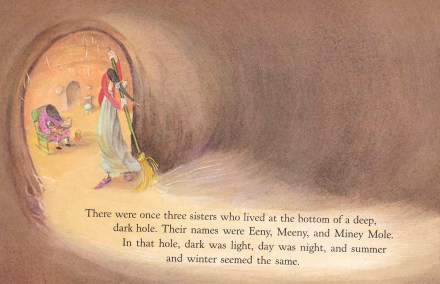
Down at the bottom of a deep hole in the ground, three sisters—Eeny, Meeny, and Miney Mole kept house. “In that hole, dark was light, day was night, and summer and winter seemed the same.” Sometimes the sisters went to bed during the day and got up at sunset, or they played all day and night and never slept at all. Even the seasons seemed the same down in their cozy home. Eeny, the youngest sister, liked to explore, burrowing here and there away from their house. Once, “she met a worm who told her the most astonishing thing.”

celebrate-picture-books-picture-book-review-eeny-meeny-miney-mole-sister-sweeping

Image copyright Kathryn Brown, 1992, text copyright Jane Yolen, 1992. Courtesy of themarlowebookshelf.blogspot.com.

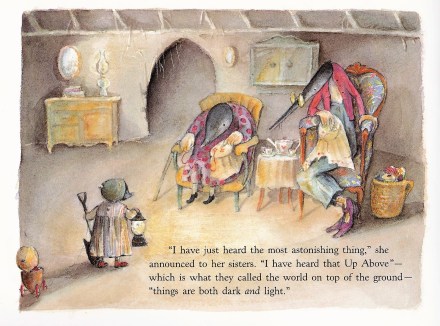
Eeny hurried back to tell her sisters what she had learned about the “Up Above—which is what they called the world on top of the ground.” The worm had told her that up there “‘things are both dark and light.” Meeny didn’t believe it. Miney laughed it off. And both told Eeny that worms were unreliable. They went to bed early and covered up their heads “because they didn’t want to even think about light.”

But Eeny did want to think about it. She wondered about light’s size and shape. She thought about whether light “spread from corner to corner Up Above like a blanket or if it just touched in and out like the thread in the hem of a dress. She thought about light all that night until her sisters woke up. Another day, Eeny burrowed to the right of her home and met a centipede who told her another astonishing thing.

celebrate-picture-books-picture-book-review-eeny-meeny-miney-mole-astonishing-thing

Image copyright Kathryn Brown, 1992, text copyright Jane Yolen, 1992. Courtesy of themarlowebookshelf.blogspot.com.

When Meeny and Miney heard that Up Above had both day and night, they told Eeny that centipedes were just “addlepated” and to pay no attention. Then they went off to have dinner and “dipped their noses into their soup bowls and snuffled up tubers so they didn’t have to think about day.” But Eeny wasn’t hungry. Instead, she wondered about day’s length and sound and whether it was “sharp like hunger or soft like sleep.”

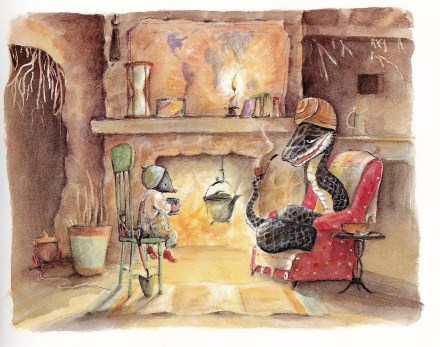
One day Eeny burrowed underneath her hole and came upon a snake, who served her tea and related “the most astonishing thing.” Meeny and Miney were aghast to hear that Up Above there was both winter and summer and told Eeny never to talk to snakes. But while Meeny and Miney went off to play checkers, Eeny thought and thought about whether summer and winter were “low or high…young or old.” She wondered if they were damp or dry, clumpy or crumbly.

celebrate-picture-books-picture-book-review-eeny-meeny-miney-mole-snake

Image copyright Kathryn Brown, 1992, text copyright Jane Yolen, 1992. Courtesy of themarlowebookshelf.blogspot.com.

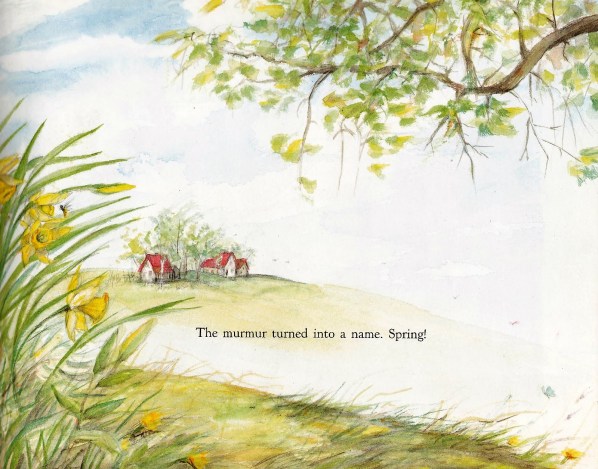
The next time Eeny went exploring, she decided to find out about the Up Above for herself. When she got there she discovered that all of her thoughts had been right in some way. Light was like a blanket, but it was also like the hem of a dress. While the sun was sharp, shadows were soft. There was moisture in the air that was “sometimes warm and sometimes cold.” All around her Eeny heard the “murmur…of bees and trees, of showers and flowers, of tadpoles and tidepools and crinkly grass”—the sounds of Spring. Eeny was happy to have visited the Up Above and promised herself that she would go back someday to meet Summer and Winter. But for now, as she carried a bright yellow flower back home, she couldn’t wait to tell Meeny and Miney about Sprng.

celebrate-picture-books-picture-book-review-eeny-meeny-miney-mole-spring

Image copyright Kathryn Brown, 1992, text copyright Jane Yolen, 1992. Courtesy of themarlowebookshelf.blogspot.com.

Jane Yolen’s stirring story of opening oneself to new possibilities, people, and experiences is gentle and sweet and full of wonder. As Eeny ponders the astonishing things she hears, her sisters prefer to remain in the dark, offering their advice in shocked expressions and reverting to diversions that little ones will find humorous. Yolan’s tale is rich in words that are wonderful to hear and read. The sisters snuffle up tubers, the centipede is addlepated, seasons are clumpy and crumbly, and grass is crinkly. The repeated words, astonishing, complicated, burrowing are lyrical and invite imaginative thinking. And, of course, Yolen’s metaphors are precise and novel. The moving ending is uplifting in its reassurance of the family unit while still promising an astonishing future.

The beauty and detail of Kathryn Brown’s watercolor illustrations are awe-inspiring and create a luxuriant underground world where a pink-wrapped and -capped worm reads by following the words with the tip of his tail while a green-coated cricket turns pages; a colorfully socked centipede watches the outside world through a daffodil bulb periscope hanging like a chandelier in her den; a snake wears a seashell cap and smokes a pipe near his crackling fireplace; and the Up Above is sunny and breezy, expansive and inviting. Tiny Eeny is adorably thoughtful as she wanders through the tunnels of her cozy hole and reports her findings to her older sisters. Readers may notice that Eeny carries with her a lantern that lights her way even as she becomes enlightened and will be delighted with Eeny’s favorite toy—an acorn carriage and itty-bitty doll.

Eeny, Meeny, Miney Mole is sweetly superb and perfect to snuggle up with for quiet story times. Look for this classic story in your local library or used bookstore.

Ages 3 and up

Harcourt Children’s Books, 1992 | ISBN 978-0152253509

There is so much to discover about Jane Yolen and her books on her website.

View a portfolio of books and illustration work by Kathryn Brown on her website.

Mole Day Activity

celebrate-picture-books-picture-book-review-mole-maze

Mole Tunnels Maze


Can you find your way through the underground pathways to visit Mole in this printable Mole Tunnel Maze?

Picture Book Review

October 5 – World Teachers’ Day

celebrate-picture-books-picture-book-review-because-i-had-a-teacher-cover-

About the Holiday

World Teacher’s Day, sponsored by the United Nations, was established to celebrate the role teachers play in providing quality education from preschool through college and beyond. Teachers guide students to find their best selves, whether they’re children just starting their journey or adults going back to school. To celebrate today’s holiday, thank a teacher for everything they’ve done or do for you.

Because I Had a Teacher

Written by Kobi Yamada | Illustrated by Natalie Russell


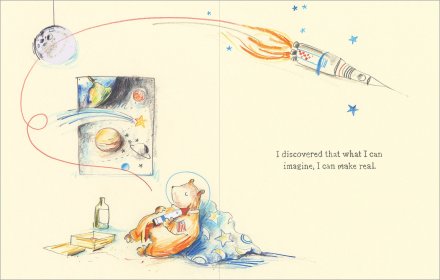
A little bear has lots to say about his or her teacher. It may come as no surprise that this teacher has instilled in the bear a love of learning. But it goes beyond that. The little one reveals that “because I had a teacher, I discovered that I could do much more than I thought I could.” If one thing is harder than the rest, that’s okay too, the bear realizes.

celebrate-picture-books-picture-book-review-because-i-had-a-teacher-love-to-learn

Copyright Nancy Russell, 2017, courtesy of Compendium, Inc.

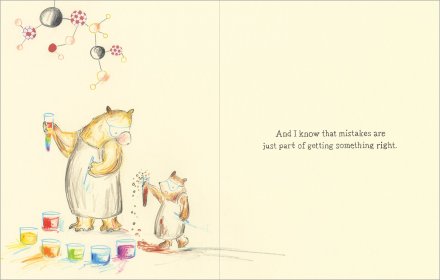
Because of having such a wonderful teacher, the child is ready for any challenges that come and understands that there are lots of ways of being smart”. Mistakes are not a big deal either, because they just happen when you’re trying to get things right. And those things that are the hardest? They bring the bear the most satisfaction to achieve.

celebrate-picture-books-picture-book-review-because-i-had-a-teacher-explore

Image copyright Nancy Russell, 2017, text copyright Kobi Yamada, 2017 Courtesy of Compendium, Inc.

“Because I had a teacher,” the little bear says, “I know how good it feels when someone is happy to see me.” Not only that, but the child knows a friend is always near and that there is always someone who can help out. The bear’s teacher has introduced vast new worlds to explore and has fostered the little learner’s imagination. In fact, the bear feels that nothing is impossible. Then the little bear gives the best compliment of all: “Because I had you, I learned to believe in me.”

celebrate-picture-books-picture-book-review-because-i-had-a-teacher-imagine

Image copyright Nancy Russell, 2017, text copyright Kobi Yamada, 2017 Courtesy of Compendium, Inc.

Kobi Yamada’s heartwarming love letter from student to teacher is a touching tribute to one of the most important relationships in life. One of the wonderful aspects of the story is its fluidity, which allows for multiple interpretations on the student and teacher dynamic. The lyrical prose is appropriate for a traditional teacher/student pair, but the bond could also easily be between a parent and child, a grandparent and grandchild, or any caregiver and their small charge. The book could also be read the other way ‘round with the endearing sentiments coming from an adult to a child, as children often teach adults much about life as well.

celebrate-picture-books-picture-book-review-because-i-had-a-teacher-mistakes

Image copyright Nancy Russell, 2017, text copyright Kobi Yamada, 2017 Courtesy of Compendium, Inc.

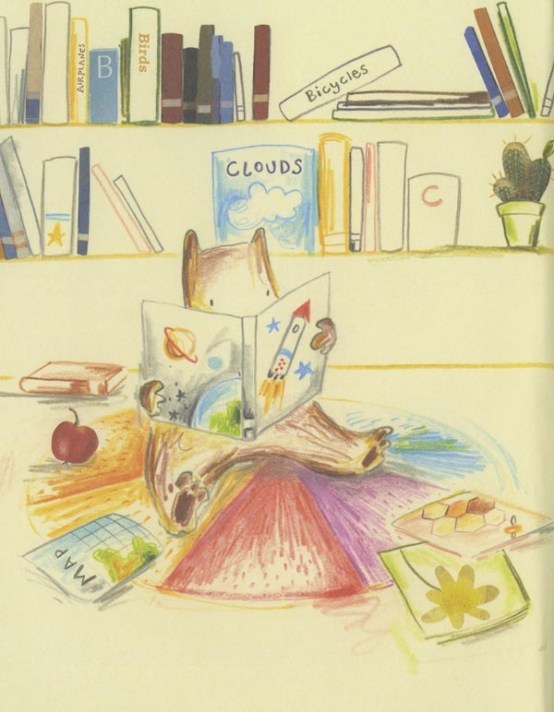
Natalie Russell’s softly hued illustrations masterfully do double duty as well. Quiet in their yellow background, line drawings, and adorable bears, Russell’s soy-ink drawings are also full of action and excitement. The teacher is just as engaged in the learning as the student—doing experiments, climbing trees, launching boats, and helping to paint masterpieces—making their relationship balanced and one of equal sharing. Gender neutrality is found throughout the book, making it appropriate for all children and adults.

Because I Had a Teacher would make a much-loved gift for any teacher, parent, or caregiver. It would also be a cozy read together for bedtime or any story time.

Ages 4 – 7 and up

Compendium, Inc., 2017 | ISBN  978-1943200085

To learn more about Kobi Yamada visit the Compendium, Inc. website.

View a portfolio of illustration work and sketches by Natalie Russell on her website.

World Teacher’s Day Activity

celebrate-picture-books-picture-book-review-teacher-coloring-certificate

Thank You, Teacher Certificate


If you have a favorite teacher, here’s a printable Thank You, Teacher Certificate for you to color, fill out, and give to them today or any day.

celebrate-picture-books-picture-book-review-because-i-had-a-teacher-cover-

You can find Because I Had a Teacher at these booksellers

Amazon | Barnes & Noble | Books-a-Million | IndieBound

Picture Book Review
October 2 – World Day of Bullying Prevention

celebrate-picture-books-picture-book-review-come-wtih-me-cover

About the Holiday

Today’s holiday was established to raise awareness of the pervasive and growing societal problem of bullying and to bring people together to change the culture that allows for it to exist. It’s up to every individual to speak out against bullying in all its forms and for kindness and acceptance. For more information on what you can do or how you can find help, visit the STOMP Out Bullying website.

Come With Me

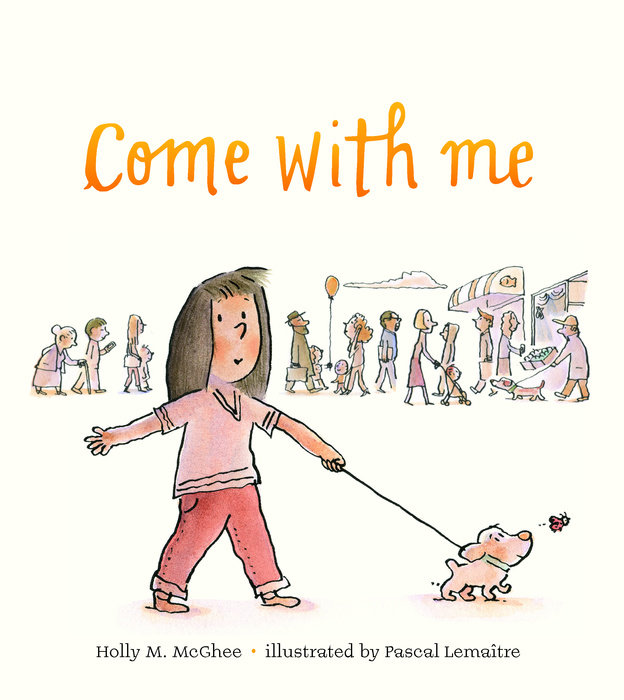
Written by Holly M. McGhee | Illustrated by Pascal Lemaître


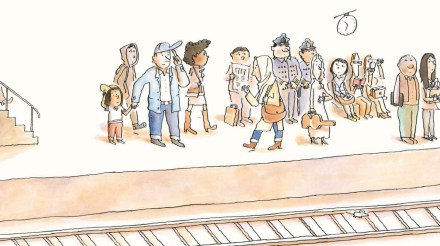
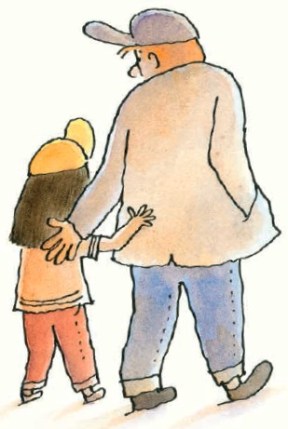
A little girl watches the television news, taking in all the “anger and hatred—people against people.” She was “frightened by everything she heard and saw and felt.” She wanted to make “the world a better place,” and asked her papa what she could do. He told her, “‘Come with me.’” They went outside and down the stairs to the subway platform. There, as they waited for the train, her father tipped his hat to those passing by. Seeing this, the little girl did it too.

celebrate-picture-books-picture-book-review-come-with-me-in-the-subway

Image copyright Pascal Lemaître, 2017, courtesy of G.P. Putnam’s Sons Books for Young Readers.

As they rode the train they were kind to the people around them. The little girl felt brave as she and her papa “won a tiny battle over fear for themselves and for the people of the world.” But the little girl continued to see stories of hatred on the news, so she asked her mother for advice. Her mama said, “Come with me.”

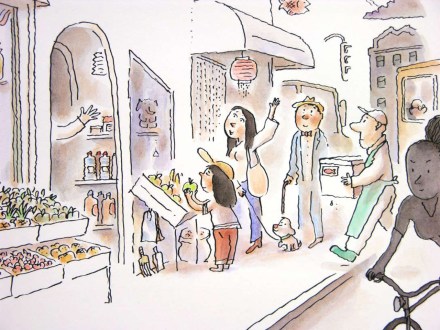
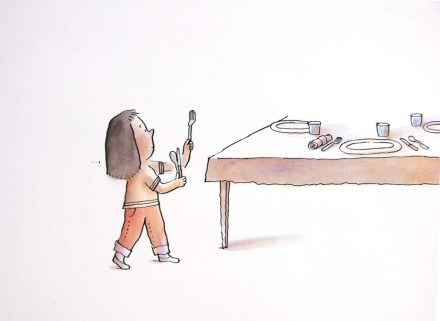
They walked down to the international grocery store on the corner with its bins full of fresh fruit and vegetables. There they met people from all over the world buying food for their meals and products for their homes. The little girl understood that “one person doesn’t represent a family or a race or the people of a land.” At home, while her mother cooked dinner, the little girl set the table as she always did.

celebrate-picture-books-picture-book-review-come-with-me-at-the-market

Image copyright Pascal Lemaître, 2017, courtesy of G.P. Putnam’s Sons Books for Young Readers.

As they ate, the girl scratched her puppy behind the ears and thought about what she had seen and done with her parents. She wanted to do something by herself and asked if she could walk the dog. Her parents looked at each other and decided to let her go to show their child and the world that “they would not live in fear.”

Just as the little girl was leaving her apartment, the boy across the hall opened his door. He wondered where she was going. “‘Come with me,’” she said. The two children were happy to be outside, and they began to understand that if they were “brave, gentle, strong—and kind…to one another and all living things,” the world would be a better place.

celebrate-picture-books-picture-book-review-come-wtih-me-setting-the-table

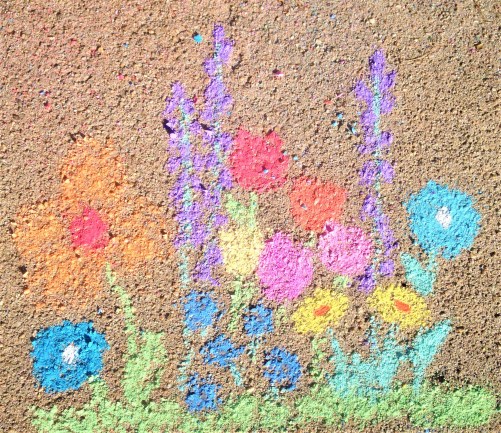
They smiled at a mother and her young son as the little boy pet her dog. Then the boy shared his box of chalk, and the three kids drew pictures on the sidewalk. The single flowers and hearts became a garden as more and more children joined in. From all around, doors opened and children and adults approached. They took a piece of chalk and bent down to add their own flowers to the growing picture.

What you do matters too—even if your part seems small, it makes a difference. Listen! The little girl is calling, “‘Come with me.’”

celebrate-picture-books-picture-book-review-come-with-me-drawing-flowers

Image copyright Pascal Lemaître, 2017, courtesy of G.P. Putnam’s Sons Books for Young Readers.

Amid all the noise and fear that children are exposed to comes Holly McGhee’s quiet and powerful book that shows them that even small gestures have great reach and make a big impact. Like self-seeding gardens, one small act can take root and grow, displacing the weeds of fear, anger, and misunderstanding. McGhee’s honest, lyrical text is refreshing as it demonstrates the role of adults as well as children in changing not only outward behavior but inner feelings as well. Young readers will want to accept the little girl’s invitation to change the world they live in.

celebrate-picture-books-picture-book-review-come-with-me-girl-and-papa

Image copyright Pascal Lemaître, 2017, courtesy of G.P. Putnam’s Sons Books for Young Readers.

Pascal Lemaître’s colorful line drawings on white backgrounds provide a sense of openness and clarity that is the perfect accompaniment to McGhee’s story. Lemaître’s city is vibrant and diverse, and as people go about their business, they smile at one another, happily interact, and are excited to join in the fun of chalk drawing. At home, members of the family watch TV, cook and eat dinner, and take care of their pet, just as families do around the world. Careful observers will note that as the little girl sets the table, she studies the fork—a single utensil made up of many tines that work together. Each of Lemaître’s pages likewise invites readers to take another look at their own homes and neighborhoods to see the goodness there and to work with others to make the world a better place.

Come With Me is a moving story that can comfort and inspire children who have questions and want to help. The book would be a welcome addition to classroom and home libraries.

Ages 5 – 8 and up

G. P. Putnam’s Sons Books for Young Readers, 2017 | ISBN 978-1524739058

Discover the world of Holly M. McGhee and her children’s and middle-grade books on her website

View a portfolio of illustration work for children and adults by Pascal Lemaître on his website.
View a portfolio of illustration work for children and adults on his website.

World Day of Bullying Prevention Activity

celebrate-picture-books-picture-book-review-friendship-chalk-garden

Friendship Chalk Garden


Just like the little girl in today’s book, you can make a positive change in the world through simple acts of kindness and cheer. Drawing a Friendship Chalk Garden is a great way to show your love, compassion, and courage—and to make your home, neighborhood, or school a better place!

Adults and kids, join in making a positive change! Draw a garden—or even just one flower— and post a picture on Twitter using the hashtag #FriendshipChalkGarden. Adults can help children post their pictures.

Here are some ideas:

  • Create your garden by yourself
  • Gather your friends
  • Invite other kids and adults in the area to draw with you
  • Ask your teacher to make it a class—or school—project

Places to Draw

Outside:

  • Find a spot in your driveway
  • Draw on the sidewalk outside your home or school
  • Use the school playground
  • Go to the park

Inside:

  • Use black or white poster board attached to the wall
  • Draw on the school blackboard or white board
  • Make flowers for a classroom or hall bulletin board

Picture Book Review