Today’s holiday was instituted to foster better communication between the older and younger generations and to recognize the ways that all people, no matter what their age, can help each other. Many communities use this day to begin a dialogue between their elderly and their youth, getting young people involved in visiting care centers and older adults helping out at schools and other youth programs. Another great way to celebrate is for grandparents and grandkids to spend the day together!
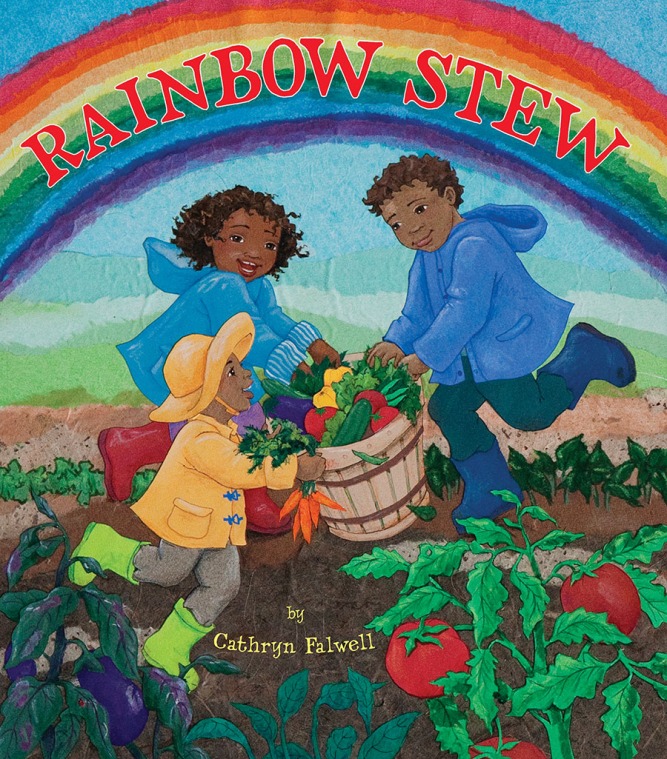
Rainbow Stew
By Cathryn Falwell
Grandpa’s making pancakes for his three favorite kids—his granddaughter and two grandsons. The kids are excited to be visiting their grandpa where they can play outside all day long. On this particular day, however, rain spatters the windows, and the kids are disappointed: “Whimper, sigh, / cloudy sky, / is it too wet to play? / We don’t want to stay inside / because of rain today.” But their grandpa knows just what to do! “Let’s go and find some colors for my famous Rainbow Stew!” he suggests.
Image copyright Cathryn Falwell, courtesy of rainbowstewbook.com
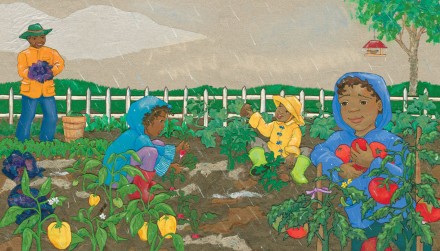
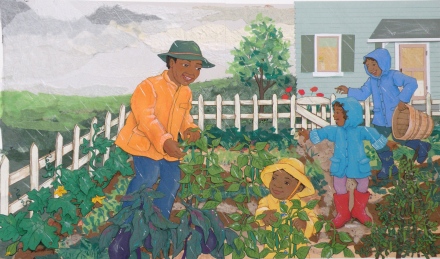
Out to the garden they run in their raincoats and hats. “Splish, splash, / puddle dash, / We bounce right out the door. / We’re off to find some red and green, / some yellow, orange, and more. / Grandpa shows us how to move / Between each garden row. / Lifting up the drippy leaves, / we see what colors grow.” They collect green spinach, kale, and zucchini; yellow peppers, purple cabbage and eggplant, red radishes and tomatoes; brown potatoes; and orange carrots. After some muddy fun among the plants, the kids go inside, get dried off, and begin to prepare their colorful stew.
Image copyright Catherine Falwell, courtesy of rainbowstewbook.com
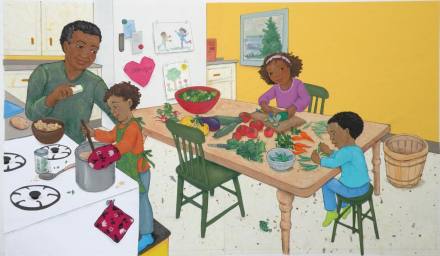
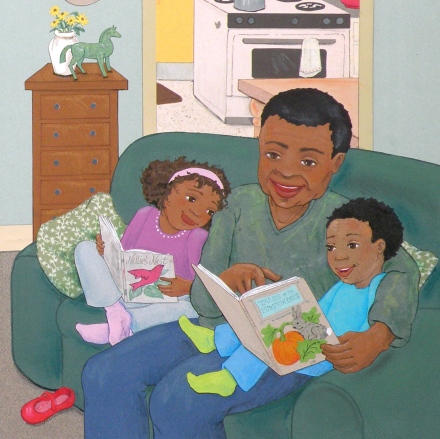
“Peel, slice / chop and dice, / colors fill the pot. / Stir in herbs and water / and then wait till it gets hot.” While the pot simmers on the stove, Grandpa and the kids snuggle on the couch with favorite books, reading together until the stew has simmered to perfection. The family then sits down to a homemade, colorful, delicious lunch of Rainbow Stew.
Image copyright Cathryn Falwell, courtesy of rainbowstewbook.com
Cathryn Falwell’s Rainbow Stew is a wonderful book to share with young children on many levels, offering opportunities for learning as well as playing. Introducing colors through familiar and delicious vegetables can get kids excited about gardening, cooking, even going to the grocery store. The rhyming verses each begin with an energetic couplet that kids will enjoy repeating or acting out. The bright colors of Grandpa’s house mirror the vividness of the garden vegetables, and young readers may enjoy matching the vegetables to items in the kitchen, living room, and more.
Children will identify with the disappointment of the three siblings when they learn it’s too wet to spend the day outside as well as their glee at squishing in the mud. The close bond between the kids and their grandfather as they cook and read together is a strong anchor for this story and promotes early literacy.
Image copyright Cathryn Falwell, courtesy of rainbowstewbook.com
A recipe for Rainbow Stew follows the story. Reading Rainbow Stew, preparing the delicious dish, and doing the puzzle below makes for a fun rainy – or sunny – day!
Ages 4 – 7
Lee & Low Books, 2013 | ISBN 978-1600608476
Learn more aboutCathryn Falwelland her books and art on her website!
To discover more about Rainbow Stew as well as activities to accompany the book, head over torainbowstewbook.com!
Join Hands Day Activity
Give Me Your Hand Interchangeable Puzzle
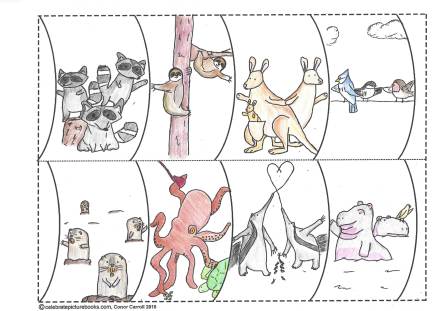
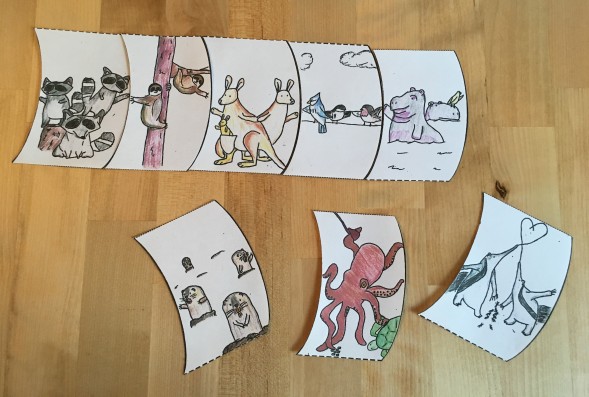
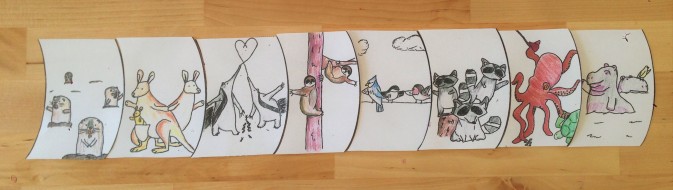
In this printable Give Me Your Hand! Puzzle, everyone is welcomed with a handshake. Offering friendship to all, the interchangeable pieces can be mixed and matched as the animals become buddies with one another.
One of the wonderful activities of spring and summer is gardening. As the sun warms, farmers and gardeners till their land and plant seeds with eager anticipation of the harvest to come. April is Gardening Month, and the second week is designated especially for vegetable gardening. Our meals would not be as tasty and nutritious without carrots, squash, peas, beans, peppers, potatoes, and all the rest of these colorful foods. Today’s container gardens give even reluctant gardeners great ways to grow their own—without the work of a large plot. Whether you enjoy gardening on a large or small scale, take the opportunity of this month to start planting the seeds of a rewarding hobby!
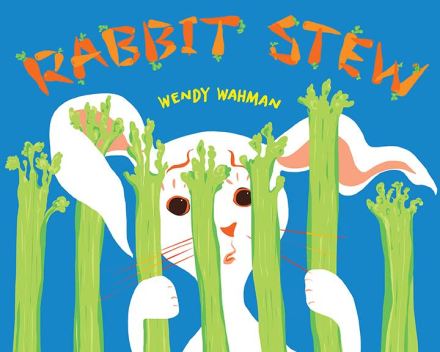
Rabbit Stew
By Wendy Wahman
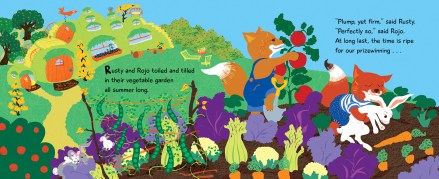
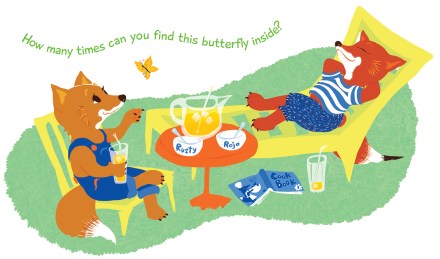
“Rusty and Rojo toiled and tilled in their vegetable garden all summer long.” But now the crops have ripened, and the two foxes are ready to enjoy the bounty of their hard work—so are their neighbors, the Rabbits. As Mommy Rabbit and the bunnies nibble away in a corner of the garden, Rusty gently squeezes the tomatoes and finds them “plump, yet firm.” “Perfectly so,” Rojo agrees as he lifts Daddy Rabbit from the carrot patch. “At last,” Rusty and Rojo exclaim, “the time is ripe for our prizewinning Rabbit Stew!”
Image copyright Wendy Wahman, 2017. Courtesy of wendywahman.com.
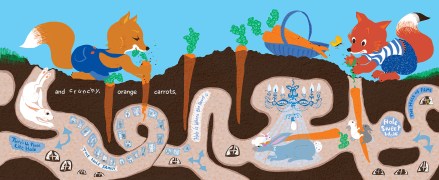
While Rojo picks “lean, green runner beans,” the Rabbits look on worriedly. Daddy tries to hide, but Rusty spies him in the wheelbarrow full of purple kale. Then, when the family dives back into their cozy “hole sweet hole,” they find that their convenient carrot snacks are being abruptly snatched away—only to be added to the pot of “splendid Rabbit Stew.”
Image copyright Wendy Wahman, 2017. Courtesy of wendywahman.com.
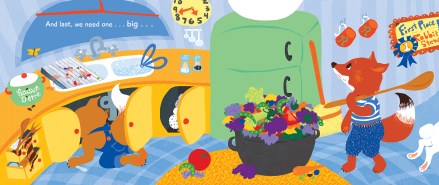
Next come raisins and celery “and roly-poly blueberries.” But what about those white and gray bits of fluff? Will they end up in the foxes’ buckets too? Of course “juicy red tomatoes, fresh sprigs of parsley, and sweet yellow peppers” are also musts for the foxes’ “finest-ever Rabbit Stew.” With the pot overflowing with colorful veggies, only one more thing is needed—“one…big…round…white…bowl…for our favorite Rabbit, Stew—and his family too!”
Image copyright Wendy Wahman, 2017. Courtesy of wendywahman.com.
With her fertile imagination and a clever play on words, Wendy Wahman offers up a delightful story that will have readers guessing until the very end. Along with the mystery and the yummy descriptions of each ingredient, Wahman presents a counting game for readers. As Rusty and Rojo pick their vegetables, children can count the ten runner beans on the trellis, nine purple kale leaves in the wheelbarrow, eight carrots from the burrow, and all of the other ingredients on down to one. But do Rusty and Rojo need one big white rabbit or something else? Kids will love the twist at the end and cheer to see Daddy Stew, Mommy Strudel, and their little bunnies—Dumpling, Biscuit, and Ragu—dining on the special meal grown and created just for them.
Everyone’s garden should look as deliciously vibrant as Wahman’s riotous patch of vegetables! The vivid colors jump off the page while providing texture and nuance to the illustrations. They also give kids another concept to learn and talk about. Little details, such as the tiny caterpillar and the yellow butterfly that follow the bunnies from page to page, as well as the fancy burrow lined with photos of friends and family will enchant readers.
Image copyright Wendy Wahman, 2017, courtesy o f Wendy Wahman.
Welcome themes of friendship, diversity, and inclusiveness can also be found within the illustrations and the story.
Rabbit Stew is a bright, humorously sly story that would be a wonderful addition to any child’s library. The book also makes a perfect companion for trips to the farmers market, on picnics, or to spur interest in home gardening. The attention to the details of what rabbits can safely eat, as well as the number and color concepts provided in the illustrations, makes Rabbit Stew a great choice for school story times and spring lessons.
Discover more about Wendy Wahman, her art, and her books on her website!
You’ll dig this Rabbit Stew book trailer!
Meet Author/Illustrator Wendy Wahman
Today, I’m really happy to be chatting with Wendy Wahman about her art, her books, her inspirations, and a really sweet school visit she had recently.
Your bio mentions that you worked for the Seattle Post-Intelligencer until 2009. Can you describe your work there?
I worked in the art department doing maps, graphics, info-graphics and illustrations for every section of the newspaper. Ninety percent of the work was on deadline, so I learned to think and draw fast.
Our poor beloved P-I. It was 146 years old when Hearst closed it down. About 150 of us went down with the ship. Best job I ever had. I miss the variety and culture and importance — and honesty — of journalism. I miss my P-I family, very much.
How did you get started illustrating and writing books for children?
I was really just snooping around for illustration work. I had an idea for a book on dog body language I wanted to do, but imagined ‘a real writer’ should write it. I sent out some of the dog body-language art samples and heard back from four major publishers. Laura Godwin at Henry Holt called me, and was so passionate about dogs and kids—and my art. She asked to see a dummy. What dummy, right? I had no dummy, just an idea and some art samples. I took two weeks off from the P-I and put together a dummy. Laura helped me tremendously, as did my brilliant writer husband, Joe Wahman.
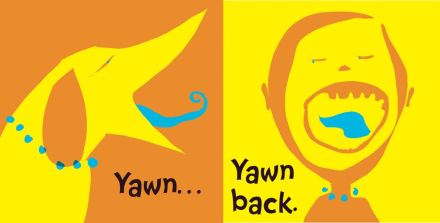
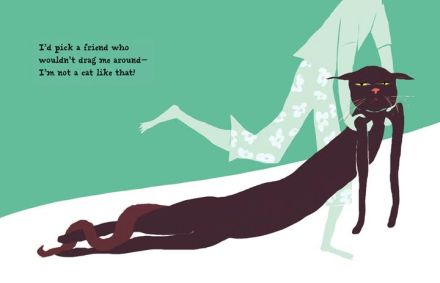
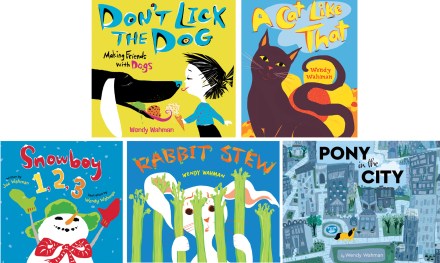
Don’t Lick the Dog is a how-to primer on being safe with dogs. We followed with the companion book, A Cat Like That. We never did do my dog body-language book. It’s sitting here patient as can be. “Good dog, book.”
Image copyright Wendy Wahman, Don’t Lick the Dog. Courtesy of Wendy Wahman.
Image copyright Wendy Wahman, A Cat Like That. Courtesy of Wendy Wahman.
Your art is so varied—from humorous to infographics to striking, serious editorial work. You also work with crisp, clean lines and beautiful textures. Can you talk about your process and inspirations?
Thank you so much, Kathy. Well. I sit and think and read a lot. Mostly I just look and try to distract myself from thinking too hard. I like to thumb through my Thesaurus. When I’m stuck, I try to remember to move away. This can be physically—exercise or a walk; mentally—read or look through books; or emotionally—play with my dogs or call somebody. I say, try, because too often I sit rooted, thinking, thinking. Better to get up and move.
What was the inspiration for Rabbit Stew?
I feed my dogs a homemade stew of meat & veggies. Long ago, I was stirring up an enormous batch of dog food, when “rabbit stew” fluttered to mind. Rabbit Stew is also a counting book, counting down veggies from ten to one. It’s also a color book. It was a challenge to find ingredients safe for rabbits, in different colors and not give it away. Like, rabbits love dandelions and they’re very good for them, but I only know a couple of people who would knowingly toss dandelions into the pot. No potatoes; they are toxic to bunnies, and cabbage isn’t good for them either.
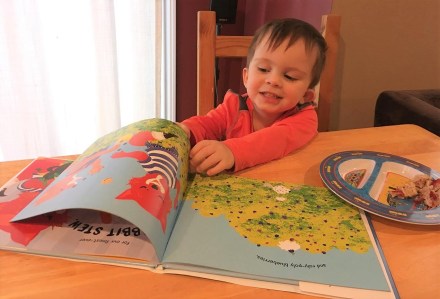
A happy fan enjoys reading “Rabbit Stew” with lunch! Photo courtesy of Wendy Wahman.
You give presentations at schools and libraries. Do you have an anecdote you’d like to share?
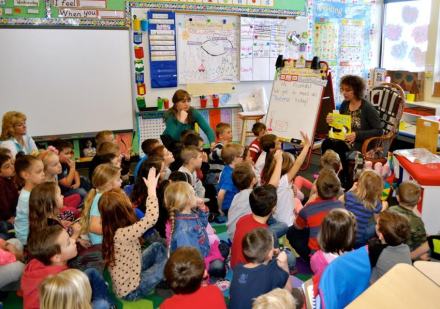
I did a school visit recently in southern California and got to take my mom to a presentation for 4th graders. I introduced her to the students, and they gave her a loud round of applause! Even more tender, when I was signing books (and the other stuff kids want signed), they asked if my mother would also give them an autograph. Is that the sweetest or what? Children can be so inspiring, healing, and wise.
Wendy reads “Don’t Lick the Dog” to enthusiastic kindergarteners in Kennewick, WA. Photograph courtesy of Wendy Wahman
You also teach bookmaking to kids. That sounds fun and fascinating! Can you tell me a little bit about these classes?
I’m so glad you asked about these little books, Kathy. I love making them and sharing the process. Anyone can make one. I’ve taught them to kindergarteners through seniors. I call them “Insight Books,” because what comes out can be surprising, revealing, and often cathartic. Random lines inspire images and ideas. Some people write, others write and draw. Sometimes we collage. Even if you do nothing at all put look, the lines may stimulate ideas. These book are fun to make with a partner too.
What’s up next for you?
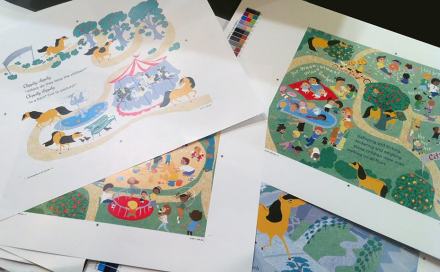
I’m very excited about my next book, Pony in the City (Sterling Publishers). Kevan Atteberry’s book, Swamp Gas, releases the same day, Sept. 9th, and we’re talking about having a co- launch party.
Image copyright Wendy Wahman. Proofs of “Pony in the City” (Sterling, releasing Sept. 9 this year) courtesy of Wendy Wahman.
I’m working on Nanny Paws (Two Lions), a book inspired by my little white poodle, LaRoo, and the children next door. Here’s a picture of LaRoo and my other dog Jody with my friend Vikki Kaufman‘s poodles. Vikki is a breeder of beautiful silver and blue standard poodles. Vikki took the picture, can you tell? Her dogs are staring straight at her. Poor LaRoo. She is a shy girl and just wants to get away from the masses.
Wendy with LeRoo and Jody and Vikki’s TinTin, Nickel and Eureka.
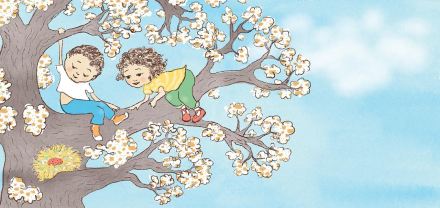
I’m also working on a dummy for a beautiful story written by Joe, “One Bird” (www.joewahman.com). I’m doing the art for both Nanny Paws and Joe’s story in a new/old style for me: pencil and watercolor.
Image from “One Bird,” written by Joe Wahman, illustrated by Wendy Wahman. Courtesy of Wendy Wahman
Do you have a favorite holiday?
Thanksgiving.
Do you have an anecdote from a holiday you would like to share
If you come over for Thanksgiving, prepare yourself for a vegetarian feast. We don’t eat animals here — but we do make them big, round, splendid bowls of stew.
Thanks so much, Wendy! It’s been a lot of fun! I wish you all the best with all of your books!
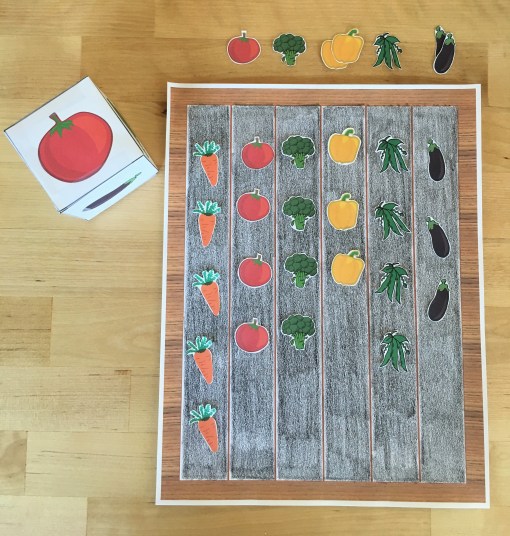
Object: The object of the game is for each player to fill their garden rows with vegetables. Depending on the ages of the players, the required winning number of rows to fill and the number of vegetables to “plant” in each row can be adjusted.
Print one Game Board for each player
Print one set of Playing Cards for each player (for sturdier playing items, print on card stock)
Print one Vegetable Playing Die and assemble it (for a sturdier die, print on card stock)
Cut the vegetables into their individual playing cards
Color the “dirt” on the Garden Plot with the crayon (optional)
Choose a player to go first
The player rolls the die and then “plants” the facing vegetable in a row on the game board
Play moves to the person on the right
Players continue rolling the die and “planting” vegetables until each of the number of determined rows have been filled with the determined number of vegetables.
The first person to “grow” all of their veggies wins!
Today we laud that cozy concoction of clams, onion, and potatoes that creates a warm, satisfied feeling in the tummy and is the perfect antidote to winter’s chill. Whether you like New England style clam chowder with its rich, creamy base or the lighter tomato-based Manhattan version, this delicious soup is sure to hit the spot!
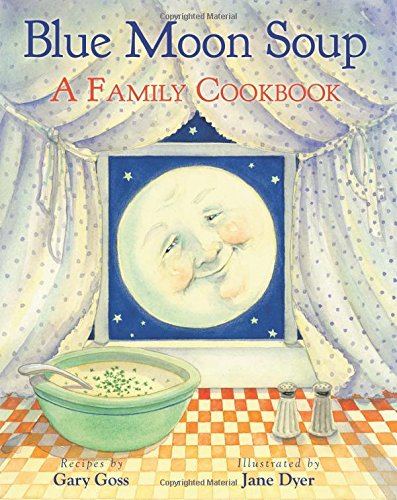
Blue Moon Soup: A Family Cookbook
Recipes by Gary Goss | Illustrated by Jane Dyer
“Beautiful Soup, so rich and green, / Waiting in a hot tureen! / Who for such dainties would not stoop? / Soup of the evening, beautiful Soup!” With these words from Lewis Carroll, Blue Moon Soup introduces 33 delectable soup recipes plus some extras to go with them all wrapped up in the comfort and splendor of a picture book. The clever names of the soups will have kids giggling and eager to try such intriguing dishes as Twist & Shout, Polka Dot Soup, Bouncy, Bouncy Ball Soup, Squish-Squash Soup, and Funny Face Soup.
Image copyright Jane Dyer, courtesy of Sky Pony Press
Categorized by seasons, these soups make use of familiar as well as more unusual ingredients while sprinkling in kid-inspired surprises like the ice cream in Believe It or Not! Soup, which is a yummy alternative to the usual frozen version of this favorite treat. Hey, Hey Soup, a “hot and jazzy sweet potato soup named after a great jazz club in Kansas City,” incorporates the flavors of curry while on top floats a chocolate garnish.
Image copyright Jane Dyer, courtesy of Sky Pony Press
A few offerings from Winter are Ch-Ch-Chili; Brrroccoli Soup au Gratin; Hot Diggity Dog Soup, a tasty minestrone with a hot dog addition; and Sob Soup, an onion soup that will have you crying with joy. Spring brings (No) Duck Soup, a lentil pleaser; Soup of the Evening, a sophisticated feta cheese and spinach dish; Sweet Dreams Soup made from carrots; and Abracadabra, a soup with more than a little magic.
Summer’s active days are perfect for a quick lunch or dinner, and Best Buddy Soup of tomatoes and oranges is a fast goodie to cook—and share. Fruit makes another appearance in You Can’t Elope, made from—you guessed it—cantaloupe, and if you like to bask in the sun, you may love Bisque in the Sun, a creamy pool complete with a couple of shrimp. Before winter rolls around again, Fall drops with veggie-inspired soups made of potatoes, cabbage, pumpkins, squash, and peas.
Image copyright Jane Dyer, courtesy of Sky Pony Press
And what about our honored soup of the day—clam chowder? That’s here too in Fish Soup, garnished with goldfish crackers.
An Extra, Extra, Eat All AboutIt! final chapter provides recipes for banana bread, corn muffins, salad, guacamole, nachos, and other delicious sides that make a well-rounded meal. Front matter gives a list of supplies, rules for working in the kitchen, and directions for setting a table.
Gary Goss, former owner of the Soup Kitchen Restaurant in Northampton, Massachusetts knows about soup and kids and what they like. In his Letter from the Chef that opens Blue Moon Soup, Goss talks about the warm, cozy feelings and good memories “soup day” creates and offers tips for making the cooking experience with kids easy and fun. Most recipes call for ingredients usually found in kitchens or easily picked up at the market and have fewer than ten steps to prepare them—steps that kids will enjoy helping with.
Image copyright Jane Dyer, courtesy of Sky Pony Press
Jane Dyer’s gorgeous illustrations populated with attentive fish waiters; lamb and lion best friends; a duck and ducklings fishing from the rim of a huge bowl; rabbits serving gazpacho; a cow, cat and, dog jazz trio; and more open each seasonal chapter and introduce some recipes. Each page is also peppered with adorable images of personified vegetables dancing, playing, cooking, and lounging that will charm little chefs as they help in the kitchen. Families may even find themselves making up stories about the characters in the book while the soup simmers.
Blue Moon Soup, a multi-award winning book, would make a delicious and often-consulted addition to anyone’s collection of cookbooks and a wonderful way to introduce kids to the art of cooking.
Ages 7 and up
Sky Pony Press, 2013 | ISBN 978-1620879900
Discover more about Jane Dyer and a gallery of her well-loved children’s books on her website!
Instituted by People for the Ethical Treatment of Animals (PETA),which was established by Ingrid Newkirk in 1949, Hug a Vegetarian Day promotes awareness of a meat-and animal- products-free diet. Over the years millions of people world wide have embraced the vegan and vegetarian lifestyle, giving rise to alternative diets and products that support this healthy choice. To celebrate today whip up a vegetarian meal – why not Rainbow Stew?!
Rainbow Stew
By Cathryn Falwell
Grandpa’s making pancakes for his three favorite kids—his granddaughter and two grandsons. The kids are excited to be visiting their grandpa where they can play outside all day long. On this particular day, however, rain spatters the windows, and the kids are disappointed: “Whimper, sigh, / cloudy sky, / is it too wet to play? / We don’t want to stay inside / because of rain today.” But their grandpa knows just what to do! “Let’s go and find some colors for my famous Rainbow Stew!” he suggests.
Image copyright Cathryn Falwell, courtesy of rainbowstewbook.com
Out to the garden they run in their raincoats and hats. “Splish, splash, / puddle dash, / We bounce right out the door. / We’re off to find some red and green, / some yellow, orange, and more. / Grandpa shows us how to move / Between each garden row. / Lifting up the drippy leaves, / we see what colors grow.” They collect green spinach, kale, and zucchini; yellow peppers, purple cabbage and eggplant, red radishes and tomatoes; brown potatoes; and orange carrots. After some muddy fun among the plants, the kids go inside, get dried off, and begin to prepare their colorful stew.
Image copyright Catherine Falwell, courtesy of rainbowstewbook.com
“Peel, slice / chop and dice, / colors fill the pot. / Stir in herbs and water / and then wait till it gets hot.” While the pot simmers on the stove, Grandpa and the kids snuggle on the couch with favorite books, reading together until the stew has simmered to perfection. The family then sits down to a homemade, colorful, delicious lunch of Rainbow Stew.
Image copyright Cathryn Falwell, courtesy of rainbowstewbook.com
Cathryn Falwell’s Rainbow Stew is a wonderful book to share with young children on many levels, offering opportunities for learning as well as playing. Introducing colors through familiar and delicious vegetables can get kids excited about gardening, cooking, even going to the grocery store. The rhyming verses each begin with an energetic couplet that kids will enjoy repeating or acting out. The bright colors of Grandpa’s house mirror the vividness of the garden vegetables, and young readers may enjoy matching the vegetables to items in the kitchen, living room, and more.
Children will identify with the disappointment of the three siblings when they learn it’s too wet to spend the day outside as well as their glee at squishing in the mud. The close bond between the kids and their grandfather as they cook and read together is a strong anchor for this story and promotes early literacy.
Image copyright Cathryn Falwell, courtesy of rainbowstewbook.com
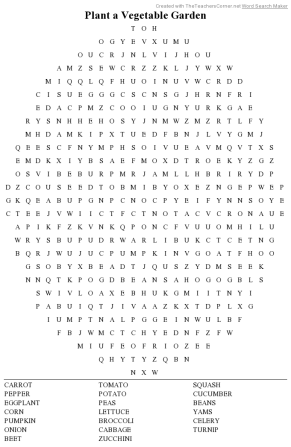
A recipe for Rainbow Stew follows the story. Reading Rainbow Stew, preparing the delicious dish, and doing the puzzle below makes for a fun rainy – or sunny – day!
Ages 4 – 7
Lee & Low Books, 2013 | ISBN 978-1600608476
Learn more about Cathryn Falwell and her books and art on her website!
To discover more about Rainbow Stew as well as activities to accompany the book, head over to rainbowstewbook.com!
In 1970 the first Earth Day was celebrated to bring awareness to environmental issues and begin a dialogue about how governments, corporations, communities, and individuals could create change that would benefit the Earth and all her inhabitants. Forty-six years later, we are working toward solutions to problems like pollution, climate change, renewable energy, and more. Today look around your home, office, school, or community and see how you can better support our Mother Earth.
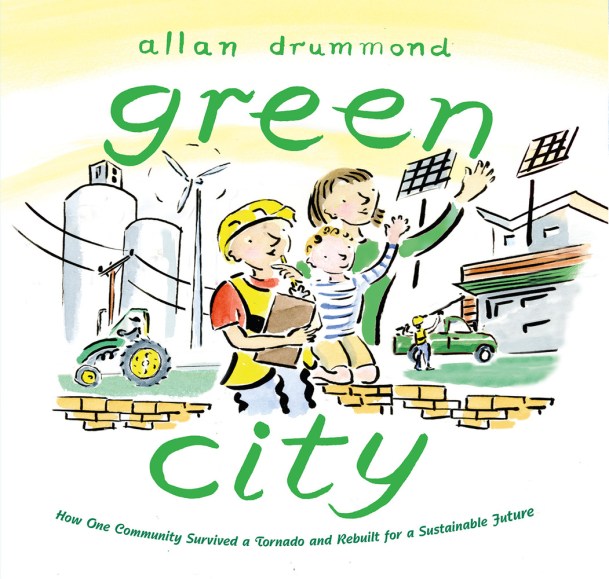
Green City: How One Community Survived a Tornado and Rebuilt for a Sustainable Future
By Allan Drummond
On May 4, 2007 a devastating tornado hits Greensburg, Kansas, destroying the town in 9 minutes. When the residents of the town climb from their shelters, they emerge into a world completely changed. There are no more homes, no school, no hospital, no grocery store or other shops. No banks, theater, churches, or water tower. Even the trees have been shredded. Only three buildings remain.
The citizens are urged to move away. Rebuilding will be impossible, some say, and what’s the point anyway when the wind could destroy it all again? But others see opportunity to construct a different kind of town. With the help of volunteers and donations from around the world, Greensburg begins the Herculean task of designing and building a new town.
After clearing away 388,000 tons of debris and moving into a community of trailer homes, the people begin to envision a unique, green town. Individuals design sustainable houses of different shapes and materials to work with the environment. Businesses, too, incorporate sustainability into their offices, retail centers, and hotels as do the hospital and the water tower. A wind farm large enough to provide energy for the entire town is built on the edge of this innovative city.
A new school is central to the town’s survival, and for three years the teachers hold class in small trailers. Along with their regular studies, the kids become experts in environmental science. After several years Greenburg is now thriving—a testament to conservation and sustainability that is an example for global communities now and in the future.
Allan Drummond tells this fascinating story of a community that would not give up in an honest and sensitive way that highlights the courage and pride of a town amid devastating loss. Told from a child’s point of view, the story has extra impact for readers who are growing up amid an era of environmental awareness and activism. The sustainable construction of homes and other buildings is effectively explained and clearly depicted in Drummond’s colorful illustrations.
The images also demonstrate the process of negotiation and cooperation among townspeople that went into designing and building a new Greensburg. The final two-page spread of the town’s layout will interest kids as well as adults who have followed this story in the news.
Ages 5 – 9
Farrar, Straus and Giroux, 2016 | ISBN 978-0374379995
Earth Day Activity
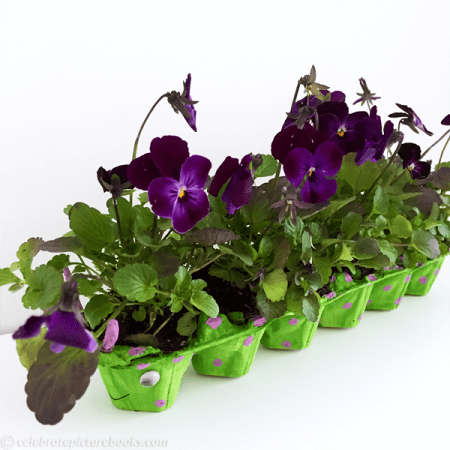
Hatch a Caterpillar Planter
As spring days grow warmer, it’s fun to start growing your own garden. Propagating plants from seed on a windowsill or sun room gives you an up-close view as the seeds develop roots, sprout, and flourish!
Supplies
Egg carton made from recycled paper
Seeds for your favorite veggies or flowers
Potting soil
Spoon or small shovel
Craft paint or markers in the colors you’d like for your caterpillar
Pipe cleaners or wire
Googly eyes
Marker
Directions
Carefully cut the egg carton into two rows lengthwise, you may need to trim the cardboard between cups
If the cups have low openings on one side, place the second row of cups inside the first facing the opposite way.
Paint or color the carton, let dry
Push pipe cleaners or wire through the edge of the egg carton on one end to form antennae (I used wrapped wire and painted it)
Attach googly eyes and draw a smile on the front of the carton
It’s not often someone wishes you a rainy day. Today, though, I’m doing just that because you can’t see a rainbow without a little of the wet stuff. This early spring month was chosen for this special day because, as we all know, April showers bring May flowers. Those same April showers lead to beautiful rainbows—even double rainbows sometimes! So, I hope you have a bad (weather) day and good luck finding a rainbow today! By the way—what do May flowers bring? Right! Pilgrims!
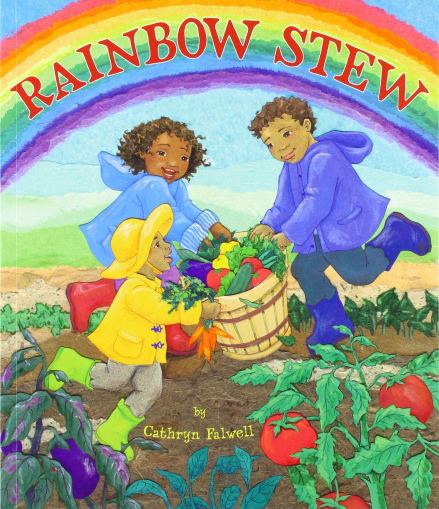
Rainbow Stew
By Cathryn Falwell
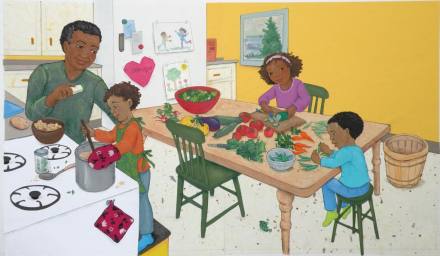
Grandpa’s making pancakes for his three favorite kids, and his granddaughter and two grandsons are excited to be visiting where they can play outside all day. Through the window the kids see that it’s a rainy day. Does this mean they’ll have to stay inside? Their grandpa knows just what to do! “Let’s go and find some colors for my famous Rainbow Stew!” he says.
Image copyright Catherine Falwell, 2013, courtesy of rainbowstewbook.com
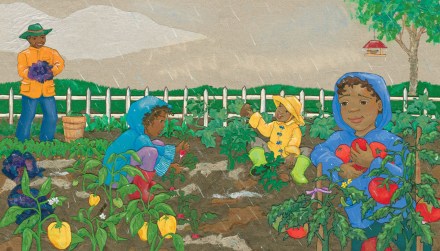
Out to the garden they run in their raincoats and hats. “Splish, splash, / puddle dash, / We bounce right out the door. / We’re off to find some red and green, / some yellow, orange, and more. / Grandpa shows us how to move / Between each garden row. / Lifting up the drippy leaves, / we see what colors grow.” They collect green spinach, kale, and zucchini; yellow peppers, purple cabbage and eggplant, red radishes and tomatoes; brown potatoes; and orange carrots. After some muddy fun among the plants, the kids go inside, get dried off, and begin to prepare their colorful stew.
Image copyright Catherine Falwell, 2013, courtesy of rainbowstewbook.com
“Peel, slice / chop and dice, / colors fill the pot. / Stir in herbs and water / and then wait till it gets hot.” While the pot simmers on the stove, Grandpa and the kids snuggle on the couch with favorite books, reading together until the stew has simmered to perfection. The family then sits down to a homemade, colorful, delicious lunch of Rainbow Stew.
Image copyright Catherine Falwell, 2013, courtesy of rainbowstewbook.com
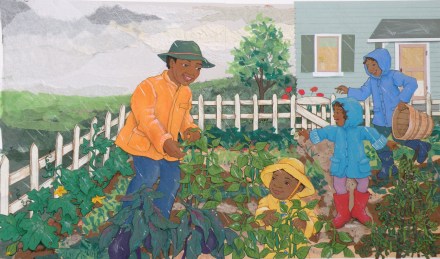
Cathryn Falwell’s Rainbow Stew is a wonderful book to share with young children on many levels. The bright colors of Grandpa’s house mirror the vividness of the garden vegetables in his stew, which could be made into a matching game for extra fun. The rhyming verses—each begun with an energetic couplet that would be fun for kids to repeat or act out—draw listeners into the story. Introducing colors through familiar and delicious vegetables can get kids excited about gardening, cooking, even going to the grocery store.
Children will identify with the disappointment of the three siblings when they learn it’s too wet to spend the day outside as well as their glee at squishing in the mud. The close bond between the kids and their grandfather as they cook and read together is a strong anchor for this story.
Image copyright Catherine Falwell, 2013, courtesy of rainbowstewbook.com
A recipe for Rainbow Stew follows the story. Combined with the craft below, the book and recipe could make for a fun rainy-day get-together!
Ages 4 – 7
Lee & Low Books, 2013 | ISBN 978-1600608476 (Hardcover) | ISBN 978-1643790572 (Paperback, 2019)
National Find a Rainbow Day Activity
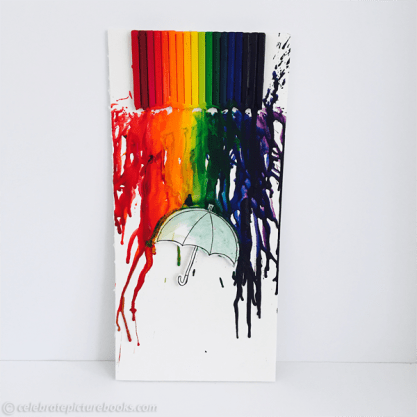
Crayon Rainbow Art
With this cool project you can create an art piece that’s as colorful as a rainbow and as unique as you are! Adult help is needed for children.
Supplies
Box of 24 crayons
White foam board or thick poster board, 8 inches by 17 inches
A small piece of corrugated cardboard, about 5 inches by 5 inches (a piece of the foam board can also be used for this step)
A small piece of poster board, about 5 inches by 5 inches
Scissors
X-acto knife (optional)
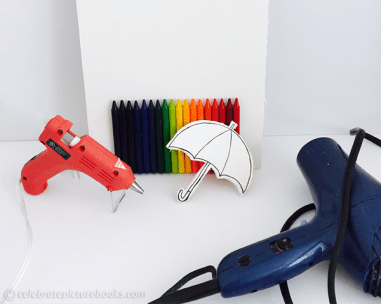
Hot glue gun
Hair dryer
Old sheets or towels, newspapers, a large box, or a trifold display board
Directions
Remove the various red, orange, yellow, blue, indigo, and violet hued crayons from the box of crayons
Strip the paper from the crayons by slicing the paper with the x-acto knife, or removing it by hand
Line them up in order at the top of the white foam board
Glue the crayons with their tips facing down to the board with the hot glue gun
Cut an umbrella or other shape of your choice from the poster board
Trace the umbrella or other shape onto the corrugated cardboard or a piece of the foam board and cut out
Glue the poster board shape onto the corrugated cardboard, let dry
Glue the umbrella or other shape to the foam board, about 4 ½ inches below the crayons
Set up a space to melt the crayons. The wax will fly, so protect the floor and walls by placing the art piece in a large box or hanging newspapers, old sheets or towels on the walls and placing newspapers on the floor. A trifold display board and newspapers works well.
Stand the art piece upright with the crayons at the top
With the hot setting of the hair dryer, blow air at the crayons until they start to melt
Move the hair dryer gently back and forth across the line of crayons from a distance of about 6 to 12 inches away. The closer you are to the crayons, the more they will splatter
The crayons will begin to melt and drip downward
You can experiment with aiming the hair dryer straight on or at an angle to mix colors
Wax that drips onto the umbrella or other shape can be chipped off after it dries or wiped off to create a “watercolor” effect on the shape
Once the hair dryer is turned off, the wax cools and dries quickly
On a cold February day (or even a warm one if you live in a southern climate!), there’s nothing more satisfying than a steaming-hot bowl of your favorite soup! While there are many tasty canned soups, in honor of today you may want to try creating your own concoction. Why not check out recipes from your heritage, geographic location, or even your favorite book? Bon appétit!
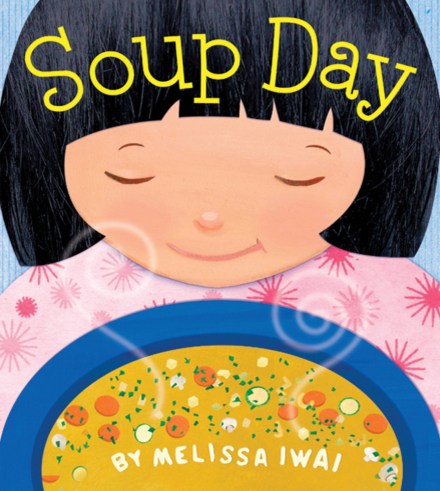
Soup Day
By Melissa Iwai
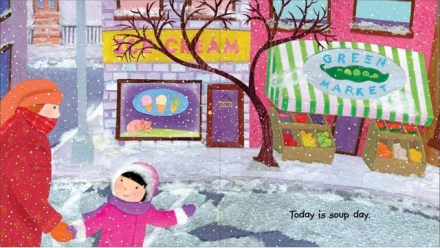
This is the perfect book for a cold winter day that celebrates the warmth and deliciousness of soup! In author-illustrator Melissa Iwai’s delightful book, the white flakes are falling and the sidewalks are piled high with snow as a little girl and her mother make their way to the market to buy ingredients for their homemade soup. At the store they fill their basket with celery, potatoes, mushrooms, carrots, onions, and more.
Copyright Melissa Iwai, courtesy of us.macmillan.com
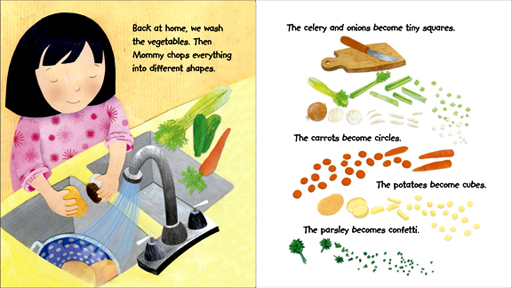
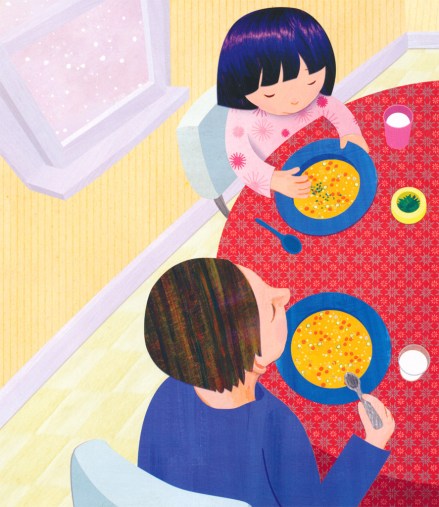
Back at home the little girl and her mom chop the vegetables, put the ingredients in a pot, and simmer the soup until its steamy. While they wait they play games and read together. Later the girl and her mother add spices and alphabet pasta to the bubbling soup. When Daddy comes home they enjoy the delicious meal.
Copyright Melissa Iwai, courtesy of us.macmillan.com
Smoothly integrated into the story are lessons in counting and shapes, which makes the book one that would be fun to replicate with older children—in fact there is a recipe for soup on the last page!
Copyright Melissa Iwai, courtesy of us.macmillan.com
Iwai’s bold, vivid images are tantalizing. As you turn through the pages you can almost taste the fresh vegetables and wish you could grab some of that produce for yourself. The sweet expressions of the girl and her mother show how much they enjoy spending time together making this special meal.
Ages 2 – 6
Henry Holt, Christy Ottaviano Books, New York, 2010 | ISBN 978-0805090048
Homemade Soup Day Activity
Make Silly Soup
You can create Silly Soup from anything but the kitchen sink in the kitchen sink! Just gather a bunch of fun “ingredients” and stir them together to make soup fit for a…monster? Ogre? Fairy? Your favorite stuffed animal? Who would you like to feed?
Note for Parents: This can be a fun way to teach your child about different foods and kitchen tools. Let your child see and smell different spices as they add them to their soup. Explain the different shapes of pasta. You can even teach about color by combining food colorings to see what happens. Add a science-based experiment by letting your child watch what happens to butter, sugar, or salt when they are placed in warm water.
When all the ingredients are added, use a variety of kitchen tools to stir it up! Show your child a big serving spoon, slotted spoon, whisk, spatula, ladle, teaspoons, and whatever other tool they may like to use.
*Remember, Silly Soup is just for making, not for eating!













 celebratepicturebooks.com