April 22 – Earth Day

About the Holiday

By 1970 awareness was growing worldwide about the damage that industrialization, pollution, and pesticides were causing people and the environment. On April 22, 1970—the date of the first Earth Day—millions of people demonstrated for change. In response, in July of 1970, Republican President Richard Nixon and the U.S. Congress created the Environmental Protection Agency. Between 1970 and 1973 they also enacted laws such as the Clean Air Act, the Clean Water Act, and the Endangered Species Act and more. Earth Day is now celebrated around the globe as a day for political action and civic participation.

Today, it’s more important than ever for citizens to participate in protecting the environment and speaking up against the policies of the current Republican president and administration so they do not reverse the progress and advancements we’ve made. This year the theme of Earth Day is Our Power, Our Planet and calls for people to unite around renewable energy. To learn more about this year’s theme, and discover ways that you and your kids can make a difference, visit earthday.org

Thanks go to Terry Pierce and the Yosemite Conservancy for sending me a copy of We Leave No Trace! for review.

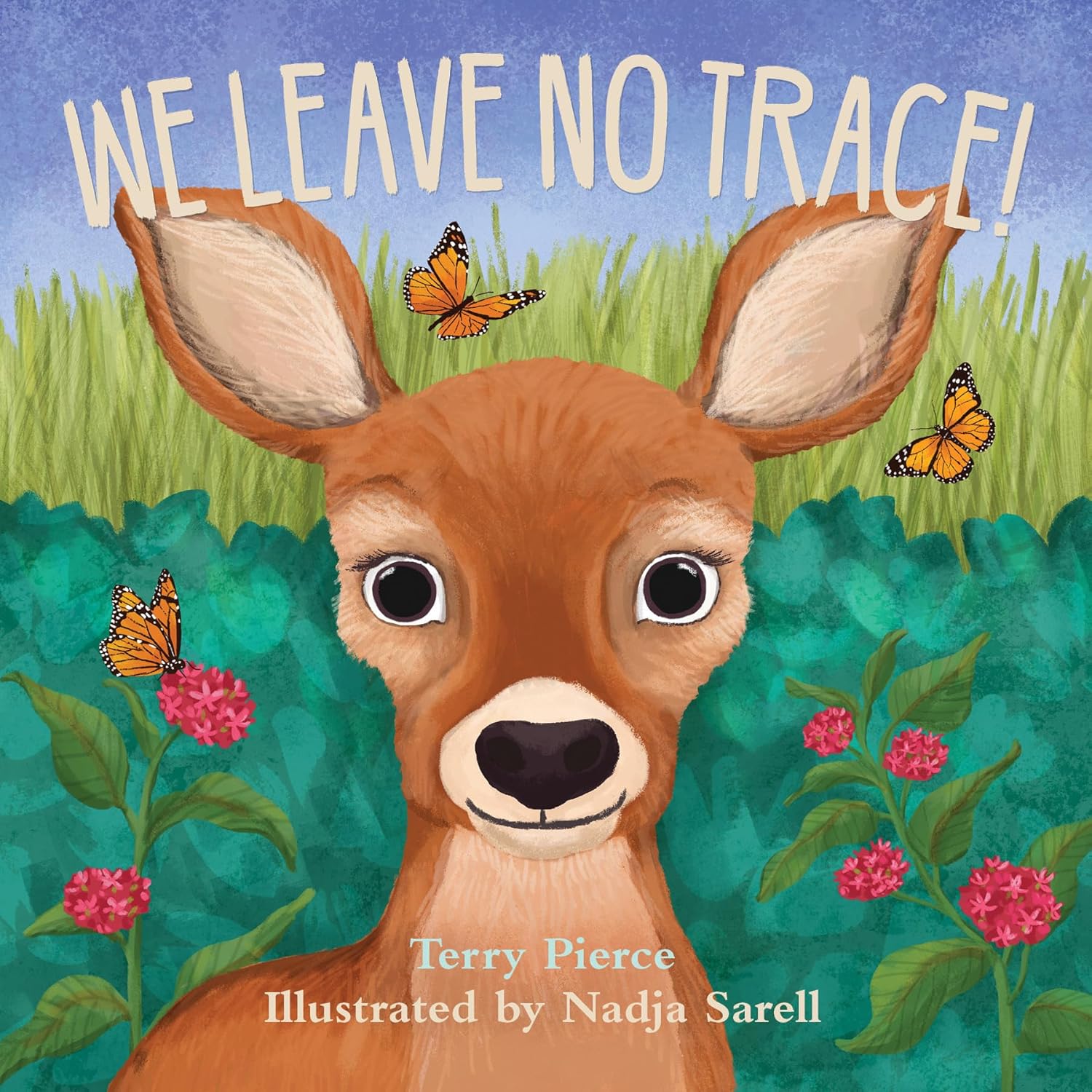
We Leave No Trace!

Written by Terri Pierce | Illustrated by Nadja Sarell


In her gentle invitation for the youngest children and their families to enjoy the outdoors while also treating its flora and fauna with kindness, Terry Pierce models the “leave no trace” principles that ensure harmony between people and nature. Pierce touches on such ideas as not collecting natural “souvenirs,” maintaining a small footprint, and always throwing away trash in verses that encourage adults and children to talk about how they, particularly, can be good stewards of the earth as they hike, camp, picnic, or just enjoy a walk together.
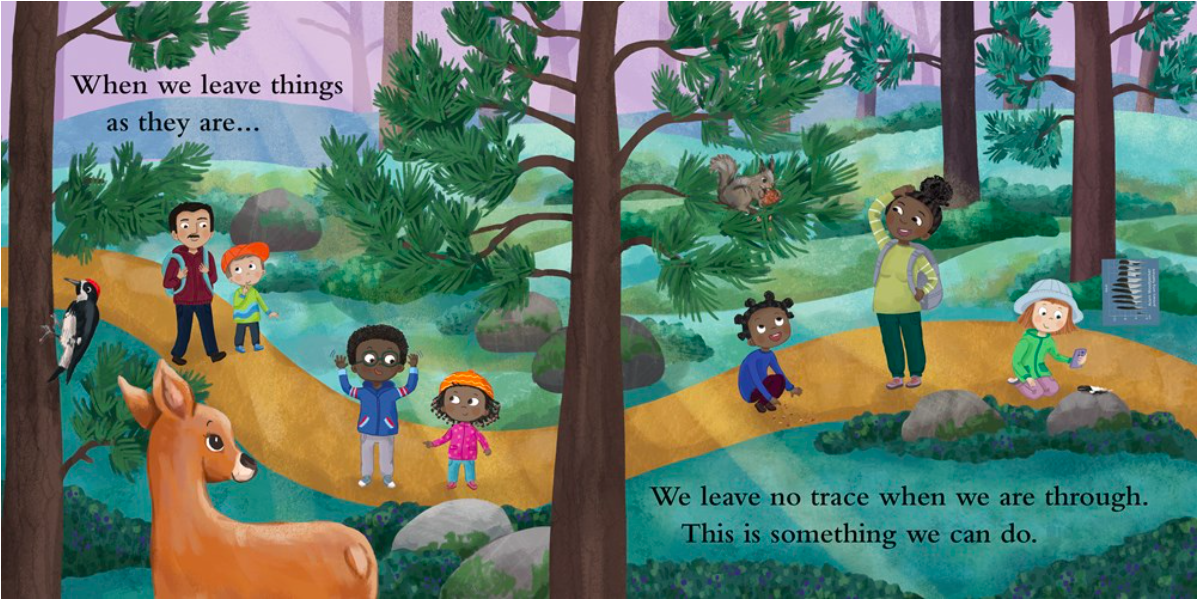
Illustration © 2025 by Nadja Sarell, text © 2025 by Terry Pierce. Courtesy of Yosemite Conservancy.

While each page spread introduces a different way that kids can pitch in to help nature, Pierce has also included a repeated rhyming couplet that reinforces a child’s pride in supporting a cleaner, healthier environment for all while also having fun. This lively phrase can turn any read-aloud story time into an enjoyable interactive read-along for little ones. 

Kids will love hiking through Nadja Sarell’s vibrant landscapes that transports them to a mountain-side lake where various nature-lovers are boating, picnicking, and walking all within sight of a doe and her fawn and a bird that’s flying in low for its closeup; a forested trail in which a girl, instead of taking home a woodpecker’s feather, is snapping a picture of it; a park where ducks swim among lily pads as kids look on from a stone bridge while others play nearby; and more lovely locales. Each page spread also offers lots of opportunities for young readers to point out animals and other elements of nature as well as kid-favorite treats and activities.

We Leave No Trace! is a delightful adventure through nature that provides youngest children with easy and mindful reminders of how they can protect the environment now and for the future. Jaunty rhymes, repeated phrasing, and vivid illustrations that welcome discussion and interaction make this board book perfect for taking along on trips to playgrounds, parks, and other outdoor spots and a top choice for home and library collections.

Ages Baby – 3

Yosemite Conservancy, 2025 | ISBN 978-1951179373

About the Author

Terry Pierce is the author of more than twenty-five books for children, including We Leave No Trace!, Hello Meadow!, and Eat Up Bear! (Yosemite Conservancy), Love Can Come in Many Ways (Chronicle), Soccer Time! (Random House), Mama Loves You So (Little Simon) and My Busy Green Garden (Tilbury House). She is an outdoor enthusiast, enjoying backpacking, hiking, and rock climbing near her home in Mammoth Lakes, California.

About the Illustrator

Nadja Sarell is an illustrator living in Helsinki, Finland. She is the illustrator of We Leave No Trace!, Eat Up Bear! and Hello, Meadow! (Yosemite Conservancy), the Frankie Sparks, Third Grade Inventor series (Aladdin), and The One and Only Wolfgang (Zonderkidz). Nadja graduated with MA in dance from Theatre Academy Helsinki and graduated from North Wales School of Art and Design with BA in illustration for children’s publishing in 2004. Since then she has worked as a freelance illustrator in Finland and abroad. She loves to teach art, illustration, and dance for both children and adults.

We Leave No Trace! joins these two previous books in the Yosemite Conservancy’s “stewardship” board book series by Terry Pierce and Nadja Sarell
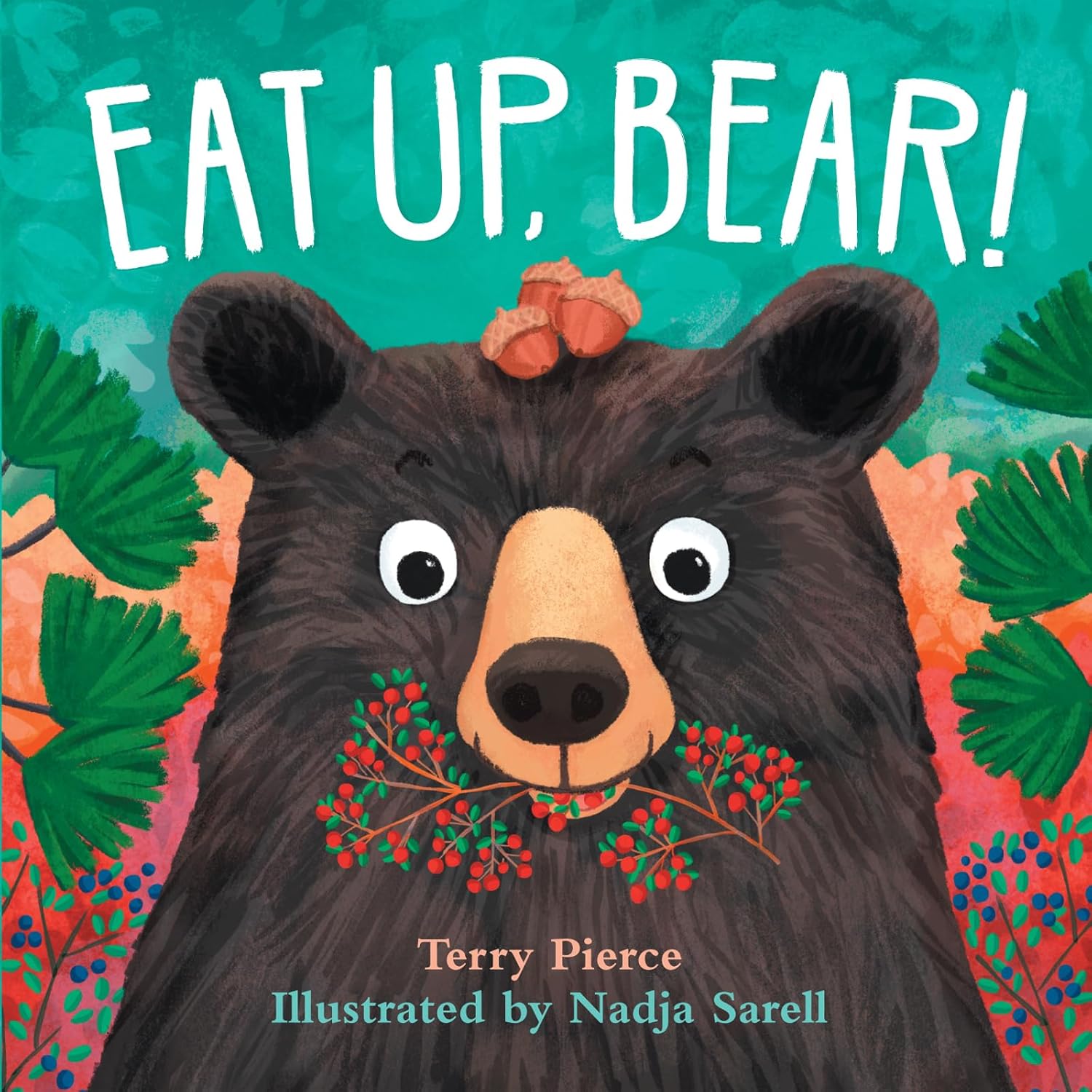
Eat Up, Bear!

Curious, hungry black bears just want to eat! Juicy berries, crunchy nuts, tender grubs, sticky honey—that’s good bear food. But if little park visitors and their families don’t watch out, their food will be bear food, too! The bouncy rhyming text and vibrant pictures in this board book show how people of all ages can help keep bears safe and thriving. Perfect for first-time and seasoned campers alike.
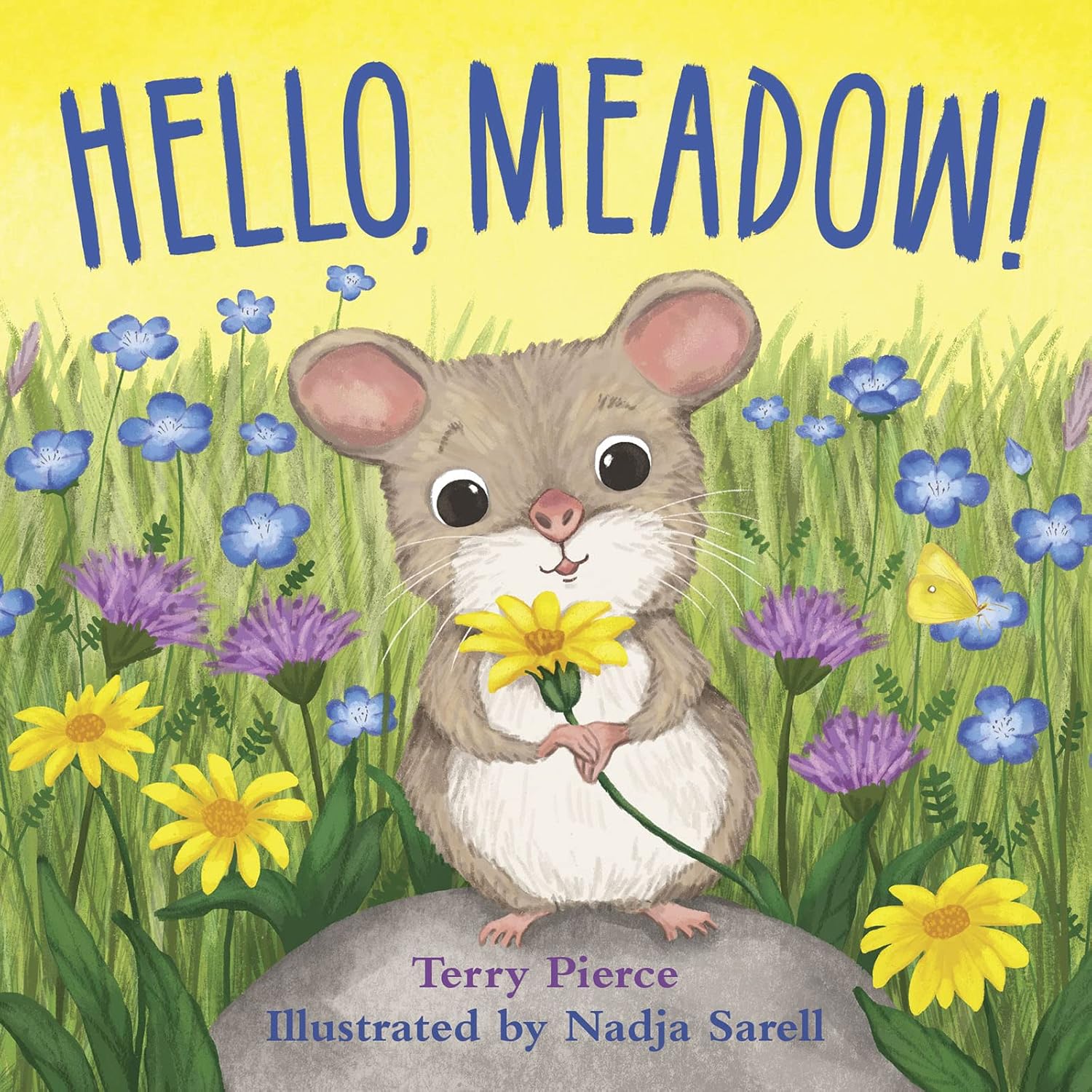
Hello, Meadow!

Grassy, flower-filled meadows are really pretty! It’s oh-so tempting to hike and skip right through them. But meadows are actually fragile, and human footsteps and picnics can cause them harm—then they cannot do their important work of providing a habitat for creatures and plants, filtering water, and even storing carbon. The lively text and beautiful illustrations in this sturdy board book show little nature lovers how to easily protect meadows while enjoying one of Earth’s loveliest features.

Earth Day Activity
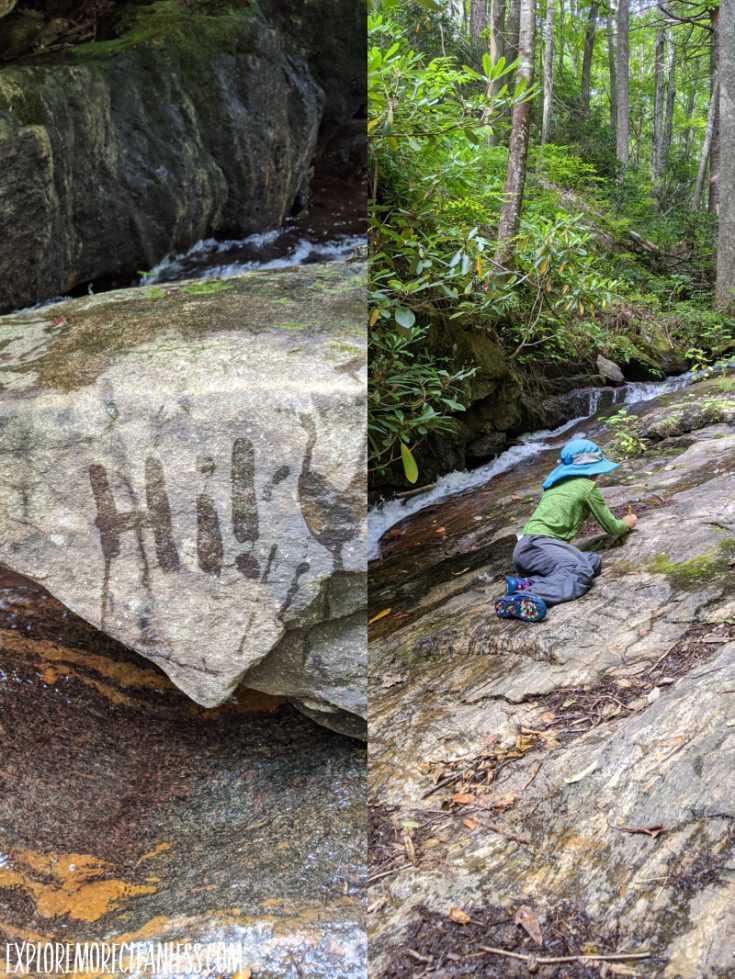
Image courtesy of Explore More, Clean Less

Paint with Water


It’s fun to get creative with activities you can do outdoors that will leave no trace. Painting with water on boulders or river rocks or on areas of paved park trails or playground sidewalks with paint brushes or your fingers lets you explore your artistic side while being gentle with nature. You can find many more ways for kids to learn about and interact with the environment at Explore More, Clean Less!
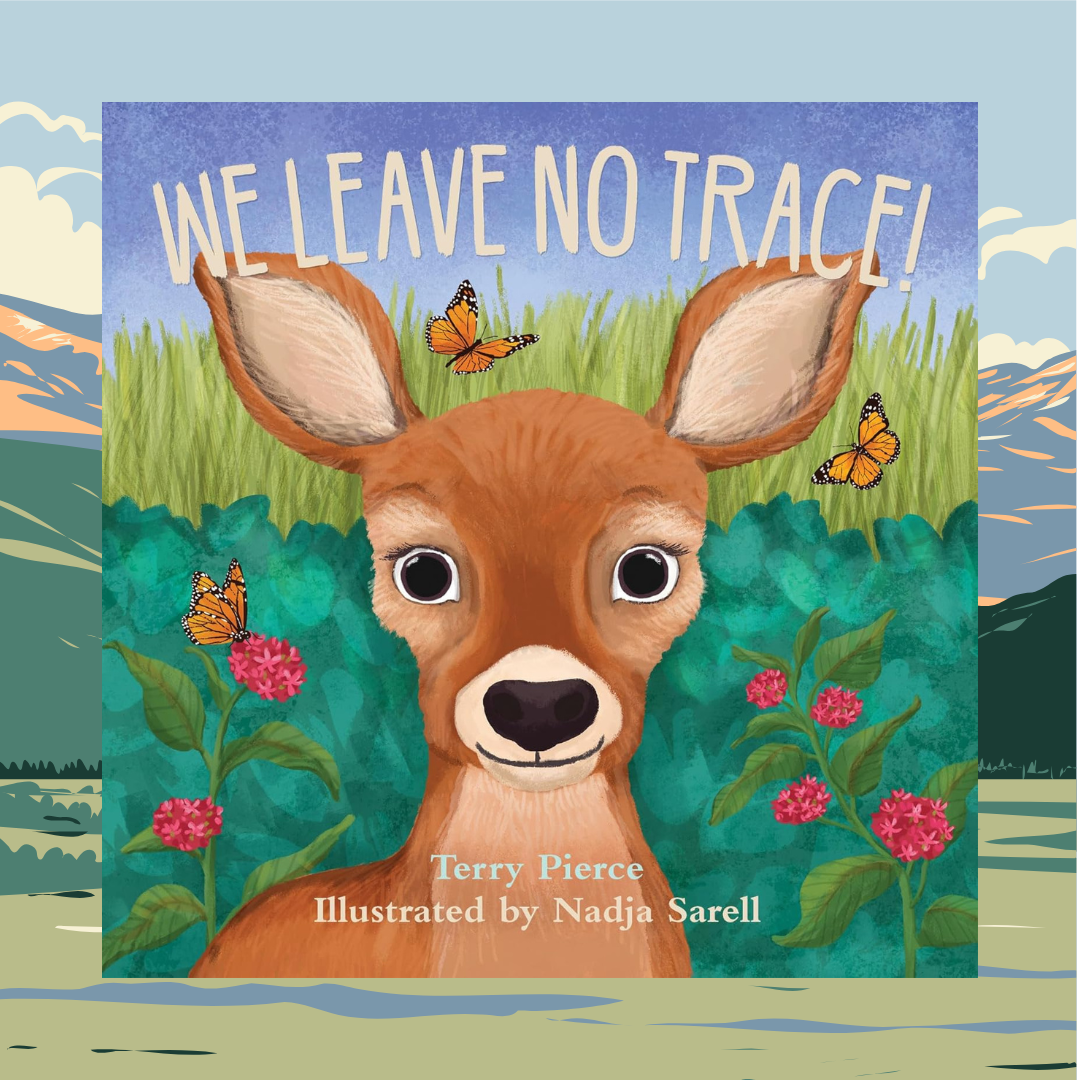
You can purchase We Leave No Trace! from these booksellers

Yosemite Conservancy | Amazon | Barnes & Noble | Bookshop

Picture Book Review

March 14 – It’s Expanding Girls’ Horizons in Science and Engineering Month

About the Holiday

Expanding Girls’ Horizons in Science and Engineering Month was established in 2020 by the Expanding Your Horizons (EYH) Network. Founded in 1974 as a series of conferences aimed at promoting STEM careers to middle and high school girls, EYH provides hands-on activities, mentoring, and contact with role models as well as information about science and engineering fields.

Women still make up only 28% of the science and engineering workforce. With this month-long observance, the EYH Network hopes to make a significant impact on girls’ perceptions and career choices, encouraging them to explore and embrace STEM subjects​.

Thank you to Heyday and Barbara Fisch at Blue Slip Media for sharing a copy of I Love Salmon and Lampreys: A Native Story of Resilience with me!

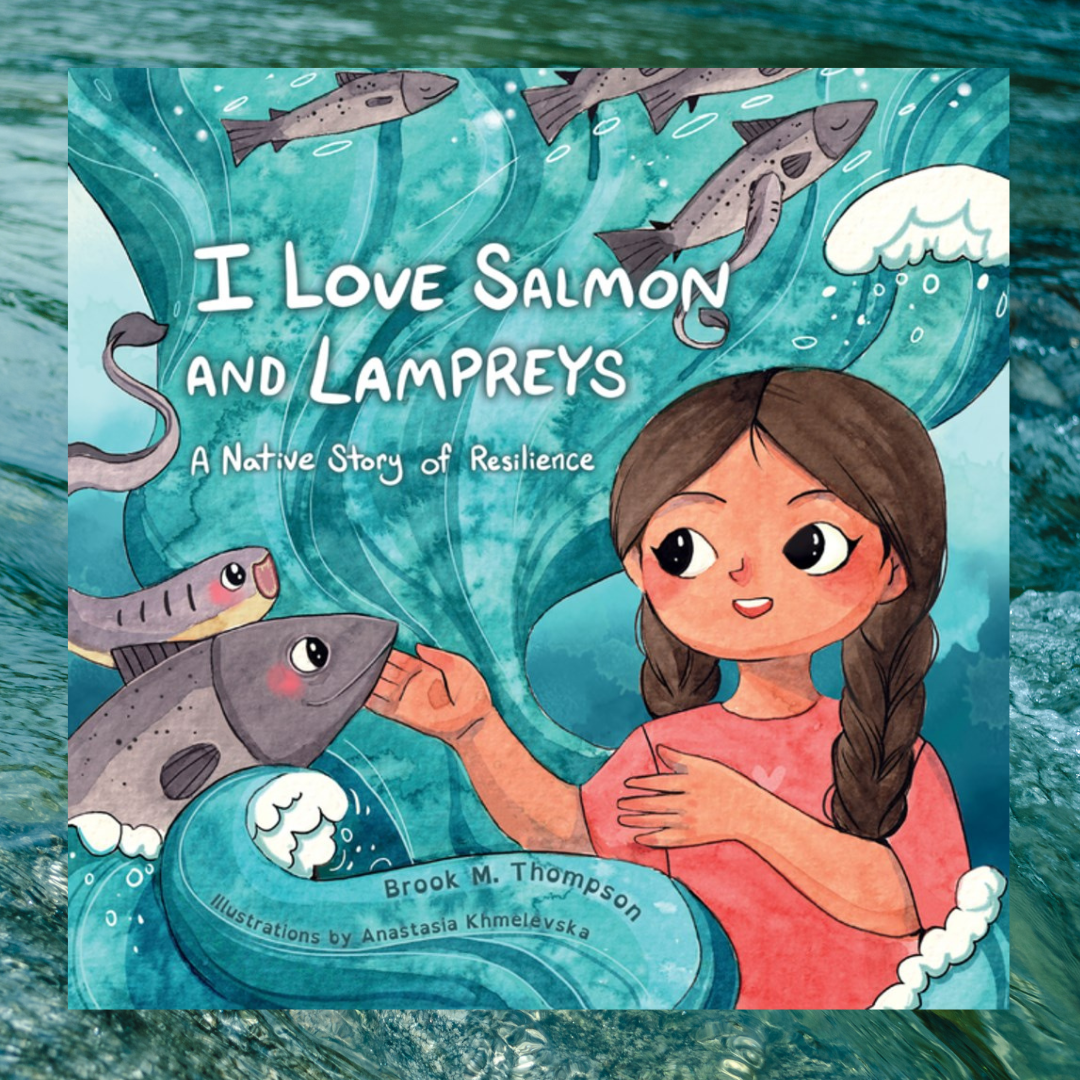
I Love Salmon and Lampreys: A Native Story of Resilience

Written by Brook M. Thompson | Illustrated by Anastasia Khmelevska


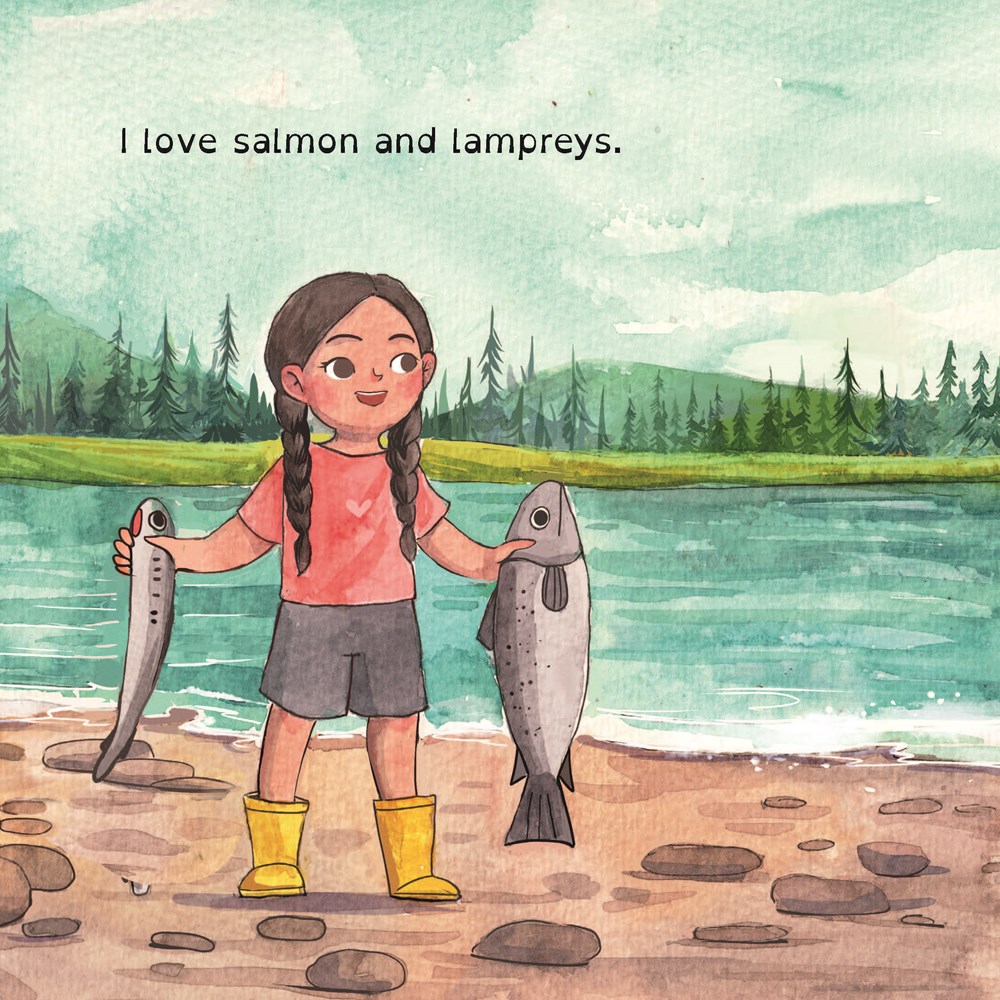
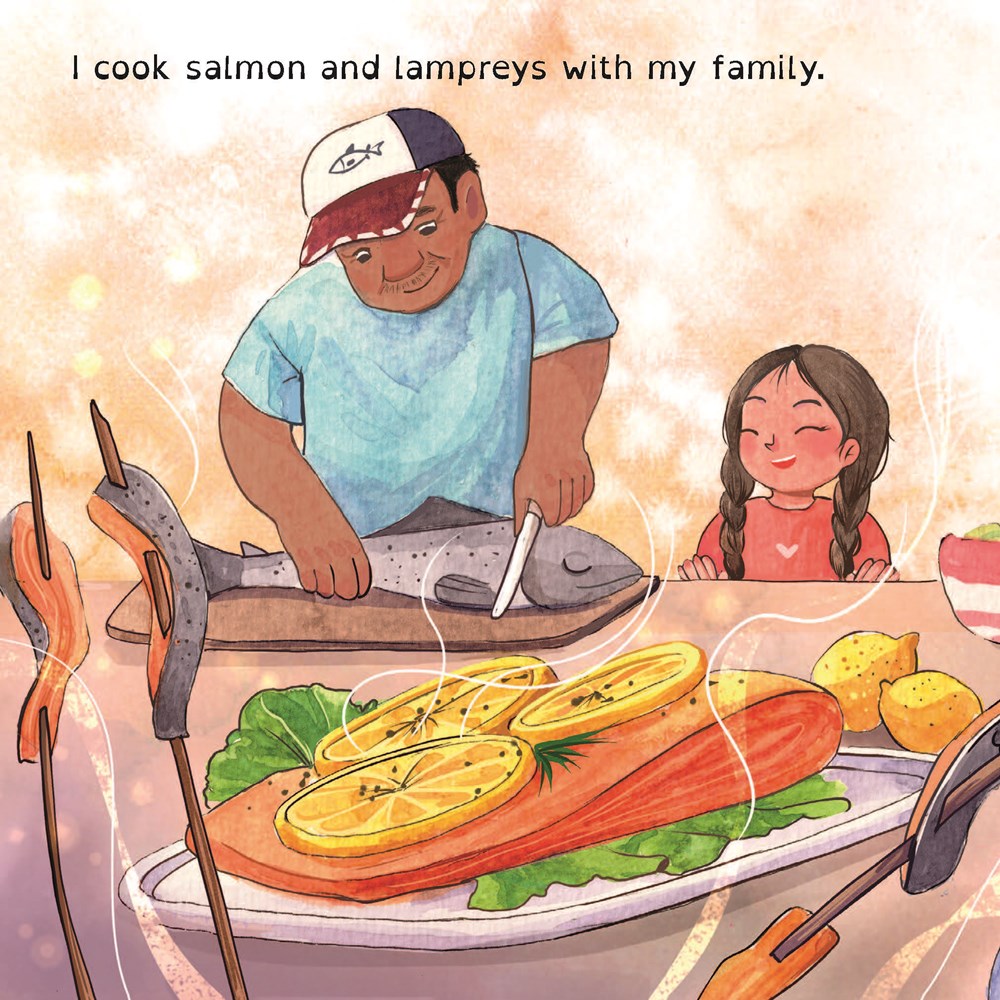
In her powerful autobiographical story, Brook Thompson, a member of the Yurok and Karuk Tribes, warmly invites readers to join her on her journey from childhood to the present day to experience her intense love for her tribes’ traditions and the fish that sustain them. Readers are first taken out on Brook’s family’s fishing boat, where her father and her grandfather tell stories of their own childhoods as they check the nets in their designated fishing spots along the Klamath River in Northern California. Then it’s back home to learn how Brook helps cook the fish (lampreys in the winter and salmon the rest of the year) in a wide variety of delicious ways.

Illustration © 2025 by Anastasia Khmelevska, text © 2025 by Brook M. Thompson. Courtesy of Heyday.

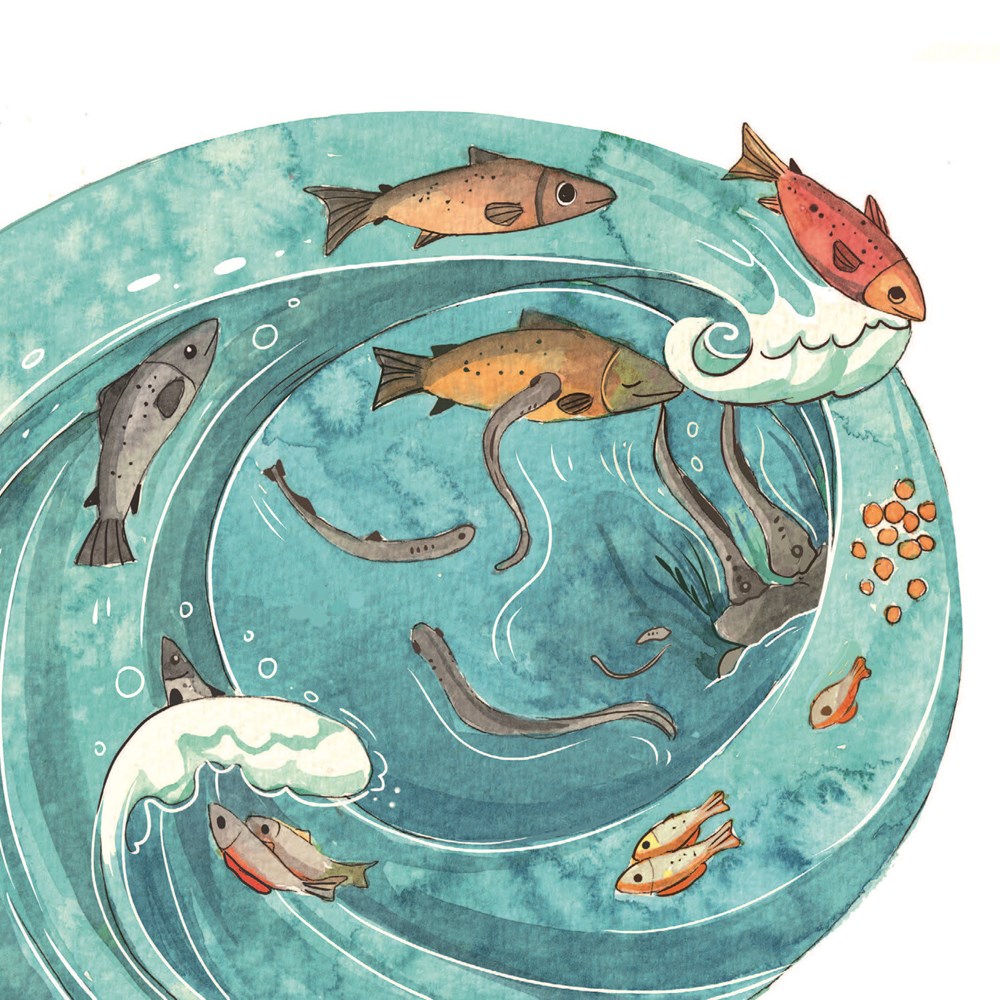
Salmon and lampreys are more than just food to Brook, however. They are creatures of the earth to be admired and honored. She tells readers about their life and spawning cycles, how they predate the dinosaurs, and even about their fascinating symbiotic relationship. For Brook, this love she feels is shared. She says, “I feel loved by salmon because years ago my ancestors took care of the salmon for their future family” and reveals that the fish in the river now “are the great-great-great-great-great-great-grandkids of the salmon who had a relationship with my great-grandparents.”

Illustration © 2025 by Anastasia Khmelevska, text © 2025 by Brook M. Thompson. Courtesy of Heyday.

In 2002, when Brook was still young, over 60,000 salmon perished from a parasite which spread when the water level of the river became too low and the temperature too hot due to the six dams erected on the river. She explains how dams “block the salmon’s way home” and how the warming water promotes the growth of toxic green algae, which affects the fishes’ breathing and spreads disease. 

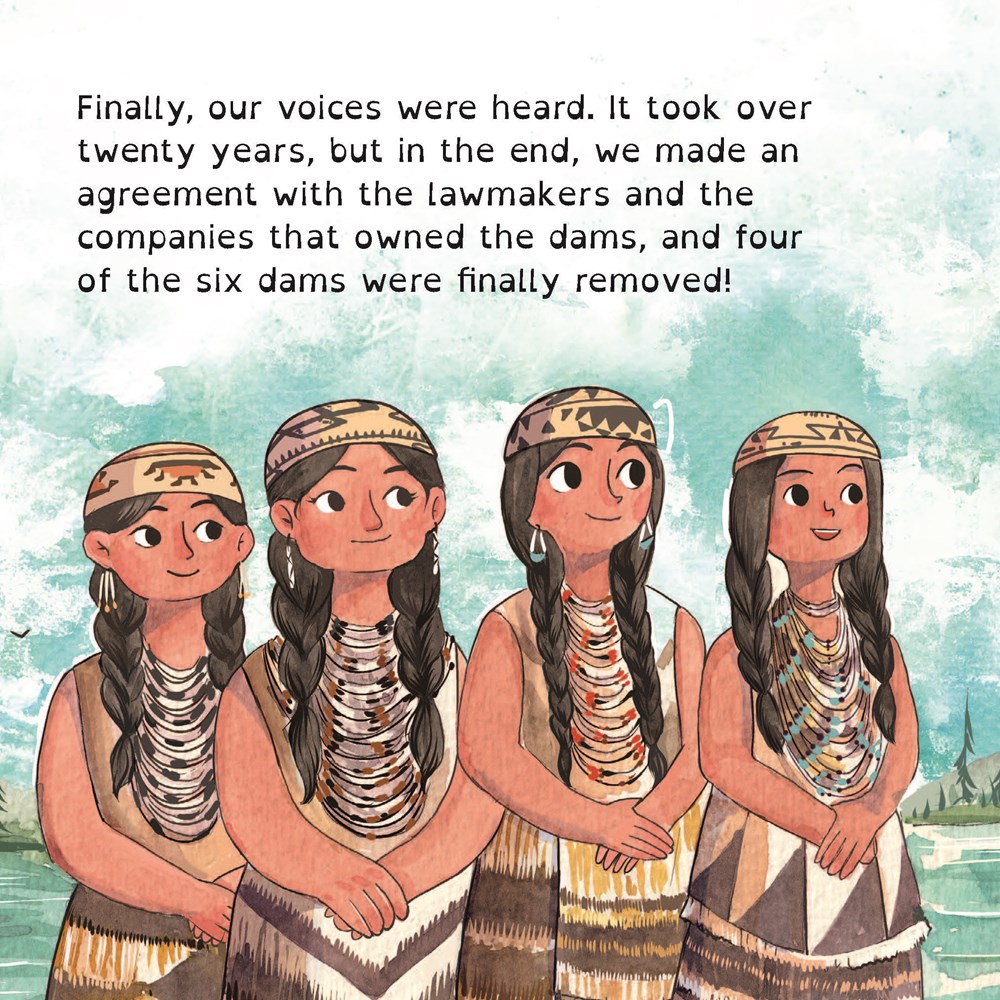
Brook joined protests by the tribal people and others, while scientists did research and local politicians lobbied for change. More than 20 years later agreements with the politicians and the companies that owned the dams were signed, and four of the six dams along the Klamath River were removed.

Illustration © 2025 by Anastasia Khmelevska, text © 2025 by Brook M. Thompson. Courtesy of Heyday.

As she grew into adulthood and inspired by her experiences, Brook set her eyes on higher education. She “went to college to learn about dams and about how to protect salmon in the future.” She became an engineer and a scientist who studies the interconnectedness of  “water, nature, people, animals, and buildings” and returned home to the Klamath River, where she continues the legacy of her ancestors in caring for the salmon, lampreys, and the environment.

Back matter includes Fun Facts about lampreys and salmon; photographs of Brook with salmon and at Iron Gate Dam, which was removed in 2024; a map of the Klamath River Watershed area; a note about the inspiration behind the book as well as the book’s font, OpenDyslexic, which makes it easier for those with dyslexia, like Brook, to read; and notes about the author and illustrator.

Illustration © 2025 by Anastasia Khmelevska, text © 2025 by Brook M. Thompson. Courtesy of Heyday.

Brook Thompson, in her compelling autobiographical story, will captivate children and touch their hearts. Thompson’s eloquent and straightforward storytelling immediately immerses readers in the Native relationship with nature and will inspire both young and adult readers to think deeply about how the earth sustains us and how we can show our appreciation in return. The theme of environmental justice and how citizens can and do make a difference is made personal through Thompson’s clear explanations of how the dams affected the salmon population and the long-term steps people took to reverse their damage. Thompson’s dedication—even from childhood—to her tribes, family, and future generations will impress readers. Children will also develop an understanding of how issues of interest to them now can inform their future endeavors.

Anastasia Khmelevska’s vibrant earth tone illustrations endear Brook to children through her evident passion for family, fishing, and the salmon and lampreys that have been a constant in her tribes’ lives. Her pacing and realistic depictions of people and events help children clearly understand the importance of each element of Thompson’s story from how the cyclical lives of salmon and lampreys are demonstrated in a swirling wave to the stunning landscapes highlight of the Pacific Northwest. These images make her depiction of the salmon die-off all the more impactful. Her final portrait of Brook Thompson coming home after earning her university degrees links her life to the salmon she loves so well. 

The combination of Native culture and environmental awareness makes I Love Salmon and Lampreys: A Native Story of Resilience a must addition to school and public libraries. The book offers extensive value and research opportunities for science and social studies classes. For families who care about the environment, sustainability, activism, and the future of our planet, I Love Salmon and Lampreys would be a much-loved choice.

Ages 4 – 8

Heyday, 2025 | ISBN 978-1597146685

About the Author

Brook M. Thompson is a part of the Yurok and Karuk Tribes. She is a neurodivergent and Two-Spirit author with dyslexia. She has a BS in civil engineering from Portland State University and an MS in environmental engineering from Stanford University, and she will soon have a PhD in environmental studies from University of California, Santa Cruz, where she studies water, politics, restoration, and salmon. You can find out more about her at brookmthompson.com.

About the Illustrator

Anastasia Khmelevska is an illustrator based in Lviv, Ukraine. She has illustrated several children’s books, including My Invisible Zoo, Marella the Mermaid, and Anything Helps. Follow her on Instagram @cute_miuu.

Expanding Girls’ Horizons in Science and Engineering Month Activities

Illustration © 2025 by Anastasia Khmelevska, text © 2025 by Brook M. Thompson. Courtesy of Heyday.

I Love Salmon and Lampreys Activity Pages

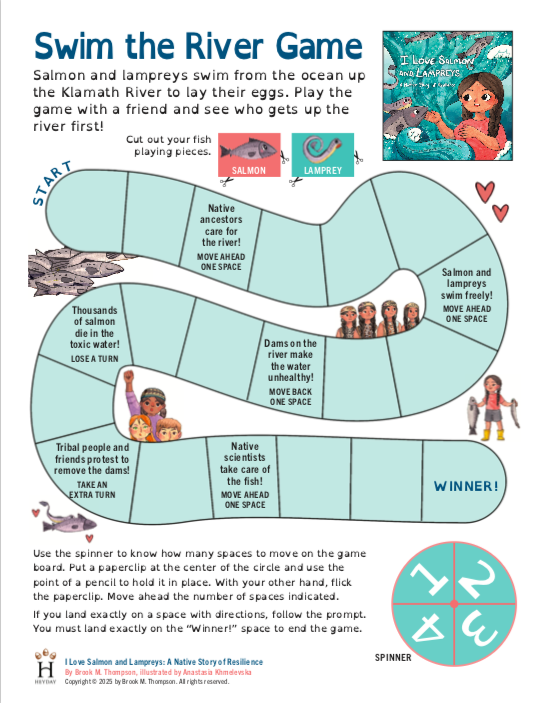
Play a printable board game, write about your dreams for the future, and learn fun facts about salmon and lampreys with these three I Love Salmon and Lampreys Activity Pages!

Chinook and Coho Salmon Coloring Pages

Coho and Chinook Salmon are vital to the Pacific Northwest. You can learn more about California salmon at caltrout.org. Enjoy these coloring pages of coho and chinook salmon. Colored images are included for your reference.

Chinook Salmon Coloring Page | Colored Image of Chinook Salmon

Coho Salmon Coloring Page | Colored Image of Coho Salmon

You can purchase I Love Salmon and Lampreys: A Native Story of Resilience at these bookstores

Amazon | Barnes & Noble | Bookshop

Picture Book Review

March 22 – It’s Women’s History Month

celebrate-picture-books-picture-book-review-cactus-queen-cover

About the Holiday

National Women’s History Month is all about celebrating women who broke barriers with their intelligence, creativity, courage, persistence, and unwavering confidence in their abilities. In every discipline, women have brought and continue to bring new perspectives, experiences, and talents to make contributions toward a better world. The theme for Women’s History Month 2024 celebrates “’Women Who Advocate for Equity, Diversity and Inclusion.’ This theme recognizes women who understand the need to eliminate bias and discrimination from individuals’ lives and institutions.”

Today’s book celebrates a visionary woman who made it her life’s work to protect a unique ecosystem, educate people on the importance of the environment and conservation, and provide the US with one of its most stunning national parks. 

I’d like to thank Calkins Creek/Astra Books for sharing a copy of Cactus Queen” Minerva Hoyt Establishes Joshua Tree National Park with me for review consideration. All opinions on the book are mt own.

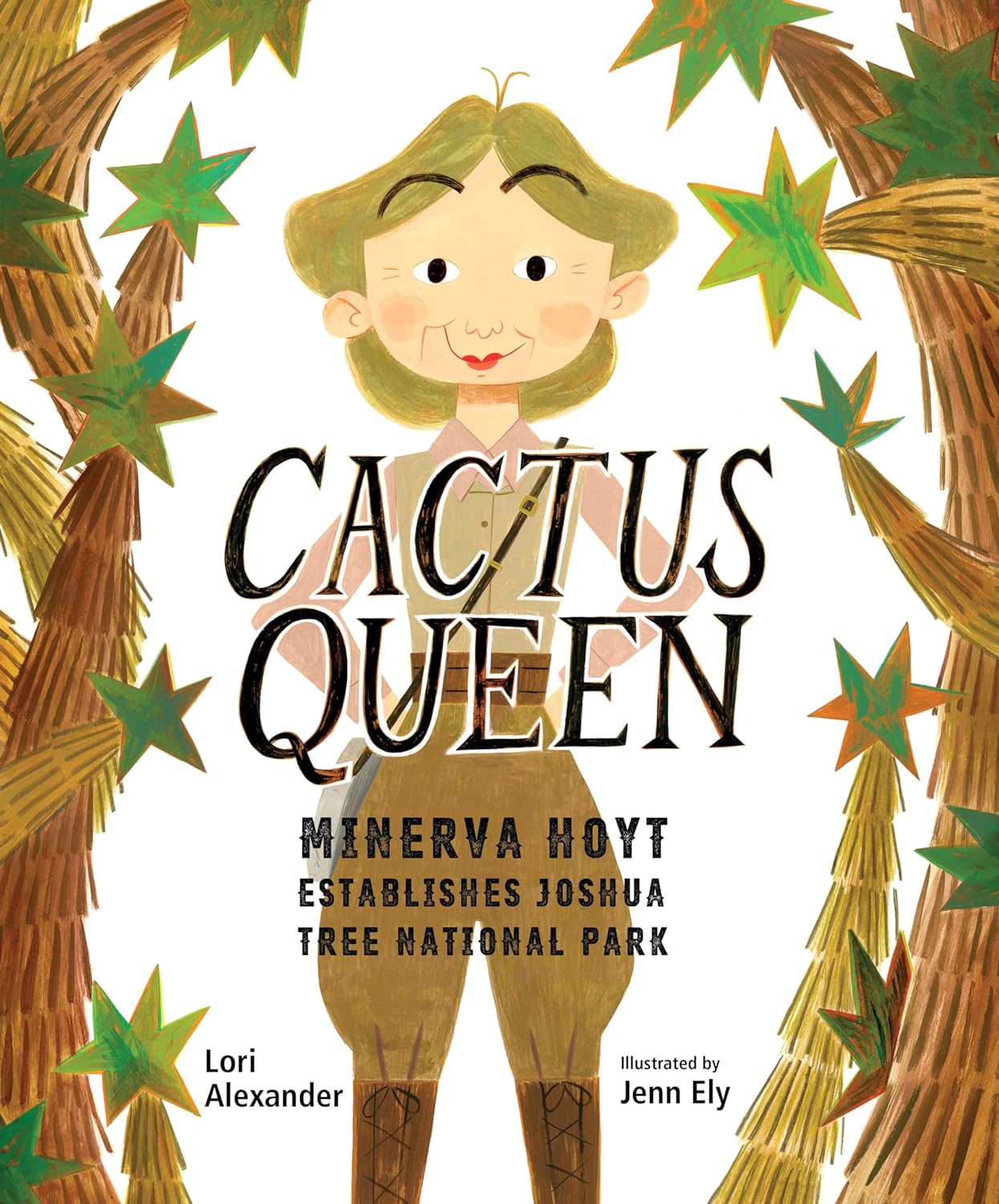
Cactus Queen: Minerva Hoyt Establishes Joshua Tree National Park

Written by Lori Alexander | Illustrated by Jenn Ely


Even as a child, Minerva loved the outdoors, was eager to share her thoughts and opinions, and enjoyed “long chats with friends.” When she grew up she married Dr. Albert Hoyt. In 1897 Minerva and her husband moved from Mississippi to Pasadena, California, close to Los Angeles. To meet new friends, Minerva hosted a backyard party, complete with games, food, and, of course, long chats.

Settled into her new city, Minerva took to making trips to the Mojave Desert. She was awed by the Joshua trees, which grew nowhere else but here. After the death of her husband in 1918, Minerva spent more time in the desert, even camping out while “the wind whistled through the Joshua trees,” and “bright constellations swirled overhead.”

celebrate-picture-books-picture-book-review-cactus-queen-garden-party

Illustration copyright Jenn Ely, 2024, text copyright Lori Alexander, 2024. Courtesy of Calkins Creek, Astra Books for Young Readers.

As Los Angeles grew and grew, with more buildings, more cars, and more noise, people began to visit the desert frequently. They didn’t just visit, though, they wanted to take it home. People dug up the “… fuzzy cholla, spiky yucca, and barrel cacti to keep in their backyards.” They even dug up Joshua trees and carted them away. Many of these desert plants didn’t survive their new city surroundings. The Joshua trees were also cut down for construction materials, and motorists lost in the desert set them afire to communicate with other drivers.

By the late 1920s little remained of Minerva’s beloved desert. She wanted to save it . . . but how? Suddenly, “Minerva had a wild idea.” She would show the rest of the country just how special the desert was. With help from garden clubs, artists, taxidermists, and friends, she gathered samples of desert flora and fauna and took them east—by train.

celebrate-picture-books-picture-book-review-cactus-queen-camping

Illustration copyright Jenn Ely, 2024, text copyright Lori Alexander, 2024. Courtesy of Calkins Creek, Astra Books for Young Readers.

At the 1928 International Flower Show in New York City, Minerva erected a display of the desert. Crowds were thrilled to discover this “strange landscape,” and reporters took pictures for magazines and newspapers. Minerva won a gold medal for her exhibit, The Spirit of the Desert. Minerva also won awards in Boston and London for exhibits there. But more important than these accolades was that people were really listening to her and beginning to love the desert. When she donated her exhibits to museums, more people became interested in the desert.

By 1933, Minerva was ready to move on to the next stage in her plan. She wanted 1,000,000 acres of the desert to be declared a national park, protected by federal laws. Minerva garnered an audience with President Franklin D. Roosevelt and brought photographs to show him. She convinced the President—now it was up to Roger W. Toll, superintendent of Yellowstone National Park, to inspect Minerva’s desert and agree.

celebrate-picture-books-picture-book-review-cactus-queen-museum-exhibit

Illustration copyright Jenn Ely, 2024. Courtesy of Calkins Creek, Astra Books for Young Readers.

As Roger Toll stood in the middle of the desert on a rainswept day, he asked, “where are the lush trees, the waterfalls, and lakes?” When he later filed his report, he rejected the desert for National Park status. Minerva was disappointed but did not give up. She began a letter-writing campaign, convincing “scientists, teachers, politicians, and friends” to write to the National Park Service. Letters poured in—enough to convince the Service to send out a new inspector.

This time Assistant Director Harold C. Bryant, who lived in California, was sent. “He knew all about desert plants and animals.” When he arrived, Minerva and more than one hundred supporters greeted him. After touring the desert for three days, Bryant announced his decision: Yes! “Minerva’s desert was worth saving.”

celebrate-picture-books-picture-book-review-cactus-queen-park

Illustration copyright Jenn Ely, 2024, text copyright Lori Alexander, 2024. Courtesy of Calkins Creek, Astra Books for Young Readers.

Extensive backmatter, accompanied by photographs, offers more biographical information about Minerva, points about wildlife in Joshua Tree National Park, facts about other national parks in the United States, tips for how young people can help the environment through easy-to-implement actions, and a bibliography. In Lori Alexander’s Author’s Note, she relates the dangers and destruction that the fragile environment of Joshua Tree National Park and the surrounding desert continues to suffer from “vandalism, urban development, and the effects of climate change,” a report that demonstrates the need for continued education and care taking of our natural resources.

In Cactus Queen, Lori Alexander has created a compelling biography of a remarkable woman as well as a call to action for readers to stand up for the environmental or other causes that are important to them. Alexander highlights Minerva Hoyt’s love of the desert, her dedication, and her unflagging determination to overcome setbacks. Hoyt’s creativity, pragmatism, and lifelong focus serves as an inspirational roadmap for accomplishing goals for children, teens, and even the adults who read with them.

The first thing readers may notice upon opening Cactus Queen is Jenn Ely’s beautiful color palette that mirrors the unique hues of the desert. Her stunning images of the desert and Minerva’s ingenious ways of rallying the country and the President to her cause transport children from Hoyt’s earliest days through her long-fought success. Ely’s charming illustrations reveal not only the special plants and creatures of the Mojave Desert but Minerva’s distress at its destruction and her tenacity to enact change to protect it. 

Both a fascinating biography of Minerva Hoyt and an in-depth look at the multifaceted workings of conservation efforts, Cactus Queen: Minerva Hoyt Establishes Joshua Tree National Park will inspire readers to advocate for causes that are important to them. For educators the book would make an excellent addition to science and language arts curriculum. Cactus Queen would also be an engaging accompaniment to museum visits or field trips for families and teachers.

Cactus Queen is a top pick for classrooms, public and school libraries, museum shops, and families.

Ages 7 – 10

Calkins Creek, 2024 | ISBN 978-1662680212

About the Author

Lori Alexander is the award-winning author of several children’s books, including All in a Drop: How Antony van Leeuwenhoek Discovered an Invisible World, which won a Robert F. Sibert Honor, and A Sporting Chance: How Ludwig Guttmann Created the Paralympic Games, an NCSS Notable Book. Her work has received several starred reviews from KirkusSchool Library Journal, and Horn Book Magazine, has made the NSTA Outstanding Science Trade Book list, and has been selected by the Junior Library Guild. Visit Lori Alexander at lorialexanderbooks.com.

About the Illustrator

Jenn Ely is an artist and animator, who has worked on the movies The Boxtrolls and Guillermo Del Toro’s Pinocchio. In her recent foray into children’s books, she illustrated The Gardener of Alcatraz and If You Were a Kid Building a Pyramid. Visit Jenn Ely at jennely.com.

Women’s History Month Activity

celebrate-picture-books-picture-book-review-joshua-tree-national-park-wildlife

Become a Joshua Tree National Park Junior Ranger

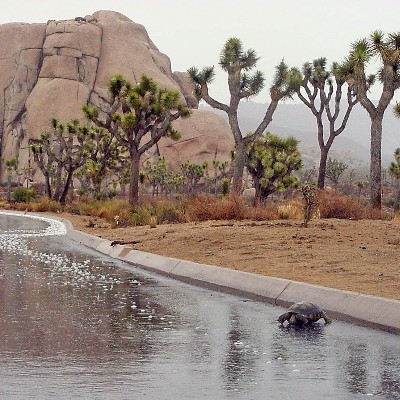
How would you like to become a Joshua Tree National Park Junior Ranger? You can your badge with this online program full of fun and educational activities for all ages! You can learn how to draw a Joshua Tree, create your own constellation, learn all about desert tortoises, create your own rock formation, learn about adaptable plants and design your own, and more.

To earn your badge kids ages 5 – 7 are asked to complete 2 activities; kids ages 8 – 10 are asked to complete 3 activities; and kids ages 10 and above are asked to complete 4 or more. After finishing projects, you just need to send images of your work to receive your badge in the mail!

Simply visit the official Joshua Tree National Park website and learn more about their Junior Ranger program! Learn more about the park and view lots of pictures and videos here.

Joshua Tree National Park Coloring Page

celebrate-picture-books-picure-book-review-joshua-tree-national-park-coloring-page

Enjoy this activity page by filling it with all the colors of the desert.

Joshua Tree National Park Coloring Page

celebrate-picture-books-picture-book-review-cactus-queen-cover

Order from Bookshop to support your local independent bookstore.

You can also find Cactus Queen: Minerva Hoyt Establishes Joshua Tree National Park at these booksellers

Amazon | Barnes & Noble | Books-a-Million

Picture Book Review

October 20 – International Sloth Day

celebrate-picture-books-picture-book-review-sloth's-treehouse-inn-cover

About the Holiday

The AIUNAU, a non-profit dedicated to protecting all wildlife, established International Sloth Day in 2010 to raise awareness of the dangers facing these gentle animals who always seem to have a smile on their face. There are six species of sloth and two types—two-toed and three-toed. Each of the six species lives in its own unique habitat and has its own characteristics. While all species are seeing a population decline, the pygmy sloth is rated as “critically endangered” as there are fewer than 100 animals in existence. Sloths need protection from power lines, cars, and poachers who capture them to sell as pets as well as from other environmental issues that destroy their habitats. To learn more about the various species of sloths, visit AZ Animals.

Sloth’s Treehouse Inn

Written by Carrie Hasler | Illustrated by Christina Wald


Deep in the rainforest, a sloth named Santiago provided rest and comfort to animals from all over within the “gnarled branches that stretched to the sky” and “twisted roots that spread across the forest floor” of his Treehouse Inn. He was a caring innkeeper, always finding the perfect spot for each guest and their needs. One of his favorites was a blue morpho butterfly chrysalis that he gently checked on every day.

While there was usually plenty of room for everyone who visited, Santiago had noticed that his inn was getting crowded. When two toucans came looking for a place to spend the night, Santiago discovered why. The toucans told him that trees in large areas of the rainforest were being cut down, leaving the animals and birds nowhere to live. “The lush forest brimming with life was becoming nothing more than a swath of dirt and mud.” Hearing this made Santiago sad, and he found “he didn’t have the heart to turn anyone away,” so his Treehouse Inn was soon full.  

But Santiago continued watching out for each one of his guests. He served tea every afternoon, provided games, and was happy to play slooow games of checkers with anyone who was willing. Before bedtime, Santiago told stories to young guests, who “didn’t seem to mind that the sloth was always the first to fall asleep, long before the story was over.”

celebrate-picture-books-picture-book-review-sloth's-treehouse-inn-Santiago

Image copyright Christina Wald, 2022, text copyright Carrie Hasler, 2022. Courtesy of San Diego Zoo Wildlife Alliance Press.

The crowded conditions soon led to some squabbling among the guests. The howler monkeys complained loudly, and the tamarins hogged all the fruit. Santiago knew the animals needed more room; they needed homes. Most of all, he worried about where the butterfly would go when it finally emerged from its chrysalis.

One morning, Santiago awoke to see the beautiful butterfly looking back at him. “They both stayed still for a very long time, something the sloth happened to be very good at.” Then, in a flash, the butterfly took off and soared away. Wanting to see his friend one more time to say good-bye, Santiago climbed to the top of the tree. From there he saw how many trees had been cut down. But he also saw something else. 

In the distance, he saw people planting new trees—saplings and seeds. Young trees were already growing, and other plants that made up the forest floor were also sprouting. “Filled with hope, Santiago couldn’t wait to tell the others.” As the trees and plants reclaimed their place in the rainforest, the animals found new homes, leaving the Treehouse Inn quiet once again. and “even though business was slow, its very fine innkeeper was happy just the way it was.”

The front endpapers offer fun facts about animals of the rainforest and the back endpapers offer a key to the types of animals found in a vertical, double-page spread midway through Sloth’s Treehouse Inn. Frontmatter provides a map of South America that highlights the location of the Amazon Rainforest while backmatter includes photographs, information about the rainforest, the causes of deforestation, and what individuals, environmentalists, and governments are doing to save the Amazon. There’s also a guide to how kids can help protect animals and plants in their own community.

celebrate-picture-books-picture-book-review-sloth's-treehouse-inn-bedtime-stories

Image copyright Christina Wald, 2022, text copyright Carrie Hasler, 2022. Courtesy of San Diego Zoo Wildlife Alliance Press.

In her well-crafted story, Carrie Hasler takes readers into the Amazon Rainforest—and to one tree in particular—to show them the vast array of wildlife and plants that call this unique region home as well as a major cause of habitat destruction. Through Hasler’s engaging storytelling, full of lyrical descriptions of the Treehouse Inn and its surroundings, kids meet Santiago, the innkeeper, who embodies the actual attributes of sloths in the wild—gentleness, caring, respectfulness to other creatures, and, of course, a slow, sleepy manner. Whimsical elements, such as the afternoon tea and games Santiago provides, will delight kids while inviting them to empathize with the growing number of guest who have lost their homes. Readers will also like following the progress of the blue morpho butterfly, whose departure leads to Santiago’s discovery of people’s work to replant the rainforest.

Christina Wald realistic illustrations burst with the color, light, and lush vegetation of the Amazon Rainforest. Each page will have readers lingering to view and appreciate the beauty of the rainforest and its denizens. As Santiago settles a group of poison dart frogs in just the right place to give them (and a tadpole) a pool and leaves to climb, the frogs appear as if they could simply hop out of the book. Turning from these types of gorgeous images, the two-page spread of trucks, machinery, and people with large saws cutting through the forest comes as a heartbreaking shock.

Wald’s show-stopping vertical illustration of the Treehouse Inn full of guests—from anteaters and tapirs below to a kinkajou, emerald tree boa, and hoatzin in the middle to a howler monkey and harpy eagle at the top—will have kids trying to spot all the creatures here and later in the book, while her clever checkerboard woven from leaves may inspire creative kids to make their own. The image of people replanting the clearcut forest area is inspiring and will prompt readers to learn more about how they can help.

An inspiring mix of fiction and nonfiction that will engage kids, Sloth’s Treehouse Inn would be a welcome addition to home bookshelves and is highly recommended for school and public libraries.

Ages 4 – 8

San Diego Zoo Wildlife Alliance Press, 2022 | ISBN 978-1943198139

Discover more about Carrie Hasler and her books on her website.

To learn more about Christina Wald, her books, and her art, visit her website.

International Sloth Day Activity

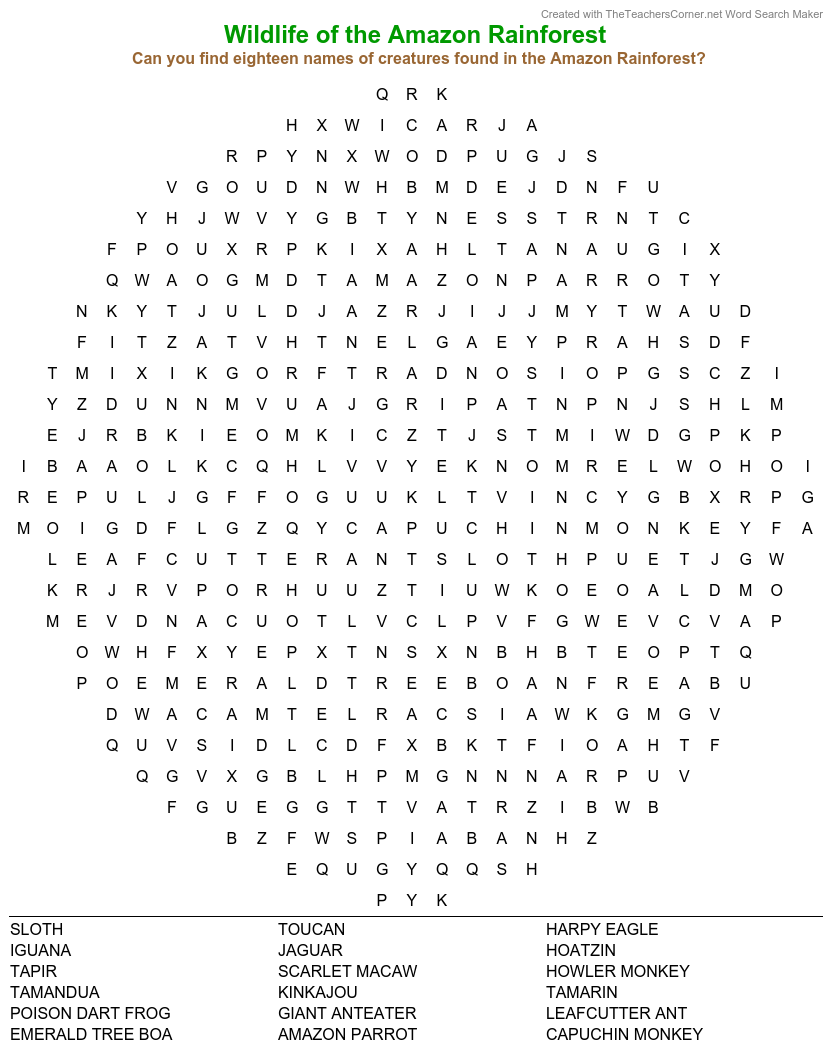
celebrate-picture-books-picture-book-review-amazon-rainforest-wordsearch-puzzle

Wildlife of the Amazon Rainforest Word Search Puzzle


You’ll find eighteen names of creatures who call the Amazon Rainforest home in his printable puzzle

Wildlife of the Amazon Rainforest Word Search Puzzle | Wildlife of the Amazon Rainforest Word Search Solution

celebrate-picture-books-picture-book-review-sloth's-treehouse-inn-cover

You can find Sloth’s Treehouse Inn at these booksellers

Amazon | Barnes & Noble | Books-a-Million

To support your local independent bookstore, order from

Bookshop | IndieBound

Picture Book Review

July 2 – World Firefly Day

celebrate-picture-books-picture-book-review-light-the-sky-firefly-cover

About the Holiday

World Firefly Day was instituted by Fireflyers International Network to raise awareness of these summer-night beauties and the dangers to their survival, including habitat destruction, pesticides, light pollution, and over-collection. More and more, as fields and marshlands are paved over for building and waterways open up to recreation, the fireflies that call these places home are disappearing. This year’s theme is “Let’s stay together in the challenging world” and encourages everyone to learn how to “live in harmony” with fireflies. To learn more about fireflies, how you can make your garden or lawn firefly friendly, and more, visit Firefly Conservation & Research.

Light the Sky, Firefly!

Written by Sheri Mabry Bestor | Illustrated by Jonny Lambert


When fireflies begin dotting the summer night sky with light, it may seem like they’ve magically appeared out of nowhere. But as Sheri Mabry Bestor eloquently reveals, these beautiful insects have been lurking and luminescing for a long time. How long? Well, would you believe a full year? As summer rains dampen the earth, a firefly lays her eggs (up to 500!) under brush or fallen leaves. “Under the leaves, the eggs lay still. For the baby fireflies inside the shells, it is time to grow. And begin to glow.”

celebrate-picture-books-picture-book-review-light-the-sky-firefly-laying-eggs

Image copyright Jonny Lambert, 2022, text copyright Sheri Mabry Bestor, 2022. Courtesy of Sleeping Bear Press.

The larvae hatch after a month, and then they begin to eat, eat, eat. Slugs and snails are on the menu and, as a paragraph of scientific information about the firefly’s nighttime dining discloses, “instead of fighting their prey, the larvae bite and then inject the prey with a liquid that keeps it from moving to get away.” All through the rest of summer and fall, the baby fireflies grow. During the winter, the larvae undergo many transformations, growing and outgrowing a series of casings.

celebrate-picture-books-picture-book-review-light-the-sky-firefly-launch

Image copyright Jonny Lambert, 2022, text copyright Sheri Mabry Bestor, 2022. Courtesy of Sleeping Bear Press.

It isn’t until late spring when the larvae are ready to become an adult. When they are ready, they emerge from their mud nest. Then, while the sun is high, they stay low to the ground. But “when the sun begins to set, they begin to climb higher. And when the sky turns black, fireflies launch!” Then “the sky is filled with flashing fireflies. They twinkle like faraway stars.”

celebrate-picture-books-picture-book-review-light-the-sky-firefly-blink-blink

Image copyright Jonny Lambert, 2022, text copyright Sheri Mabry Bestor, 2022. Courtesy of Sleeping Bear Press.

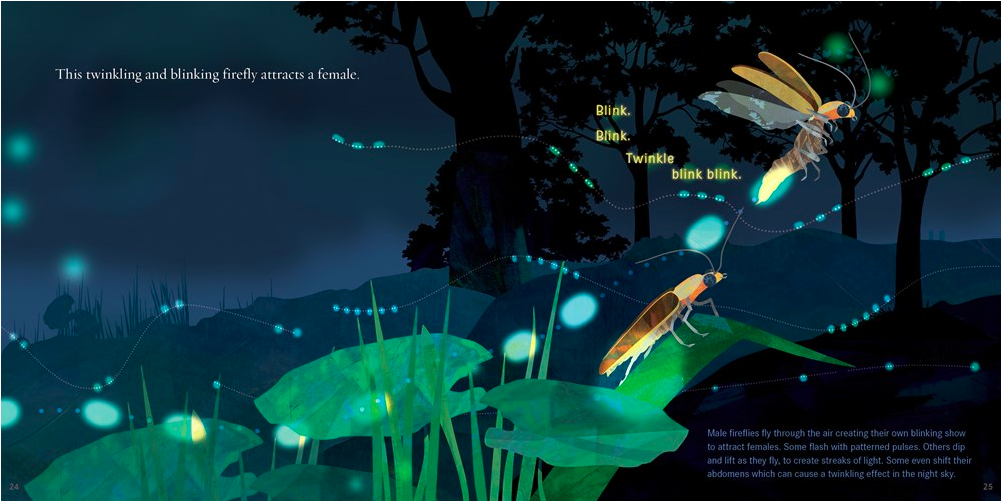
Still, the darkness of night doesn’t protect them from predators, so fireflies always have to be on the alert. If they are caught, fireflies have a bitter surprise for the hungry critter. And what about those “blink, blinks” that we all marvel at? Those signals aren’t random. As Sheri Mabry Bestor explains, “Fireflies blink with specific rhythms called ‘flash patterns,’ and each species has its own. This helps them communicate with each other.” Not only does that luminescent chemical help fireflies, Bestor describes ways in which scientists and doctors are studying it in hopes of helping people.

“In time, the females are ready to lay their eggs. Pitter-patter, drizzle-drip. Summer rain cools the earth. Bees buzz. Birds glide. A firefly finds a place under the leaves that blanket the ground.” The eggs hide, waiting until next summer when it’s their turn to shine.

celebrate-picture-books-picture-book-review-light-the-sky-firefly-summer-again

Image copyright Jonny Lambert, 2022, text copyright Sheri Mabry Bestor, 2022. Courtesy of Sleeping Bear Press.

Sheri Mabry Bestor’s lovely, poetic story of the lifecycle of fireflies is a beautiful read aloud for summer nights or for whenever you and your kids are missing the simple pleasures of summer. While the story plays out from page to page in flowing and sometimes vibrant text, scientific facts about these insects, their transformations, homes, anatomy, protection, and, of course, their bright and glowing communication skills are tucked in the corner waiting to be discovered and explored. Bestor’s rhythmical cadence also highlights the seasonal changes that accompany a fireflies’ growth and the cyclical wonder of nature.

Jonny Lambert’s stunning textured collage-style illustrations portray all the beauty of these unique insects and the landscape they inhabit. Mottled greens and yellows give depth to lush leaves, opaline snail shells catch the light above as the curious snail discovers the glowing eggs below, and delicate spring flowers camouflage the mud nests where the larvae are transforming into adults. The nighttime scenes are breathtaking with deep blue skies, a canvas for the pin pricks of light that create summer’s most spectacular show. Both realistic and dreamlike, these nighttime pages will have kids and adults scurrying outside to watch and be a part of it.

A gorgeous book to celebrate the exquisite charm of fireflies as well as to impart natural science facts, Light the Sky, Firefly is highly recommended for home, school, and public library bookshelves.

Ages 4 – 8

Sleeping Bear Press, 2022 | ISBN 978-1534111158

Discover more about Sheri Mabry Bestor and her books on her website.

You can connect with Jonny Lambert on Twitter.

World Firefly Day Activity

celebrate-picture-books-picture-book-review-firefly-maze

Firefly Flight Maze


This little firefly wants to join her friends in the forest. Can you help her through the maze to find them in this printable maze?

Firefly Flight Maze Puzzle | Firefly Flight Mage Solution

celebrate-picture-books-picture-book-review-light-the-sky-firefly-cover

You can find Light the Sky, Firefly! at these booksellers

Amazon | Barnes & Noble | Books-a-Million

To support your local independent bookstore, order from

Bookshop | IndieBound

Picture Book Review
January 5 – National Bird Day

celebrate-picture-books-picture-book-review-birds-explore-their-extraordinary-world-cover

About the Holiday

Coming at the end of the annual Christmas Bird Count conducted in conjunction with the Audubon Society, National Bird Day turns the focus on the special behavioral and physical needs of birds and works to ensure that all birds—whether kept as pets or living on farms or in their natural environments—are treated compassionately. The day also raises awareness of the dangers that threaten many species of birds with extinction. To celebrate today’s holiday, take a walk in your area or even just in your backyard and take special note of the birds you see. Now that winter has set in making food scarce for wild birds, consider hanging a bird feeder or making one from a pinecone, peanut butter, and seed as in the activity below. 

Thanks to Bloomsbury Children’s Books for sending me a copy of Birds: Explore their extraordinary world for review consideration. All opinions on the book are my own.

Birds: Explore their extraordinary world

Written by Miranda Krestovnikoff | Illustrated by Angela Harding


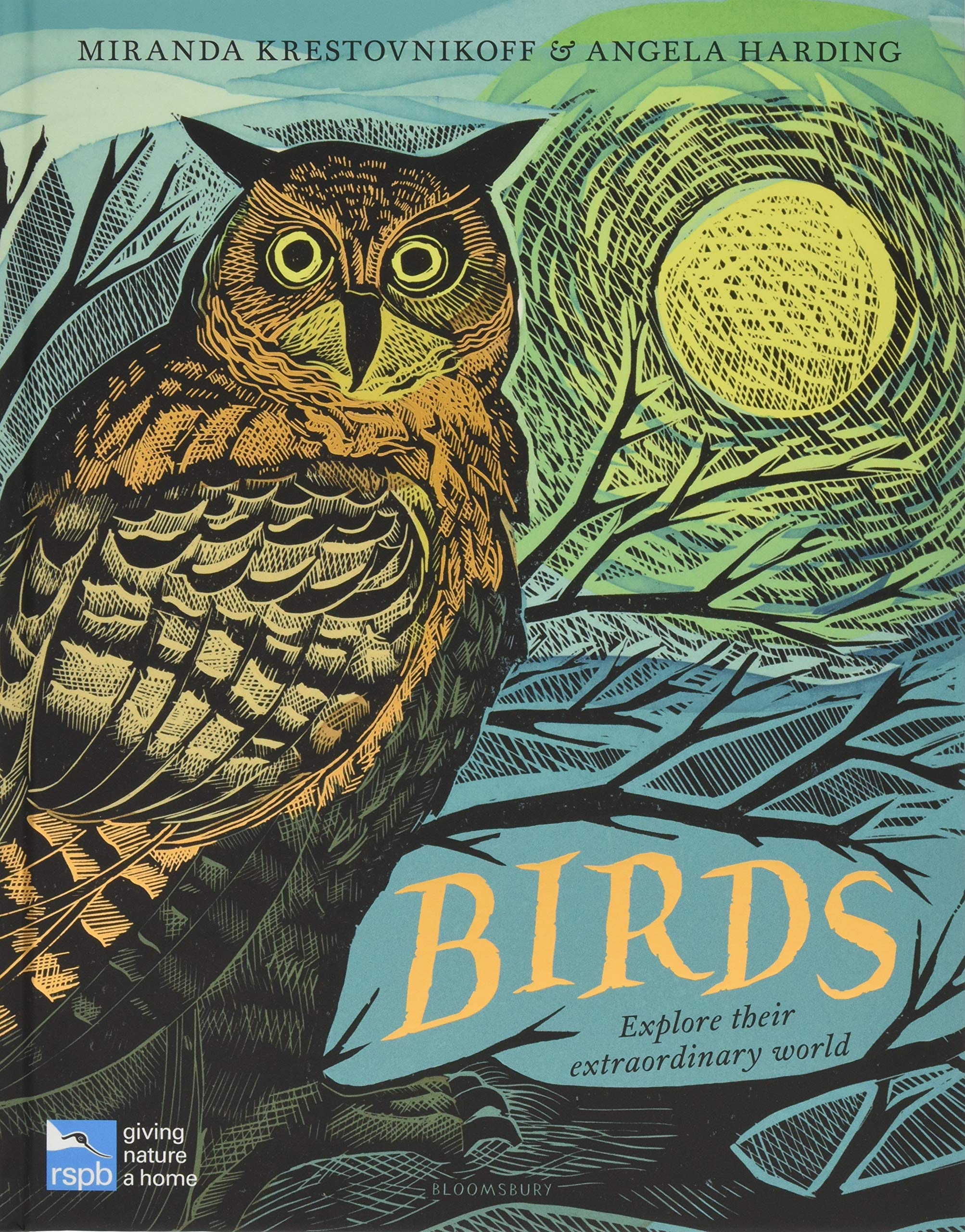
To love birds is to marvel over everything about them from their smooth gliding flight and beautiful songs to their colorful plumage and intricate nests that protect fragile eggs from the elements and predators. With a stunning number of species, birds are found around the world and living in every kind of climate. In Miranda Krestovnikoff and Angela Harding’s eye-catching compendium, readers learn about seven families of birds – birds of prey, seabirds, freshwater birds, flightless birds, tropical birds, tree dwellers, and passerines. 

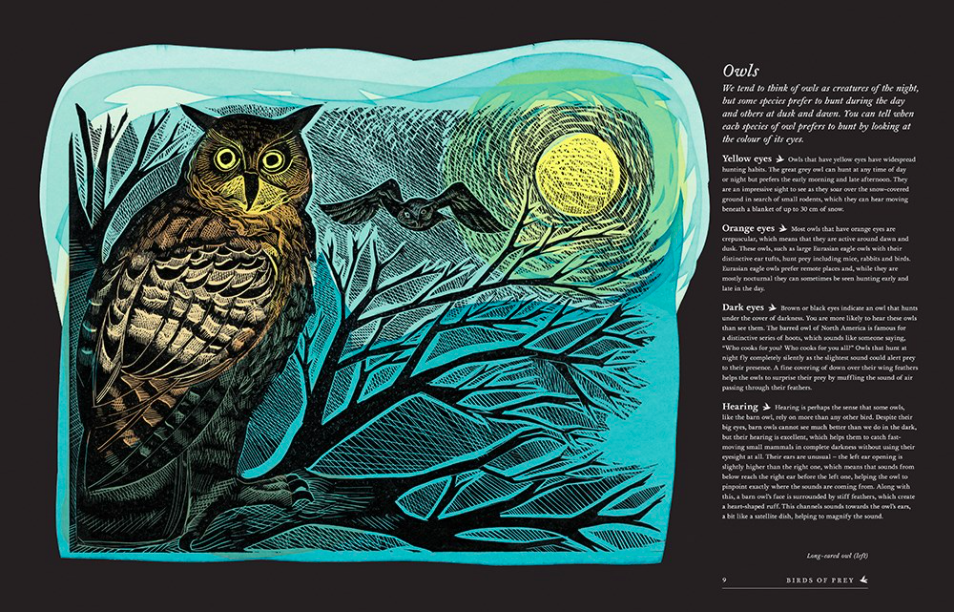
Each chapter opens with general facts on the behavior, anatomical features, and habitat that determine the order in which a bird is categorized. Integrated with this information are descriptions of specific birds within the order. In the section on Birds of Prey, for instance, readers learn about sparrowhawks; fish-eating ospreys; and golden eagles, which can “spot a rodent from over a mile away and a rabbit from nearly double that distance.” Children also learn about extreme birds of prey: the fastest, largest, smallest, tallest, and baldest and how their distinctive feature helps them thrive. Kids also discover how they “can tell when each species of owl prefers to hunt by looking at the color of its eyes.”

celebrate-picture-books-picture-book-review-birds-explore-their-extraordinary-world-owls

Image copyright Angela Harding, 2020, text copyright Miranda Krestovnikoff, 2020. Courtesy of Calkins Creek.

The next chapter takes readers to coastal areas to learn about the seabirds that scour the water from the sky, searching for food and waders, that are found along the water’s edge and “feed on the variety of high-protein invertebrates that lie hidden in the mud.” Children learn about the birds that populate warmer waters, such as blue-footed boobies, terns, and frigatebirds as well as those who survive in colder waters, such as gulls, and kittiwakes. Readers will also find a fascinating description of the gannet and learn how it can safely “dive into the sea at speeds of 60 miles an hour from an impressive height of up to 100 feet” to feed.

From sea birds, readers move on to freshwater birds like ducks, swans, grebes, and Canada geese. Even the bright flamingo is here with its distinctive scoop-shaped beak that is “uniquely designed to be used upside down and helps them to filter out tiny brine shrimps and blue-green algae from the water, which, when digested, give them their pink color.” The flamingo isn’t the only bird with an unusual way to acquire their prey, and kids will discover the clever ways pelicans, herons, and kingfishers (which use “objects such as sticks, feathers, and even discarded popcorn as lures”) find food.

And then there are the “more than 50 bird species across the world [that] stay firmly on the ground (or on water)” or just “choose not to fly very often.” These flightless birds include kiwis, kākāpōs, southern cassowaries, ostriches, and Penguins. Penguins vary in size, from the “little penguin (also known as the fairy or blue penguin)” which comes to shore to nest only at night and stave off predators with their oversized voices, to the emperor penguin. Occasional fliers include great bustards, domestic chickens, and tinamous.

celebrate-picture-books-picture-book-review-birds-explore-their-extraordinary-world-penguin

Image copyright Angela Harding, 2020, text copyright Miranda Krestovnikoff, 2020. Courtesy of Calkins Creek.

When you hear about extravagant birds, you most likely think of tropical birds. “Rainforests are packed with a range of incredible species with dazzling plumage and bizarre courtship displays.” Readers will learn about the appearance and mating rituals of scarlet macaws, Raggiana birds of paradise, and the Andean cock-of-the-rock. A detailed description of the bowerbird and the male bird’s careful and artistic nest (or bower) building is funny, poignant, and even a little bit human. Then readers are treated to some tropical bird extremes: smallest bird, longest bill, and smelliest as well as a poisonous species and one that makes its own musical instrument.

Of course, woodlands are the home of many bird species, and in the chapter on Tree Dwellers, readers learn about acorn woodpeckers and great hornbills that use trees for food and shelter; tawny frogmouths and potoos that use trees for camouflage; and nuthatches, greater honeyguides, and yellow-bellied sapsuckers, which find all the food they need among the bark, leaves, and branches of trees.

celebrate-picture-books-picture-book-review-birds-explore-their-extraordinary-world-chickens

Image copyright Angela Harding, 2020, text copyright Miranda Krestovnikoff, 2020. Courtesy of Calkins Creek.

Next up are passerines, or perching birds, which make up the “largest group of birds, with over half of all known species falling into this category.” Corvids, a group that includes the common raven, crows, magpies, and rooks, are considered to be the most intelligent birds. “These birds have a remarkable ability to solve problems in order to find food, in some cases performing better than young children or chimpanzees!” Readers will be impressed with their tricks and clever use of tools (that even include cars). Children learn about cooperative breeders, which rely on their extended family to help raise the young from year to year. Passerines also include many of the garden birds we find in our backyards and which fill the air with song. Readers discover facts about blue tits, robins, and finches in this section.

The next sections give detailed and interesting information on the features we most associate with birds: their feathers, beaks, eyes, nesting habits, eggs, migration patterns, and birdsong. The book ends with perhaps the most adaptable birds in the world: those that make their homes on glaciers, mountain tops, and in the Arctic snow as well as urban birds, which live among people in crowded cities, nesting on tall cathedrals and skyscrapers and foraging for food in garbage cans and on the street.

celebrate-picture-books-picture-book-review-birds-explore-their-extraordinary-world-woodpeckers

Image copyright Angela Harding, 2020, text copyright Miranda Krestovnikoff, 2020. Courtesy of Calkins Creek.

For young ornithologists, Miranda Krestovnikoff, a wildlife expert, offers a compelling, eye-opening, and accessible introduction to a wide variety of birds, placing them in their natural environments and revealing intriguing facts and tantalizing tidbits that inform and will spark a continued interest in learning more about the world’s feathered creatures. Krestovnikoff’s engaging writing style will captivate readers and keep them turning the pages to discover birds that are both familiar and new to them. The comprehensive nature of the book allows kids in all parts of the world to learn more about their native birds while creating a global connection with these most recognized and widely distributed creatures.

Accompanying Krestovnikoff’s text are Angela Harding’s beautiful linocuts that depict birds in mid-flight, capturing prey on land and water, engaging in mating rituals, and building and protecting their nests and young. Harding’s use of natural colors and exquisitely etched landscapes set off each bird in breathtaking illustrations that invite readers to linger to enjoy their full impact. Each illustration is captioned with the bird’s species.

A gorgeous and educational book that readers of all ages will love dipping into again and again, Birds: Explore their extraordinary world is a must for bird lovers and highly recommended for home, school, and public libraries.

Ages 7 and up

Bloomsbury Children’s Books, 2020 | ISBN 78-1408893913

Discover more about Miranda Krestovnikoff and her books on her website.

To learn more about Angela Harding, her books, and her art on her website.

National Bird Day Activities

celebrate-picture-books-picture-book-review-beautiful-birds-word-search

Beautiful Birds Word Search Puzzle


It’s fun to watch for different kinds of birds when you take a walk or in your own backyard. Can you find the names of twenty types of birds in this printable Beautiful Birds Word Search Puzzle? Here’s the Solution!

cpb-bird-feeder-i

Pinecone Bird Feeder


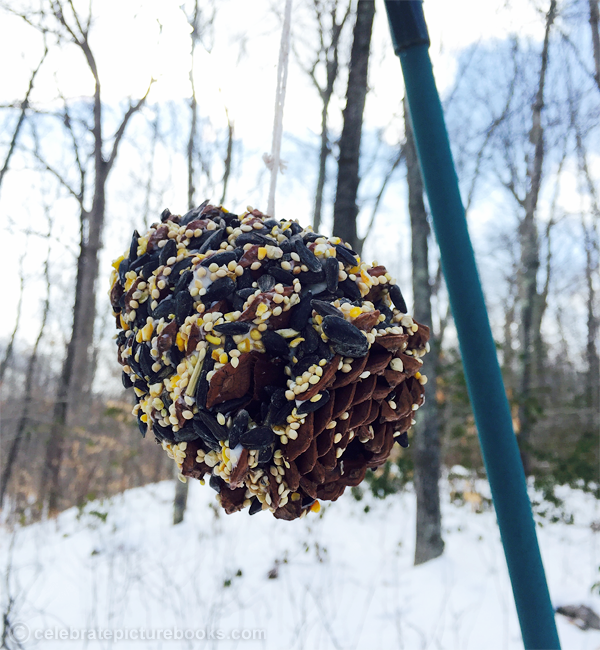
Pinecone bird feeders are quick to make and great for your backyard fliers. The combination of peanut butter, lard, or vegetable shortening and a quality seed mixture provide birds with the fat and nutrition they need to stay warm and healthy during the winter.

Supplies

  • Pinecones
  • Peanut butter, vegetable shortening, or lard
  • Birdseed
  • String
  • Knife or wooden spreader
  • Spoon

Directions

  1. Tie a long length of string around the middle of the pinecone
  2. Spread the peanut butter, vegetable shortening, or lard on the pinecone
  3. Sprinkle a thick coating of birdseed on the pinecone, pressing it into the covering so it will stick
  4. Tie the pinecone feeder onto a tree branch or other structure
  5. Watch the birds enjoy their meal!

celebrate-picture-books-picture-book-review-birds-explore-their-extraordinary-world-cover

You can find Birds: Explore their extraordinary world at these booksellers

Amazon | Barnes & Noble | Books-a-Million

To support your local independent bookstore, order from

Bookshop | IndieBound

Picture Book Review

December 28 – Endangered Species Act Day

celebrate-picture-books-picture-book-review-a-voice-for-the-everglades-cover

About the Holiday

The Endangered Species Act was signed into law in by President Richard Nixon on this date in 1973.  The primary law in the United States for protecting imperiled species, the Act protects critically imperiled species from extinction as a result of the consequences of economic growth and development undeterred by concern for conservation. The US Supreme Court called it “the most comprehensive legislation for the preservation of endangered species enacted by any nation”. The purposes of the Endangered Species Act are to prevent extinction and to recover species to the point where the law’s protections are not needed, therefore protecting diverse species as well as the ecosystems in which they live or depend on. Today’s book reveals the story of a National Park that provides a unique refuge for many rare and endangered species. To celebrate the holiday, learn more about how the Endangered Species Act affects your state.

Thanks go to Albert Whitman & Company for sharing a copy of A Voice for the Everglades: Marjory Stoneman Douglas with me for review consideration. All opinions on the book are my own.

A Voice for the Everglades: Marjory Stoneman Douglas (Part of the She Made History Series)

Written by Vicki Conrad | Illustrated by Ibon Adarne and Rachel Yew


“Long ago a trickle of water / spilled from a lake / and formed a tiny stream.” The stream spread until it covered almost half of the state of Florida, creating a shallow lake that moved like a slowly running river – “a river bursting with wildlife, / whispering to the world / to listen, to notice, to discover its wonders.” Mangroves and cypress trees grow from the water, the soil fed by the cycles of growing and dying sawgrass. The water, trees, and grass attract a “rainbow of birds” that wade in the shallows, hunting for food. “These are the Everglades. / The wildest, richest, and most diverse ecosystem in all the world – / every plant and animal needing another to survive.”

celebrate-picture-books-picture-book-review-a-voice-for-the-everglades-stream

Image copyright Ibon Adarne and Rachel Yew, 2021, text copyright Vicki Conrad. Courtesy of Albert Whitman & Company.

But leaders and developers wanted to drain the water to create land to build on, land they could sell, land with which they could make money. They pumped the water out and built dams and drains to make farmland, but the farmland turned dry and burned easily. The animals and birds fled. The ecosystem was “desperate for a voice to protect them.”

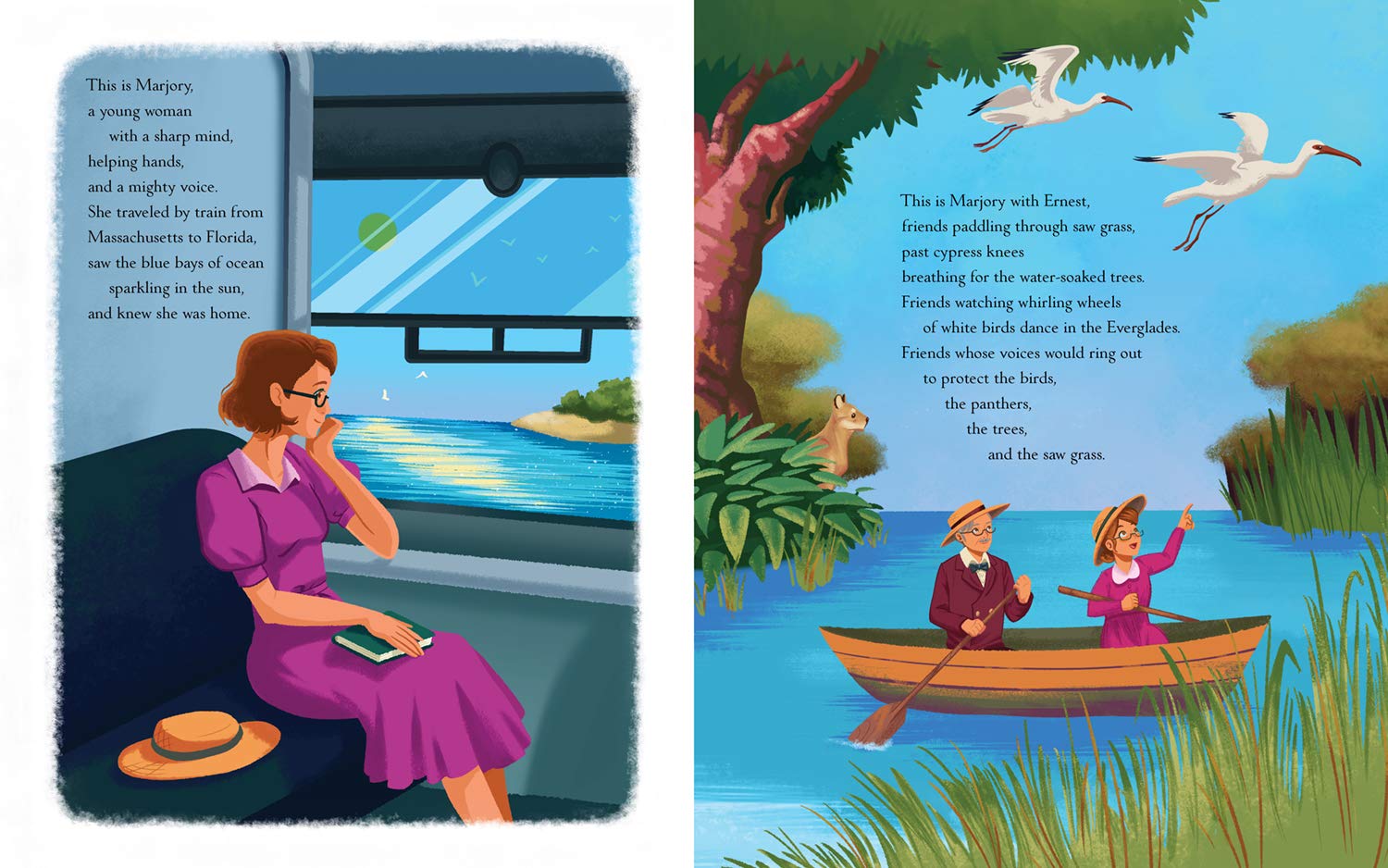
When Marjory traveled from Massachusetts to Florida and saw the beautiful scenery, she knew immediately that this was her new home. She made a friend, Ernest, and together they spent time paddling a boat through the Everglades, “watching whirling wheels of white birds dance” and spying panthers, alligators, turtles, manatees, and more of the animals that lived there. Where other people saw a swamp, Marjory and Ernest saw “treasure.”

Marjory and Ernest wanted to do something to preserve the Everglades. They studied the map and the formation of the Everglades. Marjory called it “a river of grass.” Ernest wrote a bill for the United States Congress to consider, and “Marjory wrote a poem, / hopeful it would move Congress.” Although lawmakers did tour the Everglades and see its miraculous sights, the bill did not pass.

celebrate-picture-books-picture-book-review-a-voice-for-the-everglades-train

Image copyright Ibon Adarne and Rachel Yew, 2021, text copyright Vicki Conrad. Courtesy of Albert Whitman & Company.

Marjory decided to write a book about the area she loved, and in 1947 The Everglades: River of Grass was published. Her book helped people see the marvels that lived within the Everglades: “the manatee munching seagrass / protecting her calf from harm”; “the red-bellied turtle, / laying eggs in the abandoned alligator nest, / dry and protected from water.”; the only place in the world where an alligator and a crocodile live together.”

At last people began to take notice – and care. Their voices joined with Marjory’s and Ernest’s and Everglades National Park was established that same year. “Yet only one-fourth of the Everglades was protected.” Marjory understood that “all the ecosystems needed one another.” When plans to build the world’s largest airport on land that was part of the Everglades, Marjory, now eighty years old, established the Friends of the Everglades, and their three-thousand voices convinced President Richard Nixon to stop the building.

Marjory continued to fight for the Everglades, giving speeches and putting hecklers in their place. When she was ninety-nine years old, Marjory could be found chipping away at a concrete drain to restore the land to its former waterway. At 105 years old, Marjory was awarded the Presidential Medal of Freedom. Adults and children sent her letters thanking her for saving the Everglades, but Marjory knew there would always be more work to be done to protect this unique ecosystem.

Back matter includes an extensive, illustrated discussion of the Everglades ecosystem, the nine different habitats that make it such a unique area, and many of the plants, animals, birds, and fish that call it home. More on the life of Marjory Stoneman Douglas and her legacy as well as how readers can help the Everglades are also included.

celebrate-picture-books-picture-book-review-a-voice-for-the-everglades-national-park

Image copyright Ibon Adarne and Rachel Yew, 2021, text copyright Vicki Conrad. Courtesy of Albert Whitman & Company.

A compelling biography of a woman with vision and grit who took on a nearly impossible task and saved one of the world’s unique environmental treasures, A Voice for the Everglades: Marjory Stoneman Douglas will inspire young environmentalists and would serve as a captivating resource to begin studies about ecosystems, conservation, endangered and rare species, and many other topics revolving around nature science. Marjory Stoneman Douglas, whose perseverance, dedication, and voice still resonate today, continues to be a role model for children and adults alike.

Through Vicki Conrad’s lyrical text and light incorporation of a “This is the House that Jack Built” cadence readers see how people’s actions build on and affect each other – whether detrimentally (as the building plans; pumps, dams, and drains; and disappearing wildlife do) or beneficially (as Marjory’s and Ernest’s appeals to Congress, Marjory’s writings, and her continued advocacy do) and understand that once voice can make a difference. Conrad does an excellent job of portraying the beauty and uniqueness of the Everglades and giving kids a view of the many wonders to be found there.

In their vivid illustrations, Ibon Adarne and Rachel Yew depict the rich colors of the diverse flora and fauna found in the nine cohesive habitats, from the vibrant pink roseate spoonbills to the purple passion flowers to the elusive crocodiles and the breathtaking, fiery sunsets that blanket them all. Adarne and Yew also allow children to navigate the meandering waterways that weave through the mangroves and sawgrass in their slow, steady, and life-giving pace. The breadth of wildlife within the pages offer many opportunities for further learning and research at home and at school.

An enticing and educational look at one of the world’s most valued natural treasures – whose story and resources continues to influence nature studies and advocacy today – A Voice for the Everglades: Marjory Stoneman Douglas is a book that every school and public library will want to add to its collection and would be an inspiring inclusion for home bookshelves for nature lovers and homeschoolers.

Ages 4 – 8

Albert Whitman & Company, 2021 | ISBN 978-0807584965

Discover more about Vicki Conrad and her books on her website.

You can connect with Ibon Adarne on Twitter.

You can connect with Rachel Yew on Twitter.

Endangered Species Act Day Activity

celebrate-picture-books-picture-book-review-everglades-national-park-coloring-page

Everglades National Park Coloring Page


Travel to the Everglades and see the diverse wildlife that lives there with this printable coloring page!

Everglades National Park Coloring Page 

celebrate-picture-books-picture-book-review-a-voice-for-the-everglades-cover

You can find A Voice for the Everglades: Marjory Stoneman Douglas at these booksellers

Amazon | Barnes & Noble | Books-a-Million

To support our local independent bookstore, order from 

Bookshop | IndieBound

Picture Book Review