June 29 – International Mud Day

celebrate-picture-books-picture-book-review-miracle-mud-cover

About the Holiday

Today’s holiday was established in 2009 when the students of Bold Park Community School in Wembley, Western Australia teamed with the boys of the Nepalese Panchkhal Orphanage to “celebrate the visceral and primal connection we all share with Earth and the outdoors.” Since that day, schools, families, and early childhood education centers have worked to remind us that we all need to take time to play in the mud sometimes and reconnect with what makes us human. In 2015, the day was expanded to include the entire month of June to allow us to decompress from the high-tech, high-pressure world we live in and to connect with others.

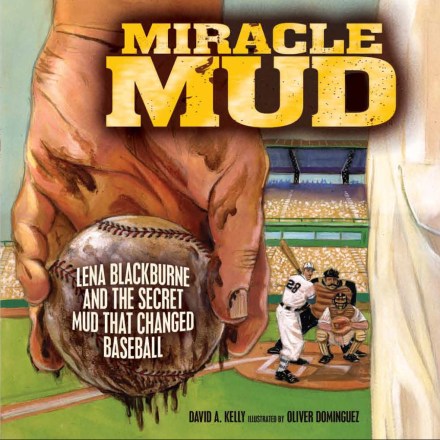
Miracle Mud: Lena Blackburne and the Secret Mud that Changed Baseball

Written by David A. Kelly | Illustrated by Oliver Dominguez


“Lena Blackburne wanted to be a famous baseball player.” Unfortunately, he wasn’t one of the greats. In fact starting in 1910, Lena moved around from team to team, playing a variety of positions. He made appearances at every base and played shortstop; he even had a go as pitcher. But he wasn’t a star at any of these positions. He was never going to make it to the Hall of Fame.
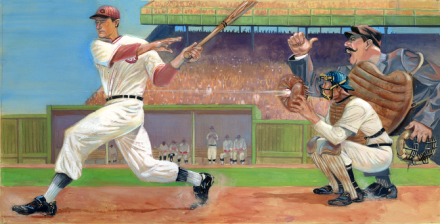
celebrate-picture-books-picture-book-review-miracle-mud-striking-out

Image copyright Oliver Dominguez, coiurtesy of oliver-dominguez.com

After he retired from playing, Lena became a coach. One day the umpire came to him with a complaint about the soggy baseballs. They were too hard to throw and too hard to see. Besides that, when they were hit, they didn’t soar very far. The problem was that new baseballs had a slick sheen to them, “so players soaked them in dirty water. It got rid of the shine. But it also made the balls soggy and soft.”
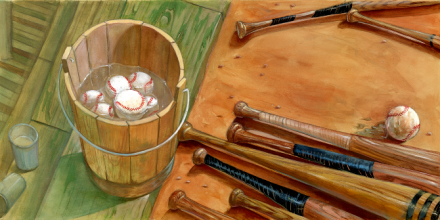
celebrate-picture-books-picture-book-review-miracle-mud-soggy-baseballs

Image copyright Oliver Dominguez, coiurtesy of oliver-dominguez.com

Players tried other methods to get rid of the shine, but they had drawbacks too. Shoe polish just turned the balls black, and “spit and tobacco juice…made the balls stink.” Lena Blackburne sat down and considered the problem. The answer came to him in a most unusual place—an old fishing hole where Lena liked to go when he was off the road and home.
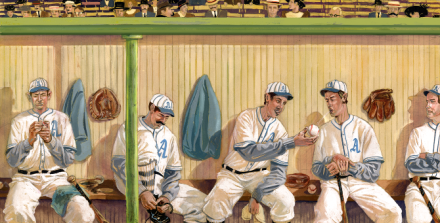
celebrate-picture-books-picture-book-review-miracle-mud-spitting

Image copyright Oliver Dominguez, coiurtesy of oliver-dominguez.com

While fishing one day, he happened to step into some dark brown mud. It sucked at his boot, and as Lena pulled his foot out he had an idea. The mud was “smooth and creamy like chocolate pudding. But it felt gritty.” At the ballpark, Lena rubbed the mud on the balls. When the mud dried, it was easy to wipe off. The mud left the balls with a good finish—not soggy, black, or smelly. At the next game, “the pitcher threw muddy fastballs, curveballs, changeups, and sinkers. The batters hit muddy singles, doubles, triples, and home runs.”
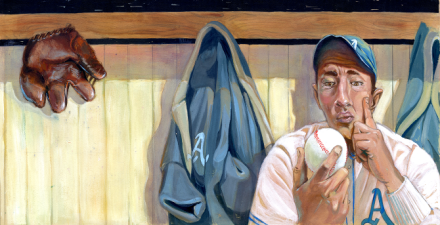
celebrate-picture-books-picture-book-review-miracle-mud-thinking

Image copyright Oliver Dominguez, coiurtesy of oliver-dominguez.com

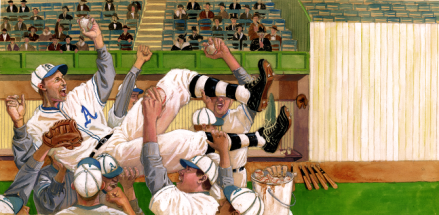
Lena returned to the fishing hole and dug up more mud. He put it into containers and began selling it. Teams all over the league bought Lena Blackburne’s Baseball Rubbing Mud. Lena’s famous mud is still used today and is officially the “only thing that’s allowed on major-league balls.” Lena Blackburne always dreamed of being in the Baseball Hall of Fame. While he didn’t make it there as a player, he is remembered for his contributions to the game he loved in a special exhibit for Lena Blackburne’s Baseball Rubbing Mud.
celebrate-picture-books-picture-book-review-miracle-mud-winning

Image copyright Oliver Dominguez, coiurtesy of oliver-dominguez.com

An Author’s Note including more about Lena Blackburne, his baseball statistics, and his special mud follow the text.

Kids who love baseball will be intrigued by David A. Kelly’s unique take on the game. By exploring a small detail that had large effects on the quality of play, Kelly presents a picture book mystery with a surprise ending for younger readers. Kelly’s inclusion of Blackburne’s disappointments shows children that each person’s unique contributions are often found in expected ways.
celebrate-picture-books-picture-book-review-miracle-mud-baseballs

Image copyright Oliver Dominguez, coiurtesy of oliver-dominguez.com

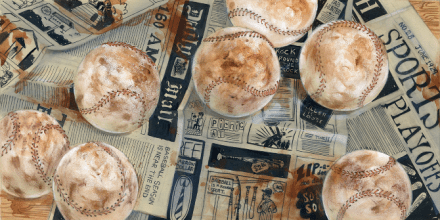
Kids get a front row seat at the baseball stadium in Oliver Dominguez’s stunning illustrations. As Lena swings and misses, readers can almost hear the smack of the ball in the catcher’s glove and the ump yelling, “Steee-rrriike!”  When Lena Blackburne becomes a coach and ponders the problem of the soggy baseballs, kids will enjoy seeing baseballs bobbing in a wooden bucket of water, laugh to see a player spitting on a new baseball, and wonder what idea has Lena so wide-eyed at the fishing hole. Baseball lovers will want to linger over the up-close views of players preparing for a game and celebrating their win.

Ages 6 – 10

Millbrook Press, 2013 | ISBN 978-0761380924

Find out more about David A. Kelly, his ballpark mysteries, and his other books on his website!

View a gallery of artwork and videos by Oliver Dominguez on his website!

International Mud Day Activity

celebrate-picture-books-picture-book-review-kinetic-sand-craft

Make Your Own Sensory Sand


While this sensory sand may not be exactly mud, it’s sure as much fun to play with!

Supplies

  • 1 cup sand
  • ½ tablespoon cornstarch
  • 1 teaspoon dish soap
  • Water as needed – about ¾ cup
  • Bin or bowl for mixing dry ingredients
  • Bowl for mixing dish soap and water

Directions

  1. In the bin combine the sand and cornstarch and mix well
  2. In the bowl combine the dish soap and water until the water is bubbly
  3. Slowly add the water mixture to the dry ingredients, mixing and adding water little-by-little until the desired consistency is reached. The grain of the sand will determine how much water is needed.
  4. The sand can be formed with cookie cutters, molds, hands, etc. and is strong enough to stack.

Picture Book Review

June 27 – It’s Effective Communications Month

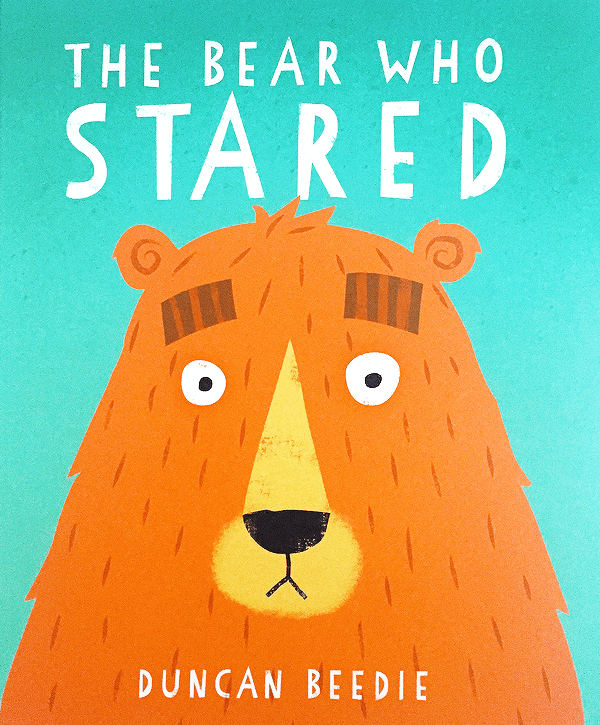
celebrate-picture-books-picture-book-review-the-bear-who-stared-cover

About the Holiday

Sure, body language can say a lot, but effectively expressing yourself in words and writing helps decrease misunderstandings, misinterpretations, hurt feelings, and conflict. Learning to handle important relationships and work obligations with thoughtful care, consideration, and empathy can take patience and practice. This month people are invited to work on their communications skills to enhance their life with family, friends, co-workers, and others.

The Bear Who Stared

By Duncan Beedie


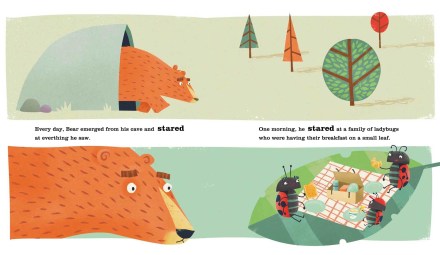
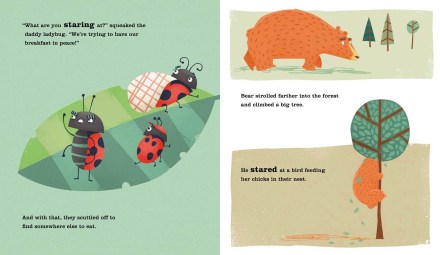
Bear loves to stare…and stare…and stare. One morning he emerges from his den to find a family of ladybugs having a picnic breakfast. He can’t help but gaze at them intently. “‘What are you staring at?’” the daddy ladybug demands before he and his family pack up to find a more private leaf. Bear continues on his way. In a bit he climbs a tree and stares at a bird feeding her chicks. “‘Can I help you?’” the mother bird asks, but Bear remains silent. The chicks don’t like Bear interfering with their meal, so the mother bird angrily tells him to “‘sshhhooooo!’”

celebrate-picture-books-picture-book-review-the-bear-who-stared-interior-art-ladybugs

Copyright Duncan Beedie, courtesy of simonandschuster.com

At the bottom of the tree Bear spies a badger hole and sticks his head inside. The badger, particularly irritated at Bear’s badgering stare while he is shaving, bites poor bear on the nose. Sore and dejected, Bear wanders through the forest to a large pond. He sits down on a log to ponder his situation. He doesn’t mean to be annoying, he’s “just curious but too shy to say anything.”

celebrate-picture-books-picture-book-review-the-bear-who-stared-ladybugs-yelling

Copyright Duncan Beedie, courtesy of simonandschuster.com

A little frog floating on a lily pad in the middle of the pond pipes up, “‘I’ve seen that look before.’” Bear stares at the frog and the frog stares back. “‘Not much fun being stared at, is it?’” he says. Bear confesses that he just doesn’t know what to say to anyone. Just then Bear catches a glimpse of another bear staring back at him from the mossy water of the pond. This bear looks exactly like Bear, except that he is green and wavy. Suddenly, the green bear smiles. “‘You see?’” says the frog. “‘Sometimes a smile is all you need.’” The frog dives off his lily pad into the pond, and the green bear disappears too.

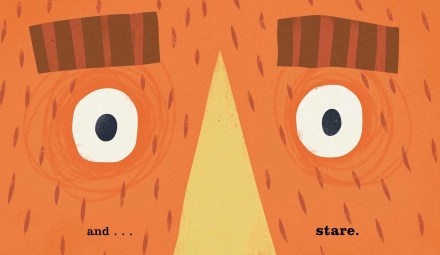
celebrate-picture-books-picture-book-review-the-bear-who-stared-interior-art-staring

Copyright Duncan Beedie, courtesy of simonandschuster.com

The next day Bear leaves his den and discovers the ladybug family breakfasting again. As soon as they spot Bear, they begin to gather their things. “‘Hello!’” Bear says with a big smile on his face. The ladybugs are surprised and happy. “‘Oh, hello!’” replies the dad, smiling back. With renewed confidence Bear wanders into the forest. He smiles at the birds and smiles at the badger, and they smile at him in return. Bear makes a lot of new friends that day. And there’s even that friend down at the pond who likes to stare as much as he does!

celebrate-picture-books-picture-book-review-the-bear-who-stared-frog

Copyright Duncan Beedie, courtesy of simonandschuster.com

Duncan Beedie highlights the awkward feeling many kids—and even adults—often feel in social situations. Nothing pops immediately to mind to say and yet there’s a desire for connection. As Bear discovers, staring is not the answer—so what is? In The Bear Who Stared, Beedie offers a simple, but universal solution through an engaging and humorous story. Bear, sporting a bemused expression that aptly depicts his predicament, is such an endearing character that readers will wish they could give him a hug as he suffers slights from the woodland creatures.

The full-bleed, oversized pages put readers at eye level with bear and his subjects, and the very up-close look into Bear’s staring eyes will make kids laugh. The green, rust, and blue palette on matte paper is bold, but muted, giving the pages an organic, environmental feel that is perfect to carry the story.

The Bear Who Stared is a funny story time read with a heart that kids will ask for again and again.

Ages 4 – 8

little bee books, 2016 | ISBN 978-1499802856

Check out more of Duncan Beedie’s illustration and animation work on his website!

Take a good looong look at this The Bear Who Stared book trailer!

Effective Communications Month Activity

celebrate-picture-books-picture-book-review-bear-craft

Expressive Bear Craft


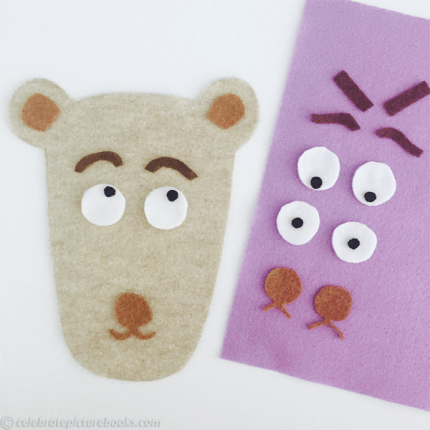
Sometimes it’s hard to know what to say or how to express your emotions and thoughts. With this easy-to-make felt (or paper) set, you can give the bear different emotions and talk about them, make up stories to go with each facial expression, or play a fun game. Below, you’ll find a couple of ideas!

Supplies

Directions

  1. Print templates
  2. Cut bear head from light felt or fleece
  3. Cut eyes from white felt or fleece
  4. Cut nose and inner ears from dark brown felt or fleece
  5. Cut pupils from black felt or fleece
  6. Glue pupils onto white eyes

Alternately: Color and play with the paper set

To Play a Game

Roll the die to collect parts of the bear’s face. The first player to create a full face is the winner.

  • Die dots correspond to:
  • 1—one eyebrow
  • 2—second eyebrow
  • 3—one eye
  • 4—second eye
  • 5—nose
  • 6—inner ears

For a Fun Story Time

Give the bear different faces and make up stories of why he looks that way!

Picture Book Review

June 26 – It’s Adopt a Cat Month

celebrate-picture-books-picture-book-review-the-white-cat-and-the-monk

About the Holiday

Just as it sounds, this holiday celebrates all the benefits of owning cat. With so many beautiful breeds of cat to choose from, there’s a perfect pet waiting for you! If you’ve been considering adding a cat or kitten to your family, why not visit an animal shelter and give one – or even two – cats a purr-fect home?

The White Cat and the Monk

Retold by Jo Ellen Bogart | Illustrated by Sydney Smith


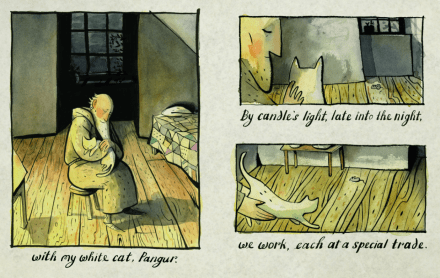
In the nighttime a white cat approaches a monastery. He slips through a window and pads along a darkened corridor and down stone steps. He creeps behind a barrel, a vase, and a pitcher standing in a row and adds his shadow to the black mosaic on the floor. He leaps the last few steps and hurries along to the doorway that is leaking a bit of light.

celebrate-picture-books-picture-book-review-the-white-cat-and-the-monk-candle-light

Image copyright Sydney Smith, text copyright Jo Ellen Bogart. Courtesy of Groundwood Books.

He slips his paw under the door. This a secret signal alerts the occupant of the room, who opens the door to this playful feline. “I, monk and scholar, share my room with my white cat, Pangur,” the old man explains. He lifts Pangur into his arms and strokes him before releasing him to pursue his “special trade.” The monk also returns to his trade—studying ancient manuscripts to understand their meaning.

celebrate-pciture-books-picture-book-review-The-White-Cat-and-the-Monk-books

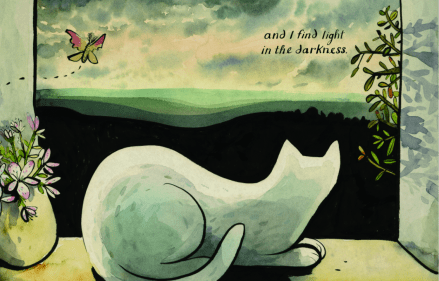
celebrate-picture-books-picture-book-review-the-white-cat-and-the-monk-in-window

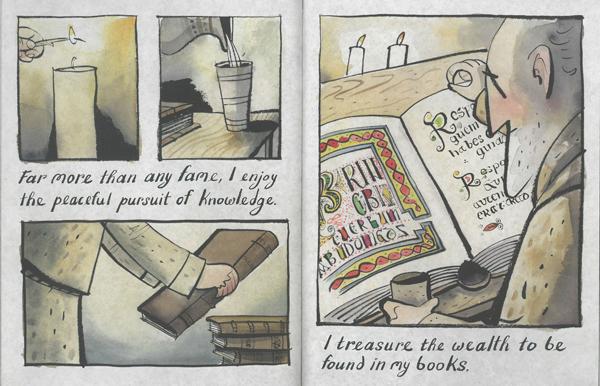
The  monk is a dedicated scholar, revealing, “Far more than any fame, I enjoy the peaceful pursuit of knowledge. I treasure the wealth to be found in my books.” Pangur is a dedicated scholar of another kind, studying “the hole that leads to the mouse’s home.” In that moment both man and cat become hunters—one for meaning and the other for prey.

The two do not disturb each other for each is content in his pursuit. Pangur at last “finds his mouse” as the monk finds “light in the darkness.”

celebrate-picture-books-picture-book-review-the-white-cat-and-the-monk-in-window

Image copyright Sydney Smith, text copyright Jo Ellen Bogart. Courtesy of Groundwood Books.

Jo Ellen Bogart’s quiet and graceful retelling of Pangur Bán, a beloved Irish poem from the 9th century is a welcome respite in this age of multitasking and mega-activity. With sparse, but compelling and lyrical language, Bogart uncovers the companionable relationship between the monk and his cat as each follows their heart together.

The fine textured pages of Sydney Smith’s illustrations recall the beauty of parchment as the smooth gray-and-gold line drawings of the monastery’s architecture and characters give way to the vibrant colors of ancient manuscripts and the natural environment. The contentment and friendship of the monk and the cat are sweetly drawn in the characters’ mirrored actions as well as in the depictions of a long-held affection between man and beast in the panels of the manuscript the monk studies. As the monk states, “Ours is a happy tale.”

Reassuring and reaffirming, The White Cat and the Monk honors the individual challenges and quests that make us who we are and would be a wonderful addition to regular quiet-time reading.

Ages 4 and up (this book will be enjoyed by both children and adults)

Groundwood Books, House of Anansi Press, 2016 | ISBN 978-1554987801

You’ll find a gallery of artwork by Sydney Smith on his tumblr!

Adopt a Cat Month Activity

celebrate-picture-books-picture-book-review-cat-toy

Fishing for Playtime Cat Toy


Cats love to chase after bouncing, sliding objects, and they love fish. While this toy may not taste as good as fish, it sure smells better and doesn’t require worms or hooks to attain!

Supplies

  • Old or new child’s sock
  • Fiber Fill
  • Yarn or string
  • Fabric paint or markers
  • Small bell (optional)
  • Catnip (optional)

Directions

  1. Paint or draw fins and eyes on the sock
  2. Fill the sock with fiber fill
  3. Add a teaspoon of catnip (optional)
  4. Add a small bell (optional)
  5. Use the yarn or string to close the opening with a strong knot
  6. Leave a long section of yarn or string to pull or dangle the toy

Picture Book Review

June 25 – It’s Potty Training Awareness Month

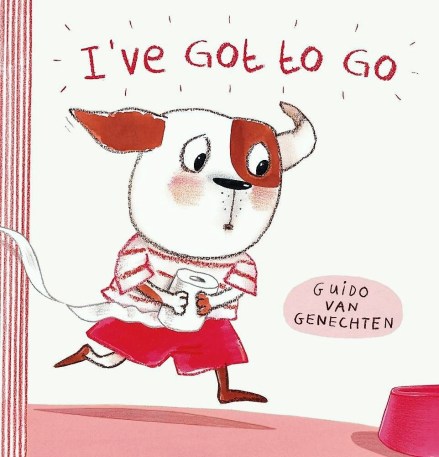
celebrate-picture-books-picture-book-review-I've-gotta-go-cover

About the Holiday

Potty training is a rite of passage for little tykes of a certain age. With so many (sometimes conflicting) offers of advice, online forums, and other resources, plus a sometimes-added time crunch, it can be difficult for parents to navigate this issue without feeling stressed. A regular routine, patience, and following a child’s lead can go a long way in making this time in life successful and positive for all.

I’ve Got to Go

By Guido van Genechten


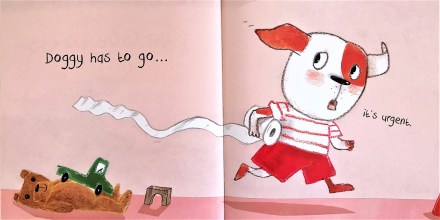
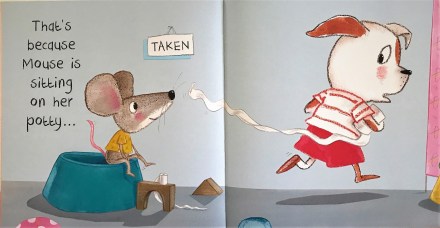
Doggy has an urgent problem. He needs to go to the bathroom, but his little sister is using his little plastic potty. He runs by, toilet paper roll clasped under his arm, to find his sister’s potty, but mouse is already sitting there. Doggy rushes on and sees why Mouse is in the wrong spot—“Frog is having a wee in Mouse’s potty…”

celebrate-picture-books-picture-book-review-I've-gotta-go-doggy-has-to-go

Copyright Guido van Genechten, 2017. Courtesy of Clavis Books.


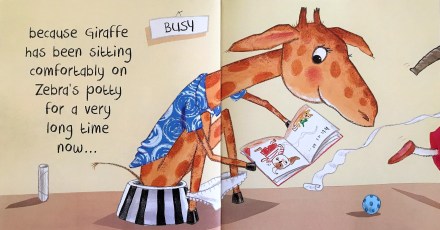
With a “pardon,” Doggy moves on. Hmmm…Zebra is using Frog’s potty—well mostly. Maybe it’s because “Giraffe has been sitting comfortably on Zebra’s potty for a very long time now….” All this running and waiting has made Doggy’s dilemma even more immediate. There’s only one place left, so “he runs—for the very first time!—to the big toilet.” Phew! It’s free.

celebrate-picture-books-picture-book-review-I've-gotta-go-giraffe

Copyright Guido van Genechten, 2017. Courtesy of Clavis Books.

Doggy climbs up with the help of a little stool, and…ahh…that’s better! And it wasn’t hard at all! Doggy remembers to wipe his bottom, push the flusher, and then he washes his paws. He opens the bathroom and can’t wait to share his big news. “‘Sis!’” he then calls out, proud as a peacock. ‘You can keep my potty! I don’t need it anymore.’”

celebrate-picture-books-picture-book-review-I've-gotta-go-mouse

Copyright Guido van Genechten, 2017. Courtesy of Clavis Books.

Part race against time, part matching puzzle, and wholly fun, Guido van Genechten’s I’ve Got to Go will have preschoolers giggling as they follow Doggie past potty after potty in search of a place to go. The large-format book with van Genechten’s brightly colored portrayals of each adorable animal sitting on a potty is sure to engage kids. With time and options running out, Doggy’s “big boy” decision to try the regular toilet will intrigue little ones learning this skill themselves.

Young readers will also have fun matching the potty with the animal and enjoy learning some “big words” for when the bathroom is in use. Reenacting Doggie’s triumphant run with toys at home may just be the kind of silly but “Ah-ha” experience that puts all the teaching together for success.

Ages 2 and up

Clavis Publishing, 2017 | ISBN 978-1605373379

Potty Training Awareness Month Activity

celebrate-picture-books-picture-book-review-potty-buddy-off-potty-craft

Potty Buddy


Sometimes a little encouragement from a friend can help kids try something new. This easy-to-make, kind-of-silly Potty Buddy can be designed by the trainee to be just the friend they want along as they make that first step toward independence.

Supplies

  • Toilet paper tube
  • Toddler size sock or cloth
  • Several feet of yarn
  • Googly eyes (optional)
  • Scrap of foam, colored paper, or cloth
  • Glue

celebrate-picture-books-picture-book-review-potty-buddy-on-potty-craft-3

Directions

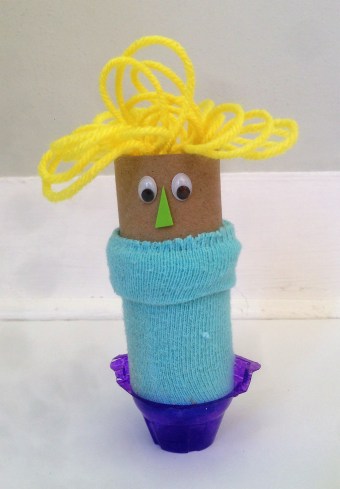
  1. Pull a toddler-size sock over the paper towel tube and fold down the top to make a collar. Alternately, wrap cloth around the toilet paper tube and glue in place.
  2. Glue googly eyes on the tube
  3. Cut a small triangle or other shape for a nose from the foam or colored paper
  4. Loop the yarn about 20 times in a 5 – 6 inch length
  5. Tie the yarn in the middle
  6. Fold and glue into the top opening of the tube for hair.

Picture Book Review

June 24 – It’s Zoo and Aquarium Month

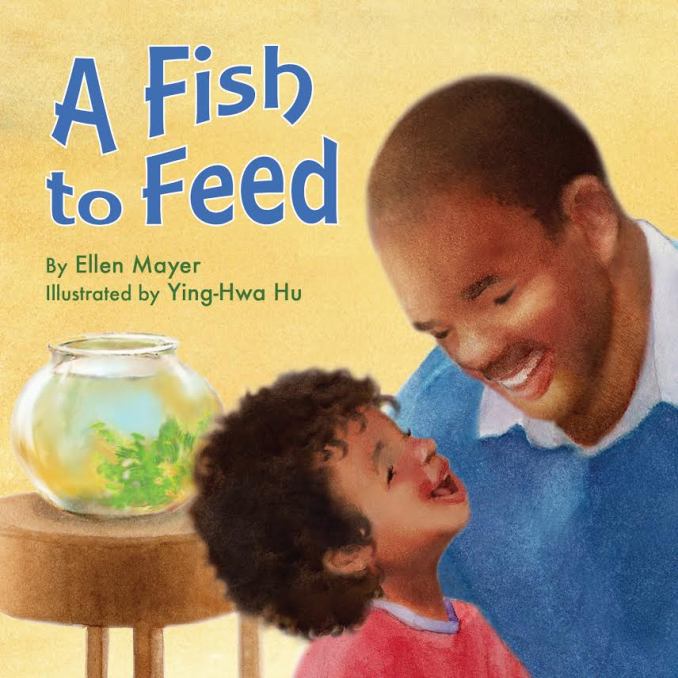
celebrate-picture-books-picture-book-review-a-fish-to-feed-cover

About the Holiday

It’s fun to go to an aquarium to see sea creatures from all over the world and hear interesting presentations, but it’s also a great experience to have an aquarium—or even just a bowl at home! Having a pet, whether it is large or small, offers wonderful opportunities for children to establish bonds of friendship and to learn about the natural world around them. To celebrate this month’s holiday, consider getting a home aquarium!

A Fish to Feed

Written by Ellen Mayer | Illustrated by Ying-Hwa Hu


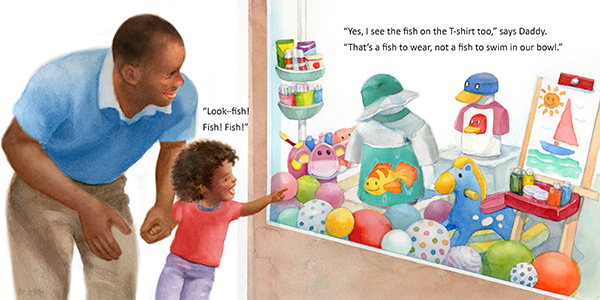
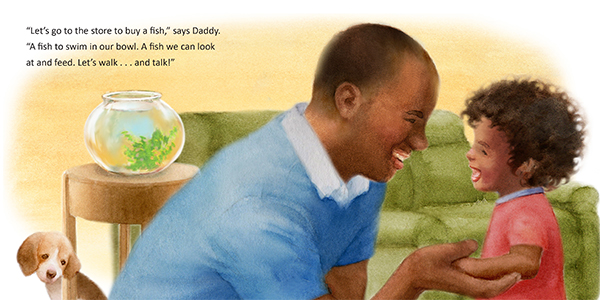
Dad plans a fun trip into town with his young child to buy a pet fish. He says, we will get “‘a fish to swim in our bowl. A fish we can look at and feed.’” The pair are excited to go together and have time to “‘walk…and talk.’” The two head out and soon pass a store. In the window the child sees a T-shirt with the picture of a fish on it and points. “‘Look—fish! Fish! Fish!’” Dad reinforces the observation—“‘Yes, I see the fish on the T-shirt too.’”—and further explains: “‘That’s a fish to wear, not a fish to swim in our bowl.’”

celebrate-picture-books-picture-book-review-a-fish-to-feed-t-shirt

Image copyright Ying-Hwa Hu, text copyright Ellen Mayer, 2015. Courtesy of starbrightbooks.com

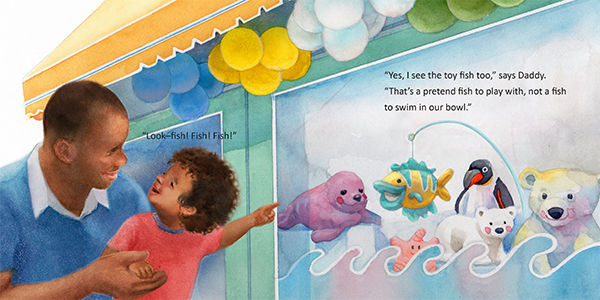
Going into the store, Dad and his youngster find another item with a fish on it. On a shelf is a backpack with a picture of a gold-and-yellow fish on the front pocket. This is a “‘fish to wear on your back,’” Dad says, before going in search of a “‘fish to feed.’” Next, the two come to a toy store. The child points to another fish—a fish on a mobile. “‘Look—fish! Fish! Fish!’” the toddler exclaims. Dad affirms his child’s remark and expands on it using complete sentences that model conversation and increase vocabulary. They linger in the shop, finding other examples of fish.

celebrate-picture-books-picture-book-review-a-fish-to-feed-mobile

Image copyright Ying-Hwa Hu, text copyright Ellen Mayer, 2015. Courtesy of starbrightbooks.com

“‘Now let’s go find a fish to feed,’ says Daddy.” They head out of the store and continue down the street. As they come to the Pet Shop, the little one shouts, “‘Look—fish! Fish swim!’” Daddy echoes the excitement while praising his child. “‘You found a fish that swims!’” They take the goldfish home, where it swims happily in their bowl—a pet they “‘can love and feed.’”

A Fish to Feed contains die-cut holes in the pages that kids will love peering through as they shop along on this adventure to find a special pet.

celebrate-picture-books-picture-book-review-a-fish-to-feed-dad-and-child

Image copyright Ying-Hwa Hu, text copyright Ellen Mayer, 2015. Courtesy of starbrightbooks.com

Ellen Mayer’s story of a dad and his child out for an afternoon together as they look for a pet to love offers adults and children such a sweet way to spend time with one another. The story, set in the familiar environments of home and stores and revolving around a close parent-child relationship, will engage even the youngest readers. The back-and-forth conversation between Dad and his child as they shop models ways in which adults can follow a child’s lead while providing language and literacy development. The abscence of gender-specific pronouns makes this a universal story.

Ying-Hwa Hu’s illustrations are vibrant and joyful. When Dad bends down to be at eye-level with his toddler as they talk, the close bond between them is obvious in their smiling and laughing faces. The shops are full of colorful toys, clothes, backpacks, and other items that will capture kids’ attention. Spending time looking at each page allows adults and children to point at the various items, name them, and talk about them.

Ages Birth – 5

Star Bright Books, 2015 | ISBN 978-1595727077

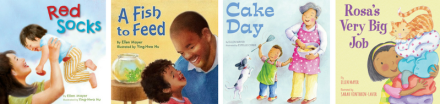
To learn more about Ellen Mayer and her Small Talk Books® (including other titles: Red Socks, Cake Day, and Rosa’s Very Big Job) as well as to find activities to accompany each book, visit her website!

Discover more about Ying-Hwa Hu and view a portfolio of her illustration work on her website!

celebrate-picture-books-picture-book-review-small-talk-books-covers

About Small Talk Books®

Ellen Mayer’s Small Talk Books® feature young children and adults talking together while they have fun, do chores, shop, and bake together. The adults speak in full sentences as they share details of their adventures and respond to and reinforce their child’s words and actions. Their conversations model the kinds of excitement and close relationships that encourage learning and language advancement. Each Small Talk Book® includes a note from Dr. Betty Bardige, an expert on young children’s language and literacy development and the author of Talk to Me, Baby! How You Can Support Young Children’s Language Development. This inviting introduction for parents and caregivers discusses how little ones connect actions, words, and meaning as adults talk with them while doing particular jobs or actions.

Other titles in the Small Talk Books® series include Red SocksCake Day and Rosa’s Very Big Job. Each book makes a wonderful gift for baby showers, new parents, or anyone with young children in the family. They would be a welcome addition to any young child’s bookshelf as well as to libraries and preschool classrooms.

Zoo and Aquarium Month Activity

celebrate-picture-books-picture-book-review-sock-fish-craft

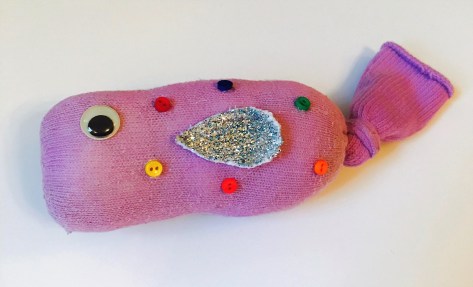
Swimmingly Sweet Sock Fish

A colorful sock can become a charming fish to decorate a child’s room with this easy craft.

Supplies

  • Child’s colored sock
  • Poly fiber fill
  • 2 googly eyes
  • Small buttons or foam dots (optional). Do not use small items with young children as they pose a choking hazard
  • Fabric Markers or fabric paint (optional)
  • Needle and thread 
  • Glue gun or strong glue

Directions

  1. Stuff the child’s sock with fiber fill up to where the ankle cuff starts
  2. Tie a knot in the ankle, letting the cuff free as the tail
  3. Glue the googly eyes on the fish with the glue gun or strong glue
  4. Glue the buttons or foam dots on the fish with the glue gun
  5. To hang the fish, insert thread through the top of the fish and knot to make a hanger

Picture Book Review


June 22 – It’s World Oceans Month

celebrate-picture-books-picture-book-review-super-narwhal-and-jelly-jolt

About the Holiday

This month we celebrate the wondrously diverse life in the sea. A majority of the earth’s surface is covered in water and yet we know only a fraction of what the oceans have to show us. With new technology scientists are diving deeper and deeper, where some of the most unique creatures in the world are waiting to be discovered. To join in on this month’s holiday, visit a beach or aquarium, learn more about the animals and resources of the sea, and consider donating to the preservation of the world’s oceans.

Super Narwhal and Jelly Jolt

By Ben Clanton


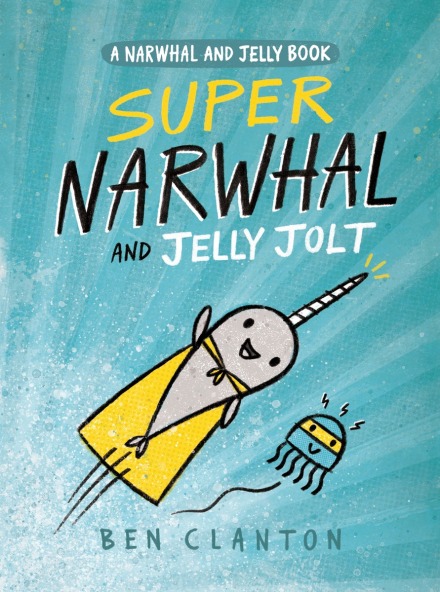
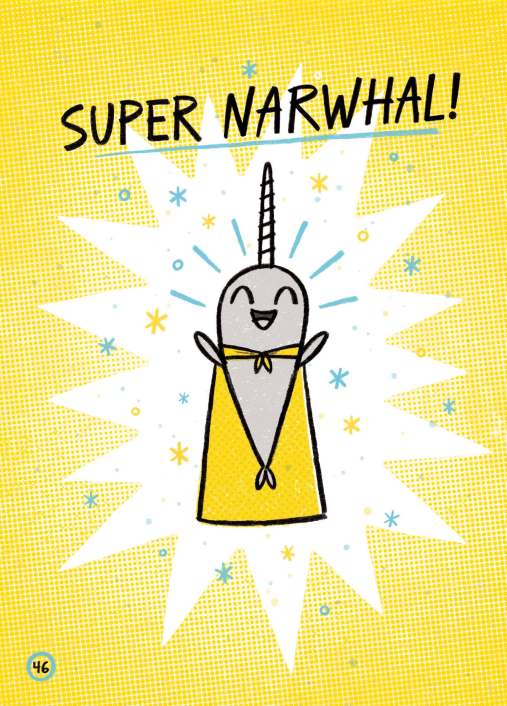
In A Super Start, Narwhal and Jelly are hanging out. Narwhal’s excited because after a swim and a waffle he’s “going to become a superhero!” Jelly is surprised that Narwhal thinks it would be so easy, after all there are the “super outfits” (Narwhal’s got that covered with a snazzy yellow cape); the “super names” (“Super Narwhal” sounds pretty super to Narwhal): and the secret identities (let me introduce you to the dapper mustachioed and bespectacled Clark Parker Wayne, wealthy and eccentric trillionaire).

celebrate-picture-books-picture-book-review-super-narwhal-and-jelly-jolt-cape

Excerpted from Super Narwhal and Jelly Jolt by Ben Clanton. Text and Illustrations Copyright © 2017 Ben Clanton. Published by Tundra Books, a division of Penguin Random House Canada Limited. Reproduced by arrangement with the Publisher. All rights reserved.

Super Narwhal is also going to need a sidekick. Jelly kicks around a few names—Shark, Octopus, and Turtle—but Narwhal has someone else in mind. Jelly, of course! Jelly’s eyes widen with the possibilities. Sting or Blue Lightening might be cool monikers, but no!— “Jelly Jolt the Super Sidekick” has an electrifying ring to it. Suddenly, Jelly remembers they’ll need superpowers. Narwhal has trouble being invisible or strong, flying or breathing fire, but there’s something even more important than powers—lunch! Yum, yum! Jelly says, “I think waffles are my super weakness.”

celebrate-picture-books-picture-book-review-super-narwhal-and-jelly-jolt-super-sidekick

Excerpted from Super Narwhal and Jelly Jolt by Ben Clanton. Text and Illustrations Copyright © 2017 Ben Clanton. Published by Tundra Books, a division of Penguin Random House Canada Limited. Reproduced by arrangement with the Publisher. All rights reserved.

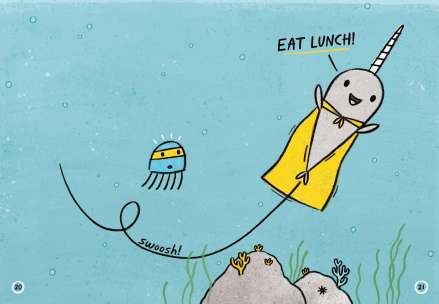
In Narwhal, You’re a Superstar, Super Narwhal has come to the rescue of Star. While Star likes the ocean she thinks that maybe she belongs in the sky. “Maybe I am a real star, but I fell to earth and hit my head or something and now I don’t remember!” she says. Narwhal’s up for helping out, but without super strength he can only toss Star back into the sea. Even with Octopus’s cannon, Narwhal is no more successful. They think about building a rocket ship, but neither is exactly a rocket scientist. Then Narwhal has a super idea. Star wishes on…herself…and “Poof!” Star is back where she belongs.

celebrate-picture-books-picture-book-review-super-narwhal-and-jelly-jolt-eat-lunch

Excerpted from Super Narwhal and Jelly Jolt by Ben Clanton. Text and Illustrations Copyright © 2017 Ben Clanton. Published by Tundra Books, a division of Penguin Random House Canada Limited. Reproduced by arrangement with the Publisher. All rights reserved.

Super Narwhal vs Blue Jelly a.k.a. the Super Superpower finds Clark Parker Wayne, wealthy and eccentric trillionaire discovering a very blue (as in sad) Jelly. In a jiff Super Narwhal appears to save the day! He asks Jelly “What’s wrong? Did someone steal your mustache?” But Jelly’s too blue to join in the repartee. Then Super Narwhal wonders if Jelly’s upset because he set his hair on fire. Jelly seems a bit perturbed at that suggestion—they are underwater, after all. But maybe Super Narwhal is onto something.

Maybe, just maybe, Jelly’s down because a bubble called him “a blue-footed booby,” or because a pirate pig poked him, or because he “got stuck in a tuba!” With a “hee” and a “heehee!” and a “heeheehee!” Jelly is beginning to smile. And when Super Narwhal puts them all together, Jelly can’t help but jiggle with a laugh at how ridiculous the whole thing is. But Super Narwhal is there to help—right? So he somberly asks “what is wrong?” By now, though, Jelly can’t remember.

celebrate-picture-books-picture-book-review-super-narwhal-and-jelly-jolt-kapow

Excerpted from Super Narwhal and Jelly Jolt by Ben Clanton. Text and Illustrations Copyright © 2017 Ben Clanton. Published by Tundra Books, a division of Penguin Random House Canada Limited. Reproduced by arrangement with the Publisher. All rights reserved.

Jelly gives his Super Friend a super hug. But then he does recall the problem. It seems crab was dissing his superhero outfit and calling him “Jelly Dolt.” “This is a job for Jelly Jolt and Super Narwhal!”, exclaims Narwhal. Jelly’s intrigued, but thinks they ought to leave crab alone. Guided by advice from his “great, great, great, great grandpa Nautilus,” which went something like “Do unto otters,” however, Narwhal reveals that they are off to make crab a superhero.

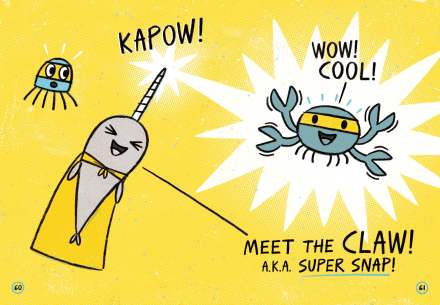
When they get their, though, Crab isn’t feeling it and lets off some steam, but Super Narwhal is undeterred. “Ahoy Crab! Prepare to be super-fied!” he announces. And with a KAPOW! Crab has become “The Claw! a.k.a. Super Snap!” At last, Super Narwhal has discovered his superpower—the ability to “bring out the super in others.” And with that, Super Narwhal, Jelly Jolt, and Super Snap swim off to Superfy the ocean.

celebrate-picture-books-picture-book-review-super-narwhal-and-jelly-jolt-superfy

Excerpted from Super Narwhal and Jelly Jolt by Ben Clanton. Text and Illustrations Copyright © 2017 Ben Clanton. Published by Tundra Books, a division of Penguin Random House Canada Limited. Reproduced by arrangement with the Publisher. All rights reserved.

Two more short and funny stories make an appearance between the continuing saga of Super Narwhal and Jelly Jolt. Super Sea Creatures is loaded with facts on several types of ocean creatures, and Super Waffle and Strawberry Sidekick is a delectable comic written by Narwhal and Jelly that’s full danger, heroics, and puns.

Ben Clanton’s adorable Super Narwhal and Jelly Jolt, the second in the Narwhal and Jelly series, is a sweet, laugh-inducing romp that is a marvelous take-off on the superhero genre and a perfect way to spend free time with two worthy ocean friends. Clanton fills his comics-style story with plenty of suspense, witty repartee, good advice, and even a bit of science to satisfy any young reader. Narwhal and Jelly, with their eager, inviting smiles, enthusiasm to tackle whatever obstacles get in their way and their ready inclusiveness, are truly superheroes to applauded

Super Narwhal and Jelly Jolt would make a sunny addition to summer reading and a splash on any child’s home bookshelf.

Ages 6 – 9

Tundra Books, 2017 | ISBN 978-1101918296

Discover more about Ben Clanton, his books, and his artwork on his website!

Play along with Narwhal and Jelly on their own website!

National Oceans Month Activity

celebrate-picture-books-picture-book-review-painted-pails

Playful Plastic Pail


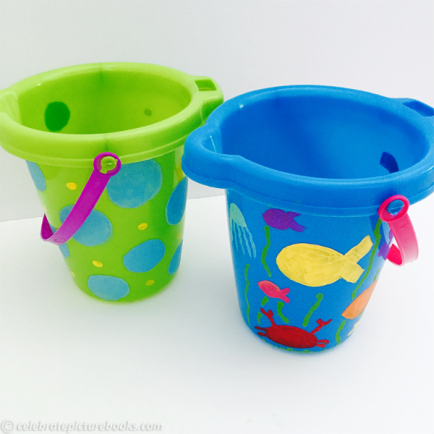
With a colorful plastic pail, some paint, and a little sealant, you can make a pail for the beach or sandbox that is as unique as you are!

Supplies

  • Plastic Pail
  • Paint that will adhere to plastic
  • Sealant for plastics
  • Paint brushes

Directions

  1. Create your design
  2. Paint your pail, let dry
  3. When the paint is dry, spray with sealant. Apply sealant in a well-ventilated place
  4. Let sealant dry
  5. Enjoy your pail!

Picture Book Review

June 21 – Make Music Day

celebrate-picture-books-picture-book-review-ada's-violin-cover

About the Holiday

Make Music Day first rang out in 1982 in France as the Fête de la Musique. Celebrated by young and old, professional musicians and amateurs, the day invites all to make and share their music. People in more than 750 cities and towns in over 120 countries participate in this creative holiday.

Ada’s Violin: The Story of the Recycled Orchestra of Paraguay

Written by Susan Hood | Illustrated by Sally Wern Comport


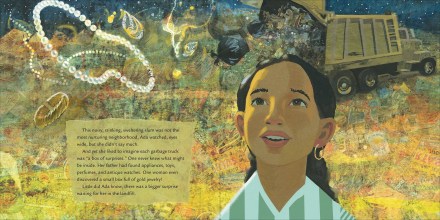
Ada Ríos is growing up in Cateura, a town built of trash as the main garbage dump for the capital city of Paraguay. Every morning the refuse trucks rumble into town to deposit their loads—1,500 tons of trash every day. The citizens of Cateura—gancheros or recyclers—go to work sifting through the mounds and tearing into bags looking for anything valuable enough to recycle or sell. Cardboard is worth 5 cents a pound, plastic 10 cents a pound.

Ada knows the landfill can hold surprises—“Her father, a ganchero, had found appliances, toys, perfumes, and antique watches.”—but she can never imagine what it holds for her. When Ada and her sister were little, their grandmother watched them while their parents worked. They loved to listen to music, to sing, and to learn stories of musicians and the sounds of different instruments. Ada fell in love with the violin.

celebrate-picture-books-picture-book-review-ada's-violin-making-singing

Image copyright Sally Wern Comport, text copyright Susan Hood. Courtesy of simonandschuster.com

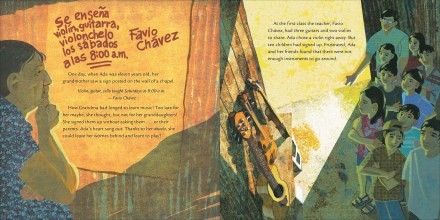
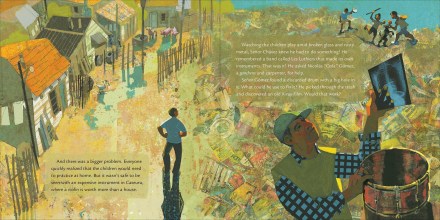
As the girls grow older and go to school, they venture farther into town, but there is little to fill their time. Many kids join gangs or get into fights. When Ada is 11 her grandmother signs her and her sister up for music lessons being offered by a new man in town named Favio Chávez. “Ada’s heart sang out” when she hears the news. On the first day ten children show up to play the five instruments available. But a bigger problem looms: the three guitars and two violins cannot be taken home for practicing as they are magnets for thieves. In Cateura a violin is worth more than a house.

But Favio Chávez has an idea. With help from Nicolás Gómez, a ganchero and carpenter, they pull bits and pieces from the landfill. An old broken drum and an X-ray film become a workable drum, water pipes become flutes, packing crates become guitars and violins, and oil drums become cellos. “Ada chose a violin made from an old paint can, an aluminum baking tray, a fork, and pieces of wooden crates. Worthless to thieves, it was invaluable to her. It was a violin of her very own.”

celebrate-picture-books-picture-book-review-ada's-violin-making-instruments

Image copyright Sally Wern Comport, text copyright Susan Hood. Courtesy of simonandschuster.com

The children practice tirelessly outside in 100-degree heat until the initial “screeches, twangs, and tweets hit all the right notes. Their class became ‘a small island’ where Chávez taught them to respect themselves and one another.” They become known as The Recycled Orchestra. Music now fills the air, adding a soundtrack of beauty to the grueling work. The orchestra is soon invited to play concerts in Cateura and the capital city of Asunción. When word spreads of their talent, the children receive offers to play from other cities and even other countries.

When Ada is 16 The Recycled Orchestra is invited to tour with a world-famous rock band. As Ada takes the stage in front of 35,000 people in Bogotá, Colombia, she is afraid, but the audience cheers for them and sings along as they play. On that night the children discover a new life. “Buried in the trash was music. And buried in themselves was something to be proud of.”

celebrate-picture-books-picture-book-review-ada's-violin-lessons

Image copyright Sally Wern Comport, text copyright Susan Hood. Courtesy of simonandschuster.com

An extensive author’s note plus a photograph of The Recycled Orchestra, lists of websites, videos and sources follow the text.

Ada’s Violin is also available in a Spanish edition—El violín de Ada: La Historia de la Orquesta de Instrumentos Reciclados del Paraguay.

Susan Hood has brought to light an incredible story of perseverance, hope, and the ability of music and other arts to provide opportunities and self-confidence that change lives. Told with unstinting honesty and sensitivity, Hood’s biography of Ada Ríos, Favio Chávez, and The Recycled Orchestra will inspire all who read it. The well-paced text offers revealing details on every page and flows with a lyrical quality that enhances the effect of the story and its impact. From the first sentence to the last, both children and adults will be riveted to The Recycled Orchestra.

celebrate-picture-books-picture-book-review-ada's-violin-hope

Image copyright Sally Wern Comport, text copyright Susan Hood. Courtesy of simonandschuster.com

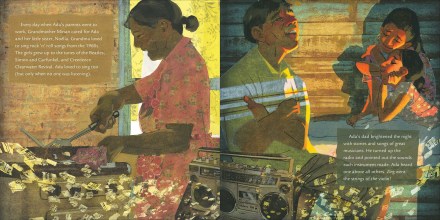
Sally Wern Comport’s paintings beautifully capture the human spirit that shines through and drives people to astonishing achievements even in the most adverse conditions. With intricately created collages of rich hues, Comport depicts the town of Cateura and the mountains of trash the citizens work and play on. Warm lighting illuminates faces full of dreams and love. Readers will linger over depictions of the instruments workshop and cheer along with the concert audience as the children receive recognition. The full-bleed, two-page spreads echo the expanded world music gave to the children in the orchestra and the adults who heard them as music score confetti flutters throughout.

Both school classrooms and home libraries will benefit from the stirring message of Ada’s Violin.

Ages 4 and up

Simon & Schuster Books for Young Readers, 2016 | ISBN 978-1481430951 (English edition); 978-1481466578 (Spanish edition)

Discover more about Susan Hood and her books, plus fun activities for kids and information for teachers and parents on her website!

View a gallery of Sally Wern Comport’s artwork on her website!

Make Music Day Activity

celebrate-picture-books-picture-book-review-homemade-musical-instrument


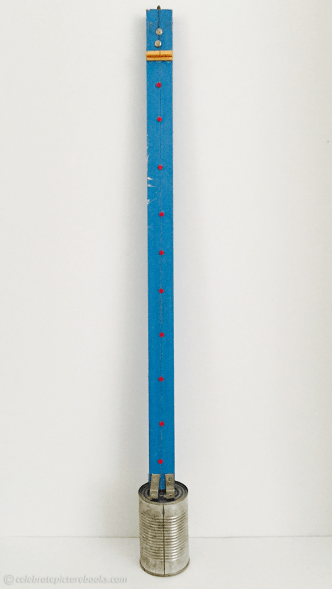
Make Your Own Musical Instrument


Inspiration for sound can come from almost any object! Look around your house or classroom and discover the music in boxes, cans, blocks of wood, plastic egg cartons or deli containers, and more. Add string or wire for plucking, sticks for drumming, or beans for shaking. With a little glue, tape, or hardware and some creativity, you’ll be making your own rhythms in no time!

Supplies for the stringed instrument shown in the picture above

  • Tin can
  • Two small L brackets
  • Piece of wooden molding, 2 1/2 feet by 1 1/2 inches by 3/4 inches
  • Five small strips of wood to raise the wire off the neck of the instrument. I used long wooden fireplace matches cut into 1 1/2″ sections 
  • Thin wire
  • Small circular hook screw or regular screw
  • Two tacks
  • A nail, screw, or piece of wood that will fit horizontally in the mouth of the can
  • a small nail to make a hole in the can
  • Hammer
  • Strong Glue
  • Paint
  • Foam decorative dots

Directions

  1. Paint the wood and let dry
  2. Paint the small strips of wood and let dry
  3. Decorate the can with paint, sticker, duct tape, or paper
  4. With the hammer and small nail, make a hole in the center of the bottom of the can
  5. Wrap one end of the wire around the nail and glue so it is firmly in place
  6. Feed the other end of the wire through the hole in the bottom of the can
  7. Screw or glue two L brackets to one end of the wood molding so that the bottom of the L is flush with the bottom of the wood molding and there is space between the brackets. This makes the neck of the instrument
  8. Screw the circular or regular screw into the top, center of the wooden molding
  9. When the wooden match strips are dry, glue three match strips side-by-side 3 inches from the top of the molding. Glue two more match strips, one on top of the other on the center strip.
  10. When the L brackets are dry, glue them (and the neck of the instrument) to the can, making sure the brackets are on either side of the hole in the can. Make sure the wire is out of the hole. 
  11. When the brackets are firmly attached to the can, pull the wire to the top of the neck. Settle it in the center of the small pieces of wood, so that the wire is not touching the neck.
  12. Wrap the wire around the screw at the top of the molding until it is firmly in place and the wire is taut. 
  13. Secure the wire to the neck with the tacks
  14. Mark the “frets” with the foam dots

Picture Book Review