December 3 – Cover Reveal of Stompin’ at the Savoy: How Chick Webb Became the King of Drums

celebrate-picture-books-picture-book-review-stompin-at-the-savoy-cover

Stompin’ at the Savoy: How Chick Webb Became the King of Drums

Written by Moira Rose Donohue | Illustrated by Laura Freeman


Although a disability stunted his growth and left him with a hunched back, William Henry “Chick” Webb didn’t let that get in the way of pursuing his dreams of being a musician. Even as a young child, Chick saw the world as one big drum. He pounded out rhythms on everything from stair railings to pots and pans with a wooden spoon until he earned enough money selling newspapers to buy himself a real set.
celebrate-picture-books-picture-book-review-stompin'-at-the-savoy-band-battle

Image copyright Laura Freeman, 2021, text copyright Moira Rose Donohue, 2021. Courtesy of Sleeping Bear Press.

He saved more money and was at last able to buy a drum set where he could “bang on the bass drum, crash the cymbals, and rattle the snare.” When he was still a teenager, he played drums in several bands. His talent and love for music eventually brought him to the big time as an influential big band leader. But Chick wanted to be at the top. Would he get his chance? This picture-book biography bops with the sounds and dance moves of the Swing era and one of the most famous clubs in America as it relates the life of Black American jazz drummer Chick Webb, who in the 1930s earned the nickname the “King of the Savoy.”

With Moira Rose Donohue’s scintillating storytelling about a time in musical history that still resonates today and Laura Freeman’s vibrant illustrations that ring with bright horns, soar on a sublime voice, and pulsate with the beat of a master drummer, Stompin’ at the Savoy – which Kirkus calls “an effervescent celebration”is a book that will inspire children.

I’m thrilled to be talking today with Moira Rose Donohue and Laura Freeman to learn more about how they brought the extraordinary story of Chick Webb to life for young readers. 

Meet Moira Rose Donohue

celebrate-picture-books-picture-book-review-moira-rose-donohue-headshot

Moira Rose Donohue has written over 35 books for children, most of them nonfiction, including National Geographic’s Little Kids First Big Book of the Rain Forest and two Junior Library Guild selections: Great White Sharks (Scholastic/Children’s Press) and The Invasion of Normandy (North Star Editions). She loves tap dancing, opera, hockey, and animals. Moira lives in St. Petersburg, Florida, with her dog, Petunia.

Among the many titles you’ve published are books on nature, history, and many, many biographies of figures from explorers to sports stars to civil rights leaders. What is your favorite thing about writing biographies? What was the initial spark that prompted you to choose Chick Webb as the subject of your newest book?

The thing I like most about writing biographies is that through the extensive research you have to do, you eventually discover the “essence” of the person—that unique quality that guided him/her/them to act in a way that made a difference in the world.

My initial interest in Chick was sparked when I was watching a re-airing of the Ken Burns documentary on jazz music. When the movie reached the evolution of swing and big bands, Chick Webb was mentioned. I have always loved Big Band music, even though it was not the music of my era. I was familiar with all the big band musicians discussed except Chick Webb. So, of course I had to research him. When I saw his life-loving grin and learned that he had to face the challenges of an affliction that left him no taller than an average eight-year-old boy, I was hooked.

Can you talk a little about the story readers will discover in Stompin’ at the Savoy and take readers on the book’s journey from idea to published book?

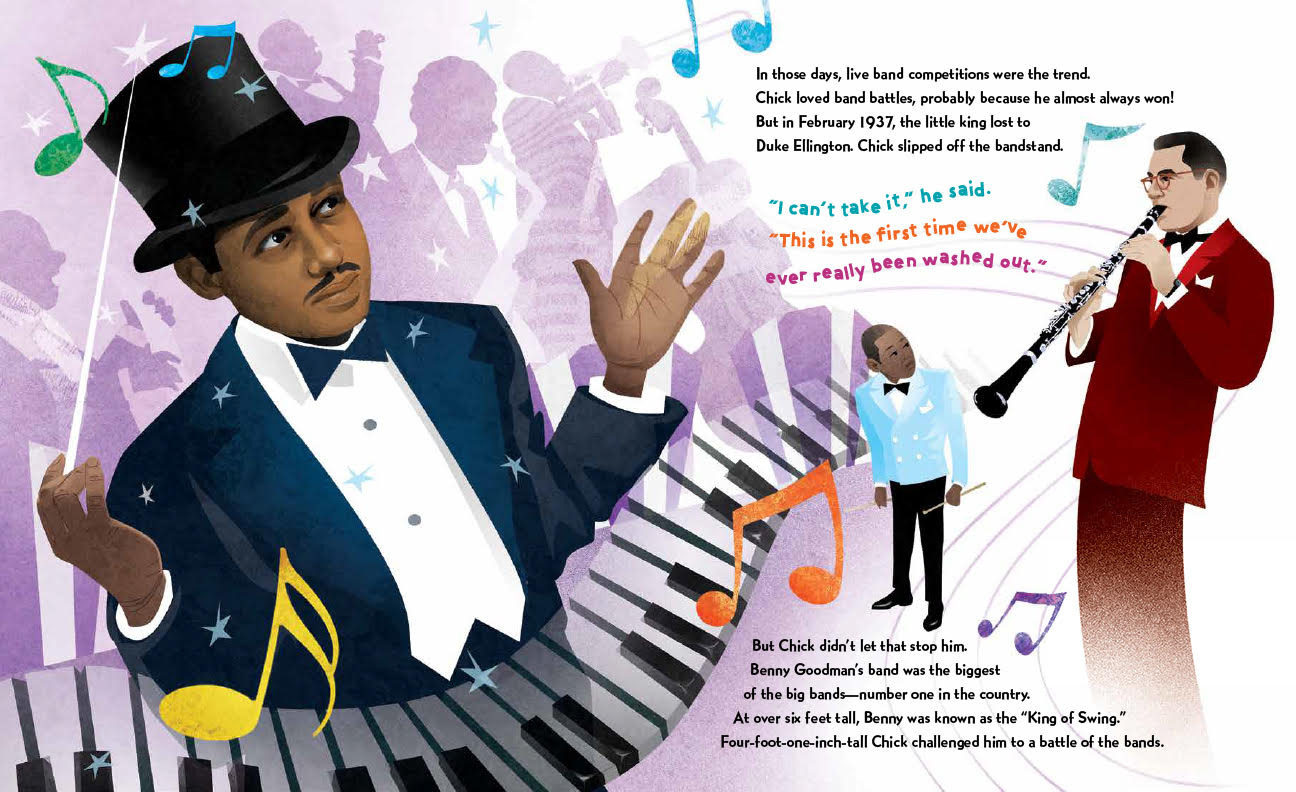
This book is not a chronicle of Chick’s life. It focuses on his resilient and competitive spirit because that’s what struck a chord with me. I love contests, and so, apparently, did Chick. To showcase his competitiveness, the climax of the book is his legendary band battle with 6-foot tall Benny Goodman, the King of Swing—a contest so exciting that almost 10,000 people showed up, inside the Savoy and outside on Lenox Avenue. You’ll have to read the book to find out who won!

What was one of the most surprising things you learned about Chick Webb during your research?

As a drummer and a band leader, Chick was precise and demanding. He told his musicians to practice and to be perfect. This didn’t surprise me because my daughter is a percussionist and I know that to be successful, practice and discipline are essential. What did surprise me is that, on occasion, Chick was known to give in to his wilder side and ride around town on the back of a motorcycle, standing up.

Researching Chick Webb was tricky because not much has been written about him. I had to call upon librarians, my superheroes, to watch a documentary at the Library of Congress and to find out what his childhood home looked like (thanks to the Enoch Pratt Free Library in Baltimore).

For an author it must be thrilling to see your story come to life visually. When did you see the cover and illustrations for your story? What was your first reaction?

I have been a big fan of Laura’s work for some time, so I knew when I got the sketches in May, 2020 that they would be wonderful. But the best part was that she completely understood the Big Band era and captured the ethos of the Savoy perfectly. It turns out that she had a connection to it—her father danced at the Savoy Ballroom.

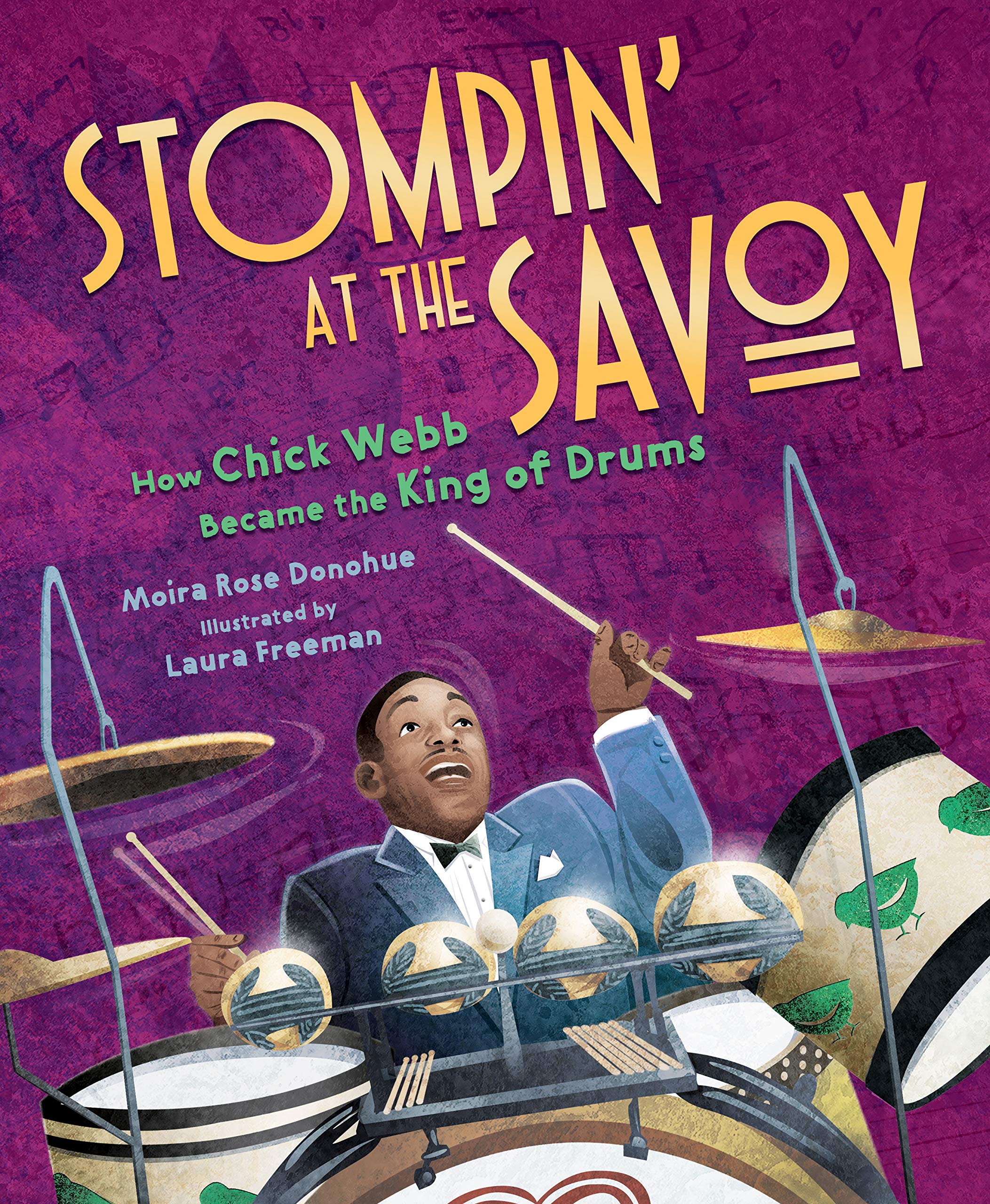
As for the cover, which I didn’t see until early October, 2020, well…it brought tears to my eyes. The purple background is such a perfect choice for the King of Drums. And Laura even managed to put his signature green chicks on his drum set!

What would you like young readers to take away from the story of Chick Webb?

Although I cannot fully understand the magnitude and complexities of Chick’s struggle, as someone who is only 4 feet 11 inches tall and always trying to figure out how to reach things in high places, I relate to the challenges of being a short person. I completely understood his need to make his bass drum pedal higher so he could reach it! And I admired his perseverance. I hope the young readers will see Chick’s story as an inspiration—a story of someone who believed in himself and his music. Chick was a person with short stature who created a giant sound.  

When will readers be able to find Stompin’ at the Savoy on bookstore shelves? Do you have any special events planned that readers can look forward to?

Stompin’ at the Savoy will be available for purchase on January 15, 2021. We are planning on setting up a virtual book release celebration with Tombolo Books. For more information and updates, please check my website, moirarosedonohue.net. And I am hoping to have an in-person event in Baltimore, Chick’s (and my son’s) home, when it’s safe to do so. 

You can connect with Moira Rose Donohue on

Her website | Twitter

Meet Laura Freeman

celebrate-picture-books-picture-book-review-Laura-Freeman-headshot

Laura Freeman has illustrated many fine children’s books over the years, including Fancy Party Gowns: The Story of Fashion Designer Ann Cole Lowe, written by Deborah Blumenthal, and the Coretta Scott King Honor book Hidden Figures: The True Story of Four Black Women and the Space Race, by Margot Lee Shetterly and Winifred Conkling. Laura now lives in Atlanta, Georgia, with her husband and their two children. 

I think readers are fascinated by an artist’s process in translating a manuscript to images that explain, highlight, and enhance the text. Can you talk a little about how you approached the manuscript for Stompin’ at the Savoy and then developed your illustrations – especially this stunning cover.

I always spend a lot of time looking at photos and researching the character and time period before starting. For Stompin’ I wanted to get in the mood, and so I searched for his music online and was surprised to find that I recognized the title song (which was written in 1933!). Maybe I watch too many old movies, but it really is great! I found great old photos of him at his drum kit and photos of the Savoy nightclub as well as people dancing and swinging to the orchestra. Since it was the ’30’s, all the photos I found were in black and white so I dug into the internet to find out what color his drum kit was… and I found conflicting information. One article stated that the kit was pearlized cream decorated with sparkly green chicks but the accompanying photo showed the chicks as being red. I ended up trusting the words since the photo was obviously hand tinted. I hope I got it right but guess it’s not the end of the world if I’m wrong! 

The cover is just a peek at what readers have to look forward to in the book. Can you give them a little taste of what’s in store inside?

I tried to give the illustrations a sense of movement to mimic the way Chick’s music makes me feel. There are a lot of colorful musical notes dancing throughout almost all of the pages. There is one spread in particular where if you look closely you can find them in a pattern in the ironwork of the staircase that Chick falls down as a child. Even though he’s not playing music on this page I wanted the notes to foreshadow his future.

What aspects of Chick Webb’s story did you most want to express in your illustrations? Is there a spread in the book that you particularly enjoyed creating?

Even though he had a tragic accident when he was a child that affected him for the rest of his life, his music is so full of joy – I wanted the book to feel joyful! I wanted it to be bright and colorful. There’s one spread in the book that depicts a battle of the bands. The one where Chick’s band goes up against Benny Goodman’s band. It was one of the last images I tackled because I have to admit, I had no idea how I was going to pull it off. There was just so much going on. I wanted to show the excitement and electricity of the moment – both bands playing their instruments, Chick’s band in white tuxedos, Benny Goodman’s band in black, Chick at his drum kit, Gene Krupka breaking his drum head. All this, but I didn’t want it to look busy and confusing. It ended up being one of my favorite images in the book!

I’ve been fortunate to review several of your picture books. In each one the illustrations are uniquely suited for the subject and yet instantly recognizable as your work. What would you say is your signature style? How did you develop it?

Thank you for saying so! I guess I’d say my illustrations are somewhat realistic in that I do try to capture a likeness. But still not so much so that I can’t deviate from reality to make a point. I guess you could say my work has a collage feel to it since I love to play around with patterns and textures too. I think that the amount of research I do shows up in the illustrations. I try to immerse myself in the time period of the book. I love finding the right clothing and hairstyles. What did the streets look like? The cars? What kind of technology was available? What about the furniture? I collect 100’s of photos of all these things. Very few end up in the books, but the essence of what I’ve seen does… I hope!

What do you hope children will take away from your illustrations for Stompin’ at the Savoy?

I hope that they can see themselves in his story. I love that he didn’t let his physical limitations stop him from doing what he wanted to do. He had to sit on a high stool to reach the drums. He couldn’t reach the bass drum pedal on the stool, so he had a special one made. He even embraced what surely started out as a derogatory nickname and called himself Chick.

Like Moira, many of your books for children are biographies. What draws you to those projects? What are the challenges and the rewards of working on biographies?

I especially like learning about people I may never have heard of and learning new things about people I have heard of. If I don’t know the information, chances are that most kids don’t either. With a biography there’s the challenge of capturing a likeness. Sometimes there are lots of photos and videos of the person I’m depicting to reference. Other times, not so much. I may need to distill the person’s facial features and try to figure out what they might look like from a different angle or as a child when there really aren’t any reference photos to go by. I want to do them justice because I feel honored to be involved in uncovering their stories.

You can connect with Laura Freeman on

Her website | Instagram | Twitter

Thanks so much Moira and Laura for these insightful answers! I’m sure readers are as excited to read Stompin’ at the Savoy: How Chick Webb Became the King of Drums as I am! While we have to wait a little longer to find the book in bookstores, everyone’s invited to enter my giveaway for a chance to win a copy!

Stompin’ at the Savoy: How Chick Webb Became the King of Drums Giveaway


I’m excited to partner with Sleeping Bear Press in Twitter giveaway of:

  • One (1) copy of Stompin’ at the Savoy, written by Moira Rose Donohue| illustrated by Laura Freeman 

Here’s how to enter:

  • Follow Sleeping Bear Press 
  • Retweet a giveaway tweet
  • Bonus: Reply with your favorite kind of music for an extra entry (each reply gives you one more entry).

This giveaway is open from December 3 through December 9 and ends at 8:00 p.m. EST.

A winner will be chosen on December 10. The prize book will be sent from Sleeping Bear Press in January.

Giveaway open to U.S. addresses only. | Prizing provided by Sleeping Bear Press.

To learn more about Stompin’ at the Savoy: How Chick Webb Became the King of Drums and other marvelous books from Sleeping Bear Press, visit their website.
celebrate-picture-books-picture-book-review-stompin-at-the-savoy-cover

You can preorder Stompin’ at the Savoy: How Chick Webb Became the King of Drums at these booksellers

Amazon | Barnes & Noble | Books-a-Million

To support your local independent bookstore, order from

Bookshop | IndieBound

Picture Book Review
 

November 9 – Celebrating the Election of Joe Biden and Kamala Harris

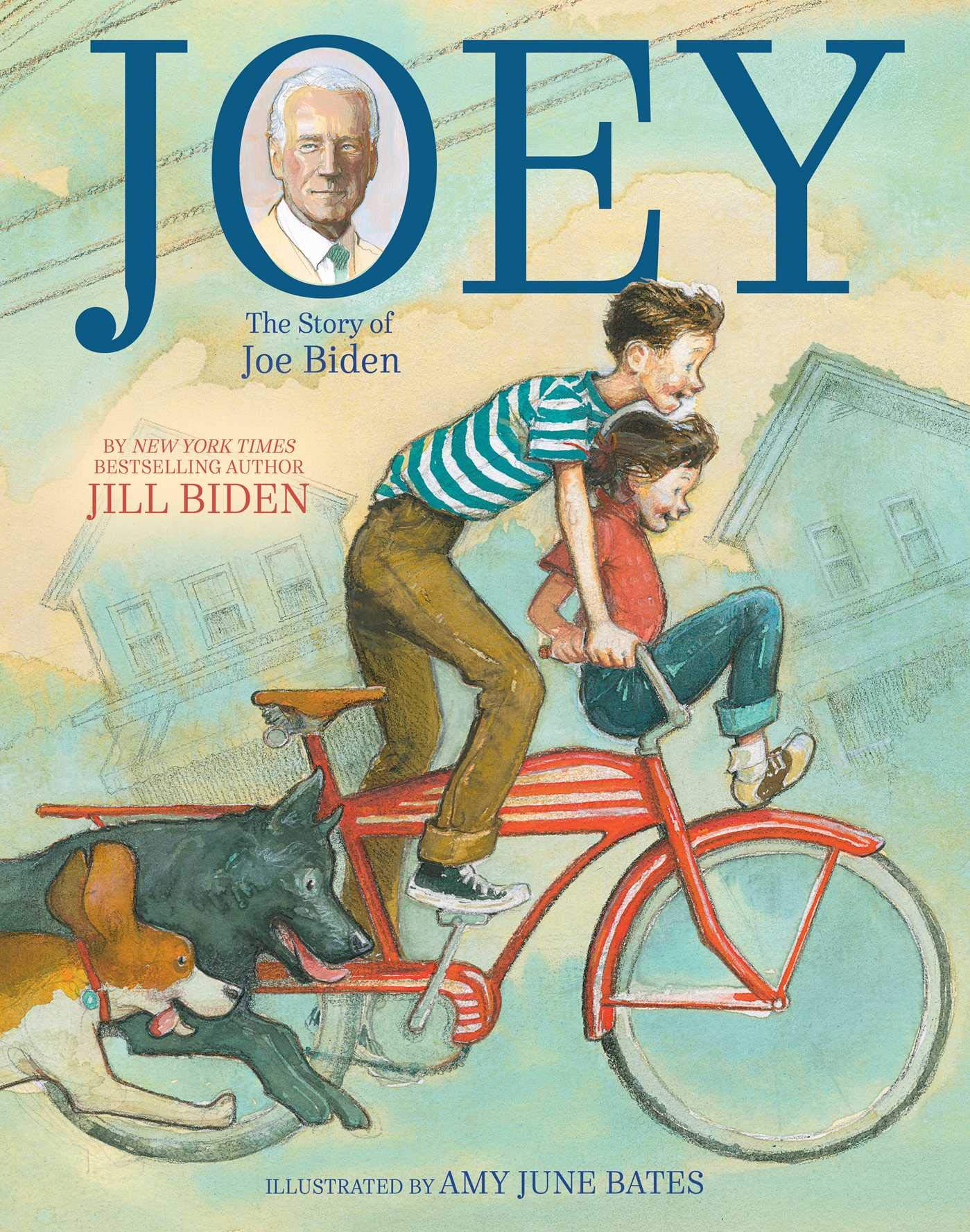
celebrate-picture-books-picture-book-review-joey-cover

About the Holiday

This week the people of the United States elected a new President and Vice President who will lead our nation for the next four years. In many ways this election was historic, from the most votes ever cast for a presidential candidate to its taking place during a pandemic that required extraordinary measures to ensure everyone could participate and commitment on the part of voters. Most significant, however, was the election of Kamala Harris, the first woman, the first Black, and the first South Asian to hold the office of Vice President. To celebrate the 2020 election, I’ve reviewed two outstanding biographies, one about Joseph R. Biden Jr. and the other about Kamala Harris.

Joey: The Story of Joe Biden

Written by Dr. Jill Biden with Kathleen Krull | Illustrated by Amy June Bates


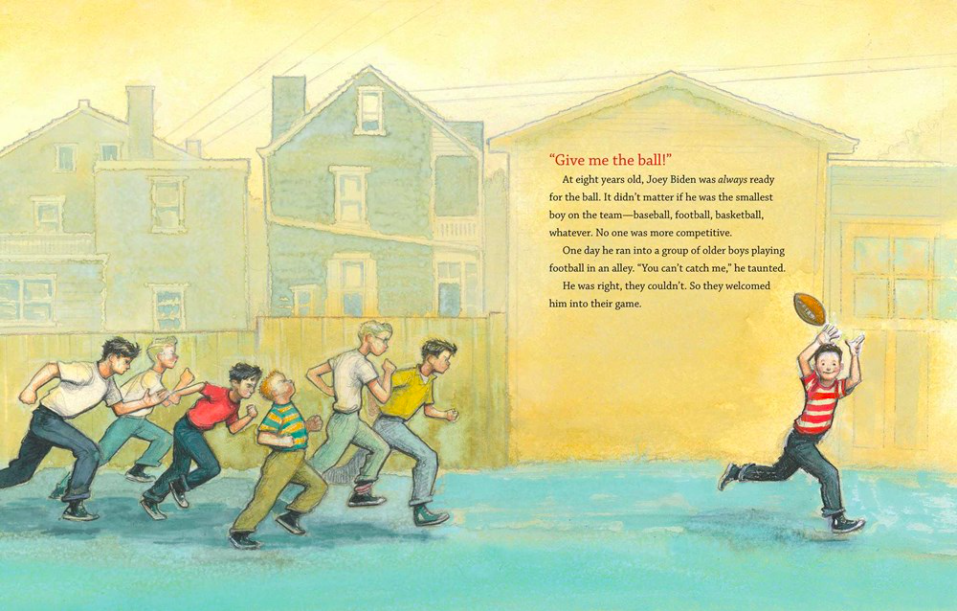
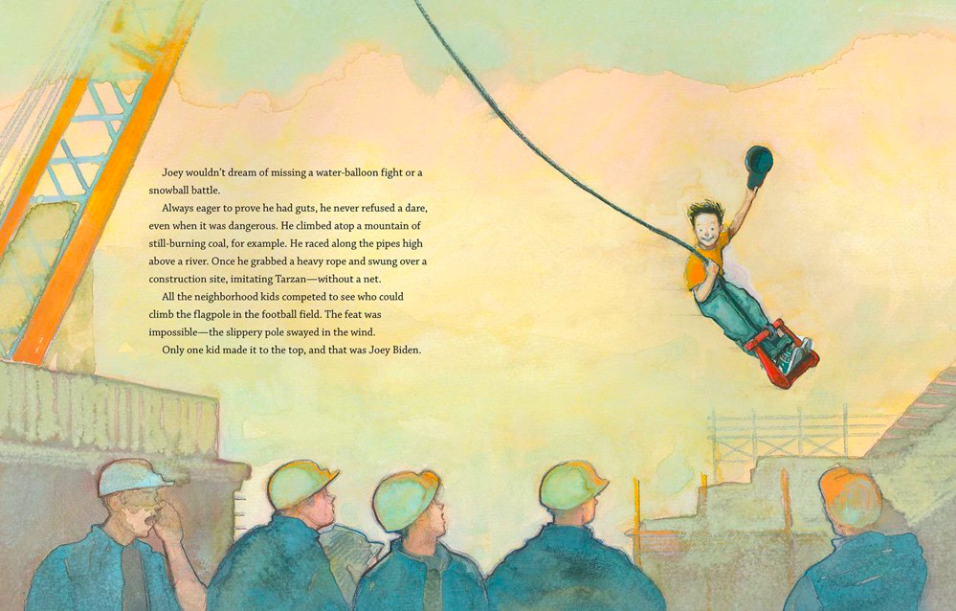
With a gift for storytelling and an ear for the kinds of details that will draw kids in, Jill Biden introduces young readers to her husband and soon-to-be President of the United States, Joe Biden, at the age of eight. Even at this young age, Joe—or Joey as he was then called—demonstrated a fun-loving competitive spirit, maturity, daring, and sense of responsibility that would take him far in life. How competitive? Despite being the smallest boy on any of his teams, “he was always ready for the ball.” How daring? Take your pick: the time he and his friends hopped “from rooftop to rooftop of the garages” in his neighborhood after seeing a Tarzan movie; the time he swung on a rope “over a construction site without a net;” or when he shimmied to the top of the slippery, swaying flag pole at the football field.”

celebrate-picture-books-picture-book-review-joey-football

Image copyright Amy June Bates, 2020, text copyright Jill Biden with Kathleen Krull, 2020. Courtesy of Simon & Schuster.

Where did he learn these qualities? From his mom who always said, “‘Bravery resides in every heart, and yours is fierce and clear.’” And from his dad who encouraged Joey to “‘Get up! Get up!’” whenever he stumbled. To find work, Joey’s family moved, but Joey always had friends in his siblings, especially his younger sister, Valerie.

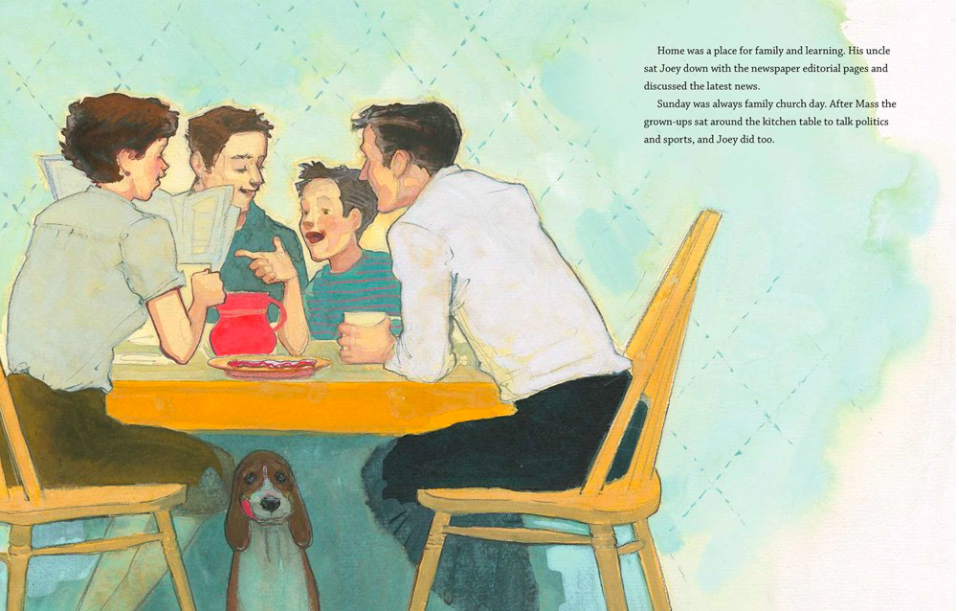
As he grew older Joey learned about world news and the rudiments of politics at the family dinner table, adding his opinions to those of the adults. At school, though bullies made fun of Joey’s stutter, that sometimes made talking difficult. Instead of taking it, Joey defended himself and others who were being bullied. He also devised ways to practice talking more smoothly. 

celebrate-picture-books-picture-book-review-joey-construction-site

Image copyright Amy June Bates, 2020, text copyright Jill Biden with Kathleen Krull, 2020. Courtesy of Simon & Schuster.

When his dreams of attending the Catholic high school seemed out of reach financially, Joey applied for a work-study program that allowed him to attend in exchange for duties such as painting the fence, pulling weeds, and washing windows. High school was also where he grew a foot taller and became the star of the basketball and football teams. Here he exchanged Joey for Joe. His sense of fairness and equality led him to stand up for his African American football teammate when the owner of the local diner would not serve him, and in a nod to his future profession, he was elected class president “during his junior and senior years.”

celebrate-picture-books-picture-book-review-joey-discussions

Image copyright Amy June Bates, 2020, text copyright Jill Biden with Kathleen Krull, 2020. Courtesy of Simon & Schuster.

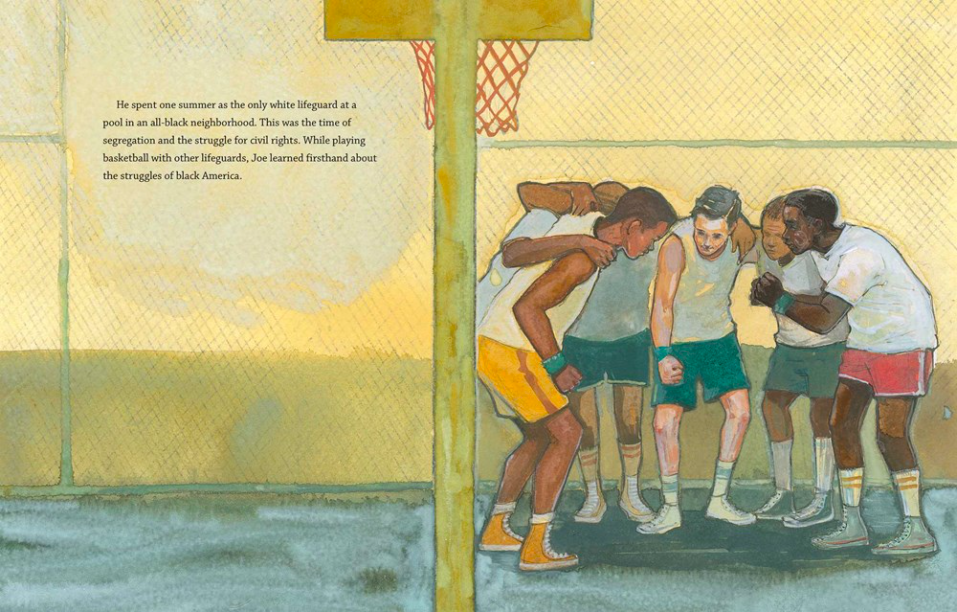
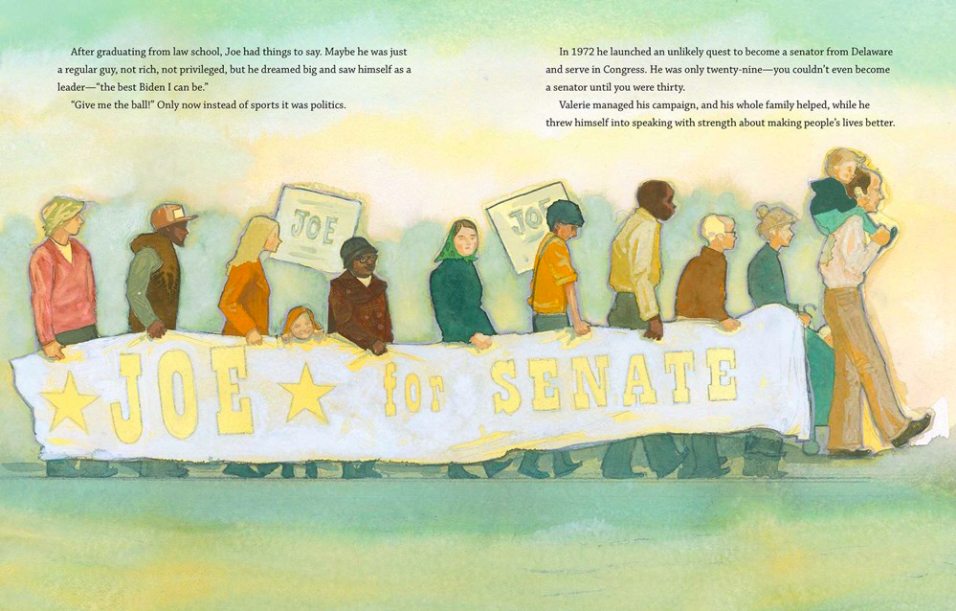
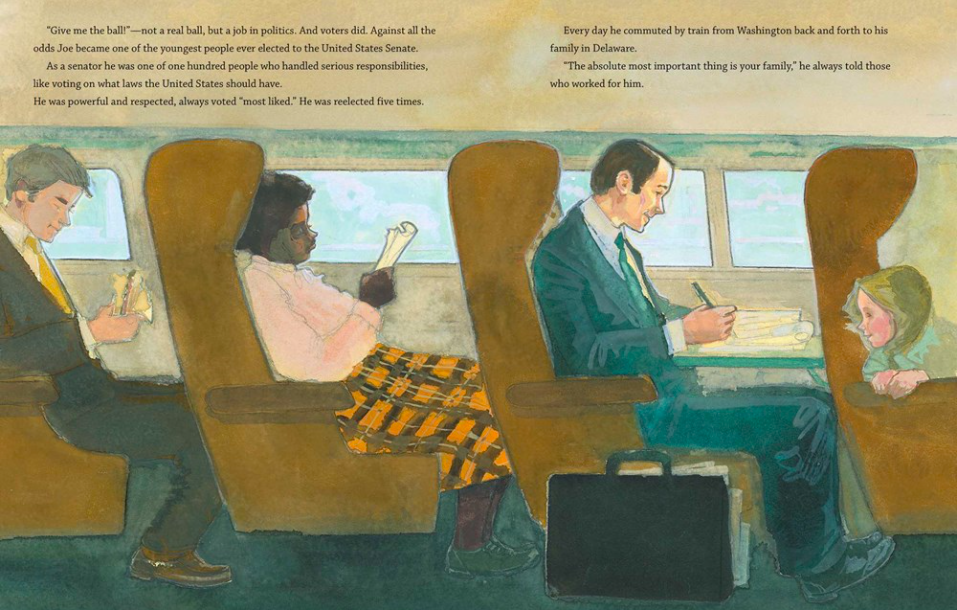
As the first in his family to go to college, Joe was “promptly elected president of his freshman class.” He learned about the struggles of blacks in America while working “as the only white lifeguard at a pool in an all-black neighborhood” during “the time of segregation and the struggle for civil rights.” Joe graduated with a law degree, and at the age of twenty-nine he “launched an unlikely quest to become a senator from Delaware”—even though the required age was thirty. “Against all the odds, Joe became one of the youngest people ever elected to the United States Senate.” Reelected five times, “he was powerful and respected.”

celebrate-picture-books-picture-book-review-joey-basketball

Image copyright Amy June Bates, 2020, text copyright Jill Biden with Kathleen Krull, 2020. Courtesy of Simon & Schuster.

Then “after more than three decades of serving his country in the Senate, he was chosen by Barak Obama to run as his vice president. They won, energizing the nation,” and after eight years of serving together, President Obama called Joe, “‘the best vice president America’s ever had.’” In 2019, Joe announced his candidacy for president of the United States, calling the election a “‘battle for the soul of America.’—and Joe Biden was ready to fight it.”

Back matter includes family photographs, an extensive timeline of Joe Biden’s life and government service, inspirational “Bidenisms, sources for the quotations used in the text, and a bibliography.

celebrate-picture-books-picture-book-review-joey-senate

Image copyright Amy June Bates, 2020, text copyright Jill Biden with Kathleen Krull, 2020. Courtesy of Simon & Schuster.

For parents, teachers, and other adults looking to introduce children to the next president of the United States with an in-depth look at his life, his influences, and his vast experience, Dr. Jill Biden’s Joey: The Story of Joe Biden shines with an intimate portrait of his astonishing life. With specific examples that will resonate with children, Biden portrays the qualities and experience that make him the right person to lead our country during these times and demonstrates his long history of concern for all Americans. Conversational and folksy, Biden’s storytelling makes this an uplifting read aloud that will captivate listeners. The book provides an excellent opportunity to spark further research into Joe Biden’ life and government service as well a conversation-starter for adults to discuss the importance of family, character, hard work, perseverance, and community.

celebrate-picture-books-picture-book-review-joey-train

Image copyright Amy June Bates, 2020, text copyright Jill Biden with Kathleen Krull, 2020. Courtesy of Simon & Schuster.

Amy June Bates’ watercolor, gouache, and pencil illustrations are stunning, taking readers from Joey’s neighborhood in Scranton, Pennsylvania—where they can see some of the feats of daring Joey was famous for and how he interacted with friends and siblings—to Delaware, the state that informed his interest in politics and sense of community service. Through Bates’ realistic images, children swing on the rope over the construction site, sit among his siblings as they watch TV, and join in at the dinner table for influential family discussions. Bates also depicts Biden’s struggles with bullies and his stutter. Kids follow him up a ladder to wash windows and to the high school gridiron to watch Joe pull away from the opposing team to score the winning touchdown. As Biden runs for and takes on responsibilities in the Senate, readers are there too. In Biden’s face and stance, Bates clearly portrays his confidence, optimism, intelligence, and pride in a lifetime of serving the American people.

A superb biography of our next president and one that will inspire a new generation of activists and public servants, Joey: The Story of Joe Biden is a must for home, school, and public library collections.

Ages 4 – 8

Simon & Schuster, Paula Wiseman Books, 2020 | ISBN 978-1534480537

You can connect with Dr. Jill Biden on Twitter.

Discover more about Kathleen Krull and her books on her website.

To learn more about Amy June Bates, her books, and her art, visit her website.

You can find Joey: The Story of Joe Biden at these booksellers

Amazon | Barnes & Noble | Books-a-Million

To support your local independent bookstore, order from 

Bookshop | IndieBound

celebrate-picture-books-picture-book-review-kamala-harris-rooted-in-justice-cover

Kamala Harris: Rooted in Justice

Written by Nikki Grimes | Illustrated by Laura Freeman


Eve, a black girl, comes home from school in Oakland, California upset because Calvin, a boy in her class, said that girls can’t be President. Her mother tells her that Calvin is wrong and shows her a newspaper article about Kamala Harris, who “lives right here in Oakland and hopes to be President one day.” Eve’s mom begins to tell her daughter Kamala’s story, which began with “a strong black-and-brown braid coiling from India, where her mother, Shyamala, was born; to Jamaica, where her father, Donald, was born;” to Berkely, California and finally to Oakland.

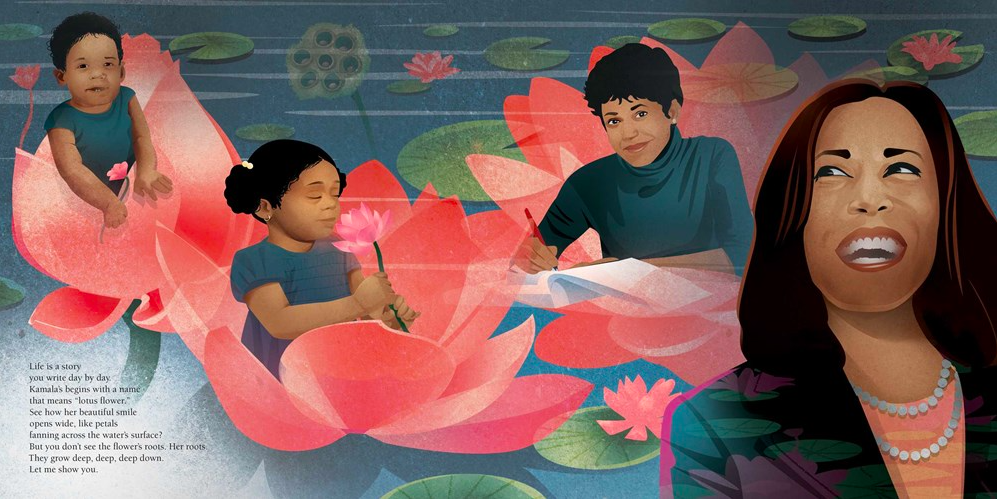
She goes on to reveal that even as a baby “Kamala was like clay her parents molded for action,” as they took her along on marches for civil rights and to speeches given by Martin Luther King Jr. Kamala listened and learned words like peace, justice, freedom. On a trip to Zambia to visit her grandparents, Kamala learned that “fighting for justice ran in the family.”

celebrate-picture-books-picture-book-review-kamala-harris-rooted-in-justice-lotus

Image copyright Laura Freeman, 2020, text copyright Nikki Grimes, 2020. Courtesy of Atheneum Books for Young Readers.

Then when Kamala was seven her parents divorced, and Kamala, her younger sister Maya, and their mother moved to “‘the flatlands,’ the black working-class area in Berkeley.” From here, Kamala was bussed to Thousand Oaks Elementary in the “wealthy white part of town….,” where, she met “kids who were rich and poor, black and white; kids who celebrated holidays she’d never even heard of,” and learned to “count to ten in many different languages.” Here, Eve interrupts to excitedly tell her mother that their next door neighbor Guadalupe has taught her how to count in Spanish.

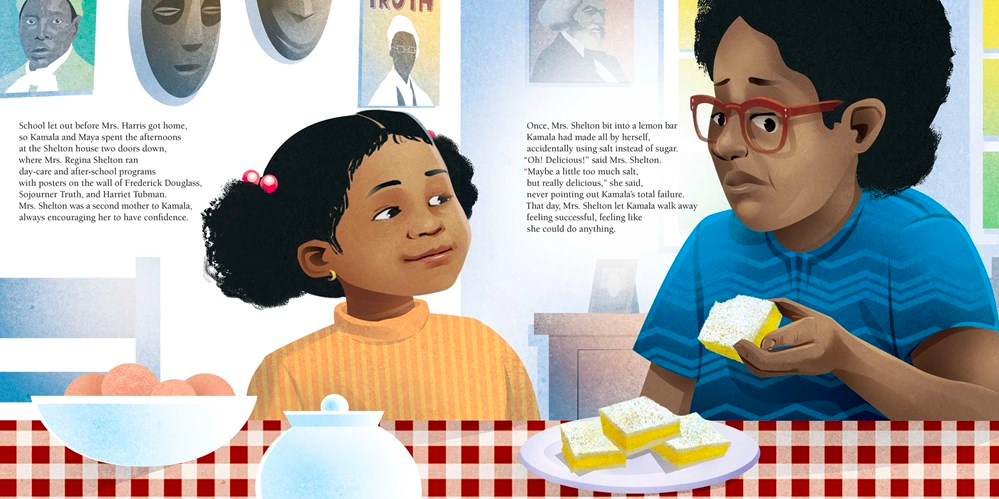
Kamala also learned from Mrs. Regina Shelton, a neighbor whom Kamala stayed with after school. Mrs. Shelton introduced her to Frederick Douglass, Sojourner Truth, and Harriet Tubman. She encouraged her pursuits and instilled confidence in her. Just as influential on young Kamala were the family’s weekly visits to the “Rainbow Sign, a cultural center celebrating black art, music, books, and film. James Baldwin spoke there, Maya Angelou read there, and Nina Simone sang there.” Nina’s song “To Be Young, Gifted and Black” particularly resonated with Kamala.

celebrate-picture-books-picture-book-review-kamala-harris-rooted-in-justice-young-kamala

Image copyright Laura Freeman, 2020, text copyright Nikki Grimes, 2020. Courtesy of Atheneum Books for Young Readers.

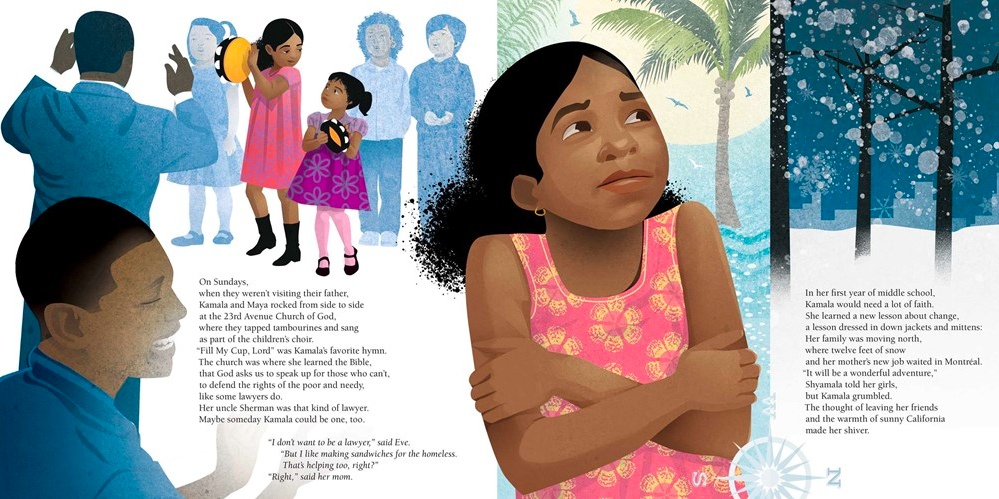
On Sundays Kamala and Maya visited their father and went to the 23rd Avenue Church of God, where, along with singing in the children’s choir, Kamala learned from the Bible “that God asks us to speak up for those who can’t, to defend the rights of the poor and needy, like some lawyers do.” Maybe, Kamala thought, she would follow in her uncle Sherman’s footsteps and be that kind of lawyer too. Eve wonders if when she makes sandwiches for the homeless she’s helping out too. Her mom tells her yes.

When Kamala’s mother accepted a job in Montréal, Canada, Kamala’s life changed again. One thing that stayed the same, however, was Kamala’s sense of justice. For example when the apartment building manager wouldn’t allow the kids to play soccer on the lawn, she and Maya picketed until he changed his mind. 

Although Kamala adjusted to life in Canada, when it came time to go to college, she returned to the United States to attend Howard University like one of her heroes, Thurgood Marshall. Kamala felt at home at Howard. She won a seat in the student government, competed on the debate team, interned at the Federal Trade Commission, did research at the National Archives, and on weekends joined protests against apartheid in South Africa.

celebrate-picture-books-picture-book-review-kamala-harris-rooted-in-justice-moving

Image copyright Laura Freeman, 2020, text copyright Nikki Grimes, 2020. Courtesy of Atheneum Books for Young Readers.

As a sophomore, Kamala spent her summer as an intern for Senator Alan Cranston “learning from someone whose footsteps echoed in the halls of power every day.” She went on to study law at Hastings College of the Law, leading the Black Law Students Association as president and working to improve the chances that black graduates would be hired by the best companies in the country.

In order to practice law, Kamala had one more hurdle to overcome: the California Bar exam. Kamala failed in her first attempt, but it taught her an important lesson about digging deep and trying harder – a lesson that Eve understands. On her second try, she passed. Since then Kamala’s trajectory has been steadily upward. “First, Deputy District Attorney. Next, the first female District Attorney of San Francisco. Then, the first black woman Attorney General of California” and eventually the “second black woman voted into the US Senate.”

celebrate-picture-books-picture-book-review-kamala-harris-rooted-in-justice-oath

Image copyright Laura Freeman, 2020, text copyright Nikki Grimes, 2020. Courtesy of Atheneum Books for Young Readers.

As Senator, Kamala has fought for workers, women’s rights, and immigrant children. Then in 2019, she announced her candidacy for President of the United States. But running a presidential campaign takes a lot of money. When she and her team realized that they would not be able to sustain a campaign, she decided to give up her quest for the 2020 presidential nomination while still looking “forward to all the good work she could still do as Senator Harris.”

While the biography ends before the election and with the question, “Will she ever get to call the White House home?” the next sentence: “Kamala Harris is still writing her American story” looks forward to a future we will all be following. And what about Eve? She knows the message of Kamala’s life and dreams: “‘If at first you don’t succeed, try, try again.’” That lesson and that Calvin is wrong about a girl’s ability to become the President.

A detailed timeline of Kamala Harris’s life and a list of resources follow the text.

celebrate-picture-books-picture-book-review-kamala-harris-rooted-in-justice-senator

Image copyright Laura Freeman, 2020, text copyright Nikki Grimes, 2020. Courtesy of Atheneum Books for Young Readers.

Nikki Grimes’ compelling biography of Kamala Harris lyrically outlines the importance that ideas of justice, freedom, and inclusion play in both her personal and professional life. Children will be especially captivated by Grimes’ comprehensive and intimate look at Kamala’s childhood and the people, experiences, and places that influenced her education, character, long commitment to equality, and steady focus on achieving her dreams. Specific examples of the large and smaller issues Kamala has fought for throughout her life instill in young readers the knowledge that they too can make a difference. Framed by Eve’s disagreement with Calvin and her interjections about certain aspects of Kamala’s life, the story speaks directly to the reader, creating in them the kind of confidence and reassurance that has served Kamala well. The final lines offer encouragement and inspiration to tomorrow’s leaders.

Laura Freeman’s textured, realistic illustrations introduce Kamala Harris in the context of her family, the causes they put their hearts and voices into, and the communities that nurtured her. As a child, Kamala’s confidence and intelligence are evident as she learns about her family’s activism in Zambia, rides to school on the bus, listens to Mrs. Shelton and Nina Simone, and gets involved in activities at church, in college, and in law school. Images of Kamala as an adult depict her familiar smile, thoughtfulness, poise, and self-confidence. Freeman’s collage-style imagery of the people who have influenced Kamala are particularly powerful reminders of the legacy that parents, grandparents, teachers, mentors, and leaders in society imprint on people from childhood and throughout life.

A beautiful and inspiring biography, Kamala Harris: Rooted in Justice is an exciting introduction to our next Vice President and is sure to encourage discussion, stir dreams of greatness, and motivate girls and children of color to follow in her footsteps. The book is a must for home, school, and public library collections.

Ages 4 – 8

Simon & Schuster, Atheneum Books for Young Readers, 2020 | ISBN 978-1534462670

Discover more about Nikki Grimes, her books, and her poetry on her website.

To learn more about Laura Freeman, her books, and her art, visit her website.

You can find Kamala Harris: Rooted in Justice at these booksellers

Amazon | Barnes & Noble | Books-a-Million

To support our local independent bookstore, order from

Bookshop | IndieBound

 Picture Book Review
celebrate-picture-books-picture-book-review-joey-cover


October 17 – National Black Poetry Day

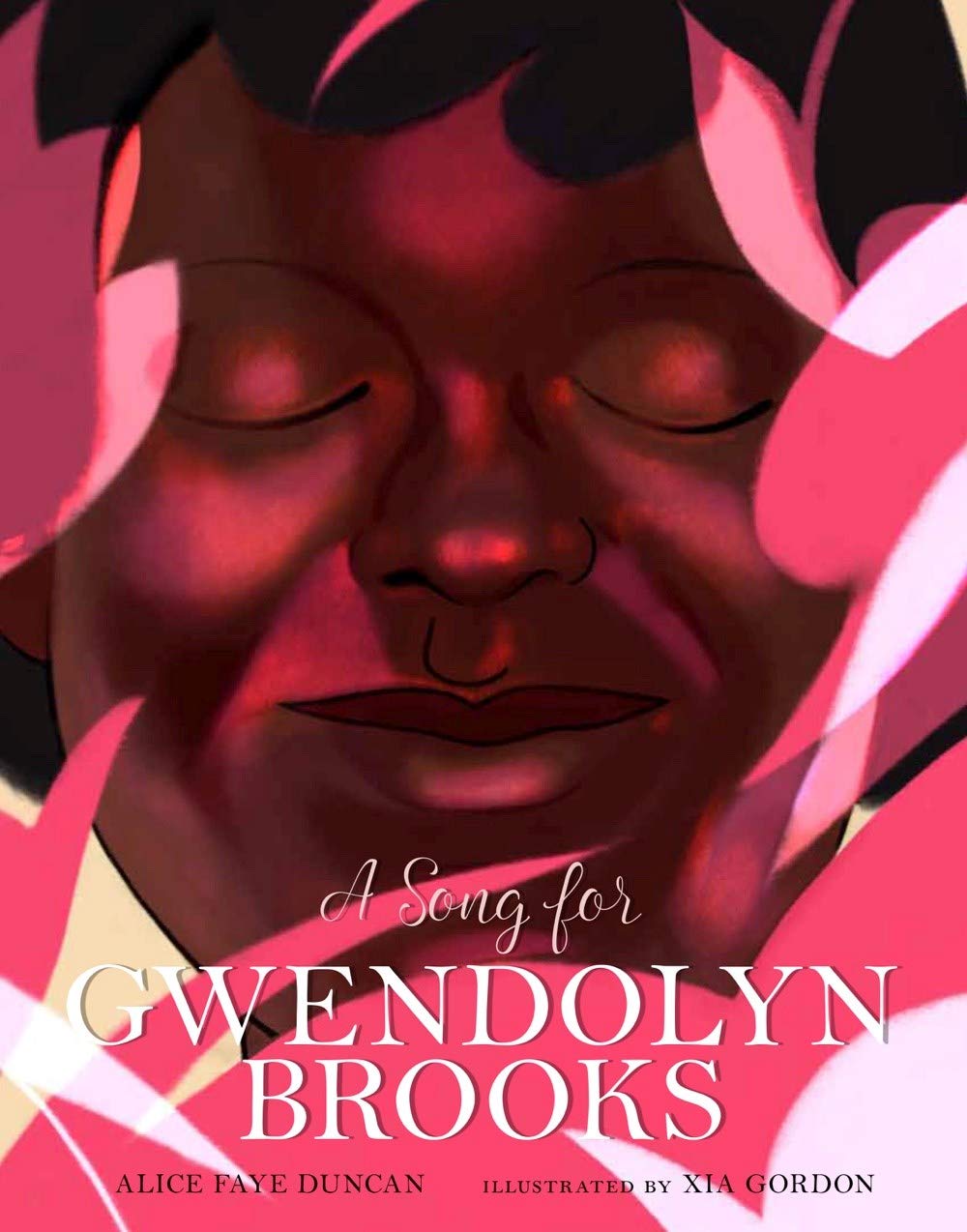
celebrate-picture-books-picture-book-review-a-song-for-gwendolyn-brooks-cover

About the Holiday

Black Poetry Day was established in 1985 and commemorates the birth of Jupiter Hammon, the first published African American poet in the United States. Hammon was born into slavery on Long Island, New York, on October 17th, 1711. His poem “An Evening Thought” was first published on Christmas Day when he was 49 years old. Hammon is considered one of the founders of African-American literature. Today’s holiday honors all black poets, past and present. To celebrate today, enjoy poetry from some of our greatest poets, including Maya Angelou, Rita Dove, Langston Hughes, Nikki Giovani, Derek Walcott, and, of course, Gwendolyn Brooks – the subject of today’s book.

I received a copy of A Song for Gwendolyn Brooks from Sterling Children’s Books for review consideration. All opinions are my own.

A Song for Gwendolyn Brooks

Written by Alice Faye Duncan | Illustrated by Xia Gordon


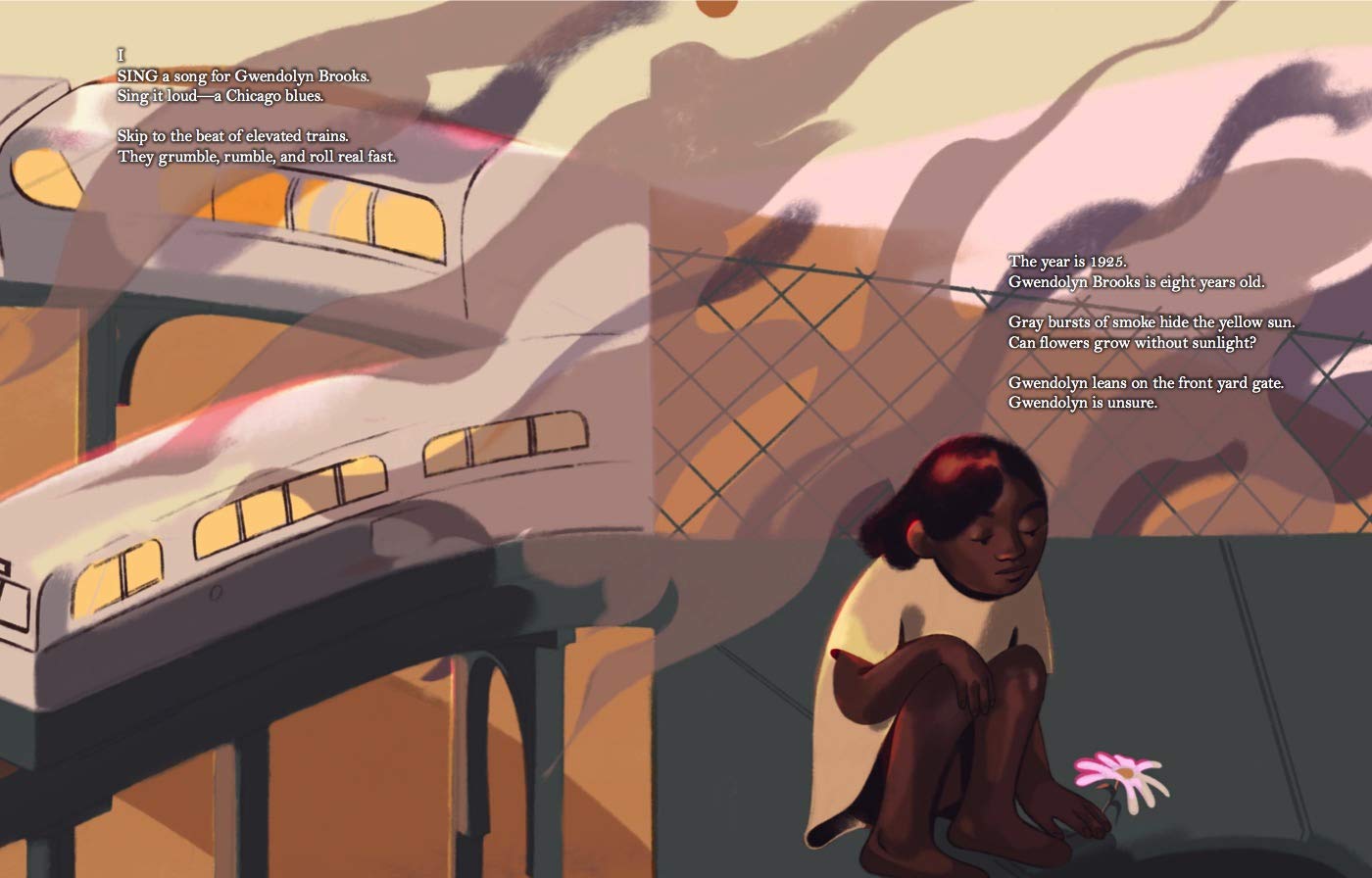
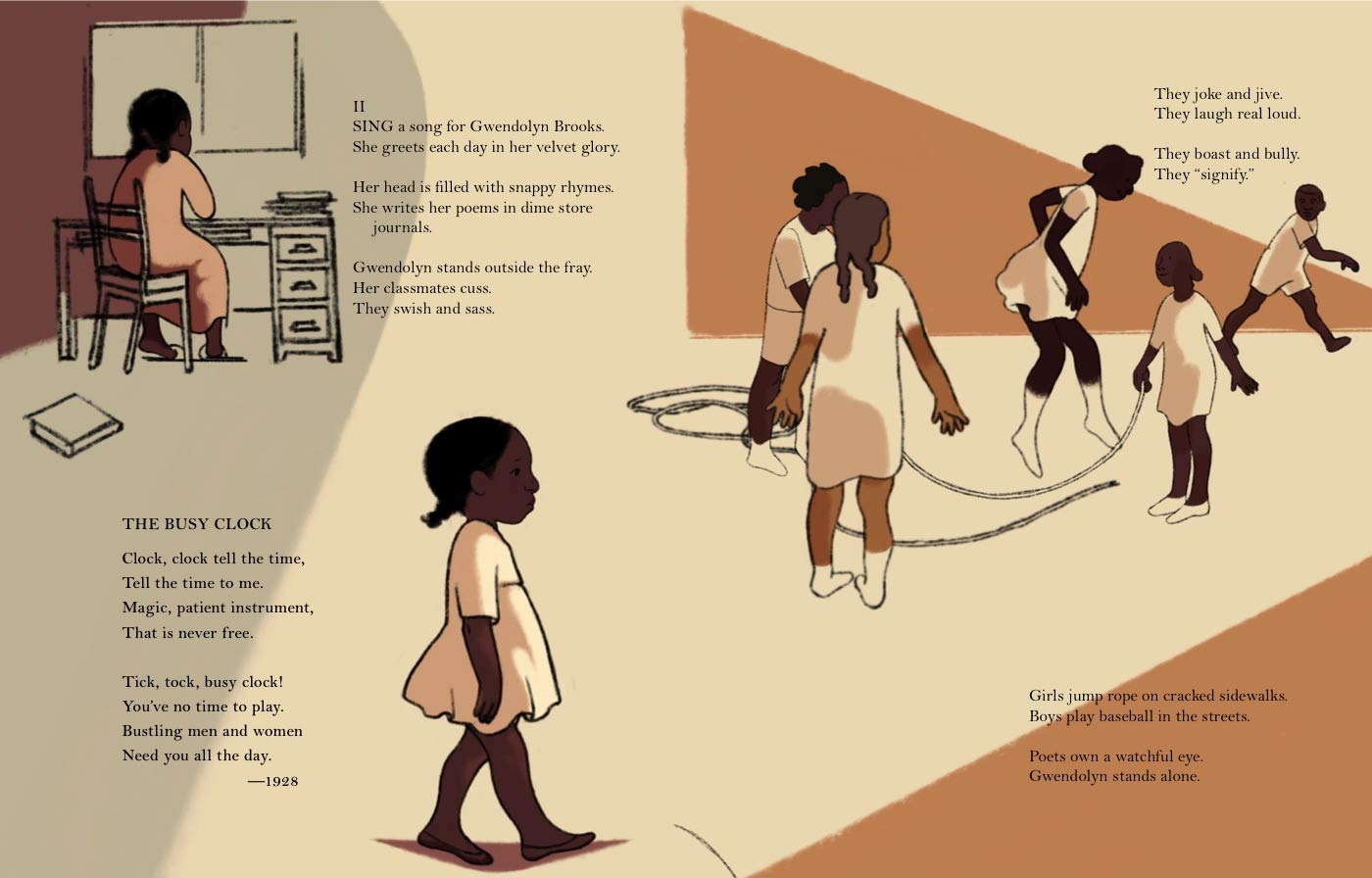
“SING a song for Gwendolyn Brooks. / Sing it loud—a Chicago blues.” This remarkable biography of the Pulitzer Prize-winning poet opens with these soaring lines which introduce eight-year-old Gwendolyn who, seeing a flower in the midst of the city, wonders how it will grow. Already she was observing the world with insight and originality.  “Her head is filled with snappy rhymes. / She writes her poems in dime store journals.” Even something as “simple” as a clock does not escape Gwendolyn’s consideration. In The Busy Clock she writes, in part: “Clock, clock tell the time, / Tell the time to me. / Magic, patient instrument, / That is never free.”

celebrate-picture-books-picture-book-review-a-song-for-gwendolyn-brooks-flower

Image copyright Xia Gordon, 2019, text copyright Alice Faye Duncan, 2019. Courtesy of Sterling Children’s Books.

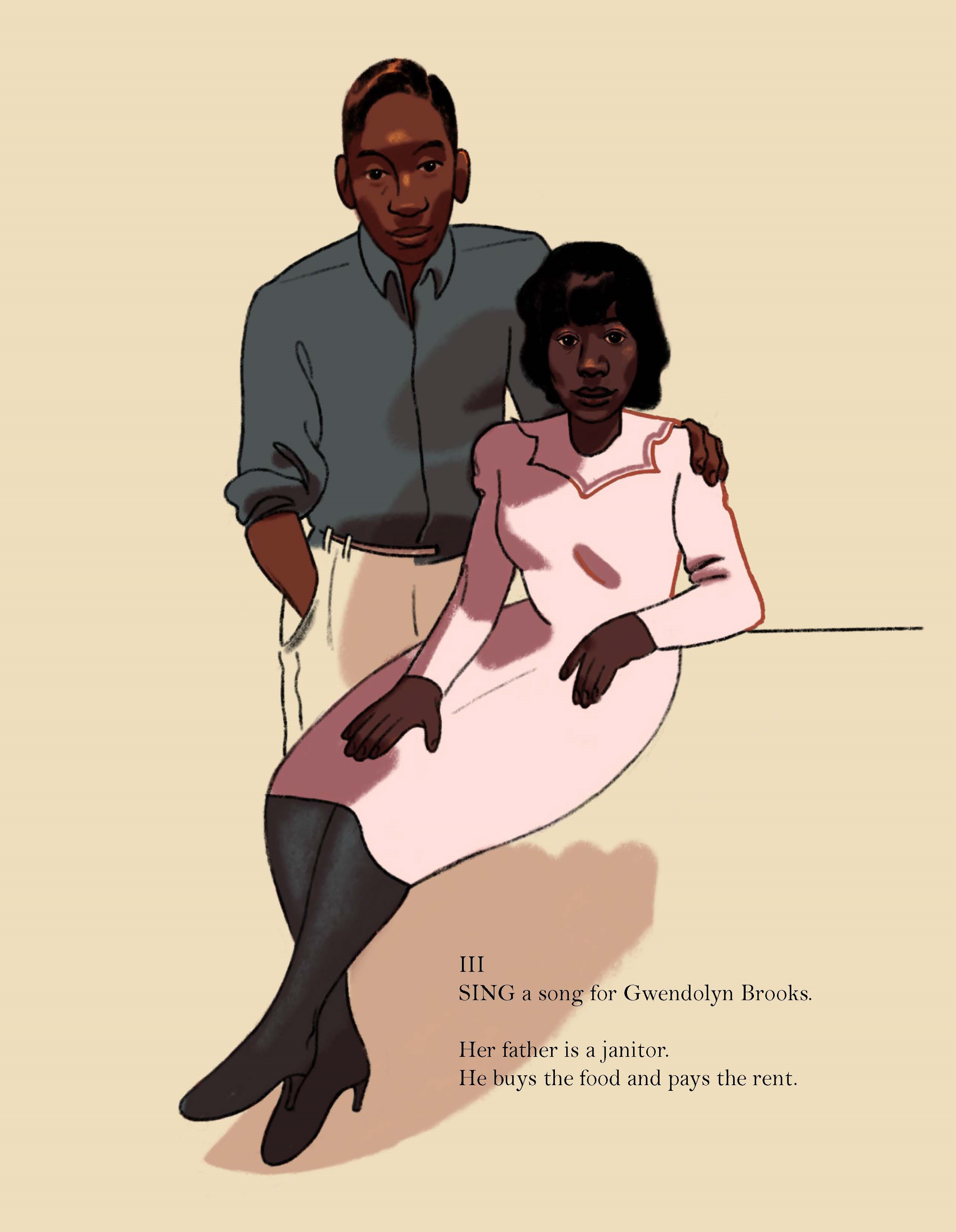
Out in the neighborhood, she stands quietly and watches the other kids laughing and playing—girls jumping rope and boys playing basketball. Gwendolyn’s father is a janitor and her mother stays at home with her and her brother, who is also her best friend. Gwen spends her time sitting on her porch, looking and listening to the sounds and the conversations of the neighborhood women and men. The “children call Gwen—‘ol’ stuck-up heifer!’”

celebrate-picture-books-picture-book-review-a-song-for-gwendolyn-brooks-jump-rope

Image copyright Xia Gordon, 2019, text copyright Alice Faye Duncan, 2019. Courtesy of Sterling Children’s Books.

“SING a song for Gwendolyn Brooks. / Her mother believes. / Her father believes. / But sometimes—Gwendolyn doubts her radiance, / When jarring, crashing, discordant words, / Splotch and splatter her notebook paper.” And what does Gwen do with these poems that just don’t work? She buries them under the snowball bush in the backyard. Once, unbelieving, a teacher accuses Gwendolyn of plagiarism. Her mother takes her daughter back to school, and there on the spot, she composes a poetic answer to the charges: Forgive and Forget. It makes Gwen feel proud, she believes in herself and feels the sun shining on her.

celebrate-picture-books-picture-book-review-a-song-for-gwendolyn-brooks-parents

Image copyright Xia Gordon, 2019, text copyright Alice Faye Duncan, 2019. Courtesy of Sterling Children’s Books.

During the Great Depression, when jobs and money are scarce, Gwendolyn’s “parents are wise and see her light.” They give her time to write and she hones her words and her craft through draft after draft. With each completed poem, Gwen’s confidence grows. The Chicago Defender publishes some of Gwendolyn’s poems, and now she has an audience. Her parents believe that one day their daughter will be a famous poet.

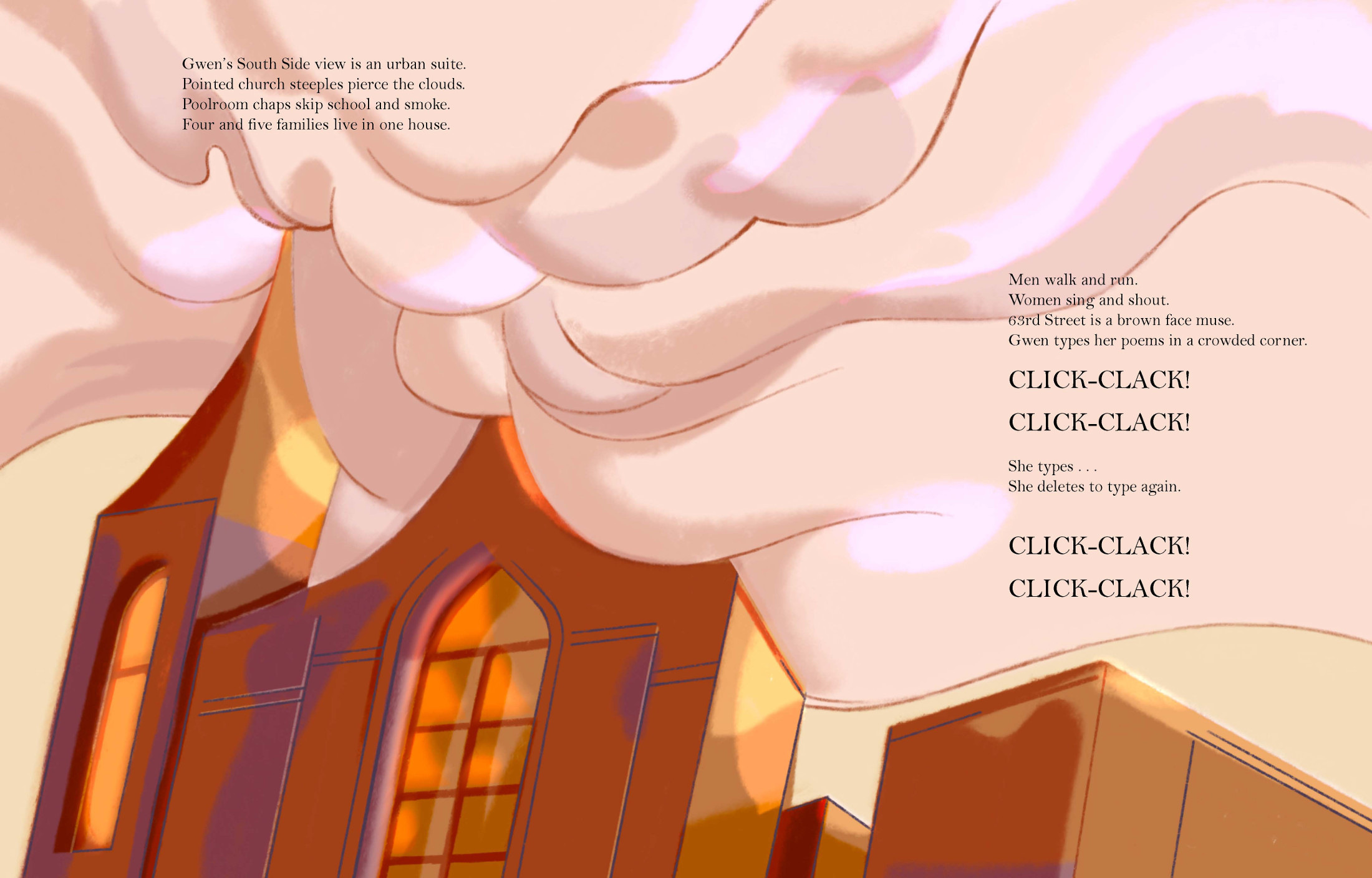
Soon, Gwendolyn finds her way to a group of poets who meet in a South Side community center. She studies under Inez Stark and meets Henry Blakely, who will become her husband. She enters her poems in contests and wins first place over and over. When she and Henry move into their own two-room apartment, Henry goes to work, leaving Gwendolyn to translate the neighborhood into poetry that she types “in a crowded corner.”

celebrate-picture-books-picture-book-review-a-song-for-gwendolyn-brooks-typing

Image copyright Xia Gordon, 2019, text copyright Alice Faye Duncan, 2019. Courtesy of Sterling Children’s Books.

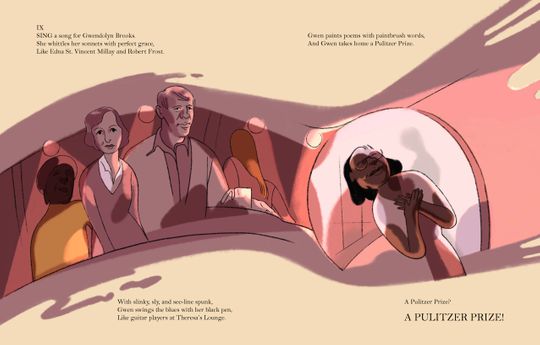
Readers swarm to buy her books. “Gwen paints poems with paintbrush words, / And Gwen takes home a Pulitzer Prize.” Henry and their son celebrate, and Gwen’s parents “…cry tears of joy. / They praise her shine.” For they had always known and had “…Planted love and watered it. / Gwendolyn believed. / She found her light. / And— / A furious flower / GREW!”

An extensive Author’s Note detailing more about the life of Gwendolyn Brooks and her work as well as a timeline and suggested readings follow the text.

celebrate-picture-books-picture-book-review-a-song-for-gwendolyn-brooks-pulitzer

Image copyright Xia Gordon, 2019, text copyright Alice Faye Duncan, 2019. Courtesy of Sterling Children’s Books.

With her own sterling verses, Alice Faye Duncan celebrates the life of Gwendolyn Brooks—the first African American to win the Pulitzer Prize for Literature—taking readers to the Chicago neighborhoods that informed and inspired Brooks’ ideas and the words and rhythms with which she defined them. Along an arc that takes Gwendolyn from a child contemplating the potential of a flower to becoming that blossom herself, Duncan pays tribute to those who recognized Gwen’s genius and helped her fulfill her talent. For readers who themselves may be poets, writers, or other types of artists, Duncan’s beautifully crafted phrases about the artistic process of revision are inspirational and welcome. Standing side-by-side with Duncan’s storytelling are four of Brooks’ poems—The Busy Clock, Forgive and Forget, Ambition, and the children of the poor—Sonnet #2. From cover to cover, Duncan’s book sings with Gwendolyn Brooks’ positivity, confidence, individuality, and love for life that made her a unique voice for her time and always.

celebrate-picture-books-picture-book-review-a-song-for-gwendolyn-brooks-portrait

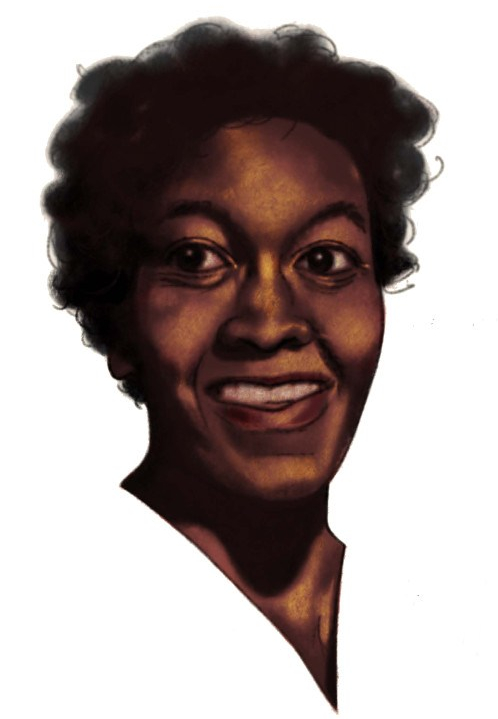
From the portrait of Gwendolyn Brooks that graces the title page and throughout the book, Xia Gordon’s distinctive artwork creates a masterpiece of motion and stillness that mirrors Brooks’ penchant for watching and listening to the sounds and sights that filled her mind and ultimately her notebooks. Downy swoops of violets, pinks, browns, and grays provide backdrops to images of Gwendolyn as a young girl and an adult rendered in lines that show her as down to earth but soaring in her thoughts. Her intelligence and spark shine through on every page. Gwendolyn’s parents appear often, always watchful and supportive. Her friends, her husband, her son, and her readers also populate the pages, giving the book an embracing warmth.

A Song for Gwendolyn Brooks is a must for school, classroom, and public library collections, and for children who are discovering their talents and the parents who nurture them, the book would be an inspirational and invaluable addition to home bookshelves.

Ages 4 and up

Sterling Children’s Books, 2019 | ISBN 978-1454930884

Discover more about Alice Faye Duncan and her books on her website.

To learn more about Xia Gordon, her books, and her art, visit her website.

National Black Poetry Activity

celebrate-picture-books-picture-book-review-poetry-word-search

You’re a Poet, Don’t You Know It! Word Search Puzzle


Find the twenty poetry-related words in this printable puzzle then write a poem of your own!

You’re a Poet, Don’t You Know It! Puzzle | You’re a Poet, Don’t You Know It! Solution

celebrate-picture-books-picture-book-review-a-song-for-gwendolyn-brooks-cover

You can find A Song for Gwendolyn Brooks at these booksellers

Amazon | Barnes & Noble | Books-a-Million

To support your local independent bookstore, order from 

Bookshop | Indiebound


October 14 – National Fossil Day

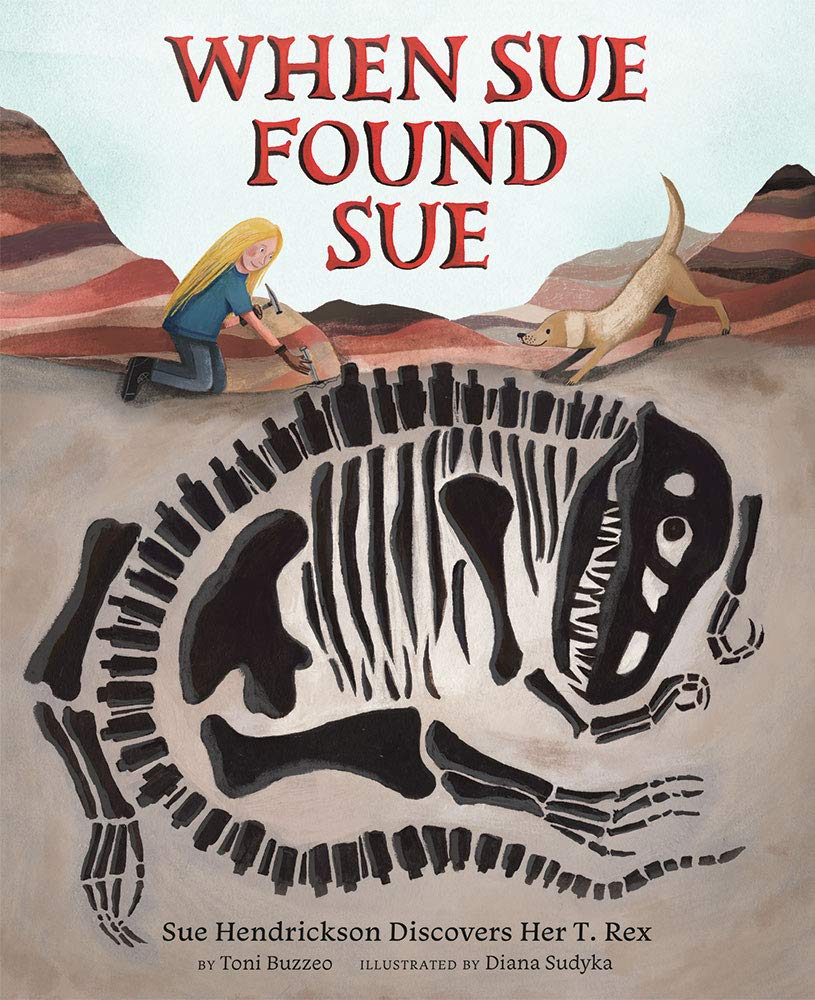
celebrate-picture-books-picture-book-review-when-sue-found-sue-cover

About the Holiday

Welcome to the 11th anniversary of National Fossil Day! Today’s holiday puts a spotlight on paleontology and its value in the scientific community and for education. The day raises awareness of the importance of preserving fossils for future generations. To celebrate today and Earth Science Week all this week, learn more about the prehistory of your area, or read up on fossils and prehistoric creatures. Visit the National Park Service Website to learn more about today’s holiday and find many resources for classrooms, homeschooling, and family fun. There you’ll find to download a Junior Paleontology Activity Book that can help kids explore the ways paleontologists work and learn about Earth’s history, ancient plants and animals as well as changes to past climate and environments. You’ll also find 20 ideas for digging into paleontology with links to museums and national parks, a site where you can view fossils in 3D, coloring pages, and even learn your state’s fossil.

Thanks to Abrams Books for Young Readers for sending me a copy of When Sue Found Sue for review consideration. All opinions about the book are my own.

When Sue Found Sue: Sue Hendrickson Discovers Her T. Rex

Written by Toni Buzzeo | Illustrated by Diana Sudyka


Sue Hendrickson was an expert at finding things. The lure of buried or lost treasures kept her busy in her hometown of Munster, Indiana. “Born shy and incredibly smart,” Sue devoured books, discovering everything she could about the things that interested her. One of her favorite places was the Field Museum of Natural History in Chicago. There, she reveled in the treasures others had found and dreamed of the day when she could “search the wide world for hidden treasure on her own.”

celebrate-picture-books-picture-book-review-when-sue-found-sue-collection

Image copyright Diana Sudyka, 2019, text copyright Toni Buzzeo, 2019. Courtesy of Abrams Books for Young Readers.

When she was seventeen, Sue began her life of treasure hunting, joining teams that searched for sunken boats, airplanes, and even cars. She went to Dominican amber mines looking for prehistoric butterflies and deserts of Peru searching for whale fossils. Finally, she headed to South Dakota to dig for dinosaurs.

She spent four summers unearthing duck-billed dinosaurs, using more and more delicate tools to expose the bones. But near the end of her fourth summer, “Sue Hendrickson felt pulled to a sandstone cliff far off in the distance.” When she had the opportunity, she took her golden retriever and hiked the seven miles to the rock.

celebrate-picture-books-picture-book-review-when-sue-found-sue-alley

Image copyright Diana Sudyka, 2019, text copyright Toni Buzzeo, 2019. Courtesy of Abrams Books for Young Readers.

Walking around the perimeter, she noticed what looked like bones lying on the ground. When she looked up, she was astonished to see “three enormous backbones protruding from the cliff.” The size told her they must be from a Tyrannosaurus rex. Sue hurried back to her campsite and told her team the exciting news. They “immediately named the dinosaur Sue the T. rex.”

celebrate-picture-books-picture-book-review-when-sue-found-sue-ocean

Image copyright Diana Sudyka, 2019, text copyright Toni Buzzeo, 2019. Courtesy of Abrams Books for Young Readers.

It took five full days for the team to expose the skeleton. Then they mapped the location of each bone, photographing and drawing them. At last they began removing them, and after three weeks the bones were trucked to the Black Hills Institute. Eventually, Sue the T. rex was moved to the Field Museum in Chicago. If you visit the museum today, you will see Sue towering over you. “She is the world’s largest, most complete, best-preserved Tyrannosaurus rex fossil discovered so far”—discovered by a woman who was born to find things.

An Author’s Note about Sue Hendrickson and the battle over the T. rex skeleton as well as resources for further study and a photograph of Sue the T. rex follow the text.

celebrate-picture-books-picture-book-review-when-sue-found-sue-excavating

Image copyright Diana Sudyka, 2019, text copyright Toni Buzzeo, 2019. Courtesy of Abrams Books for Young Readers.

Toni Buzzeo’s inspiring story of how Sue Hendrickson discovered the most complete and best-preserved T. rex fossil delves into more than the finding and excavating of the skeleton. Buzzeo also emphasizes Hendrickson’s personality and long-held love of treasure hunting, qualities that informed and aided her career choice. Readers who also harbor dreams outside the mainstream and have a steady focus will find much to admire in Buzzeo’s storytelling and Sue’s example. Kids will be awed by Sue’s early treasure-hunting exploits and fascinated by the painstaking process of unearthing fossils. When Sue follows her intuition to the cliff—without explanation or facts—readers will be reminded that they can rely on their own curiosity, experience, and ideas to carry them forward. With nods toward the value of teamwork and sprinkled with Sue’s own words about her moment of discovery, the story exposes the bones of a life well-lived and points children in the right direction.

Screen Shot 2019-05-14 at 4.33.48 PM

Diana Sudyka opens the story of Sue Hendrickson with a lovely collage of the treasures she found and studied as a child and that led to her life-long love of discovery. As Sue grows, she visits the Field Museum, with its exhibits of a Triceratops and Hadrosaurus. Fast-forward several years and she’s swimming in a sea dotted with colorful coral toward an old sunken ship. But the centerpiece of the story takes place in the South Dakota hills, the layers of rock painted in stripes of earthy brown, rust, rose, and ivory. As the team works late nights to excavate the bones, a T. rex constellation appears above the team in the starry sky, urging them on. A two-page spread of how Sue the T. rex fossil appeared in its entirety in the ground is sure to elicit plenty of “Wows!,” and a rendition of Sue on exhibit in the Field Museum will no doubt inspire some travel wishes.

A book about a modern-day scientist that will engage and inspire children with scientific aspirations of their own as well as a celebration of individuality and big dreams and a must for dinosaur lovers, When Sue Found Sue would be a T. riffic addition to home, school, and public library collections.

Ages 4 – 8

Abrams Books for Young Readers, 2019 | ISBN 978-1419731631

Discover more about Toni Buzzeo and her books on her website.

To learn more about Diana Sudyka, her books, and her art, visit her website.

National Dinosaur Day Activity

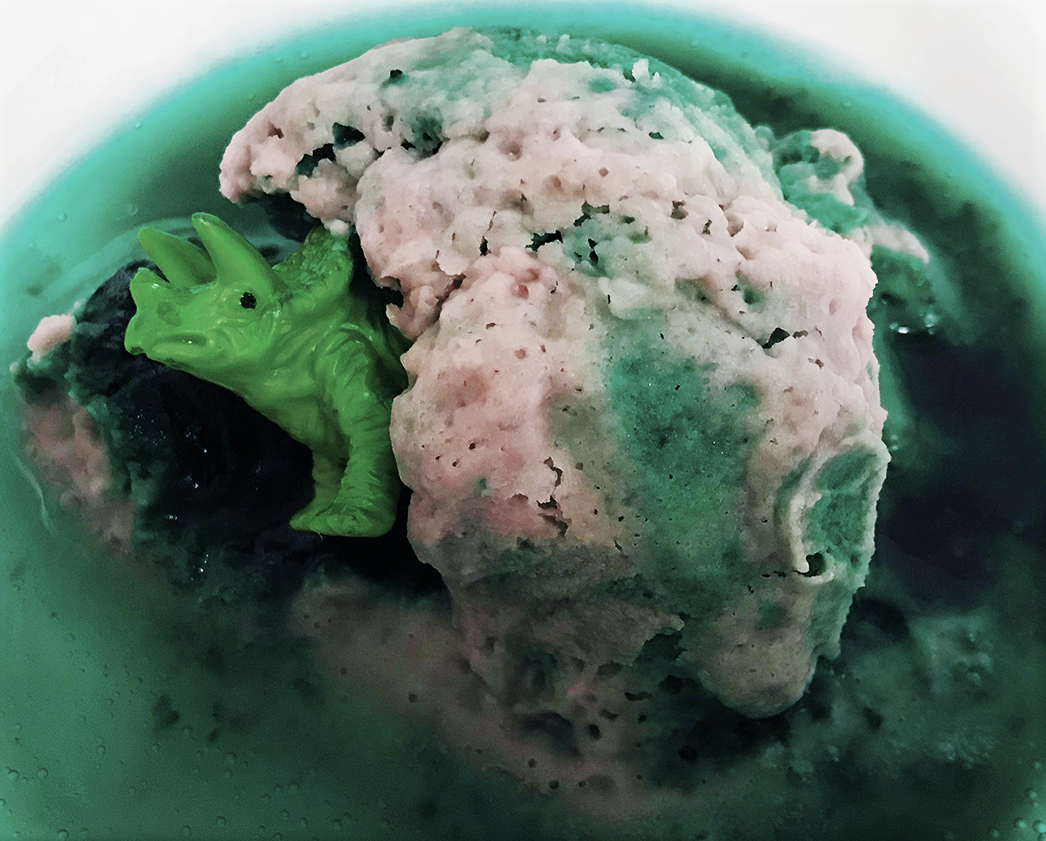
celebrate-picture-books-picture-book-review-dinosaur-eggs-craft-nest

Hatch Your Own Dinosaur Eggs


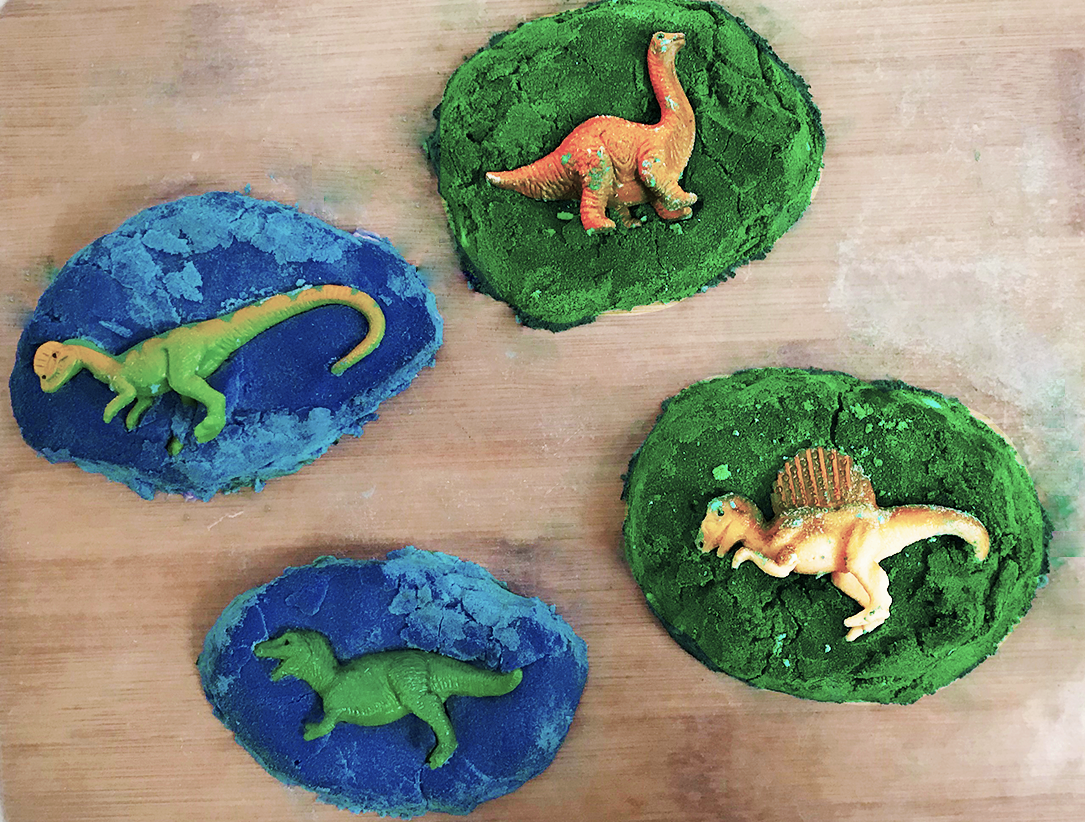
Think there are no more dinosaur eggs to be found? Think again! You can make your own with this easy craft that will have you hatching some T.-rex-size fun! All you need are a few simple ingredients!

celebrate-picture-books-picture-book-review-dinosaur-eggs-craft-open-eggs

Supplies

  • Old clothes or apron
  • Large box of baking soda (makes between 6 and 8 eggs)
  • Food coloring
  • Water
  • Plastic dinosaur toys
  • Bowl
  • Fork
  • Spoon
  • Wax paper
  • Baking sheet
  • Foil
  • Vinegar
  • Spray bottle (optional)
  • Plastic or metal spoon, stick, popsicle stick, or other implement to chisel with
celebrate-picture-books-picture-book-review-dinosaur-eggs-craft-vinegar-egg-open-darker

Spray the egg with vinegar to hatch your dinosaur

Directions

  1. Wear old clothes or an apron
  2. Cover work surface with wax paper, parchment paper, newspaper, or other protection. Food coloring can stain some surfaces
  3. Pour baking soda into the bowl
  4. Add drops of food coloring in whatever color you’d like your eggs to be. The eggs will darken when baked.
  5. Mix in the food coloring with the fork. You may want to use your hands, too
  6. When the baking soda is the color you want it, begin adding water a little at a time
  7. Add water until the baking soda holds together when you squeeze it in your hand
  8. When the baking soda is the right consistency, spoon some out into your hand or onto wax paper
  9. Push one plastic dinosaur into the middle
  10. Cover the dinosaur with more of the baking soda mixture
  11. Carefully form it into an egg shape
  12. Repeat with other dinosaurs
celebrate-picture-books-picture-book-review-dinosaur-eggs-craft-chiseled -darker

Chisel the egg open to hatch your dinosaur

To Bake the Eggs

  1. Set the oven or toaster oven to 200 to 225 degrees
  2. Set the eggs on a baking sheet lined with foil
  3. Bake the eggs for 15 minutes, check
  4. Turn the eggs over and bake for 10 to 15 more minutes
  5. Remove from oven and let cool

To Hatch the Eggs

  1. Eggs can be hatched by chiseling them with a spoon, stick, or other implement
  2. Eggs can also be hatched by spraying or sprinkling them with vinegar

celebrate-picture-books-picture-book-review-when-sue-found-sue-cover

You can find When Sue Found Sue: Sue Hendrickson Discovers Her T. Rex at these booksellers

Amazon | Barnes & Noble | Books-a-Million

To support your local independent bookstore, order from

Bookshop | IndieBound

Picture Book Review
October 1 – International Music Day and Interview with Author Gary Golio

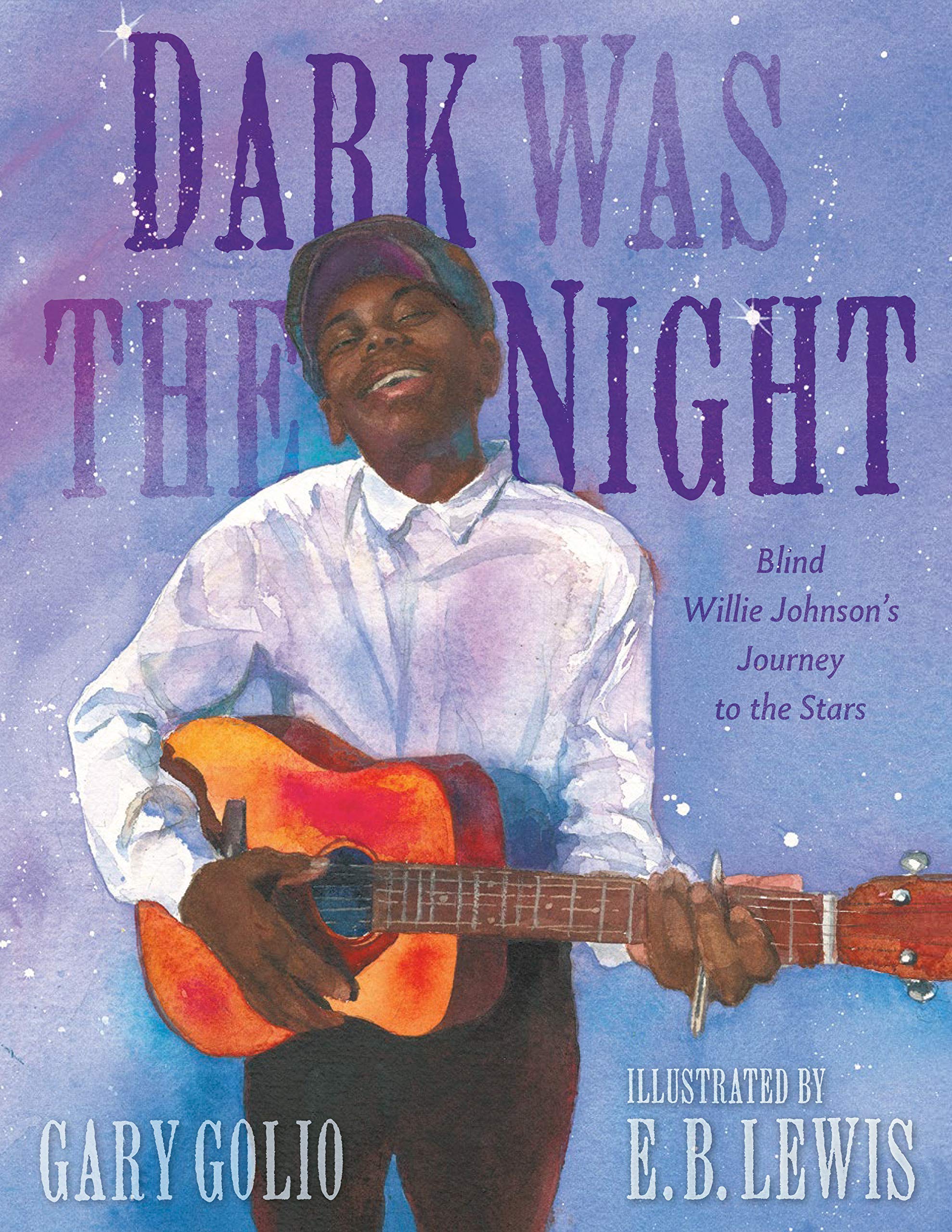
celebrate-picture-books-picture-book-review-dark-was-the-night-cover

About the Holiday

International Music Day was established in 1975 by Lord Yehudi Menuhin, an American-born violinist and conductor  – widely considered to be one of the great violinists of the 20th century – to promote the art of music across all segments of society and to apply the UNESCO ideals of peace and friendship among all people, with an exchange of experiences and mutual appreciation of all cultures and their aesthetic values. To celebrate today’s holiday, listen to your favorite music and take some time to discover a new style – it might just become a favorite too!

Dark Was the Night: Blind Willie Johnson’s Journey to the Stars

Written by Gary Golio | Illustrated by E.B. Lewis


As readers open the cover to Dark Was the Night, they discover a date: 1977. In this year Voyager I was shot into space carrying “a precious Golden Record, a message to the Universe from Planet Earth.” The record contained pictures of the people and things that make up our life, sounds we hear every day, music from Navajo chants and West African drumming to Beethoven and Chuck Berry. There was also one “ghostly song, about loneliness and the night….a tune of light and hope” from a blind man named Willie Johnson.

celebrate-picture-books-picture-book-review-dark-was-the-night-baby

Image copyright E.B. Lewis, 2020, text copyright Gary Golio, 2020. Courtesy of Nancy Paulsen Books.

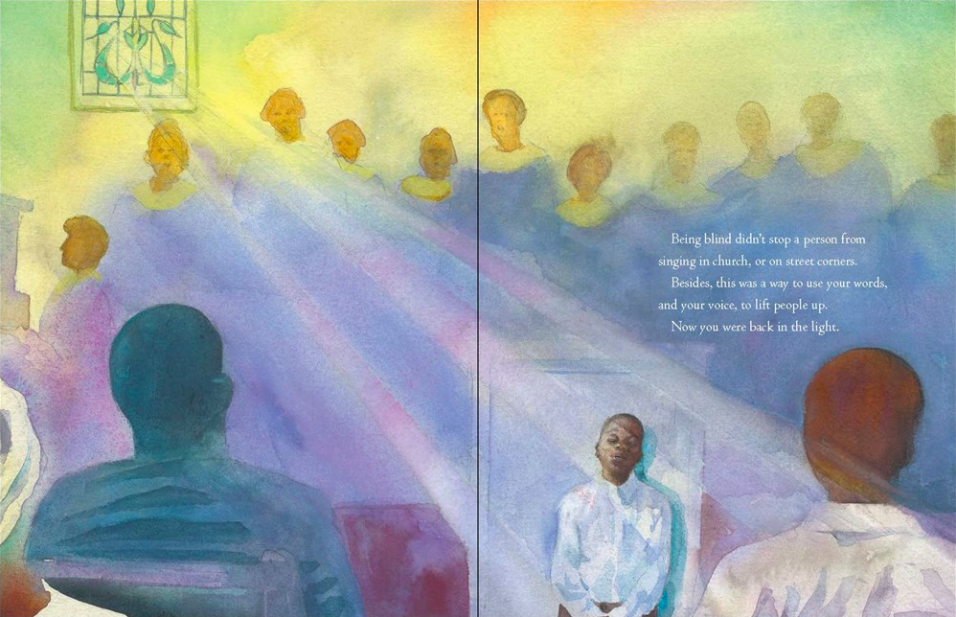
Who was Willie Johnson? In 1897, he was a newborn baby in a small Texas town wrapped in his mother’s love. narrator picks up the thread of Willie’s story when he’s become a small boy who “loved to sing” and play the cigar box guitar his father made him. But that joy was interrupted when “your mama died, and some light went out of your life.” Then at seven or eight, Willie became blind, “and that’s when things got darker still.” But Willie rose above these hurdles. His blindness didn’t keep him “from singing in church, or on street corners.” Using his voice to uplift people brought him “back in the light.”

celebrate-picture-books-picture-book-review-dark-was-the-night-choir

Image copyright E.B. Lewis, 2020, text copyright Gary Golio, 2020. Courtesy of Nancy Paulsen Books.

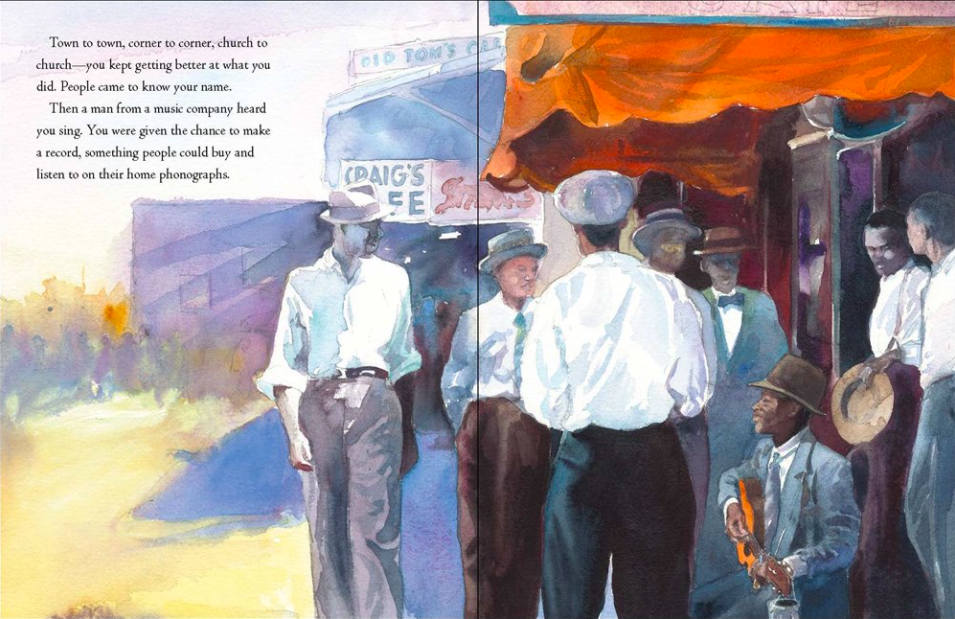
He sang blues and learned how to play a slide by running the edge of a pocketknife along the steel strings of his guitar. “This made a sound like someone laughing or crying, as if the guitar had a voice of its own.” He traveled from town to town in Texas, wherever farmers came to socialize and shop, setting up on street corners and collecting the coins people tossed into his tin cup. Little by little, people grew to know his name. “Then a man from a music company heard you sing. You were given the chance to make a record….”

celebrate-picture-books-picture-book-review-dark-was-the-night-street-corner

Image copyright E.B. Lewis, 2020, text copyright Gary Golio, 2020. Courtesy of Nancy Paulsen Books.

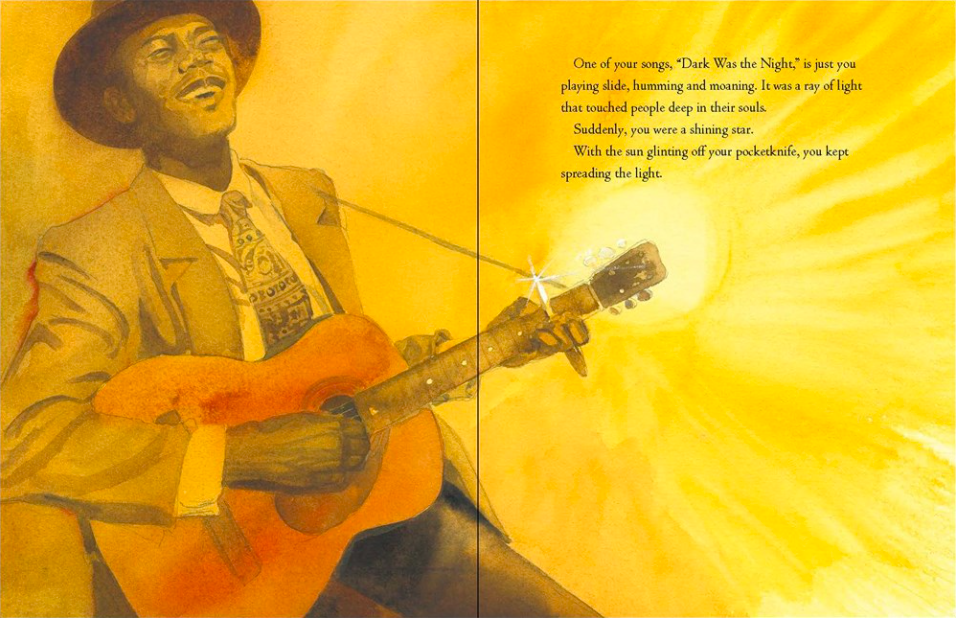
On that record listeners heard “the sound of one human being reaching out to all the others, telling them not to be afraid of the dark.” That first record was a hit, lauded for its unique sound. One song in particular, “Dark Was the Night,” “touched people deep in their souls” and made Willie “a shining star.” The light Willie brought to people has never dimmed; in fact it continues to shine through the darkness on Earth and through Space.

Back matter includes a discussion on what is known about Blind Willie Johnson and what still remains a mystery as well more information about Voyager I and why Johnson’s song Dark Was the Night was chosen for inclusion on the Golden Record. A link to NASA’s Jet Propulsion Laboratory website, where readers can access Voyager I—The Golden Record is also included.

celebrate-picture-books-picture-book-review-dark-was-the-night-song

Image copyright E.B. Lewis, 2020, text copyright Gary Golio, 2020. Courtesy of Nancy Paulsen Books.

Gary Golio’s ethereal tale of the life of Blind Willie Johnson and his song, which has touched and continues to move so many people, is a stirring tribute to a unique artist and the power of music to change lives. Golio’s use of the second person creates a poignant personal bond between the story and reader, which allows children to put themselves in Willie’s shoes and believe that they, too, can inspire others with their talent and life. Golio’s lyrical storytelling flows with the cadence of the blues, and his evocative vocabulary brings Willie Johnson’s voice and times fully to life for young readers.

E.B. Lewis transports readers to early 1900s Texas in his stunning watercolor paintings rendered in soft washes of grays, blues, and greens punctuated with yellows that reflect the hope and light that spurred Willie on and flowed from his music. As his mother holds him in her arms as a baby, the landscape outside the window blazes with gold that reflects on Willie’s and his mother’s face. As children learn about Willie’s blindness, the page turns dark, except for a swatch of light across Willie’s eyes, representational, perhaps, of his inner sight that sustained him.

Among the realistic depictions of his farm home, the outskirts of a Texas town seen from a train, and a bustling city, where Johnson plays on a street corner to an appreciative audience, his tin cup hanging from a tuner on his guitar, are transcendent images of Willie performing, his face always lifted to the light. As people gather around a radio listening to Blind Willie Johnson, light once again streams into the shop, and as Golio describes how “Dark Was the Night” becomes a hit, Willie is bathed in a golden glow, his face euphoric with the joy of singing.

At once sensitive, rousing, and inspirational, Dark Was the Night is a beautiful book about one man’s talent and dream that will resonate with all readers. The book is highly recommended for home libraries and is a must for school and public library collections.

Ages 5 – 8

Nancy Paulsen Books, 2020 | ISBN 978-1524738884

Discover more about Gary Golio and his books on his website.

To learn more about E.B. Lewis, his books, and his art, visit his website.

Listen to Blind Willie Johnson’s “Dark Was the Night.”

Meet Gary Golio

celebrate-picture-books-picture-book-review-gary-golio-headshot

Gary Golio is the author of the New York Times bestseller JIMI: Sounds Like a Rainbow – A Story of the Young Jimi Hendrixwinner of a Coretta Scott King Illustrator Award; Bird & Diz and Strange Fruit – Billie Holiday and the Power of a Protest Song, both ALA Notables; and other books about legendary artists. A writer and musician, Golio has been featured on NPR’s “Weekend Edition”, CBS-TV’s “Sunday Morning News,” and on radio stations nationwide. He lives in the Hudson Valley with his wife, children’s book author Susanna Reich.

Today, I’m thrilled to talk with the multi-talented Gary Golio about Dark Was the Night, his love for writing and art, his father’s influence in his life, and the power of music.

Welcome, Gary! To start off, can you tell readers about your journey with this Dark Was the Night from idea to publication?

A few years back I was listening to some early blues songs, and came upon Willie Johnson’s “Dark Was the Night.” The song stunned me—and gave me the chills. I knew of Willie’s connection with the Voyager I space probe, but had no idea that blues aficionados and amateur music sleuths were devotedly digging for details of his life through the decades. So much mystery surrounded this man—revered by Jimmy Paige, Eric Clapton, and Lucinda Williams—but what intrigued me the most was that, after dying in poverty and being forgotten, Willie and his work enjoyed a revival of interest during the 1960s Folk Movement. Then, in 1978, “Dark Was the Night” ended up on Voyager‘s Golden Record, hurtling through space. And what that said to me is, you never know how a life, and its effect on others, will play out. It’s a hopeful message that inspired me to write the book.

Your father was an artist and you have worked as a fine-artist since you were a teenager. Can you talk about what inspired you to begin writing picture books? Did you always like to write?

My father is an ongoing inspiration in my life. He was a talented amateur artist who provided me with a real-life example of the Art Spirit by how he thought and created. Most importantly, he was a skilled improviser, and didn’t allow himself to be limited by what he didn’t have, something that’s always meant a lot to me. As for writing picture books, I mostly read comics as a boy, and I think it was that combination of pictures and text that really struck a chord. For me, the picture book is a modern descendant of cave painting, Egyptian wall art (images + hieoroglyphs), and Etruscan/Pompeian murals: using words and pictures to tell a story.

In your Author’s Note you talk about the dearth of knowledge about Willie Johnson’s life. Can you share one thing you learned about Willie that didn’t make it into the book?

Willie has a unique voice that somehow manages to balance the rough and the tender. There’s raw power there, but also delicacy, which is very rare. So Willie was in New Orleans at one point—during a recording session there in 1928—and the story goes that he began singing “If I Had My Way I’d Tear this Building Down” in front of the Customs House. A crowd had gathered, listening to him, and a police officer reportedly became so worried—thinking Willie was instigating a riot—that he considered arresting the man. That’s the power of music—to rouse, protest, and stir up human souls—and it’s easy to see why it threatens authority and institutions.

Dark Was the Night is your eighth biography of a musician or entertainer for children. Could you discuss what drew you to write about these musicians?

While there are no actual musicians in my family-of-origin, my parents, grandmother, and maternal aunt all had strong musical interests. Each exposed me to very specific genres and musical tastes—from Frank Sinatra and Bing Crosby to Count Basie, Louis Armstrong, Ella Fitzgerald, Nat King Cole (whom I adore), Willie Nelson, and Elvis Presley. Many of these people were Black, and many were strongly influenced by blues and jazz, and I have vivid memories of watching them on TV with my beloved grandmother, even at five and six years old. That openness to all kinds of music really shaped me, and growing up I looked for clues, in the lives of artists, that would help me find my own path and direction. So my books often focus on the early years of an artist’s/musician’s life, highlighting the roots of their artistry—what inspired and shaped them—to provide young readers with roadmaps, of sorts, to a life in the arts.

In addition to being an artist and writer, you also admit to being “a pretty good musician” – something you share with kids on school visits that sound awesome. Which instruments do you play and how do you incorporate music into your book events?

I play acoustic and electric guitar, mandolin, banjo, and very simple piano, but love above all to improvise. Since my first book on Jimi Hendrix came out, I’ve used the guitar (both electric and acoustic) to demonstrate a wide range of effects and possibilities (Hendrix and Santana), but also to accompany singalongs I did for my Bob Dylan/Woody Guthrie book. At one school visit, the entire fifth grade and I sang “This Land is Your Land” in Spanish, which was both meaningful and fun.

Each of your books has such distinctive illustrations from incredible illustrators. Can you talk a little about E.B. Lewis’s gorgeous illustrations in Dark Was the Night and how he captured your story and Willie’s personality?

E.B. is truly a master of illustration, and specifically of the watercolor medium. His real superpower, however, lies in his ability to convey human feeling, to mysteriously imbue a person or setting with mood and life. That’s remarkable—reminiscent of watching my father draw an American Indian on horseback, straight out of his head—and it’s what lends E.B.’s work both its power and subtlety. Not surprisingly, he has a real love for human beings, a quality fed by his passion for traveling and teaching all over the world. Though we only met at a bookstore panel five years ago, Earl and I have become close friends, and spend a lot of time on the phone collaborating about the joining of text and image. He’s a pleasure to work with, and his art for Dark Was the Night is truly sublime. This book also gave him the chance to bring his use of color (in his own words) to another level, something that will be obvious to anyone who knows his artwork and sees the new images.

From your bio on your website, you sound as if you were a pretty inventive kid – creating all sorts of cool electronic devices. And I love your story about being “shocked” to find books with Van Gogh’s paintings in them as a child and how formative that was. Could you discuss the importance of nonfiction, and biographies in particular, to children?

celebrate-picture-books-picture-book-review-gary-golio-childhood-photo

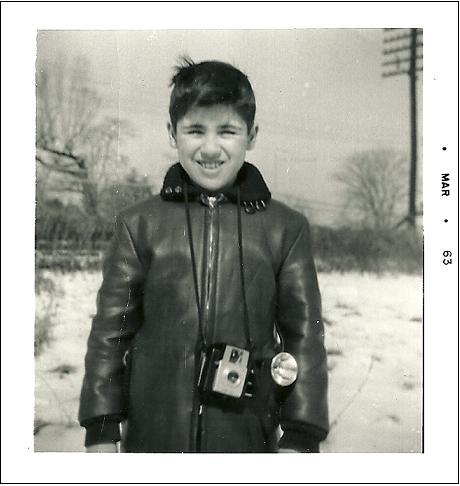
My father could fix most anything, and it was that spirit of improvisation and inventiveness that led me to create little electronic gadgets a la James Bond and The Man from Uncle. For a time, I wanted to be an inventor or electrical engineer, but Art won out. As for van Gogh, watching Lust for Life with my dad had a HUGE impact on me, and seeing a book in the middle school library with all those paintings reproduced made it clear to me—even at 10 years old—that there was gold in reading about the lives of artists.

While I love fantasy, myth, and good stories, the thing about nonfiction is that you’re reading about real people—with all their talents and troubles—and so it’s easier to believe that if someone else muddled through to achieve something, you can also. That’s why I don’t shy away from talking about a person’s “faults” and failures (particularly in my books about John Coltrane and Billie Holiday), because I want kids to see that great people and artists are just as human as everyone else.

What’s up next for you?

Author-wise, I’ve a book coming out next year on the revered jazz saxophonist Sonny Rollins (based on many phone conversations we’ve shared), to be illustrated by the great James Ransome. I’ve also sold, just this year, two new picture book texts: one on Roy DeCarava—a gifted artist who photographed the people of Harlem in all their humanity—and another on Walt Whitman, focused on his remarkable and moving nursing experience during the Civil War. After that, who knows where Destiny will lead me?

International Music Day Activity

celebrate-picture-books-picture-book-review-musical-instruments-word-search

I Love Music! Word Search Puzzle


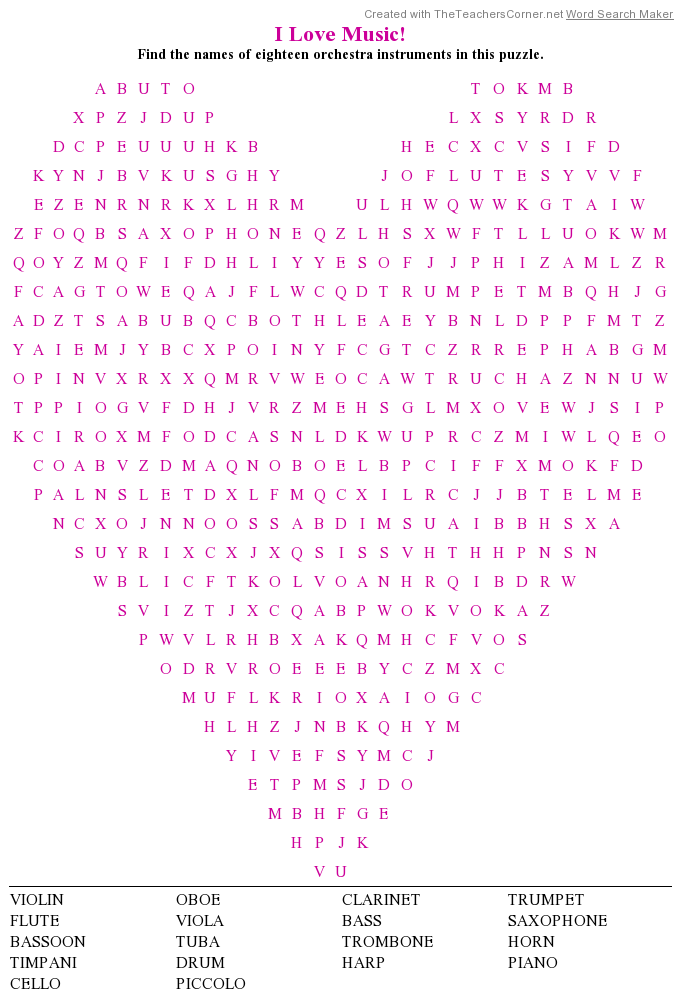
International Music Day celebrates all types of music and instruments. Can you find the eighteen different instruments in this printable word search puzzle?

I Love Music! Word Search Puzzle | I Love Music! Word Search Solution!

celebrate-picture-books-picture-book-review-dark-was-the-night-cover

You can find Dark Was the Night: Blind Willie Johnson’s Journey to the Stars at these booksellers

The Village Bookstore, Pleasantville, NY | Amazon | Barnes & Noble | Books-a-Million

To support your local independent bookstore, order from

Bookshop | IndieBound

Picture Book Review

 

September 22 – National Dear Diary Day

celebrate-picture-books-picture-book-review-anne-frank-the-girl-heard-around-the-world-cover

Image copyright Aura Lewis, 2020, text copyright Linda Elovitz Marshall, 2020. Courtesy of Orchard Books.

About the Holiday

Today we celebrate those journals that allow us to express our thoughts and feelings, record events both mundane and life-changing, and give us license to explore our creativity. If you’re a regular diary writer, honor the day with a new entry. If you’ve always considered keeping a diary, today’s a perfect day to start!

Anne Frank: The Girl Heard Around the World

Written by Linda Elovitz Marshall | Illustrated by Aura Lewis


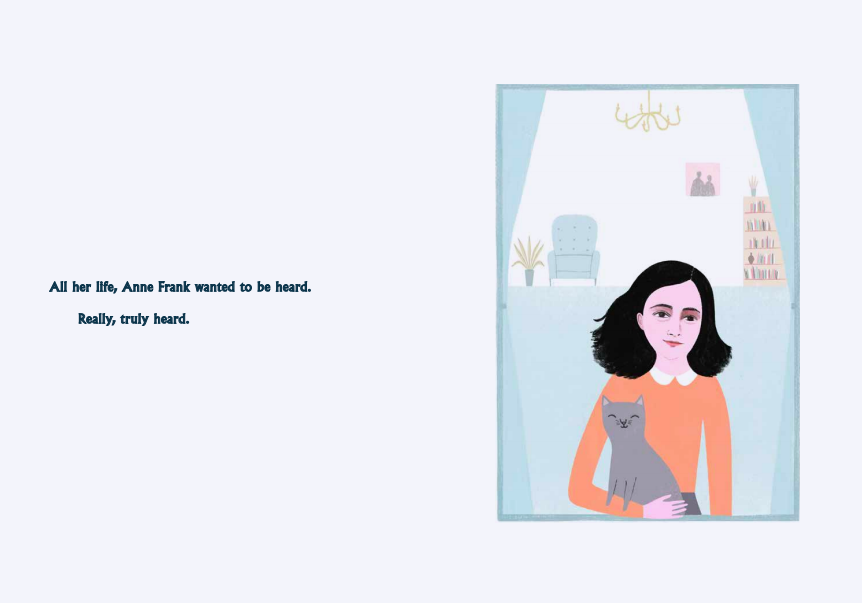
“All her life, Anne Frank wanted to be heard. Really, truly heard.” But sometimes no matter how loudly or entertainingly she talked, no one listened or seemed to understand. Anne’s family, “like many other Jewish families, had lived in Germany for centuries,” but when Adolf Hitler began to govern the country, Jewish families were in danger. When Anne was four years old, her family, hoping to find safety, moved to Amsterdam in the Netherlands. Here, Anne lived happily, “making mischief with her friends, telling jokes, and having fun. “In school, she talked and talked.”

celebrate-picture-books-picture-book-review-anne-frank-the-girl-heard-around-the-world-portrait

Image copyright Aura Lewis, 2020, text copyright Linda Elovitz Marshall, 2020. Courtesy of Orchard Books.

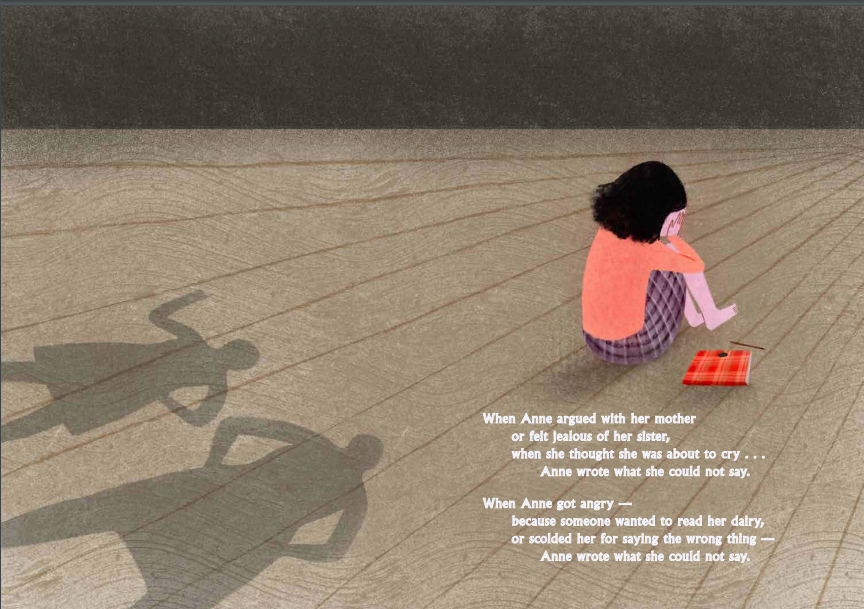
But in 1940, Hitler and his Nazi’s took over the Netherlands too, and life for Jewish people living there was no longer safe. Anyone who talked against the Nazis could be arrested, but Anne needed to express her opinions. On her 13th birthday Anne received a red plaid diary; she named it “Kitty.” In Kitty, Anne could share all of her thoughts and feelings about what was happening in her country. She wrote about the rules that restricted Jews from normal life, that made all Jews wear a yellow star that distinguished them from others. But Anne also wrote about school and other subjects. “Anne realized that by writing, she could speak her mind in a new way. She could really, truly be heard.”

celebrate-picture-books-picture-book-review-anne-frank-the-girl-heard-around-the-world-childhood

Image copyright Aura Lewis, 2020, text copyright Linda Elovitz Marshall, 2020. Courtesy of Orchard Books.

Then on a morning in 1942, Anne’s mother woke her, telling her that they needed to leave quickly and hide. Anne “packed her most treasured things.” Her diary was the first thing she packed. She and her family as well as four other people hid in a secret room in the warehouse where Anne’s father worked. Non-Jewish friends who also worked in the warehouse brought them food and supplies. While Anne tried to make the best of her life in hiding, she was lonely and always careful to whisper and tiptoe so the other workers in the factory did not discover them.

celebrate-picture-books-picture-book-review-anne-frank-the-girl-heard-around-the-world-writing

Image copyright Aura Lewis, 2020, text copyright Linda Elovitz Marshall, 2020. Courtesy of Orchard Books.

Now, Anne’s diary was even more important to her. In Kitty she wrote about her fears and feelings, her days and the things she missed. “She wrote about wishing people could live together, in peace,” and Kitty “was always there to listen, always there to understand.” Anne also wrote stories about a teddy bear, a fairy, and a caring grandmother. Once water seeped in and soaked her diary. Anne rushed to hang the pages to dry. Anne wrote and wrote for two years. She hoped to publish a book about her experience.

celebrate-picture-books-picture-book-review-anne-frank-the-girl-heard-around-the-world-crying

Image copyright Aura Lewis, 2020, text copyright Linda Elovitz Marshall, 2020. Courtesy of Orchard Books.

“But on August 4, 1944, Nazi police discovered the secret hiding place.” Anne, her family, and all of the people living in the warehouse room were taken away. “One of their non-Jewish friends found Anne’s diary and writings and kept them safe,” hoping to return them to her. But just weeks before the war ended in 1945, Anne died. Anne’s father was the only one to survive. After the war ended, Anne’s father fulfilled her dream and published Anne Frank: The Diary of a Young Girl. Anne’s book has been read by people around the world and continues to speak for her in the hearts of readers everywhere.

Back matter includes more about Anne, her family, the Nazis and how Anne’s diary was saved; a timeline of Anne’s family, the rise of Hitler, and the war years; an Author’s Note; and lists of sources, suggested further reading, and websites.

celebrate-picture-books-picture-book-review-anne-frank-the-girl-heard-around-the-world-world-reads

Image copyright Aura Lewis, 2020, text copyright Linda Elovitz Marshall, 2020. Courtesy of Orchard Books.

Linda Elovitz Marshall’s moving telling of Anne Frank’s life and dreams, focusing on her beloved diary will resonate with children, who, like Anne, want to be heard. In her evocative storytelling, Marshall creates a rich portrait of Anne as a vivacious child who was also smart and thoughtful. Mirroring the devastating disruptions in Anne’s and her family’s life, Marshall intersperses pages of straightforward text which describes the rise of Hitler and the Nazis and emphasizes ways in which they restricted and silenced the Jewish population, reinforcing her book’s theme. The examples Marshall gives—riding bikes, going to the movies, having to wear an identification star—will impress upon children the changes in Anne’s life.

When Anne and her family move to the Secret Annex, Marshall superbly reveals the conditions of their confinement through Anne’s writing and how her diary was her lifeline and her confidant. The family’s eventual discovery is written factually but with sensitivity, fitting for picture book readers. The final spread honors the influence Anne Frank has had on the world with her diary—her voice that could not be silenced.

In Aura Lewis’s emotionally resonant illustrations, readers first meet Anne Frank in a snapshot that shows her as kind, thoughtful, and seemingly wise beyond her years. Vibrant scenes of Anne with her family in Germany and later with family and friends in Amsterdam give way to somber, gray-toned images that reflect Hitler’s takeover and the dangers Anne, her family, and all Jewish people faced. Lewis clearly sketches Anne’s childhood enthusiasms and hope and, especially, her pleasure at receiving her diary. Also, readily recognizable are Anne’s feelings of fear, frustration, and sadness. Lewis portrays Anne in signature orange and plaid, reflecting the deep interconnection between Anne and her diary. This visual metaphor is then carried onto the final spread, where a variety of people of all ages read Anne Frank: The Diary of a Young Girl.

An excellent book to introduce young children to Anne Frank, a most influential and inspiring young girl, Anne Frank: The Girl Heard Around the World would be a meaningful addition to home bookshelves and is a must for school and public library collections.

Ages 6 – 8

Orchard Books, 2020 | ISBN 978-1338312294

Discover more about Linda Elovitz Marshall and her books, visit her website.

To learn more about Aura Lewis, her books, and her art, visit her website.

National Dear Diary Day Activity

celebrate-picture-books-picture-book-review-anne-frank-word-search

Anne Frank and Her Diary Word Search


Find the twenty words associated with Anne Frank, her life, and her diary in this printable puzzle

Anne Frank and Her Diary Word Search Puzzle | Anne Frank and Her Diary Word Search Solution

celebrate-picture-books-picture-book-review-anne-frank-the-girl-heard-around-the-world-cover

You can find Anne Frank: The Girl Heard Around the World at these booksellers

Amazon | Barnes & Noble | Books-a-Million

To support your local independent bookstore, order from

Bookshop | IndieBound


September 19 – National Gymnastics Day

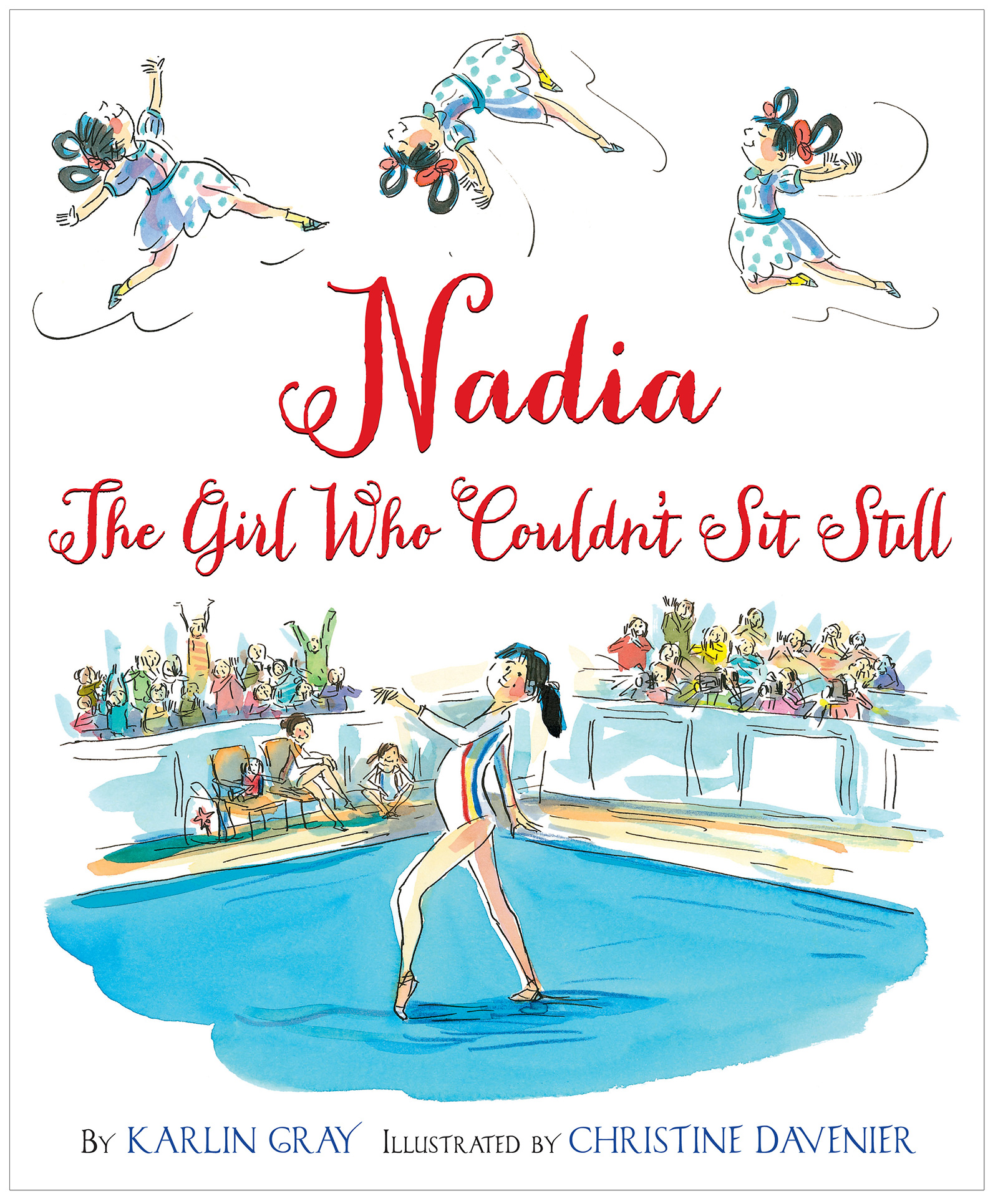
celebrate-picture-books-picture-book-review-nadia-the-girl-who-couldn't-sit-still-cover

About the Holiday

Initiated in the late 1990s, National Gymnastics Day encourages kids to explore this exciting sport. As part of this year’s National Gymnastics Day, gymnasts, families, friends, and enthusiasts from gymnastics clubs globally will participate in a variety of activities, including open houses, hand stand contests, carnivals, and fitness activities to build awareness of gymnastics and its benefits. Many clubs will use this as a way to provide opportunities for underprivileged children to participate in the sport. Why not find and attend a special event at a gym or gymnastics club today to celebrate!

Nadia: The Girl Who Couldn’t Sit Still

Written by Karlin Gray | Illustrated by Christine Davenier


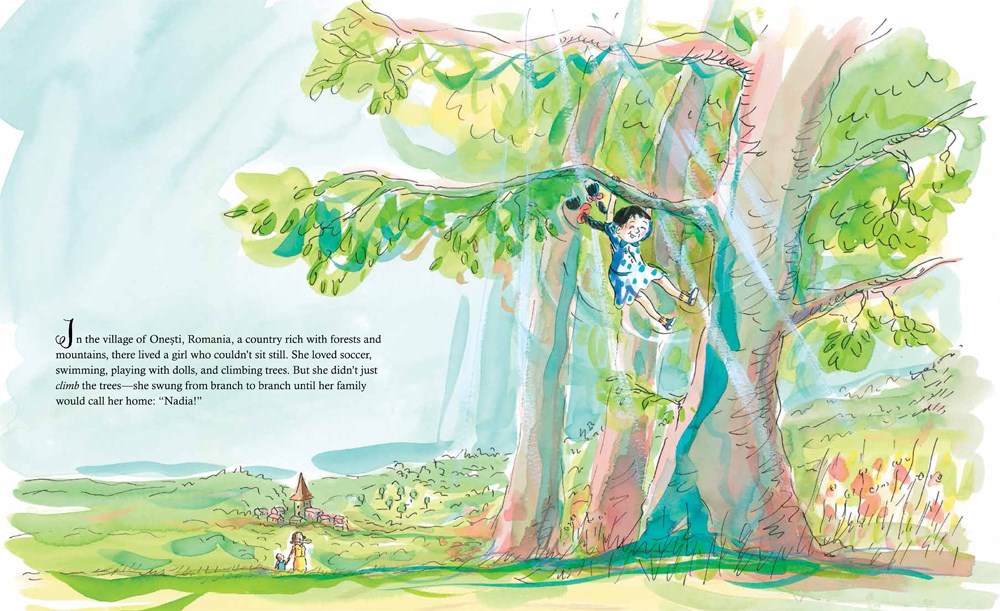
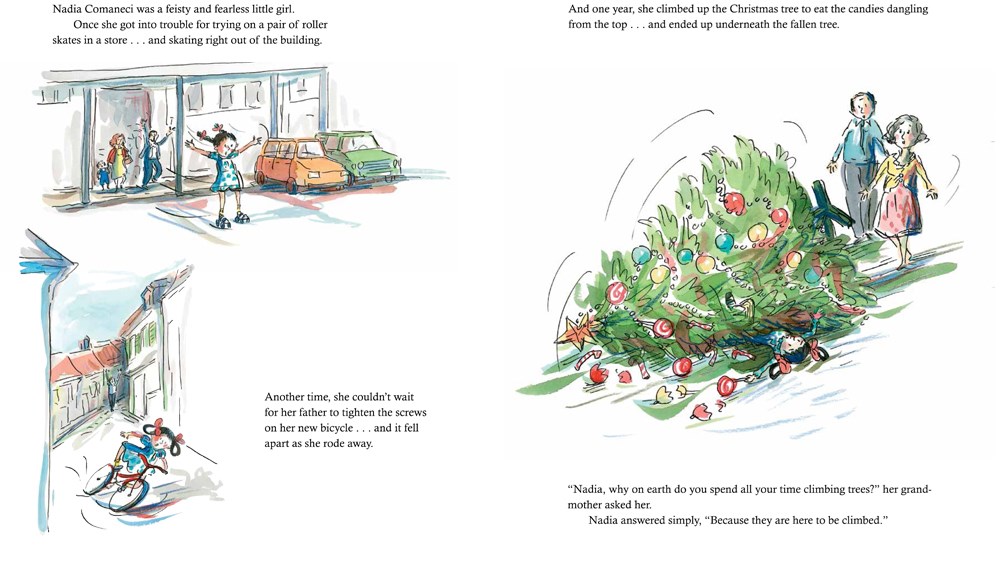
“In the village of Oneşti, Romania, a country rich with forests and mountains” Nadia Comaneci could often be seen swinging from tree branch to tree branch. She was a little girl who loved to play. She was “feisty and fearless,” attempting new things on a whim and always with a sense of adventure. Once while trying on a pair of roller skates, she skated right out of the store! Another time she was so impatient to ride her new bike that she pedaled off before her father could even tighten the screws. The bike “fell apart as she rode away.” And one year her love of climbing trees extended to the family Christmas tree, which toppled over on her, pinning her to the ground.

To channel all that energy, Nadia’s mother enrolled her in gymnastics lessons. Nadia’s eyes lit up when she saw the room full of ropes, ladders, bars, mats, and trampolines to discover, but she didn’t leave her new skills at the gym. Nadia and a friend cartwheeled around the school playground, capturing the attention of Bela and Marta Karolyi, who owned a gymnastics school. They invited the girls to join.

celebrate-picture-books-picture-book-review-nadia-the-girl-who-couldn't-sit-still-swinging-in-trees

Image copyright Christine Davenier, courtesy of karlingray.com

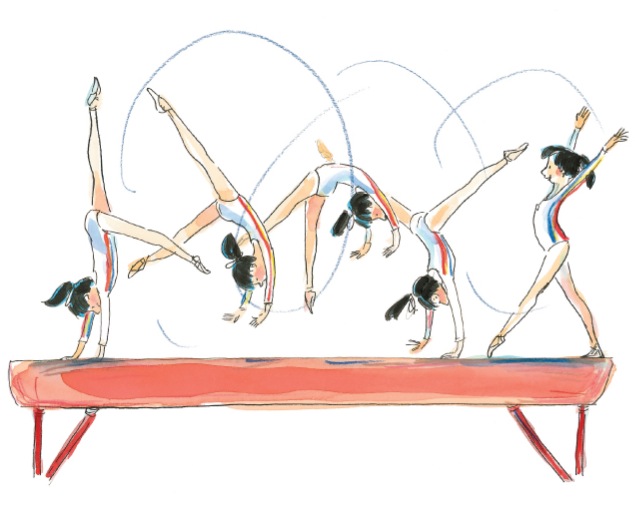
Nadia was only 6 when she began studying with Bela and Marta. Immediately, she discovered that she liked gymnastics better than her school subjects. She progressed quickly from performing “a straight cartwheel on a line painted on the floor” to doing it on a low balance beam and finally to perfecting it on the high balance beam. She began learning harder and harder moves, “flying from bar to bar, from floor to vault, and high above the beam.”

At 9 years old, Nadia competed in her first National Junior Championship. Despite her skill and hard work, she fell from the high beam during a leap not once but three times. Nadia finished the competition in 13th place. Her disappointment only strengthened her resolve. She went back to the gym and continued to practice many hours every day. Her determination paid off, “and at the next National Junior Championship games, she won first place.”

The ultimate recognition of her skill came when she was chosen to be part of the 1976 Romanian Olympic team. The games were held in Montreal, Canada, and all eyes were on the returning gold medalists from Russia, Olga Korbut and Lyudmila Turischeva. But excitement soon filled the venue as Nadia performed on the beam, the floor, and the vault where she scored 9.9, 9.75, and 9.7 on a scale of 1 (the lowest score) to 10 (a perfect score). The next event was the uneven parallel bars on which Olga Korbut had just scored a 9.9. “Nadia mounted the bars. Now fourteen years old, she was a long way from the forests in Romania. But she swung around as easily as she had jumped from branch to branch as a little girl. The audience gasped as she twirled and whipped and flipped.”

celebrate-picture-books-picture-book-review-nadia-the-girl-who-couldn't-sit-still-gym

Image copyright Christine Davenier, courtesy of karlingray.com

Nadia dismounted and landed perfectly on the mat below as the audience “exploded with applause.” Nadia returned to her team to wait for her score. And wait…and wait. Finally, the score appeared on the board—1.00. The worst score. How could that be? “‘What is Nadia’s score?’” Bela asked the judges. “One of the officials held up ten fingers as a voice announced over the loudspeaker: ‘Ladies and gentlemen, for the very first time in Olympic history, Nadia Comaneci has received the score of a perfect ten!’”

Because no one had ever achieved a 10 before, the scoreboards were programmed only for a high of 9.9. Nadia couldn’t bask in her accomplishment for long, however. She moved on to her next event—and her next perfect 10! “When the competition ended, she had earned seven perfect 10s.” At the medal ceremony both Olga and Lyudmila congratulated their competitor as the new Olympic champion. In all Nadia won five medals and became the youngest ever Olympic gold medalist in gymnastics.

celebrate-picture-books-picture-book-review-nadia-the-girl-who-couldn't-sit-still-balance-beam

Image copyright Christine Davenier, courtesy of karlingray.com

Nadia became a darling of the press. They surrounded her, asking “how it felt to have the world’s attention, if she had been confident she would win, and when she would retire.” She answered each reporter with enthusiasm and confidence, and promising that she was a long way from retiring. When she returned home, it seemed that all of Romania had come out to welcome her and her teammates—even the country’s president.

Now Nadia was famous all over the world. She returned to practicing and inventing new routines, preparing for other competitions and the 1980 Olympic Games. She had come far from swinging branch to branch in the trees of Oneşti, but she would always be that little girl who couldn’t sit still.

Karlin Gray’s compelling biography captures all the spunk and spirit of Nadia Comaneci that made the world fall in love with her at the 1976 Olympic Games. Adults of a certain age well remember watching her in astonishment as she seemed to effortlessly swirl, twirl, and flip through her routines, flashing her sweet smile as she waved to fans. In the first pages Gray reveals anecdotes of Nadia’s adventurous nature that will captivate readers even as they giggle at her predicaments.

celebrate-picture-books-picture-book-review-nadia-the-girl-who-couldn't-sit-still-mishaps

Image copyright Christine Davenier, courtesy of karlingray.com

The straightforward narration of Nadia’s trajectory from playground cartwheeler to Olympic champion enhances both the gritty determination of her studies with her coaches as well as the suspense of her competitions. All children—no matter what their talent—will draw inspiration from Nadia’s story, which includes disappointments as well as unbounded accomplishments. Gray’s lyrical language flows as smoothly as Nadia flew through the air and will land in readers’ hearts as a perfect 10.

From the cover, which sports Nadia in her iconic floor exercise pose, to the last page, Christine Davenier depicts the world of gymnastics with beauty and the kind of realistic details that create a classic. The two-page spread of the gym where 6-year-old Nadia learns to love gymnastics portrays the enormity of the space and the equipment for a small girl—as well as the enormity of her achievement.

Kids will love the almost “play-by-play” illustrations of how Nadia learned to perform her feats, from starting with a line on the floor to perfecting the high beam and more. Nadia is shown leaping, somersaulting, doing handstands, and even wavering and falling as she practices and competes. The thrill of the Olympic Games, from the opening ceremonies to the rapt and cheering audiences to the awards ceremony are drawn with stirring action, color, and attention to the specifics of that very special 1976 summer in Montreal.

An Afterword expands on Nadia Comaneci’s courageous life choices and career post-gymnastics and includes a timeline, notes, a selected bibliography, and websites for further study.

Nadia: The Girl Who Couldn’t Sit Still will fascinate kids and would be a very welcome addition to school classroom—as well as home—libraries.

Ages 5 – 10

Houghton Mifflin Harcourt, 2016 | ISBN 978-0544319608

Visit Karlin Gray‘s website to learn more about her and to download fun activities!

View a gallery of artwork by Christine Davenier on her website!
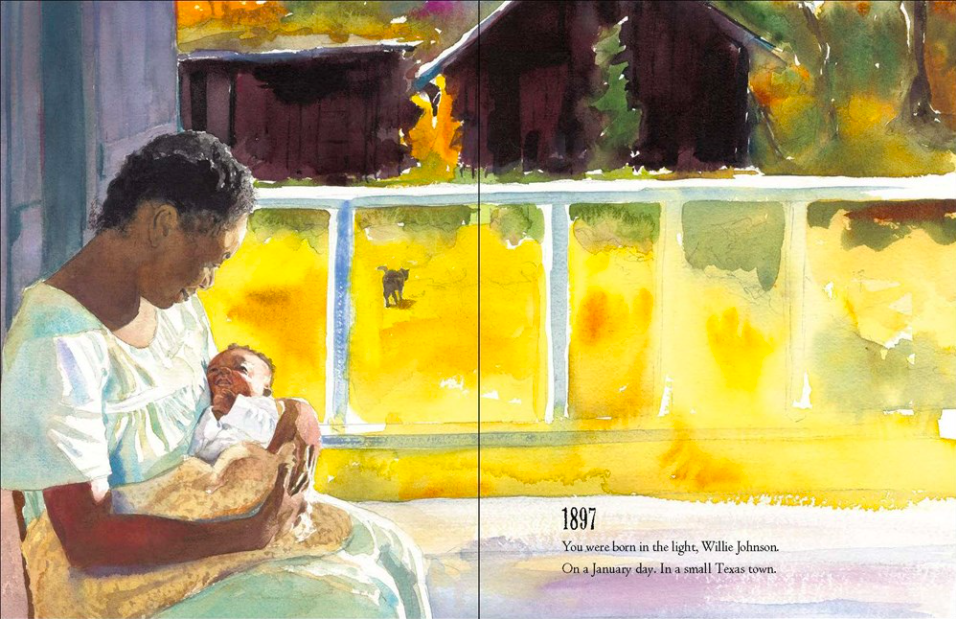
Discover more about Nadia: The Girl Who Couldn’t Sit Still on the Houghton Mifflin Harcourt website!

National Gymnastics Day Activity

celebrate-picture-books-picture-book-review-rhythmic-gymnastics-ribbon-craft

Rhythmic Gymnastics Ribbon


You can recreate the grace of rhythmic gymnastics with this easy craft! The swirling beauty of the ribbon makes any movement fun!

Supplies

  • 12-inch dowel
  • 6-foot length of ribbon
  • Paint the same color as the ribbon
  • Hot glue gun or strong glue
  • Paint brush

Directions

  1. Paint the dowel and let dry
  2. Glue the edge of the ribbon to one end of the dowel. Wrap the ribbon about ½ inch around the dowel and secure with glue. Let glue dry.

celebrate-picture-books-picture-book-review-nadia-the-girl-who-couldn't-sit-still-cover

You can find Nadia, the Girl Who Couldn’t Sit Still at these booksellers

Amazon | Barnes & Noble | Books-a-Million

To support your local independent bookstore, order from

Bookshop | IndieBound

Picture Book Review