Fermented chocolate drinks date back to 1900 BCE and the Aztecs believed cacao seeds were a gift from Quetzalcoatl, their god of wisdom. Who can argue that chocolate is a pretty smart thing? Almost anything is better covered in chocolate, and today’s holiday proves it! Whether you like your chocolate straight up or on the…potato chips, enjoy the day with a little indulgence!
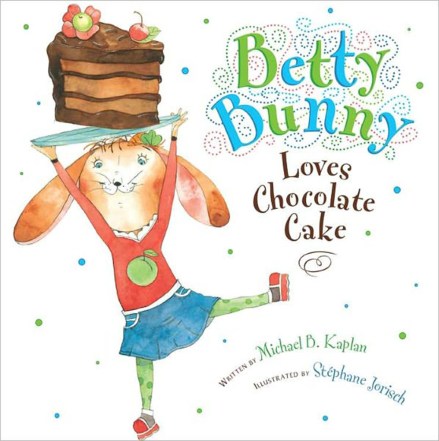
Betty Bunny Loves Chocolate Cake
Written by Michael B. Kaplan | Illustrated by Stéphane Jorisch
Betty Bunny knows she’s a “handful” because her parents often tell her so. Betty Bunny also knew her parents love her, so she figures that “being a handful must be very, very good.” One day when her mom offered her a piece of chocolate cake after dinner, Betty Bunny declined. She didn’t like trying new things, and “announced: ‘I hate chocolate cake. Chocolate cake is yucky.” But then added “‘What’s chocolate cake?’”
Image copyright Stéphane Jorisch, text copyright Michael B. Kaplan. Courtesy of Penguin Books
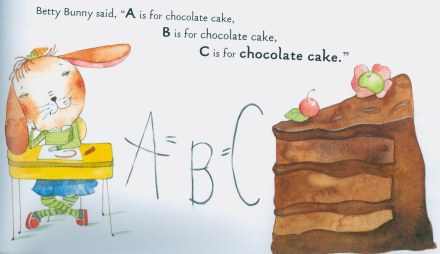
With her first bite, Betty Bunny was in love. She was so in love, in fact, that she decided that when she grew up she was “going to marry chocolate cake.” Her siblings were supportive—kind of—but her older brother Bill thought “‘you’re going to have really weird-looking kids.’” The next day at school, Betty Bunny had chocolate on the brain. When her teacher went over the A B C’s Betty said, “‘A is for chocolate cake, B is for chocolate cake, C is for chocolate cake.’”
On the playground when Betty Bunny mixed together dirt and water, it looked like chocolate cake, but sure didn’t taste like it. At dinner Betty Bunny was ready for her dessert before her healthy dinner, but her mom said no; and her dad agreed with her mom. Her siblings tried to help—kind of. Henry suggested she eat some peas. Kate told her to eat her carrots, and Bill taunted, “‘Why don’t you have some chocolate cake? That’s what you really want. Oh, no, wait. You can’t. Ha-Ha.’”
Image copyright Stéphane Jorisch, text copyright Michael B. Kaplan. Courtesy of Penguin Books
Betty Bunny exploded. She threw peas at Henry, tossed carrots at Kate, and lobbed mashed potatoes at Bill. Betty Bunny’s mother was not pleased and sent her little daughter to bed without chocolate cake. “Betty Bunny screamed, ‘This family is yucky!’” and stomped up the stairs. Later, her mom came up to kiss her goodnight, and she had a plan. She would put a piece of cake in the fridge and the next day after a good dinner, Betty Bunny could have it. “‘Maybe if you know it’s there waiting for you, it will be easier to be patient,’” her mom said. Betty Bunny thought this was a great idea and “wanted to say something especially nice to her mother. ‘Mommy,’ she said, ‘you are a handful.’”
Image copyright Stéphane Jorisch, text copyright Michael B. Kaplan. Courtesy of Penguin Books
The next morning Betty Bunny couldn’t leave the house without first checking on her piece of cake. It looked so alone sitting on the plate all by itself, so Betty Bunny decided to put it in her pocket and take it to school with her. All day the secret knowledge of what was in her pocket made Betty Bunny happy. At dinner, after she had cleaned her plate, she reached into her pocket for her chocolate cake, but all she found was “a brown, goopy mess” that made her cry.
After her mom explained to her that putting the cake in her pocket was not the same as being patient, she prepared another piece for the next day. In the morning, Betty Bunny remembered her lesson in patience—and that’s why she put the cake…in her sock.
Michael B. Kaplan’s adorable Betty Bunny Loves Chocolate Cake is a delight from its beginning to its smashing ending. He hits all the right notes in this humorous family drama, from the “helpful” siblings to the hair-trigger tantrums to the Ramona Quimby-esque misunderstanding of phrase. Along with the giggle-inducing fun kids learn a bit about patience, and adults discover insight into what goes on in their little bunny’s mind when obsession meets disappointment.
Stéphane Jorisch’s Bunny family is as cute as…well…a bunny. His watercolor, pen and ink, and gouche paintings employ brilliant color and crisp lines to depict the loving relationship among the siblings and parents as well as the realistic home and school environments. The perfectly drawn body language—including folded arms, sly looks, emotional meltdowns, and understanding smiles—will resonate with kids and adults alike. And once the piece of chocolate cake appears, it’s easy to see how little Betty Bunny could become such a fan.
Ages 3 – 7
Puffin Books, 2016 (paperback) | ISBN 978-1101998632
Chocolate Covered Anything Day
Delicious Dot-to-Dot
Everything is better with chocolate—even this printable Delicious Dot-to-Dot! Get your pencils, follow the dots, and then color this delectable page!
Seems particularly specific, doesn’t it? But I have to admit that lemon cupcakes—especially the ones my daughter makes—are my favorite too. Of course, today’s holiday gives you license to enjoy any kind of cupcake you like! Looking for a little cupcake history? Here it is! The first mention of cupcakes was in 1796 in Amelia Simmons’ first American cookbook titled American Cookery. She recommended using small cups to create a small, light cake. The first published mention of “cupcakes” came in 1828 in Seventy-five Receipts for Pastry, Cakes and Sweetmeats by Eliza Leslie. We all know that cupcakes have long been a snack and party favorite and how they have exploded in popularity over the past few years. To celebrate, whip up a batch of your favorite cupcakes!
Peanut Butter & Cupcake
By Terry Border
Peanut Butter bread got a soccer ball for his birthday—there was just one problem. While he could balance the ball on his head, he was pretty bad at kicking it. Besides, it “wasn’t much fun playing with a ball all by himself.” Peanut Butter was new in town and hadn’t made friends yet, so he asked his mom if she’d play with him. But she was busy with the laundry and suggested he go outside and find someone to play with.
Image and text copyright Terry Border, courtesy of Philomel Books
Off Peanut Butter went, and “it wasn’t long before he found a someone.” Peanut Butter enthusiastically went right up to this someone who was walking his Hot Dogs, and gave him a winning appeal. “‘Hello. I’m new here and I’d like to play. / Maybe now, maybe later—or even all day. / I’ll make you chuckle deep down in your belly. / And we’ll go together like Peanut Butter and…Hamburger.’” Hamburger was flattered but too busy with his dogs to play. Peanut Butter thanked him anyway, and kept on walking.
Image and text copyright Terry Border, courtesy of Philomel Books
Soon Peanut Butter noticed Cupcake playing by herself with her pail and shovel in the nonpareil box. “He thought she looked sweet, and might make a good friend.” He launched into his spiel and finished up, “‘And we’ll go together like Peanut Butter and…Cupcake!’” Cupcake had some stern words for Peanut Butter. She was building sprinkle castles, she told him, and if he knocked them down with the ball, she’d be mad. Not wanting to upset Cupcake, Peanut Butter moved on.
Next Peanut Butter met Egg rolling along on his unicycle. He started his rhyme and finished with a flourish, “‘And we’ll go together like Peanut Butter and…Egg!’” Egg thought this was funny. “‘You’re cracking me up!’ Egg laughed. And then he really did crack.” Peanut Butter was afraid to make Egg laugh anymore, so he went on his way.
Image copyright Terry Border, courtesy of Philomel Books
Farther down the path Peanut Butter found Meatball jumping a strand of spaghetti. He got through his welcome only to be shushed by Meatball because he was interrupting his counting. Finding a friend was proving harder than Peanut Butter had thought. He was getting tired and wanted to sit down. Under a tree he found French Fries. After hearing Peanut Butter’s request, however, French Fries begged off, saying that he was late in helping “‘Hamburger with his Hot Dogs’” and now needed to “‘catch up.’”
Image and text copyright Terry Border, courtesy of Philomel Books
Ever persevering Peanut Butter saw Alphabet Soup standing nearby and approached, but before he could even get a word out, Soup dipped in his spoon and came out with “two letters, an ‘N’ and an ‘O.’” Feeling dejected Peanut Butter sat on a bench and thought about giving up. But then he saw a new kid coming his way. “‘Hello,’” the kid said. Peanut Butter brought out his poem one more time. “‘Um…Hello. I’m new here and I’d like to play. Maybe now, maybe later—or even all day. I’ll make you chuckle deep down in your belly. And we’ll go together like Peanut Butter and…Jelly!’”
Jelly thought this sounded great—there was just one thing. While she was good at kicking a ball, she wasn’t good at balancing it on her head. So the two new friends taught each other their special talents and “made each other chuckle deep down in their bellies.” All this laughter attracted the other kids, who came over to play together!
Image copyright Terry Border, courtesy of Philomel Books
Terry Border has mixed the culinary and the cute to create this one-of-a-kind recipe for friendship. Peanut Butter’s endearing self-introduction establishes his sweet personality, and its rhyme scheme ensures that kids will be held in suspense waiting for Peanut Butter to meet Jelly. With visual wit and plenty of puns, Border serves up a unique picture book that offers surprises and laughs on every page. Kids will also empathize with Peanut Butter’s dilemma and cheer when he finally makes a friend.
Border’s vibrant photographic illustrations are the perfect accompaniment to his story. Peanut Butter, slathered on bread and sporting wire arms and legs, is an immediately loveable hero. The other kids he meets, especially hamburger walking his two Hot Dogs and Soup, are inspired characters, and the background props make playful use of kid-favorite items.
Peanut Butter & Cupcake is a wonderful addition to kids’ bookshelves for story time, playtime, or any time a laugh or the inspiration of creative art is needed.
Ages 3 – 7
Philomel Books, 2014 | ISBN 978-0399167737
Discover the very original world of Terry Border on his website!
Lemon Cupcake Day Activity
Cupcake Wrapper Tree
Today’s paper cupcake cups are so pretty that it’s a shame they just get thrown away. Here’s a way to use cupcake liners to make an attractive winter decoration. You can use various sizes of cones to create a multi-tree decoration.
Supplies
Styrofoam or cardboard cone, available from craft stores
Cupcake wrappers with a winter or favorite design
Straight pins (for Styrofoam cones), glue dots, or small clear mounting squares (for either Styrofoam or cardboard cones)
Scissors
Glue
Directions
Cut the bottoms out of the cupcake wrappers
Using the ribbed sides of the cupcake wrappers, start from the bottom of the cone and attach the cup to the cone with the straight pins, glue dots, or mounting squares, putting them along the top rim of the wrapper
You may need to use two or more wrappers to cover the cone. Fill in gaps by overlapping with smaller cuts from the cupcake wrappers
Overlap the first row of cupcake papers a bit with the second row of cupcake papers. Attach at the top rim
Continue moving up the cone, overlapping and attaching cupcake wrappers
At the top, overlap the sides of the wrapper to cover the tip of the cone and make a sharp point. Glue seam together if needed
Attach the top wrapper to the layer below near the bottom of the wrapper
Yummy, warm gingerbread and winter just go together. And one of the best ways to enjoy gingerbread is by making a gingerbread house decorated with icing and candy. Gingerbread houses can be elaborate—like those made by professional bakers for competitions—or simple, but they all have one thing in common—they are so tempting to nibble on! To celebrate today’s holiday, grab the mixing bowl, flour and spices, bag of gumdrops, peppermints, and hard candies and get creative!
Gingerbread Christmas
By Jan Brett
Matti and the Gingerbread Baby are excited about the coming Christmas Festival. Gingerbread Baby even has plans to sing with his Gingerbread Band. There’s just one problem—there is no Gingerbread Band. But then Matti has an idea. As he rushes off to find the cookbook, he tells Gingerbread Baby to start practicing his song. “In no time Matti had mixed the ingredients, rolled out the dough, and popped the Gingerbread into the oven.”
Copyright Jan Brett, 2016, courtesy of G. P. Putnam’s Sons Books for Young Readers
Even though the recipe specifically says not to open the oven for a full eight minutes, after six minutes Matti can’t wait another second. He opens the oven door ever so slightly to peek, and out pop the musical instruments made of gingerbread. The instruments hop onto the table and begin playing immediately. But Matti knows they need a bit of icing before they’re ready to make an appearance in the village.
Copyright Jan Brett, 2016, courtesy of G. P. Putnam’s Sons Books for Young Readers
After they are decorated in their party best, the Gingerbread Baby leads the procession of instruments—“a violin, cello, double bass, French horn, clarinet, and trumpet, tooting and zumming to the beat of the big bass drum”—to the village. The band jumps on stage, tunes up, and begins playing. People hurry from all over tocome and listen; even the woodland animals stop to watch from behind the trees. The villagers can’t help but tap their toes and dance to the band’s sweet music.
Copyright Jan Brett, 2016, courtesy of G. P. Putnam’s Sons Books for Young Readers
When the animals join the crowd, the Gingerbread Baby conducts the band in ‘The Wild Animal’s Waltz.’ No one is left on the sidelines as the band plays faster and faster and everyone joins in the dance. Suddenly, young Ann-Sophie calls out, “‘I think those instruments are really cookies. And I so want one!’” Everyone else takes a closer look, and they all so want a cookie too. The Gingerbread Baby notices the hungry looks on the villagers’ faces, and begins singing an entrancing melody. While the people stand listening, the instruments quietly tiptoe offstage.
Matti meets each one and cleverly disguises them—covering them in snowballs and decorating them as snowmen. As soon as all of the instruments are safe, the Gingerbread Baby somersaults off the stage with a playful taunt for the villagers to try to catch him but also teases, “‘you’ll never guess where I’ll be.’” The chase is on. Zigging and zagging the Gingerbread Baby dashes toward the enormous decorated Christmas tree—where he suddenly vanishes.
Copyright Jan Brett, 2016, courtesy of G. P. Putnam’s Sons Books for Young Readers
Although the villagers search everywhere, they can find neither the band nor the Gingerbread Baby. While Matti waves goodbye and takes off with his sled full of snowmen, the Gingerbread Baby is being as still and quiet as possible, hidden in the boughs of the Christmas tree. Finally, all the villagers give up the game and go home—all except Ann-Sophie, who may or may not hear “a tiny voice singing” in the now silent air.
Jan Brett’s mischievously loveable Gingerbread Baby is back, wanting to participate in the Village Festival. With her signature storytelling that includes danger, mystery, and clever shenanigans surrounding Matti and his special gingerbread creations, Brett creates a holiday adventure that kids will love. Her well-known intricate illustrations, in a rich palette, offer vivid action as the Gingerbread Baby and instruments play onstage while the villagers dance below. Brett’s beautiful details and cozy settings make Gingerbread Christmas a feast for the eyes, and readers will also like to linger over the musical instruments in the margins of each page that reveal more snapshots of the story line. A dazzling fold-out Christmas tree, decorated from top to bottom will occupy and delight kids as they search for where the Gingerbread Baby is hiding.
For winter fun and especially those days when the house fills with the delicious aroma of baking cookies, Gingerbread Christmas is great book to have on hand.
Ages 4 – 7
G. P. Putnam’s Sons Books for Young Readers, 2016 | ISBN 978-0399170713
Discover more about Jan Brett and her books as well find activities, coloring pages, contests, and more on her website!
Instituted in 2007 by the Encouragement Foundation at Harding University in Searcy, Arkansas, today’s holiday entreats us to cheer on our friends, coworkers, and even those we don’t know as they attempt to reach goals or start new endeavors. A pat on the back, a simple “you can do it!,” or a reassuring “great job!” boosts people’s self-confidence and makes the world a happier place.
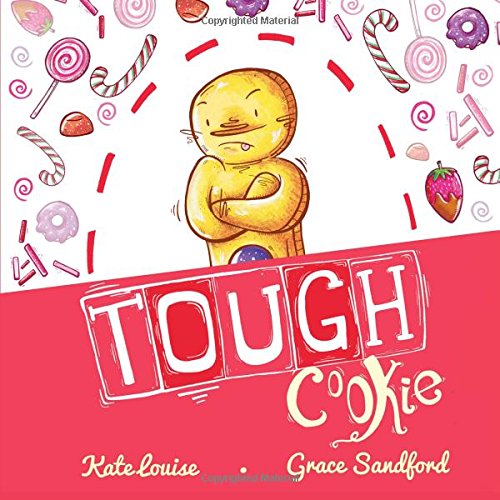
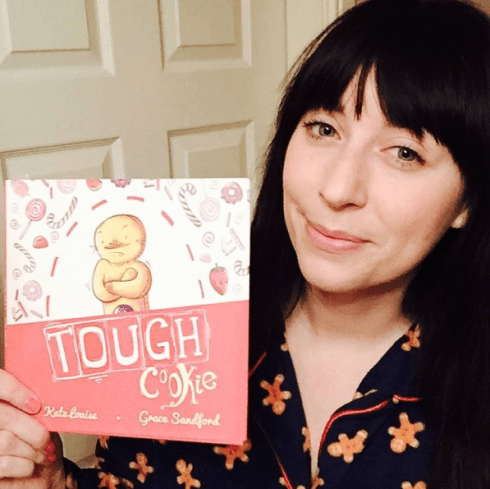
Tough Cookie
Written by Kate Louise | Illustrated by Grace Sandford
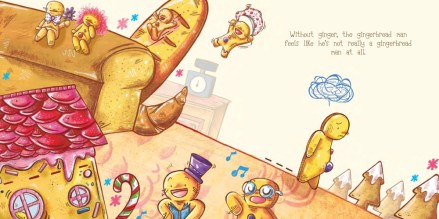
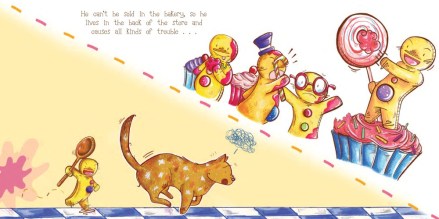
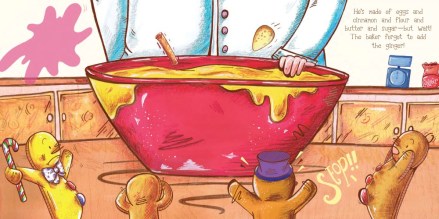
Although one gingerbread man in the bakery looks like all the others, there is one important difference. Yes, the batter had “eggs and cinnamon and flour and butter and sugar—but wait! The baker forgot to add the ginger!” Without this signature ingredient the gingerbread man just doesn’t feel like a gingerbread man at all. In fact his whole life has been turned upside down. He’s different from his friends, and what’s worse, he can’t be sold. Instead, he lives in the back of the bakery and in his sadness makes all kinds of mischief.
Image copyright Grace Sandford, text copyright Kate Louise, courtesy of Sky Pony Press
The gingerbread man chases the cat, splatters icing on other cookies, and squirts icing on the walls. “‘I need that for my cupcakes!’” the baker yells, but the gingerbread man just laughs. He moves on to the decorative candies, stuffing them in his mouth as fast as he can even though the baker needs them for his other treats and stands by tapping his foot. Next the gingerbread man scatters sprinkles all over the counter and slips and slides along on his belly—“‘woohoo!’” But the baker is not amused. “‘I need those for the donuts!’” he shouts.
Image copyright Grace Sandford, text copyright Kate Louise, courtesy of Sky Pony Press
Finally, the baker has had enough. Not only is the gingerbread man upsetting the other gingerbread men and women, he is ruining the business. The baker orders the gingerbread man to leave the store. But this is one gingerbread man that does not want to run away. “‘I don’t want to leave!’” he cries. The baker relents. He takes the little cookie in hand and teaches him that even though he is missing an ingredient he can still be kind. The baker shows him by being nice he can become one of the group.
Now, the little gingerbread man is happy. Instead of gobbling up all the candy, he helps create the other cookies. He no longer shoots icing on the walls or flings sprinkles around the kitchen. Rather, he helps the baker decorate the cupcakes and the donuts. He’s even learned how to sift flour and roll out dough, and he uses the cookie cutter to make new friends. And he never forgets to add the ginger!
Image copyright Grace Sandford, text copyright Kate Louise, courtesy of Sky Pony Press
Grace Sandford’s bakery gleams with the golden hues of fresh-baked bread, the festive colors of sprinkles and icing, and the sparkle of sugar. Kids will love the vibrant pictures of cupcakes; lollypops; stacks of cakes, donuts, and candy; and decorated gingerbread houses surrounded by cookie forests. Her expressive gingerbread men and women register dismay at the wayward gingerbread man’s shenanigans and joy at his kindness. And the hero of the story? When he leaves behind his impish pranks he becomes a charming baker’s companion, sifting clouds of flour, running on the rolling pin to flatten dough, and passing out sugar-shiny gumdrop buttons to his new friends.
Young children will ask for this fun and funny read over and over. Tough Cookie makes an especially delicious accompaniment to an afternoon of baking or decorating gingerbread houses!
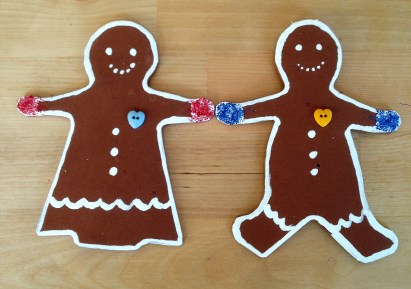
Way back in the past when gingerbread was new it was creatively iced and used to decorate windows. You can make decorations for your home or room with this easy craft!
Instituted in 2007 by the Encouragement Foundation at Harding University in Searcy, Arkansas, today’s holiday entreats us to cheer on our friends, coworkers, and even those we don’t know as they attempt to reach goals or start new endeavors. A pat on the back, a simple “you can do it!,” or a reassuring “great job!” boosts people’s self-confidence and makes the world a happier place.
Tough Cookie
Written by Kate Louise | Illustrated by Grace Sandford
Although one gingerbread man in the bakery looks like all the others, there is one important difference. Yes, the batter had “eggs and cinnamon and flour and butter and sugar—but wait! The baker forgot to add the ginger!” Without this signature ingredient the gingerbread man just doesn’t feel like a gingerbread man at all. In fact his whole life has been turned upside down. He’s different from his friends, and what’s worse, he can’t be sold. Instead, he lives in the back of the bakery and in his sadness makes all kinds of mischief.
Image copyright Grace Sandford, text copyright Kate Louise, courtesy of Sky Pony Press
The gingerbread man chases the cat, splatters icing on other cookies, and squirts icing on the walls. “‘I need that for my cupcakes!’” the baker yells, but the gingerbread man just laughs. He moves on to the decorative candies, stuffing them in his mouth as fast as he can even though the baker needs them for his other treats and stands by tapping his foot. Next the gingerbread man scatters sprinkles all over the counter and slips and slides along on his belly—“‘woohoo!’” But the baker is not amused. “‘I need those for the donuts!’” he shouts.
Image copyright Grace Sandford, text copyright Kate Louise, courtesy of Sky Pony Press
Finally, the baker has had enough. Not only is the gingerbread man upsetting the other gingerbread men and women, he is ruining the business. The baker orders the gingerbread man to leave the store. But this is one gingerbread man that does not want to run away. “‘I don’t want to leave!’” he cries. The baker relents. He takes the little cookie in hand and teaches him that even though he is missing an ingredient he can still be kind. The baker shows him by being nice he can become one of the group.
Now, the little gingerbread man is happy. Instead of gobbling up all the candy, he helps create the other cookies. He no longer shoots icing on the walls or flings sprinkles around the kitchen. Rather, he helps the baker decorate the cupcakes and the donuts. He’s even learned how to sift flour and roll out dough, and he uses the cookie cutter to make new friends. And he never forgets to add the ginger!
Image copyright Grace Sandford, text copyright Kate Louise, courtesy of Sky Pony Press
In her sweet story, Kate Louise reminds readers that true happiness comes from within and that each person can decide for themselves how to perceive the world around them. While each of us is human, we all have different ingredients that make us unique. We can use those qualities to be kind and make positive changes in the world. Kids will recognize and giggle at the mischief the little gingerbread man makes with icing and sprinkles, but will also realize that friendships are built by using that same energy to help others. Sometimes tough cookies are actually softies at heart.
Grace Sandford’s bakery gleams with the golden hues of fresh-baked bread, the festive colors of sprinkles and icing, and the sparkle of sugar. Kids will love the vibrant pictures of cupcakes; lollypops; stacks of cakes, donuts, and candy; and decorated gingerbread houses surrounded by cookie forests. Her expressive gingerbread men and women register dismay at the wayward gingerbread man’s shenanigans and joy at his kindness. And the hero of the story? When he leaves behind his impish pranks he becomes a charming baker’s companion, sifting clouds of flour, running on the rolling pin to flatten dough, and passing out sugar-shiny gumdrop buttons to his new friends.
Young children will ask for this fun and funny read over and over. Tough Cookie makes an especially delicious accompaniment to an afternoon of baking or decorating gingerbread houses!
View the colorful world and signature style of Grace Sandford’s artwork on her website!
Gobble up this Tough Cookie book Trailer!
National Day of Encouragement Activity
Kindness Cards
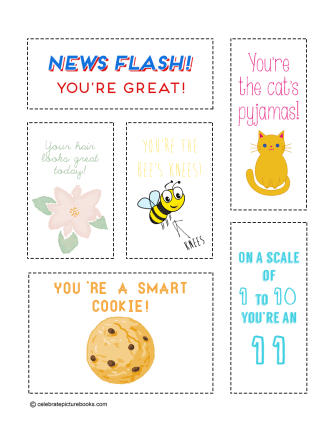
Encourage your friends – and even strangers with these printable Kindness Cards! You can hand them to people and tell them how much they mean to you or slip them into a lunch bag, locker, shelf, backpack or other place and let the person discover a secret day brightener!
Q&A with Author Kate Louise & Illustrator Grace Sandford
Today I am happy to include a double Q & A with both author Kate Louise and illustrator Grace Sandford in which they share their inspirations, their other work, and the joys of creating picture books as well as reveal a favorite place for tea and cake and a ghostly pastime!
Meet Kate Louise
What were some of the books you most enjoyed as a child?
I loved Funny Bones and Winnie the Witch! And I was a big fan of Roald Dahl (especially Matlida) – I still am!
What influenced you to write Tough Cookie?
I had the idea at Christmastime. I was measuring ingredients for a batch of gingerbread cookies and wondered what a cookie character without sugar would do because they’d be unable to fulfill their cookie purpose without an important ingredient! I later changed the missing sugar to missing ginger, which is the most important ingredient of all for a gingerbread man.
You write picture books as well as young adult novels. Which came first? What is the biggest challenge in writing each? What is the biggest joy?
When I started writing, I knew I wanted to write young-adult fiction. So that came first. Writing picture books kind of felt like starting over again. It was scary, but exciting, too. And I could learn a lot from both and apply new skills to different projects.
Both have their charms and their tough moments. Writing novels can be really hard going at times when I get the feeling that I’m never going to make it to the end, or if I get myself tangled up somewhere along the way. I don’t get that feeling quite as much with picture books, though I would say they’re harder to write! To tell a story with a much, much smaller word count and to get used to letting the illustrations tell it too.
The biggest joy for me is always seeing the finished work. After putting so much into each project, getting it back as something I can hold in my hands and feel proud of is a great feeling.
Can you describe your writing space a little?
I can answer with a photo! Though, it depends when you catch me and how busy I am. Sometimes it can be piled up with books or notepads or pieces of paper and mugs of tea! My screen desktop (as you can see) can get pretty hectic sometimes too.
Since Tough Cookie is set in a bakery, I’m wondering if you have a favorite bakery and if so what is special about it?
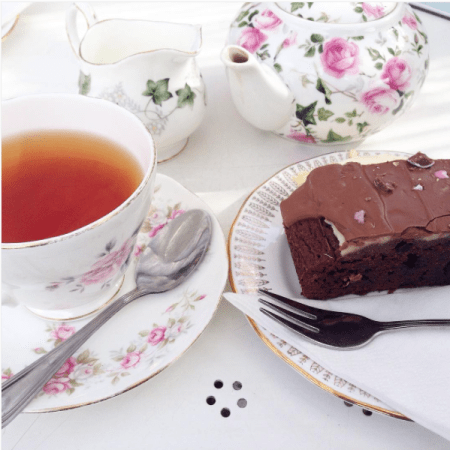
Oh, nice question! My fave place to visit for tea and cake is a little farm shop tea room, where the cake is made by my friend Bethany at Picture Frame Puds and is seriously delicious! It has a lovely vibe and I can take my dog!
What are you working on next?
I’m working on The Pack, which is the sequel to my YA shape-shifter circus novel The Wanderers that came out last year.
Since this is a holiday-themed blog, I can’t let you get away without asking you a few holiday-related questions, so…
What is your favorite holiday?
It would have to be Christmas. But Halloween is a very close second.
Do you have an anecdote from any holiday you’d like to share?
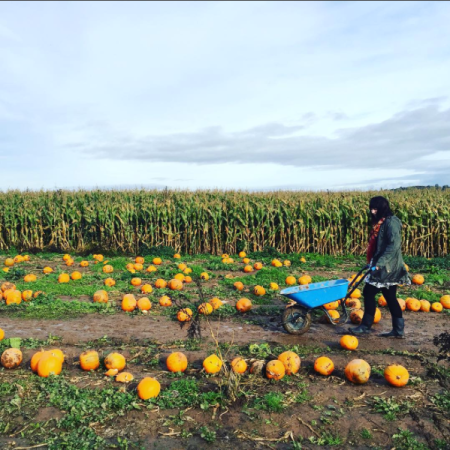
I like to make a big deal about Halloween with movies, decorating, pumpkin carving, and themed baking. We’ve just started going to a pumpkin farm to pick the pumpkins ourselves too. There’s a corn maze and little wheelbarrows and the field stretches on forever. It’s a new tradition and a fun extra activity for us at Halloween.
Meet Grace Sandford
What inspired you to become an illustrator and a picture book illustrator specifically?
Growing up, I loved drawing and creating characters from my imagination. I believe a lot of that stemmed from picture books and animated film and television. I love Disney and Pixar and as a teenager I was fascinated with the concept art from Pixar films. I always knew that I wanted a career in art of some form but it’s hard discovering what jobs are out there when you’re at school! I did some studying in Graphic Design and eventually went to university to study Illustration, which is where I got truly passionate about picture books. I always admired the art of picture books and they have been a huge part of my life but having a reason to dissect them and create your own really made me want to be a children’s illustrator.
What were some of the books and/or artists you liked most as a child?
The Very Hungry Caterpillar by Eric Carle, I am a Bunny illustrated by Richard Scarry and when I was 16 I stumbled across Catherine Rayner’s debut Augustus and his Smile. I think that book was a huge influence in wanting to be a children’s book illustrator, both the writing and illustrations are perfect!
Can you describe your process when illustrating a picture book?
It usually begins with the editor sending you the story/text. Then I start to do lots of sketches of the main character, the secondary characters and the environment around them. Pinterest is a godsend during this bit as you can flick through and look at photos of certain animals or buildings for reference to make sure you’re creating characters that will look believable (even if it is a walking, talking gingerbread man!)
Then I create roughs for each spread showing how the pages will look and which parts I have chosen to illustrate. This gives the editor a rough idea of how the final artwork is going to look and this is where most of the edits happen until it’s approved. Once all edits are approved I can create the final artwork which is my favourite part seeing all the hard work come together!
Can you describe your work space a little?
I now have a studio where I live, but when I worked on Tough Cookie I lived in a one bed apartment with my boyfriend straight after university and I had to work on the kitchen table! I’m so glad I have my own room to work in now (and I’m sure my boyfriend is too!)
My work space now involves a desk, my iMac, an A3 scanner, a windowsill with lots of pens and paints (and most importantly plants!) and I have a space that alternates between a lightbox and a graphics tablet. I also have a bad habit of putting all projects I’m working on into separate piles around the room until they are done!
You say in your bio that you like ghost hunting. How did you get involved in that? What is your favorite place to hunt ghosts?
Haha, this is the best question! I love Ghost Hunting although it’s been a while since I’ve been on a walk. It started off when I was a teenager living in a small village in England, being bored with friends and wandering around abandoned churches at night, hunting for things that go bump in the night, and it grew over time into a huge interest. When I went to University in Lincoln, a historical city, I got very interested in the social history of the place. Ghost stories are ultimately another fantastic way of storytelling. There are some very scary but interesting stories about Lincolnshire if you’re ever interested! Fun fact, Tom Hank’s bodyguard tripped over a phantom ghost head rolling down Steep Hill in Lincoln during a Professional Ghost Tour!
What are you working on next?
This year I’ve been working on a four book series based on Minecraft which has been a complete joy to be a part of! It’s been hard work as I knew very little about the franchise before this and knowing how loyal the fans are, I’ve wanted to draw everything right whilst staying faithful to my style! I just finished some more colouring books for a Spanish publisher and I have also been writing a picture book that I have a good feeling about (fingers crossed!)
What is your favorite holiday?
I personally love Christmas just because I get to spend time with my family and chill out but I love Mexico’s Day of the Dead holiday too. It is such a vibrant and beautiful celebration of something that we all sadly experience in life.
Do you have an anecdote from any holiday you’d like to share?
Every Christmas it’s become a tradition to be at home with my family playing Jigsaws, watching films and eating a little bit too much!
Thanks, Kate and Grace, for sharing about your work and your favorite places and pursuits! I wish you all the best with Tough Cookie and your other projects!
World Baking Day is a day to celebrate and partake in all those delicious treats that come from our imaginations and our ovens! Whether you love bread, cupcakes, cookies, muffins, or more savory goodies, today is the perfect time to get together with family or friends and try your hand at making something new or enjoying a favorite scrumptious morsel. Why not sample a food from another country or revive one of your grandmother’s secret recipes? Baking is fun! And eating the results is even better!
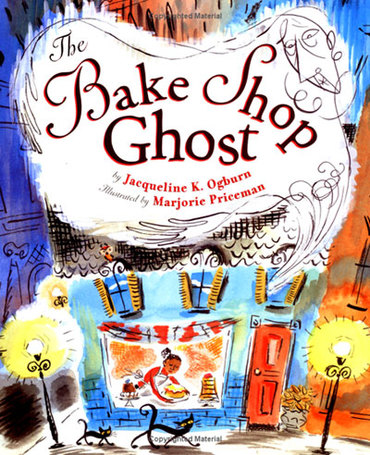
The Bake Shop Ghost
Written by Jacqueline K. Ogburn | Illustrated by Marjorie Priceman
For all intents and purposes, Miss Cora Lee Merriweather is Merriweather’s Bake Shop and the bake shop is Cora Lee. “Her Mississippi mud pie was darker than the devil’s own heart,” and her sponge cake was as light as angels’ wings. Her bakery case is stacked with fluffy pies, flaky strudels, and cakes of every size and flavor. In fact, no one’s birthday is complete without a Merriweather cake to celebrate with.
When Cora dies the congregation at her funeral weeps when the preacher reads the bake shop menu and everyone realizes “all those luscious desserts were now only sweet memories.” It doesn’t take long, however, for a new baker to buy Cora’s business. Gerda Stein brings in the ingredients for her strudels and cakes and starts baking, but the ovens burn every dessert, the refrigerator goes on the fritz, and Gerda hears footsteps overhead and clanking behind her. She slowly turns around and finds herself staring straight into the eyes of a ghostly Cora Lee Merriweather who shrieks, “Get out of my kitchen!”
The bake shop goes back up for sale and is sold to Frederico Spinelli who is not afraid of ghosts—until the next day when he emerges from the front door drenched in powdered sugar and never returns. Sophie Kristoff, the marzipan queen, takes over next, only to be chased out by flying eggs, three pink marzipan pigs, and a bunch of marzipan grapes.
After her departure the shop stands vacant for years, growing dim and dusty. One day Annie Washington, fresh off her stint as a cruise ship pastry chef, strolls by the dilapidated storefront. She falls in love with it as soon as she steps through the door. Annie buys it and scrubs and polishes until everything shines.
That night Annie goes straight to work on a puff pastry. Around midnight footsteps creak overhead, a cold wind sweeps the room, and mixing bowls topple to the floor. Annie keeps working. When she’s finished she dusts off her hands, turns around, and finds herself staring into ghostly eyes. “‘Miss Cora Lee Merriweather, I’ve been expecting you,” she says.
“Get out of my kitchen!” Cora says. But Annie is not intimidated. “This is my kitchen now,” she tells Cora. And what’s more, even though Cora may have been the best baker in the state, Annie tells her that she was the best pastry chef to ever sail on the Sea Star cruise ships, and come typhoon, tsunami, or shipwreck she never left a kitchen until she was finished.
Cora tries every trick in the book—she shrieks, flings utensils, rises up through the dough Annie’s kneading, breaks eggs, and as dawn breaks scatters a 50-pound bag of flour across the kitchen. All right, Annie says, “What can do so you’ll leave me in peace?”
Cora has a ready answer: “Make me a cake so rich and so sweet, it will fill me up and bring tears to my eyes. A cake like one I might have baked, but that no one ever made for me.” “Piece of cake,” replies Annie.
Annie makes every cake she knows and Cora critiques them. But none fill her up or bring a tear to her eye. Annie grows to respect the ghost’s advice, but she wants her kitchen back. After a month and hundreds of cakes, Annie is out of ideas. She goes to the library to research more recipes. There she finds a small book on town history, and after reading it she knows just what kind of cake to bake.
That night at midnight Cora appears, and Annie is ready. She lifts the cover on a very special cake. “Across the top, in piped icing, it read, ‘Happy Birthday, Cora Lee.” The ghost looks at Annie with tears in her eyes. “How did you know?” Cora asks.
Annie reveals the secrets of her research then adds, “Besides, who ever makes cake for the baker?” With tears streaming down her face, Cora eats her slice of cake. When Annie offers her another, she declines. “’I do believe I’m full.’”
Now the town enjoys Washington and Merriweather Bake Shop, where the cakes are almost as good as Cora’s, while never suspecting that’s because Cora Lee helps in the kitchen. And the most beautiful cakes? Those are the birthday cakes Annie and Cora make for each other.
A recipe for Ghost-Pleasing Chocolate Cake follows the story.
The Bake Shop Ghost was published in 2005 and made into a short film in 2009 starring Marianne Jean-Baptiste. Despite its age, however, this is a story that seems fresh every time it’s read. Jacqueline K. Ogburn plays out the story with such excellent pacing and details that the twist ending is a true surprise. Her descriptions of Cora Lee’s delicacies are mouthwatering and her metaphors just as downhome and tantalizing. Ogburn’s Annie is a welcome character—a woman of color who has confidence in her talents, doesn’t back down to the ghost’s intimidation, and works to find a solution that she implements with kindness and friendship.
Marjorie Priceman illustrates The Bake Shop Ghost with verve and delicious colors that will make readers wish they could visit Merriweather’s to sample the desserts in the well-stocked cases. Delicate chandeliers and French café chairs decorate the shop, giving it a sophisticated air. But there are also humorous details: a dog licks icing off a wedding cake as Cora ties string around a bakery box from the hanging twine dispenser, the preacher, choir, and congregation wail and shed tears as ethereal visions of the cakes they will miss float in the air at Cora’s funeral. The scenes of Cora’s ghost menacing the new shop owners are cleverly depicted with swoops of white that bear Cora’s face and hands floating above disaster.
Ages 4 -9
Houghton Mifflin Harcourt, Paperback edition, 2008 | ISBN 978-0547076775
World Baking Day Activity
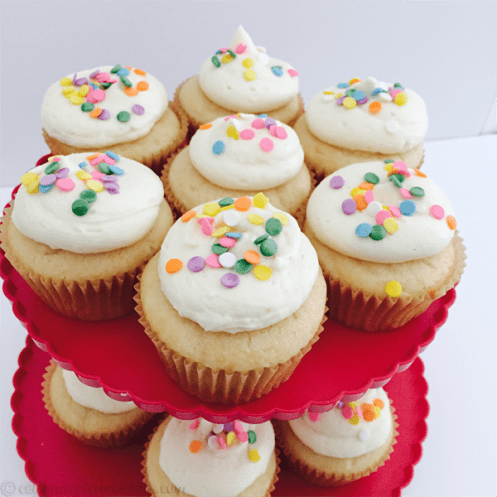
Very Vanilla Cupcakes
This delicious vanilla cupcake recipe from Sally’s Baking Addiction would definitely please Cora Lee Merriweather—and they’ll become your favorite confection too!
Preheat oven to 350F degrees. Line muffin tin with 12 cupcake liners. Set aside.
In a medium bowl, mix together flour, baking powder, baking soda, and salt. Set aside. In a large microwave-safe bowl, melt butter in the microwave. Whisk in sugar – mixture will be gritty. Whisk in egg whites, yogurt, milk, and vanilla extract until combined. Split 1 vanilla bean down the middle lengthwise. Scrape seeds from half of the vanilla bean into batter. Reserve other half.
Slowly mix dry ingredients into the wet ingredients until no lumps remain. Batter will be thick.
Divide batter among 12 cupcake liners (or 24 mini) and bake for 20 minutes or until a toothpick inserted in the center comes out clean. Bake for 8-9 minutes if making mini cupcakes. Allow to cool.
To make the frosting, beat softened butter on medium speed with an electric or stand mixer. Beat for about 3 minutes until smooth and creamy. Add confectioners’ sugar, cream, vanilla extract, and vanilla bean seeds with the mixer running. Increase to high speed and beat for 3 minutes. Add more powdered sugar if frosting is too thin or more cream if mixture is too thick. Add salt if frosting is too sweet (1/4 teaspoon). Frost cooled cupcakes (I used Wilton 1M piping tip). There may be leftover frosting depending how much you use on each cupcake.
Store cupcakes in an airtight container at room temperature for up to 3 days and in the refrigerator up to 7.
Additional Notes
If you can’t get your hands on vanilla beans, add an extra ½ teaspoon of pure vanilla extract instead.
Strongly urged to use heavy cream. You may use milk or half-and-half, but heavy cream will give the frosting a thicker texture. I recommend it!
For ways to adapt this recipe and more scrumptious recipes, visit Sally’s Baking Addiction. I guarantee you’ll go back again and again!
If the tortilla-making machine had produced perfect rounds every time back in the 1950s, the world may never have known the crunchy deliciousness of tortilla chips. Back in the day, Rebecca Webb Carranza and her husband owned the El Zarape Tortilla Factory in Los Angeles, California and were one of the first to automate tortilla production.
Instead of wasting the odd-shaped ones, Carranza cut them into triangles, fried them, and sold them in bags.They were a hit! People all over began enjoying them dipped in salsa and guacamole and smothering them in cheese. In 1994 Carranza was honored with the Golden Tortilla Award for her contributions to the Mexican food industry, and in 2003 Texas named the tortilla chip the official state snack!
Round is a Tortilla: A Book of Shapes
Written by Roseanne Thong | Illustrated by John Parra
“Round are sombreros. / Round is the moon. / Round are the trumpets that blare out a tune. Round are tortillas and tacos too. / Round is a pot of abuela’s stew. / I can name more round things can you?” With wonderful, lyrical verses, Roseanne Thong introduces children to the shapes—circles, squares, triangles, rectangles, ovals, stars, and more—that make up their multicultural world.
Image copyright John Parra, 2013, text copyright Roseanne Thong, 2013. Courtesy of Chronicle Books.
Here are round chiming campanas and nests full of swallows, square ventanas for peering through and clocks for telling time. Rectangles are cold paletas to eat on a hot summer day and the ice-cream carts that deliver them, and triangles make tasty quesadillas and gliding sailboats. Each verse ends with an invitation for kids to find more shapes around them—an invitation that’s hard to resist!
Image copyright John Parra, 2013, text copyright Roseanne Thong, 2013. Courtesy of Chronicle Books.
Rebecca Thong’s bright, fun-to-read verses shine with evocative words that elevate this concept book to a celebration of the sights, sounds, and sensations that make up readers’ lives. Spanish words sprinkled throughout the story enhance the theme of the book and are defined following the text.
Image copyright John Parra, 2013, text copyright Roseanne Thong, 2013. Courtesy of Chronicle Books.
John Parra’s beautiful folk-art illustrations, which are sure to put a smile on kids’ faces, immerse readers in the daily life of a Latino town. People dance, cook, play games, walk in the park, attend a festival, and more—all while surrounded by colorful shapes. Kids will love lingering over the pages to find all of the intricate details and may well want to learn more about what they see.
Round is a Tortilla is not only a book of shapes, it makes shapes exciting! The book is a wonderful stepping stone to discussions about the places, celebrations, symbols, and decorations found on the pages for students or individuals and would be a welcome addition to any classroom or child’s bookshelf
Ages 3 – 6
Chronicle Books, San Francisco, 2013 | ISBN 978-1452106168 (Hardcover) | ISBN 978-1452145686 (Paperback)
Learn more about Roseanne Thong and her books for children and adults on her website!
View a gallery of books and artwork by John Parra on his website!
National Tortilla Chip Day Activity
Homemade Baked Tortilla Cinnamon Chips
Ingredients
2 10-inch flour tortillas
¾ Teaspoon Cinnamon
2 ½ Tablespoons Sugar
Butter
Directions
Preheat oven to 350 degrees
Combine the cinnamon and the sugar in a bowl
Butter the tortillas
Sprinkle the tortillas with the cinnamon sugar mixture
Cut the tortillas into 8 pieces
Place pieces on a baking sheet
Bake in 350-degree oven for 12 – 15 minutes
Chips will become crispier as they cool.
Makes 16 chips
You can find Round is a Tortilla: A Book of Shapes at these booksellers