September 13 – Bald Is Beautiful Day

celebrate-picture-books-picture-book-review-what's-silly-hair-day-with-no-hair-cover

About the Holiday

Today’s holiday honors those who through choice, illness, medication, or heredity sport bald heads. Baldness for both men, women, and children can show courage, beauty, and an independent spirit. To commemorate today, give a shout out or support to your friends who are bald.

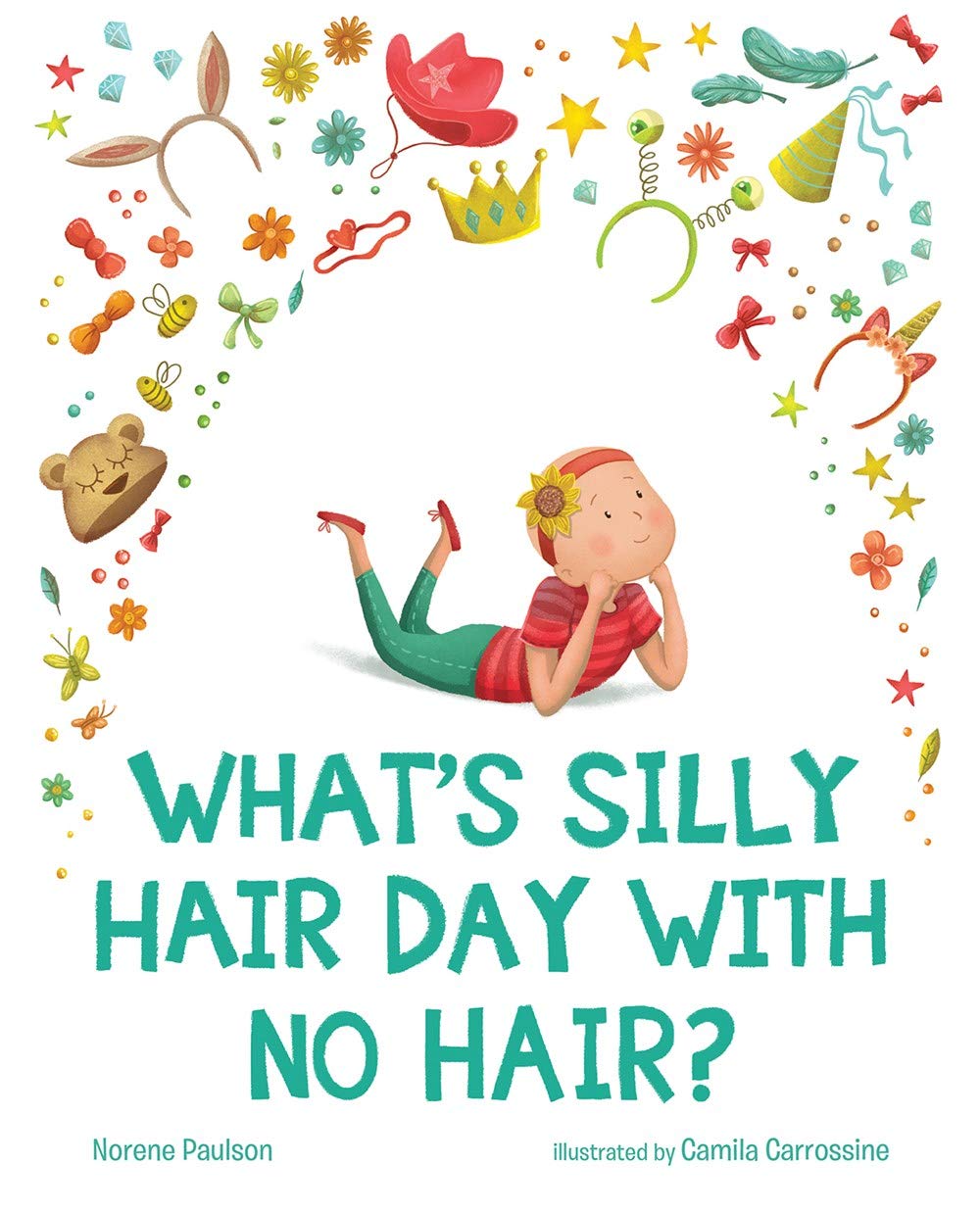
What’s Silly Hair Day With No Hair?

Written by Norene Paulson | Illustrated by Camila Carrossine


“Bea wore hats everywhere.” But unlike her friend Shaleah, who sometimes wore hats too, she didn’t have to worry about “hat hair.” Why? Well, while Bea had been born with hair, she began losing it and “before Bea turned four, she was bald.” Bea didn’t remember having hair, and her family and friends loved her, so she just took it in stride—usually.There were times when she wished she could style her hair like Shaleah and felt sad when “a classmate called her a mean name.” And then there was Silly Spirit Week at school. Friday was Silly Hair Day. Bea wondered how she could participate. Shaleah reassured her that they’d think of something.
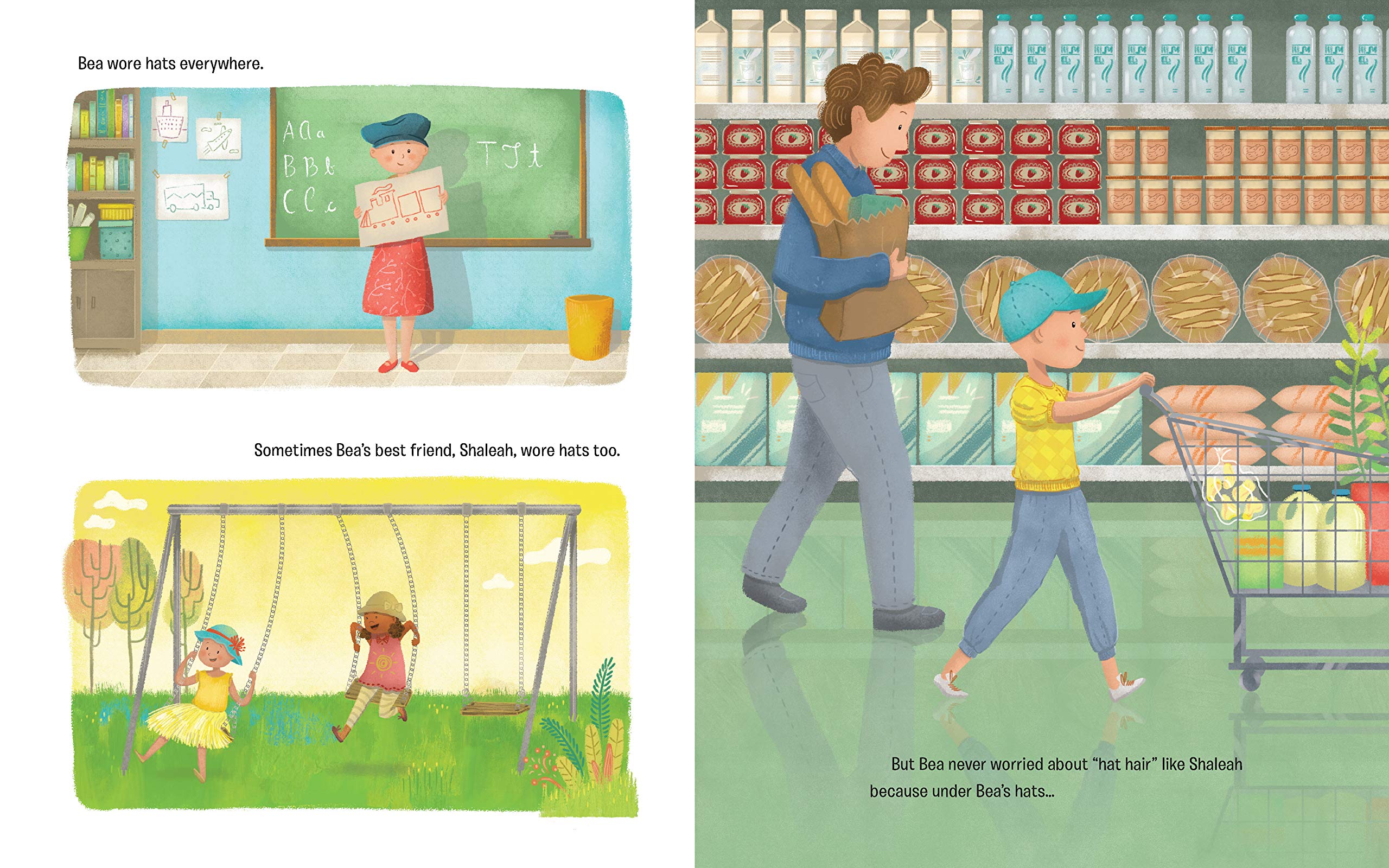
celebrate-picture-books-picture-book-review-what's-silly-hair-day-with-no-hair-hats

Image copyright Camila Carrossine, 2021, text copyright Norene Paulson, 2021. Courtesy of Albert Whitman & Company.

Shaleah’s first thought was a wig, so on Saturday Bea’s mom took them to a costume shop and Bea tried on lots of different wigs—but none seemed right. The next day they tried crafting hair with yarn and pompoms. It was silly, but still not right. Bea was getting discouraged. Maybe, she said, she should just stay home on Friday. But Shaleah reminded her that if she did she’d miss the Spirit Week picnic. And Shaleah vowed that if Bea stayed home, she’d stay home. Bea didn’t want Shaleah to miss the picnic, so they started thinking again.

For Monday’s Silly Costume Day and Tuesday’s Silly Backwards Day, Bea had great ideas. “On Wednesday Bea won the Wackiest Hat Award,” but she still didn’t have an idea for Silly Hair Day. Then during Silly Feet Day, she saw a temporary tattoo on the principal’s leg that gave her an idea. But first, she needed to get Shaleah and the principal’s approval. When they both said Yes, Bea was excited.
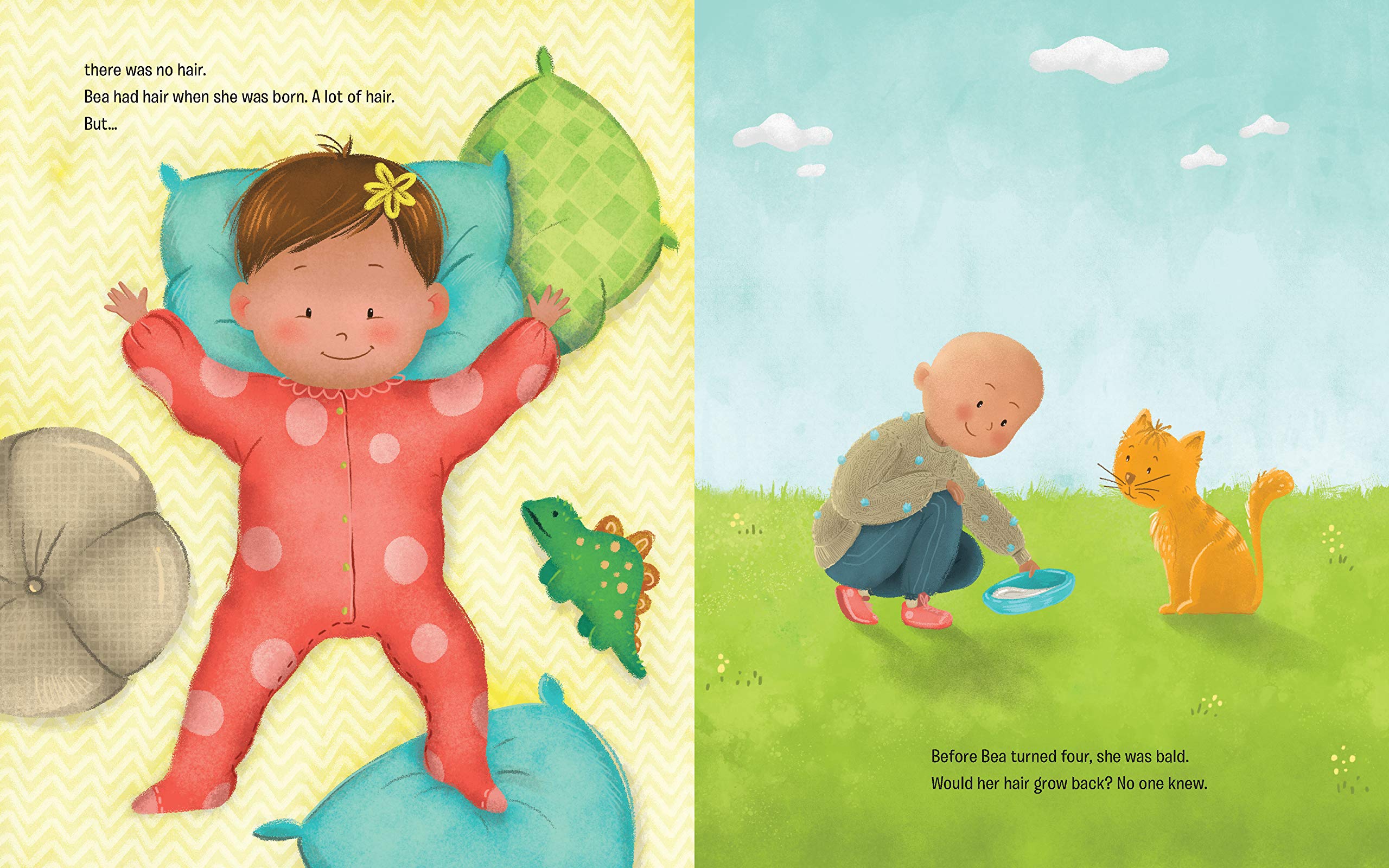
celebrate-picture-books-picture-book-review-what's-silly-hair-day-with-no-hair-baby

Image copyright Camila Carrossine, 2021, text copyright Norene Paulson, 2021. Courtesy of Albert Whitman & Company.

After school and late into the night, Bea and Shaleah worked on the idea. The next day they got to school early and put up a new sign. It read “FRIDAY: Silly Hair or Head Day.” The kids wondered what that was all about. Then Bea and Shaleah approached in hoodies and lowered the hoods to reveal colorful tattooed and bejeweled designs on Bea’s head and a skullcap for Shaleah. “‘Because now everyone can participate!’ Bea and Shaleah said together. Even the principal joined in with her own decorated cap. And all the kids—including Bea—enjoyed the Silly Spirit Week picnic.

An Author’s Note discussing hair loss due to Alopecia—as Bea has—and some cancer treatments, including online resources that can provide more information follows the text. Bea also offers readers some fun tips on applying temporary tattoos.
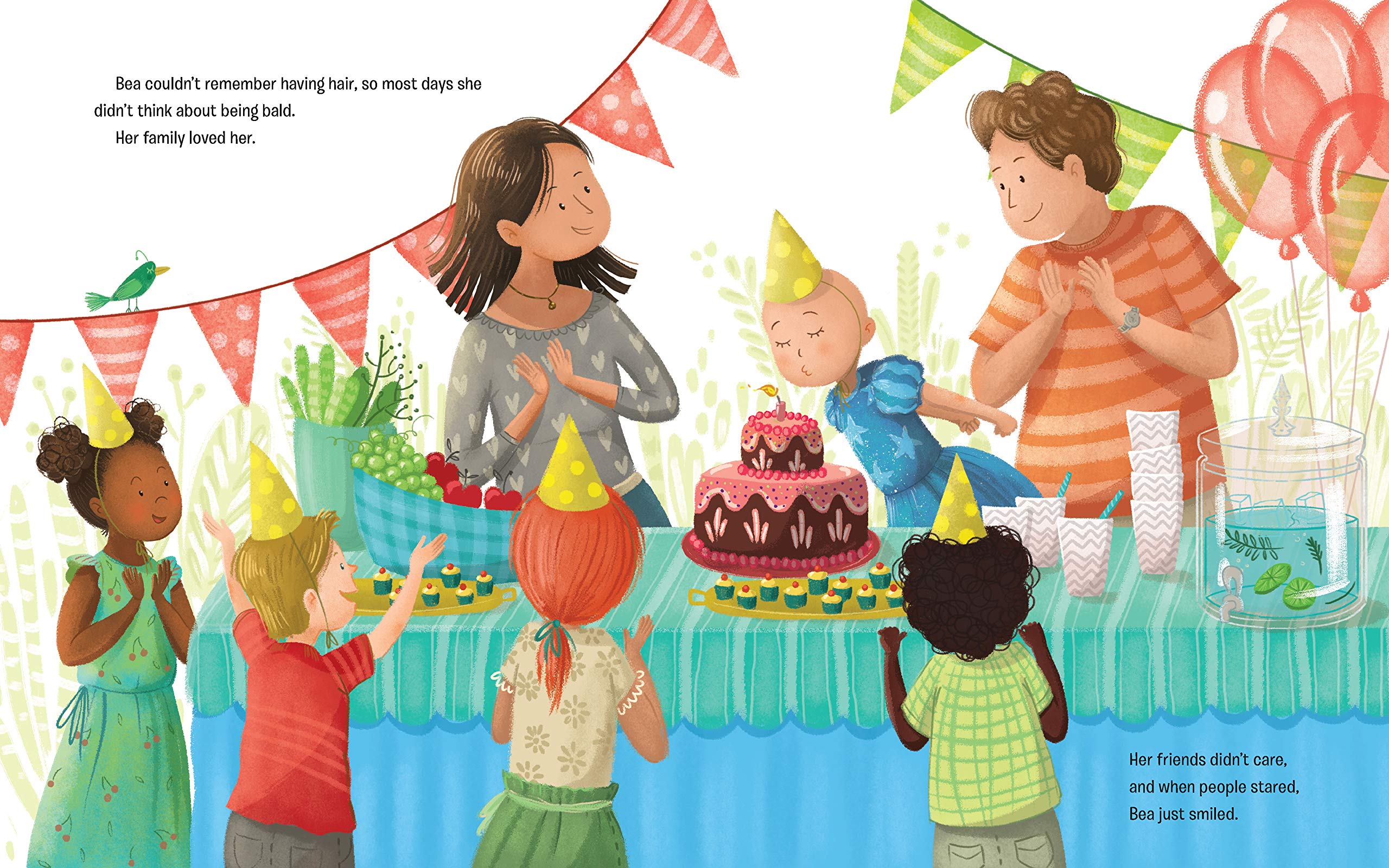
celebrate-picture-books-picture-book-review-what's-silly-hair-day-with-no-hair-party

Image copyright Camila Carrossine, 2021, text copyright Norene Paulson, 2021. Courtesy of Albert Whitman & Company.

Norene Paulson addresses childhood alopecia and hair loss due to cancer treatments or other causes in her sensitive and uplifting story. While briefly mentioning bullying, Paulson focuses on a common school spirit week event that leaves Bea out. By empowering Bea and her best friend Shaleah to devise a solution, Paulson invites young readers to both empathize with Bea and see how true friends support each other. Two foundations of Bea’s strong self-confidence and positive self-esteem are revealed in two short, important, and instructive sentences: “Her family loved her.” And “Her friends didn’t care.” Underlying the mystery of how Bea will solve her problem, Paulson provides an excellent way for parents, teachers, school administrators, and other caregivers to discuss inclusivity, acceptance, and friendship.

Camilla Carrossine’s engaging illustrations mirror Paulson’s story, allowing readers to understand and empathize with Bea’s experience and join in on Bea and Shaleah’s close friendship. Children will love the silly wigs Bea tries on, the playful updo of yarn Bea and Shaleah create, and the vibrant tattoos that Bea, Shaleah, and the principal all sport.

A unique and welcome book that allows children with alopecia and/or undergoing cancer treatment to be seen with new understanding from their peers, What’s Silly Hair Day with No Hair? is highly recommended for home bookshelves and for all school and public libraries.

Ages 4 – 7

Albert Whitman & Company, 2021 | ISBN 978-0807506080

Discover more about Norene Paulson and her books on her website. You’ll also find reading questions, a curriculum guide, and other resources for the book on her site here.

To learn more about Camilla Carrossine, her books, and her art, visit her website.

celebrate-picture-books-picture-book-review-what's-silly-hair-day-with-no-hair-cover

You can find What’s Silly Hair Day With No Hair? at these booksellers

Amazon | Barnes & Nobel | Books-a-Million

To support your local independent bookstore, order from 

Bookshop | IndieBound

Picture Book Review
 

September 9 – It’s Family Meals Month

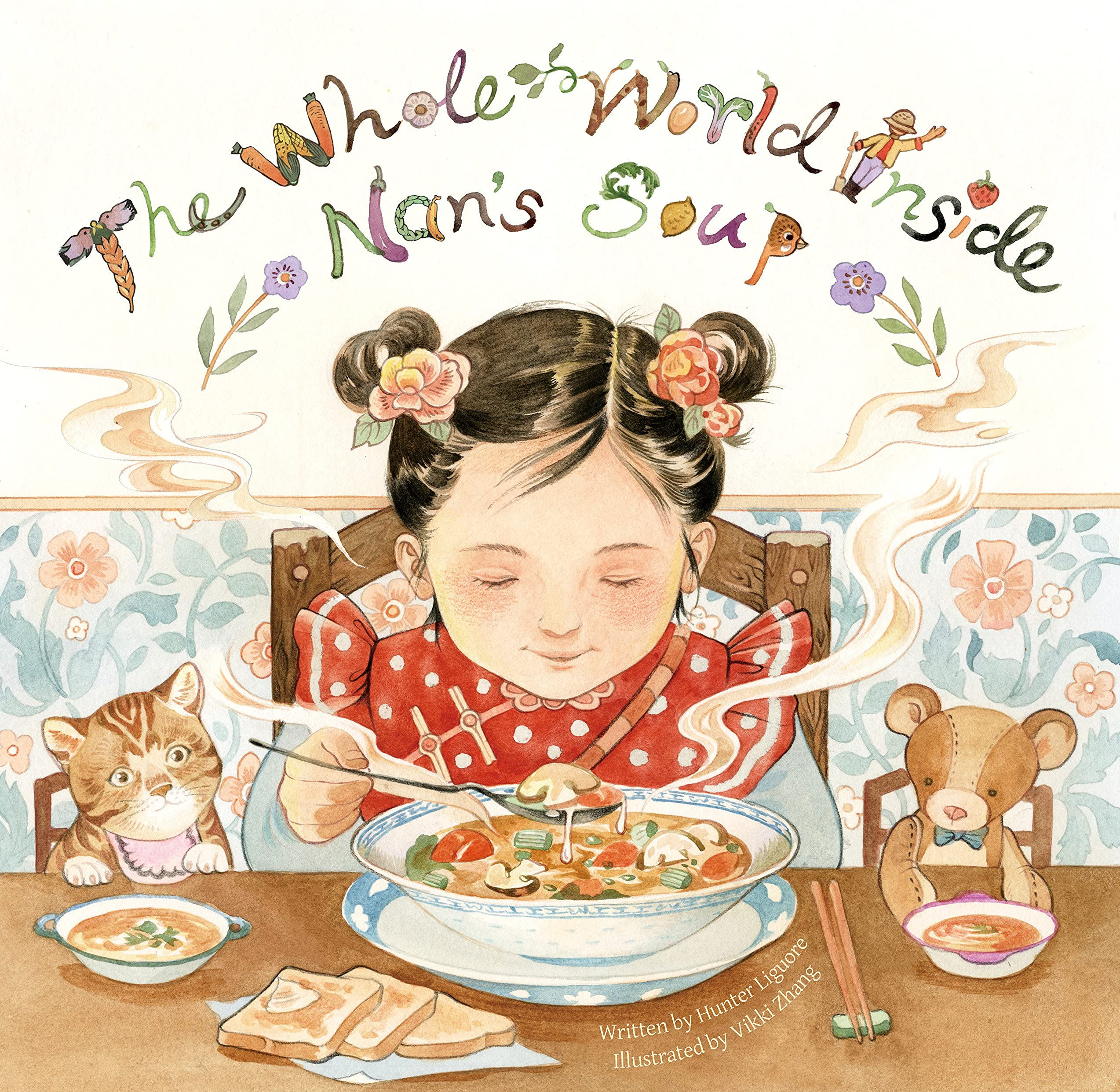
celebrate-picture-books-picture-book-review-the-whole-world-inside-nans-soup-cover

About the Holiday

This month-long holiday got its start in 2015 and was designed as a way to support families in enjoying more meals made with fresh ingredients together. Over the years National Family Meals Month™ has gained recognition and grown into a social movement that promotes family bonding and education. Studies show that children who eat meals as a family are happier, less likely to get into trouble, and do better in school. To learn more about the Family Meals Movement and how you can celebrate this month and all year around, visit the Family Meals Movement website.

The Whole World Inside Nan’s Soup

Written by Hunter Liguore | Illustrated by Vikki Zhang


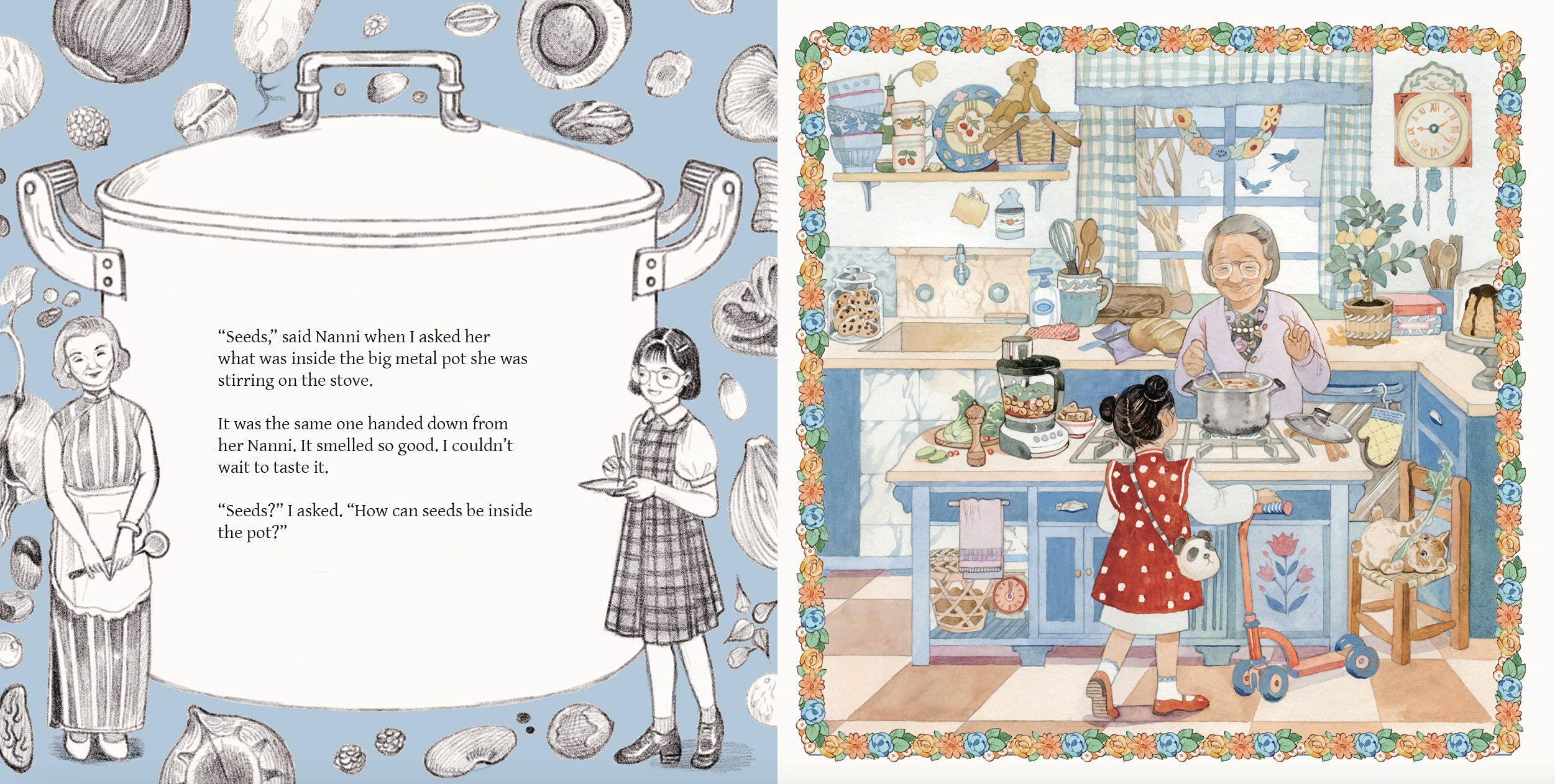
A little girl stands at the stove watching her Nanni stir a big metal pot. She asks her Nanni what’s in the pot and learns that there are seeds inside. How can that be? She wonders. They are the “‘seeds that grew up to vegetables,’” Nanni tells her and then reveals that “‘there are also gardeners in the pot.’” That seems impossible the girl thinks. How can that be? So her grandmother tells her about the gardeners that raised the vegetables, the soil and rain, and the sun, the moon, and the stars that are also in the pot.

celebrate-picture-books-picture-book-review-the-whole-world-inside-nans-soup-kitchen

Image copyright Vikki Zhang, 2021, text copyright Hunter Liguore, 2021. Courtesy of Yeehoo Press.

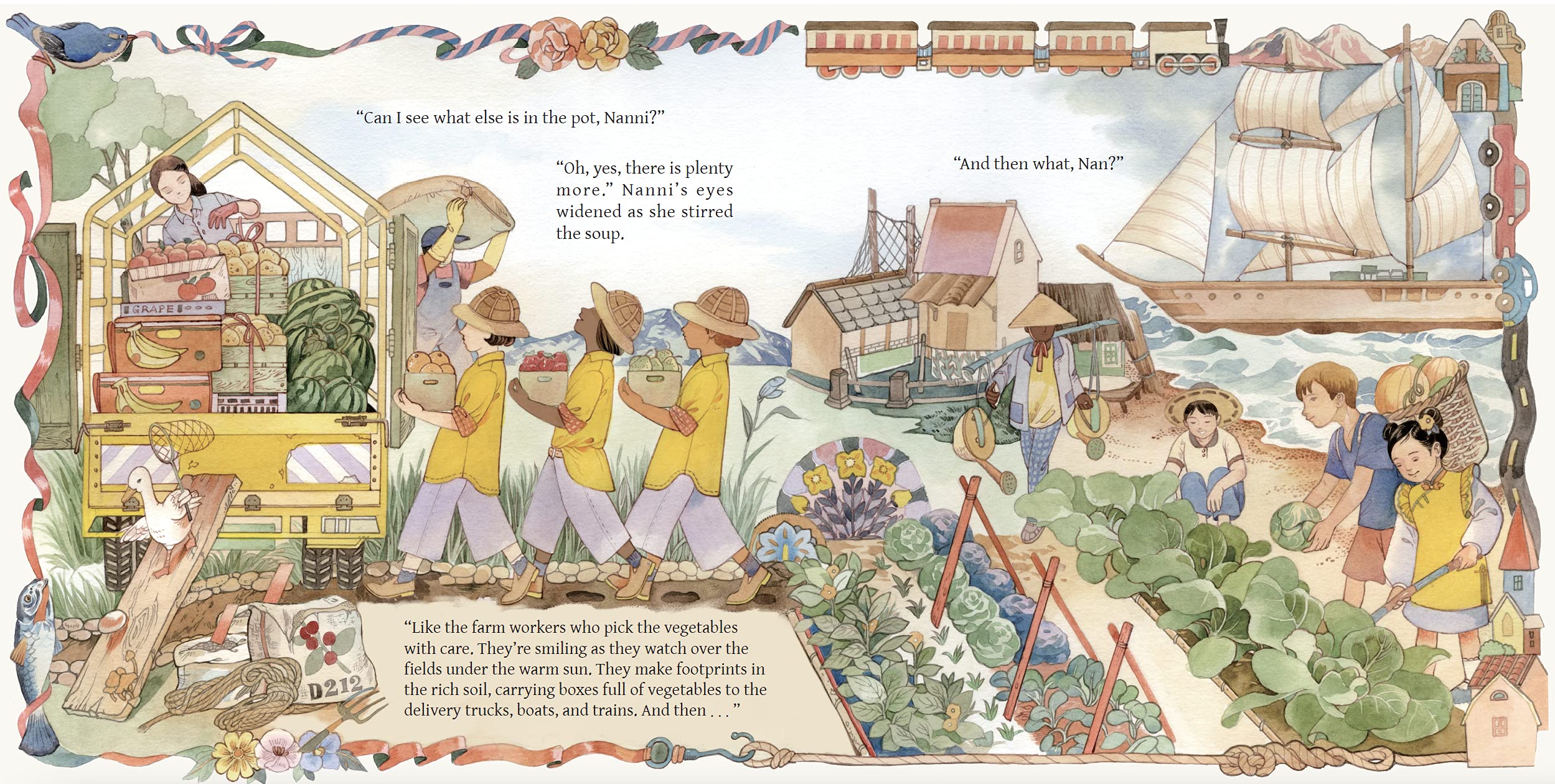
The little girl is catching on. She sees them all too and can hear the buzz of the bees that “pollinate the flowers, that grow up to be vegetables, planted by the gardeners, with their gentle hands.” She stands on tiptoe to see what else is in the pot. It swirls with the farm workers who “make footprints in the rich soil, carrying boxes full of vegetables to the, delivery trucks, boats, and trains.”

You might think that’s all the pot can hold, but there’s more. There are the merchants who “work in teams to bring the baskets of farm vegetables to the market” and the onlookers, “‘curious to see what they bought.’” The little girl thinks that must be everything, but Nanni takes another look and discovers a bus inside the pot. “‘A BUS, Nan! How can there be a bus inside the pot?’”

celebrate-picture-books-picture-book-review-the-whole-world-inside-nans-soup-farm-workers

Image copyright Vikki Zhang, 2021, text copyright Hunter Liguore, 2021. Courtesy of Yeehoo Press.

This is the bus Nanni took to the market. And what’s more, the bus driver, all the passengers, and everything they passed in all the neighborhoods they drove through on their way to the market are inside the pot too. “‘Wow, Nan!’” the girl exclaims. Could there be anything else? Nanni thinks and then a beaming smile crosses her face. Her granddaughter catches her excitement and asks “‘What, Nanni? What else did you see inside the pot?’”

“‘Love,’” Nan answers. The love of all the grandmothers and mothers who passed the recipe down through the generations just so she could make the soup for her own granddaughter. The little girl wants to learn the recipe too. But Nan tells her she must be able to remember everything that goes into the pot. I do know, the girl assures her. “‘The whole world.’”

celebrate-picture-books-picture-book-review-the-whole-world-inside-nans-soup-photos

Image copyright Vikki Zhang, 2021, text copyright Hunter Liguore, 2021. Courtesy of Yeehoo Press.

Little ones will listen wide-eyed to Hunter Liguore’s whimsical tale that gently educates while building page upon page to a tender climax with plenty of humor along the way. The sweet and playful relationship between the girl and her Nanni will charm children and the idea of how the world is connected will resonate with kids beyond the soup pot and inform their view of the world. Liguore’s dialogue-rich text that reflects the cadences of real conversations with kids makes the story a perfect read aloud.

Juxtaposing illustrations with a retro vibe next to lovely fanciful drawings, Vikki Zhang mirrors the intergenerational theme of the story while more than satisfying readers curiosity about all of the quirky ingredients in Nanni’s soup. Kids are first invited into Nanni’s kitchen, a wonder that combines both old world and modern touches. In three clever illustrations, Zhang imagines the gardeners and a café inhabiting stylized cooking pots, and other “ingredients,” such as farm workers, modes of transportation, and nearby neighborhoods are presented in intricately detailed fantastical watercolors that kids and adults will want to linger over. A final image of Nan and the little girl’s heritage told through photographs, fine china, and jewelry is a loving look at all of the Nan’s, mothers, and daughters who have left a lasting legacy in their recipe.

A beautiful and fun book for adults—and especially grandparents—to share with children, The Whole World Inside Nan’s Soup would make a meaningful gift and a welcome addition to home, school, and public libraries.

Ages 4 – 7

Yeehoo Press, 2021 | ISBN 978-1953458063

Discover more about Hunter Liguore and her books on her website. You can find a Teaching Guide and Lesson Plan Activity Kit for teachers, homeschoolers, or just to enjoy at home on Hunter’s site here.

To learn more about Vikki Zhang, her books, and her art, visit her website.

Family Meals Month Activity

celebrate-picture-books-picture-book-review-souper-maze

Souper Maze!


You can’t eat soup without a spoon! Can you help the spoon get through the maze to the bowl in this printable puzzle?

Souper Maze Puzzle  | Souper Maze Solution!

celebrate-picture-books-picture-book-review-the-whole-world-inside-nans-soup-cover

You can find The Whole World Inside Nan’s Soup at these booksellers

Amazon | Barnes & Noble | Books-a-Million

To support your local independent bookstore, order from

Bookshop | IndieBound

Picture Book Review
 

September 8 – It’s Friendship Month

celebrate-picture-books-picture-book-review-all-we-need-cover

About the Holiday

Do you have friends you haven’t seen or talked to in a while? Is there someone new at work or school who could use a friend to show them the ropes or grab lunch with? If so, this month’s holiday gives you the opportunity to reach out and say hi. Instituted a decade ago by the Oddfellows organization in the UK, Friendship Month is a super time to show kindness to those you know and those you don’t—yet!  

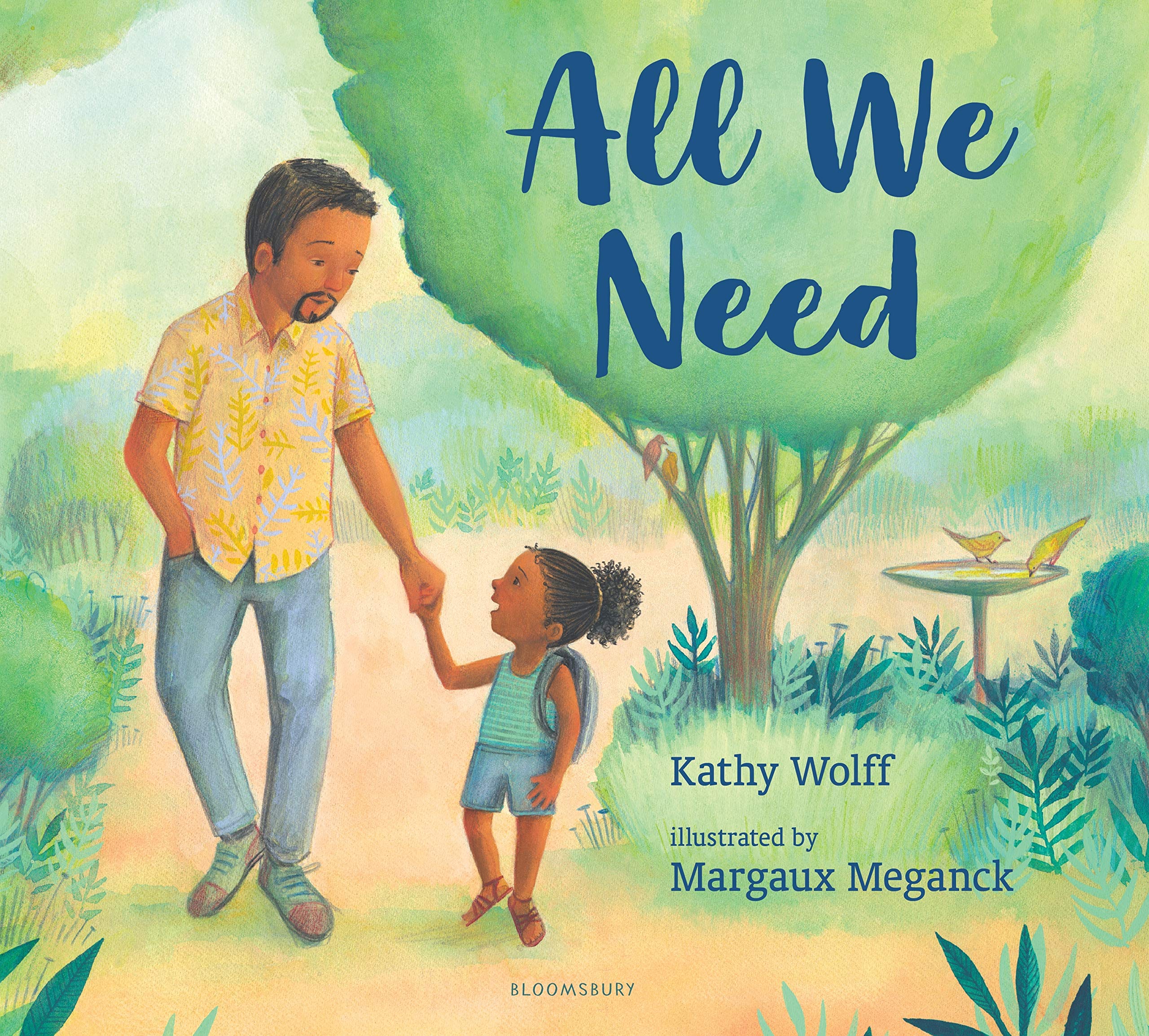
All We Need

Written by Kathy Wolff | Illustrated by Margaux Meganck


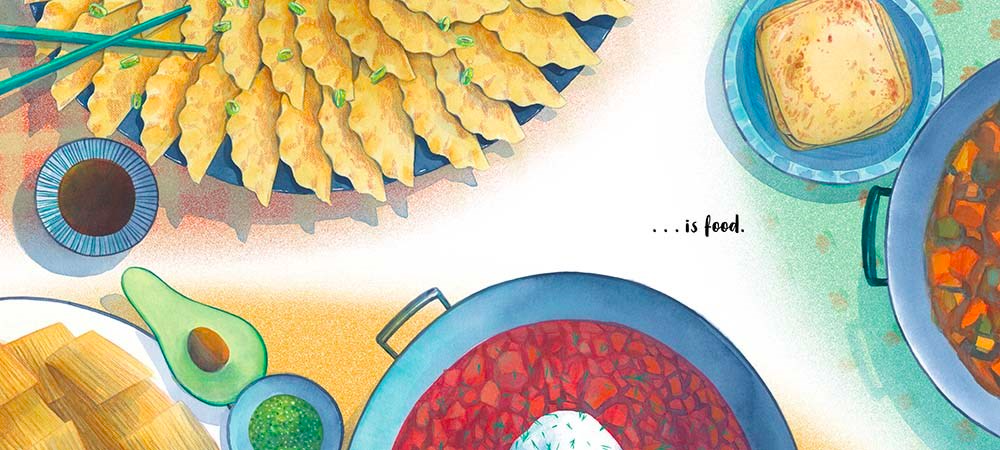
In All We Need, Kathy Wolff and Margaux Meganck work in perfect harmony to show children that happiness resides in simple basics that satisfy our needs while nurturing us and bringing us together. Wolff’s lilting lyrical verses give Meganck a strong framework for her lovely illustrations that follow a group of children and their families from a park to a potluck community dinner. Each of Wolff’s verses are presented on two double-page spreads that invite readers to guess what necessity is being described before they turn the page. These poignant page turns also provide a short beat between around the answer that allows children to think a moment about its importance to them and others.

celebrate-picture-books-picture-book-review-all-we-need-cooking

Image copyright Margaux Meganck, 2021, text copyright Kathy Wolff, 2021. Courtesy of Bloomsbury Children’s Books.

The book begins in a park with Maganck’s a mother, her toddler, and her daughter who is sitting against a tree and holding a dandelion in the foreground. The long view takes in a fountain splashpad. Wolff reveals, “All we need / is what’s found in the breeze, / in the stillness of nothing, in the rustle of trees, / when we take a deep breath, what’s not seen—but is there . . . / All we need . . ..” Turn the page and a close-up of the girl blowing the dandelion while her brother tries to capture the flying fluff reveals “. . . is air.”

celebrate-picture-books-picture-book-review-all-we-need-food

Image copyright Margaux Meganck, 2021, text copyright Kathy Wolff, 2021. Courtesy of Bloomsbury Children’s Books.

The next page spread takes readers into the splashpad, where children cavort and a little girl is taking a drink break. An Asian mother watches her son enjoying the spray of the fountain. Turn the page and you can almost feel the cooling droplets as the kids revel in their fun. A couple of pages later, it’s time to leave and two families make their way down a city block towards home. Snapshots of the three main families cooking food will pique kids’ curiosity as to what they’re making and where they are going as following pages show them securing the meals for travel.

celebrate-picture-books-picture-book-review-all-we-need-flowers

Image copyright Margaux Meganck, 2021, text copyright Kathy Wolff, 2021. Courtesy of Bloomsbury Children’s Books.

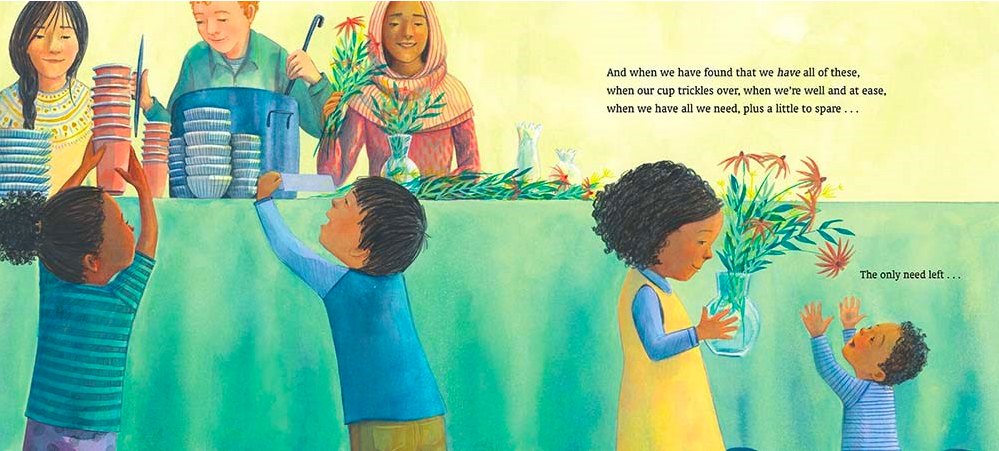
Readers discover that they are all going to the same place, and they greet each other with smiles and hugs. The kids help their parents decorate tables with flowers and set up the serving table with plates, bowls, and cups. Maganck’s illustration of the crowd that gathers to enjoy the food and camaraderie as well as Wolff’s appeal “to share” offers a welcome opportunity for readers and adults to talk about what kind of gathering it might be, when they have attended similar events, and what community events mean to them.

celebrate-picture-books-picture-book-review-all-we-need-dinner

Image copyright Margaux Meganck, 2021, text copyright Kathy Wolff, 2021. Courtesy of Bloomsbury Children’s Books.

A heartening tribute to our universal bonds, All We Need is an eloquent invitation to appreciate life’s simple gifts and build community around them. The book would be a stirring addition to home, classroom, school, and public library collections.

Ages 3 – 8

Bloomsbury Children’s Books, 2021 | ISBN 978-1619638747

Discover more about Kathy Wolff and her books on her website.

To learn more about Margaux Meganck, her books, and her art, visit her website.

Friendship Month Activity

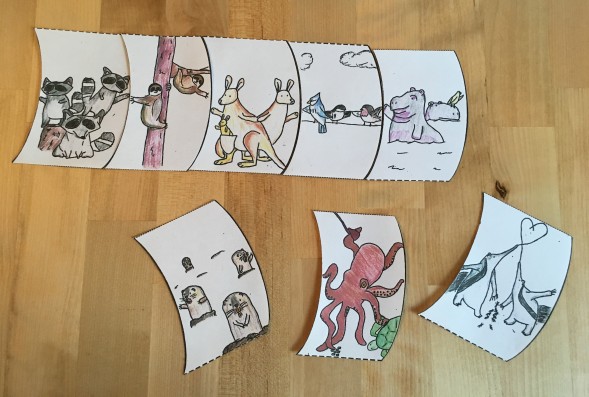
celebrate-picture-books-picture-book-review-give-me-your-hand-puzzle-cutout-no-copyright


Give Me Your Hand! Puzzle


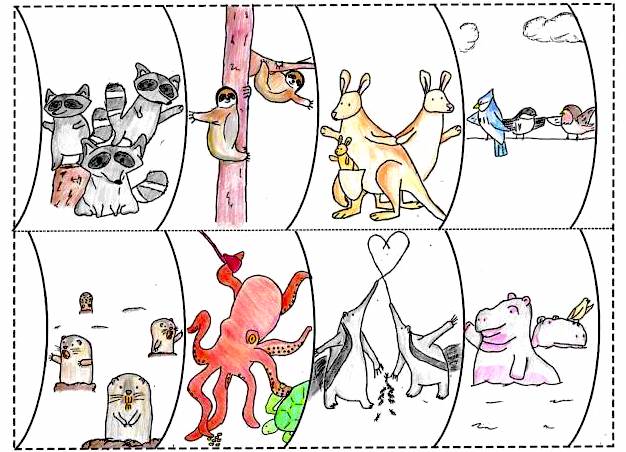
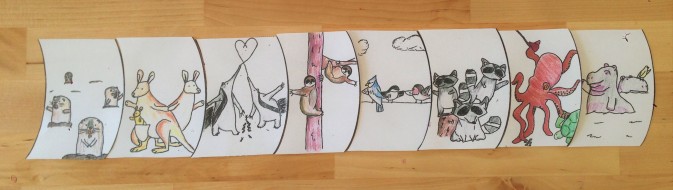
In this printable Give Me Your Hand! Puzzle, everyone is welcomed with a handshake. Offering friendship to all, the interchangeable pieces can be mixed and matched as the animals become buddies with one another. 

Supplies

celebrate-picture-books-picture-book-review-UN-day-puzzle

Directions

  1. Print the puzzle: to make the puzzle sturdier: Print on heavy stock paper or glue the page to poster board
  2. Color the pictures with colored pencils or crayons
  3. Cut the pieces apart
  4. Switch the pieces around to make many alternate pictures

celebrate-picture-books-picture-book-review-UN-day-puzzle

celebrate-picture-books-picture-book-review-all-we-need-cover

You can find All We Need at these booksellers

Amazon | Barnes & Noble | Books-a-Million

To support your local independent bookstore, order from

Bookshop | IndieBound

Picture Book Review
September 7 – Buy a New Book Day

celebrate-picture-books-picture-book-review-the-leaf-thief-cover

About the Holiday

Today’s holiday was established in 2012 to promote an appreciation for the influence books have made on culture and civilization as a whole. While watching shows and movies is fun, there’s nothing like ensconcing yourself with a good book and letting your imagination soar or learning new facts with the words in your hand.  To celebrate today and Read a New Book Month all through September, visit your local bookstore to see what’s on the shelves, call up and request a title or two, or order online to buy great reads for everyone in the family. And don’t forget to add today’s reviewed book to the list!

The Leaf Thief

Written by Alice Hemming | Illustrated by Nicola Slater


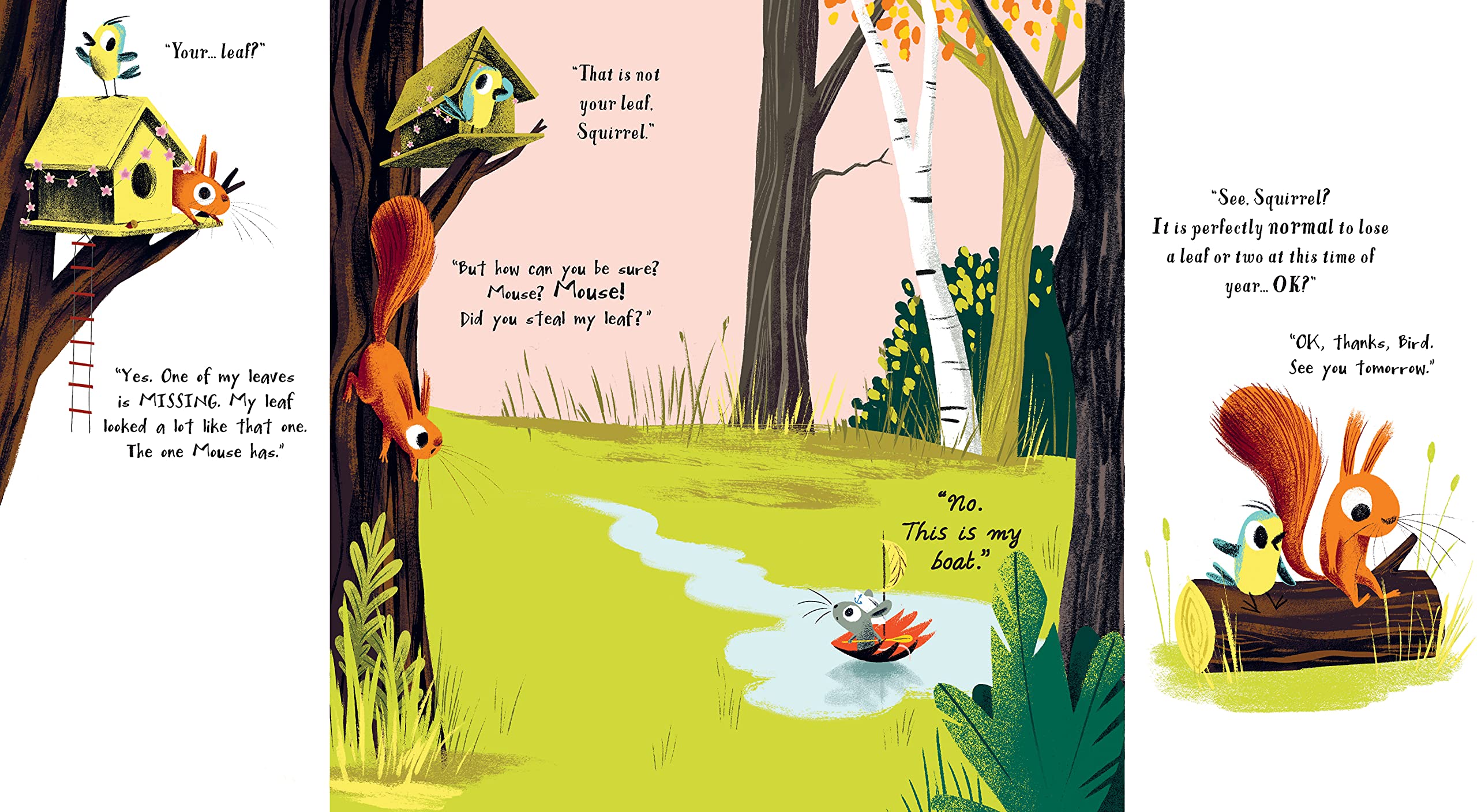
Squirrel loved autumn, when he could lounge on a branch under his colorful leafy canopy and count the patterns: “Red, gold, orange… red, gold, orange… red, gold…” Suddenly, Squirrel realized one of his leaves was missing. He began a frantic search. He looked under Ant’s rock and in Bird’s house. Then he spied Mouse floating in a puddle in a boat that looked just like his leaf.

celebrate-picture-books-picture-book-review-the-leaf-thief-bird

Image copyright Nicola Slater, 2021, text copyright Alice Hemming, 2021. Courtesy of Sourcebooks Jabberwocky.

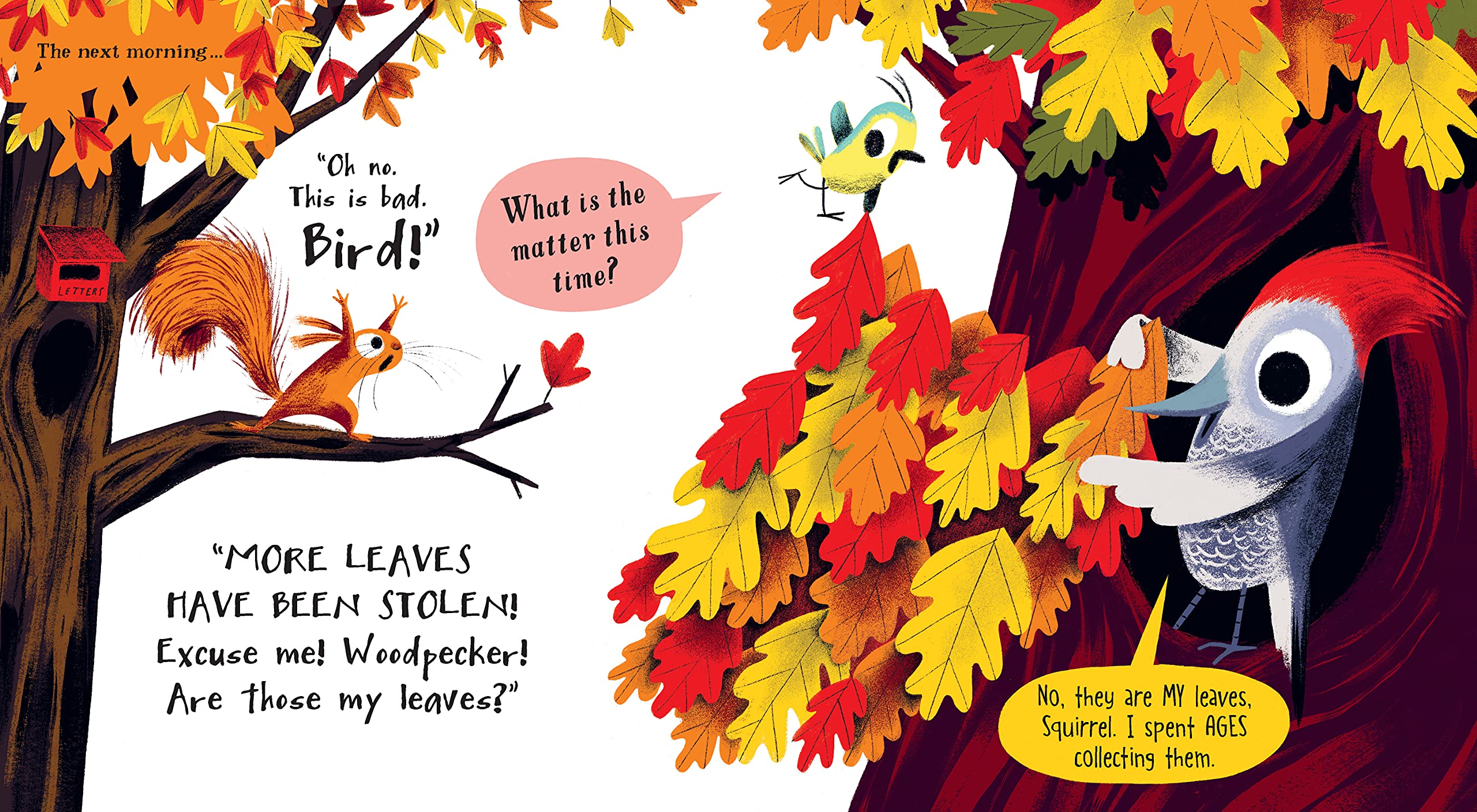
Bird tried to explain that it was “‘perfectly normal to lose a leaf or two at this time of year.’” Squirrel seemed to understand. But the next morning, Squirrel was shocked to discover that more of his leaves had been stolen—probably by Woodpecker, who was making a big blanket from them right outside his knothole. But Woodpecker protested that they were his and he’d “spent AGES collecting them.”

celebrate-picture-books-picture-book-review-the-leaf-thief-mouse

Image copyright Nicola Slater, 2021, text copyright Alice Hemming, 2021. Courtesy of Sourcebooks Jabberwocky.

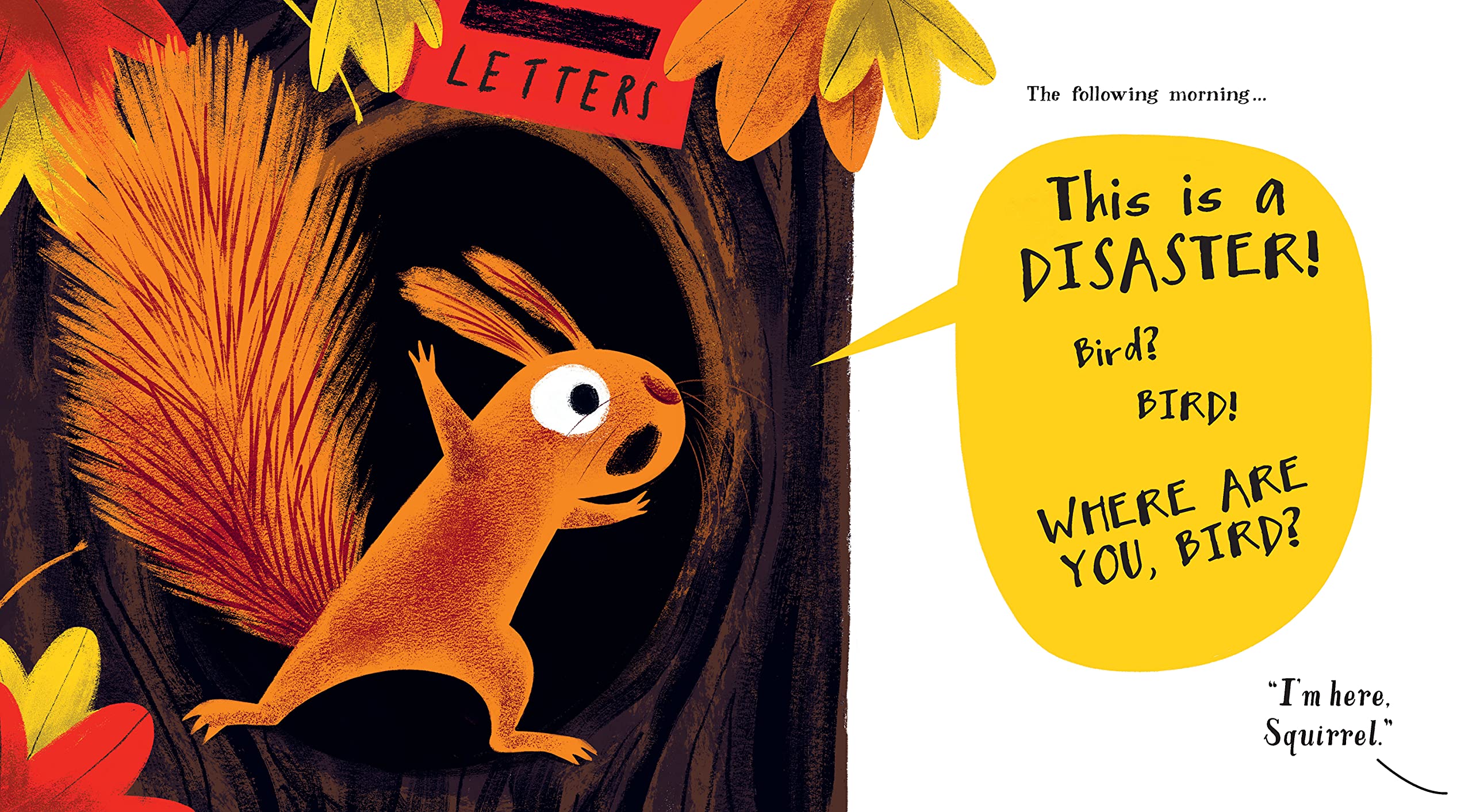
Bird tried to remind Squirrel that the same thing had happened last year, and Squirrel agreed to try and relax. But the next morning, Squirrel woke up to a “DISASTER!” and when he saw Bird’s house festooned with leafy decorations, he accused her of being the thief. Bird patiently told Squirrel she was not the thief but offered to show him who was. Squirrel was rarin’ to meet them “‘because,” as he said, “I’ve got a few things I’d like to say to them!’”

celebrate-picture-books-picture-book-review-the-leaf-thief-woodpecker

Image copyright Nicola Slater, 2021, text copyright Alice Hemming, 2021. Courtesy of Sourcebooks Jabberwocky.

Bird took Squirrel to the little porch around her house where the wind whipped the little ladder, swirled leaves, and even blew away Mouse’s sailor’s hat. Then Bird calmly, but sternly, related the facts about fall and reassured Squirrel that the leaves would be back in the spring. Squirrel was relieved. “Of course! No Leaf Thief at all. Silly me,’” he said. “I’m going to sleep well tonight!’” But the next morning the grass was gone! Who had stolen it?!

Backmatter includes an engaging discussion about the changes that take place for trees and other parts of nature during autumn.

celebrate-picture-books-picture-book-review-the-leaf-thief-discover

Image copyright Nicola Slater, 2021, text copyright Alice Hemming, 2021. Courtesy of Sourcebooks Jabberwocky.

Alice Hemming’s clever autumn story about a proprietary squirrel and his beloved leaves is packed with personality, humor, and heart. As long-term memory challenged Squirrel tries to grapple with the changing season, Bird serves as a patient and reassuring friend, undaunted by Squirrel’s mistaken accusations. When Bird’s unflappability is finally pushed to the edge, her curt repeated recitation of the facts brings a laugh. The pitch-perfect ending plays beautifully off the rest of the story and will have kids wanting to read it all again.

Nicola Slater’s witty illustrations capture Squirrel’s bluster, Bird’s forbearance, Woodpecker’s jauntiness, and Mouse’s creativity with emotion and fresh perspectives. Her vibrant colors and nods to today’s decorating whims as well as her character’s lively expressions create an atmosphere that is at once warm, inventive, and inviting. Leaves—and feathers—may get ruffled, but this little community of friends will stick together through all the seasons.

Beguiling, funny, and with a pinch of breezy education, The Leaf Thief is a story kids will want to jump into again and again. As today’s holiday suggests, the book is one to buy for home, classroom, school, and public libraries.

Ages 4 – 8

Sourcebooks Jabberwocky, 2021 | ISBN 978-1728235202

Discover more about Alice Hemming and her books on her website.

You can connect with Nicola Slater on Twitter.

Buy a Book Day Activity

celebrate-picture-books-picture-book-review-leaf-mobile-craft

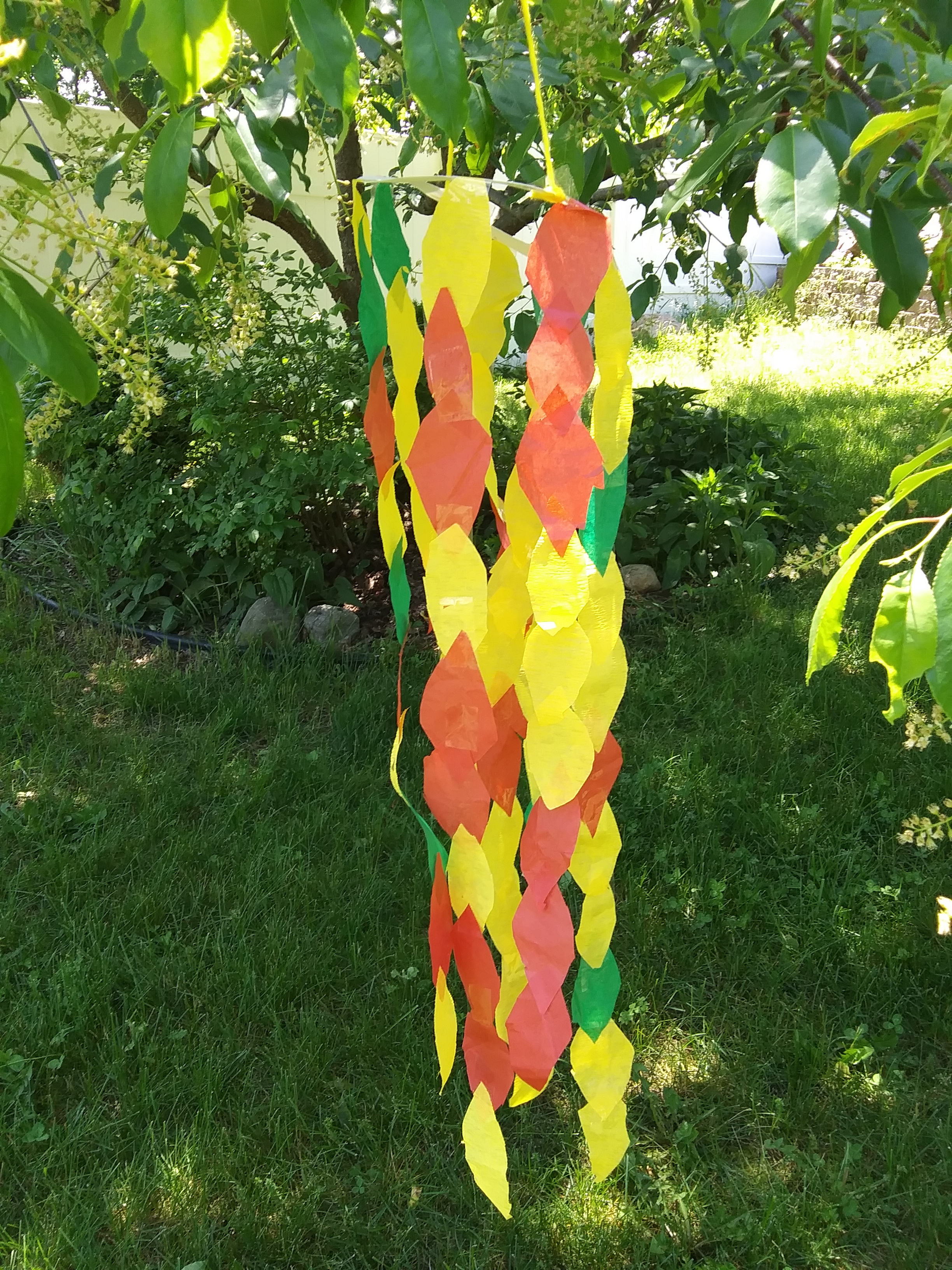
Autumn Leaf Mobile


You can bring the beauty of autumn leaves into your home with this fun-to-make mobile. Use tissue paper, construction paper, or even real leaves to make this mobile, that makes a great pattern and counting activity to do with young children too. 

Supplies

  • Paper Plate
  • Scissors
  • Tissue Paper/Crepe Paper
  • Tape
  • String/ Yarn

Directions

  1. Cut out the center circle of the paper plate and use the outside ring as the top of your mobile
  2. Have children pick out colors. We did a fall theme, but you can really let the kids be creative here. 
  3. Cut out tissue paper or crepe paper into leaf shapes. Adults will have to cut out the bulk of leaves. My six year old was able to cut the leaf shapes out, but was tired after 5. I used about 60-70 leaves.
  4. Have children organize leaves into patterns.
  5. Tape leaves together so they overlap. 
  6. Tape chain to paper plate ring
  7. Tie String or yarn to the top of the mobile

celebrate-picture-books-picture-book-review-the-leaf-thief-cover

You can find The Leaf Thief at these booksellers

Amazon | Barnes & Noble | Books-a-Million

To support your local independent bookstore, order from

Bookshop | IndieBound

Picture Book Review
September 3 – National Food Bank Day

celebrate-picture-books-picture-book-review-saturday-at-the-food-pantry-cover

About the Holiday

National Food Bank Day was established by St. Mary’s Food Bank, the world’s first food bank, which was founded by John van Hengel in Phoenix, Arizona in 1967. The idea spread throughout the country, and now St. Mary’s Food Bank distributes 250,000 meals daily with the help of staff, volunteers, and partner agencies, making it one of the largest food banks in the United States. Food banks across the country help millions of men, women, and children who live with food insecurity due to job loss, illness, and other circumstances. Many food banks offer educational opportunities that help people change their situation and begin anew. Often, those who have benefited from the programs return to volunteer and contribute to the very food bank that staved off hunger to do the same for others. To learn more about St. Mary’s Food Bank, visit their website. To find a food pantry in your area to get help for yourself, to donate, or to volunteer, visit the Ample Harvest website.

I’d like to thank Albert Whitman & Company for sharing a copy of Saturday at the Food Bank with me for review consideration. All opinions on the book are my own.

Saturday at the Food Pantry

Written by Diane O’Neill | Illustrated by Brizida Magro


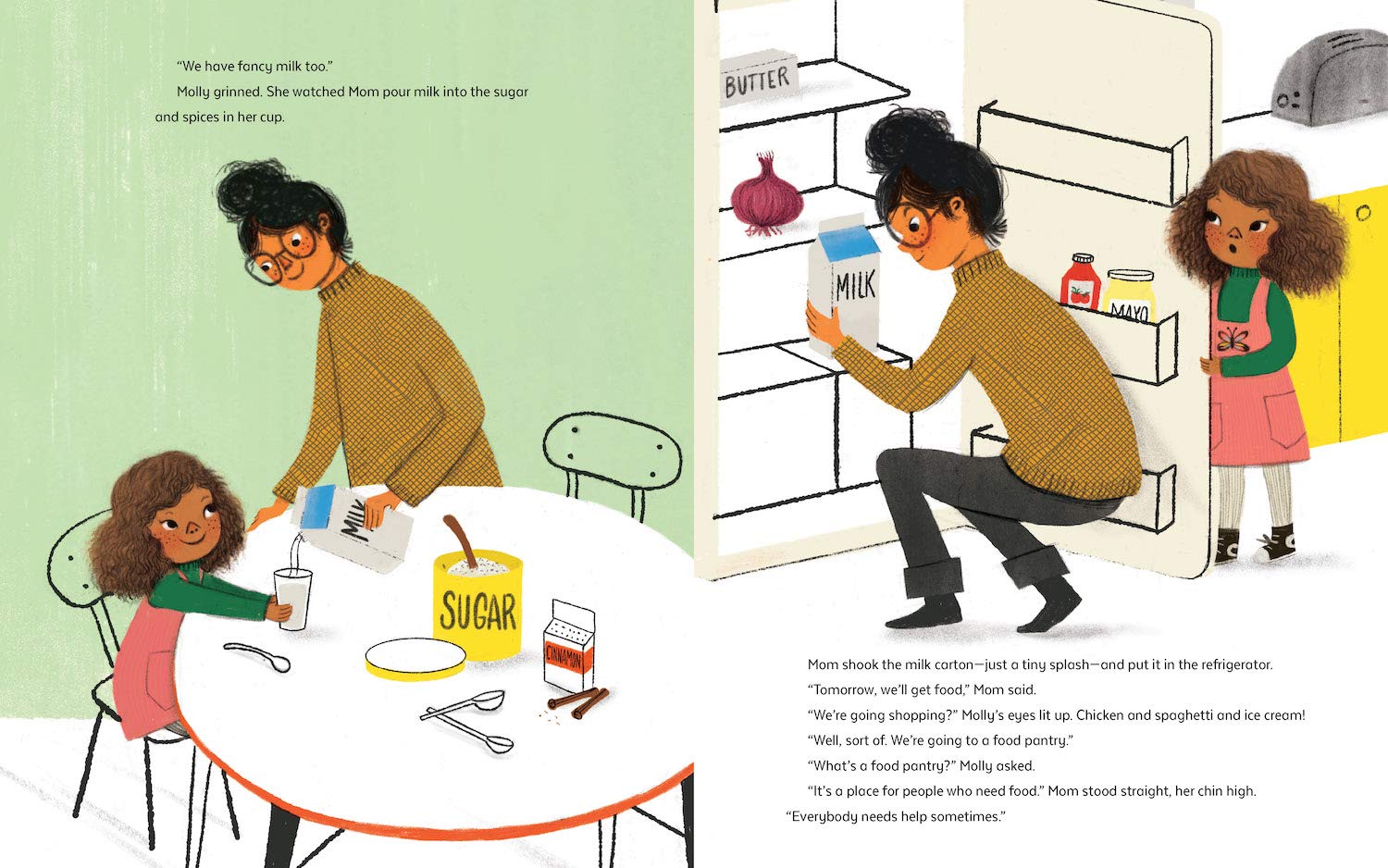
When Molly came to the table for dinner, she saw that they were having chili—again. She and her mom had eaten chili for two weeks straight. But there was “fancy milk too.” Molly smiled as her mom measured sugar and cinnamon into her glass and added milk.” There was only a splash of milk left when Mom put it back into the almost-empty refrigerator.

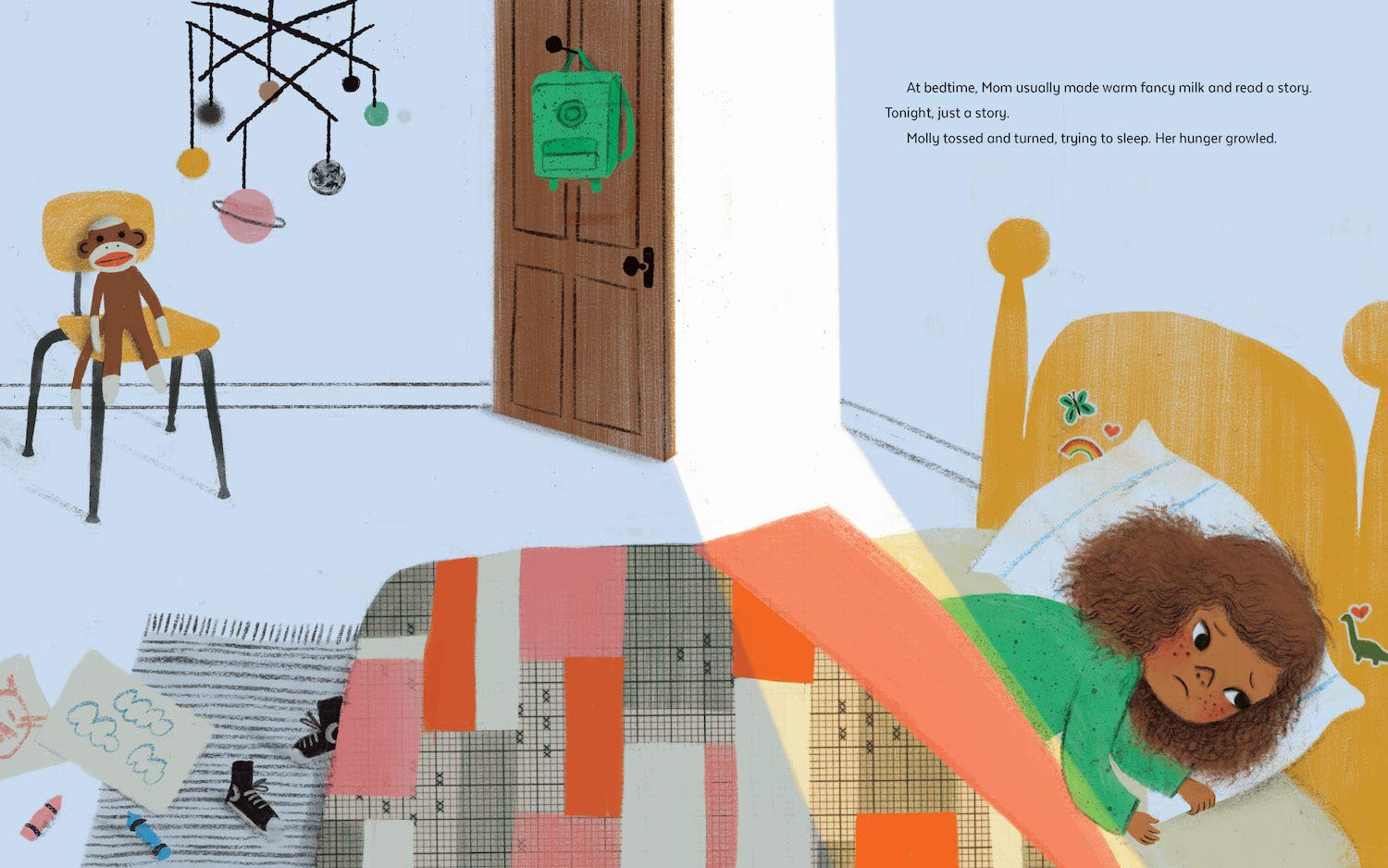
Tomorrow, Mom said, they’d go shopping. “Molly’s eyes lit up” as she imagined “chicken and spaghetti and ice cream.” But Molly’s mom tempered her expectations, saying that they’d be going to a food pantry. A food pantry, she explained, is “‘a place for people who need food…. Everybody needs help sometimes,’” she added. That night there was no warm milk before Molly went to bed and her stomach growled.

celebrate-picture-books-picture-book-review-saturday-at-the-food-pantry-milk

Image copyright Brizida Magro, 2021, text copyright Diane O’Neill. Courtesy of Albert Whitman & Company.

In the morning when Molly and her mom got to the food pantry there was already a line waiting for it to open. Molly had brought paper and crayons and sat down to draw. Then she saw a girl who was in her class at school. She called out hi, but “Caitlin looked away.” When Molly ran over, Caitlin told her she didn’t want anyone to know that she and her grandmother needed help.

Molly went back to her mom, wondering if there was “something wrong with needing help.” She wanted to go home, but she was also hungry. Molly’s mom suggested she draw a picture, and the woman in front of them asked if she’d draw one for her too. Then everyone in line seemed to want a picture. Molly ran back to Caitlin to ask for help. Caitlin sat down and began to draw too.

celebrate-picture-books-picture-book-review-saturday-at-the-food-pantry-hungry

Image copyright Brizida Magro, 2021, text copyright Diane O’Neill. Courtesy of Albert Whitman & Company.

When the door opened, Molly and Caitlin each had a picture for the woman who welcomed them in too. Molly noticed that her mom had to sign in before she got a cart and they could begin shopping. They didn’t do that at the grocery store. The shelves at the food pantry were stocked with items she recognized from the store they usually shopped with. She ran over and took a box of sugar cookies off the shelf, but her mom told her “‘They—the people in charge—they’ll want us to take sensible stuff.’” Molly felt embarrassed and couldn’t understand why the cookies were there if they couldn’t take them. She sadly returned them to the shelf. As they went to look for food, Molly thought her mom didn’t want to be seen there, either—just like Caitlin. In a whisper, Molly reminded her that everyone needs help sometimes.

They went through the store taking one can, bag, or box of the food they needed. Then Molly’s mom reached for a box of powdered milk. They could have fancy milk that night. When they got to the checkout desk, Molly and Caitlin found their drawings hanging on the wall. The man at the counter bagged their groceries and then handed Molly’s mom a box of sugar cookies. “‘Saw your little girl looking at these. She can have them, if that’s okay with you, ma’am,’” he said. Molly noticed that her mom looked like she might cry.

celebrate-picture-books-picture-book-review-saturday-at-the-food-pantry-line

Image copyright Brizida Magro, 2021, text copyright Diane O’Neill. Courtesy of Albert Whitman & Company.

As they were walking home, Molly saw Caitlin and her grandmother coming the same way. They were all happy to discover that they were neighbors. Molly’s mom explained that she’d been looking for work since the factory closed, and Caitlin’s grandma said she’d been sick. Caitlin understood, but wished they didn’t have to shop at a food pantry. But then Molly told her that “everybody needs help sometimes” and reminded her that they had helped make the man at the checkout counter feel happy with their drawings. Caitlin hadn’t thought about it that way. She smiled. Then Molly invited her and her grandmother to have lunch with them—with sugar cookies for dessert.

Following the text, a note for parents, teachers, and other caregivers from Kate Maehr, the Executive Director and CEO of the Greater Chicago Food Depository, reveals more information about food insecurity, including recent statistics and a resource where people can find help and more information.

celebrate-picture-books-picture-book-review-saturday-at-the-food-pantry-shopping

Image copyright Brizida Magro, 2021, text copyright Diane O’Neill. Courtesy of Albert Whitman & Company.

Diane O’Neill’s well-executed story about two families who need the help of a food pantry is a poignant reminder of the many people—perhaps even readers’ classmates—who face food insecurity every day. Through the experiences of Molly and her mother and Caitlin and her grandmother, readers discover what it’s like to go to bed hungry, miss out on treats, and feel ashamed to ask for help. As this is Molly and her mother’s first trip to a food pantry, Molly’s questions and observations well reflect children’s own or reassures those who are familiar with these important resources.

O’Neill’s straightforward storytelling emphasizes the fact that at one time or another everyone needs help and demonstrates simple ways that children make things better through their generosity, optimism, and acceptance. Molly and Caitlin’s budding friendship makes for an uplifting and hopeful ending and may spur readers to recognize need in their midst and extend kindness.

Through her realistic illustrations of two families in need of assistance from a food bank, Brizida Magro helps children see and understand what food insecurity and food pantries look like. At home, Molly and her mom eat small portions of leftover chili and the last full glass of milk. When Molly’s mom puts the carton in the refrigerator, the shelves are nearly empty, and Molly lies awake in bed, too hungry to fall asleep.

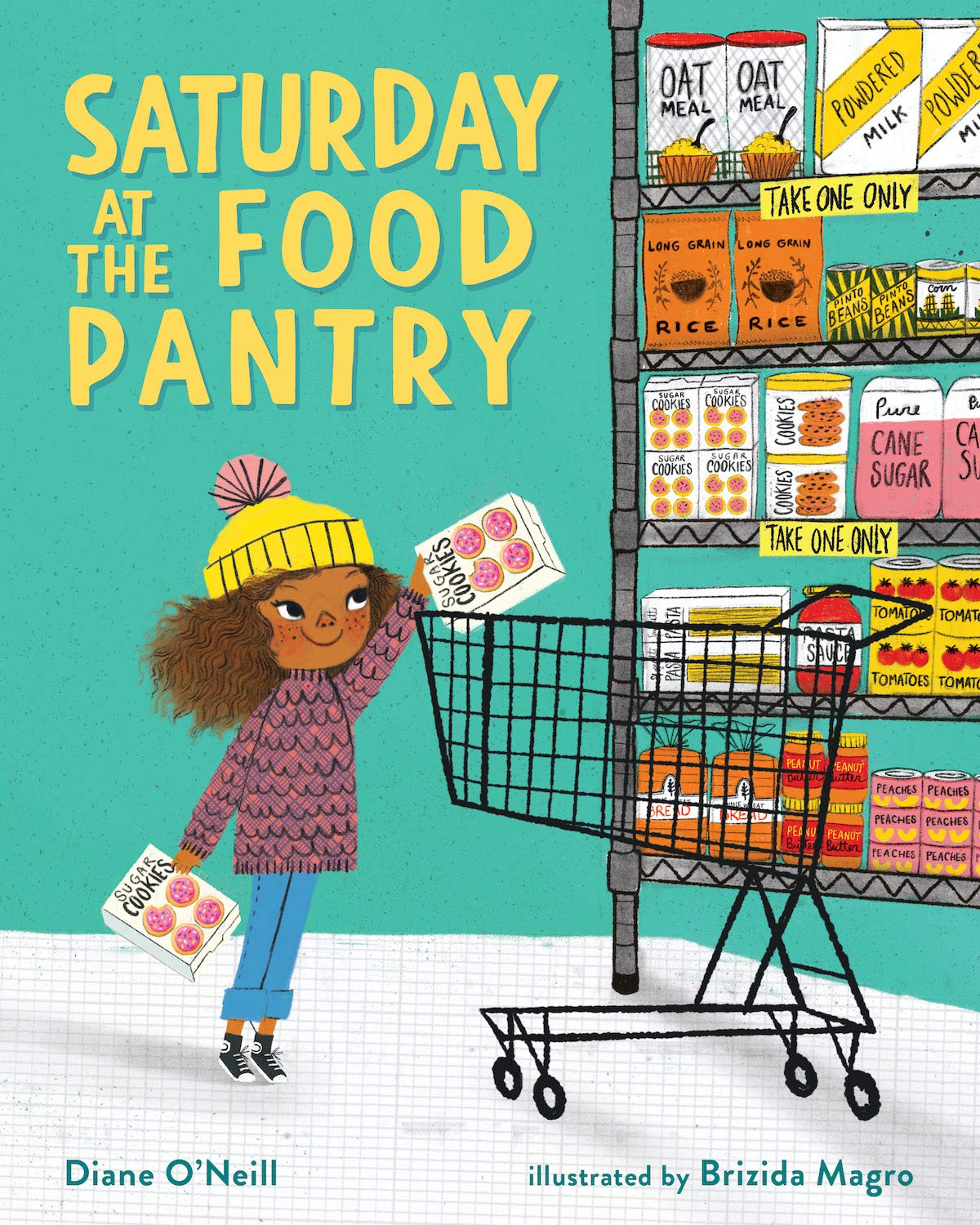
The line outside the food pantry is made up of people from all walks of life, and inside the displays of food replicate a grocery store with the exception of signs asking shoppers to take one item only. These images can lead to meaningful discussions on the enormity of the issue. When Molly and Caitlin draw pictures that cheer up everyone in line as well as the food pantry workers, kids will recognize not only different ways of helping but their own role in making the world a kinder place.

Empathy shines on every page of O’Neill’s necessary and welcome story. Saturday at the Food Pantry is timely, heartfelt, enlightening and a must-buy addition to home, classroom, and school and public library collections.

Ages 4 – 7

Albert Whitman & Company, 2021 | ISBN 978-0807572368

Discover more about Diane O’Neill and her work on her website.

You can connect with Brizida Magro on Instagram.

celebrate-picture-books-picture-book-review-saturday-at-the-food-pantry-cover

You can find Saturday at the Food Pantry at these booksellers

Amazon | Barnes & Noble | Books-a-Million

To support your local independent bookstore, order from

Bookshop | IndieBound

Picture Book Review

September 1 – It’s Read a New Book Month

celebrate-picture-books-picture-book-review-dylan's-dragon-cover

About the Holiday

The beginning of a new school year is a terrific time to celebrate Read a New Book Month. Whether the books are recently published or just new to you, there are stories and nonfiction books to fit any subject, to inspire learning, to laugh or cry with, and to share with friends. This month visit your local bookstore and library and stock up on books for everyone in the family! 

Dylan’s Dragon

Written by Annie Silvestro | Illustrated by Ben Whitehouse


When Dylan was little, he liked to while away his days “playing, doodling, drawing, daydreaming.” He drew spaceships and race cars, dragons and robots. But as he got older, Dylan found there were many more things to do, like karate, baseball, gymnastics, and swimming. And of course there was lots of homework. There wasn’t a moment when Dylan wasn’t doing something. Then one day Dragon showed up at his door wanting to play. But Dylan was just on his way to school. All day long Dylan thought about Dragon. He seemed vaguely familiar, but Dylan couldn’t remember. Dylan planned on playing with Dragon after school, and when he got home they did fly a few circles around the yard, but then it was time for his piano lesson. 

celebrate-picture-books-picture-book-review-dylan's-dragon-drawing

Image copyright Ben Whitehouse, 2021, text copyright Annie Silvestro, 2021. Courtesy of Albert Whitman & Company.

The next morning, after he gave Dylan a ride to the kitchen, Dylan asked if Dragon would like to play after school. “Dragon stuck out his tongue and slurped oatmeal off Dylan’s cheek, which felt kind of slimy but seemed like a yes.” But they only had a few short minutes before Dylan had to study and then go to science club. Dylan thought Dragon might be able to help with his homework, but Dragon’s flames singed his test review papers.

On the rest of the days that week, Dylan tried to include Dragon, but it just didn’t work out. Finally, the weekend came and Dylan thought they would be able to play then. Dragon “swatted Dylan with his tail, which felt cold and scaly but had to mean yes.” Saturday morning, Dylan jumped out of bed ready to play with Dragon, but his parents reminded him of his baseball game, piano recital, and Aunt Edith’s 90th birthday party. But “when do I get to play?” Dylan asked.

celebrate-picture-books-picture-book-review-dylan's-dragon-activities

Image copyright Ben Whitehouse, 2021, text copyright Annie Silvestro, 2021. Courtesy of Albert Whitman & Company.

When Sunday morning rolled around, Dylan woke up and asked his mom, “‘What do we have to do now?'” Surprisingly, Dylan had nothing planned. “‘Just go out and play,'” his mom told him. Dylan cheered and called for Dragon, but he didn’t come. In fact, he was nowhere to be found. “It seemed like Dragon was draGONE.” Dylan looked everywhere, but no dragon. Dylan began to cry. 

When his mom asked him what was wrong, Dylan told her about Dragon and wanting to play and never having enough time. “‘Sounds like we need to cut back,'” his mom said. Then she told him she’d help look for Dragon. As Dylan was drawing a picture of Dragon to show his mom, when he remembered where he’d seen Dragon before – in his old drawings from when he was little.

As he carried his drawing downstairs to show his mom, it began to steam. “It smoked… then POOF popped Dragon, right into the living room. This time when Dylan asked if he wanted to play, Dragon wrapped a wing around him in a hug that “was most definitely a yes!”

celebrate-picture-books-picture-book-review-dylan's-dragon-school

Image copyright Ben Whitehouse, 2021, text copyright Annie Silvestro, 2021. Courtesy of Albert Whitman & Company.

Annie Silvestro’s creative storytelling is both whimsical and realistic as she reminds readers about the importance of balance between activities, school, and free time in children’s schedules. When the dragon, a favorite drawing from Dylan’s preschool or kindergarten days, appears to rescue him and his harried family, many kids (and adults) may identify with Dylan’s desire for a more relaxed lifestyle. Silvestro’s dialogue rings true as Dylan’s parents call him from snatched moments of play and Dylan pleads for just ten more minutes. Dylan’s mom’s recognition of the need to cut back on some of her son’s activities sets a good example, and Silvestro’s message that imagination and creativity make beneficial playmates is reassuring.

Ben Whitehouse’s vivid illustrations cleverly depict the dichotomy between Dylan’s desire for playtime and his over-scheduled routine as images of Dylan riding and playing with his Dragon are juxtaposed with his mom and dad indicating that it’s time to go to one activity after another. Well-marked calendars, a tablet, watches and clocks, lots of sticky note reminders, and equipment for various extracurricular activities at the ready crowd the family’s home – fitting images for the dizzying swirl of appointments that must also crowd Dylan and his parents’ minds. While Dylan’s room is decorated with his many interests, Whitehouse shows that it is his long-lost love of drawing and imagination that truly makes him happy.

A clever and engaging story about recapturing the simple pleasures of free time and playtime, Dylan’s Dragon can also spark conversations between adults and kids about how much is too much and finding that happy medium. A perfect book to share at home, especially as the new school year begins, Dylan’s Dragon would be an excellent addition to home bookshelves as well as school and public library collections.

Ages 4 – 7 

Albert Whitman & Company, 2021 | ISBN 978-0807517420

Discover more about Annie Silvestro and her books on her website.

To learn more about Ben Whitehouse, his books, and his art, visit his website.

Read a New Book Month Activity

celebrate-picture-books-picture-book-review-darling-dragon-match-puzzle

Darling Dragon Matching Puzzle


In this group of darling dragons, each dragon has a twin. Can you help them find each other in this printable puzzle?

Darling Dragon Matching Puzzle

celebrate-picture-books-picture-book-review-dylan's-dragon-cover

You can find Dylan’s Dragon at these booksellers

Amazon | Barnes & Noble | Books-a-Million

To support your local independent bookstore, order from

Bookshop | IndieBound

Picture Book Review
August 31 – It’s National Inventor’s Month

celebrate-picture-books-picture-book-review-who-invented-this-cover

About the Holiday

Established in 1998 by the United Inventors Association of the USA, the Academy of Applied Science, and Inventors’ Digest magazine, this month-long holiday celebrates the imagination and talent of individuals who dare to think differently and create new products, services, and ways of doing things that make a positive contribution to the world. To join in, enjoy your favorite new inventions, and if you harbor dreams of being an inventor—on a large or small scale—look for opportunities to share your ideas.
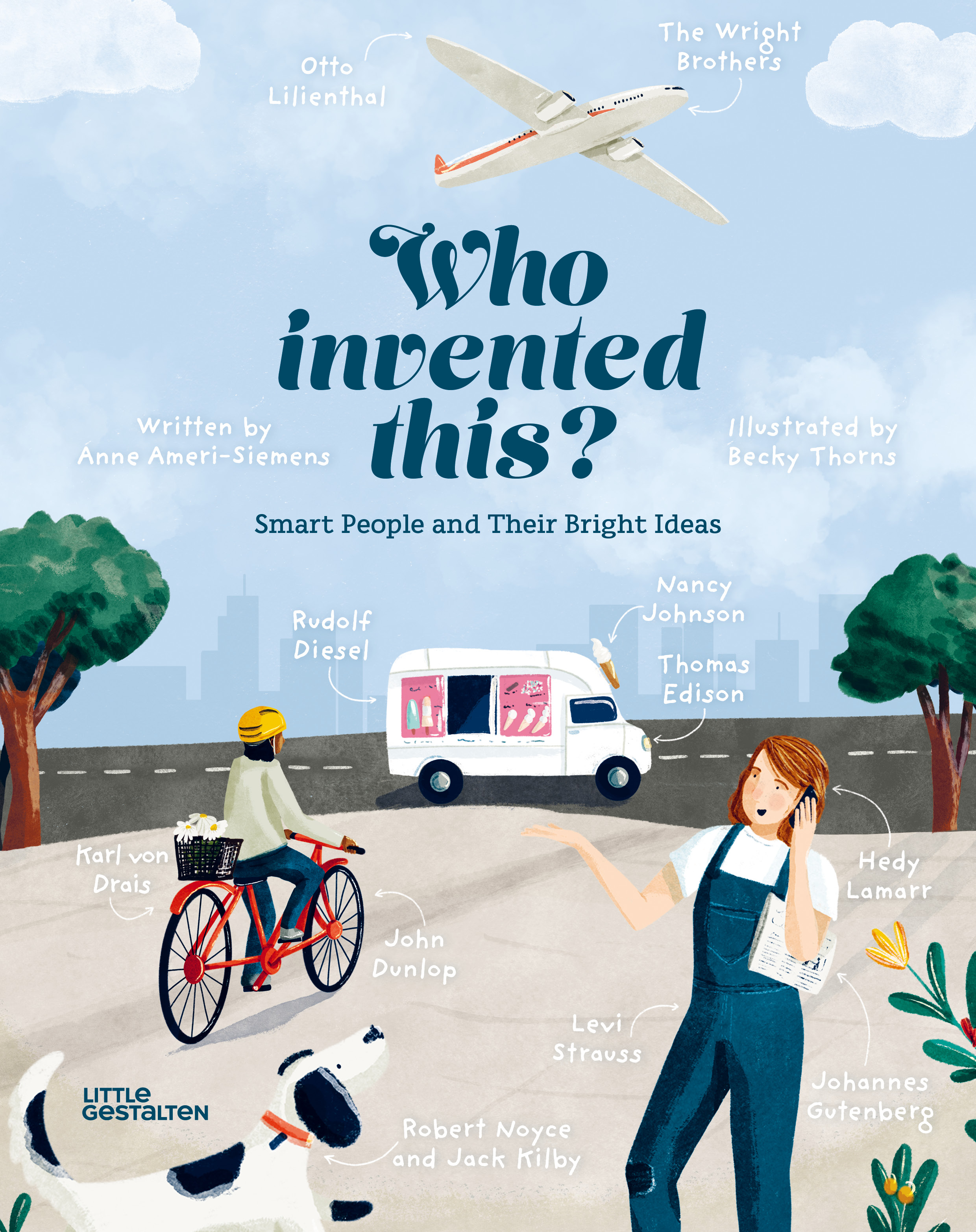
Who Invented This? Smart People and Their Bright Ideas

Written by Anne Ameri-Siemens | Illustrated by Becky Thorns


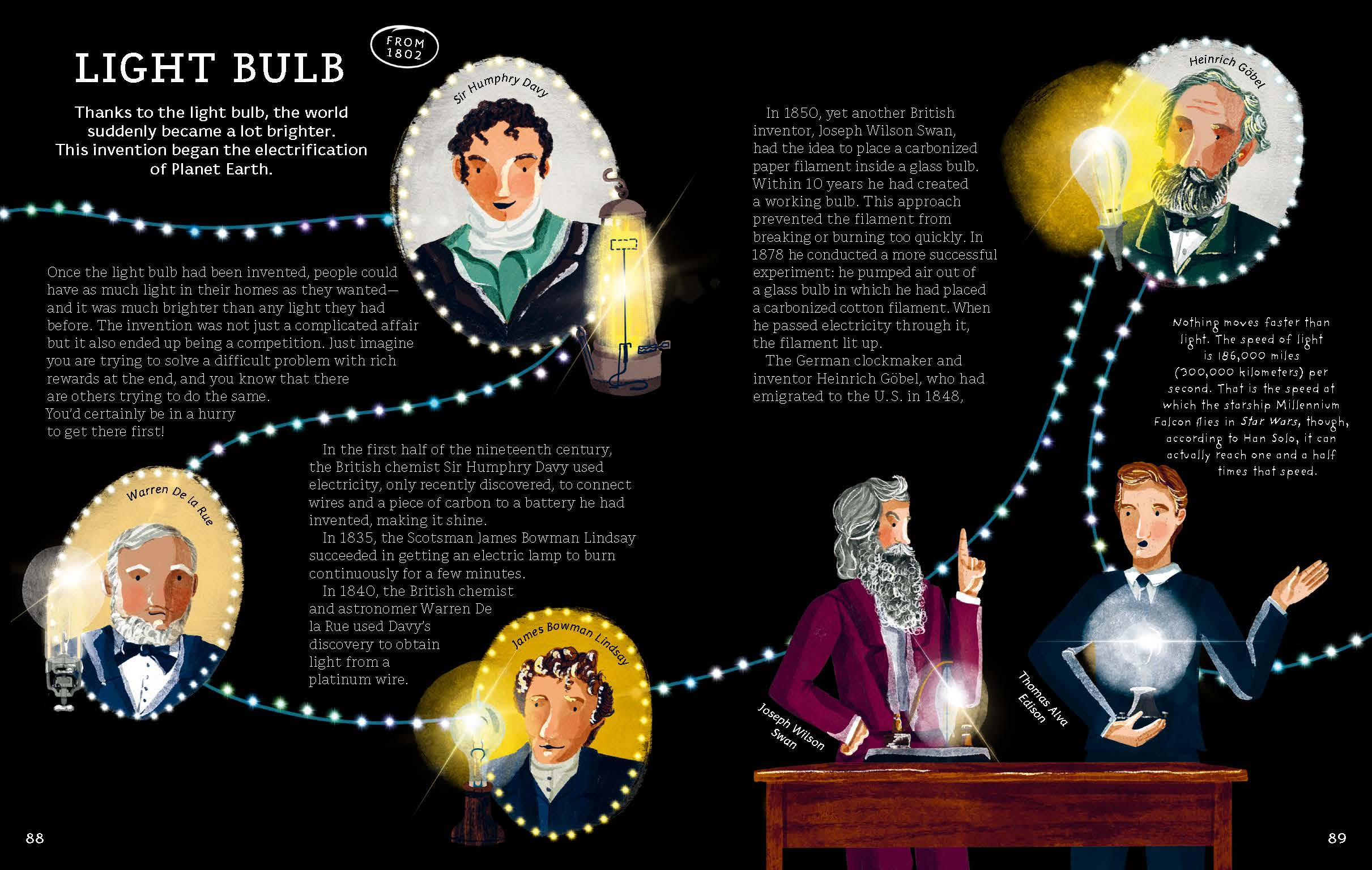
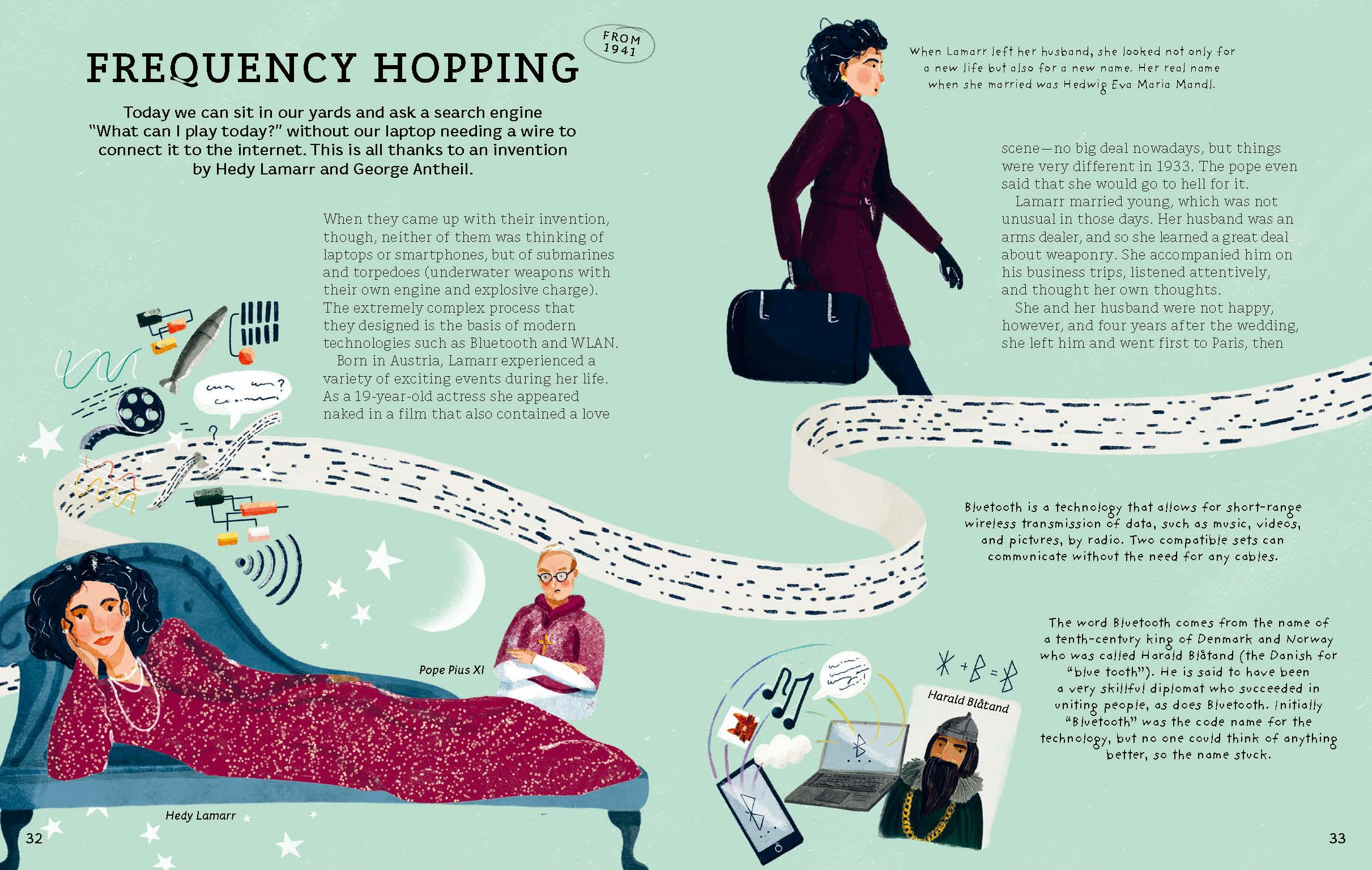
When you jump in the car or turn on a lamp, the idea that these were someone’s inventions (and even the names Henry Ford and Thomas Edison) may flash through your mind. But what about when you slurp up delicious Raman noodles, watch your pet fish through the aquarium glass, or squeeze out the last bit of toothpaste in the tube? In Who Invented This? Anne Ameri-Siemens introduces young readers to the brilliant minds behind some of the things we use every day.

celebrate-picture-books-picture-book-review-who-invented-this-light-bulb

Image copyright Becky Thorns, 2021, text copyright Anne Ameri-Siemans, 2021. Courtesy of Little Gestalten.

Take bicycles, for instance. You’ve probably seen pictures of those old bikes with a huge front wheel and a tiny back wheel. Was this the first bike? Not at all! Ameri-Siemens reveals that the first bicycle—called a “running machine”—had two wheels but didn’t have pedals. Invented by Karl von Drais in 1817, it had a steering bar in the front and was powered by the rider sitting on the seat and “running along the ground.” It may seem comical, but this invention led to more and more improvements until Pierre Michaux designed the first bike with pedals in the 1860s. You can read about all of the advancements in bikes and the other products it inspired too.

celebrate-picture-books-picture-book-review-who-invented-this-frequency-hopping

Image copyright Becky Thorns, 2021, text copyright Anne Ameri-Siemans, 2021. Courtesy of Little Gestalten.

As long as we’re talking about things that transport people here and there, have you ever thought about what drivers did before there were modern traffic lights? While the idea of indicating “stop” and “go” in red and green is universal across the world, the use of yellow for the transition came later from American policeman William Potts. “The first traffic lights in the world were built in London in 1868.” But they weren’t automatic. A policeman standing in the road had to move arms up and down to regulate the flow of traffic. “At night the arms were lit up in red and green.” Readers will find out more about how traffic lights progressed as well as how the timing of stop and go is controlled.

celebrate-picture-books-picture-book-review-who-invented-this-fizz

Image copyright Becky Thorns, 2021, text copyright Anne Ameri-Siemans, 2021. Courtesy of Little Gestalten.

Sometimes inventors get their ideas from nature—this is called bionics—and kids will learn how George de Mestral was ingeniously inspired by those sticky burrs that cling to socks to create a product most of them use all the time. There are other everyday products that are so important that they were invented long, long, long ago. One of these? Toothpaste! While Washington Sheffield invented the first smooth paste in 1850 by adding glycerin to the powder then used—“a mixture of pumice stone, powdered marble, grated oyster shells, ashes, peppermint oil or sage, and some soap power”—and his son realized the toothpaste could be packed in tubes like artists’ paints instead of sold in foil bags, prehistoric humans also brushed their teeth. Kids will be fascinated to learn more about the history of this morning and nighttime routine and even examples from the animal kingdom.

celebrate-picture-books-picture-book-review-who-invented-this-plastic

Image copyright Becky Thorns, 2021, text copyright Anne Ameri-Siemans, 2021. Courtesy of Little Gestalten.

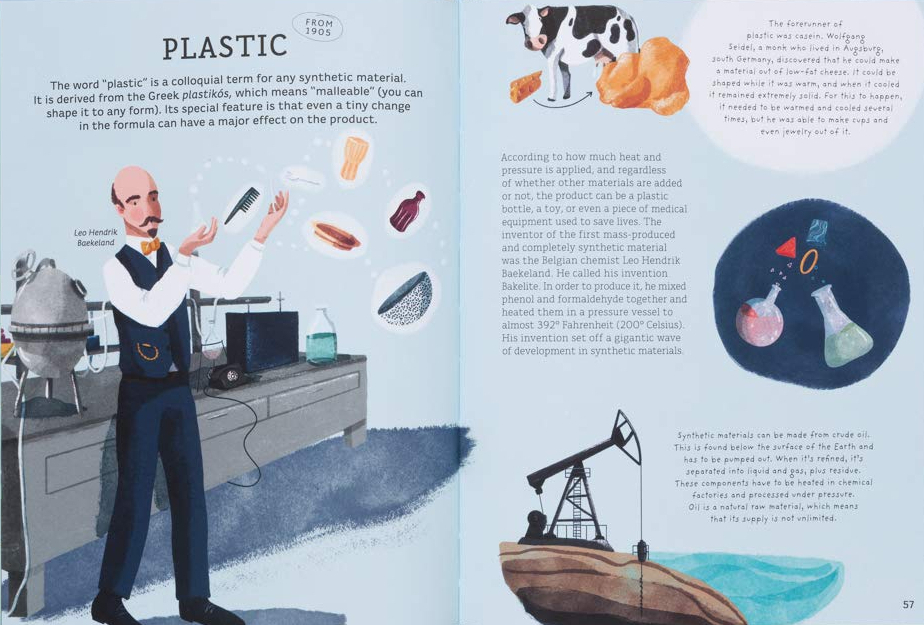
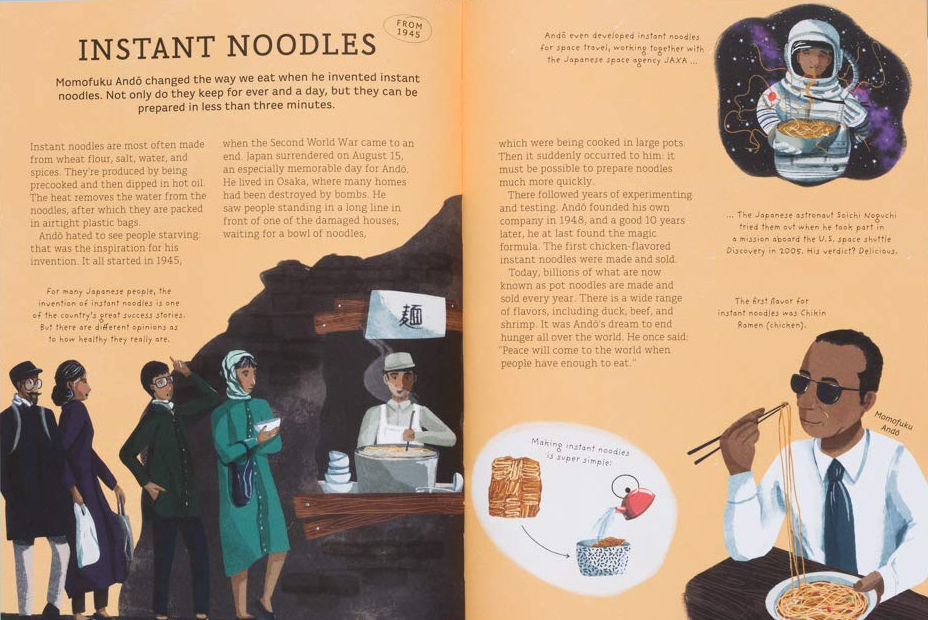
Readers will be excited to learn about these inventions and many more that make up the fabric of our everyday lives and were conceived by talented inventors, scientists, and engineers. Some are the result of teamwork while some are the product of many years spent alone in a laboratory or even simply chance. In all, kids learn about 34 inventions that fall into diverse categories from transportation to communications, clothing to food, music to science and high-tech marvels.

celebrate-picture-books-picture-book-review-who-invented-this-instant-noodles

Image copyright Becky Thorns, 2021, text copyright Anne Ameri-Siemans, 2021. Courtesy of Little Gestalten.

Anne Ameri-Siemens’ conversational and engaging text will captivate readers interested in learning about how the world they know came to be. Ameri-Siemen’s storytelling beautifully balances the scientific and personal details of each invention to deliver compelling profiles. Interesting asides on each page reveal more about the inventions and the people who created them.

Accompanying each subject are Becky Thorns’ eye-catching illustrations that depict not only the invention but its creator or creators as well as how it is used or where it can be found. Thorns also employs clever ways to connect images on a page-spread that reinforcing their purpose and history. Each page spread offers plenty of ideas to spur research projects or extended lessons for classrooms and homeschoolers.

Packed with information on products, ideas, world-changing inventions, and the brilliant minds behind them, Who Invented This? Smart People and Their Bright Ideas will fascinate kids and spark an interest in further research, science, engineering, and technical studies. The book is highly recommended for young inventors, history buffs, and other creative thinkers as well as for classrooms and school and public library collections.

Ages 9 – 12 and up

Little Gestalten, 2021 | ISBN 978-3899551334

To learn more about Becky Thorns, her books, and her art, visit her website.

National Inventor’s Month Activity

celebrate-picture-books-picture-book-review-share-your-bright-idea-activity

Share Your Bright Idea! Page


Do you sometimes have a lightbulb moment when an idea seems just right? Use this printable Share Your Bright Idea! Page to write about or draw your idea!

celebrate-picture-books-picture-book-review-who-invented-this-cover

You can find Who Invented This? Smart People and Their Bright Ideas at these booksellers

Amazon | Barnes & Noble | Books-a-Million

To support your local independent bookstore, order from

Bookshop | IndieBound

Picture Book Review