September 14 – National Live Creative Day

National Live Creative Day was established to encourage people to embrace their innovative side. There are so many ways to be creative from the arts to science to sports to how you express yourself. Kids seem to know this inherently as they go about exploring and interacting with all the new things they see, hear, and do every day. Introducing kids to all kinds of hobbies, subjects, and professions expands their definition of creativity and their outlook on the future. Encouraging them to use their particular talents, helps them build confidence and find their place in the world. Today’s book entices children to look deeper, beyond the surface of what they see and do to discover a whole new way to interact with the world.

Thank you to Carolrhoda Books and Barbara Fisch at Blue Slip Media for sending me this book for review!

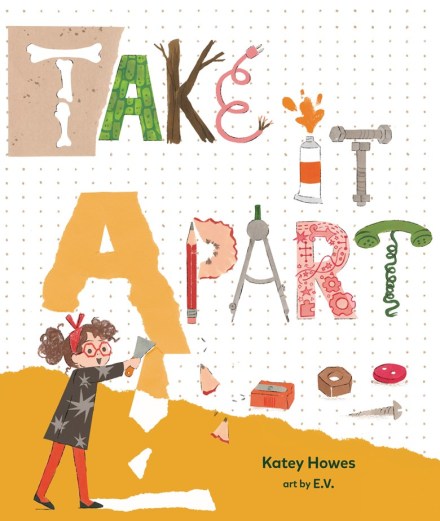
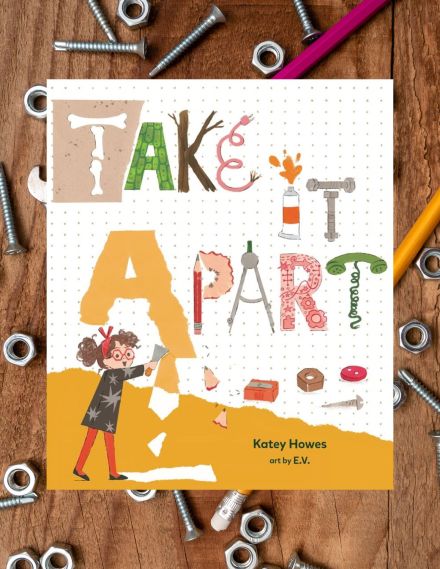
Take It Apart

From the outside if you saw a little girl unravel a wool sweater, unscrew all the workings of an alarm clock, dismantle a tricycle, and take a mallet to an old animal skeleton, you might think you were just in the presence of a “Destroyer.” But if you could look inside this girl’s mind, you’d see her “gears spinning” as her eyes and hands go to work with the disassembled pieces to understand how the original items operated and to create something new. Her curiosity turns, in fact, to multi-disciplinary inspiration: “Breaking things down is a science. An art. / Need solutions? Need answers? Just . . . take it apart!”
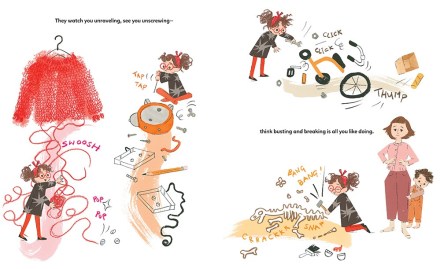
Illustration copyright © 2026 by E.V. Text copyright © 2026 by Katey Howes. Published by Carolrhoda Books copyright © 2026.

Got old technology? Unused items? They have a wealth of knowledge to share with the uninitiated, and for tinkerers, crafters, and inventors, they can be “quite the supply of nuts, bolts, screws, and springs” ready to become something new or repair something well-loved. But the “take-it-apart-er” mindset doesn’t stop there. It can be applied to so many disciplines, such as reading (breaking down words into each “. . . syllable. Letter”) and math (grouping numbers to “understand better”) and science (looking deeply, “magnified”).
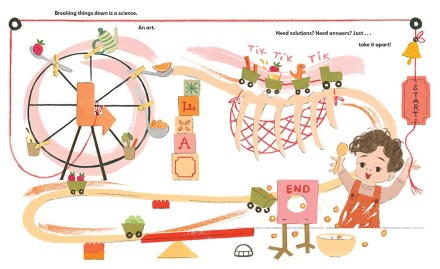
Illustration copyright © 2026 by E.V. Text copyright © 2026 by Katey Howes. Published by Carolrhoda Books copyright © 2026.

When you start looking around in your yard or garden and even at some of the food you eat, you’ll soon see that the natural world already uses “take it apart.” You can join in on your own or with friends, or maybe start an after-school club where lots of kids provide “a good wrecking crew.” You just never know what you can make, learn, or do when you discover “the genius of take it apart.”
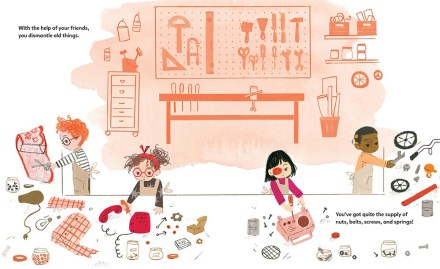
Illustration copyright © 2026 by E.V. Text copyright © 2026 by Katey Howes. Published by Carolrhoda Books copyright © 2026.

Through polished rhymes full of verve, permission, and inspiration, Katey Howes stirs up excitement for uninhibited, hands-on learning that allows readers to tinker, make connections, and have “Ah-Ha!” moments of understanding that can be extrapolated to a multitude of other experiences. Howes’ verses burst with reminders that nature; math, reading, and science; crafts such as building, sewing, mechanics, and other practical skills are all based on “take-it-apart” and its partner “put-it-together.”

Readers can feel the excitement and brimming sense of wonder as a variety of kids unleash their curiosity on a wide range of objects in E.V.’s action-packed illustrations. Early in the story, a little boy frets as his sister pounds on some old bones, but a few pages in he’s happily using the ribcage as a bridge for the contraption he’s built to make his breakfast. His sister, meanwhile, is solving problems around the neighborhood—including a broken birdhouse and mailbox, a leaky hose, and a teddy bear with a torn leg—in E.V.’s clever montages that show the problem and the girl’s ideas on what spare parts could be used to fix it. E.V. also takes kids into a classroom, behind a microscope, underground, and into an unused room that becomes an “Imagination Station” to further facilitate their experimentation.

A catalyst for unfettered fun that leads to a lifetime competency in practical skills, Take It Apart is a book kids will absolutely love and is a must for all public, school, and classroom libraries as well as for home collections.

Ages 4 – 9

Carolrhoda Books, 2026 | ISBN 979-8765648568

About the Author

Katey Howes was an award-winning children’s author and poet whose books celebrated curiosity, creativity, STEAM learning, and social-emotional growth. Her acclaimed works include Be a Maker, Rissy No Kissies—named a Kirkus Best Children’s Book, a Rise: A Feminist Book Project List selection, and a Keystone to Reading Book Award nominee—Woven of the World, Grandmother Thorn, and Where the Deer Slip Through, which has been named one of Amazon’s Best Children’s Books of 2025. Take It Apart (Carolrhoda Books, August 2026), continues her legacy of inspiring young readers to explore, invent, and discover.

To learn more about Katey Howes and her books and find a free Take It Apart curriculum guide, visit kateyhowes.com/books/take-it-apart/.

About the Illustrator

Elizabet Vuković grew up around makers in Rotterdam, The Netherlands. Her mom introduced her to making with fabrics. She and her sister accompanied their dad on many trips to the hardware store for his constant home renovation projects, and her sister continues to use Elizabet as her guinea pig for many outrageous inventions. Elizabet graduated with a degree in optometry before deciding to go back to school for illustration in San Francisco, where she currently resides. Visit her at elizabetvuković.com.

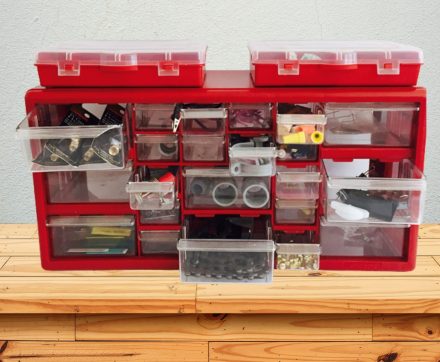
For young inventors, tinkerers, and crafters, having bits and pieces of this and that as well as some tools to work with all stored in one place encourages creative thinking. Filling the drawers of a tool box or tackle box with items like springs, brads, wheels, hinges, plastic piping, pieces of wood, glue, tape, and simple tools can spark a child’s imagination. Keep an eye out at home or yard sales for these types of small items as well as old objects to disassemble or take your child along to the craft or hardware store and choose items together!
You can purchase Take It Apart from these booksellers

Amazon | Barnes & Noble | Bookshop

September 10 – African Fabric Month

African Fabric Month™ was launched in 2016 by Lisa Shepard Stewart of Cultured Expressions, Inc. The celebration “promotes the artistic and practical uses of such fabrics as ankara prints, batik, kuba, adinkra, bogolan/mudcloth, korhogo, adire, kente, and more, and serves to honor and promote the cultures that create them.” While Stewart shares her love for African fabrics year round through special online and in-person events, this month-long holiday puts particular focus on the global positive contributions of the weavers and other textile artists of Africa. To learn more about the holiday as well as ongoing events and activities, visit culturedexpressions.com.

Thank you to Charlesbridge and Barbara Fisch at Blue Slip Media for sending me this book for review!

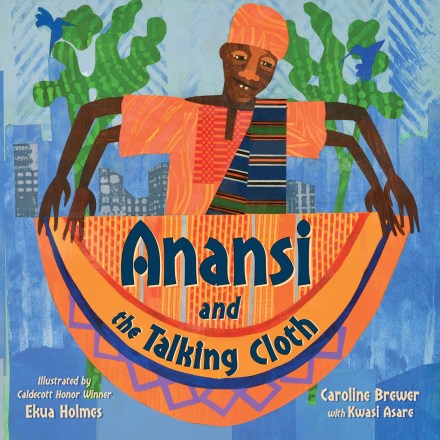
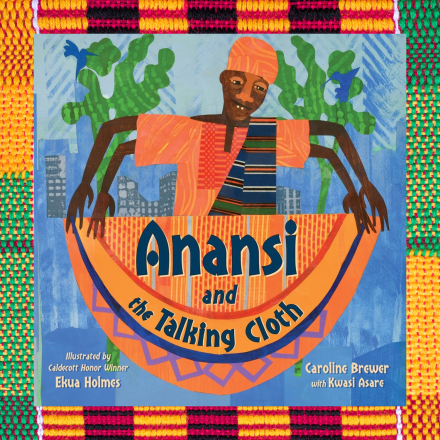
Anansi and the Talking Cloth

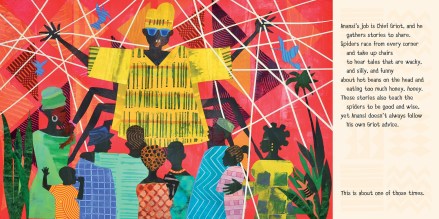
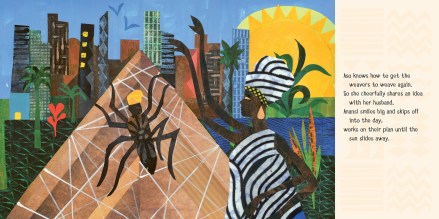
Anansi the spider, chief storyteller and trickster, lives in a city “well-known for its talented weavers, / who work their hands and feet in a fascinating fever” to create “kente, the talking cloth.” Each unique cloth made by the spider weavers tells a story revealing truths, courage, how to spread peace or the fact that “our families are more precious than gold.” The city brims with sunshine, vibrant foliage, music, and smooth transportation. Even the “rainbows glow with a sparkly dew.”

Illustration copyright © 2026 by Ekua Holmes. Text copyright © 2026 by Caroline Brewer with Kwasi Asare. Published by Charlesbridge copyright © 2026.

Even though Anansi gathers the spiders together to tell his wise tales, he doesn’t always adhere to them himself. For instance, while the spider weavers create unique and beautiful cloth by hand, many people “strut about in machine-made brands” that are cheap and quickly fashioned, but have no stories to impart—including Anansi himself! As time passes and the spider weavers’ sales slip, the weaving industry folds, and the once-vibrant community fades. The kente weavers cry, and Anansi wants to help.

Illustration copyright © 2026 by Ekua Holmes. Text copyright © 2026 by Caroline Brewer with Kwasi Asare. Published by Charlesbridge copyright © 2026.

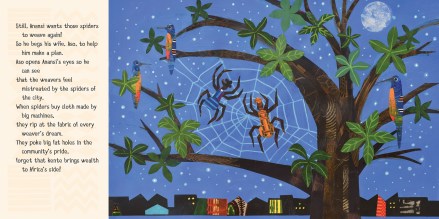
But Anansi resorts to his trickster ways and tries to scare the weavers into returning to their looms, but they aren’t fooled. With the help of his wife Aso, Anansi finally sees that the “weavers feel mistreated by the spiders of the city.” By buying machine-made cloth, they “rip at the fabric of every weaver’s dream” and destroy “community pride.” Anansi listens to his wife’s suggestions and calls the community together to thank the weavers, but is it too late to restore the sunshine, singing and dancing, vivid colors, and vibrant kente talking cloth to the once hip city?

Back matter includes an Author’s Note discussing the legends and history behind Anansi and kente cloth as well as an Illustrator’s Note about a trip Ekua Holmes recently made to Ghana.

Illustration copyright © 2026 by Ekua Holmes. Text copyright © 2026 by Caroline Brewer with Kwasi Asare. Published by Charlesbridge copyright © 2026.

In Anansi and the Talking Cloth, Caroline Brewer, in consultation with master kente-cloth weaver Kwasi Asare, created an original Anansi story, which is at once as timeless as classic Trickster stories and as current as debate over fast fashion versus lasting quality. Brewer’s stylish storytelling weaves rhymes and the spirited rhythms of assonance, consonance, and alliteration to envelope readers in her magical imaginings of spider weavers creating valuable kente talking cloth—a term created by Brewer for the story. The jaunty cadence flows from page to page, making the story a joyful, riveting read aloud. Through Aso’s thoughtful answer to the weavers’ strike, Brewer also strikes a universal chord for showing respect and gratitude.

Ekua Holmes’ electrifying collage illustrations in glorious overlapping hues of blue, orange, red, green, and yellow bring the intricate patterns and vibrant colors of kente cloth to the page. Young readers will be awed by the spider weavers as they use their many arms and legs to weave talking cloth and be fascinated by images of people and spiders mingling in the city, shopping, dancing, making music, and gathering to hear Anansi’s stories.

With underpinnings in Ghanaian culture and the legacy of kente cloth production, Anansi and the Talking Cloth is a highly inventive and jazzy read aloud that is pure fun while also imparting the values of storytelling and guarding precious traditions. The book is a must for any public and school library collection and would be on frequent rotation for home story times.

Ages 5 – 8

Charlesbridge, 2026 | ISBN 978-1623544218

About the Authors

Caroline Brewer is an award-winning children’s book author, artist, environmentalist, literacy consultant, and creator of Nature-Wise, a program for students and teachers that blends literacy and nature exploration. Caroline is also author and illustrator of Harriet Tubman, Force of Nature and author of Say Their Names. She lives in the Washington, DC, metro area. Visit her at carolinebrewerbooks.com.

Kwasi Asare was born in Nsawam, near the capital city of Accra, Ghana, and is one of Africa’s most prominent and accomplished weavers known for kente cloth, the highly prized Ghanaian cloth that traditionally symbolizes royalty, honor, and leadership. For the United Nations’ fiftieth anniversary in 1995, he created a new kente cloth design. Until 2017, it replaced the original cloth created by Kwasi’s father, A. E. Asare. Visit him at kwasiasare.com.
About the Illustrator

Ekua Holmes was awarded a Caldecott Honor, Coretta Scott King’s John Steptoe New Talent Illustrator Award, Robert Siebert Award, and Boston Globe–Horn Book award for Voice of Freedom: Fannie Lou Hamer, Spirit of the Civil Rights Movement, her first illustration project. She won the Coretta Scott King Award for Illustration twice: Out of Wonder: Poems Celebrating Poets and Stuff of Stars. Visit her at ekuaholmes.com.
You can purchase Anansi and the Talking Cloth from these booksellers

Amazon | Barnes & Noble | Bookshop

September 7 – Buy a Book Day

Today is one of the best days of the year! Anyone who loves books will want to take the opportunity of the holiday to visit their favorite bookstore and buy one of those books you’ve been hearing and reading about. And why stop at just one? Winter is coming—that time when nothing feels better than snuggling into a cozy reading spot with a cup of tea or hot chocolate and reading the day (or night) away. As the school year begins, children benefit from having new books in their home libraries that reflect their changing interests, maturing thoughts. Take a little time to look through the children’s or tween sections of the bookstore and let your kids pick out some new favorites! Yes, today is a wonderful day, no bones about it!

Thank you to Hippo Park for sending me this book for review!

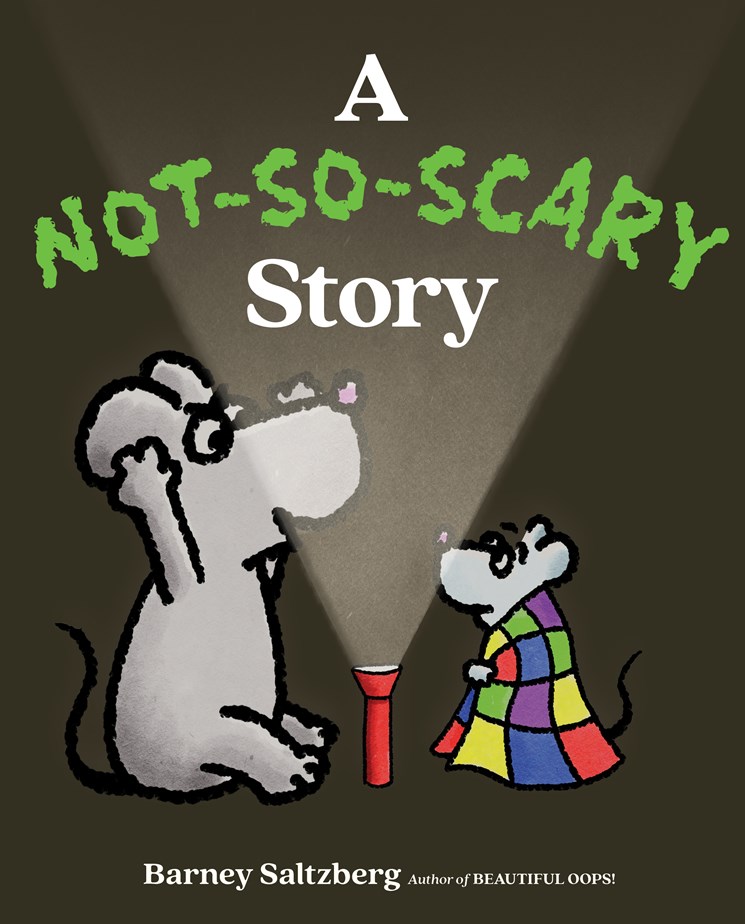
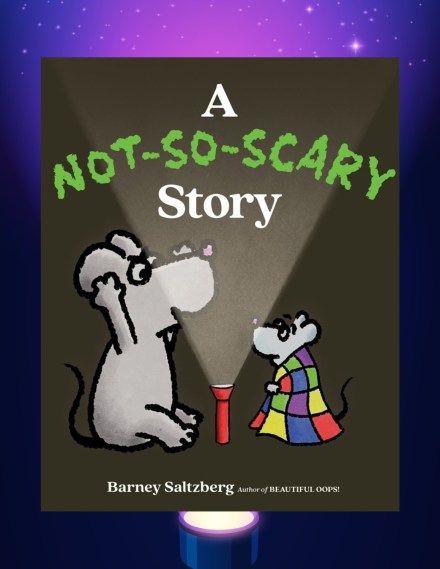
A Not-So-Scary Story

Little Mouse hears something in the middle of the night and wakes up. Could it have been Big Mouse’s snoring? Little Mouse doesn’t know what woke him—just that he’s scared. He’s also wary of the dark since he usually sleeps through it. When Big Mouse seems to dive out of sight, Little Mouse begs him not to leave, but Big Mouse is just retrieving a flashlight. Ahhh, that’s better! Big Mouse then offers to tell Little Mouse a story, and Little Mouse is eager to hear it.

Text and illustration copyright © 2026 by Barney Saltzberg. Published by Hippo Park copyright © 2026.

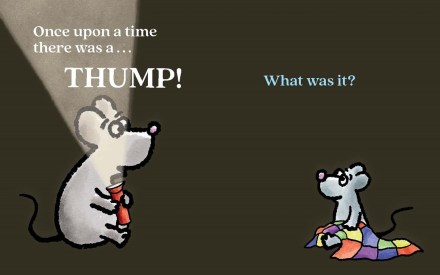
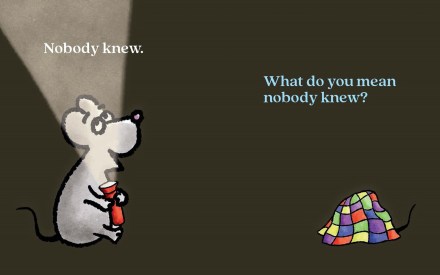
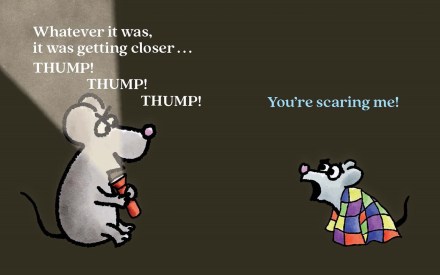
The story starts in the usual way, but then—with mood lighting courtesy of the flashlight—there’s an unidentifiable “THUMP!” and Little Mouse scurries under his blanket. The THUMPs come closer, and Little Mouse tells his friend he’s scaring him. Still, Little Mouse remains peeking out from his blanket to listen. Big Mouse gets to the big reveal, “Guess what it was?” Sensing an opportunity to change the story, Little Mouse shouts out the cutest thing he can imagine, and as Big Mouse tries to steer the story back on track, Little Mouse adds “butterfly wings” and “fluffy pink clouds.”

Text and illustration copyright © 2026 by Barney Saltzberg. Published by Hippo Park copyright © 2026.

But you know how quickly the weather can turn, and Big Mouse fills the room with bone-rattling “BOOMs” and “CRACKLEs.” The two parry, until Little Mouse reveals that he doesn’t like being scared. Big Mouse has never heard of such a thing, and Little Mouse says he didn’t know “that being scared was something to like.” Now that he’s aware, Little Mouse is ready to get back to the story and even adds a few frightening elements of his own. Little Mouse is warming up to this new entertainment when suddenly a towering, green interloper appears from where the flashlight came from, putting Little Mouse’s new-found bravery to the test.

Text and illustration copyright © 2026 by Barney Saltzberg. Published by Hippo Park copyright © 2026.

Barney Salzberg’s follow up to A Delicious Story reunites Big Mouse and Little Mouse in this endearing conversational story that rolls out with realistic cadence and timing that will have young readers simultaneously on the edge of their seat and giggling at Little Mouse’s playful interjections. Saltzberg’s reveal midway through explains Big Mouse’s counterintuitive response to Little Mouse’s fear while gently introducing ideas of trying new things, communicating, and appreciating alternate perspectives.

Saltzberg’s minimalist illustrations bring readers right into the room with Big Mouse and Little Mouse, immersing them in their creative back-and-forth to experience all of the friendship, chills, and humor of the story. The flashlight beam might even be considered a third character, highlighting, as it does, the action, emotions, and surprises in store. Saltzberg cleverly used the book’s gutter to add another dimension to this adorable tale.

Charming, and thoughtful, A Not-So-Scary Story is sure to become a favorite for lively and imaginative interactive read-alouds at home, in the classroom, and for library story times.

Ages 3 – 6

Hippo Park, 2026 | ISBN 978-1662640858

About the Author

Barney Saltzberg is the author of more than 50 books for children, including the best-selling Touch and Feel Kisses series, Beautiful Oops!, My Book of Beautiful Oops!, and Hippo Park’s A Delicious Story. Additionally, he’s recorded four albums of songs for children. His books have won numerous awards, including NAPPA Gold Awards, and received multiple starred reviews. Most recently, Melinda Gates chose Beautiful Oops! as one of her top three books every child should read. Visit him at barneysaltsberg.com.

Join Author and illustrator Barney Saltzberg in this rollicking, not-so-scary sing along!

You can purchase A Not-So-Scary Story from these booksellers

Amazon | Barnes & Noble | Bookshop

September 4 – National Wildlife Day

In 2005 animal behaviorist and philanthropist Colleen Paige established National Wildlife Day to promote an awareness of the importance of conservation of animals, habitats, and the environment worldwide as well as to acknowledge the education and conservation work of zoos and animal sanctuaries. To honor the memory and birthday of Steve Irwin, National Wildlife Day is also celebrated on February 2. To celebrate today’s holiday, take time to learn about what you can do to help protect the environment. 

Thanks to Beach Lane Books for sending me this book for review!

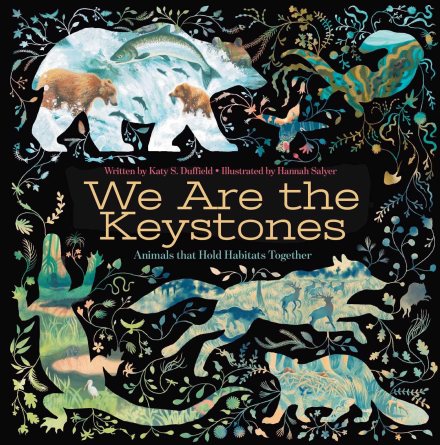
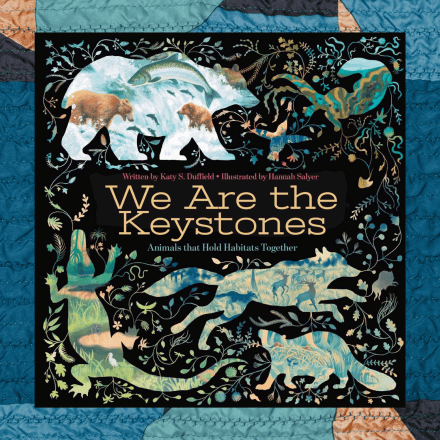
We Are the Keystones: Animals That Hold Habitats Together

Just as you and your family might be lost without your neighborhood grocery store, park, or library, Katy S. Duffield introduces eleven “nature-hoods” and a keystone species that keeps each thriving “. . . just by doing what they do. / They make a difference when they roam, / or when they eat or build a home.”

Duffield begins each scintillating profile with a factually descriptive, rhyming poem that describes the keystone species’ behavior and exactly how it affects the area in which it lives. On the opposite side of each two-page spread, Duffield expands on her informative verse with a short paragraph of clear and illuminating prose. Here, she calls out specific creatures who benefit from the keystone’s influence as well as how, for example, the keystone’s felling trees, culling herds, digging, and even pooping profoundly and positively impact ecosystems around the world.

Illustration copyright © 2026 by Hannah Sayler. Text copyright © 2026 by Katy S. Duffield. Published by Beach Lane Books copyright © 2026.

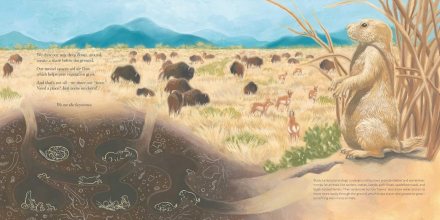
Children meet the beaver, whose dams create pond and wetland homes for a multitude of living things and also “filter and clean the water, producing a healthy environment for all the creatures that live there.” The humble black-tailed prairie dog, likewise, is a hero of grasslands, whose tunneling provides crucial aeration that “helps new vegetation grow” while offering small reptiles and animals protective homes.

Illustration copyright © 2026 by Hannah Sayler. Text copyright © 2026 by Katy S. Duffield. Published by Beach Lane Books copyright © 2026.

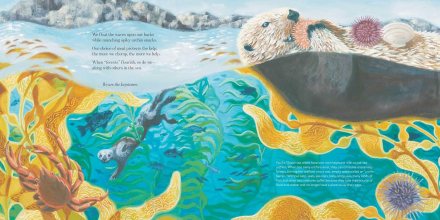
Readers are also prompted to look to the sky to get to know a tiny South American bird that uses its unique features to ensure all flowers are pollinated. They are then plunged into the sea to meet a fish, a marine mammal, and a tiger shark, who unapologetically affirms: “With scanning eyes, we glide and seek. / We hunt the sick, the dead, the weak. / We’re scavengers—that’s what we do. / It sounds disgusting, yet it’s true.” And what does eating these tasty snacks accomplish? Duffield explains that “. . . [it] can keep disease from spreading to healthy marine life,” among other benefits. Duffield also highlights two other mammals, a fierce reptile, and an unusual bird before rounding out her book, Duffield with the gentle giants that help the savanna support its vegetation and wildlife with a simple (for them) act that lets the sun shine through.

Katy S. Duffield’s immersive storytelling will spark a fascination in children for these sometimes under-appreciated animals that are in fact critical to the world’s ecosystems. Her inclusion of poetic and prose descriptions of each creature will appeal to a wide range of readers and give educators an exciting resource for engaging all students.

Illustration copyright © 2026 by Hannah Sayler. Text copyright © 2026 by Katy S. Duffield. Published by Beach Lane Books copyright © 2026.

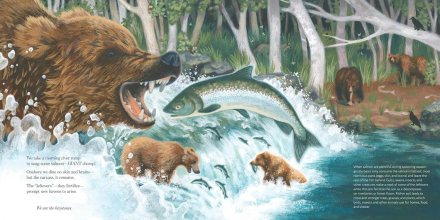
In her arresting gouache paintings, Hannah Salyer transports readers to misty, sun-drenched, and mysterious “nature-hoods” to witness keystone species in action. A Black-tailed prairie dog surveys its terrain, teeming with buffalo and pronghorn deer as children spy the creatures taking advantage of the “hotel” below ground. A grizzly bear snaps its sharp teeth to catch a salmon in flight, and a southern cassowary stretches its beak to swallow whole a “tennis-ball-size seed.” Sayler unveils the colors, textures, and diversity of each ecosystem, giving readers much to digest and learn from. A final clever two-page spread presents a web of connected animal silhouettes that will send kids back through the pages to find them in their natural habitat.

A standout nature and science nonfiction picture book, both textually and visually, We Are the Keystones: Animals That Hold Habitats Together will appeal to children of varying learning styles. The book is a must for all library collections and would be a favorite for classroom and home bookshelves as well.

Ages 4 – 8

Beach Lane Books, 2026 | ISBN 978-1665946896

About the Author

Katy S. Duffield is the author of more than twenty-five books for children, including the celebrated Crossings: Extraordinary Structures for Extraordinary Animals, which was an ALA/ALSC Notable Book, a Bank Street Best Book of the Year, and the recipient of the Eureka! Excellence in Nonfiction Gold Award. She lives in Florida with her husband and her wild and crazy Australian Shepherd. For more information about Katy, please visit her website at KatyDuffield.com.

About the Illustrator

Hannah Salyer received her BFA in illustration and communication design, with a minor in environmental studies, from Pratt Institute. She resides in Brooklyn, New York, where she writes and illustrates picture books, including her own Packs: Strength in Numbers and Ancestory: The Mystery and Majesty of Ancient Cave Art, as well as This Wolf Was Different by Katie Slivensky. She also teaches art classes for young kids and illustration classes for undergrad students at Parsons School of Design. Visit her at HannahSalyer.com.

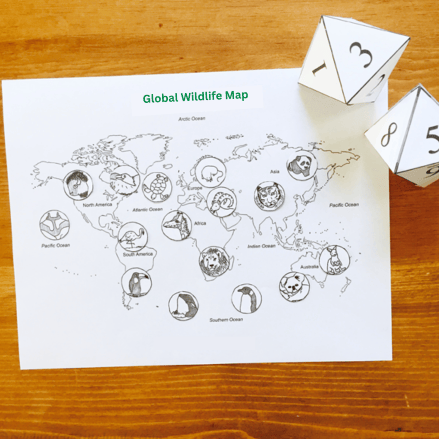
Fascinating animals are found in every part of the world. Play this fun printable Wonderful Wildlife Board Game to match each animal to the area where it lives.

Supplies

Directions

  1. Print a Global Wildlife Map for each player
  2. Print one set of 16 Wildlife Tokens for each player
  3. Print two copies of the 8-sided die, fold, and tape together
  4. If you would like, color the map and tokens
  5. Choose a player to go first
  6. Each player rolls both dice and places an animal on their map according to these corresponding sums of the dice below
  7. The first player to fill their map is the winner!

You can purchase We Are the Keystones: Animals That Hold Habitats Together from these booksellers

Amazon | Barnes & Noble | Bookshop

September 2 – Friendship Month

Friendship Month has been celebrated ever since the Oddfellows organization was established in England in the 1730s. Their official title is The Grand Order of Oddfellows Friendly Society (or GUOOFS), and it is an international organization dedicated to philanthropy, charity, and, of course, friendship. All month long people are encouraged to spend more time with their friends, get in touch with those they haven’t seen or talked to in a while, and to reach out to others who are alone or need a friend. As school gets underway, there are plenty of opportunities for kids to meet new people and form friendships – some of which may last a lifetime.

Thank you to Charlesbridge and Barbara Fisch at Blue Slip Media for sending me this book for review!

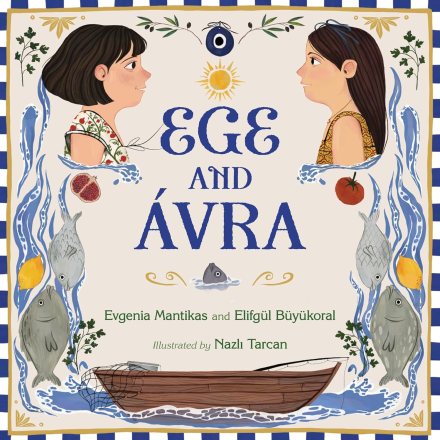
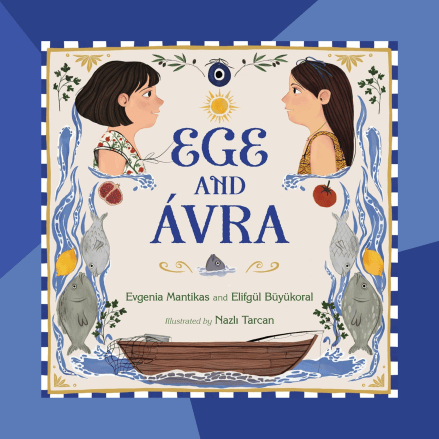
Ege and Ávra

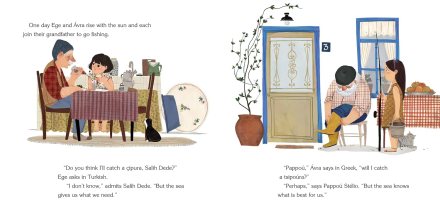
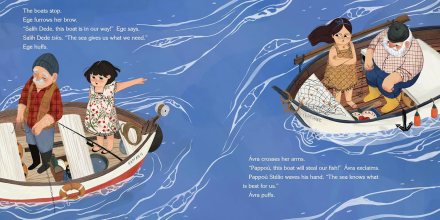
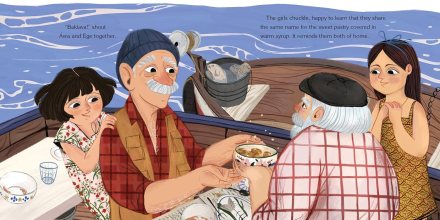
Ege, who lives on the east side of the Aegean Sea in Türkiye, is going fishing with her grandfather. “‘Do you think I’ll catch a çipura, Salih Dede?'” she asks. He doesn’t know, he tells Ege and adds “‘but the sea gives us what we need.'” A short way away on the west side of the Aegean Sea in Greece, Ávra asks her grandfather, “‘Pappoú, will I catch a tsipoúra?'” He answers “‘Perhaps. But the sea knows what is best for us.'” As the girls and their grandfathers steer their boats into fishing waters, they come upon each other in close proximity. Ege complains that Ávra’s boat is in their way, while Ávra fears Ege will steal their fish. Both grandfathers repeat their wisdom from the morning.

Illustration copyright © 2026 by Nazlı Tarcan. Text copyright © 2026 by Evgenia Mantikas and Elifgül Büyükoral. Published by Charlesbridge copyright © 2026.

As Ege and Ávra cast their fishing lines, they get hopelessly tangled. They pull and wrestle with their poles until Ege is thrown into a bucket and Ávra finds herself wrapped in a net. The two girls lock eyes while their grandfathers erupt in laughter. The girls laugh too, then, and introduce themselves, overcoming their language barrier by placing a hand over their heart as they say their name. Ávra offers Ege the corner of a net, and together they cast it into the sea.

It doesn’t take long before a school of fish swim into the net. With excitement, Ege shouts, “‘çipura!'” “‘Tsipoúra!'” Ávra cries. They stare at each other in awe; “their words for the fish sound the same!” Aboard their respective boats, Ege and Dede and Ávra and Pappoú cook lunch with some of the fish they’ve caught, spices, lemon, and vegetables. They gather on Pappoú’s boat, giving thanks before they begin. Afterward, there’s dessert—a favorite of everyone.

Illustration copyright © 2026 by Nazlı Tarcan. Text copyright © 2026 by Evgenia Mantikas and Elifgül Büyükoral. Published by Charlesbridge copyright © 2026.

Too soon, it’s time for each family to return home. Ege and Ávra wave goodbye “until they both disappear into the horizon,” each believing that they will meet again. As the two girls drift off, with the sea air gently lulling them to sleep, they whisper “Good night” to the new friend they each made.

Back matter includes an Authors’ Note relating how Evgenia Mantikas and Elifgül Büyükoral met and became friends in college; a brief history of the clash between Türkiye and Greece, a map, and a glossary of Turkish and Greek terms in the story.

Illustration copyright © 2026 by Nazlı Tarcan. Text copyright © 2026 by Evgenia Mantikas and Elifgül Büyükoral. Published by Charlesbridge copyright © 2026.

As children meet Ege and Ávra and their grandfathers at home and on their boats, they are privy—through visual and textual clues—to something neither girl yet knows: how similar they are. Instantly, readers become invested in how their meeting will play out, starting as it does with suspicion and grumbling. Throughout their story, Evgenia Mantikas and Elifgül Büyükoral beautifully use metaphor, humor, and lyrical prose to bring the two families together in the universal languages of laughter, food, and shared experiences. Büyükoral and Mantikas imbue their lovely, simple storytelling with true surprise and delight that will captivate both children and adults.

Children will eagerly linger over Nazlı Tarcan’s beautiful and evocative illustrations to point out the similarities between the girls as well as their grandfathers. Even the boats boast commonalities. Tarcan’s gorgeous color palette and expressive portraits suffuse her pages with feelings of camaraderie and peace. You can almost feel the sea breeze and smell the aromas wafting from the impromptu meal, and as the girls wish each other “Good night,” their wistful faces will fill readers hearts with hope.

A poignant and uplifting read aloud for meaningful story times, Ege and Ávra is a must for all public and school libraries and would be an exceptional addition to any home bookshelf.

Ages 4 – 8

Charlesbridge, 2026 | ISBN 978-1623546670

A third generation Greek American, Evgenia Mantikas grew up immersed in her family’s culture. She visited Xios every summer, reading for hours on the beach. Evgenia’s love for stories grew as she studied creative writing and received her BA and MA in English literature. After teaching ELA for two years, Evgenia returned to school and earned her MFA from Simmons University and uses her voice to tell cultural stories about family. You can visit her at evgeniamantikas.com.

Elifgül Büyükoral was born and raised in Türkiye, where her close-knit family nurtured her love for books. Elifgül delved into the world of literature and language when she earned her BA in ESL. Fueled by her passion for storytelling, Elifgül moved to the United States to receive her MA in children’s literature from Simmons University. Elifgül writes stories that shine light on her heritage and Islamic faith, hoping to amplify diverse voices. Follow her on Instagram.

Nazlı Tarcan is a Turkish artist and illustrator based in Namur, Belgium. After studying illustration in high school, she studied photography at one of Türkiye’s most prestigious fine art universities, Yildiz Technical University. Midway through her studies, she followed her creative call and ran away with the circus, performing for ten years, traveling through Qatar, Georgia, Tajikistan, Greece, France, Poland, and many other countries. As an artist, she takes inspiration from the tiny details of everyday life. Visit her at nazlisillustrations.com.

celebrate-picture-books-picture-book-review-give-me-your-hand-puzzle

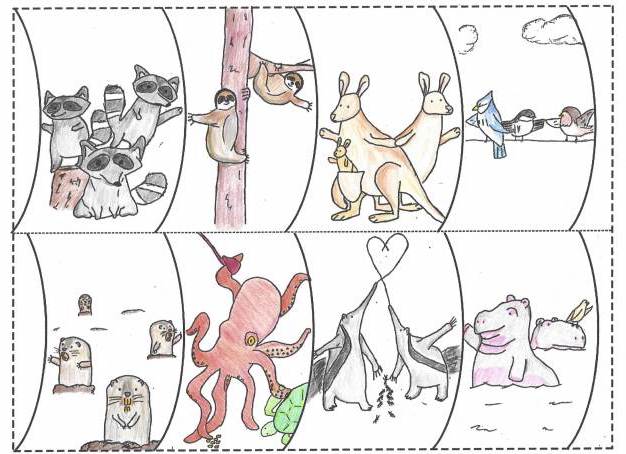
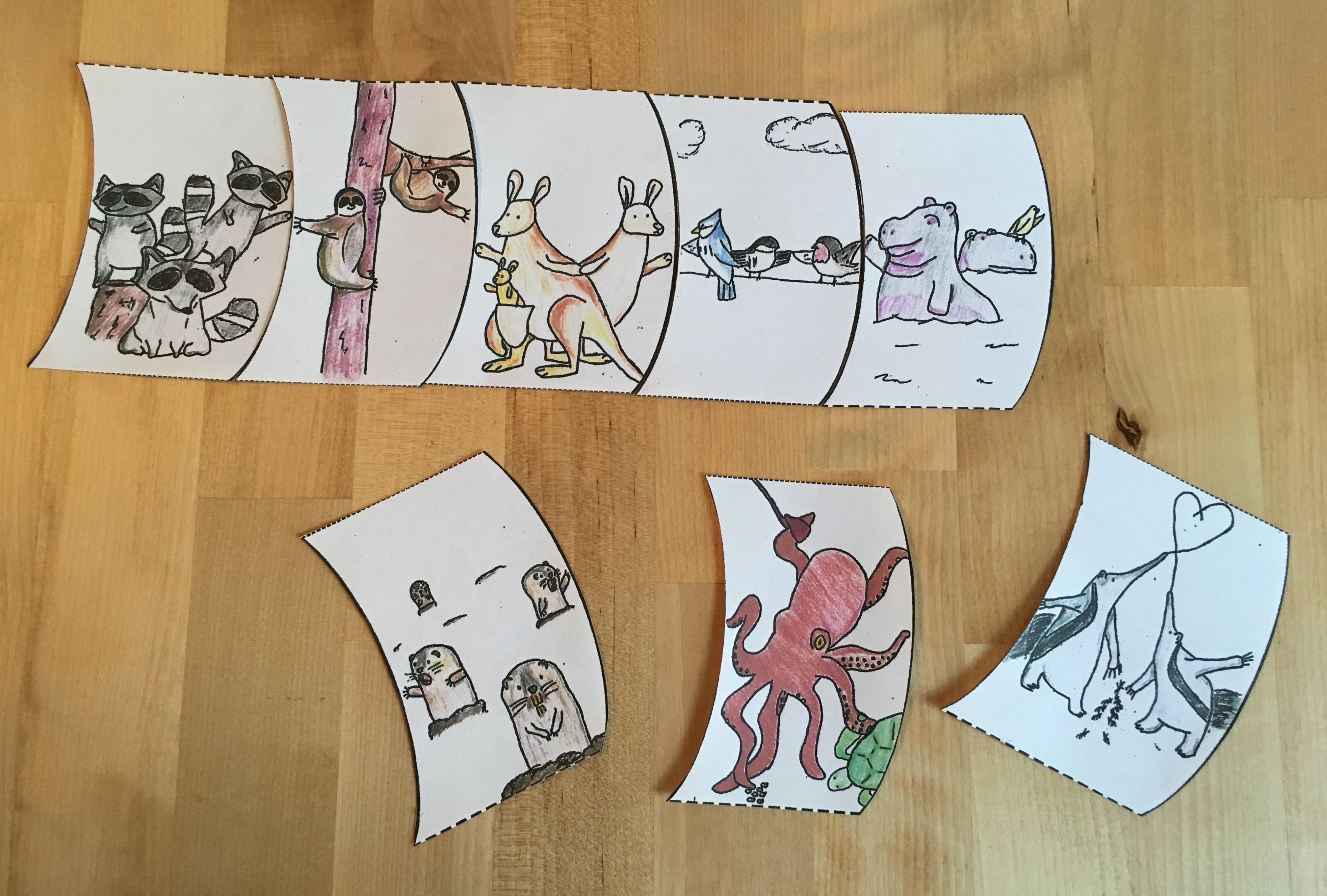
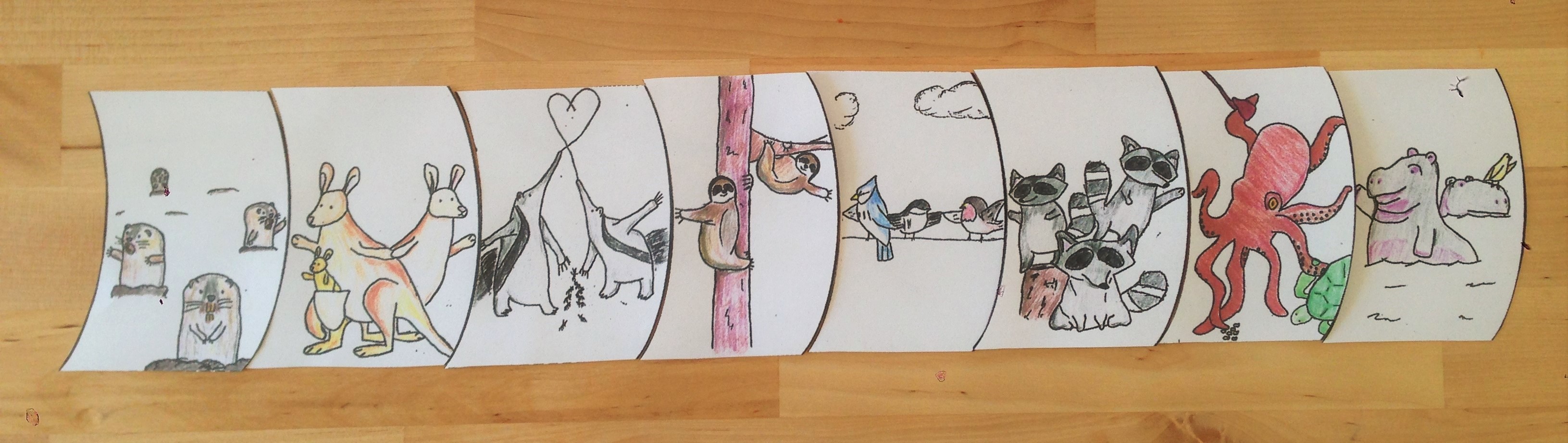
In this Give Me Your Hand! Puzzle, everyone is welcomed with a handshake. Offering friendship to all, the interchangeable pieces can be mixed and matched as the animals become buddies with one another. 

Supplies

celebrate-picture-books-picture-book-review-UN-day-puzzle

Directions

  1. Print the puzzle: to make the puzzle sturdier: Print on heavy stock paper or glue the page to poster board
  2. Color the pictures with colored pencils or crayons
  3. Cut the pieces apart
  4. Switch the pieces around to make many alternate pictures
celebrate-picture-books-picture-book-review-UN-day-puzzle

You can purchase Ege and Ávra from these booksellers

Amazon | Barnes & Noble | Bookshop

September 1 – World Letter Writing Day

Once, people communicated their news, emotions, and “wish you were here” postcard sentiments through the mail. Today, letters can take on a different connotation. They don’t have to be those long missives sent in envelopes with stamps affixed. A note to a friend, a message included in a child’s lunch sack, or a post-it stuck where a co-worker can see it are all ways to write a few encouraging words to those you love. Today, why not put your thoughts on paper and give your letter to someone you’d like to connect with—even if it’s just for a little help, like in today’s book!

Thank you to Orchard Books/Scholastic for sending me a copy of this book for review!

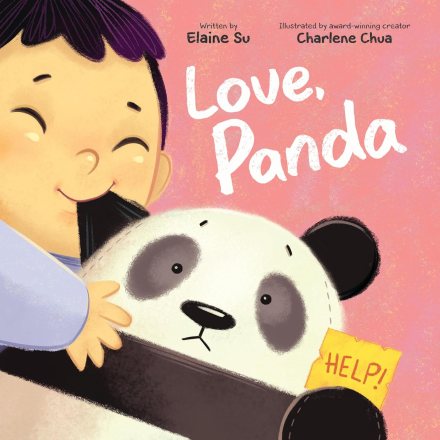
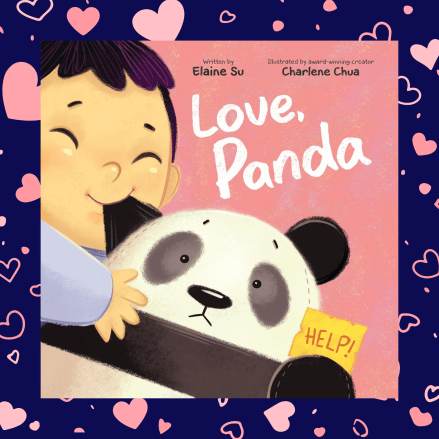
Love, Panda

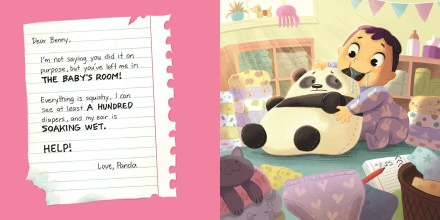
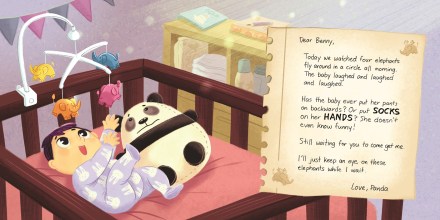
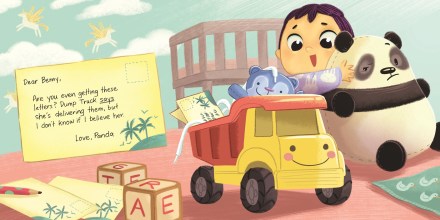
As new big brother Benny takes off to play with a visiting friend, a squishy panda feels abandoned with the baby who’s chewing her ear amid piles of diapers, tiny clothes, and other little toys. Panda writes a letter to Benny pleading to be rescued to no avail. The next day Panda writes that she endured watching “four elephants fly around in a circle all morning.” The baby thinks they’re hilarious, but Panda? Not so much. She reminds Benny that she’s still waiting for him to retrieve her. In a postcard, Panda questions if Dump Truck is even delivering her letters.

Illustration copyright © 2026 by Charlene Chua. Text copyright © 2026 by Elaine Su. Published by Orchard Books copyright © 2026.

As Baby continues to grow, Panda grows desperate, and her letters become impassioned missives bemoaning her fate as Baby’s constant companion. Panda’s suffering through loud crinkly books, new lax rules on burping, and Baba’s singing to Baby. Little by little, though, Panda’s letters reveal real concern, interest, appreciation, and an understanding of what Baby needs. Panda even uses her name. But then the “weirdest thing” happens. Panda begins to bond with Baby Lou and to have flashbacks, from when Benny was a baby, of that crinkly book, one of Lou’s hats, and even having tea with a giraffe in the baby’s room.

Illustration copyright © 2026 by Charlene Chua. Text copyright © 2026 by Elaine Su. Published by Orchard Books copyright © 2026.

At the same time, Lou learns to sit up, and Benny is suddenly more interested in his baby sister. Entering her room, he reconnects with Panda in a big, happy squeeze before the three have a tea party together. In her last letter, Panda retracts her previous requests, having decided that she “might stay here a bit longer,” but inviting Benny to come play again tomorrow.

Illustration copyright © 2026 by Charlene Chua. Text copyright © 2026 by Elaine Su. Published by Orchard Books copyright © 2026.

Elaine Su’s adorable story, told through witty letters that echo the feelings of a sibling as they adjust to the changes a new baby brings, is full of personality, funny observations, and the subtle way acceptance and love grow between siblings. Su deftly weaves Baby Lou’s progression of milestones throughout the story, reminding older brothers or sisters that they, too, experienced these stages and share a common history.

Charlene Chua’s bright illustrations give young readers plenty to smile, laugh, and talk about as Panda’s facial expressions clearly show her emotions—from boredom to growing kinship to happiness. Benny’s increasing interaction with his sister is also shown through background images of his playdates, his reaction to Lou’s crying, and his sweet reunion with Panda before officially giving her to Lou. The final image of a letter Benny has made for Panda brings the story to a heartwarming finish.

Endearing and hilarious, Love, Panda is a perfect choice for new or soon-to-be siblings that will continue to be relevant and appreciated as the baby grows and the siblings form a relationship. The book is sure to be an often-asked-for addition to any home or library collection.

Ages 4 – 8

Orchard Books, 2026 | ISBN 978-1546179580

About the Author

Elaine Su was born in Shanghai and now lives with her family in beautiful coastal British Columbia, Canada. Her favorite childhood stuffie was an enormous green and white rabbit named Duffle. Visit her at elainesu.com.

About the Illustrator

Charlene Chua has illustrated more than a dozen books, including Oliver Bounces Back!, Amy Wu and The Perfect Bao, The Pencil, and Hug? Her work has been nominated for the Ruth and Sylvia Schwartz Award, the Forest of Reading Awards, the Shining Willow Award, and the First Nation Communities READ Award. Charlene lives in Hamilton, Ontario, Canada. Visit her/them at charlenechua.com.

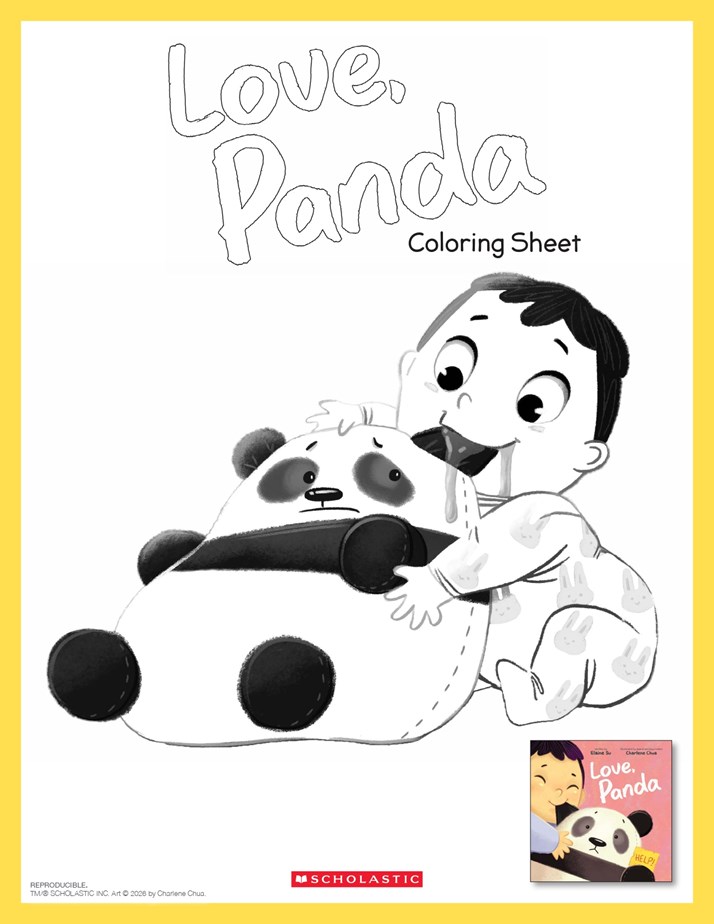
Kids can commiserate with Panda and show their love for their own favorite stuffed animal with these Love, Panda Activity Pages from Elaine Su, Charlene Chua, and Scholastic!

Love, Panda Coloring Sheet | Love, Panda Letter Writing Activity

You can purchase Love, Panda from these booksellers

Amazon | Barnes & Noble | Bookshop

August 27 – National Just Because Day

Doesn’t today’s holiday sound relaxing? A whole day devoted to doing things “just because.” As the school year starts up again and the less structured days of summer fade, it’s fun to contemplate what you can do just because you feel like it, because it makes you happy, or because it’s something nice you want to do for someone else. With no expectations, no directions, and no nagging deadlines, today’s holiday lets you be the captain of your own actions and fate! So get out there and do that thing! You might surprise yourself and others—just like the little girl in today’s book!

Thank you to Abrams Books for Young Readers for sending me a copy of this book for review!

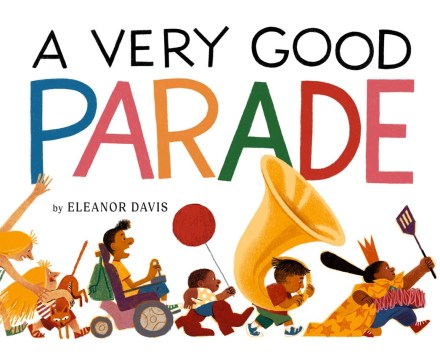
A Very Good Parade

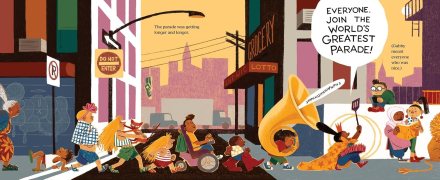
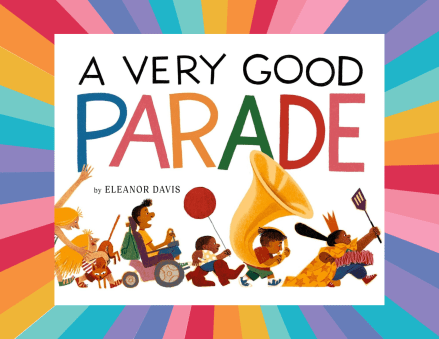
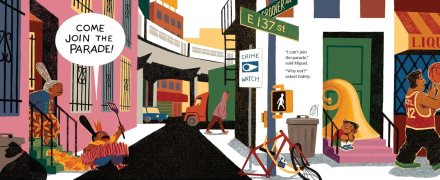
When Gabby, with her cape, crown, Tudor ruff-esque tutu, and exclamation-point topknot, waved her spatula and declared “It’s time for a parade!” she was initially met with reluctance. Miguel told her he didn’t “know how to do anything,” including playing the tuba sitting next to him. Gabby reassured him that the “horn is so good, you don’t even have to play it.” If that was the case, Miguel was ready to sign up and blew a weak breath—“pffsssfffssssss”—into the mouthpiece.

Text and illustration copyright © 2026 by Eleanor Davis. Published by Abrams Books for Young Readers copyright © 2026

They continued down the block, Gabby inviting everyone to join the parade with “whatever you’ve got.” Hugo has lots of questions about who and what will be in the parade before demonstrating his talent for singing “Stayin’ Alive.” All Anthony has are his auntie’s oversized cowboy boots, but Gabby says to wear them and come along. Across the street they meet up with two girls who don’t want to miss snack time, so Gabby hands them three tubes of string cheese and wants to know what they’ll do in the parade.

Text and illustration copyright © 2026 by Eleanor Davis. Published by Abrams Books for Young Readers copyright © 2026

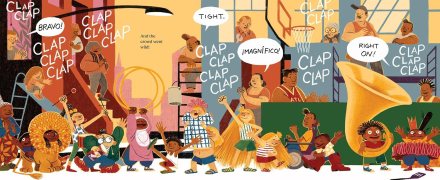
As Gabby leads her growing parade to the park, she picks up drummers, acrobats, even a wild animal who all fulfill Hugo’s list, while deftly dispatching two bullies with a definitive “No, you aren’t” when they say they’re going to join the parade. When Gabby finally yells, “STOP! Now we will all perform!” the street erupts with roars and crash-bangs and singing and clomping and “pffsssfffssssss” from Miguel’s tuba. The parade ends with an unexpected flourish that makes the watching crowd go “wild” and Gabby’s pronouncement, “Now it is time for dinner!” that sends everyone home. Back at Gramma’s, Gabby proclaims her parade “‘was the best parade in the history of the whole entire universe.’ And it was. Gabby said so.”

Text and illustration copyright © 2026 by Eleanor Davis. Published by Abrams Books for Young Readers copyright © 2026

When Eleanor Davis’s spunky and aptly named Gabby announces herself and her intentions to lead a parade on the first page, readers will find their lips curling into a smile that only becomes wider and never fades as the story progresses to its pitch-perfect ending. Focused and self-assured, Gabby marches out into the street where she spreads compliments, confidence, and acceptance (except for one very welcome rebuke of bullies) in her wake. Hilarious touches in the dialogue and illustrations will prompt laughs and a heartwarming embrace for this close neighborhood. Kids are sure to be charmed and inspired by the variety of talents this parade presents.

Davis’s warm, matte color palette is striking and fresh, highlighting the children while they also blend in as an integral part of the community. Her illustrations are fully realized with city scenes and humorous details, and readers will love to linger over all of the action as the kids make their way to the park. A Special Note about the book’s jacket and cover: the flip side of the jacket folds out to a full-length image of the parade performance, while the cover shows the neighborhood in quiet repose.

A Very Good Parade is a joyful celebration of childhood, individual personalities, and community that will be a favorite for “read it again!” story times. The book is a must for all public and school libraries as well as home bookshelves. If you are looking for a gift, A Very Good Parade will be much appreciated and loved.

Ages 4 – 8

Abrams Books for Young Readers, 2026 | ISBN 978-1419785733

About the Author

Eleanor Davis is an award-winning cartoonist making books for children and adults. Her recent graphic novel The Hard Tomorrow won the LA Times Book Prize for Best Graphic novel, and her early reader Stinky was celebrated with a Geisel Honor, among many other accolades. She is the illustrator of Traci N. Todd’s Make a Pretty Sound. A Very Good Parade is Eleanor’s author-illustrator picture book debut. She lives in Athens, Georgia, with her husband, fellow cartoonist Drew Weing, and their noisy and righteous child. Visit her at doing-fine.com.

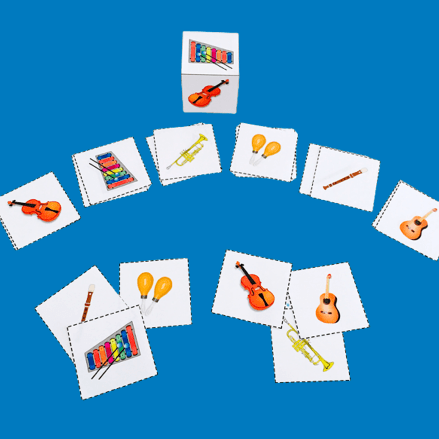
Play this fun game to gather all the instruments you need to create a music group or a parade! The first person to collect all 6 instrument cards is the winner!

Supplies

Directions

  1. Print the Paper Cube Template, cut it out and assemble the cube die.
  2. Print the Musical Instruments cards, cut out cards, and separate the instruments into piles
  3. Players take turns rolling the die cube to collect musical instrument cards
  4. The first player to collect all 6 instrument cards is the winner

You can purchase A Very Good Parade from these booksellers

Amazon | Barnes & Noble | Bookshop