September 10 – It’s Read a New Book Month

celebrate-picture-books-picture-book-review-miep-and-the-most-famous-diary-cover

About the Holiday

There are so many perfect times to read a book and so many new books to fill those hours. Kids love reading or being read to in school or before going to sleep. And adults they try to snatch a few minutes here and there during lunch or a break or before turning out the light. Whether you read a newly published book, a book that’s new at your local library or bookstore, or a book that’s just new to you, grab your favorite kind of book and start reading!  

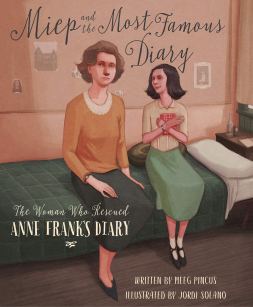
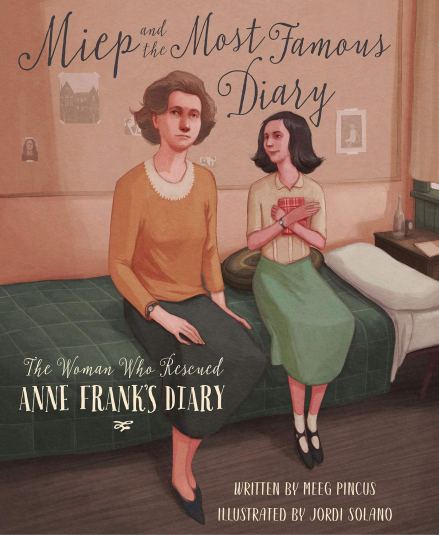
Miep and the Most Famous Diary: The Woman Who Rescued Anne Frank’s Diary

Written by Meeg Pincus | Illustrated by Jordi Solano


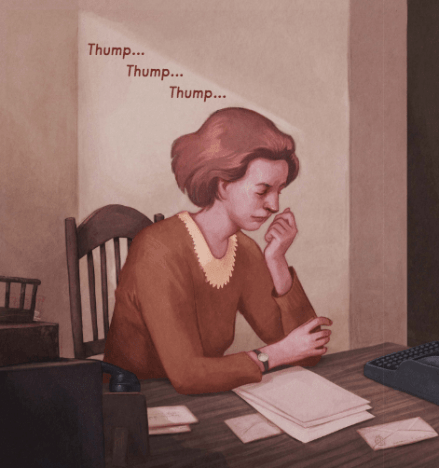
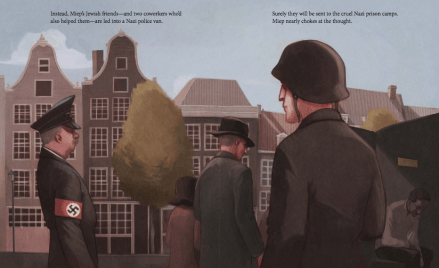
On August 4, 1944, Miep Gies hears the worst sound she’s ever heard: “footsteps on the secret back stairs.” The sound is “worse than the World War II bomber planes…. Worse than the queen’s quivering voice on the radio announcing the invading Nazi army.” The sound means that Nazi officers have come to arrest the Frank family who Miep has been hiding for two years. Miep hears the van carrying her friends roar away. She knows that soon Nazi movers will return to take away all of the Frank’s possessions. She knows too that she could be arrested for keeping anything belonging to her friends, but there is one item she must rescue. “It calls silently from the musty rooms above.”
celebrate-picture-books-picture-book-review-miep-and-the-most-famous-diary-august-4-1944

Image copyright Jordi Solano, 2019, text copyright Meeg Pincus, 2019. Courtesy of Sleeping Bear Press.

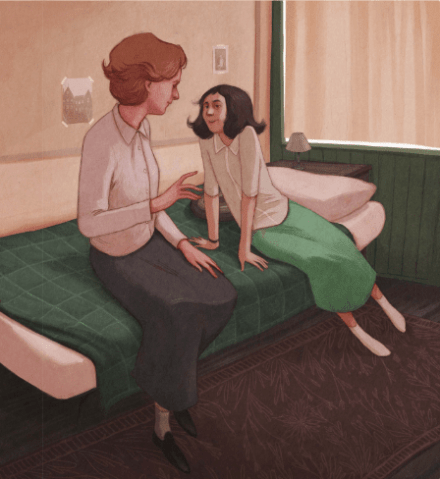
It takes many hours before Miep can bring herself to enter the secret annex. With her husband, Henk, and a coworker, Elli, they enter the rooms. In the bedroom, Miep finds what she is looking for: a red checkered diary that holds the thoughts and hopes of the Franks’ young daughter Anne. Miep “knows Anne dreams of publishing it as a book after the war.” Elli gathers up more of Anne’s writing that lies strewn across the floor, and Miep “grabs…Anne’s delicate combing shawl, strands of her dark hair clinging to its fabric like silky noodles.”
celebrate-picture-books-picture-book-review-miep-and-the-most-famous-diary-officer

Image copyright Jordi Solano, 2019, text copyright Meeg Pincus, 2019. Courtesy of Sleeping Bear Press.

Miep hides Anne’s diary and combing shawl in the drawer of her desk, never reading it. Nine months go by then one day Henk rushes into their apartment with news that the war is over and that the Nazis have surrendered. Miep and Hank wait for their “friends and neighbors to return from the camps,” wondering if the Franks will be among them. One day, Miep sees a familiar figure approaching her door. It’s Mr. Frank. He is alone, his wife having died in the camp. He has no knowledge about Anne and her sister as they were sent to another camp. While Mr. Frank regains his strength with the help of Miep, he sends letter after letter trying to locate his daughters.

At last a letter arrives, but it “contains the worst possible news: Anne and her sister did not survive the war. The air in the office hangs as still and shattered as the day of the capture.” With a broken heart, Miep opens her desk drawer and retrieves “Anne’s diary, papers, and shawl.” As she hands them to Mr. Frank, he gasps. He takes them to his office and reads Anne’s diary. “He savors her tales of growing up in hiding, her bright calls for hope when all seems lost.” He urges Miep to read it too, but she feels that she “will drown in sorrow” if she does.
celebrate-picture-books-picture-book-review-miep-and-the-most-famous-diary-anne's-room

Image copyright Jordi Solano, 2019, text copyright Meeg Pincus, 2019. Courtesy of Sleeping Bear Press.

With the help of a war historian, Mr. Frank has Anne’s diary published. But, still, Miep cannot read it. Years go by before Miep opens the cover of Anne’s book. As she reads Anne’s words, she feels “as if Anne is standing right beside her, chattering away. Within the pages of her diary, Anne expressed her gratitude for the “gift…of writing, of expressing all that is in me” and her desire to “go on living even after my death!” After reading Anne’s words, Miep’s sadness lessens and she realizes that by saving her diary, “her beloved Anne will live on and on.”

An Author’s Note about how this book came to be written as well as more about the life of Miep Gies follows the text.
celebrate-picture-books-picture-book-review-miep-and-the-most-famous-diary-arrest

Image copyright Jordi Solano, 2019, text copyright Meeg Pincus, 2019. Courtesy of Sleeping Bear Press.

Reading Meeg Pincus’s compelling first page, readers can almost hear the stomp of Nazi footsteps on the stairs leading to the secret annex and feel the constriction of Miep Gies’s heart as the Franks are arrested and taken away. Miep’s courage amid her sadness reverberates throughout this true story, tinted with the secrecy of grocery runs, the hurried collection of Anne’s most precious possession, and her ongoing mission to protect her friends. Pincus’s excellent pacing and evocative storytelling, which includes actual quotes from Miep’s writings and is punctuated with emotion will have children holding their breath as they listen or read on their own. Heartbreaking facts are portrayed candidly and with respect for the target age, allowing Anne’s boundless hope to shine through.

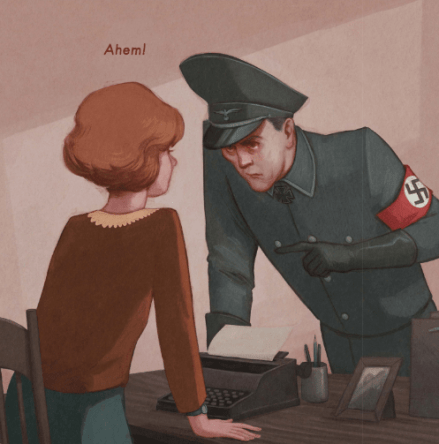
Seeming to take inspiration in color and tone from photographs on the front endpaper of Anne and her father flanked by Miep Gies and other helpers, Jordi Solano washes his illustrations in somber grays and greens, preserving bright spots for Anne’s red diary and her grass-green skirt that connects her to the colorfully clothed children who, on the final page, have come to visit the Anne Frank Museum. Miep’s grief at the arrest of her friends is palpable, and the Nazi officer who threatens her with arrest is depicted with sharp angles and an unrelenting stare. Children see Miep hide Anne’s diary in the back of a drawer and the approaching figure of Mr. Frank coming home from the detention camp. Solano portrays the moment when Mr. Frank, reunited with Anne’s diary and papers, clasps his daughter’s things to his heart. It is a poignant glimpse into this most private experience. As Miep finally reads Anne’s diary, Anne, herself, appears as she was, full of curiosity, joy, and love.

A must to be included in lessons about World War II, the Holocaust, and Anne Frank, Miep and the Most Famous Diary is also a poignant reminder of the crucial role of personal courage as well as the everlasting endurance of hope. The book should be included in all school and public libraries and would make a powerful addition to home libraries as well.

Ages 6 – 9

Sleeping Bear Press, 2019 | ISBN 978-1534110250

Discover more about Meeg Pincus and her books on her website.

To learn more about Jordi Solano, his books, and his art, visit his website.

Read a New Book Month Activity

celebrate-picture-books-picture-book-review-initial-bookends-craft

Initials Bookends


You can display your personality along with your favorite books with this easy craft! This makes a great gift too!

Supplies

  • Sturdy wooden letter blocks in the child’s first and last initials. Or, if the child would like to try on a new name or nickname, the first letter of their new name.
  • Chalkboard or acrylic paint
  • Colored chalk
  • Paint brush

Directions

  1. Paint the letters, let dry
  2. With the chalk write words that describe you or names of your heroines and/or heroes
  3. Display your bookends

celebrate-picture-books-picture-book-review-miep-and-the-most-famous-diary-cover

You can find Miep and the Most Famous Diary at these booksellers

Amazon | Barnes & Noble | Books-a-Million | IndieBound

Picture Book Review

September 9 – It’s National Hispanic Heritage Month

celebrate-picture-books-picture-book-review-dancing-hands-cover

About the Holiday

Beginning on September 15th  and running through October 15th, National Hispanic Heritage Month celebrates the contributions of those who come from or whose ancestors immigrated from Spain, Mexico, the Caribbean, Central America, and South America. Each year the holiday adopts a particular theme. This year’s theme is Hispanic Americans: A History of Serving Our Nation. From the military, to business and industry to culture, sports, and entertainment Hispanic Americans have made an important and indelible imprint on our country. First observed in 1968 as a week-long holiday, the commemoration was expanded to a month in 1988 under President Ronald Reagan. To celebrate, learn more about Hispanic Americans who have influenced our culture, attend a special event, and enjoy great books by Hispanic authors like today’s book! You can learn more about the holiday at the official Hispanic Heritage Month website.

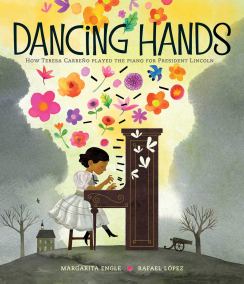
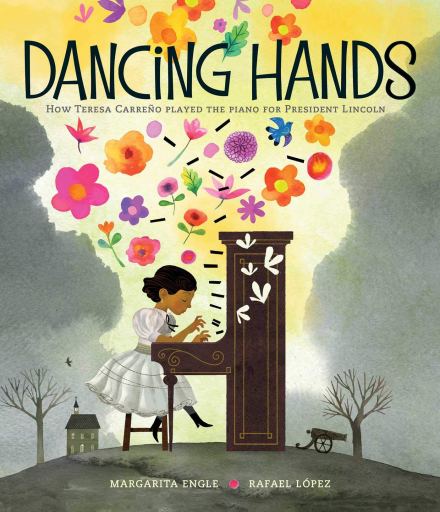
Dancing Hands: How Teresa Carreño Played the Piano for President Lincoln

Written by Margarita Engle | Illustrated by Rafael López


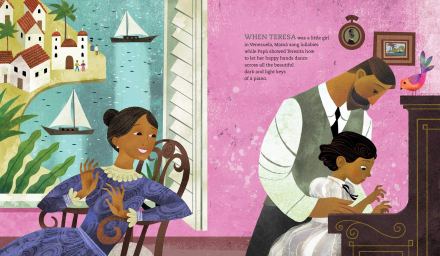
Growing up in Venezuela, Teresa listened to her mother’s lullabies and learned how to play the piano from her father. It wasn’t always easy “to make the stubborn music behave as she practiced gentle songs that sounded like colorful birds…and powerful songs that roared like prowling jaguars, beside towering waterfalls in a mysterious green jungle.” But by the time she was six, she was composing her own songs and at seven, she played in the cathedral.

celebrate-picture-books-picture-book-review-dancing-hands-papa

Image copyright Rafael López, 2019, text copyright Margarita Engle, 2019. Courtesy of Atheneum Books for Young Readers.

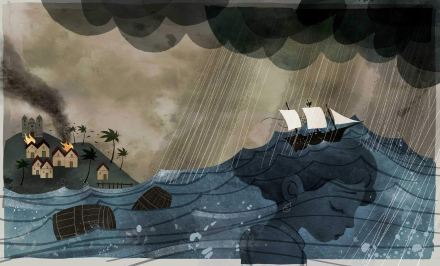
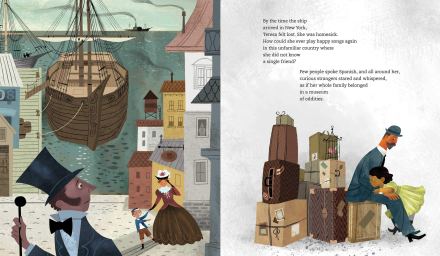
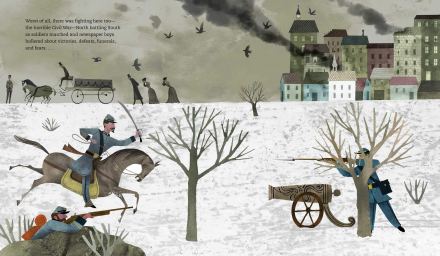
When Teresa was eight, however, her world was rocked by war, and she and her family escaped by ship to America. In New York, she felt lost among all of the strangers, who didn’t speak Spanish and gawked at her and her family as if they “belonged in a museum of oddities.” Even here, they had not escaped conflict as the Civil War waged, pitting the North against the South and family against family.

celebrate-picture-books-picture-book-review-dancing-hands-jungle

Image copyright Rafael López, 2019, text copyright Margarita Engle, 2019. Courtesy of Atheneum Books for Young Readers.

Teresa found refuge in her new piano and began to make friends with musicians who came to her home to listen and play along. Teresa practiced all types of music, “her strong hands accepting the challenge of life’s many dark and light moods.” She became well known as “the Piano Girl” and performed with big orchestras and in theaters. She became so famous that she was even invited to play for President Abraham Lincoln and his family at the White House.

celebrate-picture-books-picture-book-review-dancing-hands-cathedral

Image copyright Rafael López, 2019, text copyright Margarita Engle, 2019. Courtesy of Atheneum Books for Young Readers.

At the time Washington DC was awash in suffering, torn by war and weariness. President Lincoln’s young son had recently become sick and died. How, Teresa wondered, “could music soothe so much trouble?” Holding tightly to Papá’s hand, she entered the White House and was ushered into a room “as red as a storm or a sunrise.” As she sat at the piano, Teresa recalled past challenges and her discover that life was a “mixture of all sorts of feelings, happy and sad.”

celebrate-picture-books-picture-book-review-dancing-hands-ship

Image copyright Rafael López, 2019, text copyright Margarita Engle, 2019. Courtesy of Atheneum Books for Young Readers.

She began to play, but the piano was out of tune, “making her music sound ugly.” She stopped, but then President Lincoln requested she play his “favorite song, ‘Listen to the Mockingbird.’” This was a song Teresa could play on this imperfect piano. “Her fingers leaped across all the dark and light keys, improvising the way mockingbirds do, the melody changing as she went along.” Lincoln closed his eyes and was taken away on the soaring notes.

celebrate-picture-books-picture-book-review-dancing-hands-new-york

Image copyright Rafael López, 2019, text copyright Margarita Engle, 2019. Courtesy of Atheneum Books for Young Readers.

When the song ended, the President rose and applauded. He smiled at Teresa and she smiled back, understanding that “her music had brought comfort to a grieving family, at least for one brief, wonderful evening of dancing hands.” Teresa continued to share her gift with the world, always bringing “beautiful dark and light moments of hope” to her listeners.

A Historical Note about the life of Teresa Carreño follows the text.

celebrate-picture-books-picture-book-review-dancing-hands-war

Image copyright Rafael López, 2019, text copyright Margarita Engle, 2019. Courtesy of Atheneum Books for Young Readers.

Margarita Engle’s soaring biography introduces readers to an astounding woman who, even as a child, had not only a prodigious talent for the piano but a gift for understanding life as well. Engle, the 2017 -2019 national Young People’s Poet Laureate, infuses her story with beautiful lyricism and stirring metaphors that evoke the power of music in Teresa’s heart and hands. On these pages, music becomes a living thing, capable of forming friendships, soothing grief, providing escape, and offering hope. Engle’s focus on the meeting between Teresa Carreño and Abraham Lincoln is significant and offers inspiration to young readers. Like Teresa, who, concerned with playing just right, was presented with an imperfect piano but encouraged by Lincoln’s kindness, they too can learn that with a steady and courageous heart, anyone can use their talents to overcome challenges.

In Rafael López’s crisp, stylish illustrations, Teresa Carreño’s love of music and its emotional power serves as a counter point to the distress of war and anguish of grief. Using vibrant greens, pinks, oranges, and blues, Lopez surrounds Teresa with lush vegetation, dazzling birds, and the security of home. Muted variations of  these colors depict the bleakness of war. A moving image, washed completely in gray except for an approaching vivid bird and a tinge of soft rose dawn shows a mourning Abraham Lincoln alone in his office but soon to be comforted by Teresa’s music.

A beautiful and uplifting biography for kids of all talents, Dancing Hands: How Teresa Carreño Played the Piano for President Lincoln would be an inspiring addition to home, school, and public library bookshelves.

Ages 4 – 8

Atheneum Books for Young Readers, 2019 | ISBN 978-1481487405

Discover more about Margarita Engle, her books, and her poetry on her website.

To learn more about Rafael López, his books, and his art, visit his website.

National Hispanic Heritage Month Activity

CPB - Tortilla chips (2)

Homemade Baked Cinnamon Tortilla Chips


It’s easy to make these yummy tortilla chips at home! Why not invite your friends over and bake up a batch or two to enjoy while playing or reading together?

Ingredients

  • 2 10-inch flour tortillas
  • ¾ teaspoon cinnamon
  • 2 ½ tablespoons sugar
  • Butter

Directions

  1. Preheat oven to 350 degrees
  2. Combine the cinnamon and the sugar in a bowl
  3. Butter the tortillas
  4. Sprinkle the tortillas with the cinnamon sugar mixture
  5. Cut the tortillas into 8 pieces
  6. Place pieces on a baking sheet
  7. Bake in 350-degree oven for 12 – 15 minutes
  8. Chips will become crispier as they cool.

Makes 16 chips

celebrate-picture-books-picture-book-review-dancing-hands-cover

You can find Dancing Hands: How Teresa Carreño Played the Piano for President Lincoln at these booksellers

Amazon | Barnes & Noble | Books-a-Million | IndieBound

Picture Book Review
August 30 – National Frankenstein Day

celebrate-picture-books-picture-book-review-mary-who-wrote-frankenstein-cover

About the Holiday

Today’s holiday celebrates the birth of Mary Wollstonecraft Shelley, who in 1818 at the age of 18, penned one of the most influential books of all time. Considered the first modern science fiction novel, Frankenstein; or, The Modern Prometheus incorporates elements of horror, psychology, love, abandonment, and acceptance. These themes and Shelley’s enthralling storytelling created a book that is always current. During this 200th anniversary year of the publishing of classic novel, discover (or rediscover) the spellbinding thrill of reading Frankenstein.

Mary Who Wrote Frankenstein

Written by Linda Bailey | Illustrated by Júlia Sardà


Mary was a dreamer. She liked to spend time alone, thinking and imagining “things that never were.” Mary called these daydreams “‘castles in the air.’” Mary loved to write stories too, but her daydreams were even more thrilling. When Mary wanted to read and dream, she went to the graveyard and sat next to her mother’s grave. Mary’s mother had died when Mary was only 11 days old.

While Mary loved her father, she didn’t like the way he punished her. Mary didn’t like his new wife, either. Mary’s father is friends with many famous people, and he invites them to visit. One night “a writer named Samuel Taylor Coleridge recites a strange, eerie poem—The Rhyme of the Ancient Mariner. Mary loves such poems.” Even though she was supposed to be in bed, she hid and listened, shivering “with fear at the spine-tingling tale of a ship full of ghosts.” Forever after, Mary remembered that night and that poem.

celebrate-picture-books-picture-book-review-mary-who-wrote-frankenstein-town

Image copyright Júlia Sardà, 2018, text copyright Linda Bailey, 2018. Courtesy of Tundra Books.

By the time Mary was fourteen, she was unhappy at home and causing trouble. One night, when she was sixteen, she and her stepsister, Claire, ran away with a “brilliant, young poet” named Percy Bysshe Shelley. They traveled through Europe, one day finding themselves outside a “ruined castle. It’s called Castle Frankenstein. Such an interesting name! Does it stick in Mary’s mind?”

Eighteen months later, the three traveled to Switzerland, where they became friends with Lord Byron—the most famous poet in the world. One night as torrential storms crashed around Lord Byron’s house, he read ghost stories from Fantasmagoriana. After reading, Byron challenged his friends, who also included a doctor named John Polidori, to write a ghost story. Eighteen-year-old Mary, Percy Bysshe Shelley, and John Polidori accepted the challenge. But Mary could not think of a good story idea.

celebrate-picture-books-picture-book-review-mary-who-wrote-frankenstein-friends

Image copyright Júlia Sardà, 2018, text copyright Linda Bailey, 2018. Courtesy of Tundra Books.

Soon, Shelley and Polidori gave up on their ghost stories, but their talk of new scientific experiments excited Mary. “Electricity can make the muscles of a dead frog twitch. Could it bring a dead creature to life? The idea is both thrilling and frightening.” The idea captured Mary, but instead of a frog, she imagined “a hideous monster, made of dead body parts, stretched out—and coming to life!” Mary suddenly realized she had the idea for her ghost story.

It took nine months for Mary to finish her story. When it was published, some people thought it had been written by Percy Bysshe Shelley—they didn’t “believe young Mary could have done it! How could a girl like her come up with such a story?” But she was a writer, assembling bits and pieces, ideas, and scientific changes in her imagination until they turned into the book Frankenstein. In the two-hundred years since the novel was first published, the story has become a classic. It has sparked movies, inspired other writers, and become a favorite all around the world.

An extensive Author’s Note about Mary Shelley, her life, and inspiration as well as Linda Bailey’s thoughts on the story behind Frankenstein follows the text. A full-page portrait of Mary Wollstonecraft Shelley and a list of sources rounds out the informative backmatter.

celebrate-picture-books-picture-book-review-mary-who-wrote-frankenstein-graveyard

Image copyright Júlia Sardà, 2018, text copyright Linda Bailey, 2018. Courtesy of Tundra Books.

With atmospheric and riveting details, Linda Bailey captures the life of Mary Wollstonecraft Shelley and the influences on her imagination that resulted in Frankenstein. Bailey’s use of the present tense is inspired as it reflects the continued currency of the novel while encouraging today’s readers to embrace their “castles in the air.” Facts about Mary’s travels, new scientific discoveries, and favorite books sprinkled throughout the story inform readers on how the imagination combines experiences to create art.

One look at Júlia Sardà’s spellbinding cover tells readers that they are in for an extraordinary reading experience. Muted tones of red, green, gold, blue, and plum cloaked in black create a thrilling backdrop to Bailey’s story. Ghostly winged creatures fly over Lord Byron’s home on a stormy night, smoky monsters emerge from Fantasmagoriana, a frog sits up in its coffin, and the spectre of the monster leans over Mary and sleeps at her feet as she writes her novel. At once spine-tingling and cozy, Júlia Sardà’s illustrations will draw children into this superb story of a ghost story.

Mary Who Wrote Frankenstein is sure to spark the imagination of children who love literature, art, and writing. The book would be a thrilling addition to classroom libraries for literature and writing classes as well as an inspiring favorite on home bookshelves.

Ages 5 – 8

Tundra Books, 2018 | ISBN 978-1770495593

Discover more about Linda Bailey and her books on her website.

To learn more about Júlia Sardà, her books, and her art, visit her website.

Frankenstein Day Activity

celebrate-picture-books-picture-book-review-frankenstein-puzzle

Monstrously Good Puzzle


See if you’re a Frankenstein scholar by filling in this printable puzzle full of words and phrases about the novel!

Monstrously Good Puzzle | Monstrously Good Puzzle Word ListMonstrously Good Puzzle Solution

celebrate-picture-books-picture-book-review-mary-who-wrote-frankenstein-cover

You can find Mary Who Wrote Frankenstein at these booksellers

Amazon | Barnes & Noble | Books-a-Million | IndieBound

Picture Book Review


August 7 – National Lighthouse Day

celebrate-picture-books-picture-book-review-miss-colfax's-light-cover

About the Holiday

Lighthouses have been in use since the earliest days of sea-going vessels. Built to warn sailors of dangerous and damaging rocks and reefs, these sentinels are a picturesque and fascinating part of history. From man—and woman—tended lights to today’s automated systems, lighthouses are a beacon of inspiration and imagination.

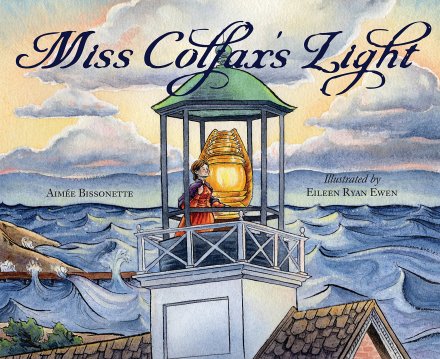
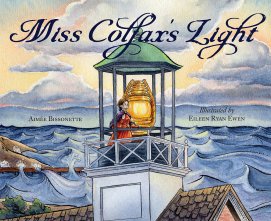
Miss Colfax’s Light

Written by Aimée Bissonette | Illustrated by Eileen Ryan Ewen


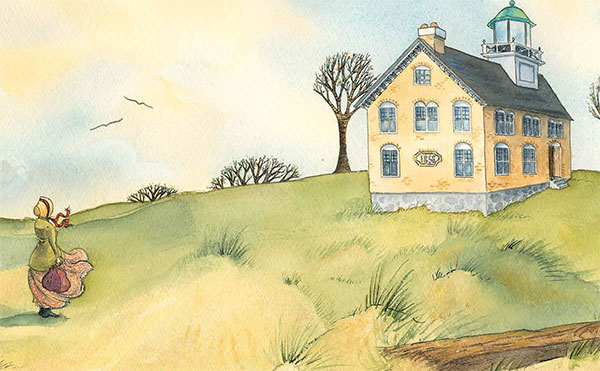
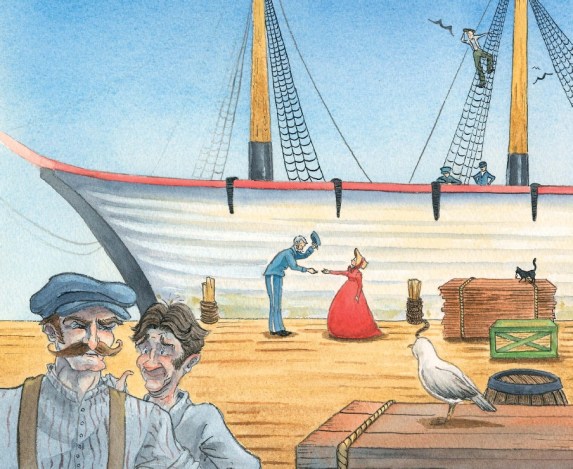
In 1861 when Harriet Colfax’s brother fell ill and decided to leave Indiana, Harriet had two options: she could leave with him—after all she had come to Indiana with him and worked with him at their newspaper—or she could stay on as the lighthouse keeper of the Michigan City Lighthouse, making $350 a year. Most women might have chosen to leave, but Harriet did not want to give up her independence or leave her best friend, Ann. She took the job as lighthouse keeper even though many in town thought she was too weak or too inexperienced to do the work.

celebrate-picture-books-picture-book-review-miss-colfax's-light-Michigan-city-lighthouse

Image copyright Eileen Ryan Ewen, 2016, courtesy of sleepingbearpress.com

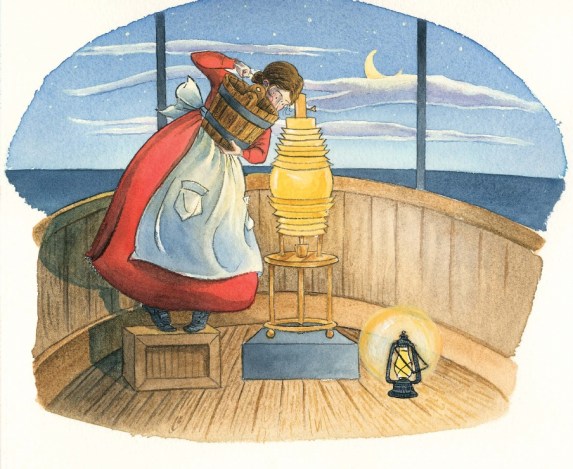
Harriet knew the ships on the sometimes wild waters of Lake Michigan—one of the northern United States’ Great Lakes—relied on the lighthouse to keep them from danger. Twice every night she had to carry “whale oil in a bucket up narrow stairs to the top of the lantern tower” to refill the light and then polish the Fresnel lens. During the day, she “cleaned and painted…varnished the woodwork and shined the brass…and wrote notes in her log.”

It didn’t matter if Harriet was tired or sick or if winter storms rocked the shore, Harriet’s work went on. In 1871 a beacon light was installed at the end of the Michigan City east pier. Now in addition to the main lighthouse, Harriet had to keep this signal lit too. To do so required a long walk down a wooden catwalk that jutted far out into the lake. At times the freezing water roiled and splashed over the catwalk, making the walk tricky and dangerous. By this time lard had replaced whale oil as fuel. While it was cheaper and easier to get, it also had to be heated to pour. Sometimes on frigid winter nights “the lard oil hardened in the cold and Harriet had to fight back through the wind to reheat the oil” on her stove.

celebrate-picture-books-picture-book-review-miss-colfax's-light-harriet-adding-oil

Image copyright Eileen Ryan Ewen, 2016, courtesy of sleepingbearpress.com

In 1874 the beacon light was moved to the west pier—farther away. Instead of being within walking distance, Harriet now had to “row a small boat across a creek, hike the far shore, and cross a longer catwalk to light the beacon light.” One night in 1886 storms raged as Harriet made her way down the west pier. “Driving sleet covered her coat with ice. Sand from the dunes along the lake pelted Harriet’s face, stinging her cheeks. Her boots slipped and slid on the catwalk.” Only moments after she finished filling the beacon light and stepped off the catwalk, “a deafening screech filled the air” as the beacon tower “ripped from its moorings and crashed into the lake.”

Harriet’s dedication to the Michigan City Lighthouse continued every day and every night for 43 years. People in town came to call the landmark “Miss Colfax’s Light,” and ship captains named it “Old Faithful.” Over the years her vantage point on the tip of the shore allowed Harriet to experience more than stormy seas. She also saw “brilliant sunsets, lunar eclipses, and silent, dancing northern lights. She saw tall-masted schooners with white sails give way to steamships of iron and steel.”

celebrate-picture-books-picture-book-review-miss-colfax's-light-meeting-a-ship-captain

Image copyright Eileen Ryan Ewen, 2016, courtesy of sleepingbearpress.com

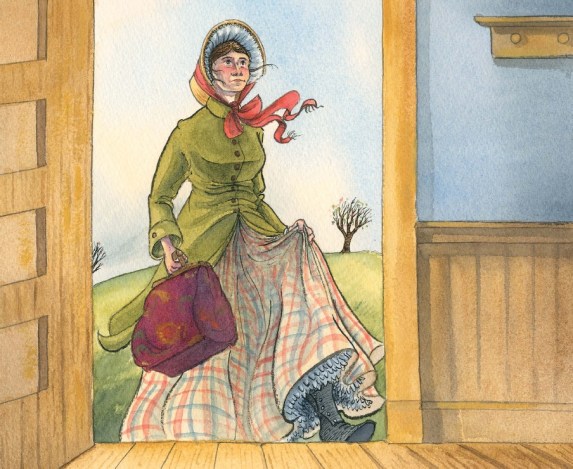
In 1904, when Harriet was 80 years old, the Michigan City Lighthouse underwent a renovation. It acquired a fog signal, and the oil-burning mechanism was replaced with a steam engine and boilers with huge coal-fired furnaces that required several keepers. Although Harriet was sad to leave her life as a lighthouse keeper behind, she understood. With the same bravery that had brought her to the lighthouse, she opened the door and stepped out to what came next.

An author’s note about Harriet Colfax follows the text along with a glossary of terms used in the book.

celebrate-picture-books-picture-book-review-miss-colfax's-light-harriet

Image copyright Eileen Ryan Ewen, 2016, courtesy of sleepingbearpress.com

The life of Harriet Colfax needs no embellishment to reveal the kind of determination and dedication it took to keep the Michigan City Lighthouse shining. Aimée Bissonette tells this brave woman’s story straightforwardly, focusing on particular moments when her duties were increased or her resolve challenged. Harriet’s personal motto that kept her going: “I can do this” is repeated throughout the book, echoing the revolving beacon that shines continuously on the shore of Lake Michigan. Actual entries from Harriet’s log punctuate the text, lending authenticity and Harriet’s voice to the story.Children will be fascinated by this snapshot of American (and world) history.

Eileen Ryan Ewen’s action-filled paintings of Harriet and her work beautifully demonstrate to readers Harriet’s incredible will and perseverance under the most difficult circumstances. The narrow stairs of the lighthouse pose daunting in the middle of the night; the seas of Lake Michigan surge and lap at Harriet and the winds buffet her as she navigates the catwalk; and an exhausted Harriet stands at the stove melting lard to light the lens. Children interested in ships and the sea will find much here to excite their imaginations.

A captivating biography of a woman who lived life on her own terms long before there was support for her choices, Miss Colfax’s Light will inspire today’s kids and is highly recommended for home, school, and public library collections.

Ages 6 – 9

Sleeping Bear Press, 2016 | ISBN 978-1585369553

Meet Aimée Bissonette and learn more about her books and work on her website!

To view Eileen Ryan Ewen‘s portfolio, sketchbook, and other books, visit her website!

National Lighthouse Day Activity

celebrate-picture-books-picture-book-review-shining-lighhouse-maze

Shining Lighthouse Maze


Lighthouses protect ships from rocks, fog, and other dangers. Can you help the beam from the lighthouse reach the tugboat that is approaching in this printable Shining Lighthouse Maze? Here’s the Solution.

celebrate-picture-books-picture-book-review-national-archives-lighthouse-coloring-book-2018

National Archives Lighthouses from the Collection


If you’re fascinated by lighthouses, you’ll love exploring these drawings from the United States National Archives. Click below to download a pdf of lighthouses from around the country. 

The National Archives of the United States Coloring Book of Lighthouses

celebrate-picture-books-picture-book-review-miss-colfax's-light-cover

You can find Miss Colfax’s Light at these booksellers

Amazon | Barnes & Noble | Books-a-Million | IndieBound

July 2 – I Forgot Day

celebrate-picture-books-picture-book-review-you-forgot-your-skirt-amelia-bloomer-cover

About the Holiday

Does summer make you feel forgetful? The hot, hazy weather and more relaxed schedule can loosen up that school-time vigilance and well… make you forget things. But that’s okay! I Forgot Day was established to give people an opportunity to make up for lapses in memory. If you’ve forgotten a special event, birthday, or anniversary, it’s not too late to apologize and let the person know you haven’t forgotten them—just that particular date. Of course, there are also things that may have slipped your mind that bear remembering or lessons from the past that should not entirely be forgotten. Today’s holiday is a good time to embrace those memories—just like today’s book shows!

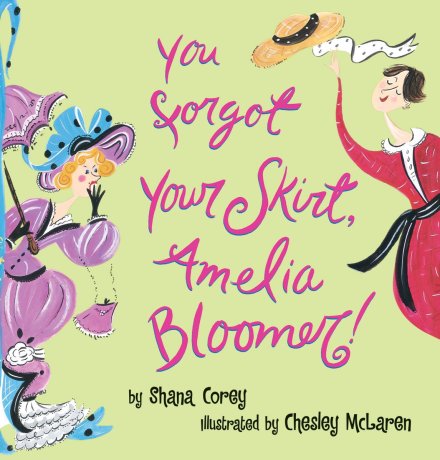
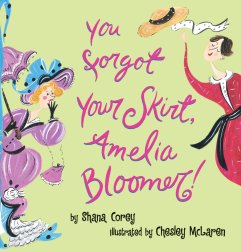
You Forgot Your Skirt, Amelia Bloomer!

Written by Shana Corey | Illustrated by Chesley McLaren

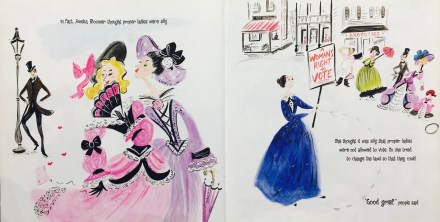
“Amelia Bloomer was not a proper lady.” But that was all right with her because she “thought proper ladies were silly.” Amelia found it silly that proper ladies couldn’t vote and were not supposed to work. In response, she protested as a suffragette and began her own newspaper called The Lily which only published news about women. Amelia hired other women to work there.

celebrate-picture-books-picture-book-review-you-forgot-your-skirt-amelia-bloomer-votes

Image copyright Chesley McLaren, 2000, text copyright Shana Corey, 2000. Courtesy of Scholastic.

But to Amelia, the silliest thing of all was women’s long dresses. They “were so heavy, wearing them was like carting around a dozen bricks.” She thought women looked like “walking broomsticks. They acted like broomsticks too because their skirts swept up all the mud and trash from the street.” And the corsets they wore choked off their breathing and made them faint. To keep those long skirts standing out, they also wore wire frames that got squashed and squeezed in doorway after doorway. “Even little girls had to wear proper dresses. So they couldn’t run and jump and play.”

celebrate-picture-books-picture-book-review-you-forgot-your-skirt-amelia-bloomer-bricks

Image copyright Chesley McLaren, 2000, text copyright Shana Corey, 2000. Courtesy of Scholastic.

Amelia Bloomer was determined to do something about it. Then one day, Amelia’s friend Elizabeth Cady Stanton came to visit and brought her cousin Libby. “Libby looked remarkable” because “she was not wearing a dress!” Libby thought proper dresses were silly too. Libby’s dress was shorter and not so poofy, and underneath Libby was wearing a kind of pants. Amelia immediately sewed herself such an outfit.

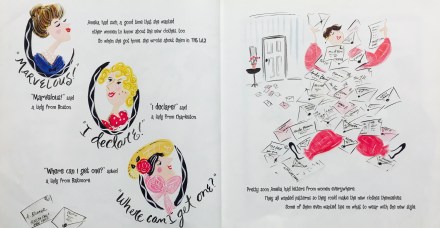
When people saw Amelia in her new outfit, they gasped. “‘You forgot your skirt, Amelia Bloomer!’ called a little boy.” But Amelia didn’t listen to them. She felt so free that she “ran and jumped and twirled.” She wanted all women to know about these wonderful clothes, so she wrote about them in The Lily. Women all over the country loved them and wanted to know where they could get them.

celebrate-picture-books-picture-book-review-you-forgot-your-skirt-amelia-bloomer-letters

Image copyright Chesley McLaren, 2000, text copyright Shana Corey, 2000. Courtesy of Scholastic.

Amelia was flooded with letters from women asking for the pattern so they could make an outfit for themselves and for advice on how to accessorize. “Some people called the new style of clothes the American Costume. Most people just called them Bloomers.” Of course, there were many proper gentlemen who disliked the bloomers. Some thought they would just “lead to more rights for women.”

After some time, bloomers went out of style. “Proper ladies and gentlemen everywhere breathed a sigh of relief.” They were sure women’s clothing would go back to “normal,” and that everyone would forget about Amelia Bloomer and her improper ideas. “Well… what do you think?”

An Authors Note filling in details of Amelia Bloomer’s life, the restrictive clothing women wore, and the early women’s rights movement follows the text.

celebrate-picture-books-picture-book-review-you-forgo

Image copyright Chesley McLaren, 2000, text copyright Shana Corey, 2000. Courtesy of Scholastic.

These days it does seem ridiculous that women once had to live in such restrictive, and even dangerous, clothing. Although children may see pictures of Victorian dress, they might not be able to fully appreciate all that was going on under those voluminous skirts. It’s with a sly wink to those times and people’s attitudes that Shana Corey presents her biography of Amelia Bloomer. Through her light touch, Corey highlights not only the early women’s rights movement but nudges children to keep vigilant to see that freedom and rights continue to come to all.

Chesley McLaren’s bright, delicate illustrations bring a Victorian vibe while reveling in fresh colors and offbeat perspectives. Kids may grow wide-eyed to see a woman holding onto a bedpost as her corset is drawn tight and other women fainting as a result of this necessary item. McLaren also exposes the “dirty” truth as a woman’s hem sweeps along apple cores, bones, bottles, and paper as she walks. An image of a hoop framework festooned with bricks, gives kids an idea of how much these dresses weighed. Proper ladies and gentlemen in their stuffy clothes may point, stare, and harrumph at Amelia in her comfortable bloomers, but Amelia gets the last laugh as she floats, twirls, and moves freely in her trendsetting pants. The influence Amelia Bloomer had on future fashions and the rights of women is delightfully shown in postcard-type snapshots of styles from the 1920s,1960s, 1980s, and in a two-page spread of a park today.

Awarded many accolades as one of the best books of 2000, You Forgot Your Skirt, Amelia Bloomer! can be found at public libraries and from used booksellers. The book makes for an entertaining yet educational way for kids to learn about history.

Ages 4 – 8

Scholastic, Inc, 2000 | ISBN 978-0439078191

Discover more about Shana Corey and her books on her website

To learn more about Chesley McLaren, her books, and her art, visit her website.

I Forgot Day Activity

CPB - Sunglasses Matching Puzzle

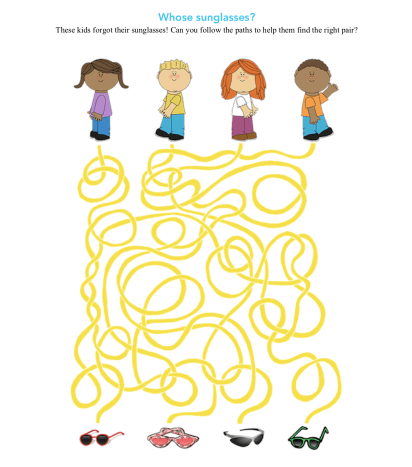
Whose Sunglasses? Matching Puzzle

Four kids have forgotten their sunglasses! Can you follow the paths to match each child with the right pair in this printable puzzle?

Whose Sunglasses? Matching Puzzle

celebrate-picture-books-picture-book-review-you-forgot-your-skirt-amelia-bloomer-cover

You can find You Forgot Your Skirt, Amelia Bloomer! at these booksellers

Amazon | Barnes & Noble | Books-a-Million | IndieBound

Picture Book Review

June 5 – Global Running Day

celebrate-picture-books-picture-book-review-the-girl-who-ran-cover

About the Holiday

Global Running Day is all about living a healthy lifestyle! There are so many reasons to take up running, from keeping in shape to clearing one’s mind to competing against other runners. The evolution of National Running Day, which was established in 2009, Global Running Day allows serious runners to recommit to their sport and encourages those on the fence to jump down and join in. This year people from 156 countries have pledged to run short distances and longer routes in their quest for personal health. An accompanying Million Kid Run gets young people thinking about their own health while having fun. Participating is as easy as running in your neighborhood, gathering with friends to run, or even playing tag with your kids. To learn more about the day visit the Global Running Day website!  

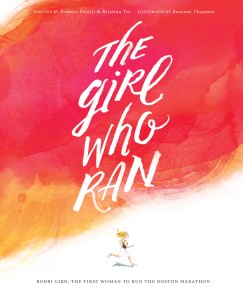
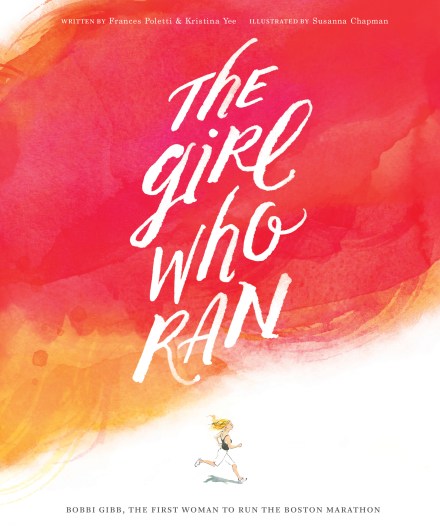
The Girl Who Ran: Bobbi Gibb, the First Woman to Run the Boston Marathon

Written by Frances Poletti and Kristina Yee | Illustrated by Susanna Chapman


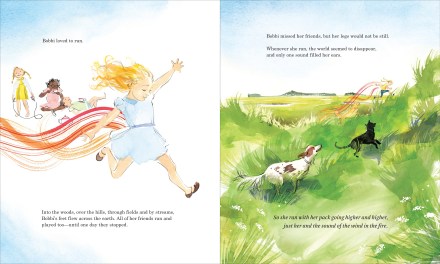
“Bobbi loved to run. Into the woods, over the hills, through fields and by streams, Bobbi’s feet flew across the earth.” When Bobbi was little, she and her friends ran and played together. But as they grew older, her friends found other pursuits while Bobbi still loved to run. She took to the fields with her dogs, “going higher and higher, / just her and the sound of the wind in the fire.”

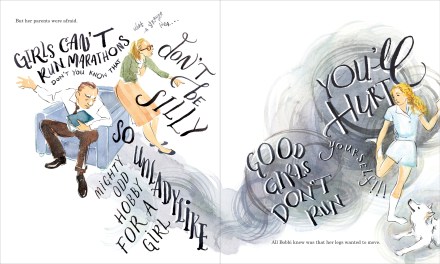
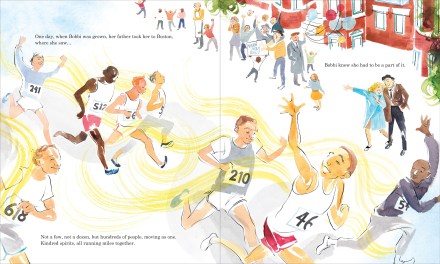
When Bobbi was grown, her father took her to watch the Boston Marathon. She loved the camaraderie of “hundreds of people moving as one. Kindred spirits, all running miles together.” Immediately, she wanted to participate too. When Bobbi told her parents that she wanted to run in the marathon, however, they thought her idea was strange. They told her she would hurt herself and that it was unladylike.

celebrate-picture-books-picture-book-review-the-girl-who-ran-young-bobbi

Image copyright Susanna Chapman, 2017, text copyright, Frances Poletti and Kristina Yee, 2017. Courtesy of Compendium.

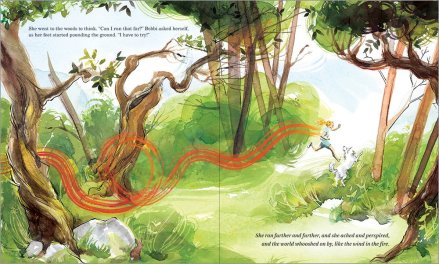
But Bobbie wanted to run. She didn’t know if she could run that far but was determined to try. She trained in the woods, running “further and further, and she ached and perspired, / and the world whooshed on by, like the wind in the fire.” Because she knew her parents disapproved, Bobbi set out on her own across country to train. Every day she ran in a new place—“lush forests in Ohio and Indiana, vast plains in Nebraska and Kansas, majestic mountains in Wyoming and Montana.” She even ran with wild horses out west and up steep Rocky Mountain trails. At night she camped, “tired and happy.”

All of her training seemed for nothing, however, when Bobbi received a letter rejecting her application for the Boston Marathon. The letter said that women were incapable of running marathons, that it was against the rules for a woman to run, and that the rules had been written to protect women from injury. Bobbi was not deterred, however. She went back home and told her parents what she wanted to do. Her father thought she was crazy to attempt it.

celebrate-picture-books-picture-book-review-the-girl-who-ran-woods

Image copyright Susanna Chapman, 2017, text copyright, Frances Poletti and Kristina Yee, 2017. Courtesy of Compendium.

Bobbi knew that the only way she could run would be “to blend in with the men.” Dressed in men’s shorts and a baggy hooded sweatshirt to hide her hair and wearing men’s running shoes (running shoes were not made for women), Bobbi was ready to go. Her father refused to drive her to the race, though. He stormed out of the house, and drove away. Bobbi thought her dream was dashed until her mom came to her room, car keys in hand, and said, “‘Let’s go.”

Hiding in the bushes at the starting line, she sprang out and joined the pack of runners with the bang of the starting pistol. “So she ran with the pack, going higher and higher, / the world whooshing by, like the wind in the fire.” As she ran, she realized that the men around her had seen through her disguise. Bobbi was worried, but the men were supportive. “‘Hey! Are you running the whole way?’ one asked.” She told him she hoped to, but in that sweatshirt, she was getting hotter and hotter. She was afraid that if she took it off, she’d be thrown out of the race.

celebrate-picture-books-picture-book-review-the-girl-who-ran-parents-afraid

Image copyright Susanna Chapman, 2017, text copyright, Frances Poletti and Kristina Yee, 2017. Courtesy of Compendium.

The men around her said they wouldn’t let that happen, so Bobbi took off the sweatshirt. “Word spread quickly throughout the course. A girl was running! They couldn’t believe it!” All along the route, the crowd cheered and encouraged her. Hearing the roar motivated Bobbi to ignore the hard ground and her stiff shoes and face the last steep hill. “Closing her eyes, she imagined she was back in Montana running up the mountains, the soft earth under her feet.”

Her feet were blistered and she was parched with thirst, but she crossed the finish line—ahead of nearly half of the men. Photographers, reporters, and radio presenters swarmed around her to hear her history-making story. From that day on “hearts and minds were forever changed.”

celebrate-picture-books-picture-book-review-the-girl-who-ran-young-Boston-marathon-all-men

Image copyright Susanna Chapman, 2017, text copyright, Frances Poletti and Kristina Yee, 2017. Courtesy of Compendium.

The story of Bobbi Gibb is one that every girl and boy should know, and Frances Poletti and Kristina Yee’s excellent biography will have readers awe-struck by how she changed the way the world viewed women and their capabilities. A pioneer for women’s rights in every way—from her traveling the country alone to rejecting the prevailing ideas to competing on her own terms—Bobbi Gibb is an inspiration for achievers everywhere. Poletti and Yee’s conversational storytelling is both lyrical and honest, not stinting on the obstacles Bobbi had to overcome, including race officials, her own parents, and even the fact that running shoes weren’t made for women.

As the marathon approaches, readers will be enthralled by the building suspense. They’ll feel Bobbi’s determination, her disappointment, and her fear that she will be discovered and thrown out of the race, and will cheer along with the crowd at her victory.

celebrate-picture-books-picture-book-review-the-girl-who-ran-crowds

Image copyright Susanna Chapman, 2017, text copyright, Frances Poletti and Kristina Yee, 2017. Courtesy of Compendium.

Susanna Chapman’s gorgeous illustrations are infused with Bobbi’s boundless energy and spirit as she soars over grassy dunes with her dogs at her heels, zips through shady woods, and runs alongside wild horses in the shadow of the Rockies all the while trailing a red swish, representative of the fire within her. The turmoil surrounding Bobbi’s desire to run the Boston Marathon is depicted in words of rebuke, recrimination, and rejection printed in large, emphatic typefaces that swirl around her like a tornado.

The inclusion of the image of Bobbi’s mother with the car keys in hand on the morning of the race is a welcome reminder of the many unknown women of earlier generations who  contributed to the fight for women’s equality. A beautiful double gate-fold illustration of Bobbi crossing the finish line to cheering crowds and the waiting media puts the focus fully on Bobbi and the fire that spurred her on.

An Afterword tells more about Bobbi Gibb, and a timeline of seminal events in the Boston Marathon from 1896 to today, is a fascinating must-read.

The Girl Who Ran is an inspirational biography and revealing history from the not-so-distant past that offers encouragement and triumph. It would be a wonderful addition to home, school, and public libraries.

Ages 8 – 12

Compendium, 2017 | ISBN 978-1943200474

Discover more about Kristina Yee, her books, and her films on her website

Learn more about Susanna Chapman, her books, and her art on her website

Global Running Day Activity

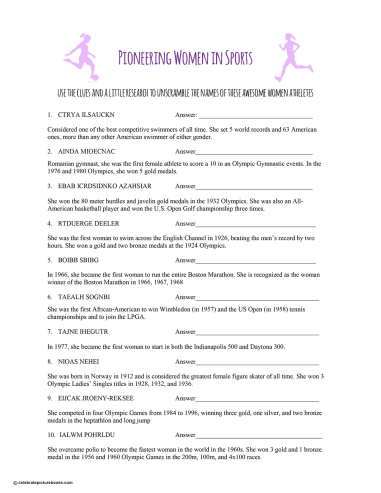
celebrate-picture-books-picture-book-review-pioneering-women-in-sports-puzzle

Pioneering Women in Sports Word Scramble Puzzle


In every sport there have been women who have overcome barriers, incredible odds, set records, and inspired others. Using the clues and a little research, can you unscramble the names of these twelve awesome athletes?

Pioneering Women in Sports Word ScramblePioneering Women in Sports Word Scramble Solution

celebrate-picture-books-picture-book-review-the-girl-who-ran-cover

You can find The Girl Who Ran at these booksellers

Amazon | Barnes & Noble | Books-a-Million | IndieBound

Picture Book Review

March 14 – It’s National Women’s History Month

celebrate-picture-books-picture-book-review-hedy-lamarr's-double-life-cover

About the Holiday

National Woman’s History Month was established by the United States Congress in 1987 to recognize and celebrate the achievements of American women in the past and today. This year’s theme is “Balance for Better,” which encourages true gender equity in the workplace, in government, and at home. Only when all people are heard and treated equally will communities thrive. There’s no better time than now to get involved to ensure that all have the same rights and standing in all areas of their lives.

I received a copy of Hedy Lamarr’s Double Life for review consideration. All opinions are my own. I’m excited to be partnering with Sterling in a giveaway of the book. See details below.

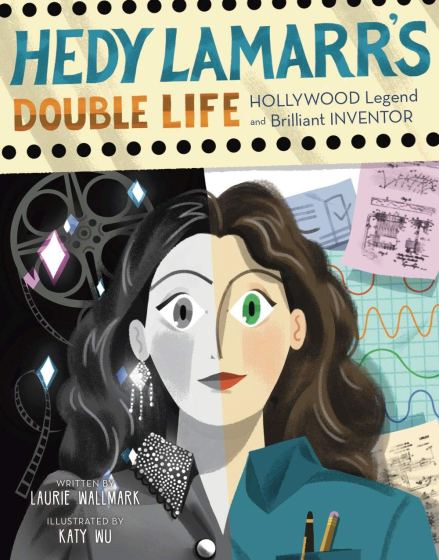
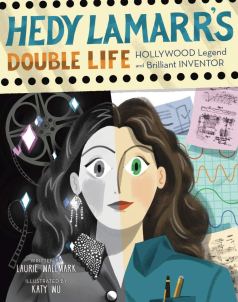
Hedy Lamarr’s Double Life: Hollywood Legend and Brilliant Inventor

Written by Laurie Wallmark | Illustrated by Katy Wu


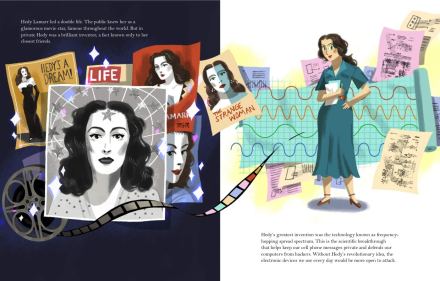
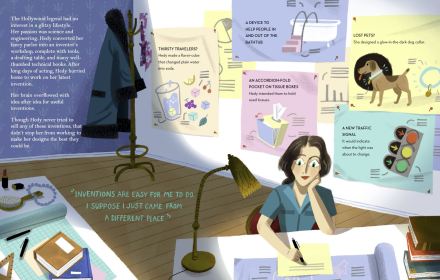
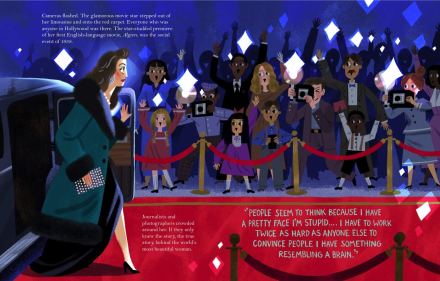
In 1938 people were lining up to see Hedy Lamarr in her first English-language movie Algiers. Hedy was the talk of Hollywood, and journalists and photographers captured her every move—almost. What movie-goers and the press didn’t know was that Hedy Lamarr was also a brilliant inventor. Instead of attending fancy celebrity parties, after a long day on the set, “Hedy hurried home to work on her latest invention. Her brain overflowed with idea after idea for useful inventions.” While she never tried to sell her ideas—like the collar to help find lost pets or the “flavor cube that changed plain water into soda”—she designed and redesigned them to perfection.

celebrate-picture-books-picture-book-review-hedy-lamarr's-double-life-magazines

Image copyright Katy Wu, 2019, text copyright Laurie Wallmark, 2019. Courtesy of Sterling Children’s Books.

But how did Hedy get her start? She was born in Austria and as a child took apart mechanical objects just to see how they worked. Hedy’s father also loved science, and he encouraged his daughter to hold onto her dreams. In addition to science, Hedy loved movies and would use her dolls to reenact the scenes she saw.

When she got older, Hedy got a job as a script girl and then worked as an extra in a movie. She loved acting and once said, “‘I acted all the time…. I was a little living copybook. I wrote people down on me.’” While playing the lead in a stage play, the Hollywood producer Louis B. Mayer saw her and offered her movie contract. Hedy moved to America. It only took her six months to land a starring role in Algiers. After that she starred in many movies with some of the most famous actors and actresses. 

By now, the world was at war. One day, Hedy met George Antheil, a former weapons inspector who now composed music. Hedy remembered a “discussion she had overheard back in Europe about a problem with the guidance system for torpedoes. The guidance system couldn’t prevent the enemy from jamming the weapon’s radio signals” and sending it off course. She learned from George Antheil that the US Navy had the same problem.

They decided to team up to see if they could figure out a solution. Hedy was also an accomplished pianist, and she and George often played musical games on the piano. Once, while they played the same song in different octaves, Hedy had a brainstorm for building “a secure torpedo guidance system.” At the time, torpedo guidance systems only worked if the ship launching a torpedo and the torpedo were on the same frequency.

celebrate-picture-books-picture-book-review-hedy-lamarr's-double-life-home

Image copyright Katy Wu, 2019, text copyright Laurie Wallmark, 2019. Courtesy of Sterling Children’s Books.

Hedy thought that if the ship and the torpedo could switch between a series of different frequencies, the enemy would be foiled. “Hedy called her discovery ‘the hopping of frequencies.” Working together, she and George devised a way to implement Hedy’s idea. When they presented their idea to the National Inventors Council, they were told the “idea had ‘great potential value.’”

There were still some issues to overcome to make the system automated, but Hedy and George answered those too. They applied for a patent, and a year later on August 11, 1942 it was granted. When they gave the idea to the United States Navy, “Hedy was proud her frequency-hopping idea might help America win the war.” But embroiled in the middle of the conflict, the Navy didn’t have “the time or money to implement a new system….”

Hedy, who still wanted to help America defeat the Nazis, was undaunted. She helped raise 25 million dollars by selling war bonds and volunteered at the Hollywood Canteen, where servicemen soon to be deployed gathered. Hedy went on to make more than twenty movies and continued to work on her inventions.

In the 1980s, the US Navy declassified Hedy’s frequency-hopping technology, meaning anyone could use it. Because the patent had long-ago expired, no one needed to give Hedy and George credit for the idea. “Companies raced to include frequency hopping in their own devices.” In 1997, Hedy and George were finally recognized when they “received the Pioneer Award from the Electronic Frontier Foundation for their significant contribution to computers.”

A timeline of Hedy Lamarr’s life, a description of how Hedy and George’s frequency-hopping technology worked, additional resources for further reading, and a list of Hedy’s movies follow the text.

celebrate-picture-books-picture-book-review-hedy-lamarr's-double-life-red-carpet

Image copyright Katy Wu, 2019, text copyright Laurie Wallmark, 2019. Courtesy of Sterling Children’s Books.

Laurie Wallmark knows how to weave a riveting tale that draws readers in to the lives of fascinating and scientifically minded women throughout history. Her detailed biography of Hedy Lamarr will wow kids with the twists and turns of how a vital feature of the electronics they use every day came to be. A history not only of this famous woman but of the times and policies that denied Hedy Lamarr the recognition and profits she deserved, the story is sure to spark plenty of discussion. The inclusion of a few of Hedy’s ingenious ideas as well as quotes on acting, inventing, and her views on life give children a glimpse into the mind of this unique woman.

Katy Wu takes readers back to the 1940s with her stylish illustrations reminiscent of magazine images of the time that depict both Hedy’s glamourous and inventive sides. Even as Hedy steps out of a limo to the glare of flashbulbs, acts under stage lights, and watches movies thrown by a projector’s beam, she’s dreaming of going home to work on her inventions in the light of a desk lamp. When the story turns to Hedy’s frequency-hopping idea, Wu clearly portrays the problems with the torpedo guidance system and the way single-frequency and multiple-frequency communications work. The way player pianos were controlled and how Hedy and George Antheil used this idea is also well portrayed. The final images of people using Hedy’s technology today lets kids fully understand the impact that Hedy Lamarr has had on their lives.

An important story about an extraordinary woman, Hedy Lamarr’s Double Life: Hollywood Legend and Brilliant Inventor will inspire children to follow and accomplish all of their dreams. The book will spur creative thought across subject matter and would be a motivational addition to home, classroom, and public libraries.

Ages 5 and up

Sterling Children’s Books, 2019 | ISBN 978-1454926917

Discover more about Laurie Wallmark and her books on her website.

To learn more about Katy Wu, and view a gallery of her book and art, visit her tumblr.
Hedy Lamarr’s Double Life Giveaway

I’m excited to partner with Sterling Children’s Books in a Twitter giveaway of:

  • One (1) copy of Hedy Lamarr’s Double Life: Hollywood Legend and Brilliant Inventor written by Laurie Wallmark | illustrated by Katy Wu

This giveaway is open from March 14 through March 20 and ends at 8:00 p.m. EST.

A winner will be chosen on March 21.

Prizing provided by Sterling Children’s Books

Giveaway open to U.S. addresses only. | No Giveaway Accounts 

National Women’s History Month Activity

celebrate-picture-books-picture-book-review-women-in-stem-coloring-book

Women in STEM Coloring Book


Discover five women who broke barriers  and made important contributions to the science, technology, engineering, and math fields in this printable  Women in STEM Coloring Book created by the United States Department of Energy.

celebrate-picture-books-picture-book-review-hedy-lamarr's-double-life-cover

You can find Hedy Lamarr’s Double Life: Hollywood Legend and Brilliant Inventor at these booksellers

Amazon | Barnes & Noble | Books-a-Million | IndieBound

Picture Book Review