June 5 – It’s Great Outdoors Month and Interview with Author/Illustrator Paul Owen Lewis

celebrate-picture-books-picture-book-review-motomice-cover

About the Holiday

Getting outside is one of the joys of summer! As schools close, leaving more time for leisure pursuits, it’s fun to explore the great outdoors through hiking, biking, swimming, camping, and just plain playing. Some people even give up their cold-weather vehicles and take to the open road on scooters and motorcycles. Having a variety of summer experiences gives you the opportunity to meet different people and make new friends—just like the mice in today’s book!

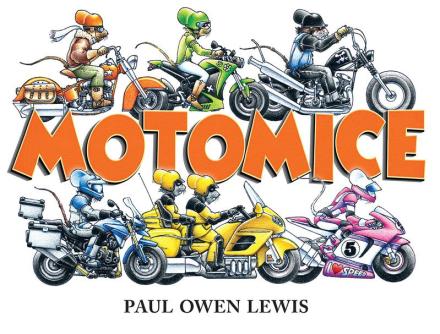
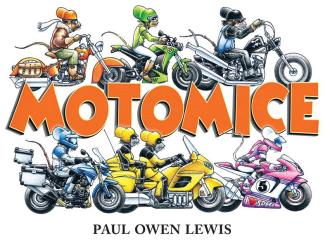
Motomice

By Paul Owen Lewis


When you imagine a biker do you think of someone who wears black, looks tough, and roars through town on a loud motorcycle? Well, let’s take a ride and see what a colorful crew bikers really are! Did you know that some “bikers wear orange. They look like pilots” as they roll through the suburbs. Sometimes “their motorcycles are old.”
celebrate-picture-books-picture-book-review-motomice-roxie

Copyright Paul Owen Lewis, 2018, courtesy of Beyond Words Publishing.

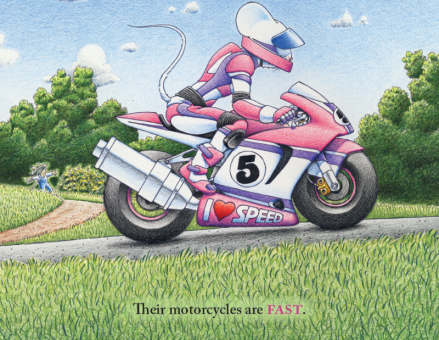
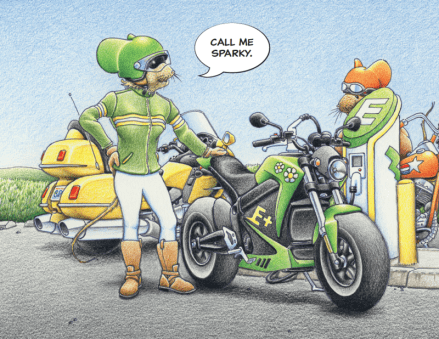
Some “bikers wear pink” like Roxie, who zooms around the track or heads out on a winding country lane on her sleek, fast motorcycle. There are even grandmas and grandpas who are bikers. They travel all over on big, sturdy motorcycles that can carry loads of stuff for camping with friends. Have you ever spied someone in silver and blue with a fancy helmet who looks a bit like an astronaut, it’s a good bet they’re a biker too! And—look!—there’s Sparky refueling her green motorcycle at the electric vehicle charging station. She “cares about the environment.” Her motorcycle is quiet. Then all gassed up and ready to go, the group is off again. But where to? It’s a Motomice Reunion Rally, where “everyone is welcome!”

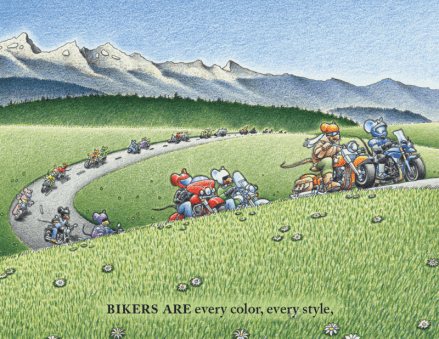
So whatever road you’re on, take a good look. “Bikers are every color, every style, and every kind of person. If fact, “they are just like you and me.”
celebrate-picture-books-picture-book-review-motomice-sparky

Copyright Paul Owen Lewis, 2018, courtesy of Beyond Words Publishing.

In his heartwarming story, Paul Owen Lewis introduces kids to the welcoming community of bikers, replacing the stereotype of the tough, leather-clad biker with the reality that bikers come from all walks of life. By using different colors, comparing the appearance of bikers and their motorcycles to other professions, and adding that even grandpas and grandmas are bikers, Lewis gives readers concrete ways to relate to bikers even if they’ve only seen bikers passing by on the street. Many kids, of course, have family members and friends who ride motorcycles. Motomice is a joyful book for them to share with their biker buddies.
celebrate-picture-books-picture-book-review-motomice-every-color-every-style

Copyright Paul Owen Lewis, 2018, courtesy of Beyond Words Publishing.

Lewis’s stunningly realistic depictions of a variety of motorcycles will thrill detail-oriented and vehicle-loving kids. As the mice roll through beautiful vistas—adding new friends along the way—each double-page spread mirrors the sweeping feeling of the open road. A clever image occurs when the biker dressed like an astronaut hails his friends from a rocky, lunar-esque mountain side. The image of the reunion rally, where motorcycles line both sides of the street as far as the eye can see, is full of cheer and camaraderie. On the final page, the crew welcomes a baby, happy and secure with Mom in her sidecar, to the Motomice family. Young readers will feel the warm embrace as well.

Ages 3 – 7

Beyond Words Publishing, 2018 | ISBN 978-1582706603

Discover more about Paul Owen Lewis, his books, and his art on his website.

Meet Paul Owen Lewis

celebrate-picture-books-picture-book-review-motomice-paul-owen-lewis

Today, I’m happy to be talking with Paul Owen Lewis, who always offers a unique perspective in his work, about being a biker, Northwest Coast Native carving, and how to answer the heart’s questions in a story.

What inspired you to write Motomice?

I was inspired when I discovered there were 25 million active riders in the US and their average age was 52, which means there are millions of grandparents riding out there. But there wasn’t a single quality kid’s book on the market anywhere to share with their grandkids about their passion for motorcycles, and the true nature of the community who ride them (as opposed to the negative stereotype in the media). And being both a biker and an author I thought I had just the credibility to create it.

For a more detailed account, go to http://www.paulowenlewis.com/motomice/behindthestory.html

In Motomice, the different bikers and their motorcycles are described by color. What color biker are you and why?

I suppose I’m a little of all of them. Most true motorcycle enthusiasts would say they would like to collect and ride almost every style or genre (I would!). But the colors in Motomice are more or less arbitrary with the possible exception of Rat’s black bike. I chose black for him since it’s the go-to color of those who want to strike the bad-biker-boy image. And perhaps Roxy’s pink bike is meant to express associations with femininity (FYI, there are lots of female professional racers out there proudly sporting pink gear), but as for me, I’ve worn at least four of them in my 40 years of riding. So far I’ve had red, green, black, and orange motorcycles, café racers, cruisers, and sports bikes, and I wouldn’t rule out something blue and/or yellow in my future. What can I say? It’s an addiction.

As a fine artist, what attracted you to become a picture book author?

Right after art school, when I was doing my student teaching, Chris Van Allsburg’s books started appearing (Jumanji, The Polar Express, etc.) and I was struck by how solid, opaque, and strong his images appeared. Not at all like the usual dreamy, tentatively pencil-drawn images washed with faint tints of watercolor I was used to seeing in children’s book illustrations in my youth. And I remember thinking, “Wow, that’s what picture book art is like now? Awesome stuff. Maybe that’s what I’ll do with my artistic skills at some point; illustrate picture books in that in-your-face solid style that argues for its own believable reality.”

You have a very interesting artistic career that includes carving chests and totem poles in the Northwest Coast Native style. Can you describe how you began carving and a bit about your work? Are any of your carvings on public display?

In the early 90s I started noticing Northwest Coast Native art in and around Seattle. It seemed to be everywhere. And, being someone who is fascinated by the origins of things, I realized this was the unique art that originated from this unique region (as say, Egyptian art emerged from Egypt), and, being a “native” of the Northwest myself, felt like it was something I should know more about. Well, one thing led to another and soon I was taking carving lessons from some of the finest artists of the region. Then I thought to ask myself, “Has anyone done a picture book with this amazing cultural art?” So with the help and guidance of my artist friends and scholars, Storm Boy was soon born. After its publication in 1995 I became quite well-known among these circles and was offered many more opportunities to further my carving and cultural experiences. It’s truly been one of the great privileges of my life.

Your earlier books, including Storm Boy, Frog Girl, and Davy’s Dream, as well as your fine art (some examples can be seen on Paul’s website) seem to blur the distinction between earth and universe, wakefulness and dreams, allowing reality to be defined by the reader or viewer. Can you talk about your perspective a little and also why children are attracted to this perception?

Well, “blurring distinctions” is pretty much what a lot of art is about, or existing in a place in between realities. At least much of my art and interests are. I don’t think you have to look further than my own childhood for possible clues to its genesis. Both my parents succumbed relatively early in their lives to catastrophic illnesses. So, unlike so many of my middle class, suburban peers with stable home lives, I grew up with absolute uncertainty at home. And now that I’m no longer a child, I can see that I wasn’t unusual. I know now that lots of children, perhaps a majority of them, are struggling with similar questions and circumstances. So stories and art that reflect this circumstance, their reality of blurred distinctions, are bound to be of interest.

You’re well known for your inspirational school visits. Can you talk a little about your presentations? Do you have an anecdote from any presentation you’d like to share? Do you ever hear later from any of the kids that heard you speak?

When I speak at a school it is not merely to entertain (though they get that, too). I’m speaking to that kid who was me, that kid who finds him or herself in a confusing, complicated, even dangerous place and dreams of something better, but who has no way to express or see their way to it. So I tell them that writers write stories to answer the questions of their hearts. I steer them there and urge them to write the kind of story they would like to live, the kind of story that would answer the questions of their hearts.

I also tell them that writing is first storytelling, and every human being tells stories. It’s who we are. It’s what makes us human. So if you can tell a story you can write a story – and so, yes, you too can be a writer if you really want. For those who are intimidated by the writing process (words first, in sequence, on paper) I say don’t write first but tell; tell your story any way you can—whether that’s talking, acting, singing, or drawing—and capture the main points with notes, sketches, recordings, whatever, and then apply the beginning-middle-ending form of standard narrative sequence to it later. To illustrate I share slide images of myself working on my books onscreen, from first inspiration to sketching the main events to arranging them in order and then to writing the words. Once they see me do it, they feel confident that they can do it.

I’ve been a popular speaker at schools for 30 years. Now I meet teachers at schools who were once students who saw me years ago, and they can repeat back what I said to them verbatim. It’s unnerving!

What’s up next for you?

I’m about to have surgery to reattach the bicep on my right arm—my writing and art making arm—and will be more or less out of action for six months. I’ve been meaning to take a break. I guess this is it.

What is your favorite holiday and why?

New Years. I like the idea of new beginnings. That maybe this year things will turn around, work out, etc.

Has a holiday ever inspired your writing or art?

Yes! See my counting book, P. Bear’s New Year’s Party.

Thanks, Paul! It’s been enlightening and inspirational chatting with you. I wish you all the best with Motomice and all of your work!

Great Outdoors Month Activity
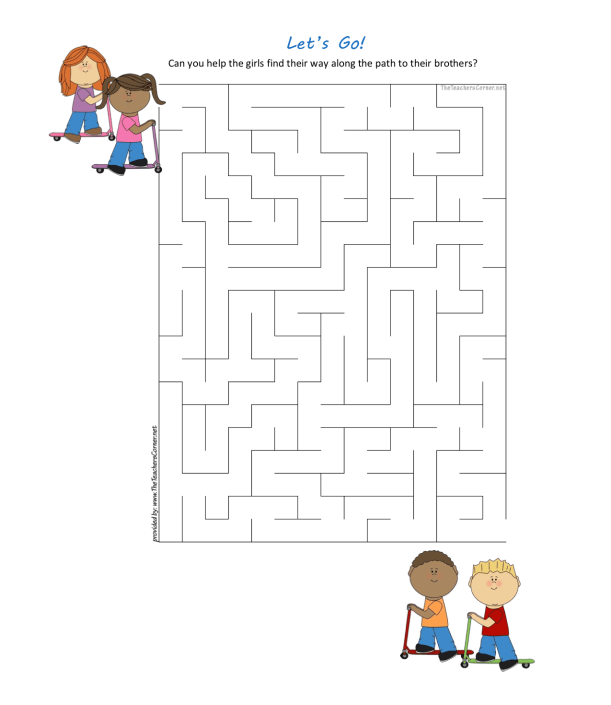
celebrate-picture-books-picture-book-review-let's-go-scooter-maze

Let’s Go! Maze


These four friends want to ride their scooters together. Can you help the girls find their way along the path to the boys?

Let’s Go! Maze | Let’s Go! Maze Solution
celebrate-picture-books-picture-book-review-motomice-cover

You can find Motomice at these booksellers 

Amazon | Beyond Words Publishing

Picture Book Review

May 30 – It’s Get Caught Reading Month

celebrate-picture-books-picture-book-review-albie-newton-cover

About the Holiday

Get Caught Reading Month was established in 1999 by the Association of American Publishers to encourage people of all ages to read more. Authors, illustrators, celebrities, athletes, and others participate by sharing pictures of themselves reading an old favorite or new book on social media. Schools, libraries, bookstores, and community venues hold special programs throughout the month. For more information and to find resources, visit the Get Caught Reading website.

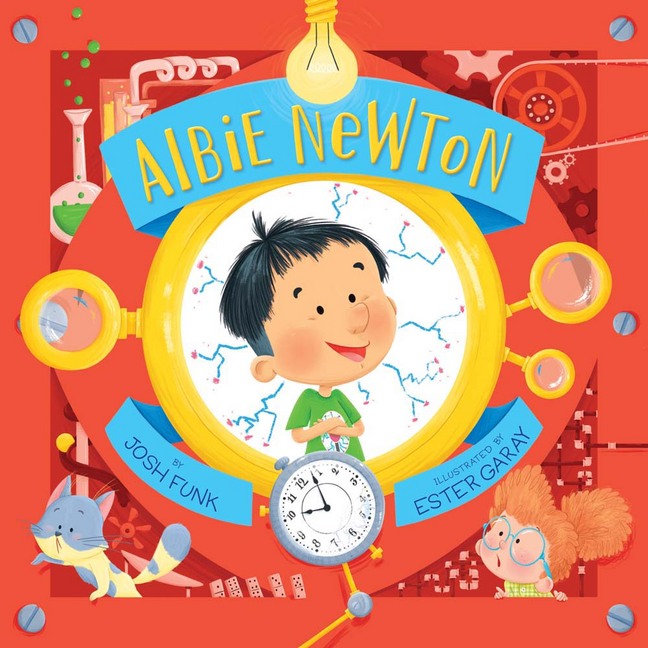
Albie Newton

Written by Josh Funk | Illustrated by Ester Garay


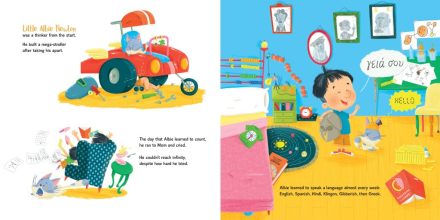
Albie Newton was something of a prodigy. As a tyke, he retrofitted his stroller into a racecar, tried counting to infinity, and “learned to speak a language almost every week: / English, Spanish, Hindi, Klingon, Gibberish, then Greek.” When he moves to a new town and a new school, his classmates are excited to meet him. Albie is also revved up to start making friends, and he has a plan he thinks the other kids will love.

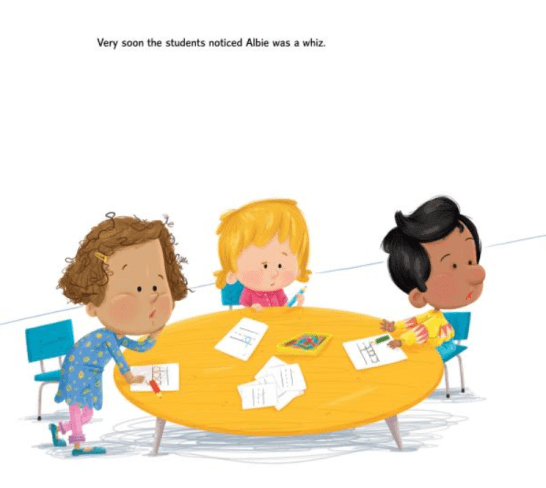
But as they all settle in to work, “the students noticed Albie was a whiz. / Albie wrote a sonnet while they took a spelling quiz.” During art class, the kids were likewise astounded (and a little dismayed) when, while they scribbled, drew swirls, and made handprints, Albie painted like Van Gogh. When free time rolled around, and some kids played dress up, Albie “sifted through the trash,” to build a science lab, leaving a mess for Arjun to clean up.

celebrate-picture-books-picture-book-review-albie-newton-toddler

Image copyright Ester Garay, 2018, text copyright Josh Funk, 2018. Courtesy of Sterling Children’s Books.

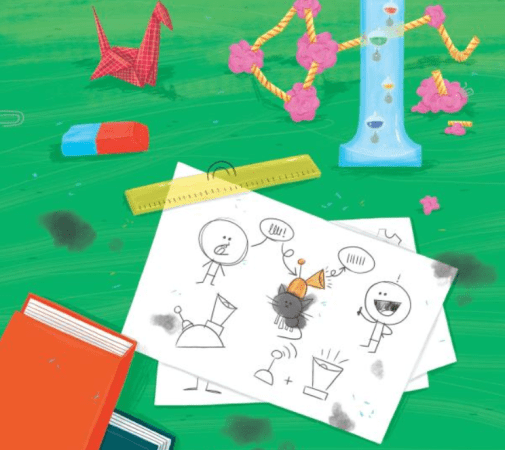
Then things began to disappear. “Hamilton the hamster tried to run but had no wheel. / Albie needed extra sprockets made of stainless steel.” While Sona and Shirley created paper masks, the glue went missing, and Albie “didn’t even ask.” The wings from Dave’s propeller plane were suddenly broken off, and reading time became impossible when “booming pandemonium descended on the school.” Albie, though, intent on his invention, didn’t notice the trouble he was causing or the crowd of angry kids rushing to complain.

Before they could reach Albie, though, Shirley stopped them, saying “‘maybe Albie didn’t know. Let’s look at what he made.’ Curious, the children headed straight to where he played.” When they say all the inventions Albie had made, they stopped and stared. Albie had made the class a gift—a spaceship, and with the push of a button, an amazing time machine!

celebrate-picture-books-picture-book-review-albie-newton-spelling

Image copyright Ester Garay, 2018, text copyright Josh Funk, 2018. Courtesy of Sterling Children’s Books.

With his inimitable style, Josh Funk creates a rambunctious tale of invention and creativity, but one that also has a deeper message about the way some kids see the world and communicate with peers and others. In the first pages, readers are introduced to the precocious Albie, who from birth has demonstrated a talent for learning and doing. When he enters a new school, however, his single focus doesn’t translate into the kinds of social interactions his classmates are used to. Albie gathers materials for his present unaware of the mayhem he’s causing, just as the other kids are unaware of Albie’s real goal. Only Shirley is sensitive to the idea that Albie may not be causing havoc on purpose but for a purpose. Her calming defense of Albie allows the other kids to see Albie in a new light and appreciate his gift—and his gifts.

While Funk’s rhyming verses are focusing on Albie and his actions, Ester Garay’s bright illustrations depict the other kids’ reactions to his talents and also his disruptions. A first hint at how Albie fits in with his new class comes as the kids welcome him with cheer and smiles. Instead of facing them to accept the welcome, Albie is faced away from them, happily imagining the gift he will make for them.

celebrate-picture-books-picture-book-review-albie-newton-drawings
Image copyright Ester Garay, 2018, text copyright Josh Funk, 2018. Courtesy of Sterling Children’s Books.

Throughout the day, Shirley follows Albie, and as she watches and wonders, her facial expressions demonstrate dismay at some of Albie’s antics but also a growing understanding and acceptance. Garay captures the close camaraderie of a preschool or kindergarten classroom, and her close-up view of Albie toiling away on his invention will have readers eager to see the result. The reveal of Albie’s spaceship time machine and the final spread of the kids frolicking on a distant planet with the likes of Freda Kahlo, William Shakespeare, Amelia Earhart, and a helpful dino, are sure to produce some oohs and ahhhs.

Albie Newton is a doubly impactful story that would be a welcome addition to home and, most especially, classroom bookshelves. It can be read as a boisterous story of innovation for lively story times, but it also provides adults and children an opportunity to discuss the ideas of social interaction and various personalities. Most children know someone like Albie who as naturally quiet, on the spectrum, or singularly focused on one area or another, communicates and socializes differently than others. Reading Albie Newton can help kids better understand different behaviors and, like Shirley, become more sensitive to all their classmates and friends.

Ages 5 – 9

Sterling Children’s Books, 2018 | ISBN 978-1454922582

Discover more about Josh Funk and his books as well as find fun activities and lots of resources on his website.

To learn more about Ester Garay, her books, and her art, visit her website.

Check out the Albie Newton book trailer!

Get Caught Reading Month Activity

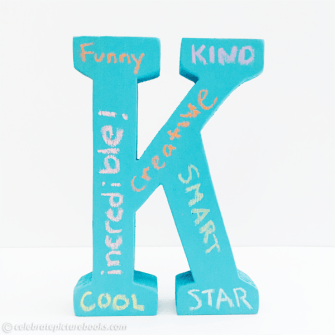
celebrate-picture-books-picture-book-review-initial-bookend

Initial Bookends


You can keep your books neat and tidy on the shelf with this easy-to-make bookend that displays your talents and personality!

Supplies

  • Wooden letter block in the child’s first initial or both initials
  • Chalkboard paint
  • Chalk
  • Paint brush

Directions

  1. Paint the wooden letter with the chalkboard paint, let dry
  2. With the chalk, write words that your think best describe you on the letter
  3. Display your letter on your bookshelf!

April 20 – National Look Alike Day

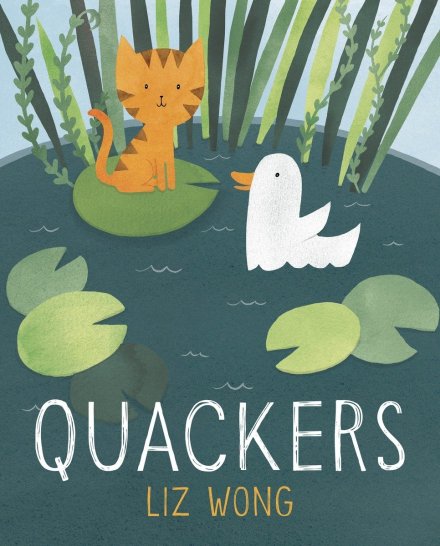
celebrate-picture-books-picture-book-review-quackers-liz-wong-cover

About the Holiday

Do people say you look like someone else—a family member or friend or maybe a celebrity or historical figure? If so, today is the day to embrace that dopplegänger and perhaps have a little fun with the resemblance. The holiday got started in 1980 when television news reporter Jack Etzel was looking for a feature story on a slow news day. Out on the sidewalk with his camera crew, Etzel spotted a man who looked like Humphrey Bogart. He stopped him and asked him who people said he looked like. Etzel and his crew went on to ask more people about their look-alikes. The next day, Etzel contacted the people who organize the Chase Calendar of Events and proclaimed April 20 as Look Alike Day. Why not join in the fun and go all out? Dress up as your look alike, talk and act like them, and enjoy a day of fame!

Quackers

By Liz Wong


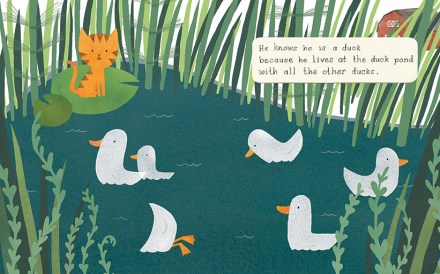
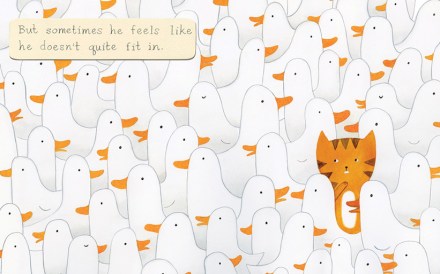
Quackers, a little orange tabby, wants to say hello! “Meow.” Quackers is a duck. “He knows he’s a duck because he lives at the duck pond with all the other ducks.” Not only that, but all of his friends are ducks. Sometimes, though, when he looks around at all the white feathers and orange beaks, he feels a bit out of place, and communicating is sometimes difficult. There’s also the issue of food—some of the things he’s given to eat are pretty slimy or tiny or hard to chew, and duckweed seems to be on the menu all the time. The worst, though? Getting wet.

celebrate-picture-books-picture-book-review-quackers-liz-wong-at-the-pond

Copyright Liz Wong, 2016, courtesy of Knopf Books for Young Readers.

One day, Quackers meets another duck who looks like him and sounds like him. In his joy, Quackers blurts out, “‘I’ve never met a duck who understands me!’” The gray kitten, Mittens, is confused at first and then understands and then laughs. At last, she invites Quackers to follow her. They end up at a farm where Mittens lives with “a whole flock of strange ducks. Ducks just like Quackers.”

Mittens shows Quackers how they “chase mice,” which Quackers prefers to swimming; “drink milk,” which is more delicious than duckweed; and clean themselves, which Quackers is a bit iffy on. Soon, Quackers is napping with his new friends. As much as he enjoys being a cat, Quackers starts to miss the duck pond. He even finds that he has a craving for duckweed. He scampers back and discovers that “most of all, he missed his friends.”

Now Quackers splits his time at the pond and the farm. Sometimes he’s a duck, and sometimes he’s a cat. But all the time “he’s just Quackers, and that makes him completely happy.”

celebrate-picture-books-picture-book-review-quackers-liz-wong-ducks

Copyright Liz Wong, 2016, courtesy of Knopf Books for Young Readers.

As mom to a cat who thinks he’s part person and possibly part dog, I fell in love with Liz Wong’s little Quackers and little readers will too. Kids will giggle as Quackers sits contentedly on a lily pad, accepts slugs and snails as snacks with a meow-nimum of fuss, and explains to Mittens that he’s a duck.  Readers, who are beginning to develop their own identity, will be cheered when Quackers embraces both his duck and cat sides. They’ll understand that it’s what’s inside a person that matters and that being yourself is the best thing you can be. Wong’s adorable kittens and ducks will charm kids, and her simple hand-lettered text and speech bubbles create a cozy reading experience that’s like a sweet hug in a book.

Full of humor, self-acceptance, and inclusion, Quackers should find a home on any child’s and classroom’s bookshelf.

Ages 3 – 7

Knopf Books for Young Readers, 2016 | ISBN 978-0553511543

Discover more about Liz Wong, her books, and her art on her website.

National Look Alike Day Activity

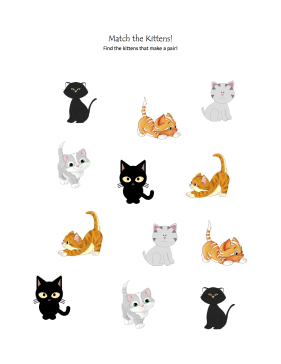
celebrate-picture-books-picture-book-review-match-the-kittens-puzzle

Match the Kittens Puzzle


These adorable kittens all have a twin, but they’ve gotten mixed up while playing. Can you find the matching pairs in this printable Match the Kittens Puzzle?

Picture Book Review

March 24 – It’s National Umbrella Month

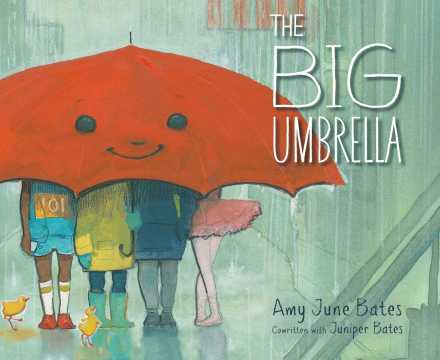
celebrate-picture-books-picture-book-review-the-big-umbrella-cover

About the Holiday

The rainy season is coming—do you know where your umbrella is? March, with its unpredictable weather has been designated National Umbrella Month to commemorate those useful objects that keep us dry in the rain and shaded from the sun’s rays. Invented in China over 4,000 years ago, the umbrella underwent many changes before becoming the pocket-sized helper it is today. To celebrate this month, check on the condition of your umbrella or treat yourself to a new one!

The Big Umbrella

By Amy June Bates | Cowritten with Juniper Bates


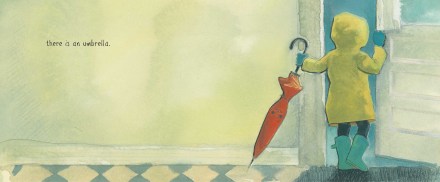
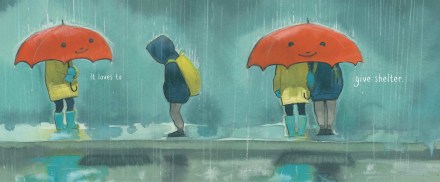
A red umbrella sits at the front door, waiting…. “It is a big, friendly umbrella.” No matter if raindrops or sunshine or even autumn leaves are falling, the umbrella is ready to go to work. “It likes to spread its arms wide” and offer shelter to whomever needs it.

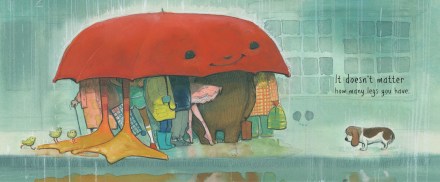
Under the umbrella there’s room for four—and more. The umbrella welcomes anyone, no matter what you look like or what you’re wearing or “how many legs you have.” And if it seems crowded, don’t worry—there’s always room for more. So come on under! You’ll be amazed at what you find!

celebrate-picture-books-picture-book-review-the-big-umbrella-picking-up-umbrella

Image copyright Amy June Bates, 2018, text copyright Amy June and Juniper Bates, 2018. Courtesy of simonandschuster.com.

In Amy June and Juniper Bates’ sparing text, there’s a world of freedom and welcome. Amy June’s gorgeous watercolors of a rain-soaked day complete the story as a walk down a city street creates a microcosm of life under the umbrella.

The sweet, red umbrella smiles at every one who comes by  looking for shelter, always stretching to accommodate another. When a ballerina and a runner need protection from the pelting rain, they easily join two already under the umbrella with room to spare. The very tall webbed creature the four meet next doesn’t even fit on the page, but it does fit nicely under the umbrella. And the cute hairy guy who’s carrying a briefcase and is as tall as the bus stop sign? Sure! There’s plenty of room!

celebrate-picture-books-picture-book-review-the-big-umbrella-two

Image copyright Amy June Bates, 2018, text copyright Amy June and Juniper Bates, 2018. Courtesy of simonandschuster.com.

As the group continues on its way, readers can see the legs of young and old, cowboys and roller skaters, dogs and chicks all walking together and protected by the ever widening umbrella. Children will like to predict what will happen when the umbrella passes a crowded crosswalk. In a double-page spread the sun begins to peek out from behind the clouds just in time for this diverse group to enjoy an afternoon at the park—all shaded by the red umbrella.

When readers turn from the mottled blue and green rainy-day pages where the faces of the fellow travelers are hidden onto Bates’ final light and bright two-page park scene, they can’t help but smile and feel their heart lift even more. As the individuals are revealed, the sense of inclusion is heartening and affirming. The park, dotted with daisies, bustles with kids and adults of all ethnicities, abilities, and personalities playing, talking, biking, painting, and gathering together.

celebrate-picture-books-picture-book-review-the-big-umbrella-a-group

Image copyright Amy June Bates, 2018, text copyright Amy June and Juniper Bates, 2018. Courtesy of simonandschuster.com.

The Big Umbrella is an uplifting and inspiring story that children of all ages will respond to. The book would be an excellent choice for classroom libraries to open discussions of inclusion and a sweet addition to home bookshelves for rainy day or sunny day story times.

Ages 4 – 8

Simon & Schuster/Paula Wiseman Books, 2018 | ISBN 978-1534406582

To learn more about Amy June Bates and see portfolios of her art and books, visit her website.

National Umbrella Day Activity

celebrate-picture-books-picture-book-review-umbrella-match-up-puzzle

Find the Matching Umbrellas


These umbrellas and raincoats were mixed up in the wind! Can you find the matching pairs? Look carefully! How will you match them up?

Rainy Day Mix Up Umbrellas Matching Puzzle

Picture Book Review

February 17 – Random Acts of Kindness Day & Interview with Author Marsha Diane Arnold

celebrate-picture-books-picture-book-review-may-i-come-in-cover

About the Holiday

Are you a RAKtivist? You know—a Random Acts of Kindness Activist! Sounds awesome, doesn’t it? It is! And all it takes to be a RAKtivist is to do nice things—kind things—for everyone and anyone. These things don’t have to be big, or hard, or expensive, either. In fact, the best kindness acts are free! If you see someone having a bad day, give them a smile. Is someone struggling with a box, a bag or keeping their stuff in their locker? Give them a hand. Does someone always eat lunch alone? Offer to sit with them and have a conversation. You’re also encouraged to give others a card to brighten their day. You’ll find some to print out at the end of this post!

There are as many ways to be a RAKtivist as there are people on the planet. Right now, there are 17,009 registered RAKtivists from ages 14 to 89 in 87 countries! You can join them and learn more about this uplifting holiday on the Random Acts of Kindness Website!

Sleeping Bear Press sent me a copy of May I Come In? to check out, and is partnering with me for a giveaway! Learn more below!

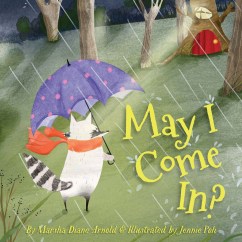
May I Come In?

Written by Marsha Diane Arnold | Illustrated by Jennie Poh


Outside, the rain poured down, and “Raccoon shivered. When “thunder roared, Raccoon quivered.” And the flashes of lightening were just too scary to watch. Raccoon did not like being alone on such a stormy night, so he “grabbed his umbrella and hurried out the door.” Raccoon made his way through muddy Thistle Hollow to his old friend Possum’s tree-trunk den.

celebrate-picture-books-picture-book-review-may-i-come-in-going-out

Image copyright Jennie Pho, 2018, text copyright Marsha Diane Arnold, 2018. Courtesy of Sleeping Bear Press.

There he found Possum nice and dry under his canopy. Raccoon asked, “‘Possum old friend, may I come in?’ / ‘What bad luck,’ Possum replied. ‘My den’s too small for one your size.’” Raccoon climbed down and with a “swish, plish” walked “all the way to Quail’s brambles.” As the wind whipped Raccoon’s scarf, he asked Quail if he could come in. But Quail said her brambles were formed too tight, and Raccoon was too wide to fit inside.

celebrate-picture-books-picture-book-review-may-i-come-in-quail

Image copyright Jennie Pho, 2018, text copyright Marsha Diane Arnold, 2018. Courtesy of Sleeping Bear Press.

Next, Raccoon swish, plished to Woodchuck’s hole. Dug into a hill near an old broken tree and lit by a small candle lamp, Woodchuck’s hole looked cozy. But when Raccoon asked his old friend if he could come in, Woodchuck said, “‘What bad luck. I’ve only room for one to hide.’” Raccoon went away sadly and “stood shaking in the rain. His umbrella blew inside out, His fur felt wet and spongy.” He really did not want to spend the night alone.

celebrate-picture-books-picture-book-review-may-i-come-in-umbrella-inside-out

Image copyright Jennie Pho, 2018, text copyright Marsha Diane Arnold, 2018. Courtesy of Sleeping Bear Press.

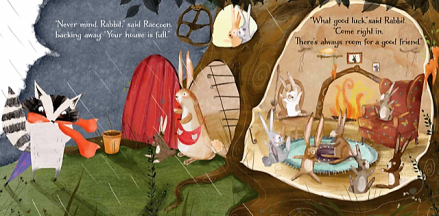
There was one more house to try. Raccoon saw a light glowing in the distance. He hurried nearer and nearer and nearer. He knocked at the door and when Rabbit answered, Raccoon could see all of her little rabbits behind her as they “hopped and bopped to the raindrops.” Raccoon hesitantly asked his question then almost immediately took it back. After all, her house was so full. But Rabbit swung the door open wider. “‘What good luck,’ said Rabbit. ‘Come right in. There’s always room for a good friend.’” Rabbit gave Raccoon a comfortable chair to sit in and brought him a cup of tea.

celebrate-picture-books-picture-book-review-may-i-come-in-cozy-chair

Image copyright Jennie Pho, 2018, text copyright Marsha Diane Arnold, 2018. Courtesy of Sleeping Bear Press.

As the storm raged on, Raccoon hummed and smiled happily, smelling the aroma of carrot stew that filled Rabbit’s home. Soon, there was another knock on Rabbit’s door and three voices rang out: “‘being alone on a night like tonight is scary.’” When Rabbit opened the door this time, there stood Possum, Quail, and Woodchuck. The ten little rabbits just kept hopping and bobbing.

Rabbit and Raccoon gazed at each other knowingly. “‘What good luck,’ they said. ‘Come right in. There’s always room for all our friends.’”

celebrate-picture-books-picture-book-review-may-i-come-in-everyone

Image copyright Jennie Pho, 2018, text copyright Marsha Diane Arnold, 2018. Courtesy of Sleeping Bear Press.

From the very first page, young readers will be engrossed in Marsha Diane Arnold’s sweet story of a raccoon who’s looking for company and comfort on a stormy night. As Raccoon swish, plishes through his neighborhood, knocking on door after door only to be met by excuses for why he can’t come in, children will empathize with him and be cheered when Rabbit joyfully invites him in. Readers will understand that they are sometimes like Raccoon, needing a bit of help or support. They will also see that they can always be like Rabbit, offering kindness and inclusion. Arnold’s lyrical language and repeated phrases invite children to read along, offering another sense of camaraderie during story time.

celebrate-picture-books-picture-book-review-may-i-come-in-small-inset

Jennie Poh’s Thistle Hollow is as cute as its name with cozy dens, brambles, and homes carved into hills and trees and adorable woodland neighbors. The lovely smoky blue-grays and dusky greens enhance the beautiful scenery as raindrops plink, plonk and the wind whips Raccoon’s scarf and umbrella. Alert readers may notice that a single owl watches Raccoon as he makes his way from Possum’s den to Quail’s brambles, but as he approaches Rabbit’s inviting home, a pair of birds snuggle against the wind in a hollow tree. Rabbit’s home is warm, snug, and relaxed as the ten bunnies hop and bop, enjoying some fun with their siblings and guests.

May I Come In? would be a welcome addition to home, classroom, and school libraries to open discussions of kindness, inclusion, and helpfulness for children. The story could easily be adaptable to acting out for a classroom or children’s program to highlight the lesson of inclusion and make it more personal.

Ages 4 – 8

Sleeping Bear Press, 2018 | ISBN 978-1585363940

You’re invited to download the May I Come In? Activity Pages here or from Sleeping Bear Press.

May I Come In? Coloring Page May I Come In?  | Matching PageMay I Come In? Rhyming Page

Discover more about Marsha Diane Arnold and her books on her website.

To learn more about Jennie Poh, her books, and her art work, visit her blog.

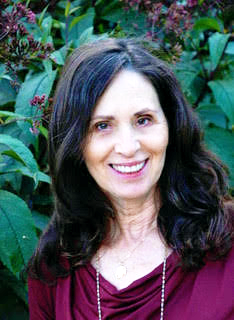
Meet Marsha Diane Arnold

celebrate-picture-books-picture-book-review-marsha-diane-arnold

Today, I’m excited to talk with Marsha Diane Arnold about why the theme of kindness is important in the books children read, her real-life May I Come In? moment, and what makes life magical.

Thank you, Celebrate Picture Books for inviting me to your blog. Random Acts of Kindness Day seems a perfect time to chat about my new book May I Come In? which demonstrates kindness in such a sweet way.

What inspired you to write May I Come In??

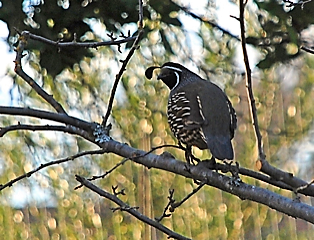
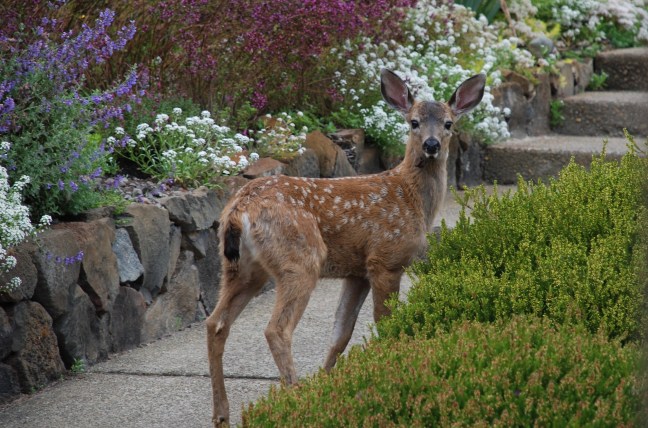
There really was nothing specific that inspired the story. If anything did influence it, it was the wildlife that lived around my home in California. During the time I wrote May I Come In? I was working on a number of stories with woodland animal characters. With these stories, my characters led the way for me. One of the stories was Waiting for Snow with Badger and Hedgehog as characters. Another is Badger’s Seeds, which is coming out from Sleeping Bear Press in 2019. And then there’s May I Come In? with sweet Raccoon searching for a friend to spend a scary night with.

CPB - Marsha Diane Arnold Quail pic

celebrate-pciture-books-picture-book-review-deer-for Marsha-Diane-Arnold-blog-tour-post-interview

Here are two of the animals that shared my McGregor hill home in California. The first may have inspired my May I Come In? Quail character.

When Hurricane Irma hit Florida this fall, you experienced May I Come In? in a personal way. Can you talk about that a little?

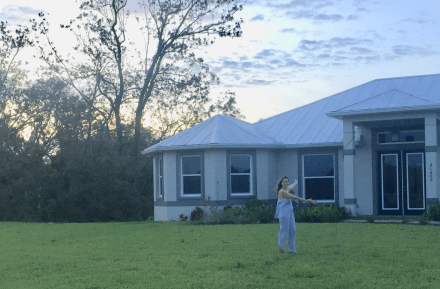
At the last minute, Hurricane Irma decided to come almost directly over our little town of Alva! In the photo below, it looks as if I’m inviting everyone into my house, just the way Rabbit did, but this was actually taken after the hurricane, as I was celebrating our house still standing. You may notice on the left that not all our trees did as well.

Although our storm was indeed frightening, it was heart-warming to see all the people who opened their doors to friends, family, and strangers who had to be evacuated from their homes. My husband and I had fourteen people—family, acquaintances, strangers—and two dogs under our roof. We learned, like the characters in May I Come In?, that it was comforting to be with others during a frightening time and that including everyone added to the camaraderie.

celebrate-pciture-books-picture-book-review-house-for Marsha-Diane-Arnold-blog-tour-post-interview

As a child you were surrounded by animals on your farm, you went on to help care for sick animals, and many of your books are written with animal characters. Do animals and their behavior inspire your writing? What animal qualities do you think resonate most with children?

Animals have always inspired and fascinated me. I could spend hours watching them, just being with them. They calm me. They make me laugh. They make me cry. Animals must inspire my writing because I write about them so often in my books, from my first book Heart of a Tiger to my newest, May I Come In?

Many animals have family groups and care for each other in similar ways to humans. Children understand and relate to this. In my two board books Baby Animals Take a Nap and Baby Animals Take a Bath my goal was to show very young children the similarities between animals and humans. We all nap. We all take baths.

When I write using animal characters, I’m really writing about children with human qualities. It’s a type of metaphor. Using animals as characters often allows children to identify more easily with certain perspectives.

What is something you love to do on a rainy day?

When I was growing up in Kansas, I actually enjoyed the lightning and the thunder!

Reading is always a lovely way to spend a rainy day. If there’s a warm fire to sit by, as in May I Come In? it’s even better.

The theme of May I Come In? revolves around the idea of inclusion and kindness. Can you speak a little bit on why it’s important for children’s books to portray these ideals? What changes have you seen over the years in children’s receptivity to these qualities?

Being inclusive is such an important quality, a foundation to living a kind and caring life. Because we humans are molded by our experiences when we are young, reading books that show inclusion and empathy are extremely important.

Even with the changes in our culture and technology, I think children are as receptive to these qualities as ever. But it’s vital we model them to children from their birth, through the first seven “magical” years, and onward. Good books with good messages are one way to do this.

One of the many things I love about May I Come In? is how each of Jennie Poh’s illustrations are so inviting, seeming to welcome the reader in.

celebrate-pciture-books-picture-book-review-interview-with-Marsha-Diane-Arnold

Your readers love meeting you at their school, in libraries, in bookstores, and even through Skype. Do you have an anecdote from an event that you’d like to share?

I’ve had such fun over the years visiting schools. There are so many precious memories.

I’m quite an introvert, so I’m grateful when schools invite me to visit their students. It gets me out of my shell; meeting my readers inspires me to keep writing for them.

A wonderful memory is my being flown into a small town on the Kansas plains by the principal in his airplane! It was a long way from an airport. When I arrived at the school in the morning I was greeted by a huge tornado they’d constructed on top of their school, in honor of my book The Bravest of Us All. Inside the gymnasium was a smaller tornado, three students dressed as cows to celebrate Prancing, Dancing Lily, and so much more. A grand time.

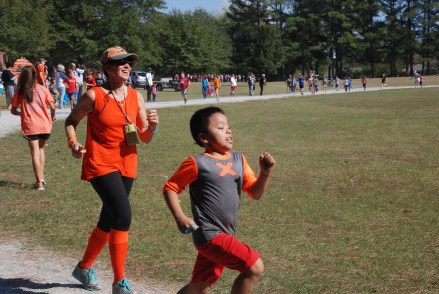
A recent memory involves Walter Jackson Elementary School in Alabama. They’ve been celebrating The Pumpkin Runner for about five years now with their Pumpkin Run Day, which is filled with pumpkin-related activities and a one-mile run for the entire school community, in honor of my book and the surprising ultra-marathoner Cliff Young. Two years ago, I was honored to be invited to join in the festivities by their amazing librarian, Todd McDonald. I spent one day doing presentations and another day playing games and running three miles! Yes, three, as they divided the students into three class groupings. Great educators! Great school! Great fun!

celebrate-picture-books-picture-book-review-pumpkin-run-for Marsha-Diane-Arnold-blog-tour-post-interview

You offer students writing workshops that you call “Funshops,” in which you present images, activities, and brainstorming to spark their imaginations and stories. Could you give an example of an image or activity that you use to fire up kids’ creativity? How do the kids react?

Hmmm. Should I share my favorite? Since it’s Random Acts of Kindness Day, I will!

The Alliteration Game is always a big hit with the students. In the Alliteration game, we take someone’s name and use lots of words that start with the same sound to make a fun sentence.  First, we describe the person in a silly way.  Then we think of an action word, a verb – like hopped or jumped.  After that, depending on the age of students, we might use adverbs to describe how the person does the action – “joyfully jumped” or “happily hopped” – and choose a setting. What’s really fun is that students can then use these sentences as starting places for a funny fiction story. Here’s an example, using my name.

Marsha, the magnificent moose, munched marshmallows in a museum in Manchuria.

Your work has been called “magical” by reviewers, and you also use the word to describe your work, your home in California, and other experiences. What does “magical” mean to you? Where is magic found and what can it do?

I like this definition of “magic” from the Oxford dictionary: “Beautiful or delightful in a way that seems removed from everyday life.”

To me something “magical” is uplifting, something that takes us somewhere else for a moment. But magic can be found almost everywhere, if we open our eyes and ears.  It can sneak up on us and take us by surprise or it can sit beside us and spread its arms around us. I found lots of magic at my home in California where I lived for 35 years – forests, good neighbors, barn owls. Now I’m finding magic in Florida – sandhill cranes, sunsets, ponies down the road.

A journalist once called me “a magician of literary innovations.” I loved that. To me, the best stories have always been magical, taking us away from the house cleaning or the 9-5 job, for a bit of beauty and delight.  So, I took the phrase and ran with it. I used it as the name of my blog Storymagician (inactive at the moment), and I created a Storymagician chant that I share with students when I visit schools. I think all of us can create and use stories to bring a little magic into our lives.

What’s up next for you?

At the moment, I’m doing final editing on my fall 2018 book, Gálapagos Girl with Lee & Low. This is a story inspired by Valentina Cruz who grew up in the Gálapagos Islands.

Also in the fall Mine. Yours. will be out from Kids Can Press, a Canadian company. I’m so honored to be working with them as they usually only publish Canadian authors. Qin Leng is illustrating. I’ve seen some of the early sketches and am so looking forward to the final artwork. Her style is perfect for my story.

Both of these books will be 40 pages long, my first ever 40-page long picture books. As many of you know, most picture books are 32 pages long. It’s interesting to me because Gálapagos Girl is a 500-plus-word story with an author note and back matter and Mine. Yours. is only 25 words! Yet, both editors felt the stories deserved 40 pages.

Another first for me is that Gálapagos Girl is going to be a bilingual book. So much to look forward too!

Since Celebrate Picture Books is a holiday-themed blog, I can’t let you get away without asking a few questions about holidays, so…

What holiday do you enjoy most?

I can’t choose just one!

I love decorating the house for Christmas – all the lights!

I really enjoy Halloween and Easter too. We rarely had candy in our house when my children were young, so trick-or-treating was a big deal. They always made their own costumes, with whatever they could find around the house. There were some pretty interesting ones!

Easter was wondrous. When my children were small we would cut a small branch from one of the manzanita trees in our little forest and bring it into the house to decorate with Easter eggs and treasured objects. We always looked for the Easter bunny in the field behind our house, where many rabbits lived. We spotted him several times over the years.

Then there’s Valentine’s Day, the day we just celebrated. I love the red and pink! When my children were young, we always designed and made our own Valentine’s cards. It’s fitting I’m sharing about May I Come In? during Valentine’s week as both are about holding others close, including them in our hearts and our lives.

Has a holiday ever influenced your writing?

I’ve never really written a story about a holiday, but there’s a Halloween story I started over ten years ago that I never finished. Yet, it keeps tapping me on the shoulder. I plan to take another look at it next month. Writers often return to work that’s been collecting dust for years in the hope that this time new ideas will come to them and the story will be completed and ready for the world.

Where can readers find out more about you, your books, and your school visits?

My website is being updated, but you can find out about all those things at www.marshadianearnold.com. And if you want to learn how to follow your characters through a story, as I mentioned in the first question, you may check out my Writing Wonderful Character-Driven Picture Books at http://www.childrensbookacademy.com/writing-character-driven-stories.html.

Now, let’s all go out and do a random act of kindness!

Thanks, Marsha, for chatting with me today! I wish you all the best with May I Come In? and all of your books!

You can connect with Marsha Diane Arnold on:

Her Author Facebook | Personal Facebook (I welcome all) |Twitter | Her Website

Random Acts of Kindness Day Activity

celebrate-picture-books-picture-book-review-random-acts-of-kindness-cards-feb-2018

Random Acts of Kindness Cards


Here are some cheery cards that are sure to make the recipient’s day happier! Give them to a friend, a family member, your teacher, or your bus driver to show them that you care and that they mean a lot to you!

Random Acts of Kindness Cards Sheet 1Random Acts of Kindness Cards Sheet 2

celebrate-picture-books-picture-book-review-may-i-come-in-cover

You can find May I Come In? at these booksellers:

Amazon | Barnes & Noble | Books-a-Million | IndieBound | MacIntosh Books of Sanibel Island, FL

Picture Book Review