December 27 – Make Cut Out Snowflakes Day

celebrate-picture-books-picture-book-review-croc-and-turtle-snow-fun-cover

About the Holiday

Making paper snowflakes is a fun wintertime activity that brings the outdoors in on snowy days or clear ones. This craft originates in the art of origami—a variation called kirigami. While both origami and kirigami involve folding paper, kirigami entails unfolding the paper and making cuts in desired places to create an effect. Cut-out snowflakes combine the two as the cuts are made while the paper is still folded. Today, get out some paper and scissors and make your own snowflakes to hang!

Thanks to Bloomsbury for sending me a copy of Croc & Turtle: Snow Fun! for review consideration. All opinions on the book are my own. 

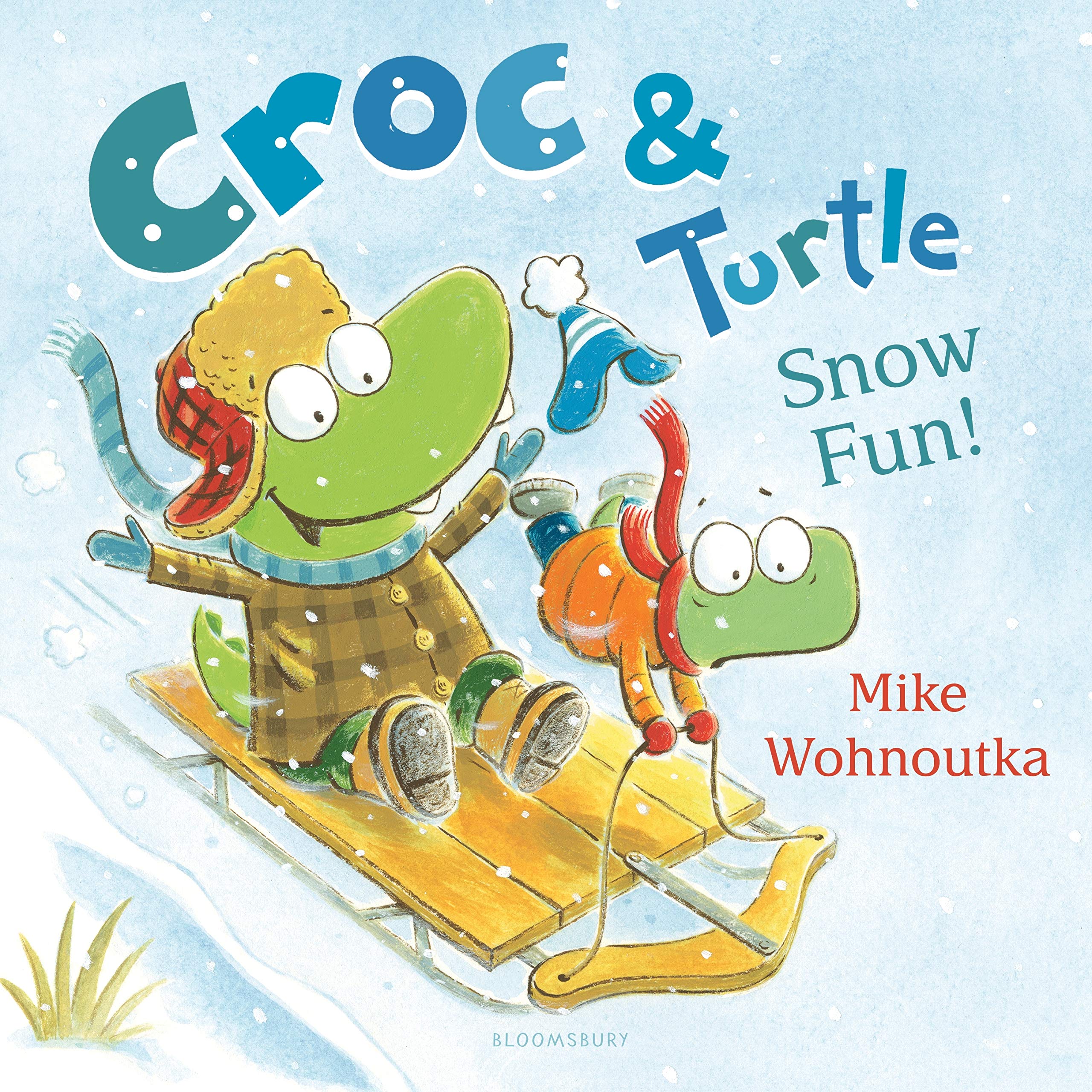
Croc & Turtle: Snow Fun!

By Mike Wohnoutka


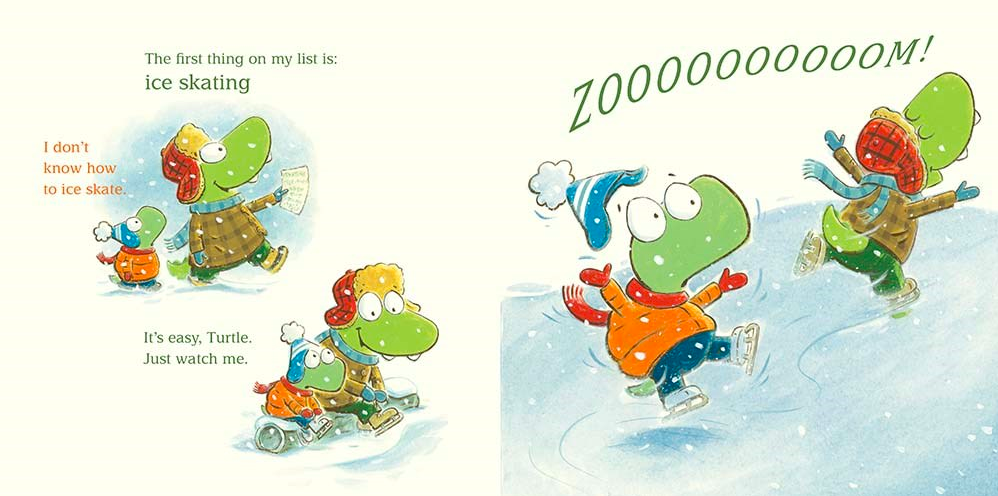
The snow is falling and Croc runs to Turtle’s house with a list of fun things to do. Turtle comes to the door with another list. They’re both a little surprised to find such opposite activities on each other’s lists, but Turtle thinks it will be fun to “do everything on both lists.” First, they head out to the pond to ice skate. But Turtle doesn’t know how. Croc says to just follow along, but in all of Croc’s zooming, whooshing, and twirling, Turtle is left dizzy and flat out on the ice. Croc thinks being outside is the best, but Turtle’s ready to go inside.
celebrate-picture-books-picture-book-review-croc-and-turtle-snow-fun-paper-skating

Copyright Mike Wohnoutka, 2019, courtesy of Bloomsbury Children’s Books.

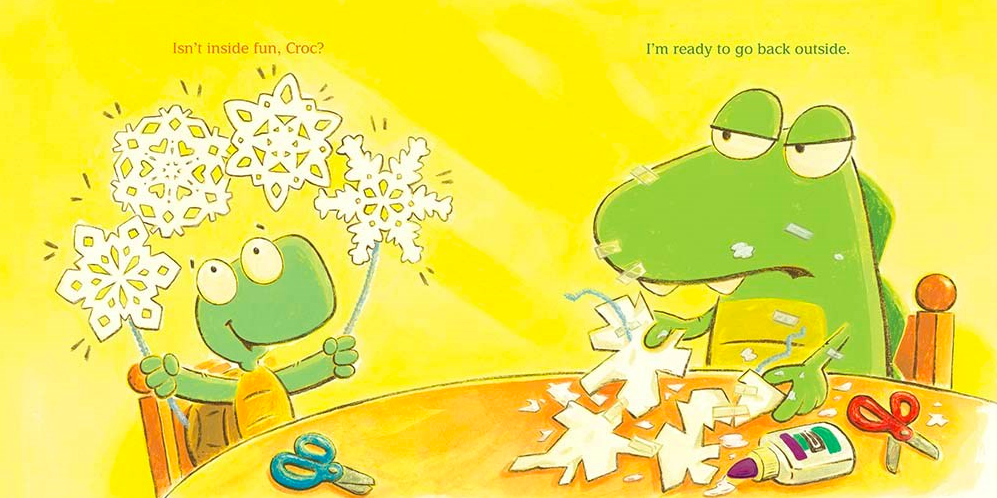
Inside, Turtle has all the craft supplies to make paper snowflakes. Croc says, “I’m not very good at paper snowflakes.” Turtle, snipping away energetically, says, “Just watch me.” Turtle unfolds the paper and displays an intricate four-snowflake arch, while Croc’s four angled blocks of paper, taped and glued together, lie in front of him.

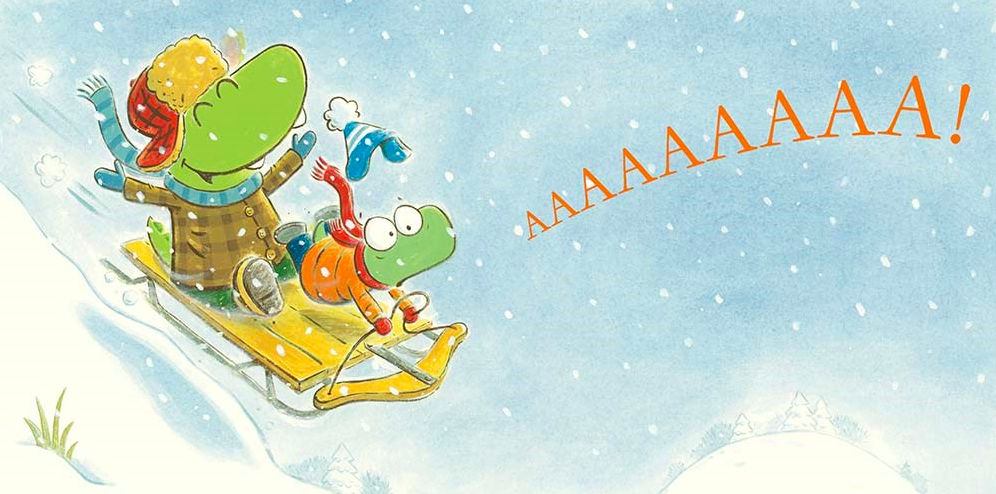
Outside again, Croc’s happy to go sledding, but Turtle’s feet are freezing. Uncertainly, Turtle sits in front of Croc. The screaming starts as the sled bumps and jumps down the hill. Buried up to their necks in snow, Croc is exhilarated, but for Turtle “it’s time to go back inside.” In the house, Turtle begins spreading the 1,000 pieces of a jigsaw puzzle on the floor in front of a roaring fire as Croc flops nearby in utter boredom.
celebrate-picture-books-picture-book-review-croc-and-turtle-snow-fun-paper-snowflakes

Copyright Mike Wohnoutka, 2019, courtesy of Bloomsbury Children’s Books.

He wants to go back out, but Turtle finds it “too cold and too dangerous.” In a huff, Croc stomps outside. Turtle fumes and stays inside. But Croc finds that throwing snowballs and skiing without Turtle is no fun, and Turtle misses Croc while coloring and playing cards. Then there’s a knock at the door. It’s Croc with an apology. Turtle apologizes too.  Croc ponders: how can they “be inside and outside and together?” Then Turtle whispers an idea into Croc’s ear.
celebrate-picture-books-picture-book-review-croc-and-turtle-snow-fun-sledding

Copyright Mike Wohnoutka, 2019, courtesy of Bloomsbury Children’s Books.

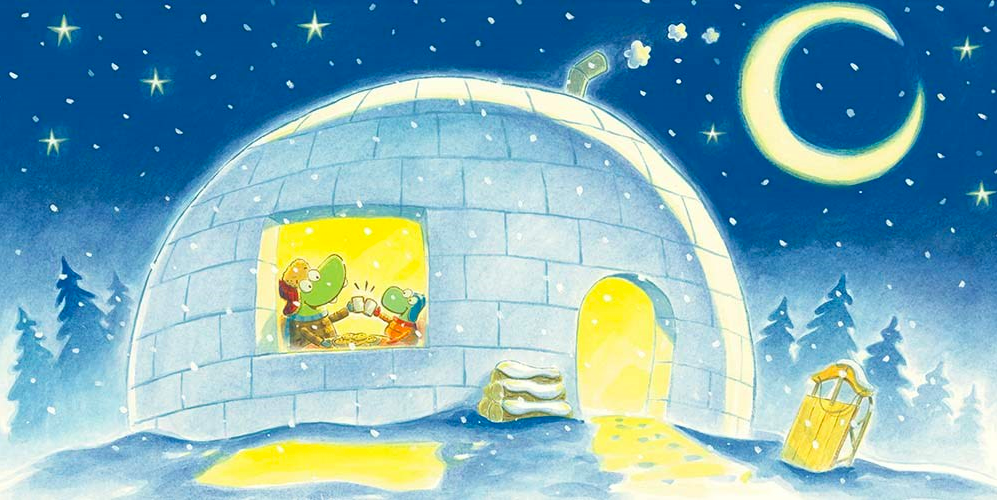
Inside, Turtle gets out the recipe book, eggs, flour, and other ingredients. Outside, Croc pats and shapes snow into blocks. Soon, Turtle has a tray full of cookies and hot chocolate, and Croc is pulling a sled loaded with Turtle’s table, chairs, and slippers to… their warm, cozy igloo so they can be “outside…and inside…and together.”
celebrate-picture-books-picture-book-review-croc-and-turtle-snow-fun-igloo

Copyright Mike Wohnoutka, 2019, courtesy of Bloomsbury Children’s Books.

Mike Wohnoutka’s best friends Croc and Turtle are back in a cold-weather adventure that will warm readers’ hearts. Their enthusiasm to play together sparkles in their bright smiles and cheery greetings, they even overcome the initial momentary shock that Croc prefers outside, while Turtle is a homebody. As the two try to enjoy each other’s activities, though, their different personalities cause a rift. Little ones needn’t worry about these two besties, however.  It only takes a few minutes for each to realize winter is no fun without the other.

In a tender lesson, Wohnoutka shows Croc and Turtle apologizing for their role in the tiff and then quickly moving on to working together to come up with a solution. The result of their creative problem solving will delight kids and is a clever activity that can be adapted for play at home. Wohnoutka’s inside and outside pursuits for Croc and Turtle are well chosen and will resonate with readers even as they giggle at the outcomes.

Just as in Wohnoutka’s first tale—Croc and Turtle! The Bestest Friends Ever!—these bright green friends with their expressive eyes will charm readers. Wohnoutka’s vivid imagery always puts the spotlight on Croc and Turtle, allowing the youngest readers to easily connect the text with the action, while older readers soak up all the humor and emotion in this enchanting story. Inside, Turtle’s home glows with warmth, while outside, you can almost feel the crisp, frosty air and the snowflakes drifting down. The final image brings both of these welcome winter delights together.

Whether you’re already fans of Croc and Turtle or meeting them for the first time, Croc & Turtle: Snow Fun! is a sweet addition to home bookshelves. The book will also be a favorite in preschool and kindergarten classrooms and in public library collections.

Ages 3 – 6

Bloomsbury Children’s Books, 2019 | ISBN 978-1681196374

Discover more about Mike Wohnoutka, his books, and his art, on his website.

World Snow Day Activity
celebrate-picture-books-picture-book-review-sock-snowman-craft

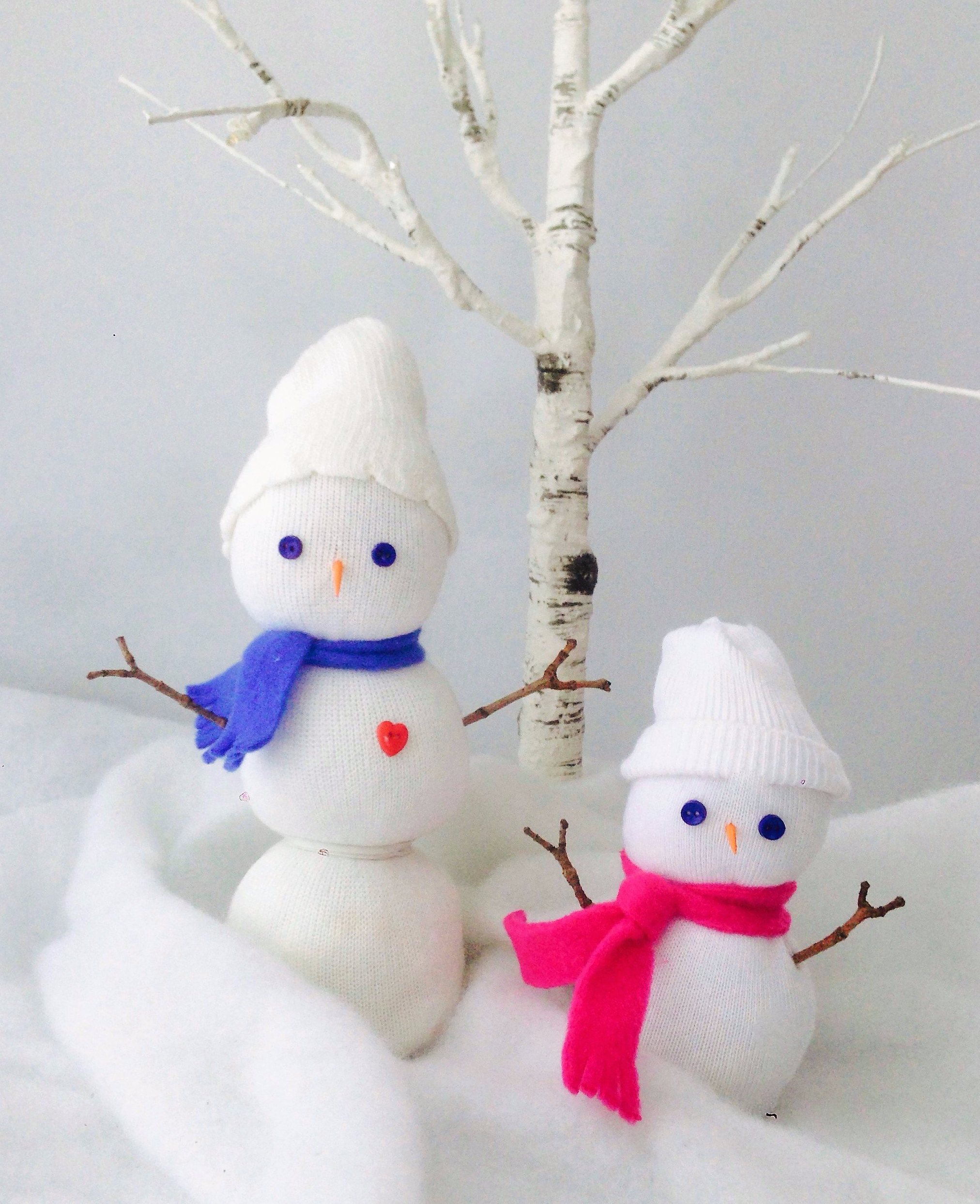
Snow Buddies


This is a great craft for kids to share with a friend. Grab a pair of socks and have fun making these snow buddies! 

Supplies

  • White dress ankle socks
  • Polyester Fiber Fill
  • Tiny buttons
  • Fleece or ribbon, enough for a little scarf
  • Toothpicks
  • Twigs
  • Orange craft paint
  • Cardboard
  • White rubber bands, one or two depending on the size of the snowman
  • Fabric or craft glue
  • Small hair band (optional)

Directions

To Make the Snowman

  1. Cut a circle from the cardboard about 2 inches in diameter for the base
  2. Place the cardboard circle in the bottom of the sock
  3. Fill the sock with fiber fill about ¾ full or to where the ribbed ankle cuff begins. Pack tightly while making a sausage shape. You can make your snowman different shapes with the amount of fill you use.
  4. Stretch out the cuff of the sock and tie it off near the top of the fill either with a loop knot or with the hairband.
  5. Fold the cuff down around the top of the filled sock to make the hat.
  6. Wrap a rubber band around the middle of the sock to make a two-snowball snowman. For a three-snowball snowman, use two rubber bands. Adjust the rubber bands to make the “snowballs” different sizes.

To Make the Scarf

  1. Cut a strip of fleece or ribbon 8 to 10 inches long by ½ inch wide
  2. Tie the fleece or ribbon around the neck of the snowman
  3. To Make the Nose
  4. Dip one end of the toothpick into orange paint, let dry
  5. Cut the toothpick in half
  6. Stick the toothpick into the head or top portion of the snowman

To Make the Arms

  1. Insert small twigs into each side of the body of the snowman
  2. You can also use wire or cardboard to make the arms
  3. Attach two mini-buttons to the face for eyes with the fabric or craft glue
  4. Display your Snow Buddy

celebrate-picture-books-picture-book-review-croc-and-turtle-snow-fun-cover

You can find Croc & Turtle: Snow Fun! at these booksellers

Amazon | Barnes & Noble | Books-a-Million

To support your local independent bookstore, order from

Bookshop | IndieBound

Picture Book Review 

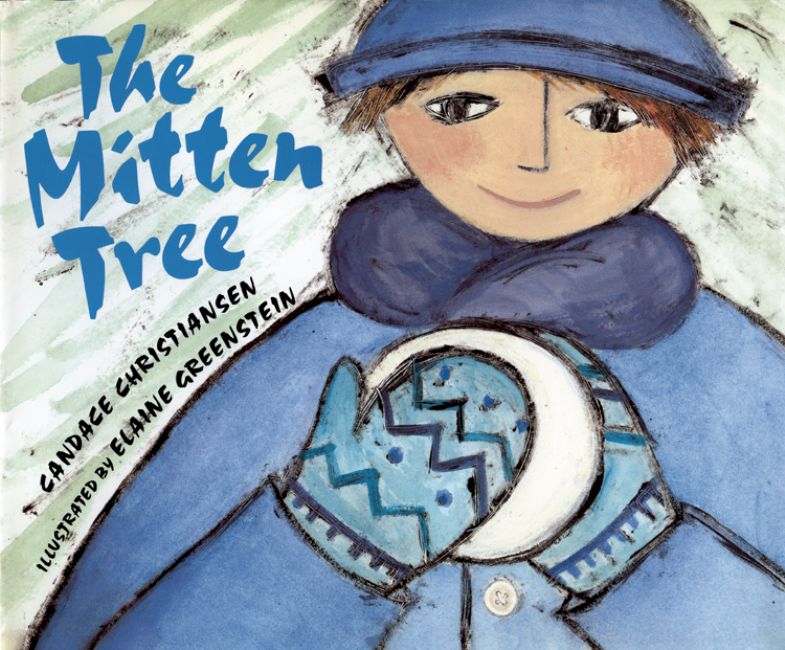
December 6 – Mitten Tree Day

celebrate-picture-books-picture-book-review-the-mitten-tree-cover

About the Holiday

2021 marks the fifth year that I’ve celebrated Mitten Tree Day with the book that started it all. Originally published in 1997, The Mitten Tree has become a treasured read aloud and continues to inspire kindness programs in schools, libraries, and communities around the country. The feel of a cozy mitten on freezing fingers is one of the luxuries of wintertime. But where did mittens come from? The word “mitten” comes from the French word mitaine, which was an old nickname for a cat, because early mittens were typically made of animal fur. The earliest mittens, dating to around 1000 AD, were used as sheaths for gloves, adding extra protection for cold hands. Now that mitten weather is upon us, make sure your pair is still soft, wooly, and warm. If they’re not, consider buying a new pair from a local artisan, or, if you’re crafty, knit a new pair yourself. And, of course, enjoy the season with today’s book!

The Mitten Tree

Written by Candace Christiansen | Illustrated by Elaine Greenstein


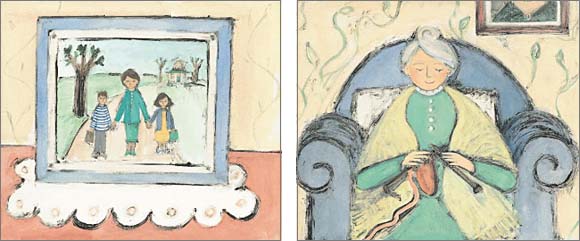
In a small house at the end of a lane Sarah lives all alone. Her own children have grown and moved away, but as she watches the kids gather at the blue spruce tree to wait for the school bus she remembers all the years that she walked her son and daughter to this same spot. As she makes her way down the lane to her mailbox, she wishes the children will wave and smile, but they never seem to notice her. Still, it makes Sarah smile to see them.

celebrate-picture-books-picture-book-review-the-mitten-tree-sarah

Image copyright Elaine Greenstein, 2009, courtesy of Fulcrum Publishing.

One winter morning Sarah notices all the kids throwing snowballs and making snowmen—all except one little boy dressed all in blue who lacks the mittens needed to join his friends. All day Sarah worries about the boy with no mittens. As the sun goes down Sarah digs “through the basket of yarn scraps she had saved for many years.” She finds her needles and four shades of blue wool. Then Sarah begins to knit.

With the rising sun Sarah hurries to the bus stop and hangs the new blue mittens on the spruce tree. Then she hides behind a hedge to watch. The little boy in blue is the first to arrive at the bus stop. When he sees the mittens hanging there, he tries them on and finds that they fit perfectly. With a big smile he makes “a perfect snowball” and throws “it high into the winter sky.” Soon Sarah sees a little girl with mismatched mittens. That night she finds the perfect color of wool and knits a pair to match the girl’s red coat.

celebrate-picture-books-picture-book-review-the-mitten-tree-blue-sprce

Image copyright Elaine Greenstein, 2009, text copyright Candace Christiansen, 2009. Courtesy of Fulcrum Publishing.

Every morning Sarah watches the children, looking for any who have no mittens. During the day her needles are busy making gifts for these children. The next morning before anyone else is up she rushes to the spruce tree and adorns it with the mittens she has knitted. The children have warmed to the “game,” and each day search “under every branch and bough for another pair of mittens.” Once or twice Sarah thinks the boy with her blue mittens sees her, but his eyes don’t linger.

On the day before the school’s winter break Sarah fills her knitting basket with the latest mittens she’s knit. She heads out the door and down the lane. When she reaches the blue spruce, she hangs “mittens on every branch.” When the children arrive, they stand “very still for a few minutes looking at the mysterious, beautiful mitten tree.” As they board the bus, each child is wearing a new pair of mittens. Sarah sees them appear one by one in the bus windows, but none see Sarah.

celebrate-picture-books-picture-book-review-the-mitten-tree-basket

Image copyright Elaine Greenstein, 2009, text copyright Candace Christiansen, 2009. Courtesy of Fulcrum Publishing.

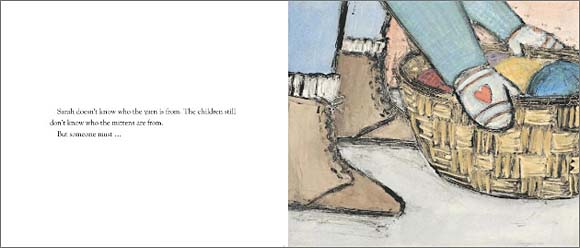
Sarah goes home feeling happy and with her heart as full as it was “when the sounds of her own children had filled her house.” But what awaits Sarah? As she climbs the stairs to her porch, she notices a “basket woven with thick brown vines and decorated with a large white bow.” She’s surprised to see that it is filled to the brim with balls of colorful yarn. Even today Sarah knits new mittens for all the children in town, and “every time her basket is empty, a new full one appears.” Sarah doesn’t know who brings the basket, just as the children don’t know who supplies the mittens. “But someone must….”

Screen Shot 2018-12-05 at 5.01.00 PM

Candace Christiansen’s heartwarming story of kindness given and reciprocated will inspire kids to see that anyone can make a difference in the lives of others by using their talents to fill a need. This gentle, quiet tale offers suspense that will pique readers’ curiosity from page to page, and the mystery surrounding the never-empty basket of wool provides a satisfying and moving ending that also reassures kids that deeds of thoughtfulness and compassion are noticed. The grandmotherly Sarah and familiar school bus stop setting and winter activities will resonate with readers.

Elaine Greenstein’s softly colored, folk-style illustrations give the story a cozy feeling—perfect for cold-weather reading, The variety of intricately knitted mittens, with their hearts, stripes, snowflakes and cables, are charming, and the enchanting image of the blue spruce decorated with mittens makes it easy to see how The Mitten Tree continues to inspire so many acts of kindness and charity.

Ages 3 – 7

Fulcrum Publishing, 2009 (paperback) | ISBN 978-1555917333

Mitten Tree Day Activity

celebrate-picture-books-picture-book-review-mitten-match

Mitten Match & Coloring Page


Mittens often get lost or mismatched in the fun of winter activities. Find the pairs in this printable Mitten Match & Coloring Page and then decorate them!

celebrate-picture-books-picture-book-review-the-mitten-tree-cover

You can find The Mitten Tree at these booksellers

Amazon | Barnes & Noble | Books-a-Million

To support your local independent bookstore, order from

Bookshop | IndieBound

Picture Book Review

November 23 – It’s Adopt a Turkey Month

celebrate-picture-books-picture-book-review-cold-turkey-cover

About the Holiday

Established in 1986 with the founding of Farm Sanctuary, a refuge for farm animals and advocate for institutional farming practices and plant-based living, Adopt a Turkey Day inspires people to think of turkeys differently and encourages them to symbolically adopt one of the Sanctuaries rescued “spokesturkeys” to help with its care. Operating sanctuaries in Watkins Glen, NY and Los Angeles, CA, Farm Sanctuaries provides homes for chickens, cows, pigs, sheep, and goats, in addition to turkeys. They also connect animals with loving forever homes, where they can live with plenty of space and care. If you’d like to learn more about Farm Sanctuary, visit their website. To celebrate, give the generous turkey and his friends in Cold Turkey a forever home on your bookshelf!

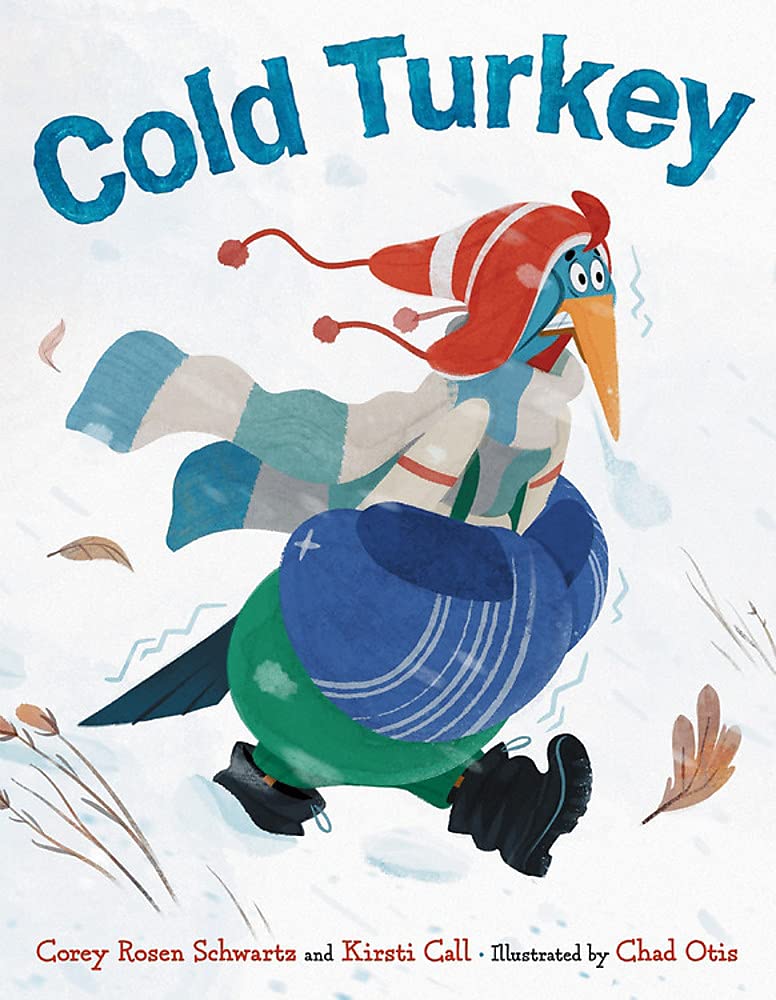
Cold Turkey

Written by Corey Rosen Schwartz and Kirsti Call | Illustrated by Chad Otis


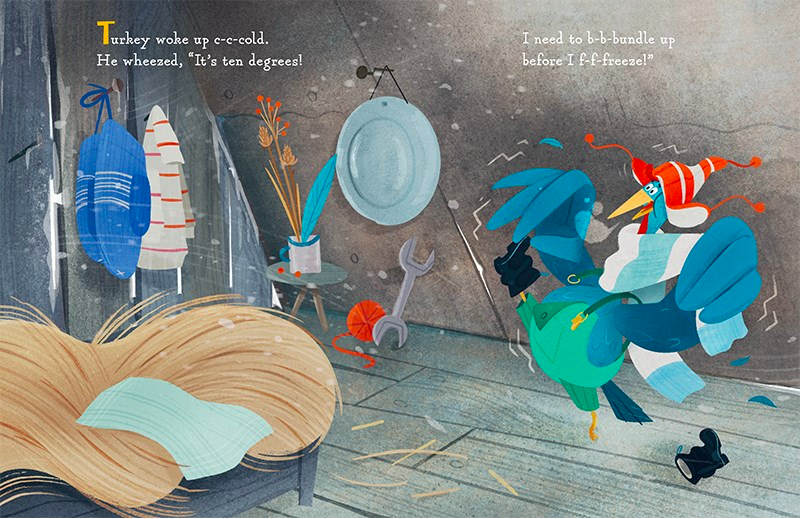
A frigid blizzard blast swirls through the coop, and “turkey woke up c-c-cold. / He wheezed, ‘It’s ten degrees! / I need to b-b-bundle up / before I f-f-freeze!'” Turkey pulls on a turtleneck sweater and overalls, a scarf, hat, and mittens and heads out into the snow. When he comes to Sheep’s shed, he finds his friend “s-s-shivering” and gives him his hat, tying it on nice and tight.

celebrate-picture-books-picture-book-review-cold-turkey-freeze

Image copyright Chad Otis, 2021, text copyright Corey Rosen Schwartz and Kirsti Call, 2021. Courtesy of Little Brown Books for Young Readers.

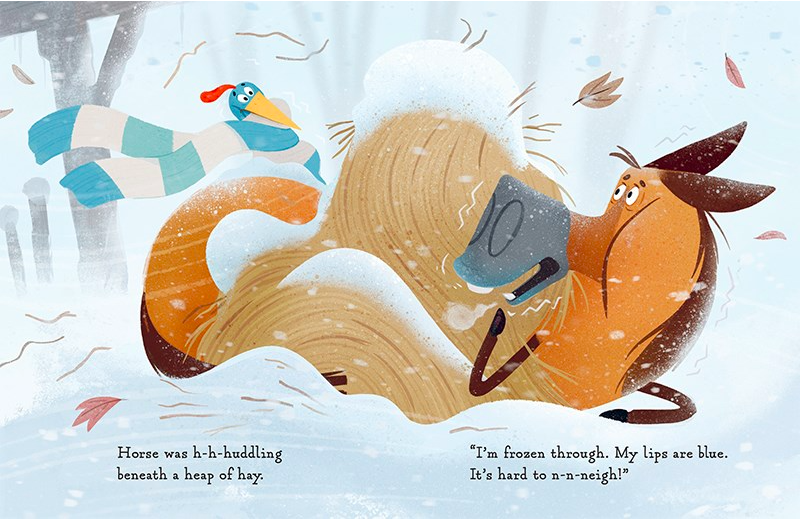
Further down the path, Turkey finds Chick “all alone.” She tells him that her “‘beak is ch-ch-chattering. / I’m chilled right to the bone.'” Turkey wants to help and stuffs Chick’s crown and tail feathers into his two oversized mittens. Continuing on, Turkey finds Horse, who’s having trouble neighing through his frozen lips, and provides just the warmth he needs by wrapping his muzzle in his long, long scarf.

celebrate-picture-books-picture-book-review-cold-turkey-horse

Image copyright Chad Otis, 2021, text copyright Corey Rosen Schwartz and Kirsti Call, 2021. Courtesy of Little Brown Books for Young Readers.

Turkey then discovers poor cow “qu-qu-quivering” and totally miserable. What can Turkey do? He find that his sweater makes an utterly warming udder warmer, and he’s on his way again. In the sty Turkey spies a “polar Pig” with icicles on his snout peeking from the straw. He says, “‘My body’s numb from snout to bum. / I don’t know when I’ll thaw.'” Turkey has just the thing to warm Pig’s cold behind. In a minute Pig is wearing Turkey’s overalls – even if they are a little snug.

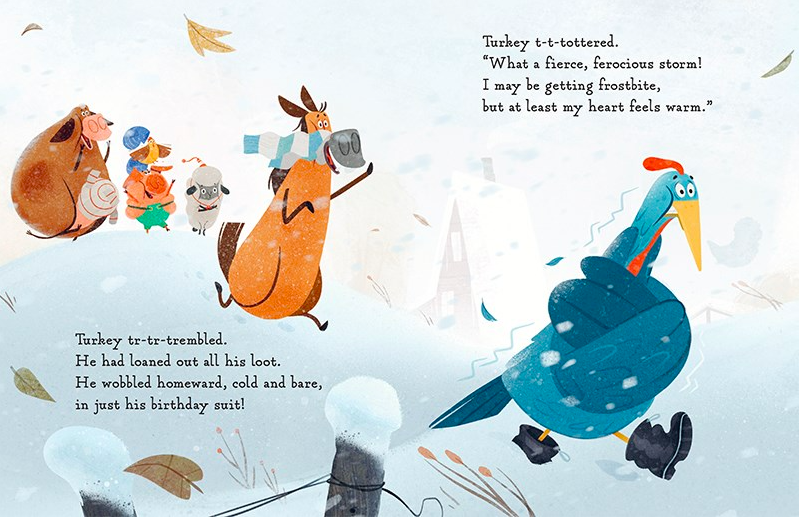
Now Turkey “had loaned out all his loot. / He wobbled homeward, cold and bare, / in just his birthday suit!” Although he now was freezing, he thought “‘At least my heart feels warm.'” But his friends were very thankful and they built a roaring fire. They sat around it toasty warm – Turkey in his feathers and the rest in his attire.

celebrate-picture-books-picture-book-review-cold-turkey-storm

Image copyright Chad Otis, 2021, text copyright Corey Rosen Schwartz and Kirsti Call, 2021. Courtesy of Little Brown Books for Young Readers.

If you and your kids love to laugh during story time and are looking for a new book to share this winter, you’ll want to trot out to your bookstore and pick up a copy of Corey Rosen Schwartz and Kirsti Call’s hilarious story. A perfect read aloud that will get all kids ch-ch-chiming in on every teeth-ch-ch-chattering line, Cold Turkey is fast-paced, full of puns, and loaded with charm and empathy. Turkey’s generosity and the farm animals’ reciprocation adds a layer of sweetness and friendship that will enchant kids. Rosen Schwartz and Call’s impeccable rhyming and rhythm creates a cold-weather giggle fest that readers will want to return to again and again. 

Chad Otis amplifies the humor with his adorably chunky animals and their goggle-eyed acceptance of Turkey’s largesse. Cowering, quivering, and complaining, the farm animals look laugh-out-loud funny stuffed into the bits and bobs of Turkey’s winter clothes. Otis’s clever choices and frozen landscape create active, dynamic scenes that flawlessly carry the story to its warm conclusion. 

A quirky, hilarious romp in which kindness shines, Cold Turkey would be a quick favorite on home, classroom, and public library shelves. The book is highly recommended for winter story times and all throughout the year.

Ages 4 – 8

Little Brown Books for Young Readers, 2021 | ISBN 978-0316430111

Discover more about Corey Rosen Schwartz and her books on her website.

To learn more about Kirsti Call and her books, visit her website.

You can find out more about Chad Otis and view a portfolio of his work on his website.

Adopt a Turkey Month Activity 

celebrate-picture-books-picture-book-review-cold-turkey-activity-sheet-little-brown-young-readers

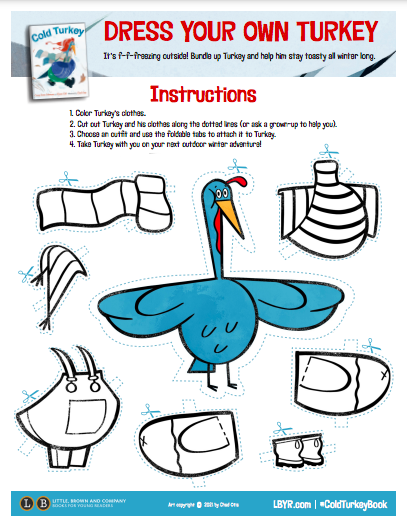
Dress Your Own Turkey Activity Sheet


If you’re cr-cr-creative and love to c-c-color, then this printable Cold Turkey activity sheet is for you! Color and cut out Turkey and his clothes then get him all bundled up for the winter. You can even make Turkey some clothes for the other seasons as well!

Dress Your Own Turkey Activity Sheet

celebrate-picture-books-picture-book-review-cold-turkey-cover

You can find Cold Turkey at these booksellers

Amazon | Barnes & Noble | Books-a-Million

To support your local independent bookstore, order from

Bookshop | IndieBound

Picture Book Review
November 15 – It’s Young Readers Week

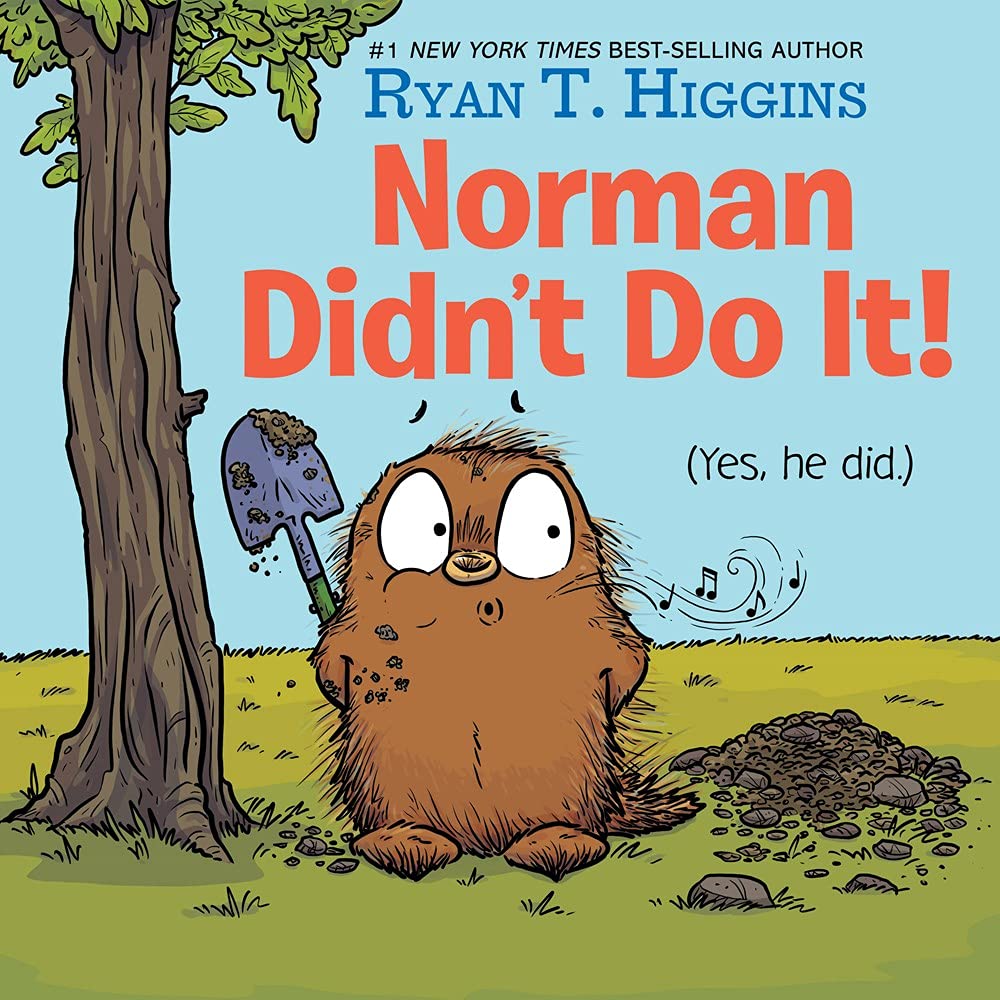
celebrate-picture-books-picture-book-review-norman-didn't-do-it-cover

About the Holiday

Established in 1989 by the Center for the Book and Pizza Hut as a way to celebrate reading and invite kids and adults to discover the fun and benefits of reading, Young Readers Week is a favorite on any book-lovers’ calendar. Bringing together businesses, schools, families, and libraries, the Book It! program offers encouragement and resources to get kids excited about reading. To learn more and find activities, printables, reading trackers, and other resources for schools and families, visit the Book It! program website.

Thank you to Disney-Hyperion and Big Honcho Media for sending me a copy of Norman Didn’t Do It! (Yes, he did.) for review consideration. All opinions on the book are my own.

Norman Didn’t Do It! (Yes, he did.)

By Ryan T. Higgins


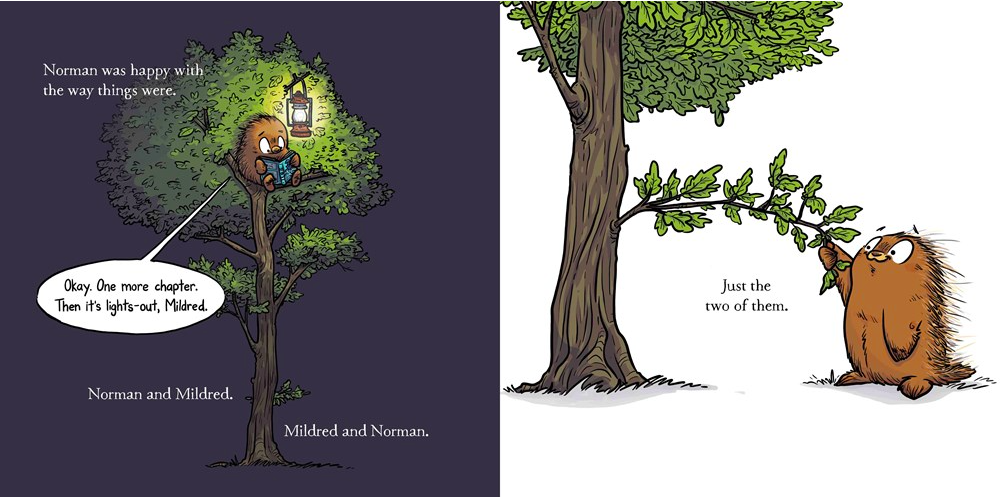
Norman was a porcupine whose best friend, Mildred, was a tree. During the day, Norman loved playing baseball with Mildred (even though she always struck out—and, if truth be told, never even swung at the ball), bird-watching, “playing ‘tree’ together, and even playing chess (even if Norman had to play both black and white). At night, Norman settled himself in Mildred’s branches and read to Mildred (who always asked for “one more chapter.” Sometimes Norman just liked being with Mildred, holding hands with a low-growing branch.

celebrate-picture-books-picture-book-review-norman-didn't-do-it-reading

Copyright Ryan T. Higgins, 2021, courtesy of Disney-Hyperion.

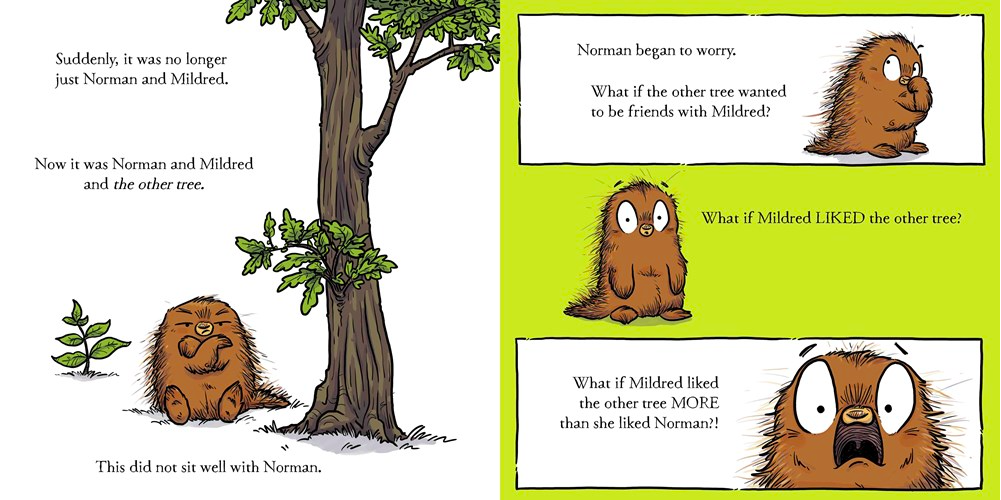
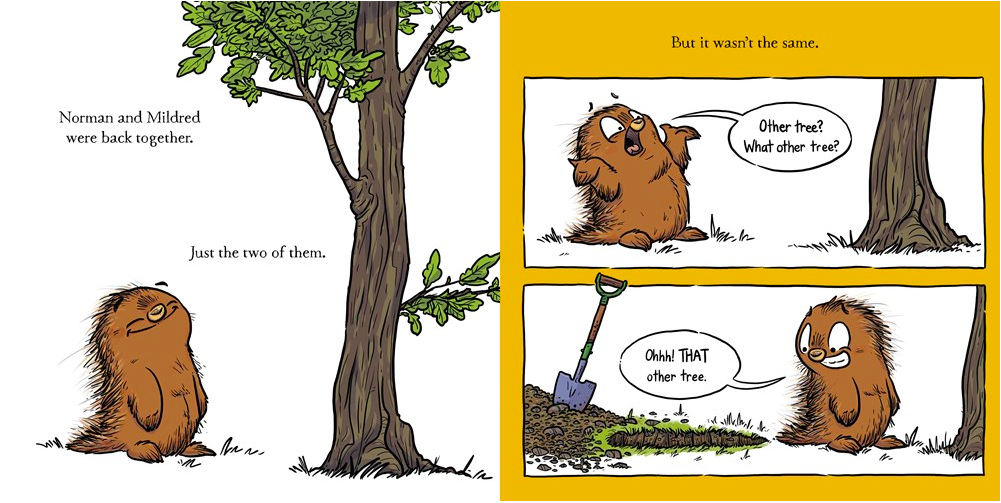
Then one day an interloper popped from the ground complete with some leafy appendages. “And WHO is THAT?!” Norman asked Mildred. Of course, “it was another tree”—a tree that did not belong with Norman and Mildred. At first Norman just stewed, but soon he began to worry about whether Mildred might prefer this other tree to him. And, in fact, as the other tree grew taller, it seemed that Mildred didn’t need Norman to play baseball, birdwatch or play “‘tree’” anymore. “Life wasn’t the same.”

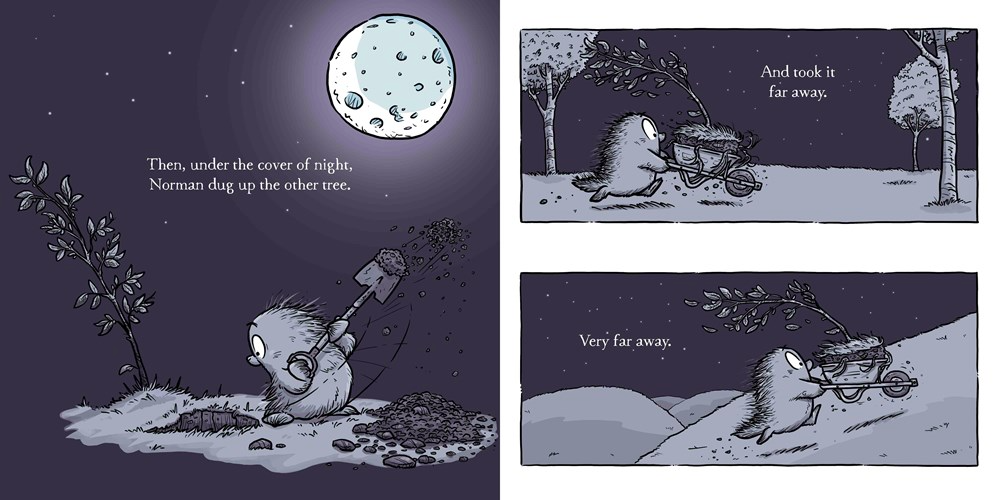
On the day that Mildred and the other tree actually touched leaves, Norman decided that was “the last straw. Even though, in this case, there were no straws. Just branches.” He decided to take action and devised the perfect plan. One night, Norman dug up the other tree, plopped it into a wheelbarrow, “and took it far away. Very far away.” So “very, very far away” that he needed a rowboat to get there.

celebrate-picture-books-picture-book-review-norman-didn't-do-it-other-tree

Copyright Ryan T. Higgins, 2021, courtesy of Disney-Hyperion.

And on a tiny island, Norman replanted the other tree and rowed back to shore. After that things were back to normal—sort of. But Mildred was suspicious; she had questions. Norman did his best to offer possibilities after first explaining that he hadn’t done anything with the other tree. “Maybe it went on vacation,” he said. “Maybe it moved. How should I know?” And then he reassured Mildred that she still had him.

But there a niggling disquiet came to Norman. He began to fear that someone had seen him and that maybe “digging up your friend’s friend…was NOT the right thing to do.” His guilt ate at him until, under Mildred’s accusing gaze, he tripped and fell into the other tree’s empty hole. “Norman had hit rock bottom. ‘I have hit rock bottom!’” he announced. He knew what he had to do.

celebrate-picture-books-picture-book-review-norman-didn't-do-it-night

Copyright Ryan T. Higgins, 2021, courtesy of Disney-Hyperion.

He took the wheelbarrow and the rowboat and hurried to the tiny island. Back home, he replanted the other tree right where it had been before. “Norman knew life was going to be different.” Maybe it would even be better, he contemplated from the comfort of his hammock. “Just the three of them”—until the other tree’s best friend appeared from its nest, saw Norman, and demanded to know “And WHO is THAT?!”

celebrate-picture-books-picture-book-review-norman-didn't-do-it-other-tree-gone

Copyright Ryan T. Higgins, 2021, courtesy of Disney-Hyperion.

Ryan T. Higgins’ superbly well-conceived story of personal relationships tested by newcomers paints the wide swath of emotions that friendships, sibling bonds, and other connections spark in the human heart with his well-known and ameliorating humor. Higgins’ honest look at the progression of contentment, jealousy, resentment, fear, and sadness leading up to a desperate act followed by short-lived satisfaction, denials, guilt, dread, introspection, and finally acceptance not only makes for a dramatic and suspenseful read, but offers kids and adults a compelling way to talk about the delicacy and resilience of strong relationships.

Higgins’ plump and rakish Norman garners immediate affection with his adorable expressions and enthusiastic friendship with the steadfast Mildred so that when “the other tree” comes into the picture, readers will feel a deep empathy with his predicament. Depictions of how Norman sees interactions between Mildred and the other tree as usurping his role are clever and meaningful conversation starters. The aftermath of Norman’s replanting of the other tree also provides insight into whose life Norman really uprooted. In his pitch-perfect ending, Higgins reminds kids that no one lives in isolation and that their own experience may be mirrored in someone else’s.

An outstanding story that charms as a favorite read-aloud for humorous story times as well as one that makes a poignant impact on social-emotional growth, Norman Didn’t Do It! (Yes, he did.) is a must for home, classroom, school, and public library bookshelves.

Ages 3 – 8

Disney-Hyperion, 2021 | ISBN 978-1368026239

You can connect with Ryan T. Higgins on Twitter. 

To find more books by Ryan T. Higgins and an Activity Kit/Educator’s Guide for teachers and families, visit Ryan’s page on the Disney Books website.

Young Reader’s Week Activity

celebrate-picture-books-picture-book-review-we-love-to-read-maze

We Love to Read! Maze


Help the kids pick up books and find their way through the library in this printable maze.

We Love to Read! Maze Puzzle | We Love to Read! Maze Solution

celebrate-picture-books-picture-book-review-norman-didn't-do-it-cover

You can find Norman Didn’t Do It! (Yes, he did.) at these booksellers

Amazon | Barnes & Noble | Books-a-Million

To support your local independent bookstore, order from

Bookshop | IndieBound

Picture Book Review

October 29 – National Frankenstein Day

celebrate-picture-books-picture-book-review-that-monster-on-the-block-cover

About the Holiday

Today’s holiday celebrates the birth of Mary Wollstonecraft Shelley, who in 1818 at the age of 18, penned one of the most influential books of all time. Considered the first modern science fiction novel, Frankenstein; or, The Modern Prometheus incorporates elements of horror, psychology, love, abandonment, and acceptance. These themes and Shelley’s enthralling storytelling created a book that is always current. In fact, the monster she envisioned continues to inspire writers to create stories of all types from humorous to the truly frightening – or a combination of the two, as you’ll see in today’s book!

That Monster on the Block

Written by Sue Ganz-Schmitt | Illustrated by Luke Flowers


Someone was finally moving into Vampire’s old house. Monster, who lived next door wondered who it might be. He hoped it might be an ogre who would invite him “to swim in his mucky, murky swamp.” Or maybe it would be a “greedy goblin with piles of gold to jump into.” Perhaps it would be a dastardly dragon who would throw greasy barbecues. As Monster practiced how he would say hello to his new neighbor, he watched the movers carrying a trampoline, a unicycle, and lots of trunks.

At last his new neighbor emerged. He was wearing “big floppy shoes” and had “wild orange hair” and “a round, red nose. It was…a clown?” Monster couldn’t believe it. He immediately called the neighbors. “‘Unnnnnhhh, unnnnnhhh, unnnnnhhh,’” said Zombie when he heard the news. Mummy shrieked, and Yeti roared. They all agreed that the neighborhood would never be the same again. None of the neighbors welcomed Clown to their block, so he went around to each house to introduce himself. But no one answered the door. Clown left notes and surprises at each house and went back home. When monster found his gift gummy worms, he threw them in the trash. Clown, meanwhile, sat on his porch “and waited. And waited and sat. No one came around.”

But Clown was naturally happy, so he perked up his dreary house, played a happy tune,  and erected a tent. “Monster called a neighborhood meeting. ‘This is out of control!’” he shouted. But Zombie was busy delighting some neighbors with the brain cake Clown had left him, and Mummy was having fun scaring up laughs with the mummy in the box she’d gotten. Yeti was enjoying tricking others into smelling her trick flowers and then spritzing them with water.

celebrate-picture-books-picture-book-review-that-monster-on-the-block-Interior

Image copyright Luke Flowers, 2020, text copyright Sue Ganz-Schmitt, 2020. Courtesy of Two Lions.

No one was listening to Monster, so he decided to do something about the interloper himself. At midnight, he rattled chains and banged on a garbage can lid. But Clown didn’t hear it. He was out doing good deeds to help his new neighbors. In the morning Monster was awakened by circus music. He immediately picked up the phone, but no one answered his calls. “‘It’s time for me to have a word with that bozo!’” he said. He stomped over, but on the way he couldn’t help but find the music catchy, the smell of popcorn enticing, and Clown’s invitation to cartwheeling class at his circus school at least a little intriguing.

Inside the tent, he discovered all of his friends having doing circus tricks. When he learned that Clown was “zero percent creepy” and lots of fun, he decided to him a chance. He enjoyed the day so much that Monster even invited him to tea on Sunday. As Monster poured out the tea and passed around sludgeberry swirl scones, a moving van rolled up the block. Out popped a…well, you’ll have to welcome them yourself, just like all the other neighbors!

Sue Ganz-Schmitt turns somersaults with the usual tropes involving diversity in her story as it honestly portrays truisms about prejudice and how both injustice on one hand and understanding on the other spreads through a community. While Monster’s reaction to immediately alert the neighbors and hold a meeting seems to get a big response, readers will see that by the time the meeting takes place, most of the neighbors welcome the newcomer and the positive changes he’s brought. Ganz-Schmitt’s well-paced and superb storytelling is loaded with personality, puns, and the perfect light touch that will have readers taking her story and lesson into their hearts.

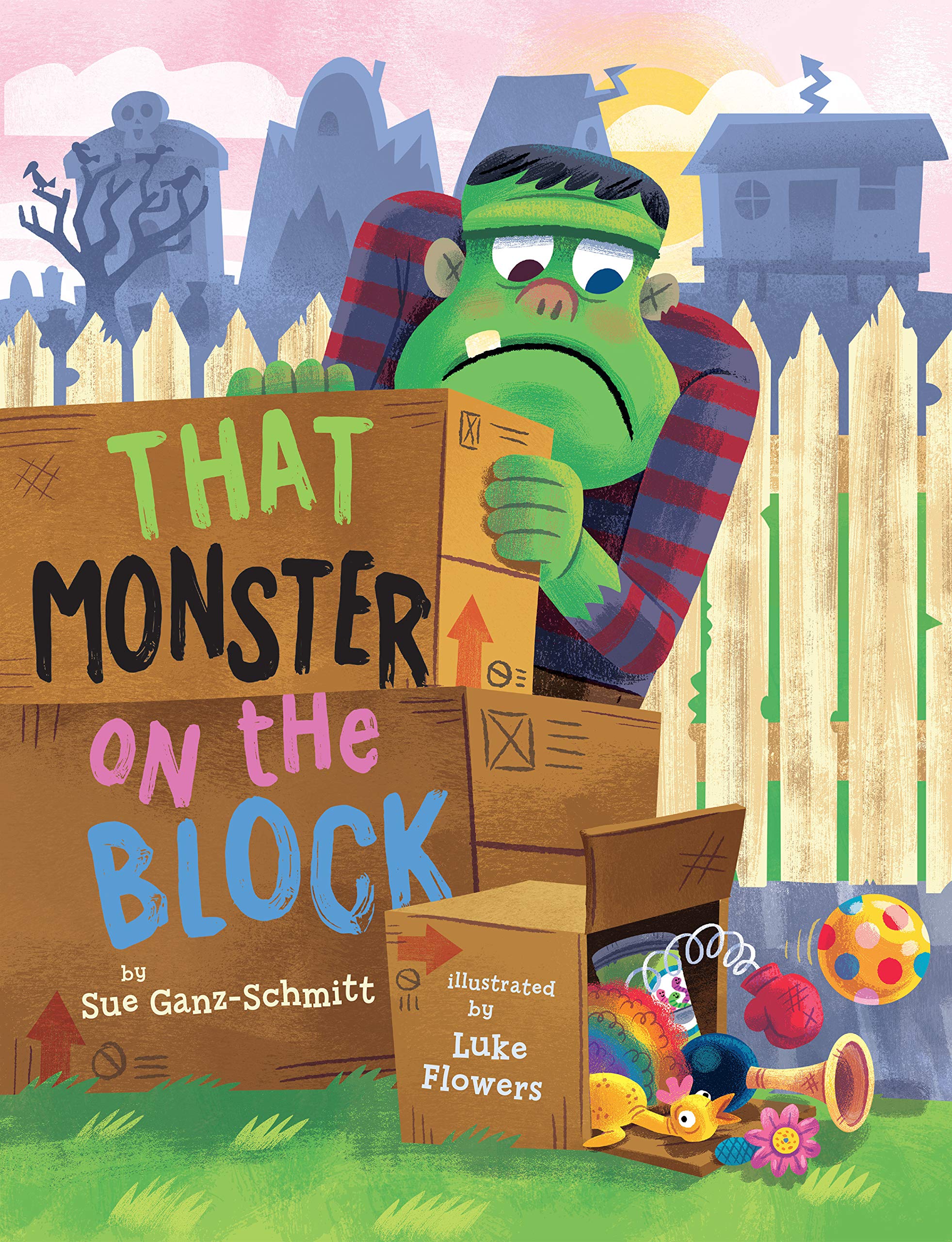
Luke Flowers does wonders with larger-than-life characters, and his depictions of Monster, Clown, and all the neighbors are pitch-perfect. Flowers sets up his visual delights early with the image of Vampire’s old house, which is gray and foreboding with detailing that subtly turns the stone structure into a bat. Later Clown converts these same details into clown faces that will charm kids. Just as in the circus, Clown makes a surprise entrance, one that little readers will guess at with glee. Snapshots of Monster calling up his neighbors appear to show that Mummy, Zombie, and Yeti are on board with his dismay, but Ganz-Schmitt’s monster-sound reactions are cleverly noncommittal. Add in the neighbors’ obvious delight with the gifts Clown leaves (a full-page jack-in-the-box image will bring shrieks of laughter), and readers will happily be in on the vibe at the meeting-turned-party.

Contrasting illustrations of Monster trying to bully Clown into leaving and Clown helping out around the neighborhood give kids and adults opportunities to talk about important issues that arise at school and in the news. While images of Monster having fun at circus school show his changing attitude toward Clown, when his displeasure seems to rise again with the entry of another unexpected neighbor, readers will see that this time he has a different and more welcoming reaction. (Added note: Make sure to inspect each page carefully for added visual humor.)

A clever story that delivers important messages about preconceptions, discrimination and acceptance with humor and respect for the intelligence and awareness of children, That Monster on the Block is a must for home, school, and public library story times all through the year.

Ages 4 – 8

Two Lions, 2020 | ISBN 978-1542005333

Discover more about Sue Ganz-Schmitt and her books and find That Monster on the Block coloring pages on her website.

To learn more about Luke Flowers, his books, and his art on his website.

Scare up some fun with this book trailer!


Frankenstein Friday Activity

celebrate-picture-books-picture-book-review-rock-pumpkin-craft

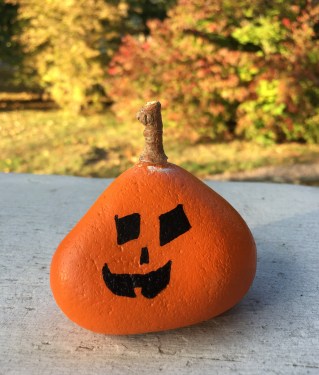
Rock Jack-O-Lantern


Rocks make perfect jack-o’-lanterns or pumpkins to decorate your home at Halloween or all through the fall! 

Supplies

  • Round, smooth rock ( or rocks in a variety of sizes)
  • Orange craft paint, and other colors for a multi-hued pumpkin patch
  • Black permanent marker or black craft paint
  • Short sturdy twig (one for each rock)
  • Hot glue gun or strong glue
  • Paintbrush

Directions

  1. Clean and dry the rock
  2. Paint the rock, let dry
  3. Draw or paint a jack-o’-lantern face on the rock, let dry
  4. Glue the short twig to the top  of the rock pumpkin

celebrate-picture-books-picture-book-review-that-monster-on-the-block-cover

You can find That Monster on the Block at these booksellers

Amazon | Barnes & Noble |Books-a-Million

To support your local independent bookstore, order from

Bookshop | IndieBound

Picture Book Review
October 20 – It’s the Spooky Season

celebrate-picture-books-picture-book-review-gustavo-the-shy-ghost-cover

About the Holiday

The month of October is a spooky season. There are monsters lurking in closets, witches stirring up brews, and evil screams in the night. But, not all spooky things turn out to be scary. Sometimes, it just takes a closer look to see that what once spooked you was actually a helper in disguise, perhaps even a friendly ghost. After all, ghosts like to have friends too.

Today, I’m happy to welcome writer and artist Amanda Leemis, who also loves sharing books and creating worksheets and crafts for young readers. Just in time for Halloween, Amanda’s stopped by with a review of a book that’s perfect for the holiday and all year around. You can read more about Amanda and find some of her fun activities for kids at the end of this post.

Review by Amanda Leemis

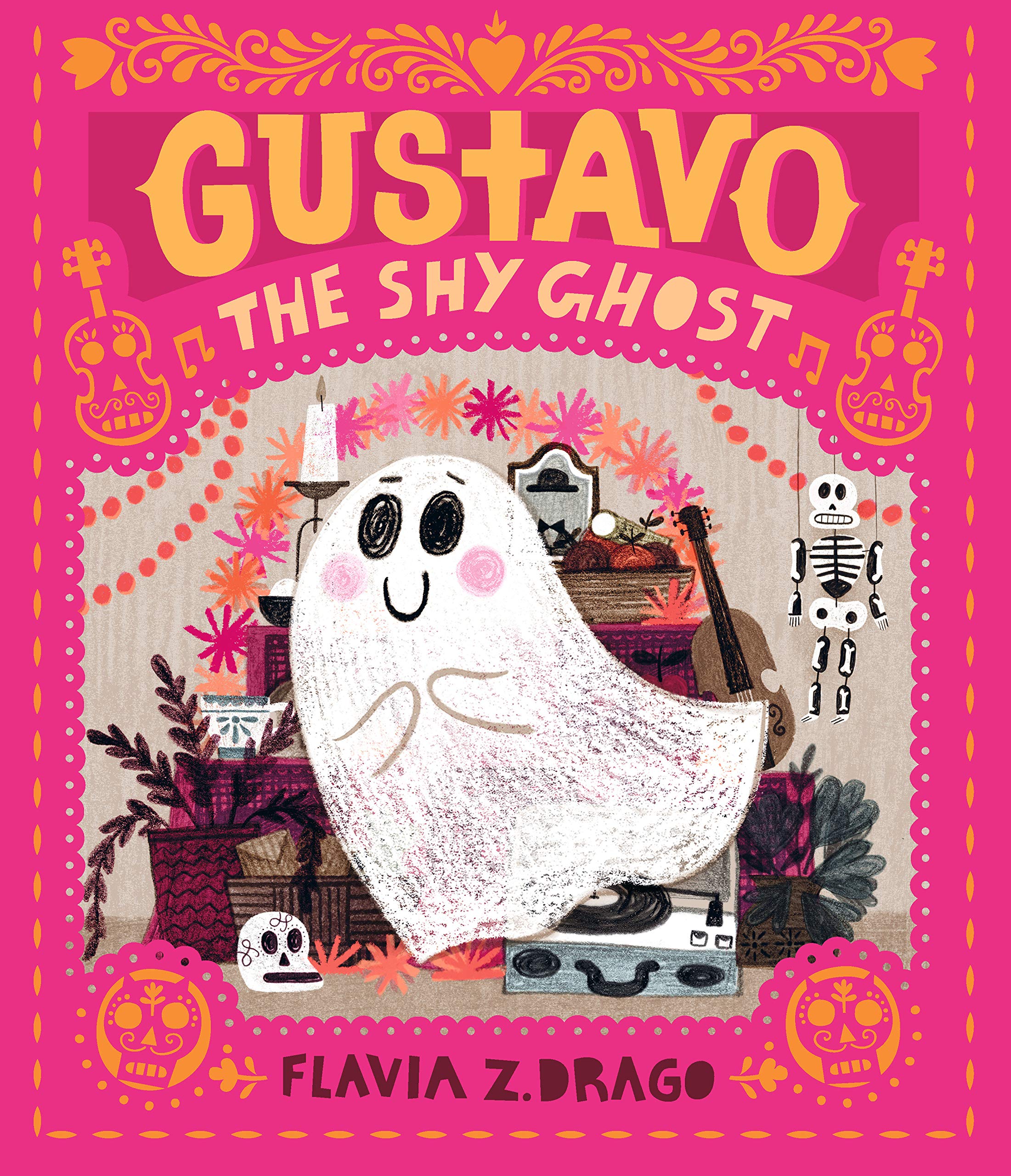
Gustavo The Shy Ghost

By Flavia Z. Drago


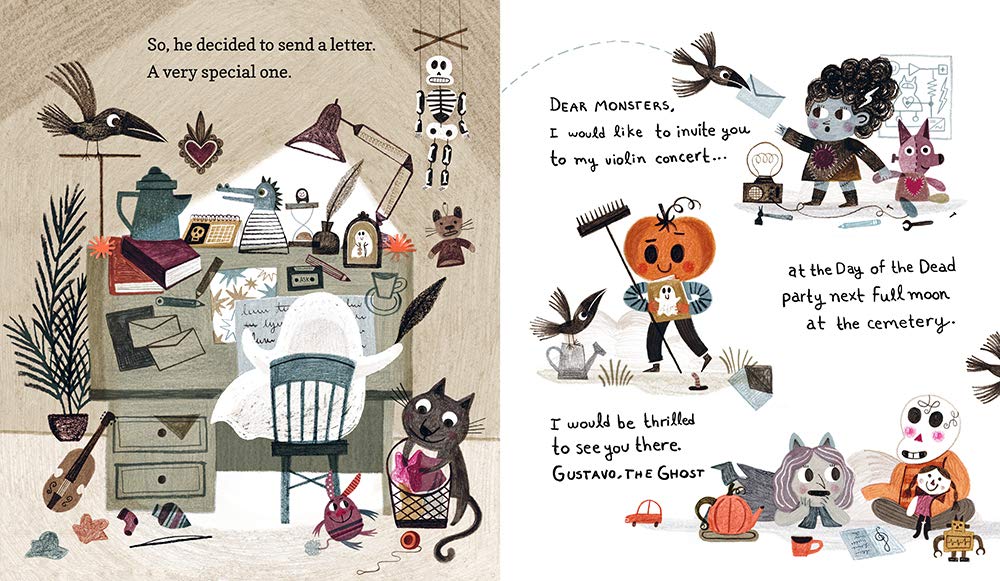
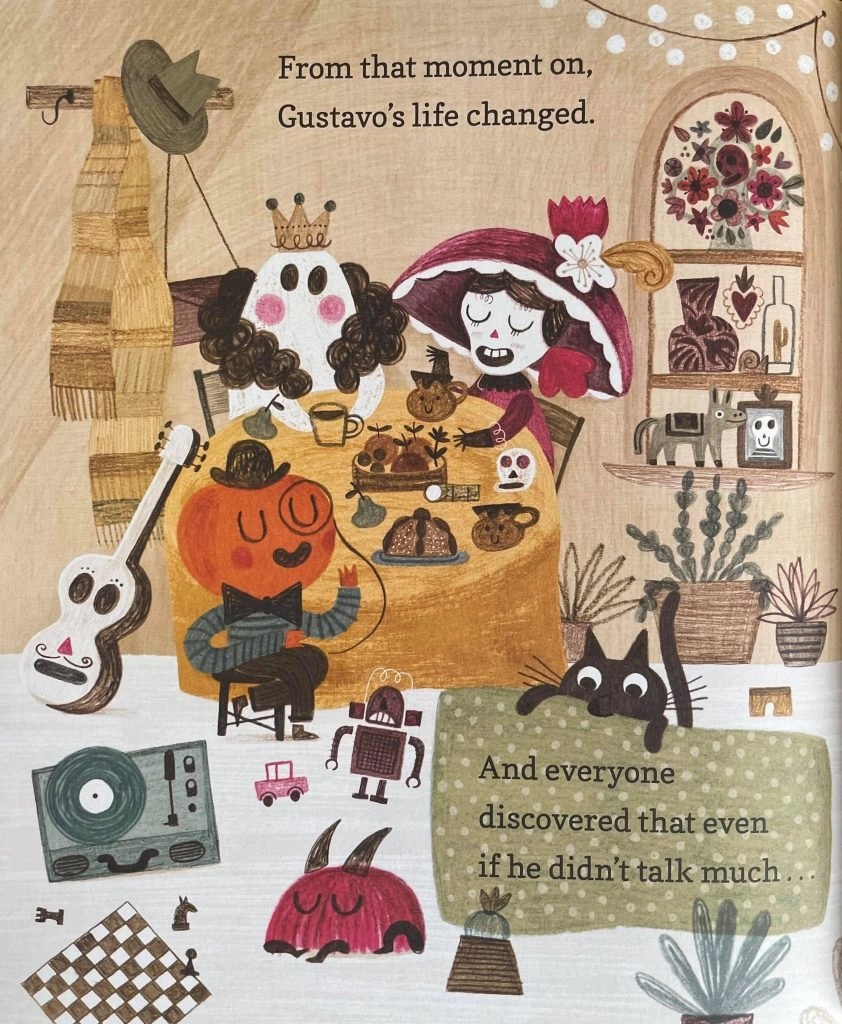
When it comes to making friends, it can be hard, especially if you’re a paranormal being who blends into the background. Gustavo is a very shy ghost who loves to play the violin more than anything in the world. He is so shy that he can never get the courage to talk to any of the monsters, so he tries to get close to them in other ways. Being a ghost has its perks, and Gustavo is able to morph his shape into any situation. He rounds up his sides into a balloon and hangs out for a celebration, but none of the monsters notice him. He tries everything from curling up into sports equipment to becoming a lampshade, he even becomes a blank canvas in the art classroom, but none of the monsters take any notice.

celebrate-picture-books-picture-book-review-gustavo-the-shy-ghost-invitation

Copyright Flavia Z. Drago, 2020, courtesy of Candlewick.

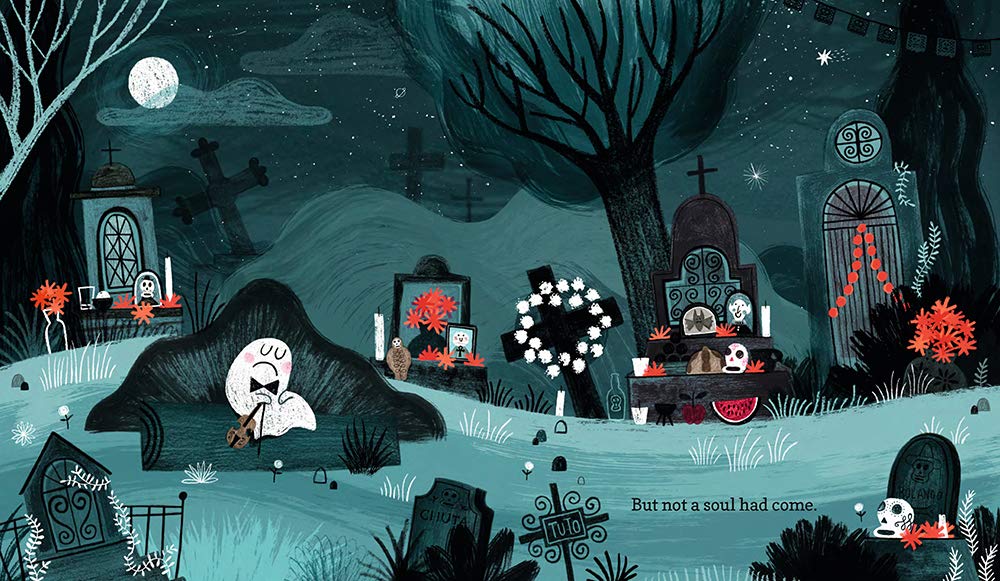
Gustavo’s sadness turns to determination as he sends out invitations to his very own violin concert. This is his chance to really be seen, face his fears, and make some new friends. He pushes his nervous thoughts – “What if no one shows up? What if they don’t like my music?” – away and invites all the monsters in the land! As the big night arrives, Gustavo’s worst fears come to life, not a soul had come to his party. Sitting all alone and mending his crushed heart, he picks up his violin and his music fills the air. Soon, he is glowing brightly with the music that fills his spirit!

celebrate-picture-books-picture-book-review-gustavo-the-shy-ghost-concert

Copyright Flavia Z. Drago, 2020, courtesy of Candlewick.

A voice calls “Gustavo!” from behind the bushes, and soon all kinds of monsters begin to emerge from the darkness. The monsters got lost on the way to the party, but found their way back by following the music in the air and spotting Gustavo’s luminous glow! After the brilliant violin performance, Gustavo’s life changes forever. Now, he has all kinds of monster friends in his neighborhood! His quiet nature is now filled with friendship, and he has lots of friends to spook and surprise. Instead of trying to blend into situations, he gets to stand out! Whether it’s becoming an umbrella to shield his friends from the rain or creating an amazing shadow show on the wall, Gustavo isn’t alone.

celebrate-picture-books-picture-book-review-gustavo-the-shy-ghost-party

Copyright Flavia Z. Drago, 2020, courtesy of Candlewick.

Flavia Z. Drago’s message of perseverance and courage will remind your little ones that it’s ok if making friends is hard. Drago reassures kids that the best way to introduce yourself to new people is to simply be yourself, just like Gustavo. While the October season can be a spooky time, this book is great chance to bring more fun and less unease about what’s lurking in the night. Not all spooks are scary, and in fact, some just want a friend.

Drago’s illustrations will have you captivated from the first moment you see Gustavo floating a teapot across the page. The vibrant, warm colors throw you into a new world full of monsters and spooks, and gets you in the mood to hear a tale of the lesser-known paranormal beings. The illustrative details – like Gustavo’s family portrait, his handcrafted invitations, and his kitty cat peeking around the door – give the reader so much to explore within each and every page!

Ages 3 – 7

Candlewick, 2020, | ISBN 978-1536211146

Discover more about Flavia Z. Drago, her books, and her art on her website.

The Spooky Season Activities

celebrate-picture-books-picture-book-review-gustavo-shape-sorting-activity  celebrate-picture-books-picture-book-review-gustavo-wordsearch

Gustavo the Ghost Puzzles and Craft


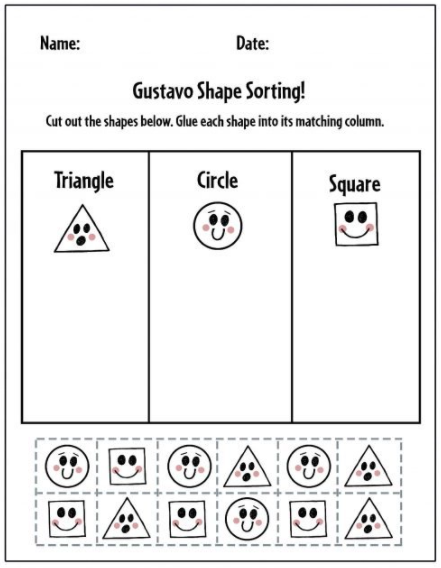
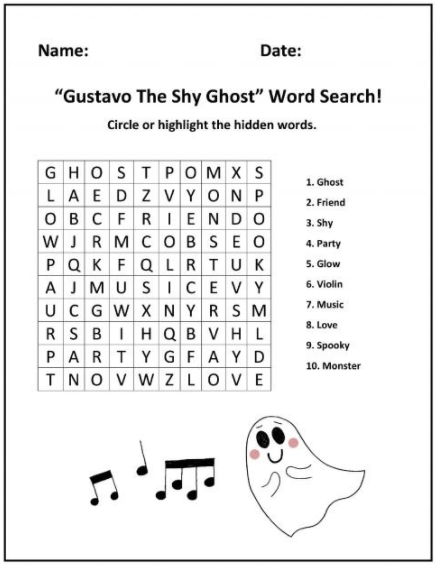
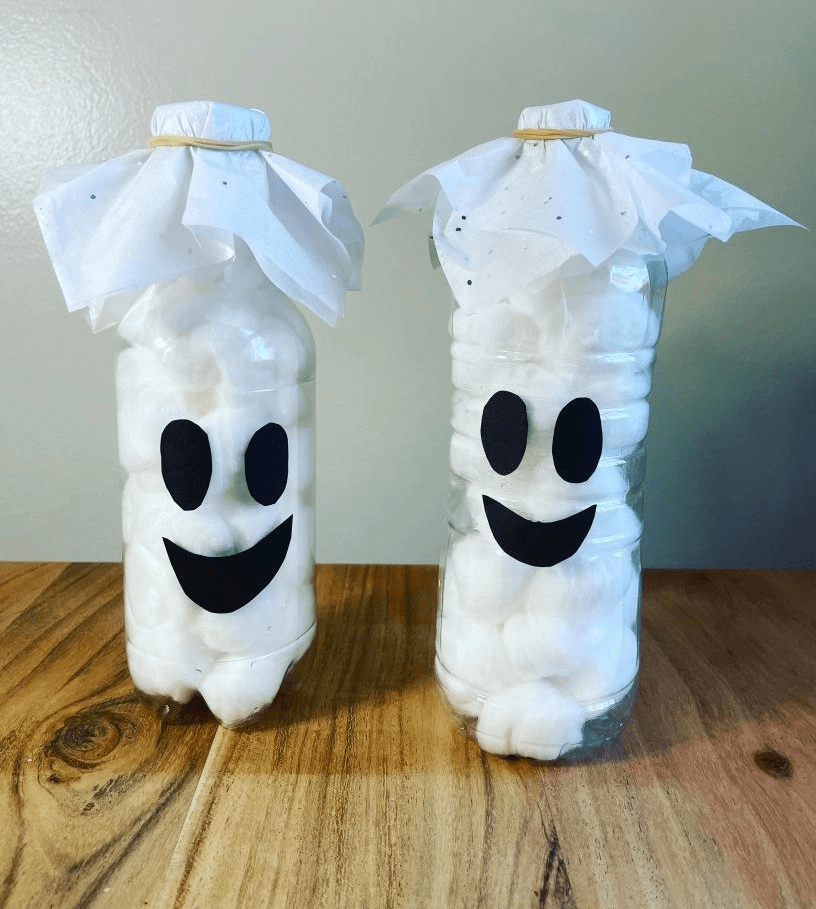
The fun with Gustavo doesn’t have to end! Be sure to print out an activity to accompany the story! Gustavo Shape Sorting” is great for little ones in preschool. Sort Gustavo’s shape into his same column. “‘Gustavo The Shy Ghost’ Word Search” is great for ages 5-7. Highlight all of the spooky words hidden in the mishmash of letters! And hey, while you’re at it, get creative with a fantastic make-your-own ghost water bottle craft!

celebrate-picture-books-picture-book-review-hollydog-blog-ghost-bottles

About Amanda Leemis

celebrate-picture-books-picture-book-review-amanda-leemis-headshot

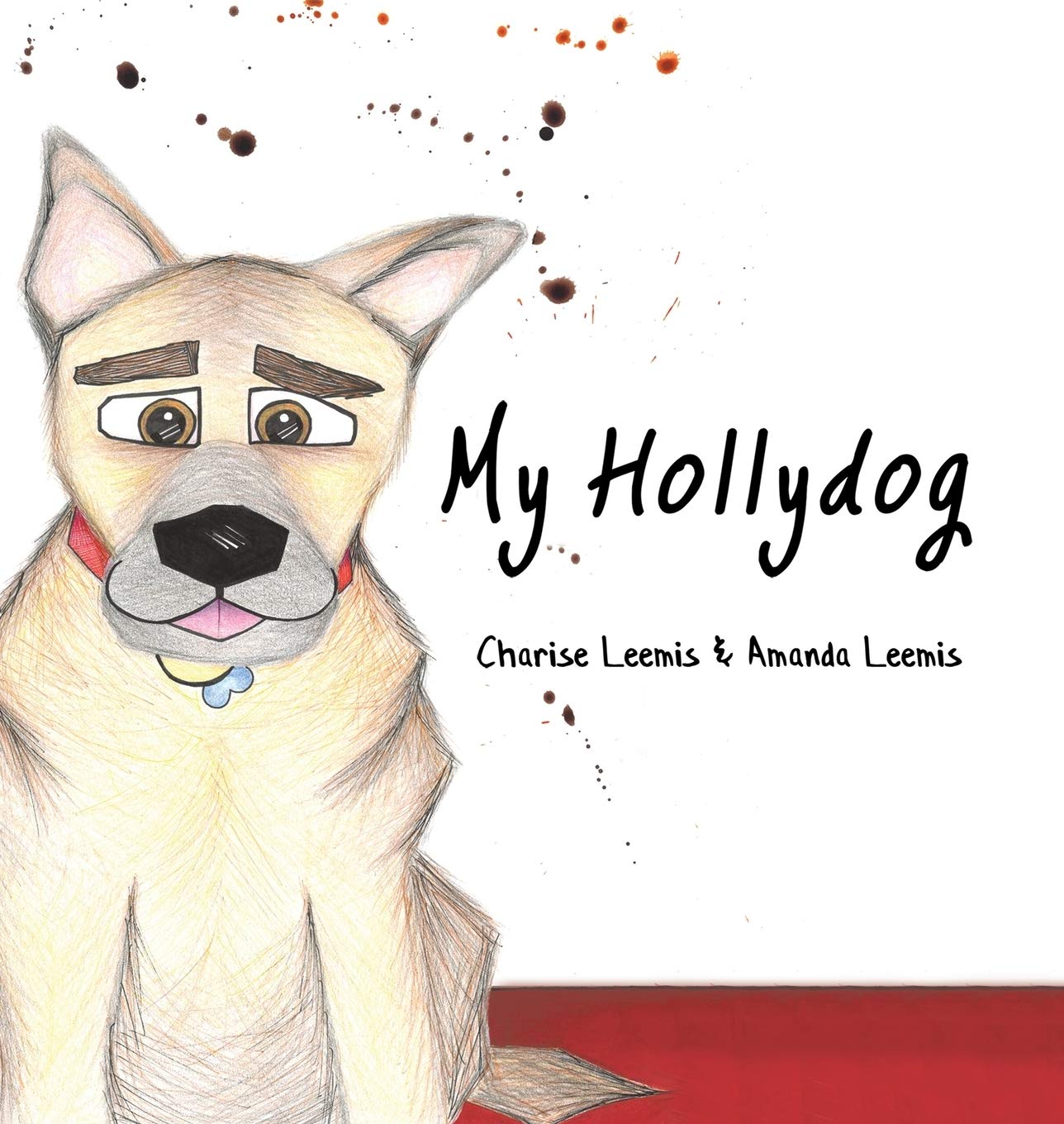
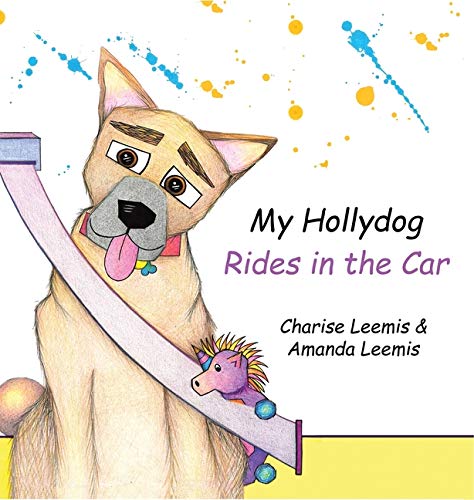
Amanda Leemis is a model, artist, and creator of The Hollydog Blog! She is passionate about encouraging our littlest humans to read! With two books published in the “My Hollydog” series, she loves illustration and uses her skills to create printable worksheets for ages 2-5. Creating resources that build fine motor skills and boost creativity is her passion.

Amanda Leemis is the illustrator of My Hollydog and My Hollydog Rides in the Car. Her mother Charise Leemis is the author! The “My Hollydog” series is written specifically for ages 2-3. With one sentence per page, little ones will stay engaged and keep focused on the vibrant illustrations. Come along with Hollydog on an adventure! Whether it’s hanging her head out the window or jumping into a pile of leaves, Hollydog loves her humans more than anything in the world!

celebrate-picture-books-picture-book-review-my-hollydog-covercelebrate-picture-books-picture-book-review-my-hollydog-rides-in-the-car-cover

celebrate-picture-books-picture-book-review-gustavo-the-shy-ghost-cover

You’ll find Gustavo the Shy Ghost at these booksellers

Amazon | Barnes & Noble | Books-a-Million

To support your local independent bookstore, order from 

Bookshop | IndieBound

Picture Book Review

October 5 – National Do Something Nice Day

celebrate-picture-books-picture-book-review-it's-hard-to-be-nice-cover

About the Holiday

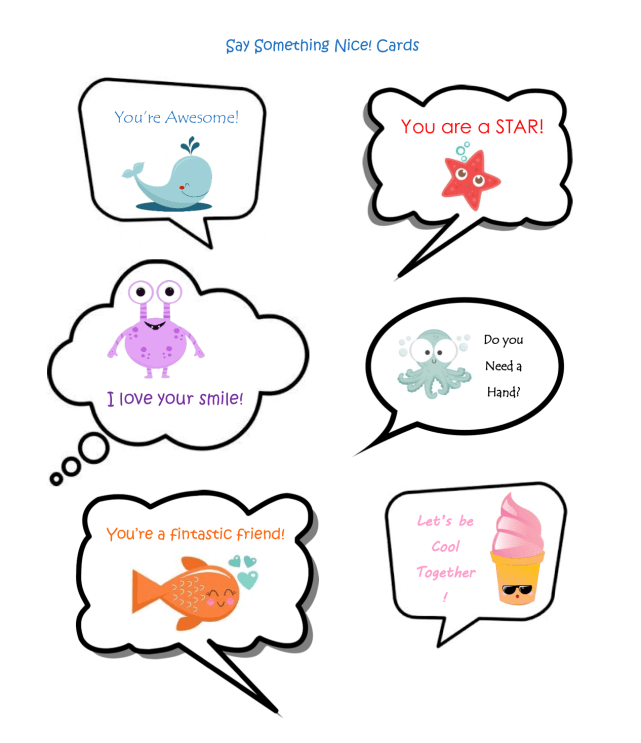
Similar to Random Acts of Kindness Day, National Do Something Nice Day encourages people to think of others and do nice things for them. These don’t have to be big or expensive; in fact, small gestures or thoughtful actions can make all the difference in the way a friend, family member, or stranger feels. These acts of kindness will make you feel good too! To celebrate today, keep an eye out for ways you can lend a hand, times you can share a smile or a conversation, or ways you can make a new friend. Kids may enjoy sharing the encouraging cards found below with friends, siblings, and teachers or by leaving them at school, the library, shops or anywhere that someone may find them.
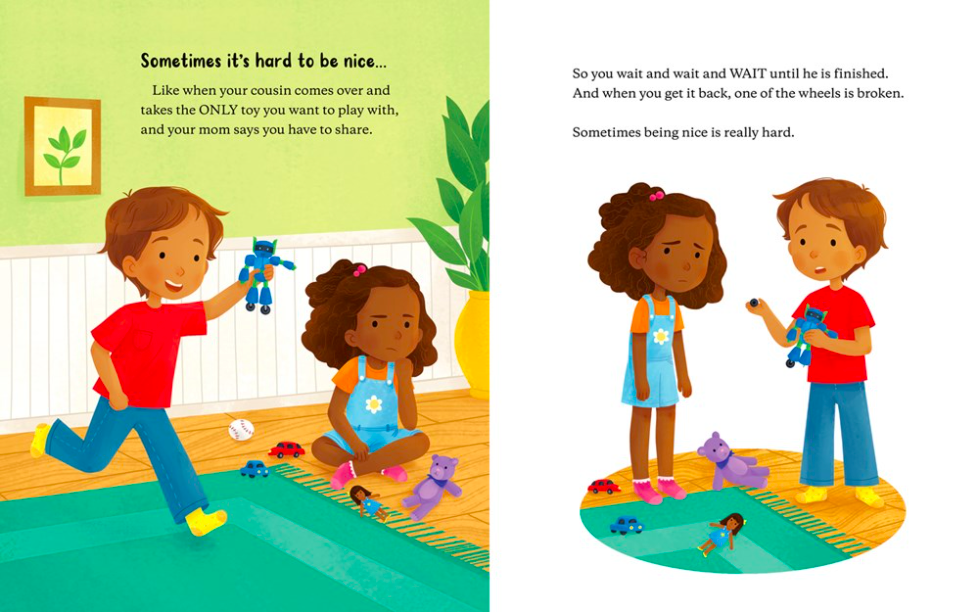
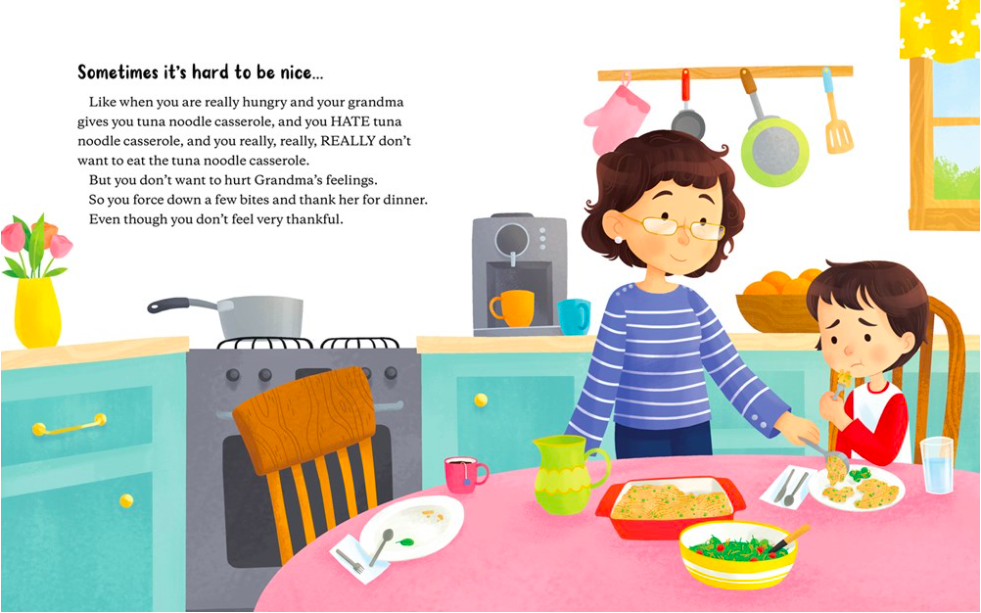
Sometimes It’s Hard to Be Nice

Written by Maggie C. Rudd | Illustrated by Kelly O’Neill


It seems like being nice should be easy, but there are so many emotions that often surround that one little word that sometimes doing the considerate thing is really hard. How hard? Like smiling and saying “that’s okay” when “your mom says you have to share” your favorite toy with a friend, sibling, or cousin and they break it. Like sitting through your brother or sister’s boring performance, game, or recital when you’d rather be somewhere else—anywhere else. Or like eating your least favorite food and thanking the cook for the meal because you don’t want to hurt their feelings.

celebrate-picture-books-picture-book-review-it's-hard-to-be-nice-cousin

Image copyright Kelly O’Neill, 2021, text copyright Maggie C. Rudd, 2021. Courtesy of Albert Whitman & Company.

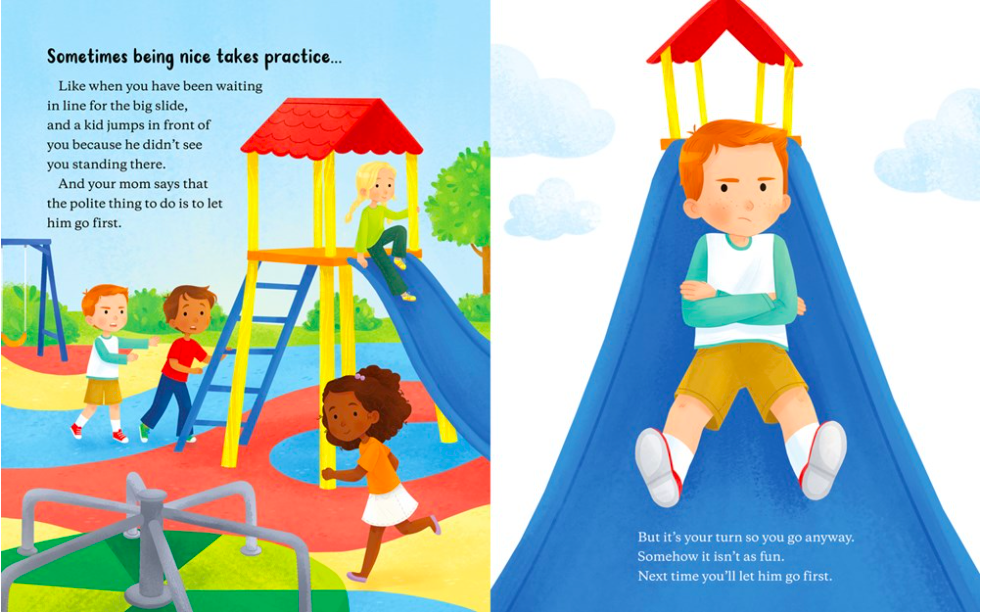
In fact, “sometimes being nice takes practice” like when a little brother or sister destroys your stuff and you yell at them, but then later you realize they didn’t really understand what they were doing. Or like when visiting someone you love in a nursing home or new place is scary and you hang back, not wanting to see them but then decide you won’t be scared next time you visit. And then there are times like these on the playground “when you have been waiting in line for the big slide, and a kid jumps in front of you because he didn’t see you standing there. And your mom says that the polite thing to do is to let him go first. But it’s your turn so you go anyway. Somehow it isn’t as fun. Next time you’ll let him go first.”

celebrate-picture-books-picture-book-review-it's-hard-to-be-nice-great-grandma

Image copyright Kelly O’Neill, 2021, text copyright Maggie C. Rudd, 2021. Courtesy of Albert Whitman & Company.

So what does all that practice lead to? The good feeling you get when you are nice. Like when you let your baby brother sit with you as you play a video game, “and he claps for you the whole time.” There’s also the great feeling you get when you’ve cleaned up after playing and your parents really appreciate it, or “when you’re late for soccer practice and your mom can’t find her keys, so you help her look for them . . . and find them in the doorknob! And your mom says she doesn’t know what she would do without you!”

While these examples may be hard because you feel slighted or tired or rushed or scared, there are times when being nice takes all your courage—like when you befriend the new kid or the kid everyone picks on and find out you have lots in common. Or when the bullies come around and you stand up for your new friend even though it’s scary and you end up in the principal’s office. So why would you want to be nice? Because “it’s worth it.”

celebrate-picture-books-picture-book-review-it's-hard-to-be-nice-playground

Image copyright Kelly O’Neill, 2021, text copyright Maggie C. Rudd, 2021. Courtesy of Albert Whitman & Company.

Maggie C. Rudd’s excellent primer to the emotions and circumstances around being nice presents children with realistic scenarios involving family members and friends, favorite toys and activities, and common situations at school that often require extra effort to respond to in a positive way. Rudd’s conversational writing style directly engages the reader, and while every example may not be an exact match to the reader’s experience, many will be spot on and the others easily recognized and adaptable.

Rudd’s four-step progression acknowledges that showing kindness or even just good manners can be difficult, but that it can become easier—especially when a situation seems unfair or is disappointing—with practice and perspective. Rudd’s examples of when being nice feels good are sprinkled with humor and warm family feelings that will bring smiles that support her point. A thread involving a favorite Galactic Star Crusher action figure ties several of the vignettes together, adding a sense of relationship and connectedness among the characters.

Kelly O’Neill illustrates each example for readers with clearly depicted scenes involving kids like them playing video games, visiting with grandparents, playing on the playground, helping their parents, and standing up for another child. In every instance, the children’s emotions are easily understood, which opens up many opportunities for adults and kids to discuss the feelings and issues surrounding how one treats others from both a child’s and adult’s perspective and experience. O’Neill’s bright colors, familiar settings, and uncluttered, well-conceived pages put the focus on her engaging children and elegantly complement Rudd’s important message.

Sometimes It’s Hard to Be Nice is a superb read aloud for honestly addressing the complexities and rewards of showing kindness and being nice. It is a book that families, teachers, and caregivers will find themselves turning to again and again in helping children navigate and learn this important social skill. The book is a must addition to home, classroom, school, and public library collections.

Ages 4 – 8

Albert Whitman & Company | ISBN 978-0807575734

Discover more about Maggie C. Rudd and her books as well as an Activity Kit for educators and parents on her website.

To learn more about Kelly O’Neill, her books, and her art, visit her website.

National Do Something Nice Day Activity

celebrate-picture-books-picture-book-review-say-something-nice-cards

Say Something Nice! Cards


Do you want to give someone a nice surprise? Print out these cards and give one to a friend, to someone you’d like to know, or to anyone who looks like they need a pick-me-up! If you’d like to make your own cards, print out the blank template and write and/or draw your own message! You can also print these on adhesive paper and make your own stickers.

Say Something Nice! Cards | Say Something Nice! Cards Blank Template

celebrate-picture-books-picture-book-review-it's-hard-to-be-nice-cover

You can find Sometimes It’s Hard to Be Nice at these booksellers

Amazon | Barnes & Noble | Books-a-Million

To support your local independent bookstore, order from 

Bookshop | IndieBound

Picture Book Review