January 6 – It’s National Be On-Purpose Month

celebrate-picture-books-picture-book-review-counting-winter-cover

About the Holiday

National Be On-Purpose Month emphasizes the importance of reflecting on whether your current actions are aligning with your actual personal and professional aspirations. In today’s busy and noisy world, it can be easy to veer from the real purpose for your life. Today’s holiday encourages those wanting to make a change or enhance their life to reflect on what they really want and begin planning how to make it happen. The beginning of the new year is a perfect time to take stock, put the breaks on autopilot living, and make your goals a reality. You might even want to look to the intentionality of nature as poetically revealed in today’s book for inspiration!  

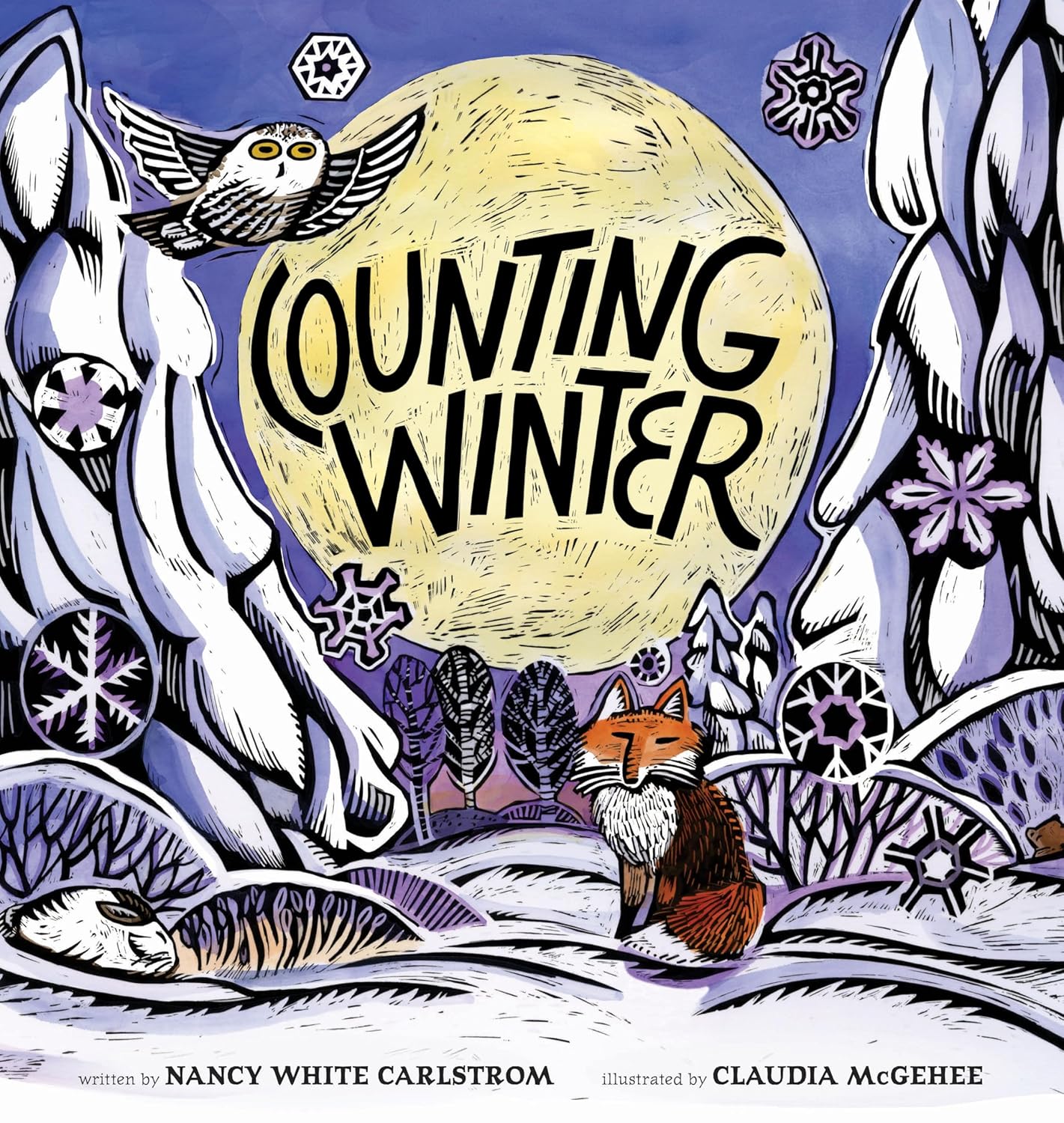
Counting Winter

Written by Nancy White Carlstrom | Illustrated by Claudia McGehee


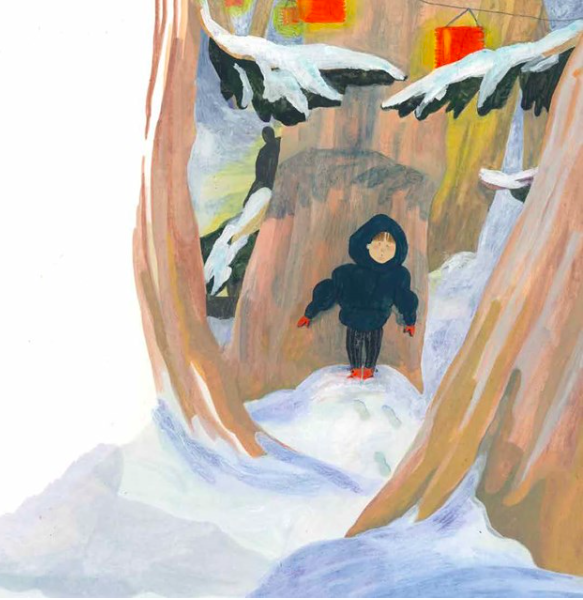
In very northernly climes—like Alaska, where this book is set—winter is serious business. It also can be mysterious, beautiful, graceful, noisy, quiet, and fun! Animals and people who make their home in such regions and bravely face the elements are captured in their own unique ways through Nancy White Carlstrom’s lovely poetic verses that also invite readers to count from one to twelve.

celebrate-picture-books-picture-book-review-counting-winter-squirrels

Image copyright Claudia McGehee, 2024, text copyright Nancy White Carlstrom, 2024. Courtesy of Eerdmans Children’s Books.

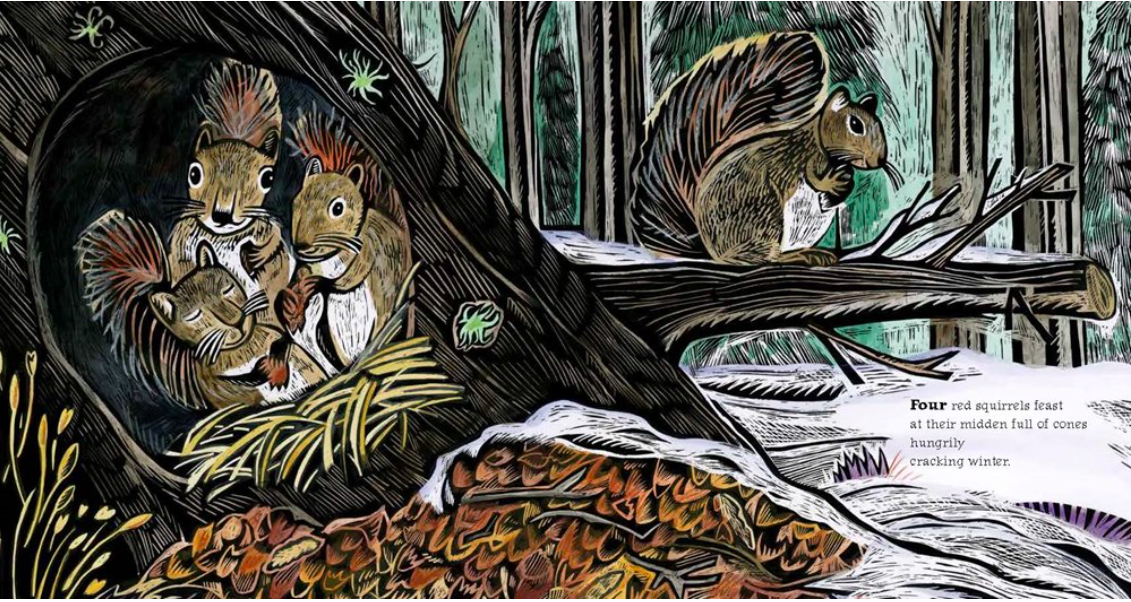
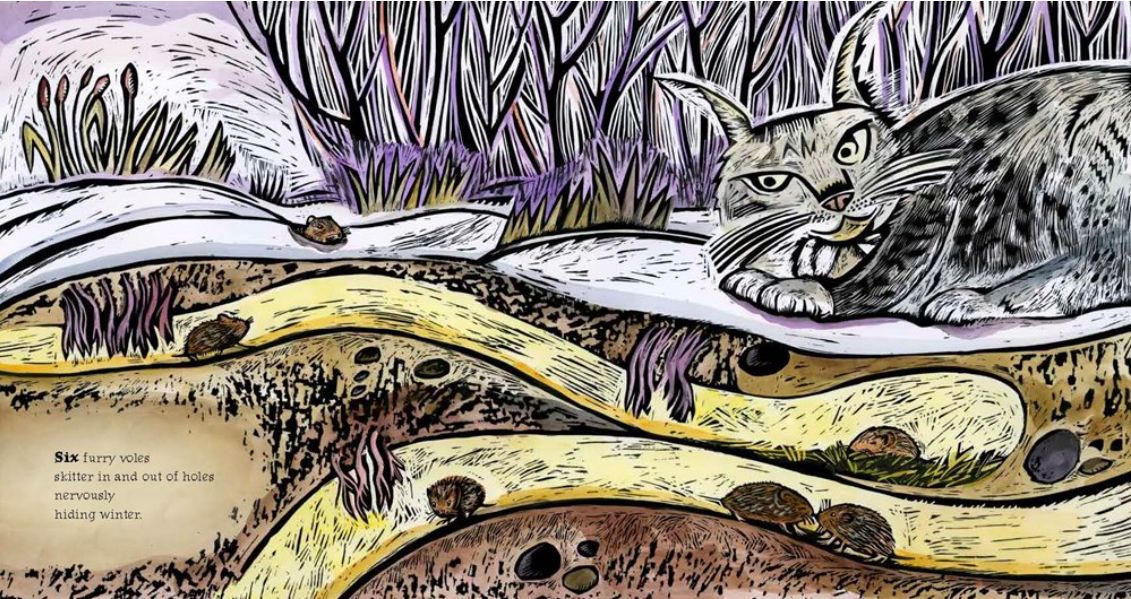
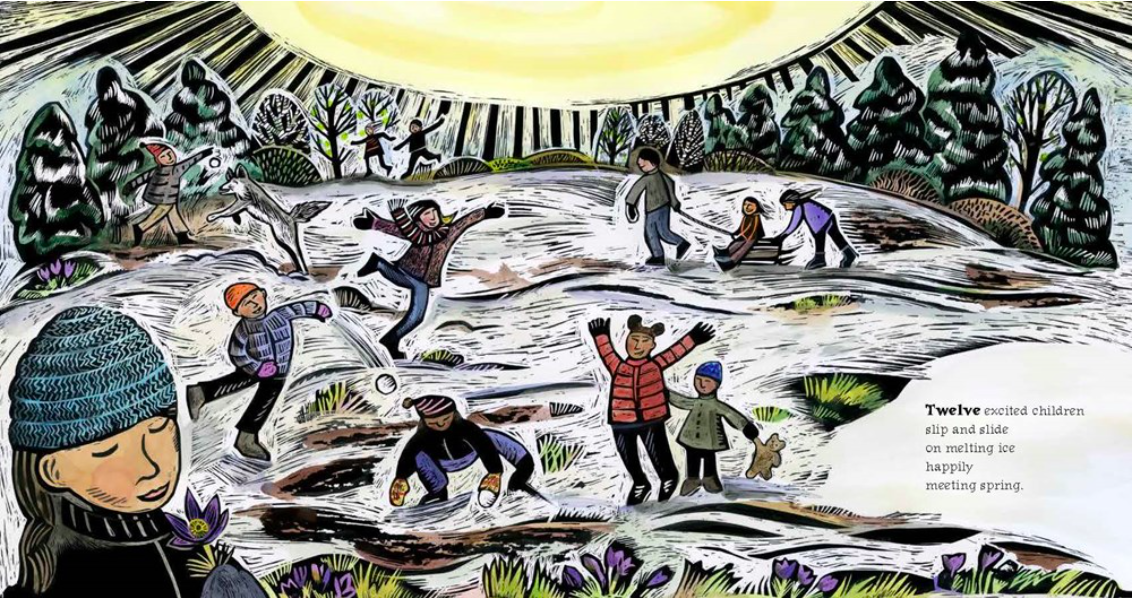
Through Carlstrom’s evocative language, kids meet red squirrels, tiny voles, freewheeling sled dogs, and a flurry of birds, among other animals, that “feast,” “skitter,” “rush through the trees / like wind whipping,” and “hoot,” “hammer,” and “flit” as they interact with Winter—a character in its own right that is tracked, named, tamed, and fed on its way to “meeting spring” as children “slip and slide / on melting ice.”

Carlstrom’s deftly formatted poems are riveting, too, for their portraits of these animals—sometimes majestic, sometimes stealthy, and sometimes seemingly too fragile to survive—that with heart and skill not only do survive, but thrive in this most distinctive season. Each lyrical verse flows with assonance and consonance and once or twice a clever rhyme, making them a joy to read aloud. Children will love Carlstrom’s vocabulary and the opportunity to learn here and there small facts, such as the idea of “forty below” temperatures, squirrels’ habit of building middens with pinecones, and how voles spend their winter. 

celebrate-picture-books-picture-book-review-counting-winter-voles

Image copyright Claudia McGehee, 2024, text copyright Nancy White Carlstrom, 2024. Courtesy of Eerdmans Children’s Books.

Claudia McGehee’s astounding scratchboard and watercolor illustrations bring these animals and the environment to life with their textured and intricate designs. Every page is a sensory-engaging showstopper. Readers can almost feel the cold, brittle air and sense the depth and weight of the snow as a fox stalks a well-hidden rabbit. Three snowshoe hares bound with unbridled energy as geometric and delicately floral snowflakes fall. Kids will be both awed and charmed by the seven musk oxen that greet them as a shaggy, sturdy wall and be nearly able to hear the clammer and feel the whoosh of the eight sled dogs racing by, their tongues out, tasting the stirred up snow.

McGehee’s stunning designs challenge kids to find the full number of animals on each spread, while making it neither too easy nor too hard for young readers of any age. In several spreads, McGehee offers the promise of the spring to come by including glimpses of what lies below the blanket of snow: seeds, grasses, and roots all await warmer weather, and by the time readers join the twelve children at the skating pond, tender green shoots appear on some trees and the crocus is blooming. 

celebrate-picture-books-picture-book-review-counting-winter-children

Image copyright Claudia McGehee, 2024, text copyright Nancy White Carlstrom, 2024. Courtesy of Eerdmans Children’s Books.

Back matter includes an illustrated Animal Profiles page that reveals interesting tidbits about the animals featured in the text and would be a terrific jumping off point for nature lovers, teachers, homeschoolers and other educators, and librarians looking for lesson or activity ideas. In an Author’s Note, Nancy White Carlstrom talks about her 19 years living in Alaska and the inspiration for this book. In her Illustrator’s Note, Claudia McGehee discusses the research she did as well as the intricate process of using a scratchboard and watercolors to create the art for Counting Winter.

Counting Winter is sure to be a repeat favorite the whole family will love cozying up with during winter—or even in the throes of summer when a little cool (or cold!) air sounds refreshing—and is highly recommended for home bookshelves. The book is a must for classrooms, school libraries

Ages 4 – 8

Eerdmans Books for Young Readers, 2024 | ISBN 978-0802855701

About the Author

Nancy White Carlstrom has written over sixty books for children, including Before You Were Born (Eerdmans), Mama, Will It Snow Tonight? (Boyds Mills Press), and the bestselling Jesse Bear series (Scholastic). Counting Winter was shaped by the nineteen years Nancy and her family called Alaska home. She currently lives in the Seattle area and enjoys seeing Alaskan wildlife—and her grandchildren—on trips back to the state. Visit her website at nancywhitecarlstrom.com.

About the Illustrator

Claudia McGehee is the illustrator and sometimes author of many picture books, including Begin with a Bee, Creekfinding (both University of Minnesota Press), and My Wilderness (Little Bigfoot). In starred reviews from Kirkus and School Library Journal, Claudia’s scratchboard illustrations have been praised as “meticulous” and “striking.” Raised in the Pacific Northwest, Claudia now lives in Iowa City, Iowa. Visit her website at claudia-mcgehee.com or follow her on Instagram @claudia.mcgehee.

National Be On-Purpose Month Activity

CPB - Polar Bear scarf

CPB - Polar Bear Banner

Polar Bear Scarf or Banner

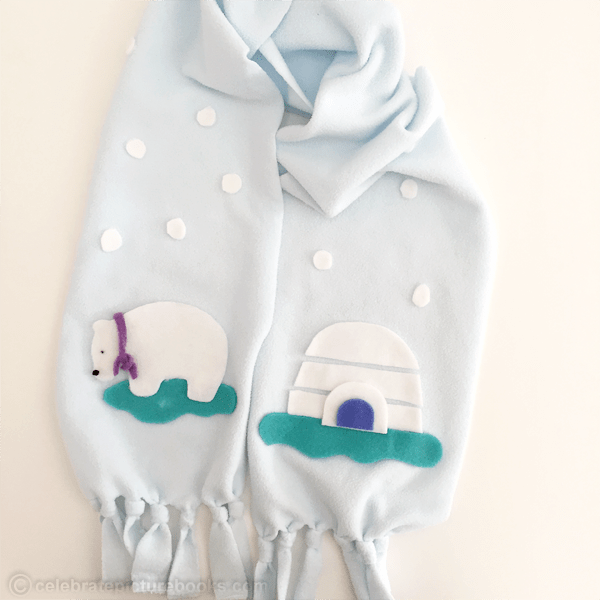
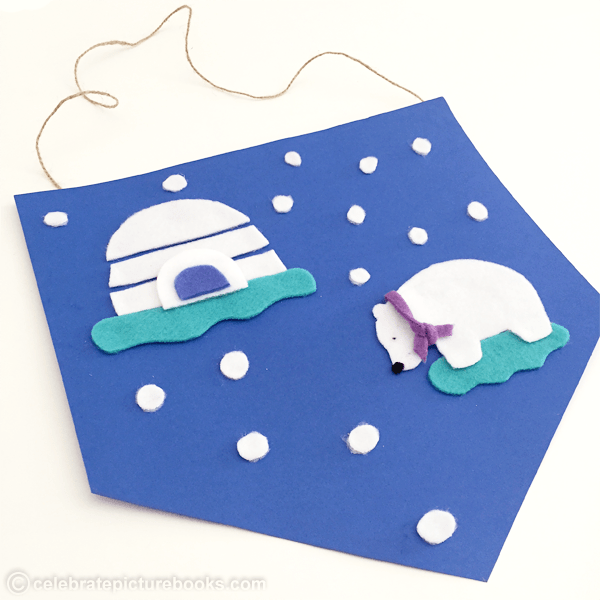
Polar bears aren’t cold in the winter—and neither should you be! Here are directions and printable templates for making a cute scarf to keep you warm, or—if you’d rather—a banner to warm up your room.

Supplies

  • Printable Polar Bear and Igloo Template
  • 1 Strip of blue fleece 4 ½ feet long x 7 inches wide for the scarf
  • 1 Piece of blue scrapbooking paper for a banner
  • Pieces of white, black, blue, and purple (or other color) fleece or heavy stock paper to make the polar bear, igloo, snowflakes, and ice floes.
  • String or twine for banner
  • Scissors
  • Fabric or paper glue

Directions for Scarf

To make the fringe at each end of the scarf

  1. Make 7 cuts about 4 inches long
  2. Tie a knot at the top of each fringe section

To make the pieces for the scarf or banner

  1. Trace the polar bear and igloo sections onto white fleece and cut out
  2. Trace the two ice floes onto blue fleece and cut out
  3. Trace the door of the igloo onto blue fleece and cut out
  4. Trace the polar bear’s scarf onto purple (or other color) fleece and cut out
  5. Cut out circles for snowflakes
  6. Cut out a small circle from black fleece for the Polar Bear’s nose

On one end of the scarf

  1. Glue the smaller ice floe on one end of the scarf
  2. Tie the bear’s scarf around its neck before gluing the bear to the scarf
  3. Glue the polar bear onto the scarf with its feet on the ice floe
  4. Glue on the polar bear’s nose
  5. Make a small dot for the polar bear’s eye with a marker
  6. Glue snowflakes above polar bear

On the other end of the scarf

  1. Glue the bigger ice floe to the scarf
  2. Glue the three sections of the large igloo to the scarf, leaving a little space between sections
  3. Glue the small white door of the igloo on top of the last two igloo sections
  4. Glue the small blue door onto the white door
  5. Glue snowflakes above the igloo

Directions for Banner

  1. Cut a point at the bottom of your banner
  2. Trace the pieces of the polar bear and igloo from the printable template onto heavy stock paper
  3. Follow the directions above to glue the pieces of the polar bear and igloo to your banner
  4. Attach string or twine to back of banner to make a hanger

celebrate-picture-books-picture-book-review-counting-winter-cover

You can purchase Counting Winter at these booksellers

Amazon | Barnes & Noble | Bookshop (to support your local independent bookstore)

Picture Book Review

December 4 – International Cheetah Day

celebrate-picture-books-picture-book-review-fast-cheetah-slow-tortoise-cover

About the Holiday

The cheetah is the fastest land mammal in the world and also Africa’s most endangered big cat. With fewer than 7,500 cheetahs left in the wild, these beautiful and important animals are in a race with survival. Today’s holiday was established to raise awareness to the peril cheetahs and their ecosystem are in and to urge people to come to their aid. To learn more about cheetahs and how we can help them, and to find educational information and activities to download, visit the Cheetah Conservation Fund’s International Cheetah Day website.

Fast Cheetah, Slow Tortoise: Poems of Animal Opposites 

By Bette Westera and Mies van Hout | Translated by David Colmer


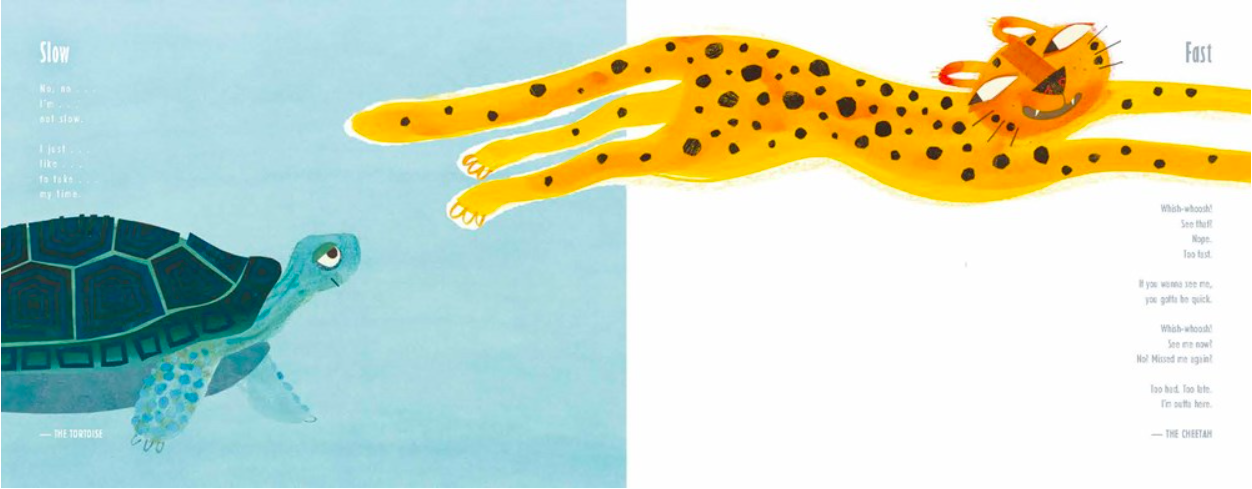
The world is full of animals (and people) of all sorts. Some are slow, like a tortoise—who, begging to differ, says, “I just like to take my time” while others are fast, like a cheetah—who with a “whish-whoosh! is “outta here.” There are those who identify with the “Tidy” pig, who loves to “. . . scrub and scrub / until I’m clean./ And put a fresh curl in my tail,” and those who aren’t so persnickety—like the “Messy” warthog: “Wash and comb my hair more often? / What for? Once a year is plenty. / These tangles suit me fine.”

celebrate-picture-books-picture-book-review-fast-cheetah-slow-tortoise-tortoise-and-cheetah

Image copyright Mies van Hout, 2024, text copyright Bette Westera, 2024, translation copyright David Colmer, 2024. Courtesy of Eerdmans Books for Young Readers.

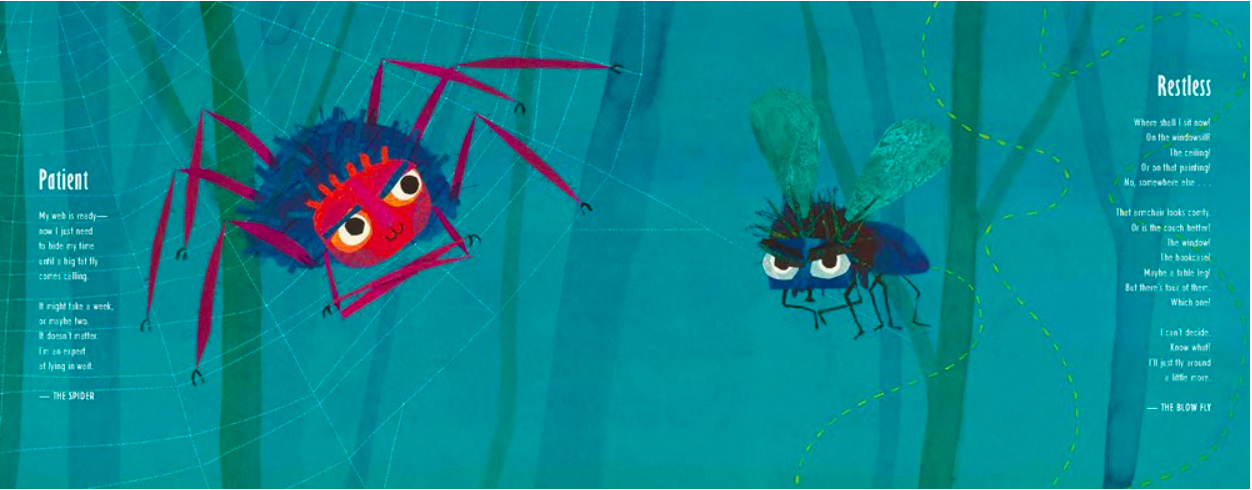
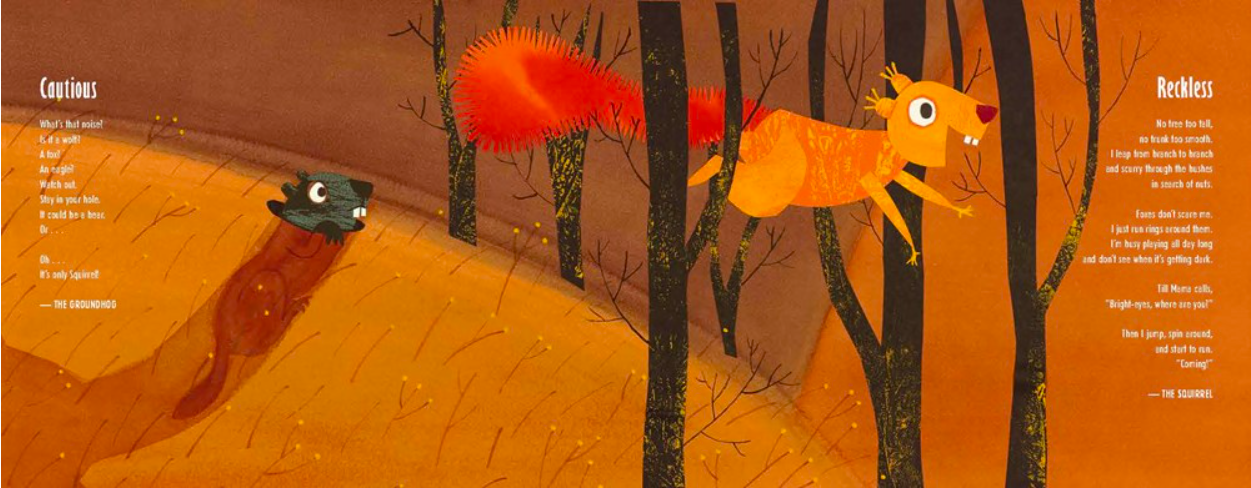
In sixteen two-page spreads, Bette Westera and Mies van Hout introduce thirty-two animals who are opposites—or antonyms, for the grammatically minded—and do admirable jobs of advocating for themselves through short, free-form poems that proudly promote the traits that make them . . . well . . . them. Take the “Fancy” turkey and the “Everyday” chicken.

celebrate-picture-books-picture-book-review-fast-cheetah-slow-tortoise-spider-and-fly

Image copyright Mies van Hout, 2024, text copyright Bette Westera, 2024, translation copyright David Colmer, 2024. Courtesy of Eerdmans Books for Young Readers.

The turkey and the chicken face off across the pages with the Turkey going first as it recalls in part “a quick look in the mirror: / very chic, this red collar / over those dark blue feathers. / And how do you like my tail? / The peacock pales in comparison!” The chicken, in contrast, reveals: “I don’t like frills / and frippery. / I don’t like fancy / showing off” then goes on to say “. . . just give me grayish brown / or brownish gray.”

celebrate-picture-books-picture-book-review-fast-cheetah-slow-tortoise-groundhog-and-squirrel

Image copyright Mies van Hout, 2024, text copyright Bette Westera, 2024, translation copyright David Colmer, 2024. Courtesy of Eerdmans Books for Young Readers.

Each of Bette Westera’s poems, translated by David Colmer, delights with conversational rhythms and the humorous first-person descriptions within. Feisty attitudes meet plainspoken introspection meet playful nonchalance and energetic purpose—all divulged through snappy vocabulary and surprising turns of phrase. Kids will eagerly want to hear this charming read aloud again and again and will have fun deciding which of the animals they themselves most resemble. 

With her color-saturated and textured mixed-media illustrations, Mies van Hout presents kids and adults with a visual feast of expressive animals, each—like readers—with their own evident and endearing personality. You’ll want to linger awhile at every page to gaze into these animals’ eyes and fully appreciate their varied traits before meeting another pair of happy opposites.

An original take on learning—and valuing—the nature of opposites, Fast Cheetah, Slow Tortoise: Poems of Animal Opposites would be an entertaining addition for home story times as well as a terrific choice for libraries and classrooms, where the book could inspire fun writing projects.

Ages 4 – 8

Eerdmans Books for Young Readers, 2024 | ISBN  978-0802856357

About the Author

Bette Westera is the author of the Mildred L. Batchelder Honor Book Later, When I’m Big (Eerdmans) and over fifty other books for children. She has also translated books by Dr. Seuss, Astrid Lindgren, and Julia Donaldson into the Dutch language. Bette lives in the Netherlands, where her books have received two Golden Pencil awards and six Silver Pencil honors. Visit her website at bettewestera.nl.

About the Illustrator

Mies van Hout is a Dutch illustrator and author whose work has been published in over twenty countries. Her books in English include Happy, From One to Ten, This Is My Daddy!, and What Cats Think (all Pajama Press). Mies lives in the Drenthe province of the Netherlands. Visit her website at miesvanhout.nl or follow her on Instagram @miesvanhout.

About the Translator

David Colmer is an Australian writer and translator of Dutch and Flemish literature. He has translated over eighty books throughout his career, including Little Fox (Levine Querido), I’ll Root for You, and A Pond Full of Ink (both Eerdmans). His translations have won several prestigious awards, such as the PEN Translation Prize and the Independent Foreign Fiction Prize. David lives in Amsterdam.

International Cheetah Day Activity

Screen Shot 2024-12-03 at 6.19.59 PM

Cheetah Coloring Page

Learn more about cheetahs and see them in action with this video from National Geo Wild then color your own portrait of a cheetah with this Cheetah Coloring Page from the Cheetah Conservation Fund.

celebrate-picture-books-picture-book-review-fast-cheetah-slow-tortoise-cover

You can purchase Fast Cheetah, Slow Tortoise: Poems of Animal Opposites at these booksellers

Amazon | Barnes & Noble | Bookshop (to support your local independent bookstore)

Picture Book Review
November 14 – Human-Animal Relationship Week

celebrate-picture-books-picture-book-review-the-cat-way-cover

About the Holiday

Established in 2016 by the Animals & Society Institute, a scholarly non-profit organization which works to increase knowledge about the relationships between people and animals, Human-Animal Relationship Awareness Week, aims to raise an appreciation for the ways in which humans and animals live and work together while sharing the resources of our planet. During the week and throughout the year, we are asked to strive to improve the lives of animals at home and across the globe while “building communities that are more humane and compassionate.”

Thank you to Eerdmans Books for Young Readers for sharing a copy of The Cat Way with me for review consideration. All opinions on the book are my own.

The Cat Way

By Sara Lundberg | Translated by B. J. Woodstein


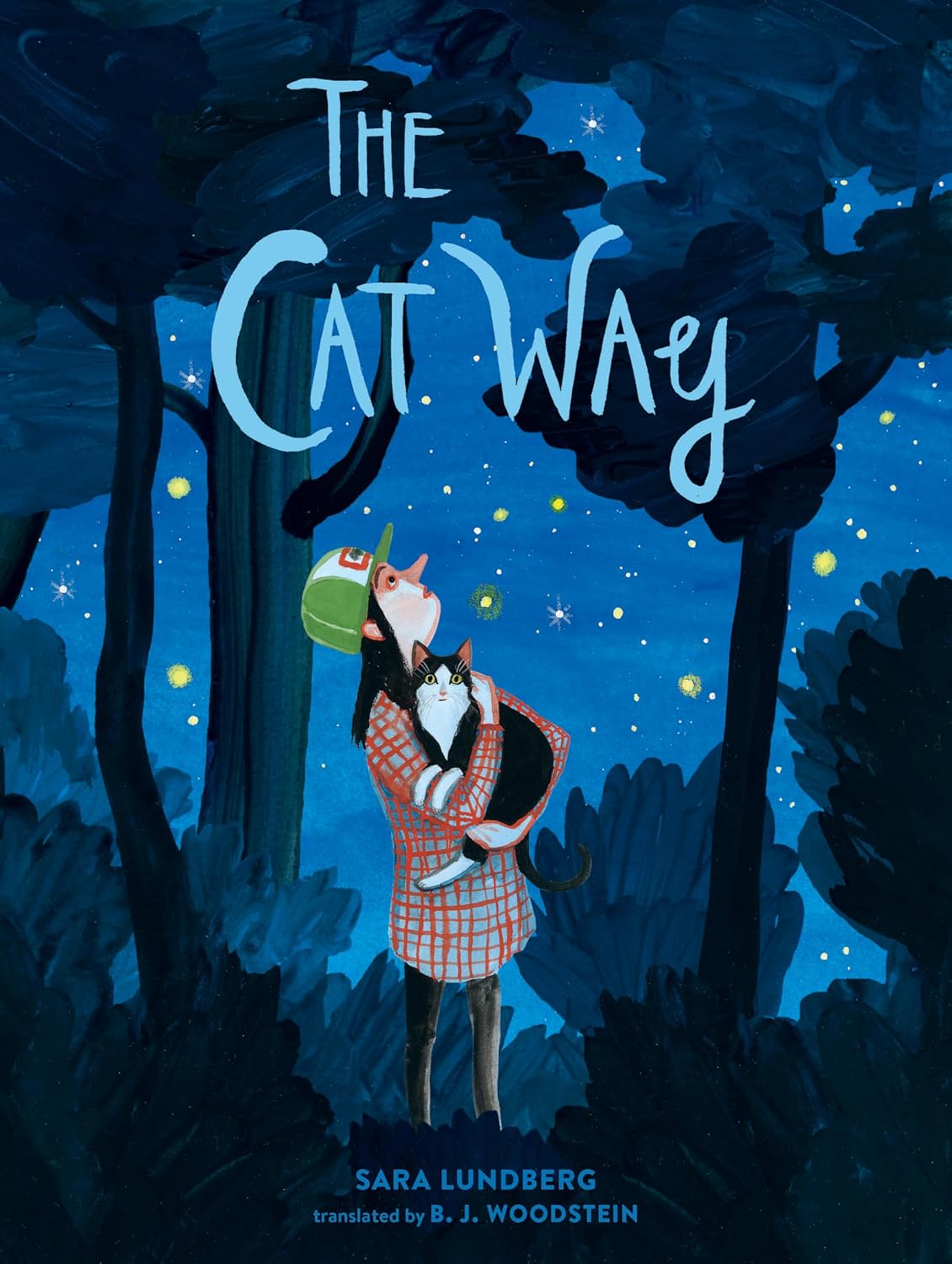
Part 1 of Sara Lundberg’s story begins with a black-and-white cat and her human taking their usual walk down the sidewalk in their neighborhood. “‘I’m the one in charge,'” the cat’s owner declares. The young person ducks behind a tree to play their typical game of hide and seek, but today the cat is distracted by a white cat sitting nearby. She approaches, and the two cats begin to frolic while the narrator can only sit and watch. The narrator is ready to leave, to put a stop to their play, and while their cat comes, so does the white cat side-by-side, their tails linking the two. The young pet owner hears the cats “giggling and giggling” at them and, jealous, isn’t having it: “‘Stop it,” I say. I stamp my foot. Then the other one runs off.'”

celebrate-picture-books-picture-book-review-the-cat-way-belly-scratch

Image and text copyright Sara Lundberg, 2024, translation copyright B. J. Woodstein, 2024. Courtesy of Eerdman’s Books for Young Readers.

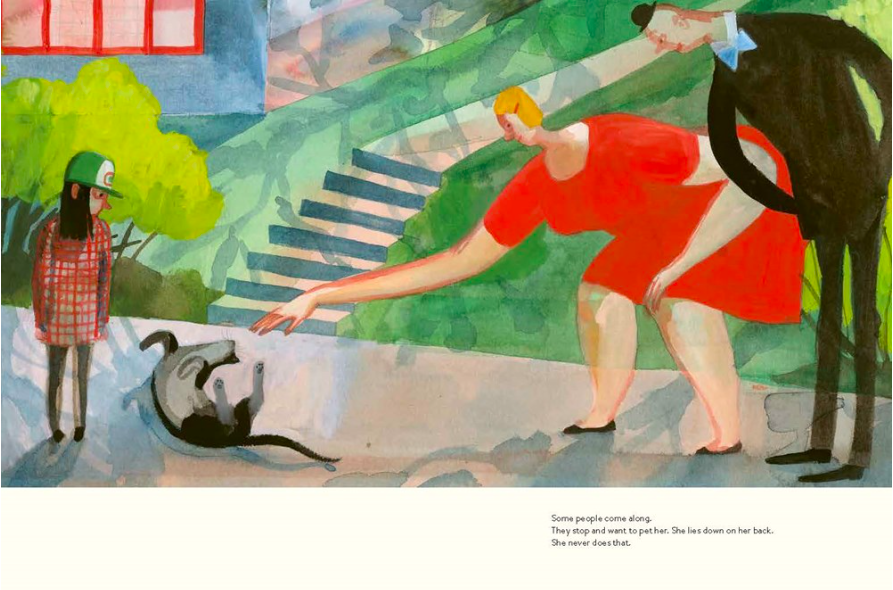
The cat and her human “glare at one another” until the cat says, “‘Why are you always in charge?'” Just then an older couple approaches, and the cat demonstrates her independence by immediately rolling over to offer her belly for a scratch—something “she never does.” Despite the narrator’s calling her to come, the cat lies there, soaking up the attention, extending her rebellion. Her owner decides on a subtle power play and walks away, continually turning back, however, to see if their cat is coming. She isn’t.

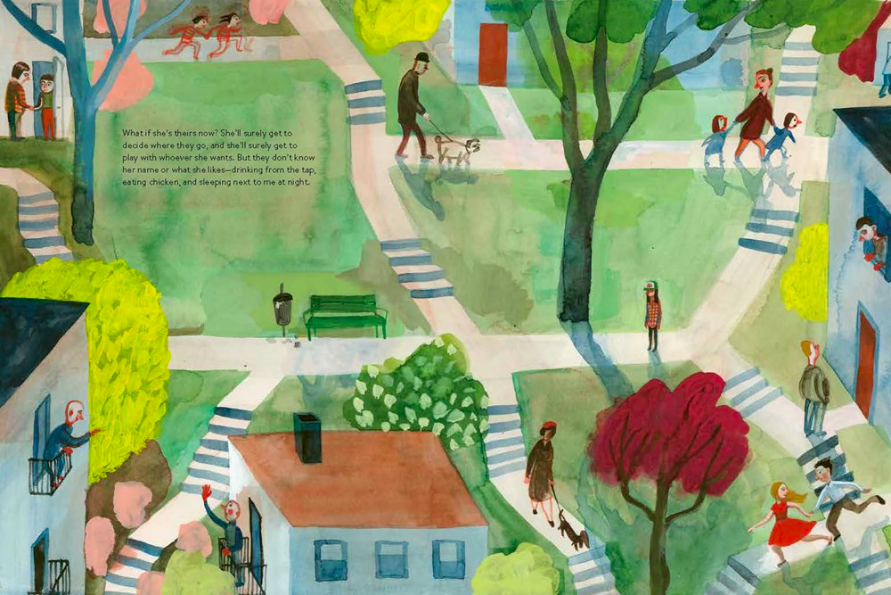
The young person, full of doubt, stops in the middle of the neighborhood, out of sight of the cat and the couple, wondering if the cat is “theirs now” and taking stock: the couple will surely be more lenient, but they don’t know her name, her quirks, her favorite food, or that she likes “sleeping next to me at night.” 

celebrate-picture-books-picture-book-review-the-cat-way-neighborhood

Image and text copyright Sara Lundberg, 2024, translation copyright B. J. Woodstein, 2024. Courtesy of Eerdman’s Books for Young Readers.

Here, Sara Lundberg does something astounding, metaphorically reflecting how time elongates and an icy fear grips those searching for a lost pet. The beautiful summer day turns dark and rainy. The narrator, rooted in place, gets soaked while shouting for the cat and getting no response. They think, “If I go home, she might disappear forever.” On the next page, autumn has come, and yellow leaves fall to the ground—the foreboding of something ending. Turn the page, and it’s now snowing. Inches have accumulated, covering the narrator’s hat and crossed arms. They trudge home, a freezing distress and self-recriminations lodged in their heart.

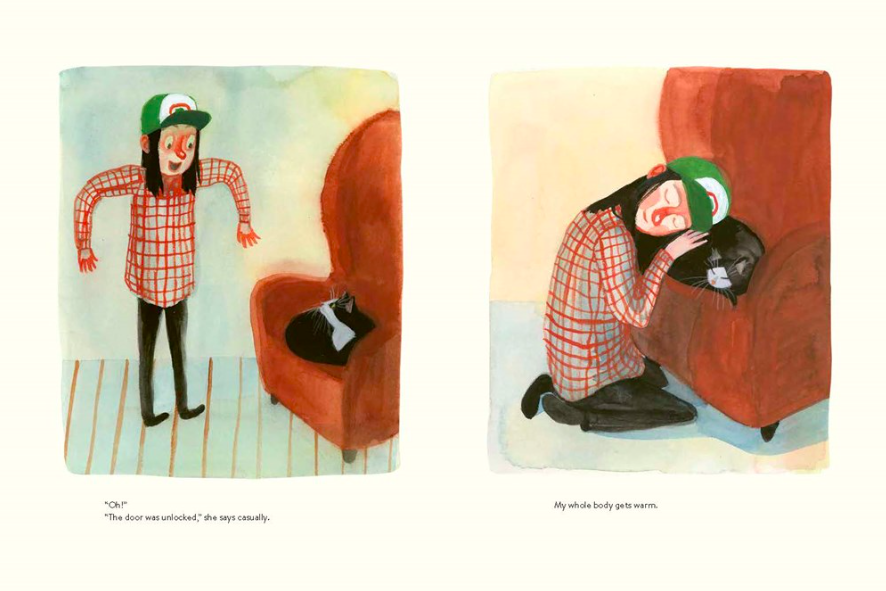
At home, the narrator can’t thaw out but then discovers with joy their cat curled up in their favorite chair. During tomorrow’s walk, the narrator promises, the cat will lead.

celebrate-picture-books-picture-book-review-the-cat-way-cat-comes-home

Image and text copyright Sara Lundberg, 2024, translation copyright B. J. Woodstein, 2024. Courtesy of Eerdman’s Books for Young Readers.

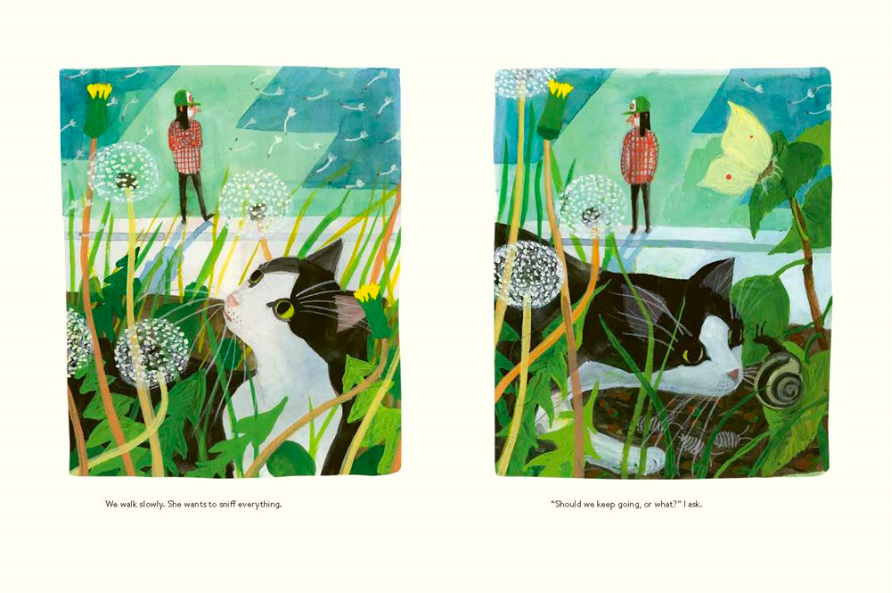
Part 2 takes up the story the next day as the narrator and the cat head out. Just a step outside the door, readers are treated to the cat’s eye view of the neighborhood. Whereas during Part 1, the landscape presents buildings, the sidewalk, cars, signs, benches, trash cans, and other cityscape objects, Part 2 lands readers in nature, like one of the dandelion seeds the cat dislodges while roaming the woods. Flowers, a snail, a butterfly, and pill bugs attract the cat’s eagle eye, while her owner stands on the barren sidewalk across the street, tapping her foot, glancing left and right.

As the cat ventures further, the narrator follows reluctantly. Without a path to follow, the narrator feels lost, unsure of the way home. Farther and farther into the woods the cat creeps, finding squirrel and communicating eye-to-eye the way only animals can. It’s getting dark and the narrator blindly tumbles down a small cliff. “‘Stupid cat!'” the narrator says from a prone position on the ground. Perched on a thin branch, the cat, in silhouette, seems to ask, “what are you doing down there?”

celebrate-picture-books-picture-book-review-the-cat-way-snail

Image and text copyright Sara Lundberg, 2024, translation copyright B. J. Woodstein, 2024. Courtesy of Eerdman’s Books for Young Readers.

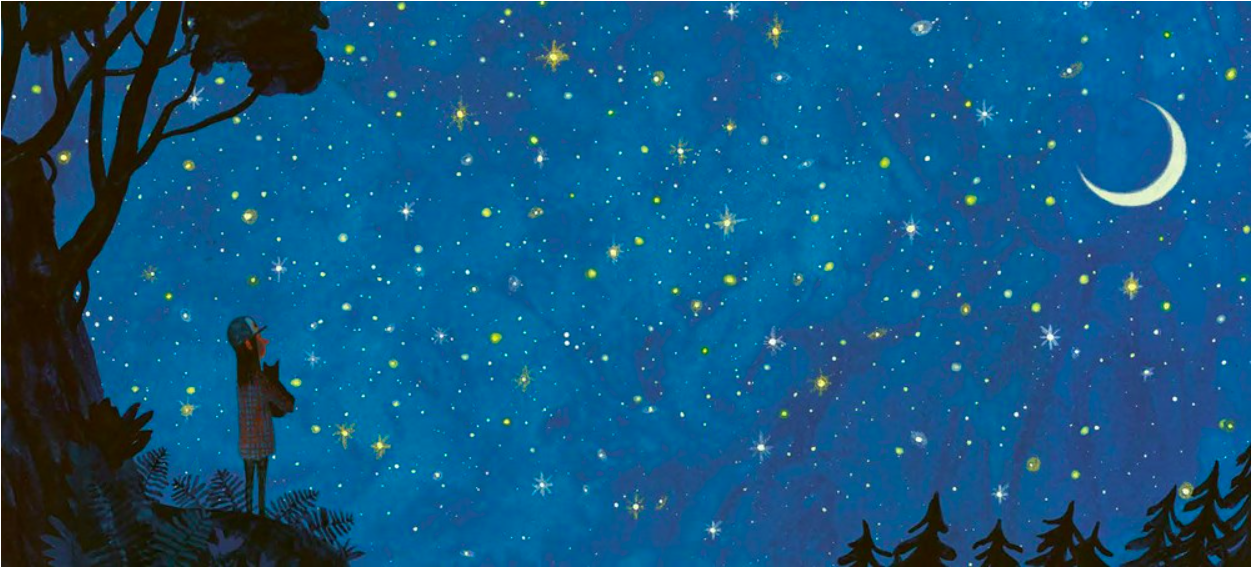
Tears stream down the cat owner’s face, and the cat comes over to comfort her human. It’s then, drying their tears and looking up, that the narrator realizes…. The glorious star-filled night sky stretches out in front of them. The narrator, holding the cat in their arms, stands gazing at this silent spectacle. For readers, the page opens with a majestic gatefold that will elicit appreciative “Oohs!” They stay until dawn edges the horizon and the cat gets hungry. This time, the narrator follows as the cat expertly leads them out of the woods and back home. Still, the narrator isn’t completely ready to relinquish control, seeking assurance that tomorrow they will return to their regular routine. With a look the cat quells that thought, and her human offers a more equitable every-other-day solution. The cat blinks and continues leading her human home.

celebrate-picture-books-picture-book-review-the-cat-way-night-sky

mage and text copyright Sara Lundberg, 2024, translation copyright B. J. Woodstein, 2024. Courtesy of Eerdman’s Books for Young Readers.

Originally written in Swedish by Sara Lundberg and beautifully translated by B. J. Woodstein, The Cat Way is a multi-layered story for relationships of all kinds—between parents and children; friendships (between children, between adults, and between family members); between educators and students; and, more literally, between pets and their humans.

Through her self-assured narrator and inquisitive cat, Lundberg explores how we can get stuck in ruts and routines, ignoring or not recognizing opportunities to grow, learn, play, and see aspects of the world (both small and large) in fresh ways. As the narrator stolidly walks the same, well-worn paths and reacts critically when their cat welcomes something or someone new, Lundberg shows not only how easy it can be to quash another’s curiosity and creativity but also what a lonely and dull life this can lead to. 

When, in Part 2, the cat gets to lead and heads for the woods, Lundberg acknowledges how unfamiliar paths can feel scary and difficult to navigate at first as well as how discovery can feel overwhelming with impediments, stumbles, and even blind faith. But the cat is engaged, sure-footed, and aware of each snail, butterfly, squirrel, and way forward. She instinctively understands encouragement and that the journey is worth it all. And in the poignant ending, she reassures her human that home is where her heart is.

In her lush,  illustrations, Sara Lundberg uses a variety of perspectives (many charmingly surreal) throughout the story to enhance her message. A few standout illustrations include a spread early on when the narrator’s cat and the white cat tumble playfully, creating a yin and yang image that mirrors an underlying theme of balance in a relationship. The couple who scratch the cat’s tummy tower over the cat and the narrator, a reflection, perhaps, of how outsized the narrator feels their influence on their pet. A two-page spread showing interactions among people in the neighborhood as the narrator stands paralyzed by the idea they’ve lost their cat provides an opportunity for readers to stop and imagine the relationships and what is happening. 

Thoughtful, resonant, and visually arresting, The Cat Way is a story of exploration—of one’s immediate surrounding, the world, their relationships, and their own essence—that rewards multiple readings and is a must for home, public library, and school library collections.

Ages 5 – 9+

Eerdman’s Books for Young Readers, 2024 | ISBN 978-0802856333

About the Author

Sara Lundberg is a Stockholm-based illustrator and author who has created over thirty books, including two recipients of Sweden’s August Prize for the best children’s book of the year. In the United States, The Summer of Diving (Triangle Square) was named a New York Times Best Children’s Book, and The Bird in Me Flies (Groundwood) was named a Bank Street College Best Children’s Book. The Cat Way was inspired by Sara’s memories and photos of her cat Sassa, who often joined her family on walks. Follow Sara on Instagram at saralundbergart

About the Translator

B.J. Woodstein is a writer, editor, and Swedish-to-English translator. Her translations for children include The Book that Did Not Want to Be Read (Simon & Schuster) as well as the previous Sara Lundberg books The Bird in Me Flies (Groundwood) and The Summer of Diving (Triangle Square). A native of Chicago, B.J. currently lives in Norwich, England, where she is a lecturer at the University of East Anglia. Visit her website at bjwoodstein.com.

Human-Animal Relationship Month Activity

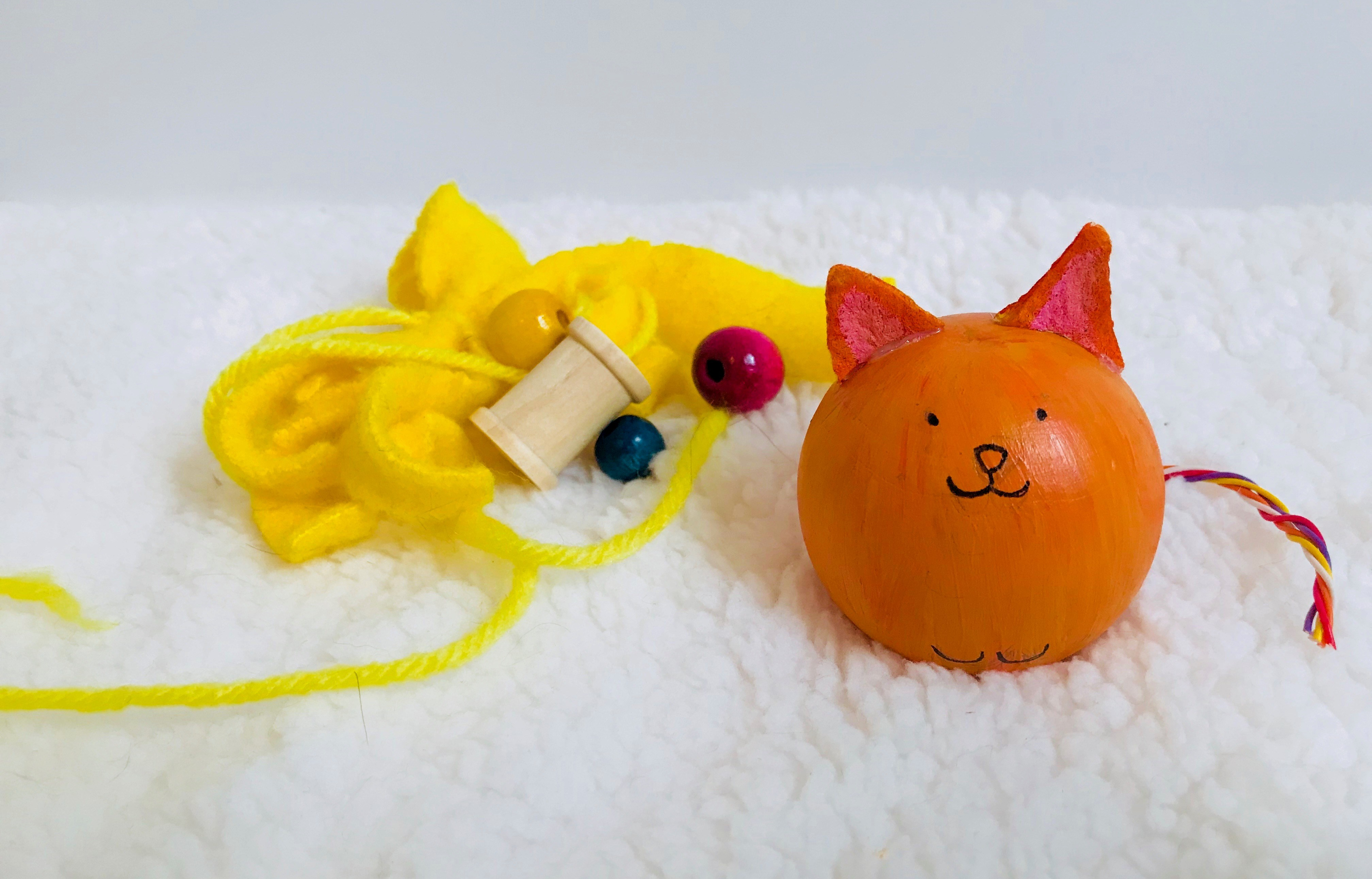
celebrate-picture-books-picture-book-review-wooden-bead-cat-craft

A Little Ball of Kitten Love

There’s nothing quite like the relationship between a cat and their human! If you have a cat or just love kitties, this sweet ball of fun is easy to make and can keep you company on your desk or shelf! Since every kitten is different, make your feline friend look just the way you want.

Supplies

  • Wooden ball with a flat bottom, available in craft stores and in different sizes
  • Craft paint in any color kitten you’d like (I used red and yellow and mixed it to make a mottled orange)
  • Craft paint in pink or white for the inner ear
  • Scrap of fleece for the ears. Fleece is easily shaped to the rounded ball and when painted is stiff enough to stand up on its own.
  • Thin, colored wire in several colors for the tail (string or twine, wrapped wire, fleece, stiff paper, and other materials could also be used)
  • Paint brush
  • Permanent marker for making the face
  • Hot glue gun or strong glue

Directions

  1. Paint the wooden ball and let dry
  2. Paint the scrap of fleece to match the wooden ball, let dry
  3. Cut out small triangular shapes for the ears. Round the bottom of the ears slightly so they fit the shape of the ball
  4. If making a tail from several colors of thin wire, twist them together, leaving one end untwisted
  5. With the glue gun or strong glue attach the ears to the top of the head
  6. With the glue gun attach the tail to the back of the wooden ball in the center near the base
  7. With the marker, draw eyes, nose, and mouth for the face and semicircles near the bottom for the paws

celebrate-picture-books-picture-book-review-the-cat-way-cover

You can purchase The Cat Way at these booksellers

Amazon | Barnes & Noble | Bookshop (to support your local independent bookstore)


Picture Book Review
August 30 – Toasted Marshmallow Day

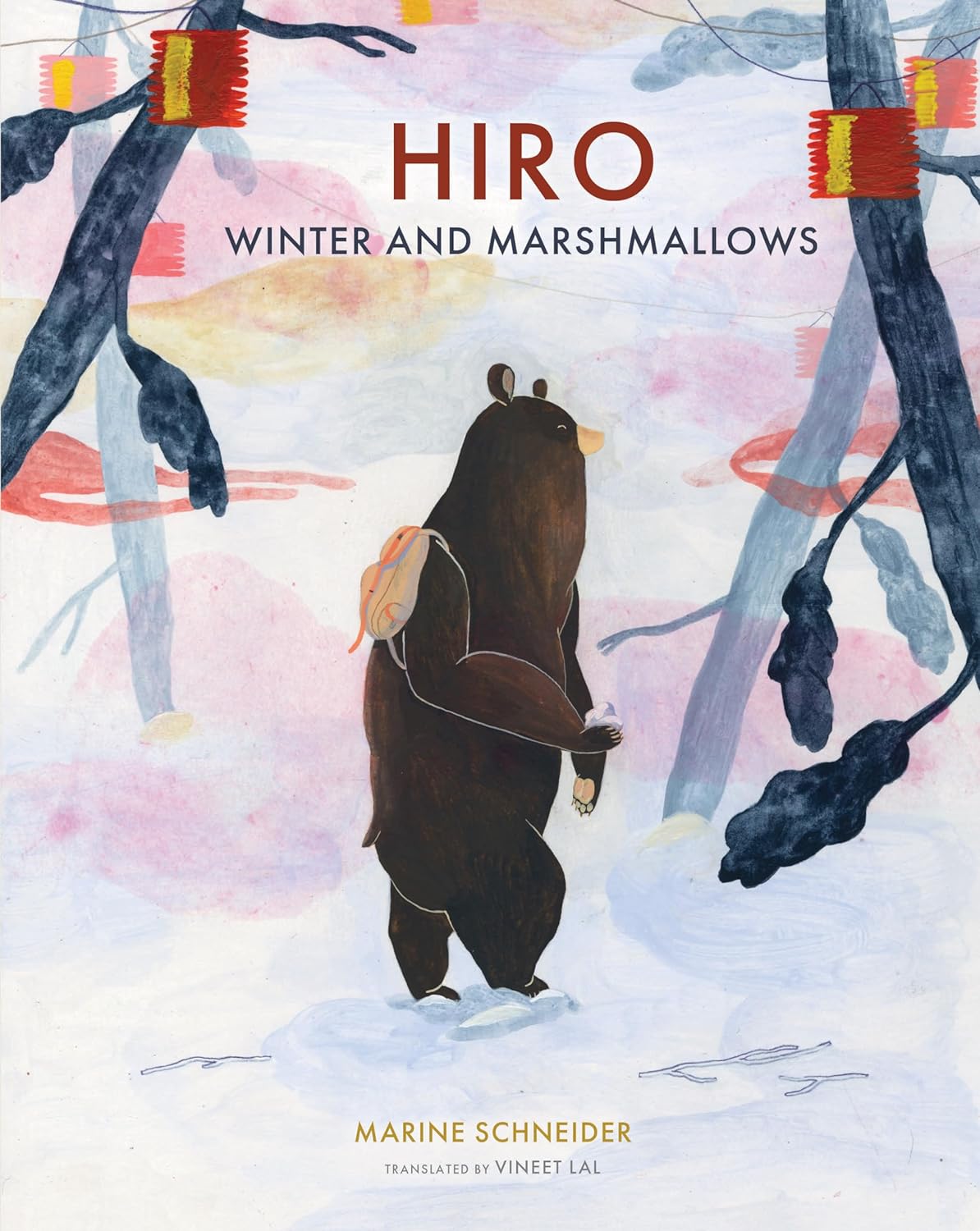
celebrate-picture-books-picture-book-review-Hiro-Winter-and-Marshmallows-Cover

About the Holiday

It doesn’t matter if the weather is warm or cold, toasted marshmallows taste the same—scrumptious! Whether you like your marshmallows just lightly browned or blackened to a crisp, these ooey-gooey delights are fun to make and fun to eat! Why not make a campfire, get out the tabletop marshmallow toaster, or start up the fire pit or grill and toast up some marshmallows with your family or friends today?

Thank you to Eerdmans Books for Young Readers for sharing a digital copy of Hiro, Winter, and Marshmallows with me for review consideration. All opinions on the book are my own.

Hiro, Winter, and Marshmallows

By Marine Schneider | Translated by Vineet Lal


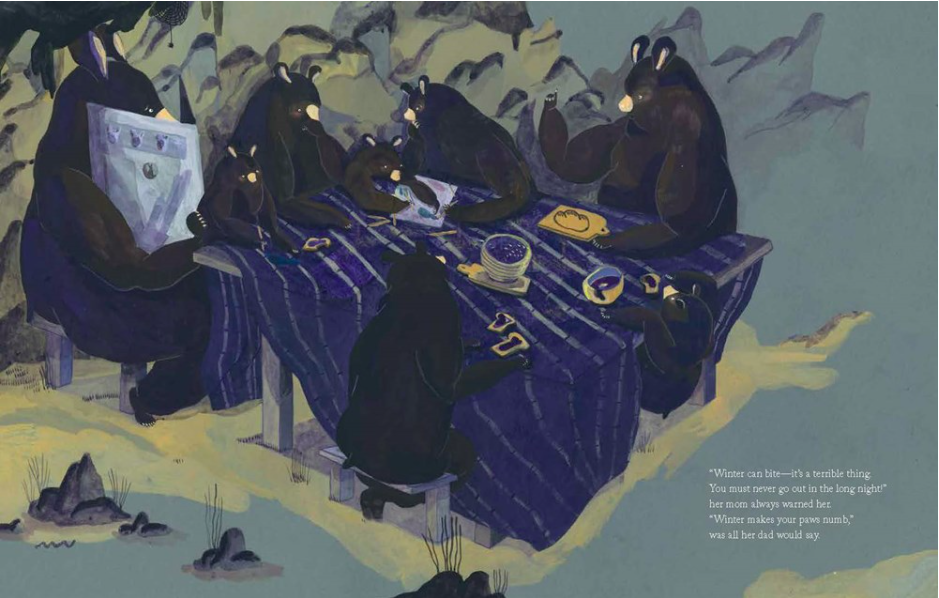
While the rest of her family dozes in quiet hibernation, Hiro lies awake, reading the cave wall in the glow of her flashlight. “Her stomach rumbles and her heart longs for adventure.” She decides to go for a walk. Her mother’s warning about how “‘winter can bite'” whispers in her mind as she packs up the things she wants to take along.

Hiro Winter and Marshmallows-around the table

Copyright Marine Scheider, 2024. Translation copyright Vineet Lal, 2024. Courtesy of Eerdmans Books for Young Readers.

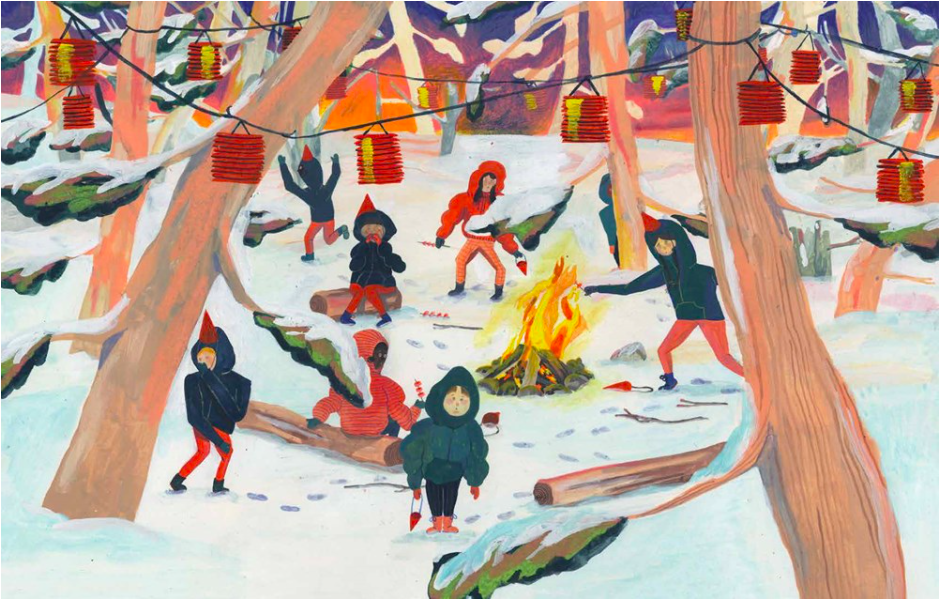
Hiro goes out into the white, icy world. “Tiny white confetti falls on her snout. She thinks it’s so beautiful.” Soon she finds tracks in the snow. She follows them until she hears unfamiliar noises and smells a wood fire burning and “the sweet, gooey scent of toasted marshmallows.” She thinks it is a party and runs toward it. 

Hiro Winter and Marshmallows-children around campfire

Copyright Marine Scheider, 2024. Translation copyright Vineet Lal, 2024. Courtesy of Eerdmans Books for Young Readers.

Seeing Hiro, the children around the campfire scatter. Now Hiro is alone again. “Her heart sinks a little. She feels so far from home.” She picks up one of the sticks of marshmallows abandoned by the children. She sighs, rekindling the fire. Her marshmallows begin to soften. One of the children—Émile—is hiding behind a tree, watching. He would like to talk to Hiro and whispers to her that her marshmallows are most likely ready. By way of explanation and introduction, he adds “‘I’m a marshmallow expert.'”

Hiro Winter and Marshmallows-emile

Copyright Marine Scheider, 2024. Translation copyright Vineet Lal, 2024. Courtesy of Eerdmans Books for Young Readers.

Gently, Hiro asks if the child is Winter. Giggling, Émile says no and slowly moves closer “until he joins Hiro on her tree trunk.” He asks, “‘What’s it like, being a bear?'” Hiro describes her feelings and ends with the conclusion that she likes being a bear. Hiro then asks, “‘What’s it like, being an Émile?'” They then share stories about eating and playing, running and hiding, and “making up scary tales.” Émile decides they are much the same. They toast marshmallows, and Hiro teaches Émile bear songs. They celebrate late into the night until “Émile hears his mom calling” and they both head home.

Each in their beds, the new friends think about each other, and as Hiro drifts off to sleep, she hears her mom murmur, “‘Goodness, it smells like marshmallows in here!'”

Hiro Winter and Marshmallows-hiro and emile around campfire

Copyright Marine Scheider, 2024. Translation copyright Vineet Lal, 2024. Courtesy of Eerdmans Books for Young Readers.

Marine Schneider’s gentle tale follows a simple storyline that reveals profound truths about the nature of discovery—both of the self and the world around us. Kids will appreciate Hiro’s restlessness at the thought of hibernation and her desire to see for herself what Winter is like. When Hiro comes upon evidence of a party, she’s eager to join in, but only brave Émile—his curiosity matching Hiro’s—remains to forge a new friendship. Through their conversation over shared toasted marshmallows, Hiro and Émile discover that despite their differences, they and their lives are very similar, giving them each new perspectives and understanding to ponder until, we hope, they meet again.

Schnieder’s soft illustrations radiate warmth and whimsy—from the bear family’s close-knit breakfast of blueberries and pastries around the table to Hiro and Émile’s marshmallow-roasting party around the roaring campfire. 

A cozy, comforting, and thought-provoking story, Hiro, Winter, and Marshmallows is the perfect antidote to a busy day. The book would be a welcome addition to any home, school, or library collection.

Ages 4 – 8

Eerdmans Books for Young Readers, 2024 | ISBN 978-0802856326

About the Author/Illustrator

Marine Schneider is a Belgian author and illustrator who lives in Brussels. Her works include the picture books Life and I, I Am Life, and The Path (all Little Gestalten) as well as the board books Little Bear, Baby Bear and Big Bear, Little Bear (both Abrams). A traveler at heart, she loves wandering through snowy landscapes—alone or with company. Visit Marine’s website at marine-schneider.com and follow her on Instagram @marineschneider.

About the Translator

Vineet Lal is a translator of books from French to English, including A Perfect Spot, A Head Full of Birds, The Brothers Zzli, and Home (all Eerdmans). He studied French at Princeton University and the University of Edinburgh. Vineet lives in Scotland. Follow him on Twitter @vineet_uk.

Toasted Marshmallow Day Activity

CPB - campfire craft 2

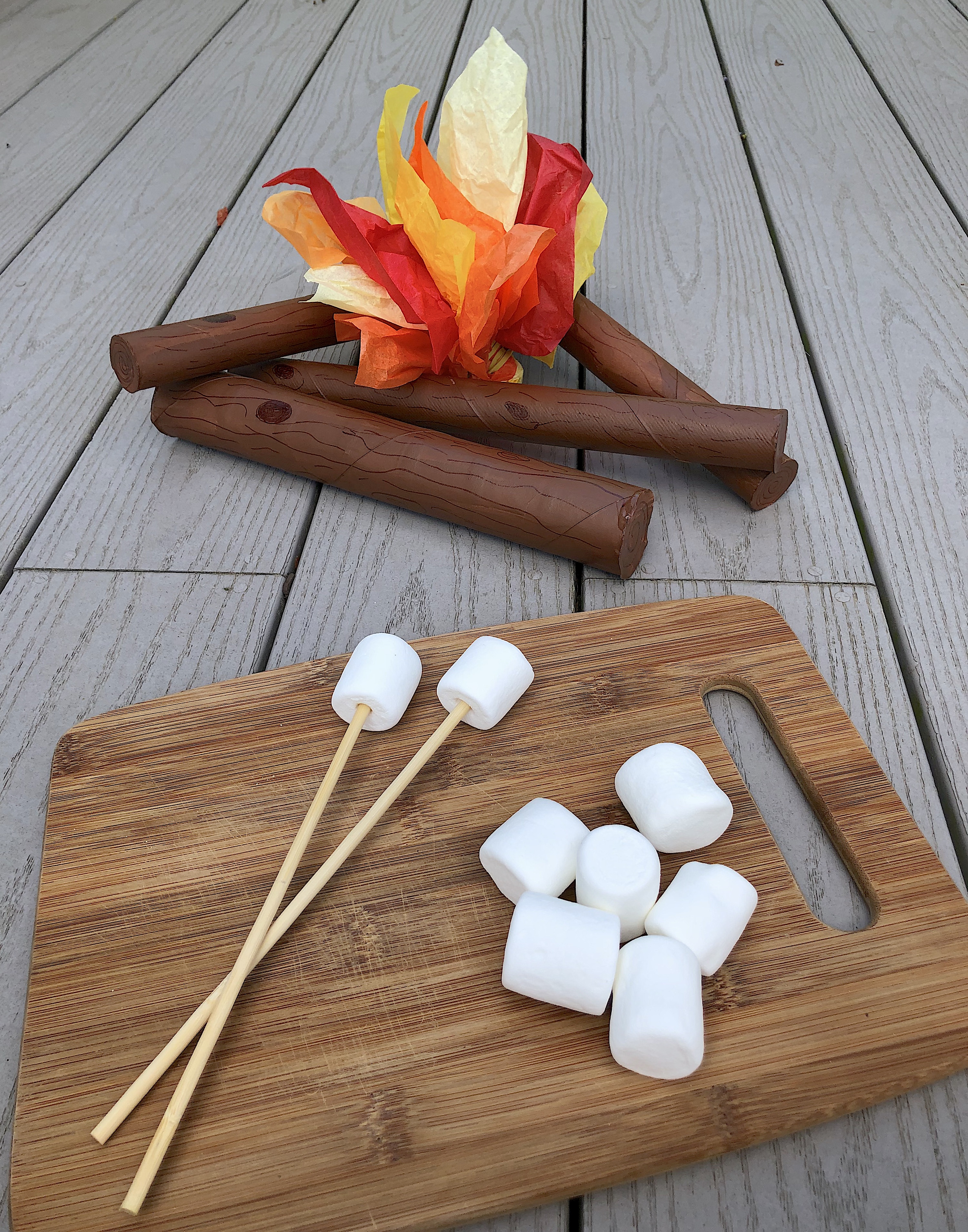
A Fun In-Home Campfire


Kids and their friends and family can enjoy the cozy fun of a campfire in their own family room with this craft that’s easy to make from recycled materials. While the supplies might make the campfire artificial, kids will love it if the marshmallows are the real thing!

Supplies

  • Three or four paper or cardboard tubes
  • Cylindrical bread crumbs or oatmeal container
  • Tissue paper in red, orange, and yellow
  • Brown craft paint
  • Brown marker
  • Brown construction paper or white paper
  • Strong glue or hot glue gun
  • Chopsticks (one for each person)
  • Marshmallows

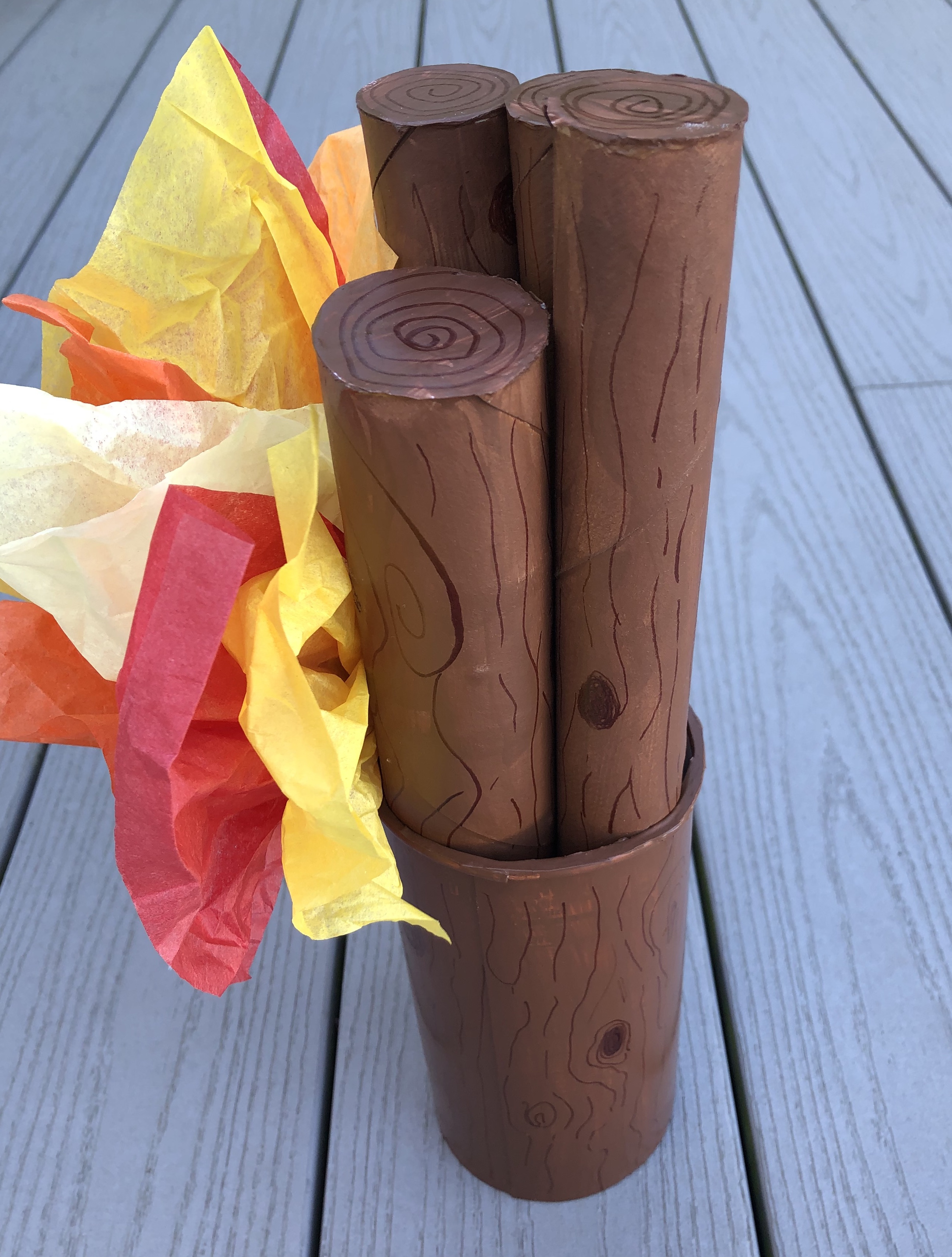
CPB - campfire craft container


Directions

To Make the Logs

  1. Cover the ends of the tubes with circles of brown construction paper or white paper and glue into place
  2. Paint the tubes and the ends if needed, let dry
  3. Paint the sides of the cylindrical container with the brown paint, let dry
  4. With the marker draw tree rings on the ends of the tubes. Decorate the sides with wavy lines, adding a few knot holes and swirls.

To Make the Fire

  1. Cut 9 squares from the tissue paper (3 in each color, about 8 to 6-inch square)
  2. Layer the colors and gather them together at one tip. Fold over and hold them together with a rubber band.
  3. To Assemble the Campfire
  4. Stack the tube logs
  5. Put the tissue paper fire in the middle of the logs

To “Roast” Marshmallows

  1. Stick marshmallows on chopsticks for “roasting” and eating!

You can keep your logs and fire in the cylindrical log until the next time!

celebrate-picture-books-picture-book-review-Hiro-Winter-and-Marshmallows-Cover

You can purchase Hiro, Winter, and Marshmallows at these booksellers

Amazon | Barnes & Noble | Bookshop (to support your local independent bookstore)

Picture Book Review
 

November 11 – It’s Children’s Book Week

celebrate-picture-books-picture-book-review-building-an-orchestra-of-hope-cover

About the Holiday

Children’s Book Week is the longest-running national literacy program in the United States. The history of the holiday goes back to 1913, when Franklin K. Matthiews, the librarian of the Boy Scouts of America, toured the country to promote a higher standard in children’s books and proposed a Children’s Book Week. He then enlisted the help of Frederic G. Melcher, editor of Publishers Weekly, who believed that “a great nation is a reading nation,” and Anne Carroll Moore, the Superintendent of Children’s Works at the New York Public Library to help spread the word. This year’s theme is “How Do You Book?” The thought-provoking theme encourages readers to think about what they read, where they read, and how they read. To learn more about this literary holiday, visit Every Child a Reader to find out more about the week, how to join online, and lots of bookmarks and activities to download.

Building an Orchestra of Hope: How Favio Chávez Taught Children to Make Music from Trash

Written by Carmen Oliver | Illustrated by Luisa Uribe


As a child, Favio Chávez looked to music as an important touchstone. When he grew up, he was still involved with music, but his profession was as an environmental engineer. He was given a job in “Cateura, Paraguay—a small village built on a landfill—to try to help the families who lived and worked amid the hills of trash.” When trucks came and dumped load after load of trash, recyclers, called gancheros, filled bags of items they could resell. The air was choked with the stench of garbage, and anywhere the gancheros walked “they waded through filth.” It made Favio sad to think of people living this way.

celebrate-picture-books-picture-book-review-building-an-orchestra-of-hope-arriving

Image copyright Louisa Uribe, 2022, text copyright Carmen Oliver, 2022. Courtesy of Eerdmans Books for Young Readers.

As Favio supervised the gancheros, he “became friends with them and their children. He worried about what kind of lives they would live when they grew up. Besides his job at the landfill, “Favio conducted a youth orchestra in a nearby village.” One day, the people he worked with came to listen. They wondered if their kids could also learn to play instruments. Favio was excited by the prospect. 

He even brought his own guitars and violins for the children to play, but soon he had more kids in class than he had instruments. But there was another problem too. The instruments were valuable and could attract thieves to the homes of his students. He needed another idea, and while watching Nicolás “Colá” Gómez, a talented carpenter, picking through the trash, he thought of something that might work. 

celebrate-picture-books-picture-book-review-Colá-making-violin

Image copyright Louisa Uribe, 2022, text copyright Carmen Oliver, 2022. Courtesy of Eerdmans Books for Young Readers.

Colá began searching through the piles for anything that he could use to make instruments. He collected cans and pipes, crates and buttons, even X-ray film and eating utensils. As he looked at his materials, Colá envisioned how he could create a violin. Finally with violins and other instruments for each child, Favio began teaching them how to play and how to read music. They practiced and practiced until they were ready to perform for their parents.

celebrate-picture-books-picture-book-review-Colá-making-instruments

Image copyright Louisa Uribe, 2022, text copyright Carmen Oliver, 2022. Courtesy of Eerdmans Books for Young Readers.

At a local church, with the audience packed and excited, the notes of the children’s first song ‘”New York, New York’ floated out the windows and into the warm night air.” The adults were overcome with happiness. While their lives had been only about survival, they now “had hope in their hearts and dreams for a better tomorrow.”

Back matter includes further information about Favio Chávez and the Recycled Orchestra of Cateura from 1975, when Favio was born in Argentina to 2006, when he arrived to work at the Cateura landfill to today, when the Orchestra supports more children and families with building projects, food, computers for school, scholarships, and many more humanitarian efforts. A selected bibliography is also included.

celebrate-picture-books-picture-book-review-building-an-orchestra-of-hope-school-yard-practice

Image copyright Louisa Uribe, 2022, text copyright Carmen Oliver, 2022. Courtesy of Eerdmans Books for Young Readers.

From its earliest days the Recycled Orchestra of Cateura has inspired musicians, authors, movie makers, and listeners from around the world. In Building an Orchestra of Hope, Carmen Oliver tells the story through the lens of a hope fulfilled. As Favio Chávez begins his new job at the landfill educating the gancheros on how to work more efficiently, his initial thought is for the future of the children of the village. Oliver shows how Chávez not only supervised the workers but became their friend, honored to be included. While relating Chávez’s eagerness to share his love of music with the children, Oliver hints at what’s to come with lyrical descriptions of the sounds the glass, metal, and plastic makes as the gancheros rake through the piles of trash. She also includes pertinent facts that allow readers to understand the challenges the community faced and what a monumental undertaking the idea was.

While this story revolves around Favio Chávez, his idea could never have been brought to fruition without the talents of Nicolás “Colá” Gómez, who could envision the instruments and even hear their sound as he pored through the trash for materials. Oliver provides a satisfyingly detailed list of the types of items Colá repurposed and later reveals which items were used to create violins, drums, violas, flutes, saxophones, and trumpets, pages that are sure to pique young crafters’ interest. The emotional ending to this true story will swell the hearts of readers—those who already know about the orchestra and those being introduced to it for the first time.

Louisa Uribe’s soft-hued illustrations realistically depict the village of Cateura and the landfill it is built upon. They meet Favio Chávez and Nicolás Gómez and witness the idea of creating instruments from trash come to life. Uribe’s close up of a violin lets kids see how disparate items are used creatively to replicate each part of the instrument. As instruments are made, the number of children filling the courtyard grows until their hard work and practice is rewarded on a real stage, a microcosm of the growth and impact of one man’s caring and creativity.

Special Note: The inspirational back matter, worthy of its own picture book, will astound readers with just how far-reaching one idea when explored in collaboration with others can be. Themes of the vital importance and life-changing impact of the arts, persistence, determination, overcoming seemingly insurmountable challenges and odds, and the power of hope are what this true story is built on, and this factual back matter is sure to affect readers and get them thinking about how they can make a difference to a cause they believe in.

Powerful, accessible, and impactful, Building an Orchestra of Hope is a must for all home, school, and library collections, not only to tell this compelling, ongoing story but to remind them that their actions, too—from a single kind word or smile to large community effort—can change lives. 

Ages 4 – 9 

Eerdmans Books for Young Readers, 2022 | ISBN 978-0802854674

You can learn more about Luisa Uribe, her books, and her art on her website.

You can connect with Carmen Oliver on Twitter.

Children’s Book Week Activity

celebrate-picture-books-picture-book-review-bookworm-bookmark

Bookworm Bookmark


Are you a bookworm? If so, then this bookmark is for you! Just print, color, and cut along the dotted line. This little worm will happily save your page for you!

Bookworm Bookmark Template

celebrate-picture-books-picture-book-review-building-an-orchestra-of-hope-cover

You can find Building an Orchestra of Hope at these booksellers

Amazon | Barnes & Noble | Books-a-Million

To support your local independent bookstore, order from

Bookshop | IndieBound

Picture Book Review
November 3 – It’s Picture Book Month

celebrate-picture-books-picture-book-review-a-head-full-of-birds-cover

About the Holiday

November is all about picture books thanks to Picture Book Month founder author and storyteller Dianne de Las Casas and co-founders author/illustrators Katie Davis, Elizabeth O. Dulemba, Wendy Martin, and author Tara Lazar. This month-long international literacy initiative celebrates print picture books and all that they offer to young (and even older) readers. With gorgeous artwork and compelling stories, picture books open the world to children in surprising ways as they entertain, explain, excite, and help children learn empathy and understanding.

I’d like to thank Eerdman’s Books for Young Readers for sending me a copy of A Head Full of Birds for review consideration. All opinions on the book are my own.

A Head Full of Birds

Written by Alexandra Garibal | Illustrated by Sibylle Delacroix | Translated from the French by Vineet Lal


Nanette is a little girl with “a head full of birds.” She mixed strange foods together, can spend hours looking at an empty spider’s web and “rocks back and forth, to and fro, fluttering her fingers like butterflies.” The kids at school taunt her, calling her “stupid” and treating her meanly. But Nanette doesn’t pay attention to them. One boy in her class, Noah, joins in. But one day while tossing paper airplanes during class, the teacher catches him and makes him sit up front.

celebrate-picture-books-picture-book-review-a-head-full-of-birds-butterflies

Image copyright Sibylle Delacroix, 2022, text copyright Alexandra Garibal, 2022. Courtesy of Eerdmans Books for Young Readers.

This means sharing a table with Nanette, which makes him angry. While pulling out his chair, “he pushes her out of irritation,” which causes her pencil to slide across her drawing of a bird. Nanette is disappointed, whispering “Oh. He won’t fly anymore.” Noah finds this ridiculous and tells her that drawings of birds can’t fly, but Nanette already knows. “‘The drawing doesn’t fly, the bird does,'” she answers.

That day after school, Noah watches as Nanette sets colorful little origami boats to sail down the rain-washed curb. He thinks it looks “so pretty.” The next day, it’s still raining, and during recess Noah sees Nanette standing in the middle of the school yard without her boots catching raindrops. His friends are calling him stupid, but he grabs her shoes and rushes out to bring her back in. But Nanette is happy. She takes her boots and fills them with water running off the roof. They both hide a boot in their coats and run back inside for class.

celebrate-picture-books-picture-book-review-a-head-full-of-birds-boats-on-curb

Image copyright Sibylle Delacroix, 2022, text copyright Alexandra Garibal, 2022. Courtesy of Eerdmans Books for Young Readers.

On the stairs, someone bumps into Noah, spilling his boot. Noah is angry that their plan is ruined, but Nanette tells him it’s okay, that one is enough. She passes him a tiny origami boat, and he drops it into her boot. “The boat twists and twirls, dancing merrily across the water. And it’s so pretty.” Now Noah and Nanette are friends, and “together, they look after the birds that nest in their heads.”

celebrate-picture-books-picture-book-review-a-head-full-of-birds-boot

Image copyright Sibylle Delacroix, 2022, text copyright Alexandra Garibal, 2022. Courtesy of Eerdmans Books for Young Readers.

While quietly straightforward, Alexandra Garibal’s story affects poignancy on multiple levels. Readers are first introduced to Nanette, a girl with neurodiversity who is happy in her observations and interactions with the world while also self-confident enough to ignore the comments of her classmates. Readers see Noah participating in the ridicule, but when he is moved to sit next to Nanette, readers begin to understand that it is he who needs to see the world differently, not Nanette. Children may feel that Noah already embodies this empathy as it doesn’t take long before he appreciates the beauty Nanette brings to their world. 

While he at first feels he must protect her, running out with her boots and aiming to take her back inside from the rain, he again learns that her actions have meaning, and when the boot he’s carrying spills on the way back to class, he now feels the same disappointment of a project ruined that Nanette felt with her bird drawing. With Nanette and Noah’s conspiratorial goofing off in class (and, bravely, in the front row!), Garibal brings the story full circle while infusing it with growth and joy for both characters as they go forward as friends.

celebrate-picture-books-picture-book-review-a-head-full-of-birds-filling-boot

Image copyright Sibylle Delacroix, 2022, text copyright Alexandra Garibal, 2022. Courtesy of Eerdmans Books for Young Readers.

Sibylle Delacroix’s lovely colored-pencil illustrations reveal Nanette as a shining light in the world and in her classroom. She is first shown gazing upward as if the sun is on her face, next with colorful butterflies, and then at school in a bright yellow raincoat, while the background is drawn in gray and the other kids in a single shade of red, all except Noah, who has brown hair and blue glasses, signifying to readers that perhaps he is a bit different as well. 

The two children’s growing friendship takes place against a gray-scale background, putting the focus on both their separation from their environment as well as their similarity to each other. Other visual clues in clothing and other elements also point to Nanette and Noah’s similarity, which can invite kids to find and talk about them. A particularly moving spread comes as the two children watch the little boat float in the boot, their two smiling faces reflected in the water. Turning the page, readers see the imagination Nanette and Noah share as they ride in an origami boat pointing out paper bird above.

This beautiful friendship story speaks not only to the acceptance and understanding of neurodiversity but of all the creative and different ways in which people see the world. A Head Full of Birds will fill your heart and resonate long after the story is over. The book invites multiple re-readings and will generate much thought and discussion. It is a must for all home, classroom, school, and public libraries.

Ages 4 – 8

Eerdmans Books for Young Readers, 2022 | ISBN 978-0802855961

About the Author

Alexandra Garibal is a French children’s author and editor. She has written over sixty picture books, novels, and magazine articles, and her titles have been translated for Chinese and Spanish readers. A Head Full of Birds is Alexandra’s English-language debut. Follow her on Instagram @alexandragaribal.

About the Illustrator

Sibylle Delacroix is the illustrator of Tears, Prickly Jenny, Grains of Sand, and Blanche Hates the Night (all Owlkids). She graduated from the ERG Saint-Luc School of Graphic Research in Brussels and worked for many years as a graphic designer before becoming a full-time illustrator. Sibylle lives in France. Follow Sibylle on Instagram @sibylledelacroix.

About the Translator

Vineet Lal is a literary translator of books from French to English, including A Perfect Spot (Eerdmans) and The Secret Life of Writers (Weidenfeld & Nicholson). He studied French at Princeton University and the University of Edinburgh. Vineet lives in Scotland. Follow him on Twitter @vineet_uk.

celebrate-picture-books-picture-book-review-a-head-full-of-birds-cover

You can find A Head Full of Birds at these booksellers

Amazon | Barnes & Noble | Books-a-Million

To support your local independent bookstore, order from

Bookshop | IndieBound

Picture Book Review
October 11 – Celebrating the Book Birthday of Madani’s Best Game

celebrate-picture-books-picture-book-review-madani's-best-game-cover

Thanks to Eerdmans Books for Young Readers for sharing a copy of Madani’s Best Game with me for review consideration. All opinions on the book are my own.

Madani’s Best Game

Written by Fran Pintadera | Illustrated by Raquel Catalina | Translated from the Spanish by Lawrence Schimel


“Our whole neighborhood knows it: no one plays soccer like Madani does.” Thus, a teammate of Madani’s begins the story about this friend who captivates the neighborhood (and sometimes it seems the whole world) with his barefoot ball-handling prowess. Madani has elevated the team’s game to “the best soccer we’ve ever seen.” After Madani has scored a “Gooooal!” the sound of the cheers soars above the playing field and “…crosses through doorways, rushes past the magazine stand, slips down alleyways, swirls around the fountain, and, growing fainter and fainter, climbs the steps up to Madani’s house.” 

celebrate-picture-books-picture-book-review-madani's-best-game-bare-feet

Image copyright Raquel Catalina, 2022, text copyright Fran Pintadera, 2022. Courtesy of Eerdmans Books for Young Readers.

There, his mother hears it and knows the cheers are for Madani. She wishes she could attend his games, but she’s a seamstress and has so many garments to sew by hand. After the game, Madani’s teammates can only imagine how much better he would play if he only had a good pair of cleats. Their team might even be able to beat the Southside team—their biggest rival.

celebrate-picture-books-picture-book-review-madani's-best-game-madani's-moves

Image copyright Raquel Catalina, 2022, text copyright Fran Pintadera, 2022. Courtesy of Eerdmans Books for Young Readers.

The members of the team know that Madani’s saving up money in a special tin that gets heavier every time he declines to buy a snack, walks to away games instead of riding the bus, and makes other sacrifices. They know that when the box is full, Madani’s going shopping. “…then our games will be better than ever!’” he says, and they all dream of the day Madani buys his new cleats.

celebrate-picture-books-picture-book-review-madani's-best-game-listening

Image copyright Raquel Catalina, 2022, text copyright Fran Pintadera, 2022. Courtesy of Eerdmans Books for Young Readers.

The big game against Southside is only a day away, but Madani doesn’t come to practice. Instead, his friends watch him head downtown with the tin under his arm. Without Madani at practice, the team falls apart, but they don’t worry. Finally, they thought, their dreams of new cleats and beating Southside would come true!

When Madani shows up at the game the next day, “he looks radiant,” but he’s still barefoot. His teammates question him about his new cleats, but Madani doesn’t know what they’re talking about. The money wasn’t for shoes but for a present for his mother so that “‘she’ll be able to finish her work faster and come watch me play every Saturday.’”

celebrate-picture-books-picture-book-review-madani's-best-game-mother

Image copyright Raquel Catalina, 2022, text copyright Fran Pintadera, 2022. Courtesy of Eerdmans Books for Young Readers.

Madani’s friends still don’t quite get it, but the game begins, and in moments Madani has already stolen the ball away from the Southside players, run downfield and scored. He looks into the stands, sees his mother, and shouts “‘This goal is for you, Mom!’” Madani makes another goal, but Southside scores too, and the game ends in a tie. It’s okay, though, Madani’s teammate says, “‘because now more than ever, everyone in the neighborhood knows … There’s no player like Madani!’”

Back matter consists of notes from Fran Pintadera and Raquel Catalina that reveal their creative journeys and connections to this story.

celebrate-picture-books-picture-book-review-madani's-best-game-mother-at-game

Image copyright Raquel Catalina, 2022, text copyright Fran Pintadera, 2022. Courtesy of Eerdmans Books for Young Readers.

Fran Pintadera, who based Madani’s Best Game on his experiences as a social educator in new immigrant housing, tells his story with open-hearted affection for his subject as well as the relationships between teammates and mother and child. Through his perceptive and humorously observed details and lyrical language, Pintadera captures the wide-eyed wonder of children in awe of a great player (or artist, singer, scientist, or other talent). When Madani gets the ball, readers will hold their breath along with the neighbors, traffic, and even pigeons while he entertains the crowd and scores a goal. Then the action begins again, but this time the suspense revolves not around the game but on what Madani will buy. The answer is joyous, affirming family devotion and revealing the pure giving nature of a child’s heart.

From their first introduction to Madani, smiling out from the page, his bare foot on a soccer ball, readers will be captivated by him, his teammates, his neighborhood, and the game. Raquel Catalina’s endearing pencil, gouache, and colored pencil illustrations charm with realistic images of kids on the soccer field surrounded by city onlookers. Catalina creates not only gorgeous visuals of Madani’s supportive neighborhood, but an almost auditory experience as well.

Readers can almost hear the players’ running feet, the sudden cheers, the flap of the rising pigeons’ wings, and – as the celebration reaches Madani’s mother’s ears – even the whisper of her sewing needle through the fabric on her knees. Catalina deftly weaves the theme of friendship, between people both young and old, throughout the pages, enhancing the bond between Madoni and his mom as well as Madani’s teammates’ understanding of the true importance of that long-awaited game.

A beautiful poignant, joyful, and affirming story of family and friendship, Madani’s Best Game is a read aloud that adults and kids will love to share over and over. The book is a must for all home, classroom, school, and public libraries.

Ages 5 – 9

Eerdmans Books for Young Readers, 2022 | ISBN 978-0802855978

You can discover more about Fran Pintadera and his work on his website and connect with him on Instagram.

To learn more about Raquel Catalina, her books, and her art, visit her website. You can also connect with her on Instagram.

You can connect with Lawrence Schimel and learn more about his writing and his translating work on Instagram and Twitter.

celebrate-picture-books-picture-book-review-madani's-best-game-cover

You can find Madani’s Best Game at these booksellers

Amazon | Barnes & Noble | Books-a-Million

To support your local independent bookstore, order from

Bookshop | IndieBound

Picture Book Review

Picture Book Revi