June 6 – Russian Language Day

celebrate-picture-books-picture-book-review-mussorgsky's-pictures-at-an-exhibition

About the Holiday

Established in 2010 by the United Nations Educational, Scientific, and Cultural Organization, Russian Language Day honors the music, art, and other unique aspects of this intriguing country. The observance coincides with the 1799 birthday of Alexander Pushkin, a Russian poet who is considered the father of Russian literature. Celebrations include concerts, readings, and other cultural events. Today, listen to the music of a Russian composer, read a novel or short story, or learn a few Russian words!

Mussorgsky’s Pictures at an Exhibition (Once Upon a Masterpiece Series)

Written by Anna Harwell Celenza | Illustrated by JoAnn E. Kitchel


It’s the 1870s and Russian culture is enjoying a resurgence. Young musicians and artists are excited to be recognized by the world. Three friends—Modest Mussorgsky, a musician; Victor Hartmann, an artist and architect; and Vladimir Stasov, an art critic—have big plans for their work. Victor, especially, has dreams of designing the new City Gate in Kiev. But on July 23, 1873 Victor suffers an aneurysm and dies. Modest is devastated. He feels that Victor’s death is his fault because he had dismissed Victor’s complaints about a headache only days before. Although Vladimir tries to comfort his friend, Modest pushes him away.

Modest stops going out, he stops being happy, and he stops writing music. Meanwhile Vladimir organizes an exhibition of Victor’s art so everyone will remember him. Vladimir and other friends think that seeing Victor’s work displayed will help Modest come to terms with his friend’s death. When the exhibit is ready, Vladimir visits Modest to invite him to come. When Modest refuses, Vladimir locks the door, puts the key in his pocket, and tells Modest he had two choices: either go to the exhibition or have a new roommate in Vladimir. Modest reluctantly agrees to go.

When they reach the gallery, Modest reluctantly enters. He is awestruck. “Every inch was filled with Victor’s hopes and dreams, his fears, and his greatest triumphs.” Slowly Modest wanders through each room, gazing at the paintings that bring back such vivid memories. He sees familiar faces, costume designs, children, couples, peasants, even Baba-Yaga, a witch from Victor’s favorite fairy tale.

Modest stops in front of Victor’s picture “The Great Gate of Kiev.” Tears fill his eyes and he thinks, “This was to be your greatest achievement…now it will never be more than a dream. If only I could build it for you.” He studies the picture for a long time, and suddenly an idea comes to him—“Maybe I can build it for you!” He dashes from the gallery straight to his piano.

As Modest thinks about Victor’s art, “one by one the spirit of each picture filled the room.” The images rise from the piano and Modest follows them from one theme to another, note by note. Some passages he plays are slow and sad, others clear and quick, while still others flutter or whisper. Even Baba-Yaga makes an appearance. With each chord special parts of Victor came to life until the last majestic strains built the Great Gate of Kiev in music. Modest calls his composition Pictures at an Exhibition.

With the spirit of his friend Victor in his heart. Modest Mussorgsky goes on to compose operas and visit with friends. Vladimir Stasov also follows his dreams to travel far and wide, and wherever he goes he tells people about Victor and Modest’s Pictures at an Exhibition

Anna Harmann Celenza relates the heartfelt story of the origins of Modest Mussorgsky’s great work with sensitivity and honors the emotional origins and effect of his Pictures at an Exhibition. The hopes of the three friends as well as the details of Victor’s artwork are evocatively described, allowing children to easily picture the feelings and objects that influenced Mussorgsky’s music.

Both the colorful architecture of Russia and the soaring notes of Mussorgsky’s music are beautifully depicted in JoAnn E Kitchel’s illustrations. Each one-and-a-half-page spread depicting scenes of St. Petersburg, Modest’s apartment, the art gallery, musical imagery, and the theater is framed in lovely floral borders, tying together the themes of art and music. Rich purples, regal blues, fiery reds, and glowing yellows makes this book a feast for the eye as well as the mind.

The book is accompanied by a CD of Mussorgsky’s work, making Pictures at an Exhibition a must have for music lovers of all ages.

Ages 6 – 10 and up

Charlesbridge, 2016 | ISBN 978-1580895286

Russian Language Day Activity

celebrate-picture-books-picture-book-review-russia-word-search

Celebrate Russia Word Search


Find the names of Russian musicians, artists, writers, cities, and more in this circular word search. Print your Celebrate Russia Word Search here! And here’s the Solution!

Picture Book Review

June 5 – Hot Air Balloon Day

celebrate-picture-books-picture-book-review-because-you-are-my-teacher

About the Holiday

People have always endeavored to create flying machines that give them a bird’s eye view, speed travel, and take them higher and farther from Earth. One of the earliest innovations was the hot air balloon, which offered the first manned flight in 1783. Today’s holiday celebrates the ingenuity and beauty of hot air balloons. Now that summer is here, taking in a balloon festival and going for a ride are fun ways to spend a day.

Because You Are My Teacher

Written by Sherry North | Illustrated by Marcellus Hall


Now that the school year is winding down, it’s a good time to remember everything teachers do inside and outside of the classroom to get kids excited about the world and its wonders. In Because You Are My Teacher a child narrator presents various scenarios and alternatives to the usual classroom: “If we had a schooner, we would have our class at sea / And study the Atlantic, where the great blue whales roam free.”

Other appealing rhymes follow the intrepid class as the kids try out different modes of transportation. They could study from camelback, traversing deserts and exploring the pyramids; peer from a whirling helicopter as it hovers over an erupting volcano; and ski past baby penguins gobbling down their first fish. From their river raft on the Amazon, the children could listen to howler monkeys “growl their spooky song.”

A submarine would be the perfect place to learn about the ocean depths and its unique creatures, while from an off-road truck the class “would ride savanna trails, / Where Africa’s young elephants hold on to mothers’ tails.” These adventurous kids would love having school in a kayak on a Grand Canyon river, soaring with hang gliders over the Australian outback, afloat on an airboat in the Everglades, polling through Venice on a gondola, and in a rocket ship for an out-of-this-world experience.

What about a hot-air balloon, you ask? It is hot-air balloon day, after all. That’s here too: “If we had hot-air balloons, we would set out on a quest / To study China’s Great Wall from the east end to the west.”

But the child narrator and the class are happy right where they are: “Our classroom is our vessel, / always headed someplace new. / Because you are our teacher, / We’ll explore the world with you.

Sherry North’s exuberant ride of discovery honors all teachers and their students who daily adventure into new worlds together. North’s clever rhymes and superb turns of phrase combine with uncommon experiences to entice readers to join these exciting field trips. The last pages are a nice reminder that teachers bring the universe into their classrooms no matter where they are.

Marcellus Hall brings readers up close to the world of the sea, the vast sands of the desert, a slippery ice floe, the lush rainforest, and more exotic environments with his bold, vibrant artwork. The denizens of these world landmarks nearly walk off the page into a child’s reading area, and kids will love searching for the little mouse that is the class’s constant companion on their journey.

This book would make a perfect gift for a teacher or education student.

Ages 5 – 8

Scholastic, 2014 | ISBN 978-0545768887

Hot Air Balloon Day Activity

celebrate-picture-books-picture-book-review-hot-air-balloon-planter-craft

Hot Air Balloon Planter


Hot air balloons love to reach for the sky just as plant do! With this activity you can make a unique pot for your favorite plant.

Supplies

  • Plastic or terra cotta pot
  • Wooden paddle ball paddle, available at toy or craft stores
  • Paint or markers
  • Paint brush
  • Dirt
  • Clay (optional)
  • Plant or seeds

Directions

  1. Draw six crescent shapes on the globe part of the paddle
  2. Paint the crescent shapes in alternating colors, let dry
  3. Draw lines for the cables on the handle of the paddle
  4. Fill the pot with dirt (or if you don’t want to use this craft as a planter, you can add clay to the pot to hold the paddle upright)
  5. Add your plant or seeds
  6. Carefully push the paddle into the dirt or clay

June 4 – Hug Your Cat Day

celebrate-picture-books-picture-book-review-the-white-cat-and-the-monk

About the Holiday

Just as it sounds, this holiday celebrates all the benefits of snuggling with your cat. While some cats may be cuddlier than others, today gives cat owners the opportunity to show just how much they love their feline friends. If you don’t happen to have a cat, why not consider visiting an animal shelter and showing some love to homeless kittens—you may even want to bring one home!

The White Cat and the Monk

Retold by Jo Ellen Bogart | Illustrated by Sydney Smith


In the nighttime a white cat approaches a monastery. He slips through a window and pads along a darkened corridor and down stone steps. He creeps behind a barrel, vase, and pitcher standing in a row and adds his shadow to the black mosaic on the floor. He leaps the last few steps and hurries along to the doorway, leaking light.

His secret signal alerts the occupant of the room, who opens the door to this playful feline. “I, monk and scholar, share my room with my white cat, Pangur,” the old man explains. He lifts Pangur into his arms and strokes him then releases him to pursue his “special trade.” The monk also returns to his trade—studying ancient manuscripts to understand their meaning.

A dedicated scholar, the monk reveals, “Far more than any fame, I enjoy the peaceful pursuit of knowledge. I treasure the wealth to be found in my books.” Pangur is a dedicated scholar of another kind, studying “the hole that leads to the mouse’s home.” In that moment both man and cat become hunters—one for meaning and the other for prey.

The two do not disturb each other for each is content in his pursuit. Pangur at last “finds his mouse” as the monk finds “light in the darkness.”

Jo Ellen Bogart’s quiet and graceful retelling of Pangur Bán, a beloved Irish poem from the 9th century is a welcome respite in this age of multitasking and mega-activity. With sparse, but compelling and lyrical language, Bogart uncovers the companionable relationship between the monk and his cat as each follows their heart together.

The fine textured pages of Sydney Smith’s illustrations recall the beauty of parchment as the smooth gray and gold line drawings of the monastery’s architecture and characters give way to the vibrant colors of ancient manuscripts and the natural environment. The contentment and friendship of the monk and the cat are sweetly drawn in the characters’ mirrored actions as well as the depictions of a long-held affection between man and beast in the panels of the manuscript the monk studies. As the monk states, “Ours is a happy tale.”

Reassuring and reaffirming, The White Cat and the Monk honors the individual challenges and quests that make us who we are, and would be a wonderful addition to regular quiet-time reading.

Ages 4 and up (this book will be enjoyed by both children and adults)

Groundwood Books, House of Anansi Press, 2016 | ISBN 978-1554987801

Hug Your Cat Activity

celebrate-picture-books-picture-book-review-cat-toy

Fishing for Playtime Cat Toy


Cats love to chase after bouncing, sliding objects, and they love fish. While this toy may not taste as good as fish, it sure smells better and doesn’t require worms or hooks to attain!

Supplies

  • Old or new child’s sock
  • Fiber Fill
  • Yarn or string
  • Fabric paint or markers
  • Small bell (optional)
  • Catnip (optional)

Directions

  1. Paint or draw fins and eyes on the sock
  2. Fill the sock with fiber fill
  3. Add a teaspoon of catnip (optional)
  4. Add a small bell (optional)
  5. Use the yarn or string to close the opening with a strong knot
  6. Leave a long section of yarn or string to pull or dangle the toy

June 3 – Repeat Day

celebrate-picture-books-picture-book-review-follow-follow

About the Holiday

Remember how your brother or sister or friend used to repeat everything you said? Everything you said? Well, that has been made into a holiday! Today gives you the perfect excuse to do your favorite things twice! Go ahead, have two lattes, watch your favorite show twice, listen to an album over again! Whatever you do, just remember to double up on it!

Follow Follow: A Book of Reverso Poems

Written by Marilyn Singer | Illustrated by Josée Masse


When you ask someone, “Can you repeat that?” they often use the exact same words so you understand what they want to tell you. But what if the exact same words could have completely different meanings? That’s the brilliant concept behind Follow Follow. In this ingenious book, 17 classic fairy tales are told in verse (and reverse) from two opposing points of view that will forever change the way you think about exchanges of ideas and dialogue.

In Your Wish Is My Command, Aladdin and the Jinni trade wishes and their view of what freedom means. Six lines from this clever poem read from Aladdin’s perspective: “I no longer wish to be a slave / to lords, magicians, merchants, other urchins. / Jinni of the Lamp, / I am just a poor / young knave. / Give me all I crave.”

And then from the Jinni’s perspective: “Give me all I crave, / young knave. / I am just a poor / Jinni of the Lamp. / To lords, magicians, merchants, other urchins, / I no longer wish to be a slave.”

The Emperor’s New Clothes loses none of its impact in Birthday Suit, a humorous abbreviated telling from the King’s ego-centric thoughts and the little boy’s stunning revelation.

Just as the original tale of The Golden Goose presents a princess who can’t help but laugh at the ridiculous parade going by her window, Silly Goose reveals both sides of the princess’s personality.

Ready, Steady, Go! gets into the heads of both the too-clever-for-his-own-good rabbit and his persevering competitor of The Tortoise and the Hare. The lounging hare thinks: “That ridiculous loser! / I am not / a slowpoke. / Though I may be / the smallest bit distracted, / I can’t be / beat. / I’ve got rabbit feet to / take me to the finish line.” While the tortoise urges himself: “Take me to the finish line! / I’ve got rabbit feet to / beat. / I can’t be / the smallest bit distracted. / Though I may be / a slowpoke, / I am not / that ridiculous loser.”

Will the Real Princess Please Stand Up? peeks into two bedrooms where would-be brides to the prince slumber. One exclaims, “This bed rocks! / I feel like I’m sleeping on feathery flocks,…” but the other complains, “feathery flocks? / I feel like I’m sleeping on / rocks.” Who will win the heart of the prince?

The Little Mermaid, Puss in Boots, The Pied Piper of Hameln, Thumbelina, The Three Little Pigs, The Nightingale, and The Twelve Dancing Princesses are also touched with Marilyn Singer’s magic wand of poetry. Under her spell the perfect choice and placement of words combined with a simple change of punctuation can send the verse swirling in the opposite direction with surprising results. As readers encounter each fairy tale, they’ll wonder, “How does she do it?” But there’s no time to ponder—another terrific tale follow follows!

Like being on the cusp of competing realities, Josée Masse’s vibrant illustrations deftly represent the viewpoints of the mirrored verses. On either side of a subtly split page, the opposing characters tell their side of the story amid contrasting color schemes and flowing lines that bridge the divide. In Your Wish Is My Command, Aladdin dreams in his rooftop window of riches and freedom while the Jinni floats away from his lamp over golden rooftops. On with the Dance makes clever use of the half-page design as the king ponders the condition of his daughters’ shoes while they are pictured dancing in a regal hall that doubles as the king’s crown.

Follow Follow would be a welcome addition to any fairy tale or poetry lover’s bookshelf. And since Marilyn Singer and Josée Masse really know what Repeat Day is all about, you’ll want to check out their other books: Mirror Mirror: A Book of Reverso Poems and their newest, Echo Echo: Reverso Poems about Greek Myths.

English and language arts teachers will also find these volumes to be a wonderful way to teach point of view.

Ages 5 – 11 and up (anyone who loves fairy tales will want to read this book)

Dial Books, Penguin Group, 2013 | ISBN 978-0803737693                                                         

Repeat Day Activity

celebrate-picture-books-picture-book-bookmark-craft

Book Jacket Bookmark


When a book is long, you can’t always finish it in one sitting. If you forget where you left off, you can often find yourself reading the same section twice. That’s okay—especially on Repeat Day!—but this bookmark will help you remember your place and get you reading again in style!

Supplies

  • Printable Book Jacket bookmark 
  • Colored pencils or markers
  • Poster board
  • Scissors
  • Glue

Directions

  1. Color your bookmark in your own unique style
  2. Cut the bookmark out
  3. Glue it to poster board if you’d like to make it more durable

June 2 – Leave the Office Earlier Day

celebrate-picture-books-picture-book-review-the-secret-subway

About the Holiday

The brain child of Laura Stack, a specialist in employee motivation, Leave the Office Earlier Day urges a look at how employees and employers use the working hours of the day to best advantage. Today’s holiday motivates employees to finish their tasks before schedule by making a conscious effort to increase efficiency and productivity. Greater cooperation between workers and their bosses can lead to less downtime and more success. To celebrate today’s holiday, employees can ask their bosses if they can leave the office once their work is truly and well finished. Employers may want to allow their workers to leave as soon as they have completed all their tasks. Both sides may find this tactic improves productivity and creates a more positive work environment.

The Secret Subway

Written by Shana Corey | Illustrated by Red Nose Studio (Chris Sickels)


In the 1860s the streets of New York were…well, not to put too fine a point on it…disgusting. Cobblestone and filled with trash, waste, horse manure, dust, dirt, and throngs of people, the roads made for rough travel. Many people had ideas about what could be done to make the streets safer and cleaner. Some thought a moving sidewalk would work, others talked about double-decker roads or an elevated train system. But although there was a lot of talk, nothing ever got done.

celebrate-picture-books-picture-book-review-the-secret-subway-city

Image copyright Chris Sickles, courtesy of rednosestudio.com

Alfred Ely Beach, however, peered down from his high office room and studied the street below him. Alfred Beach was a thinker, a publisher, and an inventor. He put his clever mind to work and came up with a solution. He envisioned a train powered by an enormous fan that would travel underground. “People would get where they needed to go as if by magic!” he thought. He couldn’t wait to start building. There was just one problem—he didn’t own the streets. And getting permission to dig them up would be hard. “So Beach hatched a sneaky plan. He would propose building an underground tube to carry mail instead.” As he had imagined, no one objected to this project when he proposed it—not even Boss Tweed, who unofficially ran the city.

celebrate-picture-books-picture-book-review-the-secret-subway-designing

Image copyright Chris Sickles, courtesy of rednosestudio.com

Given the okay, Beach rented the basement of Devlin’s Clothing Store. Every day he sent in workers to dig and every night wagons took away the debris. For 58 days and nights Beach’s men tunneled under the city, moving forward 8 feet each day. At last the tunnel was finished. It was 8 feet across and 294 feet long—large enough to hold a train full of people.

Beach then decorated the basement to be a beautiful, welcoming waiting room. Gaslight lamps and paintings dotted the walls, flowers added color, and a grandfather clock rang out the time. There was even a fountain with goldfish, a man playing a grand piano, and a delicious lunch. When everything was ready, Beach invited reporters, government officials, and distinguished citizens to join him on February 26, 1876 at the “Beach Pneumatic Transit Company.”

celebrate-picture-books-picture-book-review-the-secret-subway-designing

Image copyright Chris Sickles, courtesy of rednosestudio.com

That first day Alfred Beach’s guests only admired the train, but they gave it glowing praise. Soon Beach opened his train to the public. With a WHOOSH of a gigantic fan, the train zipped down the track and then back again. “Beach’s train was a SENSATION! All winter while wagons slipped and slid on the slushy streets above, people poured into Devlin’s for the twenty-five-cent ride.”

While riders loved it, some people objected. Shop keepers didn’t want potential buyers underground. Property owners were afraid the digging would hurt their buildings, and some felt Beach wanted too much power. Even Boss Tweed no longer supported it since some of his friends had their own ideas on building a subway. When the governor of New York refused to let Beach expand his train, the project came to a halt.

celebrate-picture-books-picture-book-review-the-secret-subway-invites-riders

Image copyright Chris Sickles, courtesy of rednosestudio.com

The idea didn’t die, however, and “many years later drilling could be heard once again under the streets of New York City” as a train system powered with electricity was being built. Diggers discovered many unusual things buried under the city. Perhaps the most surprising was a brick wall behind which stood a little railroad car rusting in its tracks, a memorial to innovation and the future.

Alfred Ely Beach was one clever man, and Shana Corey tells his story with historical perspective, wit, and suspense. Corey’s language crackles with evocative alliteration, stealth, and action. Kids will be excited to learn of the intrigue and imagination that led to this remarkable snippet of America’s history.

Fans of Claymation will love Chris Sickels’ multimedia artwork that combines sculpted characters, specially built props, photographs, and illustration. Sickels’ characters are nothing short of astounding. Their period clothing, hairstyles, and expressive faces lend an engaging and realistic dimension to the vintage scenes. Sickels cleverly depicts early New York City and people’s alternative ideas to the traffic problem. His use of color and lighting sets the perfect tone for this highly entertaining and educational picture book. Kids will want to linger over each page to catch all the details of The Secret Subway.

Ages 4 – 10

Schwartz & Wade, Random House Kids, 2016 | ISBN 978-0375870712

Leave the Office Early Day Activity


celebrate-picture-books-picture-book-review-the-secret-subway-chris-sickels-craft

Chris Sickels’ Secret Subway


Chris Sickels of Red Nose Studio invites you to build your own Secret Subway with this printable play set, complete with Alfred Ely Beach and a passenger! Click here to download your printable Secret Subway Activity!

Build a Super Subway Car

celebrate-picture-books-picture-book-review-subway-car

Every day, millions of people all over the world travel to work, school, and other activities by subway. Here’s an easy and fun way to build your own subway train from recycled materials. You can make just one car or make a few and connect them to create a long train worthy of any big city!

Supplies

  • Printable Subway Car Template
  • Medium or long toothpaste box
  • Silver paint
  • Glue
  • Paintbrush
  • Scissors

Directions

  1. Paint the toothpaste box with the silver paint, let dry
  2. Cut out the windows, doors, and stripe templates
  3. Trim the stripes to fit your box
  4. To make the little sign near the door, trim a small aquare from one of the stripes
  5. Glue the templates to the box

Picture Book Review

June 1 – Global Running Day

celebrate-picture-books-picture-book-review-the-wildest-race-ever

About the Holiday

On your mark, get set, run! More than 2 million people in 160 countries have pledged to run on today’s holiday. Global Running Day is the evolution of National Running Day in the United States, which was started in 2009 by leading running organizations and races throughout the nation. It has been held annually on the first Wednesday of June ever since. This year will mark the first-ever Million Kid Run that aims to have a million kids around the world pledge to run with the hope that they will discover the joys of running and will be inspired to continue the sport through life. Participating is as easy as running in your neighborhood, gathering with friends to run, or even playing tag with your kids.

The Wildest Race Ever: The Story of the 1904 Olympic Marathon

By Meghan McCarthy


On August 30, 1904 the first United States Olympic Marathon took place at the World’s Fair in St. Louis, Missouri. Torrential rainstorms in the days before the race had washed away the original route, so a new, more difficult route was mapped out. Some of the 32 racers were:

Fred Lorz, a Boston bricklayer; John Lorden, the winner of the 1903 Boston Marathon; Sam Mellor from New York and the winner of two major marathons; Felix Carvajal, a mailman from Cuba; Arthur Newton; Albert Corey;  Len Tau, a long-distance running messenger from South Africa; William Garcia, the “greatest long-distance runner on the Pacific Coast”; and Thomas Hicks, who had only trained on flat terrain and was not ready for hilly St. Louis. There were also racers from countries all over the world.

At the starting line the racers waited in 90-degree heat for the signal. When the pistol shot rang out, they took off. The early leader was Fred Lorz. As the racers took to the hills outside the stadium so did cars full of reporters, judges, and doctors. Some spectators rode along side them on bicycles. All these vehicles stirred up so much dust that the runners choked on it.

At mile two, Sam Mellor and Fred Lorz were in the lead with Thomas Hicks only a little behind, but at mile 9 Lorz suffered terrible cramps and was driven away in a car. Now Albert Corey and William Garcia were neck and neck, and Hicks was catching up!

And what about Felix Carvajal? He ran and ran—but he also stopped and stopped. He loved talking to the spectators that cheered him on. It gave him an opportunity to practice his English! Arthur Newton, Sam Mellor, and Thomas Hicks exchanged the lead several times. No one knew who would win!

Where was Len Tau? Unfortunately, an angry dog chased him until he was a mile off course. Felix Carvajal also got distracted—not by a dog, but by an apple orchard! He settled down under a tree to satisfy his hunger. Soon, Mellor began suffering cramps and was suddenly out of the race.

Hicks suffering unbearable thirst in the staggering heat, began begging his trainers for water. They refused, instead giving him a concoction of strychnine and egg white. Another name for strychnine is rat poison! What would happen to Hicks after he drank it?Meanwhile who should appear out of the dust? Fred Lorz! He ran through the tape at the finish line and was declared the winner! Cheers erupted from the crowd. But wait! Someone said that Lorz had cheated. The cheers turned to boos, and even though Lorz said it was all a joke, the race committee banned Lorz from racing for life.

Hicks, somehow, kept running, buoyed by the cheering crowds. His trainers gave him more of the “health” drink, which made Hicks sluggish and confused. Nevertheless, he struggled on. When he came to the top of the last hill, seeing and hearing the crowds energized him. He pushed himself to run harder and harder until he broke through the tape. He collapsed on the ground just as he was declared the winner. He was rushed to the hospital, but was well enough to accept his award an hour later.

What happened to the other runners? All, except William Garcia who was overtaken by the clouds of dust, crossed the finish line at various times and with unique comments on their performance. These racers may have been very different, but they all had one thing in common. Each one accomplished an astounding feat: They competed side by side in the “killer marathon” of 1904 while upholding the Olympic spirit.

Meghan McCarthy with wit and suspense brings the story of the 1904 marathon to life for kids used to paved, well-marked routes, energizing sports drinks, supportive running shoes, and comfortable running clothes. Perhaps the only similarities to today’s races and yesteryear’s are the start and finish line and the cheering crowds! McCarthy’s inclusion of the humorous and the near-disastrous will keep readers’ hearts racing until the very end, when the topsy-turvy finish is revealed!

McCarthy illustrates The Wildest Race Ever with verve and comic flourishes that well-represent this extraordinary Olympics event. Kids will giggle and gasp to see what happens to the racers – and even a couple of spectators – during the race.

The Wildest Race Ever is a must-read for sports and history enthusiasts alike! 

Ages 4 – 9

Simon & Schuster, 2016 | ISBN 978-1481406390

Global Running Day Activity

celebrate-picture-books-picture-book-review-shoe-lace-craft

Sassy Shoe Laces


Did you know that having cool shoelaces makes you run faster? Well…that might not be exactly true, but you will definitely look good no matter what you’re doing if you make some unique laces for your shoes.

Supplies

  • Shoelaces in any color
  • Fabric paint or markers

Directions

  1. With the fabric paint or markers make dots, stripes, or any designs you like. You can even paint fish or flowers!
  2. Enjoy them on your run!

May 31 – Web Designer Day

celebrate-picture-books-picture-book-review-coding-games-in-scratch

About the Holiday

Today we laud all the brilliant web designers who bring us our favorite sites and make it so easy for us to shop, do business, watch videos, and play games. We can’t even imagine life without them anymore. If you know a web designer, thank them for their hard work!

Coding Games in Scratch: A Step-by-Step Visual Guide to Building Your Own Computer Games

By Jon Woodcock


Video games are so fun to play! You know you’re good at them; don’t you sometimes wish you could make one of your own? With Coding Games in Scratch, you can! In just 11 chapters you’ll discover all the basics of creating different kinds of games plus how to add special effects, cool characters, exciting backgrounds, music and sounds, and more.

Chapter 1 reveals what makes a game fun to play. Things like characters, objects, obstacles, the mechanics of the game, story, sound, speed, atmosphere, rules, goals, and difficulty levels all contribute to the playability and enjoyment of the games you create. Discussions of the various types of games and a bit about coding round out Chapter 1.

Chapter 2 introduces the programming language Scratch developed by the Lifelong Kindergarten Group at MIT. Here you’ll learn about objects, scripts, and running a program. It shows you where to get Scratch and provides a tour.

Chapter 3 welcomes you to building your first game—Star Hunter, which is a fast-paced underwater treasure hunt. Some of the things you’ll learn include setting the scene, building the script, adding sound, how to introduce an enemy, collisions, and collecting stars. Plus you’ll learn some hacks and tweaks for making your game the best it can be.

Love maze games? Chapter 4 shows you how to build Cheese Chase and help Mimi the mouse find her cheese while avoiding beetles and ghosts. Here you also learn about keyboard control, using the paint editor, making things spooky, creating intricate mazes, and how to move characters along the passages.

Chapter 5 covers Circle Wars—a quick-paced search and chase game full of clones and bouncing friendly and unfriendly circles. In Chapter 6 you’ll discover the gravity of the situation. Literally. Jumpy Monkey may love to leap, but he has to come to earth sometime!

Building Doom on the Broom from Chapter 7 introduces scene, casting spells, enemy attacks, explosions, adding harder enemies, and how to give players extra lives. Phew! Platform games are the subject of Chapter 8. You’ll find the ins, outs, ups, and downs, of jumping from platform to platform, falling, portals, progressing through levels, and more.

Racing games are covered in Chapter 9 with Glacier Race, where cars compete with the clock to avoid obstacles and gather the most gems. You’ll discover how to use game loops to keep the action happening just right, how to make a scrolling road, all about collisions and spins, and adding a penguin race official to start things off and end the race.

Music more your thing? Enjoy a brain teaser? Welcome to Chapter 10 and Tropical Tunes where you listen to drums play and then repeat the sounds you hear in an ever-growing song.

Now that you’ve learned to create video games, what’s next? Chapter 11 tells you about remixing and how to create your very own games. If you really love making games, there’s a section on the kinds of jobs there are in video gaming.

In Coding in Scratch Jon Woodcock clearly explains with text and illustrations how kids can create fun games with a good bit of complexity. Screen shots and digital imagery show kids exactly what they will encounter as they progress through the different kinds of games. Colorful pages and Woodcock’s easy-to-understand directions makes this a go-to guide for budding programmers.

So grab the book, your computer, and your creativity and start Coding Games in Scratch!

Ages 8 – 13

DK, Penguin Random House, 2015 | ISBN 978-1465439352

Web Designer Day Activity

celebrate-picture-books-picture-book-review-computer-kids-puzzle

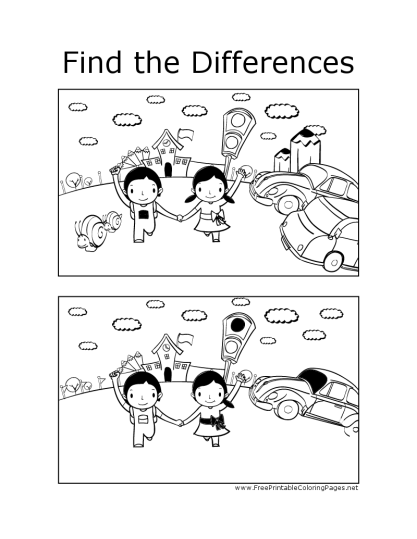
Computer Kids Find the Differences Puzzle


Whenever a designer builds a website there are bugs to work out. Can you discover the “bugs” in these pictures? Take a close look at this printable Computer Kids Puzzle and find the differences!