January 29 – Curmudgeon’s Day

celebrate-picture-books-picture-book-review-hotel-bruce-cover

About the Holiday

You know how these gray days (literal and metaphorical) make you feel—grumpy, irritable, standoffish. Today is a day when it’s ok to indulge—and maybe even celebrate—those feelings. Remember, grouchiness can lead to change, so take control and do what you can to alleviate the situation. Whether you choose to stay home today and do nothing or to get out there and make the best of it, have a happy Curmudgeon’s Day!

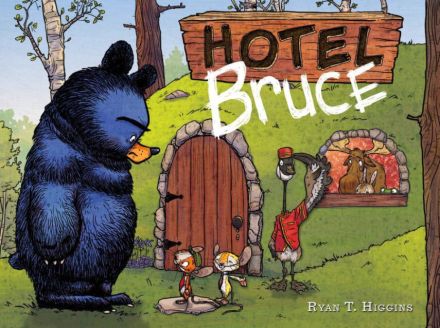
Hotel Bruce

Written by Ryan T. Higgins


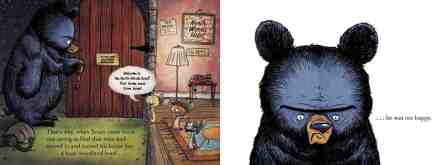
“Bruce was a bear who lived with four geese,” but he was not happy about it. Since he was their mom, however, it meant going south with them every winter even though he would rather have taken a loooong nap. Leaving home, taking public transport, and hanging out on crowded beaches took a toll on Bruce. So one spring when Bruce returned home to discover mice had turned his home into the Woodland Hotel, he went on a grouch-fueled rampage and swept the mice out into the night.
celebrate-picture-books-picture-book-review-hotel-bruce-bruce-not-happy

Copyright Ryan T. Higgins, courtesy of Disney-Hyperion

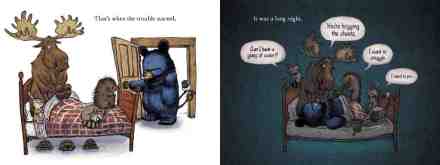
Satisfied, he climbed the stairs to bed only to find it overrun with a moose, a porcupine, a raccoon, and a rabbit and three turtles snoozing underneath. Let’s just say quarters were a bit snug. “The next morning Bruce woke to the sounds of birds chirping, and squirrels chattering, and possums having a pillow fight.” He found a frog in his toilet, got porcupine prickles in his posterior, was sprayed with skunk perfume right after showering…and a beaver gnawed the corner off his kitchen table. There was even a fox at the stove trying to convince the turtles to jump into a hot, veggie-filled “bath.” But when the mice tried to politely usher Bruce out of the Woodland Hotel, he’d had enough and asked to see the manager.
celebrate-picture-books-picture-book-review-hotel-bruce-full-bed

Copyright Ryan T. Higgins, courtesy of Disney-Hyperion

While the mice argued over who was the manager, things in the kitchen were getting steamy. The fox’s turtle soup had “turned bad.” The kitchen looked as if a turtlenado had blown through—even Bruce’s best silverware was missing! “Bruce started to lose his cool.” Just then a vanload of elephants arrived for a vacation. “Finally, Bruce lost his temper. ‘THIS IS NOT A HOTEL! THIS IS MY HOUSE! EVERYBODY OUT RIGHT NOW!’”

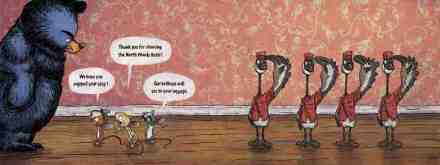
Drooping with dejection, the “guests” tromped away. “Sheesh! I thought they’d never leave,” one mouse snarked. At that, Bruce tossed the interlopers out into the rain, where they sat sad and bedraggled. “Bruce’s house was a quiet, peaceful place once again.” At least until the geese honked sympathetic honks. Bruce sighed and opened the door….
celebrate-picture-books-picture-book-review-hotel-bruce-geese-bellhop

Copyright Ryan T. Higgins, courtesy of Disney-Hyperion

Ryan T. Higgins’ curmudgeonly bear is back with a fine, funny sequel that will have kids giggling at poor Bruce’s plight. Adults will appreciate the sly wink to the penchant of woodland animals to take up roost in any warm, unoccupied space and will perhaps feel more than a little sympathy with Bruce as he finally rousts his “guests” from his home. The wise-cracking mice add levity and a few well-placed honks from Bruce’s kids tug at his heart.

Higgin’s madcap illustrations put readers in Bruce’s big, burly paws as he endures one predicament after another. While the woodland animals run wild, their slightly guilty faces reveal that even they know all is not on the up-and-up as they watch Bruce’s unibrow rise with surprise and furrow in anger. The geese, so eager to follow and fit in, look ridiculously cute in their bellhop uniforms, and Higgin’s detailed depictions of Bruce’s home will have kids lingering over each page.

Ages 5 – 8

Disney – Hyperion, 2016 | ISBN 978-1484743621

Connect with Ryan T. Higgins on his website and learn more about his books, school visits, and summer camp for kids.

Curmudgeon’s Day Activity
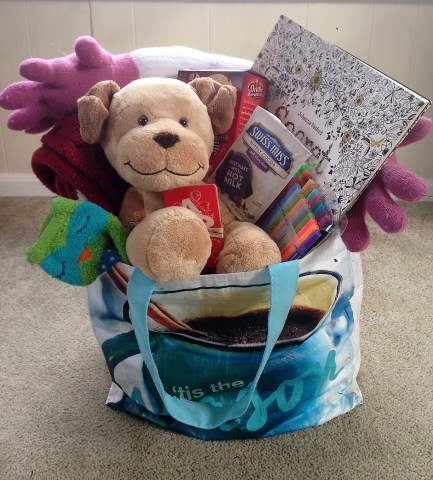
celebrate-picture-books-picture-book-review-stay-in-kit-curmudgeons-day-craft

Stay-in Starter Kit


Curmudgeon’s Day is a time to surround yourself with favorite comforts. Here are some ideas for a Stay-in Kit that would make spending the day inside so much better:

  • Cozy blanket
  • Soft pillow
  • Comfy jammies
  • Fuzzy socks
  • Fluffy friend
  • Favorite book
  • Coloring book
  • Colored pencils or markers
  • Playing cards
  • Good movie or TV show
  • Fun craft project
  • Hot chocolate
  • Tea
  • Popcorn

Picture Book Review


January 28 – Blueberry Pancake Day

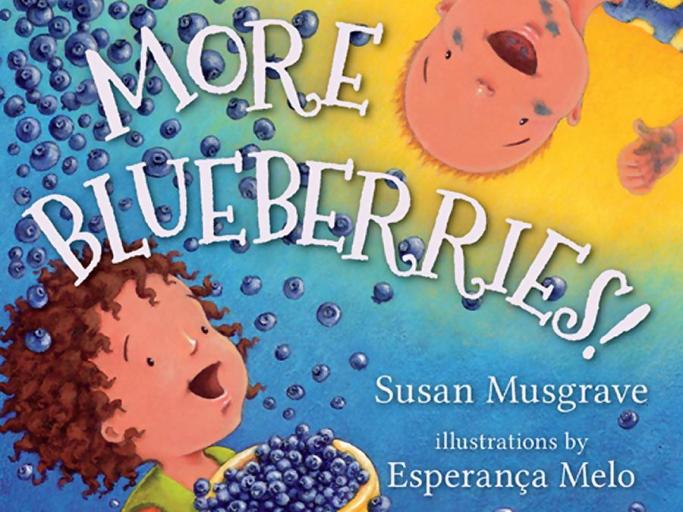
celebrate-picture-books-picture-book-review-more-blueberries-cover About the Holiday

If you love pancakes dotted with luscious blueberries then today is for you! Do you have blueberries in your freezer, frozen fresh from the summer harvest? Then this is the perfect reason to bring them out for a delicious breakfast! If not stop by a store and get a pint—pancakes are great for dinner too!

More Blueberries!

Written by Susan Musgrave | Illustrated by Esperança Melo


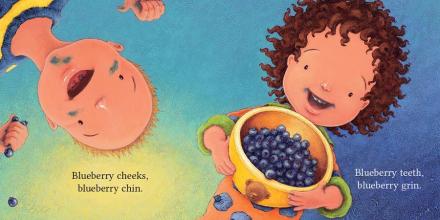
When the blueberries are ripe, the siblings in this adorable picture book live in a blueberry world. The brother and sister are all smiles with their bowl full of berries, and soon they have “Blueberry cheeks, blueberry chin. / Blueberry teeth, blueberry grin. / Blueberry fingers, blueberry nose. / Blueberry lips, blueberry toes.” Oops! After all that yummy, tasty blueberry gobbling, the bowl is empty, eliciting a call for “More Blueberries!”

celebrate-picture-books-picture-book-review-more-blueberries

Image copyright Esperança Melo, text copyright Susan Musgrave. Courtesy esperancamelo.blogspot.ca

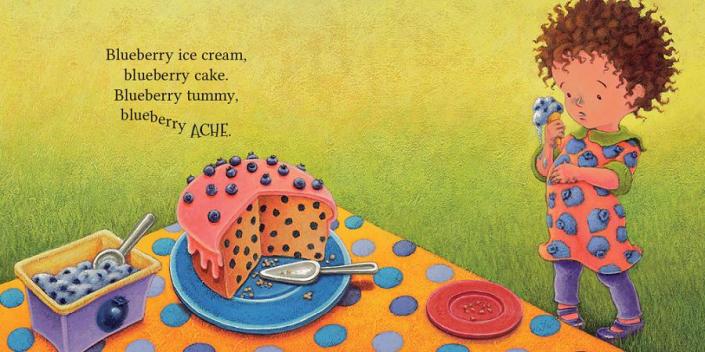
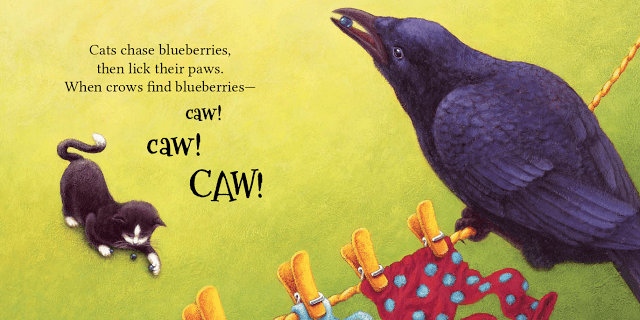
The scrumptious berries find their way into pancakes, muffins, mush, and slush, ice cream, cake—and even cause a bit of an ache. But with a small burp, the cry goes out for MORE BLUEBERRIES! The kids aren’t the only ones who love the season’s fruit—a cat chases them as they roll away, and a cawing crow carries one in its beak like the finest of pearls.

Frogs hop on blueberries with a pop and a splat while teddy bears gulp them down in no time flat. “Meow,” says the cat. “Caw,” says the crow. “Ribbit,” says the frog, and “Grrrrrrr,” says the bear as they all shout for MORE BLUEBERRIES!

celebrate-picture-books-picture-book-review-more-blueberries-cake

Image copyright Esperança Melo, text copyright Susan Musgrove. Courtesy of Orca Book Publishers

But the day is waning and while bath time beckons there’s still more time to turn bathwater blue, sail berries in a tug, wash with blueberry soap and blueberry shampoo. Finally it’s nightime with “Blueberry jammies, / blueberry yawn. / Blueberry bedtime, / blueberries gone.” As the little girl and boy drift off to sleep to dream about blueberries, they snuggle with their teddy bear and froggy toys, leave their crow book until tomorrow, and sleep peacefully under the watchful eye of their cat.

celebrate-picture-books-picture-book-review-more-blueberries-crow-and-cat

Image copyright Esperança Melo, text copyright Susan Musgrave. Courtesy of esperancamelo.blogspot.ca

Susan Musgrave’s irresistibly catchy rhymes burst with flavor and will make More Blueberries a favorite story time read for young children. The repeated “blueberry” (such a wonderfully alliterative word!) will capture kids’ imagination and give them the pleasure of reading along even at very early ages. Beyond the fun of the blueberry theme, this book makes an entertaining concept book to teach parts of the body, food, and clothing.

Esperança Melo’s endearing illustrations perfectly depict the messy, delicious, enthusiasm small children develop for certain foods or objects. The sister with her curly mass of brown hair and her brother with spiky blond hair are human canvases of blueberry-painted faces, hands, and feet while their infectious grins display stained teeth and tongues. Their household surroundings are appropriately blue, and even their pets and toys get in on the action.

More Blueberries would be a sweet addition to any child’s book shelf, one that is sure to be asked for again and again!

Ages Birth – 4

Orca Book Publishers, Board book, 2015  ISBN 978-1459807075 | Paperback, 2017 ISBN 9781459815056

Visit Esperança Melo’s website to view her illustrations and paintings portfolio!

To learn more about Susan Musgrave’s books for children and adults visit her website!

Blueberry Pancake Day Activity

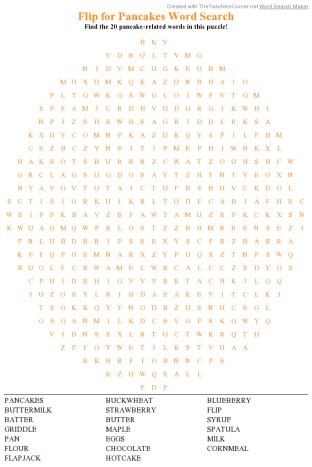
celebrate-picture-books-picture-book-review-pancakes-word-search

Flip for Pancakes Word Search Puzzle


Flipping pancakes is the best part of making this delicious breakfast—except for eating it! Can you find 20 pancake-related words in this printable Flip for Pancakes Word Search Puzzle? Here’s the Solution.

Picture Book Review
January 27 – It’s Creativity Month

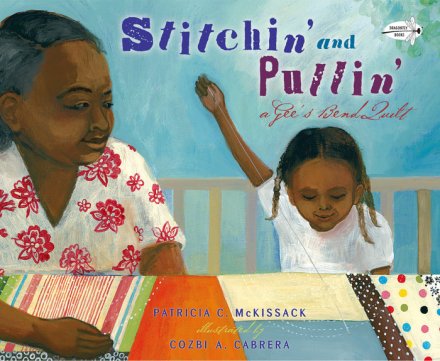
celebrate-picture-books-picture-book-review-stitchin'-and-pullin'-a-gee's-bend-quilt-cover

About the Holiday

January is a time for reflection and new beginnings. What better time to start thinking creatively and finding your inner artist, scientist, inventor, thinker? Go ahead and do the thing you’ve always wanted to do!

Stitchin’ and Pullin’: A Gee’s Bend Quilt

Written by Patricia C. McKissack | Illustrated by Cozbi A. Cabrera

In this story told through poems, a little girl begins telling of her life, starting with a recitation on Gee’s Bend Women: “Gee’s Bend women are / Mothers and Grandmothers / Wives / Sisters and Daughters / Widows.” They are every kind of woman you know, doing every type of work and activity. “Gee’s Bend women are / Talented and Creative / Capable / Makers of artful quilts / Unmatched. / Gee’s Bend women are / Relatives / Neighbors / Friends— / Same as me.”

In Who Would Have Thought, the girl muses on how perceptions change. “For as long as anyone can remember,” she says, the women of Gee’s Bend, Alabama have created quilts that were slept under, sat on, and wrapped around the sick or cold. But now those same quilts are “…hanging on museum walls, / their makers famous….”

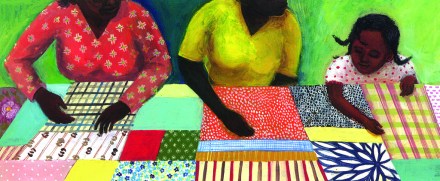
When she was just a tot “Baby Girl” reveals in Beneath the Quilting Frame, she played under the quilting frame, listening to her “mama, grandma, and great-gran / as they sewed, talked, sang, and laughed / above my tented playground.” She remembers the “steady fingers  /[that] pieced together colorful scraps of familiar cloth / into something / more lovely / than anything they had been before” as her mother sang her a lullaby.

celebrate-picture-books-picture-book-review-stitchin'-and-pullin'-a-gee's-bend-quilt-puzzling-the-pieces

Image copyright Cozbi A. Cabrera, courtesy of Random House Books for Young Readers

In Something Else, “Baby Girl” is growing too big to play beneath the frame. Her legs becoming longer and her mind full of “recipes for eleven kinds of jelly…how to get rid of mold…and the words to a hundred hymns and gospel songs” while she waits her turn at the frame. Finally, in Where to Start? her time comes. The girl asks her mama how to begin and she answers, “‘Look for the heart. / When you find the heart, / your work will leap to life… / strong, beautiful, and… / independent.’”

In Remembering, the girl thinks about how her mama has told her that “cloth has a memory.” As she chooses the cloth that will become her quilt she sees the life and the history in each. 

Nothing Wasted sees Grandma pulling apart a red-and-white gingham dress stitch by stitch to become a quilting square that the girl suddenly knows “will be the heart of my quilt.” In Puzzling the Pieces the girl and her grandma stand over the quilting frame fitting the squares together in the perfect way to tell the girl’s story. Her quilt comes together piece by piece to tell the history of Gee’s Bend in The River Island. The brown strips along three sides mirror the muddy waters surrounding her town. The fourth side is a green strip—“a symbol of the fields where my ancestors / worked cotton from can to can’t— / can see in the morning until / can’t see at night.” Lined up next to the green strip are six squares representing the small communities “where families with / the same name / are not kin by blood / but by plantation.”

Being Discovered is portrayed with “a large smoke-gray square”—the color of the Great Depression and the 15 minutes of fame Gee’s Bend garnered when discovered “by sociologists, historians, / educators, and journalists” who came and went, leaving Gee’s Bend “the way it had been / before being discovered.”

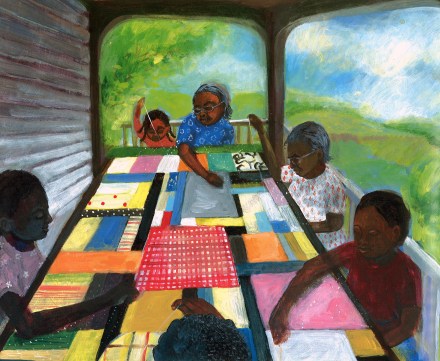
celebrate-picture-books-picture-book-review-stitchin'-and-pullin'-a-gee's-bend-quilt-understanding-comes-later

Image copyright Cozbi A. Cabrera, courtesy of Random House Books for Young Readers

In Colors, the girl’s grandma explains the meanings and feelings behind each colored cloth. “Blue cools. / Red is loud and hard to control, / like fire and a gossiping tongue.” Green, orange, yellow, white, pink, and all the others have their own personalities. “Grandma says, / ‘Colors show how you / feel deep down inside.’”

In Pinky, the harrowing facts of the march from Selma to Montgomery, Alabama frame the story of one marcher, Mr. Willie Quill who broke horses for the Alabama State Mounted Patrol and was saved from the Police attacks when one of the horses he’d trained knew his voice. In Dr. King Brings Hope, the little girl adds a “Patch of bright pink / to remember Pinky’s story. / Next to it I sew / a spotless white patch for the hope Dr. Martin Luther King / brought to the Bend” and goes on to tell how her grandma saw Dr. King at Pleasant Grove Baptist Church and what it meant to her.

By and By follows the girl as she adds “golden thank-yous, for James Reeb,” a “bright blue piece of velvet for Viola Liuzzo,” and a “big plaid people circle of white, black, brown, yellow, and red for Reverend Dr. King, all “killed for believing in justice.”

In the 1960s, The Sewing Bee tells, Gee’s Bend quilters were once again discovered. There were buyers for the handmade quilts, but stipulations. The girl asks her grandma if she was part of the Bee, to which she replies, “‘Yes, / more money. Less freedom. I chose to stay free.’”

At last all of the patches are laid out and the time comes to stitch the girl’s quilt. Five women stand at the frame “all stitchin’ and pullin.’” They work “in a slow and steady rhythm” relaxing and enjoying being together until the quilt is finished. In Finished, the last stitch is sewn, and the thread bitten and knotted. The girl has hundreds of ideas for future quilts. “Quilts that are about me, / the place where I live, / and the people / who have been here for generations.”

Further poems unite the history of “Baby Girl,” her family, and neighbors, and an Author’s Note about quilting and the women of Gee’s Bend follow the text.

Patricia McKessack’s free verse poems capture the close relationships and camaraderie of the generations of women who join around the quilting frame to share and pass down their art and their heart. McKessack’s conversational verses, on page after page like the patches of a quilt, reveal the complexity of this handmade art form in the way intimate talks between friends unveil a life. Readers learn not only about the little girl and her own thoughts, but the history and influence of her immediate family, world events, inspirational figures, and deeply held beliefs that make her who she is and ties her to the other Gee’s Bend women.

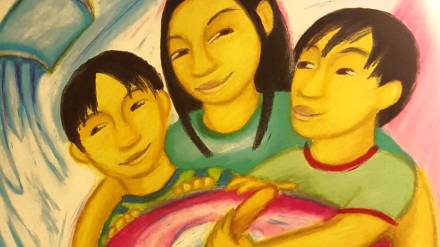
Cozbi A. Cabrera’s stunning acrylic paintings take readers inside the heart of the Gee’s Bend women, depicting the girl’s home, the table-sized quilting frame where the women collectively work, the plantations, the protests, and the changes that came but did not unravel the convictions, values, and love of the little girl’s family. Readers can almost hear the talking and singing of the Gee’s Bend women as they stitch their quilts, and the comforting, embracing environment is evident on every page. Cabrera’s portraits of the little girl, her mama, and her grandma are particularly moving. For What Changed, Cabrera depicts a yellow school bus appearing on the dirt road from the right hand corner of the page. In the side mirror a dot of a house comes into view, reminding readers that no matter how far these women are from home, Gee’s Bend is always with them.

Children—and adults—will find Stitchin’ and Pullin’: A Gee’s Bend Quilt inspirational and uplifting. This volume of poetry can be read at one sitting and delved into again and again, making it a wonderful choice for home libraries and a must for school, public, and other libraries.

Ages 5 – 12

Dragonfly Books, Random House, 2016 (paperback edition) | ISBN 978-0399549502

View a gallery  of fashion designs, dolls, and other handmade art work by Cozbi A. Cabrera on her website!

Creativity Month Activity

celebrate-picture-books-picture-book-review-stars-quilt-coloring-page

Design a Quilt Coloring Pages

Quilts are so much more than pieces of material sewn together—they’re life stories! Here are two quilt coloring pages for you to design and color. What does each piece mean to you? As you color each section, write a sentence about an event or thought that is important to you.

Quilt Template 1 | Quilt Template 2

Picture Book Review

January 26 – Walk Your Pet Month

celebrate-picture-books-picture-book-review-excellent-ed

About the Holiday

January has been designated as Walk Your Pet Month to remind pet owners of the importance of regular exercise for their pooches – or other animals who may enjoy a stroll. Keeping pets fit is one way to make sure they stay healthy and live a long and happy life!

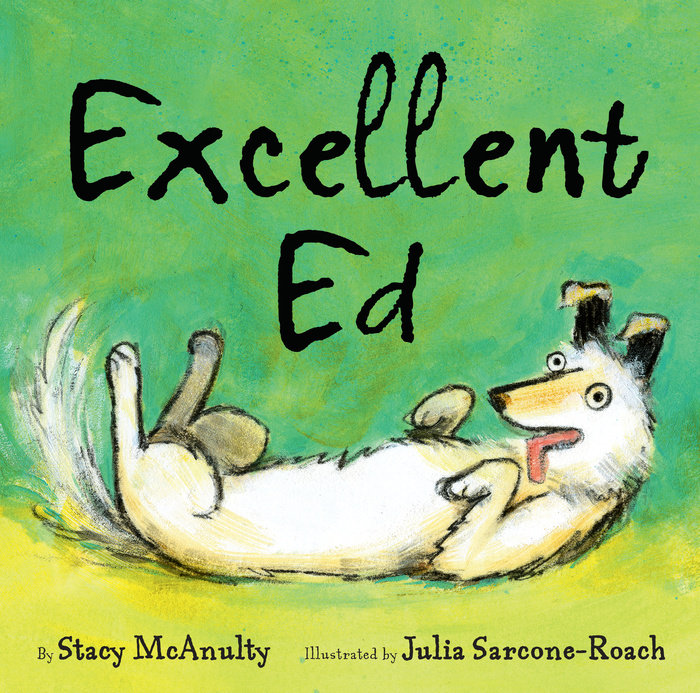
Excellent Ed

Written by Stacy McAnulty | Illustrated by Julia Sarcone-Roach


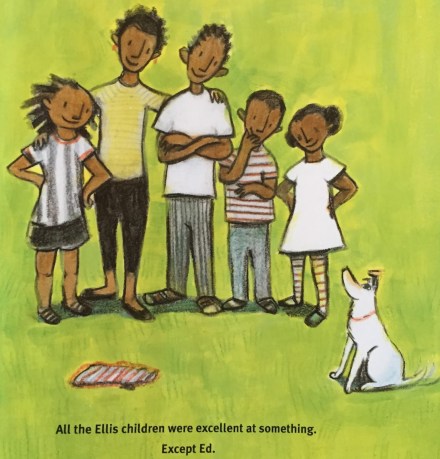
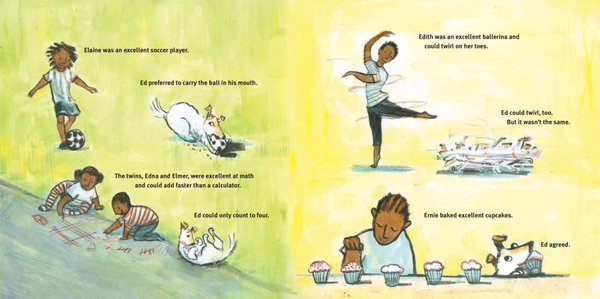
Ed, the Ellis family’s dog, is feeling a little left out. All five of the children are excellent at something, but not Ed. All the Ellis kids can eat at the table, ride in the car, sit on the couch, and use the indoor bathroom, but not Ed. Each kid has his or her own talent—playing soccer, calculating math, dancing, and baking cupcakes—and while Ed can carry a ball in his mouth, count to 4, spin after his tail, and eat cupcakes, it’s just not the same.

One day Ed wonders—if he was excellent at something, could he have the same perks as the kids? He considers his talents and comes up with what he thinks is a good one. He knows he’s great at breaking stuff! Surely this will earn him a place at the dinner table. But even before he gets going, Elaine runs in with the news that she’s broken the record for most soccer goals in a season. Ed sadly realizes that Elaine is better at breaking stuff than he is.

celebrate-picture-books-picture-book-review-excellent-ed-ellis-family

Image copyright Stacy McAnulty, text copyright Julia Sarcone-Roach. Courtesy of Alfred Knopf Books for Young Readers

Again Ed thinks. Suddenly it dawns on him that he’s excellent at losing things—he even lost himself last week! This kind of ability was surely worth a ride in the van. But just as he’s about to jump in, the twins both shout, “I’ve lost a tooth!” Foiled in this attempt, Ed goes back to the drawing board. Hmmm…it was just there, at the tip of his brain…oh, yeah! Ed is fantastic at forgetting stuff! After proving to Dad that he doesn’t remember eating just a minute ago, he’s ready to take his place on the couch. But Ed is thwarted again by Edith, who is thrilled to tell her family that she forgot to be nervous during an audition and is now the lead ballerina.

celebrate-picture-books-picture-book-review-excellent-ed-counting

Image copyright Stacy McAnulty, text copyright Julia Sarcone-Roach. Courtesy of Alfred Knopf Books for Young Readers

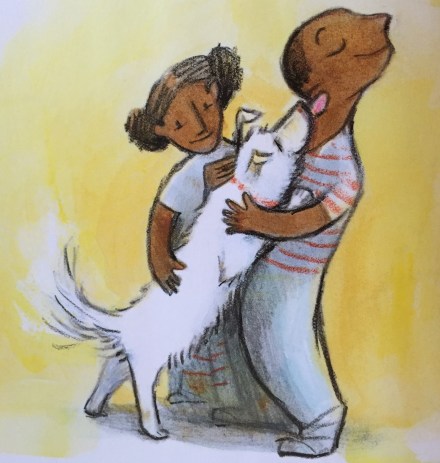
Ed whimpers. Is there nothing he’s most excellent at? Maybe he doesn’t even belong in the Ellis family. Just then Ernie drops his sandwich and Ed gobbles it up, leaving no crumbs on the floor. “‘Wow, Ed! You are excellent at cleaning the floor,’” Earnie says. When Emily and Elmer come home, Ed runs to meet them and covers them in kisses. “‘Ed! You’re excellent at welcoming us home,’” the twins exclaim. Later, with the couch stuffed with Ellises, Ed lays across Edith’s and Elaine’s feet. “‘Ed is excellent at warming feet,’” Elaine and Edith agree.

Ed wags his tail—he is an excellent floor cleaner, welcomer, and feet warmer! Now he knows why he doesn’t sit at the table, stays home instead of riding in the van, and doesn’t join the family on the couch. He realizes that he is an important part of the Ellis family, and that he’s always loved and appreciated. Now, if only he could figure out that indoor bathroom thing….

celebrate-picture-books-picture-book-review-excellent-ed-hugs-and-kisses

Image copyright Stacy McAnulty, courtesy of Alfred Knopf Books for Young Readers

There comes a time in everyone’s life when they doubt their place in the world. Stacy McAnulty explores that feeling through Ed, who worries, works the problem, and discovers that he is without a doubt excellent just the way he is. Giving the Ellis kids a variety of ages and talents makes this a great universal book for readers. McAnulty’s twist which turns “negative” gifts for breaking, losing, and forgetting things into triumphs for the Ellis kids is ingenious, adding humor, depth, and “ah-ha! moments” to the story. The mystery of Ed’s abilities is well-kept until the end, and the solution comes as a happy surprise.

Readers will wish they were part of the Ellis family, with their exuberant smiles, supportive cheers, snuggly, crowded couch, and, of course, adorable Ed. Julia Sarcone-Roach’s vivid illustrations are infectious as Ed perks up his ears, rolls his eyes skyward and with tongue out thinks about his situation. Scenes of his shenanigans will elicit giggles, and Ed’s sweet looks and wagging tale will win readers’ hearts.

Pet owners and animal lovers will want to bring Excellent Ed into their families. A wonderful book for story times or those times when you need a little encouragement, Excellent Ed is inspirational for all kids! 

Ages 4 – 8

Alfred A. Knopf Books for Young Readers, 2016 | ISBN 978-0553510232

Discover more about Stacy McAnulty and her picture books, chapter books, and novels on her website!

View a gallery of picture books, illustration, sketches, and film by Julia Sarcone-Roach on her website!

Walk Your Pet Month Activity

celebrate-picture-books-picture-book-review-dog-maze

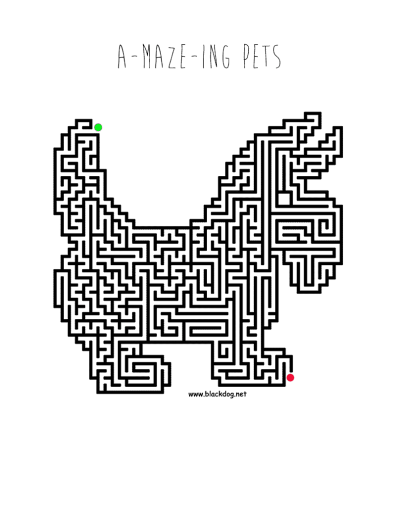
A-maze-ing Pets Maze


When dogs are out for a walk, they love to take circuitous routes as they pick up scents that are too enticing not to follow! Can you find your way through this printable A-maze-ing Pets Maze? Here’s the Solution!

Picture Book Review

January 25 – A Room of One’s Own Day

celebrate-picture-books-picture-book-review-my-very-own-room-cover

About the Holiday

Everyone needs a little space of their own—a place to think, read, write, or just say Ahhhh… after a long day. In today’s world of Man Caves and Women’s Sheds, designing a spot where you can get away and spend some rejuvenating alone time doing a particular hobby or just doing nothing is becoming easier and more accepted. Kids need their own spaces too—a personal place surrounded by the things they love.

My Very Own Room / Mi propio cuartito

Written by / Escrito por Amada Irma Pérez | Illustrated by / Ilustrado por Maya Christina Gonzalez


One morning a little girl woke up in a bed overrun with brothers. Victor’s elbow was poking her in the ribs, and Mario was curled up on the pillow with his leg across her face. In the next bed slept the girl’s three other brothers. The girl had had enough—after all she was nearly 9 years old. After years of sharing a room with her five brothers, “more than anything in the whole world [she] wanted a room of [her] own,” but space in her tiny house was hard to come by. What’s more, besides the eight immediate family members, sometimes friends and relatives from Mexico came to stay. It could be fun, but there was no privacy.

To get away she sometimes crept out early in the morning and climbed “the crooked ladder that leaned against the elm tree” in her backyard. It wasn’t that she didn’t love her brothers, she just needed a place of her own. She looked around the house for a space that would be just right. She peeked behind the flour-sack curtain that divided the living room from the storage closet. It seemed perfect! She imagined it with her “own bed, table, and lamp—a place where she could read the books she loved, write in her diary, and dream.”

celebrate-picture-books-picture-book-review-my-very-own-room-mixing-paint

Image copyright Maya Christina Gonzalez, courtesy of Lee & Low Books

While the storage nook seemed the solution, the girl’s mother shook her head. The space was already assigned to her aunt’s sewing machine, her uncle’s garden tools, furniture, and old clothes—the things needed for others to make a better life in America. But then her mother saw the tears in her daughter’s eyes and decided that perhaps the things in the storage space could find a new home on the back porch with blankets and a tarp to protect them from the weather.

With a hug and a kiss, the little girl thanked her mother, and they and the five boys began rearranging the house. Finally, all that was left behind the flour-sack curtain were a few cans of leftover paint. There was blue, white, and pink, but not enough of any one color to paint the room. Suddenly, the girl had an idea. She and her brothers mixed the three together and made…magenta! Tío Pancho offered a spare bed and after measuring the room and then the bed with a piece of yellow yarn, the little girl discovered that the bed would indeed fit. An upended wooden crate became a nightstand. But what about a lamp?

Mamá brought out her box of Blue Chip stamps that she’d been collecting for years. The stamps were awarded with gas and food purchases. When they were stuck into booklets and used at special stores, the stamps were as good as money. The girl and her brothers “licked and licked and pasted and pasted.” When they were finished, they all went to the stamp store. As soon as she stepped into the store, the girl spied the lamp she wanted. “It was as dainty as a beautiful ballerina, made of white ceramic glass with a shade that had ruffles around the top and bottom.”

celebrate-picture-books-picture-book-review-my-very-own-room-books

Image copyright Maya Christina Gonzalez, courtesy of Lee & Low Books

Back home she carefully set the lamp on her bedside table, but “something was still missing, the most important thing…Books!” The next day the little girl brought home six books from the library—six was her “lucky number because there were six children” in her family. That night, the little girl nestled into her new room, turned on the light and began to read. When her two youngest brothers peered in through the curtain, she invited them in, and as they snuggled on her bed, she read them a story. At the end they said goodnight, and her brothers returned to their own room. Lying back against her pillow, the girl felt “like the luckiest, happiest little girl in the whole world” because each person in her family had worked to make her wish come true. She drifted off into peaceful sleep under a “blanket of books” in her very own room.

Amada Irma Pérez’s touching story from her own childhood is a delightful reminder for readers of the strong bonds of family love that puts other’s needs ahead of one’s own. The family’s commitment to each other is found not only in their willingness to help rearrange the house to accommodate a maturing daughter and sibling, but in the collection and storage of goods that will contribute to a better life for friends and relatives. Children familiar with reward points will be fascinated to learn about their predecessor “blue chip stamps.” The straightforward storytelling is infused with the kinds of hopes and suspense that resonate with kids, and the tender, quiet ending leaves readers with a lingering feeling of comfort and happiness.

Maya Christina Gonzalez fills the pages of My Very Own Room with joyous vibrancy and empathy that emphasizes the family’s connection. Soft edges and swirling patterns create a comforting environment, while elements, such as the long piece of yellow yarn, underscore the familial ties. While the little girl finds solace in the backyard elm tree and hunts for a space to call her own, her mother looks on with understanding, which leads to depictions of mother and daughter that are particularly moving. With warmth and welcome, each page invites readers into the family home to share a transitional event in their life.

The text is presented in both English and Spanish on each page, and is followed by a brief biographical note, including photographs, by Amada Irma Pérez.

It’s heartening to read a story in which siblings are so immediately supportive of each other. The gentle pace and upbeat tenor of My Very Own Room makes it a wonderful choice for quiet family story times or group school or library readings.

Ages 5 – 10

Lee & Low Books, 2008 | ISBN 978-0892392230

Learn more about Amada Irma Pérez and her books on her website!

Discover a gallery of book illustration and fine art by Maya Christina Gonzalez plus resources for educators on her website!

A Room of One’s Own Day Activity

celebrate-picture-books-picture-book-review-bedroom-coloring-page

Decorate Your Room Coloring Page


If you had a room to fix up just the way you’d like, how would it look? Here’s a printable Decorate Your Room Coloring Page for you to enjoy. Put your own knick-knacks on the shelf and your things on the nightstand by the bed. Then give your room a color scheme – and move in!

Picture Book Review

January 24 – It’s National Hobby Month

celebrate-picture-books-picture-book-review-more-igami-cover

About the Holiday

The idea of hobbies—something useful, purposeful, and fun done in one’s spare time—has been around at least since 1676 when Sir Matthew Hale wrote in Contemplations Moral and Divine that “Almost everyone hath some hobby horse or other wherein he prides himself.” Later, in the mid-1800s when work ceased to consume every hour of the day, and people had more time for leisure pursuits, hobbies became more popular. Today, it may be interesting to consider that many of our current hobbies—knitting, sewing, woodworking, candle making, etc.—were once the work of our ancestors. To celebrate this month’s holiday, try a new activity—it may turn into a favorite!

More-igami

Written by Dori Kleber | Illustrated by G. Brian Karas


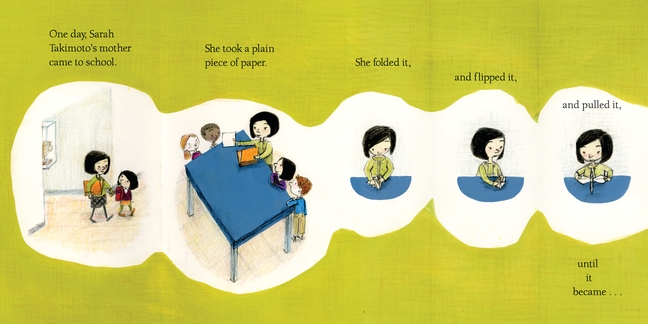
Joey was a little boy with a particular fascination. He was captivated by all things folded. At home he had a collection of “old road maps,” the bellows on an accordion made it his favorite instrument, and he even tucked himself into a foldaway bed at night. One day Joey witnessed the most amazing thing at school. Sarah Takimoto’s mother came to his class, and—right before the students’ eyes—folded, flipped, and pulled a plain white piece of paper “until it became…a crane.”

celebrate-picture-books-picture-book-review-more-igami-mrs-takimoto

Image copyright G. Brian Karas, text copyright Dori Kleber. Courtesy of Candlewick Press

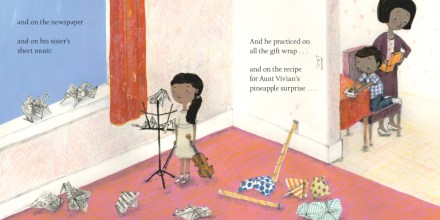
“Joey’s eyes popped. His jaw dropped. Mrs. Takimoto called it origami.” Joey was smitten. “‘I want to make origami,’” Joey told Sarah’s mother. “‘Will you teach me?’” Mrs. Takimoto  answered that while she could teach him the right folds, it would take practice and patience to become an origami master. Joey raced home that afternoon and began folding. When he ran out of notebook paper and construction paper, he used his homework…the newspaper…his sister’s sheet music…gift wrap… even “Aunt Vivian’s pineapple surprise” recipe card. But when he folded up all thirty-eight dollars in his mom’s purse, she put her foot down.

“Joey drooped.” His cranes were still coming out wrinkled and crooked, and he’d never be able to become an origami master without practicing. To soothe his disappointment, he headed next door to Muy Mexicana for some fajitas. Right away Mr. Lopez noticed Joey’s disgruntlement. When Joey explained that everyone was losing patience with him, Mr. Lopez said, “‘Many artists are misunderstood, amigo.’ Especially when they are just learning.’” Mr. Lopez went into the kitchen, and when he came out with the sizzling fajitas, he was delighted to see a napkin pyramid sitting on the table.

celebrate-picture-books-picture-book-review-more-igami-folding-sheet-music

Image copyright G. Brian Karas, text copyright Dori Kleber. Courtesy of Candlewick Press

Joey apologized, but Mr. Lopez thought it made the table look fancy. In fact, he liked it so much that he had Joey fold every napkin on every table. After that, Joey went to Muy Mexicana each day following school and folded the napkins into decorative shapes. One day he made fans, the next candlesticks, and the day after that, crowns. He patiently worked until each one was perfect.

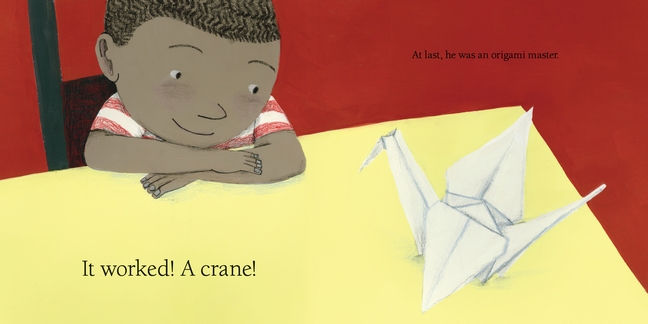
Finally, he felt ready to attempt his original challenge. “He took a crisp napkin. He folded. He flipped. He pulled.” When he was finished, a perfect crane sat in front of him. Just then a girl with a paper fan walked in. Her eyes widened as they zeroed in on Joey’s crane. Joey offered to show her how to make it, but warned, “‘It takes practice—and lots of patience!’”

celebrate-picture-books-picture-book-review-more-igami-crane

Image copyright G. Brian Karas, text copyright Dori Kleber. Courtesy of Candlewick Press

Dori Kleber’s unique multicultural story of a little boy who finds the perfect creative outlet for his singular interest will captivate kids who are just beginning to try their own hands at favorite hobbies, schoolwork, or other pursuits. With humor and honest depictions of Joey’s frustration and persistence, Kleber shows readers that practice and patience really do pay off. As Joey meets another folding enthusiast, kids will see that there are always others with whom to share favorite pastimes.

Opening More-igami to the first page where Joey sits gazing lovingly at a taco with a folded napkin next to his plate, readers will know they are in for something special. As always, G. Brian Karas’s characters are enthusiastic, encouraging, and adorable. Readers will empathize with Joey as they watch him folding and folding, and giggle at the many, many practice cranes that litter his home, even perching atop his sister’s music stand and appearing in his mom’s purse.

Karas makes full creative use of the origami theme in his clever page designs and illustrations, beginning with the square shape of the book itself and the origami paper-styled endpapers. Vivid, solid-color background pages are divided diagonally, vertically, or horizontally with subtle changes in hue or nearly invisible lines. In depictions of Joey’s school, home, and favorite restaurant, diagonals, angles, and sharp edges predominate: tables and floors create triangles on the page; windows, walls, and doors divide pages into shapes associated with the steps of origami’s folded creations; and floor tiles, the sidewalk, and even Joey’s shirt portray grid lines. The color schemes of each page, inspired by the patterns and shades of origami paper, are dazzling and unite the varied aspects of this special book.

For any child undertaking a new activity or venture, More-igami is a charming and encouraging companion on the way to proficiency—one that would make a wonderful home library addition.

Ages 4 – 8

Candlewick Press, 2016 | ISBN 978-0763668198

To learn more about Dori Kleber and her writing, visit her website!

G. Brian Karas has a whole gallery of illustrations, books, information, and “what nots” on his website!

National Hobby Month Activity

celebrate-picture-books-picture-book-review-origami-penguin-template

Origami Pets


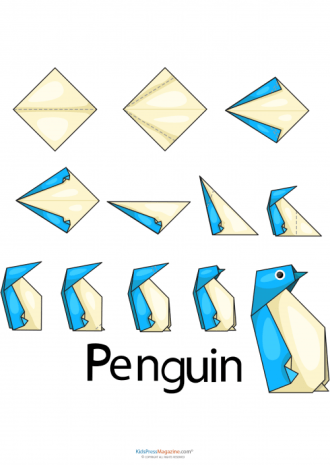
Origami is a fun hobby that can grow in complexity as you gain skill. Here are two templates to get you started! All you need is a square piece of paper and—if you’d like to decorate your piece—some markers or colored pencils.

Puppy Template | Penguin Template

Picture Book Review
January 23 – National Pie Day

celebrate-picture-books-picture-book-review-edgar-allan-poe's-apple-pie-cover

About the Holiday

National Pie day is perfect for…well…pie! Whether you love fruity pies or meat pies, pies with lattice tops or crumble crusts this day is for you! There’s only one true way to celebrate—make or buy your favorite kind of pie and enjoy! 

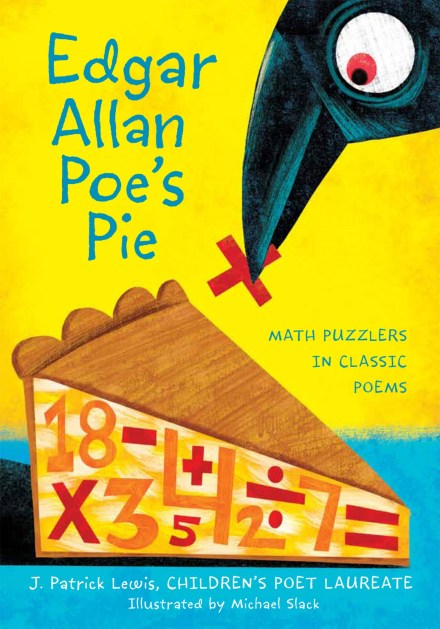
Edgar Allan Poe’s Pie: Math Puzzlers in Classic Poems

Written by J. Patrick Lewis | Illustrated by Michael Slack


There’s something about poetry with its iambic pentameters, feet, meter, sonnets, couplets, and more countable qualities that just seems to lend itself to math. J. Patrick Lewis must have thought so too because he penned a clever volume of poems inspired by well-known verses. First up is Edgar Allan Poe’s Apple Pie, which is inspired by “The Raven” and begins: “Once upon a midnight rotten, / Cold, and rainy, I’d forgotten / All about the apple pie / Still cooling from the hour before.” But now, even though there is a “knocking, knocking…” at the door, the narrator takes up a knife and slices the night with a cutting question, only to hear the stranger’s mysterious clue “‘Never four!’”

celebrate-picture-books-picture-book-review-edgar-allan-poe's-apple-pie-hotdog

Image copyright Michael Slack, text copyright J. Patrick Lewis. Courtesty slackart.com

All the narrator of Emily Dickenson’s Telephone Book, inspired by “My Life Closed Twice Before its Close,” wants to do after napping is to find a certain phone number in her directory, but where is it? She knew where it was before she went to bed—in fact its “two opposing pages / that added up to 113— / Were smudged around the edges—” but now she’s so confused…. Can you help?

Those who think that “Stopping by Woods on a Snowy Evening” has no link to underwear possibly are not aware of Robert Frost’s Boxer Shorts, in which the lilt and the rhythm of the original are perfectly matched in a priceless, pricey puzzle that ends “My tightie whities look so sad. / My tightie whities look so sad.” How can you resist?

celebrate-picture-books-picture-book-review-edgar-allan-poe's-apple-pie-hippo

Image copyright Michael Slack, text copyright J. Patrick Lewis. Courtesty slackart.com

You may know about William Carlos Williams’s red wheelbarrow and where it stood, but what if that handy implement was replaced by a… “fifteen-inch square pizza” that is missing “nineteen and a half pieces”?! Well, there may not be any rainwater glaze, but it sure does make for a delicious arithmetic conundrum in William Carlos Williams’s Pizza.

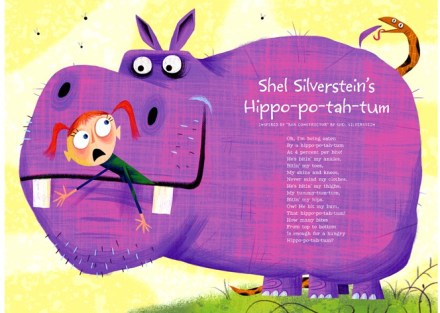
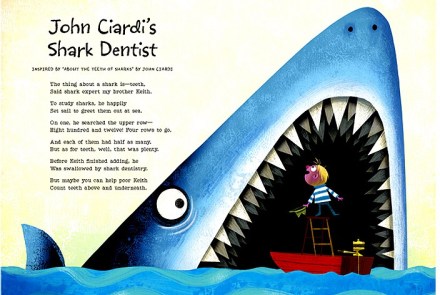
You’re eating up these poems, aren’t you? Well, next come three poems in which termites, sharks, and a “hippo-po-tah-tum” do a bit of nibbling of their own. The fun multiplies in Ogden Nash’s Buggy Rugs, where 313 little wood chompers hide; in John Ciardi’s Shark Dentist, in which you’ll want to brace yourself for the ending; and in Shel Silverstein’s Hippo-po-tah-tum, which is fractionally frightening.

These seven poems are added to seven more, plus two pages full of “prose about the poets,” to equal one smart, tantalizing poetic brainteaser of a book!

celebrate-picture-books-picture-book-review-edgar-allan-poe's-apple-pie-shark

Image copyright Michael Slack, text copyright J. Patrick Lewis. Courtesty slackart.com

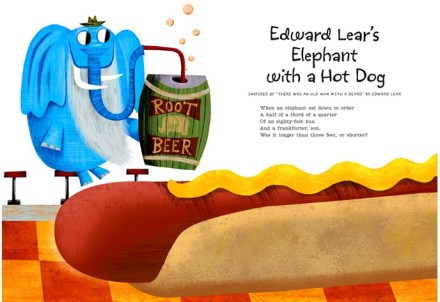
Patrick Lewis, who served as the US Children’s Poet Lauriat from 2011 to 2013, has honored 16 of the world’s most beloved poets the way kids love best—with humor. Adapting the original poem’s rhythm, rhyme scheme, and length with a dash of the ridiculous and a dose of numerical heft, Lewis has created poems that will have kids giggling while they ponder the answers to the lyrical math problems the verses pose. While arithmetic aficionados will gobble these poems up, there’s plenty for language arts lovers to sink their teeth into too. Each witty poem just begs to be compared to the original, which would make for a fun afternoon at home or lesson in the classroom. Admit it—aren’t you just the tiniest bit curious what Edward Lear’s “There was an Old Man with a Beard” has to do with an 80-foot hotdog?

celebrate-picture-books-picture-book-review-edgar-allan-poe's-pie-train

Image copyright Michael Slack Lewis, courtesty slackart.com

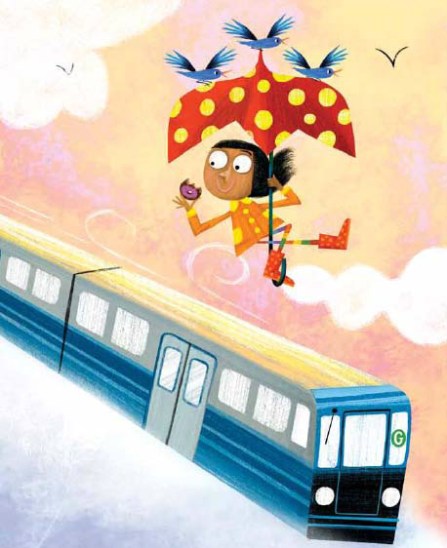
Michael Slack gets things off and running on the first spread, where a sharp-taloned blackbird stands over a knife that’s plunged into the center of a pie. While readers of Walt Whitman’s Web-Covered Shoe may wonder exactly how long the boot has been untouched, they’ll be more distracted by the number of eyes on two very fierce-looking spiders. And there may be nothing more diverting than the potbellied cowboy wearing only his tightie whities as he waits for his snowflake, flame, spaceship, and other uniquely decorated boxers to dry. Slack illustrates each poem with distinctive, vibrant images that ramp up the humor and give every page an individual look.

Answers to the math problems proposed are included with every poem, and brief biographies accompanied by tiny portraits, reveal information about the poets represented and their work.

Edgar Allan Poe’s Pie is a fantastic way to get kids interested in math and poetry. The brain ticklers, as well as the wonderful wordplay and illustrations, make this a book that should be on classroom shelves and would be welcome in home libraries too.

Ages 6 – 9

Houghton Mifflin Harcourt Books for Young Readers, 2015 (paperback) | ISBN 978-0544456129

To learn more about J. Patrick Lewis, his books, and resources for kids and teachers, visit his website!

View a gallery of books, illustration, and other art by Michael Slack on his website!

National Pie Day Activity

celebrate-picture-books-picture-book-review-cherry-pie-match

Mixed Up Cherry Pies Puzzle


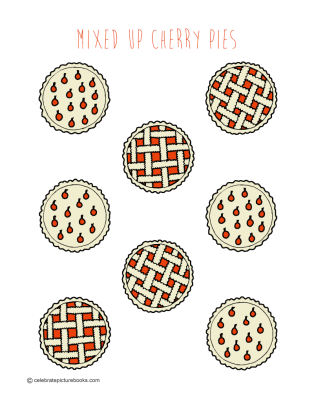
Each winner of a poetry contest were supposed to get two identical pies, but they got mixed up! Can you find the matching pies in this printable Mixed Up Cherry Pies Puzzle and save the day?

Picture Book Review