April 21 – It’s Celebrate Diversity Month

celebrate-picture-books-picture-book-review-the-ugly-dumpling-cover

About the Holiday

The month of April is set aside for people to recognize and appreciate the varied cultures and beliefs around the world. Instead of finding division and differences, we should celebrate the beauty and wonder of our multifaceted planet. This month offers a great opportunity to discover ways to incorporate acceptance and inclusiveness throughout your life.

The Ugly Dumpling

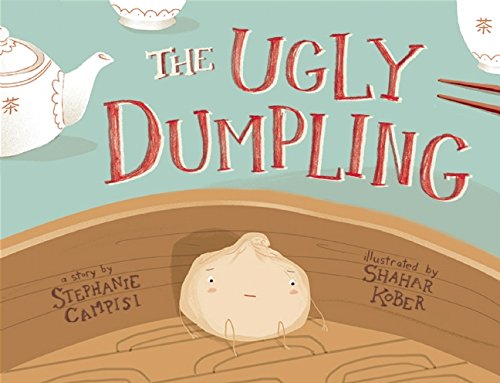
Written by Stephani Campisi | Illustrated by Shahar Kober


“Once upon a time, perhaps last week, or even last night, at your local dim sum restaurant…there was an ugly dumpling.” Sure, you might think all dumplings are ugly, but we’re talking about one particular ugly dumpling. It tried all sorts of tricks to make itself more attractive, but it still remained lonely and uneaten. It sat dejected until a cockroach traversing the kitchen caught sight of it and immediately fell in love.
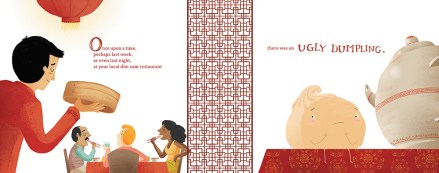
celebrate-picture-books-picture-book-review-the-ugly-dumpling-interior-art-dim-sum-restaurant

Image copyright Shahar Kober, text copyright Stephani Campisi. Courtesy of Mighty Media Press.

The cockroach “reached out an arm. (Or a leg)” toward the dumpling and offered to show it the beauty of the world. Together they traveled to cities near and far, experiencing them through culinary lenses—stacked-plate skyscrapers, piled-dishes skylines, and chopstick bridges that took them over flour mountains and folded-napkin peaks. Then, in a certain restaurant, the dumpling saw something astonishing! Not only one, but two, three, four, and more dumplings just like itself!
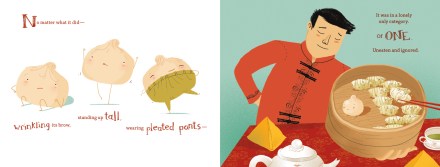
celebrate-picture-books-picture-book-review-the-ugly-dumpling-trying-to-fit-in

Image copyright Shahar Kober, text copyright Stephani Campisi. Courtesy of Mighty Media Press.

Suddenly the ugly dumpling realized that it was not a dumpling at all, but a “steamed bun—a golden-hearted, smooth-skinned steamed bun, exactly like all the other steamed buns in the world.” The ugly dumpling puffed with meaning, importance, and…yeast! The restaurant patrons and staff and even the other steamed buns took notice. The cockroach by the ugly dumpling’s side cheered to see its friend receiving so much attention.
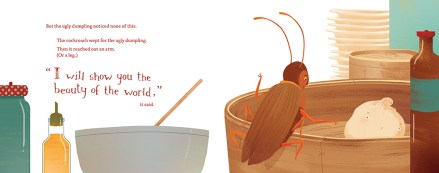
celebrate-picture-books-picture-book-review-the-ugly-dumpling-roach

Image copyright Shahar Kober, text copyright Stephani Campisi. Courtesy of Mighty Media Press.

The people’s wide eyes and astonished expressions were not for the dumpling, however. Instead, they registered horror at the insect in their midst. The ugly dumpling was familiar with that look and did “something quite beautiful. It reached out an arm. (Or a leg.) And it led the cockroach out into the world, The beautiful, beautiful world.” And in that moment the ugly dumpling realized that it “was not like all the other steamed buns after all” and that “perhaps that was a good thing.”
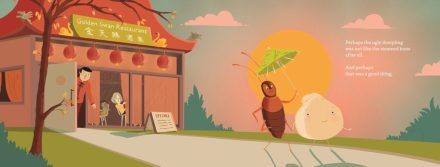
celebrate-picture-books-picture-book-review-the-ugly-dumpling-leaving-together

Image copyright Shahar Kober, text copyright Stephani Campisi. Courtesy of Mighty Media Press.

Stephani Campisi’s The Ugly Dumpling is a fresh and delectable dish-up of the classic Ugly Duckling story for a new audience. Stuffed with charm and off-beat humor, this tale of friendship and diversity embraces all who feel at odds with their environment—with or without the recognition of why. Its sweet and insightful ending emphasizes the idea that finding your niche does not always mean fitting in with a certain crowd, and that having the courage to strike out on your own path leads to beautiful relationships and personal happiness.
celebrate-picture-books-picture-book-review-the-ugly-dumpling-different-dumplings

Image copyright Shahar Kober, text copyright Stephani Campisi. Courtesy of Mighty Media Press.

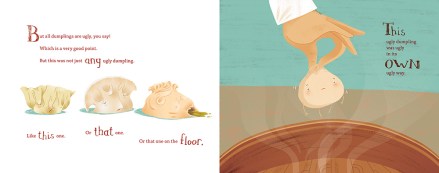
Shahar Kober’s dumpling is anything but “ugly.” His adorable puffed dough, lonely and ignored for not adhering to the mold, will melt readers’ hearts as he tries anything and everything—including green pleated pants—to fit in. Kobar’s stylish drawings are the perfect underscore to Stephani Campisi’s quick, dry wit—as in his rendition of three uglier-than-the-next dumplings—and if cockroaches were really as cute as Kober’s, we’d all set out a different kind of Roach Motel. A clever bit of typography transforms steam coming from a wok into the word HISS, and the restaurant scenes will make readers hungry for their favorite Asian eatery.

As readers turn to the last pages and watch the steamed bun and the cockroach leave the restaurant hand in hand (foot in foot?) under the shade of a paper umbrella, they will want to turn back to the beginning and start over again. The Ugly Dumpling is a must read and a wonderful addition to children’s bookshelves.

Ages 2 – 9

Mighty Media, 2016 | ISBN 978-1938063671

Get to know more about Stephanie Campisi and her work on her website!

To view a gallery of art by Shahar Kober for books, magazines, animation, and more, visit his website!

Check out the Mighty Media Press website for more about The Ugly Dumpling and a-dough-able coloring pages!

Take a look at the trailer for The Ugly Dumpling!

Celebrate Diversity Month Activity
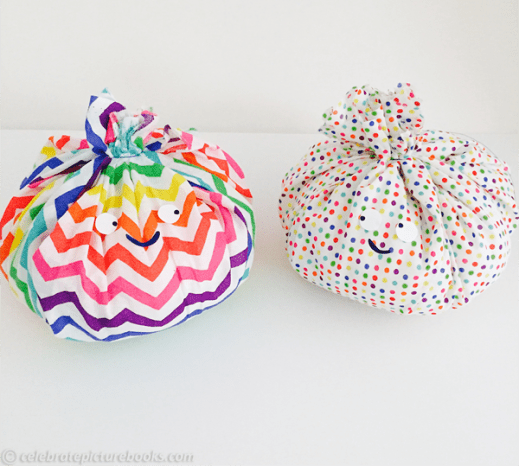
celebrate-picture-books-picture-book-review-dumpling plush craft

Embrace Your Inner Dumpling Plush


We are all beautiful “dumplings” in one way or another! With this easy craft you can create a huggable friend and show others what you’re made of!

Supplies

  • Square piece of cloth in any fabric and color. Size of plush depends on size of cloth (the plushes shown are made from 18”-square cotton fabric)
  • Poly fill (the plushes shown use about 1 1/8 ounces of fill)
  • White cloth for eyes and mouth
  • Twine or string
  • Fabric glue

Directions

  1. Cut the corners from the square cloth to make a circular piece of cloth
  2. Fill the middle with poly fill
  3. Pull the edges of the cloth up and around the fill
  4. Tie the top closed with the twine or string
  5. To make the face, cut small circles and a mouth from the white cloth
  6. Smooth out a section of the dumpling body
  7. Glue the face to the body with fabric glue

Picture Book Review

April 20 – National Adopt a Greyhound Month

celebrate-picture-books-picture-book-review-a-greyhound-a-groundhog-cover

About the Holiday

Established eight years ago by The Greyhound Project, National Adopt a Greyhound Month aims to promote the adoption of retired racing greyhounds. These smart and gentle animals make wonderful family companions. To learn more about adoption or how you might volunteer or help out, visit The Greyhound Project website.

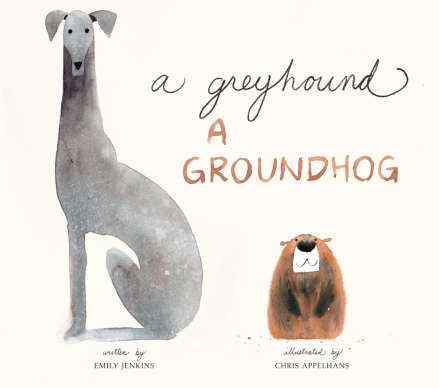
A Greyhound, a Groundhog

Written by Emily Jenkins | Illustrated by Chris Appelhans

“A hound. A round hound” sleeps curled into itself like a smooth stone. He wakes and pokes his head in the air. “A greyhound.” Nearby is a hole, small and dark. A furry creature pokes his head in the air. “A groundhog.” The greyhound stretches and bows— his head down, his tail up. The groundhog also stretches—his arms lifted, his teeth exposed by a yawn.

celebrate-picture-books-picture-book-review-a-greyhound-a-groundhog-surprised

Image copyright Chris Appelhans, text copyright Emily Jenkins. Courtesy of Schwartz & Wade.

“A groundhog, a greyhound, a grey little round hound. / A greyhound, a groundhog, a found little roundhog.” Round and round they run. They chase and lope and leap. “Around and around and around and around. The ground and a hog and some grey and a dog.” Like a whirlpool they spin and twirl and race and swirl, over and under.

The greyhound and groundhog pull up short from “around and around” to watch a butterfly that astounds. Then myriads astound, fluttering like confetti on the air. The greyhound and groundhog dash after them to “a bog and a sound / and a log on the ground”—an obstacle course and a playground for rolling “around and around and around and around!”

celebrate-picture-books-picture-book-review-a-greyhound-a-groundhog-playing

Image copyright Chris Appelhans, text copyright Emily Jenkins. Courtesy of Schwartz & Wade.

Emily Jenkins’ twisting, twirling rollercoaster of a story is a euphoric celebration of carefree capering with a friend. Playing off the springy, bouncing sound of “ound” and the sharp, squat staccato “og,” Jenkins’ perfect read-aloud transports readers and listeners into the midst of an alliterative maelstrom that will leave them breathless and giggling. The momentary pause to marvel at the beauty of nature is superb suspension, leading to renewed exuberance and finally contented repose.

celebrate-picture-books-picture-book-review-a-greyhound-a-groundhog-swirling

Image copyright Chris Appelhans, text copyright Emily Jenkins. Courtesy of Schwartz & Wade.

The gorgeous mottled watercolors of Chris Appelhans’ sleek grayhound and perky groundhog meld and contrast on the page as the two frolic and tumble together then run and chase. Combined with the curved text, the images create the sense that the very pages are engaged in the swirling, spirited play of the greyhound and groundhog. The pair’s happy faces reveal the joy of being together, and the pastel backdrop of flowers, butterflies, and a mirror-still bog enhance the beauty of this joyful book.

A Greyhound, a Groundhog is a can’t-miss gift for any occasion and a wonderful addition to any child’s bookshelf for cheery, energetic story times.

Ages 3 – 8

Schwartz & Wade, 2017 | ISNB 978-0553498059

Discover more about Emily Jenkins and her books as well as book-related resources and activities on her website!

View a portfolio of artwork by Chris Appelhans on his website!

National Adopt a Greyhound Day Activity

celebrate-picture-books-picture-book-review-greyhound-coloring-page

Graceful Greyhound Coloring Page

Greyhounds are one of the fastest animals on the planet, but don’t rush through coloring this printable Graceful Greyhound Coloring Page.

Picture Book Review
April 19 – Banana Day

celebrate-picture-books-picture-book-review-bananas-in-my-ears

About the Holiday

It seems people are somewhat split on this most appealing holiday—is it a day for enjoying the tasty tropical fruit or a day for goofing off? Why not do both?! Bananas offer plenty of nutrition and flavor in their own tidy, take-along package, and they’ve been the subject of humorous skits as long as people have been tossing the peels to the ground. Today, grab a bunch and head out to have some fun at a park, playground, shoreline, or even back deck near you!  

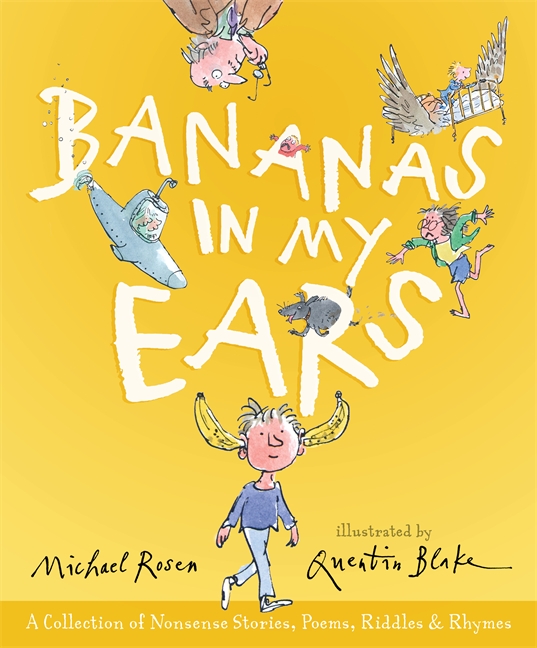
Bananas in My Ears: A Collection of Nonsense Stories, Poems, Riddles, and Rhymes

Written by Michael Rosen | Illustrated by Quentin Blake


Things may go from the ridiculous to the sublime or from the sublime to the ridiculous, but the rhymes, stories, poems, and jokes in this collection are both ridiculous and sublime. Divided into four sections—The Breakfast Book, The Seaside Book, The Doctor Book, and The Bedtime Book—these bite-sized tales will nibble at your funny bone.

Each book includes six to seven short pieces that humorously reveal the inner workings of familial and community relationships. Recurring titles “What if…,” “Things We Say,” and “Nat and Anna” sibling stories tie the books together. The tone for Bananas in My Ears is set with aplomb in the very first offering, “Breakfast Time,” which reveals the chaos of early morning with its spilled milk, banging trash cans, pets on the table, school clothes ruined, and “I think I’m going crazy!” shenanigans. 

“What If…” (Breakfast Book) combines kids’ natural penchant for rhyming with their unbounded imagination and a bit of stream-of-consciousness to boot. Just as a little boy is to bite into a piece of toast, he has this thought: “What if / a piece of toast turned into a piece of ghost / just as you were eating it / and you thought you were going to sink your / teeth into a lovely crunchy piece of hot toast / and butter and instead this cold wet feeling / jumps into your mouth / going, / ‘Whoooooooooooooooooooo!’ / right down into your stomach…”

celebrate-picture-books-picture-book-review-bananas-in-my-ears-flying-bed

Image copyright Quentin Blake, text copyright Michael Rosen, 2012. Courtesy of Candlewick Press.

Adding speech bubbles and expressive art to commonly used phrases in “Things We Say” transforms throw-off lines like “My hair’s a mess,” “Look what I found,” “You can’t lie there all morning,” and “Now what seems to be the trouble?” into self-deprecating humor all can relate to.

Four stories of Nat and his older sister Anna zero in on particular moments that illuminate the sibling relationship, At once opposed and in sync, Nat and Anna negotiate moments in which Anna is put in charge of watching Nat at breakfast with topsy-turvy results; a frightening story that Anna tells Nat about jellyfish somehow backfires; a trip to the doctor turns into a competition about future professions; and a “who’s-on-first” type banter allows Anna to enjoy some alone time.

“Three Girls” is a clever take on outwitting-an-ogre tales. Three girls walking on the beach come across a cave. One girl goes in and “sees a pile of gold sitting on the rocks, so she thinks, ‘Yippee, gold, all for me!’ And she steps forward to pick it up and a great big voice booms out ‘I’m the ghost of Captain Cox. All that gold stays on the rocks.’” Afraid, she runs out of the cave. The second girl is braver. She enters the cave, sees the gold, hears the same booming voice and is also chased away. Undeterred, the third girl walks into the cave, sees the gold, and hears the booming voice of Captain Cox. Instead of running away, however, she says, “‘I don’t care. I’m the ghost of Davy Crocket, and all that gold goes in my pocket.’” With her treasure secured she hightails it out to join her friends.

Among other fun stories in this volume are: “These Two Children,” with a lively recitation of familiar bedtime routines; “Fooling Around,” that offers light rhymes on children’s names; and another “What If” (the Breakfast Book) that will have kids cracking up —“What if / hard-boiled eggs turned into hard-boiled legs / just when your dad was eating his egg / and he says, / ‘Hey, what’s this?’…”

celebrate-picture-books-picture-book-review-bananas-in-my-ears-breakfast

Image copyright Quentin Blake, text copyright Michael Rosen, 2012. Courtesy of Candlewick Press.

Michael Rosen understands, as kids do, that sometimes nonsense makes perfect sense and that even the commonplace is quite absurd when you think about it. This collection of witticisms is sure to resonate with children. Just hand a child this book and get ready for giggles—and, oh yes, adults will chuckle too.

In his colorful pen and ink drawings the inimitable Quentin Blake enlivens each piece with rakish kids, wide-eyed parents, sloppy messes, bouncing, jumping joy, and all the silliness that contributes to having a great day. “An accident waiting to happen” doesn’t begin to describe the bedlam ensuing in “What Happens Next?” as each character and object is set up to play their part in an oh-so-human game of dominoes. Kids will love seeing themselves and the world around them so candidly drawn, and adults will appreciate the whimsical sophistication of the same.

Ages 5 and up

Candlewick Press, 2012 | ISBN 978-0763662486

Banana Day Activity

celebrate-picture=books-picture-book-review-allrecipes.com-banana-banana-bread-recipe

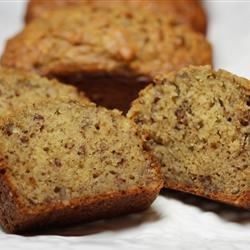
Banana Banana Bread recipe, courtesy of allrecipes.com.

Banana Banana Bread


How can you go wrong with a recipe that includes so many bananas they have to be listed twice in the name? You can’t! This simple, yet delicious banana bread from Allrecipes satisfies the munchies at breakfast or snack time! Try it toasted—you’ll be sure to cheer B-A-N-A-N-A-S! Click here to begin enjoying Allrecipes Banana Banana Bread.

Picture Book Review
April 18 – World Heritage Day

celebrate-picture-books-picture-book-review-school-days-around-the-world-cover

About the Holiday

Today’s holiday was established in 1982 by the International Council of Monuments and Sites to celebrate the joint history and heritage of the human race. World Heritage Day invites us to honor all of the world’s cultures and promotes awareness of important cultural monuments and sites in order to preserve these valuable historical places. Nearly 10,000 members from more than 150 countries, including architects, engineers, artists, geologists, civil engineers, and architects, work tirelessly to protect the world’s cultural achievements.

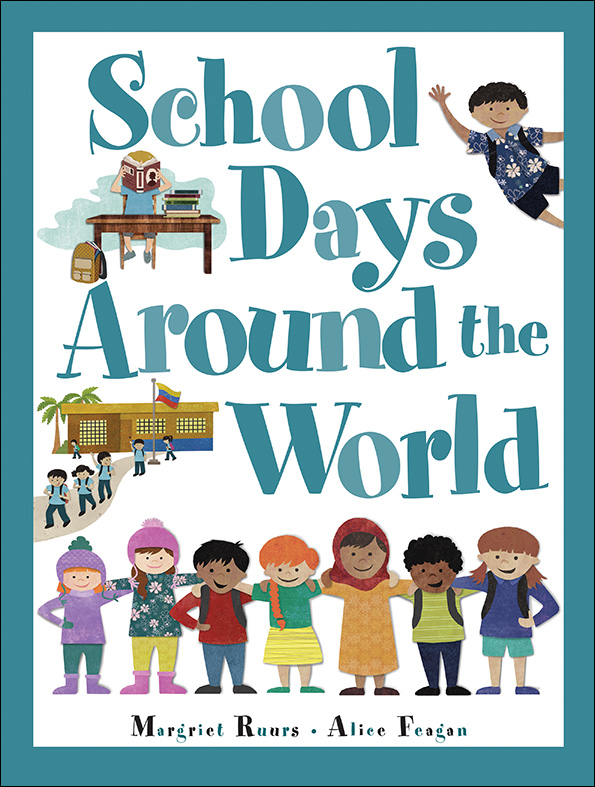
School Days Around the World

Written by Margriet Ruurs | Illustrated by Alice Feagan


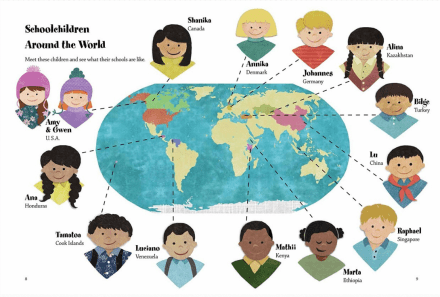
Every day millions of children around the world go to school, but schools can vary from place to place. Some classes are held in large buildings with libraries, science labs, and computer rooms while others gather in small buildings or even outside. “Schools around the world may be very different, but children everywhere like to have friends and learn new things.” In School Days Around the World, readers meet children from thirteen countries to learn what their educational day is like.

First, children meet Tamatoa, who attends school on Rarotonga, one of the Cook Islands in the South Pacific. Tamatoa arrives to school on a scooter just as the “thang-Thong-thang! of the wooden slit drum calls students inside. Tamatoa’s teacher is wearing flowers in her hair as she does every day. She teaches the children their Ura language, and in the afternoon they dance the hupa, the island’s traditional dance. In Singapore Raphael goes to an international school where the students speak many languages. Raphael knows Dutch, English, and Spanish. His best friend Aamon speaks Hindi, Chinese, and English. Raphael likes to read and write stories on the computer. Sometimes they “have a craft fair to raise money to help children in other parts of the world.”

celebrate-picture-books-picture-book-review-schools-around-the-world-map

Image copyright Margriet Ruurs, text copyright Alice Feagan. Courtesy of alicefeagan.com

Marta walks to her school in Azezo, Ethiopi, even though she is blind. Her friend Ayana holds her hand tightly to help “her around potholes and cow patties.” There are so many students that there are two different sessions. Marta goes in the morning with 500 other children. There are 70 students in her class. They learn Amharic and about Ethiopia. At noon Ayana and Marta “hurry home to help feed the ox and cow and to fetch water from the village well.”

Camilla is from Germany. Her older brother Johannes lives at a boarding school during the school year. He shares his room in an old stone house with three boys. Everyone eats together and cleans up afterward—just like in a family. In class he learns “about nature and science. They also learn how to sail.” Camilla can’t wait until it’s her turn to go to school.

If you visited Annika at school in Copenhagan, Denmark, you would probably spend most of the day outside. Some days the students take a bus to their forest school. There the “run and climb on an old boat.” They “play on swings and with a ball.” Outside they also listen to birds and learn about plants and insects and other parts of nature. While Annika enjoys spending cold days outside, Ana’s days are usually warm. She lives in San Luis, Honduras and walks an hour from her home in the hills to her new school. Inside, two teachers show the children how to read and write. Sometimes, Ana says, “a nurse visits our school. She teaches us how to brush our teeth and stay healthy.” One day a van delivers backpacks full of school supplies, books, and even running shoes.

In Alberta Canada, Shanika goes to a First Nations school where she learns her traditional Cree language along with math and language arts. After lunch, they hear stories, and elders teach them “powwow dances, drumming and how to raise a teepee. They also hold feasts where there are prayers, and the whole community shares tea, soup, bannock loaded with beans and cheese, and berries.

celebrate-picture-books-picture-book-review-school-days-around-the-world-turkey

Image copyright Margriet Ruurs, text copyright Alice Feagan. Courtesy of alicefeagan.com

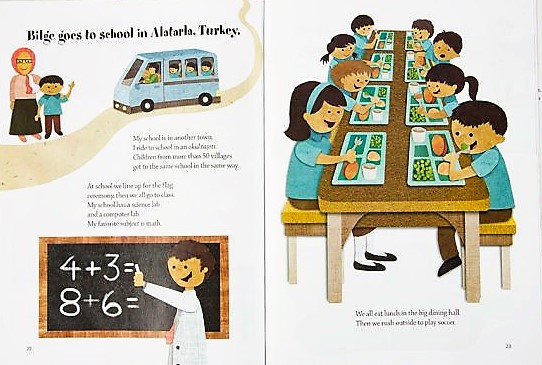
You can also spend school days with Lu in China, Alina in Kazakhstan, Mathii in Kenya, Bilge in Turkey, Luciano in Venezuela, and Amy and Gwen in Alaska, USA.

 In her short, engaging stories based on the lives of real families, Margriet Ruurs takes readers globe-trotting with new friends to show readers a typical school day in cities big and small. The details of each child’s experience—both familiar and unique—help readers learn more about their peers, promoting greater empathy and understanding now and for a better future.

Alice Feagan’s cut paper collages are full of joy and personality as kids dance, play, read, and study together. While the students’ clothing, lunches, and school buildings may differ from country to country, readers will see that the enthusiasm to learn is universal. A world map at the beginning of the book points out where each featured child lives.

A discussion following the text gives teachers, homeschoolers, and individuals tips on using the book to expand on the stories told. A glossary provides definitions and a pronunciation key for the native words found throughout the book. School Days Around the World offers a wonderful opportunity to jumpstart lessons on world customs and geography.

Ages  3 – 8

Kids Can Press, 2015 | ISBN 978-1771380478

Discover more about Margriet Ruurs and her books as well as activities for teachers and readers on her website!

You’ll find more about Alice Feagan and a portfolio of her illustration work on her website!

World Heritage Day Activity

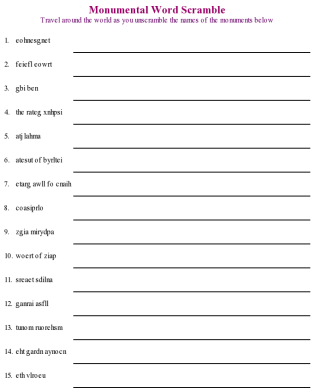
Monumental Word Scramble

Monumental Word Scramble


You’ll travel the world as you unscramble the names of 15 world monuments in this printable Monumental Word Scramble Puzzle.

Picture Book Review
April 17 – International Haiku Poetry Day

celebrate-picture-books-picture-book-review-hi-koo-cover

About the Holiday

We all know about the 5-7-5 rule of haiku poetry: the first line contains 5 syllables, the second line consists of 7 syllables, and the third line follows with 5 syllables. It seems easy as we count off the sounds on our fingers while we compose and say them. But haiku poems are so much more than the sum of their syllables. In those tiny nuggets of language are poignant emotions, unique observations of nature, and life’s wisdom. To celebrate today, read some haiku from the masters—or try your hand at this beautiful form of poetry.

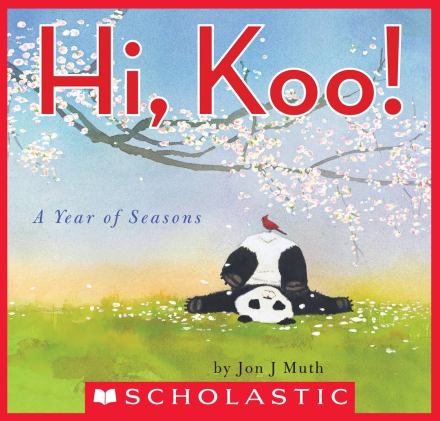
Hi, Koo! A Year of Seasons

By Jon J Muth


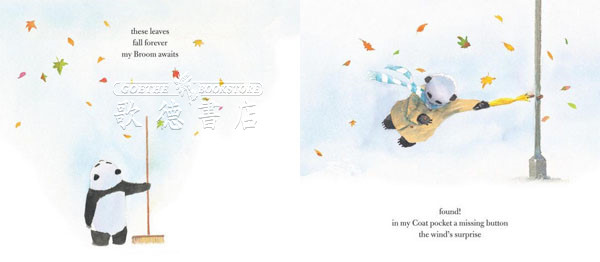
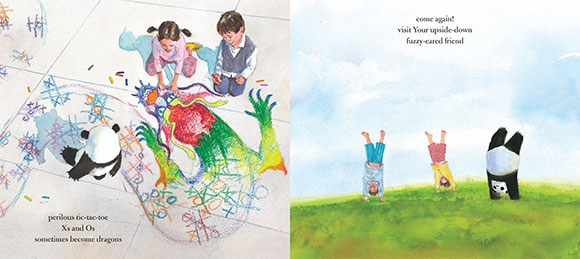
Jon J Muth’s beloved Zen panda, Koo, tumbles into a year of poignant, funny, and surprising kid-inspired moments in this lighthearted and spirited collections of haiku. As Hi, Koo opens, the gentle panda reaches for a golden, falling leaf that seems to be racing others as they softly plummet to earth. With his paw stretched into the air, Koo wonders, “Autumn, / are you dreaming / of new clothes?”

celebrate-picture-books-picture-book-review-hi-koo-fall-leaves

Image and text copyright Jon J Muth, 2014, courtesy of Scholastic Press.

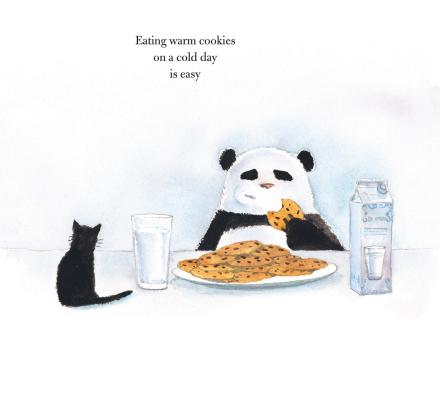
As autumn turns blustery and rainy, Koo strolls outside with his umbrella, taking time to spin and twirl and recreate an iconic pose of joy on a lamp post before returning home. Koo licks his lips remembering his day: “Dance through cold rain / then go home / to hot soup.”

celebrate-picture-books-picture-book-review-hi-koo-eating-cookies

Image and text copyright Jon J Muth, 2014, courtesy of Scholastic Press.

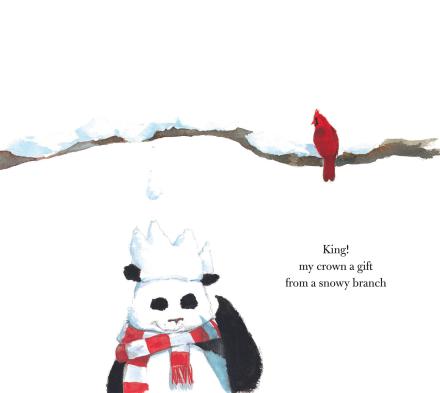
With winter come snow and mysteries and irresistible impishness. Rising from the piles of white fluff, a traffic sign is a tempting target: “snowball hits the stop sign / Heart beats faster / are we in trouble?” The storm leaves snowbanks hip-high on Koo—but smaller creatures? “In the snow / this cat vanishes / Just ears…and twitching tail.”

Winter’s early nightfalls and dusting snow showers invite quiet play and contemplation as “shadows getting Long / snowfall flutters around / the outside lamps.”

celebrate-picture-books-picture-book-review-hi-koo-cardinal

Image and text copyright Jon J Muth, 2014, courtesy of Scholastic Press.

Finally, warm weather soothes the sky, bringing “New leaves / new grass new sky! / spring.” The reawaking world inspires long walks in the lush forest, complete with food for the mind and little friends: “Reading aloud / a favorite book / an audience of sparrows.” But sometimes a step goes wrong, triggering a twinge of remorse that sensitive readers will recognize: “killing a bug / afterward / feeling alone and Sad.”

celebrate-picture-books-picture-book-review-hi-koo-dragon

Image and text copyright Jon J Muth, 2014, courtesy of Scholastic Press.

Summer ousts all remnants of the coolness of spring, offering gleeful freedom both day and night. The deep,  inky skies provide a backdrop to “Tiny lights / garden full of blinking stars / fireflies.” On a trip to the shore, even the sea becomes a playmate: “Water catches / every thrown stone / skip-skip splash!”

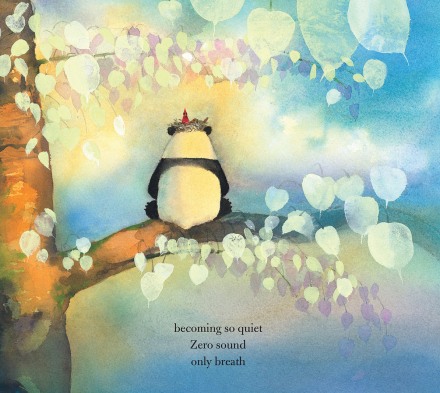
As autumn promises to roll around again, it is time to ponder another year. Just you “becoming so quiet / Zero sound / only breath.”

celebrate-picture-books-picture-book-review-hi-koo-quiet

Image and text copyright Jon J Muth, 2014, courtesy of Scholastic Press.

In his introductory Author’s Note, Jon J Muth discusses the haiku form, which originated in Japan and “was made up of seventeen sound parts called on—divided into three lines with five, then seven, then five on. He reveals that English syllables and on are not equal and that haiku directly translated into English are often shorter than the 5-7-5 lines we are used to. In Hi, Koo! Muth employs this looser structure, capturing an instant in time “using sensory images.”

Muth’s verses will delight readers with their wisdom, wit, and winks to fleeting childhood ideas and actions that tend to be remembered long afterward—even into adulthood. Muth’s lovely watercolors—snapshots in various perspectives—tenderly depict the magical moments that make up a child’s year.

Ages 4 – 8

Scholastic Press, 2014 | ISBN 978-0545166683

International Haiku Poetry Day Activity

celebrate-picture-books-picture-book-review-bookworm-bookmark

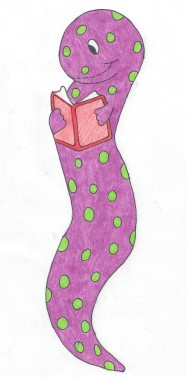
Friendly Bookworm Bookmark


If you love to read and write, you might think of yourself as a bookworm! Here’s a printable Friendly Bookworm Bookmark to keep you company while you read and mark your page when you have to be away.

Picture Book Review
April 16 – Wear Your Pajamas to Work Day

celebrate-picture-books-picture-book-review-piggies-in-pajamas-cover

About the Holiday

Forget about Casual Friday, Wear Your Pajamas to Work Day offers much more in the way of comfort and coziness—as those who work from home well know! A little research on pajamas finds that the word derives from a Persian term for “leg garment.” Draw string pants were popular in Southwest Asia and were brought to the attention of other areas of the world by British colonials. The Western world adopted these comfy pants in the 1800s, and since then bed wear has become softer, more flexible, and more colorful. To celebrate today, wear your favorite jammies to work—and don’t forget your teddy bear!

Piggies in Pajamas

Written by Michelle Meadows | Illustrated by Ard Hoyt

It’s bedtime for the little piggies, but Papa isn’t home yet and Mama’s on the phone. So the five rambunctious kids find ways to spend the time. A peek into their room finds “Piggies in pajamas / jumping in the air / tossing up the pillows / popcorn in their hair.” The quadruple bunk beds make tall mountains to climb and perfect platforms for jumping into the ocean, but as the piggies dive onto the soft, pillow “water,” they hear Mama’s footsteps in the hall.

celebrate-picture-books-picture-book-review-piggies-in-pajamas-mom-on-phone

Image copyright Ard Hoyt, text copyright Michelle Meadows, 2013. Courtesy of simonandschuster.com

The piggies “hurry to the tunnel. / Everybody, hide. / Underneath the covers, snuggle deep inside.” Soon all seems quiet, so they tiptoe from their beds to spy on Mama. They’re happy to see that she’s still occupied, leaving the tracks clear for the piggie train to toot, toot across the floor. But Mama, in her curlers, hears a suspicious sound and stomp, stomp, stomps upstairs.

Once more the five siblings rush to their beds and pull up the covers, their ears trained on any sound from downstairs. A familiar “crick, creak” tells them that Mama is now sitting down and chatting with Mrs. Cat. “Piggies in pajamas, / whirl around the room. / Cartwheels and somersaults— / Boom, Boom, Boom!” All that noise brings Mama stomp, stomp, stomping, but when she opens the piggies’ door, they’re all snuggled in and quiet as mice.

celebrate-picture-books-picture-book-review-piggies-in-pajamas-parade

Image copyright Ard Hoyt, text copyright Michelle Meadows, 2013. Courtesy of simonandschuster.com

One sneaky eye watches Mama as she descends the stairs on her way to the kitchen for an evening snack. In moments, the little ones are up again and searching through the trunk for toys and cars and dress-up clothes. Just then at the window they hear a “scratch, scratch, tap, tap” and although it’s only a tree branch waving in the wind, the imagined wolf or fox or bear has left them shivering.

One by one, all in a line they grab their blankets and crawl down the hall to a new cozy bed. While Mama’s washing up her face, they cuddle in and start to snooze. Soon, “Mama sees their pink ears. / Tails are sticking out. / Mama climbs into bed and / kisses every snout. / ‘Good night, piggies!’”

celebrate-picture-books-picture-book-review-piggies-in-pajamas-kisses

Image copyright Ard Hoyt, text copyright Michelle Meadows, 2013. Courtesy of simonandschuster.com

The little piggies in Michelle Meadow’s sweet story want to do the right thing, but it’s just so exciting to stay up late! Readers know how they feel and will giggle along as the piggies romp when Mama’s gone but fly into bed when they hear her stomps. Meadow’s jouncy rhyme captures the freewheeling antics of unsupervised kids, the delicious suspense of getting caught, and the endearing appeal for comfort when kids are scared or truly ready to drift into dreams.

Ard Hoyt’s energetic piggies know how to make the most of Mama’s inattention! Bouncing on the bed with their popcorn snack, climbing a rope made of sheets to the top of the bedpost “mountain,” and strutting down the hall in a piggie train, these five siblings are as cute as can be. Hoyt’s split pages show both the expressive siblings and Mama as they go about their nightly routines, acting and interacting on the sounds they hear. The soft colors, humorous details, and final spreads of the piglets in Mama’s bed, tell readers that despite all the shenanigans, this is a house full of love.

Piggies in Pajamas would quickly become a bedtime favorite and a welcome addition to home bookshelves.

Ages 2 – 5

Simon & Schuster, 2013 | ISBN 978-1416949824

Discover more about Michelle Meadows and her books as well as teachers activities on her website!

You can learn more about Ard Hoyt and view a gallery of his books on his website!

Wear Your Pajamas to Work Day Activity

celebrate-picture-books-picture-book-review-pajamas-coloring-page

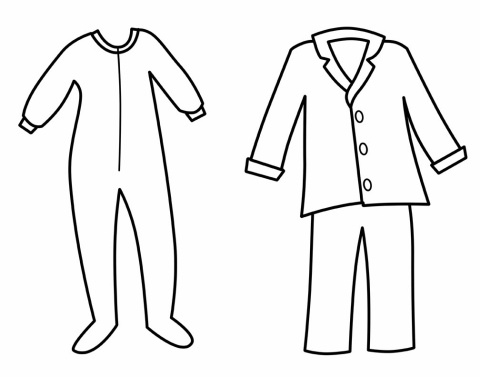
Design Your Own Pajamas

Are pajama sleepers or tops and pants your favorites for bedtime? With this printable Design Your Own Pajamas coloring sheet, you can create jammies just the way you like them!

Picture Book Review
April 15 – Take a Wild Guess Day

celebrate-picture-books-picture-book-review-are-you-a-monkey-cover

About the Holiday

Don’t ya get tired of needing to know the right answer all the time? Today’s holiday takes some of the pressure off by allowing you to indulge in wild guesses. So if the opportunity arises, and someone says, “Guess what?” or asks for your opinion, take full advantage of the day and make the wildest guess you can imagine! Get creative! It will feel good – and everyone will enjoy a laugh!

Are You a Monkey? A Tale of Animal Charades

By Marine Rivoal | English adaptation by Maria Tunney


The jungle was alive with activity. “The birds were excitedly chitchatting,” Little Starfish had “climbed up on his rock, eager to see what was going on,” and the other “animals were curious about all the fuss.” As they all gathered round, “Parrot fluffed up her feathers and spread her wings wide. ‘Guess who I am!’” she squawked. Toucan thought she was a pineapple, but Parrot laughed and said she was a lion.

celebrate-picture-books-picture-book-review-are-you-a-monkey-crocodile

Image copyright Marine Rivoal, 2017, courtesy of phaidon.com

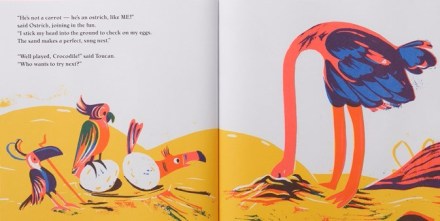
Just then Cockatoo noticed Crocodile moving closer. He wanted to know what the birds were doing. When he learned they were playing charades, Crocodile wanted to join in the fun too. He arched his body and stuck his nose in the dirt. Cockatoo offered, “‘You’re something long….’” Parrot added, “‘…that sticks out of the ground.’” And eager Toucan shouted, “‘I know! You’re a CARROT!’” But Ostrich knew just who Crocodile was imitating. It was Ostrich, herself, sticking her head in the ground to check on her eggs.
celebrate-picture-books-picture-book-review-are-you-a-monkey-ostrich-head-in-sand

Image copyright Marine Rivoal, 2017, courtesy of phaidon.com

Next, it was Ostrich’s turn. She bent her neck back and spit water into the air. Cockatoo observed, “‘You’re something bendy….’” Parrot said, “‘And something watery….’” And Toucan guessed, “‘Are you…a CUCUMBER?’” Elephant laughed then showed that Ostrich was pretending to be an elephant like her—spraying water from her trunk.

Elephant knew just what to do next. She grabbed onto a high tree branch with her trunk and swung back and forth. Cockatoo stated, “‘You’re something that hangs from a tree….’” Parrot inquired, “‘Are you a bat?’” And Toucan was so sure he was right this time that he yelled “‘YOU’RE A BANANA!’” But Monkey let them know that Elephant was not a bat or a banana but a monkey like him.

celebrate-picture-books-picture-book-review-are-you-a-monkey-ostrich

Image copyright Marine Rivoal, 2017, courtesy of phaidon.com

Monkey had an idea and curled up on the branch. Parrot suggested he was a caterpillar, and Toucan decided he was a COCONUT. No! Chameleon said. Monkey is “‘a chameleon, like me!’” Chameleon then stuck out his looong tongue. It wiggled and wrapped around the branch. Cockatoo knew it was something long and wriggly. Parrot guessed a worm, and Toucan, who “was getting VERY hungry,” hoped it was their dessert.

Snake knew Chameleon was pretending to be her, but she did not want to be dessert. She did, however, want a turn. With her long, flexible body, Snake curled “into a most curious shape” and challenged the birds to guess what she was. As much as they looked and pondered, though, they could not even hazard a guess. From way out in the water, however, a tiny voice called, “‘You’re me!’” “‘You’re right, Little Starfish, it is you!’ said Snake.”

celebrate-picture-books-picture-book-review-are-you-a-monkey-snake

Image copyright Marine Rivoal, 2017, courtesy of phaidon.com

Starfish so wanted to play along too, but didn’t know what to be. “‘I can’t jump, or hang, or change my shape. I can’t do…anything,’” he sighed. All the animals were quiet, thinking. Suddenly, Elephant lifted him up and “sprayed him high into the air.” Toucan was the first to guess—“‘A SHOOTING STAR!’” he exclaimed. All the animals cheered at Toucan’s correct answer and “agreed that Little Starfish’s charade was the very best one of all.’”

celebrate-picture-books-picture-book-review-are-you-a-monkey-elephant

Image copyright Marine Rivoal, 2017, courtesy of phaidon.com

Marine Rivoal’s Are You a Monkey is a fun, clever, kid-enticing way to learn facts about a group of jungle animals. Employing a favorite game and sprinkled with humor, the story keeps readers engaged and guessing with every turn of the page. The personalities of the three birds are charmingly revealed through their answers to the charades, and kids will giggle along with Toucan’s silly suggestions of food after food. The final charade by Little Starfish is touching and reminds readers that everyone has a special talent and can “reach for the stars” in life. After reading, little ones may even be inspired to look for Little Starfish in the night sky.

Painting with a rich Pantone color palette, Rivoal captures the lushness of the jungle while providing a stimulating visual feast for readers. Are You a Monkey is a great choice for energetic story times at home or at school and could introduce interactive classroom lessons on animal traits and behavior.

Ages 3 – 6

Phaidon Press, 2017 | ISBN 978-0714874173

Discover a portfolio of work by Marine Rivoal on her website!

Take a Wild Guess Day Activity

celebrate-picture-books-picture-book-review-charades-activities-cards

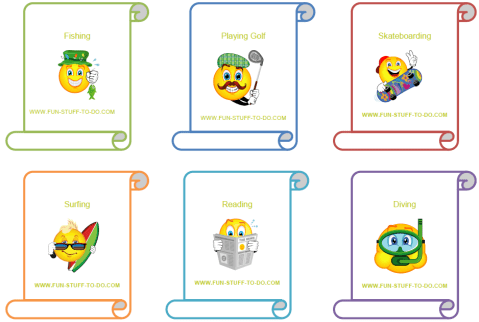
These are just some of the fun activities you can act out in a game of charades using the printable cards from fun-stuff-to-do.com. 

Spectacular Charades!


Playing charades is a fantastic way to spend time with family and friends! Gather kids and adult young and older to act out the topics of your choice. In keeping with today’s holiday, don’t hesitate to make the wildest guesses you can—it’s fun and funny! Check out the wide variety of free, printable charades cards on fun-stuff-to-do.com! You can act out animals, people, emotions, toys, food, and more! You can even create your own!


Picture Book Review