August 7 – National Lighthouse Day

celebrate-picture-books-picture-book-review-hello-lighthouse-cover

About the Holiday

For centuries along rocky shores, lighthouses have stood as sturdy beacons warning ships at sea of dangerous waters. In 1789, the United States Congress approved an Act for “the establishment and support of lighthouses, beacons, buoys and public piers and the commission of the first Federal lighthouse, the Cape Henry Lighthouse at Cape May, Virginia Beach.” Two hundred years later, the anniversary of this historic event was celebrated with another Congressional resolution sponsored by Senator John H. Chafee of Rhode Island, which designated August 7 as National Lighthouse Day. On this day, where possible, the country’s lighthouses are open to the public for viewing and tours. To celebrate today, visit a lighthouse if you live close by or read up on lighthouses and the work of brave lighthouse keepers throughout history.

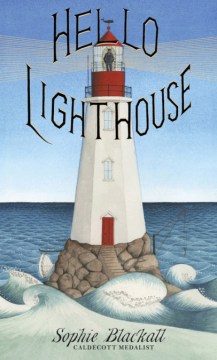
Hello Lighthouse

By Sophie Blackhall


“On the highest rock of a tiny island at the edge of the world stands a lighthouse.” It is sturdy and shines its greeting far out to sea, “guiding the ships on their way.” “Hello! …Hello! …Hello!” The lighthouse has just gotten a new keeper. He begins his job by polishing the lens, refilling the oil, trimming the wick, and giving the “round rooms a fresh coat of sea-green paint.” He works at night too, making sure that the clockwork is wound to keep the lamp moving and writing in the logbook.
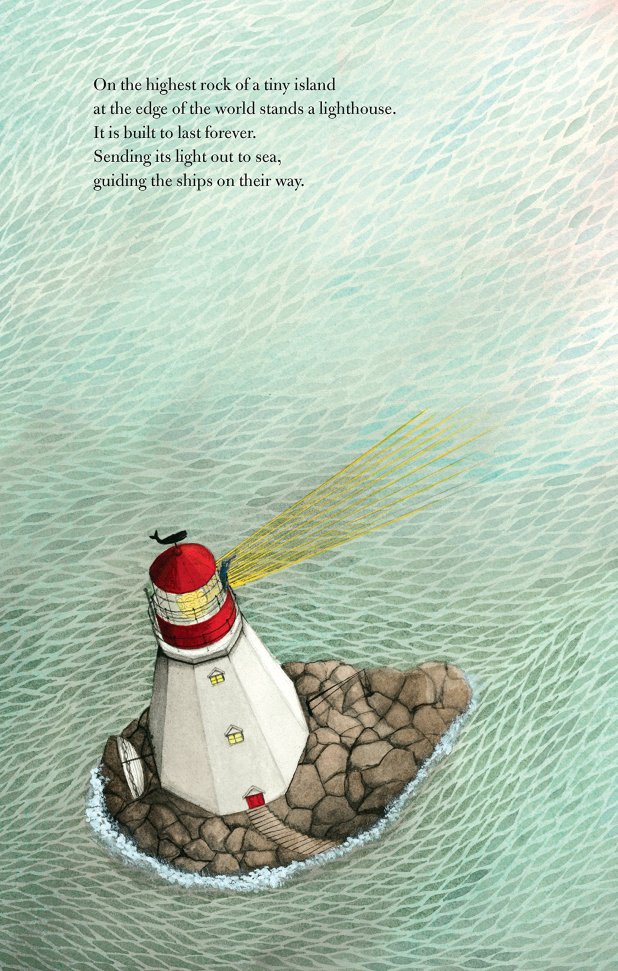
celebrate-picture-books-picture-book-review-hello-lighthouse-island

Copyright Sophie Blackall, 2018. Courtesy of Little Brown Books for Young Readers.

To have his tea, the keeper must boil his water and for lunch or dinner he fishes for cod right from the lighthouse window. He wishes for someone to talk to—the special someone he writes letters to. He puts these letter in bottles and throws them into the sea. Outside, the wind whips up the waves and they crash against the lighthouse.

One day, the keeper spies the tender ship that is bringing him “oil and flour and pork and beans…and his wife.” The next day fog descends, thick and gray. Instead of a beam of light, a bell clangs to warn the ships away. But, still, a ship founders and breaks apart on the rocks. “Not a moment to lose, the keeper rows out. He pulls three sailors from the deep, black sea. He and his wife wrap them in warm blankets and serve them hot tea. The keeper makes note of all this in his log.
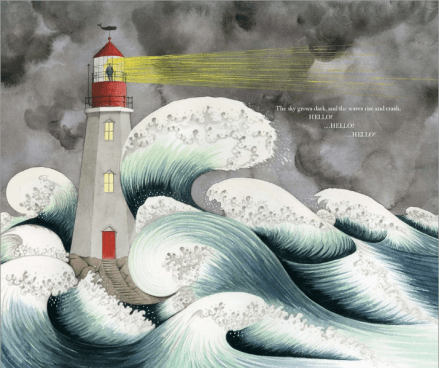
celebrate-picture-books-picture-book-review-hello-lighthouse-stormy-waves

Copyright Sophie Blackall, 2018. Courtesy of Little Brown Books for Young Readers.

In the winter, “the sea turns into a carpet of ice.” The keeper falls ill, and his wife tends to him as well as to the light. She runs up and down the spiral stairs to feed her husband broth and “chip ice off the lantern room windows.” At last his fever breaks. With warmer weather the ice melts, giving way to icebergs that float by going south. “Whales pass by on their journey north.”

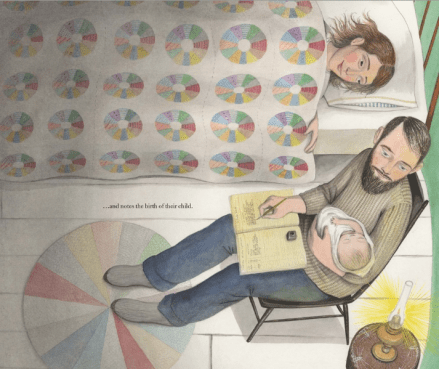
Inside the lighthouse, the keeper’s wife is about to have a baby. She walks around and around, while “her husband boils water and helps her breath in—and out.” When the baby is born, the keeper notes the time and date in the logbook. “The sky erupts in swirls of green. Hello! …Hello! …Hello!”
celebrate-picture-books-picture-book-review-hello-lighthouse-new-baby

Copyright Sophie Blackall, 2018. Courtesy of Little Brown Books for Young Readers.

The baby is a toddler when the tender brings an unexpected letter with the coast guard seal along with its regular supplies. After reading it, the keeper tends to the light “just as he’s always done,” but he “knows it’s not for long.” Through the telescope, the keeper and his wife watch the horizon for the arrival of the coast guard. When they come, they install a new light—one that runs by machine. There is “no lamp to fill, no wick to trim. The keeper’s work is done.”

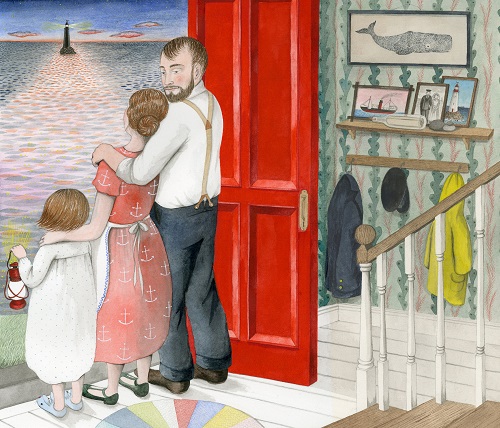
He and his wife and little girl “pack their belongings into the boat and wave farewell to the gulls.” As they sail away on the ship, they look back and say “Good-bye, Lighthouse! Good-bye! …Good-bye! …Good-bye!” From its perch on the tiny island, the lighthouse sends out its constant beam through crashing waves and enveloping fog—”Hello! …Hello! …Hello?” From across the bay, a light from a little house “beams back. Hello! …Hello! …Hello! Hello, Lighthouse!”

An expensive and fascinating Author’s Note about lighthouses, the life of a lighthouse keeper, and how Hello Lighthouse came to be follows the text.
celebrate-picture-books-picture-book-review-hello-lighthouse-little-house

Copyright Sophie Blackall, 2018. Courtesy of Little Brown Books for Young Readers.

As I read Hello Lighthouse, I saw myself as a child—a displaced New Englander growing up in Florida who loved everything about the craggy northern coastline and its history. I would have absolutely adored Sophie Blackall’s detailed and atmospheric book, and today’s young readers will too. The story of the light’s last keeper reveals the work and contemplations of the men and families dedicated to keeping shipping lanes safe. The weather and seasons—and ever-present logbook—are characters in their own right, just as they were for the conscientious and brave lighthouse keepers. Happy surprises—the arrival of the keeper’s wife and baby—will delight children as they add to the depth of the story.
celebrate-picture-books-picture-book-review-hello-lighthouse-cut-away-interior-image

Copyright Sophie Blackall, 2018. Courtesy of Little Brown Books for Young Readers.

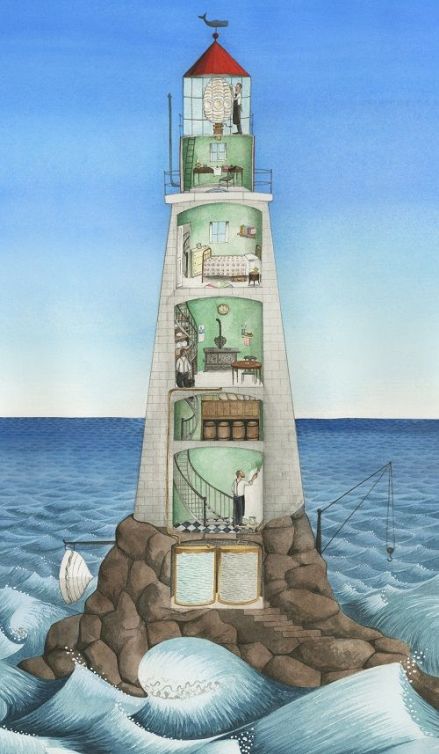
Blackall’s stunning illustrations will swell readers’ hearts with the same intensity as the rolling seas.  A cutaway image of the lighthouse offers a realistic view of the five levels of living space accessed by a winding staircase that ultimately leads to the lens. Thrilling portrayals of choppy seas, wind-whipped crashing waves, pea-soup-thick fog, and sailors thrown from their wrecked ship will rivet children to the story. The cyclical nature of a keeper’s work mirrors the round rooms of the lighthouse and is represented throughout the story with circular, porthole-like snapshots of the keeper at work and round accents in the home, such as rugs, tables, and the quilt pattern on the couple’s bed. The final image of the family—the baby now a little girl—communicating with their old home anchors the story in history, togetherness, and a love of the sea.

Hello Lighthouse is a gorgeous, enlightening, and cozy read-aloud for home and classroom libraries that will enthrall young readers again and again.

Ages 4 – 9

Little Brown Books for Young Readers, 2018 | ISBN 978-0316362382

To learn more about Sophie Blackall, her books, and her art, visit her website.

National Lighthouse Day Activities

celebrate-picture-books-picture-book-review-lighthouse-coloring-page

Lighthouse Coloring Page


This lighthouse perched by the sea is a beautiful reminder of the days when a keeper lived and worked at his lighthouse. Give this printable page some color and shine!

Lighthouse Coloring Page

celebrate-picture-books-picture-book-review-national-archives-lighthouse-coloring-book-2018

National Archives Lighthouses from the Collection


If you’re fascinated by lighthouses, you’ll love exploring these drawings from the United States National Archives. Click below to download a pdf of lighthouses from around the country. 

The National Archives of the United States Coloring Book of Lighthouses
celebrate-picture-books-picture-book-review-hello-lighthouse-cover

You can find Hello Lighthouse at these booksellers

Amazon | Barnes & Noble | Books-a-Million | IndieBound

Picture Book Review

August 6 – It’s International Assistance Dog Week

celebrate-picture-books-picture-book-review-jessica-and-rescue-cover

About the Holiday

International Assistance Dog Week was established by Marci Davis, the author of Working Like Dogs: The Service Dog Guidebook, host of PetLifeRadio.com’s internet radio show “Working Like Dogs, and a paraplegic, to honor these loyal companions that through training and constant love transform the lives of those with disabilities. The holiday also promotes awareness and educates the public about service dogs and recognizes those who raise and train them from puppyhood. To commemorate today’s holiday, learn more about assistance dogs and the heroic deeds they perform. To learn about events in your area, visit the International Assistance Dog Week website.

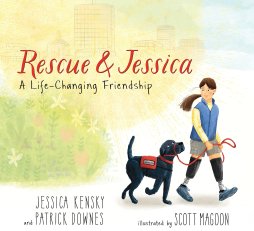
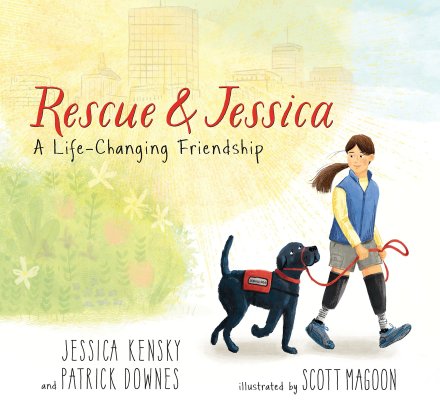
Rescue & Jessica: A Life-Changing Friendship

Written by Jessica Kensky and Patrick Downes | Illustrated by Scott Magoon


When the puppy, Rescue, a Seeing Eye dog in training, heard his trainer say “‘You aren’t meant to be a Seeing Eye dog,’” he worried. His family had always been Seeing Eye dogs, and he didn’t know what else he could do. But his trainer did. “‘The service dog team is better for you,’ his trainer said. ‘Service dogs work beside their partners, instead of in front of them.’” Rescue hoped he would make a good service dog. “He didn’t want to let anyone down.”

celebrate-picture-books-picture-book-review-jessica-and-rescue-Rescue-training

Image copyright Scott Magoon, 2018, text copyright Jessica Kensky and Patrick Downes. Courtesy of scottmagoon.com.

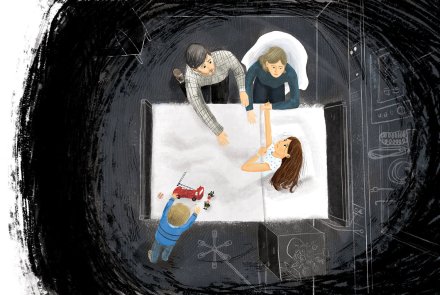
In the nearby city, a girl named Jessica had been hurt. Her right leg seemed to be healing, but “the doctors had to remove part of her left leg so she could be healthy again.” The doctors told her that she would have to use a wheelchair or prosthetic leg for the rest of her life. Jessica worried about how she would walk and do things by herself. “She didn’t want to let anyone down.”

celebrate-picture-books-picture-book-review-jessica-and-rescue-hospital

Image copyright Scott Magoon, 2018, text copyright Jessica Kensky and Patrick Downes. Courtesy of scottmagoon.com.

Meanwhile Rescue was learning all of the skills he’d need as a service dog. He learned how to fetch things and open doors. Jessica was also learning new skills. She practiced using a wheelchair, getting out of bed, putting on her prosthetic leg, and walking. Even though she made progress every day, Jessica felt frustrated about the things she could no longer do.

celebrate-picture-books-picture-book-review-jessica-and-rescue-service-dog

Image copyright Scott Magoon, 2018, text copyright Jessica Kensky and Patrick Downes. Courtesy of scottmagoon.com.

One day, a visitor brought her service dog to meet Jessica. Jessica was so impressed by everything the dog could do, that she filled out an application to receive a dog of her own as soon as her visitor left. After Jessica left the hospital, she “got some very exciting news. Rescue got exciting news too.”

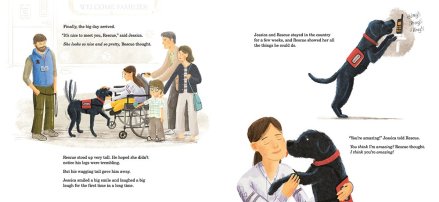
At last, the day arrived for Jessica and Rescue to meet. They liked each other immediately. After Rescue showed Jessica all the things he could do, they went back to the city to begin working together. Rescue brought her things she needed, he barked when Jessica needed someone, he could even push the walk button at street crosswalks.

celebrate-picture-books-picture-book-review-jessica-and-rescue-meeting

Image copyright Scott Magoon, 2018, text copyright Jessica Kensky and Patrick Downes. Courtesy of Candlewick Press.

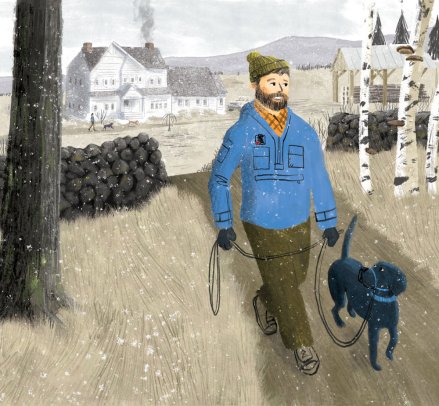
Even though Rescue was a strong worker, Jessica knew he was also a dog who liked to have fun. “She made sure that Rescue had playtime every day.” Then one day, Jessica’s “doctor told her that her right leg would have to be removed too. She would need to wear two prosthetic legs.” Jessica was very sad, but Rescue knew just what to do to help her. As Jessica slept, Rescue cuddled up next to her.

celebrate-picture-books-picture-book-review-jessica-and-rescue-park

Image copyright Scott Magoon, 2018, text copyright Jessica Kensky and Patrick Downes. Courtesy of Candlewick Press.

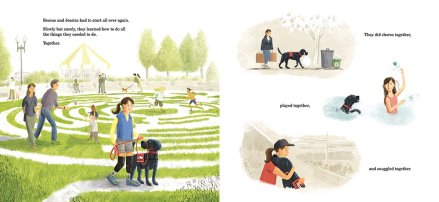
Once again, Jessica and Rescue went into training together. “They did chores together, played together, and snuggled together.” Both Jessica and Rescue felt happy. “‘You changed my life, Rescue,’” Jessica told her companion. “‘I couldn’t have done this without you.’” Rescue was proud of them both.

An Author’s Note from Jessica Kensky and her husband Patrick Downes, both injured in the 2013 Boston Marathon bombing, follows the text and provides more information about the story, their Service Dog, Rescue, and the NEADS organization.

celebrate-picture-books-picture-book-review-jessica-and-rescue-bridge

Image copyright Scott Magoon, 2018, text copyright Jessica Kensky and Patrick Downes. Courtesy of scottmagoon.com.

Based on Jessica Kensky’s real-life partnership with Rescue, Rescue & Jessica offers children a thoughtful and honest portrayal of loss, hope, and recovery. Jessica’s story will touch young readers while answering questions that many have as they interact with and see similar partnerships of Service Dogs and children or adults with physical disabilities. The Boston Marathon bombing is never mentioned in the story, leaving it up to adult readers to explain the details depending on the age and sensitivities of the listener. The addition of Rescue’s point of view gives readers a window into the intelligence and loyalty of these valiant animals. While not shying away from the difficulties that Jessica faced, each page is infused with courage and the resiliency of the human spirit.

Screen Shot 2018-08-05 at 5.52.46 PM

Scott Magoon’s realistic, digitally created illustrations will rivet children to the story with clear depictions of Rescue’s training and Jessica’s stay at the hospital. As Jessica suffers grief and worry, she is surrounded by darkness, but even here, spots of light are given in images of her parents’ vigil at her hospital bedside, a physical therapist’s encouragement, and the comfort Rescue provides on a starlit night. As Jessica learns to walk again with her prosthetic leg, black storm clouds give way to gray showers seen outside the therapy room window and the city—her home and ultimate destination is seen across the river in the distance.

A sunburst accompanies Jessica’s first experience with a Service Dog, and as she and Rescue become partners, the gray-tone images acquire a bit of green grass that blossoms into spring and then full-fledged summer when Jessica resumes some of her past activities with her family. The final two-page spread of Jessica, with Rescue by her side, leaving gray skies behind and walking across a bridge toward home and the glowing promise of a sunny day is moving and triumphant.

A poignant and uplifting story, Rescue & Jessica: A Life-Changing Friendship is highly recommended for any young reader and a must for pubic and school or classroom libraries.

Candlewick, 2018 | ISBN 978-0763696047

To learn more about Scott Magoon, his books, and his art, visit his website.

International Assistance Dog Week Activity

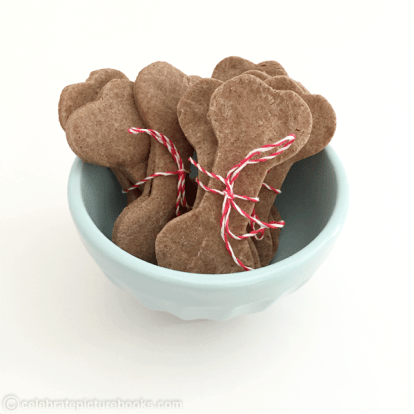
CPB - Dog Biscuits

Homemade Dog Biscuits


These homemade dog biscuits are fun to make and a special treat for your dog at home, a neighbor’s pet, or dogs waiting for forever homes at your local shelter. Why not get together with your friends and make a batch? Then share them with your pets or dogs who need a little extra love.

Children should get help from an adult when using the oven.

Supplies

  • 1 large bowl
  • Large spoon or whisk
  • Cookie cutters – shaped like traditional dog bones or any favorite shape

Ingredients

  • 3 cups Buckwheat flour
  • ½ cup powdered milk
  • 1 teaspoon salt
  • ¾ cup water
  • 1/3 cup margarine or butter, melted
  • 1 egg beaten

Directions

  1. Preheat oven to 325 degrees
  2. Add buckwheat flour to bowl
  3. Add powdered milk to bowl
  4. Add salt to bowl
  5. Stir to mix dry ingredients
  6. Add water
  7. Add melted margarine or butter
  8. Add egg
  9. Stir until liquid is absorbed
  10. Knead for a few minutes to form a dough
  11. If the dough is too dry, add a little more water, one Tablespoon at a time
  12. Place the dough on a board
  13. Roll dough to ½ inch thickness
  14. Cut into shapes with cookie cutters
  15. Bake at 325 degrees for 35 minutes
  16. Biscuits will be hard when cool.

Makes about 40 biscuits.

celebrate-picture-books-picture-book-review-jessica-and-rescue-cover

You can find Rescue & Jessica: A Life-Changing Friendship at these booksellers

Amazon | Barnes & Noble | Books-a-Million | IndieBound

Picture Book Review
August 4 – National Friendship Day

celebrate-picture-books-picture-book-review-bear's-scare-cover

About the Holiday

Originally founded in 1919 by the Hallmark Card company to encourage people to celebrate their friends by sending cards, the holiday has transitioned into a worldwide event commemorated in multiple ways from sending an emoji-filled text to getting together to share favorite activities. However you choose to celebrate, be sure to let your friends know how much they mean to you!

Bloomsbury Children’s Books sent me a copy of Bear’s Scare to check out. All opinions are my own. I’m excited to be partnering with Bloomsbury in a giveaway of a copy of Bear’s Scare. See details below.

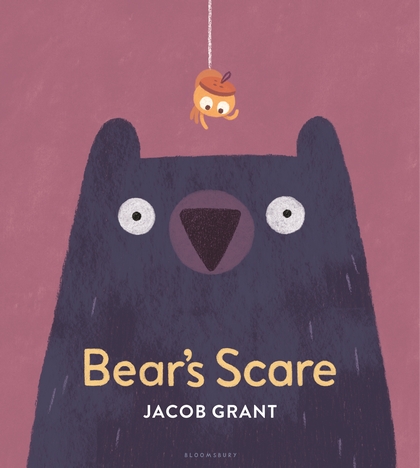
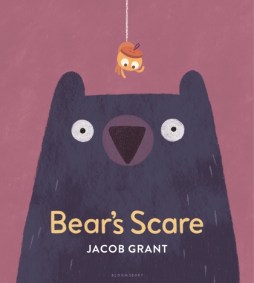
Bear’s Scare

By Jacob Grant


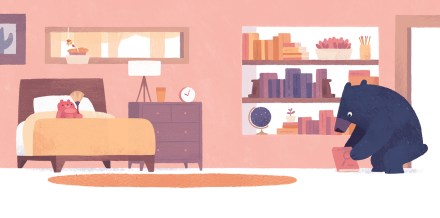
Bear was very tidy. Every day, he swept and dusted and took great care to make sure everything was put in its proper place. “There was one thing Bear loved to care for most of all. A small stuffed friend, named Ursa.” Bear and Ursa spent every minute of every day together, and each day they cleaned their house top to bottom.

celebrate-picture-books-picture-book-review-bear's-scare-cleaning

Copyright Jacob Grant, 2018, courtesy of Bloomsbury Children’s Books.

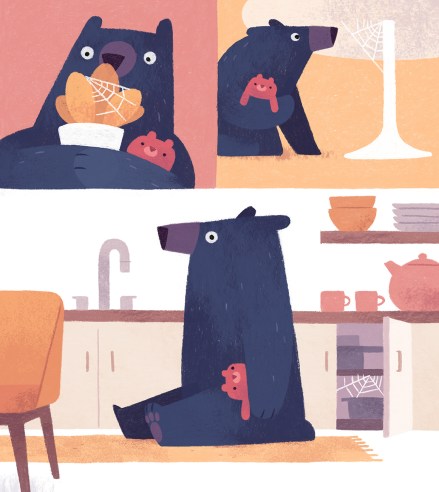
One day, Bear discovered a book lying on the floor. He was sure he hadn’t left it there, and when he picked it up, he found a sticky spider’s web attached to it. He was sure that the spider was making his neat house sticky and messy and that the spider was nothing like them at all. He looked the house over more carefully, and “the more he searched, the more messy webs he found. ‘Ursa, we have a spider problem,’ said Bear.”

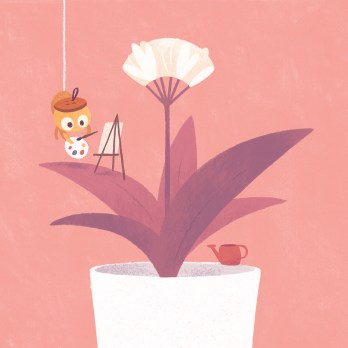
As the spider knitted a scarf using two legs while pouring tea using two more and then painted a picture of one of Bear’s potted flowers, Bear fretted over the mess the spider was making. He was determined to find the spider. Bear and Ursa searched everywhere but did not find it. Bear even lifted up the sofa to peer underneath. When he lowered the sofa to the floor again, however, Bear did not see that Ursa’s arm became pinned under its leg.

celebrate-picture-books-picture-book-review-bear's-scare-webs

Copyright Jacob Grant, 2018, courtesy of Bloomsbury Children’s Books.

When Bear picked up Ursa, her arm ripped off. “Bear lay there for some time,” sad about what had happened to Ursa and about the mess he’d made. Then he ran to get supplies to “help his friend.” When he got back, though, the spider had already reattached Ursa’s arm with its sturdy web. Bear hugged Ursa tight.

Then, “among the books, Bear found something he never expected.” The bookshelf the spider called home was just as neat as Bear’s house. There were books, and a broom, and even a painting of Bear. “‘I certainly do not mind sharing my home with one more friend,’” Bear said. And Bear and Ursa were content—even when one new friend turned into many.

celebrate-picture-books-picture-book-review-bear's-scare-bear-finds-spider

Copyright Jacob Grant, 2018, courtesy of Bloomsbury Children’s Books.

For those who embrace the status quo and like things just so, Jacob Grant’s sweet story demonstrates that there’s always room for one—or many—more. While Bear initially thinks the spider is not like him and Ursa, his quiet appreciation for spider’s help as well as his realization that he and the spider do share many of the same attributes models the kind of thoughtful inclusion that builds strong friendships.

celebrate-picture-books-picture-book-review-bear's-scare-spider-painting

Copyright Jacob Grant, 2018, courtesy of Bloomsbury Children’s Books.

Grant’s endearing illustrations show Bear’s love for Ursa as he cradles the little stuffed bear while reading to her, carries her from room to room, appolgizes for the accident, and hugs her when she is fixed. The little round spider who sports a button with a loop of thread for a hat is adorable as it goes about its artistic pursuits. The final double-page spread of the spider lounging in a web hammock attached to Bear’s reading chair while fourteen other spiders play, work, and listen to Bear read to Ursa is heartwarming. Kids will love finding the little spider on each page as well as all the ways in which the spider’s shelf is similar to Bear’s house.

A touching tribute to friendship—old and new—as well as a thoughtful contemplation on preconceived notions for young readers, Bear’s Scare is a delightful book to share at home and in the classroom.

Ages 3 – 6

Bloomsbury Children’s Books, 2018 | ISBN 978-1681197203

Discover more about Jacob Grant, his books and his art on his website.

Get caught up in the Bear’s Scare book trailer!

National Friendship Day Activity

celebrate-picture-books-picture-book-review-bear-craft

Friendly Storytelling Bear Craft


Bear loved to read stories with Ursa and the spider! Now you can tell your own stories with this Friendly Storytelling Bear Craft! Use the templates and/or make your own expressions to make up great stories! You can also play a game to collect all the parts of the bears face to win.

Supplies

  • Printable Bear Head Template
  • Printable Eyes and Noses Template
  • Printable Eyebrows  and Ears Template
  • Light brown felt or fleece (or color of your choice), 8 ½ x 11 inch piece
  • Dark brown felt or fleece(or color of your choice), 8 ½ x 11 inch piece
  • White felt or fleece, 8 ½ x 11 inch piece
  • Black felt or fleece, for pupils
  • Scissors
  • Glue
  • 1 playing die (optional)

Directions

  1. Print templates
  2. Cut bear head from light felt or fleece
  3. Cut eyes from white felt or fleece
  4. Cut nose and inner ears from dark brown felt or fleece
  5. Cut pupils from black felt or fleece
  6. Glue pupils onto white eyes

Alternately: Color and play with the paper set

For a Fun Story Time

Give the bear different faces and make up stories of why he looks that way!

To Play a Game

Roll the die to collect parts of the bear’s face. The first player to create a full face is the winner.

  • Die dots correspond to:
  • 1—one eyebrow
  • 2—second eyebrow
  • 3—one eye
  • 4—second eye
  • 5—nose
  • 6—inner ears

celebrate-picture-books-picture-book-review-bear's-scare-cover

You can find Bear’s Scare at these booksellers

Amazon | Barnes & Noble | Books-a-Million | IndieBound

Picture Book Review
August 4 – National Chocolate Chip Cookie Day

celebrate-picture-books-picture-book-review-how-the-cookie-crumbled-cover

About the Holiday

Is there anything better than biting into a warm, ooey-gooey chocolate chip cookie? Today’s holiday celebrates this favorite treat and the history behind it. Enjoy the day by  baking a batch with your kids. Not only is it a wonderful way for families to spend time together, but kids can learn family stories, the fun of helping out in the kitchen, and even math skills. So, grab your recipes, ingredients, and utensils and bake up a batches of scrumptious cookies!

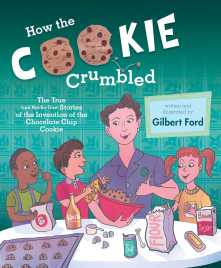
How the Cooke Crumbled: The True (and Not-So-True) Stories of the Invention of the Chocolate Chip Cookie

By Gilbert Ford


As you’re gobbling down delicious chocolate chip cookies, do you ever wonder who invented them or how they came to be such favorites? Well, the “who” part is easy: chocolate chip cookies were the brainchild of Ruth Wakefield. But the “how” is a bit more tricky. Here are the three popular stories surrounding this yummy treat—which do you think is right?

celebrate-picture-books-picture-book-review-how-the-cookie-crumbled-ruth

Copyright Gilbert Ford, 2017, courtesy of simonandschuster.com.

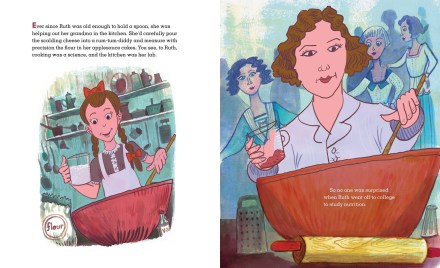
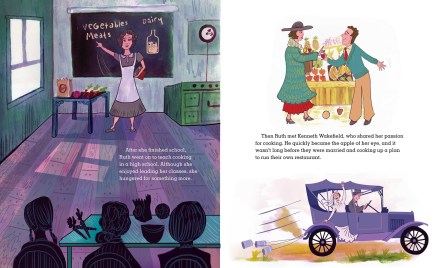
Ruth was a born baker. She loved helping her grandmother out in the kitchen as soon as she “was old enough to hold a spoon.” Ruth had a special feeling about cooking—to her “cooking was a science, and the kitchen was her lab.” When Ruth graduated from high school, she went to college to study nutrition. With her degree in hand, Ruth taught cooking in a high school. But while “she enjoyed leading her classes, she hungered for something more.”

celebrate-picture-books-picture-book-review-how-the-cookie-crumbled-teacher

Copyright Gilbert Ford, 2017, courtesy of simonandschuster.com.

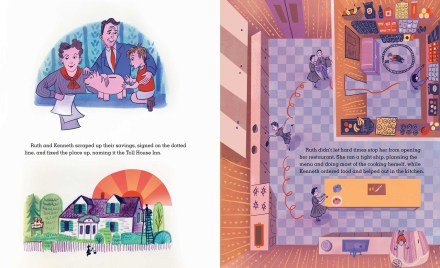
Ruth met and married Kenneth Wakefield, who also “shared her passion for cooking.” Together, they planned to open their own restaurant. Four years later, even though the economy was in depression and they had a young son, Ruth and Kenneth bought an old tollhouse in Whitman, Massachusetts. They fixed it up and named their restaurant the Toll House Inn.

celebrate-picture-books-picture-book-review-how-the-cookie-crumbled-inside-restaurant

Copyright Gilbert Ford, 2017, courtesy of simonandschuster.com.

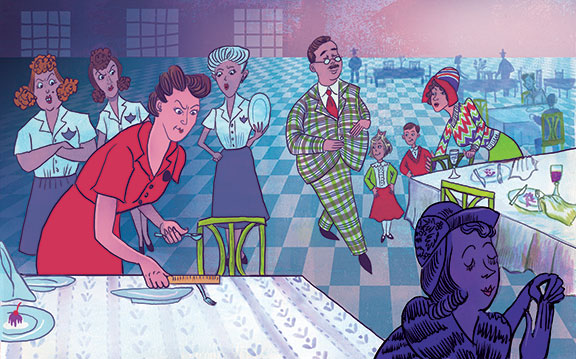
Ruth did “most of the cooking herself while Kenneth ordered food and helped out in the kitchen.” Ruth was very particular about how the Toll House Inn was run, even measuring “the distance between the fork and the plate for accuracy. Hungry diners began visiting the Toll House Inn, leaving satisfied and ready to return.

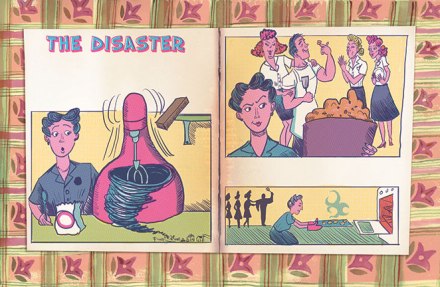
So how did chocolate chip cookies come to be? Here are the three popular theories: “The Disaster”—One story says that while Ruth was “whipping up a batch of Butter Drop Do cookies,” her mixer, spinning at top speed, “knocked a Nestlé chocolate bar off the shelf” and right into the dough. “What a disaster!” The grill man thought Ruth should bake them anyway, and when the cookies were done, Ruth “discovered pure heaven.”

celebrate-picture-books-picture-book-review-how-the-cookie-crumbled-the-disaster

Copyright Gilbert Ford, 2017, courtesy of simonandschuster.com.

“The Substitute”—Having forgotten to order baking chocolate, Ruth chopped up a Nestlé chocolate bar and added it to the dough, thinking that it would melt evenly in the oven. “But when she pulled the cookies from the oven, boy, was she wrong. ‘They’re ruined!’ she cried.” But some waitresses and kitchen workers tried them and found them to be delicious. When Ruth tried them herself, she agreed.

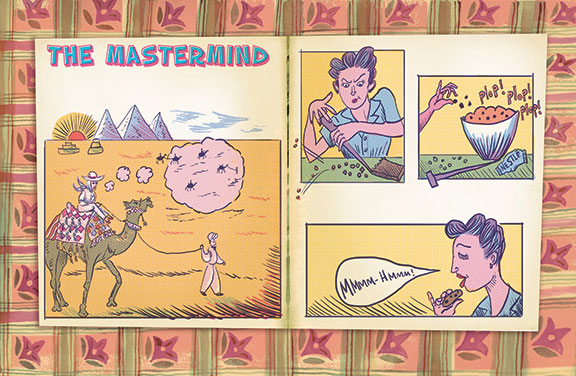
“The Mastermind”—Inspiration struck Ruth while returning from a trip to Egypt. Back in the kitchen, “she deliberately took an ice pick to that chocolate bar” and “dropped the chunks into the mix.” The baked cookies were “exactly how she imagined it. She “took a bite and savored the warm, gooey chocolate as it melted right in her mouth.”

celebrate-picture-books-picture-book-review-how-the-cookie-crumbled-the-mastermind

Copyright Gilbert Ford, 2017, courtesy of gilbertford.com.

“So, which version do you believe?”

The Disaster seems a little random, and the Substitute is “a little hard to swallow,” considering Ruth’s vast knowledge of cooking and ingredients. That leaves the Mastermind. Ruth was well-known for her ability to create delectable desserts and for searching out new recipes. It seems that “Ruth deserves some credit. She was one smart cookie!”

celebrate-picture-books-picture-book-review-how-the-cookie-crumbled-serving-cookies

Copyright Gilbert Ford, 2017, courtesy of gilbertford.com.

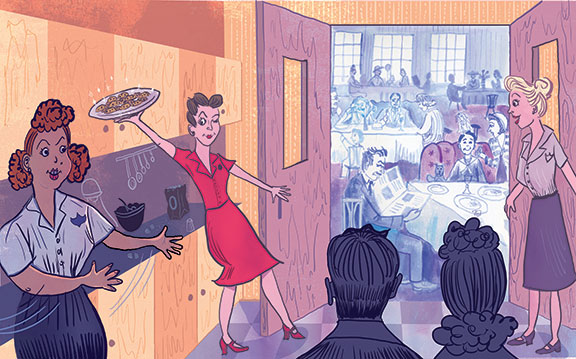
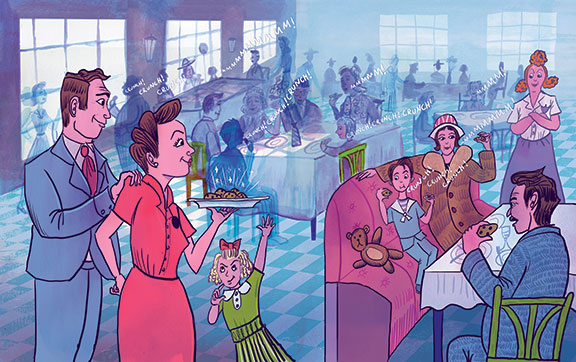
So with new cookies on the menu, Ruth began serving them to her customers. Everyone loved them and word spread about her “Toll House Chocolate Crunch Cookies.” People came from far away to try them. So many people, in fact, that Ruth had to expand her restaurant. You might think that Ruth kept her recipe a secret, but instead, she shared it with anyone who asked! She even let it be printed in the newspaper. Soon, people throughout Boston were baking Ruth’s cookies.

celebrate-picture-books-picture-book-review-how-the-cookie-crumbled-yummy

Copyright Gilbert Ford, 2017, courtesy of gilbertford.com.

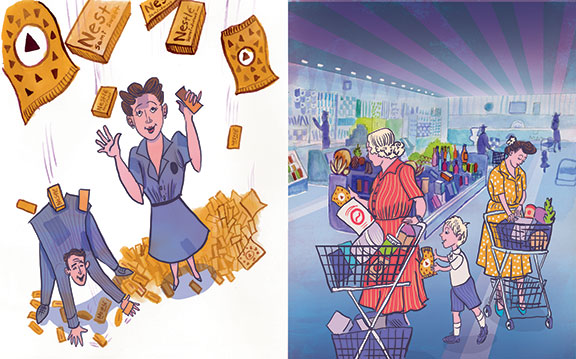
When Ruth was interviewed on the Betty Crocker radio show, her recipe spread across the country. Seeing an unusual increase in sales of Nestle chocolate bars, the managers set out to find the cause. Soon they showed up at Ruth’s door begging for her recipe. “She gave it to them, and Nestlé began to produce chocolate chips designed specifically for Ruth’s cookies.” In payment, it’s said “she was awarded a lifetime supply of Nestlé chocolate!”

By the 1940s Ruth’s recipe appeared on every bag of Nestlé chocolate chips. From then on, Ruth’s cookies became a favorite of adults and kids alike!

An Author’s Note relating more about Ruth Wakefield and her famous cookies, as well as her classic recipe follow the text.

celebrate-picture-books-picture-book-review-how-the-cookie-crumbled-free-chocolate

Copyright Gilbert Ford, 2017, courtesy of gilbertford.com.

Gilbert Ford presents this sweet story with all the intrigue that has grown up around the invention of the chocolate chip cookie while giving Ruth Wakefield her proper due for her cleverness in the kitchen. Ford’s conversational style invites kids to participate in the story—a nice touch considering that the chocolate chip cookie is a perennial favorite with children. Relating the three separate theories gives readers an opportunity to think about the nature of invention. Including the facts about Ruth’s generosity with her recipe show readers that sharing ideas can be beneficial and could even prompt discussions about different ways to handle proprietary information.

celebrate-picture-books-picture-book-review-how-the-cookie-crumbled-table-setting

Copyright Gilbert Ford, 2017, courtesy of gilbertford.com.

In keeping with his light tone, Ford’s illustrations combine realistic and whimsical elements. The three theories are presented in more comic-book style, while the rest of the story portrays the historical time period, Ruth and Kenneth’s growing restaurant, and, of course, the star of the plate—the chocolate chip cookie.

For kids who love cooking and baking, history, and biographies as well as for its value in initiating discussion and even projects, How the Cookie Crumbled would be a welcome addition to home and classroom bookshelves.

Ages 4 – 8

Atheneum Books for Young Readers, 2017 | ISBN 978-1481450676

Discover more about Gilbert Ford, his books, and his art on his website.

National Chocolate Chip Cookie Day Activity

celebrate-picture-books-picture-book-review-catch-the-cookie-maze

Catch the Cookie! Maze


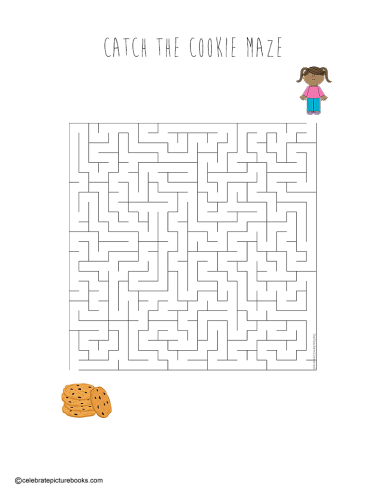
Sometimes you just need a cookie! Help the little girl find her way to her favorite cookies with this printable Catch the Cookie! Maze and Solution.

celebrate-picture-books-picture-book-review-how-the-cookie-crumbled-cover

You can find How The Cookie Crumbled at these booksellers

Amazon | Barnes & Noble | Books-a-Million | IndieBound

Picture Book Review
August 3 – It’s National Back to School Month

celebrate-picture-books-picture-book-review-idea-jar-cover

About the Holiday

It may seem like summer vacation just began, but it’s already time to start thinking about the new school year. The stores are stocked with clothes, supplies, and plenty of gear to make the new school year the best ever. But the stuff of going to school is just part of getting ready. Kids are looking forward—eagerly or maybe with a little trepidation—to meeting new friends, having new teachers, and exploring new subjects and ideas. Making the transition to a different grade easier and exciting is what National Back to School Month is all about.

Simon & Schuster sent me a copy of Idea Jar to check out. All opinions are my own. I’m also thrilled to be partnering with Simon & Schuster in a giveaway of a copy of Idea Jar. See details below.

Idea Jar

Written by Adam Lehrhaupt | Illustrated by Deb Pilutti


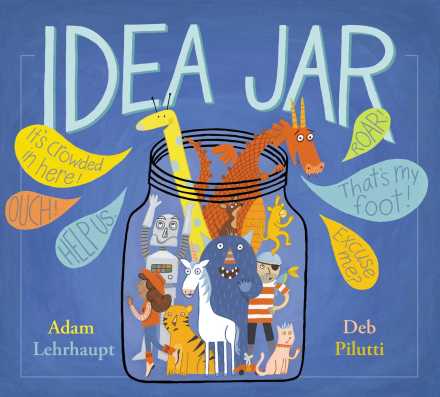
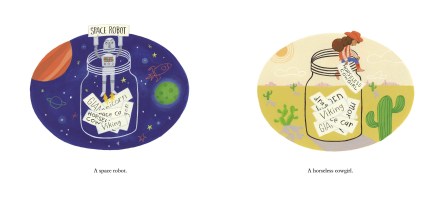
On the teacher’s desk sits an Idea Jar that holds her student’s story ideas. The teacher “says a story can be about anything” the kids want it to be. Like maybe “a space robot” or a “horseless cowgirl” or, yes, even that Viking who is trying to hoist himself over the edge of the jar to freedom. See, “there’s no such thing as a bad story idea,” and there are so many ways to tell your story.

celebrate-picture-books-picture-book-review-idea-jar-space-robot

Image copyright Deb Pilutti, 2018, text copyright Adam Lehrhaupt, 2018. Courtesy of simonandschuster.com.

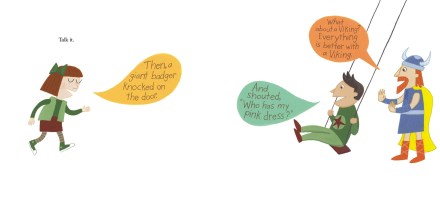
You can even combine your own ideas or make up a story with a friend. And maybe even that Viking in the back of your mind would make a good character too. He certainly thinks so. His motto is “Everything is better with a Viking”—even a giant badger who has lost her pink dress.

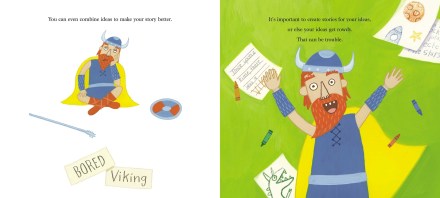
There is one thing about the Idea Jar, though. “It’s important to create stories for your ideas, or else your ideas get rowdy.” Just look at that Viking, who’s poking…at…the…jar! “Oh no! The ideas!”  They’re all loose! Now the robot is shooting his laser eyes and the dragon is swishing its enormous tail and the ideas are running amok!

celebrate-picture-books-picture-book-review-idea-jar-bored-giant-badger

Image copyright Deb Pilutti, 2018, text copyright Adam Lehrhaupt, 2018. Courtesy of simonandschuster.com.

“These ideas need a story. Will you help?” Great! Should we? Should we start with the Viking? What if he gets into a battle with the space robot? Then gets rescued by the dragon? Who’s ridden by the horseless cowgirl! What? You’d like to change some ideas around? Go for it! This is your story, after all! “Wow! You were awesome!” You made all of those story ideas very, very happy. But it’s time that they went back in the jar to meet some other ideas for next time.

celebrate-picture-books-picture-book-review-idea-jar-bored-viking

Image copyright Deb Pilutti, 2018, text copyright Adam Lehrhaupt, 2018. Courtesy of simonandschuster.com.

As the award-winning author of Warning: Do Not Open this Book, Please Open this Book, This is a Good Story, and many others, Adam Lehrhaupt knows a thing or two—or three—about corralling ideas into a story. By appealing directly to students and any story creator, the narrator of the madcap Idea Jar will excite kids to pay attention to the ideas rattling around and flashing through their minds and inspire them to write, draw, or tell their own stories. The persistent Viking, who gives story suggestions throughout the book and nudges the story along, will delight kids and can serve two purposes for teachers or other writing coaches.

With his infectious enthusiasm, the Viking is that great idea that knocks at your consciousness until it is used. His whispered recommendations may also remind writers and artists of that little self-editor who so often can keep great ideas from running free. Learning to manage both of these is what great storytelling is all about. As the Viking sails into the classroom portrayed in the book, kids will jump at the chance to turn on their imaginations and give him—and their own characters—a story full of suspense, humor, and unexpected twists and turns.

celebrate-picture-books-picture-book-review-idea-jar-viking-climbing-out-of-jar

Image copyright Deb Pilutti, courtesy of simonandschuster.com.

As a space robot rockets from the Idea Jar, a horseless cowgirl lifts herself over the edge, and a big, scaly arm reaches from within to pull out the words “dragon” and “giant,” kids will be instantly invested in these characters without a story…yet. Deb Pilutti’s vibrant and dynamic illustrations show the creative process in action, whether a child’s talent lies in writing, drawing, or even reciting ideas aloud. The crafty Viking makes a frequent appearance—just like any good idea does—to prod the ideas in the jar (including the horseless cowgirl, the space robot, and the dragon as well as a pirate, a unicorn, a giraffe, a monster, and various animals) to unleash their inventive power. As the story comes together, the students and teacher cheer as they see their creation come to life. 

Kids will love answering the call to create a story and interacting with the ideas in Idea Jar. Idea Jar is infused with the natural spontaneity and inventiveness of children’s imaginations, making it a winner for jump-starting writing or art lessons in classrooms and inspiring creativity at home for kids and adults.

Ages 4 – 8 (and up)

Simon & Schuster/Paula Wiseman Books, 2018 | ISBN 978-1481451666

Discover more about Adam Lehrhaupt and his books on his website.

To learn more about Deb Pilutti, her books, and her art, visit her website.

Meet Deb Pilutti

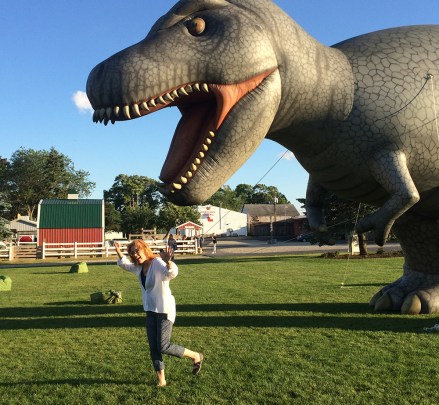
celebrate-picture-books-picture-book-review-deb-pilutti-intreview-chased-by-t-rex

Today I’m excited to talk with author/illustrator Deb Pilutti about her new book Idea Jar with Adam Lehrhaupt, her branding work inspired by vintage signs, and the old Creepy Crawlies Thingmaker, a toy which I was surprised and delighted to discover we both loved as children.

Readers will love the way the characters interact with each other and with the kids writing and drawing stories in Idea Jar. Can you describe your journey from when you first received Adam Lehrhaupt’s manuscript for Idea Jar to the finished book?

I am a fan of Adam’s Warning: Do Not Open this Book! so I was quite excited when Paula Wiseman at Simon & Schuster asked me if I would like to illustrate IDEA JAR. Who wouldn’t want to illustrate a book with a Space Robot, a Viking, a cowgirl and a Dragon as the main characters? Adam left a lot of room for me to play. He did not specify what the other ideas in the jar would be, only the characters he had written into the text. It was fun to develop additional characters and their relationships and mini-side stories, like the developing friendship between the Yeti and the small dog, and the mouse driving a race car.

Kids’ imaginations are always so full of possibilities, and they can make such funny and amazing leaps of character and plot. What are some steps you’d give young writers and illustrators for capturing those snatches of imagination and developing an idea into their own story?

Keep a journal. I have several that I write or doodle in. If there is something I find interesting, like an idea or a character, I go back to it and try to work out a story. I start by asking questions of the character or situation. What would happen if… type of questions.

celebrate-picture-books-picture-book-review-deb-pilutti-interview-hello!-ice-cream-truck

Your branding work for Sea World, Warner Brothers, artists, food trucks, and more are infused with such a fun vintage vibe. Do you have a favorite decade to draw design ideas from, and why?

I absolutely love vintage signage and type from the 50s and 60s. Some of it is so campy while others can be evocative or elegant. The colors used were bold and saturated.

celebrate-picture-books-picture-book-review-deb-pilutti-intreview-studio-toys

Before you began illustrating and writing for children, you designed toys, and in your recent release The Secrets of Ninja School, the main character makes dragon stuffies for all of her classmates. Why do you think playing with traditional toys is so important for children? What was your favorite toy when you were a child?

Mostly because it’s fun. I also think it’s a way to navigate the world, but that isn’t something I thought about as a child. When I was young, I loved making Creepy Crawlers, which was an incredibly dangerous toy at that time. You pored possibly toxic goop into a metal mold and cooked it in a blisteringly hot ThingmakerTM oven, which resulted in many scorched fingers. But totally worth it, because once the plate cooled, you would have an army of colorful and stretchy bugs.

celebrate-picture-books-picture-book-review-deb-pilutti-intreview-srudio-desk

My cousin is a graphic designer and whenever I visited her as a child I loved seeing her special corner of the house. It was so full of color and knick-knacks (inspiration, really, I guess) and works in progress, that I developed a fascination with artists’ studios. Do you mind describing your work space a little? What is your favorite thing in it?

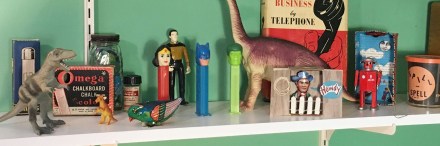
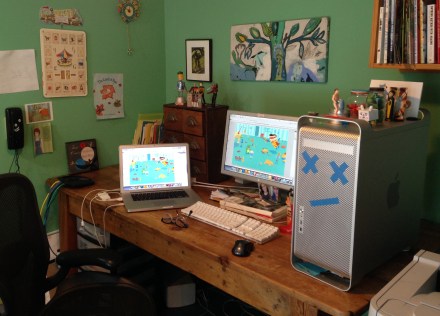
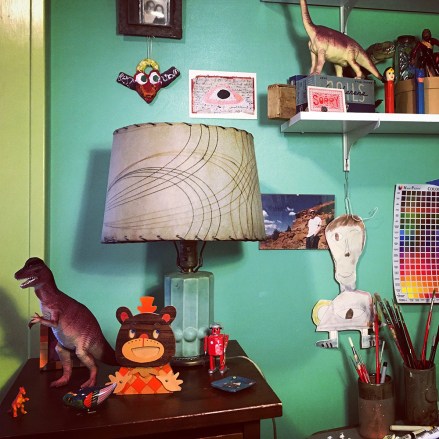
My studio is in a small bedroom. I have a long table with a computer and extra monitor set up on it, and I sometimes sketch here as well. A painting easel is in the corner of the room. It’s a very messy place, with papers everywhere and knick-knacks and toys and bits of shiny things on every surface. I like all of my toys, but my favorite one is a realistic toy model of a T-rex with a moveable jaw.

celebrate-picture-books-picture-book-review-deb-pilutti-intreview-studio-knick-knacks

What’s the best part of being a children’s illustrator and author?

I have always loved books. To be involved with the art of bookmaking is a wondrous thing. My favorite part of the process is making the final illustrations.

Do you have any anecdotes from a reading or event that you’d like to share?

I was visiting a school last April and had a blast creating stories with the students using an Idea Jar. We made some pretty silly stories together. One student came up with a zombie tomato for a character, which was brilliant!

What’s up next for you?

I’m currently working on final illustrations for two books. The first is Old Rock (is not boring). A story about a rock sounds like it could be boring, right? At least Old Rock’s friends think so. Old Rock reveals her own surprising story, slowly and languidly, as rocks do. I’m also illustrating a sequel to Ten Rules of Being a Superhero. It’s called Ten Steps to Flying Like a Superhero. I had so much fun with the characters from the first book that they are back for another adventure. Lava Boy’s superhero toy, Captain Magma, wants to fly more than anything. They devise a plan, which does not go as anticipated.

What is your favorite holiday and why?

Summer Solstice. I live in Michigan, which is quite lovely, but the cold and dark of winter can get a bit old. I miss the light. Our summer nights are very long. On Summer Solstice, I try to stay outside until the last vestiges of daylight disappear at around 9:45.

Has a holiday ever influenced your work?

Yes, I illustrated The Twelve Days of Christmas in Michigan, illustrated by Susan Collins Thoms.

Thanks so much for chatting, Deb! I wish you all the best with Idea Jar and all of your books!

National Back to School Month Activities

celebrate-picture-books-picture-books-review-adam-lehrhaupt-create-your-own-idea-jar

Make Your Own Idea Jar

If you have lots of ideas looking for a place to hang out, discover how to make your own Idea Jar and find some cool starter ideas from Adam Lehrhaupt! Make your own IDEA JAR!

celebrate-picture-books-picture-books-review-deb-pilutti-5-methods-to-generate-stories-logo

Dream up Story Ideas

Do your kids (or maybe you!) want to think up awesome story ideas? Check out Deb Pilutti’s 5 Methods of Generating Story Ideas

celebrate-picture-books-picture-book-review-idea-jar-cover

You can find Idea Jar at these booksellers

Amazon | Barnes & Noble | Books-a-Million | IndieBound

Picture Book Review

August 2 – It’s National Crayon Collection Month

celebrate-picture-books-picture-book-review-the-day-the-crayons-came-home-cover

About the Holiday

Kids love going to restaurants that provide a fun placemat and crayons to color with while they wait. But what happens to those crayons when the meal is over? Most times they’re thrown in the trash with the napkins and straws and other items left behind. Wouldn’t it be great if those gently used crayons could go on to be used by other kids at schools that can’t afford such supplies? They can! Begun by Crayon Collection, National Crayon Collection Month encourages restaurants, hotels, and other organizations that provide free crayons to collect the ones left behind and donate them to under-serviced schools. As school arts programs are threatened with budget cuts, these important supplies can make a big difference in the lives of students. The ability of children to express their creativity is a crucial part of their education and growth.  You can get involved too! To learn how you can make an impact, visit CrayonCollection.org. Or look into donating crayons (and other supplies) to a school in your area.

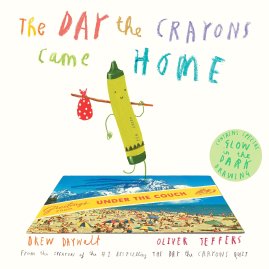
The Day the Crayons Came Home

Written by Drew Daywalt | Illustrated by Oliver Jeffers


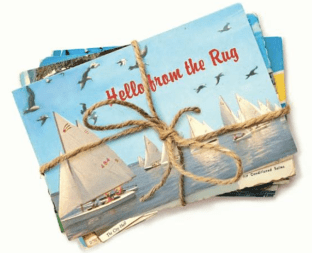
One day, as Duncan and his crayons were creating something together, Duncan received a mysterious package of postcards. The first postcard Duncan read was from Maroon Crayon, who, it turned out had been marooned in the couch, broken in half when Duncan’s dad sat on him, and then “nursed back to health” by paperclip. Now ready to rejoin the pack, Maroon Crayon was asking to be rescued.

celebrate-picture-books-picture-book-review-the-day-the-crayons-came-home-pea-green-crayon

Image copyright Oliver Jeffers, 2015, text copyright Drew Daywalt, 2015. Courtesy of Philomel Books.

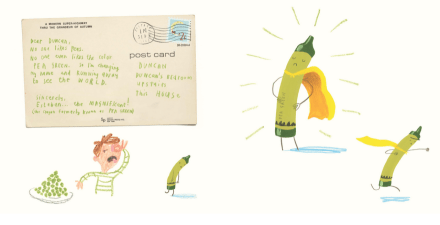
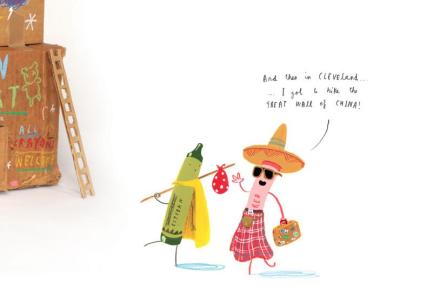
The next postcard brought distressing news from Pea Green Crayon, who feeling unloved, had changed his name to Esteban the Magnificent and was “running away to see the world.” Neon Red Crayon was feeling similarly dismissed and was writing—with a bit of well-earned pique—from the side of the pool at the Ritz Motel. “REMEMBER that great vacation we had with your family? Remember how we laughed when we drew a picture of your dad’s sunburn? Remember dropping me by the hotel pool when you left? Clearly you do NOT, BECAUSE I’M STILL HERE!” Still, Neon Red Crayon was taking it upon herself to walk home.

celebrate-picture-books-picture-book-review-the-day-the-crayons-came-home-red-neon-crayon

Image copyright Oliver Jeffers, 2015, text copyright Drew Daywalt, 2015. Courtesy of Philomel Books.

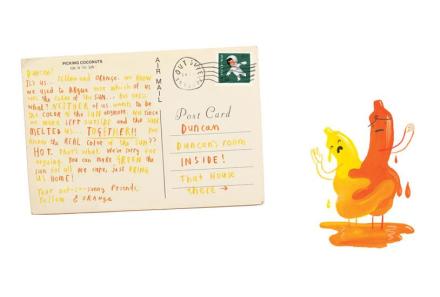
Yellow and Orange crayons wrote to let Duncan know they’ve put their argument “over which of us was the color of the sun” aside now that the sun has fused them together forever in the backyard. They don’t care what color the sun is anymore—they just want to come home. But perhaps “Tan (or possibly Burnt Sienna?) Crayon” has the saddest tale to tell. He’s had a hard time of it since being eaten by the dog and is now “more carpet fuzz than crayon.”

celebrate-picture-books-picture-book-review-the-day-the-crayons-came-home-yellow-and-orange-crayon

Image copyright Oliver Jeffers, 2015, text copyright Drew Daywalt, 2015. Courtesy of Philomel Books.

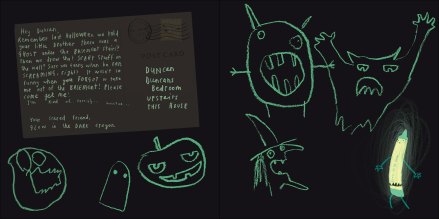
Up from the basement comes a postcard from Glow in the Dark Crayon, who was abandoned there last Halloween after Duncan used him to draw scary stuff on the wall. He just wants to be brought into the light because he’s “kind of … terribly … horrified ….” Meanwhile, Esteban has reached the front door, seen that the world is rainy, and has decided to return.

A dryer mishap has left Turquoise Crayon with one of Duncan’s socks stuck to his head, one compelling question, and one big desire to be reunited with the other crayons. But it’s not just Duncan’s crayons who are begging to be brought back into the fold. Duncan’s baby brother’s “Chunky Toddler Crayon” wants to be saved from another week like the last one in which the little tyke had “bitten the top of my head, put me in the cat’s nose, drawn on the wall and tried to color GARBAGE with me!”

celebrate-picture-books-picture-book-review-the-day-the-crayons-came-home-glow-in-the-dark-crayon

Image copyright Oliver Jeffers, 2015, text copyright Drew Daywalt, 2015. Courtesy of Philomel Books.

Brown Crayon admits that he’s embarrassed by what Duncan used him for, but still wants to come back, and Neon Red Crayon has sent postcards from all over the world as she’s made her way back, at last sending a card picturing herself skiing in the Amazon Rain Forest. After reading all of these missives, Duncan felt bad and ran around the house collecting them. But where would he put them? They “were all so damaged and differently shaped than they used to be that they no longer fit in the crayon box.”

But why did the crayons have to fit the box? Duncan had a better idea. He built a box to fit the crayons—“a place where each crayon would always feel at home.”

celebrate-picture-books-picture-book-review-the-day-the-crayons-came-home-gold-crayon

Image copyright Oliver Jeffers, 2015, text copyright Drew Daywalt, 2015. Courtesy of Philomel Books.

An instant classic, Drew Daywalt ‘s and Oliver Jeffers’ sequel to the equally loved The Day the Crayons Quit, The Day the Crayons Came Home is a laugh-out-loud look at life as a forgotten crayon. As given voice by Drew Daywalt, these crayons, with personality, attitude, and some legitimate gripes, make hilarious champions for any story time. Daywalt’s selection of colors and mishaps is inspired, and his recurring characters, Esteban and Neon Red Crayon, add just the right touch of silly cluelessness as they wax poetic.

Screen Shot 2018-08-01 at 5.28.44 PM

From the first glimpse of Maroon Crayon facing the indignity of being sat upon and emerging from the wreckage with a full beard, tattered paper, and paperclip bandage, kids will be hooked on the lives of these misplaced, misused crayons. Each crayon’s expression reveals the personality and predicament of these little heroes. Vintage postcards and crayon-drawn backdrops add to the distinctive look of this very original story in letters. A page of glow-in-the-dark drawings and text will have kids running for the nearest closet or dark corner to check it out, and the final reveal of the crayons’ new home will inspire readers to create one of their own.

A colorful, creative addition to any home or classroom library, The Day the Crayons Came Home (and its companion The Day the Crayons Quit) will be asked for again and again…and again.

Discover more about Drew Daywalt and his books on his website.

To learn more about Oliver Jeffers, his books, and his art, visit his website.

National Crayon Collection Month Activity

CPB - Rainbow Crayon Art 3

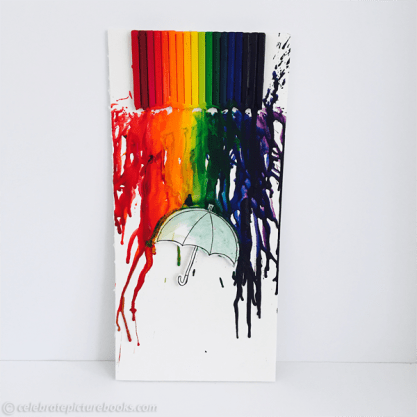
Crayon Rainbow Art


With this cool project you can create an art piece that’s as colorful as a rainbow and as unique as you are! Adult help is needed for children.

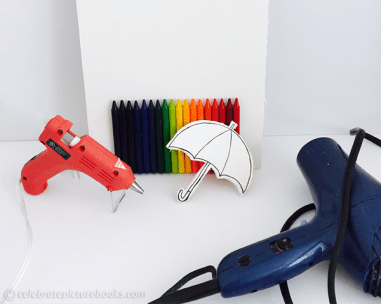
Supplies

  • Box of 24 crayons
  • White foam board or thick poster board, 8 inches by 17 inches
  • A small piece of corrugated cardboard, about 5 inches by 5 inches (a piece of the foam board can also be used for this step)
  • A small piece of poster board, about 5 inches by 5 inches
  • Scissors
  • X-acto knife (optional)
  • Hot glue gun
  • Hair dryer
  • Old sheets or towels, newspapers, a large box, or a trifold display board

CPB - Rainbow Crayon Art 2

CPB - Rainbow Crayon Art 1 (2)

Directions

  1. Remove the various red, orange, yellow, blue, indigo, and violet hued crayons from the box of crayons
  2. Strip the paper from the crayons by slicing the paper with the x-acto knife, or removing it by hand
  3. Line them up in order at the top of the white foam board
  4. Glue the crayons with their tips facing down to the board with the hot glue gun
  5. Cut an umbrella or other shape of your choice from the poster board
  6. Trace the umbrella or other shape onto the corrugated cardboard or a piece of the foam board and cut out
  7. Glue the poster board shape onto the corrugated cardboard, let dry
  8. Glue the umbrella or other shape to the foam board, about 4 ½ inches below the crayons
  9. Set up a space to melt the crayons. The wax will fly, so protect the floor and walls by placing the art piece in a large box or hanging newspapers, old sheets or towels on the walls and placing newspapers on the floor. A trifold display board and newspapers works well.
  10. Stand the art piece upright with the crayons at the top
  11. With the hot setting of the hair dryer, blow air at the crayons until they start to melt
  12. Move the hair dryer gently back and forth across the line of crayons from a distance of about 6 to 12 inches away. The closer you are to the crayons, the more they will splatter
  13. The crayons will begin to melt and drip downward
  14. You can experiment with aiming the hair dryer straight on or at an angle to mix colors
  15. Wax that drips onto the umbrella or other shape can be chipped off after it dries or wiped off to create a “watercolor” effect on the shape
  16. Once the hair dryer is turned off, the wax cools and dries quickly
  17. Hang or display your art!

celebrate-picture-books-picture-book-review-the-day-the-crayons-came-home-cover

You can find The Day the Crayons Came Home at these booksellers

Amazon | Barnes & Noble | Books-a-Million | IndieBound

Picture Book Review
August 1 – It’s National Fishing Month

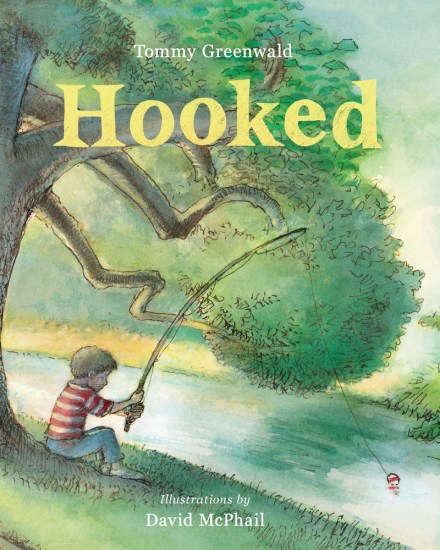
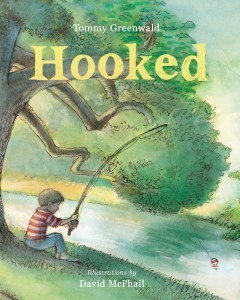
celebrate-picture-books-picture-book-review-hooked-cover

About the Holiday

Is fishing your thing? Do you like nothing better than heading down to the lake or stream and spending a relaxing day with a fishing pole, some bait, and the possibility of reeling in a “big one?” Perhaps you like fly fishing better, challenging yourself to flick that hook in just the right place. Then again, maybe taking a boat out to deep water and pitting yourself against the truly big fish is more your style. However you like to fish, make some time to enjoy your hobby this month!

Hooked

Written by Tommy Greenwald | Illustrated by David McPhail


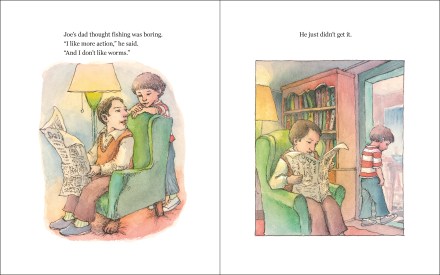
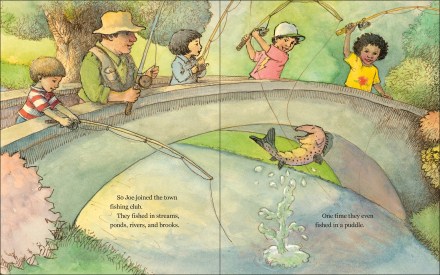
Joe is a little boy who loved to fish. He didn’t mind that “nothing much happened” while he waited for the fish to bite. “Joe’s dad thought fishing was boring. ‘I like more action,’ he said. ‘And I don’t like worms.’” Joe always wished his dad would change his mind. Joe decided to join the town’s fishing club. He and the other kids “fished in streams, ponds, rivers, and brooks.”

celebrate-picture-books-picture-book-review-hooked-Joe-asks-dad

Image copyright David McPhail, 2018, text copyright Tommy Greenwald, 2018. Courtesy of us.macmillan.com.

All this fun made Joe love fishing even more. He tried to get his dad to try it, but he always said, “‘No, thank you.’” One winter day, the fishing club planned to go ice fishing. Each child needed to be accompanied by an adult. When Joe asked his dad if he would go, he agreed—as long as he never had to go fishing again. On Saturday, Joe and his dad headed out in the twelve-degree weather to meet the other kids at the lake.

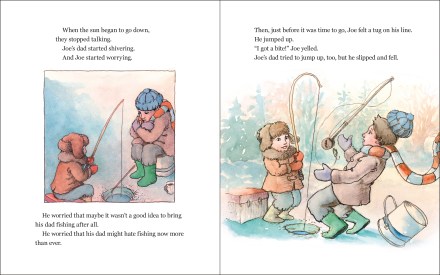
After Joe’s dad made a hole in the ice, they put in their lines. They waited and looked around and waited some more. “Then Joe and his dad started to talk. They talked about everything: baseball, movies, music, food, school, animals, and a bunch of other stuff.” By the end of the day, they still hadn’t caught anything, and Joe’s dad was freezing. Joe worried that his dad would never like fishing after today.

celebrate-picture-books-picture-book-review-hooked-fishing-club

Image copyright David McPhail, 2018, text copyright Tommy Greenwald, 2018. Courtesy of us.macmillan.com.

Just as they were about to leave, though, Joe got a bite on his line. He and his dad both jumped up, but Joe’s dad slipped on the ice and fell. With one huge pull, Joe reeled in his catch. At first, Joe didn’t know what kind of fish he’d caught, but then he realized it wasn’t a fish but a soggy, stuffed, pink elephant. Everyone laughed, and Joe was embarrassed. He wanted to throw the elephant back in, but his dad stopped him.

In the car, Joe and his dad talked about all the things that had happened that day, laughing the whole way home. At home, Joe’s dad washed and dried the elephant. “It came out warm and fluffy,” and Joe’s dad suggested they name it Ella. When spring rolled around and Joe was planning his first fishing trip, his dad asked if he could go too.

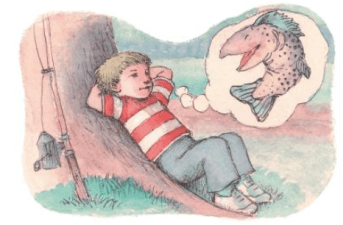
They sat under a tree and “talked and laughed and had a great time.” It didn’t matter that they only caught one little fish. After that, Joe’s dad loved going along on every fishing trip. “You could say he was hooked.”

celebrate-picture-books-picture-book-review-hooked-ice-fishing

Image copyright David McPhail, 2018, text copyright Tommy Greenwald, 2018. Courtesy of us.macmillan.com.

A heartening and tender story for children to share with their dads, Tommy Greenwald’s Hooked is also a gentle reminder that there’s much more to sharing an activity with kids than the activity itself. Parents wanting to share their own hobbies and knowledge with their children will also find a whole world of new experiences open up if they sometimes follow their child’s lead. Greenwald’s straightforward storytelling honestly portrays the relationship between Joe and his dad through realistic dialogue and clearly exhibited thoughts and feelings. The growth and strengthening of the pair’s relationship is uplifting and moving.
Screen Shot 2018-07-31 at 4.24.01 PM

David McPhail lends his well-known talent for portraying children to Greenwald’s poignant family story. His line drawings, softly washed in watercolor and pastel, wistfully depict Joe’s hope that his father will join him in fishing and his disappointment when he refuses. As Joe’s dad warms to spending the day ice fishing and later accompanies Joe on future trips, children will be cheered to see Joe and his dad smiling and laughing together. Young readers will love the detailed images of Joe’s home life and fishing trips.

A book to spur discussions and bonding between fathers and sons or daughters, Hooked would make a meaningful addition to home bookshelves and is a must for school and children’s libraries.

Ages 4 – 8

Roaring Brook Press, 2018 | ISBN 978-1596439962

To learn more about David McPhail, his books, and his art, visit his website.

National Fishing Month Activity

 celebrate-picture-books-picture-book-review-go-fishing-game-4

Go Fishing Game


Kids can go fishing right at home with this easy-to-make game! With a paper plate pond, a few printable fish, and a few other supplies, kids will be catching a whole lot of fun!

Supplies

celebrate-picture-books-picture-book-review-go-fishing-game-1

Directions

  1. Color the paper plate blue
  2. Print the Go Fishing! Game Playing Die (optional)

To Make the Fish

  1. Print the fish templates, color fish, and cut out
  2. Tape a paper clip to the back of the fish or slip a paperclip on the nose of the fish
  3. If using back-to-back templates, cut fish out, put a paper clip between the sides and glue or tape the two sides together

To Make the Fishing Pole

  1. Tie a length of string to the straw, pencil, or dowel
  2. Sandwich the other end of the string between the two circular magnets
  3. Lay the fish on the plate
  4. Go fishing!

Optional Game: Kids can roll the die to determine which fish to catch

celebrate-picture-books-picture-book-review-hooked-cover

You can find Hooked at these booksellers

Amazon | Barnes & Noble | Books-a-Million | IndieBound

Picture Book Review