July 28 – It’s Culinary Arts Month

celebrate-picture-books-picture-book-review-cake-day-cover

About the Holiday

The recipe—the step-by-step recitation of the ingredients and process for making any dish—is the heart of the culinary arts. Following along, improvising in just the right places, and inventing completely new tastes is its own special kind of literacy. Today we say goodbye to Culinary Arts Month, but hope that the joy of cooking delicious treats and reading fabulous books together remain common, fun activities with which to explore life and love—as shown with today’s book!

Cake Day

Written by Ellen Mayer | Illustrated by Estelle Corke


An adorable little boy runs to his grandma, excited that it’s “Cake Day!” “That’s right,” his grandma agrees, “Today we’re going to bake a cake!” The boy, hardly able to see over the counter, wants to be picked up and see what’s in the cabinet. His grandma happily obliges, and the pair carefully pick the ingredients for their cake.

“‘Hmmm…we need flour, salt, baking powder, and sugar to make a cake,’ says Grandma.” With all the ingredients set on the table, the two start measuring. The little chef is eager and curious: “Cake Day! How much, Grandma? As the flour pours into the cup, a soft, powdery cloud envelops them. “Too much, Grandma!” the delighted boy laughs. The two work side by side, Grandma adding the eggs while her grandson pours in the milk.
celebrate-picture-books-picture-book-review-cake-day-cover

Image copyright Estelle Corke, courtesy of Star Bright Books

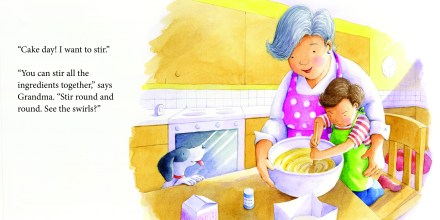
As the ingredients start to mesh, Grandma exclaims, “‘Look! What’s happening to the batter?’” The little boy wants to help it along and takes up the wooden spoon. Round and round he stirs, creating swirls in the yellow batter until it’s ready for the oven. “‘Bake day! Your turn, Grandma!” the boy stands wide-eyed as his grandma slides the deep pan into the oven.

The little boy and his dog settle in front of the oven to watch the cake bake. With eagerness the boy asks, “‘Cake day! Ready, Grandma?” Grandma encourages her grandson’s inquisitiveness and explains the process: “‘We have to wait until the cake rises. The heat makes it rise. When you hear the timer go BEEP BEEP it will be ready.’” At last the cake comes out of the oven, but it’s not ready to be decorated yet. First, they must wait for it to cool.

In a short time the high, golden cake can be iced and decorated. The little boy vigorously shakes a jar of sprinkles over the top, scattering a rainbow of colors across the white frosting. The cake is beautiful and just the right complement to the little boy’s Cake Day, Bake Day, Shake Day—Birthday!

Ellen Mayer’s language-rich and playful story of a small child and his grandmother baking together is a wonderful introduction not only to reading but to the type of full-sentence conversational modeling that improves and increases literacy. The steps to baking the birthday cake flow organically and lyrically through the loving relationship between the little boy and his grandma, enticing young readers to learn more about the world around them and how it works. The repeated phrases “Cake day! Bake day!,” and “Ready, Grandma?” as well as the boy’s short statements offer opportunities for kids to read along and learn new vocabulary as they develop important language skills.

Estelle Corke’s cheery illustrations glow with enthusiasm and the close bond between grandmother and grandson. The grandmother lifts, steadies, and holds the boy while still allowing him to perform all the tasks he can. The little boy, in his green apron, delights in every aspect of the baking process, his eagerness expressed in his animated smile and keen participation. The homey kitchen is awash in inviting colors and objects that children will recognize. The clearly drawn boxes and jars of ingredients, kitchen tools, and furnishings offer readers a chance to practice their vocabulary and learn new words.

Ages Birth – 5

Star Bright Books, 2016 | ISBN 978-1595727466

To see more books by Ellen Mayer as well as language development and reading strategies for young children, visit her website!

Visit Estelle Corke’s website to view a gallery of her artwork!

Star Bright Books publishes fiction nonfiction, and bilingual “great books for great kids” and provides literacy resources for readers.

Culinary Arts Month Activity

celebrate-picture-books-picture-book-review-cake-day-grandma's-cake

Image copyright Ellen Mayer

Grandma’s Cake


Grandma and her grandson baked a delicious, special cake—and now you can too! Here’s the full recipe that Grandma uses. Recipe courtesy of Ellen Mayer.

A Simple Sponge Cake Recipe

Ingredients

  • 1 stick unsalted butter, softened, plus a little to grease cake pan.
  • 1 1/2 cups sugar
  • 2 cups all-purpose flour
  • 1/4 teaspoon salt
  • 2 teaspoons baking powder
  • 3 large eggs at room temperature
  • 2 teaspoons vanilla extract
  • 3/4 cup milk
  • You will need: 3 mixing bowls:
  1. 1 to cream butter and sugar
  2. 1 to mix flour, baking powder and salt
  3. 1 in which to beat the eggs
  • A 7-inch diameter, deep cake pan

Directions

  1. Butter pan and dust with flour.
  2. Set the rack at the middle of the oven.
  3. Preheat oven to 350 degrees.
  4. Sift flour, baking powder, and salt into a bowl and set aside.
  5. In large mixing bowl, beat butter and sugar until light and fluffy. In the third bowl, beat the eggs and add milk.
  6. Add 1/3 of the flour mixture to butter mixture then alternate with the egg and milk mixture. Continue to alternate ending with flour mixture. Scrape bowl and beater often.
  7. Add vanilla and mix well.
  8. Pour batter into prepared pan and smooth top with a spatula.
  9. Bake cake about 45 minutes. Insert knife or wooden skewer into the center. If it emerges clean, the cake is done. If not, bake for 5 more minutes.
  10. Remove cake from oven and allow to set for 5 minutes.
  11. Turn cake out onto a cake rack and leave to cool.

Grandma’s Favorite Frosting

  • 8 oz cream cheese
  • 1 1⁄2 cups confectioners’ sugar
  • 1⁄4 stick butter
  • 1 teaspoon vanilla extract
  1. Blend all ingredients together with a mixer until smooth
  2. Spread on the top and sides of cake
  3. Decorate with sprinkles or your favorite topping

Picture Book Review

July 24 – Amelia Earhart Day

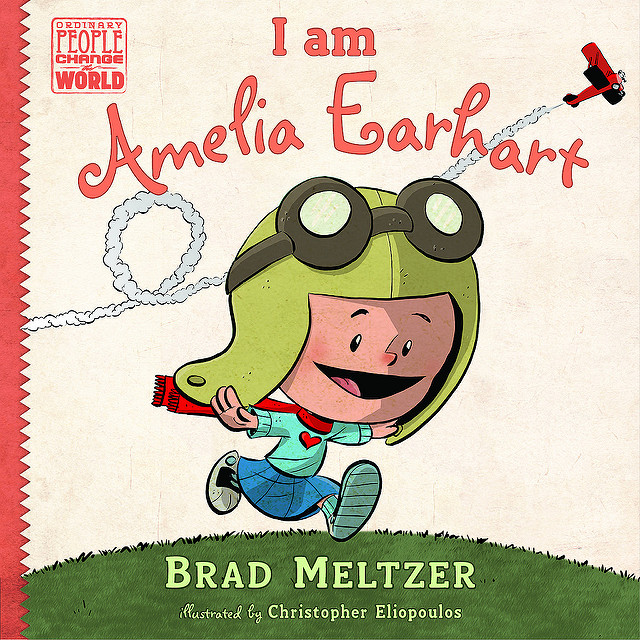
celebrate-picture-books-picture-book-review-i-am-amelia-earhart-cover

About the Holiday

On July 24, 1897 Amelia Mary Earhart was born. With astounding bravery and perseverance, Earhart became the first woman to fly solo across the Atlantic Ocean. She was an author; a founder of the Ninety-Nines, an organization for women pilots; an instructor and career counselor; and she broke many aviation records. Her disappearance over the Pacific Ocean in 1937 remains one of the most baffling historical mysteries.

I am Amelia Earhart

Written by Brad Meltzer | Illustrated by Christopher Eliopoulos


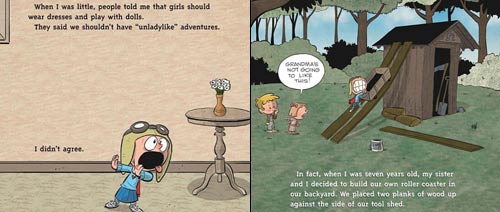
Even as a child Amelia Earhart chafed at the idea that girls could only wear dresses, play with dolls, and have “unladylike” adventures. At the age of seven Amelia and her sister built a roller coaster in their backyard by placing two planks against a shed and making a car from a packing crate with roller skate wheels on the bottom. They even greased the wood to make it “super-fast.”

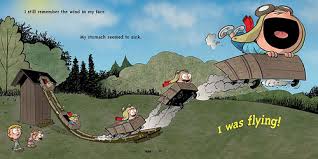
Amelia took the first ride. With the wind in her face she launched off the end of the ramp, catching air and her first feeling of flight. She crash landed a minute later, but declared the experience, “awesome!”

celebrate-picture-books-picture-book-review-i-am-amelia-earhart-interior-art-no-girl-stuff

Image copyright Christopher Eliopoulos

When Amelia was 23 she met Frank Hawks, who took her on her very first flight for ten dollars. It only took her ten minutes to realize that “she had to fly.” To save money for flying lessons Amelia took on many jobs. She worked as a truck driver, a stenographer, and a photographer. In time she learned to fly and within six months of becoming a pilot, she bought a bright yellow biplane that she named Canary.

Amelia admitted that she wasn’t a natural or even the best pilot, but she worked hard to learn the skills she needed. She also bravely dared to do what others wouldn’t or couldn’t. Because of her determination she became the first woman to fly across the Atlantic and then the first woman to fly solo across the Atlantic. At a time when people still traveled from America to Europe by boat, no one thought a woman would be able to fly that far.

To make the flight required the kind of grit that Amelia possessed. The trip took 14 hours and 56 minutes with no stops and no breaks, and when Amelia landed she broke the record for the fastest Atlantic flight ever. She broke other records too, including the woman’s altitude record and a speed record. Despite her success, whenever she set a new goal there were always people who told her she couldn’t do it. But she never let that stop her.

celebrate-picture-books-picture-book-review-i-am-amelia-earhart-interior-art-roller-coaster

Image copyright Christopher Eliopoulos

Her life and achievements serve as inspiration to all who aspire to great heights. Amelia’s advice? “Whatever your dream is, chase it. Work hard for it. You will find it. It is the best lesson I can give you.” And she added this reminder: “I hope you’ll remember that the greatest flight you’ll ever take, is the one no one has tried before.”

Part of Brad Meltzer’s I am… series of biographies, this portrait of Amelia Earhart highlights the traits of bravery and individualism—evident from her youngest years—that fueled her passion for adventure and breaking barriers. Perfectly suited for its audience, the text is conversational and includes funny asides from young Amelia to her readers. The repeated repartee between those who doubted her and Amelia (“you sure this is a good idea?” and “This isn’t a good idea. It’s the best idea!”) emphasizes Amelia’s determination and self-belief that will inspire kids to think likewise about their own dreams. The book follows Amelia from her childhood through her young adulthood and into her record-breaking years with well-chosen facts that illuminate but do not overwhelm. As this is a book to inspire children to reach for their dreams, the book makes no mention of Amelia’s eventual disappearance over the Pacific Ocean, instead leaving kids with wise words from this most iconic and fascinating adventurer.

Children love the accessibility of Christopher Eliopoulos’ I am… series illustrations! Enthusiasm and joy radiate from Amelia Earhart’s face as she races to meet the world head-on. Her dismay with typical “girl stuff” as well as her excitement when flying is evident in her very kid-like expressions. The scenes of Amelia building and riding her homemade roller coaster will make kids’ eyes widen in delight. Amelia’s various flights and planes are beautifully rendered in both up-close views of her aircraft as well as panoramic spreads showing her flying through clouds, over fields, and across the ocean. The full-bleed, vibrant and action-packed pictures will rivet kids’ attention to Amelia’s life and her inspiring message

Ages 5 – 9

Dial Books for Young Readers, 2014 | ISBN 978-0803740822

Keep up with what Brad Meltzer is writing and doing next by visiting his website!

Discover the cartoon world of Christopher Eliopoulos on his website!

Amelia Earhart Day Activity

celebrate-picture-books-picture-book-review-biplane-craft

Soar Toward Your Dreams Box Biplane


If you love airplanes and flying—or if you just have sky-high aspirations—you’ll have fun making your own plane from recycled materials! You can use your own creativity to decorate it or make Amelia Earhart’s Canary while you imagine yourself flying through the clouds on a beautiful day. This is a fun activity to share with an adult or older sibling too!

Supplies

  • Travel-size toothpaste box
  • 3 Long, wide craft sticks
  • 2 Short “popsicle” sticks
  • 5 Round toothpicks, with points cut off
  • Paint in whatever colors you like for your design
  • 4 small buttons or flat beads
  • Paint brushes
  • Strong glue or glue gun

Directions

  1. Empty toothpaste box
  2. Paint toothpaste box and decorate it
  3. Paint the craft sticks and 5 toothpicks
  4. Paint one small craft stick to be the propeller
  5. Let all objects dry

To assemble the biplane

  1. For the Bottom Wing – Glue one long, wide craft stick to the bottom of the plane about 1 inch from the end of the box that will be the front of the plane
  2. For the Top Wing – Glue the other long, wide craft stick to the top of the plane about 1 inch from the front of the plane
  3. For the Tail – Glue one short craft stick to the bottom of the box about ¾ inches from the end that is the back of the plane
  4. For the Vertical Rudder – Cut the end from one of the painted wide craft sticks, glue this to the back of the box, placing it half-way between each side

To assemble the wheels

  1. Cut 4 painted toothpicks ¾-inches long
  2. Cut one painted toothpick 1-inch long
  3. Glue 2 of the short toothpicks to the back of 1 button, the ends of the toothpicks on the button should be touching and the other end apart so the toothpicks form a V
  4. Repeat the above step for the other wheel
  5. Let the glue dry
  6. Glue the 1-inch long toothpick to the center of each wheel to keep them together and give them stability. Let dry

To make the back wheel

  1. Cut two ¼-inch lengths of painted toothpick and glue them together. Let dry
  2. Glue two mini buttons together to form the back wheel. Let dry
  3. Glue the ¼-inch toothpicks to the mini buttons. Let dry
  4. Glue these to the bottom of the plane in the center of the box directly in front of and touching the tail

July 18 – Get Out of the Doghouse Day

celebrate-picture-books-picture-book-review-the-bear-who-stared-cover

About the Holiday

Being “in the dog house” means that somehow you’ve upset someone, made them mad or in some other way fallen out of favor with them. Maybe you owe them an apology or at least an explanation. Today’s holiday gives people a chance to say “I’m sorry” and patch up any hurt feelings. Like the bear in today’s book, you may find yourself out of the doghouse and on the path to better friendships!

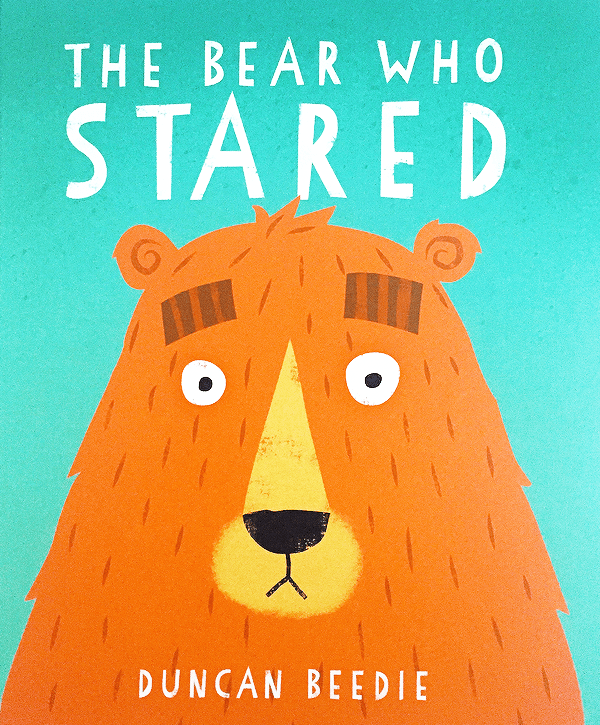
The Bear Who Stared

By Duncan Beedie


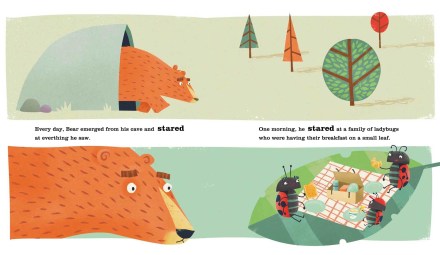
Bear loves to stare…and stare…and stare. One morning he emerges from his den to find a family of ladybugs having a picnic breakfast. He can’t help but gaze at them intently. “‘What are you staring at?’” the daddy ladybug demands before he and his family pack up to find a more private leaf. Bear continues on his way. In a bit he climbs a tree and stares at a bird feeding her chicks. “‘Can I help you?’” the mother bird asks, but Bear remains silent. The chicks don’t like Bear interfering with their meal, so the mother bird angrily tells him to “‘sshhhooooo!’”

celebrate-picture-books-picture-book-review-the-bear-who-stared-interior-art-ladybugs

Image copyright Duncan Beedie, courtesy of simonandschuster.com

At the bottom of the tree Bear spies a badger hole and sticks his head inside. The badger, particularly irritated at Bear’s badgering stare while he is shaving, bites poor bear on the nose. Sore and dejected, Bear wanders through the forest to a large pond. He sits down on a log to ponder his situation. He doesn’t mean to be annoying, he’s “just curious but too shy to say anything.”

A little frog floating on a lily pad in the middle of the pond pipes up, “‘I’ve seen that look before.’” Bear stares at the frog and the frog stares back. “‘Not much fun being stared at, is it?’” he says. Bear confesses that he just doesn’t know what to say to anyone. Just then Bear catches a glimpse of another bear staring back at him from the mossy water of the pond. This bear looks exactly like Bear, except that he is green and wavy. Suddenly, the green bear smiles. “‘You see?’” says the frog. “‘Sometimes a smile is all you need.’” The frog dives off his lily pad into the pond, and the green bear disappears too.

celebrate-picture-books-picture-book-review-the-bear-who-stared-interior-art-staring

Image copyright Duncan Beedie, courtesy of simonandschuster.com

The next day Bear leaves his den and discovers the ladybug family breakfasting again. As soon as they spot Bear, they begin to gather their things. “‘Hello!’” Bear says with a big smile on his face. The ladybugs are surprised and happy. “‘Oh, hello!’” replies the dad, smiling back. With renewed confidence Bear wanders into the forest. He smiles at the birds and smiles at the badger, and they smile at him in return. Bear makes a lot of new friends that day. And there’s even that friend down at the pond who likes to stare as much as he does!

Duncan Beedie highlights the awkward feeling many kids—and even adults—often feel in social situations. Nothing pops immediately to mind to say and yet there’s a desire for connection. As Bear discovers, staring is not the answer—so what is? In The Bear Who Stared Beedie offers a simple, but universal solution through an engaging and humorous story. Bear, sporting a bemused expression that aptly depicts his predicament, is such an endearing character that readers will wish they could give him a hug as he suffers slights from the woodland creatures.

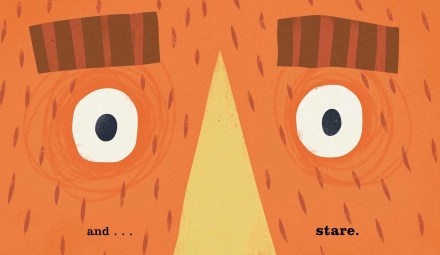
The full-bleed, oversized pages put readers at eye level with bear and his subjects, and the very up-close look into Bear’s staring eyes will make kids laugh. The green, rust, and blue palette on matte paper is bold, but muted, giving the pages an organic, environmental feel that is perfect to carry the story.

The Bear Who Stared is a funny story time read with a heart that kids will ask for again and again.

Ages 4 – 8

little bee books, 2016 | ISBN 978-1499802856

Check out more of Duncan Beedie’s illustration and animation work on his website!

Get Out of the Doghouse Day Activity

celebrate-picture-books-picture-book-review-bear-craft

Expressive Bear Craft


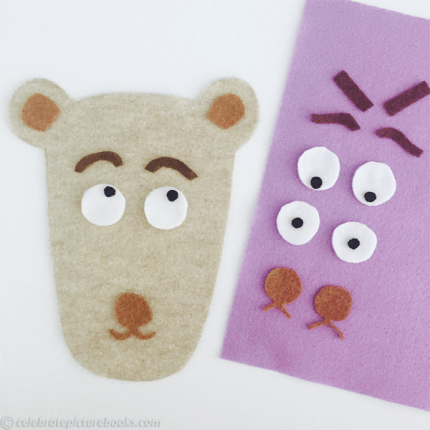
Sometimes it’s hard to manage or even recognize various emotions that land you in the doghouse. With this easy-to-make felt (or paper) set, you can try out different emotions and talk about them, make up stories to go with each facial expression, or play a fun game. Below, you’ll find a couple of ideas!

Supplies

  • Printable Bear Head Template
  • Printable Eyes and Noses Template
  • Printable Eyebrows Template
  • Light brown felt or fleece, 8 ½ x 11 inch piece
  • Dark brown felt or fleece, 8 ½ x 11 inch piece
  • White felt or fleece, 8 ½ x 11 inch piece
  • Black felt or fleece, for pupils
  • Scissors
  • Glue
  • 1 playing die (optional)

Directions

  1. Print templates
  2. Cut bear head from light felt or fleece
  3. Cut eyes from white felt or fleece
  4. Cut nose and inner ears from dark brown felt or fleece
  5. Cut pupils from black felt or fleece
  6. Glue pupils onto white eyes

Or: Color and play with the paper set

To Play a Game

Roll the die to collect parts of the bear’s face. The first player to create a full face is the winner.

  • Die dots correspond to:
  • 1—one eyebrow
  • 2—second eyebrow
  • 3—one eye
  • 4—second eye
  • 5—nose
  • 6—inner ears

For a Fun Story Time

Give the bear different faces and make up stories of why he looks that way!

Picture Book Review
July 13 – National Culinary Arts Month

celebrate-picture-books-picture-book-review-the-hole-story-of-the-doughnut-cover

About the Holiday

July is a great month for celebrating culinary arts. With kids home from school it’s fun to spend time together in the kitchen learning new skills and making experimental or favorite recipes. On-the-go meals or vacations can also take you to new and enticing restaurants, where you may try regional cuisine and discover exciting flavors.

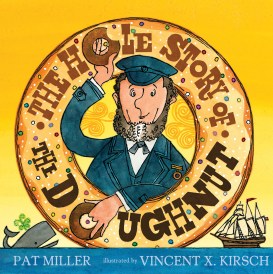
The Hole Story of the Doughnut

Written by Pat Miller | Illustrated by Vincent X. Kirsch


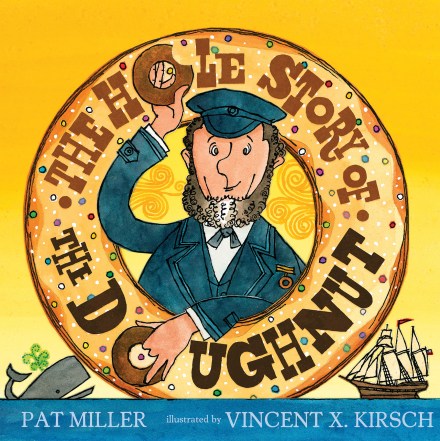
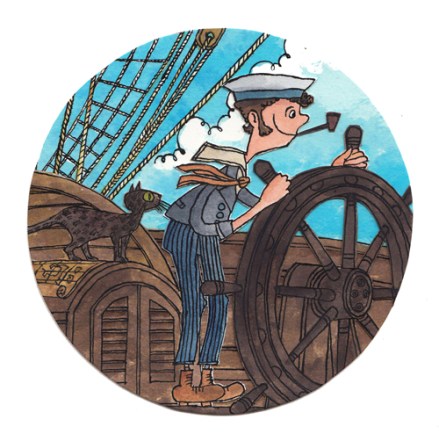
In 1844 at the tender age of 13, Hanson Gregory left the family farm and went to sea as a cabin boy on the schooner Isaac Achorn. He quickly became the cook’s assistant and also learned how to rig the sails and “steer a ship over trackless waves by sun and stars.” By the age of 19 Gregory had become the captain of the schooner Hardscrabble, and within a few more years was racing “his cargo from Maine to California as commander of a clipper, the fastest ship on any ocean.”

celebrate-picture-books-picture-book-review-hole-story-of-the-doughnut

Image copyright Vincent X. Kirsch, courtesy of vincentxkirsch.com

Hanson Gregory may have been one of the best captains to sail the seas—once awarded a medal for heroism for rescuing seven shipwrecked Spanish sailors even though his own ship and crew were endangered. But his greatest achievement was not attained because of his seafaring skills—it was his ingenuity in the galley that people remember.

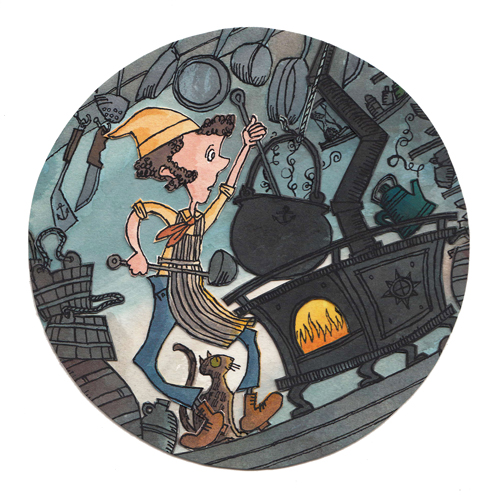
On June 22, 1847 as a 16-year-old cook’s assistant, Hanson was rustling up the crew’s breakfast—coffee and fried cakes, the same as every morning. While the pot of lard bubbled on the stove, Gregory formed balls of sweetened dough and dropped them in. They sizzled and crisped—at least around the edges. The centers were raw, heavy with grease, and they dropped like cannonballs in the stomach. “Sailors called them Sinkers.” But this morning Gregory had an idea. He removed the lid from the pepper can and cut out the center of the balls. “Then he tossed the rings into the bubbling lard.”

celebrate-picture-books-picture-book-review-hole-story-of-the-doughnut

Image copyright Vincent X. Kirsch, courtesy of vincentxkirsch.com

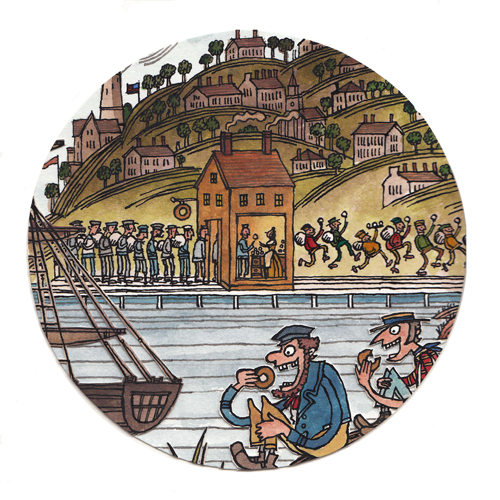
The cook and the sailors took one look at this odd concoction and…ate them up! “The cakes were brown, and sweet, and fully cooked. Sighs of delight rose above the noisy sea. A new breakfast tradition was born.” Gregory told his mom about his invention, and she fried up large batches of these ‘holey cakes’ that were a sensation at a friend’s store and on the docks.

You might think this is a pretty interesting tale in itself, “but sailors like their stories bold” and so they “spun legends worthy of such a delicious treat.” One tale had Captain Gregory inventing the doughnut while he saved his ship from disaster. Another told how Gregory, distraught over the drowning of five sailors pulled to the ocean floor by of their “sinker” breakfast, punched holes in every cake to make them look like life rings and vowed, “‘Never again!’”

Captain Gregory had a sense of humor about his accomplishment. During an interview he once stated that “he had invented ‘the first hole ever seen by mortal eyes.’” Gregory lived to be 89 and is buried “overlooking the sea where stormy weather can be spotted as readily as it once was from the quarterdeck of the Hardscrabble.”

An author’s note expanding on the story of Captain Gregory, the doughnut, doughnut shops, a timeline, and a selected bibliography follow the text.

celebrate-picture-books-picture-book-review-hole-story-of-the-doughnut

Image copyright Vincent X. Kirsch, courtesy of vincentxkirsch.com

Doughnuts have never been so evocative! In Pat Miller’s humorous, informative history of this favorite pastry treat, readers can smell the salt air, feel the ocean swell and roll under their feet, and even ache a little for those poor sailors forced to eat “sinkers.” Seamlessly interwoven into this foodography is a fascinating look at the early days of sail. Miller’s language is immediately stirring: the Ivanhoe bucks and plunges, the sea becomes a monster, and Captain Gregory spears a sinker on the wheel spoke. Kids will marvel at a 13-year-old going off to sea and becoming an inventor at 16.

Vincent X. Kirsch provides just the right touch to this captivating true story with his cartoon-inspired watercolor and cut paper artwork. Ingeniously incorporating Hanson Gregory’s innovation of removing the center of the fried cakes, Kirsch’s illustrations are “cored” to allow for text, while the extracted section appears on the facing page as a glimpse through a porthole. The maritime atmosphere—from ship to shore—of the mid-1800s is beautifully represented in the folk-style sketches, and the humor that is so intrinsic to this story is wonderfully embraced.

The Hole Story of the Doughnut will delight foodies and history buffs alike and would make a fun gift and a delectable addition to personal libraries for all ages.

Ages 5 – 12

Houghton Mifflin Harcourt, 2016 | ISBN 978-0544319615

Vincent X. Kirsch’s website is full of illustrations from his books for children—take a look at his portfolio!

Spend some time with Pat Miller on her website that offers activities, tips, resources and many more books!

Culinary Arts Month Activity

celebrate-picture-books-picture-book-review-cd-doughnut-craft

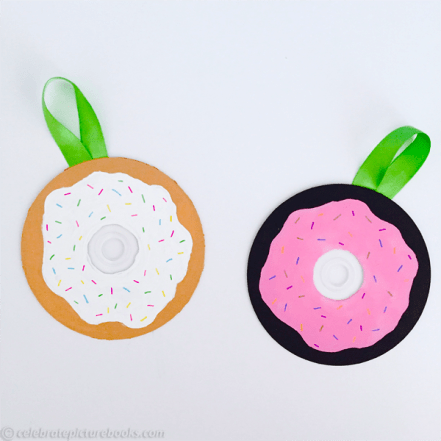
CD (Compact Doughnuts) Decoration


Are some of  your CDs a little passé? Not if you can turn them into cute décor like this doughnut hanging.

Supplies

  • Unused CDs
  • Craft paint in tan, black, pink, yellow, white (or any colors you want for the doughnut and the icing)
  • Ribbon, any color and length you want
  • Fine-tip markers in bright colors
  • Glue
  • Glue dots (optional)
  • Paint brush

Directions

  1. Paint a wavy edge around the CD, let dry
  2. Paint the center of the CD, leaving the clear circle unpainted
  3. When the icing paint is dry, draw sprinkles on the icing with the markers
  4. With the ribbon make a loop hanger and attach it to the back of the CD with glue or glue dots
  5. Hang your decoration

celebrate-picture-books-picture-book-review-the-hole-story-of-the-doughnut-cover

You can find The Hole Story of the Doughnut at these booksellers

Amazon | Barnes & Noble | Books-a-Million | IndieBound


July 10 – Don’t Step on a Bee Day

celebrate-picture-books-picture-book-review-bee-dance-cover

About the Holiday

With the bee population declining, today is a reminder to protect bees and preserve their habitats. Without bees and the pollination they provide, the world’s food supply is threatened. Pollution, pesticides, and colony collapse all endanger the health of bee colonies around the globe.

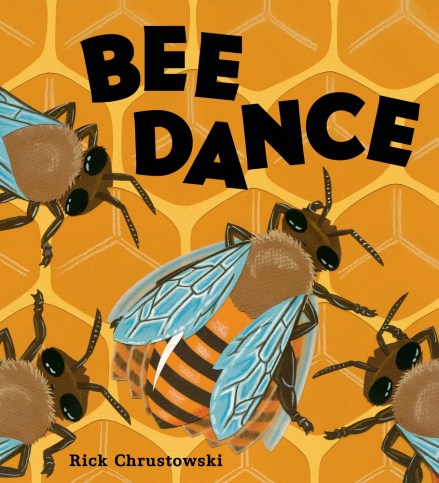
Bee Dance

By Rick Chrustowski


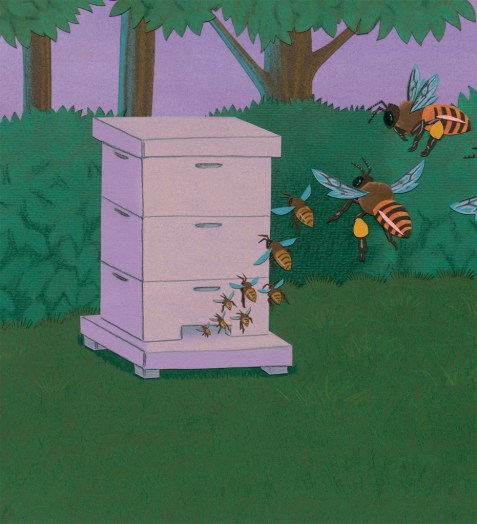
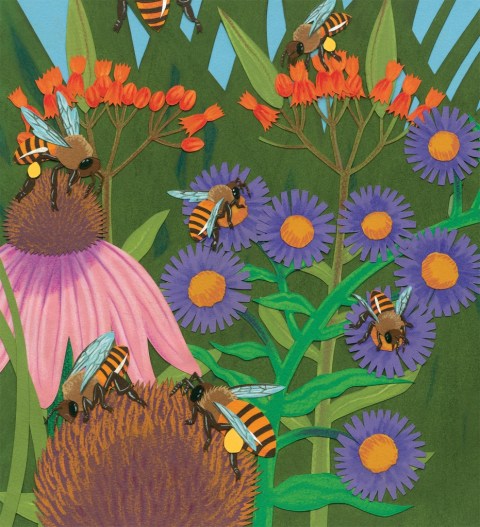
In the warm sunlight a honey bee leaves the hive in search of nectar. A sweet scent in the pleasant air entices the bee toward a prairie in bloom, where tasty wildflowers await. With its “bendy-straw tongue” the bee sips the delicious food. The bee races back to the hive and as the other bees welcome it home with a buzz of excitement, the Scout climbs the honey comb to deliver its news.

celebrate-picture-books-picture-book-review-bee-dance-interior-art-wildflowers

Image copyright Rick Chrustowski, courtesy of us.macmillian.com

The bee communicates its story through a “waggle dance.” It forms a figure 8, twirling one way, running up the middle, and then twirling around the other side. To indicate direction and distance, the Scout bee waggles faster and for a longer period of time. When the dance is completed, the other bees know exactly where to go. They swarm out of the hive and easily find the wildflower prairie.

Forager bees collect nectar from the tall flowers and fill pouches on their legs with pollen. They zip from flower to flower until daylight fades. In the growing twilight the bees head for  home once more. Back in the hive they unload their cargo in the combs and rest for the night. With dawn the cycle and the dance will begin again.

celebrate-picture-books-picture-book-review-bee-dance-interior-art-coming home

Image copyright Rick Chrustowski, courtesy of us.macmillian.com

Rick Chrustowski’s Bee Dance is a lyrical introduction to the fascinating and mysterious world of bees. Focusing on the communicating dance Scout bees perform to relay information is a familiar and excellent choice for young children used to following and inventing meaningful motions. The boldly colored illustrations give children an up-close view of the flying, sipping, and pollen gathering behavior of bees. The Scout bee’s dance is depicted clearly, and kids may love to replicate it. Further details of the life and work of honeybees at the end of the book add compelling information that kids will want to explore further.

Ages 4 – 8

Henry Holt and Co., 2015 | ISBN 978-0805099195

Visit Rick Crustowski’s webste to discover more about his books and how to make a Bee Kite!

Don’t Step on a Bee Day Activity

celebrate-picture-books-picture-book-review-bee-coloring-page

Honeybee Coloring Page


Honeybees and wildflowers go hand-in-hand or is it wing-in-petal? Either way they go together and make a beautiful, natural sight! Decorate this printable Honeybee Coloring Page with pencils, crayons, or markers—or make a collage using cut or torn tissue or craft paper!

July 4 – Independence Day

celebrate-picture-books-picture-book-review-lady-liberty's-holiday

About the Holiday

On July 4, 1776, the thirteen colonies that then made up America claimed their independence from England. After much debate and with a majority—but not unanimous—vote, delegates to the Continental Congress adopted the Declaration of Independence. While the vote may not have been unanimous, delegates from all 13 colonies signed the document penned by Thomas Jefferson. John Hancock, who was President of the Continental Congress, signed his name “‘with a great flourish’ so England’s ‘King George can read that without spectacles!’” The action led to the Revolutionary War and ultimately to a break with England.

On this United States national holiday most cities host parades, fireworks displays, and other special events.

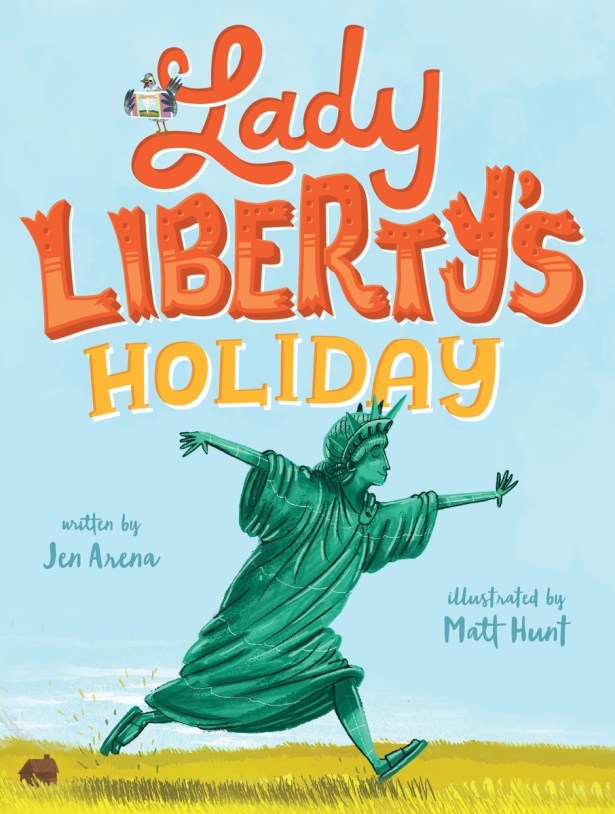
Lady Liberty’s Holiday

Written by Jen Arena | Illustrated by Matt Hunt


Shortly before the Fourth of July Lady Liberty is feeling down. Year after year she has stood in the same place holding aloft a torch in one hand and cradling a tablet in the other. She turns to her friend Moe, the pigeon on her shoulder, and expresses her dissatisfaction. Moe has a suggestion: “‘Lady, you need a getaway!’” Lady Liberty thinks about it and about the vastness of America. She has only seen a small corner of it. That night Lady Liberty pries herself from her pedestal and sneaks away.

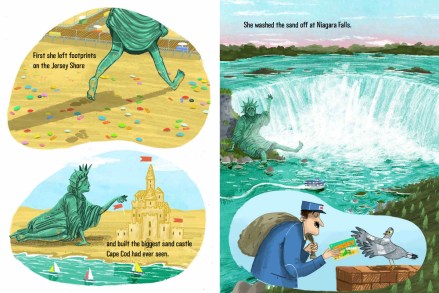
She walks the wide beaches of New Jersey, builds a huge sandcastle on Massachusetts’ Cape Cod, and dips her feet in Niagara Falls. With her long strides it doesn’t take her long to reach the Mississippi River. She finds a seat atop the Gateway Arch in St. Louis, Missouri and watches the Ol’ Man river slip past. In Kansas she plays in wheat fields that “tickle her feet” and are as good for making angels as snow. In South Dakota she photo bombs at Mount Rushmore, and she takes a quick hike over the Rocky Mountains. After all this fun Lady Liberty needs a rest, so she takes a nap on San Francisco’s Golden Gate Bridge.

But the people in New York have noticed the Lady’s absence. The Fourth of July is only three days away and no one is in the mood to celebrate without her. “Tourists were gloomy. Cops were cross. Even the stock market was down.” The mayor is even considering cancelling the holiday! Moe is worried Liberty might not come back.

celebrate-picture-books-picture-book-review-lady-liberty's-holiday

Image copyright Matt Hunt, courtesy of Jen Arena (jenarenabooks.com)

And Moe is right! Lady Liberty is enjoying herself too much to think about returning. The grandeur of the Grand Canyon makes her feel small—it’s a nice change, she thinks. She drinks water from a geyser in Yellowstone Park and sleeps under the stars in Texas. With a hop and a skip she’s dancing in New Orleans, and the Florida Keys make excellent “stepping stones” to her next adventure. She doesn’t even mind schlepping through swamps in the deep south, and an alligator that latches onto her toe is dispatched with a shake.

Lady Liberty suddenly hears the familiar flap of Moe’s wings. Moe tells Liberty how things are in New York. When she hears that they are thinking of cancelling the Fourth of July, she “bolts up as if she’d been struck by lightning.” Yes, says, Moe. “‘Nobody feels like celebrating without you.’” But after her cross-country tour, Lady Liberty knows that “‘the Fourth of July isn’t about me. It’s about America!’” Without another thought Liberty is racing north.

As New Yorkers wake at dawn, they see Lady Liberty happy to be back overlooking the Harbor, “where she had stood for over a hundred years.” Her copper dress shines in the early morning sun. Later that night she glows again in the colors of fireworks and enjoys a very Happy Fourth of July!

The final two pages tell the story of Lady Liberty’s creation, installation, and meaning. Tantalizing tidbits about the statue of Liberty are also revealed.

Jen Arena’s Lady Liberty’s Holiday is an engaging introduction to the story of the Statue of Liberty and American geography. A road trip across America was once a staple of childhood, and Arena replicates the excitement and wonder of viewing the country’s monuments and splendor through Lady Liberty’s walking tour. As each page brings readers to another awe-inspiring landmark, kids will want to learn more about the parks, states, and history of America.

Matt Hunt’s vibrant, full-bleed spreads are as expansive as the American landscape. The blue waters of Niagara Falls roar over the edge, creating white mist; the rock-hewn faces of George Washington, Thomas Jefferson, Teddy Roosevelt, and Abraham Lincoln gaze out from the peak of Mount Rushmore; and the spume of water from a Yellowstone geyser dwarfs the tourists below. As Liberty towers over cruise boats and trees, lounges across the Golden Gate Bridge, and flicks away a pesky alligator, kids gain an excellent perspective on the size of the Statue of Liberty as well as the monuments and natural landmarks she visits.

Like the postcards that Liberty sends to her friend Moe from stops on her journey, Lady Liberty’s Holiday is a welcome snapshot of America any time of year.

Ages 4 – 8

Knopf Books for Young People, Random House Kids, 2016 | ISBN 978-0553520675

To learn more about Jen Arena and view the books she’s written , visit her website!

A gallery of Matt Hunt‘s work can be seen on his website!

Independence Day Activity

celebrate-picture-books-picture-book-review-fourth-of-july-coloring-page

Fourth of July Coloring Page


The 4th of July celebrations mean flags, fireworks, and fun! Here’s a printable Fourth of July Coloring Page for you to make your own holiday festivities. You can even make it sparkle with a dash of glitter!

July 3 – Compliment Your Mirror Day

celebrate-picture-books-picture-book-review-why'd-they-wear-that

About the Holiday

Take a peek in the mirror and who do you see? That’s right—a fantastic person with inner and outer beauty! Today is dedicated to recognizing and appreciating that person in the mirror!

Why’d They Wear That? Fashion as the Mirror of History

By Sarah Albee


Whether you’re a fashionista or an “any ol’ thing will do” kind of person, there’s no denying that clothes make a statement. Sarah Albee’s fascinating look at human wraps spans history from 10,000 BC to the modern era. Along the way she exposes both historical facts as well as the often repugnant, laughable, and can’t-look-away fashion fads and disasters that have brought us to “wear” we are today. 

In Chapter 1: That’s a Wrap, Albee reveals facts about the first needles and thread, silk production, the Mayan tradition of forced elongation of skulls (this was considered attractive, denoted social status, and was intimidating), the first pants, warrior wear, and much more.

Chapter 2: Keeping the Faith exposes the influence religion had on clothing in the Middle Ages. White or russet colored robes were worn by men traveling on pilgrimages while penitents could wear a hair shirt made of itchy, bristly horsehair as punishment. Medieval armor, Samurai dress, why modern men’s loafers are decorated with little holes, and more are also discussed here as is the job of Wool Fuller – in which the Fuller soaked wool in urine to degrease it and improve its texture.

celebrate-picture-books-picture-book-review-why'd-they-wear-that

Image courtesy of National Geographic

Chapter 3: Going Global covers the Age of Exploration, which changed fashion as explorers from Europe came in contact with Native peoples in the New World. Red dye, rubber shoes, and the leather Moccasins were all adopted by Europeans. And if you think the search for remedies for wrinkles and other vestiges of older age is a modern pursuit, you’ll learn about Ponce de Leon and his quest for the fountain of youth.

Chapter 4: Ruff & Ready takes a look at the Renaissance. You may have seen fur stoles with the head of the animal still attached and wondered, Why? This fashion statement goes back to “Flea Furs” which were dead, stuffed animals that people draped over their shoulders in the belief that the fleas that were munching on their skin would transfer to the animal instead. Unfortunately, people discovered that fleas prefer warm bodies. Another curious fad was the ruff collar. While people may have thought they looked swell, these collars hindered physical movement and even led to the invention of the long-handled spoon because people could not get food to their mouths any other way. One “benefit” perhaps: when the first American settlers ran out of all other food options, they ate their collars, which were stiffened with wheat paste. And there’s so much more!

In Chapter 5: Lighten Up! readers will discover facts about the dour dress of the Puritans and the ostentatious dress of the French court. The tradition of men’s wigs is explained, and today’s face-painting has nothing on the unusual solution for facial blemishes—black velvet, leather, or silk patches in various shapes.

celebrate-picture-books-picture-book-review-why'd-they-wear-that

Image courtesy of National Geographic

Revolutionary Times take center stage in Chapter 6: Hats (and Heads) Off. During this time clothes began to fit the task. There were clothing items to protect (walking canes became popular as a way to ward off marauding wild dogs), uniforms to highlight the good looks of running footmen, elaborate costumes for Venetian parties, and homespun clothes that became a sign of protest from the American colonists. And if you think “bumpits” and hair extensions are new, women trying to keep up with Marie-Antoinette wore their hair (real and artificial) “cemented upward over wire armatures into two-foot (0.6-m)-high coiffures that made the wearer stand 7 ½ feet tall!”

Chapters 7 through 9 bring readers into the modern age, taking them from a time when children were dressed as young adults and boys wore elaborate gowns until the age of 7 to the textile innovations of the Industrial Revolution and the popularity of bustles that put fanny packs to shame to the fads of the 1960s and today.

celebrate-picture-books-picture-book-review-why'd-they-wear-that

Image courtesy of National Geographic

Albee’s Why’d They Wear That? is much more than a book about fashion. It’s a humorous, fabulously entertaining way to learn about so many aspects of history, from social revolution to inventions to cultural differences. Enlightening side bars, especially the fascinating “Tough Job” entries, and full-color illustrations, paintings, and photographs depicting every concept make Why’d They Wear That? an essential book for school libraries as well as for home bookshelves. Readers of all ages will want to dip into it again and again…and will “Oh!” “Ah!” and “Ewww!” over every page.

Ages 7 and up (children on the younger end of the range will enjoy the facts and pictures during a read-along session) 

National Geographic Children’s Books, 2015 | ISBN 978-1426319198

Learn more about Sarah Albee and her books on her website!

Watch the trailer for Why’d They Wear That? Fashion never looked so…good? unsettling? hilarious? You decide!

Compliment Your Mirror Day Activity

celebrate-picture-books-picture-book-review-mirror-word-search

Mirror, Mirror, What Shall I Wear?


In this magic mirror word search are 20 fashion-related terms from history. Find them all! Here’s the printable Mirror, Mirror, What Shall I Wear puzzle and the Solution.