May 27 – It’s National Pet Month

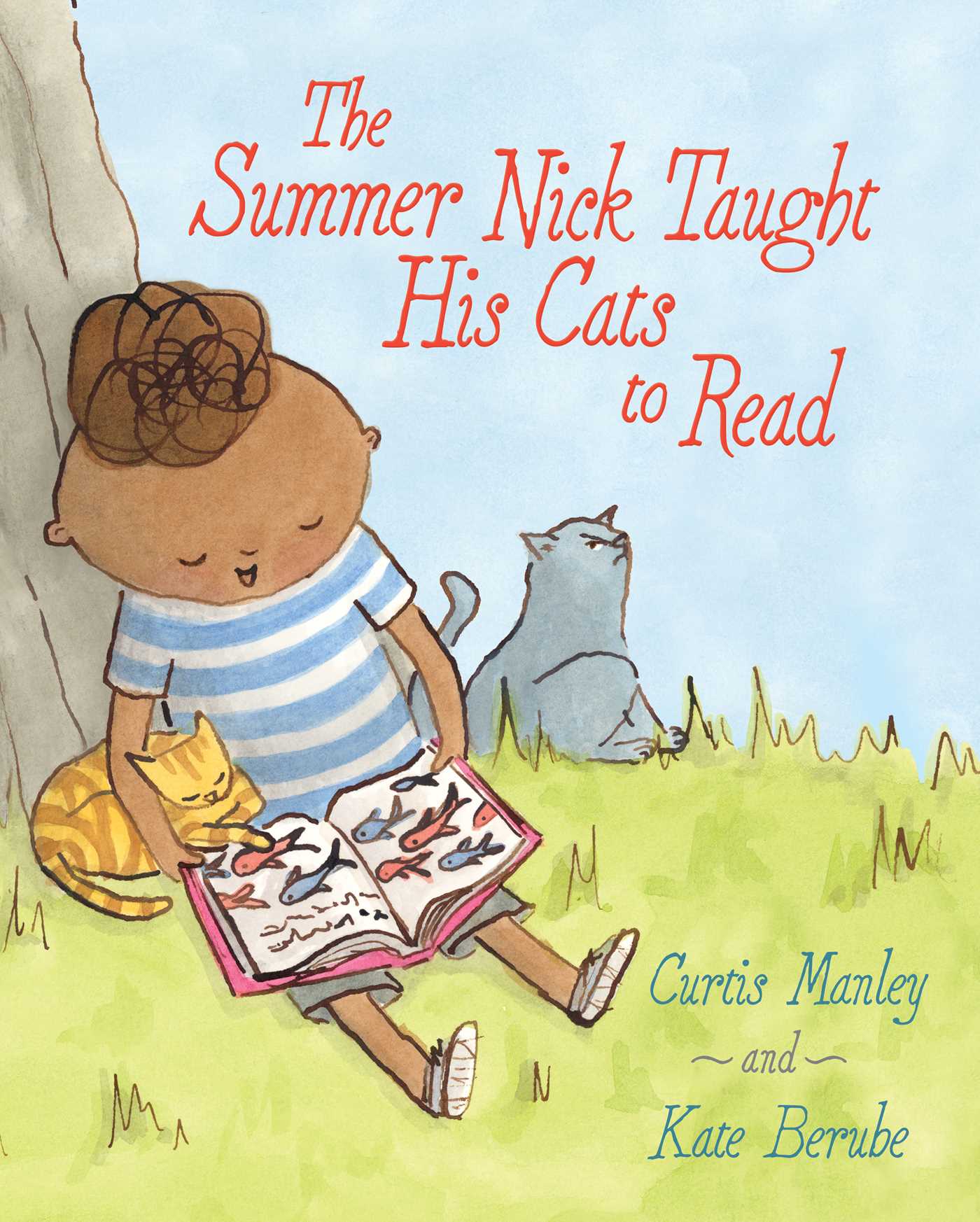
celebrate-picture-books-picture-book-review-the-summer-nick-taught-his-cats-to-read-cover

About the Holiday

Pets give us unconditional love, provide companionship, and add entertainment and fun to our lives. This month is set aside to focus on our pets. To celebrate spend extra time with your furry friend, make sure they have everything they need to stay healthy, and give them a little extra treat. If you don’t have a pet, consider adopting a dog, cat, bird, or small animal from your local animal shelter. You’ll both benefit!

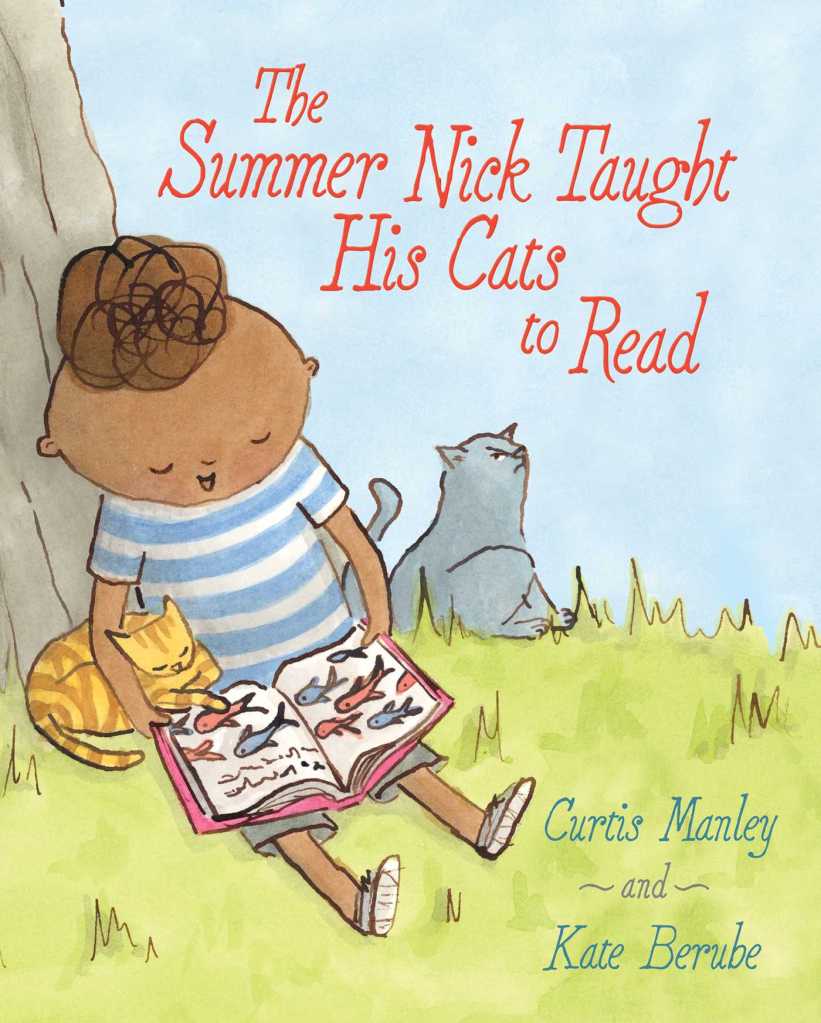
The Summer Nick Taught His Cats to Read

Written by Curtis Manley | Illustrated by Kate Berube


One summer Nick, Verne, and Stevenson did everything together. Nick is a little boy and Verne and Stevenson are two very different cats. Nick and Verne loved to spend time near the water—Stevenson tolerated it. Nick and Verne slept happily in a tent under the stars—Stevenson barely shut his eyes. While Nick rode his bike Verne eagerly sat in the front basket—Stevenson hunkered down in a box on the back. But when Nick sat down to read, both cats had similar ideas of fun—like lying on top of the book—and Nick could hardly read a sentence.
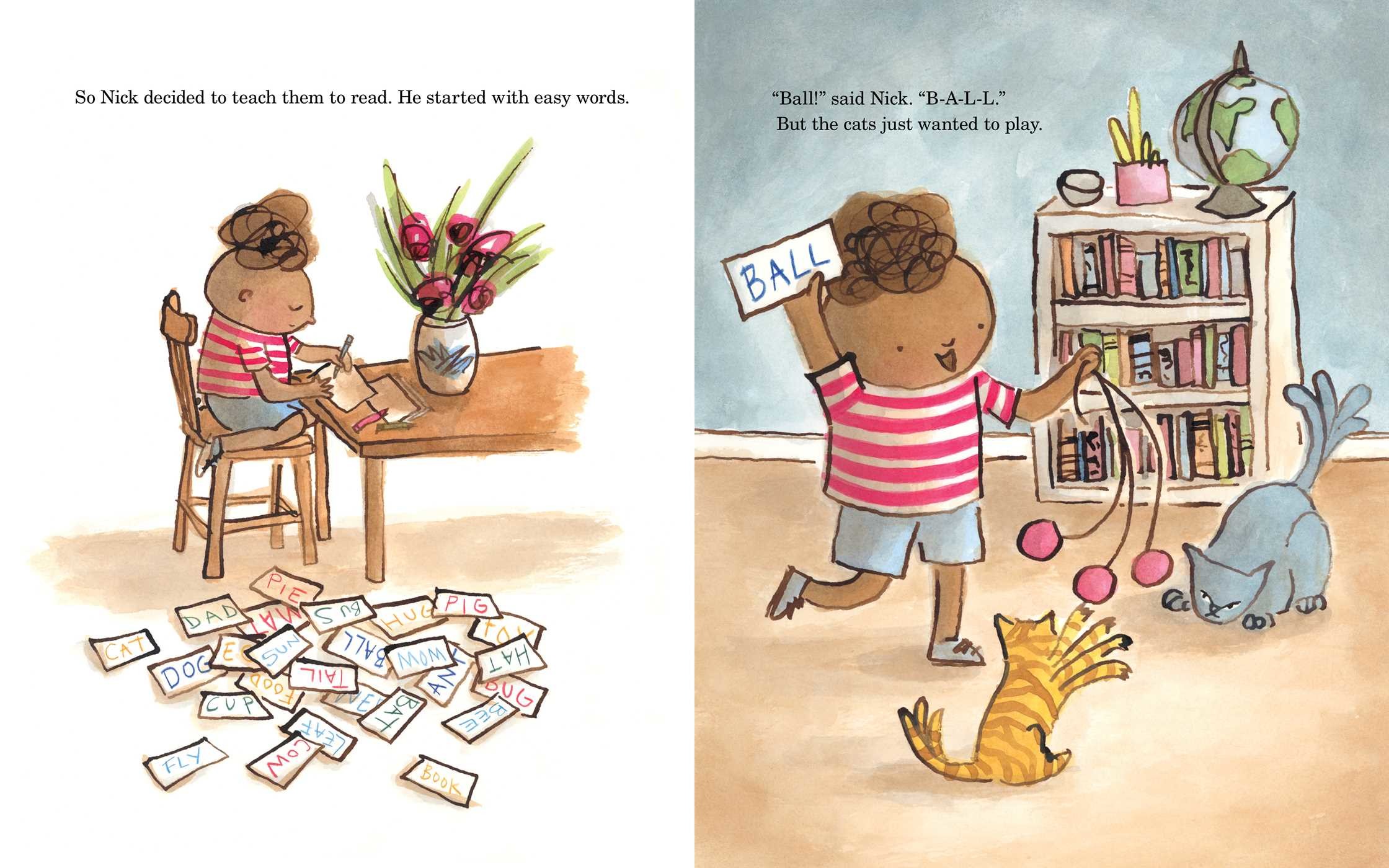
“So Nick decided to teach them how to read. He made flash cards and started with easy words” like “ball,” but Verne and Stevenson just wanted to play with the ball. While the three had a picnic on the lawn, Nick brought out his flashcards and “pointed to the word food. The cats ignored him.” When the cats snoozed Nick woke them with a sign. “‘This is no time for an N-A-P!’” he said. Neither cat responded well, so Nick tried a new tactic. He made word-shaped flash cards. Verne took a nibble of “F-I-S-H,” but Stevenson hid under the bed.
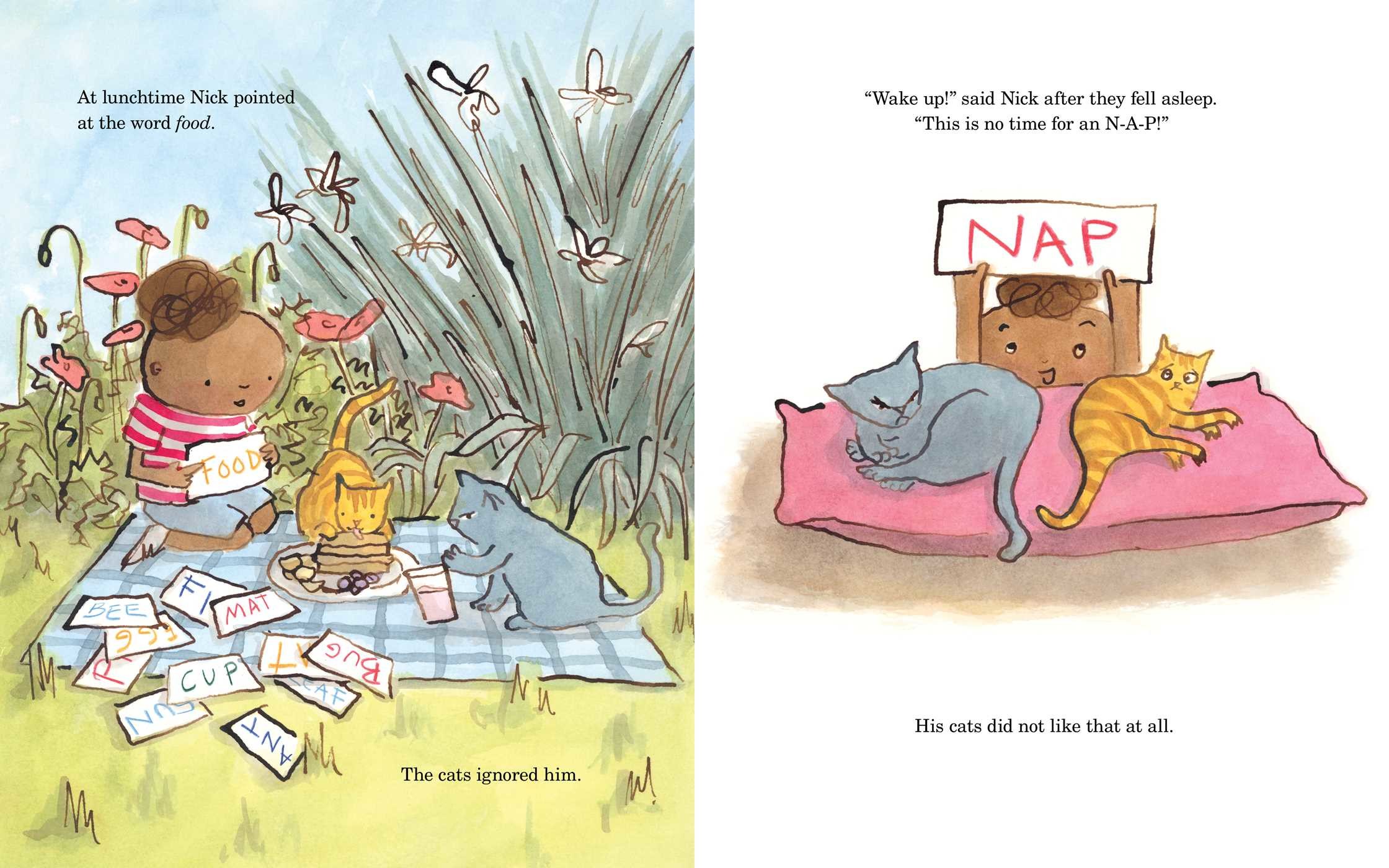
celebrate-picture-books-picture-book-review-the-summer-nick-taught-his-cats-to-read-food-flash-cards
Image copyright Kate Berube, 2016, text copyright Curtis Manley, 2016. Courtesy of Simon & Schuster.

Nick began to see that Verne liked stories about cats and fish. “Verne loved fish. He followed along as Nick read, learning the sounds of the letters.” He even read by himself, discovering new stories, especially 2,000 Leagues Under the Sea. But Stevenson? When Nick spelled words for him, he merely ran under the porch, hissing. By this time Verne was reading so many books that he got his own library card and Nick needed help carrying all of his books home. Nick and Verne had fun acting out their favorite stories, but they missed Stevenson.

One day “Verne discovered a treasure under the bed—a great stack of Stevenson’s pirate drawings. “‘Wow!’” Nick whispered. “‘Stevenson drew a story.’” Nick and Verne put the pages together and began to write words to go with them. When the story was finished, Nick, Verne, and Stevenson “squeezed under the porch, gave Stevenson an eye patch, and read The Tale of One-Eyed Stevenson and the Pirate Gold. Stevenson listened and followed along. He didn’t run away. Or hiss. Not even once.”
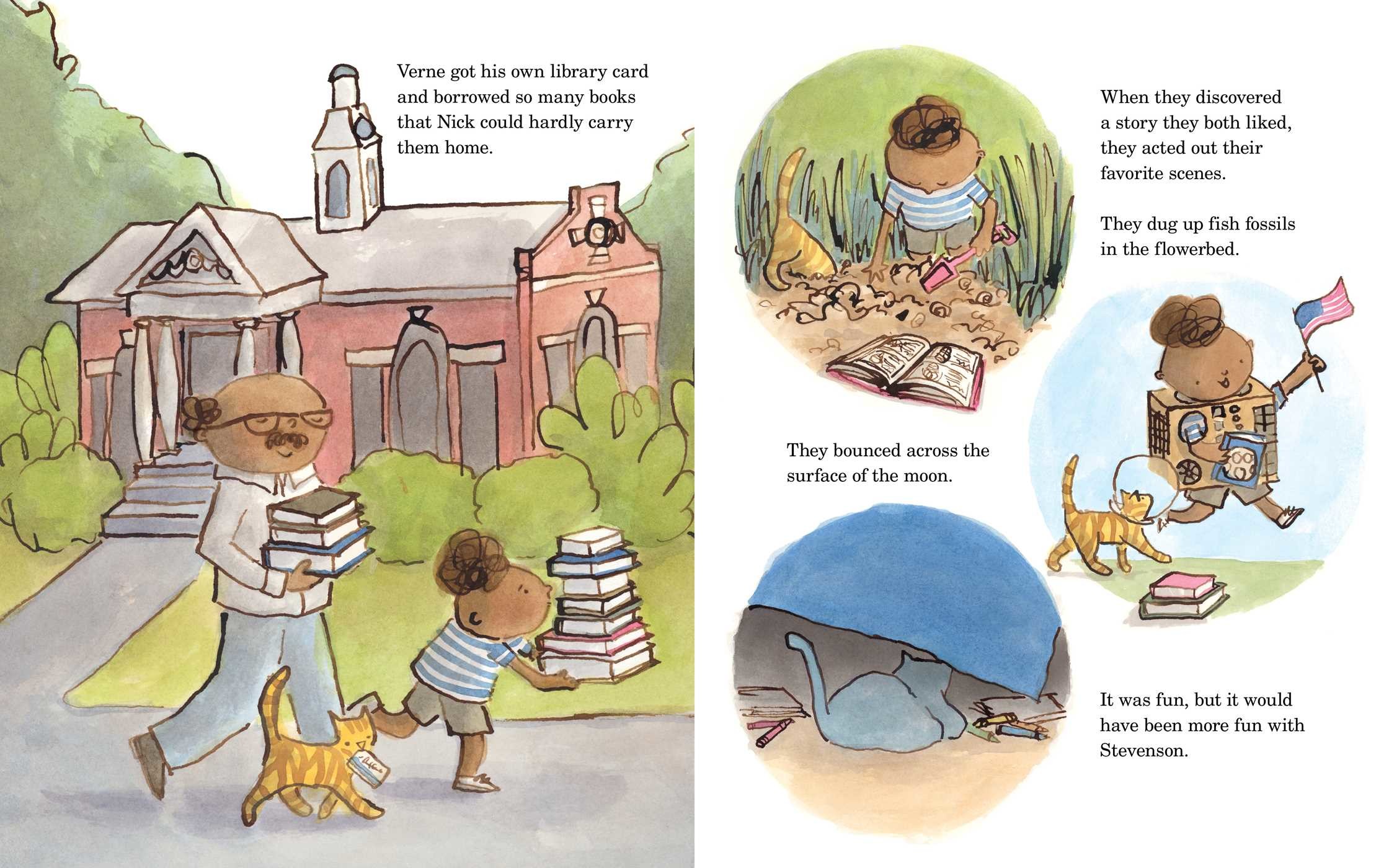
celebrate-picture-books-picture-book-review-the-summer-nick-taught-his-cats-to-read-library
Image copyright Kate Berube, 2016, text copyright Curtis Manley, 2016. Courtesy of Simon & Schuster.

Suddenly, Stevenson couldn’t get enough of books.  Even before Nick woke up, Stevenson could be found with his nose in Treasure Island or another adventure book, and whenever Nick and Verne played pirates, Stevenson joined in. He helped bring down “scurvy mutineers” and found buried treasure. Now the three readers do everything together. They “hunt for dinosaurs in the lost world behind the garden…race around the yard in eighty seconds…and journey to the center of the basement.” And while they all like to read on their own, they also like it when someone reads to them. “Hmmm…,” Nick thinks, maybe next he could teach his cats to talk. “‘Meow,’ says Stevenson.”
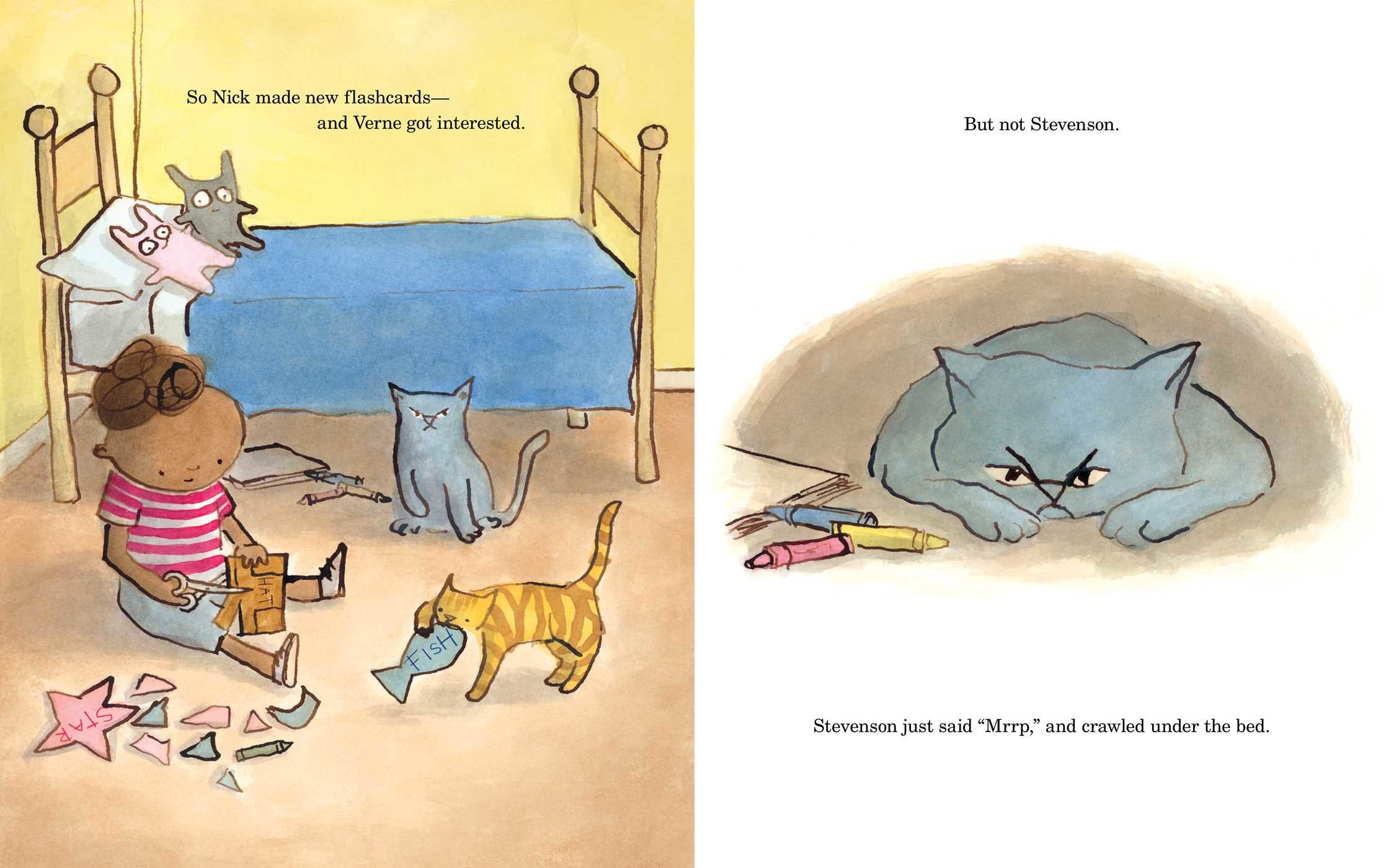
celebrate-picture-books-picture-book-review-the-summer-nick-taught-his-cats-to-read-grumpy-stevenson
Image copyright Kate Berube, 2016, text copyright Curtis Manley, 2016. Courtesy of Simon & Schuster.

Curtis Manley’s adorable tribute to reading and learning to read, using cats with very different personalities, is inspired. Just as some people respond more to the words while others are attracted by the pictures, Verne and Stevenson have their own relationships with books. The names of the cats and their preferred reading material are also reminders that books are personal, and disinterest in one type of story does not reflect disinterest in all stories. Manley’s text makes for a joyful read-aloud as his language and phrasing is evocative, lyrical, and imaginative.

In perfect accompaniment, Kate Berube brings this creative story to life, illustrating the tender relationship between Nick and his pets as well as emphasizing the humor and distinct personalities inherent in orange-striped Verne and smoky-gray Stevenson that influence their journeys to literacy. Depictions of the various books Verne and Stevenson are drawn to highlight the literary references in the trio’s further play. Readers will want to stop and peruse the page of library shelves, where such books as “Harry Picaroon and the Swashbuckler’s Stone”, “Harold and the Purple Canon”, “Millions of Rats”, and “Where the Wild Pirates Are” wait to be checked out in the Pirates section.

Kids will eagerly want to adopt The Summer Nick Taught His Cats to Read, and it will snuggle in nicely on children’s bookshelves.

Ages 4 – 8

Simon & Schuster Books for Young Readers, 2016 | ISBN 978-1481435697

Discover “the facts, fictions, poems, and numbers” of Curtis Manley on his website!

View a gallery of Kate Berube‘s art on her website!

National Pet Month Activity
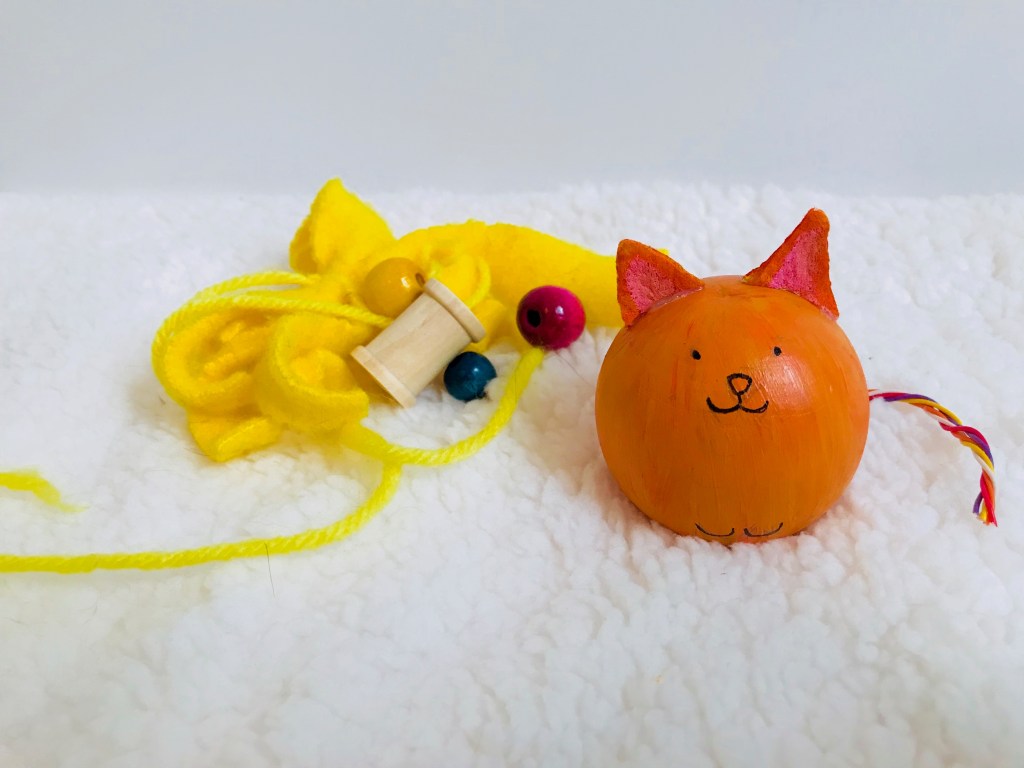
A Little Ball of Kitten


This sweet little kitten is easy to make and can keep you company on your desk or shelf! Since every kitten is different, you can make yours to look just the way you want. Here’s how I made mine:

Supplies

  • Wooden ball with a flat bottom, available in craft stores and in different sizes
  • Craft paint in any color kitten you’d like (I used red and yellow and mixed it to make a mottled orange)
  • Craft paint in pink or white for the inner ear
  • Scrap of fleece for the ears. Fleece is easily shaped to the rounded ball and when painted is stiff enough to stand up on its own.
  • Thin, colored wire in several colors for the tail (string or twine, wrapped wire, fleece, stiff paper, and other materials could also be used)
  • Paint brush
  • Permanent marker for making the face
  • Hot glue gun or strong glue

Directions

  1. Paint the wooden ball and let dry
  2. Paint the scrap of fleece to match the wooden ball, let dry
  3. Cut out small triangular shapes for the ears. Round the bottom of the ears slightly so they fit the shape of the ball
  4. If making a tail from several colors of thin wire, twist them together, leaving one end untwisted
  5. With the glue gun or strong glue attach the ears to the top of the head
  6. With the glue gun attach the tail to the back of the wooden ball in the center near the base
  7. With the marker, draw eyes, nose, and mouth for the face and semicircles near the bottom for the paws
You can find The Summer Nick Taught His Cats to Read at these booksellers

Amazon | Barnes & Noble | Books-a-Million

To support your local independent bookstore, order from

Bookshop | IndieBound

May 20 – It’s Get Caught Reading Month

celebrate-picture-books-picture-book-review-what-about-worms-cover

About the Holiday

When you love to read, you want to share the excitement that books hold. Get Caught Reading Month encourages people to pass along their love of all things written by asking folks to take pictures of themselves reading their favorite book and uploading those images to social media. Movie and TV celebrities, sports figures, authors, illustrators, teachers, mom, dads, grandmas and grandpas, and kids of all ages take part in this favorite annual event. Why don’t you?!

I received a copy of What About Worms!? from Hyperion Books for Children for review consideration. All opinions on the book are my own.

What About Worms!? (Elephant & Piggie Like Reading!)

By Ryan T. Higgins and Mo Willems


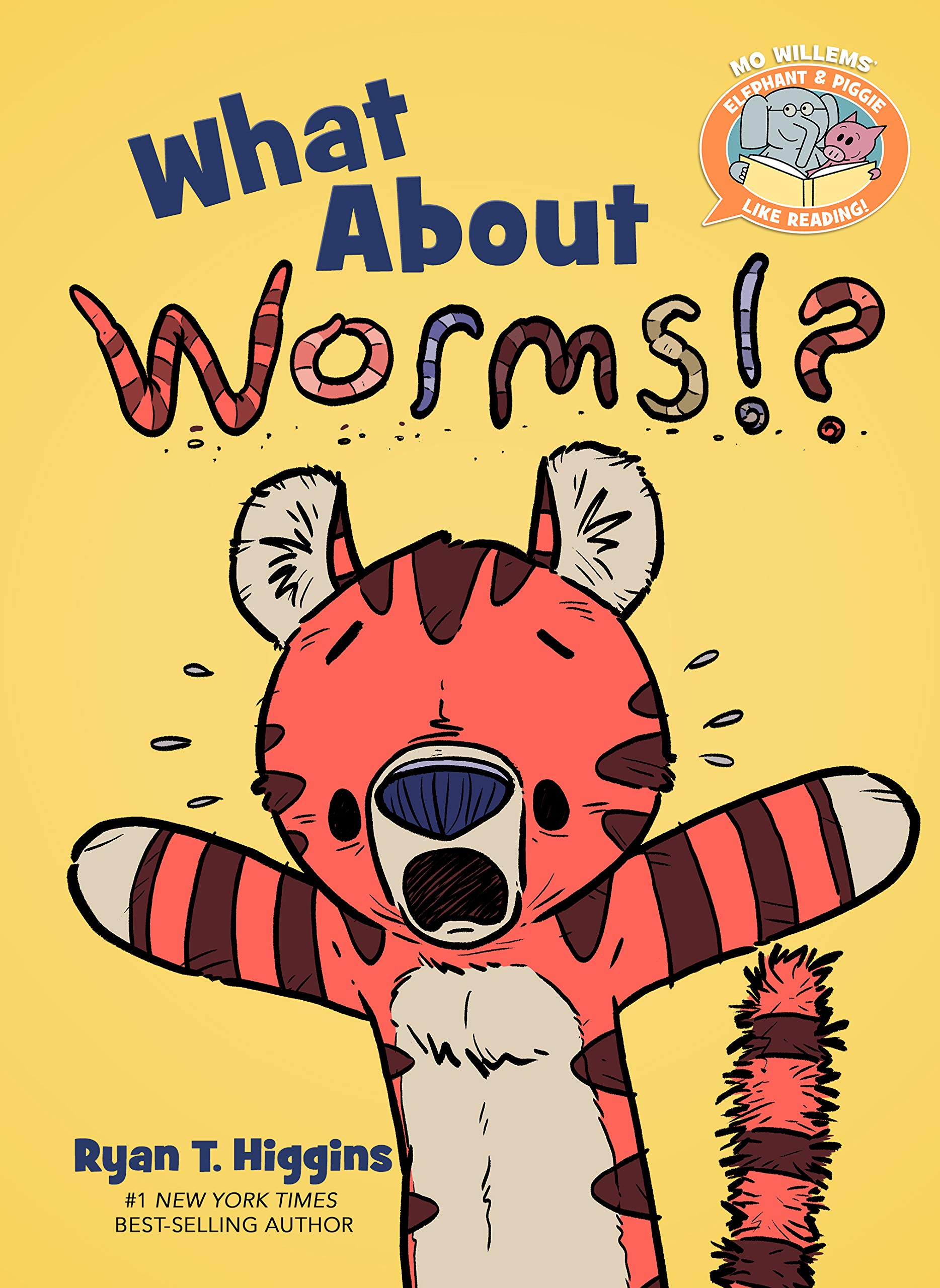
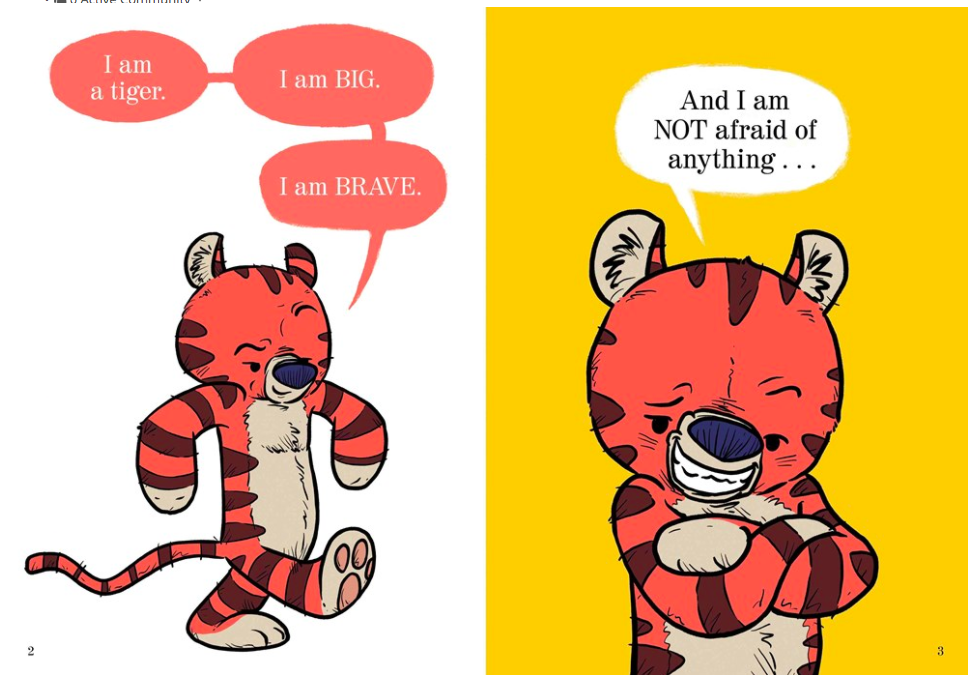
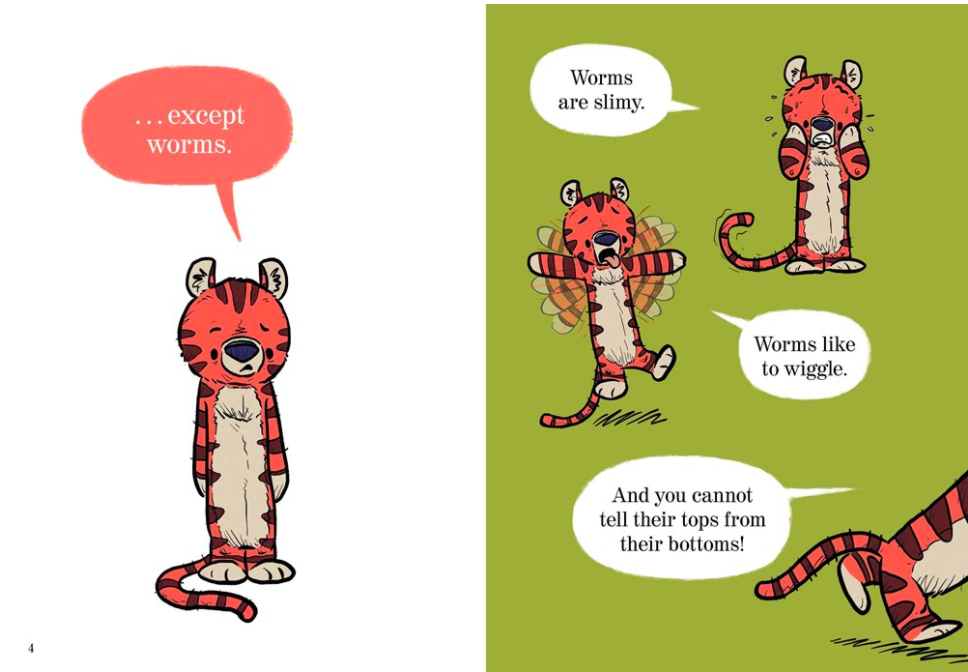
Piggie comes to Gerald with a new book that he’s having trouble reading. In fact, he “cannot make heads or tails of it.” “Why not?” Gerald asks. “Because,” Piggie says with great mirth, “it is about WORMS!” And so, Piggie and Gerald and readers are off…! The story revolves around a little tiger, who believes he is big and brave and “NOT afraid of anything…except worms.”

celebrate-picture-books-picture-book-review-what-about-worms-tiger

Copyright Ryan T. Higgins and Mo Willems, 2020, courtesy of Hyperion Books for Children.

Tiger’s wary of how they feel and how they squirm; plus, it’s hard to know which end is their head and which is their tail. Tiger forgets his fears when he spies a lovely pot of flowers. He picks it up and takes a deep breath of the sweet aroma. But then he remembers…. There’s dirt and where there’s dirt, there’s bound to be WORMS. The pot flies from his hands and smashes into pieces on the ground. In the spilled dirt, Tiger sees…no worms.

To take his mind off breaking the pot, Tiger picks a shiny, red apple from a tree and takes a big bite. Oh, how delicious apples are! But… “GULP!” Tiger tosses his apple away and it lands “SPLAT!” at his feet. In the bits of apple, he sees…no worms. He looks sadly at his lost pot and apple. Those worms, he shouts, they “ruin everything.”

celebrate-picture-books-picture-book-review-what-about-worms-slimy

Copyright Ryan T. Higgins and Mo Willems, 2020, courtesy of Hyperion Books for Children.

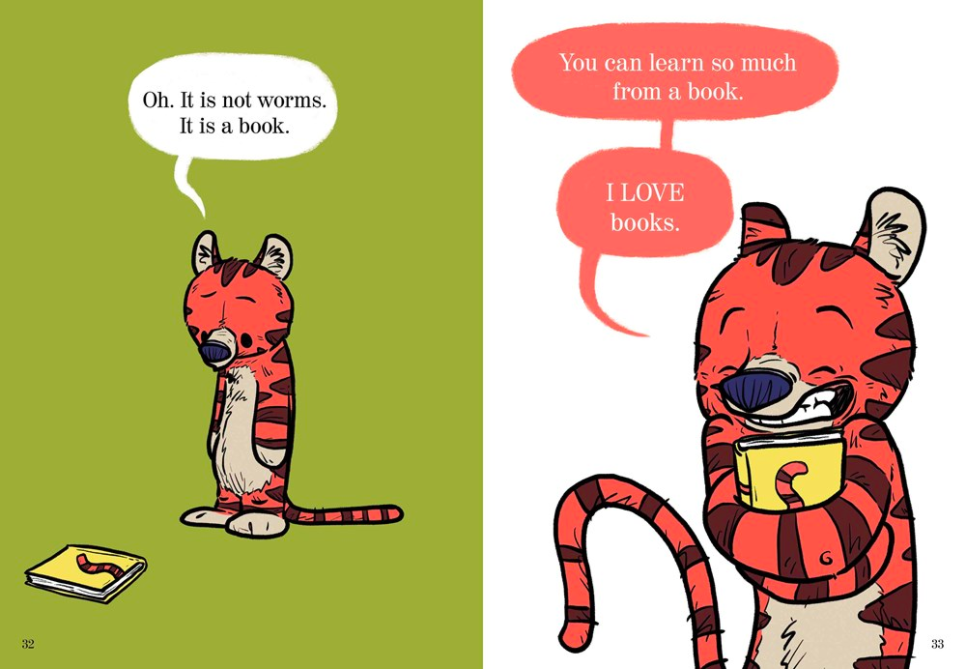
And now there’s another wriggly, striped worm right near him. But when Tiger takes another look, he realizes that it’s only the cover of a book. Reading is just what he needs right now. But what if… “it is a book about WOOOOOOOORMS!!!” Tiger throws the book and runs away as fast as he can. All of this commotion attracts none other than a group of worms who, seeing the retreating figure, discuss how they are afraid of tigers.

celebrate-picture-books-picture-book-review-what-about-worms-book

Copyright Ryan T. Higgins and Mo Willems, 2020, courtesy of Hyperion Books for Children.

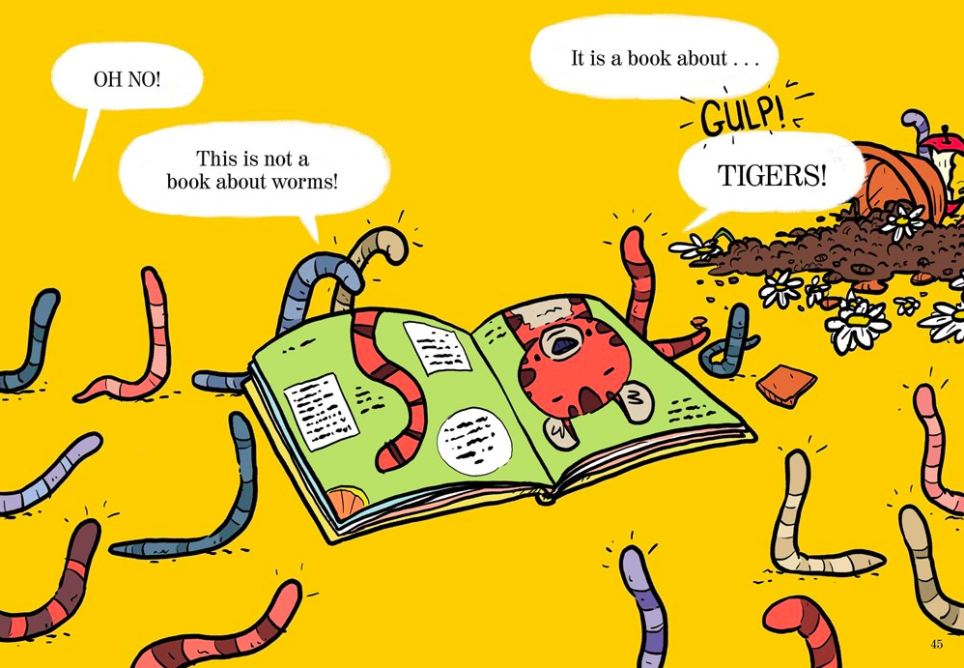
Just then they find the gifts that Tiger has left behind. They frolic in the dirt, munch the apple, and are excited about the book—especially since they can see from the cover that it’s a book about worms. But when they open it up, they discover it’s not about worms at all—but about tigers. With trepidation they begin reading, and by the end of the book these worms have learned so much about tigers that they’ve had a change of heart. So much so that when they catch a glimpse of Tiger, they each want to give him a big “worm hug!”

Piggie closes the book and wonders if Gerald liked it. He did! Especially its surprising ending. And Piggie? He says, “I love a book that worms its way into your heart.”

celebrate-picture-books-picture-book-review-what-about-worms-worms-reading

Copyright Ryan T. Higgins and Mo Willems, 2020, courtesy of Hyperion Books for Children.

Ryan T. Higgins is a master of laugh-out-loud storylines that lead up to a gem of a plot twist, and in What About Worms!? slapstick meets worry with smashing results. Kids will crack up at Tiger’s over-the-top reactions as they devour this well-paced story that’s also loaded with vocabulary they’ll be excited to recognize or learn. Repeated words and phrases flow naturally in this dialogue-driven story, increasing the enjoyment of the reading and learning process. Not only does Higgins address fears, friendship, regret, and a love of books, he also reminds kids of the truth of that important adage: You can’t tell a book by its cover.

As always, Higgins’ bold illustrations carry the story with actions and emotions that are humorous, identifiable, and relatable. Children familiar with Higgins’ Mother Bruce books will recognize beloved facial expressions on Tiger, and a cameo appearance from Mo Willems’ Pigeon will delight them. Speech bubbles contain one sentence only, making them easy to follow for beginning readers.

Sure to be a favorite and reached for often, What About Worms!? is a must whether you’re adding to your collection of Elephant & Piggie Like Reading! books or just starting out with the series.

Ages 4 – 8

Hyperion Books for Children, 2020 | ISBN 978-1368045735

To learn more about Ryan T. Higgins, his books, and his art, visit his website. Ryan’s site is under construction, but he and all your favorite characters will be back!

Discover more Elephant & Piggie Books as well as all of Mo Willems’ books on Pigeon Presents.

Get Caught Reading Month Activity

celebrate-picture-books-picture-book-review-cup-of-dirt-finished

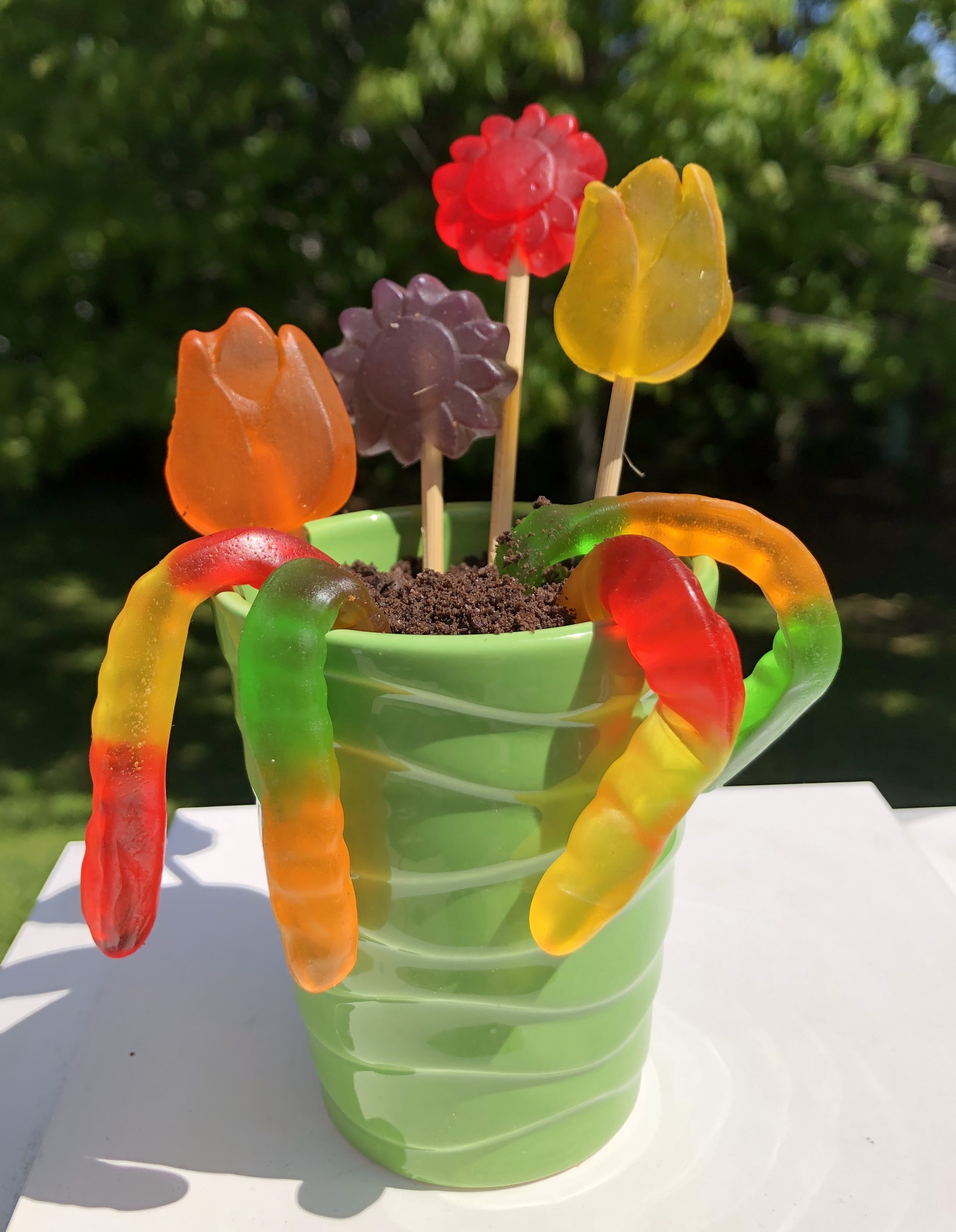
Cup of Dirt (and Worms!)


This classic favorite is frightfully good––especially while reading!

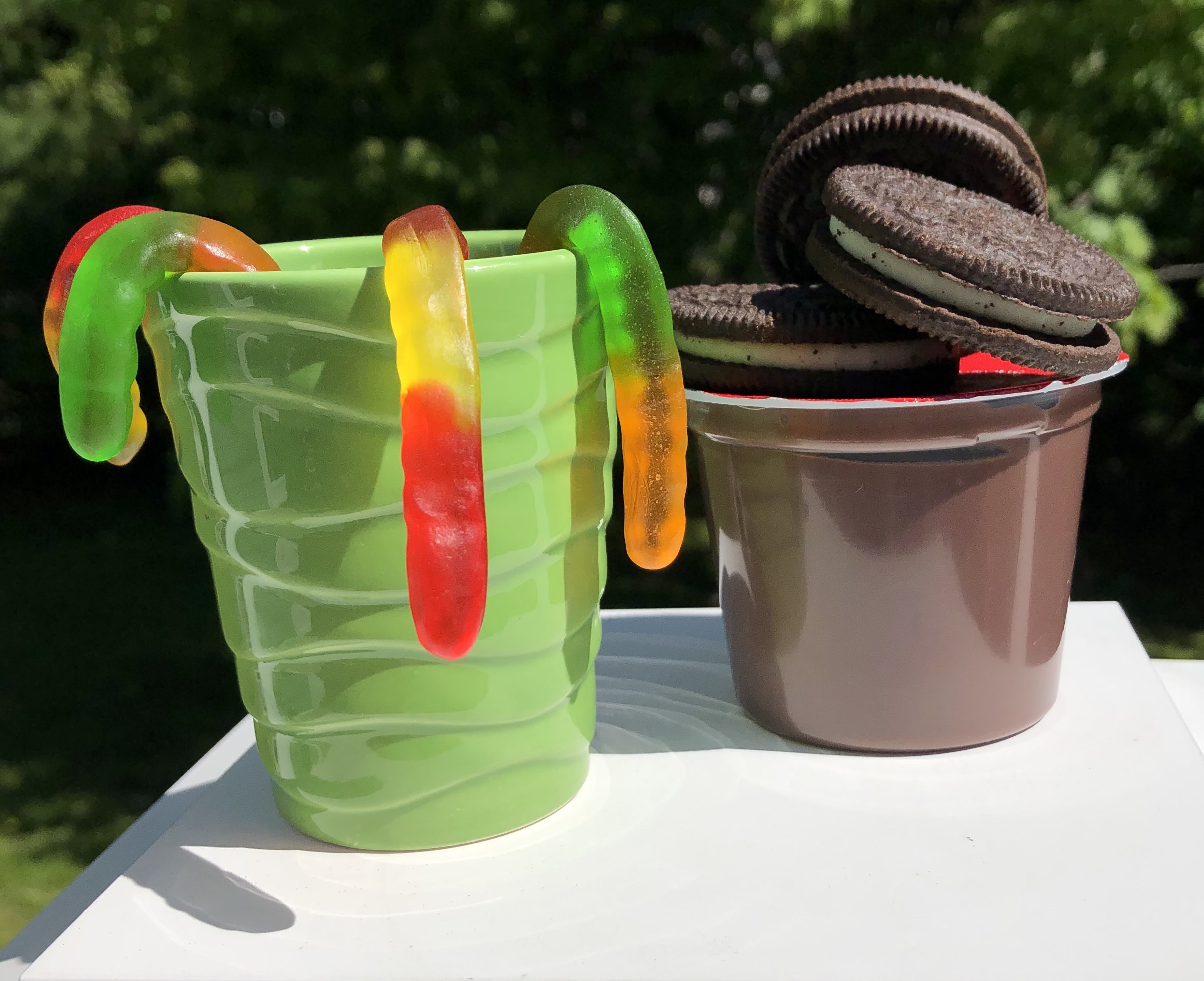
Ingredients

  • 1 4-ounce package of instant chocolate pudding
  • 2 cups milk
  • 1 8-ounce container of whipped topping
  • 16-oz package of chocolate sandwich cookies
  • Gummy worms

celebrate-picture-books-picture-book-review-dirt-cups-ingredients

Directions

  1. Beat milk and pudding mix together in a bowl until well blended and slightly thickened; let stand to thicken, about 5 minutes.
  2. Stir whipped topping and 1/2 of the crushed cookies into pudding.
  3. Spoon 1 tablespoon crushed cookies into each serving cup.
  4. Fill each cup 3/4-full with pudding mixture and top with remaining crushed cookies.
  5. Refrigerate for 1 hour.
  6. Top with gummy worms before serving

celebrate-picture-books-picture-book-review-what-about-worms-cover

You can find What About Worms!? at these booksellers

Amazon | Barnes & Noble | Books-a-Million
To support your local independent bookstore, order from

Bookshop | IndieBound

Picture Book Review


November 1 – National Author’s Day

celebrate-picture-books-picture-book-review-who-is-the-mystery-squirrel-cover

About the Holiday

There may be no better month to celebrate Author’s Day than in November. Not only is it Picture Book Month, but thousands of people set aside their usual routine to take part in NaNoWriMo or National Novel Writing Month, when writers try to complete at least a first draft of a novel in one month. The holiday was instituted in 1928 by Nellie Verne Burt McPherson, president of the Bement, Illinois Women’s Club. An avid reader, she established Author’s Day to thank writer Irving Bacheller who sent her an autographed story in response to her fan letter. The day was officially recognized in 1949 by the United States Department of Commerce. McPherson’s granddaughter, Sue Cole, promoted the holiday after Nellie’s death in 1968. To celebrate, people are encouraged to write a note of appreciation to their favorite author.

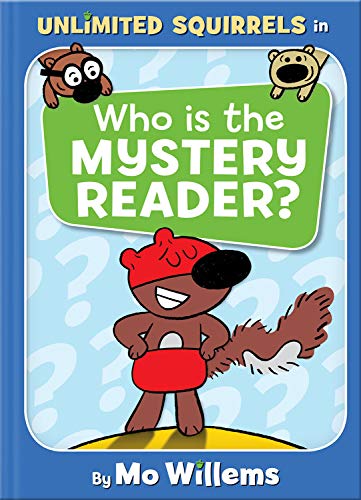
Who is the Mystery Writer? (Unlimited Squirrels)

By Mo Willems


Mo Willems passel of fifteen squirrels—and one winged squirrel-wanna-be—is back in this beginning-reader series that offers lots of laughs along with enthusiastic encouragement for new readers. The table of contents (introduced by a punny joke) reveals that there are plenty of stories and jokes to come before the Tale End, where kids get to celebrate their detective skills.

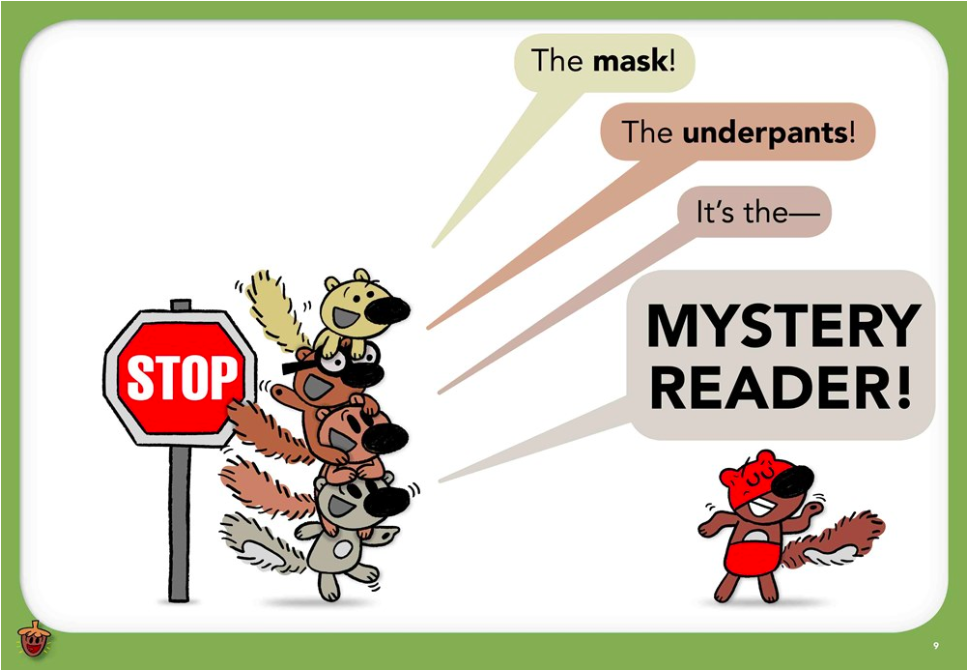
First up is The BIG Story: Who is the Mystery Reader? Zoom Squirrel, Zap Squirrel, Zip Squirrel, Flink Squirrel, and Wink Squirrel are walking along when they come to a STOP sign. Zoom Squirrel pulls up quick and stops the crew—not because of the sign, exactly, but because he can’t read it. Zap, Zip, and Flink are in a bit of a tizzy about how to discover what the sign says, while Wink Squirrel excuses himself and walks off the page.

celebrate-picture-books-picture-book-review-who-is-the-mystery-squirrel-stop-sign

Copyright Mo Willems, 2019, courtesy of Hyperion Books for Children.

In the wink of an eye, a masked squirrel appears to suggest the squirrels read the sign. The other squirrels are mesmerized by their hero, and as he passes out his card, all Zoom Squirrel can say is “Wow. Wow. Wow. Wow.” After the squirrels reveal their predicament, the Mystery Reader springs into action. He begins by sounding out the letters, but Zoom Squirrel shouts “STOP!” He doesn’t see how this is helping.

After a bit of explanation, Zoom is ready to try sounding out the letters for himself—and… he’s got it! While congratulations are being passed around, the Mystery Reader excuses himself and walks off the page. When Wink Squirrel returns, his friends tell him what he’s missed. Thus, begins the search for who the Mystery Reader really is. Zoom has turned into quite a reader, but his interpretation of the Mystery Reader’s card leads to his mistaken impression that he is the Mystery Reader. He’s just beginning his thank-you speech, when the real Mystery Reader is back (with a wink).

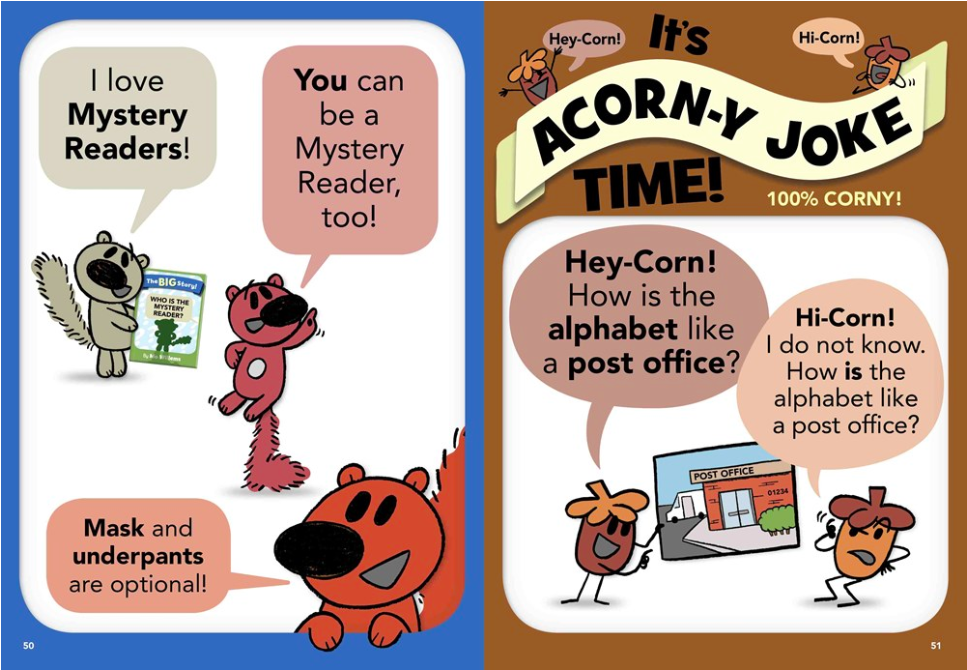
Zoom feels a bit deflated until the Mystery Reader gives him his own “New Mystery Reader” mask and underpants. Zap, Zip, and Flink think it’s too bad that Zoom missed meeting this new mystery reader. The Mystery Reader ends the story with a wry “Well… We learned something today.” To which Zoom responds, “Squirrels do not know much about costumes! Up next is an “Acorn-y Joke” that is guaranteed to be “100% corny!”—much to the delight of readers!

celebrate-picture-books-picture-book-review-who-is-the-mystery-squirrel-acorny-joke

Copyright Mo Willems, 2019, courtesy of Hyperion Books for Children.

In the following segment, Wonder Squirrel is doing some deep thinking about the origins of writing. Now, everyone wants to know. This is a job for… The Book of Wonders! Inside The Book of Wonders! readers learn about cuneiform, hieroglyphs (and how they influenced our alphabet), the Inca’s use of knotted ropes, and the invention of paper. Kids also learn that there are mysteries about writing still to be solved.

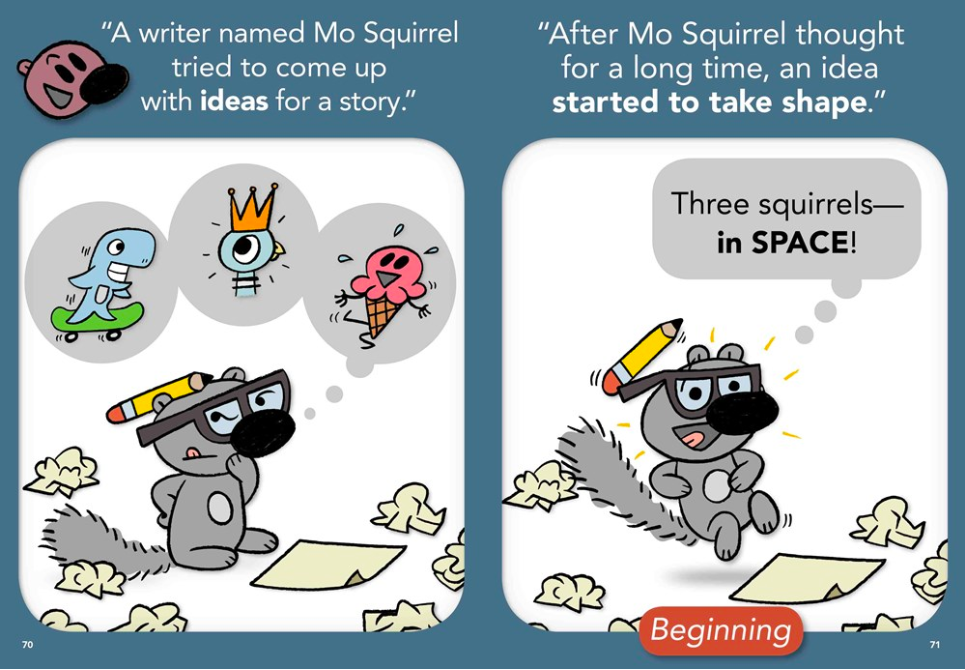
Another Acorn-y Joke will have kids giggling, and then it’s time for readers to learn how Mo Squirrel makes a book—from idea to agent and editor, to writing, rewriting and redrawing, to re-rewriting and re-redrawing, and finally to printing. The Tale End poses a conundrum of sorts. Zap, Zip, and Flink are shocked to discover that they never learned who the Mystery Readers are. Readers at home, will feel empowered to be in on the joke as Zoom Squirrel and Wink Squirrel wink at each other knowingly.

A page preceding the stories introduces emote-acorns—small acorn faces that display nine emotions, such as surprised, sad, confused, and proud. These small graphics are found throughout the stories in the bottom corner whenever “the squirrels have big feelings” allowing children to practice not only their print-reading skills but their skills in reading facial expressions as well.

celebrate-picture-books-picture-book-review-who-is-the-mystery-squirrel-making-a-book

Copyright Mo Willems, 2019, courtesy of Hyperion Books for Children.

Mo Willems’ zany squirrels will keep kids laughing and shouting out the answers to their questions in this rollicking beginning reader. The text of each story is presented solely in dialog bubbles that are clearly attributed to the speaker. The short phrasing and repeated words will give new readers confidence in their abilities and encourage them to try longer sentences. The non-fiction pages include photographs of the various types of writing discussed, and the facts presented are detailed and written so the target age can easily understand. Readers who would like to learn more are pointed toward the Unlimited Squirrels website.

Willems’ distinctive illustration style is always a delight, and his emotive squirrels are no exception. The graphic novel format gives readers clear, bold and vivid imagery to mirror the text and make reading a visual treat of putting words and actions together. Each squirrel has different colors and markings. Getting to know and recognize the five squirrels in The Big Story: Who is the Mystery Reader? before beginning to read will help kids follow the action and be one step ahead of the mystery for maximum enjoyment and inclusion in the jokes.

A funny and fun addition to the Unlimited Squirrels series, Who is the Mystery Reader? will get kids excited about becoming readers and would be an often-chosen book to add to home, classroom, and public library collections.

Ages 4 – 8

Hyperion Books for Children, 2019 | ISBN 978-1368046862

To learn more about Mo Willems and his books, visit his website.

Have fun with more Unlimited Squirrels on their website.

National Author’s Day Activity

celebrate-picture-books-picture-book-review-reading-bug-book-plate

Catch the Reading Bug Bookmark and Bookplate


If you love to read, show it with these printable Reading Bug book bling!

I’ve Got the Reading Bug Bookmark | I’ve Got the Reading Bug Bookplate | I’ve Got the Reading Bug! Books to Buy

celebrate-picture-books-picture-book-review-who-is-the-mystery-squirrel-cover

You can find Who is the Mystery Reader? (Unlimited Squirrels) at these booksellers

Amazon | Barnes & Noble | Books-a-Million | IndieBound
Picture Book Review


October 7 – It’s Hispanic Heritage Month

celebrate-picture-books-picture-book-review-planting-stories-cover

About the Holiday

Beginning on September 15th  and running through October 15th, National Hispanic Heritage Month celebrates the contributions of those who come from or whose ancestors immigrated from Spain, Mexico, the Caribbean, Central America, and South America. Each year the holiday adopts a particular theme. This year’s theme is Hispanic Americans: A History of Serving Our Nation. From the military, to business and industry to culture, sports, and entertainment Hispanic Americans have made an important and indelible imprint on our country. First observed in 1968 as a week-long holiday, the commemoration was expanded to a month in 1988. You can learn more about today’s holiday, find classroom and other resources, and discover fun facts on the official Hispanic Heritage Month website.

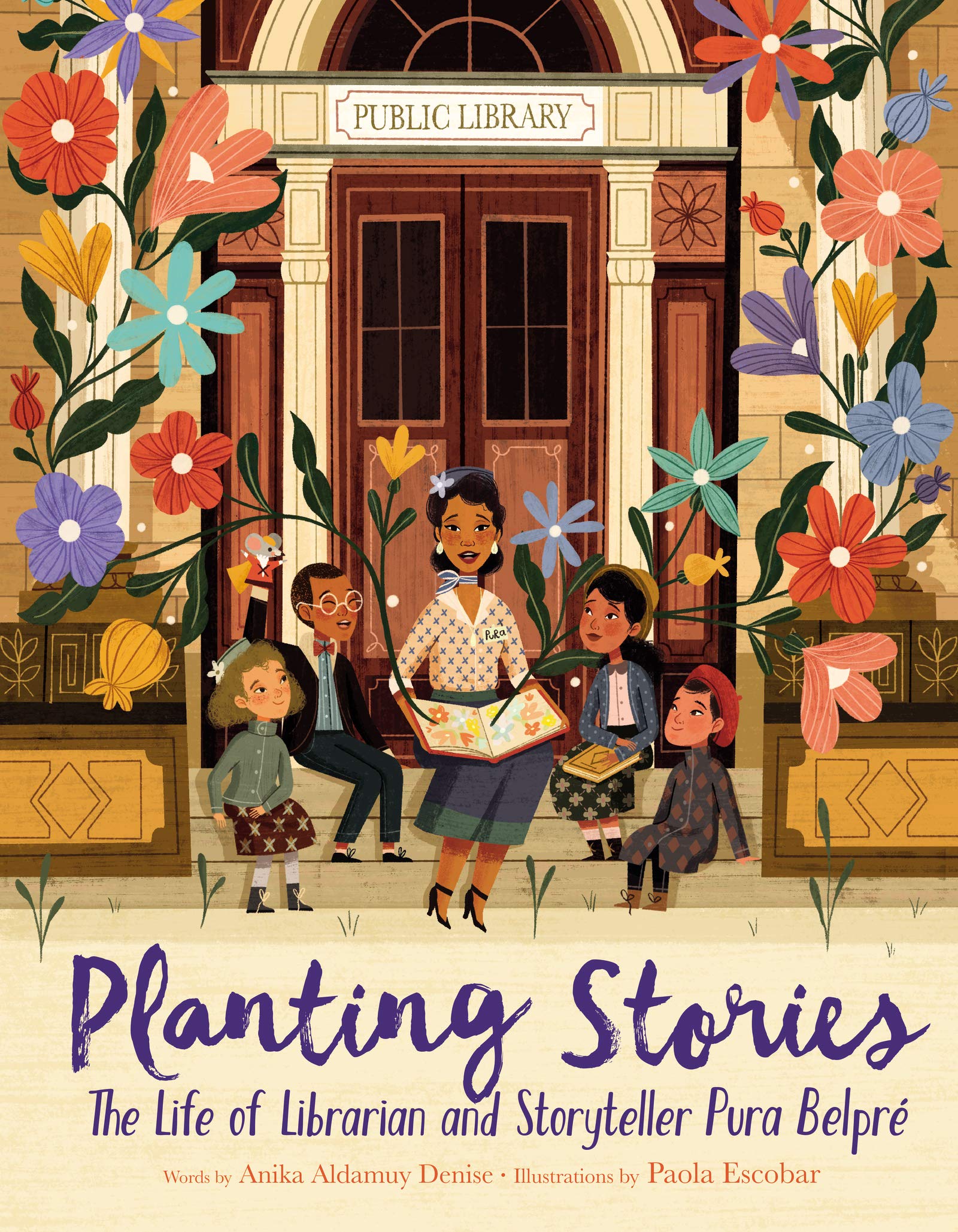
Planting Stories: The Life of Librarian and Storyteller Pura Belpré

Written by Anika Aldamuy Denise | Illustrated by Paola Escobar


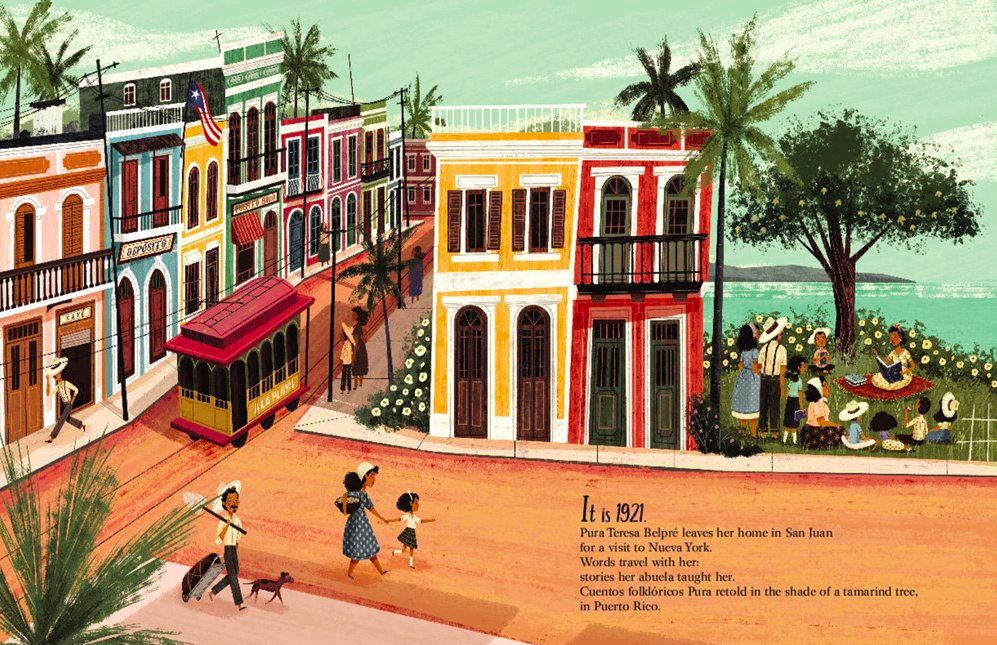
In 1921 Pura Theresa Belpré left her home in San Juan to visit Nueva York and celebrate her sister’s wedding. “Words travel with her: stories her abuela taught her. Cuentos folklóricos Pura retold in the shade of a tamarind tree, in Puerto Rico.” Pura’s visit lengthened, becoming a new start in a new land. At first, she got a job in a garment factory, but then Pura saw that the library needed a bilingual assistant. Pura spoke Spanish, English, and French. She thought she was perfect for the job, and the library did too.

celebrate-picture-books-picture-book-review-planting-stories-children's-visits-new-york

Image copyright Paola Escobar, 2019, text copyright Anika Aldamuy Denise, 2019. Courtesy of HarperCollins.

But while she shelved books, she noticed that there were no books of folktales from Puerto Rico in the collection. “How lucky for the library that Pura has story seeds ready to plant and grow.” In the children’s room she sits with the kids around her and tells the story of a beautiful cockroach and a galant rat who loves her: “la cucarachita Martina and el ratoncito Pérez.

After sharing the story with the children at the library, Pura hopes to “plant her story seeds throughout the land.” Pura makes puppets and performs her folktales for families who come to listen “en inglés y español.” But Pura wants children to be able to readPérez y Martina and other cuentos de Puerto Rico.” She types up her story and sends it to the publisher Frederick Warne. He agrees to publish her book.

celebrate-picture-books-picture-book-review-planting-stories-children's-room

Image copyright Paola Escobar, 2019, text copyright Anika Aldamuy Denise, 2019. Courtesy of HarperCollins.

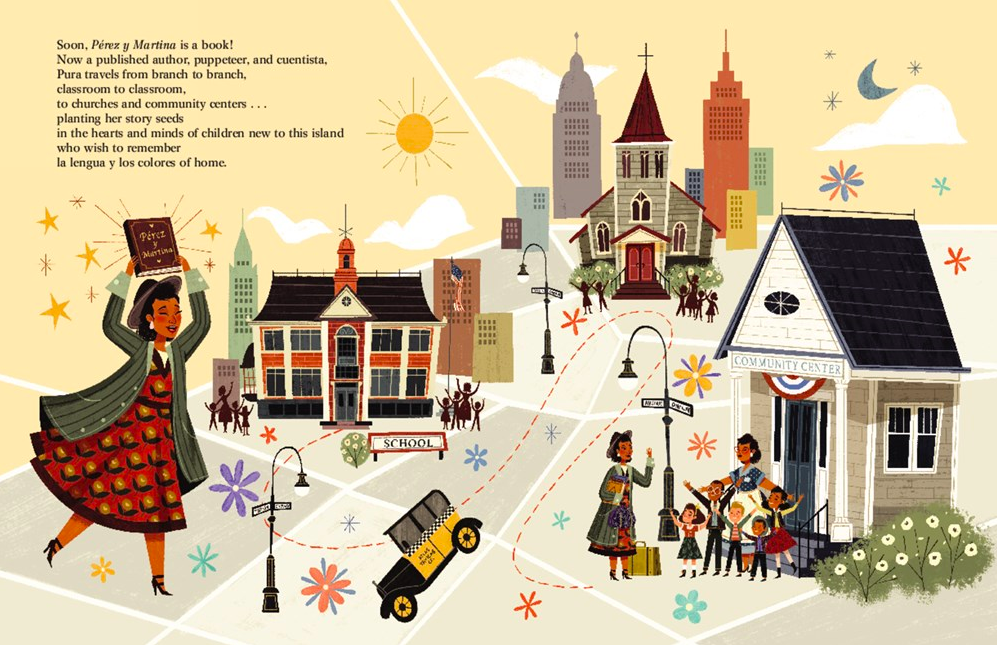
Now Pura travels from library to library and to schools, “churches and community centers…planting her story seeds in the hearts and mind of children new to this island who wish to remember la lengua y los colores of home.” She spends her time writing, traveling, and speaking until she meets and marries Clarence Cameron White. Pura decides to take a year off from working at the library to be a wife. But one year becomes many as she and Clarence travel, playing music and telling stories. They spend many happy years together. When Clarence dies, “Pura’s story must begin again.”

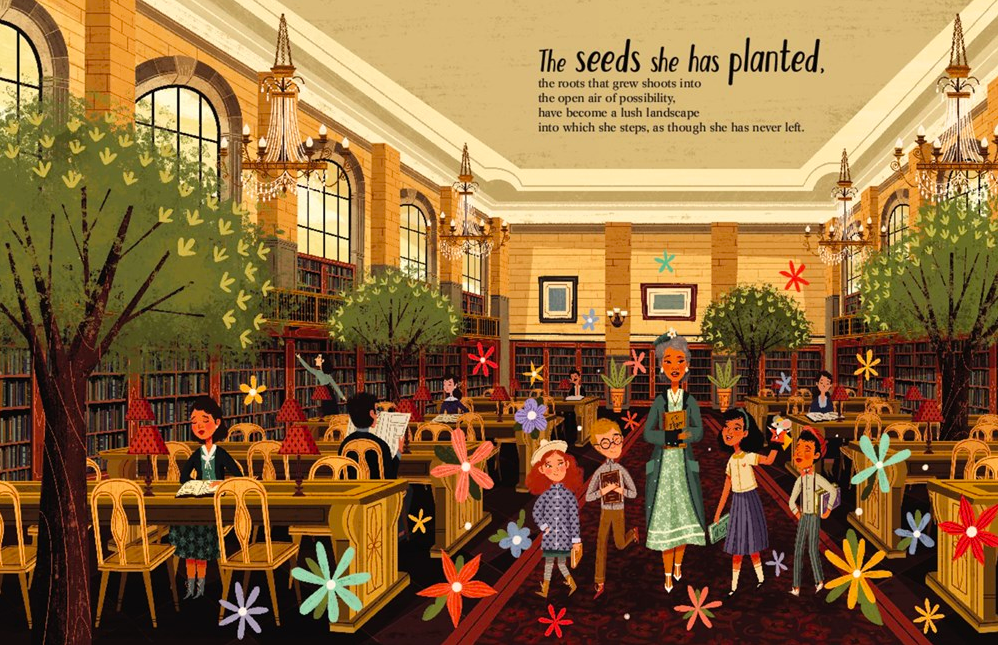
“It is 1961,” and Pura returns to the library. Now other storytellers share Pura’s stories with the children and “the seeds she has planted…have become a lush landscape into which she steps as though she has never left.”

celebrate-picture-books-picture-book-review-planting-stories-published

Image copyright Paola Escobar, 2019, text copyright Anika Aldamuy Denise, 2019. Courtesy of HarperCollins.

An Author’s note reveals more about the life and work of Pura Belpré, the first Puerto Rican librarian in New York City and the author of the first mainstream Latinx storybooks published in America. Back matter also includes selected bibliographies, archival resources, titles of articles and films, a list of books for further reading, and more information on the four folktales mentioned in the book.

celebrate-picture-books-picture-book-review-planting-stories-library

Image copyright Paola Escobar, 2019, text copyright Anika Aldamuy Denise, 2019. Courtesy of HarperCollins.

Anika Aldamuy Denise’s lovely and lyrical tribute to the trailblazing and prolific Pura Belpré is a fast-paced introduction to the influence this librarian, storyteller, and writer had on children and the community as the first Puerto Rican librarian in New York and the first published Latinx children’s author in America. By blending Spanish words and phrases and English into her evocative sentences, Denise reflects the immigrant experience while also embracing Belpré’s and her Latinx reader’s love for and pride in their culture. As children learn how Belpré brought Spanish-language programs and books to children and families in New York and beyond, they will be inspired to look for ways that they, too, can make a difference in areas that are important to them.

Mirroring the lush landscape of language that Pura Belpré tended, Paola Escobar infuses her illustrations with rich hues and enveloping details. Belpré’s love for San Juan and her heritage is shown through the sprinkling of flowers, rendered in the bright pastels of her native country, that float around her whenever she tells her stories. The whimsical images of Martina and Pérez, characters from her first published folktale, also follow her from page to page throughout the story. Spectacular images of the city and inside the New York Public Library will have readers lingering over the pages.

A gorgeous read-aloud about a woman all children should know, Planting Stories: The Life of Librarian and Storyteller Pura Belpré is a must for all school and public libraries and would make an inspiring choice for home collections as well.

Ages 4 – 8

HarperCollins, 2019 | ISBN 978-0062748683 | Spanish-language edition ISBN 978-1400212644

Discover more about Anika Aldamuy Denise and her books on her website.

To view a portfolio of work by Paola Escobar, visit her on tumblr.

Hispanic Heritage Month Activity

celebrate-picture-books-picture-book-review-we-are-all-family-word-search

We Are All Family English/Spanish Word Search


Find the names of family members in both English and Spanish in this printable heart- shaped We Are All Family Word Search! Here’s the Solution!

celebrate-picture-books-picture-book-review-planting-stories-cover

You can find Planting Stories: The Life of Librarian and Storyteller Pura Belpré at these booksellers

Amazon | Barnes & Noble | Books-a-Million | IndieBound
Sembrando historias: Pura Belpré: bibliotecaria y narradora de cuentos

Amazon | Barnes & Noble | Books-a-Million | IndieBound
Picture Book Review

Pk Review


October 1 – It’s National Book Month

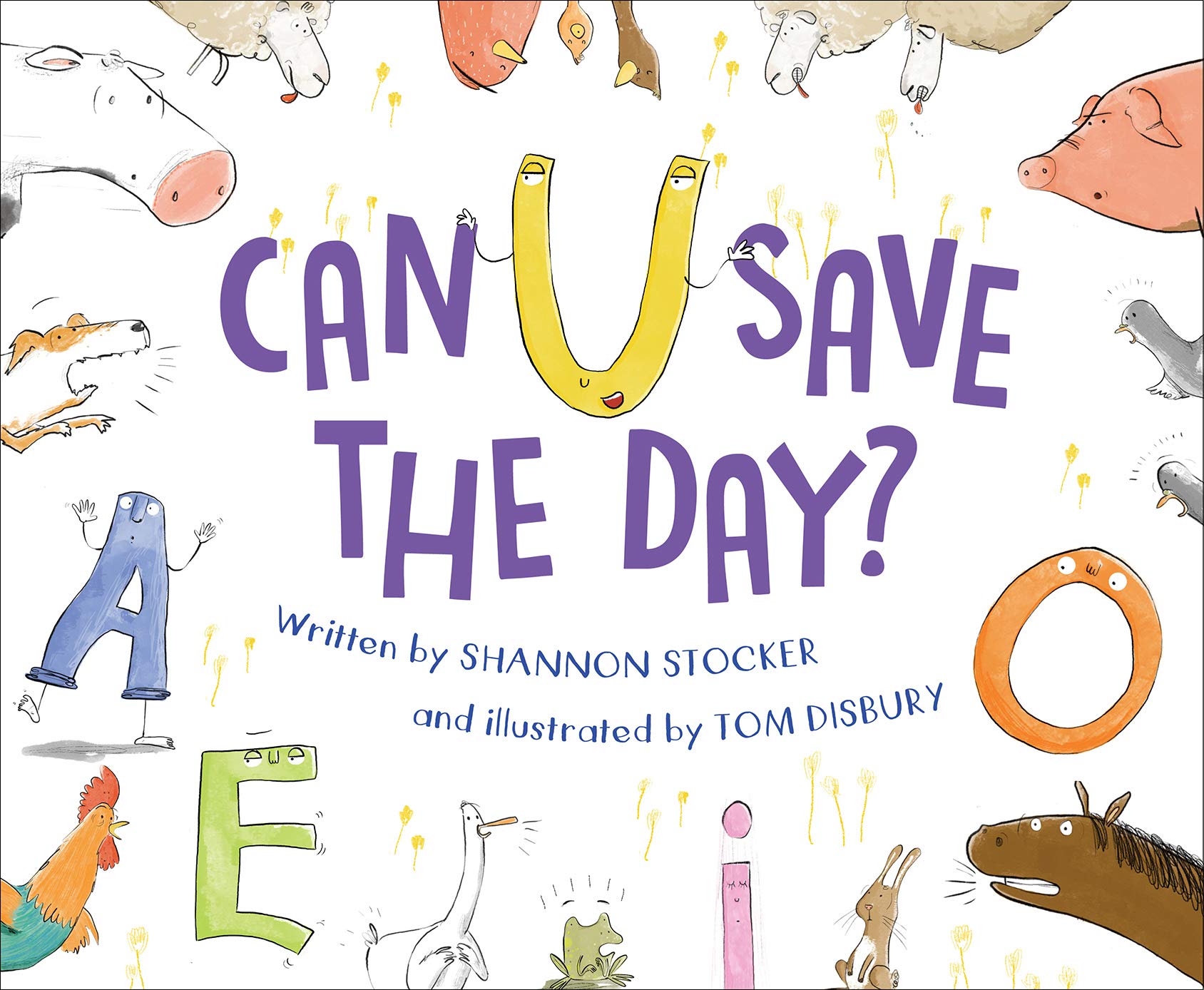
celebrate-picture-books-picture-book-review-can-u-save-the-day-cover

About the Holiday

This month-long holiday was established to get families excited about reading. As the weather turns cooler and activities turn indoors, reading together is a wonderful way to spend time having fun and making memories. Small children love being read to—and so do older kids! Sharing board books, picture books and chapter books that can be read at one sitting is always fun. Taking the journey of a novel together with tweens and teens can provide inspiring, emotional, funny, and bonding moments that last a lifetime. And to think, it all starts with putting a few letters together…

Can U Save the Day?

Written by Shannon Stocker | Illustrated by Tom Disbury


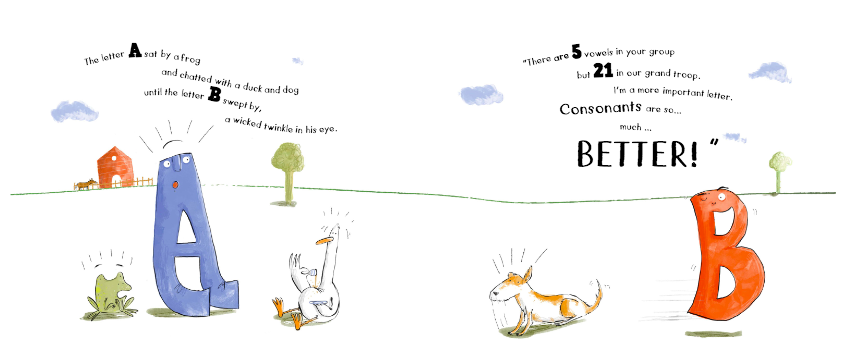
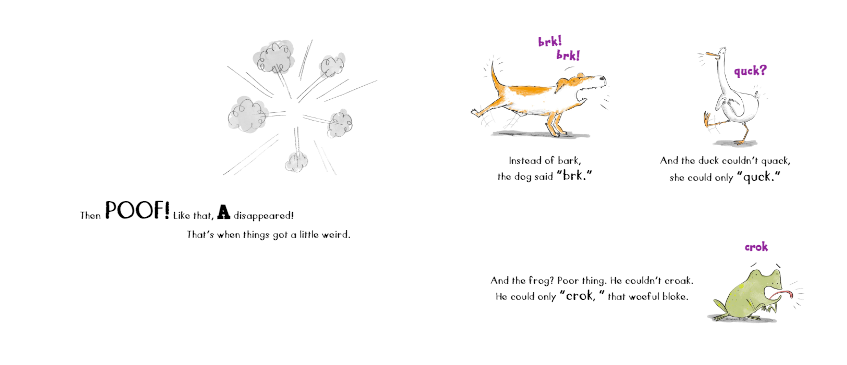
The letter A was chatting with a frog, a duck, and a dog when the letter B ambled by with a boastful claim: “‘There are 5 vowels in your group / but 21 in our grand troop. / I’m a more important letter. / Consonants are so…much…better!’” As B continued to brag, A countered with “‘…You’ll regret / when all the vowels are gone, I bet!’” Then just like that A vanished, and the dog? He could only “‘brk.’” The duck said “‘quck,’” and the frog could only “‘crok.’”

celebrate-picture-books-picture-book-review-can-u-save-the-day-B-brags

Image copyright Tom Disbury, 2019, text copyright Shannon Stocker, 2019. Courtesy of Sleeping Bear Press.

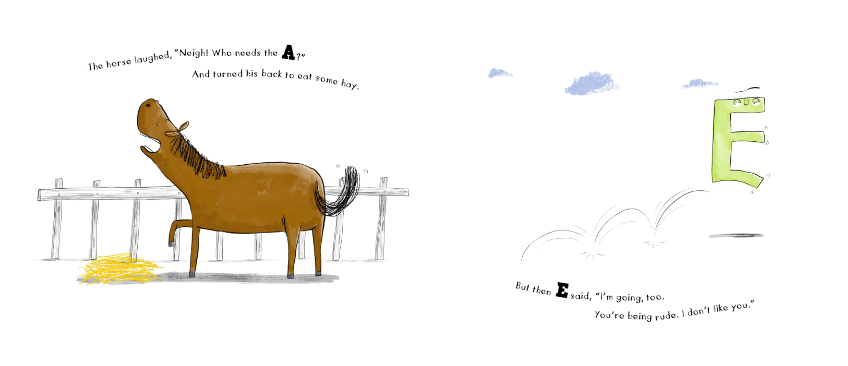
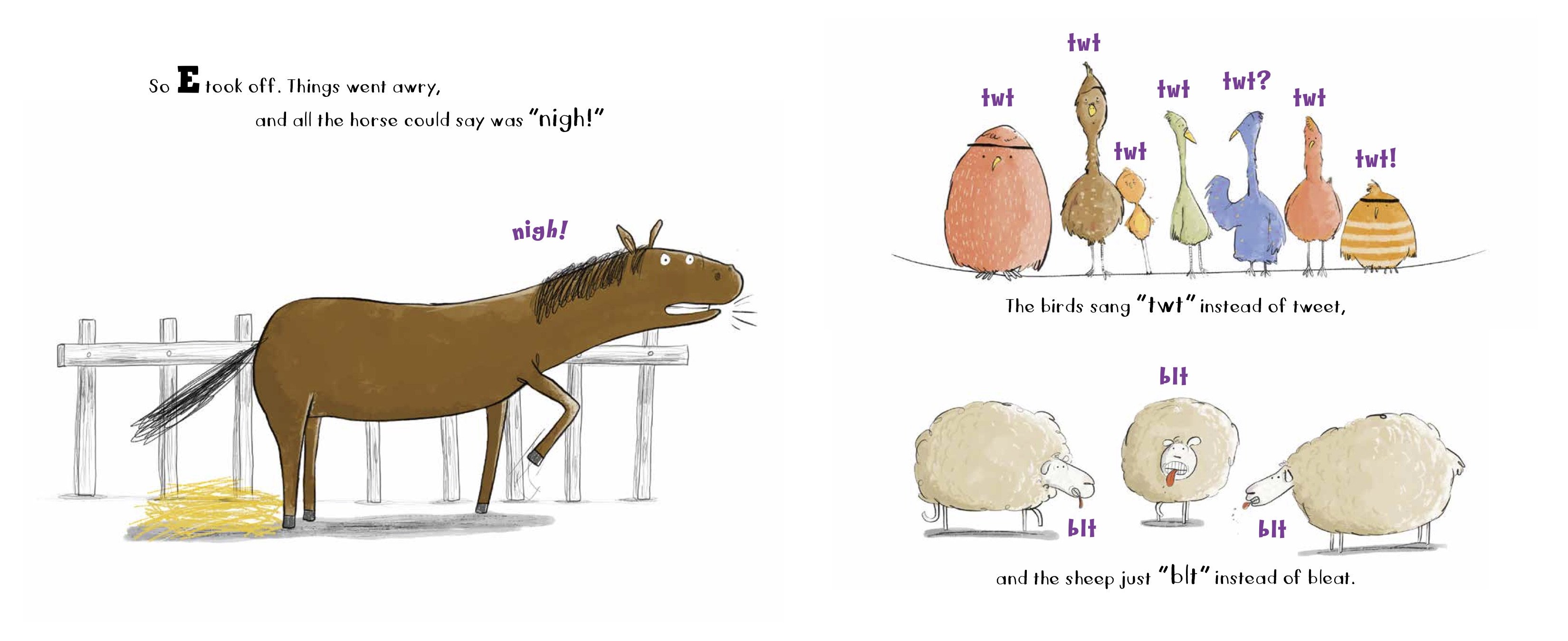
The horse was not very sympathetic since his neigh didn’t need an A. But then the E decided to go, and the horse said “‘nigh’” the “birds sang ‘twt,’ and the sheep could only “‘blt,’” “‘blt,’” “‘blt.’” The consonants thought this was lots of laughs. “Insulted, young I spun her dot / and soared off like an astronaut.” The pig was stuck as was the horse, but the cow and bunny joined the laughter until O rolled away. Then the cow, the pigeons, and the rooster struggled too.

celebrate-picture-books-picture-book-review-can-u-save-the-day-poof

Image copyright Tom Disbury, 2019, text copyright Shannon Stocker, 2019. Courtesy of Sleeping Bear Press.

The consonants were laughing still when B and U saw the tractor plowing toward them in its sleep. B tried to scream and shout but could only burble. He bounced into the tractor’s seat and “pushed the horn! The horn went…hnk.” He tried to make U understand, but without the vowels his words made no sense. But clever U had watched it all and she knew just what to do. “She bent her arms above her head / and turned into an O instead.”

celebrate-picture-books-picture-book-review-can-u-save-the-day-horse

Image copyright Tom Disbury, 2019, text copyright Shannon Stocker, 2019. Courtesy of Sleeping Bear Press.

In that moment the tractor’s horn went Honk! The runaway tractor woke up and stopped just in the nick of time. Then off U went to bring back A, E, I, and O. When they returned, the animals resumed their talk, the consonants and vowels hugged it out, and B, who had started it all, now realized that “‘the alphabet’s a family.’” Then Y—that sometimes this and sometimes that letter—decided this was a good time to speak up and help them all “‘say goodbye.’”

celebrate-picture-books-picture-book-review-can-u-save-the-day-nigh

Image copyright Tom Disbury, 2019, text copyright Shannon Stocker, 2019. Courtesy of Sleeping Bear Press.

Shannon Stocker gives kids just learning the alphabet, discovering how to read, and picking up some of the finer points of grammar a reason to celebrate in her funny story about the day the vowels flew the coop. Her peppy rhythm and brainy rhymes will keep readers riveted and laughing as one by one the animals’ talk turns into garbled goosh. When the sleeping tractor barrels toward the letters unaware because of his measly “hnk,” kids will be on the edge of their seats. When wily U uses her ingenuity and semi-circular shape to save the day, they’ll cheer. The sweet ending teaches gentle lessons about reconciliation, apologies, inclusion, and teamwork, and Y’s admission offers one more grammar-related giggle.

Tom Disbury’s cartoon characters will have kids in stitches as the animals gaze at each other with gritted teeth, furrowed brows, or tongues sticking out when their vowel-less utterances are less than robust. With their smiling eyes and winsome smiles, the colorful letters are oblivious to the mayhem that losing just four of their family members can cause. The shortened words sprinkled throughout the text as well as spreads of contented consonants will give readers plenty of opportunities to play word games and talk about letter combinations, letter sounds, and spelling.

A funny and entertaining way to talk about the alphabet and grammar, creative problem solving, and teamwork, as well as a fun story to share any time, Can U Save the Day? would be an entertaining addition to home, classroom, and public library bookshelves.

Ages 5 – 7

Sleeping Bear Press, 2019 | ISBN 978-1585364046

Discover more about Shannon Stocker and her books on her website.

To learn more about Tom Disbury, his books, and his art, visit his website.

National Book Month Activity

celebrate-picture-books-picture-book-review-reading-is-super-maze

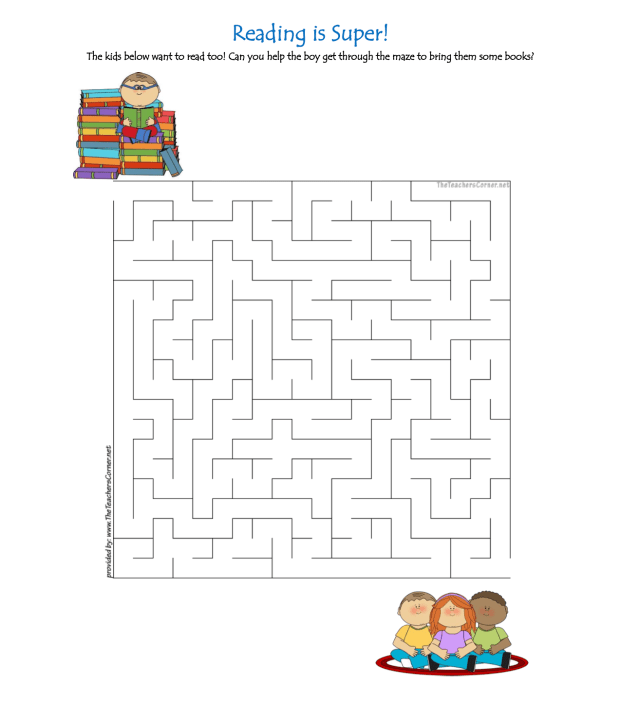
Reading is Super! Maze


This super reader wants to bring books to his friends so they can all read together. Can you help him get through this printable Reading is Super Maze to reach his friends?

celebrate-picture-books-picture-book-review-can-u-save-the-day-cover

You can find Can U Save the Day? at these booksellers

Amazon | Barnes & Noble | Books-a-Million | IndieBound
September 24 – National Punctuation Day

celebrate-picture-books-picture-book-review-the-day-punctuation-came-to-town-cover

About the Holiday

Founded in 2004 by Jeff Rubin, National Punctuation Day promotes the correct usage of all those little marks that make reading clearer and more meaningful. Do you ever wonder just how to use the ; and what’s the real difference between – and —? It can all get a little confusing. But misplaced or misused punctuation can result in some pretty funny mistakes—or some serious misinterpretations. Whether you love punctuation, would like to understand it better, or just use it to make emojis, today’s holiday will make you : – ). To find information on the day, resources for using punctuation correctly, and a fun contest to enter, visit Jeff Rubin’s National Punctuation Day website.

The Day Punctuation Came to Town

Written by Kimberlee Gard | Illustrated by Sandie Sonke


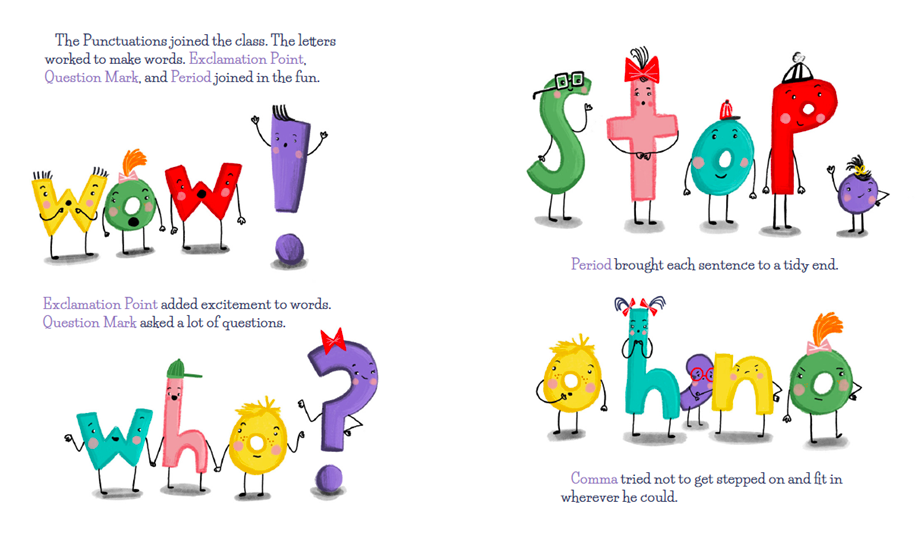
The Punctuations had just moved to Alphabet City and the kids—Exclamation Point, Question Mark, Period, and Comma—were excited about their first day of school. Exclamation Point was in a rush to get there. “‘We are going to have so much fun!’” he said. He “was always excited about something.” Question Mark was a little more subdued. She wondered if the other kids would be nice and even pondered whether they were walking in the right direction. “Comma kept pausing,” and Period said she would let her siblings know when to stop.

celebrate-picture-books-picture-book-review-the-day-punctuation-came-to-town-alphabet-city

Image copyright Sandie Sonke, 2019, text copyright Kimberlee Gard, 2019. Courtesy of Familius.

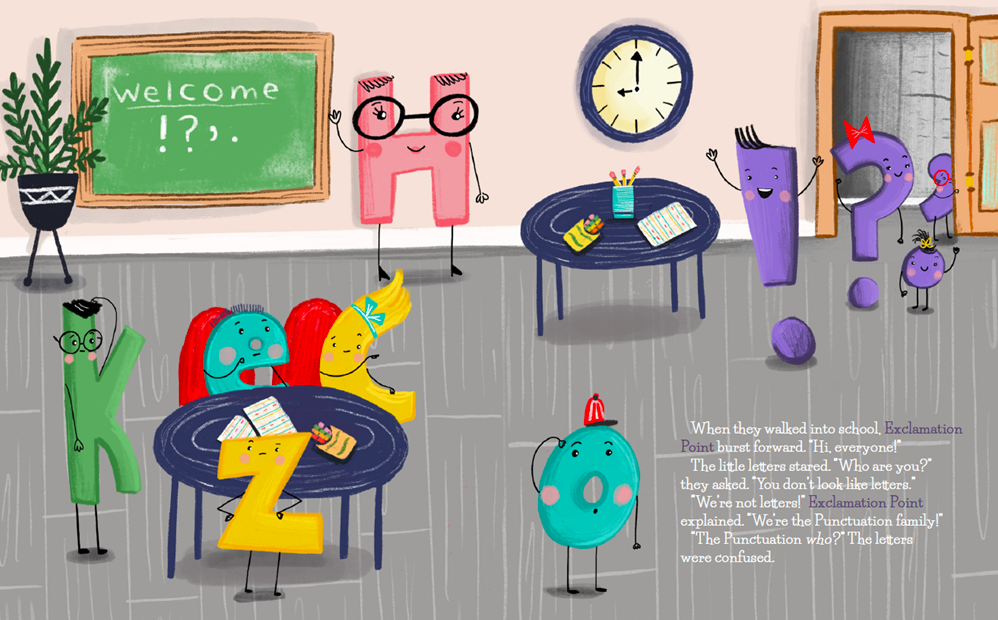
When they got to school and introduced themselves, the student letters were confused. They’d never seen anyone like the Punctuations before. As the letters practiced forming words, Exclamation Point joined W, O, and W; Question Mark helped out W, H, and O; and “Period brought each sentence to a tidy end.” For Comma, though, it wasn’t so easy. As he tried to squeeze in between letters, he began to feel as if he was just a bother. Undetected, he tiptoed away.

celebrate-picture-books-picture-book-review-the-day-punctuation-came-to-town-classroom

Image copyright Sandie Sonke, 2019, text copyright Kimberlee Gard, 2019. Courtesy of Familius.

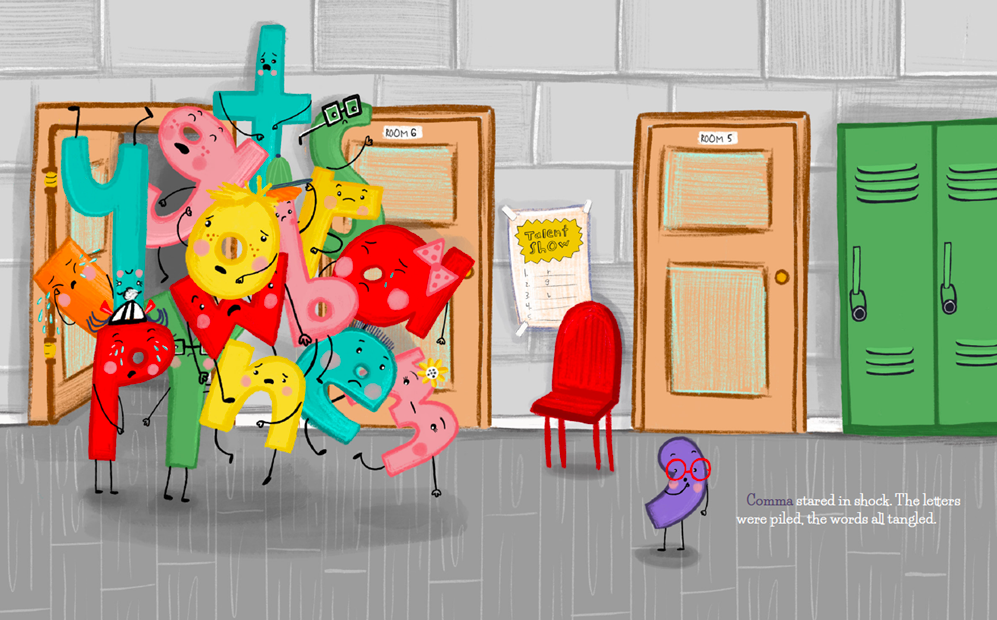
Meanwhile in the classroom, Exclamation Point had all the letters scrambling to make more and more exciting words. There was a lot of cheering and booming, ducking, and running. Question Mark asked if maybe they shouldn’t all quiet down a bit, but no one was listening. Even Period couldn’t get them to stop. Pretty soon, there was a huge word pileup. In the next moment it came crashing down and all the letters “tumbled through the door, spilling into the hall.” There, they found Comma, who just stared in disbelief. His siblings wondered why he was in the hall instead of in the classroom. Comma told them how he felt. But, “‘Comma, without you, things become a disaster!’” Exclamation Point said. Period and Question Mark agreed.

celebrate-picture-books-picture-book-review-the-day-punctuation-came-to-town-roles

Image copyright Sandie Sonke, 2019, text copyright Kimberlee Gard, 2019. Courtesy of Familius.

Then his siblings gently reminded little Comma about how each member of their family has a certain purpose. They told him, “‘we all work together to help letters and the words they make.’” Once everyone had gone back into the classroom, the letters continued making words. But now Comma took his place between them. When the letters looked confused, he explained that it was his job to keep order and that words and punctuation needed each other to make good and clear sentences.

celebrate-picture-books-picture-book-review-the-day-punctuation-came-to-town-hallway

Image copyright Sandie Sonke, 2019, text copyright Kimberlee Gard, 2019. Courtesy of Familius.

For children just learning about sentence structure and how punctuation and words fit together to create meaning, Kimberlee Gard’s lively story helps them visualize and understand the different roles of each punctuation mark. Coming at the end of a sentence and accompanied by vocal clues, exclamation points, question marks, and periods are more familiar to kids. But what about that comma, which seems to float around here and there? Gard demonstrates that without the break commas provide, words run amok, becoming jumbled, unwieldy, and confusing. Readers will respond to the classroom setting, where the letters work and play together during lessons, and they will be eager to make friends with the Punctuation family themselves.

celebrate-picture-books-picture-book-review-the-day-punctuation-came-to-town-yes-please

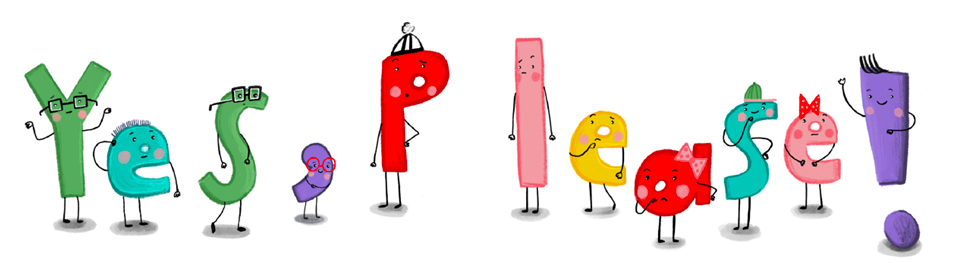
If any readers think learning about punctuation is dry and dull, Sandie Sonke’s vibrant colors and cartoon characters will change their mind. The Punctuations (and their butterfly friend Apostrophy) are sweet and earnest, wanting to fit into the class and make a difference. As the letters form words, the purple Punctuations are easy for kids to pick out, allowing for discussion of their distinct roles. The tangled piles of letters invite kids to make words from the muddle. After Comma realizes his own importance and the letters embrace him, the story ends with a familiar and funny example of just how a well-placed comma can change the meaning of a sentence.

An entertaining and joyful accompaniment to grammar lessons to get kids excited about learning, The Day Punctuation Came to Town would be a rousing addition to classroom, homeschool, and public library collections.

Ages 5 – 8

Familius, 2019 | ISBN 978-1641701457

Discover more about Kimberlee Gard and her books on her website.

To learn more about Sandie Sonke, her books, and her art, visit her website.

National Punctuation Day Activity

celebrate-picture-books-picture-book-review-Punctuation-Word-Search

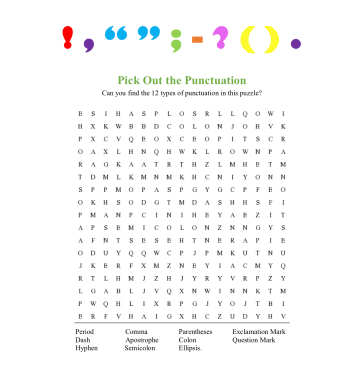
Pick Out the Punctuation! Word Search


Have fun finding the twelve types of punctuation in this printable puzzle!

Pick Out the Punctuation! Word Search Puzzle | Pick Out the Punctuation! Solution

celebrate-picture-books-picture-book-review-the-day-punctuation-came-to-town-cover

You can find The Day Punctuation Came to Town at these booksellers

Amazon | Barnes & Noble | Books-a-Million | IndieBound
Picture Book Review

August 30 – National Frankenstein Day

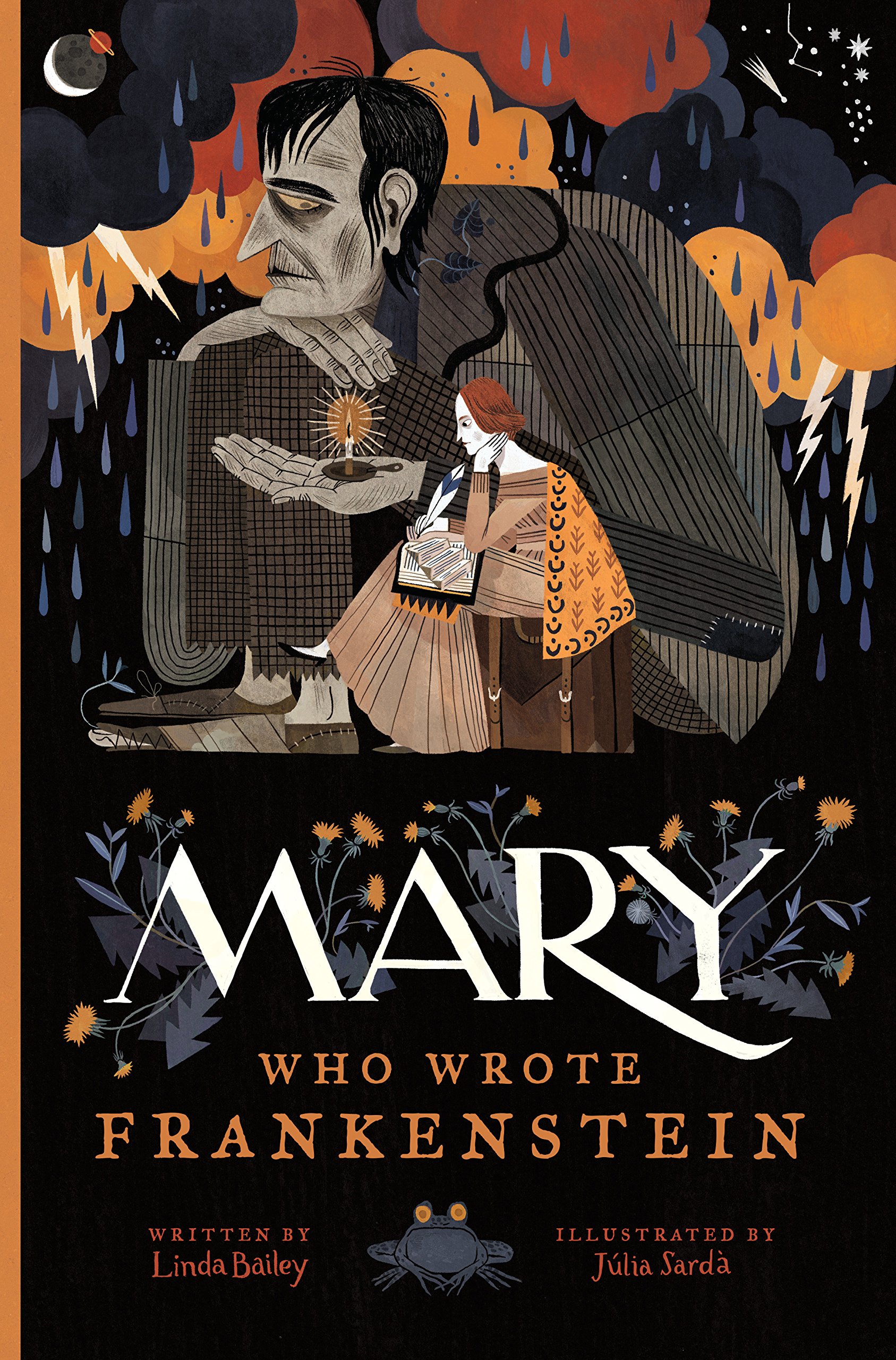
celebrate-picture-books-picture-book-review-mary-who-wrote-frankenstein-cover

About the Holiday

Today’s holiday celebrates the birth of Mary Wollstonecraft Shelley, who in 1818 at the age of 18, penned one of the most influential books of all time. Considered the first modern science fiction novel, Frankenstein; or, The Modern Prometheus incorporates elements of horror, psychology, love, abandonment, and acceptance. These themes and Shelley’s enthralling storytelling created a book that is always current. During this 200th anniversary year of the publishing of classic novel, discover (or rediscover) the spellbinding thrill of reading Frankenstein.

Mary Who Wrote Frankenstein

Written by Linda Bailey | Illustrated by Júlia Sardà


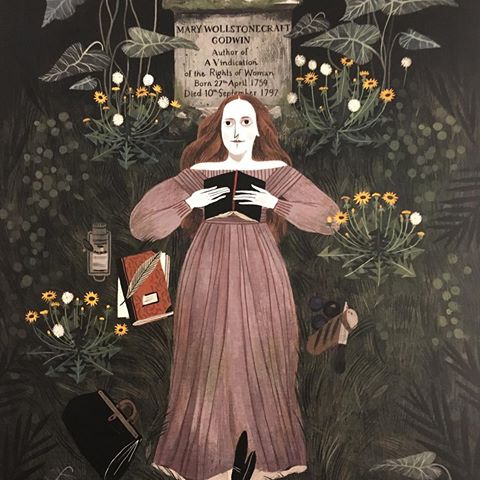
Mary was a dreamer. She liked to spend time alone, thinking and imagining “things that never were.” Mary called these daydreams “‘castles in the air.’” Mary loved to write stories too, but her daydreams were even more thrilling. When Mary wanted to read and dream, she went to the graveyard and sat next to her mother’s grave. Mary’s mother had died when Mary was only 11 days old.

While Mary loved her father, she didn’t like the way he punished her. Mary didn’t like his new wife, either. Mary’s father is friends with many famous people, and he invites them to visit. One night “a writer named Samuel Taylor Coleridge recites a strange, eerie poem—The Rhyme of the Ancient Mariner. Mary loves such poems.” Even though she was supposed to be in bed, she hid and listened, shivering “with fear at the spine-tingling tale of a ship full of ghosts.” Forever after, Mary remembered that night and that poem.

celebrate-picture-books-picture-book-review-mary-who-wrote-frankenstein-town

Image copyright Júlia Sardà, 2018, text copyright Linda Bailey, 2018. Courtesy of Tundra Books.

By the time Mary was fourteen, she was unhappy at home and causing trouble. One night, when she was sixteen, she and her stepsister, Claire, ran away with a “brilliant, young poet” named Percy Bysshe Shelley. They traveled through Europe, one day finding themselves outside a “ruined castle. It’s called Castle Frankenstein. Such an interesting name! Does it stick in Mary’s mind?”

Eighteen months later, the three traveled to Switzerland, where they became friends with Lord Byron—the most famous poet in the world. One night as torrential storms crashed around Lord Byron’s house, he read ghost stories from Fantasmagoriana. After reading, Byron challenged his friends, who also included a doctor named John Polidori, to write a ghost story. Eighteen-year-old Mary, Percy Bysshe Shelley, and John Polidori accepted the challenge. But Mary could not think of a good story idea.

celebrate-picture-books-picture-book-review-mary-who-wrote-frankenstein-friends

Image copyright Júlia Sardà, 2018, text copyright Linda Bailey, 2018. Courtesy of Tundra Books.

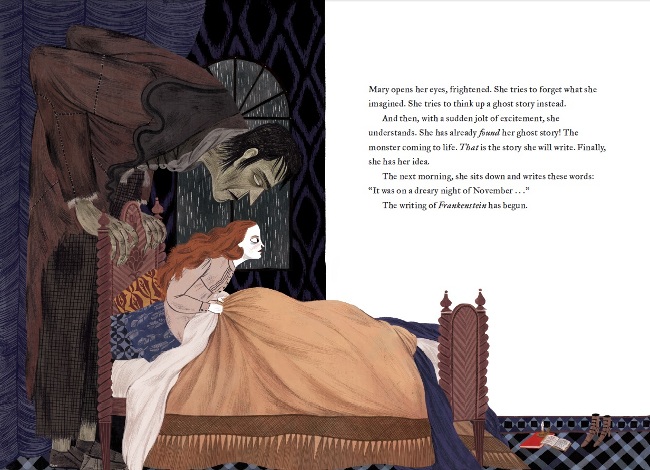
Soon, Shelley and Polidori gave up on their ghost stories, but their talk of new scientific experiments excited Mary. “Electricity can make the muscles of a dead frog twitch. Could it bring a dead creature to life? The idea is both thrilling and frightening.” The idea captured Mary, but instead of a frog, she imagined “a hideous monster, made of dead body parts, stretched out—and coming to life!” Mary suddenly realized she had the idea for her ghost story.

It took nine months for Mary to finish her story. When it was published, some people thought it had been written by Percy Bysshe Shelley—they didn’t “believe young Mary could have done it! How could a girl like her come up with such a story?” But she was a writer, assembling bits and pieces, ideas, and scientific changes in her imagination until they turned into the book Frankenstein. In the two-hundred years since the novel was first published, the story has become a classic. It has sparked movies, inspired other writers, and become a favorite all around the world.

An extensive Author’s Note about Mary Shelley, her life, and inspiration as well as Linda Bailey’s thoughts on the story behind Frankenstein follows the text. A full-page portrait of Mary Wollstonecraft Shelley and a list of sources rounds out the informative backmatter.

celebrate-picture-books-picture-book-review-mary-who-wrote-frankenstein-graveyard

Image copyright Júlia Sardà, 2018, text copyright Linda Bailey, 2018. Courtesy of Tundra Books.

With atmospheric and riveting details, Linda Bailey captures the life of Mary Wollstonecraft Shelley and the influences on her imagination that resulted in Frankenstein. Bailey’s use of the present tense is inspired as it reflects the continued currency of the novel while encouraging today’s readers to embrace their “castles in the air.” Facts about Mary’s travels, new scientific discoveries, and favorite books sprinkled throughout the story inform readers on how the imagination combines experiences to create art.

One look at Júlia Sardà’s spellbinding cover tells readers that they are in for an extraordinary reading experience. Muted tones of red, green, gold, blue, and plum cloaked in black create a thrilling backdrop to Bailey’s story. Ghostly winged creatures fly over Lord Byron’s home on a stormy night, smoky monsters emerge from Fantasmagoriana, a frog sits up in its coffin, and the spectre of the monster leans over Mary and sleeps at her feet as she writes her novel. At once spine-tingling and cozy, Júlia Sardà’s illustrations will draw children into this superb story of a ghost story.

Mary Who Wrote Frankenstein is sure to spark the imagination of children who love literature, art, and writing. The book would be a thrilling addition to classroom libraries for literature and writing classes as well as an inspiring favorite on home bookshelves.

Ages 5 – 8

Tundra Books, 2018 | ISBN 978-1770495593

Discover more about Linda Bailey and her books on her website.

To learn more about Júlia Sardà, her books, and her art, visit her website.

Frankenstein Day Activity

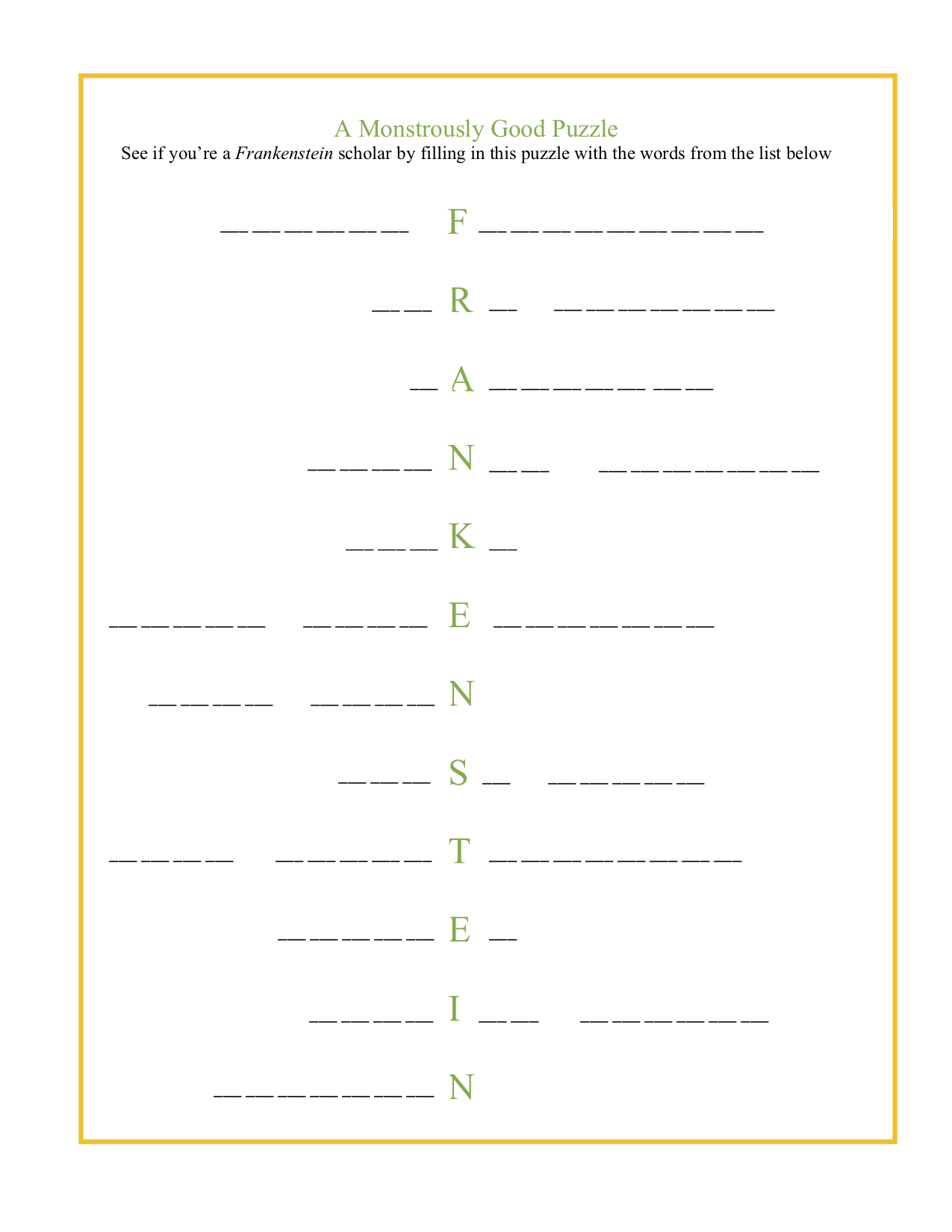
celebrate-picture-books-picture-book-review-frankenstein-puzzle

Monstrously Good Puzzle


See if you’re a Frankenstein scholar by filling in this printable puzzle full of words and phrases about the novel!

Monstrously Good Puzzle | Monstrously Good Puzzle Word ListMonstrously Good Puzzle Solution

celebrate-picture-books-picture-book-review-mary-who-wrote-frankenstein-cover

You can find Mary Who Wrote Frankenstein at these booksellers

Amazon | Barnes & Noble | Books-a-Million | IndieBound
Picture Book Review