September 1 – It’s Read a New Book Month

celebrate-picture-books-picture-book-review-the-boy-and-the-mountain-cover

About the Holiday

The beginning of a new school year is a terrific time to celebrate Read a New Book Month—especially for kids. Whether their reading tastes have broadened, their reading level has changed, or they’ve discovered new and fascinating topics to explore over the summer months, there are new books just waiting for them! The books may be recently published—like today’s book—or just new to your child, there are countless fictional stories and nonfiction books ready to inspire learning, to laugh or cry with, and to share with friends. This month visit your local bookstore and library and stock up on books for your kids and everyone in the family! 

The Boy and the Mountain

Written by Mario Bellini | Illustrated by Marianna Coppo


“There once was a boy who always looked at a mountain.” It was the first thing he looked at in the morning and the last thing he said good night to before going to bed. The boy loved to draw, and one day he “decided to draw the mountain.” His first attempt didn’t look anything like the mountain he saw out his window. When he looked closer, he realized “the mountain was covered with trees,” so he added trees. 

celebrate-picture-books-picture-book-review-the-boy-and-the-mountain-drawing

Image copyright Marianna Coppo, 2022, text copyright Mario Bellini, 2022. Courtesy of Tundra Books.

Still, his picture wasn’t quite right. Next, he noticed the sky and clouds around the mountain and drew those, but his picture “still didn’t look the same as the real thing.” He tried drawing the mountain at different times of day and in different weather, but “he was never happy with what he had drawn.” 

One day, the boy decided to get a closer look. He took his dog and headed out. One the way, he met a goat and drew a picture of it in his sketchbook. The goat decided to come along. When a flock of birds flew by, the boy drew those too. One bird left the flock to follow the boy and his dog and the goat. When they stopped at a stream for a drink of water, the boy drew that too.

celebrate-picture-books-picture-book-review-the-boy-and-the-mountain-trees

Image copyright Marianna Coppo, 2022, text copyright Mario Bellini, 2022. Courtesy of Tundra Books.

It was fall, and the ground was covered in leaves. The boy “wanted to draw them all,” but even though he drew many of them, there was no way they would all fit on the page. He continued on up and up into the forest and beyond. Along the way, he picked up other followers, including a frog, a bear, and a beaver. When he had left the trees behind, there was very little to draw “until he looked more closely” and saw a tiny white flower poking up between some rocks. He drew it.

celebrate-picture-books-picture-book-review-the-boy-and-the-mountain-hike

Image copyright Marianna Coppo, 2022, text copyright Mario Bellini, 2022. Courtesy of Tundra Books.

At last he came to the mountain’s peak. He sat down and flipped through his sketchbook, but he still wasn’t satisfied with his drawings. It was then that he became aware of the goat, the bear, the frog, the bird, the beaver, and a snail who had joined him. “‘Ohhh … hello!'” he said. They played until it was time to go home. The bear gave the boy a ride home on his shoulders. Once home, the boy promised that he would see them all again soon. That night before going to sleep, the boy drew the mountain again with his new perspective. This time his drawing was complete—and the boy was completely satisfied with it.

celebrate-picture-books-picture-book-review-the-boy-and-the-mountain-goat

Image copyright Marianna Coppo, 2022, text copyright Mario Bellini, 2022. Courtesy of Tundra Books.

Mario Bellini’s thoughtful and well-paced adventure gently guides readers to consider not only their perspective on big and small topics of life but where and how they fit into the wider world. Just as children observe the world from their vantage points of home, school, and activities, the boy in the story looks at the mountain and tries to make sense of it by drawing it. Then, like kids slowly adding bits of what the world has to offer to their lives, the boy includes trees, clouds, and different times of day to his drawing. But he thinks there must be something more, and, now braver and more knowledgeable, he ventures out to get a better look. 

Along the way he sees more of the world and interacts with what he encounters in the way that means the most to him. Some of these experiences turn out well, and others don’t, but he persists. When it appears that he’s finally come to the end of his journey, he sits down (alone, or so he thinks) and ponders his single-subject, disjointed pictures. When he finally notices all of the animals who have joined him on his trek and embraces them as friends, the boy discovers an interconnectedness that has been missing for him all along. At last, with his final drawing, the boy is able to be satisfied with his knowledge, understanding, and place in his world.

Marianna Coppo’s delightful rounded illustrations lend a quiet elegance to the story while allowing readers to view the boy’s drawings for themselves and then join him on his journey to see the mountain up close. Kids will enjoy noticing the animals that begin to populate the boy’s sphere, even while he is unaware that they are following him. The boy’s drawings of the river, the leaf-strewn forest floor, and the hidden mountain peak give kids and adults an opportunity to talk about times when things go wrong, when life seems overcrowded or overwhelming, and when goals seem elusive. Coppo also helps kids see that surprises can be found in the most unlikely of places as well as when you least expect them. 

A multi-layered story that invites thought, observation, conversation, and discovery (of both the self and the world), The Boy and the Mountain would be a favorite read for quiet story times or as a prelude to any new experience at home or in school. The book is highly recommended for home bookshelves as well as classroom, school, and public libraries.

Ages 3 – 7

Tundra Books, 2022 | ISBN 978-0735270251

You can connect with Marianna Coppo on Instagram and Twitter.

Read a New Book Month Activity

celebrate-picture-books-picture-book-review-take-a-bookworm-trek-maze

Take a Bookworm Trek! Maze


These two friends love reading! Can you help them through the maze to meet the bookworm? 

Take a Bookworm Trek! Maze Puzzle | Take a Bookworm Trek! Maze Solution

celebrate-picture-books-picture-book-review-the-boy-and-the-mountain-cover

You can find The Boy and the Mountain at these booksellers

Amazon | Barnes & Noble | Books-a-Million

To support your local independent bookstore, order from 

Bookshop | IndieBound

Picture Book Review

August 11 – Play in the Sand Day

celebrate-picture-books-picture-book-review-a-beach-chase-cover

About the Holiday

Is there any better way to spend a summer day than playing on a sandy beach? That wet, compact surface is perfect for running on, digging in, and, of course, building sandcastles with. And the soft, dry areas are great for beachcombing, wiggling toes in, playing volleyball, and simply strolling along. So head out to your favorite beach and have some family fun! 

A Beach Chase: An A – Z Alphabet book

By Sarah Downie


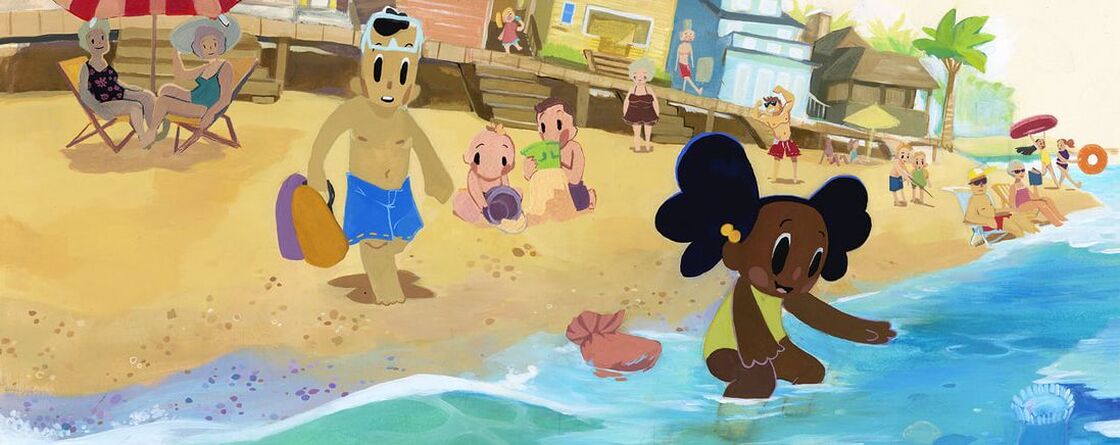
Holly and Logan love playing at the beach. Today, Holly is looking “for shells to add to her collection.” She spies something “among the anemones” and rushes into the water, where she discovers an anchor. Holly also finds a conch shell and, as she’s admiring it, a girl floats by on a buoy and asks her what she’s going to do with it. But this is no ordinary girl—Holly realizes that she’s a mermaid. A mermaid who quickly grabs Holly’s new shell and takes off, diving deep into the ocean.

celebrate-picture-books-picture-book-review-a-beach-chase-letter-wading

Image copyright Sarah Downie, 2020, courtesy of Leaning Rock Press.

And so begins a wet and wild chase to recover Holly’s shell. Logan and Holly swim past various sea creatures, come to an island, and mistake “just a jumble of jellyfish” for the mermaid they’re looking for. Undeterred, they swim on until they see a kayak in the distance. “They kick, kick, kick towards” it and then paddle out to sea through a mass of kelp. On their way, they spot other creatures and seaside landmarks—even freeing an octopus from a net—before spying a tell-tail flick in a tide pool. 

celebrate-picture-books-picture-book-review-a-beach-chase-letter-e

Image copyright Sarah Downie, 2020, courtesy of Leaning Rock Press.

Jumping in, they discover another world, one where mermaids and mermen are having a party. But where is the mermaid who took Holly’s shell? Holly and Logan swim through the party and a zig-zag-y tunnel before finally spotting her near an outcropping of rocks at the ocean floor. The mermaid shows Holly and Logan the very special reason she needed the conch shell. She didn’t want it for herself, but for a hermit crab that “was in need of a home.” 

Immediately, Holly offers to bring more shells from her collection for other hermit crabs if the mermaid will let her and Logan come again. The mermaid enthusiastically agrees and invites her new friends to stay and join the party.

celebrate-picture-books-picture-book-review-a-beach-chase-letter-h

Image copyright Sarah Downie, 2020, courtesy of Leaning Rock Press.

Back matter includes a visual dictionary that depicts each illustration in the book and lists words for the objects or creatures corresponding to each letter found there. Kids may also spy other, unlisted letter-appropriate creatures (such as sand dollars on the “S” page) or actions (like Logan’s being nice to the octopus on the “N” and “O” spreads or the octopus peeking above the waves on the “P” page).

celebrate-picture-books-picture-book-review-a-beach-chase-letter-t

Image copyright Sarah Downie, 2020, courtesy of Leaning Rock Press.

In her eye-catching art, Sarah Downie cleverly incorporates the letters of the alphabet while inviting readers to join Holly and Logan on their search for the mermaid. From the shallows of the seashore to the far depths of the ocean, kids will eagerly follow this quick-paced story while feeling pride and excitement in spotting all the hidden objects. Well-conceived for its target audience, the illustrations contain a range of difficulty so that little ones as well as older children will enjoy the search-and-find aspects of this book.

Downie’s engaging storytelling includes plenty of alliteration that reinforces the sound of each letter while promoting letter recognition throughout the book. She also infuses her story with themes of kindness, sharing, and care for the environment that will resonate with young readers.

A charming and clever story that transcends its alphabet roots to engage readers on many levels, A Beach Chase: An A – Z Alphabet book is playful fun that kids will want to dip into again and again. The book would make a terrific take-along on seaside or lakeside beach trips, where kids could extend the story’s search-and-find to their own experience. It could also spark creative cross-curricular lessons for teachers and homeschoolers and would be a welcome addition to any home library to enjoy throughout the year.

Ages 3 – 8

Leaning Rock Press, 2020 | ISBN 978-1950323241

You can learn more about Sarah Downie, her books, and her art on her website.

Play in the Sand Day Activity

celebrate-picture-books-picture-book-review-a-beach-chase-activity

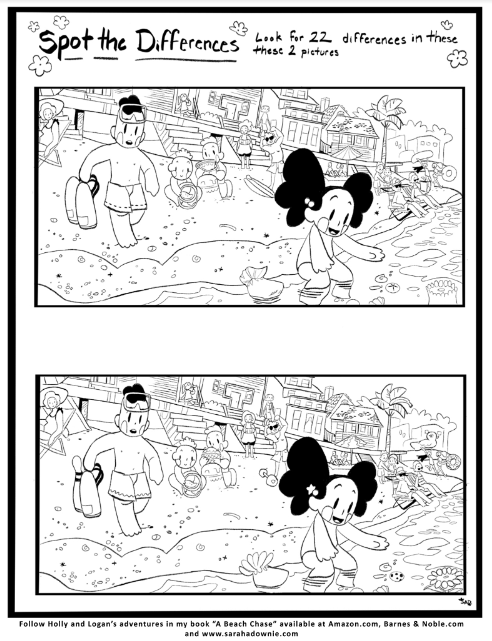
A trip to the beach can inspire all kinds of games and puzzles! Sarah Downie has created an activity pack with 15 challenges to get you searching and having fun just like Holly and Logan. You can download it here:

A Beach Chase Activity Pack

celebrate-picture-books-picture-book-review-a-beach-chase-cover

You can find A Beach Chase: An A – Z Alphabet book at these booksellers

Amazon | Barnes & Noble | Books-a-Million

To support your local independent bookstore, order from

Bookshop | IndieBound

Picture Book Review

July 2 – World Firefly Day

celebrate-picture-books-picture-book-review-light-the-sky-firefly-cover

About the Holiday

World Firefly Day was instituted by Fireflyers International Network to raise awareness of these summer-night beauties and the dangers to their survival, including habitat destruction, pesticides, light pollution, and over-collection. More and more, as fields and marshlands are paved over for building and waterways open up to recreation, the fireflies that call these places home are disappearing. This year’s theme is “Let’s stay together in the challenging world” and encourages everyone to learn how to “live in harmony” with fireflies. To learn more about fireflies, how you can make your garden or lawn firefly friendly, and more, visit Firefly Conservation & Research.

Light the Sky, Firefly!

Written by Sheri Mabry Bestor | Illustrated by Jonny Lambert


When fireflies begin dotting the summer night sky with light, it may seem like they’ve magically appeared out of nowhere. But as Sheri Mabry Bestor eloquently reveals, these beautiful insects have been lurking and luminescing for a long time. How long? Well, would you believe a full year? As summer rains dampen the earth, a firefly lays her eggs (up to 500!) under brush or fallen leaves. “Under the leaves, the eggs lay still. For the baby fireflies inside the shells, it is time to grow. And begin to glow.”

celebrate-picture-books-picture-book-review-light-the-sky-firefly-laying-eggs

Image copyright Jonny Lambert, 2022, text copyright Sheri Mabry Bestor, 2022. Courtesy of Sleeping Bear Press.

The larvae hatch after a month, and then they begin to eat, eat, eat. Slugs and snails are on the menu and, as a paragraph of scientific information about the firefly’s nighttime dining discloses, “instead of fighting their prey, the larvae bite and then inject the prey with a liquid that keeps it from moving to get away.” All through the rest of summer and fall, the baby fireflies grow. During the winter, the larvae undergo many transformations, growing and outgrowing a series of casings.

celebrate-picture-books-picture-book-review-light-the-sky-firefly-launch

Image copyright Jonny Lambert, 2022, text copyright Sheri Mabry Bestor, 2022. Courtesy of Sleeping Bear Press.

It isn’t until late spring when the larvae are ready to become an adult. When they are ready, they emerge from their mud nest. Then, while the sun is high, they stay low to the ground. But “when the sun begins to set, they begin to climb higher. And when the sky turns black, fireflies launch!” Then “the sky is filled with flashing fireflies. They twinkle like faraway stars.”

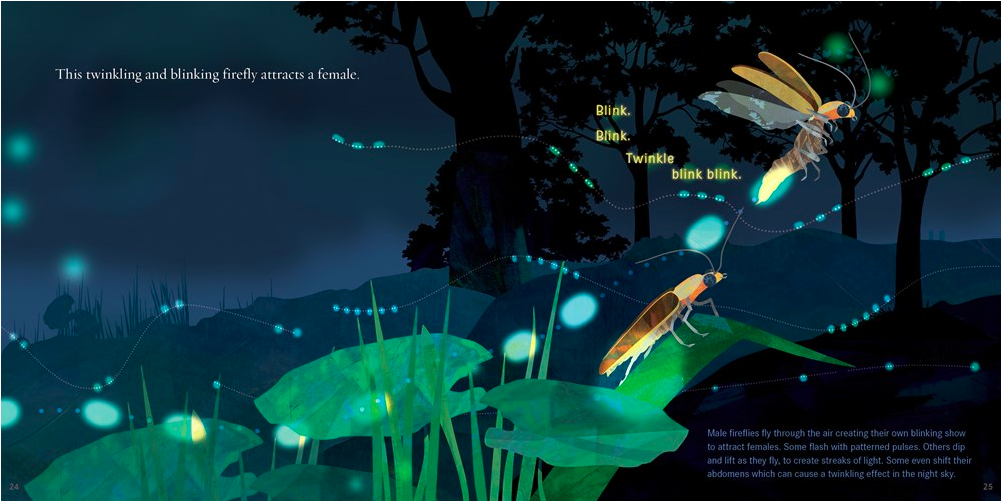
celebrate-picture-books-picture-book-review-light-the-sky-firefly-blink-blink

Image copyright Jonny Lambert, 2022, text copyright Sheri Mabry Bestor, 2022. Courtesy of Sleeping Bear Press.

Still, the darkness of night doesn’t protect them from predators, so fireflies always have to be on the alert. If they are caught, fireflies have a bitter surprise for the hungry critter. And what about those “blink, blinks” that we all marvel at? Those signals aren’t random. As Sheri Mabry Bestor explains, “Fireflies blink with specific rhythms called ‘flash patterns,’ and each species has its own. This helps them communicate with each other.” Not only does that luminescent chemical help fireflies, Bestor describes ways in which scientists and doctors are studying it in hopes of helping people.

“In time, the females are ready to lay their eggs. Pitter-patter, drizzle-drip. Summer rain cools the earth. Bees buzz. Birds glide. A firefly finds a place under the leaves that blanket the ground.” The eggs hide, waiting until next summer when it’s their turn to shine.

celebrate-picture-books-picture-book-review-light-the-sky-firefly-summer-again

Image copyright Jonny Lambert, 2022, text copyright Sheri Mabry Bestor, 2022. Courtesy of Sleeping Bear Press.

Sheri Mabry Bestor’s lovely, poetic story of the lifecycle of fireflies is a beautiful read aloud for summer nights or for whenever you and your kids are missing the simple pleasures of summer. While the story plays out from page to page in flowing and sometimes vibrant text, scientific facts about these insects, their transformations, homes, anatomy, protection, and, of course, their bright and glowing communication skills are tucked in the corner waiting to be discovered and explored. Bestor’s rhythmical cadence also highlights the seasonal changes that accompany a fireflies’ growth and the cyclical wonder of nature.

Jonny Lambert’s stunning textured collage-style illustrations portray all the beauty of these unique insects and the landscape they inhabit. Mottled greens and yellows give depth to lush leaves, opaline snail shells catch the light above as the curious snail discovers the glowing eggs below, and delicate spring flowers camouflage the mud nests where the larvae are transforming into adults. The nighttime scenes are breathtaking with deep blue skies, a canvas for the pin pricks of light that create summer’s most spectacular show. Both realistic and dreamlike, these nighttime pages will have kids and adults scurrying outside to watch and be a part of it.

A gorgeous book to celebrate the exquisite charm of fireflies as well as to impart natural science facts, Light the Sky, Firefly is highly recommended for home, school, and public library bookshelves.

Ages 4 – 8

Sleeping Bear Press, 2022 | ISBN 978-1534111158

Discover more about Sheri Mabry Bestor and her books on her website.

You can connect with Jonny Lambert on Twitter.

World Firefly Day Activity

celebrate-picture-books-picture-book-review-firefly-maze

Firefly Flight Maze


This little firefly wants to join her friends in the forest. Can you help her through the maze to find them in this printable maze?

Firefly Flight Maze Puzzle | Firefly Flight Mage Solution

celebrate-picture-books-picture-book-review-light-the-sky-firefly-cover

You can find Light the Sky, Firefly! at these booksellers

Amazon | Barnes & Noble | Books-a-Million

To support your local independent bookstore, order from

Bookshop | IndieBound

Picture Book Review

May 19 – World Plant a Vegetable Garden Day

celebrate-picture-books-picture-book-review-in-the-garden-cover

About the Holiday

There’s nothing quite as rewarding as planting seeds, watching the plants grow, and finally being able to enjoy the bounty of your work. If you live in cooler climates, now is the perfect time to get started, and if you’re already experiencing warm or even hot weather, your garden may well be on its way. Wherever you stand on the growing calendar and whether you plant a large garden plot or enjoy deck gardening, today’s holiday highlights all of the benefits of vegetable gardening and provides education for gardeners of all experience levels. Celebrate the holiday with today’s book and consider planting your own veggie garden. Or, if digging in the dirt really isn’t your thing, you can play the printable Plant a Vegetable Garden Game at the end of this post!   

In the Garden

By Emma Giuliani


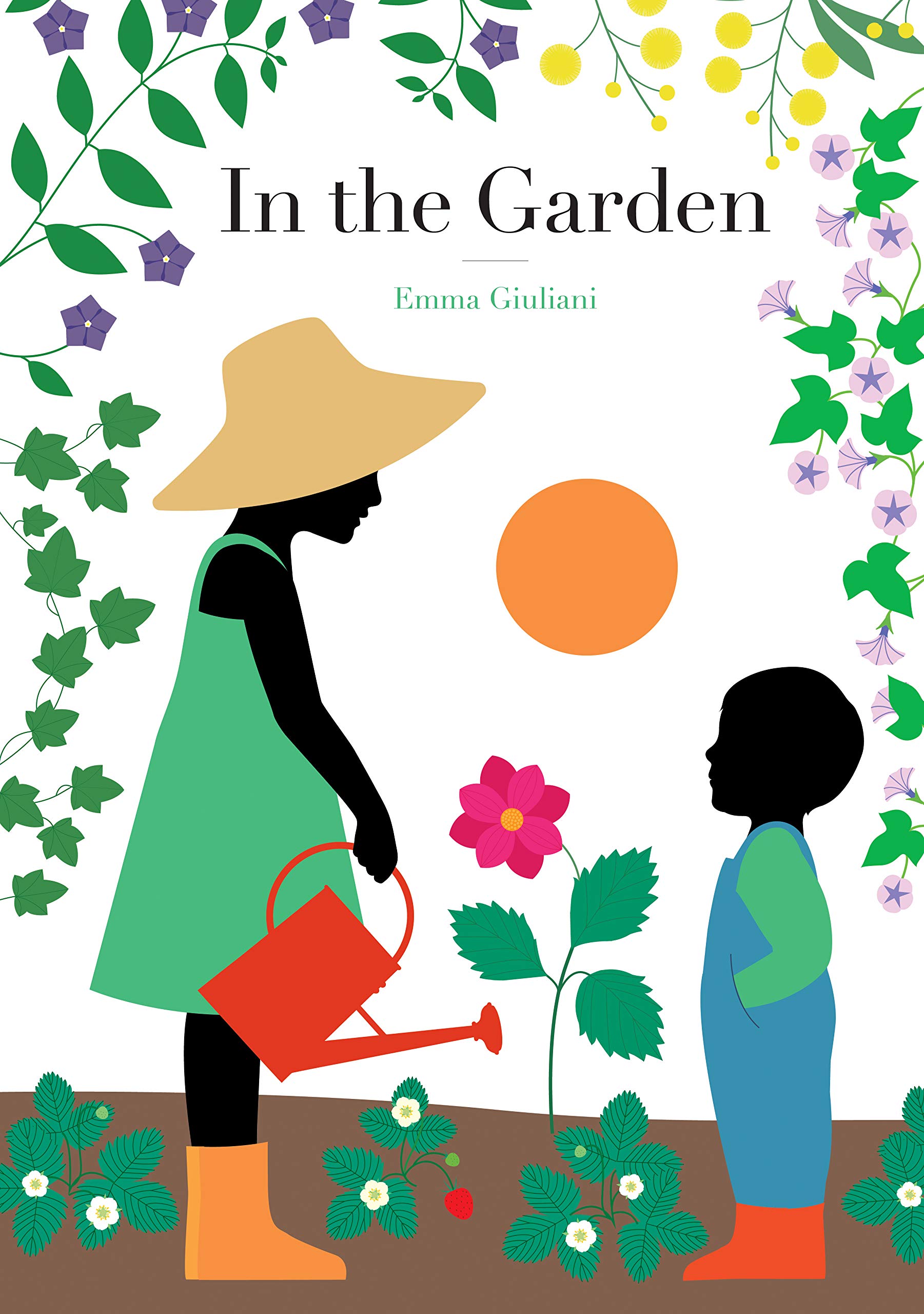
In her stunningly illustrated interactive guide through the seasons, Emma Giuliani introduces Plum and her little brother, Robin, and invites readers to join them as they tend to their garden and all the plants, animals, and birds that call it home. Plum and Robin begin at winter’s end. “This morning it’s cold. It’s not yet spring, but, in the garden, Plum and her brother Robin see the first catkins appearing on the branches of the willows and hazels. The blossoming mimosa makes the gardeners impatient for spring to come.” As Robin counts the long, drooping catkins, Plum rakes a layer of compost over the ground. On the facing page, readers get a close-up view of the fuzzy catkins, can peek inside a bud, burrow underground with earthworms just waking from hibernation, and view a few early bloomers. They also learn about what makes up the earth’s soil and get a recipe for compost.

celebrate-picture-books-picture-book-review-in-the-garden-shed

Copyright Emma Giuliani, 2020, courtesy of Princeton Architectural Press.

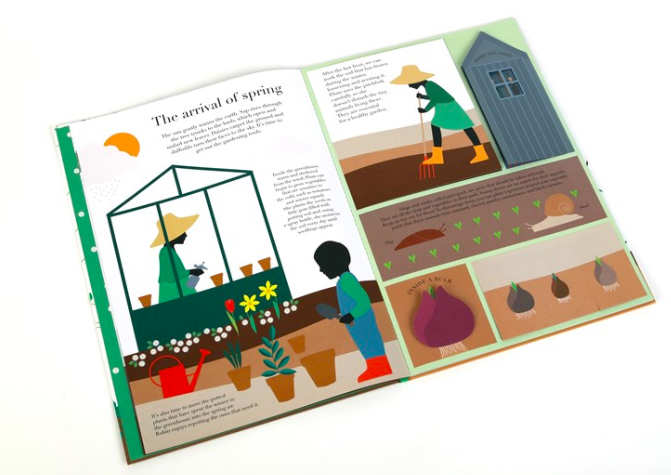
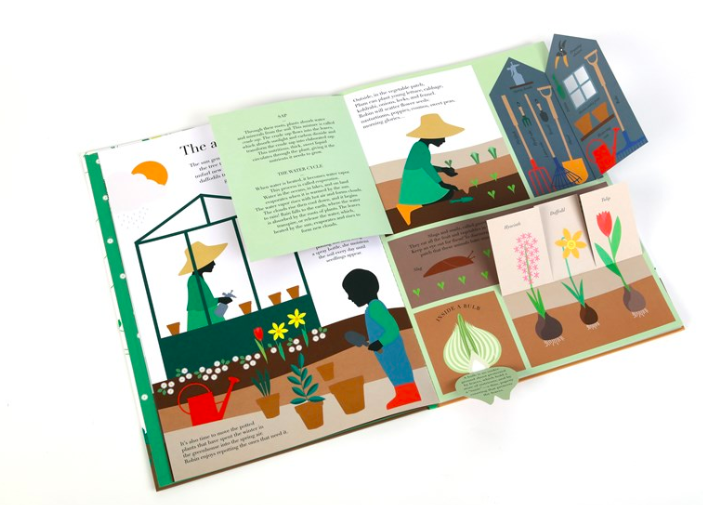
With the arrival of spring, Plum is in her little greenhouse, planting vegetable seeds and spritzing the soil with water to keep it moist while Robin repots some plants who have spent the winter in the greenhouse. Outside, Plum aerates the garden bed with a pitchfork, careful of any tiny creatures below. Children can open the door to Plum’s well-stocked shed to see all the tools tidily stored there and lift the flaps to look inside a bulb and help a hyacinth, a daffodil, and a tulip grow.

celebrate-picture-books-picture-book-review-in-the-garden-open-shed

Copyright Emma Giuliani, 2020, courtesy of Princeton Architectural Press.

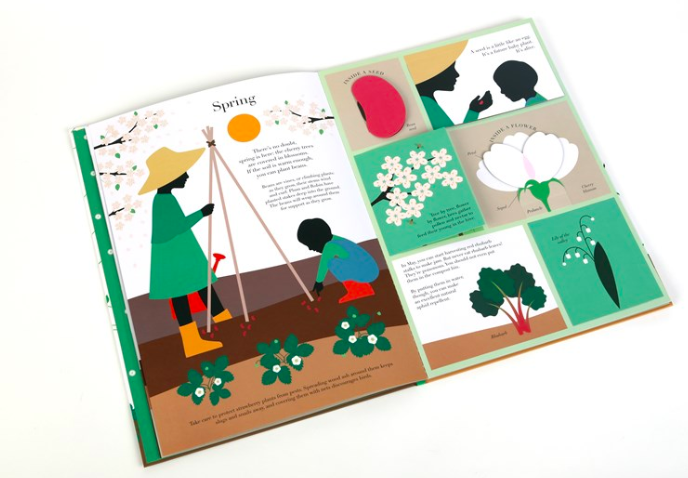
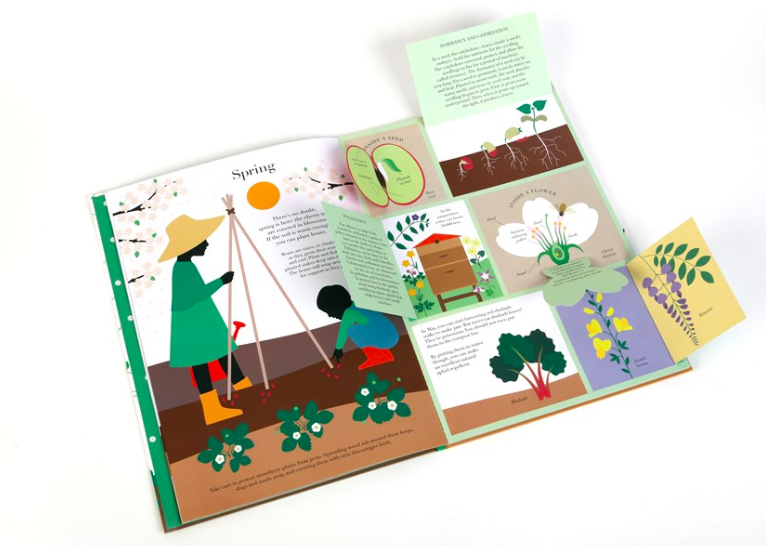
At last the warm weather of spring has arrived. The cherry trees are blossoming, and Plum and Robin are setting stakes and planting bean seeds. Next, they provide protection for the tender strawberry plants that are beginning to bloom. Young gardeners will enjoy opening a bean seed to learn what’s inside and then following its growing process. The bees are visiting the cherry blossoms, pollinating the flowers and making honey. What does a bee see as it hovers around the flower? Pull down the flap to see for yourself and learn all the parts of a flower. What other plants are flowering now? Open the flap to see!

celebrate-picture-books-picture-book-review-in-the-garden-spring

Copyright Emma Giuliani, 2020, courtesy of Princeton Architectural Press.

Summer begins and “what a joy to be in the garden in June! The gentle breeze, the smell of cut grass, and the tangy taste of strawberries and cherries make the gardeners smile.” While Plum waters the tomato plants, “Robin looks for ripe strawberries under the leaves.” Join him! Robin is also picking cherries before the birds eat them. How do those bright red, round fruits grow? Lift the flap to learn and see how they develop from flower to fruit. Plum is getting help with the aphids on the bean plants from industrious—and hungry—ladybugs. “Dragonfly larvae are transforming into graceful flying insects….Their presence is a sign of a healthy garden.”

celebrate-picture-books-picture-book-review-in-the-garden-open-spring

Copyright Emma Giuliani, 2020, courtesy of Princeton Architectural Press.

It’s high summer and the garden is glorious. Bean pods hang from the vines, and Plum contemplates whether they are ready to pick. She may leave some “husks dry out on the plant before picking them.” Dried completely indoors, they can be stored and eaten during the fall and winter. Take a look inside a pod to see the seven red beans there. Flowers greet you too: an orange marigold with petals like a pinwheel, a brilliant pink and purple fuchsia, and a perky mignon dahlia. Robin took cuttings of these plants and potted them to grow some more. Learn how you can do that with your plants too!

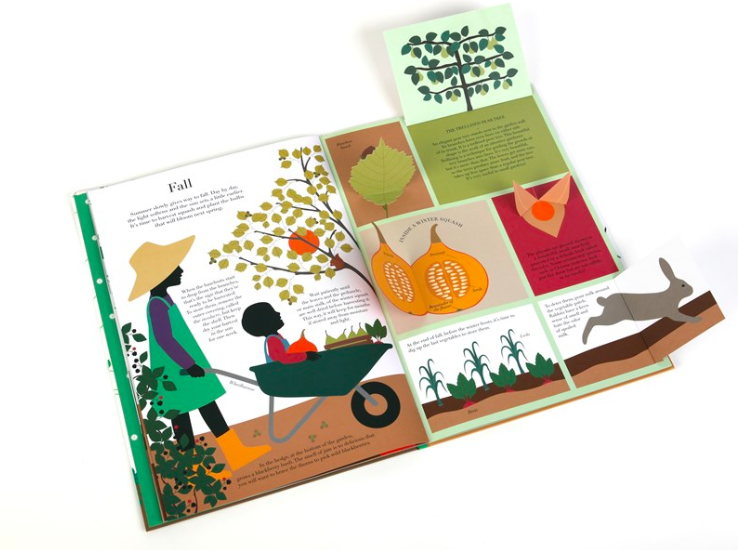
The summer heat is waning and the days are growing shorter. Fall is here. The catkins of early spring have become hazelnuts that are ready to be harvested. Even the squirrel approves! Plum and Robin teach you how to store them—and when to pick the winter squash and keep them for months as well. Can you count the number of seeds inside the winter squash? Plum’s beautiful trellised pear tree is bearing sweet fruit. Yum! But look out—a crafty rabbit is after the last leafy vegetables in the garden. 

celebrate-picture-books-picture-book-review-in-the-garden-open-fall

Copyright Emma Giuliani, 2020, courtesy of Princeton Architectural Press.

The air is chilly again and winter is on the horizon. “Plum and Robin have donned their warmest clothes and gone out to collect the dead leaves. Some leaves will feed the compost, others will become mulch to protect plants over the winter. The hedgehogs can use the rest of the leaves in making their homes.” Do you see the pile of crunchy leaves? Lift them gently…shhh! A hedgehog is snoozing underneath. Robin and Plum have built an insect hotel to keep the bugs cozy during the winter and have filled the greenhouse again. For the colorful birds who stay awhile or all winter, Robin and Plum put out a bird feeder and fill it with locally produced seeds.

After putting all of their tools back in the shed, Plum and Robin head indoors to plan next year’s garden and “watch eagerly for the very first signs of spring.”

celebrate-picture-books-picture-book-review-in-the-garden-open-winter

Copyright Emma Giuliani, 2020, courtesy of Princeton Architectural Press.

If your family tends a garden or is thinking of starting one, Emma Guiliani’s superb book is a must. At 16 inches tall, In the Garden provides fascinating facts about plants, insects, and animals; helpful tips on when and how to plant a variety of fruit, vegetables, and flowers, information on natural ways to ward off pests; and how to recognize when fruit and vegetables are ready for picking and how to store them. Through copious flaps, children get inside views of flowers, seeds, buds, and vegetables to learn the names of each part and how they contribute to the growth of the plant. Along the way, young and adult gardeners discover how early gardening can begin, directions on how to create and use compost, when bushes can be planted, information on pollination; and how to winter over the garden for the coming spring.

Giuliani’s crisp, lush illustrations are marvels, combining intricate paper cuts that replicate the shapes of delicate bulbs and buds, flowers and seeds, smooth and serrated leaves, the long bean pod, and even Plum’s garden shed with a window in the door. Her extraordinarily beautiful color palette immerses readers in the garden experience; you can almost smell the rich earth, hear the bees buzzing at the blossoms, and feel the air changing season to season.

A brilliant resource and a joy to peruse, In the Garden is a book that adults and children—both gardeners or nature lovers—will share throughout the seasons and from year to year. The book is most highly recommended for home, school, and public library collections.

Ages 7 – 12

Princeton Architectural Press, 2020 | ISBN 978-1616898939

You can connect with Emma Giuliani on Instagram.

World Plant a Vegetable Garden Day Activity

celebrate-picture-books-picture-book-review-garden-board-game-1

Plant a Vegetable Garden Game


With this fun game you and your family and friends can grow gardens inside! Roll the dice to see whose garden will fully ripen first!

Supplies

Directions

Object: The object of the game is for each player to fill their garden rows with vegetables. Depending on the ages of the players, the required winning number of rows to fill and the number of vegetables to “plant” in each row can be adjusted.

  1. Print one Game Board for each player
  2. Print one set of Playing Cards for each player (for sturdier playing items, print on card stock)
  3. Print one Vegetable Playing Die and assemble it (for a sturdier die, print on card stock)
  4. Cut the vegetables into their individual playing cards
  5. Color the “dirt” on the Garden Plot with the crayon (optional)
  6. Choose a player to go first
  7. The player rolls the die and then “plants” the facing vegetable in a row on the game board
  8. Play moves to the person on the right
  9. Players continue rolling the die and “planting” vegetables until each of the number of determined rows have been filled with the determined number of vegetables.
  10. The first person to “grow” all of their veggies wins!

celebrate-picture-books-picture-book-review-flower-garden-game

You can play the Plant a Flower Garden Board Game with the printable game pieces here:

celebrate-picture-books-picture-book-review-in-the-garden-cover

You can find In the Garden at these booksellers

Amazon | Barnes & Noble | Books-a-Million | Princeton Architectural Press

To support your local independent bookstore, order from

Bookshop | IndieBound 

Picture Book Review

April 20 – It’s the Month of the Young Child

celebrate-picture-books-picture-book-review-animals-move-cover

About the Holiday

During the month of April, we celebrate families and their young children. The aim of the holiday is to raise awareness of all the ways people can support and advance children’s happiness and wellbeing. Getting kids excited about learning and experiencing new things, getting to know their community, engaging in healthy habits like eating well and exercising are important components of a happy life. Today’s book incorporates many of these goals and will delight young readers. Earlier this month, families, schools, and caregivers celebrated the Week of the Young Child with different special activities encouraged each day of the week. These activities are fun all this month and anytime of the year. To learn more about how you can incorporate Music Monday, Tasty Tuesday, Work Together Wednesday, Artsy Thursday, and Family Friday into your schedule visit the website of the National Association for the Education of Young Children.

Animals Move

Written by Jane Whittingham


It’s no secret that little ones love to jump, run, climb, and snuggle. Not only are these activities fun and great for getting the wiggles out, they help kids build strong muscles and develop large and fine motor skills. In her new book, Jane Whittingham entices children to get moving while also introducing them to fifteen baby animals and what they are called through her engaging rhythmical and rhyming text. Even the youngest children will pick up on Whittingham’s lively words and want to read along too.

celebrate-picture-books-picture-book-review-animals-move-ducklings-splash

Copyright Jane Whittingham, 2022, courtesy of Pajama Press.

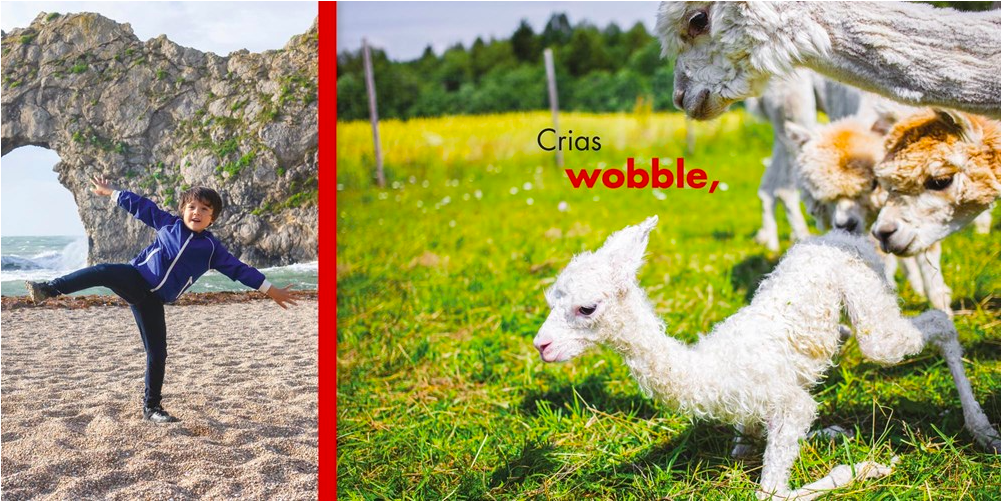
Beautiful, action-packed nature photographs of each baby animal – from whale calves to swan cygnets , echidna puggles to alpaca crias, puppies and kittens to tadpoles and more – are paired with photos of a wide range of kids, including a girl with Down syndrome and a young ballerina who uses a walker, mirroring the animal’s motions and inviting readers to pounce, nibble, splash, and dash along with them.

celebrate-picture-books-picture-book-review-animals-move-crias-wobble

Copyright Jane Whittingham, 2022, courtesy of Pajama Press.

Animals Move is part of the Toddler Tough series, which, in addition to the text for children, provides adults with a guide on how the book assists with physical, language, and subject-matter learning development. The spirited photographs of readers’ peers engage kids in recognizing a variety of facial expressions, emotions, and body language, which enhances social emotional learning – important skills for success in school and beyond. Back matter also provides ways in which to use the book as a springboard for your own creativity through games, singing, movement exercises, and even making your own book. Sturdy construction and a padded cover complete this well-thought-out book. 

celebrate-picture-books-picture-book-review-animals-move-foals-dash

Copyright Jane Whittingham, 2022, courtesy of Pajama Press.

If you’re looking for a book that’s sure to be an active story time favorite at home, in the classroom, or for library programs as well as a terrific take-along for spontaneous fun on walks, at the park, on picnics, and during other outings, you’ll want to add Animals Move to your book collection.

Ages 2 – 5

Pajama Press, 2022 | ISBN 978-1772782387

Discover more about Jane Whittingham and her books on her website.

Month of the Young Child Activity

celebrate-picture-books-picture-book-review-animal-matching-cards

Match Up the Animals! Game


Test your powers of memory—or your ability to guess correctly—with this Animal Pairs matching game!

Supplies

  • Printable Match Up the Animals! Cards to color
  • Printable Full-Color Funny Matching Cards – Set 1 | Set 2
  • Colored pencils, markers, or crayons
  • Scissors

Directions

  1. Print the Animal Pairs Cards, print two pages to have double cards. To make the game more difficult print 3 or more pages to find 3 or more groups of matching animals
  2. Color the cards
  3. Cut out the cards
  4. Lay the cards face down on a table in random order
  5. Turn over cards to look for matching pairs
  6. When you find a matching pair leave the cards face up
  7. Continue playing until you find all the matching animal pairs or groups

celebrate-picture-books-picture-book-review-animals-move-cover

You can find Animals Move at these booksellers

Amazon | Barnes & Noble | Books-a-Million

To support your local independent bookstore, order from

Bookshop | IndieBound

Picture Book Review

March 21 – International Day of Forests

celebrate-picture-books-picture-book-review-the-leaf-detective-cover

About the Holiday

International Day of Forests was instituted by the United Nations General Assembly in 2011 to raise awareness of the importance of trees in vast woodlands or in your neighborhood or yard. Trees contribute to the quality of the air we breathe, improve the local climate, reduce noise pollution, shelter wildlife, and provide food for people and animals. This year’s theme is “Forests and sustainable production and consumption.” So many aspects in our lives – from the materials for building homes, making tools, developing new household items, and more to the medicines we take, the water we drink, and the clothes we wear rely on healthy and sustainable forests. This year’s theme encourages people to think about the ways forests benefit not only human life but the wildlife and the earth as a whole. For more information visit the UN International Day of Forests website and The Geneva Environment Network.

Thanks to Boyds Mills for providing a digital copy of The Leaf Detective for review consideration. All opinions on the book are my own.

Reviewed by Dorothy Levine

The Leaf Detective: How Margaret Lowman Uncovered the Secrets in the Rainforest

Written by Heather Lang | Illustrated by Jana Christy


As a child, Meg was quite shy to make friends. She spent lots of time studying and playing with wildlife: “Meg wrapped herself in nature, like a soft blanket.” As she continued to grow, so did her passion for leaves, trees, and nature. Meg attended Sydney University in Australia. In 1979, she became the first person at her graduate school to study the rainforest. Through her studies Meg learned that people had been all the way to outer space to study, but nobody had ever ventured to the tippity top of a canopy tree. Instead, they studied trees from far away through binoculars. Oftentimes scientists would spray trees with chemicals so that the harmed leaves and animals would drop to the forest floor where people could study them up close. Meg sought to change this.
celebrate-picture-books-picture-book-review-the-leaf-detective-harness

Image copyright Jana Christy, 2021, text copyright Heather Lang, 2021. Courtesy of Calkins Creek.

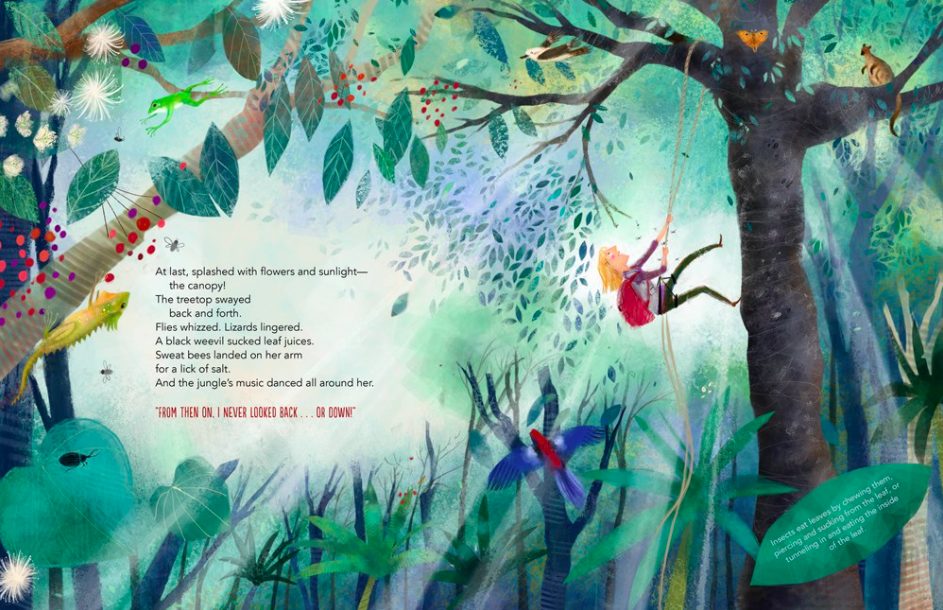
“In the dark, damp forest the trees rose up to distant rustling, squawks and screeches, shadows in the treetops. How could she get up there?” Meg Lowman created her own slingshot and harness and inched up a coachwood tree. When she reached the canopy, she knew she’d found the perfect place to study and explore. Meg is quoted saying, “From then on, I never looked back…or down!”

Meg continued to create new strategies to study the canopy, as a scientist does. And in doing so she made so many discoveries, such as: “We now believe the canopy is home to approximately half the plant and animal species on land.” Many people tried to stop Meg along her journey. They told her she couldn’t take science classes, climb trees, or make inventions because she was a woman. But Meg ignored them. She continued to investigate.

She knew that rainforests were (and are) in danger, and that so many creatures rely on the rainforest ecosystem. People all over the world were cutting down large parts of the rainforests for wood, rubber, paper, and farmland. This worried Meg; she wanted to find a way to protect rainforests before they all disappeared. “She wondered, How can one leaf detective make a difference? How can I save the trees?…Then an idea crawled into Meg’s thoughts—a way to speak for the trees.”

celebrate-picture-books-picture-book-review-the-leaf-detective-bugs

Image copyright Jana Christy, 2021, text copyright Heather Lang, 2021. Courtesy of Calkins Creek.

Meg traveled around the world. She spoke to people across many different countries; taught them how to climb trees, build canopy walkways—she showed people the many gifts rainforests have to offer. Meg educated communities on how they could share their rainforest with outsiders, showcase its beauty to create revenue rather than chopping them down for resources. By using her voice and creative mind, Meg helped implement systems that have saved many trees and creatures across the world.

Meg Lowman continues to study trees, save rainforests, and teach people how to shift their economies to center around ecotourism and sustainable crops rather than resource extraction. She has used her voice to save rainforests across the world, and yet she still says, “If only I could have achieved as much as the tree!… But I have not. I have whittled away at relatively small goals in comparison to the grander accomplishments of a tree.”

Backmatter includes an author’s note detailing Heather Lang’s visit to meet Margaret Lowman in the Amazon rainforest in Perú. The note includes more information on Dr. Lowman’s advocacy work and is followed by an illustrated educational spread on the layers of canopies, and species featured throughout the story are labeled in the final spread, for readers to learn more about specific animals that make their homes in the rainforest.

celebrate-picture-books-picture-book-review-the-leaf-detective-trampoline

Image copyright Jana Christy, 2021, text copyright Heather Lang, 2021. Courtesy of Calkins Creek.

Heather Lang’s lyrical writing matches the carefulness with which Meg studies leaves, trees, and the rainforest canopy. Her compelling storytelling is rich with facts and sensory imagery that immerse readers in the environment and Meg’s determination to understand and, later, save it. Scattered images of leaves drop fun facts and definitions for readers about the rainforest, canopies, transpiration, herbivores, and more. Quotes from Dr. Lowman are thoughtfully placed throughout the story in a manner that neatly flows. The Leaf Detective urges readers to understand that “a tree is not just a tree” but rather “a shelter for animals and people, / a recycler and provider of water, / a creator of food and oxygen, / an inventor of medicine/ a soldier against climate change.”

Jana Christy’s digital drawings contain stunning detail and show an accurate scale of one small person in comparison to the vastness of the rainforest. Her mesmerizing wildlife creatures and immersive watercolor blues and greens transport readers right into the rainforest with “Canopy Meg.” The lush greens of the rainforests contrast strikingly with the spread on deforestation, in which fallen trees lay scattered on the bare, brown ground. Readers will also be interested to see the innovations that have made the trees more accessible to people. One can read the book over and over and notice new details every time. It is a book to treasure, to study, to read and re-read again. 

Come unearth the secrets of the rainforest with Margaret Lowman in this book that’s budding with knowledge, empathy, and magic, and is a tale of how one person can make a difference. The intriguing facts, poignant quotes from Dr. Lowman herself, and beautiful poetic writing will leave readers of this book inspired with wonder and with a hunger for advocacy. The Leaf Detective: How Margaret Lowman Uncovered the Secrets of the Rainforest is an urgent must-read for all ages.

A portion of Heather Lang’s royalties for this book go to TREE Foundation—an organization that funds field trips for children to get into nature, canopy projects, and science book distribution for children with limited access to STEAM, girls especially. 

Ages 6 – 10

Calkins Creek, 2021 | ISBN 978-1684371778

Discover more about Heather Lang and her books on her website.

To learn more about Jana Christy, her books, and her art, visit her website.

Meet Heather Lang
celebrate-picture-books-picture-book-review-Heather-Lang-headshot

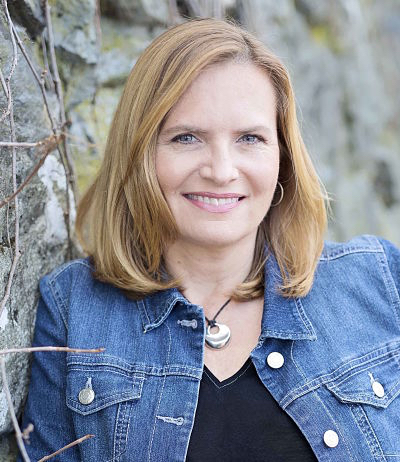
Heather Lang loves to write about real women who overcame extraordinary obstacles and never gave up on their dreams. Her research has taken her to the skies, the treetops of the Amazon, and the depths of the ocean. Her award-winning picture book biographies include, QUEEN OF THE TRACK: Alice Coachman, Olympic High-Jump Champion, THE ORIGINAL COWGIRL: The Wild Adventures of Lucille Mulhall, FEARLESS FLYER: Ruth Law and Her Flying Machine, SWIMMING WITH SHARKS: The Daring Discoveries of Eugenie Clark, and ANYBODY’S GAME: Kathryn Johnston, The First Girl to Play Little League Baseball. When she is not writing, she enjoys going on adventures with her husband and four children. Visit Heather at www.heatherlangbooks.com.

Today I am thrilled to be interviewing author Heather Lang about her new biographical picture book The Leaf Detective: How Margaret Lowman Uncovered the Secrets of the Rainforest. Heather provides some thoughtful notes for shy readers, riveting stories from the rainforest and insight into the importance of exploring and caring for nature.

Can you tell us a little bit about what made you decide to write The Leaf Detective?  

We’ve caused enormous harm to our planet over the last few centuries, and I’m especially concerned about our rainforests. I knew I wanted to write a biography that was also a science book about the rainforest. When I read about Meg’s pioneering work and deep passion for trees, I was hooked! I couldn’t wait to find out how this quiet, nature-loving child, who didn’t know women could be scientists, became a world-class scientist and conservationist.

In the story you talk about how Meg was shy to make playmates with other kids. Were you also a shy kid growing up? Do you have any advice for readers who may relate to this aspect of Meg’s childhood? 

Like Meg, I was very shy as a child and remember wishing I were more outgoing. But as I grew older, I began to recognize the many advantages to being shy! My shy nature led me to sit back and observe. And that led to deeper thinking and understanding, a strong imagination, and creativity. Shy people often think more before they speak. They make their words count, which coincidentally is an important part of writing picture books. This also makes shy people good listeners and thoughtful friends. 

I’m still shy in many ways, and my recommendation to readers who might identify with this is to embrace your shyness! At the same time, don’t let it stop you from doing things you want to do. Meg Lowman told me she used to get so nervous before presenting in graduate school that she’d get physically sick. But with practice, practice, practice, she’s become a captivating presenter and educator. If you watch a few of her FUN FACTS FROM THE FIELD videos on my website, you’ll see what I mean! 

How would you describe your connection to nature? Would you consider yourself a “detective” in any ways? 

I’m constantly in awe of nature and its countless gifts and surprises. Nothing sparks my curiosity more than our natural world, and my curiosity is probably my most important tool as a writer. Being open-minded and asking questions not only generates ideas, but also leads me to think more deeply about a topic and examine it closely from lots of different angles. And of course that generates more detective work and more learning about my topic and myself. Being a detective is one of my favorite parts of writing books.

Do you have a favorite rainforest tree or creature? If so, tell me about it a bit!

When I arrived in the Amazon rainforest, I couldn’t wait to see a sloth! But during my time there I became fascinated with ants. They are everywhere in the rainforest, even in the canopy. I think it’s amazing how such tiny creatures can be so hardworking and organized. Their teamwork is unbelievable. And they are invaluable to the health of our rainforests. Among other things, they’re in charge of waste management on the rainforest floor, and they disperse seeds and aerate the soil!

What was the most rewarding part of writing The Leaf Detective?

This writing project was filled with rewards every step of the way! I learned so much about our rainforests and trees and gained a true understanding of how interconnected we all are—plants, animals, and humans. Getting to really know Meg Lowman and learning from her firsthand was thrilling and strengthened my writing in many important ways. It was also really rewarding to stretch myself as a writer and find a way to effectively write a book that seemed ambitious at first—a biography and conservation book that wove in quotes and science facts. 

Are there any stories from your trip to meet Meg that you did not get the chance to include in your author’s note that you’d like to share?

While I was on my Amazon adventure with Meg, I had many exciting moments. I loved learning from the Indigenous people how to use a blow gun, make clay, and braid palm leaves to make thatched roofs. The local shaman taught me how he uses different plants in the rainforest to treat and prevent injuries and illnesses—from bronchitis to poisonous snake bites. He also helped me confront my fear of snakes by bringing one over for me to touch. I even let it gently coil around my neck! But my favorite moments were exploring with Meg, especially at night and early in the morning when there’s so much activity in the rainforest.

Thanks so much for chatting with me Heather! I had a lovely time hearing about your inspiration, stories, writing process and tips for shy readers. Looking forward to learning and reading more from you in the months and years to come.

International Day of Forests Activity

celebrate-picture-books-picture-book-review-Climb-a-Tree-Word-Search-Puzzle II

Climb a Tree! Word Search


There are so many kinds of trees that make our world beautiful. Can you find the names of twenty threes in this printable puzzle?

Climb a Tree! Word Search Puzzle | Climb a Tree! Word Search Solutio

celebrate-picture-books-picture-book-review-the-leaf-detective-cover

You can find The Leaf Detective at these booksellers

Amazon | Barnes & Noble | Books-a-Million

To support your local independent bookstore, order from

Bookshop | IndieBound

Picture Book Review

March 3 – It’s National Reading Month

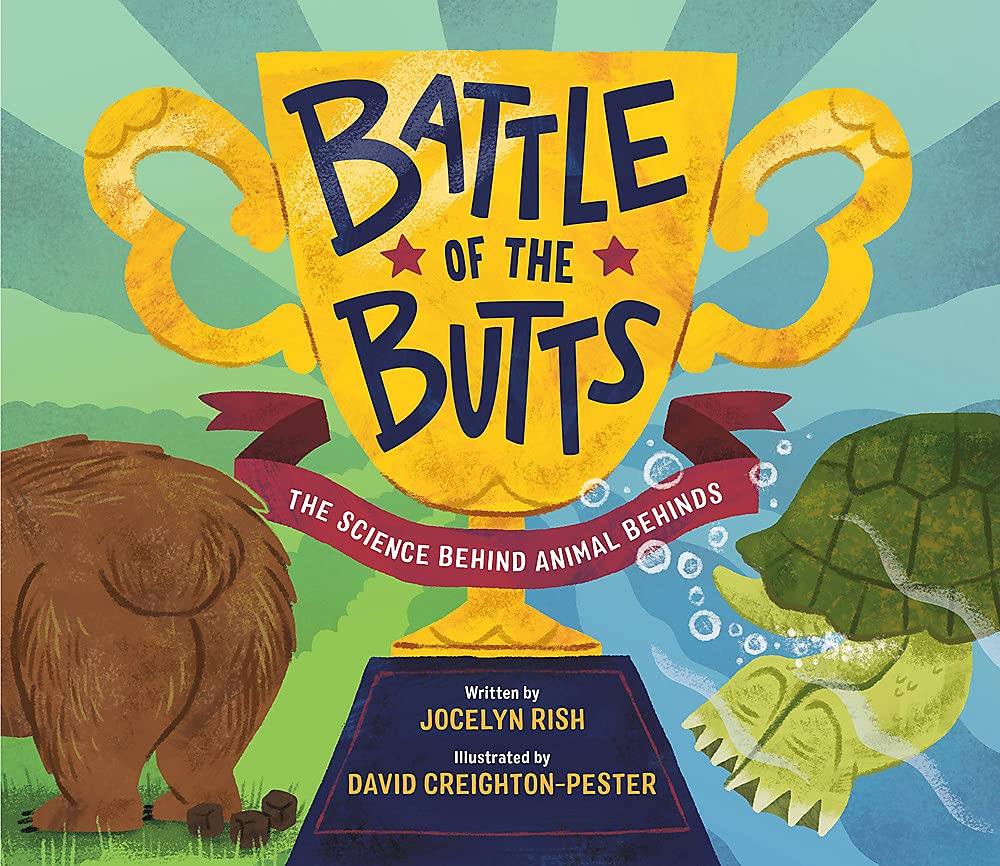
celebrate-picture-books-picture-book-review-the-battle-of-the-butts-cover

About the Holiday

March 3rd is not only part of National Reading Month, but it’s World Book Day and World Wildlife Day too! How can readers celebrate all three holidays at the same time? With today’s book! Here’s a little bit about each holiday:

National Reading Month

All month long, people celebrate all the joys and benefits of reading. When you read with your child or children every day you’re helping them develop the language and literacy skills that will promote success in school and beyond. Even if your child isn’t talking yet, they’re listening and learning about their language as you read to them. Older kids also love being read to, and setting aside time to read together builds strong bonds that can last a lifetime. The month is typically marked with special events in schools, libraries, bookstores, and communities.

World Wildlife Day 

In December of 2013 the United Nations General Assembly proclaimed March 3rd to be World Wildlife Day to promote awareness of our environment and the dangers to it. This year’s theme is “Recovering key species for ecosystem restoration,” which seeks to draw attention to the conservation status of some of the most critically endangered species of wild fauna and flora and to drive discussions toward devising and implementing solutions to conserve them. To learn more, visit the World Wildlife Day website.

World Book Day

World Book Day was created by the United Nations Educational, Scientific and Cultural Organization (UNESCO) to be celebrated on April 23rd, 1995 in honor of William Shakespeare, Miguel de Cervantes, and Inca Garcilaso de la Vega, who all died on this date. Some countries, such as Great Britain, Ireland, and Scotland celebrate on March 3. No matter what date you pick – or whether you choose to celebrate on both days – the holiday encourages families and individuals to rediscover the joys of reading for pleasure and promotes the availability of a wide range of books to all and in all languages. 

Thanks to Running Press Kids for sharing a copy of Battle of the Butts with me for review consideration. All opinions on the book are my own.
Battle of the Butts: The Science Behind Animal Behinds

Written by Jocelyn Rish | Illustrated by David Creighton-Pester


Get ready to RUUUMBLE! as ten of the world’s most fascinating animals put their butts on the line in Jocelyn Rish’s genius look at how certain sea creatures, mammals, insects, and reptiles eat, swim, talk, and defend themselves using their powerful posteriors. Readers don’t have to passively sit by and read, though. Rish invites kids to judge the challengers based on their own preferences and assign a rating from “Terrific Tushie” to “Boring Backside” on their way to crowning the “King of Keisters.”

celebrate-picture-books-picture-book-review-the-battle-of-the-butts-wombats-sleeping

Image copyright David Creighton-Pester, 2021, text copyright Jocelyn Rish, 2021. Courtesy of Running Kids Press.

As each challenger steps up, readers are presented with their stats, which include their “genus, length, weight, home turf, and posterior power.” Turning the page, kids are then drawn into the science of each critter’s anatomy and how they use it as Rish – in her conversational, detailed, and descriptive text – uses dynamic phrasing and familiar comparisons to help kids visualize each animal’s endgame. An “Extra Booty” paragraph and a highlighted “Butt Bonus” provide more info.

So who’s on the roster for this awesome competition? First up is the manatee, who moves through the water by holding onto or releasing farts. Lest kids begin “picturing a manatee zipping through the water like it has a jetpack on its back end,” Rish goes on to explain the mechanics of their gas-fueled swimming, how they fill up, and the enormity of their intestinal system that allows them to store their gas until they need it. 

celebrate-picture-books-picture-book-review-the-battle-of-the-butts-wombat

Image copyright David Creighton-Pester, 2021, text copyright Jocelyn Rish, 2021. Courtesy of Running Kids Press.

Another fierce contender is the bombardier beetle, which at a max length of 1.181 inches (30 millimeters), proves that mighty things come in small packages. This mini-monster might just become the next superhero, with moves worthy of a big-budget blockbuster. Just picture this movie trailer: “A bombardier beetle strolls through the leaves, minding its own business. A bunch of hungry ants attack. Things don’t look so good for the beetle. Then . . . Pew! Pew! Pew! The bombardier beetle fires a pulsing spray of scalding chemicals from its butt, twisting its tushie in different directions to hit all the ants. The bombardier beetle escapes, while the ants regret their decision to snack on the beetle.” Phew! Pass the popcorn! How do they do this? Rish takes kids step-by-step through the bombardier beetle’s chemical processes that read like a blue-ribbon-winning science fair project, complete with boiling blasts ejected at a “speed of 22 miles per hour.” What if the beetle gets eaten anyway? Find out in the explosive Butt Bonus.

celebrate-picture-books-picture-book-review-the-battle-of-the-butts-herring

Image copyright David Creighton-Pester, 2021, text copyright Jocelyn Rish, 2021. Courtesy of Running Kids Press.

Not all of these challengers use their powers for defense. Parrotfish, which are found in “shallow tropical and subtropical waters around the world” use their poop to do double doody – I mean duty. You might feel a little squeamish about walking barefoot on a beautiful beach that’s near a coral reef once you learn that “a large portion of that white sand is actually parrotfish poop.” Say what?! Yep! Parrotfish “eat the algae, polyps, and bacteria that live on and in coral reefs.”

To get at it, they also end up ingesting coral and, after its well ground up by the 1,000 teeth along the fish’s beak and the “throat-teeth [that] work like a pepper grinder to crush the bits of coral into fine sand,” they deposit this non-nutritious detritus which then becomes the stuff of sandcastles, tanning beds, and sunny day seaside playgrounds. Sounds like a lot of poop, huh? The Butt Bonus tells you just how much.

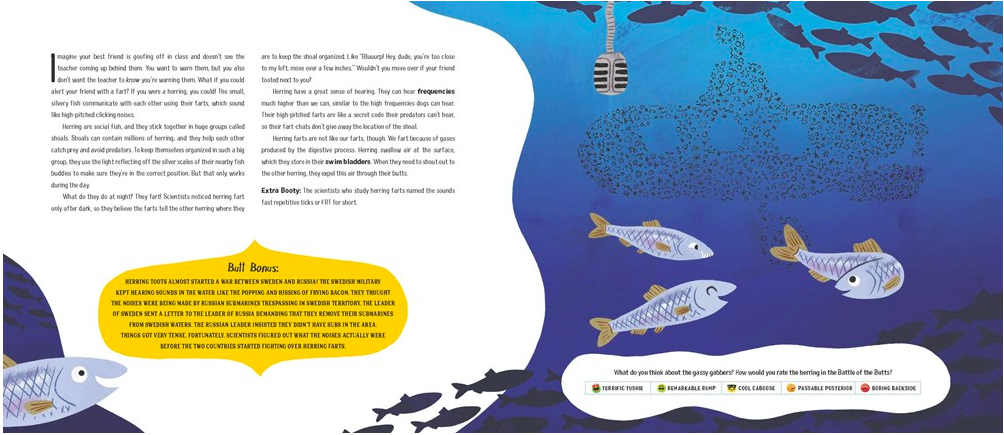
These are just a few of the entrants vying for your verdict. Will any of them win the crown? Or will it be the wombat, with its armored butt; the Fitzroy river turtle, that’s a butt breather; the herring and its unusual communication style; the silver-spotted skipper caterpillar, that puts medieval warriors to shame; the beaded lacewing and its fatal farts; the Sonoran coralsnake that’s a master of confusion; or the sea cucumber, that throws everything it’s got at would-be predators? It’s up to you! Award your favorite with the trophy while rewarding yourself with a full flush of scintillating facts with which to entertain friends and dazzle your teachers!

A Glossary of words found in bold type throughout the book follows the text.

celebrate-picture-books-picture-book-review-the-battle-of-the-butts-herrings

Image copyright David Creighton-Pester, 2021, text copyright Jocelyn Rish, 2021. Courtesy of Running Kids Press.

If you’re looking for a riveting book steeped in nature and environmental science with some chemistry and lots of laughs thrown in for your child, classroom, or other group of kids, you can’t miss with Jocelyn Rish’s Battle of the Butts. Perfect for both younger kids as a read aloud and for independent readers, the book offers opportunities for exciting learning, expanded research, and even experimentation. Rish’s knowledge of her subject and talent for captivating kids jumps off the page with her smooth, alliterative, and hilarious storytelling.

Accompanying each chapter are David Creighton-Pester’s vibrant and dynamic illustrations that accentuate the humor while realistically showing kids how each creature uses their particular skills in their natural environment. Catapulted poop, shooting toots, and funny facial expressions make each page turn a blast. The book’s excellent format also makes it easy to navigate the short chapters and get the most out of all the material presented. At the end of each chapter, kids are invited to rate the creature in this mega-battle of the butts.

A superb way to engage kids in science learning, The Battle of the Butts would be a favorite on any home bookshelf and is a must for school and public library collections.

Ages 4 – 8 and up

Running Press Kids, 2021 | ISBN 978-0762497775

Discover more about Joycelyn Rish and her books on her website.

To learn more about David Creighton-Pester, his books, and his art, visit his website.

 National Reading Month Activity

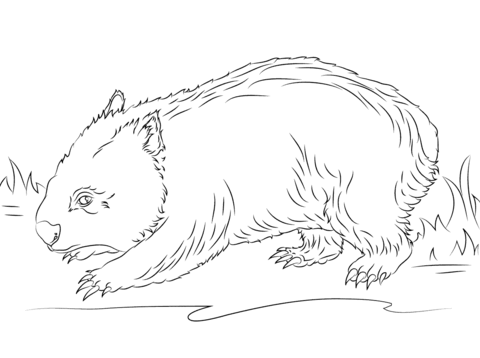
celebrate-picture-books-picture-book-review-wombat-coloring-page

Wildlife Coloring Pages


You can have fun coloring the animals from today’s book while celebrating all three of today’s featured holidays with these printable coloring pages!

Cute Wombat Coloring Page | Parrotfish Coloring Page | Manatee Coloring Page

celebrate-picture-books-picture-book-review-the-battle-of-the-butts-cover

You can find The Battle of the Butts at these booksellers

Amazon | Barnes & Noble | Books-a-Million

To support your local independent bookstore, order from 

Bookshop | IndieBound

Picture Book Review