July 30 – International Day of Friendship

celebrate-picture-books-picture-book-review-our-world-cover

About the Holiday

Established in 2011 by the United Nations General Assembly, the International Day of Friendship asserts the idea that friendship between peoples, countries, cultures, and individuals can inspire peace efforts and build bridges between communities. The UN resolution places particular emphasis on involving young people in community activities that include different cultures and promote respect for individual diversity. On this day UN Secretary General Ban Ki-moon urges everyone, especially young people who will be our future leaders, “to resolve to cherish and cultivate as many warm relationships as possible, enriching our own lives and enhancing the future.” The day is celebrated with special initiatives, events, and activities that promote dialogue, education, understanding, and cooperation. Children are especially receptive to learning about and reaching out to others to achieve common goals. Today’s book can get them started. For more information about the International Day of Friendship and a list of actions we can all take, visit the United Nations website

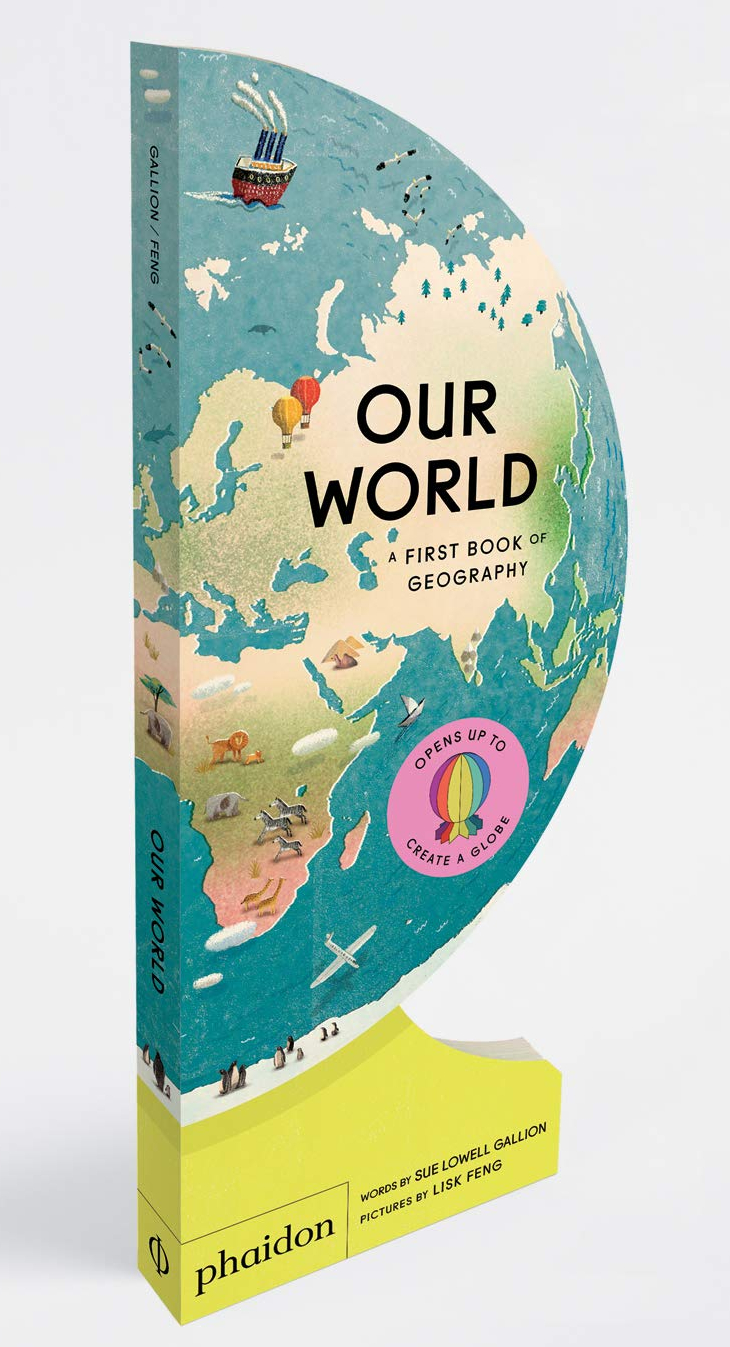
Our World: A First Book of Geography

Written by Sue Lowell Gallion | Illustrated by Lisk Feng


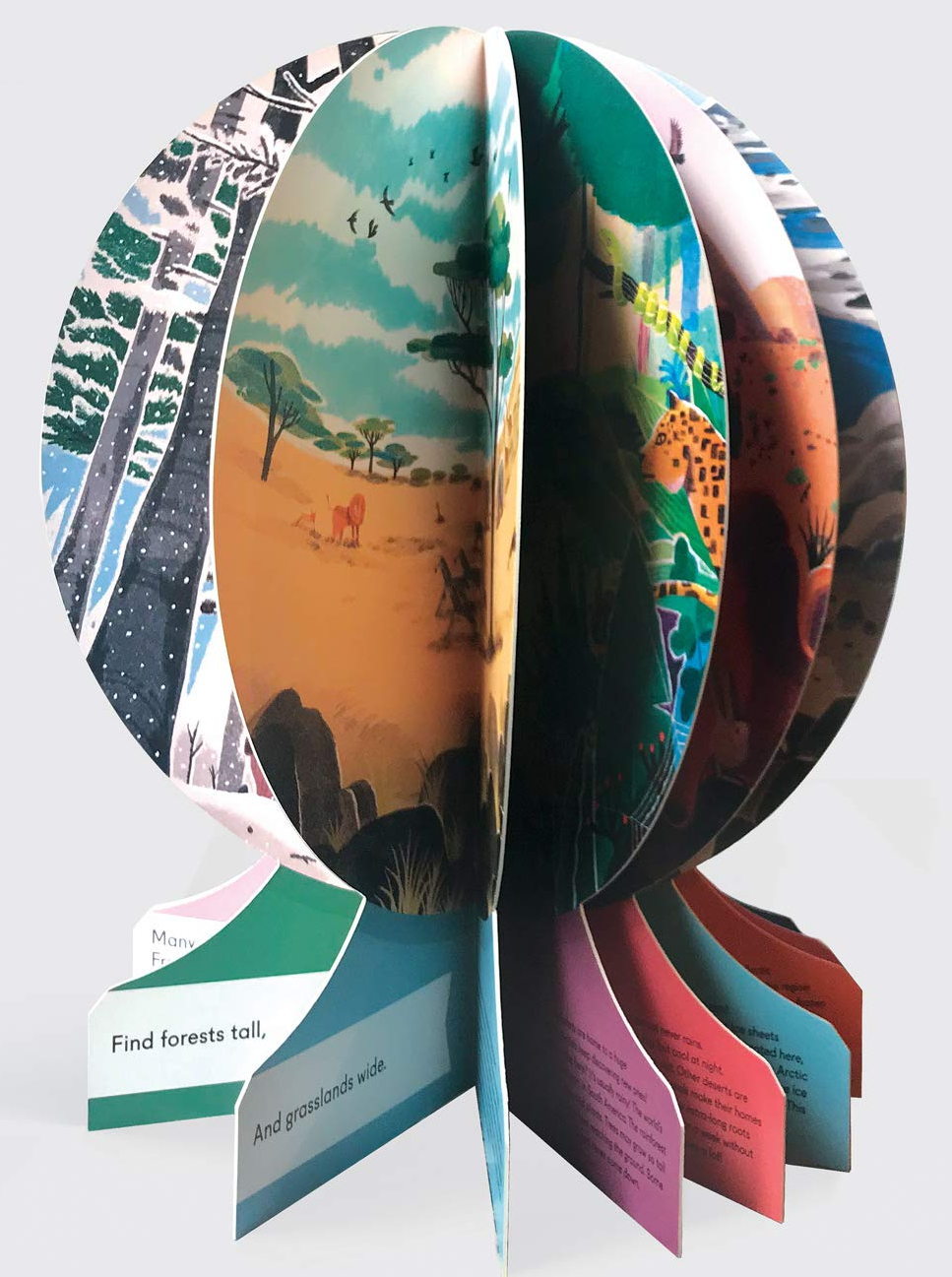
A board book like no other, Our World literally gives kids a well-rounded look at the geography of the countries, oceans, animals, plants, and climate that make up our home planet while engaging them with lyrical verses and information-packed paragraphs. Sue Lowell Gallion invites readers on her journey around the world as the sun, rising over a cool sea where scuba divers swim, brightens the sky with pastel colors: “Many places to explore, / From mountain peaks to ocean floor. / Look around you, step outside… / Find forests tall, / And grasslands wide.”
celebrate-picture-books-picture-book-review-our-world-open

Image copyright Lisk Feng, 2020, text copyright Sue Lowell Gallion, 2020. Courtesy of Phaidon Press.

Over the three spreads that contain this verse, children learn how the weather influences the types of trees that inhabit wooded areas and what types of leaves they have. Next, Gallion contrasts forests with open grasslands and reveals that while trees may be scarce on the plains, a diversity of animals is not. While herbivores easily find plenty to satisfy their hunger in grassy environments, carnivores must hunt, and their prey have adapted to survive: “Many animals, like zebras, are fast runners because there are few places to hide.”

celebrate-picture-books-picture-book-review-our-world-swimming

Image copyright Lisk Feng, 2020, text copyright Sue Lowell Gallion, 2020. Courtesy of Phaidon Press.

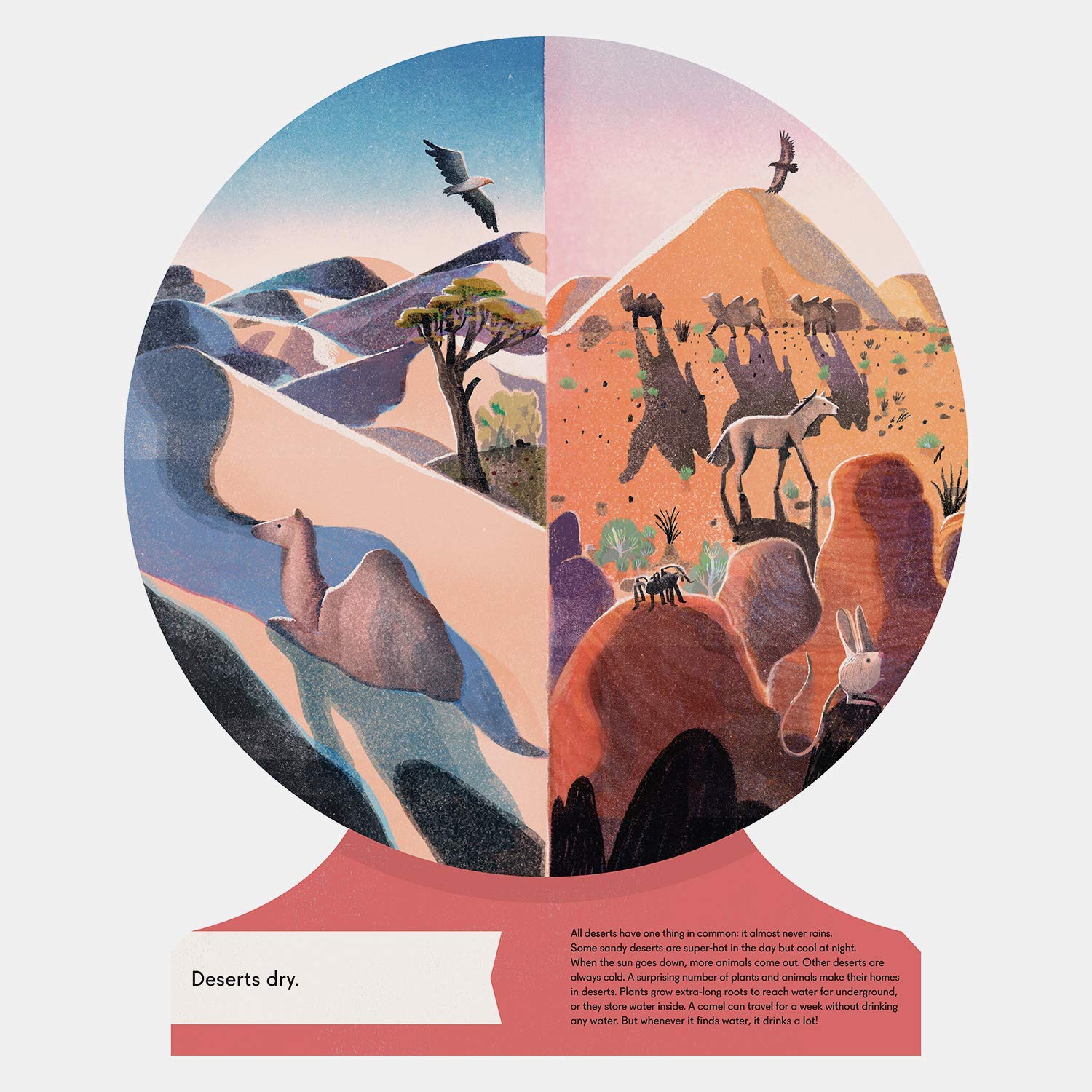
Traveling on to the world’s lush rainforests, Gallion provides little learners with enticing snippets of information about the profusion of plants and animals that live here. What might be the counterpoint to rainforests? If you’d say deserts, you’d be right! While some deserts are hot and others cold, Gallion writes, “all deserts have one thing in common: it almost never rains.” Still, an amazing variety of plants and animals thrive in these formidable conditions. Gallion shares how with her young readers.
celebrate-picture-books-picture-book-review-our-world-deserts

Image copyright Lisk Feng, 2020, text copyright Sue Lowell Gallion, 2020. Courtesy of Phaidon Press.

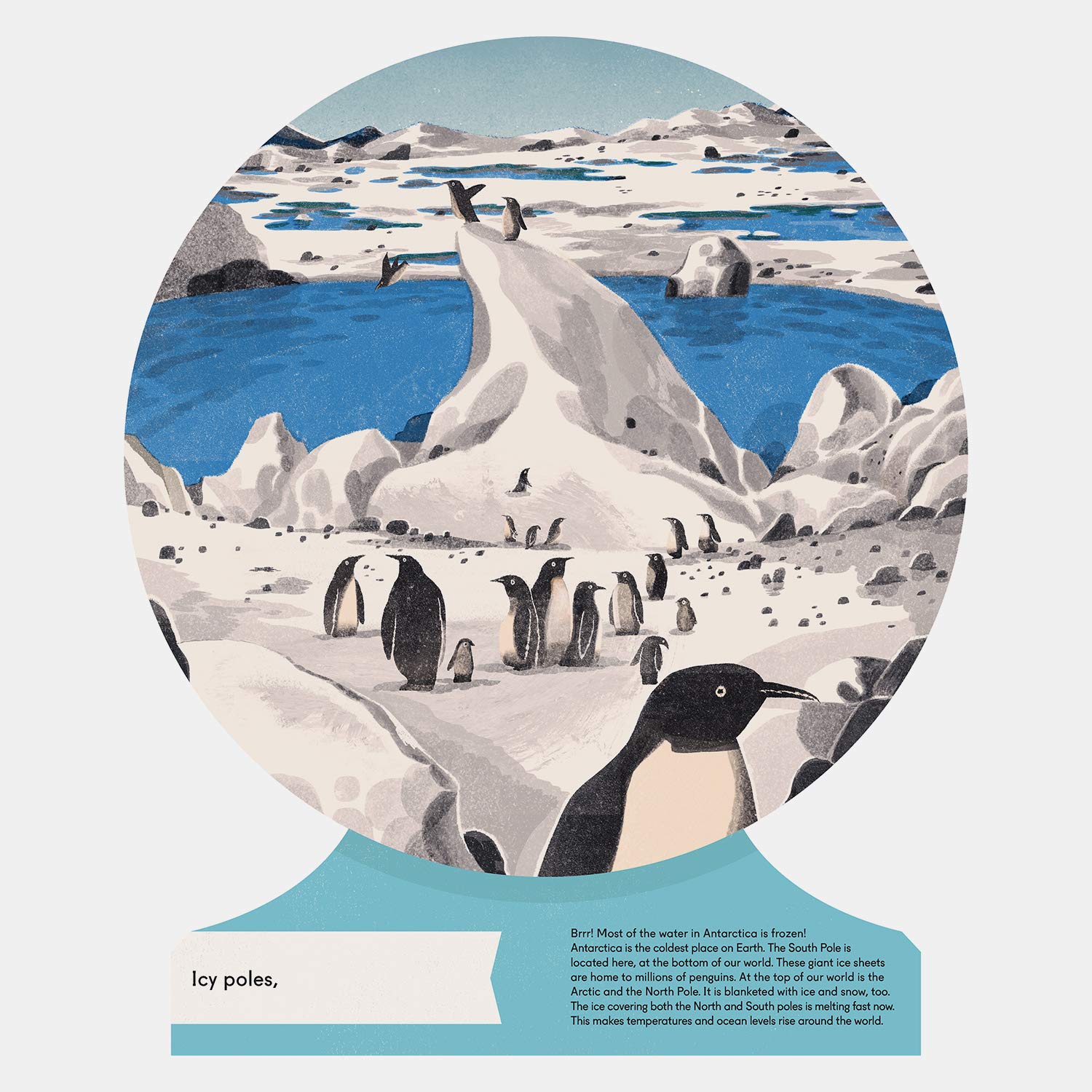
Antarctica and the icy tundra of the Arctic and high mountain peaks are populated with animals specially suited to life in our planet’s coldest regions. But, Gallion reveals, “the ice covering both the North and South poles is melting fast now. This makes temperatures and ocean levels rise around the world.” The book’s journey also spans “rivers, lakes, / Oceans deep. / Valleys, hills, / Mountains steep.” Over these pages, children learn how rivers form and where they flow; they discover what types of creatures live in shallow ocean waters as well as those pockets that are “deeper than the tallest mountains on Earth”; and they learn how the most majestic mountains and their valleys were created. 
celebrate-picture-books-picture-book-review-our-world-antarctica

Image copyright Lisk Feng, 2020, text copyright Sue Lowell Gallion, 2020. Courtesy of Phaidon Press.

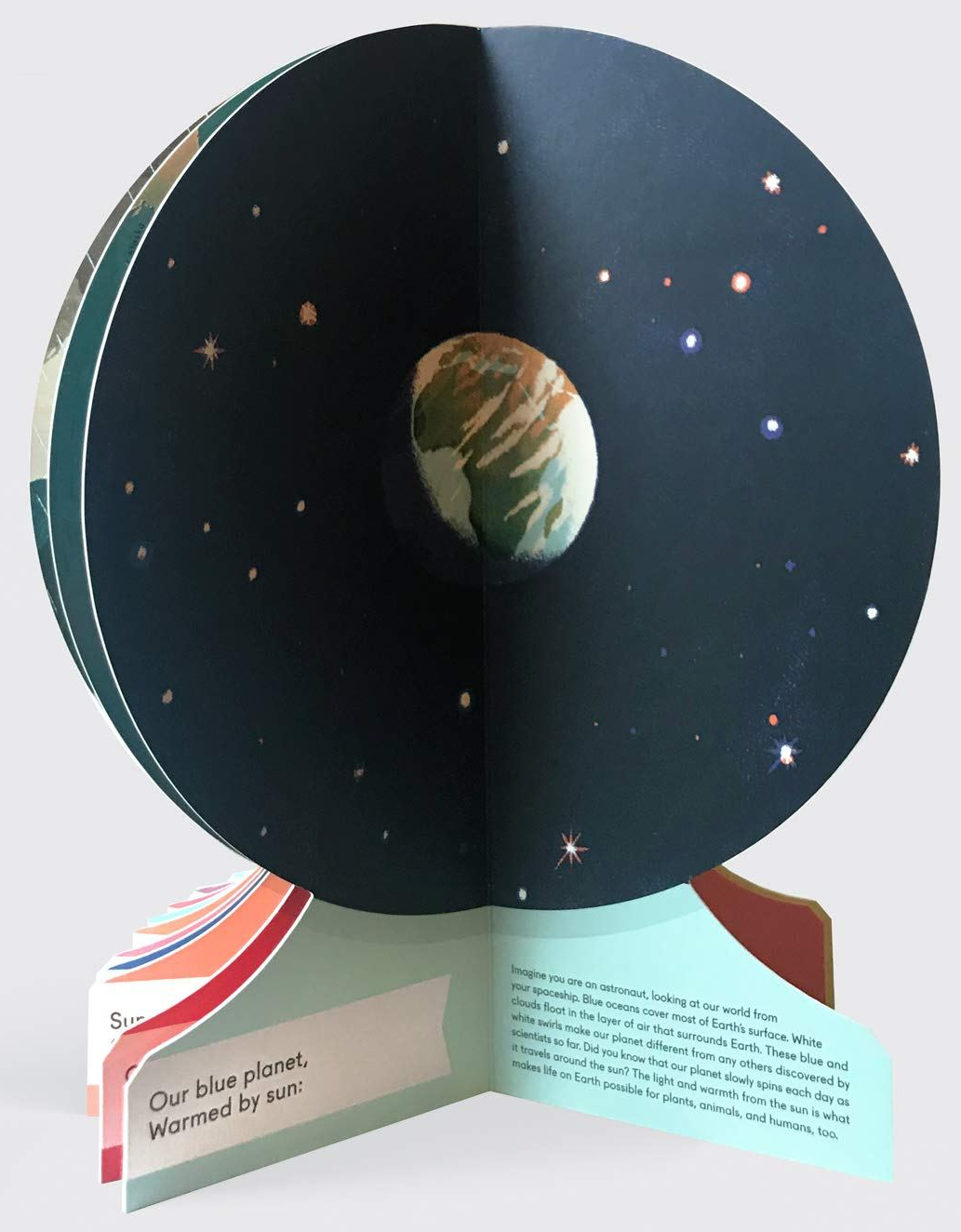
One two-page spread opens to a world map, where the seven continents and major oceans, seas, and gulfs are clearly labeled. Children will love pointing out where they, friends, and family live as well as places they’d like to visit someday. Panning back and back and back again, readers see Earth floating in space as Gallion explains “what makes life on Earth possible for plants, animals, and humans, too.” Then it’s time to zoom in to view a single house under a star-lit sky; a house that will spark in readers an appreciation for the wonder of “our blue planet, / Warmed by sun: / A living home for everyone.”
celebrate-picture-books-picture-book-review-our-world-from-space

Image copyright Lisk Feng, 2020, text copyright Sue Lowell Gallion, 2020. Courtesy of Phaidon Press.

Sue Lowell Gallion’s enchanting poem and informational text, which is sure to inspire kids to learn more about all of Earth’s natural wonders, are set off in a unique design which allows the book to open into a 3D, freestanding globe that will wow kids and adults alike. Magnets embedded in the front and back cover hold the spherical shape while the fanned-out pages create a sturdy base. 

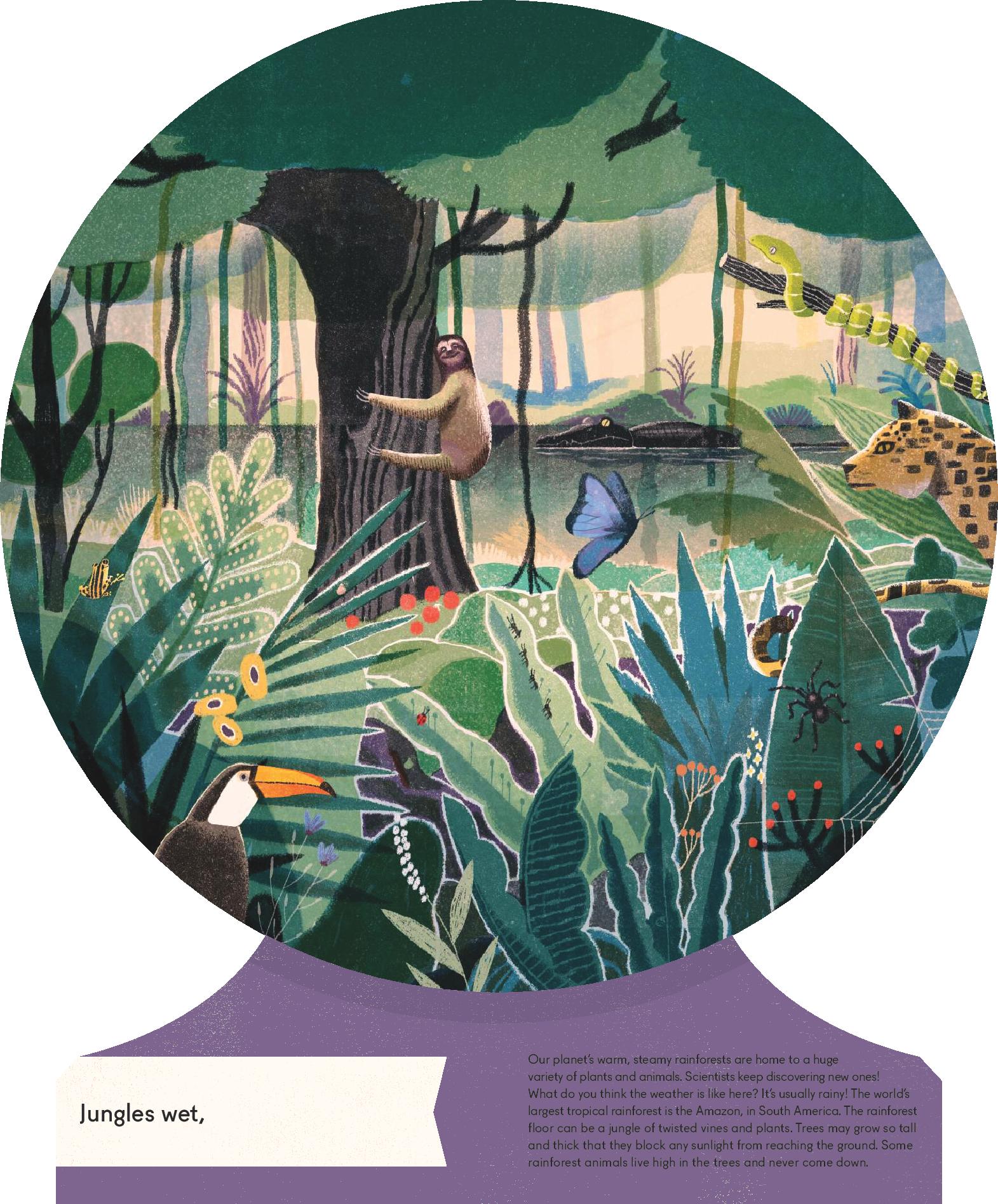
Giving this view of the world its vibrant and distinctive look are Lisk Feng’s spectacular illustrations of dawn-streaked hills, forests frosted white in winter and ablaze with color in autumn, and an array of creatures big and small that make each region exceptional. The image of the rainforest is especially rich, with its multi-hued vegetation that hides a snake, a jaguar, a toucan, a crocodile, and more creatures that kids will love searching for. Transitioning from the world map to a view of Earth from outer space to a single home at the end of the book reminds readers of their singularly important place in the world as individuals and as custodians of its resources.

A gorgeous and perfectly designed book to spark learning and research about the world’s natural features, Our World: A First Book of Geography is a must for children who love travel, nature, science, social studies, and learning about the environment. It would be a valuable asset for every classroom and homeschooler as well as a favorite pick for public library collections.

Ages 2 – 6

Phaidon Press, 2020 | ISBN 978-1838660819

Discover more about Sue Lowell Gallion and her books on her website.

A Chat with Sue Lowell Gallion
celebrate-picture-books-picture-book-review-Sue-Lowell-Gallion-headshot

Sue Lowell Gallion writes for children because she is passionate about children, reading, and any combination of the two! She’s the author of the award-winning Pug Meets Pig and more.

Sue has three books releasing in 2020. Our World, A First Book of Geography, illustrated by Lisk Feng, is a uniquely formatted board book that opens up to form a free standing globe. Her latest picture book is All Except Axle, illustrated by Lisa Manuzak Wiley, is the story of a new car anxious about leaving the assembly plant and learning to drive. Tip and Tucker Paw Painters is the third in her early reader series written with her author pal Ann Ingalls and illustrated by Andre Ceolin. 

Welcome, Sue! As soon as I saw Our World (and, of course, played with it a bit), I knew I had to talk with you about your and Lisk Feng’s eye-popping book. Our World: A First Book of Geography is stunning! Can you take readers on the journey from your original idea for this book to how it became this 3D, free-standing beauty?

I’m a huge fan of the innovative, creative board books on the market now that are such fun for kids and adults to share. Also, I grew up in a family printing company, so I’m intrigued with paper engineering and unique book forms. We did a lot of hand bindery work at home on unusual jobs like pop-up advertising pieces. I was a pro with a tape machine early on.

I went to an SCBWI (Society of Children’s Book Writers and Illustrators) workshop on board books for authors and illustrators in late 2017. During a brainstorming time, I imagined a board book about the Earth in the shape of a globe with its stand. Afterward, I searched the market to see if something like this already existed. It didn’t! Over the next month, I wrote a rhyming text to match that concept.
celebrate-picture-books-picture-book-review-Sue-Gallion-interview-apollo08-earthrise

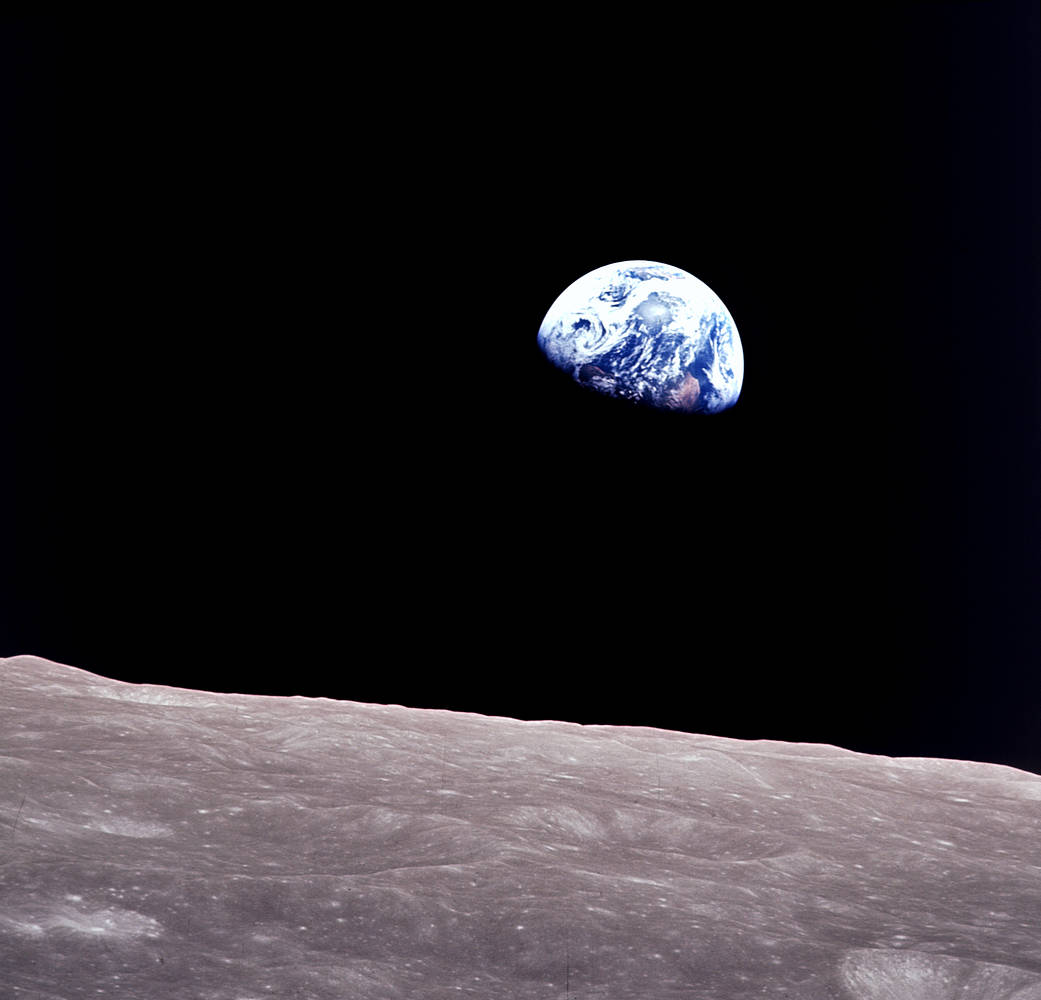
The iconic Earthrise image taken from Apollo 8 in 1968 was part of my initial vision. From space, there are no national borders. I hope this book might inspire people around the world to further value our world, and to act to save and protect our planet and its environment. The melting glaciers, catastrophic weather changes, and other effects of climate change show that immediate action is long overdue.  

When the Phaidon team became interested in the manuscript, we started revising. I can’t tell you how many versions there were over a year and a half! The manuscript went from 56 words to almost 1,000 with the addition of supplementary nonfiction text for older kids. Maya Gartner, the editor, and Meagan Bennett, the art director, are in Phaidon’s London office. The two of them, plus Lisk Feng, the illustrator, were a great team. Many other Phaidon staff were involved in making this idea into a reality, of course. The way the front and back covers connect magnetically to hold the book open is incredible. My 88-year-old printer dad is impressed!

From the cover – which, with its chugging steamer, wheeling seabirds, and diving whale, seems to be in motion – to its lush interior spreads, Lisk Feng’s illustrations are gorgeous representations of each area. What was your first impression of her artwork? How were the final images chosen? Do you have a favorite?

My Phaidon editor told me they had been wanting to do a project with Lisk Feng for some time. I could see why! My first impression of her work was from her website and the middle grade nonfiction book Everest, written by Sangma Francis and illustrated by Lisk (Flying Eye Books, 2018.) It is a fascinating and gorgeous book; do get your hands on a copy! I was thrilled with the opportunity to create a nonfiction book with Lisk.

We worked to make sure each continent and a variety of geographic locations are represented in the illustrations. Each spread representing a biome is based on specific locations that both Lisk and I researched. As the illustrations were in process, I continued to research and revise the text to match the art.

My favorite spread changes all the time. I love the jungle/rainforest spread. The colors and composition are amazing. And I’ve been drawn to the water feature spread, which illustrates rivers, lakes, and oceans, from the very beginning.
celebrate-picture-books-picture-book-review-Sue-Gallion-interview-Our-World-rainforest

Image copyright Lisk Feng, 2020, text copyright Sue Lowell Gallion, 2020. Courtesy of Phaidon Press.

As far as the cover, one of the themes of the book is the connectedness of the world. Early versions of the manuscript included how transportation links the world, and that’s represented on the cover. It’s another conversation point with kids – where would you like to go, and how could you get there? Which oceans would you fly over or sail through?

The text is a combination of lyrical, rhyming verses and explanatory paragraphs that are just right for introducing the youngest readers as well as older kids to geography. How did you choose which details to include? How would you recommend readers, teachers, and homeschoolers use Our World?

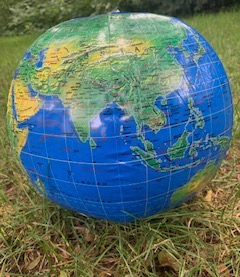
I’d love to direct your readers to the two activity guides for the book. One is for babies through kindergarteners, and another guide has games to use with a globe beach ball. Some work with a real globe, too. Globe beach balls are inexpensive and easy to find online. The games can be as simple as playing catch and noticing whether your hand is holding land or water – and a child is learning how much of our earth is covered with ocean. The guides are free to download from my website, suegallion.com, under Resources. Most libraries have globes, so that’s one more reason to go to the library!
celebrate-picture-books-picture-book-review-inflatable-globe-beachball

The dual narrative makes the book appeal to a range of ages, I hope. The rhyming text is an introduction, and the supplementary text adds more. We tried to make the text interactive, to encourage conversation and further learning. For example, in the spread about water features (lakes, rivers, and oceans) we mention that places in the ocean are as deep as the tallest mountains on land. Perhaps that will inspire a family to talk about Dr. Kathy Sullivan, the first woman to walk in space, who recently dove in a submersible to Challenger Deep, the deepest known point on Earth, located in the Pacific Ocean.

It was important to me to include the fact that ocean water is too salty to drink. An easy experiment to do with kids is to have them mix their own saltwater and see what it tastes like. This can lead to a conversation about how in many places people don’t have enough safe, clean freshwater to drink, and what happens when people have to drink dirty or polluted water.

I hope as kids and adults turn the pages to reveal different places in our world, they can talk about contrasts and similarities. What would it be like to live in this place? What would you feel or hear if you were there? What else would you like to know?

Why do you think it’s important for children to learn geography from the earliest ages?

A child’s understanding of the world around them begins at birth, then grows as sight, dexterity, and mobility develop. I like the definition of geography as learning place and space. Spatial thinking and mapping skills are important to understanding concepts later on in math, the sciences, history, and more.

Experiencing other places, either in person or through books, can expand a young child’s world tremendously. Books can help kids feel a connection with places they haven’t been, and people they’ve never met. And in our nature-deficit culture, books also encourage kids and families to explore the outdoors and expand curiosity.

Which of the areas described in the book most closely resembles where you live? What do you like best about this area? Have you ever traveled to any of the other regions in the book? What surprised you most about it/them?

I live on the eastern edge of the Great Plains in the U.S., a grassland biome. In the book, grasslands are represented by the African savanna. We wanted the illustrations to feature animals whenever possible, because animals are so interesting to kids. The African savanna, with all its marvelous large mammals, was the natural choice.

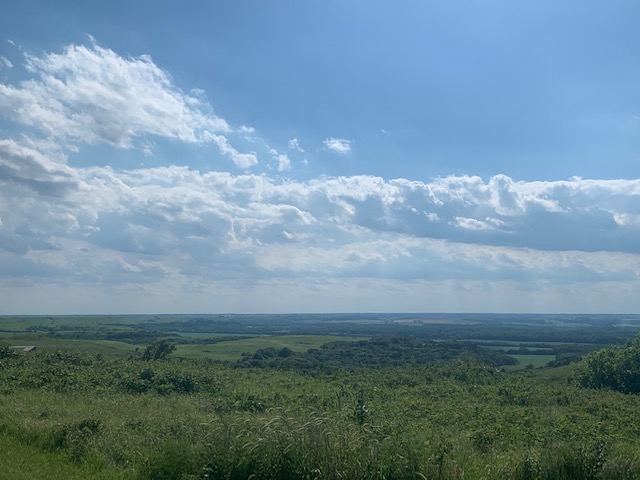
I did want to give a shout out to my region in the book, so you’ll find the cold winters and blizzards that cross the Great Plains of North America included in the secondary text. What do I like best about this region? Well, Kansas City is my hometown. It is a beautiful part of the country, as you see in this image of the Konza tallgrass prairie in eastern Kansas.
celebrate-picture-books-picture-book-review-Sue-Gallion-interview-Konza-Prairie

My family circled back here after living in several other regions of the U.S. I love to travel, and I can’t wait for it to be safe to start planning my next trips. I have four more continents to go: South America, Africa, Australia, and Antarctica. And I haven’t visited a polar biome yet. It’s on my list.

Thanks, Sue, for sharing the fascinating story of Our World! What an amazing resource for parents, teachers, and homeschoolers! And I hope you get to visit all the places on your list! 

You can connect with Sue on

Her website | Facebook | Twitter 

International Day of Friendship Activity
celebrate-picture-books-picture-book-review-our-world-activity-kit-image

Our World Activity Kits


You’ll find lots of activities that get kids – from infants to kindergarteners and beyond – interacting with geography through games, movement, songs, a scavenger hunt, and crafts on Sue Lowell Gallion’s website. Learning about our world has never been so much fun!

Our World Activity Kits

celebrate-picture-books-picture-book-review-our-world-cover

You can find Our World: A First Book of Geography at these booksellers

Amazon | Barnes & Noble | Books-a-Million

To support your local independent bookstore, order from

Bookshop | IndieBound

Picture Book Review
July 28 – It’s Wild about Wildlife Month

celebrate-picture-books-picture-book-review-queenie-quail-can't-keep-up-cover

About the Holiday

We may be winding down Wild about Wildlife Month, but that doesn’t mean we can’t enjoy all that nature has to offer the rest of the summer and all year long. Exploring parks, woodlands, grassy fields, or the shores of lakes, rivers, or the ocean is a fun and educational family activity that is different each time you head out the door. Whether you and your kids like plants, animals, insects, or the rocks that hold everything together, a nature walk provides something for everyone. The best way to enjoy the outdoors is with a relaxed pace that lets you decompress, take it all in, and say “Ahhh!” The little quail in today’s book definitely has the right idea!

Thanks to Pajama Press for sending me a copy of Queenie Quail Can’t Keep Up for review consideration. All opinions on the book are my own. 

Queenie Quail Can’t Keep Up

Written by Jane Whittingham | Illustrated by Emma Pedersen


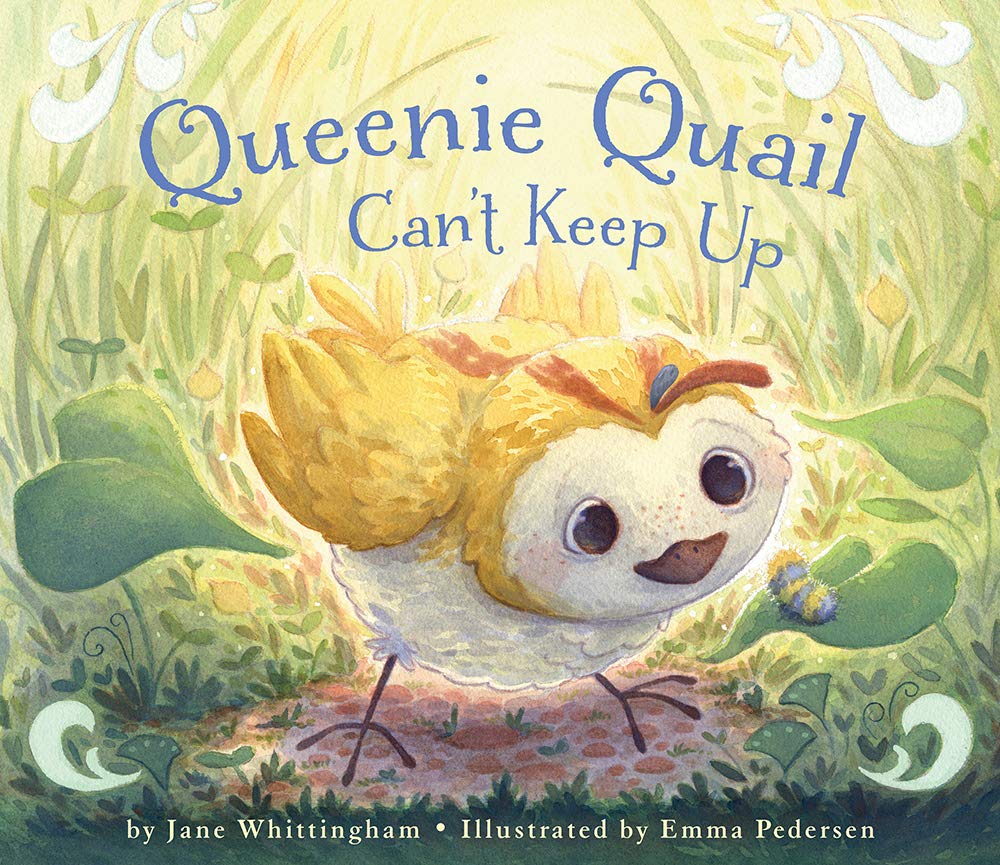
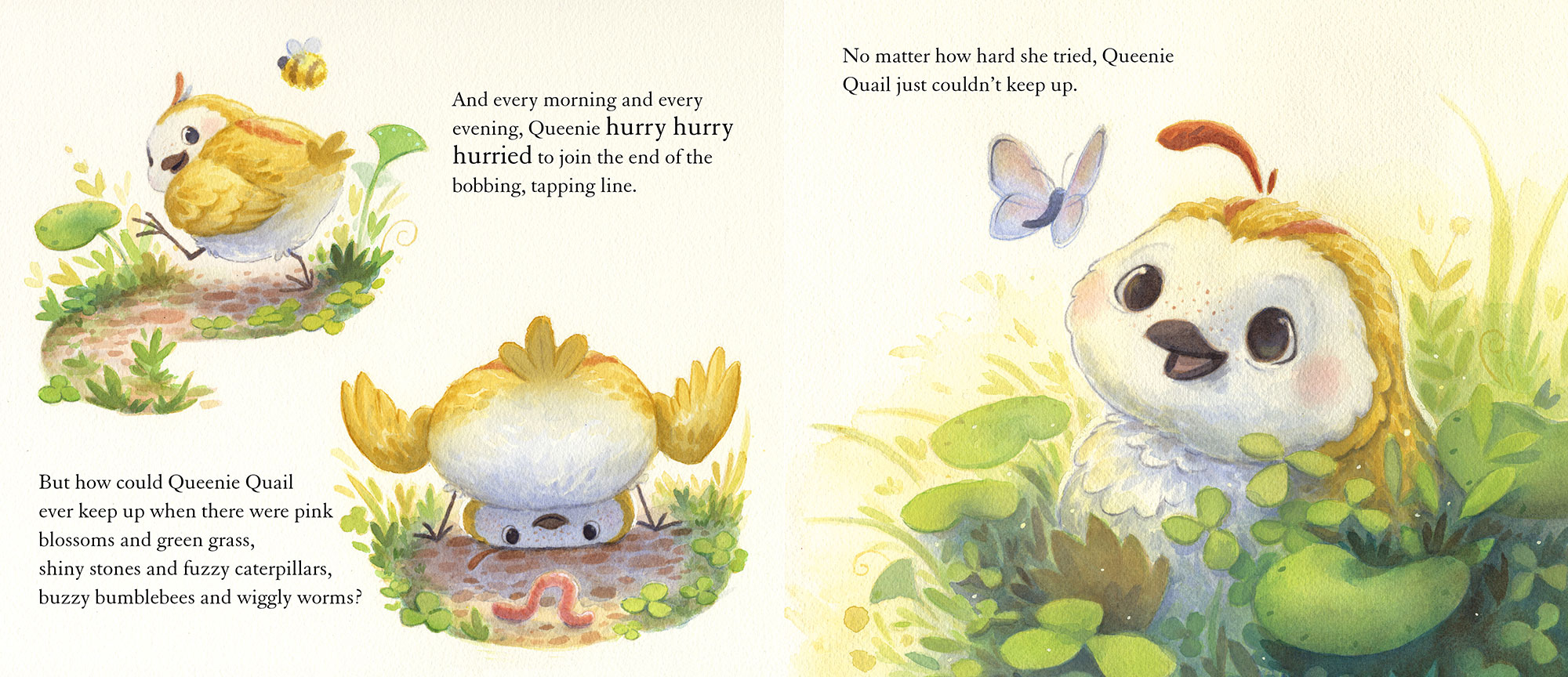
Twice every day Mama Quail led her ten chicks through the meadow, and while nine hurried and scurried along after Mama, Queenie, the smallest, always lagged behind. Mama and the other chicks chirped and cheeped for Queenie to “hurry hurry hurry,” but it was just so hard when there was so much to see. Queenie loved stopping to look at the “pink blossoms and green grass, shiny stones and fuzzy caterpillars, buzzy bumblebees and wiggly worms.”

celebrate-picture-books-picture-book-review-queenie-quail-can't-keep-up-bee

Image copyright Emma Pedersen, 2019, text copyright Jane Whittingham, 2019. Courtesy of Pajama Press.

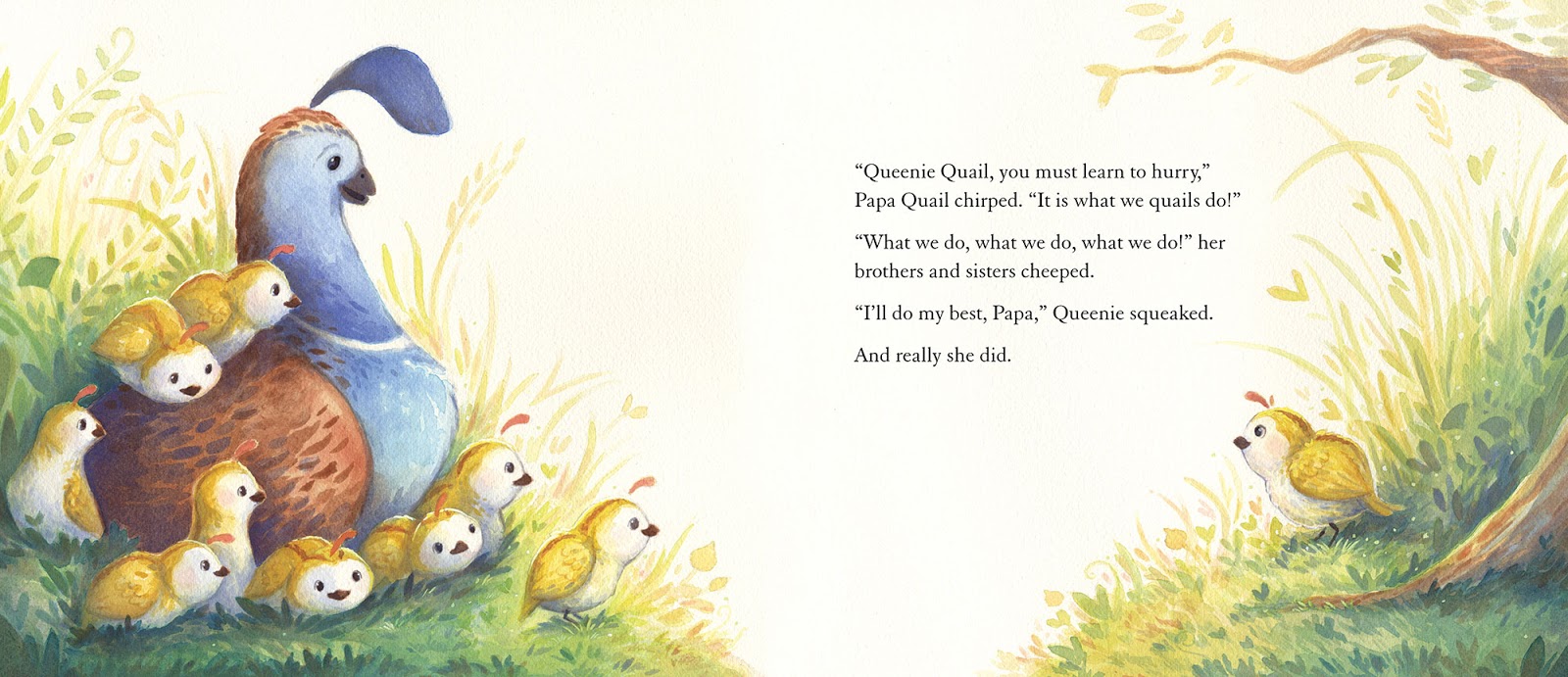
Her papa admonished her to learn to hurry—“It is what we quails do!” he told her. And Queenie promised to try. She really did try too, but she just couldn’t pass by all her favorite things without stopping to enjoy them. One day, in addition to the blossoms, grass, stones, caterpillars, bees, and worms, Queenie spied a feather. And when she stopped to admire it, she saw “an unusual flash of orange.”

As Queenie watched, the “the furry orange slid softly, smoothly, silently through the green grass.” Queenie followed at a careful distance. Suddenly, Queenie saw that she was following a cat—a cat that was stalking her mama and brothers and sisters. Queenie knew just what she had to do. She raced down the path “hurry, hurry, hurrying,” chirping, cheeping, and warning her family.

celebrate-picture-books-picture-book-review-queenie-quail-can't-keep-up-hurry

Image copyright Emma Pedersen, 2019, text copyright Jane Whittingham, 2019. Courtesy of Pajama Press.

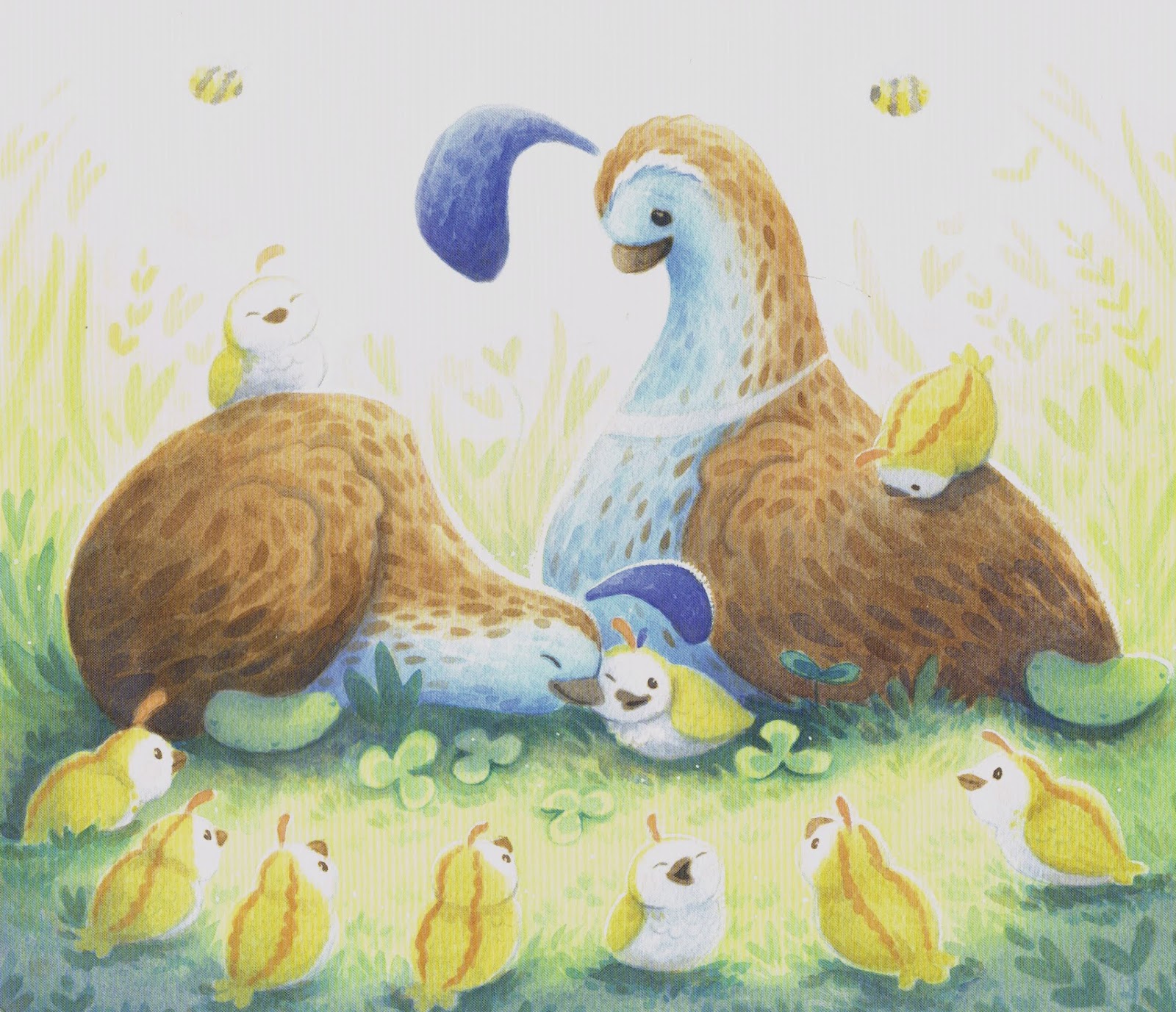
In the nick of time, Papa heard her and swooped down on the cat. Mama came running too. With a hiss, the cat jumped into the grass and fled. “‘You’ve saved us, Queenie Quail!’ Mama Quail chirped.” And Papa and her little siblings praised her too. Now, when the family heads out along the meadow trail and Queenie can’t keep up, they all ask, “‘What have you found, what have you found, what have you found?’” And they stop and hurry hurry hurry over to take a look too.

celebrate-picture-books-picture-book-review-queenie-quail-can't-keep-up-nuzzling

Image copyright Emma Pedersen, 2019, text copyright Jane Whittingham, 2019. Courtesy of Pajama Press.

Jane Whittingham’s story of an adorable quail who stops to smell all the roses is a charming, charming, charming read-aloud that adults will love sharing and kids will enthusiastically chime in on during the fun repeated phrases. Whittingham’s agile storytelling shines with lyrical rhythms and alliteration that bounce along like the little stars of her book. The gentle suspense will keep young listeners riveted to the story, and afterward they’re sure to join Queenie and her brothers and sisters in slowing down to enjoy the world around them.

Readers will immediately fall in love with Queenie and her siblings as Emma Pedersen’s cute-as-can-be, tufted quail babies race and bob along the trail to keep up with Mama. With expressive eyes and tiny beaks that form a perpetual smile, they nestle next to Mama and pile on top of Papa. As they watch out for Queenie, one or two often peer out at readers, inviting them along on their excursions. As the heroine of the story, Queenie is a sweetie, fascinated by everything she sees. Pedersen’s lovely gauche paintings are as fresh as a spring meadow and will entice kids and adults to take a nice slow walk together.

A unique and tender story that will have children entranced from the first page, Queenie Quail Can’t Keep Up will be a favorite on home, school, and public library shelves.

Ages 3 – 7

Pajama Press, 2019 | ISBN 978-1772780673

You’ll discover more about Jane Whittingham and her books as well as blog posts, interviews, and lots more on her website.

To learn more about Emma Pedersen, her books, and her art, visit her website.

Meet Jane Whittingham

celebrate-picture-books-picture-book-review-Jane-Whittingham-Interview-headshot

Today, I’m excited to be talking with Jane Whittingham an author and librarian from British Columbia, Canada, about the inspiration for her adorable quails, what she loves about being a librarian, and how nature features in her life and books.

I believe Queenie Quail Can’t Keep Up was inspired by your dad and a true story. Can you talk about that a little?

My parents moved to a small town on Vancouver Island when they retired, and their backyard is home to all sorts of wildlife, including families of quails that hurry and scurry here and there. My dad  always liked watching them, and he mentioned to me once that quails would make perfect picture book stars with their round little bodies and their amusing personalities and antics. Well, I was inspired! I’d never really thought much about quails, since we don’t have them where I live, so every time I visited my parents I would spend a bit of time watching the quails for inspiration.

Queenie, the little quail who is just too easily distracted to keep up with her siblings, is definitely inspired by me, and the fact that I’m always falling behind because I have to stop and look at everything! The book is a bit bittersweet to me because my father passed away before it was published, but I know he would’ve gotten a real kick out of it, and he would have probably introduced himself to everyone as my muse!  

Have you always liked to write? Can you talk a little about your process? Do you have a favorite place to write?

I’ve always been a writer, and even before I could physically write I was a storyteller. I was an only child and spent a lot of time using my toys to tell epic stories, which I would then recount breathlessly to my parents in an endless stream of words.

I don’t really have a process – like many people I fit writing around my full-time job (I’m a librarian) and into my busy life, so I snatch moments here and there whenever I can. I write on my phone, I write on scraps of paper, I write on my computer. I write on my commute, at coffee shops, and in grocery store lineups. You never know when inspiration will strike!

Besides Queenie Quail Can’t Keep Up,  you have two more very well-received books out from Pajama Press—Wild One and A Good Day for Ducks. The outdoors features in all of your books in some way. Are you inspired by the outdoors? What is your favorite outside activity or a memorable experience you’ve had?

I am absolutely inspired by the outdoors – even though my childhood wasn’t that long ago in the grand scheme of things, I do feel like I had a very different childhood than many kids experience today. I spent a lot of my free time outdoors, wandering or biking around the neighborhood with a band of kids, making (and falling out of) tree forts, playing kickball on the street, and turning local playgrounds into the settings for all sorts of imaginary worlds. My parents often had no idea where I was, but that was totally normal for the time—I never left the neighborhood, and they knew I would come home when it started to get dark.

Sometimes it feels like I grew up in a whole other era! Through my books I really want to encourage families to get outside, to explore, to learn through doing and through experiencing. Nature is such an incredible source of inspiration, of knowledge, of enjoyment, and even of healing, and we really miss out on so much by cooping ourselves up in front of our screens all day long!

In doing a little research for this interview, I raided your wonderful website and discovered that you made a few resolutions this year. One is to read outside your comfort zone, which includes murder mysteries, historical fiction, and narrative nonfiction. How is that going? Can you give me one mystery title in your comfort zone and one “departure” book you’ve dipped your toes (eyes?) into?

Oh dearie me, you’re holding me accountable! I recently finished a YA novel, which is very, very unusual for me—I never read young adult fiction even when I was a young adult, so this was a major departure for me! It’s called The Love and Lies of Rukhsana Ali, and tells the story of a young Muslim lesbian whose family discovers her secret girlfriend and sends her off to Bangladesh to straighten her out, as it were. It’s definitely an eye-opening look into a culture and experience very different from my own, and I really enjoyed it.

As for my taste in mysteries, I tend to favour the classic British who-dunnit style, with authors like Dorothy L. Sayers and Ngaio Marsh being particular favorites. I also really enjoy mysteries with historical settings, which allow me to check off two favorite genres at once!

Queenie is an adorable little quail! What was your reaction to seeing Emma Pedersen’s illustrations for the first time? In your blog post “Queenie Quail and the Road to Publication,” you talk about needing to cut your original manuscript. Can you describe one place where the illustration reflects the text that is no longer there? Can you describe a place where Emma included something that surprised or particularly delighted you?

I was absolutely floored when I first saw Emma’s illustrations, they’re beyond wonderful, and even more adorable than I ever could have imagined! It’s a funny thing, being a picture book author, because you craft these characters and this environment, and then you hand the whole thing over to a stranger to make real—it can be a bit nerve-wracking, not knowing what your little characters will end up looking like! I was immensely relieved when I saw Queenie and her siblings, and I think Emma’s classic artistic style perfectly complements my old-fashioned writing style.

One of the aspects of the text that was really shortened related to all the things that distracted Queenie on her daily walks with her family. I described the worms and the bees and the flowers in great detail, which turned out to be entirely unnecessary, since everything appeared so beautifully in Emma’s illustrations!

And as for an illustration that particularly delighted me, there’s a spread where Mama and Papa quail nuzzle Queenie as they thank her for saving the day, and the loving expressions on everyone’s faces really just melted my heart, I loved them so much!

What drew you to becoming a librarian? What is a favorite part of your day?

I am a children’s librarian for an urban library system here in British Columbia, Canada, and I’m responsible for developing and facilitating programming for children and families in an older residential neighborhood. I get to do a lot of fun things in my job—I lead story times for caregivers and their babies, facilitate writing and book clubs for tweens, and get to host and visit local preschools, daycares and elementary schools. I think my favourite part of the entire year is Summer Reading Club, which runs from June – August every year. We spend the entire year planning all sorts of exciting programs to get kids reading all summer long, and it’s so much fun! Sometimes I can’t quite believe I get to do this as my job. I also manage the physical collections in the library, organizing and weeding the books to make sure the collection is in tip- top shape and helps meet the reading needs of my community.

I was raised in a family of voracious readers and I love working with people, so librarianship always seemed like a natural fit, but it took me quite a while to get here. I worked in various jobs for about six years following my initial graduation from university, before finally feeling confident enough to take the plunge and go back to school to do my masters in librarianship. It was a real leap of faith, quitting a well-paying, stable but unfulfilling job to take a chance on a career that everyone around me said was dying out, but it’s certainly paid out for me, so far at least! I can’t stress enough that simply loving books is not enough of a reason to become a librarian, especially not a public librarian – you really do need to love working with people more than anything, because it’s definitely not for the faint of heart sometimes!

On your website you have a gallery of pictures from libraries you’ve visited. How many libraries have you been to? Which library is the farthest from home? Which was your favorite and why?

I love visiting libraries at home and abroad, I find so much inspiration from looking at how other libraries organize their collections, decorate their spaces, and plan their events. I’m not even sure at this point how many libraries I’ve visited. I need to update my website to include the ones I visited on my most recent trip to Nova Scotia, Prince Edward Island, and New Brunswick!

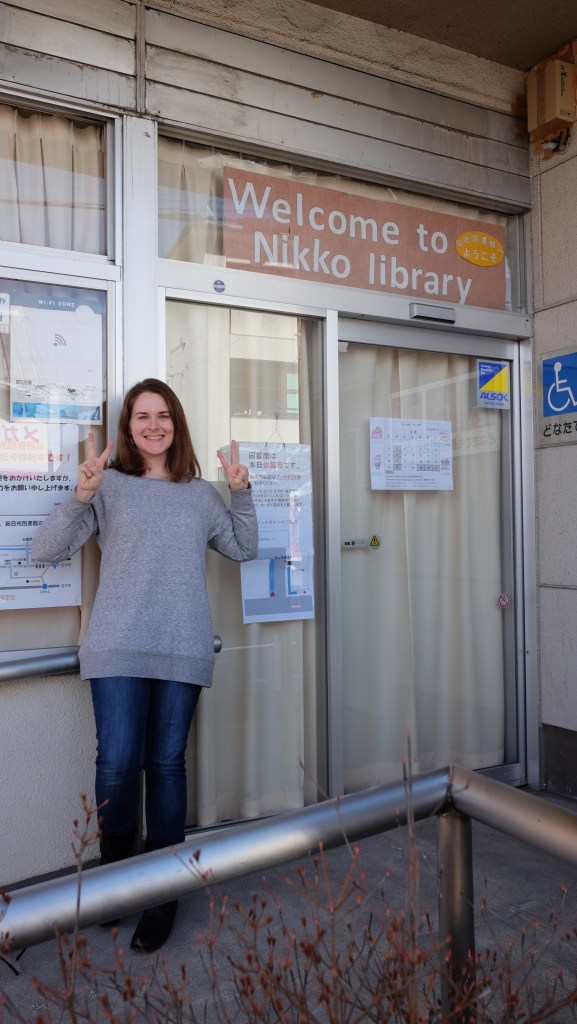
celebrate-picture-books-picture-book-review-Library-in-Nikko-Japan-Jane-Whittingham-Interview

Jane visits one of her favorite libraries – the Nikko Library – in Japan

celebrate-picture-books-picture-book-review-Bridge-in-Nikko-Japan-Jane-Whittingham-Interview

A view of a bridge and beyond in Nikko, Japan

Some of the furthest libraries I’ve visited have been in New Zealand and Japan (which I’ve visited on three separate occasions so far), though I’ve visited libraries in different US states and Canadian provinces, too. I don’t know that I have a single favorite library, but I do particularly enjoy visiting rural libraries – they can be so creative with their often-limited resources, and really do serve as the hearts and souls of their communities. 

What’s the best part about being a children’s author? Can you share an anecdote from an author’s event you’ve held or been part of?

I love everything about writing for kids! I really am a big kid at heart, which is why I’m a children’s librarian, too! I’ve had wonderful experiences reading my books to kids at different author events, and it’s so much fun to get everyone involved.

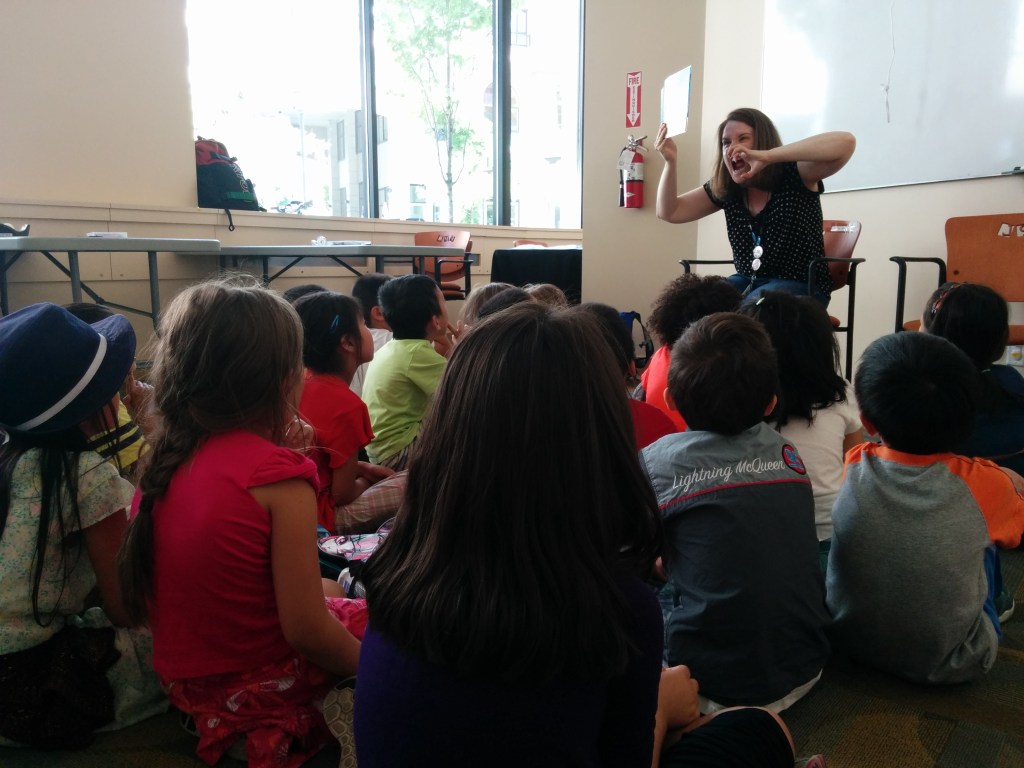
celebrate-picture-books-picture-book-review-author-visit-Japan-Jane-Whittingham-Interview

Jane and kids act out animals during an exciting author visit.

With Wild One I like to get kids to guess which animal they think the protagonist is pretending to be, and then we act out the animals together, which is heaps of fun, and with A Good Day for Ducks we act out all sorts of fun raining day actions, then talk together about all the things you can do, inside and outside, on a rainy day. I live in a very rainy place, so it’s important to find the joy in even the gloomiest of days! One of the most meaningful events I’ve done was a visit to a local children’s hospice, where I was able to connect with a small group of really amazing children who have been through so much in their short lives. To be able to share my stories with them, and listen to their stories, was an incredibly inspiring and moving experience.

What’s up next for you?

I’m not quite sure! I’ve got a couple of manuscripts that I’m still working on, and some that I’m waiting to hear back about from editors, so I don’t really know yet what’s coming down the pipeline. But I’ll always keep on telling stories, no matter what. 🙂

What is your favorite holiday and why?

My favourite holiday is definitely Christmas. I love Christmas. I love the music, the baking, the food, the decorating, the music, the family get-togethers, I love it all! I don’t actually do any of the decorating or baking or cooking myself, I mostly just listen to Christmas carols for a month straight and watch hours of Christmas movies on TV, but I love it all the same!

Thanks, so much, Jane! I’ve thoroughly enjoyed getting to know more about you and am sure readers have too! I wish you all the best with Queenie Quail Can’t Keep Up and all of your books!

You can connect with Jane Whittingham on:

Her website | Instagram

Wild about Wildlife Month Activity

celebrate-picture-books-picture-book-review-wonderful-wildlife-board-game

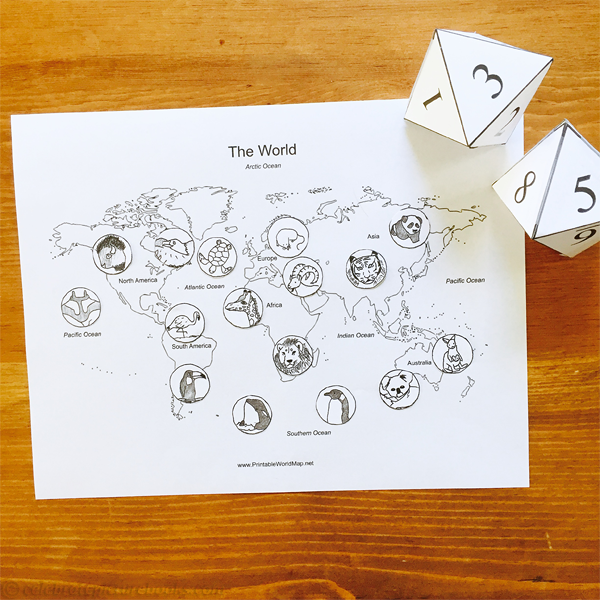
Fascinating animals are found in every part of the world. Play this fun printable Wonderful Wildlife Board Game to match each animal to the area where it lives.

Supplies

Directions

  1. Print a World Map for each player
  2. Print one set of 16 Wildlife Tokens for each player
  3. Print two copies of the 8-sided die, fold, and tape together
  4. If you would like, color the map and tokens
  5. Choose a player to go first
  6. Each player rolls both dice and places an animal on their map according to these corresponding sums of the dice below
  7. The first player to fill their map is the winner!
  • 1 = Flamingo – South America
  • 2 = Emperor Penguin – Antarctica (Southern Ocean)
  • 3 = Giraffe – Africa
  • 4 = Bald Eagle – North America
  • 5 = Ibex – Europe
  • 6 = Kangaroo – Australia
  • 7 = Panda – Asia
  • 8 = Orca – Antarctica (Southern Ocean)
  • 9 = Toucan – South America
  • 10 = Buffalo – North America
  • 11 = Koala – Australia
  • 12 = Lion – Africa
  • 13 = Etruscan Shrew – Europe
  • 14 = Manta Ray – Pacific Ocean
  • 15 = Sea Turtle – Atlantic Ocean
  • 16 = Tiger – Asia

celebrate-picture-books-picture-book-review-queenie-quail-can't-keep-up-cover

You can find Queenie Quail Can’t Keep Up at these booksellers

Amazon | Barnes & Noble | Books-a-Million

To support your local independent bookstore, order from

Bookshop | IndieBound

Picture Book Review
July 16 – World Snake Day

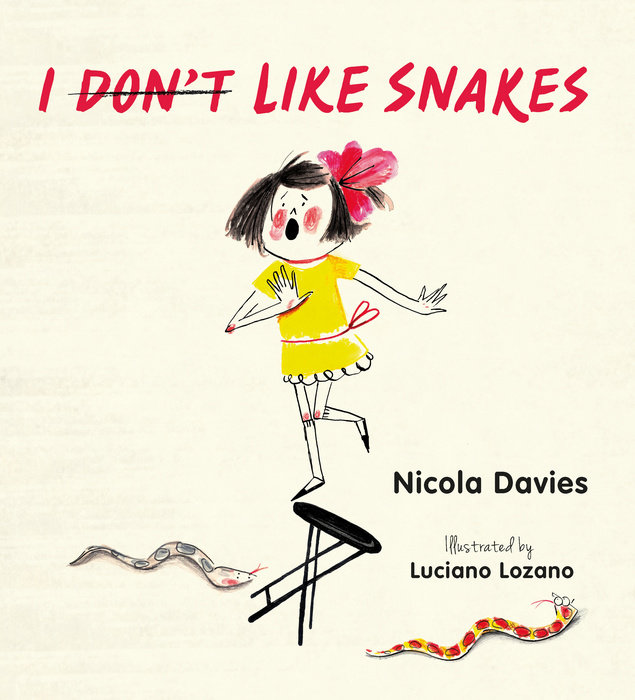
celebrate-picture-books-picture-book-review-i-don't-like-snakes-cover

About the Holiday

Snakes are beautiful and fascinating creatures, but they often get a bad rap due to their mysterious nature and their portrayals in literature and throughout history. Today’s holiday promotes awareness of dangers to the snake population through habitat destruction, climate change, disease, and other threats. The wide variety of snakes provide many benefits to their natural environments and deserve protection.

I Don’t Like Snakes

Written by Nicola Davies | Illustrated by Luciano Lozano


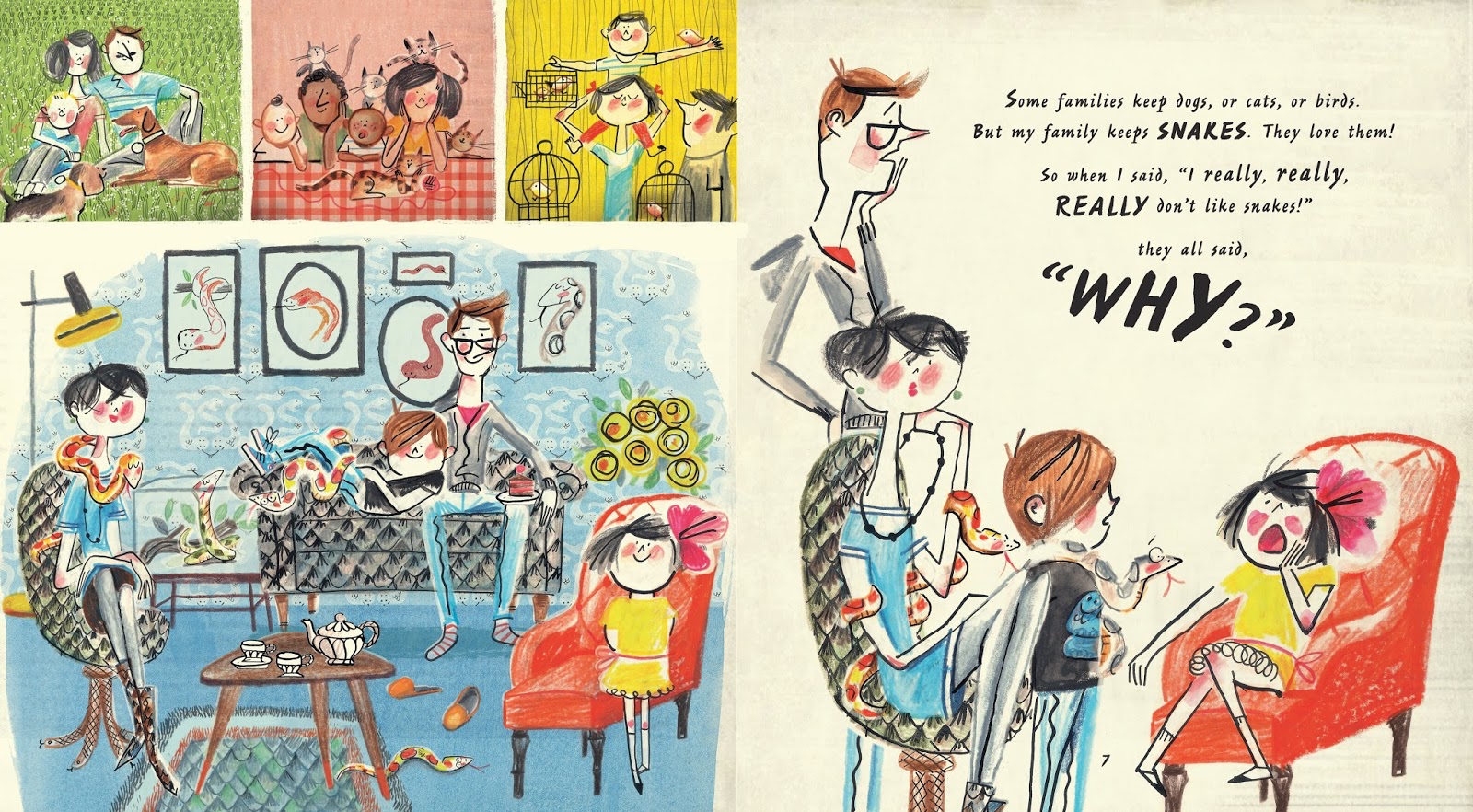
Can you imagine a family who has nothing but snakes for pets? Well, that’s the way it is for the little girl in I Don’t Like Snakes. Sitting in her red chair surrounded by her mother, father, brother and four snakes, she finally pipes up and tells her family that she “‘really, really, REALLY doesn’t like snakes!’” And they ask, “‘Why?’”

“‘Because they slither,’” she answers. Her mom has a ready answer that leads into a scientific discussion of why and how different kinds of snakes move. The mechanics of concertina and serpentine slithering as well as caterpillar crawling are clearly described in both easy-to-understand text and accompanying illustrations. Her father adds more transportation methods, including side-winding, twining, climbing, swimming, and even flying.

celebrate-picture-books-picture-book-review-i-don't-like-snakes-interior-art-why

Image copyright Luciano Lozano, 2016, text copyright, 2016. Courtesy of walker.co.uk.

The little girl has to admit these sound pretty smart. “‘But what about their slimy, scaly skin?’” She asks. After all it’s so icky! Well, her mom reveals, snakes aren’t actually slimy, but dry. Following this readers learn why snakes look wet and how they shed their skin. Her dad goes on to explain that a snake’s scales are used for protection and as camouflage or as a warning to other creatures. Ok, the little girl agrees, “‘That’s pretty cool.’”

Still, the girl doesn’t like their flicking tongues. Her mom reassures her that snakes only use their tongues to smell with. Readers then see how a snake picks up the scent of a mouse or other prey and how it is transferred to the Jacobsen’s organ that helps it detect even faint odor trails. “‘That IS interesting,’” the girl tells her mom. “‘But I STILL don’t like the way they stare! It’s creepy.’”

celebrate-picture-books-picture-book-review-i-don't-like-snakes-interior-art-eyes

Image copyright Luciano Lozano, 2016, text copyright, 2016. Courtesy of walker.co.uk.

Dad has the answer to that one. They stare because they have no other choice. Without eyelids, it’s impossible for them to blink. But if you look closely at a snake’s eyes, you can tell if they are a night or day hunter or whether they are chasers or ambushers.

All this information is starting to change the little girl’s mind about snakes. “‘Maybe now that I know something about them, I do like snakes—just a little bit!’” she tells her brother. And just like brothers everywhere, he ups the ante by revealing how snakes kill. He revels in explaining about how some snakes have hollow fangs that inject poison into their victims and how others strangle their prey until there’s no life left. And without proper teeth, snakes have to swallow their dinner whole!

The boy’s sister is braver than he thinks, and now she wants to get in the game. She says that she has discovered something about snakes herself. She knows how snakes have babies. Some give birth to live babies but most lay leathery eggs. Either way, the babies are on their own soon after hatching. The little girl has had a complete change of heart. She now thinks snakes are beautiful. “‘And do you know what?’” she says. “‘I really, really, REEEEEALLLLY LIKE THEM!’”

celebrate-picture-books-picture-book-review-i-don't-like-snakes-interior-art-skin

Image copyright Luciano Lozano, 2016, text copyright 2016. Courtesy of walker.co.uk.

Whether you like snakes, don’t like snakes, or are somewhere in between, Nicola Davies’ engaging tribute to this interesting and often misunderstood species will delight. Cleverly written to include commonly held opinions and provide compelling facts, I Don’t Like Snakes is part story, part nature encyclopedia seamlessly woven together to create a fascinating and funny read. Kids and adults will respond to the conversational tone, and, like the little girl in the story, be open to a change in attitude toward this intriguing reptile.

Luciano Luzano bridges the world of the fictional story and the nonfiction facts in I Don’t Like Snakes with charming sketches of the family and realistic depictions of the snakes they discuss. The little girl with her oversized hair bow and astonished expressions is a disarming guide to discovery. The family’s reptilian obsession is everywhere, from the snakes that twine around the mother, father, and brother’s arms and shoulders to the snakeskin upholstery. The factual information about snakes is accompanied by accurate drawings and representations of the traits portrayed.

I Don’t Like Snakes is a wonderful book for those who already love snakes as well as for those who want to learn more! It’s a great addition to anyone’s nonfiction collection.

Ages 5 – 10

Candlewick Press, 2015| ISBN 978-0763678319 (Hardcover) | ISBN 978-1536203233 (Paperback, 2018)

Learn more about Nicola Davies and her books on her website!

To view more art and books by Luciano Luzano visit his website!

World Snake Day Activity

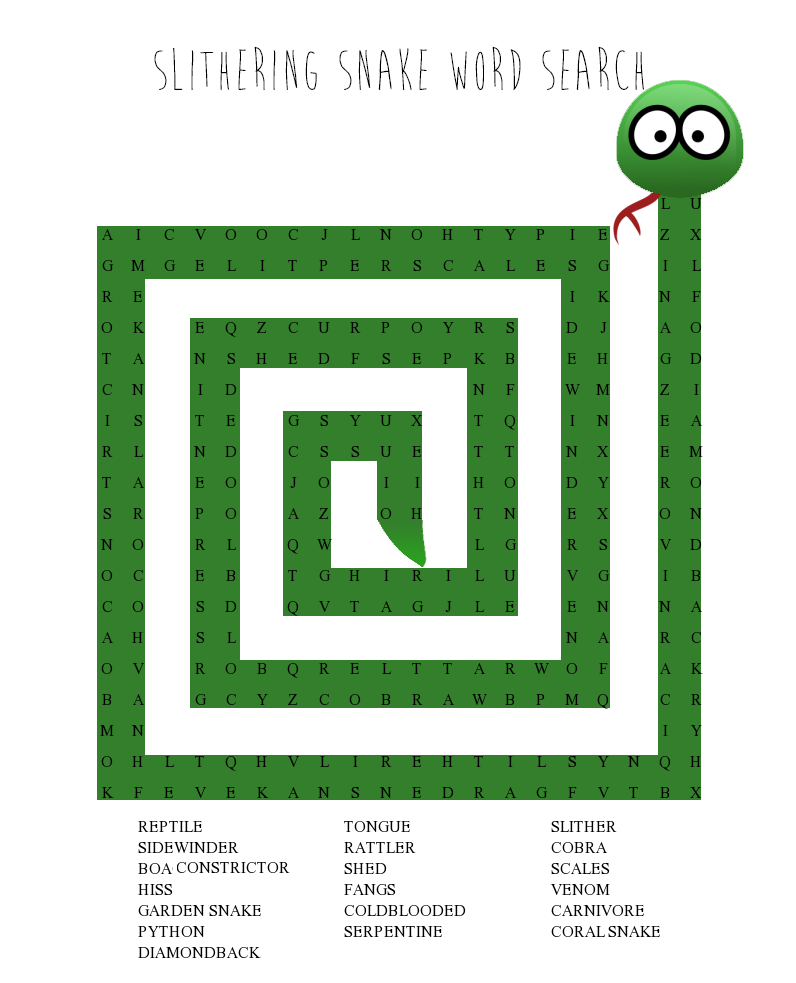
celebrate-picture-books-picture-book-review-snake-word-search

Slithering Snake Word Search


Snakes wind their way along wherever they want to go. Follow the twists and turns in this printable Slithering Snake Word Search to find the reptile-inspired words!

celebrate-picture-books-picture-book-review-i-don't-like-snakes-cover

You can find I Don’t Like Snakes at these booksellers

Amazon | Barnes & Noble | Books-a-Million

To support your local independent bookstore, order from

Bookshop | IndieBound 

Picture Book Review
July 5 – Build a Scarecrow Day

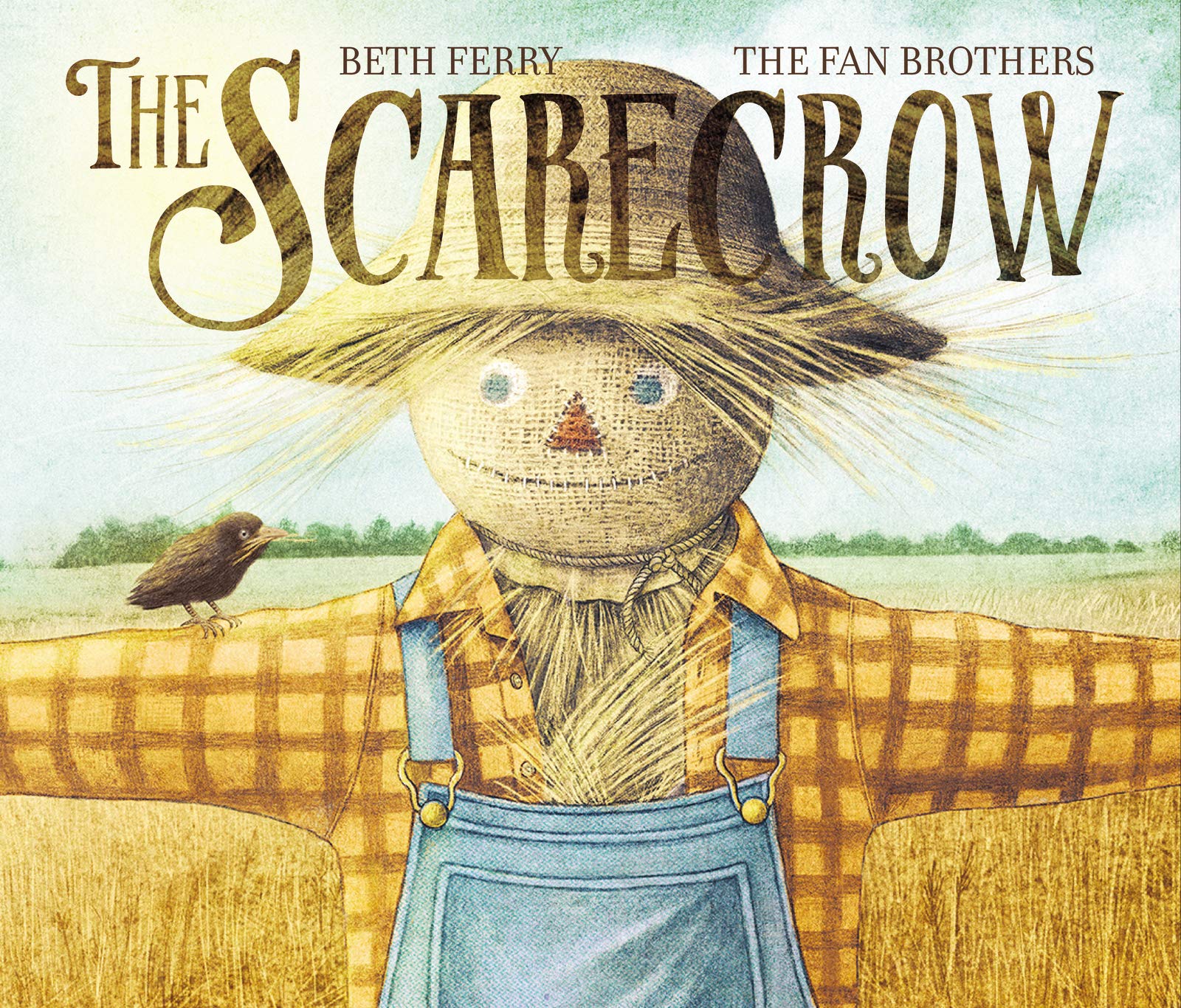
celebrate-picture-books-picture-book-review-the-scarecrow-cover

About the Holiday

With so many crops – from corn to berries to peppers to squash – ripening in fields across the country, it’s time for farmers on small and large farms to put up a scarecrow to watch over all that bounty. To celebrate, gather some old clothes, a bale of straw or other filling, and a pole and put your imagination to work. This is a fun activity for the whole family – even if you don’t have a farm! 

The Scarecrow

Written by Beth Ferry | Illustrated by The Fan Brothers


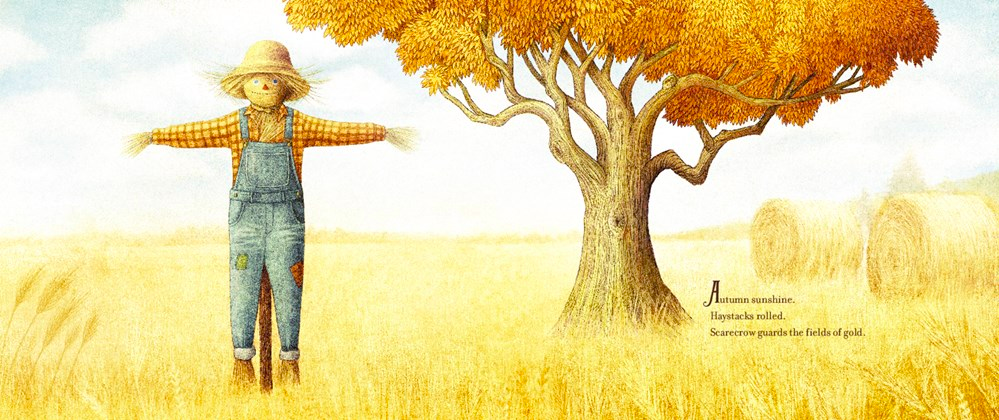
Golden autumn has quieted the fields. The hay is rolled and the scarecrow waits for spring. The animals and the crows stand at a distance, afraid of this figure that does his job so well. “He never rests. / He never bends. / He’s never had a single friend, / for all the woodland creatures know / not to mess with old Scarecrow.”

celebrate-picture-books-picture-book-review-the-scarecrow-autumn

Image copyright The Fan Brothers, 2019, text copyright Beth Ferry, 2019. Courtesy of HarperCollins.

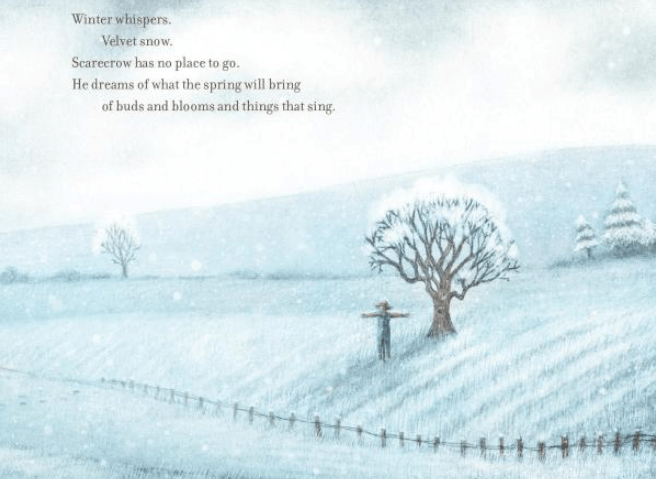
Winter comes with gentle snow, and Scarecrow dreams of “spring…of buds and blooms and things that sing.” When spring dawns with warm sun and green grass, a tiny crow—with a “broken wing?”—“drops from midair” and attracts Scarecrow’s attention. Then Scarecrow does a most surprising thing: “He snaps his pole, / bends down low, / saves the tiny baby crow.” He tucks the baby in the straw near his heart, and as he sleeps and settles in, Scarecrow “sings the sweetest lullaby.”

celebrate-picture-books-picture-book-review-the-scarecrow-winter

Image copyright The Fan Brothers, 2019, text copyright Beth Ferry, 2019. Courtesy of HarperCollins.

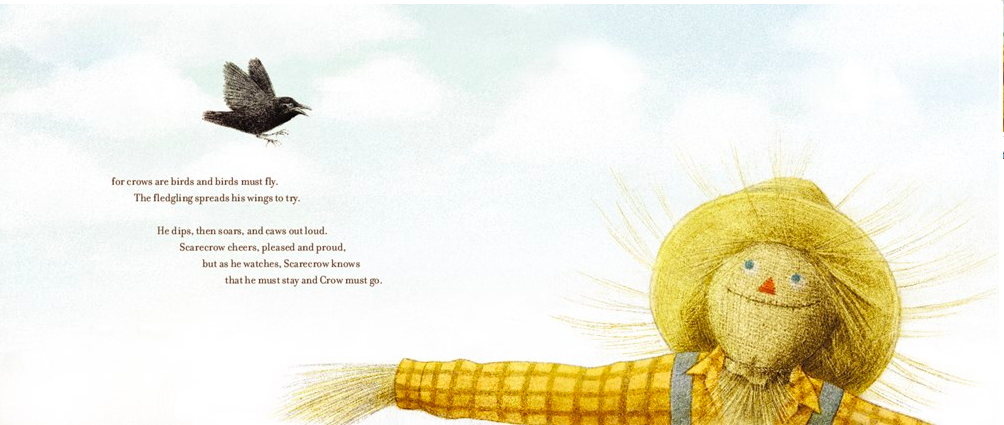
The baby heals and the two become the best of friends. As the little crow grows, he and Scarecrow “will laugh and wish on stars, forgetting who they really are…” Spring turns to summer, and Scarecrow proudly watches as Crow learns to fly, but with the return of autumn, he knows that Crow must leave. Through late autumn and the frigid winter, Scarecrow slumps on his pole, alone—“Broken heart. Broken pole. Nothing fills the empty hole.” Then with the spring rains, the crow returns with wings wide open and Scarecrow welcomes him with a hug. The crow mends Scarecrow’s broken pole and refreshes his hay and then he says, “‘I’m here to say.’”

celebrate-picture-books-picture-book-review-the-scarecrow-flying

Image copyright The Fan Brothers, 2019, text copyright Beth Ferry, 2019. Courtesy of HarperCollins.

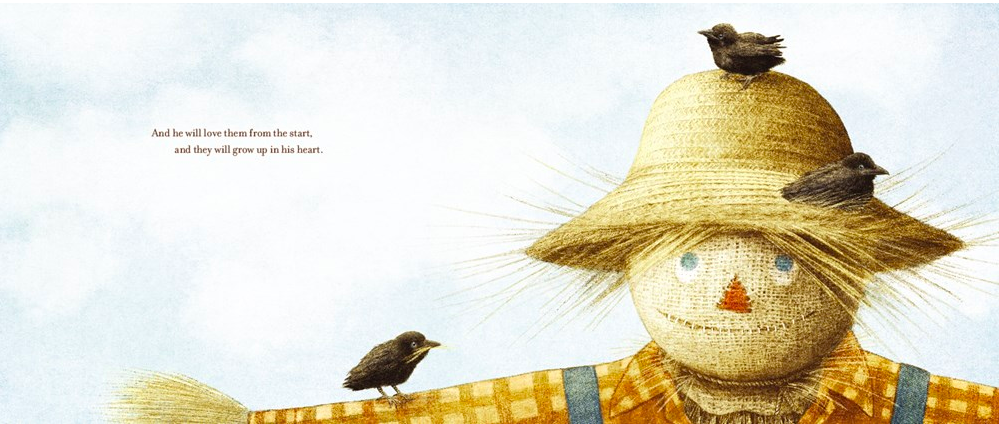
Crow and his mate build a nest in the spot where he grew up. Soon, “five small eggs are tucked unseen,” and Scarecrow watches over them for he knows that soon they will hatch baby crows. “And they will love him from the start, and they will grow up in his heart.” Throughout the year, these friends and more keep Scarecrow company and love him so.

celebrate-picture-books-picture-book-review-the-scarecrow-little-crows

Image copyright The Fan Brothers, 2019, text copyright Beth Ferry, 2019. Courtesy of HarperCollins.

In her story of a scarecrow and a baby crow who form a family, Beth Ferry’s gorgeous, lyrical language sweeps readers into Scarecrow’s world and lets them stand with him through the changing seasons and the progression of his transformation from a lonely existence as bleak as winter to a life as bountiful as summer. Ferry’s alternating short, staccato lines and longer, flowing rhythms create an emotional bond between the reader and Scarecrow. With a single sentence, in which Scarecrow and Crow forget “who they really are,” and through her periodic use of future tense, Ferry sparks hope and welcome reassurance for the future—not only for these two characters, but for us all. Crow’s return to raise his own family where he learned love and security and to help the aging Scarecrow is a moving portrayal of home, and the reciprocal devotion between Scarecrow and the crows will bring a tear to readers’ eyes.

Through their softly hued and textured mixed-media illustrations, The Fan Brothers create a tapestry of rural life, with its sometimes generous, sometimes harsh conditions.  As autumn turns to winter, Scarecrow is seen from a distance as animals look on, showing the divide in this natural landscape and the fear that rules it. But when a baby crow drops into the scarecrow’s life, he changes the dynamic, as children often do. With this life-changing event, The Fan Brother’s images become brighter, and the gauziness of the first spreads—so effective in depicting the barrier between Scarecrow and the rest of the world—clears. In turns Scarecrow is tender and proud, wistful and overjoyed—images that will tug at adults’ hearts. As Scarecrow once again stands tall and is surrounded by his crow family and the other animals on a sunny fall day, The Fan Brothers bring readers full circle in this story where the seasons of bounty and hardship mirror so well the cycles of life.

A thoughtful and beautifully conceived masterpiece, The Scarecrow is a must for home, classroom, and public libraries.

Ages 4 – 8

HarperCollins, 2019 | ISBN 978-0062475763

Discover more about Beth Ferry and her books on her website.

To learn more about The Fan Brothers, their books, and their art, visit their website.

Build a Scarecrow Day Activity

celebrate-picture-books-picture-book-review-scareccrow-coloring-page

Silly Scarecrow Coloring Page


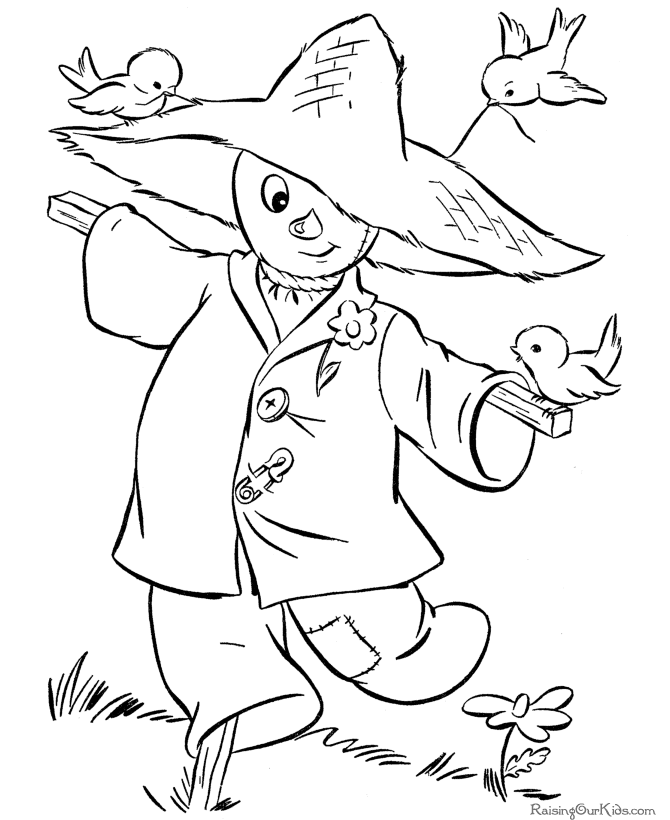
Building a scarecrow with old clothes, some twine, and just the right amount of stuffing is creative fun! If you’d like a simpler way to make a scarecrow, enjoy this printable Silly Scarecrow Coloring Page!

celebrate-picture-books-picture-book-review-the-scarecrow-cover

You can find The Scarecrow at these booksellers

Amazon | Barnes & Noble | Books-a-Million

To support your local independent bookstore, order from

Bookshop | IndieBound

Picture Book Review
 

July 1 – It’s Wild about Wildlife Month

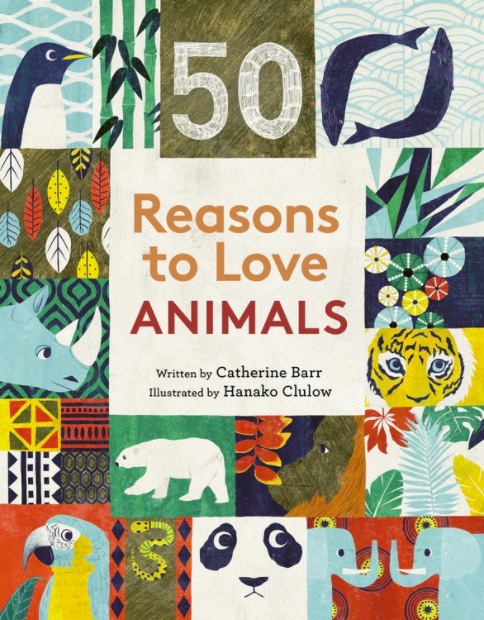
celebrate-picture-books-picture-book-review-50-reasons-to-love-animals-cover

About the Holiday

The theme of this month-long holiday is simply all about wildlife. Whether you like mammals, birds, fish, or insects best, July is the time to celebrate them. The month is just getting started, which give you and your kids lots of time to explore the wildlife in your area and learn about the creatures on the other side of the world and everywhere in between. Today’s book will get you started!

50 Reasons to Love Animals

Written by Catherine Barr | Illustrated by Hanako Clulow


In her introduction, Catherine Barr orients readers to the focus of her book with the alarming statistic that “five times in Earth’s history over half of all animals and plants have mysteriously died out. But today,” in large part because of habitat destruction, “species are becoming extinct much faster than the natural rate.” She and Hanako Clulow then take children on around-the-world-trip to various ecosystems to discover facts about the animals that live in each and find spotlighted “how to love…” suggestions for protecting them in every chapter.

The first stop is a dry savanna, where African elephants, giraffes, zebras, and hippos gather around a watering hole. Kids will be interested to learn that baby elephants take about a year to “figure out how to eat and drink with their strange, long noses,” and that hippos have a built-in sunscreen that protects them from the sun. At night, lions, lesser bushbabies, and pangolins come out to eat. They’ll also learn about other animals on the savannah as well as about the shrinking population of elephants—victims of poaching for their ivory tusks.

celebrate-picture-books-picture-book-review-50-reasons-to-love-animals-coral-reef

Image copyright Hanako Clulow, 2020, text copyright Catherine Barr, 2020. Courtesy of Frances Lincoln Children’s Books.

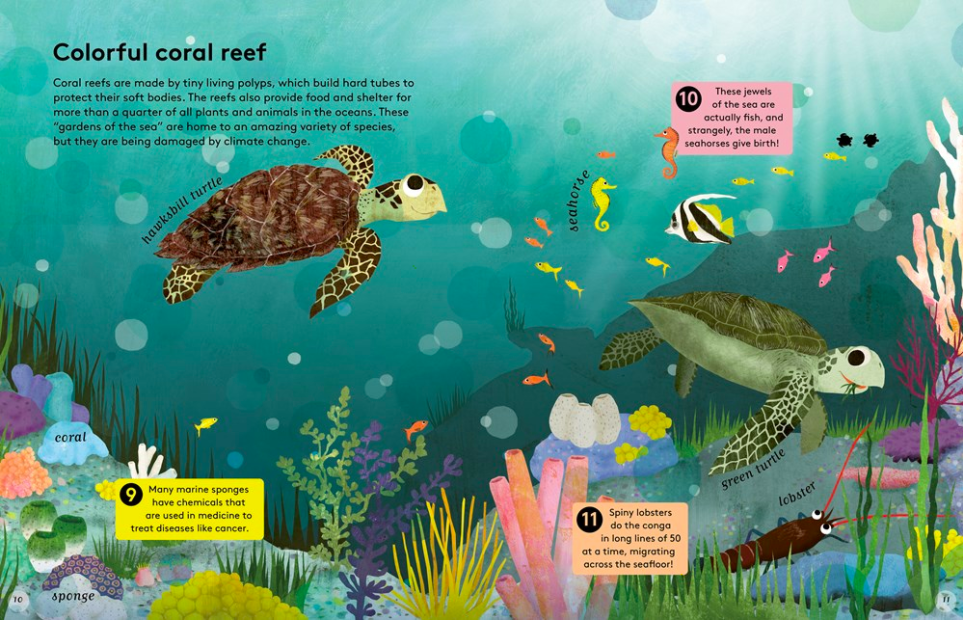
Readers next dive into the sea to explore a coral reef, which provides nutrients and a home to a wide variety of creatures—including marine sponges, which contain “chemicals that are used in medicine to treat diseases like cancer, spiny lobsters, seahorses, sharks, dolphins, and various types of sea turtles. Children learn more about these shelled favorites who have populated our oceans for 100 million years and the dangers they face, including polluted waters, fishing nets, and plastic bags, which they mistake for jellyfish and ingest. How can kids love a turtle? By learning more about climate change and how it is killing coral reefs.

Children return to land to discover the Arctic and Antarctica. The northern icy pole is home to polar bears, harp seals, puffins, whales, while the southern pole is home to seals and emperor penguins. Kids might think about these intrepid creatures—who can “survive in very low temperatures of -76 degrees Fahrenheit” the next time they put on a sweater or coat.

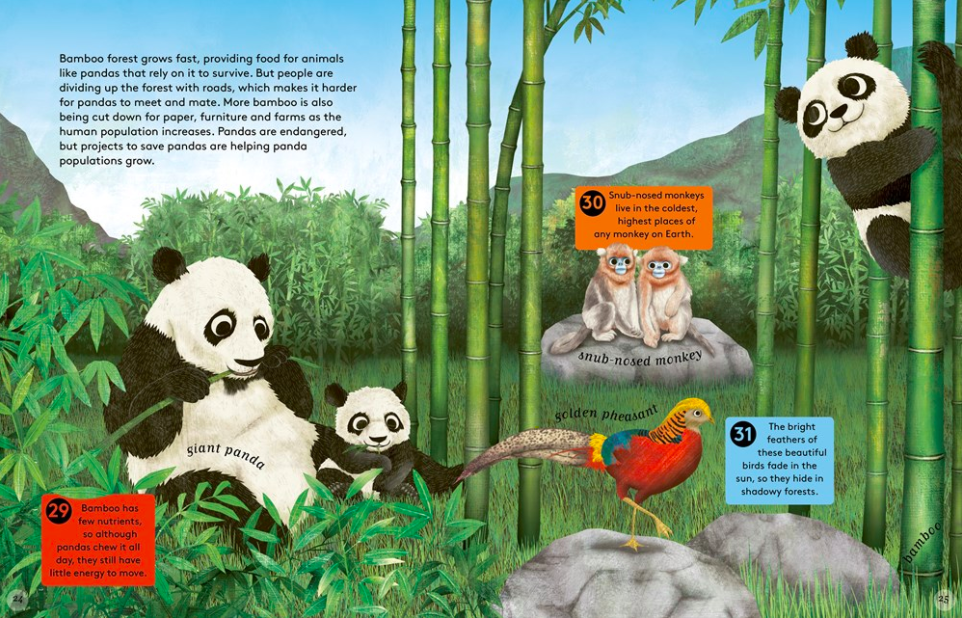
Ahhh! Kids can warm up in an evergreen forest with two cute bear cubs learning how to scratch their back against a tree trunk as a porcupine, a Steller’s jay, and a pine marten look on. There are all kinds of forests, and readers are next transported to a bamboo forest, where a giant panda and her cub chow down on lunch. Here, children learn about the threats to bamboo forests and, by extension, the panda population while meeting a few more denizens of this unique environment. An old forest growing in the shadow of snow-capped mountains gives shelter to a grizzly bear family and majestic elk. Did you know that a grizzly bear “can run as fast as a race horse?”

celebrate-picture-books-picture-book-review-50-reasons-to-love-animals-pandas

Image copyright Hanako Clulow, 2020, text copyright Catherine Barr, 2020. Courtesy of Frances Lincoln Children’s Books.

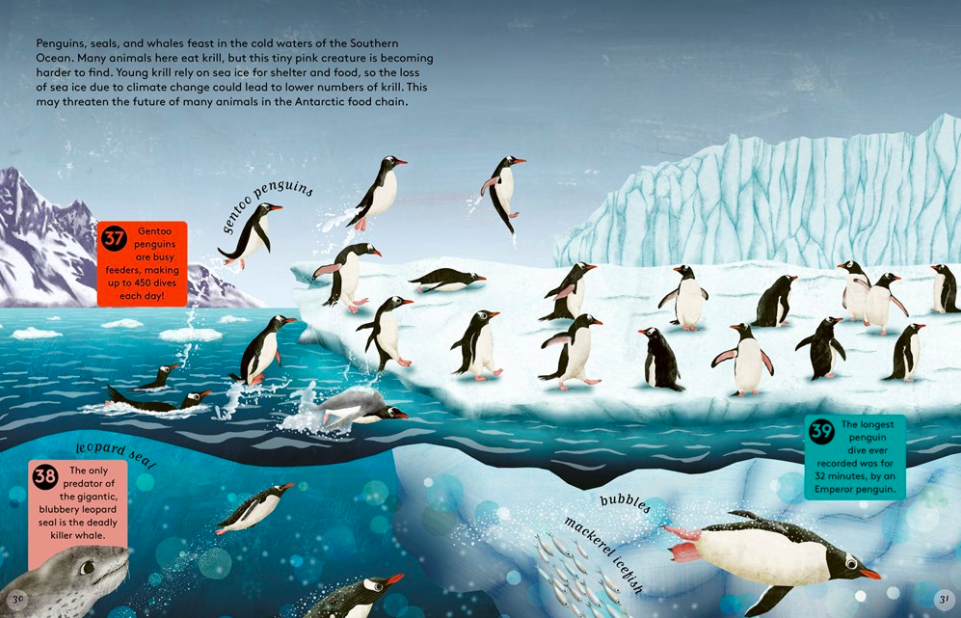
The northern and southern open oceans host whales, octopuses, penguins, seals, a multitude of fish species, and strange creatures we’re only beginning to learn about. Many animals of the cold Southern Ocean eat krill, but the loss of sea ice to climate change decreases the number of krill and threatens to endanger the animals that rely on it. How much does pollution affect our oceans? “Scientists estimate that the population of ocean animals has halved over the last 40 years.”

Finally, kids come to a tropical forest, where Asian elephants are busy scratching an itch and swatting away flies with sticks they use as tools. Bengal tigers, orangutans, sun bears, and hornbills are only a few of the creatures who make these lush forests their home. Tropical rainforests are being diminished by logging and their replacement by palm oil plantations. You can help by checking the ingredients of products you use—”from food to toothpaste” for palm oil and finding “better options such as sustainable palm oil or palm oil-free products.”

As the book closes, readers meet up with elephants once again. These African forest elephants share space with people and gorillas. While the elephants can wreak havoc on farms, “farmers are encouraging elephants away from their crops—with a hum and a sticky reward.” Can you figure out what it is?

celebrate-picture-books-picture-book-review-50-reasons-to-love-animals-gentoo-penguins

Image copyright Hanako Clulow, 2020, text copyright Catherine Barr, 2020. Courtesy of Frances Lincoln Children’s Books.

Catherine Barr’s captivating text and fifty highlighted facts offer readers a fascinating and eye-opening trip around the world to raise awareness of the dangers animals and humans face if we don’t work together to find solutions to pollution, habitat destruction, and other threats to the environment. Today’s environmentally conscious children will eagerly want to participate in the “Show you love…” tips, which provide ideas for classroom and homeschool research and activities.

Hanako Clulow combines lifelike portrayals with the appeal of kawaii to bring the various ecosystems to vibrant life for readers. Through her textured and detailed illustrations, readers will feel transported to a grassy plain, where each blade of grass is visible; dive into warm and frigid waters for a peek at what lies below; and enjoy a warm day on a flower-speckled riverbank. Clulow’s wide vistas also give children a stunning view of each environment, allowing them to see what is in danger of being lost. While clearly depicted and easy to read, the numbered fact boxes do not intrude on the illustrations, making each two-page spread a lovely learning experience. The chapter format makes the book easy to dip into for classroom or homeschool lessons.

An excellent introduction to world environments, 50 Reasons to Love Animals would be a favorite addition to home, school, and public library bookshelves.

Ages 3 – 7

Frances Lincoln Children’s Books, 2020 | ISBN 978-0711252462

Discover more about Catherine Barr and her books as well as free learning activities on her website.

You can find a portfolio of work by Hanako Clulow on her website.

Wild about Wildlife Month Activity

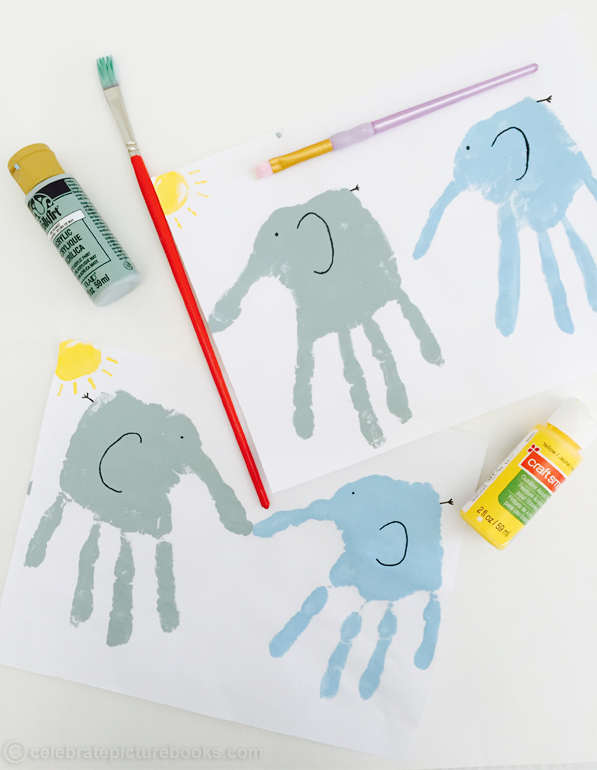
celebrate-picture-books-picture-book-review-hand-print-elephants-craft

Handprint Elephants


This easy craft is fun for siblings to do together and can make a nice decoration for a child’s room or a gift for mom, dad, or other family members.

Supplies

  • Craft paint in two colors of the children’s choice
  • Yellow craft paint
  • Black fin-tip marker
  • Crayons, markers, or colored pencils to make a background
  • Paper
  • Paint brush

Directions

  1. Paint one child’s hand and press it on the paper. The thumb is the truck and the fingers the legs.
  2. Paint the second child’s hand and press it on the paper near the other “elephant.” A couple of examples are: the elephants standing trunk to trunk or trunk to tail 
  3. After the paint has dried, draw on ears and an eye
  4. Add a sun with the yellow paint
  5. Add grass, trees, or other background features

celebrate-picture-books-picture-book-review-50-reasons-to-love-animals-cover

You can find 50 Reasons to Love Animals at these booksellers

Amazon | Barnes & Noble | Books-a-Million

To support your local independent bookstore, order from

Bookshop | IndieBound

Picture Book Review

June 29 – It’s National Oceans Month

celebrate-picture-books-picture-book-review-down-under-the-pier-cover

About the Holiday

During National Oceans Month, we celebrate the wondrous diversity of sea life. A majority of the earth’s surface is covered in water and yet we know only a fraction of what the oceans have to show us. With new technology scientists are diving deeper and deeper and discovering some of the most unique creatures in the world. The holiday also gives us an opportunity to pledge our help to preserving the fragile ecosystems that exist in and near the world’s oceans from climate change, pollution, and habitat destruction. To join in on this month’s holiday, visit a beach or aquarium, learn more about the animals and resources of the sea, and consider donating to or volunteering with an organization dedicated to protecting the world’s oceans. To learn more about the world’s oceans, including information on ocean health, life, science, and trivia; find education resources, podcasts, videos, and more, visit the National Ocean Service website.

Down Under the Pier

Written by Nell Cross Beckerman | Illustrated by Rachell Sumpter


A group of kids are having fun on the pier. They ride the Ferris wheel and the roller coaster and “gobble clouds of cotton candy” as they walk in the sunshine. On the carousel they vie for the one goat to sit on. “Up on the pier,” they tell readers, “we feed the machines, roll Skee-Balls, whack moles, and trade our tickets for toys.” When their money runs out, “is the fun all done?” Not at all. For these kids, it’s just begun.

celebrate-picture-books-picture-book-review-down-under-the-pier-downstairs

Image copyright Rachell Sumpter, 2020, text copyright Nell Cross Beckerman, 2020. Courtesy of Cameron Books.

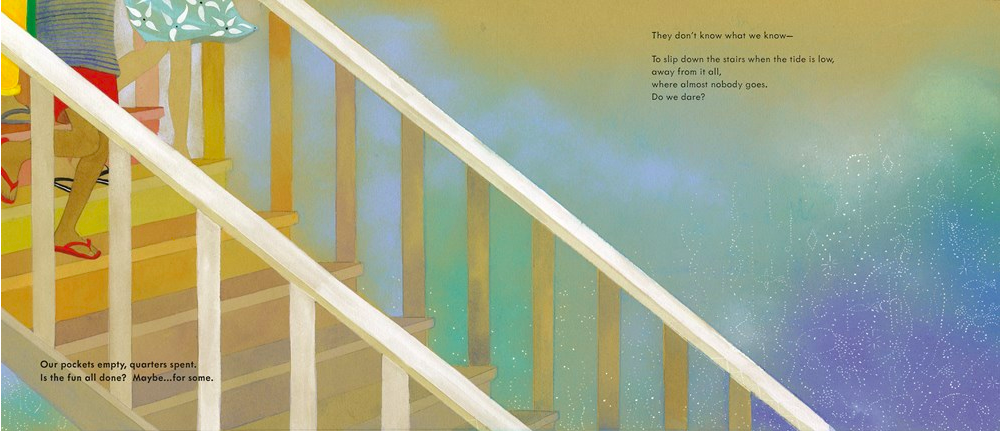
They pad downstairs and kick off their flip-flops. “Down under the pier, it’s dark and cool. We inhale sea spray and squish slimy sand through toes.” They listen to the waves crash and when the water recedes, they “find creatures clinging. Mussels, barnacles, sea stars, and anemones festoon a forest of pilings.” Gently they touch these creatures, let crabs tickle their palms.

celebrate-picture-books-picture-book-review-down-under-the-pier-seaweed

Image copyright Rachell Sumpter, 2020, text copyright Nell Cross Beckerman, 2020. Courtesy of Cameron Books.

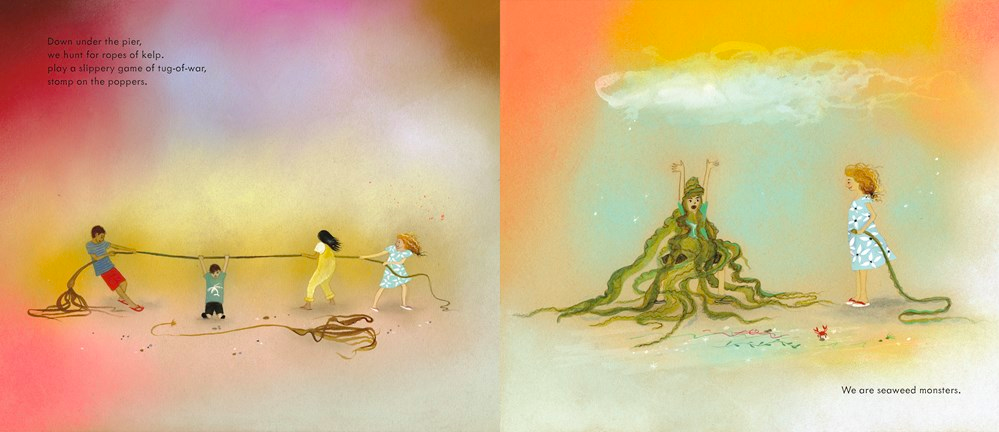
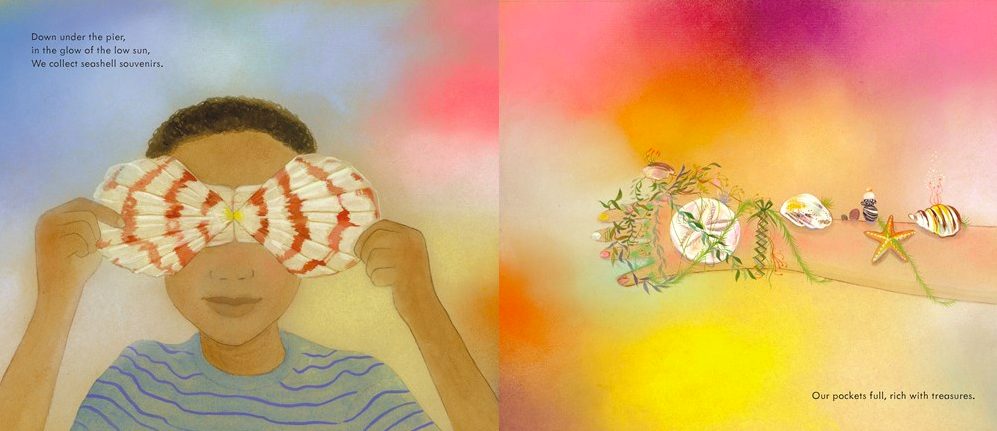
“Sanderlings scamper, their stick legs a blur” as they lead the children in a race down the beach. Here they find long strands of kelp, strong enough for a game of tug-of-war, wild enough to make a seaweed monster costume. Down under the pier they “collect seashell souvenirs” and watch the changing rainbow colors of the setting sun in the quiet twilight away from the blinking lights, clanging bells, and ringing voices on the pier. “Fun is free,” they know, “and the world is ours.”

Through an Author’s Note at the beginning of the book, readers learn that a portion of the proceeds from Under the Pier are donated to Heal the Bay Aquarium, an educational nonprofit located under the Santa Monica Pier, where visitors can see and touch one hundred local sea creatures. An illustrated guide to seven sea creatures found in an intertidal community follows the story.

celebrate-picture-books-picture-book-review-down-under-the-pier-shells

Image copyright Rachell Sumpter, 2020, text copyright Nell Cross Beckerman, 2020. Courtesy of Cameron Books.

Lyrical, entrancing, and full of the wonder of childhood, Nell Cross Beckerman’s story will transport readers to a languid summer day where a group of friends spend the afternoon reveling in the rides, games, and treats of the pier and then continue their fun under the pier, where nature provides as many delights as the carnival above. Through her detailed and evocative language, readers can hear the thrill of the crowds, taste the cotton candy, and run with the kids to be the first to claim the goat on the carousel.

But it is when the kids “slip down the stairs” to the sand below that Beckerman’s descriptions truly shine with the deep and lasting impressions of new discovery. The children’s mindful awe of the sea creatures they find when the tide goes out and their creative games played out with relished spontaneity reflect this one trip to the beach but also all moments of free play that this group of friends—and readers—will experience and remember as they grow up.

Rachell Sumpter’s glorious artwork blends realism and that feeling of magic that expands a child’s world. Her gorgeous soft pinks, yellows, greens, and blues, embroidered with lacy white accents, swirl with the kids on the carousel and beckon them downstairs. Here, with the page turn, the colors burst into vibrancy as the sea tickles their toes and sea creatures climb the pilings and blanket the rocks and sand. Frothy waves and pearled outlines create a dazzling backdrop to the children’s fun. As they wrap themselves in nature-made costumes and art, the fiery sun sets on a perfect day.

A mesmerizing escapade children will want to join in on, Down Under the Pier is highly recommended for home bookshelves and is a must for school and public library collections. The book would pair well with lessons on marine science and United States geography, giving it cross-curricular appeal.

Ages 4 – 8

Cameron Books, 2020 | ISBN 978-1944903862

Discover more about Nell Cross Beckerman and her books on her website.

To learn more about Rachell Sumpter, her books, and her art, visit her website.

National Oceans Month Activity

celebrate-picture-books-picture-book-review-kinetic-sand-craft

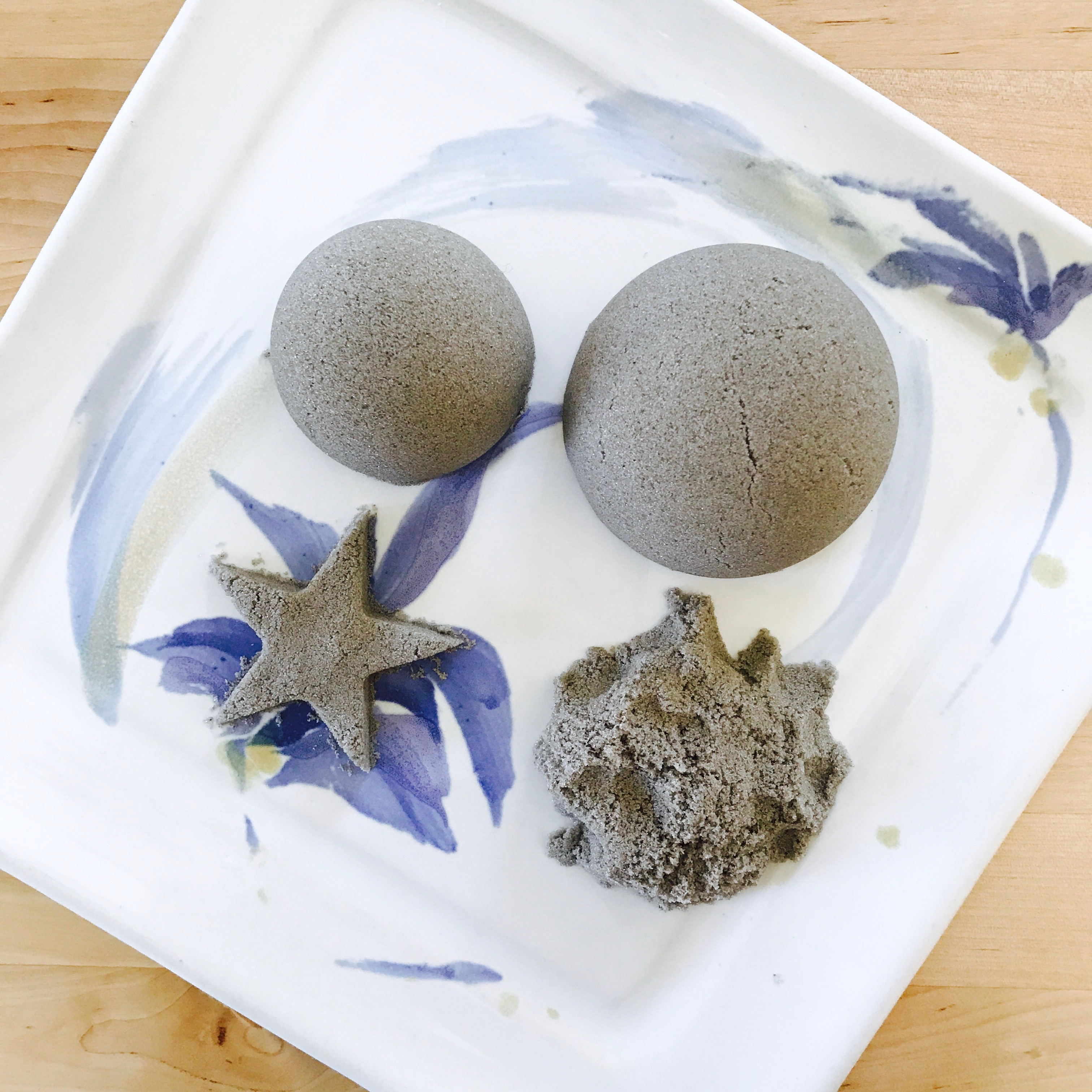
Kinetic Sand


Sand is so much fun to play with at the beach that you just wish you could bring it home. Now you can! With this easy recipe you can create your own kinetic sand to form or let run through your fingers. It makes a great anti-stress reliever too!

Supplies

  • 1 cup sand
  • ½ tablespoon cornstarch
  • 1 teaspoon dish soap
  • Water as needed – about ¾ cup
  • Bin or bowl for mixing dry ingredients
  • Bowl for mixing dish soap and water

Directions

  1. In the bin combine the sand and cornstarch and mix well
  2. In the bowl combine the dish soap and water until the water is bubbly
  3. Slowly add the water mixture to the dry ingredients, mixing and adding water little-by-little until the desired consistency is reached. The grain of the sand will determine how much water is needed.
  4. The sand can be formed with cookie cutters, molds, hands, etc. and is strong enough to stack. Or just let it drip and ooze through your fingers.

celebrate-picture-books-picture-book-review-down-under-the-pier-cover

You can find Under the Pier at these booksellers

Amazon | Barnes & Noble | Books-a-Million

To support your local independent bookstore, order from

Bookshop | IndieBound

Picture Book Review
 

June 25 – National Rivers Month

celebrate-picture-books-picture-book-review-river-cover

About the Holiday

Rivers are beautiful, provide recreation, and are crucial to our water supply. Did you know that in the United States 65% of our drinking water comes from rivers and streams? This month environmentalists and others promote awareness of the importance of keeping the nation’s rivers pollution free to protect the fish and animals that call them home and increase enjoyment for all. To help the cause, find out how you can help an environmental organization in your area. This year might be the perfect time to get to know your local river system better and then plan a trip to fish, swim, boat, or just have a picnic on the bank.

River

By Elisha Cooper


As a woman begins her solitary trip on a mountain lake, she turns and waves to her family. The familiar shore recedes, and she dips her oar into the blue water under gray skies and in the shadow of the tall mountains. “Three hundred miles stretch in front of her. A faraway destination, a wild plan. And the question: Can she do this?” As she enters the Hudson River, she plucks a pebble from the shallow water and places it beside her gear. Here, she must navigate the scattered rocks—and one that is not a rock at all, but a moose taking a dip.

celebrate-picture-books-picture-book-review-river-alone

Copyright Elisha Cooper, 2019, courtesy of Orchard Books, Scholastic, Inc.

Ahead, she rides rapids that steal her hat and threaten to flip her. But she hangs on and makes it out on the other side. Now it’s time to set up camp for the night. Huddled in her tent, “she is alone, but not. The river stays beside her, mumbling to her and to itself all through the night.” With the dawn, she is on the river again, along with “otters, ducks, dragonflies, a kingfisher.” When she stops to pick blackberries, a bear cub ambles by to watch. The woman backs away slowly and continues down the river.

When she comes to a dam, she must carry her canoe. She trips, falls, and bloodies her knee, but on the other side of the dam, she returns to her paddling. When she comes to a waterfall, she gets in line for her turn to go through the lock. Once on her way again, she moves on to “farms with faded barns, to villages with white clapboard houses, to chimneyed factories on the outskirts of a town. Here, she pulls her canoe onto a levee where two boys are fishing. They ask her where she’s going, and she tells them. “It feels funny to talk.” As she walks into town, her legs also feel funny beneath her. She buys supplies and replaces her hat. That night is spent on a small island.

celebrate-picture-books-picture-book-review-river-rapids

Copyright Elisha Cooper, 2019, courtesy of Orchard Books, Scholastic, Inc.

When she wakes, the white fog has blanketed everything. She can’t see the river, but she watches an eagle high in a tree eating its breakfast. She takes out her sketchbook and draws. The fog lifts and she continues her journey. The days and nights are marked by her hardening callouses and darkening suntan, shortening pencils and waning sketchbook pages. She paddles past “craggy hills” and “around bell-ringing buoys, next to railway tracks and a clattering freight train.”

She dodges a tugboat oblivious to her presence and makes it to another village, where she mails postcards and buys a cookie. A rain drop falls just as she climbs back into her canoe. The raindrop turns into a drizzle and then “a single sheet blowing sideways. A squall.” Her canoe capsizes, “dumping her into the raging water.” When she is able, she drags her canoe and herself onto a rocky shore. “Shivering, she takes stock. Tent, gone, Clothes, soaked. Sketchbook, safe.”

celebrate-picture-books-picture-book-review-river-city

Copyright Elisha Cooper, 2019, courtesy of Orchard Books, Scholastic, Inc.

In the morning she starts again. As she rounds a bluff, the city spreads out in front of her. Far above her a gull watches as she makes her way past skyscrapers and boats large and small to the harbor and on to the boatyard, where “a bearded man in overalls—the builder of her canoe”—eagerly waits to hear about her trip and the sturdiness of her craft. After a cup of coffee, she launches her canoe for the last leg of her journey.

She is now in the open ocean with its wild waves. The horizon beckons, “but closer in she sees the lighthouse, and she knows it is time for her to be home.” She paddles harder and faster. “She can’t wait to be with them again. Can’t wait to tell them about moose and eagles, rapids and storms…to turn her sketches into paintings and her words into a story.” Her family is on shore waving, her dog running into the surf to greet her. She scuds into the shallows “…and brings the canoe to shore.”

An Author’s Note about the creation of River as well as a Note on the Hudson River and a list of sources and reading resources follows the text.

celebrate-picture-books-picture-book-review-river-home

Copyright Elisha Cooper, 2019, courtesy of Orchard Books, Scholastic, Inc.

Elisha Cooper’s loving and lyrical tribute to nature, courage, and self-reliance is nothing short of spectacular. His fluid storytelling plays out with the rhythm of an oar cutting and pushing a canoe along while transporting readers smoothly through this most evocative journey. With exquisite descriptions and compelling obstacles that will leave children wide-eyed and holding their breath, River is an expansive adventure story of one woman pitting herself against the power of the Hudson River and her own tenacity. The story is also one of love—respect for the environment, awe for community, and devotion to family and the support found there.

Cooper’s soft and sprawling watercolors envelop readers in the river setting, where the woman appears tiny against the rocky coastline, towering mountains, waterfalls, dams, and cityscapes. Double-page spreads swell the heart and invite wanderlust in even the most ardent homebodies. And there may be no better way to share this personal and universal journey than by gathering together and reading River in one sitting or—for younger children—breaking away at one of the many cliffhangers that will have everyone yearning to dip into the story again.

A must for school and public library collections, River is highly recommended for all home bookshelves as well for its inspiration for personal goals, it’s reflections on nature, and its encouragement that anything is possible.

Ages 4 – 8 and up

Orchard Books, 2019 | ISBN 978-1338312263

To learn more about Elisha Cooper, his books, and his art, visit his website.

National Rivers Month Activity

celebrate-picture-books-picture-book-review-rivers-word-search

World Rivers Word Search Puzzle


The world’s rivers provide homes for fish, animals, and birds; offer opportunities for recreation; and supply drinking water for millions. Can you find the names of twenty rivers of the world in this printable puzzle? Then learn where each river runs!

World Rivers Word Search | World Rivers Word Search Solution

celebrate-picture-books-picture-book-review-river-cover

You can find River at these booksellers

Amazon | Barnes & Noble | Books-a-Million

To support your local independent bookstore, order from

Bookshop | IndieBound