December 3 – Get Ready for Dōngzhì

About the Holiday

The Dōngzhì Festival, or Winter Solstice is considered to be one of the most important Chinese festivals of the year and is a time for families to get together, worship their ancestors, and enjoy traditional delicacies. Celebrated for over 2,000 years, the festival sees families come together to make and eat tāng yuán, which symbolizes reunion and prosperity. While the celebration of the winter solstice is only one day (this year on December 21), the Dōngzhì Festival lasts 15 days.

This Winter Solstice festival originates from the Chinese concept of yin and yang, an ancient symbol of harmony and balance. In Chinese culture, there is a belief that when the days are short, there is insufficient Yang energy, thus people consume foods that are more yang (warm) in nature to counteract the yin (cold) of winter, such as tāng yuán, as seen in today’s book. To learn more about the holiday, visit mandarianmatrix.org

Thank you to Bloomsbury Children’s Books for sharing a copy of this book with me for review!

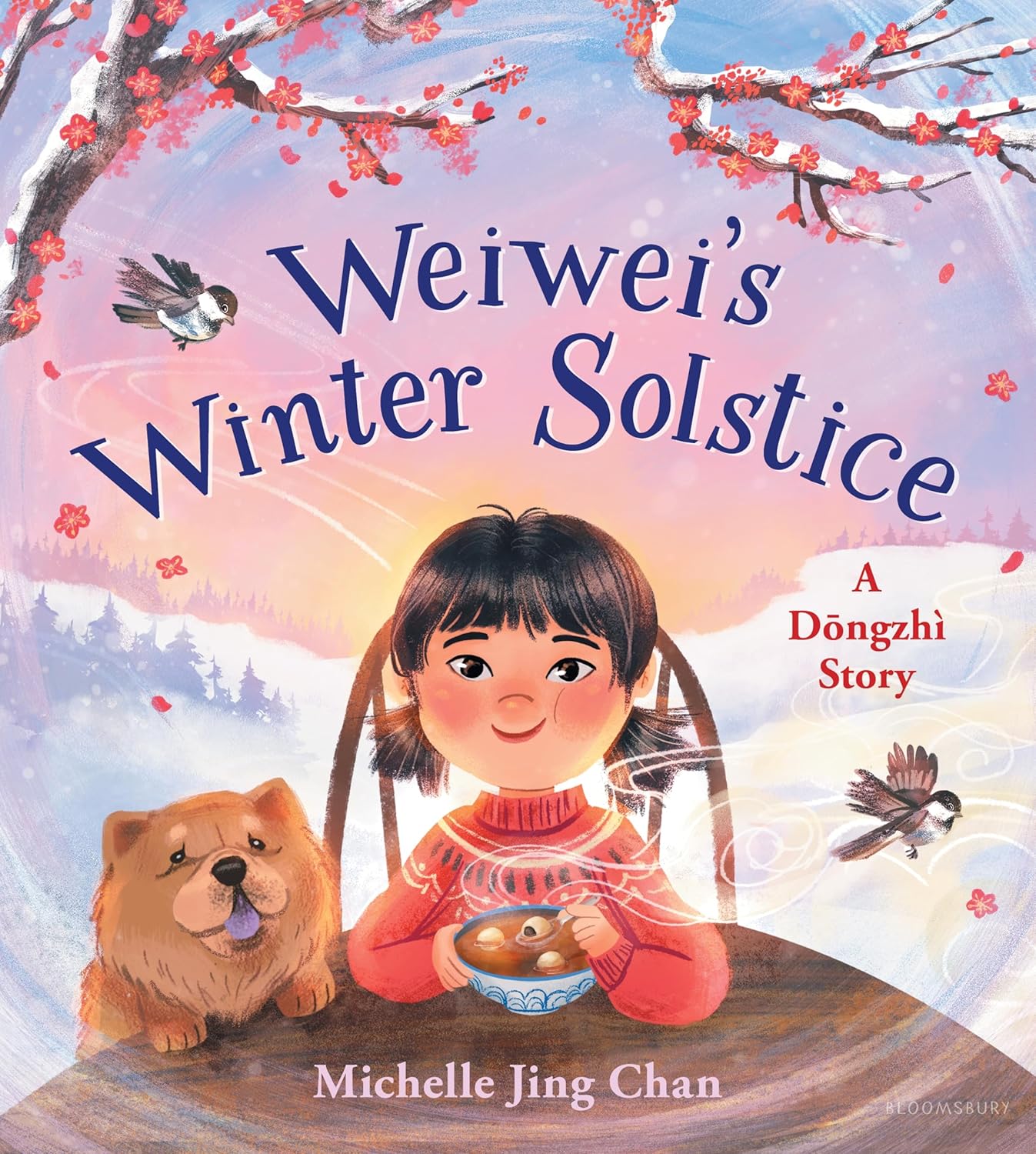
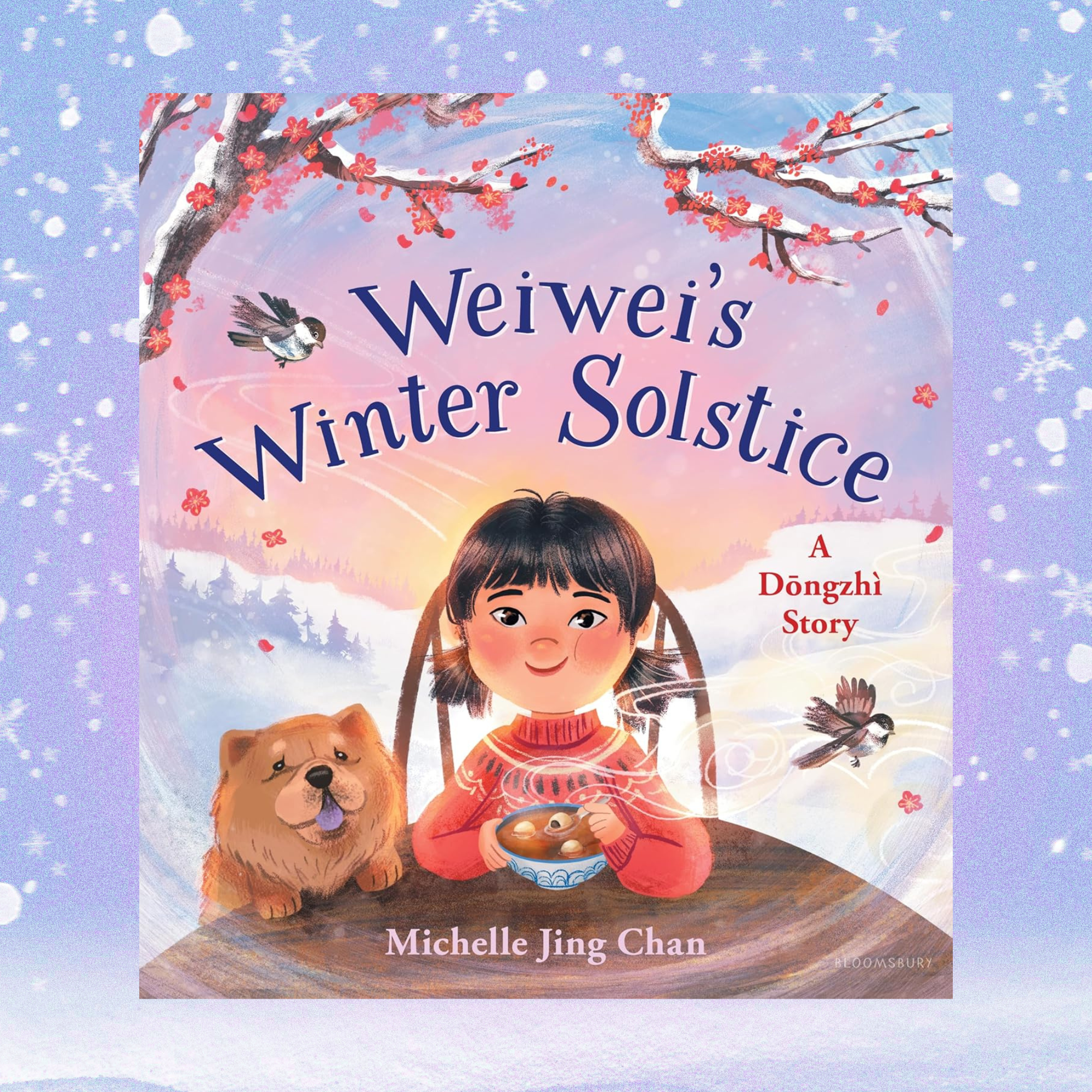
Weiwei’s Winter Solstice: A Dōngzhì Story

By Michelle Jing Chan


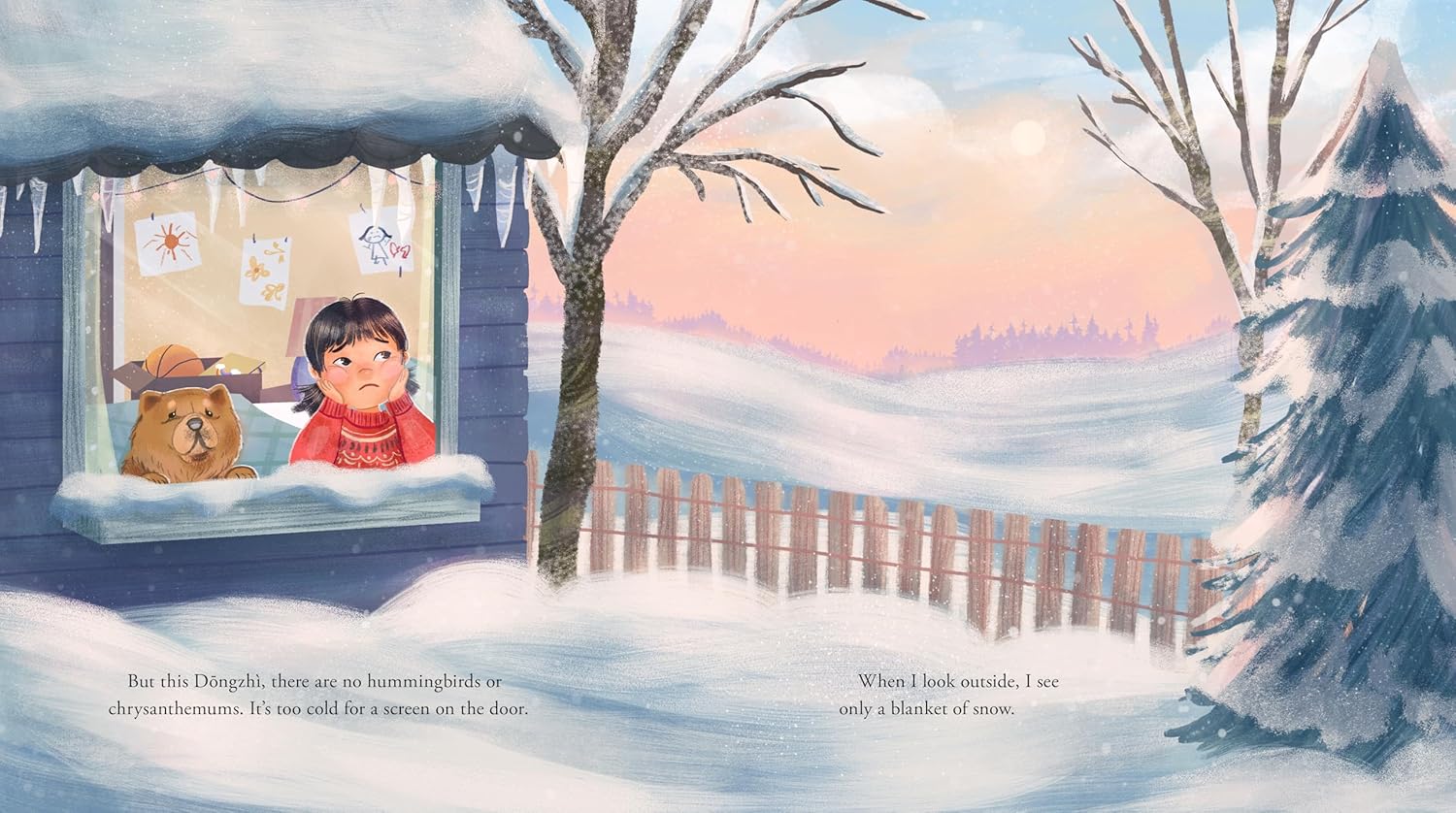
Today is Dōngzhì, the Chinese winter solstice—one of Weiwei’s favorite holidays. But instead of celebrating it by splashing in sprinklers amongst hummingbirds and palm trees at her former home, she’s bundled up in a sweater and blanket as snow covers the ground. For Weiwei Dōngzhì just doesn’t feel the same. Her family—Mama, Baba, her younger brother Didi, and Yeye, her grandfather—are ready for a walk and to play in the snow, but Weiwei can only scowl.

Text and image © 2025 by Michelle Jing Chan. Courtesy of Bloomsbury Children’s Books.

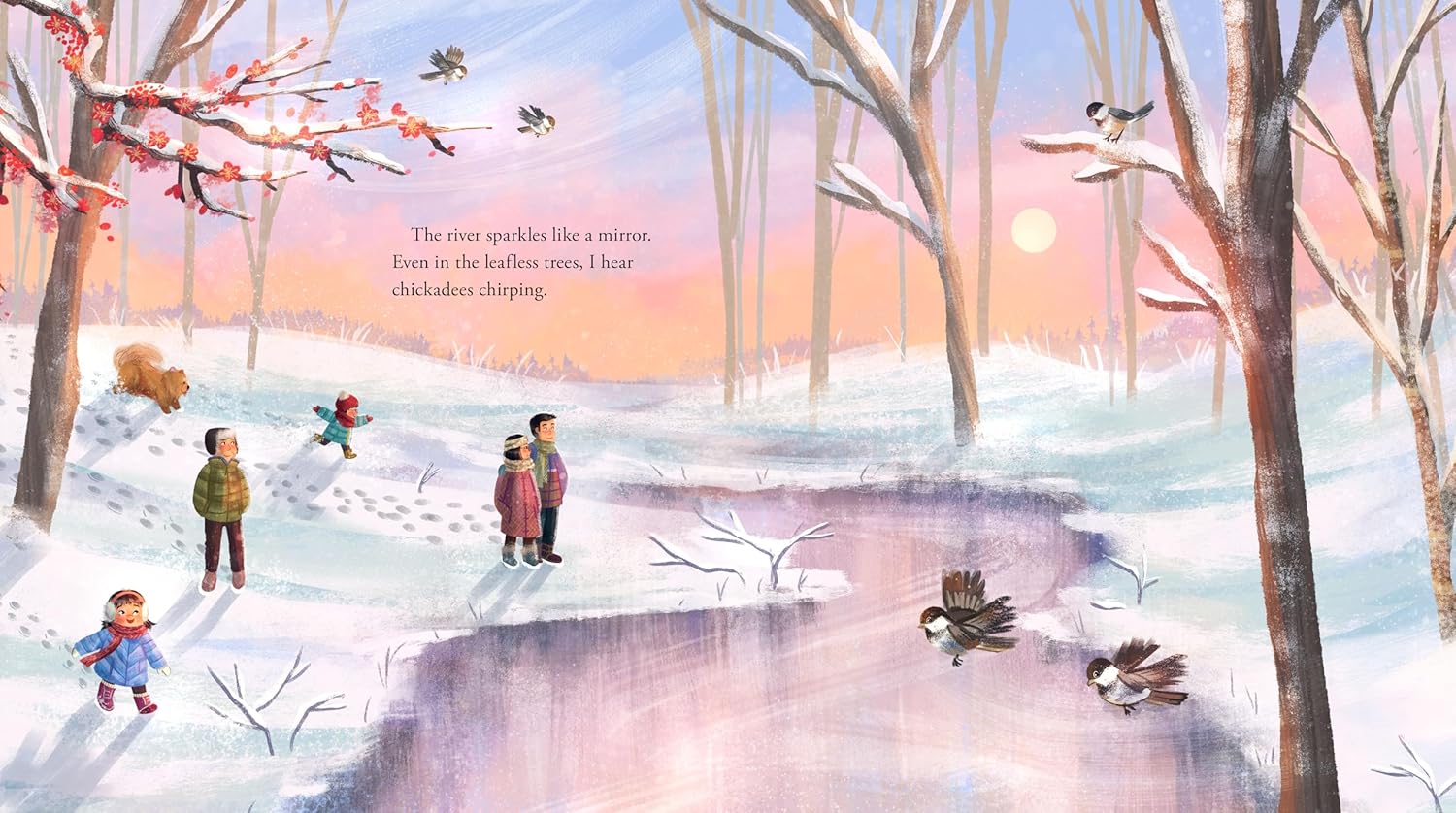
Yet once outside, Weiwei watches her breath cloud in the cold air, catches snowflakes on her tongue, and listens to the snow crunch as they walk. Then, suddenly, Weiwei gasps and points to a tree covered in red flowers. “‘Those are méihuā, plum blossoms!'” Yeye tells her. “. . . No matter how cold and dark it is, they still bloom.'” Weiwei begins to see other signs of life and beauty, but as the sun begins to set, it’s time for the family to go back home. Time for Weiwei’s favorite part of Dōngzhì.

Text and image © 2025 by Michelle Jing Chan. Courtesy of Bloomsbury Children’s Books.

Back home everyone chips in to make tāng yuán. Mama and Didi stir “ground black sesame, sugar, and softened butter into a paste” while Yeye and Weiwei make rice flour dough and Baba makes ginger broth. Then Didi and Weiwei pat the dough into small pancakes, add a bit of black sesame paste, and roll them into balls. The balls simmer in the ginger broth until they float to the top.

Text and image © 2025 by Michelle Jing Chan. Courtesy of Bloomsbury Children’s Books.

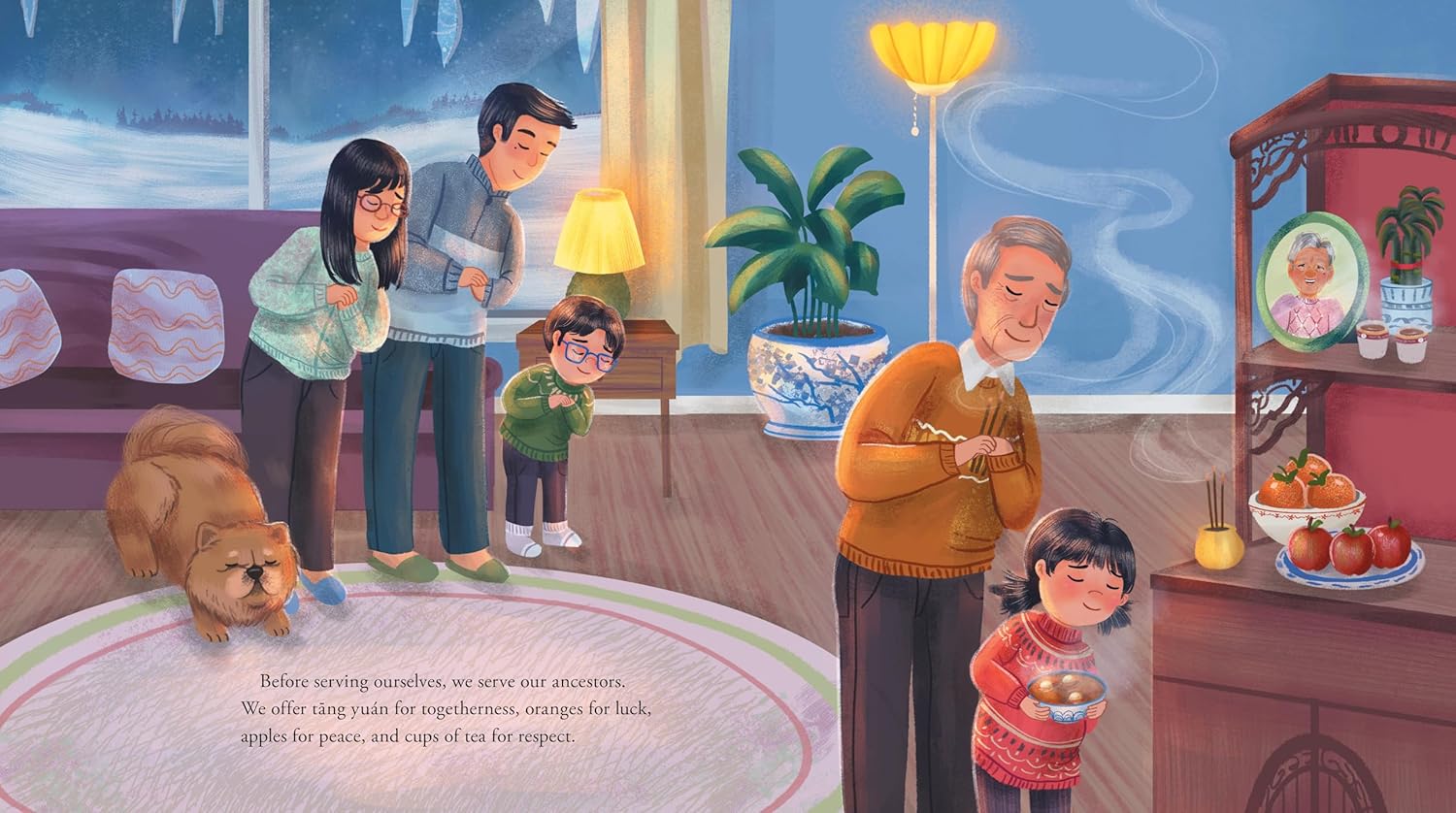
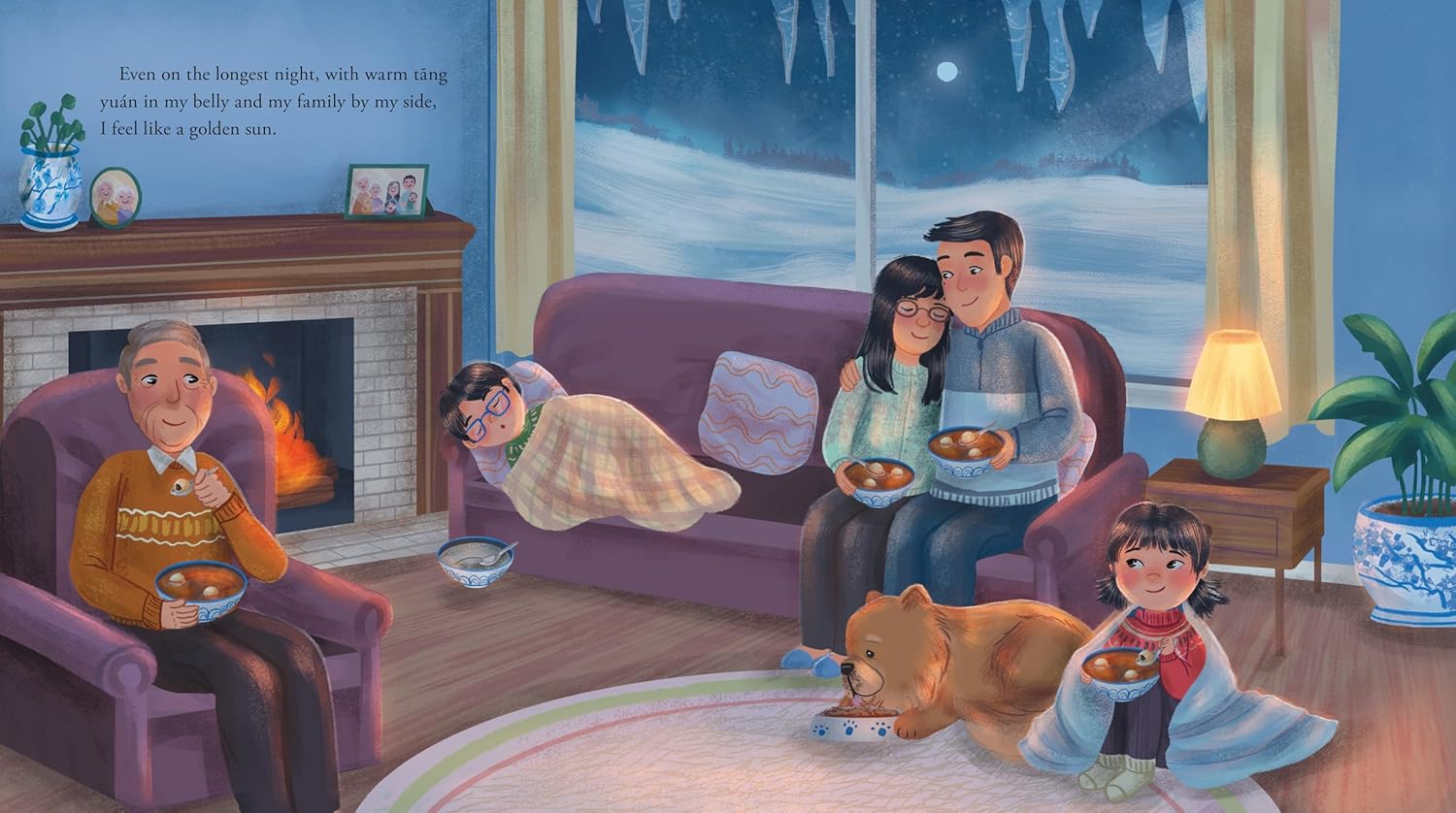
Before Weiwei and her family eat, they serve their ancestors. They “offer tāng yuán for togetherness, oranges for luck, apples for peace, and cups of tea for respect.” Then they eat! To Weiwei, the warm broth feels like a “sip of sunlight,” and Yeye reminds her that warmer days are coming. He tells her he knows it’s hard moving to a new home, “‘but anywhere can feel like home when we celebrate together.'” Weiwei listens to her grandfather and looks around at her cozy home and the people she loves. She knows spring is on its way with new memories to make, and decides that she will “bloom like the méihuā” and savor winter.

An Author’s Note describing the Dōngzhì holiday and how it is celebrated in various Asian countries as well as a recipe for Black Sesame Tāng Yuán follow the story.

Text and image © 2025 by Michelle Jing Chan. Courtesy of Bloomsbury Children’s Books.

Michelle Jing Chan’s warmhearted story of a young girl feeling adrift and disappointed when it comes time to celebrate Dōngzhì in a new home touches on feelings of loss, rediscovery, and the stabilizing comfort of traditions. As Weiwei and her family take a walk through snowy woods instead of the sunny backyard she’s known, she glimpses aspects of familiarity that are further strengthened as she helps prepare and enjoy their customary dish. She recognizes that the Dōngzhì celebration she cherishes as well as her family unit have not changed, allowing her to embrace her new home and look forward to the future.

Chan’s expressive illustrations glow with the togetherness that tāng yuán represents. Even her lovely snowy scenes are lit with peach and gold, as the sun breaks through the winter clouds. Inside, soothing colors highlight the family’s close ties and the comforting flavors of home.

Weiwei’s Winter Solstice: A Dōngzhì Story offers heartening inspiration for readers in the midst of change as well as the comfort of family love and traditions for all. Pair with making the included recipe as a group to create an eventful story time.

Ages 3 – 6

Bloomsbury Children’s Books, 2025 | ISBN 978-1547614844

Michelle Jing Chan is a queer Chinese American illustrator who grew up in Colorado and lives in the Pacific Northwest. Inspired by nature, cultural folklore, and fantasy, Michelle aspires to illustrate diverse, empowering stories her younger self would have loved. When she’s not drawing, she can be found attempting new recipes, reading, or watching spooky TV shows. You can visit her at michellejingchan.com.

Listen to Michelle Jing Chan talk about how her family traditions and a trip to Colorado inspired her to write Weiwei’s Winter Solstice: A Dōngzhì Story below!

You can purchase Weiwei’s Winter Solstice: A Dōngzhì Story from these booksellers

Amazon | Barnes & Noble | Bookshop (Discounted books and support for your local independent bookstore)

Picture Book Review

April 16 – National Stress Awareness Month

About the Holiday

Stress Awareness Month has been held every April since 1992, when it was founded by the Health Resource Network. The holiday aims to help people identify the stress factors in their own life as well as to assess how all members of their family are handling various pressures. The goal is for everyone—either individually or together—to look for ways to manage their feelings while adding positive changes to their life. Talking about pressures with kids and doing simple activities with them can often help lessen the load. Sharing today’s book is a wonderful place to start!

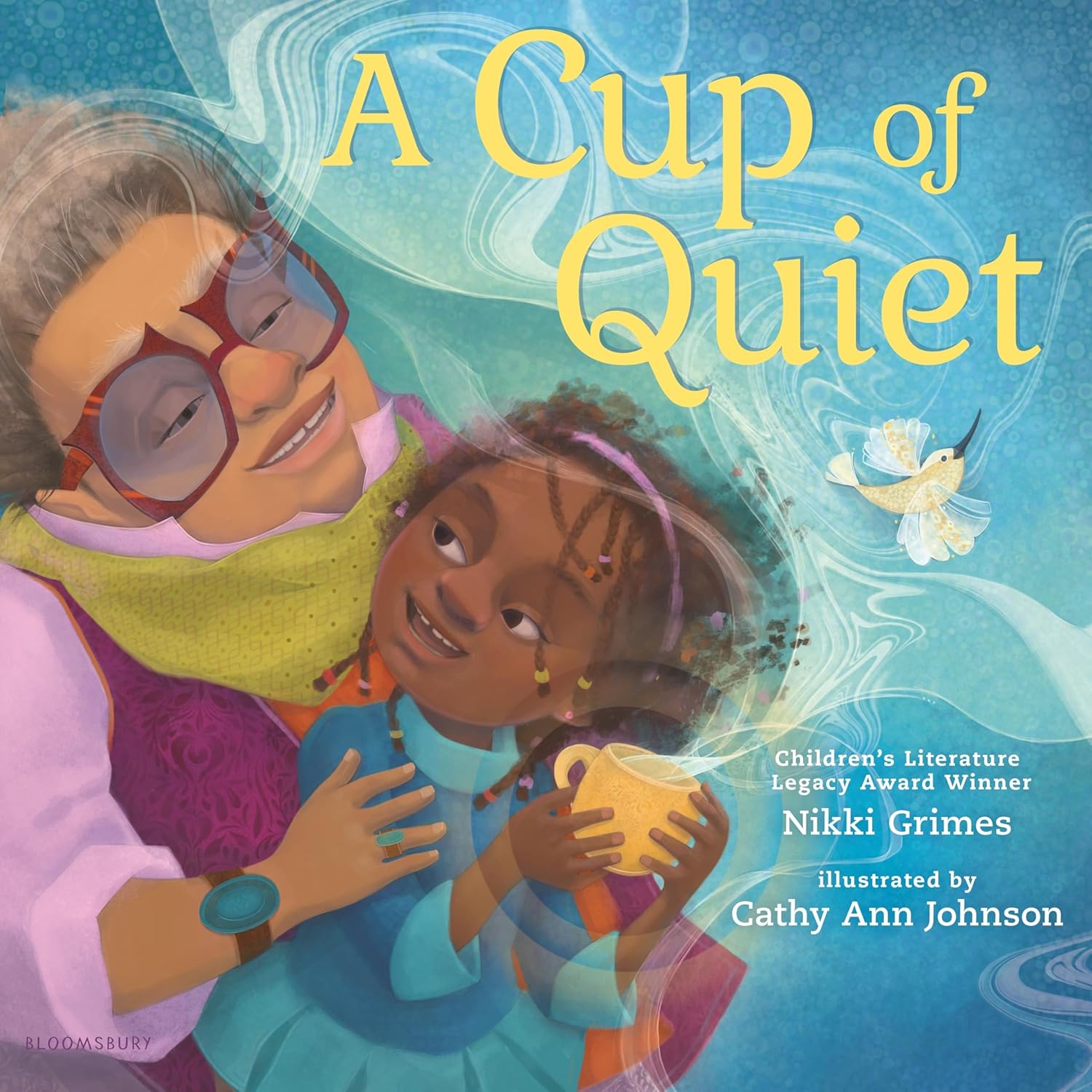
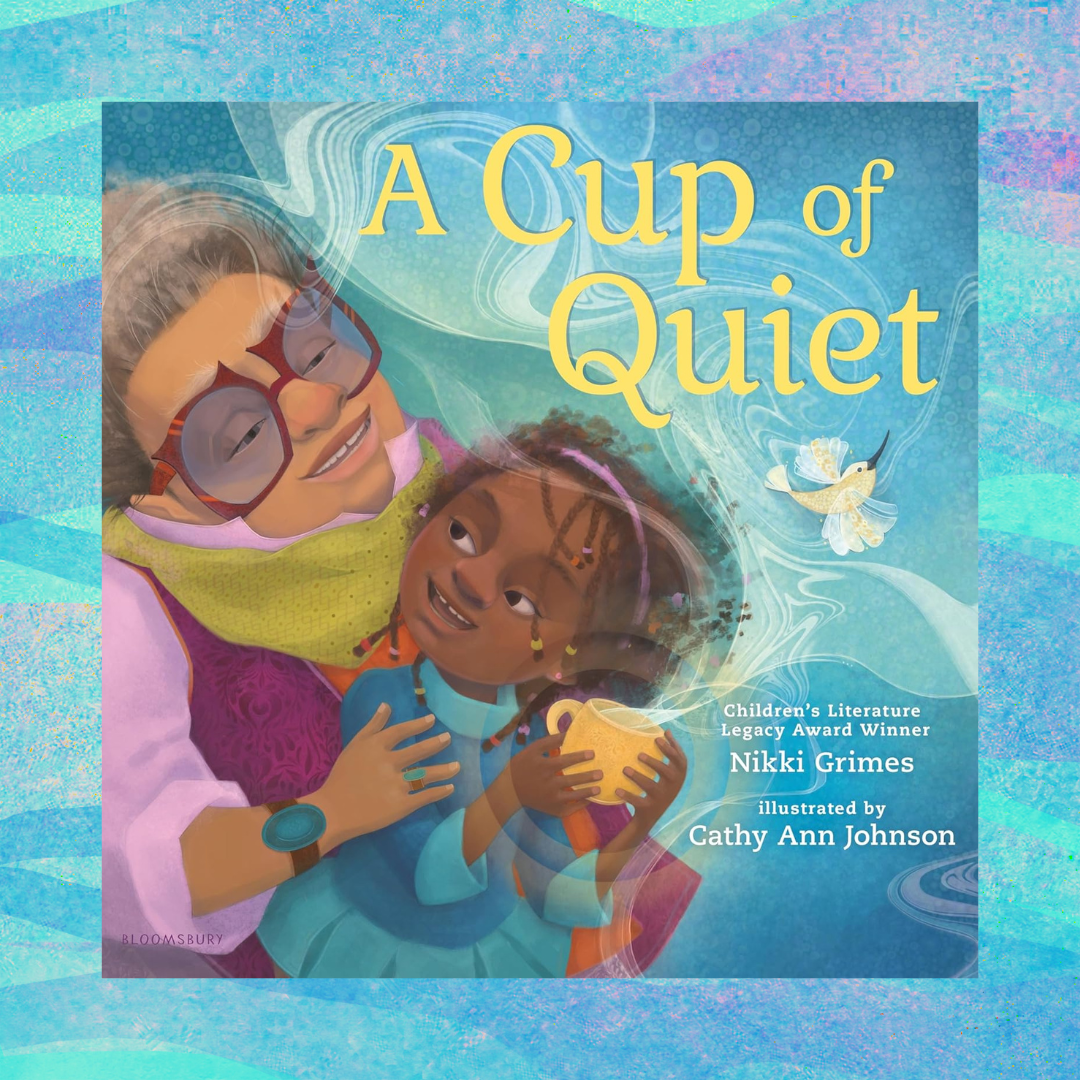
A Cup of Quiet

Written by Nikki Grimes | Illustrated by Cathy Ann Johnson

“You ever hear of smiles?” The young narrator’s talking about the two-week “summer camp” she gets to spend with her grandmother every June. In that breathless excitement of children, she reveals the visits give her and her Grandma time to “stitch sock puppets and put on shows, bake Martian Cake that tastes like banana bread and play tea party in the garden with my dolls.” But today, they’re acting out a story—that is until Grandpa’s hammering and loud music become just too much.
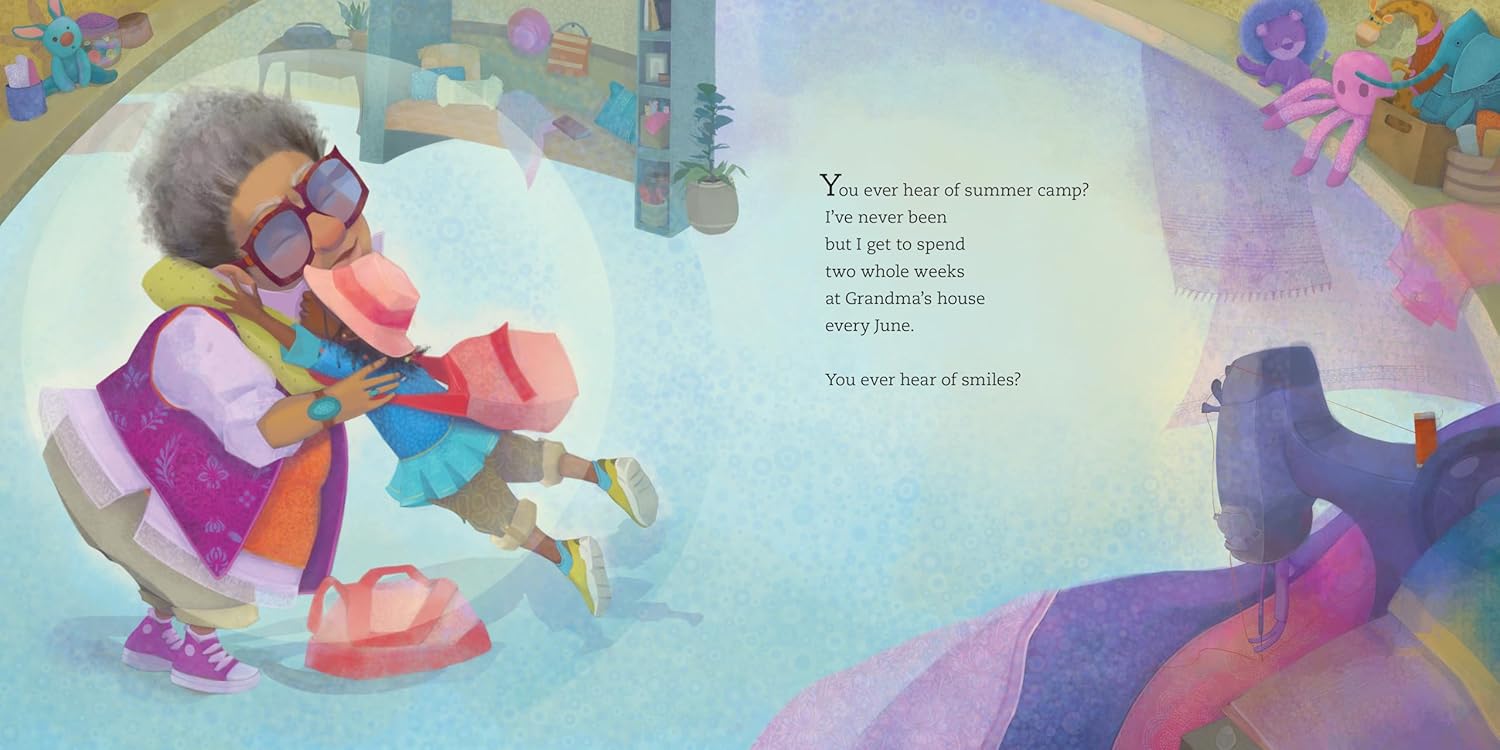
Illustration © 2025 by Cathy Ann Johnson, text © 2025 by Nikki Grimes. Courtesy of Bloomsbury Children’s Books.

Grandma flops into her chair with an “Ugh!” and tells her granddaughter she’s “thirsty for a cup of quiet.” This elicits a giggle and a bit of disbelief, but Grandma’s done with the noise and leads her granddaughter outside to the porch swing. But the city outside their house is just as noisy as Grandpa inside. A trip to the backyard garden is needed. Here, Grandma may be happy, but the narrator is getting fidgety.
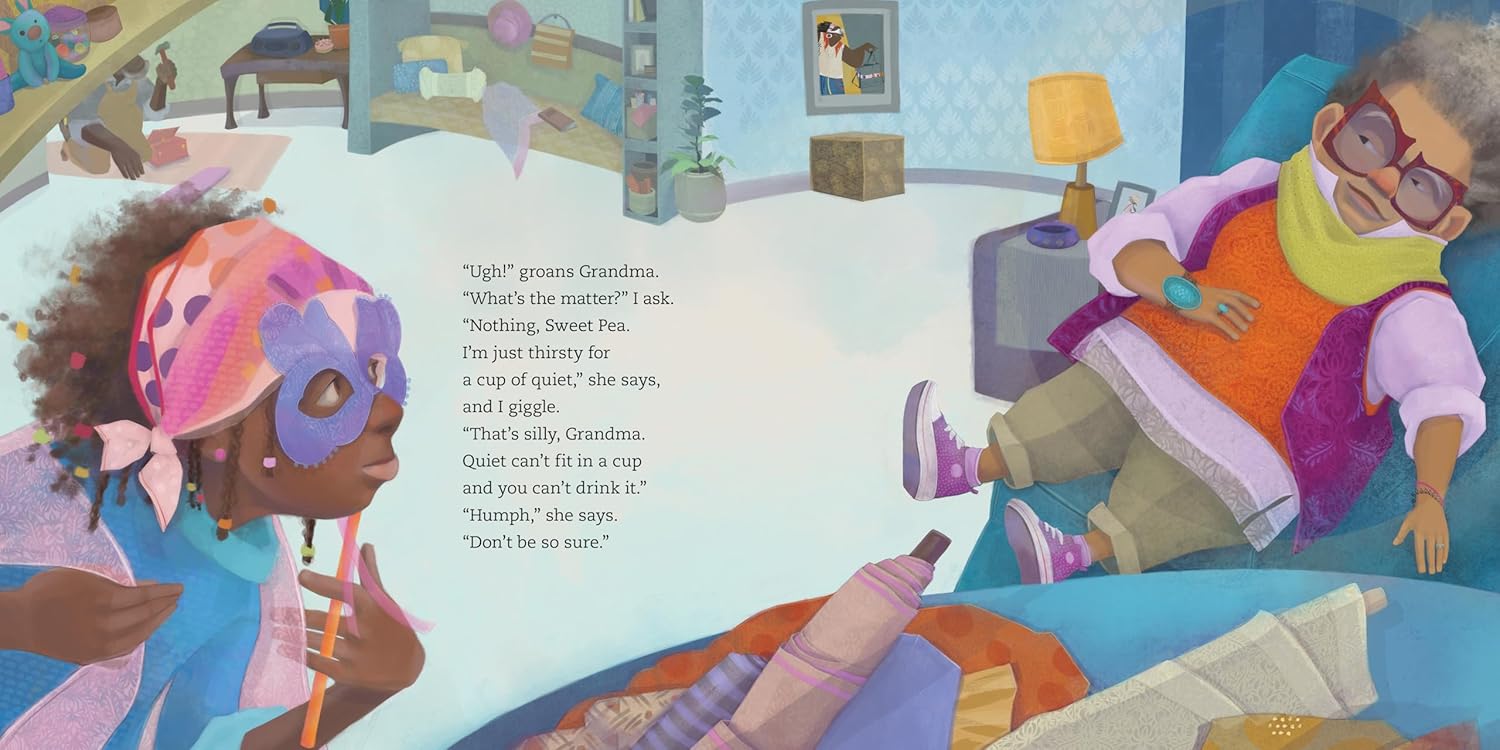
Illustration © 2025 by Cathy Ann Johnson, text © 2025 by Nikki Grimes. Courtesy of Bloomsbury Children’s Books.

Grandma gives her the side-eye and then hands her “an invisible cup” with instructions to “‘walk around the garden and fill this up with any sounds you hear.'” Up for this imaginative challenge, the girl first visits the rose bushes, where a bee is working and “snap[s] up a handful of his buzzing and drop[s] it in the cup.” On the ground below she sees a lizard and “spoon[s] up” the sound of its “scuttling across a dried leaf.” She begins paying more attention to the nature around her and listening harder to fill her cup.
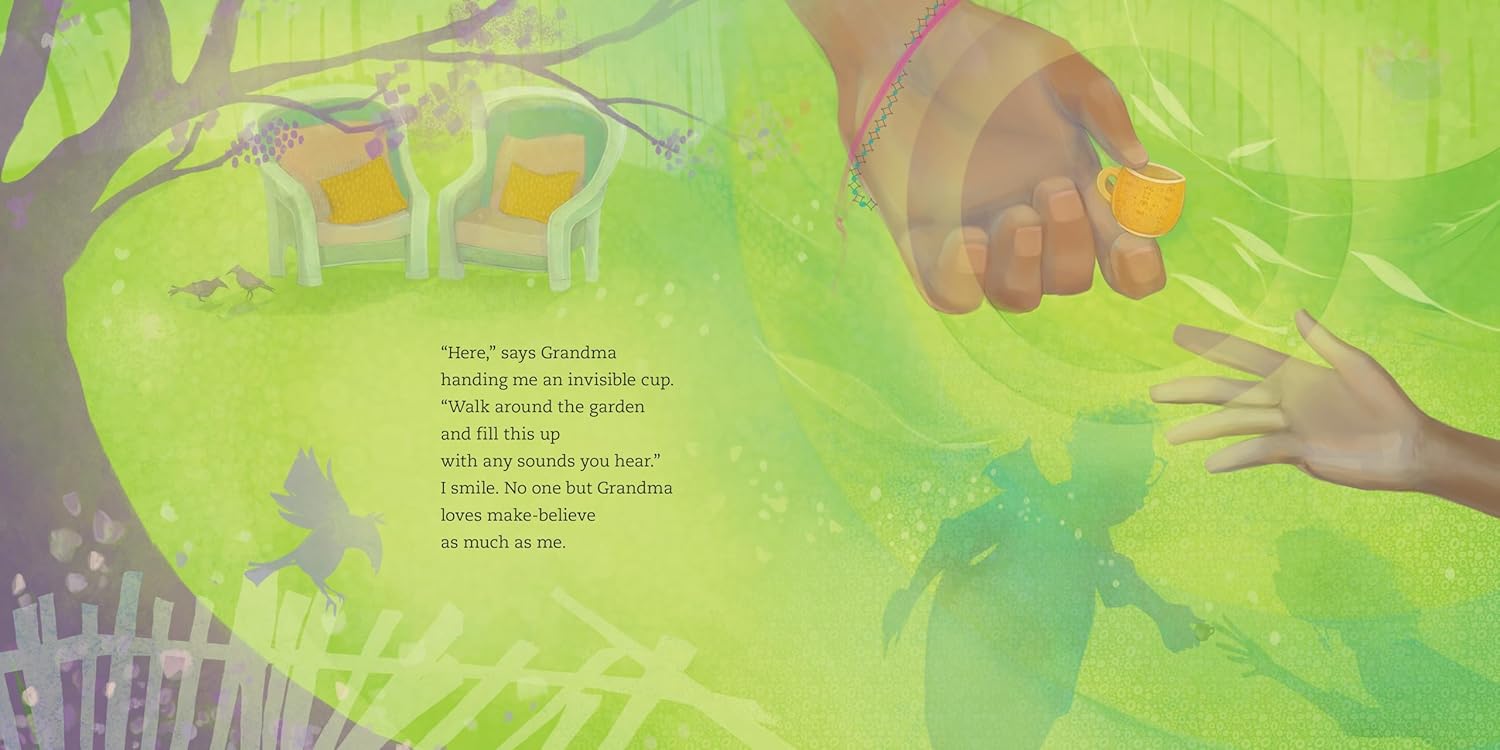
Illustration © 2025 by Cathy Ann Johnson, text © 2025 by Nikki Grimes. Courtesy of Bloomsbury Children’s Books.

A sudden thunderclap precipitates a downpour, but before she runs inside with Grandma, the narrator adds the first pings of raindrops on the roof to her nearly full cup. After drying off and changing, it’s finally time to enjoy a long sip from that make-believe cup. Ahhhh! So “‘refreshing!'” Her granddaughter thinks so too. Still, she has an observation: “‘… your quiet is awfully noisy!'” Grandma smiles and says, “‘I know, but Nature’s noise is peaceful, and I love that.'” Her granddaughter agrees—”You ever hear of perfect?”
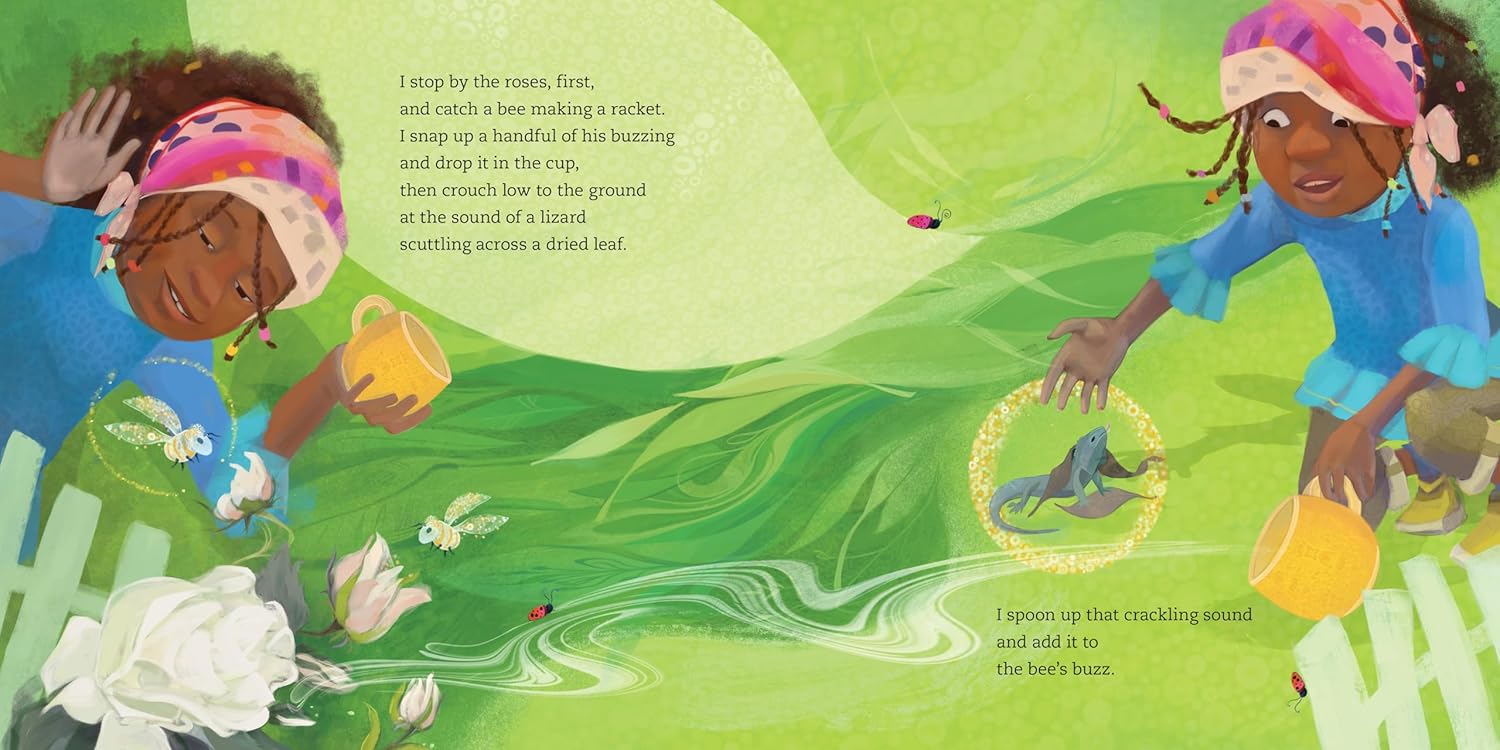
Illustration © 2025 by Cathy Ann Johnson, text © 2025 by Nikki Grimes. Courtesy of Bloomsbury Children’s Books.

Nikki Grimes invites readers to join in with a grandmother and granddaughter for a day of “summer camp” where love abounds. The easy banter between the two and affectionate gestures—such as Grandma’s playful tug on her granddaughter’s braid and the jump-into-her-arms hug the girl gives her grandma—immediately envelope both child and adult readers in this pair’s warm relationship. Grimes’ inventive call to interact with nature and find comfort there will have kids carrying their own imaginary cups to fill and spark other creative games and activities no matter where they live. 

Cathy Ann Johnson’s collage-style, mixed-media illustrations sweep readers into the creative and close-knit atmosphere of Grandma’s house during a week-long visit by her granddaughter. The vibrancy of the pair’s connection is shown through the colorful textures of the fabrics they use for crafting. The allure and importance of nature is likewise emphasized through the vivid greens and swirling motion in the grandmother’s back garden as well as the shimmering beauty of the creatures from which the girl collects sounds. The grandmother and granddaughter’s close bond is evident through their hugs, the way they sit close together (even touching hands while sitting in separate garden chairs), and the care Grandma provides after the rainstorm. The grandmother’s expressions are amusing in their honesty, and the look of wonder in the granddaughter’s eyes is inspirational.

Lyrical, playful, and full of love, A Cup of Quiet is a warm hug of a read aloud that adults and kids will love sharing again and again. The book is a must addition to school library, public library, and home collections.

Ages 3 – 7

Bloomsbury Children’s Books, 2025 | ISBN 978-1547610730

A Talk with Nikki Grimes
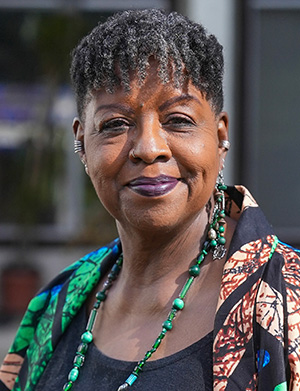
Photo Credit Marchel Hill

New York Times bestselling author Nikki Grimes was inducted into the Black Authors Hall of Fame in 2023. Her honors include the CSK Virginia Hamilton Lifetime Achievement Award, the ALAN Award for significant contributions to young adult literature, the Children’s Literature Legacy Medal, and the NCTE Award for Excellence in Poetry for Children. Author of the Coretta Scott King Award-winner Bronx Masquerade, and five Coretta Scott King Author Honors, she won the Printz Honor and Sibert Honofor her memoir Ordinary Hazards. Her latest titles include Garvey’s Choice:The Graphic Novel, a School Library Journal 2023 Best Book; Lullaby for the King, one of Book Riot’s 25 Best Christmas Books of All Time; and A Walk in the Woods, recipient of 8 starred reviews, and 11 Best Book listings for 2023, including the New York Times, NPR, and Smithsonian Magazine. Ms. Grimes lives in Corona, California. You can visit her at nikkigrimes.com.

Today, I’m honored to be talking with Nikki Grimes about the inspiration behind A Cup of Quiet, how she develops her characters, the joys and challenges of writing for multiple age groups, and much more!

A Cup of Quiet is a perfect book for adults and children to share, not only for outside noise but for times when life gets overwhelming.  Tell us about the inspiration for this story and a little about its journey to publication.

There’s a certain quality of quiet in nature that I’ve always found soothing. I need silence for my work because it allows me to concentrate fully when I write. But nature’s quiet is different. It’s rich with sound, but most of it requires you to pay close attention. To pick up the whir of a hummingbird’s wings, you have to be still, and you have to strain to hear it. The stillness that’s required is soothing, and the sounds you become attuned to are a healing balm. I wanted to write a story that celebrated those sounds, and the beauty of that kind of quiet.

In the early stages of the book, I’d go out to my garden and listen carefully, and I’d make mental notes of all that I heard that day. I’d jot everything down until I had a good list of sounds to play with.

My main character lived in the city and didn’t spend much time out in nature there, though she occasionally went to the park. But every summer, she’d travel out of the city for long visits with her grandmother who had a garden, and whose house was surrounded by trees, and greenery.

The story grew from there, and I knew immediately that I wanted Bloomsbury to publish the book, and I also knew intuitively who I wanted to illustrate—namely Cathy Ann Johnson. This teaming has proven to be perfect, all around.

If I had a cup to fill with quiet today, I’d add my cat’s little sleepy, dreamy purrs, the whoosh of cars passing my house, the rustle of squirrels in the trees, and a drop of water from my bubbling teapot. What would you put in your cup of quiet today?

I would put a bee’s buzz, the wind rustling leaves of a tree, the whir of a hummingbird’s wings—all the sounds I chose for A Cup of Quiet. Those are some of the sounds I listen for, and pay attention to, whenever I immerse myself in nature.

Cathy Ann Johnson’s mixed-media illustrations are a wonder of color, motion, humor, and the love between grandmother and granddaughter. What was your first impression when you saw her illustrations? Do you have a favorite spread?  Why is it a favorite?

First, I was over the moon for the grandmother! She had energy, and spunk, and style. I loved her!  And I loved her colors. Then, as I saw the book’s interiors, I was absolutely thrilled! Cathy Ann’s images, and their movements, were as lyrical as my own words. Our partnership on the page was the proverbial match made in heaven. I would be loath to choose a favorite spread.  Each one has its own magic.

A Cup of Quiet starts out “You ever hear of summer camp?”—a disarming introduction to the child narrator that’s so true to the way kids approach conversation. The dialogue in all of your work sings in this way with the kind of honesty, humor, emotion, and depth that makes your characters seem almost physically with the reader.  I’m curious about your process in developing your characters and stories.

My characters begin with a voice. I’ll hear a scrap of dialogue in my head—nothing extensive, just a few lines. The inspiration might come from the catalog of voices I’ve stored in memory over a lifetime of listening to people around me, or it might be the voice of a particular person in my life whose voice is special or one that has simply stayed with me for a long time. Either way, the voice feels familiar. I’ll jot down that scrap of dialogue as reference, then I’ll begin developing a character sketch and that character’s backstory. I never know how much or little of the backstory I’ll use, but that information guides me as I write. To nail the voice, I have to pay close attention. I climb into the character’s skin and look at the world from his or her perspective and write from that place, attuning myself to that character’s age, birth place, geographical region, quirks, fears—all of it guides me as I make decisions about what that character will say, how they’ll respond to various stimuli that shows up in the plot. If I step wrong, the character will bristle and call me out on it, almost audibly. “Do not put those words in my mouth! I would never say that!” or “I don’t speak like that!” It’s kind of eerie, actually. Characters can be very bossy!

You write books for all ages, from picture books to middle-grade to young adult. Can you talk a bit about the joys and challenges of each? What is one message you want readers in each age category to take away from your books? 

Each age format comes with its own set of limitations, constrictions, and also its own range of possibilities. I love mixing it up. Writing for different age groups keeps me on my toes. The picture book gives you very little room to develop character and plot, while, say, a young adult novel gives you so much unlimited space that you run the risk of overwriting, and of getting lost in the weeds of your plot, or tangled in the layers of your story. Being consistent with your tense or bookending your story in a way that is controlled and satisfying and that feels organic, is much more challenging in the long form of middle grade or YA storytelling.

Language choices are tricky, and different with each age group as well. You walk the line between accessibility and sophistication, between simplicity and complexity. The same variance is true of the emotional components appropriate for each age group as well. For those reasons, I think it’s wise to focus on one genre at a time until you work through the quirks of that genre and figure out a process that works for you. Then, by all means, go on and experiment with the next! It’s tough work, but I like that. For me, easy is boring!

As for your question about messages, I don’t write messages. I write stories. And a well-written story offers a number of ideas a reader might take away. It all depends on the particular reader. We bring ourselves to the page, as readers. Our own experiences, personalities, and what we need at a particular point in time, color what we see, what we notice, and what we ultimately take from a story. Of course, as the creator, I have a certain idea, or theme, I intend to weave into my story—and, by the way, it’s hard to know whether or not I’ve always succeeded—but I don’t worry about whether the reader will pick up on the specific note I had in mind. What matters to me is that, somewhere in the many layers of my story, readers find something valuable with which they resonate. Quite often, the things they find come as a surprise to me, but that’s okay. So long as they walk away with something of value to them, that’s all I can ask for.

While I read through your website, your generosity in sharing so much of your life really stood out.  I’m sure young readers and writers would love to know about when you first began writing and how you were recognized for your talent, having your first public reading when you were 13.  Could you share a little of our writing background with us?  What advice would you give to children and young adults who love to write and want to pursue it?

As I reference in my memoir Ordinary Hazards, and elsewhere, I started writing in earnest when I was six years old, and I did so because I would have burst, otherwise. I was so filled with the emotional and mental poison of anger, and pain, and confusion. I was desperate to get my feelings out, somehow. So, I began to pour those feelings onto a page. That’s how my writing began, but as I reached my teens, the idea of possibly pursuing writing as a career took root. I was encouraged by my father, by my sister, by the friends I dared share my poetry with, and later, by a couple of teachers.  At the same time, though, I also had peers who laughed me off the block for daring to dream of such a thing at all. But I decided early on to surround myself with other young people who nurtured dreams and goals of their own. Everyone else, I cut out of my circle. I refused to absorb the negativity of naysayers.

I encourage young people who have a heart for writing to read voraciously, and to read across genres.  Every genre has something to teach you, and the quality of your writing reflects the quality, variety, and breadth of your reading. So read, read, read.  

Next, write, write, write because writing is a muscle. You have to exercise that muscle if you want to become strong. There is no shortcut to excellence. And if you’re not going to pursue excellence, why even bother? Excellence is what your readers deserve. Remember: the world doesn’t need mediocrity, no matter what field you choose to pursue.

In addition to your many awards over the years, you received the Children’s Literature Legacy Award in 2017 and the Coretta Scott King-Virginia Hamilton Award for Lifetime Achievement Award in 2022. In 2023 you were inducted into the Black Authors Hall of Fame.  What does this recognition mean to you?

Recognition is affirmation, and who doesn’t appreciate that?  But an artist should never be satisfied to sit on their laurels. I use this recognition as fuel to keep pushing forward, to continue to stretch myself as an artist to try genres I’ve never attempted before, to explore forms of poetry I find challenging. Doing so keeps me alive, and grown, and excited about the work I’ve been doing professionally, now, for nearly 50 years. That way, even as I get old, my work never does!

What books of yours can readers look forward to next?

I have a new Dyamonde Daniel chapter book coming out in June.  It’s titled Loser, and it’s about healthy and unhealthy competition, and where to draw the line, especially when you’re competing with your best friend.

I also have a new picture book on the horizon, titled Stronger Than, a collaboration with Choctaw author, Stacy Wells and illustrated by E. B. Lewis, who I’ve worked with before. In this story, a Black Choctaw boy discovers the history of one ancestor who survived the Trail of Tears, and another ancestor who survived the Tulsa Race Massacre. Through their stories, he learns that he comes from stronger stock than he knew, and this knowledge helps him overcome one of his worst fears. I’m excited about both books, for very different reasons.

There are a few more books in production, as well, but it’s too soon to talk about those.

Is there a question I didn’t ask that you wish I had?  What would your answer be?

No. I think I’m about talked-out, for the moment!  This has been fun, though. And I hope you and the young readers in your life enjoy A Cup of Quiet.

Thank you so much, Nikki! It’s been terrific chatting with you! I wish you a wonderful spring and summer of nature’s refreshing quiet.
You can purchase A Cup of Quiet from these booksellers

Amazon | Barnes & Noble | Bookshop (discounted books and support for your local independent bookstore)

Picture Book Review

February 25 – Get Ready for Passover

About the Holiday

Passover is the Jewish spring festival that celebrates the Jews’ liberation from slavery in Egypt. The holiday begins on the fourteenth day of the Hebrew month Nisan, which is the first ecclesiastical month and occurs in March or April. Passover is observed for seven days in Israel and for eight days for Jewish people living outside of Israel. The holiday begins with a seder meal, at which family and friends gather to remember their history, eat symbolic dishes, and celebrate the joy of freedom. This year Passover is celebrated from April 12 – 20.

Thank you to Kar-Ben Publishing for sharing a digital copy of Zayde Babysits before Passover with me.

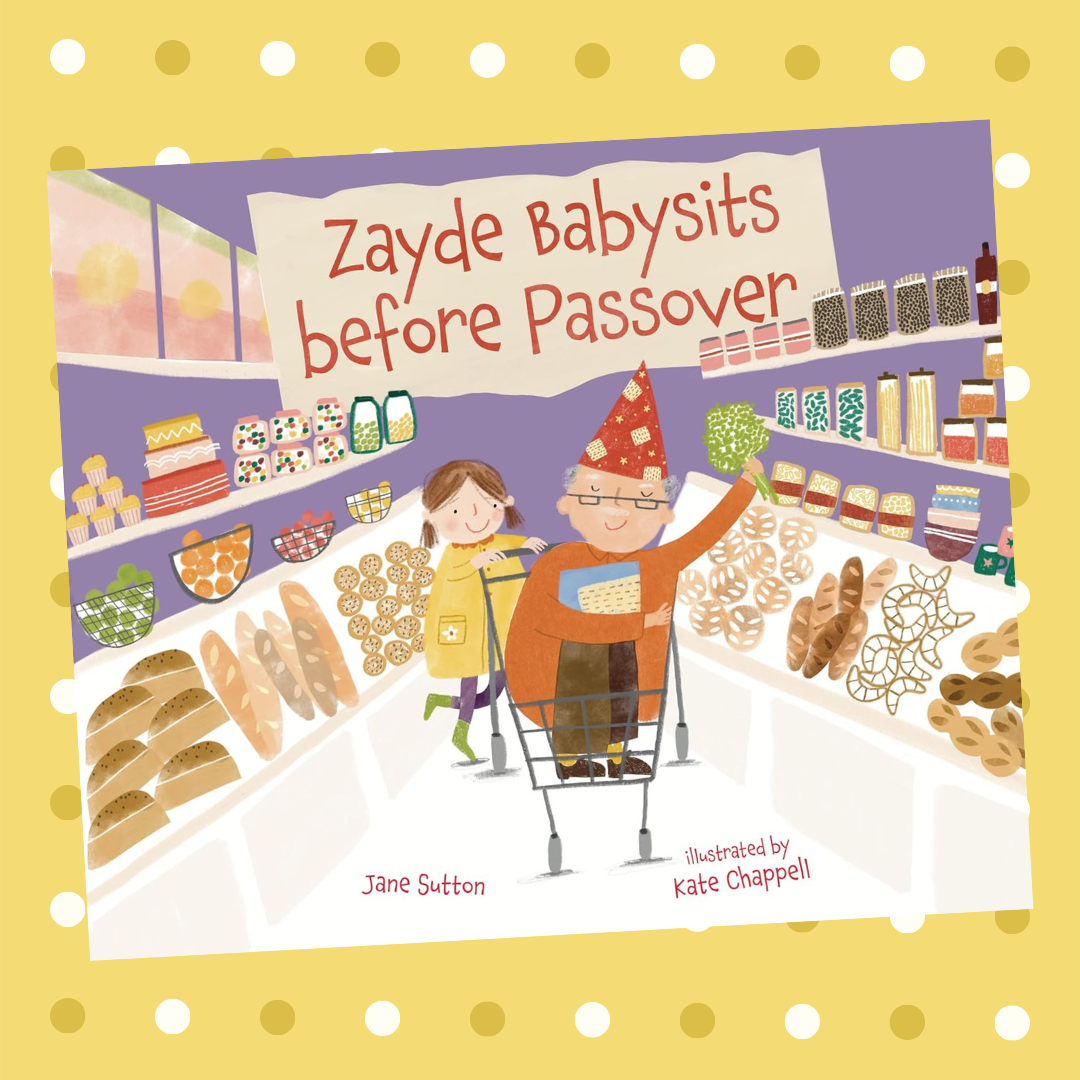
Zayde Babysits before Passover

Written by Jane Sutton | Illustrated by Kate Chappell


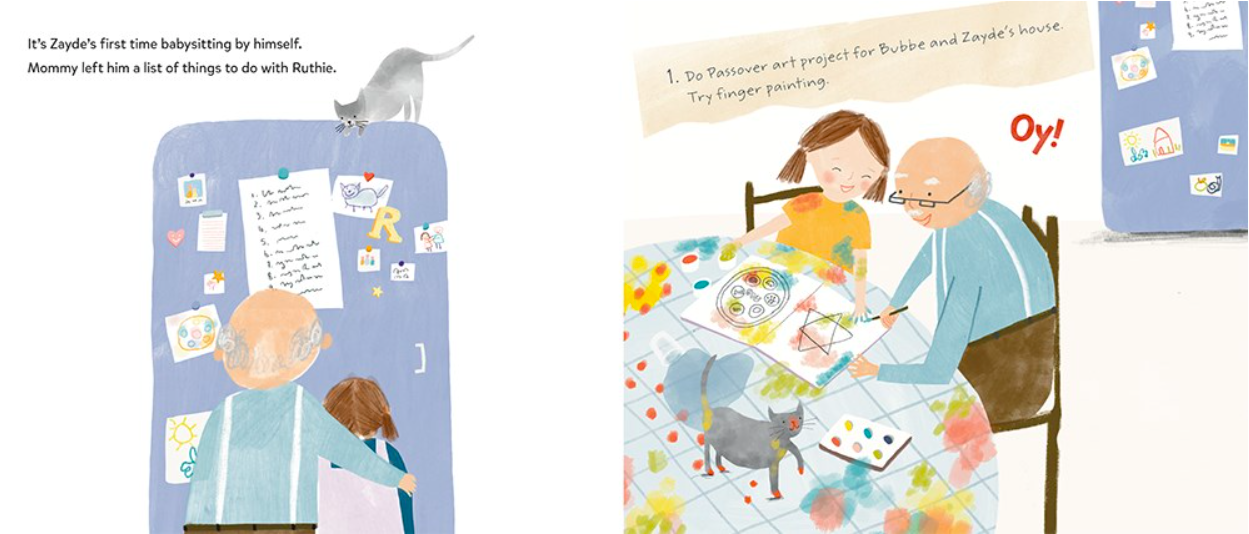
While Ruthie’s mommy and daddy go to Bubbe’s house to prepare for Passover, Zayde is staying with Ruthie at her house. It’s the first time Zayde has ever babysat Ruthie, but he doesn’t have to devise fun activities, or think up places to take her because there’s a long list of tasks to be accomplished stuck to the refrigerator.

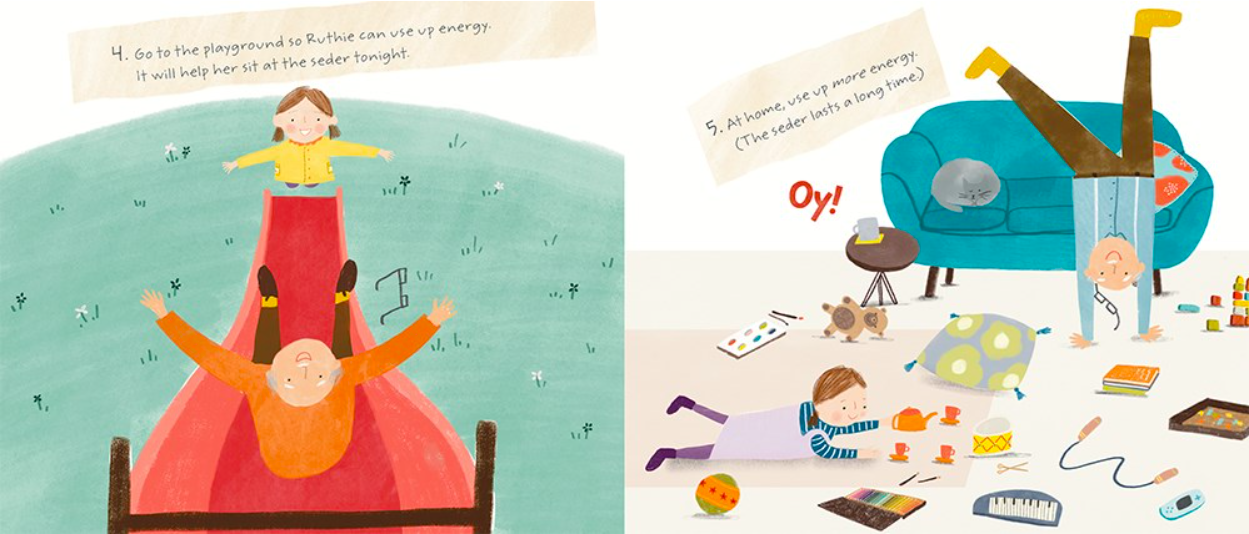
First on the list is to make a few Passover decorations for Zayde and Bubbe’s house. Ruthie’s mommy has suggested finger painting. “Oy!” exclaims Zayde, as the paint escapes the paper onto the tablecloth and Ruthie’s shirt, and even the cat, who joins the fun with some paw painting. The next chores on the list take Ruthie and Zayde into town—to the grocery store for parsley and to the playground “so Ruthie can use up energy” and sit still at the seder later that night. But who’s riding in the cart and who’s slipping down the slide?

Illustration © 2025 Kate Chappell, text © 2025 Jane Sutton. Courtesy of Kar-Ben Publishing.

Back home, Zayde’s been instructed to use up more of Ruthie’s energy, but here, too, who’s doing what is topsy-turvy. Even sweeping up any missed breadcrumbs in the kitchen finds Ruthie pulling Zayde out from under the cupboard. And when Mommy said they should eat a big lunch because dinner will be late, did she really mean that mountain of food? 

Following nap time and bath time, Ruthie and Zayde leave to meet up with the rest of the family. With Zayde leading the seder, it comes off without a hitch. “Ruthie asks the Four Questions. She sings ‘Dayenu’ and hums along with the other songs.” Bubbe’s matzah ball soup is yummy, and Ruthie even “finds the afikomen. Yay!” After everyone leaves, Ruthie tells Zayde she had fun that day and asks if he’ll babysit again. Of course Zayde’s answer is “‘I can’t wait!'”

Illustration © 2025 Kate Chappell, text © 2025 Jane Sutton. Courtesy of Kar-Ben Publishing.

Jane Sutton’s endearing, family Passover story is riotous fun as first-time babysitter Zayde goes all in while fulfilling his pre-Passover seder chores. Kids will enjoy chiming in with Zayde’s exclamations of “Oy!” as things go amiss and will love learning Passover traditions as they spend time with Ruthie and Zayde around town and at home. The burgeoning relationship between Zayde and Ruthie warms the heart.

Kate Chappell’s charming illustrations, juxtaposed with Sutton’s straightforward storytelling, bring to life Zayde and Ruthie’s playful antics and will have kids giggling from page to page. Images of the family’s Passover celebration are uplifting and tender.

A madcap and joyful story for families to share at Passover and whenever grandparents and grandkids get together, Zayde Babysits before Passover would make a wonderful gift and addition to home bookshelves as well as a delightful choice for school and public libraries.

Ages 4 – 9

Kar-Ben Publishing, 2025 | ISBN 979-8765619889

A Chat with Jane Sutton

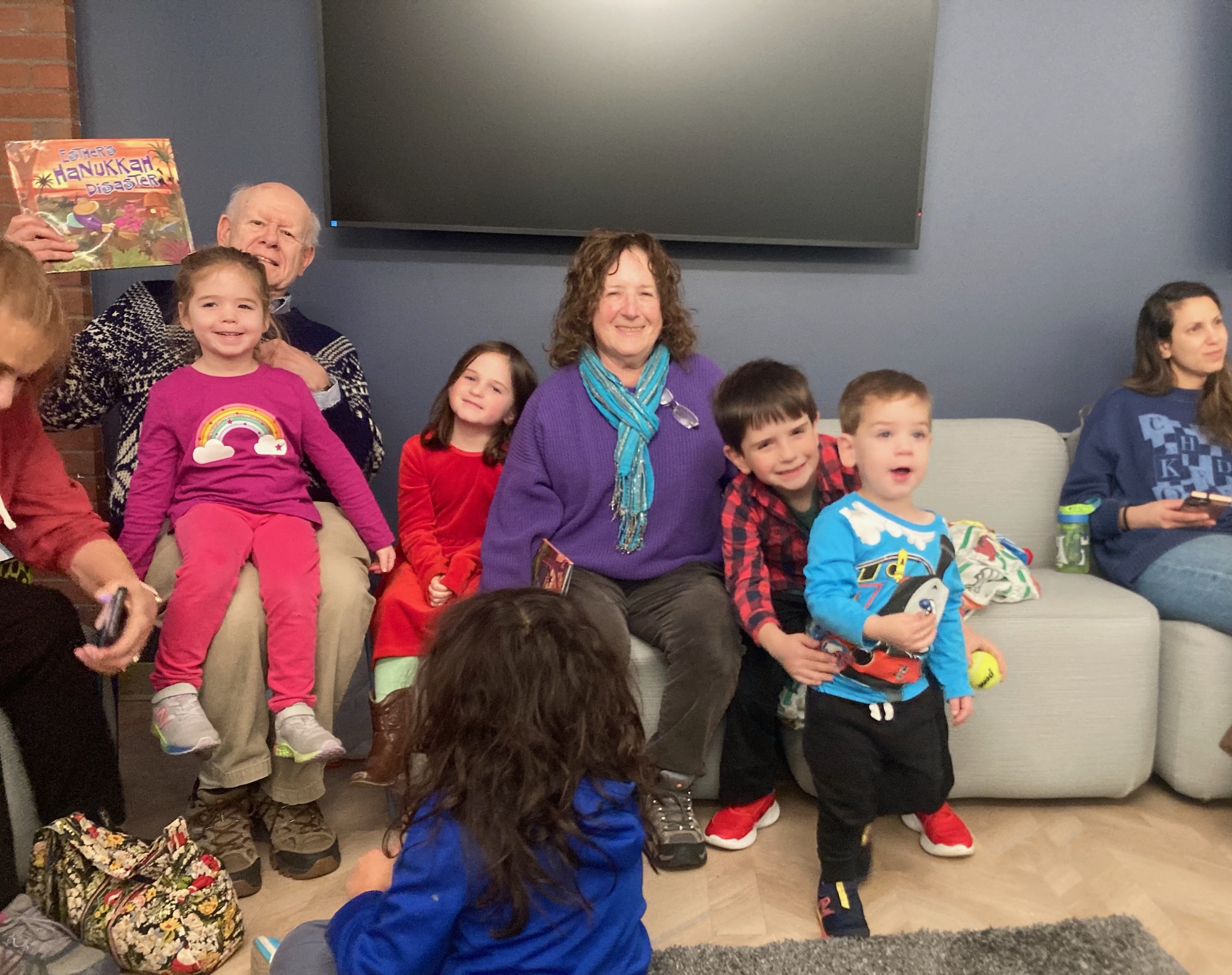
Jane Sutton is an award-winning author of picture books, including Gracie Brings Back Bubbe’s Smile, Paulie’s Passover Predicament, and Esther’s Hanukkah Disaster as well as novels for children. She grew up on Long Island and attended Brandeis University. Jane lives with her husband in the Boston area, as do their grown children and families. She is grateful to get lots of chances to babysit her grandchildren and hopes she makes fewer mistakes than Ruthie’s Zayde. You can visit Jane at jane-sutton.com.

I’m so excited to be chatting with you again about a new book, Jane! The last time we did an interview, it was for What’s Up with this Chicken? and you were a new grandmother to Caleb. So much has happened in the years since! You and your husband are grandparents to four grandchildren now who all live close to you. Has becoming a grandmother influenced the way you write or the subjects you write about?

Come to think of it, my last 2 books have been about a grandparent and a grandchild. And my next book was inspired by a grandchild. I guess it’s natural that I would write about my favorite subject, my grandchildren!

Kate Chappell’s illustrations are so whimsical and really highlight the humor in the story. Kate lives in London. Did you have much interaction with her during the publishing process? Do you have a favorite spread? Which one and what do you like best about it?

I agree. Her whimsical illustrations do just what you said! We didn’t interact directly. My suggestions for art went through the publisher. My favorite spread is also the cover, with Zayde sitting in the shopping cart as Ruthie pushes. It’s so silly and funny, and I love the details Kate includes. It’s my grandchildren’s favorite too!

The images on your blog from your family vacations and other fun times you have together are so infused with love and joy and really make me smile. They made me wonder—does it appear that any of your grandkids have inherited your sense of humor? If so can you share a story?

They’re all funny and witty in their individual ways. One joke that the oldest three grandchildren and I share started on a week-long family vacation. Each morning, we’d greet each other with big smiles while saying, “Not you again!”

How did you get started writing for children? When did you know that this is what you wanted to pursue?

In college I had an assignment in a sociology class to do something we’d always wanted to do and keep a journal about our experience as we did it. I chose to write a series of children’s stories and found that I enjoyed the writing immensely.

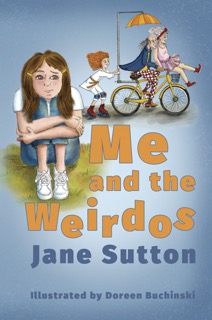
Not only do you write picture books, but you’ve written three middle-grade novels and a young-adult novel. You’ve recently revised and published a new edition of your popular middle grade novel, Me and the Weirdos, after it was turned into a musical by two high school seniors in Utah. I understand you attended the premiere of the play. Tell me more about this book and the experience of seeing it transformed into a musical.

In Me and the Weirdos, Cindy Krinkle feels like the only normal person in her family. She kind of has a point. Some examples: Her father rides a bike with an umbrella on it as he sings opera loudly and off-key. Her mother gargles with orange juice, and her sister has a pet sea urchin. Cindy’s plans to “un-weird” the rest of her family all backfire in amusing ways, and she eventually comes to appreciate them the way they are. Attending the musical was amazing. The lovely students who created it were so talented. They wrote the script and lyrics, composed the music, and directed the play with a middle school cast. The show was both entertaining and true to the book’s humor and message that it’s OK to be different.

It’s clear that you love sharing your love of writing and your books with kids through programs at schools and libraries. Can you give us a peek at what one of your presentations is like? Do you have an anecdote from any program that you’d like to share?

I share my writing process, including more or fewer details depending on the age group. I emphasize the importance of revision, something I strongly believe in and which makes teachers nod and smile. And lest writing seem like too much work, I make sure I express my joy in writing.

I believe young readers have another book to look forward to in 2026! Would you like to give them a little glimpse of what’s to come?

It will be my first board book, one I hope that will make people of all ages smile.

Thanks so much, Jane for this wonderful chat! It’s been terrific catching up! I wish you all the best with Zayde Babysits before Passover and can’t wait to see your board book. I’m sure it will bring a smile!

You can purchase Zayde Babysits before Passover at these booksellers

Amazon | Barnes & Noble | Bookshop (to support your local independent bookstore)

Picture Book Review
 

February 7 – National Send a Card to a Friend Day

About the Holiday

Today’s holiday is all about reaching out to a friend or family member with cheerful wishes or a reminder about how much they mean to you. Sure, texting is more immediate, but the sentiments get lost amid long scrolls of typed conversations, shared pictures, and links sent. A card or a letter is more permanent and easy to enjoy again and again without all the dizzying swiping, swiping, swiping to retrieve the message that meant so much to you. Sending cards is such a wonderful way for kids, especially, to keep in touch with friends, cousins, aunts and uncles, and grandparents. Today, encourage your children to share their feelings in a card or letter and get today’s book to read and inspire creative communication whenever your kids are missing a loved one.

Thanks to Tara Knudson for sharing a copy of Paper Wishes with me!

Paper Wishes

Written by Tara Knudson | Illustrated by Kirsti Beautyman

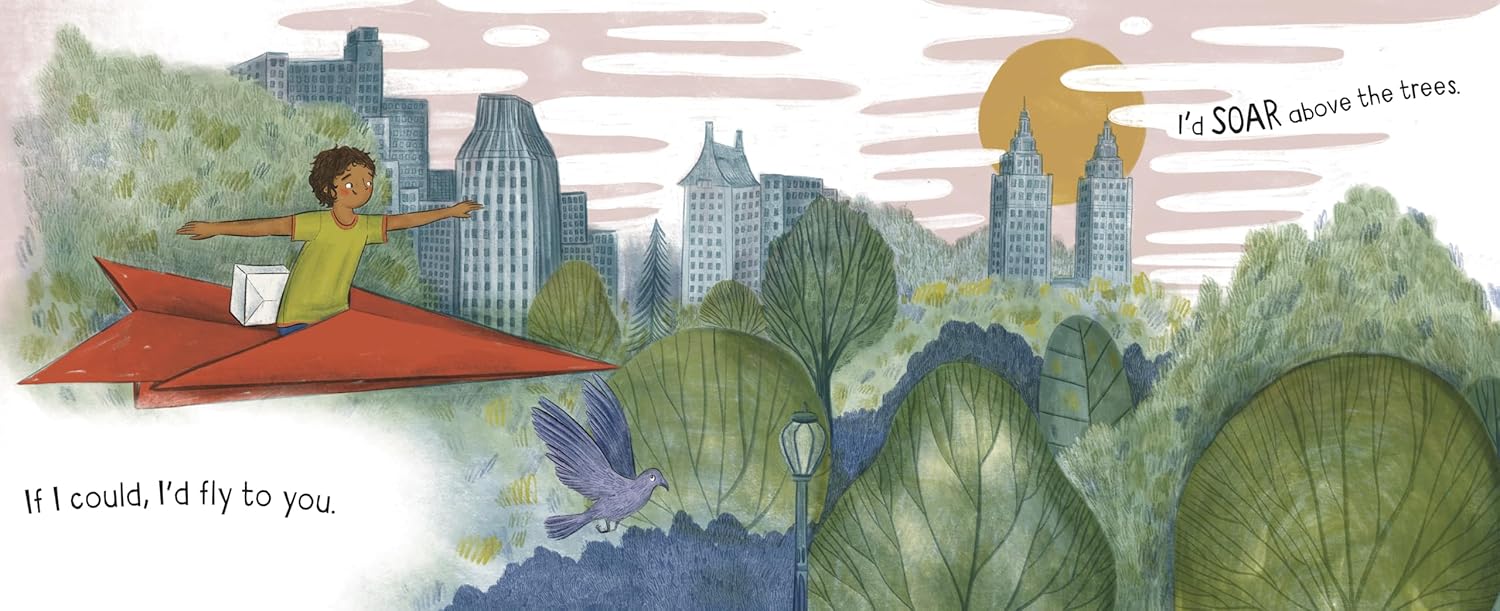
A child wistfully flies a paper airplane through their room, wishing they could fly, sail, take a train or drive to visit their grandparents and “bring a gift by hand.” Spying a piece of red paper on their desk, the child has an idea: Even though you’re far away, there’s one thing I can do. / Fold and crease . . . and fold again. / I made my gift for you!” With a few deft folds and tucks, the child creates an origami heart for their grandmother and grandfather.

Image copyright Kirstie Beautyman, 2024, text copyright Tara Knudson, 2024. Courtesy of Picture Window Books.

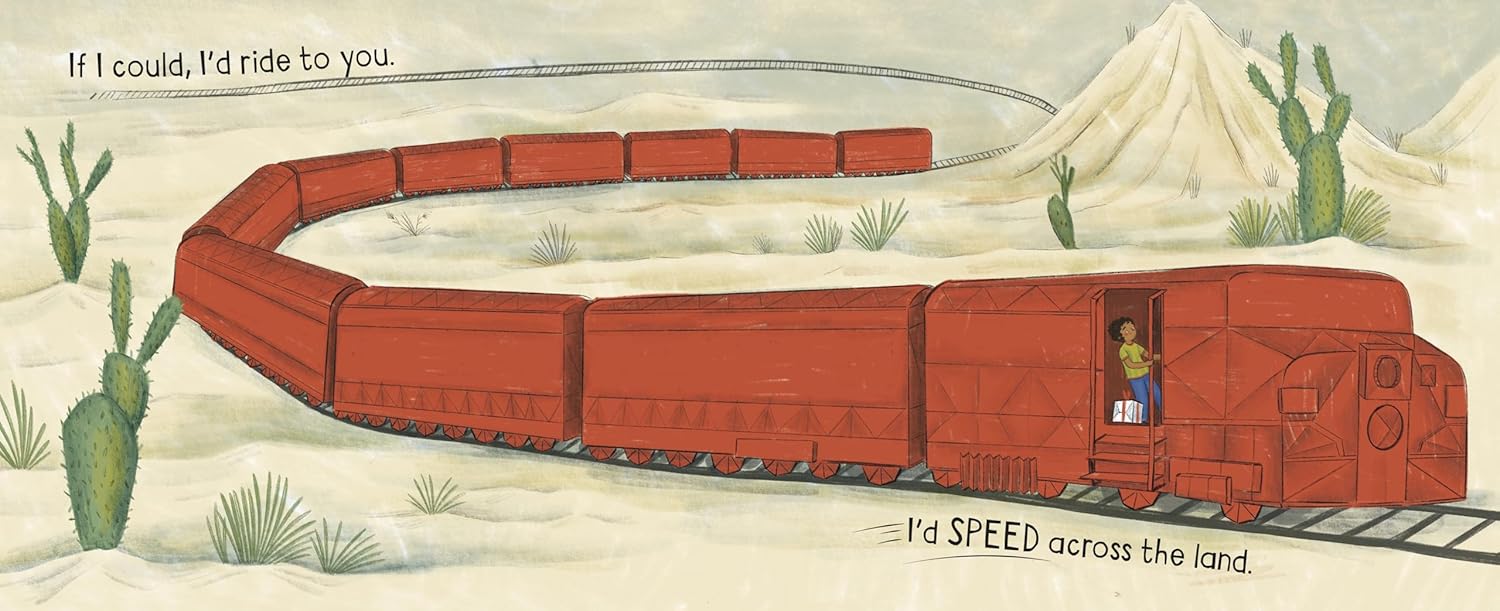
The child places the heart in an envelope and places it in the corner mailbox, sending “it on its way.” And then the waiting begins. Each day, they wonder “Is it on a truck? / Is it on a plane? / Is it on a boat? / Is it on a train?” and hope that their gift arrives safely. The child wishes they could see their grandparents’ reactions when they open the gift, and . . . through technology, the child and their grandparents get to share their smiles.

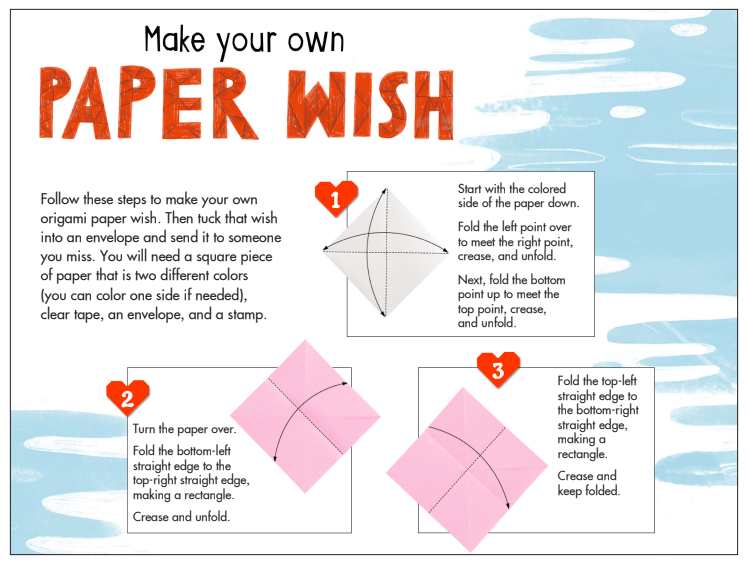
Easy-to-follow, illustrated instructions on how to make an origami heart follow the story.

Image copyright Kirstie Beautyman, 2024, text copyright Tara Knudson, 2024. Courtesy of Picture Window Books.

Tara Knudson’s touching and uplifting story will be treasured by children who miss seeing family members or friends and want to share stories, smiles, and love with them. Knudson’s lively rhymes and easy-flowing rhythms will captivate even the youngest children. Kids will enjoy reading along with the recurring phrasing and evocative vocabulary. Children who are eager gift-makers will love the inspiration in both the story and the included origami craft.

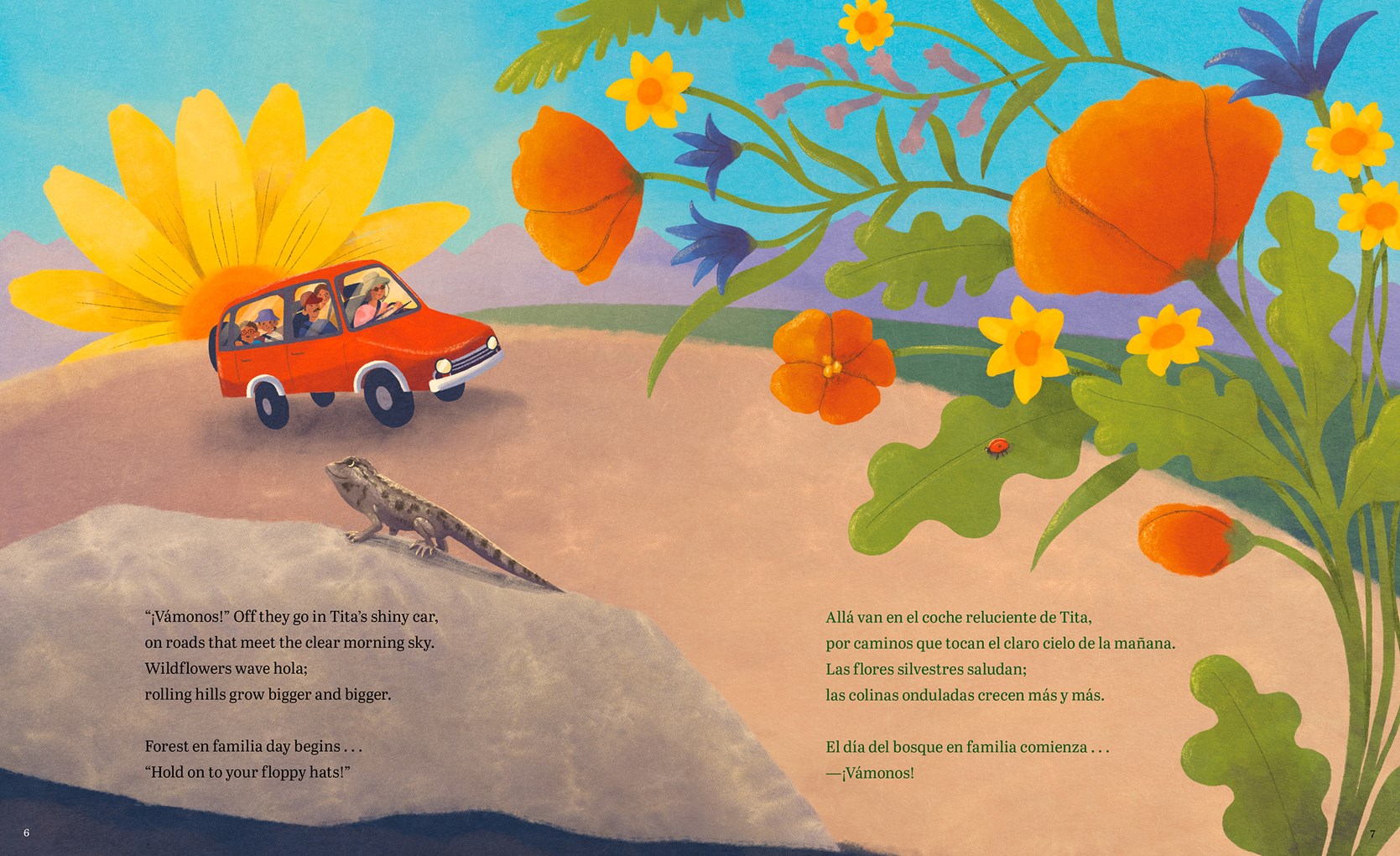
Kirsti Beautyman takes readers over a towering city, across choppy seas, winding past cacti in a sandy desert all the way to colorful townhouses on a shady street in a plane, boat, train, and truck cleverly drawn to mimic origami creations. Readers will immediately empathize with the child, whose expressions show a yearning to see grandparents again, happiness when close to them, pride in the gift they’ve made, and hopeful waiting to hear from family. Young readers are also reassured that family members or friends who are far away are thinking about and missing them too.

A tender, heartfelt, and inspiring read aloud that children will want to hear again and again, Paper Wishes would be an exceptional addition to home, library, and classroom collections.

Ages 4 – 8

Picture Window Books, Capstone Press, 2024 | ISBN 978-1684466184

About the Author

Tara Knudson is the author of multiple picture books, including Christmas Cookie Day, Fun Fall Day, and Valentine’s Day Treats. Tara is a former teacher who has been writing poetry since she was a young girl growing up in Chicago.

About the Illustrator

Kirsti Beautyman is an author and illustrator from the North East of England. After studying at Edinburgh College of Art and graduating in 2016, Kirsti turned her hand to illustrating children’s books and partook in the Picture Hooks Mentorship scheme in 2017. At the end of the scheme, Kirsti exhibited alongside her Mentor in the National Gallery of Scotland and was named “Picture Hooks Illustrator Of The Year”. Since then, she has continued to build on her career as a children’s book illustrator, and works from her studio, nestled away on the outskirts of Newcastle. Kirsti predominantly uses a culmination of digital, dry and wet media to create her illustrations… and is prone to leaving a vibrant jumbled mess in her wake.

National Send a Card to a Friend Day Activity

Paper Wishes Craft

Kids can make their own origami heart to give with the instructions in this Paper Wishes Instruction Sheet.

You can purchase Paper Wishes at these booksellers

Amazon | Barnes & Noble | Bookshop (to support your local independent bookstore)

Picture Book Review
November 20 — It’s Family Stories Month

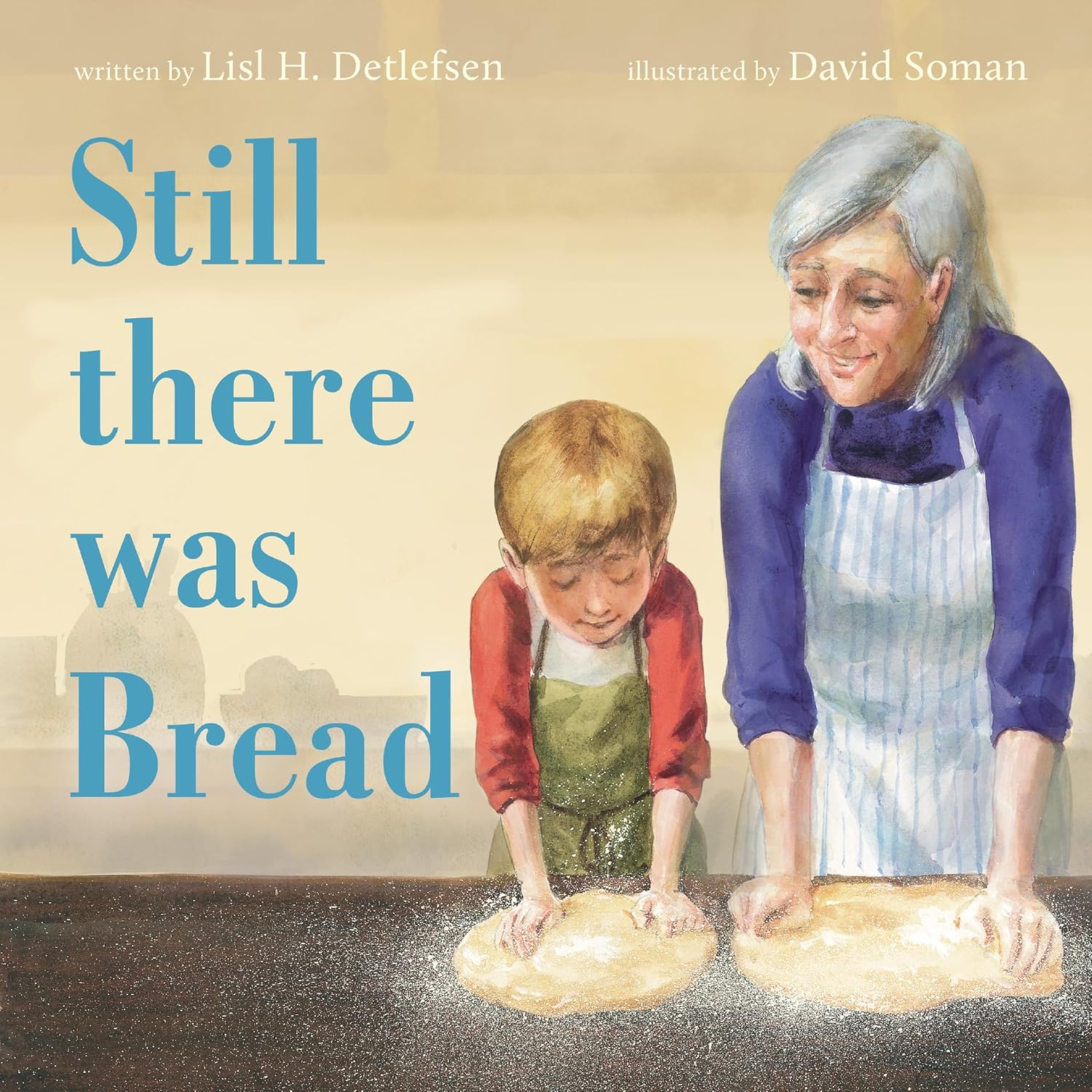
celebrate-picture-books-picture-book-review-still-there-was-bread-cover

About the Holiday

Do you have a favorite family story to tell or tradition to share? Then this month is for you! No matter if your stories are funny or poignant tales of a family member or they’re tied to a special recipe or heirloom, everyone—especially children—benefits by these reminiscences. Family Stories Month encourages people to gather together and engage in the tradition of oral storytelling, which has been part of people’s lives and cultures since ancient times. It’s a wonderful way to stay connected to your own family heritage and build bonds that last forever. 

Thank you to HarperCollins and Barbara Fisch at BlueSlip Media for sharing a copy of Still there was Bread with me for review consideration. All opinions on the book are my own.

Still there was Bread

Written by Lisl H. Detlefsen | Illustrated by David Soman


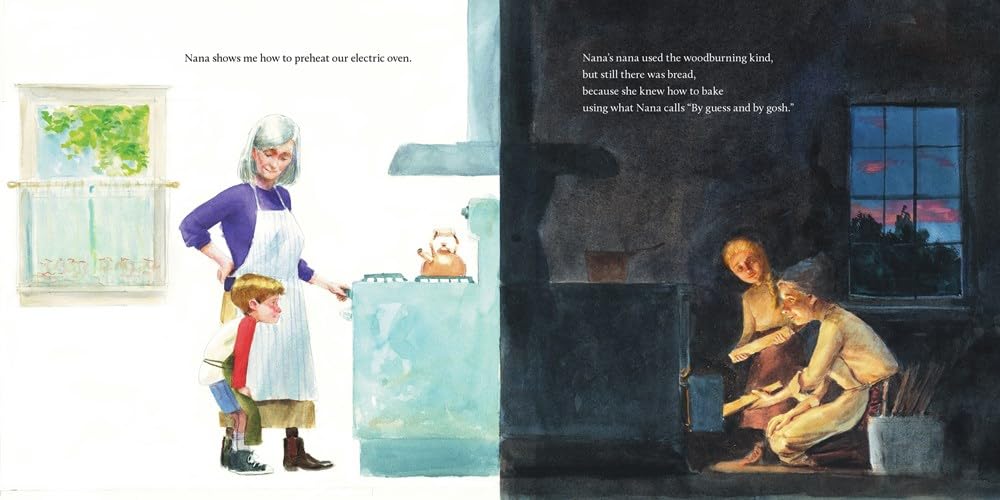
Nana comes to visit her daughter’s family and to teach her grandson—her “Little Pickle”—how to bake the family’s traditional pull-apart “Nana rolls.” Nana and Little Pickle gather the ingredients and turn on the oven while Nana talks about how “her nana had to collect eggs from the chicken coop and milk a cow to get what she needed” and stoke a woodburning stove to bake the rolls.

Nana and Little Pickle move on to combining the ingredients and easily mixing the dough in a stand mixer, a modern contrast to the child narrator’s great-great-grandmother using a wooden spoon. They knead the dough and put it in a bowl to rise in a sunny spot—no different from how it was done all those years ago.

celebrate-picture-books-picture-book-review-still-there-was-bread-stove-vs-woodburner

Image copyright David Soman, 2024, text copyright Lisl H. Detlefsen, 2024. Courtesy of HarperCollins.

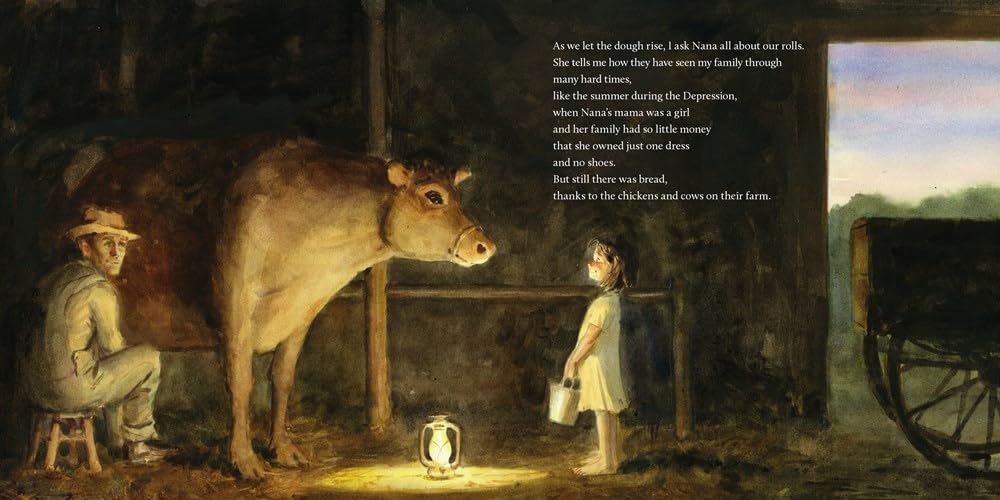
While they wait for the dough to rise, Little Pickle asks Nana to tell stories about the rolls they’re making, and she readily reveals how important their homemade bread was through lean times—like during the Great Depression, when “Nana’s mama was a girl and her family had so little money that she owned just one dress and no shoes. But still there was bread, thanks to the chickens and cows on their farm.” Or when Nana, herself, was a baby and “the whole house was quarantined because she and her daddy had something called polio,” but eggs and milk were delivered. This leads Nana to connect it to a recent quarantine, when people rediscovered the comforts of homemade bread.

celebrate-picture-books-picture-book-review-still-there-was-bread-barn-during-depression

Image copyright David Soman, 2024, text copyright Lisl H. Detlefsen, 2024. Courtesy of HarperCollins.

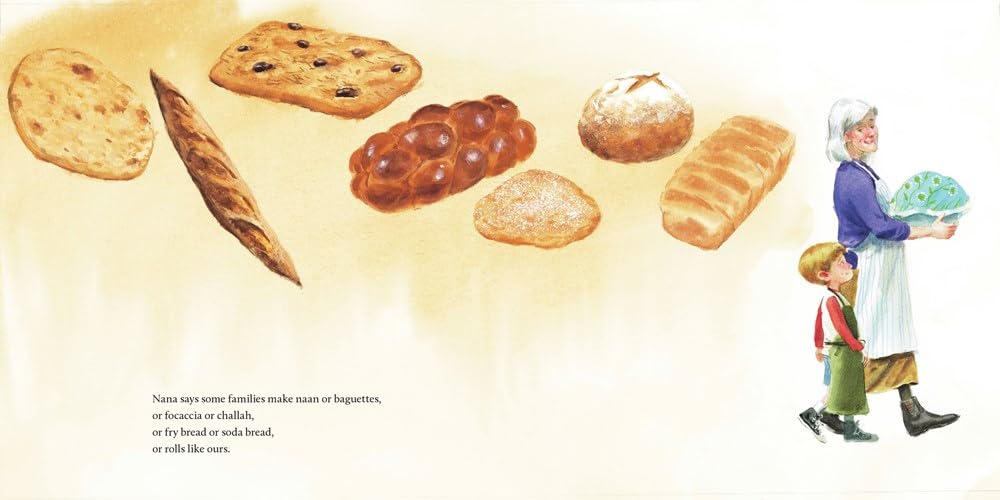
During the second rise of the dough, Nana and Little Pickle talk about the different kinds of bread people make with the “same simple ingredients” for “times they can be together, and times they can’t.” At last the dough is ready to pinch off and shape and put in pans. One more rising allows Nana to tell stories of how she baked bread for Little Pickle’s mom and aunt, and how she “‘paid a pretty penny'” to mail bread to a homesick cousin who was far away. 

celebrate-picture-books-picture-book-review-still-there-was-bread-different-kinds-of-bread

Image copyright David Soman, 2024, text copyright Lisl H. Detlefsen, 2024. Courtesy of HarperCollins.

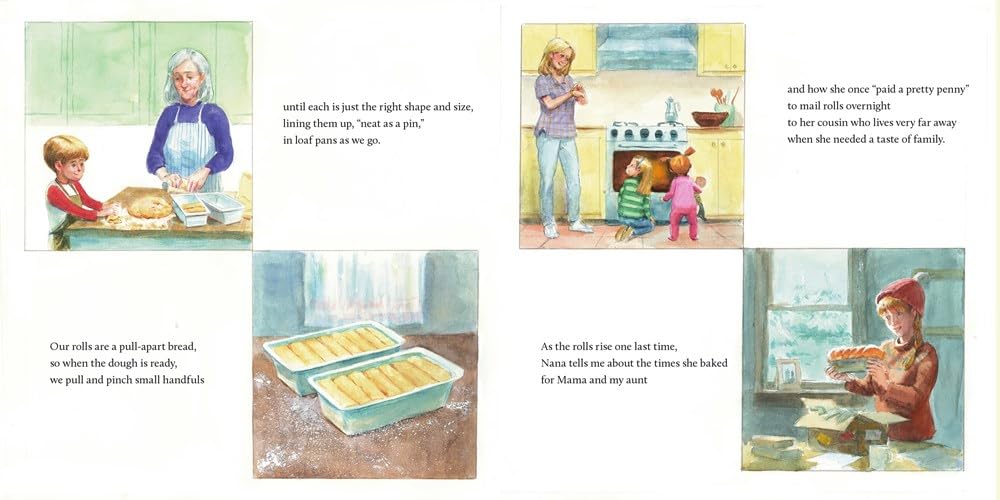
Little Pickle asks Nana how many times she’s made the rolls, and she replies, “‘Who could say?'” She’s made them for sick neighbors and as gifts for a whole list of occasions. “‘All of them were kneaded. And needed,” she says. The rolls are finally ready to pop into the oven, and as they bake, their “toasty smell brings the rest of the family to the kitchen.” When the rolls are ready, everyone gathers around and “the kitchen becomes a blur of butter and honey and jam and laughter.” Little Pickle is happy and satisfied knowing that years from now “I will share our recipe and the stories that go with it with my kids or grandkids,” but for now whenever someone “needs a warm, fresh-baked hug, I’ll know just what to do.”

celebrate-picture-books-picture-book-review-still-there-was-bread-vignettes

Image copyright David Soman, 2024, text copyright Lisl H. Detlefsen, 2024. Courtesy of HarperCollins.

Filled with warmth, family love, and connectedness, Lisl H. Detlefsen’s Still there was Bread, is a heartening read aloud that will foster a child’s curiosity about the past as well as their own family history and long-held traditions while also being grounded in today. Deftly combining lyrical storytelling with the young narrator’s voice, Detlefsen has created a tale that appeals across generations. The rhythm and easy cadence of the text is as comforting as the homemade rolls depicted. 

David Soman’s pen-and-ink and watercolor illustrations shine for their realistic portrayals of home, the baking process, and especially the expressive faces and shared looks between family members, from Nana and Little Pickle to their ancestors. Soman’s soft textures and glowing lighting bring to life Nana’s stories about her grandmother, the Great Depression, and Nana’s early life. His use of vignettes coupled with full-page illustrations creates a rich tapestry from page to page, not unlike a family photo album. The final image of the family gathered around the dinner table, with Little Pickle, roll in hand and looking out from the page invites readers to join in on the “warm, fresh-baked hug” offered here. 

Still there was Bread would be a welcome addition to family gatherings, especially at holidays and family reunions, and is highly recommended for home, public library, and school library bookshelves.

Ages 4 – 8+

HarperCollins, 2024 | ISBN 978-0063216556

About the Author

Lisl H. Detlefsen is the author of a growing number of picture books, including Farm Boots, illustrated by Renée Kurilla, and At the End of the Day, illustrated by Lynnor Bontigao. She lives with her husband and two sons in a restored farmhouse on a family-owned cranberry marsh in Wisconsin. You can visit her online at lislhdbooks.com.

About the Illustrator

David Soman has illustrated many beautiful picture books, including The Impossible Mountain and the New York Times bestselling Ladybug Girl series, which he cocreated with his wife, Jacky Davis. He is an instructor at the School of Visual Arts in New York City and lives with his family in Upstate New York. Visit him at davidsoman.com.

Family Stories Month Activities

Celebrate Picture Books Family Story Starters 2

Family Story Starters


Getting together with family and/or friends over the holidays, for regular visits, or for other events? Have fun and get to know each other better with these story starters that can lead to fascinating memories and discoveries that build bonds. Use these Family Story Starters to prompt conversations or even play charades. Just print, cut, and place in a bowl or basket then have family members or friends randomly choose among them to get the fun going!

StoryCorps Logo

Connect with Others through Family Stories on StoryCorps

StoryCorps was established on the idea that everyone has an important story to tell and that listening to others’ stories helps us “believe in each other by illuminating the humanity and possibility in us all.” Since their founding in 2003, nearly 700,000 people across the country have recorded short recollections about their lives. Each story is accompanied by animation that helps listeners, and children especially, visualize the narrative. The stories are accessible on the StoryCorps website and in the U.S. Library of Congress. The StoryCorp online archive is “now the largest single collection of human voices ever gathered.”

A perfect way to celebrate Family Stories Month, to share our common bonds, and to introduce children to the wonders of storytelling, listen to some of the incredible stories on StoryCorps. You can also get involved in the project by recording your own family stories! Visit StoryCorps to learn more. 

celebrate-picture-books-picture-book-review-still-there-was-bread-cover

You can purchase Still there was Bread at these booksellers

Amazon | Barnes & Noble | Bookshop (to support your local independent bookstore)

Picture Book Review
October 24 – National Food Day

celebrate-picture-books-picture-book-review-the-most-perfect-persimmon

About the Holiday

Established in 2011 by the Center for Science in the Public Interest, National Food Day aims to raise awareness of nutrition issues and encourage people to “Eat Real.” Eating real means “cutting back on sugary drinks, overly salted packaged foods and fatty, factory-farmed meats in favor of vegetables, fruit, whole grains, and sustainably raised protein.” Prominent food activists help people discover where they can find food that is healthy and affordable. Another goal is to promote food production that is mindful of the environment, farm animals, and farmers. The efforts of National Food Day continue year round and culminate on October 24 with special events.

Thanks to Astra Young Readers for sharing a copy of The Most Perfect Persimmon with me for review consideration. All opinions on the book are my own.

The Most Perfect Persimmon

By Hannah Chung


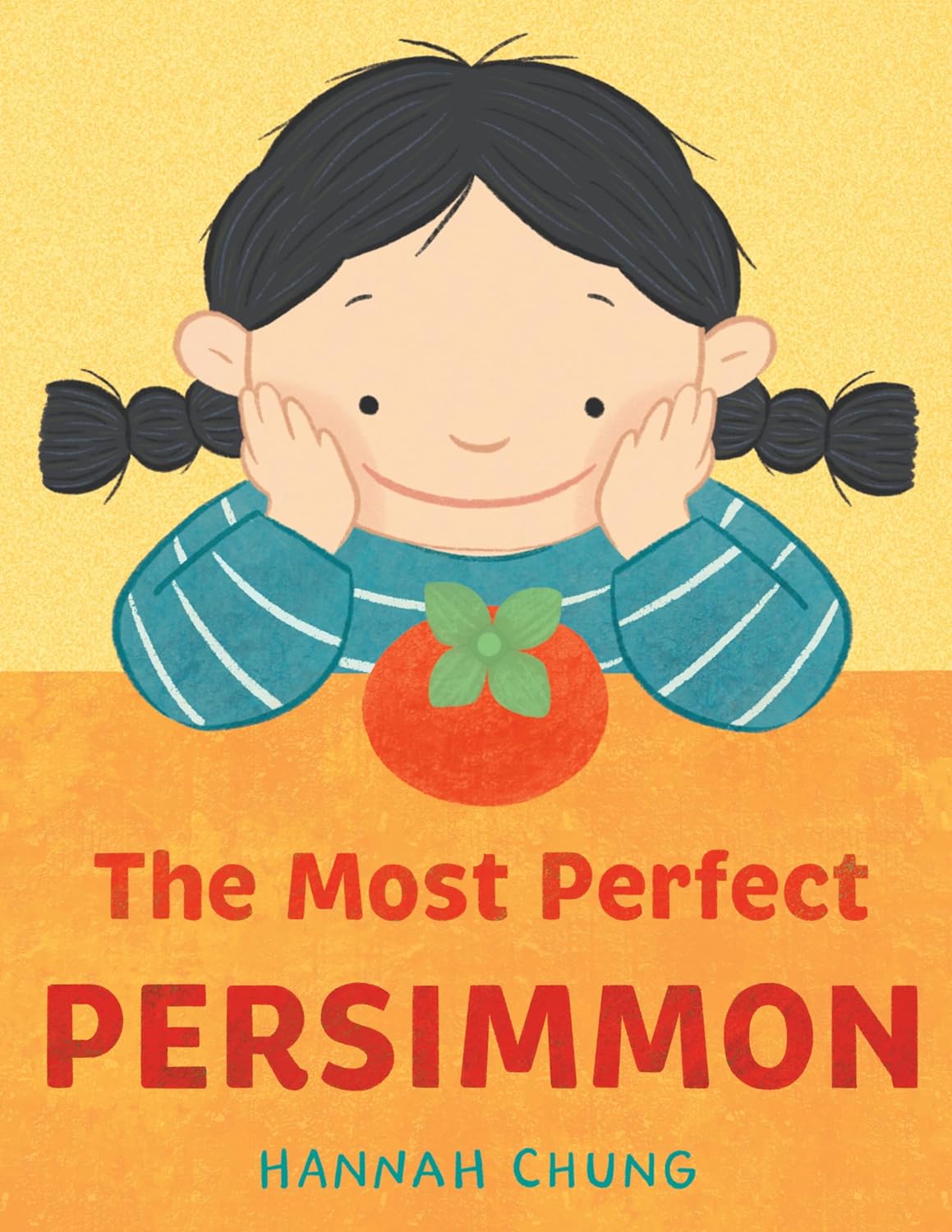
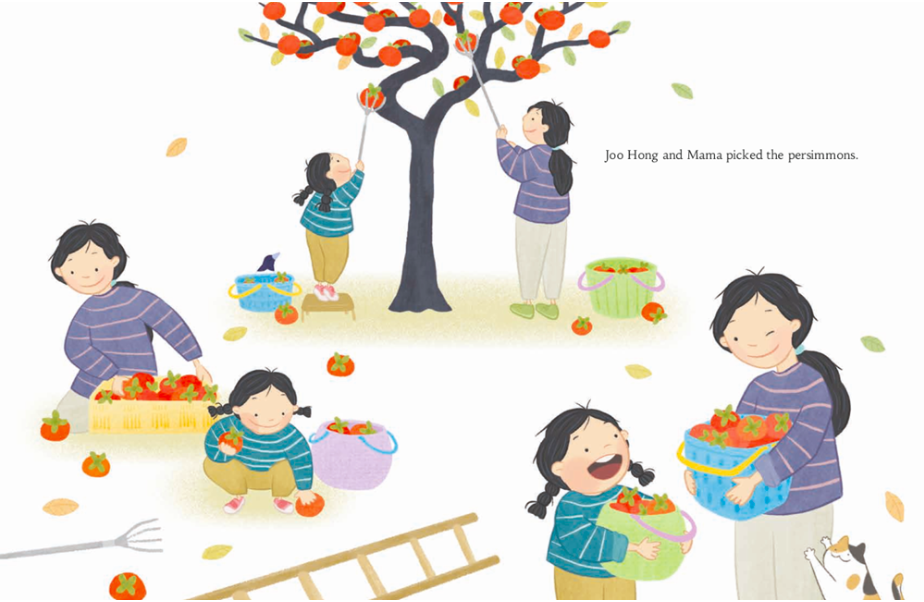
When Joo Hong gazed at the persimmons growing on the tree in her backyard, she saw the full moon, the glowing sun—perfection. She picked one, wanting to give it to her grandma, but her mother told her, Grandma’s visit was weeks away. Joo Hong wanted to taste that persimmon now, but when she took a bite, she discovered that the fruit wasn’t ripe yet. She decided to help the persimmon tree along by watering it, wrapping its trunk in a warm blanket on cool nights, and shooing away the magpies. At last they were ready.

celebrate-picture-books-picture-book-review-the-most-perfect-persimmon-picking-persimmons

Copyright Hannah Chung, 2024. Courtesy of Astra Young Readers.

This time when Joo Hong tasted one, it was “shiny on the outside. Soft and sweet on the inside. They were so perfect!” Joo Hong couldn’t wait to serve them to Grandma. But she would have to. Grandma’s visit was still a week away. It was so hard for Joo Hong to wait. But the persimmons were not waiting. They “got redder and started to show wrinkles. Some even had brown spots.” Joo Hong was upset even though her mother tried to reassure her that they were just ripening. Joo Hong hid the boxes of fruit from the sun and kept her cat away, but “the persimmons kept changing.”

celebrate-picture-books-picture-book-review-the-most-perfect-persimmon-grandma-visits

Copyright Hannah Chung, 2024. Courtesy of Astra Young Readers.

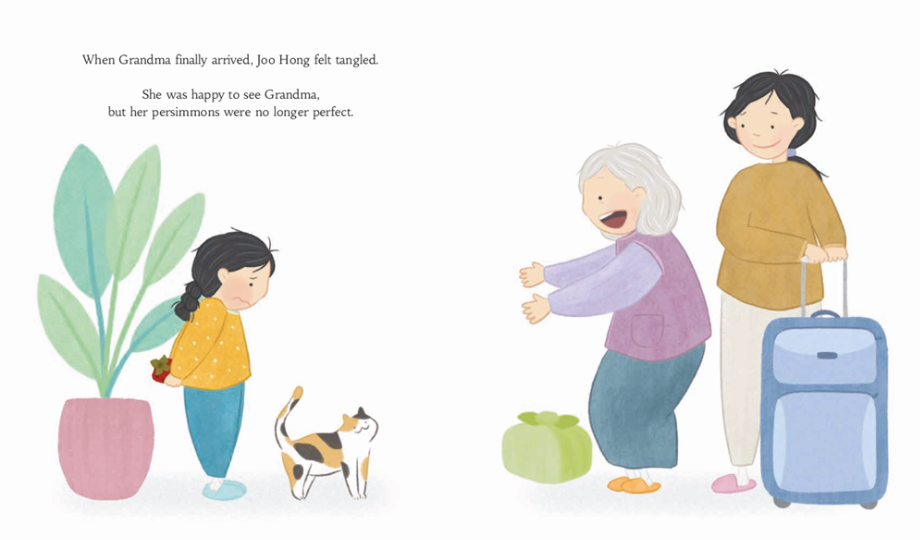
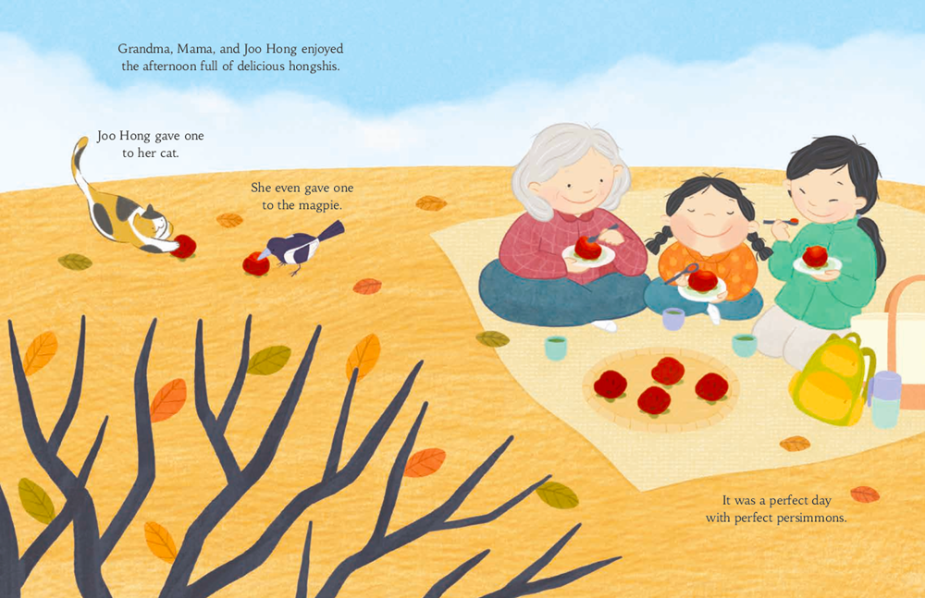
By the time Grandma arrived, the persimmons “were no longer perfect.” Joo Hong held out her gift with tears in her eyes. “Grandma Gave Joo Hong a big, warm hug” then took the fruit, peeled the skin, and gave Joo Hong a spoon. Joo Hong tasted it. It was delicious! Grandma smiled. “‘A persimmon becomes a hongshi with lots of love and care over time,'” she said, then exclaimed it was the best persimmon she’d ever eaten. Joo Hong was so excited that she gave a persimmon to her cat and even to the magpie. Then she and her mother and Grandma set out a picnic on this perfect day and enjoyed hongshis all afternoon.

An Author’s Note reveals Hannah Chung’s homegrown inspiration for her story. 

celebrate-picture-books-picture-book-review-the-most-perfect-persimmon-picnic

Copyright Hannah Chung, 2024. Courtesy of Astra Young Readers.

In her delightful and poignant debut picture book, Hannah Chung captures all the emotions of a young child with a big heart planning a special surprise for a beloved family member. From Joo Hong’s impatience for Grandma to arrive to her determination to ensure the persimmons are perfectly ripe to her tangled feelings and disappointed tears when Grandma does arrive and Grandma’s tender reassurances, Chung hits all the right notes, creating a story that kids and adults will love sharing and bond over.

Chung’s easy-to-understand, straightforward storytelling flows naturally and at a quick pace while also allowing readers to empathize with Joo Hong’s anticipation. In her bright, uncluttered illustrations Joo Hong’s facial expressions clearly show her changing feelings and make it simple for even the youngest children to understand how important the persimmon and Grandma are to Joo Hong. The relationships between Joo Hong, her mother, and her grandmother are sweet and tenderly drawn.

A perfect read aloud for story times as well as for bedtime, The Most Perfect Persimmon is a book that will be asked for often and is highly recommended for home, public library, and school library bookshelves. 

Ages 4 – 8

Astra Young Readers, 2024 | ISBN 978-1662620843

About the Author/Illustrator

Hannah Chung is an award-winning designer and entrepreneur in health care design for young patients. She is a frequent guest lecturer at universities and has presented at numerous conferences including TEDx and SXSW. Hannah spends her time both in Providence, Rhode Island, and Seoul, South Korea.

National Food Day Activity

celebrate-picture-books-picture-book-review-shop-the-farmers-market-maze-with-border

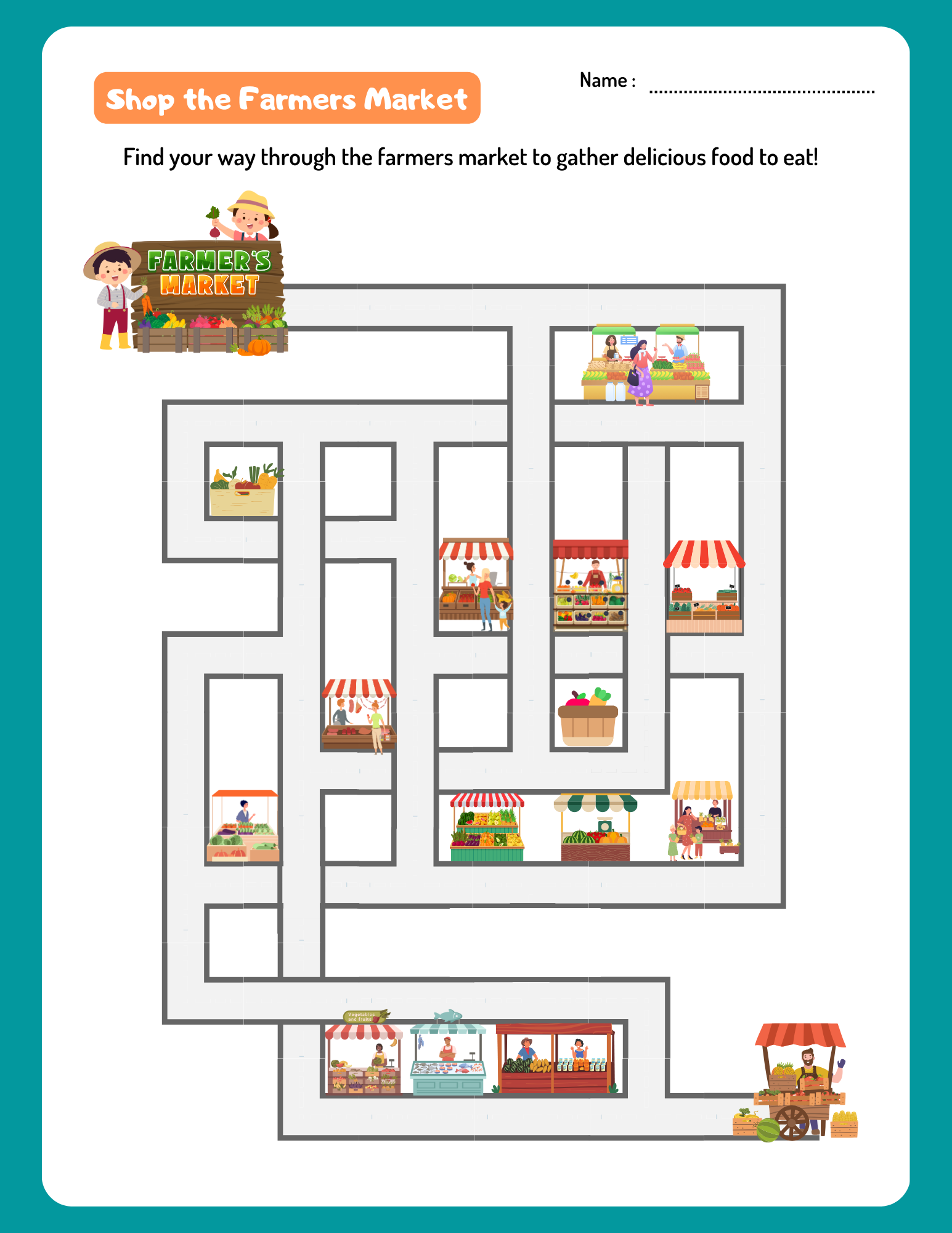
Shop the Farmers Market Maze

It’s a perfect day to visit the farmers market! Find your way through the stalls to enjoy all the delicious food! 

Shop the Farmers Market Maze with no colored border | Shop the Farmers Market Maze with colored border

celebrate-picture-books-picture-book-review-the-most-perfect-persimmon

You can purchase The Perfect Persimmon at these booksellers

Amazon | Barnes & Noble | Bookshop (to support your local independent bookstore)

Picture Book Review
April 5 – National Dandelion Day

celebrate-picture-books-picture-book-review-tiny-wonders-cover

About the Holiday

Spring is here and so are those vibrant yellow flowers that spring up on lawns, in gardens, along roadways, and anywhere there’s a bit of soil, sun, and rain. I’m talking, of course, about dandelions! With their gloriously yellow flowers and fly-away seeds, these little plants are part of spring and summer landscapes around the world. While most may consider the dandelion a weed, it is, in fact, much more. Technically, the dandelion is an herb that has many health benefits. Dandelion leaves can be used in salads, soups, and teas, and they provide aid with regulating blood sugar, wound healing, gastrointestinal problems, and even vision. Known for their healthy properties since 659 BCE, dandelions are a staple food for many global cultures. To celebrate, check in your favorite grocery store or farmers market for dandelion leaves and try a new recipe! 

Thanks to Bloomsbury Children’s Books for sharing a copy of Tiny Wonders with me for review consideration. All opinions on the book are my own.

Tiny Wonders

By Sally Soweol Han

April wished her town wasn’t so… gray. Everyone was always rush, rush, rushing here and there, plugged into their phones, their music, or their podcasts. She never heard laughing or saw anyone “look up at the sky.” She wanted to “help them all slow down” like her grandma, who was never too busy to notice all the wonders in the world. One of her grandma’s favorite wonders was flowers—especially dandelions. “‘Did you know there’s a secret language of flowers?'” she asked April. “‘Dandelions mean happiness,'” she said. That made April think that perhaps dandelions could make the world better.

celebrate-picture-books-picture-book-review-tiny-wonders-wish

Copyright Sally Soweol Han, 2022. Courtesy of Bloomsbury Children’s Books.

April went in search of dandelions and dandelion seeds, but found none. The gardener told her they were weeds, and the bus driver said they made him sneeze. The shopkeeper remembered how she used to wish on dandelions when she was little. April thought maybe dandelions were magic. She wished and wished and wished for a dandelion seed all the way home. When she got to her doorstep, she discovered, to her delight, that dandelion seeds had followed her home. She collected them then waited for the perfect time to plant them.

celebrate-picture-books-picture-book-review-tiny-wonders-growing

Copyright Sally Soweol Han, 2022. Courtesy of Bloomsbury Children’s Books.

Finally, on a rainy day, April took her jar of seeds outside. Then she watched over them through fall and winter to see what happened. When spring came, the seeds sent up little green shoots. The plants grew and grew until glorious yellow flowers faced the sun, attracting butterflies and ladybugs. The petals turned fluffy and finally released more and more seeds into the world. Soon, the colors of spring were everywhere “and happiness bloomed.” Even the gardener and the bus driver embraced these little flowers, and “everyone made wishes for more tiny wonders to grow.”
A beautifully illustrated double-page spread follows the story and reveals the meanings of thirty-two types of flowers.

celebrate-picture-books-picture-book-review-tiny-wonders-colors-of-spring

Copyright Sally Soweol Han, 2022. Courtesy of Bloomsbury Children’s Books.

Sally Soweol Han’s sweet and gentle Tiny Wonders perfectly encapsulates not only young children’s capacity for finding joy in the simple aspects of life but also their ability to truly affect change through their boundless optimism and concrete actions. April’s close relationship with her grandma acts as a precious counterpoint to the daily bustle and distractions that have drained vitality from the town. 

Soweol Han’s soft, yet vibrant gouache, color pencil, and pastel illustrations are lovely accompaniments to her story. As the somber grays and dull blues of April’s crowded, busy town give way to the balloon-like bouquet of gorgeous flowers floating from Grandma’s hand, April’s idea to bring the color and wish-fulfillment of dandelions back to her community takes root and thrives. In the final spread, gigantic flowers in a riot of colors lift up April and her grandma as well as the gardener, bus driver, and shopkeeper as they tend to the garden and the creatures it attracts.

An endearing read that’s sure to inspire readers to act on their wishes, Tiny Wonders makes a wonderful addition to spring and summer reading and is highly recommended for home bookshelves as well as for school and public libraries.

Ages 4 – 8

Bloomsbury Children’s Books, 2024 | ISBN 978-1547614561

About the Author

Sally Soweol Han is an award-winning Korean Australian artist who is passionate about creating stories and illustrating heart-warming picture books for all ages. She is fascinated with traditional techniques and most of her illustrations are hand-drawn and -painted. Sally is devoted to illustrating whimsical work for picture books, in the hope of delivering warmth and joy to all readers. This is her authorial debut. Visit Sally Soweol Han at sallyhanillustration.com.

National Dandelion Day Activity

celebrate-picture-books-picture-book-spoon-flowers

With this quick and easy craft you can bring a pretty bouquet of flowers into your home with this easy and quick craft! It makes a great gift for friends too!

Supplies

  • Colorful plastic spoons
  • Heavy stock paper or construction paper in various colors, including green for leaves
  • Multi-surface glue or hot glue gun

Directions

  1. Cut petals from the heavy stock paper or construction paper
  2. Glue the petals to the bowl of the spoon
  3. Cut leaves from the green paper (optional)
  4. Glue leaves to the handle of the spoon (optional)

celebrate-picture-books-picture-book-review-tiny-wonders-cover

To support your local independent bookstore, order Tiny Wonders from

Bookshop

You can also find Tiny Wonders at these booksellers

Amazon | Barnes & Noble | Books-a-Million

Picture Book Review