May 17 – World Baking Day

celebrate-picture-books-picture-book-review-the-bake-shop-ghost

About the Holiday

World Baking Day is a day to celebrate and partake in all those delicious treats that come from our imaginations and our ovens! Whether you love bread, cupcakes, cookies, muffins, or more savory goodies, today is the perfect time to get together with family or friends and try your hand at making something new or enjoying a favorite scrumptious morsel. Why not sample a food from another country or revive one of your grandmother’s secret recipes? Baking is fun! And eating the results is even better!

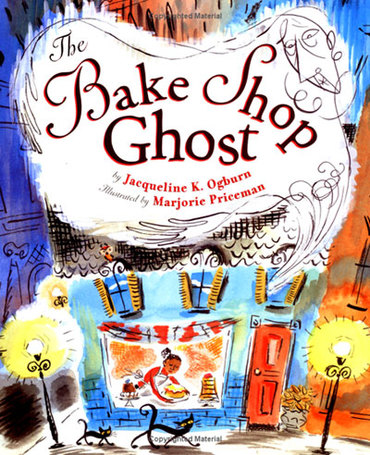
The Bake Shop Ghost

Written by Jacqueline K. Ogburn | Illustrated by Marjorie Priceman


For all intents and purposes, Miss Cora Lee Merriweather is Merriweather’s Bake Shop and the bake shop is Cora Lee. “Her Mississippi mud pie was darker than the devil’s own heart,” and her sponge cake was as light as angels’ wings. Her bakery case is stacked with fluffy pies, flaky strudels, and cakes of every size and flavor. In fact, no one’s birthday is complete without a Merriweather cake to celebrate with.

When Cora dies the congregation at her funeral weeps when the preacher reads the bake shop menu and everyone realizes “all those luscious desserts were now only sweet memories.” It doesn’t take long, however, for a new baker to buy Cora’s business. Gerda Stein brings in the ingredients for her strudels and cakes and starts baking, but the ovens burn every dessert, the refrigerator goes on the fritz, and Gerda hears footsteps overhead and clanking behind her. She slowly turns around and finds herself staring straight into the eyes of a ghostly Cora Lee Merriweather who shrieks, “Get out of my kitchen!”

The bake shop goes back up for sale and is sold to Frederico Spinelli who is not afraid of ghosts—until the next day when he emerges from the front door drenched in powdered sugar and never returns. Sophie Kristoff, the marzipan queen, takes over next, only to be chased out by flying eggs, three pink marzipan pigs, and a bunch of marzipan grapes.

After her departure the shop stands vacant for years, growing dim and dusty. One day Annie Washington, fresh off her stint as a cruise ship pastry chef, strolls by the dilapidated storefront. She falls in love with it as soon as she steps through the door. Annie buys it and scrubs and polishes until everything shines.

That night Annie goes straight to work on a puff pastry. Around midnight footsteps creak overhead, a cold wind sweeps the room, and mixing bowls topple to the floor. Annie keeps working. When she’s finished she dusts off her hands, turns around, and finds herself staring into ghostly eyes. “‘Miss Cora Lee Merriweather, I’ve been expecting you,” she says.

“Get out of my kitchen!” Cora says. But Annie is not intimidated. “This is my kitchen now,” she tells Cora. And what’s more, even though Cora may have been the best baker in the state, Annie tells her that she was the best pastry chef to ever sail on the Sea Star cruise ships, and come typhoon, tsunami, or shipwreck she never left a kitchen until she was finished.

Cora tries every trick in the book—she shrieks, flings utensils, rises up through the dough Annie’s kneading, breaks eggs, and as dawn breaks scatters a 50-pound bag of flour across the kitchen. All right, Annie says, “What can do so you’ll leave me in peace?”

Cora has a ready answer: “Make me a cake so rich and so sweet, it will fill me up and bring tears to my eyes. A cake like one I might have baked, but that no one ever made for me.” “Piece of cake,” replies Annie.

Annie makes every cake she knows and Cora critiques them. But none fill her up or bring a tear to her eye. Annie grows to respect the ghost’s advice, but she wants her kitchen back. After a month and hundreds of cakes, Annie is out of ideas. She goes to the library to research more recipes. There she finds a small book on town history, and after reading it she knows just what kind of cake to bake.

That night at midnight Cora appears, and Annie is ready. She lifts the cover on a very special cake. “Across the top, in piped icing, it read, ‘Happy Birthday, Cora Lee.” The ghost looks at Annie with tears in her eyes. “How did you know?” Cora asks.

Annie reveals the secrets of her research then adds, “Besides, who ever makes cake for the baker?” With tears streaming down her face, Cora eats her slice of cake. When Annie offers her another, she declines. “’I do believe I’m full.’”

Now the town enjoys Washington and Merriweather Bake Shop, where the cakes are almost as good as Cora’s, while never suspecting that’s because Cora Lee helps in the kitchen. And the most beautiful cakes? Those are the birthday cakes Annie and Cora make for each other.

A recipe for Ghost-Pleasing Chocolate Cake follows the story.

The Bake Shop Ghost was published in 2005 and made into a short film in 2009 starring Marianne Jean-Baptiste. Despite its age, however, this is a story that seems fresh every time it’s read. Jacqueline K. Ogburn plays out the story with such excellent pacing and details that the twist ending is a true surprise. Her descriptions of Cora Lee’s delicacies are mouthwatering and her metaphors just as downhome and tantalizing. Ogburn’s Annie is a welcome character—a woman of color who has confidence in her talents, doesn’t back down to the ghost’s intimidation, and works to find a solution that she implements with kindness and friendship.

Marjorie Priceman illustrates The Bake Shop Ghost with verve and delicious colors that will make readers wish they could visit Merriweather’s to sample the desserts in the well-stocked cases. Delicate chandeliers and French café chairs decorate the shop, giving it a sophisticated air. But there are also humorous details: a dog licks icing off a wedding cake as Cora ties string around a bakery box from the hanging twine dispenser, the preacher, choir, and congregation wail and shed tears as ethereal visions of the cakes they will miss float in the air at Cora’s funeral. The scenes of Cora’s ghost menacing the new shop owners are cleverly depicted with swoops of white that bear Cora’s face and hands floating above disaster.

Ages 4 -9

Houghton Mifflin Harcourt, Paperback edition, 2008 | ISBN 978-0547076775

World Baking Day Activity
celebrate-picture-books-picture-book-review-cupcakes

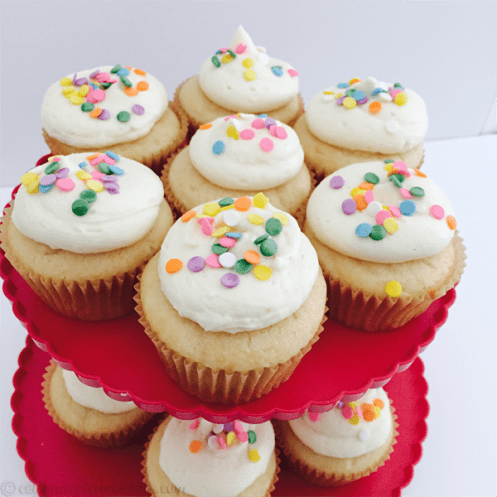
Very Vanilla Cupcakes


This delicious vanilla cupcake recipe from Sally’s Baking Addiction would definitely please Cora Lee Merriweather—and they’ll become your favorite confection too!

Vanilla Cupcakes

  • 1 and 2/3 cup (210g) all-purpose flour (spoon & leveled)
  • 1/2 teaspoon baking powder
  • 1/4 teaspoon baking soda
  • 1/2 teaspoon salt
  • 1 cup (200g) granulated sugar
  • 1/2 cup (115g) unsalted butter, melted and slightly cooled
  • 2 large egg whites
  • 1/4 cup (60g) vanilla Greek yogurt (or plain; or regular yogurt; or even sour cream)
  • 3/4 cup (180ml) vanilla almond milk (or cow’s milk; or soy milk; or plain almond milk)
  • 2 teaspoons pure vanilla extract seeds scraped from 1/2 split vanilla bean1

Vanilla Bean Frosting

  • 1 cup (230g) unsalted butter, softened to room temperature
  • 4-5 cups (480-600g) confectioners’ sugar
  • 1/4 cup (60ml) heavy cream2
  • 1 teaspoon vanilla extract seeds scraped from 1/2 split vanilla bean1
  • Salt, to taste

Directions

  1. Preheat oven to 350F degrees. Line muffin tin with 12 cupcake liners. Set aside.
  2. In a medium bowl, mix together flour, baking powder, baking soda, and salt. Set aside. In a large microwave-safe bowl, melt butter in the microwave. Whisk in sugar – mixture will be gritty. Whisk in egg whites, yogurt, milk, and vanilla extract until combined. Split 1 vanilla bean down the middle lengthwise. Scrape seeds from half of the vanilla bean into batter. Reserve other half.
  3. Slowly mix dry ingredients into the wet ingredients until no lumps remain. Batter will be thick.
  4. Divide batter among 12 cupcake liners (or 24 mini) and bake for 20 minutes or until a toothpick inserted in the center comes out clean. Bake for 8-9 minutes if making mini cupcakes. Allow to cool.
  5. To make the frosting, beat softened butter on medium speed with an electric or stand mixer. Beat for about 3 minutes until smooth and creamy. Add confectioners’ sugar, cream, vanilla extract, and vanilla bean seeds with the mixer running. Increase to high speed and beat for 3 minutes. Add more powdered sugar if frosting is too thin or more cream if mixture is too thick. Add salt if frosting is too sweet (1/4 teaspoon). Frost cooled cupcakes (I used Wilton 1M piping tip). There may be leftover frosting depending how much you use on each cupcake.
  6. Store cupcakes in an airtight container at room temperature for up to 3 days and in the refrigerator up to 7.

Additional Notes

  1. If you can’t get your hands on vanilla beans, add an extra ½ teaspoon of pure vanilla extract instead.
  2. Strongly urged to use heavy cream. You may use milk or half-and-half, but heavy cream will give the frosting a thicker texture. I recommend it!

For ways to adapt this recipe and more scrumptious recipes, visit Sally’s Baking Addiction. I guarantee you’ll go back again and again!

April 3 – National Find a Rainbow Day

celebrate-picture-books-picture-book-review-rainbow-stew-cover

About the Holiday

It’s not often someone wishes you a rainy day. Today, though, I’m doing just that because you can’t see a rainbow without a little of the wet stuff. This early spring month was chosen for this special day because, as we all know, April showers bring May flowers. Those same April showers lead to beautiful rainbows—even double rainbows sometimes! So, I hope you have a bad (weather) day and good luck finding a rainbow today! By the way—what do May flowers bring? Right! Pilgrims!

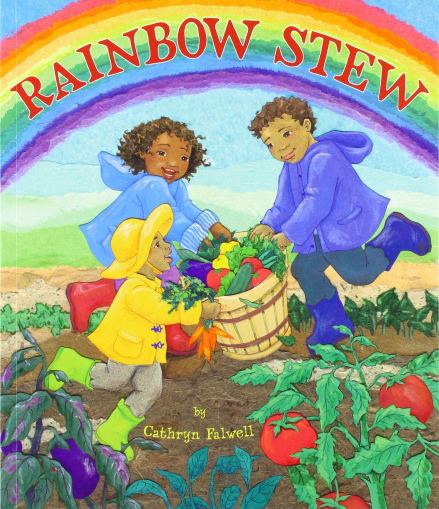
Rainbow Stew

By Cathryn Falwell


Grandpa’s making pancakes for his three favorite kids, and his granddaughter and two grandsons are excited to be visiting where they can play outside all day. Through the window the kids see that it’s a rainy day. Does this mean they’ll have to stay inside? Their grandpa knows just what to do! “Let’s go and find some colors for my famous Rainbow Stew!” he says.

celebrate-picture-books-picture-book-review-rainbow-stew-interior-art-picking-vegetables

Image copyright Catherine Falwell, 2013, courtesy of rainbowstewbook.com

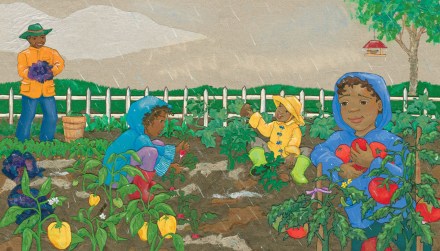
Out to the garden they run in their raincoats and hats. “Splish, splash, / puddle dash, / We bounce right out the door. / We’re off to find some red and green, / some yellow, orange, and more. / Grandpa shows us how to move / Between each garden row. / Lifting up the drippy leaves, /  we see what colors grow.” They collect green spinach, kale, and zucchini; yellow peppers, purple cabbage and eggplant, red radishes and tomatoes; brown potatoes; and orange carrots. After some muddy fun among the plants, the kids go inside, get dried off, and begin to prepare their colorful stew.

celebrate-picture-books-picture-book-review-rainbow-stew-interior-art-in-the-garden

Image copyright Catherine Falwell, 2013, courtesy of rainbowstewbook.com

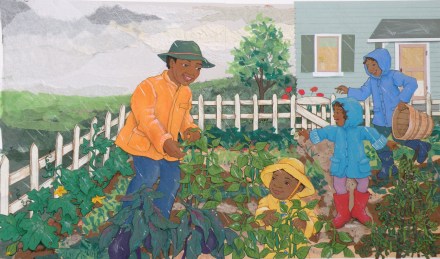
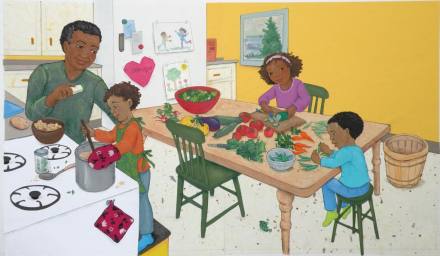
Peel, slice / chop and dice, / colors fill the pot. / Stir in herbs and water / and then wait till it gets hot.” While the pot simmers on the stove, Grandpa and the kids snuggle on the couch with favorite books, reading together until the stew has simmered to perfection. The family then sits down to a homemade, colorful, delicious lunch of Rainbow Stew. 

celebrate-picture-books-picture-book-review-rainbow-stew-interior-art-cooking-together

Image copyright Catherine Falwell, 2013, courtesy of rainbowstewbook.com

Cathryn Falwell’s Rainbow Stew is a wonderful book to share with young children on many levels. The bright colors of Grandpa’s house mirror the vividness of the garden vegetables in his stew, which could be made into a matching game for extra fun. The rhyming verses—each begun with an energetic couplet that would be fun for kids to repeat or act out—draw listeners into the story. Introducing colors through familiar and delicious vegetables can get kids excited about gardening, cooking, even going to the grocery store.

Children will identify with the disappointment of the three siblings when they learn it’s too wet to spend the day outside as well as their glee at squishing in the mud. The close bond between the kids and their grandfather as they cook and read together is a strong anchor for this story.

celebrate-picture-books-picture-book-review-rainbow-stew-interior-reading-together

Image copyright Catherine Falwell, 2013, courtesy of rainbowstewbook.com

A recipe for Rainbow Stew follows the story. Combined with the craft below, the book and recipe could make for a fun rainy-day get-together!

Ages 4 – 7

Lee & Low Books, 2013 | ISBN 978-1600608476 (Hardcover) | ISBN 978-1643790572 (Paperback, 2019)

National Find a Rainbow Day Activity

CPB - Rainbow Crayon Art 3

Crayon Rainbow Art


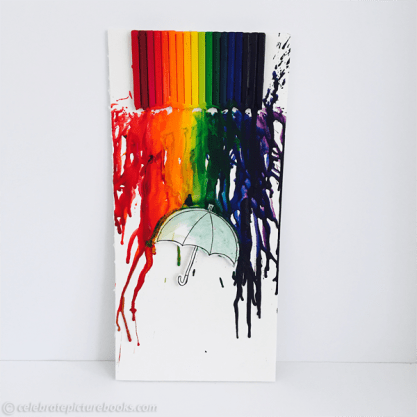
With this cool project you can create an art piece that’s as colorful as a rainbow and as unique as you are! Adult help is needed for children.

Supplies

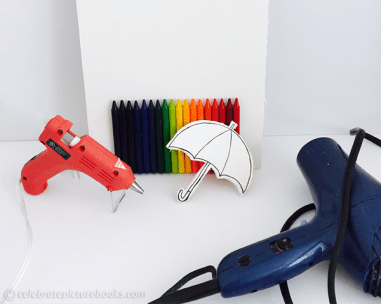
  • Box of 24 crayons
  • White foam board or thick poster board, 8 inches by 17 inches
  • A small piece of corrugated cardboard, about 5 inches by 5 inches (a piece of the foam board can also be used for this step)
  • A small piece of poster board, about 5 inches by 5 inches
  • Scissors
  • X-acto knife (optional)
  • Hot glue gun
  • Hair dryer
  • Old sheets or towels, newspapers, a large box, or a trifold display board

CPB - Rainbow Crayon Art 2

CPB - Rainbow Crayon Art 1 (2)

Directions

  1. Remove the various red, orange, yellow, blue, indigo, and violet hued crayons from the box of crayons
  2. Strip the paper from the crayons by slicing the paper with the x-acto knife, or removing it by hand
  3. Line them up in order at the top of the white foam board
  4. Glue the crayons with their tips facing down to the board with the hot glue gun
  5. Cut an umbrella or other shape of your choice from the poster board
  6. Trace the umbrella or other shape onto the corrugated cardboard or a piece of the foam board and cut out
  7. Glue the poster board shape onto the corrugated cardboard, let dry
  8. Glue the umbrella or other shape to the foam board, about 4 ½ inches below the crayons
  9. Set up a space to melt the crayons. The wax will fly, so protect the floor and walls by placing the art piece in a large box or hanging newspapers, old sheets or towels on the walls and placing newspapers on the floor. A trifold display board and newspapers works well.
  10. Stand the art piece upright with the crayons at the top
  11. With the hot setting of the hair dryer, blow air at the crayons until they start to melt
  12. Move the hair dryer gently back and forth across the line of crayons from a distance of about 6 to 12 inches away. The closer you are to the crayons, the more they will splatter
  13. The crayons will begin to melt and drip downward
  14. You can experiment with aiming the hair dryer straight on or at an angle to mix colors
  15. Wax that drips onto the umbrella or other shape can be chipped off after it dries or wiped off to create a “watercolor” effect on the shape
  16. Once the hair dryer is turned off, the wax cools and dries quickly
  17. Hang or display your art!

March 26 – Noodle Day

Noodle Magic by Roseanne Greenfield Thong and Meilo So Picture Book Review

About the Holiday

Noodle on this: what’s the difference between noodles and most other dry pastas? Noodles contain eggs! It’s just this kind of fascinating fact you can learn during noodle month. Whether you like spinning the long strands around your fork or slurping them right from the bowl, noodles make the perfect comfort food whether they’re mixed with sauce, pesto, or meat and veggies. People make some pretty awesome crafts from them too! Did you know that 13th century bakers made their dough into birds, stars, words, and other shapes? Too bad Pinterest wasn’t around then! So boil up some water and get cookin’ on a delicious day!

Noodle Magic

Written by Roseanne Greenfield Thong | Illustrated by Meilo So


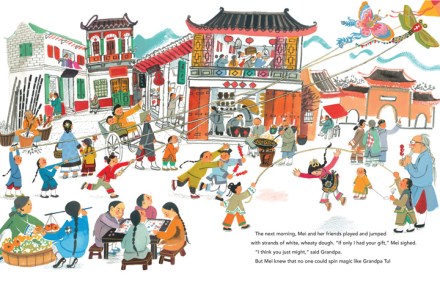
The emperor’s birthday is coming, and everywhere excitement fills the air. Mei’s Grandpa Tu will no doubt be making his famous noodles for the celebration. Mei loves to watch her grandfather work, slapping and kneading the dough and pulling the strands of noodles. He is so creative with his cooking that everyone marvels, even the Moon Goddess. In fact, Grandpa Tu is such an extraordinary artist that he makes noodle jump ropes and kite strings for Mei and her friends. They are as “simple as a sunflower” and as “easy as a sea breeze” to make, says Grandpa Tu.

celebrate-picture-books-picture-book-review-noodle-magic-playing-with-noodles

Image copyright Meilo So, text copyright Roseanne Thong. Courtesy of meiloso.com

But Mei thinks there is more to his talent and wishes that she had his magic. Her grandfather believes she does possess it. One afternoon the pair watch animal-shaped clouds fill the sky, and Mei asks if her grandpa can catch them with noodles. That night he makes a batch of noodles, and in the morning the two collect clouds as the sun appears.

On the day before the emperor’s birthday, everyone is busy making something special—everyone except Grandpa Tu. The villagers are perplexed. On such an important day, they will all want to enjoy noodles—and what about the special long-life noodles for the emperor? It is time, Grandpa Tu tells Mei, for her to make the noodles.

Mei is surprised and terrified. She slaps and kneads the dough as she has seen her grandfather do, but it remains ordinary. Where is the magic? “‘Trust in yourself,’” Grandpa Tu tells her, but Mei is doubtful. She decides that perhaps if she gives the Moon Goddess a gift, she will get magic in return. “‘You have all the magic you need,’” her grandfather assures her. Still, he helps Mei make enough dough to form an enormous ball of noodles.

celebrate-picture-books-picture-book-review-noodle-magic-making-noodles

Image copyright Meilo So, text copyright Roseanne Thong. Courtesy of meiloso.com

Mei throws the ball to the Moon Goddess and calls out for the Goddess to give her magic. Wisely, the Goddess reminds Mei that magic must come from inside. Mei closes her eyes and thinks very hard. She tussles with the Moon Goddess in a noodle tug-of-war, and suddenly…Snap!…the noodles break. The sky rains noodles of all shapes and sizes, Mei has discovered the magic that was in her all along!

With the charm of a Chinese folktale, Roseanne Greenfield Thong tells the universal tale of self-discovery. Her lyrical language adds a magic of its own to the tale, as when Mei watches her grandfather make dough: “she loved the powdery flakes that hung in the air and freckled the morning light.” The relationship between the little girl and her grandfather is lovingly portrayed, offering a gentle depiction of the wisdom and reassurance provided by extended family members.

Meilo So brings the story to vibrant life with her colorful paintings of village life, Mei and Grandpa Tu’s home, and the Moon Goddess. The magic of Grandpa Tu’s noodles is cleverly shown in the transparent animals, dragons, and birds outlined in noodles that frolic across the pages. The two-page spreads of Mei’s village are particularly captivating, as packed with interesting scenes and details as any bustling town.

Ages 4 – 8

Orchard Books, 2014 | ISBN 978-0545521673

Noodle Day Activity

CPB - Noodle Puzzle

Noodle on This Puzzle


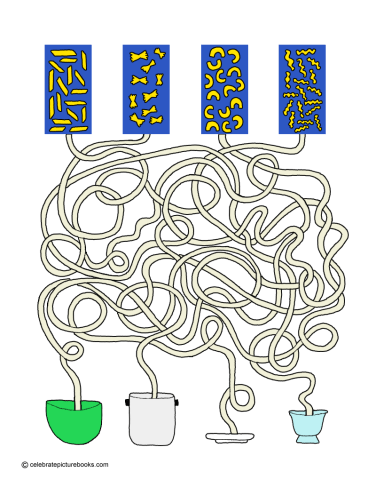
Everyone has their favorite kind of noodles! Help these noodles get to the right plate, bowl, or pot in this printable Noodle on This puzzle that’s as wiggly as a wet noodle!

Picture Book Review

March 25 – International Waffle Day

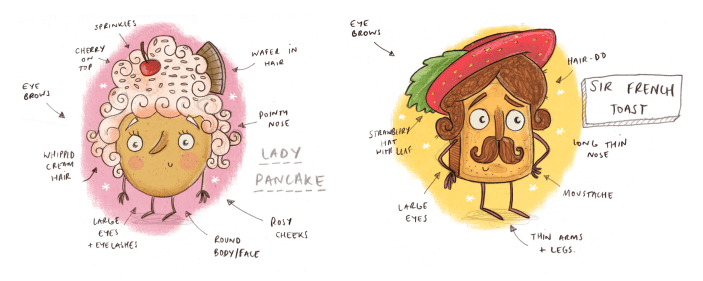
Lady Pancake and Sir French Toast by Josh Funk and Brendan Kearney Picture Book Review

About the Holiday

When someone made a spelling error, turning the Swedish holiday “Our Lady’s Day” (Vårfrudagen) into Waffle Day (Våffeldagen), a brand new culinary celebration began! Waffle Day also ushers in spring and offers the perfect excuse to enjoy these crispy concoctions whether you like them sweet, with syrup or confectioner’s sugar, or savory, as a base for meat and other toppings. So mix up some batter and pull out your favorite waffle maker and enjoy a delicious day!

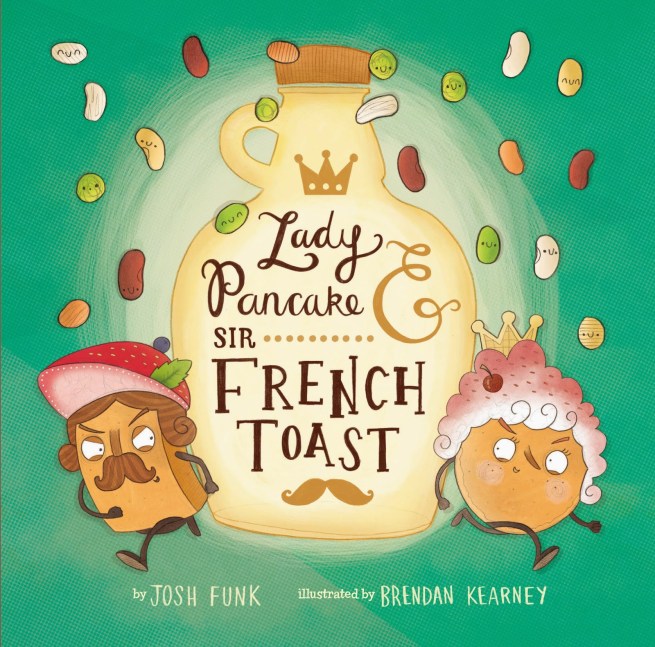
Lady Pancake and Sir French Toast

Written by Josh Funk | Illustrated by Brendan Kearney


You know those strange noises you sometimes hear coming from your refrigerator? And how you could have sworn the leftovers were on the top shelf? Well, Josh Funk’s Lady Pancake and Sir French Toast may solve those mysteries and more in this rambunctious tale about what happens when relationships grow frosty.

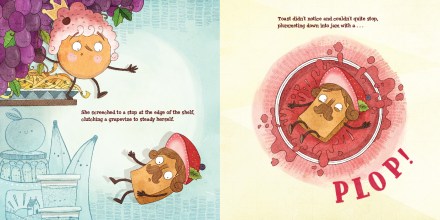
One day Lady Pancake and Sir French Toast are hanging out at the back of the fridge when they learn the syrup is almost gone. Lady Pancake claims it as her own, but Sir French Toast replies, “Not if I get there first!” And so off they race! “Through Broccoli Forest, past Orange Juice Fountain, they climbed to the top of Potato Mash Mountain.” But the race takes a turn as the two meet obstacles that are no fun at all: at the edge of a shelf “Toast couldn’t quite stop, plummeting down into jam with a plop.” And “Chili Lagoon slathered Pancake in muck and then at a fork in the road she got stuck.”

celebrate-picture-books-picture-book-review-lady-pancake-and-sir-french-toast-interior-art

The one-time friends call each other names and taunt each other with boasts of being the best breakfast food. As their competition upends the peace of the whole refrigerator from shelf to shelf, Lady Pancake and Sir French Toast find their energy wilting, and by the time they reach that sweet sought-after prize, they are “battered and soggy, exhausted and crumbling, too tired to push, they were limping and stumbling.”

With the bottle in sight, they are shocked to discover that the last drop of syrup is already gone. Who could have done this dastardly deed? None other than the sneaky Baron Von Waffle! With nothing to gain, Lady Pancake and Sir French Toast no longer have a reason to fight. In fact they realize that they lost out on the syrup because they were fighting. When they see that there is a little butter left, they decide to use the lesson they learned and share it.

celebrate-picture-books-picture-book-review-lady-pancake-and-sir-french-toast-interior-art

There are so many fantastic rhymes in this book that kids will want to hear again and again. One of my favorites comes as Sir French Toast catches up to Lady Pancake: “He scraped himself off and yelled up, / ‘You’re a meanie!’ / as Pancake rappelled / down a rope of linguini.” With such laugh-inducing verses, kids may never look at food the same way again. Josh Funk has created a tale about friendship that is both boisterous and unique and sure to quickly become a favorite.

The refrigerator world as envisioned by Brendan Kearney is as colorful as the food rainbow and as active as a playground in summer. It’s also stacked with the cutest array of legumes, yogurt, cake, juices, fruit, and veggies you’ll find anywhere. The final fold-down page of the entire refrigerator is a delight that kids of all ages will want to linger over even after the story of The Great Race between Lady Pancake and Sir French Toast is over.

Ages 5 and up

Sterling Children’s Books, 2015 | ISBN 978-1454914044

Visit Josh Funk’s Website to download a free Lady Pancake and Sir French Toast Activity Kit and to learn about more upcoming titles!

Discover more art and books by Brendan Kearney on his website!

Watch the trailer for this amazing race – you’ll be singing the Lady Pancake & Sir French Toast theme song in no time!

International Waffle Day Activity 


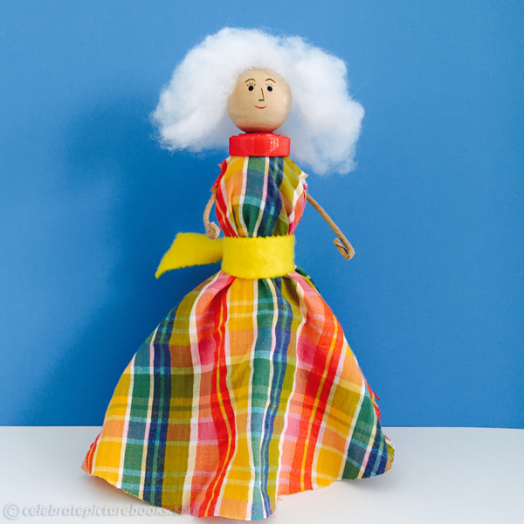
celebrate-picture-books-picture-book-review-lady-pancake-and-sir-french-toast

Sweet as Syrup Figure


Fun shouldn’t be kept bottled up! Well…maybe just this once. Make your own figure to display or play with from a syrup bottle with this craft. It’s sure to be as sweet as you are!

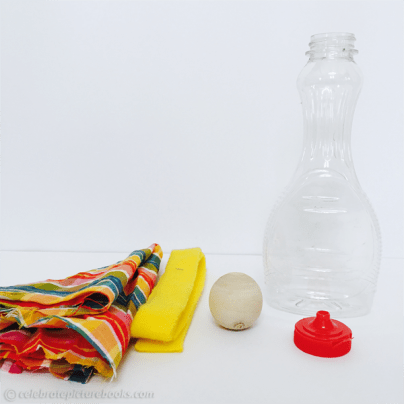
Supplies

  • Small plastic syrup bottle with a narrow squeeze fliptop and without a handle, empty
  • 1 ½-inch wooden ball with ½-inch hole in bottom
  • 16-inch to 18-inch square piece of cloth
  • Ribbon or strip of material
  • 12 to 14-inch long medium-gauge craft wire
  • Gel pens, black, blue, brown, red (Gel pens work well on the wood as the ink doesn’t bleed into the wood and are easy to control)
  • Poly fill or needle-felting wool
  • Scissors
  • Strong glue

CPB - Syrup Bottle Figure II

Directions

To prepare the bottle

  1. Remove labels from syrup bottle
  2. Cut the flip top in half, keeping the narrow nozzle part

To make the head

  1. Holding the wooden ball with the hole at the bottom, draw a face on the wooden ball with the gel pens
  2. Glue a small handful of poly fill or needle-felting wool to the top of the wooden ball for hair. You can make the hair has long, short, or poofy as you wish.

To make the dress

  1. Cut a 16-inch diameter circle from the material

To assemble the figure

  1. To make the arms, wrap the wire around the neck of the syrup bottle, crossing it in the back and pulling tight
  2. Center the material over the opening of the syrup bottle
  3. Cut tiny slits in the material at the location of the wire on each side of the bottle, and pull the arms through the material
  4. Bend the ends of the wire into a small loop to form hands
  5. Screw the cap with the narrow nozzle over the material
  6. Tie the ribbon or strip of material around the narrow part of the bottle to make the figure’s waist
  7. Place the hole in the wooden ball over the nozzle in the cap and glue into place

Make up your own story with your new figure!

March 11 – Johnny Appleseed Day

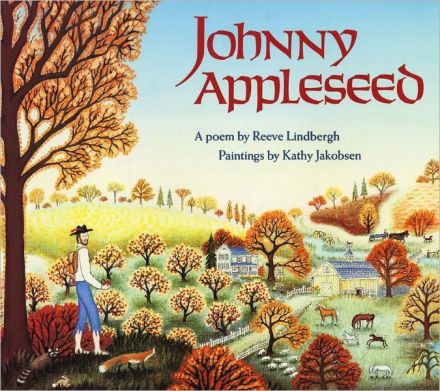
celebrate-picture-books-picture-book-review-johnny-appleseed-cover

About the Holiday

If you love apples, apple pie, applesauce, and all things apple, you probably have John Chapman to thank. John Chapman was a remarkable man who lived his values of kindness and generosity as he journeyed across the newly opened American frontier in the early 1800s. He is most commonly known as Johnny Appleseed for the apple seeds he planted and nurseries he founded across the country. Apples were a welcome crop—easily grown and stored for consumption throughout the year. He was well loved by the people he met on his travels, respected by the Native Americans, and gentle with all animals. Today we remember his contributions to the growth of America and his inclusive beliefs.

Johnny Appleseed

Written by Reeve Lindbergh | Illustrated by Kathy Jakobsen


As the poem opens, John Chapman approaches the simple Goodwin cabin in the woods. “Young Hannah Goodwin saw him first, / A stranger lean and lorn, / His face was thin, his feet were bare, / His clothing old and worn.”

Hannah first meets Johnny Appleseed when she is a little girl and he accepts the family’s invitation to dinner. He is an engaging source of entertainment, news, and stories about the American frontier, but he cannot stay long as he must continue his mission to plant apple trees across the country. Although John Chapman’s work takes him far away, Young Hannah heard the tales of him / All through her growing years / As he brought apples, sharp and sweet, / To other pioneers.

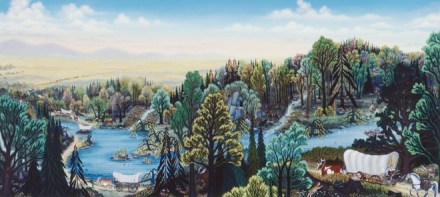
celebrate-picture-books-picture-book-review-johnny-appleseed-kathy-jakobsen-across-the-wild-frontier

Image copyright Kathy Jakobsen, courtesy of kathyjakobsen.com

The stories are exciting and comforting. Johnny Appleseed walks through any weather, is trusted by Native Americans, and lives peacefully with all animals, all the while scattering seeds along his path.

As an old man John Chapman returns to the Goodwin house, now nestled among a mature apple orchard. “Old Hannah Goodwin saw him last / when many years had gone. / He came in by the orchard gate / A quiet hour past dawn.”

Again, he regales Hannah with stories of his adventures and how the trees he had planted helped families thrive and make America strong. “There was spicy apple cider now / Out on the western plain. / There was applesauce in Iowa / and apple pie in Maine.

Although Hannah never sees John Chapman again, she passes down his legacy to her children, just as we still do today.

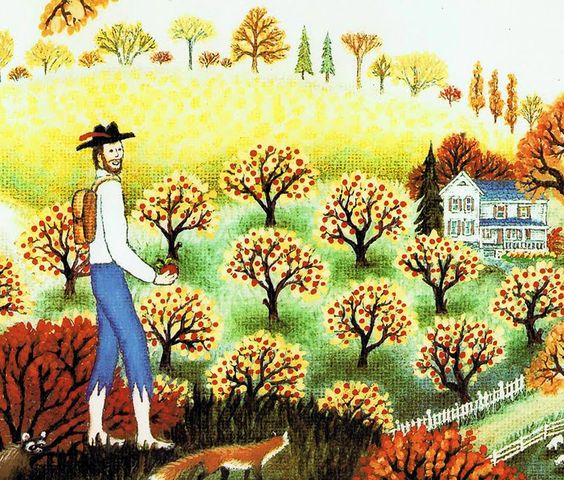
celebrate-picture-books-picture-book-review-johnny-appleseed-kathy-jakobsen-in-an-apple-orchard

Image copyright Kathy Jakobsen, courtesy of kathyjakobsen.com

The format of Reeve Lindbergh’s rhythmic and rhyming poem is a fitting tribute to the life of Johnny Appleseed. The lyrical lines flow as smoothly as the reader might imagine John Chapman tread across the Midwest plains and rugged West. With evocative language and a straightforward delivery, Lindbergh echoes the philosophy of simplicity and steadfastness that guided John Chapman’s life.

Kathy Jakobsen, one of America’s premiere folk artists, has embraced the story of Johnny Appleseed in stunning paintings of an America at her beginning. Depictions of rolling hills dotted with farms and trees, stone mills, horse-drawn carts loaded with apples, families at home and on the move in Conestoga wagons, as well as lush scenes of John Chapman interacting with nature and Native Americans portray the grandeur of America and the singularity of Johnny Appleseed. A quilt of small paneled scenes surround the text on each left-hand page, while the right page is fully dedicated to Jakobsen’s work.

Ages 5 – 8

Little Brown Books for Young Readers, 1998 | ISBN 978-0316526340

Johnny Appleseed Day Activity

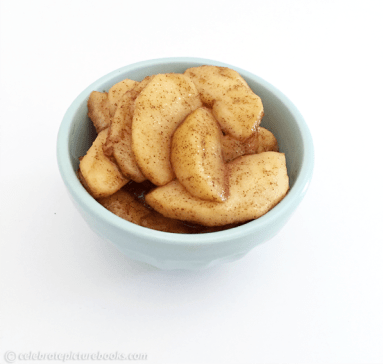
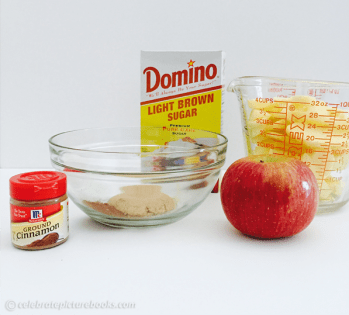
CPB - Cinnamon Apples (2)

Cinnamon Apples Recipe


Cinnamon apples are a delicious side dish to any meal! This tasty recipe is fun for kids and adults to make together.

Ingredients

  • 4 cups of apples, Macintosh or Granny Smith apples are good choices
  • 2 tablespoons brown sugar
  • 1 teaspoon cinnamon
  • 1/4 teaspoon lemon juice

CPB - Cinnamon Apples ingredients (2)

Directions

  1. Mix brown sugar and cinnamon
  2. Peel and core 2 large apples
  3. Thinly slice apples
  4. Combine apples and cinnamon sugar/brown sugar mixture
  5. Stir until well combined
  6. Drizzle with lemon juice and stir again
  7. Cook apples on the stove at medium heat for 8 to 10 minutes or until desired texture


March 10 – National Pack Your Lunch Day

Lunch Money and Other Poems About School by Carol Diggory Shields and Paul Meisel picture book review

About the Holiday

When you pack your own lunch, you can’t wait for the clock to strike lunchtime! Today is a day to celebrate the joy of a midday meal featuring your favorite foods and snacks. So if you usually just eat what the cafeteria offers, think outside the tray and create a lunch that’s delicious, nutritious, and even fun!

Lunch Money and Other Poems About School

Written by Carol Diggory Shields | Illustrated by Paul Meisel


Ask a kid what their favorite part of school is and they’re likely to say, “Lunch!” So it’s appropriate that this poetry collection about the fun and foibles of school contains several poems scrutinizing that special half hour out of the classroom. In “Decisions” a boy contemplates the school menu stuck to the refrigerator. Tacos, pizza, burger, nachos? Buy it! Beef stew, baked beans, tuna-cabbage crunch, mushroom-chicken bake? Bag it!

“Lunch Money” finds a boy asking first Dad, then Grandma, and finally Mom for cash. But who can he rely on? Only his own piggy bank. “Swap” is a rollicking round robin rhyme of traded sandwiches, swapped fruit, bought and sold drinks, bartered cookies, exchanged bagels, and great deals made. But does the result on the plate look oddly familiar?

Lunch isn’t the only subject in this delightful collection, though. In “Eight-Oh-Three” a boy “Legs pumping, heart thumping, / Running down the drive,” and late for the bus—“A moaning-growning, blinking-winking / Yellow dinosaur”—asks the ironic question: “How come I have to run so fast / To catch a bus so slow?”

“Code” is medical code for “cold” in a short poem about the linguistic acrobatics of a stuffy nose. “And the Answer Is…?” offers an impassioned debate between one student who likes to answer the teacher’s questions and another who just wants to hide under the table. And “Whew!” is a delight in which a student who isn’t prepared for the day finds a substitute standing at the front of the class. Other topics that make an appearance are the school mischief maker, the class pet, recess rules, homework, recess, and the inevitable school nightmare that follows you into adulthood.

Carol Diggory Shields understands school—the moments of camaraderie, embarrassment, mayhem, wishful thinking, and more—that make up each day. Her flowing, easy-to-read rhythms and humorous twists makes this poetry collection enchanting and an excellent addition to any home library.

Paul Meisel’s illustrations are populated with all kinds of kids you’d want to meet. With curly hair or straight, pony tails or bows, wearing stripes or polka dots, shorts or pants, each child is given his or her own personality as they romp through the scenario of their accompanying poem. Whether the kids are in a classroom or at home or on the playground, the details of their environment are richly drawn. The counters are lined with science projects, the clock moves so slowly a spider has spun a web on its hands, and the kindergarten play as well as the lunch room are humorously chaotic. There is so much to see on each page that kids will recognize, but experience anew.

Ages 4 – 8

Puffin Books, 1998 | ISBN 978-0140558906

National Pack Your Lunch Day Activity

CPB - Bento Box (2)

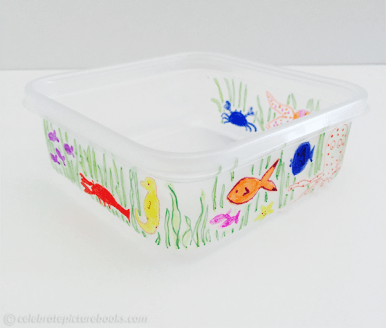
Decorated Sandwich or Snack Container


Who says your snack or sandwich container has to be boring? Take your lunch to school in a container you decorate yourself! It’s easy with a few colored markers and your imagination!

Supplies

  • Disposable plastic food containers with lids
  • Colorful markers

Directions

  1. Decorate sandwich or snack size containers with your favorite designs or characters

March 7 – National Cereal Day

There's a Lion in My Cornflakes by Michelle Robinson and Jim Field picture book review

About the Holiday

Did you know that breakfast in a bowl actually began with an experiment that went wrong? Or just maybe it was right! John Harvey Kellogg and his brother Will Keith Kellogg were experimenting with boiled wheat in 1877 when they left some out overnight. In the morning the wheat was stale. The brothers decided to roll it out instead of throwing it away, and they found that each wheat berry created a flake. Boiled corn worked the same way, and from this process the Kellogg brothers invented Corn Flakes, the first dry cereal!

Today’s holiday celebrates all the varieties of your favorite cereal—whether it’s made of corn, wheat, bran, rice, or a mixture of flakes, fruit, and nuts. So pour yourself a big bowlful and enjoy!

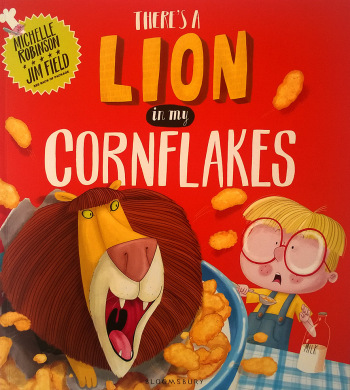
There’s a Lion in My Cornflakes

Written by Michelle Robinson | Illustrated by Jim Field


Who could resist clipping cereal box coupons to receive a free lion? Nobody, that’s who! I mean, it would be so cool, right? A lion to take on walks, ride to school, and open tin cans—awesome! So a boy and his brother, Dan, take a year’s worth of their allowance, make “a million” trips to the grocery store, and start cutting.

But all those boxes of cereal squeeze out the other food on the pantry shelves, so Mom says the boys have to eat cornflakes for breakfast, lunch, and dinner until it’s gone—and, oh yeah, they don’t get an allowance until then either. It’s all worth it, though, because they’re going to get a real live lion.

There’s just one hitch—every other kid in town has the same idea, and while the brothers wait for their lion to arrive, everyone else is out playing with their new pet. Finally, the delivery truck pulls up in front of the house, and out walks…a grizzly bear?! That’s not right, and it’s even delivered to the wrong house. Well, the bear’s not too crazy about the situation either, and shows it. The kids and the bear have to clean up the neighbor’s yard and apologize.

A letter of complaint to the cereal company brings resolution in the form of…a crocodile?! The crocodile spends all its time in the bathroom, and the grizzly bear is still causing havoc. Dad calls the cereal company and to make up their mistake they send…a gorilla?! The gorilla stomps on Dad’s car and rips the door off. Well Dad’s had enough!  The whole crew piles into the car so Dad can “give those cereal people a piece of my mind.”

The cereal people sure are sorry for the mix-up. They make amends by letting the family keep the grizzly bear, the crocodile, and the gorilla, AND the company gives them…a lifetime’s supply of cornflakes! But really, what good are all those boxes? The boys can’t walk them or ride them or even open cans with them.

You know what, though? Mom’s discovered the crocodile has some pretty sharp, can-opening chompers. The grizzly bear can walk forever and even wear a fanny pack. And the gorilla makes a very cool chauffeur. Why bother having a lion when everyone else has one?

Besides, what are the cereal people offering now—a free tiger?! Hmmm….

Michelle Robinson has taken the lure of free stuff to its ridiculous best. There’s a Lion in My Cornflakes serves up the benefits of individuality and drawbacks of consumerism in a silly, over-the-top scenario that will have kids laughing at every page and escalation of the brother’s problem.

Jim Field’s bold, vibrant illustrations are the perfect accompaniment to this boisterous tale. As the boxes of cornflakes and clipped coupons pile higher and higher and the free animals cause more mayhem, the boys’ expressions go from excited to nonplussed to shocked and finally  to acceptance as day after day brings new and unexpected results of their actions. Kids will love the funny details on every page that highlight the story.

Ages 3 – 7

Bloomsbury Children’s, 2015 | ISBN 978-0802738363

National Cereal Day Activity

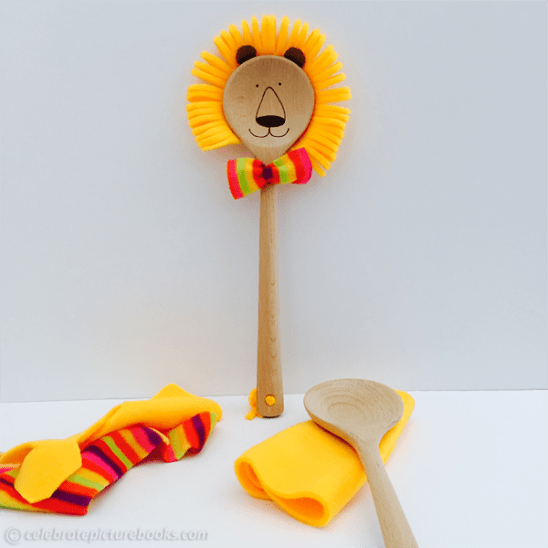
CPB - Spoon Lion

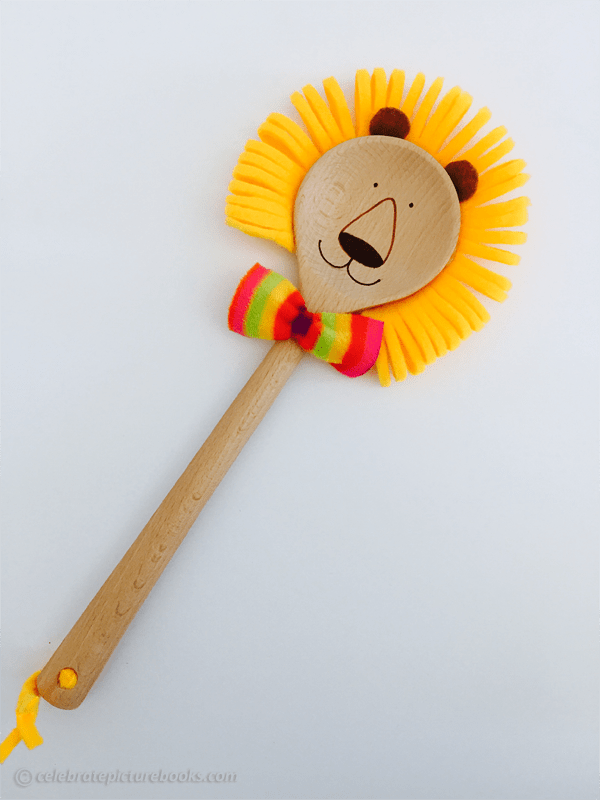
Spoon Lion Puppet


Spoons are just the thing for eating cereal! But with this craft you can make a ROARingly cute lion puppet!

Supplies

  • Wooden mixing spoon
  • Yellow Fleece
  • Brown felt
  • Colorful Fleece or felt
  • Fabric glue
  • Light brown marker
  • Dark brown marker
  • Hot glue gun or super glue
  • Scissors

CPB - Spoon Lion with stuff

Directions

To make the lion’s face

  1. Draw a nose, mouth, and eyes on the front/bowl of the spoon

To make the mane

  1. Measure the rim of the spoon from one side of the handle to the other
  2. Cut a strip of yellow fleece as long as rim measurement and 4 inches wide
  3. Fold the piece of fleece in half long-ways
  4. Glue the open edges of the fleece together
  5. Along the folded side cut a fringe, leaving the loops intact

To make the ears

  1. Cut round ears from the brown felt

To make the bow

  1. Cut a 3-inch x 1 ½-inch piece of colorful fleece or felt
  2. Cut a long thin strip of fleece or felt
  3. Pinch the bow in the middle and tie with the longer piece of cloth. Trim as necessary

To make the tail

  1. Cut three thin 4-inch-long strips of yellow fleece
  2. With fabric glue, glue the tops of the strips together
  3. Braid the strips
  4. At the bottom, glue the strips together, leaving the ends free

To assemble the lion

  1. Glue the ears to the back of the spoon
  2. Glue the mane to the back of the spoon
  3. Glue the bow to the handle
  4. Fold the top of the tail and push it into the hole in the handle of the spoon