March 26 – It’s Umbrella Month

celebrate-picture-books-picture-book-review-the-umbrella-queen-cover

About the Holiday

This month we celebrate umbrellas, those perky protective accessories that have been around since earliest times. Ancient civilizations used palmetto fronds for shade and during inclemet weather. The first waterproof umbrellas were created by the Chinese, who waxed or lacquered their paper parasols. Umbrellas were strictly women’s accessories until Jonas Hanway, a Persian travel writer, used one in public in England in the 1700s. English men then took up the practice, calling their version a “Hanway.” The first collapsible umbrella was designed in 1710, and in 1928 the folding pocket umbrella appeared. Since then, umbrellas have become fashionable and necessary accessories for all.

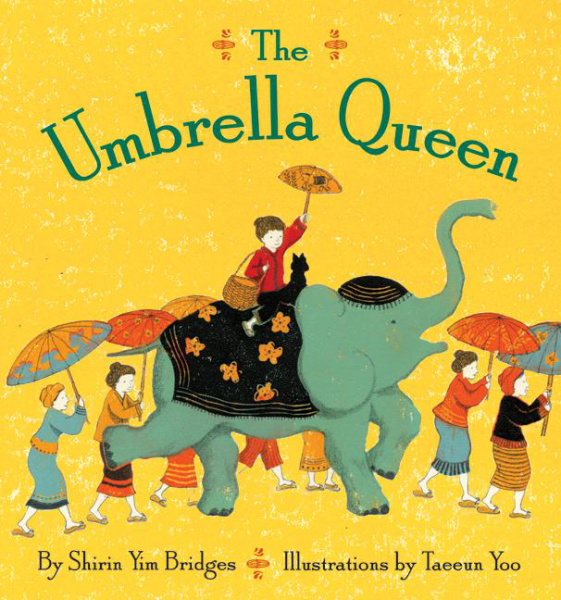
The Umbrella Queen

Written by Shirin Yim Bridges | Illustrated by Taeeun Yoo


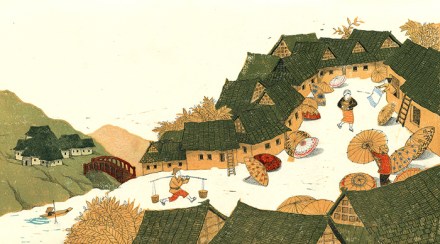
The residents of a small village in Thailand are well known for the beautiful paper umbrellas they make and sell in the local shops. The umbrellas are colorful, but always decorated with flowers and butterflies. Every New Year’s Day the villagers hold an Umbrella Parade, and the woman who has painted the most beautiful umbrella is chosen as the Umbrella Queen.

Noot is a little girl who longs to paint her own umbrellas and partake in the parade. One day her mother gives her an umbrella to paint and shows her how to copy her design. Noot is a natural artist, and her finished umbrella is nearly indistinguishable from her mother’s. She is given her own painting spot in the garden and five umbrellas to decorate.
celebrate-picture-books-picture-book-review-the-umbrella-queen-village

Image copyright Taeeun Yoo, courtesy of taeeunyoo.com

Noot paints the familiar butterflies and is about to start on the flowers when she is inspired to draw elephants instead. She covers all five umbrellas with elephants doing handstands, playing and squirting water, walking trunk-to-tail, and just being silly. When her mother sees these umbrellas, she is unhappy. Flowers and butterflies sell in the local shops, not elephants. Noot understands the importance of the money made from the umbrellas to her family. For the next year she paints the large umbrellas with the traditional design. At night, however, using bits and pieces, she fashions tiny umbrellas. These she paints with elephants, and displays them on her windowsill.
celebrate-picture-books-picture-book-review-the-umbrella-queen-emperor-visits

Image copyright Taeeun Yoo, courtesy of taeeunyoo.com

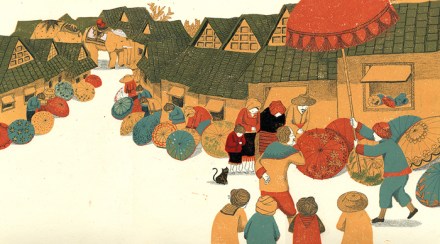
As New Year approaches there is much excitement in the village. It is rumored that the king will be visiting and will choose the Umbrella Queen himself. One day the villagers receive the message that the king will indeed arrive. The villagers spruce up their town and each woman displays her umbrellas in front of her home.

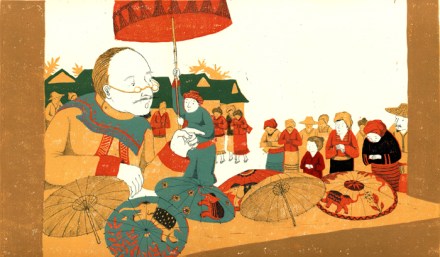
The king walks the length of the street, considering each umbrella until he comes to Noot’s house. He is very impressed with the umbrellas painted by Noot’s mother, but his gaze wanders to Noot’s windowsill, and he asks who painted the “strange” umbrellas.
celebrate-picture-books-picture-book-review-the-umbrella-queen-emperor-judges-umbrellas

Image copyright Taeeun Yoo, courtesy of taeeunyoo.com

A bit embarrassed by the attention, Noot shyly answers the king’s questions about the size of the small umbrellas and the unusual designs. In trying to explain herself, she forgets to look at the ground when talking to the king, and when her eyes meet his she realizes that, instead of judging her, he is charmed. “I like elephants,” she tells him, and he laughs. The king then takes Noot’s hand and names her the Umbrella Queen because “she paints from her heart.”

Shirin Yim Bridges has written a unique story that effectively and engagingly presents the often conflicting dilemma of responsibility to others while staying true to yourself. Noot’s journey from an observer in her family’s business to a valued artist is told straightforwardly, and the familial love and support are clearly emphasized. The king’s recognition of Noot’s talent and heart will be highly satisfying for young readers or listeners.

Taeeun Yoo’s delicate illustrations in gold, red, black, and green set the story firmly in Thailand and perfectly demonstrate the close-knit village and relationships as well as the intricate beauty of the umbrellas and the pride the villagers take in them.

The Umbrella Queen is a wonderful story about family, discovering your talents, and self-expression that would find a welcome spot on any child’s bookshelf.

Ages 4 – 8

Greenwillow Books, Harper Collins, New York, 2008 | ISBN 978-0060750404

Learn more about Taeeun Yoo, her books, and her art on her website!

Umbrella Month Activity
CPB - Umbrella Matching Game

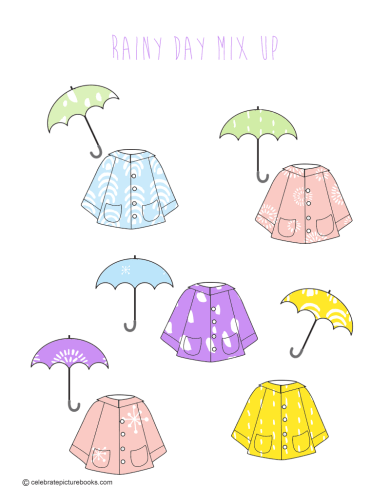
Rainy Day Mix Up Matching Game


A sudden storm scattered all the umbrellas and raincoats! Can you put the pairs together again? Draw a line to connect the umbrella and the raincoat that have the same pattern. Print the Rainy Day Mix Up Game here!

Picture Book Review

March 4 – National Grammar Day

celebrate-picture-books-picture-book-review-little-white-fish-is-so-happy-cover

About the Holiday

I must confess that today’s holiday is one of my favorites. Even as a kid I howled at the unintentional ridiculousness misplaced punctuation and poor editing created and absolutely loved diagramming sentences (I know, right?!). While the rules of grammar in any language may sometimes seem confusing and unnecessary, they help structure the language so what you write and say makes sense and exactly states your meaning. National Grammar Day was established in 2008 by author Martha Brockenbrough, the founder of the Society for the Promotion of Good Grammar.

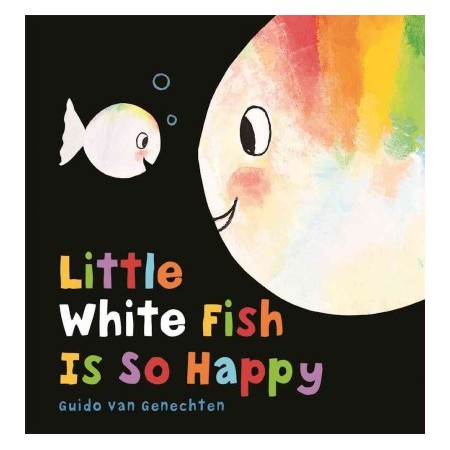
Little White Fish Is So Happy

By Guido Van Genechten


Little White Fish has been swimming on his own, but is so happy that his “mom is coming to get him.” Before he leaves, however, he wants to say “goodbye” to his many friends. “Bye-bye, snail in the shell,” he burbles. The “frog on the rock” also receives a happy “goodbye.” Little seahorse is playing under a leaf, but Little White Fish spies him.

Crab waves from behind a stone as Little White Fish swims by, and goldfish smiles at him from his spot “between the reeds.” As Little White Fish sends his friends a final farewell, they all stand “next to each other” to see him off. The best part of going home for Little White Fish, though, may be getting to swim “in front of” his mom!

In Little White Fish Is So Happy, young grammarians are introduced to a few of the most common prepositions, with clear visuals to reinforce their meaning. Bold type prompts adult readers to emphasize the prepositions and to expand on the idea by pointing out how the words apply to each particular sea creature. The endearing relationship among these friends will charm young children as the idea of being away from home is presented in an upbeat way that encourages independence while also reassuring little ones of parents’ love and attention.

celebrate-picture-books-picture-book-review-well-done-little-white-fish-cover

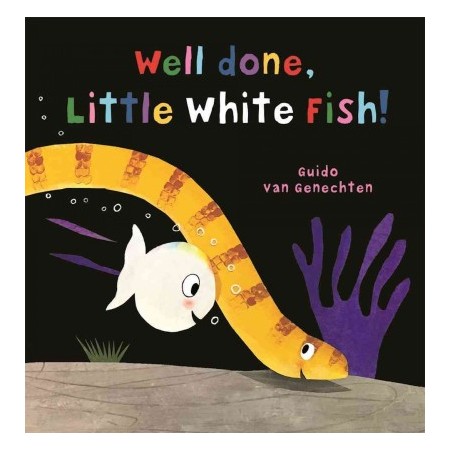
Well Done, Little White Fish

By Guido Van Genechten


Little White Fish is visiting his friends. First up is crab who is “can cut sea grass with his claws.” This is a pretty cool talent, and Little White Fish wonders what he can do. Turtle is strong enough to carry a rock on his shell, and “sea urchin easily does seven somersaults in a row. And Little White Fish? What can he do?”

Wow! Little jellyfish “can light up the dark.” Little White Fish is astonished; he knows he can’t do that. Starfish is like a ballet dancer when she stands on one leg. “Little White Fish doesn’t even have legs….” Little White Fish knows he must watch out for Octopus when he spits out ink, and he likes playing over and under with sea snake when he makes “a beautiful arch.

And Little White Fish? He “can swim really well, even backwards and upside down!” Now it’s time for his friends to be amazed, and as Little White Fish swims around his group of friends, they all cheer and applaud his special talent.

Well Done, Little White Fish explores individuality as the small fish watches each of his friends demonstrate their talents. At first everyone seems to be cleverer, stronger, and more agile than he is, but when Little White Fish displays his swimming skills, he learns that he too is unique. Bold text points out each creature’s special ability and can also serve as a gentle lesson about verbs. Van Genechten’s adorable sea creatures, with their ready smiles and buoyant enthusiasm, will delight young children as they learn facts about nature while embracing these characters.

Guido Van Genechten’s Little White Fish books, including Little White Fish, Little White Fish Has a Party, and Little White Fish Has Many Friends, make a sweet series for the youngest readers. The spare text is lively and cheerful and makes use of the type of repetition that little ones respond to. The bold, multicolored and multilayered illustrations set on a black background are eye-catching. Small children will love the smiling sea creatures and the playful relationship among the friends.

Ages 2 – 5

Clavis Publishing, 2017

Little White Fish Is So Happy | ISBN 978-1605373263

Well Done, Little White Fish | ISBN 978-1605373270

Grammar Day Activity

Active Words Playtime


It can be fun to teach grammar by playing! Prepositions such as up, down, under, in, on, through, over, and out can provide opportunities for active fun inside or outside. A playground is a perfect place to demonstrate prepositions to kids while they climb, slide, crawl, and swing on the equipment.

Inside, all you might need is a large box or a homemade pillow fort to build your child’s vocabulary. Kids will love jumping up, crouching down, getting in the box or fort, getting out of the box or fort. Pillows or an open-ended box make a great tunnel to crawl through. You and your child can even make up a story to go along with the actions.

That old perennial favorite Simon Says is another great way to play with grammar, so get creative…and enjoy grammar!

Picture Book Review

February 3 – Feed the Birds Day

celebrate-picture-books-picture-book-review-I-am-henry-finch-cover

About the Holiday

As the snow piles up and the harsh weather of winter sets in, it’s harder and harder for our feathered friends to find food. Today’s holiday reminds us that we should hang feeders with seed and suet to help birds stay healthy during these cold months.

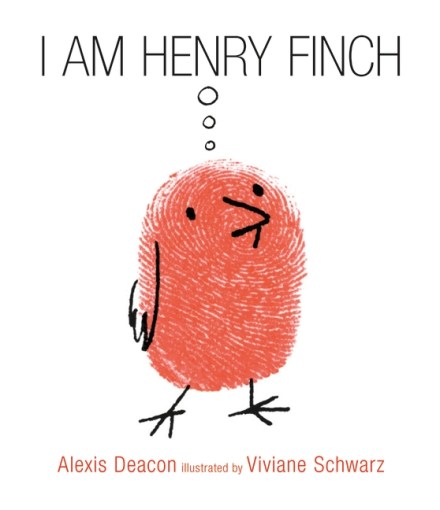
I Am Henry Finch

Written by Alexis Deacon | Illustrated by Viviane Schwarz


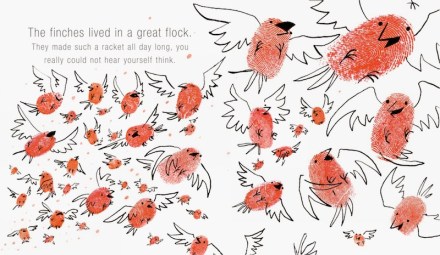
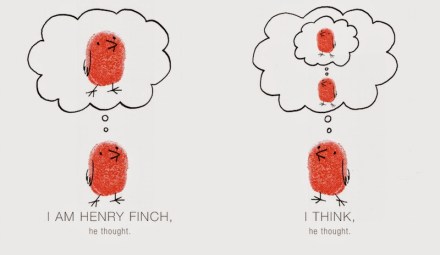
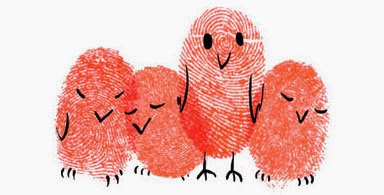
The finches were a talkative bunch. In the morning the flock traded “good mornings”: “‘Good morning, Aziz Finch!’ ‘Good morning, George Finch!’ ‘Good morning, Tiffy Finch!’ ‘Good morning, Henry Finch!’” In the afternoon, they wished each other “Good afternoon!” Evening brought wishes of “Good evening!” And “at night, they said GOOD NIGHT.” The next day the round robin salutations began again. They were only interrupted when the Beast came.

celebrate-picture-books-picture-book-review-I-am-henry-finch-flock

Image copyright Viviane Schwarz, text copyright Alexis Deacon. Courtesy of vivianesxhwarz.blogspot.com

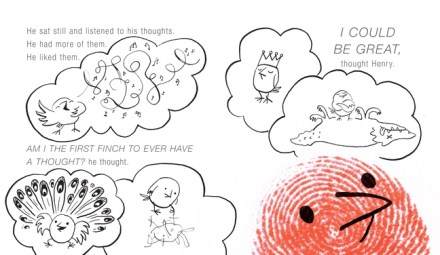
“Then they would all shout, THE BEAST, THE BEAST! And fly as fast as they could to the top of the nearest tree, where they would sit and shout until the Beast moved on.” It remained this way until one night “a little finch woke up in the dark and quiet. He had a thought, and he heard it. I AM HENRY FINCH, he thought.” He considered this thought as well as many others. He wondered if other finches had thoughts like his. He imagined himself defeating the Beast. “I COULD BE GREAT, thought Henry.”

The next morning the Beast did come. Henry envisioned himself standing atop the vanquished Beast and decided now “was the time for greatness.” Screaming his name, he flew directly at his foe…and was…swallowed. Inside the belly of the Beast, Henry had disparaging thoughts. “YOU ARE A FOOL, HENRY FINCH, he thought.” He regretted becoming the beast’s dinner. His troubled mind raced ahead through what would happen to him in the Beast’s digestion process, and yet he continued to think.

celebrate-picture-books-picture-book-review-I-am-henry-finch-I-think

Image copyright Viviane Schwarz, text copyright Alexis Deacon. Courtesy of vivianesxhwarz.blogspot.com

He pondered, “WHO AM I?”and concluded that even if he wasn’t Henry Finch, he was something. “I AM,” he decided, and then he considered the cyclical nature of…well…nature. “IT IS,” he realized. He listened to the grumbling, gurgling sounds inside the Beast. He could “even hear the thoughts of Beast.” It was on the hunt for any “crawling, swimming, flying, walking” creature it could find to feed his family. Henry had had enough. “NO!” he thought. The Beast heard Henry’s thought, and the next one and the next one that told the Beast that all creatures have families and that from now on the Beast would eat only plants because they “have parts to spare.”

Yes, the Beast determined, “I WILL EAT PLANTS,” and when Henry told the Beast to open his mouth wide, the Beast complied. Out popped Henry much to the surprise and delight of the other finches. Henry told them everything that had happened. When he was finished, a small finch piped up, “I HAVE HAD A THOUGHT. GOOD-BYE, EVERYONE. I WILL COME BACK.” She flew off guided by her vision of landing atop a mountain. One by one, every finch envisioned its own great deed and flew away to achieve it, promising to return. And Henry? Gazing up at them as they disappeared into the sky, “he smiled a finch smile. GREAT! thought Henry.”

celebrate-picture-books-picture-book-review-I-am-henry-finch-could-be-great

Image copyright Viviane Schwarz, text copyright Alexis Deacon. Courtesy of candlewick.com

Alexis Deacon’s unique tale is sure to raise plenty of giggles and “Oh, no’s!” followed by more giggles and finally cheers as Henry comes to terms with his greatness and despite his diminutive size vanquishes the Beast. Like René Descartes before him, Henry comes to the conclusion that “I think, therefore I am,” and with pluck and self-confidence decides that his existence warrants attention and respect. Deacon’s inspirational story is perfectly aimed at his young audience who are just beginning to “have thoughts” about who they are, who they want to be, and what they want to do. Henry’s wavering and uncertainty are presented with honesty and humor that will resonate with kids, and his final victory is a joy.

celebrate-picture-books-picture-book-review-I-am-henry-finch-wake-up

Image copyright Viviane Schwarz, text copyright Alexis Deacon. Courtesy of vivianesxhwarz.blogspot.com

Viviane Schwarz could not have hit upon a more ideal way to depict Henry and the other finches than in the red fingerprints that determine their individuality. With only a few changes to his sketched-in features, adorable Henry becomes sweet, fearful, resolute, courageous, and of course thoughtful. The blue Beast with its mold-green tongue dominates the pages when it appears and dwarfs the tiny birds and other creatures it slurps up. When Henry is eaten and slides through the Beast’s digestive system, the pages turn appropriately black until Henry decides that “NO!” he is not going to become dinner today. A two-page spread of the life cycle for birds, insects, snakes, rats, plants, and even the Beast is a beauty.

I Am Henry Finch is a book that stirs emotions and stimulates discussion, and Henry—like another literary Finch who refused to accept the status quo—is a terrific hero to add to any home bookshelf.

Ages 5 – 8

Candlewick, 2015 | ISBN 978-0763678128

You can connect with Alexis Deacon on his blog “A Place to Call Home.”

You’ll find more about Viviane Schwarz, her books, and her Cat and Bag web comic as well as videos, worksheets, and other goodies on her website.

Feed the Birds Day Activity

cpb-bird-feeder-i

Pining for Seeds Pinecone Birdfeeder


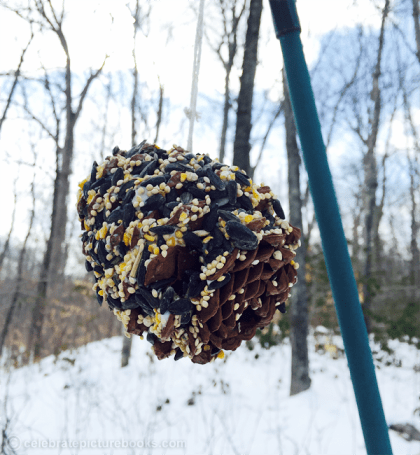
Pinecone birdfeeders are quick to make and great for your backyard fliers. The combination of peanut butter, lard, or vegetable shortening and a quality seed mixture provide birds with the fat and nutrition they need to stay warm and healthy during the winter.

Supplies

  • Pinecones
  • Peanut butter, vegetable shortening, or lard
  • Birdseed
  • String
  • Knife or wooden spreader
  • Spoon

Directions

  1. Tie a long length of string around the middle of the pinecone
  2. Spread the peanut butter, vegetable shortening, or lard on the pinecone
  3. Sprinkle a thick coating of birdseed on the pinecone, pressing it into the covering so it will stick
  4. Tie the pinecone feeder onto a tree branch or other structure
  5. Watch the birds enjoy their meal!

Picture Book Review

January 19 – It’s Creativity Month

celebrate-picture-books-picture-book-review-painting-pepette

About the Holiday

As the cold and snowy weather keeps us inside more and more, what are we to do? Why not create?! Whether you like writing, drawing, cooking, woodworking, gardening, photography, dance, or other pursuits, January is the perfect time to begin a new project. Stock up on supplies, get those ideas going, and create!

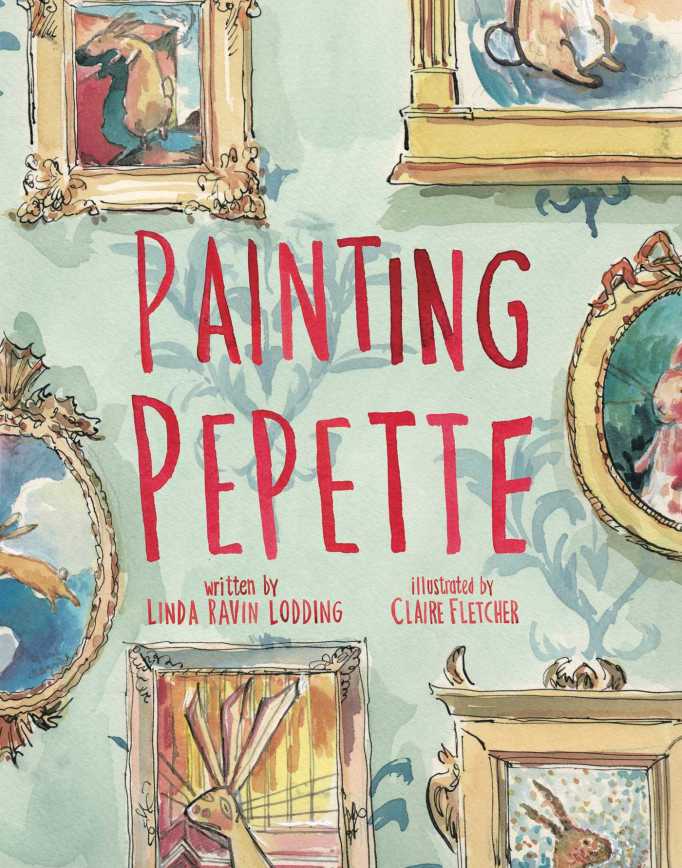
Painting Pepette

Written by Linda Ravin Lodding | Illustrated by Claire Fletcher


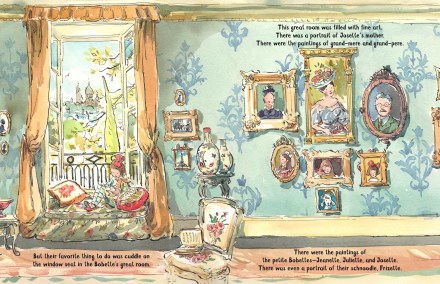
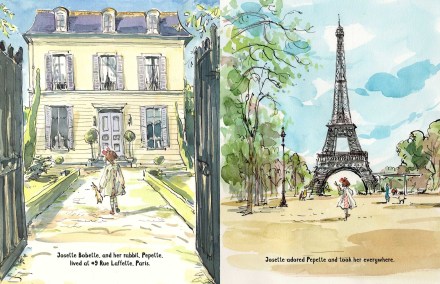
If you were to peek in the great room window of the grand yellow house at #9 Rue Laffette in Paris, you would most likely see Josette Bobette and her beloved stuffed rabbit Pepette cuddled together on the comfortable seat. It was their favorite place. Looking past them you would see that on the walls hung portraits of the family—Josette’s mother was there as well as grand-mère and grand-père, the three Bobette sisters, and even their schnoodle Frizette.

celebrate-picture-books-picture-book-review-painting-pepette-great-room

Image copyright Claire Fletcher, text copyright Linda Ravin Lodding. Courtesy of simonandschuster.com

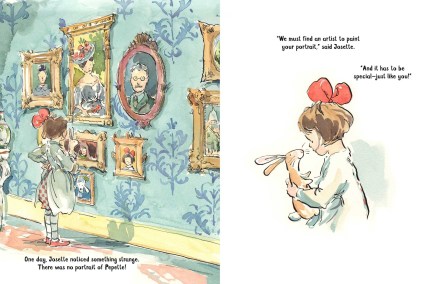
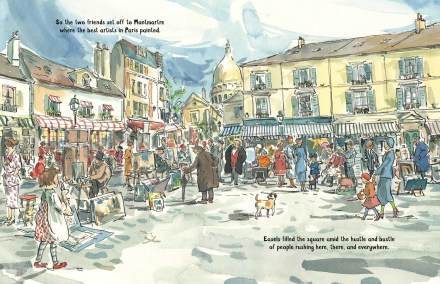
“One day Josette noticed something strange. There was no portrait of Pepette!” Josette at once determined to find an artist to paint a special portrait of her best friend. The pair head out to Montmartre, where all of the best artists set up their easels to paint and sell their work. It didn’t take long for a man in a striped shirt to stop them.

“‘Those ears!’” he cried. “‘Never have I seen such majestic ears. I must paint this rabbit’s portrait!’” Pepette blushed at such an effusive compliment, and Josette exclaimed, “‘Magnifique!’” It appeared that Josette had found just the artist to create Pepette’s portrait. The painter waved his brush with a flourish, “declared his painting a ‘masterpiece,’” and held it up for inspection. Josette gazed at a Pepette with two noses and three ears. Diplomatically, she proclaimed the picture “‘nice’” but not quite Pepette. Her best friend agreed.

celebrate-picture-books-picture-book-review-painting-pepette-pepette-with-bunny

Image copyright Claire Fletcher, text copyright Linda Ravin Lodding. Courtesy of simonandschuster.com

Just then a man with a thin, curved handlebar mustache spied the pair. Admiring Pepette’s whiskers, the artist begged to capture “‘the very essence of her rabbitness!’” He immediately set to work, and in no time a most unusual portrait emerged. Pepette seemed to melt from atop a tall red wall. Josette considered it—and her reaction—carefully. “‘It’s imaginative,’” she said. “‘But you’ve painted Pepette quite, well, droopy.’” Pepette agreed.

As Josette and Pepette enjoyed a Parisian snack on the curb of Montmartre, a rakish young man happened along. He was arrested by Pepette’s nose, which he likened to “‘a faint star twinkling in a misty, velvet night.’” Josette had a good feeling about this artist and followed him across the square to his easel. Pepette posed on a red tufted stool as the artist painted a rabbit soaring through the clouds. He proclaimed the finished portrait “‘one of my best works’” as he displayed it to the crowd. Josette liked the clouds but told the painter that Pepette is afraid of heights and not fond of flying. Pepette agreed.

celebrate-picture-books-picture-book-review-painting-pepette-pepette-at-home-and-in-paris

Image copyright Claire Fletcher, text copyright Linda Ravin Lodding. Courtesy of simonandschuster.com

By now Pepette was the most sought-after model in Paris, and another artist rushed up, captivated by her beauty. The balding man in a dapper suit and round spectacles peered at Pepette. “‘What a colorful lady—balloon blue, pansy pink, and radish red!’” Although a little suspicious of his vision, Josette allowed him to paint Pepette. “‘Ta da!’” the man exclaimed, revealing the magic of his brush. Josette studied the canvas with its vibrant dots, dashes, and splashes. While she admired the colors, she reminded the artist that Pepette isn’t pink.

“‘Ah, yes,’” nodded the painter. “‘But through art we can see the world any way we want.’”

With the sun setting low in the sky, Josette politely said thank-you and goodbye to the artists. She and Pepette had enjoyed their day, but it was time to go home. Curled up once more on the window seat, Josette sighed. She had so hoped to have the perfect portrait of Pepette—one that showed her velvety grey listening ears, her heart-shaped nose, and her soft arms that give tight hugs. Suddenly, Josette had an idea! After gathering all of her art supplies, she created the perfect likeness—one as special as Pepette herself!

celebrate-picture-books-picture-book-review-painting-pepette-pepette-at-montmartre

Image copyright Claire Fletcher, text copyright Linda Ravin Lodding. Courtesy of simonandschuster.com

An author’s note on the last page describes the creative atmosphere of 1920s Paris, home to writers, artists, musicians, and fashion designers, that gives a frame to her story. The artists that Josette meets are inspired by Pablo Picasso, Salvador Dalí, Marc Chagall, and Henri Matisse.

In Painting Pepette Linda Ravin Lodding has written a multi-layered story of love, friendship, and unique vision. Through the sweet relationship between Josette and Pepette and with a sprinkling of humorous self-congratulation by the artists, Lodding nudges readers to appreciate that while art can reveal and obscure, reflect or transcend reality, ultimately the success of a piece—complex or simple—lies within the viewer’s heart. Children will also see that their creative endeavors, undertaken with love, are just as meaningful and appreciated as those of professional artists. Lodding’s lyrical language trips off the tongue and is a joy to read—as if readers are following Josette as she skips happily through Paris.

Claire Fletcher’s striking pen-and-ink illustrations pay delicate homage to cityscapes of a bygone Paris. Adorable Josette and her enchanting rabbit are the perfect tour guides through crowded Montmartre and this introduction to art history. Soft tones of yellow, rose, and green illuminate the apartments and cafes of the square, where colorful shoppers and artists mingle. Fletcher’s renderings of Pepette’s various portraits will not only make kids giggle, but entice them to learn more about each artistic style. The final endpapers reveal that the four fine-art portraits now hang in the Muse of Paris, while readers already know that Josette’s perfectly perfect portrait of her well-loved friend has taken its rightful place on the wall in the Bobette’s great room!

Painting Pepette is a beautiful addition to any child’s bookshelf and a lovely way for teachers to initiate a discussion of art history and get kids excited about artists and different art styles.

Ages 4 – 9

little bee books, 2016 | ISBN 978-1499801361

Follow Josette through Paris as she searches for just the right artist to paint a portrait of her best friend Pepette and comes to a surprising discovery in this beautiful Painting Pepette book trailer:

Discover more books by author Linda Ravin Lodding on her website.

Illustrator Clair Fletcher invites you to find more of her artwork by visiting her online gallery.

Creativity Month Activities

celebrate-picture-books-picture-book-review-painting-pepette-activity-guide

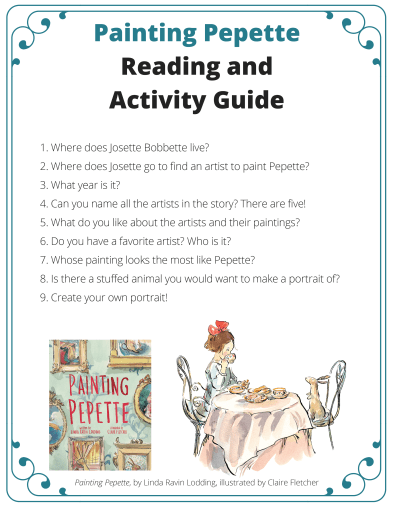
Painting Pepette Reading and Activity Guide


little bee books has created an interactive activity so you can continue to explore Josette’s world and your own artistic talent! Just click here—Painting Pepette Reading and Activity Guide—to start having fun!

Stuck on You Magnets or Picture Hanger


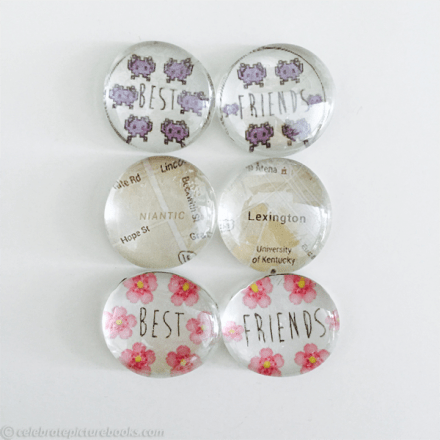
Creativity is meant to be shared! Here’s an easy craft that you can make to give to your friends whether they live close by or far away. These magnets can used by themselves or to hold a picture-hanging wire. Use inside jokes, favorite characters, or shared experiences to make these  crafts personal!

celebrate-picture-books-picture-book-review-friends-magnets-craft

For Magnets

Supplies

  • To get you started, here are two printable Best Friends Templates! Template 1 Template 2
  • Poster board
  • Large, 1 ½-inch clear glass stones (decorative fillers), available in craft stores
  • Markers or colored pencils OR find images online to print out
  • Medium to large flexible magnets, available in craft stores
  • Super glue
  • Toothpicks
  • Scissors

Directions

  • Place the glass stone on the poster board and trace around it
  • Draw your design in the circle on the poster board
  • Cut out the circle
  • With the toothpick, apply glue around the very edge of the design side of the circle
  • Attach the circle to the flat side of the stone, let dry
  • Trim the cardboard circle if needed
  • Attach the magnet to the back of the cardboard with glue

celebrate-picture-books-picture-book-review-friends-picture-hanger-craft

For Map Picture Holder

Supplies

  • Use a mapping program to find a map of your town and your friend’s town
  • Poster board
  • Large, 1 ½-inch clear glass stones (decorative fillers), available in craft stores
  • Twine
  • Super Glue
  • Toothpicks
  • Scissors
  • Heavy duty mounting squares

Directions

  1. Find maps of your and your friend’s towns
  2. Zoom in so the name of your and your friend’s towns are displayed well. You will be using about a 1-inch area around the towns’ names.
  3. Take a screen shot of the maps
  4. Print the maps
  5. Place the glass stone on the map and trace around it
  6. Place the glass stone on the poster board and trace around it
  7. Cut out the circles on the map and poster board
  8. With the toothpick, glue the map to the poster board, let dry
  9. With the toothpick, apply glue around the very edge of the map side of the circle
  10. Attach the circle to the flat side of the glass stone, let dry
  11. Trim the cardboard circle if needed
  12. Repeat with the other map
  13. Attach a length of twine to the back of each glass stone
  14. Attach heavy duty mounting squares to the back of each glass stone
  15. Attach stones to the wall and hang pictures on the twine

Picture Book Review
January 2 – Motivation and Inspiration Day

celebrate-picture-books-picture-book-review-radiant-child-cover

About the Holiday

While Motivation and Inspiration Day was instituted in reaction to the 9/11 attacks, the holiday’s influence and meaning has grown and now includes world-wide participation. Falling on the second day of the year, it encourages us to reflect on our lives—where we are and where we want to go. Take some time to consider what motivates and inspires you and follow those inner and external voices to help you achieve your dreams.

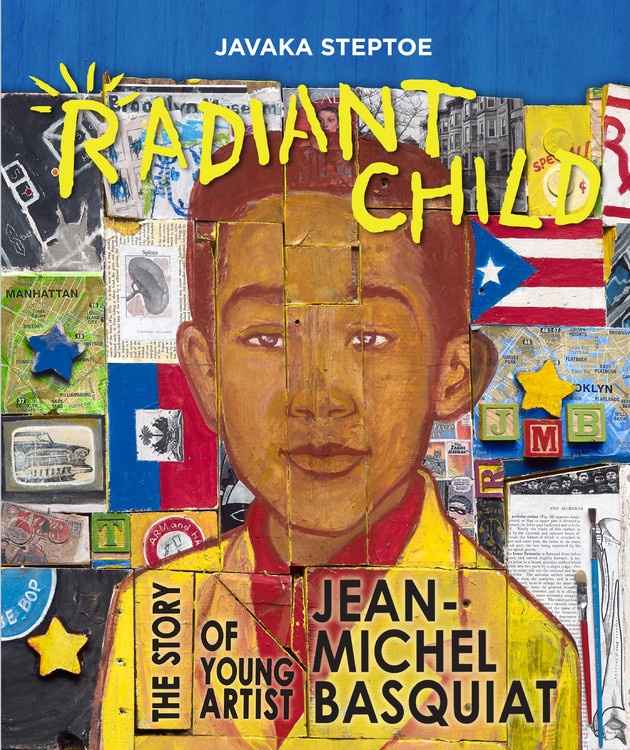
Radiant Child: The Story of Young Artist Jean-Michel Basquiat

By Javaka Steptoe


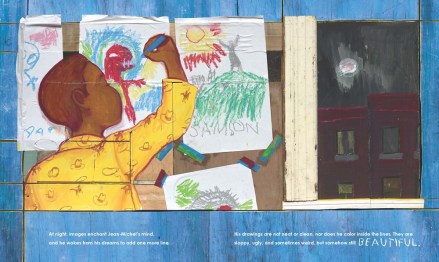
“Somewhere in Brooklyn, between hearts that thump, double Dutch, and hopscotch / and salty mouths that slurp sweet ice, a little boy dreams of being a famous artist.” All day Jean-Michel sits surrounded by colored pencils and “a storm of papers” and draws. As he sleeps his dreams swirl with images. When he wakes he adds to his drawings, scribbling away. What he creates is “sloppy, ugly, and sometimes weird, but somehow still beautiful.”

celebrate-picture-books-picture-book-review-radiant-child-beautiful-art

Image and text copyright Javaka Steptoe, courtesy of Little, Brown Books for Young People

Jean-Michel’s talent comes from his Puerto Rican mother, who has a natural sense of style and design and who always makes time to draw with her son, lying on the floor next to him. She takes Jean-Michel to art museums and theaters and reads poetry to him, but she also shows him the art of the city—its sounds, sights, style, and “patchwork” colors. Jean-Michel loves to visit the museum and read about the artwork and the artists. From these stories he “learns what it means to be a famous artist.”

When Jean-Michel is seriously injured in a car accident, his world seems scary and confusing. He mother gives him an anatomy book, which he memorizes. It erases his fears and becomes influential in his work. After returning home his life changes when his mother suffers a breakdown and can no longer live at home. “He tries drawing the terrible out of his blues, but things are not the same.” Jean-Michel visits his mother when he can, “always bringing his artwork to show, telling her that one day it will be in a museum, ‘when I am a famous artist.’”

celebrate-picture-books-picture-book-review-radiant-child-drawing

Image and text copyright Javaka Steptoe, courtesy of Little, Brown Books for Young People

As a teenager, Jean-Michel follows his dream, moving from Brooklyn to New York City. There he stays with friends, painting, creating collages, and writing poems on paper strewn about him. At night he paints on city walls, trash cans, and other urban canvases. His art, signed ‘Samoo,’ attracts attention. People wonder, “‘Who is Samoo?’”

Soon his art can be found in art galleries and hanging in the homes of the people who buy his work. Jean-Michel continues to create, listening to “a sound track that is all his own.” Through talent, inspiration, and his mother’s loving influence, Jean-Michel Basquiat conquered the art world, becoming a king among artists, and fulfilling his desire to be a famous artist.

An extensive Author’s Note about Jean-Michel Basquait’s life, including his struggles with addiction and his death in 1988, the motifs and symbolism in his work that now is displayed in museums around the world and sells for millions of dollars, and a personal comment on the impact Basquait’s art had on the author follow the text.

celebrate-picture-books-picture-book-review-radiant-child-studio

Image and text copyright Javaka Steptoe, courtesy of Little, Brown Books for Young People

Javaka Steptoe’s compelling biography of this complex, brilliant artist who people called “radiant, wild, a genius child” beautifully brings to life the inspirations and motivations that fueled his unique and intense talent. Steptoe delivers the story in staccato and flowing sentences, using consonance, assonance, repetition, the rhythms of a poet. Taking the reader from Jean-Michel’s childhood to adulthood to show how maintaining his focused determination, self-confidence, and persistence over many years led to his ultimately becoming a famous artist demonstrates that success is not a matter of luck, but of belief in oneself despite obstacles. Steptoe sensitively addresses the serious injury Basquiat suffered, his mother’s mental illness and Basquiat’s continued love for her, and his unsettled teenage years to complete this far-reaching life story.

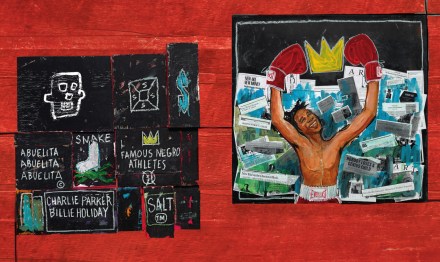
celebrate-picture-books-picture-book-review-radiant-child-boxing-image

Image and text copyright Javaka Steptoe, courtesy of Little, Brown Books for Young People

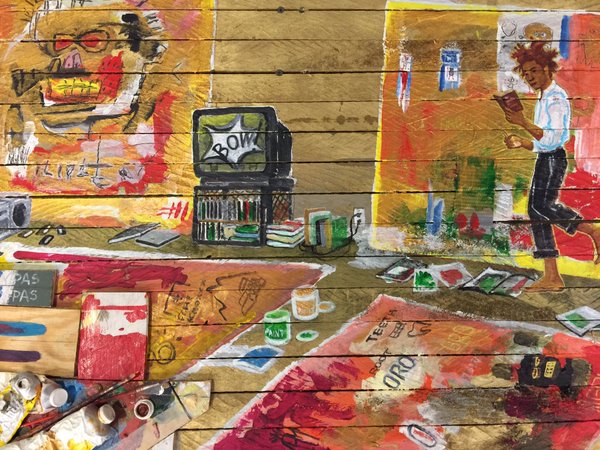
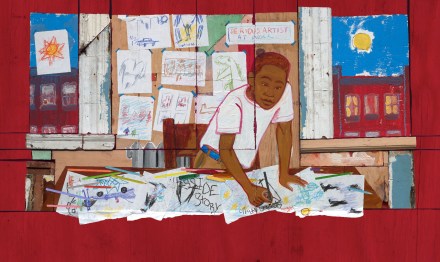
Steptoe’s mixed-media paintings were created on found wood from neighborhoods across New York City. While Steptoe does not reproduce any of Basquiat’s work, he states that readers will find “original pieces that were inspired by him and my interpretations of his paintings and designs.” As befitting his subject, Steptoe offers pages that burst with vibrant color and intricate details and beat with the pulse of the city, the people, the dreams, and the imagination that Basquiat transcribed onto paper, walls, and canvas. Part collage, part fine art, Steptoe’s illustrations will fascinate children and entice them to linger to take in all the emotion and meaning in each. The final spread, a crowd scene made up of photographs, sets Basquiat in the midst of people whom he and his art continue to inspire.

Radiant Child: The Story of Young Artist Jean-Michel Basquiat offers children an inspirational model of creativity, compassion, and confidence no matter where their talents lie. The book is an excellent choice for school, public, and home libraries.

Ages 6 – 10

Little, Brown Books for Young Readers, 2016 | ISBN 978-0316213882

Learn more about Javaka Steptoe, his books, art exhibitions, and life on his website!

Motivation and Inspiration Day Activity

celebrate-picture-books-picture-book-review-motivation-and-inspiration-day-craft

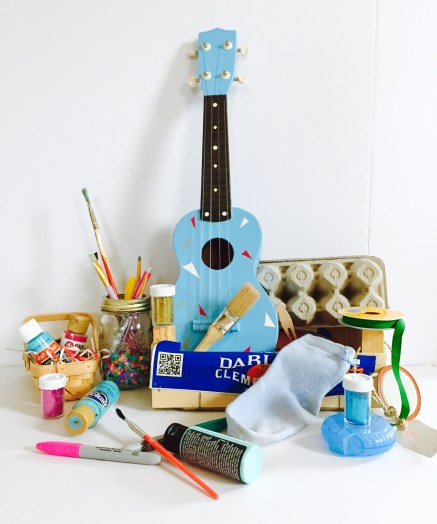
Found-Item Crafts


Each person finds motivation and inspiration in different things, places, and people. Today, try to create something new from the materials around you. Boxes, bottles, wire, magazines, cloth, wood, sponges—almost anything—can be transformed with some imagination. With those old socks, corks, flower pots, candle stubs, bits of ribbon, clementine crate, paint, glitter, beads, and more, you can make something useful, a decoration for your room, or even a gift for a friend!

Picture Book Review
December 29 – Tick Tock Day

celebrate-picture-books-picture-book-review-ticktock-banneker's-clock-cover

About the Holiday

As the year winds down Tick Tock Day reminds us of the passage of time and encourages us to examine our life and find opportunities to accomplish the things we really want to. While the day only has 24 hours, a little creative scheduling, letting go of those tasks that aren’t so important, and even saying “no,” can help us achieve the things that matter.

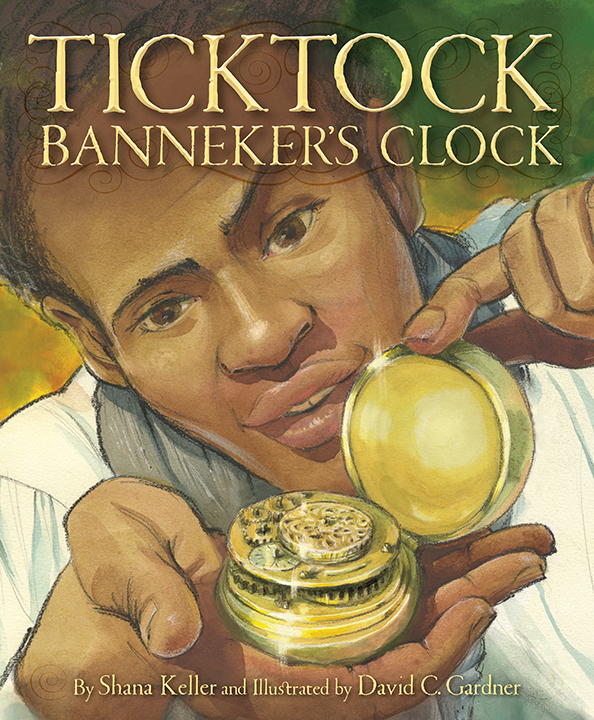
Ticktock Banneker’s Clock

Written by Shana Keller | Illustrated by David C. Gardner


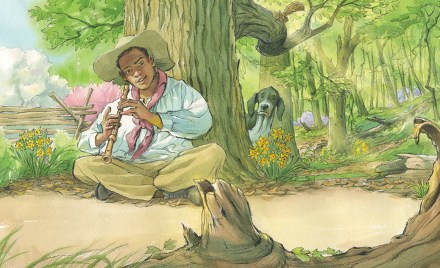
With winter approaching Benjamin Banneker has finished up his autumn chores and is looking forward to time to indulge his creative dreams. He finds his favorite spot under the chestnut tree—the place where during the summer he plays his violin and flute, “blending his soft music with the bird’s songs”—and pulls out a pocket watch he has borrowed from a gentleman. Benjamin is fascinated by the ticking and the movement of the small hands. He carefully opens the back of the watch and discovers “a world of wonderful whirls. There were gears of all shapes and sizes. Such a tiny maze!”

celebrate-picture-books-picture-book-review-ticktock-banneker's-clock-studying-pocket-watch

Image copyright David C. Gardner, courtesy of flyingdogstudio.com

The miniature timepiece is mesmerizing, but Benjamin’s mind holds a challenge—a big challenge. He envisions a large clock, one that chimes to tell the time. Remembering his math skills, Benjamin mulls over the scale needed to turn “something small into something big.” As the snow falls, Benjamin goes to work. First, he dismantles the pocket watch and draws careful diagrams of the gears and workings. Then he begins transposing these into larger drawings.

celebrate-picture-books-picture-book-review-ticktock-banneker's-clock-flute

Image copyright David C. Gardner, courtesy of flyingdogstudio.com

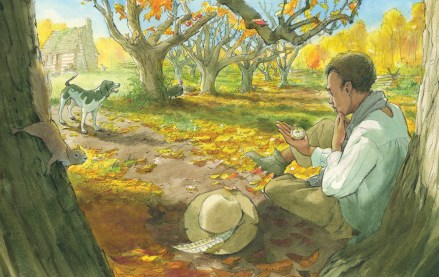
With the coming of spring and his drawings finished, Benjamin plans how he will build his clock. While the little pocket watch is made of metal, that material is much too expensive for a large version. As he ponders the problem under his favorite tree, Benjamin looks around him. Suddenly he knows! The answer is “right in front of him, even in his hands! The very instrument he played was made of wood!” There is a forest of trees on his farm, and this material is free.

During the summer between farm chores, Benjamin uses “every spare moment he had to find the perfect pieces of wood.” Once he has enough he begins to convert his drawings into carvings, whittling the gears and other pieces he will need. Soon, however, he becomes discouraged. The wood begins to split and come apart. Benjamin thinks about how his family cures tobacco leaves—drying them out until all the moisture evaporates. Perhaps, he thinks, he can do the same with wood to make it stronger. The process would take months, but Benjamin is patient.

celebrate-picture-books-picture-book-review-ticktock-banneker's-clock-carving

Image copyright David C. Gardner, courtesy of flyingdogstudio.com

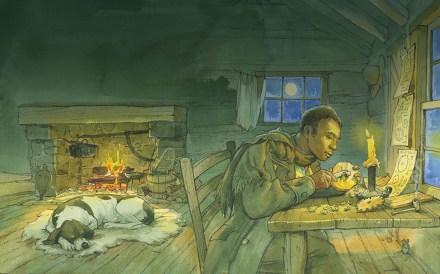
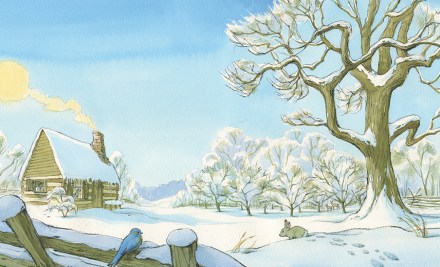
Winter has come around again, and the wood is finally ready. In his warm house Benjamin sets about carving again. During the day he carves near the sunny window, and at night he works by candlelight. At last he has all the parts he needs to build his clock. Gears, wheels, tiny pins, and the boards that will become the case are scattered across Benjamin’s work table. There is only one piece missing. A piece that cannot be made of wood—the bell!

Benjamin buys a bell from a metalsmith, and back home begins to build his clock. With his drawings to guide him, he fits the gears together and then sets the hands to “match up perfectly with the second, minute, and hour of each day. It took more than one try, but Benjamin had learned to be patient.” Using the sun to determine the correct time, Benjamin positions the hands and steps back. His clock works! “The little iron bell chimed every hour, on the dot, for the next forty years.” Benjamin becomes famous, and neighbors from near and far come “to see his amazing invention.”  

An Author’s Note expanding on Benjamin Banneker’s life and work follows the text.

celebrate-picture-books-picture-book-review-ticktock-banneker's-clock-winter

Image copyright David C. Gardner, courtesy of flyingdogstudio.com

With lyrical language that glides as smoothly as a well-oiled timepiece, Shana Keller reveals the remarkable story of Benjamin Banneker, born free during the time of slavery, who possessed exceptional math and scientific skills and used them to help his friends and neighbors and to make real his vision of a striking clock. Keller’s detailed and descriptive storytelling animates this life story, allowing readers to take the journey with Banneker as he experiences excitement, setbacks, and ultimately success. Banneker, embodying determination, persistence, and creativity, is an excellent role model for kids with big dreams of their own.

celebrate-picture-books-picture-book-review-ticktock-banneker's-clock-studying-fall-chores

Image copyright David C. Gardner, courtesy of flyingdogstudio.com

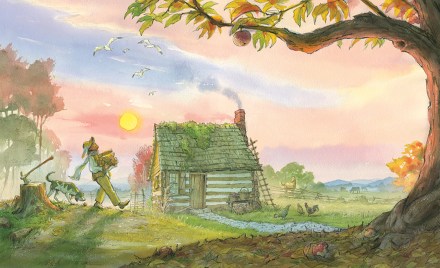
David C. Gardner’s lovely full-page and two-page-spread illustrations gloriously portray Benjamin Banneker’s farm and home as well as his dedicated commitment to building a striking clock despite—or perhaps spurred on by—the challenges he faced. Gardner’s detailed images set the biography firmly in its time period, letting children experience farm and home life in the 1750s. Banneker carries wooden buckets to feed the animals, tobacco leaves hang in a dry shed, a fire blazes in a large, open fireplace, and a candle flickers as Banneker whittles wheels and gears with his pocket knife. The realistic paintings that depict Banneker’s emotions as he imagines creating a large clock, overcomes obstacles, and studiously works on his drawings and carvings will inspire readers to attempt their own inventions—whatever they may be.

For any would-be inventors, history lovers, tinkerers, and science buffs, Ticktock Banneker’s Clock is a stirring biography that would make an inspirational addition to home, school and public libraries.

Ages 6 – 10

Sleeping Bear Press, 2016 | ISBN 978-1585369560

Learn more about Shana Keller and her work on her website!

Discover a portfolio of picture book art, fine art, animation, and videos by David C. Gardner on his website!

Tick Tock Day Activity

celebrate-picture-books-picture-book-review-cuckoo-clock-coloring-page

Cuckoo Clock Coloring Page


The chirp of a cuckoo clock keeps you on time—or at least aware of the passing of time! Here’s a printable Cuckoo Clock Coloring Page for you to enjoy!

Picture Book Review
December 7 – Letter Writing Day

celebrate-picture-books-book-review-exclamation-mark-cover

About the Holiday

With all the letter writing going on during December by young wishers, it should be no surprise that a letter-writing day be included in this month’s calendar. Today’s holiday celebrates all forms of personal communication written by hand and remembers the correspondence of the past that has given us such insight into our favorite poets, novelists, historical figures, and more. Sure email might be faster, but there’s a certain luxury in taking the time to write your thoughts and an unexplainable excitement in holding a heartfelt letter in your hands. The punctuation marks in today’s reviewed book not only help correspondents write more dramatically, but they remind us that we all have unique things to say!

Exclamation Mark

Written by Amy Krouse Rosenthal | Illustrated by Tom Lichtenheld


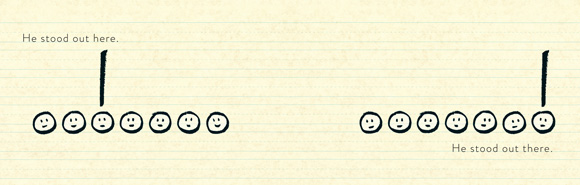
! “stood out from the very beginning.” When he was standing in a row of ……, it didn’t matter if he was in the middle or at the end—he still stuck out. The only time he wasn’t so noticeable was when he laid down to go to sleep. Sometimes he twisted himself into coils and did somersaults to be like the others, but nothing worked. “He just wasn’t like everyone else. Period.” This left him feeling “confused, flummoxed, and deflated.”

celebrate-picture-books-book-review-exclamation-mark-stands-out

Image copyright Tom Lichtenheld, text copyright Amy Krouse Rosenthal. Courtesy of Scholastic Press

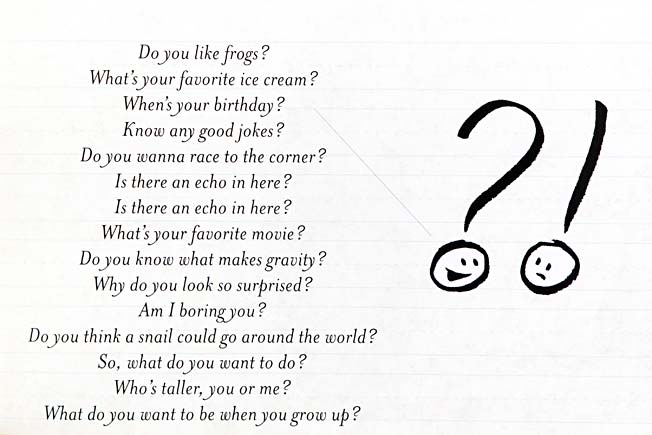
He was just about to run away from all his problems when he met ?. ? rushed right up to him and wanted to know everything. “Who are you?…What’s your favorite color? Do you like frogs?…Do you wanna race to the corner? Is there an echo in here? Is there an echo in here?…Why do you look so surprised?….” The list went on and on.

celebrate-picture-books-book-review-exclamation-mark-lots-of-questions

Image copyright Tom Lichtenheld, text copyright Amy Krouse Rosenthal. Courtesy of Scholastic Press

“STOP!” ! shouted. The sound stunned him. ? smiled and wanted him to do it again. ! didn’t know if he could, so he tried a small “Hi!” “That felt right, so he tried something bigger. Howdy!” And then he said, “Wow!” After that there was no stopping him: “You’re it!…Home run!…Yum!…Look out!…Thanks!…Boo!…Go!”

He rushed off to show everyone what he could do. The …… were delighted and “there was much exclaiming.” Now feeling happy and confident, ! “went off to make his mark.”

celebrate-picture-books-book-review-exclamation-mark-yippee

Image copyright Tom Lichtenheld, text copyright Amy Krouse Rosenthal. Courtesy of Scholastic Press

Amy Krouse Rosenthal’s clever story of an exclamation point searching for self expression is as moving as it is original. Kids will recognize his feelings of sticking out in a crowd and uncertainty of purpose and applaude when ? comes on the scene to befriend !. Readers will giggle knowingly at the barrage of questions, and feel emboldened themselves as ! finds his voice and his own unique contribution.

Tom Lichtenheld’s adorable punctuation marks hanging out on kid-ruled paper demonstrate all the expression and expressions of this well-crafted story. With simple dot eyes and small streak mouths, Lichtenheld animates the various emotions of the periods, exclamation mark, and question mark as they discover !’s special talent with individuality for each. The unbridled exuberance of ?‘s and !’s meeting makes this a terrific book about friendship as well.

! deftly points out “What would we do without exclamation points?” Likewise it asks, “What would we do without each one of us?” The positive message, creatively and humorously presented, makes this book a terrific addition to any child’s library.

Scholastic Press, 2013 | ISBN 978-054543679

You’ll find more about Amy Krouse Rosenthal, her books for children and adults, videos, other projects, and so much more on her website!

Discover a portfolio of books by Tom Lichtenheld as well as fun book-related activities and resources for teachers on his website!

!!!! for this ! book trailer!

National Letter Writing Day Activity

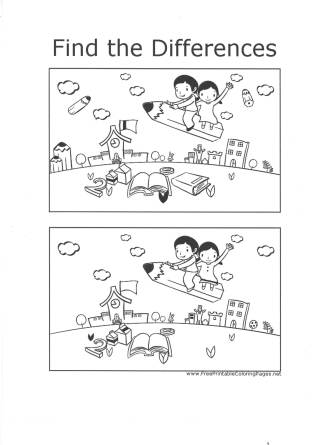
celebrate-picture-books-picture-book-review-pencil-riding-kids-find-the-differencesLetter-Writing Kids Find the Differences Puzzle


Sometimes writing a letter is a flight of fancy through the thoughts and stories you want to tell someone else. Can you find the 12 differences in this printable Letter-Writing Kids Find the Differences Puzzle?

Picture Book Review