May 4 – Petite and Proud Day

celebrate-picture-books-picture-book-review-the-smallest-girl-in-the-smallest-grade-coverAbout the Holiday

Life’s not about how tall you are but about how big your heart is! Today we celebrate people who are 5’4” and under—the petite! There are many advantages to being on the smaller side—it’s easier to fit into tight spaces; airline, train, and other transportation seats are more comfortable; and we can blend into the crowd more easily when we’re having a bad hair day. All-in-all being petite is pretty perfect!

The Smallest Girl in the Smallest Grade

Written by Justin Roberts | Illustrated by Christian Robinson


Sally McCabe was so small that she was mostly overlooked. “She was the smallest girl in the smallest grade.” The other kids heard her name called every morning along with theirs, and they passed her in the hall on the way to class, but no one knew that “Sally was paying super extra special attention” to what went on around her. For instance, she noticed the kite someone had lost in the tree and had counted twenty-seven keys on the janitor’s ring.  She watched as the leaves turned “green to gold in the fall” and when “Tommy Torino was tripped in the hall.”

celebrate-picture-books-picture-book-review-the-smallest-girl-in-the-smallest-grade-classroom

Image copyright Christian Robinson, text copyright Justin Roberts. Courtesy of G. P. Putnam’s Sons.

She saw wildflowers turn their face toward the sun and “was there when the stray cats who normally fought / conducted a meeting in the church parking lot.” On the playground she saw Kevin McKuen get shoved down the slide and knew of the “tears that he wanted to hide.” On Parent-Teacher day, too, she watched kids pulled down the hall by parents upset at what they had heard. But during all this, no one happened to see Sally watching or knew what that could mean.
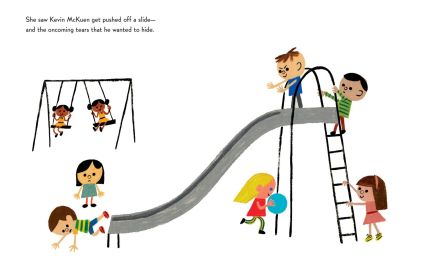
celebrate-picture-books-picture-book-review-the-smallest-girl-in-the-smallest-grade-slide

Image copyright Christian Robinson, text copyright Justin Roberts. Courtesy of G. P. Putnam’s Sons.

Sally understood that these slights, mean words, and cruel actions kept building and building without any stop, and she finally decided that something must change. So one day during lunch she stepped out of line, stuck her hand in the air, and announced very loud, “‘I’m tired of seeing this terrible stuff. / Stop hurting each other! This is enough!’”

Some kids just giggled and ignored what she’d said, but many others joined in with their hands in the air. “Like waves rolling in, one after another— / first Molly rose up, then Michael’s twin brother. / It was Tyrone and Terence, then Amanda and Paul, / who pushed out their chairs and stretched their arms tall.” And they all felt connected “like the janitor’s keys. Fastened together with a heavy steel ring / that held all the secrets to unlock everything.”

celebrate-picture-books-picture-book-review-the-smallest-girl-in-the-smallest-jump-rope

Image copyright Christian Robinson, text copyright Justin Roberts. Courtesy of G. P. Putnam’s Sons.

After that day, things went back to normal—but with much welcomed kindness in small doses and places. Spaces were made for strangers to sit, doors held wide open, and many such “moments that get taken for granted—a wildflower appearing that no one had planted.” And so the world changed for this school and this town all because Sally was courageous and kind and paying attention.

Justin Roberts’ rhyming tribute to the empathy and bravery of one little girl who takes notice and makes a difference shows kids and adults that anyone can create change no matter who they are. Readers of all ages will recognize the hurts that Roberts chooses to include, good examples of the small and large acts that cause physical and emotional pain. The infectious rhythm and the inspirations of kindness—from the alley cats’ truce to wildflowers to keys (objects that at once have familiarity and deeper meanings)—give the book resonance far beyond the immediate reading.
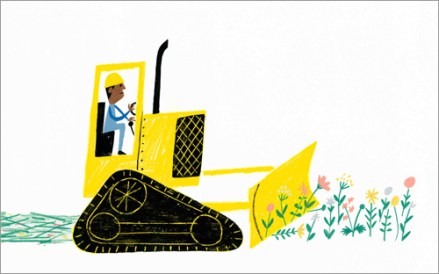
celebrate-picture-books-picture-book-review-the-smallest-girl-in-the-smallest-grade-bulldozer

Image copyright Christian Robinson, text copyright Justin Roberts. Courtesy of G. P. Putnam’s Sons.

Christian Robinson’s bright, wide-lens drawings of Sally’s schoolroom, cafeteria, and playground give young readers the same view Sally has, allowing them to also find the examples of arguing, pushing, whispering, and other slights that she reacts to. An illustration of Sally and her classmates sitting at their desks shows exactly how small she is in comparison to the other children; the rest of the pages demonstrate just how big her heart is. Each page offers opportunities for kids and adults to discuss the problems of bullying and options for how they can make a difference.

The Smallest Girl in the Smallest Grade is a wonderful reminder of how important each person is in making the world a happier place and would make an excellent addition to home libraries.

Ages 3 – 7

G. P. Putnam’s Sons, 2014 | ISBN 978-0399257438

Visit Christian Robinson’s website, where books and art are always fun!

Check out all the music, videos, activities, and other stuff by Justin Roberts on his website!

Petite and Proud Day
celebrate-picture-books-picture-books-review-kindness-cards

Kindness Cards


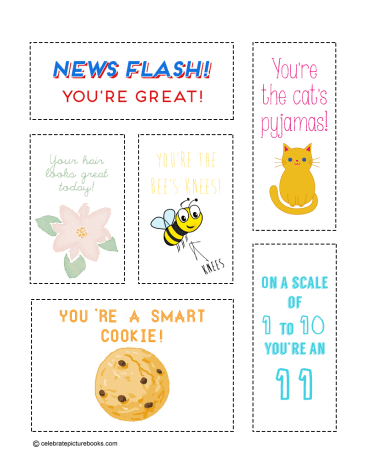
Being kind to someone can be as easy as slipping a friendly note into someone’s locker or backpack or leaving a card for a favorite teacher, bus driver, or librarian. If you notice someone who could use a pick-me-up, you could give them one of these cards too! Print out your Kindness Cards and start spreading some good cheer!

Picture Book Review

March 25 – Earth Hour Day

picture-book-review-green-city-allan-drummond

About the Holiday

Earth Hour was organized by the World Wide Fund for Nature as a way to engage people in the discussion on climate change. First enacted in Australia in 2007, the observance has grown to include cities, businesses, corporations, and individuals world wide. For one hour – from 8:30 to 9:30 p.m. local time – participants will turn off all unnecessary lights in a show of solidarity and commitment to protecting our earth. Among the places going dark this year are the Empire State Building, the Space Needle, the Golden Gate Bridge, the Colosseum in Rome, the Pyramids of Egypt, the Sydney Opera House, and the Eiffel Tower.

Green City: How One Community Survived a Tornado and Rebuilt for a Sustainable Future

By Allan Drummond


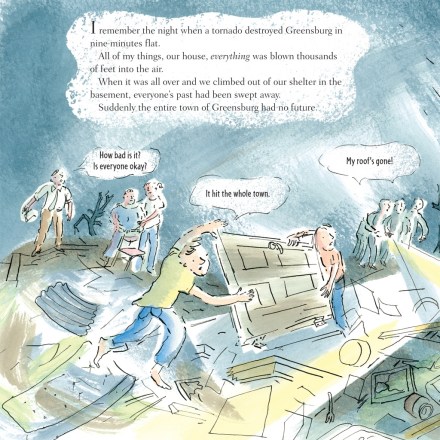
On May 4, 2007 a devastating tornado hit Greensburg, Kansas, destroying the town in 9 minutes. When the residents of the town climbed from their shelters, they emerged into a world completely changed. There were no more homes, no school, no hospital, no grocery store or other shops. No banks, theater, churches, or water tower. Even the trees had been shredded. Only three buildings remained.

celebrate-picture-books-picture-book-review-green-city-after-tornado

Image and text copyright Allan Drummond, courtesy of us.macmillan.com.

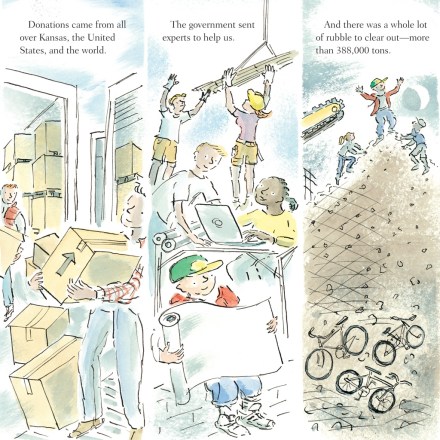
The citizens were urged to move away. Rebuilding would be impossible, some said, and what was the point anyway when the wind could destroy it all again? But others saw opportunity to construct a different kind of town. With the help of volunteers and donations from around the world, Greensburg began the Herculean task of designing and building a new town.

celebrate-picture-books-picture-book-review-green-city-rebuilding-starts

Image and text copyright Allan Drummond, courtesy of us.macmillan.com.

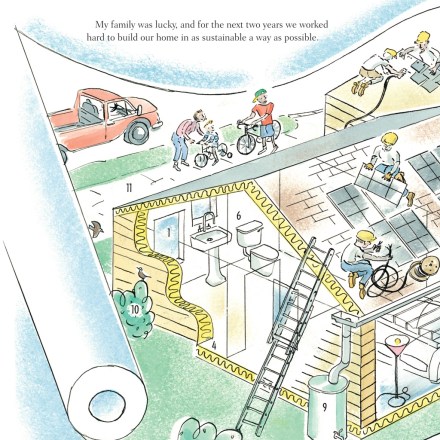
After clearing away 388,000 tons of debris and moving into a community of trailer homes, the people began to envision a unique, green town. Individuals designed sustainable houses of different shapes and materials that would work with the environment. Businesses, too, incorporated sustainability into their offices, retail centers, and hotels as did the hospital and the water tower. A wind farm large enough to provide energy for the entire town was built on the edge of this innovative city.

celebrate-picture-books-picture-book-review-green-city-one-house

Image and text copyright Allan Drummond, courtesy of us.macmillan.com.

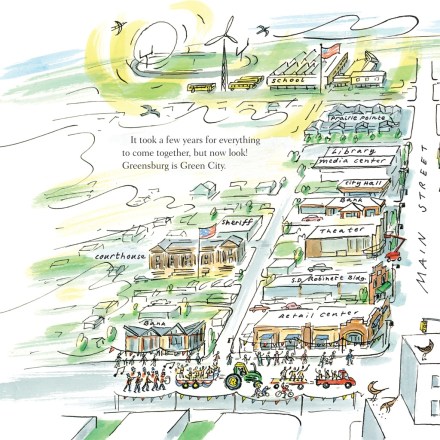
A new school was central to the town’s survival, and for three years the teachers held class in small trailers. Along with their regular studies, the kids became experts in environmental science. After several years Greenburg became a thriving city—a testament to conservation and sustainability that remains an example for global communities now and in the future.

celebrate-picture-books-picture-book-review-green-city-Greensburg-now

Image and text copyright Allan Drummond, courtesy of us.macmillan.com.

Allan Drummond tells this fascinating story of a community that would not give up in an honest and sensitive way that highlights the courage and pride of a town amid devastating loss. Told from a child’s point of view, the story has extra impact for readers who are growing up amid an era of environmental awareness and activism. The sustainable construction of homes and other buildings is effectively explained and clearly depicted in Drummond’s colorful illustrations.

The images also demonstrate the process of negotiation and cooperation among townspeople that went into designing and building a new Greensburg. The final two-page spread of the town’s layout will interest kids as well as adults who have followed this story in the news.

Ages 5 – 9

Farrar, Straus and Giroux, 2016 | ISBN 978-0374379995

Discover more about Allan Drummond, his illustration work and his books on his website!

Earth Hour Activity

celebrate-picture-books-picture-book-review-flashlight-clip-art

Flashlight On, Flashlight Off Game


It’s fun to play games in the dark! During Earth Hour flip off your lamps and overhead lights and play this game that challenges your memory while you think about our planet! This game can be played with two or more players.

Supplies

  • Flashlight 
  • 6 – 12 small objects (the number of objects can be adjusted depending on the ages of the players)
  • A table or floor area large enough to lay out the objects

Directions

With the Flashlight On:

  1. Lay out the objects on a table or on the floor
  2. Give all the players time to look at the objects and try to memorize them
  3. Choose one player to remove one of the objects

With the Flashlight Off

  1. Turn off the flashlight
  2. While the room is dark, the designated player removes one object from the rest
  3. Turn the flashlight back on

With the Flashlight Back On

  1. The other players try to figure out which object is missing

Variations

  • In addition to removing one object, the other objects can be moved around to different positions
  • Remove more than one object at a time
  • Add an object instead of removing one

Picture Book Review


February 17 – International Friendship Month

celebrate-picture-books-picture-book-review-here-to-there-and-me-to-you-cover

About the Holiday

Our love for friends near and far radiates across the month of February, bringing us closer. To celebrate International Friendship Month get together with old friends and reach out to others you’d like to get to know better. This month would also be a perfect time to find a penpal, write to a member of the military, or send a card to an old friend you haven’t seen lately. As today’s book shows, friendship is the world’s strongest bridge.

Here to There and Me to You

Written by Cheryl Keely | Illustrated by Celia Krampien


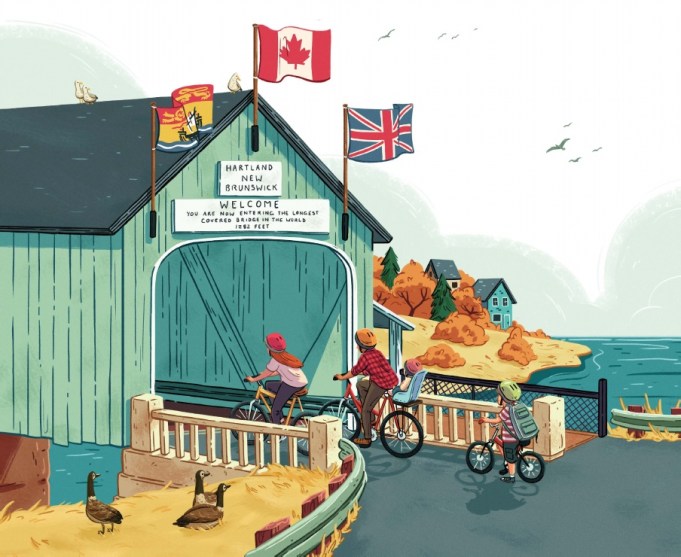
“Bridges do more than connect one place to another. They bring the whole world together.” There are so many types of bridges—each just right for their place or function. Some of the most charming bridges are wooden-covered, like Canada’s Hartland-to-Somerville span in New Brunswick, which is the longest covered bridge in the world at 1282 feet (as long as 32 school buses end to end). Some are colorful like the Golden Gate Bridge in San Francisco, California, which is distinctively orange, a beautiful beacon against the blue sky and sea.

celebrate-picture-books-picture-book-review-here-to-there-and-me-to-you-bridges-connect

Image copyright Celia Krampien, courtesy of sleepingbearpress.com

In London the bridge isn’t really falling down even though that makes for a fun game! The London Bridge, which crosses the River Thames, was the first stone multi-arch bridge built in Britain.” Over the years the bridge has been renovated many times, and it’s now made of concrete and steel. Drawbridges might be the coolest kind of bridge! It’s fun to watch them split in the middle and rise up, up, up before coming back down after a ship passes. These bridges “date to medieval times when knights in armor—and dragons?!—fought for their castles.”

celebrate-picture-books-picture-book-review-here-to-there-and-me-to-you-golden-gate-bridge

Image copyright Celia Krampien, courtesy of sleepingbearpress.com

Sometimes bridges don’t have to be fancy to work. Some “bridges can be as simple as a few stones placed across a shallow stream” that give crossers a place to step all along the way. This is known as a clapper bridge. People aren’t the only ones who use bridges either. Places that are home to roaming wildlife—like Banff National Park in Canada—build bridges so animals “such as bears, wolves, moose, and lynx” can cross roads and highways safely.

Trains can also “use bridges to clickity-clack along, carrying people to people. Family together again.” But what if you want to travel from country to country? There are even bridges for that, and they make “a big world seem smaller.” While these types of bridges are strong and sturdy, there are other spans made only of rope and boards that are “rickety, ratchety, swinging and swaying their way to beautiful hid away places.”

celebrate-picture-books-picture-book-review-here-to-there-and-me-to-you-covered-bridge

Image copyright Celia Krampien, courtesy of sleepingbearpress.com

People can become bridges too! Just try bending backward to touch the ground. Or if you don’t like feeling upside down, there is a simple way that “isn’t so grand. It connects me to you and you to me…through the simple holding of hands.”

Cheryl Keely’s enchanting tour of some of the world’s most beautiful and unusual bridges is sure to engage readers who love architecture, travel, and transportation—or who just have the wanderlust. Keely’s story, punctuated with facts and trivia about different types of bridges, is a lyrical frame for her theme of interconnectedness and friendship, making this a book that resonates on many levels and is a treat to dip into again and again.

celebrate-picture-books-picture-book-review-here-to-there-and-me-to-you-edge-of-golden-gate-bridge

Image copyright Celia Krampien, courtesy of sleepingbearpress.com

Celia Krampien’s charming artwork takes readers to the towns and cities, the shores and cliffs that host the world’s bridges. Her realistic depictions show the grandeur of the majestic spans millions of people use every day as well as the rustic simplicity of rope and clapper bridges. Kids will love picking out details of the scenery surrounding each structure as well as recognizing familiar settings they have learned about or, perhaps, traveled to.

Here to There and Me to You is a fresh, uplifting story that will appeal to fiction as well as nonfiction lovers. In addition to being a great addition to any story time, the book has many cross-curricular applications for classrooms and libraries, and would be a welcome find on any bookshelf.

Ages 5 – 8

Sleeping Bear Press, 2017 | ISBN 978-1585369966

To learn more about Cheryl Keely and her work as well as to find a fun bridge game, visit her website!

Find a portfolio of illustration by Celia Krampien on her website!

International Friendship Month Activity

celebrate-picture-books-picture-book-review-holding-hands-puzzle

Holding Hands Interchangeable Puzzle


Reaching out to others is a wonderful way to bridge distances and make friends. In this printable puzzle,  all the animals are ready to connect with others—no matter how you put the pieces together! Here is a colored version of the puzzle and one you can color yourself!

Supplies

Directions

  1. Print the puzzle
  2. Cut the pieces apart
  3. Reassemble the pieces in any order to have the animals make new friends

Picture Book Review

January 27 – It’s Creativity Month

celebrate-picture-books-picture-book-review-stitchin'-and-pullin'-a-gee's-bend-quilt-cover

About the Holiday

January is a time for reflection and new beginnings. What better time to start thinking creatively and finding your inner artist, scientist, inventor, thinker? Go ahead and do the thing you’ve always wanted to do!

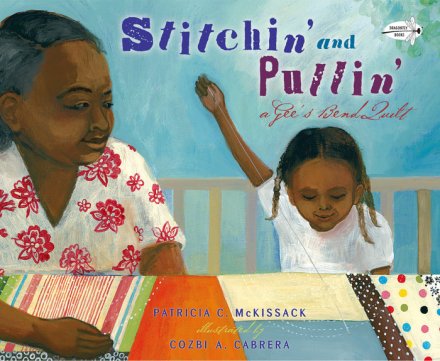
Stitchin’ and Pullin’: A Gee’s Bend Quilt

Written by Patricia C. McKissack | Illustrated by Cozbi A. Cabrera

In this story told through poems, a little girl begins telling of her life, starting with a recitation on Gee’s Bend Women: “Gee’s Bend women are / Mothers and Grandmothers / Wives / Sisters and Daughters / Widows.” They are every kind of woman you know, doing every type of work and activity. “Gee’s Bend women are / Talented and Creative / Capable / Makers of artful quilts / Unmatched. / Gee’s Bend women are / Relatives / Neighbors / Friends— / Same as me.”

In Who Would Have Thought, the girl muses on how perceptions change. “For as long as anyone can remember,” she says, the women of Gee’s Bend, Alabama have created quilts that were slept under, sat on, and wrapped around the sick or cold. But now those same quilts are “…hanging on museum walls, / their makers famous….”

When she was just a tot “Baby Girl” reveals in Beneath the Quilting Frame, she played under the quilting frame, listening to her “mama, grandma, and great-gran / as they sewed, talked, sang, and laughed / above my tented playground.” She remembers the “steady fingers  /[that] pieced together colorful scraps of familiar cloth / into something / more lovely / than anything they had been before” as her mother sang her a lullaby.

celebrate-picture-books-picture-book-review-stitchin'-and-pullin'-a-gee's-bend-quilt-puzzling-the-pieces

Image copyright Cozbi A. Cabrera, courtesy of Random House Books for Young Readers

In Something Else, “Baby Girl” is growing too big to play beneath the frame. Her legs becoming longer and her mind full of “recipes for eleven kinds of jelly…how to get rid of mold…and the words to a hundred hymns and gospel songs” while she waits her turn at the frame. Finally, in Where to Start? her time comes. The girl asks her mama how to begin and she answers, “‘Look for the heart. / When you find the heart, / your work will leap to life… / strong, beautiful, and… / independent.’”

In Remembering, the girl thinks about how her mama has told her that “cloth has a memory.” As she chooses the cloth that will become her quilt she sees the life and the history in each. 

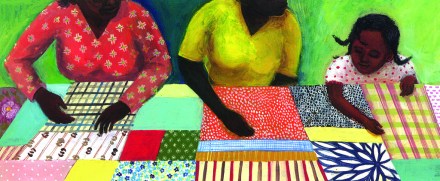
Nothing Wasted sees Grandma pulling apart a red-and-white gingham dress stitch by stitch to become a quilting square that the girl suddenly knows “will be the heart of my quilt.” In Puzzling the Pieces the girl and her grandma stand over the quilting frame fitting the squares together in the perfect way to tell the girl’s story. Her quilt comes together piece by piece to tell the history of Gee’s Bend in The River Island. The brown strips along three sides mirror the muddy waters surrounding her town. The fourth side is a green strip—“a symbol of the fields where my ancestors / worked cotton from can to can’t— / can see in the morning until / can’t see at night.” Lined up next to the green strip are six squares representing the small communities “where families with / the same name / are not kin by blood / but by plantation.”

Being Discovered is portrayed with “a large smoke-gray square”—the color of the Great Depression and the 15 minutes of fame Gee’s Bend garnered when discovered “by sociologists, historians, / educators, and journalists” who came and went, leaving Gee’s Bend “the way it had been / before being discovered.”

celebrate-picture-books-picture-book-review-stitchin'-and-pullin'-a-gee's-bend-quilt-understanding-comes-later

Image copyright Cozbi A. Cabrera, courtesy of Random House Books for Young Readers

In Colors, the girl’s grandma explains the meanings and feelings behind each colored cloth. “Blue cools. / Red is loud and hard to control, / like fire and a gossiping tongue.” Green, orange, yellow, white, pink, and all the others have their own personalities. “Grandma says, / ‘Colors show how you / feel deep down inside.’”

In Pinky, the harrowing facts of the march from Selma to Montgomery, Alabama frame the story of one marcher, Mr. Willie Quill who broke horses for the Alabama State Mounted Patrol and was saved from the Police attacks when one of the horses he’d trained knew his voice. In Dr. King Brings Hope, the little girl adds a “Patch of bright pink / to remember Pinky’s story. / Next to it I sew / a spotless white patch for the hope Dr. Martin Luther King / brought to the Bend” and goes on to tell how her grandma saw Dr. King at Pleasant Grove Baptist Church and what it meant to her.

By and By follows the girl as she adds “golden thank-yous, for James Reeb,” a “bright blue piece of velvet for Viola Liuzzo,” and a “big plaid people circle of white, black, brown, yellow, and red for Reverend Dr. King, all “killed for believing in justice.”

In the 1960s, The Sewing Bee tells, Gee’s Bend quilters were once again discovered. There were buyers for the handmade quilts, but stipulations. The girl asks her grandma if she was part of the Bee, to which she replies, “‘Yes, / more money. Less freedom. I chose to stay free.’”

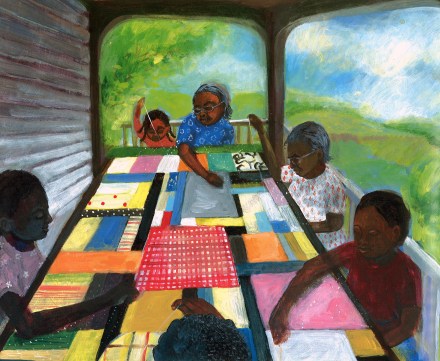
At last all of the patches are laid out and the time comes to stitch the girl’s quilt. Five women stand at the frame “all stitchin’ and pullin.’” They work “in a slow and steady rhythm” relaxing and enjoying being together until the quilt is finished. In Finished, the last stitch is sewn, and the thread bitten and knotted. The girl has hundreds of ideas for future quilts. “Quilts that are about me, / the place where I live, / and the people / who have been here for generations.”

Further poems unite the history of “Baby Girl,” her family, and neighbors, and an Author’s Note about quilting and the women of Gee’s Bend follow the text.

Patricia McKessack’s free verse poems capture the close relationships and camaraderie of the generations of women who join around the quilting frame to share and pass down their art and their heart. McKessack’s conversational verses, on page after page like the patches of a quilt, reveal the complexity of this handmade art form in the way intimate talks between friends unveil a life. Readers learn not only about the little girl and her own thoughts, but the history and influence of her immediate family, world events, inspirational figures, and deeply held beliefs that make her who she is and ties her to the other Gee’s Bend women.

Cozbi A. Cabrera’s stunning acrylic paintings take readers inside the heart of the Gee’s Bend women, depicting the girl’s home, the table-sized quilting frame where the women collectively work, the plantations, the protests, and the changes that came but did not unravel the convictions, values, and love of the little girl’s family. Readers can almost hear the talking and singing of the Gee’s Bend women as they stitch their quilts, and the comforting, embracing environment is evident on every page. Cabrera’s portraits of the little girl, her mama, and her grandma are particularly moving. For What Changed, Cabrera depicts a yellow school bus appearing on the dirt road from the right hand corner of the page. In the side mirror a dot of a house comes into view, reminding readers that no matter how far these women are from home, Gee’s Bend is always with them.

Children—and adults—will find Stitchin’ and Pullin’: A Gee’s Bend Quilt inspirational and uplifting. This volume of poetry can be read at one sitting and delved into again and again, making it a wonderful choice for home libraries and a must for school, public, and other libraries.

Ages 5 – 12

Dragonfly Books, Random House, 2016 (paperback edition) | ISBN 978-0399549502

View a gallery  of fashion designs, dolls, and other handmade art work by Cozbi A. Cabrera on her website!

Creativity Month Activity

celebrate-picture-books-picture-book-review-stars-quilt-coloring-page

Design a Quilt Coloring Pages

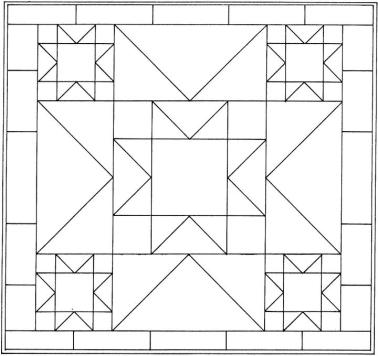
Quilts are so much more than pieces of material sewn together—they’re life stories! Here are two quilt coloring pages for you to design and color. What does each piece mean to you? As you color each section, write a sentence about an event or thought that is important to you.

Quilt Template 1 | Quilt Template 2

Picture Book Review

November 29 – It’s National Family Literacy Month

celebrate-picture-books-picture-book-review-a-fish-to-feed-red-socks-covers-image

About the Holiday

Today’s observance was established in 1994 to promote family and community involvement in teaching and supporting children to read more. Family members can make reading a priority at home by sitting down together every day with a wide range of books and other reading material. By taking trips to the library and bookstores, children will also naturally pick up a love of reading. But families can’t do it alone. Kids acquire a drive to read when they see connections between books and their wider world. Fun book-related activities at schools, libraries, science centers, museums, and other places capture children’s attention and make them curious about reading more. Whether children are attracted by fiction or nonfiction, picture books or chapter books, novels or graphic novels, they should be encouraged to read. Universal literacy is a goal that can be accomplished.

About Small Talk Books®

Ellen Mayer’s Small Talk Books® feature young children and adults conversing (or adults speaking to children who are not talking yet) while they have fun, do chores, shop, and bake together. Their conversations demonstrate the kind of excitement and close relationships that encourage learning and language advancement. Each Small Talk Book® includes an accompanying note from Dr. Betty Bardige, an expert on young children’s language and literacy development and the author of Talk to Me, Baby! How You Can Support Young Children’s Language Development. The introduction discusses how children connect actions, words, and meaning as adults speak to them while doing particular jobs or actions.

Other titles in the Small Talk Books® series include Cake Day and Rosa’s Very Big Job. Each book makes a wonderful gift for baby showers, new parents, or anyone with young children in the family. They would be a welcome addition to any young child’s bookshelf as well as libraries and preschool classrooms.

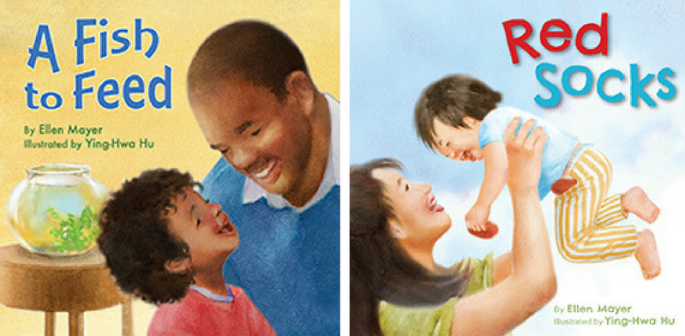
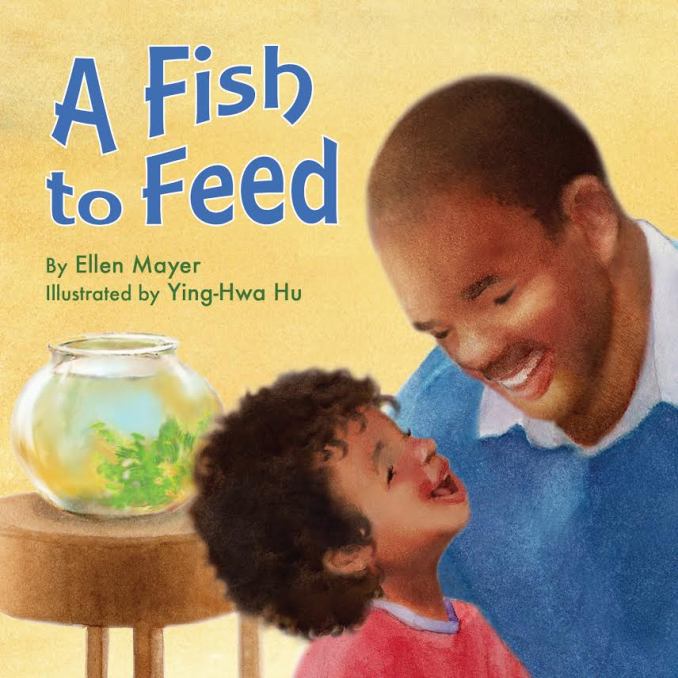
celebrate-picture-books-picture-book-review-a-fish-to-feed-coverA Fish to Feed

Written by Ellen Mayer | Illustrated by Ying-Hwa Hu


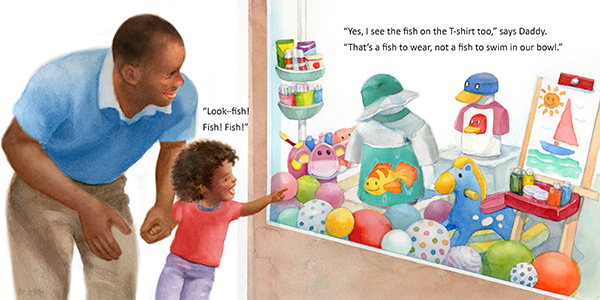
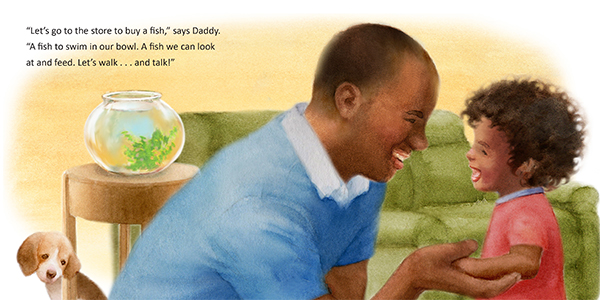
Dad plans a fun trip into town with his young child to buy a pet fish. He says, we will get “a fish to swim in our bowl. A fish we can look at and feed.” The pair are excited to go together and have time to “walk…and talk.” The two head out and soon pass a store. In the window the child sees a T-shirt with the picture of a fish on it and points. “Look—fish! Fish! Fish!” Dad reinforces the observation—“Yes, I see the fish on the T-shirt too.”—and further explains: “That’s a fish to wear, not a fish to swim in our bowl.”

celebrate-picture-books-picture-book-review-a-fish-to-feed-t-shirt

Image copyright Ying-Hwa Hu, text copyright Ellen Mayer. Courtesy of starbrightbooks.com

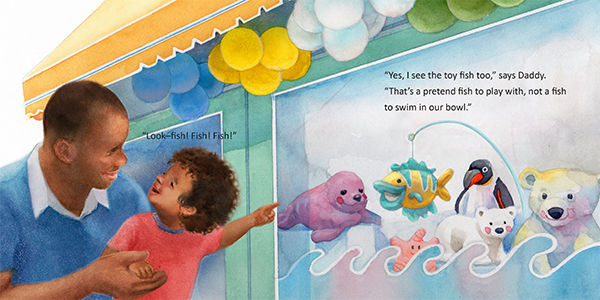
Going into the store, Dad and his youngster find another item with a fish on it. On a shelf is a backpack with a picture of a gold-and-yellow fish on the front pocket. This is a “fish to wear on your back,” Dad says, before going in search of a “fish to feed.” Next, the two come to a toy store. The child points to another fish—a fish on a mobile. “Look—fish! Fish! Fish!” the toddler exclaims. Dad affirms his child’s remark and expands on it using complete sentences that model conversation and increase vocabulary. They linger in the shop, finding other examples of fish.

celebrate-picture-books-picture-book-review-a-fish-to-feed-mobile

Image copyright Ying-Hwa Hu, text copyright Ellen Mayer. Courtesy of starbrightbooks.com

“‘Now let’s go find a fish to feed,’ says Daddy.” They head out of the store and continue down the street. As they come to the Pet Shop, the little one shouts, “‘Look—fish! Fish swim!” Daddy echoes the excitement while praising his child. “‘You found a fish that swims!’” They take the goldfish home, where it swims happily in their bowl—a pet they “can love and feed.”

A Fish to Feed contains die-cut holes in the pages that kids will love peering through as they shop along on this adventure to find a special pet.

celebrate-picture-books-picture-book-review-a-fish-to-feed-dad-and-child

Image copyright Ying-Hwa Hu, text copyright Ellen Mayer. Courtesy of starbrightbooks.com

Ellen Mayer’s story of a dad and his child out for an afternoon together as they look for a pet to love offers adults and children such a sweet way to spend time with one another. The story, set in the familiar environments of home and stores and revolving around a close parent-child relationship, will engage even the youngest readers. The back-and-forth conversation between Dad and his child as they shop models ways in which adults can follow a child’s lead while providing language and literacy development. The abscence of gender-specific pronouns makes this a universal story.

Ying-Hwa Hu’s illustrations are vibrant and joyful. When Dad bends down to be at eye-level with his toddler as they talk, the close bond between them is obvious in their smiling and laughing faces. The shops are full of colorful toys, clothes, backpacks, and other items that will capture kids’ attention. Spending time looking at each page allows adults and children to point at the various items, name them, and talk about them.

Ages Birth – 5

Star Bright Books, 2015 | ISBN 978-1595727077

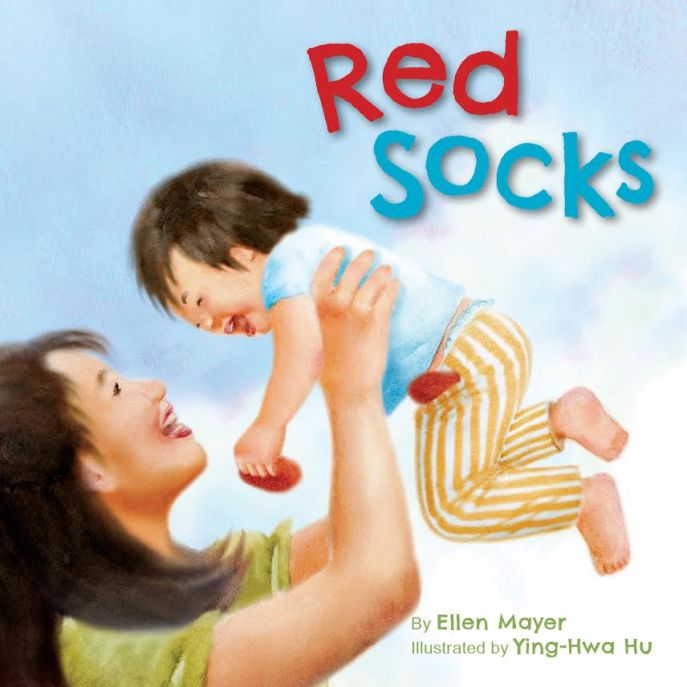
celebrate-picture-books-picture-book-review-red-socks-coverRed Socks

Written by Ellen Mayer | Illustrated by Ying-Hwa Hu


It’s laundry day and the clothes are all dried and soft and ready to wear. “‘Here is your blue shirt, with the goldfish on it,’” Mama says, pulling the top out of the basket and bending down to eye level to show it to her baby. Next, Mama describes the “yellow and white striped pants” she puts on her child. “‘Let’s see what else is in the laundry basket,’” she says.

celebrate-picture-books-picture-book-review-red-socks-shirt

Image copyright Ying-Hwa Hu, text copyright Ellen Mayer. Courtesy of starbrightbooks.com

Mama pulls a tiny red sock from the basket, but—“UH-OH!—where is the other red sock?’” Now it’s the baby’s turn to help. With a look down, the toddler shows Mama where the sock is. “‘You found the other red sock. Yay!’” she says, giving words to the baby’s action. She continues explaining while pointing to the sock poking out of the baby’s pocket: “‘It was hiding in your pants pocket!” Once the laundry is folded, Mama tells her child exactly what they will do next while she playfully slips the other red sock on the baby’s wiggling feet. “‘Let’s put that other sock on your foot. Then we can go play outside.’” As the baby flies in the swing outside, the red socks are brilliant dots against the blue sky.

celebrate-picture-books-picture-book-review-red-socks-pants

Image copyright Ying-Hwa Hu, text copyright Ellen Mayer. Courtesy of starbrightbooks.com

Ellen Mayer’s simple and charming story of a particular moment in a mother and child’s day will immediately appeal to even the youngest reader. Familiar words coupled with clear, vivid illustrations will engage toddlers who are pre-talking and just learning language and concept development. The mother’s use of complete sentences as well as step-by-step descriptions of the activities the child sees and is involved in demonstrates how adults can converse with their babies and young children to encourage strong language and literacy skills. Free of gender-specific pronouns, Red Socks is a universal story.

Ying-Hwa Hu’s illustrations show a mother and child interacting on a typical day while they complete common chores and go outside to play. The mother and child portray a range of emotions and gestures, giving further depth to the understanding of the ideas and conversation presented. Kids will giggle at the adorable puppy who causes a bit of mischief on each page.

Ages Birth – 5

Star Bright Books, 2015 | ISBN 978-1595727060

To learn more about Ellen Mayer and her Small Talk Books® (including other titles: Cake Day and Rosa’s Very Big Job) as well as to find activities to accompany each book, visit her website!

Discover more about Ying-Hwa Hu and view a portfolio of her illustration work on her website!

Red Socks and Too Small to Fail

Red Socks was chosen by Too Small to Fail, an early literacy initiative of The Clinton Foundation to feature in their Wash Time is Talk Time project. Wash Time is Talk Time serves underserved communities and provides resources to turn time spent at the laundromat into an opportunity for families to talk together, read together, and learn together. Language-rich literacy resources will be delivered to more than 5,000 laundromats across the country.

Here’s a video from one fun afternoon with families,  Ellen Mayer, and Ying-Hwa Hu during wash time!

National Family Literacy Month Activity

celebrate-picture-books-picture-book-review-sensory-board

Child’s Sensory Board


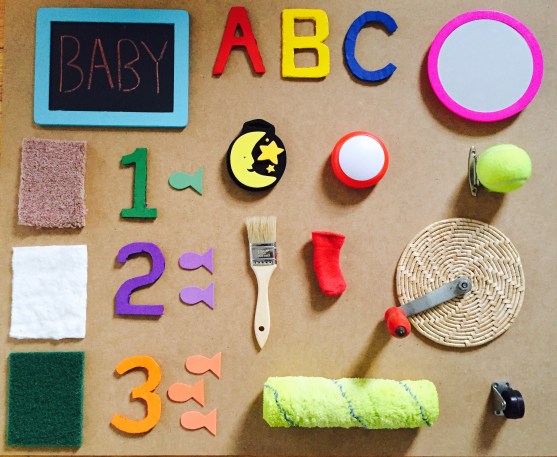
Toys or objects that provide many opportunities for sensory experimentation and observation stimulate a baby and young child to learn while having fun. You can make a sensory board for your own child using household items and that have a variety of textures, sizes, shapes, and movement. When you create your own sensory board, you can personalize it for your child by adding their name, pictures of family members, and other special items. While you play with your child, take time to talk about all of the objects on the board, what they do, and how they work. Count the objects. If you include words or your child’s name, spell them outloud and say them. There are so many ways to use a sensory board. Even if children can’t yet talk, they are listening and soaking in the rich language learning you are providing!

**When making your board always ensure that you use items that are not a choking hazard or can catch tiny fingers. Make sure that items are firmly attached to the board. Never leave a baby unattended while playing.**

Supplies

  • A board large enough to hold the items you want to attach. Boards that can be used include: those found at hardware stores or craft stores; large cutting boards; shelves; old table tops; etc.

Sample items for your sensory board can be age appropriate and include:

  • Large swatches of various textured material. (I used fur, a scrubbing sheet, and a piece of carpeting)
  • Wooden or thick cardboard letters and numbers, painted in a variety of colors. Letters can be used to add a child’s name to the board.
  • Figures cut from sheets of foam or wooden figures found at craft stores in a variety of numbers that you can count with your child (I used sets of 1, 2, and 3 fish cut from foam to go along with the numbers 1, 2, and 3)
  • Mirror
  • Push button light
  • Chalk board to write on
  • Castor or other wheel
  • Door latches
  • Door knockers
  • Mop heads
  • Paint rollers
  • Cranks
  • Drawer handles
  • Hinges (I attached a tennis ball to a hinge that children can push back and forth)
  • Pulleys
  • Paint in various bright colors
  • Paint brushes
  • Scissors
  • Screws
  • Nuts and bolts
  • Velcro
  • Super glue

Directions

  1. Assemble your items
  2. Paint wooden or cardboard items
  3. Arrange item on the board so that your baby or child can easily reach or manipulate each one
  4. Attach items with screws, nuts and bolts, or super glue
  5. Push button lights or other objects that take batteries can be attached with strong Velcro. Ensure items attached with Velcro are large and not a choking hazard.
  6. Set up board where you and your baby or child can enjoy playing with it together

Picture Book Review

November 25 – Farm City Week

celebrate-picture-books-picture-book-review-on-the-farm-at-the-market-cover

About the Holiday

National Farm City Week aims to raise awareness of America’s farmers and ranchers, who “dedicate their lives to promoting our nation’s agricultural abundance and environmental stewardship.” During this week we take the opportunity to support the crucial relationship “between farms and families and work to ensure farming remains an economically, socially, and environmentally sustainable way of life for future generations.” It is through the hard work of farmers and their enterprises—both large and small—that the country’s health and well-being are maintained.

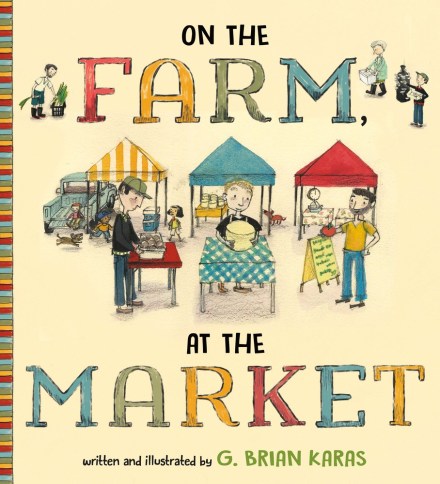
On the Farm, At the Market

By G. Brian Karas


On the Farm

On the Monterosa Vegetable Farm Leo and his workers are preparing for tomorrow morning’s farmers market. “Some vegetables are packed up tonight, while others will be picked early tomorrow. The workers know that greens are best picked soon after the sun rises, when temperatures are still cool.” When the vegetables are picked, they’re washed, packed into crates and loaded into trucks. After the sun has set and before going home, Leo ensures everything is ready for the morning. “He snaps a bean in half and tastes it. ‘Perfect,’ he says.”

celebrate-picture-books-picture-book-review-on-the-farm-at-the-market-vegetable-farm

Copyright G. Brian Karas, courtesy of us.macmillan.com

Meanwhile at the Amazing Cheese Dairy Farm, Isaac is teaching Rachael how to make their delicious cheese. First, milk must be converted into curds. Isaac shows Rachael just how to stir the warming milk with a special paddle. Once the curds are formed, Rachael scoops them out of the vat and puts them into molds and then on shelves to age. Tomorrow, the Amazing Dairy Farm will be bringing mozzarella, queso blanco, and cheddar to the market.

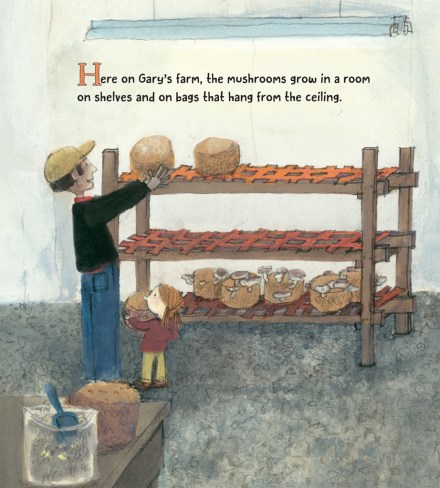
Gary’s farm is all indoors. He is a mushroom farmer, and his crops grow in a special room, sprouting on ‘cakes’ placed on shelves and from plastic bags that hang from the ceiling and give the room a feeling of being in a forest. The cakes and bags are filled with a “mixture of hay, sawdust, and water” that give the mushrooms nutrients. The air in the room is misty and cool. To prepare the mushrooms for market, Gary trims them with scissors and snugs them into foam crates.

celebrate-picture-books-picture-book-review-on-the-farm-at-the-market-mushroom-farm

Copyright G. Brian Karas, courtesy of us.macmillan.com

At the Market

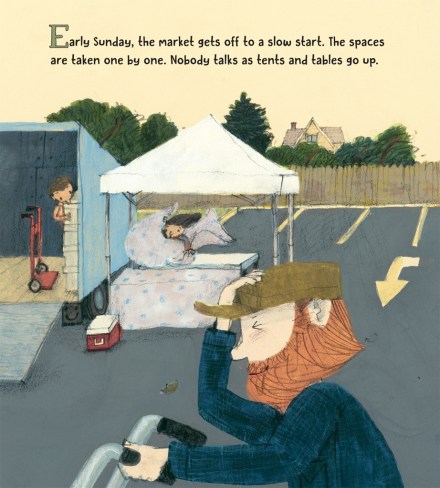
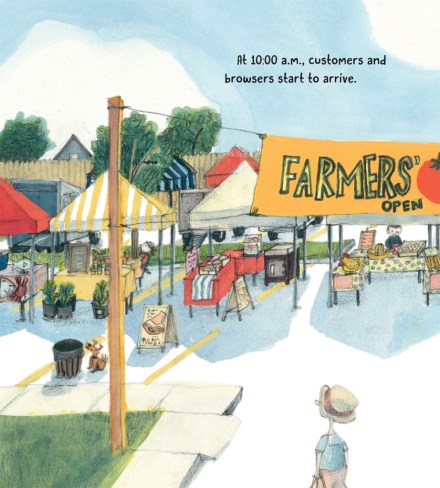
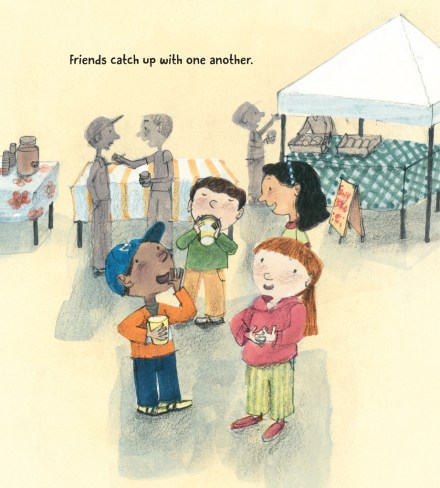
Early Sunday morning the farmers assemble in the parking lot that sponsors the farmers market. They each erect a tent and tables, struggling with the wind that fills their tents “like balloons.” The market manager, Sharon, offers cups of hot chocolate to all of the workers while “friends catch up with one another.” At 10:00 customers begin to arrive, perusing the tables of their favorite farmers.

celebrate-picture-books-picture-book-review-on-the-farm-at-the-market-setting-up-stands

Copyright G. Brian Karas, courtesy of us.macmillan.com

Amy, owner of the Busy Bee Café, scouts ingredients for her delicious menu. From Leo, she chooses Swiss chard, leeks, and tomatoes. In no time the number of customers has grown, and long lines appear at each farmer’s table. Babies and children enjoy the relaxed atmosphere as well as “farm-fresh ice cream and cookies,.” Friends chat, happy to see each other again. Food isn’t the only attraction at the farmers market. Soon, the Blackberry Fiddlers set up on stage to provide entertainment.

Next, Amy stops by the Amazing Cheese Farm stand and picks up a wheel of cheddar for that night’s special. “‘What’s for dinner at the Busy Bee tonight?’ Isaac asks. ‘One way to find out,’ Amy says, and winks.” Last, Amy visits Gary’s Mushrooms and buys some of each type. Peering into Amy’s basket, Gary can guess what Amy’s special of the day will be. “‘Should I save you a seat?’ Amy asks him. ‘You bet,’ Gary says.”

celebrate-picture-books-picture-book-review-on-the-farm-at-the-market-customers

Copyright G. Brian Karas, courtesy of us.macmillan.com

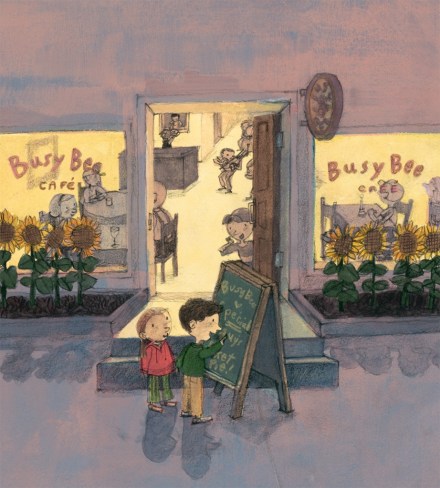
At the end of the day, the crowd has thinned. The farmers begin packing up their leftovers and taking down their tents. The camaraderie of market day continues at the Busy Bee Café, however, where the Blackberry Hill Fiddlers have set up once again and the farmers, their families, and their customers have gathered to enjoy Amy’s special Market Pie.

celebrate-picture-books-picture-book-review-on-the-farm-at-the-market-busy-bee-cafe

Copyright G. Brian Karas, courtesy of us.macmillan.com

Brian Karas’s charming visit to farms and the farmers market is both educational and heartwarming. With emphasis on the loving care both the farmers and the café owner display toward the crops and their use, On the Farm, At the Market is a wonderful introduction for young children to the farm-to-table movement. Karas’s descriptions of three distinct farming methods are clearly explained with engaging characters that kids will embrace. The structure of the book—divided into two sections and offering interconnecting stories—is well chosen to explain the relationships among the farmers, families, workers, and customers.

celebrate-picture-books-picture-book-review-on-the-farm-at-the-market-friends

Copyright G. Brian Karas, courtesy of us.macmillan.com

Karas’s homey gouache, acrylic, and pencil illustrations are perfectly suited to his subject. Colorful two-page spreads of the farms and market, combined with smaller snapshots of particular processes and special moments, allow readers to fully understand the concepts as they enjoy the inclusiveness of this tight-knit, supportive community. There is a peaceful wistfulness to the muted image of Leo standing in the waning twilight, happy with a day well-spent; a sense of wonder in the misty atmosphere of Gary’s mushroom farm; and a palpable excitement as customers gather at the farmers market. The final scene at Amy’s Busy Bee Café offers a glowing conclusion to this cyclical story.

Ages 4 – 9

Henry Holt and Co, 2016 | ISBN 978-0805093728

To learn more about G. Brian Karas and his work, visit his website!

Farm City Week Activity

celebrate-picture-books-picture-book-review-farmers-market-coloring-page

Farmers Market Coloring Page


Farmers markets are so beautiful with all the different colors of the fruit and vegetables in the stands, the festive tents, and all the customers mingling and shopping. Grab your pencils or crayons and create your own vivid picture with this printable Farmers Market Coloring Sheet!

Picture Book Review
October 24 – United Nations Day

celebrate-picture-books-picture-book-review-welcome-barroux-cover

About the Holiday

Founded in the aftermath of World War II to promote cooperation among all nations and prevent another devastating conflict, the United Nations is an intergovernmental organization whose purpose has grown to include encouraging social and economic development, protecting human rights, and providing aid in times of natural disasters, famine, and war. Today’s holiday commemorates the establishment of the UN and advocates the remembrance and implementation of its principles for this and future generations.

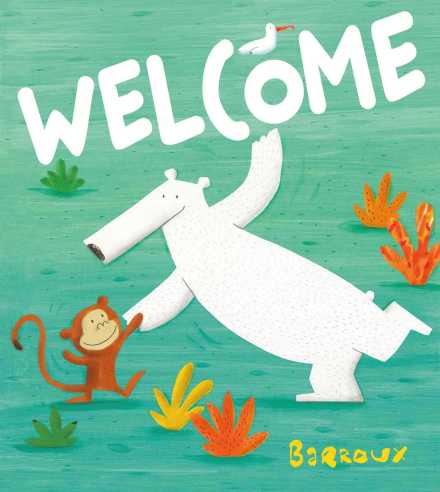
Welcome

By Barroux


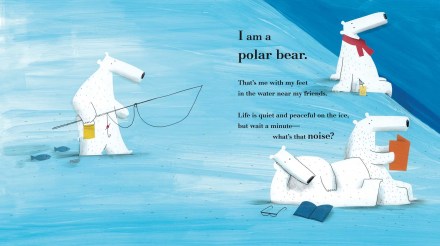
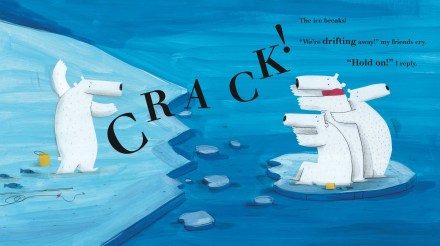
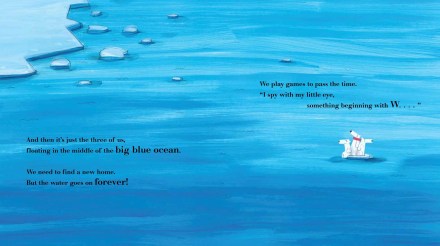
A polar bear sits on the edge of an ice floe enjoying some relaxing time with his friends when he hears an ominous noise. “CRACK! The ice breaks! ‘We’re drifting away!’” his friends cry. In no time at all the three polar bears are adrift in the middle of the sea in need of a new home. They float and float, but “the water goes on forever!” To pass the time the friends play games: “‘I spy with my little eye, something beginning with W…’”

celebrate-picture-books-picture-book-review-welcome-barroux-polar-bears-relaxing

Copyright Barroux, courtesy of little bee books and simonandschuster.com

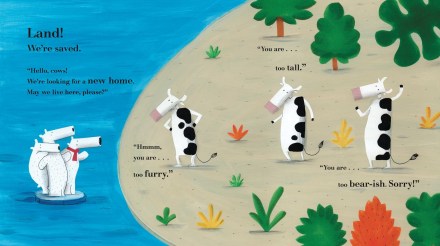
Perhaps days go by. The bears ride out a storm with dark skies and huge waves that threaten to sink them. It’s scary and the trio wants “to find a new home right now!” At last their ice floe—smaller now—approaches a sandy shore. “Land! We’re saved,” cheer the polar bears. They ask the cows on the beach if they can live there, but the cows take exception. The bears are “too furry…too tall…and too bear-ish.” And with a “Sorry!” the cows turn the weary travelers away.

celebrate-picture-books-picture-book-review-welcome-barroux-ice-breaks-away

Copyright Barroux, courtesy of little bee books and simonandschuster.com

Once again on their own, the bears have no choice but to let the current steer them. With standing room for only one their icy raft, they near another beach where a single panda relaxes on pillows in the midst of expansive land. “Yes! This could be our new home,” the polar bears shout. The panda ponders the situation for only a moment before stating, “‘…you are too many. Look around, there’s just not enough room! You can’t live here.’”

celebrate-picture-books-picture-book-review-welcome-barroux-polar-bears-meet-cows

Copyright Barroux, courtesy of little bee books and simonandschuster.com

As the polar bears continue on their journey, their “little ice boat has almost melted” and they are running out of time. They bob next to a tall sea wall. “‘Help us!’” they plead. Behind the wall two giraffes lounge on the beach, too lazy to investigate the noise they hear. The ice floe has melted to a thin disk, with room for only one. The bears are hanging on and about to give up hope when they find an empty island. They jump to shore just in the nick of time and begin enjoying their new home.

celebrate-picture-books-picture-book-review-welcome-barroux-polar-bears-adrift

Copyright Barroux, courtesy of little bee books and simonandschuster.com

It’s not long before a dinghy floats into view with three monkeys on board. “‘Excuse me, we’re looking for a new home. Can you help us please?’” The polar bears stop their game of badminton and step forward. “‘Hmmm,’” they think. “‘You are…

Welcome!’”

With vibrant blue, full-bleed pages as wide open as the sea itself and three endearing long-nosed polar bears, Barroux has crafted a poignant tale with depth and far-reaching applications for readers of all ages. Inspired by the Syrian refugee crisis, Welcome stands on its own as an uplifting story of friendship and inclusiveness, but also offers an excellent means for beginning a discussion on the world events that children see and have questions about. Employing a bear’s first person point of view and incorporating a child-centric perspective on travel—from the humor of the I Spy game to the perseverance of the bears—Barroux sets just the right tone for his audience.

With sparse text and repetition of the bears’ simple request, the subject matter is handled with sensitivity, not fright, which allows children to understand that the theme of the story is relevant on many levels. Whether the “traveler” comes from near or far, is a classmate, teammate or neighbor, or is even the reader or someone else feeling adrift in a certain situation, children will see that all deserve welcome.

Ages 4 – 8

little bee books, 2916 | ISBN 978-1499804447

United Nations Day Activity

celebrate-picture-books-picture-book-review-UN-day-puzzle

Give Me Your Hand! Puzzle


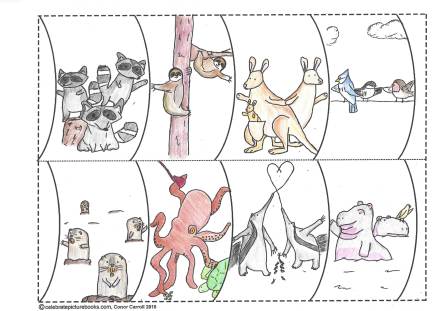
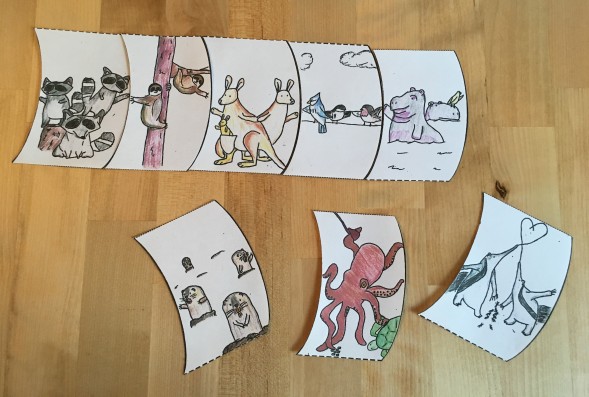
In this printable Give Me Your Hand! Puzzle, everyone is welcomed with a handshake. Offering friendship to all, the interchangeable pieces can be mixed and matched as the animals become buddies with one another.

Supplies

celebrate-picture-books-picture-book-review-UN-day-puzzle

Copyright Conor Carroll, courtesy of celebratepicturebooks.com

Directions

  1. Print the puzzle: to make the puzzle sturdier: Print on heavy stock paper or glue the page to poster board
  2. Color the pictures with colored pencils or crayons
  3. Cut the pieces apart
  4. Switch the pieces around to make many alternate pictures
celebrate-picture-books-picture-book-review-UN-day-puzzle

Copyright Conor Carroll, courtesy of celebratepicturebooks.com

Picture Book Review

Picture Book Review