June 10 – It’s National Rivers Month

celebrate-picture-books-picture-book-review-mae-the-mayfly-cover

About the Holiday

Rivers are beautiful, provide recreation, and are crucial to our water supply. Did you know that in the United States 65% of our drinking water comes from rivers and streams? This month environmentalists and others work to promote awareness of the importance of keeping the nation’s rivers pollution free to protect the fish and animals that call them home and increase enjoyment for all. To help the cause, find out how you can help an environmental organization in your area. This year get to know your local river system and the insects and animals that live in and near these rivers. 

Thanks to Sleeping Bear Press for sending me a copy of Mae the Mayfly for review consideration. All opinions of the book are my own.

Mae the Mayfly

Written by Denise Brennan-Nelson | Illustrated by Florence Weiser


“Near the bank of the river one warm spring day / a new life began, and her name was Mae.” Before her mama said goodbye, she hugged her daughter and told her that she had her “whole life—a day, perhaps more” to explore her world. As Mae flitted along the river, a large, hungry trout waited for just the right moment to lure her in. It smiled deceitfully and beckoned to her, and, even though her inner voice told her not to, Mae flew down closer to take a look.

celebrate-picture-books-picture-book-review-mae-the-mayfly-fish

Image by Florence Weiser, 2020, text copyright Denise Brennan-Nelson, 2020. Courtesy of Sleeping Bear Press.

That’s when the trout leapt from the water to snatch Mae from the air. But she darted and dodged and got away. Shaking with fear, Mae found a hole in a hollow tree and flew in. “I’ll stay here forever! I’m not coming out!” she told herself.  But once her heart stopped beating so loud, she heard a happy tweet and peeked out of the tree. She saw a mother robin feeding her chicks and a spider web glittered in the sun. “The mist on the river was a fine, pink cloak. / A bullfrog bellowed his morning croak.” 

Mae remembered what her Mama had said and “launched herself from the dark, hollow place.” She followed the river, where she saw flowers and birds, a deer and a bear and one “stubby toad.” Then, she came to a clearing where she found “a singing, dancing jamboree… a wild mayfly jubilee! / Joining in, Mae danced with glee!”

celebrate-picture-books-picture-book-review-mae-the-mayfly-bird

Image by Florence Weiser, 2020, text copyright Denise Brennan-Nelson, 2020. Courtesy of Sleeping Bear Press.

As morning turned to afternoon, Mae was floating on the breeze when she heard a call for help. She went in search of who it was and found Trout lying motionless and barely breathing. Fearful that he might leap at her again, she carefully went closer to inspect. “But Trout was weak, no flip or flail. / Tangled line had caught his tail.” Then Mae noticed something else—his shimmering “rainbow stripes in every hue, silver, pink, and shades of blue.” And in his eyes she saw his fear and realized that she and Trout were alike.

Mae went to work to try to free him. The knot was tight, but Mae worked patiently until the line slipped free and Trout swam away with the current. Mae hoped that he would be okay. Just then she saw a flash as Trout returned and with a flip of his tail said, “Thank you.” As nighttime settled over the river and the moon rose high, Mae settled on a cattail leaf. She listened to the bullfrogs and watched the fireflies glow. “The stars came out early for  sweet, little Mae. / She counted each one… then called it a day.”

Back matter includes a message about mindfulness, an exercise to try and facts about mayflies.

celebrate-picture-books-picture-book-review-mae-the-mayfly-fishing-line

Image by Florence Weiser, 2020, text copyright Denise Brennan-Nelson, 2020. Courtesy of Sleeping Bear Press.

Soaring and uplifting, Denise Brennan-Nelson’s unique story reminds children and adults alike to live each day to the fullest and reveals where the treasures that make life so fulfilling can be found. The short lifespan of a mayfly gives Brennan-Nelson a perfect canvas for compressing the lessons of a lifetime into one day, and her superlative storytelling incorporates parental love, fear, appreciation for our surroundings, courage, selflessness, and friendship. Her language is triumphant, carried breezily on rhyming couplets that are a joy to read aloud. The pitch-perfect ending may bring a tear to the eye but spur readers to find the beauty in every day.

Through Florence Weiser’s lovely textured illustrations, readers can almost feel the breeze ruffling the tall grasses, the spray of river water, and the warmth of the sun as they follow Mae on her adventure. Mae is a cutie with lacy wings and a sweet, expressive face. A powerful image of empathy comes in a close-up, two-page spread in which Mae, looking into Trout’s frightened eye, sees her own reflection. Whereas up to now Mae has been an observer of life, she now becomes an active participant by helping a fellow creature. Working in perfect tandem with Brennan-Nelson’s text, Weiser’s pages take readers on a journey of growth and discovery they’ll take to heart. Calming shades of green dotted with subtle pinks, purples blues, and browns reflect Mae’s mindful approach to life, making this a delightful book to share for quiet story times.

Beautiful and resonant, Mae the Mayfly is highly recommended and would be an often-asked-for addition to home, school, and public library collections.

Ages 5 – 8

Sleeping Bear Press, 2020 | ISBN 978-1534110519

Discover more about Denise Brennan-Nelson and her books on her website.

To learn more about Florence Weiser, her books, and her art, visit her website.

Meet Denise Brennan-Nelson

celebrate-picture-books-picture-book-review-Denise-Brennan-Nelson-headshot

Denise Brennan-Nelson has written a number of books for children, including Tallulah: Mermaid of the Great Lakes, Leopold the Lion, Someday Is Not a Day of the Week, My Momma Likes to Say, Santa’s Secret, and the popular Willow series. As a national speaker, Denise encourages adults and children to tap into their imaginations to create richer, fuller lives. She travels the country, sharing her reading and writing enthusiasm with schoolchildren and teachers. Denise lives in Howell, Michigan with her husband, Bob. She strives to spend each day teaching and learning with a creative spirit. Find out more about Denise at www.denisebrennannelson.com.

Today, I’m really thrilled to be talking with Denise Brennan-Nelson about her inspiring story, her journey in writing it, and how we can all appreciate the life around us. My blog partner Jakki’s sons, Jack and Steve, also loves Mae the Mayfly and had a few questions of their own. 

Jack wonders: What inspired you to write about a mayfly? 

The inspiration to write about a mayfly came when I discovered that they live, on an average, only one day. I started digging and discovered that while mayflies have many interesting qualities, it was their life cycle that reeled me in and set the basis for the story: a mayfly begins as an egg, then hatches into a nymph. It then lives as a nymph for one to three years before emerging from the water as an adult. Once they have molted––the only insect known to molt twice!––they only have about a day to live. ONE DAY? How do you live your entire life in ONE day? Where would you go? What would you do? I had so many questions. And so, the journey began!

Steve would like to know: Where is your favorite place to go and enjoy nature?

Our backyard has many trees and a few paths to meander on. One of those paths leads to a playhouse that my husband built years ago for our children, Rebecca and Rachel. I love to sit on the steps and take it all in––especially the forever-changing trees and the way the light filters through them. It’s quiet and I watch the birds and the chipmunks, squirrels, and occasionally deer show up. It’s far enough away from our house that I can forget about my “to-do” list and relax.

There are also a couple of parks nearby that have trails and lakes and offer a beautiful place to enjoy nature.

Jack and Steve asked if you spent a lot of time at a pond while creating the story.

No, I didn’t spend a lot of time at a pond, but I did a lot of research to help me visualize the setting.

In early drafts, I pictured Mae’s life beginning on a pond but as the story emerged it turned into a river. Unlike a pond, a river “flows.” It seemed to fit with the ebb and flow of Mae’s life.

The river became integral to the story; Mae’s life began there, she experiences a harrowing ordeal with Trout, which causes her to flee the river out of fear, but ultimately, Mae returns “home” to the river and completes her life. (This was in keeping with a mayfly’s lifecycle.)  

Hi Denise! I love your answers to Jack and Steve’s questions! What an amazing character a mayfly makes. You’ve published many, many books for kids. What inspired you to become a children’s writer? What’s the best part about your job?

I had been happily writing for myself – journals and poetry mostly – when inspiration came knocking at my door in the form of a documented study about bumblebees. According to scientists, bumblebees are not “equipped” to fly. Aeronautically, their wings are too small for their bodies. Upon hearing that, I was compelled to write what was in my head and my heart. I wanted to answer the questions I had: What would happen if bumblebees found out about their small wings? Would fear and doubt stop them from doing what they love to do? Once it was written, I felt I had written something that I wanted to share with others. Four years and many rejection letters later, my first book, Buzzy the Bumblebee was published.

The best part about my job is creating something – taking an idea and turning it into something new that entertains and inspires children and adults. I also love the freedom to work when and where I want to, often in my pajamas in the wee hours of the morning.

Mae the Mayfly is a gorgeous, poignant reminder for both kids and adults to look around and appreciate the beauty all around us. Not only the mayfly, but all of the sights that Mae sees are ephemeral parts of nature. How did you choose each of these?

I felt they had to be simple, yet remarkable acts of nature that would draw Mae out from the hollow of a tree. You know that awe-inspiring feeling you get when you discover a bird’s nest or a spider’s web? That was the basis for the sights and sounds Mae encountered.

I also drew from a trip to Yellowstone where the vivid images of rivers, flowers, bear cubs, and other magnificent acts of nature are forever embedded in my mind.

The rhymes of Mae the Mayfly are as light as she is, and your rhythm is as jaunty as a mayfly’s flight. Could you describe your journey in writing this story?

After learning of a mayfly’s short lifespan, the mulling-over period ensued. A lot of thinking and dialogue in my head takes place before taking pen to paper. Often, I share my initial thoughts with family and friends which helps the pieces come together.

I did more research, too. I watched a video showing how some mayfly nymphs resist the pull to come to the surface when it is time to shed their outer covering and expose their wings. After spending years at the bottom of the dark river, why would they resist? I wondered. Why would they want to stay at the bottom of the river when they could break through the surface into the light, and fly––if only for a day?

Ah, fear.

It was starting to come together – I would write about a mayfly and how beautiful and meaningful one day could be, if she can overcome her fears.

Initially, the story was written in prose and then I wrote it in verse. At one point, I even wrote a funny version for my kids about Mae being stubborn and not listening to her mama. That version didn’t end well for Mae, because, well, she didn’t listen to her mama! My kids got a kick out of it.

Before she was Mae, she was Martha. From Martha to Marvin. Then I changed it to May. And then May became Mae.

My first submission was declined. So, I gave it a rest. The idea was there but I needed to start over. I believed in this story with my whole being and I wasn’t giving up. In June 2018, I resubmitted it and in August I learned that Sleeping Bear Press wanted to move forward with it. I signed the contract in September and it was released in March of 2020 amid a pandemic. It wasn’t the launch I envisioned, but the story is about appreciating the simple things and living life to the fullest. It is also about empathy, fear, and gratitude. Perhaps the timing was just right.

Florence Weiser’s illustrations are adorable while truly highlighting the beauty of what Mae sees. Do you have a favorite spread? Why do you love it?

I love the cover and the end sheets, and the illustration of Mama saying good-bye to Mae tugs at my heart. But my favorite is the spread where Mae encounters Trout tangled in fishing line and Mae sees herself – literally and figuratively – in Trout’s eyes. Mae is confronted with a difficult decision between fear, or courage and compassion. This was a pivotal part of the story and Florence did a remarkable job capturing the emotion of both Mae and Trout.

You encourage people to be aware of and open to inspiration and those small moments in life that make them the best version of themselves they can be. How can kids and adults practice this kind of mindfulness while at home during this time of self-isolating and social distancing?

In a robust and enthusiastic voice my dad often proclaims, “This is living!” He says it with such conviction that you might think he won the lottery. On the contrary, he says it to express his delight over life’s simple/small pleasures; a sunset, eating a fresh-picked tomato from the vine, watching the birds, the daffodils sprouting, a delectable meal, a rainstorm . . .

I am by no means an expert on mindfulness, but I have learned a few things that help me enjoy life a little bit more:

  • Be aware/pay attention – the list of things to delight over is endless when we notice what is going on around us
  • Make room for quiet time and stillness every day
  • Focus on one thing at a time and do it with intention and purpose
  • Write down 3-5 things daily that you are grateful for. Do it as a family with a “family journal” or get a notebook for every member and make it a nightly ritual

Lately I’ve been asking people, “What do you like most about the shelter-in-place order that we are being asked to follow?” Over and over, I’ve heard, “It feels good to slow down . . . less hectic . . .” I hope we emerge from this unique experience with the realization that life is not a race, it’s a gift.

What inspires you each time you start a new story?

When I have an idea that interests me I feel invigorated and purposeful. What can I do with it? Where will it take me? What can I learn from it?

In Bird by Bird, Anne Lamott writes, “If you are writing the clearest, truest words you can find and doing the best you can to understand and communicate, this will shine on paper like its only little lighthouse.”

Each time I begin a story I am hopeful that what I write “will shine on paper like its own little lighthouse.”

Thanks so much, Denise! This has been such a wonderful talk! I wish you all the best with Mae, the Mayfly and can’t wait to see more from you in the future.

You can connect with Denise Brennan-Nelson on 

Her website | Facebook | Twitter

National Rivers Month Activity

celebrate-picture-books-picture-book-review-rivers-word-search

World Rivers Word Search Puzzle


The world’s rivers provide homes for fish, animals, and birds; offer opportunities for recreation; and supply drinking water for millions. Can you find the names of twenty rivers of the world in this printable puzzle? Then learn where each river runs!

World Rivers Word Search | World Rivers Word Search Solution

celebrate-picture-books-picture-book-review-mae-the-mayfly-cover

You can find Mae the Mayfly at these booksellers

Amazon | Barnes & Noble | Books-a-Million | Sleeping Bear Press

To support your local independent bookstore, order from

Bookshop | IndieBound 

Picture Book Review

May 31 – Memorial Day

celebrate-picture-books-picture-book-review-anna-and-natalie-cover

Memorial Day is observed each year on the last Monday of May to honor all members of the military who lost their lives in the service of their country, especially in battle. Begun after the Civil War, the holiday expanded after World War II to remember those who died in all American wars. Memorial Day was made a national holiday by an act of Congress in 1971. 

Anna & Natalie

Written by Barbara H. Cole | Illustrated by Ronald Himler

Every year Mrs. Randall’s third-grade class attends the Wreath-laying ceremony at the Tomb of the Unknown Soldier at Arlington National Cemetery. What’s more every year four students are chosen from her class to carry the wreath. This year everyone wonders who those lucky four will be. Students who want to be in the running to be selected, Mrs. Randall, says, must write a letter telling her why they should be chosen. Hearing that, Freddie and Tommy drop out immediately while Nancy says her letter will be the best.

Anna dreams of being chosen too, but experience tells her she will not. She’s never chosen for the basketball or softball team, the cheerleading squad, or the lines of Red Rover. “Sure, someone always chose her for the spelling team, but the others—the fun ones—never.” But this time seems different. All day—even though Mrs. Randall’s eagle eyes catch it—Anna daydreams and makes plans. When the bus drops her and her sister off, they hurry home to start work.

celebrate-picture-books-picture-book-review-anna-and-natalie-school-bus

Image copyright Ronald Himler, text copyright Barbara H. Cole. Courtesy of Star Bright Books

There Anna makes a secret call to her grandpa and then she and Natalie go to the front porch, and while Nat naps on the swing Anna pulls out her computer and begins writing her letter to Mrs. Randall. The next day Mrs. Randall collects the letters with the promise to choose the team by tomorrow and a reminder for those who will not be picked: “‘Remember,’” she says, “‘it certainly is an honor to be on the team, but it is also an honor to visit the Tomb.’” Then “they talked about Washington and the monuments and the Capitol and the White House, but especially they talked about the Tomb of the Unknown Soldier and the Changing of the Guard.”

celebrate-picture-books-picture-book-review-anna-and-natalie-on-the-porch

Image copyright Ronald Himler, text copyright Barbara H. Cole. Courtesy of Star Bright Books

At school the next day, Mrs. Randall says that while she received four excellent letters, one stood out. She begins to read it to the class: “‘I want to be on the team, not for myself, but for many others who have not been honored or remembered….They worked long and hard and saved many lives….And sometimes they were heroes bigger than the strongest men around. Sometimes they carried medicine and food to dangerous places to save the wounded soldiers. My own great-great-grandfather was in this special service and saved lives. I would like to be on the team to say thank you to those forgotten heroes of World War II. Yours truly…’ Mrs. Randall’s voice cracked and choked, and then she read, ‘From Natalie (with help from Anna)’”

The class starts whooping and cheering, but Mrs. Randall interrupts their celebration to read one more line: “P.S.—Would you please let Anna walk with me so I will not be alone and she won’t be either?” The class begins chanting “Yeah, Anna! Yeah, Anna!,” and Anna can’t believe that her dream of being on the team has come true. When Anna gets home from school and tells her family, they proudly make plans to travel with their “two girls” to the ceremony.

celebrate-picture-books-picture-book-review-anna-and-natalie-anna-and-natalie

Image copyright Ronald Himler, text copyright Barbara H. Cole. Courtesy of Star Bright Books

Finally, the day of the Wreath-Laying Ceremony arrives. The students are dressed in their best clothes, and as the four team members prepare to accept the wreath, “Natalie led the procession down the long marble steps, her black coat glistening and her brass buttons shining like the sun. Anna walked beside her.” As the soldier hands the children the wreath fashioned from “dogwood flowers, magnolias, and decorative red birds,” he loudly announces, “The students of Willow Run School and Natalie, a seeing-eye dog, will lay this wreath to honor the men who served in World War II and the dogs who helped them. ATTENTION!”

celebrate-picture-books-picture-book-review-anna-and-natalie-tomb-of-the-unknowns

Image copyright Ronald Himler, text copyright Barbara H. Cole. Courtesy of Star Bright Books

The clear notes of Taps rang across Arlington National Cemetery as Anna and the three other children lay the wreath in front of the Tomb of the Unknown Soldier. Afterward, Anna’s grandfather and parents took pictures of Anna and Natalie to remember “this shining moment of Anna, and of Natalie, who saw the world that Anna could not see.”

An Author’s Note revealing the use of dogs during wartime—from ancient history to today—follows the text.

Barbara H. Cole’s story of Anna and Natalie is compelling in many ways. First, it presents a look at what Memorial Day means to children from their point of view. Second, the story honors not only the brave soldiers who protect our country but also the canine corps which has served our military from our country’s earliest history. Third, in Anna, Cole has created a character who is part of a military family through her grandfather and also has a personal connection to service dogs through Natalie, her seeing-eye dog, whose great-great-grandfather served in the canine corps. The portrayal of Anna as a child with a disability who is an excellent writer, enthusiastic about her dreams, and a good friend is poignant and inclusive. Cole’s straightforward narration of a school day and the announcement of a special assignment—complete with asides from students—as well as Anna’s family life depicts an environment that will be familiar to readers and carries the story in a natural arc.

celebrate-picture-books-picture-book-review-anna-and-natalie-classroom

Image copyright Ronald Himler, text copyright Barbara H. Cole. Courtesy of Star Bright Books

Ronald Himler’s realistic illustrations of Anna’s Willow Run School, her home, and Arlington Cemetery beautifully represent this moving story. His pages are full of diverse, real kids, smiling, laughing, getting off the school bus, enjoying a family dinner, and solemnly performing their job at the Tomb of the Unknown Soldier. A hint to Natalie’s true identity is subtly inserted into various scenes, making the final reveal a satisfying moment.

Anna & Natalie is a wonderful choice for all kids observing Memorial Day, Veterans Day, and other patriotic holidays.

Ages 5 – 10

Star Bright Books, 2010 | ISBN 978-1595722119

To learn more about Anna & Natalie and download a Curriculum Guide, visit Star Bright Books!

Discover more about about Ronald Himler and view a gallery of his work, visit his website!

Memorial Day Activity

celebrate-picture-books-picture-book-review-memorial-day-word-scramble

Memorial Day Word Scramble

Unscramble the words associated with today’s holiday and discover a secret message! Print your Memorial Day Word Scramble here!

celebrate-picture-books-picture-book-review-anna-and-natalie-cover

You can find Anna & Natalie at these booksellers

Amazon | Books-a-Million

To support your local independent bookstore, order from

Bookshop | IndieBound

Picture Book Review

April 22 – Earth Day and National Poetry Month

celebrate-picture-books-picture-book-review-friends-and-anemones-cover

About the Holidays

Earth Day

Earth Day was created in 1970 by a US Senator, Gaylord Nelson. Nelson created the day because he was worried about how humans were harming the environment through their actions. Heard of this holiday before? We certainly hope so! In 1990, environmental leaders mobilized to make the holiday go global. And now, according to earthday.org, 1 BILLION people mobilize on Earth Day every year, to help save and celebrate our beloved planet. You can watch an educational animated video on Gaylord Nelson here. Learn more about Earth Day and how you can make a difference all year around at Earthday.org.

National Poetry Month

2021 marks the twenty-fifth anniversary of National Poetry Month. The holiday was launched by the Academy of American Poets to celebrate writers, poets, poetry lovers and the positive impact poetry has on our culture, literacy and lives. Check out the 2021 National Poetry Month Poster here. You can learn more about National Poetry Month at Poets.org.

Today’s book celebrates both of these holidays with a collection of ocean poems for children. Not a huge lover of poetry? Perhaps the following collection will sway you like an ocean tide. Crafted by The Writers’ Loft Authors and Illustrators, Friends and Anemones is truly as dazzling as a sea-floor pearl.

Thanks to The Writers’ Loft for sending me a copy of Friends and Anemones: Ocean Poems for Children for review consideration. All opinions on the book are my own. 

Reviewed by Dorothy Levine

Friends & Anemones: Ocean Poems for Children

By The Writers’ Loft Authors & Illustrators


Dive headfirst into poetry month by exploring “the very, very, bottom of the deep blue sea. With: Salty snails and tuna tails. Bottle caps and lobster traps. Popped balloons, Plastic spoons…” and everything in between! (The Bottom of the Ocean by Kristen Wixted.) In honor of Earth Day AND National Poetry month, Celebrate Picture Books presents a book that deserves to be celebrated twice over: Friends & Anemones: Ocean Poems for Children. Seventy New England authors and illustrators joined ship with the Rozalia Project to create a treasure-worthy collection of ocean-themed poems and illustrations.

As described in the title page, “Rozalia Project works to conserve a healthy and thriving marine ecosystem—the plants and animals need our help to keep human debris out of their homes.” Through this partnered anthology, children will learn about subject matter ranging from unique sea creatures and beach dwellers – like cuttlefish, vampire squids, red knots, and rainbow lobsters – to the habits of more well-known ocean dwellers, like whales taking off debris, sharks getting their teeth cleaned, and sea turtles hatching eggs.

They’ll also find poems about human additions to the ocean scene in odes to lighthouses, ships’ remnants, sea litter, and more. Each poem contains deep knowledge to share with readers about poetry, the ocean, and marine life. Little pieces of advice float in between hysterical ocean puns. This perfect concoction of sea-worthy information is also backed by all types of fin-tastic and crabulous art.

Some of the poems are sure to make you laugh out loud. Deep-Sea Jellyfish by Cindy Cornwall opens with: “Jelly of the sea, not jam for your toast. It’s deep in the water, a silky scarf ghost.” Seal of disApproval by Lynda Mullay Hunt fills a whole page with the rhyming, pun-y story of a seal who becomes a dentist and stands up to sharks.

Other poems are less humorous and more pensive; the last of the series, Sea Serenity by Luke Hargraver, holds an existential truth for readers to swim through: “The world is like water / Easily disturbed by ripples / But when still, / Beautiful.” Under a short and sweet poem called Minnow, by Brook Gideon, a message to ocean explorers reads: “It’s very important to release everything you catch back into the ocean right away!”

Each spread is distinctly created in the individual poets’ and artists’ styles. Yet, the whole compilation works together in perfect, charming harmony. Some poems mirror each other in content. Horseshoe Crabulous by Doreen Buchinski is followed by Red Knots by Jane Sutton, in which: “In the sand their goal is chiefly / To dart—and swerve —on twiggy legs / In mad search for horseshoe eggs.” The two beautifully crafted poems are followed by a third gem, Mollusk Mansions by Charlotte Sheer, and accompanied with an illustration featuring horseshoe crabs, red knots, and mollusk shells—all painted by Doreen Buchinski herself!

Children will explore the deep cerulean sea through a range of sincere rhyming couplets, honest haikus, positively silly prose, magical motifs, and everything in between. All poems and artwork share with readers a deep admiration for under the sea creatures, while spreading ocean knowledge, and a love for poetry and beauty.

The watercolors, collages, and digital art pieces mesh beautifully while each achieving a distinctly artistic picturesque scene. Some illustrations run horizontally across the spread to create poster-like, masterful images. On page 23 illustrator Julia Young Cuffe paints a long, horizontal lighthouse against a watery dark blue sky, littered with stars. A person stands at the top, waving a piece of cloth, illuminated by the lighthouse light. The poem, Boston Light by Heidi E.Y. Stemple, is artfully placed running vertically down the lighthouse.

Others run across the two-page spreads to create one image that ties together the poems featured on the separate pages into a collective unit. An example of this can be seen in Marlo Garnsworthy’s opening spread of deep ocean waves intermingling with whales, and Amanda Davis’s DEEP deep sea spread that features spookily realistic vampire squids, angler fish, and sea plumes. Each piece stands out as thoughtfully crafted to instill in readers a sense of awe for the beauty of marine life and ocean ecology.

Friends & Anemones: Ocean Poems for Children would make a wonderful addition to classroom science and language arts lessons as well as a fun collection to share at home, especially in conjunction with trips to the beach or aquariums. 

The Writers’ Loft is a community based in Sherborn, Massachusetts which helps local writers foster their creativity, strengthen their spirit, and grow professionally by providing them with quiet writing space, educational programs, opportunities to connect with supportive colleagues, and access to industry experts, as well as opportunities to give back to the greater writing community. To learn more about The Writers’ Loft, visit their website.

The Rozalia Project runs educational programs, ocean cleaning initiatives and research projects focused on how to aid ocean clean-up and maintain sustainability of ocean and shoreline ecosystems. The Rozalia Project, along with the “Writer-and-Artist-Ocean-Protectors from the Writers Loft” hopes to use this book to “foster an appreciation of the importance, beauty, and wonder of the ocean in the change-makers of tomorrow.”

To learn more about the Rozalia Project, or get involved with them on this Earth Day, check out their website. You can also watch this video on their Expedition CLEAN.

Earth Day and National Poetry Month Activities

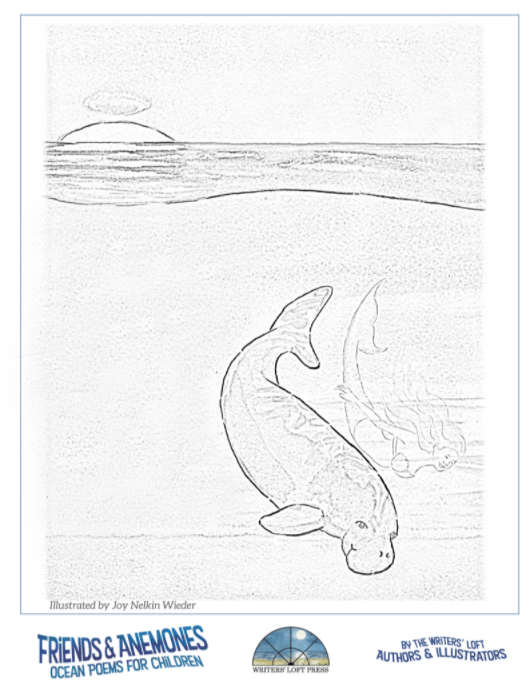
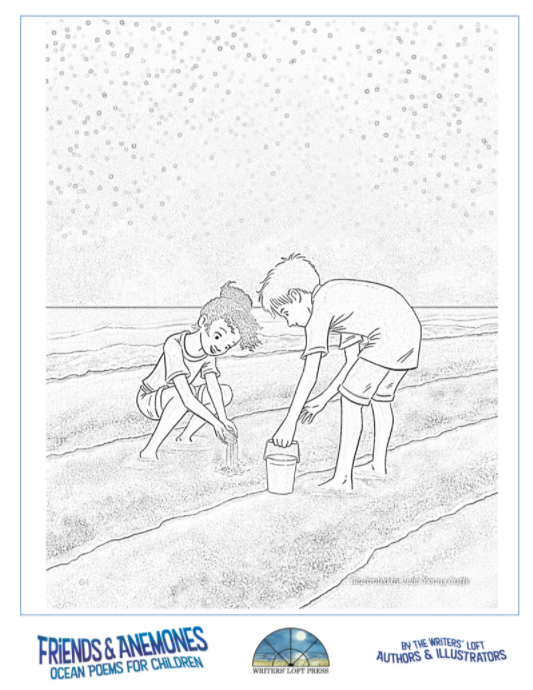
celebrate-picture-books-picture-book-review-friends-and-anemones-coloring-page  celebrate-picture-books-picture-book-review-friends-and-anemones-coloring-page

Color pages from Friends & Anemones in your OWN style with these black and white versions of the illustrations. You can find 18 more pages to print or download to your iPad to color on The Writers’ Loft website.

Manatee and Mermaid Coloring Page | Kids on the Beach Coloring Page

celebrate-picture-books-picture-book-review-under-the-sea-word-search

Find ten ocean critters’ names in this printable sea-star shaped word search.

Under the Sea Word Search Puzzle | Under the Sea Word Search Solution

Explore some poems specifically written for younger readers at Poets.org and write your own poetry if you feel inspired.

celebrate-picture-books-picture-book-review-friends-and-anemones-cover

To support The Writers’ Loft, you can order Friends & Anemones: Ocean Poems for Children from their website.

You can find Friends & Anemones at these booksellers

Amazon | Barnes & Noble | Books-a-Million

To support your local independent bookstore, order from

Bookshop | IndieBound

Picture Book Review

April 9 – It’s National Humor Month

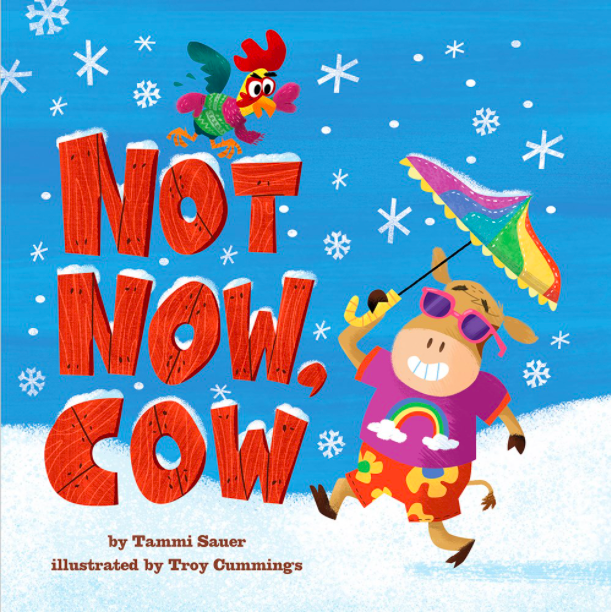
celebrate-picture-books-picture-book-review-not-now-cow-cover

About the Holiday

During April we celebrate one of the most fantastic things about life—humor! Whether you’re laughing at a funny joke, your favorite comedian, a comic strip, a silly mistake, or even yourself, a chuckle is good for you! Today, take time to relax and enjoy the small absurdities in life—and give a few hearty “Ha ha ha’s!” along the way. Today’s book is a perfect place for you and your kids to start.

Not Now, Cow

Written by Tammi Sauer | Illustrated by Troy Cummings


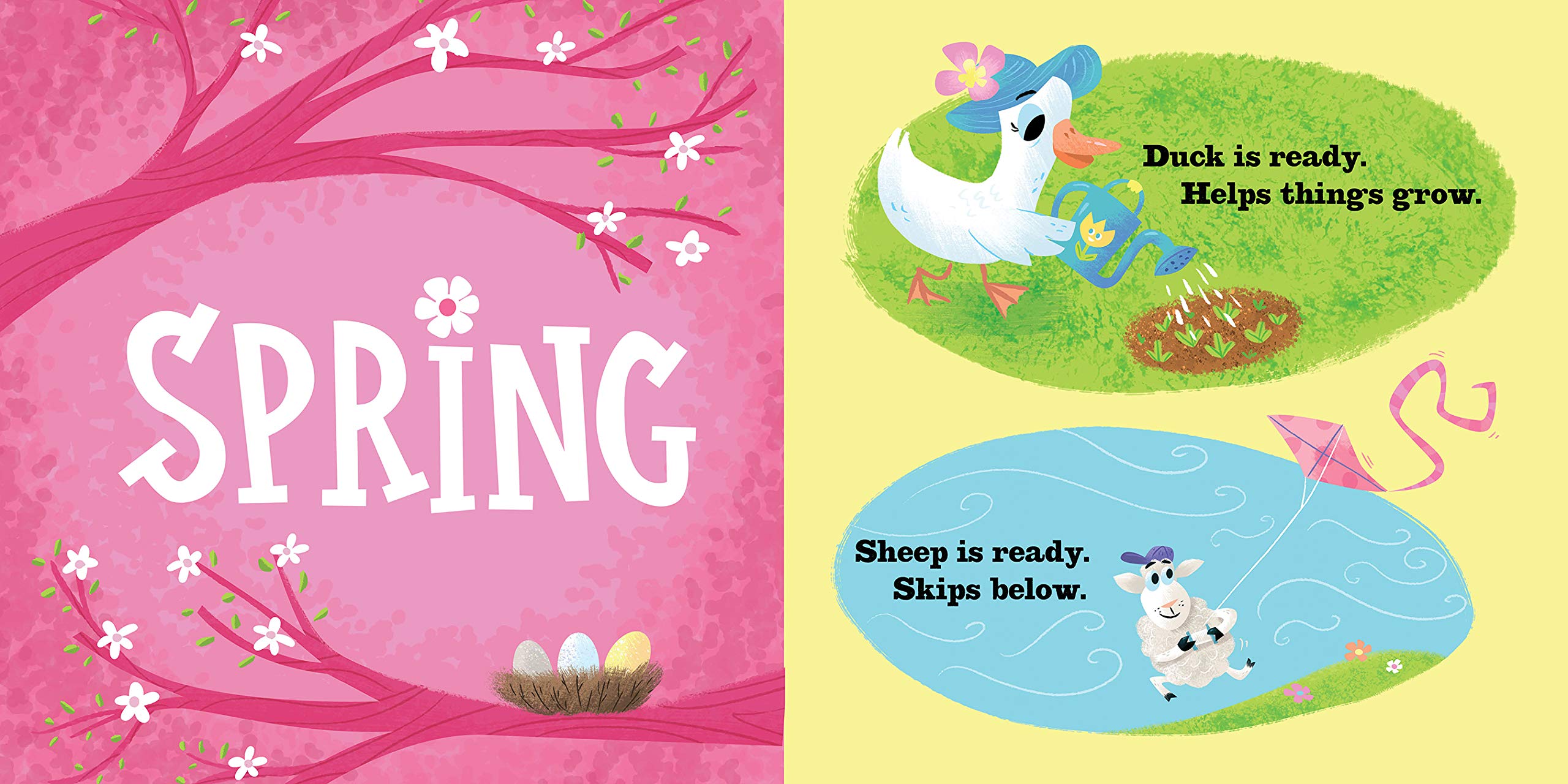
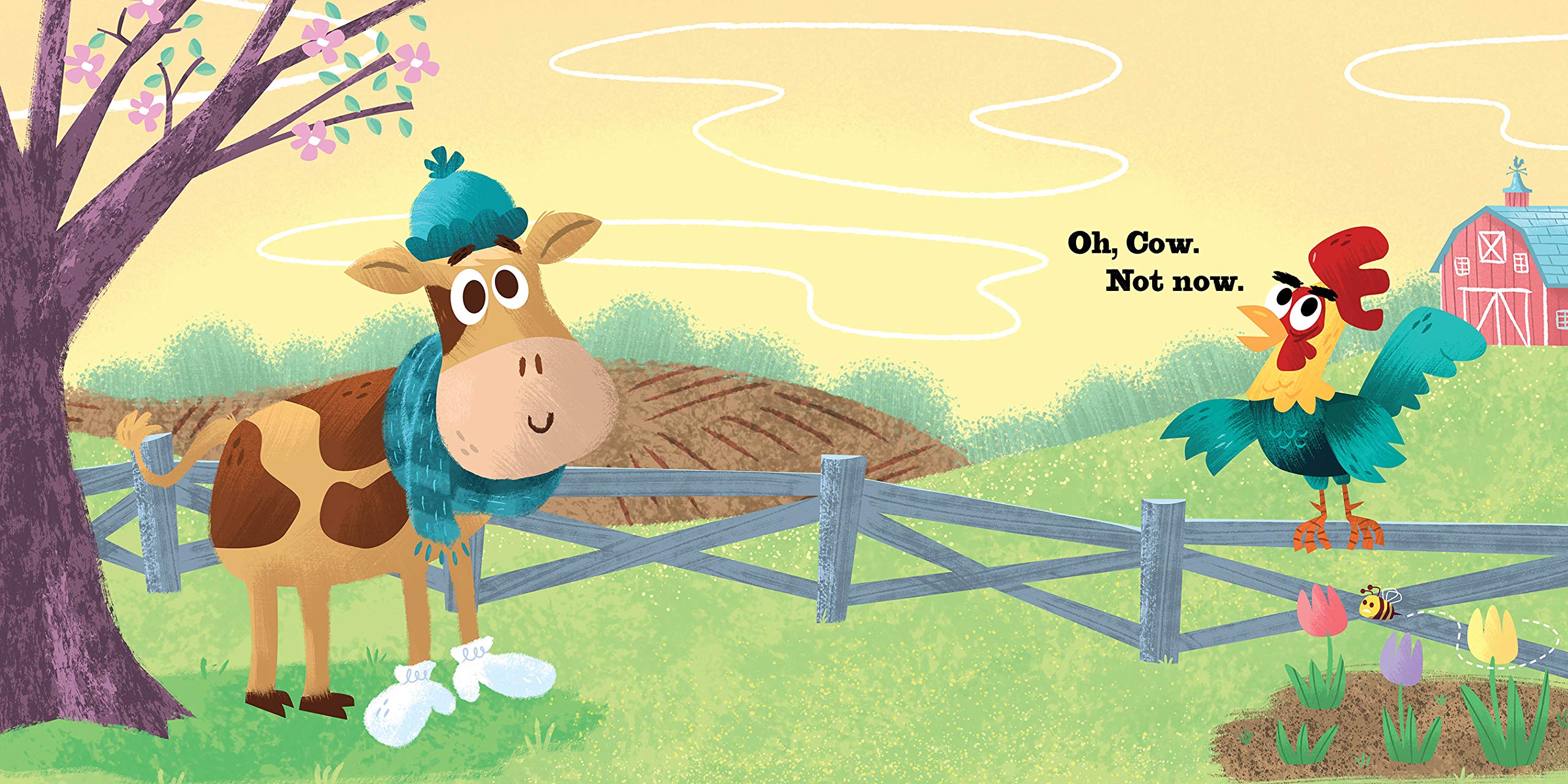
Even before the story properly begins, an alert rooster notices some small green leaves on the old tree and announces, “Spring is almost here!” He hightail-feathers it off to tell his farmyard friends. Duck is ready with her garden, Sheep is flying a kite, and Goat is enjoying a rainy-day galoshes dance. And Cow? Cow is bundled up in her knitted hat, scarf, and gloves. Rooster gives an eyeroll and says, “Oh, Cow. Not now.”

celebrate-picture-books-picture-book-review-not-now-cow-spring

Image copyright Troy Cummings, 2021, text copyright Tammi Sauer, 2021. Courtesy of Abrams Appleseed.

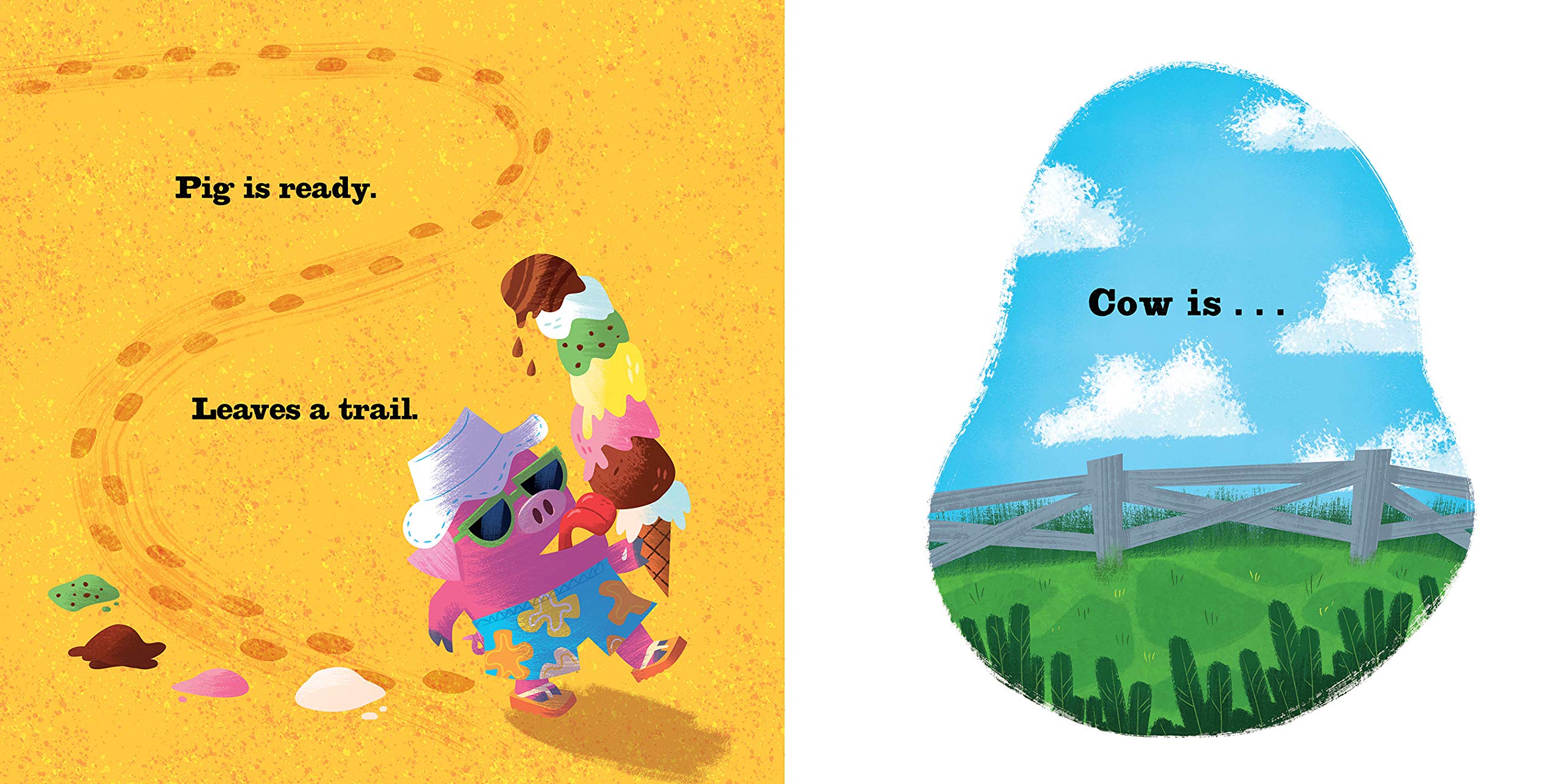
Summer comes and Chick, Goat, and Pig are at the beach. Chick dives in. “Feathers flail.” Goat needs a snack. He “chomps a pail.” With an ice cream cone piled high, “Pig is ready. Leaves a trail.” And Cow? She’s all decked out for… sledding. Rooster says, “Oh, Cow. Not now.”

In Fall, Horse knows raking is to be done. Chick munches on an apple. And Sheep is ready with a jack-o-lantern. And Cow? Snuggled into a purple puffy coat, she’s sporting earmuffs and skis, and holding a steaming mug of hot chocolate—with marshmallows. Rooster is flummoxed. “Oh, Cow. Just…wow.”

celebrate-picture-books-picture-book-review-not-now-cow-rooster

Image copyright Troy Cummings, 2021, text copyright Tammi Sauer, 2021. Courtesy of Abrams Appleseed.

Finally, it’s Winter! Pig has fashioned a snowy friend. On his sled, “Horse rounds the bend.” And Duck is gliding on the pond. It’s Cow’s big moment. Is she ready? Well…yes…. For Summer! And as Cow sits on her blanket with her swim fins, swim goggles, and swimming cap on, munching a sandwich from her picnic basket, the farm animals gather round. “We need to talk,” Rooster says.

celebrate-picture-books-picture-book-review-not-now-cow-summer

Image copyright Troy Cummings, 2021, text copyright Tammi Sauer, 2021. Courtesy of Abrams Appleseed.

Little ones will giggle with delight, eager to see what Cow is wearing next in Tammi Sauer’s joyously silly story about a cow who likes to celebrate the seasons her way—or is she just a bit mixed up? Either way, preschool– and kindergarten-age kids will love enthusiastically chiming in every time Rooster says, “Oh, Cow. Not Now.” Sauer’s simple structure, short sentences, and engaging triple rhymes make it easy for little ones to join in on subsequent readings.

Troy Cummings brings all the sweetness and fun of the farm animals’ seasonal activities to life in his lively illustrations. To open each sequence, the limbs from the tree where Rooster first notices spring blossoming are set against appropriately colored backgrounds and show signs of the transitions to summer, fall, and winter. Throughout Cummings’ candy-hued spring, sunny summer, fiery fall, and icy winter landscapes, Duck, Sheep, Goat, Horse, Chick, and Pig enjoy traditional fun. And then comes Cow, with her progressively bundled-up attire that bamboozles increasingly exasperated Rooster. The final, hilarious payoff comes when winter hits and Cow shows up in her bathing suit, floaties, and other swimming aids, with a picnic basket to boot. Kids may notice that no matter what the season or what she’s wearing, Cow looks perfectly happy.

Perfect zany fun that little ones will want to hear again and again, Not Now, Cow is a must addition to all young children’s bookshelves at home, school, and public libraries.

Ages 3 – 5 

Abrams Appleseed, 2021 | ISBN 978-1419746291

Discover more about Tammi Sauer and her books on her website.

To learn more about Troy Cummings, his books, and his art, visit his website.

National Humor Month Activity

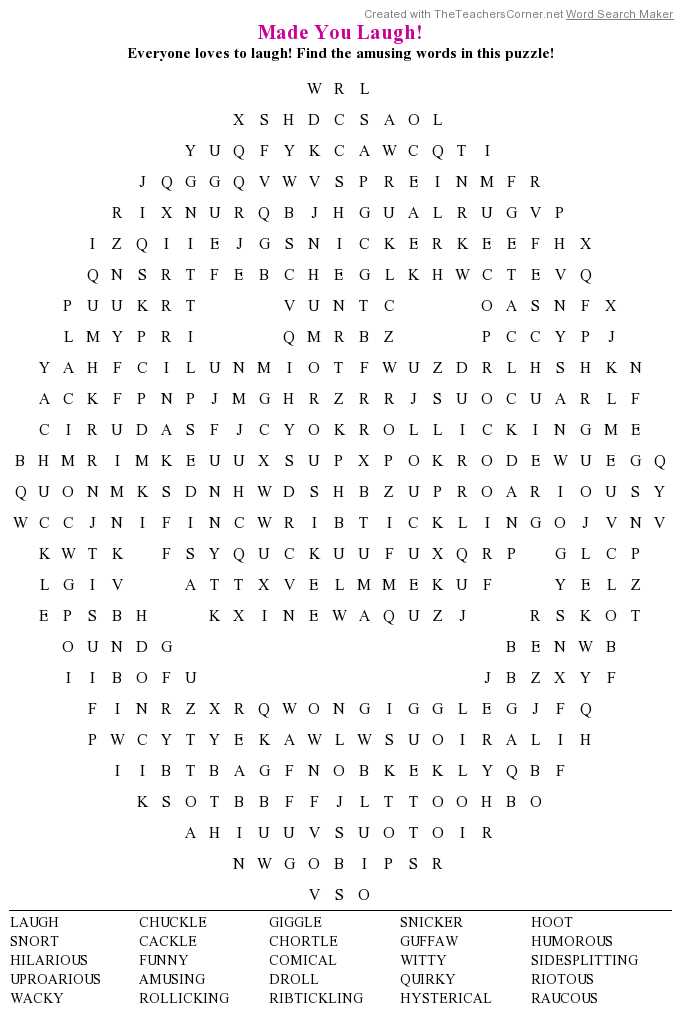
celebrate-picture-books-picture-book-review-share-a-laugh-wordsearch

Share a Laugh! Word Search Puzzle


Sharing a laugh with friends makes a day better. Can you find the fifteen words about laughter in this puzzle?

Share a Laugh! Word Search PuzzleShare a Laugh! Word Search Solution

celebrate-picture-books-picture-book-review-not-now-cow-cover

You can find Not Now, Cow at these booksellers

Amazon | Barnes & Noble | Books-a-Million

To support your local independent bookstore, order from

Bookshop | IndieBound

Picture Book Review
April 7 – It’s National Humor Month

celebrate-picture-books-picture-book-review-edmund-the-elephant-who-forgot-cover

About the Holiday

There may be no more infectious sound than the giggle or guffaw of a good laugh. Laughter is therapeutic and can make tough times a little easier. Established in 1976 by comedian and author Larry Wilde, National Humor Month promotes all things funny and raises awareness of the benefits of laughter and joy. The health benefits of an optimistic outlook are well documented, and lightheartedness also improves communication skills and boosts morale. Kids, it seems, are born with the ability to see and appreciate the silliness, absurdity, and fun in life. This month, enjoy the zany side of things by reading funny books, and check out the Funny Literacy Program that offers lots of resources and activities to fill your days with humor! Click here to learn more. Get started with today’s book and enjoy a good guffaw not only during April but every day! 

Edmund the Elephant Who Forgot

Written by Kate Dalgleish | Illustrated by Isobel Lundie


You’ve probably heard that elephants never forget. But little “Edmund did forget…a lot.” Still, his mother had entrusted him to pick up supplies for his little brother’s birthday party. She even gave him a song to help improve his memory (“‘Elephants always remember, / Elephants don’t get it wrong. Elephants always remember, As long as they sing this song.'”) and as a back-up, she gave him a list with six items on it.

celebrate-picture-books-picture-book-review-edmund-the-elephant-who-forgot-balloons

Image copyright Isobel Lundie, 2021, text copyright Kate Dalgleish, 2021. Courtesy of Sterling Children’s Books.

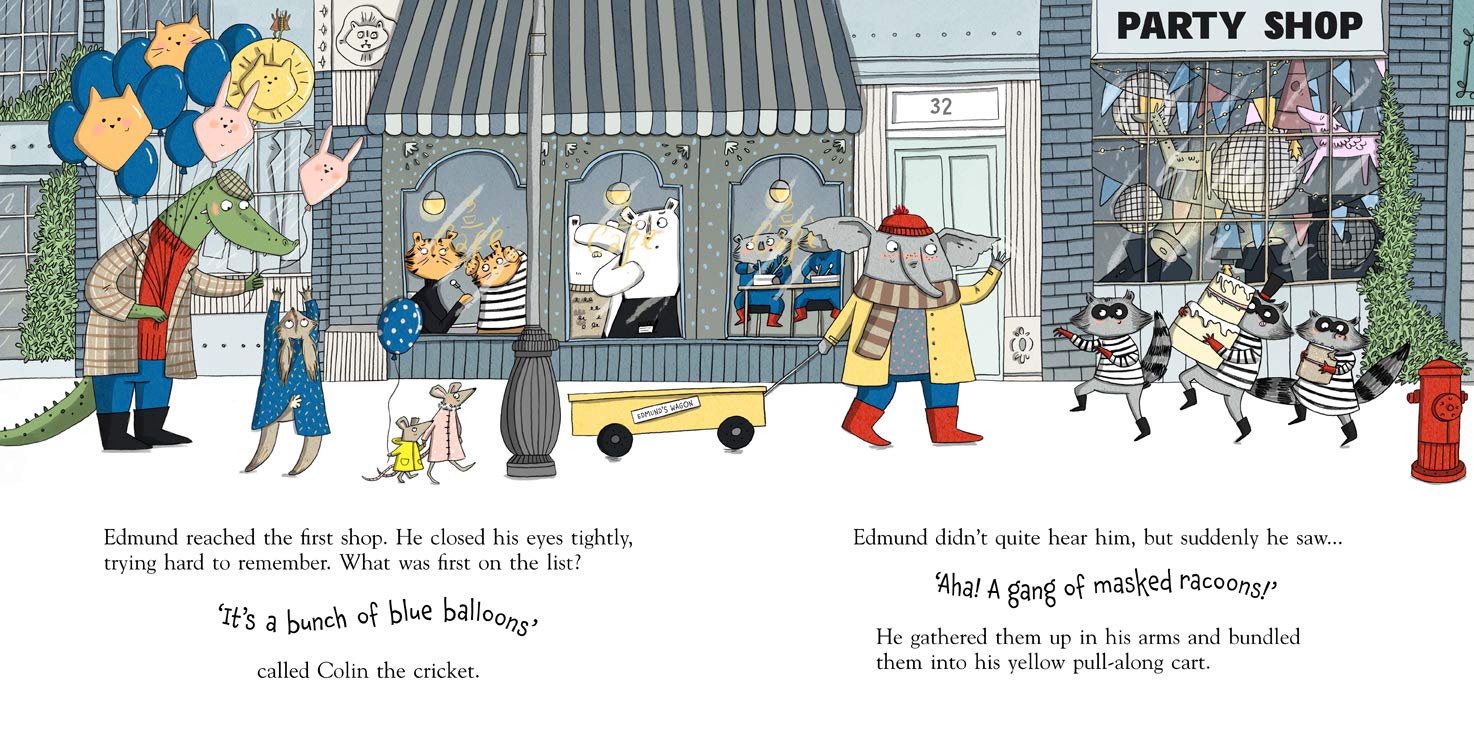
But when he stopped for a moment on his way to the stores, Edmund realized he’s forgotten the list! Meanwhile, Colin the cricket discovered the mix up and hurried after Edmund. Fortunately, Colin had a (typical) elephant’s memory and knew every item on the list. As Edmund came to the first store and pondered what was first on the list, Colin called out “‘It’s a bunch of blue balloons.’”

Despite his big ears, Edmund couldn’t hear the tiny cricket, “but suddenly he saw… ‘Aha! A gang of masked raccoons!’” He picked them up and put them in his wagon. At the next stop, Colin tried to remind Edmund about the “‘…twenty pointy party hats.’” Edmund knew it was something like “bats… or rats,” so when he saw “‘seven sassy dancing cats’” he knew he had it right. He loaded them up and continued on.

celebrate-picture-books-picture-book-review-edmund-the-elephant-who-forgot-cats

Image copyright Isobel Lundie, 2021, text copyright Kate Dalgleish, 2021. Courtesy of Sterling Children’s Books.

But what was number three? Edmund sang his mother’s song to try and remember while Colin shouted it as loudly as he could. Just then Edmund crashed into exactly the thing he needed. Into the wagon they went. Only three items left. But what was the next one? Colin bellowed the answer, but into the wagon went “‘a swinging baboon known as Betty!’” Edmund hurried to the last two stores and stocked up. Edmund was so proud of himself. “He’d not forgotten a thing!”

When Edmund got home, his mom took one look at his piled-up wagon and shook her head. Colin told her he had “‘tried to help.’” But “‘Edmund,’” his mother asked, “‘did you remember to give out all the invitations?’” What invitations? Edmund exclaimed, “‘You forgot to give them to me!’” But Edmund’s little brother didn’t mind. He thought his party was going to be the best ever!

celebrate-picture-books-picture-book-review-edmund-the-elephant-who-forgot-toucans

Image copyright Isobel Lundie, 2021, text copyright Kate Dalgleish, 2021. Courtesy of Sterling Children’s Books.

Kate Dalgleish’s clever-to-the-max story will have kids laughing out loud as Edmund picks up more and more outrageously silly items for his little brother’s birthday. As Colin the cricket reminds Edmund (and readers) of the actual party supply he’s supposed to buy at each shop, kids will be eager to see how this forgetful elephant interprets what little he does remember. Dalgleish’s pitch-perfect rhythm-and-rhyme pairs will have kids in stitches, and some young wordsmiths may want to try making up their own alternate party decoration. Edmund’s mother’s song is a delight, and kids will love singing along on the repeated choruses. Shrewd touches reveal that everyone has foibles, but in the end we can still enjoy the “best party ever.”

There’s so much wonderful absurdity going on in each of Isobel Lundie’s cartoon-style illustrations that after the first reading, kids and adults will want to start over again to catch all the humorous action, allusions, facial expressions, and, especially, creatures in this busy town. For kids who love search-and-find puzzles, this book is a gift, with untold numbers of things to look for, count, sort, and chuckle over. At the end, one of the raccoons even invites kids to find him twenty-seven times throughout the book. Lundie’s bright colors, delicate line drawings, and lots and lots of witty detail, spotlight the funny text and make this whole package shine.

For story times that are just plain fun, wild, and wacky (and – okay – you can probably throw some math in there too) that will leave kids giggling long after the story’s finished, Edmund the Elephant Who Forgot is definitely one to remember when you’re adding to your home, classroom, or public library collection.

Ages 3 – 7 (and up)

Sterling Children’s Books, 2021 | ISBN 978-1913337391

You can connect with Kate Dalgleish on Twitter.

To learn more about Isobel Lundie and see a portfolio of her art, visit Plum Pudding Illustration Agency.

National Humor Month Activity

celebrate-picture-books-picture-book-review-made-you-laugh-word-search

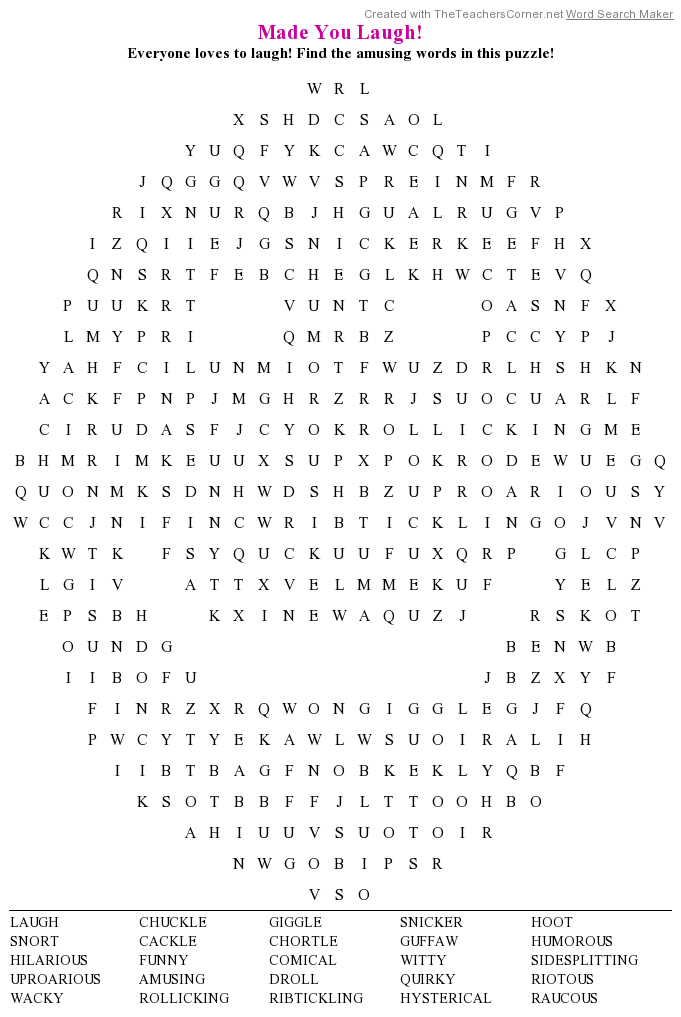
Made You Laugh! Word Search Puzzle


Humor and laughing are such a part of our lives that there are lots of words for this universal emotion. Can you find all the words for laughter in this printable puzzle?

Made You Laugh! Word Search PuzzleMade You Laugh! Word Search Solution

celebrate-picture-books-picture-book-review-edmund-the-elephant-who-forgot-cover

You can find Edmund the Elephant Who Forgot at these booksellers

Amazon | Barnes & Noble | Books-a-Million

To support your local independent bookstore, order from

Bookshop | IndieBound

Picture Book Review


March 24 – It’s Women’s History Month

celebrate-picture-books-picture-book-review-june-almeida-virus-detective-cover

About the Holiday

From its beginning as a single-day observance in 1911 in Sonoma, California, the celebration of women’s achievements and contributions throughout history grew to a week-long event in 1980 and finally to encompass the entire month of March in 1987. During this month we remember the trail-blazing women of yesteryear who used their creativity, intelligence, and perseverance to promote rights for women while contributing their own innovations to science, art, social reform, medicine, and other disciplines as well as today’s pioneers who carry on their legacy and make our world a better place. Today, we feature a book about a woman who revolutionized virology and medical research, connecting the past and the present. To learn more about the holiday, visit the National Women’s History Museum website and check out their resource toolkit.

June Almeida, Virus Detective! The Woman Who Discovered the First Human Coronavirus

Written by Suzanne Slade | Illustrated by Elisa Paganelli

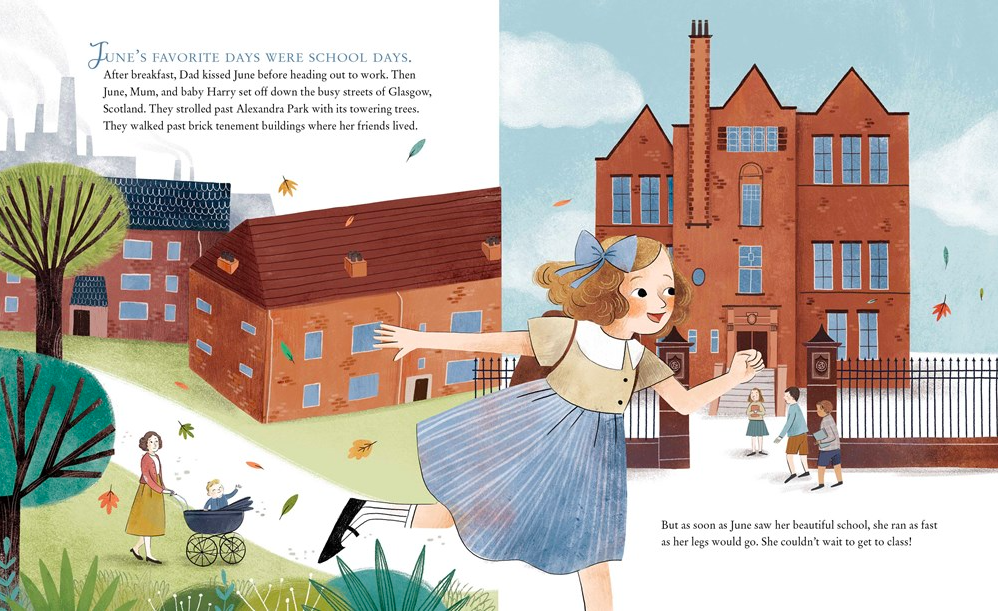
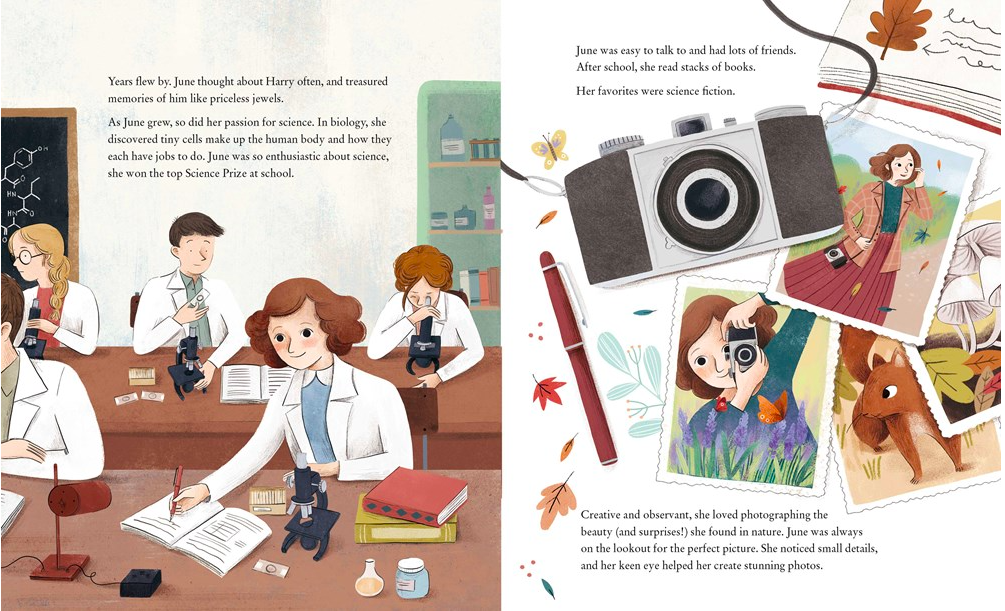
Growing up in Glasgow, Scotland, June Almeida loved school. After class she couldn’t wait to share what she’d learned—especially science subjects—with her mother, father, and little brother, Henry. When June was ten, however, her life changed when Henry became sick and passed away. Throughout elementary school and into high school, June loved studying science, especially biology in which she learned about the cells in the body and their functions. “June was so enthusiastic about science, she won the top science prize at school.”

celebrate-picture-books-picture-book-review-june-almeida-virus-detective-childhood

Image copyright Elisa Paganelli, 2021, text copyright Suzanne Slade, 2021. Courtesy of Sleeping Bear Press.

But science wasn’t the only thing June loved. She had lots of friends, was an avid reader, and became an excellent photographer. Whenever she was out with her camera, “she noticed small details, and her keen eye helped her create stunning photos.” June dreamed of attending college, but the jobs her father and mother held did not pay enough, and when June was sixteen, she dropped out of school to get a job to help pay the bills. June wanted to make a difference, “so she applied to work at the nearby hospital” and was hired as a lab worker. Here she learned how to examine cells with a microscope. “Her findings helped doctors treat patients.”

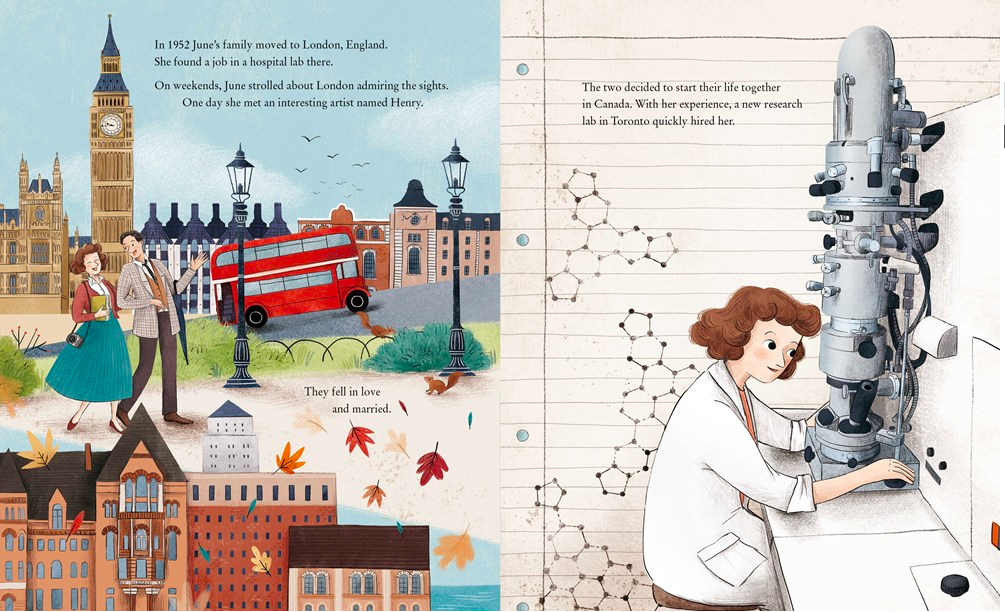
When June was twenty-two, she and her family moved to London. She got a job in a hospital lab and also met and married an artist named Henry. June and Henry moved to Canada, where she quickly found a job at a “new research lab in Toronto.” In this lab, June worked with an electron microscope that could magnify things 25,000 times and produced detailed pictures of the samples being studied. These photos “were helpful. But it was hard to tell which tiny blobs were viruses and which were cells.” June thought she could improve on the photos.

celebrate-picture-books-picture-book-review-june-almeida-virus-detective-photographer

Image copyright Elisa Paganelli, 2021, text copyright Suzanne Slade, 2021. Courtesy of Sleeping Bear Press.

June knew that in the body antibodies would surround viruses as they worked to fight it. June wondered if by introducing antibodies to her samples, scientists would be able to determine the virus from the cells. June’s idea worked. The scientists were astonished. Because of June’s innovation, they now had clear pictures that would help them study and combat viruses.

After June took time away from work to have a baby in 1960, she returned to her research and often lectured about her work. She was recruited to work at a hospital lab in London, so she and her family moved once again. At the time, a researcher named David Tyrrell had been trying to identify a virus that had affected a young boy. Could it be a new virus? He was hoping that June could help.

celebrate-picture-books-picture-book-review-june-almeida-virus-detective-hospital

Image copyright Elisa Paganelli, 2021, text copyright Suzanne Slade, 2021. Courtesy of Sleeping Bear Press.

When June received the sample, she knew that “since it was an unknown virus, there were no antibodies to help find it.” But she was an expert at using another method that might work. Carefully, June implemented the intricate steps. Then she put the sample under the microscope and scanned the picture. “June was stunned.” Each virus blob was encircled by tiny dots “like a crown. ” She had seen this twice before when looking at viruses from sick animals. She had written a paper on it, but it had been rejected by other researchers because they thought her pictures were just blurry and not those of a new virus.

June presented her findings to doctors who agreed with her discovery. They decided to name the new virus coronavirus, after the Latin word for crown, corona. June and David then published a paper telling other doctors and researchers about the new virus. Following this discovery, June continued to study viruses, such as hepatitis B and HIV. Her pictures of these viruses helped researchers develop medications that could “block them from making people sick.” Even after she retired, June never lost her love of learning, teaching herself to play the flute, about antiques, and how to use a digital camera to continue creating incredible photos.

Backmatter includes more about June Almeida and her life’s work, an illustrated timeline of her life, and a selected bibliography.

celebrate-picture-books-picture-book-review-june-almeida-virus-detective-London

Image copyright Elisa Paganelli, 2021, text copyright Suzanne Slade, 2021. Courtesy of Sleeping Bear Press.

Suzanne Slade’s compelling biography of June Almeida gives context for and insight into the research and discovery of the coronavirus and informs present-day events and breakthroughs. Slade’s fluid storytelling clearly reveals Almeida’s intelligence and passion for science as well as her determination to use her skills to the betterment of society. Kids will be astounded that June was able to begin her career at the age of sixteen, and that her beloved hobby of photography became a career that changed medical research. Slade’s sprinkling of personal details about Almeida’s life creates a well-rounded understanding of this influential woman.

Through Elisa Paganelli’s realistic and detailed illustrations, children have the opportunity to see a researcher at work in world-class laboratories. Readers will be especially impressed by images of the electron microscope and how Almeida improved the photographs these powerful machines produced. Children familiar with the shape of the coronavirus will be interested in seeing the faithfully reproduced photographs and how the virus got its name. Kids will also enjoy seeing illustrations of Almeida’s family life, including her daughter Joyce, who is herself a doctor.

An inspirational and fascinating biography of a woman with a very innovative mind, June Almeida, Virus Detective! will thrill children interested in science, medicine, and the arts. The book would be an impactful addition to STEM and STEAM lessons. It is highly recommended for home libraries and is a must for school and public library collections.

Ages 6 – 9 

Sleeping Bear Press, 2021 | ISBN 978-1534111325

Discover more about Suzanne Slade and her books on her website.

To learn more about Elisa Paganelli, her books, and her art, visit her website.

Women’s History Month Activity

celebrate-picture-books-picture-book-review-microscope-coloring-page          celebrate-picture-books-picture-book-review-microscope-wordsearch-puzzle

Take a Closer Look Coloring Page and Word Search 

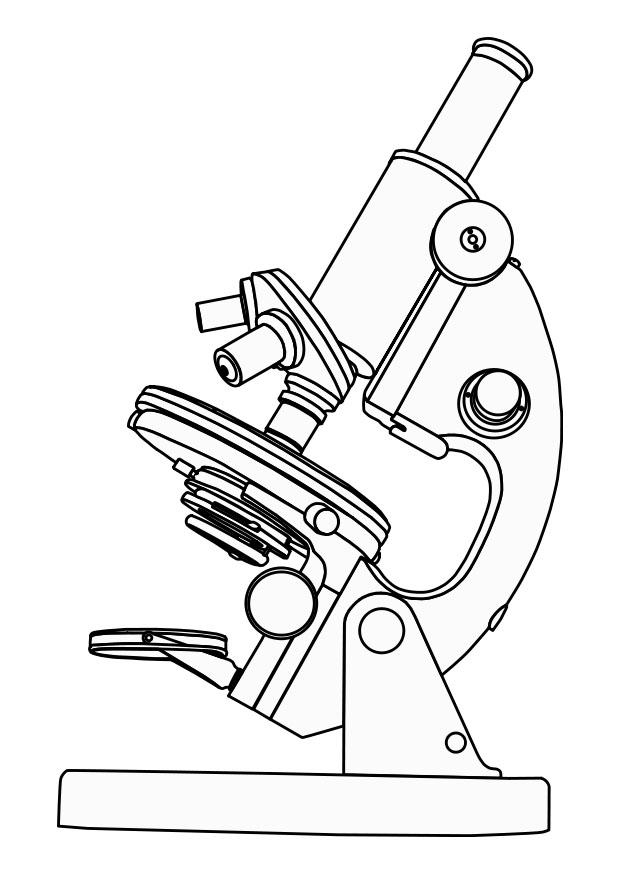
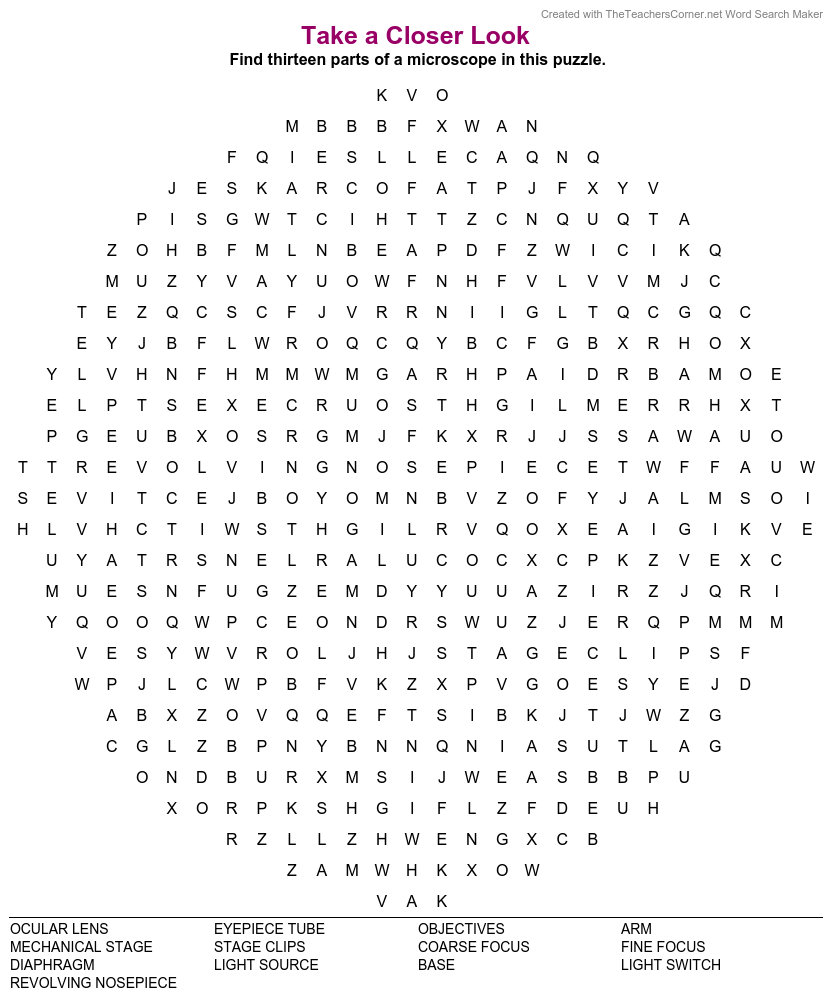
You can examine the parts of a microscope with this printable word search puzzle and coloring page.

Take a Closer Look Word Search Puzzle | Take a Closer Look Word Search Solution | Coloring Page

celebrate-picture-books-picture-book-review-june-almeida-virus-detective-cover

You can find June Almeida, Virus Detective! at these booksellers

Amazon | Barnes & Noble | Books-a-Million

To support your local independent bookstore, order from

Bookshop | IndieBound

Picture Book Review

March 16 – National Panda Day

celebrate-picture-books-picture-book-review-when-I-draw-a-panda-cover

About the Holiday

National Panda Day was established to raise awareness of the dangers faced by these favorite, adorable animals. Destruction of the vast bamboo forests on which pandas rely for food, coupled with their low birth rate has resulted in their being placed on the endangered list. Conservation groups as well as zoos and other animal sanctuaries are working to breed and protect these gentle black-and-white beauties. If you’d like to get involved, consider donating to a local zoo program or other environmental group.
Thanks to Simon & Schuster for sharing a digital copy of When I Draw a Panda for review. All opinions of the book are my own.

When I Draw a Panda

By Amy June Bates


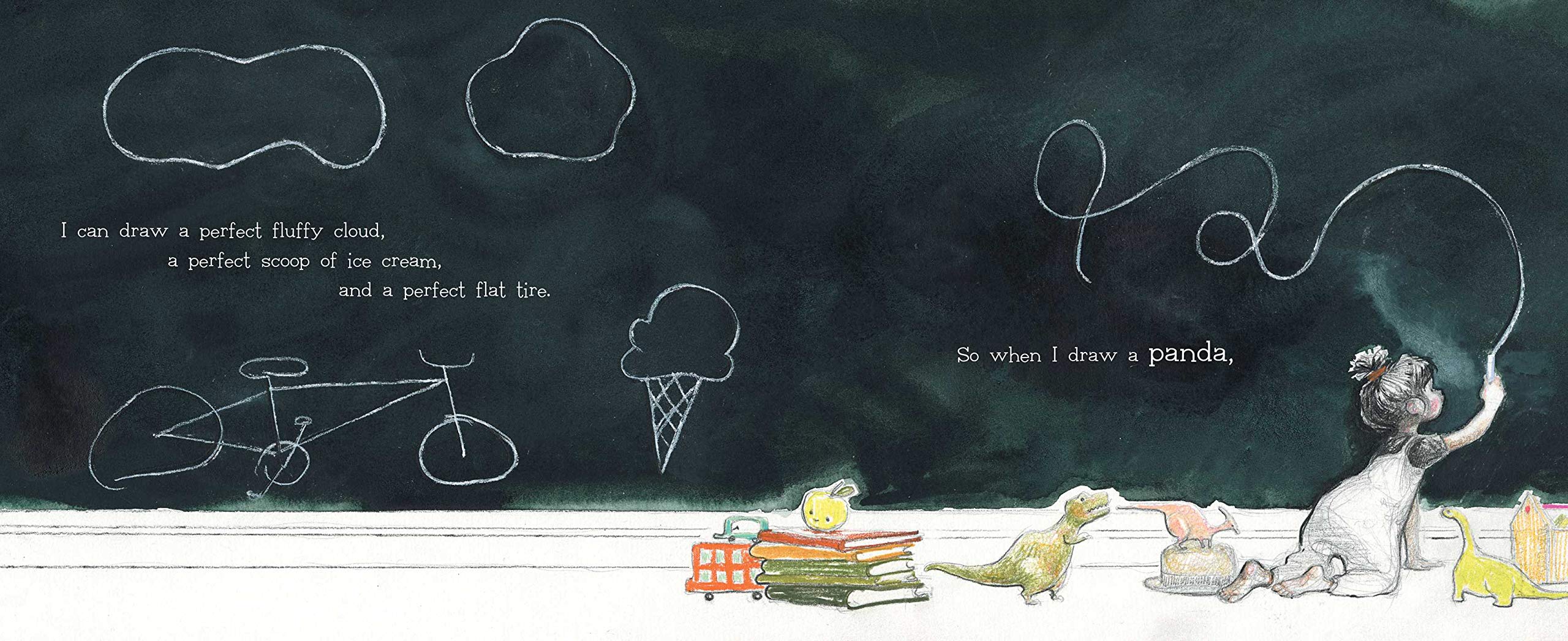
A little girl, art box in hand, gazes at her full-wall blackboard and tells readers “I love to draw.” She tells them, though, that “when they say to draw a perfect circle, [hers] turns out a little wonky.” There are things she can draw perfectly, like a cloud or a flat bicycle tire, and to draw a panda she just keeps drawing circles until one appears. Then she gives it a personal touch and makes it hers.

celebrate-picture-books-picture-book-review-when-I-draw-a-panda-cloud

Copyright Amy June Bates, 2020, courtesy of Simon & Schuster/Paula Wiseman Books.

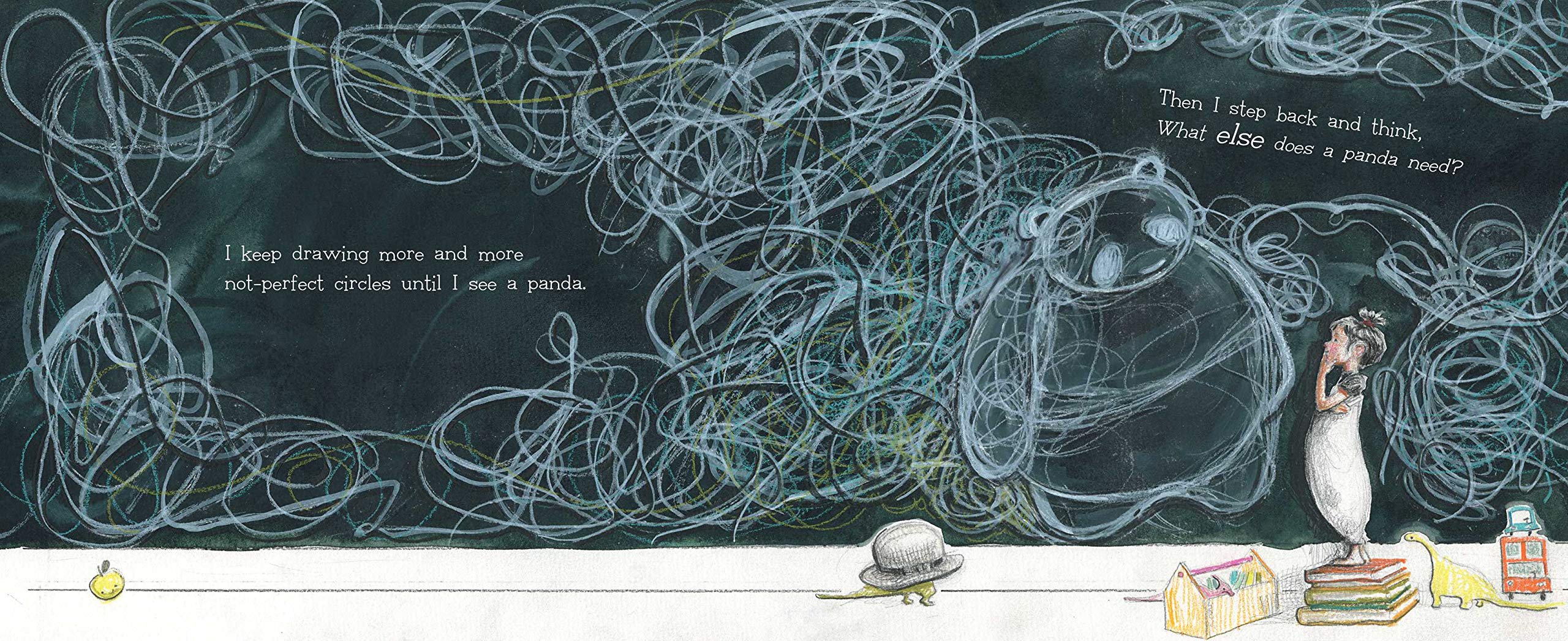
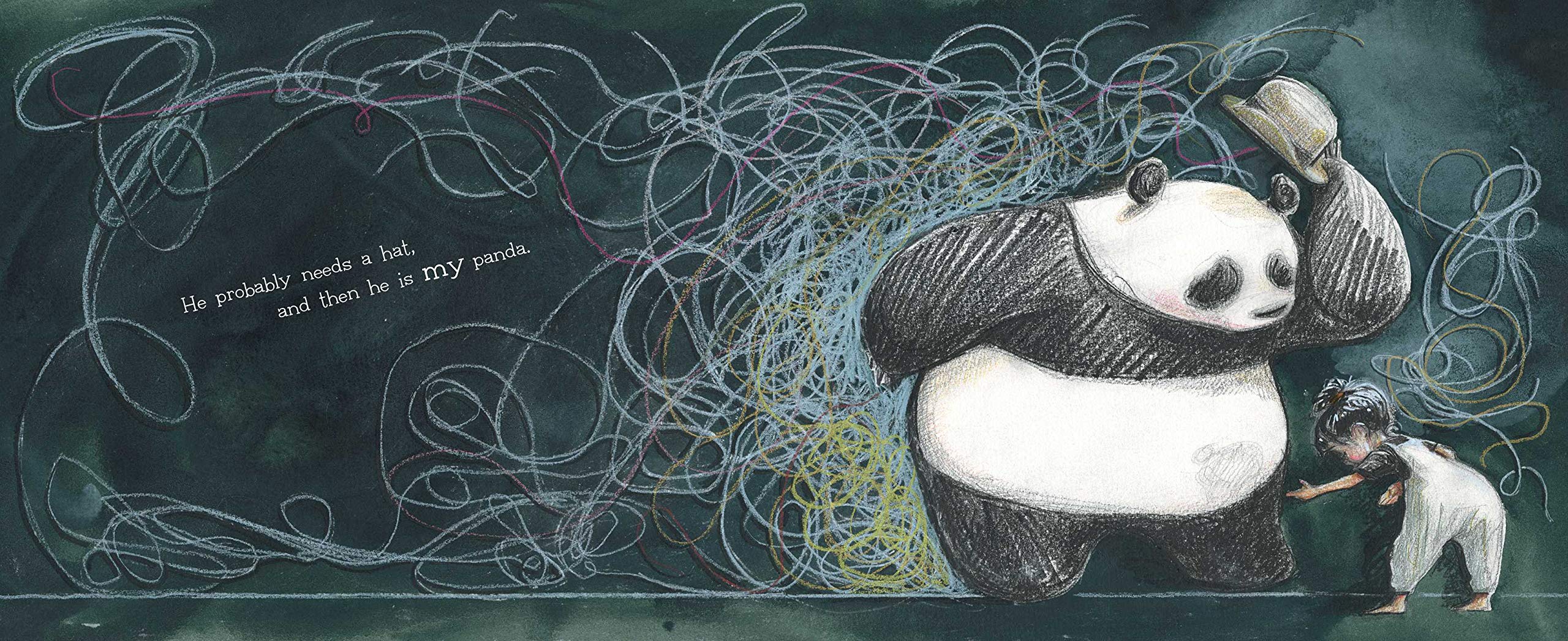
The panda also has its own style of drawing, which includes drawing a castle the left way “when someone tells him to draw a castle the right way.” The panda has his own interpretations of pictures people tell him to draw, and sometimes he gets distracted by something better, begins to daydream, and forgets what he was told to draw. The panda shows the girl how to draw a dragon from a squiggle.

celebrate-picture-books-picture-book-review-when-I-draw-a-panda-panda

Copyright Amy June Bates, 2020, courtesy of Simon & Schuster/Paula Wiseman Books.

The girl says that she has her individual way of drawing too, and “when they say to draw it ‘this way,’” she asks, “‘Why?’” When she does draw a picture the way they want her to, she changes it later. Sometimes people tell the girl her drawing won’t work or remind her to stay in the lines, but the drawings turn out just fine. And when people can’t figure out what she and her panda have drawn, they let it remain a mystery. The girl and her panda can draw quietly, but there are times when their pencils like to ROAR! Then they go willy-nilly, the girl says, to “somewhere that makes us happy.”

celebrate-picture-books-picture-book-review-when-I-draw-a-panda-hat

Copyright Amy June Bates, 2020, courtesy of Simon & Schuster/Paula Wiseman Books.

Amy June Bates celebrates the imagination and creativity of kids who, when given paper and freedom, will draw a unique picture every time, a masterpiece. Her storytelling in which the young artist counters the instructions of all of the “theys” who tell her to draw a “perfect” circle, castle, or other shape, is reassuring and uplifting to children who are proud of the artwork they do—artwork that is just what they want it to be. The girl’s honesty will resonate with readers of all ages who engage in the creative process, whether its art, writing, music, dance, inventing, or other discipline.

Bates’ own distinctive art shines in her illustrations of a child’s room that any kid will envy. One wall is painted completely with chalkboard paint, allowing her to give full expression to her imagination. Kids will appreciate the second and third spreads in which the girl demonstrates her “wonky” circles and then reveals that these become “perfect” clouds, ice cream cones, and flat tires. As the panda emerges from a great storm of squiggles, the girl’s imagination comes to life, and readers will cheer her on as she turns “the right way,” “something pretty,” and a “perfect” character or animal on their heads with panache and humor.

The front endpapers depict a series of familiar step-by-step diagrams that show how to draw a perfect circle, panda, princess, pirate, and more. The final diagram includes a fancy frame in which “something perfect” should be drawn. In the endpapers, these same diagrams appear covered in crayon scribblings, and the final frame holds a drawing of the girl herself.

Encouraging, freeing, and a delightful celebration of the ingenuity of children, When I Draw a Panda is a book kids will ask for again and again. This one’s a must for home, classroom, and public library collections.

Ages 4 – 8

Simon & Schuster/Paula Wiseman Books, 2020 | ISBN 978-1481451482

Discover more about Amy June Bates, her books, and her art on her website.

National Panda Day Activity

Screen Shot 2021-03-15 at 8.01.44 PM

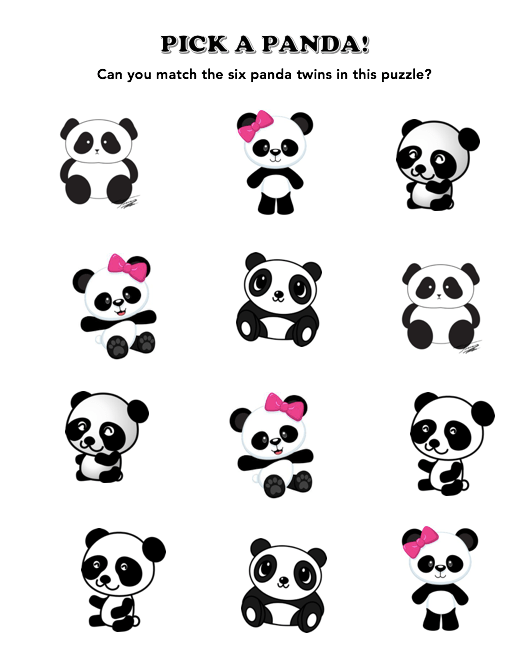
Pick a Panda! Puzzle


Can you match the six twin pandas in this printable puzzle?

Pick a Panda! Puzzle

celebrate-picture-books-picture-book-review-when-I-draw-a-panda-cover

You can find When I Draw a Panda at these booksellers

Amazon | Barnes & Noble | Books-a-Million

To support your local independent bookstore, order from

Bookshop | IndieBound

Picture Book Review