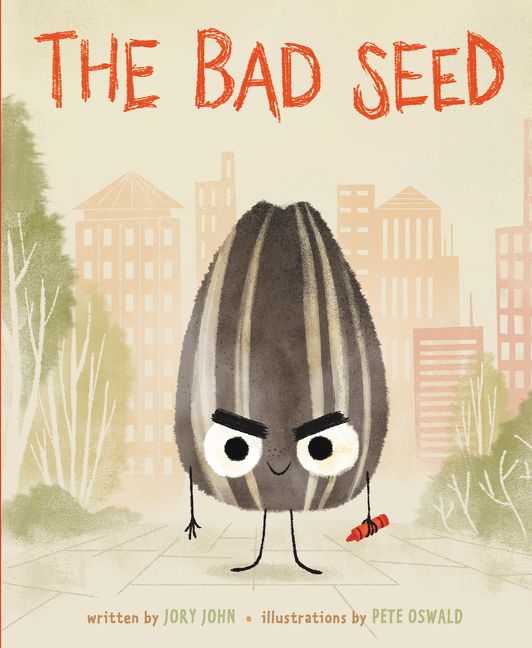
January 27 – National Seed Swap Day

celebrate-picture-books-picture-book-review-the-bad-seed-cover

About the Holiday

If you love to garden, you may want to get involved with National Seed Swap Day! The first Seed Swap Day was held in Washington DC in 2006. Since then it has grown to be a nation-wide event as gardeners get together to trade the seeds from their best plants. Not only does this improve the biodiversity in your local area, it’s a great way to make new friends! To learn more about what events are planned in your area, visit the official National Seed Swap blog.

The Bad Seed

Written by Jory John | Illustrated by Pete Oswald


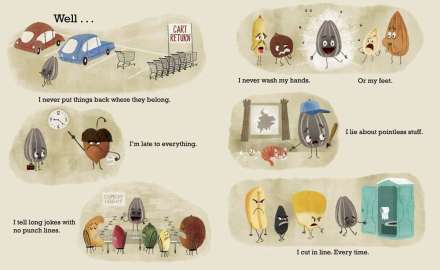
A sunflower seed stares straight off the page and admits it: “I’m a bad seed. A baaaaaaaad seed.” He knows that all the other seeds feel the same way. They point him out and mumble, “There goes a baaaad seed.” You might wonder just how bad a seed he can be. Pretty bad…he’ll tell you himself. Are you ready? Take a listen: “I never put things back where they belong. I’m late to everything. I tell long jokes with no punchlines.”

celebrate-picture-books-picture-book-review-the-bad-seed-first-page

Image copyright Pete Oswald, 2017, text copyright Jory John, 2017. Courtesy of HarperCollins.

Heard enough? Still think this seed may not be so bad? Well, what if you knew he was unhygienic, a little untruthful, and sometimes a lot inconsiderate. Why does he do this stuff? You know…he’s “a bad seed. A baaaad seed.” Was he always this way, you might wonder. The answer’s No. In fact, he “was born a humble seed on a simple sunflower in an unremarkable field.”
celebrate-picture-books-picture-book-review-the-bad-seed-bad-behavior

Image copyright Pete Oswald, 2017, text copyright Jory John, 2017. Courtesy of HarperCollins.

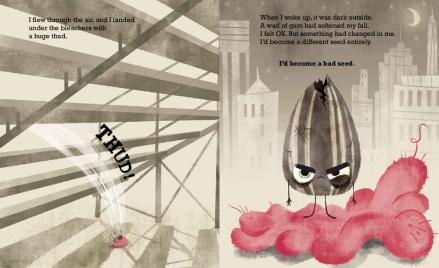
He just hung out with his big family of seeds until the flower began to droop, the seeds scattered and then…there was this bag. The seed was almost eaten by a giant with a big, scary mouth but was “spit out at the last possible second.” He landed under the bleachers, and when he woke up he found his life changed forever. He had “become a different seed entirely.” He’d “become a bad seed.”
celebrate-picture-books-picture-book-review-the-bad-seed-under-bleachers

Image copyright Pete Oswald, 2017, text copyright Jory John, 2017. Courtesy of HarperCollins.

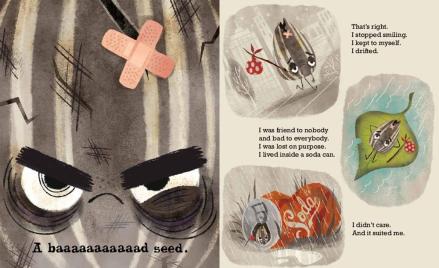
He was in unknown territory, by himself. He’s happy to share the sad details: “I stopped smiling. I kept to myself. I drifted. I was friend to nobody and bad to everybody. I was lost on purpose. I lived inside a soda can. I didn’t care. And it suited me.” That is it did suit him until recently. This seed did some soul searching, and decided to be better.
celebrate-picture-books-picture-book-review-the-bad-seed-soda-can

Image copyright Pete Oswald, 2017, text copyright Jory John, 2017. Courtesy of HarperCollins.

So now he still does some of that bad stuff (did you hear someone talking during a movie? That was probably him), but he does some good stuff too—like having good manners and smiling at people. Now, he says, “even though I still feel bad, sometimes, I also feel kind of good. It’s sort of a mix.” He’s just going to keep trying, and thinking, and readjusting his behavior and his view of himself. And now when he’s walking down the street, he still hears, “There goes that bad seed.” But he also hears, “Actually, he’s not all that bad anymore.”

celebrate-picture-books-picture-book-review-the-bad-seed-other-seeds

Image copyright Pete Oswald, 2017, text copyright Jory John, 2017. Courtesy of HarperCollins.

Jory John’s sly look at bad behavior is a sophisticated psychological thriller for the youngest set. John’s humorous take on the “bad seed” descriptor gives him full reign to explore some of the more serious life events that can cause sadness, loneliness, and even personality changes. As the once-happy seed loses his home, scatters from family, and ends up a bit bruised and battered, he sees his once sunny life turn dark.

With a hardened heart, he goes about his days, acting badly and letting the comments of others define him. To his credit, however, this seed has the presence of mind—and enough honesty—to recognize his bad behavior and also to know that only he can change it. The niceties that the seed foregoes will have kids and adults laughing out loud as his reputation seems a bit more roguish than the reality. And the authentic ending holds a reassuring kernel of truth—life is a bit of a mix, but happiness often wins out.
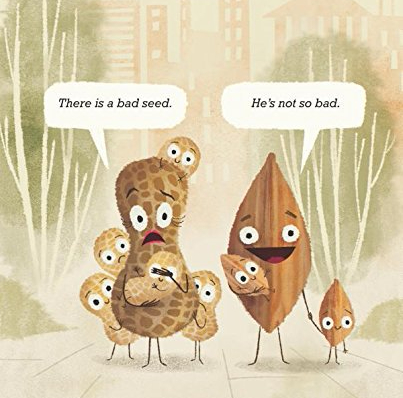
celebrate-picture-books-picture-book-review-the-bad-seed-peanut

Image copyright Pete Oswald, 2017, text copyright Jory John, 2017. Courtesy of HarperCollins.

It’s understandable if you don’t quite believe the sunflower seed when he says he’s a baaaad seed in Pete Oswald’s adorable illustrations. Sure, he scowls and furrows his brow, butts in line, and gets a bit stinky, but underneath that hard shell, really lies the heart of a softie. The other seeds in the neighborhood—pistachios, peanuts, almonds, chestnuts, cashews, and more—are fed up, though, registering fear, dismay, and even anger over the sunflower’s behavior. When the sunflower seed has a change of heart, however, others take note, and he gets another crack at life.

The Bad Seed is a funny book that kids will love to hear again and again. It also provides many teachable moments for those times when life gets a little discouraging. If you’re looking for an original book that has a bit of everything to add to a home, classroom, or public library would make a great addition to home and classroom bookshelves.

Ages 4 – 8

HarperCollins, 2017 | ISBN 978-0062467768 (Hardcover) | ISBN 978-1338346664 (Paperback, 2018)

Discover more about Jory John and his books on his website

Learn more about Pete Oswalk and view a portfolio of his artwork on his tumblr.

How good is this The Bad Seed book trailer? Take a look!

National Seed Swap Day Activity

celebrate-picture-books-picture-book-review-carrots-seeds-coloring-page

Seed Packet Coloring Pages


All of your favorite veggies come from seeds, of course!, and those seeds come in packets that are little bits of art. Grab your crayons or pencils and color these printable Seed Packet Coloring Pages.

Carrots Seed Packet | Peas Seed Packet | Broccoli Seed Packet | Corn Seed Packet

celebrate-picture-books-picture-book-review-the-bad-seed-cover

You can find The Bad Seed at these booksellers:

Amazon | Barnes & Noble | Books-a-Million | IndieBound

Picture Book Review

December 23 – National Roots Day

celebrate-picture-books-picture-book-review-sing-don't-cry-cover

About the Holiday

As families gather for holidays this month, National Roots Day encourages people to talk about their collective histories, look at old photographs, and tell family stories. Sharing laughs, traditions, and those “remember when…?” stories with children helps give them a sense of connection and belonging and ensures that important events, customs, and relationships aren’t lost to time.

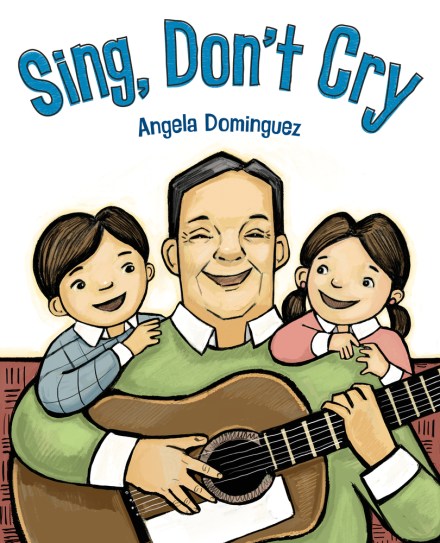
Sing, Don’t Cry

By Angela Dominguez


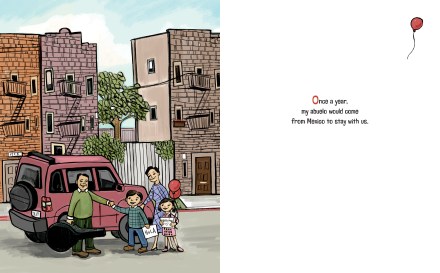
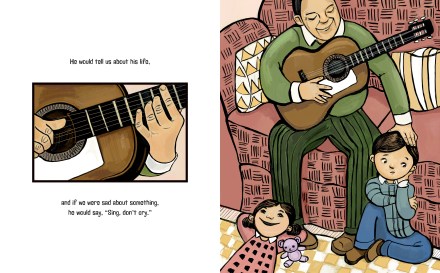
Once a year, Abuelo came from Mexico to visit his family in America. “He always brought his guitar,” and he sang to his granddaughter and grandson every night. Abuelo would talk about his life, and if the children were sad, his advice was “‘Sing, don’t cry. Because singing gladdens the heart.’”

celebrate-picture-books-picture-book-review-sing-don't-cry-abuelo-arrives

Copyright Angela Dominguez, 2017, courtesy of us.macmillan.com.

One of the stories Abuelo told was about a time when he was very young and his family “had to travel a long way to find a new home.” Just like his granddaughter and grandson’s family. He said that “singing made the distance seem smaller.” He also knew that when bad things happen, singing can make them better. “‘Some things may be lost forever,’” he said, “‘but maybe that makes room for new and wonderful things to be found.’”

celebrate-picture-books-picture-book-review-sing-don't-cry-playing-guitar

Copyright Angela Dominguez, 2017, courtesy of us.macmillan.com.

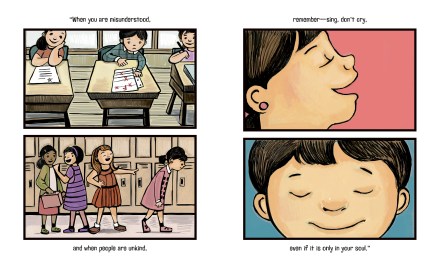
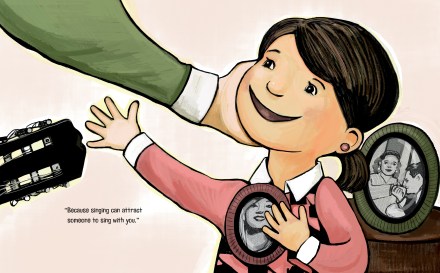
When you feel alone, Abuelo said, singing can attract friends. When there are days that are hard or when people are mean, singing—“even if it is only in your soul”—can cheer you. As Abuelo strummed his guitar and sang to his precious grandchildren, he reminded them that “‘I will always be singing with you.’”

celebrate-picture-books-picture-book-review-sing-don't-cry-singing-uplifts

Copyright Angela Dominguez, 2017, courtesy of us.macmillan.com.

Angela Dominguez pairs her heartwarming text with images that are at once simple and complex as they hold images that span the generations while also bringing them together. As Abuelo arrives as his daughter’s house, his grandchildren greet him enthusiastically with signs and balloons. The children are excited to see Abuelo get out his guitar, and as he sings, readers see that each child is comforted in different ways by their interactions with their grandfather.

celebrate-picture-books-picture-book-review-sing-don't-cry-singing-attracts-friends

Copyright Angela Dominguez, 2017, courtesy of us.macmillan.com.

A sepia-hued portrait on the wall of Abuelo as a young man as well as clothing choices offer color-coded clues to Abuelo’s history and reassurance for events in the lives of his grandkids. As Abuelo reveals the restorative power of singing, Dominguez portrays examples of three situations on a tri-paneled page. The top, sepia-colored image depicts a boy sick in bed as a worried mother looks on; the second image is rose-colored and shows a single teddy bear; and in the aqua-toned third, a boy sits forlornly on the sidelines of an American football game.

celebrate-picture-books-picture-book-review-sing-don't-cry-young-abuela

Copyright Angela Dominguez, 2017, courtesy of angeladominguezstudio.com.

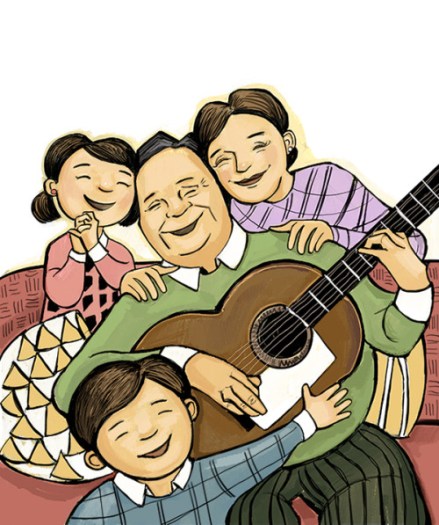
Turning the page, these three panels are more fully developed, letting young readers experience each characters’ disappointment in events that will resonate with them. Turn the page again, and children see that Abuelo’s assurance of brighter days comes true for all. Abuelo’s positive outlook is further revealed in cherished framed photographs, and the final image of the whole family gathered around Abuelo and his guitar is joyful.

celebrate-picture-books-picture-book-review-sing-don't-cry-family

Copyright Angela Dominguez, 2017, courtesy of angeladominguezstudio.com.

An Author’s Note includes the lyrics from Cielito lindo that inspired the story as well as a brief biography of Angela Dominguez’s grandfather, Apolinar Navarrete Diaz, that provides a deeper understanding of the story and the significance of Abuelo’s guitar.

An inspiring and uplifting story, Sing, Don’t Cry would be a welcome read for those times when encouragement is needed both at home and in a classroom setting.

Ages 4 – 8

Henry Holt and Company Books for Young Readers, 2017 | ISBN 978-1627798396

Learn more about Angela Dominguez, her books, and her art on her website.

National Roots Day Activity

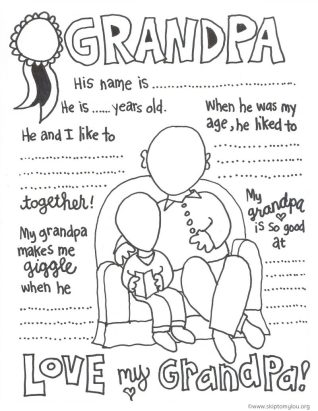
celebrate-picture-books-picture-book-review-grandpa-fill-in-sheet

I Love Grandma and I Love Grandpa Pages


What are some of the favorite things you love about your grandmother and grandfather? Fill out, draw your and your grandparents’ faces, and color these printable I Love Grandma and I Love Grandpa Pages. They even make nice gifts that your grandparents’ will appreciate!

I Love Grandma | I Love Grandpa

Picture Book Review
October 18 – It’s National Friends of Libraries Week

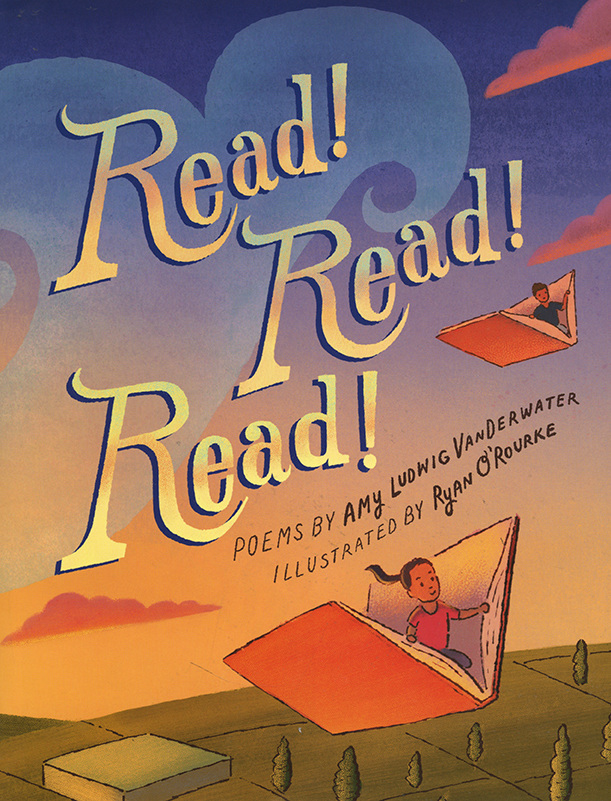
celebrate-picture-books-picture-book-review-read!-read!-read!-cover

About the Holiday

When you think of friends, you think of people and places you can go to for laughter, information, intrigue, a welcoming atmosphere, and smiles—you think of a library! All this week we are celebrating the people and groups that promote and protect this amazing institution that allows you to take books home for free! What would we do without these cozy buildings and kind, helpful librarians? The Friends of Libraries Groups work to make sure we never find out by organizing fun activities and annual fund drives so that libraries can continue to offer new books, resources, and programs for everyone. To celebrate this week, visit your local library and consider making a donation or joining a Friends of Libraries group!

Read! Read! Read!

Written by Amy Ludwig Vanderwater | Illustrated by Ryan O’Rourke


In twenty-three poems Amy Ludwig Vanderwater takes readers on a journey of…Reading, from when a child first recognizes that those “squiggles / make letters. / Letters / make words. / Words / make stories / that fly like birds…” through the world they discover as they take in the printed word in all its forms.

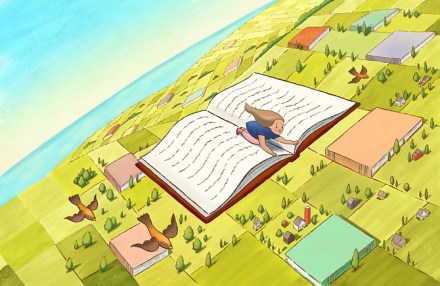
In Pretending, a little girl remembers “tracing my fingers / under each letter/ I used to pretend / I could read to myself.” At the library she would “pull from the shelf– / a rainbow of rectangles.” For days, weeks, months, she practiced. “Learning to read / felt like / learning to fly. / And one day / I took off. / I was swooping / alone / over words / once confusing / but now / all my own.”

celebrate-picture-books-picture-book-review-read!-read!-read!-fields

Image copyright Ryan O’Rourke, 2017. Courtesy of WordSong Publishing.

Cereal Box and Sports Page are placed side by side like the brother and sister eating breakfast together. But which sibling is reading “Recipes. / Stories. / Jokes. / Weird facts….the box” and which is “Scanning scores / studying stats / …checking on my team?”  Children will discover that there aren’t many things the little boy in I Explore has not done as he reveals, “I have stood upon a moonscape. / I have witnessed peace and war. / I have ridden a wild horse. / I’m a reader. / I explore.”

celebrate-picture-books-picture-book-review-read!-read!-read!-forever

Image copyright Ryan O’Rourke, 2017. Courtesy of WordSong Publishing.

Reading doesn’t just inform you, it reforms you, as An Open Book explains: “An open book / will help you find / an open heart / an open mind / inside yourself / if you’re inclined. / An open book / will make you kind.” Or maybe all that reading can give a younger brother a moment of power when he uses new-found information. “At dinner I ask– / Do you know / how many pounds of skin / a person sheds by age seventy? / My sister puts down her fork. / No. / One hundred five. / Oh. / She will not look at me. / She will not pick up her fork. / I keep eating. / I love reading.”

celebrate-picture-books-picture-book-review-read!-read!-read!-sunday-comics

Image copyright Ryan O’Rourke, 2017. Courtesy of WordSong Publishing.

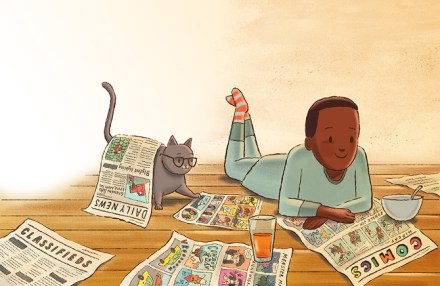
Reading comes in many forms, from Maps, which “…fold / into themselves / like perfect beetle wings.” to Road Signs, in which the alphabet was once “like a secret code / for grown-ups / splashed / on every sign.” There’s also the Internet for Googling Guinea Pigs, where an eager pet sitter can “read about treats. / Read about exercise. / Read about safe holding” before the class pet comes home for the weekend. A Birthday Card with a poem from Grandpa, a Magazine that “…comes / by mail / twelve times / each year,” and Sunday Morning with the comics, where a loyal fan can “know every character / know every name” all bring joy to avid readers.

celebrate-picture-books-picture-book-review-read!-read!-read!-word-collection

Image copyright Ryan O’Rourke, 2017, text copyright Amy Ludwig Vanderwater. Courtesy of WordSong Publishing.

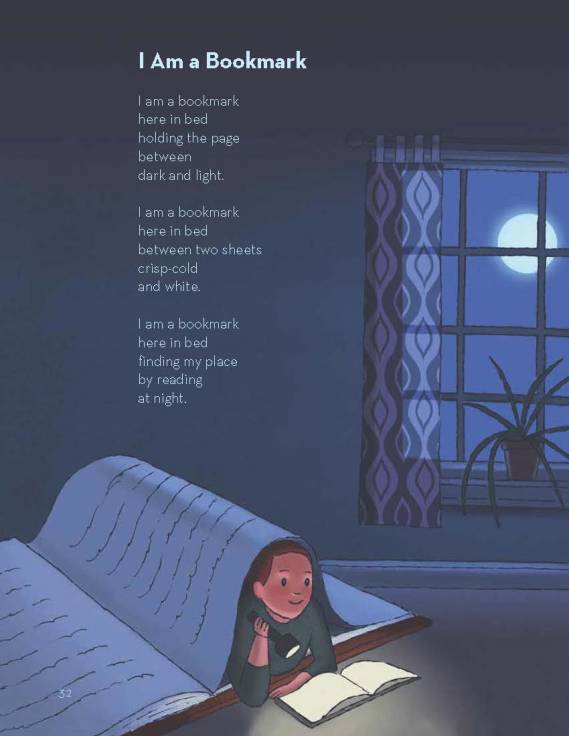
For readers there may be no more exciting time than Late at Night when a little lie—“I cannot sleep”—is exposed as Mom “…reaches out to touch my lamp. / The bulb is warm. / My mom knows why,” and a special bond is formed: “I’m sure my mom / read past her bedtime / under blankets / at my age.” A final cozy image closes the book in I Am a Bookmark, where a nighttime reader compares himself “here in bed / between two sheets / crisp-cold / and white” to a bookmark “holding the page between dark and light.”

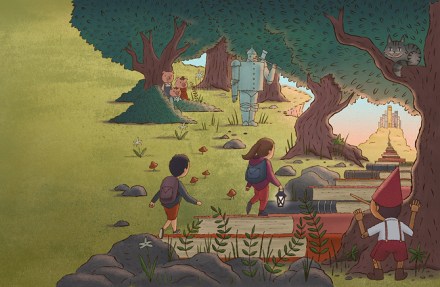
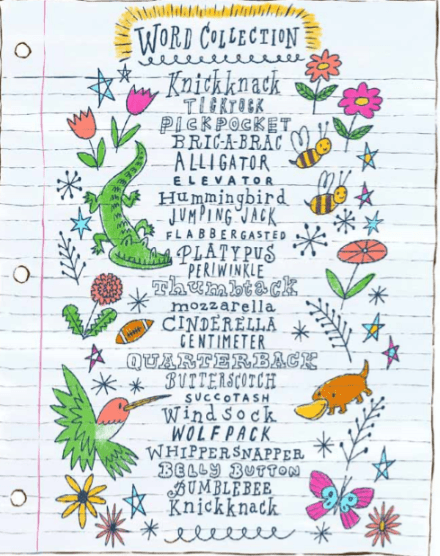
Along the way Amy Ludwig Vanderwater also explores Reading Time, a lyrical Word Collection, a Field Guide, the emotional effect of Stories, how reading can be like leading a Double Life, the benefits of a Book Dog, and the Forever connection between real people and characters in books.

celebrate-picture-books-picture-book-review-read!-read!-read!-bookmark

Image copyright Ryan O’Rourke, 2017, text copyright Amy Ludwig Vanderwater. Courtesy of WordSong Publishing.

Amy Ludwig Vanderwater’s charming poems on the joys of a reading life will engage children just starting out on their own journeys or those who are better versed in this exceptional art. At once inspiring and homey, these poems open the vast world and the private pleasures of the written word. Vanderwater’s verses are in turn smooth, conversational, reflective, humorous, and fun to read aloud.

Ryan O’Rourke opens Read! Read! Read! with a beautiful image of squiggles turned letters turned words turned books that soar like birds over a young reader’s head. The image wonderfully carries readers into the rest of the book where fancies and facts enlighten young minds. O’Rourke’s imaginative interpretations of each poem enhance their effect and cleverly convey extended meanings and visual humor. 

For children who love poetry, reading, writing, and seeing the world through a lyrical lens, Read! Read! Read! would be a terrific choice for any story time or bedtime. The book would also be welcome in classrooms for teachers to dip into again and again.

Ages 5 – 10

WordSong, 2017 | ISBN 978-1590789759

Discover more about Amy Ludwig Vanderwater, her books, articles, and poetry on her website.

View a gallery of book, map, and editorial illustration by Ryan O’Rourke on his website.

National Friends of Libraries Week Activity

celebrate-picture-books-picture-book-review-Library-Building-Coloring-Pages

Libraries Are the Best! Coloring Page


If you love libraries, you’ll enjoy this printable Libraries Are the Best! Coloring Page. Hang it over your home library or decorate and give to your favorite librarian.

Picture Book Review
September 23 – International Rabbit Day

celebrate-picture-books-picture-book-review-old-lion-and-little-rabbit-cover

About the Holiday

With their little pink noses, long ears, and soft fur, rabbits make your heart melt. Today’s holiday was established to promote the protection and care of rabbits—both domestic and wild. Found in almost all types of environments—with more than one half of their total population living in North America—rabbits need protection from habitat destruction and predators. They are also a popular gift in spring, and families are encouraged to learn all about their needs and behaviors to determine if a rabbit is the best fit for the household. Because of their sweet, innocent nature, bunnies are often featured in children’s books. To celebrate the holiday, read a few of your favorites—including today’s book!

The Old Lion and the Little Rabbit

By Keiko Kaichi


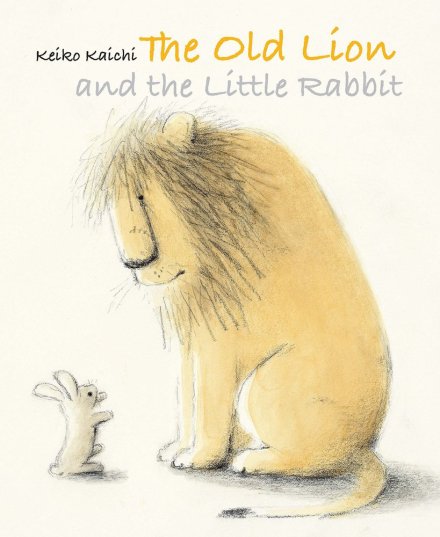
Once King of the Plains, Old Lion had given up his place in the herd to his sons and now lived a quiet life alone. One day while napping, he felt a tickle in his mane and smelled a tantalizing aroma nearby. Old Lion discovered a tiny baby rabbit sleeping peacefully in the soft fur of his mane. “‘Hey,’ Old Lion thought, ‘this little one won’t fill my belly. But if I let him eat enough, he’ll grow up to be big and delicious!’” So Old Lion gathered as much grass as he could and fed the baby rabbit well, all the while feeling hunger growing in his stomach.

celebrate-picture-books-picture-book-review-old-lion-and-little-rabbit-herd

Copyright Keiko Kaichi, 2017, courtesy of minedition.

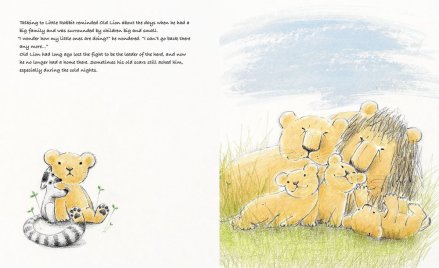
To pass the time between feedings, Old Lion told Little Rabbit about his younger days on the savanna. “Little Rabbit crinkled up his nose with joy when he listened to Old Lion’s stories.” When other animals saw Old Lion and Little Rabbit together, they couldn’t believe it. As Old Lion talked to Little Rabbit, he remembered his big family and the joy of having children around him. He wondered how they were doing. But he knew that he couldn’t go back once he had “lost the fight to be the leader of the herd. Sometimes his old scars still ached him, especially during the cold nights.”

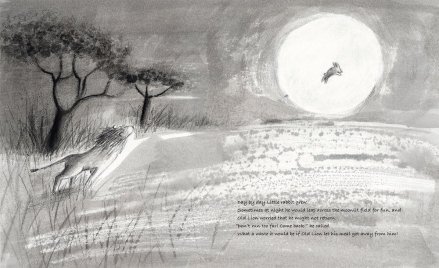
Now that Little Rabbit was growing bigger, he sometimes hopped far into the field, exploring just for fun. Then Old Lion worried that he might not come back, fearful that all his time and hard work would be wasted. He would call after Little Rabbit, reminding him to come back, and Little Rabbit always did.

celebrate-picture-books-picture-book-review-old-lion-and-little-rabbit-hopping-in-moonlight

Copyright Keiko Kaichi, 2017, courtesy of minedition.

They spent their days watching the other animals, Little Rabbit perched on top of the lion’s head in order to see better. As time went by, Old Lion began to wish he could be satisfied with a diet of plants and wondered about the unfamiliar feeling in his heart. “Could it be that he was starting to care about this little creature who trusted him so blindly? Such a thing made no sense. Still, he had to admit that something warm stirred in him when he saw Little Rabbit each morning.”

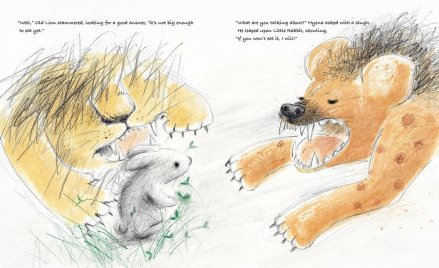
One day as Little Rabbit played among the weeds while Old Lion rested, Hyena came calling. When he saw the little bunny, he immediately asked to share in the delicious meal as he often did. Old Lion was taken off guard and stammered that Little Rabbit was not nearly big enough to make a meal of. Hyena protested and pounced. Old Lion found his former quick reflexes and “with one gulp he snatched up Little Rabbit into his jaws.”

celebrate-picture-books-picture-book-review-old-lion-and-little-rabbit-hyenna

Copyright Keiko Kaichi, 2017, courtesy of minedition.

With a bit of regret but admiration for his old friend, Hyena turned and skulked away. When they were alone, Old Lion opened his mouth wide and let Little Rabbit climb out. He saw that his tiny friend had suffered a cut on his paw and bandaged it carefully. Then he placed Little Rabbit on his head and began to walk in the direction of the wind. “He could no longer deny that he loved Little Rabbit.”

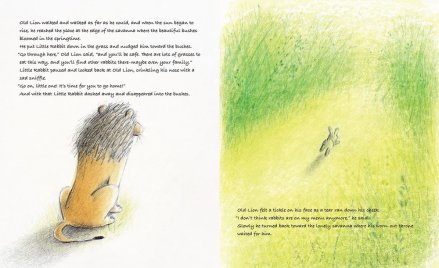
Old Lion walked and walked to the edge of the savanna, where bushes and tall grasses blossomed. He set Little Rabbit down gently and nudged him forward. “You’ll be safe” there, Old Lion told him. “You’ll find other rabbits there—maybe even your family.” Little Rabbit gazed at Old Lion sadly, but the lion reassured him that it was time to go home. Old Lion watched Little Rabbit bound away and “felt a tickle on his face as a tear ran down his cheek.” Then he turned and walked back to where his throne waited.

celebrate-picture-books-picture-book-review-old-lion-and-little-rabbit-letting-rabbit-go

Copyright Keiko Kaichi, 2017, courtesy of minedition.

Keiko Kaichi’s books masterfully tug at readers’ heartstrings with poignant stories populated with adorable characters that immediately inspire love and empathy. In The Old Lion and the Little Rabbit, the lion’s history is revealed naturally and at a pace that makes his transformation believable and all the more emotional. Just as do children within a family, Little Rabbit alters Old Lion’s life simply through trust and dependence. Children will respond to the growing love between Old Lion and Little Rabbit. They will also find the solution to the mystery established at the beginning both surprising and satisfying. Adult readers cannot be faulted for feeling a small lump in their throat when Old Lion unselfishly protects Little Rabbit from Hyena and then takes him to safety.

Kaichi’s acrylic and pencil drawings are both evocative of the golden savanna and filled with tender sentiments. Old Lion may once have been a fierce predator, but he is now a contemplative and caring elder statesman while Little Rabbit is a wee nubbin of cuteness. As he sits next to the much bigger lion, his tiny paw touching Old Lion’s arm, or collects a bouquet of weeds under Old Lion’s watchful gaze, Little Rabbit swells readers hearts.

Superb in every way, The Old Lion and the Little Rabbit would make a wonderful choice for home bookshelves as well as for public and school libraries.

Ages 3 – 7

minedition, 2017 | ISBN 978-9888341245

International Rabbit Day Activity

Adorable Bunnies Coloring Pages


Bunnies are such loveable little creatures that you just can’t help but say “Awwww!” when you see one. Here are two printable Adorable Bunnies Coloring Pages for you to enjoy!

Bunny Coloring Page | Three Bunnies Coloring Page 

Picture Book Review
August 16 – It’s Water Quality Month

celebrate-picture-books-picture-book-review-over-and-under-the-pond-cover

About the Holiday

Water is one of earth’s most precious resources. Worldwide, millions of people do not have access to clean water. Climate change is also contributing to alterations in water temperature which affects sea life and coastal animals. Pollution, habitat destruction, pesticides, and a disregard for the crucial importance of this limited resource all threaten not only the quality of water, but the quality of life on this planet. To get involved in the solution, volunteer to clean up waterways, be mindful of the products you use, and consider donating to the cause.

Over and Under the Pond

Written by Kate Messner | Illustrated by Christopher Silas Neal


A mom and her son have taken their rowboat out on the pond, where they “slide, splashing through lily pads, sweeping through reeds.” As they gaze over the side of their little boat, they can see the sun, the clouds, and themselves reflected in the still surface. But the little boy wonders what is below, where they can’t see. His mom tells him there is a “hidden world of minnows and crayfish, turtles and bullfrogs.”

celebrate-picture-books-picture-book-review-over-and-under-the-pond-what's underneath

Image copyright Christopher Silas Neal, 2017, text copyright Kate Messner, 2017. Courtesy of Chronicle Books.

On top the two can see tall grasses that break the water’s surface and little beetles and skaters making their way along the water. Below, a brook trout waits for his dinner. As the mom and her son paddle between thick stands of cattails, three painted turtles take turns slipping from their sunny perch back into the safety of the pond. Hidden in the cattails is a small nest, just a pocket of sticks and grass for red-winged blackbird babies.

celebrate-picture-books-picture-book-review-over-and-under-the-pond-hidden-world

Image copyright Christopher Silas Neal, 2017, text copyright Kate Messner, 2017. Courtesy of Chronicle Books.

There are babies under the pond, too. “A secret shelter of pebbles and sand” that hold the larva of a caddisfly. Along the shore, trees cast shadows on the water as a moose makes a lunch of water lilies. It’s also mealtime under the pond, where three beavers pull up roots to chew on. The weather is turning breezy over the pond, making the current stronger and blowing leaves here and there. All around animals are maturing: “a new goldfinch teeters, finally ready to fly” while tadpoles are “losing tails, growing legs, growing up.”

celebrate-picture-books-picture-book-review-over-and-under-the-pond-woodpecker

Image copyright Christopher Silas Neal, 2017, text copyright Kate Messner, 2017. Courtesy of Chronicle Books.

Carefully picking his way in the muddy shallows, a great blue heron searches for food. He spies a minnow and with a flash snaps it up with his long, pointy beak. Way up in the trees the tat-tat-tat of a woodpecker looking for ants echoes through the air while down below an otter has her eyes set on a passel of mussels. The sun is beginning to set, and an iridescent dragonfly takes a rest on the little boy’s knee. Perhaps it is related to the dragonfly larvae underwater who has just grabbed a minnow for its dinner.

The nocturnal animals begin making an appearance in the spindly grasses. “Ospreys circle on quiet wings. Raccoons and mink stalk the shoreline for supper.” In the blue-black evening, the mother and her son head home as “a far-off loon calls good night.”

celebrate-picture-books-picture-book-review-over-and-under-the-pond-otter

Image copyright Christopher Silas Neal, 2017, text copyright Kate Messner, 2017. Courtesy of Chronicle Books.

An Author’s Note about the ecosystem of a pond and the animals that live in and around the water follows the text.

Kate Messner’s lyrical environmental books invite young readers to discover the world around them through the eyes of their peers. In Over and Under the Pond, Messner takes children on a leisurely afternoon boat ride that compares and contrasts what is happening on top of and below the water. Along the way, kids learn fascinating facts while absorbing the feel and beauty of the outdoor world.

Christopher Silas Neal gorgeously depicts the mysteries of a pond environment in his matte, mixed media illustrations that allow readers to view the birds, fish, insects, plants, and animals in action as they go about their day. The mixture of familiar and new creatures will engage children interested in learning more about the natural world. As the sun goes down and evening falls with its comforting starlit sky, young readers will feel happy to be part of this wonderfully complex world.

Ages 5 – 8

Chronicle Books, 2017 | ISBN 978-1452145426

To learn more about Kate Messner and her books, visit her website!

View a gallery of artwork by Christopher Silas Neal on his website!

Water Quality Month Activity

animal-celebrate-picture-books-picture-book-review-habitat-coloring-pages-for-kids-cooloring-com-coloring-pages-of-pond-animals

Busy Pond Coloring Page


There’s so much going on at the pond! Get your pencils, markers, or crayons and have fun with this printable Busy Pond Coloring Page! You can even add tissue paper grass, real sand, and other materials to make it look realistic!

Picture Book Review
August 5 – National Oyster Day

celebrate-picture-books-picture-book-review-the-book-of-mistakes-cover

About the Holiday

Today we celebrate the oyster—that mysterious ocean mollusk that many find delicious and that can hide a most precious gem. While some of you may honor the day with a plateful of fried or raw oysters, I’m choosing to highlight the bit of grit—that little mistake—that when it becomes embedded into the animal, creates a pearl of surprising value and uniqueness.

The Book of Mistakes

By Corinna Luyken


The whole thing started while drawing a picture. The head of the child looks good—nice little ear and nose, a dot for the left eye. The hair goes on pretty well—a swoop on the right side, straight on the left. The eyebrows are tiny dashes, and the mouth the size of a chocolate sprinkle. Just have to add the right eye…Oh, no! The right eye is too big!! Okay, okay, this mistake can be fixed. The left eye just needs to be a liiittle bigger…Oh, good grief! “Making the other eye even bigger was another mistake.”

celebrate-picture-books-picture-book-review-the-book-of-mistakes-splotch-on-head

Copyright Corinna Luyken, 2017, courtesy of Dial Books for Young Readers.

Maybe…the perspective might just be right for…Yes! “the glasses—they were a good idea.” Okay on to the body. Hmmm… “The elbows and the extra-long neck? Mistakes. But the collar—ruffled, with patterns of lace and stripes—that was a good idea.” And elbow patches make the arms look a little less pointy.

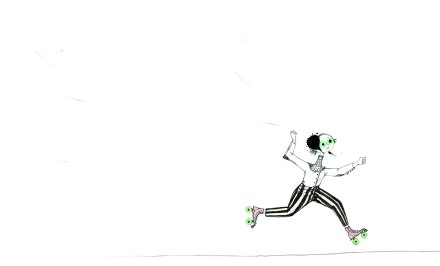
Moving on to the background, a thick and leafy bush is just the thing to hide the animal. Animals? It could be a cat, a cow, or a frog. “Another mistake.” And why is the ground so far below the girl’s feet anyway? Oh! Because she’s wearing roller skates. Nice save! “Those were definitely not a mistake.” Let’s see, the “second frog-cat-cow thing made a very nice rock.” Now, what about the other girl with long hair and one very long leg? Got it! She “looks like she always meant to be climbing that tree” on the side of the page.

celebrate-picture-books-picture-book-review-the-book-of-mistakes-leaves

Copyright Corinna Luyken, 2017, courtesy of Dial Books for Young Readers.

The ink smudges at the top of the paper can be leaves, but back to the roller-skating girl. What to do with those awkwardly positioned arms? Oh dear—the pen should not have been hovering over the page. How to fix the splotch on the side of her head? Ah-hah! An old-fashioned aviator’s helmet. Or is it a swimming cap? No matter…she’s now holding a yellow balloon in her left hand and lots of strings in her right. Wow, tons of yellow balloons are at the ends of those strings!

She’s skating toward the tree with the long-legged girl, and there are a bunch of other kids playing in it too. Cool! They’re all wearing aviator helmets/swimming caps too. Some are wearing roller skates—good—and they’re erecting some kind of tent over a big branch. Wow! Look at the pink balloons and the green ones! There’s a kid riding a hot-air unicycle through the sky and a skateboarder is floating down to a ramp supported by springs in the top of the tree. Someone’s even tatting a lace banner.

celebrate-picture-books-picture-book-review-the-book-of-mistakes-tree

Copyright Corinna Luyken, 2017, courtesy of Dial Books for Young Readers.

“Do you see?” They’re all waiting for the roller-skating girl to bring the yellow balloons. But let’s step back a little. “Do you see—how with each mistake she is becoming?” If we back up some more, she and the tree look so tiny and there’s a big, dark forest in the foreground. “Do you see—” Looking from way far away, doesn’t that forest look a bit like curly hair or…Oh! The top of the roller-skating girl’s cap! She’s so big now, and she’s gazing out of those green glasses at the white page where she’s drawing a small head with a nice little ear and nose and a dot for the left eye. “Do you see—who she could be?”

celebrate-picture-books-picture-book-review-the-book-of-mistakes-girl-as-artist

Copyright Corinna Luyken, 2017, courtesy of Dial Books for Young Readers.

Kids will be charmed by the start of the little head on the first page, begin giggling at the one too-big eye on the third page, and laugh out loud at the even bigger eye on the fifth in Corinna Luyken’s magically inventive The Book of Mistakes. As each mistake is adjusted for or inspires a new twist in the story, young readers will appreciate how creatively right the fix is and look forward to the next mistake and the next. The final pages presenting the tree full of children are so enticing that readers will want to linger over each one to find all the details. Luyken’s minimally colored drawings are funny and endearing and lead readers to question their own perspective and give free reign to their imagination.

The Book of Mistakes is a must for classrooms and highly recommended for home libraries for all those times when mistakes can be perfect conversation starters or the inspiration for…anything!

Ages 4 – 8 and up

Dial Books for Young Readers, 2017 | ISBN 978-0735227927

To find a portfolio of artwork and more information about Corinna Luyken and her books visit her website.

National Oyster Day Activity

celebrate-picture-books-picture-book-review-pearl-and-oyster-coloring-page

Secret Pearls Coloring Page


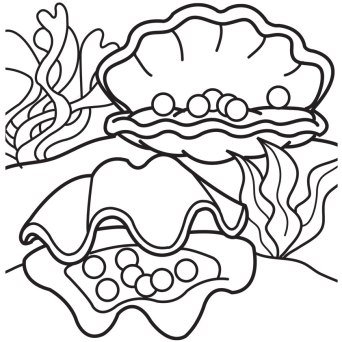
Finding a pearl in an oyster is a lucky thing! Here are two oysters brimming with shiny pearls. Grab your crayons, markers, or pencils—maybe even some glitter—and have fun with this printable Secret Pearls Coloring Page!

Picture Book Review

July 21 – It’s National Culinary Arts Month

celebrate-picture-books-picture-book-review-chow-mein-and-potstickers-cover

About the Holiday

During the month of July we honor those professional chefs who provide us with tantalizing dishes at our favorite restaurants. In addition to cooking old favorites, chefs also stay up on trends and create new recipes to make life deliciously fresh and surprising. To celebrate, visit your local restaurants and try something new! If you like to cook at home, gather some different ingredients and see what you can create! This month is also a great time to explore foods and cuisine from other countries!

Chow Mein and Potstickers
Written by Liselotte Schippers | Illustrated by Monique van den Hout


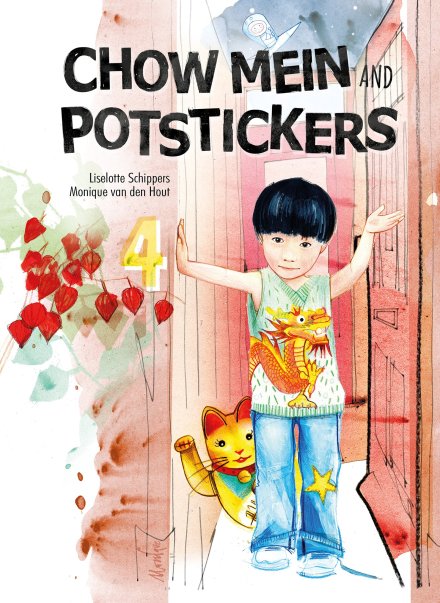
A little boy named Chan has just moved here from China and is hoping to make new friends. He tells a little about himself: “I moved to this country with my father, / my mother and my sister. / My mother is starting a new job here. / She’s an astronaut and someday she’ll go to the moon!” He reveals that his favorite food is potstickers and chow mein. He’s just about to go door-to-door to meet his neighbors. He wonders if kids here like to play and how “things work around here.”

Next door at Number 6, Chan meets Mila, who is from Bosnia. Chan thinks “she looks like a princess from a country far away.” Chan and Mila play soccer until they “get tired and hungry!” Then they eat Mila’s “favorite dish / Bosnian ćevapĉići—rolls of ground / meat.” At the end of the day, they say goodbye: “‘Zàijiàn!’” and “‘Doviđenja!’”

The next day Chan meets Rani, who was born in Indonesia. Even though Rani is younger, Chan says that “you can tell he is very wise. / Rani’s father is a famous musician. / He has to travel a lot, touring with his band. / His mother works at the hospital and helps people who are sick.” Rani shows Chan how to play marbles. Afterward, they enjoy Rani’s “favorite foods: satay and kroepoek. / That’s meat on a stick and shrimp crackers.” Later, they wave good-bye and say: “‘Zàijiàn!’” and “‘Sampai jumpa!’”

Across the street lives a little girl named Jamila, who is originally from Afghanistan. “‘Salaam!’” she greets Chan. Jamila plays the guitar, and the two sing and dance along. Chan says: “After a while we get tired and hungry. / Jamila and I eat Afghan qabuli—rice and lamb. / That brings us to the end of our day. / As we wave good-bye, we say: “‘Zàijiàn!’” and “‘Khodahafez!’”

Twins Kim and Coen live at Number 10. They are from Belgium. “Their father is a master chocolatier. That means he / makes fancy chocolates. When he is working, the house / smells wonderful. / Their mother sells the chocolates in a  / special shop. We get to try some. I’ve never tasted / anything so delicious!” After roller skating, they eat frietjes, which are like French fries served with mayonnaise. “‘Zàijiàn!’” and “‘Tot ziens!’”

In the tall yellow house next to the church on Chan’s street, Chan meets Basu, who came here from South Africa. His mother is a minister and his father is a fireman. Chan thinks that maybe he’d like to be a fireman too when he grows up. “Basu loves to paint and draw.” He and Chan “get busy with brushes, paints and pens.” When their “masterpiece is finished,” Chan says, “We have paint splatters on our clothes and in our hair!” All that creating has made them “tired and hungry.” They “eat South African bobotie… / a dish made with seasoned ground meat.” Before Chan goes home, the boys say:  “‘Zàijiàn!’” and “‘Totsiens!’”

Chan is excited to discover that his street is full of other children to play with. In other homes live Ania from Poland, Nuray from Turkey, Clifton from Suriname, Gracy from England, and Nino from Italy. On one special day, Chan invites all of his new friends to go to the playground with him, and Chan’s father brings chow mein and potstickers for everyone to enjoy. At the end of the day, the air rings with each child’s special way of saying “good-bye.”

Liselotte Schippers free verse poetry opens the door to a world of children for young readers. Each poem gives children the kind of information they want to know about kids from around the world. What do they like to do? What are their families like? What do they eat? Every poem includes the words “hello” and “good-bye” in the native language of the child as well as a favorite dish from each country. Little Chan makes a delightful and enthusiastic tour guide to his multicultural neighborhood, and shows young readers that even though people may come from different countries, their dreams, desires, games, and even jobs are the same. The country that Chan has moved to is never named, making “here” everywhere.

Monique van den Hout’s beautiful illustrations combine the ethereal with realistic portrayals of the happy, bright-eyed children that Chan meets in his neighborhood. Each poem is presented on a two-page spread in which Chan and his new friend are surrounded by colorful images of symbols from that child’s native country. Following each poem, a short dictionary defines and gives a pronunciation guide to the greetings and food introduced.

Chow Mein and Potstickers is an enticing introduction to the global community for children. Each poem could be used to spark more discovery about the countries presented and their children. The book’s inclusion of languages and foods makes it a perfect addition to school, classroom, and homeschool libraries for social studies units as well as a fun book for personal bookshelves.

Ages 4 and up

Clavis, 2017 | ISBN 978-1605373287

National Culinary Arts Month Activity

celebrate-pictureb-books-picture-book-review-Kids-Baking-Cake-in-Cooking-Show-Bakery-Coloring-Pages

Let’s Bake Together Coloring Page


It’s fun for friends to create new recipes or just cook up some favorite treats! Have fun with this printable Let’s Bake Together Coloring Page!

Picture Book Review