January 5 – National Bird Day

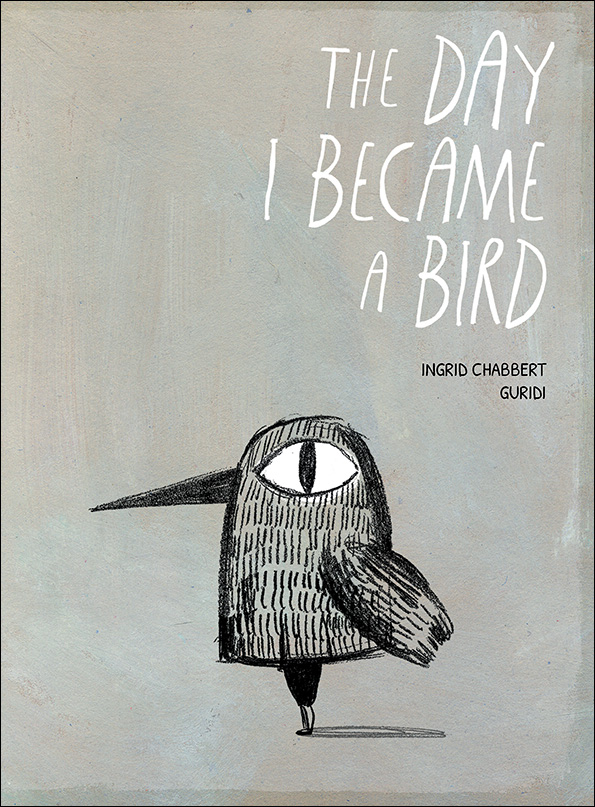
celebrate-picture-books-picture-book-review-the-day-I-became-a-bird-cover

About the Holiday

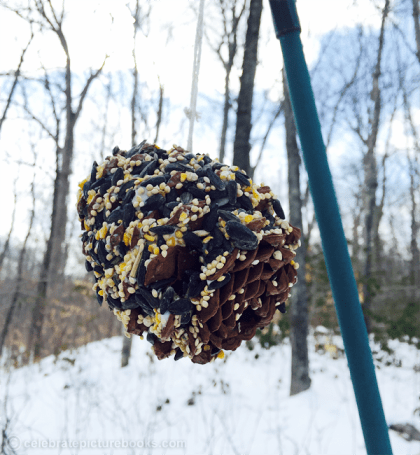
Coming at the end of the annual Christmas Bird Count conducted in conjunction with the Audubon Society, National Bird Day turns the focus from wild birds to those kept in captivity while also raising awareness of the dangers that threaten many species with extinction. Today’s observance highlights the special behavioral and physical needs of birds and works to ensure that all birds—whether kept as pets or on farms or living in their natural environments—are treated compassionately. Now that winter has set in, make sure your pets and the birds that frequent your yard are cared for.

The Day I Became a Bird

Written by Ingrid Chabbert | Illustrated by Raúl Nieto Guridi


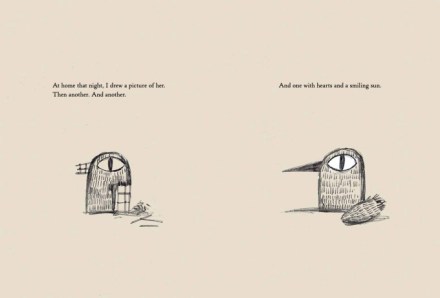
On the first day of school a little boy sees Sylvia and falls instantly in love. At home he draws picture after picture of her—“and one with hearts and a smiling sun.” Although the boy only has eyes for Sylvia, she doesn’t see him. Instead, the boy says, “Sylvia is a bird lover. She can’t bear to see them living in cages. She quietly observes them in the wild and gently cares for them when they are injured.”

celebrate-picture-books-picture-book-review-the-day-I-became-a-bird-boy-costume-being-built

Image copyright Guridi, text copyright Ingrid Chabbert. Courtesy of Kids Can Press

Everything she does and wears is somehow associated with birds. Even “her voice sounds like birdsong.” The boy has lost all interest in his toys, the sports he plays, and all of his old pursuits. He thinks differently about birds now, too. One day he decides “to dress as a bird.” He constructs a costume with glistening feathers “like the ones you see in the forest in summer.” When he puts it on he feels handsome. In the costume he dreams of flying with Sylvia to the top of the Rocky Mountains or a pyramid.

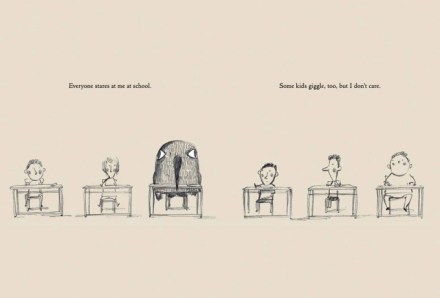
In school he doesn’t care if the other kids stare and giggle. And even though it’s hard to walk, play soccer, and climb trees, he doesn’t want to remove his costume. He is a bird. One afternoon, the boy says, “I come face to face with Sylvia. And finally our eyes meet.” Sylvia approaches and takes off the boy’s costume. “My heart is beating a hundred miles an hour,” he relates. “In the sky, I see a flock of birds take flight.” Sylvia gives him a long hug.

Standing completely still, the boy doesn’t know how to react. He knows he’s not a bird anymore, but still, he feels as if he’s flying.

celebrate-picture-books-picture-book-review-the-day-I-became-a-bird-boy-in-class

Image copyright Guridi, text copyright Ingrid Chabbert. Courtesy of Kids Can Press

Ingrid Chabbert’s enchanting revelation of first love encompasses in its spare text all the obsessive but ultimately freeing power of this universal emotion. While in the midst of his “normal” life, the boy’s world is suddenly transformed when he spies Sylvia. Leaving his toys behind, he chooses Sylvia’s bird’s eye view. Likewise, when Sylvia sees the narrator, she allows her birds to take wing and considers boys—or at least one boy—in a whole new light. Chabbert’s use of first-person narration reinforces the intimate nature of love and the idea that when love is right, being “captured” is a most liberating experience.

celebrate-picture-books-picture-book-review-the-day-I-became-a-bird-boy-in-costume

Image copyright Guridi, courtesy of Kids Can Press

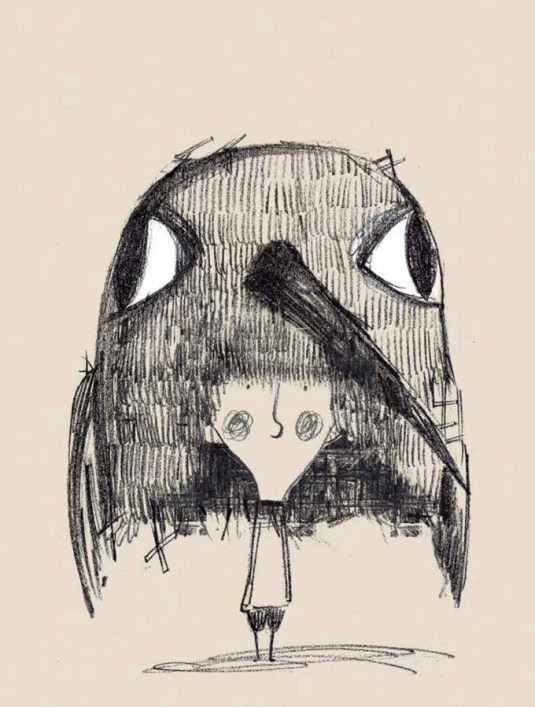
The themes of Chabbert’s story are so movingly rendered by Guridi’s simple, monochromatic line drawings. Although the boy states that “one morning” he decided to dress as a bird, from the first day when the boy falls in love with Sylvia—gazing at her wistfully while her eyes are instead trained through binoculars at the sky or cast down at her chalk drawings—his costume begins to take shape. As it comes together, its wire skeleton resembles a bird cage, suggesting so many ways in which we may feel trapped by our emotions, our things, even changes in life.

When the boy dons the costume and begins to navigate the world in an unfamiliar way, readers will understand that he is no longer the boy he was, but neither is he a real bird. It is this unique creature that Sylvia responds to when, through holes in the costume where feathers are missing, she sees not the bird, but the boy. So it is that into everyone’s life there come people—or perhaps one particular person—with whom all costumes and cages are discarded, and we soar.

The Day I Became a Bird is a quiet beauty that gets to the core of what it means to give your heart to someone else. It would make a wonderful and touching addition to home libraries.

Ages 4 – 7

Kids Can Press, 2016 | ISBN 978-1771386210

Watch this The Day I Became a Bird book trailer!

National Bird Day Activity

celebrate-picture-books-picture-book-review-bird-coloring-page

Wild Bird Coloring Page


Grab your pencils or crayons and enjoy this printable Wild Bird Coloring Page.

Picture Book Review

December 28 -Christmas Bird Count Week

celebrate-picture-books-picture-book-review-some-birds-cover

About the Holiday

For 117 years the Audubon Society has held a bird count in North America, Central America, and South America from December 14 through January 5. The count is conducted by professionals and volunteers who sign up to monitor various areas designated in 15-mile-wide diameter circles. The information and statistics gathered help to keep track of bird populations and aid in protecting our beautiful feathered friends. During the snowy, cold winter months, remember to set out seed and suet for birds to eat. For more information or to get involved, visit the Audubon Society website.

Some Birds

By Matt Spink


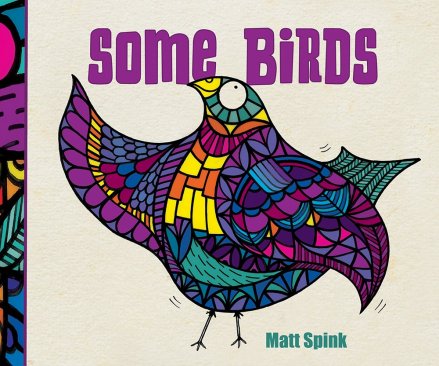
The variety of birds in the world is astounding! With their unique coloring, songs, and behaviors, our feathered friends provide entertainment and beauty wherever we are. Most times, we only need peer out the window or gaze into the sky to find a fascinating array of life. In his illustrated poem Matt Spink takes readers on a flight of fancy to show the charm, power, and even quirkiness of birds. “Some birds are big / some birds are small / and some birds are just incredibly tall,” the book starts.

celebrate-picture-books-picture-book-review-some-birds-tall-bird

Image copyright Matt Spink, courtesy Matt Spink

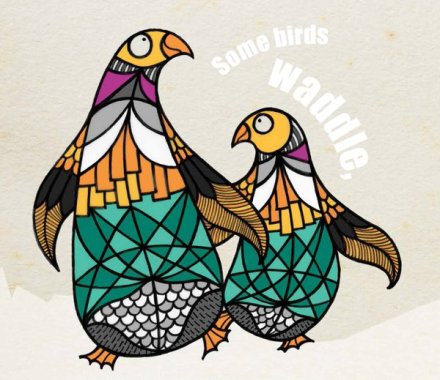
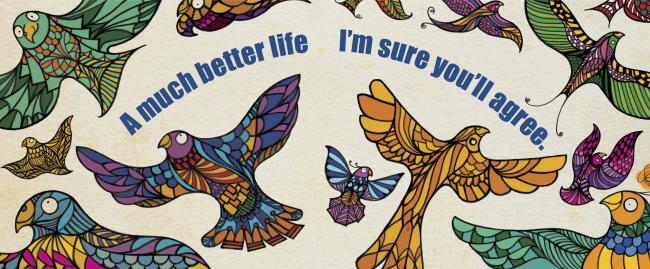
How do these birds get around? Sure, they fly but “some birds swoop,” others “soar high,” and still others walk or waddle or hop. And when they get hungry? “Some birds eat worms until they go pop!” Some birds get the itch to swim, tweet, squawk, or twitch, and while some cling to trees making rat-a-tat-tats, others build nests to escape “from sly cats.” Though some birds live in cages, “most birds are free. / A much better life, I’m sure you’ll agree.”

celebrate-picture-books-picture-book-review-some-birds-tall-penguins

Image copyright Matt Spink, courtesy Matt Spink

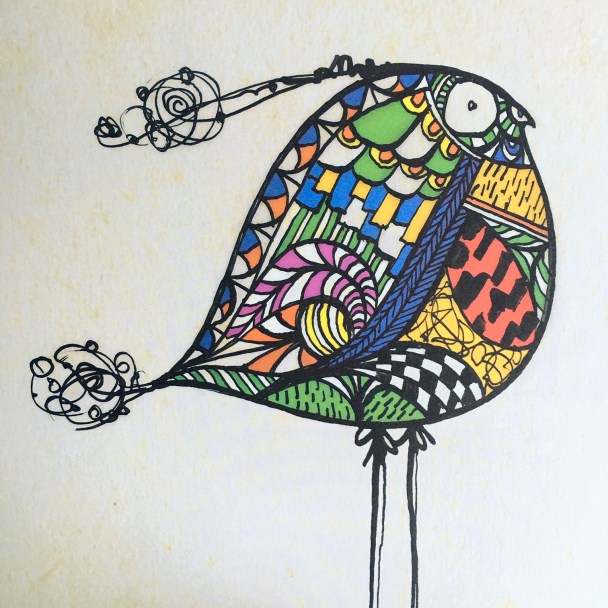
Matt Spink’s sleek birds, each as shining as a stained glass window and as detailed as an Amish quilt or Native American carving, embody the distinct personalities that make these creatures so endearing. With expressions that will make kids giggle and brilliant color combinations that will inspire their creativity, Some Birds is a page-turner. Teetering on loooong knitting-needle-thin legs, a little ball of a bird with a teeny beak and scroll-work head and tail feathers humorously spans two pages. A green-and-white quail with a frilly orange topknot cranes her neck to get a better look (at you, the reader?). Two psychedelic friends flutter and flap as they compare plumage.

Matt Spink’s Some Birds is a mosaic of wonder for young and older readers, and would make a vibrant addition to home bookshelves. After all, who among us does not yearn to “fly free?”

celebrate-picture-books-picture-book-review-some-birds-free

Image copyright Matt Spink, courtesy Matt Spink

Ages 2 – 5

Harry Abrams, 2016 | ISBN 978-1419720703

Christmas Bird Count Activity

celebrate-picture-books-picture-book-review-bird-coloring-page

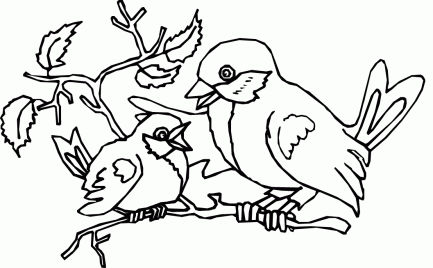
Feathered Friends Coloring Page


Watching birds flit and fly through the sky is a pleasure of being outdoors or just gazing through your window. Enjoy this printable Feathered Friends Coloring Page of a parent bird and their little one!

Picture Book Review

October 14 – World Egg Day

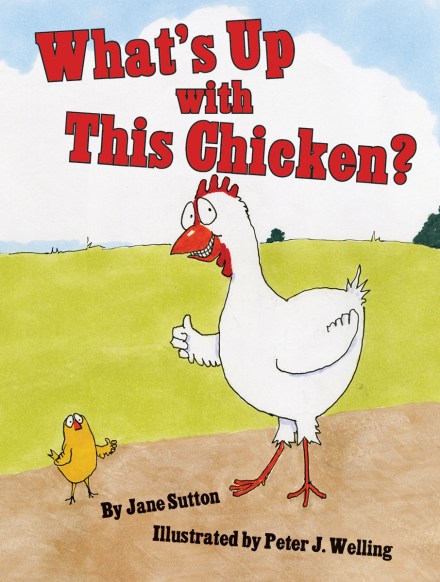
celebrate-picture-books-picture-book-review-what's-up-with-this-chicken-cover

About the Holiday

Marking its 21st birthday, World Egg Day celebrates the health benefits of the humble egg—which offers the highest quality of protein available. An important dietary component for fulfilling the nutritional requirements of people living in both developed and developing communities, the egg is a versatile food, able to be eaten on its own or as a necessary ingredient in many recipes. Eggs are essential for fetal development, healthy brain development, maintaining concentration, aiding the immune system, and more. Today, enjoy eggs your favorite way!

What’s Up with This Chicken?

Written by Jane Sutton | Illustrated by Peter J. Welling


When Sylvia goes out to the barn to collect the chicken’s eggs, something’s up with Trudy. She squawks and screeches when Sylvia tries to reach under her, but Sylvia takes it in stride and with humor: “‘Don’t get so egg-cited!’” she says “‘I’ll get your egg tomorrow.’” But the next day Sylvia is met with the same reaction. Trudy isn’t acting like the other chickens in Grandma’s backyard; if fact, she isn’t even acting like Trudy! “‘What’s up with this chicken?’” Sylvia wonders.

While she and Grandma enjoy “omelets with eggs from Sue, Clara, Doris, and Olga,” Sylvia tells her about “stubborn Trudy.” Grandma doesn’t know what’s wrong either. The next morning Trudy is even more obstinate. Not only does she make a racket, she tries to peck Sylvia, and she puffs “herself up to twice her size.” Sylvia also notices “that Trudy left her roost just once a day to eat, drink, and poop. She was getting skinny.”

Sylvia decides Trudy must be hungry and tries to lure her off her nest by offering chicken feed, but while all the other hens “wolfed it down like chocolate,” Trudy remains firmly on her roost. Sylvia tries everything she can think of to move Trudy, but nothing works. That night she and Grandma consult The Big Book About Chickens. Here they discover that “‘Trudy is broody!’” Grandma reads on: “‘Broody hens stay on their eggs so they will hatch into chicks.’” But Sylvia and Grandma know that Trudy’s eggs are not the kind that hatch.

Sylvia realizes that Trudy just wants to be a mother, and she wishes there were some way to help her. She thinks and thinks and finally comes up with an idea. She runs to Grandma who thinks Sylvia’s plan is “an egg-cellent idea.” A few days later a box arrives with four eggs that would hatch. With thick rubber gloves, a dose of determination, and two tries, Grandma is able to lift Trudy off her nest. Sylvia makes a quick switch of the eggs, and “Broody Trudy settled down on the new eggs.”

Trudy grows thinner every day but she stays on her roost, rolling the eggs to keep them uniformly warm and even blanketing them with her own feathers. One day Sylvia hears peeping! Grandma and she are even in time to watch the fourth little chick peck its way out of its shell. They name the new “little yellow fluff balls Sophie, Danielle, Mildred, and Judy.”

Trudy is a proud and protective mother, shielding them with her wings “like a feathery beach umbrella” and teaching them how to find food and water. Trudy goes back to her regular routine and begins gaining weight. As the chicks grow they get their own nests in Grandma’s coop. But one day Judy squawks and screeches. This time Sylvia knows exactly what’s up with this chicken!”

An Author’s Note about the real-life “Broody Trudy” that inspired the story follows the text.

With a deft and delightful understanding of the puns and humor that set kids to giggling, Jane Sutton has written a fun—and informative—story for animal lovers and anyone who loves a good, natural mystery. Through the well-paced plot and action-packed description, readers learn about a particular behavioral aspect of some chickens and the clever and sensitive way that Sylvia solves the problem. The close relationship between Sylvia and her grandmother adds charm and depth to the story, and their dialogue is spontaneous and playful.

Peter J. Welling’s bright, homey illustrations are the perfect accompaniment to the story. Animated Trudy shoos Sylvia away while the other chickens take dust baths, scratch for bugs, and look just as perplexed as Sylvia and Grandma. Humorous touches abound in Grandma’s choice of home décor and Sylvia’s printed T-shirts as well as in the facial expressions of the human and feathered characters. Trudy’s chicks are adorable, and readers will cheer to see Trudy fulfill her heart’s desire.

What’s Up with This Chicken is a wonderful read-aloud for younger kids’ story times and a fun romp that will keep older, independent readers guessing and wondering how it all comes out right up to the end. The likeable characters—both human and chicken—make this a book kids will like to hear again and again!

Ages 3 – 8

Pelican Publishing, 2015 | ISBN 978-1455620852

Discover more about Jane Sutton and her books on her website!

To view a gallery of artwork plus more books for readers of all ages by Peter J. Welling, visit his website!

World Egg Day Activity
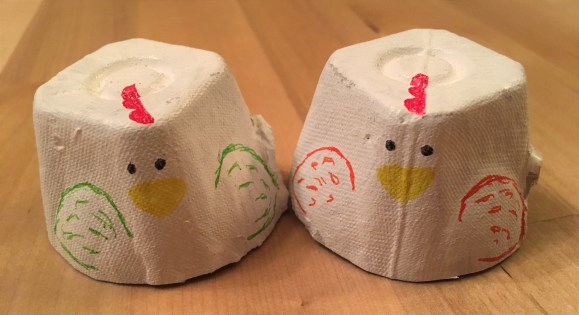
celebrate-picture-books-picture-book-review-egg-carton-chicken-double-chickens

Egg Carton Chickens and a Basket Full of Games


With twelve little chickens you can come up with lots of games to play! This fun craft and game activity is eggs-actly what you need to start hatching some real fun!

Supplies

  • Cardboard egg carton
  • White craft paint
  • Markers: red, yellow, black for the face; any colors you’d like for wings and eggs
  • Paint brush
  • Scissors
  • Glue
  • Construction or craft paper in white and a color of your choice

Directions

  1. Cut the notched flap off the egg carton and set aside
  2. Cut the top off the egg carton
  3. Cut apart all the egg cups and trim slightly so they sit flat
  4. Paint the egg cups with the white paint, let dry
  5. Add the face, comb and wings to the chicken with the markers. Make six chickens with one color wings and six chickens with another color wings.
  6. From the egg carton flap cut thirteen small egg-shaped playing pieces
  7. With the markers, decorate twelve of the eggs in pairs—each egg in the pair with the same design
  8. Color one egg yellow and add a beak, eyes, and wings to make it a chick

Games to Play

Tic-Tac-Toe (2 players)

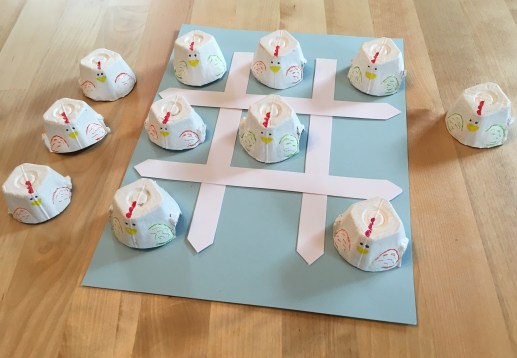
  1. On a 8 ½” x 11” piece of paper draw a regular tic-tac-toe board or make it fancy – like the picket fence-inspired board in the picture
  2. To make the fence-inspired board on a colored background, cut 2 9-inch-long x 3/4-inch wide strips of white paper, cutting a pointed tip at one or both ends. Cut 2 white  8-inch x 3/4-inch strips of paper with a pointed tip at one or both ends. Glue the strips to the background.
  3. Each player chooses a set of chickens with the same colored wings
  4. Play the game as you usually do

celebrate-picture-books-picture-book-review-egg-carton-chicken-tic-tac-toe

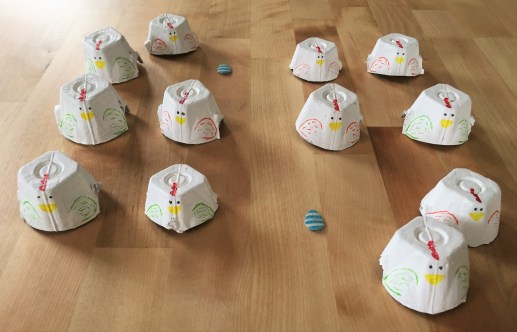
Find the Matching Eggs (2 or more players)

  1. Have one player hide one egg under each chicken
  2. Shuffle the eggs around and form them into three lines of 4 chickens each
  3. Another player lifts one chicken at a time to find matching eggs. If the eggs don’t match, put both chickens back and start again
celebrate-picture-books-picture-book-review-egg-carton-chicken-matching

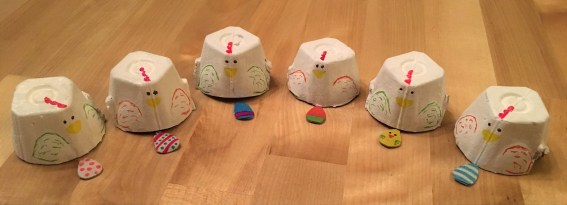
Where’s the Chick?

  1. Use as many chickens and eggs as you want (fewer for younger children, more for older)
  2. One player hides the chick under one of the chickens and eggs under the others.
  3. Another player has three chances to find the chick
celebrate-picture-books-picture-book-review-egg-carton-chicken-where's-the-chick

I’m sure you can also design your own games for your adorable chickens to play! With more chickens you can even make a checkers set or replicate another of your favorite board games!

Q & A with Author Jane Sutton

JanePhoto2013email.JPG

Today, I’m pleased to talk to Jane Sutton about her books, her journey as a writer, her family, and the joys and inspiration of being a new grandmother! 

As someone who loves humor and was voted class comedienne in high school, what were some of the books you most enjoyed as a child and young adult?

 Two of my childhood favorites were Dr. Seuss’s Horton Hatches an Egg and Robert Louis Stevenson’s A Child’s Garden of Verses. As a young adult, I was drawn to Virginia Woolf novels (I know–not exactly humorous, but most comedians are prone to depression).

You write both picture books and books for older children. What inspires or influences your stories?

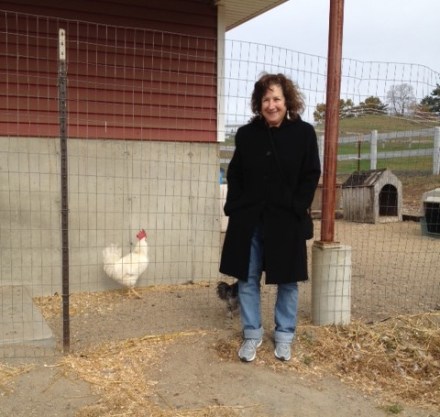
My childhood memories have been the basis of many of my books—experiences and feelings. What’s Up with This Chicken? was inspired by a true story my friend-since-we-were-11 Fay told me about one of her backyard hens who refused to get off her eggs. I said, “This has to be a children’s book!” So I invented characters, had the child protagonist solve the problem, and snuck in a subtle message about the importance of empathy.
celebrate-picture-books-picture-book-review-jane-sutton-and-chicken

As someone who always wanted to write and who achieved the goal of becoming a published author, can you briefly describe your journey?

At a young age, I was encouraged by my teachers. They would be impressed by something I wrote and send me to show it to another teacher, which really pumped me up. I was an editor of my high school newspaper and after graduating from college had a job writing for a newspaper, wrote ads and press releases, and sold some stories for reading comprehension tests. My first book, What Should a Hippo Wear? was published when I was 29. I’ve had periods where everything I wrote was selling, and periods when nothing I wrote was selling. It’s a tough market!

What’s the best part about writing books for kids?

Well, I never wanted to grow up, and when I realized it was happening whether I liked it or not, I vowed to always remember what it felt like to be a child. Writing for kids helps me do that.

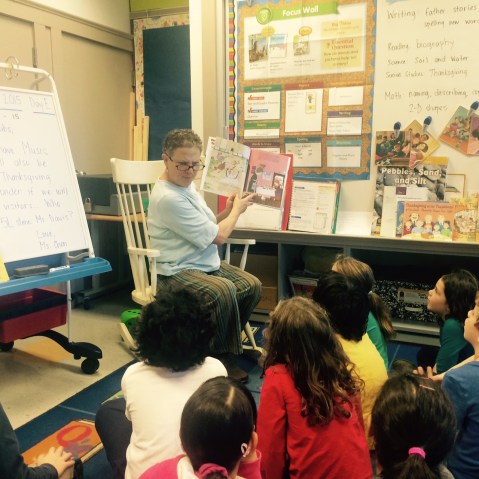
You conduct school presentations and workshops for kids from kindergarten age through grade 5, can you describe a funny or poignant anecdote from one of your events? 

One school had a wonderful program that paired parents and their children as writing partners. The culminating event was a presentation by me about how to make writing come alive. Then the parent-children pairs displayed their books, and it was so lovely to see how much the experience meant to the adults and the children. They also loved showing me—the big famous author—what they’d written and I could sincerely point out parts of their writing that were especially effective. The whole thing made me ferklempt.celebrate-picture-books-picture-book-review-jane-sutton-reading-to-kids
I read that you love elephants and collect elephant-inspired items. Can you tell me about one of your favorites?

One of my favorite elephants is gray and plastic (about the size of a toaster) and lives outside, in view of our kitchen window. My mother, who died in 2004, gave him to me and named him “Sabu.” He has survived about 18 New England winters so far, sometimes getting totally buried by snow and then poking out the tip of his trunk as the snow starts to melt. My mom asked me once if the elephant made me think of her, and yes, he surely does.

Talking about your mom makes me think of the strong relationship between Sylvia and her grandmother in What’s Up with This Chicken. Can you tell me about your own family?

My husband, Alan, taught a variety of grade levels spanning grades 1-6. He served as a science coordinator, curriculum developer, and teacher mentor. He’s written and co-authored six books for educators, four focused on science instruction and two about systems thinking. Currently, he coordinates the systems thinking program at a grades 5-12 public school and also presents workshops at meetings and conferences. We met in college and have been married for 41 years!

My son, Charlie, works for a coalition made up of organizations pushing for a better transportation system in Massachusetts. He’s worked in Massachusetts public policy since graduating from college in 2007. He married the wonderful Amberly, a nurse, in 2014, and they recently had a baby!

My daughter Becky is the director of an SAT tutoring program. Her company tries to make SAT tutoring as fun and effective as possible, so they try to match the kids with tutors who have the right personality for the student’s learning style. The SAT has completely changed in the last year, so they have had to retrain all of their tutors and rewrite all their curricula. For any tutoring program, building students’ confidence is key. So much of standardized testing is psychological.

I understand Becky also writes a blog for all of us grammarians who like a laugh once in awhile called Apostrophe Catastrophes: The Worlds’ Worst. Punctuation. Can you tell me a little about how she got started?

Yes, Becky does a great job with that blog. I love the examples she posts, and her comments are hilarious! She started Apostrophe Catastrophes almost 10 years ago after seeing an errant apostrophe on a giant cake at Governor Deval Patrick’s Inauguration. She pointed it out to the catering staff, and they had no idea what she was talking about, and then she started to notice misused apostrophes everywhere! Friends and family started taking pictures and sending them to her, and eventually, strangers from all over the world started sending in pictures! The Facebook group has almost 4,000 members now! Becky says, “I guess a lot of people share my love for proper punctuation.”

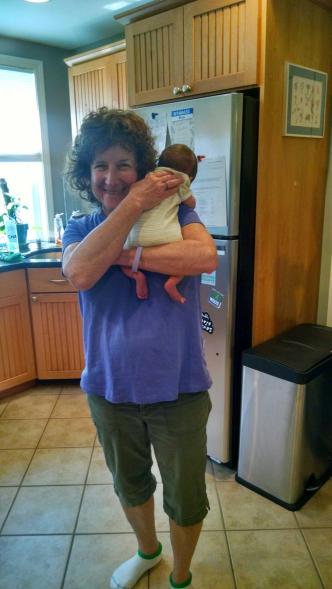
You’re a new grandmother! Can you tell me a little about your grandson?

That’s a dangerous question! How much time do you have? Caleb is an adorable, cuddly little person. And he’s now a month old!
celebrate-picture-books-picture-book-review-jane-sutton-and-grandson

What is the best part about being a grandmother? 

 As a new mother, I was very anxious and questioned all my decisions. But as a grandma, there’s none of that anxiety. Being with my grandson is pure joy. And seeing how loving, confident, and tender my son and daughter-in-law are with the baby fills me even more love. And seeing him in my husband’s arms as he gazes down at him…I’m getting ferklempt again!

Have you thought about how being a grandmother might influence or inspire your future work? 

You betcha! Stay tuned.

What’s up next for you?

My next book, a Passover-themed picture book, is scheduled for publication by Kar-Ben in the spring of 2018.

Since Celebrate Picture Books is a holiday-themed blog, I can’t let you get away without asking you a few holiday-related questions! So…

 What is your favorite holiday?

I love Mother’s Day and Father’s Day because they are occasions for my husband and me to get together with our children. And there’s good eating involved.

Do you have an anecdote from any holiday that you’d like to share?

The first time I hosted Thanksgiving, rather than attending one at my parents’ house, my mother gave me very, very specific instructions about what to buy. For example, there had to be 2 Butterball frozen turkeys, both between 11 and 13 pounds. The reason for 2 is so that each of the 4 grandchildren could have a drumstick. My daughter and I were rummaging through the supermarket frozen case trying to find the exact acceptable weight for exacting Grandma. Our fingers were half frozen, and I admit that I kind of dropped a turkey on my daughter’s finger. The turkeys, by the way, were quite delicious.

How has a holiday influenced your work?

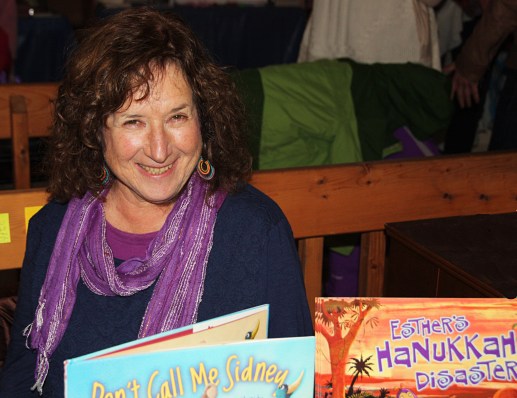
The festive, joyous celebration of Chanukah shows up in my 2 Chanukah picture books: Esther’s Hanukkah Disaster (Kar-Ben) and Aiden’s Magical Hanukkah (Hallmark).
celebrate-picture-books-picture-book-review-jane-sutton-and-her books

Thanks so much for chatting, Jane! It’s been wonderful getting to know you. I wish you all the best with all of your books, and am looking forward to seeing your next book!

Connect with Jane Sutton on her website and catch up with her events and other fun activities on her blog!

What’s Up with This Chicken can be found at these booksellers:

Amazon | Barnes & Noble | Books-a-Million | IndieBound | Pelican Publishing Company

Picture Book Review

September 27 – It’s Fall Hat Month

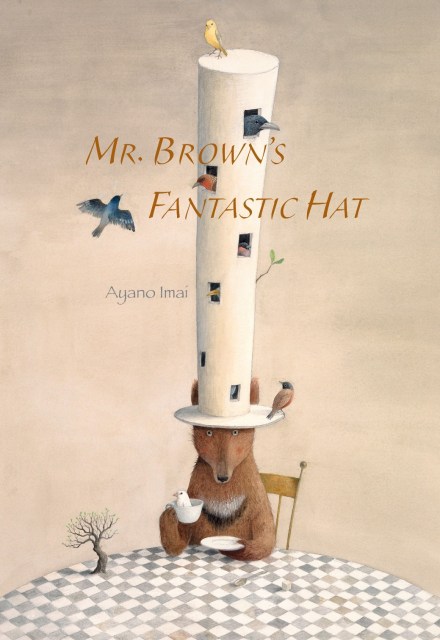
celebrate-picture-books-picture-book-review-mr-brown's-fantastic-hat-cover

About the Holiday

As the weather turns cooler in certain parts of the world, it’s time to pull out those old favorite cozy hats or buy a stylish new one to keep your head and ears warm! Whether you like wearing felt hats, knit hats, furry hats, or even top hats—like the character in today’s book—this is the season for you!

Mr. Brown’s Fantastic Hat

By Ayano Imaí


Mr. Brown lived alone and, if you asked him, he’d tell you he liked it that way. He “had no friends and he didn’t want any.” If you were privy to his secret thoughts, however, you’d learn that Mr. Brown was actually very lonely. Mr. Brown liked to take long walks, and when he went out, he always wore his “smart,” distinctive hat. “One day while Mr. Brown was sleeping, a woodpecker flew down and started tapping a hole in his hat, thinking, ‘What a wonderful nest this hat would make!’”

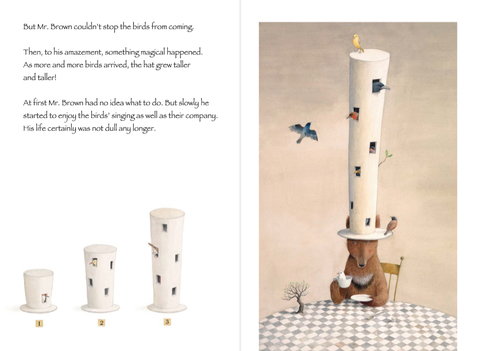
When Mr. Brown woke up he was shocked to discover that a bird had moved into his hat. Someone living this close to him was not what Mr. Brown had in mind at all. Then to Mr. Brown’s dismay the “woodpecker soon told all his friends about the wonderful new home and invited them all to join him.” Soon Mr. Brown’s hat was full of holes—and birds! You might think a regular hat would not have enough room for so many residents—but Mr. Brown’s hat was no ordinary one. As more and more birds moved in, his hat grew taller and taller!

celebrate-picture-books-picture-book-review-mr-brown's-fantastic-hat-birds-live-in-hat

Image copyright Ayano Imaí, 2014, courtesy of minedition

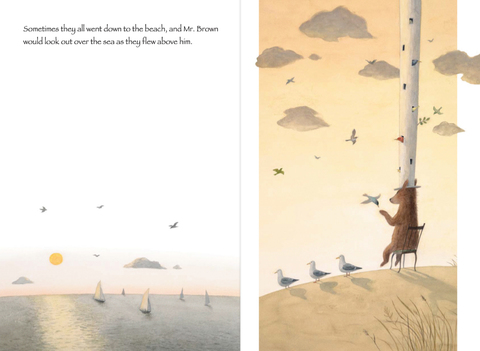
As the days went on Mr. Brown discovered that he was beginning to enjoy the birds’ singing and their company. Now Mr. Brown had renewed purpose in his daily walks: “He loved to show off his hat. Everywhere he went it was full of the music of singing birds.” People on the street took notice and wanted to emulate Mr. Brown. All over town people began wearing tall hats, “but the birds preferred to stay with Mr. Brown no matter how hard people tried to persuade them.”

One day as autumn settled in, Mr. Brown noticed that all the birds had flown away. He was sad and didn’t understand where they had gone or why they had left him. He wondered if he would see them again. The idea of a quiet life no longer held the appeal it once did, and Mr. Brown missed his friends. He tried to convince himself that he didn’t care that the birds had left, but he continued to fill the feeders and watch out for them every day.

celebrate-picture-books-picture-book-review-mr-brown's-fantastic-hat-looking-out-to-sea

Image copyright Ayano Imaí, 2014, courtesy of minedition

Even though it was time for Mr. Brown to take a long winter’s nap, he tried to stay awake, worried that there would be no one to care for the birds if they returned. But nature took its course, and Mr. Brown fell into a deep sleep. One morning after a particularly vivid dream in which Mr. Brown could hear the birds singing, he woke to a tapping sound. He went to the door and peered out.

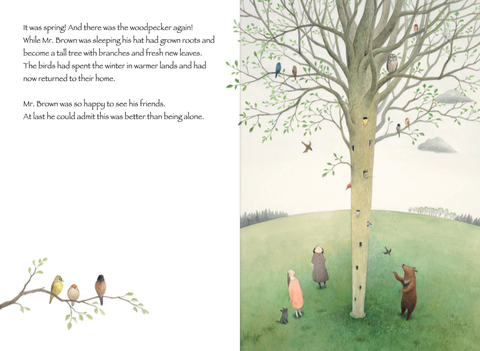
Spring had come and with it Mr. Brown’s hat had grown roots and sprouted branches and leaves. The old holes were filled with their previous tenants. The sight filled Mr. Brown with joy, and he finally could admit to himself that sharing his life with friends “was better than being alone.”

celebrate-picture-books-picture-book-review-mr-brown's-fantastic-hat-hat-grows-into-tree

Image copyright Ayano Imaí, 2014, courtesy of minedition

Ayano Imaí’s gloriously beautiful book plumbs the nature of solitude and loneliness as well as the value of friendship with an honesty that is at once heartrending and uplifting. For so many quiet, introspective people—children and adults alike—navigating the world of small talk, casual relationships, and making friends is similar to traveling uncharted territory, where the language and mores are foreign. It can become easier to tell oneself that it doesn’t matter, when in reality it matters a great deal. Many times happiness comes when one finds their niche or, in some surprising way, a niche finds them.

Imaí tells the story of Mr. Brown and his fantastical hat in straightforward narration, but more profound meaning is revealed in her illustrations. Mr. Brown, it is discovered, is a brown bear who has taken on the aspects of humans. He walks upright, carries an umbrella and bag, owns a home, and wears a hat. His fur is even the same color as the townspeople’s clothing. But while he may be among people, he is not of them. His home has a grass floor which sprouts mushrooms and weeds; another weed pokes out from the bristles of his brush; a tree branch juts from a wall; and mushrooms share space with the laundry on the drying line.

Mr. Brown comes from nature and belongs with nature, so it is no surprise that the birds flock to him and prefer him to humans, who in an ironic twist long to be like Mr. Brown. I especially like the ending of Mr. Brown’s Fantastic Hat, in which Mr. Brown stays true to himself. He does not suddenly discover his “wild” side and become someone that he is not. He is able to remain a quiet, introspective bear while also embracing his friends, his love for them, and his place in the world. He finds inner happiness and loved ones to share it with.

Ages 3 – 8 (and up)

minedition, 2014 | ISBN 978-9888240845

Fall Hat Month Activity

celebrate-picture-books-picture-book-review-favorite-hat-matching-puzzle

Favorite Fall Hat Matching Puzzle


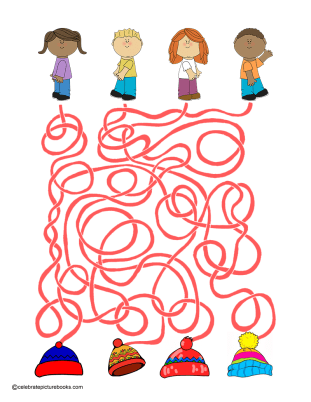
Each child has a favorite hat for cooler weather. Follow the paths in this printable Favorite Fall Hat Matching Puzzle to find out which hat each child chooses!

Picture Book Review

September 3 – International Vulture Awareness Day

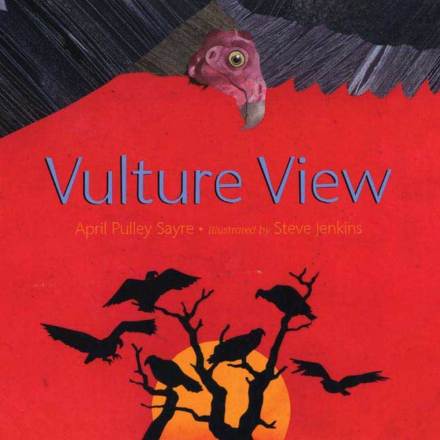
celebrate-picture-books-picture-book-review-vulture-view-cover

About the Holiday

With their bald pink heads and dusty brown feathers vultures and turkey vultures may not be the peacocks of the bird kingdom, but they play a crucial role in the environmental cycle. These scavengers live on carrion, clearing away and “recycling” the carcasses of dead animals. Because of the vulture’s appearance and stereotypical depictions, their plight as an endangered species goes largely unnoticed. Environmental groups in South Africa and England established today’s holiday (also known as International Turkey Vulture Day) to promote awareness f the declining number of vultures, a cause that has been picked up by zoos and other conservation groups around the world.

Vulture View

Written by April Pulley Sayre | Illustrated by Steve Jenkins


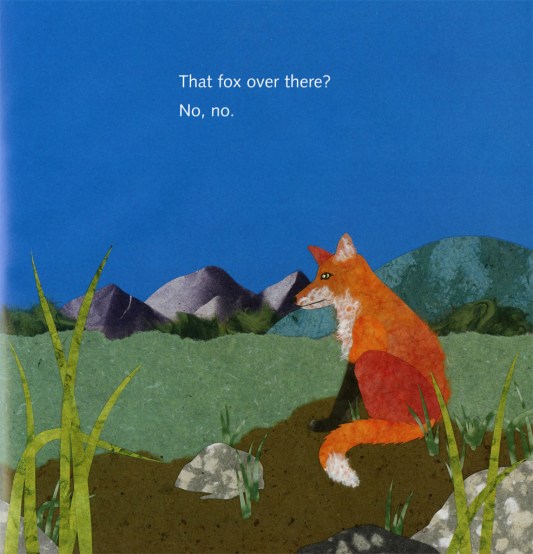
In the clear blue morning sky the vultures soar. “Wings stretch wide / to catch a ride / on warming air / Going where?” One turkey vulture scans the ground, dipping and tilting as it searches for its breakfast. A snake rattles and hisses in the rocks. The vulture passes it by. A golden fox gazes silently into the distance, but the vulture flies away. A bear half-way up a tree would be easy prey, but the vulture lets him continue his climb.

celebrate-picture-books-picture-book-review-vulture-view-fox

Image copyright Steve Jenkins, courtesy of us.macmillan.com

The turkey vultures are searching for a particular meal. They “smell the air. / They sniff, search, seek / for foods that… / REEK! The aromas of the landscape rise to the vultures. Are they attracted by the “fragrant flowers? / No, no.” “That spicy smoke? No, no.” Maybe “that stinky dead deer? Yes, yes!”

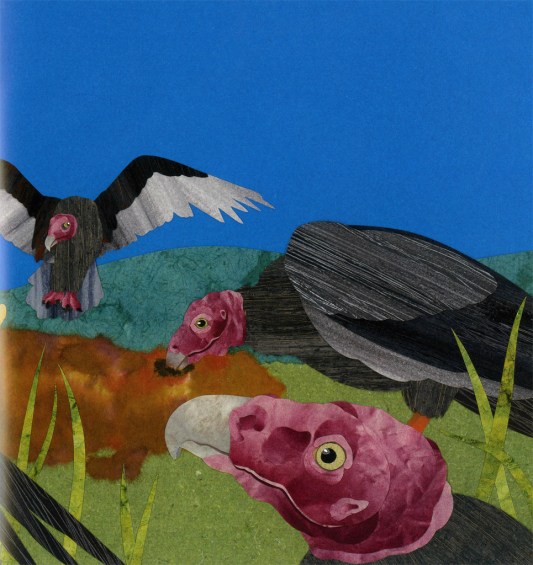
The vultures descend to dine on their “rotten” meal. Afterward they clean themselves in the nearby water and preen their feathers. Still hungry, “they hop, flap, soar / to look for more.” As the sun sets the vultures’ “wings glide, wings ride / through cooling air.” They come from all over to vulture trees—beautiful, bare silhouettes on the sky—to “settle and sleep, like families.”

celebrate-picture-books-picture-book-review-vulture-view-vultures-eating

Image copyright Steve Jenkins, courtesy of us.macmillan.com

With the rising sun and the warmer air, the vultures take to the sky again in search of their singular meal.

Intriguing facts about how vultures fly, the seven species of vultures, why and how vultures feed on carrion, nesting behaviors, and vulture festivals around the United States follow the text.

In this Theodor Seuss Geisel Honor Book, April Pulley Sayre brings a poet’s sensibility to the misunderstood vulture. In her lyrical lines the sights and smells of the vulture’s terrain and the vulture’s flight patterns are elevated to educate young readers of the actual beauty of this distinctive species. The benefits vultures provide to the environment as well as their familial attachments make these birds some of the most fascinating animals in the wild kingdom. Who among us doesn’t look up at the circling majesty of birds of prey? Sayre’s text gives readers the bird’s eye Vulture View.

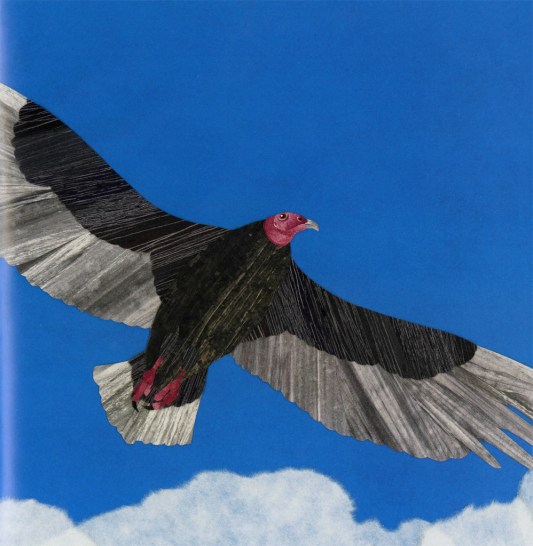
celebrate-picture-books-picture-book-review-vulture-view-soaring-vulture

Image copyright Steve Jenkins, courtesy of us.macmillan.com

With his signature cut-paper collage illustrations, Steve Jenkins gives shape to the vulture’s world. The mottled dark body and the wings and tail fringed with white meet layers of pink that form the vulture’s wrinkled head. The rattlesnake is a smooth combination of greens and browns while the fox is brilliantly orange and soft. Hills and mountains jut from the bottom of pages, and a bony carcass lays amid tall grass, decaying and attracting a vulture. As the birds streak through wispy fiber clouds to descend upon the vulture tree in the shadowy evening, readers will come to appreciate the life and role of the vulture.

Ages 4 – 8

Henry Holt and Company, 2007 | ISBN 978-0805075571

Wow! You will find a wealth of information on April Pulley Sayre‘s website which includes her many books, educators’ resources, and much more information on natural history topics.

Even just hovering over the icon links on Steve Jenkins‘ website is fun—and there’s so much more to discover once you click on them!

International Vulture Awareness Day Activity

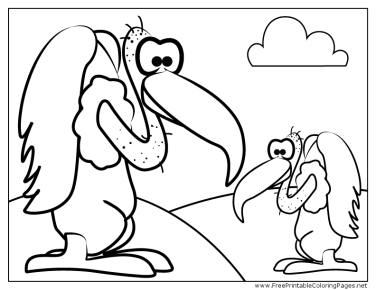
celebrate-picture-books-picture-book-review-vultures-coloring-page

Valuable Vultures Coloring Page


Vultures are a valuable part of our ecosystem. Here’s a printable Valuable Vultures Coloring Page for you to enjoy. Why not try your hand at using cut or torn paper like Steve Jenkins does in Vulture View to fill in the design?

Picture Book Review

August 14 – It’s Family Fun Month

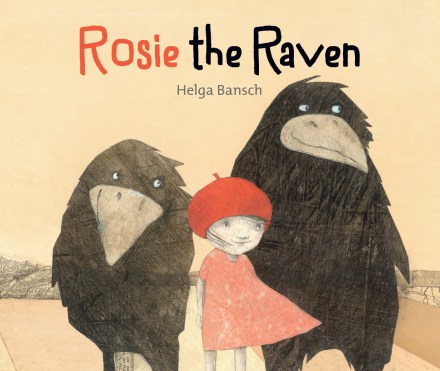
celebrate-picture-books-picture-book-review-rosie-the-raven-cover

About the Holiday

August is a perfect time to have fun with the family! The days are long and warm, and there are so many activities to discover. Get away from the heat at a pool, the beach, or on the cool shade of a forest path. Explore your adventurous side while camping or traveling to an unfamiliar town, or increase your knowledge by visiting a science, art, history, or other museum. Before school starts up for another year, get out there and have fun!

Rosie the Raven

By Helga Bansch | Translated by Shelley Tanaka


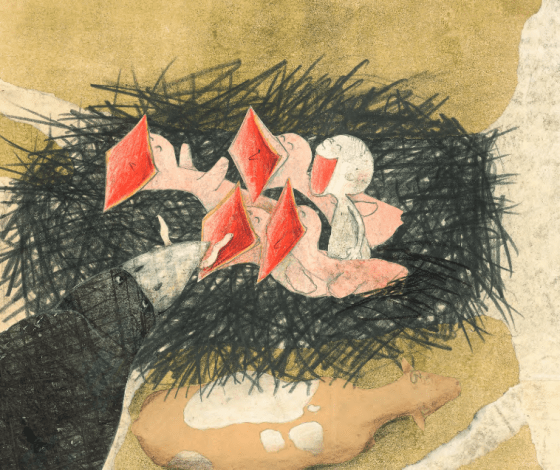
In a nest high in a tree, a little pink egg among the blue speckled ones hatches a little girl. As soon as all five babies are out of their shells, the hatchling says “Mama and Papa took us under their wings. It was nice and warm there.” The babies are hungry and the little girl, following the example of her brothers and sisters, opens her mouth wide to enjoy the “worms, flies, maggots, and snails.”

celebrate-picture-books-picture-book-review-rosie-the-raven-babies-eating

Image copyright Helga Bansch, courtesy of annickpress.com

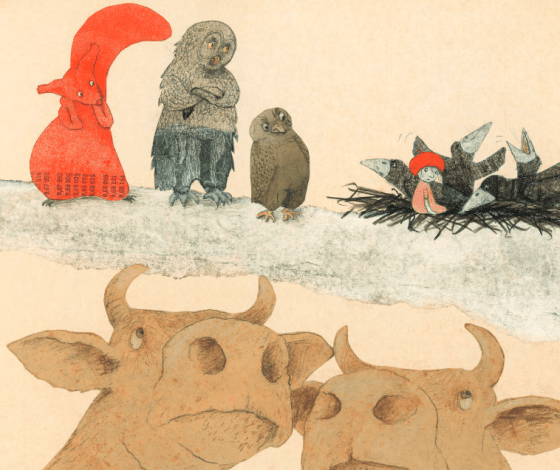
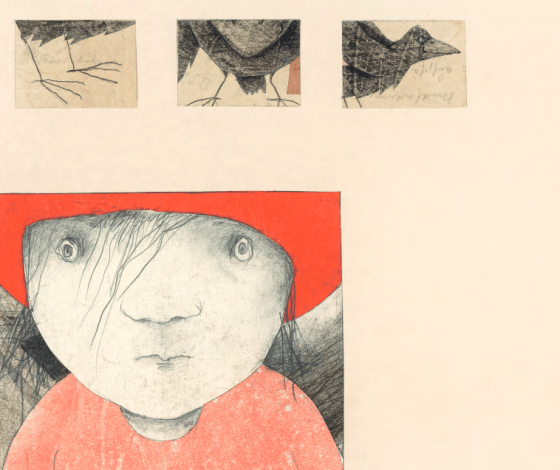
As they grow, the little ones “slept, had cawing contests and goofed around.” Because the little girl is always cold, her papa got her a red dress and hat. “‘Our little Rosie,’” Mama called me,” the girl says. Although Rosie and her nest mates are a happy family, Rosie says that “every day others would come and stare at us” as well as offer unsolicited advice: “‘It needs to exercise its wings” or, because they considered Rosie ugly without feathers, “Rub it with birch leaves. That will make its feathers grow.”

Under the critical gaze of these outsiders, Rosie looks at herself and notices for the first time that she is different than her Mama and Papa, her brothers and sisters. Her siblings are already learning how to fly, their caws are wild and resonant, and their feathers are fluffy and soft. In comparison, when Rosie flaps nothing happens, her voice sounds “pitiful,” and she has no fluff.

celebrate-picture-books-picture-book-review-rosie-the-raven-other-animals-judge

Image copyright Helga Bansch, courtesy of annickpress.com

Rosie “so wanted to be like them” that she beats her “wings over and over.” She caws until she is hoarse and rubs herself with birch leaves until her skin glows green. Soon she decides that “all this was just silly.” “‘I’m just different. And if the others talk about me, what do I care,’” she thinks. Besides, she learns that her “kind of wings are quite useful for other things.”

When Rosie’s siblings fly away from the nest after several weeks, the nest seems quiet. As the weeks progress and “the air began to smell like autumn, it was time to set out for the south.” Rosie’s parents practice flying with Rosie on their back until she can ride safely. Finally the day comes when they make the trip, and they find a new home in a tree that is perfect for Rosie to climb. Now it is her job to gather food for the family—which will soon include four new babies.

In her new home Rosie meets a frog who is going to teach her to swim. After their first meeting, the frog asks, “‘So, what are you really?’” “‘I am Rosie the Raven!’” Rosie squawks loudly. Then she goes home and climbs up to her nest in the tree, looking forward to tomorrow.

celebrate-picture-books-picture-book-review-rosie-the-raven-rosie-realizes

Image copyright Helga Bansch, courtesy of annickpress.com

Helga Bansch’s Rosie the Raven, bathed in tones of beige and black and punctuated with the red of Rosie’s cap and dress, is a quiet, but powerful book of what it means to be different and who defines that difference. The story of the Raven family is all the more eloquent and compelling for its being told through straight narration and not as a fairy tale or fable. The moment when Rosie looks at herself through others’ eyes, but quickly rejects the notion that her identity as a Raven is based on her having wings or feathers as well as her decision to stay with Mama and Papa affirms the idea that the true self is found within.

Bansch’s little Ravens are endearing as they frolic in the nest under the watchful and loving eyes of Mama and Papa. Rosie exudes a strong sense of confidence and happiness that readers will respond to. Bansch’s pages are a mix of panels, collages, and beautiful two-page spreads that give the book a distinctive look and feel. Fields and mountains are created from maps and bits of printed material in a variety of languages that emphasizes the book’s theme. Rosie the Raven could easily become a child’s favorite for bedtime or quiet story time and would be a wonderful addition to home as well as school libraries.

Ages 4 – 8

annick press, 2016 | ISBN 978-1554518340 (Austrian edition Die Rabenrosa: 978-3702658748)

To view more books and artwork by Helga Bansch, visit her website!
Check out more books for children and young adults at annick press!

Family Fun Day Activity

celebrate-picture-books-picture-book-review-bungalow-house-coloring-page

Home is Where Your Heart Is Coloring Pages

Apartments Coloring Page

Bungalow Coloring Page

June 29 – Waffle Iron Day

celebrate-picture-books-picture-book-review-woodpecker-wants-a-waffle

About the Holiday

It’s hard to love waffles without giving some credit to the machine that makes them possible! Today we do just that by remembering the long and varied history of the waffle iron. Dating back to the Middle Ages in the area of Belgium and the Netherlands, the waffle iron began as two hinged plates set on a long pole to be used over a fire. The devices were improved during the 17th and 18th centuries. The first modern electric waffle iron was developed by General Electric and introduced to the public in 1918. The waffle iron has also inspired innovations such as the waffle ice-cream cone and Nike’s 1972 “Moon Shoe” and 1974 “Waffle Trainer.” Today—you know what to do!

Woodpecker Wants a Waffle

By Steve Breen


One morning Benny the woodpecker wakes to a most “tummy-rumbling smell” so he follows the yummy aroma to Moe’s Diner. Through the window Benny takes in the delicious scene and decides that he too must have waffles. He taps on the door, but it must be a “no woodpeckers” kind of place because the waitress gives him an unceremonious boot. He tries to sneak in, but the waitress is ready for him with her broom. He even tries wearing different disguises to gain entry, but that only gets him tossed out like trash.

celebrate-picture-books-picture-book-review-woodpecker-wants-a-waffle-flies-to-diner

Image and text copyright Steve Breen, courtesy of TurnRow Book Company

Back in the woods the animals laugh when they hear Benny is wishing for waffles, and one by one they offer an alliterative feast of reasons why Benny’s desire is so ridiculous. “Raccoons don’t eat ravioli,” Raccoon yells from the back of the crowd. “Turtles don’t eat turnovers,” Turtle explains. “Chipmunks don’t eat cheeseburgers,” Chipmunk adds to the chorus. “And woodpeckers don’t eat waffles!” Bunny exclaims.

celebrate-picture-books-picture-book-review-woodpecker-wants-a-waffle-sneaks-into-diner

Image and text copyright Steve Breen, courtesy of TurnRow Book Company

“‘Well, why not?’” Benny counters. The animals are stumped! They ponder and ruminate, ruminate and ponder until finally Bunny says, “‘Because I said so!’” Benny feels he’s just wasting time listening to all this nonsense—time that can be better used devising a new plan to get waffles. In no time he’s back with a sure-fire scheme that involves being shot from a canon, the moon walk, a comedy act, and fireworks along with a few other entertaining bits.

celebrate-picture-books-picture-book-review-woodpecker-wants-a-waffle

Image copyright Steve Breen, courtesy of TurnRow Book Company

As the speechless animals turn away Benny hears snickering, but he sprightly invites them back the next morning to watch his spectacle. In the morning the animals gather in a field across from the diner, but where’s Benny? The animals wait patiently, while inside the diner the waitress and customers notice something too. They all go outside to look at the animals. And while the animals are staring at the people and the people are staring at the animals, Benny makes his move through that forbidden door. “‘Sweet’” says Benny.

celebrate-picture-books-picture-book-review-woodpecker-wants-a-waffle-flies-to-diner

Image and text copyright Steve Breen, courtesy of TurnRow Book Company

Pulitzer Prize-winning cartoonist Steve Breen’s tale of Benny, the unconventional woodpecker, follows in the best traditions of comic storytelling. Breen’s pacing from Benny’s first glimpse of his obsession to the development of his clever ruse to his ultimately outwitting his opponent will keep kids rooting for him from page to page. Benny’s confidence in the face of the friendly needling of the forest animals adds a deeper sense of satisfaction in the story’s conclusion for both Benny and readers.

Benny’s high, spiky featherdo will endear him to kids as will his treatment at the hands and feet of the waitress. Breen’s softly colored illustrations are full of comical details—as when Benny tries to sneak into Moe’s diner by blending in with a customer’s dress pattern. Kids will also love the contraption-style setup of Benny’s master plan that spans two pages with arrows to point out the trajectory.

Woodpecker Wants a Waffle is a wonderful choice for fun, funny story times and, like the best jokes, will want to be heard again and again.

Ages 4 – 8

HarperCollins, 2016 |ISBN 978-0062342577

Waffle Iron Day Activity

celebrate-picture-books-picture-book-review-waffle-game-board

Waffle Tic Tac Toe


The grid of a waffle makes a perfect tic tac toe board! With this special breakfast-inspired tic tac toe set you can cook up some sweet fun! With all the choices of squares in a waffle to fill, you can play 3-by-3, 4-by-4, 5-by-5, even 6-by-6 games! 

Supplies

celebrate-picture-books-picture-book-review-waffle-game-pieces

Directions

  1. Play 3-by-3 games as you always do
  2. For the other options each player tries to build rows of 4 pieces down, across, and diagonally
  3. The player with the most 4-in-a-row rows wins!

celebrate-picture-books-picture-book-review-woodpecker-wants-a-waffle

You can find Woodpecker Wants a Waffle at these booksellers

Amazon | Barnes & Noble | Books-a-Million

To support your local independent bookstore, order from

Bookshop | IndieBound

Picture Book Review