July 15 – It’s National Ice Cream Month

celebrate-picture-books-picture-book-review-ice-cream-summer

About the Holiday

Ice cream has a long and elite history, dating back to Ancient Greece when the confection was made of snow, honey, and fruit. Catherine de’ Medici introduced the treat again in the 16th century. Charles I of England, using his royal clout, proclaimed ice cream to be the prerogative of the crown. He kept the recipe secret and forbid the common people to eat it. The first recorded recipes for ice cream are reported in the 18th century.

This favorite dessert received its true recognition in 1984 when President Ronald Reagan established July as National Ice Cream Month. Today indulge in your favorite flavor or sundae!

Ice Cream Summer

By Peter Sís


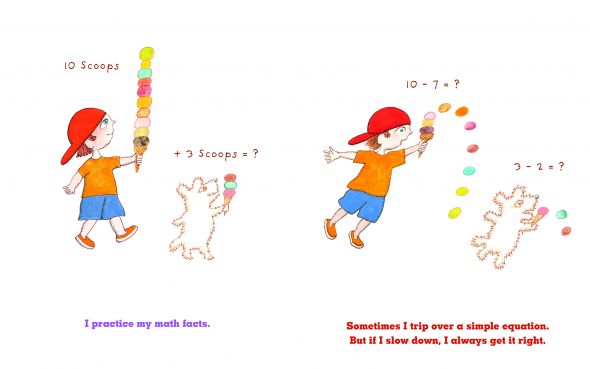
A little boy writes a letter to his grandpa telling him about his summer. “So far it’s been a delicious summer,” he says of his ice cream extravaganza. The boy reports that he’s very busy, but is also paying attention to school work every day. He knows how to read big words like tornado and explosion, and he is even creating his own book. He can solve math problems—even word problems—lickity split on his own and sometimes with his family’s help.

At day camp he and his friends are involved in all sorts of activities, such as sports, cartography, and field trips. The boy tells his grandpa that he’s poring over the encyclopedias he sent, learning about world history from Ancient China to Europe and America. He is discovering fabulous inventions and designing some of his own.
celebrate-picture-books-picture-book-review-ice-cream-summer

Image copyright Peter Sís, courtesy of scholastic.com

He assures his grandpa that he has “been working hard all summer (though I always take a break on sundaes)” and has earned the special trip his grandpa mentioned. As the two meet it’s obvious that Grandpa understands his grandson very well. They both sport ice cream shaped backpacks, and the trip they are embarking on is a hike to the tip of Ice Cream Peak.

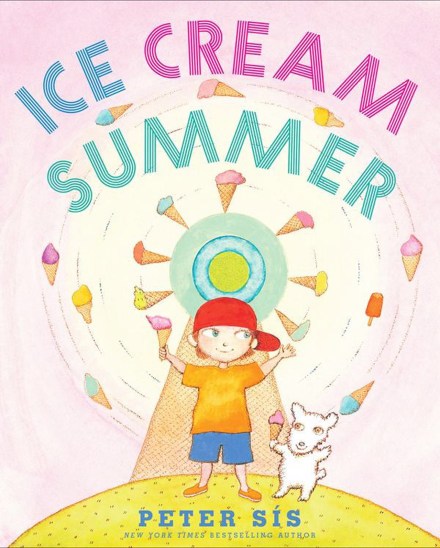
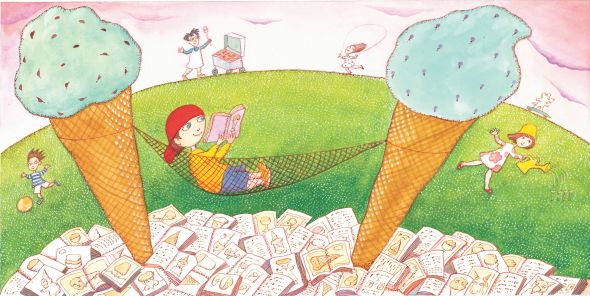
Peter Sís’s celebration of ice cream is a perfect mixture of text and art. While the boy’s letter is kid-like bare bones, the ice-cream hued illustrations humorously and cleverly portray the boy’s delicious obsession. His room, with its scoop-shaped window overlooking an ice cream factory, is filled with a bed, bookshelves, desk, and toys that are all familiarly conical. The boy builds his sandcastle, complete with cone turrets, at the edge of multi-colored scoop waves, and the family’s beach umbrella is a wavy sundae top.
celebrate-picture-books-picture-book-review-ice-cream-summer

Image copyright Peter Sís, courtesy of scholastic.com

At day camp all roads lead to flavorful sites where skyscrapers, attractions, and transportation are all seen through a sweet ice-cream cone lens. Even the Statue of Liberty holds aloft a vanilla soft serve cone. The boy’s travels through history encompass fascinating facts about the invention of ice cream, how it spread across Europe and to America as well as innovations of and improvements to this favorite treat.

The final reveal of Ice Cream Peak, with its sprinkles-covered tip will delight ice cream aficionados of all ages. Kids and adults will want to linger over each page to scoop up all the visual pleasures.

Ages 4 – 8

Scholastic Books, 2015 | ISBN 978-0545731614

To view more books by Peter Sís and discover fun title-related activities, visit his website!

National Ice Cream Month Activity
celebrate-picture-books-picture-book-review-ice-cream-maze

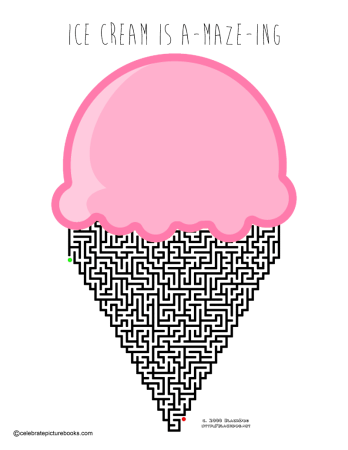
Ice Cream is A-maze-ing! Puzzle


Sometimes you’d walk forever and through any kind of obstacle to get your favorite flavor ice cream cone. Have fun following the path through this printable Ice Cream is Amaze-ing Puzzle

Picture Book Review

July 13 – National Culinary Arts Month

celebrate-picture-books-picture-book-review-the-hole-story-of-the-doughnut-cover

About the Holiday

July is a great month for celebrating culinary arts. With kids home from school it’s fun to spend time together in the kitchen learning new skills and making experimental or favorite recipes. On-the-go meals or vacations can also take you to new and enticing restaurants, where you may try regional cuisine and discover exciting flavors.

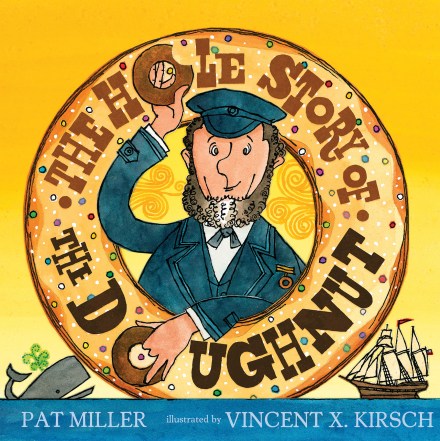
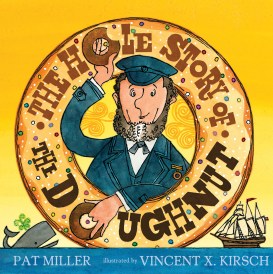
The Hole Story of the Doughnut

Written by Pat Miller | Illustrated by Vincent X. Kirsch


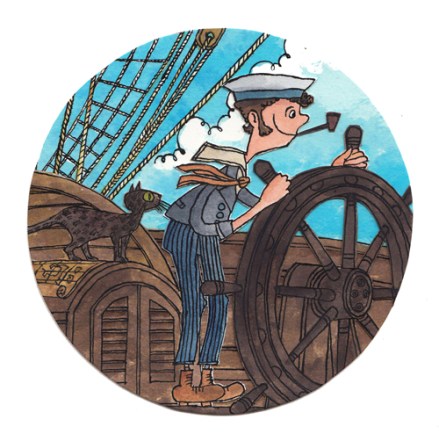
In 1844 at the tender age of 13, Hanson Gregory left the family farm and went to sea as a cabin boy on the schooner Isaac Achorn. He quickly became the cook’s assistant and also learned how to rig the sails and “steer a ship over trackless waves by sun and stars.” By the age of 19 Gregory had become the captain of the schooner Hardscrabble, and within a few more years was racing “his cargo from Maine to California as commander of a clipper, the fastest ship on any ocean.”

celebrate-picture-books-picture-book-review-hole-story-of-the-doughnut

Image copyright Vincent X. Kirsch, courtesy of vincentxkirsch.com

Hanson Gregory may have been one of the best captains to sail the seas—once awarded a medal for heroism for rescuing seven shipwrecked Spanish sailors even though his own ship and crew were endangered. But his greatest achievement was not attained because of his seafaring skills—it was his ingenuity in the galley that people remember.

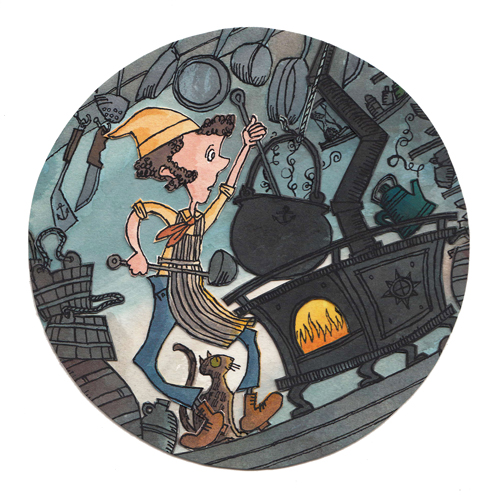
On June 22, 1847 as a 16-year-old cook’s assistant, Hanson was rustling up the crew’s breakfast—coffee and fried cakes, the same as every morning. While the pot of lard bubbled on the stove, Gregory formed balls of sweetened dough and dropped them in. They sizzled and crisped—at least around the edges. The centers were raw, heavy with grease, and they dropped like cannonballs in the stomach. “Sailors called them Sinkers.” But this morning Gregory had an idea. He removed the lid from the pepper can and cut out the center of the balls. “Then he tossed the rings into the bubbling lard.”

celebrate-picture-books-picture-book-review-hole-story-of-the-doughnut

Image copyright Vincent X. Kirsch, courtesy of vincentxkirsch.com

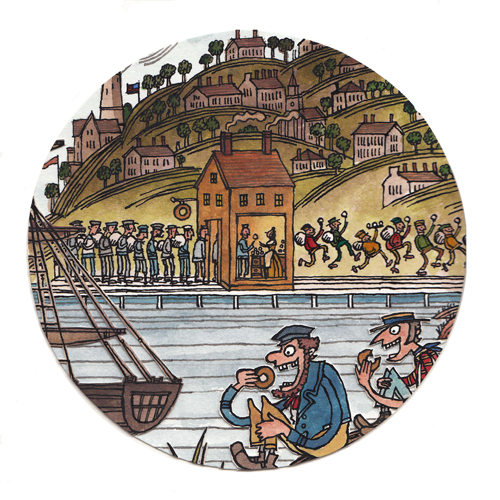
The cook and the sailors took one look at this odd concoction and…ate them up! “The cakes were brown, and sweet, and fully cooked. Sighs of delight rose above the noisy sea. A new breakfast tradition was born.” Gregory told his mom about his invention, and she fried up large batches of these ‘holey cakes’ that were a sensation at a friend’s store and on the docks.

You might think this is a pretty interesting tale in itself, “but sailors like their stories bold” and so they “spun legends worthy of such a delicious treat.” One tale had Captain Gregory inventing the doughnut while he saved his ship from disaster. Another told how Gregory, distraught over the drowning of five sailors pulled to the ocean floor by of their “sinker” breakfast, punched holes in every cake to make them look like life rings and vowed, “‘Never again!’”

Captain Gregory had a sense of humor about his accomplishment. During an interview he once stated that “he had invented ‘the first hole ever seen by mortal eyes.’” Gregory lived to be 89 and is buried “overlooking the sea where stormy weather can be spotted as readily as it once was from the quarterdeck of the Hardscrabble.”

An author’s note expanding on the story of Captain Gregory, the doughnut, doughnut shops, a timeline, and a selected bibliography follow the text.

celebrate-picture-books-picture-book-review-hole-story-of-the-doughnut

Image copyright Vincent X. Kirsch, courtesy of vincentxkirsch.com

Doughnuts have never been so evocative! In Pat Miller’s humorous, informative history of this favorite pastry treat, readers can smell the salt air, feel the ocean swell and roll under their feet, and even ache a little for those poor sailors forced to eat “sinkers.” Seamlessly interwoven into this foodography is a fascinating look at the early days of sail. Miller’s language is immediately stirring: the Ivanhoe bucks and plunges, the sea becomes a monster, and Captain Gregory spears a sinker on the wheel spoke. Kids will marvel at a 13-year-old going off to sea and becoming an inventor at 16.

Vincent X. Kirsch provides just the right touch to this captivating true story with his cartoon-inspired watercolor and cut paper artwork. Ingeniously incorporating Hanson Gregory’s innovation of removing the center of the fried cakes, Kirsch’s illustrations are “cored” to allow for text, while the extracted section appears on the facing page as a glimpse through a porthole. The maritime atmosphere—from ship to shore—of the mid-1800s is beautifully represented in the folk-style sketches, and the humor that is so intrinsic to this story is wonderfully embraced.

The Hole Story of the Doughnut will delight foodies and history buffs alike and would make a fun gift and a delectable addition to personal libraries for all ages.

Ages 5 – 12

Houghton Mifflin Harcourt, 2016 | ISBN 978-0544319615

Vincent X. Kirsch’s website is full of illustrations from his books for children—take a look at his portfolio!

Spend some time with Pat Miller on her website that offers activities, tips, resources and many more books!

Culinary Arts Month Activity

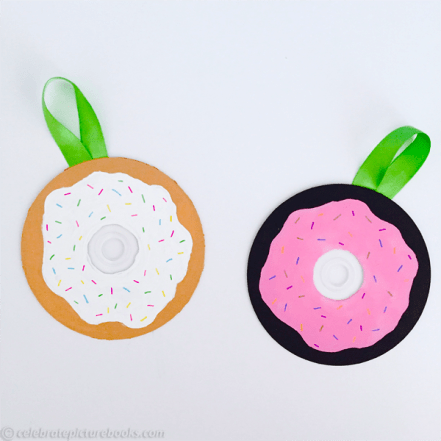
celebrate-picture-books-picture-book-review-cd-doughnut-craft

CD (Compact Doughnuts) Decoration


Are some of  your CDs a little passé? Not if you can turn them into cute décor like this doughnut hanging.

Supplies

  • Unused CDs
  • Craft paint in tan, black, pink, yellow, white (or any colors you want for the doughnut and the icing)
  • Ribbon, any color and length you want
  • Fine-tip markers in bright colors
  • Glue
  • Glue dots (optional)
  • Paint brush

Directions

  1. Paint a wavy edge around the CD, let dry
  2. Paint the center of the CD, leaving the clear circle unpainted
  3. When the icing paint is dry, draw sprinkles on the icing with the markers
  4. With the ribbon make a loop hanger and attach it to the back of the CD with glue or glue dots
  5. Hang your decoration

celebrate-picture-books-picture-book-review-the-hole-story-of-the-doughnut-cover

You can find The Hole Story of the Doughnut at these booksellers

Amazon | Barnes & Noble | Books-a-Million | IndieBound


July 4 – Independence Day

celebrate-picture-books-picture-book-review-lady-liberty's-holiday

About the Holiday

On July 4, 1776, the thirteen colonies that then made up America claimed their independence from England. After much debate and with a majority—but not unanimous—vote, delegates to the Continental Congress adopted the Declaration of Independence. While the vote may not have been unanimous, delegates from all 13 colonies signed the document penned by Thomas Jefferson. John Hancock, who was President of the Continental Congress, signed his name “‘with a great flourish’ so England’s ‘King George can read that without spectacles!’” The action led to the Revolutionary War and ultimately to a break with England.

On this United States national holiday most cities host parades, fireworks displays, and other special events.

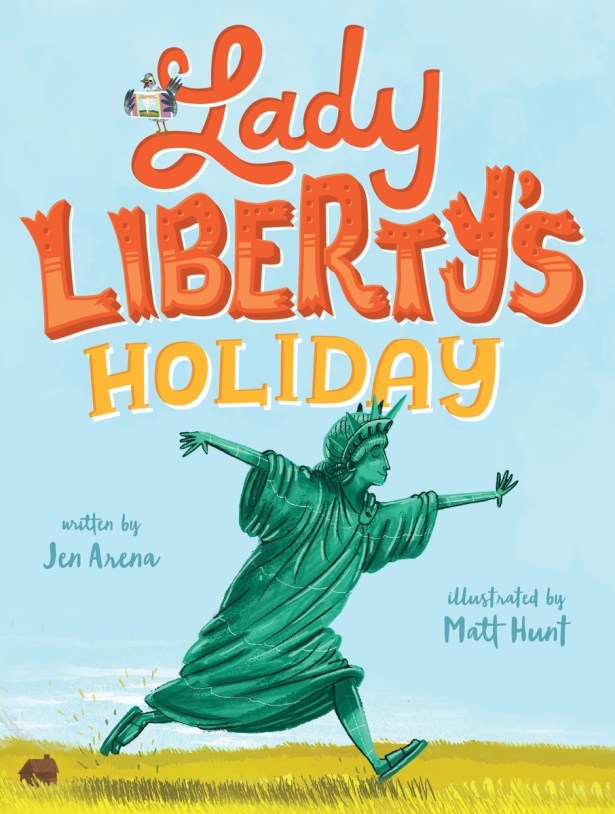
Lady Liberty’s Holiday

Written by Jen Arena | Illustrated by Matt Hunt


Shortly before the Fourth of July Lady Liberty is feeling down. Year after year she has stood in the same place holding aloft a torch in one hand and cradling a tablet in the other. She turns to her friend Moe, the pigeon on her shoulder, and expresses her dissatisfaction. Moe has a suggestion: “‘Lady, you need a getaway!’” Lady Liberty thinks about it and about the vastness of America. She has only seen a small corner of it. That night Lady Liberty pries herself from her pedestal and sneaks away.

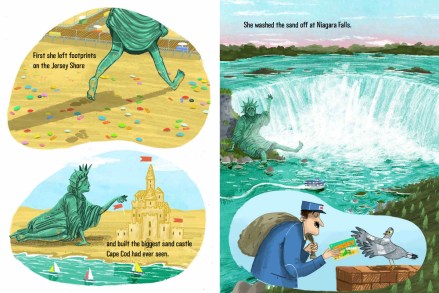
She walks the wide beaches of New Jersey, builds a huge sandcastle on Massachusetts’ Cape Cod, and dips her feet in Niagara Falls. With her long strides it doesn’t take her long to reach the Mississippi River. She finds a seat atop the Gateway Arch in St. Louis, Missouri and watches the Ol’ Man river slip past. In Kansas she plays in wheat fields that “tickle her feet” and are as good for making angels as snow. In South Dakota she photo bombs at Mount Rushmore, and she takes a quick hike over the Rocky Mountains. After all this fun Lady Liberty needs a rest, so she takes a nap on San Francisco’s Golden Gate Bridge.

But the people in New York have noticed the Lady’s absence. The Fourth of July is only three days away and no one is in the mood to celebrate without her. “Tourists were gloomy. Cops were cross. Even the stock market was down.” The mayor is even considering cancelling the holiday! Moe is worried Liberty might not come back.

celebrate-picture-books-picture-book-review-lady-liberty's-holiday

Image copyright Matt Hunt, courtesy of Jen Arena (jenarenabooks.com)

And Moe is right! Lady Liberty is enjoying herself too much to think about returning. The grandeur of the Grand Canyon makes her feel small—it’s a nice change, she thinks. She drinks water from a geyser in Yellowstone Park and sleeps under the stars in Texas. With a hop and a skip she’s dancing in New Orleans, and the Florida Keys make excellent “stepping stones” to her next adventure. She doesn’t even mind schlepping through swamps in the deep south, and an alligator that latches onto her toe is dispatched with a shake.

Lady Liberty suddenly hears the familiar flap of Moe’s wings. Moe tells Liberty how things are in New York. When she hears that they are thinking of cancelling the Fourth of July, she “bolts up as if she’d been struck by lightning.” Yes, says, Moe. “‘Nobody feels like celebrating without you.’” But after her cross-country tour, Lady Liberty knows that “‘the Fourth of July isn’t about me. It’s about America!’” Without another thought Liberty is racing north.

As New Yorkers wake at dawn, they see Lady Liberty happy to be back overlooking the Harbor, “where she had stood for over a hundred years.” Her copper dress shines in the early morning sun. Later that night she glows again in the colors of fireworks and enjoys a very Happy Fourth of July!

The final two pages tell the story of Lady Liberty’s creation, installation, and meaning. Tantalizing tidbits about the statue of Liberty are also revealed.

Jen Arena’s Lady Liberty’s Holiday is an engaging introduction to the story of the Statue of Liberty and American geography. A road trip across America was once a staple of childhood, and Arena replicates the excitement and wonder of viewing the country’s monuments and splendor through Lady Liberty’s walking tour. As each page brings readers to another awe-inspiring landmark, kids will want to learn more about the parks, states, and history of America.

Matt Hunt’s vibrant, full-bleed spreads are as expansive as the American landscape. The blue waters of Niagara Falls roar over the edge, creating white mist; the rock-hewn faces of George Washington, Thomas Jefferson, Teddy Roosevelt, and Abraham Lincoln gaze out from the peak of Mount Rushmore; and the spume of water from a Yellowstone geyser dwarfs the tourists below. As Liberty towers over cruise boats and trees, lounges across the Golden Gate Bridge, and flicks away a pesky alligator, kids gain an excellent perspective on the size of the Statue of Liberty as well as the monuments and natural landmarks she visits.

Like the postcards that Liberty sends to her friend Moe from stops on her journey, Lady Liberty’s Holiday is a welcome snapshot of America any time of year.

Ages 4 – 8

Knopf Books for Young People, Random House Kids, 2016 | ISBN 978-0553520675

To learn more about Jen Arena and view the books she’s written , visit her website!

A gallery of Matt Hunt‘s work can be seen on his website!

Independence Day Activity

celebrate-picture-books-picture-book-review-fourth-of-july-coloring-page

Fourth of July Coloring Page


The 4th of July celebrations mean flags, fireworks, and fun! Here’s a printable Fourth of July Coloring Page for you to make your own holiday festivities. You can even make it sparkle with a dash of glitter!

July 3 – Compliment Your Mirror Day

celebrate-picture-books-picture-book-review-why'd-they-wear-that

About the Holiday

Take a peek in the mirror and who do you see? That’s right—a fantastic person with inner and outer beauty! Today is dedicated to recognizing and appreciating that person in the mirror!

Why’d They Wear That? Fashion as the Mirror of History

By Sarah Albee


Whether you’re a fashionista or an “any ol’ thing will do” kind of person, there’s no denying that clothes make a statement. Sarah Albee’s fascinating look at human wraps spans history from 10,000 BC to the modern era. Along the way she exposes both historical facts as well as the often repugnant, laughable, and can’t-look-away fashion fads and disasters that have brought us to “wear” we are today. 

In Chapter 1: That’s a Wrap, Albee reveals facts about the first needles and thread, silk production, the Mayan tradition of forced elongation of skulls (this was considered attractive, denoted social status, and was intimidating), the first pants, warrior wear, and much more.

Chapter 2: Keeping the Faith exposes the influence religion had on clothing in the Middle Ages. White or russet colored robes were worn by men traveling on pilgrimages while penitents could wear a hair shirt made of itchy, bristly horsehair as punishment. Medieval armor, Samurai dress, why modern men’s loafers are decorated with little holes, and more are also discussed here as is the job of Wool Fuller – in which the Fuller soaked wool in urine to degrease it and improve its texture.

celebrate-picture-books-picture-book-review-why'd-they-wear-that

Image courtesy of National Geographic

Chapter 3: Going Global covers the Age of Exploration, which changed fashion as explorers from Europe came in contact with Native peoples in the New World. Red dye, rubber shoes, and the leather Moccasins were all adopted by Europeans. And if you think the search for remedies for wrinkles and other vestiges of older age is a modern pursuit, you’ll learn about Ponce de Leon and his quest for the fountain of youth.

Chapter 4: Ruff & Ready takes a look at the Renaissance. You may have seen fur stoles with the head of the animal still attached and wondered, Why? This fashion statement goes back to “Flea Furs” which were dead, stuffed animals that people draped over their shoulders in the belief that the fleas that were munching on their skin would transfer to the animal instead. Unfortunately, people discovered that fleas prefer warm bodies. Another curious fad was the ruff collar. While people may have thought they looked swell, these collars hindered physical movement and even led to the invention of the long-handled spoon because people could not get food to their mouths any other way. One “benefit” perhaps: when the first American settlers ran out of all other food options, they ate their collars, which were stiffened with wheat paste. And there’s so much more!

In Chapter 5: Lighten Up! readers will discover facts about the dour dress of the Puritans and the ostentatious dress of the French court. The tradition of men’s wigs is explained, and today’s face-painting has nothing on the unusual solution for facial blemishes—black velvet, leather, or silk patches in various shapes.

celebrate-picture-books-picture-book-review-why'd-they-wear-that

Image courtesy of National Geographic

Revolutionary Times take center stage in Chapter 6: Hats (and Heads) Off. During this time clothes began to fit the task. There were clothing items to protect (walking canes became popular as a way to ward off marauding wild dogs), uniforms to highlight the good looks of running footmen, elaborate costumes for Venetian parties, and homespun clothes that became a sign of protest from the American colonists. And if you think “bumpits” and hair extensions are new, women trying to keep up with Marie-Antoinette wore their hair (real and artificial) “cemented upward over wire armatures into two-foot (0.6-m)-high coiffures that made the wearer stand 7 ½ feet tall!”

Chapters 7 through 9 bring readers into the modern age, taking them from a time when children were dressed as young adults and boys wore elaborate gowns until the age of 7 to the textile innovations of the Industrial Revolution and the popularity of bustles that put fanny packs to shame to the fads of the 1960s and today.

celebrate-picture-books-picture-book-review-why'd-they-wear-that

Image courtesy of National Geographic

Albee’s Why’d They Wear That? is much more than a book about fashion. It’s a humorous, fabulously entertaining way to learn about so many aspects of history, from social revolution to inventions to cultural differences. Enlightening side bars, especially the fascinating “Tough Job” entries, and full-color illustrations, paintings, and photographs depicting every concept make Why’d They Wear That? an essential book for school libraries as well as for home bookshelves. Readers of all ages will want to dip into it again and again…and will “Oh!” “Ah!” and “Ewww!” over every page.

Ages 7 and up (children on the younger end of the range will enjoy the facts and pictures during a read-along session) 

National Geographic Children’s Books, 2015 | ISBN 978-1426319198

Learn more about Sarah Albee and her books on her website!

Watch the trailer for Why’d They Wear That? Fashion never looked so…good? unsettling? hilarious? You decide!

Compliment Your Mirror Day Activity

celebrate-picture-books-picture-book-review-mirror-word-search

Mirror, Mirror, What Shall I Wear?


In this magic mirror word search are 20 fashion-related terms from history. Find them all! Here’s the printable Mirror, Mirror, What Shall I Wear puzzle and the Solution.

June 28 – Paul Bunyan Day

celebrate-picture-books-picture-book-review-paul-bunyan-and-babe-the-blue-ox-the-great-pancake-adventure

About the Holiday

The tales of Paul Bunyan, a logger of superhuman size and strength, and his companion Babe the Blue Ox belong to some of the most popular folklore of early North America. Many think his name stemmed from the Quebec bon yenne!, which expresses surprise or astonishment. The phrase would be fitting as Paul Bunyan is said to have accomplished many feats, including creating the Grand Canyon when he walked through the area dragging his ax and forming the Great Lakes as a watering hole for Babe. In 1916 freelance writer and adman William B. Laughead took the figure of Paul Bunyan for an advertising campaign for the Red River Lumber Company, and the stories received new burnishing and popularity.

To celebrate today’s holiday research folklore about Paul Bunyan and Babe, take a walk in the woods Bunyan loved so well, and read today’s book!

Paul Bunyan and Babe the Blue Ox: The Great Pancake Adventure

By Matt Luckhurst

Everyone knows that Paul Bunyan and his best friend Babe the Blue Ox were “the greatest lumberjacks to every work the forests.” But not many people know just how that came to be. It all started because Paul was a very big boy in a very small town. He found it hard to concentrate on school because he was always thinking about his mom’s pancakes. “‘Math,” Paul said, “is just not very tasty.’”

Now, Paul and Babe were lucky enough to live in an area where lots of fresh fruit and vegetables were grown, but they only wanted pancakes. In fact when their mom tried to feed them broccoli, they spit it right out! So Paul’s mom baked stacks and stacks of pancakes until she was out of breath—plus she had fields to tend to. Paul and Babe tried to free up time for Mom by working in the fields, “but their big feet just squished and squashed everything in sight.”

celebrate-picture-books-picture-book-review-paul-bunyan-and-babe-the-blue-ox-the-great-pancake-adventure

Finally there were just not enough pancakes at home, so Paul hugged his mom and set off into the deep dark forest to find his “pancake fortune” with Babe at his heels. With their heads in the clouds and their bellies empty, they happened upon a lumberman with a huge problem. The Syrup River was dammed up with pancakes and the logs couldn’t get through. It was just the job for Paul and Babe!!

Paul and Babe ate every last pancake until the river was clear. The lumberman was so impressed he offered them a job on the spot! And the best part was that they would be paid in pancakes! The trio tromped from Wisconsin to California logging the land and making their mark. In Minnesota it was “so cold that al Paul’s words froze before they could make a sound. They say you can still hear his voice in the forests there today as they thaw out.” Further west Paul and Babe had a little something to do with creating the Rocky Mountains, and the Grand Canyon would still be a flat plateau if it weren’t for Babe’s voracious appetite.

But one day Babe fell ill, and Paul was feeling a little under the weather himself. The doctor gave them a grave diagnosis. “‘You seem to have been eating too many pancakes!’” he announced. Paul was flabbergasted—how could there be such a thing as too many pancakes?! But the doctor explained that a balanced diet was best. Paul pondered where he could find good food. Then it hit him! Paul and Babe said goodbye and headed back home.

celebrate-picture-books-picture-book-review-paul-bunyan-and-babe-the-blue-ox-the-great-pancake-adventure

All images courtesy of Matt Luckhurst (mattluckhurst.com)

Mom was thrilled to see them and cooked plenty of nutritious meals to make them healthy. They stayed in town and grew “Bunyan sized veggies,” helped the townspeople and always listened to Mom. And they never ate another pancake ever again! Well….

As Matt Luckhurst so adroitly knows, there is no more fascinating figure of North American folklore than Paul Bunyan and no greater meal than a pancake breakfast! Combining the two is sweet genius and rollicking fun to boot! Tall tales capture the imagination, and Luckhurst has included plenty of fantastic events to keep kids enthralled from page to page. Luckhurst’s larger-than-life illustrations burst with color and dynamic 3-D typography that enhance the humor and heart of Paul and Babe’s predicament. The juxtaposition of sizes and folk-art influences create unique, eye-catching pages, and Paul and Babe’s endearing innocence make them loveable characters.

Perfect for folktale lovers, pancake aficionados, kids who follow a singular vision, and anyone who loves a good yarn, Paul Bunyan and Babe the Blue Ox: The Great Pancake Adventure is great fun and would be an often-read addition to a child’s bookshelf.

Ages 4 – 8

Abrams Books for Young Readers, 2012 | ISBN 978-1419704208

Take a peek at this awesome trailer for Paul Bunyan and Babe the Blue Ox: The Great Pancake Adventure!

Copyright Matt Luckhurst

Paul Bunyan Day Activity

celebrate-picture-books-picture-book-review-pancake-game

Pancake Flip-Out

Pancakes are served in a stack because they’re so delicious each one doesn’t last long! This game gives you the chance to see how many pancakes you can flip onto a plate! You can play this game several ways:

  1. Give each player the same number of pancakes and see how many they can toss onto the plate during their turn
  2. Make a target with the plate in the middle and draw 3 concentric circles around it. Hitting the target can earn you 20 points. Getting your pancake in the first circle around the plate earns you 15 point, the second circle is worth 10 points, and the third is worth 5 points. Rotate through the players as many times as you like and add up the points at the end. The player with the most points wins!
  3. Instead of tossing the pancakes with your hands, try throwing them with a spatula!
  4. Make up your own rules—and have fun!

Supplies

Directions

  1. Print the Pancakes and Breakfast Plates and cut them out
  2. Glue the pancakes and plate to poster board, cardboard, or foam to give the pancakes more weight for throwing and the plate more support
  3. Once dry, the game pieces are ready for fun!

Picture Book Review

June 26 – National Canoe Day

celebrate-picture-books-picture-book-review-can-you-canoe?

About the Holiday

June is the perfect month to explore the great outdoors up close through camping. Whether you enjoy pitching a tent or renting a cabin, all the enjoyment of hiking, fishing, swimming, and of course toasting marshmallows and singing around the campfire await!

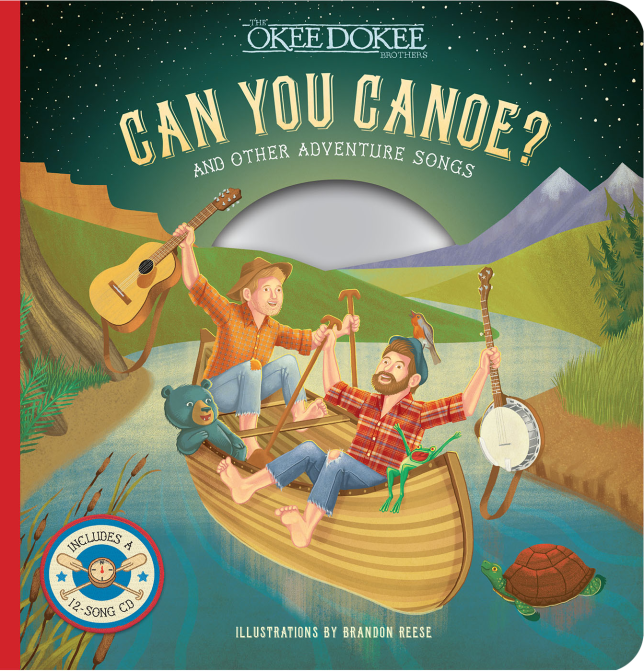
Can You Canoe? And Other Adventure Songs

Written by The Okee Dokee Brothers—Joe Mailander and Justin Lansing Illustrated by Brandon Reese


Is it possible to sing a picture book? It is when the book is Can You Canoe?! These twelve humorous, rip-roaring tunes take readers and singers deep into the fun of what it means to spend time enjoying nature. Wild animals, tall tales, legendary characters, and all the sounds and flavors of country livin’ are represented in these catchy original songs that will have you singing and laughing along in no time.

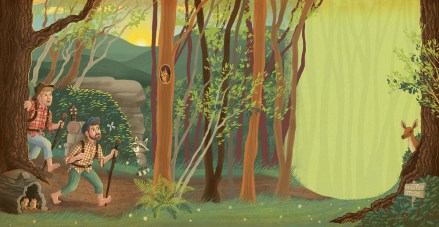
Through the Woods introduces the line-up with an apt question: “I’m wondering if you’d go wandering with me / Through the wilderness and woods / To where the winds are blowin’ free…” But even the speaker realizes there might be doubts—“You’re wondering if I go wandering with you / what kind of trouble we’ll get ourselves into. / Would it be wrong to tag along / With a band of vagabonds?”—and assuages them in the end.

celebrate-picture-books-picture-book-review-can-you-canoe?

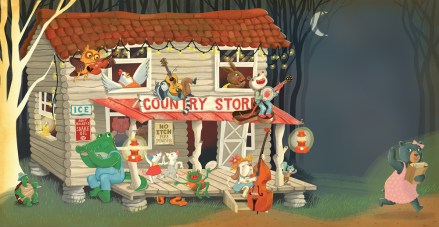
Jamboree takes readers to a country store where there’s dancing every Friday night to a song called “Jamboree” that’s played with abandon and just a little off key. But all you need is to “grab you a partner / And hold on tight / ‘Cause we ain’t stoppin’ / Until we see the light.”

In Black Bear Mama a couple learns there’s no arguing with a mother bear on the lookout for food for her cubs, and Echo Echoooo reassures that nothing, not even the widest valley, can keep true love apart. Can You Canoe? is a celebration of the simple life out on the water without distractions: “Can you canoe on a little boat built for two? Can You Canoe?…I wanna float down a river with you.”

Mr. & Mrs. Sippy can take you by surprise as this isn’t a tune about straws or baby cups. Instead, this is a rambling life story that starts like this: “Mr. and Mrs. Sippy / Got married in the fall. / They left the church that very same day / For their honeymoon in St. Paul, / Singin’ M-I-double-S-double-S-I-P-P-I / M-I-double-S-double-S-I-P-P-I. The couple roams on down to St. Louis to make themselves a home, then raises children in ‘good old Memphis Town.” When they have no place left to go, “they drift down past New Orleans / To the Gulf of Mexico.” Then you’re invited to sing the chorus backwards and forwards once again!

The Legend of Tall Talkin’ Sam echoes some of the great legends of the American West, such as Paul Bunyan and Babe the Blue Ox. Samantha Rosie-Anna, aka Sam, was “born to a pioneer woman and a Rocky Mountain mountain man” and “come out ridin’ a panther and ropin’ a twister outta the sky.” Sam’s so big that when she sleeps under a blanket of snow, she lays her “hat down in Montana and my boots in Colorado.” But even though this girl is “half horse, half mountain lion and half grizzly bear,” she admits there are things she doesn’t know—“like how some little stream / Carved out one big ol’ canyon, / Or how a fire’s angry flame / Can be your best companion.”

celebrate-picture-books-picture-book-review-can-you-canoe?

Can You Canoe? images courtesy of Brandon Reese (www.brandonreese.com)

Jackalope addresses one of the greatest American myths—that of a creature of mixed jack rabbit and antelope blood that roams the plains of the West. With tongue in cheek, the mysterious whereabouts of the Jackalope is exposed in the chorus: “Well I’ve seen ‘em in books and in taxidermy shops. / I’ve seen ‘em hangin’ on the wall. / But I ain’t never seen one in the livin’ light of day— / It’s almost like they don’t exist at all.” But the last verse reveals that perhaps this odd apparition has a purpose after all: “So when you’re searchin’ for the truth / And you’re at the end of your rope, / You might find you don’t need no proof / To believe in the thing that gives you hope— / And for me that’s the jackalope.”

These and a few other rollicking, gold-nugget songs will make any camp out—or even camp in—a knee-slappin’ good time. Can You Canoe comes with a CD so you can sing along to all your favorites—and I have no doubt each song will become a favorite in no time!

Joe Mailander and Justin Lansing have known each other all their lives and know a thing or two about adventures and how to make them more fun for friends and families. This Grammy-winning duo conjure up catchy tunes and compelling stories to make their songs unforgettable. These poems/songs have as much heart and wonder as a new frontier and invite readers and singers to explore!

Brandon Reese lends his distinctive talent to each song, creating animated scenes loaded with the kinds of details and drama kids love. Barefoot travelers with their packs on their backs and strong walking sticks in hand pad through woods populated with friendly wildlife. The country store is alive with animal musicians and dancers on the porch, on the roof, and hanging out every window while broadsides for Aunt Malady’s Snake Oil and No Itch Flea Powder hang on the walls. A cozier camping tent you’ll never find, and canoe paddlers are accompanied by a raccoon poling a crocodile boat while a rabbit floats along on the belly of a turtle. Each picture invokes the great outdoors in all its glory.

Can You Canoe is a must for any trip, whether you’re traveling far or just down the road!

Ages 4 and up

Sterling Children’s Books, 2016 | ISBN 978-1454918035

National Canoe Day Activity

celebrate-picture-books-picture-book-review-canoe-maze

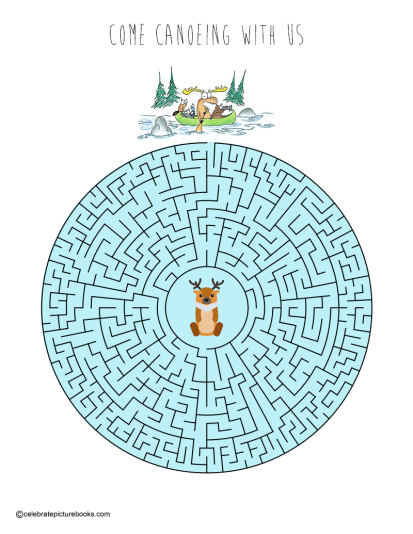
Come Canoeing With Us Maze


These friends want to canoe together but first they must pick up little deer at the center of the lake. They need your help navigating their way in this printable Come Canoeing With Us maze! Here’s the Solution!

June 21 – World Music Day

celebrate-picture-books-picture-book-review-hey-charleston

About the Holiday

Celebrated every year on the summer solstice, World Music Day, also known as the Fête de la Musique, brings together professional and amateur musicians to ply their trade and entertain audiences for a day full of sound. The day was first conceived in 1982 by French Minister of Culture Jack Lang, who elicited the help of Maurice Fleuret, the Director of Music and Dance. When Fleuret discovered that half of the nation’s children played a musical instrument, he devised a way to bring people out into the streets for a music festival. Since then, the event has become an international phenomenon, celebrated in more than 700 cities in 120 countries worldwide. To participate consider organizing or attending a  free concert or enjoying music in your favorite way.

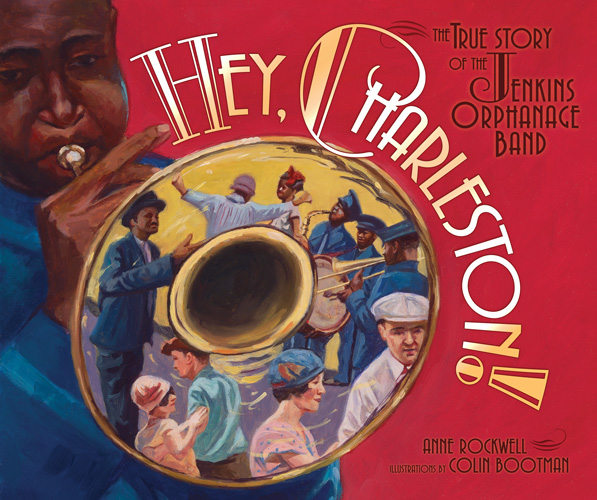
Hey, Charleston! The True Story of the Jenkins Orphanage Band

Written by Anne Rockwell | Illustrated by Colin Bootman


“Have you ever known someone who was always trying to turn bad into good, always seeing hope where others saw despair?” This question, which begins the biography of Reverend Daniel Joseph Jenkins and the orphans he loved is as relevant today as it was in the early 1900s, when this story takes place. Reverend Jenkins was the pastor of a small church in Charleston, South Carolina. One night while collecting scrap wood at a railroad yard, he discovered a group of boys huddled and sobbing inside a freight car. Reverend Jenkins took them to his church, fed them, and gave them a warm place to sleep. He knew what it was like to be an orphan because he had been one too.

Soon more orphans showed up at the church door, and Reverend Jenkins accepted them all. Room grew tight so he convinced the city officials to give him an abandoned warehouse for his orphanage. There was just one drawback: the warehouse was next to a prison, where less-than-desirable sounds emanated from the walls. Reverend Jenkins figured out a way to drown out the noise, however. He gathered the orphans and led them in song outside the orphanage door. The kids were good singers, and that gave the reverend an idea.

He had grown up during the Civil War and remembered the marching bands that led the soldiers into battle. He remembered the instruments these musicians carried and asked for any that were now unused to be donated to the children. Instruments poured in! They were polished and tuned and the children learned to play under the direction of the best teachers in Charleston. With the money Reverend Jenkins thought they could make entertaining people, he planned to buy a farm for the orphans.

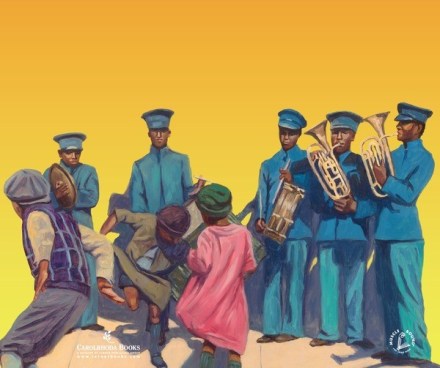
Soon the Jenkins Orphanage Band was playing on street corners and in other venues. Many of the kids were descended from the Geechee or Gullah people who lived on islands off the coast of South Carolina, and they played the old band music with their own special rhythm, called “rag.” “A couple of Geechee boys would lead the band by doing a dance—twisting and twirling and tapping their toes, knocking their knees, and flapping their arms.” People loved the music, but most South Carolinians were poor and couldn’t donate much to the orphans. Reverend Jenkins decided to take his band to New York City. The band took the city by storm! People loved when the kids played their raggedy music and soon were imitating the Geechee boys’ dance. “Hey, Charleston,” they’d shout, “Give us some rag!” They called the dance “the Charleston,” and soon everyone was doing it.

celebrate-picture-books-picture-book-review-hey-charleston-interior-art

The orphans made so much money they were able to buy a new house, and the music instruction became so renowned that families began paying to have their children taught along with the orphans. The band continued to travel around the United States, and they were even invited to perform in the inaugural parade for President Theodore Roosevelt. Finally, they were able to buy the farm Reverend Jenkins had dreamed of.

In 1914 the Jenkins Orphanage Band was even invited to play for Britain’s King George V at the Anglo-American Exposition in London. While they were there, however, Britain entered World War I. The British government ensured that the band had safe passage back home, but many other Americans were stranded in England. Reverend Jenkins offered to lend these citizens the money needed for them to return home as well.

The ship sailed silently through the dangerous Atlantic Ocean until it reached an American port. Once safe the passengers shouted, “‘Hey, Charleston! Give us some rag!’” Happy to be home, the band tuned up their instruments and played loudly and enthusiastically for the shipboard audience. As the passengers disembarked in New York Harbor, crowds greeted them with a hearty welcome. Back home “as they lay down to sleep that night, those band players knew they had done what Reverend Jenkins always taught them. They had turned bad into good.”

Anne Rockwell succinctly and clearly relays the story of the Jenkins Orphanage Band while also retaining all the heart and soul of this fascinating group of children and their dedicated caregiver. The true-life tale is mesmerizing, not only for the historical details of the growth of ragtime music and the Charleston dance but for the accomplishments of the orphans once given love, acceptance, and education. Rockwell’s conversational tone contributes to the story’s smooth, flowing pace, which will keep listeners or readers rapt from beginning to end.

Colin Bootman’s bold two-page spreads illuminate the sights and sounds of the early 1900s for readers. Emphasizing the personal connections between Reverend Jenkins and the orphans as well as the band and their audiences, Bootman’s vibrant paintings are full of people watching, dancing, marching, and celebrating these boys’ awesome gifts.

Ages 6 – 10

Carolrhoda Books, 2013 | ISBN 978-0761355656

World Music Day Activity

celebrate-picture-books-picture-book-review-musical-instruments-word-search


It’s Instrumental Word Search


Triangles may not get a lot of play in an orchestra, but there’s plenty of play in this printable It’s Instrumental Word Search that contains the names of 20 instruments!