April 29 – It’s National Month of Hope

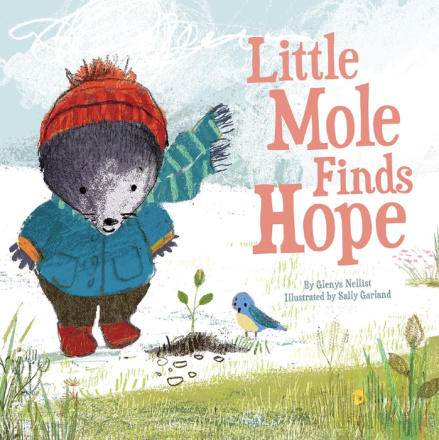
celebrate-picture-books-picture-book-review-little-mole-finds-hope-cover

About the Holiday

Founded in 1991, National Month of Hope encourages people to bring hope to those in need both emotionally and physically. Reaching out to let a friend know you’re there for them, volunteering to help out in the community or on a personal level, and simply sharing a smile with those around you are all ways to show others you care. These days, staying in touch online and checking up on family and friends spreads happiness and hope for when we can all be together again. 

Little Mole Finds Hope

Written by Glenys Nellist | Illustrated by Sally Garland


Little Mole felt sad. He didn’t know why he felt bad inside, he just did. His mama told him he needed to find hope. Little Mole wondered where. As she took his paw, Mama said, “‘Sometimes, hope is hiding in the darkness. Sometimes it’s hard to see. But it’s always there.'” Mama led her son out of the tunnel, but on the way she pointed out a “brown, wrinkled” bulb hanging from the ceiling. Little Mole thought it was dead.

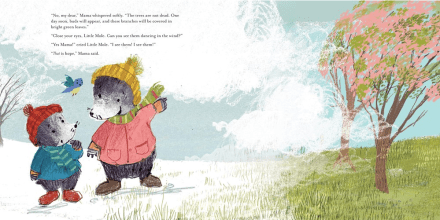
But Mama explained that that bulb would someday soon become a lovely daffodil. She asked her son to picture it swaying with the breeze, and when he said he could see it, she told him “That is hope.'” When they crawled out of the burrow, Little Mole saw trees without leaves. “They stretched out like skeleton bones silhouetted against the sky.” Little Mole thought they were dead. But Mama explained that buds and then leaves would soon appear. She asked Little Mole to imagine it. With excitement he told her he could see it. Again, Mama said, “‘That is hope.'”

celebrate-picture-books-picture-book-review-little-mole-finds-hope-trees

Image copyright Sally Garland, 2020, text copyright Glenys Nellist, 2020. Courtesy of Beaming Books.

Mama and her little one continued on past Mr. Rabbit’s garden, where they saw another example of hope hiding in an unexpected place. When they got home, Little Mole was happy.He said he’d had a wonderful day and understood that “there was always hope, even in the darkest places.” Mama tucked her son into bed with a kiss, and Little Mole fell asleep dreaming of the colorful spring to come.

Back matter includes a Discussion Guide for Caretakers that gives them tools for talking about the story, tips on helping a child who feels sad, and how to share their own experiences and where hope can be found.

Glenys Nellist’s uplifting story could not have come at a better time. With children at home and their normal lives disrupted, many may be feeling sad and unusually stressed. While many things have changed, there are still those aspects of life that remain constant. A parent or caregiver’s love is one; signs of spring and summer are another. Nellist’s honest and straightforward storytelling, acknowledges feelings of sadness and the fact that they are often unattributable to any concrete cause. Mama’s gentle acceptance of her son’s emotions and her actions in showing him signs of renewal will resonate with children familiar with the cycles of winter and spring and give adults models for conversations with their own children. Perfectly paced, Nellist’s book provides opportunities for adults and kids to look for other constants in their lives and to reaffirm their love for one another––now and always.

Sally Garland’s textured illustrations, rendered in warm tones that reveal the coziness of the Mole’s home and vibrant, sunny colors as Little Mole imagines springtime, will delight children and draw them into the meaning of the story. As Mama clearly points out the bulb, the bare trees, and a sleepy chrysalis, children will enjoy guessing what each will become and how they represent hope. Readers will also like finding other symbols of hope and signs of Mama’s and Little Mole’s love throughout the story.

Lovely in every way and highly recommended for talking with children about their feelings, Little Mole Finds Hope is a book kids will enjoy for its storytelling and its heart again and again.

Ages 3 – 6

Beaming Books, 2020 | ISBN 978-1506448749

Discover more about Glenys Nellist and her books on her website.

You can learn more about Sally Garland, her books, and her art here.

Month of Hope Activity

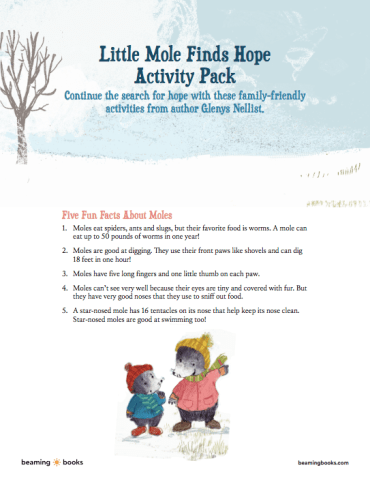
celebrate-picture-books-picture-book-review-little-mole-finds-hope-activity-kit-image

Little Mole Finds Hope Activity Pack


You can find lots of fun in this printable activity pack found on the Beaming Books website.

Little Mole Finds Hope Activity Pack

celebrate-picture-books-picture-book-review-little-mole-finds-hope-cover

You can find Little Mole Finds Hope at these booksellers

Amazon | Barnes & Noble | Books-a-Million | IndieBound


April 28 – National Superhero Day

celebrate-picture-books-picture-book-review-superheroes-don't-babysit-cover

About the Holiday

Today, we celebrate superheroes—both fictional and real—who make the world a better place. While fictional superheroes have uncommon strength, endless courage, and powers that defy nature, it doesn’t take super abilities to make a difference. Especially now, nurses, doctors, first-responders, teachers, and workers at grocery stores, pharmacies, factories, and so many other places are on the front lines of the pandemic response with the commitment and dedication of superheroes. Moms, dads, grandparents, caregivers, and kids all over the world are also stepping up whenever and however they’re needed. Celebrate today by thanking the superheroes in your life.

I received a copy of Superheroes Don’t Babysit for review consideration. All opinions about the book are my own.

By Jakki Licare

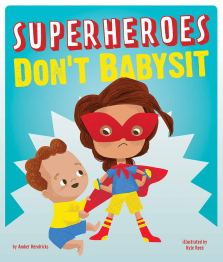
Superheroes Don’t Babysit

Written by Amber Hendricks | Illustrated by Kyle Reed


Has this ever happened to you? “You’ll be saving the city from the evil Emperor Zog when…your dad asks for a favor.” That is what happened to the little girl in this story. All she wanted to do was to play superheroes when she was asked to watch her little brother. Of course, she doesn’t want to because she has important world-saving plans for her day. “Plans that don’t include little brothers.” And who has ever heard of a superhero babysitting anyway?

celebrate-picture-books-picture-book-review-superheroes-don't-babysit-dad-asks

Image copyright Kyle Reed, 2020, text copyright Amber Hendricks, 2020. Courtesy of Beaming Books.

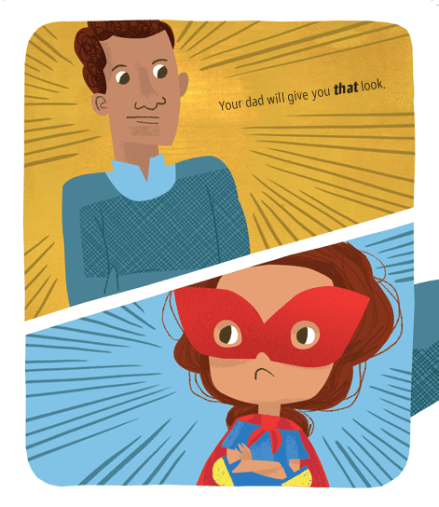
After receiving “the look” from her father, though, she agrees to watch her brother. Of course, immediately after her father leaves, her brother is starving! She consults “the list of Dad-approved snacks (because superheroes follow the rules)” and makes him a healthy “plate of cheese and crackers.”

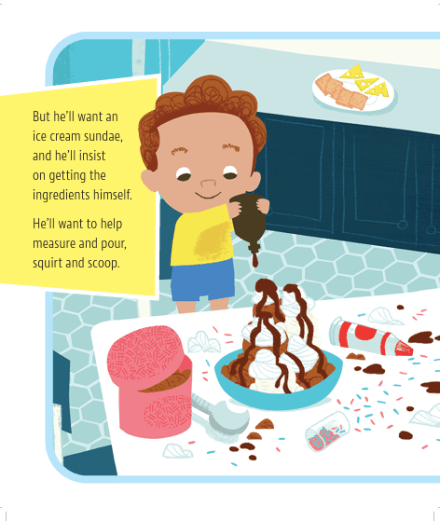
But her brother has already pulled out all the ingredients for an ice cream sundae and is determined to have one. She just knows “he’ll want to measure and pour, squirt and scoop,” and he does. Resigned, the girl helps him and feels proud for assisting a fellow citizen. That is until she sees how messy the kitchen has become! Just before she begins to wipe everything down, she notices something smells awful. She investigates, looking just where you would look, you know: “the normal places—the trash can, the bathroom, your socks—before realizing the smell is coming from” her brother!

celebrate-picture-books-picture-book-review-superheroes-don't-babysit-that-look

Image copyright Kyle Reed, 2020, text copyright Amber Hendricks, 2020. Courtesy of Beaming Books.

She gears herself up for the dangerous battle. Diapers are challenging even for superheroes, but she manages to get one on him (with the help of some extra tape). Her revelry is short-lived, though, because her brother decides to play with her action figures and breaks one! Then he cries and she feels like crying too. She might even feel like yelling “‘I wish you weren’t my brother!’”

celebrate-picture-books-picture-book-review-superheroes-don't-babysit-sundae

Image copyright Kyle Reed, 2020, text copyright Amber Hendricks, 2020. Courtesy of Beaming Books.

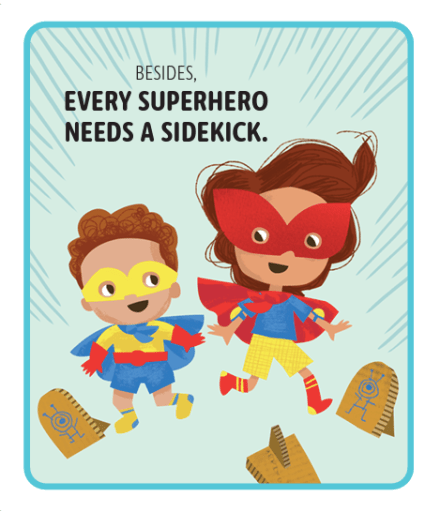
But, instead, she closes her eyes and slowly counts to ten. By the time she gets to ten, her brother apologizes and hugs her. He offers her his favorite teddy bear as a replacement, and “that icky feeling inside” melts away. So when he asks her “to read him his favorite story,” she does—“six times.” He falls asleep and even drools a little on her. It doesn’t bother her, though, because “EVERY SUPERHERO NEEDS A SIDEKICK.”

celebrate-picture-books-picture-book-review-superheroes-don't-babysit-sidekick

Image copyright Kyle Reed, 2020, text copyright Amber Hendricks, 2020. Courtesy of Beaming Books.

Amber Hendrick’s use of the 2nd person point of view gives this story a fresh spin and will pull young readers immediately in. Young readers will relate to the main character’s problems of making messes and having her favorite toy broken. Hendrick’s humor will make readers giggle as they watch the girl outfit herself in safety gear just to change a diaper. The fact that the girl wants to yell and rant at her brother and chooses not to is a wonderful teaching opportunity. Adults can point out how boy’s sister takes a moment and counts to ten before reacting. It’s a terrific lesson for readers of any age.

Kyle Reed’s bright primary-colored illustrations make this a superhero theme that’s out of this world. The paneled frames of the father-daughter face off and the girl’s measured count to ten are a nice nod to comic books. Throughout the story, the sister and brother’s facial expressions clearly show readers their feelings as sibling rivalry gives way to their loving bond. When the two siblings make up, the black-and-white pixelated photos that Reed adds in the background are a nice touch to show the connections of family.

For kids who love superheroes or are superhero siblings themselves, Superheroes Don’t Babysit would be a fun and thoughtful addition to family storytimes.

Ages 4 – 7

Beaming Books, 2020 | ISBN 978-1506458762

Discover more about Amber Hendricks and her books on her website.

To learn more about Kyle Reed and see a portfolio of his work, visit his website.

National Superhero Day Activity

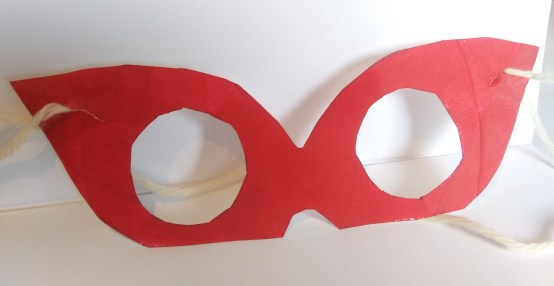
celebrate-picture-books-picture-book-review-superhero-mask-craft

Superhero Mask Craft


You can be a superhero too by making your own SUPERHEROES DON’T BABYSIT mask

Supplies

  • Printable Superhero Mask Template
  • Paper Plate
  • Pencil
  • Scissors
  • Paint or Colored Pencils
  • String or elastic or ribbon

Directions

  1. Print out template.

  2. Cut out template and eye holes.

  3. Trace template onto paper plate. Don’t forget to trace the eye holes too!

  4. Cut out masks and eyeholes.

  5. Cut a slit towards the top left of the mask for string. Then, make another slit on the top right side.  

  6. Paint or Color your mask

  7. Tie string, elastic or ribbon through slits

  8. Go and save the world!

celebrate-picture-books-picture-book-review-superheroes-don't-babysit-cover

You can find Superheroes Don’t Babysit for preorder at these booksellers

Amazon | Barnes & Noble | Books-a-Million | IndieBound

Picture Book Review

April 26 – National Tell a Story Day

celebrate-picture-books-picture-book-review-my-bison-cover

About the Holiday

Today’s holiday was established to celebrate the art of storytelling. Highlighting the tradition of oral storytelling, the day encourages families to get together and have fun remembering and sharing family tales. Reading together is another wonderful way to discover your own stories and those of others around the world.

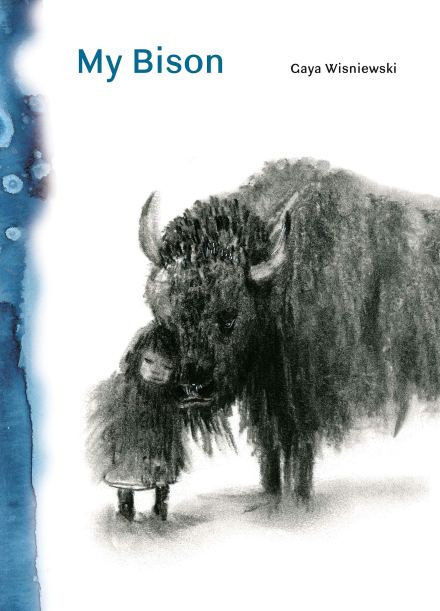
My Bison

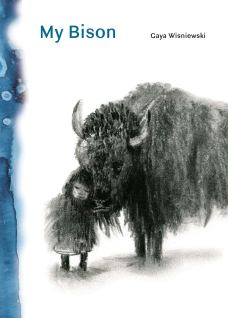
By Gaya Wisniewski


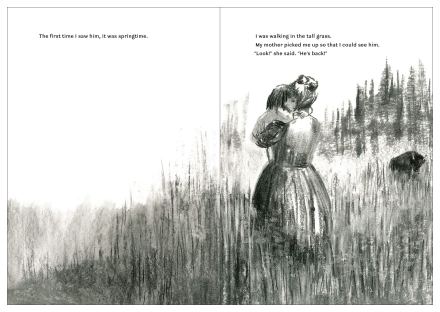
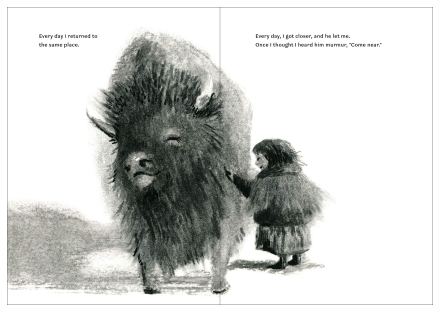
The first time a little girl meets the bison she was walking with her mother through a field of tall grass. “‘Look!’” her mother said. “‘He’s back!’” Every day after that the girl went out into the field to see the bison, coming a little closer each time until she was able to pet him. Once, she even thought she heard him whisper an invitation to come closer.

celebrate-picture-books-picture-book-review-my-bison-first-time

Image copyright Gaya Wisniewski, 2020, courtesy of Princeton Architectural Press.

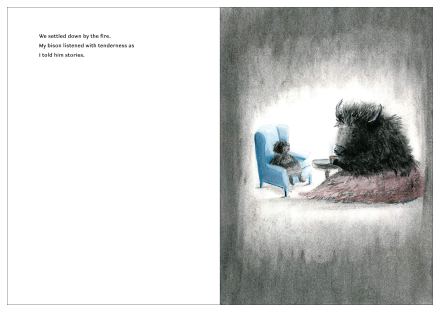
The little girl began to feed him food she’d made herself. Sometimes he didn’t like it, but he always tried it and that made her happy. One day it was time for him to move on with the rest of the herd. The girl walked with him as far as she could. When she said goodbye, the bison gave her a long look and she “knew he’d be back when snow covered the ground again.” The girl was lonely without him, but when winter returned she knew he had too without even seeing him. Now, seated together near the fire, the girl told him stories about the forest and what she’d done over the year while he, silent, “listened with tenderness.” She loved everything about him and loved him with her whole heart.

celebrate-picture-books-picture-book-review-my-bison-come-near

Image copyright Gaya Wisniewski, 2020, courtesy of Princeton Architectural Press.

The girl and the bison grew old together, winter to winter, never feeling the cold of the snow. Once, they talked all night about their mothers. The girl remembering the first time her mother had shown her the bison, how she had comforted her and taught her the lessons of nature. She missed her mother so much, she told him, and imagined he missed his mother too.

celebrate-picture-books-picture-book-review-my-bison-tea

Image copyright Gaya Wisniewski, 2020, courtesy of Princeton Architectural Press.

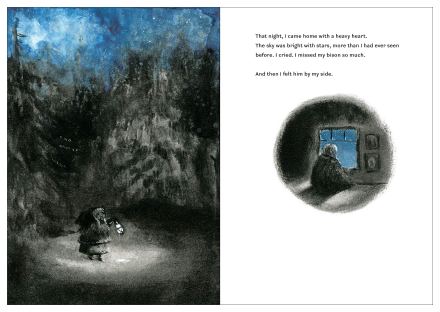
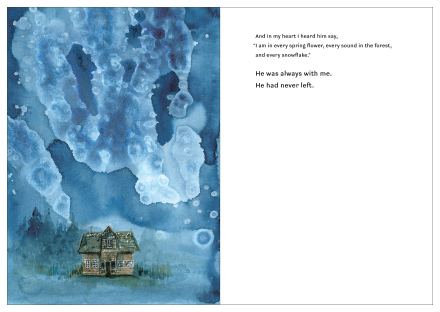
One winter the bison didn’t return and no amount of looking could find him. The girl, now an old woman, went home. She cried with missing him. And then just as in those winters so long ago when she felt his presence without seeing him, she knew he was with her. In her heart she “heard him say, ‘I am in every spring flower, every sound in the forest, and every snowflake.’” And she knew he was with her always.

celebrate-picture-books-picture-book-review-my-bison-night

Image copyright Gaya Wisniewski, 2020, courtesy of Princeton Architectural Press.

Gaya Wisniewski’s stunning and gorgeous story about a friendship between a little girl and a bison is deeply moving, it’s straightforward and metaphorical meanings blending in harmony to settle in a reader’s heart. The girl’s and bison’s relationship is one of mutual respect and trust, and they are in many ways alike. With her shaggy coat and tousled hair, the girl looks like a miniature bison, while the bison is perfectly comfortable sitting at the table near the fire sipping hot chocolate or snoozing in the cozy built-in bed  in the girl’s home. The girl loves the bison the way children love their pets, and the way she takes care of him replicates a mother’s tender affection and attention.

Here the text and images take on deeper meanings as the little girl offers the bison homemade food, holding her long-handled spoon to his mouth the way mothers the world over do for their babies. She walks with him to the edge of the clearing as he leaves in the spring, waving goodbye but with the promise of his return like a mother taking her child to the bus stop, seeing them off to college, or watching them move away.

celebrate-picture-books-picture-book-review-my-bison-sky

Image copyright Gaya Wisniewski, 2020, courtesy of Princeton Architectural Press.

At other times the bison seems to take on the role of the mother. In the endearing illustration of the bison and the girl talking over cups of hot chocolate, the girl relates how the bison would listen to her stories. Later, readers learn that her mother made her hot chocolate when she couldn’t sleep, letting them imagine how the little girl might have told her mother about her day, about the things keeping her awake. The china cup also holds the bison’s memory of cuddling with his mother, their fur smudged and merging with the steam rising from the hot drink. This blending of roles subtly demonstrates the cycles of life and the reciprocal nature of love.

Readers don’t know when the girl lost her mother; but a snapshot of the girl playing Ring around the Rosie with her and her teddy bear, in which only the mother’s arms are visible at the side of the page and the circle of light highlighting this scene is surrounded by darkness, hints at the loss. As the bison and the girl grow old together and there comes the winter when the bison does not return readers discover that any great love is always with them.

Wisniewski’s charcoal and ink illustrations, punctuated with blue create a mystical, dreamlike atmosphere where the forest and the mountains, the girl and the bison reach out to embrace the reader and invite them into this world of a love like no other.

A tender story to share all types of unending love with children, My Bison would be a poignant addition to home, school, and public library collections.

Ages 4 – 7

Princeton Architectural Press, 2020 | ISBN 978-1616898861

To learn more about Gaya Wisniewski, her books, and her art, visit her website.

National Tell a Story Day Activity

celebrate-picture-books-picture-book-review-tell-a-story-maze

Tell a Story Maze


This puzzle may look like a regular maze, but there’s a secret to it! Within this maze is any story you’d like to make up. Why do you go left instead of right? Are you avoiding a zombie or a rain shower? Why do you go up instead of down? Is it because you can you float? What lurks in that dead end you’ve entered? There are as many cool stories as you can imagine right in those little pathways. And when you find your way to The End, you’ll have written a story with this printable puzzle!

Tell a Story Maze | Tell a Story Maze Solution 

celebrate-picture-books-picture-book-review-my-bison-cover

You can find My Bison at these booksellers

Amazon | Barnes & Noble | Books-a-Million | IndieBound

Picture Book Review


April 25 – National Zucchini Bread Day

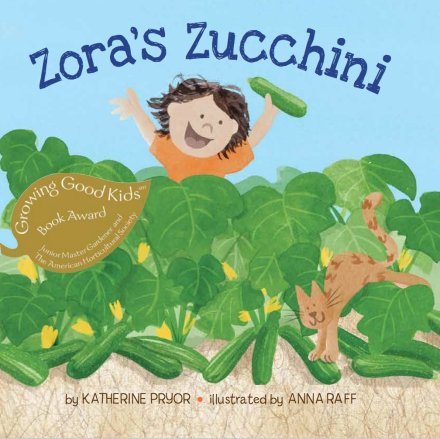
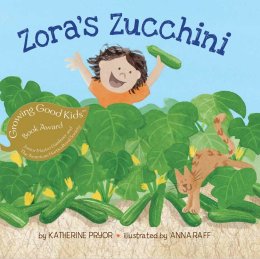
celebrate-picture-books-picture-book-review-zora's-zucchini-cover

About the Holiday

Today’s holiday seems to anticipate the prolific zucchini and yellow squash yields of summer gardens. Of course, they’re delicious too—giving a snap of flavor to side dishes, salads, pastas, and even breads—but, really, how do you keep up with the harvest? Today’s holiday offers a suggestion. And today’s book offers a humorous and creative way to share the bounty. Even if we can’t get together in person right now, we can always enjoy a great book and the scrumptious recipe at the end of this post!

Zora’s Zucchini

Written by Katherine Pryor | Illustrated by Anna Raff


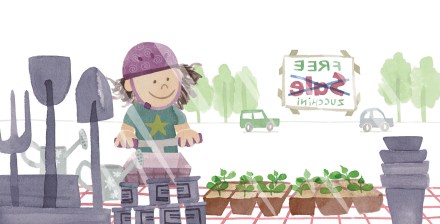
Summer vacation was only three days old, but already Zora was bored. She was tired of riding her bike aimlessly around the neighborhood. But this time when she rode through town, she noticed a Free Zucchini sign in the window of the hardware store. She liked that the plant’s name began with a Z like her name, so she loaded up her basket and went home.

celebrate-picture-books-picture-book-review-zora's-zucchini-window

Copyright Anna Raff, 2015, courtesy of annaraff.com and Readers to Eaters.

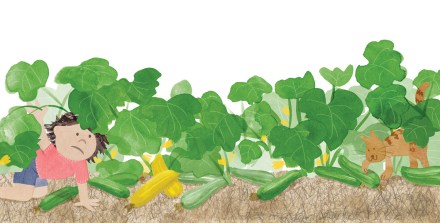
Zora showed her dad her new plants. As she carefully dug in the garden and settled them in, her dad said “‘That’s going to be a lot of zucchini.’” “‘We’ll eat it!’ Zora promised.” All June and July, Zora tended her garden, cheering “every time she saw a yellow-orange zucchini blossom.” When Zora saw her first zucchini, she picked it and ran inside to show her family. Soon, they were enjoying zucchini for breakfast, lunch, and dinner. There was zucchini bread, zucchini soup, and grilled zucchini. “By the first day of August, Zora’s garden was a jungle of prickly, tickly, bushy, blossomy plants,” and each one “was covered in zucchini. There was no way her family could eat it all.”

celebrate-picture-books-picture-book-review-zora's-zucchini-lots-of-zucchini

Copyright Anna Raff, 2015, courtesy of annaraff.com and Readers to Eaters.

When Zora peeked into her neighbor’s yard, she noticed there was no zucchini in her garden—but plenty of tomatoes. She asked Mrs. Thompson if she’d like to trade. Mrs. Thompson was delighted to swap a bushel of tomatoes for a bushel of zucchini. But Zora’s zucchini kept on coming. “‘This is crazy,’ Zora said.” She filled her bicycle basket and rode through the neighborhood, giving them all away. But the day after that, more zucchini was ripe for picking. Then Zora had an idea and got her family involved. “Her brother painted the signs. Her parents printed the fliers. Zora and her sister posted them all over the neighborhood.”

celebrate-picture-books-picture-book-review-zora's-zucchini-mrs-thompson

Copyright Anna Raff, 2015, courtesy of annaraff.com and Readers to Eaters.

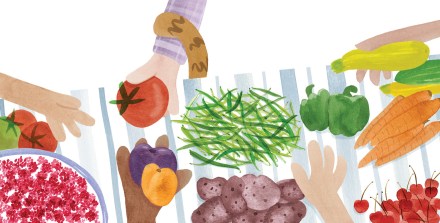
On Saturday, Zora stood next to her homemade stand that sported a sign that read: “Take a Veggie, Leave a Veggie” with an added entreaty that said “Or at least please take some zucchini.” As sun rose in the sky, though, no one had visited her stand. But then Mrs. Rivera came by with a bowl of raspberries, Mr. Peterson brought potatoes, and others traded carrots, green beans, and peppers as well as apricots, plums, and cherries. “Zora traded and traded until all her zucchini was gone.”

But Zora’s Garden Swap stand had done much more than share fruits and vegetables. As she looked around at all of the people laughing, talking, and nibbling, she realized that “her zucchini garden had brought so many people together.” She couldn’t wait for next year’s garden!

Back matter includes a note about gardening and the amount of food from a prolific garden that can go to waste. It also includes ideas for donating, preserving, and sharing excess harvests.

celebrate-picture-books-picture-book-review-zora's-zucchini-garden-swap

Copyright Anna Raff, 2015, courtesy of annaraff.com and Readers to Eaters.

Katherine Pryor’s easy-going storytelling and gentle humor will charm kids with its realistic portrayals of the excitement that every growth spurt, bud, and blossom in a garden creates. As the zucchini keeps coming, Zora’s family’s willingness to keep trying new recipes is heartening, and their help in making her Garden Swap Stand a success shows welcome family unity and support. Zora’s outreach, first to one neighbor, then to individuals throughout her neighborhood, and finally through her stand, encourages creative problem-solving. As Zora realizes that her garden has brought many people together, readers will also embrace the ideas of camaraderie and sharing and see that they too can foster such friendship in their school and community. For today’s food-savvy and socially conscious kids, Pryor’s addressing the issue of food waste and ways to share our bounty with others will appeal to and resonate with children.

celebrate-picture-books-picture-book-review-zora's-zucchini-biking

Copyright Anna Raff, 2015, courtesy of annaraff.com and Readers to Eaters.

Anna Raff’s cheery illustrations sparkle with the enthusiasm of children who go all in on a new interest. Kids will love seeing the zucchini plants grow from tiny seedlings to leafy giants that produce a flood of zucchini. Raff clearly shows Zora’s disbelief in her inexhaustible supply of squash and puzzlement as to what to do with it all, letting readers join in on her ever-growing problem. As Zora tries one solution after another and then hits on an idea, suspense grows, helped along with Raff’s visual clues in the signs and fliers her family makes. When the neighbors come together, smiling and chatting, at Zora’s stand, readers can see what a close-knit community can accomplish.

Sure to inspire a child’s interest in gardening and community sharing, Zora’s Zucchini, an award-winning book, is a fantastic addition to home, classroom, and public library shelves. The book also makes a fun pairing with picnics and visits to farmers markets and food festivals.

Ages 4 – 10

Eaters to Readers, 2015 | ISBN 978-0983661573 (Hardcover) | ISBN 978-0998436616 (Paperback, 2017)

Discover more about Katherine Pryor and her books on her website.

To learn more about Anna Raff, her books, and her art, visit her website.

National Zucchini Bread Day Activity

celebrate-picture-books-picture-book-review-creme-de-la-crumb-cinnamon-swirl-zucchini-bread

Cinnamon Swirl Zucchini Bread from Creme de la Crumb


If you have zucchini to spare, you’ll love this delicious zucchini bread from Creme de la Crumb that’s sweet and moist and flavored with the homey taste of cinnamon! To find this scrumptious recipe and lots more, visit Creme de la Crumb!

Creme de la Crumb’s Cinnamon Swirl Zucchini Bread

celebrate-picture-books-picture-book-review-zora's-zucchini-cover

You can find Zora’s Zucchini at these booksellers

Amazon | Barnes & Noble | Books-a-Million | IndieBound

Picture Book Review

April 24 – Arbor Day

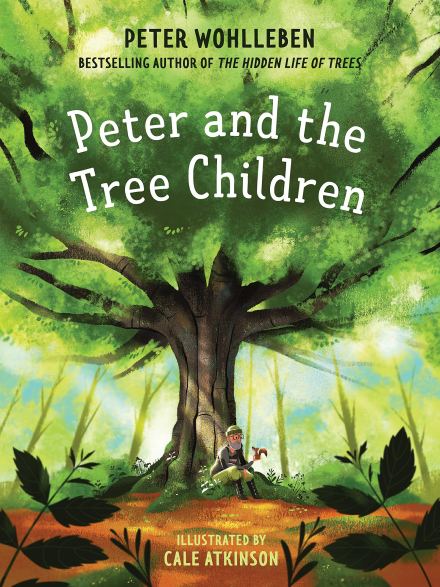
celebrate-picture-books-picture-book-review-peter-and-the-tree-children-cover

About the Holiday

Today is Arbor Day, a national celebration of trees that began as a campaign by J. Morton Sterling and his wife after they moved from Michigan to Nebraska in 1854. Morton advocated for the planting of trees not only for their beauty but as windbreaks for crops on the state’s flat farmland, to keep soil from washing away, as building materials, and for shade. In 1872, Morton proposed a tree-planting day to take place on April 10. On that day nearly one million trees were planted in Nebraska. The idea was made official in 1874, and soon, other states joined in. In 1882 schools began taking part. Today, most states celebrate Arbor Day either today or on a day more suited for their growing season. To learn about events in your area, find activities to download, and more, visit the Arbor Day Foundation website.

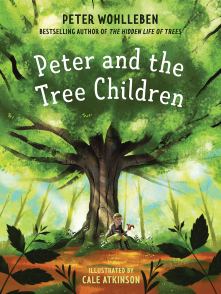
Peter and the Tree Children

Written by Peter Wohlleben | Illustrated by Cale Atkinson


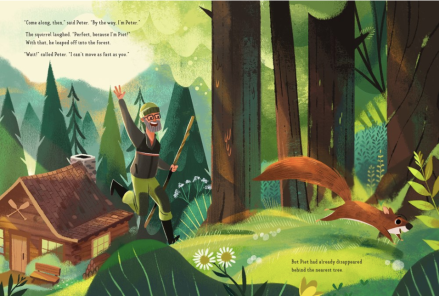
One day while Peter enjoyed his morning coffee on his porch while listening to the birds singing, “a squirrel scampered up and sat down next to him as though they were old friends.” With tears in his eyes, the squirrel told Peter that he was all alone with no family. Peter was empathetic—his children didn’t live with him anymore—but, he said, “‘I still have the trees.’” He then told the squirrel how tree families live in the forest and asked if he would like to go look for some. This cheered the squirrel, and they headed out into the woods. On the way, Peter introduced himself, and the squirrel said his name was Piet.

celebrate-picture-books-picture-book-review-peter-and-the-tree-children-piet

Image copyright Cale Atkinson, 2020, text copyright Peter Wahlleben. Courtesy of Greystone Kids.

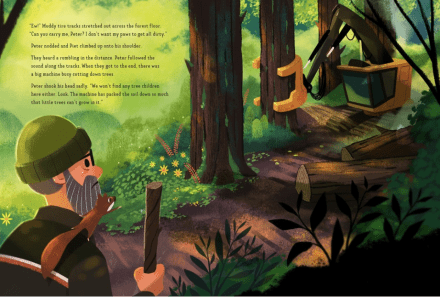
When they reached a sunny clearing, Piet wondered where the tree children were. Peter told him it was too hot there and led the way deeper into the woods. The way was muddy, so Piet climbed on Peter’s shoulders. In the distance, they could hear a loud rumbling. As they grew nearer, they saw a “big machine busy cutting down trees.” Peter told Piet that they wouldn’t find tree children here either because the heavy machine had “‘packed the soil down so much that the little trees can’t grow in it.’”

celebrate-picture-books-picture-book-review-peter-and-the-tree-children-machine

Image copyright Cale Atkinson, 2020, text copyright Peter Wahlleben. Courtesy of Greystone Kids.

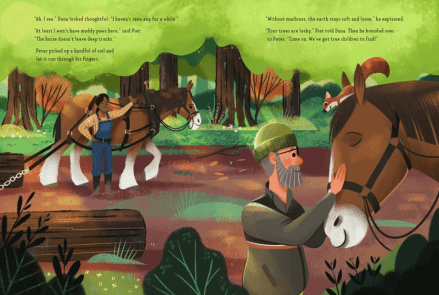
They walked on sadly until they heard another noise. It was Peter’s friend Dana and her horse dragging a tree trunk. Piet introduced himself and told Dana of their mission to find tree children. She said she hadn’t seen any for a long time while Peter explained to Piet that Dana’s horse left the soil soft and loose unlike the big machine. After a close call with a hawk, Piet rode in Peter’s jacket.

celebrate-picture-books-picture-book-review-peter-and-the-tree-children-Dana

Image copyright Cale Atkinson, 2020, text copyright Peter Wahlleben. Courtesy of Greystone Kids.

They came to a rocky overlook where they watched a crew planting small trees in a clearing below. Peter looked at all of the big trees that had been cut down, and his face turned red with anger. Piet sniffed one of the little trees, wondering if they’d found tree children at last. He liked the orangey scent the seedling gave off. But Peter told him the trees were sad. “‘This smell is how trees talk to each other, and it means that the trees don’t feel so well. They miss being shaded and protected by their families.’” He wanted to show Piet some happy trees.

celebrate-picture-books-picture-book-review-peter-and-the-tree-children-overlook

Image copyright Cale Atkinson, 2020, text copyright Peter Wahlleben. Courtesy of Greystone Kids.

At last they came to a dark, cool beech forest, where “the silvery-gray trees formed a roof of leaves way up high.” On the ground Piet noticed “‘butterflies everywhere.’” Peter chuckled and told him that those green fluttering wings weren’t butterflies but “‘freshly sprouted beech children.’” Now it was Piet’s turn to laugh. He told Peter how he had hidden beechnuts in this spot in the fall and then forgotten where he’d buried them. They both thought that this forest where beech trees and their children grew together was the most beautiful they’d ever seen.

The sun was beginning to set, so they started the long walk home. Back on Peter’s porch, Piet looked sad again. He didn’t eat the snack Peter brought him and a tear rolled down his cheek. Everyone had a family except him, he said. Peter picked Piet up and told him that he liked him very much. Then he invited him to stay. “Piet’s eyes grew wide. ‘Does that mean we’re family now?’” Peter replied “‘Of course.’” Piet smiled, and then they made plans to visit the tree children again tomorrow.

Back matter reveals five more fascinating facts about how trees grow.

celebrate-picture-books-picture-book-review-peter-and-the-tree-children-lodge

Image copyright Cale Atkinson, 2020, text copyright Peter Wahlleben. Courtesy of Greystone Kids.

Peter Wohlleben’s engaging guides, Peter and Piet, educate children about the conditions necessary for trees to grow from seed to adult in his follow up to The Hidden Life of Trees for adults and Can You Hear the Trees Talking? For older children. In an attempt to cheer up Piet, Peter takes him into the forest in search of tree families and their little ones. Along the way, readers learn about the harmful effects of heavy logging machinery and the benefits of sustainable forestry. They also discover the fascinating fact that trees talk to each other through scent, which will inspire them to learn more. Adverse conditions and natural dangers draw Peter and Piet closer together, building a bond that culminates in Peter’s adopting Piet as a new family member. This turn of events, as well as Piet’s part in helping to foster the tree children they find, will cheer young readers.

Little ones will immediately empathize with Cale Atkinson’s cute squirrel, Piet, as he shares his sadness at not having a family with Peter. As Peter and Piet head into the forest, Atkinson’s sun-dappled pages invites readers to point out the butterflies, caterpillars, and flowers along their route. Kids may be surprised to see Dana and her horse and want to learn more about this type of forestry. Images of the impressive beech tree and thriving tree children will spur readers to look for young seedlings and saplings among stands of trees in their own area.

Ages 4 – 8

Greystone Kids, 2020 | ISBN 978-1771644570

Discover more about Peter Wohlleben, his books, and his work on his website.

To learn more about Cale Atkinson, his books, and his art, visit his website.

You can find Peter and the Tree Children at these booksellers

Amazon | Barnes & Noble | Books-a-Million | IndieBound

celebrate-picture-books-picture-book-review-can-you-hear-the-trees-talking-cover

Can You Hear the Trees Talking? Discovering the Hidden Life of the Forest

By Peter Wohlleben


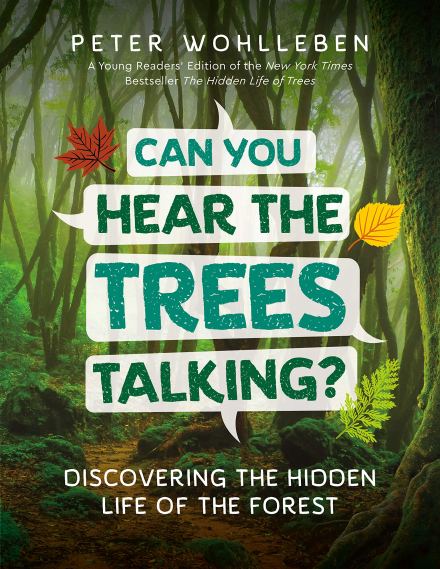
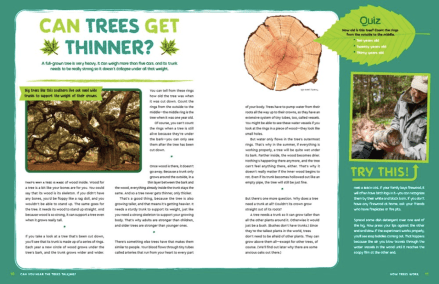
For older children, Peter Wohlleben’s endlessly astonishing Can You Hear the Trees Talking? Reveals the depth of senses, awareness, and long-lasting family bonds that trees possess. In seven chapters, Wohlleben discusses in a conversational tone how trees work, what it’s like for them growing up in a forest, trees’ friends and enemies, how types of trees are different, forest animals, the impact of trees, and a tree’s transformations over a year. Each chapter is broken into short sections of discussions on one topic, illustrated with stunning photographs that clearly depict the concept.

Here are just a few highlights:

From Do Trees Have Grandparents?: Trees can recognize members of their own family. How? Through their roots! “If a tree’s roots meet those of a neighboring tree, the can check whether they belong to the same species.” If they are related, “now their roots will grow together. The trees send messages and exchange the sugar they have made through this connection. It’s as if they’ve invited each other to dinner.” And what about old stumps? Looking at the condition of the stump can tell you a lot. “If the bark is falling off and the stump is rotten, the tree is out of touch with its neighbors” and is no longer alive. “If the edge of an old stump is very hard and still has solid bark, the stump is still alive… [and] getting food from its family through its roots.”

Screen Shot 2020-04-23 at 4.23.16 PMcelebrate-picture-books-picture-book-review-can-you-hear-the-trees-talking-breathe

Copyright Peter Wohlleben, 2019, courtesy of Greystone Kids.

In What Do Tree Children Learn at School? kids discover that mother trees don’t leave their children alone and on their own. Mother trees search out their children with their roots, and when they’ve found them, these caring mothers connect with their babies and nurse them with sugar water. They need this nourishment because “in an old-growth forest, it’s very dark at ground level. With so little light, the tree children can’t produce their own sugar with their leaves, so they have to rely on their parents.

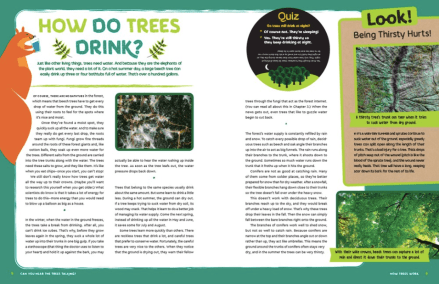
Can Trees Talk? Reveals that “a single tree notices when something bites it. After the initial shock, the tree will taste who is nibbling on it. Yes, you read that right: trees can taste. Because whenever an animal bites into the bark, a leaf, or a branch, it injects a bit of saliva into the wound. And every animal’s spit tastes different.” The tree then pumps a foul-tasting or even poisonous liquid into the site that wards off the predator. For example, to defeat bark beetles, trees “release a sticky, bitter substance called pitch” that trap beetles. The tree then alerts other trees to the danger by releasing a scent that causes nearby trees to begin generating pitch for themselves.

celebrate-picture-books-picture-book-review-can-you-hear-the-trees-talking-drink

Copyright Peter Wohlleben, 2019, courtesy of Greystone Kids.

We all know that animals, such as squirrels, hide food for the winter, but did you know that jays are masters of this autumn task? In Who’s the Best Forest Detective? Kids learn that when jays bury nuts and worms there are certain considerations. “Acorns and beechnuts remain fresh for more than six months, while dead earthworms only last a few days. The bird knows it has to eat the worms first so they don’t spoil.” And with the ability to “remember up to ten thousand hiding places,” quickly finding his stash is easy. “Usually, two thousand acorns and beechnuts are enough to see it through the winter. But because the jay can’t be sure that will be enough, it prefers to bury a few thousand more just in case.”

celebrate-picture-books-picture-book-review-can-you-hear-the-trees-talking-thinner

Copyright Peter Wohlleben, 2019, courtesy of Greystone Kids.

With quizzes, prompts for observation, and interesting experiments to try, Can You Hear the Trees Talking? will keep young readers riveted to the pages and eager to get out into nature to explore the trees in a forest, a park, in their neighborhood, and close to home. This book would make a superb and often-referred-to addition to home, school, and public library collections.

Ages 8 – 12 and up

Greystone Kids, 2019 | ISBN 978-1771644341

You’ll find a Can You Hear the Trees Talking? Companion Guide for parents and teachers to download on the Greystone Books website.

Discover more about Peter Wohlleben, his books, and his work on his website.

You can find Can You Hear the Trees Talking? at these booksellers

Amazon | Barnes & Noble | Books-a-Million | IndieBound

Arbor Day Activity

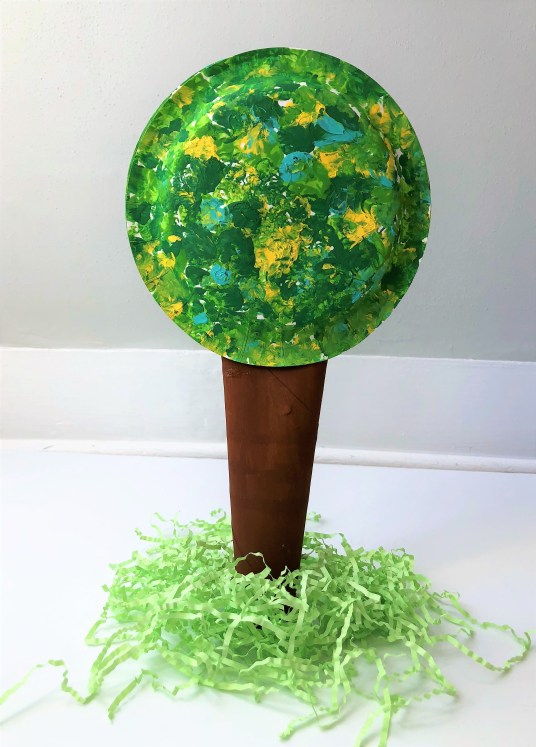
celebrate-picture-books-picture-book-review-paper-plate-tree-craft-2

Paper Plate Tree


On Arbor Day children love planting trees in their yard or as part of a community project. With this easy craft, they can also make a tree for the table or to hang on their wall or bulletin board.

Supplies

  • Two paper plates 
  • Paper towel tube
  • Brown craft paint
  • Green craft paint (using a variety of green paints adds interest)
  • Paintbrush, cork, or cut carrot can be used to apply paint
  • Glue or hot glue gun or stapler

Directions

  1. Paint the paper towel tube brown, let dry
  2. Paint the bottoms of the two paper plates with the green (or other color) paints, let dry
  3. Flatten about 4 inches of the paper towel tube 
  4. Glue or tape the flat part of the paper towel tube to the unpainted side of one paper plate
  5. Glue the edges of the two paper plates together, let dry.
  6. Pull out the bottom of the tube so the tree can stand up, or hang your tree on a wall or bulletin board or in a window

celebrate-picture-books-picture-book-review-peter-and-the-tree-children-cover

You can find Peter and the Tree Children at these booksellers

Amazon | Barnes & Noble | Books-a-Million | IndieBound

Picture Book Review

April 23 – National Frog Month

celebrate-picture-books-picture-book-review-pokko-and-the-drum-cover

About the Holiday

As the weather gets warmer, rain falls, and swampy areas and wetlands swell with water, the peeps and throaty croaks of frogs begins to fill the nighttime air. April is the perfect time to learn more about frogs and their importance to the ecosystem. Frogs are vital to the food system, and they eat insects that are harmful to crops and carry disease. Because they don’t drink water but absorb it through their skin, frogs are particularly susceptible to pollution. This, in addition to habitat destruction, climate change, and an increase in invasive species, threaten the frog population, making the conservation of their environment of utmost importance. This month, visit an aquarium, nature preserve, or zoo where you can learn more about these fascinating creatures.

By Jakki Licare

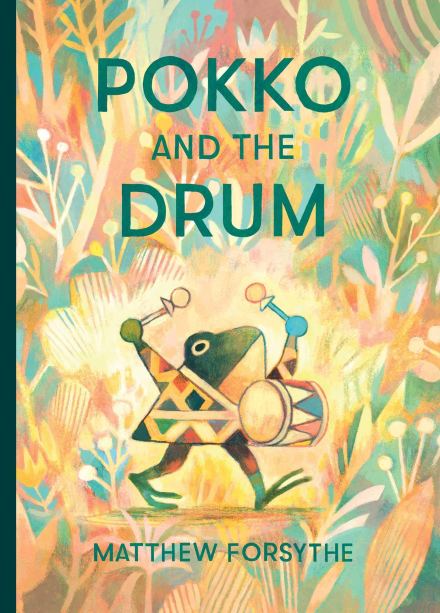
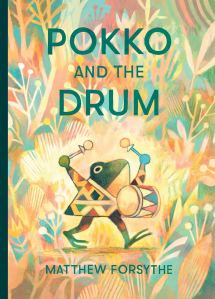
Pokko and the Drum

By Matthew Forsythe

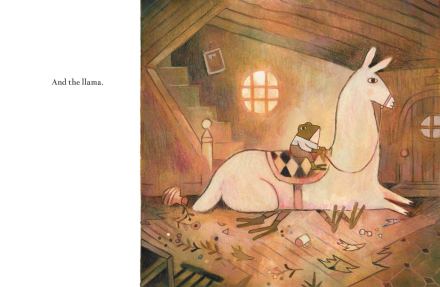
Pokko’s parents believe that giving Pokko a drum was the biggest mistake they have ever made. There had been other questionable gifts: Once, Pokko had tried to launch herself with the slingshot they had given her. The llama had been another poor choice since it liked to sit on Pokko’s parents. When Pokko’s parents had given her a balloon, it had carried Pokko away. “But the drum was the biggest mistake.” 

celebrate-picture-books-picture-book-review-pokko-and-the-drum-llama

Copyright Matthew Forsythe, 2019, courtesy of Paula Wiseman Books/Simon & Schuster.

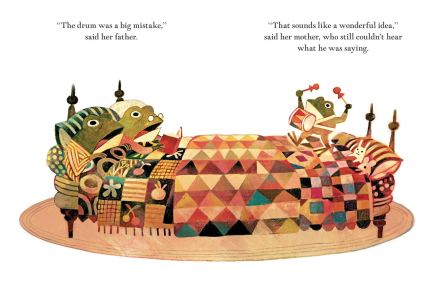
Pokko’s father tries to complain to his wife about giving Pokko the drum, but she shouts back that she can’t hear him over the noise. In bed that night, Pokko continues to beat her drum. Her father continues to complain, but still no one can hear him. The next day, Pokko’s father suggests that Pokko take the drum outside. She can’t be too loud though, he explains, because they are a quiet family who likes to keep to themselves. Pokko agrees and takes the drum outside.

celebrate-picture-books-picture-book-review-pokko-and-the-drum-bed

Copyright Matthew Forsythe, 2019, courtesy of Paula Wiseman Books/Simon & Schuster.

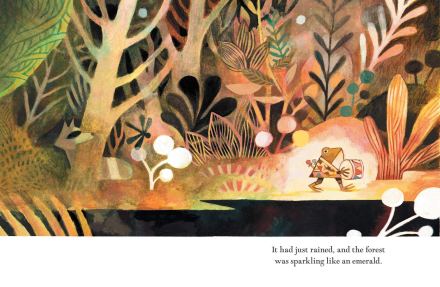
“It had just rained, and the forest was sparkling like an emerald.” Pokko thinks the forest is a little too quiet. She narrows her eyes and decides it is definitely too quiet. She starts to gently hit her drum. Behind her something moves. A raccoon playing a banjo emerges from the forest and joins Pokko. Pokko plays her drum proudly. Then a rabbit playing a trumpet tags along while Pokko continues to tap her drum. Next, a wolf appears and happily joins the parade. Pokko leads the group, continuing to beat her drum.

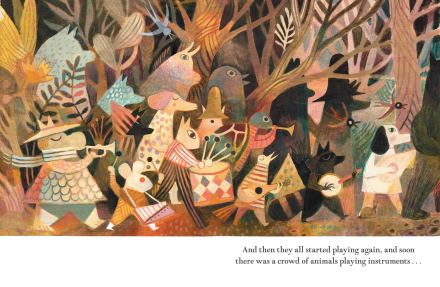
Suddenly, the wolf eats the rabbit and they all stop. Pokko turns to the wolf and tells him he can’t be in the band if he eats band members. The wolf apologizes. They continue on and play their instruments. A huge crowd gathers with instruments and joins them. More animals emerge from the forest. “And they were all following Pokko.”

celebrate-picture-books-picture-book-review-pokko-and-the-drum-raccoon

Copyright Matthew Forsythe, 2019, courtesy of Paula Wiseman Books/Simon & Schuster.

Pokko’s father shouts to her that dinner is ready, but Pokko doesn’t respond. Far away her father can hear music playing. He stands in the kitchen and can hear the music getting louder… and louder. The animal crowd spills into the house, sweeps up Pokko’s parents, and carries them off into the forest. Her father notices that Pokko is leading all the animals and listens thoughtfully. He admits to Pokko’s mother that Pokko is a great drummer. The music is too loud and no one can hear him speaking, but if they had…. “they all would have agreed.”

celebrate-picture-books-picture-book-review-pokko-and-the-drum-crowd

Copyright Matthew Forsythe, 2019, courtesy of Paula Wiseman Books/Simon & Schuster.

“The biggest mistake Pokko’s parents ever made was giving her a drum.” This beautiful beginning sentence sets the readers up for the witty adventures of Pokko. This book has the perfect combination of spirited characters, playful text, and illustrative humor. Pokko is a strong froglet who isn’t afraid of her individuality like her frog family is. She is warned not to attract attention to herself, but she can’t stand how quiet the forest is. She makes her beautiful music unashamed of the attention, and the forest animals can’t help but to follow her. 

Forsythe’s visual humor delivers  punchline after punchline, making young readers giggle throughout this book. He illustrates a balloon carrying Pokko away, the parent’s legs sticking out from under the llama’s body, and Pokko launching herself with a slingshot. But through all this humor there is a sweet message of female empowerment. Pokko is the leader of the band and she bravely admonishes the wolf for eating the rabbit. Forsythe also paints the father making dinner and wearing an apron through the whole story.  

Forsythe’s glowing watercolor and colored-pencil illustrations make for a magical world of cozy toadstool homes in the colorful forest. Forsythe uses close ups of his characters to show emotions and to add humor. The first close up  is when Pokko decides the forest is too quiet. Her narrow-eyed determination builds the reader’s anticipation for her to start drumming. The second zoom-in comes when Pokko’s father hears the music getting louder and closer. The father is wide-eyed and, once again, the reader cannot wait to see what will happen next. 

A fun read aloud that could be accompanied by a variety of instruments and/or hand clapping, Pokko and the Drum is a multi-award-winning book that will quickly become a favorite for home, school, and public library collections. 

Ages  4 – 8 years

Simon & Schuster/Paula Wiseman Books, 2019 | ISBN: 978-1481480390

To learn more about Matthew Forsythe, his books, and his art, visit his website.

National Frog Month Activity

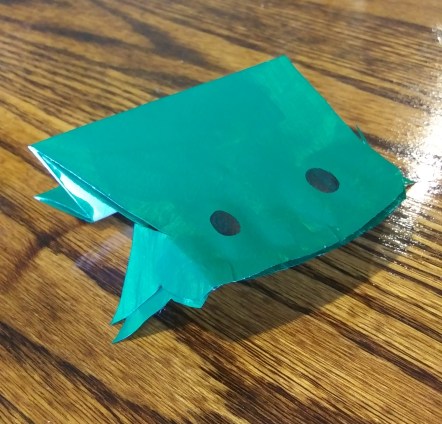
celebrate-picture-books-picture-book-review-hopping-frog-craft

Hopping Frog

Ready to hop to the beat of your own drum? Follow the instructions below to make your own hopping frog.

Supplies

  • Paper Plate
  • Scissors
  • Pencil
  • Ruler
  • Crayons, colored pencils, or paint

celebrate-picture-books-picture-book-review-hopping-frog-craft

Directions

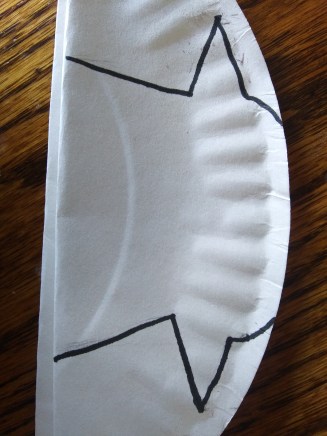
  1. Fold plate in half

  2. Fold the bottom of the plate (folded side) 2 inches up.

  3. Now fold the same part back down a one inch. This creates a zig zag fold and will make the spring for the frog to hop.

  4. Copy the shape in this picture onto your plate. You can make your frog bigger or smaller just be sure the triangles are the same height.

  5. Cut out your frog

  6. Fold triangles down to make front legs

  7. Color your plate green and add color in eyes

celebrate-picture-books-picture-book-review-pokko-and-the-drum-cover

You can find Pokko and the Drum at these booksellers

Amazon | Barnes & Noble | Books-a-Million |IndieBound

Picture Book Review

April 22 – Earth Day and Interview with Author Shana Keller

celebrate-picture-books-picture-book-review-fly-firefly-cover

About the Holiday

Celebrating 50 years of raising awareness of threats to the environment and spurring global action to combat them, Earth Day is the world’s largest civic-focused event. The initiative began on April 22, 1970, when 20 million Americans (10% of the population) demonstrated against the industrialization, pollution, and pesticides that were damaging people and the environment. In response, in July President Nixon and the US Congress created the Environmental Protections Agency and enacted laws such as the Clean Water Act and the Endangered Species Act among others. This year’s theme is Climate Action, and the day will be commemorated with a global digital mobilization encompassing conversations, video teach-ins, special performances, calls to action, and more. To learn how you can participate or access resources in your area, visit the official Earth Day website.

I received a copy of Fly, Firefly! from Sleeping Bear Press for review consideration. All opinions about the book are my own.

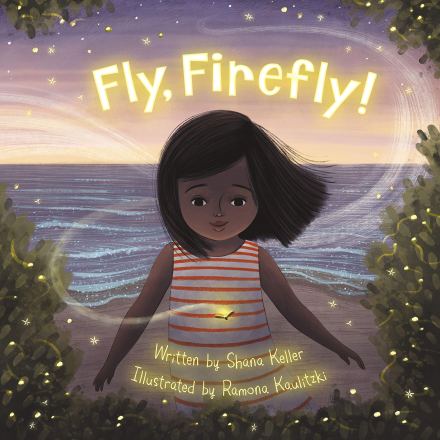
Fly, Firefly!

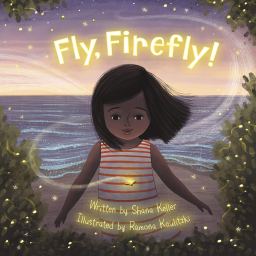
Written by Shana Keller | Illustrated by Ramona Kaulitzki


As the wind curled through the forest on a breezy night, a little firefly was blown out to sea. “WHOOSH! Now he was farther than he meant to be.” Floating on the current, “he saw the sparkles that flashed and glowed.” He dove in search of the twinkling lights, but deep water was not the place for him.

celebrate-picture-books-picture-book-review-fly-firefly-whoosh

Image copyright Ramona Kaulitzki, 2020, text copyright Shana Keller, 2020. Courtesy of Sleeping Bear Press.

A woman and her niece, strolling along the beach, saw him sinking. The woman scooped him up and gently placed him in her niece’s hand. “‘Little firefly,’ Marjie said. / ‘It’s not flies that you see! / That’s bioluminescence swirling / and twirling through the great sea!’” Marjie carried her treasure up the beach to the edge of the woods, where hundreds of glittering friends and family were waiting to welcome him back, and she set him free.

Following the story, Shana Keller includes a discussion about Rachel Carson—scientist and author of Silent Spring and other books whose experience inspired this story­­—and a description of fireflies and bioluminescence.

celebrate-picture-books-picture-book-review-fly-firefly-marjie

Image copyright Ramona Kaulitzki, 2020, text copyright Shana Keller, 2020. Courtesy of Sleeping Bear Press.

Shana Keller’s glowing and lyrical story about one misdirected firefly that sparks an act of compassion and discovery will inspire children to learn more about both fireflies and the bioluminescent sea creatures that attracted him. The fact that the story is based on an actual event in the life of Rachel Carson will also appeal to readers, who may enjoy sharing one of their favorite marvels of summer with this influential environmentalist and author. Told in the first person, the story directly invites children to observe nature around them and lend a hand in protecting it.

celebrate-picture-books-picture-book-review-fly-firefly-sparkles

Image copyright Ramona Kaulitzki, 2020, text copyright Shana Keller, 2020. Courtesy of Sleeping Bear Press.

Ramona Kaulitzki’s illustrations are as beautiful as a summer sunset. Under the pink and lavender sky, dots of light flit among the bushes and low-standing trees. Children first meet the firefly at the center of the story as he’s tumbling head over tail in the wind toward the rippling ocean. As the firefly mistakenly dives into the waves, kids will empathize with his plight and be cheered when Marjie and her aunt rescue him. Kaulitzki’s gorgeous underwater images highlight the diversity of marine creatures found close to shore as well as those that glitter with bioluminescence. The brilliant glow of the firefly on the dusky pages glimmers like a precious jewel and serves as a beacon of the hope and promise of nature.

A unique book for kids who love nature and to inspire studies of bioluminescence, Fly, Firefly! would be a shining addition to home, school, and public library collections.

Ages 5 – 7

Sleeping Bear Press, 2020 | ISBN 978-1534110335

Discover more about Shana Keller and her books as well as extensive teacher and homeschool resources and readalouds of her books on her website.

To learn more about Ramona Kaulitzki, her books, and her art and find free coloring pages to download in her shop, visit her website.

Meet Shana Keller

celebrate-picture-books-picture-book-review-shana-keller-headshot

Shana Keller grew up a middle child in Middle America wondering exactly how clouds stayed in the air. She’s traveled all over the country and some parts of Europe with her family and moved too many times to count. She’s settled in Pittsburgh for now, a city built just for kids and one that she finds secretly inspiring. One of her favorite quotes is from Benjamin Banneker. “Every day is an adventure in learning.” That said, she graduated from the University of Miami, Florida, with a degree in Communications, from UCLA’s screenwriting program, and took a course in songwriting from Berklee College of Music. Her goal is to never stop learning.

I’m excited to talk with Shana today about her books, her inspirations, and her extensive travels. My writing partner Jakki’s sons Steve and Jack also loved Fly, Firefly! and had some questions for Shana.

Steve asked: We like to capture fireflies. Did you capture fireflies as a kid?

I did! My brother and sister and I would compete to see if we could get one of them to land on us.

Jack wondered: Did you watch real fireflies to write your story?

I was so lucky and grateful to live close to where Rachel Carson lived in Pennsylvania while I wrote this story, and to have a pond in our yard. We had frogs, fish, birds, and a good number of fireflies. I watched them every night in the summer when the weather was warm. There was so much wildlife in our backyard! We had chipmunks, groundhogs, wild turkeys, voles, and woodpeckers.

celebrate-picture-books-picture-book-review-shana-keller's-backyard

Our back yard in Pittsburgh. On the bottom right is the pond. Our cat loved to sleep on the picnic table up the small hill. Can you see it behind the little tree? Back there is where the groundhog moseyed around.

celebrate-picture-books-picture-book-review-Shana-Keller-Koi-Image

One of the koi fish in our pond surrounded (and protected) by lily pads.

celebrate-picture-books-picture-book-review-Shana-Keller-groundhog-Image

A groundhog just past the picnic table in our (former) backyard.

CBP Shana Keller Toad Image

A picture of our frog in the same pond as the koi. Lots of critters lived in it and used it for water.

We don’t live in Pittsburgh anymore and I really miss that yard. Sadly, I haven’t seen any fireflies in my new neighborhood in North Carolina.

Jack and Steve said: We’ve brought frogs back to a pond. Have you ever rescued an animal?

Yes! In the traditional sense, our last dog Abby, was a pound puppy. (Though she has passed, I included a photo.) She always stayed up with me while I wrote, no matter how late it was. I still miss her, so it was the neatest surprise for me to see a beagle in the illustrations for Ticktock Banneker’s Clock. Abby was part beagle.

celebrate-picture-books-picture-book-review-Shana-Keller-Dog-Image

Abby running in the snow. She always looked like a deer or rabbit the way she bounded and jumped!

celebrate-picture-books-picture-book-review-Shana-Keller-cat-Image

Jazzy standing outside on our deck.

Today, one of our cats is also a rescue. Her name is Jasmine, but we call her Jazzy. And yes, in the literal sense I have rescued a handful of animals! My most memorable one was when I was about ten or eleven years old and I rescued a squirrel from my aunt’s swimming pool.

The little squirrel had tried to jump from one tall tree to the next and missed. He fell into their round pool. The water was too low, and the ledge was too high for him to climb out. I didn’t want him to drown, so I looked around the yard and grabbed a tree branch to see if he would climb onto it. He didn’t. Then, I ran into the shed and grabbed the biggest (which was also the heaviest) shovel I could find. The squirrel swam away from me even faster than before! I chased after him wielding the long shovel and tried not to rip the lining of the pool. Round and round we went until he finally slowed down long enough, I was able to scoop him out.

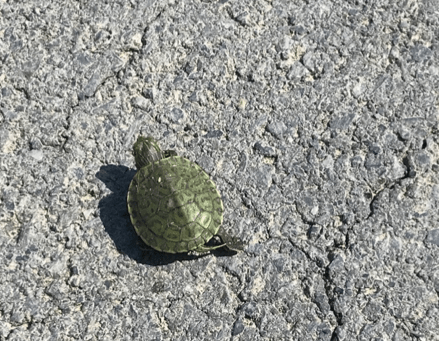
I’ve also stopped to scoot turtles along if I see them in the middle of the street. This one (photos are of the same turtle) was the littlest and also brightest green turtle I have ever seen in nature.  
celebrate-picture-books-picture-book-review-Shana-Keller-turtle-pavement-Image

A little turtle crossing the street.

celebrate-picture-books-picture-book-review-Shana-Keller-turtle-grass-Image

A picture of the same little green turtle after I moved him. It looked like he was headed toward a pond. I helped him cross the street so he could get there.

Hi, Shana! What fantastic stories about your love of nature and your pets! Thanks so much for sharing all of these beautiful pictures with us. I can see that nature has really been a life-long inspiration. What sparked your idea to write this particular story?

A few years ago, I read a letter Rachel Carson wrote to her friend Dorothy Freeman in a book called Always, Rachel. In her letter, Rachel and her niece, Marjorie (nicknamed Marjie), came across a firefly while at her summer home in Southport, Maine. Around midnight, Rachel and Marjie headed down to the shore to secure Marjie’s son’s raft.

On the shore, they turned their flashlights off and saw a sea filled with “diamonds and emeralds.” The sparkling was bioluminescence, a (likely) form of marine plankton called Dinoflagellates. Rachel joked with her niece how one gem “took to the air!” Of course, it was a firefly! Well, further in the letter, Rachel tells her friend that she had already thought of a children’s story based on her experience. That sentence is what sparked the idea! 

What kind of research did you do in writing Fly, Firefly! and the back matter about bioluminescence that follows the story? What was the most surprising thing you learned about fireflies?

With this story, I headed to the library first to learn as much about the area Rachel was located in (Maine), and the insects and bioluminescence there. Once I sorted through all of my facts, I reached out to an entomologist here in North Carolina, the director of the Rachel Carson Homestead in Springdale, Pennsylvania, and a marine biologist who studied at the very same Marine Biology Lab Rachel did.

I also read Rachel’s books to get a sense of her voice and style. It filters through in her letters, but her books definitely have a poetic aura about them.

The most inspiring thing I learned was the importance and prominence bugs have in our world. We take them for granted. We call many of them pests. But the truth is, they are an important part of our ecological system. As I discovered with fireflies, when you have them, it is a good indication that your ecosystem is in great health.

What inspired you to write Fly, Firefly! in verse?

While I was researching, I discovered Rachel Carson had a love of poetry. Though this is not pertaining (that I know of) to the children’s story she discusses; in another letter written to her, she was quoted by her friend Dorothy (regarding Rachel’s poetic aims), as having said, “I just want it to be simple and clean and strong and sharp as a sword—for it has work to do!”

I did my best to honor her vision in that way, so I kept it lyrical, simple, and clean!

In your bio, you describe how you’ve traveled and lived all over the country and in parts of Europe. What took you to all of these places? Can you name a favorite place in the US? In Europe? Why are those places special to you?

People always assume I was a military brat when I’m asked about the places I’ve lived. Family and school took me/us to Oklahoma (my birth state), Kansas, Florida, Pennsylvania and Texas. Adventure and jobs took me/us to Colorado, New Mexico, Virginia, Germany, & North Carolina.

My mom simply said she had wanderlust and gypsy blood. I definitely got my love of travel from her. Although now, with my kids in school we have settled down. At least until they graduate. J

My absolute favorite place in the United States is Big Bend national park. My mom and I camped there the year before I left for college. It’s right on the border of Texas and Mexico in a NO-FLY zone which means zero light pollution. Seeing the vast Milky Way at night is something I will carry with me forever. I wish every kid could see the sky that I saw.

My favorite place in Europe was in Berlin. It was the bombed Kaiser Wilhelm Memorial Church left as it was after the war and converted into a museum. When I first saw this monument of destruction but also of hope, it impacted me in a strong way. My photo from over ten years ago is on the left and does not do it justice. The photo on the right is what it originally looked like. It is definitely worth a Google search to see more pictures of it and compare the before and after.

celebrate-picture-books-picture-book-review-Shana Keller-Kaiser-William-Memorial-Church-after-Image

My photo of the Kaiser Wilhelm Memorial Church. Notice the top tower is broken.

celebrate-picture-books-picture-book-review-Shana Keller-Kaiser-William-Memorial-Church-Before-Image

An online photo of the Kaiser Wilhelm Memorial Church. See how big it was before the bombing?

You’ve also recently released Bread for Words: A Frederick Douglass Story from Sleeping Bear Press that relates how Douglass, born into slavery, taught himself to read and write despite overwhelming challenges. Your powerful telling of this story is written in first person. Why was writing Douglass’s story in first person important to you?

I was first introduced to Douglass’s autobiographies in college. I thought this was way too long of a wait to learn about someone who was the most photographed person in 19th century America and considered one of the greatest orators in our nation.

Frederick struggled for years in a hostile environment while he learned to read and write. To honor his accomplishment, one he was clearly proud of, I wanted to present this story in the same format he had and give children direct access to his own words.


celebrate-picture-books-picture-book-review-bread-for-words-cover

Can you describe a little about your process in writing Bread for Words?

I read Douglass’s autobiographies of course, but I also studied his speeches. I was able to take a trip to Baltimore and meet with Urban Ranger and docent, Bradley Alston thanks to the folks at Baltimore National Heritage Area. His insight and knowledge not just of Frederick Douglass but of the Baltimore Douglass grew up in was incredible. Touring the Frederick Douglass–Isaac Myers Maritime Park and museum (a place I highly recommend) with Bradley Alston rounded out my research. I’ve included a few photos from that trip!

celebrate-picture-books-picture-book-review-Shana-Keller-Frederick-Douglass-Museum-Image-1

A recreation of Frederick Douglass arriving in Baltimore. (Photo taken at the Frederick Douglass-Isaac Myers Maritime Park and Museum.)

celebrate-picture-books-picture-book-review-Shana-Keller-Frederick-Douglass-Museum-Image-2

A recreation of the letters Frederick Douglass saw carved into the wood. (Photo taken at the Frederick Douglass-Isaac Myers Maritime Park and Museum.)

celebrate-picture-books-picture-book-review-Shana-Keller-Frederick-Douglass-Museum-Image-3

This is me learning what it was like to caulk a ship, a job Douglass had. They took long rope, dipped it into tar and used the hammer and tool to wedge it in for a watertight seal. (Photo taken by Bradley at the Frederick Douglass-Isaac Myers Maritime Park and Museum.)

celebrate-picture-books-picture-book-review-Shana-Keller-Frederick-Douglass-Museum-Image-4

What Baltimore Harbor looks like today.

Did you always want to write for children? How did you get started?

I didn’t expect to, not at first. I always thought I would write screenplays. I got started when my oldest daughter came home with a small paragraph from school about a man named Benjamin Banneker. It was during Black History Month, and I was amazed that I had never heard of this scientist and astronomer. Curious, I began to research him. When I discovered he built a strike clock using only a pocket watch and a pocketknife, that was the story I shared with my daughter, and that’s when the idea to put it in picture book format took place. I haven’t stopped writing picture books since.

You’re really enthusiastic about connecting with readers. What’s your favorite part of book events and meeting kids? Do you have an anecdote from any event you’d like to share?

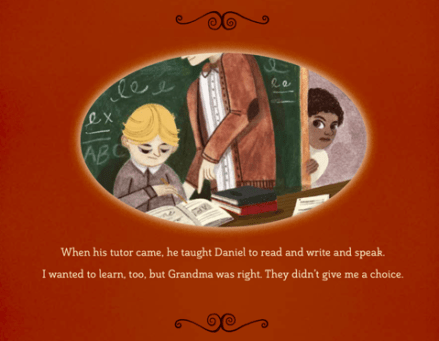
Yes! In fact, before all the quarantines, I had such a special moment with a group of fourth graders on the day I shared Bread for Words with them. A student referred to the picture that’s on the back of the cover and said, “See how Frederick wants to be with his friend?” The kids interpreted that image as Frederick waiting for his friend to finish with his tutoring so that they could play and hunt and eat together. But also waiting, so that his friend could teach him.

It seems so obvious now that they mentioned it, but my original interpretation was one of exclusion, not simply waiting. To them, all Fred had to do (which Fred actually did) was ask his friend for help. One of the 4th grade boys even said, “I’m glad he had a friend that could help him.” I agreed and said, “It’s amazing how all the kid’s helped each other, isn’t it?!” And there was the real ‘lesson’ which another student pointed out and said, “We have to help each other if we can.” That kind of interaction is my favorite part about school and library visits!

It does make me wonder how other students will interpret this image.
celebrate-picture-books-picture-book-review-Shana Keller Bread for Words Back Cover Image

Bread for Words – back cover. Courtesy of Sleeping Bear Press.

What’s up next for you?

Hopefully more picture books! I’m working on a WWI story, as well as a picture book that highlights the effects of light pollution on migratory birds. I also just finished a very cool Coast Guard story that I can’t wait to share with my editor.

Thank you, so much, Shana for this wonderful talk and your generous pictures! I wish you all the best with all of your books and am really looking forward to reading them as I’m sure kids are too!

You can connect with Shana Keller on

Her website | Twitter | Instagram

Earth Day Activity

celebrate-picture-books-picture-book-review-firefly-maze

Firefly Flight Maze


This little firefly wants to join her friends in the forest. Can you help her through the maze to find them in this printable maze?

Firefly Flight Maze Puzzle| Firefly Flight Mage Solution
celebrate-picture-books-picture-book-review-fly-firefly-cover

You can find Fly, Firefly! at these booksellers

Amazon | Barnes & Noble | Books-a-Million | IndieBound