Read a New Book Month is a fantastic time to scour your local bookstore and library for books that have recently been published or books that are new to you. Finding a book that you’ve never read before is exciting at any age, and discovering a new book about a favorite topic is one of life’s greatest pleasures. Today’s board book is definitely one that will spark a love for reading and learning in children who are just discovering the wonder of books.
Thanks go to Danna Smith and Little Simon for sharing a digital copy of Wake Up Freight Train! with me for review consideration. All opinions on the book are my own.
Wake Up, Freight Train!
Written by Danna Smith | Illustrated by Jon Andersen
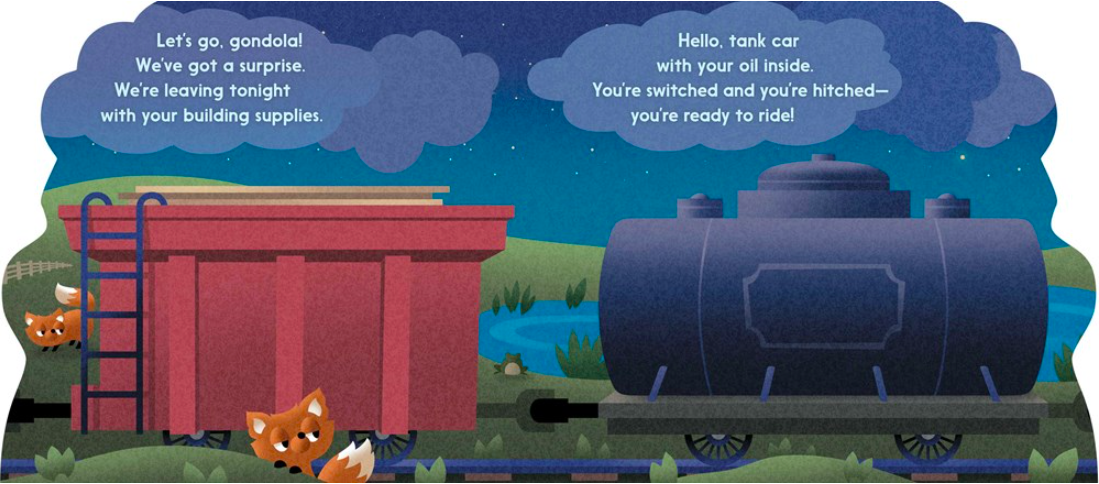
For the townspeople it’s time for sleeping, but down at the train station, things are just getting underway as the freight train prepares for its nighttime run. First things first, however. It’s time to rouse the cars one by one. “Choo-choo! Wake up, steam engine, alone on your track. Let’s hook up the freight cars to the hitch on your back.”
Image copyright Jon Andersen, 2022, text copyright Danna Smith, 2022. Courtesy of Little Simon.
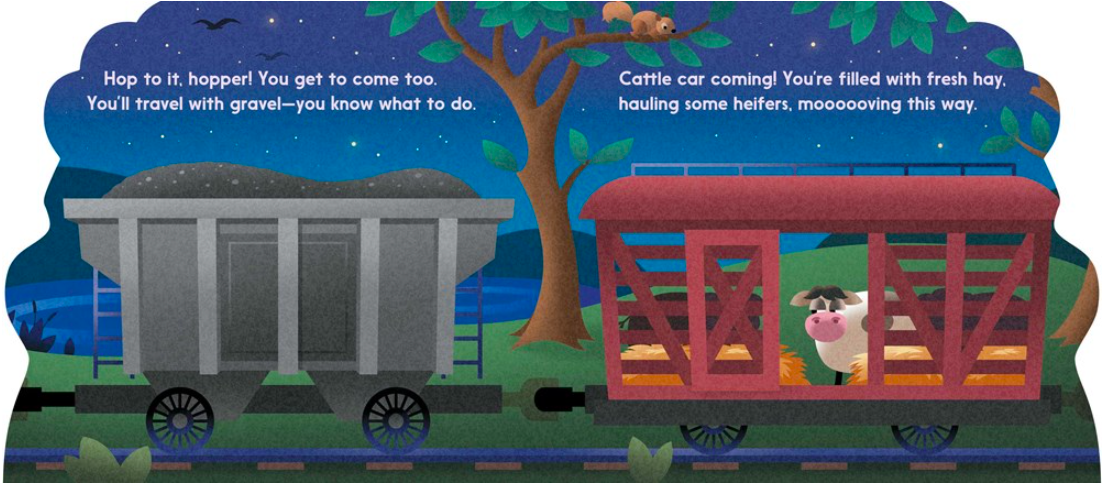
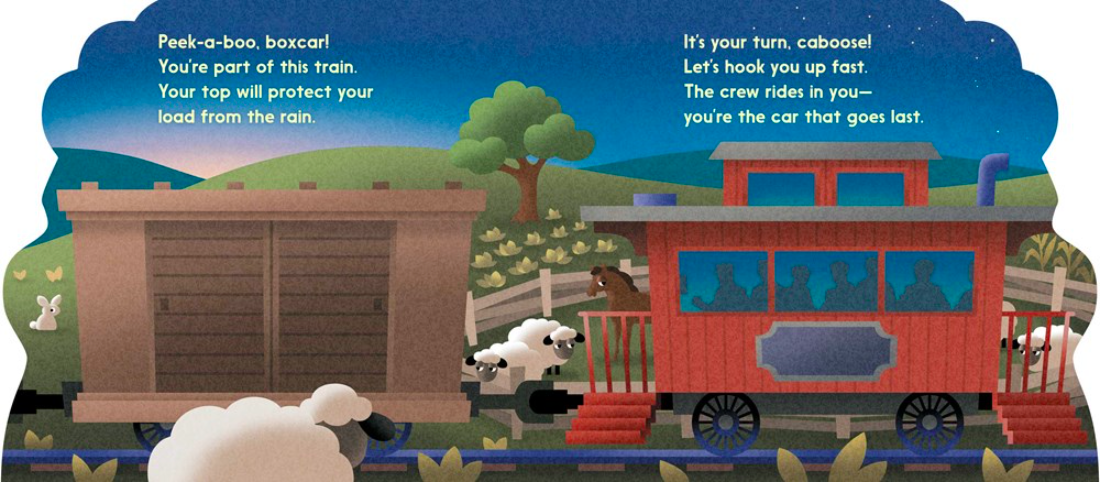
Second in line is the tender that carries the coal. Behind it are cars three, four, and five with supplies for building and heating. Car six is the hopper then … “Cattle car coming! You’re filled with fresh hay, / hauling some heifers, moooooving this way.” The boxcar follows and finally, “it’s your turn, caboose! / Let’s hook you up fast. / The crew rides in you— / you’re the car that goes last.”
Image copyright Jon Andersen, 2022, text copyright Danna Smith, 2022. Courtesy of Little Simon.
With all the cars hitched and the coal bin full, the train rolls out of the station. “Toot-toot goes the horn, / blink-blink go the lights, / clang-clang goes the bell, all through the night.” The train chugs over hills and across fields until, with the dawning sun, it arrives at its destination and “our freight train’s long journey has come to an end.”
Image copyright Jon Andersen, 2022, text copyright Danna Smith, 2022. Courtesy of Little Simon.
Little (and big) train lovers will adore Danna Smith’s rhyming tribute to freight trains that carry goods and animals across states, and sometimes across the country. Smith’s introduction to each type of car is infused with childlike wonder and that special conversational relationship young children have with the world around them. As readers greet each car, they not only learn information about the car’s load and role but hear internal rhymes, alliteration, and even a few puns—all building blocks for early literacy. Smith’s gentle rhythm, paired with the nighttime setting, also makes Wake Up, Freight Train! a perfect read aloud for bedtime.
Jon Andersen’s beautiful, soft blues and greens of a starlit night will put little ones in the mood to be carried into dreamland even as they discover how each different car looks and what it carries. The changing landscape behind each pair of train cars offer interest and continuity while also giving kids an opportunity to talk about how long this train is. Sleepy animals come out to watch as the cars are hitched together, reminding little readers that it might just be bedtime for them too, and the peek of pink on the horizon in the last spread reassures them that tomorrow will come soon.
Wake Up, Freight Train! delightfully captures young children’s fascination with trains and is sure to become a favorite for bedtime (or anytime). The book is highly recommended for home bookshelves; daycare, school, and public library collections; and as a gift for babies and preschoolers.
Ages 2 – 4
Little Simon, 2022 | ISBN 978-1534492516
Discover more about Danna Smith and her books on her website.
To learn more about Jon Andersen and view a portfolio of his art, visit his website.
Read a New Book Month Activity
Freight Train Coloring Page
Who doesn’t love a train?! With this coloring sheet, kids can make their train as colorful as they want! They may even want to add a few animals and birds to the background!
Today is one of the best days of the year! Anyone who loves books will want to take the opportunity of the holiday to visit their favorite bookstore and buy one of those books you’ve been hearing and reading about. And why stop at just one? Winter is coming—that time when there’s nothing more cozy than snuggling in with a cup of tea or hot chocolate and reading late into the night. As the school year begins, children – even the youngest readers – benefit from having new books in their home libraries that reflect their changing interests and maturing thoughts. Take a little time to look through the offerings of your local bookstore and let your kids pick out some new favorites!
The Thank You Book
Written by Danna Smith | Illustrated byJuliana Perdomo
For little ones, “Thank you” may be one of the first phrases they learn when they begin getting out into the world. Thanking grandparents and other relatives, friends, teachers, librarians, store employees, and others becomes a part of every day. But for kids just learning manners and communication skills, prompts to say “thank you” may seem kind of random, confusing, and maybe even a bit intimidating.
Image copyright Juliana Perdomo, 2022, text copyright Danna Smith. Courtesy of Little Simon.
This is where Danna Smith’s delightfully cheery story about sharing your appreciation comes in. With charming rhymes, Smith answers the questions of why, when, and to whom thanks are appropriate while infusing her story with the positive feelings that thanking someone for their kindness instills in the thanker and the one being thanked.
Image copyright Juliana Perdomo, 2022, text copyright Danna Smith. Courtesy of Little Simon.
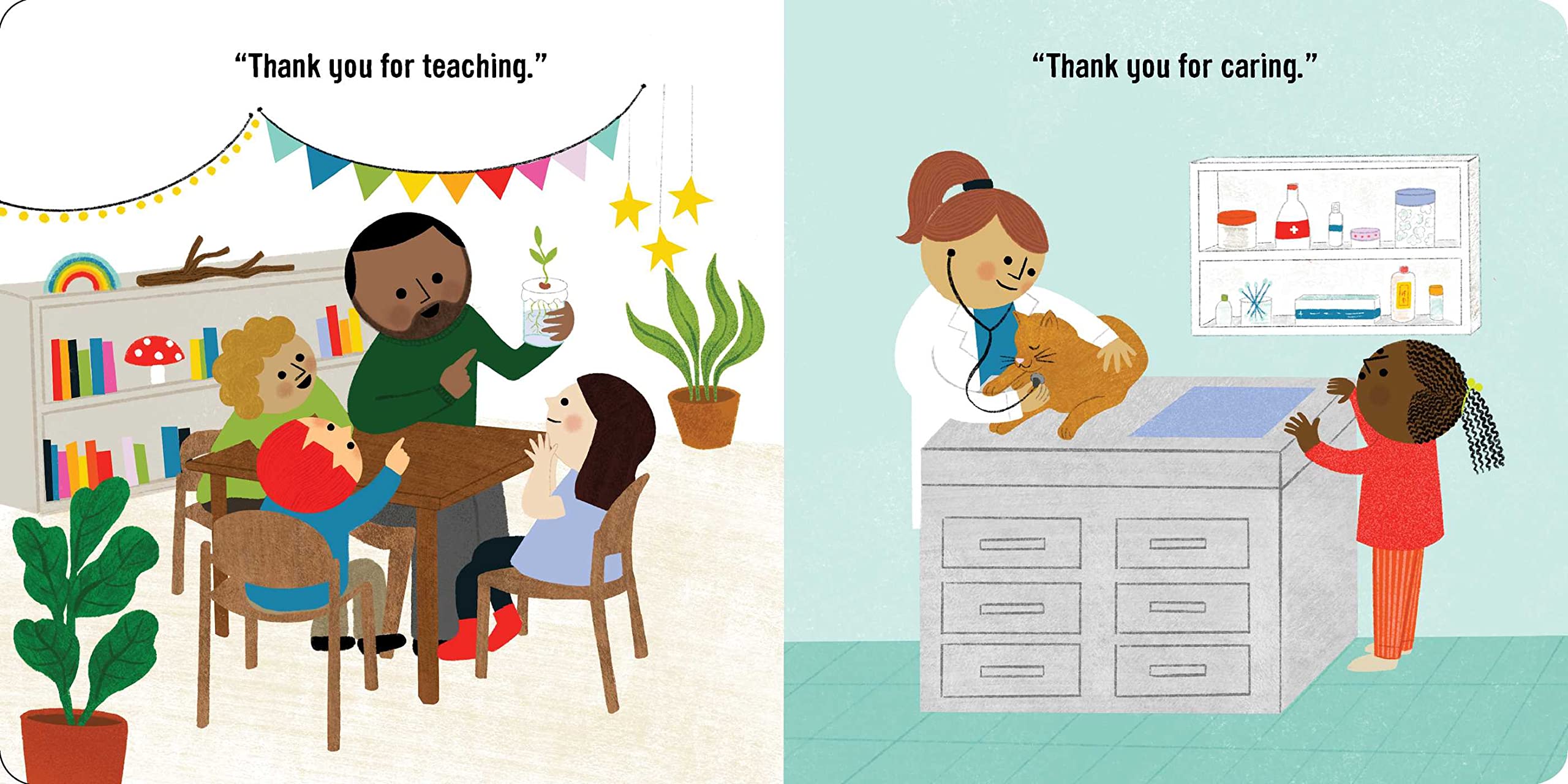
Smith begins with an inviting and easy-to-understand definition of thankfulness that will resonate with young children: “When someone is thoughtful or kind in some way, ‘thank you’ are two very nice words to say.” She then goes on to provide specific examples of times that gratitude is warranted as well as language to help kids express their feelings for specific acts of kindness. As illustrations show children engaged in various activities, readers discover they can say, “‘Thank you for helping.’ ‘Thank you for sharing.’ / ‘Thank you for teaching.’ ‘Thank you for caring.’”
Image copyright Juliana Perdomo, 2022, text copyright Danna Smith. Courtesy of Little Simon.
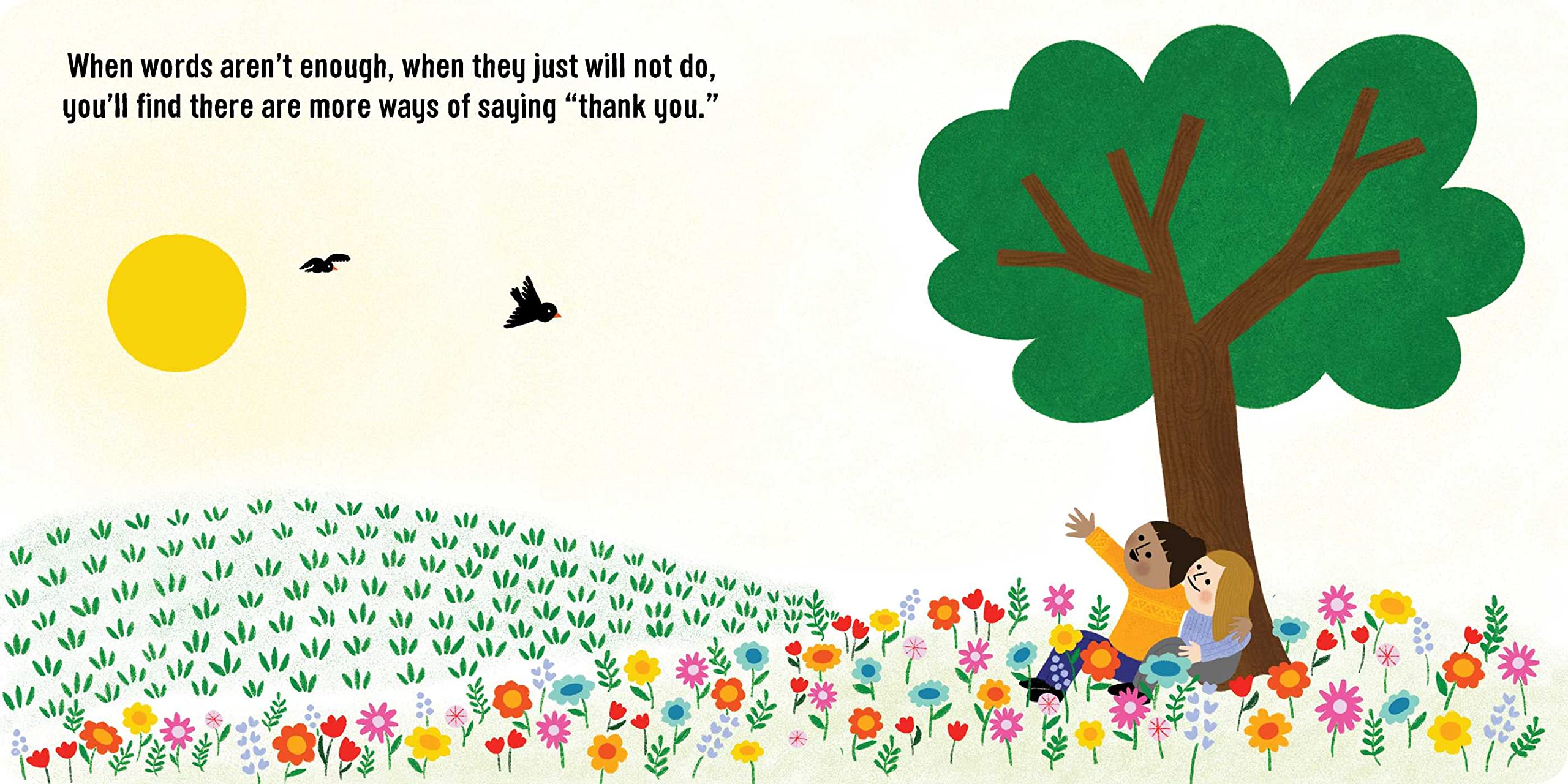
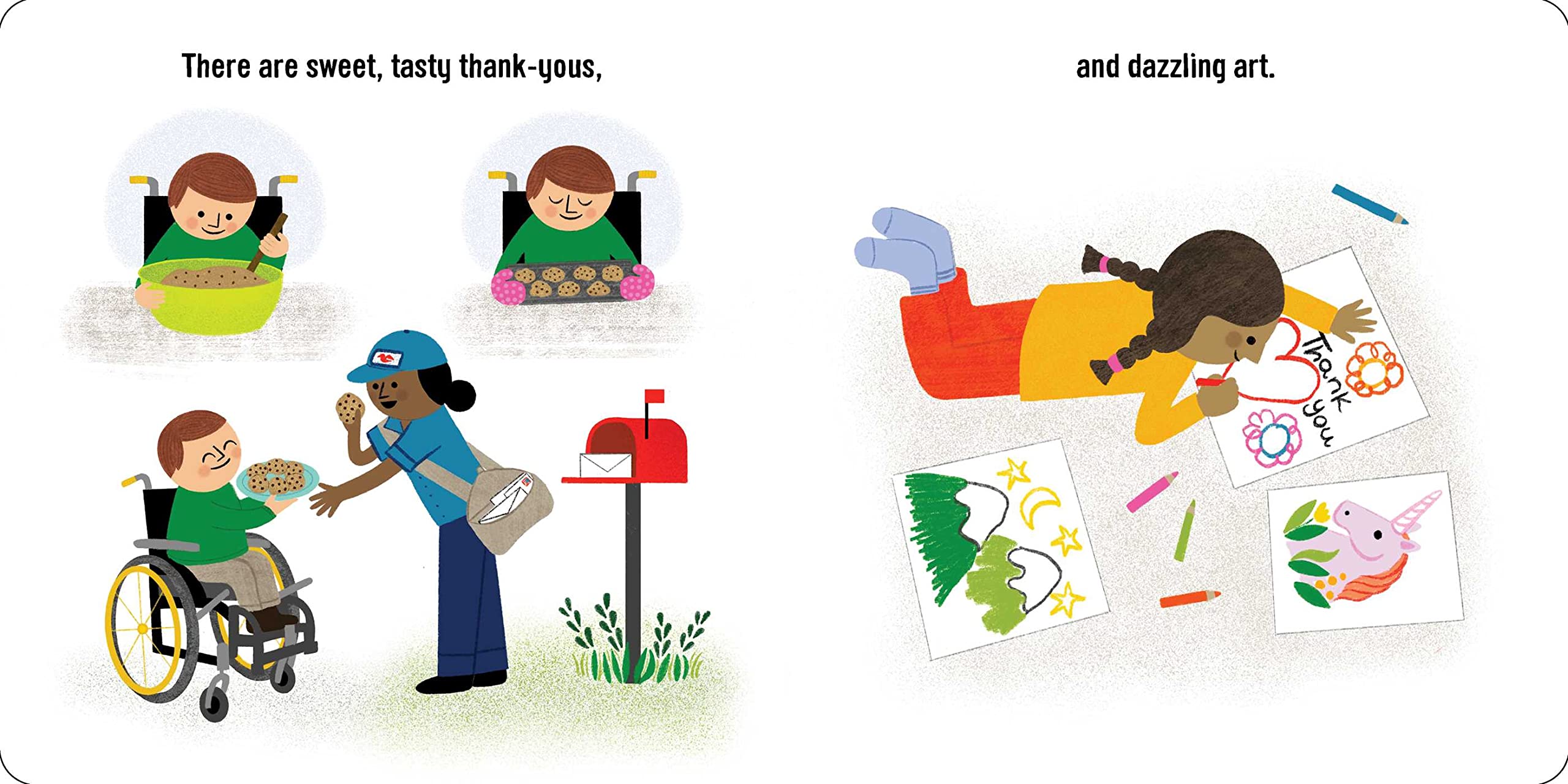
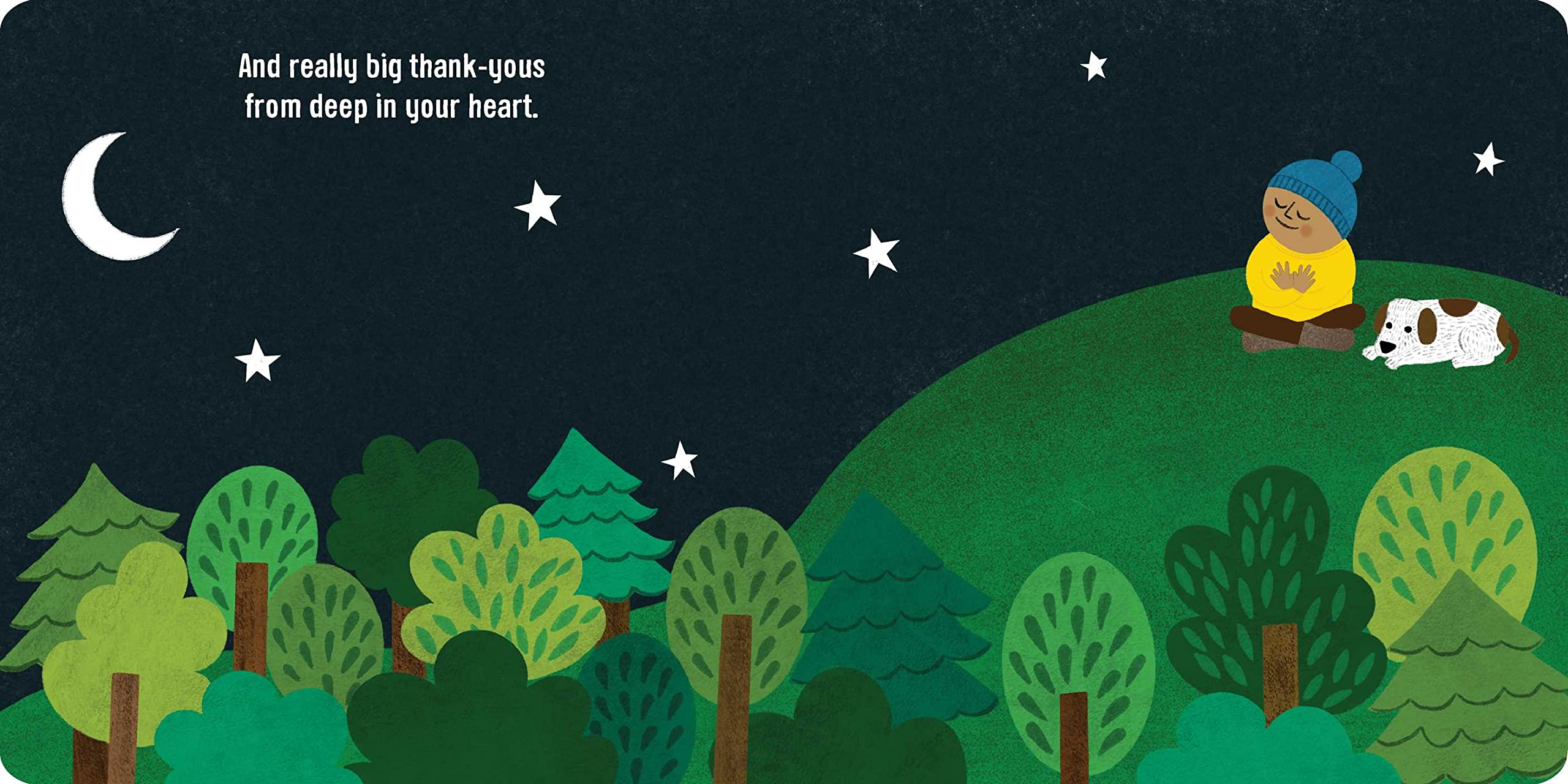
But is saying those types of words the only way to show your gratitude? Children (and especially those who are reluctant to talk with people they don’t know well or feel shy about speaking up) learn that there are other ways to show gratitude, including giving hugs, drawings, and tasty treats.
Smith then reveals a well-known secret about saying thank you that will make today’s inclusive kids happy to be part of an appreciative community: “If you start with one thank-you, you’ll find it will grow.” And, indeed, Smith finishes her story by assuring readers that kids all over the world are thanking others for their friendship and kindness.
Image copyright Juliana Perdomo, 2022, text copyright Danna Smith. Courtesy of Little Simon.
Danna Smith’s sweet board book, with its jaunty rhymes and enthusiasm for sharing gratitude is just the kind of story parents, teachers, and other adults will want to read with their little ones and little ones will want to hear again and again. Her open-ended phrasing allows adults and kids to discuss the types of people who are helpers, sharers, teachers, and care-ers, as well as those within their family and friends who are deserving of thanks and on which occasions. Smith also gives kids ideas for a wide range of ways to say thank you that may use their talents and mean more to them than words. These examples can also spark talks between parents, teachers, and other caregivers on other ways to show thanks. And what if you have a child who just feels appreciation deep inside? They are represented in these pages too.
Juliana Perdomo’s vibrant illustrations of kind acts by friends, parents, teachers, veterinarians, bus drivers, activity instructors, and others will enchant little ones and get them talking about all the times someone has done something nice for them. Readers of all ages can’t help but be filled with gratitude and good feelings when they’re greeted by Perdomo’s smiling and enthusiastic characters. Perdomo mirrors Smith’s text to give kids a concrete understanding of the concepts while filling her pages with cheer and heartfelt gratitude. The idea that saying thank-you can bring people together in a community and around the world is one that will excite kids and encourage them to show their appreciation.
Joyful and inspiring, The Thank You Book would be a favorite read aloud in any young child’s home library and is a must for all daycare, school, and public library board book collections.
Ages 3 and up
Little Simon, 2022 | ISBN 978-1665902922
Discover more about Danna Smith, her books, poetry, and paintings on her website.
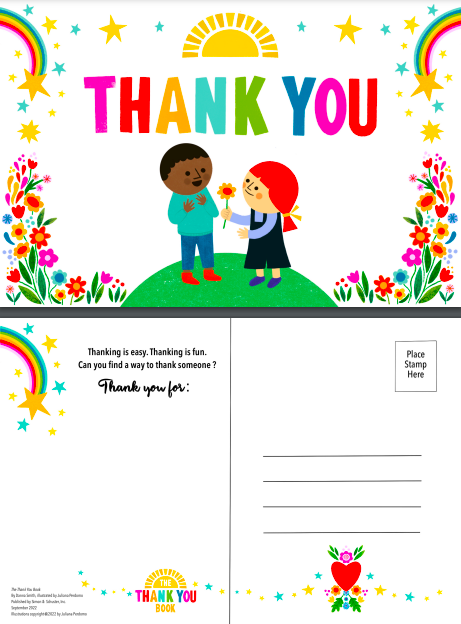
Do your kids have someone they’d like to thank for a kind act, a gift, or just for being a loved family member or friend? This cheery Thank You postcard makes it easy for kids to show their gratitude and share their love to people close by or far away. This card is also perfect to share for the upcoming holidays!
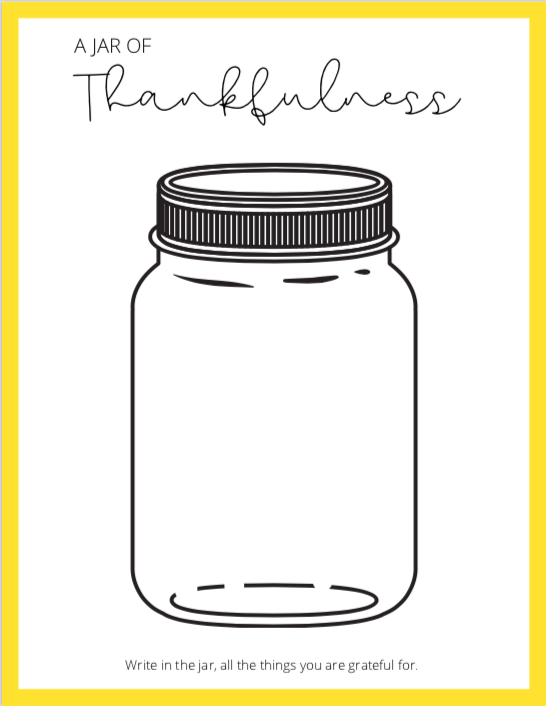
It’s good to remind yourself periodically – or even every day – of all the things you have to be thankful for and all the acts of kindness you’ve received. This activity sheet gives children (and adults who want to participate with their kids) a place to collect all these “thank-you”–worthy experiences. Just write a word or short description inside the jar each time you feel thankful. You might even want to share your appreciation with the people whose names appear in your jar with a note, a picture, a hug, or a homemade craft to show how much they mean to you.
This Thankfulness Jar also makes a meaningful activity for Thanksgiving Day! Why not print a copy for each guest at your table, provide a pencil, and get everyone sharing what they’re thankful for this year!
Friendship Month was established by the Oddfellows (shortened from The Grand United Order of Oddfellows Friendly Society (GUOOFS)), an international fraternity that dates back to 1730s England with the hope of encouraging people to make friends. Now dedicated to philanthropy and charity, the Oddfellows still promote Friendship Month each September to urge people to spend more time with their friends, get in touch with those they haven’t seen or talked to in a while, and, especially, to reach out to others who are alone or need a friend. As school gets underway, there are plenty of opportunities for kids to meet new people and form friendships – some of which may last a lifetime.
I’d like to thank Carolrhoda Books and Blue Slip Media for sharing a copy of Big Bear and Little Fish with me for review consideration. All opinions on the book are my own.
Big Bear and Little Fish
Written by Sandra Nickel | Illustrated by Il Sung Na
At the fair, Bear approached the basketball game booth, where the grand prize was a huge teddy bear. It was almost as big as Bear, herself. But Bear took away the consolation prize: a goldfish. “It was small. It was very small. It was so small it lived in a bowl.” Bear peered into the bowl, but when Fish woke up and said “‘Hello, Bear. Is this my new home?'”, Bear only nodded, afraid her big voice would scare little Fish.
Image copyright Il Sung Na, 2022, text copyright Sandra Nickel, 2022. Courtesy of Carolrhoda Books.
When lunchtime came, Bear made herself a sandwich with syrup that was as gold as she was. Bear didn’t know what to feed Fish, who was orange and probably liked “carrot muffins … or tangerines and pumpkins.” After lunch, Bear always measured herself. Today, she was over nine feet big! Bear didn’t know how she could measure Fish, so she left home for her regular afternoon walk, wishing – and not for the first time – that Fish was a teddy bear.”
While walking, Bear contemplated how inconvenient Fish might find the outdoors. Things could fall into her bowl and get caught in her tail. If she had a teddy bear Bear thought again, she wouldn’t have to worry about such things as tails. Bear began to regret ever bring Fish home from the fair. When Bear got home again, Fish greeted her with a “‘Hello” and a comment on how much she liked their porch.
Image copyright Il Sung Na, 2022, text copyright Sandra Nickel, 2022. Courtesy of Carolrhoda Books.
In response, Bear gave Fish the bad news that she couldn’t stay. When Fish asked why, Bear laid out her reasons: Fish was orange and ate orange foods; Fish had a tail that made it impossible for her to go on walks with Bear; and finally that Fish was too small. Fish was undaunted. She pointed out that Bear was orange too, and when Bear inspected her belly, she agreed that it “was an orangey sort of gold” kind of “like a carrot muffin.” Fish then added that Bear had a tail, and when Bear looked over her shoulder, she saw a tiny tuft. As to the assertion that she is “small,” Fish was surprised.
Image copyright Il Sung Na, 2022, text copyright Sandra Nickel, 2022. Courtesy of Carolrhoda Books.
“Am I?” she asked then welcomed being measured. She stretched herself out, and Bear measured her: three inches long. Fish was happy with this result; she wasn’t so small after all. “‘I am not one inch. I am not two inches. I am three inches,'” she said proudly. Still, Bear couldn’t get over the idea that Fish was so tiny she had to live in a bowl.
But Fish was philosophical. “‘Don’t you live in a bowl too?'” she asked. Bear had never thought of it that way before, and as she looked around at the big, blue sky, she suddenly felt small too. Fish reassured her and offered another perspective on physical size compared to how big one could feel inside. Bear considered this and then decided she’d like to take another walk – this time accompanied by Fish. And so they set off in search of a very big carrot muffin.
Image copyright Il Sung Na, 2022, text copyright Sandra Nickel, 2022. Courtesy of Carolrhoda Books.
In her seemingly odd “fellows” friendship story, Sandra Nickel presents a multi-layered look at what it means to be a true friend. She cleverly offers readers a variety of lenses for them to engage in perspective, from the character’s viewpoints to their own. Bear, alone at home and on her walks, focuses only on herself. At the fair, she wants to win a teddy bear that is a twin to herself but for which she would not need to be responsible in any real sense.
Fish, however, immediately wants to interact with Bear. She talks to him and asks questions. At first, it may seem that Bear will simply ignore Fish, but the idea of her has begun to make Bear think and even worry (here, Nickel creates a complex mix of emotions that invites discussion). Equally thought-provoking are Fish’s counter arguments when Bear tells her she can’t stay. While promoting how similar they are, Fish prompts Bear to reevaluate her view of herself and the world she lives in. Once Bear realizes that she, too, can be considered small and that the full measure of a person (or Fish or Bear) is found inside oneself, she embraces Fish – responsibilities, friendship, muffins, and all.
Il Sung Na plays with perspective and color to subtly guide readers through the stages of this endearing friendship. As Bear walks home from the fair, dejectedly carrying Fish in her bowl, the hilly landscape is washed in shades of blue and the twiggy, leafy, mushroomy vegetation replicates an ocean bottom. This evocative effect continues throughout the book, prompting kids to find other similarities between Bear and Fish and their environments. Readers will also enjoy pointing out examples and comparisons of big and small.
An endearing and thought-provoking story that boosts self-confidence while promoting friendship, empathy, and new perspectives, Big Bear and Little Fish will become a quick favorite on home bookshelves, a go-to book for classrooms, and a must for school and public library collections.
Ages 4 – 8
Carolrhoda Books, 2022 | ISBN 978-1728417172
Discover more about Sandra Nickel and her books on her website.
To learn more about Il Sung Na, her books, and her art on her website.
Dive in to this book trailer for Big Bear and Little Fish!
Friendship Month Activity
Measuring Stick Craft
Bear and Fish loved getting measured. If you’re looking for a unique way to measure how big you are, here’s a craft for you! This nature-inspired measuring stick can keep track of your big and small growth spurts whenever you sprout up. You can even add leaves to record thoughts, favorite things, and other ideas as you age!
Supplies
50-inch wooden stake, available at craft stores
Dark and light green foam sheets or 45 – 50 small wooden leaves, available at craft stores
Green paint, light and dark
Black marker
Paint brush
Strong glue
Flower pot
Oasis or clay
Ruler
Pencil
Directions
Paint the wooden stake with the green paint, let dry
With the ruler mark the stake in 1-inch increments along the edge of the stake
How to Make the Leaves
If using wooden leaves, paint half light green and half dark green
If using foam, cut 1 3/4-inch-long tear-drop shaped leaves (half from light green foam, half from dark green foam), 45 – 50 or as needed
Cut two larger leaves, one from each color to decorate the top of the stake
Draw a line down the center of each leaf
For Measuring Growth:Write the inch 1 through 45 or higher on each leaf with the black marker, alternating colors
For Recording Ideas: You can write favorite ideas, hobbies, or hopes on the leaves too and measure your growth that way!
How to Attach the Leaves
Glue the leaves to the stake, attaching the odd-numbered inch leaves to the left side of the stake and the even-numbered leaves to the right side of the stake.
Attach half of the leaf to the stake, letting the tip stick out from the side
Glue the two larger leaves to the top of the stake
How to Store Your Yardstick
Put the oasis or clay in the flower pot
Stick the stake into the flower pot to keep it handy
To get a copy of Big Bear and Little Fish personalized by Sandra Nickel
Visit Watermark Books to request a signed and personalized copy. When ordering, simply note your desired dedication in the Comments section. Sandra will sign on September 24, 2022, so be sure to order in plenty of time.
You can also find Big Bear and Little Fish at these booksellers
Today we celebrate those lowercase letters that make up a predominance of our sentences (and nearly all of our texting). The lowercase letter has a proud history, dating back to the earliest development of script and writing. The terms “lowercase” and “uppercase” come from the era of the printing press, when individual letters were inserted by hand into plates that were then inked and pressed onto paper. The tiles etched with each letter were kept in trays conveniently located for the printer to set them into the plates with capital letters found in the upper case and small letters arranged in the lower case. To learn more about the history of our script was developed, visit My Modern Met. You’ll find rules on using lowercase and uppercase letters at Gammerly. And to discover the fun you can have with the letters of the alphabet, read about today’s book below and meet its creators!
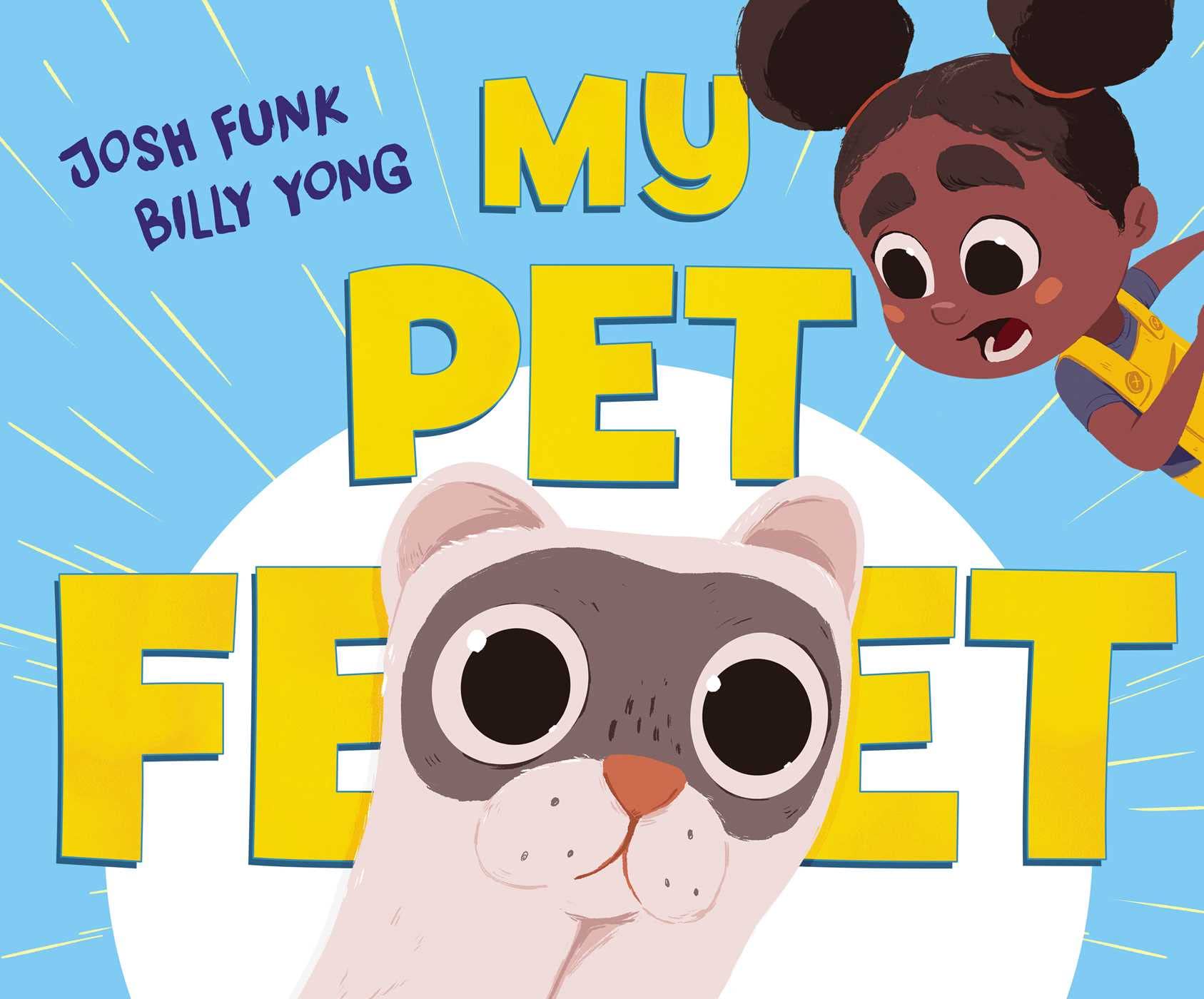
My Pet Feet
Written by Josh Funk | Illustrated by Billy Yong
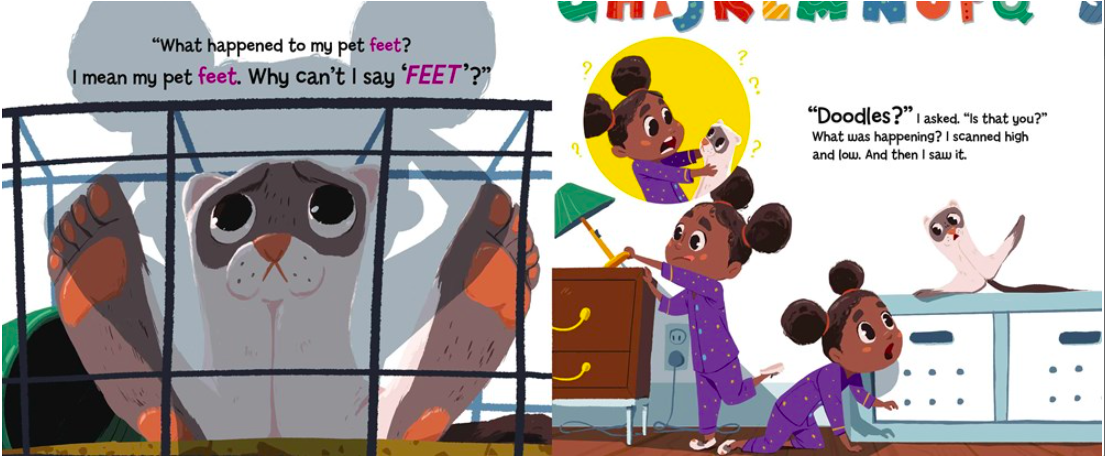
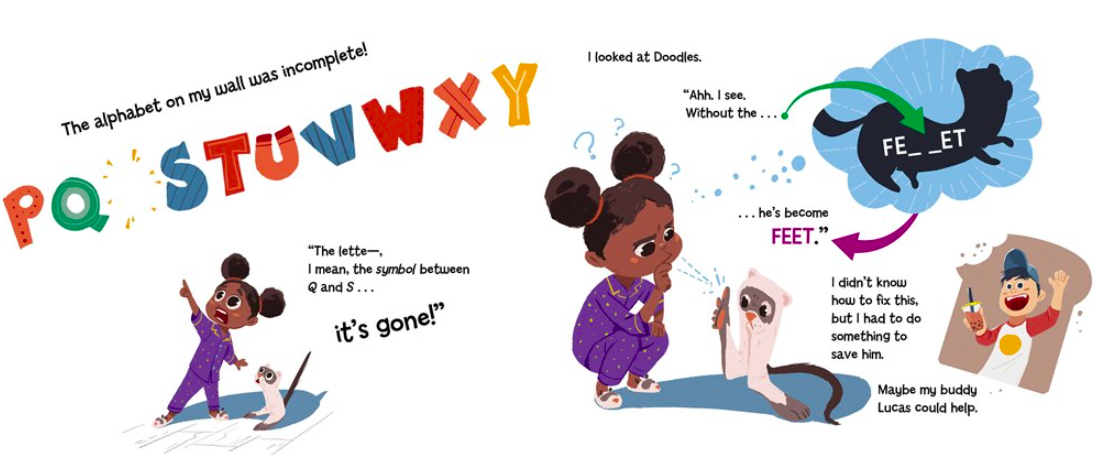
A little girl wakes up on a glorious morning. The bees are buzzing and the palm tees (no, it’s not a typo, you’ll see…) outside her window are standing tall. First job of the day is to feed her pet ferret, Doodles. She goes to his cage only to find two very long feet and a very sad face looking up at her. “‘What happened to my pet feet?’” she cries. “‘I mean my pet feet. Why can’t I say ‘FEET’?’” She looks all over her room for an answer and then spies something suspicious. Her alphabet banner is missing the ‘R.’ She quickly assesses the situation and realizes that without the letter R, her beloved pet has become simply FEET. Immediately, she decides she must do something and calls her best friend Lucas to help her.
Image copyright Billy Yong, 2022, text copyright Josh Funk, 2022. Courtesy of Simon & Schuster Books for Young Readers.
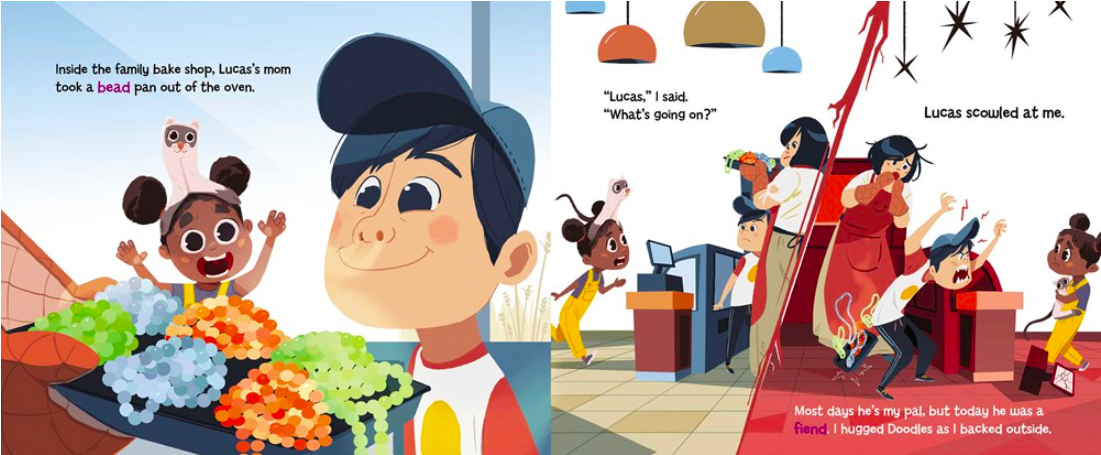
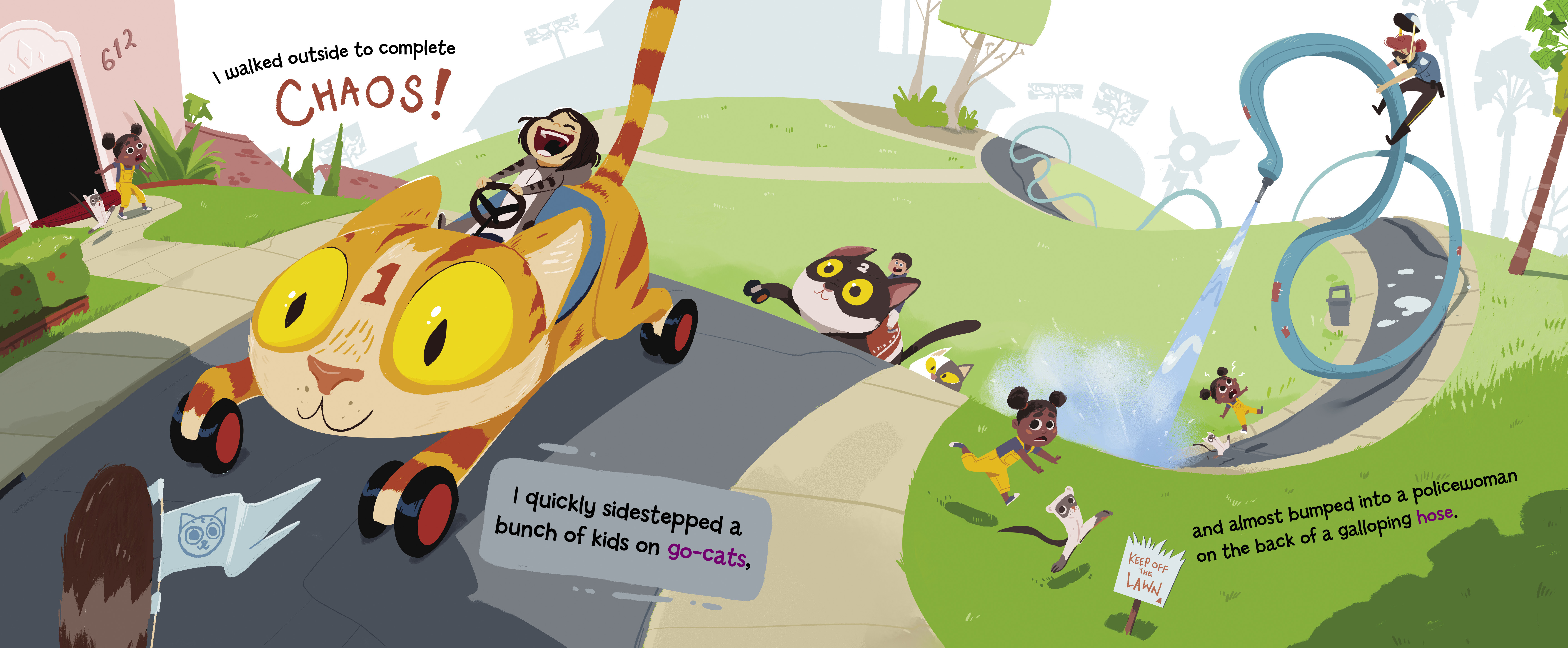
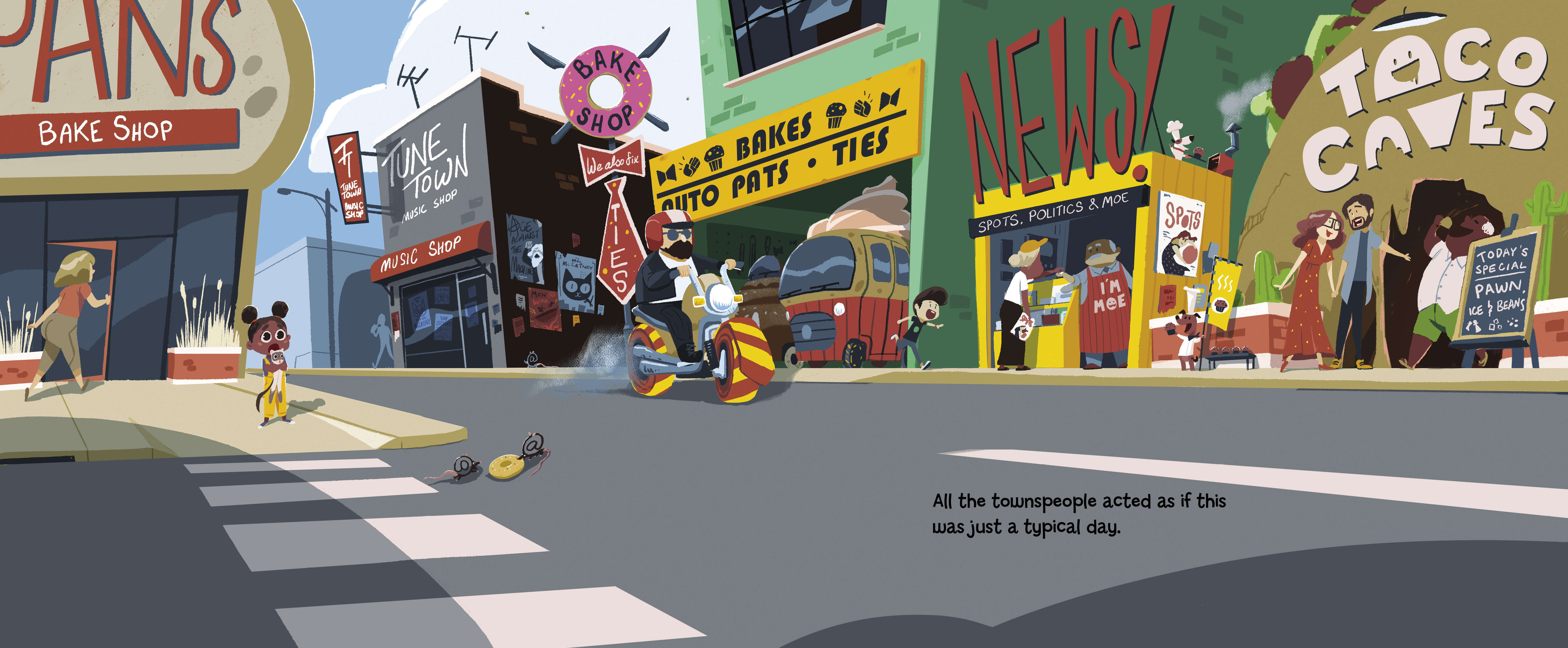
But when she left the house, she discovered that the missing R wasn’t just affecting Doodles, but the whole town. On the way to find Lucas at his mom’s bake shop, she had to avoid “a bunch of kids on go-cats” and a policewoman on the back of a galloping hose.” Then when she found Lucas, her bestie had turned into a fiend. What was worse is that no one acted like anything was wrong.
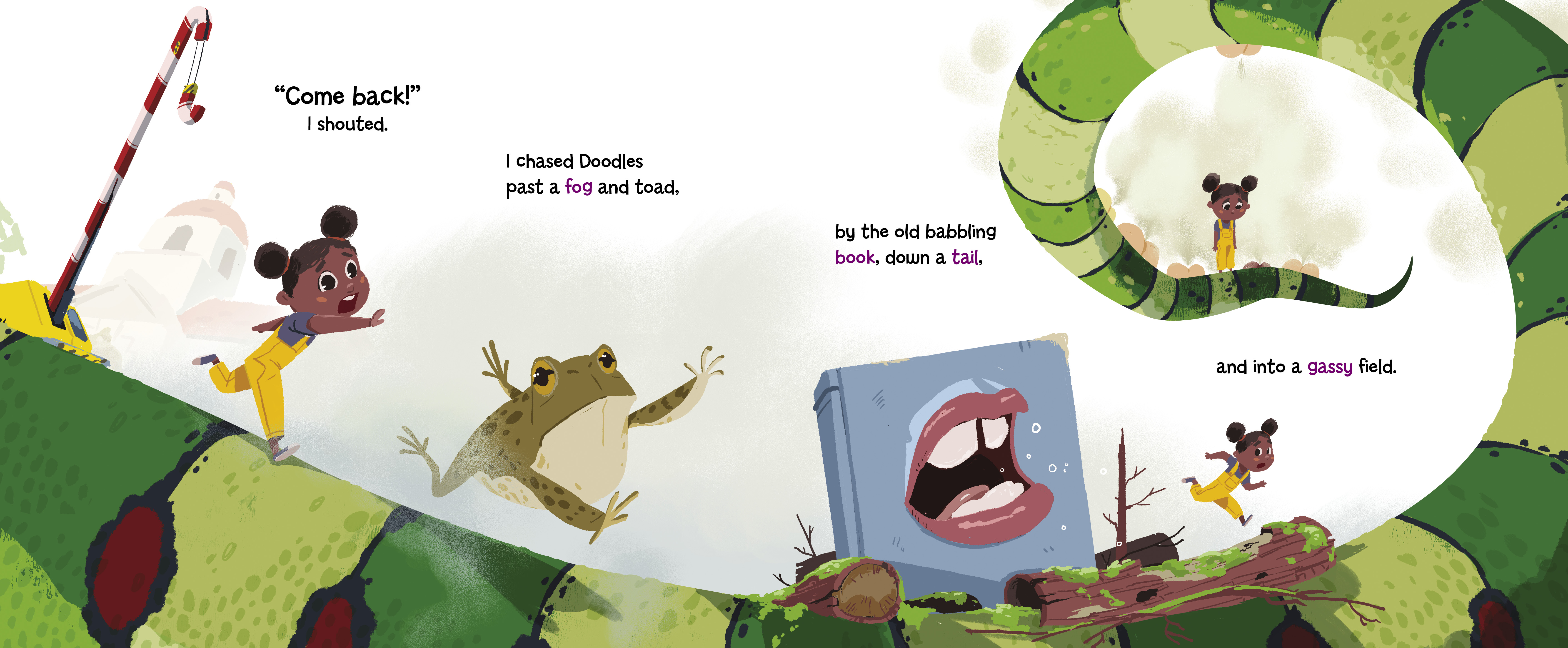
Everywhere she went there was pandemonium, strange hybrid creatures, and weird machines. The girl wanted to find out “what happened to the eighteenth symbol of the alphabet. Could someone have taken it? “But who? And why? …I don’t want to have pet feet until the end of time!” Distressed to hear this, Doodles ran away, and even though she chased him “by the old babbling book, down a tail, and into a gassy field, the girl couldn’t find him.
Image copyright Billy Yong, 2022, text copyright Josh Funk, 2022. Courtesy of Simon & Schuster Books for Young Readers.
But then, faintly in the distance, she heard familiar footsteps and followed the sound until she found him at the seashoe …ummm…at the beach, which was not quite the way it used to be. Still, she found Doodles and apologized for hurting his feelings. He gave her a big hug, but then was off again—this time into the sea. The girl dove in too. Could Doodles be leading them to the answer for the missing R’s? Could life eally etun to nomal … ummm … Could life actually go back to the usual? To find out, jump in and paddle along! You don’t want to miss the supising esolution … I mean the astounding ending!
Image copyright Billy Yong, 2022, text copyright Josh Funk, 2022. Courtesy of Simon & Schuster Books for Young Readers.
In My Pet Feet, Josh Funk has carefully crafted a grammatical mystery that will keep readers (both kids and adults) marveling over the cleverness of each word transformation and how they add to the richness of the story. As the little girl races to restore Doodles to his normal cuddly state, readers become totally immersed in the laugh-out-loud, fantastical R-less world even as they empathize with her dilemma. The pitch-perfect ending comes as a real surprise, one that is sure to please readers of all ages.
Perfectly matched to Funk’s comedic talents is new picture book bright light Billy Yong, who brings a fresh, vibrant, and hilarious sense of humor to this story. Readers will want to linger over every page as Yong infuses each spread with a wealth of astoundingly clever details in depicting not only the R-less words provided in the story but in creating a whole town and outlying regions in which every element is flawless. Yong’s illustrations set up an irresistible game of search-and-find for all the visual puns, and the before and after images of the town make for an engaging find-the-differences puzzle.
A joy from beginning to end, My Pet Feet charms on many levels. The book is laugh-out-loud fun for the whole family as well as a way to engage kids in lessons on the alphabet, sound recognition, spelling, and grammar for teachers. Both avid and reluctant readers will love the silliness that makes this a must-have addition to all home, classroom, school, and public library collections
Ages 4 – 8
Simon & Schuster Books for Young Readers, 2022 | ISBN 978-1534486003
I’m thrilled to be talking with Josh Funk and Billy Yong today about My Pet Feet. So put up your feet and get ready to learn about the amazing journey this story took from an initial idea to an instant classic!
Meet Josh Funk
Credit Carter Hasegawa
Josh Funk writes silly stories such as the Lady Pancake & Sir French Toast series (including the forthcoming The Great Caper Caper, November 15, 2022); the It’s Not a Fairy Tale series (including the forthcoming It’s Not the Three Little Pigs, October 1, 2022); the How to Code with Pearl and Pascal series (including How to Code a Sandcastle and How to Code a Rollercoaster); the A Story of Patience & Fortitude series in conjuction with the New York Public Library (including Where Is Our Library? and Lost in the Library); Dear Dragon, Albie Newton, Pirasaurs!, A Night at the Bookstore: A Barnsie & Noble Adventure, and Dear Unicorn, coming in the fall of 2023!
Since the fall of 2015, Josh has visited (or virtually visited) over 500 schools, classrooms, and libraries and he is a board member of The Writers’ Loft in Hudson, MA. Josh grew up in New England and studied Computer Science in school. Today, he still lives in New England and when not writing Java code or Python scripts, he drinks Java coffee and writes manuscripts.
Hi Josh! I’m so excited to be a part of your book tour for this comedic tour de force! Thanks for taking time to chat with me about My Pet Feet and how the story came to be!I’m sure readers would love to know a little about how you wrote this story. How much fun was it to find all of the convertible words? How long did your writing process take?
It started with a typo on my phone (or possibly an autocorrect). I meant to write the word ‘friend’ but it came out ‘fiend’ which led me to wonder … what happened to the R? Why would a friend become a fiend? Did other words also lose their R’s? Did ALL words lose their R’s? Why? And what would the world look like if there were no R’s? What silly illustratable shenanigans would occur in a book written without the letter R?
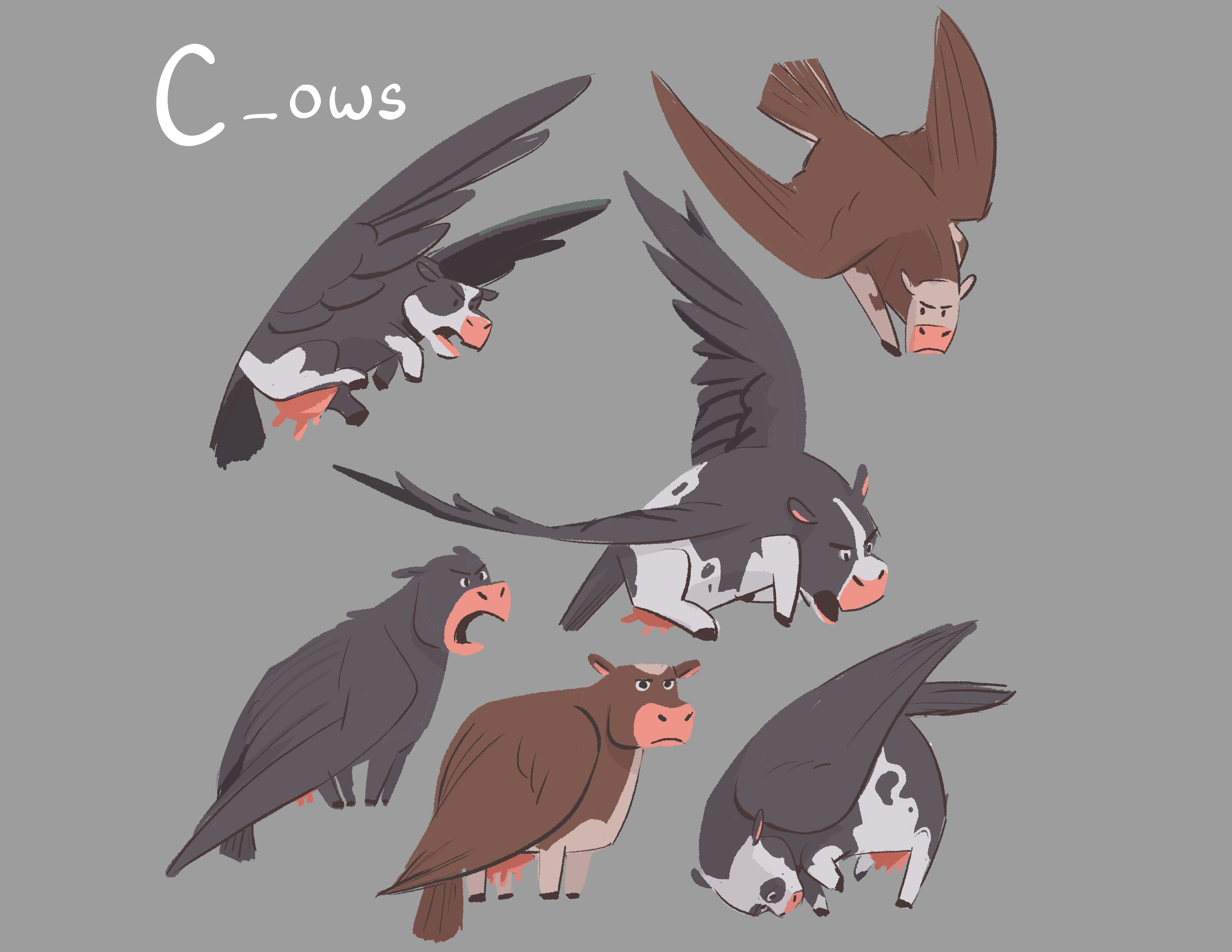
This led me to start searching for words where if you took away an R, it would become another word—especially word pairs that made for funny illustrations. Crows becoming cows. Babbling brooks becoming babbling books. The seashore becoming the seashoe.
But I still also needed a story. I needed a reason, an important reason, that someone needed to investigate the missing R’s … and needed to get them back. And rescuing a pet who had been transformed into something else was the perfect reason.
Once I had the list of words to play with along with the main character’s motivation, everything easily fell into place. JUST KIDDING! I wrote many, many, MANY revisions of this story both before and after it was acquired to get things in the shape they finally ended up in. And truly, nothing really came together until Billy Yong joined the team.
Speaking of Billy, what were your thoughts when you saw his illustrations? Do you have a favorite spread?
As an author of picture books, I think I benefit from not thinking too visually, at least in specifics. By that, I mean, I had no idea what ‘pet feet’ would look like. Would they be human feet (with human toes? Ew.)? Would it be like a rabbit’s foot? Would the foot have a face? I honestly didn’t even bother thinking about these things—I left that for someone else to tackle.
And unsurprisingly, I think Billy’s visual creation of pet feet is amazing! I have no idea how he made ‘pet feet’ look cute. The concept is just so ridiculous, but he managed to pull it off.
As far as favorite spreads and images, I love the spreads with all the visual gags in the background, like the one in town with everyone acting like it’s just a typical day. But the best, without a doubt, is the gassy field. I had no idea Billy was going to illustrate a bunch of butts farting—but I totally approve. Like I said, I don’t think too visually—I just wrote ‘gassy field’ and assumed someone else would take care of it. And there are no buts about it—Billy did.
Meet Billy Yong
Billy Yong is an illustrator and character designer. Since starting out he has drawn storyboards, engaged in visual development, and has even voice acted for animation, games, and children’s books. When he’s not creating his professional doodlings, he can be found in a cafe drawing or painting in his sketchbook, in his studio developing his personal projects, or in the dojo teaching Japanese swordsmanship. Billy currently lives in sunny Singapore.
To learn more about Billy Yong and view a portfolio of his work, visit his website. You can connect with Billy on Instagram and Twitter.
Hi Billy! I’ve been looking forward to chatting with you since the moment I saw my review copy of this book. First, I want to Congratulate you on your debut picture book! Can you talk about your previous work and how you came to illustrate Josh’s story?
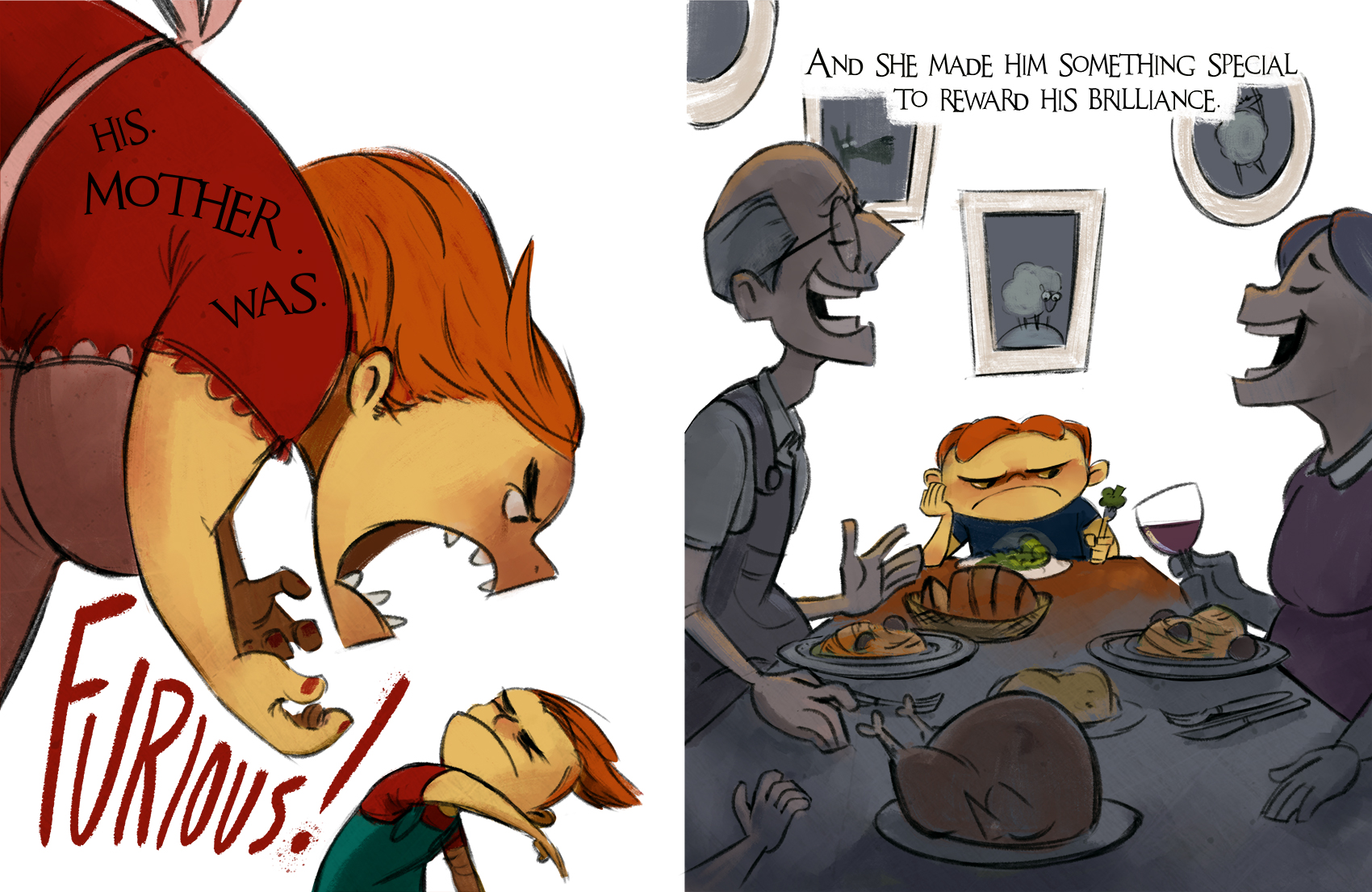
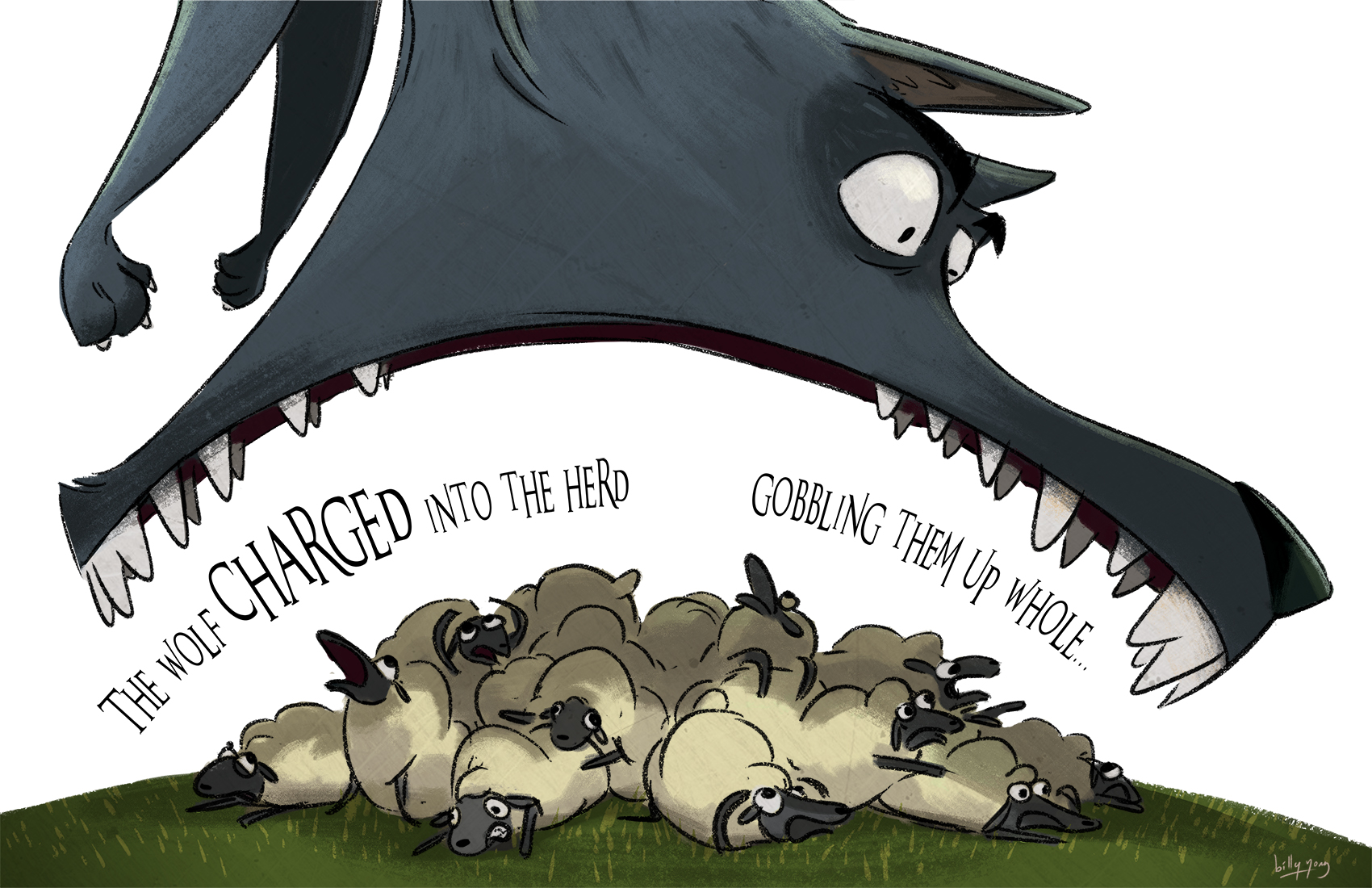
Thanks Kathy! It is such a privilege to be debuting through Josh’s hilarious story. Up till then, most of my illustrative works centered around the Young Adults range. Now that I think about it, one of my most enjoyable school projects that brought me into the kid lit scene was TheBoy Who Cried Wolf.
Copyright Billy Yong
When I was first approached about the project, Josh, Kendra and Chloe (editor and art director respectively) said my sense of humor was what got me the role. At that time, I honestly struggled to understand what they meant, but never say no to great opportunities eh?
What were your first impressions when you read Josh’s manuscript?
Dude, I loved it. Probably not a good thing that I first read it just as I was about to turn in for bed (it was 02:32 in the morning since I live in Singapore). I couldn’t sleep for the next two hours because I was drawing scenes in my head haha.
Your illustrations are so ingenious, even including foreshadowing and visual puns that go beyond or riff on the “r-less” words in the text. I’m sure readers would love to learn a little about your process in creating them.
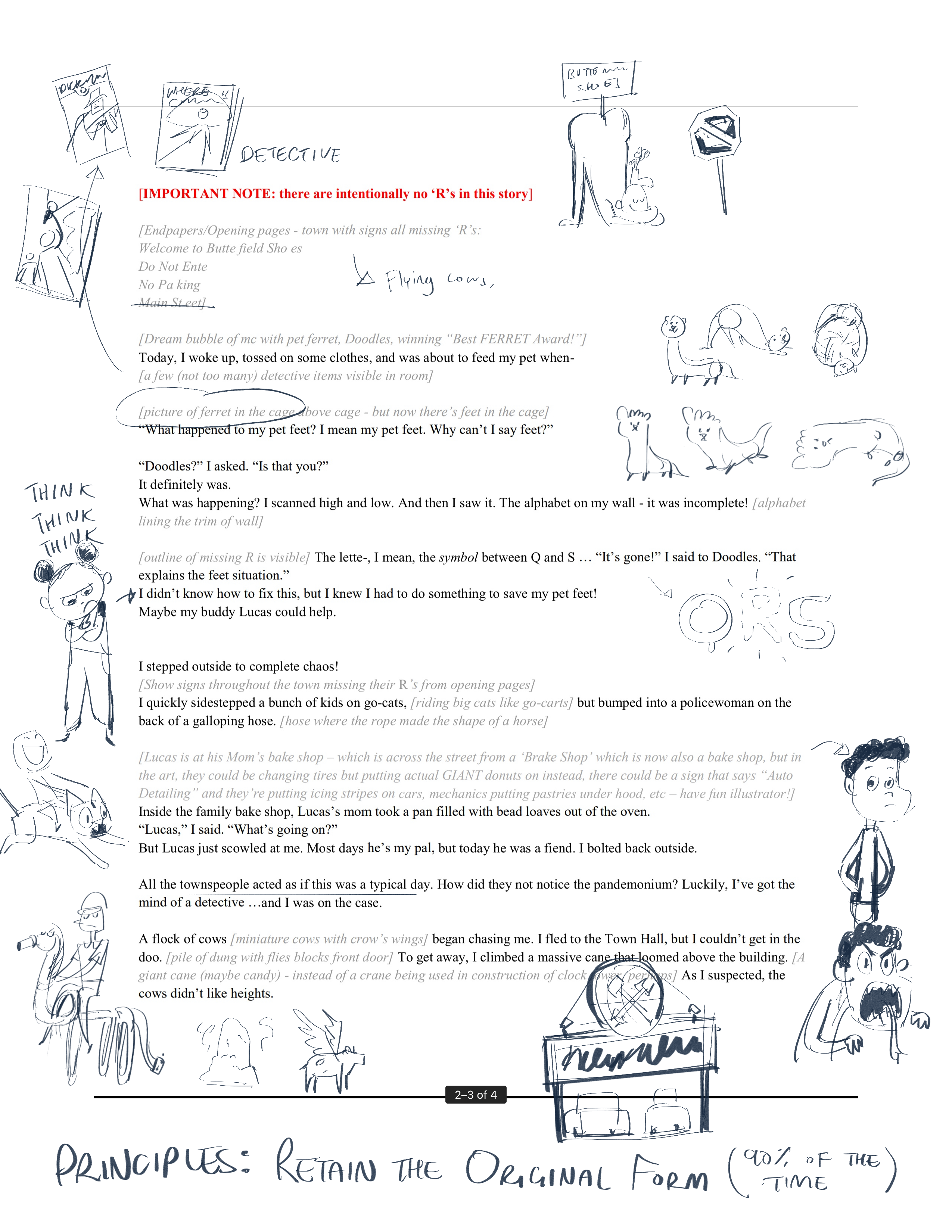
You’re too kind! First off, for anyone wanting to get into illustration, particularly with larger projects like these, understand that the process is more often a back-and-forth than a straight journey. I typically like to doodle on the script when I first read it, it helps to just spill out any ideas onto paper without restraint at the earliest phase.
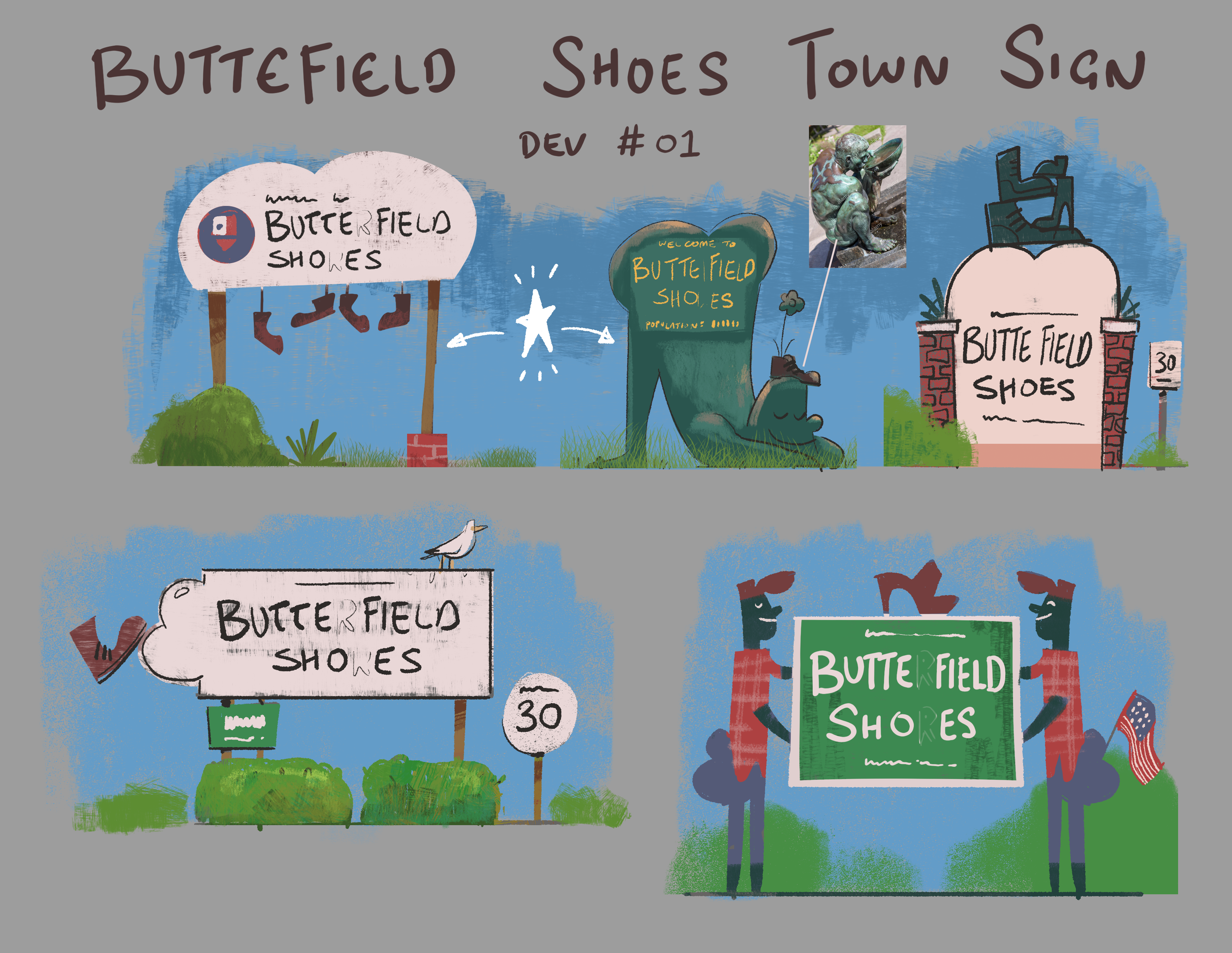
Some of the earliest ideas featured the town name: Butterfield Shores -> Buttefield Shoes. Me being the adult that I am, figured why not a bronze statue, butt resplendent for all to see, with a sign sticking out his bum, and a shoe on his head, with a little flower growing from it.
Image copyright Billy Yong, 2022
Developments of bums are always a joy.
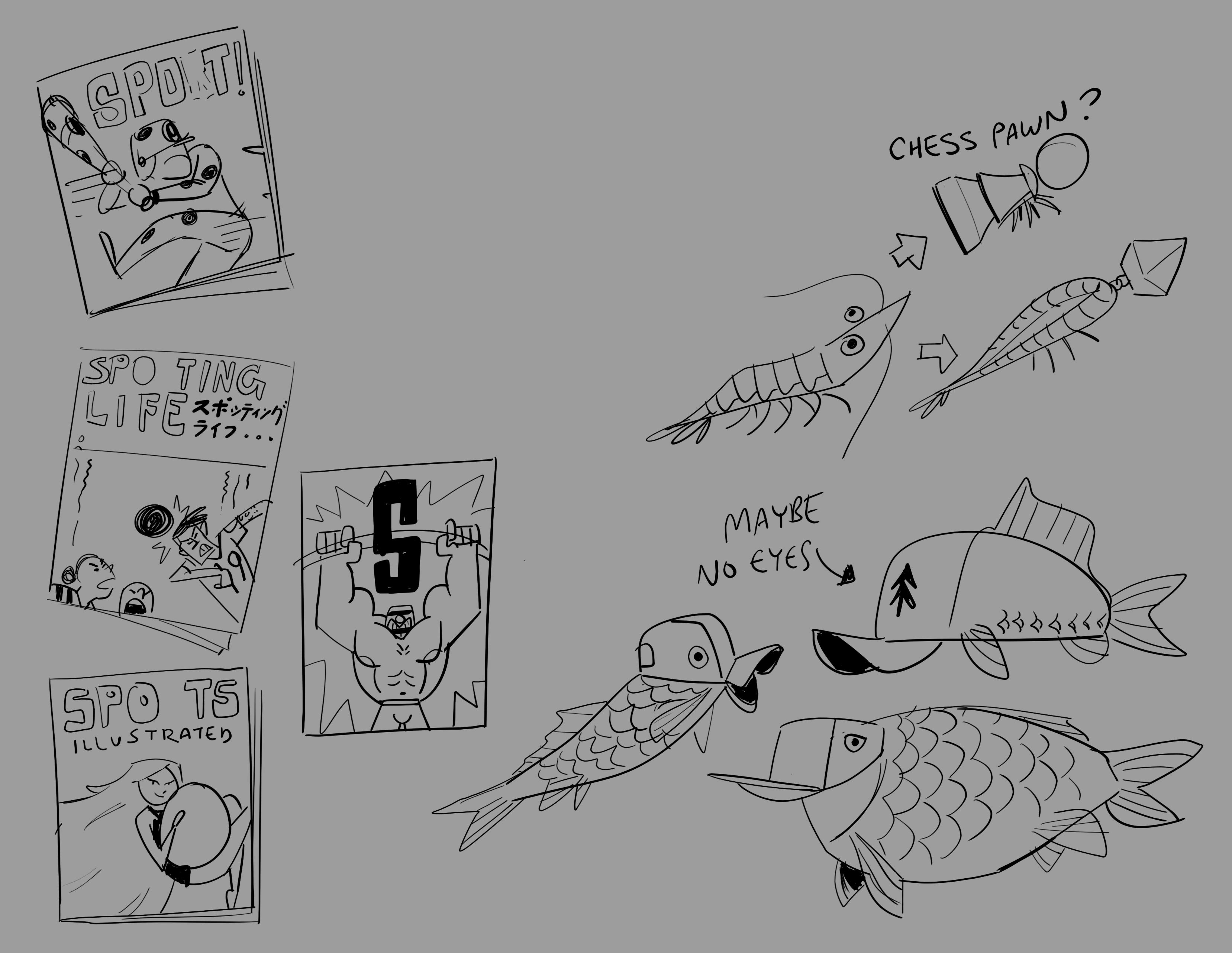
Another was around miscellaneous things we would encounter.
Image copyright Billy Yong, 2022
Even though they were never used, it helped kick off the vibe of this crazy world our heroes lived in.
Back on the main subjects, I’m usually drawn most towards characters, so that’s usually what I like to start off with after doodling on the script.
Image copyright Billy Yong, 2022
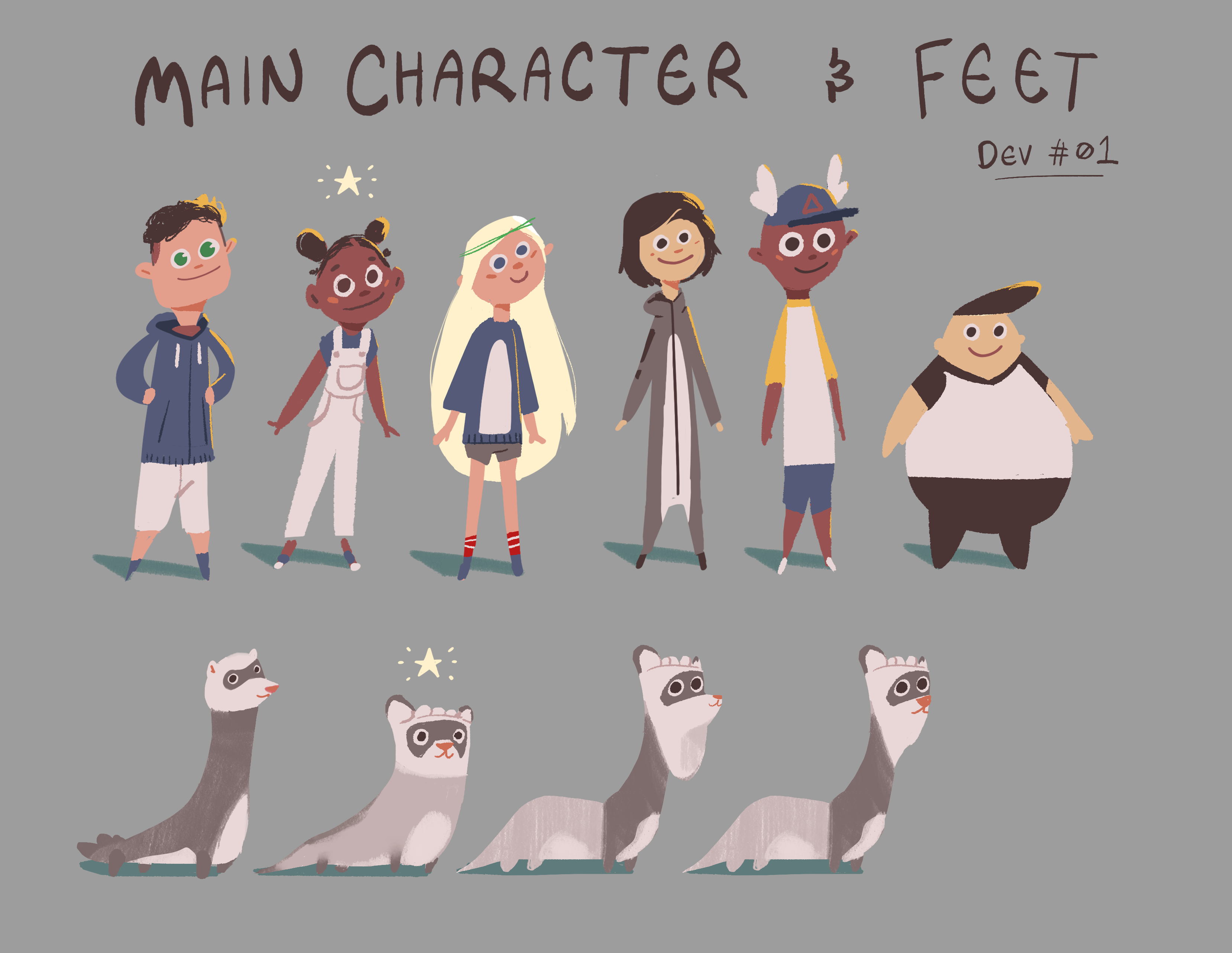
I loved that our main human was pretty nondescript, so that left a lot of room to create a cast of characters. I eventually settled on no.2, since her shapes felt quite a lot like our fe(rr)et, Doodles. Below are some other characters I drew during the development process:
Image copyright Billy Yong, 2022
Image copyright Billy Yong, 2022
When it came to laying out the pages however, my usual methods of working digitally lacked the grand overview and the bravery to push past mistakes. Ironic since the digital medium allows me to undo to my heart’s content, but that also means I don’t see my mistakes and move past them.
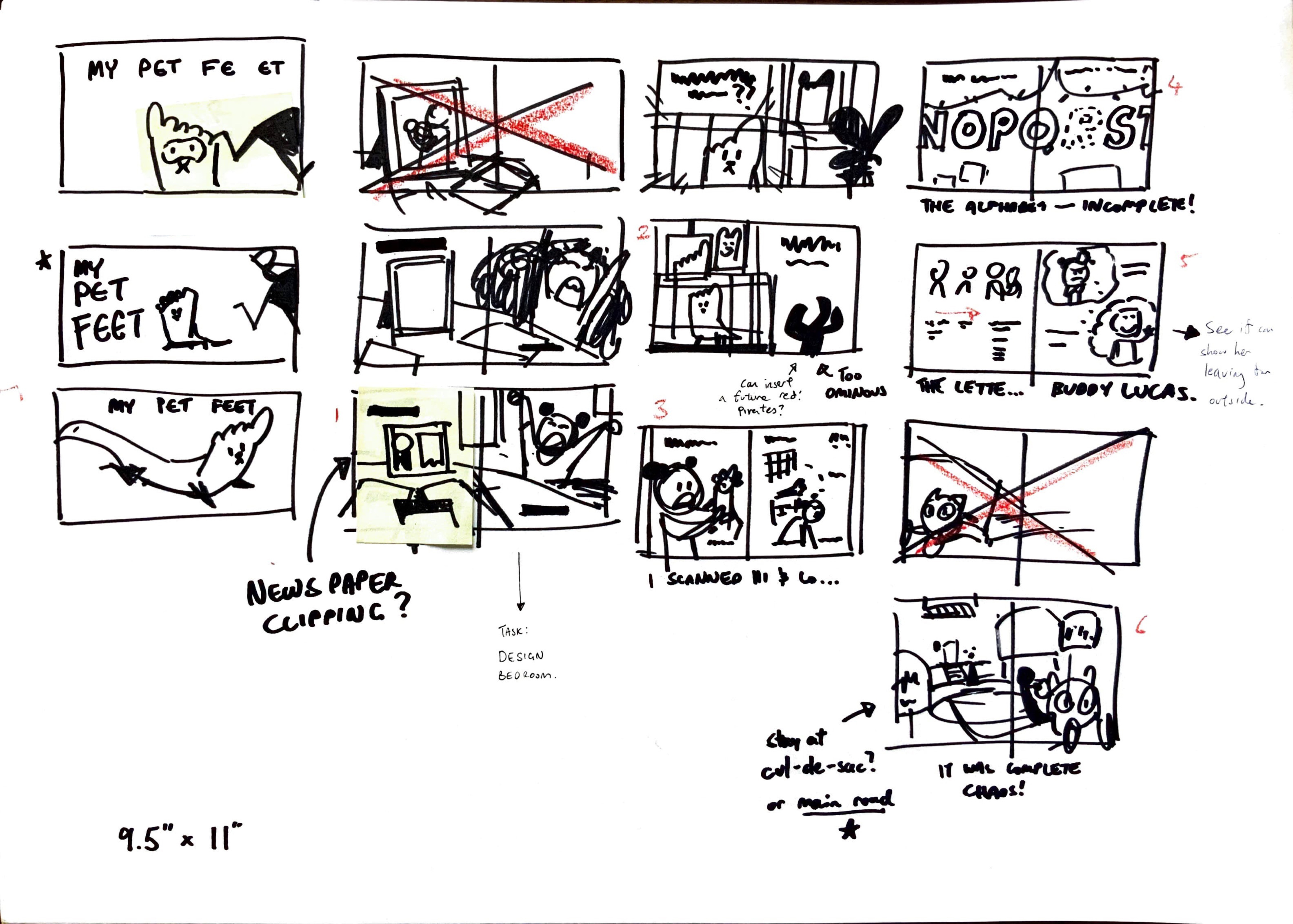
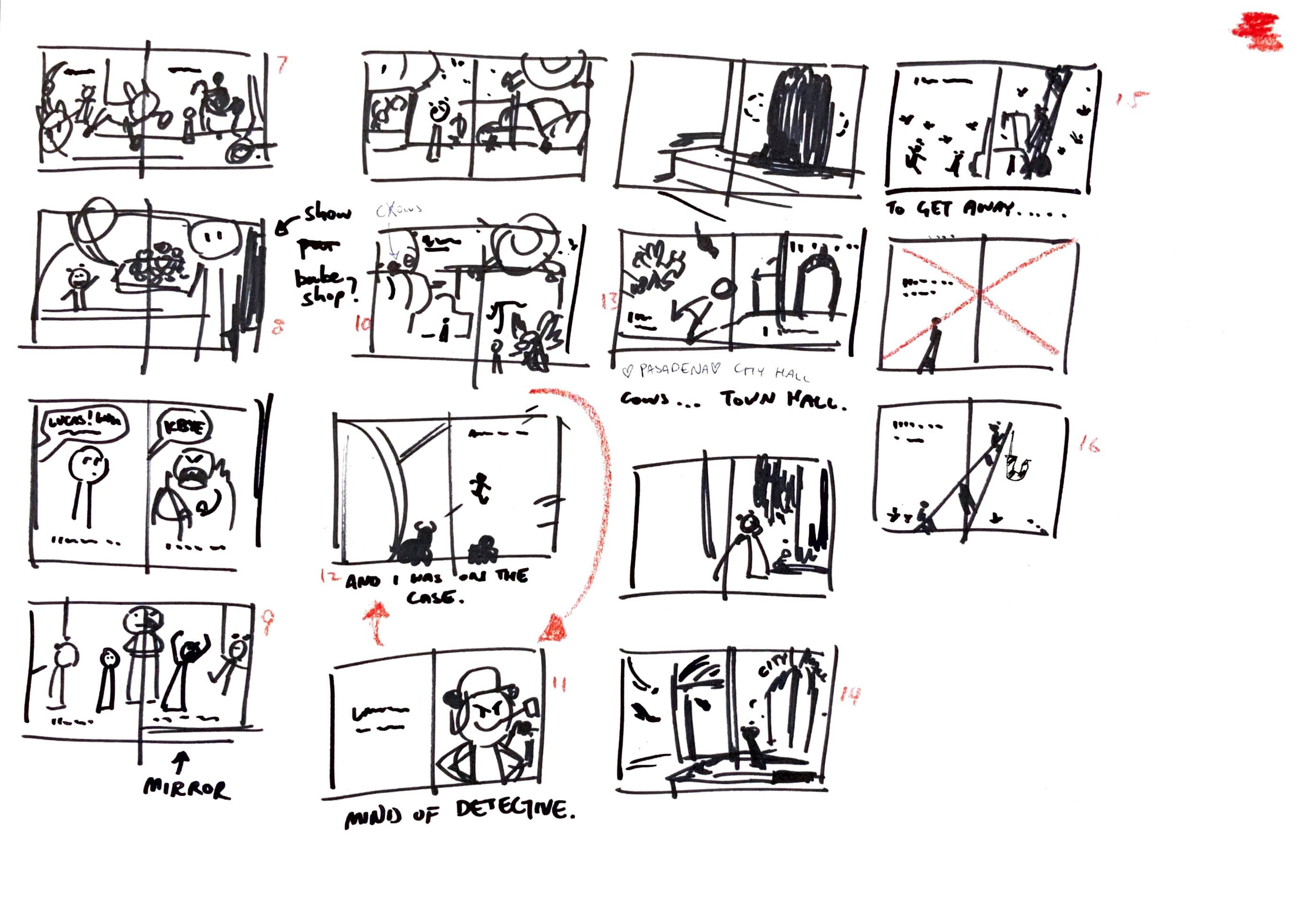
So, feeling stuck, I whipped out a giant A3 sketchpad with a sharpie and just went ham at it. No distractions, not even music in the background, just drawing at the dining table figuring out the flow and composition for Josh’s story. I think I managed to churn out the entire layout in 2 days because of this, haha.
Image copyright Billy Yong, 2022, text copyright Josh Funk, 2022.
Image copyright Billy Yong, 2022
(Initial doodles of the first couple of pages. When I liked a composition but didn’t like parts of it, I would paste a sticky note on top and just draw over it. It feels a lot more intuitive ideating like this compared to a digital drawing.)
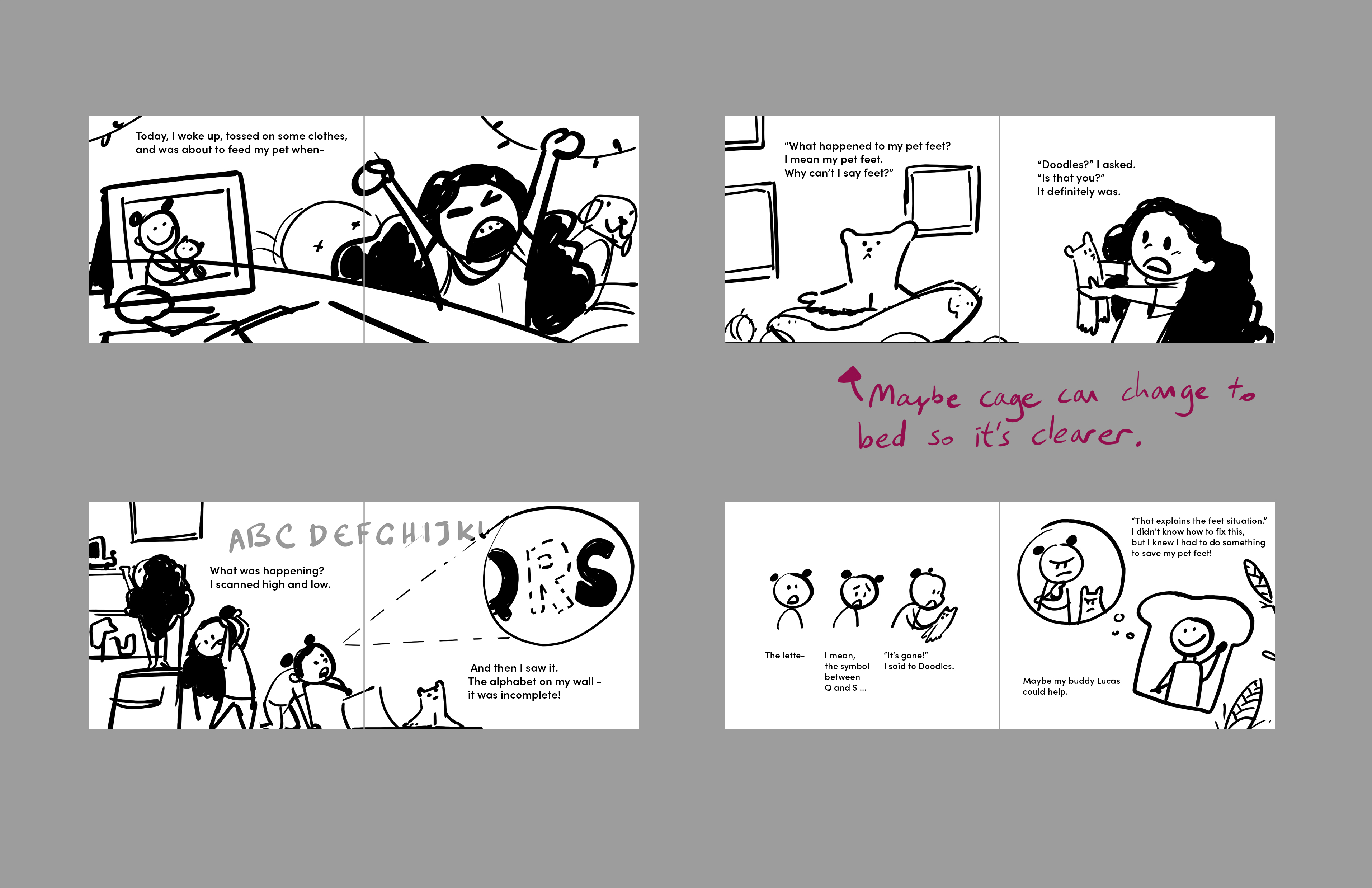
This wouldn’t quite make sense to Josh, Chloe (art director) and Kendra (editor) though, so the next step was tidying up.
Image copyright Billy Yong, 2022, text copyright Josh Funk, 2022.
Image copyright Billy Yong, 2022, text copyright Josh Funk, 2022.
Image copyright Billy Yong, 2022, text copyright Josh Funk, 2022.
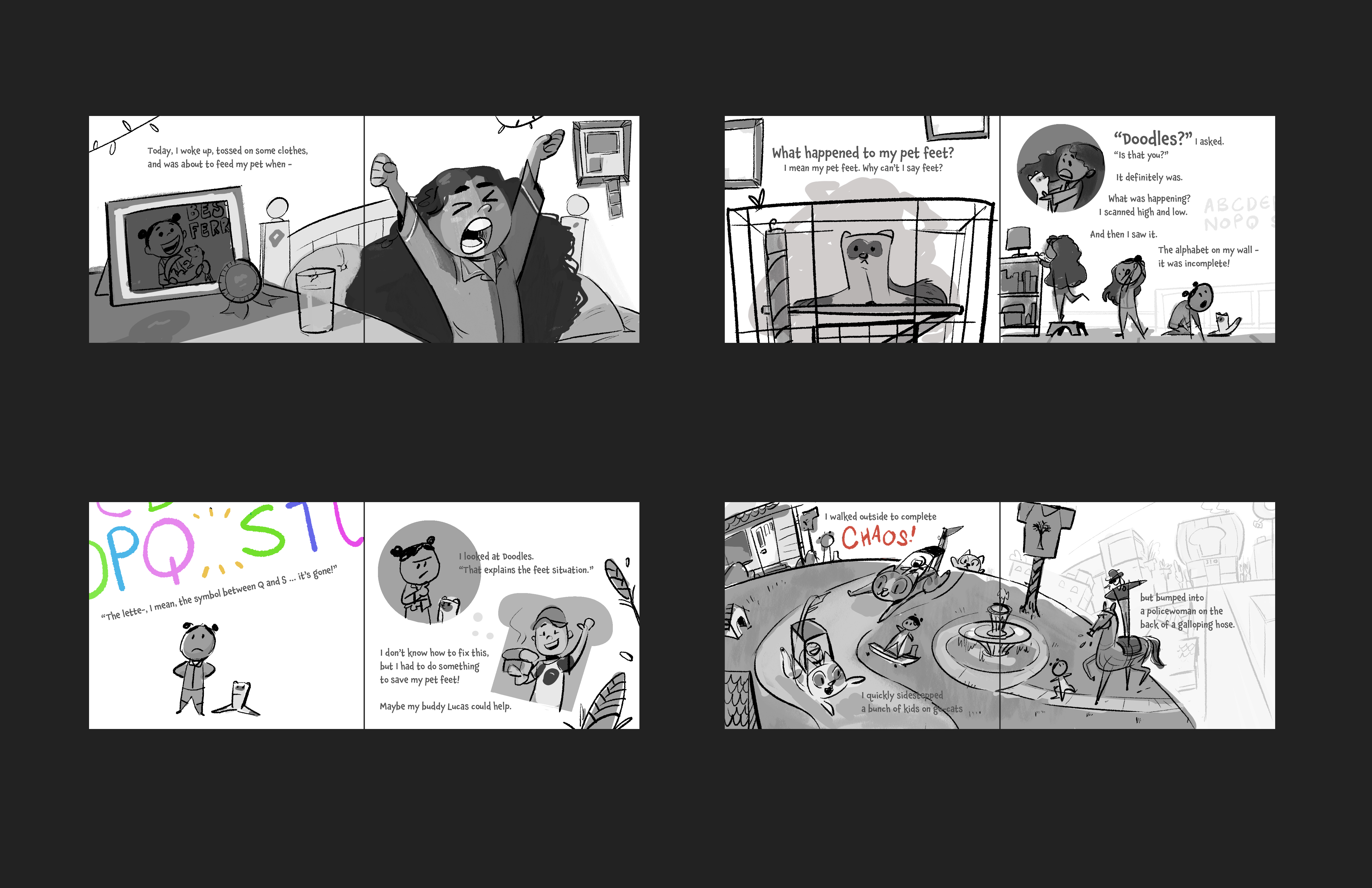
(I think the most important part about this sketch cleanup phase was not to be too married to the original sketches, so if it doesn’t work on cleanup, then it helps to go back to the sketchpad or just move on and revisit the spread.)
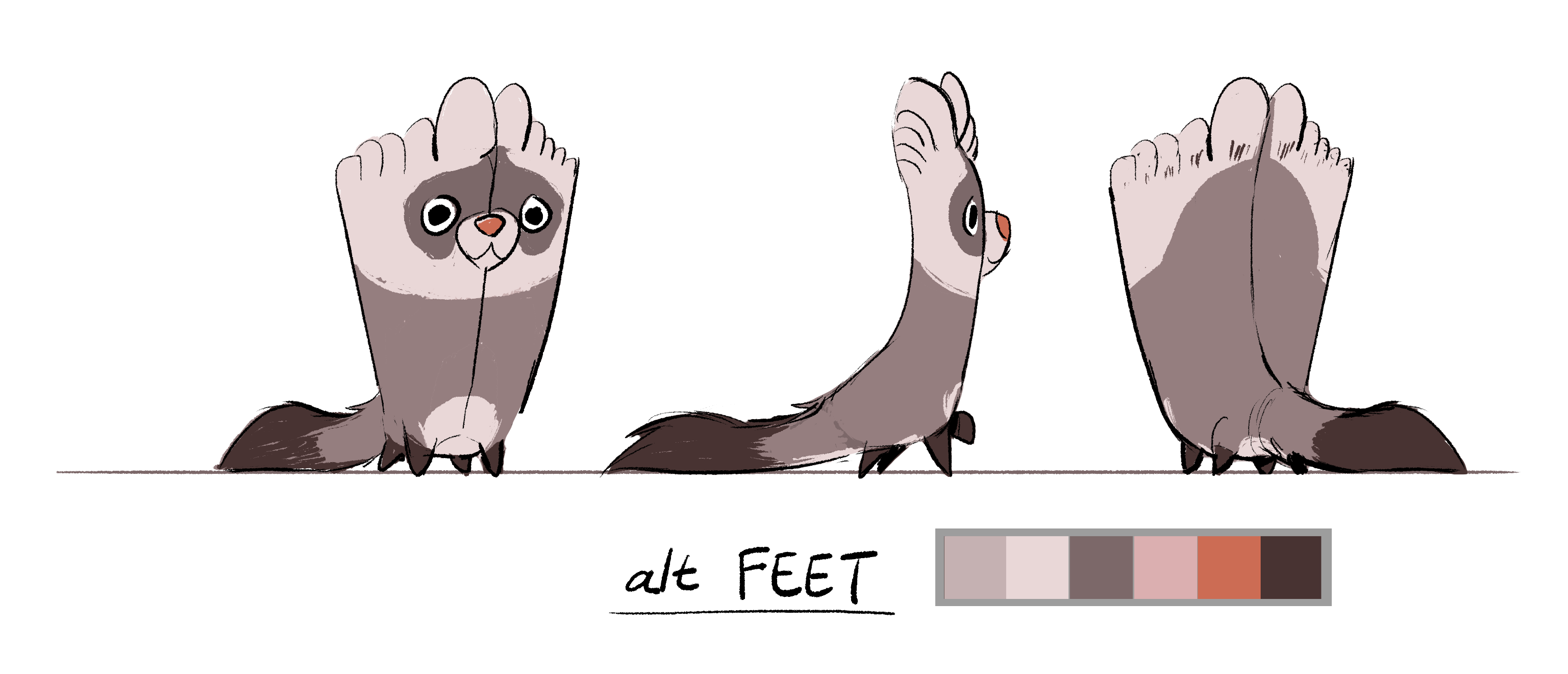
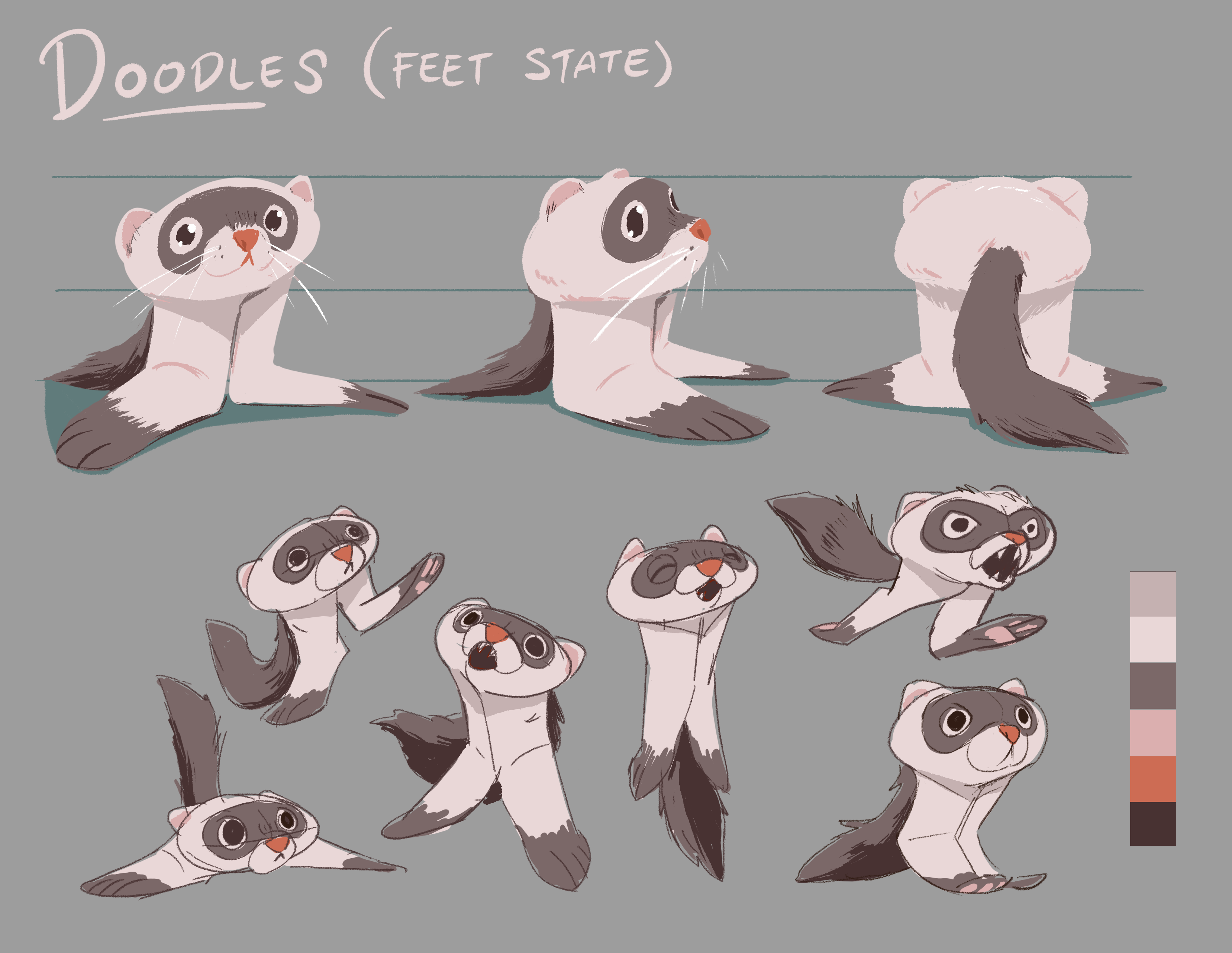
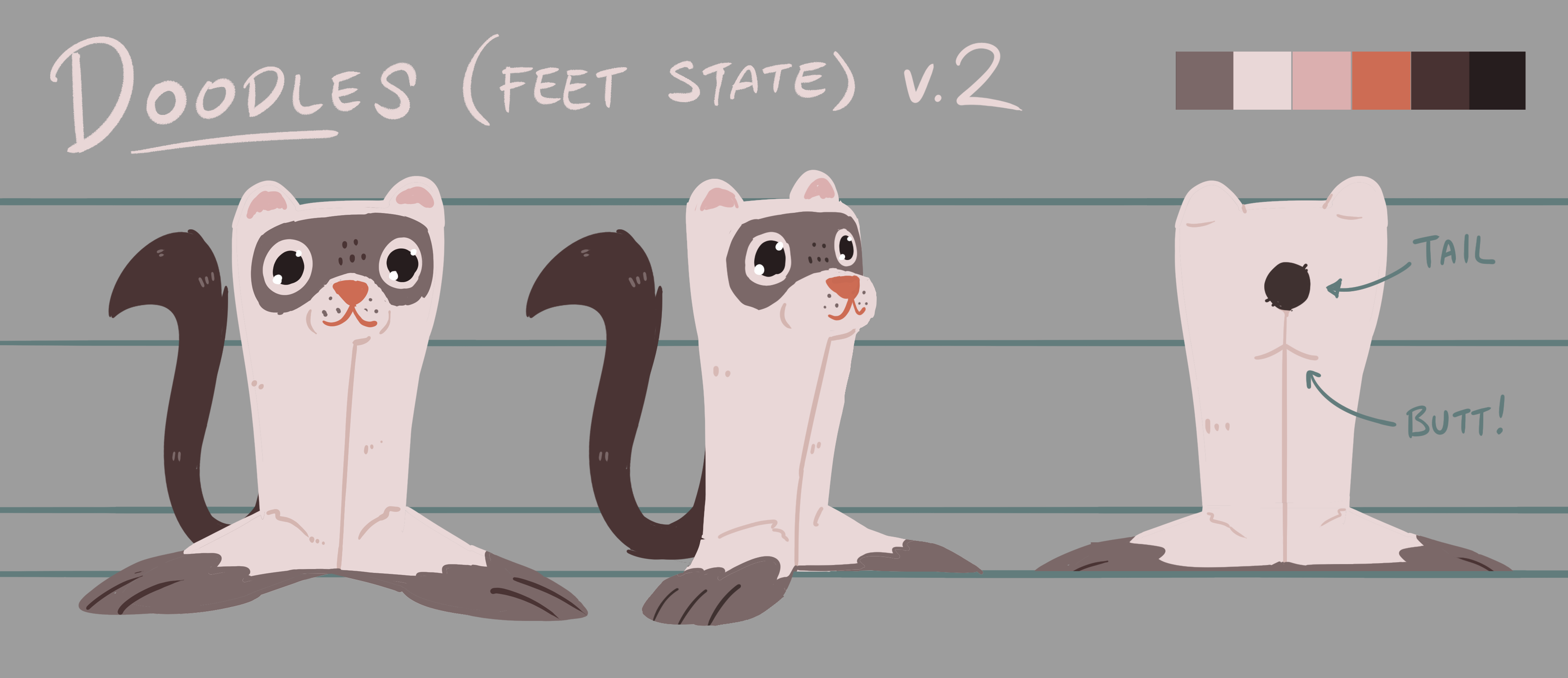
Once layouts were done, it was back to designing the characters. Doodles (or Feet) had the most rounds of back and forth. Ranging from foot-face, to a head on feet, ultimately to feet with a face, every interpretation brought us closer to what you see before you.
Image copyright Billy Yong, 2022
Image copyright Billy Yong, 2022
Image copyright Billy Yong, 2022
Doodles (Feet State) v.2 was what we settled on in the end.
Was there a spread that was particularly fun to illustrate? What made it so?
Haha, they were all a joy to do, but my favorites would be these three:
Image copyright Billy Yong, 2022, text copyright Josh Funk, 2022.
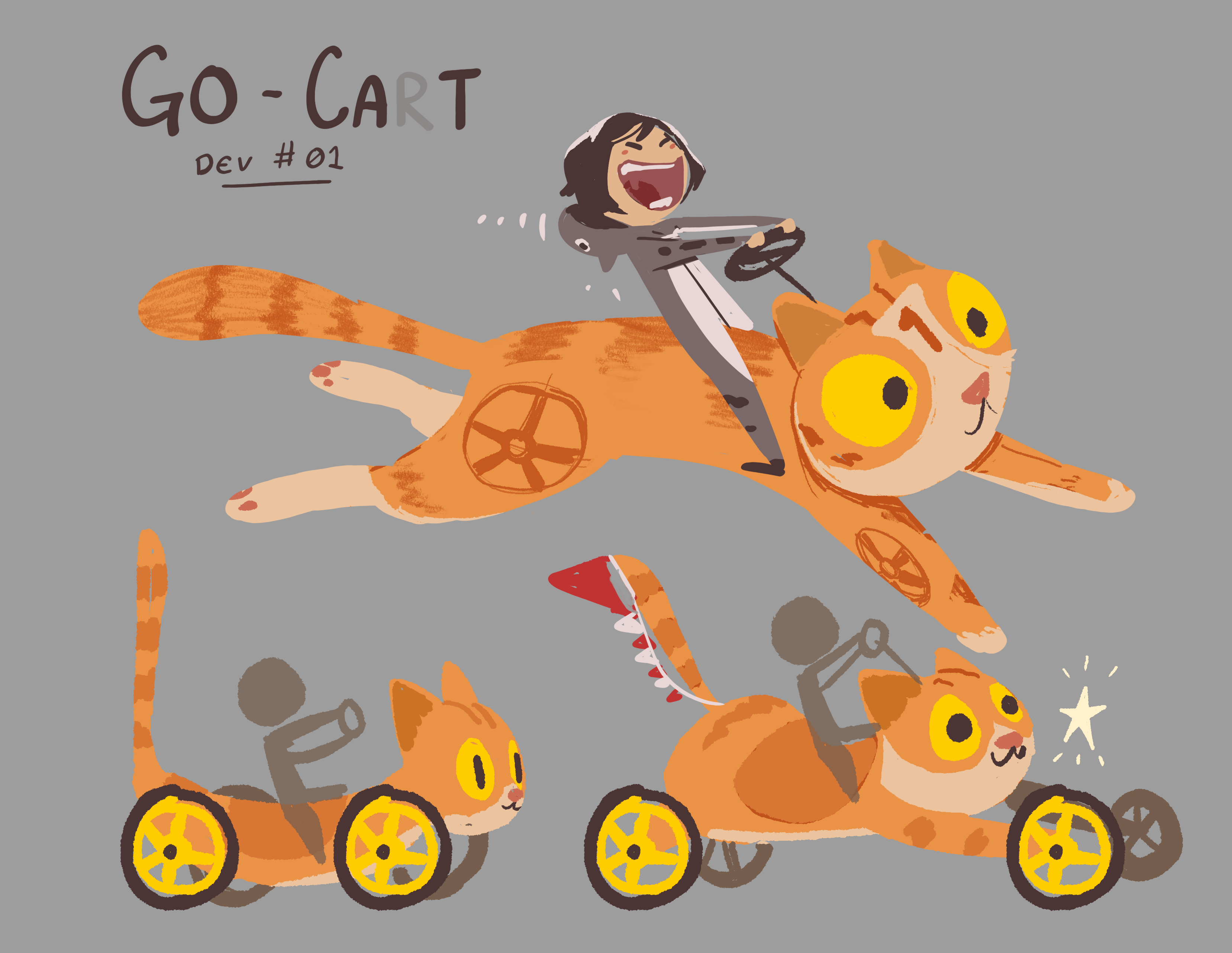
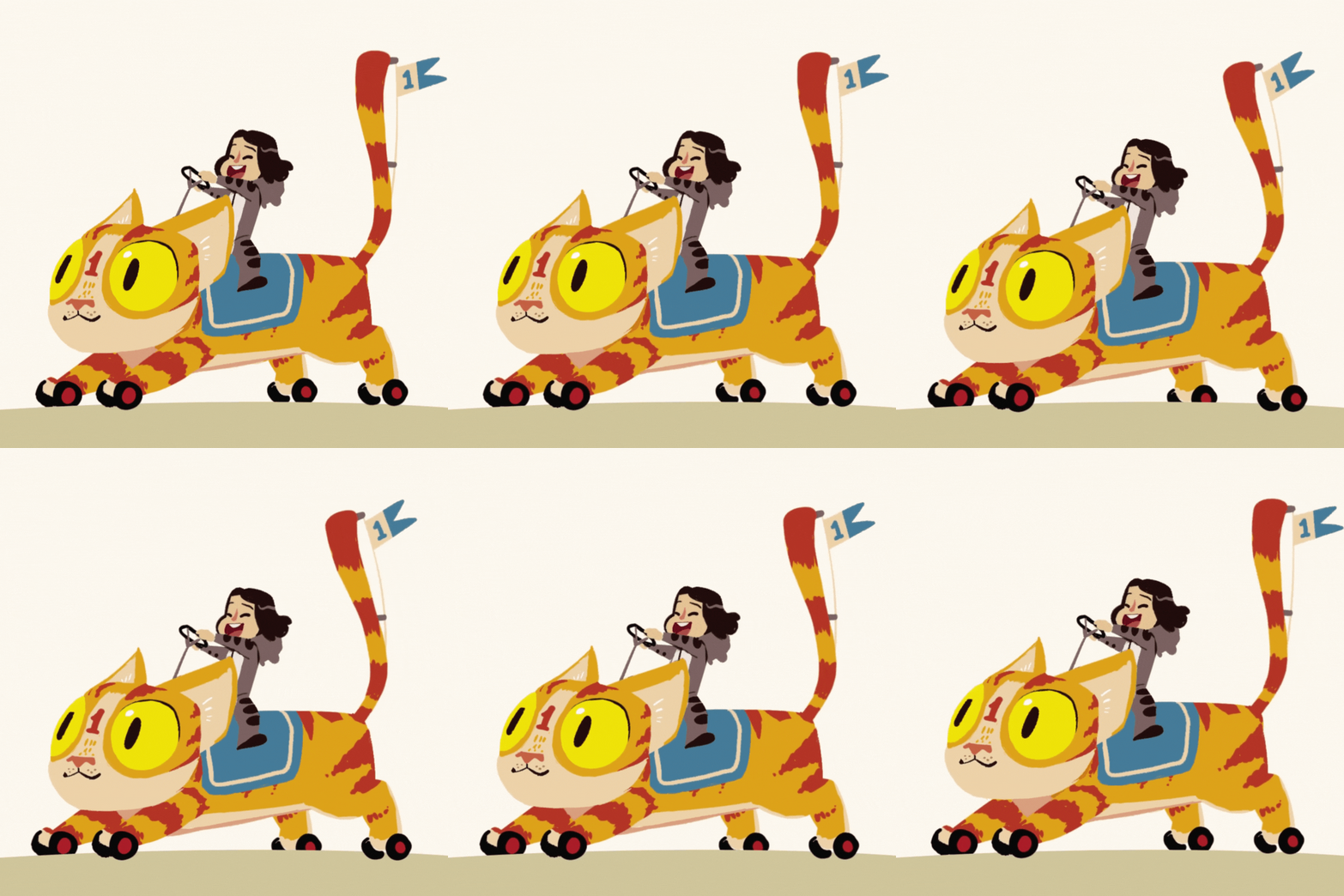
While the layout changed quite a fair bit from the original sketch, my goal of showcasing the go-cats and the topsy-turvy-ness of it all culminated in a winding road, with a subtle line at the top to lead the eyes back to the cat’s tail, ultimately to rest at the water splashing of the police ho(r)se.
Image copyright Billy Yong, 2022, text copyright Josh Funk, 2022.
While this was less dynamic than the previous one, it was really fun laying out the look and feel of the town. I think the biggest challenge was to make it feel populated without overloading the senses, and allowing the eyes pockets of rest in a spread so full of colors and information. I also sneakily snuck in my friends, who are getting married at the end of 2022, so even though I couldn’t be there, it’s my little wedding present to them.
The @-rats were also a suggestion of my wife (I think). Honestly in the thick of things I’ve confused ideas I’ve received from Josh, Kendra (our editor), Chloe (art director), my wife Rachel and myself. It really has been a team effort to bring this book to life.
Image copyright Billy Yong, 2022, text copyright Josh Funk, 2022.
Again with the swirly composition. (I’m starting to think I have a thing for these…) Also relatively simple, but I’m happy turning the tail into a device for our readers to traverse from left to right. Of course the gassy fields had to be a field of bums farting into the wind.
What do you like best about illustrating children’s books?
I enjoy the freedom of expression. It’s very daunting whenever you start a project like this, because said freedom means you often start on a very blank canvas, with only the story to guide you. You have to give yourself permission to be as wild as your skill and imagination can allow, and avoid listening to the doubts you have with certain decisions you make. When those doubts do manifest, I’ve found it useful to remind myself that this is a team process, and if the author, editor or art director don’t quite approve, they’ll let you know. Until then, go ham.
What’s up next for you?
Haha, I don’t think I’m allowed to say, but perhaps I could hint that it’s about a boy, his friends and a hammer. It’s quite the wild ride, and I hope when it’s released readers will enjoy it. I certainly have. Apart from that, just raising a baby girl with my wife. It’s an exercise in patience and endurance. I cannot wait to start drawing with her and learning from her. Perhaps I will become a better artist from that.
Wow! Thank you for sharing so much about how you brought My Pet Feet to life! Your awesome illustrations and sense of humor are going to keep kids searching for all the visual puns and laughing from beginning to end – and over and over again! I wish you all the best with this book and am really looking forward to seeing more of your work. And, since we’re talking about bringing the story to life, I think we have time for one more image ….
Copyright Billy Yong, 2022
So, Everybody, jump on your Go-Cat and head to your local bookstore to pick up My Pet Feet to celebrate New Book Month in hilarious style!
My Pet Feet Virtual Book Tour Activity
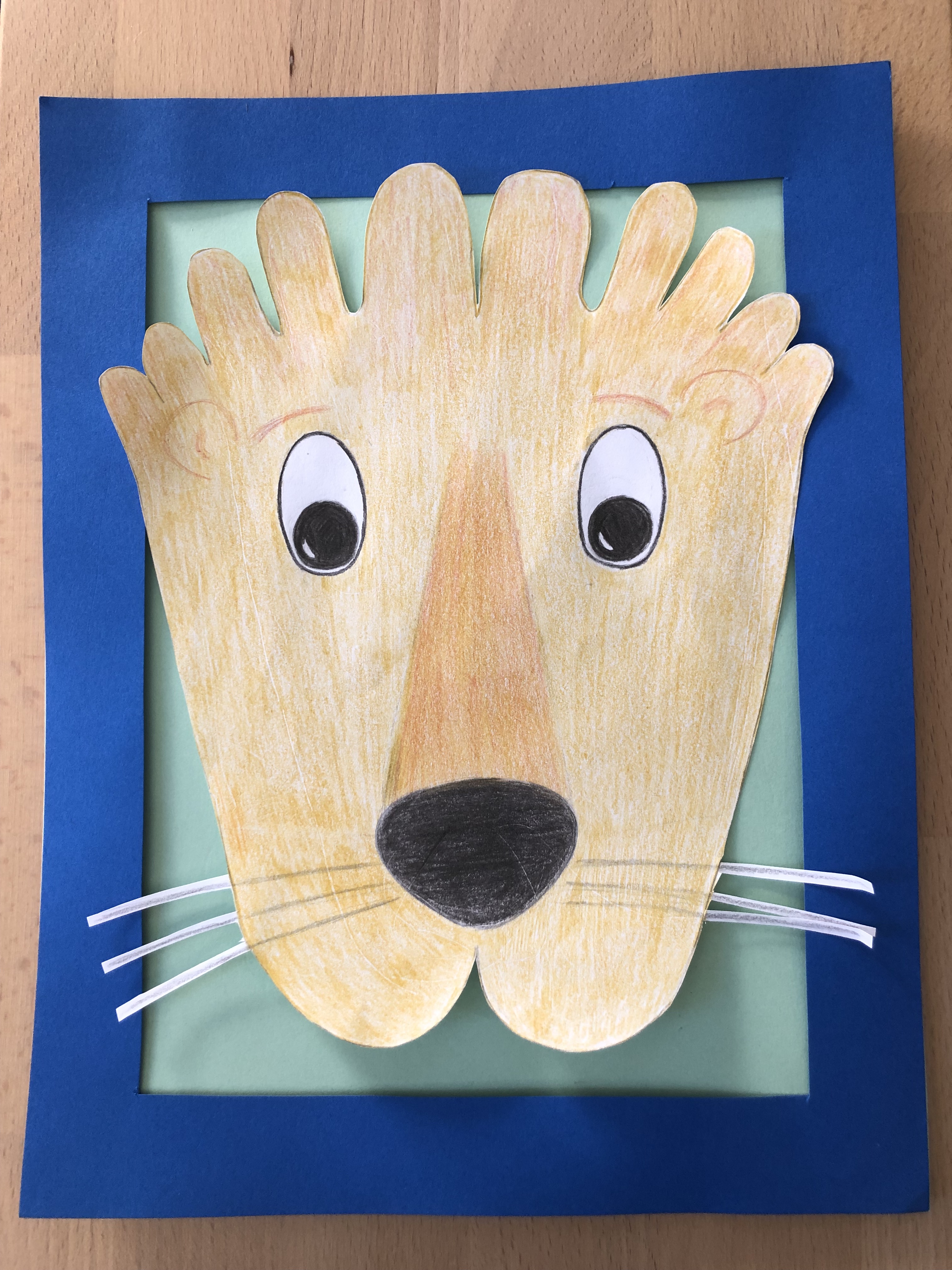
Feet Pet Portraits
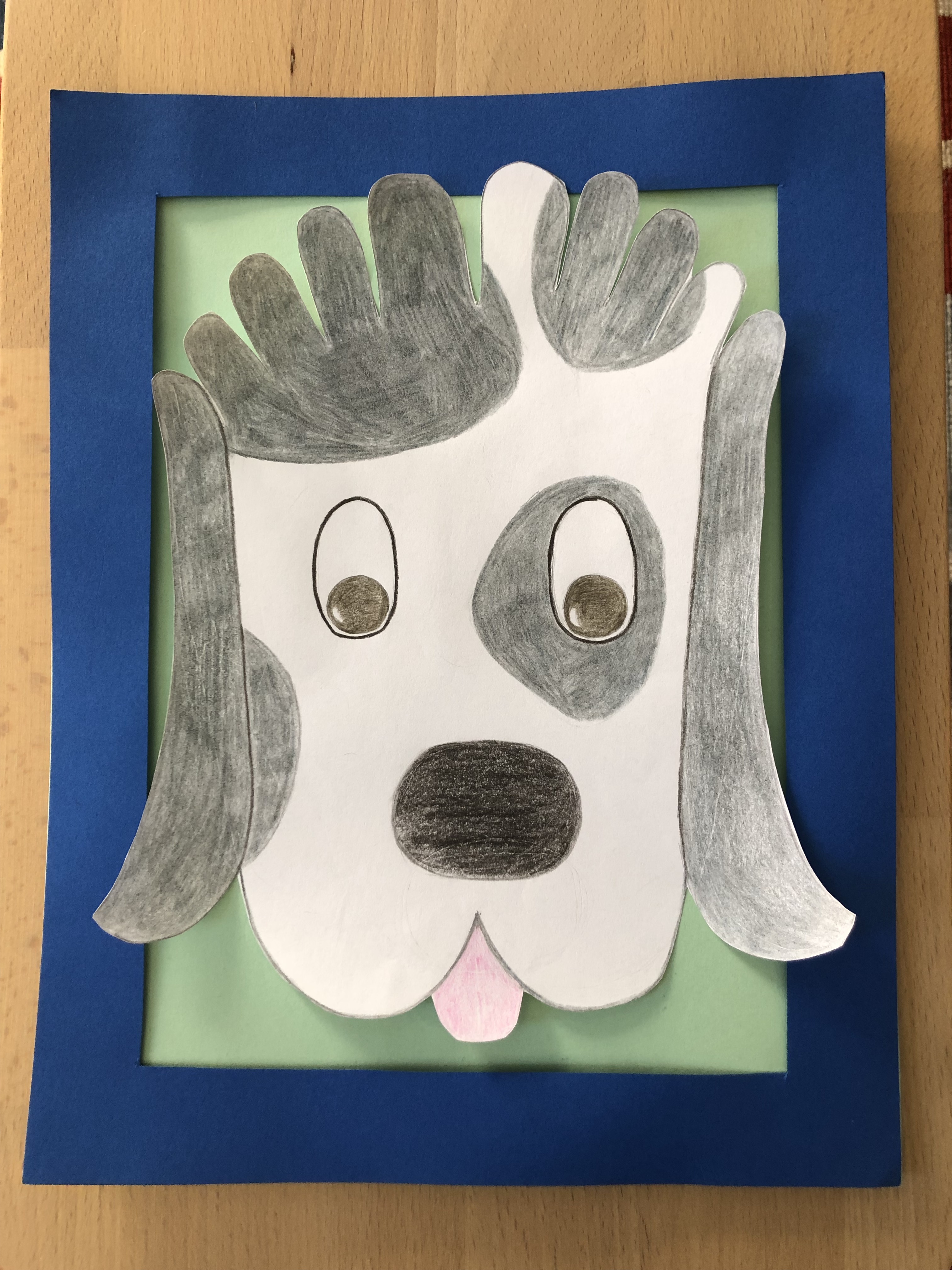
Feet don’t have to be just for walking, running, or dancing. As today’s story shows, they can make pretty awesome pets (even when it’s just a mistake). With this craft you can use your own feet to make a pet portrait to decorate your room!
Supplies
1 Sheet of regular printer paper or heavy stock paper for the portrait
1 Sheet of colored heavy stock paper for the frame’s backing
1 Sheet of heavy stock paper in a contrasting color from the backing to make the frame
Crayons or colored pencils
Scissors
Glue or glue dots
Directions
Stand on the white paper with your feet together and trace your feet
Now it’s time to get creative! Turn the paper toes up, toes down, or toes to the side and design your pet.
After you’re finished drawing, color your picture in
Cut your pet out
To Make the Frame and Frame Your Portrait
Measure one inch around each side of one piece of heavy stock paper
Cut out the middle
Use glue or glue dots to adhere the frame to the backing
Use glue or glue dots to adhere your feet pet portrait to the backing of the frame
National Food Bank Day was established by St. Mary’s Food Bank, the world’s first food bank, which was founded by John van Hengel in Phoenix, Arizona in 1967. The idea spread throughout the country, and now St. Mary’s Food Bank distributes 250,000 meals daily with the help of staff, volunteers, and partner agencies, making it one of the largest food banks in the United States. This year, a record number of families (nearly 150,000 in August alone) have sought help. Food banks across the country help millions of men, women, and children who live with food insecurity due to job loss, illness, and other circumstances. Many food banks offer educational opportunities that help people change their situation and begin anew. Often, those who have benefited from the programs return to volunteer and contribute to the very food bank that helped them. To learn more about St. Mary’s Food Bank, visit their website. To find a food pantry in your area to get help for yourself, to donate, or to volunteer, visit the Ample Harvest website.
I’d like to thank Albert Whitman & Company for sharing a copy of Saturday at the Food Bank with me for review consideration. All opinions on the book are my own.
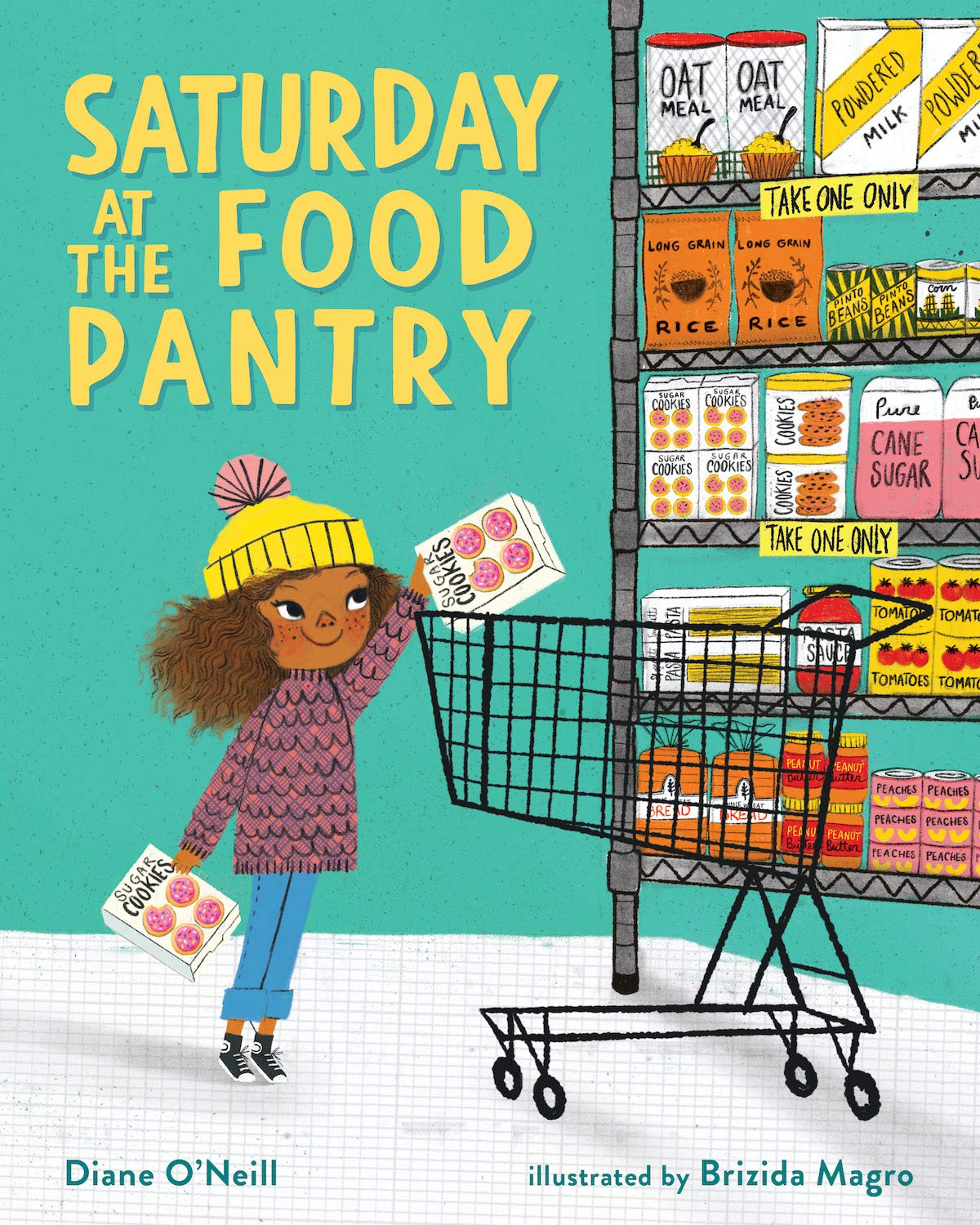
Saturday at the Food Pantry
Written by Diane O’Neill | Illustrated by Brizida Magro
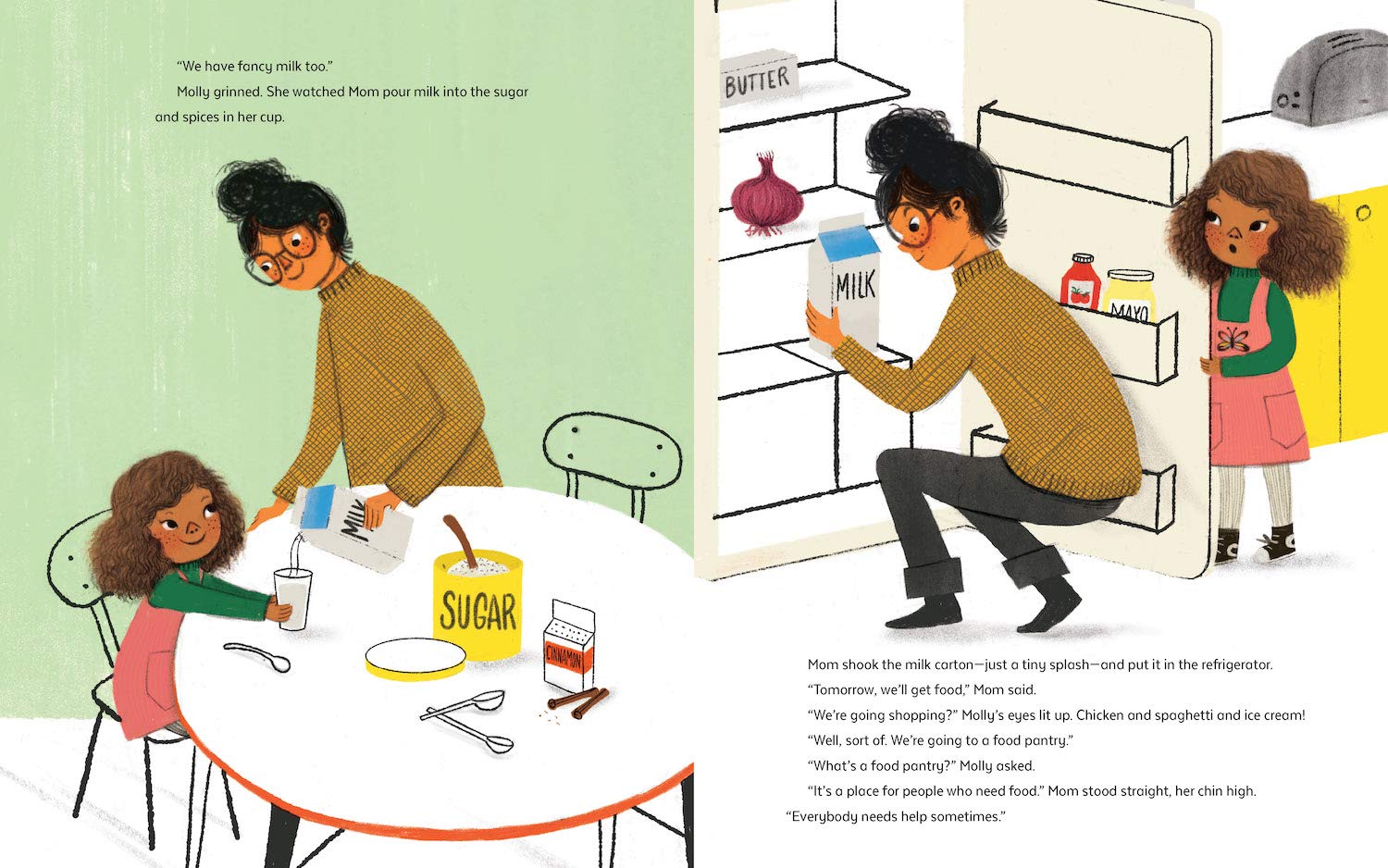
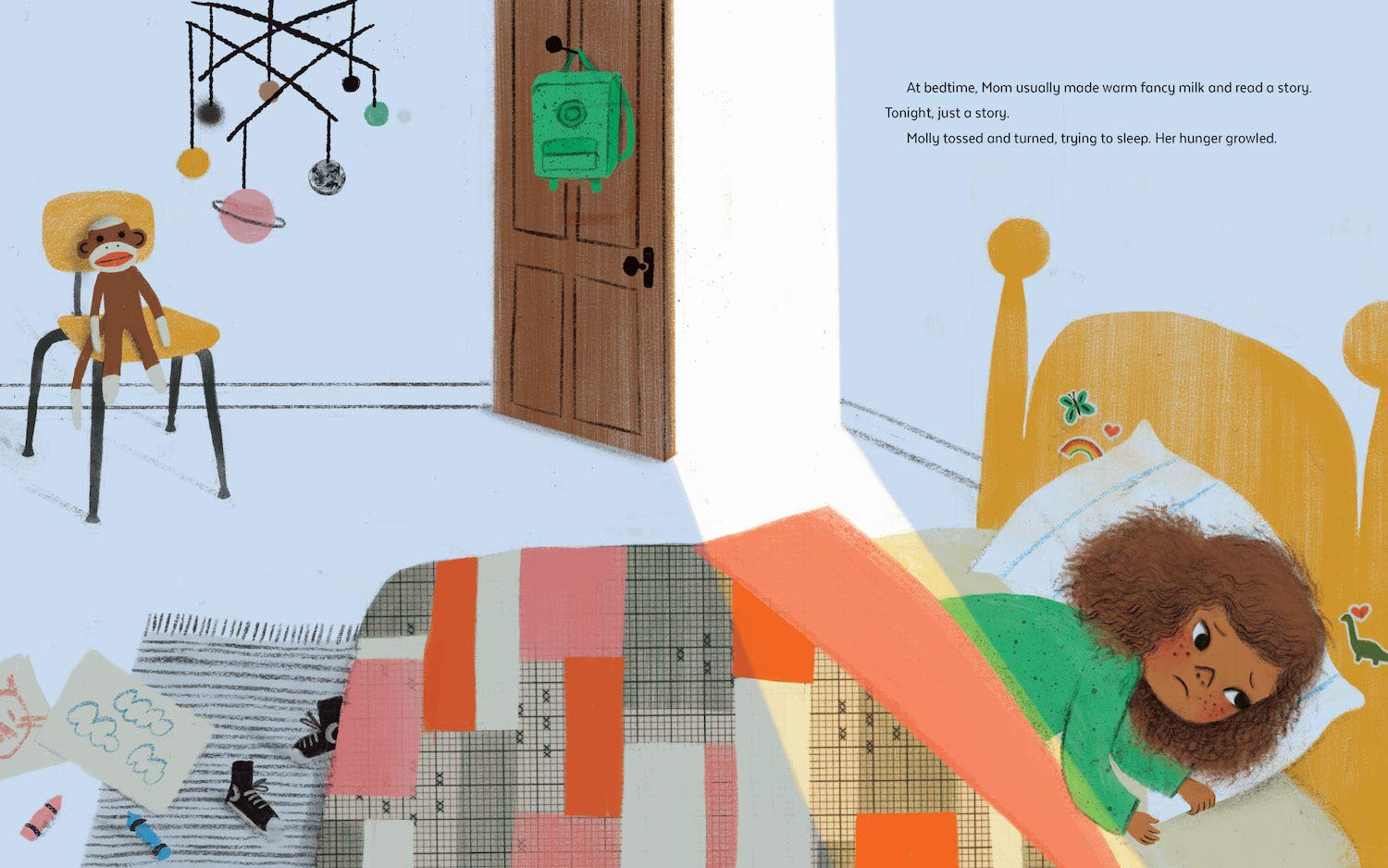
When Molly came to the table for dinner, she saw that they were having chili—again. She and her mom had eaten chili for two weeks straight. But there was “fancy milk too.” Molly smiled as her mom measured sugar and cinnamon into her glass and added milk.” There was only a splash of milk left when Mom put it back into the almost-empty refrigerator.
Tomorrow, Mom said, they’d go shopping. “Molly’s eyes lit up” as she imagined “chicken and spaghetti and ice cream.” But Molly’s mom tempered her expectations, saying that they’d be going to a food pantry. A food pantry, she explained, is “‘a place for people who need food…. Everybody needs help sometimes,’” she added. That night there was no warm milk before Molly went to bed and her stomach growled.
Image copyright Brizida Magro, 2021, text copyright Diane O’Neill. Courtesy of Albert Whitman & Company.
In the morning when Molly and her mom got to the food pantry there was already a line waiting for it to open. Molly had brought paper and crayons and sat down to draw. Then she saw a girl who was in her class at school. She called out a hello, but “Caitlin looked away.” When Molly ran over, Caitlin told her she didn’t want anyone to know that she and her grandmother needed help.
Molly went back to her mom, wondering if there was “something wrong with needing help.” She wanted to go home, but she was also hungry. Molly’s mom suggested she draw a picture, and the woman in front of them asked if she’d draw one for her too. Then everyone in line seemed to want a picture. Molly ran back to Caitlin to ask for help. Caitlin sat down and began to draw too.
Image copyright Brizida Magro, 2021, text copyright Diane O’Neill. Courtesy of Albert Whitman & Company.
When the door opened, Molly and Caitlin each had a picture for the woman who welcomed them in too. Molly noticed that her mom had to sign in before she got a cart and they could begin shopping. They didn’t do that at the grocery store. The shelves at the food pantry were stocked with items she recognized from the store they usually shopped with. She ran over and took a box of sugar cookies off the shelf, but her mom told her “‘They—the people in charge—they’ll want us to take sensible stuff.’” Molly felt embarrassed and couldn’t understand why the cookies were there if they couldn’t take them. She sadly returned them to the shelf. As they went to look for food, Molly thought her mom didn’t want to be seen there, either—just like Caitlin. In a whisper, Molly reminded her that everyone needs help sometimes.
They went through the store taking one can, bag, or box of the food they needed. Then Molly’s mom reached for a box of powdered milk. They could have fancy milk that night. When they got to the checkout desk, Molly and Caitlin found their drawings hanging on the wall. The man at the counter bagged their groceries and then handed Molly’s mom a box of sugar cookies. “‘Saw your little girl looking at these. She can have them, if that’s okay with you, ma’am,’” he said. Molly noticed that her mom looked like she might cry.
Image copyright Brizida Magro, 2021, text copyright Diane O’Neill. Courtesy of Albert Whitman & Company.
As they were walking home, Molly saw Caitlin and her grandmother coming the same way. They were all happy to discover that they were neighbors. Molly’s mom explained that she’d been looking for work since the factory closed, and Caitlin’s grandma said she’d been sick. Caitlin understood, but wished they didn’t have to shop at a food pantry. But then Molly told her that “everybody needs help sometimes” and reminded her that they had helped make the man at the checkout counter feel happy with their drawings. Caitlin hadn’t thought about it that way. She smiled. Then Molly invited her and her grandmother to have lunch with them—with sugar cookies for dessert.
Following the text, a note for parents, teachers, and other caregivers from Kate Maehr, the Executive Director and CEO of the Greater Chicago Food Depository, reveals more information about food insecurity, including recent statistics and a resource where people can find help and more information.
Image copyright Brizida Magro, 2021, text copyright Diane O’Neill. Courtesy of Albert Whitman & Company.
Diane O’Neill’s well-executed story about two families who need the help of a food pantry is a poignant reminder of the many people—perhaps even readers’ classmates—who face food insecurity every day. Through the experiences of Molly and her mother and Caitlin and her grandmother, readers discover what it’s like to go to bed hungry, miss out on treats, and feel ashamed to ask for help. As this is Molly and her mother’s first trip to a food pantry, Molly’s questions and observations well reflect children’s own or reassures those who are familiar with these important resources.
O’Neill’s straightforward storytelling emphasizes the fact that at one time or another everyone needs help and demonstrates simple ways that children make things better through their generosity, optimism, and acceptance. Molly and Caitlin’s budding friendship makes for an uplifting and hopeful ending and may spur readers to recognize need in their midst and extend kindness.
Through her realistic illustrations of two families in need of assistance from a food bank, Brizida Magro helps children see and understand what food insecurity and food pantries look like. At home, Molly and her mom eat small portions of leftover chili and the last full glass of milk. When Molly’s mom puts the carton in the refrigerator, the shelves are nearly empty, and Molly lies awake in bed, too hungry to fall asleep.
The line outside the food pantry is made up of people from all walks of life, and inside the displays of food replicate a grocery store with the exception of signs asking shoppers to take one item only. These images can lead to meaningful discussions on the enormity of the issue. When Molly and Caitlin draw pictures that cheer up everyone in line as well as the food pantry workers, kids will recognize not only different ways of helping but their own role in making the world a kinder place.
Empathy shines on every page of O’Neill’s necessary and welcome story. Saturday at the Food Pantry is timely, heartfelt, enlightening and a must-buy addition to home, classroom, and school and public library collections.
Ages 4 – 7
Albert Whitman & Company, 2021 | ISBN 978-0807572368
Discover more about Diane O’Neill and her work on her website.
The beginning of a new school year is a terrific time to celebrate Read a New Book Month—especially for kids. Whether their reading tastes have broadened, their reading level has changed, or they’ve discovered new and fascinating topics to explore over the summer months, there are new books just waiting for them! The books may be recently published—like today’s book—or just new to your child, there are countless fictional stories and nonfiction books ready to inspire learning, to laugh or cry with, and to share with friends. This month visit your local bookstore and library and stock up on books for your kids and everyone in the family!
The Boy and the Mountain
Written by Mario Bellini | Illustrated by Marianna Coppo
“There once was a boy who always looked at a mountain.” It was the first thing he looked at in the morning and the last thing he said good night to before going to bed. The boy loved to draw, and one day he “decided to draw the mountain.” His first attempt didn’t look anything like the mountain he saw out his window. When he looked closer, he realized “the mountain was covered with trees,” so he added trees.
Image copyright Marianna Coppo, 2022, text copyright Mario Bellini, 2022. Courtesy of Tundra Books.
Still, his picture wasn’t quite right. Next, he noticed the sky and clouds around the mountain and drew those, but his picture “still didn’t look the same as the real thing.” He tried drawing the mountain at different times of day and in different weather, but “he was never happy with what he had drawn.”
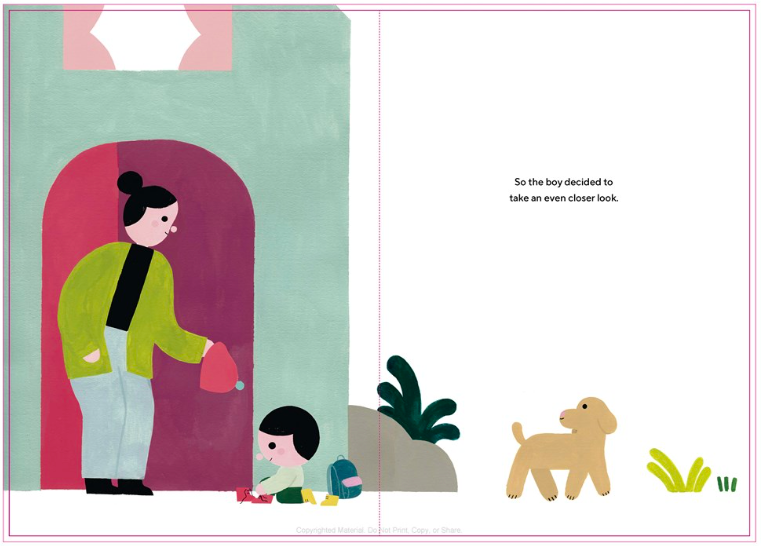
One day, the boy decided to get a closer look. He took his dog and headed out. One the way, he met a goat and drew a picture of it in his sketchbook. The goat decided to come along. When a flock of birds flew by, the boy drew those too. One bird left the flock to follow the boy and his dog and the goat. When they stopped at a stream for a drink of water, the boy drew that too.
Image copyright Marianna Coppo, 2022, text copyright Mario Bellini, 2022. Courtesy of Tundra Books.
It was fall, and the ground was covered in leaves. The boy “wanted to draw them all,” but even though he drew many of them, there was no way they would all fit on the page. He continued on up and up into the forest and beyond. Along the way, he picked up other followers, including a frog, a bear, and a beaver. When he had left the trees behind, there was very little to draw “until he looked more closely” and saw a tiny white flower poking up between some rocks. He drew it.
Image copyright Marianna Coppo, 2022, text copyright Mario Bellini, 2022. Courtesy of Tundra Books.
At last he came to the mountain’s peak. He sat down and flipped through his sketchbook, but he still wasn’t satisfied with his drawings. It was then that he became aware of the goat, the bear, the frog, the bird, the beaver, and a snail who had joined him. “‘Ohhh … hello!'” he said. They played until it was time to go home. The bear gave the boy a ride home on his shoulders. Once home, the boy promised that he would see them all again soon. That night before going to sleep, the boy drew the mountain again with his new perspective. This time his drawing was complete—and the boy was completely satisfied with it.
Image copyright Marianna Coppo, 2022, text copyright Mario Bellini, 2022. Courtesy of Tundra Books.
Mario Bellini’s thoughtful and well-paced adventure gently guides readers to consider not only their perspective on big and small topics of life but where and how they fit into the wider world. Just as children observe the world from their vantage points of home, school, and activities, the boy in the story looks at the mountain and tries to make sense of it by drawing it. Then, like kids slowly adding bits of what the world has to offer to their lives, the boy includes trees, clouds, and different times of day to his drawing. But he thinks there must be something more, and, now braver and more knowledgeable, he ventures out to get a better look.
Along the way he sees more of the world and interacts with what he encounters in the way that means the most to him. Some of these experiences turn out well, and others don’t, but he persists. When it appears that he’s finally come to the end of his journey, he sits down (alone, or so he thinks) and ponders his single-subject, disjointed pictures. When he finally notices all of the animals who have joined him on his trek and embraces them as friends, the boy discovers an interconnectedness that has been missing for him all along. At last, with his final drawing, the boy is able to be satisfied with his knowledge, understanding, and place in his world.
Marianna Coppo’s delightful rounded illustrations lend a quiet elegance to the story while allowing readers to view the boy’s drawings for themselves and then join him on his journey to see the mountain up close. Kids will enjoy noticing the animals that begin to populate the boy’s sphere, even while he is unaware that they are following him. The boy’s drawings of the river, the leaf-strewn forest floor, and the hidden mountain peak give kids and adults an opportunity to talk about times when things go wrong, when life seems overcrowded or overwhelming, and when goals seem elusive. Coppo also helps kids see that surprises can be found in the most unlikely of places as well as when you least expect them.
A multi-layered story that invites thought, observation, conversation, and discovery (of both the self and the world), The Boy and the Mountain would be a favorite read for quiet story times or as a prelude to any new experience at home or in school. The book is highly recommended for home bookshelves as well as classroom, school, and public libraries.















 celebratepicturebooks.com