February 25 – Honoring Katherine Johnson

celebrate-picture-books-picture-book-review-counting-on-katherine-cover

About Katherine Johnson

Katherine Johnson passed away yesterday at the age of 101. Recognized from an early age for her brilliance, Katherine went on to become a pivotal mathematician for NASA as the space race led to the first manned missions and lunar landings. She continued working for NASA on the space shuttle and other technological advancements. Fearless in asking the kinds of probing questions that fueled her imagination and precise calculations and in standing up for her rights, Katherine was a trail-blazer for women and people of color. She was awarded the Presidential Medal of Freedom in 2015. Her influence and inspiration continue to shine, especially for children, through books like Counting on Katherine.

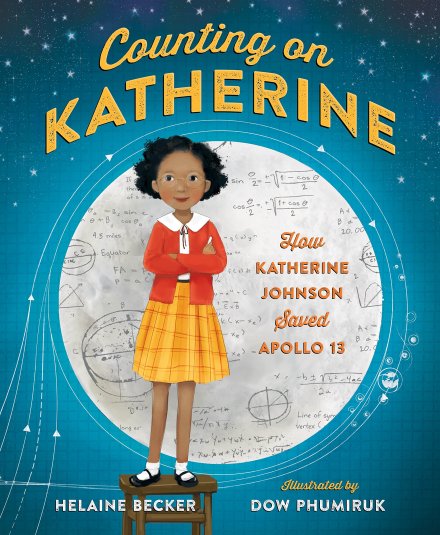
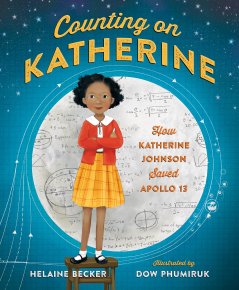
Counting on Katherine: How Katherine Johnson Saved Apollo 13

Written by Helaine Becker | Illustrated by Dow Phumiruk


Katherine may have been born counting. She counted every step she took and every step she climbed. She counted the dishes and silverware as she washed them, and although she may have wanted to count all the stars in the sky, she knew that was beyond anyone’s ability. “Even so, the stars sparked her imagination…. Katherine yearned to know as much as she could about numbers, about the universe—about everything!”

celebrate-picture-books-picture-book-review-counting-on-katherine-school

Image copyright Dow Phumiruk, 2018, text copyright Helaine Becker, 2018. Courtesy of Henry Holt and Company.

Katherine was so smart that she skipped three grades, even passing up her older brother. Katherine graduated from elementary school when she was 10 and was ready for high school, but “her town’s high school didn’t admit black students—of any age. Her father, though, said, “‘Count on me.’” He worked until the family could afford to move to another town where she could attend a black high school.

In high school, Katherine loved all of her classes, but her favorite subject was math. She wanted to become a research mathematician, “making discoveries about the number patterns that are the foundations of our universe.” But there were no jobs like that for women, so Katherine taught elementary school.

celebrate-picture-books-picture-book-review-counting-on-katherine-calculations

Image copyright Dow Phumiruk, 2018, text copyright Helaine Becker, 2018. Courtesy of Henry Holt and Company.

Then in the 1950s, the National Advisory Committee on Aeronautics began hiring new employees. When Katherine applied all the positions had been filled, but the next year she got a job. A few years later when NASA was formed, Katherine became what was known as a human “‘computer.’” She and the other computers––all of whom were women––calculated long series of numbers, contributing to the “space race.”

Katherine asked lots of questions about how high the rocket ship would go and how fast it would travel before beginning her calculations. Her job was to make sure that the earth and the rocket were in the same place when the rocket needed to land. Katherine’s calculations were so precise and her leadership so inspiring that she was promoted to Project Mercury, “a new program designed to send the first American astronauts into space.

celebrate-picture-books-picture-book-review-counting-on-katherine-trajectory

Image copyright Dow Phumiruk, 2018, text copyright Helaine Becker, 2018. Courtesy of Henry Holt and Company.

The engineers and astronauts knew that the missions were going to be dangerous, and John Glenn, distrusting the computer-generated numbers, refused to fly until Katherine approved the numbers. “‘You can count on me,’” she told him. Glenn’s mission was successful and Katherine earned another promotion. Her new job was to “calculate the flight paths for Project Apollo—the first flight to the moon.” She calculated the trajectories that took Apollo 11 and Apollo 12 to the moon and back in 1969. But as Apollo 13 soared through space on its way to the moon, there was an explosion. There were questions about whether the spaceship could reach the moon or make it back to Earth.

celebrate-picture-books-picture-book-review-counting-on-katherine-explosions

Image copyright Dow Phumiruk, 2018, text copyright Helaine Becker, 2018. Courtesy of Henry Holt and Company.

Katherine was again called to make new calculations. In only a few hours, Katherine had a new flight plan that “would take the ship around the far side of the moon. From there, the moon’s gravity would act like a slingshot to zing the ship back to Earth.” But for the plan to work, the astronauts had to follow it exactly. There was no room for a mistake. Katherine and all of the NASA engineers waited nervously to find out if the plan would succeed. Finally, the astronauts reported that they were back on track. “Katherine Johnson had done it…. She was no longer the kid who dreamed of what lay beyond the stars. She was now a star herself.”

An Author’s Note following the text tells more about Katherine Johnson’s life and work, which went on to impact the space shuttle program and satellite projects.
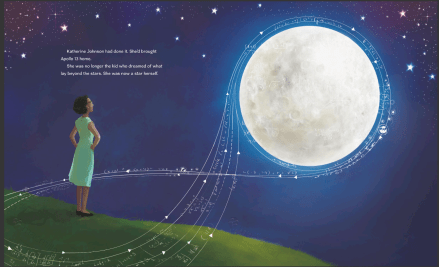
celebrate-picture-books-picture-book-review-counting-on-katherine-moon

Image copyright Dow Phumiruk, 2018, text copyright Helaine Becker, 2018. Courtesy of Henry Holt and Company.

Helaine Becker’s captivating storytelling captures Katherine Johnson’s genius for math and talent for applying it to even the most complex problems in a ground-breaking field. Her self-confidence, curiosity, and love of learning as well as her trajectory at NASA will impress readers, many of whom may also be dreaming of making a mark in new ways. A highlight of Becker’s text is her clear explanations of how Katherine’s calculations for NASA were used and what was at stake when her help was needed most. Becker’s repeated phrase “You can count on me” and her stirring ending weave together the numerical and lyrical aspects of Katherine’s life to inspire a new generation of thinkers.

celebrate-picture-books-picture-book-review-counting-on-katherine-skips-dreaming

Image copyright Dow Phumiruk, 2018, text copyright Helaine Becker, 2018. Courtesy of Henry Holt and Company.

From the first page, readers can see Katherine’s intelligence and inquisitiveness that shined whether she was walking to school, doing chores, or, later, making sure our astronauts made it to the moon and back safely. Dow Phumiruk’s artwork is always thrilling, and here blackboards covered in formulas as Katherine stands on tiptoe as a child and on a ladder as an adult to complete them will leave readers awestruck with her understanding of and abilities with numbers. Illustrations of school rooms and offices give children a realistic view of the times, and her imagery pairs perfectly with Becker’s text in demonstrating the concepts of sending a rocket ship into space and bringing it home again. Phumiruk’s lovely images of space are uplifting reminders that dreams do come true.

A stellar biography that will enthrall children and inspire them to keep their eyes on their goals and achieve their dreams, Counting on Katherine: How Katherine Johnson Saved Apollo 13 is highly recommended for home bookshelves and is a must for school and public library collections.

Ages 5 – 9

Henry Holt and Company, 2018 | ISBN 978-1250137524

Discover more about Helaine Becker and her books on her website.

To learn more about Dow Phumiruk, her books, and her art, visit her website.

Watch the Counting on Katherine book trailer!
celebrate-picture-books-picture-book-review-counting-on-katherine-cover

You can find Counting on Katherine: How Katherine Johnson Saved Apollo 13 at these booksellers

Amazon | Barnes & Noble | Books-a-Million | IndieBound

Picture Book Review

January 13 – It’s International Creativity Month

celebrate-picture-books-picture-book-review-hedy-lamarr's-double-life-cover

About the Holiday

Are you an artist, a writer, a decorator, a chef? How about a floral arranger, a woodworker, a fashion designer, or a gardener? Inside almost every heart lies a desire to create. Whether you use your ingenuity in your job or as an escape from the routine, this month celebrates all that is innovative. Sometimes this comes not only in making something you can see or touch but in a new thought or a novel way of solving a problem—as seen in today’s book!

I received a copy of Hedy Lamarr’s Double Life for review consideration. All opinions are my own.

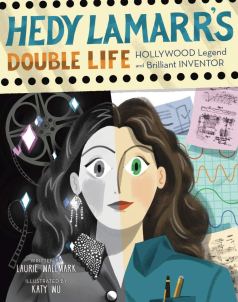
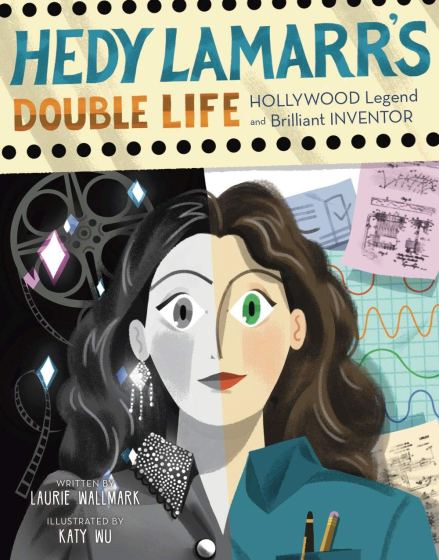
Hedy Lamarr’s Double Life: Hollywood Legend and Brilliant Inventor

Written by Laurie Wallmark | Illustrated by Katy Wu


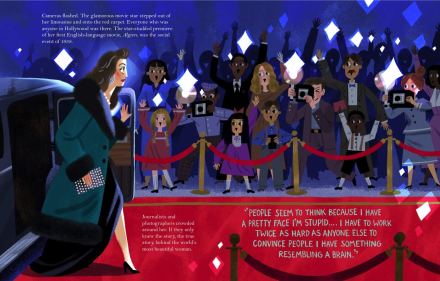
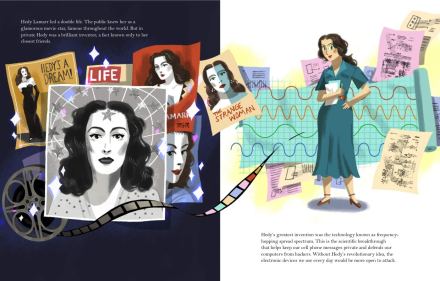
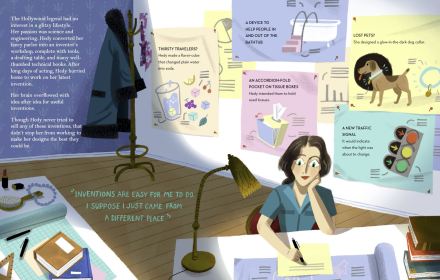
In 1938 people were lining up to see Hedy Lamarr in her first English-language movie Algiers. Hedy was the talk of Hollywood, and journalists and photographers captured her every move—almost. What movie-goers and the press didn’t know was that Hedy Lamarr was also a brilliant inventor. Instead of attending fancy celebrity parties, after a long day on the set, “Hedy hurried home to work on her latest invention. Her brain overflowed with idea after idea for useful inventions.” While she never tried to sell her ideas—like the collar to help find lost pets or the “flavor cube that changed plain water into soda”—she designed and redesigned them to perfection.

celebrate-picture-books-picture-book-review-hedy-lamarr's-double-life-magazines

Image copyright Katy Wu, 2019, text copyright Laurie Wallmark, 2019. Courtesy of Sterling Children’s Books.

But how did Hedy get her start? She was born in Austria and as a child took apart mechanical objects just to see how they worked. Hedy’s father also loved science, and he encouraged his daughter to hold onto her dreams. In addition to science, Hedy loved movies and would use her dolls to reenact the scenes she saw.

When she got older, Hedy got a job as a script girl and then worked as an extra in a movie. She loved acting and once said, “‘I acted all the time…. I was a little living copybook. I wrote people down on me.’” While playing the lead in a stage play, the Hollywood producer Louis B. Mayer saw her and offered her movie contract. Hedy moved to America. It only took her six months to land a starring role in Algiers. After that she starred in many movies with some of the most famous actors and actresses. 

By now, the world was at war. One day, Hedy met George Antheil, a former weapons inspector who now composed music. Hedy remembered a “discussion she had overheard back in Europe about a problem with the guidance system for torpedoes. The guidance system couldn’t prevent the enemy from jamming the weapon’s radio signals” and sending it off course. She learned from George Antheil that the US Navy had the same problem.

They decided to team up to see if they could figure out a solution. Hedy was also an accomplished pianist, and she and George often played musical games on the piano. Once, while they played the same song in different octaves, Hedy had a brainstorm for building “a secure torpedo guidance system.” At the time, torpedo guidance systems only worked if the ship launching a torpedo and the torpedo were on the same frequency.

celebrate-picture-books-picture-book-review-hedy-lamarr's-double-life-home

Image copyright Katy Wu, 2019, text copyright Laurie Wallmark, 2019. Courtesy of Sterling Children’s Books.

Hedy thought that if the ship and the torpedo could switch between a series of different frequencies, the enemy would be foiled. “Hedy called her discovery ‘the hopping of frequencies.” Working together, she and George devised a way to implement Hedy’s idea. When they presented their idea to the National Inventors Council, they were told the “idea had ‘great potential value.’”

There were still some issues to overcome to make the system automated, but Hedy and George answered those too. They applied for a patent, and a year later on August 11, 1942 it was granted. When they gave the idea to the United States Navy, “Hedy was proud her frequency-hopping idea might help America win the war.” But embroiled in the middle of the conflict, the Navy didn’t have “the time or money to implement a new system….”

Hedy, who still wanted to help America defeat the Nazis, was undaunted. She helped raise 25 million dollars by selling war bonds and volunteered at the Hollywood Canteen, where servicemen soon to be deployed gathered. Hedy went on to make more than twenty movies and continued to work on her inventions.

In the 1980s, the US Navy declassified Hedy’s frequency-hopping technology, meaning anyone could use it. Because the patent had long-ago expired, no one needed to give Hedy and George credit for the idea. “Companies raced to include frequency hopping in their own devices.” In 1997, Hedy and George were finally recognized when they “received the Pioneer Award from the Electronic Frontier Foundation for their significant contribution to computers.”

A timeline of Hedy Lamarr’s life, a description of how Hedy and George’s frequency-hopping technology worked, additional resources for further reading, and a list of Hedy’s movies follow the text.

celebrate-picture-books-picture-book-review-hedy-lamarr's-double-life-red-carpet

Image copyright Katy Wu, 2019, text copyright Laurie Wallmark, 2019. Courtesy of Sterling Children’s Books.

Laurie Wallmark knows how to weave a riveting tale that draws readers in to the lives of fascinating and scientifically minded women throughout history. Her detailed biography of Hedy Lamarr will wow kids with the twists and turns of how a vital feature of the electronics they use every day came to be. A history not only of this famous woman but of the times and policies that denied Hedy Lamarr the recognition and profits she deserved, the story is sure to spark plenty of discussion. The inclusion of a few of Hedy’s ingenious ideas as well as quotes on acting, inventing, and her views on life give children a glimpse into the mind of this unique woman.

Katy Wu takes readers back to the 1940s with her stylish illustrations reminiscent of magazine images of the time that depict both Hedy’s glamourous and inventive sides. Even as Hedy steps out of a limo to the glare of flashbulbs, acts under stage lights, and watches movies thrown by a projector’s beam, she’s dreaming of going home to work on her inventions in the light of a desk lamp. When the story turns to Hedy’s frequency-hopping idea, Wu clearly portrays the problems with the torpedo guidance system and the way single-frequency and multiple-frequency communications work. The way player pianos were controlled and how Hedy and George Antheil used this idea is also well portrayed. The final images of people using Hedy’s technology today lets kids fully understand the impact that Hedy Lamarr has had on their lives.

An important story about an extraordinary woman, Hedy Lamarr’s Double Life: Hollywood Legend and Brilliant Inventor will inspire children to follow and accomplish all of their dreams. The book will spur creative thought across subject matter and would be a motivational addition to home, classroom, and public libraries.

Ages 5 and up

Sterling Children’s Books, 2019 | ISBN 978-1454926917

Discover more about Laurie Wallmark and her books on her website.

To learn more about Katy Wu, and view a gallery of her book and art, visit her tumblr.

International Creativity Month Activity

celebrate-picture-books-picture-book-review-national-archives-coloring-book-of-patents

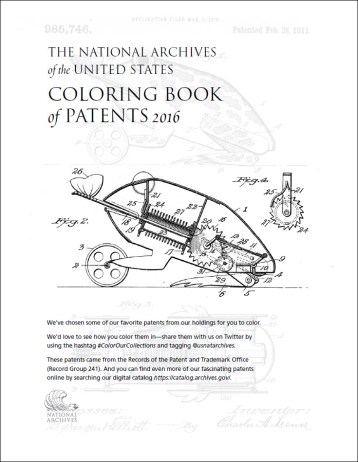
National Archives Coloring Book of Patents


The people at the National Archives of the United States in Washington DC chose some of their favorite patents from the past to share with you as a coloring book. As you have fun coloring these pages full of ideas, let yours fly too!

Click here to get your printable National Archives Coloring Book of Patents

celebrate-picture-books-picture-book-review-hedy-lamarr's-double-life-cover

You can find Hedy Lamarr’s Double Life: Hollywood Legend and Brilliant Inventor at these booksellers

Amazon | Barnes & Noble | Books-a-Million | IndieBound

Picture Book Review
November 21 – It’s National Aviation History Month

celebrate-picture-books-picture-book-review-aim-for-the-skies-cover

About the Holiday

It seems that people have always been fascinated with flight. The first kite was invented in 1000 BCE in China; around 400 BCE Archytas of Tarentum developed a steam-powered pigeon; and most people are familiar with the designs of flying machines that Leonardo de Vinci created in the late 1400s. It wasn’t until 1680 that actual human flight was abandoned when an Italian mathematician determined that human muscles were incompatible with flight.

Zip ahead about 100 years and the first hot-air balloon took flight, which led to more complex technology, resulting in Wilbur and Orville Wright’s flight in 1903. From there, it seemed, the sky was the limit. Amelia Earhart became the first woman to complete a trans-Atlantic Ocean solo flight in 1932, and in 1947 Charles Yeager broke the sound barrier. Given this long history, it’s astounding to think that only 58 years span the time from that modest 12-second flight by the Wright Brothers to the first manned space mission by Soviet cosmonaut Yuri Gagarin! To celebrate the month, visit a local museum or read up on some of the pioneers of early flight—like the courageous women in today’s book.

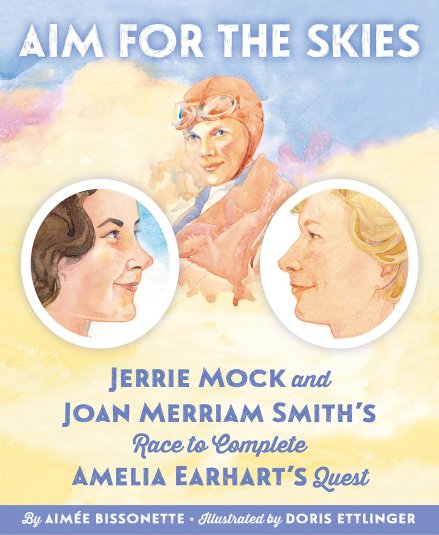
Aim for the Skies: Jerrie Mock and Joan Merriam Smith’s Race to Complete Amelia Earhart’s Quest

Written by Aimée Bissonette | Illustrated by Doris Ettlinger


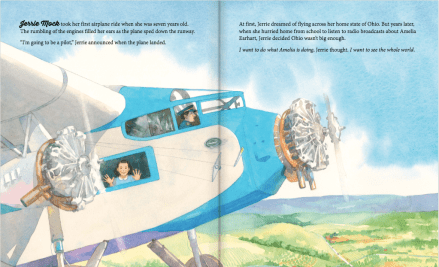
Jerrie Mock was only seven when her first airplane ride convinced her she wanted to be a pilot when she grew up. At first she only dreamed of flying across Ohio, but later, when she followed reports of Amelia Earhart’s daring flights, she decided she too wanted to see the whole world.

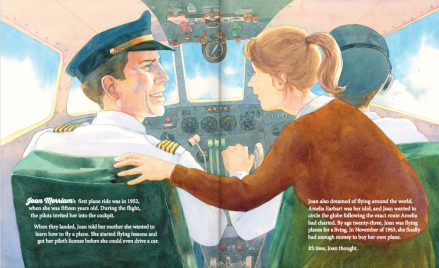
In 1952, Joan Merriam was fifteen years old when she took her first airplane ride and was invited by the pilots to see the cockpit. That’s all it took for Joan to know she wanted to be a pilot too. She began flying lessons and was in the air before she even got her drivers license. By 1963, Joan was working as a professional pilot and bought a plane of her own. One of Joan’s goals was to “circle the globe following the exact route” her idol Amelia Earhart had charted.

celebrate-picture-books-picture-book-review-aim-for-the-skies-Jerrie-Mock

Image copyright Doris Ettlinger, 2018, text copyright Aimée Bissonette, 2018. Courtesy of Sleeping Bear Press.

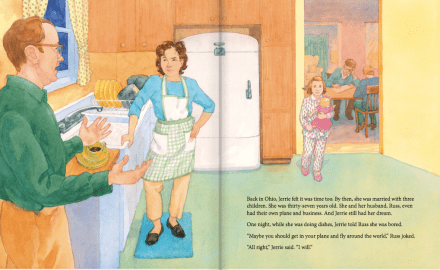
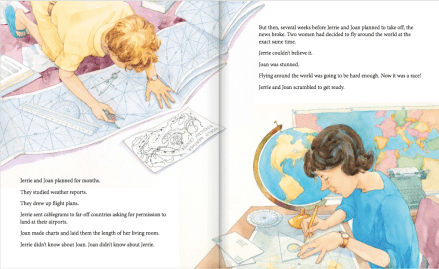
By the time Jerrie was thirty-seven, she had three children and ran a flight business with her husband, Russ. One night when she told Russ that she was bored, he joked, “‘Maybe you should get in your plane and fly around the world.’” Jerrie took him up on that. Both women spent months planning and charting their flights. Neither one knew that the other was getting ready for the same flight until their plans hit the media. Suddenly, what they had both thought was a solitary pursuit became a race to the finish.

Joan took off on March 17, 1964 from an airstrip in Oakland, California accompanied only by two stuffed bears. Two days later, surrounded by reporters asking if she thought she could beat Joan, Jerrie climbed into her tiny plane and took off too.

celebrate-picture-books-picture-book-review-aim-for-the-skies-Joan-Merriam

Image copyright Doris Ettlinger, 2018, text copyright Aimée Bissonette, 2018. Courtesy of Sleeping Bear Press.

Jerrie’s troubles began right away. First, her radio didn’t work then bad weather kept her grounded for six days. “Where was Joan?” she wondered. While Joan’s flight began smoothly, a gas leak brought her down to earth for a week while the tank was repaired. Back in the air, Jerrie seemed to suffer problems every day. “She battled dangerous ice buildup, burning radio wires, and bad weather. She flew into a sandstorm over the Arabian Desert and couldn’t see.” But she encouraged herself to stay calm and use her instruments. Joan was having it no easier. “Heavy rains pounded her pane. Her windshield leaked. Water puddled at her feet. When she finally made it to Brazil, she was delayed again. This time by a government revolution!”

Day by day both women battled the elements and equipment failures but kept flying. Everyone around the world seemed to be watching the race. Russ told Jerrie she had to fly faster—that Joan was winning. In Pakistan, people told Joan that Jerrie had landed there five days earlier. Finally, on April 17, twenty-nine days after she had left, Jerrie returned to Ohio to a hero’s welcome. Reporters and crowds pushed to see her. “Jerry’s heart pounded. She had done it. She had flown around the world. She had won the race.”

celebrate-picture-books-picture-book-review-aim-for-the-skies-Jerrie-bored

Image copyright Doris Ettlinger, 2018, text copyright Aimée Bissonette, 2018. Courtesy of Sleeping Bear Press.

Where was Joan? She “was in Lae, New Guinea—the last place Amelia Earhart was seen alive—when she heard the race was over.” Even though she knew she was behind Jerrie, “the news was still hard to take.” She sent Jerrie a congratulations telegram, and then left for Guam. There, she walked and “thought about her childhood dream. She thought about the race and she thought about losing.”  Then she thought about why she had undertaken the flight. She had done it to honor Amelia Earhart. Even though Jerrie had won the race, Joan thought that didn’t make her a loser. She “could still do what she set out to do.”

Joan landed back in Oakland, California on May 12, 1964. Her plane was in such bad shape that the Coast Guard had to dispatch a plane to guide her in. Joan was also welcomed by cheering crowds and reporters. Both Jerrie and Joan had accomplished incredible feats. Jerrie “became the first woman to fly around the world,” and Joan—”following Amelia’s exact route along the equator”—was the first “pilot—man or woman”—to fly that distance solo. And both women received thanks from Amelia’s sister, Muriel, for honoring Amelia—”a pilot who, like them, chose to follow her dreams.”

An Author’s Note describing the differences in Joan and Jerrie’s routes and aircraft as well as a bit more about their lives after the historic flight and a map outlining each woman’s flight pattern follow the text. Resources for further reading are also included.

celebrate-picture-books-picture-book-review-aim-for-the-skies-planning-routes

Image copyright Doris Ettlinger, 2018, text copyright Aimée Bissonette, 2018. Courtesy of Sleeping Bear Press.

Aimée Bissonette’s thrilling biography of two women, two flights, and one race will keep young readers on the edge of their seats. Riveting details reveal the staggering dangers the women faced as well as their astonishing courage, dedication, and persistence. Bissonette’s fast-paced, electric storytelling puts kids in the cockpit as Joan and Jerrie cross the globe. As Jerrie wins the race and Joan reevaluates her goal, Bissonette makes important and welcome points about the nature of competition, keeping one’s eyes and heart on an original goal without getting caught up in distracting hype, and having the self-confidence to believe in oneself and recognize one’s accomplishments.

In her realistic, richly colored watercolors, Doris Ettlinger follows Jerrie and Joan as they experience their first airplane rides that determine their futures, plot their flights around the world, and take off. The obstacles each woman dealt with are dramatically portrayed as winds whip trees, blinding rain and sand storms thwart progress, and mechanical failures keep the women grounded. Children get a look at landscapes from Bermuda, the Philippines, Africa, and Pakistan as Joan and Jerrie complete their flights. Expressive depictions of Jerrie’s and Joan’s emotions show readers the determination, pressures, and ultimate joy each woman felt during these historic months of 1964.

An exhilarating biography and adventure story rolled into one, Aim for the Skies is a book that will inspire young readers to keep their eyes on their goals despite obstacles and setbacks while reassuring them that winning is accomplished by being true to yourself. Children who love history, flight, biographies, and adventure will find this a compelling book to add to their home bookshelf. Classroom, school, and public libraries will want to include Aim for the Skies in their collections for story times and lessons.

Ages 6 – 9

Sleeping Bear Press, 2018 | ISBN 978-1585363810

Discover more about Aimée Bissonette and her books on her website.

National Aviation History Month Activity

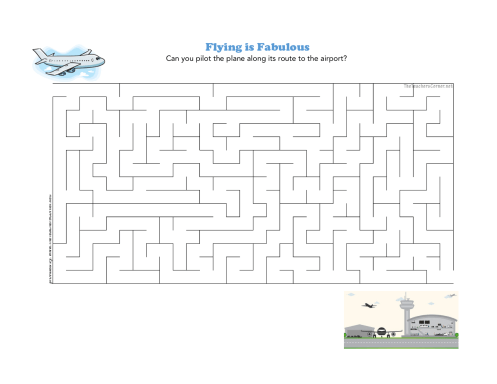
celebrate-picture-books-picture-book-review-Flying-is-Fabulous-Maze

Flying is Fabulous! Maze


Can you pilot the airplane along its route to the airport in this printable Flying is Fabulous! Maze?

Flying is Fabulous! MazeFlying is Fabulous! Maze Solution

celebrate-picture-books-picture-book-review-aim-for-the-skies-cover

You can find Aim for the Skies at these booksellers

Amazon | Barnes & Noble | Books-a-Million  

To support your local independent bookstore, order from

Bookshop | IndieBound

Picture Book Review


March 14 – It’s National Women’s History Month

celebrate-picture-books-picture-book-review-hedy-lamarr's-double-life-cover

About the Holiday

National Woman’s History Month was established by the United States Congress in 1987 to recognize and celebrate the achievements of American women in the past and today. This year’s theme is “Balance for Better,” which encourages true gender equity in the workplace, in government, and at home. Only when all people are heard and treated equally will communities thrive. There’s no better time than now to get involved to ensure that all have the same rights and standing in all areas of their lives.

I received a copy of Hedy Lamarr’s Double Life for review consideration. All opinions are my own. I’m excited to be partnering with Sterling in a giveaway of the book. See details below.

Hedy Lamarr’s Double Life: Hollywood Legend and Brilliant Inventor

Written by Laurie Wallmark | Illustrated by Katy Wu


In 1938 people were lining up to see Hedy Lamarr in her first English-language movie Algiers. Hedy was the talk of Hollywood, and journalists and photographers captured her every move—almost. What movie-goers and the press didn’t know was that Hedy Lamarr was also a brilliant inventor. Instead of attending fancy celebrity parties, after a long day on the set, “Hedy hurried home to work on her latest invention. Her brain overflowed with idea after idea for useful inventions.” While she never tried to sell her ideas—like the collar to help find lost pets or the “flavor cube that changed plain water into soda”—she designed and redesigned them to perfection.

celebrate-picture-books-picture-book-review-hedy-lamarr's-double-life-magazines

Image copyright Katy Wu, 2019, text copyright Laurie Wallmark, 2019. Courtesy of Sterling Children’s Books.

But how did Hedy get her start? She was born in Austria and as a child took apart mechanical objects just to see how they worked. Hedy’s father also loved science, and he encouraged his daughter to hold onto her dreams. In addition to science, Hedy loved movies and would use her dolls to reenact the scenes she saw.

When she got older, Hedy got a job as a script girl and then worked as an extra in a movie. She loved acting and once said, “‘I acted all the time…. I was a little living copybook. I wrote people down on me.’” While playing the lead in a stage play, the Hollywood producer Louis B. Mayer saw her and offered her movie contract. Hedy moved to America. It only took her six months to land a starring role in Algiers. After that she starred in many movies with some of the most famous actors and actresses. 

By now, the world was at war. One day, Hedy met George Antheil, a former weapons inspector who now composed music. Hedy remembered a “discussion she had overheard back in Europe about a problem with the guidance system for torpedoes. The guidance system couldn’t prevent the enemy from jamming the weapon’s radio signals” and sending it off course. She learned from George Antheil that the US Navy had the same problem.

They decided to team up to see if they could figure out a solution. Hedy was also an accomplished pianist, and she and George often played musical games on the piano. Once, while they played the same song in different octaves, Hedy had a brainstorm for building “a secure torpedo guidance system.” At the time, torpedo guidance systems only worked if the ship launching a torpedo and the torpedo were on the same frequency.

celebrate-picture-books-picture-book-review-hedy-lamarr's-double-life-home

Image copyright Katy Wu, 2019, text copyright Laurie Wallmark, 2019. Courtesy of Sterling Children’s Books.

Hedy thought that if the ship and the torpedo could switch between a series of different frequencies, the enemy would be foiled. “Hedy called her discovery ‘the hopping of frequencies.” Working together, she and George devised a way to implement Hedy’s idea. When they presented their idea to the National Inventors Council, they were told the “idea had ‘great potential value.’”

There were still some issues to overcome to make the system automated, but Hedy and George answered those too. They applied for a patent, and a year later on August 11, 1942 it was granted. When they gave the idea to the United States Navy, “Hedy was proud her frequency-hopping idea might help America win the war.” But embroiled in the middle of the conflict, the Navy didn’t have “the time or money to implement a new system….”

Hedy, who still wanted to help America defeat the Nazis, was undaunted. She helped raise 25 million dollars by selling war bonds and volunteered at the Hollywood Canteen, where servicemen soon to be deployed gathered. Hedy went on to make more than twenty movies and continued to work on her inventions.

In the 1980s, the US Navy declassified Hedy’s frequency-hopping technology, meaning anyone could use it. Because the patent had long-ago expired, no one needed to give Hedy and George credit for the idea. “Companies raced to include frequency hopping in their own devices.” In 1997, Hedy and George were finally recognized when they “received the Pioneer Award from the Electronic Frontier Foundation for their significant contribution to computers.”

A timeline of Hedy Lamarr’s life, a description of how Hedy and George’s frequency-hopping technology worked, additional resources for further reading, and a list of Hedy’s movies follow the text.

celebrate-picture-books-picture-book-review-hedy-lamarr's-double-life-red-carpet

Image copyright Katy Wu, 2019, text copyright Laurie Wallmark, 2019. Courtesy of Sterling Children’s Books.

Laurie Wallmark knows how to weave a riveting tale that draws readers in to the lives of fascinating and scientifically minded women throughout history. Her detailed biography of Hedy Lamarr will wow kids with the twists and turns of how a vital feature of the electronics they use every day came to be. A history not only of this famous woman but of the times and policies that denied Hedy Lamarr the recognition and profits she deserved, the story is sure to spark plenty of discussion. The inclusion of a few of Hedy’s ingenious ideas as well as quotes on acting, inventing, and her views on life give children a glimpse into the mind of this unique woman.

Katy Wu takes readers back to the 1940s with her stylish illustrations reminiscent of magazine images of the time that depict both Hedy’s glamourous and inventive sides. Even as Hedy steps out of a limo to the glare of flashbulbs, acts under stage lights, and watches movies thrown by a projector’s beam, she’s dreaming of going home to work on her inventions in the light of a desk lamp. When the story turns to Hedy’s frequency-hopping idea, Wu clearly portrays the problems with the torpedo guidance system and the way single-frequency and multiple-frequency communications work. The way player pianos were controlled and how Hedy and George Antheil used this idea is also well portrayed. The final images of people using Hedy’s technology today lets kids fully understand the impact that Hedy Lamarr has had on their lives.

An important story about an extraordinary woman, Hedy Lamarr’s Double Life: Hollywood Legend and Brilliant Inventor will inspire children to follow and accomplish all of their dreams. The book will spur creative thought across subject matter and would be a motivational addition to home, classroom, and public libraries.

Ages 5 and up

Sterling Children’s Books, 2019 | ISBN 978-1454926917

Discover more about Laurie Wallmark and her books on her website.

To learn more about Katy Wu, and view a gallery of her book and art, visit her tumblr.

Hedy Lamarr’s Double Life Giveaway

I’m excited to partner with Sterling Children’s Books in a Twitter giveaway of:

  • One (1) copy of Hedy Lamarr’s Double Life: Hollywood Legend and Brilliant Inventor written by Laurie Wallmark | illustrated by Katy Wu

This giveaway is open from March 14 through March 20 and ends at 8:00 p.m. EST.

A winner will be chosen on March 21.

Prizing provided by Sterling Children’s Books

Giveaway open to U.S. addresses only. | No Giveaway Accounts 

National Women’s History Month Activity

celebrate-picture-books-picture-book-review-women-in-stem-coloring-book

Women in STEM Coloring Book


Discover five women who broke barriers  and made important contributions to the science, technology, engineering, and math fields in this printable  Women in STEM Coloring Book created by the United States Department of Energy.

celebrate-picture-books-picture-book-review-hedy-lamarr's-double-life-cover

You can find Hedy Lamarr’s Double Life: Hollywood Legend and Brilliant Inventor at these booksellers

Amazon | Barnes & Noble | Books-a-Million | IndieBound

Picture Book Review
February 28 – Digital Learning Day

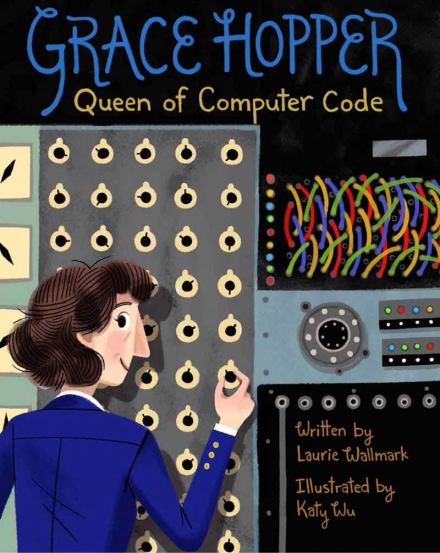
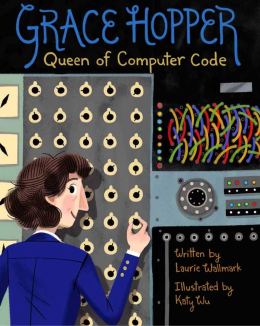
celebrate-picture-books-picture-book-review-grace-hopper-queen-of-computer-code-cover

About the Holiday

Established in 2012, today’s holiday raises awareness of the advances in educational technology for classrooms and teachers and to spread opportunities to schools and communities across the country for all youth to use. Digital Learning Day also highlights innovative educators who are using technology to enhance their lessons and bring the latest information and learning tools to students from kindergarten through high school. For more information on today’s holiday and to find resources for using technology in the classroom visit the Digital Learning Day website.

Grace Hopper: Queen of Computer Code

Written by Laurie Wallmark | Illustrated by Katy Wu


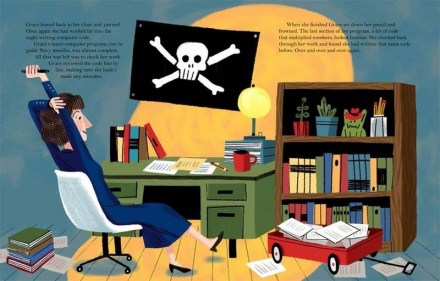
As Grace Hopper finished writing a computer code to guide Navy missiles, she noticed that there was a certain string of code that she had repeated many times. “Grace snorted. What a colossal waste of time! There had to be a better way. Why not make the computer do the work?” Grace figured out a way for the computer to store pieces of a program and then find them again to create another program. Grace was the first computer programmer to do this.

celebrate-picture-books-picture-book-review-grace-hopper-queen-of-computer-code-desk

Image copyright Katy Wu, 2017, text copyright Laurie Wallmark, 2017. Courtesy of Sterling Children’s Books.

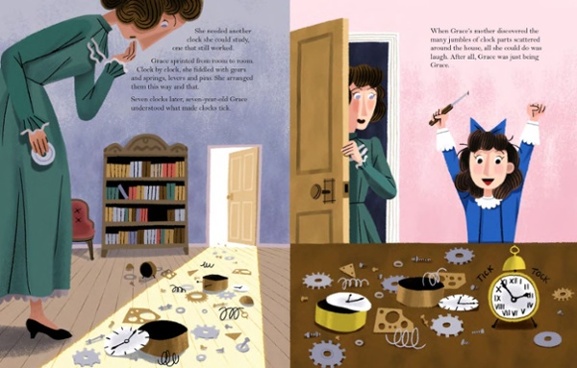
Even as a child Grace loved to tinker with mechanical things. She once opened all the clocks in the house to figure out how they worked. What did her mother say when she saw that? “…all she could do was laugh. After all, Grace was just being Grace.” Later, she built an electric elevator for her dollhouse. She reveled in difficult problems, and while the girls in her class “wore frilly dresses and learned to be young ladies, Grace studies math and science.”

Studying hard, Grace finished high school two years early, and while she had the grades in math and science to go to college, she failed Latin. Without passing Latin, she couldn’t go to college. Grace buckled down and the next year she was off to Vassar College. Grace passed up taking classes such as “Husbands and Wives” and “Motherhood” to take math and physics. But Grace did a lot more than just study. “Her personal motto was ‘Dare and Do,’ and she took it to heart. She flew in a barnstormer airplane.

celebrate-picture-books-picture-book-review-grace-hopper-queen-of-computer-code-clock

Image copyright Katy Wu, 2017, text copyright Laurie Wallmark, 2017. Courtesy of Sterling Children’s Books.

Grace went on to graduate school at Yale and then took a job teaching at Vassar. She knew how to make her classes fun and informative. At this time America was at war and needed mathematicians. She tried to join the Navy, but they told her she was too old and too thin. She kept asking, however, and after a year, the Navy agreed to let her join. She “was assigned to write programs for one of the first computers ever built, the Mark I. Only a few people had ever programmed before, so she had to learn how to do it on her own.”

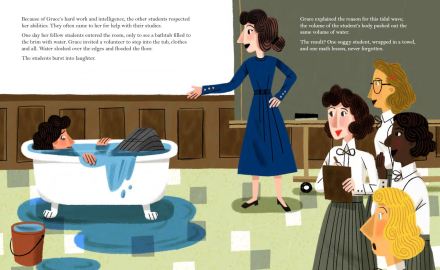
celebrate-picture-books-picture-book-review-grace-hopper-queen-of-computer-code-bath

Image copyright Katy Wu, 2017, text copyright Laurie Wallmark, 2017. Courtesy of Sterling Children’s Books.

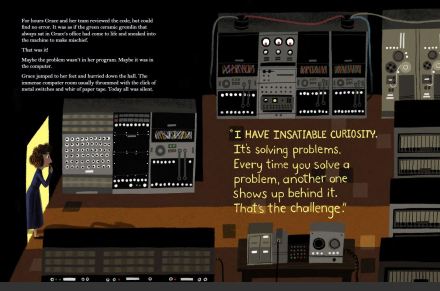
Then one day Grace learned that “the new computer, the Mark II, had stopped working.” Grace and her coworkers searched and searched for an error in the code, but they found none. Then Grace thought that maybe the problem wasn’t in the code but in the computer itself. They looked inside the huge machine for loose wires or electrical shorts. Nothing. Then they saw it—a moth had gotten inside and was blocking a switch.

celebrate-picture-books-picture-book-review-grace-hopper-queen-of-computer-code-computer

Image copyright Katy Wu, 2017, text copyright Laurie Wallmark, 2017. Courtesy of Sterling Children’s Books.

With a tweezer, a worker removed the moth and the computer started up again. Grace taped the moth into the log book and wrote, “‘First actual case of [a computer] bug being found,’” and the term “computer bug” was born. Grace also revolutionized programming when she “invented a program that let people use words to tell the computer what to do” instead of pages and pages of 1s and 0s.

When Grace turned sixty, the Navy made her retire. Within six months, they asked her to return and she worked for them for another twenty years. She retired again at the age of eighty as the Queen of Computer Code. As many people called her, she really was “Amazing Grace.”

A timeline of Grace Hopper’s life as well as a list of honors awarded her and resources for further reading about Grace and other women in STEM.

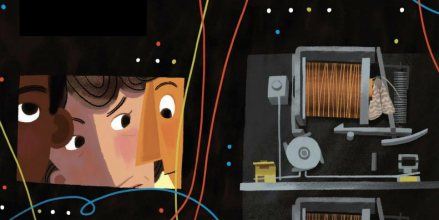
celebrate-picture-books-picture-book-review-grace-hopper-queen-of-computer-code-coil

Image copyright Katy Wu, 2017, text copyright Laurie Wallmark, 2017. Courtesy of Sterling Children’s Books.

Laurie Wallmark’s engaging biography of Grace Hopper will delight kids as they see her grow from a precocious and innovative child to a woman who used her intelligence and imagination to lead the computer revolution. Specific examples of Grace’s successes and the support she received at home will encourage other engineering-minded kids, and the inclusion of her failure in Latin demonstrates that everyone has areas of weakness that can be overcome with hard work. Grace’s perseverance in getting the Navy to accept her is also a good lesson for children on not giving up on their dreams. The provenance of the term “computer bug” will surprise and amuse readers.

Katy Wu’s charming illustrations of events in Grace Hopper’s life take readers back to time when computers were new. Children will marvel over the size and design of early computers. Grace’s sense of adventure and humor are on display is colorful and action-packed images. Uplifting and encouraging sayings by Grace Hopper that will inspire children are sprinkled throughout the pages.

A book to motivate children to reach for their dreams and spark pride in individual accomplishment, Grace Hopper: Queen of Computer Code would be an influential book to add to home, school, and public libraries.

Ages 5 and up

Sterling Children’s Books, 2017 | ISBN 978-1454920007

Discover more about Laurie Wallmark and her books on her website.

To learn more about Katy Wu, her books, and her art on Tumblr.

Digital Learning Day Activity

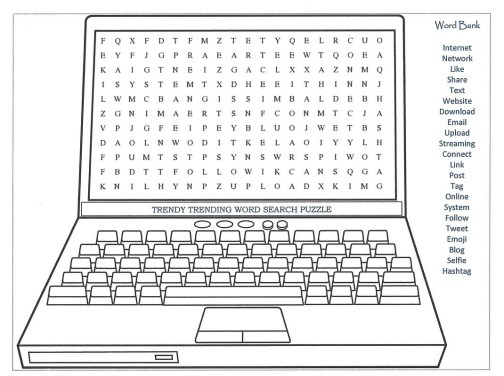
celebrate-picture-books-picture-book-review-trendy-trending-word-search-puzzle

Trendy Trending Word Search Puzzle


Digital communication has a language all its own! Open this laptop and find the twenty-two Internet-based words in this printable word search puzzle.

Trendy Trending Word Search Puzzle and Solution

celebrate-picture-books-picture-book-review-grace-hopper-queen-of-computer-code-cover

You can find Grace Hopper: Queen of Computer Code at these booksellers

Amazon | Barnes & Noble | Books-a-Million | IndieBound

Picture Book Review
February 7 – National Periodic Table Day

celebrate-picture-books-picture-book-review-Marie-Curie-little-people-big-dreams-cover

About the Holiday

Today’s holiday was established in 2016 by David T. Steineker, an author, inventor, and – as you might imagine – chemistry teacher at Jefferson County Public Schools in Kentucky. He devised the holiday to honor the work of categorizing the elements begun by John Newlands, who published the first periodic table on February 7, 1863, and continued into the early 20th century as new elements were discovered. While the modern periodic table has undergone few changes since then, new discoveries and different ways of approaching the table may bring fresh changes in the years to come.

Marie Curie (Little People, Big Dreams)

Marie: My First Marie Curie (Board Book)

Written by Isabel Sánchez Vegara | Illustrated by Frau Isa


From the time when Marie was a little girl, she knew she wanted to be a scientist. Marie was very smart. “At school, she won a gold medal for her studies, which she kept in her drawer like a treasure.” Because women were not allowed to go to college in her country, she moved to France to go to the university there. Even though French was not her first language, Marie was soon the top math and science student in Paris.

celebrate-picture-books-picture-book-review-Marie-Curie-little-people-big-dreams-dreaming

Copyright Frau Isa, 2018, courtesy of Frances Lincoln Children’s Books.

One day Marie met Pierre, who loved science as much as she did. They got married and worked together in their own laboratory, where they discovered radium and polonium. “It was such a thrilling moment for science!” Marie and Pierre even won the Nobel Prize. Marie was the first woman ever to be awarded this honor. When Pierre later had an accident, Marie was left alone to continue their work.

celebrate-picture-books-picture-book-review-Marie-Curie-little-people-big-dreams-marie-and-pierre

Copyright Frau Isa, 2018, courtesy of Frances Lincoln Children’s Books.

All her research and experiments paid off when she was awarded her second Nobel Prize. When war broke out, “Marie’s discoveries were used by doctors to help injured soldiers.” Marie inspired many girls who studied science at her own institute in Paris. Besides science, Marie taught her students that there was nothing to fear, “many things to learn, and many ways to help those in need.”

A timeline and brief, yet detailed biography of her life follows the story.

celebrate-picture-books-picture-book-review-Marie-Curie-little-people-big-dreams-marie-with-noble-prize

Copyright Frau Isa, 2018, courtesy of Frances Lincoln Children’s Books.

With thrilling recognition that even in the youngest hearts beat future writers, artists, adventurers, designers, and scientists, the Little People, Big Dreams series introduces preschoolers to inspiring women role models. In Marie Curie: Little People, Big Dreams, Isabel Sánchez Vegara reveals the life and work of Marie Curie with straightforward storytelling that illuminates while affirming the intelligence of her young audience. Uplifting, life-determining personality traits that carried Marie over obstacles and to the top of her profession—such as not taking no for an answer, treasuring your accomplishments, working hard, and helping others—are highlighted for little ones to learn from.

Frau Isa’s stylish illustrations in a striking, subdued color palette will entice the youngest readers to listen and learn. While the spotlight is always on Marie, each page also focuses on one or two main images, such as Marie and Pierre’s lab table, a wounded soldier’s X-ray, and Marie holding her Nobel Prize, that help little ones see and understand the important aspects of the story.

Encapsulating both history and the timeless persistence that drives people to achieve their full potential, Marie Curie—available in both picture book and board book editions—is a must for preschool classrooms and would be a rousing addition to home bookshelves.

Ages 3 – 5

Frances Lincoln Children’s Books, 2018 | ISBN 978-1847809629 (Picture Book); 978-1786032539 (Board Book)

You can check out more about Isabel Sánchez Vegara on Instagram.

Discover more about Frau Isa and her art on her website.

National Periodic Table Day Activity

celebrate-picture-books-picture-book-review-green=pennies-experiment

Green Pennies Chemistry Experiment


You know what color pennies are! They’re those brownish coins amid all the silver. But what if you could turn those pennies green—like dollar bills? You can with this easy and way cool chemistry experiment!

Supplies

  • 10 – 12 dull pennies
  • Vinegar
  • Lemon juice
  • Salt
  • 2 small bowls
  • ¼ cup measuring cup
  • 1 teaspoon
  • Paper towels

Directions

IMG_6569

Experiment 1

  1. Pour ¼ cup vinegar into a bowl
  2. Add 1 teaspoon salt
  3. Mix thoroughly until salt has dissolved
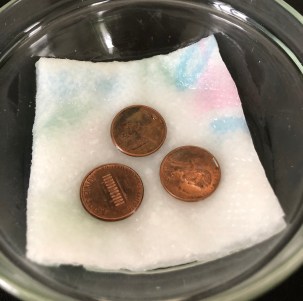
  4. Place a few pennies in the bowl and leave for five minutes.
  5. Take the pennies out and place them on the paper towel.
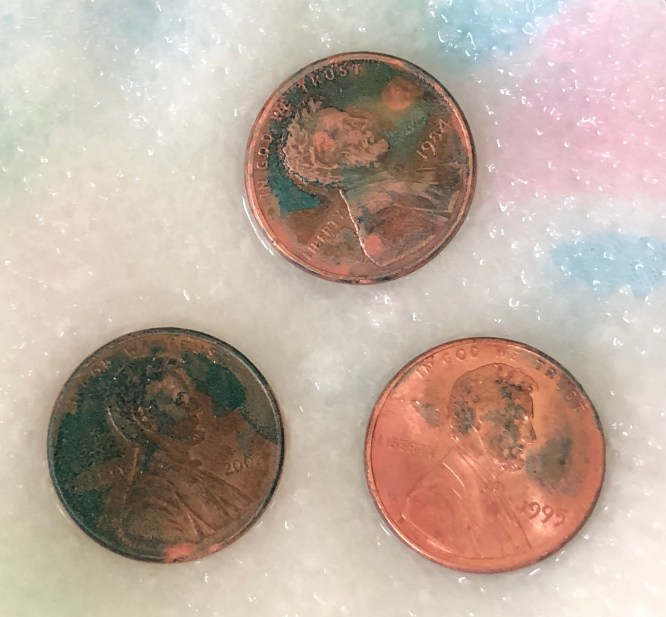
  6. Let the pennies dry and watch what happens. The reaction becomes more dramatic over time, so check on your pennies at different times throughout the day

Extra Observation:

  1. To see the chemical reaction at work, dip one penny half way into the vinegar/salt solution and wait a minute
  2. Lift the penny out of the solution and see the result

IMG_6588

Experiment 2

  1. Fold a paper towel to several thicknesses and place in bowl
  2. Place a few pennies on top of the paper towel
  3. Pour enough vinegar over the pennies to saturate the paper towel
  4. Wait two to three hours and see what happens
  5. You can leave the pennies in the bowl and continue to add vinegar as the paper towel dries. Flip the pennies over to create a chemical reaction on both sides

IMG_6590

Experiment with other acids, such as the lemon juice.

Why do the pennies turn green?

Pennies are made of copper. The vinegar and salt solution helps the copper react with oxygen in the air to form the blue-green patina of malachite on the surface of the penny. This chemical reaction is called oxidation. You can see the same green color on other things made of copper like plumbing pipes and many statues—even the Statue of Liberty!

If you’d like to record your observations of your pennies like a chemist does, download and print this lab sheet.

celebrate-picture-books-picture-book-review-Marie-Curie-little-people-big-dreams-cover

You can find Marie Curie (Little People, Big Dreams) at these booksellers

Amazon | Barnes & Noble | Books-a-Million | IndieBound

You can find the board book edition, Marie: My First Marie Curie here

Amazon | Barnes & Noble | Books-a-Million | IndieBound

YouPicture Book Review
February 3 – National Women Physicians Day

Who Says Women Can't Be Doctors by Tanya Lee Stone and Marjorie Priceman picture book review
About the Holiday

Today, we celebrate the birthday of Elizabeth Blackwell, who in 1849 became the first woman to earn a medical degree in the United States. Her courage in the face of much opposition paved the way for other women to pursue careers in the medical field. National Women Physicians Day also honors the achievements and contributions of all women physicians around the world. 

Who Says Women Can’t be Doctors? The Story of Elizabeth Blackwell

Written by Tanya Lee Stone | Illustrated by Marjorie Priceman


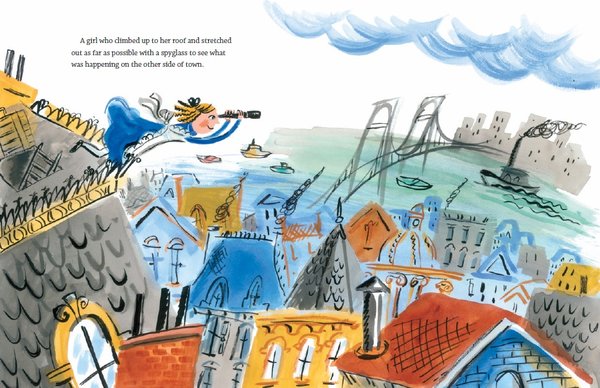
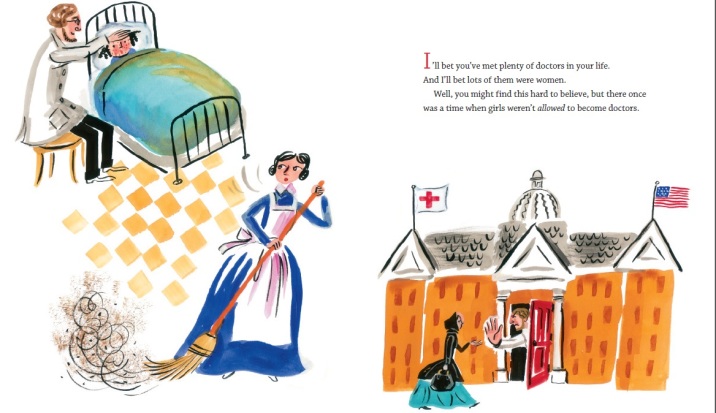
Once upon a time there were no women doctors. Women weren’t even allowed to be doctors. Sounds like a fairy tale, doesn’t it? But it was the truth. Then Elizabeth Blackwell, came along. Elizabeth was not like other girls of the 1830s. She loved to explore and take on challenges. She could lift her brother over her head, and to toughen herself up she slept on the hard wood floor. To get a better look at the world she once climbed to the roof of her house and leaned waaaaay out with a spyglass. What did she see? Maybe she saw her future. But it wasn’t what she imagined at the time. Blood made her queasy, dissection was disgusting, and being sick just made her want to hide from all the fussing.

celebrate-picture-books-picture-book-review-who-says-women-can't-be-doctors-elizabeth-brave

Image copyright Marjorie Priceman, 2013, text copyright Tanya Lee Stone, 2013. Courtesy of Henry Holt and Company.

A comment by a sick friend, however, puts a bee in Elizabeth’s bonnet. Mary Donaldson tells Elizabeth that she would much rather have been examined by a woman than her male doctor, and then says, “You should be a doctor, Elizabeth.” What a crazy notion, right? Well… Elizabeth can’t stop thinking about it. She asks around. Some people think it’s a good idea, but impossible; others simply think it’s impossible. They believe women aren’t strong enough or smart enough and they laugh at her. By this time, though, Elizabeth is determined.

celebrate-picture-books-picture-book-review-who-says-women-can't-be-doctors-no-women-doctors

Image copyright Marjorie Priceman, 2013, text copyright Tanya Lee Stone, 2013. Courtesy of Henry Holt and Company.

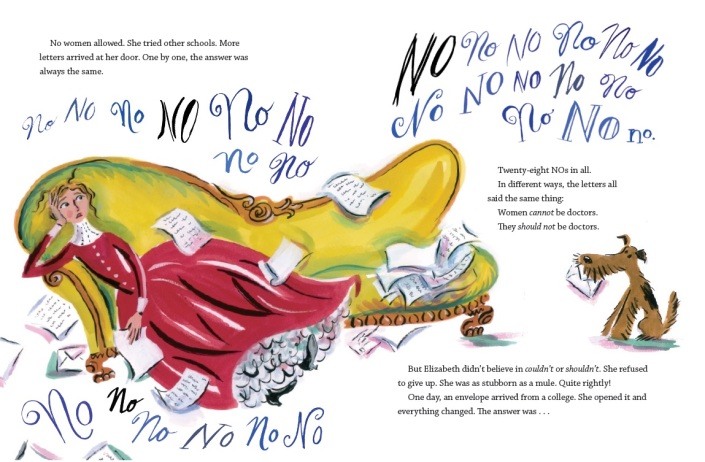
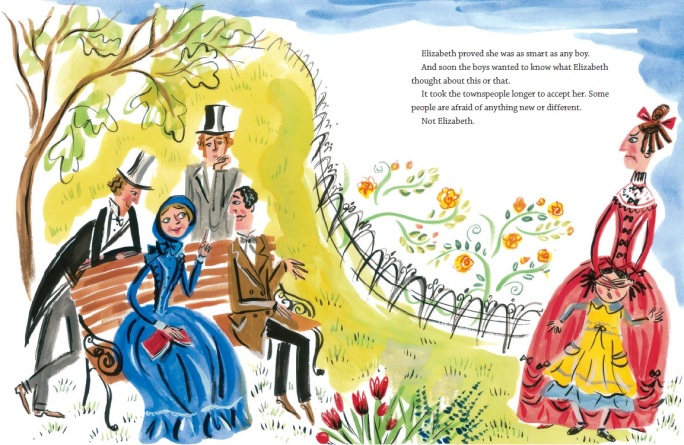
She applies to 28 medical schools, and they all say, “No.” But one day a “Yes” arrives in the mail. Elizabeth packs her bags. As she nears the school, Elizabeth sees that the townspeople have all come out to see her. They aren’t there to welcome their new medical student, though; they just want to whisper and point and stare. Surely, Elizabeth thinks, her classmates will be happy to see her. 

celebrate-picture-books-picture-book-review-who-says-women-can't-be-doctors-everyone-says-no

Image copyright Marjorie Priceman, 2013, text copyright Tanya Lee Stone, 2013. Courtesy of Henry Holt and Company.

But she receives the same reception on the college campus. In fact, she learns that the only reason she was accepted was because the men voted to let her in as a joke! Elizabeth knows how to handle it. She studies hard and gives her opinions, and soon she wins the respect of her fellow students—even if the townspeople still don’t accept her.

On January 23, 1849 Elizabeth Blackwell graduates from medical school with the highest grades in the class. She has become the first woman doctor in America! Many people hope that she will be the last. But as we know…she was Not!

celebrate-picture-books-picture-book-review-who-says-women-can't-be-doctors-elizabeth-does-well-in-school

Image copyright Marjorie Priceman, 2013, text copyright Tanya Lee Stone, 2013. Courtesy of Henry Holt and Company.

Tanya Lee Stone magnificently imbues this short biography of Elizabeth Blackwell with enough mystery, conflict, and history for even the youngest readers to understand the type of girl and woman Elizabeth was as well as the challenges she faced. Stone has deftly included details of Blackwell’s life that  make her instantly recognizable and relatable to children. This biography is not only historical nonfiction, but a universal story for all generations. Blackwell may have started out as a reluctant dreamer, but once she dared to believe she accomplished more than she or anyone could have imagined. It is what we want for all our children.

Marjorie Priceman’s illustrations that swirl with words, are angled on the page, and float in white space are as topsy-turvy as the world Elizabeth Blackwell created with her courage and life’s work. Blackwell’s boldness is echoed in the rich colors and strong lines of Priceman’s gouache and India-ink paintings, and the emotions she stirred in others—from derision to horror to admiration—are cleverly and exceptionally drawn in a minimal style on the characters’ faces.

Ages 5 – 9

Henry Holt and Company, 2013 | ISBN 978-0805090482 (Hardcover) | ISNB 978-1250183392 (Paperback)

Learn more about Tanya Lee Stone and her work—both fiction and nonfiction—for children and teens on her website!

You can connect with Marjorie Priceman on Facebook!

National Women Physicians Day Activity

CPB - Doctors Clothespins

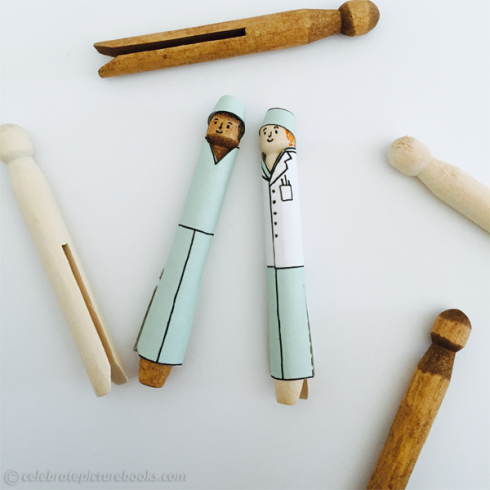
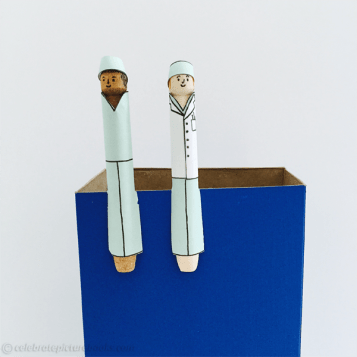
Doctor Clothespin Figures


Elizabeth Blackwell believed in herself and became the doctor she wanted to be. With this craft you can make a doctor figure or color your own clothes to make your figure any profession you are dreaming of!

Supplies

CPB - Doctors Clothespins on box

Directions

  1. Draw a face and hair on the clothespin
  2. Cut out the outfit you want your doctor to wear (color pants on your clothespin if you choose the lab coat)
  3. Wrap the coat or scrubs around the clothespin. The slit in the clothespin should be on the side.
  4. Tape the clothes together
  5. Wrap the cap around the head and tape it
  6. If you’d like to display your clothespin doctor on a wire, string, or the edge of a box or other container, cut along the dotted lines of the clothes template

Who Says Women Can't Be Doctors by Tanya Lee Stone and Marjorie Priceman picture book review

You can find Who Says Women Can’t be Doctors? at these booksellers

Amazon | Barnes & Noble | Books-a-Million | IndieBound

Picture Book Review