December 3 – Get Ready for Dōngzhì

About the Holiday

The Dōngzhì Festival, or Winter Solstice is considered to be one of the most important Chinese festivals of the year and is a time for families to get together, worship their ancestors, and enjoy traditional delicacies. Celebrated for over 2,000 years, the festival sees families come together to make and eat tāng yuán, which symbolizes reunion and prosperity. While the celebration of the winter solstice is only one day (this year on December 21), the Dōngzhì Festival lasts 15 days.

This Winter Solstice festival originates from the Chinese concept of yin and yang, an ancient symbol of harmony and balance. In Chinese culture, there is a belief that when the days are short, there is insufficient Yang energy, thus people consume foods that are more yang (warm) in nature to counteract the yin (cold) of winter, such as tāng yuán, as seen in today’s book. To learn more about the holiday, visit mandarianmatrix.org

Thank you to Bloomsbury Children’s Books for sharing a copy of this book with me for review!

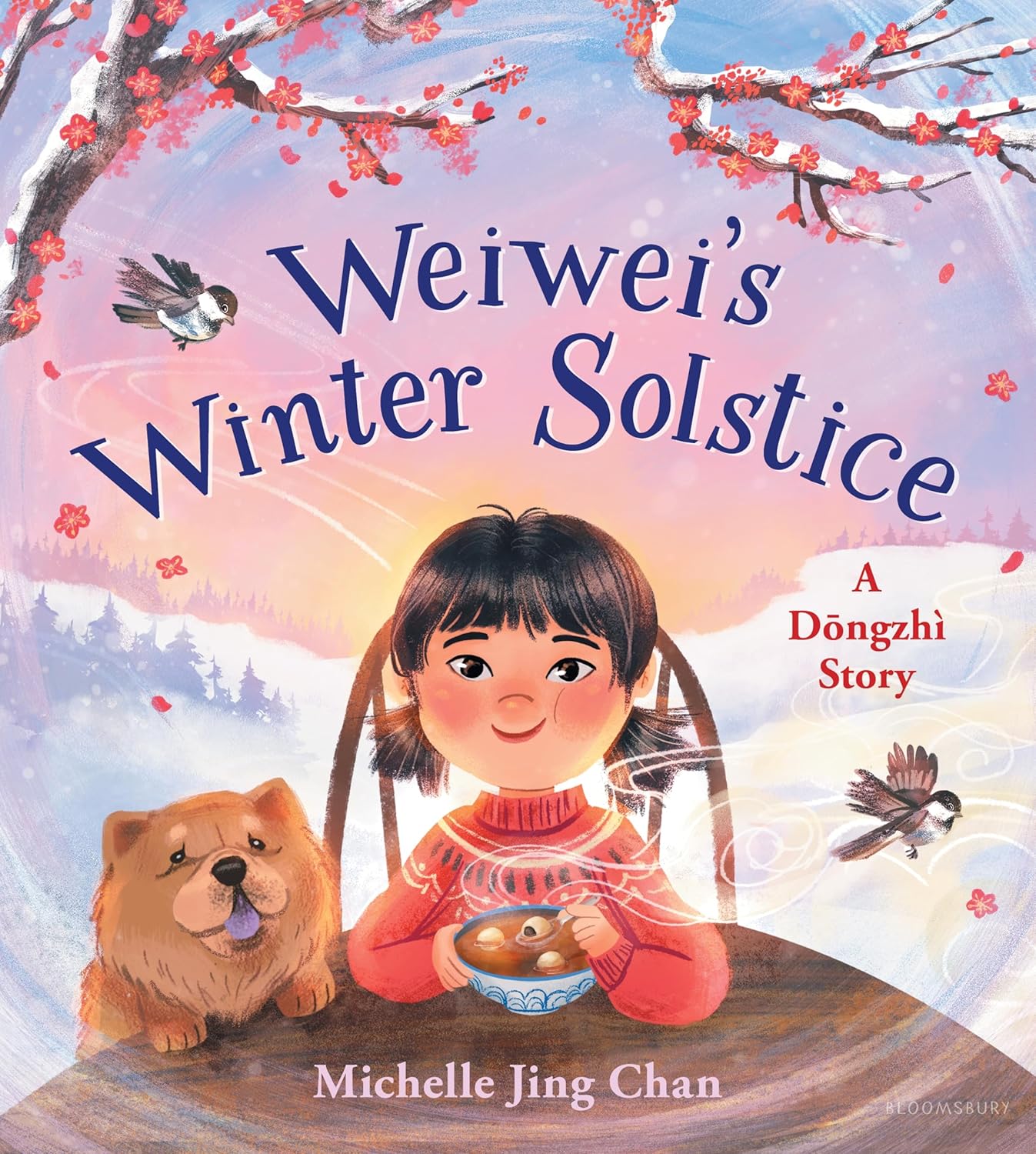
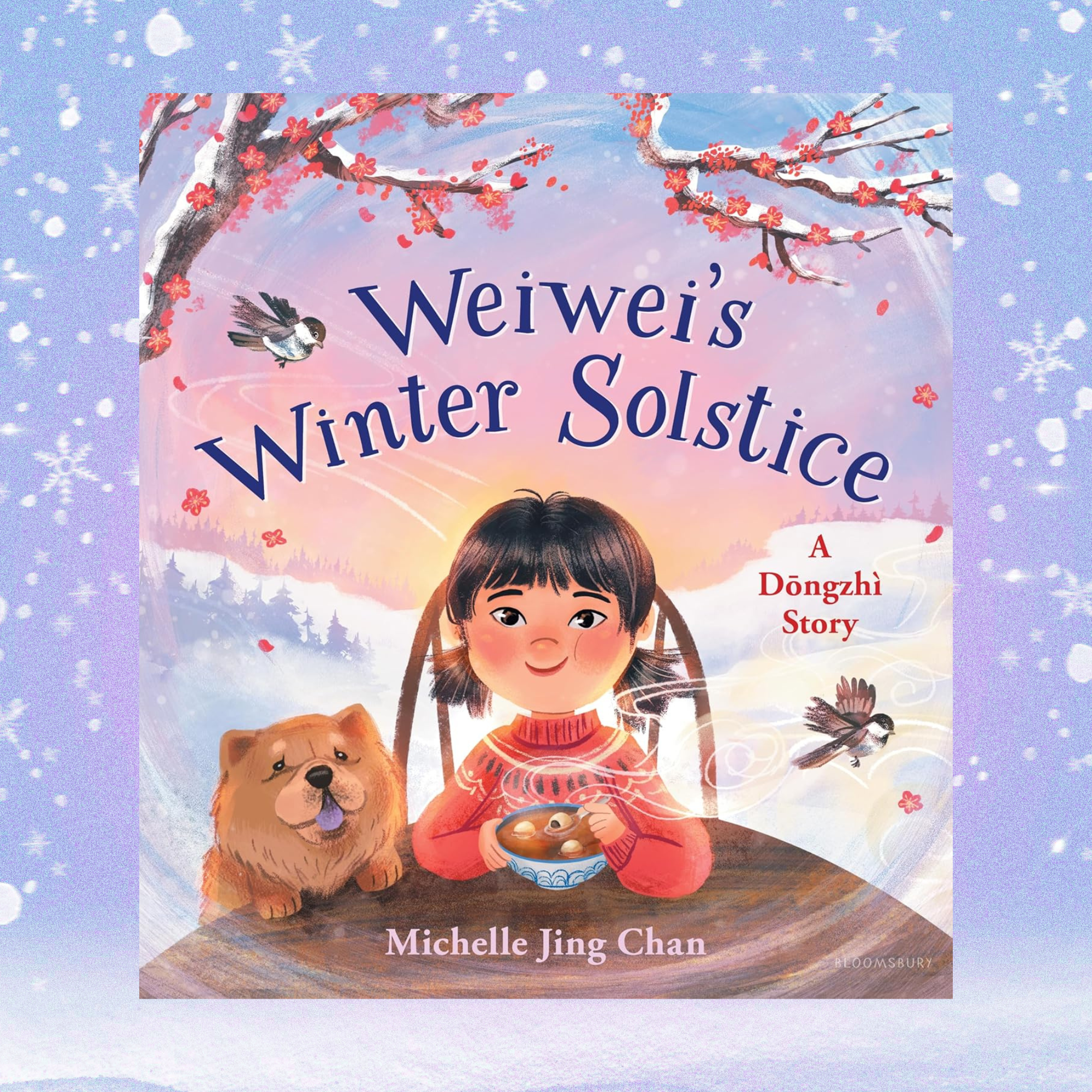
Weiwei’s Winter Solstice: A Dōngzhì Story

By Michelle Jing Chan


Today is Dōngzhì, the Chinese winter solstice—one of Weiwei’s favorite holidays. But instead of celebrating it by splashing in sprinklers amongst hummingbirds and palm trees at her former home, she’s bundled up in a sweater and blanket as snow covers the ground. For Weiwei Dōngzhì just doesn’t feel the same. Her family—Mama, Baba, her younger brother Didi, and Yeye, her grandfather—are ready for a walk and to play in the snow, but Weiwei can only scowl.
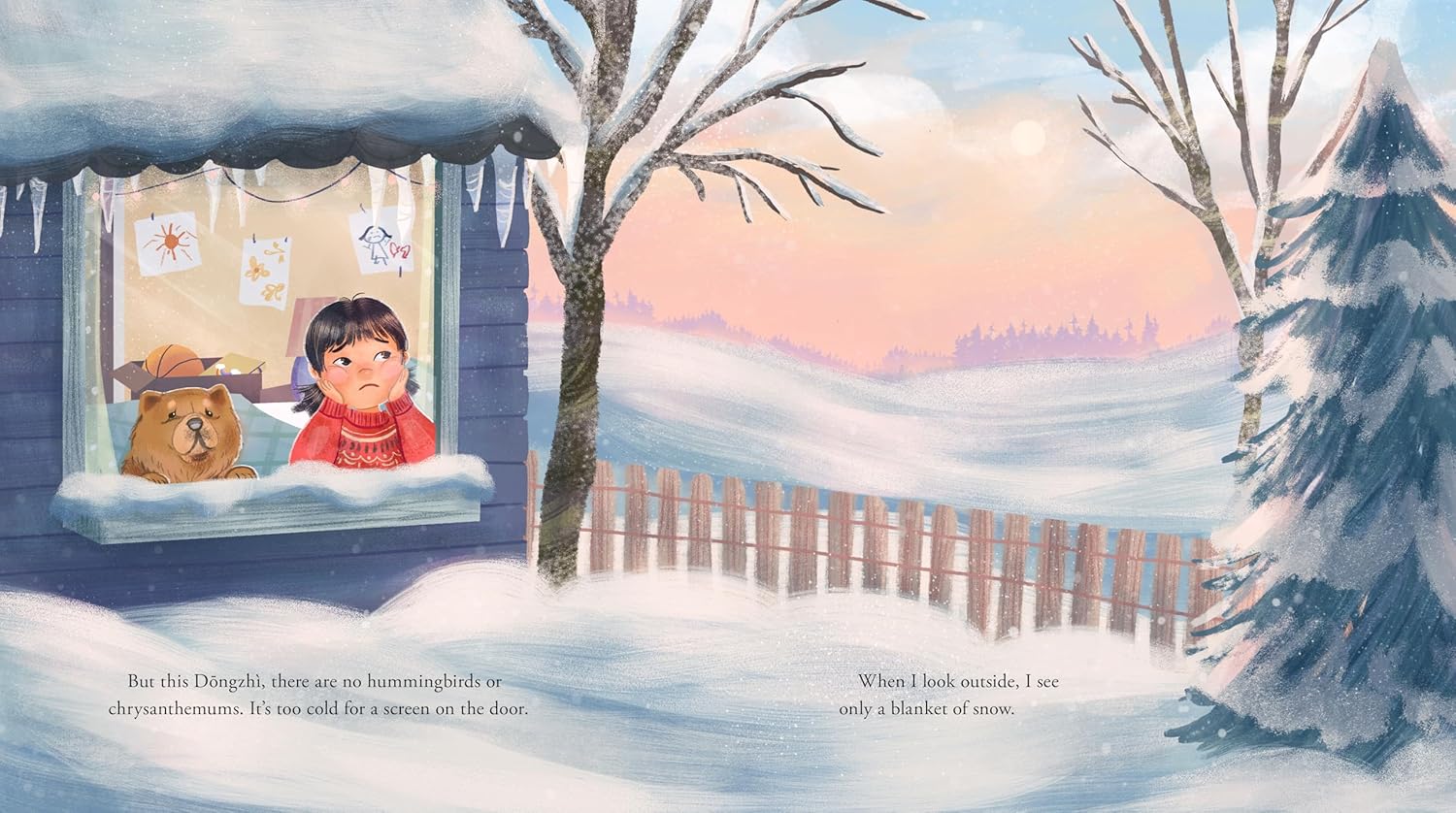
Text and image © 2025 by Michelle Jing Chan. Courtesy of Bloomsbury Children’s Books.

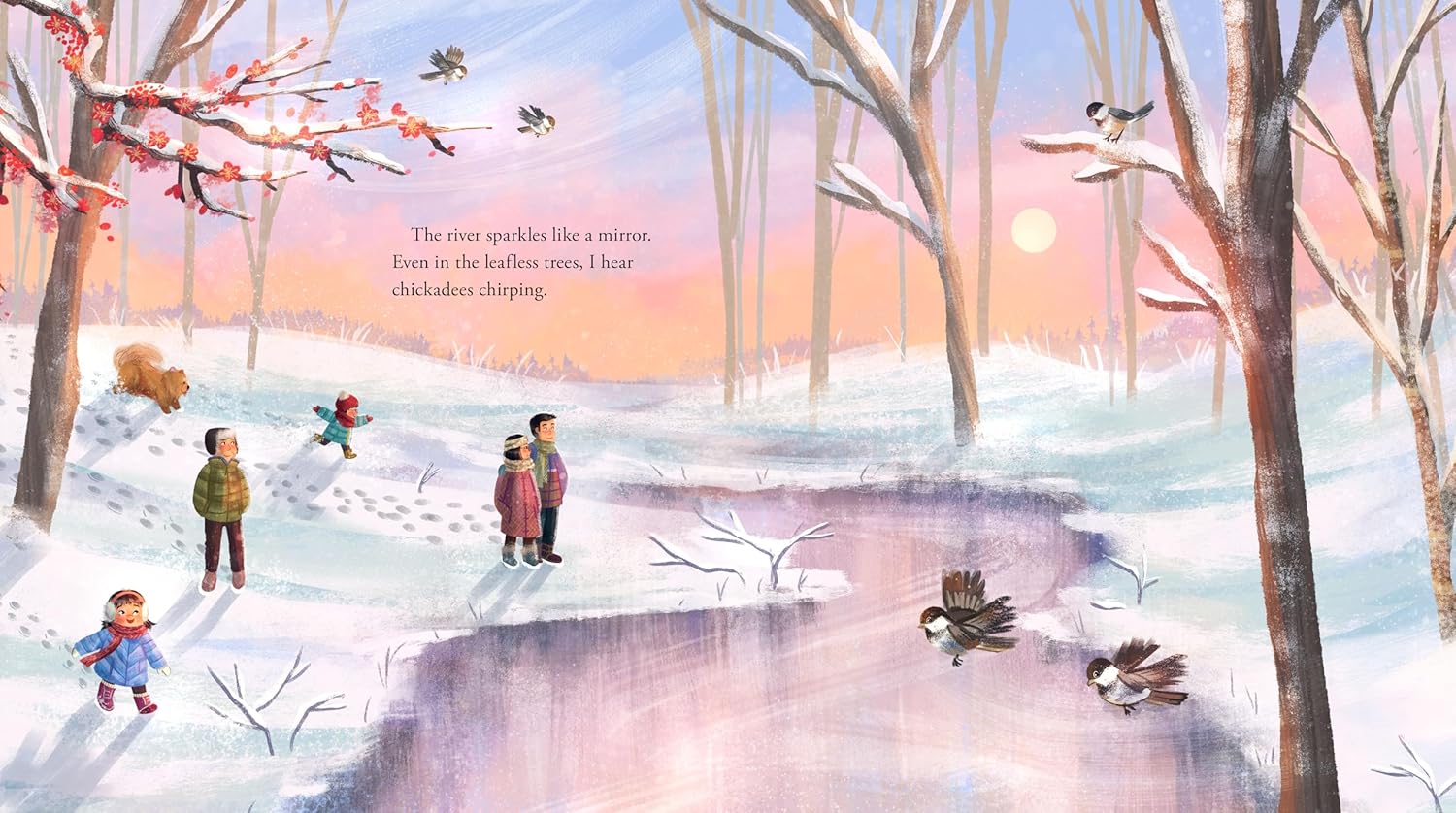
Yet once outside, Weiwei watches her breath cloud in the cold air, catches snowflakes on her tongue, and listens to the snow crunch as they walk. Then, suddenly, Weiwei gasps and points to a tree covered in red flowers. “‘Those are méihuā, plum blossoms!'” Yeye tells her. “. . . No matter how cold and dark it is, they still bloom.'” Weiwei begins to see other signs of life and beauty, but as the sun begins to set, it’s time for the family to go back home. Time for Weiwei’s favorite part of Dōngzhì.
Text and image © 2025 by Michelle Jing Chan. Courtesy of Bloomsbury Children’s Books.

Back home everyone chips in to make tāng yuán. Mama and Didi stir “ground black sesame, sugar, and softened butter into a paste” while Yeye and Weiwei make rice flour dough and Baba makes ginger broth. Then Didi and Weiwei pat the dough into small pancakes, add a bit of black sesame paste, and roll them into balls. The balls simmer in the ginger broth until they float to the top.
Text and image © 2025 by Michelle Jing Chan. Courtesy of Bloomsbury Children’s Books.

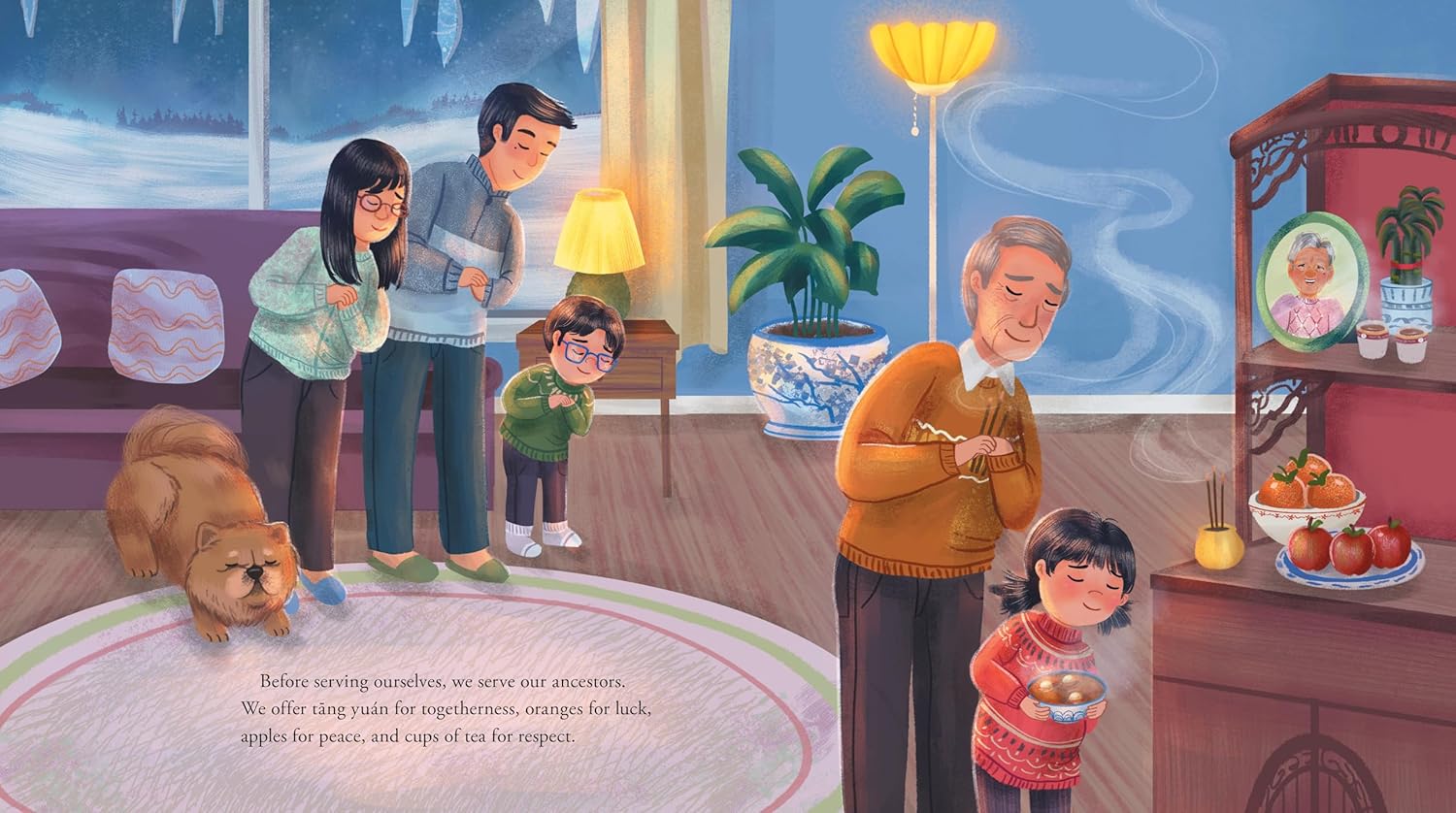
Before Weiwei and her family eat, they serve their ancestors. They “offer tāng yuán for togetherness, oranges for luck, apples for peace, and cups of tea for respect.” Then they eat! To Weiwei, the warm broth feels like a “sip of sunlight,” and Yeye reminds her that warmer days are coming. He tells her he knows it’s hard moving to a new home, “‘but anywhere can feel like home when we celebrate together.'” Weiwei listens to her grandfather and looks around at her cozy home and the people she loves. She knows spring is on its way with new memories to make, and decides that she will “bloom like the méihuā” and savor winter.

An Author’s Note describing the Dōngzhì holiday and how it is celebrated in various Asian countries as well as a recipe for Black Sesame Tāng Yuán follow the story.

Text and image © 2025 by Michelle Jing Chan. Courtesy of Bloomsbury Children’s Books.

Michelle Jing Chan’s warmhearted story of a young girl feeling adrift and disappointed when it comes time to celebrate Dōngzhì in a new home touches on feelings of loss, rediscovery, and the stabilizing comfort of traditions. As Weiwei and her family take a walk through snowy woods instead of the sunny backyard she’s known, she glimpses aspects of familiarity that are further strengthened as she helps prepare and enjoy their customary dish. She recognizes that the Dōngzhì celebration she cherishes as well as her family unit have not changed, allowing her to embrace her new home and look forward to the future.

Chan’s expressive illustrations glow with the togetherness that tāng yuán represents. Even her lovely snowy scenes are lit with peach and gold, as the sun breaks through the winter clouds. Inside, soothing colors highlight the family’s close ties and the comforting flavors of home.

Weiwei’s Winter Solstice: A Dōngzhì Story offers heartening inspiration for readers in the midst of change as well as the comfort of family love and traditions for all. Pair with making the included recipe as a group to create an eventful story time.

Ages 3 – 6

Bloomsbury Children’s Books, 2025 | ISBN 978-1547614844

Michelle Jing Chan is a queer Chinese American illustrator who grew up in Colorado and lives in the Pacific Northwest. Inspired by nature, cultural folklore, and fantasy, Michelle aspires to illustrate diverse, empowering stories her younger self would have loved. When she’s not drawing, she can be found attempting new recipes, reading, or watching spooky TV shows. You can visit her at michellejingchan.com.

Listen to Michelle Jing Chan talk about how her family traditions and a trip to Colorado inspired her to write Weiwei’s Winter Solstice: A Dōngzhì Story below!
You can purchase Weiwei’s Winter Solstice: A Dōngzhì Story from these booksellers

Amazon | Barnes & Noble | Bookshop (Discounted books and support for your local independent bookstore)

Picture Book Review

November 19 – Family Stories Month

About the Holiday

Familiar stories are part of the glue that keep families together. The months of November and December, when homes can be full of family and friends for the holidays, are perfect for sharing those stories with the youngest members as a way to pass down traditions, funny or poignant memories, and even historical touchstones. Telling these stories can be especially meaningful for children experiencing the loss of a beloved family member and the activities they shared. Today’s book speaks to such loss, recovery, and rediscovering happiness. 

Thank you to Astra Young Readers for sending me a copy of this book for review!

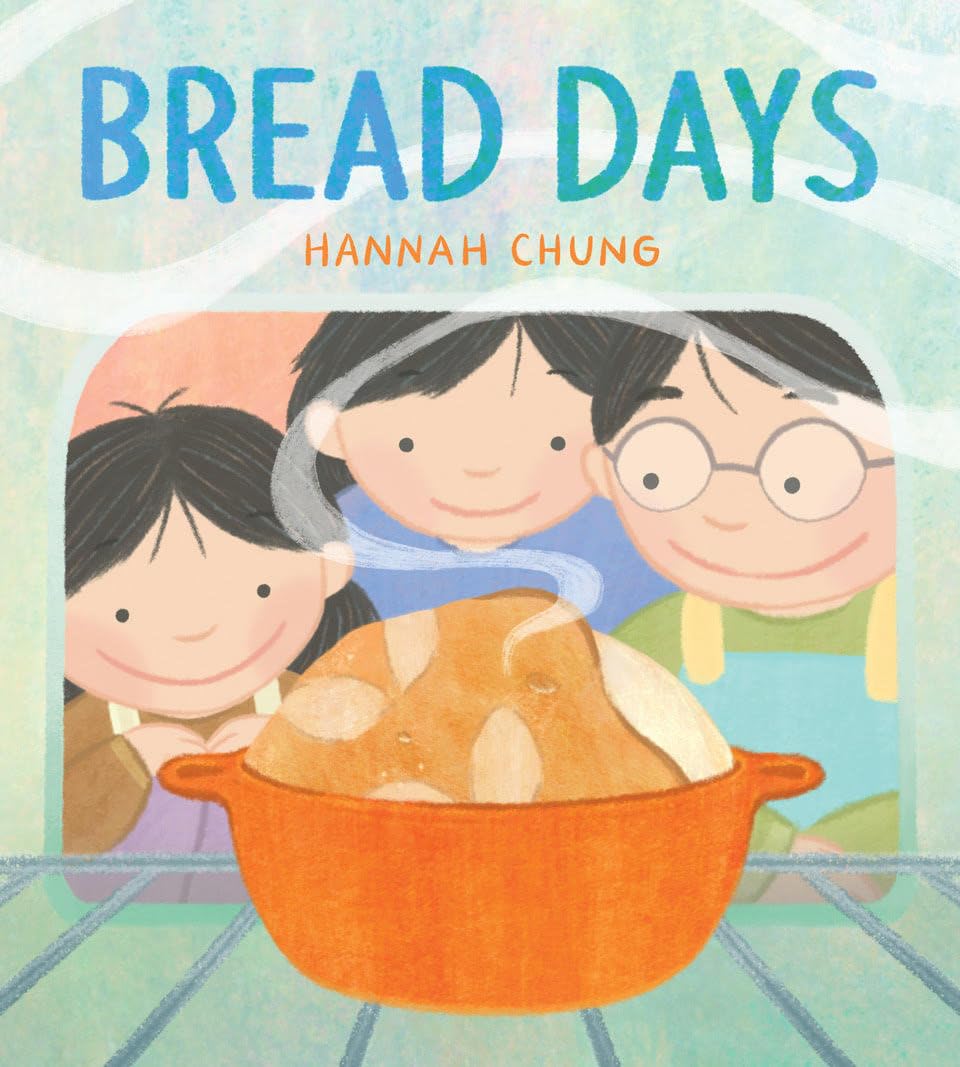
Bread Days

By Hannah Chung


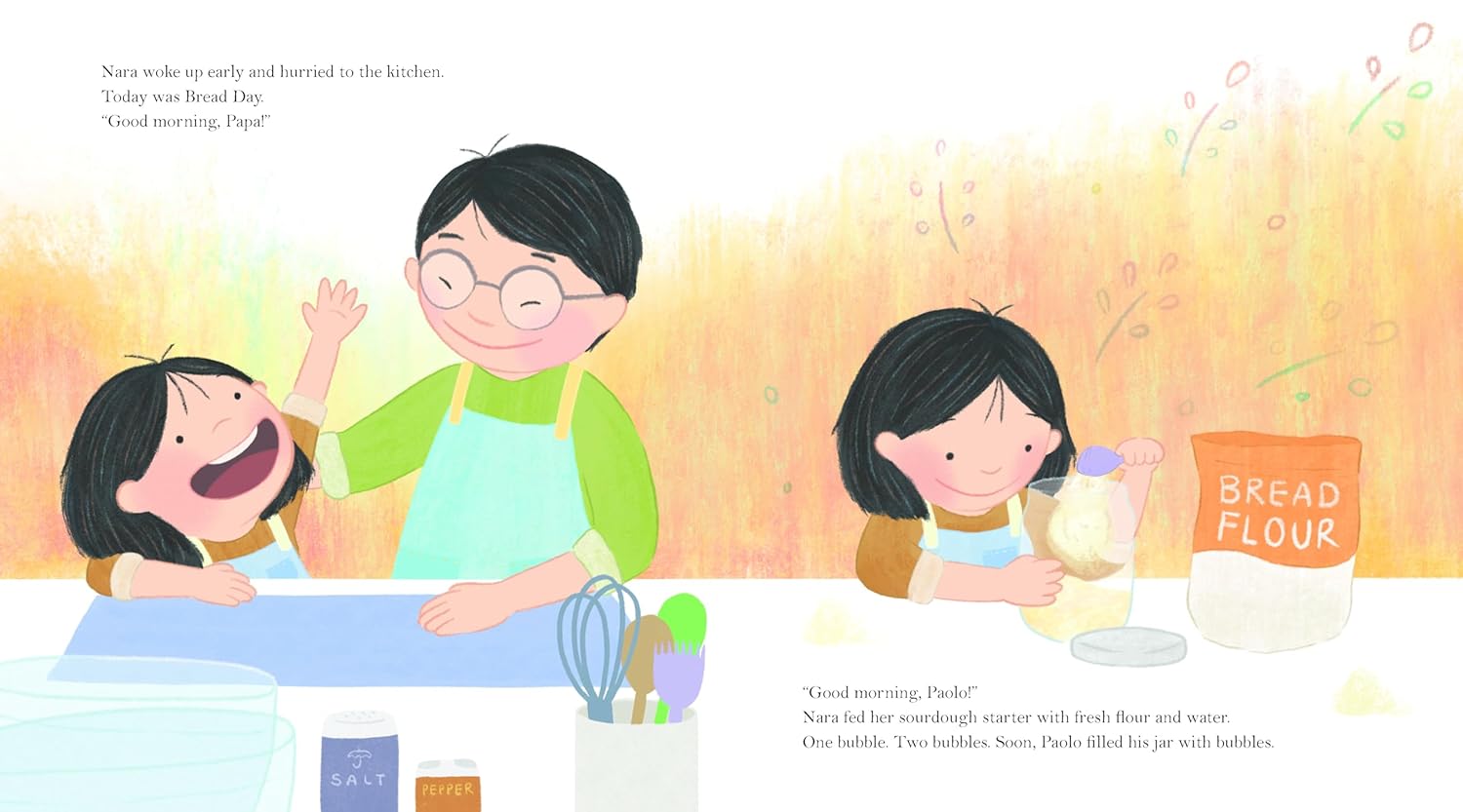
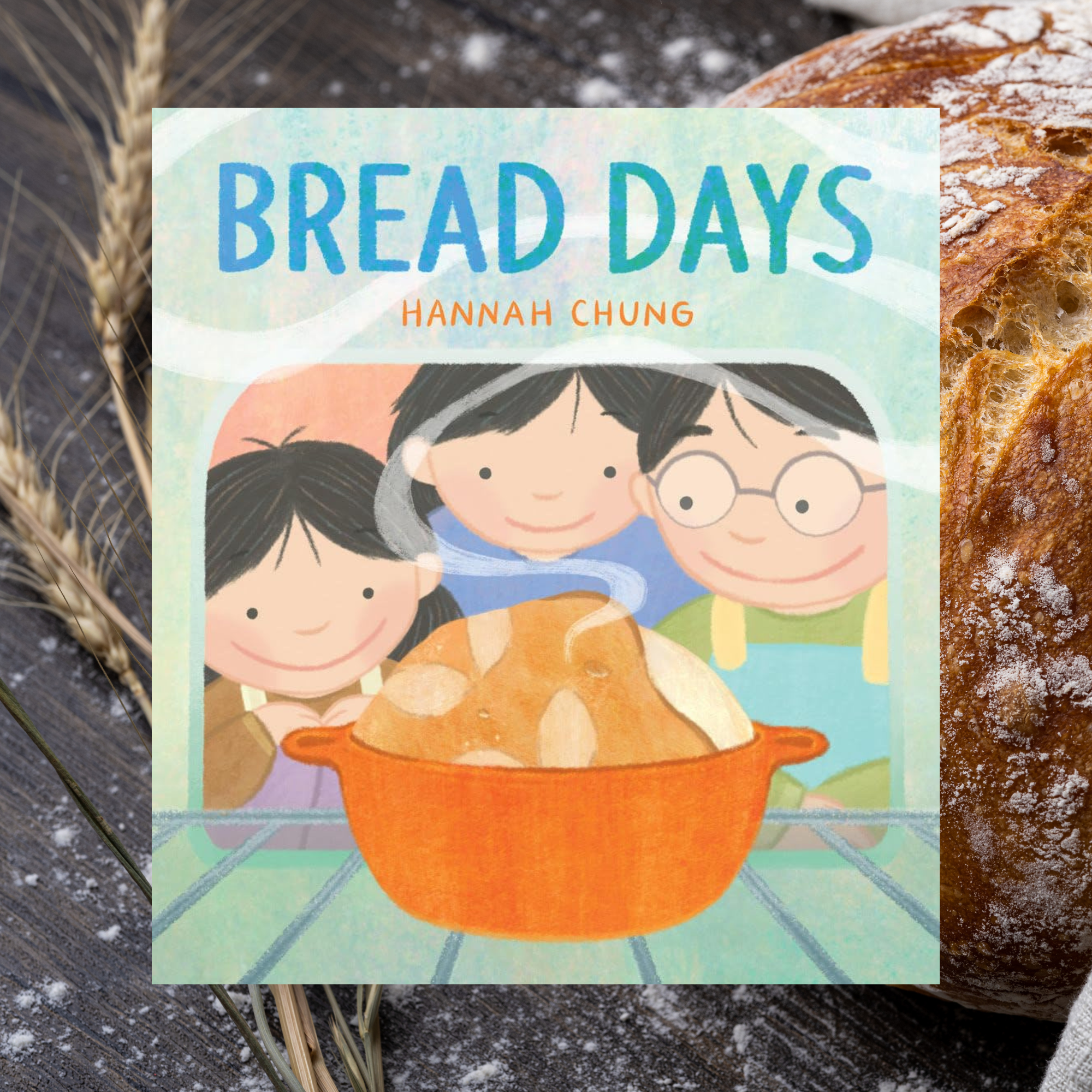
For Nara, Bread Days with her father were special. She would wake up early, greet Papa—who was already in the kitchen—and then say “‘Good morning!'” to Paolo, their sourdough starter, before feeding it with flour and water. “One bubble. Two bubbles. Soon, Paolo filled his jar with bubbles.” Nara and Papa loved spending the whole day together, mixing the dough, shaping it into a round loaf, watching it rise, and scoring the top with a design Nara had drawn. Then they sat together and watched the bread bake in the oven.

Text and illustration © 2025 by Hannah Chung. Courtesy of Astra Young Readers.

“On Bread Days, the kitchen was warm and cozy,” and Nara’s heart felt light as she and Mama and Papa enjoyed the “crunchy crust and pillowy bites.” She couldn’t wait for the next Bread Day. But one week when that day came around, Mama told her that Papa couldn’t do it. Disappointed, Nara put Paolo in the refrigerator to wait for the next time. She waited and waited, but there were no more Bread Days. “Papa was gone.” Soon, even the way Papa kept the kitchen began to change.  Nara “missed Papa more than ever.”

Text and illustration © 2025 by Hannah Chung. Courtesy of Astra Young Readers.

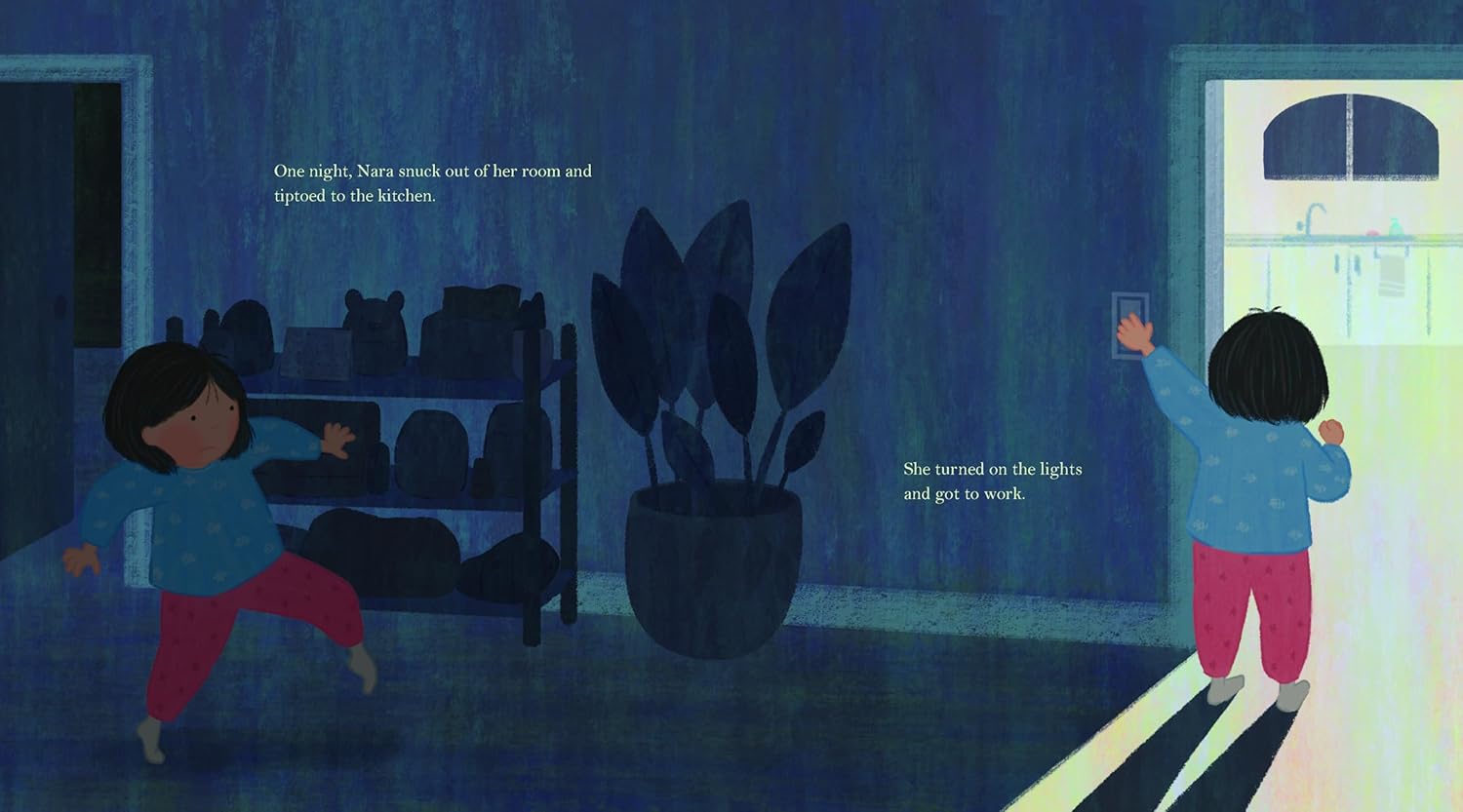
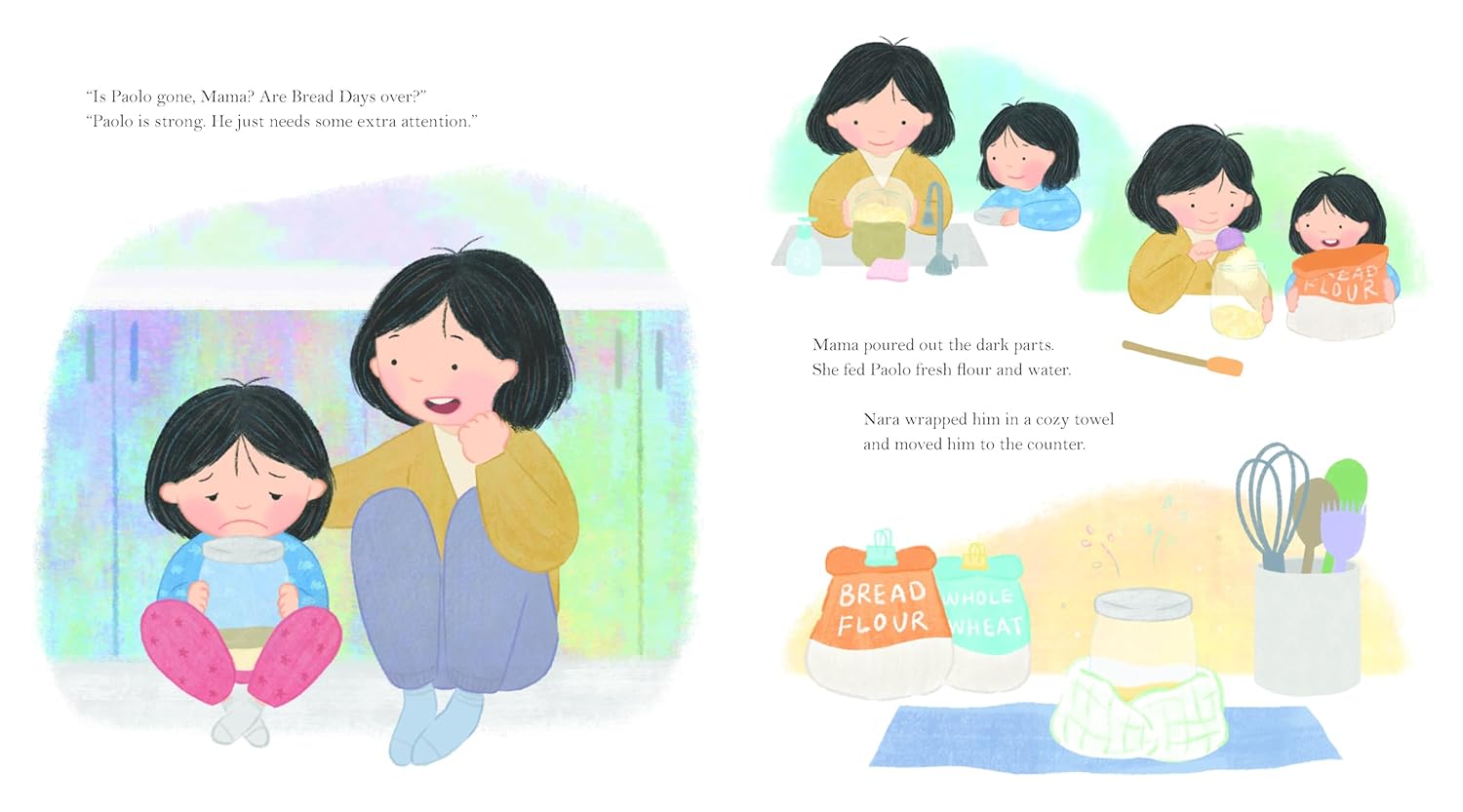
One night, while Mama was sleeping, Nara crept into the kitchen, put up all of Papa’s bread-making notes, got out the equipment, and opened the refrigerator to get Paolo. But Paolo didn’t look right. He was sticky, and floating on top was a brown liquid. Nara was crushed. She thought Paolo was gone too, that Bread Days were over. But Mama was up, and she reassured Nara that Paolo would be fine. As Mama worked with Paolo, the bubbles returned. “Paolo was back,” and for Nara it felt like Papa was there with them too.

Text and illustration © 2025 by Hannah Chung. Courtesy of Astra Young Readers.

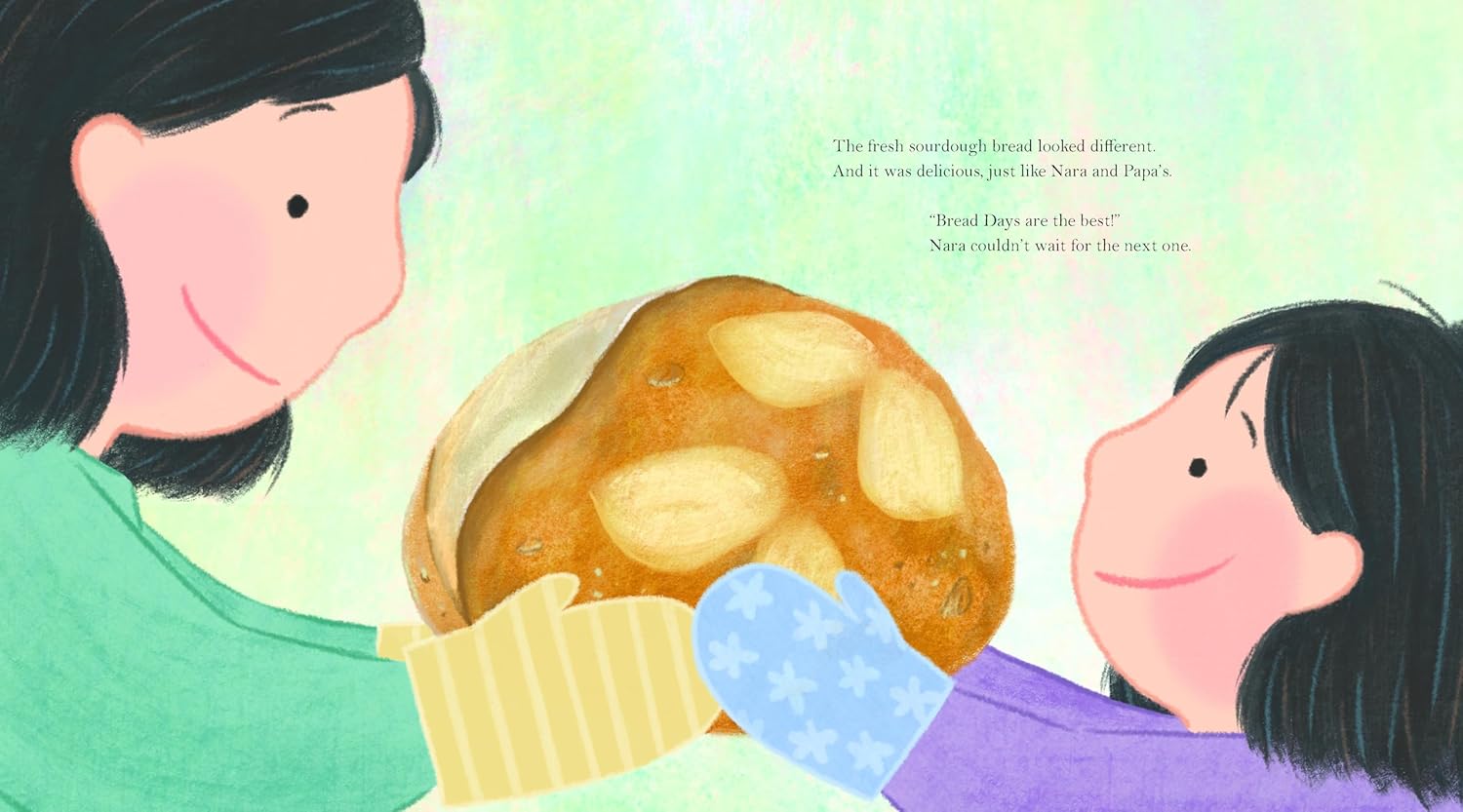
Now Nara and Mama held Bread Days, and although the loaves looked different than the ones Nara had made with Papa, they were just as tasty. Bread Days were still the best days!

Following the story, Hannah Chung includes an Author’s Note about her father, who turned hobby baking into a weekly ritual for the whole family, and how she has continued his tradition after he passed away

Text and illustration © 2025 by Hannah Chung. Courtesy of Astra Young Readers.

In her moving tribute to her own father, Hannah Chung draws a sweet story of the love between a father and daughter. As Nara feeds the sourdough starter and Paolo bubbles, Nara and Papa shape and score the loaf, and they watch the loaf bake together, the bread symbolizes their love and bonding over this weekly tradition. Papa’s passing may seem sudden to young readers and may need explanation by an adult, but such life-changing events can often feel abrupt and confusing to children.

With changes in the kitchen and Paolo’s development of an unfamiliar layer of hooch, Chung touches on Nara’s sadness and fear that this important connection with her father is gone too. But as Nara and her mother recreate Bread Days and Nara feels the spirit of her father there, Chung reassures readers that, as she says, “love endures in memory, rituals hold us steady, and starting anew takes quiet courage.” 

A touching story about loss and resilience, Bread Days offers comfort to any child grieving the loss of a beloved family member and affirms that their memories and continued traditions provide happiness as life continues on. 

Ages 4 – 8

Astra Young Readers, 2025 | ISBN 978-1662621017

Hannah Chung is an award-winning designer and entrepreneur in health care design for young patients. She is a frequent guest lecturer at universities and has presented at numerous conferences including TEDx and SXSW. She is the also the author/illustrator of The Most Perfect Persimmon. Hannah spends her time both in Providence, Rhode Island, and Seoul, South Korea. Visit her at hannahchung.com.

Family Stories Month Activity

Text and illustration © 2025 by Hannah Chung. Courtesy of Astra Young Readers.

Bread Days Activity Kit from Astra Young Readers


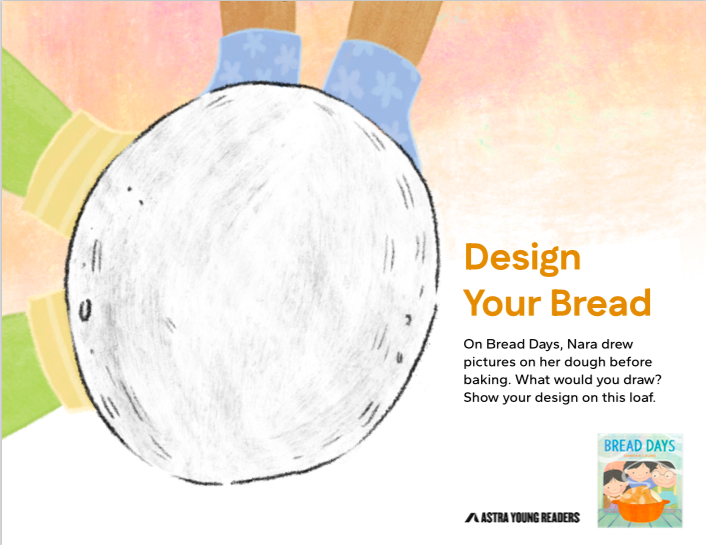
With this Bread Days Activity Kit from Astra Young Readers, kids can enjoy their own Bread Day! Five activities, including drawing their own bread design, a crossword puzzle, pages for writing about a special day they had and what makes them happy, and a puzzle prompting them to put the steps of bread making in order. You can download it here!

You can purchase Bread Days from these booksellers

Amazon | Barnes & Noble | Bookshop (discounted books and support for your local independent bookstore)

Picture Book Review
March 7 – Celebrating the Book Birthday of The Night Before Eid: A Muslim Family Story

celebrate-picture-books-picture-book-review-the-night-before-eid-cover

I’d like to thank Aya Khalil and Christy Ottaviano Books for sharing a digital copy of The Night Before Eid with me for review consideration. All opinions on the book are my own.

The Night Before Eid: A Muslim Family Story

Written by Aya Khalil | Illustrated by Rashin Kheiriyeh


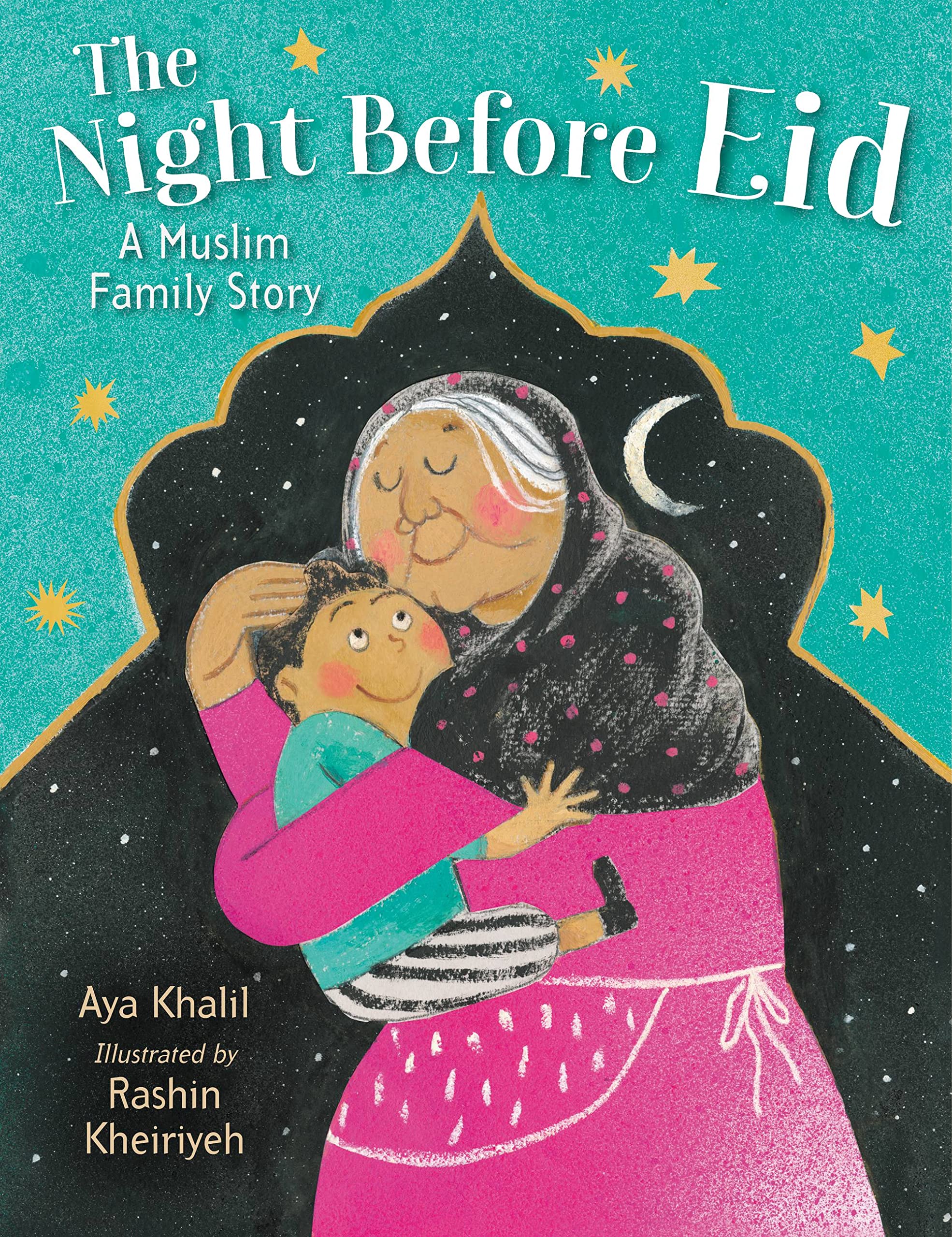
On the night before Eid, Zain is excited when his grandmother arrives at last from Egypt. He can’t wait to help Mama and Teita make her famous ka’ak and share them with his class tomorrow. Zain knows that making the delicious cookies with their delectable filling takes “patience and teamwork.” Teita has brought everything they’ll need to make the ka’ak, including “ghee from Khalo Karim’s farm, honey from Tant Tayseer’s beehive, and dates from Amo Girgis’s date palm.”

celebrate-picture-books-picture-book-review-the-night-before-eid-treats

Image copyright Rashin Kheiriyeh, 2023, text copyright Aya Khalil, 2023. Courtesy of Christy Ottaviano Books.

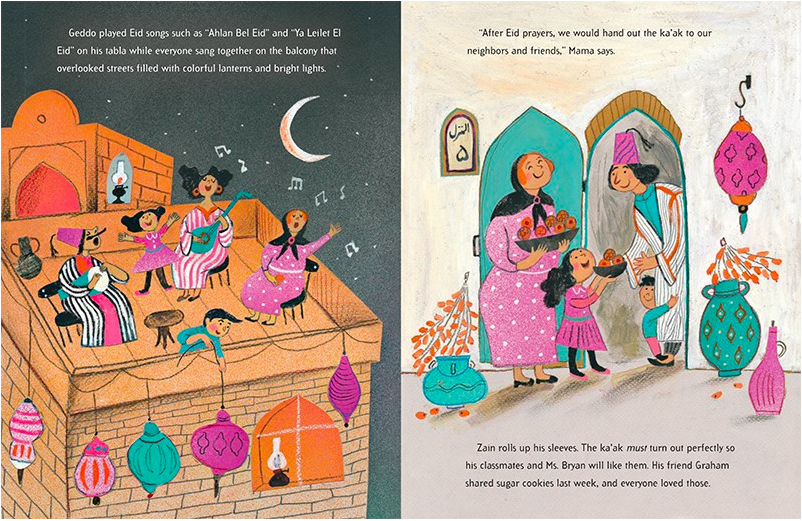
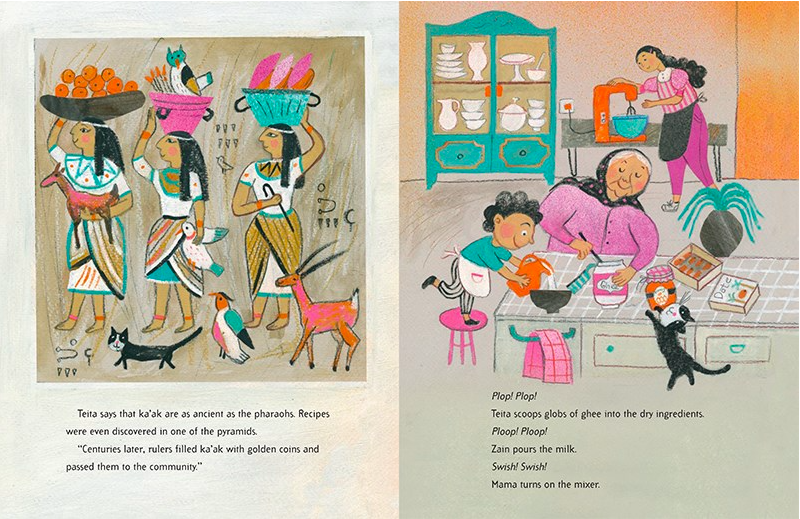
As Zain unpacks Teita’s suitcase and Mama and Teita get everything ready in the kitchen, Teita and Mama tell Zain about how they and their aunts, uncles, and cousins used to stay up all night to bake and prepare for Eid. They sang songs on the balcony of their home, from which they could see the lights and lanterns that decorated the streets. After prayers, they visited friends and neighbors to share the ka’ak they’d made. Teita also tells Zain that “ka’ak are as ancient as the pharaohs” and that “recipes were even discovered in one of the pyramids.”

celebrate-picture-books-picture-book-review-the-night-before-eid-music

Image copyright Rashin Kheiriyeh, 2023, text copyright Aya Khalil, 2023. Courtesy of Christy Ottaviano Books.

Zain wants his ka’ak to turn out perfectly so that the kids and his teacher will like them. Teita adds the ghee to the dry ingredients, and Zain pours in milk, and Mama mixes it all together in the electric mixer. As they wait for the dough to rise just right, they drink sweet qamar al-din and Teita sings a song about Eid cookies. When the dough is ready, Mama scoops out round cookies, and Zain and Teita work together to add the filling.

Now it’s time to press the dough in the ka’ak mold. At first Zain presses too hard. Then he presses so lightly that the intricate design doesn’t even show up. When he tries pressing just a little harder, “clunk! The mold and dough tumble to the floor.” Zain is upset, but Teita comforts him. “‘El sabr gameel.’ She reminds him that patience is beautiful.” As Zain sips his juice, he has an idea that will make decorating the cookies easier. He uses the straw to make designs on the cookies. When they are finished baking, the sweet toasty aroma fills the kitchen. Now comes Zain’s favorite part: sprinkling on the powdered sugar like snow. 

celebrate-picture-books-picture-book-review-the-night-before-eid-baking

Image copyright Rashin Kheiriyeh, 2023, text copyright Aya Khalil, 2023. Courtesy of Christy Ottaviano Books. 

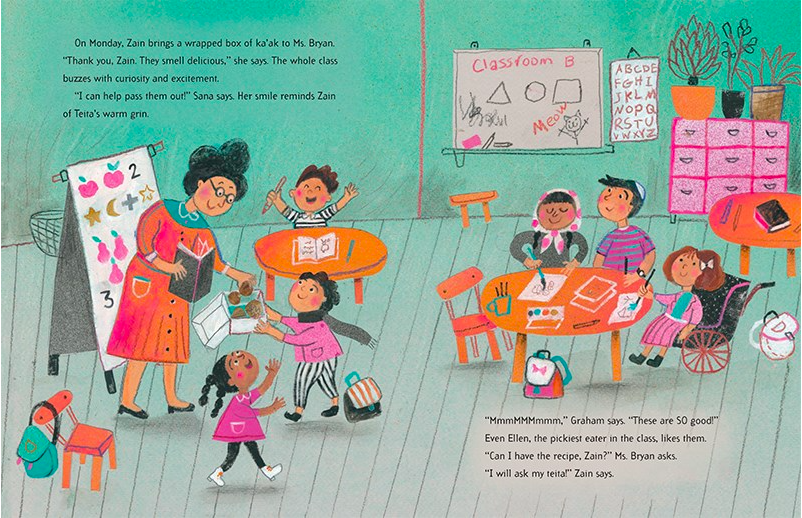
The next day he takes a box of ka’ak to school. The kids all love the cookies, and Ms. Bryan even asks for the recipe. Zain can’t wait to rush home and tell Teita what everyone said about the ka’ak. That night, while Zain and Teita write down the recipe, they nibble on the ka’ak and other Eid treats. Zain is about to reach for the last cookie, but instead of eating it himself, he offers it to Teita with a kiss on her right hand and an exclamation that “‘This is the best Eid ever!’”

Back matter includes descriptions of Eid al-Fitir and Eid al-Adha and the history of ka’ak as well as an Author’s Note, complete with photographs of her family celebrating Eid. Aya Khalil also shares a simple Ka’ak recipe.

celebrate-picture-books-picture-book-review-the-night-before-eid-school

Image copyright Rashin Kheiriyeh, 2023, text copyright Aya Khalil, 2023. Courtesy of Christy Ottaviano Books.

Aya Khalil’s story shines with family love and the passing down of traditions from one generation to the next. Zain’s excitement to have his grandmother share this special holiday and to be included in baking the ka’ak for the first time is infectious and will resonate with all readers who enjoy helping out with preparations for holidays, big events, and even family meals. In her engaging and detailed storytelling, Khalil packs in lots of information about Eid, family traditions, Egyptian Arabic dialogue, favorite songs, and the history and recipe for this delicious treat. Following the mishap with the ka’ak mold, Teita’s gentle and wise counsel is comforting while also allowing Zain to devise his own solution to his problem. His classmate’s and teacher’s reaction to the cookies and Zain and Teita’s sharing their recipe creates a perfect, heartwarming ending.

Rashin Kheiriyeh’s vibrantly hued illustrations highlight the close family bonds as Zain and Mama get ready to share the traditions of Eid with Teita. From images of the ingredients for ka’ak in Teita’s suitcase to Mama’s childhood experiences in Egypt to Zain’s active participation in baking, Kheiriyeh provides readers with dynamic insight into the traditions of Eid and, particularly, the history, making, and fun of ka’ak. Kids will enjoy following the antics of Zain’s cat, who wants to be part of the holiday preparations too.

A joyful and well-conceived story that’s sure to please kids and inspire some baking fun, The Night Before Eid: A Muslim Family Story is highly recommended for home, school, and public library collections.

Ages 4 – 8

Christy Ottaviano Books, 2023 | ISBN 978-0316319331

About the Author

Aya Khalil is a freelance journalist and educator. She holds a master’s degree in Education with a focus in Teaching English as a Second Language. THE ARABIC QUILT is based on true events growing up, when she moved to the US from EGYPT at the age of one. Her articles have been published in The Huffington Post, The Christian Science Monitor, The Post & Courier, Toledo Area Parent, and more. She’s been featured in Yahoo!, Teen Vogue, Verona and more. She was named one of Arab America’s Foundation’s 40 under 40 in 2021. Visit her at ayakhalil.com.

About the Illustrator

Rashin Kheiriyeh was born in Khorramshahr, Iran. She received a PhD in illustration and an MFA in graphic design from Alzahra University in Tehran. She has published over eighty books in countries around the world and created illustrations for The New York Times. Rashin was named a 2017 Maurice Sendak Fellow and was the winner of the New Horizon Award at the Bologna Book Fair. She is a member of the Society of Children’s Book Writers and Illustrators and lives in Washington, DC. You can connect with her on Twitter.

celebrate-picture-books-picture-book-review-the-night-before-eid-cover

You can find The Night Before Eid: A Muslim Family Story at these booksellers

Amazon | Barnes & Noble | Books-a-Million

To support your local independent bookstore, order from

Bookshop | IndieBound

Picture Book Review

September 27 – It’s Read a New Book Month

celebrate-picture-books-picture-book-review-gracie-brings-back-bubbe's-smile-cover

About the Holiday

Even though we’re saying goodbye to Read a New Book Month, families don’t have to stop seeking out new books at their local bookstore or library. In fact, fall and the lead-in to the holidays is one of the busiest times of the year for publishers as they release wonderful books that share traditions and take readers through the winter in thoughtful, funny, and always surprising ways. Maybe that’s why December is also tagged as Read a New Book Month! Really, there’s never a time when you don’t want to celebrate new books—like today’s!

Thanks go to Albert Whitman & Company for sharing a digital copy of Gracie Brings Back Bubbe’s Smile with me for review consideration. All opinions on the book are my own.

Gracie Brings Back Bubbe’s Smile

Written by Jane Sutton | Illustrated by Debby Rahmalia


Gracie always loves when Bubbe comes to visit, but this time Bubbe was too sad to do the things she and Gracie usually did together because her husband had died. She didn’t feel like doing yoga or making jokes. “She hardly even smiled.” Gracie missed all the things she used to do with Zayde too—talks about science and sharing inside jokes.

Gracie tried different things to make Bubbe happy again. She asked if she’d like to sing while Gracie played the guitar, if she’d like to come to her soccer game, or help her draw a picture. But each time, Bubbe just said “‘No thank you, Bubala.'” This answer got Gracie thinking. “She knew bubbe meant ‘grandma’ in Yiddish. And zayde meant ‘grandpa.'” But she didn’t know what bubala meant. When Gracie asked Bubbe, she explained that “‘it means “little grandmother. …But you call someone you love “bubala.”‘”

celebrate-picture-books-picture-book-review-gracie-brings-back-bubbe's-smile-running

Image copyright Debby Rahmalia, 2022, text copyright Jane Sutton, 2022. Courtesy of Albert Whitman & Company.

Then Bubbe sighed and told Gracie how much she and Zayde “‘loved using Yiddish words together.'” Gracie wanted to learn Yiddish words too, and asked Bubbe to teach her. They went into the kitchen, and while Bubbe cut up an apple, she taught Gracie the word nosh. “‘It means “eat a snack.”‘” As Gracie noshed on her apple, she thought she saw Bubbe smile just a little.

That night Bubbe taught Gracie how to say “good night” in Yiddish, and the next day when Gracie came home from school she wanted to walk around the neighborhood like they used to, but Bubbe said she didn’t feel like it. Gracie persisted, pulling on her hand and telling her how beautiful it was outside. Bubbe had to admit that it was sheyn. Gracie was excited to understand this Yiddish word for “beautiful” because Zayde often called her sheyna meidala or “pretty girl.” Bubbe conceded and put on her sneakers.

celebrate-picture-books-picture-book-review-gracie-brings-back-bubbe's-smile-soccer

Image copyright Debby Rahmalia, 2022, text copyright Jane Sutton, 2022. Courtesy of Albert Whitman & Company.

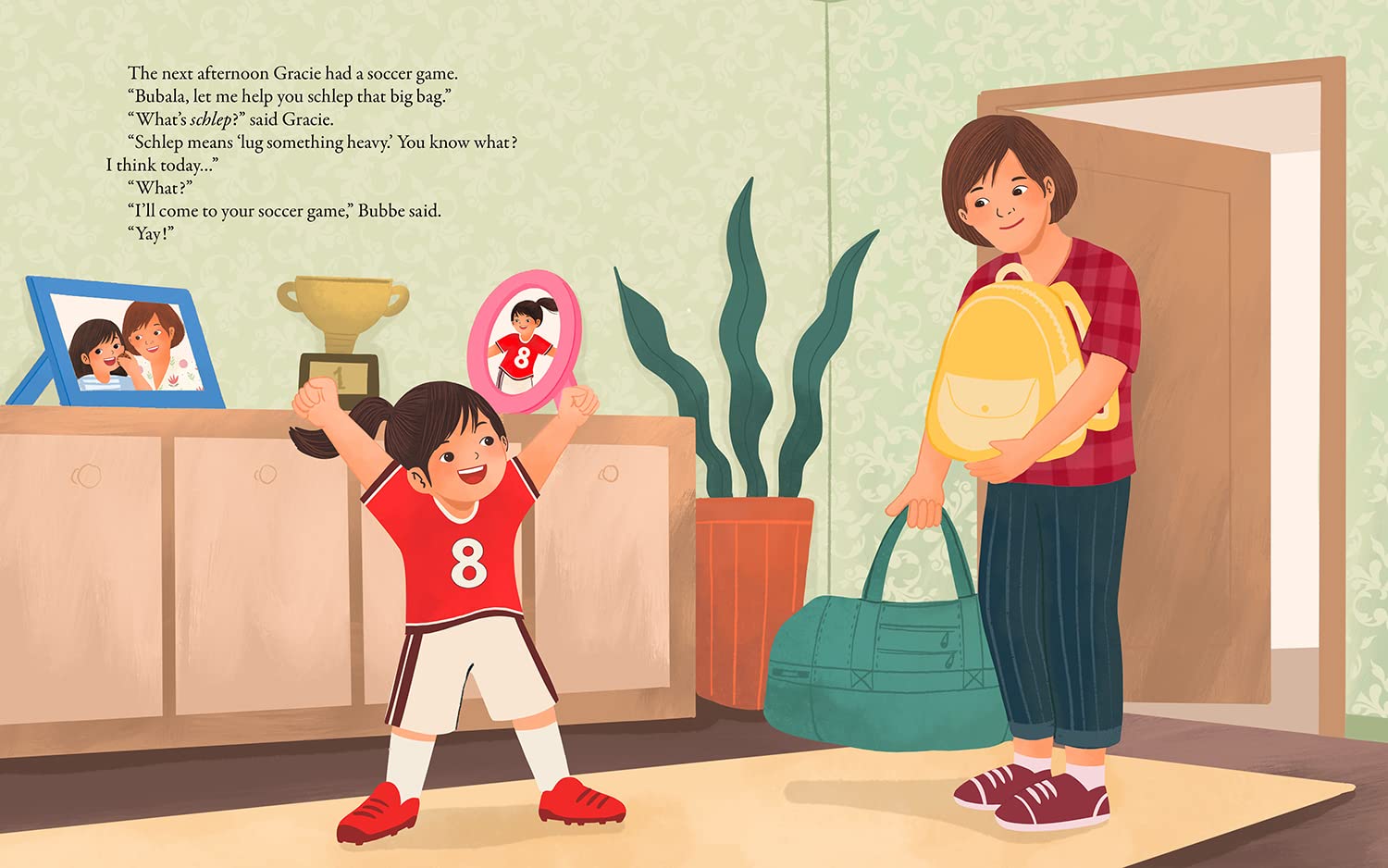
Once outside, Bubbe even started jogging a little and taught Gracie another Yiddish word when Gracie asked her to slow down. As the week went on, Gracie and Bubbe began talking about their memories of Zayde. Bubbe even decided to go to Gracie’s next soccer game. At the game Bubbe smiled and even cheered when Gracie scored a goal, and back home they laughed together when Bubbe told Gracie her socks were “‘… so farshtunken, my nose might explode!'”

“‘Bubbe! You’re laughing!'” Gracie cried. And Bubbe had to agree and told Gracie it was for a very special reason. “‘Because you give me naches. That means ‘joy.'”

Back matter includes a short Author’s Note about the Yiddish language as well as a glossary of Yiddish words that includes and expands on the words found in the story, their meaning in English, and a pronunciation for each of them.

celebrate-picture-books-picture-book-review-gracie-brings-back-bubbe's-smile-laughing

Image copyright Debby Rahmalia, 2022, text copyright Jane Sutton, 2022. Courtesy of Albert Whitman & Company.

Jane Sutton’s poignant story will touch readers’ hearts on many levels, from a child and grandmother overcoming grief to the passing on of family heritage to the way children bring a healing kind of joy through their exuberance, empathy, and love. Sutton’s storytelling hits all the right notes as she depicts Bubbe’s transition from mourning to joy over superbly paced scenes and seamlessly introduces Yiddish words through Gracie and Bubbe’s authentic conversations while also demonstrating the family’s strong bond of love and trust. Dialogue rich, the story makes a perfect read aloud that will excite kids about learning the Yiddish words along with Gracie and prompt families to talk about their own history.

In her vibrant illustrations, Debby Rahmalia lets young readers see through Gracie’s viewpoint how Bubbe’s sadness affects her and how much she wants to help her grandmother find happiness again. As Gracie does yoga while Bubbe stands by and shares a silent dinner with her usually talkative grandmother, Gracie’s expressions register concern and disappointment. In Gracie’s attempts to enlist Bubbe in doing their usual activities, Rahmalia portrays not only Gracie’s strong connection with Bubbe, but also a realistic look at how loss can affect emotions and physical energy. When Gracie hits on learning Yiddish as a way to interact with Bubbe, Rahmalia effectively shows how Bubbe’s smile, enthusiasm, and laughter return as she and Gracie share the language and memories of Zayde.

Touching, reassuring, and joyful, Gracie Brings Back Bubbe’s Smile comforts and restores while celebrating family love and generational ties. The book would be a meaningful addition to home bookshelves for all families and one school and public librarians will want in their picture book or family issues collection.

Ages 4 – 7

Albert Whitman & Company, 2022 | ISBN 978-0807510230

You can discover more about Jane Sutton and her books on her website and connect with her on Instagram.

You can view a portfolio of work by Debby Rahmalia here and connect with her on Instagram and Twitter.

Read a New Book Month Activity

celebrate-picture-books-picture-book-review-gracie-brings-back-bubbe's-smile-matching-puzzle

Gracie Brings Back Bubbe’s Smile Matching Puzzle


Gracie loved learning Yiddish words from Bubbe! With this puzzle you can learn the Yiddish words from the book too. Just print the puzzle and match each word with its definition to get started using these words yourself!

Gracie Brings Back Bubbe’s Smile Matching Puzzle

celebrate-picture-books-picture-book-review-gracie-brings-back-bubbe's-smile-cover

You can find Gracie Brings Back Bubbe’s Smile at these booksellers

Amazon | Barnes & Noble | Books-a-Million

To support your local independent bookstore, order from

Bookshop | IndieBound

Picture Book Review

September 29 – It’s Intergeneration Month

celebrate-picture-books-picture-book-review-shaped-by-her-hands-cover

About the Holiday

Cuddle ‘round for two loving holidays—Intergeneration Month and National Attend Your Grandchild’s Birth Day—which each encourage grandparents to be present figures in their grandchildren’s lives starting from birth! Already, many grandparents across the globe play active roles in caring for children. In the US alone, 4.8 million preschoolers were under the care of grandparents in 2011. Whether you are a grandchild, parent, or grandparent, it is important to support family and spread some love. Hug someone special today to celebrate this holiday. In honor of this day, we present a story about artist Maria Povika Martinez, co-written by her great-granddaughter. Her historical account teaches the importance of love, family, and the passing down of knowledge through generations.

Thanks to Albert Whitman & Company for sharing a copy of Shaped By Her Hands with me for review consideration. All opinions on the book are my own.

Review by Dorothy Levine

Shaped By Her Hands: Potter Maria Martinez (Part of the She Made History Series)

Written by Anna Harber Freeman and Barbara Gonzales | Illustrated by Aphelandra

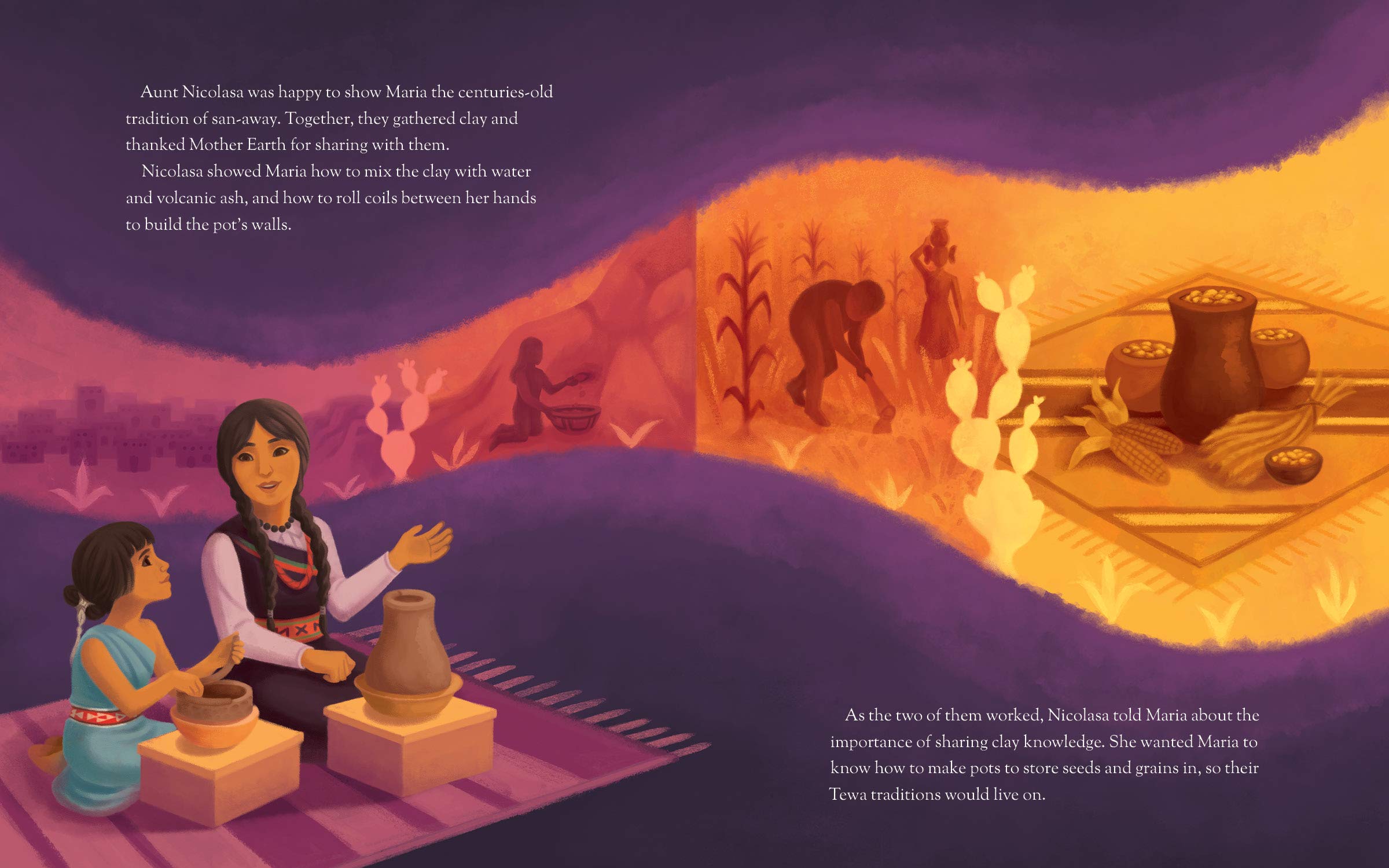
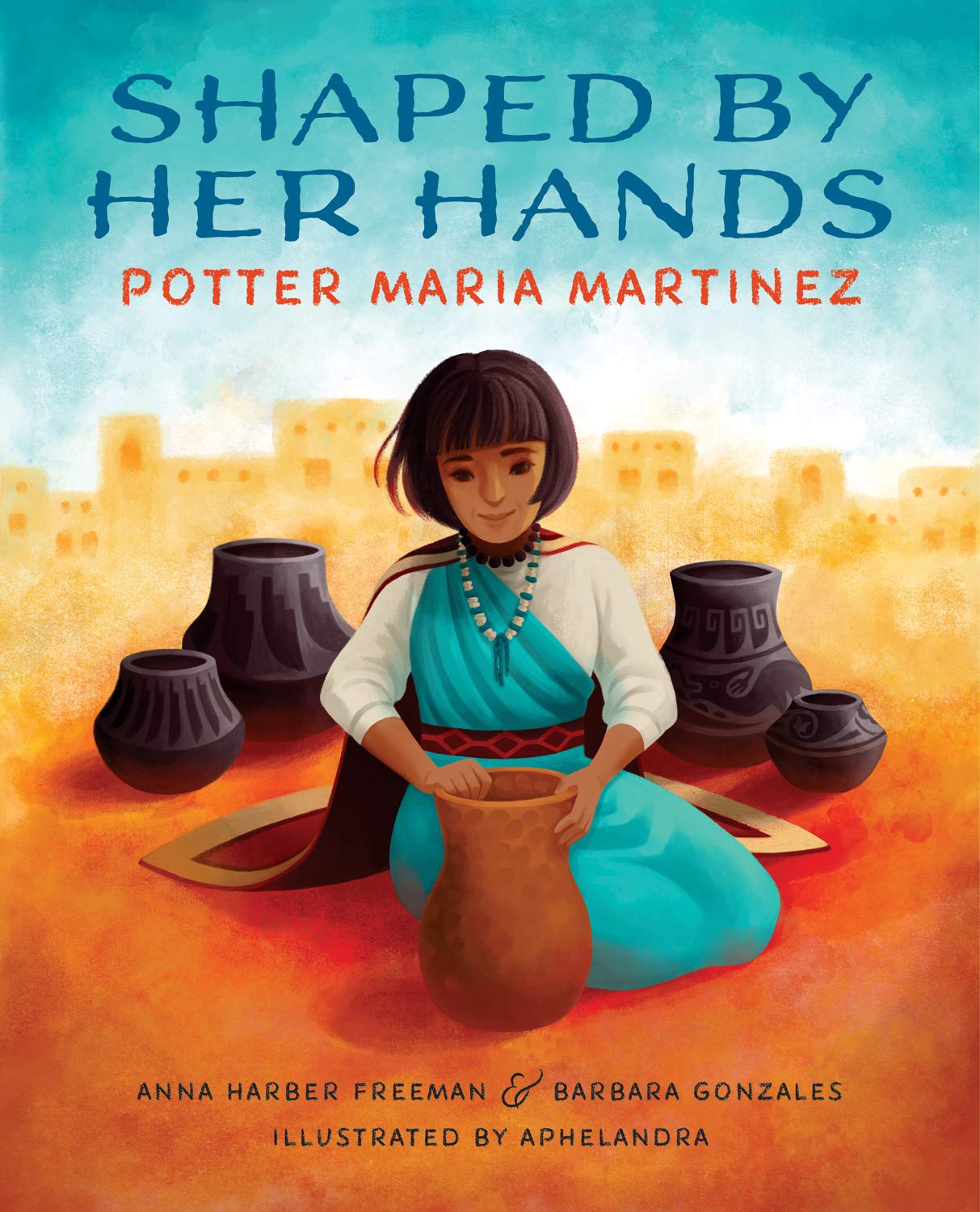
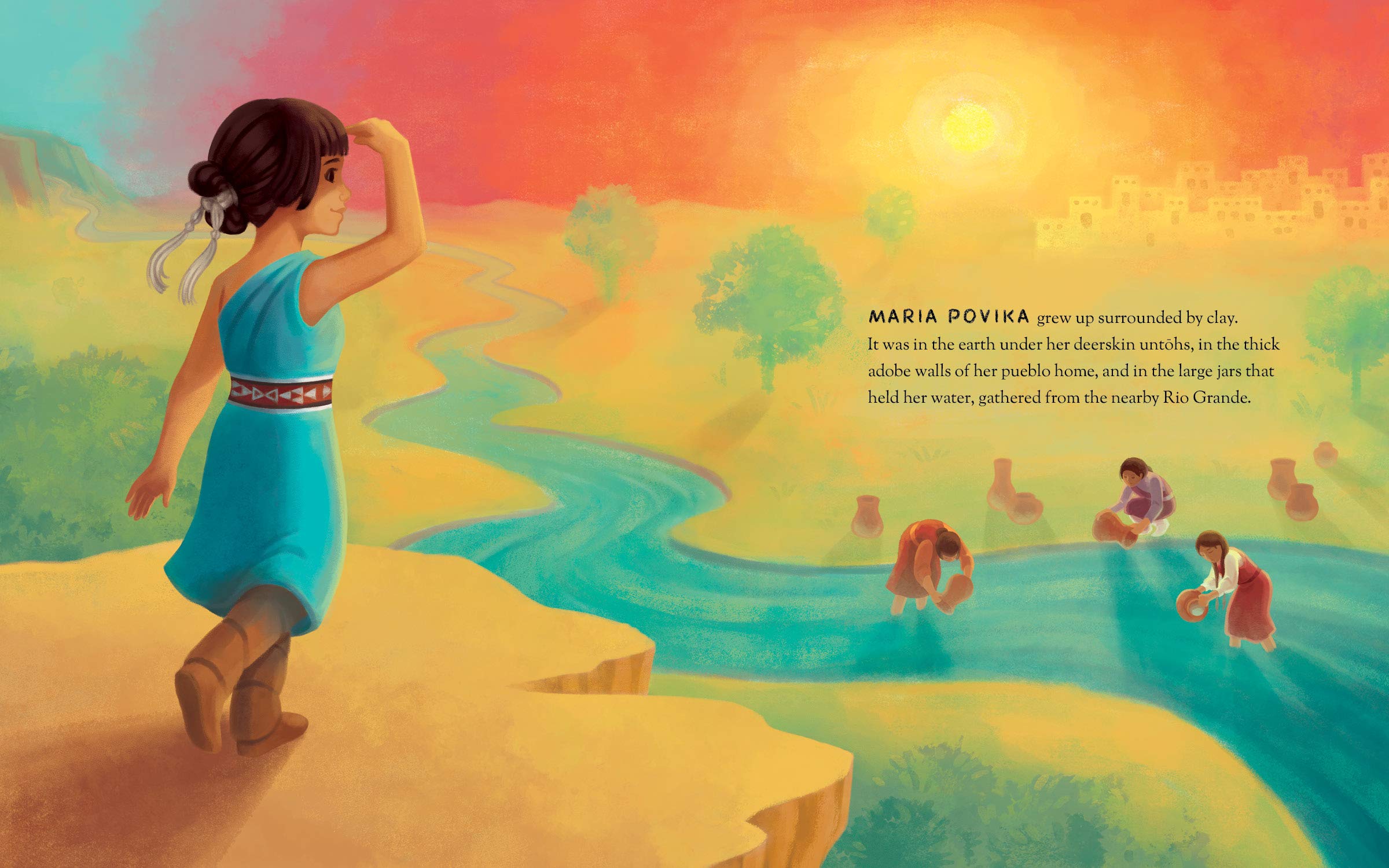
As a child growing up in the pueblo of San Ildefonso, New Mexico in the 1890s, Maria always loved clay. While her siblings played with straw dolls and her parents planted crops, Maria spent her time making clay pots. But, to her frustration, her pots would always crack when she set them out to dry in the sun. Maria’s aunt, or ko-ōo, Nicolasa offered to help and showed Maria “the centuries-old tradition of san-away.” Nicolasa still made clay pots using these traditional methods, even though more and more people were buying tin pots from stores. 

celebrate-picture-books-picture-book-review-shaped-by-her-hands-river

Image copyright Aphelandra, 2021, text copyright Anna Harber Freeman and Barbara Gonzales, 2021. Courtesy of Albert Whitman & Company.

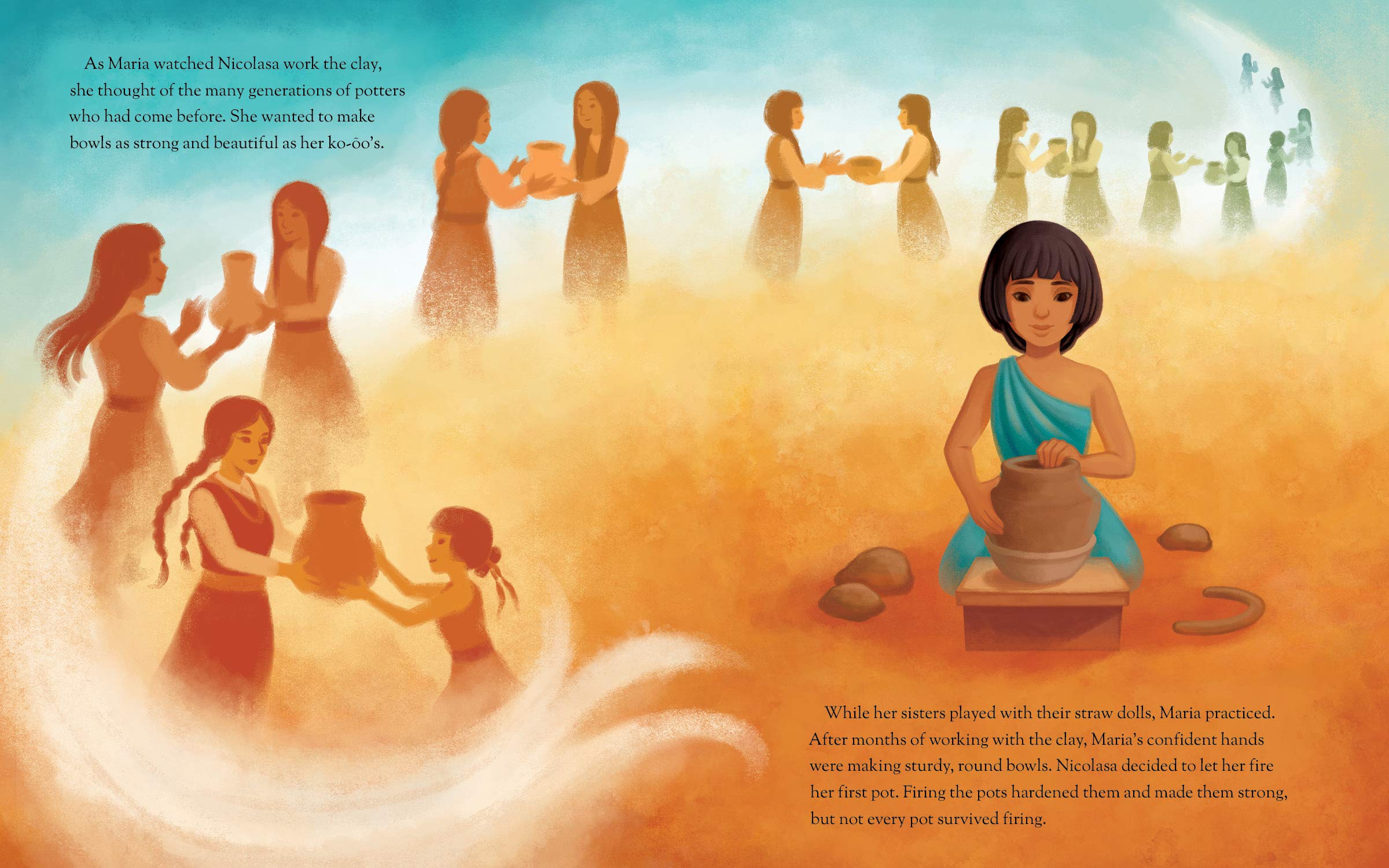
Nicolasa taught Maria how to coil the clay in circles and then lay the pots together on a fire to make them dry, solid, and strong. “As Maria watched Nicolasa work the clay, she thought of the many generations of potters who had come before. She wanted to make bowls as strong and beautiful as her ko-ōo’s.” Nicolasa and Maria thanked Mother Earth for the clay she shared with them. 

When Maria grew older, she continued to make pots and gained a reputation for her skilled work. One day in 1908, an archeologist named Edgar Lee Hewett came to visit Maria. He had discovered an old shard of black pottery in a dig nearby. Mr. Hewett wanted to know if Maria could recreate a pot in the similar style. She decided to take on the challenge.

celebrate-picture-books-picture-book-review-shaped-by-her-hands-Nicolasa

Image copyright Aphelandra, 2021, text copyright Anna Harber Freeman and Barbara Gonzales, 2021. Courtesy of Albert Whitman & Company.

After much experimentation, Maria and her husband, Julian Martinez, discovered a technique: “One afternoon, they tried smothering the fire to keep the smoke in. When they pulled out the pot, it was shiny, and black as a raven.” With this new method, Maria combined her own style with old traditions to create a new style of pottery that was marvelous. Mr. Hewitt took some of these pots Maria made. “He put one of the pots in the Museum of New Mexico, where he worked.” The others he took to shops in Santa Fe. To Maria’s surprise, they sold like crazy! Julian began to paint designs on the black shiny pots—decorations of serpents, feathers, and water—using a yucca-blade brush. 

As more and more pots sold, Maria and Julian taught the rest of her family and some friends to make the pots with them. They became so famous that many people across the country invited them to demonstrate their skills to others. When Maria’s husband died, she continued to make pots with her family. “First, her children came to paint the designs. Later, her grandchildren came to help with the painting and polishing. They made pots as a family, remembering to thank Mother Earth, and teaching new hands to form, polish, and design.” 

The story is followed by back matter that provides more information about Maria, the Tewa people, and the San Ildefonso Pueblo for readers. Both authors include a note about how they were influenced by Maria and why they believe it is important to share her story with young people today. 

celebrate-picture-books-picture-book-review-shaped-by-her-hands-generations

Image copyright Aphelandra, 2021, text copyright Anna Harber Freeman and Barbara Gonzales, 2021. Courtesy of Albert Whitman & Company.

The story is co-written by Barbara Gonzales, the great-grandchild of Maria, and Anna Harber Freeman, whose grandmother was a member of the Osage Nation and who is a lifelong fan of Maria’s work with degrees in multicultural education and art. Their biography of Maria Martinez shines with its lyrical, straightforward telling that reveals the deep history of the Tewa people as well as the meaning and uses of the pottery that Maria and her ko-ōo Nicolasa created by hand. The importance of passing down knowledge and traditions from one generation to another is organically woven throughout the story. Many readers will recognize Maria and Julian’s distinctive pottery and be inspired by the history behind it.

Aphelandra is a descendant of the Oneida Nation, and the daughter of a crafts artist and landscaper. She writes that she grew up surrounded by natural beauty and creativity, which can be seen in her illustrations. The illustrations in Shaped by Her Hands consist largely of soft yellow, green, and red hues. In the part of the story in which Maria is sent off to boarding school, the colorful tones found throughout the book are confined to a single window, depicting the feeling of entrapment and homesickness Maria felt. Aphelandra vividly weaves in the storytelling of past generations through her use of color, shadow and circular imagery. Her painted landscapes gorgeously depict the natural San Ildefonso scenery. 

This beautifully crafted tale shares the history of Maria Povika Martinez while introducing readers to Tewa people’s values of kindness, passing on of knowledge, and respect for elders and Mother Earth. An inspiring read for all children, especially those interested in artistic and creative endeavors, Shaped By Her Hands: Potter Maria Martinez is highly recommended for home bookshelves and a must for school and public library collections.

Ages 4 – 9 

Albert Whitman & Company, 2021 | ISBN 978-0807575994

Discover more about Anna Harber Freeman and her books on her website.

To learn more about Barbara Gonzales and her pottery and to view a video with Barbara and other artists discussing an exhibition of San Ildefonso Pueblo potters at the Museum of Indian Arts and Culture, visit the adobe gallery website.

You can learn more about Aphelandra, her books, and her artwork on her website.

Intergeneration Month Activity

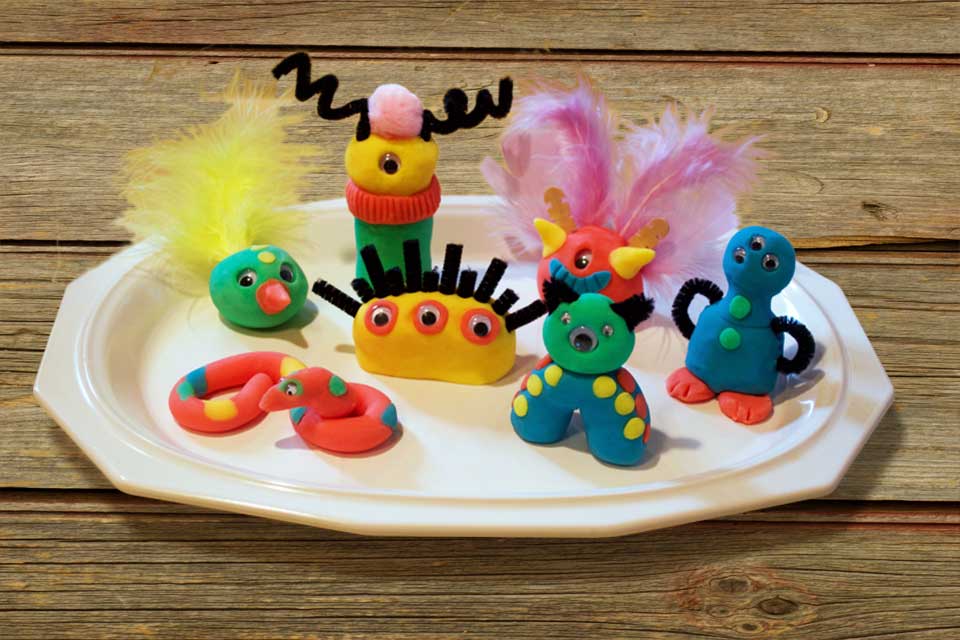
Highlights Kids Homemade Clay figures

Photo and craft sample by Madison McClain, courtesy of Highlights Kids (highlightskids.com)

This craft comes from Highlights Homemade Clay, by Marie E. Cecchini posted on April 12, 2016. You can find the post on the Highlights kids website.

Make your own homemade clay in honor of Maria’s art form then make your own pot or creation!

What you’ll need

  • 2 cups baking soda
  • 1 cup cornstarch
  • 1 ¼ cups water
  • Cooking pot
  • Food coloring (optional)
  • Wiggly eyes, chenille sticks, pompoms, feathers, etc. (optional)

What to do

Note: Food coloring can be added to the water before mixing in the other ingredients or can be added to the clay after it has cooled. Adding coloring later may be a little messier, but you can divide the clay and create different batches of various colors.

  1. Combine ingredients in the pot and cook mixture over medium heat, stirring until it thickens to a consistency like mashed potatoes.
  2. Let the clay cool
  3. Knead the clay until smooth.
  4. Make creations!
  5. Leave clay pieces in the sun to dry.

celebrate-picture-books-picture-book-review-shaped-by-her-hands-cover

You can find Shaped By Her Hands: Potter Maria Martinez at these booksellers

Amazon | Barnes & Noble | Books-a-Million

To support your local independent bookstore, order from

Bookshop | IndieBound

Picture Book Review
January 11 – Heritage Treasures Day

celebrate-picture-books-picture-book-review-maud-and-grand-maud-cover

About the Holiday

Heritage Treasures Day is an initiative established in the United Kingdom by the Heritage Lottery Fund in 1994 to preserve important parts of human history. Since that time nearly eight billion pounds raised through the national lottery have been dispersed to support more than 40,000 projects. Multiple funds have been created to support various types of programs. For example, “Sharing Heritage” provides money for local heritage sites ranging from personal memories to the conservation of an area’s wildlife, while “Our Heritage” is used to preserve archaeological sites, endangered wildlife, and museum collections. Heritage Grants are given to large projects such as the preservation and restoration of Stonehenge. Today’s holiday celebrates these efforts and raises global awareness of the importance of protecting and passing on our shared history. To celebrate on a smaller scale, take an opportunity to talk about your family’s stories, history, and legacy with your kids.

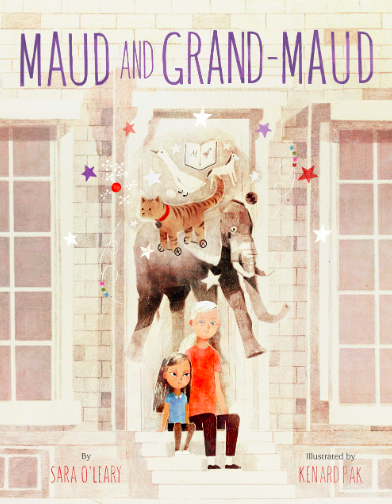
Maud and Grand-Maud

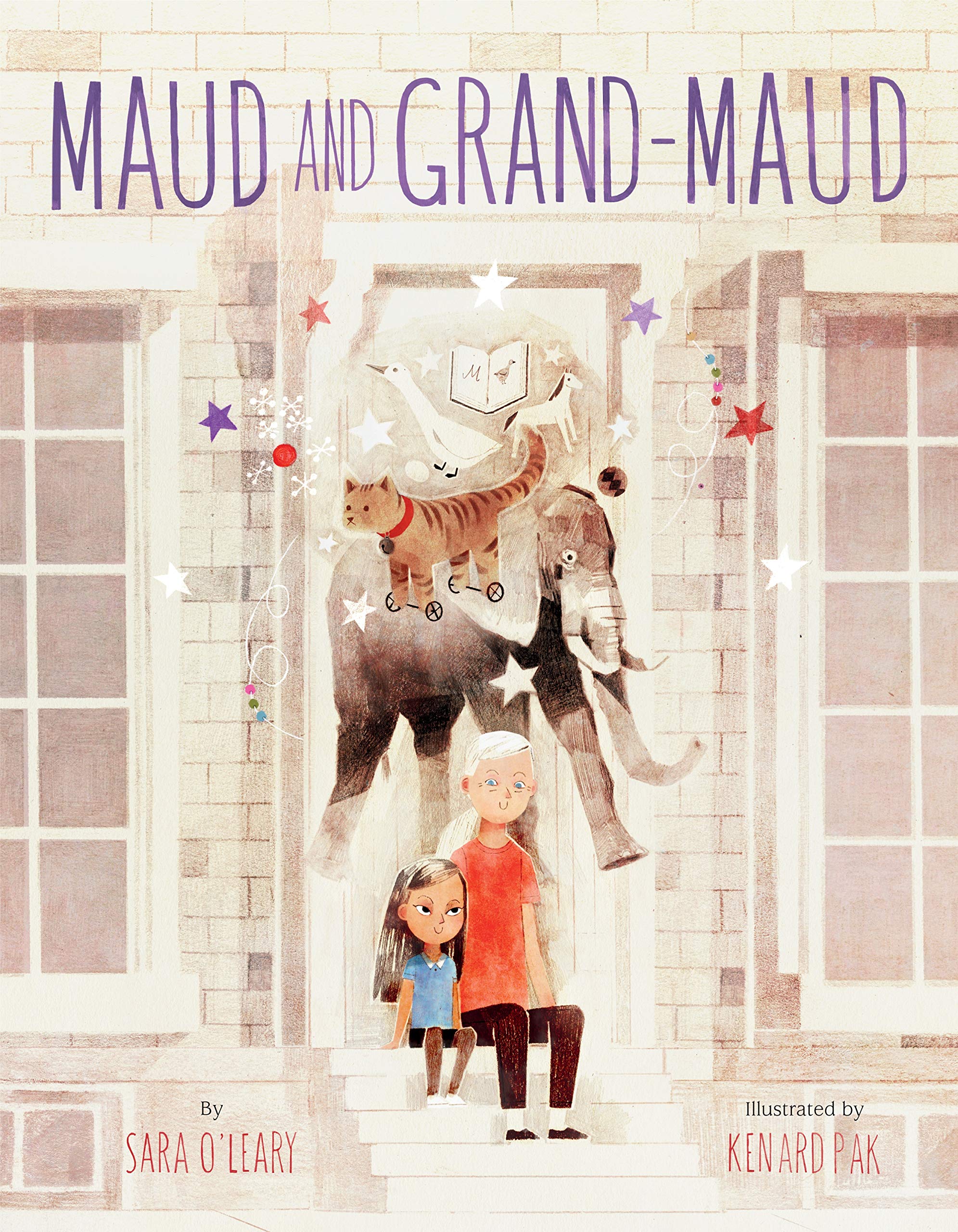
Written by Sara O’Leary | Illustrated by Kenard Pak


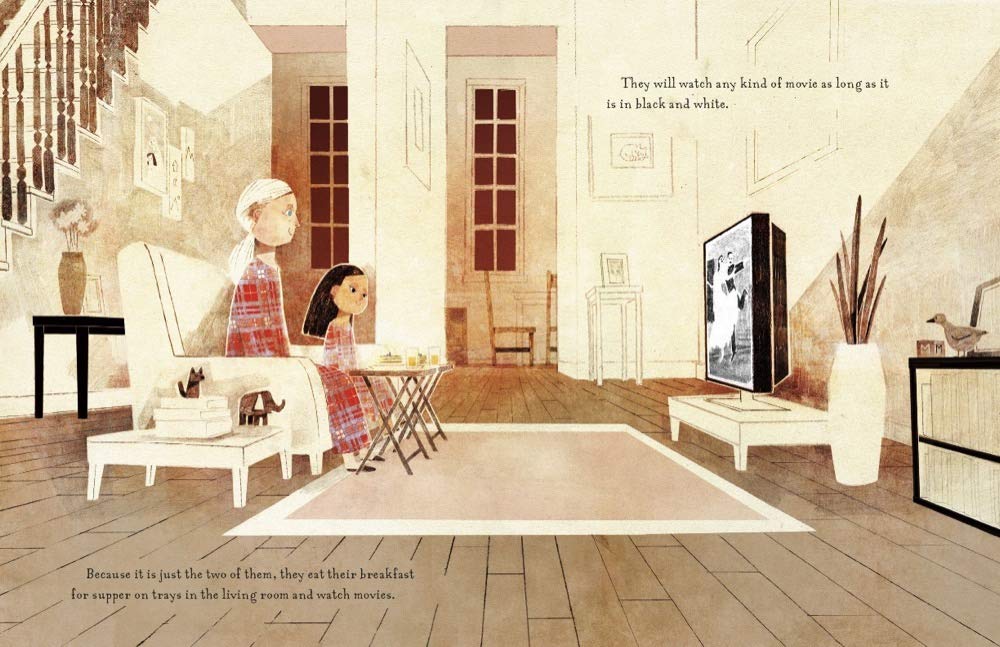
On certain Saturdays Maud gets to sleep over at Grand-Maud’s house. She sleeps in a special nightgown that Grand-Maud made for her. “The nightgown goes all the way to the floor, and is made out of plaid flannel, and is softer than anything.” Grand-Maud even made herself one to match. Once dressed, they have breakfast for dinner eaten on trays in front of the TV, where they watch old black and white movies. Maud thinks everything was black and white when Grand-Maud was a child.

celebrate-picture-books-picture-book-review-maud-and-grand-maud-dinner

Image copyrigh Kenard Pak, 2020, text copyright Sara O’Leary, 2020. Courtesy of Random House.

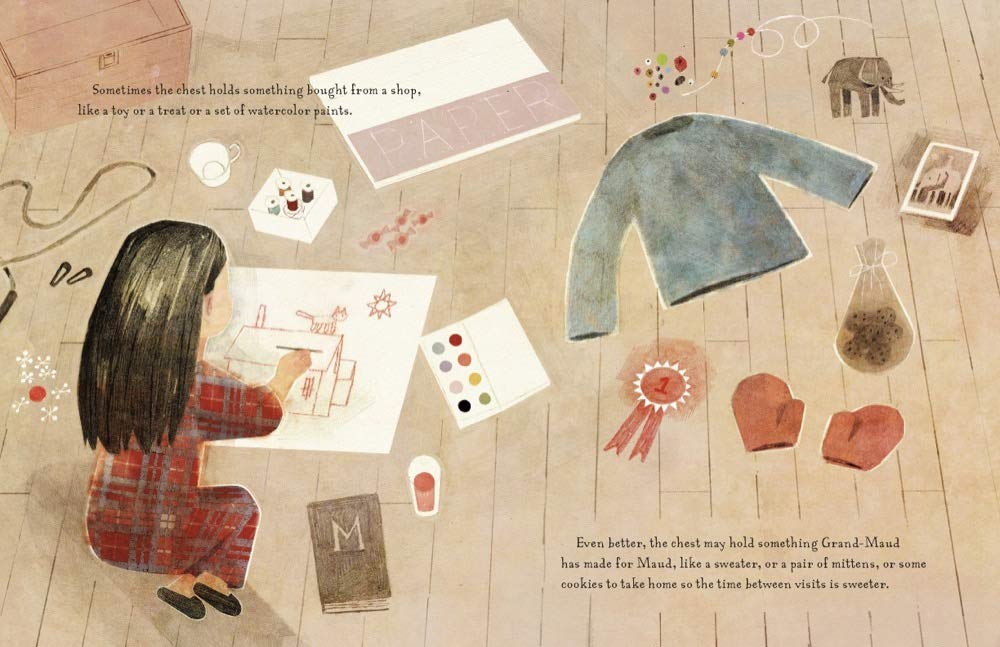
At bedtime, Maud snuggles into the extra twin bed in Grand-Maud’s room. In this bed Maud always has good dreams, and under the bed hides a wooden chest in which “there is always something new for Maud placed inside, even when Grand-Maud doesn’t know she will be visiting.” Sometimes the thing is something bought new for Maud to use or play with. Other times Grand-Maud has made something for Maud, like “…a pair of mittens, or some cookies to take home so the time between visits is sweeter.”

celebrate-picture-books-picture-book-review-maud-and-grand-maud-chest-treasures

Image copyrigh Kenard Pak, 2020, text copyright Sara O’Leary, 2020. Courtesy of Random House.

But the best times are when the chest holds “something from when Grand-Maud was a little girl herself.” Once Maud found a heart-shaped stone that Grand-Maud had carried in her pocket for a whole year. Now Maud carries it in hers. This time, Maud pulls out a book of fairy tales that Grand-Maud had written her name in. Maud was happy to see her own name in it.

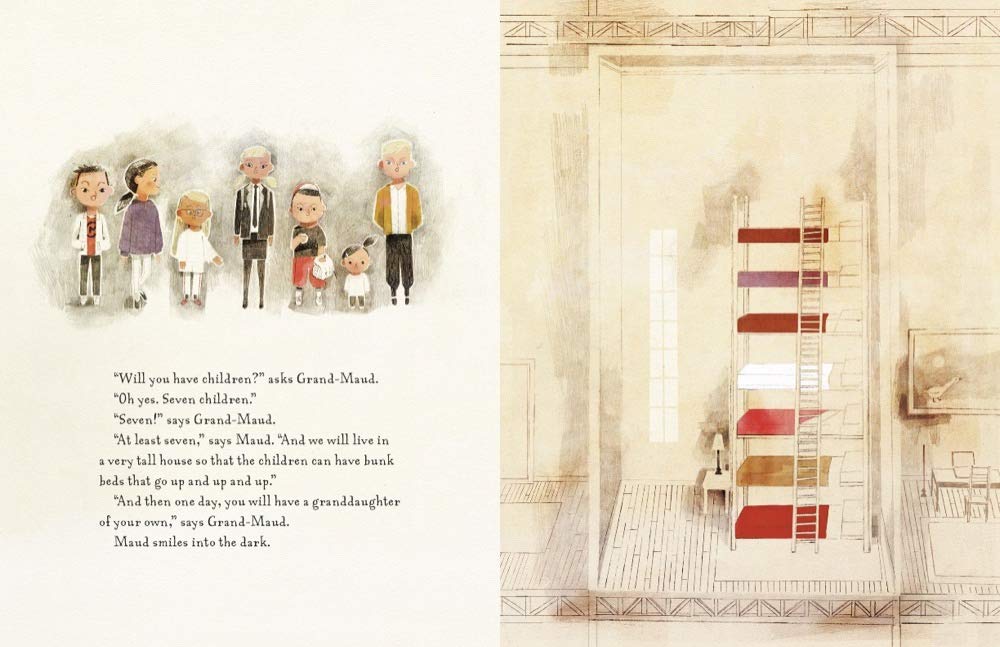
That night, with the lights dimmed, Grand-Maud and Maud talked about the future. Maud said she wants to be a writer and have at least seven children. She imagines living in “‘…a very tall house so that the children can have bunk beds that go up and up and up.’” Grand-Maud says that later Maud will have her own granddaughter. The thought makes Maud smile. In her dream she lives in an apartment just like Grand-Maud’s and is standing at the doorstep to welcome Maud for a special visit.

celebrate-picture-books-picture-book-review-maud-and-grand-maud-bunkbeds

Image copyrigh Kenard Pak, 2020, text copyright Sara O’Leary, 2020. Courtesy of Random House.

Sara O’Leary’s story about the connection between a grandmother and her granddaughter who share the same name is sweet and endearing. With homey details—a homemade nightgown, breakfast for dinner, and especially the wooden chest that always holds a surprise, O’Leary perfectly captures the comforting love and sense of adventure children feel when spending time with their grandparents. The old movies Maud and Grand-Maud watch together, the treasures Grand-Maud passes down to Maud, and the interest Grand-Maud shows in her granddaughter’s future all demonstrate simple but meaningful ways for older and younger generations to share their experiences and build understanding and strong bonds. O’Leary’s straightforward and lovely storytelling, highlighted with realistic dialogue, makes for rich and cuddly story times that can lead to discussions between kids and adults about their own family heritage. Her moving ending charms with a look toward a future of continued family ties.

Kenard Pak’s soft illustrations in warm browns, reds, and blues will enchant readers as they are invited into Grand-Maud’s cozy brownstone apartment to share a sleepover with Maud. Pak alternates between images of the close-knit grandmother and granddaughter, happy to be sitting side by side while sharing meals, memories, and talks of the future, with pages that give children a closer look at their breakfast supper, the enticing wooden chest and past items it has contained, and Maud’s imaginings, including the stories she’ll write, her future children’s bunkbeds, and that childlike idea that the world in the era of black-and-white movies was also black and white.

As snug and as full of love as a hug, Maud and Grand-Maud is a tender book for grandparents and grandkids to read together or for parents and children to cuddle up with whenever they’re missing Grandma. The book would make a favorite read to spark conversations about family history and family stories. Maud and Grand-Maud is highly recommended for home, school, and public library collections.

Ages 3 – 8

Random House / Penguin Random House Canada, 2020 | ISBN 978-0399554582

Discover more about Sara O’Leary and her books on her website

To learn more about Kenard Pak, his books, and his art, visit his website.

Heritage Treasures Day Activity

CPB - Cookie Jar Museum (2)

Create a Family Story Exhibit


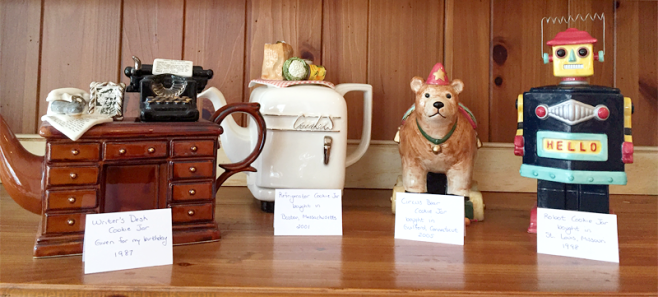
Every item has a story. A fun and educational way for kids to learn family stories and interact with their own history is for family members to each create an exhibit of favorite or meaningful objects in your home. Tags can tell how each item was obtained, any funny or interesting story that is attached to it, and what it means to the owner. Displaying and talking about the exhibits can be a fun way to spend time together while seeing common objects in a whole new light.

Supplies

  • A number of household 
  • Paper or index cards
  • Marker, pen, or pencil
  • A table, shelf, or other area for display

Directions

  1. To get started help children gather a number of items from around the house to be the subjects of their exhibit. An exhibit can have a theme, such as Travel Souvenirs, or it can contain random items of your child’s choice, like toys, plants, tools, or artwork.
  2. Using the paper or cards, children can create labels for their exhibit items. Older children can write the labels themselves; younger children may need adult help.
  3. Spend a little time relating the story behind each object: where it came from, how long you’ve had it, and when and how it was used in the past. Include any funny or touching memories attached to the item. Or let your child’s imagination run free, and let them create histories for the objects.
  4. When the labels are finished, arrange the items on a table, shelf, or in a room, and let your child lead family members on a tour. You can even share the exhibit with family and friends on FaceTime, Skype, Zoom, or other app.

celebrate-picture-books-picture-book-review-maud-and-grand-maud-cover

You can find Maud and Grand-Maud at these booksellers

Amazon | Barnes & Noble | Books-a-Million

To support your local independent bookseller, order from

Bookshop | IndieBound

Picture Book Review
November 5 – It’s National Family Stories Month

celebrate-picture-books-picture-book-review-love-and-the-rocking-chair-cover

About the Holiday

Children benefit so much from close relationships to grandparents, aunts, uncles, cousins, and other extended family members. This month and next, as family gathers together for special holiday events, it’s fun for adults to share family history and their own funny stories of growing up with the younger generation. Letting kids know how much they’re loved by everyone in the family is important too. It helps them develop a sense of belonging, a good self-image, and confidence. Reading together is a perfect way to spend time together and get conversations started.

I received a copy of Love and the Rocking Chair from The Blue Sky Press for review consideration. All opinions are my own. I’m happy to be teaming with The Blue Sky Press in a giveaway of the book. See details below.
Love and the Rocking Chair

By Leo and Diane Dillon

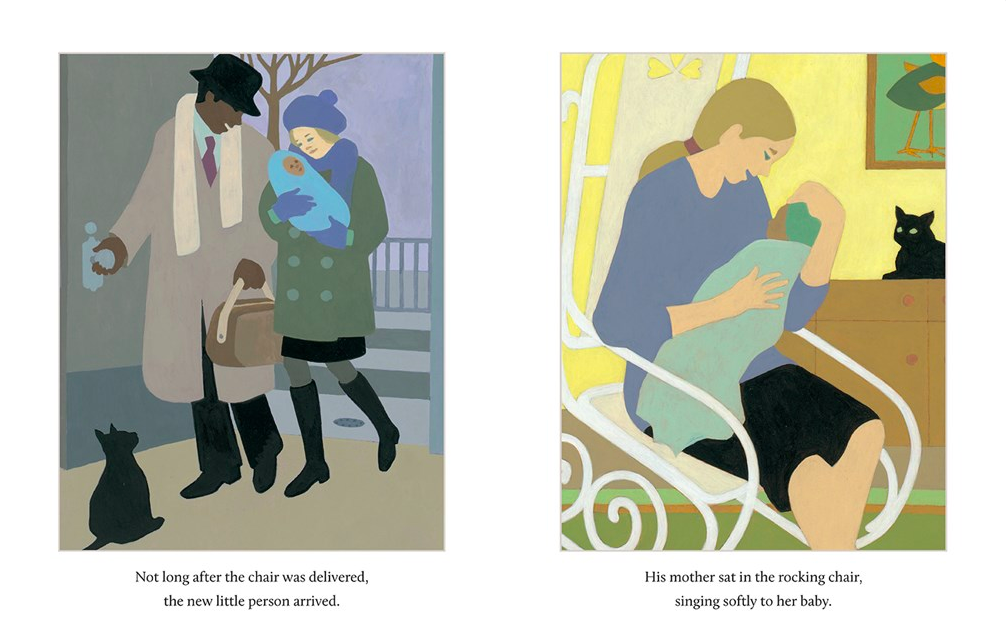
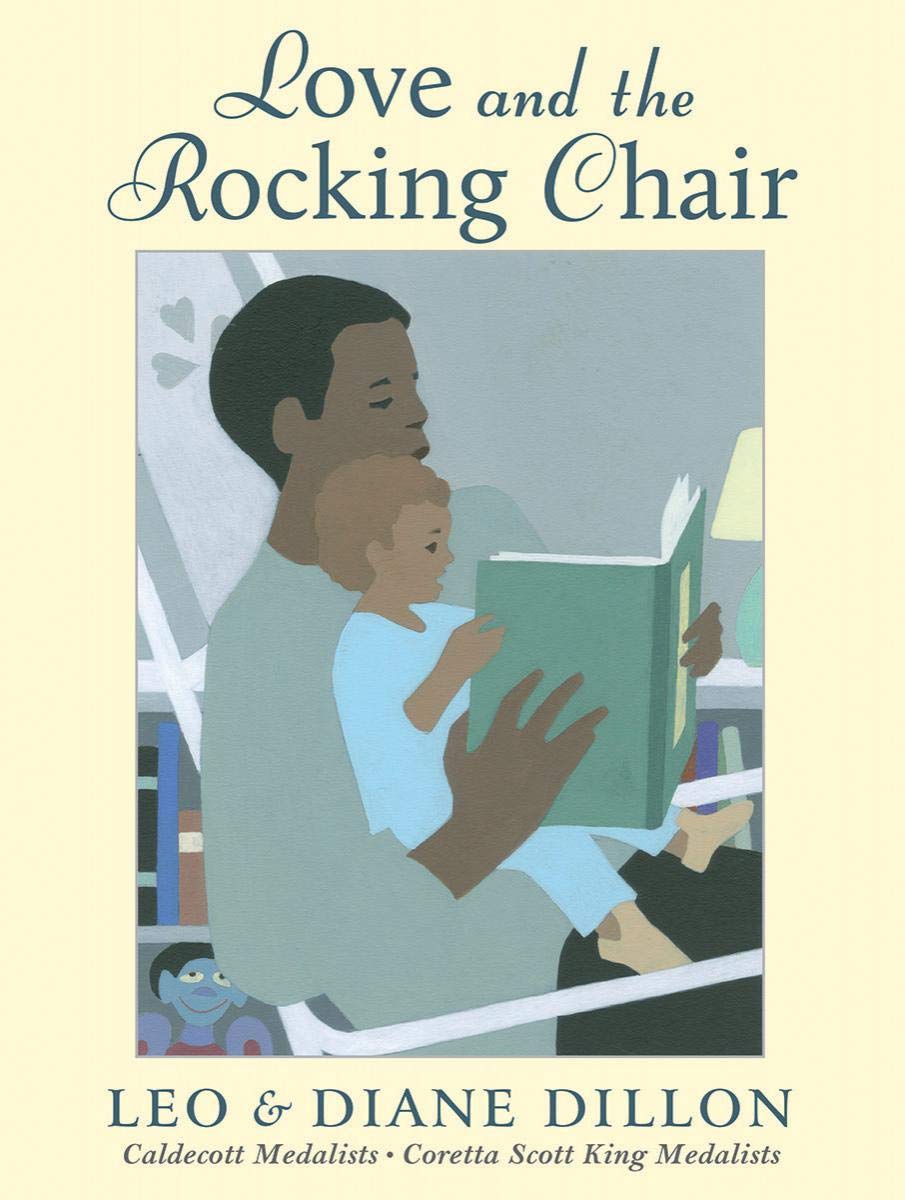
A couple, about to have a baby, “stood in a sea of chairs, searching for just the right one.” Across the store they spied a delicate bentwood rocking chair carved with hearts and knew it was perfect. Soon after the chair was delivered, the couple’s baby boy was born. When they brought him home from the hospital, “his mother sat in the rocking chair, singing softly to her baby.”
celebrate-picture-books-picture-book-review-love-and-the-rocking-chair-baby-boy

Copyright Leo and Diane Dillon, 2019, courtesy of The Blue Sky Press.

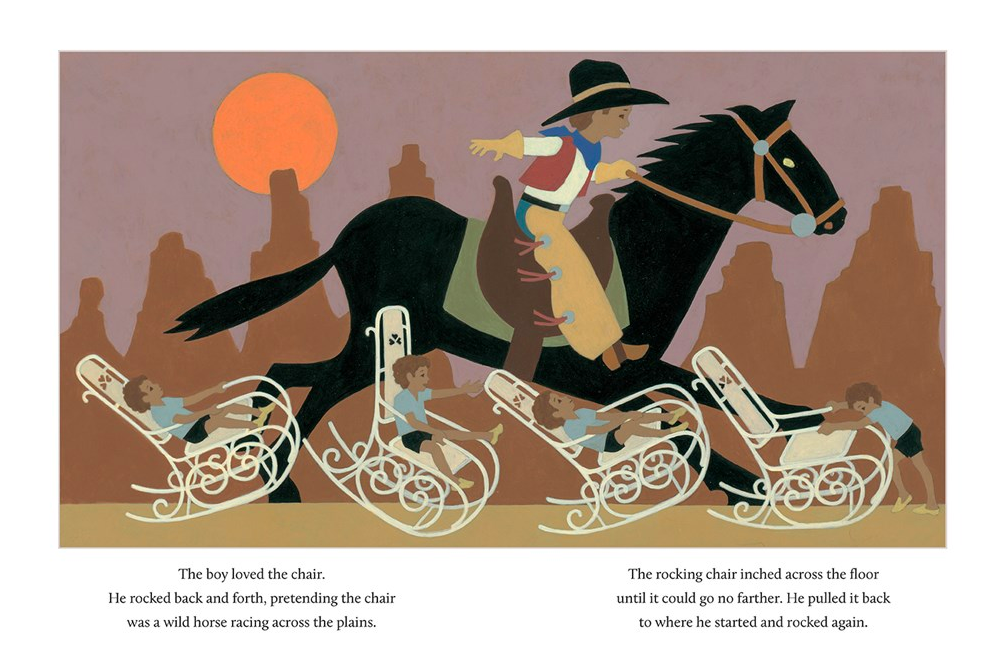
When the boy was a little older, his dad read to him in the rocking chair. As the boy grew, the rocking chair became a “wild horse racing across the plains.” The boy rocked and rocked until the chair moved across the floor. When the chair came to the wall, the boy started over again. A few years went by and soon school beckoned. Now, the boy had friends and homework while the chair sat laden with forgotten toys.
celebrate-picture-books-picture-book-review-love-and-the-rocking-chair-horse

Copyright Leo and Diane Dillon, 2019, courtesy of The Blue Sky Press.

Years passed and the boy went off to college. “The chair was moved to the attic,” where it gathered dust. While the boy was growing older, so were his parents. His “father became ill” and “one sad day, he passed away.” His son came home “to say a last goodbye to his father and to comfort his mother.” When the boy came home again, he brought along his fiancé. His mother hugged her like a daughter.

celebrate-picture-books-picture-book-review-love-and-the-rocking-chair-baby-girl

Copyright Leo and Diane Dillon, 2019, courtesy of The Blue Sky Press.

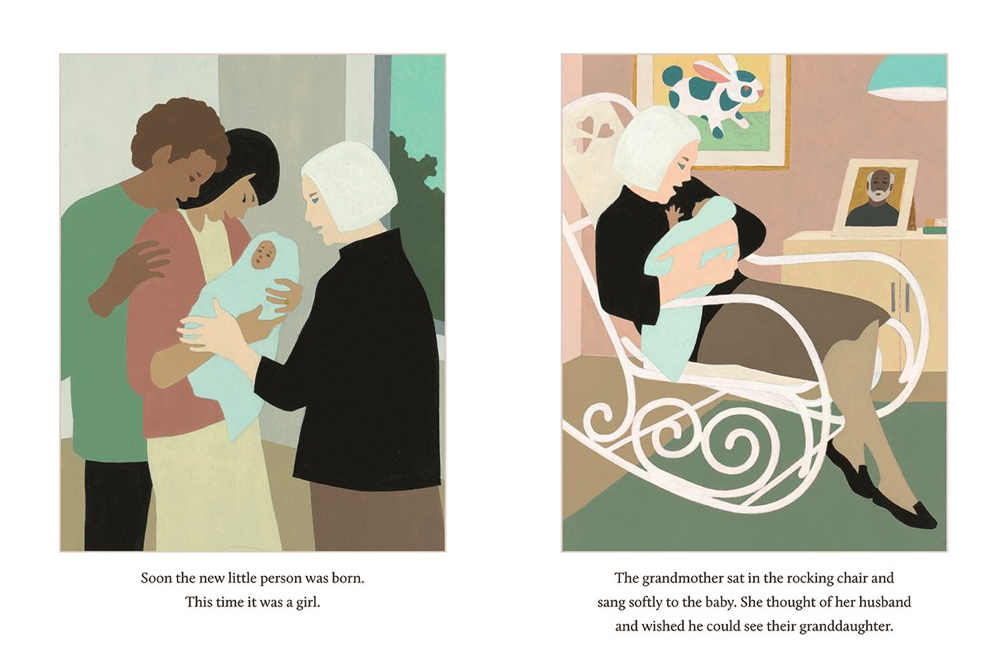
The young couple married and moved in with the man’s mother. Soon, they were going to have their own child. As they decorated the nursery, the man thought of the rocking chair. He brought it down from the attic and “lovingly dusted it off,” placing “it back where it belonged.” After the couple’s little girl was born, her grandmother rocked her in the chair and sang to her. She wished her husband could see her.

celebrate-picture-books-picture-book-review-love-and-the-rocking-chair-ship

Copyright Leo and Diane Dillon, 2019, courtesy of The Blue Sky Press.

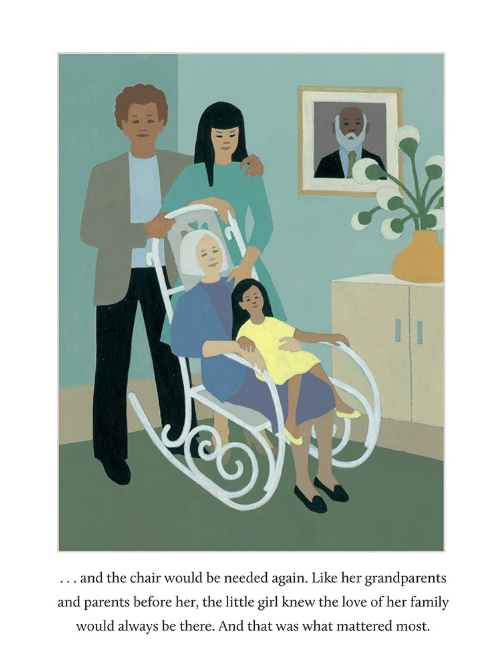
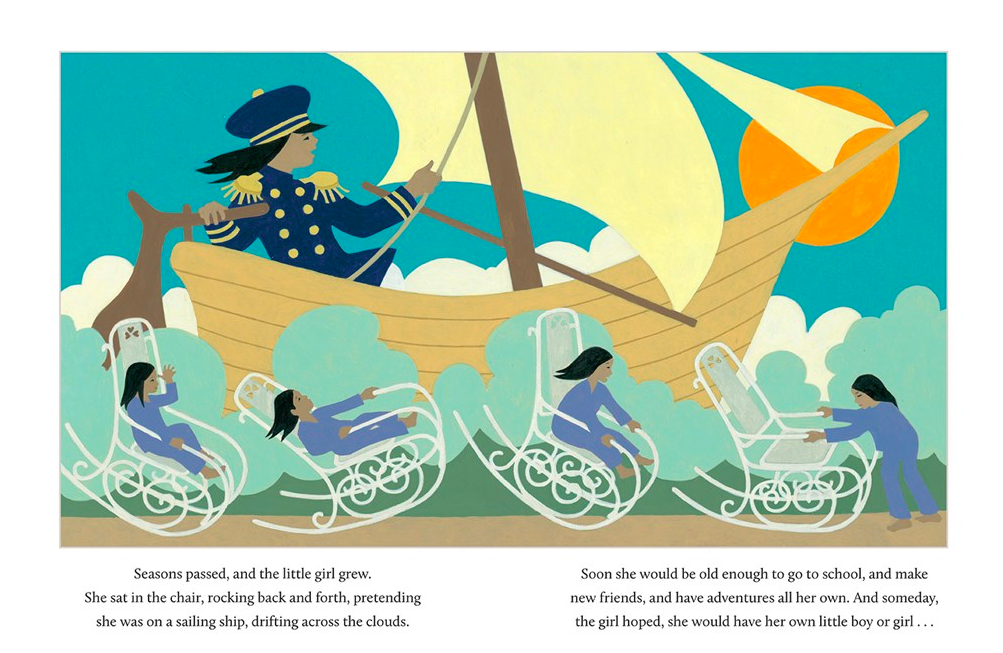
When the little girl was older, she rocked across her room in the chair. She was a sea captain sailing her boat “across the clouds.” Soon, she knew, she would “go to school, and make new friends, and have adventures all her own.” She looked forward to someday rocking a baby of her own in the chair. She thought of her parents and her grandparents and knew that “the love of her family would always be there.”

celebrate-picture-books-picture-book-review-love-and-the-rocking-chair-family

Copyright Leo and Diane Dillon, 2019, courtesy of The Blue Sky Press.

This last collaboration between two-time Caldecott Medal and Coretta Scott King Award winners Leo and Diane Dillon is a beautiful tribute to family and the longevity of love passed from one generation to another. Based on the Dillon’s own experience, the story reveals the bonds that keep people close through changes, additions, good times, and loss through the beloved rocking chair that becomes a touchstone for the family. The Dillon’s lyrical text is straightforward and honest, showing transitions for each family member as well as for the rocking chair.

Endearing illustrations of the parents reading and singing to their babies will resonate with little readers and reinforce the story’s message. The images, rendered in earth tones and blocked and framed with a white border, mirror family photographs or snapshots of transformative and unforgettable moments in a family’s history.

A treasure to share with your child or a child in your family while talking about your own traditions, Love and the Rocking Chair is a tender story to add to home, school, and public library collections.

Ages 3 – 5

The Blue Sky Press, and imprint of Scholastic, 2019 | ISBN 978-1338332650

Family Stories Month Activity

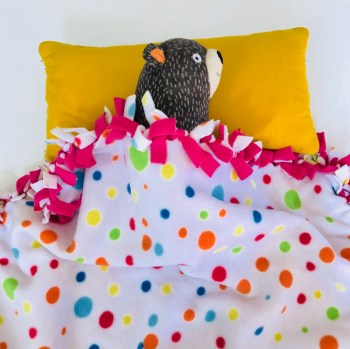
celebrate-picture-books-picture-book-review-sleep-buddy-craft

Reading Blanket

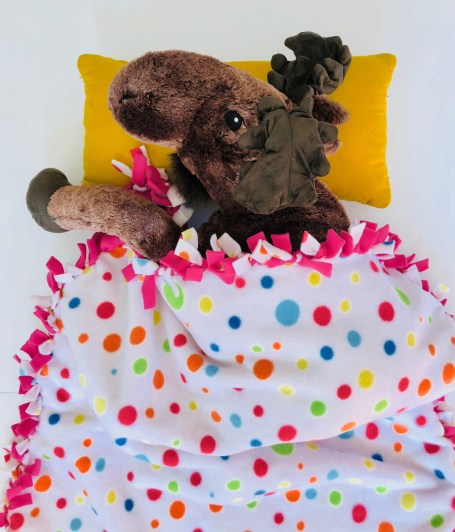
A special blanket to read with feels cozy and warm! With this craft you and your child can make a blanket for yourselves, a stuffed animal or even a pet! Children from ages 5 or 6 and up will enjoy helping to tie the tabs. For younger children, using fabric glue to attach the two pieces of fleece or cutting just one piece of fleece allows them to join in the craft fun.

Supplies

  • 2 pieces of fleece, solid, patterned, or a mix of both
  • Scissors
  • Measuring tape
  • Fluff or pillow (optional for pet bed)
  • Fabric glue (optional)

celebrate-picture-books-picture-book-review-sleep-buddy-craft

Directions

  1. Lay out one piece of fleece and measure a size that will make a comfortable blanket for the stuffed animal or is large enough for your pet to lie on
  2. Add 3 inches to that measurement on each side for the tie tabs
  3. Cut the fleece
  4. Lay out the second piece of fleece and cut it to the same size as the first piece
  5. With both pieces of fleece together cut three-inch long by ½ – ¾ – inch wide tabs all along each side. (If using fabric glue omit this step.)
  6. At the corners, four tabs will be cut off on each side

To Make a Blanket

  • Tie the top and bottom tabs together on all sides

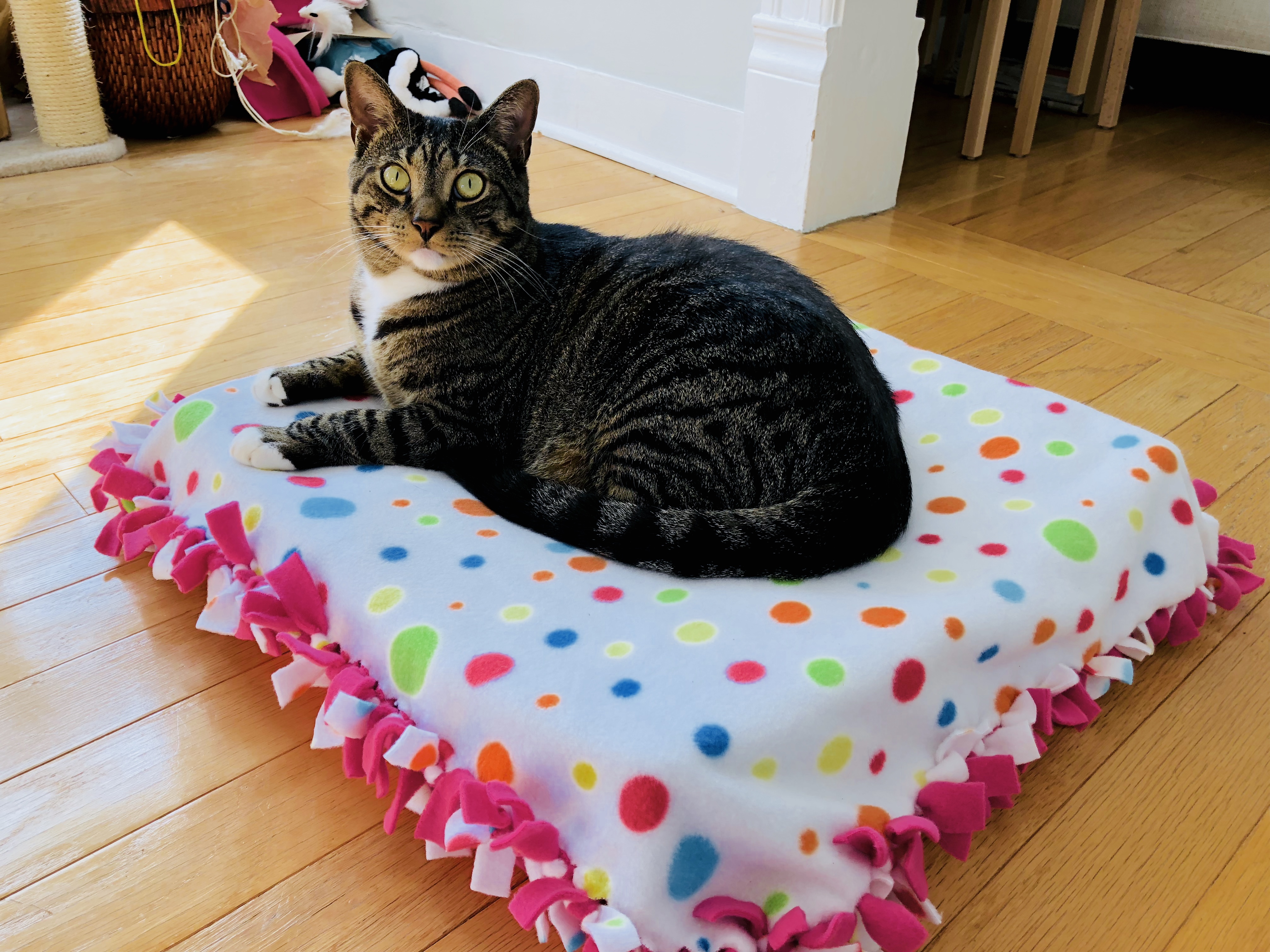
To Make a Pet Bed

celebrate-picture-books-picture-book-review-cat-bed-craft

  1. Tie the tabs together on three sides
  2. Add the fluff or pillow insert
  3. Tie the tabs on the final side

celebrate-picture-books-picture-book-review-love-and-the-rocking-chair-cover

You can find Love and the Rocking Chair at these booksellers

Amazon | Barnes & Noble | Books-a-Million | IndieBound

Picture Book Review