February 4 – Sadie Sprocket Builds a Rocket Blog Tour Stop

celebrate-picture-books-picture-book-review-sadie-sprocket-builds-a-rocket-cover

About the Holiday

I always love celebrating kids’ creativity, imagination, and smarts and today’s book has all three! If you never want to say goodbye to January’s “Creativity Month” and am looking forward to Expanding Girls’ Horizons in Science and Engineering Month and National Ideas Month in March, then you’ll want to add Sadie Sprocket to your reading list.

Thank you goes to Two Lions and Blue Slip Media for sending me a copy of Sadie Sprocket Builds a Rocket for review consideration. All opinions on the book are my own. I’m also excited to be teaming with them for a giveaway of the book. See details below.

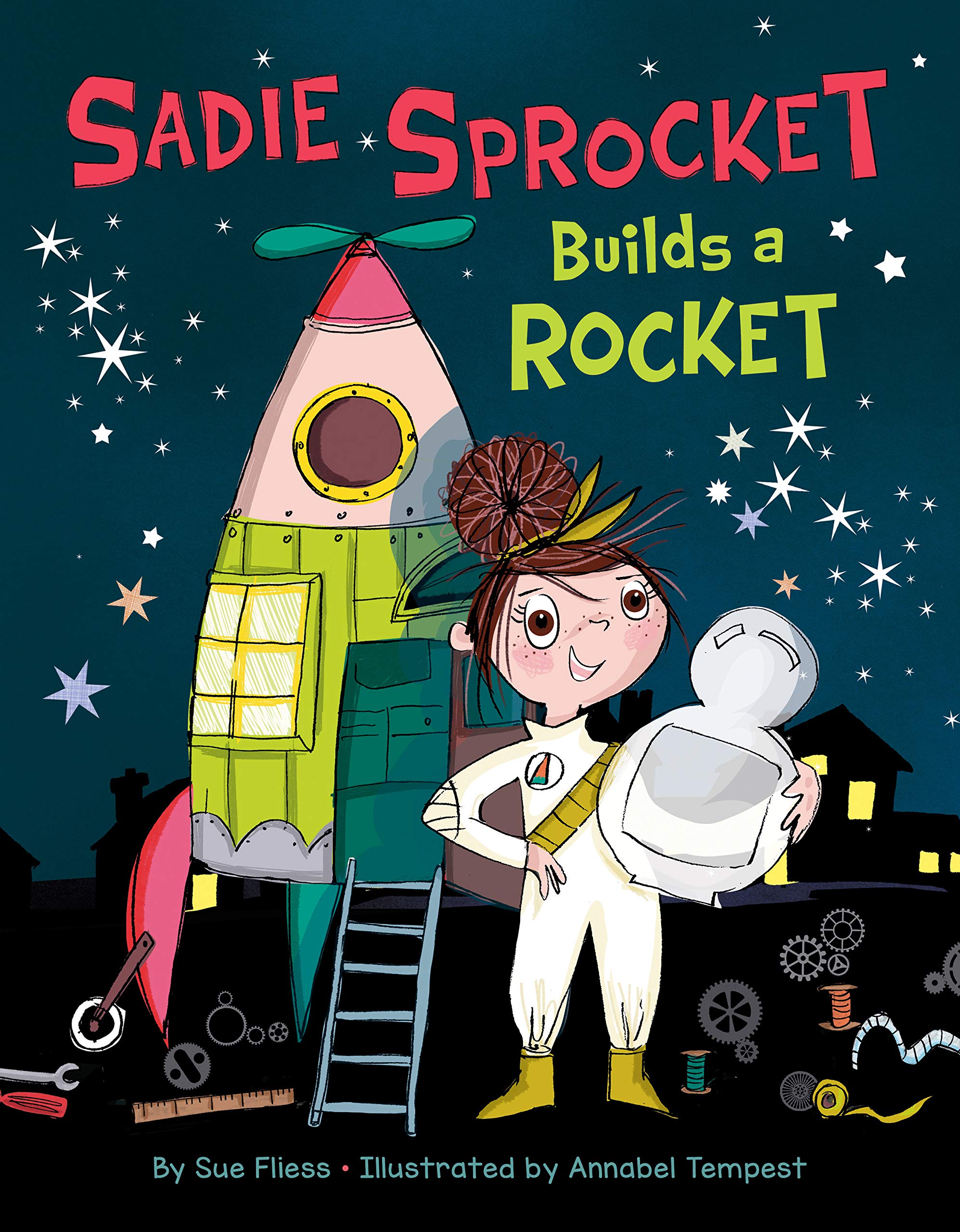
Sadie Sprocket Builds a Rocket

Written by Sue Fliess | Illustrated by Annabel Tempest


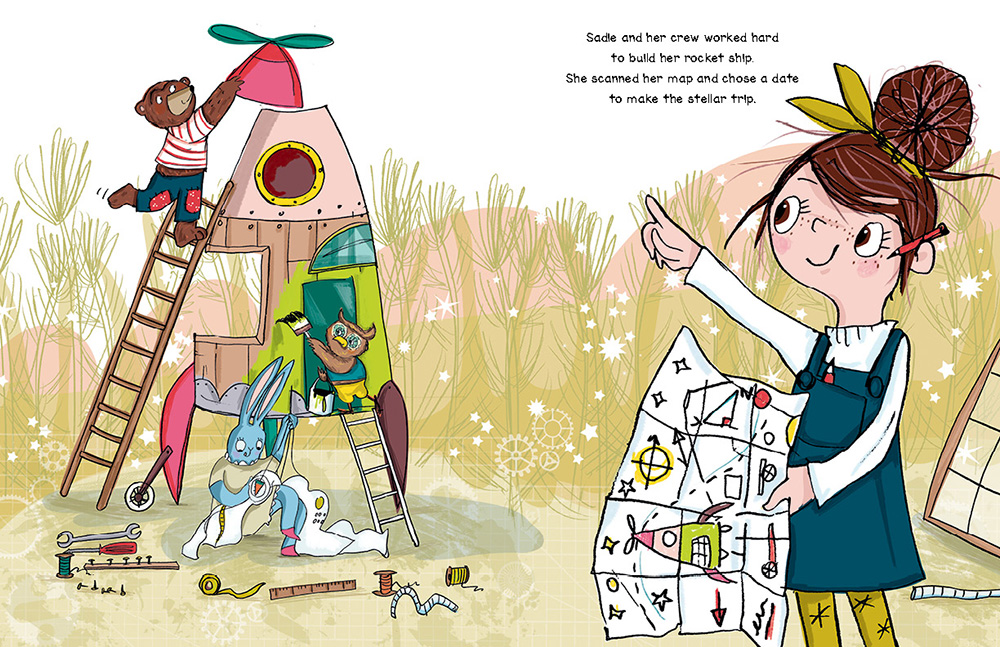
Sadie Sprocket wanted to travel. Not your regular vacation kind of travel but the kind that would take her across the galaxy. “So one day Sadie drew a map / to navigate the stars. / ‘It’s time to leave the Earth,’ she said, ‘and travel straight to Mars!’” She chose her crew—a bunny, bear, and owl—and began building her rocket ship with parts she got from the junkyard.

When the rocket was finished, Sadie and her crew were ready to blast off. Her family, friends, and even reporters gathered to see “this space-bound girl with smarts and skill / would soon make history.” They basted off on their journey that would take one hundred days. To pass the time the crew of four tried playing cards, and checkers and chess, but the pieces just floated away, so they read and cooked instead.

celebrate-picture-books-picture-book-review-sadie-sprocket-builds-a-rocket-bedroom

Image copyright Annabel Tempest, 2021, text copyright, Sue Fliess, 2021. Courtesy of Two Lions.

Soon, when Sadie looked out the window, Earth was no more than a dot while Mars came into view. When it was time to land, Sadie directed her crew to land on level ground. On the surface of the red planet, they gathered samples and put them into bags and then when they were done, they planted yellow flags. After a few selfies, Sadie knew it was time to go, but a storm blew up and “the rocket wouldn’t budge.”

Sadie, Bear, Bunny, and Owl got out and dug the landing gear free, but when they tried to leave Mars again, the sand swirling in the air was so thick, they couldn’t see. When the storm abated, they thought flying would be a snap, but the rocket didn’t work. Sadie grabbed her tools and they went to work sweeping sand from the circuit board and repairing the wires. Finally, Sadie said, it is “‘time to Blast!’” / They zoomed by stars and asteroids / and made it home at last.” When she landed back on Earth, Sadie learned she “had rocketed to fame,” but one trip was not enough. She now had Neptune in her sights, but clever Sadie Sprocket new she’d “need a bigger rocket.”

Following the text is “Sadie’s Notebook,” which contains facts about Mars and short bios on seven pioneering women in space.
celebrate-picture-books-picture-book-review-sadie-sprocket-builds-a-rocket-building

Image copyright Annabel Tempest, 2021, text copyright, Sue Fliess, 2021. Courtesy of Two Lions.

Sue Fliess’s jaunty story about Sadie Sprocket, a young go-getter who doesn’t let things like gravity or obstacles get in the way of her dreams of discovery offers inspirational motivation for children who have big (or smaller) aspirations. Sadie’s confidence in herself and in science jumps off the page as she talks to the press and her supporters at her launch, gathers samples from the surface of Mars, and documents her finds. When the sand storm disrupts her return to Earth, she doesn’t give up the mission, but rallies her crew and fixes the problem. And does Sadie rest on her laurels? Nope! Like any inventive kid, she has her sights set on the next big adventure. Fliess’s pitch-perfect rhymes and quickly paced rhythm make the story an entertaining read aloud.

In her bright, active-packed illustrations, Annabel Tempest gives Sadie a cheery, self-assured look as she studies, makes plans, and builds her rocket. Kids will eagerly follow her steps as she gathers her supplies and gets to work. As Sadie, schematic in hand, directs her crew, kids will have fun seeing how she makes clever use of a wheelbarrow and appreciate the spacesuits and fitted helmets for each crew member. Images of the circuit board will appeal to tech-loving kids, and pictures of the rocket shooting across the galaxy will thrill readers. Any kids looking for inspiration to decorate their rooms will find plenty of ideas here too.

A lively story to encourage creative and science-loving kids, Sadie Sprocket Builds a Rocket is a terrific book for exciting story times and to enhance STEM lessons in school and at home. It is highly recommended for home, school, and public library collections.

Ages 3 – 7

Two Lions, 2021 | ISBN 978-1542018036

Sue Fliess is the author of more than thirty children’s books, including Mrs. Claus Takes the Reins, illustrated by Mark Chambers; Shoes for Me!, A Dress for Me!, and Books for Me!, all illustrated by Mike Laughead; and Let’s Build, illustrated by Miki Sakamoto. She lives with her family and their two dogs in northern Virginia, where they admire the moon, stars, and sometimes even planets from their backyard. You can connect with Sue on www.suefliess.com | Twitter | FacebookPinterest

Annabel Tempest is the illustrator of a number of picture books and board books. She holds a degree in fashion and textiles and has worked as a freelance illustrator on everything from maps and packaging to greeting cards and children’s books. She lives in the beautiful Somerset countryside in the UK with her husband and a houseful of muddy boys and dogs. You can connect with Annabel on annabeltempest.comInstagram | Twitter

Sadie Sprocket Builds a Rocket Giveaway

I’m happy to be teaming with Two Lions and Blue Slip Media in a giveaway of:

  • One (1) copy of Sadie Sprocket Builds a Rocket by Sue Fliess | illustrated by Annabel Tempest

To enter:

This giveaway is open from February 4 to January 10 and ends at 8:00 p.m. EST.

A winner will be chosen on January 11. 

Prizing provided by Two Lions and Blue Slip Media

Giveaway open to U.S. addresses only. | No Giveaway Accounts 

Sadie Sprocket Builds a Rocket Book Tour Activity

celebrate-picture-books-picture-book-review-blast-off-to-mars-maze

Blast off to Mars! Maze


Can you help the rocket navigate its way to Mars in this printable puzzle?

Blast off to Mars! Maze | Blast off to Mars! Solution

celebrate-picture-books-picture-book-review-sadie-sprocket-builds-a-rocket-cover

You can find Sadie Sprocket Builds a Rocket at these booksellers

Amazon | Barnes & Noble | Books-a-Million

To support your local independent bookstore, order from

Bookshop | IndieBound

Picture Book Review
October 21 – It’s Squirrel Awareness Month

celebrate-picture-books-picture-book-review-girl-versus-squirrel-cover

About the Holiday

Squirrels elicit emotions on both sides of the spectrum. On one hand you can’t help but say “Awww!” when you see their tiny little paws and crafty antics. On the other hand their voracious appetites at bird feeders and penchant for darting into traffic is more likely to make you say “Arrgghhh!” This month is set aside, however, for enjoying the squirrels in your yard, park, or city. And really, don’t they make life just a little more fun?

Girl Versus Squirrel

Written by Hayley Barrett | Illustrated by Renée Andriani


Pearl built three birdhouses and put them in and near the tree in her backyard. One was shaped like a house, one was a tube, and the other was a tea cup atop a tall stand. After filling the house with suet, the tube with seeds, and the teacup with peanuts, Pearl settled in with her binoculars to wait. Soon cardinals, flickers, finches, and chickadees swooped in. But none of them wet for the peanuts.

celebrate-picture-books-picture-book-review-girl-versus-squirrel-bird-feeders

Image copyright Renée Andriani, 2020, text copyright Hayley Barrett, 2020. Courtesy of Margaret Ferguson Books, Holiday House.

Happily sitting next to the teacup was a squirrel with a peanut in its paws. Pearl scared the squirrel away and then went to work to win this contest of wits. She used her hockey stick to raise the teacup’s stand higher and “watched, breathless with anticipated success, but was soon disappointed” as the squirrel easily climbed to the top. Pearl added a mop to make the pole even higher.

But still the squirrel had no trouble getting to the top. “The squirrel stared at Pearl and seized an especially plump peanut.” Just then the “pole began to teeter and totter until…It toppled to the ground,” breaking the handle off the teacup. As the squirrel dashed up a nearby oak tree, Pearl shouted, “‘You’re a bird-feeder-crashing, teacup-smashing, peanut-poaching pest!’” A pest Pearl was not about to lose out to.

celebrate-picture-books-picture-book-review-girl-versus-squirrel-bird-garage

Image copyright Renée Andriani, 2020, text copyright Hayley Barrett, 2020. Courtesy of Margaret Ferguson Books, Holiday House.

While Pearl fixed her teacup, she devised a plan. She gathered supplies and started creating. Soon, a “network of obstacles emerged, each more squirrel-challenging than the last.” The squirrel may have been fast and determined, but the course ensured that “teacup triumph will require nerves of squirrely steel,” Pearl fixed her binoculars on the squirrel and waited.

It didn’t take long before the squirrel was headed in the right direction. He scampered over the rope, spun around the big spool, leaped to the swing, and scrambled through the rest of the course. Until… “CRUNCH!” Pearl was astounded. Then she saw the squirrel head for a nest in the oak tree with three baby kits in it. That’s when Pearl realized the squirrel was a mother. “‘I proclaim your victory,’ cheered Pearl, ‘ and I salute you, fearless, fluffy sister!’” Immediately, Pearl wanted to help this family grow and learn. Now her backyard is a birds’… and squirrels’… and contraption-lovers’ paradise.

“Some Squirrely Facts” about our favorite nature nemesis follows the story.

celebrate-picture-books-picture-book-review-girl-versus-squirrel-obstacle-course

Image copyright Renée Andriani, 2020, text copyright Hayley Barrett, 2020. Courtesy of Margaret Ferguson Books, Holiday House.

For anyone who has done battle with a squirrel at their birdfeeder, Hayley Barrett’s story is a delight. Her nimble alliterative phrasing and fun-to-read action verbs will make any story time a joy. Add in Pearl’s can-do attitude and the squirrel’s unstoppable energy and you have the makings of an epic battle—one that readers are sure to want to replicate in their own yards. Barrett nails the experimental nature of children’s building projects, a detail that kids will appreciate and that will endear Pearl to them.  Barrett’s nod to girl power provides a strong, uplifting ending. Factual information about birds, bird food and squirrel behavior is interwoven organically throughout the story. That and the fascinating back matter make this a terrific book to pair with classroom lessons.

Renée Andriani’s vibrant, action-packed illustrations will wow kids and have them on the edge of their seats for each page turn. Realistic depictions of the cardinals, finches, chickadees, and flickers that swarm Pearl’s bird feeders will entice readers to learn more about these birds. When Pearl raises her teacup feeder higher and higher, Andriani presents clear images of how Pearl tapes the stand, stick, and mop together as well as the crashing result when the squirrel hops on. As Pearl gathers items from her garage and begins building her obstacle course, readers will be in suspense, waiting to see the final result.

Presented in a wild, two-page spread, Andriani’s portrayal of Pearl’s obstacle course rewards readers with bold, expressive typography and images of the squirrel making her way from station to station with style. The final two-page spread of Pearl’s backyard, is a riot of color as feeders, birds, and mama and baby squirrels nosh to their hearts’ content. Kids will want to linger to catch every detail.

Imaginative, humorous, and educational, Girl Versus Squirrel will become a favorite and will inspire kids to create their own obstacle course. The book would also be a high-interest accompaniment to STEM lessons in the classroom and at home. It would make a terrific addition to home, school, and public library collections.

Ages 4 – 8

Margaret Ferguson Books, Holiday House, 2020 | ISBN 978-0823442515

Discover more about Hayley Barrett and her books on her website.

To learn more about Renée Andriani, her books, and her art, visit her website.

Squirrel Awareness Month Activity

celebrate-picture-books-picture-book-review-squirrel-community-coloring-page

Squirrely Activity Pages


You can join a girl who’s watching squirrels, find a whole squirrel community to color, see a squirrel enjoying a snack, and follow the numbers to discover… with these printable Squirrely Activity Pages

Girl Watching Squirrel Coloring Page | Squirrel Community Coloring PageDot-to-Dot Coloring Page | Squirrel with Nut Coloring Page

celebrate-picture-books-picture-book-review-girl-versus-squirrel-cover

You can find Girl Versus Squirrel at these booksellers

Amazon | Barnes & Noble | Books-a-Million

To support your local independent bookstore, order from

Bookshop | IndieBound

Picture Book Review
 

September 15 – International Dot Day

celebrate-picture-books-picture-book-review-yayoi-kusama-covered-everything-cover

About the Holiday

On September 15, 2009 teacher Terry Shay introduced his class to Peter H. Reynold’s The Dot. From that one event grew a national and then an international celebration of creativity and the freedom to make art with your heart. All around the world, school children and adults are inspired on this day to make their mark and celebrate creativity, courage, and collaboration. Internationally renowned artist Yayoi Kusama, who became famous for her dot paintings and is the subject of today’s book – continues to live this philosophy every day.

For more information on International Dot Day visit the International Dot Day website. There you can  download posters, coloring pages, postcards, badges, and other resources and register to view a livestream event from the Metropolitan Museum of Art starting at 10:00 a.m. PT.

Yayoi Kusama Covered Everything in Dots and Wasn’t Sorry

By Fausto Gilberti


Yayoi Kusama, with her big, round curious eyes and dotted top gazes out at the reader as she introduces herself. She’d like to tell them her story, she says. She begins with her birth in “Matsumoto, a historic city in Japan with a beautiful castle.” Even as a child, she reveals, she loved to draw and would escape into the meadow to capture in her sketchbook the things she saw around her, the things “that other people didn’t.”

celebrate-picture-books-picture-book-review-yayoi-kusama-covered-everything-mirrored-rooms

Copyright Fausto Gilberti, 2020, courtesy of Phaidon.

When she grew up, she moved to New York with dreams of becoming a famous artist. When her money ran out, she gathered scraps of food that had been thrown away at the market and used them to make soup. At home in her apartment, Yayoi painted “hundreds and hundreds of dots onto large canvases.” Often the canvases couldn’t contain all the dots and they ran onto her walls and even her clothes. “But I wasn’t sorry,” she explains. “Each dot was part of thousands of others—they made me feel like I was a single dot that was part of our infinite universe.”

celebrate-picture-books-picture-book-review-yayoi-kusama-covered-everything-clothes

Copyright Fausto Gilberti, 2020, courtesy of Phaidon.

Even though, Yayoi created lots of paintings, she was still poor. One day Georgia O’Keefe, answering a letter from Yayoi asking for help in selling her paintings, came to visit. She introduced Yayoi “to her art dealer, who immediately bought one of my paintings.” After that, Yayoi painted more pictures and had a successful solo exhibition in New York. More exhibitions followed, and Yayoi’s work expanded. She began making soft cushioned shapes that she used to cover…well…almost everything.

celebrate-picture-books-picture-book-review-yayoi-kusama-covered-everything-snow

Copyright Fausto Gilberti, 2020, courtesy of Phaidon.

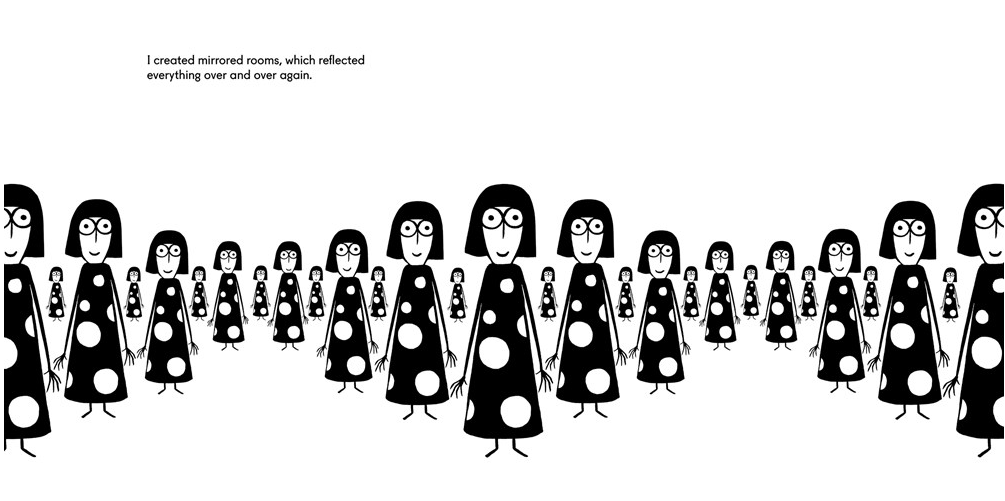
Yayoi even experimented with pasta, lighted balls, and mirrored rooms. And then she did something daring: She held “‘happenings,’” where she turned people’s bodies into canvases for her art. This brought her more recognition, and she decided that she wanted to “change the world for the better.” With her unique vision, she protested against the Vietnam war and was arrested. Following her release, she began experimenting even more, with clothing styles that brought people together—one dress fit twenty-five people at once!

celebrate-picture-books-picture-book-review-yayoi-kusama-covered-everything-japan

Copyright Fausto Gilberti, 2020, courtesy of Phaidon.

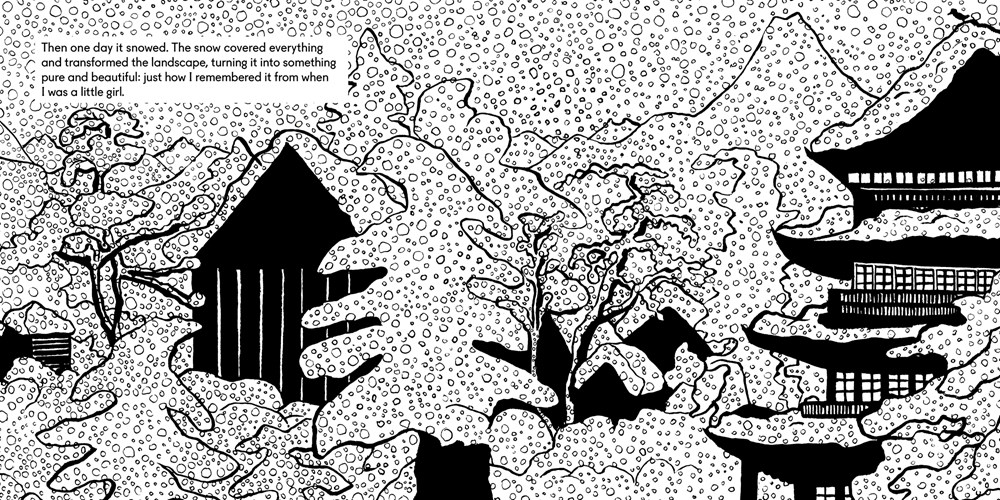
Then Yayoi became sick. She stopped creating and moved back to Japan to recover. But much had changed in the years she had been away. Development and pollution had destroyed the nature she once loved. A snowy day, however, restored her desire to do art, and she began writing. When she was better, Yayoi decided to stay in Japan. “I still work nonstop, making paintings, writing books, and designing clothes and other objects” like pumpkins covered in dots, she says. Her artwork can be found in galleries and museums around the world—her dream from so long ago came true.

More about Yayoi Kusama’s life as well as a stirring photograph of one of her art installations—All the Eternal Love I Have for the Pumpkins—follows the text.

celebrate-picture-books-picture-book-review-yayoi-kusama-covered-everything-pumpkins

Copyright Fausto Gilberti, 2020, courtesy of Phaidon.

Fausto Gilbert’s captivating biography of contemporary artist Yayoi Kusama will enchant young readers and creators of all kinds. Writing from Yayoi’s perspective, Gilberti hits a perfect tone, allowing children to hear Yayoi’s confidence in herself and her work while also discovering the lean times she experienced and how she reached out for help. Gilberti illuminates the timelessness of Yayoi’s singular creative vision, and its meaning will be embraced by today’s aware and activist children. Her final whimsical revelation about her pumpkin artwork will resonate with imaginative kids, exciting them to believe their own dreams of success are within reach.

Gilberti’s quirky black and white illustrations, later punctuated with Yayoi’s signature red hair, will charm kids and are particularly affective in drawing a portrait of this unique artist. Readers will marvel anew with every page and will especially love the twenty-five-person dress and the idea of Yayoi’s “happenings,” which could prompt a fun bath-time art activity for at-home learning. The book will also motivate kids to learn more about Yayoi Kusama’s work online and to create their own art with abandon.

Inspiring and liberating, Yayoi Kusama Covered Everything in Dots and Wasn’t Sorry is a must for creative kids at home, in the classroom, and at public libraries.

Ages 4 – 7 

Phaidon, 2020 | ISBN 978-1838660802

To learn more about Fausto Gilberti, his books, and his art.

International Dot Day Activity

celebrate-picture-books-picture-book-review-dots-coloring-page

Decorate the Dots Coloring Page


How would you color these dots? Grab your favorite paints, markers, or crayons and let your imagination fly with this printable Decorate the Dots Coloring Page.

celebrate-picture-books-picture-book-review-yayoi-kusama-covered-everything-cover

You can find Yayoi Kusama Covered Everything in Dots and Wasn’t Sorry at these booksellers

Amazon | Barnes & Noble | Books-a-Million

To support your local independent bookstore, order from

Bookshop | IndieBound

Picture Book Review
August 14 – It’s National Crayon Collection Month

celebrate-picture-books-picture-book-review-the-crayon-man-cover

About the Holiday

Kids love going to restaurants that provide a fun placemat and crayons to color with while they wait. But what happens to those crayons when the meal is over? Most times they’re thrown in the trash with the napkins and straws and other items left behind. Wouldn’t it be great if those gently used crayons could go on to be used by other kids at schools that can’t afford such supplies? They can! Begun by Crayon Collection, National Crayon Collection Month encourages restaurants, hotels, and other organizations that provide free crayons to collect the ones left behind and donate them to under-serviced schools. As school arts programs are threatened with budget cuts, these important supplies can make a big difference in the lives of students. The ability of children to express their creativity is a crucial part of their education and growth.  You can get involved too! To learn how you can make an impact, visit CrayonCollection.org. Or look into donating crayons (and other supplies) to a school in your area.

The Crayon Man: The True Story of the Invention of Crayola Crayons

Written by Natascha Biebow | Illustrated by Steven Salerno

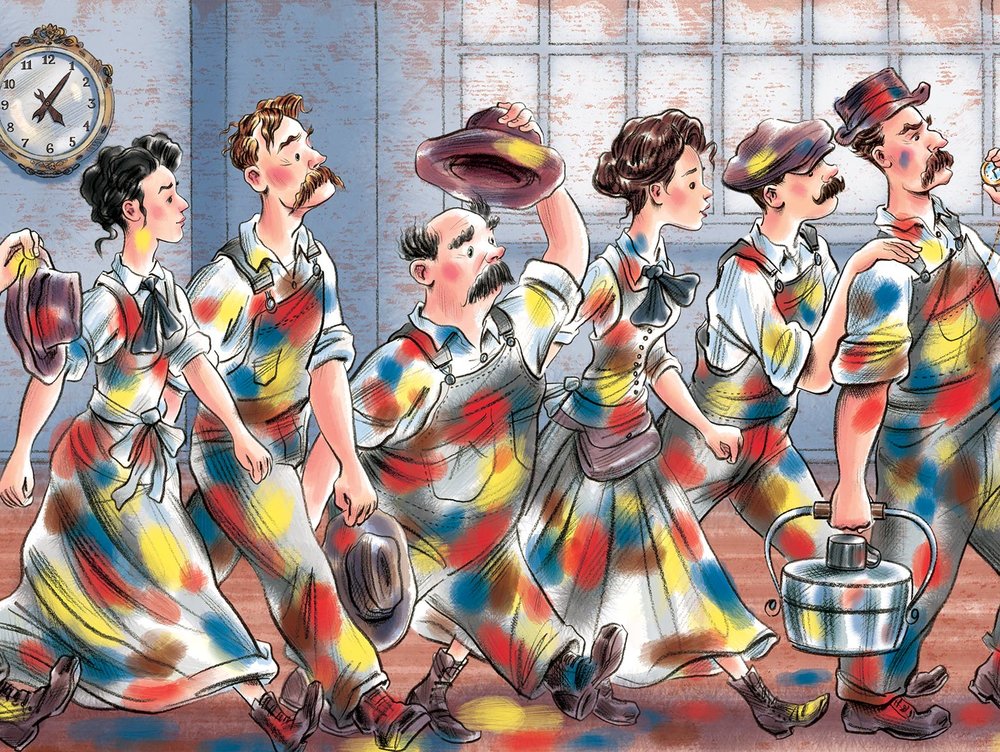
Edwin Binney was an inventor who truly appreciated all the colors around him. In fact, “color made him really, really HAPPY!” Perhaps he loved color so much because all day long in the mill where he worked he was surrounded by nothing but black: “black dust, black tar, black smoke, black ink, black dye, black shoe polish. His company sold carbon black, a new kind of pigment, or colored substance, make from the soot of burning oil and natural gas.” Edwin worked with his cousin C. Harold Smith, and their company was called Binney and Smith.

celebrate-picture-books-picture-book-review-the-crayon-man-cardinal
Image copyright Steven Salerno, 2019, text copyright Natascha Biebow, 2019. Courtesy of HMH Books for Young Readers.

While Harold was the salesman, Edwin was the tinkerer who had made better pencils for writing on slate and a wax crayon that wrote on both paper and wood. His wife, Alice, thought he was just the person to create better crayons for kids. The existing crayons were too big and clunky, and artists’ crayons were too expensive.

Edwin gave it some thought and started experimenting with wax for substance and rocks and minerals for color. Then he and his workers fine-tuned their batches, adding only “a pinch of this pigment, a sploosh of that one, a little hotter, a little cooler…and voilà, LOTS of different shades!” Now, instead of being covered in black dust at the end of the day, “Edwin came home covered in color.”

celebrate-picture-books-picture-book-review-the-crayon-man-tea
Image copyright Steven Salerno, 2019, text copyright Natascha Biebow, 2019. Courtesy of HMH Books for Young Readers.

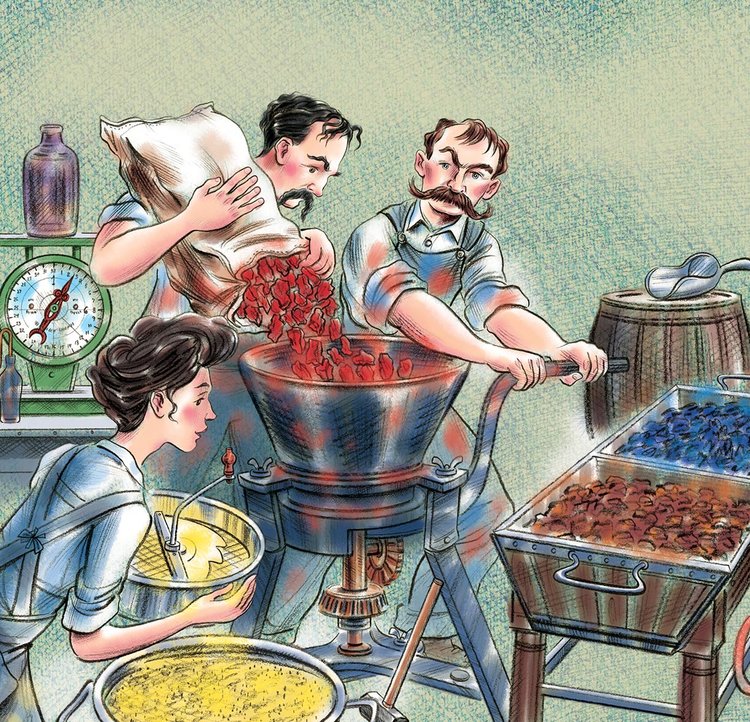
At the factory, Edwin’s team worked on their top-secret formula and finally poured the mixtures into “thin, crayon-shaped molds” to make crayons that were just the right size for children. Finally, in 1903, Edwin had the product he wanted. “He’d invented a new kind of colored crayon” and wanted a new name to go with it. Alice had just the right suggestion, and Crayola crayons were born.

The first boxes contained eight colors and sold for a nickel. As they shipped out to stores, Edwin wondered if the kids would like them. Children loved their fine points, clear lines, and long-lasting color. By this time, inexpensive paper was also available, so kids didn’t have to draw or write on slate tablets anymore.

celebrate-picture-books-picture-book-review-the-crayon-man-hopper
Image copyright Steven Salerno, 2019, text copyright Natascha Biebow, 2019. Courtesy of HMH Books for Young Readers.

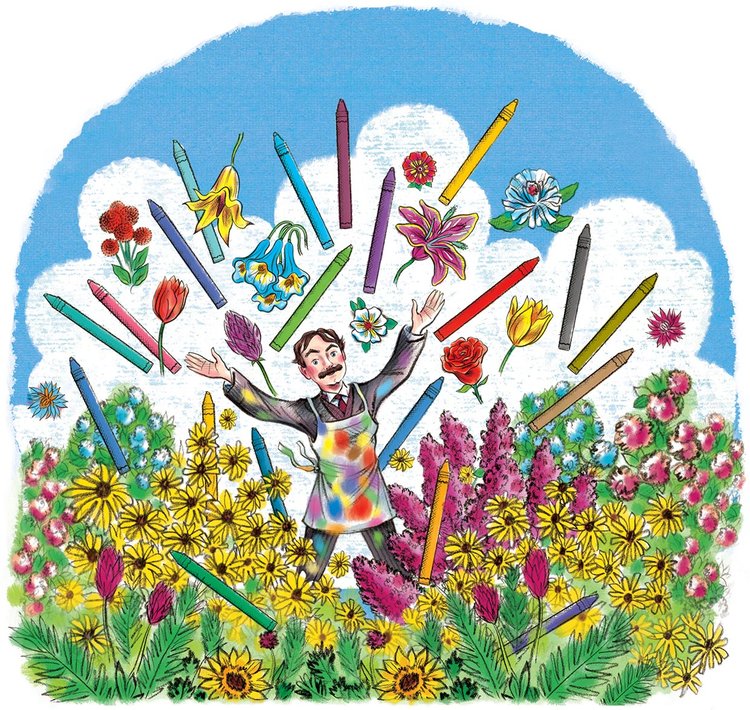
At the St. Louis World’s Fair in 1904, Edwin’s Crayola crayons won a gold medal. As time went on, Edwin and his team made even more colors, many inspired by nature and even the flowers in Edwin’s own garden. Some of the colors you’ll find in a box today were given their names by children, including “macaroni and cheese” and “robin’s egg blue.” Now, kids all around the world can create just the picture they want, with lots and lots of color.

Back matter includes an illustrated description of the process of making Crayola crayons, an extended biography of Edwin Binney, and a bibliography of resources.

celebrate-picture-books-picture-book-review-the-crayon-man-workers
Image copyright Steven Salerno, 2019, text copyright Natascha Biebow, 2019. Courtesy of HMH Books for Young Readers.

Natascha Biebow’s quickly paced biography of Edwin Binney and the invention of Crayola crayons is a deft portrait of the man and his times that were on the cusp of and central to so many innovations that created the modern world. Biebow’s emphasis on Binney’s willingness to listen and match his inventions to people’s needs is a lesson on collaboration and the true spirit of invention for today’s future pioneers. In her fascinating and accessible text, Biebow relates the problems with late 1800s writing and drawing mediums while also building suspense on how Binney and his team created the new crayons. Children will be awed to discover the thought, experiments, and materials that went into those first thin sticks of color. Short paragraphs that explain more factual information about topics in the story, including carbon black, the availability of paper, European crayons, and pigments are sprinkled throughout the pages.

celebrate-picture-books-picture-book-review-the-crayon-man-field
Image copyright Steven Salerno, 2019, text copyright Natascha Biebow, 2019. Courtesy of HMH Books for Young Readers.

Steven Salerno’s color-drenched pages are beautiful tributes to the man who brought a new age of color into children’s lives. In a clever page turn, Edwin Binney stands in his garden with his arms outstretched appreciating the rainbow of flowers, the deep-blue sea, the light-blue sky, and a fiery red cardinal flying by. The next page takes kids into Binney’s mill, where he stands in the same position, but now seeming to bemoan the sooty environment. Salerno brings the time period alive for kids through hair and clothing styles and school and home furnishings. Several pages give readers a field trip into Binney’s secret lab to see the mechanics of making crayons at work. The front and end papers invite kids to give the wrapper-less crayons pictured a name based on their colors and then to make a drawing of their own.

A high-interest biography of the man who changed the way kids could interpret their world, The Crayon Man is a must for young inventors, artists, and thinkers as well as for classroom story times, social studies lessons, and art classes. The book would be a welcome addition to home, school, and public libraries.

Ages 6 – 9

HMH Books for Young Readers, 2019 | ISBN 978-1328866844

Discover more about Natascha Biebow and her books on her website.

To learn more about Steven Salerno, his books, and his art, visit his website.

National Coloring Book Day Activity

celebrate-picture-books-picture-book-review-Dragon-coloring-page

Cool Coloring Pages

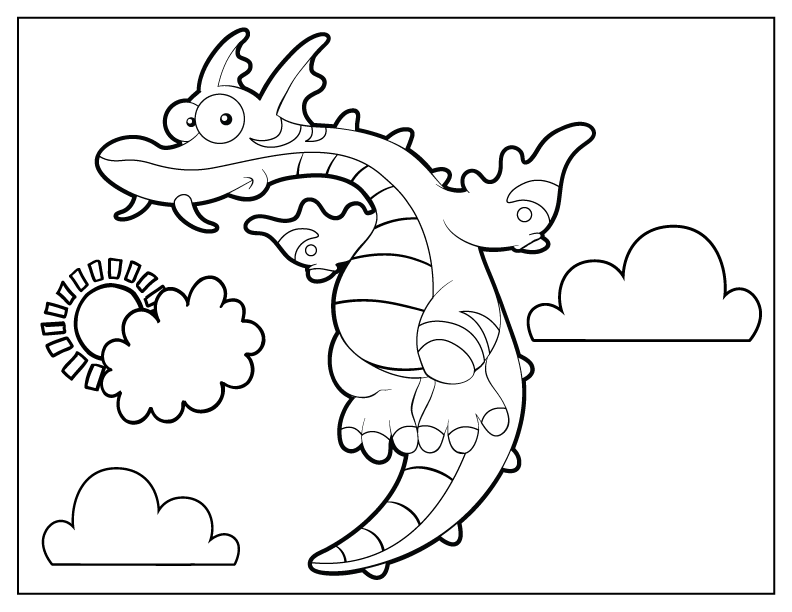
You know what to do during Crayon Collection Month! Collect some crayons and enjoy these printable coloring pages for you to print and enjoy!

Cave kid Coloring Page | Dragon Coloring Page | Mermaid Coloring Page

celebrate-picture-books-picture-book-review-the-crayon-man-cover

You can find The Crayon Man: The True Story of the Invention of Crayola Crayons at these booksellers

Amazon | Barnes & Noble | Books-a-Million

To support your local independent bookstore, order from

Bookshop | IndieBound

Picture Book Review

June 14 – National Children’s Day

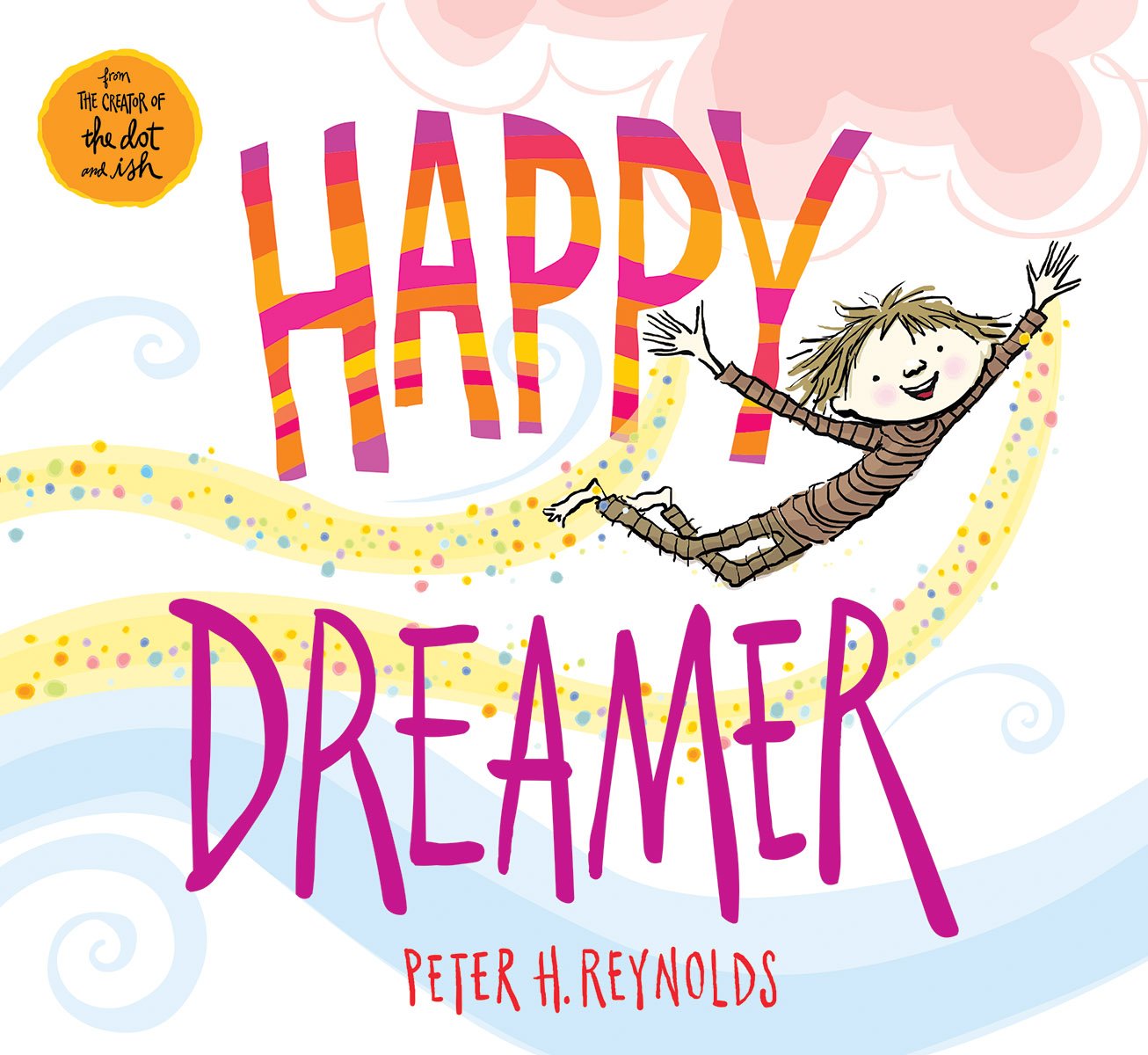
celebrate-picture-books-picture-book-review-happy-dreamer-cover

About the Holiday

On National Children’s Day, parents, grandparents, and other family members and caregivers are encouraged to spend the day with their children, celebrating each child’s unique qualities, listening to them, and recommitting the family to core values of love and acceptance. To celebrate today, talk to your children about their dreams and how the family as a whole can help them achieve their goals. Then have some fun with an activity that’s meaningful to all. 

Happy Dreamer

By Peter H. Reynolds


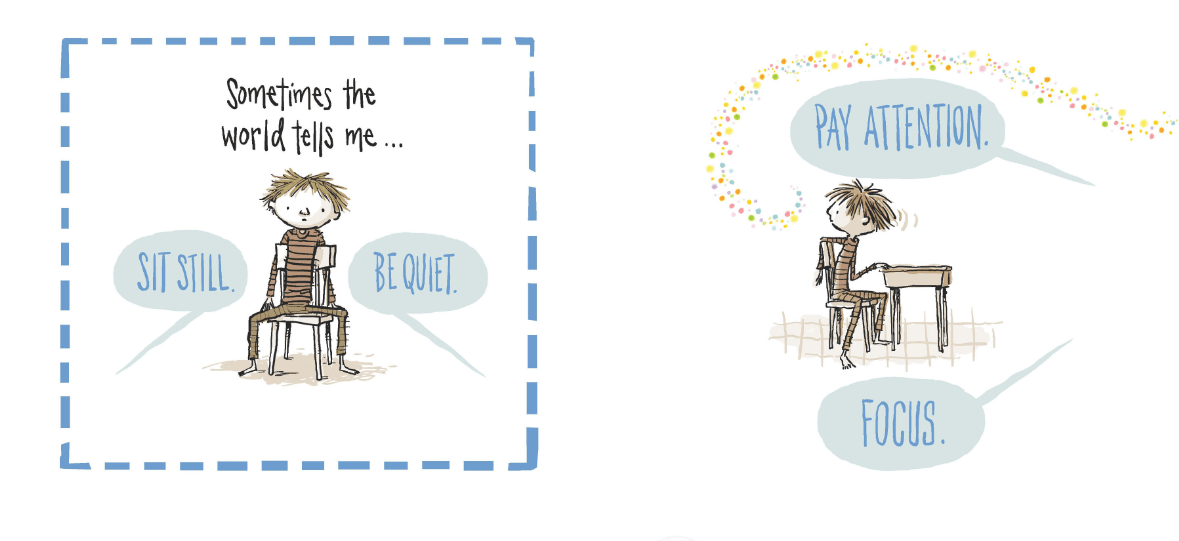
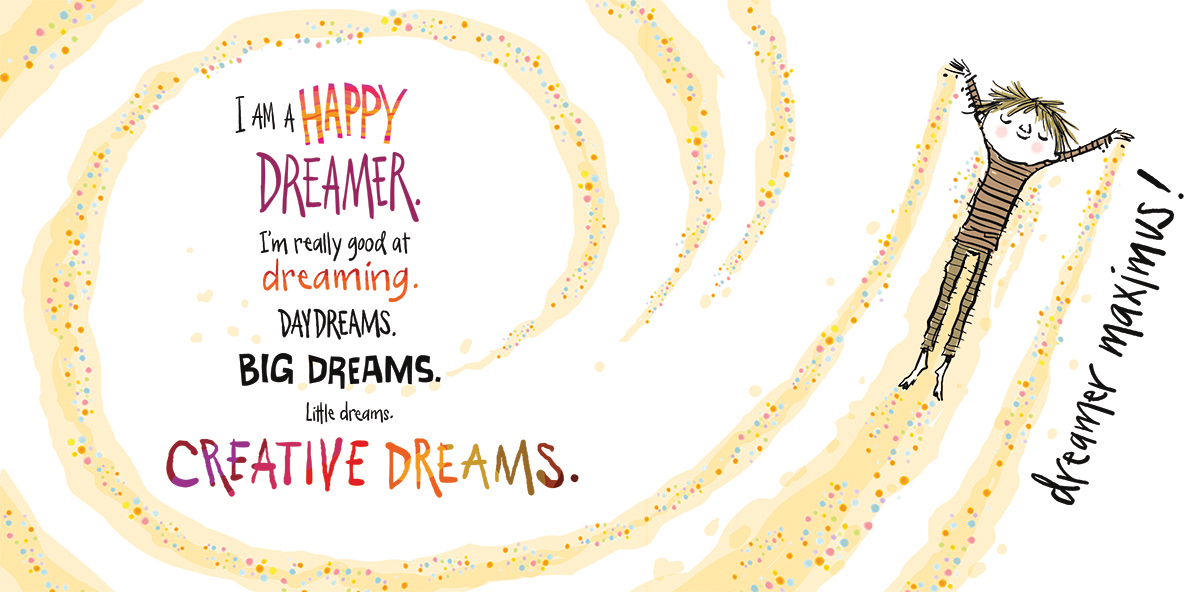
A child floats on a golden, sparkling swirl of their own creation. “I am a happy dreamer,” they say. “I’m really good at dreaming. Daydreams, big dreams, little dreams, creative dreams.” In fact, this child is a “dreamer maximus!” There are times when they’re told to ignore that voice inside…to “sit still” and pay attention. But the music inside is persistent and persuasive, inviting the child to move, to play along and let it out.

celebrate-picture-books-picture-book-review-happy-dreamer-dreamer-maximus

Copyright Peter H. Reynolds, 2017, courtesy of Orchard Books.

Sometimes dreams require quiet. Then the child says, “I make time to stay still and hear myself think—to let go and see what takes shape.” Can you see it too? There are dreams so big, the child reveals, that sometimes “I’m a shout-at-the-top-of-my-lungs dreamer (even if I’m just a loud-inside-my-head dreamer!)”

celebrate-picture-books-picture-book-review-happy-dreamer-musical-beat

Copyright Peter H. Reynolds, 2017, courtesy of Orchard Books.

There are times when dreams come in colors that paint a surprising path, and sometimes there are so many dreams firing at once that they cause “creative chaos.” When you ask make me clean up, the child says, I will, but “cleaning up hides my treasures” and “there is less of ME to show.” When that happens, the child explains, “…I feel alone. BOXED IN.” But there is always an escape, a way to recover the “happy dreams.”

celebrate-picture-books-picture-book-review-happy-dreamer-focus

Copyright Peter H. Reynolds, 2017, courtesy of Orchard Books.

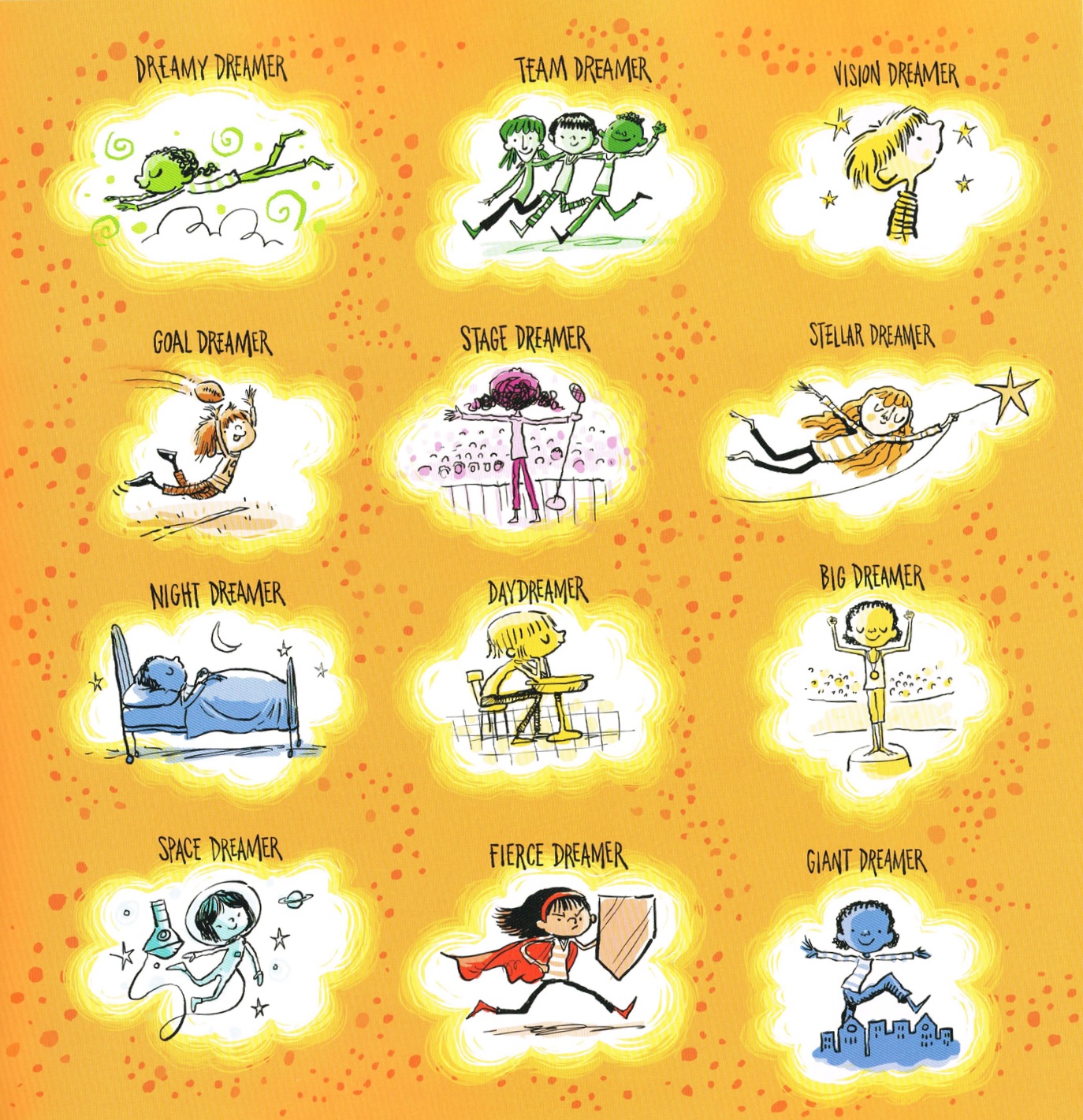
You know what? the child says, “I’m really good at being me. A dreamer—surprising, caring, funny, gentle, smart.” Falling or failing don’t hurt because dreamers always bounce back and keep going. Do you know what kind of dreamer you are? There are so many kinds! What makes you happy? Exploring, working hard, being with family or friends, being alone? Maybe laughing, acting, being wild, being strong. Are you civic-minded, peaceful, thoughtful?

What’s “the best way to be a happy dreamer? Just be YOU.”

celebrate-picture-books-picture-book-review-happy-dreamer-all-kinds-of-dreamers

Copyright Peter H. Reynolds, 2017, courtesy of Orchard Books.

Peter H. Reynolds is always inspirational, finding just the right words to include all readers while speaking directly and intimately to each reader individually. In Happy Dreamer, Reynolds taps into the ways ideas and talents come knocking, whispering, or shouting to be heard and set free. His lyrical language is engaging for even the youngest readers and meaningful for adults as well—on both a personal level and for those who are parents, caregivers, or teachers.

celebrate-picture-books-picture-book-review-happy-dreamer-bouncing-back

Copyright Peter H. Reynolds, 2017, courtesy of Orchard Books.

From the first image in which the child floats on the glowing swirl of dreams, readers will follow the child as they play music, discover shapes in the clouds, swing to lofty heights, shout to the world, paint a rainbow path, create fireworks and treasures, and break free from the restraints of the world that sometimes tamp down dreams. A double gate-fold filled with dreamers will delight readers as they search for just the type of dreamer they are. Written in the first-person and with gender neutral clothing and hairstyle, Happy Dreamer is a universal story.

Empowering, encouraging, and accepting, Happy Dreamer is a superb choice for home and classroom libraries.

Ages 4 – 8 and up

Orchard Books, an imprint of Scholastic, 2017 | ISBN 978-0545865012

Discover more about Peter Reynolds, his books, and his art on his website.

National Children’s Day Activity

celebrate-picture-books-picture-book-review-briefcase-craft

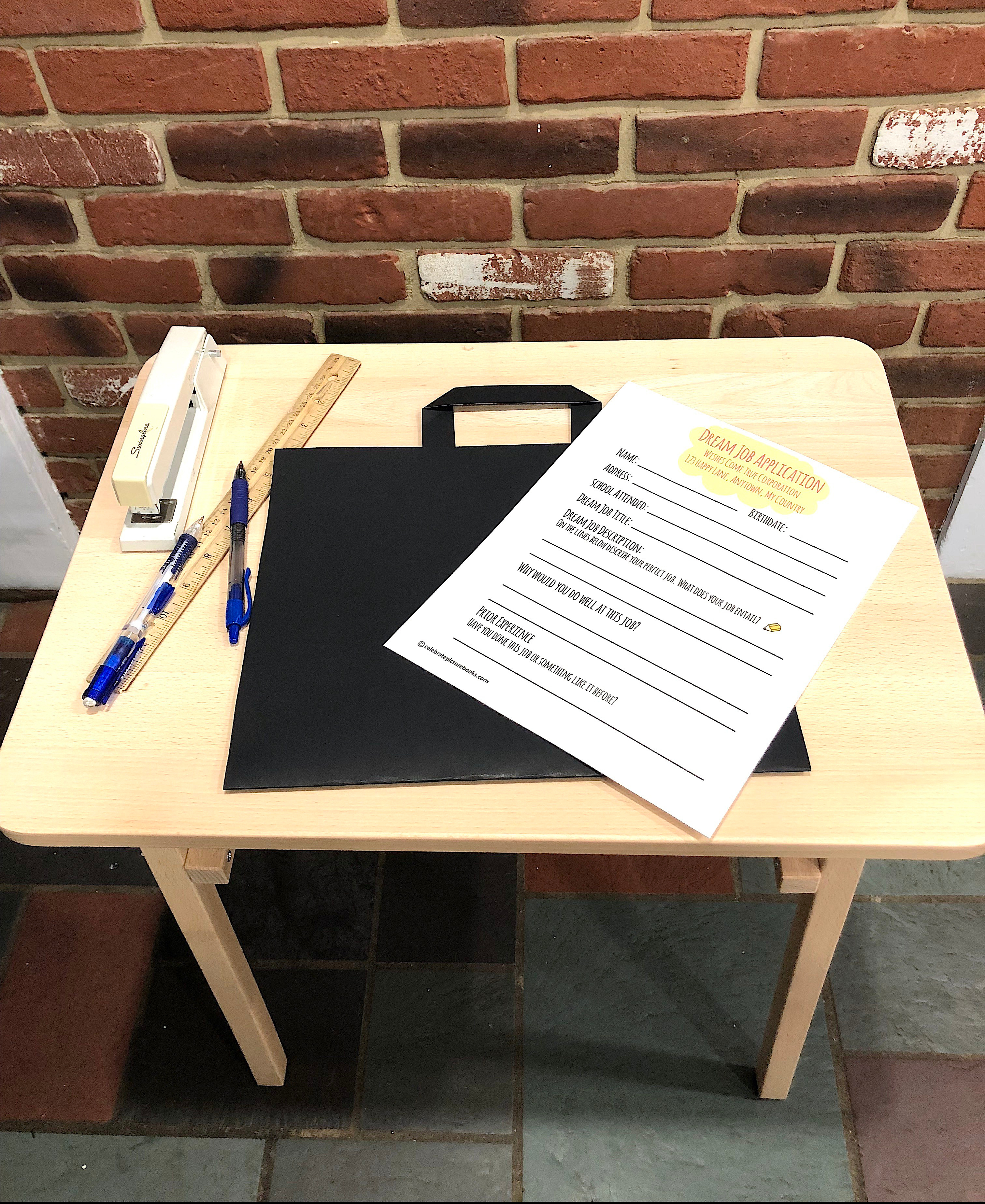
Imagine you are applying for your dream job. What would it be? Why are you the right candidate? Have fun with this portfolio or briefcase craft and printable Dream Job Application and start on the road to your happy future!

Supplies

Directions

To Make the Body of the Briefcase

  1. Cut a rectangle of poster board in proportion to child’s size. Leave ½ inch on either side of the shorter cut to glue the briefcase together. The longer side should be double the height you’d like the finished briefcase to be. (My example was made from a 12-inch by 20-inch strip.)
  2. Fold the poster board in half
  3. Glue the side edges together

To Make the Handle

  1. Cut a narrow strip of poster board
  2. Fold the right side of the strip toward you and down, pinching it tight; repeat on the left side

Print out the Dream Job Application and fill it in!

celebrate-picture-books-picture-book-review-happy-dreamer-cover

You can find Happy Dreamer at these booksellers

Amazon | Barnes & Noble| Books-a-Million

To support your local independent bookstore, order from

Bookshop | IndieBound

Picture Book Review
 

June 11 – Making Life Beautiful Day

celebrate-picture-books-picture-book-review-ray-cover

About the Holiday

Today’s holiday was established to celebrate all of those people who make life more fun, meaningful, joyful—more beautiful—for someone else. This can be done in so many ways, from spending more time talking with someone to using your talents to make something you know a friend, family member, or coworker would love, to just giving a smile to those you meet during the day. Making someone else feel good will make life more beautiful for you too!

Ray

By Marianna Coppo


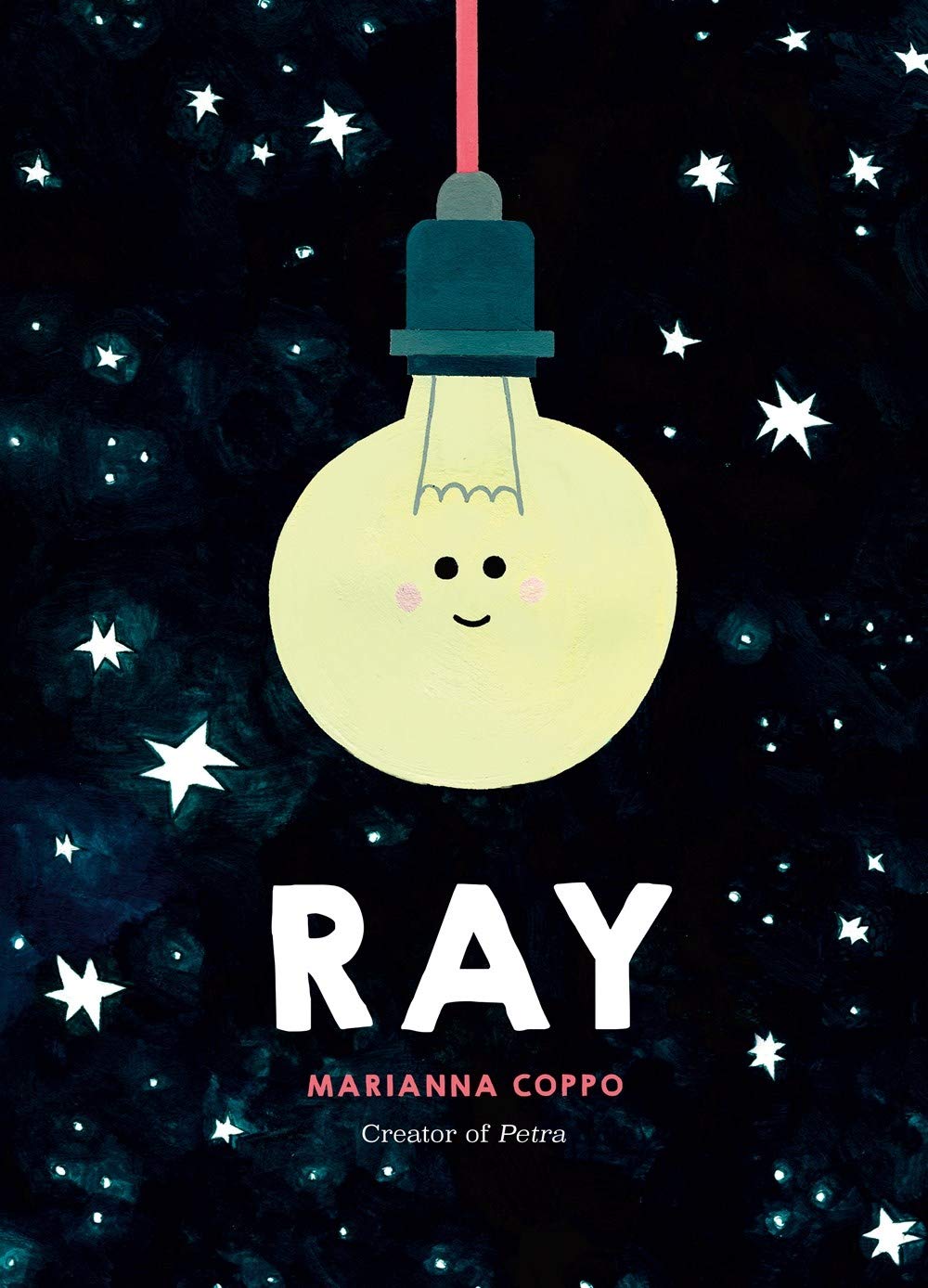
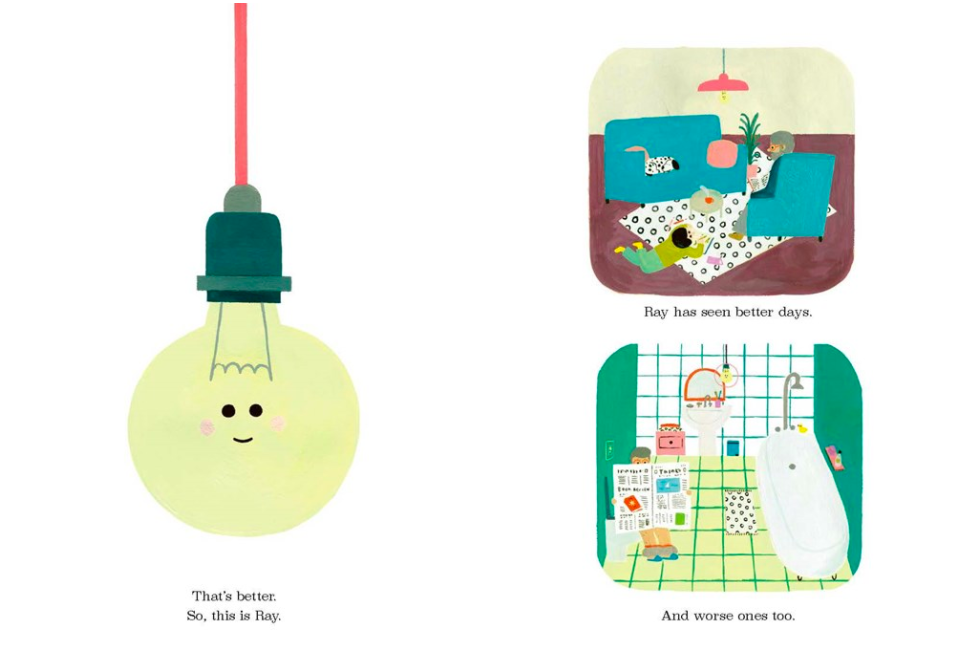
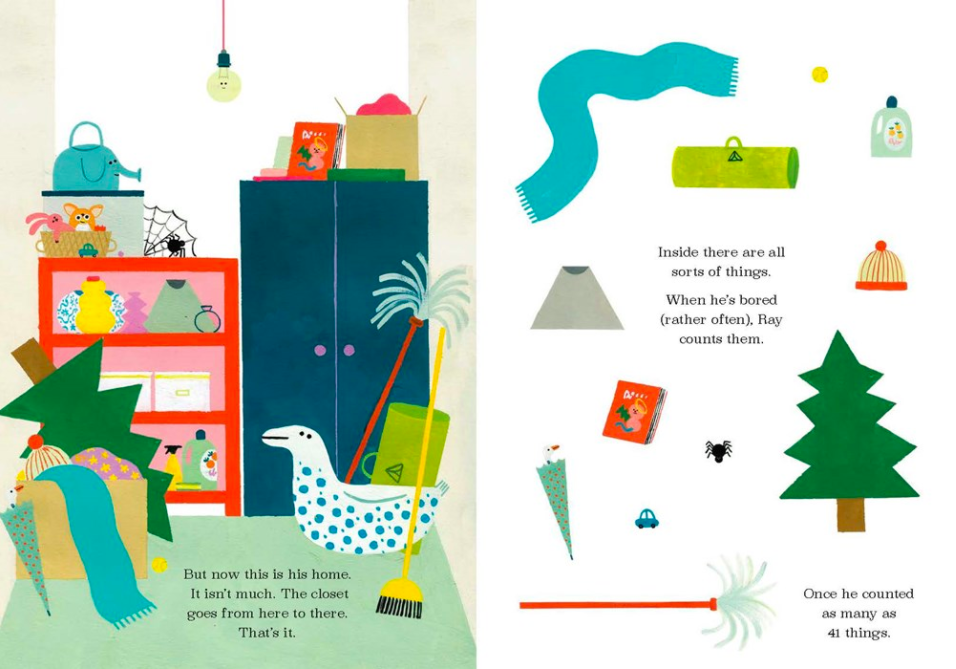
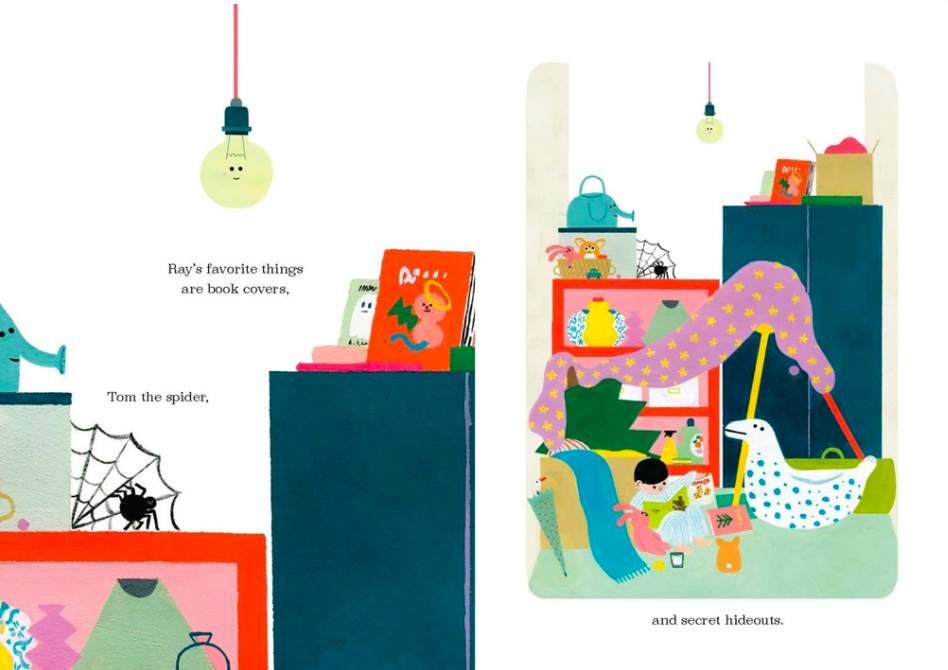
At the bottom of the staircase there’s a closet. This is where Ray lives. Ray is a lightbulb. Before taking up residence in the closet, Ray lived in the family room (which was fun) and in the bathroom (which was not so much). Now, though he hung above a collection of stuff—like winter hats and scarves, books, cleaning supplies, an elephant-shaped watering can, some old toys, and a spider—that gave him something to count when he was bored. Sometimes, the child made a fort in the closet and hid out reading books.

celebrate-picture-books-picture-book-review-ray-family-room

Copyright Marianna Coppo, 2020, courtesy of Tundra Books.

But there’s a downside: “The closet, the thing, and even Tom the spider often disappear. Ray does not like this.” These times were even more boring; even Ray’s sleep was “dreamless.” Then one day, Ray felt a twist. Then he was moving and seeing the world pass upside down. When the car stops, he finds himself outside in a place he’s never seen before. “Ray can’t tell where it begins or where it ends,” and there are way too many things to count.

celebrate-picture-books-picture-book-review-ray-41-things

Copyright Marianna Coppo, 2020, courtesy of Tundra Books.

When the man and the child go to sleep now, Ray stays awake. He makes a wish on a shooting star just before he falls asleep, just before dawn. “When he wakes up, right there in front of him, shines the biggest light bulb in the world.” Seeing the sun gives Ray a whole new perspective on the world. Soon, the man and the boy and Ray are heading back home. The same closet awaits. But for Ray, it will never be dark or boring again.

celebrate-picture-books-picture-book-review-ray-hideaway

Copyright Marianna Coppo, 2020, courtesy of Tundra Books.

To read Marianna Coppo’s Ray for the first time is to feel all the wonder of new discovery, imagination, and creativity. When reading Ray for the second time (which kids will beg to do after Ray’s new perspective is revealed), the story unfolds with new enlightenment that invites readers to linger on each page. Ray, with his bright eyes, rosy cheeks, little smile, and filament that creates a tuft of hair is an endearing character that kids will love.

Coppo’s story is a sweet metaphor for discovering the wonders of the wider world and the value of engaging kids in stimulating experiences. It also reminds us that too often we can be “in the dark” and that looking at things differently results in new perspectives and more appreciation. Coppo’s clever illustrations invite interaction and close observation as the items in the closet transform into so much more after Ray’s return from the camping trip. Ray’s vision of himself has also changed: in his dreams he is now the sun shining on his little world.

A unique story that encourages the exploration and introspection that sparks imagination and self-esteem, Ray would be a favorite for home, school, and public library collections.

Ages 3 – 7

Tundra Books, 2020 | ISBN 978-0735265776

Discover more about Marianna Coppo, her books, and her art on her website.

Making Life Beautiful Day Activity

celebrate-picture-books-picture-book-review-share-your-bright-idea-activity

Share Your Bright Idea! Page


Do you sometimes have a lightbulb moment when an idea seems just right? Use this printable Share Your Bright Idea! Page to write about or draw your idea!

celebrate-picture-books-picture-book-review-ray-cover

You can find Ray at these booksellers

Amazon | Barnes & Noble | Books-a-Million

To support your local independent bookstore, order from

Bookshop| IndieBound

Picture Book Review


May 29 – It’s Gifts from the Garden Month

celebrate-picture-books-picture-book-review-leafy-critters-cover

About the Holiday

Many of us – and perhaps even more this year – spend the summer digging, planting, and tending our garden and yard. We look forward to all of the delicious vegetables and fruit our gardens provide and the hours of fun we have playing or lounging in the yard. But if you look closely, these areas offer up other gifts too. That profusion of dandelions may seem like bothersome weeds, but their sunny flowers and puffball seeds also create beauty and unforgettable childhood moments. Watching industrious insects reminds us of the wonder of nature below our feet or pollinating our crops. And – as today’s book shows – with some imagination and creativity that garden or yard can be transformed into a work of art. So, get outside and see what your gifts are sprouting in your backyard.

I received a copy of Leafy Critters from Blue Dot Press for review consideration. All opinions are my own. 
By Jakki Licare

Leafy Critters

By Yvonne Lacet

This creative and imaginative earth art book by Yvonne Lacet an artist and photographer, whose work incorporates urban environments, landscapes, and nature play, will inspire children to look at nature in a whole new light. Yvonne Lacet uses petals, twigs, stems, and leaves to create “Leafy Critters.” Simple items from nature are arranged together to become different animals: foxes, polar bears, butterflies, mice, and more.

Not only is the artwork stunning but on many pages Lacet shows readers the before and after photos which makes it simple for kids to duplicate her animals. My kids enjoyed pointing out the different items in the before photos and discovering how Lacet used them in her completed artwork. A leaf, for example, transforms into a head or a wing.

celebrate-picture-books-picture-book-review-leafy-lion

Copyright Yvonne Lacet, 2020, courtesy of Blue Dot Kids Press.

One of the extraordinary things about this book is not only that any child can find the natural materials needed in their backyard or local park, but the artistic eye Lacet uses to create the eighteen creatures presented. The piglet (pictured on the front cover) is simply six pink petals arranged together. Yvonne takes it a step further, though, and uses the portions of the petals that are near the pistil and have a darker pigment to add shading and detail that  transform into the pig’s hooves and snout.

The image of the polar bear also shows how contrasting colors can create a whole new scene. With the black paper background and white petals sprinkled over the page, we are suddenly transported into an arctic snowstorm at night! The great thing about Leafy Critters is that it makes young readers think outside the box. If you don’t have white petals on hand, then rice could make a great substitution. 

celebrate-picture-books-picture-book-review-leafy-critters-turtle

Copyright Yvonne Lacet, 2020, courtesy of Blue Dot Kids Press.

My boys are often frustrated with art projects because they cannot create “realistic art.” Earth art, however, is an easy way for kids to explore colors and composition without the frustration of being limited by their skills. It only requires a little nature and a creative eye. So take Leafy Critters outside! You’ll be surprised to discover what creatures creep, crawl, swim, and lurk in your own backyard. 

A DIY page at the back gives kids tips on how to search for materials, gather them, and look at the colors, shapes, and sizes of leaves, petals, seeds, and more to spark their imaginations. Younger children will enjoy the creativity in each design on the pages while older children and even teens and adults will be inspired to create their own works of art.

Whether you are looking for a fun home art project or inspiration for your elementary art students, Leafy Critters will make a creative addition to your library.

Ages 3 and up

Blue Dot Kids Press, 2020 | ISBN 978-1733121224

Discover more about Yvonne Lacet and her work on her website.

Gifts from the Garden Month Activity

celebrate-picture-books-picture-book-review-nature-art-craft

Natural Art Note Card

Send a special note to a loved one with your own leafy critter. This idea could be a great card for Father’s Day too! Just write in Dad after otter!

Supplies

  • Natural Materials (I used brown leaves, bark, clover flowers, and stems)
  • Scissors
  • Glue
  • Marker
  • Paper

Directions

  1. Gather your natural materials outside

  2. Arrange your pieces together to make an otter shape

  3. Cut any pieces that need to be shaped or trimmed

  4. Glue your otter down

  5. Write “There’s no OTTER like you!”

celebrate-picture-books-picture-book-review-leafy-critters-cover

You can find Leafy Critters at these booksellers

Amazon | Barnes & Noble | Books-a-Million 

To support your local independent bookstore, order from 

Bookshop | IndieBound

Picture Book Review