March 13 – National Good Samaritan Day

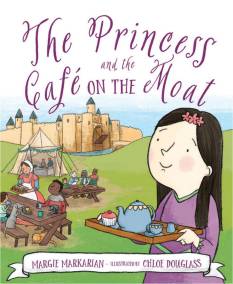
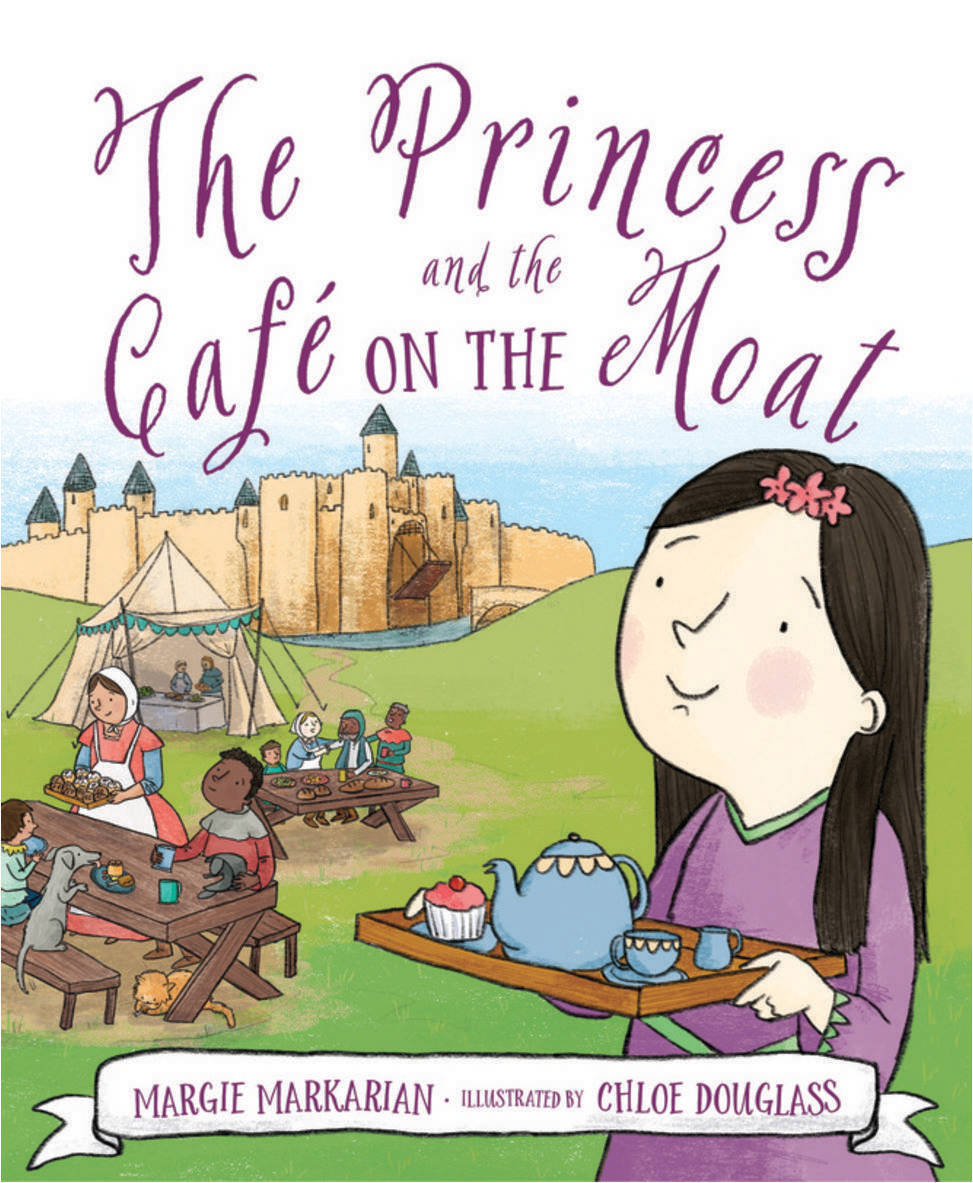
celebrate-picture-books-picture-book-review-the-princess-and-the-cafe-on-the-moat-cover

About the Holiday

A Good Samaritan is a person who sees someone in need of help or kindness and generously offers assistance or a smile. For today’s holiday, people are encouraged to notice those moments when someone could use a hand and go to their aid. You never know when a small gesture can have far-reaching effects. Children are particularly good at noticing those who need help or cheering up. You can foster their natural kindness by supporting their ideas and actions for helping their community.

The Princess and the Café on the Moat

Written by Margie Markarian | Illustrated by Chloe Douglass


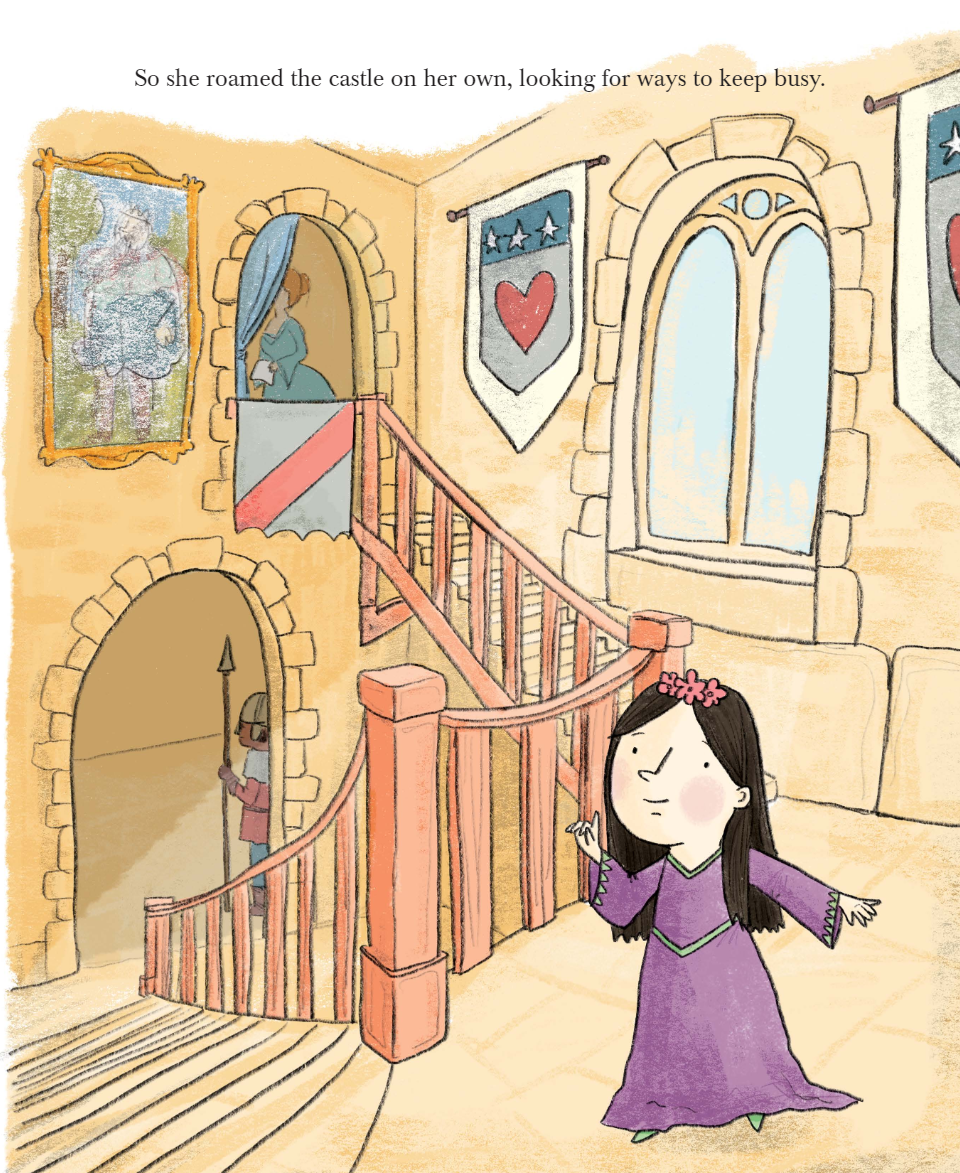
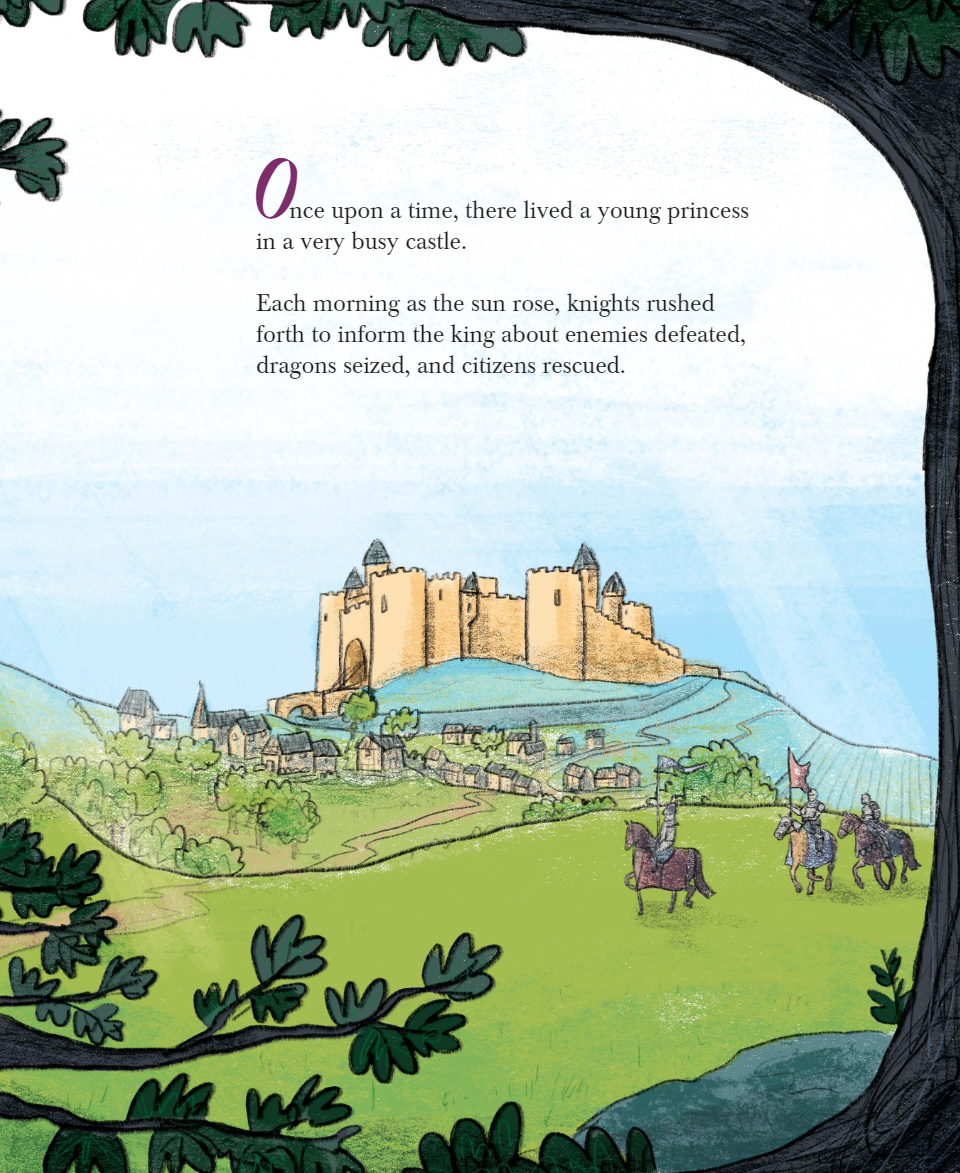
There once was a little princess who lived in a very busy castle. Every morning knights brought news of “enemies defeated, dragons seized, and citizens rescued.” Upstairs, ladies-in-waiting were given their duties for “silks to sew, invitations to ink, and chandeliers to shine.” The princess wanted a special job too, but her voice was never heard above the din, so she went in search of something to occupy her time.

celebrate-picture-books-picture-book-review-the-princess-and-the-cafe-on-the-moat-kingdom

Image copyright Chloe Douglass, 2018, text copyright Margie Markarian, 2018. Courtesy of Sleeping Bear Press.

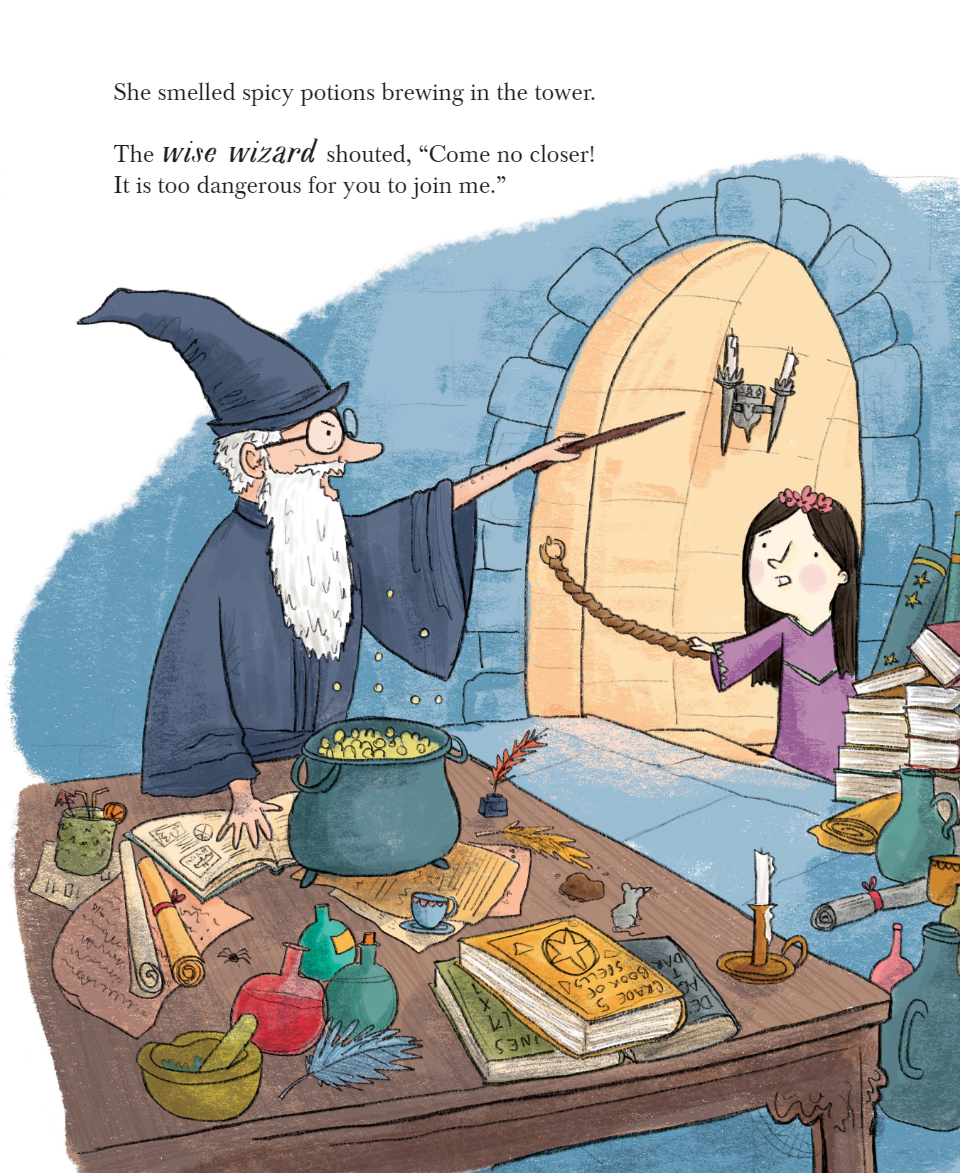
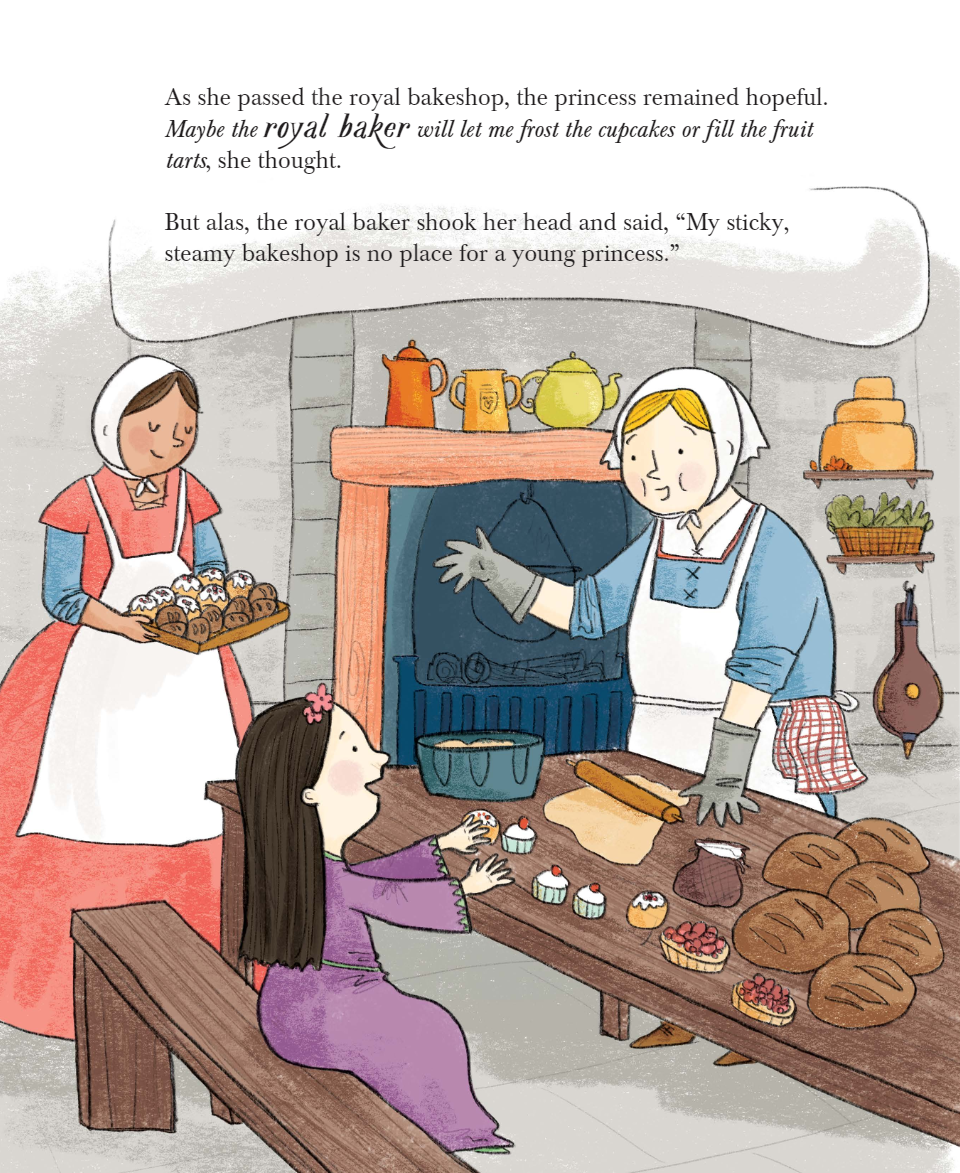
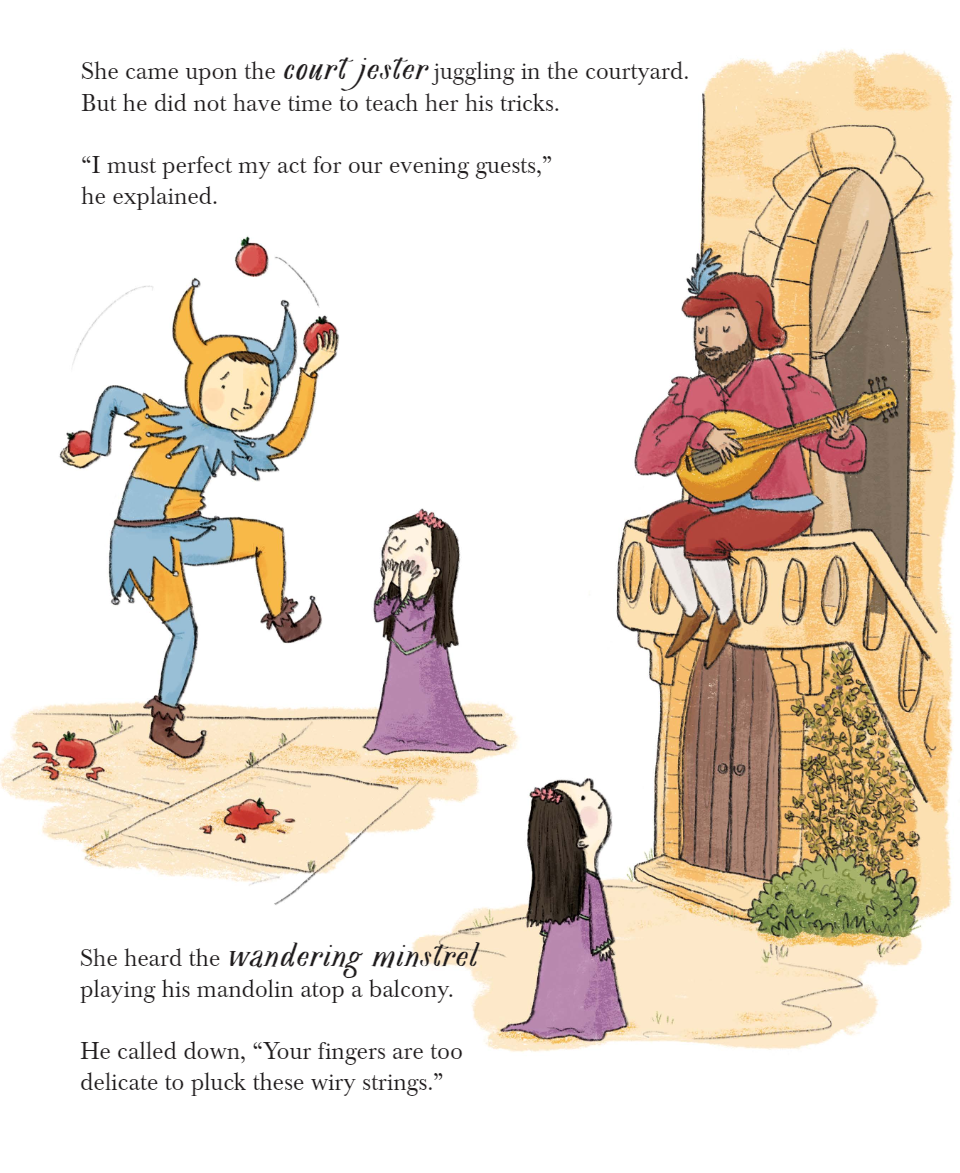
When she met the court jester, he told her he was too busy learning a routine for the evening’s guests to teach her how to juggle. The wandering minstrel who was playing his mandolin told her, “‘Your fingers are too delicate to pluck these wiry strings.’” And the wise wizard banished her from the tower because his potions were too dangerous. Even the royal baker thought her kitchen was no place for a princess. “The princess’s kind heart and eager spirit were not easily discouraged.” As she wandered past the front gate, she wondered if there were people beyond it who could use her help. Just then the drawbridge descended, and when the guard turned away for a moment, the princess crept by him and ran outside.

celebrate-picture-books-picture-book-review-the-princess-and-the-cafe-on-the-moat-wizard

Image copyright Chloe Douglass, 2018, text copyright Margie Markarian, 2018. Courtesy of Sleeping Bear Press.

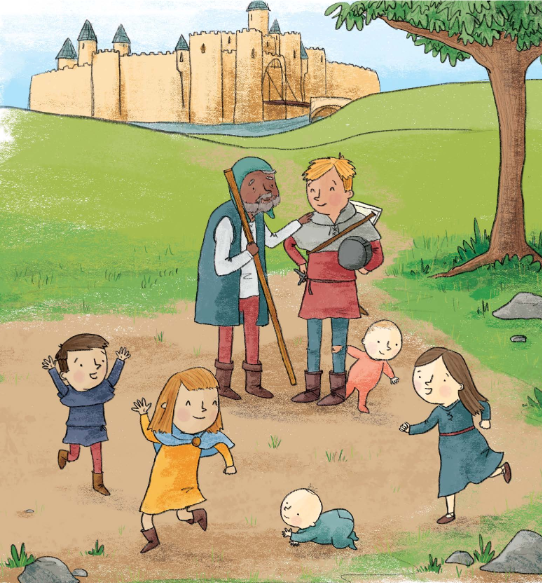
Right outside the castle, she met a “sad old man holding a scrolled parchment.” She approached him and asked why he was so sad. He told her that he had a letter from his far-away son, but because of his weak eyesight, he couldn’t read it. “‘I have time to read your letter and sit awhile,’ said the princess, happy to have found a task so quickly.” Next, she met a worried widow with five children coming down the path. The princess asked why they looked so tired.

celebrate-picture-books-picture-book-review-the-princess-and-the-cafe-on-the-moat-minstrel

Image copyright Chloe Douglass, 2018, text copyright Margie Markarian, 2018. Courtesy of Sleeping Bear Press.

The woman told her that she had no one to watch her children as she traveled the long way to the village market. The princess happily offered to watch the woman’s children. Soon, “a brave squire limped by the palace where the princess, the old man, and the widow’s children were telling stories and playing games.” When the princess asked the squire what pained him, he told her “‘I gashed by knee in a skirmish many miles ago but have not stopped to tend to it.’” The princess quickly cleaned and bandaged the squire’s knee so he could continue on to the castle.

Back at the castle, though, everything was in an uproar as the king and queen and staff hunted everywhere for the princess. Through a window the king suddenly heard laughter and singing. When the king looked out, he saw that the sound was coming from the princess. Everyone in the castle paraded out through the drawbridge to join the princess and her friends.

celebrate-picture-books-picture-book-review-the-princess-and-the-cafe-on-the-moat-kitchen

Image copyright Chloe Douglass, 2018, text copyright Margie Markarian, 2018. Courtesy of Sleeping Bear Press.

The princess ran to her mother and father and told them about all the things she had done for the old man, the widow, and the squire. The king and queen “were proud to have such a kindhearted daughter.” The king suggested that they “all celebrate together with treats and refreshments.” From that day on in the afternoon, the drawbridge was dropped and tables and chairs set up. Then the “princess welcomed townspeople and travelers from far and wide to her café on the moat.”

Here, the court jester practiced his juggling, the minstrel shared his music, the wizard made drinks, and the baker created delicious treats. The old man and the widow with her children often came by to meet new friends and relax. And the brave squire enjoyed refreshments while he guarded the castle. The café on the moat welcomed everyone, and “indeed, they all lived happily and busily ever after.”

celebrate-picture-books-picture-book-review-the-princess-and-the-cafe-on-the-moat-back-cover

Image copyright Chloe Douglass, 2018, text copyright Margie Markarian, 2018. Courtesy of Sleeping Bear Press.

An Afterword about fairy tales and a kindness activity for children follow the story.

Margie Markarian’s sweet story is an enchanting fairy tale for today’s socially conscious and active kids. Instead of needing rescue, this princess looks for opportunities to help others. When she’s turned away inside the castle, she leaves the comfort of home and reaches out to her community, an idea that children will embrace. Through her cheerful storytelling, Markarian also shows readers that in their talents and kind hearts they already have what it takes to make a difference to others. As the princess opens her café on the moat, children will see that the adults also find ways to support her efforts. Markarian’s language is charmingly “medieval,” making the story fun to read aloud while inspiring listeners.

celebrate-picture-books-picture-book-review-the-princess-and-the-cafe-on-the-moat-inside-castle

Image copyright Chloe Douglass, 2018, text copyright Margie Markarian, 2018. Courtesy of Sleeping Bear Press.

Chloe Douglass’s adorable princess is a terrific role model for young readers. Her eagerness to help and positive spirit are evident in her smiles and persistent requests for a job to do. When she ventures out of the castle, she displays obvious empathy for the people she meets, and children will recognize her joy at being able to brighten the townspeople’s day. Despite their busy days, the king and queen are happy and supportive of their daughter. Children will love the bright and detailed images of the castle and town, where the crest of love rules.

The Princess and the Café on the Moat is a charming flip on the traditional fairy tale—one that children will want to hear again and again. It would make a great spring gift and an enriching addition to home and classroom bookshelves.

Ages 5 – 8

Sleeping Bear Press, 2018 | ISBN 978-1585363971

To discover more about Margie Markarian and her picture book and to find fun activities, visit her website. 

Read an interview with Margie Markarian.

Learn more about Chloe Douglass, her books, and her art on her website.

National Good Samaritan Day Activity

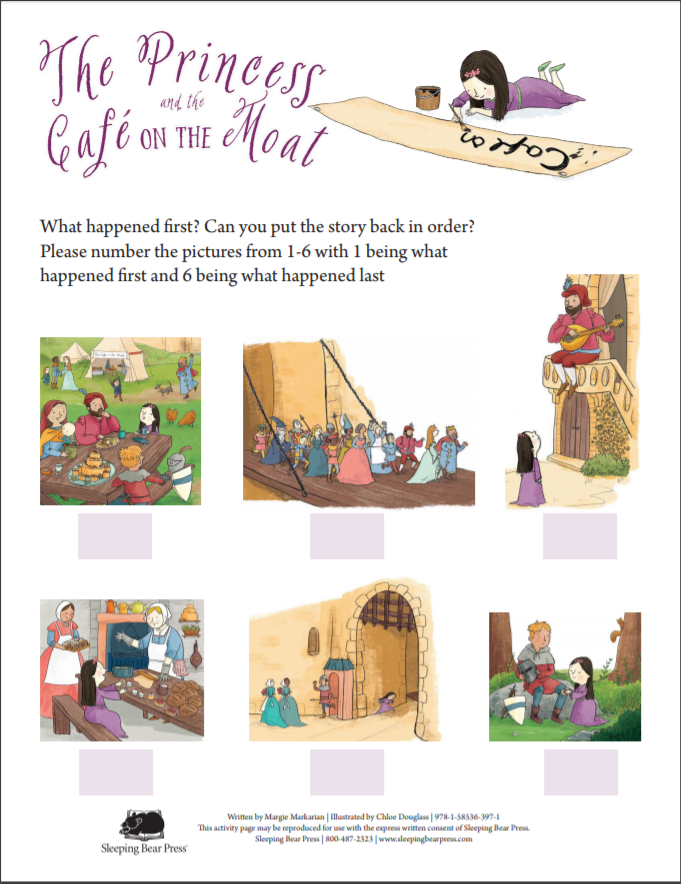
celebrate-picture-books-picture-book-review-the-princess-and-the-cafe-on-the-moat-number sequence-page

The Princess and the Café on the Moat Activities


The Princess likes to help people relax and have fun together! You can help her too with these four activity pages!

The Princess and the Café Coloring Page |Castle Matching PageStory Sequencing Page Write a Fairy Tale Page

celebrate-picture-books-picture-book-review-the-princess-and-the-cafe-on-the-moat-cover

You can purchase The Princess and the Café on the Moat at these booksellers

Amazon | Barnes & Noble | Bookshop (to support your local independent bookstore)


February 17 – Random Acts of Kindness Day

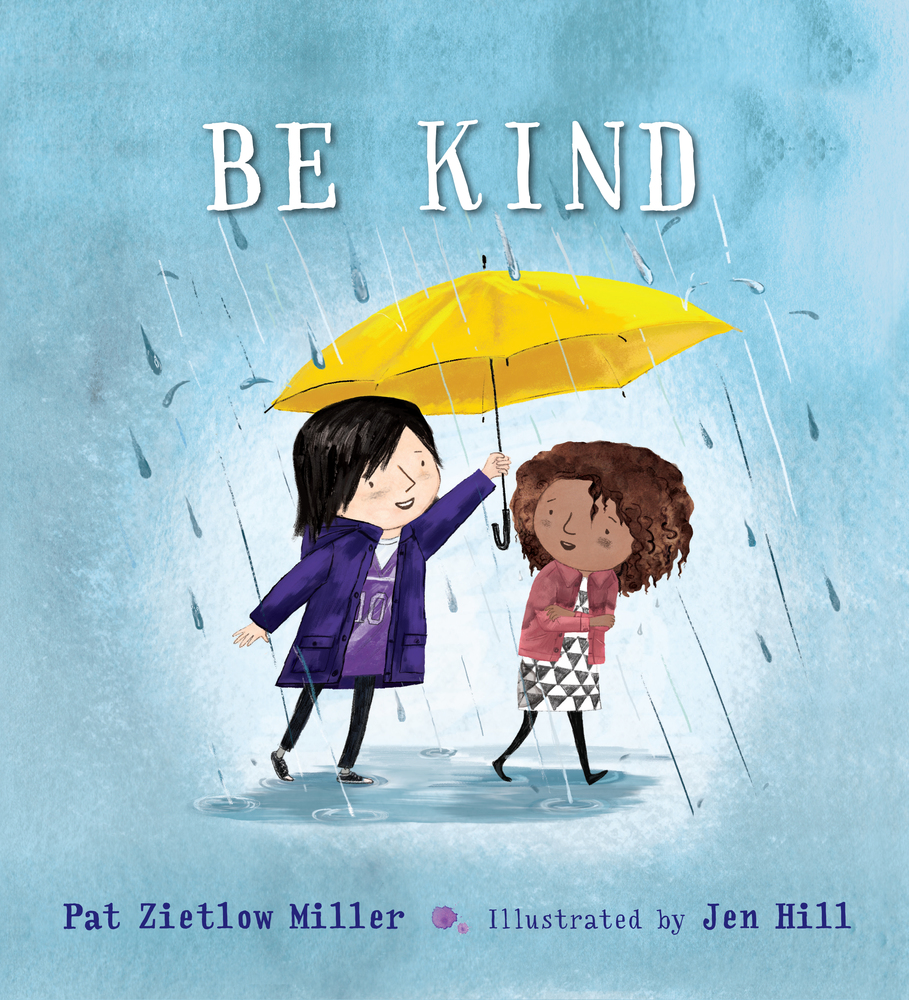
celebrate-picture-books-picture-book-review-be-kind-cover

About the Holiday

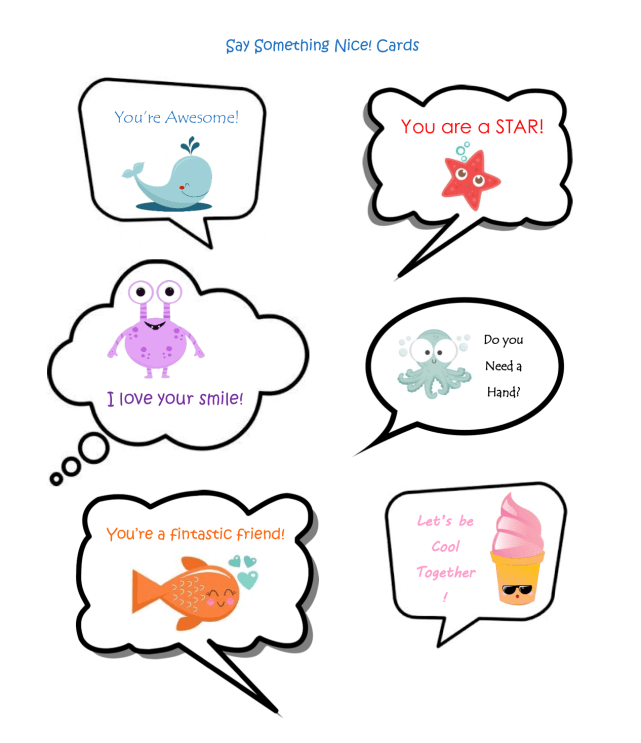
It’s Random Acts of Kindness Day and the beginning of Random Acts of Kindness Week. Today offers a terrific time to begin or reconfirm your commitment to doing nice things for those around you. When you become a RAKtivist (Random Acts of Kindness Activist), you can change people’s lives. Simple gestures of kindness make anyone feel better and create a bond that bring a community closer. If you see someone having a bad day, give them a smile. Is someone struggling with a box, a bag, or keeping their stuff in their locker? Give them a hand. Does someone always eat lunch alone? Offer to sit with them and have a conversation. You’re also encouraged to give others a card to brighten their day. You’ll find some to print out at the end of this post!

There are as many ways to be a RAKtivist as there are people on the planet. You can  learn more about this uplifting holiday and find free resources—including downloadable teachers’ lesson plans for K-8 grades, posters, a calendar full of ideas on how to incorporate kindness into your life, kindness quotes, and more—on the Random Acts of Kindness Website!

Be Kind

Written by Pat Zietlow Miller | Illustrated by Jen Hill

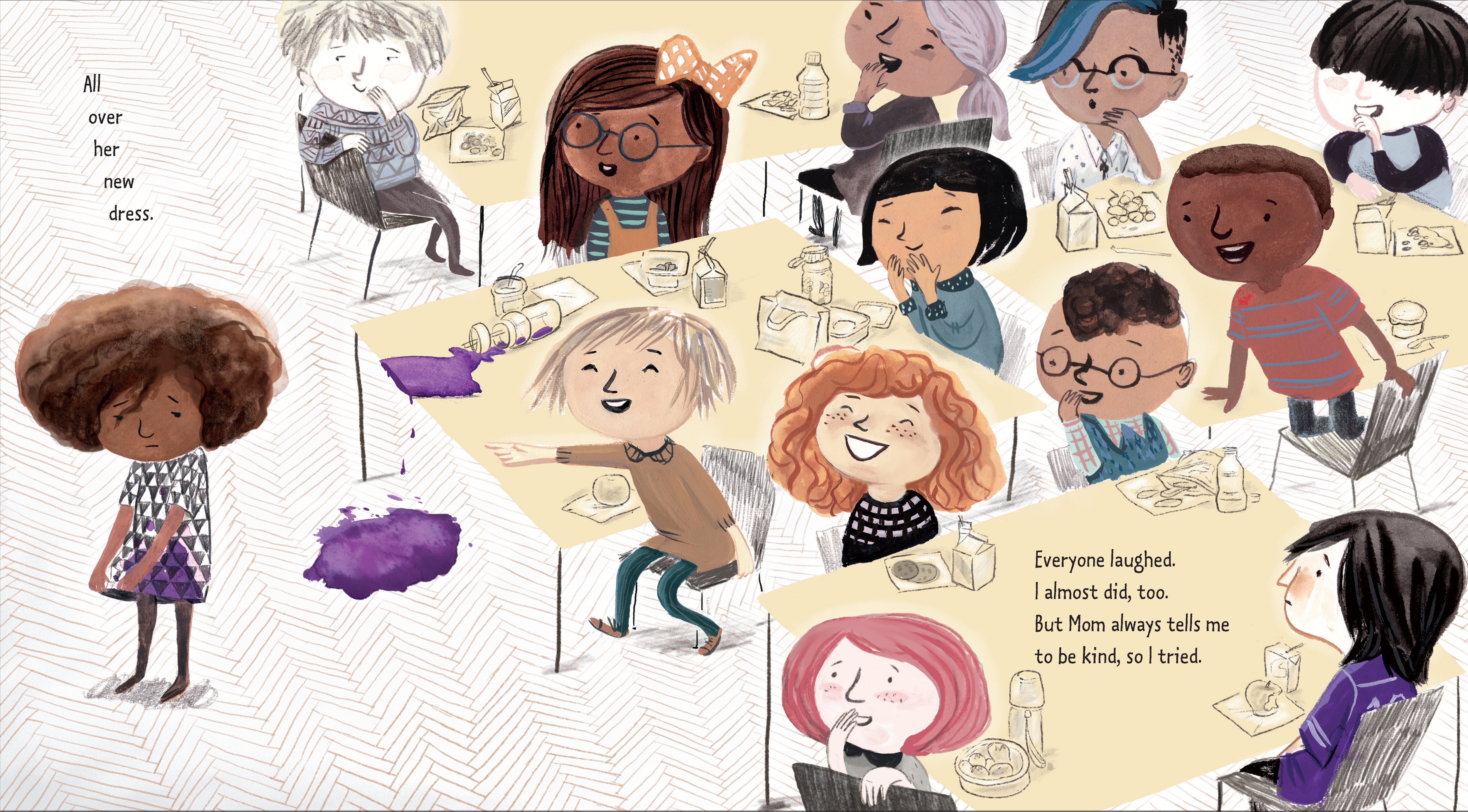
At school during snack time when Tanisha spilled grape juice on her new dress, the class burst out laughing. One student remembered that their mom always taught them to be kind and tried to make Tanisha feel better by saying, “Purple is my favorite color.” The student thought Tanisha would smile, but she just ran away. All during art class, Tanisha’s classmate thought about what they should have done instead, wondering, “What does it mean to be kind anyway?”

celebrate-picture-books-picture-book-review-be-kind-spilled-juice

Image copyright Jen Hill, 2018, text copyright Pat Zietlow Miller, 2018. Courtesy of us.macmillan.com.

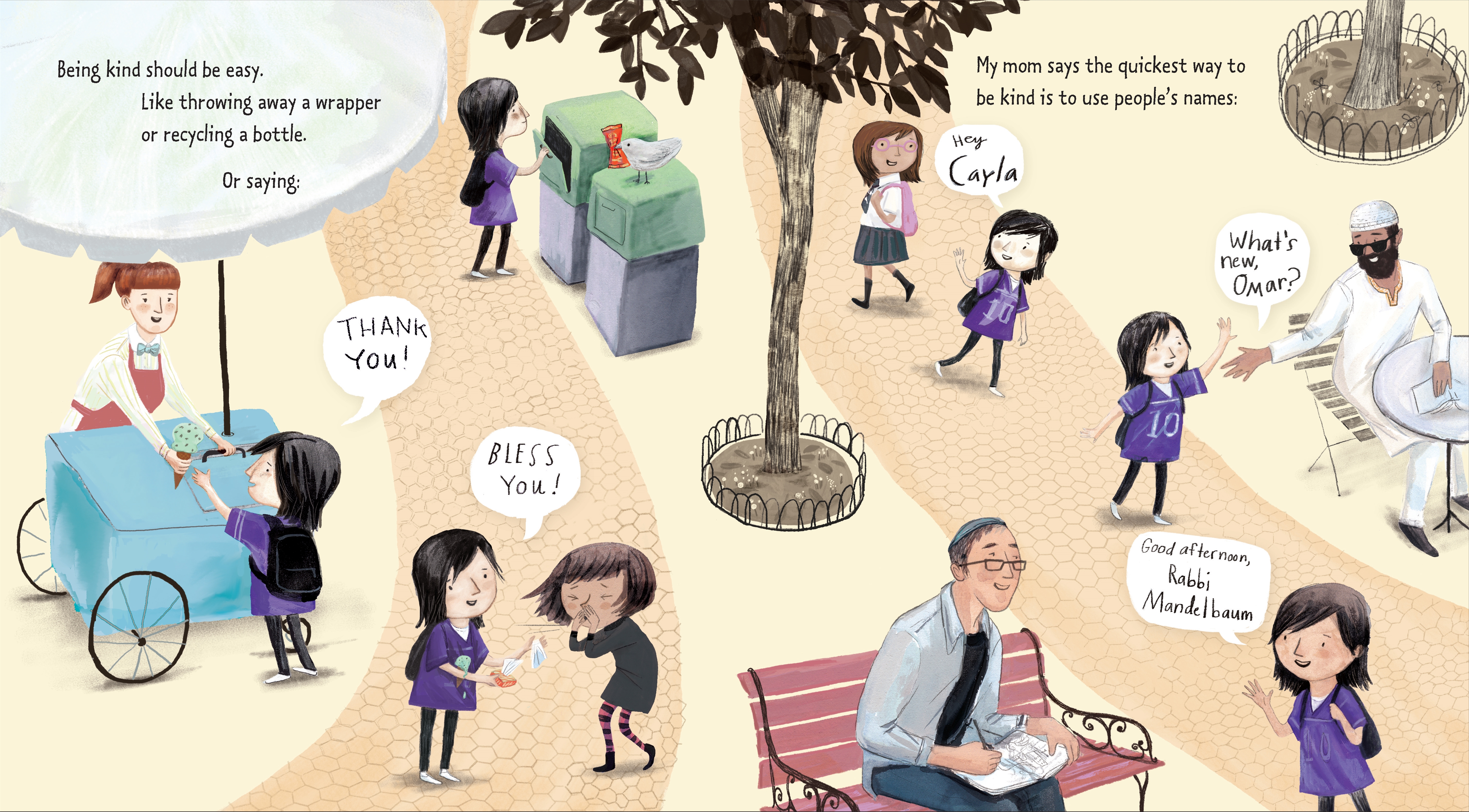
They think, “Maybe it’s giving.” Like baking treats for someone who lives alone, or giving away old clothes to someone who can use them. Helping out might also show kindness. For instance, “putting dirty dishes in the sink” or taking care of a pet. Paying attention to others could be another way to show you care. Like noticing someone’s new shoes, offering to be the new girl’s partner in class, or even just listening to someone’s stories—even if you’ve heard them before. Sometimes being kind is easy, but there are other times when it can be challenging or even scary—“like sticking up for someone when other kids aren’t kind.”

celebrate-picture-books-picture-book-review-be-kind-in-the-neighborhood

Image copyright Jen Hill, 2018, text copyright Pat Zietlow Miller, 2018. Courtesy of us.macmillan.com.

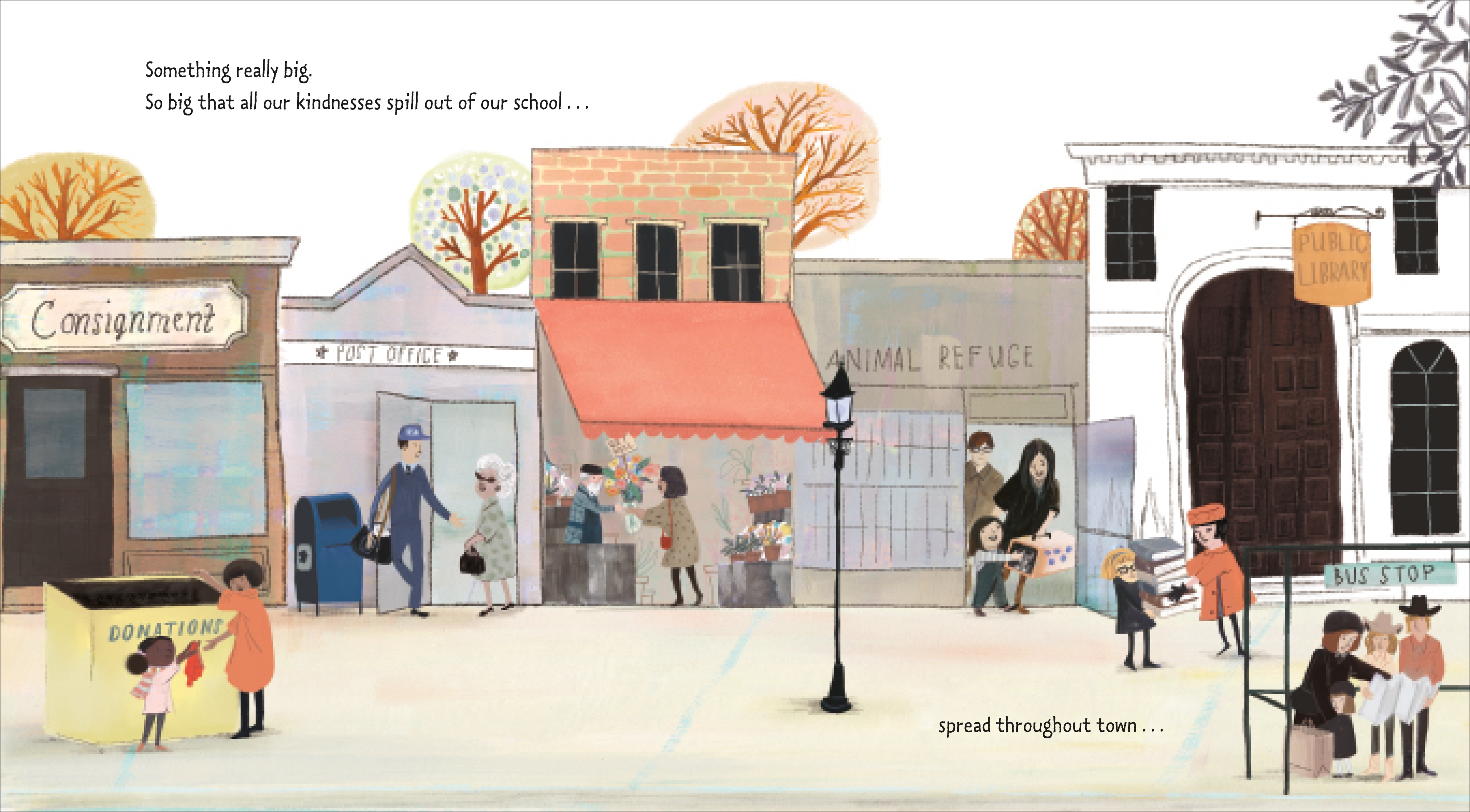
The child decides that maybe all they can do for Tanisha is to sit near her and paint her a picture of purple and green—of pretty violets. They hope that small acts like these will join with other people’s and that they will expand, fanning out from school into the community, across the country, around the world, and back. “So we can be kind. Again. And again. And again.”

celebrate-picture-books-picture-book-review-be-kind-around-town

Image copyright Jen Hill, 2018, text copyright Pat Zietlow Miller, 2018. Courtesy of us.macmillan.com.

Miller’s tender prose is perfect for planting the seeds of kindness and opening discussions about what it means to be caring and compassionate. With more and more children speaking up and creating change, Miller’s gentle and affirming story shows readers that it’s often the little things that count the most. Some of the examples she gives are acts that many children may do already, confirming their innate sensitivity, while others may spark new ideas and expand readers’ definition of kindness.

Jen Hill’s soft-hued illustrations beautifully depict the emotional tug at the heart that Tanisha’s spilled grape juice sets in motion for the protagonist and young readers. As one caring child wonders what kindness really is, Hill clearly portrays diverse children helping out at home, at school, and in their community locally and—as the kindness spreads—around the world. Hill draws the caring student with gender neutral clothing and hair, allowing all children to relate to the story’s main character. 

Be Kind is a lovely perceptive and sensitive book that would be an asset to any home or classroom library.

Ages 3 – 6

Roaring Brook Press, 2018 | ISBN 978-1626723214

Discover more about Pat Zietlow Miller and her books on her website.

To learn more about Jen Hill, her books, and her art, visit her website.

World Kindness Week Activity

celebrate-picture-books-picture-book-review-say-something-nice-cards

Say Something Nice! Cards

Do you want to give someone a nice surprise? Print out these cards and give one to a friend, to someone you’d like to know, or to anyone who looks like they need a pick-me-up! If you’d like to make your own cards, print out the blank template and write and/or draw your own message! You can also print these on adhesive paper and make your own stickers.

Say Something Nice! Cards | Say Something Nice! Cards Blank Template

celebrate-picture-books-picture-book-review-be-kind-cover

You can find Be Kind at these booksellers

Amazon | Barnes & Noble | Books-a-Million

To support your local independent bookstore, order from

Bookshop | IndieBound

Picture book review

December 12 – National Ding-a-Ling Day

celebrate-picture-books-picture-book-review-the-lonely-phone-booth-cover

About the Holiday

Since 1972, when Franky Hyle founded the Ding-a-Ling Club, people have celebrated Ding-a-Ling Day by calling up loved ones, friends, and others who they’ve lost touch with to say hi and catch up. These days sending an text or email may be more the thing, but there’s still nothing like hearing a familiar voice excited to reconnect. To celebrate today’s holiday, take a few minutes to call that person you think about sometimes and wonder….

The Lonely Phone Booth

Written by Peter Ackerman | Illustrated by Max Dalton


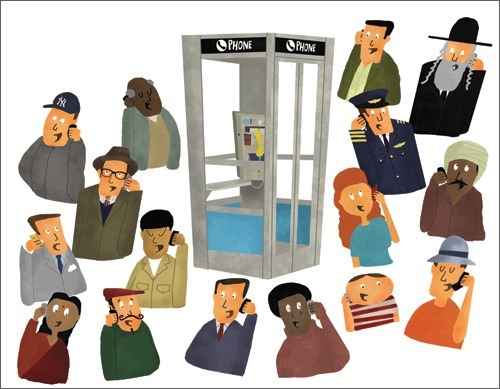
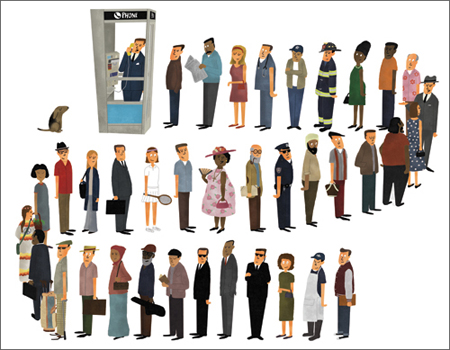
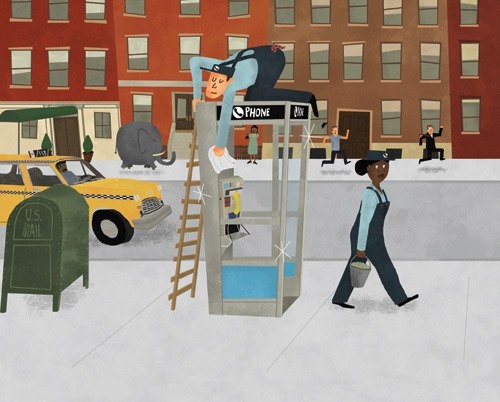
Once there was a corner phone booth in New York City that everyone used: “A businessman always running late for meetings…. A construction foreman who needed cement…. A zookeeper who lost his elephant…. A ballerina who wanted to know if she got the part in Swan Lake…. Even a secret agent who needed to change his disguise.” Sometimes a long line of people waiting to use the phone snaked down the sidewalk, and every week, the phone booth was visited by maintenance workers who kept it shiny clean. The phone booth was happy.

celebrate-picture-books-picture-book-review-the-lonely-phone-book-corner

Image copyright Max Dalton, 2010, courtesy of maxdalton.com.

But one day the phone booth noticed the business man walk right past it while talking on a small, shiny object. The same thing happened with others who always paid a visit to the phone booth. Finally, on Friday, the ballerina popped in, but she was only getting out of the rain while she talked on her small, shiny object. “The phone booth was flabbergasted.” When it found out that the shiny object was a cell phone, “the Phone Booth was devastated.” It worried that no one would need it anymore. And it was right.

celebrate-picture-books-picture-book-review-the-lonely-phone-book-people

Image copyright Max Dalton, 2010, courtesy of maxdalton.com.

Soon, the maintenance workers stopped coming and the Phone Book began to look shabby, with a cracked window, peeling paint, and a dusty interior. “Even the secret agent changed his disguise in the run-down hotel next door.” The Phone Booth saw other phone booths being taken down and driven away from their posts, and it knew that its turn would come soon too.

Then one day a storm knocked out the power and no one’s cell phones worked. People had no way to let friends and family know they were okay. The construction foreman noticed the old phone booth and wondered if it still worked. A girl scout put in her coins and discovered that it did! A long line formed outside the phone booth as everyone waited to make their calls. “The ballerina called to see if she got the part in Swan Lake. She didn’t. But she did get a part in the Nutcracker.” And the zookeeper let the zoo know that he found the elephant and the West African Dik-Dik in a poker game in the city.

celebrate-picture-books-picture-book-review-the-lonely-phone-booth-line

Image copyright Max Dalton, 2010, courtesy of maxdalton.com.

When the electricity was restored, the Phone Booth was hailed as a hero. It was given a new window and cleaned inside and out. The mayor even put up a plaque. Just then, though, city workers came to take the Phone Booth to the dump. The Phone Booth was afraid. But “the people of the neighborhood spoke up.” They wanted the Phone Booth to stay. “‘What if there’s another storm?’ asked the ballerina. ‘It’s been here forever,’ said the girl scout. ‘It’s been here forever,’ said the construction foreman.”

celebrate-picture-books-picture-book-review-the-lonely-phone-book-cleaning

Image copyright Max Dalton, 2010, courtesy of maxdalton.com.

Just then the phone in the Phone Booth rang. It was the mayor’s grandmother. She told the mayor that the Phone Booth was a national treasure. The mayor told the city workers that the Phone Booth was staying right where it was. The people of the neighborhood cheered, hugged the Phone Booth, danced around it, and had a party.”

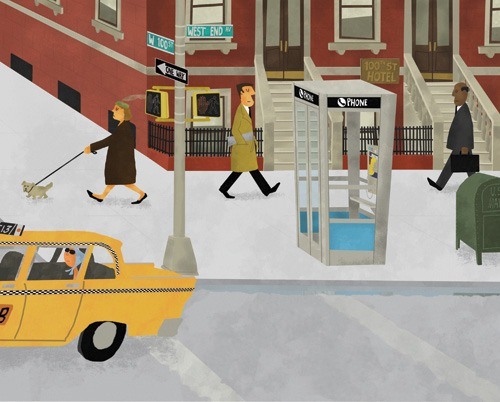
And even now, if you go to West End Avenue and 100th Street, you will find the Phone Booth. Step inside and make a call—”and neither you nor the Phone Booth will be lonely anymore.”

celebrate-picture-books-picture-book-review-the-lonely-phone-book-city

Image copyright Max Dalton, 2010, courtesy of maxdalton.com.

Peter Ackerman’s humorous love letter to the phone booths—and one particular Phone Booth—that once dotted corners, lobbies, shopping areas, and transportation offices in every city may be a revelation to kids, but the personalities who use the phone are familiar and funny, making The Lonely Phone Booth a timeless story. With realistic dialogue and running jokes and appearances by the neighborhood characters, the story flows along like a good connection to its tender ending that gives a nostalgic nod to remembering and embracing history.

In his bright, retro illustrations, Max Dalton infuses the story with the sights, sounds, and flavor of New York. Squared-off four-door sedans, a square-jawed businessman, a rounded construction worker, a triangular clown, and a host of diverse neighborhood personalities harken back to a time when cellphone tech was new. Kids who have never seen a phone booth may well wonder if they’re missing out on a bit of old-fashioned fun.

Ages 4 – 7

David R. Godine, 2010 | ISBN 978-1567924145

To learn more about Max Dalton, his books, and his art, visit his website.

National Ding-a-Ling Day Activity

celebrate-picture-books-picture-book-review-telephone-tie-up-puzzle

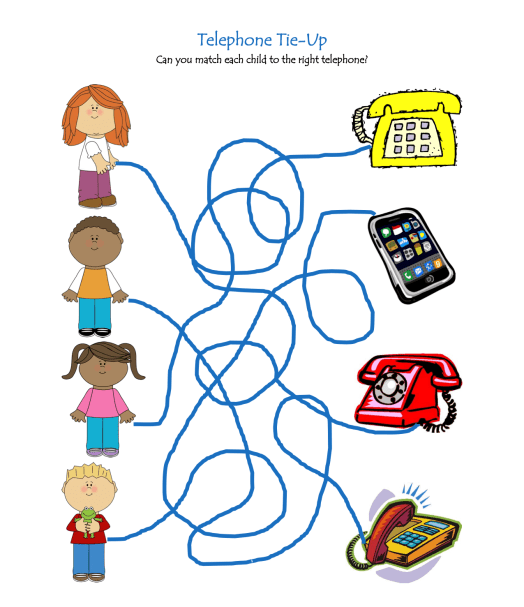
Telephone Tie-Up Puzzle


These kids want to use a telephone. Can you follow the tangled wires to find a phone for each child in this Telephone Tie-Up Puzzle?

celebrate-picture-books-picture-book-review-the-lonely-phone-booth-cover

You can find The Lonely Phone Booth at these booksellers

Amazon | Barnes & Noble | Books-a-Million | IndieBound

Picture Book Review
December 10 – Nobel Prize Day

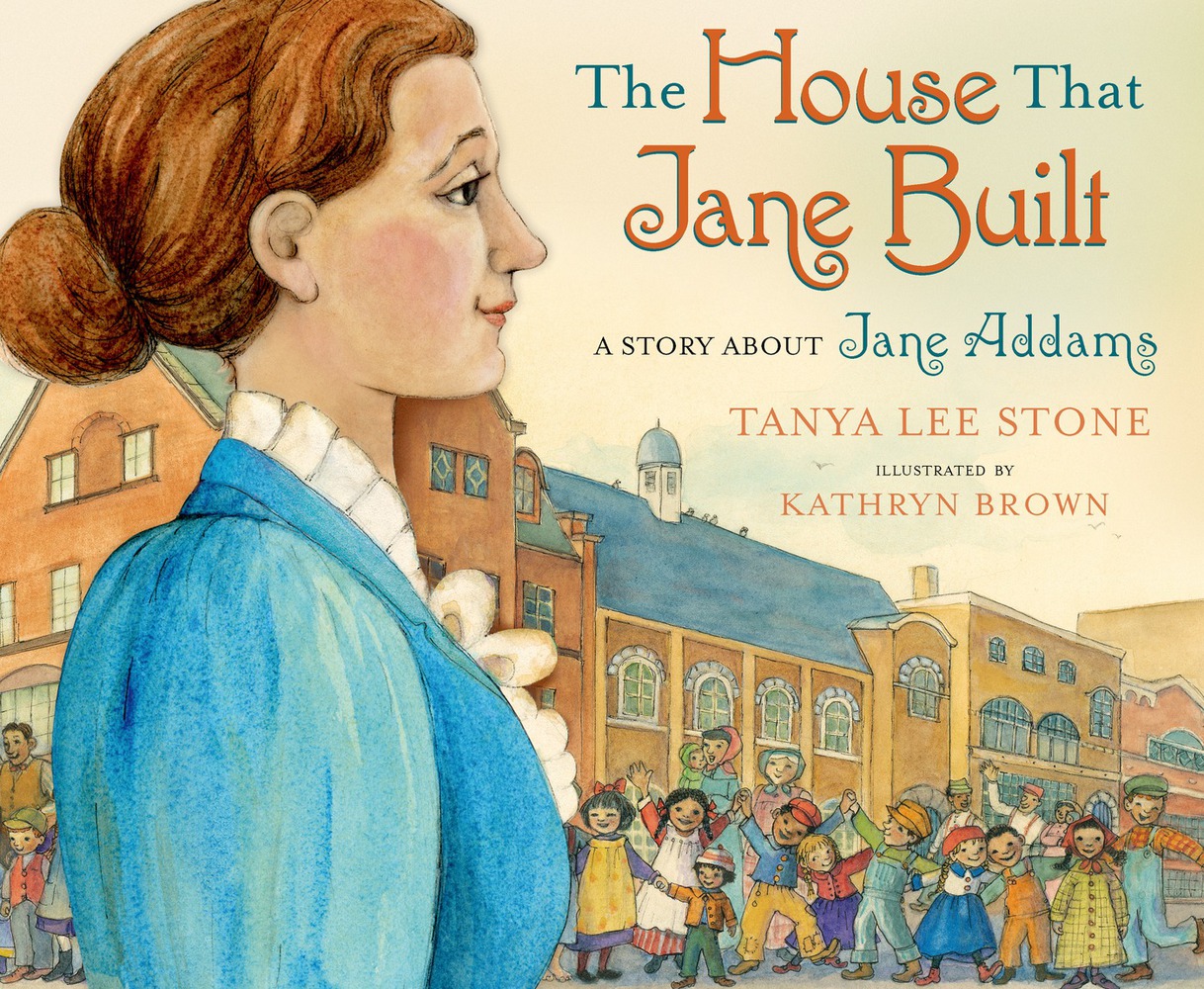
celebrate-picture-books-picture-book-the-house-that-jane-built-cover

About the Holiday

When Alfred Nobel’s will was read after his death on December 10, 1896, his heirs were taken by surprise. Nobel had signed a new will the year before, leaving most of his wealth to create prizes recognizing those who had done their best to benefit mankind in the fields of physics, chemistry,  medicine, literature, and peace. Opposition to this will on the part of the family and those Nobel had chosen to award the prize delayed Nobel’s wishes until 1901. Today, the awards include a prize for economics and are announced in early October. The awards are presented on December 10 in Stockholm, Sweden, except for the Nobel Peace Prize, which is awarded in Oslo, Norway.

Jane Addams Day falls on the same date to commemorate her achievement in being the first American woman to win the Nobel Peace Prize in 1931 for her work to bring about social change, equality, and peace. Each year the Jane Addams Peace Association presents awards to outstanding children’s books that promote peace and justice. To learn more about Jane Addams and the Jane Addams Peace Association, visit janeaddamspeace.org.

The House that Jane Built: A Story about Jane Addams

Written by Tanya Lee Stone | Illustrated by Kathryn Brown


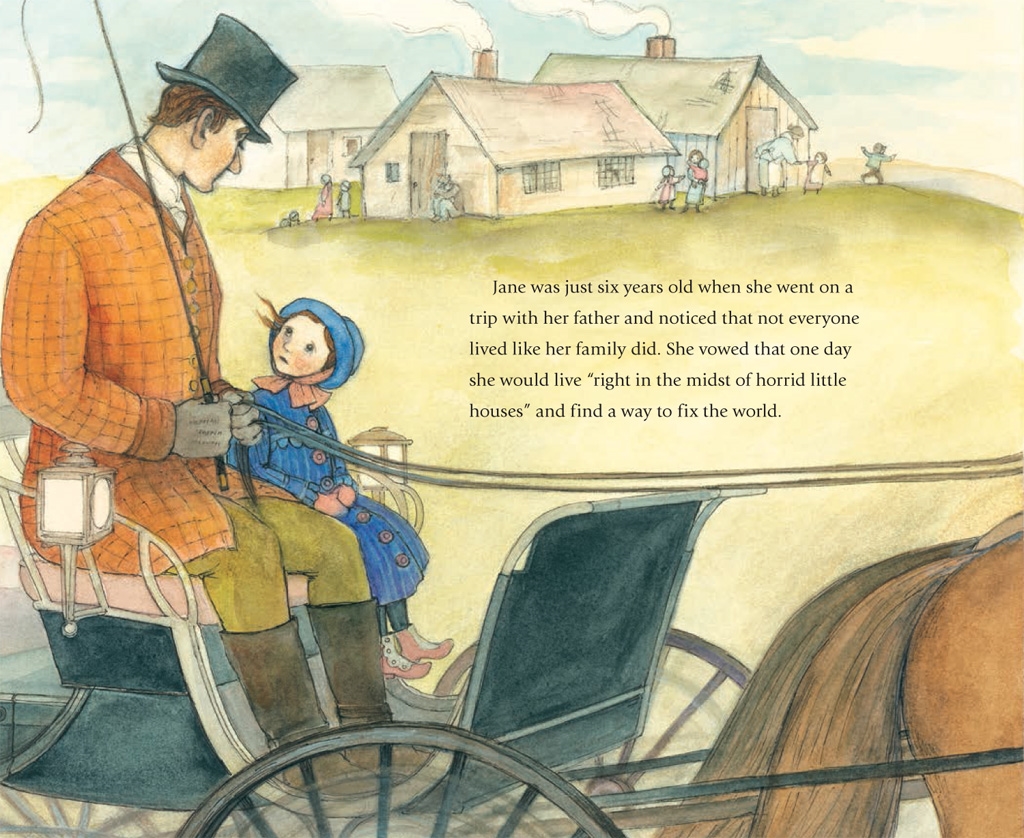
On a busy street stands a very special house where anyone is welcome and some find a home. In 1889 Jane Addams, a wealthy young woman, bought an elegant house in one of Chicago’s poorest neighborhoods. Why? At just six years old on a trip with her father, Jane “noticed that not everyone lived like her family did.” Right then she vowed that when she grew older, she would live in a poor community and “find a way to fix the world.”

celebrate-picture-books-picture-book-the-house-that-jane-built-trip-with-father

Image copyright Kathryn Brown, 2015, text copyright Tanya Lee Stone. Courtesy of us.macmillan.com.

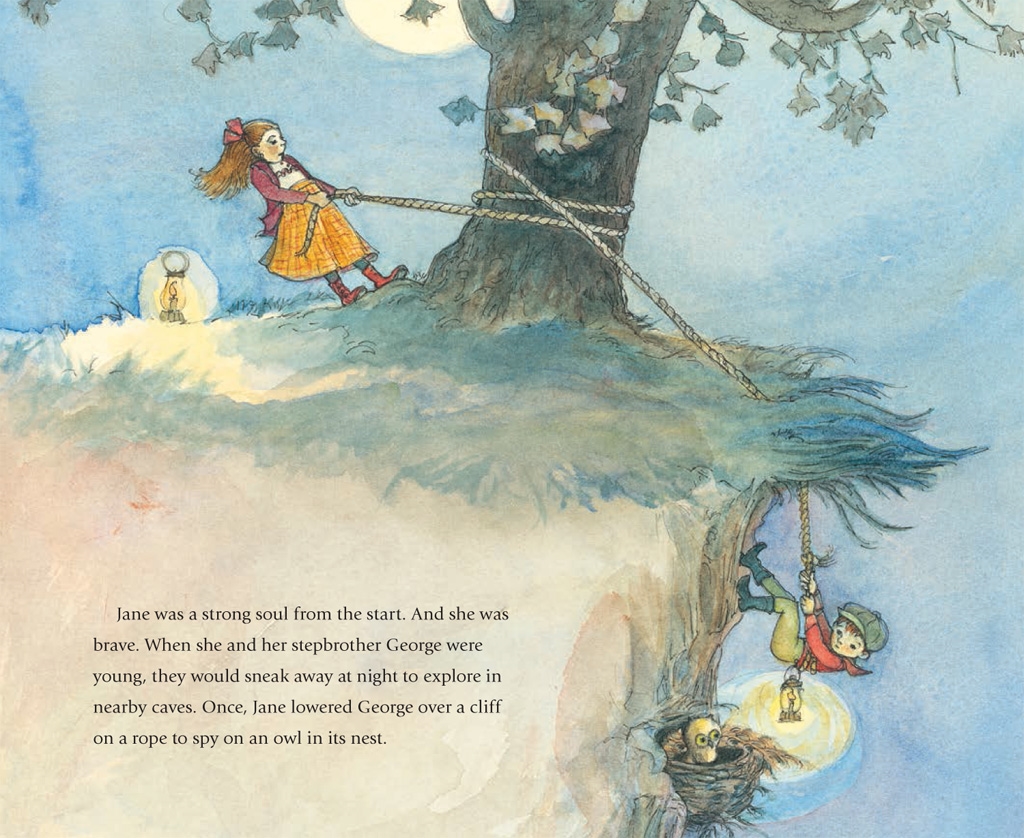
Jane was brave and strong. Sometimes she and her stepbrother George would “sneak away at night to explore in nearby caves.” Jane was also smart and “read and read her father’s book collection,” which also served as the town library. Unlike most women at the time, Jane went to college. She attended Rockford Female Seminary and “graduated at the top of her class.”

celebrate-picture-books-picture-book-the-house-that-jane-built-exploring-with-George

Image copyright Kathryn Brown, 2015, text copyright Tanya Lee Stone. Courtesy of us.macmillan.com.

After graduation, she didn’t know what she wanted to do, and when her father died that same summer, “Jane felt lost.” Two years later some friends invited her to travel to Europe with them. Although they went to the opera, museums, and many beautiful places, it was an experience in London that stuck with her. There she saw many “people in ragged clothes with outstretched hands, begging a cart vendor to buy his rotten fruits and vegetables that hadn’t sold at the market.” 

celebrate-picture-books-picture-book-the-house-that-jane-built-London-settlement-house

Image copyright Kathryn Brown, 2015. Courtesy of us.macmillan.com.

When Jane returned home, the question of how she could help nagged at her. She returned to London to learn about Toynbee Hall, where poor and wealthy people lived together and learned from each other. Here, skills, such as cooking, were taught to provide people with the education to find jobs. Toynbee Hall was called a settlement house, because the rich people who worked there lived there as well.

celebrate-picture-books-picture-book-the-house-that-jane-built-Chicago-neighborhood

Image copyright Kathryn Brown, 2015, text copyright Tanya Lee Stone. Courtesy of us.macmillan.com.

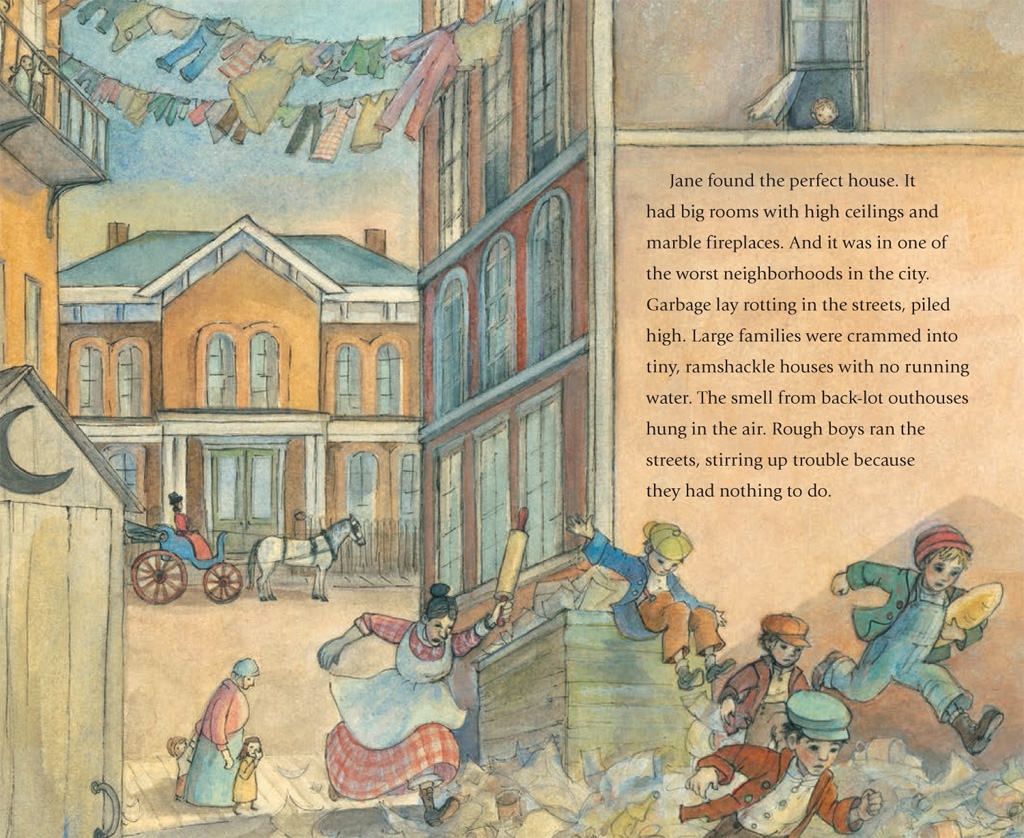
Jane now knew what she wanted to do. In 1889 Chicago was a diverse city with a large immigrant population. Many didn’t speak English, which made it hard for them to find jobs. “Large families were crammed into ramshackle houses with no running water.” Garbage lay in the street, and tough kids ran wild with nothing else to do.

Jane found a large house in the middle of one of these areas that had once belonged to Charles J. Hull and upon his death had been given to his cousin, Helen Culver.  When Helen discovered what Jane wanted to do, she donated the house for free. Jane left the house unlocked, letting people know that they could come there whenever they needed. In time, people did find their way to Hull House when they were hungry or out of work. Jane also had her own way of dealing with unruly children or those who didn’t understand her generosity. Once when a man broke into Hull House twice because he had no job and no money, Jane gave him a job.

celebrate-picture-books-picture-book-the-house-that-jane-built-feeding-hungry

Image copyright Kathryn Brown, 2015, text copyright Tanya Lee Stone. Courtesy of us.macmillan.com.

Jane helped the neighborhood in other ways too. She built a public bath so that people could stay clean and avoid illness. She convinced “public officials to build more public baths.” Because children had nowhere to play, Jane convinced a neighbor to give her his unused lot near Hull House. She tore down the buildings and built Chicago’s first playground. For kids whose parents worked long hours, she started a morning kindergarten and after school clubs. She also began offering evening classes for children who worked during the day.

celebrate-picture-books-picture-book-the-house-that-jane-built-kindergarten

Image copyright Kathryn Brown, 2015. Courtesy of us.macmillan.com.

Jane had help with her endeavors. Her friend “Ellen Gates Starr was her partner from the start.” Many other people also helped. They moved into Hull House and “taught literature, art, English, math, science, and cooking.” Hull House continued to grow, and by 1907 Jane oversaw thirteen buildings, including “a gymnasium, coffee house, theater, music school, community kitchen, and an art gallery.”

By the early 1920’s more than 9,000 people visited Hull House every week. Jane’s work “changed a bad neighborhood into a great and strong community.” Today, you can still see Jane Addams’ commitment to others in the community centers that bring people together in nearly every city and town.

An Author’s Note with more information on Jane Addams follows the text.

celebrate-picture-books-picture-book-the-house-that-jane-built-playground

Image copyright Kathryn Brown, 2015, text copyright Tanya Lee Stone. Courtesy of us.macmillan.com.

Tanya Lee Stone brings the story of Jane Addams’ work in Chicago to children in a compelling biography that gives readers a fully developed portrait of this most amazing woman. Stone’s active and evocative language puts children in the Hull House neighborhood, allowing them to get a feeling for and understanding of the issues of the time. Stone’s excellent examples of how Jane Addams responded to a variety of problems facing her community and even Hull House itself, demonstrate how generosity, empathy, and kindness can make positive changes in people’s lives. Depictions of Jane’s early compassion and commitment give children a sense that they too can make a difference in areas that are important to them.

celebrate-picture-books-picture-book-the-house-that-jane-built-front-door

Image copyright Kathryn Brown, 2015. Courtesy of us.macmillan.com.

Kathryn Brown’s riveting illustrations capture Jane’s early moments of concern for others, bravery, and study that informed her adult life; times of decision and cooperation that led to the establishment of Hull House; scenes of poverty, upheaval, and need that touched Jane’s heart; and images of her successes in Chicago that inspired others around the country. Brown’s softly hued watercolors are beautifully infused with realistic period details and honest emotion that provide readers with a strong foundation for understanding and appreciating the life of Jane Addams.

The House that Jane Built: A Story about Jane Addams is an inspiring choice for children with a philanthropic heart and to open discussions on how one person can make a difference. The book would be a welcome addition to home and classroom libraries.

Ages 6 – 10

Henry Holt and Co. Books for Young Readers, 2015 | ISBN 978-0805090499

To learn more about Tanya Lee Stone and her books, visit her website.

You can view a gallery of illustration work by Kathryn Brown on her website

Nobel Prize Day Activity

celebrate-picture-books-picture-book-jane-addams-coloring-page

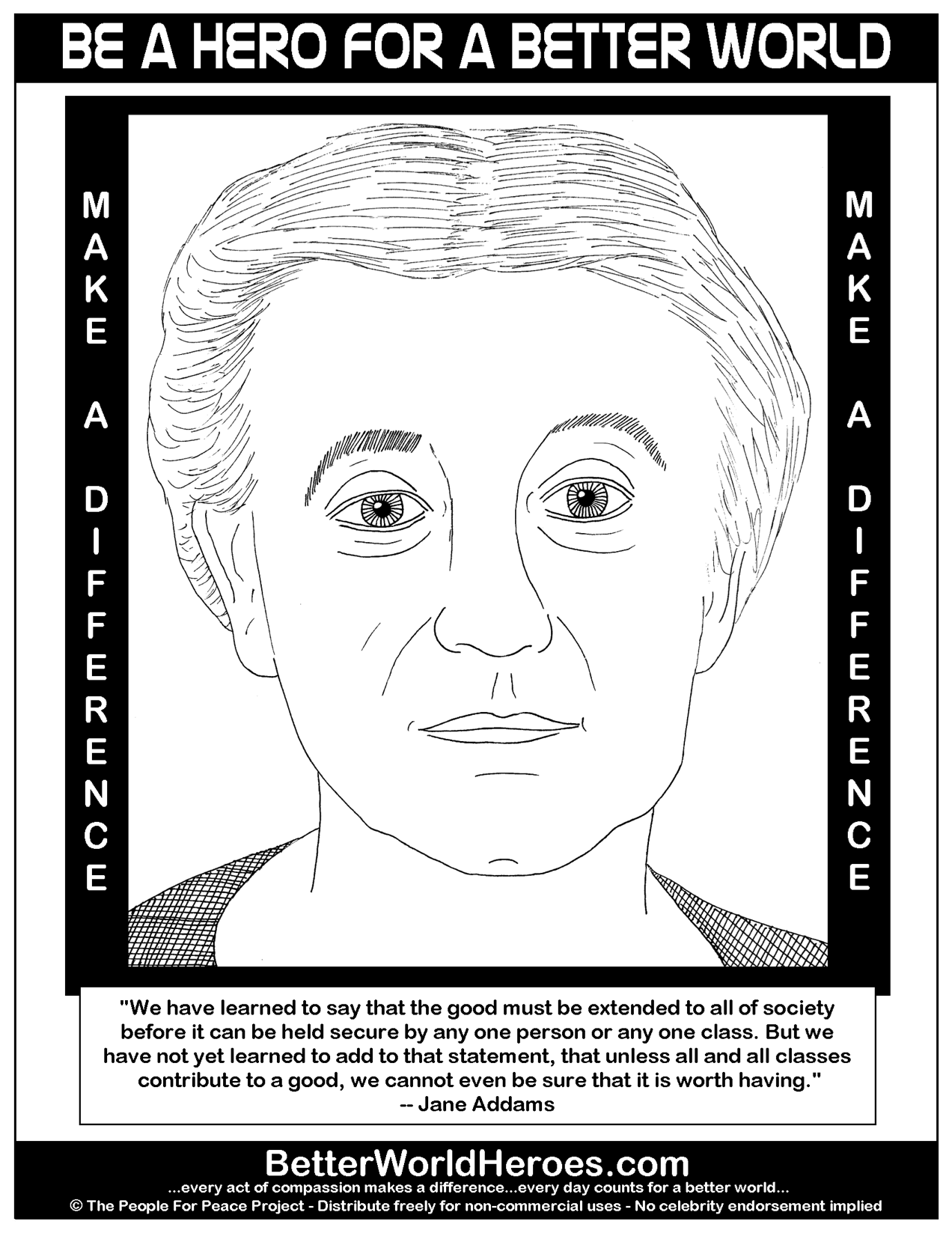
Jane Addams Coloring Page Poster


Jane Addams is an inspiration to all! Print this Jane Addams Coloring Page and hang it in your room or locker to inspire you to make a difference and be a positive influence in your community!

celebrate-picture-books-picture-book-the-house-that-jane-built-cover

You can find The House that Jane Built: A Story about Jane Addams at these booksellers

Amazon | Barnes & Noble | Books-a-Million | IndieBound

Picture Book Review

December 8 – Gingerbread Decorating Day

celebrate-picture-books-picture-book-review-the-gingerbread-man-loose-at-christmas-cover

About the Holiday

Originating in the Middle East the art of gingerbread making made its way to Europe in the 10th century. It was quickly embraced for its delicious combination of spices as well as for its soothing medicinal qualities. It was during the 13th century that gingerbread began to be decorated and displayed. The gingerbread man we know today was first introduced in 1875 in a story published in St. Nicholas magazine. To celebrate, mix up a batch of gingerbread cookies and get out the icing and sprinkles!

The Gingerbread Man Loose at Christmas

Written by Laura Murray | Illustrated by Mike Lowery


One wintry morning, the Gingerbread Man heard the teacher calling. It was time to wake up and start a very special day. All the kids listened as the teacher told them, “It’s the season of giving, / and we can give, too! / Our gifts could be things / that we make, say, or do.” Individually, paired up, or in groups, the kids went to work on their gifts. Some made cards, some baked cookies, and one trio practiced singing a holiday song.

The Gingerbread Man wanted to join in too. He thought hard about what he would make and then went to work. As the kids headed out the door of their classroom and into town, the little cookie excitedly said, “I’ll deliver this present / as fast as I can. / With a jolly Ho-Ho from the / Gingerbread Man!” All through town the kids delivered their gifts. A few children sang a song to a police woman, the garbage men got a plate of cookies, and a special card went to the librarian. The kids also visited the dentist, the grocer, and the vet.

celebrate-picture-books-picture-book-review-the-gingerbread-man-loose-at-christmas-into-town

Image copyright Mike Lowery, 2015, text copyright Laura Murray, 2015. Courtesy of lauramurraybooks.com.

When an icy wind blew up and it started to snow, the teacher gathered all the kids and hurried back to school. But the Gingerbread Man hadn’t delivered his gift yet. He yelled for the class to stop, but they didn’t hear him. He decided to deliver it himself and dashed past the barber, the bookseller, the doctor, the florist, and the bank teller giving them all a happy wave on the way. The snowy sidewalks took their toll on the Gingerbread Man, though, and by the time he found the bake shop, his “feet were all mushy and crumbled.”

Inside, the warm, delicious-smelling shop, the Gingerbread Man held up his card. “I’ve come to say thanks / for your sweet recipe. / without it, / my class would’ve / never made me.” The baker was so touched that she gave the Gingerbread Man a kiss and then noticed his feet. She knew just what he needed. She sat him on the side of a bowl and let him dip his feet into the dark chocolate icing. When she took him out, he was wearing boots! He smiled and told the baker, “I’ll run in my boots, / as fast as I can. / Thank you so much, from the / Gingerbread Man!”

He dashed back to school just in time to join the class in presenting a last, surprise gift—a poem they had all written just for their teacher: “You are a gift / that we get every day. / You help us to learn / in our own special way.” They told her she was “funny and kind,” encouraging, and “clever,” and when they were finished with their special thank-you, their teacher gave them all “a warmhearted hug and a very big grin.”

The book also includes a poster of fun activities to extend the fun.

celebrate-picture-books-picture-book-review-the-gingerbread-man-loose-at-christmas-town

Image copyright Mike Lowery, 2015, text copyright Laura Murray, 2015. Courtesy of lauramurraybooks.com.

Fans of Laura Murray’s sweet Gingerbread Man series will be delighted with this holiday treat. With jaunty, pitch-perfect rhymes and a message about the joys of giving thanks for and to all the members of a community, Murray’s story resonates long past the holiday season. Murray’s adorable cookie creation will make kids smile with his plucky attitude as he “hobbles” on mushy legs through the slushy streets to deliver his gift and giddy enthusiasm on succeeding in surprising the teacher. The story offers a wonderful opportunity to talk with kids about truly valuable gifts and ways they can show their love for others.

As cute as ever, Mike Lowery’s Gingerbread Man is a pint-sized dynamo spreading happiness and thoughtfulness wherever he dashes. Kids will love following the class as they fan out into town delivering baked treats, songs, and cards to the adults who make their lives better. Smiles and hugs abound, making this one of the merriest Merry Christmas books around. Little ones will love pointing out the tiny Gingerbread Man on the pages, talking about familiar shops and businesses in the town, and giggling over humorous details like the bat hanging from the vet’s examining table.

A thoroughly charming way to celebrate Christmas and sure to spark random acts of giving in young readers, The Gingerbread Man Loose at Christmas will be a favorite on home bookshelves for years to come.

Ages 3 – 7

G. P. Putnam’s Sons, 2015 | ISBN 978-0399168666

Discover more about Laura Murray and her books on her website and find lots of Gingerbread Man-related activities too!

To learn more about Mike Lowery, his books, and his art, visit his website.

Gingerbread Decorating Day Activity

celebrate-picture-books-picture-book-review-gingerbread-man-dashing-home-maze

Dashing Home! Maze


Help the Gingerbread Man find his way home the fastest way in this printable puzzle!

Dashing Home! Maze | Dashing Home! Maze Solution

celebrate-picture-books-picture-book-review-the-gingerbread-man-loose-at-christmas-cover

You can find The Gingerbread Man Loose at Christmas at these booksellers

Amazon | Barnes & Noble | Books-a-Million | IndieBound

Picture Book Review
November 27 – Day of Giving

CPB - I Got the Christmas Spirit Cover

About the Holiday

Following the shopping “holidays” of Black Friday and Cyber Monday, the Tuesday after Thanksgiving has been designated as a day to celebrate generosity and giving to others. 92nd Street Y in New York City created the holiday for people to think about charitable giving to those less fortunate not only for one day or one month, but all year round. The spirit of today’s holiday will fill you with cheer every day—just like the little girl in today’s book!

Bloomsbury Children’s Books sent me a copy of I Got the Christmas Spirit to check out. All opinions are my own.

I Got the Christmas Spirit

Written by Connie Schofield-Morrison | Illustrated by Frank Morrison


A little girl wakes up with a smile on her face and “the spirit of the season” in her heart. As she and her mother head out into the snowy city, she hears “the spirit in the air” as carolers sing and a corner Santa rings a bell. She’s been saving her money to add to the familiar red pot and happily drops it in the slot. The choir is now singing “Deck the Halls,” and the little girl sings along with all her heart.

celebrate-picture-books-picture-book-review-I-Got-The-Christmas-Spirit-spirit-in-air

Image copyright Frank Morrison, 2018, text copyright Connie Schofield-Morrison, 2018. Courtesy of Bloomsbury Children’s Books.

Then it’s time for a yummy roasted treat to warm her up in the shivery air. On the ice-skating rink, the girl and her mom “swirled and twirled around the spirit” with other kids and adults enjoying some frozen fun. Afterward, a tour of the store windows decorated with lights and glitter makes her feel sparkly inside. But when they come upon a mother and her two children huddled against the wind with a “Help Please” sign, the girl says, “I felt the spirit deep down in my soul.”

celebrate-picture-books-picture-book-review-I-Got-The-Christmas-Spirit-skating

Image copyright Frank Morrison, 2018, text copyright Connie Schofield-Morrison, 2018. Courtesy of Bloomsbury Children’s Books.

In a crowded store nearby, the little girl looks wide-eyed at all the toys then whispers to a tired Santa her wish “for the spirit everywhere.” As she, her mom, Santa, and a host of other people leave the store carrying wrapped packages, they feel the spirit spread by the girl’s smile. Outside, the little girl and the other shoppers give the presents to the needy family. The little boy grins from ear to ear as his mom stands by happily and the baby rests in Santa’s arms.

The Christmas spirit is not just a thing or a place or a person, the girl understands, “The spirit is you!” Then the girl gets her own surprise when she spies her dad coming home. She runs to him and he lifts her into a hug. Here is what she wants for Christmas—“Peace for all, good tidings, and cheer—let’s live the spirit every day of the year.”

celebrate-picture-books-picture-book-review-I-Got-The-Christmas-Spirit-coming-home

Image copyright Frank Morrison, 2018, text copyright Connie Schofield-Morrison, 2018. Courtesy of Bloomsbury Children’s Books.

As the sights and sounds of Christmas begin to light up towns, stores, and homes, Connie Schofield-Morrison’s story fills young readers with the joy and deeper meaning of the holiday. Little ones wanting to share their bubbly excitement for Christmas as well as their innate empathy will fall in love with the little girl who eagerly joins in on all of the city’s festivities while also embracing those in need. Her big heart and buoyant spirit will inspire kids to find the spirit of the holiday in everything they do too. Kids are invited to join in reading with exuberant alliterative words like “Ding Dong Ding, that call out to the little girl

Readers can almost hear the bells and singers, feel the soft snow, and smell the roasting nuts as he takes readers on a tour of the city decked out for the holidays. In his gorgeous, realistic paintings, the emotions and actions of the little girl cheer young readers as they see her belting out a Christmas carol, gliding on ice rink, and walking side-by-side with Santa to deliver her surprise gifts to the needy family. Images of the girl dropping money that she has saved into the Salvation Army pot and frowning sadly as she comes upon the destitute woman and her family mirror the compassion many children feel for those less fortunate.

Like its predecessor I Got the Rhythm, I Got the Christmas Spirit is an uplifting and beautiful book to add to any child’s collection—not only at Christmas, but any time of the year. A top choice for public libraries too.

Ages 3 – 7

Bloomsbury Children’s Books, 2018 | ISBN 978-1681195285

To learn more about Frank Morrison and view a gallery of his art, visit his website.

Day of Giving Activity

celebrate-picture-books-picture-book-review-christmas-ornaments-craft

Polish-Dipped Ornaments


These plastic ornaments swirled with colorful nail polish make the perfect decorations for your tree. Make some to give to friends too!

Supplies

  • Plastic ornaments, available at craft stores
  • Nail polish in various colors
  • Plastic bowl or container, deep enough to dip the ornament into the water
  • Drying stand – I used a clear, plastic egg carton, or string for hanging ornaments to dry

Directions

Fill the plastic container with warm to hot water

  1. Using two or three colors, gently “paint” the water with the nail polish, using the brush or a toothpick in dots and swirls
  2. Slowly dip the plastic ornament into the water and turn it to pick up the nail polish floating on the top of the water
  3. To dry, place the ornament on a stand or hang with a paper plate, wax paper, or other paper to catch drips

CPB - I Got the Christmas Spirit Cover

You can find I Got the Christmas Spirit at these booksellers

Amazon | Barnes & Noble | Books-a-Million | IndieBound

Picture Book Review
November 7 – It’s Picture Book Month

celebrate-picture-books-picture-book-review-pies-from-nowhere-cover

About the Holiday

Today’s picture books are amazing! Offering glimpses into history, revelations in science, introductions to incredible people, fabulous reasons to laugh out loud, poignant moments for reflection, and much of the best art currently being produced anywhere, picture books defy their slim appearance with content that inspires and changes young lives. Reading a wide variety of books to children from birth on up is one of the most rewarding activities you can do. Make choosing the books to read a family affair! Kids love picking out their own books and sharing cozy and fun story times with you!

Pies from Nowhere: How Georgia Gilmore Sustained the Montgomery Bus Boycott

Written by Dee Romito | Illustrated by Laura Freeman


As a young girl living on a farm in Alabama, Georgia Freeman learned from her mother a lesson she took to heart: “Think twice before doing anything you might regret, and never, ever hate anyone.” When Georgia grew up and had children of her own, she was known for her delicious cooking. She even worked as a cook at the National Lunch Company, a restaurant in Montgomery, Alabama. At the time, segregation laws dictated that white customers sit on one side of the counter and black customers on the other.

celebrate-picture-books-picture-book-review-pies-from-nowhere-farm

Image copyright Laura Freeman, 2018, text copyright Dee Romito, 2018. Courtesy of little bee books.

On December 1, 1955, Georgia heard a radio report that “an African American woman named Rosa Parks had been arrested for refusing to give up her seat on a bus to a white passenger.” The next day, the Black community in Montgomery was asked to boycott the buses in support of Rosa Parks and because of the poor treatment African Americans were forced to endure by the bus drivers. Georgia wanted to do even more to support the movement.

Soon after the boycott began, Georgia went to hear Dr. Martin Luther King Jr. speak at the Holt Street Baptist Church. “He talked about freedom. Unity. Equality.” And Justice. “Those were things Georgia believed in, and she was willing to fight for them.” Georgia decided to use her talent for cooking to help. She and a group of women got together and cooked. They made sandwiches and dinners and sold them at the boycott meetings and in their neighborhood, including to those walking to and from work instead of taking the bus.

celebrate-picture-books-picture-book-review-pies-from-nowhere-lunch-counter

Image copyright Laura Freeman, 2018, text copyright Dee Romito, 2018. Courtesy of little bee books.

The money that Georgia made went to the “Montgomery Improvement Association, which helped fund the boycott.” This work by Georgia and the other women was dangerous. If anyone learned that they were involved in the boycott, they would lose their jobs, so all cooking and selling was done in secret. Georgia’s customers at local shops and businesses paid for her scrumptious pies in cash so that only Georgia knew who they were. Over time, Georgia’s group donated enough money  to pay for “gas for the carpool system that had been set up for the boycott” and even to buy station wagons to transport people around town. Whenever Georgia was asked where she got this money, she answered, “‘it came from nowhere.’”

celebrate-picture-books-picture-book-review-pies-from-nowhere-rosa-parks

Image copyright Laura Freeman, 2018, text copyright Dee Romito, 2018. Courtesy of little bee books.

The bus system was losing money because of the boycott, “so the city did what it could to stop the protesters and their efforts.” Ninety people, including Dr. King, were arrested. Georgia was called to testify in court. She told of her experience in which after paying her fare, she was told to get off the bus and go to the back door to get on. Before she could reenter the bus, the driver shut the door on her and drove off. After that, she said, she no longer rode the bus.

Georgia knew supporting the boycott was the right thing to do, but when the National Lunch Company found out, they fired her. With six children to raise on her own, Georgia worried about what she would do. Dr. King encouraged her to open her own business. He helped her improve her kitchen, and soon Georgia’s house had long lines of people waiting to eat her meals and more waiting for deliveries. Georgia made hundreds of lunches every day. While she was feeding her community, Georgia “was also bringing the people of Montgomery together—black and white.” Georgia’s house was also used for secret meetings among civil rights leaders.

celebrate-picture-books-picture-book-review-pies-from-nowhere-empty-buses

Image copyright Laura Freeman, 2018, text copyright Dee Romito, 2018. Courtesy of little bee books.

On November 13, 1956—nearly a year after the boycott had begun, Georgia heard another radio report saying that the United States “Supreme Court had declared that segregation on buses was illegal! The boycotters had won.” This meant that people could sit anywhere they wanted. The Montgomery Bus Boycott was just a beginning. “There would be more battles to fight . . . so Georgia Gilmore kept right on cooking.”

An Author’s Note revealing more about the Montgomery Bus Boycott and Georgia Gilmore follows the text. Kids are also invited to make Georgia’s Homemade Pound Cake using the recipe on the back cover.

celebrate-picture-books-picture-book-review-pies-from-nowhere-meeting

Image copyright Laura Freeman, 2018, text copyright Dee Romito, 2018. Courtesy of little bee books.

Dee Romito’s inspiring biography delves into the crucial role individuals can make in supporting people and causes they believe in. By focusing on unsung historical hero Georgia Gilmore and using her own words and thoughts, Romito reveals how those with strong beliefs can use their talents and courage to fight for change behind the scenes and still make an important difference. Her conversational storytelling brings a personal touch to this biography, drawing young readers in to learn the details of this early battle in the Civil Rights movement—also begun by an act of a solitary person. Bookended by the radio reports that Georgia hears, the story is well-paced to show how Georgia’s contribution grows over nearly a year. This timely biography is made even more resonant perhaps in that Georgia’s cooking and selling of meals and baked goods is an activity that many children will recognized from their own involvement in bake sales and other food-related fund raisers. The open ending invites readers to learn more about the Civil Rights movement and Georgia Gilmore.

celebrate-picture-books-picture-book-review-pies-from-nowhere-cooking

Image copyright Laura Freeman, 2018, text copyright Dee Romito, 2018. Courtesy of little bee books.

Laura Freeman’s boldly colored, realistic artwork allows children to embrace the historical context of Romito’s biography through her expressive portraiture that introduces Georgia Gilmore, Rosa Parks, Dr. Martin Luther King Jr., and the members of Georgia’s Nowhere Club. A double-spread of the National Lunch Company’s segregated counter is visually striking as the divide comes at the book’s gutter, creating the side for white customers on the left and the side for black customers on the right. The injustice of this separation is expressed in the similar red clothing and dark hair of the woman on the right and the man on the left. Illustrations of crowds walking as buses go empty, attending the boycott strategy meetings, secretly buying pies, and filling Georgia’s home place readers at these scenes of the resistance movement. Freeman uses action, media coverage, and Georgia’s courtroom appearance to great effect. Knowledgeable readers will understand that making a positive difference continues across all generations.

Pies from Nowhere is a stunning book of empowerment for children and adults. The theme of using ones talents to make a difference is a timely lesson that kids will respond to. The book belongs in all classroom, school, and public libraries and is a top choice for home bookshelves as well.

Ages 6 – 9

little bee books, 2018 | ISBN 978-1499807202

Discover more about Dee Romito and her books on her website.

To learn more about Laura Freeman, her books, and her art, visit her website.

Picture Book Month Activity

celebrate-picture-books-picture-book-review-book-bag-craft

Books to Love, Books to Read Book Bag


True book lovers can’t go anywhere without a book (or two or three) to read along the way. As Picture Book Month begins, make this easy craft to turn a cloth bag into a kid-size book bag!


Supplies

  • Printable Templates: Books to Read Template | Books to Love Template
  • Small cloth bag, available from craft or sewing stores—Recyclable Idea: I used the bag that sheet sets now come in
  • Cloth trim or strong ribbon, available from craft or sewing stores—Recyclable Idea: I used the cloth handles from shopping bags provided from some clothing stores
  • Scraps of different colored and patterned cloth. Or use quilting squares, available at craft and sewing stores
  • Pen or pencil for tracing letters onto cloth
  • Scissors
  • Small sharp scissors (or cuticle scissors) for cutting out the center of the letters
  • Fabric glue
  • Thread (optional)
  • Needle (optional)

celebrate-picture-books-picture-book-review-books-bag-craft

Directions

  1. Print the sayings and cut out the letters
  2. Trace letters onto different kinds of cloth
  3. Cut out cloth letters
  4. Iron cloth bag if necessary
  5. Attach words “Books to Read” to one side of bag with fabric glue
  6. Attach words “Books to Love” to other side of bag with fabric glue
  7. Cut cloth trim or ribbon to desired length to create handles
  8. Glue (or sew) handles onto the inside edge of bag

celebrate-picture-books-picture-book-review-pies-from-nowhere-cover

You can find Pies from Nowhere: How Georgia Gilmore Sustained the Montgomery Bus Boycott at these booksellers

Amazon | Barnes & Noble | Books-a-Million | IndieBound

Picture Book Review
Picture Book Review