November 14 – It’s Geography Awareness Week

celebrate-picture-books-picture-book-review-into-the-forest-cover

About the Holiday

Today’s holiday was instituted in 1994 by National Geographic to get people excited about geography and its importance to education and everyday life. As defined by National Geographic, geography is “the study of places and the relationships between people and their environments.” This discipline includes how humans interact with the environment and the impact of location on people. These important questions affect a wide range of issues. More than 100,000 people across the country participate in Geography Awareness Week through special events, focused lessons and activities in classrooms, and attention by government and business policy-makers. To learn more about the week and discover resources for further education, visit the National Geographic website.

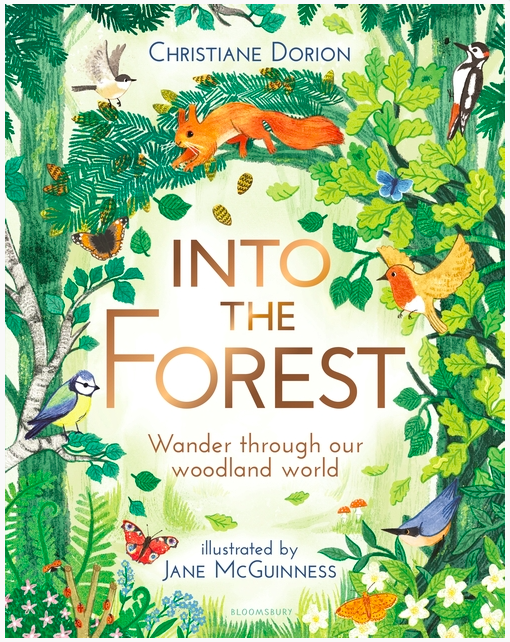
Into the Forest: Wander through Our Woodland World

Written by Christiane Dorion | Illustrated by Jane McGuinness


Forests, with their stands of ancient, towering trees capped with leafy canopies and thin saplings reaching for their bit of sun are mysterious, awe inspiring, and home to some of the world’s most fascinating creatures. In Into the Forest Christiane Dorion and Jane McGuinness take readers through coniferous forests, deciduous forests, and tropical rainforests around the world to introduce readers to the life found there.

Readers first learn how a single tree grows from a seed to a full-grown beauty and see how the tree is nurtured and how it nurtures insects and animals in return. But a single tree does not make a forest. Children discover the ways in which many trees work together to create a forest and how the creatures attracted to the forest interact as well.

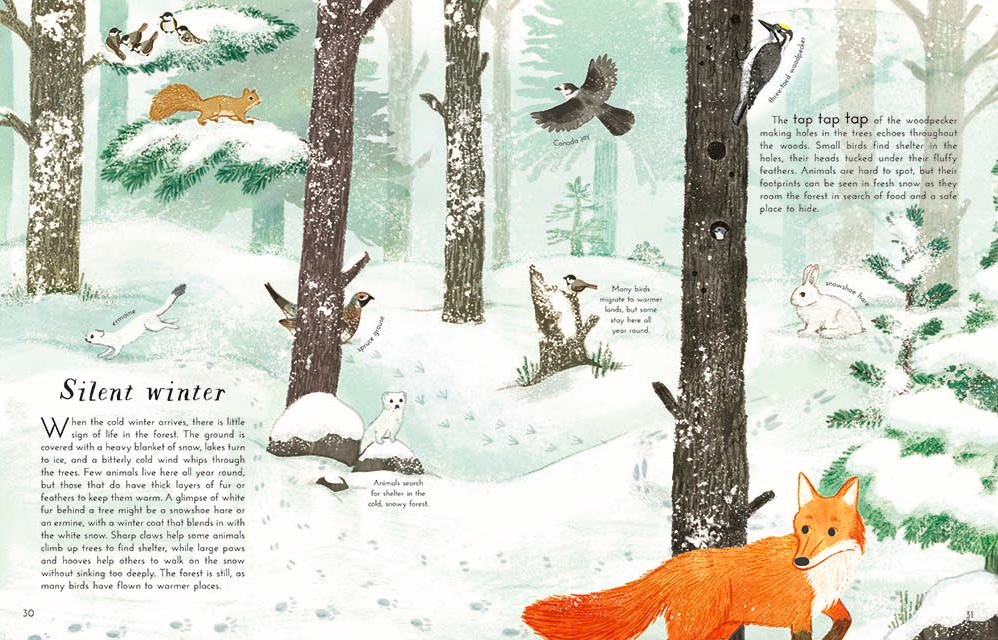
celebrate-picture-books-picture-book-review-into-the-forest-winter

Image copyright Jane McGuinness, 2020, text copyright Christiane Dorion, 2020. Courtesy of Bloomsbury Children’s Books.

“Deciduous forests are found in places where there is plenty of rain and four distinct seasons through the year.” Animals roost in the trees’ trunks, root systems, and branches. “On the forest floor, small creatures snuffle, crawl, or hop under the thick carpet of fallen leaves in search of food and a safe place to shelter.” These trees have distinctive leaves and undergo changes as the seasons change. Like the trees, the animals that live in a deciduous forest also adapt to the weather, the abundance or scarcity of food, and sheltering needs. Readers learn fascinating facts about the ingenuity of the forest’s insects and animals.

After learning about the deciduous forest, readers will want to discover them for themselves. Through lyrical descriptions and charming, realistic illustrations, Dorion and McGuinness show children and adults how and where to look and listen to find the treasures the forest holds. But there can be so many different trees in a forest—or even in a backyard or neighborhood. How do you know which is which? Dorion and McGuinness provide an illustrated guide to the names, shape, size, and type of leaf of twenty deciduous trees.

Across the northern hemisphere, coniferous forests stand tall and stalwart against bitterly cold winters while attracting some of the most majestic creatures in the animal kingdom. “Most trees in the coniferous forest are evergreens with needle-like leaves” that stay green and shed little-by-little all year round. Instead of flowers, coniferous trees produce their seeds in cones. Squirrels and birds, who can use their sharp beaks and acrobatic flying and hanging skills, find food in these cones during long winters.

celebrate-picture-books-picture-book-review-into-the-forest-redwoods

Image copyright Jane McGuinness, 2020, text copyright Christiane Dorion, 2020. Courtesy of Bloomsbury Children’s Books.

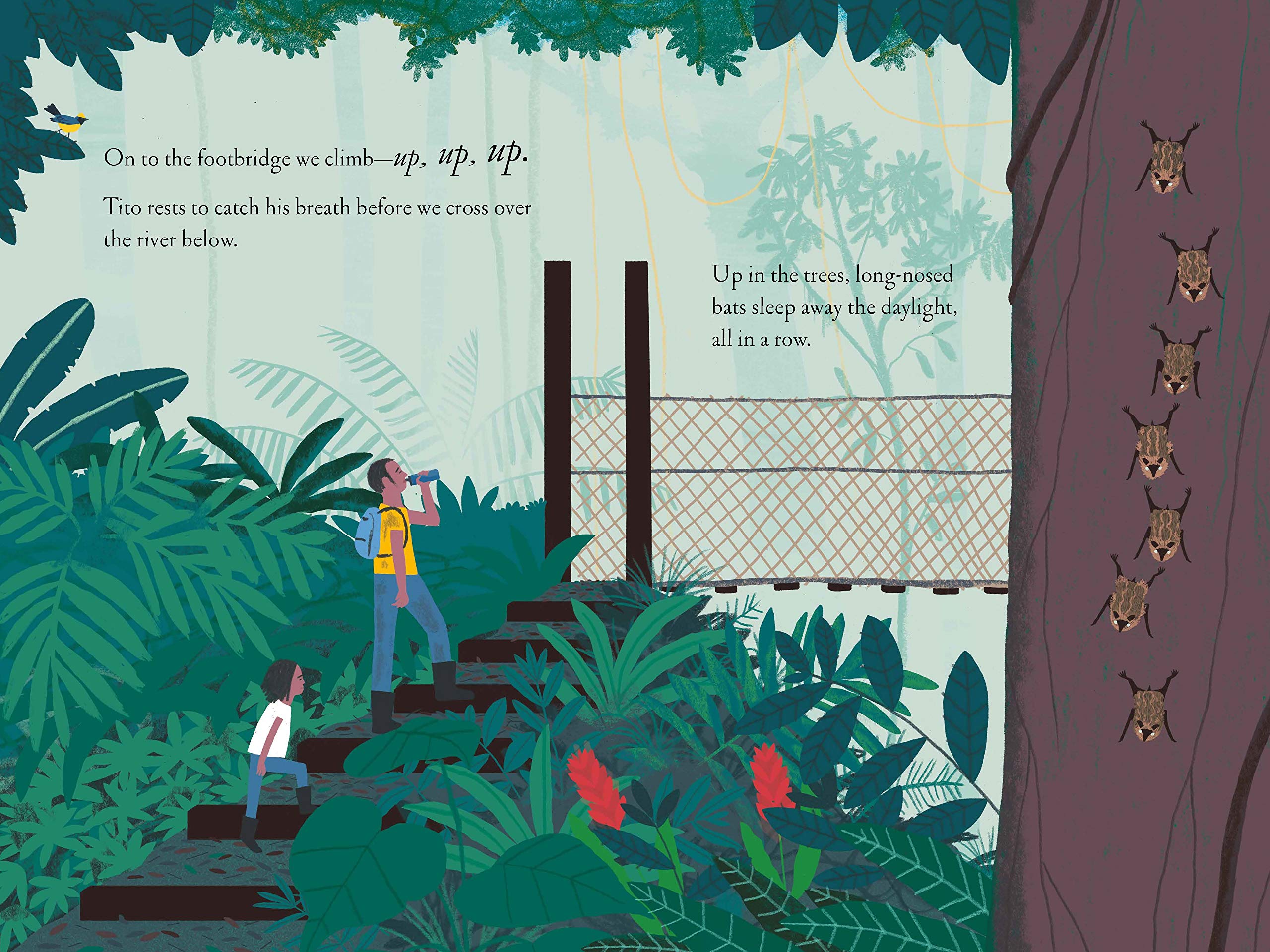
In coniferous forests, the floor is dark, wet, and can be rocky or even frozen year-round. Moss, fungi, lichen, and carnivorous plants are some of the vegetation found here. Readers learn how these plants grow, what they look like, and the animals that thrive on them. How do the forest animals survive the harsh winter conditions? Dorion and McGuinness follow ermine, grouse, a snowshoe hare, bats, chipmunks, bears, and other birds and animals as they navigate their cold home. They then take kids to the west coast to look up, up, up at the mammoth redwoods, some of which “have lived for more than two thousand years.”

There is a wide variety of coniferous trees, and again Dorion and McGuinness present a guide to the size, shape, and type of needles and cones of fourteen trees. And why are evergreens shaped like a triangle? The clever answer to that question is here too.

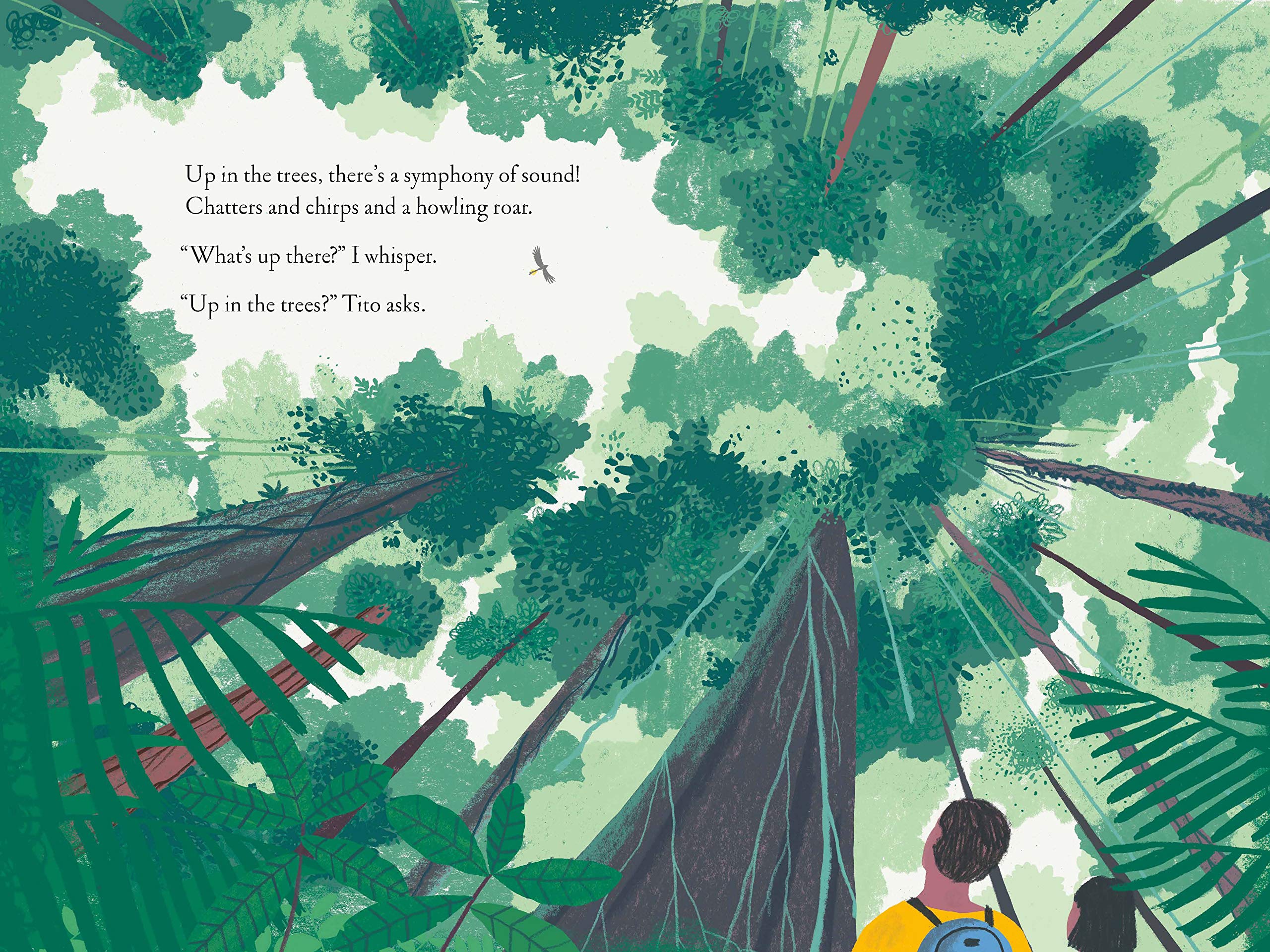
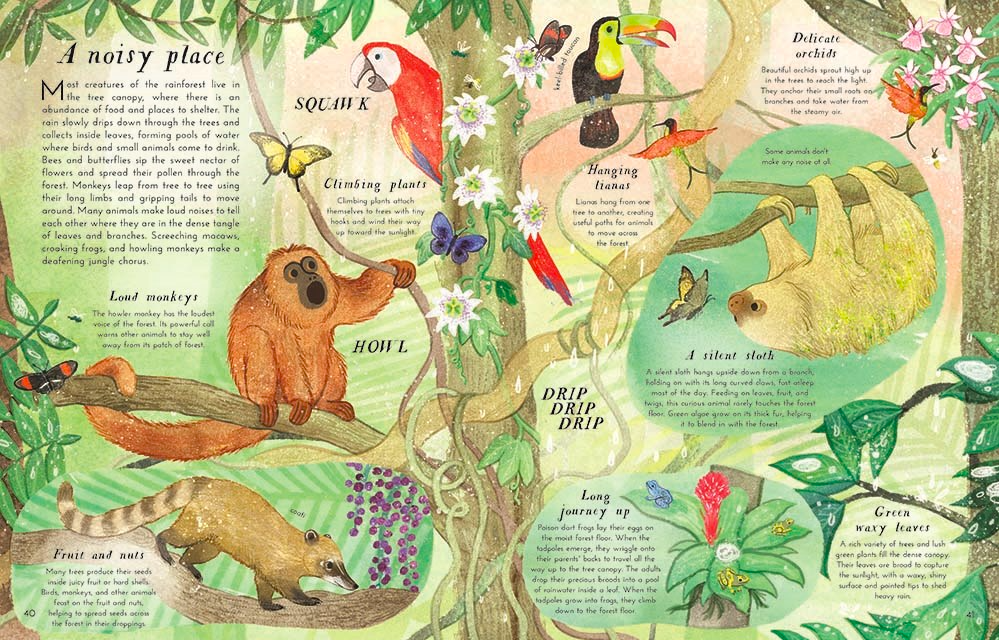
When you think of colorful birds and animals, you think about tropical rainforests. Dorion and McGuinness. Found near the equator, rainforests are home to “more than half of the know plants and animals in the world” and “more are yet to be discovered.” In a glorious riot of color, climbing vines, vibrant flowers and fruit, Dorion and McGuinness introduce readers to the denizens of these forests, where rain and warm weather provide plenty of food and water; “monkeys leap from tree to tree using their long limbs and gripping tails to move around;” and “screeching macaws, croaking frogs, and howling monkeys make a deafening jungle chorus” to “tell each other where they are in the dense tangle of leaves and branches.”

celebrate-picture-books-picture-book-review-into-the-forest-rainforest

Image copyright Jane McGuinness, 2020, text copyright Christiane Dorion, 2020. Courtesy of Bloomsbury Children’s Books.

Readers will meet animals including the howler monkey, coati, toucan, parrot, poison dart frog, and sloth. Kids also learn about hanging lianas, orchids, and why plants have waxy leaves. All of that vegetation above means that the forest floor is dark and damp, making it the perfect place for some of the world’s most unusual—and feared—creatures, including snakes, spiders, jaguars, the giant centipede, and the Hercules beetle.

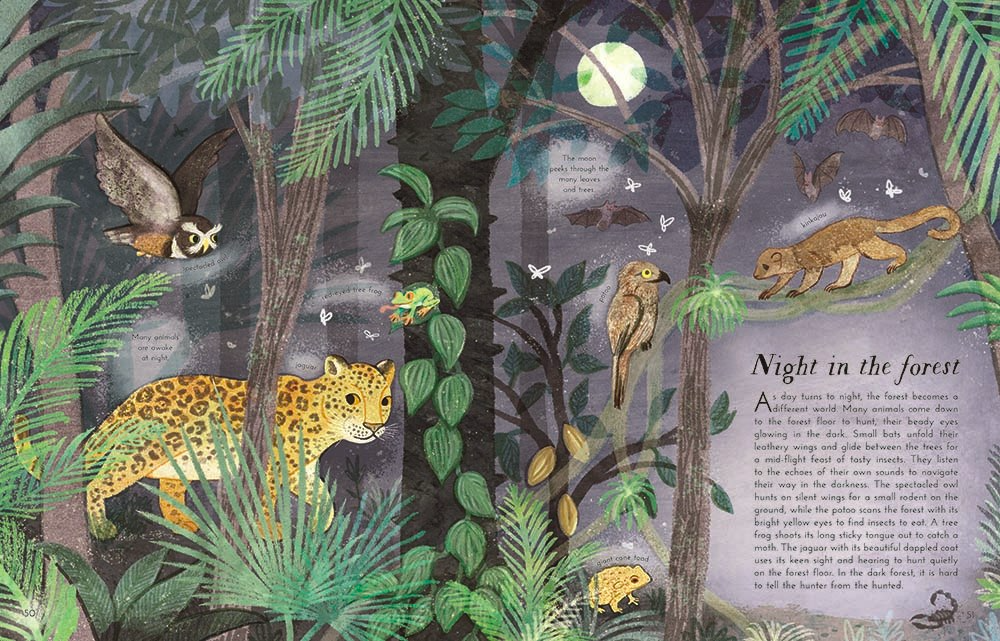
Frequent rain is the lifeblood of these tropical forests, and Dorion and McGuinness describe and depict their unique atmosphere as well as the ingenious adaptations some animals use to hide in plain sight and fool predators and the way nighttime transforms the forest into a feeding ground for nocturnal animals. The guide to fourteen tropical trees introduces readers to a wide variety from palm trees to fruit trees, like mango and avocado, to trees that produce nuts, cinnamon, cacao, and chicle for gum.

Dorion and McGuinness close out their book with discussions on how plants, insects, and animals work together to ensure the growth and heath of a forest; the ways in which a forest benefits the planet; and how to plant a tree so that it will thrive. Readers will love the illustrated prompt to find twenty-seven creatures within the pages of the book, giving them an exciting way to turn back to discover all the gems included in the text.

A glossary defines twenty-two terms found in the text, and a list of organizations and links to their websites complete the back matter.

celebrate-picture-books-picture-book-review-into-the-forest-night

Image copyright Jane McGuinness, 2020, text copyright Christiane Dorion, 2020. Courtesy of Bloomsbury Children’s Books.

Christiane Dorion’s beautiful language and richly detailed narration take children into the three types of forests to see and hear how these natural communities of trees, plants, animals, birds, insects, and even weather patterns work together to maintain what are indispensable parts of our earth. The facts Dorion chooses to present will captivate young learners, telling them enough about each subject to educate while sparking a desire to know more. Perfectly paced, her text creates a lovely flow and visual accompaniment to Jane McGuinness’s gorgeous illustrations.

McGuinness astounds on every page with lush images of the various types of forests in warm weather and the coldest of conditions, during daylight and nighttime, during quiet periods and busy times. Her realistically portrayed intense textures, vivid colors, unique shapes, and furtive or carefree movements of nature invite readers into the depths of the forests to truly see what is there.

Lingering over the pages rewards readers with hidden delights, such as tiny animals peeking from the knot hole of a tree, little caterpillars inching their way across leaves, a nest with three eggs secured within the branches of a spring-green tree, and masters of camouflage motionless and nearly undetectable. Spotlighted facts and the intermittent detailed guides to specific trees, creatures, and the science of forests not only teach readers about these particular features but reinforce how nature collaborates to survive and grow.

Superbly conceived, Into the Forest is a must for home, classroom, and public library collections for nature lovers, school and homeschool lessons, and anyone who would like to learn more about our planet.

Ages 7 – 15

Bloomsbury Children’s Books, 2020 | ISBN 978-1526600707

Discover more about Christiane Dorion and her books on her website.

To learn more about Jane McGuinness, her books, and her art, visit her website.

Geography Awareness Week Activity

celebrate-picture-books-picture-book-review-wonderful-wildlife-board-game

Wonderful Wildlife Board Game


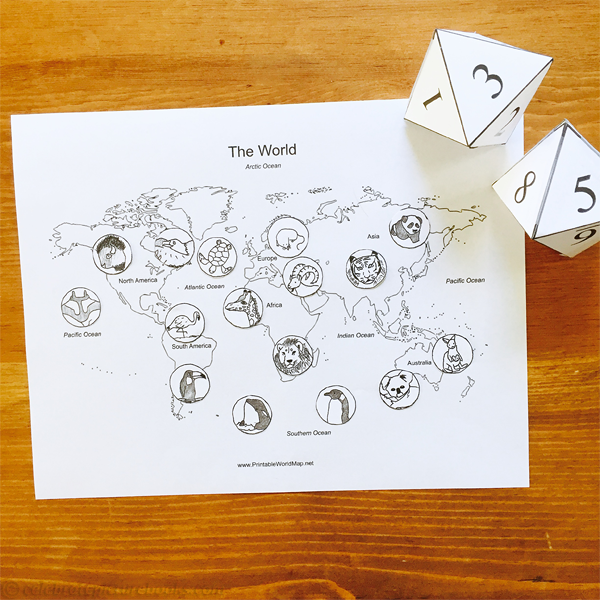
Fascinating animals are found in every part of the world. Play this fun printable Wonderful Wildlife Board Game to match each animal to the area where it lives.

Supplies

Directions

  1. Print a World Map for each player
  2. Print one set of 16 Wildlife Tokens for each player
  3. Print two copies of the 8-sided die, fold, and tape together
  4. If you would like, color the map and tokens
  5. Choose a player to go first
  6. Each player rolls both dice and places an animal on their map according to these corresponding sums of the dice below
  7. The first player to fill their map is the winner!
  • 1 = Flamingo – South America
  • 2 = Emperor Penguin – Antarctica (Southern Ocean)
  • 3 = Giraffe – Africa
  • 4 = Bald Eagle – North America
  • 5 = Ibex – Europe
  • 6 = Kangaroo – Australia
  • 7 = Panda – Asia
  • 8 = Orca – Antarctica (Southern Ocean)
  • 9 = Toucan – South America
  • 10 = Buffalo – North America
  • 11 = Koala – Australia
  • 12 = Lion – Africa
  • 13 = Etruscan Shrew – Europe
  • 14 = Manta Ray – Pacific Ocean
  • 15 = Sea Turtle – Atlantic Ocean
  • 16 = Tiger – Asia

celebrate-picture-books-picture-book-review-into-the-forest-cover

You can find Into the Forest at these booksellers

Amazon | Barnes & Noble | Books-a-Million

To support your local independent bookstore, order from

Bookshop | IndieBound

Picture Book Review


November 7 – National Bison Day

celebrate-picture-books-picture-book-review-my-bison-cover

About the Holiday

Beginning in 2012, a movement grew to name the bison as America’s national mammal and declare the first Saturday of November as National Bison Day to bring together bison supporters, including Native Americans, bison producers, conservationists, sportsmen, and educators to celebrate the significance of Bison. On May 9, 2016, President Barak Obama signed into law the proclamation naming the bison our national mammal.

The bison, also known as the American buffalo are considered a historical symbol of the United States and were integrally linked with the economic and spiritual lives of many Native American tribes through trade and sacred ceremonies. Bison also play an important role in improving soil and creating beneficial habitat whilst holding significant economic value for private producers and rural communities. Hunted to near extinction, bison now reside in all 50 states in national parks, refuges, tribal, and private lands.

My Bison

By Gaya Wisniewski


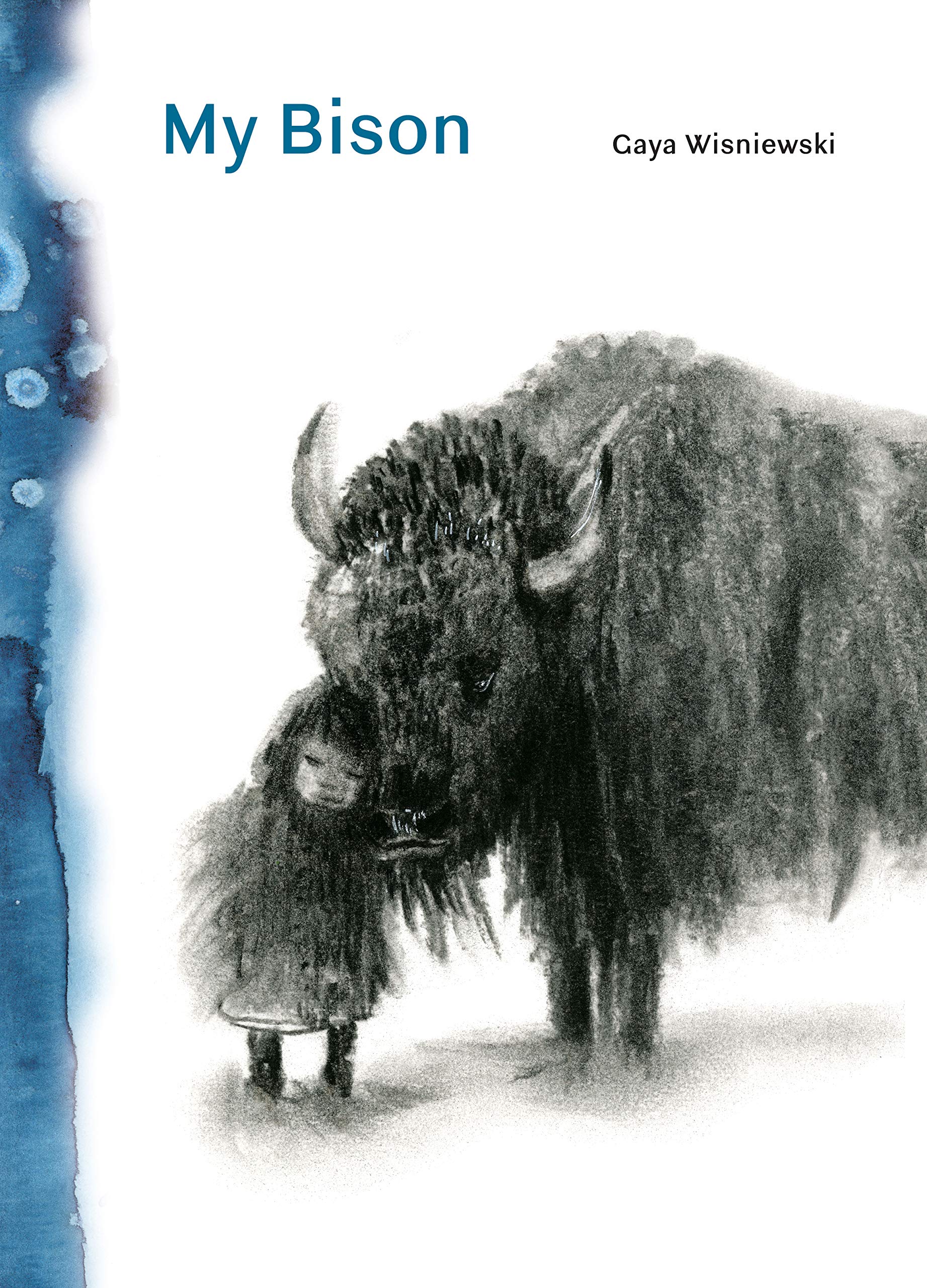
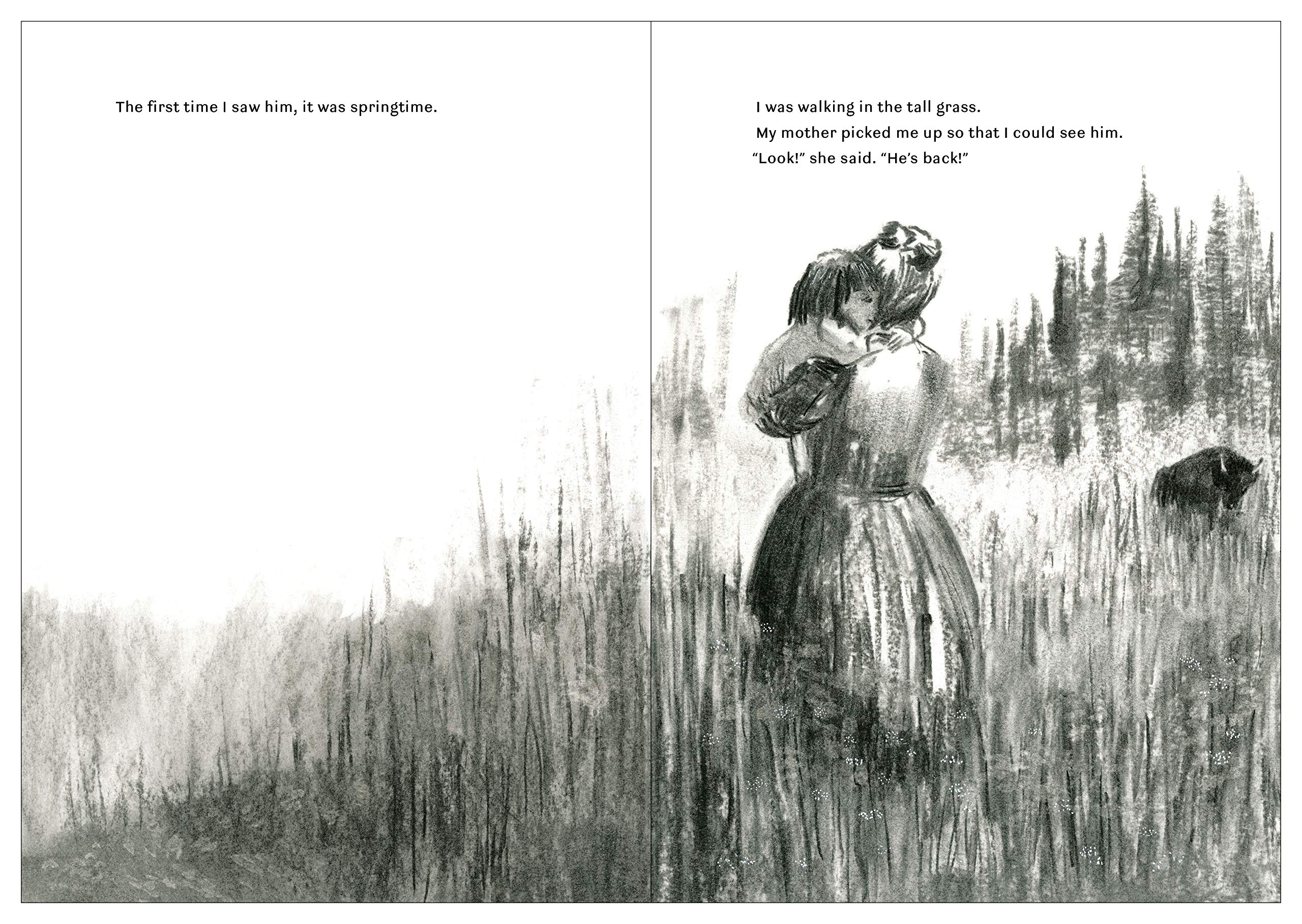
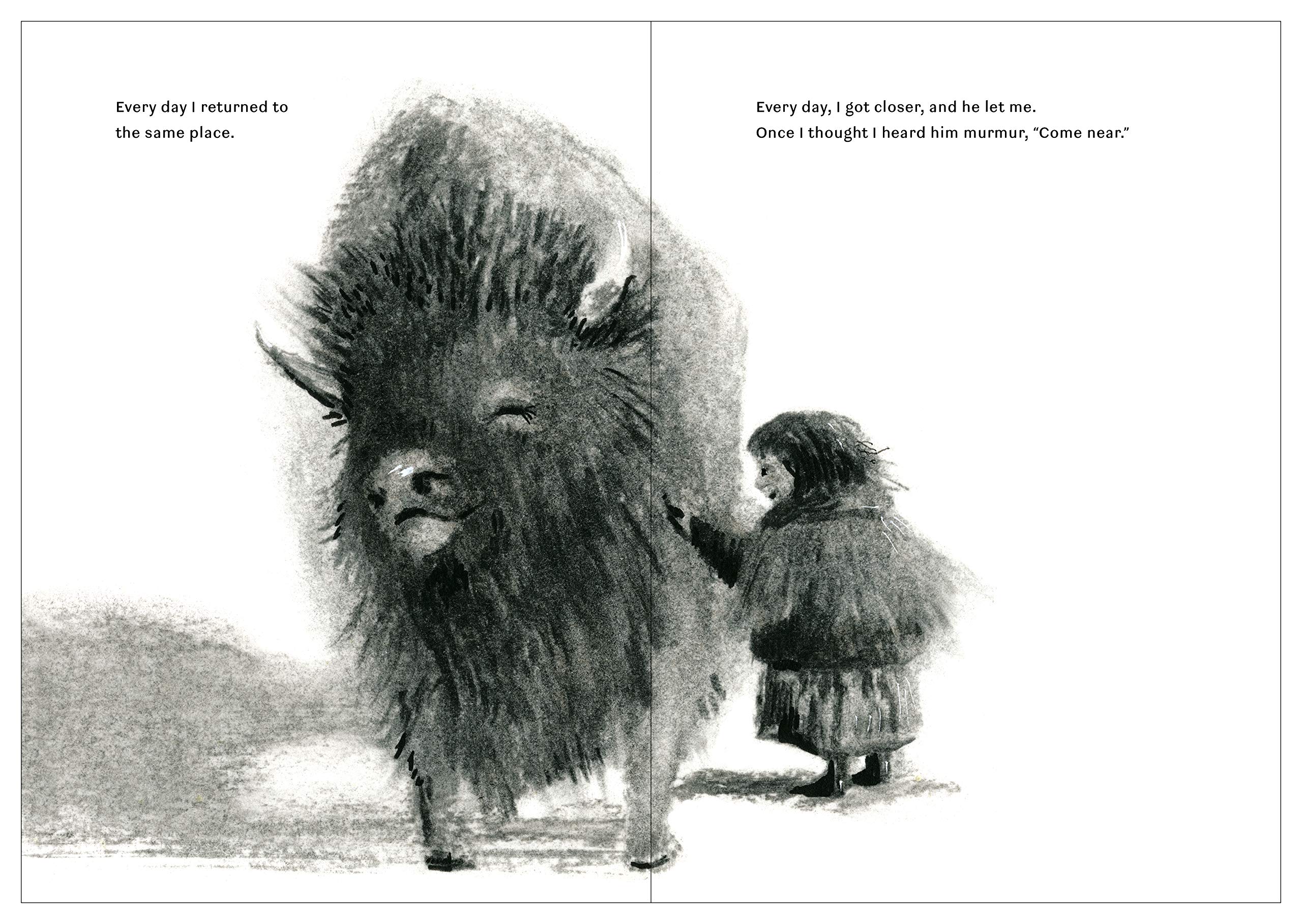
The first time a little girl meets the bison she was walking with her mother through a field of tall grass. “‘Look!’” her mother said. “‘He’s back!’” Every day after that the girl went out into the field to see the bison, coming a little closer each time until she was able to pet him. Once, she even thought she heard him whisper an invitation to come closer.

celebrate-picture-books-picture-book-review-my-bison-first-time

Image copyright Gaya Wisniewski, 2020, courtesy of Princeton Architectural Press.

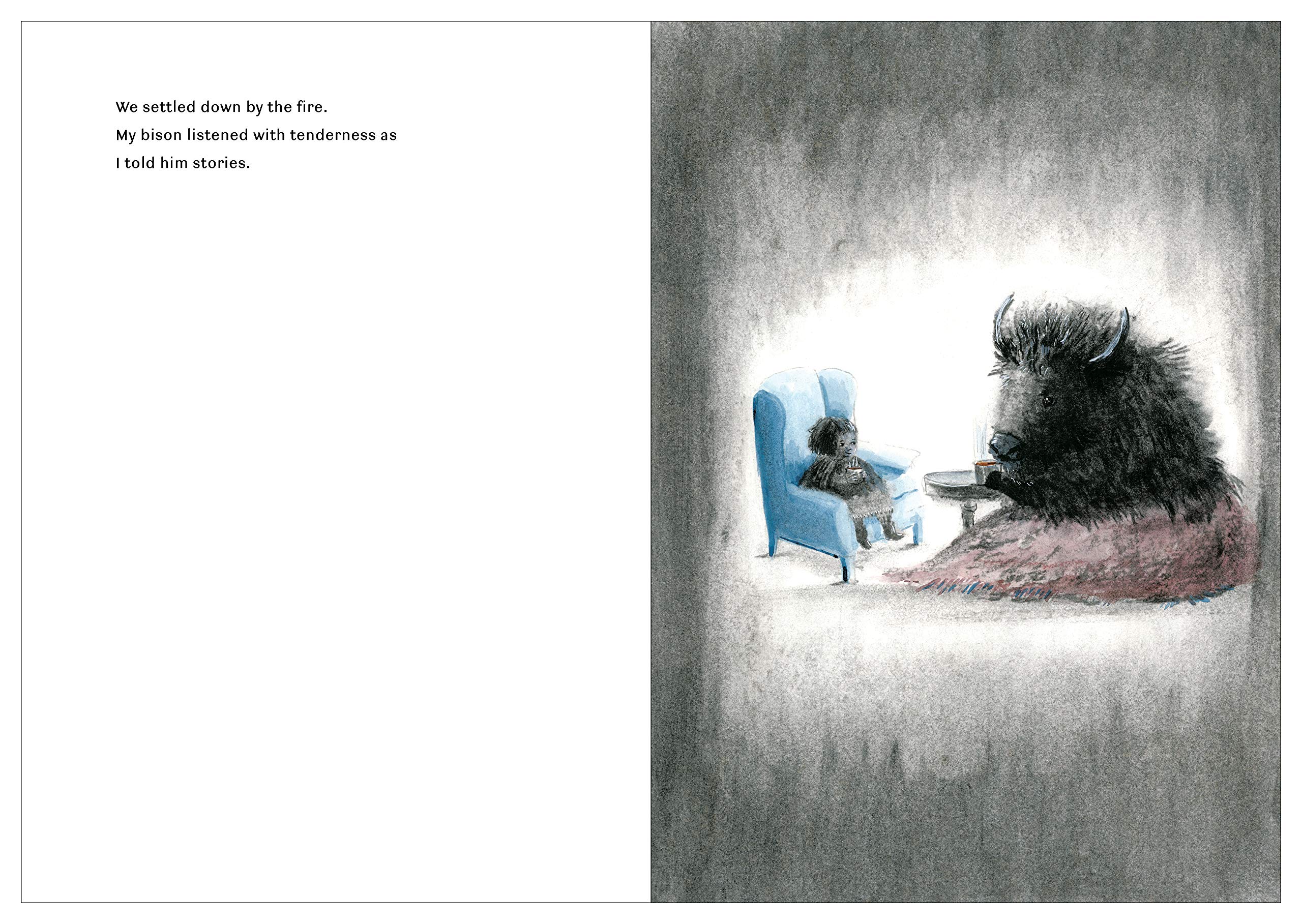
The little girl began to feed him food she’d made herself. Sometimes he didn’t like it, but he always tried it and that made her happy. One day it was time for him to move on with the rest of the herd. The girl walked with him as far as she could. When she said goodbye, the bison gave her a long look and she “knew he’d be back when snow covered the ground again.” The girl was lonely without him, but when winter returned she knew he had too without even seeing him. Now, seated together near the fire, the girl told him stories about the forest and what she’d done over the year while he, silent, “listened with tenderness.” She loved everything about him and loved him with her whole heart.

celebrate-picture-books-picture-book-review-my-bison-come-near

Image copyright Gaya Wisniewski, 2020, courtesy of Princeton Architectural Press.

The girl and the bison grew old together, winter to winter, never feeling the cold of the snow. Once, they talked all night about their mothers. The girl remembering the first time her mother had shown her the bison, how she had comforted her and taught her the lessons of nature. She missed her mother so much, she told him, and imagined he missed his mother too.

celebrate-picture-books-picture-book-review-my-bison-tea

Image copyright Gaya Wisniewski, 2020, courtesy of Princeton Architectural Press.

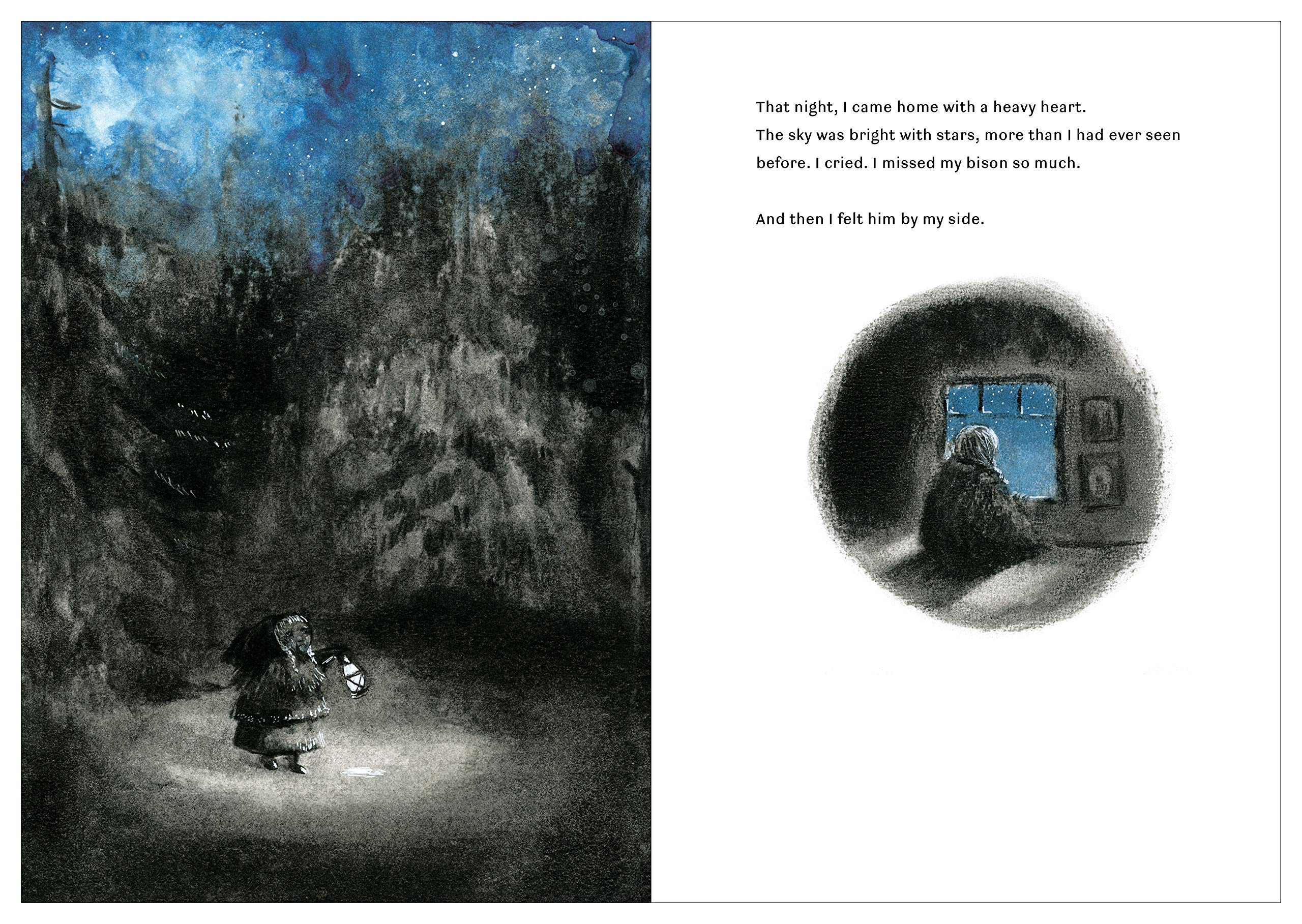
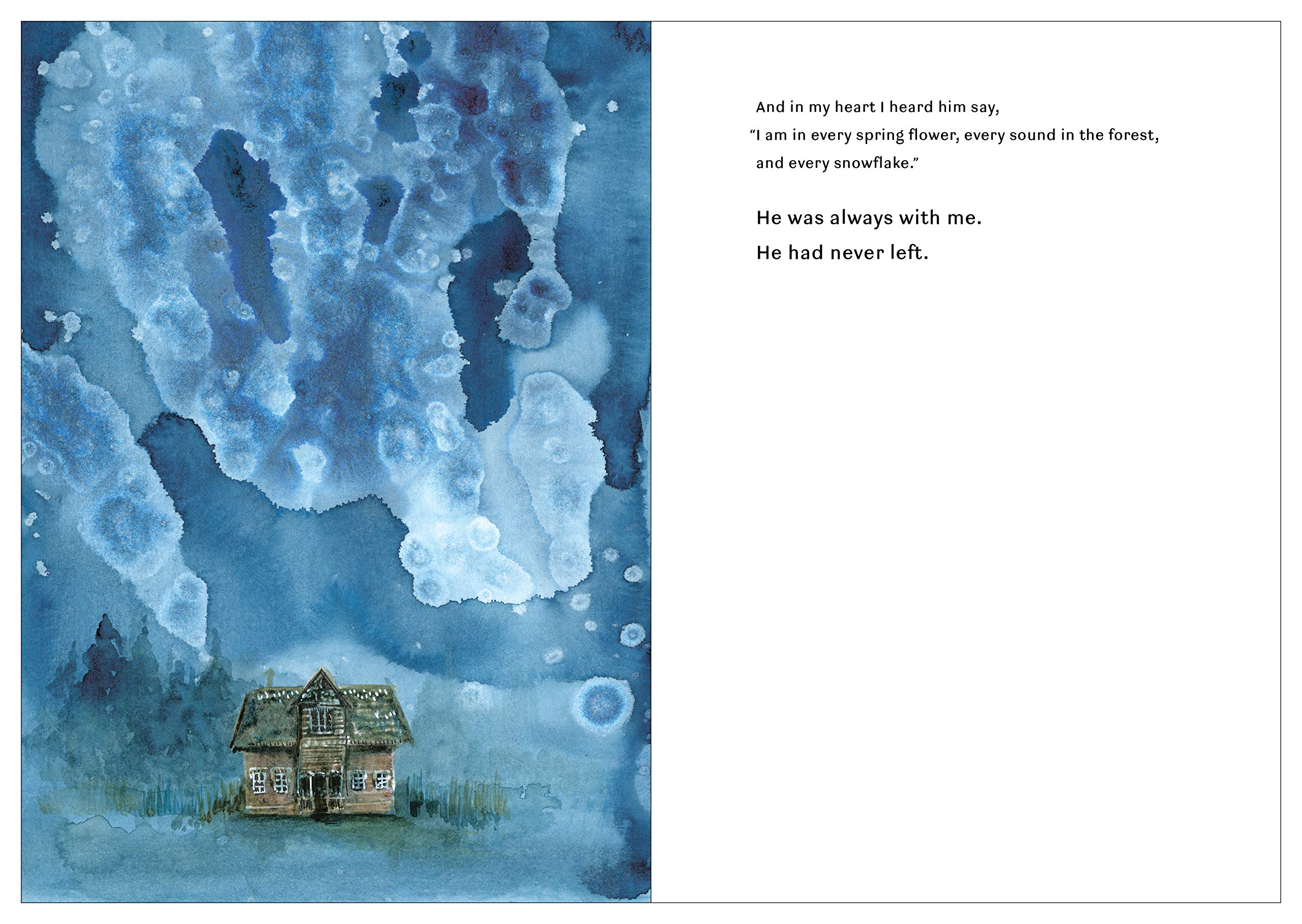
One winter the bison didn’t return and no amount of looking could find him. The girl, now an old woman, went home. She cried with missing him. And then just as in those winters so long ago when she felt his presence without seeing him, she knew he was with her. In her heart she “heard him say, ‘I am in every spring flower, every sound in the forest, and every snowflake.’” And she knew he was with her always.

celebrate-picture-books-picture-book-review-my-bison-night

Image copyright Gaya Wisniewski, 2020, courtesy of Princeton Architectural Press.

Gaya Wisniewski’s stunning and gorgeous story about a friendship between a little girl and a bison is deeply moving, it’s straightforward and metaphorical meanings blending in harmony to settle in a reader’s heart. The girl’s and bison’s relationship is one of mutual respect and trust, and they are in many ways alike. With her shaggy coat and tousled hair, the girl looks like a miniature bison, while the bison is perfectly comfortable sitting at the table near the fire sipping hot chocolate or snoozing in the cozy built-in bed  in the girl’s home. The girl loves the bison the way children love their pets, and the way she takes care of him replicates a mother’s tender affection and attention.

Here the text and images take on deeper meanings as the little girl offers the bison homemade food, holding her long-handled spoon to his mouth the way mothers the world over do for their babies. She walks with him to the edge of the clearing as he leaves in the spring, waving goodbye but with the promise of his return like a mother taking her child to the bus stop, seeing them off to college, or watching them move away.

celebrate-picture-books-picture-book-review-my-bison-sky

Image copyright Gaya Wisniewski, 2020, courtesy of Princeton Architectural Press.

At other times the bison seems to take on the role of the mother. In the endearing illustration of the bison and the girl talking over cups of hot chocolate, the girl relates how the bison would listen to her stories. Later, readers learn that her mother made her hot chocolate when she couldn’t sleep, letting them imagine how the little girl might have told her mother about her day, about the things keeping her awake. The china cup also holds the bison’s memory of cuddling with his mother, their fur smudged and merging with the steam rising from the hot drink. This blending of roles subtly demonstrates the cycles of life and the reciprocal nature of love.

Readers don’t know when the girl lost her mother; but a snapshot of the girl playing Ring around the Rosie with her and her teddy bear, in which only the mother’s arms are visible at the side of the page and the circle of light highlighting this scene is surrounded by darkness, hints at the loss. As the bison and the girl grow old together and there comes the winter when the bison does not return readers discover that any great love is always with them.

Wisniewski’s charcoal and ink illustrations, punctuated with blue create a mystical, dreamlike atmosphere where the forest and the mountains, the girl and the bison reach out to embrace the reader and invite them into this world of a love like no other.

A tender story to share all types of unending love with children, My Bison would be a poignant addition to home, school, and public library collections.

Ages 4 – 7

Princeton Architectural Press, 2020 | ISBN 978-1616898861

To learn more about Gaya Wisniewski, her books, and her art, visit her website.

National Bison Day Activity

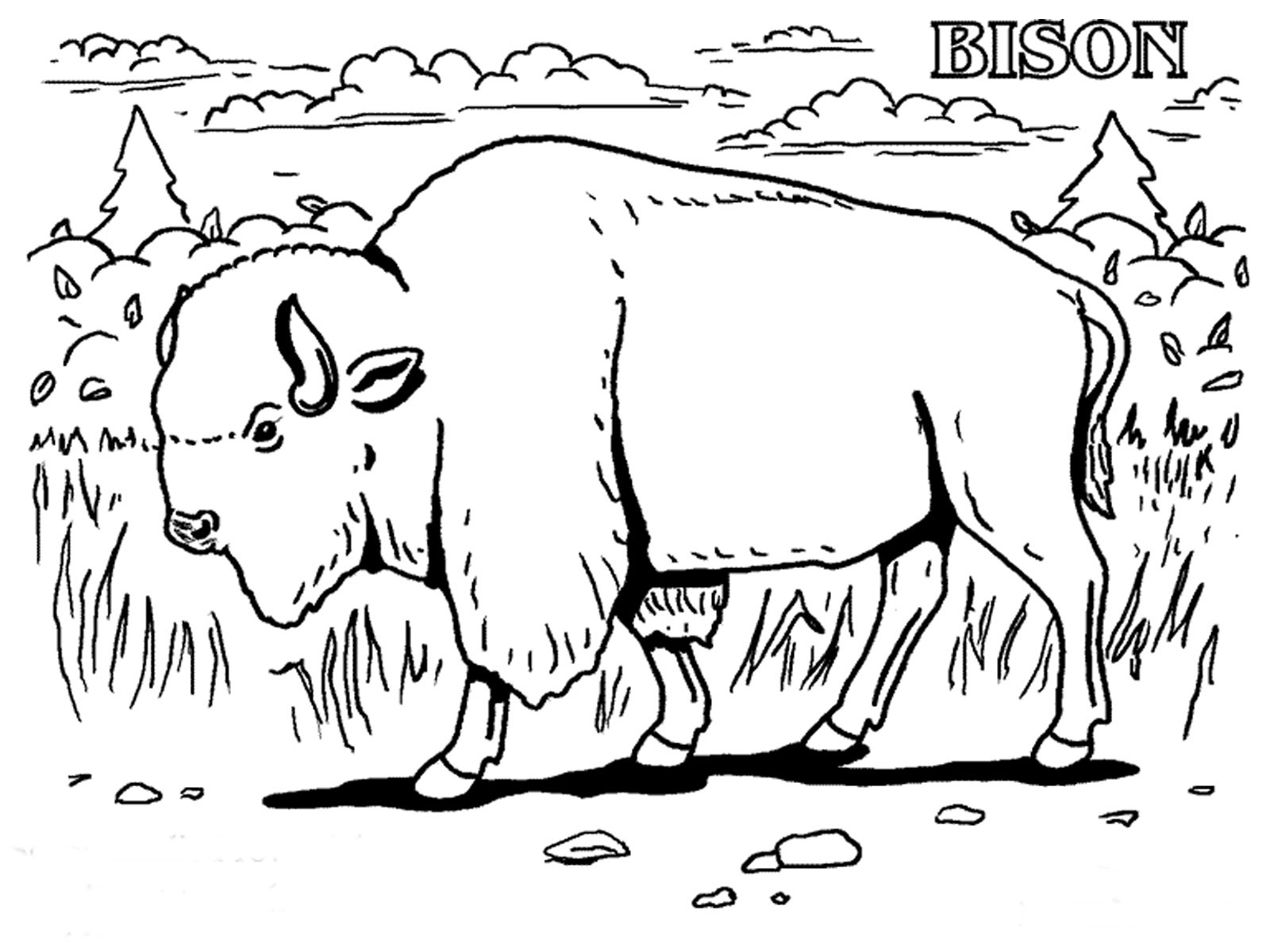
celebrate-picture-books-picture-book-review-bison-coloring-page

Bison Coloring Page


Bison are majestic creatures. Enjoy this coloring page of a bison roaming Yellowstone National Park.

Bison Coloring Page

celebrate-picture-books-picture-book-review-my-bison-cover

You can find My Bison at these booksellers

Amazon | Barnes & Noble | Books-a-Million

To support your local independent bookstore, order from

Bookshop | IndieBound

Picture Book Review


September 25 – It’s Adopt a Less-Adoptable Pet Week

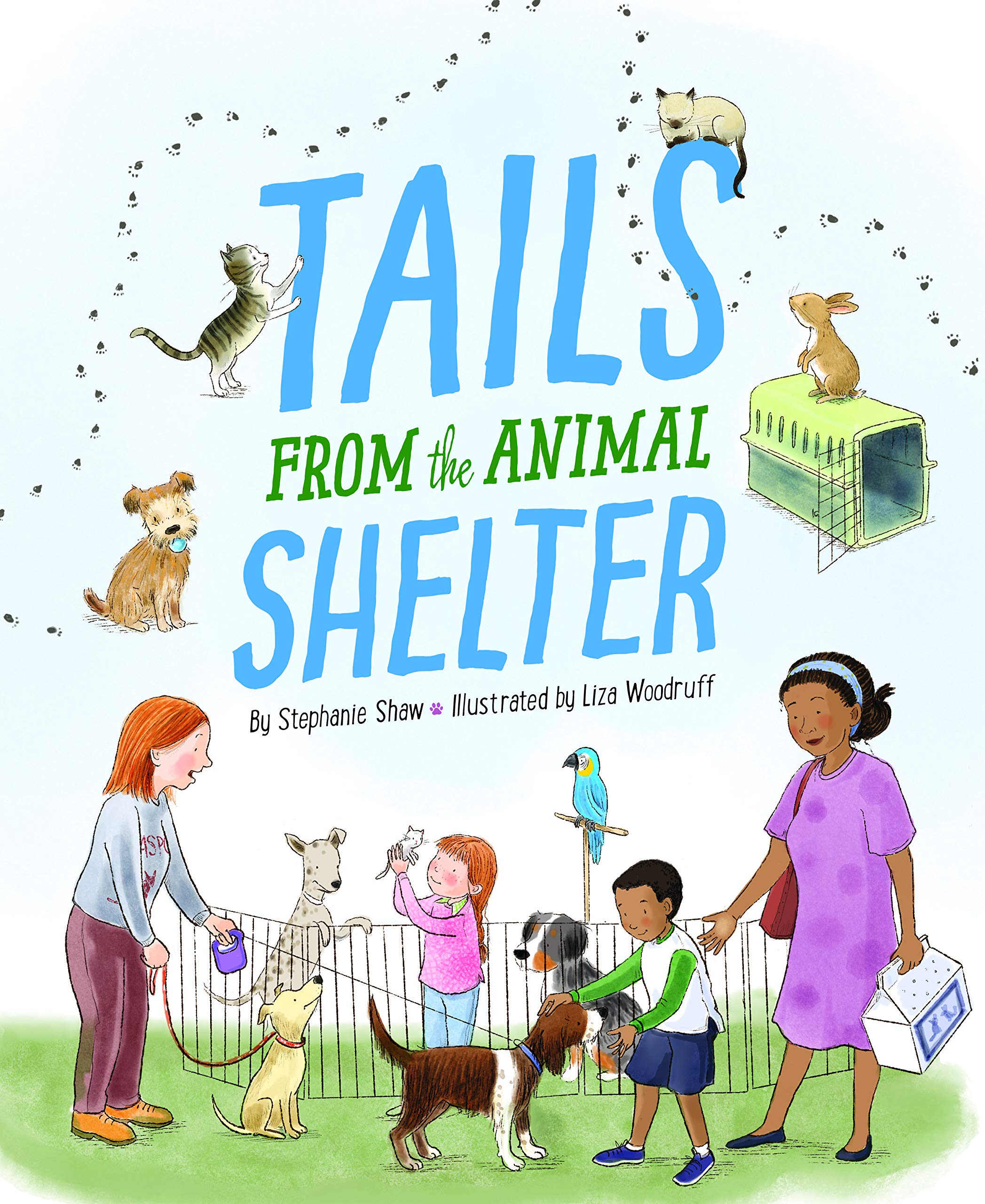
celebrate-picture-books-picture-book-review-tails-from-the-animal-shelter-cover

About the Holiday

Established by Petfinder, this week-long holiday aims to raise awareness of all those animals in shelters who, because of age, health, size, or even color, are overlooked for adoption. But these animals have a lot of love to give, and the bonds you can form with a special-needs or unusual pet can change your life. To learn more about the Adopt a Less-Adoptable Pet Week and how you can help deserving animals find a forever home throughout the year, visit Petfinder Pro. 

Thanks to Sleeping Bear Press for sending me a copy of Tails from the Animal Shelter for review consideration. All opinions about the book are my own.

Tails from the Animal Shelter

Written by Stephanie Shaw | Illustrated by Liza Woodruff


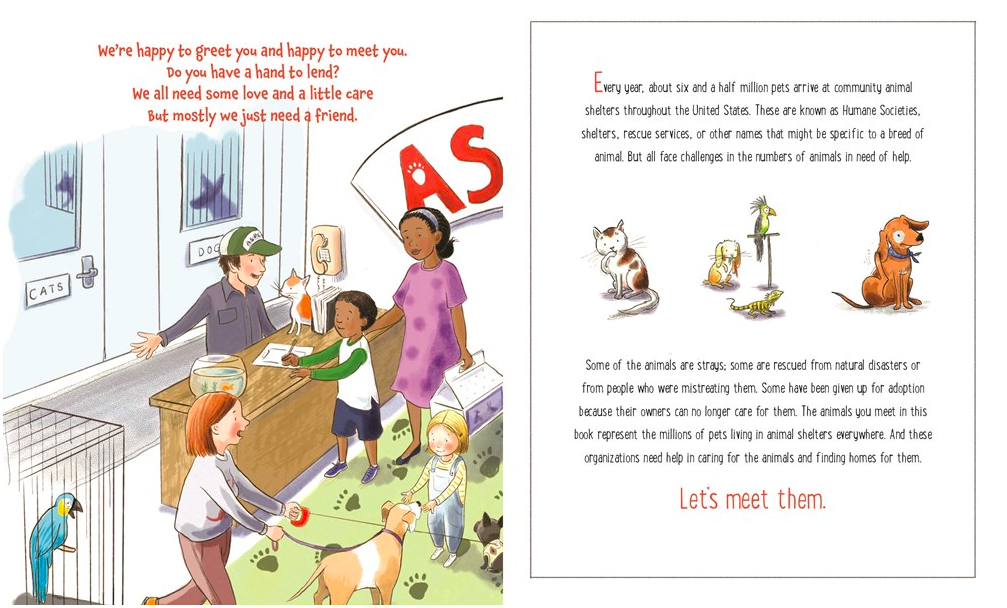
Welcome to the Humane Society Animal Shelter! The animals are waiting to meet you, and the staff are happy to introduce you to the wonderful animals who are available for adoption. While most animals who arrive at shelters across the country are dogs or cats, there are lots of other pets looking for a new home. Why do some animals come to live in a shelter? The book reveals many reasons. Among them are that “some of the animals are strays; some are rescued from natural disasters” and “some have been given up for adoption because their owners can no longer care for them.”

celebrate-picture-books-picture-book-review-tails-from-the-animal-shelter-shelter

Image copyright Liza Woodruff, 2020, text copyright Stephanie Shaw, 2020. Courtesy of Sleeping Bear Press.

Are you ready to find a new friend? If it’s a puppy you’re looking for, you’ll love Tinkle, who’s so excited to see you that he “cannot help but piddle.” But it’s okay. “Happy puppies always dribble….As time passes and pups grow, / This little guy won’t pee ‘hello.’” If you don’t know what type of dog is best for your family, the staff at the shelter can help match you to the perfect one.

Cats also make wonderful pets for many reasons. Whether you like long-haired or short-haired, large or small cats, you’ll find just the right fit for your family at the shelter. Not ready for a long-term commitment? You can look into fostering a newborn kitten to get them ready for adoption. What kinds of kittens will you find? All sorts, like Ariel, who says: “I’m an acrobat cat! / I can climb anywhere! / I’ll roll in a ball and then / leap to a chair!”

celebrate-picture-books-picture-book-review-tails-from-the-animal-shelter-skunks

Image copyright Liza Woodruff, 2020, text copyright Stephanie Shaw, 2020. Courtesy of Sleeping Bear Press.

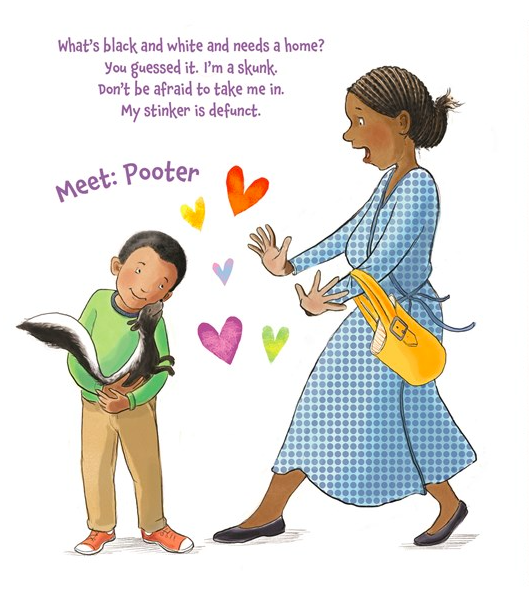
These dogs and puppies, cats and kittens are only a few of the animals that turn up needing a new home. Take Pooter, for example. Pooter is black and white and, despite the recognizable stripe down its back, does not stink. Skunks that make their way to shelters “have never lived in the wild” and have had surgery so they cannot make their “smelly spray.”

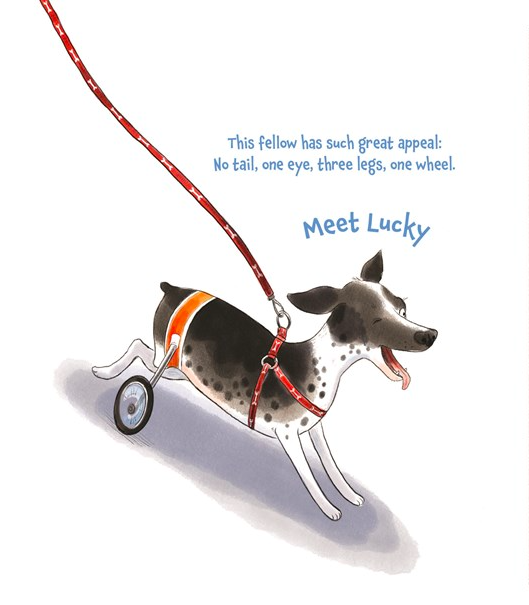
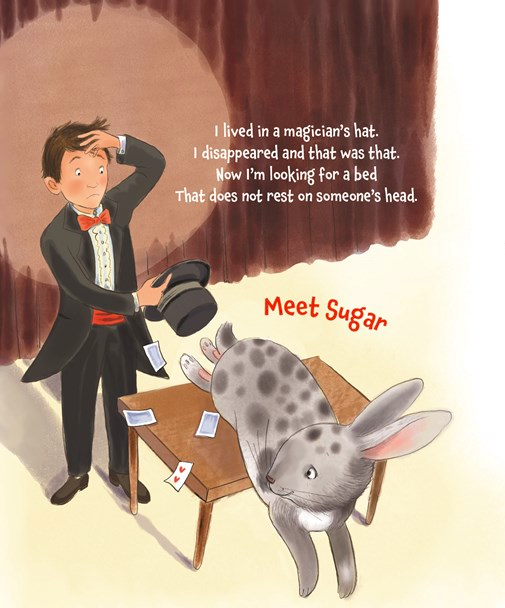
Veterinary advances have improved the lives of injured animals or animals with health problems. Animals with special needs can now be fitted with “rear-support leashes or wheelchairs” and “can live happily for many years.” If you can adopt “an animal with special needs [you] will bring a grateful and loyal pet into your family.” A popular pet that has some surprising talents, a rabbit can also be a top choice for people who live in a smaller home. Trained to use a litter box, rabbits “can live indoors just like cats do.” 

celebrate-picture-books-picture-book-review-tails-from-the-animal-shelter-special-needs-pets

Image copyright Liza Woodruff, 2020, text copyright Stephanie Shaw, 2020. Courtesy of Sleeping Bear Press.

If you live on a farm or have a lot of land in an area that allows for farm animals, you may be interested in Hamlet, who tells readers, “I am a sweet potbellied pig. / I started small but I grew BIG….I know some tricks. I’m neat and clean. / I’m many things. I’m just not… / lean.” Around the nation there are many “pigs, goats, sheep, and chickens [that] need new homes. There are over two hundred thousand horses alone rescued or surrendered to shelter care every year.” 

Along with detailed descriptions of the birds, reptiles, and senior animals that also make loving pets, the book is packed with information about how and why certain animals come to shelters and programs that sponsor a variety of animals and help get them ready for adoption. Back matter reveals how animal shelters were established, gives extensive tips on and issues to consider when adopting a shelter animal, lists ways people can help shelter animals even if they can’t adopt, and provides online resources for learning more and finding shelters in your area.

celebrate-picture-books-picture-book-review-tails-from-the-animal-shelter-rabbits

Image copyright Liza Woodruff, 2020, text copyright Stephanie Shaw, 2020. Courtesy of Sleeping Bear Press.

In her fascinating and accessible text, Stephanie Shaw combines poetry with facts and interesting tidbits about each type of animal to discuss why they make excellent pets for the right person or living condition. Her humorous, whimsical verses that accompany each category and introduce a particular animal will charm kids with a snapshot of the animal’s personality. Kids will also enjoy talking about how each name fits the animal.

Liza Woodruff’s cheery illustrations will enchant animal lovers with adorable images of funny, loving, and endearing animals happy to find a forever home. The joy that pets bring to a family is evident as kids hug, play with, and react to their pets.

An excellent introduction to shelter animals and pet ownership, Tails from the Animal Shelter is highly recommended for any family thinking about adopting a pet as well as for young animal lovers and kids interested in veterinary medicine or volunteering to help animals. The book would also make a favorite addition to school and public library collections.

Ages 5 – 8

Sleeping Bear Press, 2020 | ISBN 978-1534110489

Discover more about Stephanie Shaw and her books on her website.

To learn more about Liza Woodruff, her books, and her art, visit her website.

Adopt a Less-Adoptable Pet Week Activity

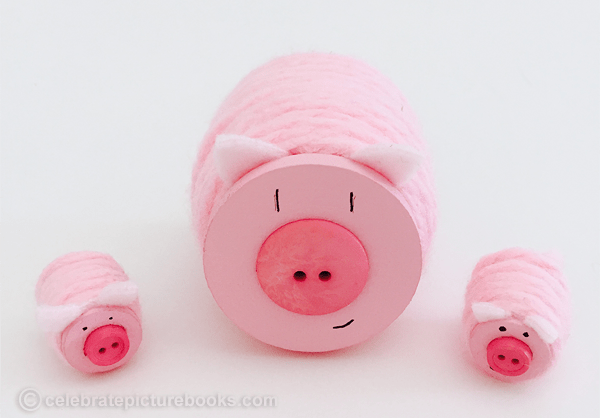
CPB - Pig Day pigs

Roly Poly Spool Potbellied Pig and Piglets


Get ready to have fun making this cute and easy craft! Ham it up with your own pig and piglets who can keep you company on your desk, near your bed or anywhere it’s fun to play!

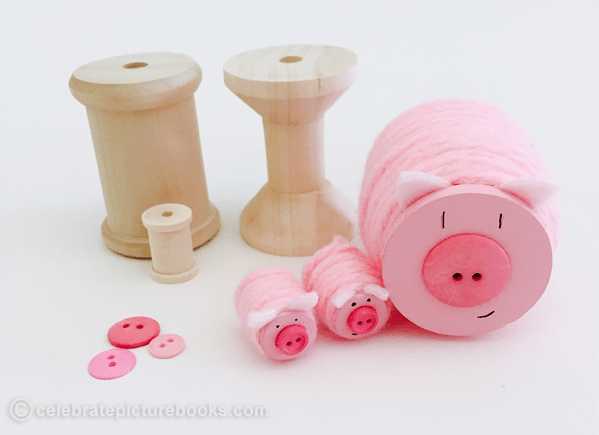
Supplies

  • Printable Pigs Ears Template
  • 2 ½-inch wooden spoon, available from craft stores
  • 1-inch wooden spool, available from craft stores
  • Pink yarn, I used a wide-strand yarn
  • Pink fleece or felt
  • Pink craft paint
  • Pink 5/8-inch or 1-inch flat button with two holes
  • Pink 3/8-inch flat button with two holes
  • Paint brush
  • Scissors
  • Glue
  • Black marker

CPB - Pig Day with spools (2)

Directions

  1. Print Pigs Ears Template
  2. Trace the ears onto the fleece or felt and cut them out.
  3. Paint the spool with the pink paint
  4. Let spool dry
  5. When the spool is dry, glue the ears to the spool, letting the ears stick up over the rim of the spool.
  6. Wrap yarn in straight layers around spool until the body of the pig is a little bigger than the end of the spool, which will be the face
  7. Cut yarn off skein and glue the end to the body
  8. To make the nose, glue the button over the hole in the middle of the spool
  9. Mark the eyes and mouth with a marker
  10. To make the tail for the large pig, cut a 4-inch long piece of yarn. Tie a triple knot in the yarn (or a knot big enough to fill the hole in the spool). Then tie a single knot near the other end of the yarn. Insert the large knot into the spool’s hole at the back of the pig. Trim the yarn in front of the second knot as needed.
  11. To make the tail for the piglets, tie a single knot in the yarn and another single knot below the first. Insert one of the single knots into the hole. Trim yarn as needed.

celebrate-picture-books-picture-book-review-tails-from-the-animal-shelter-cover

You can find Tails from the Animal Shelter at these booksellers

Amazon | Barnes & Noble | Books-a-Million

To support your local independent bookstore, order from

Bookshop | IndieBound


Picture Book Review


September 4 – National Wildlife Day

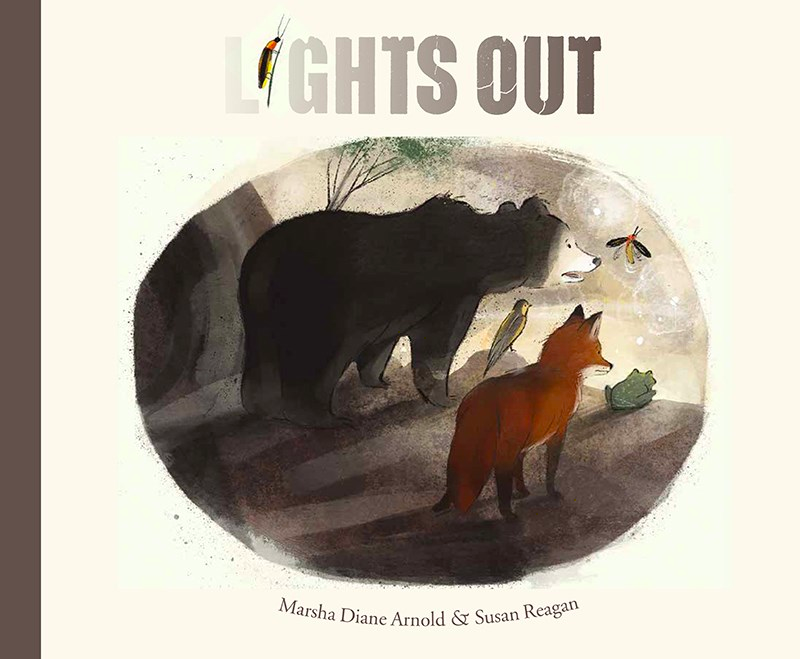
celebrate-picture-books-picture-book-review-Lights-Out-cover

About the Holiday

National Wildlife Day was established in 2005 by author and pet lifestyle expert Colleen Paige to promote awareness of the importance of conservation of animals, habitats, and the environment worldwide as well as to acknowledge the education and conservation work of zoos and animal sanctuaries. To honor the memory and birthday of Steve Irwin, National Wildlife Day is also celebrated on February 2. To celebrate today’s holiday, take time to learn about what you can do to help protect the environment. One action might be as easy as turning off a light – as today’s book shows.

Lights Out

Written by Marsha Diane Arnold | Illustrated by Susan Reagan


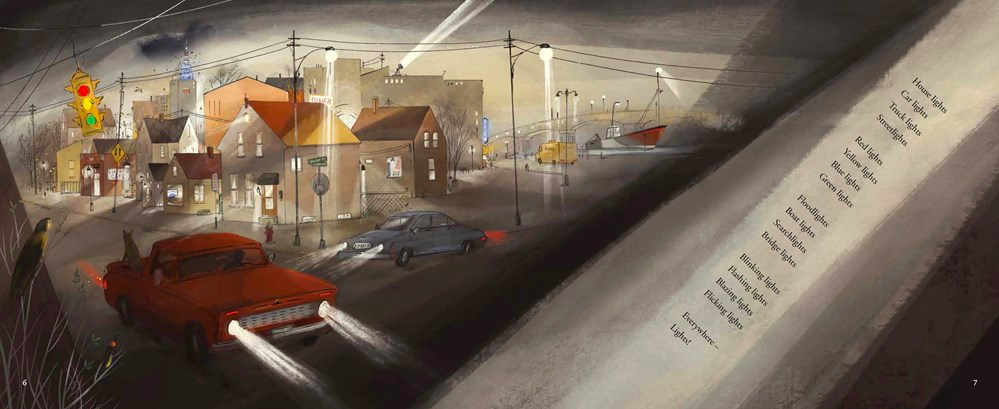
A little fox peeks out of her den. It’s night, but her surroundings are lit up as if it were noon. A Beetle hovers nearby taking in all the “House lights / Car lights / Truck lights / Street lights… / Blinking lights / Flashing lights / Blazing lights / Flickering lights.” There are lights in every color and on every structure. Fox and Beetle wonder where Darkness is—the dark of Night that invites coyotes to sing, owls to hunt, foxes to hunt, and beetles to become “more than beetles.” Perhaps, they think, Night is lost.

celebrate-picture-books-picture-book-review-Lights-Out-city

Image copyright Susan Reagan, 2020, text copyright Marsha Diane Arnold, 2020. Courtesy of Creative Editions.

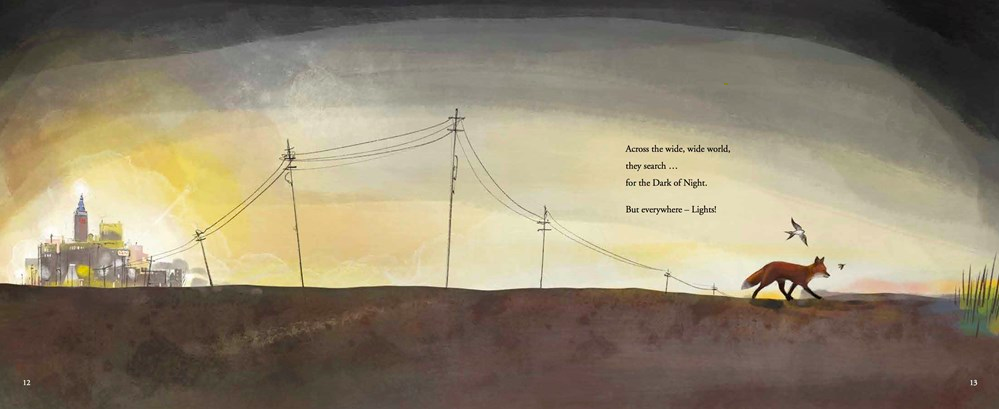
Fox and Beetle set out to find Night. They pass a wetlands, where Frog waits in vain for darkness to lend his voice to the nighttime chorus. “Across the wide, wide world, / they search… / for the Dark of Night. / But everywhere – Lights!” Up on the mountain, Bear is waiting for the signal to hibernate, but the brightness keeps him awake. Frog and Bear join in the search for Night.

celebrate-picture-books-picture-book-review-Lights-Out-wandering

Image copyright Susan Reagan, 2020, text copyright Marsha Diane Arnold, 2020. Courtesy of Creative Editions.

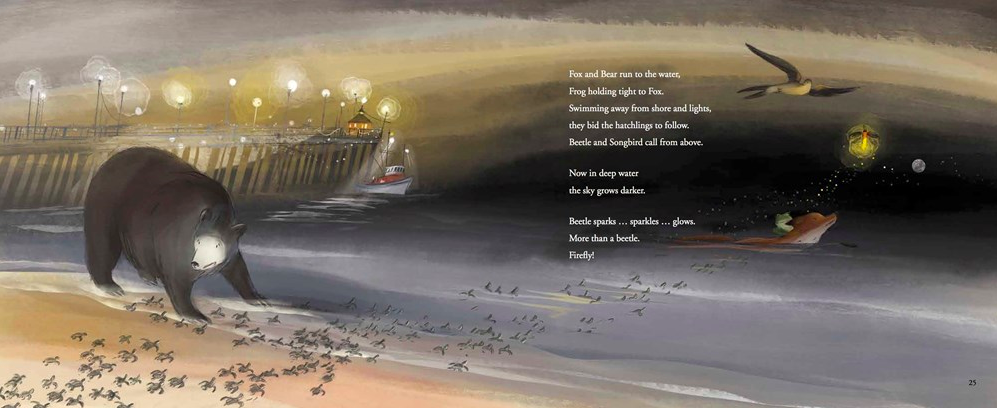
Fox and Beetle travel through forests and fields, over deserts and dunes, and across wide prairies, but don’t find Night. When they come to the seashore, they witness baby turtles hatching. Instead of scuttling toward the ocean, they’re running toward the lights of the boardwalk shops. Frog stops the little turtles then Bear, Fox, and Frog wade out into the waves and shows them the way.

celebrate-picture-books-picture-book-review-Lights-Out-turtles

Image copyright Susan Reagan, 2020, text copyright Marsha Diane Arnold, 2020. Courtesy of Creative Editions.

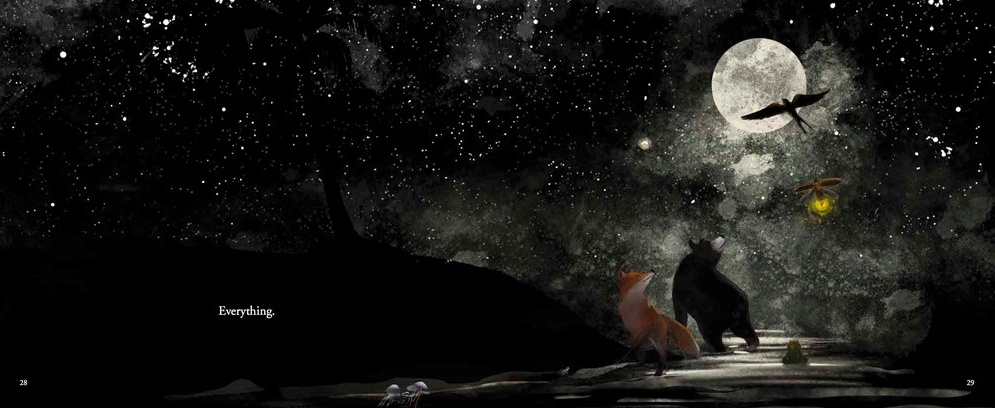
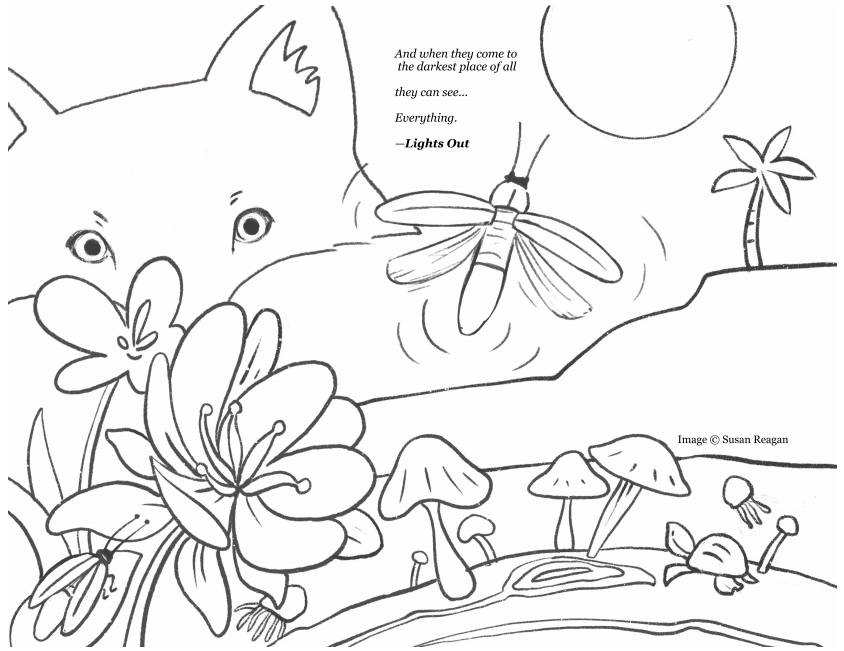
The three friends swim “away from shore and lights” while Beetle and Songbird fly above. Out here, where the sky is dark, Beetle at last sparks and glows. At last the friends reach a far-away island that’s cloaked in darkness. Here “they can see…Everything…. / Mushrooms glowing / Fireflies / Moonlit garden / Shining eyes / Nighttime weavers / Webs of stars / Constellations / Venus, Mars….” Here, they find Night.

An Author’s Note discussing light pollution and its effect on animals and humans and including a resource where readers can learn more about light pollution and what we can do to help precedes the story.

celebrate-picture-books-picture-book-review-Lights-Out-moon

Image copyright Susan Reagan, 2020, text copyright Marsha Diane Arnold, 2020. Courtesy of Creative Editions.

Marsha Diane Arnold’s affecting story about how light pollution changes animal behavior and confuses the natural order of life is a poignant appeal to today’s young environmentally conscious kids, sparking an awareness of the extent of the problem while inviting them to consider ways to restore the darkness of night so important to the health of our planet. Through non-rhyming, yet lyrical language, Arnold takes readers on a journey to find Night. As the friends search place after place, children come to understand that light pollution is a worldwide issue.

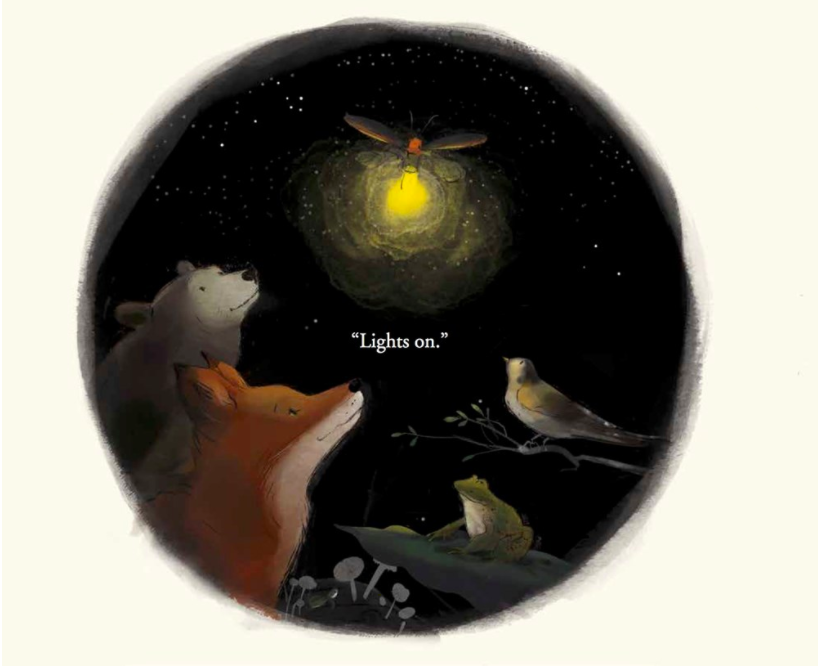
Arnold’s capitalization of Night and Darkness makes them characters in the story as well, imbued with living traits and purpose that are just as crucial to wildlife as food and shelter. In one powerful combination of text and illustration, a list of light sources streams from corner to corner in a beam of white light. The number of examples builds to create a glaring realization of all the types of lights that keep the world turned on twenty-four hours a day. After reading Lights Out, children and adults will find themselves paying attention to the lights around them and even in and near their own home.

celebrate-picture-books-picture-book-review-Lights-Out-lights-on

Image copyright Susan Reagan, 2020, text copyright Marsha Diane Arnold, 2020. Courtesy of Creative Editions.

Susan Reagan’s stunning illustrations of cities, waterways, and even out-of-the-way places bathed in a permanent twilight by street lamps, headlights, lighted windows, neon signs, and more are compelling reminders of just how pervasive light pollution is. As the animals wander from place to place looking for Night, their weary and distressed expressions reflect the loss of their natural nocturnal activities. When Beetle and Fox and their friends reach the distant island, Reagan’s gorgeous spreads of a star-and-moonlit sky and vegetation, in which nocturnal animals hunt, luminescent flowers glow, and spider webs glint will have readers taking a nighttime jaunt to discover what they can see in their surroundings.

A unique and important book that raises awareness not only about light pollution but about natural cycles of sleep and wakefulness, Lights Out would be an excellent addition to lessons in science and the environment and is highly recommended for home, school, and public library collections.

Ages 6 – 8

Creative Editions, 2020 | ISBN 978-1568463407

Discover more about Marsha Diane Arnold and her books on her website.

To learn more about Susan Reagan, her books, and her art, visit her website.

National Wildlife Day Activity

celebrate-picture-books-picture-book-review-Lights-Out-activity

Image copyright Susan Reagan, 2020, text copyright Marsha Diane Arnold, 2020. Courtesy of Creative Editions.

Lights Out Activity Kit


This extensive Activity Kit gives teachers, homeschoolers, and parents many ways to engage with Lights Out in the disciplines of science, language arts, art, and social action. Through the various activities, children will learn about light pollution and its effects as well as about the ways in which darkness benefits wildlife. You can download the kit from Marsha Diane Arnold’s website:

Lights Out Activity Kit

celebrate-picture-books-picture-book-review-Lights-Out-cover

You can find Lights Out at these booksellers

Amazon | Barnes & Noble | Books-a-Million

To support your local independent bookstore, order from

Bookshop | IndieBound

Picture Book Review

July 30 – International Day of Friendship

celebrate-picture-books-picture-book-review-our-world-cover

About the Holiday

Established in 2011 by the United Nations General Assembly, the International Day of Friendship asserts the idea that friendship between peoples, countries, cultures, and individuals can inspire peace efforts and build bridges between communities. The UN resolution places particular emphasis on involving young people in community activities that include different cultures and promote respect for individual diversity. On this day UN Secretary General Ban Ki-moon urges everyone, especially young people who will be our future leaders, “to resolve to cherish and cultivate as many warm relationships as possible, enriching our own lives and enhancing the future.” The day is celebrated with special initiatives, events, and activities that promote dialogue, education, understanding, and cooperation. Children are especially receptive to learning about and reaching out to others to achieve common goals. Today’s book can get them started. For more information about the International Day of Friendship and a list of actions we can all take, visit the United Nations website

Our World: A First Book of Geography

Written by Sue Lowell Gallion | Illustrated by Lisk Feng


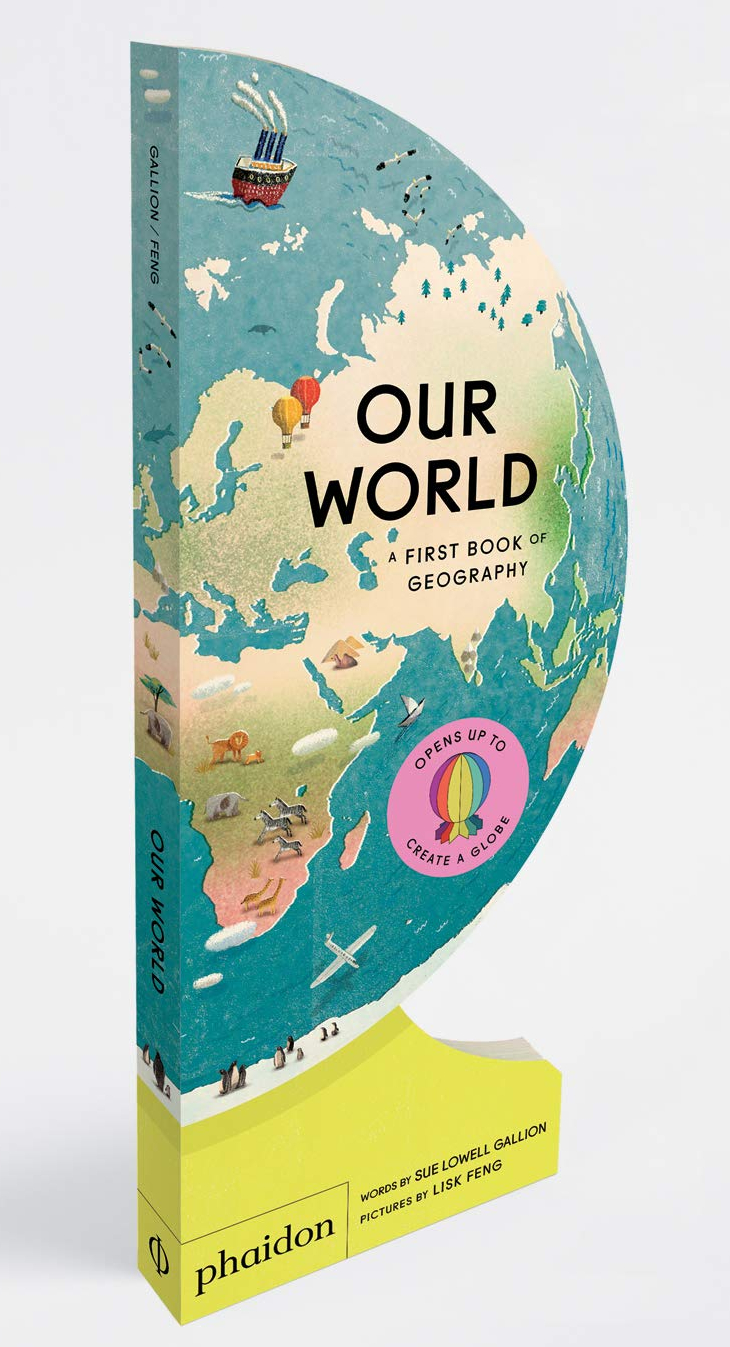
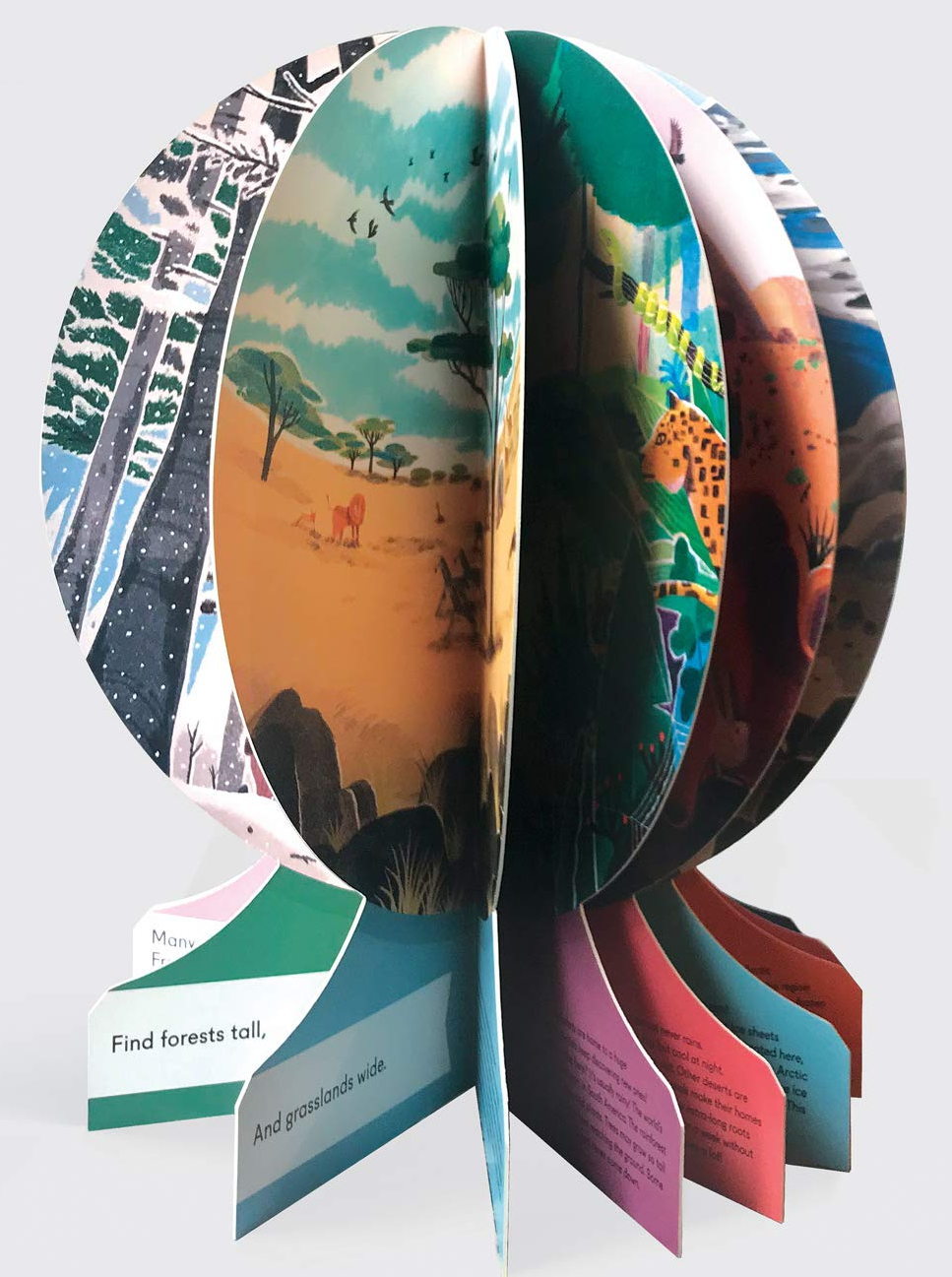
A board book like no other, Our World literally gives kids a well-rounded look at the geography of the countries, oceans, animals, plants, and climate that make up our home planet while engaging them with lyrical verses and information-packed paragraphs. Sue Lowell Gallion invites readers on her journey around the world as the sun, rising over a cool sea where scuba divers swim, brightens the sky with pastel colors: “Many places to explore, / From mountain peaks to ocean floor. / Look around you, step outside… / Find forests tall, / And grasslands wide.”
celebrate-picture-books-picture-book-review-our-world-open

Image copyright Lisk Feng, 2020, text copyright Sue Lowell Gallion, 2020. Courtesy of Phaidon Press.

Over the three spreads that contain this verse, children learn how the weather influences the types of trees that inhabit wooded areas and what types of leaves they have. Next, Gallion contrasts forests with open grasslands and reveals that while trees may be scarce on the plains, a diversity of animals is not. While herbivores easily find plenty to satisfy their hunger in grassy environments, carnivores must hunt, and their prey have adapted to survive: “Many animals, like zebras, are fast runners because there are few places to hide.”

celebrate-picture-books-picture-book-review-our-world-swimming

Image copyright Lisk Feng, 2020, text copyright Sue Lowell Gallion, 2020. Courtesy of Phaidon Press.

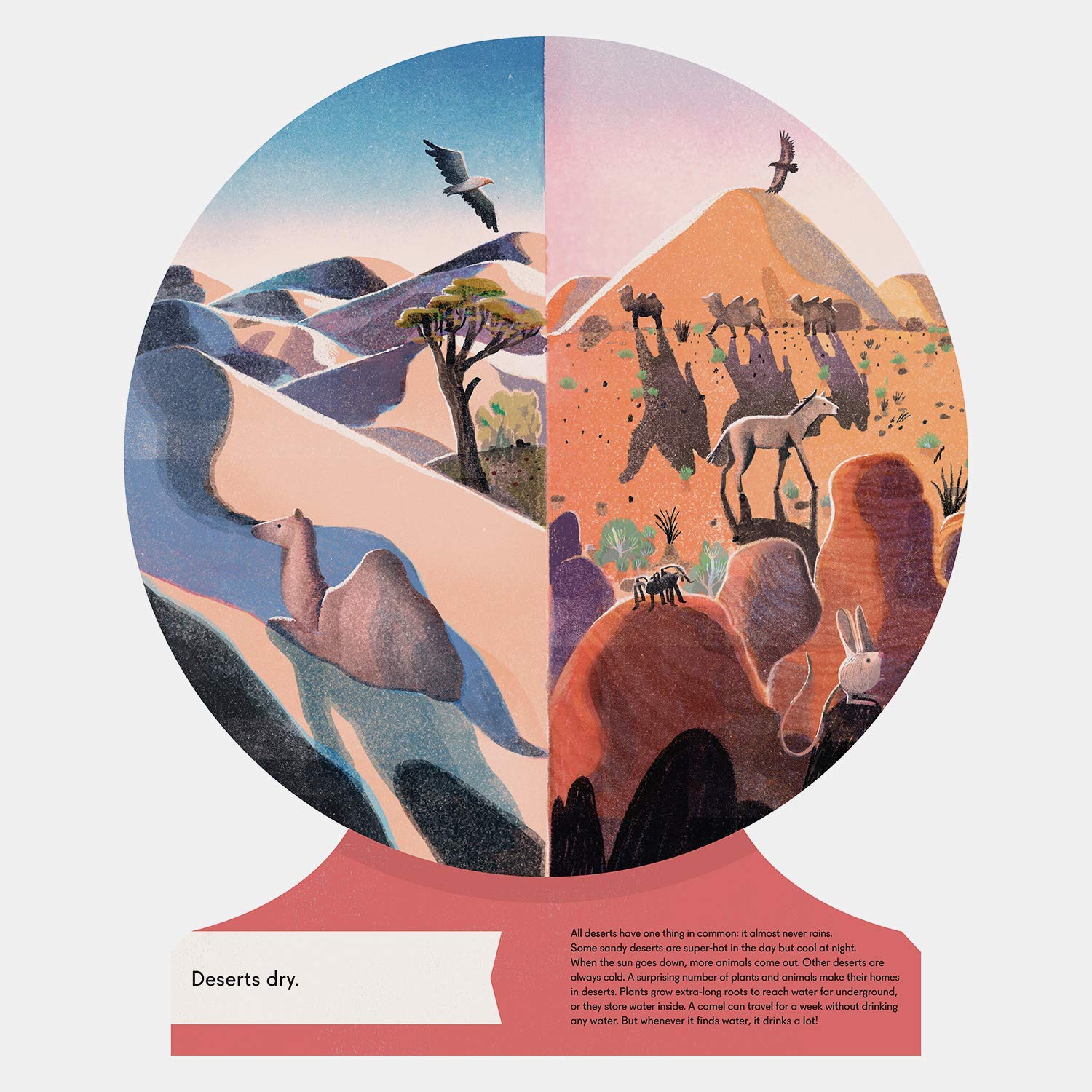
Traveling on to the world’s lush rainforests, Gallion provides little learners with enticing snippets of information about the profusion of plants and animals that live here. What might be the counterpoint to rainforests? If you’d say deserts, you’d be right! While some deserts are hot and others cold, Gallion writes, “all deserts have one thing in common: it almost never rains.” Still, an amazing variety of plants and animals thrive in these formidable conditions. Gallion shares how with her young readers.
celebrate-picture-books-picture-book-review-our-world-deserts

Image copyright Lisk Feng, 2020, text copyright Sue Lowell Gallion, 2020. Courtesy of Phaidon Press.

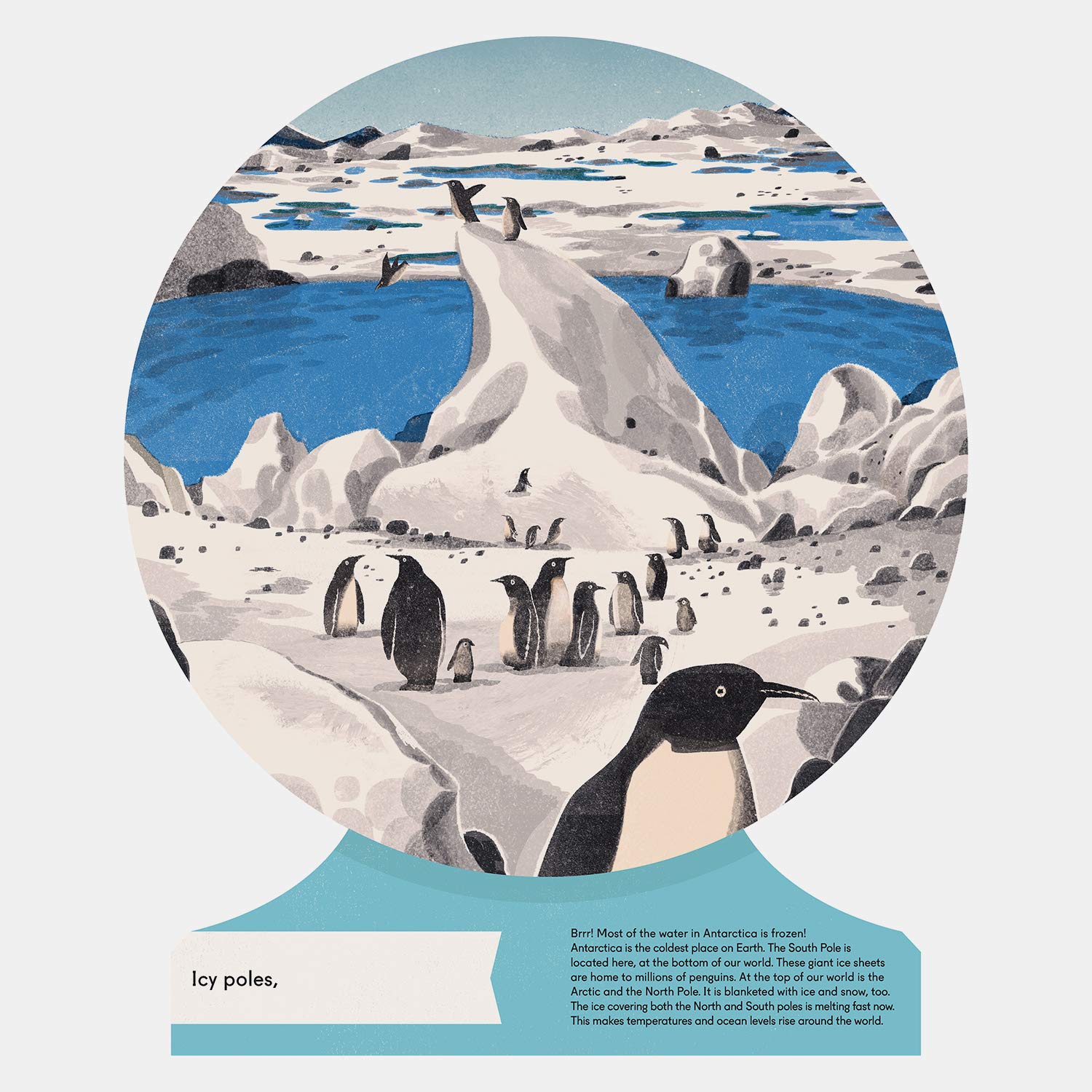
Antarctica and the icy tundra of the Arctic and high mountain peaks are populated with animals specially suited to life in our planet’s coldest regions. But, Gallion reveals, “the ice covering both the North and South poles is melting fast now. This makes temperatures and ocean levels rise around the world.” The book’s journey also spans “rivers, lakes, / Oceans deep. / Valleys, hills, / Mountains steep.” Over these pages, children learn how rivers form and where they flow; they discover what types of creatures live in shallow ocean waters as well as those pockets that are “deeper than the tallest mountains on Earth”; and they learn how the most majestic mountains and their valleys were created. 
celebrate-picture-books-picture-book-review-our-world-antarctica

Image copyright Lisk Feng, 2020, text copyright Sue Lowell Gallion, 2020. Courtesy of Phaidon Press.

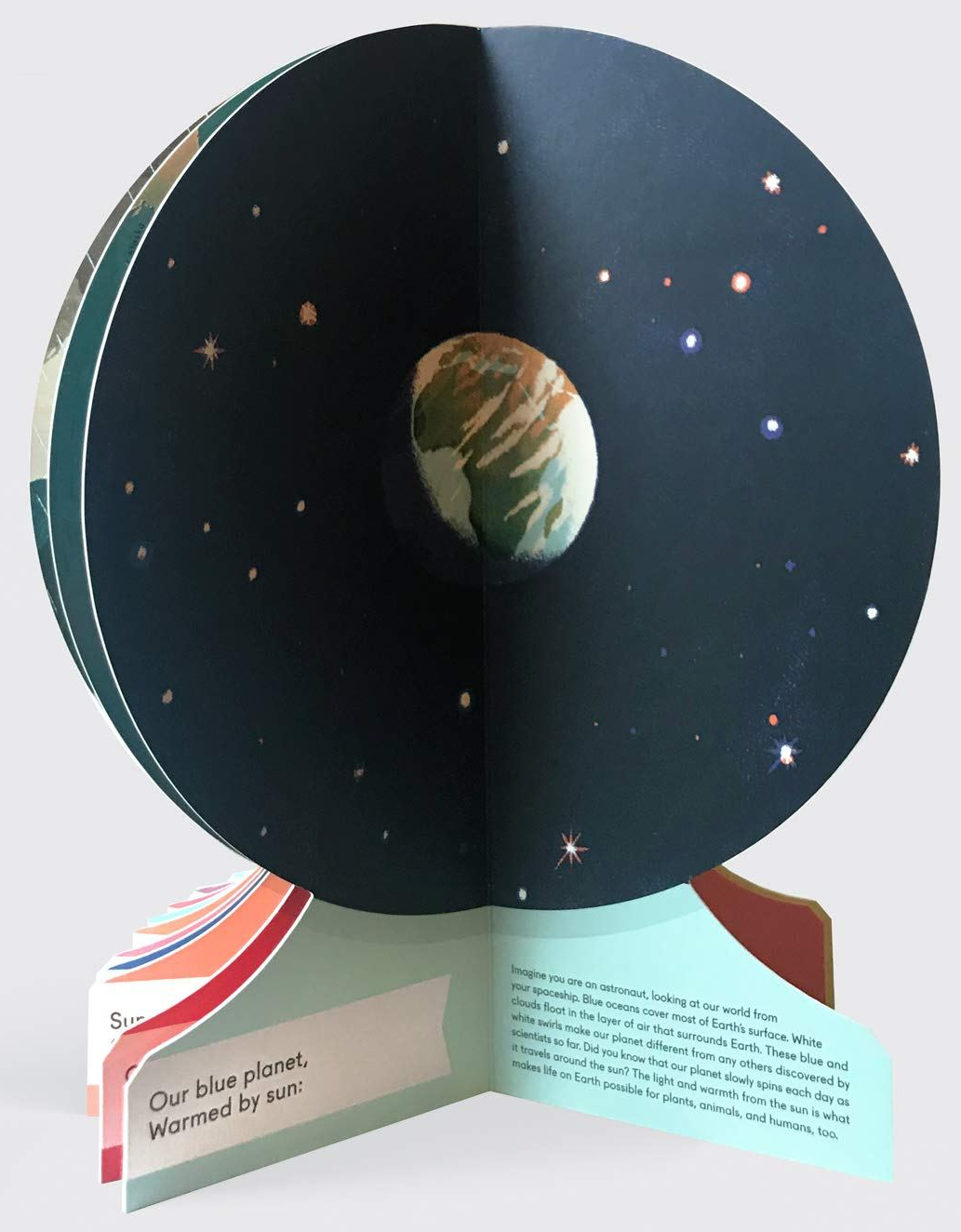
One two-page spread opens to a world map, where the seven continents and major oceans, seas, and gulfs are clearly labeled. Children will love pointing out where they, friends, and family live as well as places they’d like to visit someday. Panning back and back and back again, readers see Earth floating in space as Gallion explains “what makes life on Earth possible for plants, animals, and humans, too.” Then it’s time to zoom in to view a single house under a star-lit sky; a house that will spark in readers an appreciation for the wonder of “our blue planet, / Warmed by sun: / A living home for everyone.”
celebrate-picture-books-picture-book-review-our-world-from-space

Image copyright Lisk Feng, 2020, text copyright Sue Lowell Gallion, 2020. Courtesy of Phaidon Press.

Sue Lowell Gallion’s enchanting poem and informational text, which is sure to inspire kids to learn more about all of Earth’s natural wonders, are set off in a unique design which allows the book to open into a 3D, freestanding globe that will wow kids and adults alike. Magnets embedded in the front and back cover hold the spherical shape while the fanned-out pages create a sturdy base. 

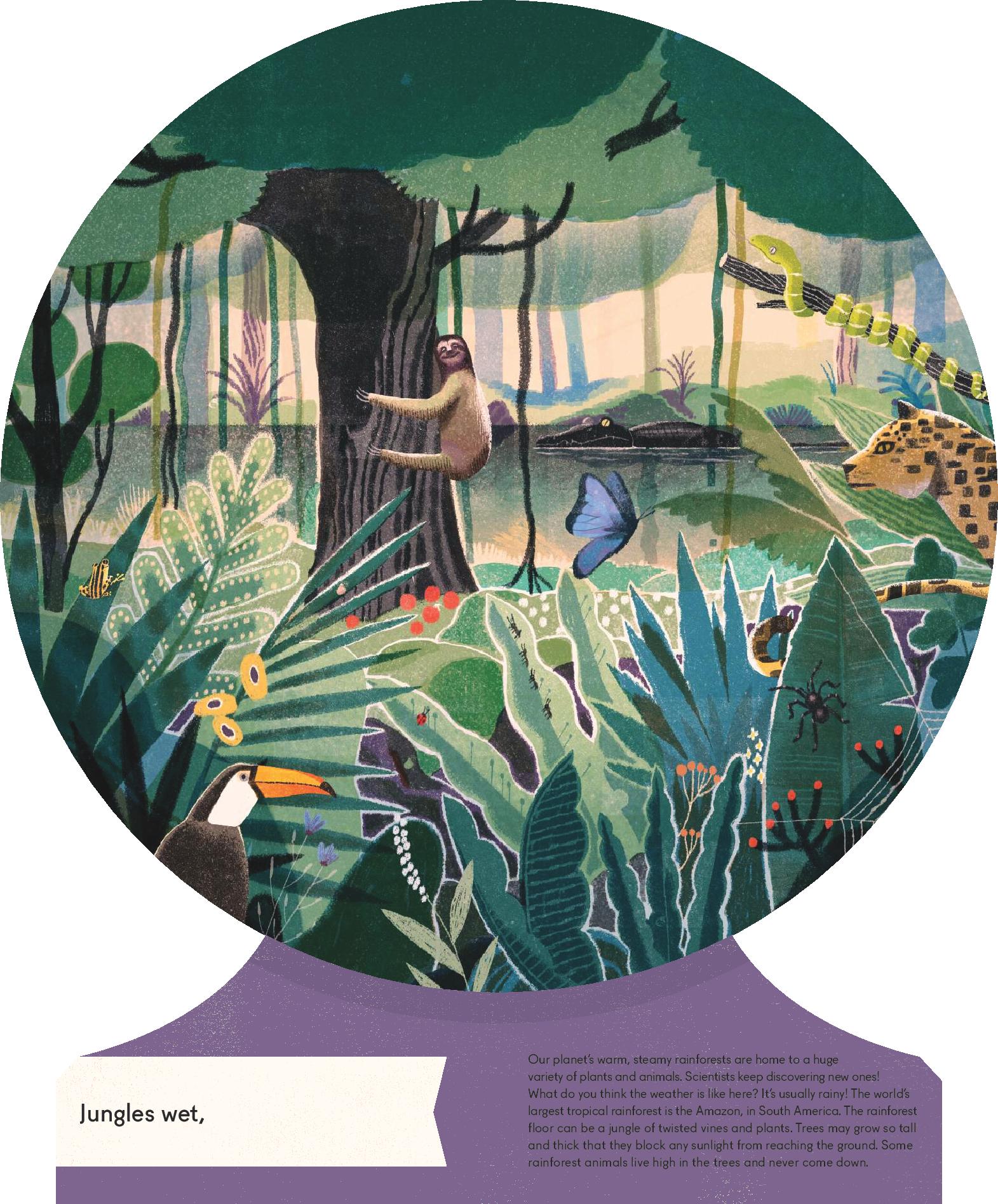
Giving this view of the world its vibrant and distinctive look are Lisk Feng’s spectacular illustrations of dawn-streaked hills, forests frosted white in winter and ablaze with color in autumn, and an array of creatures big and small that make each region exceptional. The image of the rainforest is especially rich, with its multi-hued vegetation that hides a snake, a jaguar, a toucan, a crocodile, and more creatures that kids will love searching for. Transitioning from the world map to a view of Earth from outer space to a single home at the end of the book reminds readers of their singularly important place in the world as individuals and as custodians of its resources.

A gorgeous and perfectly designed book to spark learning and research about the world’s natural features, Our World: A First Book of Geography is a must for children who love travel, nature, science, social studies, and learning about the environment. It would be a valuable asset for every classroom and homeschooler as well as a favorite pick for public library collections.

Ages 2 – 6

Phaidon Press, 2020 | ISBN 978-1838660819

Discover more about Sue Lowell Gallion and her books on her website.

A Chat with Sue Lowell Gallion
celebrate-picture-books-picture-book-review-Sue-Lowell-Gallion-headshot

Sue Lowell Gallion writes for children because she is passionate about children, reading, and any combination of the two! She’s the author of the award-winning Pug Meets Pig and more.

Sue has three books releasing in 2020. Our World, A First Book of Geography, illustrated by Lisk Feng, is a uniquely formatted board book that opens up to form a free standing globe. Her latest picture book is All Except Axle, illustrated by Lisa Manuzak Wiley, is the story of a new car anxious about leaving the assembly plant and learning to drive. Tip and Tucker Paw Painters is the third in her early reader series written with her author pal Ann Ingalls and illustrated by Andre Ceolin. 

Welcome, Sue! As soon as I saw Our World (and, of course, played with it a bit), I knew I had to talk with you about your and Lisk Feng’s eye-popping book. Our World: A First Book of Geography is stunning! Can you take readers on the journey from your original idea for this book to how it became this 3D, free-standing beauty?

I’m a huge fan of the innovative, creative board books on the market now that are such fun for kids and adults to share. Also, I grew up in a family printing company, so I’m intrigued with paper engineering and unique book forms. We did a lot of hand bindery work at home on unusual jobs like pop-up advertising pieces. I was a pro with a tape machine early on.

I went to an SCBWI (Society of Children’s Book Writers and Illustrators) workshop on board books for authors and illustrators in late 2017. During a brainstorming time, I imagined a board book about the Earth in the shape of a globe with its stand. Afterward, I searched the market to see if something like this already existed. It didn’t! Over the next month, I wrote a rhyming text to match that concept.
celebrate-picture-books-picture-book-review-Sue-Gallion-interview-apollo08-earthrise

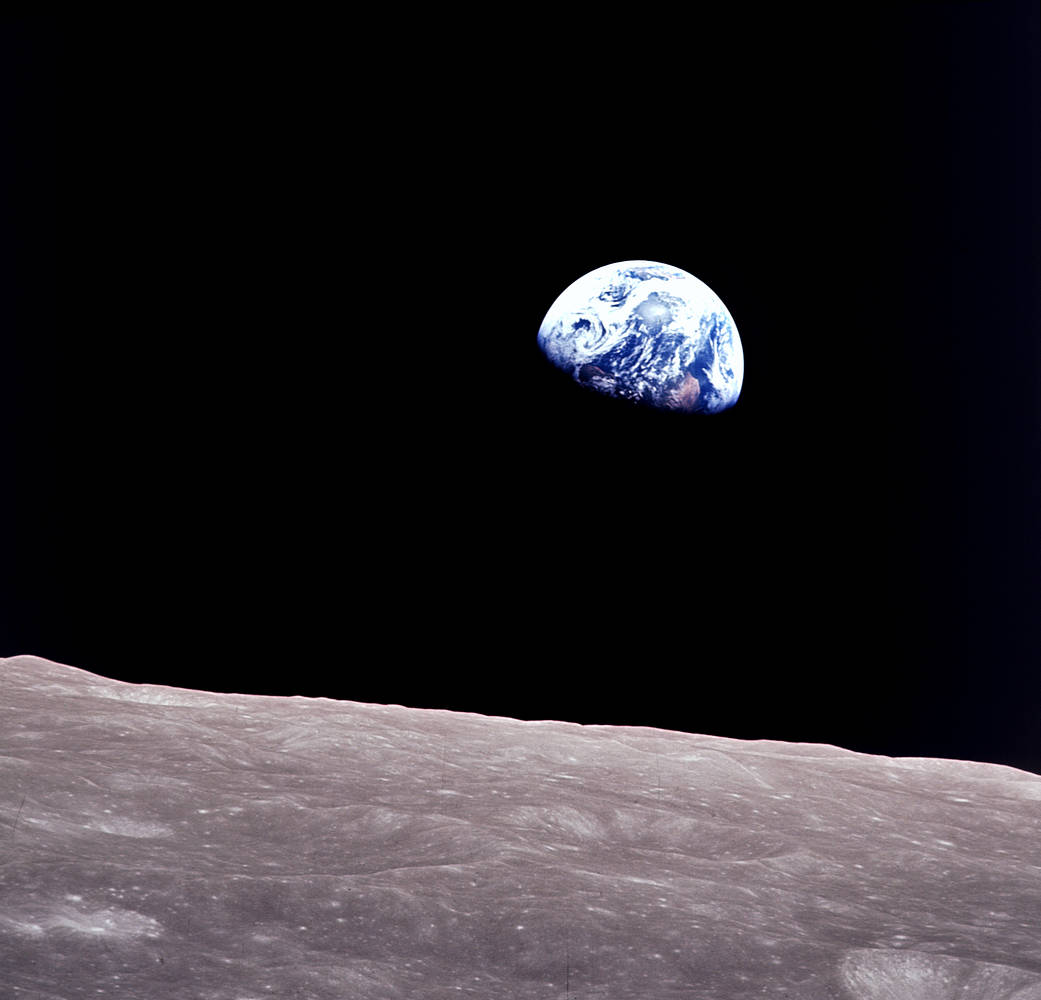
The iconic Earthrise image taken from Apollo 8 in 1968 was part of my initial vision. From space, there are no national borders. I hope this book might inspire people around the world to further value our world, and to act to save and protect our planet and its environment. The melting glaciers, catastrophic weather changes, and other effects of climate change show that immediate action is long overdue.  

When the Phaidon team became interested in the manuscript, we started revising. I can’t tell you how many versions there were over a year and a half! The manuscript went from 56 words to almost 1,000 with the addition of supplementary nonfiction text for older kids. Maya Gartner, the editor, and Meagan Bennett, the art director, are in Phaidon’s London office. The two of them, plus Lisk Feng, the illustrator, were a great team. Many other Phaidon staff were involved in making this idea into a reality, of course. The way the front and back covers connect magnetically to hold the book open is incredible. My 88-year-old printer dad is impressed!

From the cover – which, with its chugging steamer, wheeling seabirds, and diving whale, seems to be in motion – to its lush interior spreads, Lisk Feng’s illustrations are gorgeous representations of each area. What was your first impression of her artwork? How were the final images chosen? Do you have a favorite?

My Phaidon editor told me they had been wanting to do a project with Lisk Feng for some time. I could see why! My first impression of her work was from her website and the middle grade nonfiction book Everest, written by Sangma Francis and illustrated by Lisk (Flying Eye Books, 2018.) It is a fascinating and gorgeous book; do get your hands on a copy! I was thrilled with the opportunity to create a nonfiction book with Lisk.

We worked to make sure each continent and a variety of geographic locations are represented in the illustrations. Each spread representing a biome is based on specific locations that both Lisk and I researched. As the illustrations were in process, I continued to research and revise the text to match the art.

My favorite spread changes all the time. I love the jungle/rainforest spread. The colors and composition are amazing. And I’ve been drawn to the water feature spread, which illustrates rivers, lakes, and oceans, from the very beginning.
celebrate-picture-books-picture-book-review-Sue-Gallion-interview-Our-World-rainforest

Image copyright Lisk Feng, 2020, text copyright Sue Lowell Gallion, 2020. Courtesy of Phaidon Press.

As far as the cover, one of the themes of the book is the connectedness of the world. Early versions of the manuscript included how transportation links the world, and that’s represented on the cover. It’s another conversation point with kids – where would you like to go, and how could you get there? Which oceans would you fly over or sail through?

The text is a combination of lyrical, rhyming verses and explanatory paragraphs that are just right for introducing the youngest readers as well as older kids to geography. How did you choose which details to include? How would you recommend readers, teachers, and homeschoolers use Our World?

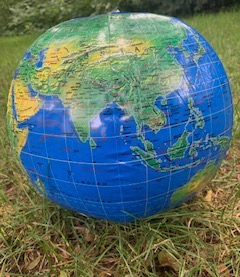
I’d love to direct your readers to the two activity guides for the book. One is for babies through kindergarteners, and another guide has games to use with a globe beach ball. Some work with a real globe, too. Globe beach balls are inexpensive and easy to find online. The games can be as simple as playing catch and noticing whether your hand is holding land or water – and a child is learning how much of our earth is covered with ocean. The guides are free to download from my website, suegallion.com, under Resources. Most libraries have globes, so that’s one more reason to go to the library!
celebrate-picture-books-picture-book-review-inflatable-globe-beachball

The dual narrative makes the book appeal to a range of ages, I hope. The rhyming text is an introduction, and the supplementary text adds more. We tried to make the text interactive, to encourage conversation and further learning. For example, in the spread about water features (lakes, rivers, and oceans) we mention that places in the ocean are as deep as the tallest mountains on land. Perhaps that will inspire a family to talk about Dr. Kathy Sullivan, the first woman to walk in space, who recently dove in a submersible to Challenger Deep, the deepest known point on Earth, located in the Pacific Ocean.

It was important to me to include the fact that ocean water is too salty to drink. An easy experiment to do with kids is to have them mix their own saltwater and see what it tastes like. This can lead to a conversation about how in many places people don’t have enough safe, clean freshwater to drink, and what happens when people have to drink dirty or polluted water.

I hope as kids and adults turn the pages to reveal different places in our world, they can talk about contrasts and similarities. What would it be like to live in this place? What would you feel or hear if you were there? What else would you like to know?

Why do you think it’s important for children to learn geography from the earliest ages?

A child’s understanding of the world around them begins at birth, then grows as sight, dexterity, and mobility develop. I like the definition of geography as learning place and space. Spatial thinking and mapping skills are important to understanding concepts later on in math, the sciences, history, and more.

Experiencing other places, either in person or through books, can expand a young child’s world tremendously. Books can help kids feel a connection with places they haven’t been, and people they’ve never met. And in our nature-deficit culture, books also encourage kids and families to explore the outdoors and expand curiosity.

Which of the areas described in the book most closely resembles where you live? What do you like best about this area? Have you ever traveled to any of the other regions in the book? What surprised you most about it/them?

I live on the eastern edge of the Great Plains in the U.S., a grassland biome. In the book, grasslands are represented by the African savanna. We wanted the illustrations to feature animals whenever possible, because animals are so interesting to kids. The African savanna, with all its marvelous large mammals, was the natural choice.

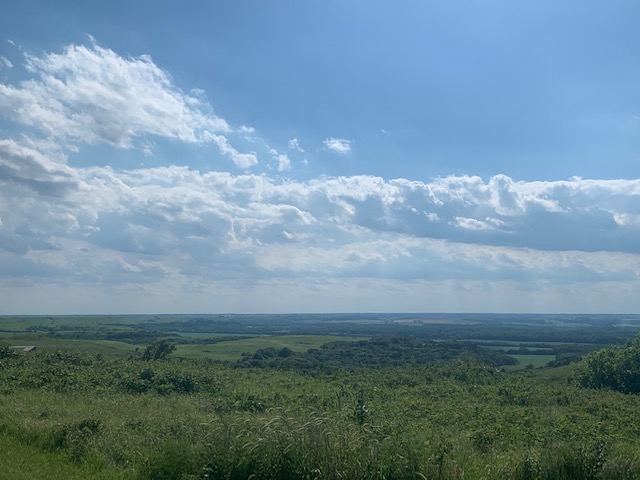
I did want to give a shout out to my region in the book, so you’ll find the cold winters and blizzards that cross the Great Plains of North America included in the secondary text. What do I like best about this region? Well, Kansas City is my hometown. It is a beautiful part of the country, as you see in this image of the Konza tallgrass prairie in eastern Kansas.
celebrate-picture-books-picture-book-review-Sue-Gallion-interview-Konza-Prairie

My family circled back here after living in several other regions of the U.S. I love to travel, and I can’t wait for it to be safe to start planning my next trips. I have four more continents to go: South America, Africa, Australia, and Antarctica. And I haven’t visited a polar biome yet. It’s on my list.

Thanks, Sue, for sharing the fascinating story of Our World! What an amazing resource for parents, teachers, and homeschoolers! And I hope you get to visit all the places on your list! 

You can connect with Sue on

Her website | Facebook | Twitter 

International Day of Friendship Activity
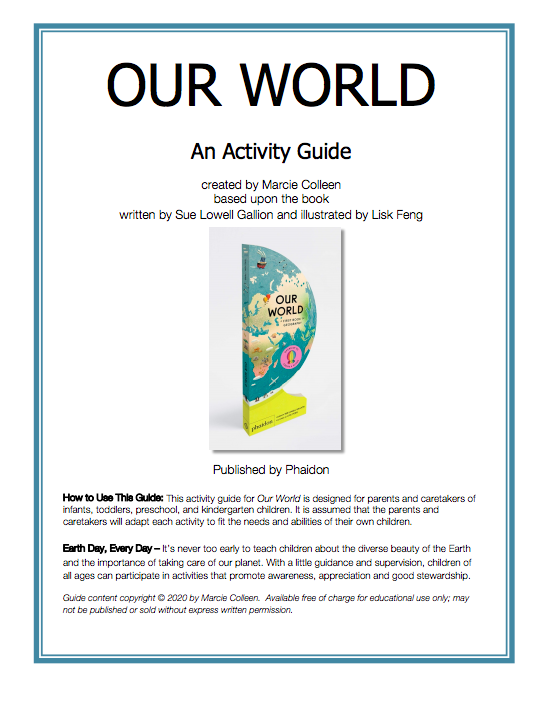
celebrate-picture-books-picture-book-review-our-world-activity-kit-image

Our World Activity Kits


You’ll find lots of activities that get kids – from infants to kindergarteners and beyond – interacting with geography through games, movement, songs, a scavenger hunt, and crafts on Sue Lowell Gallion’s website. Learning about our world has never been so much fun!

Our World Activity Kits

celebrate-picture-books-picture-book-review-our-world-cover

You can find Our World: A First Book of Geography at these booksellers

Amazon | Barnes & Noble | Books-a-Million

To support your local independent bookstore, order from

Bookshop | IndieBound

Picture Book Review

July 14 – Pandemonium Day and Interview with Author/Illustrator Abi Cushman

celebrate-picture-books-picture-book-review-soaked-cover

About the Holiday

Do you feel like you’re in a rut? Is life too organized, too sedate? Then what you need is a little pandemonium! If you and your kids have a set plan for today, throw it out and have fun doing whatever comes to mind. Feel like joining the kids in a water balloon fight? Do it! Ever wonder what pickle chocolate-chip cookies taste like? Make them! Today’s holiday is all about freeing yourself from preconceptions and inhibitions that might keep you from letting go and enjoying life to the fullest. Celebrate today by doing something wild with your family. You may even be inspired by today’s book!

By Jakki Licare

Soaked!

By Abi Cushman


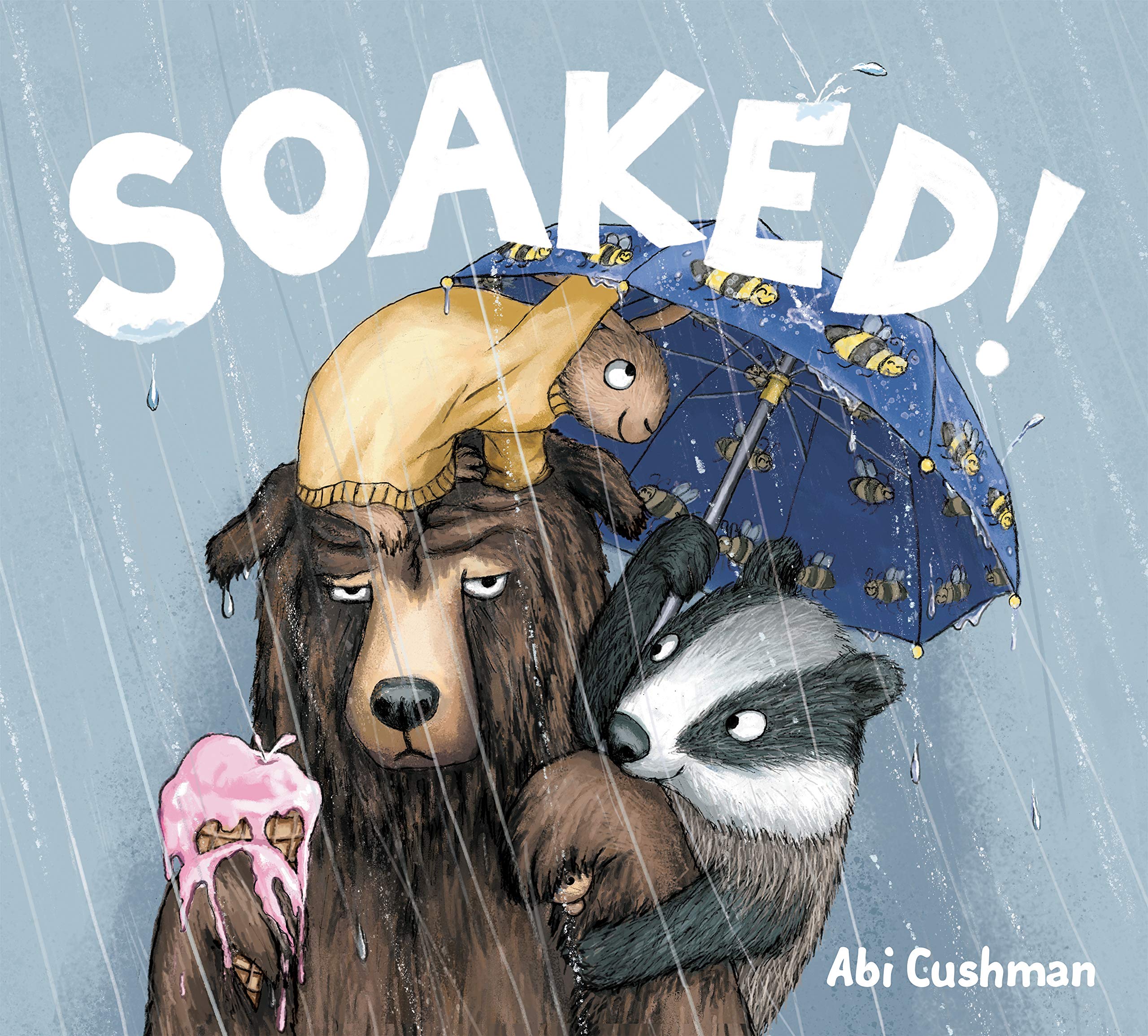
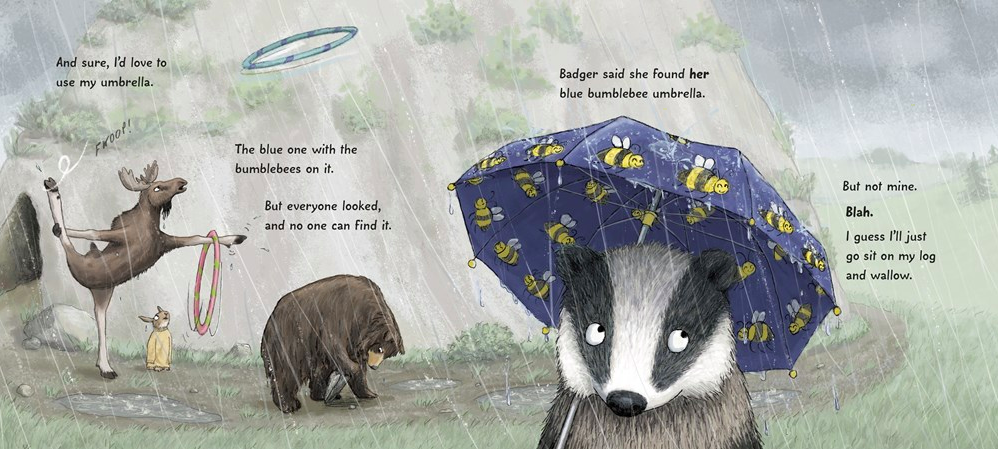
It is a rainy day and Bear points out that no one is happy. Not even the hula hooping moose! Bear hates when it rains. The rain wrecks all of his favorite things: “ice cream cones, sand castles, cashmere sweaters. What’s that you say?” Bear asks readers. “Why don’t we just go inside my cave until the rain stops?” It’s a good idea, but when Bear and all his friends enter the cave, the Hula-Hooping moose takes up all the space. Bear begins to look for his umbrella. He searches for it everywhere and all his friends help, but no one can find it. Bear explains, “Badger said she found her blue bumblebee umbrella. But not mine.”

celebrate-picture-books-picture-book-review-soaked-umbrella

Copyright Abi Cushman, 2020, courtesy of Viking Books for Young Readers.

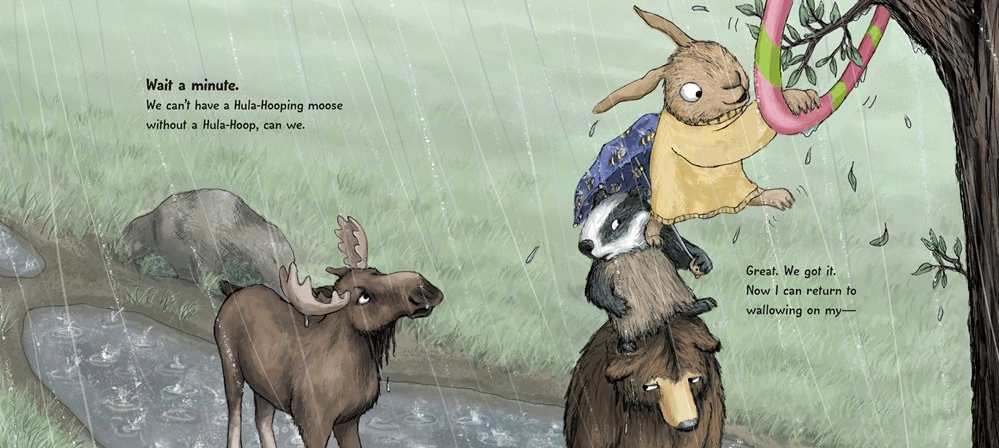
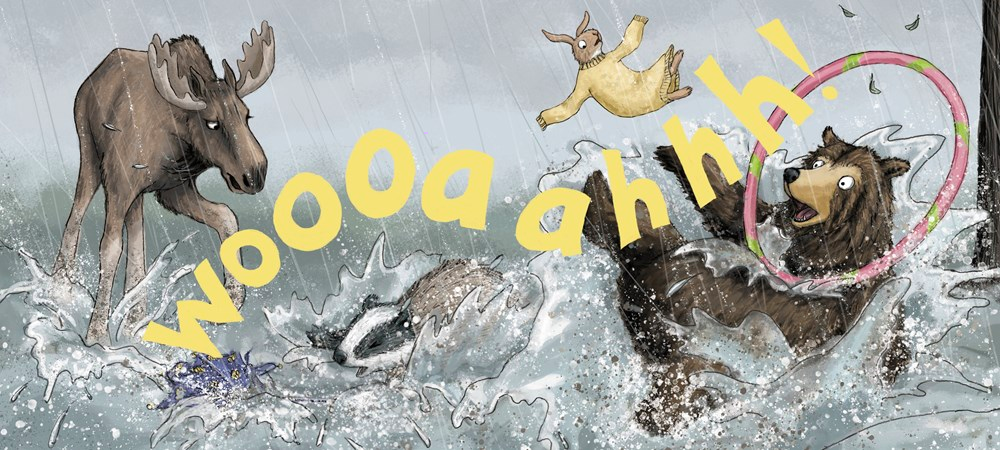
Unhappy, Bear sits on a fallen tree wallowing in what a “Blahhhhhhhhhhhhh…” day it is as Moose passes by, cartwheeling and Hula-Hooping at the same time. With a Fwoop, he loses control of the hoop and it flies into a tree. The animals look up, and Bear makes an observation: “Wait a minute. We can’t have a Hula-Hooping moose without a Hula-Hoop, can we.” So they stack up to get moose’s Hula-Hoop out of the tree. Bunny’s juuuuust got it when they lose their balance and all fall into a giant puddle.

celebrate-picture-books-picture-book-review-soaked-tree

Copyright Abi Cushman, 2020, courtesy of Viking Books for Young Readers.

The Hula Hoop falls over Bear’s head and the animals encourage him to try it. Bear gives it a whirl. “There. I did it. Totally unfun. Just like I thought. Now if you’ll excuse me, I need a moment to myself.” Bear sneaks around the tree with the Hula-Hoop and twirls it round and round, kicking up big puddle waves. Then all the animals join him and have a blast splashing and Hula-Hooping in the puddles until “everyone is soaked!” Somehow, Bear has acquired everyone’s Hula Hoops, and he’s having so much fun—“It’s so splishy and sploshy! Silly and soggy!” he exclaims—that he hasn’t noticed the rain has stopped. Bear drops the Hula Hoops and shuffles off, grumbling, “Blah. Too sunny.”

celebrate-picture-books-picture-book-review-soaked-fall

Copyright Abi Cushman, 2020, courtesy of Viking Books for Young Readers.

Told in first person from Bear’s perspective, Abi Cushman’s Bear humorously reflects every kid’s rainy day blues. Cushman’s humor will bring readers back to read her story again and again. Little kids will giggle at mopey Bear who wishes he could just eat his ice cream cone, Bear’s  hilarious and random Hula-Hooping moose friend, and how no one can fit into Bear’s cave because moose is taking up all the space twirling his hula hoops. Her poignant pauses in the text allow for the momentum of the story to build up to the great big splash! Every child will enjoy diving into this silly story.

Cushman’s soft backgrounds and great animal expressions will pull readers into this soggy adventure. Her illustrations of the melted ice cream cone, rain-drenched fur, and collapsed sandcastles perfectly reflect sad rainy-day blues. Little ones will be sure to pick up on all of the fun illustrative details and the moment when Bear has a change of heart. My kids loved how Badger is sneakily catching Bear’s melting ice cream in his own cup. Also, be on the look out for Bunny who wears Bear’s shrunken cashmere sweater as well as Badger’s broken umbrella after the fall. When the animals tumble into the puddle, Cushman uses a variety of textures and colors that really make the splash jump right off the page. Even the endpapers showcase her visual humor from start to finish. The front endpapers show Badger taking one of the bumblebee umbrellas, and at the end we see Bunny in her oversized cashmere sweater Hula Hooping.

Goofy pandemonium saves the day in the hilarious Soaked!, which is sure to be an often-asked-for favorite on home, classroom, and public library bookshelves.

Ages 3 – 7

Viking Books for Young Readers, 2020 | ISBN 978-1984836625

Discover more about Abi Cushman, her book, and her art as well as a Soaked Bear Craft and a 10-page Activity Kit on her website.

Meet Abi Cushman

celebrate-picture-books-picture-book-review-soaked-interview-headshot

Today I’m excited to talk with Abi Cushman about the inspiration for her debut picture book, her road to publication, and how she developed her distinctive art style.

I’m in love with Soaked! and Bear’s rainy adventure. What was the inspiration for Soaked!? And how did you come up with a hula hooping moose?

Thanks, Jakki! I’m thrilled to share Soaked! with you and all the Celebrate Picture Books readers. The initial idea for Soaked! came to me while out for a walk and got caught in a torrential rainstorm. I was 8 months pregnant and well into the waddling stage of my pregnancy. On my slow, soggy walk home, I realized it was actually quite pleasant to be completely soaked. So I wrote this tidbit into my Ugly Sketchbook (the sketchbook where I keep my story ideas):

celebrate-picture-books-picture-book-review-soaked-interview-notebook-image-9

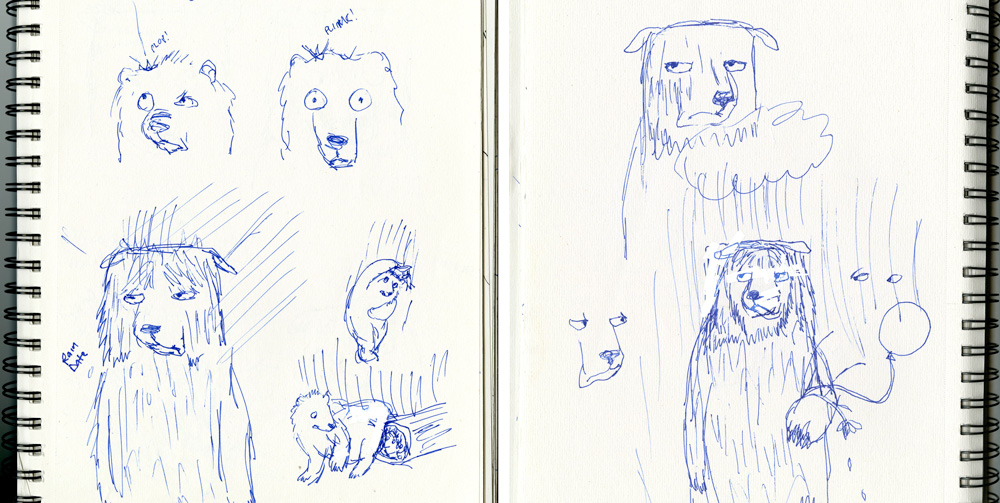
After mulling it over for months, I kept drawing various versions of this sorry-looking wet bear. And at that point, I realized I wanted to write a funny story centered around him.

celebrate-picture-books-picture-book-review-soaked-interview-notebook-bears

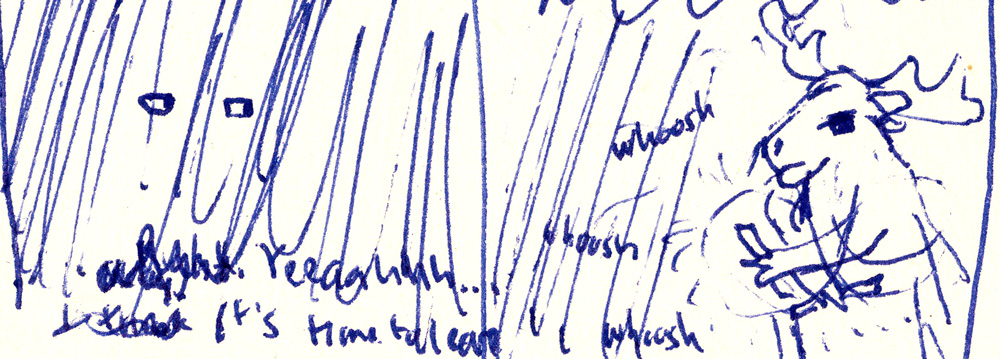
As for the hula-hooping moose, the beginning of my story involves a badger and a bunny, and I wanted something absurd to break up the rhythm of woodland animals starting with the letter B. (Bear also starts with the letter B, but he’s the narrator.) So, the first absurd thing I thought of was a dancing moose. I pictured him dancing it up in the cave with glow sticks.

celebrate-picture-books-picture-book-review-soaked-interview-image-4

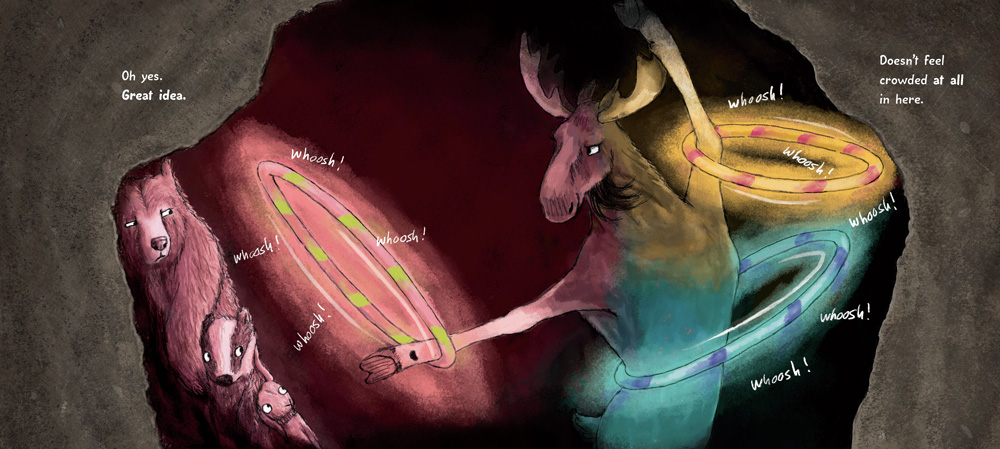
But in revisions, I changed the dancing moose to a hula-hooping one (but made sure those hoops were glow-in-the-dark).

celebrate-picture-books-picture-book-review-soaked-interview-moose

Soaked! is your debut book. Can you talk about your path to publication?

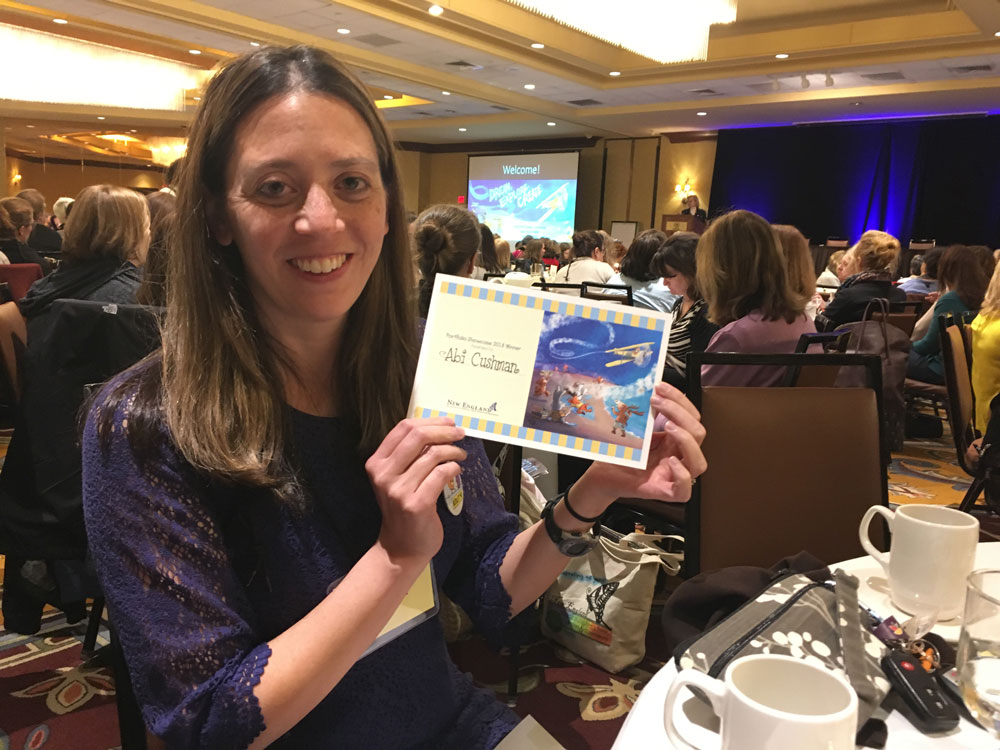
In 2018, I entered the Portfolio Showcase at the New England SCBWI Conference in Springfield, MA. I included a rough dummy of Soaked! with my portfolio. To my complete amazement, I ended up winning the showcase.

celebrate-picture-books-picture-book-review-soaked-interview-abi-with-award

One of the judges was Jim Hoover, art director at Viking. He asked to see the dummy again and shared it with Tracy Gates, an editor he thought would get my quirky sense of humor. At that point, I introduced them to my agent, Kendra Marcus from BookStop Literary, and she handled all the communications from then on. Jim and Tracy offered feedback on the dummy, so I did some revisions based on their notes. And happily, they loved the revision, and I got an offer for a two-book deal!

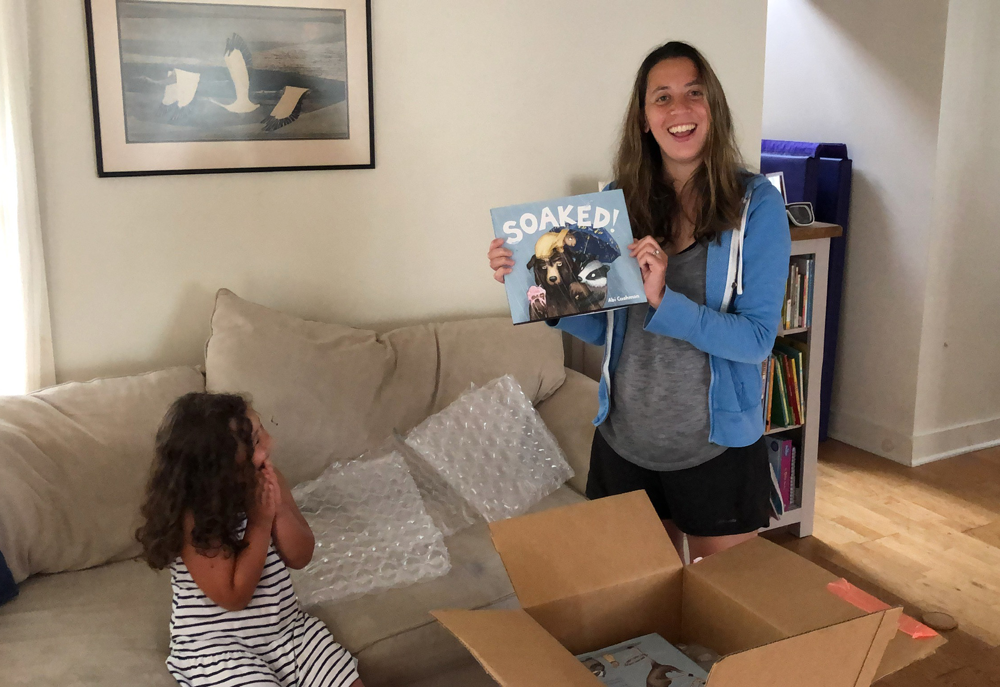
Later in the year, I started working with Jim and Tracy on the book. And I can say that making the book was such a collaborative effort, and the final book is so much better than I ever could have imagined because of the experience, knowledge, and talent that Jim and Tracy brought to the table. I finished up all my final art in the fall of 2019, and I finally got to hold the real book in my hands at the end of June this year. It’s a dream come true.

celebrate-picture-books-picture-book-review-soaked-interview-abi-with-book

I know you have your hands full taking care of two little ones. How do you manage making time for your art, writing and creativity in general? Also, has being a mother changed your approach to creating picture books or the content in your picture books?

Yes, life with small children is intense! But, luckily, I have a very supportive husband, which makes all the difference. He’s a teacher and has summers off and he definitely takes the brunt of the childcare/housework in the summer months. Also, I have always been a night owl, so my natural inclination is to work late at night. And that is how I balance home life with work and art. I do most of my writing and art after the kids go to sleep, and the house is quiet.

Being a mother has definitely influenced my writing/illustrating career. For one thing, I’m really well-versed in current picture books. Before the quarantine, my kids and I would visit the library every week. I always took the opportunity to read all the new kids’ books. It was great. And of course, I love that I get to experience the world anew with my kids. Their unbridled curiosity and enthusiasm is infectious. And I think being in touch with kids’ sense of wonder and their sense of humor is so important when you’re writing for kids.

Were there any books that inspired you as a child to become a writer or illustrator or both?

I loved poring over the illustrations in books by Richard Scarry and Beatrix Potter when I was a kid. I would try to draw characters in their style. I always loved that their stories featured animal characters with a lot of personality because I always gravitated toward drawing animals myself. But I never thought of myself as a writer growing up, to be honest. I gained confidence that I could write my own stories when I enrolled in Storyteller Academy in 2016.

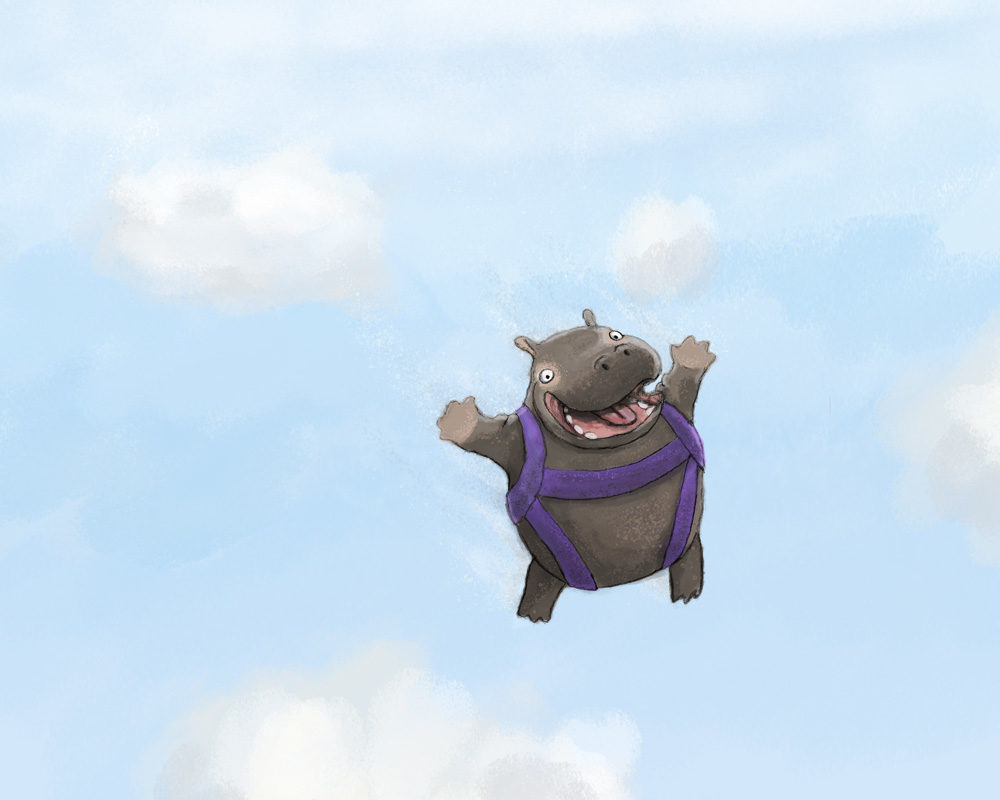
Your portfolio is full of lovable creatures who are positively brimming with personality. My favorites are the skydiving hippo and the buffalo standing in the tall grass on a windy day. How did you develop your illustrative style? What mediums do you work in?

Thank you! I am so hopeful that I will come up with a story for both the sky diving hippo and the highland cow. I did both of those pieces as illustration prompts for SCBWI’s DrawThis challenge.

celebrate-picture-books-picture-book-review-soaked-interview-hippo

It took me years to figure out a drawing style that would work for me for kids’ books. When I graduated from college, I was doing a fairly realistic style. My favorite medium was pastels. I later experimented with a cartoonier style that was all digital. I loved the realistic style/traditional approach for the textures and the organic feel. But it was hard for me to work small enough and neat enough.

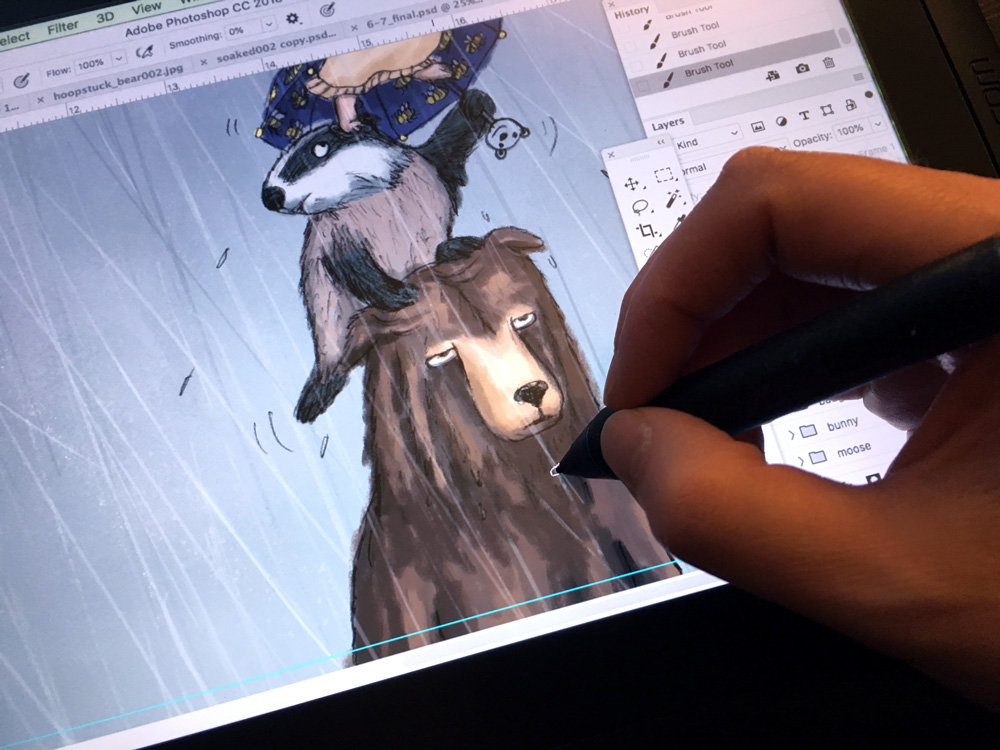
The cartoony style/digital approach was fun and really easy to correct mistakes and adjust the layout. But it lacked the expressiveness that children’s book illustrations need. When I learned that Mike Curato (Little Elliott) and Sam Garton (I Am Otter) worked in a hybrid manner, it was a game changer for me. I now draw all my characters with a mechanical pencil on computer paper. I scan those into Photoshop, then I color in the characters and paint in the backgrounds using the pastel brush with a Wacom Cintiq tablet. It’s the best of both worlds!

celebrate-picture-books-picture-book-review-soaked-interview-photoshop

Can you walk us through how you create your stories? As an author/illustrator do you usually start with writing or sketching or does it depend on the story?

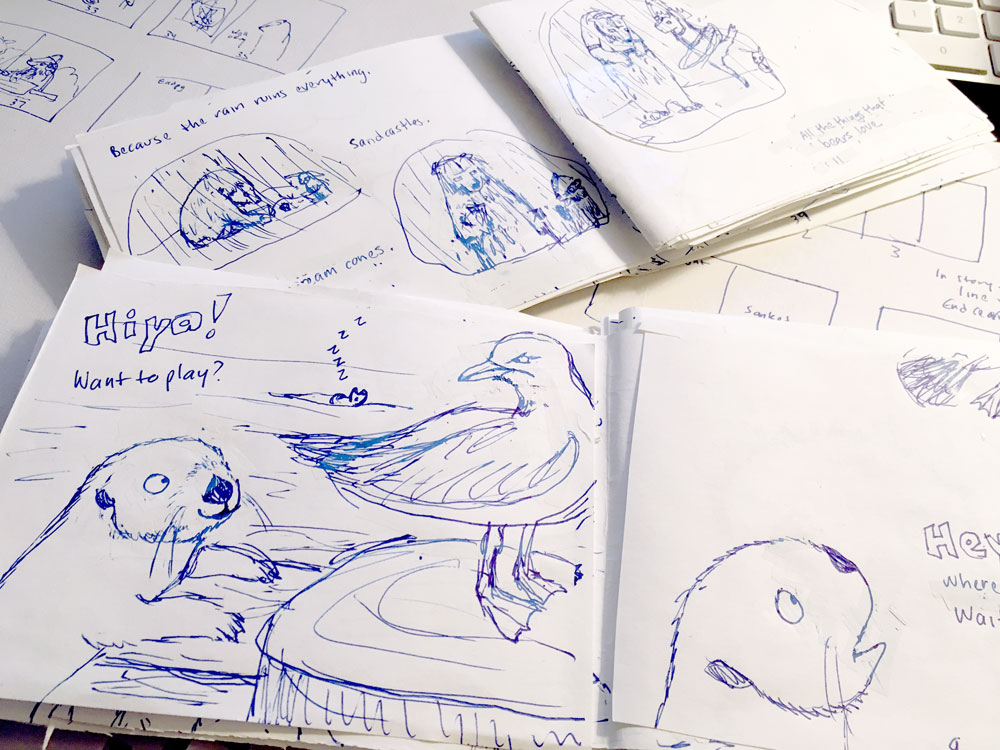
In general, I start with sketches of characters and scenes. I also jot down funny lines. Then I piece those parts together like a puzzle. I’ll draw little thumbnails, and then I put together a little mini-dummy by cutting some computer paper in half and then folding it into a booklet. There’s a lot of cutting and pasting that happens to get the pacing right. Usually, I don’t even sit down to type out the manuscript until I have the story figured out in dummy form first.

celebrate-picture-books-picture-book-review-soaked-interview-dummies

What’s next for you?

I am wrapping up final art for my second book with Viking called Animals Go Vroom!, which comes out next summer and combines animal sounds with transportation. It has die-cut peekaboo windows and challenges readers to guess what goes roar, hiss, and honk. I think kids will have a lot of fun yelling out the answers as they read along.

Thanks so much, Abi, for chatting with me and sharing so many pictures! This has been great fun. I wish you all the best with Soaked! and can’t wait to see Animals Go Vroom!

You can connect with Abi Cushman on

Her websiteInstagram | Twitter

You’ll also enjoy Abi’s two websites

Animal Fact Guide | My House Rabbit 

Pandemonium Day Activity

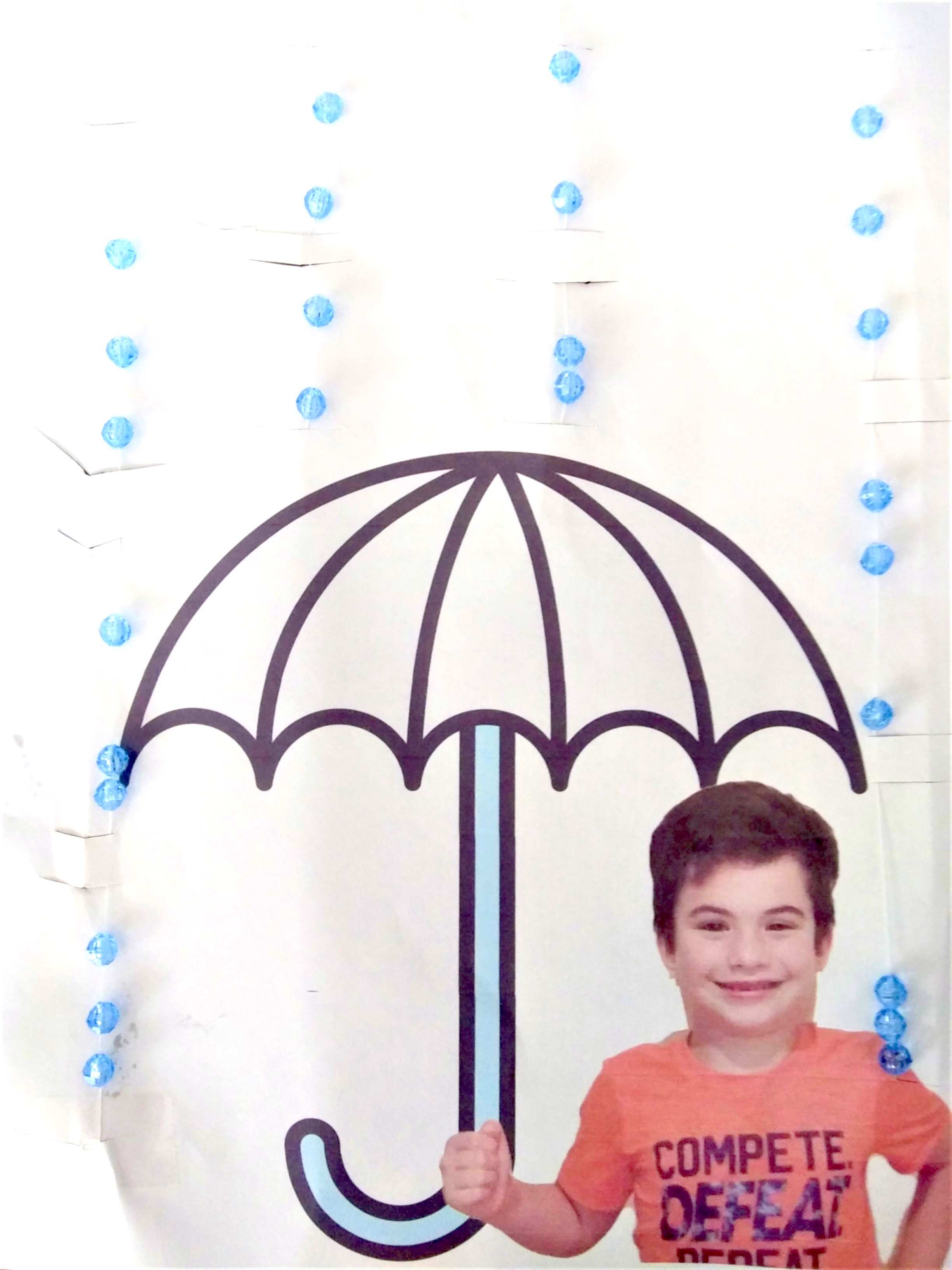
celebrate-picture-books-picture-book-review-soaked-umbrella-craft

Rain Drops Keep Falling on my Head Craft


Looking for a rainy-day activity to keep the kids busy? Create this active picture that will wow kids even after the craft is done. Blue beads slide on thread making it look like it is actually raining

Supplies

  • Printable Umbrella Template
  • Picture of child pretending to hold umbrella
  • Scissors
  • Tape
  • Blue Beads
  • White thread, Yarn or Pipe Cleaners (pipe cleaners will work better for pre-school aged children)

Directions

  1. Print out Template
  2. Cut out picture of your child
  3. Tape picture under the umbrella
  4. Cut a small horizontal slit at the top about an inch down
  5. Cut another slit 3″ down
  6. Cut another 1/4″ down
  7. Cut another slit 3″ down
  8. Cut another 1/4″ down
  9. Cut another slit 3″ down
  10. Repeat slits about 2” over. Make about 10 slits total
  11. Tape string/thread/pipe cleaner to the back of picture
  12. Pull string/thread/pipe cleaner to the front
  13. Add a bead or two or three!
  14. Weave string to back through the next slit and then to front again
  15. Add another bead
  16. Repeat till you reach the bottom
  17. Tape string/thread/pipe cleaner to the back
  18. Repeat for the rest of the slits.
  19. Move the picture around and beads will mimic rain falling!

celebrate-picture-books-picture-book-review-soaked-cover

You can find Soaked! at these booksellers

Amazon | Barnes & Noble | Books-a-Million

To support your local independent bookstore, order from

Bookshop | IndieBound

Picture Book Review
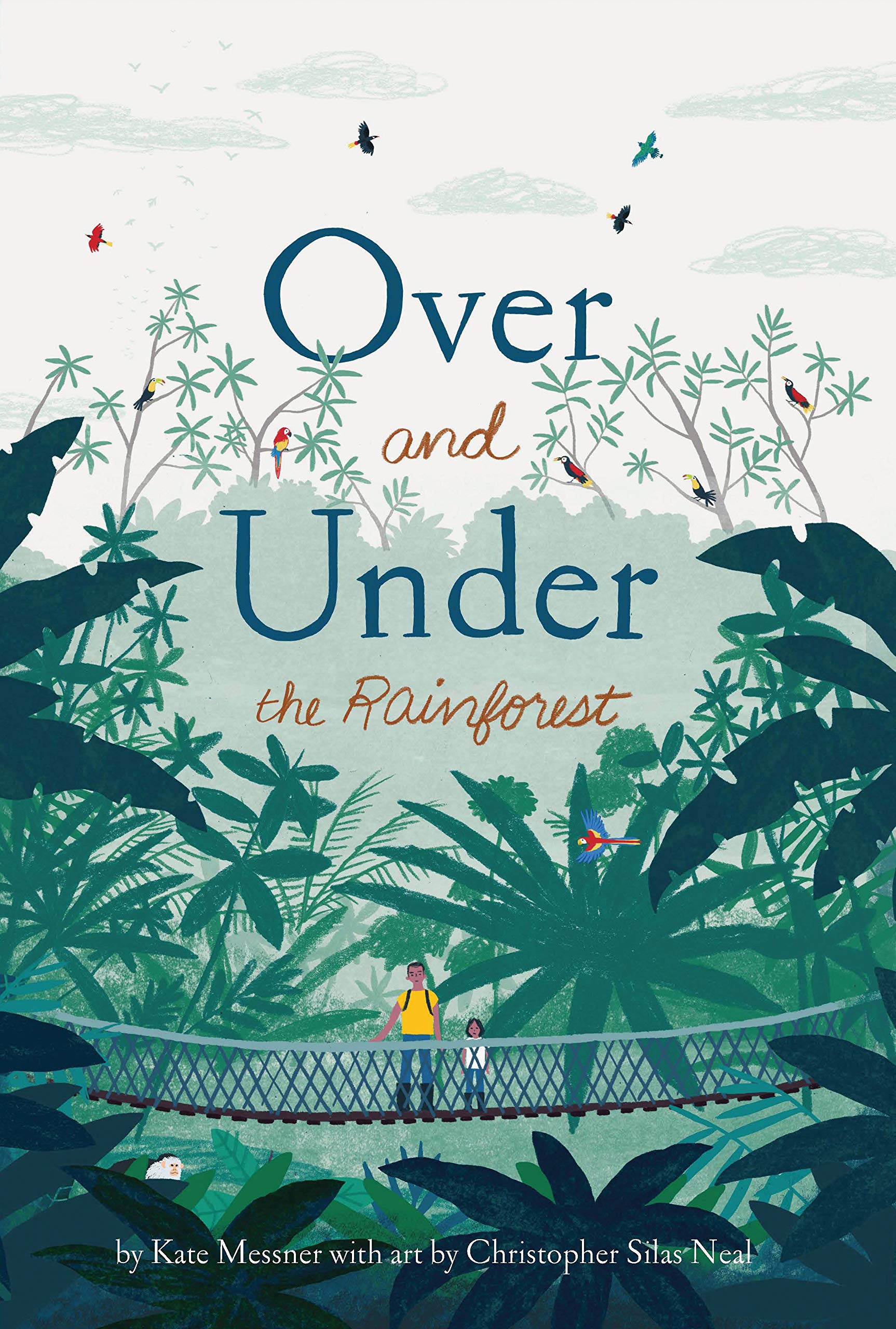
July 1 – It’s Wild about Wildlife Month

celebrate-picture-books-picture-book-review-50-reasons-to-love-animals-cover

About the Holiday

The theme of this month-long holiday is simply all about wildlife. Whether you like mammals, birds, fish, or insects best, July is the time to celebrate them. The month is just getting started, which give you and your kids lots of time to explore the wildlife in your area and learn about the creatures on the other side of the world and everywhere in between. Today’s book will get you started!

50 Reasons to Love Animals

Written by Catherine Barr | Illustrated by Hanako Clulow


In her introduction, Catherine Barr orients readers to the focus of her book with the alarming statistic that “five times in Earth’s history over half of all animals and plants have mysteriously died out. But today,” in large part because of habitat destruction, “species are becoming extinct much faster than the natural rate.” She and Hanako Clulow then take children on around-the-world-trip to various ecosystems to discover facts about the animals that live in each and find spotlighted “how to love…” suggestions for protecting them in every chapter.

The first stop is a dry savanna, where African elephants, giraffes, zebras, and hippos gather around a watering hole. Kids will be interested to learn that baby elephants take about a year to “figure out how to eat and drink with their strange, long noses,” and that hippos have a built-in sunscreen that protects them from the sun. At night, lions, lesser bushbabies, and pangolins come out to eat. They’ll also learn about other animals on the savannah as well as about the shrinking population of elephants—victims of poaching for their ivory tusks.

celebrate-picture-books-picture-book-review-50-reasons-to-love-animals-coral-reef

Image copyright Hanako Clulow, 2020, text copyright Catherine Barr, 2020. Courtesy of Frances Lincoln Children’s Books.

Readers next dive into the sea to explore a coral reef, which provides nutrients and a home to a wide variety of creatures—including marine sponges, which contain “chemicals that are used in medicine to treat diseases like cancer, spiny lobsters, seahorses, sharks, dolphins, and various types of sea turtles. Children learn more about these shelled favorites who have populated our oceans for 100 million years and the dangers they face, including polluted waters, fishing nets, and plastic bags, which they mistake for jellyfish and ingest. How can kids love a turtle? By learning more about climate change and how it is killing coral reefs.

Children return to land to discover the Arctic and Antarctica. The northern icy pole is home to polar bears, harp seals, puffins, whales, while the southern pole is home to seals and emperor penguins. Kids might think about these intrepid creatures—who can “survive in very low temperatures of -76 degrees Fahrenheit” the next time they put on a sweater or coat.

Ahhh! Kids can warm up in an evergreen forest with two cute bear cubs learning how to scratch their back against a tree trunk as a porcupine, a Steller’s jay, and a pine marten look on. There are all kinds of forests, and readers are next transported to a bamboo forest, where a giant panda and her cub chow down on lunch. Here, children learn about the threats to bamboo forests and, by extension, the panda population while meeting a few more denizens of this unique environment. An old forest growing in the shadow of snow-capped mountains gives shelter to a grizzly bear family and majestic elk. Did you know that a grizzly bear “can run as fast as a race horse?”

celebrate-picture-books-picture-book-review-50-reasons-to-love-animals-pandas

Image copyright Hanako Clulow, 2020, text copyright Catherine Barr, 2020. Courtesy of Frances Lincoln Children’s Books.

The northern and southern open oceans host whales, octopuses, penguins, seals, a multitude of fish species, and strange creatures we’re only beginning to learn about. Many animals of the cold Southern Ocean eat krill, but the loss of sea ice to climate change decreases the number of krill and threatens to endanger the animals that rely on it. How much does pollution affect our oceans? “Scientists estimate that the population of ocean animals has halved over the last 40 years.”

Finally, kids come to a tropical forest, where Asian elephants are busy scratching an itch and swatting away flies with sticks they use as tools. Bengal tigers, orangutans, sun bears, and hornbills are only a few of the creatures who make these lush forests their home. Tropical rainforests are being diminished by logging and their replacement by palm oil plantations. You can help by checking the ingredients of products you use—”from food to toothpaste” for palm oil and finding “better options such as sustainable palm oil or palm oil-free products.”

As the book closes, readers meet up with elephants once again. These African forest elephants share space with people and gorillas. While the elephants can wreak havoc on farms, “farmers are encouraging elephants away from their crops—with a hum and a sticky reward.” Can you figure out what it is?

celebrate-picture-books-picture-book-review-50-reasons-to-love-animals-gentoo-penguins

Image copyright Hanako Clulow, 2020, text copyright Catherine Barr, 2020. Courtesy of Frances Lincoln Children’s Books.

Catherine Barr’s captivating text and fifty highlighted facts offer readers a fascinating and eye-opening trip around the world to raise awareness of the dangers animals and humans face if we don’t work together to find solutions to pollution, habitat destruction, and other threats to the environment. Today’s environmentally conscious children will eagerly want to participate in the “Show you love…” tips, which provide ideas for classroom and homeschool research and activities.

Hanako Clulow combines lifelike portrayals with the appeal of kawaii to bring the various ecosystems to vibrant life for readers. Through her textured and detailed illustrations, readers will feel transported to a grassy plain, where each blade of grass is visible; dive into warm and frigid waters for a peek at what lies below; and enjoy a warm day on a flower-speckled riverbank. Clulow’s wide vistas also give children a stunning view of each environment, allowing them to see what is in danger of being lost. While clearly depicted and easy to read, the numbered fact boxes do not intrude on the illustrations, making each two-page spread a lovely learning experience. The chapter format makes the book easy to dip into for classroom or homeschool lessons.
An excellent introduction to world environments, 50 Reasons to Love Animals would be a favorite addition to home, school, and public library bookshelves.

Ages 3 – 7

Frances Lincoln Children’s Books, 2020 | ISBN 978-0711252462

Discover more about Catherine Barr and her books as well as free learning activities on her website.

You can find a portfolio of work by Hanako Clulow on her website.

Wild about Wildlife Month Activity

celebrate-picture-books-picture-book-review-hand-print-elephants-craft

Handprint Elephants


This easy craft is fun for siblings to do together and can make a nice decoration for a child’s room or a gift for mom, dad, or other family members.

Supplies

  • Craft paint in two colors of the children’s choice
  • Yellow craft paint
  • Black fin-tip marker
  • Crayons, markers, or colored pencils to make a background
  • Paper
  • Paint brush

Directions

  1. Paint one child’s hand and press it on the paper. The thumb is the truck and the fingers the legs.
  2. Paint the second child’s hand and press it on the paper near the other “elephant.” A couple of examples are: the elephants standing trunk to trunk or trunk to tail 
  3. After the paint has dried, draw on ears and an eye
  4. Add a sun with the yellow paint
  5. Add grass, trees, or other background features

celebrate-picture-books-picture-book-review-50-reasons-to-love-animals-cover

You can find 50 Reasons to Love Animals at these booksellers

Amazon | Barnes & Noble | Books-a-Million

To support your local independent bookstore, order from

Bookshop | IndieBound

Picture Book Review