August 26 – Women’s Equality Day

celebrate-picture-books-picture-book-review-for-the-right-to-learn-malala-yousafzai's-story-cover

About the Holiday

Today’s holiday commemorates the day in 1920 when the 19th Amendment to the United States Constitution was ratified, giving  women the right to vote. Over the years women all over the world have fought and are still striving to gain equal footing with men in areas such as employment, salary, and education and to be free from fears of violence and discrimination. Empowering women across the globe and ensuring their voices are heard is an issue for all people to be involved in.

For the Right to Learn: Malala Yousafzai’s Story

Written by Rebecca Langston-George | Illustrated by Janna Bock


Malala Yousafzai lived in the Swat Valley of Pakistan, where her father, Ziauddin, ran a school in the town of Mingora. Malala loved school and even when she was tiny visited classes with her father often. Not all Pakistani children could go to school—some families couldn’t afford it and some believed girls should stay home to clean, cook, and keep house. But Malala’s father believed his daughter had the same right to an education as his sons. Malala thrived at school. She learned multiple languages and won many academic awards.

“But Taliban leaders who controlled the area were against letting girls go to school. They declared that females should be separated from males. They wanted to outlaw education for girls.” The Taliban leaders even tried to intimidate Malala’s father. “One ordered Ziauddin to close his school because girls and boys used the same entrance.” Ziauddin refused.
celebrate-picture-books-picture-book-review-for-the-right-to-learn-malala-yousafzai's-story-writing

Image copyright Janna Bock, courtesy of Capstone Press

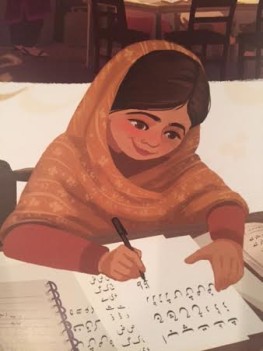
While her father was worried, Malala’s determination grew stronger. She studied harder at school, and during the school holidays while most Pakistani women covered their hands with henna flowers and vines, Malala painted science formulas on hers. The Taliban continued to exert a tight grip on the Swat Valley, and instituted new rules: men could not shave, women had to cover their faces, movies were banned. And the radio “crackled with the sound of the Taliban preaching: No education for girls! Girls who attend school bring shame to their families!”

The Taliban frightened many, and empty seats in school classrooms began to be more frequent. Ziauddan and Malala appeared on TV to express the importance of education. In response the Taliban threatened Ziauddan and his school. Despite the threats Malala and her father continued to speak and write, “demanding equal education for girls.” The Taliban began patrolling the streets, perpetrating violence and destruction on anyone who didn’t obey their rules.

In December 2008, the Taliban announced that all girls’ schools would close by January 15. “Even before the deadline, bombs started to rain down on nearby schools as warnings.” The British Broadcasting Corporation wanted to reveal to the world what was happening. They wanted a girl to write a blog about her experience and “how it felt to be denied an education. Malala volunteered.

celebrate-picture-books-picture-book-review-for-the-right-to-learn-malala-yousafzai's-story-sneaking-to-school

Image copyright Janna Bock, courtesy of Capstone Press

She took the pen name Gul Makai and related her blog by phone to a reporter who typed and published her words for two months. The first post appeared on January 3, 2009. On January 14 Malala wrote: “‘They can stop us from going to school, but they can’t stop us learning!’” Because activists were growing angry, the Taliban let girls ages 10 and younger go to school. Malala and her friends were 11. They began dressing to look younger and hid school books in their clothes. If they had been caught lying about their ages, they and their teachers could have been beaten or executed.

In May 2009 the Pakistani army began battling the Taliban and ordered everyone to evacuate. Malala and her family had to pack their belongings and leave. Malala wanted to take her books along, but there wasn’t room. She could only hope that they—and her home—would survive the fighting. Three months later, the people of Mingora were allowed to come home, but the town was not the same as they had left it. Shops and buildings were destroyed, burned frames of cars were strewn across the roads. The school’s walls were riddle with bullet holes. But the Taliban was gone. Ziauddin reopened his school for boys and girls.

While Malala returned to school, her life was not the same. Because of her blog, speeches, and interviews, she was internationally famous. Everyone wanted to hear what she had to say—everyone but the Taliban. “Talban leaders began to threaten her on the Internet. Saying she was working for the West, they announced Malala was on their hit list. The police warned the Yousafzai family to leave, but Malala refused to hide. She refused to be silenced.”

Because of the danger, Malala’s mother wanted her to ride the bus to school instead of walk. On October 9, 2012 as Malala and her classmates rode the bus home after school, the bus was stopped and a man boarded, demanding to know which girl was Malala. While no one spoke, the girls couldn’t stop their eyes from flashing quickly toward Malala. That was all the man needed. He “pointed a gun at Malala. Three shots shattered the silence.”

The bus driver rushed Malala and two of her friends to the hospital. Word spread quickly about the shooting through the town and around the world. Malala lay unconscious for days as the Taliban threatened her again should she live. As determinedly as Malala fought for equal education, she fought for survival. Finally, she was flown to a hospital in England for more surgery and to keep her safe. Gifts and wished poured in from all over the world. Malala stayed in the hospital for three months and underwent many procedures to correct the damage done by the Taliban’s bullets.

When she had recovered, Malala returned to her family and to her place on the world stage where she continues to speak out for the rights of all. On July 12, 2013 in a speech at the United Nations, Malala “declared, ‘One child, one teacher, one book, and one pen can change the world.’” On December 10, 2014 Malala became the youngest recipient of the Nobel Peace Prize for her “strength, power, and courage” to “lift her voice for children everywhere.”

celebrate-picture-books-picture-book-review-for-the-right-to-learn-malala-yousafzai's-story-speaking-to-the-UN

Image copyright Janna Bock, courtesy of Capstone Press

Malala. Those three syllables have become synonymous with bravery, freedom, and education. Rebecca Langston-George tells Malala’s remarkable story with the same unstinting vision that fuels Malala’s mission. Told sensitively, but candidly, this compelling biography reveals the harrowing evolution of the Taliban’s reach that, far from intimidating young Malala, only served to make her more determined. Langston-George’s excellent command over her well-chosen details and gripping pacing enhances the power of this important true story. Readers should come away inspired—not only by Malala’s life, but the fact that they too can make a difference.

Janna Bock depicts the changing landscape of Malala’s hometown both physically and philosophically with illustrations that help readers clearly envision and understand Malala’s life and environment. The faces of the townspeople and the Yousefzai family register distress and fear, but also determination, courage, and optimism as schools close, Mingora comes under fire, and the citizens become refugees. Malala’s shooting, and recovery are portrayed with thoughtful consideration of the readers, and the ending takes children inside the United Nations to witness Malala’s ultimate triumph.

An Author’s Note detailing more about Malala’s story then and now as well as a glossary and index follow the text.

For the Right to Learn: Malala Yousafzai’s Story is an important biography of current events and people shaping the world and our children’s future and is a must read for all.

Ages 8 – 12

Capstone Press, 2016 | ISBN 978-1623704261

Discover more fascinating books by Rebecca Langston-George on her website!

View a gallery of art by Janna Bock on Tumblr!

Women’s Equality Day Activity

celebrate-picture-books-picture-book-review-star-border-writing-template

Be a Star! Letter to Your Teacher


The school year is about to begin! Do you feel excited? Nervous? Ready to learn? Your teachers are looking forward to meeting you! With the printable Be a Star! Letter to Your Teacher Template, tell your teacher something funny about yourself, something serious, and something you’d like to learn about this year. Add a thank you for all their work and dedication and give it to your teacher on the first day of school! If you’ve already started school, give it to your teacher this week!

Picture Book Review

August 22 – National Tooth Fairy Day

celebrate-picture-books-picture-book-review-tooth-by-tooth-cover

About the Holiday

Today’s holiday celebrates the mythical (shhhh!) fun of the Tooth Fairy. When a child loses a tooth, they put it under their pillow and that night the Tooth Fairy comes, takes the tooth, and leaves money. What the sprite does with the teeth is a mystery and many theories abound. The mystery of how the whole thing got started is explained here! I had never heard this story, so was excited to find it in my research!

In 1927 Esther Watkins Arnold wrote an eight-page play called The Tooth Fairy. In the same year none other than Sir Arthur Conan Doyle claimed that fairies and gnomes were real and by proof published pictures of two girls surrounded by “verified” fairies. In 1928 schools began performing Esther Arnold’s play, and kids took it to heart, leaving their teeth under their pillows. The rest of the story is, as Sherlock Holmes would say, “Elementary!”

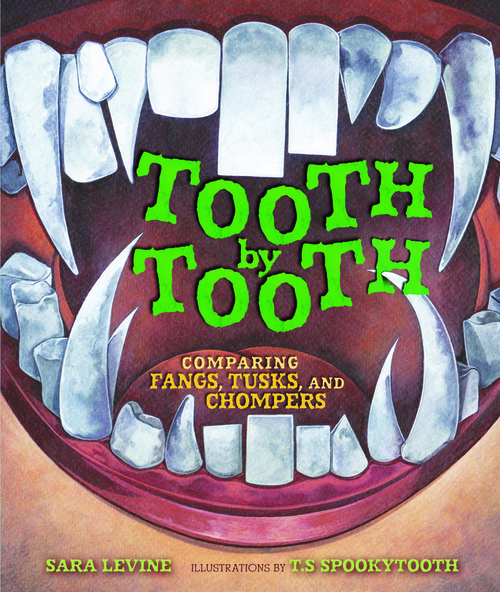
Tooth By Tooth: Comparing Fangs, Tusks, and Chompers

Written by Sara Levine | Illustrated by T. S. Spookytooth


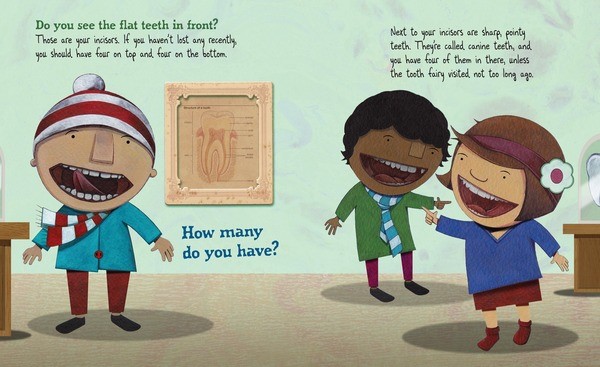
“Open wide!” a little girl with a good set of teeth herself encourages on the first page of this fun nonfiction book. “Look at all the chompers in there.” Mirror in hand she proceeds to reveal that human teeth are unusual because we are mammals, and mammal teeth come in different shapes and sizes. In fact there are three distinct types. A little boy takes over to describe them. Incisors are the four flat teeth in a person’s mouth—two on the top and two on the bottom right in front.

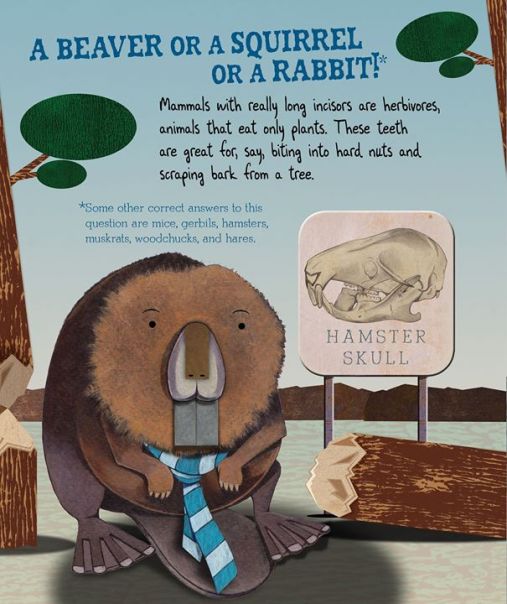
The four pointy teeth next to the incisors are canines, and the rest of the teeth are molars. Other mammals also have these teeth, and you can tell what an animal eats by which type is largest. For example, say your incisors were bigger than all your other teeth and they were so big they stuck out of your mouth even when it was closed, then you would be a beaver…or a squirrel…or a rabbit. These animals are herbivores and their oversized incisors help them break into nuts and scrape bark from trees.

celebrate-picture-books-picture-book-review-tooth-by-tooth-human-teeth

Image copyright T. S. Spookytooth, courtesy of Lerner Books

From here on Tooth by Tooth offers up amusing illustrations and “what kind of animal would you be if…” questions to spark kids’ powers of recognition. How about if your canines were so long they poked out of your mouth? Well, then you could be a “seal or a cat or a dog or a bear!” All these animals eat meat and need the sharp teeth to do it.

What if you had really tall molars? Then you’d be a “horse or a cow or a giraffe!” These guys use their molars to grind up grass. And if all your teeth were the same height? Come on…you know! You’d be you! Because humans eat plants and meat, we “need teeth that do many different jobs.”

But there are a lot more wacky teeth out there waiting for us to brush up on. So let’s get started. What if “two of your top incisors were so long that they grew out of your mouth and pointed to the sky? What if they were so long you could use them to carry your school bag?” You’ve probably guessed this one—you’d be an elephant. While an elephant’s tusks aren’t used for eating, they are used to procure the bark, roots, and other plant material that make up the elephant’s diet.

celebrate-picture-books-picture-book-review-tooth-by-tooth-beaver

Image copyright T. S. Spookytooth, courtesy of Lerner Books

What if you could almost trip over your canine teeth? Yep, you’d be a walrus, and you would use those sharp bad boys to poke holes in the ice to grab your favorite oysters and clams. But after eating they’re not done using their teeth. “After diving down for a meal, walruses can use their tusks to pull themselves back up onto the ice for a nap. Imagine if “your top and bottom canine teeth curled up out of your mouth so you had two pairs of tusks?” Or if your one upper canine grew through your upper lip and kept on growing?  Or if you had no teeth at all? Yikes! The remarkable answers are just a read away!

Fish, amphibians, and reptiles also have teeth of a sort, but because they are all the same shape and size, they don’t get special names—that doesn’t mean you can ignore them, though, because sharks are among this group, and you know what they can do!

More information about mammals, mammal teeth, a glossary, and a list of online and print references follow the text.

There’s nothing like the Wow! factor to capture kids’ attention, and Sara Levine uses it to humorous and fascinating effect in Tooth by Tooth: Comparing Fangs, Tusks, and Chompers. After giving a solid description of each kind of tooth and what it is used for in language that kids use and will relate to, Levine begins her guessing game that leads to even more discovery. We’ve all seen elephants and walruses with their mighty tusks, but how many know what they are really used for? And what about warthogs and narwhals? It’s all here in this creative nonfiction title.

T. S. Spookytooth took a big bite out of the “how to make kids laugh” manual in illustrating each question and type of tooth. Pictures of girls and boys with enormous teeth jutting this way and that will make readers glad to be human. And while the animals that belong to each molar, incisor, or canine sport the scarf, bow, or head band of its human counterpart, they are clearly and scientifically drawn to provide full understanding. Animal skulls also demonstrate the placement of teeth. The cover, with its close enough to eat you view of a very scary mouth is a show stopper and will attract kids as soon as they see it.

Ages 5 – 9

Millbrook Press, Lerner Books, 2016 | ISBN 978-1467752152

Check out Sara Levine’s website for more books, stuff for kids, teachers’ resources, and more!

View a gallery of T. S. Spookytooth’s art and read his biography (?!) on his website!

National Tooth Fairy Day Activity

celebrate-picture-books-picture-book-review-kid-shaped-maze

Smile! Kids are A-maze-ing! Maze


Smile with those pearly whites as you find your way through this printable Kids are A-maze-ing maze! Here’s the Solution!

August 20 -World Honey Bee Day

celebrate-picture-books-picture-book-review-the-honeybee-man-cover

About the Holiday

In 2009 beekeepers in the United States petitioned the United States Department of Agriculture to establish an official day to commemorate honey bees and beekeeping. Since then the holiday has expanded world wide, and the plight of the bee population has become a global concern. Bees are a crucial component in sustainable farming, and even home gardeners know their harvest will be successful when they see bees hovering nearby. Bee enthusiasts commemorate the day by planting flowers that will attract these tiny dynamos, such as lavender, marjoram, and borage. To celebrate, why not try some local honey—you might fall in love with the taste, like Fred in today’s book!

The Honeybee Man

Written by Lela Nargi | Illustrated by Kyrsten Brooker


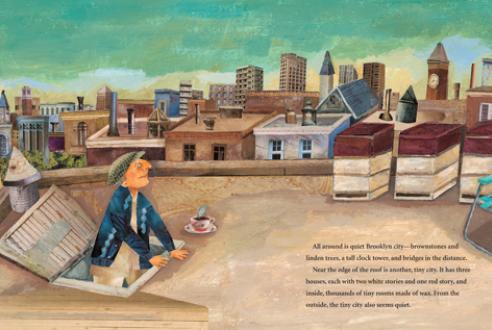
At dawn on a July morning, Fred awakes to begin his day with his “enormous” family. His morning routine consists of a cup of tea and a climb back upstairs and through a hatch in the ceiling that takes him to the roof. “All around is quiet Brooklyn city—brownstones and linden trees, a tall clock tower, and bridges in the distance.” But nearby is another, tiny city. It consists of only three houses, but inside are “thousands of tiny rooms made of wax.”

The summer morning smells of “maple leave and gasoline and the river and dust. He turns to the tiny city and inhales its smaller, sweeter smell—a little like caramel, a little like ripe peaches.” He bends down to the three houses to wake their residents. “‘Good morning, Queen Mab. Good morning, Queen Nefertiti. Good morning, Queen Boadicea,’” he calls before greeting the rest of his family: “‘Good morning, my bees, my darlings!’”

Inside the houses the bees are busy. The queens are laying eggs while the workers build wax rooms, nurse bees feed the babies, and others are getting ready to find fields of flowers for nectar. Fred dreams of the marvelous flowers the bees may find to flavor their honey. He imagines the bees flying low over the flowers moving among them and wishes he could soar with them too.

celebrate-picture-books-picture-book-review-the-honeybee-man-on-the-roof

Image copyright Kyrsten Brooker, courtesy of Schwartz & Wade

Fred watches the young bees uncertainly leave the hive and swirl off into the air. The older bees “zip out of the hives and throw themselves at the air, embracing it with their wings.” When a few land on Fred’s arm, he gently flicks them on their way. He spies on them from his rooftop as they disperse into his backyard garden, other neighborhood gardens, and perhaps, if Fred is lucky, to “blueberry bushes somewhere across town.” He sees the bees “dive into sweet pea and squash flowers. If he were closer, he could see them using their tubelike tongues to drink in flower nectar, which they store in honey sacs inside their bellies.”

The bees fly slowly home weighted down with their treasure. Fred knows that inside the hive the bees will go to work, some will do the waggle dance that tells other bees where the flowers are, some will take the nectar and store it in the wax rooms, and others will fan “their wings to evaporate the water from the nectar so it will turn to honey.”

At the end of August Fred knows it’s time to collect the honey. He carefully enters the tiny houses, removing the honeycomb from the top. In his own home he cuts the wax caps of the comb and the honey begins to flow. A special spinning machine squeezes every drop from the honeycomb. He pours the honey into jars and labels them “Fred’s Brooklyn Honey, Made by Tireless Brooklyn Bees.” In the evening Fred sits on his stoop chatting with the neighbors. He gives each a jar of golden honey.

As night falls Fred opens a jar of honey as the bees huddle “back in their own city, waiting for the rays of tomorrow’s sun to call them up and away over Brooklyn.” Fred dips a finger into the honey and tastes. “It is sweet, like linden flowers. It is sharp, like rosemary. It is ever-so-slightly sour. “‘Ah,’ says Fred, absorbing these happy flavors. ‘Blueberries!’”

celebrate-picture-books-picture-book-review-the-honeybee-man-in-the-garden

Image copyright Kyrsten Brooker, courtesy of Schwartz & Wade

Lela Nargi’s lovely city-based nature book brilliantly likens the tightly packed, exhilarating environs of Brooklyn to the stirring realm of the beehive. Through Fred’s love of his bee family, Nargi lyrically and with marvelous metaphors and verbs reveals the fascinating world of bees as well as the rich and satisfying life of one particular beekeeper. Readers organically learn fascinating facts about the ways bees collect nectar and transform it into delicious honey as well as why honey can have so many flavors.

In her gorgeous illustrations, Kyrsten Brooker uses the golden hues of honey to paint not only the beehive but Brooklyn as well, giving the two “cities” a sense of cohesiveness and equality. Fred, older, with his cup of tea and blue slippers is shown gently and lovingly taking care of his bees, even as he still has their spirit of adventure. Brooker’s combination of oils and collage fuse the dreamy quality of the text with the concreteness of its facts to create a unique book that would be perfect for quiet story times, rainy afternoons, or bedtime.

If there is such a thing as a child’s nature cozy, The Honeybee Man is it, and it would make a wonderful gift and a delightful addition to anyone’s library.

The endpapers provide detailed diagrams of the various types of bees, beehives, flowers, the waggle dance, and even a bee’s stinger. Nature lovers will relish the two pages of “amazing facts about honey, honeybees, and beekeepers” that follow the story.

Ages 5 – 10

Schwartz & Wade, Penguin Random House | ISBN 978-0375849800

You can find books for children, articles for adults, and so much more on Lela Nargi’s website!

World Honey Bee Day Activity

celebrate-picture-books-picture-book-review-bees-and-hive-coloring-page

Bees and Hive Coloring Page


The world of the honeybee is mysterious and marvelous! Here’s a printable Bees and Hive Coloring Page for you to enjoy!

Picture Book Review
August 18 – It’s Get Ready for Kindergarten Month

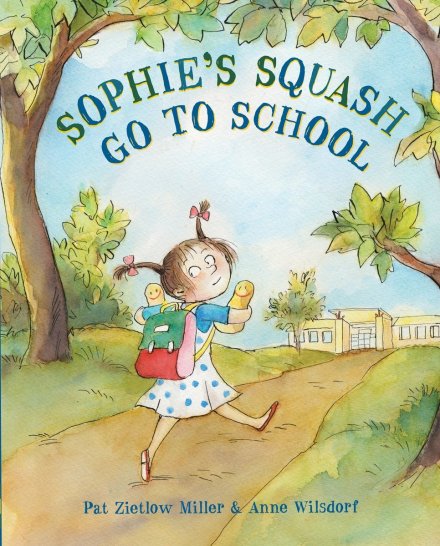
celebrate-picture-books-picture-book-review-sophie's-squash-go-to-school-cover

About the Holiday

Starting kindergarten is a huge step toward future learning and fun! This milestone can take a lot of preparation—from buying backpacks and school clothes to establishing different routines to becoming a new member of the school community. Most school years start during August and this month gives families an opportunity to talk about the changes, go shopping together, and look forward to the new experiences to come!

Sophie’s Squash Go to School

Written by Pat Zietlow Miller | Illustrated by Anne Wilsdorf


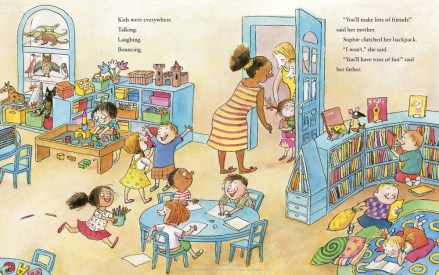
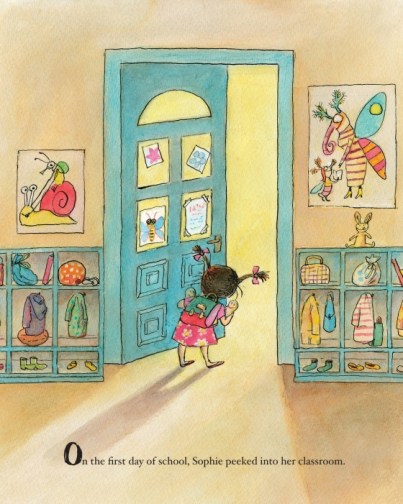
Backed up by her parents and clutching her best friends, two squash named Bonnie and Baxter, Sophie peeks into her classroom on the first day of school. She sees kids running everywhere, talking and laughing. Her parents assure Sophie that she’ll make a lot of friends and have tons of fun, but Sophie is adamant: “‘I won’t,’” she says. And Sophie’s right. “The chairs were uncomfortable. The milk tasted funny. And no one appreciated her two best friends, Bonnie and Baxter.”

celebrate-picture-books-picture-book-review-sophie's-squash-go-to-school-classroom

Image copyright Anne Wilsdorf, courtesy of Schwartz & Wade

The other kids surround her with questions about Bonnie and Baxter. “‘Are they toys? Do they bounce? Can we EAT them?’” Sophie has had enough. “‘No, no, no! I grew them in my garden. They’re my FRIENDS.’” And then there’s Steven Green. He sits near Sophie at circle time, plays near her on the playground, and stands over her breathing down her neck during art time. Ms. Park, the teacher, tells Sophie Steven is just being nice, but Sophie isn’t interested.

Steven does not give up so easily. He returns to show Sophie his best friend—Marvin, a stuffed frog that he got when the toy was just a tadpole. “‘Then you don’t need me,’” Sophie says and decides “that’s that.” But that isn’t that. The next day Steven is back, building a block tower near Sophie, reading her book over her shoulder, and even offering facts about fruit and vegetables during Sophie’s show and tell.

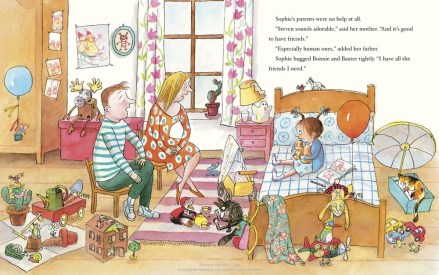
When her parents hear about Steven, they encourage Sophie to make a friend, but Sophie just clings tighter to Bonnie and Baxter. “Still, Sophie knew that Bonnie and Baxter wouldn’t last forever,” so when the other kids dance, spill their milk, or tell jokes, Sophie considers joining in. On the playground Sophie plays hopscotch while the other kids play tag, jump rope, and play other games together. When Steven asks if he can join Sophie, Bonnie, and Baxter, she refuses, leaving Steve and Marvin to sit alone.

celebrate-picture-books-picture-book-review-sophie's-squash-go-to-school-talk-with-mom-and-dad

Image copyright Anne Wilsdorf, courtesy of Schwartz & Wade

When the weekend comes Bonnie and Baxter look “too tired to hop. Or build towers. ‘It’s time,’” says Sophie’s mother. Sophie digs a hole to make “a garden bed and tucked her squash in for their winter nap. ‘Sleep tight,’” she says. “‘See you soon.’ But spring seemed very far away.” On Monday Ms. Park asks the class to tell her what makes a good friend. The kids answer that friends play with you, help you, and think you’re funny. Steven answers “‘They like what you like.’” Ms. Park sends the kids off to draw pictures of their friends.

When Steven wants to see Sophie’s drawing of Bonnie and Baxter, the two get into a scuffle over the paper and it tears in half. “‘You are NOT my friend,’” Sophie says as she walks away. On the way home from school, Sophie tells her mom what happened. “‘Sweet potato,’” her mom says. “‘That adorable boy didn’t mean to tear your picture.’” But Sophie’s not so sure.

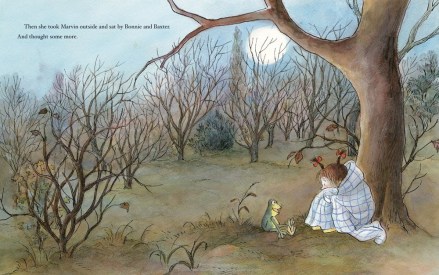
The next morning Sophie finds Marvin and a note in her cubby. She ignores it, and by lunchtime, Marvin is gone. Later that night, though, Sophie and her dad discover Marvin and the note inside her backpack. The note contains a drawing of Bonnie and Baxter as well as a packet of seeds.  “‘Do friends really like the same things you like?’” Sophie asks her dad. When he answers “Sometimes,” Sophie begins to think. She takes Marvin outside and sits near Bonnie and Baxter to think some more.

celebrate-picture-books-picture-book-review-sophie's-squash-go-to-school-nighttime-thinking

Image copyright Anne Wilsdorf, courtesy of Schwartz & Wade

The next day Sophie runs up to Steven to tell him the great idea that Marvin had. They then tell Ms. Park. The next day, Ms. Park hands each child “a cup, some dirt and one small seed.” “‘Can we EAT them?’” a classmate asks. “‘No!’” says Sophie, and Steven adds, “‘You never eat a friend.’” The kids plant the seeds and put the pots on the windowsill. Soon tiny shoots appear in the cups and Sophie and Steven invite the kids to do a new-plant dance.

“‘See?’” Sophie tells Steven. “‘Sometimes growing a friend just takes time.’”

Pat Zietlow Miller’s sequel to her award-winning Sophie’s Squash is a heartfelt story for kids for whom the definition of friendship runs deep. Sophie’s hesitancy to join in the freewheeling play of other kids echoes the feelings of many children entering new classrooms, joining unfamiliar groups, or meeting any new challenge. The excellent pacing of the story as well as Sophie’s honest emotions allow for development of the theme that sometimes friendship takes time. Steven’s persistence sets a positive example for not passing judgement too quickly. Sophie’s transition from squash friends to human is treated sensitively and with cleverness. In the end Sophie learns how to make a friend while still staying true to herself.

celebrate-picture-books-picture-book-review-sophie's-squash-go-to-school-peeking-in-classroom-door

Image copyright Anne Wilsdorf, courtesy of Schwartz & Wade

Anne Wilsdorf’s cartoon-inspired illustrations perfectly depict the world that Sophie reluctantly inhabits. Her classroom is boldly colorful, full of books, toys, separate spaces, and of course all sorts of kids. Sophie’s reactions to the comments and actions of her classmates are clearly registered on her face and will make kids giggle even while they recognize her feelings. Steadfast Steven is, as Sophie’s mom says, adorable, and readers will empathize with his plight in just wanting to make a friend. The nighttime scene beautifully sums up Sophie’s dilemma and provides her and readers a moment to reflect on the story’s ideas.

On so many levels, Sophie’s Squash Go to School makes a wonderful addition to children’s and school bookshelves.

Ages 4 – 9

Schwartz & Wade, Penguin/Random House, 2016 | ISBN 978-0553509441

Discover much more about Pat Zietlow Miller and her books on her website!

Get Ready for Kindergarten Month Activity

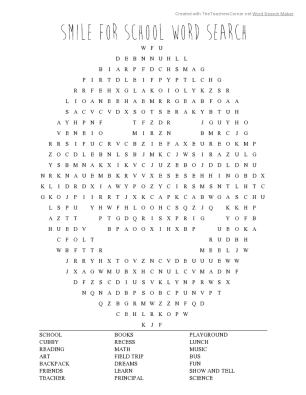
celebrate-picture-books-picture-book-review-smile-for-school-word-search

Smile for School! Word Search


Find 20 words about school in this printable Smile for School! Word Search. Here’s the Solution!

Picture Book Review
August 15 – National Relaxation Day

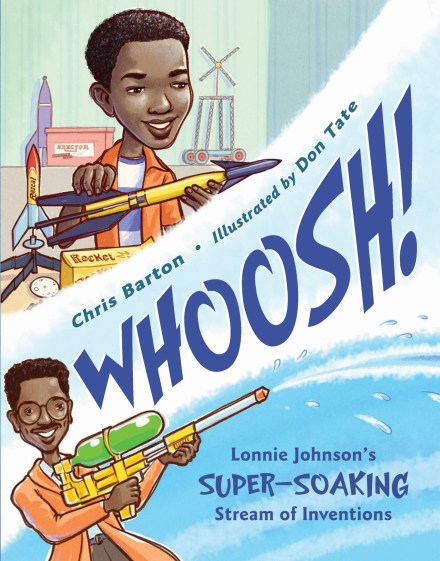
celebrate-picture-books-picture-book-review-whoosh!-lonnie-johnson's-super-soaking-stream-of-inventions-cover

About the Holiday

Relaxation Day was founded in 1985 by then fourth-grader Sean Moeller, who already knew a thing or two about balance in life when he suggested that “cleaning and real work are not part of relaxation.” Today’s holiday gives you permission to kick back and enjoy yourself. The subject of today’s book invented a great way to take advantage of a day off—and also demonstrates that sometimes work and relaxation go hand-in-hand!

WHOOSH! Lonnie Johnson’s Super-Soaking Stream of Inventions

Written by Chris Barton | Illustrated by Don Tate


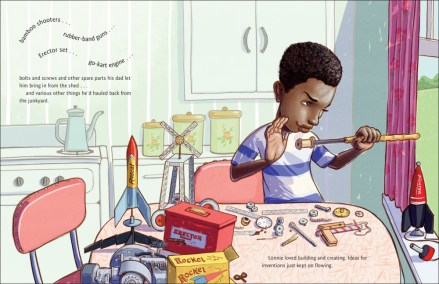
Lonnie Johnson had a way with stuff. In his hands bolts and screws, gears and springs, spools, clothespins, “spare parts his dad let him bring in from the shed, and various other things he’d hauled back from the junkyard” fueled Lonnie’s ideas for inventions and rocket ships. The kids at school loved to watch him launch the rockets he’d devised on the playground. Lonnie wanted to have a career as an engineer. Getting there took a lot of determination and courage. Once, the results of a standardized test said that he would not make a good engineer. Lonnie felt discouraged, but he knew that the person who had graded his test didn’t know him—or Linex.

celebrate-picture-books-picture-book-review-whoosh!-lonnie-johnson's-super-soaking-stream-of-inventions-young-lonnie-inventing

Image copyright Don Tate, courtesy of charlesbridge.com

Linex was the robot Lonnie had built from scrap metal. “Compressed –air cylinders and valves allowed Linex’s body to turn and its arms to move. The switches came from an old, broken jukebox. Lonnie used a tape recorder to program Linex, and as a bonus the reels looked like eyes.” Lonnie’s goal was to enter Linex in a science fair, but first he wanted to be able to program it. It took several years before he discovered how. Using his little sister’s walkie-talkie, Lonnie took Linex to the “1968 science fair at the University of Alabama—where only five years earlier, African American students hadn’t even been allowed.” Lonnie’s team won first place.

Lonnie went to college at Tuskegee Institute, where he realized his dream of becoming an engineer. His career “took him beyond Alabama—way beyond.”  He went to work for NASA. Before the orbiter Galileo could be sent to Jupiter, Lonnie developed a system that would ensure the craft would have a constant supply of power for its computer memory in case the main power was lost. Some fellow scientists doubted his idea would work, but it did. “As it photographed Jupiter and its moons, Galileo was supported by the power package that Lonnie designed.”

celebrate-picture-books-picture-book-review-whoosh!-lonnie-johnson's-super-soaking-stream-of-inventions-linex

Image copyright Don Tate, courtesy of charlesbridge.com

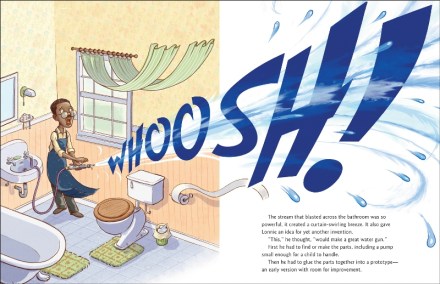
Even though Lonnie worked for NASA, he continued tinkering with his own ideas—in his own workshop. One problem he was trying to solve involved the need for the world’s refrigerators and air conditioners to have a cooling system that didn’t use the damaging chemical R-12. “He had an idea for using water and air pressure instead.” He built a prototype and experimented with it in his bathroom sink. When he turned his pump and nozzle on, a stream of water blasted across the room.

Suddenly, Lonnie saw another use for his invention—as a water gun. He created a design small enough for children’s hands, and tested it at a picnic, where it was a hit. Lonnie took his idea to a toy company…and another…and another. Finally one company agreed to make his water gun. Spurred on by this success, Lonnie found investors to help him build other original inventions: “a water-propelled toy airplane, two kinds of engines, and his cooling system” that had led to the water gun. He even quit his day job to devote his time to inventing.

But things don’t always work out. Each project fell through—even the water gun. It was a scary time as he and his family had to move out of their house and into an apartment. But Lonnie believed in himself. He took his water gun to another toy company. In 1989 he found a toy company willing to take a look. Lonnie made the trip to Philadelphia and wowed the executives with his invention.

celebrate-picture-books-picture-book-review-whoosh!-lonnie-johnson's-super-soaking-stream-of-inventions-water-powered-nozzle

Image copyright Don Tate, courtesy of charlesbridge.com

Now kids everywhere enjoy the fun of the Super Soaker. Today, Lonnie can be found in his workshop doing what he loves: “facing challenges, solving problems and building things” because “his ideas just keep on flowing.”

Chris Barton’s biography of Lonnie Johnson is a fascinating look at a man who succeeds in turning “No” into “Yes” by the power of his intelligence, ideas, and determination. Kids will love hearing about how one of their favorite toys came to be and will be inspired to chase their own dreams despite challenges and setbacks. Barton’s detailed narration provides a full picture of Lonnie Johnson and his times, specifics that attract and inform like-minded kids. Including the results of Lonnie’s exam should encourage kids who think differently. The story is enhanced by the conversational tone that makes it accessible to kids of all ages.

Don Tate illuminates Lonnie Johnson’s life story with his bold, full-bleed paintings that follow Lonnie from his being a child with big ideas to becoming a man who has seen these ideas through to success. With an eyebrow raised in concentration, young Lonnie demonstrates confidence and skill as he works on an invention, and kids will love seeing the tools of his trade laid out on the kitchen table. With his eyes narrowed in frustration and disappointment, Lonnie reads the results of his childhood exam. As Lonnie grows older and designs systems for NASA, the illustrations depict the schematics of the Galileo power package and Lonnie’s surprise at the strength of the water stream in his prototype cooling design. As all kids know, the spurt of a Super Soaker is awesome, and this fact is demonstrated in a “Wowing” fold-out page.

WHOOSH! Lonnie Johnson’s Super-Soaking Stream of Inventions is a welcome biography of the man who designs systems for the greater world but has never lost his youthful enthusiasm to invent.

Ages 5 – 10

Charlesbridge, 2016 | ISBN 978-1580892971

Check out more fiction and nonfiction books by Chris Barton on his website!

Discover more books written and illustrated by Don Tate as well as a portfolio of his work and book-related activity guides on his website!

National Relaxation Day Activity

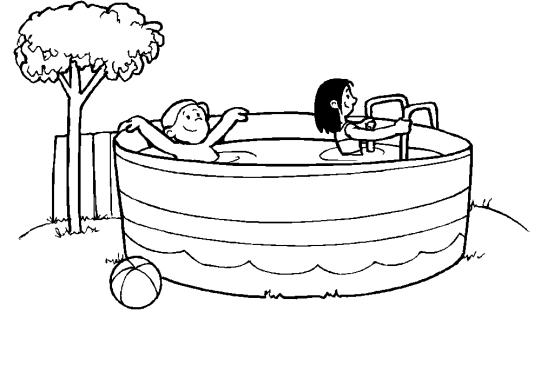
celebrate-picture-books-picture-book-review-kids-in-pool-coloring-page

Dive In! Coloring Page


The Super Soaker is a great way to cool off! Another relaxing water activity is swimming in a pool! So dive in to this printable cool pool Dive In! Coloring Page!

July 29 – International Tiger Day

celebrate-picture-books-picture-book-review-a-tiger-tail-cover

About the Holiday

First observed in 2010 in response to the severely declining wild tiger population, International Tiger Day promotes awareness of these beautiful, distinctive animals. In the last century 97% of wild tigers have disappeared, with only 3,000 still in existence. Many factors have led to this devastating loss, including habitat destruction, climate change, and poaching. Environmental and other groups, such as the World Wildlife Federation, the International Fund for Animal Welfare, and the Smithsonian Institution, have come together to protect and preserve wild tigers.

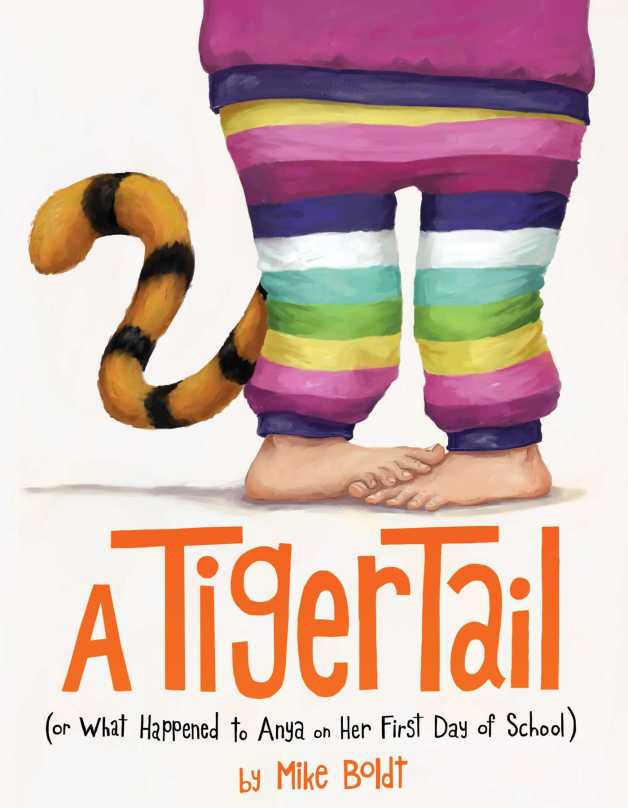
A Tiger Tail (Or What Happened to Anya on Her First Day of School)

By Mike Boldt


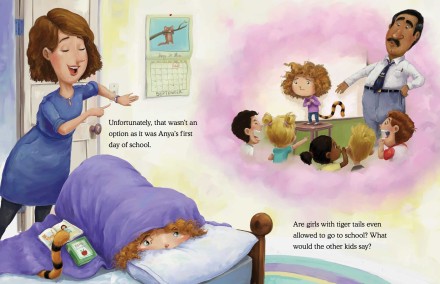
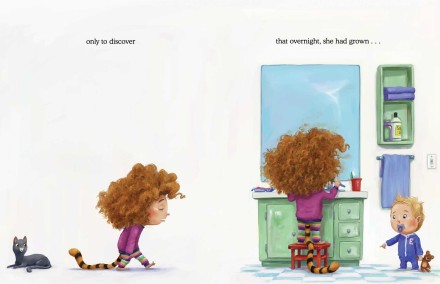
Even before the story properly begins, Anya discovers something incredible and incredibly disturbing. Overnight she has grown a tiger tail—not a pony tail or pigtails, but an honest-to-goodness black-and-orange-striped tiger tail! All she wants is to stay in bed, but unfortunately that’s not possible because it’s Anya’s first day of school.

celebrate-picture-books-picture-book-review-a-tiger-tail-interior-imagining-school

Image copyright Mike Boldt, courtesy of simonandschuster.com

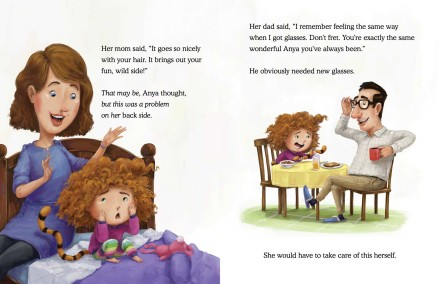
Anya wonders if “girls with tiger tails are even allowed to go to school” and what the other kids will say. Her mom thinks it’s wonderful. The tail goes so nicely with Anya’s red hair and brings out her “fun, wild side.” But Anya’s only worried about her back side! Her dad likens her predicament to when he got glasses and tells her she’s still “exactly the same wonderful Anya you’ve always been.”

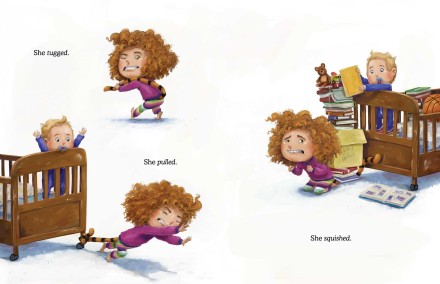
Anya figures she’s on her own with her problem. She tries tugging on her tail, pulling on it, and squishing it, but it remains firmly attached. Perhaps the right outfit from her closet—or all of them together—could hide her tail, but that solution had its own problems. There was just one last thing to do—panic! “‘Calm down,’” says her mom. “‘You’ll make yourself sick.’” Ah-ha! There’s a good idea! Anya thinks as she goes back to bed with tissues and feeling for a fever.

celebrate-picture-books-picture-book-review-a-tiger-tail-interior-parents

Image copyright Mike Boldt, courtesy of simonandschuster.com

Anya’s mom thinks her antics are so funny and that the kids will love her sense of humor, then she shoos her off so she doesn’t miss the bus. Ah-ha! There’s another good idea! Anya hides in the bushes, but her dad discovers her and considers it a “special treat” to drive her to school.

Walking up the sidewalk to the school’s front door, Anya realizes that she has only one option—running away to join the circus. How bad could that be? But as Anya daydreams about eating popcorn for dinner and swinging from a trapeze, she misses her chance to escape. The school bus pulls up to the door and all the kids pile out. “Anya was doomed.” But she watches all the kids race past her without a glance and doesn’t see the boy headed straight for her who also doesn’t see her. CRASH! Their impact sends them tumbling to the ground amid fluttering papers and flying books, shoes, and backpacks. Even the boy’s baseball cap pops off! Anya stares and then smiles. Standing straight up from the boy’s head are two long rabbit ears.

celebrate-picture-books-picture-book-review-a-tiger-tail-interior-art-grown-tail

Image copyright Mike Boldt, courtesy of simonandschuster.com

“‘Hi, my name is Ben,’” the boy says as he holds out Anya’s shoe. “‘I’m Anya,’” Anya replies. Joe takes his hat from Anya and bounds up the steps. “‘Come on, Anya! We don’t want to be late on the first day.’” Anya follows, and when she sees her class she knows she’ll fit right in.

Mike Boldt whimsically captures the first-day jitters—of school or any new experience—that can result in an explosion of self-consciousness, doubt, and fear. Boldt’s little girl with a wild cloud of red hair is a loveable, plucky heroine as she takes matters into her own hands when the adults around her seem oblivious to her plight. Boldt’s vivacious illustrations burst with energy and emotion that kids will recognize and respond to. Boldt depicts children so honestly, from their crinkled nose abhorrence to their enthusiastic smiles, and the adults, with their clueless dialogue and quirky expressions, are rendered through a child’s eyes.

celebrate-picture-books-picture-book-review-a-tiger-tail-interior-art-grown-tail

Image copyright Mike Boldt, courtesy of simonandschuster.com

Readers will laugh at Anya’s panicked face and her multi-layered getup designed to hide the tail that is still obvious through its ribbon wrapping. The crash meeting between Anya and Ben provides delightful surprise and insight, and the final spread of the classroom is inspired. Not only do most of the kids have unique traits, but the teacher also displays rabbit teeth as everyone poses for a class picture.

A Tiger Tail (Or What Happened to Anya on Her First Day of School) offers comfort and understanding as it reminds readers that everyone is an individual, and that one of humankind’s strongest and most common bonds is our diversity. A Tiger Tail should be embraced by every classroom and will make an often-asked-for addition to any child’s library.

Ages 4 – 8

Simon & Schuster Books for Young Readers, 2016 | ISBN 978-1481448857

Learn more about Mike Boldt and his books and view a portfolio of his artwork on his website!

Pounce on this awesome book trailer for A Tiger Tail!

International Tiger Day Activity

celebrate-picture-books-picture-book-review-tiger-find-the-differences

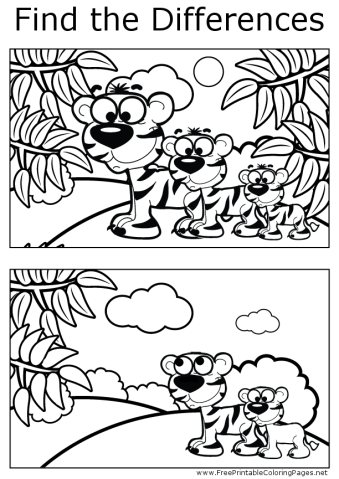
Tricky Tigers Find the Differences and Coloring Page


These two picture of tigers in the jungle have some differences—just like Anya and her classmates. Can you find all eleven changes? Have fun searching and coloring this printable Tricky Tigers Page!

July 28 – It’s Culinary Arts Month

celebrate-picture-books-picture-book-review-cake-day-cover

About the Holiday

The recipe—the step-by-step recitation of the ingredients and process for making any dish—is the heart of the culinary arts. Following along, improvising in just the right places, and inventing completely new tastes is its own special kind of literacy. Today we say goodbye to Culinary Arts Month, but hope that the joy of cooking delicious treats and reading fabulous books together remain common, fun activities with which to explore life and love—as shown with today’s book!

Cake Day

Written by Ellen Mayer | Illustrated by Estelle Corke


An adorable little boy runs to his grandma, excited that it’s “Cake Day!” “That’s right,” his grandma agrees, “Today we’re going to bake a cake!” The boy, hardly able to see over the counter, wants to be picked up and see what’s in the cabinet. His grandma happily obliges, and the pair carefully pick the ingredients for their cake.

“‘Hmmm…we need flour, salt, baking powder, and sugar to make a cake,’ says Grandma.” With all the ingredients set on the table, the two start measuring. The little chef is eager and curious: “Cake Day! How much, Grandma? As the flour pours into the cup, a soft, powdery cloud envelops them. “Too much, Grandma!” the delighted boy laughs. The two work side by side, Grandma adding the eggs while her grandson pours in the milk.

celebrate-picture-books-picture-book-review-cake-day-cover

Image copyright Estelle Corke, courtesy of Star Bright Books

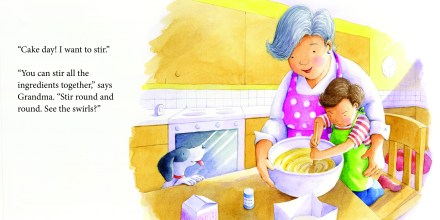
As the ingredients start to mesh, Grandma exclaims, “‘Look! What’s happening to the batter?’” The little boy wants to help it along and takes up the wooden spoon. Round and round he stirs, creating swirls in the yellow batter until it’s ready for the oven. “‘Bake day! Your turn, Grandma!” the boy stands wide-eyed as his grandma slides the deep pan into the oven.

The little boy and his dog settle in front of the oven to watch the cake bake. With eagerness the boy asks, “‘Cake day! Ready, Grandma?” Grandma encourages her grandson’s inquisitiveness and explains the process: “‘We have to wait until the cake rises. The heat makes it rise. When you hear the timer go BEEP BEEP it will be ready.’” At last the cake comes out of the oven, but it’s not ready to be decorated yet. First, they must wait for it to cool.

In a short time the high, golden cake can be iced and decorated. The little boy vigorously shakes a jar of sprinkles over the top, scattering a rainbow of colors across the white frosting. The cake is beautiful and just the right complement to the little boy’s Cake Day, Bake Day, Shake Day—Birthday!

Ellen Mayer’s language-rich and playful story of a small child and his grandmother baking together is a wonderful introduction not only to reading but to the type of full-sentence conversational modeling that improves and increases literacy. The steps to baking the birthday cake flow organically and lyrically through the loving relationship between the little boy and his grandma, enticing young readers to learn more about the world around them and how it works. The repeated phrases “Cake day! Bake day!,” and “Ready, Grandma?” as well as the boy’s short statements offer opportunities for kids to read along and learn new vocabulary as they develop important language skills.

Estelle Corke’s cheery illustrations glow with enthusiasm and the close bond between grandmother and grandson. The grandmother lifts, steadies, and holds the boy while still allowing him to perform all the tasks he can. The little boy, in his green apron, delights in every aspect of the baking process, his eagerness expressed in his animated smile and keen participation. The homey kitchen is awash in inviting colors and objects that children will recognize. The clearly drawn boxes and jars of ingredients, kitchen tools, and furnishings offer readers a chance to practice their vocabulary and learn new words.

Ages Birth – 5

Star Bright Books, 2016 | ISBN 978-1595727466

To see more books by Ellen Mayer as well as language development and reading strategies for young children, visit her website!

Visit Estelle Corke’s website to view a gallery of her artwork!

Star Bright Books publishes fiction nonfiction, and bilingual “great books for great kids” and provides literacy resources for readers.

Culinary Arts Month Activity

celebrate-picture-books-picture-book-review-cake-day-grandma's-cake

Image copyright Ellen Mayer

Grandma’s Cake


Grandma and her grandson baked a delicious, special cake—and now you can too! Here’s the full recipe that Grandma uses. Recipe courtesy of Ellen Mayer.

A Simple Sponge Cake Recipe

Ingredients

  • 1 stick unsalted butter, softened, plus a little to grease cake pan.
  • 1 1/2 cups sugar
  • 2 cups all-purpose flour
  • 1/4 teaspoon salt
  • 2 teaspoons baking powder
  • 3 large eggs at room temperature
  • 2 teaspoons vanilla extract
  • 3/4 cup milk
  • You will need: 3 mixing bowls:
  1. 1 to cream butter and sugar
  2. 1 to mix flour, baking powder and salt
  3. 1 in which to beat the eggs
  • A 7-inch diameter, deep cake pan

Directions

  1. Butter pan and dust with flour.
  2. Set the rack at the middle of the oven.
  3. Preheat oven to 350 degrees.
  4. Sift flour, baking powder, and salt into a bowl and set aside.
  5. In large mixing bowl, beat butter and sugar until light and fluffy. In the third bowl, beat the eggs and add milk.
  6. Add 1/3 of the flour mixture to butter mixture then alternate with the egg and milk mixture. Continue to alternate ending with flour mixture. Scrape bowl and beater often.
  7. Add vanilla and mix well.
  8. Pour batter into prepared pan and smooth top with a spatula.
  9. Bake cake about 45 minutes. Insert knife or wooden skewer into the center. If it emerges clean, the cake is done. If not, bake for 5 more minutes.
  10. Remove cake from oven and allow to set for 5 minutes.
  11. Turn cake out onto a cake rack and leave to cool.

Grandma’s Favorite Frosting

  • 8 oz cream cheese
  • 1 1⁄2 cups confectioners’ sugar
  • 1⁄4 stick butter
  • 1 teaspoon vanilla extract
  1. Blend all ingredients together with a mixer until smooth
  2. Spread on the top and sides of cake
  3. Decorate with sprinkles or your favorite topping

Picture Book Review