June 1 – National Dinosaur Day

celebrate-picture-books-picture-book-review-jack-horner-dinosaur-hunter-cover

About the Holiday

Today, we celebrate dinosaurs—those beasts that, although they are of a distant past, remain ever present in our hearts. Their size, diversity, and shear awesomeness make them a favorite of kids, and ongoing discoveries continue to fascinate adults as well. To celebrate, visit a national history museum, watch your favorite dinosaur movies or TV shows, join your kids in playing with their dinos (you know you want to!), and pick up today’s book!

Jack Horner, Dinosaur Hunter!

Written by Sophia Gholz | Illustrated by Dave Shephard


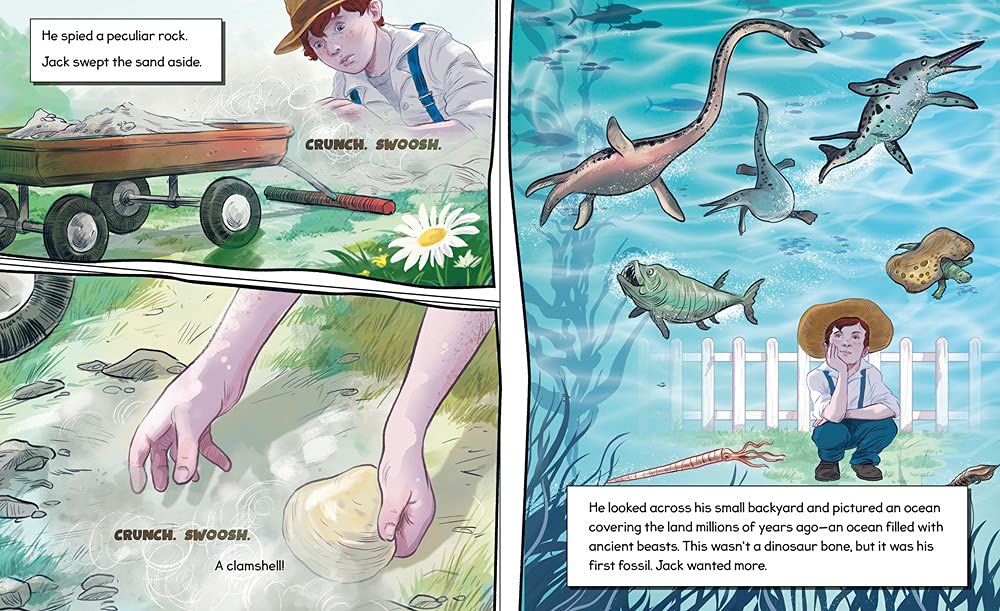
Growing up in Montana, Jack Horner was lulled to sleep by the “crunch, swoosh. Crunch, swoosh” of his father’s gravel business, and as soon as he was big enough to hold a shovel, he began digging. He loved being outdoors, searching for dinosaur bones. He dreamed of being a paleontologist when he grew up. His digging usually only produced rocks, sticks, and dirt, but once he “spied a peculiar rock” and when he had carefully swept the sand aside, he discovered a clamshell. His first fossil find made him look at his backyard differently – as “an ocean covering the land millions of years ago–an ocean filled with ancient beasts.” Jack wanted to find more fossils.

celebrate-picture-books-picture-book-review-jack-horner-dinosaur-hunter-clamshell

Image copyright Dave Shephard, 2021, text copyright Sophia Gholz, 2021. Courtesy of Sleeping Bear Press.

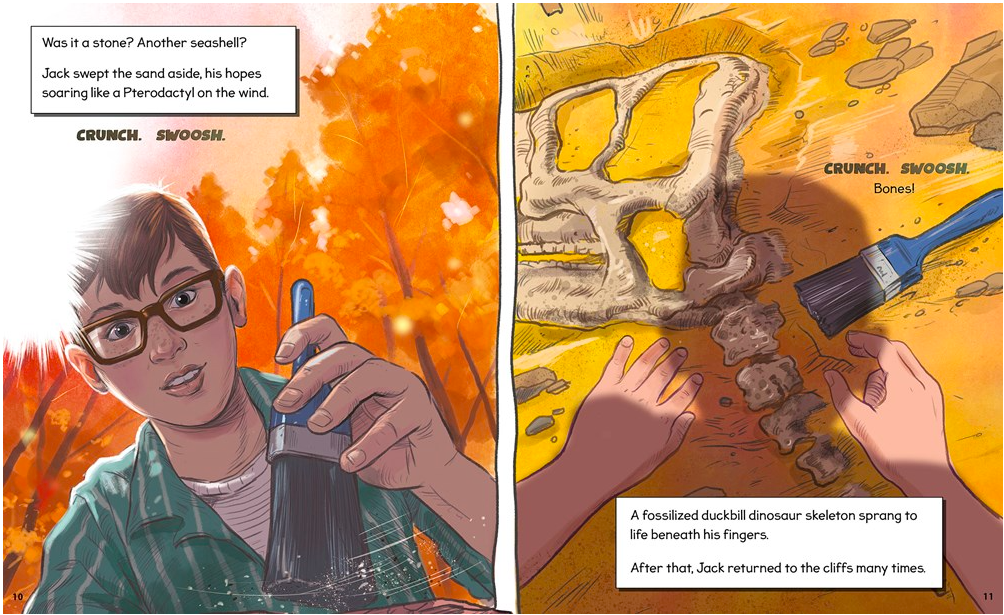
Jack taught himself how to “search for clues among the rocks: irregular textures, colors, and shapes.” He found lots of fossilized shells, but he really wanted to find a dinosaur. He went fossil hunting “in the woods and near the mountains.” Then one day while hiking up a cliff, Jack saw “an odd rock nestled in the ground.” With his tools he brushed the sand aside and uncovered the skeleton of a duck-billed dinosaur. 

celebrate-picture-books-picture-book-review-jack-horner-dinosaur-hunter-duckbill-fossil

Image copyright Dave Shephard, 2021, text copyright Sophia Gholz, 2021. Courtesy of Sleeping Bear Press.

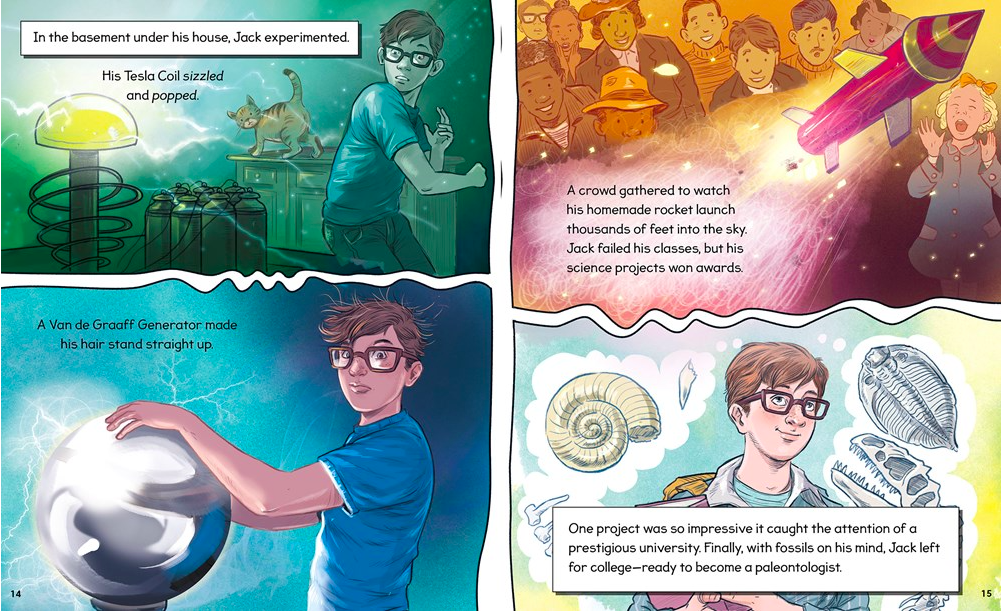
While Jack was quickly becoming an expert on fossils and the landscapes that hid them, he struggled with reading in school.  His teachers told him that if his grades didn’t improve, he’d never be able to become a paleontologist. He took to experimenting in his basement, winning awards for his science projects even as he was failing his classes. One prestigious university, however, did admit Jack on the strength of one impressive project, but just as before Jack was unable to keep up in class. He dropped out and was drafted soon after to join the Vietnam War. 

celebrate-picture-books-picture-book-review-jack-horner-dinosaur-hunter-science-projects

Image copyright Dave Shephard, 2021, text copyright Sophia Gholz, 2021. Courtesy of Sleeping Bear Press.

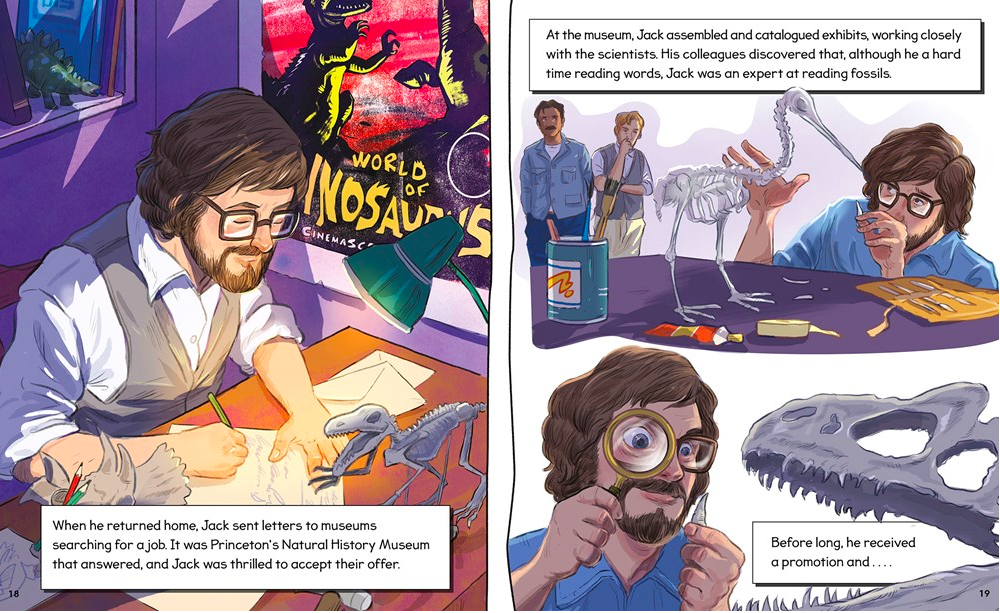
Here, he decided that when he got home, he would try to work closely with paleontologists, if he couldn’t actually be one himself. He was hired by Princeton University’s natural history museum, where he “assembled and cataloged exhibit, working closely with scientists.” His colleagues recognized that Jack was an “expert at reading fossils.” He got a promotion that allowed him to work in the field. 

celebrate-picture-books-picture-book-review-jack-horner-dinosaur-hunter-museum-job

Image copyright Dave Shephard, 2021, text copyright Sophia Gholz, 2021. Courtesy of Sleeping Bear Press.

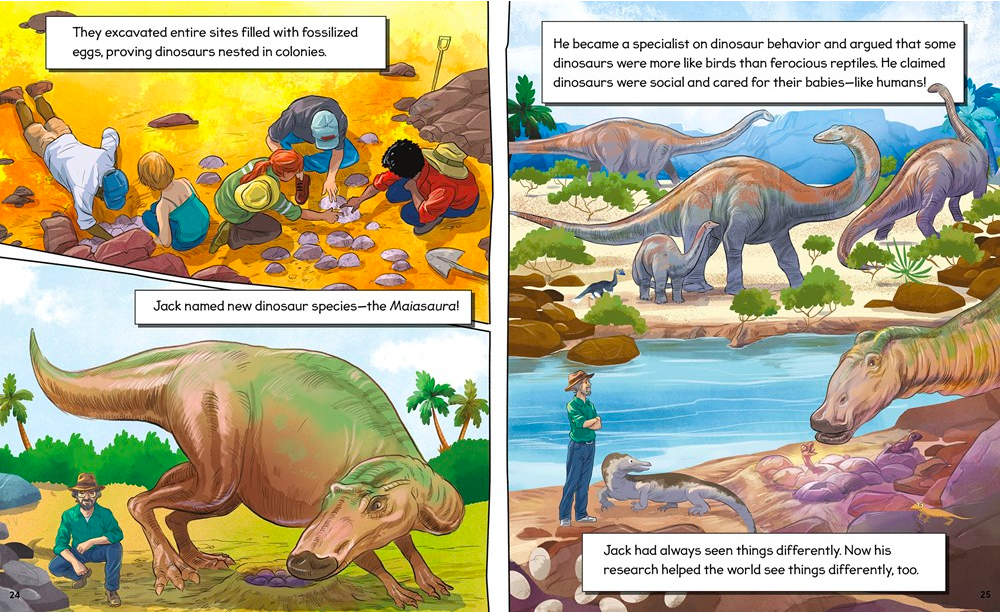
It was during one of these trips into cliffs that Jack “spied something odd. Heart thumping like the tail of an Ankylosaurus, he leapt into action.” When Jack swept the sand away, he and his team discovered a nest of fossilized dinosaur eggs – the first such find in North America. Jack went on to find more fossilized eggs, “proving dinosaurs nested in colonies;” name a new dinosaur species; and become an expert on dinosaur behavior and social structure. He even shared his special expertise when a famous movie producer filmed one of his great blockbusters. Jack had succeeded in his dream to be a “world-famous paleontologist.”

Back matter includes an Author’s Note, more about Jack Horner’s life, and a Dino Lab, that invites readers to design their own dinosaur and provides mix-and-match Greek and Latin words to help kids name their dino.

celebrate-picture-books-picture-book-review-jack-horner-dinosaur-hunter-specialist

Image copyright Dave Shephard, 2021, text copyright Sophia Gholz, 2021. Courtesy of Sleeping Bear Press.

Dinosaur lovers and anyone with dino-sized dreams will be instantly hooked by Sophia Gholz’s immersive biography of Jack Horner, who forged his own path to becoming one of the world’s most influential paleontologists. His self-confidence, unstoppable drive, and ultimate success will inspire all readers to define themselves by what they can do – not by what they may struggle with – and to trust their instincts on the way to achieving their goals. Gholz tells Jack’s story clearly and with the kind of repeated phrasing that builds suspense while also replicating the types of life experiences that create expertise. 

Dave Shephard’s bold illustrations will enthrall kids as they join Jack in the cliffs of Montana to brush away the sand from a duck-billed dinosaur fossil, see the underground strata where fossils lurk, and discover the nest of fossilized eggs. Shephard also depicts Jack’s struggles in school, where his undiagnosed dyslexia causes words and equations to become a jumbled stumbling block to his education. The vibrant format with clear typography will appeal to fans of graphic novels as well as to reluctant readers.

Jack Horner, Dinosaur Hunter! is an exceptional biography of a boy and man who never gave up on finding a way to accomplish his goal. The book will captivate children on its own or as an introduction to a wide range of classroom lessons and is highly recommended for all home, classroom, and public library collections.

Ages 6 – 9

Sleeping Bear Press, 2021 | ISBN 978-1534111196

Discover more about Sophia Gholz and her books on her website.

To learn more about Dave Shephard, his books, and his art, visit his website.

National Dinosaur Day Activity

celebrate-picture-books-picture-book-review-dinosaur-word-search-puzzle

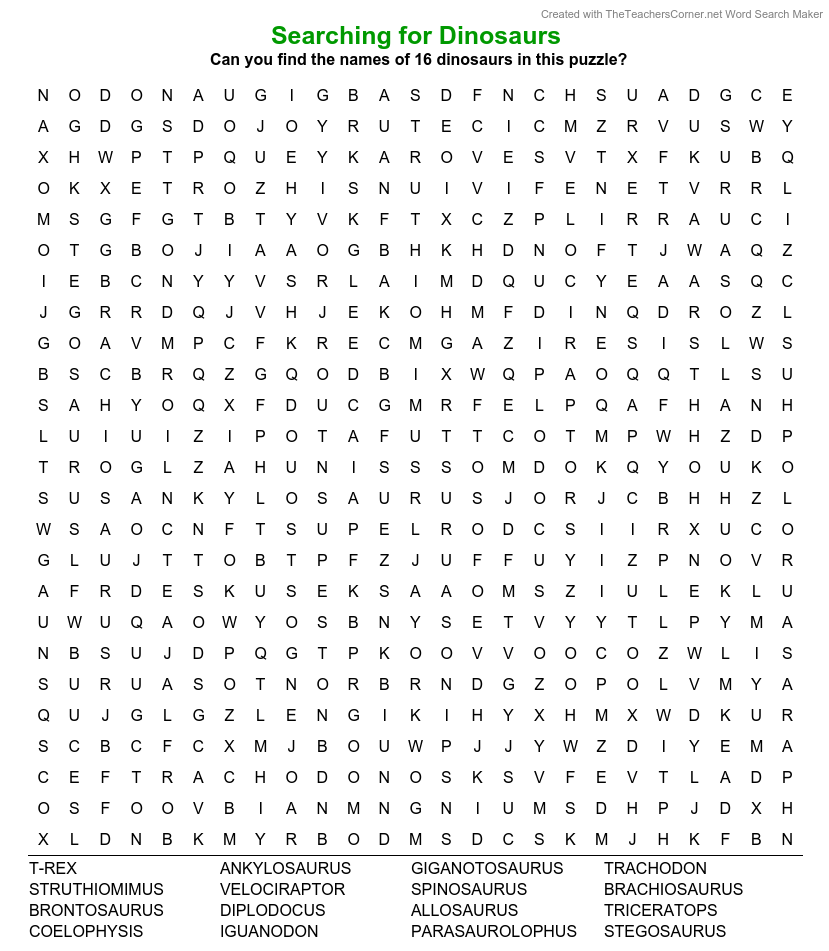
Searching for Dinosaurs Puzzle


Hunt for 16 types of dinosaurs in this printable puzzle!

Searching for Dinosaurs Puzzle | Searching for Dinosaurs Solution

celebrate-picture-books-picture-book-review-jack-horner-dinosaur-hunter-cover

You can find Jack Horner, Dinosaur Hunter! at these booksellers

Amazon | Barnes & Noble | Books-a-Million

To support your local independent bookstore, order from

Bookshop | IndieBound

Picture Book Review

June 1 – National Dinosaur Day

celebrate-picture-books-picture-book-review-everything-awesome-about-dinosaurs-cover

About the Holiday

Today, we celebrate dinosaurs—those beasts that, even though they are from the distant past, remain ever present in our hearts. Their size, diversity, and shear awesomeness make them a favorite of kids, and ongoing discoveries continue to fascinate adults as well. Dinosaurs, in fact, are so huge that Dinosaur Day takes place twice—today and on June 1. To celebrate, visit a national history museum, watch your favorite dinosaur movies or TV shows, join your kids in playing with their dinos (you know you want to!), and pick up today’s book!

Everything Awesome about Dinosaurs and Other Prehistoric Beasts!

By Mike Lowery


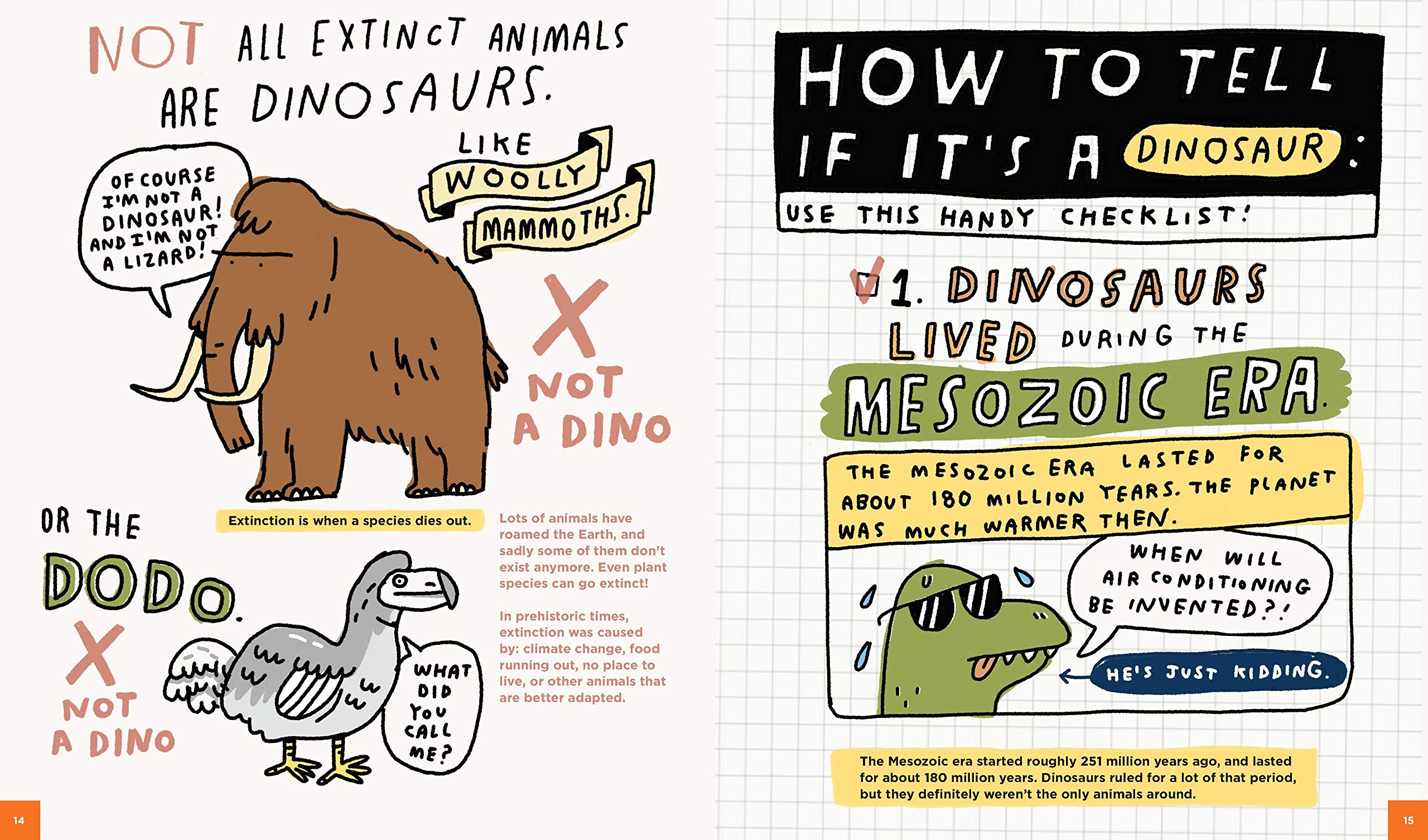
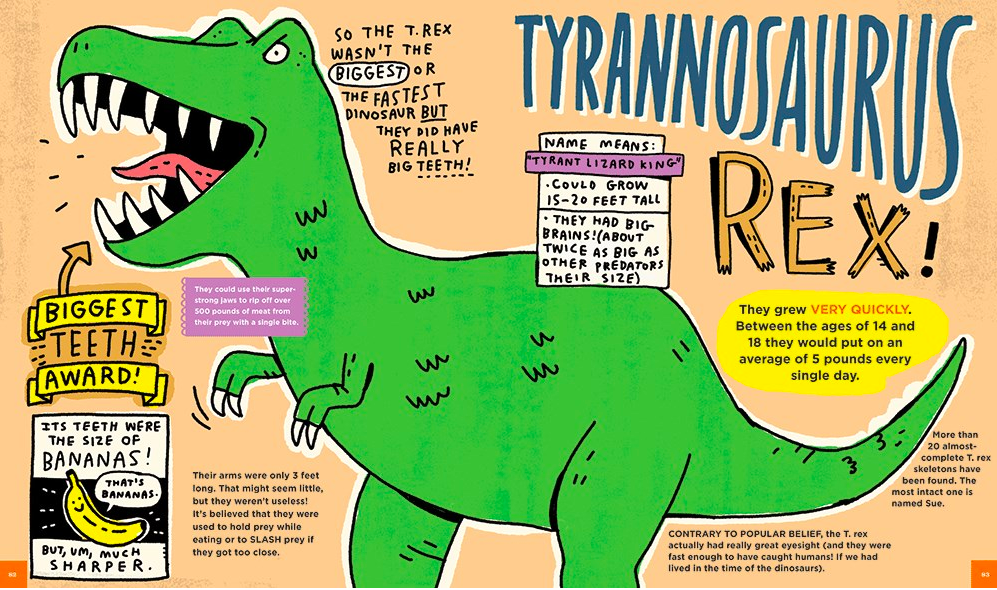
If there’s one thing kids can’t get enough of, it’s dinosaurs. And if there’s one thing Mike Lowery knows, it’s how to wow kids. The mash-up of the two has resulted in a wild and wacky book “that’s totally loaded with info, weird facts, and jokes that you will dig!” There are even dinos at the ready to point out these awesome puns. And these facts aren’t just presented like some old, dried-up report, the whole book—every page—is full of eye-popping illustrations and cool typography that will keep kids reading and reading and learning (and, oh yeah, having T-rex size fun).

celebrate-picture-books-picture-book-review-everything-awesome-about-dinosaurs-mammoth

Copyright Mike Lowery, 2019, courtesy of Orchard Books.

What kinds of things will kids learn? First, there’s a completely captivating prehistoric timeline that lays out the different eras and depicts some of the creatures and vegetation that existed in each. Like jellyfish during the Paleozoic Era, horsetails plants and dicynodonts during the Triassic, stegosaurus and cycads in the Jurassic; bees, birds, and flowering plants along with velociraptors in the Cretaceous; and finally, woolly mammoths and us during the Age of Mammals. Along the way there were also several extinction events. And this all comes even before the Table of Contents!

While kids chew on the fact that “some giant dinos ate up to 12,000 pounds a day,” they can dip into Part One—What Is a Dinosaur? Here, they’ll learn stuff like where the word “dinosaur” came, who coined it, what “prehistoric” means, and who “were some of the first people to keep written records.” They’ll also get to know some animals that weren’t dinosaurs and how dinosaurs are defined. Of course, there are some dino jokes to keep kids chuckling while they read.

celebrate-picture-books-picture-book-review-everything-awesome-about-dinosaurs-backbones

Copyright Mike Lowery, 2019, courtesy of Orchard Books.

Part Two reveals a short history of the earth as well as lots and lots about each era and representative creatures. After learning just how old Earth is, kids will be interested in a Quick Fact about one Jeremy Harper who counted to one million live on the internet. How long did it take him? Longer than you might think. Have you ever tried smooshing the whole history of the earth into just 24 hours? Mike Lowery did and it’s fascinating! Kids will also discover how Earth formed and about early signs of life.

What was going on in the Paleozoic Era? The haikouichthys (one of the first animals to have a skull), tiktaalik (a land and sea creature), and the meganeura (a giant dragonfly) can tell them. It was also the time of the Permian Period, when some pretty weird reptiles roamed the earth and some way-unusual marine life swam the seas. Then came “the Great Permian Extinction” that led into the Mesozoic Era, “aka the age of reptiles.”

celebrate-picture-books-picture-book-review-everything-awesome-about-dinosaurs-sauropods

Copyright Mike Lowery, 2019, courtesy of Orchard Books.

Here, kids learn about the development of dinosaurs, non-dino animals, and bugs. If you think a few stormy days are bad, imagine living during the Triassic Period, when “it once rained for two million years.” What do you wear in weather like that? A “Jurassic parka,” of course. Next up is the Jurassic and then the Cretaceous periods and their gigantic creatures of the land, ocean, and sky.

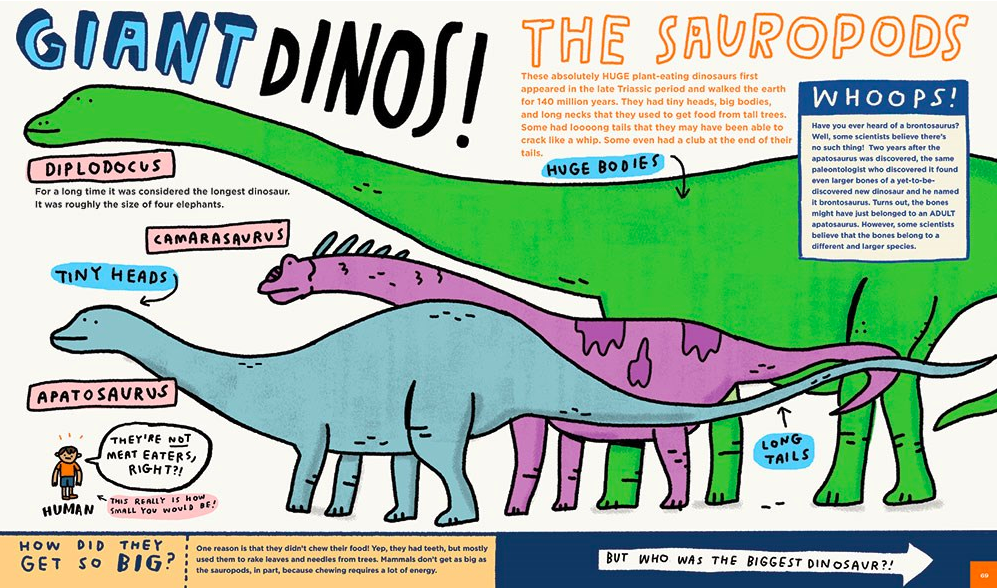
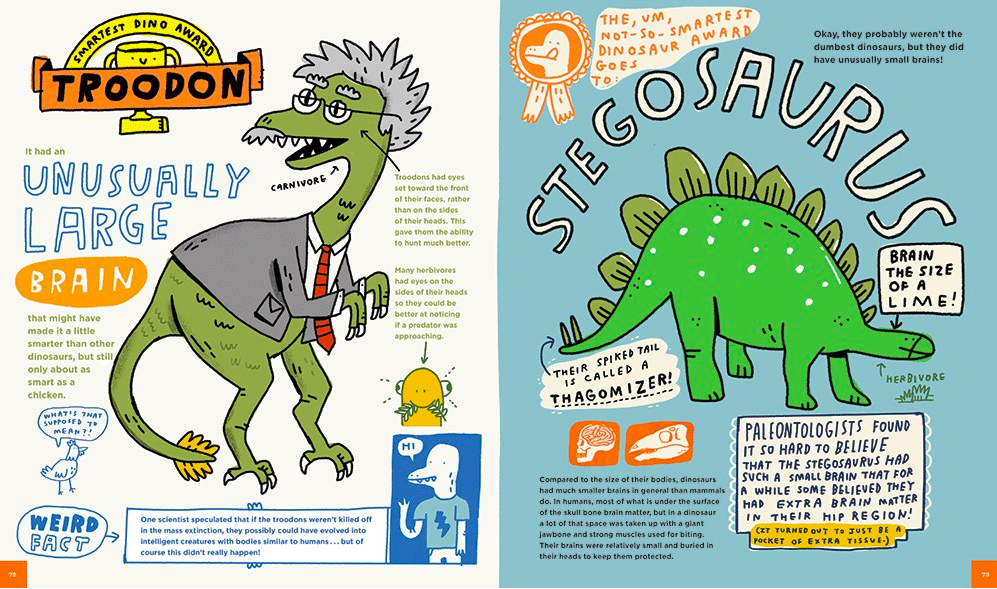
In Part Three readers get to meet the dinosaurs up close and personal (well, not too close). They’ll learn what dinos really ate, how they really sounded, and this delectable fact: “More time passed between stegosaurus and T. rex than the time between velociraptor and microwavable pizza!” And while kids are digesting that, they’ll want to watch out for the gigantic sauropods (who grew that big partly because “they didn’t chew their food…. Mammals don’t get as big as the sauropods, in part, because chewing requires a lot of energy.” Kids will see who won the “smartest dino award” and who was unfortunate enough to win “the, um, not-so-smartest dinosaur award.” They’ll also learn about horned dinos, armored dinos, fast dinos, and “the weirdest lookin’ dino.”

celebrate-picture-books-picture-book-review-everything-awesome-about-dinosaurs-troodon

Copyright Mike Lowery, 2019, courtesy of Orchard Books.

Part Four talks about the Cretaceous-Paleogene extinction event and various theories that have been floated throughout the years. Part Five takes kids on a hunt for bones and other fossils and reveals how paleontologists study them. Part Six offers a tour of post-dinosaur beasts, and Part Seven invites kids to learn how to draw dinosaurs. That’s followed up by a Dino Field Guide, an illustrated list of dinos organized by time periods, and to round it all up, Lowery includes a few more irresistible dinosaur jokes.

celebrate-picture-books-picture-book-review-everything-awesome-about-dinosaurs-t-rex

Copyright Mike Lowery, 2019, courtesy of Orchard Books.

Mike Lowery’s free-wheeling sense of humor, on exhibit in both his text and illustrations, will have kids laughing and learning billions of years’ worth of scientific facts. Funny asides by dinosaurs who just want in on the action put a spotlight on major events and conditions on Earth. Boxed and highlighted facts reveal the science of paleontology and provide explanations of dinosaur and prehistoric animal behavior and comparisons on size that will resonate with kids. Lowery imbues each of his creatures with personality while staying true to their nature and body type. Simply said, if there’s something you want to know about prehistoric creatures, dinosaurs, and the times they lived in, it’s in this book.

A must for home, classroom, and public library collections, you’ll want to put Everything Awesome about Dinosaurs and Other Prehistoric Beasts! on your shopping list for kids, teachers, and anyone who loves science, dinosaurs, and entertaining ways to learn or teach.

Ages 7 – 10 and up

Orchard Books, 2019 | ISBN 978-1338359725

Discover more about Mike Lowery, his books, and his art on his website.

National Dinosaur Day Activity

celebrate-picture-books-picture-book-review-dinosaur-eggs-craft-nest

Hatch Your Own Dinosaur Eggs


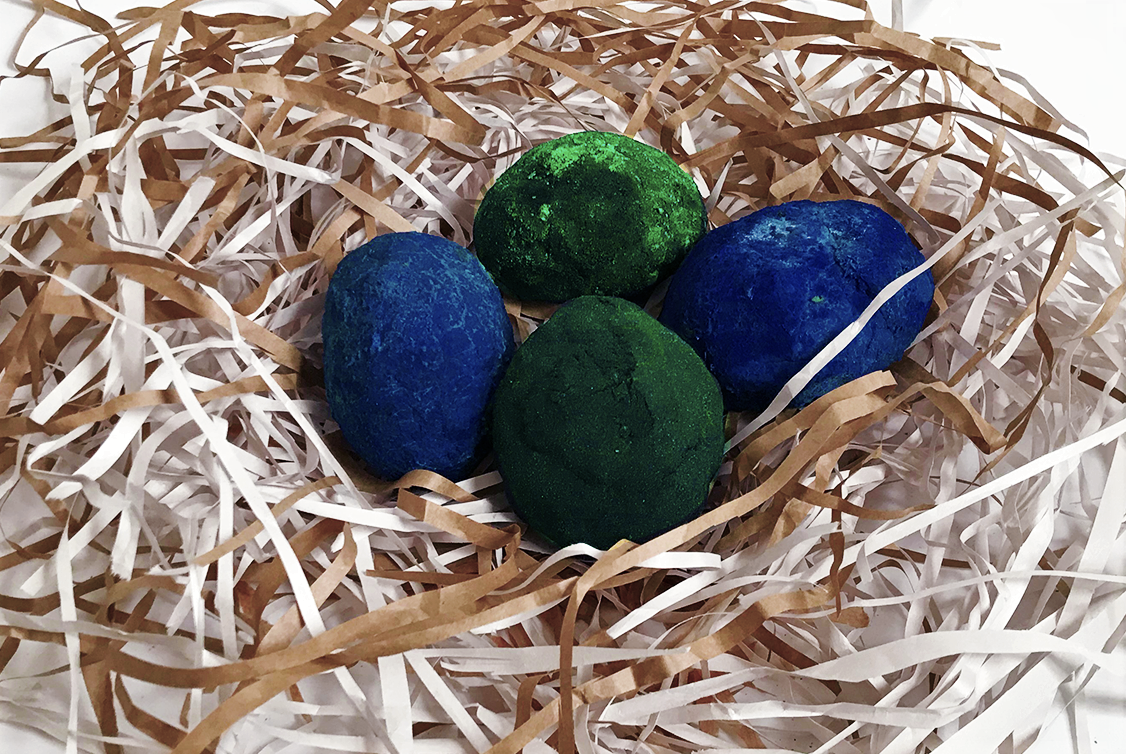
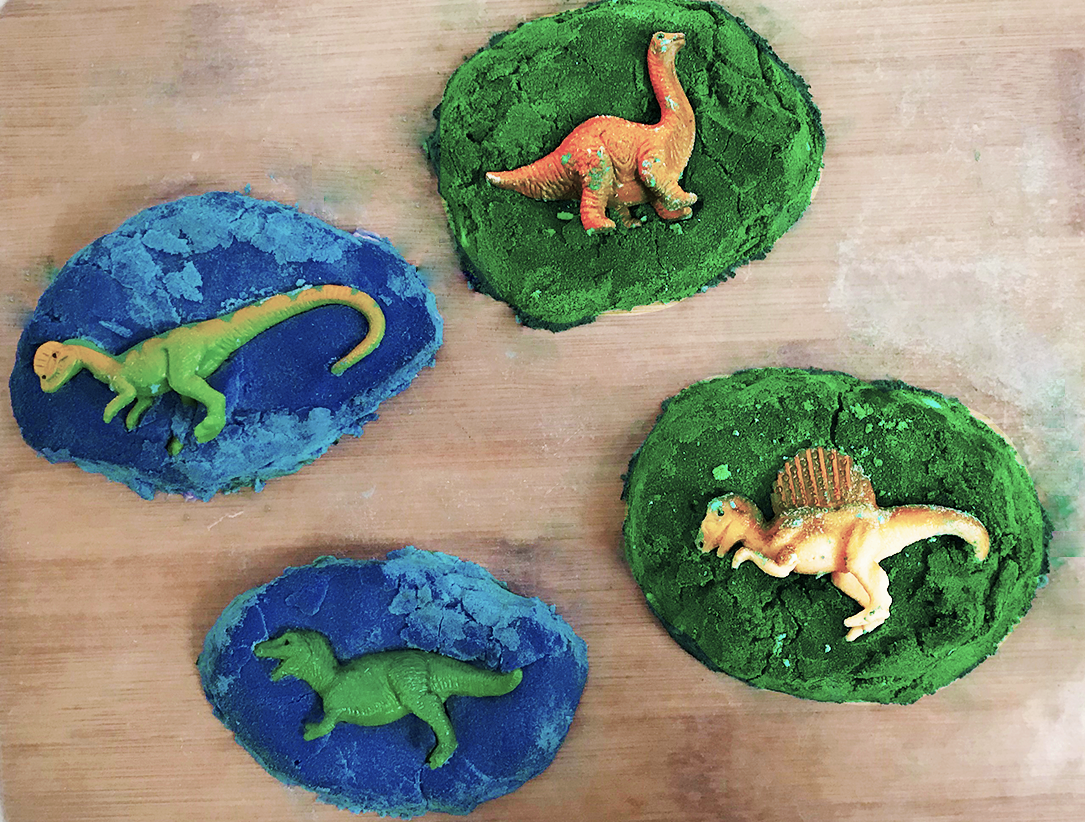
Think there are no more dinosaur eggs to be found? Think again! You can make your own with this easy craft that will have you hatching some T.-rex-size fun! All you need are a few simple ingredients – and don’t forget to wear an apron or old clothes!

celebrate-picture-books-picture-book-review-dinosaur-eggs-craft-open-eggs

Supplies

  • Old clothes or apron
  • Large box of baking soda (makes between 6 and 8 eggs)
  • Food coloring
  • Water
  • Plastic dinosaur toys
  • Bowl
  • Fork
  • Spoon
  • Wax paper
  • Baking sheet
  • Foil
  • Vinegar
  • Spray bottle (optional)
  • Plastic or metal spoon, stick, popsicle stick, or other implement to chisel with
celebrate-picture-books-picture-book-review-dinosaur-eggs-craft-vinegar-egg-open-darker

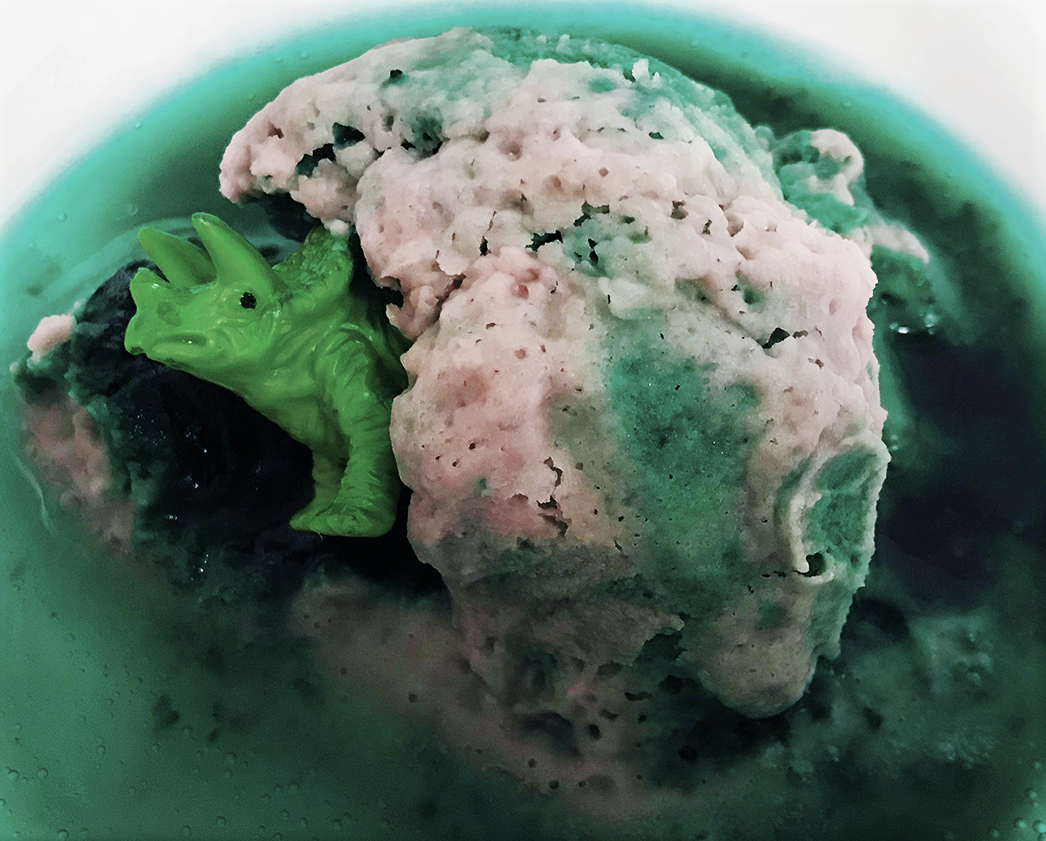
Spray the egg with vinegar to hatch your dinosaur

Directions

  1. Wear old clothes or an apron
  2. Cover work surface with wax paper, parchment paper, newspaper, or other protection. Food coloring can stain some surfaces
  3. Pour baking soda into the bowl
  4. Add drops of food coloring in whatever color you’d like your eggs to be. The eggs will darken when baked.
  5. Mix in the food coloring with the fork. You may want to use your hands, too
  6. When the baking soda is the color you want it, begin adding water a little at a time
  7. Add water until the baking soda holds together when you squeeze it in your hand
  8. When the baking soda is the right consistency, spoon some out into your hand or onto wax paper
  9. Push one plastic dinosaur into the middle
  10. Cover the dinosaur with more of the baking soda mixture
  11. Carefully form it into an egg shape
  12. Repeat with other dinosaurs
celebrate-picture-books-picture-book-review-dinosaur-eggs-craft-chiseled -darker

Chisel the egg open to hatch your dinosaur

To Bake the Eggs

  1. Set the oven or toaster oven to 200 to 225 degrees
  2. Set the eggs on a baking sheet lined with foil
  3. Bake the eggs for 15 minutes, check
  4. Turn the eggs over and bake for 10 to 15 more minutes
  5. Remove from oven and let cool

To Hatch the Eggs

  1. Eggs can be hatched by chiseling them with a spoon, stick, or other implement
  2. Eggs can also be hatched by spraying or sprinkling them with vinegar

celebrate-picture-books-picture-book-review-everything-awesome-about-dinosaurs-cover

You can find Everything Awesome about Dinosaurs and Other Prehistoric Beasts! at these booksellers

Amazon | Barnes & Noble | Books-a-Million

To support your local independent bookstore, order from

Bookshop | IndieBound

Picture Book Review

May 27 – National Road Trip Day

celebrate-picture-books-picture-book-review-carson-crosses-canada-cover

About the Holiday

In 2019 Pilot Flying J, the country’s largest travel center operator, established National Road Trip Day to mark the start of the summer travel period from Memorial Day weekend through the beginning of September. If you’re traveling to see family or friends you haven’t seen in awhile or setting your sights on new adventures near or far, remember to pack a few great books to take along – like today’s book, which takes readers on a long, cross-country road trip, with a best buddy, of course!

Carson Crosses Canada

Written by Linda Bailey | Illustrated by Kass Reich


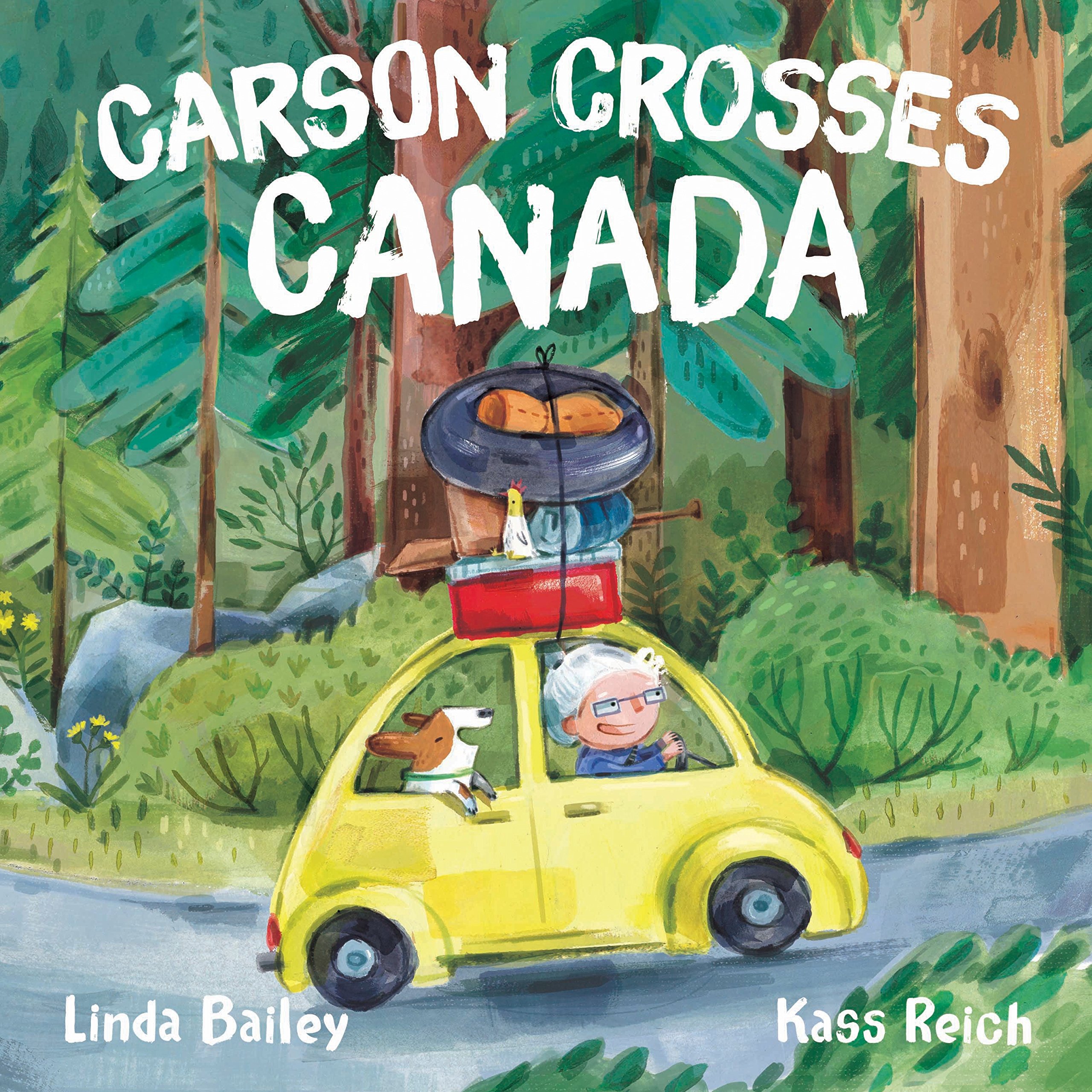
Annie Magruder and her little dog, Carson, had a pretty great life living along the shore of the Pacific Ocean. One day a letter arrived for Annie from her sister Elsie. Elsie was sick and needed cheering up so Annie packed her bags, loaded up her camping gear, and “filled a cooler with baloney sandwiches.” For Carson she brought along dog food and of course Squeaky Chicken. They pulled away from their house and headed east.

celebrate-picture-books-picture-book-review-carson-crosses-canada-cover

Illustrations copyright © 2017 by Kass Reich. Courtesy of Tundra Books.

“All morning they drove in the rattlebang car.” Were they there yet? Carson wanted to know. But they were on a loooong trip—all across Canada, Annie told him. She also said there’d be a surprise for him at the end. “Carson loved surprises. Squeaky Chicken had been a surprise. Every time Carson chewed, he got a brand-new noise. Skreeeee! Wheeeee! Iiiiiy!”

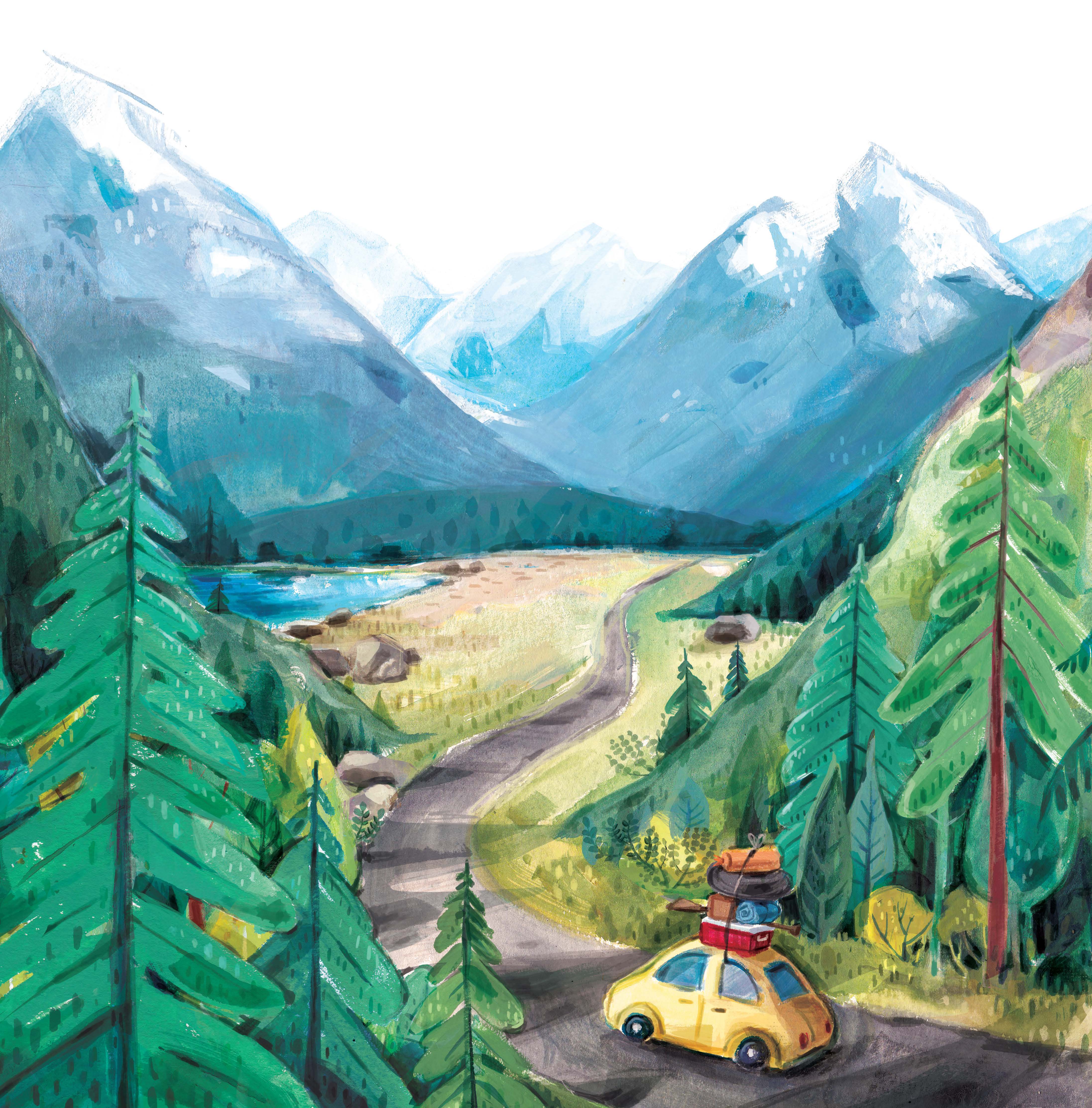
Twisty roads took them into the Rocky Mountains, where Annie pitched her tent for the night. Carson stood guard, watching for bears. The next day they rolled into dinosaur country. Carson could hardly control his excitement at seeing the enormous bones. Could this be his surprise? But Carson didn’t get to take a single bite—not even a little lick.

celebrate-picture-books-picture-book-review-carson-crosses-canada-loons

Illustrations copyright © 2017 by Kass Reich. Courtesy of Tundra Books.

On day three they came to flat farmland, where “grain grew in carpets—yellow, blue, gold.” While Annie admired the wide-open sky during a picnic lunch, Carson chased after grasshoppers, finally snatching one for his dessert. On the next day, the sun was so hot that as Annie and Carson drove past Lake Winnipeg, they stopped to take a dip.

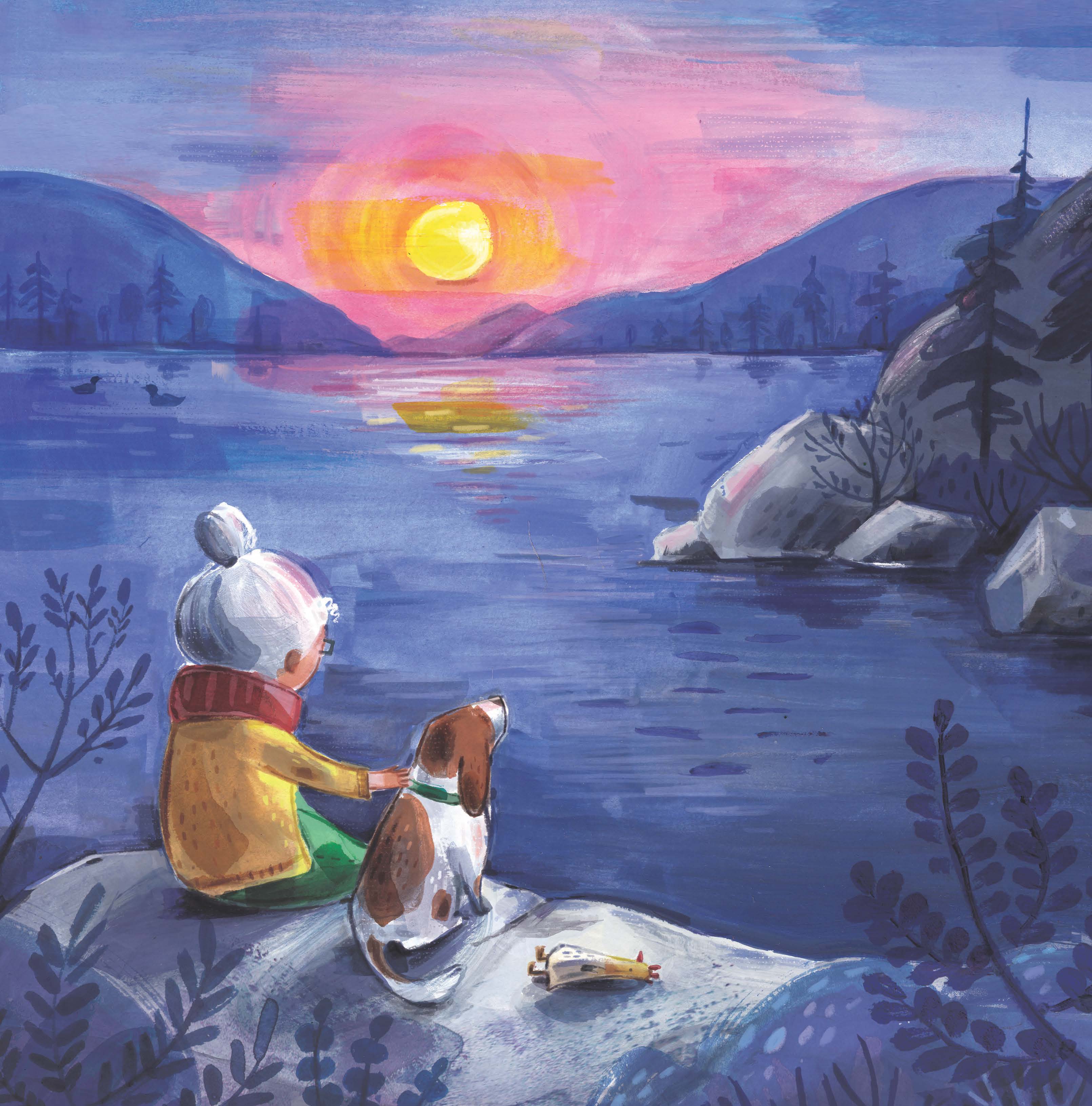
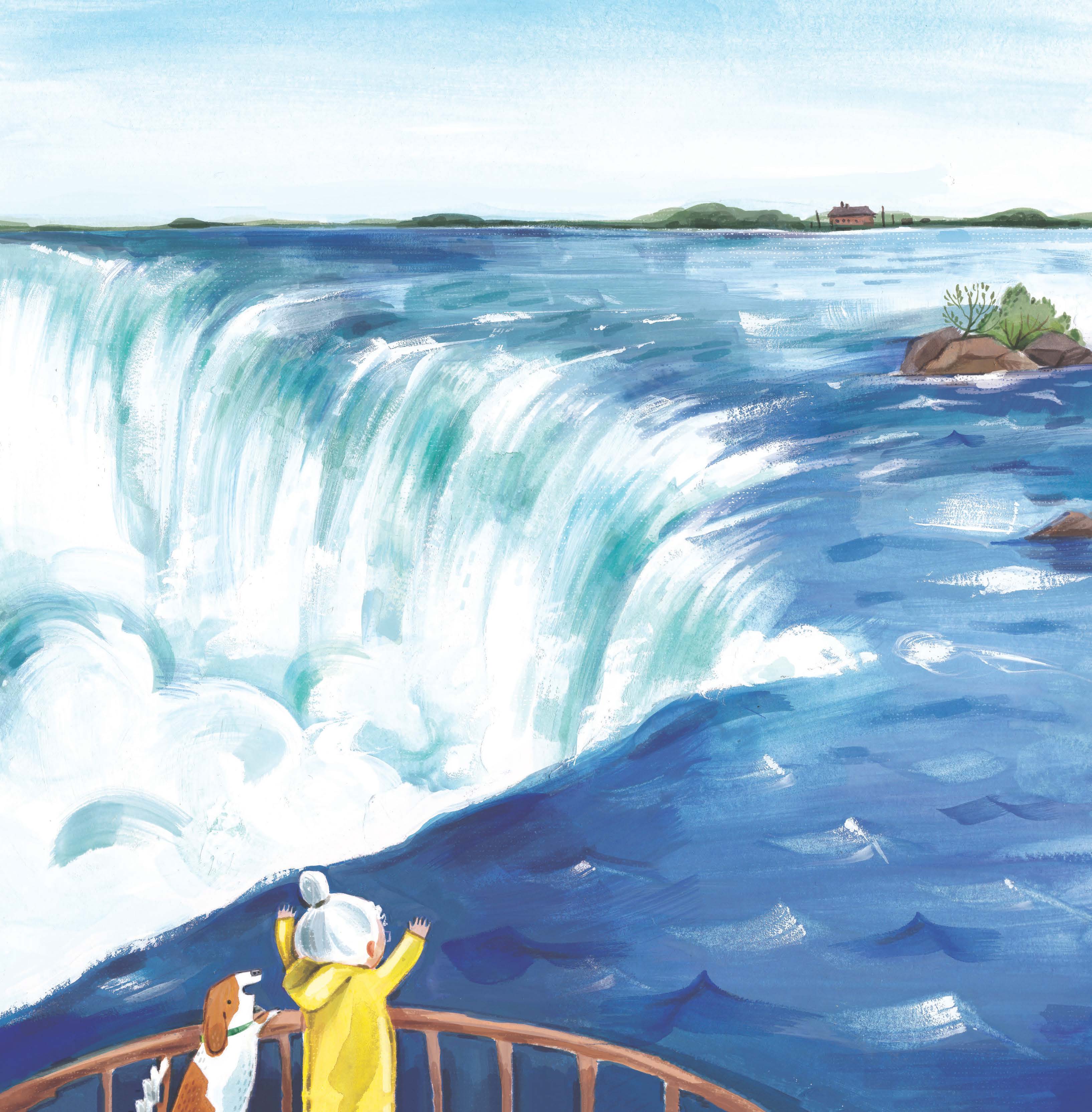
After that there were more days and even more days spent in the car passing forests of trees and boulders. Carson passed the time barking and wondering about his surprise. At night, when he and Annie camped, they listened to the loons calling, “Ooo-wooooo. Ooo-hoo-hoo.” When they reached Niagara Falls, they stopped to watch the thundering water and got soaked with its spray.

celebrate-picture-books-picture-book-review-carson-crosses-canada-niagara-falls

Illustrations copyright © 2017 by Kass Reich. Courtesy of Tundra Books.

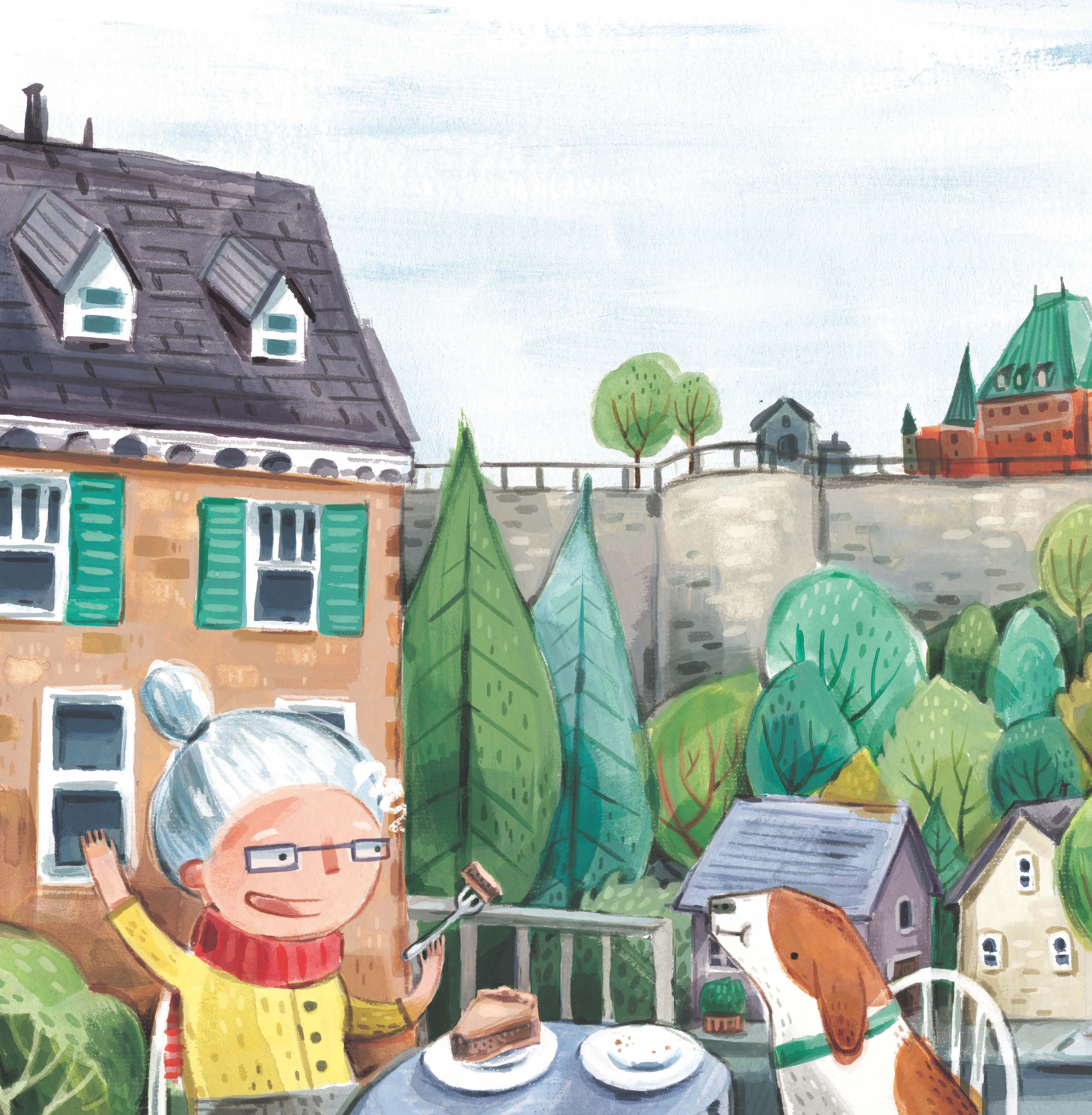
In Quebec City, Annie and Carson enjoyed French delights, including a pork pie called tourtière, which Carson gobbled up in two bites. Was this their destination? Oh, no—they still had a ways to go! Once, while Carson was napping, he heard Annie shout, “‘Look! The Atlantic Ocean!’” Carson was so thrilled to see an ocean once more that he ran to the edge and rolled in the mud until he was covered.

The next day brought “an island of red and green” as pretty as a postcard plus lobster rolls for two. Here, Annie told Carson, they were getting close. There was still one night’s stop, however. “In the campground that night, there was fiddle music—so friendly and fast, it made everyone dance. Annie clapped and jigged. Carson chased his tail.” With the promise of “‘tomorrow’” whispered in his ear, Carson fell asleep.

celebrate-picture-books-picture-book-review-carson-crosses-canada-quebec

Illustrations copyright © 2017 by Kass Reich. Courtesy of Tundra Books.

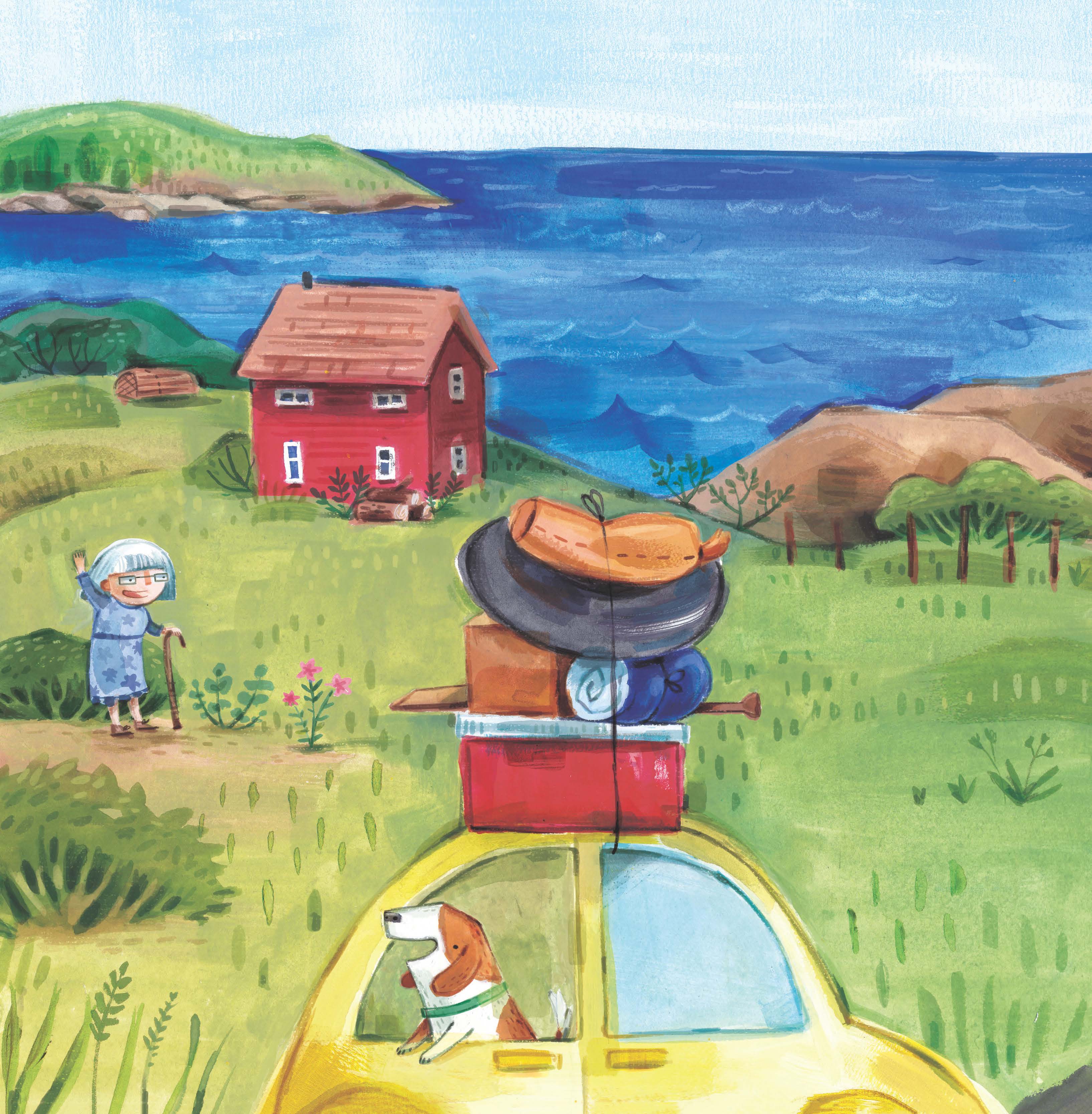
A ferry ride took them to Elsie’s. Her “house stood waiting beside the ocean. It was red like the house back home. Out came a woman who looked like Annie. Her steps were slow, but her smile was as wide as the sea.” Annie and her sister hugged for a long time until Carson yipped, looking for his surprise. Bounding toward him came a dog that looked “so much like Carson, it was like looking into a mirror.” It was his brother, Digby! They hadn’t seen each other since they were puppies. Spending time with Annie and Carson was just what Elsie needed. The four “loved the salt air. They loved the red house. And they loved their sweet time together.”

celebrate-picture-books-picture-book-review-carson-crosses-canada-elsie's-house

Illustrations copyright © 2017 by Kass Reich. Courtesy of Tundra Books.

For young armchair travelers, Linda Bailey has crafted a wonderful story that combines the best of sightseeing with an emotional tug that is warm and uplifting. The love between Annie and Carson is evident from the first page and swells as they reunite with Elsie and Digby, taking readers along for the rewarding ride. Bailey’s lyrical and humorous view of Canada’s expansive beauty through the eyes of both Annie and Carson will delight kids and leave them wanting to learn more. The reaffirmation that family stays strong even across many miles will cheer children and adult readers alike.

Kass Reich’s gorgeous hand-painted gouache illustrations put children in the back seat of the little, well-packed “rattlebang” car with sweet Carson on a tour of Canada. They’ll view awesome redwood trees, majestic mountains, the bone yards of Dinosaur Provincial Park, Quebec City, fields, lakes, and clear nights. Reich’s vivid colors and rich details invite kids to linger over the pages and learn even more about Canada. Little ones will also like pointing out Squeaky Chicken, who is happily enjoying the trip as well.

The book’s endpapers provide a colorful map of Canada with Carson and Annie’s route clearly marked along with their sightseeing stops.

Carson Crosses Canada is a sweet, beautiful book that kids will want to read again and again. It would be a wonderful addition to home and library bookshelves.

Ages 4 – 8

Tundra Books, 2017 | ISBN 978-1101918838  

Discover more about Linda Bailey and her books on her website!

You can learn more about Kass Reich and her books as well as view a portfolio of her illustration work on her website!

National Road Trip Day Activity

celebrate-picture-books-picture-book-review-truck-racing-game-wood

Road Trip Race Game


Here’s a racing game that kids will love! With poster board, paper, and chalk or other art supplies, kids can place their track in a city, the country, the desert, or even in outer space! Once the scene is ready, get out your own toy cars or trucks to play with or use the printable car or truck game pieces included below. Use a traditional playing die or the included printable 8-sided playing die. The first player to the finish line wins—or shake it up a bit and make the last person to the line the winner.

The track can be laid out on the floor and taped in place or created on poster board or paper with the supplies below:

Supplies

  • Poster board or tri-fold display board. I used a 12-inch by 4-foot section of a tri-fold board in my example. This allows you to fold up the board for easier storing.
  • White paper
  • Chalk, crayons, or colored pencils
  • Glue or tape
  • Scissors
  • Toy trucks or cars
  • Printable Cars Game Pieces | Trucks Game Pieces (optional)
  • Printable 8-sided Playing Die

Directions

  1. Cut 30 4- or 5-inch by 1½-inch strips from the white paper (or more for a longer track)
  2. Have kids lay out a track on the board using the white paper strips (each strip is one space) leaving room in between the rows for scenery
  3. Glue or tape the strips in place
  4. Draw scenery around the track OR cut trees, buildings, landmarks, or other scenery from paper and color. Glue or tape to board. 
  5. Print and assemble 8-sided playing die with tape (optional)
  6. Give each player a toy truck or car. Alternately, print and cut out included Truck Game Pieces. (To make them sturdier, print on heavy paper or glue them to cardboard)
  7. Choose a player to go first
  8. Players take turns rolling the die and moving the appropriate number of spaces
  9. The first (or last) player to the finish line is the winner

celebrate-picture-books-picture-book-review-carson-crosses-canada-cover

You can find Carson Crosses Canada at these booksellers

Amazon | Barnes & Noble | Books-a-Million
To support your local independent bookstore, order from

Bookshop | IndieBound

Picture Book Review

May 24 – National Brothers Day

celebrate-picture-books-picture-book-review-calvin-gets-the-last-word-cover

About the Holiday

Today we take time to celebrate brothers! Whether you grew up with one brother or a few or have a friend you love like a brother, today’s holiday gives you a terrific reason to spend time together or get in touch and make some new memories! This year, as we’re spending more time working and playing with family, today’s book is certainly a home run!

Calvin Gets the Last Word

Written by Margo Sorenson | Illustrated by Mike Deas

Calvin’s dictionary is well-positioned to know all about (and describe) Calvin’s life because from the moment he wakes up to the moment he goes to bed, that dictionary is in his hands. “Why? Because Calvin loves words—I mean REALLY loves words,” the dictionary says. And Calvin won’t rest until he’s found the perfect “word for everything—especially his rascally brother.” Take this morning, for example. Calvin grabs his dictionary, as usual, and heads to the kitchen for breakfast. At the table, Calvin takes a big gulp of milk. It’s just the moment his brother’s been waiting for to tell his super funny, nose-snorting joke. You can imagine what happens—and that’s why the dictionary’s page that contains the word revenge is soaked.
celebrate-picture-books-picture-book-review-calvin-gets-the-last-word-cover

Image copyright Mike Deas, 2020, text copyright Margo Sorenson, 2020. Courtesy of Tilbury House Publishers.

But is revenge the right word for Calvin’s brother? Not quite. On the school bus as the kids are tossing a backpack, talking, laughing, and hanging over the seats, Calvin’s dictionary offers up mayhem, but that doesn’t completely describe his brother either. As Calvin struggles in geography class and passes notes during library story time, his dictionary helps describe the mood, but the words it comes up with don’t really apply to his brother. Calvin does discover a good word for himself, though, when, on the way home from school, he stands up to a bully and helps a kindergartener.
celebrate-picture-books-picture-book-review-calvin-gets-the-last-word-breakfast

Image copyright Mike Deas, 2020, text copyright Margo Sorenson, 2020. Courtesy of Tilbury House Publishers.

At Little League practice, the dictionary tells readers, Calvin “loves to crush the ball during batting practice, sending it over the fence. That’s why the page that reads pulverize has grass stains on it.” Could pulverize be the right word for his brother? While Calvin thinks it could be fun, it’s not exactly right.
celebrate-picture-books-picture-book-review-calvin-gets-the-last-word-bus-milk

Image copyright Mike Deas, 2020, text copyright Margo Sorenson, 2020. Courtesy of Tilbury House Publishers.

That night dinner turns into a repeat of breakfast—only in broccoli green. When Calvin goes to bed, he sits for a while, thinking. Then he grabs his exhausted dictionary and a glass of water and sneaks into his brother’s room. The dictionary thinks it knows what’s going to happen and riffles through its pages to find the right word, unconcerned whether it stays dry or not. And then, there on the page, is the perfect word! But wait, what’s going on? The word the dictionary offered no longer fits because now the brothers are laughing. The dictionary tries flipping to another page and a better word, but Calvin has it beat as he turns the pages and discovers the exact right word to describe his brother. What are all of the words the dictionary and Calvin have found? Come flip through Calvin Gets the Last Word yourself to find out!
celebrate-picture-books-picture-book-review-calvin-gets-the-last-word-bus-stop

Image copyright Mike Deas, 2020, text copyright Margo Sorenson, 2020. Courtesy of Tilbury House Publishers.

In her funny and unique mashup of sibling rivalry and vocabulary, Margo Sorenson offers kids an engaging story of the singular type of love brothers share uncovered little by little through word-building. Calvin’s dictionary makes a sincere and charming guide through high-interest words that lend panache and nuance to events throughout Calvin’s day even if they don’t quite describe his brother. Astute kids may notice that the words the dictionary chooses for Calvin’s brother proves his loyalty to his favorite reader. Calvin’s spewed milk, whispered secrets, and home run batting add up to a real kid that readers will love. The words that the dictionary finds are fun to learn and say and will spark an enthusiasm in readers to do their own flipping through the dictionary and thesaurus. Sorenson’s endearing ending rings true with a word kids are sure to embrace. Mike Deas’ glasses-wearing and sweat suit-clad Calvin, whose dictionary is always at the ready to define his experiences, is a character readers will respond to. Images of the sprayed milk and broccoli, rockin’ school bus, library story rug, and baseball field are full of familiar details and plenty of action. As Calvin prepares to play his trick on his brother Deas gives kids a cutaway view of the house from above, letting them tiptoe through the maze of rooms with Calvin. The final scenes of the brothers checking out the dictionary together in the light of a bedside lamp is sibling devotion at its best. A delightful family story that can stir a love of language, Calvin Gets the Last Word would be a favorite addition to home libraries. The book is highly recommended for school and classroom bookshelves to enhance language arts, writing, grammar, and vocabulary lessons and for public library collections as well. Ages 6 – 8 Tilbury House Publishers, 2020 | ISBN 978-0884488224 Discover more about Margo Sorenson and her books on her website. To learn more about Mike Deas, his books, and his art, visit his website.

National Brother’s Day Activity

celebrate-picture-books-picture-book-review-best-brother-certificate

Best Brother Award Certificate

Today is all about how great your brother is! Print and fill out this Best Brother Award Certificate and give it to your brother—or brothers! And if you’d like an activity to do with your brother (or sister, Mom, and/or Dad), today, here’s a puzzle to do together! celebrate-picture-books-picture-book-review-big-words-vocabulary-word-search-puzzle

“Big Words” Word Search

Knowing and using a wide range of words allows you to express yourself in exact—and often—fun ways. Find the 26 “big” words—one for each letter of the alphabet—in this printable word search puzzle. “Big Words” Word Search Puzzle“Big Words” Puzzle Solution!

celebrate-picture-books-picture-book-review-calvin-gets-the-last-word-cover

You can find Calvin Gets the Last Word at these booksellers

Amazon | Barnes & Noble | Books-a-Million
To support your local independent bookstore, order from

Bookshop | IndieBound P

May 23 – National Turtle Day

celebrate-picture-books-picture-book-review-turtle-and-tortoise-are-not-friends-cover

About the Holiday

Susan Tellem and Marshall Thompson, who founded American Tortoise Rescue in 1990, established World Turtle Day to raise awareness and respect for turtles and tortoises and to promote conservation to help them survive. Celebrations take many forms, from fun activities where participants dress as turtles to educational programs that teach about this fascinating creature and how people can help turtles in danger. To learn more about World Turtle Day and American Tortoise Rescue – and to meet some of their adorable residents – visit worldturtleday.org.

Turtle and Tortoise Are Not Friends

Written by Mike Reiss | Illustrated by Ashley Spires


Upon beginning the story, children learn that “far, far away” two eggs shared the same pen at a zoo. Eventually, the eggs hatched: first a turtle and then a tortoise. The two babies took to each other right away, excited about all the fun they would have together. “People will call us the terrible Turtle Twins!” the little turtle says. But the tortoise is not receptive to this idea and launches into a mirror-image description about the differences between a turtle, a “horrid beast” and a tortoise who is a “handsome creature.” Following this, they go their separate ways to separate parts of the pen.

celebrate-picture-books-picture-book-review-turtle-and-tortoise-are-not-friends-hatching

Image copyright Ashley Spires, 2019, text copyright Mike Reiss, 2019. Courtesy of Harper Collins.

Soon, the zookeeper, leading a school field trip, stops by and during his spiel reveals that turtles and tortoises can live 100 years. The little turtle and tortoise are surprised and impressed by this information, but they go on with their individual lives – for 14 years. The turtle finds – and eats – a worm that “looked just like Winston Churchill.” The tortoise was picked up by one eagle and returned by another. They endured nature’s worst weather and saw old years go and new years come. They could have commiserated and celebrated together, but they didn’t.

celebrate-picture-books-picture-book-review-turtle-and-tortoise-are-not-friends-lost-ball

Image copyright Ashley Spires, 2019, text copyright Mike Reiss, 2019. Courtesy of Harper Collins.

Then one day, a red ball came bouncing into their pen. Both the turtle and the tortoise rushed to catch it. “The turtle got there first…seven years later.” Once he had it, he wasn’t sure what it was or what to do with it. At last, he climbed on top of it and felt like “the king of the zoo” until he rolled off and landed on his back. Seeing an opportunity, the tortoise hurried over. Two years later he reached the ball. Passing the struggling turtle, he gave a snide laugh and claimed it for himself, with predictable results. 

celebrate-picture-books-picture-book-review-turtle-and-tortoise-are-not-friends-ball

Image copyright Ashley Spires, 2019, text copyright Mike Reiss, 2019. Courtesy of Harper Collins.

Both the turtle and the tortoise spent the days and months and years on their backs, staring up at the sky and at each other. Time passed – a lot of time. Eventually, a new zookeeper guiding a new group of children related some new information that changed the whole Turtle-Tortoise dynamic. The tortoise suddenly had an idea on how they might regain their footing, and not so suddenly the turtle agreed to try it. Managing it took some time – a lot of time – but they finally found themselves face-to-face again, and, with a different attitude and appreciation for their new “fast” friendship, they wandered off to enjoy some lettuce leaves together.

celebrate-picture-books-picture-book-review-turtle-and-tortoise-are-not-friends-on-backs

Image copyright Ashley Spires, 2019, text copyright Mike Reiss, 2019. Courtesy of Harper Collins.

Funny, thought-provoking, purposeful, and poignant, Mike Reiss’s story is at once an entertaining tale of two stubborn creatures wasting decades of a could-be friendship and a gentle prompting to really look at the senseless prejudice, lack of communication, and missed opportunities that keep our human race divided. A careful reading of the tortoise’s comparison of a turtle and a tortoise provides a humorous yet serious jumping off point for discussions about prejudice as well as the effect of not questioning such pronouncements. Reiss even cleverly inserts a nod to scientific advancements and other societal changes that if embraced can lead to better understanding, friendship, and community. His early introduction of a turtle’s life span likewise frames the story in human terms. As the years pass by in the blink of an eye (or three or four words), Reiss encourages readers to count up how many years it takes the tortoise and turtle to become friends and ponder how that might relate to their own lives.

How far, far away is this unnamed zoo? Taking a good look at Ashley Spire’s ingenious cityscape, kids will discover that, no matter where they live, it is closer than they might think. Spires goes on to make the turtle and the tortoise distinct individuals but with many similarities, an idea that adults may want to explore with children while reading the book together. The turtle and the tortoise are adorable, and kids will be rooting for them to put aside their misconceptions and become friends. The passage of time is charmingly represented by the clothing and demeanor of the two groups of children that visit the zoo.

Turtle and Tortoise Are Not Friends is an enchanting and multilayered story that kids will want to hear again and again for its humor and thoughtful treatment of friendship. 

Ages 4 – 8

HarperCollins, 2019 | ISBN 978-0060740313

You can connect with Mike Reiss on Twitter.

To learn more about Ashley Spires, her books, and her art, visit her website.

National Turtle Day Activity

celebrate-picture-books-picture-book-turtle-shell-game

Follow the Turtles! Game


You can make this fun game from recycled materials and a little creativity! When you’re finished making the turtle shells, have fun guessing where the marble, bead or bean is hiding!

Supplies

  • Cardboard egg carton
  • Green tissue paper in different hues
  • Green construction or craft paper
  • A marble, bead, or bean
  • Glue
  • Scissors

celebrate-picture-books-picture-book-turtle-game

Directions

  1. Cut the egg carton apart into individual cups. You will need 3 cups for each game made.
  2. Cut the rims of the cups so they sit flat on a table.
  3. If the cups have open sides, fit two cups inside one another to fill the gaps
  4. Cut the tissue paper into small shapes
  5. Brush glue on a cup (I used a paper towel to apply glue)
  6. Cover the egg cup with pieces of tissue paper. Repeat with other cups.
  7. Let dry
  8. Cut a head and feet from the green craft paper
  9. Tape or glue the edges of head and feet to the inside of the cups
  10. Add a face to the head

To play the game:

  1. Line up the cups on a table
  2. Put a bead, bean, or marble under one of the cups
  3. Show the other player which cup the object is under
  4. Quickly move the cups around each other several times
  5. Ask the other player which cup they think the object is under
  6. Take turns playing

Extra Game: Make three more and play turtle tic-tac-toe! 

celebrate-picture-books-picture-book-review-turtle-and-tortoise-are-not-friends-cover

You can find Turtle and Tortoise Are Not Friends at these booksellers

Amazon | Barnes & Noble | Books-a-Million
To support your local independent bookstore, order from

Bookshop | IndieBound

Picture Book Review

May 19 – World Plant a Vegetable Garden Day

celebrate-picture-books-picture-book-review-in-the-garden-cover

About the Holiday

There’s nothing quite as rewarding as planting seeds, watching the plants grow, and finally being able to enjoy the bounty of your work. If you live in cooler climates, now is the perfect time to get started, and if you’re already experiencing warm or even hot weather, your garden may well be on its way. Wherever you stand on the growing calendar and whether you plant a large garden plot or enjoy deck gardening, today’s holiday highlights all of the benefits of vegetable gardening and provides education for gardeners of all experience levels. Celebrate the holiday with today’s book and consider planting your own veggie garden. Or, if digging in the dirt really isn’t your thing, you can play the printable Plant a Vegetable Garden Game at the end of this post!   

In the Garden

By Emma Giuliani


In her stunningly illustrated interactive guide through the seasons, Emma Giuliani introduces Plum and her little brother, Robin, and invites readers to join them as they tend to their garden and all the plants, animals, and birds that call it home. Plum and Robin begin at winter’s end. “This morning it’s cold. It’s not yet spring, but, in the garden, Plum and her brother Robin see the first catkins appearing on the branches of the willows and hazels. The blossoming mimosa makes the gardeners impatient for spring to come.” As Robin counts the long, drooping catkins, Plum rakes a layer of compost over the ground. On the facing page, readers get a close-up view of the fuzzy catkins, can peek inside a bud, burrow underground with earthworms just waking from hibernation, and view a few early bloomers. They also learn about what makes up the earth’s soil and get a recipe for compost.

celebrate-picture-books-picture-book-review-in-the-garden-shed

Copyright Emma Giuliani, 2020, courtesy of Princeton Architectural Press.

With the arrival of spring, Plum is in her little greenhouse, planting vegetable seeds and spritzing the soil with water to keep it moist while Robin repots some plants who have spent the winter in the greenhouse. Outside, Plum aerates the garden bed with a pitchfork, careful of any tiny creatures below. Children can open the door to Plum’s well-stocked shed to see all the tools tidily stored there and lift the flaps to look inside a bulb and help a hyacinth, a daffodil, and a tulip grow.

celebrate-picture-books-picture-book-review-in-the-garden-open-shed

Copyright Emma Giuliani, 2020, courtesy of Princeton Architectural Press.

At last the warm weather of spring has arrived. The cherry trees are blossoming, and Plum and Robin are setting stakes and planting bean seeds. Next, they provide protection for the tender strawberry plants that are beginning to bloom. Young gardeners will enjoy opening a bean seed to learn what’s inside and then following its growing process. The bees are visiting the cherry blossoms, pollinating the flowers and making honey. What does a bee see as it hovers around the flower? Pull down the flap to see for yourself and learn all the parts of a flower. What other plants are flowering now? Open the flap to see!

celebrate-picture-books-picture-book-review-in-the-garden-spring

Copyright Emma Giuliani, 2020, courtesy of Princeton Architectural Press.

Summer begins and “what a joy to be in the garden in June! The gentle breeze, the smell of cut grass, and the tangy taste of strawberries and cherries make the gardeners smile.” While Plum waters the tomato plants, “Robin looks for ripe strawberries under the leaves.” Join him! Robin is also picking cherries before the birds eat them. How do those bright red, round fruits grow? Lift the flap to learn and see how they develop from flower to fruit. Plum is getting help with the aphids on the bean plants from industrious—and hungry—ladybugs. “Dragonfly larvae are transforming into graceful flying insects….Their presence is a sign of a healthy garden.”

celebrate-picture-books-picture-book-review-in-the-garden-open-spring

Copyright Emma Giuliani, 2020, courtesy of Princeton Architectural Press.

It’s high summer and the garden is glorious. Bean pods hang from the vines, and Plum contemplates whether they are ready to pick. She may leave some “husks dry out on the plant before picking them.” Dried completely indoors, they can be stored and eaten during the fall and winter. Take a look inside a pod to see the seven red beans there. Flowers greet you too: an orange marigold with petals like a pinwheel, a brilliant pink and purple fuchsia, and a perky mignon dahlia. Robin took cuttings of these plants and potted them to grow some more. Learn how you can do that with your plants too!

The summer heat is waning and the days are growing shorter. Fall is here. The catkins of early spring have become hazelnuts that are ready to be harvested. Even the squirrel approves! Plum and Robin teach you how to store them—and when to pick the winter squash and keep them for months as well. Can you count the number of seeds inside the winter squash? Plum’s beautiful trellised pear tree is bearing sweet fruit. Yum! But look out—a crafty rabbit is after the last leafy vegetables in the garden. 

celebrate-picture-books-picture-book-review-in-the-garden-open-fall

Copyright Emma Giuliani, 2020, courtesy of Princeton Architectural Press.

The air is chilly again and winter is on the horizon. “Plum and Robin have donned their warmest clothes and gone out to collect the dead leaves. Some leaves will feed the compost, others will become mulch to protect plants over the winter. The hedgehogs can use the rest of the leaves in making their homes.” Do you see the pile of crunchy leaves? Lift them gently…shhh! A hedgehog is snoozing underneath. Robin and Plum have built an insect hotel to keep the bugs cozy during the winter and have filled the greenhouse again. For the colorful birds who stay awhile or all winter, Robin and Plum put out a bird feeder and fill it with locally produced seeds.

After putting all of their tools back in the shed, Plum and Robin head indoors to plan next year’s garden and “watch eagerly for the very first signs of spring.”

celebrate-picture-books-picture-book-review-in-the-garden-open-winter

Copyright Emma Giuliani, 2020, courtesy of Princeton Architectural Press.

If your family tends a garden or is thinking of starting one, Emma Guiliani’s superb book is a must. At 16 inches tall, In the Garden provides fascinating facts about plants, insects, and animals; helpful tips on when and how to plant a variety of fruit, vegetables, and flowers, information on natural ways to ward off pests; and how to recognize when fruit and vegetables are ready for picking and how to store them. Through copious flaps, children get inside views of flowers, seeds, buds, and vegetables to learn the names of each part and how they contribute to the growth of the plant. Along the way, young and adult gardeners discover how early gardening can begin, directions on how to create and use compost, when bushes can be planted, information on pollination; and how to winter over the garden for the coming spring.

Giuliani’s crisp, lush illustrations are marvels, combining intricate paper cuts that replicate the shapes of delicate bulbs and buds, flowers and seeds, smooth and serrated leaves, the long bean pod, and even Plum’s garden shed with a window in the door. Her extraordinarily beautiful color palette immerses readers in the garden experience; you can almost smell the rich earth, hear the bees buzzing at the blossoms, and feel the air changing season to season.

A brilliant resource and a joy to peruse, In the Garden is a book that adults and children—both gardeners or nature lovers—will share throughout the seasons and from year to year. The book is most highly recommended for home, school, and public library collections.

Ages 7 – 12

Princeton Architectural Press, 2020 | ISBN 978-1616898939

You can connect with Emma Giuliani on Instagram.

World Plant a Vegetable Garden Day Activity

celebrate-picture-books-picture-book-review-garden-board-game-1

Plant a Vegetable Garden Game


With this fun game you and your family and friends can grow gardens inside! Roll the dice to see whose garden will fully ripen first!

Supplies

Directions

Object: The object of the game is for each player to fill their garden rows with vegetables. Depending on the ages of the players, the required winning number of rows to fill and the number of vegetables to “plant” in each row can be adjusted.

  1. Print one Game Board for each player
  2. Print one set of Playing Cards for each player (for sturdier playing items, print on card stock)
  3. Print one Vegetable Playing Die and assemble it (for a sturdier die, print on card stock)
  4. Cut the vegetables into their individual playing cards
  5. Color the “dirt” on the Garden Plot with the crayon (optional)
  6. Choose a player to go first
  7. The player rolls the die and then “plants” the facing vegetable in a row on the game board
  8. Play moves to the person on the right
  9. Players continue rolling the die and “planting” vegetables until each of the number of determined rows have been filled with the determined number of vegetables.
  10. The first person to “grow” all of their veggies wins!

celebrate-picture-books-picture-book-review-flower-garden-game

You can play the Plant a Flower Garden Board Game with the printable game pieces here:

celebrate-picture-books-picture-book-review-in-the-garden-cover

You can find In the Garden at these booksellers

Amazon | Barnes & Noble | Books-a-Million | Princeton Architectural Press
To support your local independent bookstore, order from

Bookshop | IndieBound 

Picture Book Review

May 18 – International Museum Day

celebrate-picture-books-picture-book-review-the-ultimate-art-museum-cover

About the Holiday

International Museum day was created in 1977 by the International Council of Museums to raise awareness that “museums are an important means of cultural exchange, enrichment of cultures and development of mutual understanding, cooperation and peace among peoples.” The theme for this year is “The Power of Museums.” Museums are not just repositories of the past. They are vital and active members of the communities they serve and as such can be leaders in tackling some of society’s biggest issues. This year the International Council of Museums aimsto “explore the potential of museums to bring about positive change in their communities through three lenses: the power of achieving sustainability, the power of innovating digitalization and accessibility, and the power of community building through education. To learn more about these initiatives, visit the ICOM website. Celebrate International Museum Day by visiting a museum near you – or visit many world-famous museums through today’s book.

The Ultimate Art Museum

By Ferren Gipson

A blurb on the cover of this astounding book sums up the lofty goals it achieves: “40,000 years of the world’s most amazing art in one dream museum!” Indeed, once readers open the cover and accept the “ticket” offered, they can peruse the museum map that lays out the three wings, 18 galleries, and 128 rooms, plus a cafe and garden, that await them. An note from author Ferren Gipson introduces readers to the range of ways art can influence and reflect their times and the people who lived during different eras.

Gipson’s conversational style follows visitors to this unique museum from page to page, prompting them to look, consider, understand, and make connections. On some pages, a question or comment marked by an eye sends readers to another gallery or room to compare artworks, subjects, or themes across time and cultures. Some of these give a page number to consult, while others allow readers to study a room or gallery to find the artwork referred to.

celebrate-picture-books-picture-book-review-the-ultimate-art-museum-galleries

Copyright Ferren Gipson, 2021, courtesy of Phaidon.

Wing 1, appropriately, presents “treasures from the world’s earliest civilizations and the earliest art ever made.” Here, children and adults will find cave art; figurines carved from ivory, bone, and stone; treasures from ancient empires, carved reliefs, the painted, sculpted, and gilded wonders of ancient Egypt, Greece, and Rome. The intricate art of the Byzantine, early Islamic, and Medieval worlds demonstrate important aspects of these cultures as do works from ancient East Asia well as South and Southeast Asia. Readers then cross the Atlantic Ocean to discover the pottery, sculptures, and fabrics created by Native societies of North and South America. Each artwork is accompanied by a paragraph that will draw children in with clear, concise, and fascinating descriptions of the artwork, what it means, and, sometimes, even secrets that it holds.

Time for a break? Turn the page and enter the Café, where the “menu,” consisting of “Snacks, Mains, and Dessert” offers delectable choices depicted in paintings and sculpture. Refreshed, readers can step into Wing 2, where the galleries hold treasures from the 1200s to the 1800s created in Asia, including book illustrations, a palepai cloth, a puppet, scholar paintings, porceline, folding screens, carpets, and even the Taj Mahal.

The Renaissance comes to Europe with an impressive display of curiosity and learning that resulted in many changes to society and art. “Artists came up with better ways to mix oil paints and began to paint on canvas for the first time. And what scientists learned about the human body helped them paint and sculpt people who looked very real.” The subjects of artworks expanded too to include “portraits, mythology, and everyday life.” Dragon lovers can take up the challenge to compare two dragons – one created by an Italian master and the other found on a Chinese vase from the Yuan Dynasty.

celebrate-picture-books-picture-book-review-the-ultimate-art-museum-miniatures

Copyright Ferren Gipson, 2021, courtesy of Phaidon.

From 1600 – 1850, dramatic and lifelike paintings became popular. Dark shadows and highlighted areas gave paintings an atmospheric feel that invited viewers to look closely. In one of Diego Velázquez’s famous Las Meninas painting, all of the people portrayed seem to be looking out from the canvas at you. But who are they really looking at? The answer can be found reflected in a mirror on the back wall. In addition to realistic family and town life, landscapes also became popular during this time.

Moving to another room, readers will find that the art of the Pacific Islands is distinctively different in its depictions of “images of gods, spirits, and ancestors of the people who lived there.” Those works created from stone and wood have survived through the ages while “others, such as objects made from delicate spider webs or flowers, have disappeared.” Art from the continent of Africa is up next. With its many unique kingdoms and communities, Africa has produced unique artworks that “celebrate leaders and tell the stories of Africa’s great empires and civilizations.” Clay, wood, metal, ivory, and cloth have been used to “create art with spiritual and practical purposes.”

Ah! Time for a walk through the garden. Which path will you take? The one past Georgia O’Keefe’s “Red Poppy” or one where you can see a moth and a caterpillar on the branch of a citrus tree? Perhaps you’d like to stroll through a hurricane with a tiger on your trail with Henri Rousseau’s “Tiger in a Tropical Storm (Surprised)” or maybe you’d like a fragrant walk through Gustav Klimt’s “Flower Garden.”

 
celebrate-picture-books-picture-book-review-the-ultimate-art-museum-neo-classical

Copyright Ferren Gipson, 2021, courtesy of Phaidon.

Wing 3 takes readers to modern times, when “almost anything is possible in art!” In this wing, visitors will see “art that does not have a set purpose.” Instead, the artists represented here “created works that were experimental and personal. They used unusual materials and tried exciting techniques.” In these rooms, readers will encounter the Impressionists, who were interested in capturing a moment in time,  and Post-Impressionists, who experimented with color, techniques, and subject matter. Readers will no doubt recognize paintings by Mary Cassatt, Vincent Van Gogh, and Georges Seurat.

American realist painters took city scenes, sports events, tender moments between family members, and many other topics. The Cubist period began when some artists experimented in showing their subject from a variety of angles at one time. Paul Cézanne, Pablo Picasso, and Georges Braque are just a few of the famous artists who “chopped up and rearranged images” to make a new style of art.

celebrate-picture-books-picture-book-review-the-ultimate-art-museum-map

Copyright Ferren Gipson, 2021, courtesy of Phaidon.

Visitors will also learn about the Dada movement, Expressionism, and American Regionalism. Photography took center stage as cameras became lighter and easier to use. The art of the Harlem Renaissance by Black Americans is reflected in a painting of Harriet Tubman by William H. Johnson, a bronze bust of a boy by Augusta Savage, and a quilt by Harriet Powers – one of only two that still exist.

After visiting a room of modern works from India and Mexico, readers enter the dizzying world of the Surrealists. Surrealism “shows real objects but in a completely fantastical way. It explores how dreams, imaginations, and the inner workings of the mind can be shown in art.” A train emerging from the “tunnel” of a fireplace, a fur teacup, saucer, and spoon, and Salvador Dali’s “drooping” clocks are a few of the works you’ll find here.

celebrate-picture-books-picture-book-review-the-ultimate-art-museum-cubism

Copyright Ferren Gipson, 2021, courtesy of Phaidon.

In Wing 3, readers will also learn about Collages, Abstract Expressionism, Minimalism, Conceptual art, and Op art that boggle the eyes and mind with their optical illusions. Pop art, Installations, contemporary sculptures large and small as well as Alexander Calder’s mobiles and artwork created from light stand side-by-side with Christo and Jeanne-Claude’s outdoor wrapping installations, Aboriginal Australian art, Feminist art, Chicanx art, performance art, video art, contemporary art, and so much more. If you’re a fan of selfies, you’ll want to stop at the Hall of Selfies and see how four artists anticipated and/or reflect this very modern art form.

Helpful maps accompany each wing and gallery change to show readers where the art in that gallery comes from or its influence. A smaller map inset often orients readers to where the region represented is situated in the world at large.

Back matter includes an Author’s Note, a map of 54 major museums around the world, a glossary of terms found in the text, and an index.

celebrate-picture-books-picture-book-review-the-ultimate-art-museum-selfies

Copyright Ferren Gipson, 2021, courtesy of Phaidon.

Ferren Gipson is the “cool” docent every visitor wants as their tour leader on a trip to a museum. Full of enthusiasm for art and its impact, gifted with a wealth of knowledge, and quick with a fun fact, a humorous aside, or an intriguing nugget of perspective, Gipson will wow kids and adults alike with her love of all kinds of art. Open The Ultimate Art Museum to any page and readers will immediately be absorbed by whatever style of art or time in history they’ve hit upon and will eagerly wander from gallery to gallery, room to room, page to page to learn more.

The Ultimate Art Museum has applications for strong cross-curricular study for teachers and homeschoolers, expertly connecting history, art, changing societies, and more visually and textually. Gipson’s entertaining and thorough treatment of her topic will get kids excited about visiting museums of all kinds, and arm-chair travelers will wile away many happy hours wandering its pages. 

The Ultimate Art Museum is a must for classrooms and school and public libraries and would be a much-loved addition to home bookshelves or coffee tables.  

Ages 8 and up

Phaidon, 2021 | ISBN 978-1838663780

Discover more about Ferren Gipson, her books, work, and podcast “Art Matters” on her website.

International Museum Day Activity

CPB - Cookie Jar Museum (2)

Create a Museum Exhibit

Every item has a story. Maybe there’s a funny anecdote behind that knick-knack on your shelf. Perhaps your favorite serving dish holds sentimental value. How about your child’s best-loved toy or a drawing or craft they’ve made? A fun and educational way for kids to learn family stories and interact with their own history is to create a museum exhibit of objects in your home.

For teachers this can be a fun classroom activity that incorporates writing, art, and speaking as well as categorizing skills. Students can use objects in the classroom or bring items from home to set up museum exhibits. This activity can be done as a whole-class project or by smaller groups, who then present their exhibit to the rest of the class.

Supplies

  • A number of household or classroom items
  • Paper or index cards
  • Markers
  • A table, shelf, or other area for display

Directions

  1. To get started help children gather a number of items from around the house to be the subjects of their exhibit. An exhibit can have a theme, such as Grandma’s China or Travel Souvenirs, or it can contain random items of your child’s choice, such as toys, plants, tools, even the furniture they see and use every day.
  2. Using the paper or cards and markers, children can create labels for their exhibit items. Older children will be able to write the labels themselves; younger children may need adult help.
  3. Spend a little time relating the story behind each object: where it came from, how long you’ve had it, when and how it was used in the past, and include any funny or touching memories attached to the item. Or let your child’s imagination run free, and let them create histories for the objects.
  4. When the labels are finished, arrange the items on a table, shelf, or in a room, and let your child lead family members or classmates on a tour. You can even share the exhibit with family and friends on social media.
  5. If extended family members live in your area, this is a wonderful way for your child to interact with them and learn about their heritage.

celebrate-picture-books-picture-book-review-the-ultimate-art-museum-cover

You can find The Ultimate Art Museum at these booksellers

Amazon | Barnes & Noble | Books-a-Million
To support your local independent bookstore, order from

Bookshop | IndieBound

Picture Book Review