January 13 – It’s National Soup Month

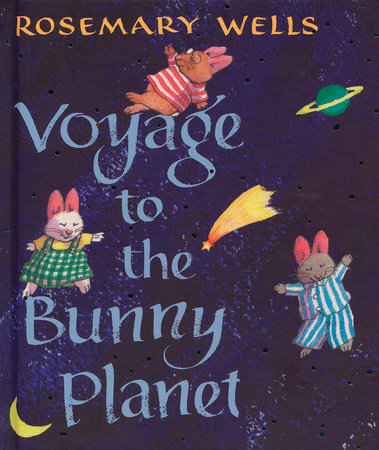
celebrate-picture-books-picture-book-review-voyage-to-the-bunny-planet-cover

About the Holiday

Winter weather is made for soup…or…is soup made for winter weather? Either way, soup offers the warm, comforting, stick-to-your ribs meal that just seems so right as the temperatures dip. Today, grab a can or cook up a batch of your favorite soup and add a hearty loaf of sourdough or artisanal bread and have a feast!

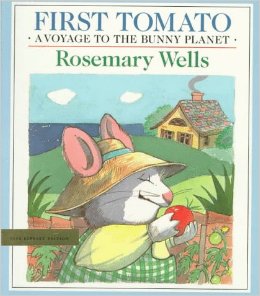
celebrate-picture-books-picture-book-review-first-tomato-cover

First Tomato: A Voyage to the Bunny Planet

By Rosemary Wells


The day is new—only 7:00 a.m. —and already Claire is having a tough time.  At breakfast she “ate only three spoons of cornflakes” before the bowl was knocked to the floor. While walking to school, Claire’s feet were soaked by snow, and “by eleven in the morning, math had been going on for two hours.” The cafeteria was serving baloney sandwiches—blecchh!—and at recess “Claire was the only girl not able to do a cartwheel.” At the end of school, all Claire wanted to do was go home, but she was left waiting…and waiting…and waiting at the bus stop.

celebrate-picture-books-picture-book-review-voyage-to-the-bunny-planet-tomato-soup-baloney-sandwich

Image copyright Rosemary Wells, courtesy rosemarywells.com

After all the slights and disappointments, “Claire needs a visit to the Bunny Planet.” She closes her eyes and floats away…. “Far beyond the moon and stars, / Twenty light-years south of Mars, / Spins the gentle Bunny Planet / And the Bunny Queen is Janet.”

Janet ushers Claire into “the day that should have been.” Wafting on the warm winds Claire hears her mother’s voice: “pick me some runner beans and sugar snap peas. / Find a ripe tomato and bring it to me, please.” So early in the season, Claire finds only one red, ripe tomato on the vine. It “smells of rain and steamy earth and hot June sun” that tempts her to taste it, but she puts in her basket and gives it to her mother.

celebrate-picture-books-picture-book-review-voyage-to-the-bunny-planet-tomato-soup-baloney-shelling-peas

Image copyright Rosemary Wells, courtesy rosemarywells.com

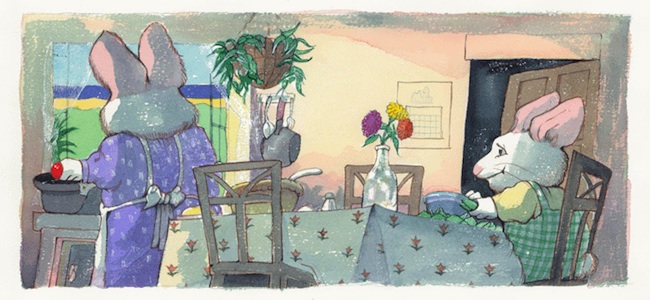
As her mother cooks, Claire sits at the cozy kitchen table shelling the peas. Soon, Claire’s mother brings her a steamy bowl of soup, and as they gaze at each other in understanding, Clair hears her “mother calling when the summer winds blow, / ‘I’ve made you First Tomato soup because I love you so.’”

Finally the bus arrives to take Claire home. During the ride she spies the Bunny Planet “near the evening star” and realizes that it was there all the time.

Today I chose a favorite book from when my own kids were little. One of three Voyage to the Bunny Planet books, Rosemary Wells’ First Tomato never failed to bring a little lump to my throat as I read it to my son and daughter (and even reading it again for this review, I felt the same catch in my heart).

In the difficulties that Claire suffers during the school day, kids will recognize the predicaments they also experience, and as Claire visits the Bunny Planet they’ll understand that solace is always close by. Claire’s sweet face and vintage dress as well as the lush details of the settings make each square illustration a masterpiece of expression and emotion. Wells’ beautiful turns of phrase and lyrical lines soothe the disquiet of real life with the balm of a parent’s or caregiver’s love, making First Tomato a wonderful book to share again and again.

All three Voyage to the Bunny Planet books—including The Island Light and Moss Pillows, two more enchanting and touching quiet-time reads—are available in a single-volume gift edition.

Ages 3 – 7

Viking Books for Young Readers, 2008 | ISBN 978-0670011032

To discover more about Rosemary Wells and her books, plus videos, games, coloring pages, information for parents and educators, and more, visit her website!

National Soup Month Activity

celebrate-picture-books-picture-book-review-souper-maze

Souper Maze!


You can’t eat soup without a spoon! Can you help the spoon get through the maze to the bowl in this printable Souper Maze? Here’s the Solution!

Picture Book Review

January 12 – Poetry at Work Day

Wet Cement: A Mix of Concrete Poems by Bob Raczka picture book review

About the Holiday

Sometimes your work in school, in the office, outside, or at home inspires you to translate what you’re doing into writing. What better way to express the fun—and folly—of homework, room cleaning, report writing, lunchtime, tests, and all the work that makes up a day than in a poem?! To celebrate today’s holiday try to put the rhythms of your work into poetry! 

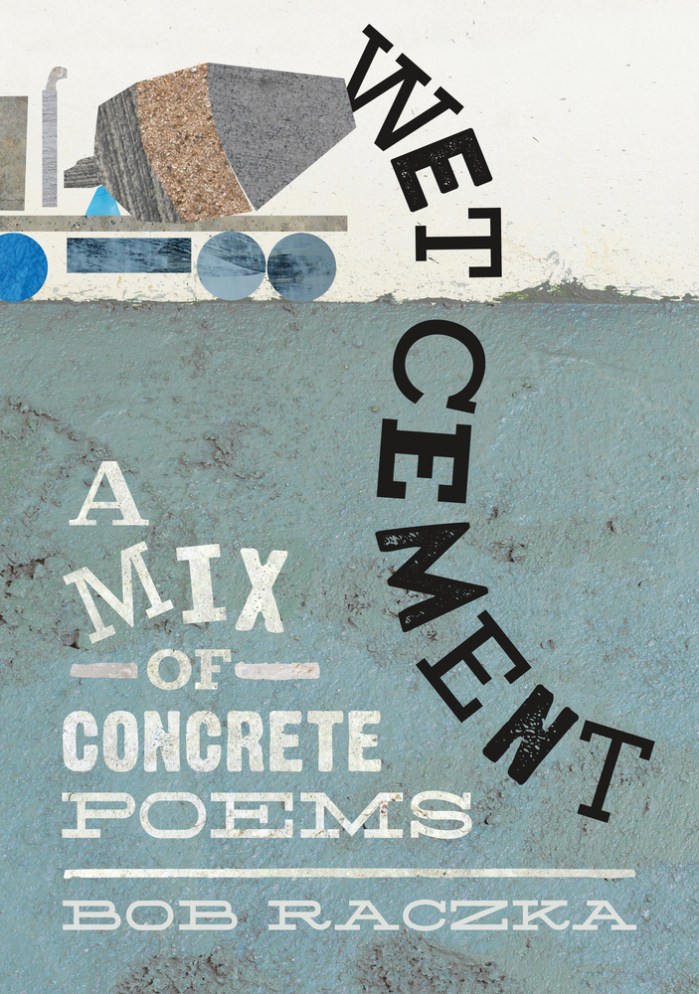
Wet Cement: A Mix of Concrete Poems

By Bob Raczka


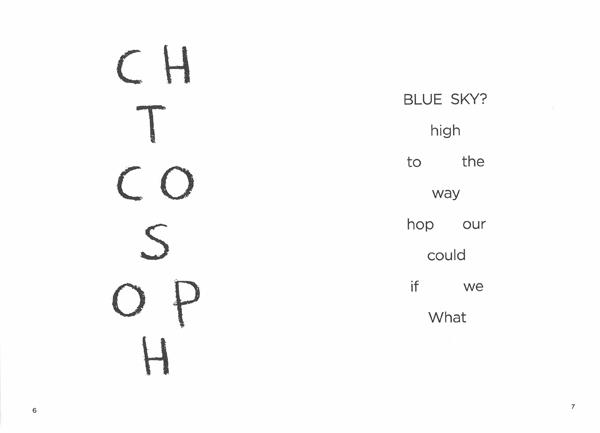
When you envision a poem in your head, what do you see? A block of lines? A square or a rectangle? Well, sweep that image from your mind because in Bob Raczka’s Wet Cement: A Mix of Concrete Poems, verses become actions, objects, puzzles, and natural phenomena. Not only are the poems shaped to illustrate their theme, the titles use clever imagery as well.

celebrate-picture-books-picture-book-review-wet-cement-a-mix-of-concrete-poems-hopscotch

Text and image copyright Bob Raczka, courtesy of Roaring Brook Press

As you encounter the poem hanger you’ll see that “han” has broken away and is dangling from the hook of g in “ger.” The words of the poem itself are shaped like a hanger and contain a giggle-invoking twist: “I hang out in blue jeans and comfy old shirts. I hang out in blouses and long frilly skirts. I hang out in sport coats and sweaters and shawls. I even hang out with no clothes on at all!”

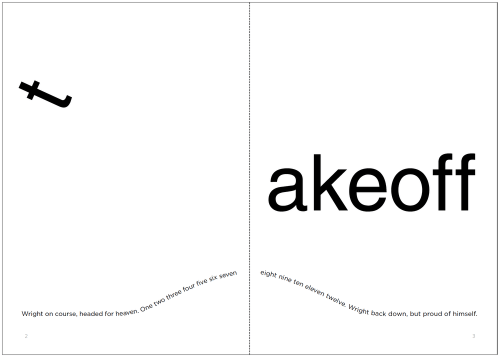
You might want to get your baseball mitt out before you read homer, in which the first line zooms straight as a pitch and the second—written backwards and at an upward angle—soars like a homerun hit: “The pitcher hurls his hummer toward the slugger squeezing lumber CRA / CK! The slugger slams the hummer toward the bleachers for a homer.”

celebrate-picture-books-picture-book-review-wet-cement-a-mix-of-concrete-poems-takeoff

Text and image copyright Bob Raczka, courtesy of Roaring Brook Press

But don’t put that mitt away just yet! You may need to catch the o, which has escaped from the title p p-up. And if you’ve ever played t-ball, baseball, softball, or even wiffleball, you’ll cringe in recognition of this short but pointed poem.

The sky darkened by night in Dipper and by clouds in Lightning holds two poems expressing very different thoughts. In the title Dipper, the second p has floated to the top of the page where it hangs like a miniature reflection of the dipper-shaped poem, which reads: “Way down there on earth you hold firefly jars, filled up to their lids with light. Up here in the sky, I’m a vessel of stars, my brim overflowing with night.” In the title LIGHTNING, the L strikes the I to create the familiar jagged crack echoed in the shape of the verse: “from a bad mood sky, / tears, / then a jag- / ged slash- / ing flash of anger, / ear- / splitting, / obnoxious, / a cloud tantrum”

celebrate-picture-books-picture-book-review-wet-cement-a-mix-of-concrete-poems-eracer

Text and image copyright Bob Raczka, courtesy of Roaring Brook Press

Any writer will love poeTRY which is such a clever take on the word as well as the revision and editing process:

“poetry is about taking away the words you don’t need

poetry is taking away words you don’t need

poetry is words you need

poetry is words

try”

Put simply, Bob Raczka’s concrete poems will make you smile. Even more than that, you’ll find yourself wanting to carry this book around, saying “Look at this!” to everyone you meet. Raczka calls these poems “word paintings”—because a poet “uses words like colors to paint pictures inside your head.” If creativity is the talent to present the world in new and surprising ways, making connections that enhance life, then Wet Cement is creativity at its best!

Wet Cement: a Mix of Concrete Poems is one poetry book that belongs on your child’s bookshelf! The combination of subjects, expression, and images will make it an often-read favorite.

Ages 5 – 9 and up (adults will enjoy these poems as much as kids)

Roaring Brook Press, 2016 | ISBN 978-1626722361

Discover a full bookshelf of books by Bob Raczka on his website!

Poetry at Work Day Activity

CPB - Pocket Poem Craft

Pocket Poem Carrier


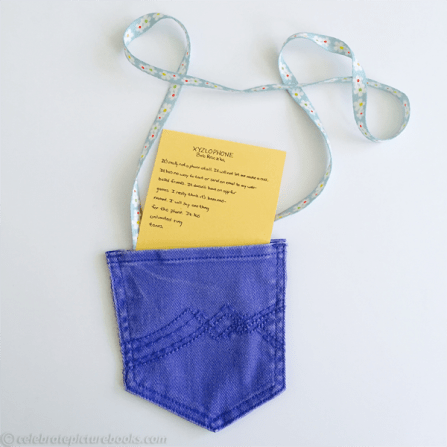
Choose a part of your school or work day and write a poem about it. You can even try writing a concrete poem to give more shape to your thoughts! Then make this pocket poem carrier so you can tote your favorite poem with you to show your friends and family—today and every day!

Supplies

  • An old pair of pants or shorts with back pockets
  • A decorative shoelace
  • Thread or fabric glue
  • Needle
  • Paper
  • Your favorite poem or a poem you write yourself
  • Pen

Directions

  1. Cut one back pocket out of an old pair of pants or shorts, including the back of the pocket
  2. Use the shoelace at its full length or cut to desired length
  3. Inside each edge of the pocket sew or glue the ends of the shoelace to make a strap
  4. Print your favorite poem on the paper
  5. Insert the poem into the pocket poem carrier
  6. Take your poem with you and share it with your friends!

Picture Book Review

January 11 – Learn Your Name in Morse Code Day

celebrate-picture-books-picture-book-review-jackrabbit-mccabe-&-the-electric-telegraph-cover

About the Holiday

With today’s instantaneous communications systems, it’s almost impossible to think of a time when all messages had to be delivered by hand. That changed when Samuel F. B. Morse, physicist Joseph Henry, and Alfred Vail developed a code that used dots and dashes to represent letters and was transmitted through electrical pulses. The ability to send quick messages revolutionized communication and led to a more connected world.

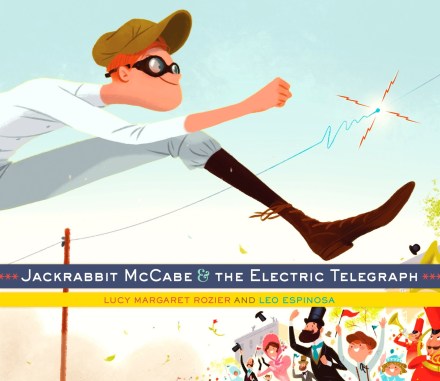
Jackrabbit McCabe & the Electric Telegraph

Written by Lucy Margaret Rozier | Illustrated by Leo Espinosa


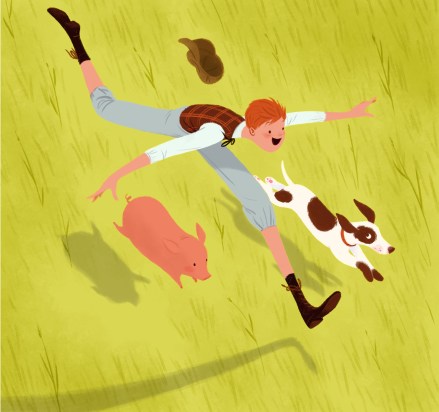
Anyone who looked at the baby with legs “so long they looped like a pretzel” and required a stroller with “an extra axle” knew that he’d been born to run. In fact, his legs grew so fast that if his mother dressed him in long pants in the morning, they were shorts by that evening. Little Jack McCabe used those legs to chase “whatever would run: hogs, dogs, even his own shadow” and “as he got older, he raced trains flying past his house in Windy Flats. By the time he turned eighteen, he’d beat every stagecoach, antelope, and locomotive in the territory.”

celebrate-picture-books-picture-book-review-jackrabbit-mccabe-&-the-electric-telegraph-racing-a-train

Image copyright Leo Espinosa, text copyright Lucy Margaret Rozier. Courtesy of Schwartz & Wade

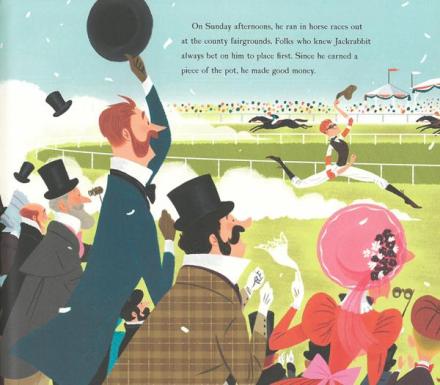
The people of Windy Flats called him Jackrabbit and relied on him to deliver messages that were urgent. On Sundays he joined the horses on the track, making money when people bet on him to come in first. One day, though, the electric telegraph came to Windy Flats. The poles and wires already crossed the eastern part of the country. Each connected city had “a telegraph and an operator who sent and received messages in Morse code, an alphabet of dots and dashes.”

The people of Windy Flats didn’t think this newfangled contraption could carry messages faster than Jackrabbit, so the telegraph man suggested, “‘How ‘bout a race between your fella and this here electric telegraph? Sandy Bluff’s just got themselves an operator, That’s pert near twenty-five miles, as the crow flies.’” Jackrabbit was all for it.

celebrate-picture-books-picture-book-review-jackrabbit-mccabe-&-the-electric-telegraph-racing-a-horse

Image copyright Leo Espinosa, text copyright Lucy Margaret Rozier. Courtesy of Schwartz & Wade

On the day of the race, the whole town of Windy Flats came out with flags, banners, and even a brass band. “The mayor carefully wrote down the same message on two slips of paper. He handed one to the telegraph man and the other to Jackrabbit.”  On the shout of “GO!” the telegraph man plunked his finger on the key sending the pulses through the wire while Jackrabbit took off down the road toward Sandy Bluff “like a tornado.”

The townspeople watched as in only a few moments “a reply came clattering back as that telegraph key jumped and smacked all on its own.” The telegraph man read the code and yelled, “‘Message received. Stop. Sandy Bluff Operator.’” But where was Jackrabbit McCabe? Although he made it to Sandy Bluff in only 9 ½ minutes, it was still too long to beat the telegraph. When he stopped short at the door of the depot, he was met by a telegram tacked to the door. Jackrabbit read it and then pulled the paper that contained the mayor’s message out of his pocket. The two were the same.

celebrate-picture-books-picture-book-review-jackrabbit-mccabe-&-the-electric-telegraph-racing-at-the-starting-line

Image copyright Leo Espinosa, text copyright Lucy Margaret Rozier. Courtesy of Schwartz & Wade

Riding home in a stagecoach, “Jackrabbit felt lower than a snake’s navel.” The mayor also felt pretty low, thinking of Jackrabbit, until he realized that if Jackrabbit’s fingers were as fast as his legs, he’d make an excellent telegraph operator. When Jackrabbit stepped out of the stagecoach and heard the mayor’s offer, he whooped with joy. It didn’t take long for Jackrabbit to learn the new code, and soon “his fingers flew like a banjo player’s strumming that telegraph key.” Every day he sent and received messages. He even “teamed up with the local typesetter, who printed the news that came over that wire, linking Windy Flats to the whole entire country,” and whenever a telegram or the newspaper needed to be delivered, Jackrabbit was there in a flash!

An Author’s Note outlining the pivotal event that sparked Samuel F. B. Morse’s interest in a quicker communication method and the history of the telegraph as well as a Morse code key and a riddle to translate follow the text.

celebrate-picture-books-picture-book-review-jackrabbit-mccabe-&-the-electric-telegraph-racing-hogs-and-dogs

Image copyright Leo Espinosa, courtesy of Schwartz & Wade

Lucy Margaret Rozier has written a funny and fact-based addition to the fine American tradition of tall tales with Jackrabbit McCabe & the Electric Telegraph. From her folksy delivery to her humorously exaggerated details, Rozier presents an engaging history of the telegraph through the story of one man affected by this new technology. Kids will love the fast-paced story full of crackling dialog and gripping suspense.

Leo Espinosa infuses his brightly-colored, vintage-style illustrations with the charm and innocence of the mid-1800s while highlighting the humor of Rozier’s yarn. Jackrabbit’s looong legs take up a whole page—sometimes two—as he runs with dogs and hogs, sprints past steam trains, speeds off at the starting line, and wedges himself into the stagecoach, with one foot hanging out the window. The small town of Windy Flats and the townspeople are decked out in period details, and the enthusiasm of the time is infectious.

Jackrabbit McCabe & the Electric Telegraph will become a favorite read lightening quick. The book would make a fun addition to children’s bookshelves.

Ages 4 – 8

Schwartz & Wade Books, 2015 | ISBN 978-0385378437

Discover more about Lucy Margaret Rozier plus book-related resources on her website!

View a gallery of illustration work by Leo Espinosa on his website!

Learn Your Name in Morse Code Day Activity

celebrate-picture-books-picture-book-review-morse-code-image

Morse Code Decoder


Sending secret messages in code is cool! Use this printable Morse Code Decoder to learn how to write your name and those notes you don’t want anyone else to read in this early method of communication.

Picture Book Review

January 10 – It’s International Quality of Life Month and Q & A with Deborah Sosin

celebrate-picture-books-picture-book-review-charlotte-and-the-quiet-place-noisy-neighborhood

About the Holiday

How one achieves their definition of a good quality of life may differ for every person, but in general it encompasses being happy and satisfied with one’s relationships, work, living conditions, and self. Whether you find happiness and quality of life in outdoor or indoor pursuits, with others or alone, at work or at home, this month’s holiday gives you time to get in touch with your inner quiet place and reflect on changes or improvements to bring you more peace and happiness in life.

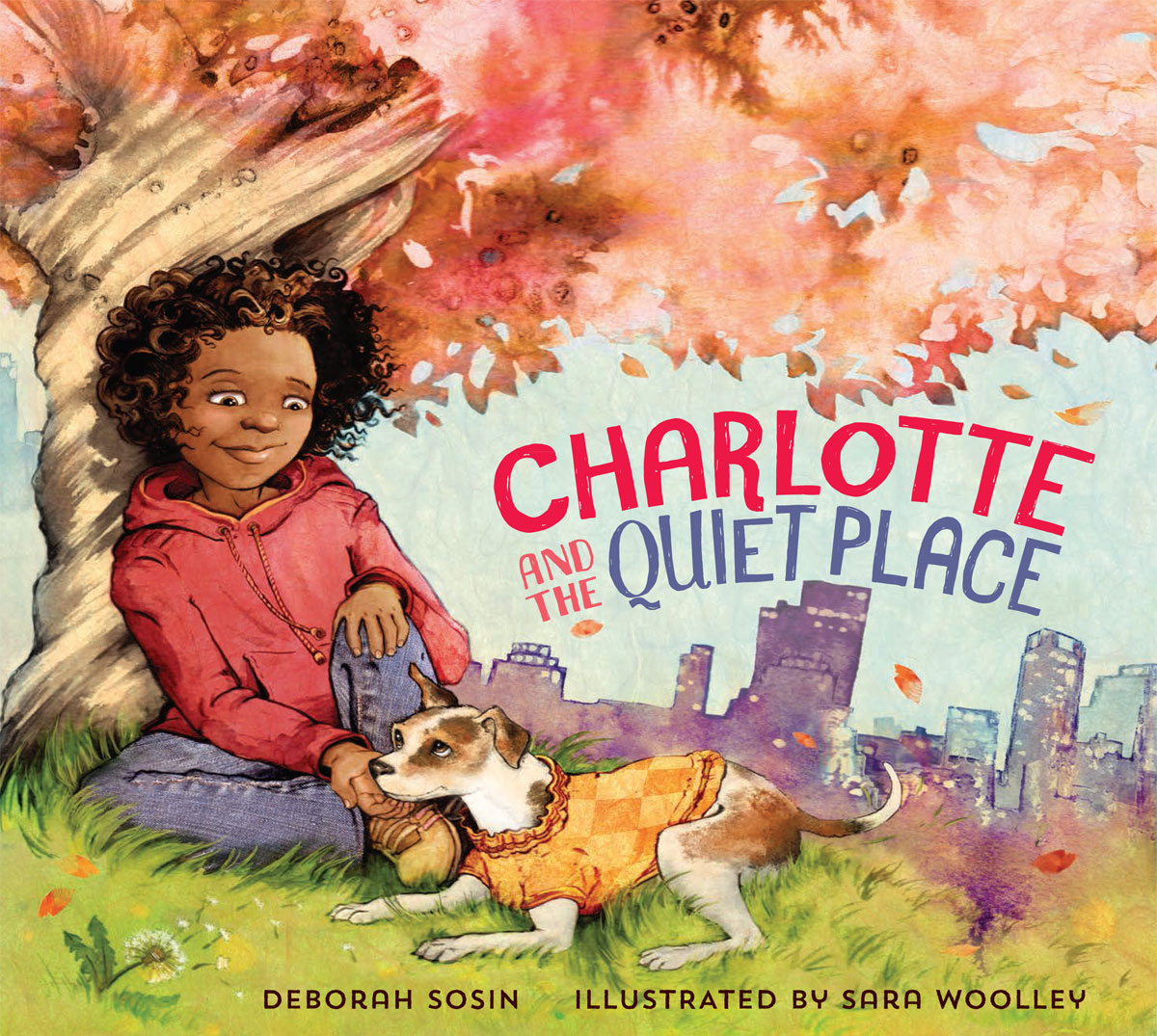
Charlotte and the Quiet Place

Written by Deborah Sosin | Illustrated by Sara Woolley


Charlotte is a girl who likes quiet who lives in a noisy world. Everywhere she goes, it seems, it’s impossible to escape from sounds that disturb her peace. At home the hallway creaks where “the floorboards groan,” the living room is like an arcade where the “TV bellows and blares,” and the kitchen is filled with Otto’s barks for his dinner. Even in Charlotte’s bedroom, “which is supposed to be a quiet place, the old steam radiator hisses, whistles, and whines. Where can Charlotte find a quiet place?”

celebrate-picture-books-picture-book-review-charlotte-and-the-quiet-place-noisy-home

Image copyright Sara Woolley, text copyright Deborah Sosin, Courtesy of sarawoolley.com

When Charlotte goes to school, things are no better. In the classroom kids are boisterous and bells ring; the lunchroom echoes with clattering trays and scuffing chairs; and the playground blares with big voices and stomping feet but also with the little squeaks and rattle of the swings. “Even in the library, which is supposed to be a quiet place, the children giggle, yammer, and yell. Where can Charlotte find a quiet place?”
celebrate-picture-books-picture-book-review-charlotte-and-the-quiet-place-noisy-subway

Image copyright Sara Woolley, text copyright Deborah Sosin, Courtesy of sarawoolley.com

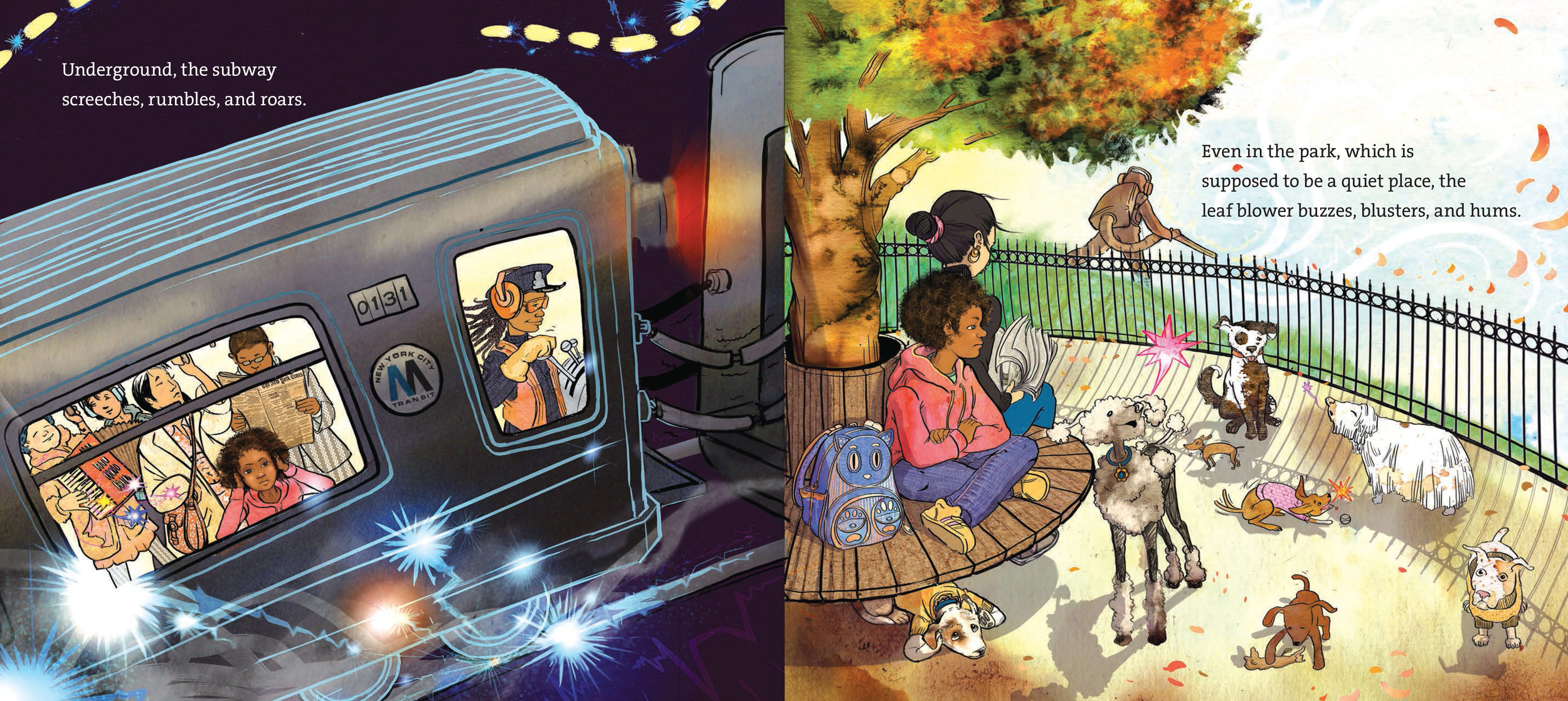
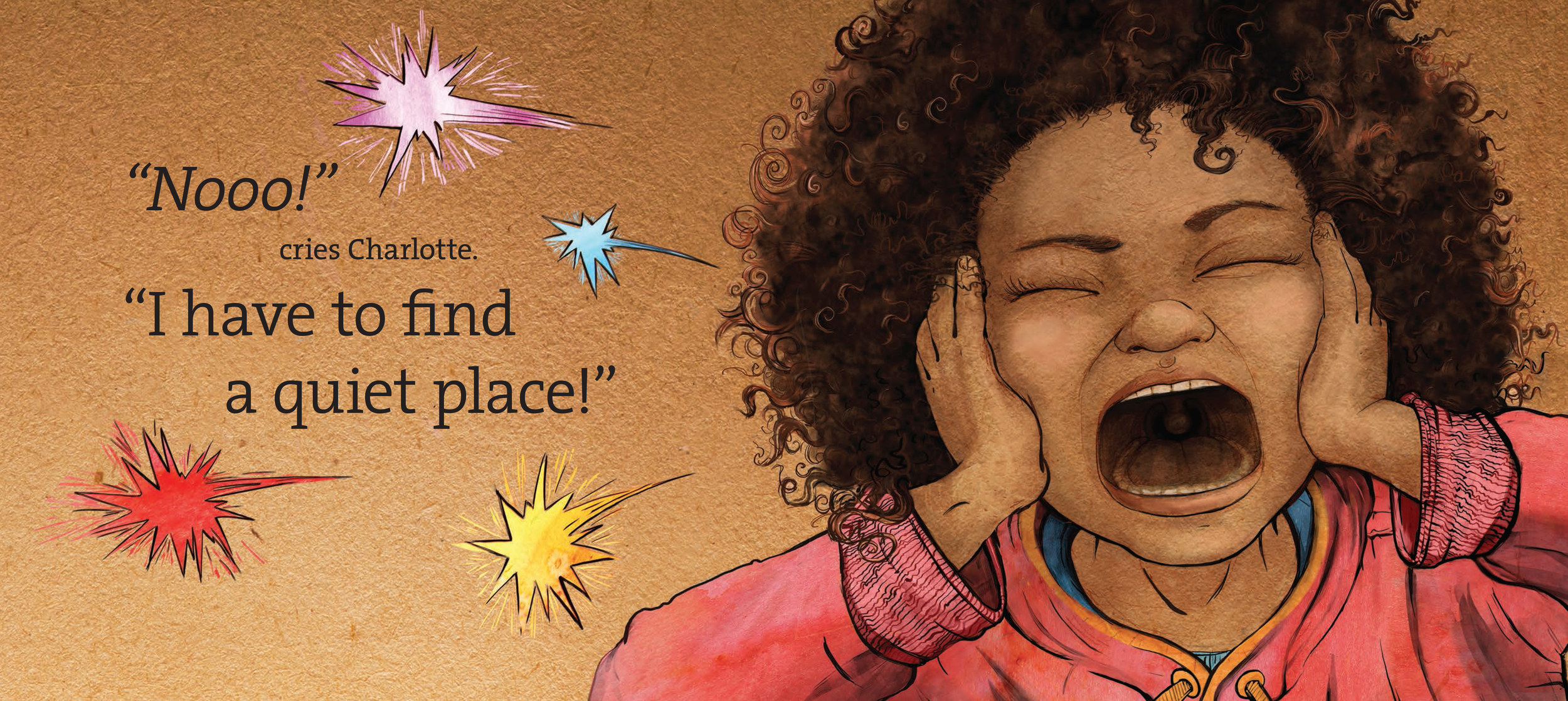
The outside world resounds with the din of jackhammers, horns, sirens, shouts, cars, music, and the “screeches, rumbles, and roars” of the subway. “Even in the park, which is supposed to be a quiet place, the leaf blower buzzes, blusters, and hums.” Charlotte puts her hands to her ears. “‘Nooo!’” she cries, “‘I have to find a quiet place!’”
celebrate-picture-books-picture-book-review-charlotte-and-the-quiet-place-nooo!-charlotte-cries

Image copyright Sara Woolley, text copyright Deborah Sosin, Courtesy of sarawoolley.com

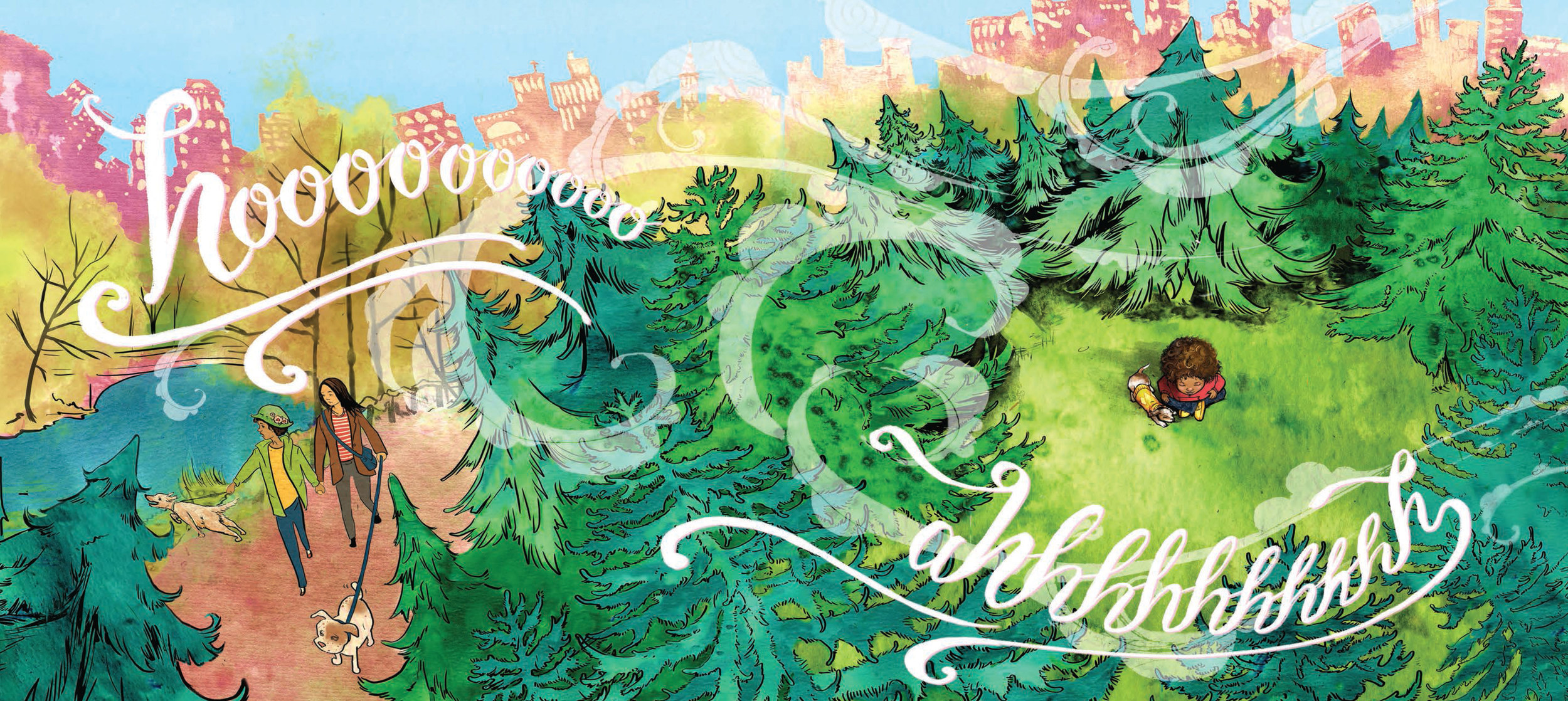
On Saturday Charlotte takes her dog for a walk in the park. Suddenly, Otto spies a squirrel and takes off running, wrenching his leash out of Charlotte’s hand. She chases after him down a hill, over a bridge, into the middle of a grove of trees. Out of breath, Charlotte and Otto sit beneath a tree. Gasping, Charlotte’s “belly rises up and down, up and down. Her breath goes in and out, in and out. Hooooo ahhhhh. Hooo ahhh.”

Slowly, Charlotte’s breath comes easier and “her mind slows down.” In this state, she discovers another, even quieter place. It is a place deep inside where her breath is soft and her “thoughts are hushed and low.” It is “a place as quiet as the small silence on the very last page of her favorite book, the silence right after ‘The End.’”
celebrate-picture-books-picture-book-review-charlotte-and-the-quiet-place-quiet-woods

Image copyright Sara Woolley, text copyright Deborah Sosin, Courtesy of sarawoolley.com

In a little while, Charlotte and Otto leave the grove, but now whenever home or school or the neighborhood is too loud, Charlotte remembers where she can find a quiet place. She simply closes her eyes and pays attention to that place deep in her belly and deep in her mind—“that quiet place inside.”

For so many children the world is a blaring, clattering place where their thoughts are drowned out by the noises around them. Deborah Sosin’s award-winning Charlotte and the Quiet Place validates these feelings and offers children a way to discover inner peace wherever they are. As a tonic to today’s hyper-stimulated environment, kids and adults alike will benefit from the method of mindful reflection Sosin presents. Sosin’s combination of evocative verbs and repetition makes the story fresh and an excellent read-aloud while also mirroring the sounds that are a part of our everyday life.

celebrate-picture-books-picture-book-review-charlotte-and-the-quiet-place-noisy-neighborhood

Image copyright Sara Woolley, text copyright Deborah Sosin, Courtesy of sarawoolley.com

Sara Woolley’s beautiful watercolor illustrations vividly depict not only Charlotte’s world but the sounds that disturb her peace. Amid the fully realized home, school, and neighborhood environments, complete with realistic details kids will recognize, sharp cracks of equipment, blaring bells and whistles, high-pitched voices, and other noises spark the page. Portrayals of Charlotte, her hands over her ears and her eyes sad, express her distress in a way kids will understand. When Charlotte finds the grove of trees in which she first experiences inner peace, Woolley’s color palette turns softer, with peaceful tones of green, blue, and yellow where, previously, “louder” purples, reds, and golds predominated.

Charlotte and the Quiet Place is a very welcomed book for those times when peace seems elusive and will give comfort to children who prefer quiet places and have more introverted natures. The book would make a wonderful addition to all children’s book shelves as well as to school and public library collections.

Ages 4 – 8

Parallax Press, 2015 | ISBN 978-1941529027

Visit Charlotte and the Quiet Place on her own website! You’ll find resources, images and videos, news about events, and more!

Discover more about Deborah Sosin, her writing for children and adults, writing workshops, mindfulness services, and more on her website!

View a gallery of artwork for books, comics,  and other illustration work by Sara Woolley on her website!

International Quality of Life Activity
celebrate-picture-books-picture-book-review-smile-cards-craft

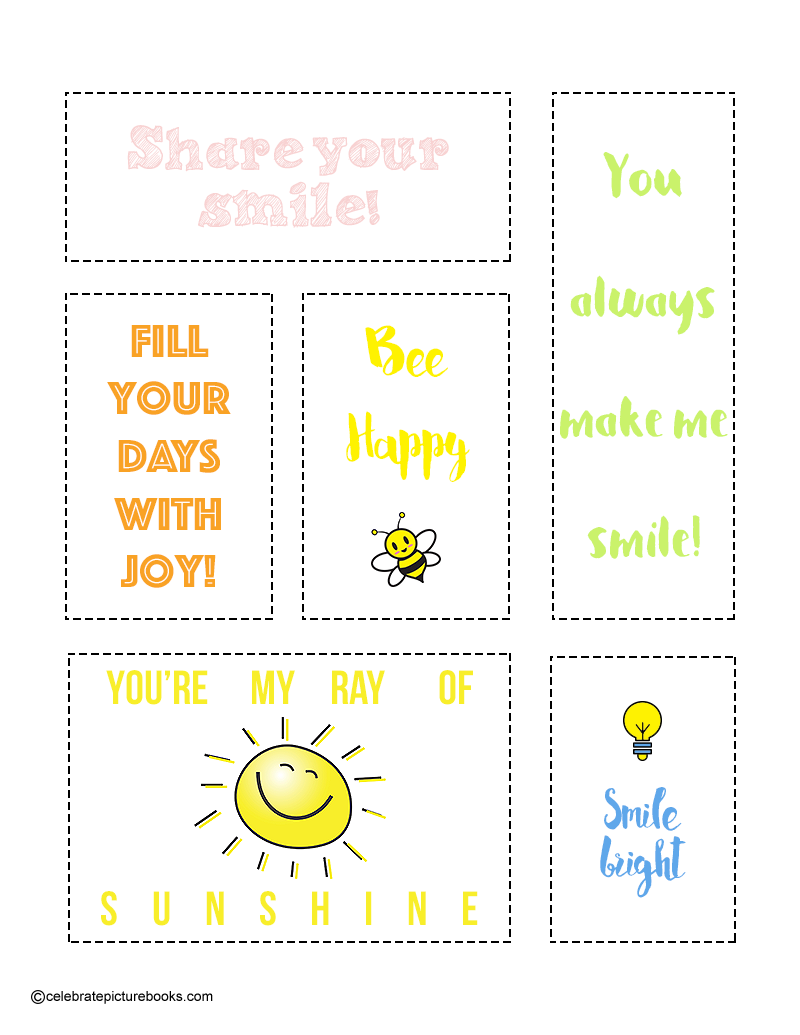
Share a Smile Cards


Life is better when you share smiles with those you know—and those you don’t! Try it! When you’re out today at school or other places, look someone in the eye and smile. You’ll probably get a smile back—and you can be sure that you will have made the other person’s and your day better!

Here are some Smile Cards that you can share. Why not slip one into your dad’s pocket or your mom’s purse, put one in your friend’s backpack, or sneak one onto your teacher’s desk? You can even leave one somewhere for a stranger to find! Have fun sharing your smiles, and see how much better you and the others around you feel!

Click here to print your Share a Smile Cards.

celebrate-picture-books-picture-book-review-interview-with-author-deborah-sosin

Photo by Kevin Day Photography

Q&A with Author Deborah Sosin


Today, I’m thrilled to talk with Debbie Sosin, a writer, editor, and clinical social worker who specializes in mindfulness-based psychotherapy, about her first picture book, her choral singing, and how kids respond to her presentations.

In your career you write for adults and children, work within the publishing industry, provide publicity services, and teach. How did you get started? Did you always want to write?

I kept a diary starting at around age ten and always loved writing for school or for fun. I started getting more serious about writing for publication in the past ten years, studied at GrubStreet, attended the Kenyon Review Writers Workshop, and eventually went back to school to get an MFA in Creative Writing. I wish I had started earlier, but it’s been rewarding to finally follow my true passion.

What influenced you to write Charlotte and the Quiet Place?

I wrote the book as an independent project as part of my MFA studies at Lesley University. They say “write what you know,” so I thought about my childhood growing up in kind of a noisy house, where my brother played the piano, my father had a radio and TV on simultaneously, and my mother was on the phone a lot. And then I thought about my longtime meditation practice and how tuning in to my breathing has helped me find a quiet place inside. So I wanted to write a story about children finding their own quiet place inside themselves.

You give school presentations on mindfulness and your picture book Charlotte and the Quiet Place for various ages. Is there an experience from any of these that you would like to share?

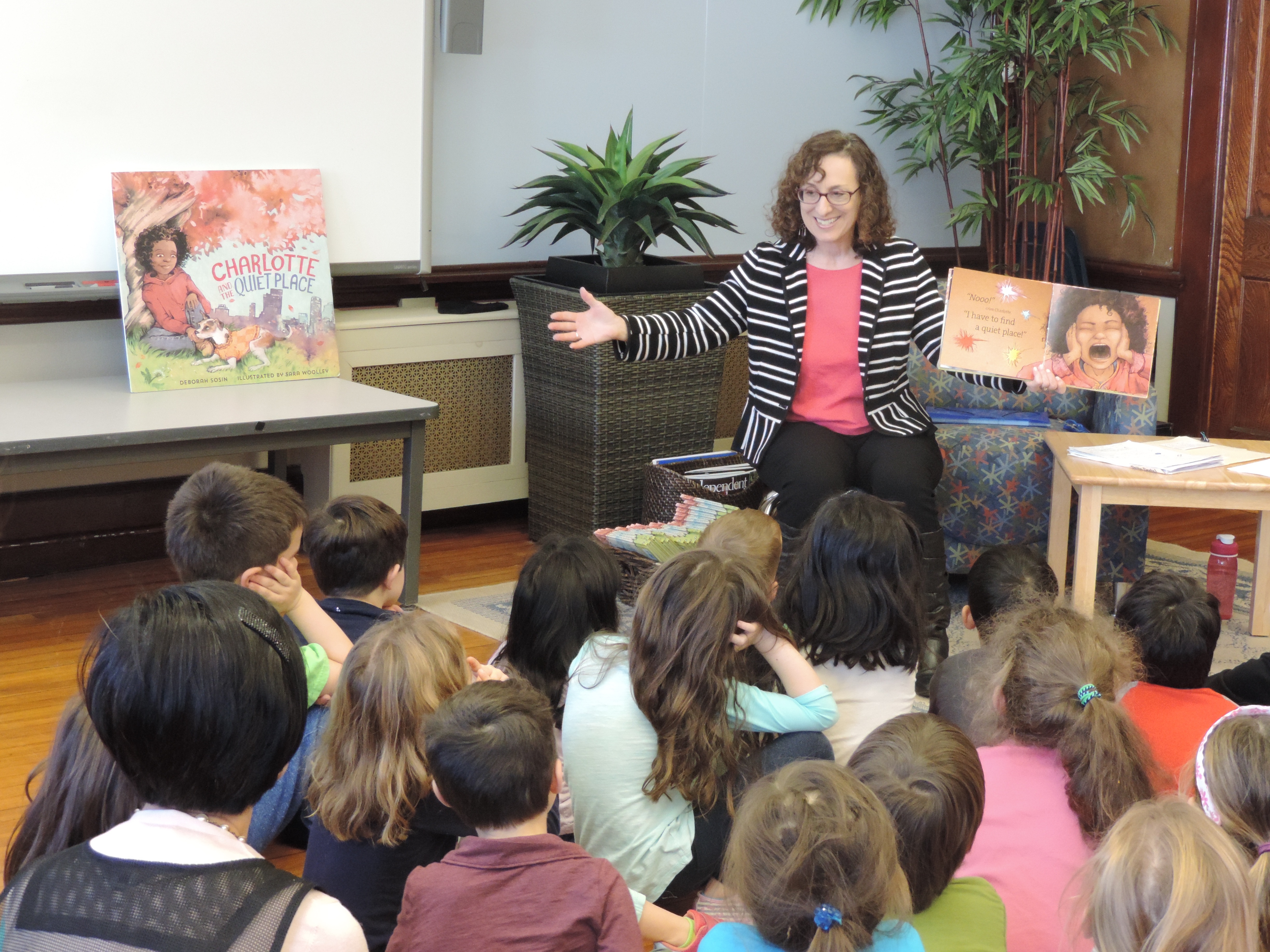
School visits are my favorite part of being an author! No matter what age the students are, they love to help me tell the story by repeating the “noisy” sounds and the “hoo ahh” breathing sounds. We usually do a few calming/breathing exercises together and, without fail, even the squirmiest group will settle into a beautiful, shared, often profound silence. Once, when asked where Charlotte finds her quiet place, one kindergarten girl said, “In her belly and in her brain, where it’s calm.” Many kids get that idea. What could be better? I also love showing them my early scribbles and illustrator Sara Woolley’s wonderful sketches and storyboards, and sharing the step-by-step process of publishing the book, from concept to completion
celebrate-picture-books-picture-book-review-author-deborah-sosin-visits-Newton-Monetssori-School

Deborah Sosin reads Charlotte and the Quiet Place to students at Newton Montessori School. Photo courtesy of Newton Montessori School.

Can you talk a little about mindfulness and how it can benefit children?

Mindfulness has become a catchword these days, but my favorite definition is from Dr. Amy Saltzman: “Noticing what’s happening right here and now, with a friendly, curious attitude, then choosing what to do next.” Many top-notch scientific studies show that mindfulness can help kids with concentration, attention, self-soothing, anxiety, depression, sleep, mood, compassion, confidence…I could go on. Compared with adults, most kids are naturally mindful, that is “in the moment,” but kids do get stressed out and worried about the past or the future, so mindfulness helps. I sometimes worry that parents and teachers might use it for disciplinary reasons (“Enough! Go be mindful in the corner!”), which is not the point. It’s a whole-life practice, not a technique or intervention. And, as the book shows, mindfulness can lead us to a quiet place inside that we can access whenever we want.
celebrate-picture-books-picture-book-review-interview-with-deborah-sosin-debbie-at-cottage-montessori-school

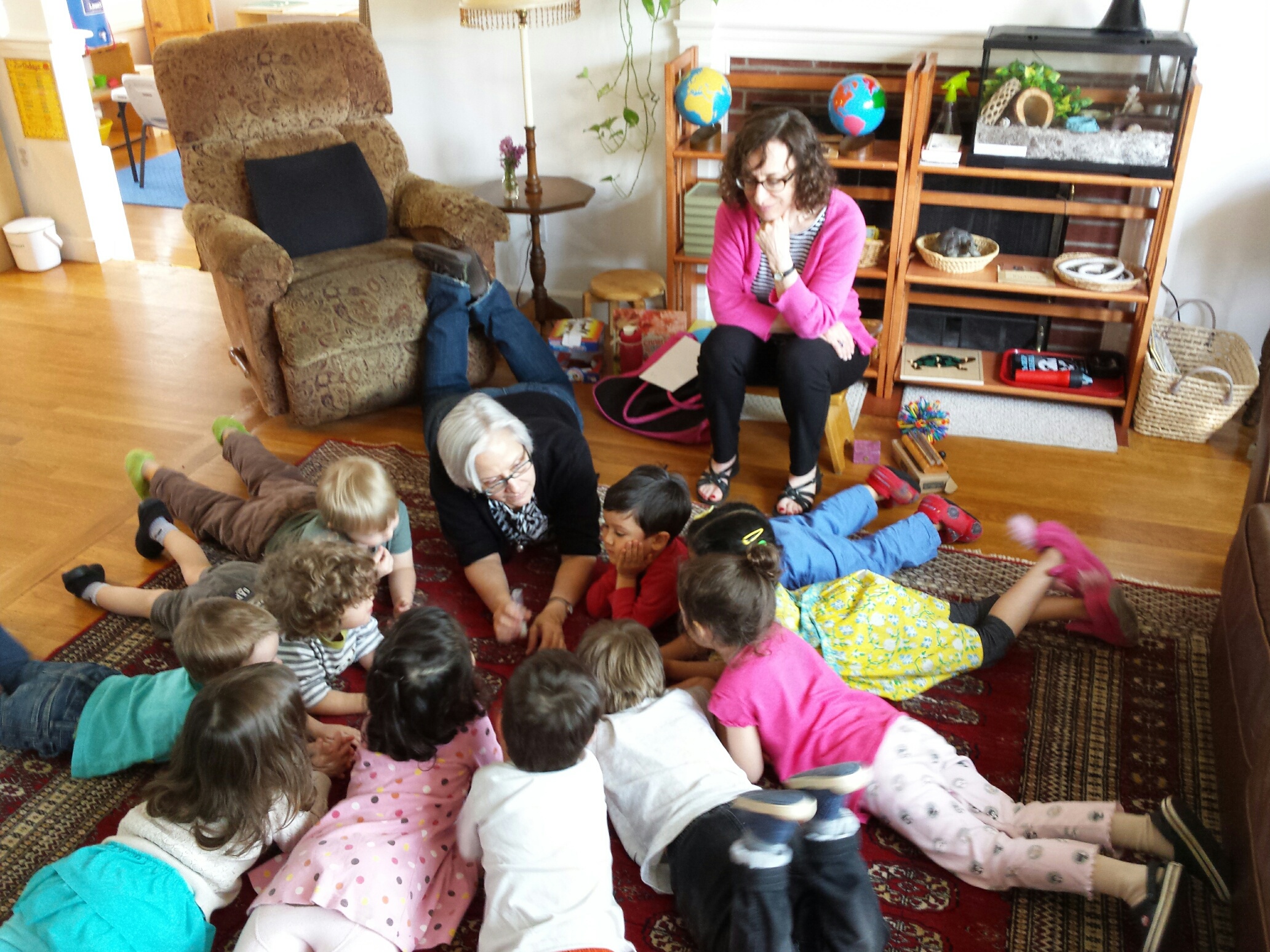
Students at the Cottage Montessori School in Arlington, Massachusetts play the Silence Game with director Karen Wagner, watching the sand in the hourglass. Photo courtesy of Stacey Moriarty.

Can you tell me a little about your work with Grub Street, a creative writing center in Boston?

I started taking classes at GrubStreet in 2008; my first class was “Six Weeks, Six Essays,” and from that class, I helped form a longtime regular writing group. I started blogging soon after and then submitted personal essays for publication, with some good luck. GrubStreet is a fantastic, inclusive community, with excellent faculty and a huge range of motivated, smart, and enthusiastic students, from beginners to veterans. After a few years, I applied to teach classes there and am proud to be on their instructor and consultant rosters now.

You are an accomplished choral singer, having performed at Lincoln Center, the United Nations, Boston’s Symphony Hall, and on an international tour. When did you begin choral singing? Do you have an anecdote you’d like to share from any of your experiences?

I’ve been singing my whole life and have been in choruses since elementary school. Singing with other people is extremely gratifying and, after all the “verbal”-type things I do, including my work as a psychotherapist, it’s a lovely change of pace. I spent about 15 years in the Zamir Chorale of Boston, which specializes in Jewish choral music. Our tours to Eastern Europe, Italy, and Israel were extraordinary. In 1999, when we sang at Auschwitz and Terezin, the sites of former concentration camps, it was hard to keep our emotions in check, but it felt important to revive the voices of the Jewish people that the Nazis had attempted to quell. A PBS documentary film, “Zamir: Jewish Voices Return to Poland,” chronicled our tour that summer. I think it’s still available through the Zamir Chorale website.

What’s the best part about writing for children?

After having focused almost exclusively on nonfiction for most of my writing career, it’s been wonderful to work in the very precise and rich world of picture-book writing with so many lovely, funny, imaginative, and supportive fellow writers I’ve met through SCBWI and the amazing Writers’ Loft in Sherborn, Mass.
celebrate-picture-books-picture-book-review-interview-with-deborah-sosin-debbie-at-The-Oblong-Bookstore-event

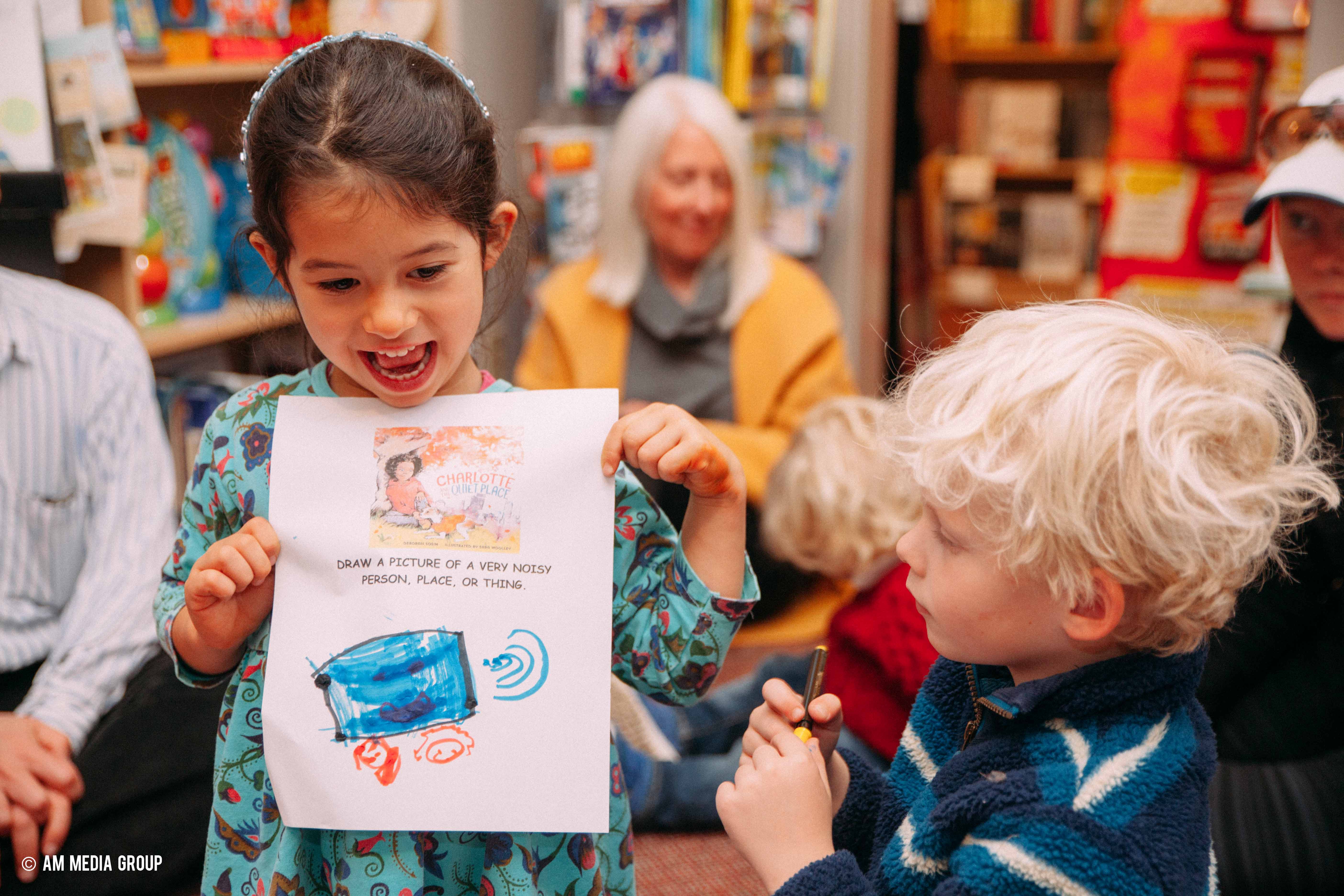
Children enjoy drawing their noisy and quiet places at an Oblong Bookstore event in NY. Photo courtesy of AM Media Group

What’s up next for you?

I have a couple of Picture Book manuscripts in progress and I’m participating in Storystorm (formerly PiBoIdMo) this month, so I hope to generate more ideas and get some new work out there soon.

Since this is a holiday-themed blog, I’d be remiss if I didn’t ask you at least one question about holidays, so…

What is your favorite holiday and why?

Thanksgiving is probably my favorite, as it means getting together with my family, which is now spread far and wide, and having an opportunity to express our gratitude.

Thanks, Debbie, for stopping by and chatting! I wish you all the best with Charlotte and the Quiet Place and all of your future endeavors!

You can connect with Deborah Sosin on

Her Website | charlotteandthequietplace.com | Facebook | Twitter

celebrate-picture-books-picture-book-review-charlotte-and-the-quiet-place-noisy-neighborhood


You can find Charlotte and the Quiet Place at these booksellers

Amazon | Barnes & Noble | Books-a-Million | IndieBound | Parallax Press |Porter Square Books (signed copies available)

Picture Book Review

January 9 – It’s International Creativity Month

celebrate-picture-books-picture-book-review-the-marvelous-thing-that-came-from-a-spring-cover

About the Holiday

There’s no better time than the beginning of the year to start letting your creative juices flow! Quick fixes or long-leisurely projects are all within your grasp! Want to repaint a room? Build a tree house in the spring? Learn some new recipes? Discover a new hobby? Start planning today how you will accomplish the inventive inspirations that swirl through your imagination.

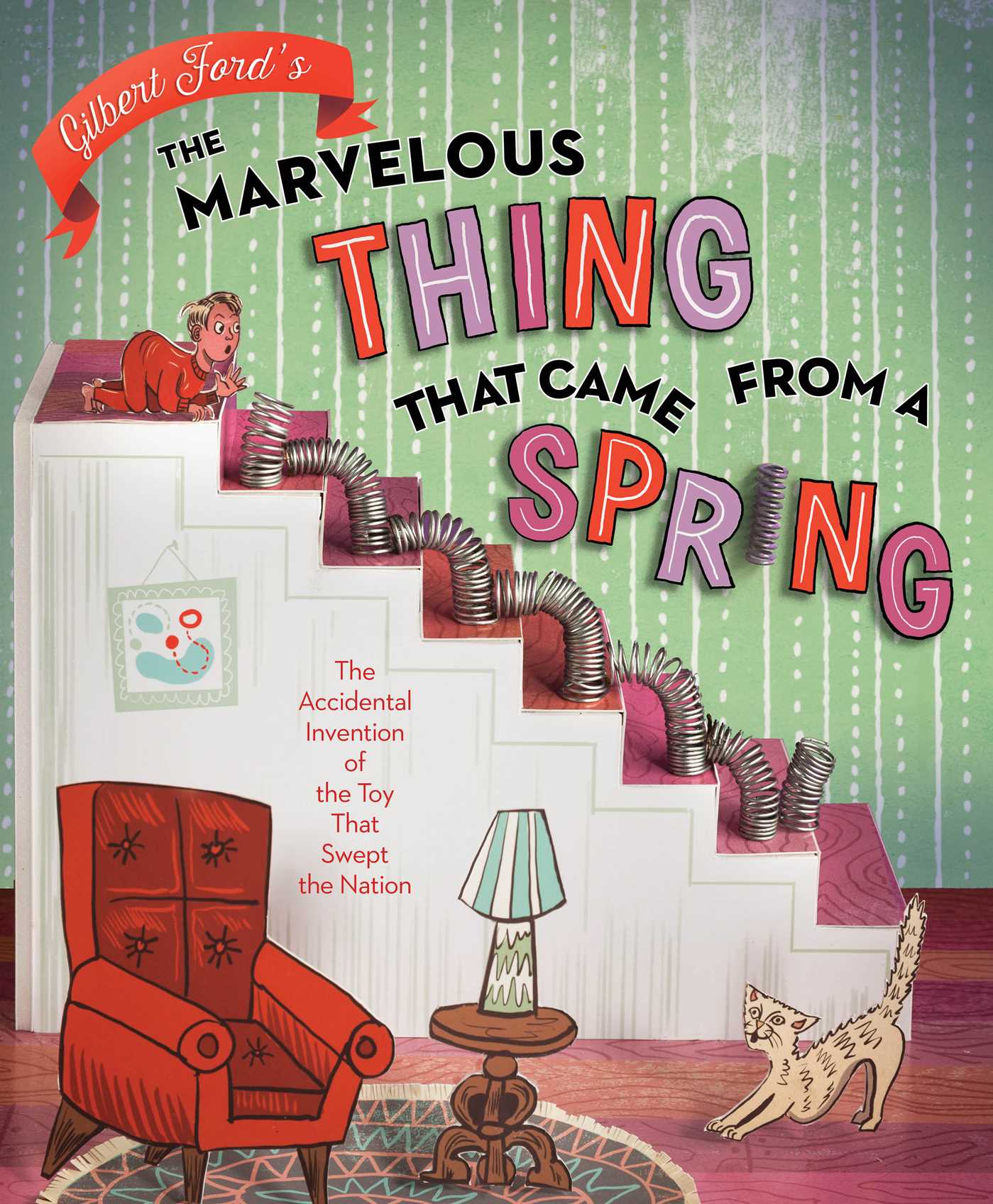
The Marvelous Thing That Came from a Spring: The Accidental Invention of the Toy That Swept the Nation

By Gilbert Ford


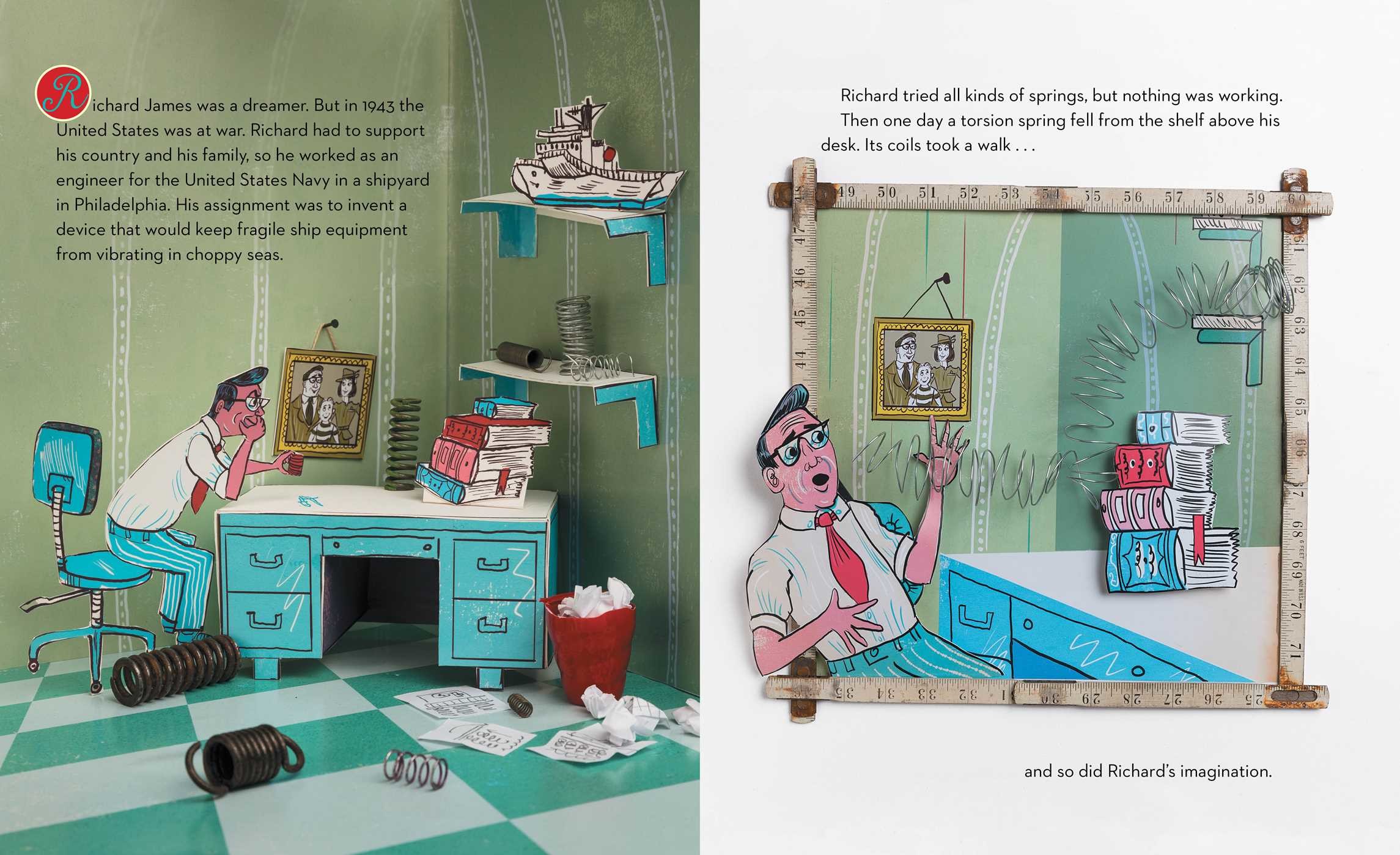
In 1943, during World War II, the United States Navy asked one of their engineers, Richard James, to “invent a device that would keep fragile ship equipment from vibrating in choppy seas.” Richard tried all kinds of springs, but none worked just right. “One day a torsion spring fell from a shelf onto his desk, and “its coils took a walk…” This sparked Richard’s imagination. While Richard knew the spring wasn’t right for his Navy work, he recognized that it might be perfect for something else. But what?

celebrate-picture-books-picture-book-review-the-marvelous-thing-that-came-from-a-spring-spring-walks-spring-falls-off-shelf

Copyright Gilbert Ford, courtesy of simonandschuster.com

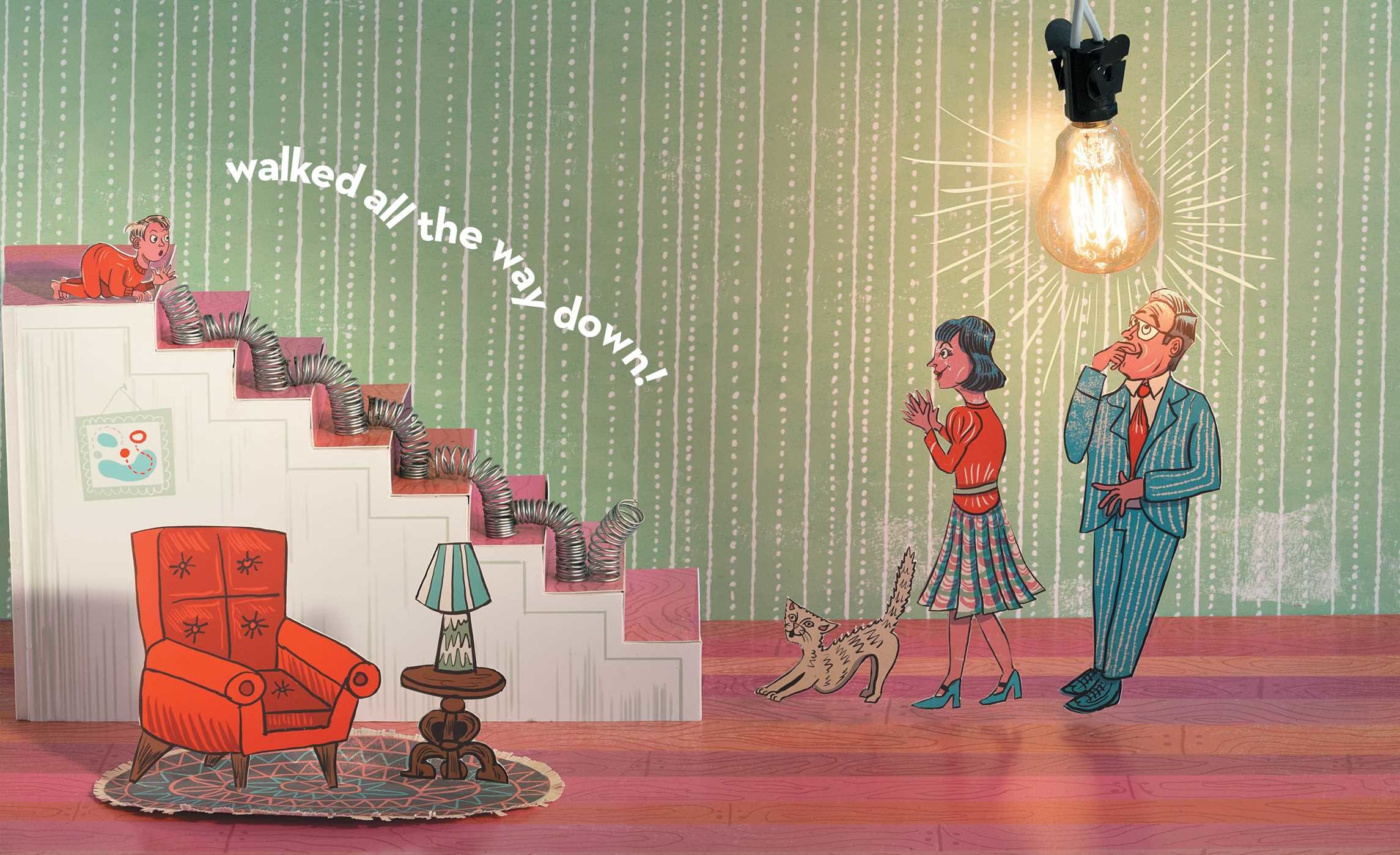
He took the spring home from work that day, showed it to his wife Betty, and gave it to his young son Tom. Tom took it to the top of the stairs and let it go. “The family watched in astonishment as it…walked all the way down!” They lost no time in realizing that this spring made a marvelous toy. But what to call it? “Betty thumbed through a dictionary for two days, underlining words. None really caught her fancy, until she came to ‘slinky,’ which means “‘graceful’ and ‘curvy in movement.’” It also “sounded like the swish and clink of the spring’s coils in motion.”

celebrate-picture-books-picture-book-review-the-marvelous-thing-that-came-from-a-spring-spring-walks-downstairs

Copyright Gilbert Ford, courtesy of simonandschuster.com

Richard and Betty thought they had a unique hit on their hands, so Richard went to the bank and borrowed five-hundred dollars to make 400 Slinkys. But while Richard and Betty loved their Slinky, toy store managers did not. Finally, Richard went to Gimbels, the big department store. The manager there didn’t see the merits of the Slinky either, but when Richard begged to be allowed to demonstrate it just once, he relented.

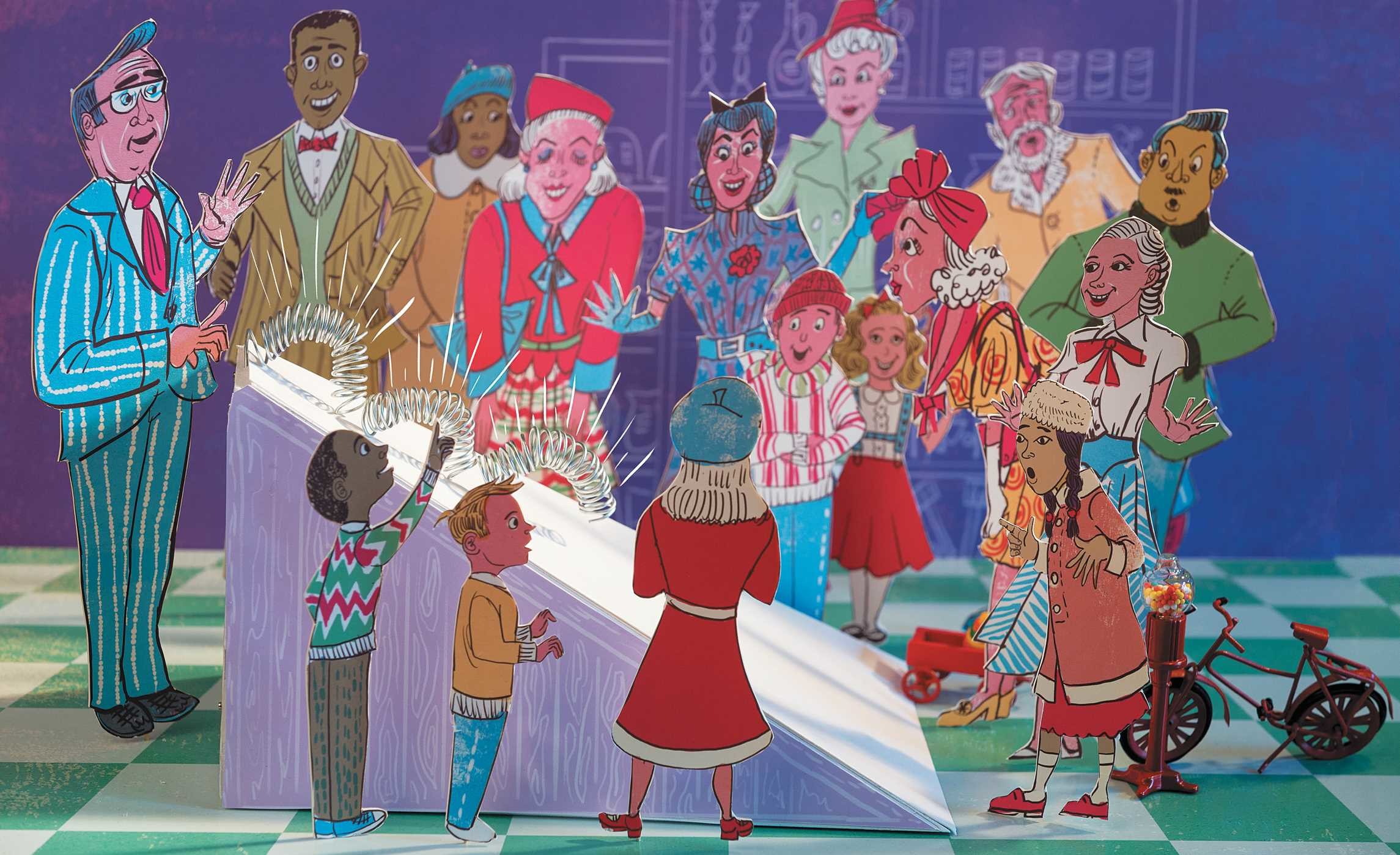
It was now November 1945 and the Christmas shoppers were out looking for stocking stuffers. Richard set up a ramp in the middle of the toy department and placed the Slinky at the top. He looked around for Betty, but she was nowhere to be seen. In fact, Betty was still at home worried that no one would like their toy. She was so concerned that she convinced a friend to “pose as an excited shopper” and buy one with the dollar Betty gave her. At Gimbels, however, time—and shoppers—were passing, so Richard let go of the Slinky. The astonished faces of the children and adults crowded around the ramp said it all. By the time Betty and her friend reached Gimbels, all 400 Slinkys had been sold—in only 90 minutes!

celebrate-picture-books-picture-book-review-the-marvelous-thing-that-came-from-a-spring-spring-walks-spring-richard-begs-gimbels

Copyright Gilbert Ford, courtesy of simonandschuster.com

With the end of the war that same year, troops returned home and a baby boom soon followed. “Demand for the Slinky skyrocketed.” Production needed to speed up, so Richard devised a “machine that could coil eighty feet of steel wire into a Slinky in ten seconds.” The Slinky business became a family business with Betty filling orders and doing the accounting while Richard made and delivered Slinkys. Pretty soon they needed a factory to satisfy demand. That demand still exists today as kids all over the world love the Slinky.

celebrate-picture-books-picture-book-review-the-marvelous-thing-that-came-from-a-spring-spring-walks-spring-at-gimbels

Copyright Gilbert Ford, courtesy of simonandschuster.com

An extended Author’s Note picks up the story of the Slinky where the text leaves off, revealing other creative ways the Slinky has been used and the fact that when Richard went to Bolivia in 1960 to do missionary work, Betty took over the business, relocated the factory to Hollidaysburg, Pennsylvania, and gave the toy a rebirth in popularity. More than 250 million Slinkys have been produced, and in 2001 Betty was inducted into the Toy Industry Hall of Fame.

Gilbert Ford’s Slinky-ography of the man and woman behind one of the world’s most beloved toys is a skip, jump, and bounce through the ingenious brainstorm that transposed a simple spring into a phenomenon. The down-to-earth details of how this invention came to be harken back to a simpler time but also reaffirm that even today there are dreamers sitting in homes across the world imagining the next big thing. Ford’s story is well paced, leading readers through the production process to experience cheerful surprise when the Slinkys sell out at Gimbels. Kids will appreciate the easy-going language that suits its subject perfectly and the emphasis on the teamwork of both Richard and Betty James that made the Slinky possible.

Ford’s illustrations are ingenious in themselves. Careful observation reveals that each page is not merely a drawing, but a 3D experience. As the front matter explains, the illustrations were drawn and colored then printed, assembled into dioramas that incorporate found objects and other popular toys of the period, such as dominoes, jacks, and pick-up sticks, and finally photographed. The effect drops readers into the middle of a 1940s home and department store, giving them a personal stake in the drama.

The Marvelous Thing That Came from a Spring is a fun book for would-be-inventors and kids interested in the history of objects they use and play with.

Ages 4 – 8

Atheneum Books for Young Readers, Simon & Schuster, 2016 | ISBN 978-1481450652

Discover a portfolio of work by Gilbert Ford for books, book jackets, advertising, and more on his website!

International Creativity Month Activity

celebrate-picture-books-picture-book-review-national-archives-coloring-book-of-patents

National Archives Coloring Book of Patents


The people at the National Archives of the United States in Washington DC chose some of their favorite patents from the past to share with you as a coloring book. As you have fun coloring these pages of ideas, let yours fly too!

Click here to get your printable National Archives Coloring Book of Patents

Picture Book Review

January 8 – Bubble Bath Day

celebrate-picture-books-picture-book-review-a-whale-in-the-bathtub-cover

About the Holiday

On a cold, snowy day – or even on a sunny day if you live in a warmer climate—a bubble bath can be just the thing for relaxing at the end of the day. Your kids love splashing in the frothy suds, so why shouldn’t you enjoy them too? Take the opportunity for a little luxury and have some fun!

A Whale in the Bathtub

 Written by Kylie Westaway | Illustrated by Tom Jellett


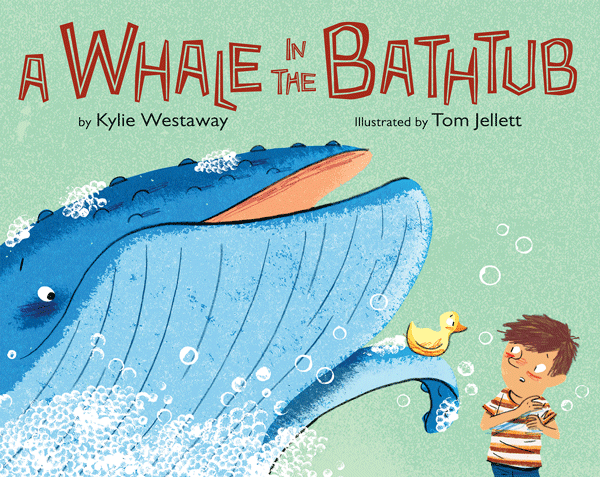
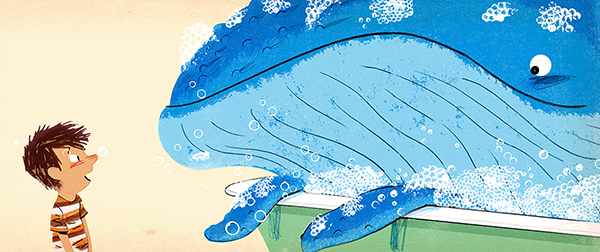
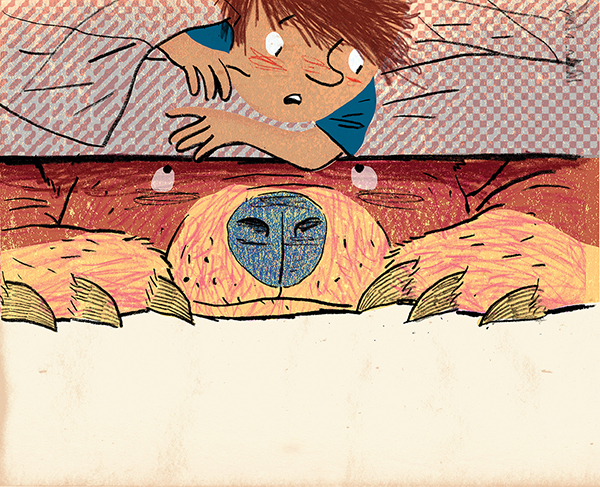
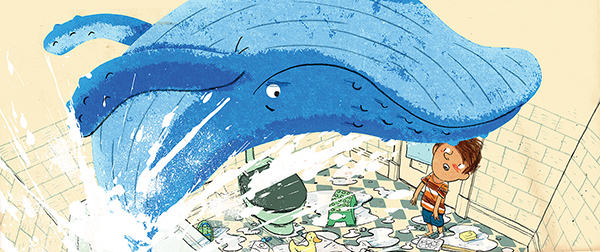
When Bruno goes to take a bath, instead of an empty tub he finds it occupied by a whale. The whale takes a bit of offense at the little boy who is staring at him. “‘You could have knocked!’” he says. The boy is nonplussed and wants to ask the whale how he got there. He’s also a little surprised to see that the whale is luxuriating in his “bubblegum bubble bath.” Not a fan of bubblegum, however, the whale says, “‘I don’t like it. Have you got any that smells like krill?’”

celebrate-picture-books-picture-book-review-a-whale-in-the-bathtub-bruno-meets-the-whale

Image copyright Tom Jellett, courtesy of tomjellett.com

With the admonition that he’s “letting the heat out,” the boy leaves to find his sister, Ally. Ally is unsympathetic to her brother’s plight, and shouts to their mom, “‘Bruno’s pretending again! And he’s not taking a bath!’” Bruno protests that he’s not pretending, but his sister reminds him that last week he reported a bear under his bed and “‘on dad’s birthday, there was a walrus in the backyard.

Their mom has had enough of the squabbling and sends Bruno back upstairs. He finds the whale “scrubbing under his flippers with Dad’s back scrubber,” and when he hears that Bruno needs the tub, the whale simply says, “‘I haven’t done my tail yet. Come back later.’” Before he goes Bruno notices that despite the fact that the whale didn’t like his bubble bath, he sure seems to be using a lot of it.

celebrate-picture-books-picture-book-review-a-whale-in-the-bathtub-bear-under-bed

Image copyright Tom Jellett, courtesy of tomjellett.com

Bruno’s brother loves science, so Bruno tells him about the whale. “‘A whale can’t fit in a bathtub,’” Pete says. “‘Even a baby whale would be too big. And there’d be no room for the water. It’s just impossible.’” The bathroom is now splattered with water, suds, and bath toys, and the whale is still not finished. Why doesn’t the whale just wash in the ocean? There’s no hot water, no bubble bath, no soap, and no washcloths.

When Bruno goes downstairs he discovers his dad is home from his business trip. “‘Dad, there’s a whale in our bathtub!’” Bruno tells him. “‘A whale? Wow!’” His dad laughs, but even though he asks some very good questions, such as “‘How did it get there? Was there a flood today and the whale got stranded? Or did it just swim up through the drain?’” he sends Bruno back up with the promise that he’ll be there in five minutes.

celebrate-picture-books-picture-book-review-a-whale-in-the-bathtub-breeching

Image copyright Tom Jellett, courtesy of tomjellett.com

The whale is now “rinsing his barnacles” and reveals that he’ll be “at least another hour. Maybe four.’” But then he has an idea. The whale takes a deep breath and “Whoosh!” gives Bruno a shower, which, despite smelling a bit like krill, is one perk of having a whale in the bathtub.

Whether imaginary or real, Kylie Westaway’s Whale in the Bathtub is a fun bath-time romp. The mischievous sea creature that dwarfs the tub and has a ready retort to each of the boy’s questions and comments will make kids giggle and have them running to see if their own bathtub holds such adventure. Grounded in real family dynamics to further enhance the humorous absurdity, A Whale in the Bathtub is a great read aloud.

Tom Jellett will hook readers from their first glimpse of the enormous whale that has taken up residence in Bruno’s bath tub. So huge that he takes up two pages, the whale is a blue behemoth that loves his warm water, back scrubber, and bath toys and comes to appreciate bubblegum bubble bath. The vintage look to Jellett’s illustrations, complete with scribbled highlights and simple outlining of some details, will have kids pondering whether the whale is a figment of Bruno’s imagination and drawings or a real fish out of (sea) water.

Both reluctant bath-takers and kids who love to rub-a-dub-dub, as well as marine-animal enthusiasts, will find much to laugh about in A Whale in the Bathtub.

Ages 4 – 7

Clarion Books, 2016 | ISBN 978-0544535350

Get to know more about Kylie Westaway and find fun book-related activities on her website!

Discover a portfolio of illustration work by Tom Jellett on his website!

Bubble Bath Day Activity

celebrate-picture-books-picture-book-review-bathtub-clings-craft

Fun Foam Bath Shapes


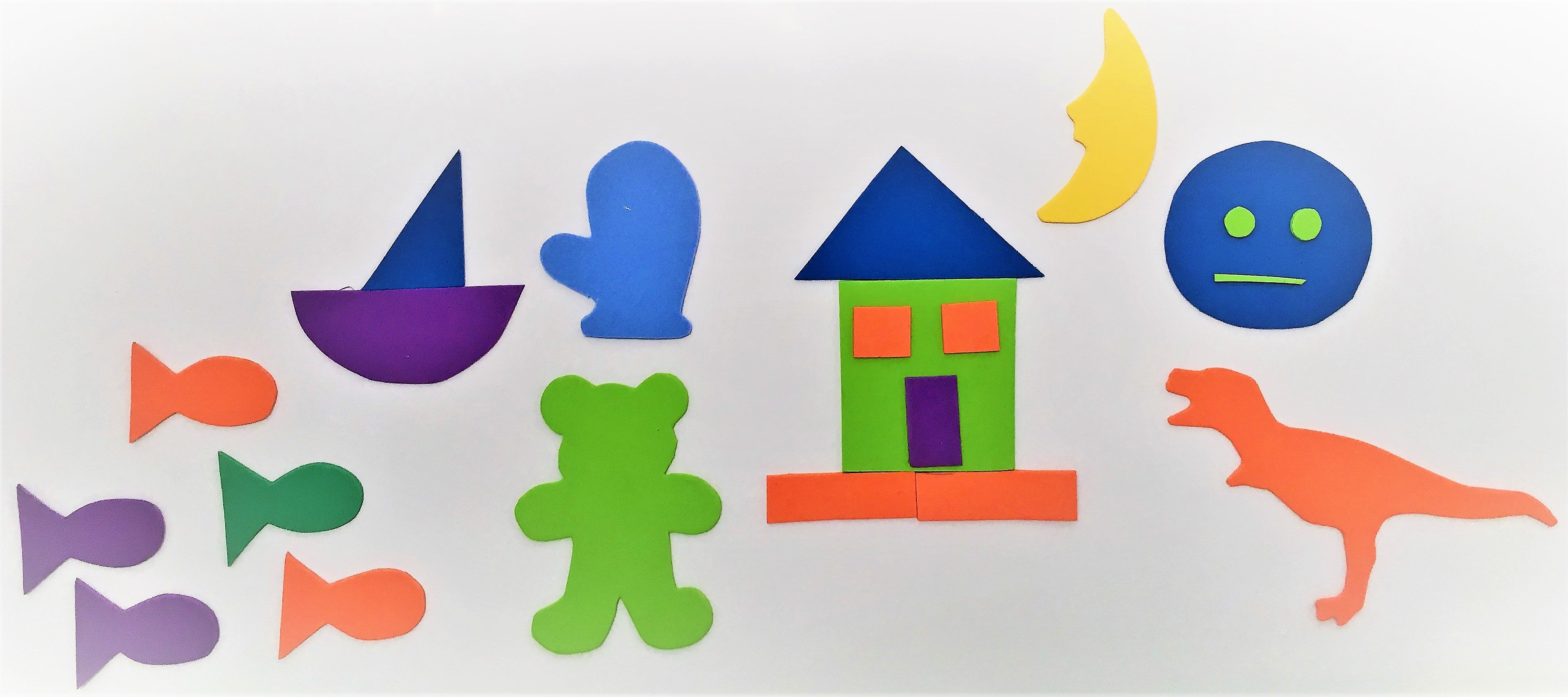
Instead of buying bathtub clings for your kids to play with, make some yourself! It’s easy with regular foam sheets, cookie cutters or stencils, and scissors! Make it a family activity and watch the shower of creativity that results!

Supplies

  • Foam sheets in various colors
  • Cookie cutters or stencils
  • Scissors

Directions

  1. Trace cookie cutter shapes or stencils onto the foam 
  2. And/Or cut squares, triangles, rectangles, circles, and other shapes from the foam in a variety of sizes
  3. Cut out the shapes
  4. Wet the backs of the shapes with water and stick them to the tub or tiled or lined wall. Shapes will also stick with a little shaving gel or cream applied

Picture Book Review

January 7 – It’s Hot Tea Month

celebrate-picture-books-picture-book-review-the-tea-party-in-the-woods-cover

About the Holiday

I must confess that this may be my favorite holiday. There’s nothing better than waking up with a well-steeped cup of tea, writing with a favorite mug brimming with hot tea with honey sitting nearby, enjoying scones with clotted cream and jam and a hot cuppa…well…you get the picture. People have drunk tea since earliest times for its soothing and medicinal properties. Mellower than coffee and available in endless varieties and tastes, hot tea is just the thing for relaxing moments. Today, enjoy your favorite tea or try a new kind!

The Tea Party in the Woods

By Akiko Miyakoshi


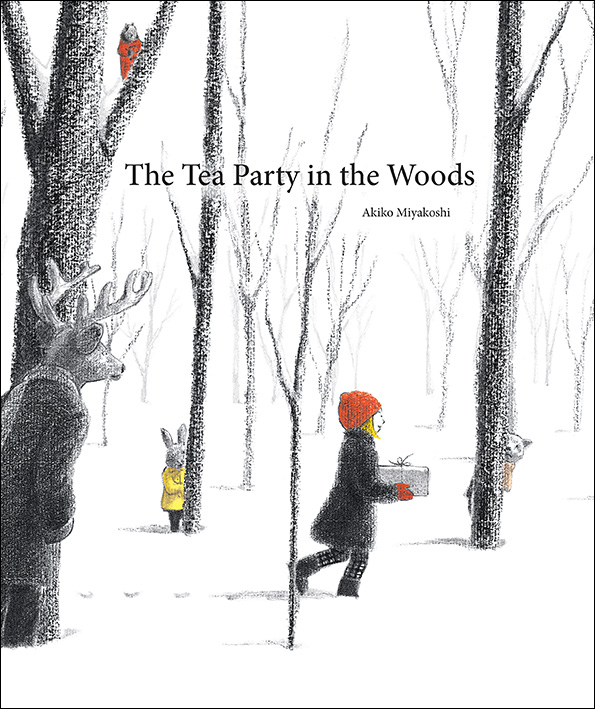
Because snow had fallen overnight Kikko’s father was off to her grandmother’s house to shovel the walk. After he left, Kikko noticed that he had forgotten to take the pie her mother had made for Grandma. “‘I can still catch up to him,’” said Kikko. Carefully, carrying the boxed pie, Kikko followed “her father’s tracks in the fresh snow. The woods were very still. And so quiet. Kikko’s footsteps were the only sound.”

celebrate-picture-books-picture-book-review-the-tea-party-in-the-woods-kikko-peers-in-window

Spying a coated figure in the distance, Kikko began to run, but she fell in the deep snow, crushing the pie. Still, she picked up the box and hurried on. She watched as her father entered a strange house. “Has it always been here? Kikko wondered. She couldn’t remember having seen it before.” Kikko crept to the window and peered inside, just as her father took off his hat and coat. But—he wasn’t her father at all!” He was a bear!

celebrate-picture-books-picture-book-review-the-tea-party-in-the-woods-lamb-meets-kikko

A little lamb approaching the house found Kikko looking through the window and asked if she were there for the tea party. Taking Kikko’s hand, the lamb led her into the house. When Kikko saw all of the animals gathered there, she couldn’t believe it. The animals cheered and welcomed Kikko enthusiastically. “‘We’re about to serve the tea,’ said the rabbit. ‘You’re just in time.’” After the animals seated themselves around a long table, a doe stood, thanked everyone for coming, and asked Kikko to introduce herself.

She told then her name and why she was in the forest. The animals thought she was very brave, and Kikko began to feel braver herself. When the animals learned that Kikko’s pie had been ruined, they all contributed a piece of their own pie from the party. “Slice by slice they assembled a new pie on a pretty plate. Each piece had a different filling of seeds and nuts and fruit and other delicious things gathered from the woods.” They found a new box, placed the plate inside, and tied it with a red ribbon.

celebrate-picture-books-picture-book-review-the-tea-party-in-the-woods-animals-meet-kikko

Kikko was so excited to bring her Grandma this gift that she wanted to leave right away. The animals said they would come too. The woods rang with music, talking, laughing, and singing as the group “paraded to Grandma’s house.” When they reached Grandma’s house, the animals encouraged Kikko to go to the door. Grandma and Kikko’s father were surprised to see her. “‘My dear, did you come all this way on your own?’ asked Grandma, stepping inside.” Kikko could not see the animals anywhere. “‘You’re never alone in the woods,’” Kikko answered, smiling. She was sure her new friends were listening.”

celebrate-picture-books-picture-book-review-the-tea-party-in-the-woods-parade

Akiko Miyakoshi’s reassuring story about a little girl venturing out into strange territory on her own for the first time is a delight. The straightforward narrative offers just the right amount of familiarity for young readers to allow them to be fully charmed by the magical elements that provide surprise and suspense. Little ones will be entranced by the warm welcome Kikko receives at the splendid and well-attended tea party. They will also find comfort in realizing that even when travels become hard, they can still discover wondrous things and that friends and help are always available – sometimes where they least expect it.  

Miyakoshi’s stunning black-and-white drawings, done in charcoal and pencil, are gorgeous in their portrayal of the woodland animals and their tea party. The long table they crowd around is laden with pies, bowls of fruit, vases of flowers, and of course teapots and teacups. At first Kikko offers the only color on the pages with her red cap and skirt and yellow hair. Later, however, when the animals suggest sharing their pie, the plate dazzles with mouthwatering brilliance, and hints of red and yellow brighten the next page. As the parade marches through the woods, the animals’ red and yellow clothes and musical instruments make a festive party. But as Kikko goes on to her Grandma’s house alone, the color fades from the animals, highlighting her achievement.

Ages 3 – 7

Kids Can Press, 2015 | ISBN 978-177138107

Discover more about Akiko Miyakoshi and a portfolio of her work on her website!

Tea Month Activity

celebrate-picture-books-picture-book-review-ceramic-mug-craft

Decorate Your Own Mug


It’s fun to drink tea (or hot chocolate—shhh!) from a mug you’ve designed yourself. Personalized mugs also make fantastic presents for friends and family.

Supplies

  • Plain ceramic mug
  • Bakeable markers or paint

Directions

  1. Design and color your mug
  2. Follow directions on the markers or paint to properly bake on your decoration and make it permanent.

Picture Book Review