July 4 – Independence Day

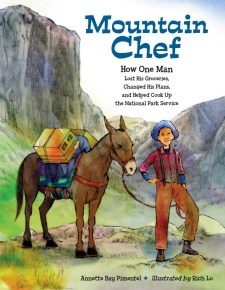
celebrate-picture-books-picture-book-review-mountain-chef-cover

About the Holiday

Today, the United States commemorates the signing of the Declaration of Independence on July 4, 1776 by delegates of the original 13 colonies, which asserted that the colonies considered themselves a new nation and no longer part of the British Empire. The day is traditionally celebrated with parades, picnics, and grand fireworks in cities and towns across the country or in one of our beautiful national parks. The holiday also provides the opportunity to remember and honor all the people who have come to America’s shores and have helped to build our nation. 

Mountain Chef: How One Man Lost His Groceries, Changed His Plans, and Helped Cook Up the National Park Service

Written by Annette Bay Pimentel | Illustrated by Rich Lo


Tie Sing, born in Virginia City, Nevada, grew up during a time when “America was a tough place to be Chinese.” Most worked in restaurants or laundries and were paid less than white employees. Tie Sing had big plans, though. “He got a job cooking for mapmakers as they tramped through the mountains, naming peaks. With sky for his ceiling and sequoias for his walls, he stirred silky sauces, broiled succulent steaks, and tossed crisp salads.” He quickly became known as the best trail cook in California.

celebrate-picture-books-picture-book-review-mountain-chef-Tie-Sing

Image copyright Rich Lo, 2016, text copyright Annette Bay Pimentel, 2016. Courtesy of Rich Lo at greatsketch.com.

In 1915 Steven Mather was trying to convince politicians to create a national park system even though many business people were against it. Mather invited journalists, tycoons, congressmen, and others to go camping for ten days to show them the wonder of America. He knew that the trip had to be perfect, so he hired Tie Sing as his chef. Tie Sing planned gourmet menus for breakfast, lunch, and dinner that would satisfy the 30 campers. Each day he rose before dawn, cooked eggs and sizzling steaks, and packed box lunches.

As the group hiked across beautiful scenery to the next site, Tie Sing and his assistant washed the dishes, put out the fires, packed the mules, and started the dinner’s sourdough bread. By the time Tie Sing arrived at the new campsite, it was time to begin cooking dinner. “He assembled sardine hors d’oeuvres, sliced juicy cantaloupe, and squeezed lemons to make tart-sweet lemonade. He grilled steaks and venison, fried fish and chicken, and baked sourdough rolls” as good as any fine restaurant. One morning Tie Sing was able to pack the mule early before he served breakfast. When he went back to the mule, however, he discovered it had wandered away—taking all of the best food with it.

celebrate-picture-books-picture-book-review-mountain-chef-setting-the-table

Image copyright Rich Lo, 2016, text copyright Annette Bay Pimentel, 2016. Courtesy of Rich Lo at greatsketch.com.

Steven Mather shrugged it off as he left for the day’s hike, but Tie Sing was upset. All of his planning was ruined. That night the dinner wasn’t as fancy, but it was delicious and topped off with “all-American apple pie.” The campers, happily satisfied, talked late into the night about the possibilities of a national park service. The next day, Tie Sing carefully led the mules along a narrow ridge. As the stones crumbled underneath their feet, one mule strayed too close to the edge. He tumbled backward and down the cliff. Bags, boxes, and food went flying. The mule got up and shook itself off, but much of the food, utensils, and equipment was lost.

Hours later Tie Sing limped into camp with “the battered boxes and bent knives and bruised apples he’d salvaged.” The men were ravenous; Tie Sing had to think quickly. He knew just how to use those apples, and under the glow of paper lanterns, the crew enjoyed the most delicious applesauce they’d ever had. Tie Sing knew his job was to fill the party with delicious meals, but “Steven Mather wasn’t the only one who loved the mountains; Tie Sing had the Sierra singing in his blood. He too planned to fill the campers with memories.”

celebrate-picture-books-picture-book-review-mountain-chef-mule-falls

Image copyright Rich Lo, 2016, text copyright Annette Bay Pimentel, 2016. Courtesy of Rich Lo at greatsketch.com

As the pots bubbled on the camp stove, Tie Sing “bent over tiny slips of paper and wrote in English and Chinese.” Following dinner he handed out fortune cookies, each one holding a handwritten message: “Long may you search the mountains.” “Long may you build the paths through the mountains.” “Where but in the mountains would such a man become a spirit with the mountains?”

In the months following the trip, the members of the group “wrote magazine articles, published books, and made movies about America’s national parks.” Steven Mather’s and Tie Sing’s efforts worked. On August 25, 1916 Congress created the National Park Service. “Today, if you visit Yosemite National Park, you can hike to Sing Peak. It was named for Tie Sing, a mountain-loving American who knew how to plan.”

Three pages of back matter, complete with photographs of Steven Mather’s and Tie Sing’s actual 1915 trip, answer readers’ questions about Tie Sing, how he kept food fresh in the mountains, details of the trip, and short bios on the members of the mountain party.

celebrate-picture-books-picture-book-review-mountain-chef-bent-silverware

Image copyright Rich Lo, 2016, text copyright Annette Bay Pimentel., 2016. Courtesy of Rich Lo at greatsketch.com

Annette Bay Pimentel’s fascinating and timely story of the establishment of the National Park Service highlights the contributions of a Chinese American dreamer who had big plans for himself and the country he loved. Her detailed storytelling enhanced by lyrical phrasing (a linen tablecloth is washed in an icy snowmelt stream and spread “brighter than white-water foam” over a table) reveals the marvel of Tie Sing’s art. Readers will be awed by the dedication and careful planning it took for the gourmet meals and elegant table settings to come together in such rough surroundings. As food and supplies are lost along the way, children will be held in suspense, wondering if Steven Mather’s and Tie Sing’s strategy worked.

Rich Lo’s beautiful detailed and realistic watercolors transport readers to the mountains and trails of early 1900s California. With vivid imagery Lo lets children see the day-to-day preparations that went into Sing’s meals as well as the dangerous conditions he faced. Lo captures the hazy purple majesty of the mountain peaks, the glow of the campfire in the dark of night, and the vastness of the California environment. Kids may well wonder how Sing managed to create a five-star restaurant atmosphere and menu in the wild, and Lo shows them how it was accomplished.

Mountain Chef gives a unique perspective on an important historical moment—one that still resonates today—and is a compelling book for any classroom as well as for kids interested in history, culinary arts, and the environment and for those who just love a good story.

Ages 6 – 9

Charlesbridge, 2016 | ISBN 978-1580897112 (Hardcover) | ISBN 978-1580899857 (Paperback, 2019) 

Discover more about Annette Bay Pimentel and her books on her website. You’ll also find a Teacher’s Guide for Mountain Chef.

Learn more about Rich Lo and view a portfolio of his artwork on his website!

Independence Day Activity

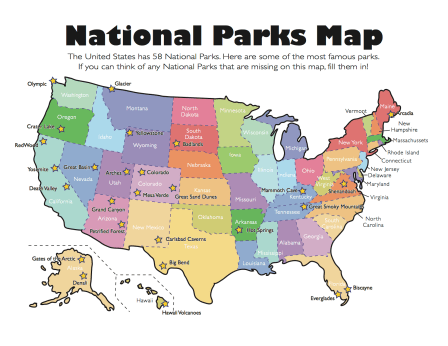
celebrate-picture-books-picture-book-review-National-Parks-Map

Majestic Parks Coloring Pages


The national parks are home to some of the most beautiful scenery in the country. You may not be able to visit all of these parks, but you can still enjoy their beauty while you learn a little about them with these printable coloring pages! Then check the map and see if there’s a park near you!

Mesa Verde National Park | Gates of the Arctic National Park | Hawaii Volcanoes National Park | Biscayne National Park | Acadia National Park | Everglades National Park | Rocky Mountains National Park | National Parks Map

celebrate-picture-books-picture-book-review-mountain-chef-cover

You can find Mountain Chef at these booksellers

Amazon | Barnes & Noble | Books-a-Million | IndieBound

Picture Book Review

July 3 – Apollo 11 Moon Landing Anniversary Month

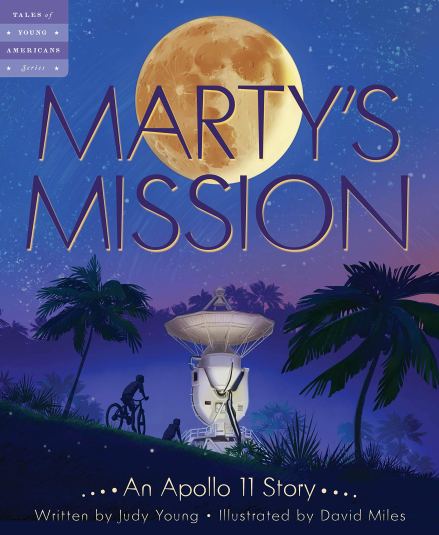
celebrate-picture-books-picture-book-review-marty's-mission-cover

About the Holiday

On July 20, 1969 Neil Armstrong, watched by millions of people around the world, became the first person to step foot on the moon. This month we celebrate the fiftieth anniversary of that monumental moment. Since then we have developed a deeper understanding of our universe, but there is still so much more to discover. Who knows how far today’s children will go in exploring the great unknowns of the cosmos.

I received a copy of Marty’s Mission: An Apollo 11 Story from Sleeping Bear Press for review consideration. All opinions are my own. I’m delighted to be teaming with Sleeping Bear Press in a giveaway of the book. See details below.

Marty’s Mission: An Apollo 11 Story  (Tales of Young Americans Series) 

Written by Judy Young | Illustrated by David Miles


Ten-year-old Marty and his friend Tomás listened eagerly to the radio broadcast of the Apollo spacecraft liftoff from Marty’s home near NASA’s Tracking Station in Guam. The boys wished they could watch the historic flight, but there was no television reception. Marty and his family had moved to Guam a year ago when Marty’s dad took a job at the tracking station. Although Marty was excited to hear the announcer’s voice counting down to liftoff and then “‘Neil Armstrong talking from inside the spacecraft,’” he wished he could share the experience with his dad. But Marty’s father was busy at the tracking station and would be there for eight days.

celebrate-picture-books-picture-book-review-marty's-mission-home

Image copyright David Miles, 2019, text copyright Judy Young, 2019. Courtesy of Sleeping Bear Press.

The tracking station, with its huge antenna facing skyward, fascinated Marty. “‘That,’” his dad had told him, “‘is what will pick up communication signals from the spacecraft. And inside the operations building is equipment to rely the signals back and forth between the astronauts and Mission Control in Houston, Texas.’” Marty thought it was awesome that his dad would get to hear everything the astronauts said. Marty wished he could visit the tracking station to hear them too, but he understood that his dad would be too busy and that there was “‘a lot at stake. If communications go down, the astronauts might not make it home,’” his dad had explained.

When Apollo 11 finally entered the moon’s orbit, Marty and Tomás were glued to the radio waiting for the Eagle to land. Then they got a call that the tracking station had set up a TV and was sending a bus to collect family members so they could watch the landing. Marty and Tomás rushed to board the bus. Marty, Tomás, and the rest of the families watched the Eagle touch down on the moon and Neil Armstrong descend the ladder to become the first person to set foot on the moon. They watched as the Armstrong and Buzz Aldrin “bounced around on the moon, taking photos and collecting lunar rocks.”

celebrate-picture-books-picture-book-review-marty's-mission-tracking-station

Image copyright David Miles, 2019, text copyright Judy Young, 2019. Courtesy of Sleeping Bear Press.

The next day the Eagle connected with the Columbia and began the trip back to Earth. “On the last night of the mission,” Marty was suddenly woken up by his mother. She said that his father needed him. Something was wrong. He was driven to the tracking station and met up with his dad and other men outside the huge antenna. “‘The antenna is stuck,’ Dad told Marty,” If they couldn’t get it moving again, Mission Control would lose contact with Apollo 11. It was vital that the antenna work, and time was running out.

But why did they need him? Marty wondered. His dad explained that they thought the problem was in a bearing—”‘a ring with metal balls encased inside it…. The balls have to roll for the antenna to move, but they’re stuck.’” The men thought that if the bearing could be packed with grease, it might move again. But their arms were too big to reach into the tight space. “‘Do you think you can do it?’” Marty’s dad asked. “‘You bet!’ Marty exclaimed.”

celebrate-picture-books-picture-book-review-marty's-mission-antenna

Image copyright David Miles, 2019, text copyright Judy Young, 2019. Courtesy of Sleeping Bear Press.

Marty learned what they wanted him to do and crawled into the space where the motor was. He took a glob of grease in one hand and reached in, “but even his arm was too big.” Marty knew he had to find a way to do it. The lives of the three astronauts depended on it. He thought a while and then smiled. “Quickly, Marty smeared grease all over his arm.” Although the space was still tight, his arm slipped in. Marty filled the bearing with grease. When he was finished, his dad called out to try starting the antenna again.

Slowly, it creaked back to life. “Instantly a voice called out from the building. ‘Communications with Apollo 11 intact. All systems working!’” The men cheered and congratulated Marty. Marty joined them in the operations building and listened as a voice from Houston announced, “‘Successful splashdown—task accomplished! Welcome back to Earth, Apollo 11.’” Marty’s father gave him a hug and said, “‘The world wouldn’t have heard those words if it weren’t for you, son.’”

celebrate-picture-books-picture-book-review-marty's-mission-Marty

Image copyright David Miles, 2019, text copyright Judy Young, 2019. Courtesy of Sleeping Bear Press.

Based on true events, Judy Young’s compelling story of a child who played a crucial role in one of history’s most astounding accomplishments will thrill young readers. As the first moon landing, the Apollo 11 mission was fraught with danger, excitement, and a level of uncertainty that had people glued to their televisions and radios for the length of the mission. Communication with the astronauts was paramount, and when the link was lost many feared for the three men. Young’s straightforward storytelling  realistically portrays the excitement and fascination of a child for a favorite subject while also demonstrating their pride in and understanding of their parents’ jobs. Through dialogue that always rings true, Young builds the strong relationship and trust Marty and his dad enjoy. Marty’s confidence and quick thinking also mirror the serious nature of the book’s target audience.

celebrate-picture-books-picture-book-review-marty's-mission

In his realistic and atmospheric paintings, David Miles offers readers a glimpse at a unique part of the Apollo 11 mission: NASA’s tracking station in Guam. As Marty and Tomás hang on every word from the radio, the moon hangs low in the twilight sky and serves as a backdrop to the waving palm trees. Kids interested in engineering, science, and communications will want to linger over the views of the huge antenna that provided the connection between Earth and the astronauts. Period details include images of radios, cars, televisions, and even the grainy broadcast seen by millions. As Marty’s father explains the problem to his son, readers can clearly see what a bearing looked like and where in the antenna Marty had to work. As the men in the operations building celebrate a successful mission, today’s children can feel a sense of kinship with the boy who made a difference in 1969.

Part of the Tales of Young American Series from Sleeping Bear Press, Marty’s Mission: An Apollo 11 Story is an absorbing true story that has impact for young readers today. For children interested in space, science, STEM, history, biographies, news, communications, and a well-told story, Marty’s Mission makes an inspirational addition to home, school, classroom, and public libraries.

Ages 6 – 10

Sleeping Bear Press, 2019 | ISBN 978-1534110144

Discover more about Judy Young and her books on her website.

To learn more about David Miles, his books, and his art, visit his website.

Marty’s Mission Giveaway

I’m excited to be teaming with Sleeping Bear Press in a giveaway of

One (1) copy of Marty’s Mission: An Apollo 11 Story written by Judy Young | illustrated by David Miles

To enter Follow me @CelebratePicBks and Retweet a giveaway tweet.

This giveaway is open from July 3 through July 7 and ends at 8:00 p.m. EST.

A winner for each prize will be chosen on July 8.

Prizing provided by Sleeping Bear Press.

Giveaway open to U.S. addresses only. | No Giveaway Accounts. 

Apollo 11 Moon Landing Anniversary Activity

celebrate-picture-books-picture-book-review-apollo-11-coloring-page-astronauts

Apollo 11 Moon Landing Coloring Pages


With these printable coloring pages you can follow some of the steps of the historic moon landing and the astronauts’ return home..

Blast Off! | Landing! | Astronauts on the Moon | Module Separates | Fiery Reentry

celebrate-picture-books-picture-book-review-marty's-mission-cover

You can find Marty’s Mission: An Apollo 11 Story at these booksellers

Amazon | Barnes & Noble | Books-a-Million | IndieBound

Picture Book Review


July 2 – I Forgot Day

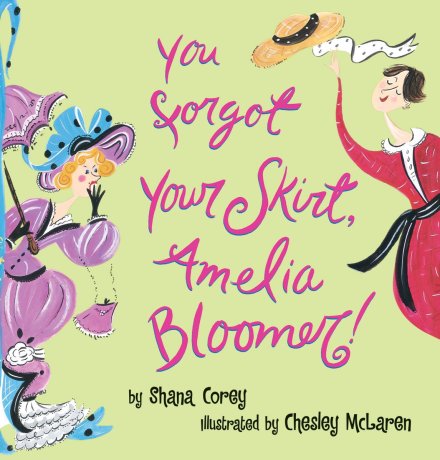
celebrate-picture-books-picture-book-review-you-forgot-your-skirt-amelia-bloomer-cover

About the Holiday

Does summer make you feel forgetful? The hot, hazy weather and more relaxed schedule can loosen up that school-time vigilance and well… make you forget things. But that’s okay! I Forgot Day was established to give people an opportunity to make up for lapses in memory. If you’ve forgotten a special event, birthday, or anniversary, it’s not too late to apologize and let the person know you haven’t forgotten them—just that particular date. Of course, there are also things that may have slipped your mind that bear remembering or lessons from the past that should not entirely be forgotten. Today’s holiday is a good time to embrace those memories—just like today’s book shows!

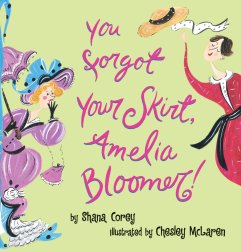
You Forgot Your Skirt, Amelia Bloomer!

Written by Shana Corey | Illustrated by Chesley McLaren

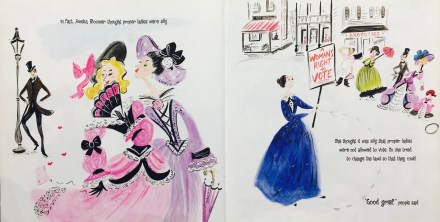
“Amelia Bloomer was not a proper lady.” But that was all right with her because she “thought proper ladies were silly.” Amelia found it silly that proper ladies couldn’t vote and were not supposed to work. In response, she protested as a suffragette and began her own newspaper called The Lily which only published news about women. Amelia hired other women to work there.

celebrate-picture-books-picture-book-review-you-forgot-your-skirt-amelia-bloomer-votes

Image copyright Chesley McLaren, 2000, text copyright Shana Corey, 2000. Courtesy of Scholastic.

But to Amelia, the silliest thing of all was women’s long dresses. They “were so heavy, wearing them was like carting around a dozen bricks.” She thought women looked like “walking broomsticks. They acted like broomsticks too because their skirts swept up all the mud and trash from the street.” And the corsets they wore choked off their breathing and made them faint. To keep those long skirts standing out, they also wore wire frames that got squashed and squeezed in doorway after doorway. “Even little girls had to wear proper dresses. So they couldn’t run and jump and play.”

celebrate-picture-books-picture-book-review-you-forgot-your-skirt-amelia-bloomer-bricks

Image copyright Chesley McLaren, 2000, text copyright Shana Corey, 2000. Courtesy of Scholastic.

Amelia Bloomer was determined to do something about it. Then one day, Amelia’s friend Elizabeth Cady Stanton came to visit and brought her cousin Libby. “Libby looked remarkable” because “she was not wearing a dress!” Libby thought proper dresses were silly too. Libby’s dress was shorter and not so poofy, and underneath Libby was wearing a kind of pants. Amelia immediately sewed herself such an outfit.

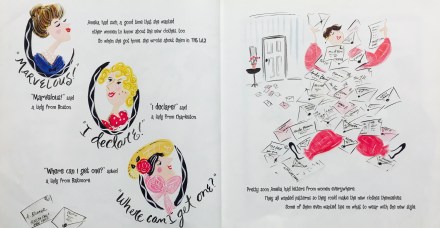
When people saw Amelia in her new outfit, they gasped. “‘You forgot your skirt, Amelia Bloomer!’ called a little boy.” But Amelia didn’t listen to them. She felt so free that she “ran and jumped and twirled.” She wanted all women to know about these wonderful clothes, so she wrote about them in The Lily. Women all over the country loved them and wanted to know where they could get them.

celebrate-picture-books-picture-book-review-you-forgot-your-skirt-amelia-bloomer-letters

Image copyright Chesley McLaren, 2000, text copyright Shana Corey, 2000. Courtesy of Scholastic.

Amelia was flooded with letters from women asking for the pattern so they could make an outfit for themselves and for advice on how to accessorize. “Some people called the new style of clothes the American Costume. Most people just called them Bloomers.” Of course, there were many proper gentlemen who disliked the bloomers. Some thought they would just “lead to more rights for women.”

After some time, bloomers went out of style. “Proper ladies and gentlemen everywhere breathed a sigh of relief.” They were sure women’s clothing would go back to “normal,” and that everyone would forget about Amelia Bloomer and her improper ideas. “Well… what do you think?”

An Authors Note filling in details of Amelia Bloomer’s life, the restrictive clothing women wore, and the early women’s rights movement follows the text.

celebrate-picture-books-picture-book-review-you-forgo

Image copyright Chesley McLaren, 2000, text copyright Shana Corey, 2000. Courtesy of Scholastic.

These days it does seem ridiculous that women once had to live in such restrictive, and even dangerous, clothing. Although children may see pictures of Victorian dress, they might not be able to fully appreciate all that was going on under those voluminous skirts. It’s with a sly wink to those times and people’s attitudes that Shana Corey presents her biography of Amelia Bloomer. Through her light touch, Corey highlights not only the early women’s rights movement but nudges children to keep vigilant to see that freedom and rights continue to come to all.

Chesley McLaren’s bright, delicate illustrations bring a Victorian vibe while reveling in fresh colors and offbeat perspectives. Kids may grow wide-eyed to see a woman holding onto a bedpost as her corset is drawn tight and other women fainting as a result of this necessary item. McLaren also exposes the “dirty” truth as a woman’s hem sweeps along apple cores, bones, bottles, and paper as she walks. An image of a hoop framework festooned with bricks, gives kids an idea of how much these dresses weighed. Proper ladies and gentlemen in their stuffy clothes may point, stare, and harrumph at Amelia in her comfortable bloomers, but Amelia gets the last laugh as she floats, twirls, and moves freely in her trendsetting pants. The influence Amelia Bloomer had on future fashions and the rights of women is delightfully shown in postcard-type snapshots of styles from the 1920s,1960s, 1980s, and in a two-page spread of a park today.

Awarded many accolades as one of the best books of 2000, You Forgot Your Skirt, Amelia Bloomer! can be found at public libraries and from used booksellers. The book makes for an entertaining yet educational way for kids to learn about history.

Ages 4 – 8

Scholastic, Inc, 2000 | ISBN 978-0439078191

Discover more about Shana Corey and her books on her website

To learn more about Chesley McLaren, her books, and her art, visit her website.

I Forgot Day Activity

CPB - Sunglasses Matching Puzzle

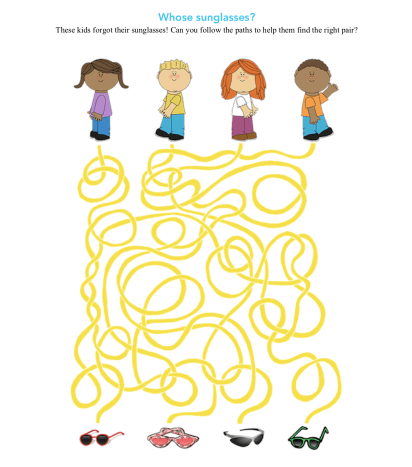
Whose Sunglasses? Matching Puzzle

Four kids have forgotten their sunglasses! Can you follow the paths to match each child with the right pair in this printable puzzle?

Whose Sunglasses? Matching Puzzle

celebrate-picture-books-picture-book-review-you-forgot-your-skirt-amelia-bloomer-cover

You can find You Forgot Your Skirt, Amelia Bloomer! at these booksellers

Amazon | Barnes & Noble | Books-a-Million | IndieBound

Picture Book Review

July 1 – Canada Day

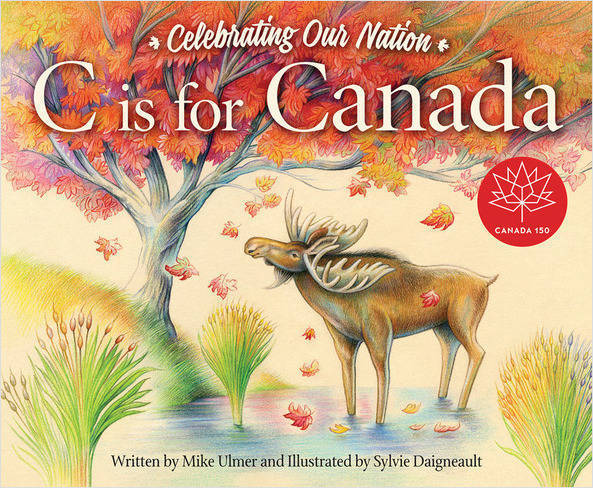
celebrate-picture-books-picture-book-review-c-is-for-canada-cover

About the Holiday

Today, we’re celebrating our neighbors to the north! With the signing of the Constitution Act on July 1, 1867, Canada became a new federation with its own constitution. The country’s distinctive red-and-white maple leaf flag—often claimed by vexillologists as one of the world’s most beautiful—flew over Parliament Hill for the first time on this day in 1965. With beautiful coastlines, rugged mountains, bustling cities, quaint towns, and warm, welcoming people, Canada is a wonderful place to live and makes a fantastic vacation destination!

C is for Canada

Written by Mike Ulmer | Illustrated by Sylvie Daigneault


What would you see if you decided to take an alphabet-inspired trip across the vast expanse that is the gorgeous country of Canada? Dip into this special ABC travel guide and find out! A great place to start is with the letter A, which stands for Aurora Borealis: “Look up into the nighttime sky / and see the colours dance on by. / The show takes place on cloudless nights; / Aurora Borealis means Northern Lights.” B happens to be for Beaver, Canada’s national symbol. This little animal is a perfect match for the country’s people because “…his heart is big; he’s always eager— / Canada is like that busy beaver.”

celebrate-picture-books-picture-book-review-c-is-for-canada-aruroa-beaver

Image copyright Sylvie Daigneault, 2017, text copyright Mike Ulmer, 2017. Courtesy of Sleeping Bear Press.

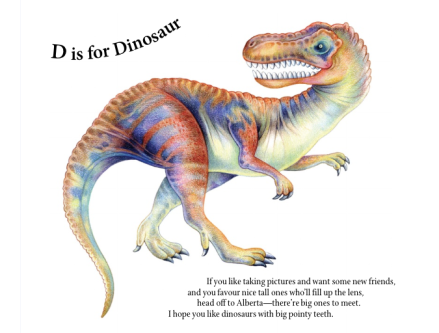
Dino lovers (and, really, who isn’t?) will want to head for the Badlands of Alberta, where the letter D awaits in Drumheller, the Dinosaur capital of the world and home to the biggest dinosaur skeleton. If those beasts are too tame for you, you might like to try the open-air thrill of E at Edgewalk at the CN Tower. Can’t get enough of the outside? Then take in K for Klondike Days, a 10-day festival commemorating Edmonton’s role in the Klondike Gold Rush with food, music, rides, and booths.

celebrate-picture-books-picture-book-review-c-is-for-canada-aruroa-beavercelebrate-picture-books-picture-book-review-c-is-for-canada-dinosaur

Image copyright Sylvie Daigneault, 2017, text copyright Mike Ulmer, 2017. Courtesy of Sleeping Bear Press.

While you’re here, you’ll use Canada’s beautifully designed money engraved with polar bears and the loons that give the coins their L nickname, Loonies: “The sound of it gives me a smile / when I add a coin every once in a while. / A loonie makes a lovely ‘clank’ / when dropped inside my piggy bank.” Of course no Canadian excursion is complete without M for Maple Leaf: “Our country’s like a maple tree— / we know the strongest limbs / are those with roots that reach around / the world and back again.”

If winter sports are your thing, then you’ll love N, which is for the National Hockey League. As hockey players well know, “To play in the NHL would be a thrill / but first I have to learn one skill. / I can skate very fast, I’m off like a shot— / I just need to learn the best way to stop.” Maybe you like to spend more time outdoors than at the rink. If so you might just see R for Rock Rabbits on a hike: “When a rock rabbit lets out a squeak, / it means it’s playing hide-and-seek. / And when it gives another cry, / it means it’s safe to go outside.”

celebrate-picture-books-picture-book-review-c-is-for-canada-aruroa-beavercelebrate-picture-books-picture-book-review-c-is-for-canada-edgewalk

Image copyright Sylvie Daigneault, 2017, text copyright Mike Ulmer, 2017. Courtesy of Sleeping Bear Press.

Two distinct areas are worth a peek at U and V. U is for Underwear—the special warm kind made in Truro: “We treasure pretty Truro, / I think we always will. / That’s where they make the long johns / that protect us from the chill.” V is for Victoria and all its grandeur: “There’s an ocean complete with oceanside / and carousels for kids to ride. / And a great hotel for weeklong stays / and bike trails you can ride for days.” And now we’ve come to the end of our alphabetic tour where Z is for Zero—or is it? “Zero isn’t zero; it tells you quite a lot. / Below is fairly chilly, above is really not. / Zero isn’t zero; it’s more vital than you think. / You need less than zero degrees to have yourself a rink.”

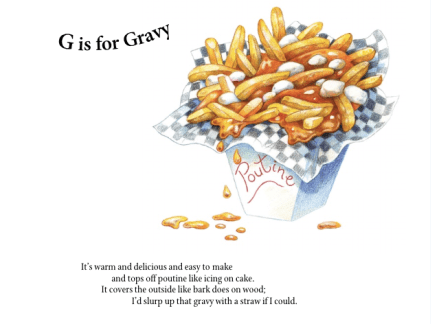
celebrate-picture-books-picture-book-review-c-is-for-canada-aruroa-beavercelebrate-picture-books-picture-book-review-c-is-for-canada-gravy

Image copyright Sylvie Daigneault, 2017, text copyright Mike Ulmer, 2017. Courtesy of Sleeping Bear Press.

These are just a few of the highlights among the 26 letters and bright spots C is for Canada has to offer. Mike Ulmer’s verses provide tantalizing tidbits of descriptive and action-packed information for readers who want to learn more about this fascinating northern country. A glossary following the text gives more intriguing details about each letter’s subject.

Sylvie Daigneault’s vibrant illustrations are lovely companions for Ulmer’s verses and give young readers clear, up-close views of the people, places, animals, and history of Canada. Huskies frolic in the snow, caribou trot along a rocky lakeside while majestic mountains rise behind them, two science centre visitors have a hair-raising experience, and an old prospector pans for gold in the Yukon. Each snapshot will engage little armchair travelers and make their imaginations roam far from home.

And now, even the youngest Canadians and travelers can enjoy getting to know Canada from A to Z with the new board book edition! The small size makes it a great take-along too!

Ages 2 – 8

Sleeping Bear Press, 2017 | ISBN 978-1585369737 (Hardcover) | ISBN 978-1534110458 (Board book)

You can connect with Mike Ulmer on his blog!

View a gallery of illustration work by Sylvie Daigneault on her website!

Canada Day Activity

celebrate-picture-books-picture-book-review-canada-coloring-page-canadian-flag

Canada Coloring Pages


From its vivid red-and-white flag to its purple mountains, Canada is a colorful country! Here are three printable Canada Coloring Pages for you to enjoy!

Canadian Flag | Canadian Animals Coloring Page | Beaver Carrying Canadian Flag

celebrate-picture-books-picture-book-review-c-is-for-canada-cover

You can find C is for Canada at these booksellers

Amazon | Barnes & Noble | Books-a-Million | IndieBound

Picture Book Review

June 29 – International Mud Day

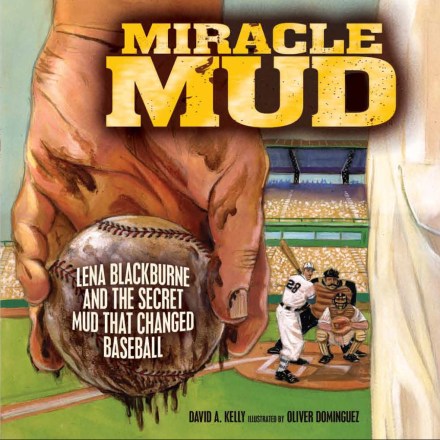
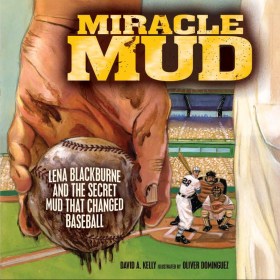
celebrate-picture-books-picture-book-review-miracle-mud-cover

About the Holiday

Today’s holiday was established in 2009 when the students of Bold Park Community School in Wembley, Western Australia teamed with the boys of the Nepalese Panchkhal Orphanage to “celebrate the visceral and primal connection we all share with Earth and the outdoors.” Since that day, schools, families, and early childhood education centers have worked to remind us that we all need to take time to play in the mud sometimes and reconnect with what makes us human. In 2015, the day was expanded to include the entire month of June to allow us to decompress from the high-tech, high-pressure world we live in and to connect with others.

Miracle Mud: Lena Blackburne and the Secret Mud that Changed Baseball

Written by David A. Kelly | Illustrated by Oliver Dominguez


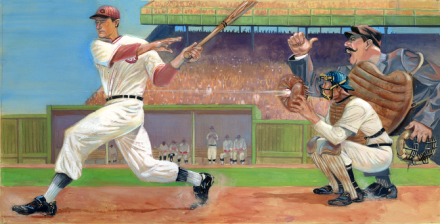
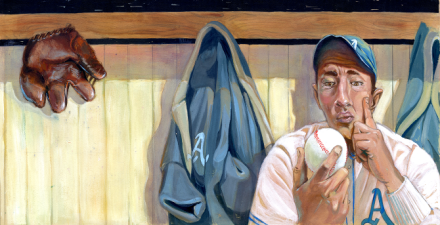
“Lena Blackburne wanted to be a famous baseball player.” Unfortunately, he wasn’t one of the greats. In fact starting in 1910, Lena moved around from team to team, playing a variety of positions. He made appearances at every base and played shortstop; he even had a go as pitcher. But he wasn’t a star at any of these positions. He was never going to make it to the Hall of Fame.

celebrate-picture-books-picture-book-review-miracle-mud-striking-out

Image copyright Oliver Dominguez, 2017, courtesy of oliver-dominguez.com

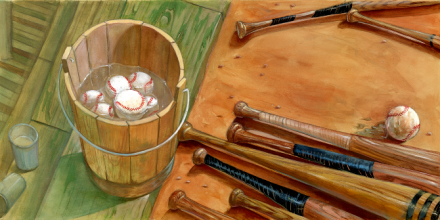
After he retired from playing, Lena became a coach. One day the umpire came to him with a complaint about the soggy baseballs. They were too hard to throw and too hard to see. Besides that, when they were hit, they didn’t soar very far. The problem was that new baseballs had a slick sheen to them, “so players soaked them in dirty water. It got rid of the shine. But it also made the balls soggy and soft.”

celebrate-picture-books-picture-book-review-miracle-mud-soggy-baseballs

Image copyright Oliver Dominguez, 2017, courtesy of oliver-dominguez.com

Players tried other methods to get rid of the shine, but they had drawbacks too. Shoe polish just turned the balls black, and “spit and tobacco juice…made the balls stink.” Lena Blackburne sat down and considered the problem. The answer came to him in a most unusual place—an old fishing hole where Lena liked to go when he was off the road and home.

celebrate-picture-books-picture-book-review-miracle-mud-spitting

Image copyright Oliver Dominguez, 2017, courtesy of oliver-dominguez.com

While fishing one day, he happened to step into some dark brown mud. It sucked at his boot, and as Lena pulled his foot out he had an idea. The mud was “smooth and creamy like chocolate pudding. But it felt gritty.” At the ballpark, Lena rubbed the mud on the balls. When the mud dried, it was easy to wipe off. The mud left the balls with a good finish—not soggy, black, or smelly. At the next game, “the pitcher threw muddy fastballs, curveballs, changeups, and sinkers. The batters hit muddy singles, doubles, triples, and home runs.”

celebrate-picture-books-picture-book-review-miracle-mud-thinking

Image copyright Oliver Dominguez, 2017, courtesy of oliver-dominguez.com

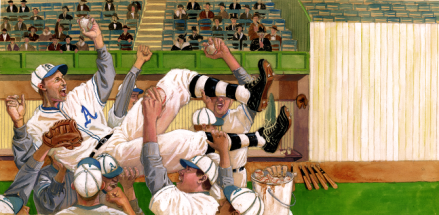
Lena returned to the fishing hole and dug up more mud. He put it into containers and began selling it. Teams all over the league bought Lena Blackburne’s Baseball Rubbing Mud. Lena’s famous mud is still used today and is officially the “only thing that’s allowed on major-league balls.” Lena Blackburne always dreamed of being in the Baseball Hall of Fame. While he didn’t make it there as a player, he is remembered for his contributions to the game he loved in a special exhibit for Lena Blackburne’s Baseball Rubbing Mud.

celebrate-picture-books-picture-book-review-miracle-mud-winning

Image copyright Oliver Dominguez, 2017, courtesy of oliver-dominguez.com

An Author’s Note including more about Lena Blackburne, his baseball statistics, and his special mud follow the text.

Kids who love baseball will be intrigued by David A. Kelly’s unique take on the game. By exploring a small detail that had large effects on the quality of play, Kelly, a masterful writer of sports books and mysteries for kids, including the much-loved Ballpark Mysteries and MVP series, presents a picture book mystery with a surprise ending for younger readers. Kelly’s inclusion of Blackburne’s disappointments shows children that each person’s unique contributions are often found in expected ways.

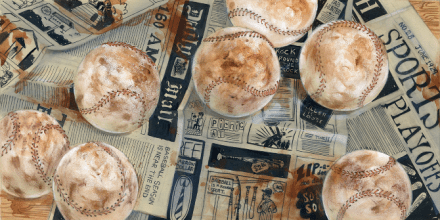
celebrate-picture-books-picture-book-review-miracle-mud-baseballs

Image copyright Oliver Dominguez, coiurtesy of oliver-dominguez.com

Kids get a front row seat at the baseball stadium in Oliver Dominguez’s stunning illustrations. As Lena swings and misses, readers can almost hear the smack of the ball in the catcher’s glove and the ump yelling, “Steee-rrriike!”  When Lena Blackburne becomes a coach and ponders the problem of the soggy baseballs, kids will enjoy seeing baseballs bobbing in a wooden bucket of water, laugh to see a player spitting on a new baseball, and wonder what idea has Lena so wide-eyed at the fishing hole. Baseball lovers will want to linger over the up-close views of players preparing for a game and celebrating their win.

For baseball and other sports fans, young inventors, creative thinkers, and anyone who loves history, Miracle Mud: Lena Blackburne and the Secret Mud that Changed Baseball is a fascinating read and would be welcome in home, classroom, and library collections. 

Ages 6 – 10

Millbrook Press, 2013 | ISBN 978-0761380924

Find out more about David A. Kelly, his ballpark mysteries, and his other books on his website!

View a gallery of artwork and videos by Oliver Dominguez on his website!

International Mud Day Activity

celebrate-picture-books-picture-book-review-kinetic-sand-craft

Make Your Own Sensory Sand


While this sensory sand may not be exactly mud, it’s sure as much fun to play with!

Supplies

  • 1 cup sand
  • ½ tablespoon cornstarch
  • 1 teaspoon dish soap
  • Water as needed – about ¾ cup
  • Bin or bowl for mixing dry ingredients
  • Bowl for mixing dish soap and water

Directions

  1. In the bin combine the sand and cornstarch and mix well
  2. In the bowl combine the dish soap and water until the water is bubbly
  3. Slowly add the water mixture to the dry ingredients, mixing and adding water little-by-little until the desired consistency is reached. The grain of the sand will determine how much water is needed.
  4. The sand can be formed with cookie cutters, molds, hands, etc. and is strong enough to stack.

celebrate-picture-books-picture-book-review-miracle-mud-cover

You can find Miracle Mud: Lena Blackburne and the Secret Mud that Changed Baseball at these booksellers

Amazon | Barnes & Noble | Books-a-Million | IndieBound

Picture Book Review

Picture Book Review

June 28 – It’s Great Outdoor Month

celebrate-picture-books-picture-book-review-the-chestnut-challenge-cover

About the Holiday

The warmer weather begs to be enjoyed—whether you’re playing, working, or just lounging around. Established in 1998 as Great Outdoors Week, the holiday expanded to a month-long celebration in 2004. There’s so much to see and do outside as the wonders of nature are always changing and challenging you in new and surprising ways.

The Nocturnals Series

The Nocturnals series of books—early readers and middle grade novels—brings together a trio of friends for adventures and learning. The three main characters are Dawn, a gentle, kind, and wise red fox; Tobin, a shy, hesitant, and loyal pangolin; and Bismark, a chatty, romantic, impetuous sugar glider. Their distinct personalities serve them well as they meet up with various other woodland animals in mysterious, dangerous, and surprising ways. No matter what challenges they face, however, Dawn, Bismark, and Tobin support each other as best friends should.

Whether children meet the Nocturnal Brigade as an beginning reader or as an established reader, they will love following the friends’ adventures and be charmed by their close relationship, even when squabbles arise. As with any favorite series, kids will look forward to catching up with what this unique group of nighttime animals are doing next.

Grow & Read Early Reader Level 2 Books
celebrate-picture-books-picture-book-review-the-moonlight-meeting-cover

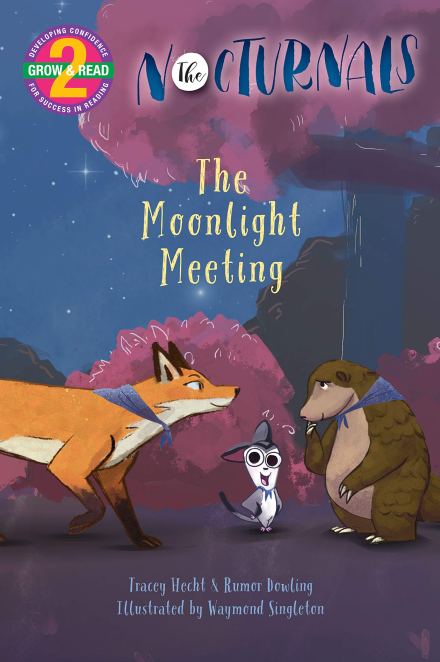
The Moonlight Meeting

Written by Tracey Hecht and Rumur Dowling | Illustrated by Waymond Singleton


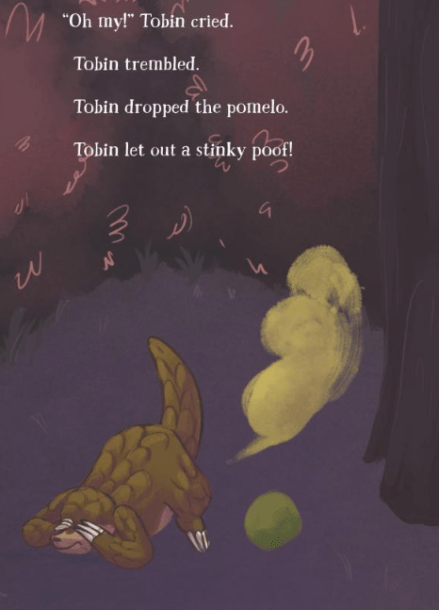
As the twinkling stars began to appear in the sky, a sweet pangolin by the name of Tobin woke up. “‘Oh my, Tobin said. ‘I smell something delicious!’” He yawned and stretched and went in search of that wonderful smell. It didn’t take long before he bumped into a pomelo—the perfect thing for breakfast. But before he could dig in, he heard a screech from the tree above. “‘Thief!’ it cried.” Tobin was so frightened that he “let out a stinky poof!”
celebrate-picture-books-picture-book-review-the-moonlight-meeting-tobin

Image copyright Waymond Singleton, 2017, text copyright Tracey Hecht, 2017. Courtesy of Fabled Films Press.

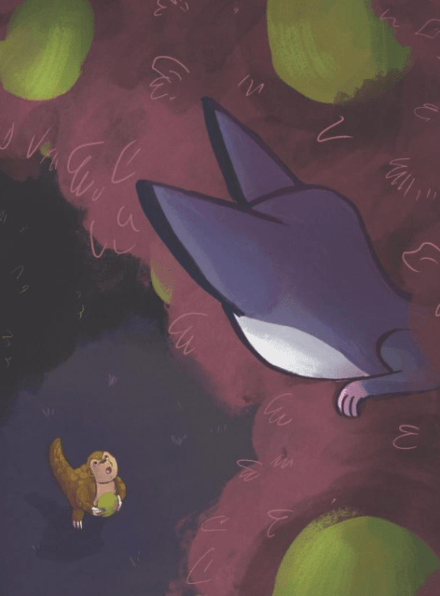
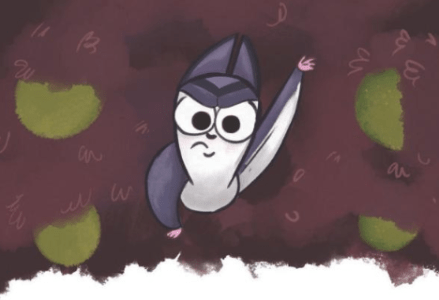
The small creature in the tree covered his nose. “‘That stench! That odor! That tang!’” he exclaimed. “‘This calls for the flaps!’” In a moment the animal leaped out of the tree and glided to the ground. Although a little scared, Tobin was curious. He wondered if perhaps this creature could become a friend. But it didn’t seem he was interested in anything but the pomelo. As he grabbed the green fruit, he introduced himself. “‘I am Bismark! Sugar glider spec-tac-u-lar! And the owner of this pomelo.’” But before Tobin could reply, a red fox emerged from the bushes.

She had smelled Tobin’s spray of fear and wondered if help was needed. The fox had “kind eyes” and “a warm smile.” Bismark spoke up and told the fox about Tobin and the pomelo and the thievery. The fox asked if all of this was true. “Tobin was shy, but the fox made him feel brave.” He answered that he was not stealing the fruit, but Bismark said he had seen it first.
celebrate-picture-books-picture-book-review-the-moonlight-meeting-pomelo

Image copyright Waymond Singleton, 2017, text copyright Tracey Hecht, 2017. Courtesy of Fabled Films Press.

The fox thought over the problem and…sliced the pomelo into three pieces. She gave a piece to Tobin and Bismark and kept one for herself. “‘Mmm,’ Tobin said. The pomelo was sweet! ‘Burp,’ Bismark belched. The pomelo was juicy. ‘Perfect,’ the fox declared. The pomelo was delicious!” It seemed the little sugar glider liked more than just the pomelo. After smoothing his hair and giving a deep bow, he introduced Tobin and himself. The fox smiled and told them her name was Dawn. Tobin was smitten.

Suddenly, they all realized that each of them slept during the day and were awake at night. Bismark exclaimed that they would be “a moonlight trio… a nocturnal brigade”… a…. Dawn broke in. “‘We will be friends,’” she said. Tobin and Bismark were happy. They were friends.

Facts about the nocturnal animals in the book and their favorite food, the pomelo, follows the story.
celebrate-picture-books-picture-book-review-the-moonlight-meeting-bismark

Image copyright Waymond Singleton, 2017, text copyright Tracey Hecht, 2017. Courtesy of Fabled Films Press.

Tracey Hecht introduces her unique band of friends in this story that brings a diverse group of animals together over the disputed ownership of a pomelo. The strong personalities of the characters lend humor and intrigue to their quarrel over this favorite fruit, and as Dawn raises her sharp claws to decide the issue, readers may join Tobin and Bismark in a moment of wide-eyed suspense. The fox’s solution, however, is one of inclusion and sharing and sets the tone for the rest of the series. Hecht’s short sentences are composed of active, high-interest vocabulary, and the story moves along at a quick pace, carried by realistic and funny dialogue.

Screen Shot 2019-06-27 at 7.56.43 PM


Kids will love meeting Dawn, Bismark, and Tobin through the illustrations on each page that convey their personalities and the storyline clearly. Tiny Bismark, with his big eyes, dramatic expressions, and energetic attitude is always ready for action. Tobin, the scaly pangolin with long claws, an anxious demeanor, and an inherent sweetness, is devoted and trustworthy. And Dawn, with her sleek red coat and gentle eyes, is caring, intelligent, and the glue that holds the three together. As readers get to know each character better, they’ll look forward to each one’s individual reactions to whatever adventure they encounter.

Ages 5 – 7 

Fabled Films Press, 2017 | ISBN 978-1944020149

You can find The Moonlight Meeting at these booksellers

Amazon | Barnes & Noble | Books-a-Million | IndieBound
celebrate-picture-books-picture-book-review-the-slithery-shakedown-cover

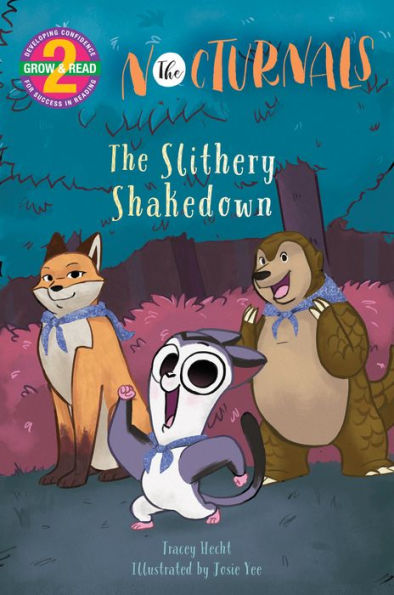
The Slithery Shakedown

Written by Tracey Hecht | Illustrated by Josie Yee


Although nighttime had come, Bismark was still waiting for his friends to arrive. “Bismark tapped his foot. Bismark put his fists to his hips. Bismark scrunched his tiny pink nose. This sugar glider was peeved!” Still, he was more relieved than angry when Tobin, the pangolin, came through the reeds. It wasn’t long before Dawn, a red fox, joined them. Bismark jumped on top of a rock and declared that he was going to take them on an adventure. After all he was “‘Bismark the Brave.’” Tobin and Dawn giggled at their tiny friend.
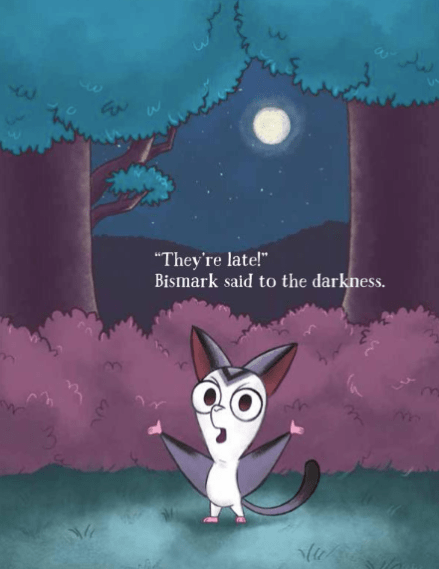
celebrate-picture-books-picture-book-review-the-slithery-shakedown-late

Image copyright Josie Yee, 2018, text copyright Tracey Hecht, 2018. Courtesy of Fabled Films Press.

Before they could get started, though, Dawn noticed something lurking in the bushes. It was a snake—a snake who seemed to have designs on eating Bismark for breakfast. “The snake slithered closer. ‘Sss-scrumptious!’ the snake said. ‘A sss-scrawny, little sss-sugar glider.’” Bismark ran and hit behind Dawn’s legs. Dawn stepped forward and confronted the snake. “Tobin summoned his courage” and joined her.

The snake prepared to attack. “Dawn snarled…. Tobin raised a sharp, taloned claw.” The snake took a look at the stalwart friends and decided it was time to “‘sss-skedaddle.’” Biskmark was trembling as he watched the snake slither away, but he would not admit that he had been scared. Dawn and Tobin reassured him that “‘You can be scared and brave, too.’” In fact, they told him, they had also been afraid of the snake.

celebrate-picture-books-picture-book-review-the-slithery-shakedown-peeved

Image copyright Josie Yee, 2018, text copyright Tracey Hecht, 2018. Courtesy of Fabled Films Press.

Just then something blue and shiny in the bushes caught Bismark’s eye. He went closer. The thing was long and thin, but it did not slither. “‘By the moon!’ Bismark said. ‘Look here! That snake slithered right out of its skin.’” He picked it up and tore it into three pieces. He gave a piece to Tobin and Dawn. They each tied the piece of snakeskin around their neck like a cape and admired themselves. Dawn thought it was the perfect symbol for their brigade. “‘The Nocturnal Brigade!’ Tobin cheered, and Bismark added, “‘Bold in adventure. And best of all, brave!’”

Information about the nocturnal animals in the book and their favorite food, the pomelo, follows the story.

When the three are threatened by a snake, will they be brave enough to send him packing? Even though Bismark considers himself the bravest of the brave, he turns out to be the one most frightened by the slithery bully. With his new friends behind him, Biskmark learns that fear and bravery often go hand in hand. Here, the three solidify their friendship with a physical symbol of the brigade, and their blue snakeskin capes become a regular feature of the series. Using lots of alliteration, dialogue and some sss-snakey onomatopoeia, Tracey Hecht weaves a fast-moving story that shows that sticking together and standing up for others is the best way to defeat a bully.

Josie Yee further develops her characters in this story that sees the usually uber-confident Bismark experience fear that he can’t hide. Tobin demonstrates another level of self-assurance by swallowing his usual shyness to confront the snake, and Dawn, true to her nature, serves as strong example to her friends and readers.

Ages 5 – 7 

Fabled Films Press, 2018 | ISBN 978-1944020170

You can find The Slithery Shakedown at these booksellers

Amazon | Barnes & Noble | Books-a-Million | IndieBound
celebrate-picture-books-picture-book-review-the-peculiar-possum-cover

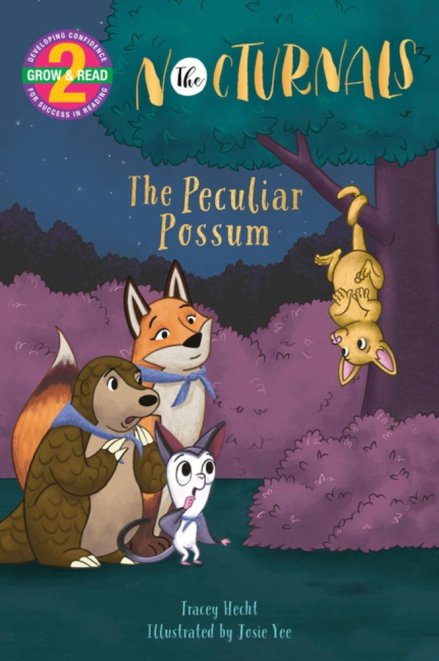
The Peculiar Possum

Written by Tracey Hecht | Illustrated by Josie Yee


It was a bright, beautiful night when Dawn, a fox; Bismark, a sugar glider, and Tobin, a pangolin met under the pomelo tree. Bismark was dismayed because while the tree was usually full of fruit, tonight he could only find one. Just then they heard a strange “cluck cluck clatter! Chit chit chatter!” Bismark was sure it was a prowler who’d come for his pomelos. “Suddenly, the wind blew. The shadows shifted. A strange smell filled the air.”

Dawn looked up into the tree and saw “two shiny, brown eyes. And a paw, holding a pomelo! ‘Popping peepers!’ Bismark bellowed. ‘There is a prowler! And it has one of my precious pomelos!’” Quickly, the eyes disappeared and the pomelo came soaring out of the swaying branches. With a few more clucks and clatter, chits and chatter, the prowler plunked down in front of them. The three friends recognized the interloper as a possum. They gathered around it, but it lay motionless on the ground.
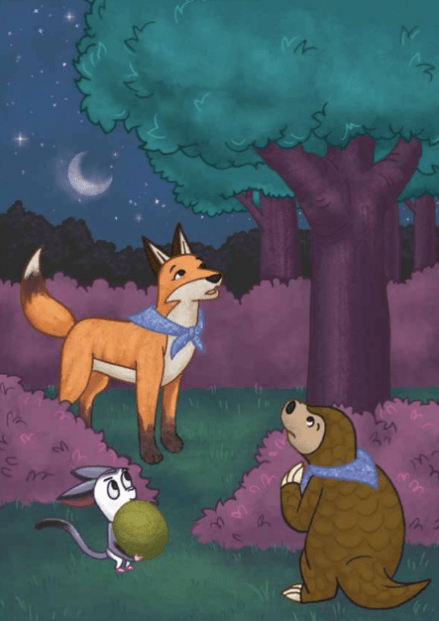
celebrate-picture-books-picture-book-review-the-peculiar-possum-brigade

Image copyright Josie Yee, 2018, text copyright Tracey Hecht, 2018. Courtesy of Fabled Films Press.

Dawn prodded it with her paw. “‘Perhaps this possum is feeling a bit peaky,’” she said. But the possum opened one eye and told them it was just playing possum. The possum got up and introduced herself as Penny. “‘Pleased to meet you,’” she said, sticking out her paw. But Bismark was not pleased to meet her. He did not like that she “prowls and pillages.” As evidence he pointed to the wayward pomelo.

Dawn gazed at her friend and said, “‘Bismark, these pomelos belong to everyone.’” Well, what about the way Penny chits and chatters? Bismark asked. He thought her way of speaking was strange. Dawn reminded him that he too had a unique way of speaking. Then Bismark pointed out the unusual hairless patch on Penny’s tail. “Dawn smiled gently. She looked down at Bismark’s bald spot. ‘Bismark, Penny is not the only one with a hairless patch.’” Still, Bismark wasn’t keen on Penny’s smell or the way she played possum.
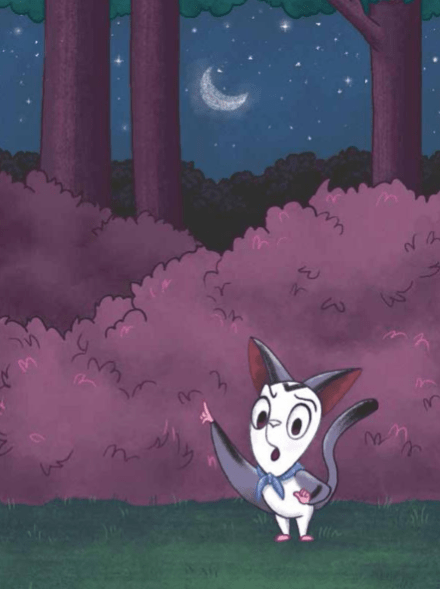
celebrate-picture-books-picture-book-review-the-peculiar-possum-bismark

Image copyright Josie Yee, 2018, text copyright Tracey Hecht, 2018. Courtesy of Fabled Films Press.

Tobin hurried to Penny’s side to defend her. “‘Penny, I spray a terrible odor when I get scared,’” he reassured her, reaching for her paws. Dawn told Bismark that no one is exactly like someone else. That everyone is unique. Then Penny told Bismark that she was proud of who she is. Bismark looked at Penny, and even though it was hard to admit he’d been wrong, he apologized to her and proclaimed, “‘You are your own possum. And that makes you perfect.’” Then Bismark split the pomelo into four sections and they all had a pomelo picnic.

Fun facts about pangolins, red foxes, sugar gliders, brushtail possums, and pomelos follow the text. Back matter also includes a Language Glossary showing forms of five words in the story as well as the translations of these words into Spanish, Portuguese, Mandarin, French, and Arabic.
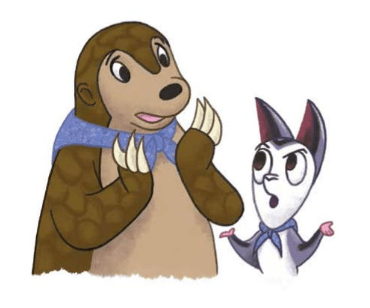
celebrate-picture-books-picture-book-review-the-peculiar-possum-tobin

Image copyright Josie Yee, 2018, text copyright Tracey Hecht, 2018. Courtesy of Fabled Films Press.

When Bismark encounters Penny, a possum and an animal he’s never seen before, his adverse reaction to her disappoints Dawn and Tobin, who show him the errors in his thinking. Through her story, Tracey Hecht demonstrates that everyone has more similarities than differences and that what makes one person distinctive should be celebrated. Along the way, readers learn how to welcome a new friend.

Ages 5 – 7 

Fabled Films Press, 2018 | ISBN 978-1944020194

You can find The Peculiar Possum at these booksellers

Amazon | Barnes & Noble | Books-a-Million | IndieBound

Grow & Read Early Reader Level 3 Book

celebrate-picture-books-picture-book-review-the-chestnut-challenge-cover

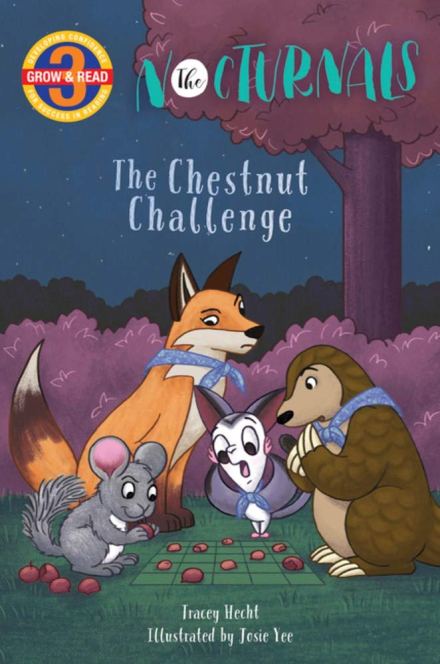
The Chestnut Challenge

Written by Tracey Hecht | Illustrated by Josie Yee


After sundown, while other animals slept, Dawn, a red fox; Bismark, a sugar glider; and Tobin, a pangolin “were playing a game of chestnut checkers.” Bismark thought Tobin was taking too long to move his chestnut. He snapped his fingers, tapped his foot, and finally said, “‘Hurry up!’” But Dawn chided Bismark and said Tobin should take the time he needed. At last Tobin moved his piece. Bismark was delighted. Tobin, it seemed, had set him up to win. Bismark moved one of his chestnuts. Now it was Tobin’s turn to be delighted. “Tobin jumped a chestnut across the board—and captured all of Bismark’s chestnuts.” Bismark was crushed. Tobin chuckled and said that it was only a game.
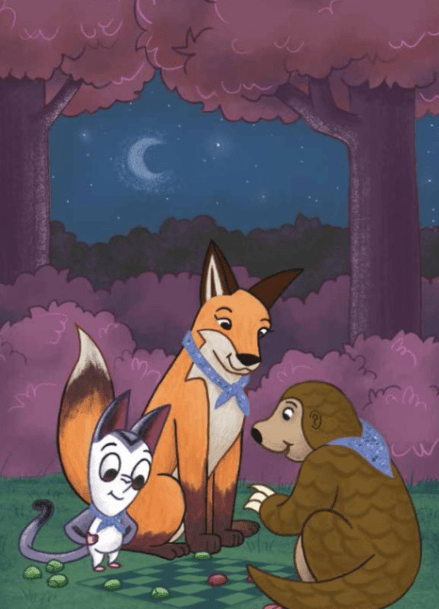
celebrate-picture-books-picture-book-review-the-chestnut-challenge-playing

Image copyright Josie Yee, 2019, text copyright Tracey Hecht, 2019. Courtesy of Fabled Films Press.

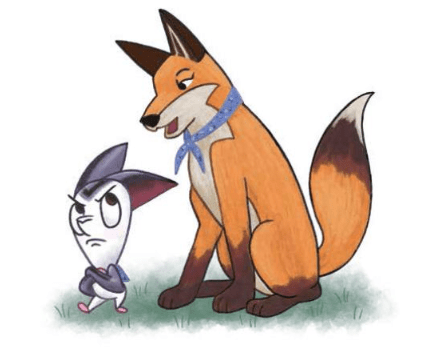
Suddenly, a voice called out and Chandler, a chinchilla, popped out from a nearby bush. He said that he was “‘the real chestnut champion.’” Bismark warned his friends against playing chestnuts with Chandler. He seemed to boastful to the little sugar glider, but Dawn wanted to give him a chance. Chandler chose Tobin to play first. Tobin didn’t like playing competitively; he just liked to have fun.

Bismark was all for Tobin taking up Chandler’s challenge, while Dawn said it was up to him to play or not. Chandler wanted an answer. Tobin decided to play—but just for fun. “Chandler and Tobin started to play. Chandler’s brow wrinkled. Tobin’s jaw tightened. No one seemed to be having fun.” Just then, Chandler shouted and pointed to the bushes. Tobin, Bismark, and Dawn all turned to look. “That’s when Chandler reached forward—and moved one of Tobin’s chestnuts!” When the three friends turned back, Chandler took his turn and Tobin’s chestnut that he had moved.
celebrate-picture-books-picture-book-review-the-chestnut-challenge-bismark

Image copyright Josie Yee, 2019, text copyright Tracey Hecht, 2019. Courtesy of Fabled Films Press.

Dawn thought something looked suspicious. Bismark begged Tobin to win against the “cheeky challenger.” Tobin was nervous. Suddenly, Chandler sneezed right in their faces. While their eyes were closed, he moved two chestnuts. He laughed when he saw that no one had seen him. Chandler only grew bolder. When Tobin closed his eyes for a moment, the chinchilla stole one of his pieces. This time Bismark caught him. He called on Dawn and Tobin, but Chandler denied it. Dawn, however, had also seen him steal the piece. She looked directly into his eyes and asked if he had stolen Tobin’s chestnut.

Now it was Chandler’s turn to be nervous. His cheeks reddened, his teeth chattered, “and then from Chandler’s paw, out dropped the chestnut.” With tears in his eyes, he admitted that he was a cheater. Dawn told him that champions don’t use tricks, and Tobin told him no one wins all the time and practice helps. Then they offered Chandler a second chance. So with Tobin cheering him along and Bismark keeping an eye on the board, “the four friends settled into a cheerful game of chestnut checkers.”

Fun facts about pangolins, red foxes, sugar gliders, chinchillas, and chestnuts follow the story.

celebrate-picture-books-picture-book-review-the-chestnut-challenge-game

Image copyright Josie Yee, 2019, text copyright Tracey Hecht, 2019. Courtesy of Fabled Films Press.

As the three friends meet a chinchilla with competitive streak, Tracey Hecht shows readers that cheating to win deprives all participants—even the champion—of the fun and pleasure of playing a game. In today’s super-charged world of competition at all levels, Hecht’s reminder that good sportsmanship wins out is welcome, and Tobin, Bismark, and Dawn, with their various personalities and generous offer to give him Chandler a second chance, make good companions as developing readers increase their skills while learning to play fair and for fun.

Josie Yee’s nighttime illustrations, rendered in dark blues, plums, and deep greens, take kids to the heart of a heated chestnut checkers match where they watch as Chandler concocts false alarms to cheat his way to victory. When Chandler is caught red-handed, readers see the positive effect his confession and the brigade’s offer of another chance have on him.

Ages 6 – 8 

Fabled Films Press, 2019 | ISBN 978-1944020231

You can find The Chestnut Challenge at these booksellers

Amazon | Barnes & Noble | Books-a-Million | IndieBound

You can learn more about The Nocturnals series; watch videos of games, face painting, and other activities; find educational language arts and science guides; download activity kits; and even join the Brigade by visiting The Nocturnals website.

You can find information about the Grow & Read program, Educator’s Guides, and The Nocturnals Book Club Kits with printable coloring pages and masks at Grow & Read.

Picture Book Review

June 27 – It’s National Zoo and Aquarium Month

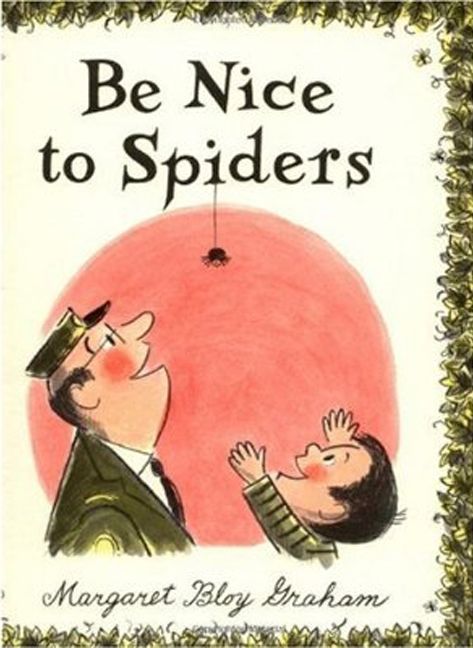
celebrate-picture-books-picture-book-review-be-nice-to-spiders-cover

About the Holiday

This month’s observance pays tribute to the role of zoos and aquariums and the work they do for education, conservation, and research to protect the world’s animals. As zoos and aquariums build exhibits that more closely resemble the animals’ natural habitats and offer interactive and hands-on programs, more visitors can learn about the environments and science of each amazing creature. These institutions are also reaching out with personal and online visits to schools by zoologists and other experts, increasing the interest in biology and animal science to students. Nearly 175 million people—50 million of which are children—visit zoos and aquariums each year. To celebrate today, visit your local zoo or aquarium!

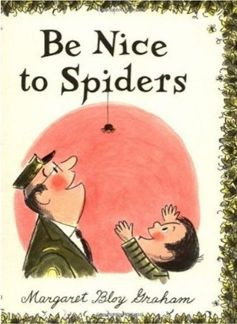
Be Nice to Spiders

By Margaret Bloy Graham


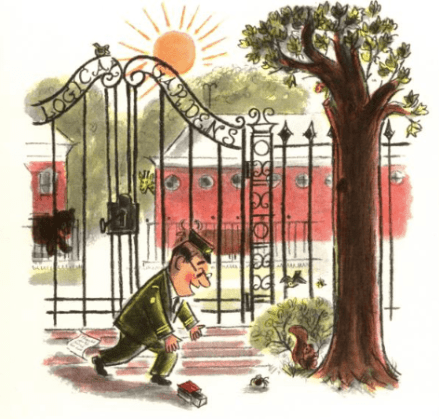
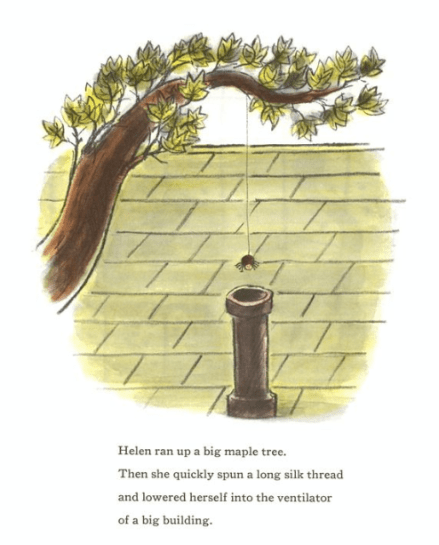
One morning as the Zoo Keeper was about to open the gate, he noticed a matchbox with a note attached to it. The “note read: ‘Please look after Helen. I’ve had her since she was a baby, but I can’t keep her anymore. We have to move to an apartment that won’t take pets. Thanks, Billy.” When the Keeper opened the box, out jumped eight-legged Helen. She scurried into the maple tree and then “quickly spun a long silk thread and lowered herself into the ventilator of a big building” that turned out to be the Lion House. The poor lions—a father lion, a mother lion, and four cubs—were beset by flies. “The lions were annoyed, but Helen was delighted. She loved to eat flies.” Right away she wove a big, sticky web. “One by one the flies got caught…. And one by one Helen ate them.”

celebrate-picture-books-picture-book-review-be-nice-to-spiders-matchbox

Copyright Margaret Bloy Graham, 1967, courtesy of HarperCollins.

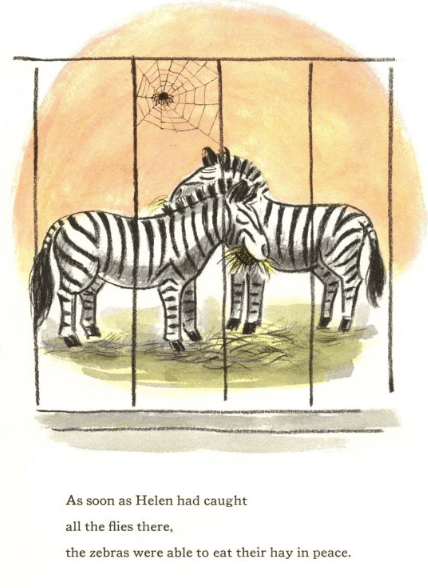
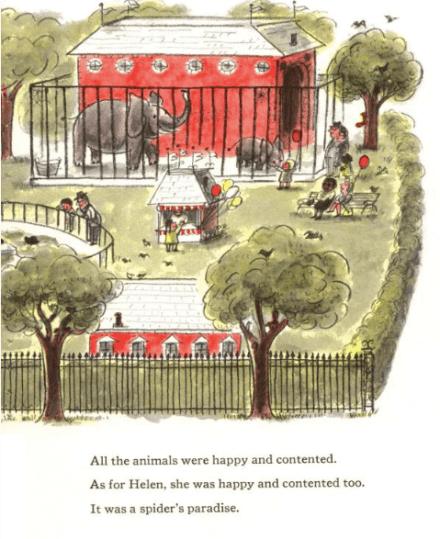
After a week, the Lion House was free of flies and the lions were comfortable. Helen moved on to the Elephant House. She set up her web, and in a week the elephants were happy too. Next, Helen went to the Zebra House and after she “had caught all the flies there, the zebras were able to eat their hay in peace.” In fact, the zoo turned into a peaceful place for all the animals. Helen was very content too.

One morning, the Keeper called all the workers together and told them that the Mayor was coming for a visit that day. He wanted them to clean up all the cages and especially “‘get rid of all those spider webs.’” Joe said that he thought spiders were beneficial, but the Keeper thought the spider webs made the zoo look a mess. With their brushes, brooms, and hoses, the workers scrubbed the cages clean. When they got to the Camel House, they found one of Helen’s webs loaded with flies. He swiped at the web, but Helen had vanished.

celebrate-picture-books-picture-book-review-be-nice-to-spiders-Helen

Copyright Margaret Bloy Graham, 1967, courtesy of HarperCollins.

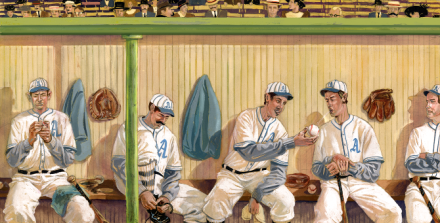
When the Mayor arrived, he declared that he’d never seen the zoo looking “‘so neat and the animals looking so well.’ Meanwhile Helen was still in the Camel House, hiding in a crack in the ceiling.” She was afraid to come out. Days passed and Helen grew hungry. Flies returned and began to bother the camels again. One night, Helen was so hungry that she came out and spun a web. She decided to stay in the Camel House—“she didn’t dare go anywhere else.” This was good for the camels, but not good for all the other animals.
celebrate-picture-books-picture-book-review-be-nice-to-spiders-roof

Copyright Margaret Bloy Graham, 1967, courtesy of HarperCollins.

The Keeper couldn’t understand what had happened. As he and Joe walked through the zoo, the animals and even the visitors were under clouds of flies and looking miserable. But then they went into the Camel House. Here there were no flies, and the camels were peaceful and happy. Then Joe spied one of Helen’s webs. “‘Look, Chief,’ Joe shouted. ‘Now I know what’s going on! See that spider up there? It’s eating all the flies…. Spiders are useful. That’s what I tried to tell you the other day.’”
The Keeper called all the workers together and told them about Joe’s discovery. He also had a new rule for the zoo: “‘Be nice to spiders.’ Soon the Zoo became famous for its happy, healthy animals, and Helen was treated like a queen.” One day, Helen even got her picture on the front page of the newspaper under the headline: “Local Zoo Named Best of Year; Three Cheers for Spider! Says Keeper.

celebrate-picture-books-picture-book-review-be-nice-to-spiders-zebras

Copyright Margaret Bloy Graham, 1967, courtesy of HarperCollins.

One of the people reading the newspaper was Billy’s dad. He showed the article to Billy, and the next day Billy went to visit Helen. He introduced himself to the Keeper, and then noticed something special in Helen’s web. It was an egg sac. “‘I bet there’ll be plenty of baby spiders soon,’” exclaimed Billy. And sure enough, a few days later Helen became the proud mother of lots and lots of little spiders. “From then on, Helen and her children and all the animals in the Zoo lived happily ever after.”

celebrate-picture-books-picture-book-review-be-nice-to-spiders-zoo

Copyright Margaret Bloy Graham, 1967, courtesy of HarperCollins.

Margaret Bloy Graham’s classic story has been a kid-favorite since 1967—I know it was a favorite of mine and I was happy to pull my Weekly Reader Children’s Book Club Edition copy out of my collection for this review. Billy’s sweet concern for his pet spider, Helen’s initiative in dropping into the Lion House, and the natural solution to the zoo’s fly problem all combine to make this a story that is ever-fresh and appealing to kids. Graham’s smooth and straightforward narration is sprinkled with realistic dialogue and builds to a suspenseful turn that is riveting to children. Kids with pets of their own will cheer when Billy learns that Helen is a hero. The idea of natural, environmentally safe solutions to pest control is still relevant and resonant today.

celebrate-picture-books-picture-book-review-be-nice-to-spiders-web

Copyright Margaret Bloy Graham, 1967, courtesy of HarperCollins.

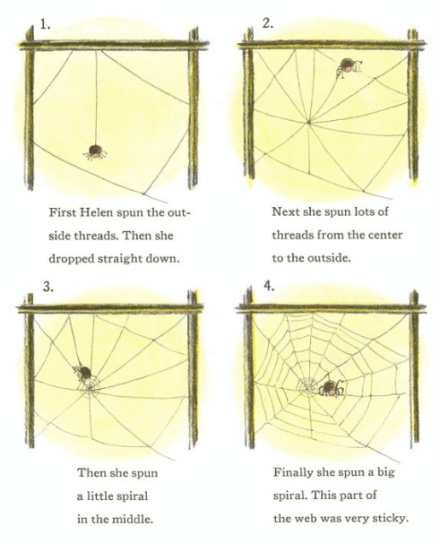
Graham’s illustrations have lost none of their charm, in fact kids will be enchanted by the vintage look and adore little Helen who, with a smile on her face, snares plenty of flies in her webs. Readers will like seeing just how a spider goes about constructing a web and will enjoy spying where Helen is on each page. You can bet there will be a chorus of “noooo!” as a zoo worker raises his broom to sweep away Helen and one of her webs and an enthusiastic “yesss!” when Joe points out just how vital she is to the zoo. The illustrations also give adults and kids an opportunity to talk about how things have changed at zoos over the intervening years.

An impactful story with lots of heart, Be Nice to Spiders will be a favorite of kids who love spiders, zoos, and the environment.

Ages 4 – 7

HarperCollins, 1967

National Zoo and Aquarium Month Activity

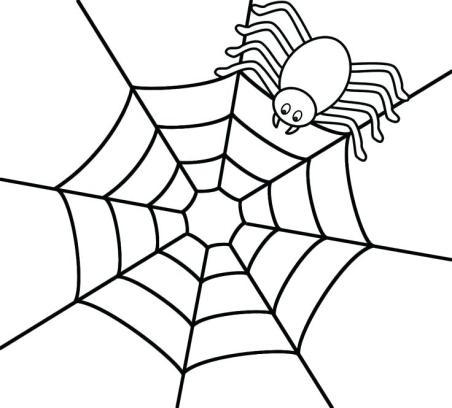
celebrate-picture-books-picture-book-review-spider-coloring-page

Splendid Spider Coloring Page

Having a spider in the house is lucky! Here’s an alert spider just waiting for some flies. Grab your crayons or pencils and feed him – or be a little silly. What else can this spider catch in his web?

Splendid Spider Coloring Page

celebrate-picture-books-picture-book-review-be-nice-to-spiders-cover

You can find Be Nice to Spiders at these booksellers

Amazon | Barnes & Noble | Books-a-Million | IndieBound

Picture Book Review