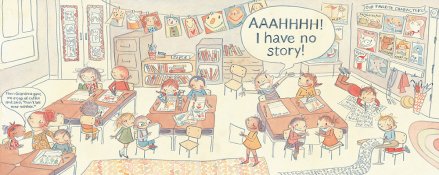
September 24 – National Punctuation Day

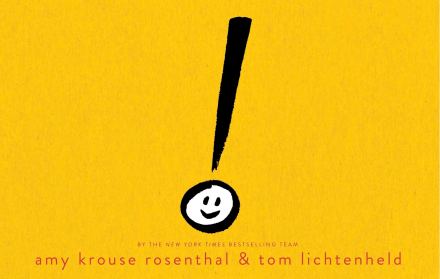
celebrate-picture-books-picture-book-review-exclamation-cover-2

About the Holiday

What’s so great about punctuation? Everything! Using correct punctuation allows you to express exactly what you mean. You’ve seen—and no doubt laughed at—examples of misplaced or misused punctuation: “Let’s eat John” versus “Let’s eat, John” and the random placement of quotation marks when no one’s talking or referencing another source. And while in the grand scheme of things the series comma may not make that much difference, in some cases lawsuits have been won and lost on just this detail. Texting has changed the way punctuation is used—or not. While a smiley face may be a substitute for the exclamation mark or a frowny face an emotive period, in other types of writing, knowing the rules of punctuation is still important. Today, celebrate the way punctuation makes all written communications clearer and more meaningful.

Exclamation Mark

Written by Amy Krouse Rosenthal | Illustrated by Tom Lichtenheld


! “stood out from the very beginning.” When he was standing in a row of ……, it didn’t matter if he was in the middle or at the end—he still stuck out. The only time he wasn’t so noticeable was when he laid down to go to sleep. Sometimes he twisted himself into coils and did somersaults to be like the others, but nothing worked. “He just wasn’t like everyone else. Period.” This left him feeling “confused, flummoxed, and deflated.”
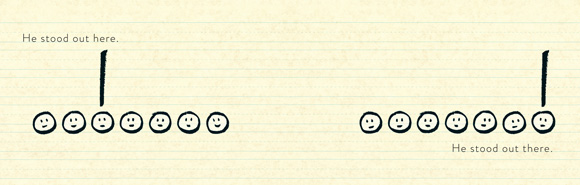
celebrate-picture-books-book-review-exclamation-mark-stands-out

Image copyright Tom Lichtenheld, text copyright Amy Krouse Rosenthal. Courtesy of Scholastic Press

He was just about to run away from all his problems when he met ?. ? rushed right up to him and wanted to know everything. “Who are you?…What’s your favorite color? Do you like frogs?…Do you wanna race to the corner? Is there an echo in here? Is there an echo in here?…Why do you look so surprised?….” The list went on and on.
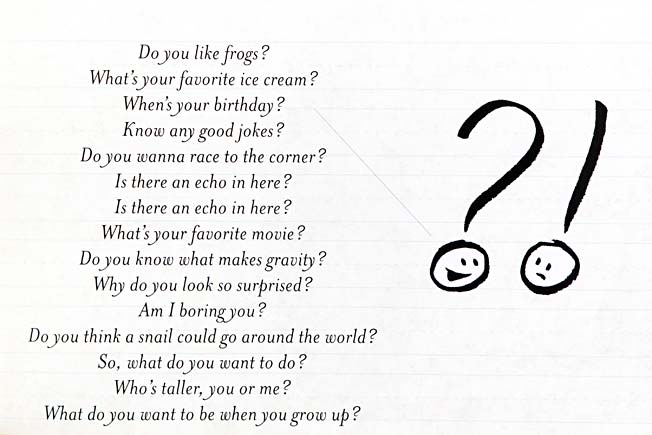
celebrate-picture-books-book-review-exclamation-mark-lots-of-questions

Image copyright Tom Lichtenheld, text copyright Amy Krouse Rosenthal. Courtesy of Scholastic Press

“STOP!” ! shouted. The sound stunned him. ? smiled and wanted him to do it again. ! didn’t know if he could, so he tried a small “Hi!” “That felt right, so he tried something bigger. Howdy!” And then he said, “Wow!” After that there was no stopping him: “You’re it!…Home run!…Yum!…Look out!…Thanks!…Boo!…Go!”

He rushed off to show everyone what he could do. The …… were delighted and “there was much exclaiming.” Now feeling happy and confident, ! “went off to make his mark.”

celebrate-picture-books-book-review-exclamation-mark-yippee

Image copyright Tom Lichtenheld, text copyright Amy Krouse Rosenthal. Courtesy of Scholastic Press

Amy Krouse Rosenthal’s clever story of an exclamation point searching for self expression is as moving as it is original. Kids will recognize his feelings of sticking out in a crowd and uncertainty of purpose and applaude when ? comes on the scene to befriend !. Readers will giggle knowingly at the barrage of questions, and feel emboldened themselves as ! finds his voice and his own unique contribution.

Tom Lichtenheld’s adorable punctuation marks hanging out on kid-ruled paper demonstrate all the expression and expressions of this well-crafted story. With simple dot eyes and small streak mouths, Lichtenheld animates the various emotions of the periods, exclamation mark, and question mark as they discover !’s special talent with individuality for each. The unbridled exuberance of ?‘s and !’s meeting makes this a terrific book about friendship as well.

! deftly points out “What would we do without exclamation points?” Likewise it asks, “What would we do without each one of us?” The positive message, creatively and humorously presented, makes this book a terrific addition to any child’s library.

Scholastic Press, 2013 | ISBN 978-054543679

You’ll find more about Amy Krouse Rosenthal, her books for children and adults, videos, other projects, and so much more on her website!

Discover a portfolio of books by Tom Lichtenheld as well as fun book-related activities and resources for teachers on his website!

!!!! for this ! book trailer!

National Punctuation Day Activity
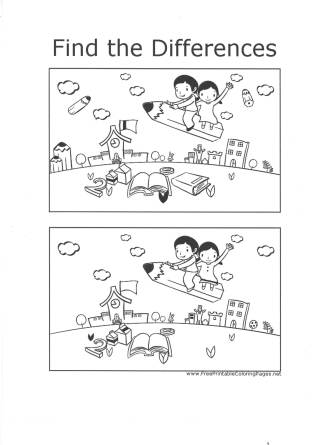
celebrate-picture-books-picture-book-review-pencil-riding-kids-find-the-differencesExcellent Writers Find the Differences Puzzle


These kids love to write and know their punctuation! Can you find the twelve differences in this printable Excellent Writers Find the Differences Puzzle?

Picture Book Review 

September 1 – World Letter Writing Day

celebrate-picture-books-picture-book-review-kuma-kuma-chan's-home-cover

About the Holiday

Letters don’t have to be those long missives sent in envelopes with stamps affixed. A note to a friend, a message included in a child’s lunch sack, or a post-it stuck where a co-worker can see it are are all ways to write a few encouraging words to those you love. Today, why not put your thoughts on paper and send or give your letter to someone you’d like to connect with?

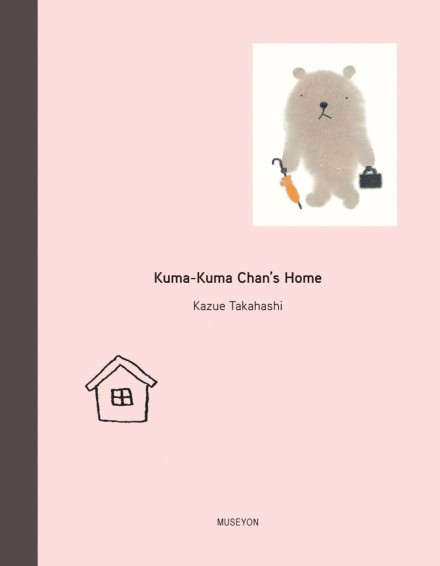
Kuma-Kuma Chan’s Home

By Kazue Takahashi


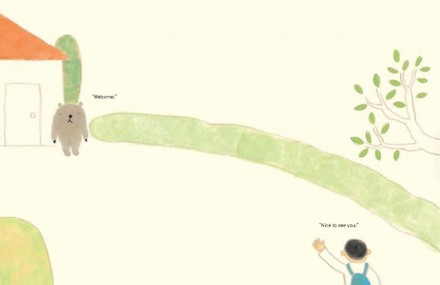
Framed by his window Kuma-Kuma Chan, the little bear, sits at his writing desk penning a letter. It says simply, “How are you? Come visit me soon.” When it is received, Kuma-Kuma Chan’s friend begins the long journey to see him. “I have to ride a train for an hour, take a bus for thirty minutes, then walk for fifteen minutes,” the boy states. From the bus stop, the boy can see the red roof of Kuma-Kuma Chan’s house in the distance, and as he approaches he sees hisfriend waiting outside to welcome him.

celebrate-picture-books-picture-book-review-kuma-kuma-chan's-home-welcome

Copyright Kazue Takahashi, 2016, courtesy of museyon.com

The boy has been here before and once more enjoys the routine as “Kuma-Kuma Chan serves bear tea. The first thing he always does is serve bear tea,” the boy explains. It seems that the time between visits has been long, and at first the silences are longer than the conversation. In the quiet the boy watches “the dust floating around in the afternoon sunbeams” and looks “at the books on the shelf,” reading “the titles one by one….” Meanwhile Kuma-Kuma Chan may be having second thoughts about his hospitality. He “gets up and opens the window to let in some fresh air” and checks the expiration date on the bear tea.

celebrate-picture-books-picture-book-review-kuma-kuma-chan's-home-dinner

Copyright Kazue Takahashi, 2016, courtesy of museyon.com

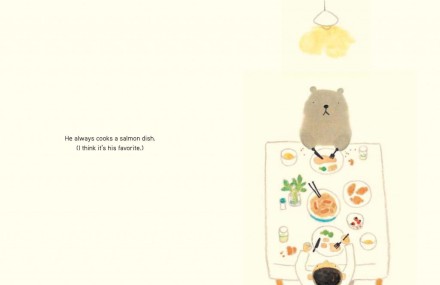
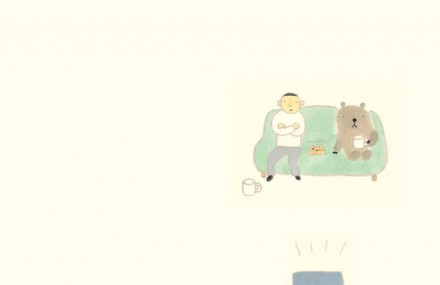
By the time Kuma-Kuma Chan serves the rice crackers conversation comes easier. For dinner Kuma-Kuma Chan prepares a salmon dish as always. It is, the boy thinks, his favorite and “perfect for a bear.” After dinner the two watch television and enjoy a mutually favorite snack of chocolate and hot milk. Soon all of the chocolates the boy brought are gone and it is time for him to catch the last bus home.

He slings his backpack over his shoulders and says goodbye to Kuma-Kuma Chan, who invites him to come back soon. Framed in the golden light of his doorway, the little bear waves farewell to his friend as he ventures out into the sapphire blue night.

celebrate-picture-books-picture-book-review-kuma-kuma-chan's-home-watching-tv

Copyright Kazue Takahashi, 2016, courtesy of museyon.com

Kazue Takahashi, a Japanese illustrator and children’s book author, employs kawaii—the quality of being cute and adorable—in creating her quiet, moment-in-time story that focuses on the essence of true friendship. The boy and the little bear are happy simply being together. The details of the day that Takahashi chooses to highlight are ones that we as adults might overlook, but which for children are still new and fascinating: the way Kuma-Kuma Chan’s house “smells slightly of bear,” a self-consciousness on the part of a host, the desire of each party to please the other.

celebrate-picture-books-picture-book-review-kuma-kuma-chan's-home-bear-tea

Copyright Kazue Takahashi, 2016, courtesy of museyon.com

Each right-hand page contains a central image that highlights the spare text presented on the left-hand page. The white space surrounding the illustrations, which are free of all extraneous details, echoes the openness of the storyline. The only two-page illustration spreads come at the beginning of the story, when Kuma-Kuma Chan stands at his door welcoming the boy, and at the end, when the two are saying goodbye, emphasizing the connection of their friendship and perhaps also the distance between them when they are apart. The muted colors and downy texture of the images enhances the sweet charm of Kuma-Kuma Chan, who is no bigger than a thumbprint.

Kuma-Kuma-Chan’s Home would appeal to a varying age-range of children—and even adults. Young children would enjoy discussing the story page-to-page, while older readers would like the quiet respite the book offers. It’s depiction of a one-on-one friendship would be welcomed by introverted children as well. Kuma-Kuma Chan’s Home is a perfect little book to keep on personal library shelves for those times when companionship—and cuteness—is needed.

Ages 3 and up

Museyon, 2016 | ISBN 978-1940842097

World Letter Writing Day Activity

celebrate-picture-books-picture-book-review-tea-party-template


Tea Time Stationery


Today, take a little tea time and write a short letter to a friend, a family member, or a coworker. Print out this Tea Time Stationery and get started!

Picture Book Review
August 31 – We Love Memoirs Day

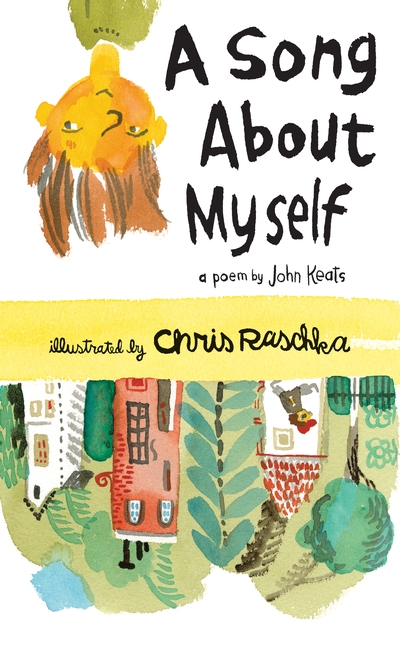
celebrate-picture-books-picture-book-review-a-song-about-myself-cover

About the Holiday

In 2013 two authors of memoirs, Victoria Twead and Alan Parks, established today’s holiday to foster a warm and welcoming community for readers and writers of memoirs. The idea took off and now We Love Memoirs Day brings the art and heart of this personal form of writing to people across the world. If you like to read memoirs, grab one from the shelf and enjoy! If you’ve ever thought of penning the story of your own life and/or family, today’s the perfect opportunity to start!

A Song About Myself: A Poem by John Keats

Written by John Keats | Illustrated by Chris Raschka


1

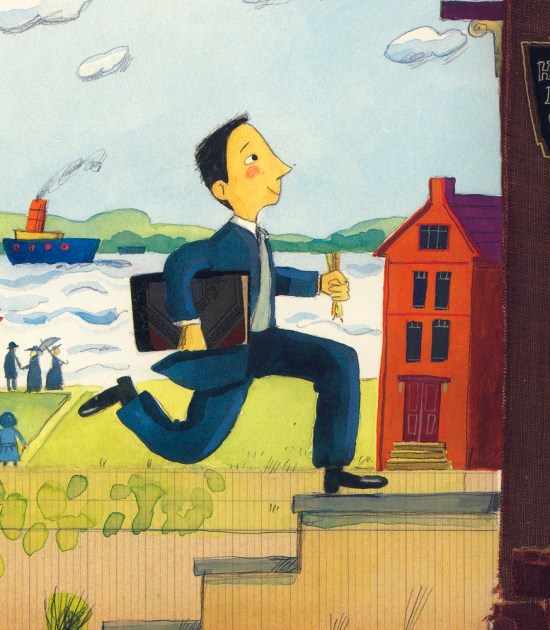
“There was a naughty Boy, / A naughty boy was he, / He would not stop at home, / He could not quiet be—” So this adventurous boy packed his knapsack with “a Book / Full of vowels / And a shirt / With some towels—” He added a comb and a brush, a cap to protect himself both day and night, and an extra pair of stockings for when the old ones got threadbare. With his knapsack buckled on tight, the little boy headed North

celebrate-picture-books-picture-book-review-a-song-about-myself-writing

Copyright Chris Raschka, courtesy of Candlewick, 2017

2

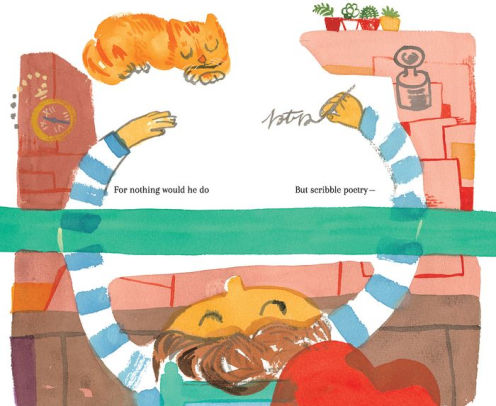
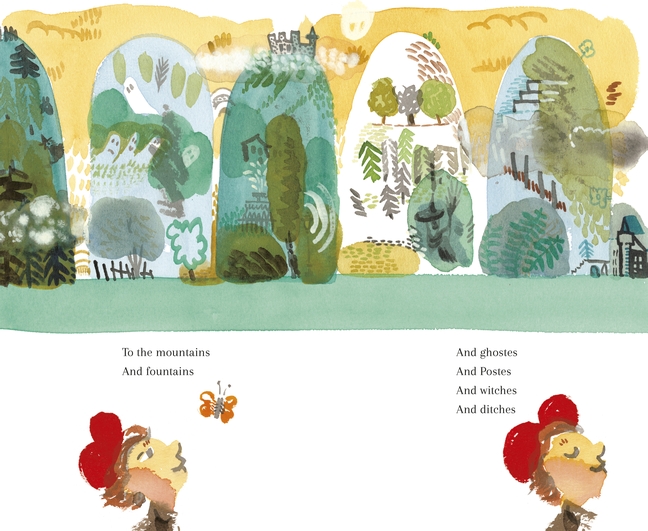
“There was a naughty Boy, / A naughty boy was he, / For nothing would he do / But scribble poetry—” With ink stand and pen he ran away “to the mountains / And fountains / And ghostes / And Postes / And witches / And ditches.” In the winter he wrote with his coat on, not fearing contracting gout; and when the weather was warm, he abandoned his coat while he captured the charm of the North.

3

“There was a naughty Boy, / A naughty boy was he, / He kept little fishes / In washing tubs three.” Not fearing the maid’s or his granny’s displeasure, this mischievous boy would rise with the sun and head for the brook to catch minnows that he liked to watch darting around in his bucket—“A Kettle / Of Fish a pretty Kettle / A Kettle!”

celebrate-picture-books-picture-book-review-a-song-about-myself-to-the-mountains

Copyright Chris Raschka, courtesy of Candlewick, 2017

4

“There was a naughty Boy, / A naughty boy was he, / He ran away to Scotland / The people for to see— .” But what he discovered was that the building, people, things and emotions were the same there as in England. This revelation make him think about his world, “so he stood in his shoes / And he wonder’d, / He wonder’d / He stood in his shoes / And he wonder’d.”

In an Illustrator’s Note, Chris Raschka reveals that John Keats—one of the greatest romantic poets—wrote this poem in a letter to his sister, Fanny, while he was walking through Scotland on a tour that he imagined would inspire “the grand poetry that he knew was inside him.”

This quirky poem that follows the travails and travels of a little boy filled with wanderlust, a gift for writing, and insight beyond his years is a perfect match for Chris Raschka’s art. Topsy-turvy perspectives, vivid colors, and evocative and action-packed vignettes beautifully represent the boy’s “naughtiness” and precocious imagination. As he dashes across the yard, his house—red capped and with a mustache-shaped lintel over the door—seems to watch through window eyes; the boy’s mighty pen stands taller than he is; and ghosts, witches, castles, and fountains are framed in the hills that he passes on his journey. Bold swatches of yellow, green, and red that split the pages in half serve as directional arrows, roads, and verse dividers while also leading readers to the book’s final wisdom.

Kids will find it fun to explore the endpapers that present a bird’s-eye-view of the expanse from Scotland to New York over “Much Water.”

A Song About Myself: A Poem by John Keats is a joyous treat that celebrates the whimsy of childhood and the wonders of the imagination. For poetry lovers or those who enjoy a good story, this book would make a charming gift or addition to home bookshelves.

Ages 6 – 10

Candlewick, 2017 | ISBN 978-0763650902

You can view a gallery of artwork by Chris Raschka on tumblr!

We Love Memoirs Day Activity

celebrate-picture-books-picture-book-review-reading-bug-bookmark

I Have the Reading Bug Bookmark


If you love reading, then print out this I Have the Reading Bug Bookmark that can mark your page with style! For a sturdier bookmark, print on card stock or heavy paper.

celebrate-picture-books-picture-book-review-a-song-about-myself-cover

You can find A Song About Myself at these booksellers

Amazon | Barnes & Noble | Books-a-Million | IndieBound

Picture Book Review
 

August 28 – National Bow Tie Day

celebrate-picture-books-picture-book-review-bow-tie-pasta-acrostic-poems-cover

About the Holiday

We’ve all learned about the 30-year war in school, but I bet your teacher never mentioned that world-side use of the bow tie was one of the results. It seems the Croatian soldiers used a bow tie to close the collars of their shirts. The idea caught on, and, later, French tobacco magnate Pierre Lorillard wore a bow tie to a Tuxedo Club event. The black-and-white fashion statement gained popularity, and bow ties took off in all kinds of colorful, wacky, and iconic ways.

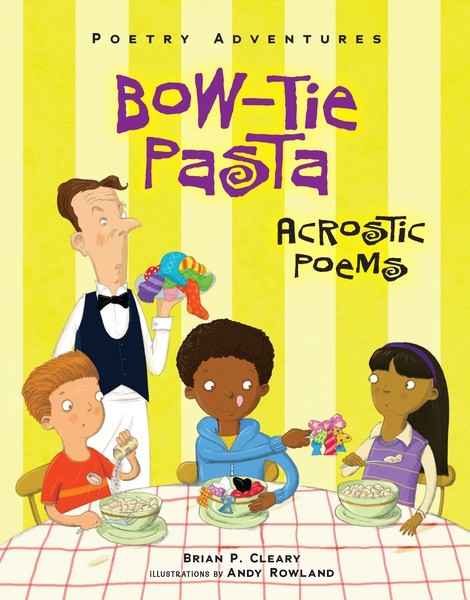
Bow-Tie Pasta: Acrostic Poems

Written by Brian P. Cleary | Illustrated by Andy Rowland


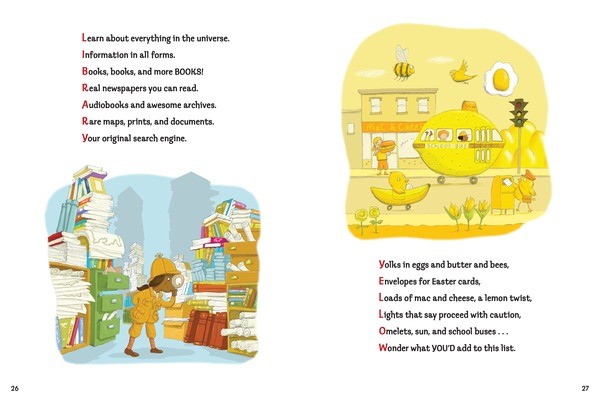
Acrostics are special nuggets of information or creativity formed by using the letters of a word to begin each new sentence. Writing poems in acrostic style takes thought and ingenuity—and that’s just what Brian P. Cleary offers in his twenty-seven poems that tackle all kinds of subjects, from pirates to spiders to sharks, from holidays to colors to food, and from people to places to things.

Bow-Tie Pasta riffs on the wearable and edible types of bow ties and comes to a conclusion we can all digest: “Blue gingham / Orange striped / White formal / Tartan plaid / Irish shamrocks / Embroidered stars / Polka dots / Argyle / Silky yellow / Tweed / Awful tasting.”

In Piano, a boy wistfully watches a parade go by: “Parading down Main Street / Is a sea of red-uniformed players of flute / And clarinet and drum / Navigating their way through confetti and applause / Only wish that I could march with my instrument.”

celebrate-picture-books-picture-book-review-bow-tie-pasta-acrostic-poems-library-yellow

Image copyright Andy Rowland, 2015, text copyright Brian P. Cleary, 2015. Courtesy of Millbrook Press.

A Rainy Day inspires another clever verse: Reading in a cozy nook / Asking for another book / I made cookies by the sheet / Next they cool. I dunk and eat. / Yo-yo, board games, watch the rain, / Draw a face inside each pane. / Afterwards I make s’mores. / Yes, I love the great indoors.”

Fish aficionados may want to heed the warning in Piranha: Peering into my aquarium, / I spy the fish with two rows of / Razor-sharp teeth. / As he swims towards my tapping finger / Near the top of the tank’s glass, / He serves as a reminder that there / Are some pets you should never pet.

For those who like their poems non-fiction, Triceratops reveals some fascinating facts about this prehistoric favorite: Two hard horns and a third soft one that’s / Really a snout made from soft proteins. / Inside its mouth: 200 to 800 teeth. / Can you imagine the dentist appointments? / Extinct, so none are living. / Rumored to be a slow walker. / Ate only plants. / T. rex wanted to have it for lunch. / Older than your parents and even your teacher! / Popular in dinosaur movies. / Seen last alive: 65 million years ago.

Just waiting for kids are more acrostics about some of their favorite things, such as fire trucks, snack time, lacrosse, Halloween, giggling, the library, and jokes. There’s even an acrostic poem explaining what acrostic poems are!

Brian P. Cleary’s supple wit and word play turn words into poems and poems into new ways of looking at his subjects. Young readers will laugh at his observations and juxtapositions and be tempted to try writing an acrostic poem of their own.

Andy Rowland accompanies each poem with bright, amusing illustrations that highlight the humor and “ah-ha!” moments of the verses. A boy tries to chew down the contents of a plate piled high with cloth bow ties of every color and pattern, a triceratops visits the dentist, kids go trick or treating with an green alien, the state of Kansas stretches out like a patchwork quilt, and a boy and girl toast marshmallows on a rainy day. Along the way readers also meet a wiener dog sporting a bun and ketchup, a toothy shark, and a rather sly spider.

For kids who love poetry and humor Bow-Tie Pasta: Acrostic Poems is a winner. The book is also perfect for classroom poetry units and fun library story times.

Ages 6 – 10

Millbrook Press, 2015 | ISBN 978-1467781077

Have a blast exploring all the nooks and crannies of Brian P. Cleary’s website!

Learn more about Andy Rowland on his website!

National Bow Tie Day Activity

celebrate-picture-books-pciture-book-review-bow-ties-coloring-page

Colorful Bow Ties


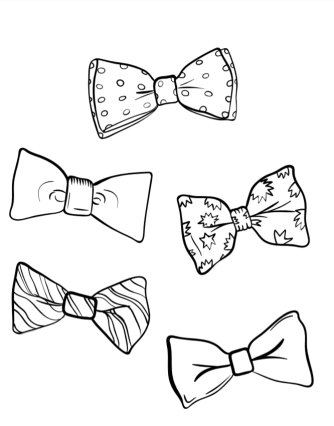
Bow ties come in all colors and patterns. Here is a printable Colorful Bow Ties page for you to decorate! You can then use your bow ties to play the game below!

Alternate Match the Bow Ties Game:

  1. Print two sheets of the Colorful Bow Ties page
  2. Color the bow ties to make matching pairs
  3. Cut the bow ties into separate cards
  4. Turn them face down and scramble them
  5. Turn one of the cards over and try to find its match. If the two ties are not the same, turn them face down and try again
  6. Keep playing until all the bow ties have been matched.

Picture Book Review
August 21 – Poet’s Day

celebrate-picture-books-picture-book-review-a-river-of-words-cover

About the Holiday

Today we celebrate poets—both those who are professionally published and those who compose poetry in their secret hearts. Poets bring clarity and new perspectives to life—like a little pinprick of light in a dark room. Whether you like long, epic poems, short, evocative verse, humorous poetry, or poetry set to music, take the opportunity today to enjoy some poetry—or write a bit of your own.

A River of Words: The Story of William Carlos Williams

Written by Jen Bryant | Illustrated by Melissa Sweet


Willie Williams was just like the other boys in his neighborhood—well, almost. When the other boys went home after a day of playing, Willie took off for the woods and fields behind his house. “As he walked through the high grasses and along the soft dirt paths, Willie watched everything.” He liked to sit next to the Passaic River and listen to the rhythm of the water as it “went slipping and sliding over the smooth rocks, then poured in a torrent over the falls, then quieted again below.”

celebrate-picture-books-picture-book-review-a-river-of-words-high-school

Image copyright Melissa Sweet, 2008, courtesy of Eerdmans Books for Young Readers.

But as Willie grew older, he didn’t have time for these leisurely pursuits. In high school, he was on the track team, attended lots of classes, and had even more homework. His was a rushed and hurried life. Except for in English class. There, when his teacher read poetry, he was taken back to the flow of the river. Each line created pictures in Willie’s mind.

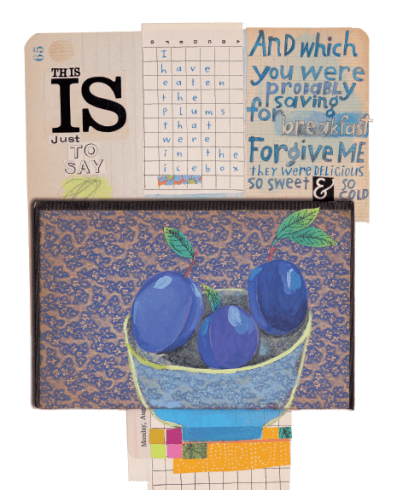
One night, Willie began writing his own poems. He copied the English poets he had learned about in school, using structured beats and rhyming endings. But soon these rules began to frustrate Willie; they didn’t give him the freedom to fully express his thoughts. He wanted to write about what he saw nearby, the things he was familiar with. Things, he said, like “plums, wheelbarrows, and weeds, / fire engines, children, and trees— / things I see when I walk down my street / or look out my window.”

celebrate-picture-books-picture-book-review-a-river-of-words-sparrows

Image copyright Melissa Sweet, 2008, courtesy of Eerdmans Books for Young Readers.

Willie began writing poems the way they came to him, with their own shape and sound. Writing this way made Willie feel free, and he filled notebook after notebook with poems. While Willie wished he could make a living as a poet, writing did not pay much, and he needed to be self-sufficient. Willie’s uncle had been a doctor, and Willie liked the idea of healing people. He wondered, though, if he could be a doctor and still write poetry.

When Willie graduated from high school, he went off to the university to study medicine. There he met the writers Ezra Pound and Hilda Doolittle and the artist Charles Demuth. Spending time with his new friends made his difficult studying easier. After college, Willie returned to his home town of Rutherford and opened his practice. He had so many patients that some people said he was “the busiest man in town.”

celebrate-picture-books-picture-book-review-a-river-of-words-attic-room

Image copyright Melissa Sweet, 2008, courtesy of Eerdmans Books for Young Readers.

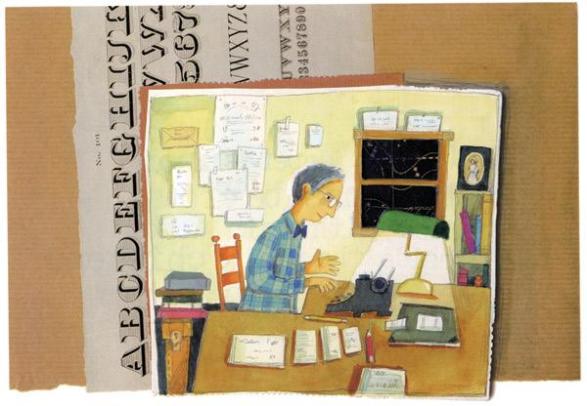
No matter how busy he was, however, he found time to write. Sometimes he jotted lines and ideas on his prescription pads. Then, after his long days at work, Willie climbed to his attic room where he studied the notes he’d made and wrote poems late into the night.

A Timeline, Author’s Note, and Illustrators Note about William Carlos Williams follow the text. The endpapers present a selection of Williams’ poetry.

A River of Words is an inspirational book for children who have creative ideas of their own and would make an excellent addition to classroom and home libraries.

From the title through to the end of her lyrical biography, Jen Bryant captures the flow of William Carlos Williams’ creative and scientific life, which was as purposeful and free as the river that inspired him. Young readers and would-be writers will find much encouragement and insight in Bryant’s story, which reveals that talent and day-to-day life not only can co-exist but can enrich each other. By showing how Williams broke free from the structures of the poetry he copied, Bryant also motivates children to find their own voice.

celebrate-picture-books-picture-book-review-a-river-of-words-plums

Image copyright Melissa Sweet, 2008, courtesy of Eerdmans Books for Young Readers.

Melissa Sweet lends her distinctive collage style of illustration to this story, bringing to life the lines of and natural world reflected in Williams’ poetry. The busy-ness and business of Williams’ days are depicted in vibrant images of winding streets, classrooms, offices, and the outside world where he composed his uniquely revealing poems.

Ages 6 and up

Eerdmans Books for Young Readers, 2008 | ISBN 978-0802853028

Learn more about Jen Bryant and her books on her website!

Discover more about Melissa Sweet, her books, and her art on her website!

Poet’s Day Activity

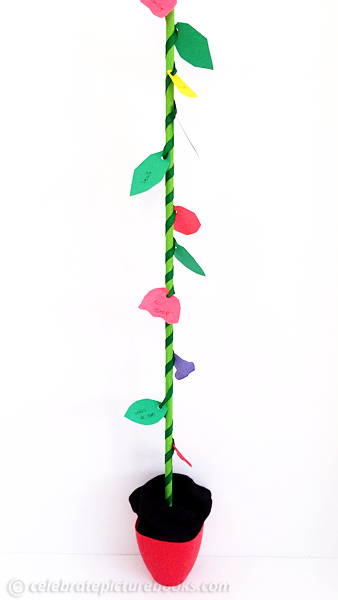
celebrate-picture-books-picture-book-review-grow-a-poem-craft

Grow Your Own Poem


A poem often grows in your imagination like a beautiful plant—starting from the seed of an idea, breaking through your consciousness, and growing and blooming into full form. With this craft you can create a unique poem that is also a piece of art!

Supplies

  • Printable Leaves Template
  • Printable Flower Template
  • Wooden dowel, 36-inch-long, ½-inch diameter, available in craft or hardware stores
  • Green ribbon, 48 inches long
  • Green craft paint
  • Green paper for printing leaves (white paper if children would like to color the leaves)
  • Colored paper for printing flowers (white paper if children would like to color the flowers)
  • Flower pot or box
  • Oasis, clay, or dirt
  • Hole punch
  • Glue
  • Markers or pens for writing words
  • Crayons or colored pencils if children are to color leaves and flowers

Directions

  1. Paint the dowel green, let dry
  2. Print the leaves and flower templates
  3. Cut out the leaves and flowers
  4. Punch a hole in the bottom of the leaves or flowers
  5. Write words, phrases, or full sentences of your poem on the leaf and flower templates
  6. String the leaves and flowers onto the green ribbon (if you want the poem to read from top to bottom string the words onto the ribbon in order from first to last)
  7. Attach the ribbon to the bottom of the pole with glue or tape
  8. Wrap the ribbon around the pole, leaving spaces between the ribbon
  9. Move the leaves and flowers so they stick out from the pole or look the way you want them to.
  10. Put oasis or clay in the flower pot or box
  11. Stick your poem pole in the pot
  12. Display your poem!

Picture Book Review
August 15 – Relaxation Day

celebrate-picture-books-picture-book-review-be-quiet-cover

About the Holiday

Don’tcha wish every day could be relaxation day? Of course, if it were, though, we wouldn’t be celebrating this special occasion. Everyone has their own version of what’s relaxing, so if you’re a beach person, a reader, a binge watcher, a laze around the house person, or even if you find work relaxing, take the opportunity to indulge yourself today! Sometimes, as today’s book reveals, a relaxing day may not turn out as quiet as you might like. But a good laugh can set it right again.

BE QUIET!

By Ryan T. Higgins


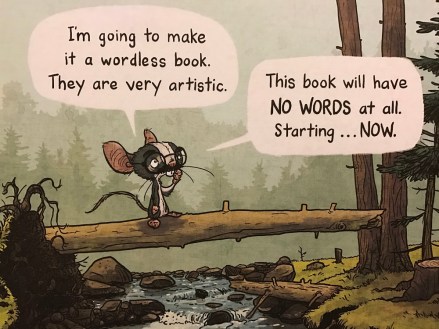
Rupert, a scholarly little mouse is so excited to be writing a book in which he will be the starring character. It’s going to be great—a wordless book that is “very artistic.” But just as he gets started his friend Nibbs, pops over and wonders what Rupert is doing. Rupert tells him, “Shhh. Be QUIET. This book does not have words.” When Nibbs hears this, he wants to help, but there’s supposed to be no talking and he’s talking. In fact, he’s “talking about talking.”

celebrate-picture-books-picture-book-review-be-quiet-wordless-book-beginning

Copyright Ryan T. Higgins, 2017, courtesy of Disney-Hyperion.

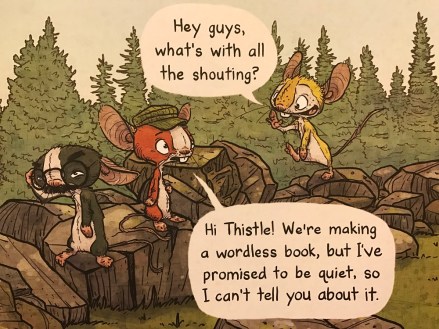
Rupert wants to throw his friend out of the book, but Nibbs begs and pleads to be included. He’ll even be “extra wordless” if he can just stay. Rupert is beside himself. “I said BE QUIET. This book is wordless!” Just then their friend Thistle drops by wondering what all the shouting is about. Nibbs tells him in some detail what’s going on and why he can’t talk about it.

celebrate-picture-books-picture-book-review-be-quiet-thistle

Copyright Ryan T. Higgins, 2017, courtesy of Disney-Hyperion.

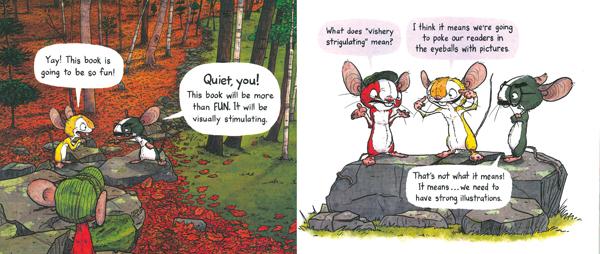
Thistle thinks a wordless book sounds perfect and also wants to be included. Nibbs says sure, but says they won’t tell Rupert because they’re not supposed to be talking. Rupert, though, is keeping count of all these words, and there are too many of them. Thistle rubs his hands in glee: it’s going to be such fun. But Rupert takes him to task. His book is going “to be more than FUN. It will be visually stimulating.” Nibbs isn’t sure what that means, so Thistle explains that it means they’re going to “poke our readers in the eyeballs with pictures.”

After a bit of strong-man silliness, Nibbs and Thistle buckle down to find “strong-but-silent types.” Nibbs suggests a very familiar bear, but Thistle thinks he looks too grumpy. Rupert thinks a cute kitten would be a good addition, but those claws? And those teeth? On second thought perhaps a cucumber would be better. With just a squiggly smile and some googly eyes, the cucumber makes a great vegetarian character. Thistle tries to explain about vegetarians, and Rupert is in a fury over all this nonsense clogging up his “brilliant piece of wordless literature.”

celebrate-picture-books-picture-book-review-be-quiet-visually-stimulating

Copyright Ryan T. Higgins, 2017, courtesy of Disney-Hyperion.

Oh! Well, if “serious” is what Rupert wants, how about a portrait of Vincent van Mouse? Too esoteric? Then maybe the three mice should be converted into three potatoes. Rupert yells that he doesn’t even like potatoes. Action is what’s needed, says Thistle. A silent superhero, like “Captain Quiet the Vocabulary Vigilante. Bam! Pow! Kaboom!” No, no, no! Rupert is hopping mad. “No superheroes and no onomatopoeia either.” Say what? “I’m-a-gonna-pee-a?” asks Nibbs “What’s that mean?” Thistle thinks Rupert “should have gone to the bathroom before the book started.”

Really, Thistle and Nibbs just want to help. What about mimes? Nibbs comes up with a great routine, flapping arms and all. Thistle tries to guess what he is, and Rupert can’t understand how they don’t know what “quiet” means. Oh!, say Nibbs and Thistle. Like that saying about the tree in the forest. Is that what quiet is? With a chain saw and a nearby tree, they try it. But Rupert is screaming so much they can’t hear if it makes a sound or not.

celebrate-picture-books-picture-book-review-be-quiet-cutting-down-tree

Copyright Ryan T. Higgins, 2017, courtesy of Disney-Hyperion.

Poor Rupert! All he wants is for them to “be quiet for just one page!” He can’t hold his frustration in any longer. He goes on a tirade of words. Nibbs quietly interrupts him. “WHAT?!” yells Rupert. “Shhh. Be Quiet. This book does not have words,” Nibbs reminds him just as the book ends. Now that the book is finished, Thistle and Nibbs think it came out pretty good and hope they can do another one.

Ryan T. Higgins’ laugh-out-loud book about best intentions gone awry is a definite day brightener. Kids and adults will recognize the zany truth of control lost to the unexpected or the oblivious. While we may often feel Rupert’s frustration in real-life situations, Higgins reminds us that it’s good to step back and see the humor in it all. Higgins’ action-packed illustrations and rakish mice ramp up the fun. Kids will enjoy seeing a glimpse of their favorite grumpy bear, Bruce, and discovering what the three mice have been up to since they transformed Bruce’s home into a hotel.

Clever wordplay, realistic dialogue, and sweet characters make BE QUIET! a perfect read-aloud book that kids will want to hear again and again. It would be a funny and fun addition to any child’s bookshelf.

Ages 3 – 6

Disney-Hyperion, 2017 | ISBN 978-1484731628

Discover more about Ryan T. Higgins and his books on his website!

Relaxation Day Activity

celebrate-picture-books-picture-book-review-bathtub-clings-Conor-separate-with-fish

Homemade Bath Clings


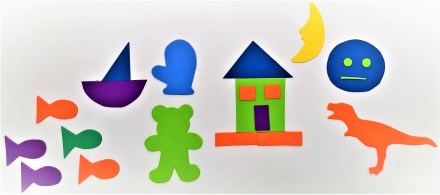
Taking a nice long soak—or playing in the bathtub—can be a nice change of pace. With these homemade bath clings, kids can make up their own stories—wordless or not—right on the bathtub wall!

Supplies

  • Craft foam in various colors
  • Scissors
  • Cookie cutters for creating shapes (optional)

Directions

  1. Trace cookie cutters on the craft foam (optional)
  2. Cut out cookie cutter shapes or hand-drawn shapes from the craft foam
  3. With a little bit of  water, the clings will hang on the wall

Picture Book Review
August 9 – Book Lovers Day

celebrate-picture-books-picture-book-review-ralph-tells-a-story-cover

About the Holiday

Simply stated this is a day when those who love to read can indulge their passion. With so many amazing books available—both new and old—no one could fault you if you call in sick and spend the day reading!
Ralph Tells a Story

By Abby Hanlon


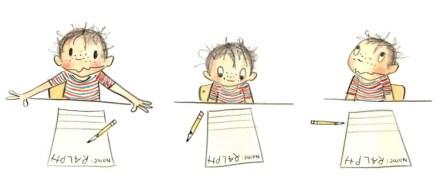
“‘Stories are everywhere!’” Ralph’s teacher sang to her class, but Ralph wasn’t so sure. He didn’t see stories anywhere. It seemed the other kids could make up stories from everything that happened to them, and Ralph’s teacher loved these stories. But when it came time to write, Ralph just stared at his paper or at the ceiling; he could never think of anything. He tried distractions like going to the bathroom or the water fountain, but it didn’t work.

celebrate-picture-books-picture-book-review-ralph-tells-a-story-thinking

Copyright Abby Hanlon, 2012. Courtesy of abbyhanlon.com.

One day Ralph asked his friend Daisy for help. She was surprised that Ralph couldn’t write a story because she had written a bunch about him. One was about the time she combed his hair and another was about when he painted his fingernails black with a marker. In fact she was just stapling all these stories together into a book. Ralph wanted to use the stapler too, but Daisy said he needed a story first.

celebrate-picture-books-picture-book-review-ralph-tells-a-story-classroom

Copyright Abby Hanlon, 2012. Courtesy of Two Lions.

So Ralph “looked for stories out the window, in the aquarium, in [his] desk…and even on the floor.” Lying on the floor reminded Ralph of a time at the park when an inchworm crawled on his knee. Just then his teacher saw him and asked what his story was about. Ralph said the first thing he thought: “Um…um…I saw an inchworm.” His teacher thought that sounded marvelous. But really, Ralph thought, there was no story to tell.
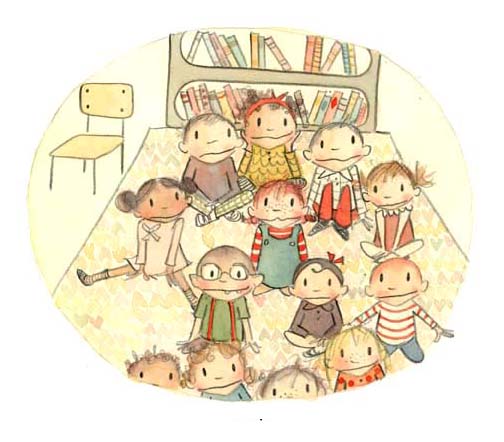
And when Ralph sat down to write it, he immediately got stuck. He asked Daisy to help, but she was too busy writing her own story. Suddenly, the teacher called everyone up to the rug, and she picked Ralph to read his story first. Ralph got up and, clutching his paper to his chest, said, “‘I was at the park and an inchworm crawled on my knee.’” He looked out at the quiet faces gazing up at him.

celebrate-picture-books-picture-book-review-ralph-tells-a-story-on-floor

Copyright Abby Hanlon, 2012. Courtesy of abbyhanlon.com.

Ralph looked at Daisy. She said, “‘Wow! Really? Did it feel squishy, Ralphie? Did you take it home?’” Then everyone started asking questions, and Ralph remembered that something had happened with the inchworm. He began to tell about the day. He had picked up the inchworm and named him Nick. He had “built Nick a house but he just inched away.” Ralph followed Nick and never noticed the baby following him until the baby picked up Nick and put him in his diaper.

celebrate-picture-books-picture-book-review-ralph-tells-a-story-incheworm-story

Copyright Abby Hanlon, 2012. Courtesy of Two Lions.

Ralph asked the baby to give Nick back, but he didn’t. Then Ralph saw Nick escaping from the diaper by crawling up the baby’s belly. He grabbed Nick and ran, and they spent the day playing together. At the end “everybody clapped and cheered” and they wanted to see Ralph’s picture.

Now Ralph is a great writer. He’s written one hundred funny stories and has even drawn covers for some of his favorites. Do you need help writing? Take a few tips from Ralph! 

celebrate-picture-books-picture-book-review-ralph-tells-a-story-story-rug

Copyright Abby Hanlon, 2012. Courtesy of abbyhanlon.com.

Abby Hanlon’s story of a would-be storyteller with writer’s block is as cute as they come. Ralph’s angst at not finding the stories that his classmates seem to pop out so easily will be recognized by anyone who is a bit of a perfectionist when it comes to their endeavors. With gentle humor, Hanlon shows readers that putting oneself out there often turns out okay. Ralph’s inchworm story will keep kids riveted to and giggling over Nick’s fate. Through Daisy, Hanlon also reveals how a good friend can help encourage the kinds of self-confidence that lead to success. Ralph’s writing tips are lighthearted and helpful in getting kids to relax, appreciate their own real-life stories, and open their imaginations.

Hanlon’s soft-hued illustrations of a group of adorable, rakish kids draw readers in to Ralph’s creative classroom. Once there, children will want to linger over all the details included. Comics-style dialog bubbles hold humorous asides as well as Ralph’s developing inchworm story. The titles of Ralph’s many stories many inspire kids to make up tales to go with them.

Ralph Tells a Story would be a fantastic classroom book to share during a story-writing unit and a fun addition to home bookshelves for anyone who needs a little encouragement or who loves a funny story.

Ages 5 – 8

Two Lions, 2012 | ISBN 978-0761461807

Book Lovers Day Activity

celebrate-picture-books-picture-book-review-bookworm-bookmark

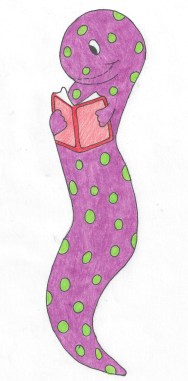
Bookworm Bookmark


If you love books then you will love this printable Bookworm Bookmark! Just print it out and cut a slit at the mouth. This little worm will happily save your page for you.

Picture Book Review