March 14 – It’s Expanding Girls’ Horizons in Science and Engineering Month

About the Holiday

Expanding Girls’ Horizons in Science and Engineering Month was established in 2020 by the Expanding Your Horizons (EYH) Network. Founded in 1974 as a series of conferences aimed at promoting STEM careers to middle and high school girls, EYH provides hands-on activities, mentoring, and contact with role models as well as information about science and engineering fields.

Women still make up only 28% of the science and engineering workforce. With this month-long observance, the EYH Network hopes to make a significant impact on girls’ perceptions and career choices, encouraging them to explore and embrace STEM subjects​.

Thank you to Heyday and Barbara Fisch at Blue Slip Media for sharing a copy of I Love Salmon and Lampreys: A Native Story of Resilience with me!

I Love Salmon and Lampreys: A Native Story of Resilience

Written by Brook M. Thompson | Illustrated by Anastasia Khmelevska


In her powerful autobiographical story, Brook Thompson, a member of the Yurok and Karuk Tribes, warmly invites readers to join her on her journey from childhood to the present day to experience her intense love for her tribes’ traditions and the fish that sustain them. Readers are first taken out on Brook’s family’s fishing boat, where her father and her grandfather tell stories of their own childhoods as they check the nets in their designated fishing spots along the Klamath River in Northern California. Then it’s back home to learn how Brook helps cook the fish (lampreys in the winter and salmon the rest of the year) in a wide variety of delicious ways.
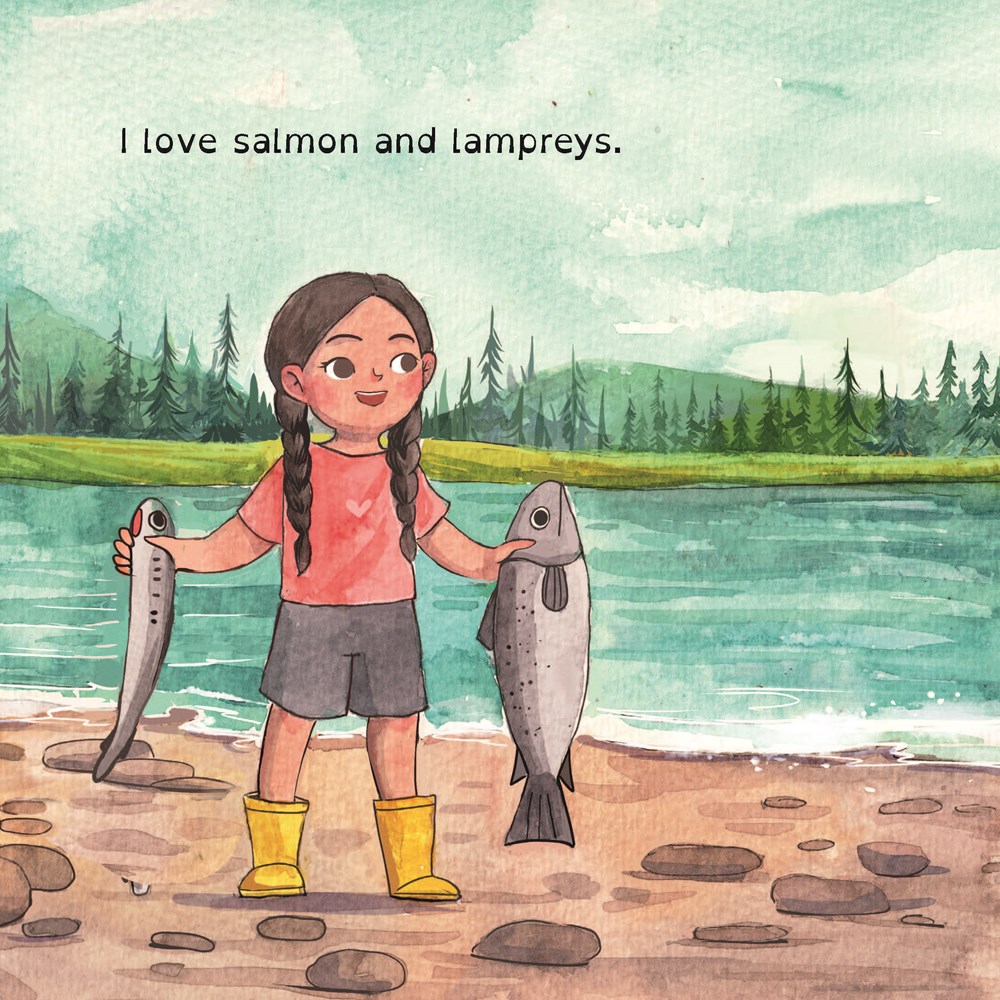
Illustration © 2025 by Anastasia Khmelevska, text © 2025 by Brook M. Thompson. Courtesy of Heyday.

Salmon and lampreys are more than just food to Brook, however. They are creatures of the earth to be admired and honored. She tells readers about their life and spawning cycles, how they predate the dinosaurs, and even about their fascinating symbiotic relationship. For Brook, this love she feels is shared. She says, “I feel loved by salmon because years ago my ancestors took care of the salmon for their future family” and reveals that the fish in the river now “are the great-great-great-great-great-great-grandkids of the salmon who had a relationship with my great-grandparents.”
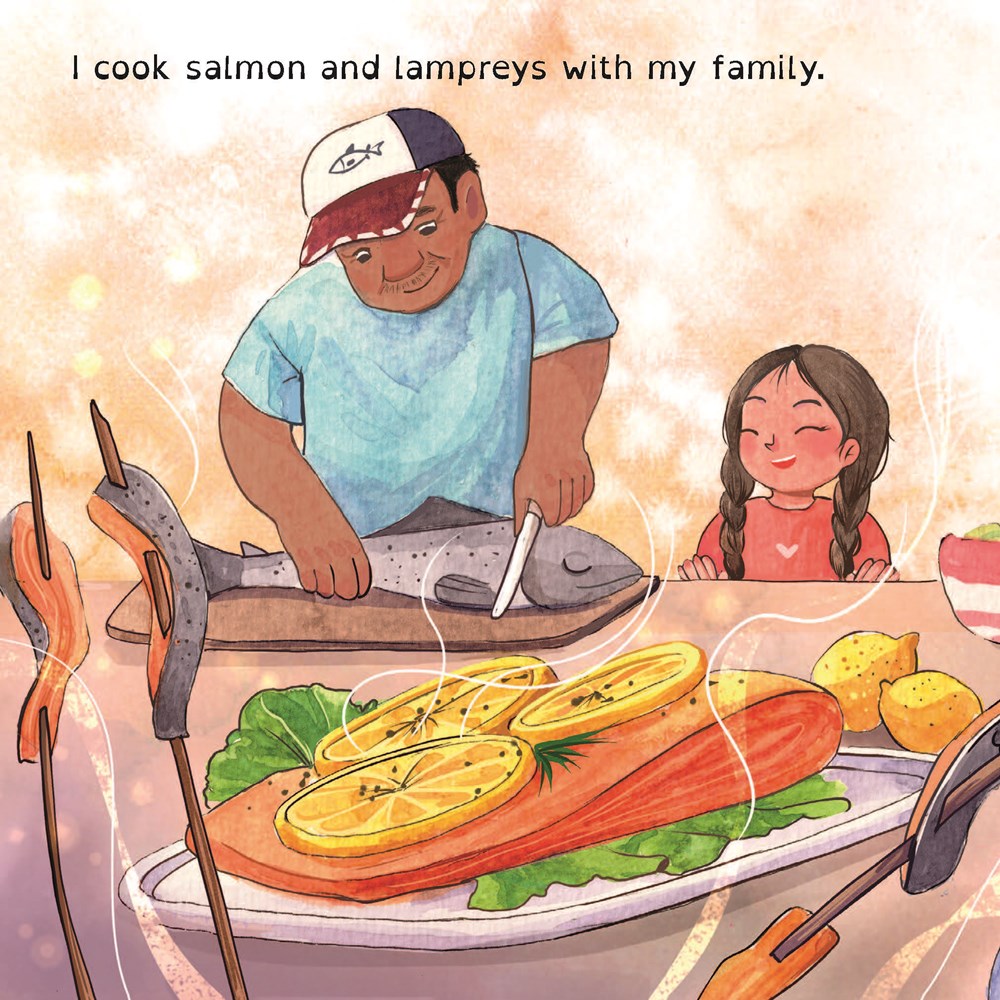
Illustration © 2025 by Anastasia Khmelevska, text © 2025 by Brook M. Thompson. Courtesy of Heyday.

In 2002, when Brook was still young, over 60,000 salmon perished from a parasite which spread when the water level of the river became too low and the temperature too hot due to the six dams erected on the river. She explains how dams “block the salmon’s way home” and how the warming water promotes the growth of toxic green algae, which affects the fishes’ breathing and spreads disease. 

Brook joined protests by the tribal people and others, while scientists did research and local politicians lobbied for change. More than 20 years later agreements with the politicians and the companies that owned the dams were signed, and four of the six dams along the Klamath River were removed.
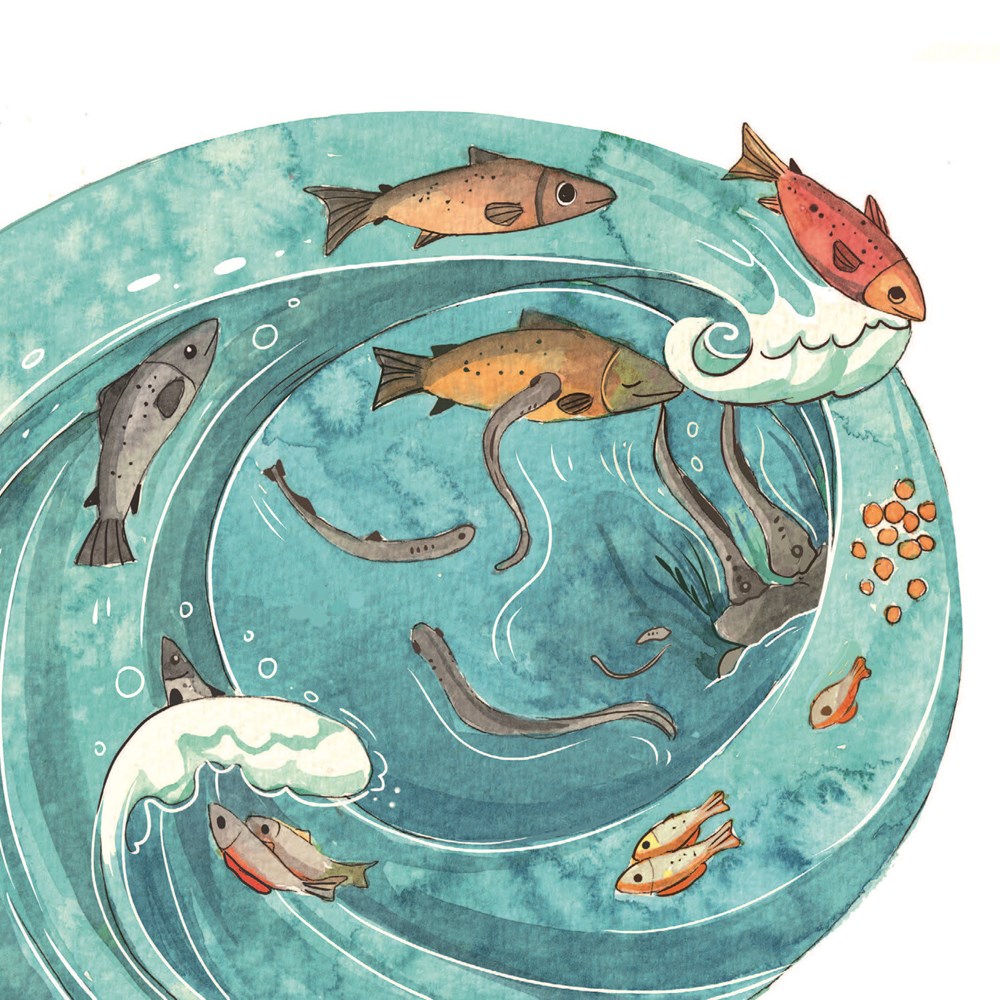
Illustration © 2025 by Anastasia Khmelevska, text © 2025 by Brook M. Thompson. Courtesy of Heyday.

As she grew into adulthood and inspired by her experiences, Brook set her eyes on higher education. She “went to college to learn about dams and about how to protect salmon in the future.” She became an engineer and a scientist who studies the interconnectedness of  “water, nature, people, animals, and buildings” and returned home to the Klamath River, where she continues the legacy of her ancestors in caring for the salmon, lampreys, and the environment.

Back matter includes Fun Facts about lampreys and salmon; photographs of Brook with salmon and at Iron Gate Dam, which was removed in 2024; a map of the Klamath River Watershed area; a note about the inspiration behind the book as well as the book’s font, OpenDyslexic, which makes it easier for those with dyslexia, like Brook, to read; and notes about the author and illustrator.
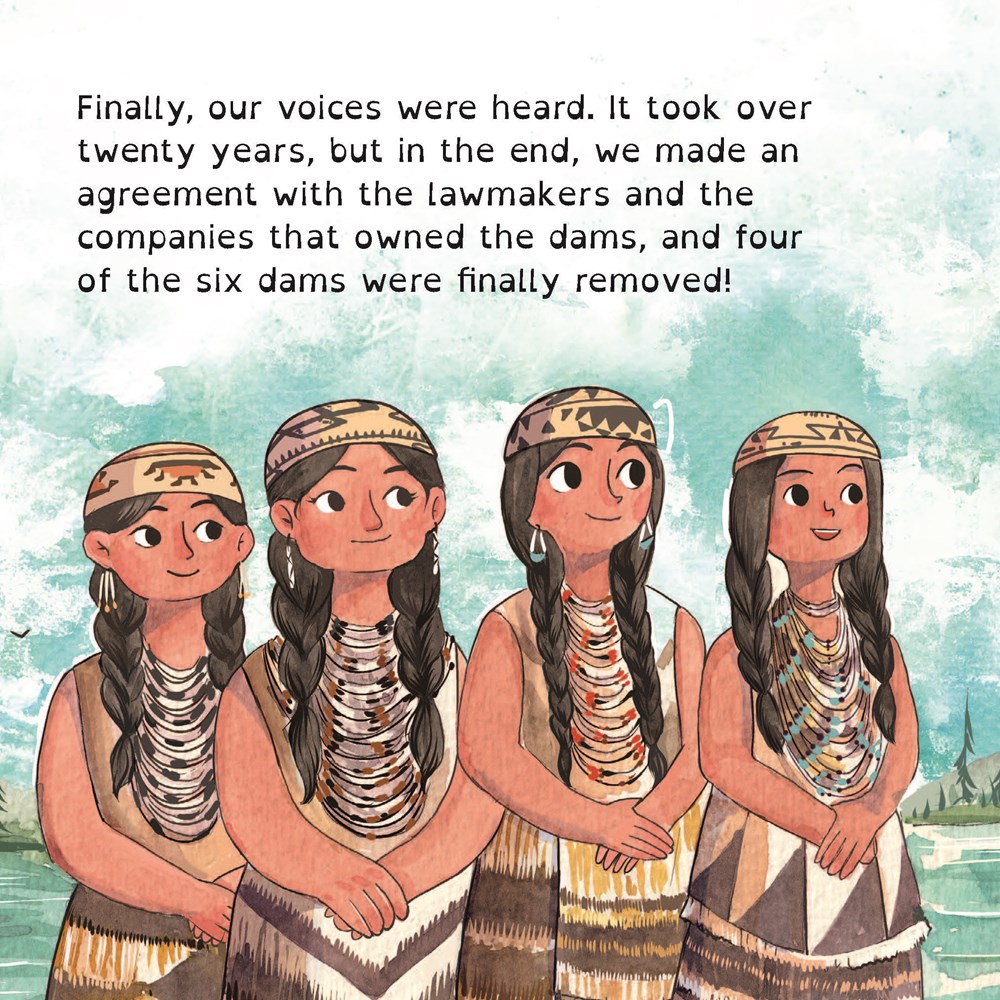
Illustration © 2025 by Anastasia Khmelevska, text © 2025 by Brook M. Thompson. Courtesy of Heyday.

Brook Thompson, in her compelling autobiographical story, will captivate children and touch their hearts. Thompson’s eloquent and straightforward storytelling immediately immerses readers in the Native relationship with nature and will inspire both young and adult readers to think deeply about how the earth sustains us and how we can show our appreciation in return. The theme of environmental justice and how citizens can and do make a difference is made personal through Thompson’s clear explanations of how the dams affected the salmon population and the long-term steps people took to reverse their damage. Thompson’s dedication—even from childhood—to her tribes, family, and future generations will impress readers. Children will also develop an understanding of how issues of interest to them now can inform their future endeavors.

Anastasia Khmelevska’s vibrant earth tone illustrations endear Brook to children through her evident passion for family, fishing, and the salmon and lampreys that have been a constant in her tribes’ lives. Her pacing and realistic depictions of people and events help children clearly understand the importance of each element of Thompson’s story from how the cyclical lives of salmon and lampreys are demonstrated in a swirling wave to the stunning landscapes highlight of the Pacific Northwest. These images make her depiction of the salmon die-off all the more impactful. Her final portrait of Brook Thompson coming home after earning her university degrees links her life to the salmon she loves so well. 

The combination of Native culture and environmental awareness makes I Love Salmon and Lampreys: A Native Story of Resilience a must addition to school and public libraries. The book offers extensive value and research opportunities for science and social studies classes. For families who care about the environment, sustainability, activism, and the future of our planet, I Love Salmon and Lampreys would be a much-loved choice.

Ages 4 – 8

Heyday, 2025 | ISBN 978-1597146685

About the Author

Brook M. Thompson is a part of the Yurok and Karuk Tribes. She is a neurodivergent and Two-Spirit author with dyslexia. She has a BS in civil engineering from Portland State University and an MS in environmental engineering from Stanford University, and she will soon have a PhD in environmental studies from University of California, Santa Cruz, where she studies water, politics, restoration, and salmon. You can find out more about her at brookmthompson.com.

About the Illustrator

Anastasia Khmelevska is an illustrator based in Lviv, Ukraine. She has illustrated several children’s books, including My Invisible Zoo, Marella the Mermaid, and Anything Helps. Follow her on Instagram @cute_miuu.

Expanding Girls’ Horizons in Science and Engineering Month Activities
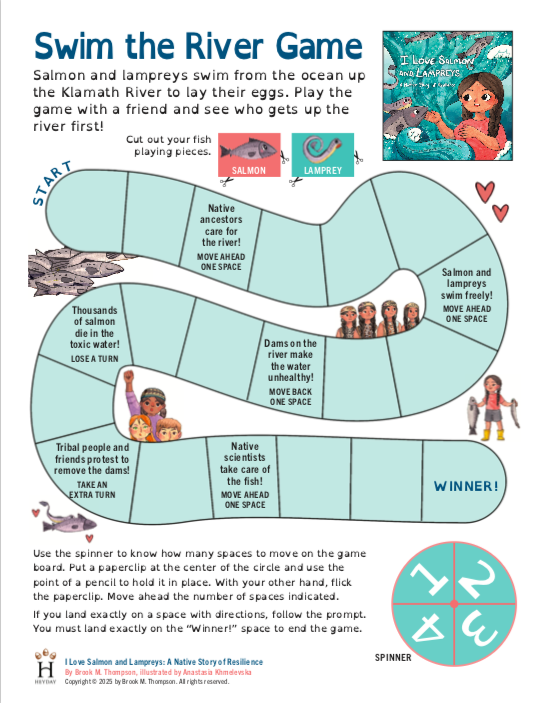
Illustration © 2025 by Anastasia Khmelevska, text © 2025 by Brook M. Thompson. Courtesy of Heyday.

I Love Salmon and Lampreys Activity Pages

Play a printable board game, write about your dreams for the future, and learn fun facts about salmon and lampreys with these three I Love Salmon and Lampreys Activity Pages!

Chinook and Coho Salmon Coloring Pages

Coho and Chinook Salmon are vital to the Pacific Northwest. You can learn more about California salmon at caltrout.org. Enjoy these coloring pages of coho and chinook salmon. Colored images are included for your reference.

Chinook Salmon Coloring Page | Colored Image of Chinook Salmon

Coho Salmon Coloring Page | Colored Image of Coho Salmon
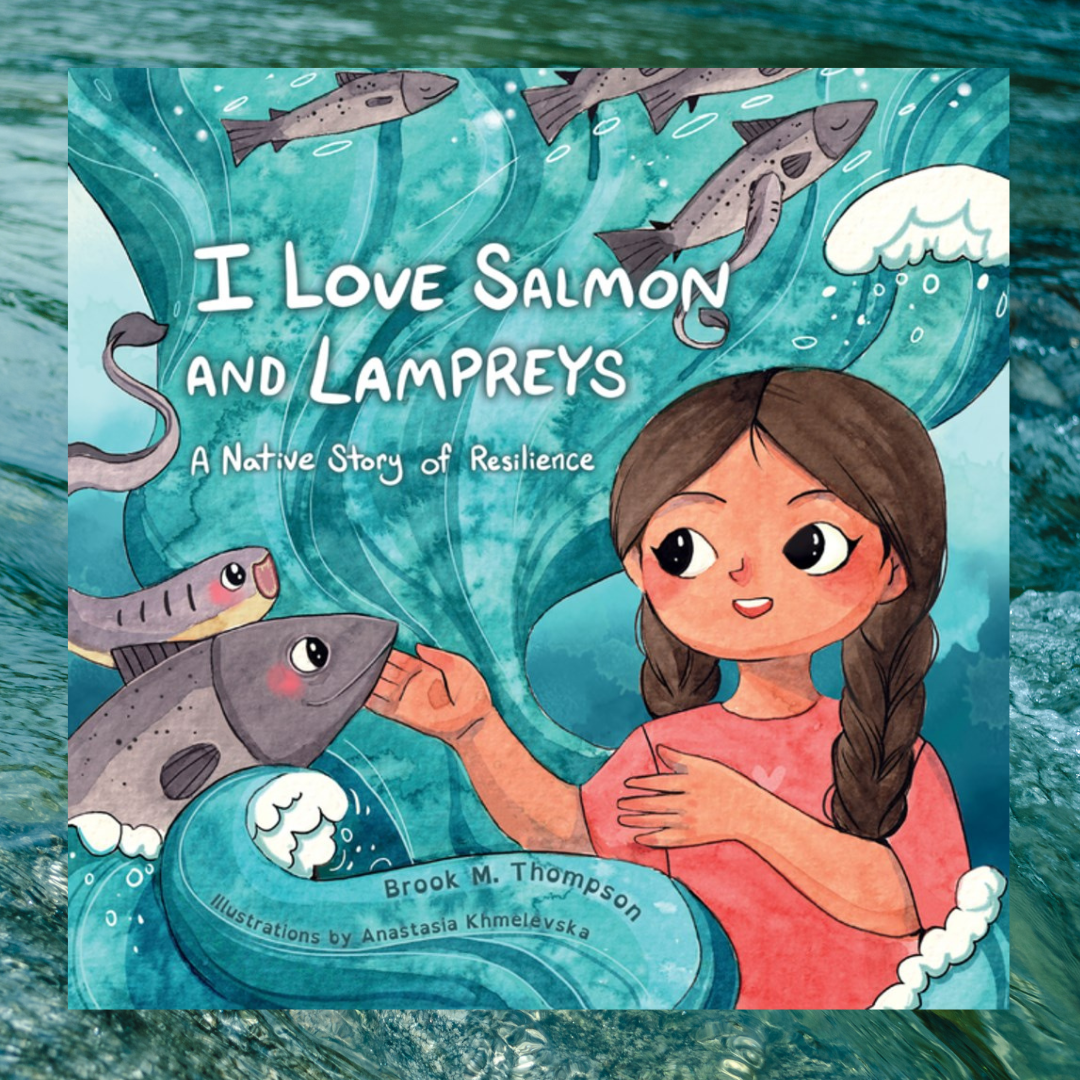
You can purchase I Love Salmon and Lampreys: A Native Story of Resilience at these bookstores

Amazon | Barnes & Noble | Bookshop

Picture Book Review

June 8 – World Oceans Day

celebrate-picture-books-picture-book-review-ocean-soup-cover

About the Holiday

Since 1992, The United Nations has sponsored World Oceans Day on this date to raise awareness of the importance of the Earth’s seas. Institutions, science centers, schools, research centers, businesses, governments, and communities around the world take part in special events, webinars, meetings, a photography contest, and other programs. This year’s theme is “The Ocean: Life and Livelihoods” and sheds “light on the wonder of the ocean and how it is our lifesource, supporting humanity and every other organism on earth.” This year’s virtual program begins at 10:00 a.m. and features a line up of thought-leaders, celebrities, community activists, entrepreneurs, and industry experts. The day ends with a concert given by musical artists from around the world. For more information on World Oceans Day, visit the UN World Oceans Day website. For educational resources, click here. To see the schedule of events, click here.

Ocean Soup: A Recipe for You, Me, and a Cleaner Sea

Written by Meeg Pincus | Illustrated by Lucy Semple


“From afar the vast ocean appears pure and clean. / How if sparkles and shimmers—a beautiful scene.” But what will you find if you look at just a small portion of the ocean—even a tiny drop—up close? Under a microscope, “the sea looks more like…soup” with “ingredients” that have been simmering for decades. And what’s in this soup? Many “chefs” have created it with Styrofoam cups and their lids; single-use bottles, bags, and straws; microbead soaps, synthetic materials, and balloons.

celebrate-picture-books-picture-book-review-ocean-soup-microscope

Image copyright Lucy Semple, 2021, text copyright Meeg Pincus, 2021. Courtesy of Sleeping Bear Press.

“The real problem is plastic; it’s in all that stuff. Whether hard or elastic, that plastic is tough!” Dumps around the world are overflowing with plastic, and much of it ends up in the ocean “churning round the five gyres— / the huge saltwater whirlpools / where breakdown transpires.” As the plastic churns under the sun, it turns into “specks” that can’t be removed. This plastic soup is “…gulped by the dolphins, the whales, and the seals, / and it’s slurped by the fish, / and the plankton and eels.”

celebrate-picture-books-picture-book-review-ocean-soup-beach

Image copyright Lucy Semple, 2021, text copyright Meeg Pincus, 2021. Courtesy of Sleeping Bear Press.

This confetti of plastic is found above the water in icebergs and deep on the ocean floor. If it’s in the fish that we eat, “is it in you and me” too? To clean up the oceans, we need new chefs and a new recipe for ending the manufacturing of plastic, practicing new habits with sustainable, reusable materials, and refusing products packaged in plastic. “Ocean soup may have simmered before we were here, / but the call for us all to pitch in rings out clear.”

Extensive backmatter includes an author’s note; a discussion about the invention of plastics and the astounding amount of “‘plastic smog'” that is in the ocean, as well as a description of how gyres break down plastic into tiny particles. Readers also learn what eight types of plastic are the worst polluters and are given ten steps for reducing daily plastic use. 

celebrate-picture-books-picture-book-review-ocean-soup-gyres

Image copyright Lucy Semple, 2021, text copyright Meeg Pincus, 2021. Courtesy of Sleeping Bear Press.

Meeg Pincus’s eye-opening comparison between the ocean and a pot of soup gives young readers crucial information about the plight of our oceans that is easy to understand and visualize. Her entreaty to look closely at what lies beneath the shimmering blue surface of the water grabs readers’ attention, and her short history of how and when plastics came on the scene provides context and perspective. The plastics Pincus mentions show the magnitude of the problem, and kids will be familiar with most if not all of these products. Pincus’s unstinting rhyming verses present the science of how plastic is shredded by the sea, where it ends up, and how it is ingested by ocean creatures in a way that is sure to spur readers to action. Her examples of ways we can reduce our plastic use within the story and in the backmatter empowers readers of all ages to make changes to protect the Earth’s oceans now and for future generations.

Lucy Semple’s bold illustrations show kids exactly how pervasive the kinds of containers, toys, wrappers, and other plastic products that are polluting our oceans really are and how blithely we use them. Through successive panels she demonstrates how plastic bags, bottles, straws, and cups break apart due to sun and water currents, and a double-spread map orients kids to where the five gyres are found. Images of sea creatures gulping down the tiny shards of plastic are effective and will resonate with children, as will the final pages where readers will find reinforcement for new habits of using and promoting recycled and reusable products.

An excellent overview of and introduction to the crisis of plastics in the world’s oceans, Ocean Soup: A Recipe for You, Me, and a Cleaner Sea will spark in readers a desire to embrace more sustainable products, adopt better recycling habits, and take action to reduce plastics use. The book would be an impactful way to begin science, environment, history, and other cross-curricular lessons as well as a jumping off place for more extensive research in classrooms and for homeschoolers. Ocean Soup is highly recommended for home bookshelves and is a must for school and public library collections.

Ages 6 – 9 

Sleeping Bear Press, 2021 | ISBN 978-1534111189

Discover more about Meeg Pincus and her books on her website.

You can connect with Lucy Semple on Instagram and Twitter.

World Oceans Day Activity

celebrate-picture-books-picture-book-review-Turtle-Swimming-coloring-page

Sea Creatures Coloring Pages


Grab your crayons and enjoy these printable coloring pages of favorite sea creatures!

Fish | Octopus | Seahorse | Turtle

celebrate-picture-books-picture-book-review-ocean-soup-cover

You can find Ocean Soup: A Recipe for You, Me, and a Cleaner Sea at these booksellers

Amazon | Barnes & Noble | Books-a-Million

To support your local independent bookstore, order from

Bookshop | IndieBound

Picture Book Review
March 14 – National Learn about Butterflies Day

celebrate-picture-books-picture-book-review-butterflies-belong-here-cover

About the Holiday

Spring has sprung – or is right around the corner – so today’s holiday reminds us to watch out for the butterflies in your area. With more than 20,000 species of butterflies around the world, these delicate beauties are one of the most recognized and beloved natural wonders on earth. Butterflies are important to our ecosystem, too, but habitat destruction and climate change are decreasing their numbers by alarming amounts. You can help! By planting milkweed and other plants as well as nectar-producing flowers in your yard or community, you can create an area where butterflies can find shelter, food, and a place to lay their eggs. To learn more about saving monarch butterflies, visit Save Our Monarchs.

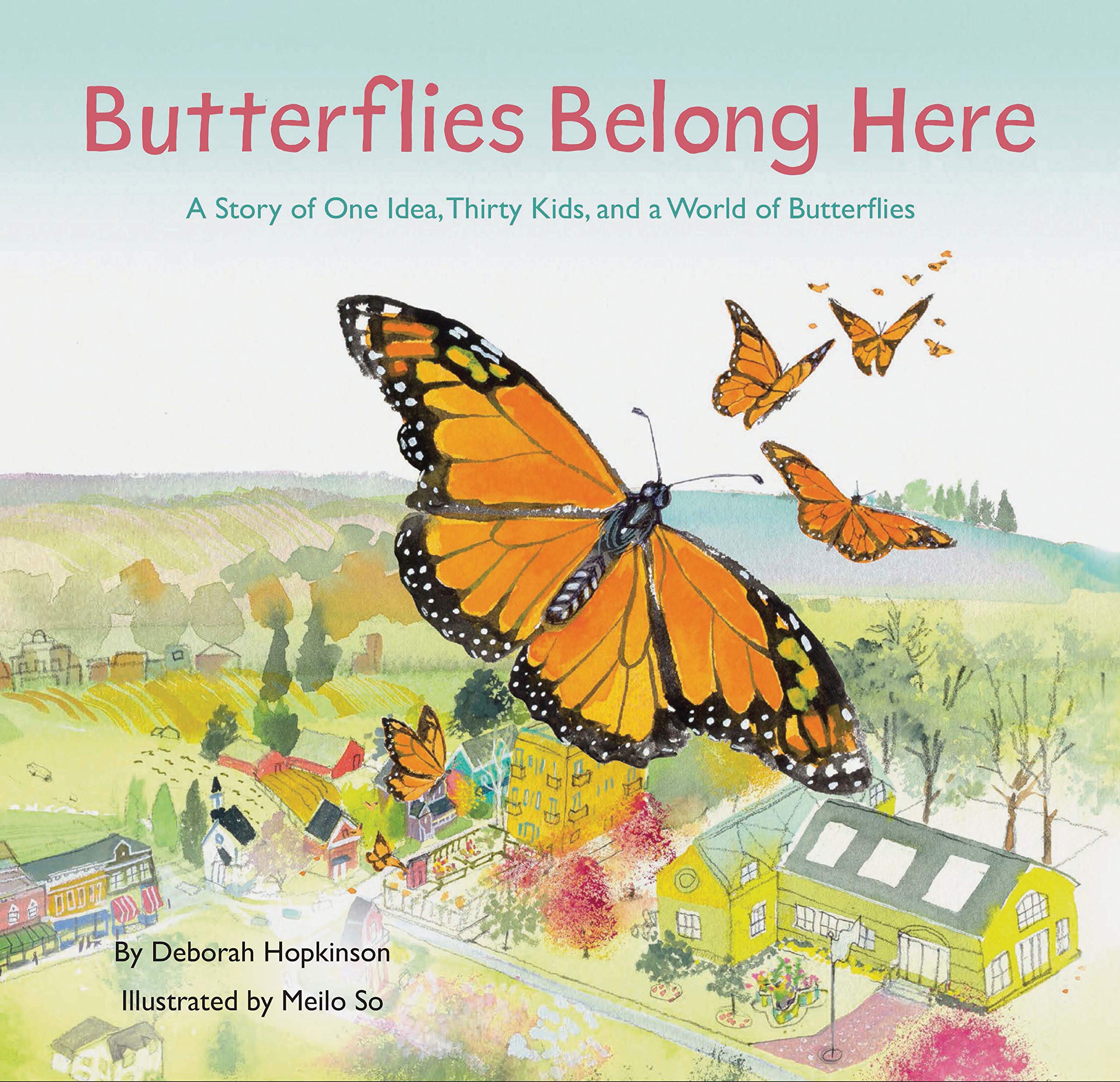
Butterflies Belong Here: A Story of One Idea, Thirty Kids, and a World of Butterflies

Written by Deborah Hopkinson | Illustrated by Meilo So


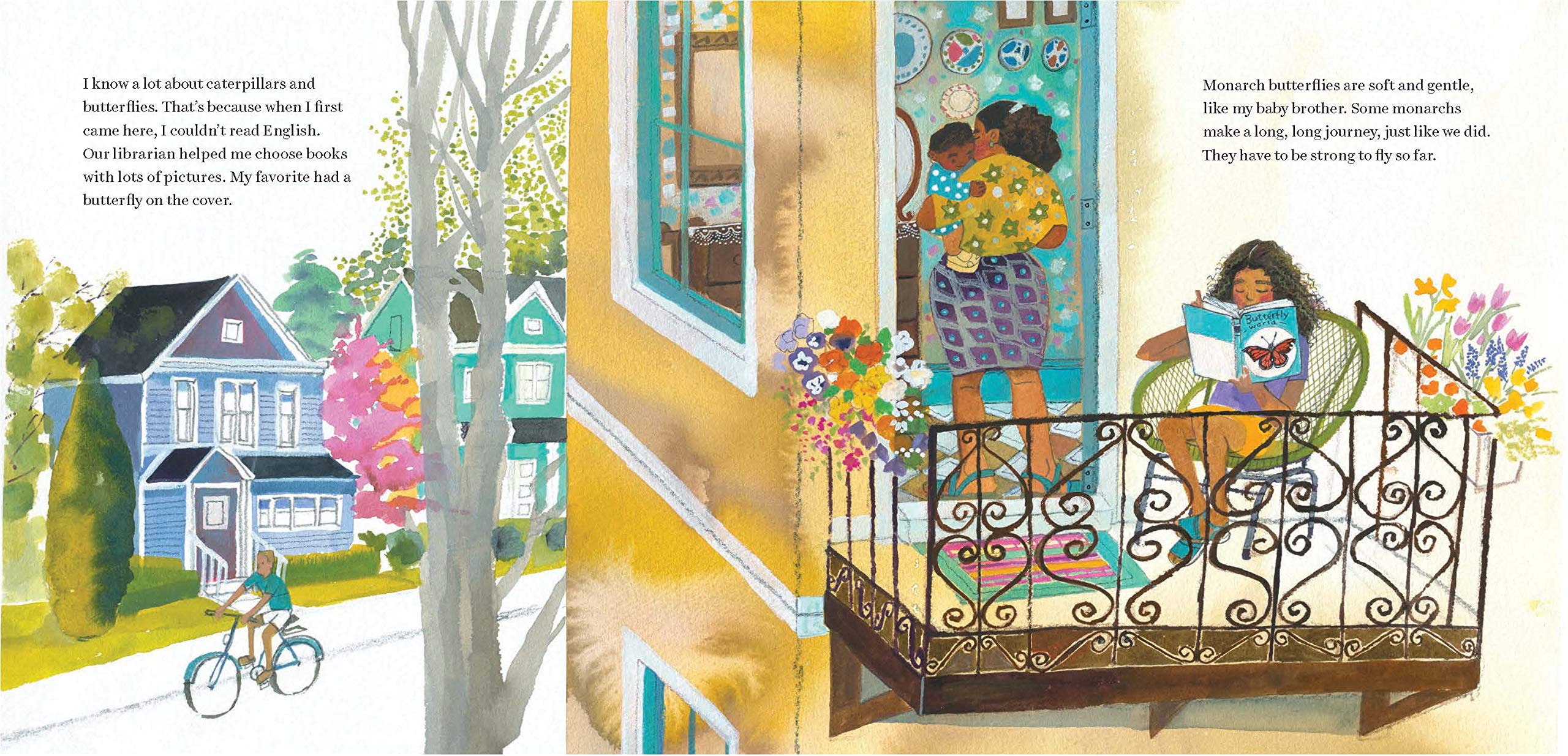
Last spring, the narrator of the story reveals, she was a “little like a caterpillar…quiet and almost invisible.” She had recently moved to the United States and couldn’t read English. The school librarian gave her books with a lot of pictures and her favorite was one about butterflies. Since then she has learned a lot about Monarch butterflies and how they “make a long, long journey” just like her family did. The frame of her story leads into a detailed discussion of the spring monarch migration and the life cycle of caterpillars.

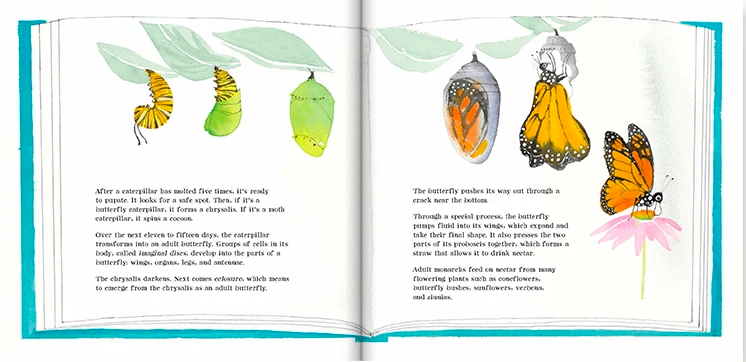
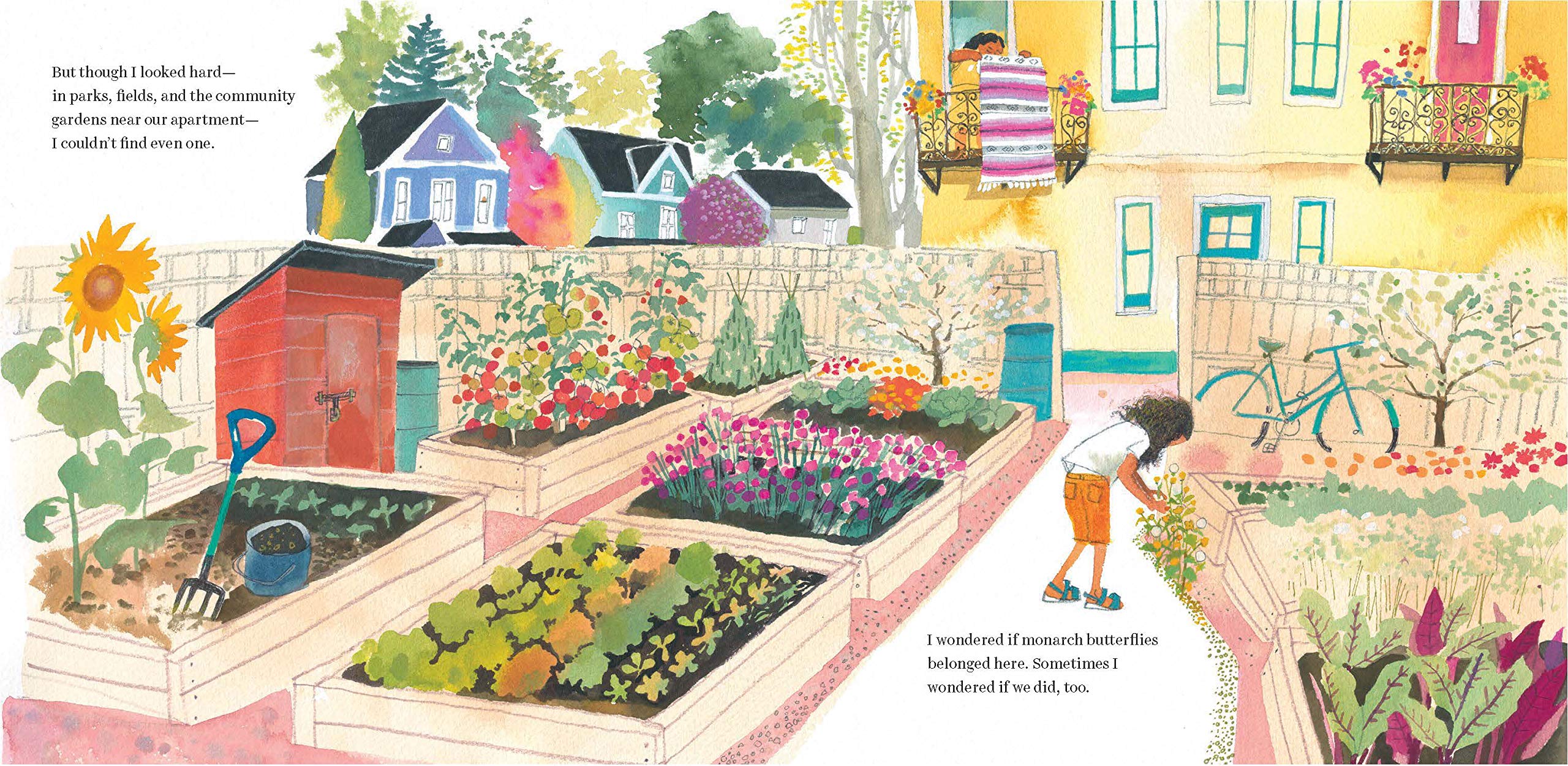
When summer came, the girl thought for sure she would see monarch butterflies. She “wanted to see them flit from flower to flower sipping nectar.” But no matter where she looked—the park, grassy fields, an even the community garden—she couldn’t find any. She began to wonder “if monarch butterflies belonged here.” Sometimes she wondered if her family did either. Turning the page, kids learn how a caterpillar transforms into a butterfly and how, once it emerges from its chrysalis, it “pumps fluid into its wings, which expand and take their final shape” and creates the “straw” it drinks nectar with.

celebrate-picture-books-picture-book-review-butterflies-belong-here-reading

Image copyright Meilo So, 2020, text copyright Deborah Hopkinson, 2020. Courtesy of Chronicle Books.

In the fall when school began, the girl rushed to find her favorite book. Now she could read it, and she discovered that butterflies need milkweed to multiply and thrive. She also learned that milkweed is sparse now, due to habitat destruction due to building, chemical use, and climate change. She also learned some shocking facts, such as “in 20 years, the number of monarchs has fallen by 90 percent.”

One day the librarian calls the girl over and tells her that she has ordered new butterfly books and offers them to her first. The librarian also explains that over the summer she created a monarch way station. The girl knows about these special butterfly gardens. She points out the library window at a place within the school yard that would make a perfect monarch way station. “‘It takes just one person to get things started,’” the librarian says. “‘I’m not that kind of person,’” the girl whispers. But the librarian is encouraging. She reminds the girl about the amazing trip monarchs take and says, “‘It’s surprising what such a tiny creature can do.’” Readers next learn about the generations of butterflies that are born during the summer and how the final generation is different from the rest.

celebrate-picture-books-picture-book-review-butterflies-belong-here-chrysalis

Image copyright Meilo So, 2020, text copyright Deborah Hopkinson, 2020. Courtesy of Chronicle Books.

During the winter, the girl remembers the monarchs who lived “high in the fir forests of Mexico, waiting out the cold to make their long journey north.” She thinks about what the librarian said, and wonders if she could “ever be brave enough to speak up, take charge, and be noticed.” But when she presents a research project on butterflies for her class, the kids loved it. At the end she tells the class how important butterflies are and that they need to help them.

She is surprised by how excited the class is to help and that they want to make a butterfly garden as the class project. The teacher turns to her and asks if she has any ideas on what they could do. The girl is prepared. She turns her poster around and shows them her “plan for a monarch way station, the beginning of a timeline, a list of supplies, and how much it might cost.” And so, they started on their garden. Over the next few weeks, the girl says “‘I could feel myself growing and changing, little by little.’”

celebrate-picture-books-picture-book-review-butterflies-belong-here-community-garden

Image copyright Meilo So, 2020, text copyright Deborah Hopkinson, 2020. Courtesy of Chronicle Books.

The class talked to the principal, made a presentation to parents, and invited gardeners and scientists to speak to the class. They also wrote letters to students in other places who were doing similar projects. Then they held an all-school assembly and asked for volunteers. Kids from all classes—even kindergarten—signed up. They even went to a town council meeting and explained how important milkweed was. They asked that it not be sprayed with poison but instead “be planted in every city park.” The mayor even shook the girl’s hand and told her the city needed citizens like her.

Finally, with a fence and garden plots built, it was planting day. When spring class picture time rolls around again, the girl can be found in the front row, right in the center and holding the class sign. The kids met students from another school who have been helping the butterflies for two years and now serve as monarch trackers, placing tags on their legs and following their migration routes. The class’s monarch way station is thriving, and while they don’t have monarchs yet, the girl is already thinking about how the class can become monarch trackers next year. Just like a caterpillar, the girl thinks again, she has grown and emerged “as something new, unexpected, surprising.”

Backmatter includes an Author’s Note about the story, a guide for making a school or home monarch way station, facts about monarchs, and books and internet resources for learning more about monarchs and how you can help.

celebrate-picture-books-picture-book-review-butterflies-belong-here-migration

Image copyright Meilo So, 2020, text copyright Deborah Hopkinson, 2020. Courtesy of Chronicle Books.

Deborah Hopkinson’s moving and educational story combines a fictional account of growing up with scientific information on butterflies. The structure is exceptionally effective in showing kids and adults that some children find their voice, discover a talent, or overcome hesitation or shyness when they become involved in a cause or activity they believe in. The school librarian and the teacher both model actions and words that can encourage children to express and extend themselves. The girl’s thoughts allow children to see that fears of speaking up or taking charge are not uncommon while also reassuring them that by taking even small actions one step at a time, their confidence will grow. The cyclical structure of the story enhances the idea that change is gradual—in nature and in people. Hopkinson’s text revolving around butterflies and making a butterfly garden way station will excite kids to do the same at their school, at home, or in their community.

Meilo So’s gorgeous and tender illustrations portray vibrant scenes of flower bedecked balconies, blooming community gardens, and a busy, colorful town. So cleverly depicts the library’s stacks of books in similar floral hues, connecting the nurturing of children and butterflies. The faces of all the children and the adults are thoughtful and enthusiastic. Readers can clearly see the protagonist’s physical growth throughout the seasons as well as her developing self-confidence and will want to watch for ways in which she mirrors a butterfly. The children in the classroom and the school are a diverse mix and demonstrate the enthusiasm and determination of kids who want to make a difference.

So is a master at illustrating butterflies, caterpillars, and other insects, and her realistic images will fascinate readers. Children get to see a caterpillar form a chrysalis, transform into a butterfly inside, and emerge. They also see the seeds inside a milkweed pod as well as the plants themselves, throngs of monarchs during migration, and maps of migration routes. 

Exhilarating, poignant, and inspirational on many levels, Butterflies Belong Here is highly recommended for home libraries and a must for school and public libraries.

Ages 5 – 8 and up

Chronicle Books, 2020 | ISBN 978-1452176802

Discover more about Deborah Hopkinson and her books on her website.

To learn more about Meilo So and view portfolios of her art, visit her website and heflinreps.

National Learn about Butterflies Day Activity

celebrate-picture-books-picture-book-review-beautiful-butterflies-maze

Beautiful Butterflies Maze


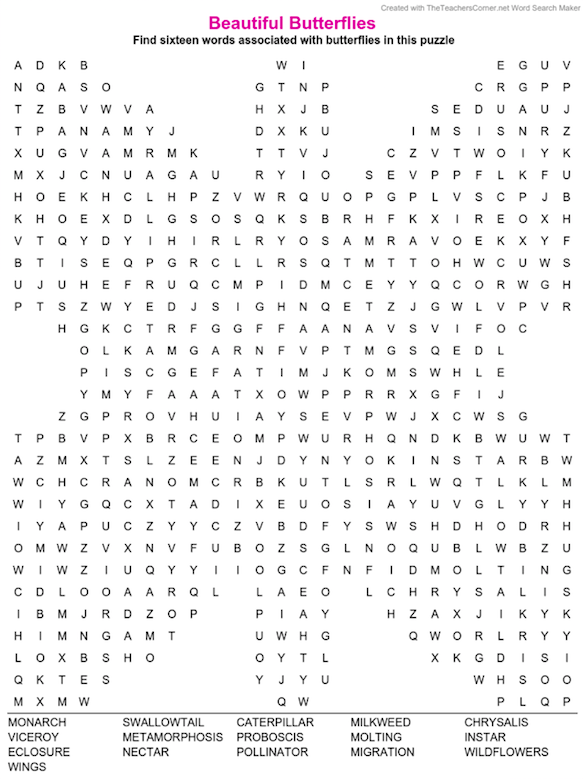
Can you find the sixteen words associated with butterflies in this printable puzzle?

Beautiful Butterflies Maze Puzzle | Beautiful Butterflies Maze Solution

celebrate-picture-books-picture-book-review-butterflies-belong-here-cover

You can find Butterflies Belong Here at these booksellers

Amazon | Barnes & Noble | Books-a-Million

To support your local independent bookstore, order from

Bookshop | IndieBound

Picture Book Review
March 3 – World Wildlife Day and Interview with Author Heather Lang

celebrate-picture-books-picture-book-review-the-leaf-detective-cover

About the Holiday

A vast number of plant and animal species are facing endangerment or extinction due to human caused climate change. World Wildlife Day was created in 1973 as an effort to protect the many endangered species of the world. It is an international holiday with a new theme each year to celebrate the biodiversity of our earth while also promoting awareness and advocacy. The theme for this year’s observance is “Forests and Livelihoods: Sustaining People and Planet.” There are many wonderful ways to celebrate this holiday; spend some time in nature, pick up litter around your block, find out about activities going on in your hometown, and read books to educate yourself and others on the livelihood of forests, wildlife and the environment.  To learn more about World Wildlife Day, and the virtual events happening today, visit this webpage: https://www.wildlifeday.org/. If you are searching for books to celebrate, The Leaf Detective is a perfect fit!

Thanks to Boyds Mills for providing a digital copy of The Leaf Detective for review consideration. All opinions on the book are my own.

Reviewed by Dorothy Levine

The Leaf Detective: How Margaret Lowman Uncovered the Secrets in the Rainforest

Written by Heather Lang | Illustrated by Jana Christy


As a child, Meg was quite shy to make friends. She spent lots of time studying and playing with wildlife: “Meg wrapped herself in nature, like a soft blanket.” As she continued to grow, so did her passion for leaves, trees, and nature. Meg attended Sydney University in Australia. In 1979, she became the first person at her graduate school to study the rainforest. Through her studies Meg learned that people had been all the way to outer space to study, but nobody had ever ventured to the tippity top of a canopy tree. Instead, they studied trees from far away through binoculars. Oftentimes scientists would spray trees with chemicals so that the harmed leaves and animals would drop to the forest floor where people could study them up close. Meg sought to change this.

celebrate-picture-books-picture-book-review-the-leaf-detective-harness

Image copyright Jana Christy, 2021, text copyright Heather Lang, 2021. Courtesy of Calkins Creek.

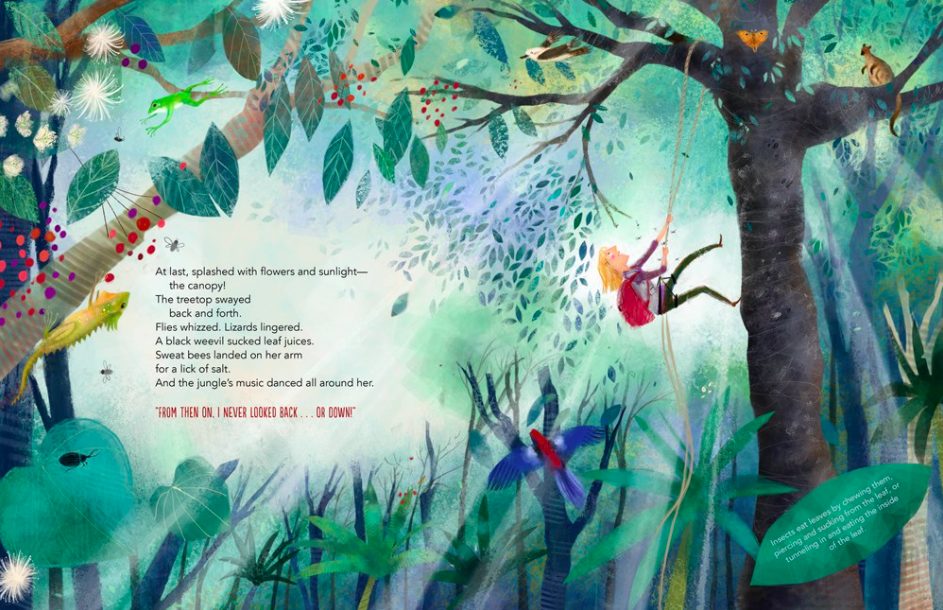
“In the dark, damp forest the trees rose up to distant rustling, squawks and screeches, shadows in the treetops. How could she get up there?” Meg Lowman created her own slingshot and harness and inched up a coachwood tree. When she reached the canopy, she knew she’d found the perfect place to study and explore. Meg is quoted saying, “From then on, I never looked back…or down!”

Meg continued to create new strategies to study the canopy, as a scientist does. And in doing so she made so many discoveries, such as: “We now believe the canopy is home to approximately half the plant and animal species on land.” Many people tried to stop Meg along her journey. They told her she couldn’t take science classes, climb trees, or make inventions because she was a woman. But Meg ignored them. She continued to investigate.

She knew that rainforests were (and are) in danger, and that so many creatures rely on the rainforest ecosystem. People all over the world were cutting down large parts of the rainforests for wood, rubber, paper, and farmland. This worried Meg; she wanted to find a way to protect rainforests before they all disappeared. “She wondered, How can one leaf detective make a difference? How can I save the trees?…Then an idea crawled into Meg’s thoughts—a way to speak for the trees.”

celebrate-picture-books-picture-book-review-the-leaf-detective-bugs

Image copyright Jana Christy, 2021, text copyright Heather Lang, 2021. Courtesy of Calkins Creek.

Meg traveled around the world. She spoke to people across many different countries; taught them how to climb trees, build canopy walkways—she showed people the many gifts rainforests have to offer. Meg educated communities on how they could share their rainforest with outsiders, showcase its beauty to create revenue rather than chopping them down for resources. By using her voice and creative mind, Meg helped implement systems that have saved many trees and creatures across the world.

Meg Lowman continues to study trees, save rainforests, and teach people how to shift their economies to center around ecotourism and sustainable crops rather than resource extraction. She has used her voice to save rainforests across the world, and yet she still says, “If only I could have achieved as much as the tree!… But I have not. I have whittled away at relatively small goals in comparison to the grander accomplishments of a tree.”

Backmatter includes an author’s note detailing Heather Lang’s visit to meet Margaret Lowman in the Amazon rainforest in Perú. The note includes more information on Dr. Lowman’s advocacy work and is followed by an illustrated educational spread on the layers of canopies, and species featured throughout the story are labeled in the final spread, for readers to learn more about specific animals that make their homes in the rainforest.

celebrate-picture-books-picture-book-review-the-leaf-detective-trampoline

Image copyright Jana Christy, 2021, text copyright Heather Lang, 2021. Courtesy of Calkins Creek.

Heather Lang’s lyrical writing matches the carefulness with which Meg studies leaves, trees, and the rainforest canopy. Her compelling storytelling is rich with facts and sensory imagery that immerse readers in the environment and Meg’s determination to understand and, later, save it. Scattered images of leaves drop fun facts and definitions for readers about the rainforest, canopies, transpiration, herbivores, and more. Quotes from Dr. Lowman are thoughtfully placed throughout the story in a manner that neatly flows. The Leaf Detective urges readers to understand that “a tree is not just a tree” but rather “a shelter for animals and people, / a recycler and provider of water, / a creator of food and oxygen, / an inventor of medicine/ a soldier against climate change.”

Jana Christy’s digital drawings contain stunning detail and show an accurate scale of one small person in comparison to the vastness of the rainforest. Her mesmerizing wildlife creatures and immersive watercolor blues and greens transport readers right into the rainforest with “Canopy Meg.” The lush greens of the rainforests contrast strikingly with the spread on deforestation, in which fallen trees lay scattered on the bare, brown ground. Readers will also be interested to see the innovations that have made the trees more accessible to people. One can read the book over and over and notice new details every time. It is a book to treasure, to study, to read and re-read again. 

Come unearth the secrets of the rainforest with Margaret Lowman in this book that’s budding with knowledge, empathy, and magic, and is a tale of how one person can make a difference. The intriguing facts, poignant quotes from Dr. Lowman herself, and beautiful poetic writing will leave readers of this book inspired with wonder and with a hunger for advocacy. The Leaf Detective: How Margaret Lowman Uncovered the Secrets of the Rainforest is an urgent must-read for all ages.

A portion of Heather Lang’s royalties for this book go to TREE Foundation—an organization that funds field trips for children to get into nature, canopy projects, and science book distribution for children with limited access to STEAM, girls especially. 

Ages 6 – 10

Calkins Creek, 2021 | ISBN 978-1684371778

Discover more about Heather Lang and her books on her website.

To learn more about Jana Christy, her books, and her art, visit her website.

Meet Heather Lang

celebrate-picture-books-picture-book-review-Heather-Lang-headshot

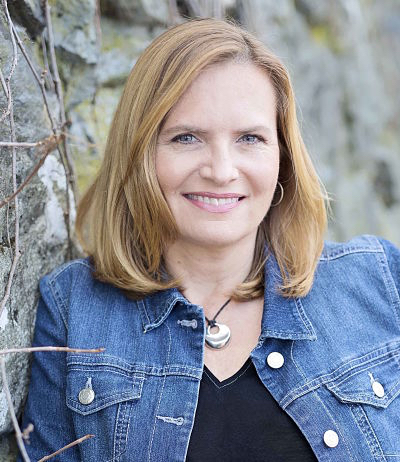
Heather Lang loves to write about real women who overcame extraordinary obstacles and never gave up on their dreams. Her research has taken her to the skies, the treetops of the Amazon, and the depths of the ocean. Her award-winning picture book biographies include, QUEEN OF THE TRACK: Alice Coachman, Olympic High-Jump Champion, THE ORIGINAL COWGIRL: The Wild Adventures of Lucille Mulhall, FEARLESS FLYER: Ruth Law and Her Flying Machine, SWIMMING WITH SHARKS: The Daring Discoveries of Eugenie Clark, and ANYBODY’S GAME: Kathryn Johnston, The First Girl to Play Little League Baseball. When she is not writing, she enjoys going on adventures with her husband and four children. Visit Heather at www.heatherlangbooks.com.

Today I am thrilled to be interviewing author Heather Lang about her new biographical picture book The Leaf Detective: How Margaret Lowman Uncovered the Secrets of the Rainforest. Heather provides some thoughtful notes for shy readers, riveting stories from the rainforest and insight into the importance of exploring and caring for nature.

Can you tell us a little bit about what made you decide to write The Leaf Detective?  

We’ve caused enormous harm to our planet over the last few centuries, and I’m especially concerned about our rainforests. I knew I wanted to write a biography that was also a science book about the rainforest. When I read about Meg’s pioneering work and deep passion for trees, I was hooked! I couldn’t wait to find out how this quiet, nature-loving child, who didn’t know women could be scientists, became a world-class scientist and conservationist.

In the story you talk about how Meg was shy to make playmates with other kids. Were you also a shy kid growing up? Do you have any advice for readers who may relate to this aspect of Meg’s childhood? 

Like Meg, I was very shy as a child and remember wishing I were more outgoing. But as I grew older, I began to recognize the many advantages to being shy! My shy nature led me to sit back and observe. And that led to deeper thinking and understanding, a strong imagination, and creativity. Shy people often think more before they speak. They make their words count, which coincidentally is an important part of writing picture books. This also makes shy people good listeners and thoughtful friends. 

I’m still shy in many ways, and my recommendation to readers who might identify with this is to embrace your shyness! At the same time, don’t let it stop you from doing things you want to do. Meg Lowman told me she used to get so nervous before presenting in graduate school that she’d get physically sick. But with practice, practice, practice, she’s become a captivating presenter and educator. If you watch a few of her FUN FACTS FROM THE FIELD videos on my website, you’ll see what I mean! 

How would you describe your connection to nature? Would you consider yourself a “detective” in any ways? 

I’m constantly in awe of nature and its countless gifts and surprises. Nothing sparks my curiosity more than our natural world, and my curiosity is probably my most important tool as a writer. Being open-minded and asking questions not only generates ideas, but also leads me to think more deeply about a topic and examine it closely from lots of different angles. And of course that generates more detective work and more learning about my topic and myself. Being a detective is one of my favorite parts of writing books.

Do you have a favorite rainforest tree or creature? If so, tell me about it a bit!

When I arrived in the Amazon rainforest, I couldn’t wait to see a sloth! But during my time there I became fascinated with ants. They are everywhere in the rainforest, even in the canopy. I think it’s amazing how such tiny creatures can be so hardworking and organized. Their teamwork is unbelievable. And they are invaluable to the health of our rainforests. Among other things, they’re in charge of waste management on the rainforest floor, and they disperse seeds and aerate the soil!

What was the most rewarding part of writing The Leaf Detective?

This writing project was filled with rewards every step of the way! I learned so much about our rainforests and trees and gained a true understanding of how interconnected we all are—plants, animals, and humans. Getting to really know Meg Lowman and learning from her firsthand was thrilling and strengthened my writing in many important ways. It was also really rewarding to stretch myself as a writer and find a way to effectively write a book that seemed ambitious at first—a biography and conservation book that wove in quotes and science facts. 

Are there any stories from your trip to meet Meg that you did not get the chance to include in your author’s note that you’d like to share?

While I was on my Amazon adventure with Meg, I had many exciting moments. I loved learning from the Indigenous people how to use a blow gun, make clay, and braid palm leaves to make thatched roofs. The local shaman taught me how he uses different plants in the rainforest to treat and prevent injuries and illnesses—from bronchitis to poisonous snake bites. He also helped me confront my fear of snakes by bringing one over for me to touch. I even let it gently coil around my neck! But my favorite moments were exploring with Meg, especially at night and early in the morning when there’s so much activity in the rainforest.

What are you working on next?

I’m having a blast working on a new informational picture book series about extraordinary animals for Candlewick Press with my co-author/illustrator and close friend Jamie Harper. The first book, Supermoms!, features cool nonfiction facts about 18 amazing animal moms in a graphic format with humorous callouts. 

I’m also working on a collective biography for readers in grades 3 – 7. More to come on that soon!

Thanks so much for chatting with me Heather! I had a lovely time hearing about your inspiration, stories, writing process and tips for shy readers. Looking forward to learning and reading more from you in the months and years to come.

World Wildlife Day Activity

Screen Shot 2021-03-02 at 9.24.20 PM

You can create your own rainforest with this coloring page. Use the blank space around the picture to label the layers as shown on the last page of The Leaf Detective!

Rainforest Coloring Page

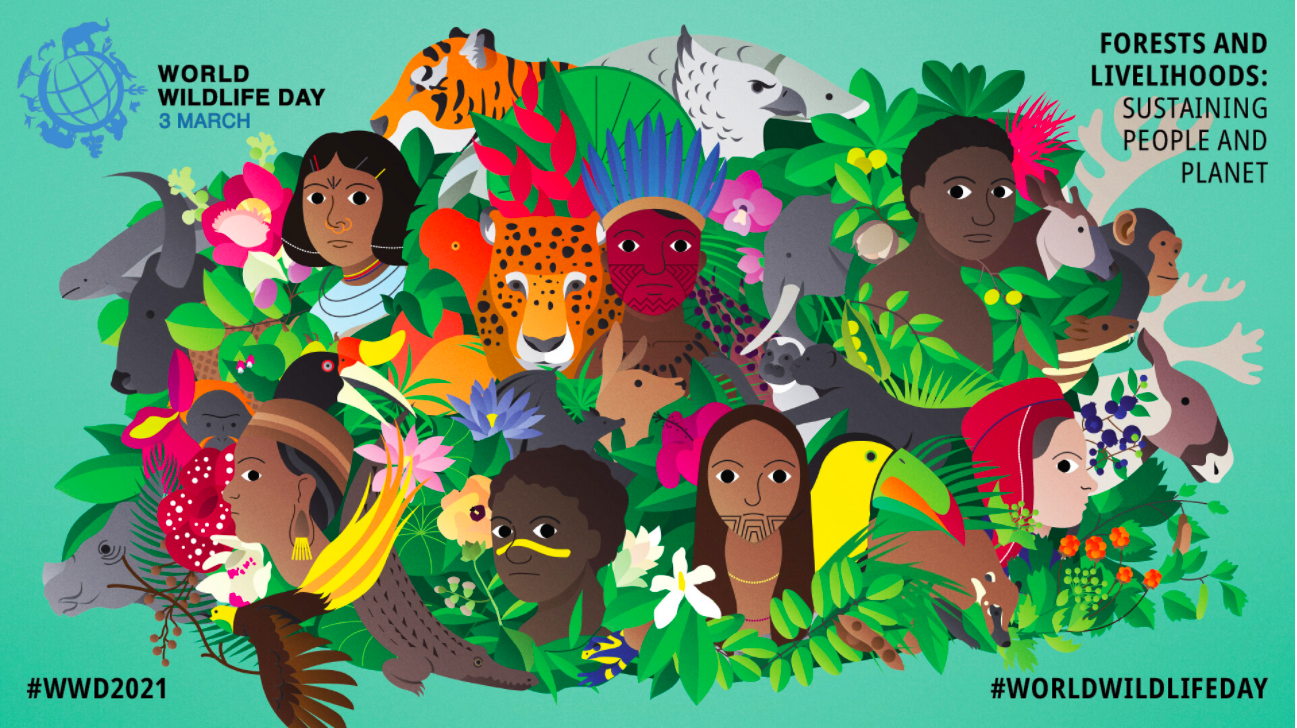
celebrate-picture-books-picture-book-review-world-wildlife-day-poster-2021

Three different beautiful World Wildlife Day 2021 posters in six languages are available for download here.

You can find The Leaf Detective at these booksellers

Amazon | Barnes & Noble | Books-a-Million

To support your local independent bookstore, order from

Bookshop | IndieBound

Picture Book Review

March 3 – World Wildlife Day

celebrate-picture-books-picture-book-review-extinct-cover

About the Holiday

This United Nations-sponsored holiday was established in 2013 to celebrate the world’s wild animals and plants and to raise awareness of the perils they face. Since that time, World Wildlife Day has grown to be the most important global event dedicated to wildlife. Each year, the organizers adopt a theme addressing a pressing wildlife issue. This year’s theme is Sustaining All Life on Earth and encompasses raising awareness of the importance of biodiversity to the environment and to humans as well. The world relies on its biodiversity for clean air and water, food, energy, and materials of all types. But our biodiversity is in danger through unsustainable human activities. It is up to us to decide and act now for the future. Today’s book gives readers a good place to start in seeing species we’ve recently lost and how we can help. To learn more visit the World Wildlife Day website.

I received a copy of Extinct from Phaidon Press for review consideration. All opinions of the book are my own.

Extinct: An Illustrated Exploration of Animals That Have Disappeared

Written by Lucas Riera | Illustrated by Jack Tite


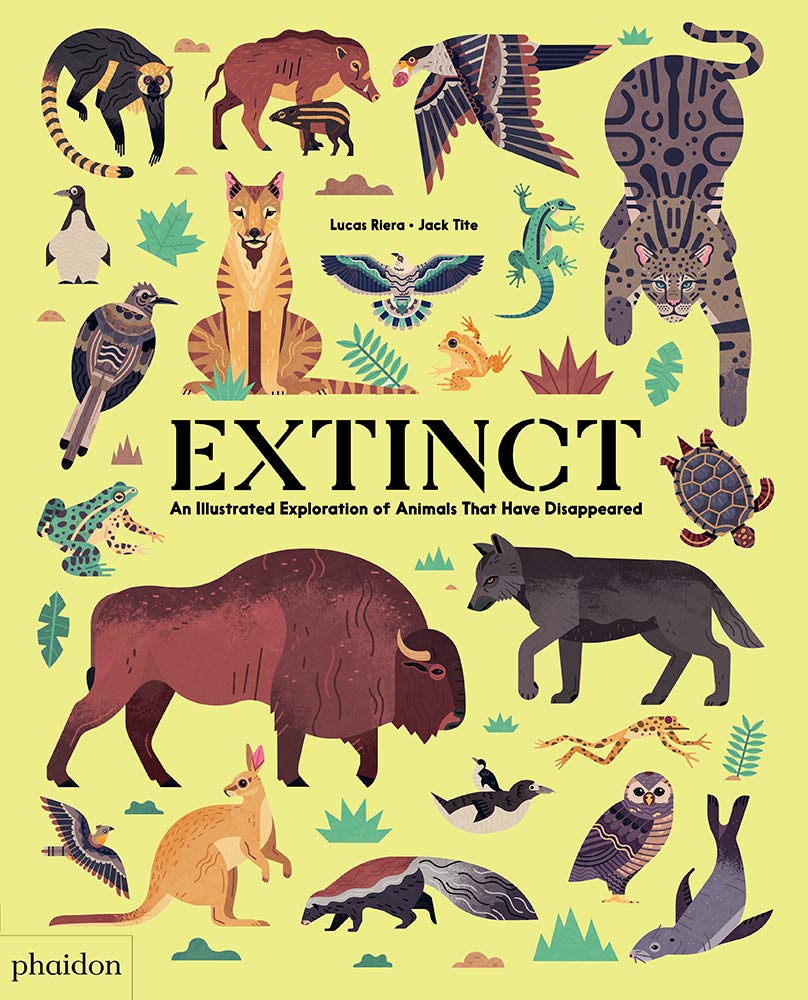
When most people hear the word extinct, they picture T-rex, brontosaurus, or maybe a mastodon. Images of bones long buried and museum exhibits of fossils come to mind. But Extinct: An Illustrated Exploration of Animals That Have Disappeared introduces young readers to the fact that “species become extinct all the time—in fact, it’s happening right now.” Lucas Riera and Jack Tite focus on 90 species that have been lost recently, specifically from the 20th century to today. These animals from all habitats are familiar to children and provide examples of how and why certain species are disappearing. For young conservationists, the stories and facts included offer a roadmap to future action and protective measures while honoring these beautiful animals.

celebrate-picture-books-picture-book-review-extinct-predators

Image copyright Jack Tite, 2019, text copyright Lucas Riera, 2019. Courtesy of Phaidon Press.

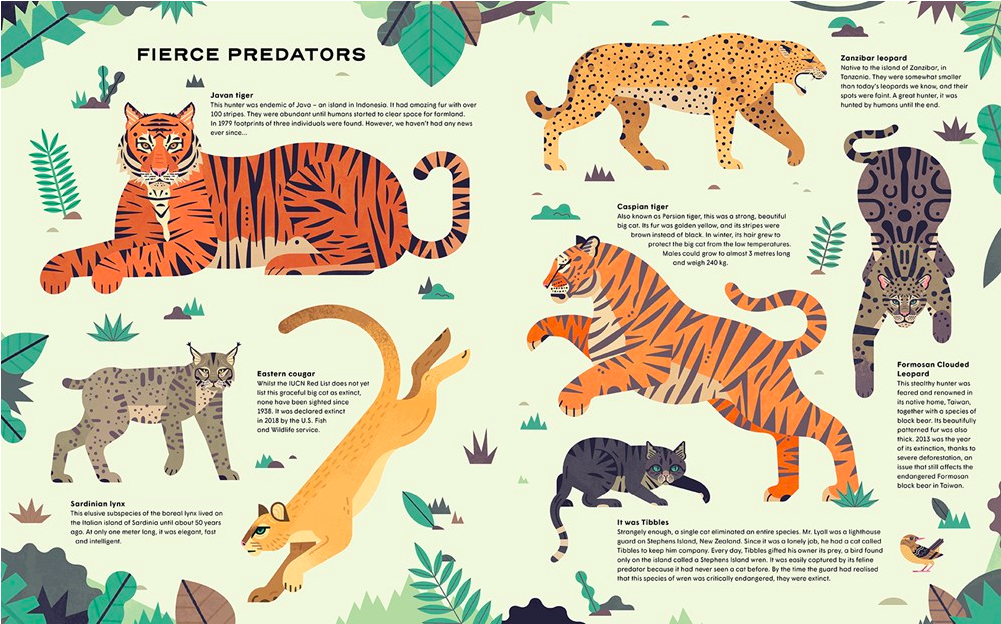
Turning to the first page, readers meet six big cats that have disappeared from their homelands due to habitat destruction or hunting. The Formosan clouded leopard, a great climber native to Taiwan and named for the “distinctive shape of their spots,” succumbed to the loss of their natural habitat through logging. “The species was declared extinct in 2013. However, in 2019, two unconfirmed sightings have given hope that they may still be out there.” Also on this page, children are introduced to Tibbles—a house cat (or lighthouse cat, to be more precise) that single-pawedly wiped out the population of New Zealand’s Stephens Island wrens.

Next, children learn about the Thylacine (aka Tasmanian tiger or Tasmanian wolf). Striped like a tiger, carnivorous like a wolf, and the size of a large dog, Thylacines were actually marsupials, capable of hoping on their back legs. Their population dwindled to one by 1933 because of hunting by settlers and through their dogs, which killed the Thylacine’s prey and introduced diseases. “The last specimen was captured in 1933 and lived out its lonely life in an Australian zoo until September 7, 1936.

celebrate-picture-books-picture-book-review-extinct-athletes

Image copyright Jack Tite, 2019, text copyright Lucas Riera, 2019. Courtesy of Phaidon Press.

Speaking of marsupials, Riera highlights seven of these distinctive creatures, ranging from mouse-sized to about three feet tall, that once hopped their way across grasslands and deserts. Many fell victim to foxes, other predators, and habitat change. These include the crescent nail-tail wallaby, the yallara, and the pig-footed bandicoot, which was the size of a cat, had the streamlined face of a bird and whose front feet resembled pigs’ hooves while their back feet were more like horses’ hooves.

Twelve species of reptiles, including three types of giant tortoise, a turtle, skinks, lizards, and snakes, as well as nine species of amphibians, including toads, newts, salamanders, and frogs will fascinate kids. One of these—the gastric brooding frog—may have been one of the most unusual creatures in the forest. What made them unique? “The females swallowed their eggs during gestation. The eggs grew inside her belly! After six weeks, her developed babies would emerge from her mouth. Sadly, these wonderful weirdos have been extinct since 2002.”

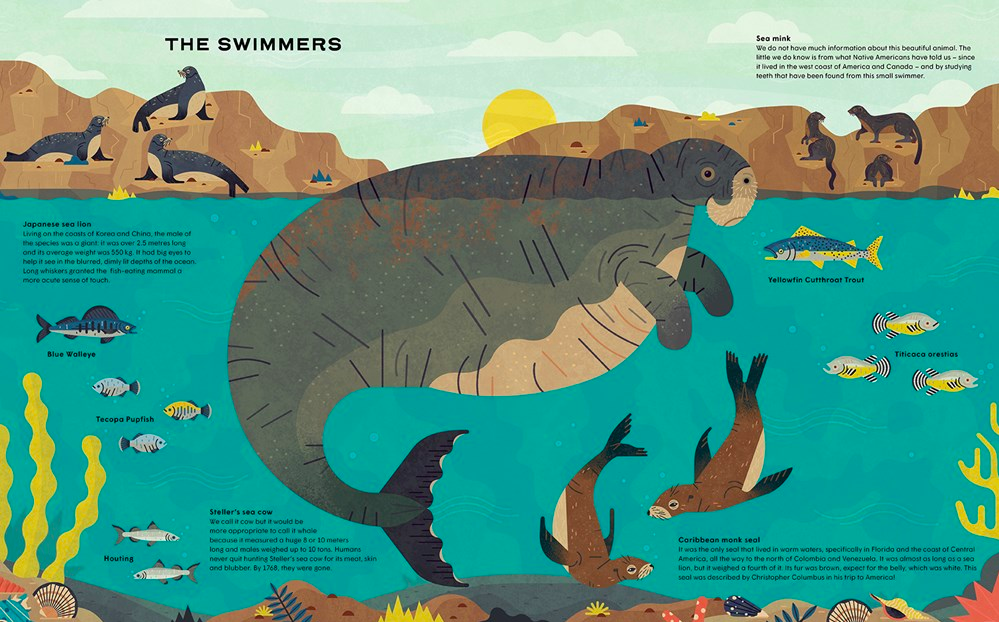
celebrate-picture-books-picture-book-review-extinct-the-swimmers

Image copyright Jack Tite, 2019, text copyright Lucas Riera, 2019. Courtesy of Phaidon Press.

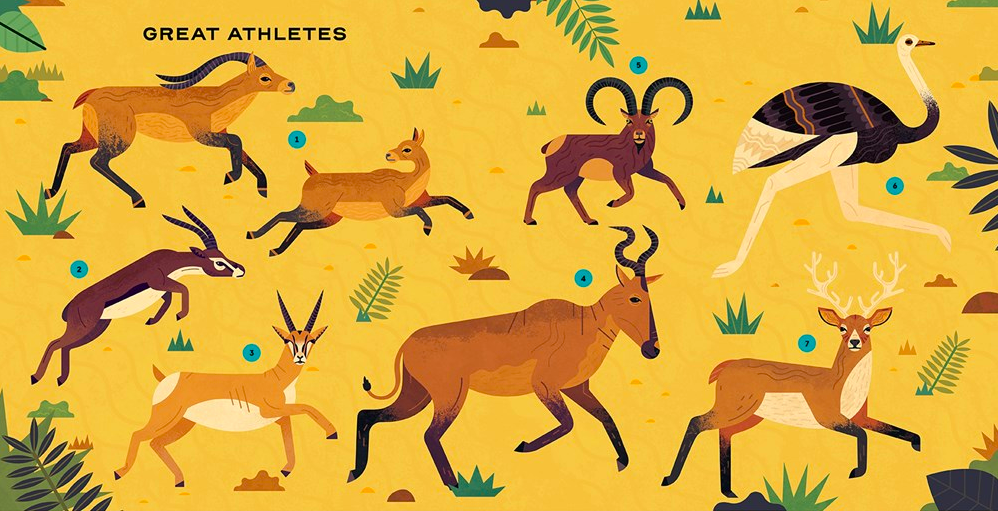
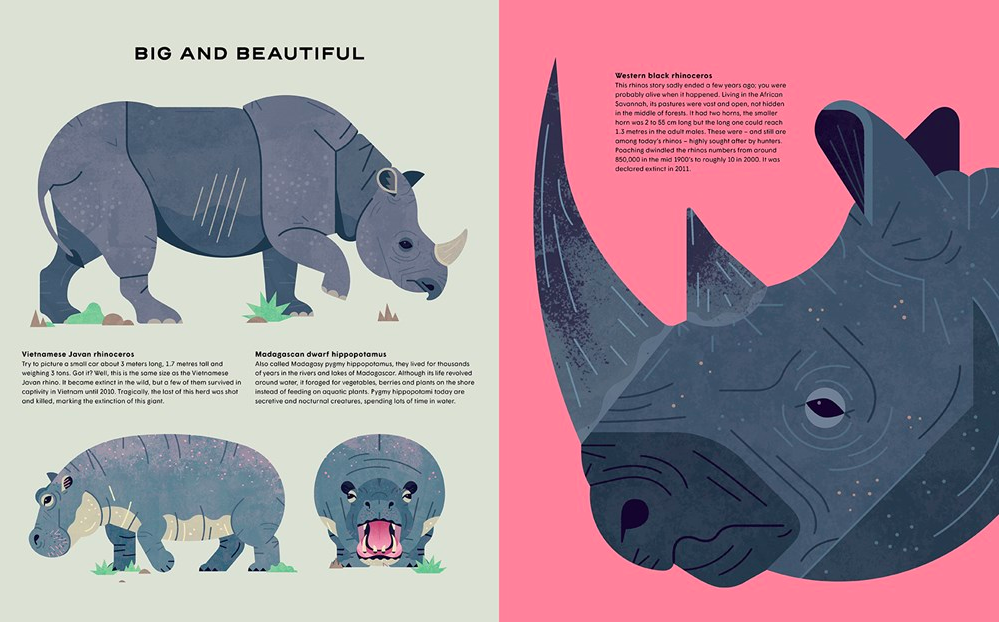
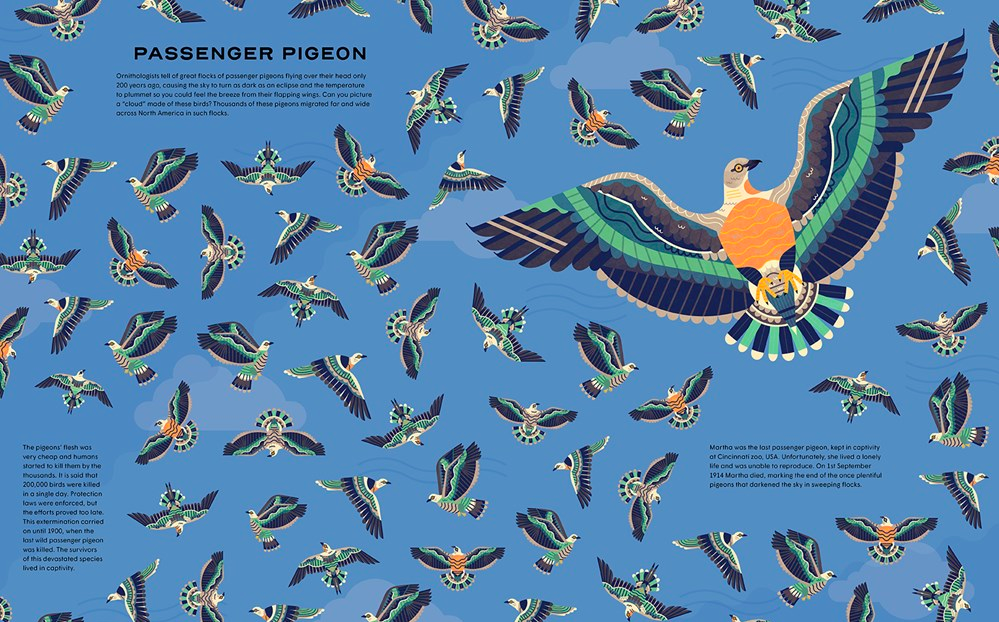
Two-page spreads are also dedicated to Amazing Athletes, Superb Swimmers, Big and Beautiful rhinos and hippo, Powerful Pack wolves, Birds, Primates, and Fantastic Foragers, including the Caucasian wisent, a bison that once thrived in the cold mountains of Eastern Europe. “In the 19th century, their population numbered in the thousands, but then humans settled in the mountains and hunting ensued. In 1927, poachers killed the last three individuals that lived in the wild.” In addition to the Thylacine, Riera highlights three other individual animals—the passenger pigeon, the great auk, and the California Grizzly.

celebrate-picture-books-picture-book-review-extinct-big-and-beautiful

Image copyright Jack Tite, 2019, text copyright Lucas Riera, 2019. Courtesy of Phaidon Press.

Following the species profiles, Riera presents an extensive discussion of extinction today, including the fact that currently “the rate of extinction is estimated to be much faster than the natural rate—by as much as 1,000 times”—and that “it’s the sixth time in billions of years that levels of extinction have been extremely high.” He also reveals causes of extinction, wildlife organizations and examples of positive results, and summaries of work to protect three critically endangered animals. On the next page, Jack Tite depicts more critically endangered animals being tracked by the International Union for Conservation of Nature. Finally, concerned children and adults will find resources for getting involved on local and international levels as well as tips for being more environmentally conscious.

celebrate-picture-books-picture-book-review-extinct-passenger-pigeon

Image copyright Jack Tite, 2019, text copyright Lucas Riera, 2019. Courtesy of Phaidon Press.

Lucas Riera introduces readers to this wide variety of animals through fascinating, conversational, and descriptive paragraphs that reveal tidbits about their distinctive features, where they lived, and how they became extinct. Dates of extinction are eye-opening, especially those for creatures that have disappeared within the lifetime of many young readers. Pages packed with reptiles, birds, amphibians and more, invite children to explore these animals further and present jumping off points for nature and environmental science classes for a wide age range of students.

In this stunning oversized book, Jack Tite accompanies the text with vibrant, eye-catching imagery of animals prowling, leaping, swimming, running, and otherwise on the move that gives readers an up-close view of their beautiful markings and distinguishing traits. Textured backgrounds place the animals in their natural environments from sun-drenched deserts to deep seas to tropical forests and beyond. In what may be a plea for the future, most of the animals gaze out from the page directly at readers, seeming to invite them to learn more and engage them in conservation efforts.

Full of information about environmental science, extinction, and animals that once roamed our planet, Extinct: An Illustrated Exploration of Animals That Have Disappeared is a lush and deep resource for young nature lovers and conservationists at home, in schools, and for public libraries.

Ages 5 and up

Phaidon Press, 2019 | ISBN 978-1838660376

To learn more about Jack Tite, his books, and his art, visit his website.

National Wildlife Day Activity

celebrate-picture-books-picture-book-review-wonderful-wildlife-board-game

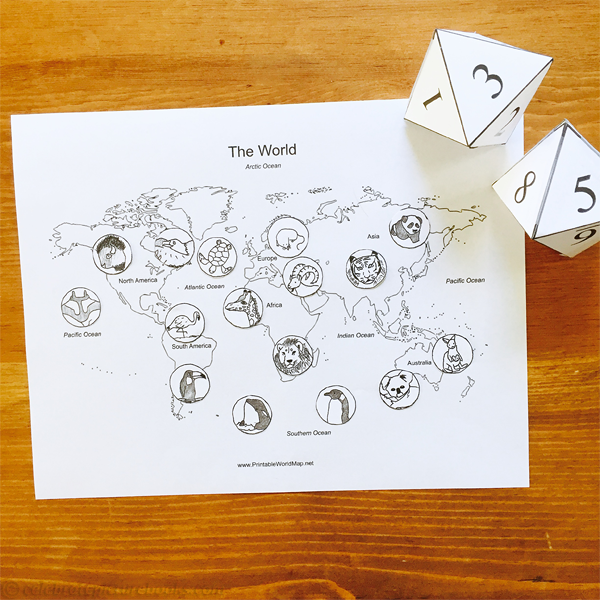
Fascinating animals are found in every part of the world. Play this fun printable Wonderful Wildlife Board Game to match each animal to the area where it lives.

Supplies

Directions

  1. Print a World Map for each player
  2. Print one set of 16 Wildlife Tokens for each player
  3. Print two copies of the 8-sided die, fold, and tape together
  4. If you would like, color the map and tokens
  5. Choose a player to go first
  6. Each player rolls both dice and places an animal on their map according to these corresponding sums of the dice as shown on printable guide
  7. The first player to fill their map is the winner!

celebrate-picture-books-picture-book-review-extinct-cover

You can find Extinct: An Illustrated Exploration of Animals That Have Disappeared at these booksellers

Amazon | Barnes & Noble | Books-a-Million | IndieBound

Picture Book Review
May 30 – National Water a Flower Day

celebrate-picture-books-picture-book-review-the-curious-garden-cover

About the Holiday

If the showers of April have dried up where you are and the May flowers are getting a bit thirsty, today’s holiday makes the perfect reminder to fill the watering can or turn on the sprinkler and give them a drink. Colorful flowers are some of the joys of summer and provide food for birds and insects all season long. If you haven’t begun your garden yet, it’s not too late! Grab a packet of seeds or visit your local nursery and see what a wonderful, wild patch you can grow!

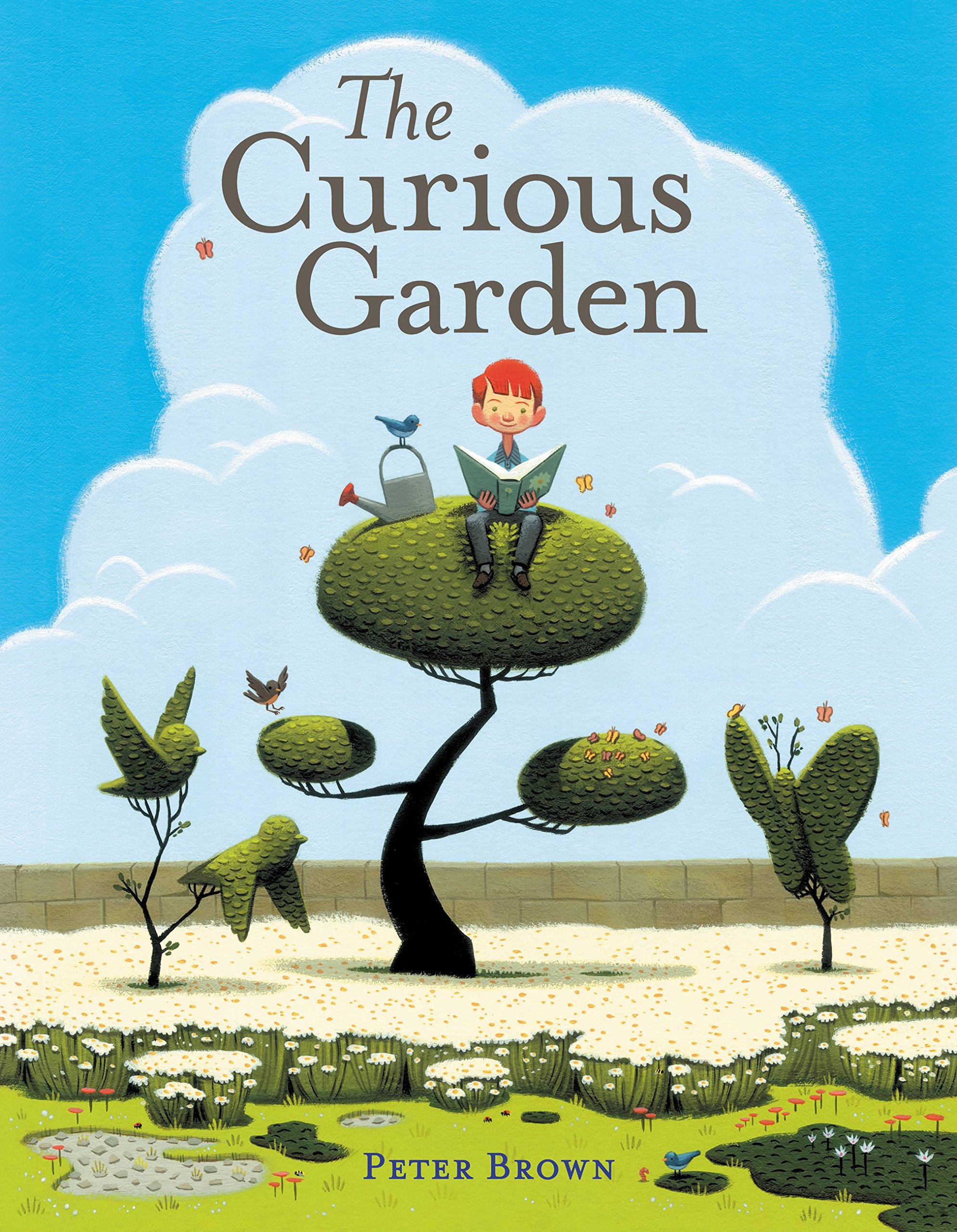
The Curious Garden

By Peter Brown


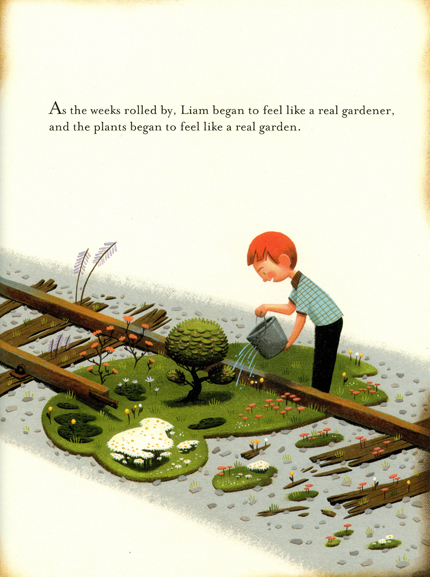
“There once was a city without gardens or trees or greenery of any kind.” People didn’t notice because they spent most of their time inside—working, going to school, or at home. “As you can imagine, it was a very dreary place.” There was one boy, though, who loved being outside. One rainy day Liam discovered a stairway leading to a bridge that held unused railway tracks. Of course, he was curious, and when he reached the top he discovered a scrawny patch of wildflowers. They needed water; they needed a gardener.

celebrate-picture-books-picture-book-review-the-curious-garden-railway-tracks

Copyright Peter Brown, 2009, courtesy of Little, Brown Books for Young Readers.

Liam wasn’t officially a gardener, “but he knew that he could help.” After a few false starts and a mis-snip here and there, the plants began to look better. After several weeks, “Liam began to feel like a real gardener, and the plants began to feel like a real garden.” Now that the garden was healthy, it began to be curious about what lay up and down the railway track. The weeds and mosses crept down the tracks while the “more delicate plants” plucked up their courage and followed. During the next few months, Liam and the garden explored all the nooks and crannies of the railway bridge. Liam looked out over his city with a new perspective.

When winter came, the garden lay under a blanket of snow and Liam stayed below, sledding and preparing for spring. With warmer weather, Liam gathered his new shovel, hoe, pruners, and watering can in his red wheelbarrow and went back to the railway. “Winter had taken a toll on the garden.” The grass and moss were brown, the flowers were just brittle twigs, and the little tree was dull and unkept. But Liam watered, snipped, and even sang to the plants, and soon they “awoke from their winter sleep.”

celebrate-picture-books-picture-book-review-the-curious-garden-garden-spreads

Copyright Peter Brown, 2009, courtesy of Little, Brown Books for Young Readers.

Now the garden was even more curious about the rest of the city, and the brave weeds and mosses led the way. “They popped up farther and farther from the railway and were closely followed by the more delicate plants.” They explored “old, forgotten things,” wiggled their way into sidewalk cracks, and even poked their heads out of broken basement windows. When some plants planted themselves where they didn’t belong, Liam moved them. He also began leaving them in surprising spots around town.

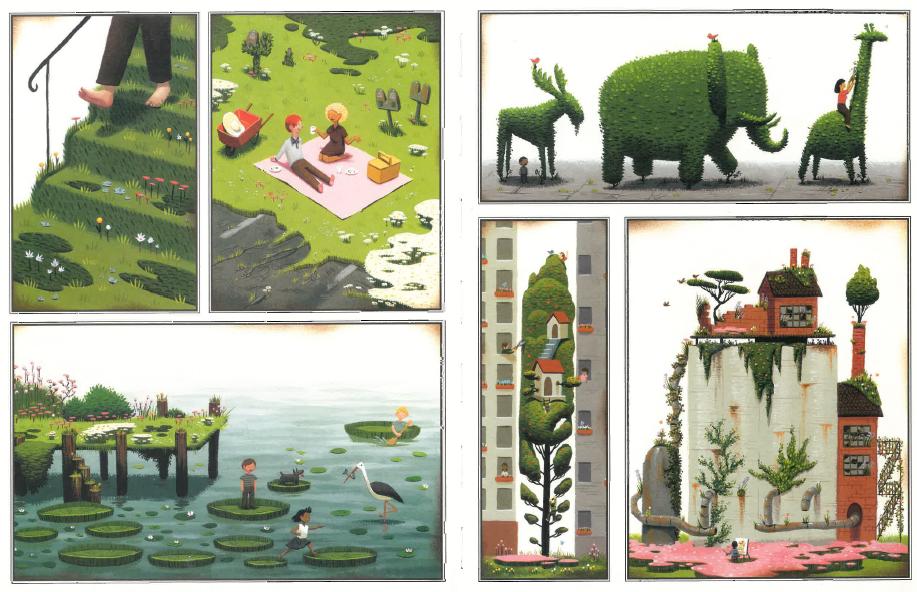
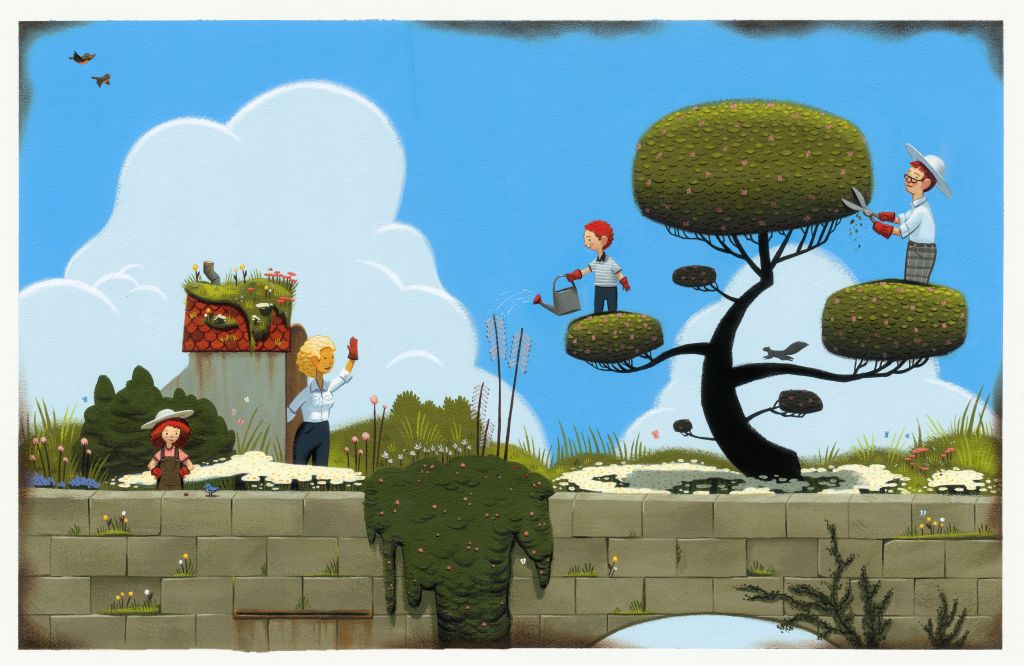
This led to an even more surprising thing: new gardeners also popped up all over the city. Now there were rooftop gardens, backyard gardens, and even gardens that climbed walls. Plants created soft carpets for stairs, huge lily pad boats, an animal parade, and high-rise tree houses for neighbors to share. “Many years later, the entire city had blossomed.” But Liam still loved his patch on the railway line the best.

An Author’s Note following the text reveals the true-life inspiration for the story.

celebrate-picture-books-picture-book-review-the-curious-garden-years-later

Copyright Peter Brown, 2009, courtesy of Little, Brown Books for Young Readers.

Peter Brown’s classic story about a little boy who brings new life to a city that has shut itself off from the natural world, reminds readers of the importance of the environment and getting outside to enjoy it and participate in its survival and growth. But Brown’s story is about so much more too. As Liam’s garden begins to branch out, readers see how one person can be instrumental in spreading ideas, happiness, good news, kindness, in fact any number of life-changing events. In the title and the description of the garden, Brown taps into a dual nature of “curious.” What may seem odd or new or even forgotten sparks interest and exploration and new, often better, perspectives that can bring people together.

Brown opens the story with a two-page, aerial-view spread of the drab city dotted in only two places with a bit of color and giving readers a bit of foreshadowing of the transformation to come. The scrubby patch of greenery next to the rotted tracks includes a tiny tree, cleverly imbued with personality. As the garden spreads, kids will love hunting for the itty-bitty birds, bees, and beetles that appear among the colorful flowers. Kids will “ooh” and “ahh” over the pages that show how and where the garden has spread (a parking lot reclamation is a bright spot) and its influence on new gardeners. The final spread completes the promise held in the first and is a true showstopper.

Ages 4 – 9

Little, Brown Books for Young Readers, 2009 | ISBN 978-0316015479

To learn more about Peter Brown, his books, and his art, visit his website.

National Water a Flower Day Activity

celebrate-picture-books-picture-book-spoon-flowers

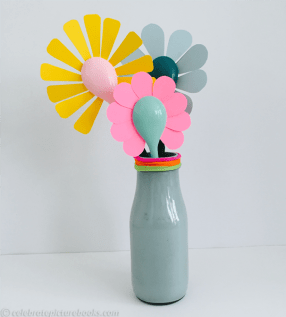
Spoon Flowers Craft


Plastic spoons aren’t just for enjoying yummy treats, they make cute flowers too! With this easy and quick craft, you can give everyone you love a bouquet!

Supplies

  • Colorful plastic spoons
  • Heavy stock paper or construction paper in various colors, including green for leaves
  • Multi-surface glue or hot glue gun

Directions

  1. Cut petals from the heavy stock paper or construction paper
  2. Glue the petals to the bowl of the spoon
  3. Cut leaves from the green paper (optional)
  4. Glue leaves to the handle of the spoon (optional)

celebrate-picture-books-picture-book-review-the-curious-garden-cover

You can find The Curious Garden at these booksellers

Amazon | Barnes & Noble | Books-a-Million

To support your local independent bookstore, order from

Bookshop | IndieBound

Picture Book Review
 

March 15 – It’s National Reading Month

celebrate-picture-books-picture-book-review-the-boy-who-grew-a-forest-cover

About the Holiday

National Reading Month is a book-lover’s delight! With thirty-one whole days where taking extra time to read is not only allowed but encouraged can send one hurrying out to the bookstore or library to stock up! The month is only half over, so gather the kids and discover some new books to enjoy together–why not start with today’s book?!

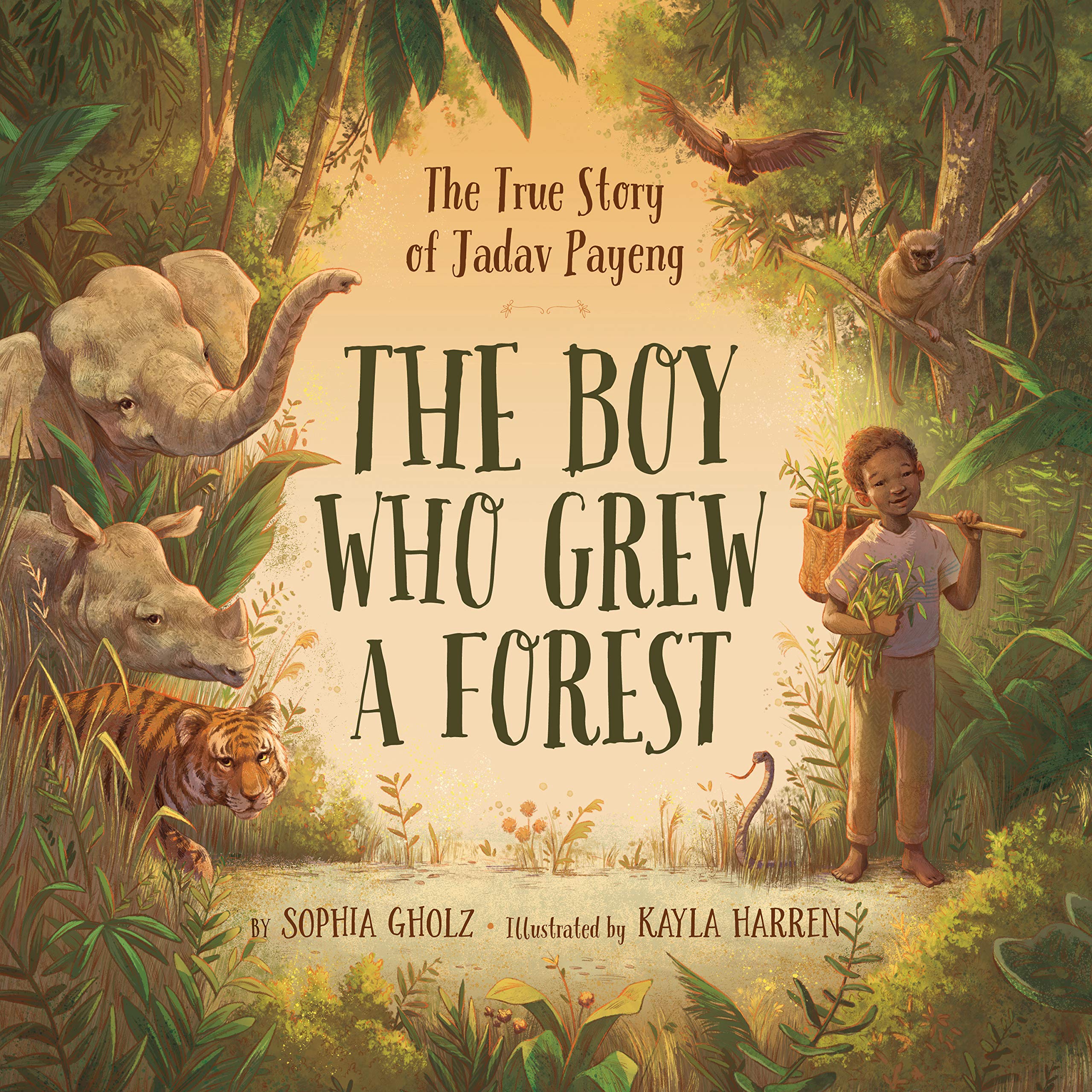
The Boy Who Grew a Forest: The True Story of Jadav Payeng

Written by Sophia Gholz | Illustrated by Kayla Harren


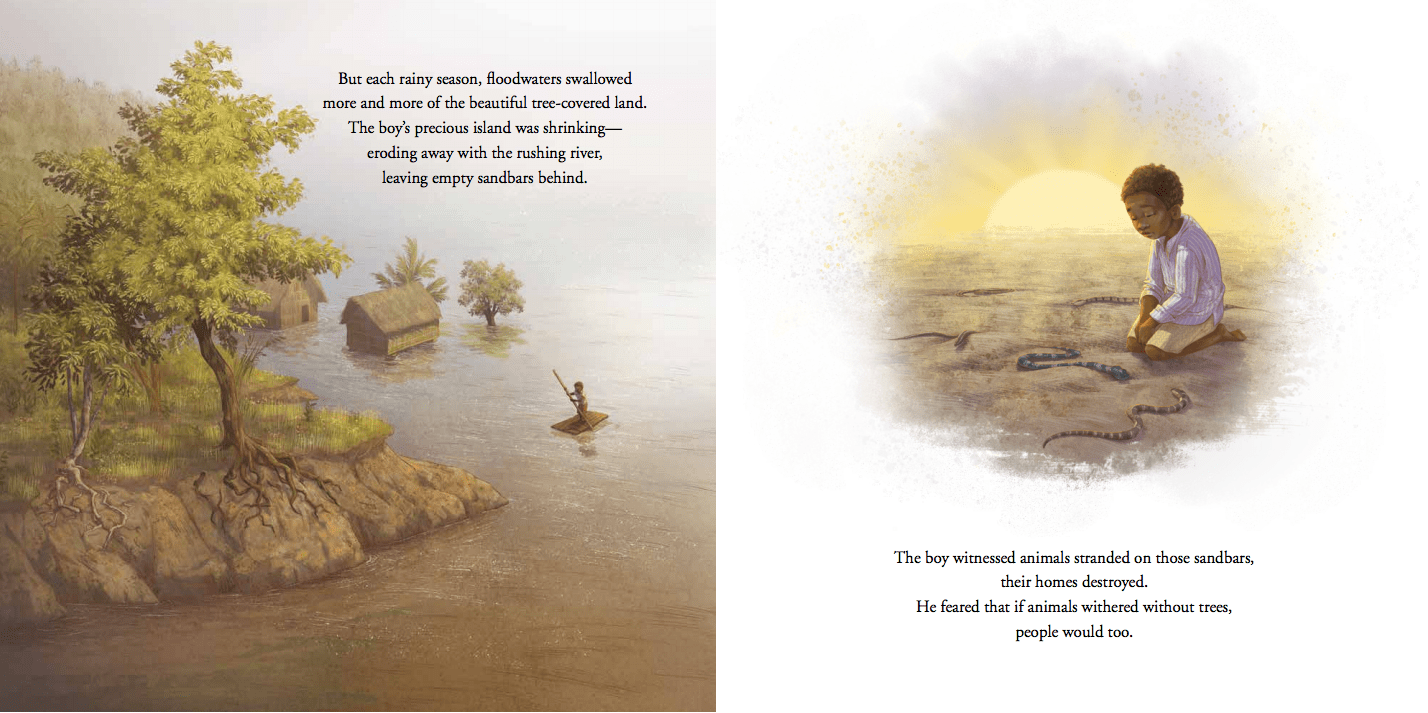
On a large river island in India, there lived a boy who loved the trees that provided food and shade for the people and shelter for the many native animals. But each year, the floods of the rainy season took more and more of the land. “The boy’s precious island was shrinking—eroding away with the rushing river, leaving empty sandbars behind.” Animals’ homes were destroyed and the animals died or didn’t come back. The boy was afraid this would happen to the people of the island too.

celebrate-picture-books-picture-book-review-the-boy-who-grew-a-forest-erosion

Image copyright Kayla Harren, 2019, text copyright Sophia Gholz, 2019. Courtesy of Sleeping Bear Press.

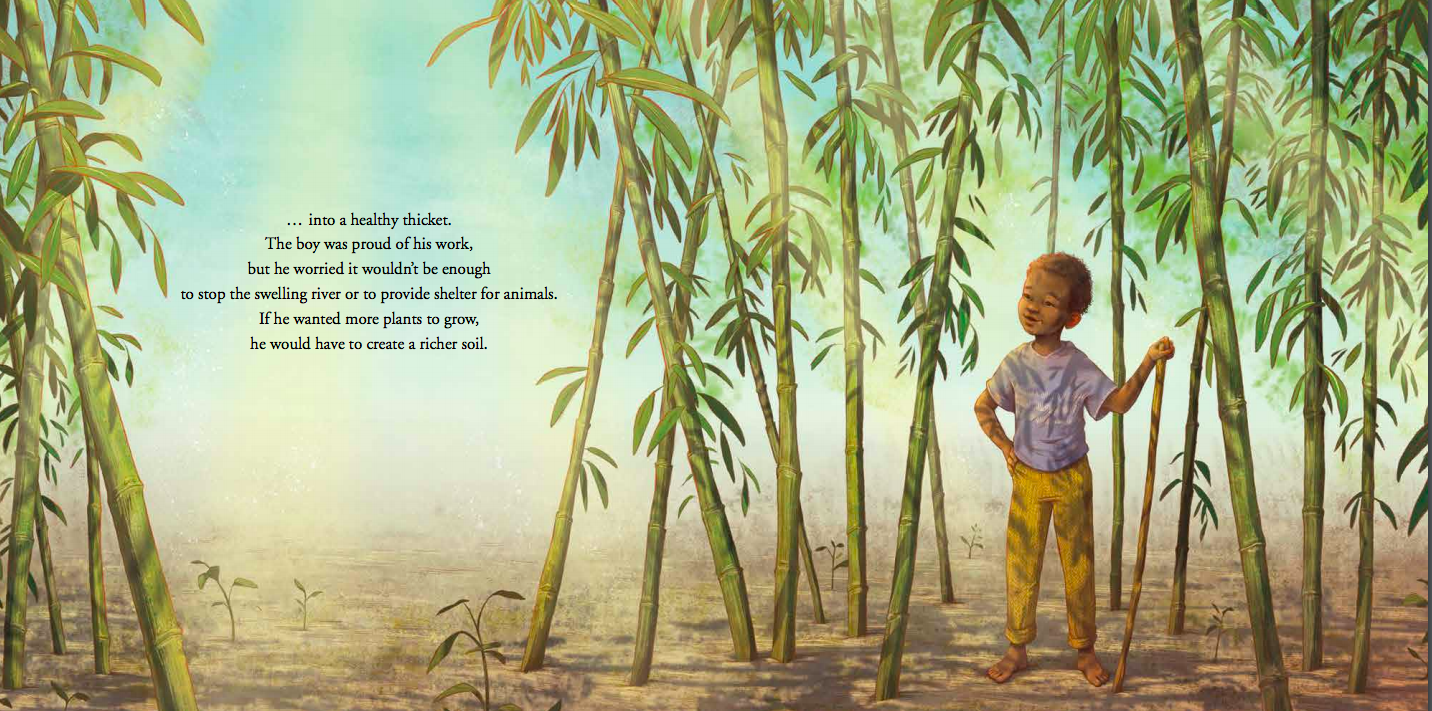
When he took his fears to the elders of his village, they gave him twenty bamboo saplings. He rowed over to one of the sandbars and began to plant the saplings. He came back every day to water the plants and then devised an easier way to water them. Under his care, the bamboo began to grow. In time they became “a healthy thicket.” But for the bamboo to spread further, the boy knew the soil needed to be richer.

He brought in “cow dung, earthworms, termites, and angry red ants that bit him on the journey to their new home.” From other villages, he got seeds of different trees and planted those too. Over the years, a forest grew, covering acres and acres of land. Animals like rhinos, elephants, birds, and monkeys began to return. But with these animals, dangerous predators also came. The villagers were afraid. To provide food for the tigers, the boy—now a man—sowed grasses to attract rabbits, mice, deer and other prey.

celebrate-picture-books-picture-book-review-the-boy-who-grew-a-forest-bamboo

Image copyright Kayla Harren, 2019, text copyright Sophia Gholz, 2019. Courtesy of Sleeping Bear Press.

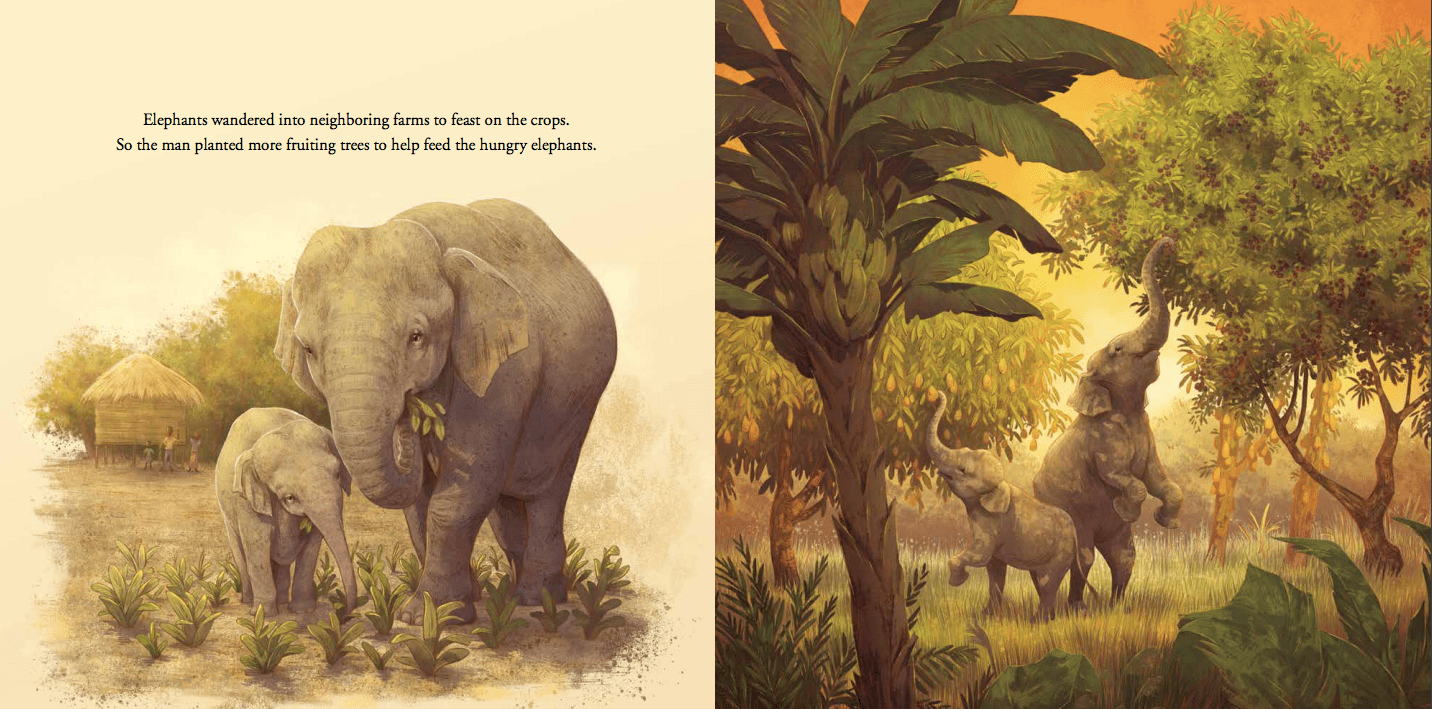
To keep other animals fed, the boy planted fruit trees, and when the villagers cut down trees to build homes, the man sowed more seeds. Hunters came for the animals’ “horns and fur, but the man was there to protect.” Today, the forest is thriving and is called Molai for the man who planted and preserved it. His name is Jadav “Molai” Payeng.

More information about Jadav Payeng, an Author’s Note, and a seed-planting activity follow the text.

celebrate-picture-books-picture-book-review-the-boy-who-grew-a-forest-elephantscelebrate-picture-books-picture-book-review-the-boy-who-grew-a-forest-elephants

Image copyright Kayla Harren, 2019, text copyright Sophia Gholz, 2019. Courtesy of Sleeping Bear Press.

If anyone questions how much one person can do, Sophia Gholz puts these doubts to rest in her inspiring biography of a child who recognized a danger to the people and wildlife of his island and solved the problem for generations to come. Children will marvel at the story of Jadav Payeng’s dedication and lifelong perseverance told through Gholz’ lyrical text. As children learn about Jadav Payeng, they also discover the components of fertile soil and how a lush environment attracts the animals and other wildlife vital to a flourishing community.

Kayla Harren’s exquisite sundrenched illustrations transport readers to the Indian island where Jadav Payeng grew up and let them see the effects of eroded shorelines, stranded animals, and the overwhelming task Jadav took on. Harren’s realistic images show Jadav’s hard work and ingenuity as he cares for his first twenty plants and expand the forest little by little. With stunning texture and depth, Harren depicts the verdant foliage and diversity of wildlife Jadav recreated. The true-to-life illustrations will thrill nature and animal lovers and have them exploring each page to capture all the details.

A gorgeous and beautifully told story about the power of one, The Boy Who Grew a Forest: The True Story of Jadav Payeng will excite children to make a difference in their own way. The book is an excellent choice to add to home, classroom, and library collections for science, sustainability, and inspirational story times and discussions.

Ages 5 – 8

Sleeping Bear Press, 2019 | ISBN 978-1534110243

Discover more about Sophia Gholz and her books on her website.

To learn more about Kayla Harren, her books, and her art, visit her website.

Read an interview with Sophia and Kayla about their inspirations for this book and how it came to be!

The Boy Who Grew a Forest Giveaway
I’m excited to partner with Sleeping Bear Press in an Instagram giveaway of:

  • One (1) copy of The Boy Who Grew a Forest written by Sophia Gholz | illustrated by Kayla Harren
This giveaway is open from March 15 through March 21 and ends at 8:00 p.m. EST.

Just do these things to enter:

Giveaway open to U.S. addresses only. | Prizing provided by Sleeping Bear Press.

National Reading Month Activity

celebrate-picture-books-picture-book-review-the-boy-who-grew-a-forest-activity-sheet-2

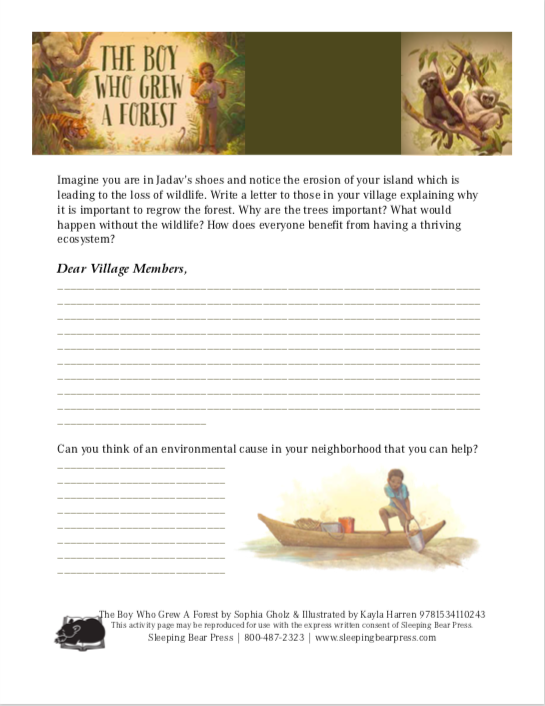
The Boy Who Grew a Forest Activity Sheets


You can be an environmental crusader in your neighborhood too! Print these activity sheets and challenge yourself with the questions. Then think about what you can do to help plants and wildlife in your neighborhood or even your own backyard!

The Boy Who Grew a Forest Activity Sheets

celebrate-picture-books-picture-book-review-the-boy-who-grew-a-forest-cover

You can find The Boy Who Grew a Forest: The True Story of Jadav Payeng at these booksellers

Amazon | Barnes & Noble | Books-a-Million | IndieBound

Picture Book Review