June 22 – It’s National Insect Week

celebrate-picture-books-picture-book-review-moth-an-evolution-story-cover

About the Holiday

Insects are endlessly fascinating, and this week celebrates their diversity, purpose, and beauty. This week was established by the Royal Entomological Society to encourage people to learn more about insects, from those close to home to the exotic species around the world. This year the theme is Entomology at Home and people are invited to participate by learning about local species of insects and enjoying the resources on the National Insect Week website. There’s a photography contest, learning videos for all ages, access to Instar the Magazine for Young Entomologists, and so much more, including a mention of “the most bizarre use” of an insect ever imagined. To discover all of the resources and fun, visit the National Insect Week website.

I received a copy of Moth for review consideration. All opinions are my own.

Moth

Written by Isabel Thomas | Illustrated by Daniel Egnéus


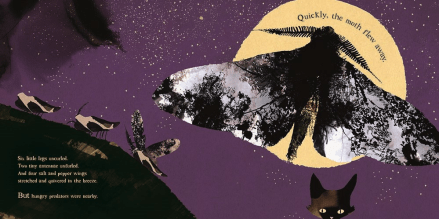
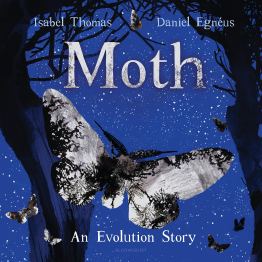
“This is a story of light and dark. Of change and adaptation, of survival and hope. It starts with a little moth.” Long ago a peppered moth wiggled out of its cocoon, unfurled its “salt and pepper” wings, its legs, and its antennae and took to the air to avoid predators. It met up with other peppered moths flitting and fluttering among the trees in the night sky. Most of these moths “had speckled, freckled wings,” but some had “wings as dark as charcoal.”

celebrate-picture-books-picture-book-review-moth-predators

Image copyright Daniel Egnéus, 2019, text copyright Isabel Thomas, 2019. Courtesy of Bloomsbury Children’s Books.

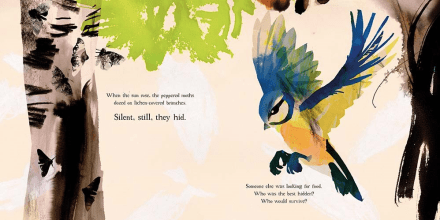
During the day, the peppered moths rested, flattening themselves against the speckled bark of the trees, camouflaged from birds and other animals. But the black-winged moths weren’t so lucky. Easy to spot against the light bark, they began to vanish as birds nipped them up for themselves and their chicks. As the speckled peppered moths had more and more babies, they also sported a mottled pattern.

celebrate-picture-books-picture-book-review-moth-bird

Image copyright Daniel Egnéus, 2019, text copyright Isabel Thomas, 2019. Courtesy of Bloomsbury Children’s Books.

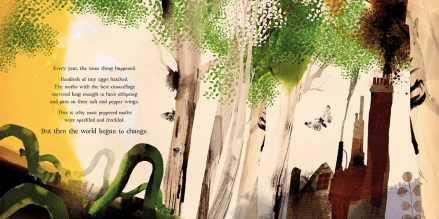
Over many years, the speckled moths became dominant while the dark-winged variety dwindled. But then, factories, trains, and other machines that burned coal were built. They spewed dark clouds of soot into the air. The soot settled everywhere, turning buildings and trees black. Now, the lighter-colored moths became the meals of birds and other predators, and the black-winged peppered moths had better camouflage. “Now they lived long enough to lay eggs of their own…and their wing color passed on to their offspring…and their offspring’s offspring.”

celebrate-picture-books-picture-book-review-moth-evolution

Image copyright Daniel Egnéus, 2019, text copyright Isabel Thomas, 2019. Courtesy of Bloomsbury Children’s Books.

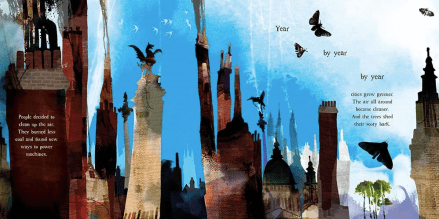
After decades of pollution and adaptation, the peppered moth population was still strong, but now most of the moths were dark, while the lighter moths were rare. But then, people came together to clean up the pollution. Less coal was burned as new ways to fuel machines were found. In time, the air cleared, the sky was again blue and the clouds white. “The trees shed their sooty bark.” Modern life brought many changes to the landscape, providing places for both dark and speckled peppered moths to hide. Today, a mix of peppered moth can be found flittering and fluttering in the night sky, offering their “story…of survival…and hope.”

celebrate-picture-books-picture-book-review-moth-cleaner-air

Image copyright Daniel Egnéus, 2019, text copyright Isabel Thomas, 2019. Courtesy of Bloomsbury Children’s Books.

Isabel Thomas’s superlative nonfiction picture book masterfully combines lyricism with clear descriptions of the science of adaptation and natural selection to create a story that touches on natural history, human history, and the interactions of the two. Thomas’s conversational tone and direct address to the reader makes this a personal story and will captivate children sensitive to nature and the world around them. Her excellent pacing serves to show the passage of time involved in the evolutionary changes within the moth community. Thomas begins and ends her story with a note of hope that living things will adapt to today’s changing world. The underlying lesson may also encourage readers to find ways in which humans can adapt to promote the survival of all living things.

celebrate-picture-books-picture-book-review-moth-an-evolution-story-trains

Image copyright Daniel Egnéus, 2019, text copyright Isabel Thomas, 2019. Courtesy of Bloomsbury Children’s Books.

Exquisite mixed-media illustrations by Daniel Egnéus will immediately draw readers—both children and adults—into the nighttime forest where peppered moths take wing, silhouetted against the golden moon and the deep blues and purples of the midnight sky before finding a hiding place from hungry bats and birds. The story’s theme of light and dark in its variations is powerfully presented. In the early pages, images are set against bright, open backgrounds; foliage is vibrant green; and birds dazzle with color. As a bird brings a charcoal-winged moth back to her nest while speckled moths hide, children can easily see natural selection at work.

As the Industrial Revolution alters the skyline and the quality of the air, the images become denser and the hues of the sky, trees, and birds muted. For children who have not grown up with the air pollution of the past—even the near past—double spreads of smog-churning factories and trains will make a strong impression. The introduction of a child at the beginning and end of the story reminds readers of two things: that we owe it to our children to treat the world with kindness and that our children are the hope this story builds on.

Special mention must be made of the magnificent and poignant illustrations of the speckled peppered moths. Looking closely at their outstretched wings, you will see nature—trees, water, dappled sunlight—reflected in them. The stunning cover—with its foil-embossed lettering, stars, and moth—reflects the importance of each reader to our world: touch or look into the shining silver and you will find yourself mirrored there.

A beautiful book to enhance nature and science studies and help children develop an understanding of the impact of change, Moth is a must for school, public library, and home collections.

Ages 6 – 10

Bloomsbury Children’s Books, 2019 | ISBN 978-1547600205

Discover more about Isabel Thomas and her books on her website.

To learn more about Daniel Egnéus and his work, visit his website.

Take a look inside Moth with this beautiful book trailer.

National Insect Week Activity

celebrate-picture-books-picture-book-review-tree-branch-with-white-cocoons

Beautiful Moths Game


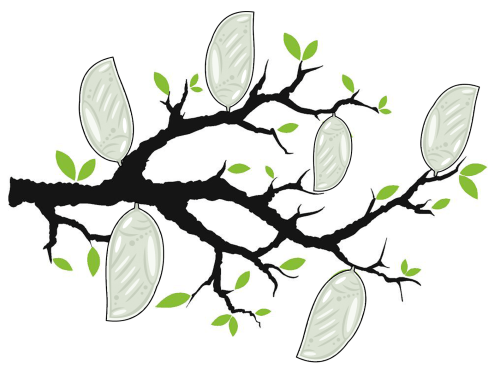
Moths go through many stages of metamorphosis—from egg to caterpillar to cocoon— before they finally emerge as a moth. In this game, help six moths emerge from their cocoons to win!

Supplies

celebrate-picture-books-picture-book-review-moth-cards

Directions

  1. Print a Tree Branch Game Board and set of Moth Cards for each player
  2. Print one Moth Playing Die
  3. Choose a player to go first
  4. The first player rolls the die and places the matching moth card on one of the cocoons on the Tree Branch Game Board
  5. Play then moves to the player on the left
  6. Players continue to roll the die and place moths on each cocoon
  7. If a player rolls a moth that they already have placed on their game board, they pass the die to the next player and wait for their next turn.
  8. The player who fills their Tree Branch with moths first is the winner

celebrate-picture-books-picture-book-review-moth-an-evolution-story-cover

You can find Moth at these booksellers

Amazon | Barnes & Noble | Books-a-Million

To support your local independent bookstore, order from

Bookshop | IndieBound

Picture Book Review


June 13 – National Get Outdoors Day

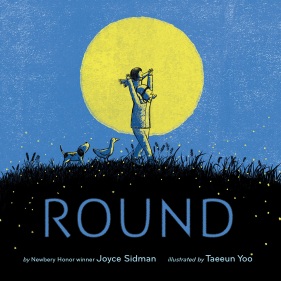
celebrate-picture-books-picture-book-review-round-cover

About the Holiday

Established in 2008, National Get Outdoors Day was instituted to inspire people – and especially young people – to enjoy healthy, active outdoor fun and exploration. Celebrated in conjunction with national parks, people are encouraged to hike, explore, and enjoy the natural wonders near them. You can also head out into your yard to play games or into your neighborhood with bikes, scooters, skates or just for a walk. There’s so much for kids to see and discover – even concepts that may seem simple are beautiful and complex in the eyes of a child, as you’ll see in today’s book. 

Round

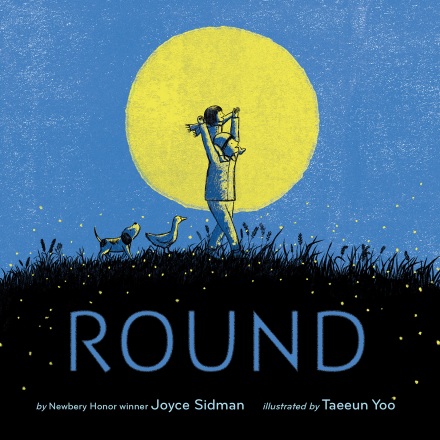
Written by Joyce Sidman | Illustrated by Taeeun Yoo


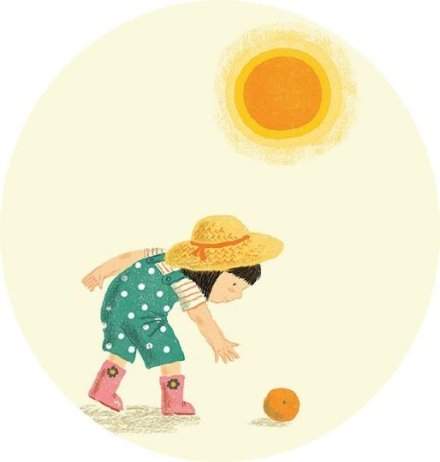
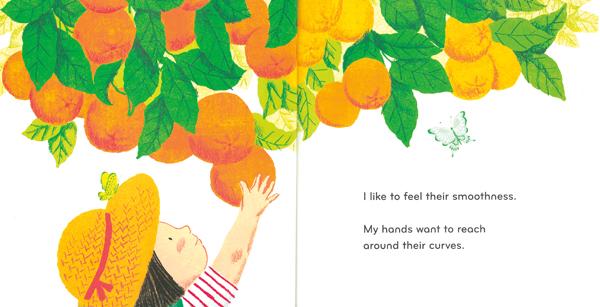
A little girl spies an orange on the ground and bends to pick it up. She sees more—many more—of the brightly colored orbs hanging from a tree and reaches up to touch them. “I love round things,” she says. “I like to feel their smoothness. My hands want to reach around their curves.” The girl continues on her singular scavenger hunt for round things that grow.

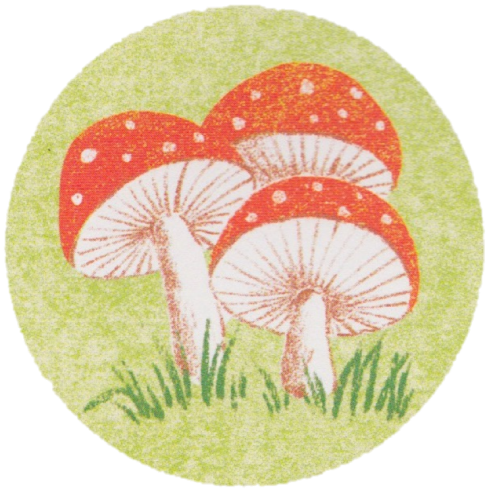
She scatters some seeds in a hole and parts tall grasses to peek in on a turtle waiting for her eggs to hatch. On a hillside, a little patch of mushrooms “swell into roundness,” while tiny, plump blueberries beckon on a nearby bush and fill the family’s baskets. On the bike ride home, the girl and her crew pass fields of sunflowers with their dark, mysterious round centers.

celebrate-picture-books-picture-book-review-round-orange

Image copyright Taeeun Yoo, 2017, courtesy of Houghton Mifflin Harcourt

At the beach the little girl finds seashells in the sand near the tall craggy rocks which some day, whittled by water and wind, will become round when “all the edges wear off.” Back on dry land, the girl watches a dung beetle transport a ball, persistently moving it with its legs, and body motions. The girl stands by, fascinated. She loves “to watch round things move. They are so good at it! Rolling, spinning, bouncing.” She always wonders “where they’re headed.”

An old, old tree, chopped down now, reveals its secret age as the little girl counts the rings in the trunk. She’s excited to discover hidden round things—like the tiny ladybugs and snails concealed beneath green leaves. As the rain splatters a pond, the little girl, safe in her yellow slicker, reveals, “I love how water can be round, gathered in beads of silver…or falling in wet splats leaving circles of ripples behind.”

celebrate-picture-books-picture-book-review-round-orange-tree

Image copyright Taeeun Yoo, 2017, text copyright Joyce Sidman, 2017. Courtesy of Houghton Mifflin Harcourt

The sun sets, turning the sky yellow and orange, while the girl blows transparent bubbles and watches them float toward the clouds. When the sun is gone and the sky is dark, she gazes through a telescope at the twinkling dots of light that “spin together slowly…and last billions of years” while she waits for that one constant celestial body that grows “rounder and rounder, until the whole sky holds its breath.”

The girl shares the beauty of roundness with her friends as they hold hands in a never-ending circle of friendship, and when she is alone she curls up into a cozy ball to read or feels arms around her in a loving hug.

An explanation of why so many things in nature are round—including the shape’s sturdiness, balance, and ability to spread and roll—follows the text.

celebrate-picture-books-picture-book-review-round-mushrooms

Image copyright Taeeun Yoo, 2017, courtesy of Houghton Mifflin Harcourt

Joyce Sidman’s lyrical story of discovery is a perfect introduction for little ones to the wonders of nature. Focusing on a shape that is familiar to children, Sidman takes them on a walk from grove to field to beach where they can find circles in common and surprising places. After coming home, kids discover an even more poignant idea—the circular beauty of love and friendship.

Taeeun Yoo’s delicate illustrations gorgeously depict examples of circles in nature. Bold sunflowers, tiny insects, snowball-white eggs, expanding ripples, and smooth boulders invite readers to notice the shapes and colors of the wild world around them. Children will be enticed to hunt for all the circles on each page as lily pads, fireflies, polka dots, balloons, the sun, and other objects create an exciting journey of exploration. The little girl’s pets—a dog (appropriately spotted) and a duck—add humor and companionship along the way.

Round would be an excellent take-along book for nature hikes, waiting times, or other outdoor activities and could spur at-home scavenger hunts for circles and other shapes. This original concept book is a wonderful introduction to shapes and nature for little ones.

Ages 3 – 7

Houghton Mifflin Harcourt, 2017 | ISBN 978-0544387614

Learn more about Joyce Sidman and her books on her website! 

View a gallery of artwork by Taeeun Yoo on her website!

Get Outdoors Day Activity

celebrate-picture-books-picture-book-review-bringing-the-outside-in-painted-pails-craft

Personalized Painted Pail


A trip to the beach isn’t complete without a pail to make a sandcastle with or to collect shells, seaweed, sea glass, or other things in. But why should all the cool stuff be on the inside? With this craft you can decorate your pail to show your unique personality!

Supplies

  • Plastic or metal pail
  • Craft paint in various colors
  • Crystal Clear Acrylic Coating, for multi-surface use
  • Paint brush

Directions

  1. Paint designs on the pail
  2. When paint is dry spray with acrylic coating to set paint
  3. Let dry

celebrate-picture-books-picture-book-review-round-cover

You can find Round at these booksellers

Amazon | Barnes & Noble | Books-a-Million

To support your local independent bookstore, order from

Bookshop | IndieBound

Picture Book Review

June 10 – It’s Great Outdoors Month

celebrate-picture-books-picture-book-review-under-my-tree-cover

About the Holiday

This month-long holiday, expanded from a week-long event to take in the full month of June in 2004, encourages people to get outside and explore. There’s so much to see, from the delicate details of a flower to the wonders of the big open sky. If time permits, take a walk with your kids and really look at what you are passing. When you’re walking with children, stop to examine and talk about the marvels you see. Sometimes the most familiar sights turn out to be the most surprising!

I received a copy of Under My Tree from Blue Dot Press for review consideration. All opinions about the book are my own.

By Jakki Licare

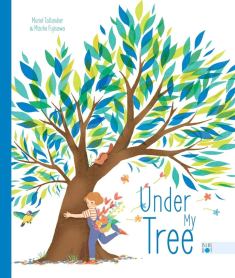
Under My Tree

Written by Muriel Tallandier | Illustrated by Mizuho Fujisawa 


“There once was a tree different from all the rest.” Most people think trees are all the same, but to Susanne there is no other tree like her tree. Susanne spends her vacations at her Grandma and Grandpa’s country house far away from the city where she lives. Initially, Susanne is scared to walk around the forest near her grandparent’s house because of the fairy tales she’s heard.

celebrate-picture-books-picture-book-review-under-my-tree-biodiversity

Image copyright Mizuho Fujisawa, 2020, text copyright Muriel Tallandier

But when Susanne goes on a walk with her Grandma in the forest and it starts to rain, they find shelter under a big tree. Susanne feels safe under its canopy and she is not alone. There is a nest of baby owls hiding in the tree too. Susanne convinces her grandmother to have lunch under the tree with the owls.

Susanne visits her tree a lot. Susanne touches the bark and then she hugs it! “That’s the first secret I learned: you have to touch a tree if you really want to talk to it,” Susanne says. The next time she visits the tree, she climbs up all the way to the top and is amazed by the view. On another visit she discovers the tree has grown fruit.

celebrate-picture-books-picture-book-review-under-my-tree-summer-eyes

Image copyright Mizuho Fujisawa, 2020, text copyright Muriel Tallandier

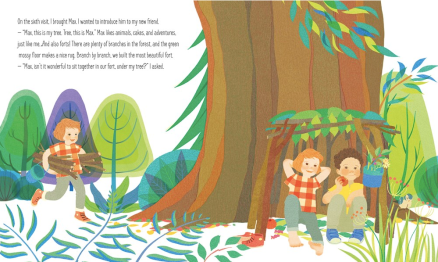
One day it is very windy when she visits her tree and it seems like the whole forest is performing. “My tree sang with her leaves, using the wind as her lungs. The other trees sang back.” Susanne whistles along with the forest. Another time she finds insects all around her tree. In fact, the entire forest teems with life. Next time Susanne brings her best friend Max to meet her tree. Together they create a fort under Susanne’s tree. They use branches from the forest for the walls and moss on the ground as their carpet.

celebrate-picture-books-picture-book-review-under-my-tree-summer-kids

Image copyright Mizuho Fujisawa, 2020, text copyright Muriel Tallandier

Her tree’s leaves are starting to fall, and Susanne knows that summer is winding down. Susanne will not visit her grandparents often during the winter, but she knows that her tree will be taking a nice long rest. Susanne cannot wait to go back in the spring and watch her tree start to bud.

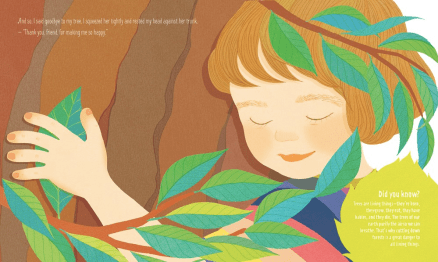
When Susanne’s mother comes to visit, she introduces her to the tree and they relax together underneath it. Before Susanne goes back to the city, she hugs her tree tightly and takes a leaf as a memento. Susanne may only be able to visit her tree occasionally, but she loves it “…all year long.”

There are eight tree facts and “try this” opportunities spread throughout the book.

celebrate-picture-books-picture-book-review-under-my-tree-hug

Image copyright Mizuho Fujisawa, 2020, text copyright Muriel Tallandier

This lyrical story is written in first person and will surely make readers fall in love with Susanne’s tree. Many kids will be able to relate to Susanne, who has grown up in the city, and is initially afraid of the forest. As Susanne points out, there are many scary things like witches and wolves in fairy-tale forests. Susanne soon discovers, however, a wonderful natural world in her grandparent’s forest, and she becomes good friends with a special tree. Muriel Tallandier shows us how important trees are, not only in the facts written in the sidebar, but also in the simple ways Susanne enjoys her tree.

Young readers will be interested in Susanne’s exploration of her favorite tree where she climbs, hugs, touches its bark, and watches its leaves change. The “try this” opportunities written in the sidebar will encourage young readers to explore the trees in their own yard, neighborhood, or local park just like Susanne. Under My Tree will certainly convince all children that trees are our friends.

Mizuho Fujisawa’s timeless illustrations depict a fun natural world that is filled with colors, animals, and of course beautiful trees. Her transparent overlapping leaves give the trees depth while maintaining a delicate nature.  The soft blue, green, and yellow palette of the forest invites readers to explore the natural world with Susanne. Fujisawa explores Susanne’s tree from a variety of perspectives. On the windy day, readers are looking up at Susanne and her tree, watching the leaves and her hair blowing in the wind. When her mother comes to visit, readers are looking down on the tree with a bird’s eye view and see the mother and child relaxing under the tree’s leaves. 

Under My Tree is the perfect read to encourage children to get outside and explore nature.  The book would be a favorite addition to home, classroom, and public library collections.

Ages 3-8 years old

 Blue Dot Kids Press, 2020 | ISBN 978-1733121231

Discover more about Muriel Tallandier and her book on Blue Dot Kids website.

To learn more about Mizuho Fujisawa, her books, and her art, visit her website.

Great Outdoors Month Activity

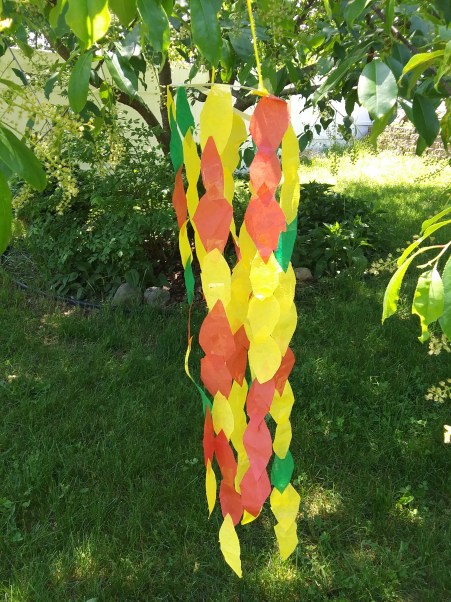
celebrate-picture-books-picture-book-review-leaf-mobile-craft

Patterned Transparent Leaf Mobile


Recreate Susanne’s tree with your own transparent leaves in a leaf mobile. This is a great pattern and counting activity to do with young children. 

Supplies

  • Paper Plate
  • Scissors
  • Tissue Paper/Crepe Paper
  • Tape
  • String/ Yarn

Directions

  1. Cut out the center circle of the paper plate and use the outside ring as the top of your mobile
  2. Have children pick out colors. We did a fall theme, but you can really let the kids be creative here. 
  3. Cut out tissue paper or crepe paper into leaf shapes. Adults will have to cut out the bulk of leaves. My six year old was able to cut the leaf shapes out, but was tired after 5. I used about 60-70 leaves.
  4. Have children organize leaves into patterns.
  5. Tape leaves together so they overlap. 
  6. Tape chain to paper plate ring
  7. Tie String or yarn to the top of the mobile

celebrate-picture-books-picture-book-review-under-my-tree-cover

You can find Under My Tree at these booksellers

Amazon | Barnes & Noble | Books-a-Million

To support your local independent bookstore, order from 

Bookshop| IndieBound


May 29 – It’s Gifts from the Garden Month

celebrate-picture-books-picture-book-review-leafy-critters-cover

About the Holiday

Many of us – and perhaps even more this year – spend the summer digging, planting, and tending our garden and yard. We look forward to all of the delicious vegetables and fruit our gardens provide and the hours of fun we have playing or lounging in the yard. But if you look closely, these areas offer up other gifts too. That profusion of dandelions may seem like bothersome weeds, but their sunny flowers and puffball seeds also create beauty and unforgettable childhood moments. Watching industrious insects reminds us of the wonder of nature below our feet or pollinating our crops. And – as today’s book shows – with some imagination and creativity that garden or yard can be transformed into a work of art. So, get outside and see what your gifts are sprouting in your backyard.

I received a copy of Leafy Critters from Blue Dot Press for review consideration. All opinions are my own. 

By Jakki Licare

Leafy Critters

By Yvonne Lacet

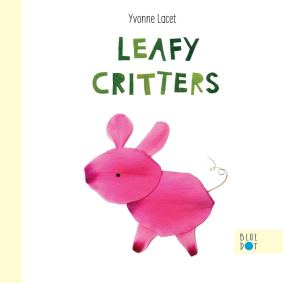
This creative and imaginative earth art book by Yvonne Lacet an artist and photographer, whose work incorporates urban environments, landscapes, and nature play, will inspire children to look at nature in a whole new light. Yvonne Lacet uses petals, twigs, stems, and leaves to create “Leafy Critters.” Simple items from nature are arranged together to become different animals: foxes, polar bears, butterflies, mice, and more.

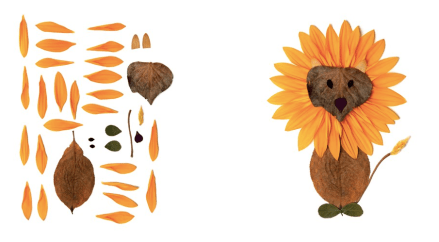
Not only is the artwork stunning but on many pages Lacet shows readers the before and after photos which makes it simple for kids to duplicate her animals. My kids enjoyed pointing out the different items in the before photos and discovering how Lacet used them in her completed artwork. A leaf, for example, transforms into a head or a wing.

celebrate-picture-books-picture-book-review-leafy-lion

Copyright Yvonne Lacet, 2020, courtesy of Blue Dot Kids Press.

One of the extraordinary things about this book is not only that any child can find the natural materials needed in their backyard or local park, but the artistic eye Lacet uses to create the eighteen creatures presented. The piglet (pictured on the front cover) is simply six pink petals arranged together. Yvonne takes it a step further, though, and uses the portions of the petals that are near the pistil and have a darker pigment to add shading and detail that  transform into the pig’s hooves and snout.

The image of the polar bear also shows how contrasting colors can create a whole new scene. With the black paper background and white petals sprinkled over the page, we are suddenly transported into an arctic snowstorm at night! The great thing about Leafy Critters is that it makes young readers think outside the box. If you don’t have white petals on hand, then rice could make a great substitution. 

celebrate-picture-books-picture-book-review-leafy-critters-turtle

Copyright Yvonne Lacet, 2020, courtesy of Blue Dot Kids Press.

My boys are often frustrated with art projects because they cannot create “realistic art.” Earth art, however, is an easy way for kids to explore colors and composition without the frustration of being limited by their skills. It only requires a little nature and a creative eye. So take Leafy Critters outside! You’ll be surprised to discover what creatures creep, crawl, swim, and lurk in your own backyard. 

A DIY page at the back gives kids tips on how to search for materials, gather them, and look at the colors, shapes, and sizes of leaves, petals, seeds, and more to spark their imaginations. Younger children will enjoy the creativity in each design on the pages while older children and even teens and adults will be inspired to create their own works of art.

Whether you are looking for a fun home art project or inspiration for your elementary art students, Leafy Critters will make a creative addition to your library.

Ages 3 and up

Blue Dot Kids Press, 2020 | ISBN 978-1733121224

Discover more about Yvonne Lacet and her work on her website.

Gifts from the Garden Month Activity

celebrate-picture-books-picture-book-review-nature-art-craft

Natural Art Note Card

Send a special note to a loved one with your own leafy critter. This idea could be a great card for Father’s Day too! Just write in Dad after otter!

Supplies

  • Natural Materials (I used brown leaves, bark, clover flowers, and stems)
  • Scissors
  • Glue
  • Marker
  • Paper

Directions

  1. Gather your natural materials outside

  2. Arrange your pieces together to make an otter shape

  3. Cut any pieces that need to be shaped or trimmed

  4. Glue your otter down

  5. Write “There’s no OTTER like you!”

celebrate-picture-books-picture-book-review-leafy-critters-cover

You can find Leafy Critters at these booksellers

Amazon | Barnes & Noble | Books-a-Million 

To support your local independent bookstore, order from 

Bookshop | IndieBound

Picture Book Review


May 20 – World Bee Day

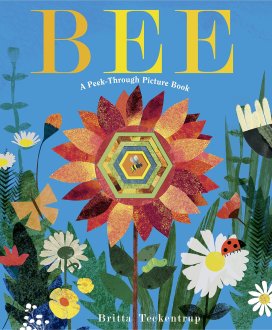
celebrate-picture-books-picture-book-review-bee-a-peek-through-picture-book-cover

About the Holiday

World Bee Day was instituted by Slovenian beekeeper and president of the Slovenian Beekeeper’s Association, Bostjan Noc, in 2014. The date commemorates the birthday of Slovenian Anton Janša, the pioneer of beekeeping, in 1734. Beekeeping is such an important part of Slovenia’s identity that it’s known as the “Land of the Good Beekeepers.” The purpose of this United Nations sponsored holiday is to raise awareness of the importance of pollinators and the threats they face. This year, being mindful of the plight of bees is more important than ever.

The COVID-19 pandemic has affected the production of and market for honey and, thus, the livelihood of beekeepers as well. Today’s holiday will be celebrated with a virtual event themed “Bee Engaged” and will focus on bee production, traditional beekeeping knowledge, the use of bee-derived products, and the delivery of good-quality goods. To help, support beekeepers in your area by buying locally made honey.

Bee: A Peek-Through Picture Book

By Britta Teckentrup


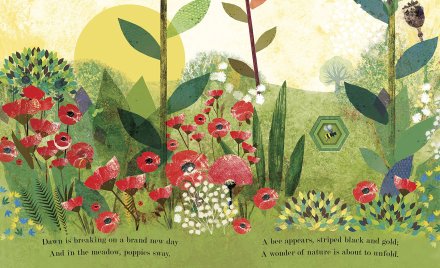
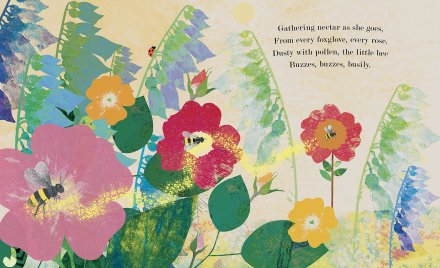
As the sun comes up over the meadow of poppies, a bee gets ready for her day. She flits through the forest, blending her quiet buzz with the songs of the birds in the trees. “As she travels here and there, / A gentle humming fills the air.” With no map to guide her, the bee knows exactly what route to take to visit each colorful flower. “Gathering nectar as she goes, / From every foxglove, every rose, / Dusty with pollen, the little bee / Buzzes, buzzes, busily.”

celebrate-picture-books-picture-book-review-bee-a-peek-through-picture-book-dawn

Copyright Britta Teckentrup, 2017, courtesy of Random House Books for Young Readers.

The flowers attract the little bee with their sweet perfume, and with the sun as her compass, she finds them all. As she flies from flower to flower, tree to tree, she picks up and leaves bits of pollen that will create more blossoms.  But when she looks out over the field, the bee sees more flowers than she could ever hope to visit. The bee hurries back to her hive to tell the others about the smorgasbord waiting for them.

celebrate-picture-books-picture-book-review-bee-a-peek-through-picture-book-stream

Copyright Britta Teckentrup, 2017, courtesy of Random House Books for Young Readers.

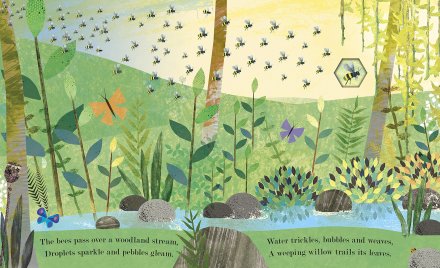
In droves they leave the hive, gliding over a pond, navigating an orchard, and continuing on. “The bees pass over a woodland stream. / Droplets sparkle and pebbles gleam. / Water trickles, bubbles, and weaves. / A weeping willow trails its leaves.” As the bees stop here and there along the way, they give life to new flowers and plants, expanding the wildflower meadow that is home to so many creatures.

celebrate-picture-books-picture-book-review-bee-a-peek-through-picture-book-nectar

Copyright Britta Teckentrup, 2017, courtesy of Random House Books for Young Readers.

Readers can see that Britta Teckentrup’s beautiful tribute to bees is something special before they even open the book. On the cover, a sunset-hued flower stretches into the blue sky. Through its die-cut center, children can see the complexity of the flower and, in its very middle, a honey bee harvesting nectar. Teckentrup’s lyrical story of a bee’s day is complemented by gorgeous illustrations of the vibrant wildflowers that call to the little bee. Each page is rendered in a breathtaking palette that surrounds young readers with the mysteries of the natural world—and in the center is the bee, going about her job as squirrels scamper, deer silently look on, and butterflies flutter nearby.

Children will adore following the bee—and later, more and more bees—through open windows to the final two-page spread of a meadow in full bloom. All along the journey, the bee has made friends with woodland, pond, and orchard creatures, and young readers will delight in finding each of them hidden in this glorious field.

Ages 3 – 7

Doubleday Books for Young Readers, 2017 | ISBN 978-1524715267

Discover more about Britta Techentrup, her books, and artwork on her website!

World Bee Day Activity

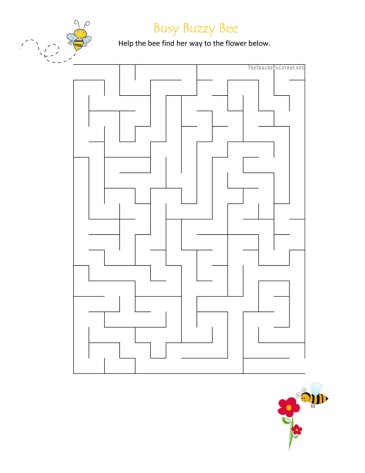
CPB---Busy-Buzzy-Bee-Maze

Busy Buzzy Bee Maze


Can you help the little bee find her way to the flower and her friend in this printable maze?

Busy Buzzy Bee Maze PuzzleBusy Buzzy Bee Maze Solution!

celebrate-picture-books-picture-book-review-bee-a-peek-through-picture-book-cover

You can find Bee: A Peek-Through Picture Book at these booksellers

Amazon | Barnes & Noble | Books-a-Million

To support your local independent bookstore, order from

Bookshop | IndieBound

Picture Book Review


May 16 – National Love a Tree Day

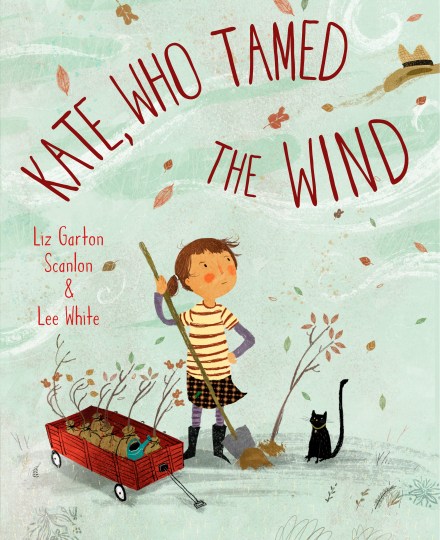
celebrate-picture-books-picture-book-review-kate-who-tamed-the-wind-cover

About the Holiday


In the middle of Gifts from the Garden and Garden for Wildlife Month, we celebrate Love a Tree Day. Trees provide so much––for us and for the earth. Trees release oxygen into the atmosphere, give much-needed shade from the sun’s heat, and beautify the land. And their impact doesn’t end there. Trees also inspire art and literature and ingenious solutions, which all come together in today’s book.

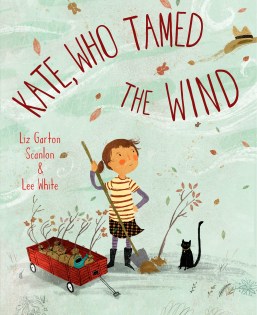
Kate, Who Tamed the Wind

Written by Liz Garton Scanlon | Illustrated by Lee White


There once was a man who lived in a house on top of very tall, dusty hill. Being so high up, the man’s house captured breezes that set his curtains fluttering and his wind chimes tinkling. Sometimes the wind blew, rattling the shutters, sending the laundry flying from the line, and tearing boards from the house. Inside, the wind whipped, the “table tipped, and the tea spilled.” The man’s hat flew off and out the window, joining the birds who were leaving too.

celebrate-picture-books-picture-book-review-kate-who-tamed-the-wind-spilled-tea

Image copyright Lee White, 2018. text copyright Liz Garton Scanlon, 2018. Courtesy of Schwartz & Wade.

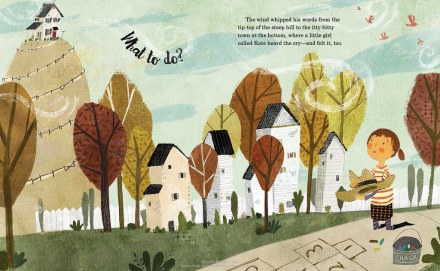
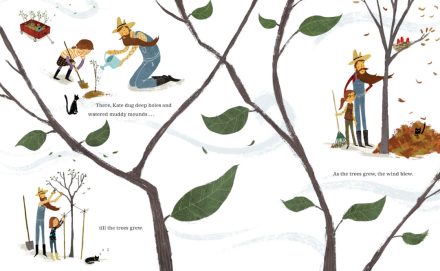
The man cried, “What to do?” Down on the sidewalk below, a little girl named Kate caught the man’s hat and the man’s cry too. Kate wanted to help. She “couldn’t stop the wind,” but she knew of something that could slow it down. When she returned the man’s hat, she also brought a wagon full of saplings. Kate and the man planted the trees, and they tended them as they grew—even while the wind blew.

celebrate-picture-books-picture-book-review-kate-who-tamed-the-wind-kate-catches-hat

Image copyright Lee White, 2018. text copyright Liz Garton Scanlon, 2018. Courtesy of Schwartz & Wade.

“The trees grew, the wind blew, and the time flew. The time flew as the trees grew…and grew…and Kate did too.” As the trees got bigger, taller, and stronger, the “leaves fluttered,” but the shutters quieted and the board stayed still. Inside, the tea brewed, the dust settled down, and the man’s hat stayed put. Even the birds came back. With the house ringed in trees, Kate and the man enjoyed a picnic in the yard, cooled just enough by the gentle breeze.

celebrate-picture-books-picture-book-review-kate-who-tamed-the-wind-planting-trees

Image copyright Lee White, 2018. text copyright Liz Garton Scanlon, 2018. Courtesy of Schwartz & Wade.

Readers will love getting carried away by Liz Garton Scanlon’s breezy lines that through alliteration and rhyme replicate a windy day as things bang, flap, whip, and go flying. As the trees that Kate and the man plant grow and begin to shelter the house from the wind, the rhythm of Scanlon’s text becomes more staccato and rooted. Little Kate is a terrific role model for young readers for her environmental know-how and her stick-to-itiveness as the trees grow from saplings to maturity. The long friendship between the man and Kate is also endearing.

Lee White’s softly hued pages swirl with swipes and swishes that whip curtains, steal laundry, and upend the table and tea. The man’s bewilderment serves as a foil to Kate’s determination and problem-solving, and the difference she makes in the man’s quality of life is evident as the trees grow, their friendship develops, and the wind is finally tamed. Kids will identify with this kind and intelligent child who grows up to be a caring adult.

Beautifully conceived and with lovely details, Kate, Who Tamed the Wind is an environmentally conscious story that will inspire young readers at home and in the classroom.

Ages 4 – 8

Schwartz & Wade, 2018 | ISBN 978-1101934791

Discover more about Liz Garton Scanlon and her books on her website

To learn more about Lee White, her books, and his art, visit his website.

National Love a Tree Day Activity

celebrate-picture-books-picture-book-review-paper-plate-tree-craft-2

Paper Plate Tree


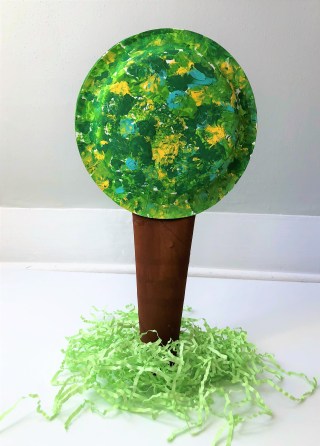
With this easy craft, children can make a tree to decorate their room or to use as a centerpiece for play. 

Supplies

  • Two paper plates 
  • Paper towel tube
  • Brown craft paint
  • Green craft paint (using a variety of green and yellow paints adds interest. Use orange, red, and yellow to make a fall tree.)
  • Paintbrush, cork, or cut carrot can be used to apply paint
  • Glue or hot glue gun or stapler

Directions

  1. Paint the paper towel tube brown, let dry
  2. Paint the bottoms of the two paper plates with the green (or other color) paints, let dry
  3. Flatten about 4 inches of the paper towel tube 
  4. Glue or tape the flat part of the paper towel tube to the unpainted side of one paper plate
  5. Glue the edges of the two paper plates together, let dry.
  6. Straighten the tree so that it can stand up, or hang your tree on a wall, bulletin board, in a window

celebrate-picture-books-picture-book-review-kate-who-tamed-the-wind-cover

You can find Kate, Who Tamed the Wind at these booksellers

Amazon | Barnes & Noble | Books-a-Million

To support your local independent bookstore, order from 

Bookshop | IndieBound

Picture Book Review


May 1 – May Day and Interview with Author Denise Brennan-Nelson

celebrate-picture-books-picture-book-review-mae-the-mayfly-cover

About the Holiday

May Day has for centuries celebrated the coming of spring. In ancient calendars May 1 heralded the first day of summer. Often celebrated with flowers and dancing, May Day has ushered in many traditions, such as dancing around a Maypole and May Day baskets, which are cone-shaped baskets filled with flowers. A May Day basket is usually given in secret as the giver hangs it on a friend’s doorknob and then rings the doorbell and runs away. (Which sounds like a perfect way to celebrate the holiday in these days of social distancing.) Whether nature is blooming in full or just starting to bud where you live, May Day offers the promise of brighter days ahead. Today’s book—and its adorable character Mae—shows us how to celebrate that feeling every day.

I received a copy of Mae the Mayfly from Sleeping Bear Press for review consideration. All opinions of the book are my own.

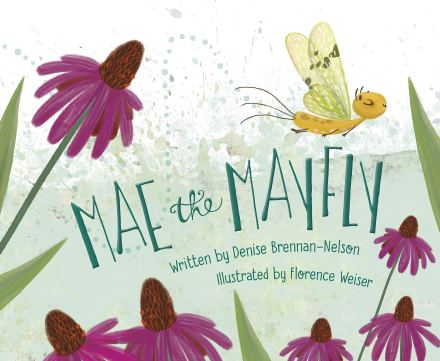
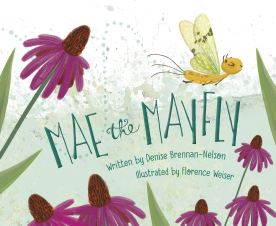
Mae the Mayfly

Written by Denise Brennan-Nelson | Illustrated by Florence Weiser


“Near the bank of the river one warm spring day / a new life began, and her name was Mae.” Before her mama said goodbye, she hugged her daughter and told her that she had her “whole life—a day, perhaps more” to explore her world. As Mae flitted along the river, a large, hungry trout waited for just the right moment to lure her in. It smiled deceitfully and beckoned to her, and, even though her inner voice told her not to, Mae flew down closer to take a look.
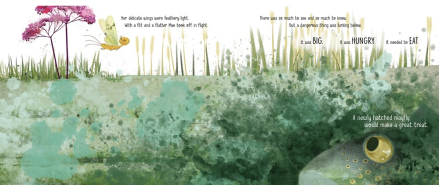
celebrate-picture-books-picture-book-review-mae-the-mayfly-fish

Image by Florence Weiser, 2020, text copyright Denise Brennan-Nelson, 2020. Courtesy of Sleeping Bear Press.

That’s when the trout leapt from the water to snatch Mae from the air. But she darted and dodged and got away. Shaking with fear, Mae found a hole in a hollow tree and flew in. “I’ll stay here forever! I’m not coming out!” she told herself.  But once her heart stopped beating so loud, she heard a happy tweet and peeked out of the tree. She saw a mother robin feeding her chicks and a spider web glittered in the sun. “The mist on the river was a fine, pink cloak. / A bullfrog bellowed his morning croak.” 

Mae remembered what her Mama had said and “launched herself from the dark, hollow place.” She followed the river, where she saw flowers and birds, a deer and a bear and one “stubby toad.” Then, she came to a clearing where she found “a singing, dancing jamboree… a wild mayfly jubilee! / Joining in, Mae danced with glee!”

celebrate-picture-books-picture-book-review-mae-the-mayfly-bird

Image by Florence Weiser, 2020, text copyright Denise Brennan-Nelson, 2020. Courtesy of Sleeping Bear Press.

As morning turned to afternoon, Mae was floating on the breeze when she heard a call for help. She went in search of who it was and found Trout lying motionless and barely breathing. Fearful that he might leap at her again, she carefully went closer to inspect. “But Trout was weak, no flip or flail. / Tangled line had caught his tail.” Then Mae noticed something else—his shimmering “rainbow stripes in every hue, silver, pink, and shades of blue.” And in his eyes she saw his fear and realized that she and Trout were alike.

Mae went to work to try to free him. The knot was tight, but Mae worked patiently until the line slipped free and Trout swam away with the current. Mae hoped that he would be okay. Just then she saw a flash as Trout returned and with a flip of his tail said, “Thank you.” As nighttime settled over the river and the moon rose high, Mae settled on a cattail leaf. She listened to the bullfrogs and watched the fireflies glow. “The stars came out early for  sweet, little Mae. / She counted each one… then called it a day.”

Back matter includes a message about mindfulness, an exercise to try and facts about mayflies.
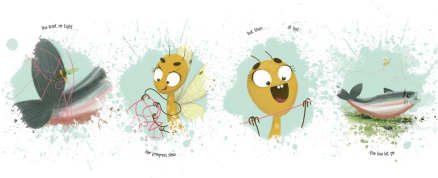
celebrate-picture-books-picture-book-review-mae-the-mayfly-fishing-line

Image by Florence Weiser, 2020, text copyright Denise Brennan-Nelson, 2020. Courtesy of Sleeping Bear Press.

Soaring and uplifting, Denise Brennan-Nelson’s unique story reminds children and adults alike to live each day to the fullest and reveals where the treasures that make life so fulfilling can be found. The short lifespan of a mayfly gives Brennan-Nelson a perfect canvas for compressing the lessons of a lifetime into one day, and her superlative storytelling incorporates parental love, fear, appreciation for our surroundings, courage, selflessness, and friendship. Her language is triumphant, carried breezily on rhyming couplets that are a joy to read aloud. The pitch-perfect ending may bring a tear to the eye but spur readers to find the beauty in every day.

Through Florence Weiser’s lovely textured illustrations, readers can almost feel the breeze ruffling the tall grasses, the spray of river water, and the warmth of the sun as they follow Mae on her adventure. Mae is a cutie with lacy wings and a sweet, expressive face. A powerful image of empathy comes in a close-up, two-page spread in which Mae, looking into Trout’s frightened eye, sees her own reflection. Whereas up to now Mae has been an observer of life, she now becomes an active participant by helping a fellow creature. Working in perfect tandem with Brennan-Nelson’s text, Weiser’s pages take readers on a journey of growth and discovery they’ll take to heart. Calming shades of green dotted with subtle pinks, purples blues, and browns reflect Mae’s mindful approach to life, making this a delightful book to share for quiet story times.

Beautiful and resonant, Mae the Mayfly is highly recommended and would be an often-asked-for addition to home, school, and public library collections.

Ages 5 – 8

Sleeping Bear Press, 2020 | ISBN 978-1534110519

Discover more about Denise Brennan-Nelson and her books on her website.

To learn more about Florence Weiser, her books, and her art, visit her website.

Meet Denise Brennan-Nelson

celebrate-picture-books-picture-book-review-Denise-Brennan-Nelson-headshot

Denise Brennan-Nelson has written a number of books for children, including Tallulah: Mermaid of the Great Lakes, Leopold the Lion, Someday Is Not a Day of the Week, My Momma Likes to Say, Santa’s Secret, and the popular Willow series. As a national speaker, Denise encourages adults and children to tap into their imaginations to create richer, fuller lives. She travels the country, sharing her reading and writing enthusiasm with schoolchildren and teachers. Denise lives in Howell, Michigan with her husband, Bob. She strives to spend each day teaching and learning with a creative spirit. Find out more about Denise at www.denisebrennannelson.com.

Today, I’m really thrilled to be talking with Denise Brennan-Nelson about her inspiring story, her journey in writing it, and how we can all appreciate the life around us. My blog partner Jakki’s sons, Jack and Steve, also loves Mae the Mayfly and had a few questions of their own. 

Jack wonders: What inspired you to write about a mayfly? 

The inspiration to write about a mayfly came when I discovered that they live, on an average, only one day. I started digging and discovered that while mayflies have many interesting qualities, it was their life cycle that reeled me in and set the basis for the story: a mayfly begins as an egg, then hatches into a nymph. It then lives as a nymph for one to three years before emerging from the water as an adult. Once they have molted––the only insect known to molt twice!––they only have about a day to live. ONE DAY? How do you live your entire life in ONE day? Where would you go? What would you do? I had so many questions. And so, the journey began!

Steve would like to know: Where is your favorite place to go and enjoy nature?

Our backyard has many trees and a few paths to meander on. One of those paths leads to a playhouse that my husband built years ago for our children, Rebecca and Rachel. I love to sit on the steps and take it all in––especially the forever-changing trees and the way the light filters through them. It’s quiet and I watch the birds and the chipmunks, squirrels, and occasionally deer show up. It’s far enough away from our house that I can forget about my “to-do” list and relax.

There are also a couple of parks nearby that have trails and lakes and offer a beautiful place to enjoy nature.

Jack and Steve asked if you spent a lot of time at a pond while creating the story.

No, I didn’t spend a lot of time at a pond, but I did a lot of research to help me visualize the setting.

In early drafts, I pictured Mae’s life beginning on a pond but as the story emerged it turned into a river. Unlike a pond, a river “flows.” It seemed to fit with the ebb and flow of Mae’s life.

The river became integral to the story; Mae’s life began there, she experiences a harrowing ordeal with Trout, which causes her to flee the river out of fear, but ultimately, Mae returns “home” to the river and completes her life. (This was in keeping with a mayfly’s lifecycle.)  

Hi Denise! I love your answers to Jack and Steve’s questions! What an amazing character a mayfly makes. You’ve published many, many books for kids. What inspired you to become a children’s writer? What’s the best part about your job?

I had been happily writing for myself – journals and poetry mostly – when inspiration came knocking at my door in the form of a documented study about bumblebees. According to scientists, bumblebees are not “equipped” to fly. Aeronautically, their wings are too small for their bodies. Upon hearing that, I was compelled to write what was in my head and my heart. I wanted to answer the questions I had: What would happen if bumblebees found out about their small wings? Would fear and doubt stop them from doing what they love to do? Once it was written, I felt I had written something that I wanted to share with others. Four years and many rejection letters later, my first book, Buzzy the Bumblebee was published.

The best part about my job is creating something – taking an idea and turning it into something new that entertains and inspires children and adults. I also love the freedom to work when and where I want to, often in my pajamas in the wee hours of the morning.

Mae the Mayfly is a gorgeous, poignant reminder for both kids and adults to look around and appreciate the beauty all around us. Not only the mayfly, but all of the sights that Mae sees are ephemeral parts of nature. How did you choose each of these?

I felt they had to be simple, yet remarkable acts of nature that would draw Mae out from the hollow of a tree. You know that awe-inspiring feeling you get when you discover a bird’s nest or a spider’s web? That was the basis for the sights and sounds Mae encountered.

I also drew from a trip to Yellowstone where the vivid images of rivers, flowers, bear cubs, and other magnificent acts of nature are forever embedded in my mind.

The rhymes of Mae the Mayfly are as light as she is, and your rhythm is as jaunty as a mayfly’s flight. Could you describe your journey in writing this story?

After learning of a mayfly’s short lifespan, the mulling-over period ensued. A lot of thinking and dialogue in my head takes place before taking pen to paper. Often, I share my initial thoughts with family and friends which helps the pieces come together.

I did more research, too. I watched a video showing how some mayfly nymphs resist the pull to come to the surface when it is time to shed their outer covering and expose their wings. After spending years at the bottom of the dark river, why would they resist? I wondered. Why would they want to stay at the bottom of the river when they could break through the surface into the light, and fly––if only for a day?

Ah, fear.

It was starting to come together – I would write about a mayfly and how beautiful and meaningful one day could be, if she can overcome her fears.

Initially, the story was written in prose and then I wrote it in verse. At one point, I even wrote a funny version for my kids about Mae being stubborn and not listening to her mama. That version didn’t end well for Mae, because, well, she didn’t listen to her mama! My kids got a kick out of it.

Before she was Mae, she was Martha. From Martha to Marvin. Then I changed it to May. And then May became Mae.

My first submission was declined. So, I gave it a rest. The idea was there but I needed to start over. I believed in this story with my whole being and I wasn’t giving up. In June 2018, I resubmitted it and in August I learned that Sleeping Bear Press wanted to move forward with it. I signed the contract in September and it was released in March of 2020 amid a pandemic. It wasn’t the launch I envisioned, but the story is about appreciating the simple things and living life to the fullest. It is also about empathy, fear, and gratitude. Perhaps the timing was just right.

Florence Weiser’s illustrations are adorable while truly highlighting the beauty of what Mae sees. Do you have a favorite spread? Why do you love it?

I love the cover and the end sheets, and the illustration of Mama saying good-bye to Mae tugs at my heart. But my favorite is the spread where Mae encounters Trout tangled in fishing line and Mae sees herself – literally and figuratively – in Trout’s eyes. Mae is confronted with a difficult decision between fear, or courage and compassion. This was a pivotal part of the story and Florence did a remarkable job capturing the emotion of both Mae and Trout.

You encourage people to be aware of and open to inspiration and those small moments in life that make them the best version of themselves they can be. How can kids and adults practice this kind of mindfulness while at home during this time of self-isolating and social distancing?

In a robust and enthusiastic voice my dad often proclaims, “This is living!” He says it with such conviction that you might think he won the lottery. On the contrary, he says it to express his delight over life’s simple/small pleasures; a sunset, eating a fresh-picked tomato from the vine, watching the birds, the daffodils sprouting, a delectable meal, a rainstorm . . .

I am by no means an expert on mindfulness, but I have learned a few things that help me enjoy life a little bit more:

  • Be aware/pay attention – the list of things to delight over is endless when we notice what is going on around us
  • Make room for quiet time and stillness every day
  • Focus on one thing at a time and do it with intention and purpose
  • Write down 3-5 things daily that you are grateful for. Do it as a family with a “family journal” or get a notebook for every member and make it a nightly ritual

Lately I’ve been asking people, “What do you like most about the shelter-in-place order that we are being asked to follow?” Over and over, I’ve heard, “It feels good to slow down . . . less hectic . . .” I hope we emerge from this unique experience with the realization that life is not a race, it’s a gift.

What’s up next for you?

My publisher is currently reviewing two stories that I have submitted. Fingers crossed that they accept both of them!

What inspires you each time you start a new story?

When I have an idea that interests me I feel invigorated and purposeful. What can I do with it? Where will it take me? What can I learn from it?

In Bird by Bird, Anne Lamott writes, “If you are writing the clearest, truest words you can find and doing the best you can to understand and communicate, this will shine on paper like its only little lighthouse.”

Each time I begin a story I am hopeful that what I write “will shine on paper like its own little lighthouse.”

Thanks so much, Denise! This has been such a wonderful talk! I wish you all the best with Mae, the Mayfly and can’t wait to see more from you in the future.

You can connect with Denise Brennan-Nelson on 

Her website | Facebook | Twitter

May Day Activity
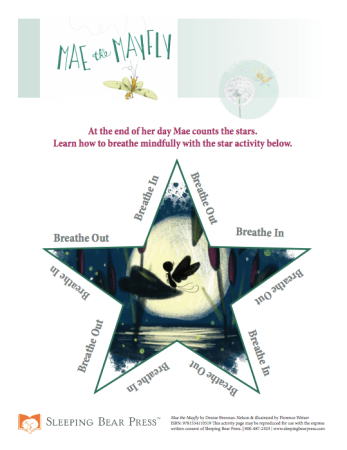
celebrate-picture-books-picture-book-review-mae-the-mayfly-activity-page

Mae the Mayfly Mindfulness Activity


Like Mae, you can calm your mind and be present in the moment as you enjoy your surroundings. Use this printable activity to get into that peaceful state of mind. Just look at the picture inside the star and follow the breathing directions as you trace each arm. You can download it from the Sleeping Bear Press Website under Teachers Guides here:

Mae the Mayfly Mindfulness Activity
celebrate-picture-books-picture-book-review-mae-the-mayfly-cover

You can find Mae the Mayfly at these booksellers

Amazon | Barnes & Noble | Books-a-Million | IndieBound | Sleeping Bear Press

Picture Book Review