May 25 – National Tap Dance Day

celebrate-picture-books-picture-book-review-feel-the-beat-cover

About the Holiday

Starting out as an assignment on Congressional legislation for George Washington University graduate student Linda Christensen, Tap Dance Day has become an international celebration of this quick-stepping, staccato-rhythmed art form that is a favorite in movies, on the stage, and in dance schools. Established in 1989, Tap Dance Day brings together professionals and amateurs in shows, workshops, and tap jams around the world. Why not take in—or even perform in—a tap dance show to celebrate?

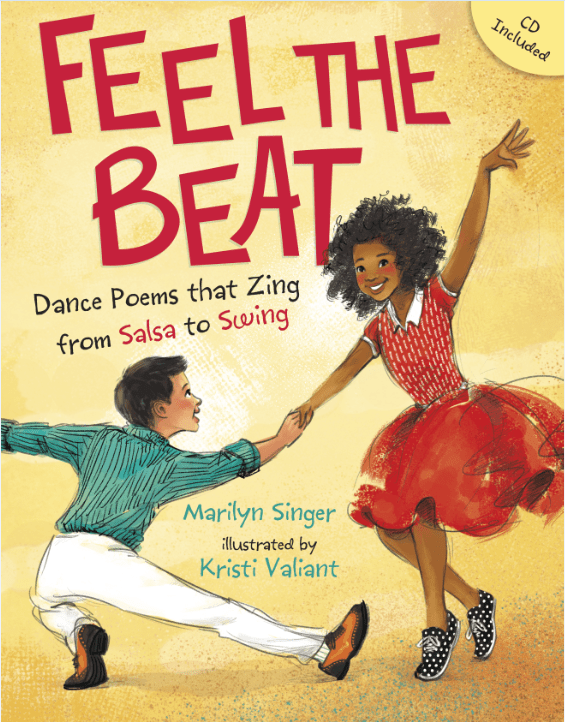
Feel the Beat: Dance Poems that Zing from Salsa to Swing

Written by Marilyn Singer | Illustrated by Kristi Valiant


The rhythms of dance and the cadence of poetry create a natural pairing as these seventeen poems that celebrate the moves, music, and thrill of dances from around the world demonstrate with toe-tapping joy.

In Cha-Cha a boy attending his Uncle Nate’s birthday party learns the cha-cha from his grandma. At first he says “I don’t / know these moves. / My fee / feel like hooves.” But then “something clicks! / Okay, it’s old school. / I say, / cha-cha’s cool!”
celebrate-picture-books-picture-book-review-feel-the-beat-hip-hop

Image copyright Kristi Valiant, courtesy of kristivaliant.com

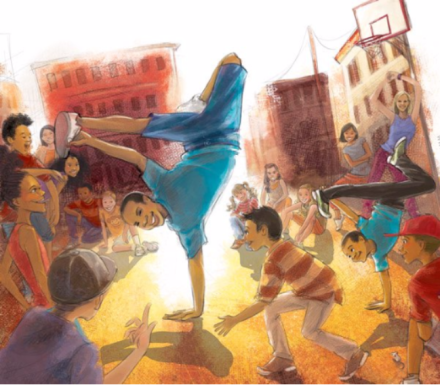
While the kids at school brag about their parents’ jobs, one boy has them beat in Hip-Hop: “No fumbling, no bumbling, / my pops is tops at tumbling. / He’s elastic, so fantastic. / Papa’s so gymnastic!” But while Dad “will swipe and windmill” and “slide on his knees, / do lots of flares and coin-drops” and “boomerang and freeze,” the boy adds “…wait / until you see my mom!”

Is it meringue or Merengue? Maybe a bit of both…because doing it right means “Moving sideways, / turning wrists, / while we do / our pretzel twists. / We sway our hips, we shift our legs, like we’re whipping / lots of eggs.”
celebrate-picture-books-picture-book-review-feel-the-beat-swing-dance

Image copyright Kristi Valiant, test courtesy of Marilyn Singer. Courtesy of kristivaliant.com

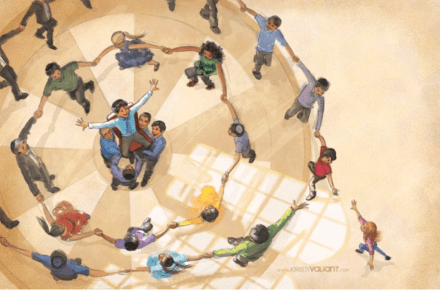
It’s fun to let go when learning the Salsa. All you need is to “Feel the beat / in your feet, / in your heart. / Then you start.” So “Don’t be shy. / Come on try. / In this class, / show some sass.” If only shopping could be so entertaining…. But, wait! Maybe Conga is the solution. “We’re at the MALL. / I’m very BORED. / I hate the STORES, / I hate the HORDE…. / ‘Just one more SHOP’ / turns into FOUR. / I’m gonna SCREAM, / I’m gonna ROAR.” Then music starts and a line grows long—“Uh uh uh, KICK! / You cannot WHINE / when you are ON / a conga LINE! / Uh uh uh, KICK! / A flash mob BALL! / Keep shopping, MOM! / I love the MALL!”
celebrate-picture-books-picture-book-review-feel-the-beat-hora

Image copyright Kristi Valiant, courtesy of kristivaliant.com

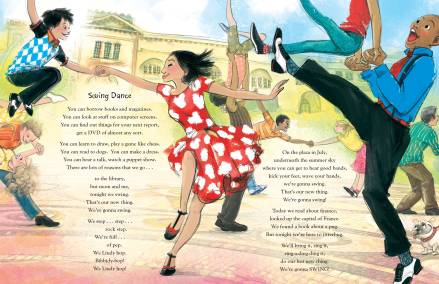
The library may be a quiet, staid place most of the time, but Swing Dance takes over one special library. “On the plaza in July, / underneath the summer sky / where you can get to hear good bands, / kick your feet, wave your hands, / we’re gonna swing. / That’s our new thing / We’re gonna swing!” A boy and his mom have joined lots of other dancers having fun on the square— “We step…step… / rock step. / we’re full… / of pep. / We Lindy hop. / Bibbidy-bop! / We Lindy hop!”

And for those kids who look at the Square Dance unit in PE with trepidation, this girl feels the same: “Got a partner, lost my shoe. / Allemande left? I haven’t a clue….Did that caller give a cue? / Don’t promenade me. Shoo, boy, shoo!…Bow to Francisco, bow to Sue. / One more swing. It’s over! Whew! / I tried real hard, but alas, it’s true. / I’m flunking out of square dance!”

celebrate-picture-books-picture-book-review-feel-the-beat-wedding

Image copyright Kristi Valiant, courtesy of kristivaliant.com

Other poems introduce the Foxtrot, Hora, Samba, Two-Step, Argentine Tango, Waltz, Bhangra, and Polka. Notes about each dance, giving a description, a bit of history, and basic rhythms and steps, follow the text. A CD of dance music is also included.

Marilyn Singer begins her exuberant celebration of dances from around the world with a pair of the reverso poems for which she is well known: All Over the World, Dancing is Joy and Joy is Dancing All Over the World. With this start, Singer invites readers to put on their dancing shoes and enter ballrooms, classrooms, and outdoor spaces filled with music. From birthdays to bar mitzvahs to weddings to spontaneous parties, Singer imbues each experience with the beats, steps, and sometimes missteps of dance with expressive vocabulary and humorous asides. Reading the poems aloud offers its own special treat as the meter of each poem reflects the rhythm of the dance described.

Kristi Valiant’s vibrant two-page spreads put kids in the center of the action where individuals, couples, and groups enjoy groovin’ to the music in their own style. Dancers swirl, stomp, hop, twirl, sway, dip, and kick up their heels on sunny days and under glowing nighttime light. So join in—no experience or partner necessary!

For kids who love music and dance and for those who love poetry of all kinds, Feel the Beat; Dance Poems that Zing from Salsa to Swing is a fun addition to home libraries—and may spark an interest in learning how to perform these dances.

Ages 5 – 9

Dial Books, 2017 | ISBN 978-0803740211

Discover more about Marilyn Singer and her books on her website!

View a portfolio of artwork by Kristi Valiant on her website!

Tap Dance Day Activity
celebrate-picture-books-picture-book-review-dance-word-search

Toe-Tapping Word Search Puzzle


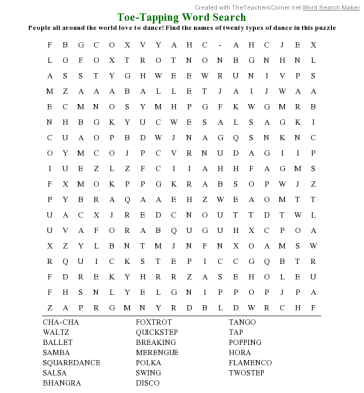
People all around the world love to dance! Can you find the names of twenty types of dances in this printable Toe-Tapping Word Search Puzzle? Here’s the Solution!

Picture Book Review


May 22 – National Buy a Musical Instrument Day

celebrate-picture-books-picture-book-review-a-violin-for-elva-cover

About the Holiday

Each year on May 22 we celebrate music and the personal relationship musicians have with their instruments. Some musical artists even consider their instrument such a friend or part of the family that they give them names. Whether you are just starting out on your journey with music or are a seasoned professional, today may be a good day to think about buying your first instrument or adding to your collection.

A Violin for Elva

Written by Mary Lyn Ray | Illustrated by Tricia Tusa


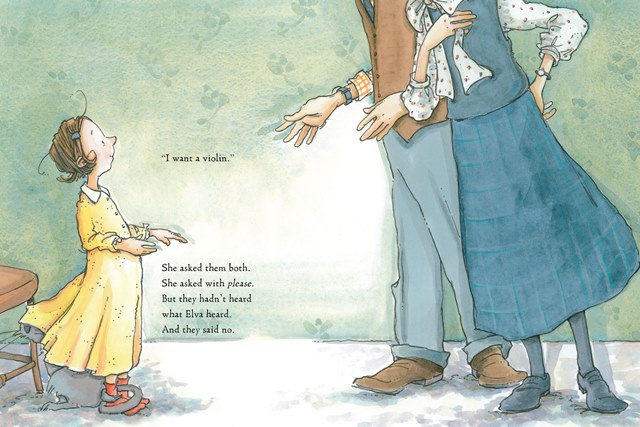
While out on a springtime jaunt, little Elva came upon a garden party. There were the sounds of voices and rustling clothes, but Elva heard none of this. Instead, her ears were trained on the music the violinist was playing. Later that night she told her mom and dad that she wanted a violin. She even said please, but they said no.

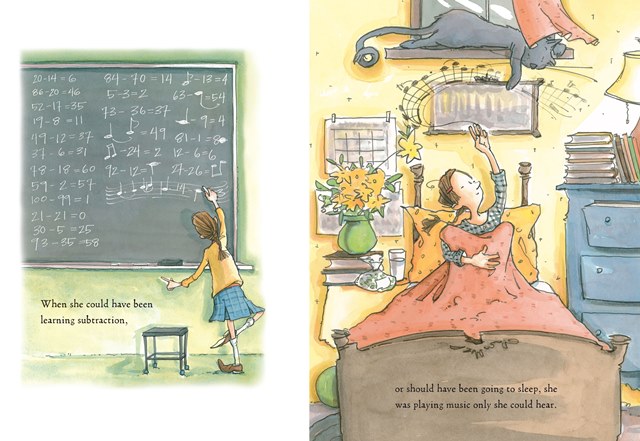
So Elva found violins elsewhere. She practiced with a tennis racquet and stick; she rehearsed with her toothbrush and tube of toothpaste. When she was called to the board in math class, she wrote more notes than numbers, and when she “should have been going to sleep, she was playing music only she could hear.” Years passed; she grew, made friends and pursued other activities. Soon she was an adult with a job, appointments, and meetings. “But if she saw a page tremulous with music, she remembered what she once had wanted.”

celebrate-picture-books-picture-book-review-a-violin-for-elva-asks-parents

Image copyright Tricia Tusa, text copyright Mary Lyn Ray. Courtesy of hmhco.com.

She told herself she was too busy to learn to play the violin now, but she began borrowing records from the library. When she listened to them, she felt as if she “had picked up her violin again” and was playing in an orchestra or performing a solo. At the end of the record, Elva filled the silence and empty feeling with all the other things she had to do.

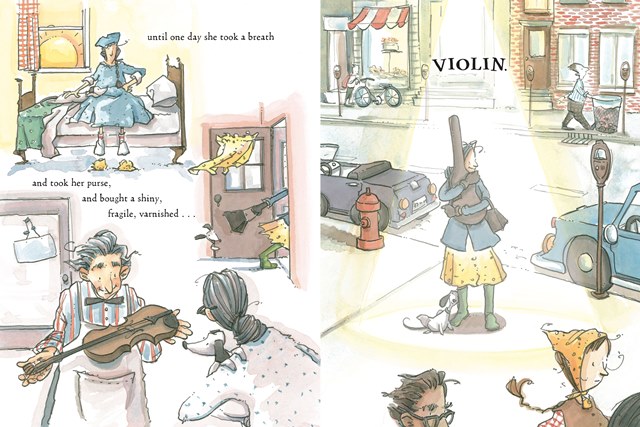
More years passed, and “Elva had many satisfactions and achievements,” but something was still missing. She told herself that she was too old now, “but more and more she kept imagining what might have been—” Then one day she took some money, went to the store, and bought “a shiny, fragile, varnished violin.”  She hugged it tightly on the way home and once there—without even taking off her coat—she removed it from its case, placed it under her chin, and “pushed the bow across a string.” The violin squeeeked and squeeeeeeeeeeked. But then “she drew the bow back toward her—and the string sang.”

celebrate-picture-books-picture-book-review-a-violin-for-elva-hears-music

Image copyright Tricia Tusa, text copyright Mary Lyn Ray. Courtesy of hmhco.com.

She tried other strings without success, but that one, clear note encouraged her. “‘I will improve,’ she said. But she didn’t” Playing the violin was difficult; she had to hold the bow just right, land on the correct notes, and figure out the fingering for sharps and flats. It was all so confusing that Elva put away her violin.

Then one day she read that “Madame Josephina was accepting beginning students.” Again, Elva took some money and signed up for lessons. Twice a week Elva went to Madame Josephina’s house, and on the days in between, she practiced. At the end of the year, there was a recital. Elva was nervous as she took the stage with the other students. But when she drew the bow across her violin’s strings, Elva realized she “was making music.” That night at home she played her piece again and again. “At last, Elva kissed her bow and went to bed, imagining all the tomorrows. And all the music there was to make.”

celebrate-picture-books-picture-book-review-a-violin-for-elva-buys-violin

Image copyright Tricia Tusa, text copyright Mary Lyn Ray. Courtesy of hmhco.com.

Mary Lyn Ray’s story of a little girl whose lifelong love of the violin is only satisfied in old age reveals to readers that while they may grow and change throughout the years, childhood passions often remain strong. While they may be rejected or forgotten for one reason or another, these interests sometimes indirectly guide career choices or reappear when the time is right for them to be fulfilled. Although it is a violin that captures Elva’s heart, Ray could have chosen from a long list of creative, daring, or professional pursuits that niggle at one’s brain to be acknowledged and expressed. A Violin for Elva offers encouragement and inspiration not only for those who feel that it’s too late to achieve their dreams but for those struggling to overcome the fear of trying.

Tricia Tusa’s watercolor and ink illustrations are as light and graceful as the music that captivates Elva. In lovely vignettes, a garden-party attendee wears an enormous flower hat, Elva’s pet cat swipes a paw at her imaginary music, Elva stops on her way to work to admire a street musician, and Elva hugs her dog close while having tea in sunny window. When Elva finally buys her own violin, all the hustle and bustle of her life stops for a moment and love fills the page as she hugs the instrument while her dog leans affectionately against her leg and both are bathed in a glorious spotlight. Seeing Elva on stage at her first recital surrounded by children half her size, readers will understand that true love never fades and is always attainable.

Ages 4 – 7 and up (adults will also appreciate the book’s message)

Houghton Mifflin Harcourt, 2015 | ISBN 978-0152254834

Discover more about Mary Lyn Ray and her books on her website!

You’ll find a gallery of art work by Tricia Tusa on her website!

National Buy a Musical Instrument Day Activity

celebrate-picture-books-picture-book-review-musical-instruments-word-search

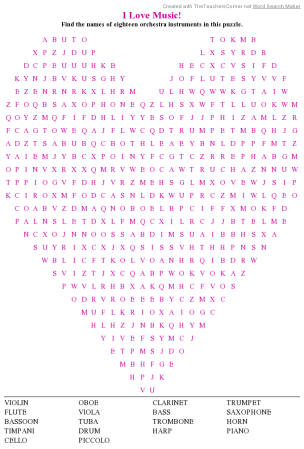
I Love Music! Word Search Puzzle


There’s an orchestra of instruments in this printable I Love Music! Word Search Puzzle. Can you find all eighteen different instruments? Here’s the Solution!

Picture Book Review

May 11 – It’s National Photography Month

celebrate-picture-books-picture-book-review-jazz-day-cover

About the Holiday

We all know what joy photography brings. Whether you’re looking at professional fine art photos in a gallery or your own vacation pics, those film and digital images can make you see the world in a different way or just as you remember it. The oldest surviving photograph of nature dates back to 1827, when it took days for film to develop properly. Of course, today’s smart phones have changed forever the way we take photos, but the fun of capturing a moment in time will never go out of style.

Jazz Day: The Making of a Famous Photograph

Written by Roxane Orgill | Illustrated by Francis Vallejo

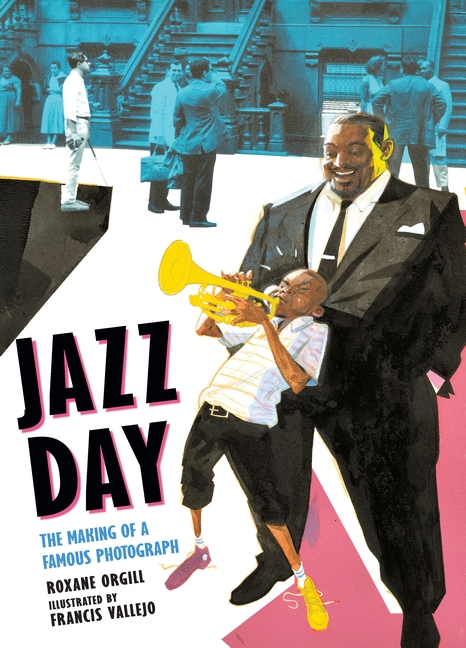
In a marvelously conceived and unique book, Jazz Day: The Making of a Famous Photograph tells the story of how the iconic photograph Harlem, 1958 came together. Through a series of poems, Roxane Orgill reveals the action when fifty-seven jazz musicians posed for Art Kane on an August afternoon in front of an ‘absolutely typical brownstone.’ Over the space of a day, Kane borrowed a camera, blocked off the street, and worked with the musicians who answered the call that went out to the local musicians’ union, recording studios, composers, nightclub owners, and others inviting “all jazz musicians: a photo shoot, no instruments required.”

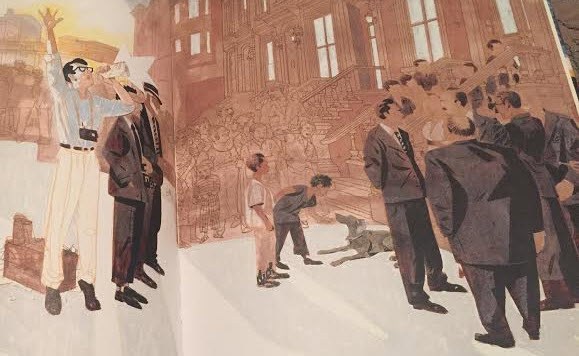
The day’s beginning is captured in Early: Art Kane, photographer. Art Kane stands in the middle of the deserted street, wondering if his idea to capture The Golden Age of Jazz will become reality: “nobody here yet / it’s only nine / look right / where they come from the train / look left / where they exit a taxi…what if only four come / or five / ‘The Golden Age of Jazz’ / with five guys… / a crazy request / what if nobody shows… / a group from the train / Lester Young cigarette dangling / that funny squashed hat / man with an umbrella rolled tight… / guy in a striped tie / it’s happening.”

celebrate-picture-books-picture-book-review-jazz-day-some-kind-of-formation

Image copyright Francis Vallejo, text copyright Roxanne Orgill. Courtesy of Candlewick Press.

As the musicians begin to arrive, they talk and laugh among themselves, not listening to Art Kane as he tries to organize them into Some Kind of Formation. But Kane isn’t the only one with a camera today. In So Glad: Milt “Fump” Hinton, bassist and amateur photographer, Hinton is awed by the talent around him and “Glad I brought my Leica / And the Canon 35 / My little Keystone eight-millimeter too / Gave it to Mona, my wife / ‘Honey, just aim and press the button’” There’s “Chubby, Oscar, Wilbur…” then “Here come the big dogs / Coleman Monk Dizzy Roy / And the beauteous Marian McP… / They’re all here / For some magazine / Me I’m snapping pictures / Lots and lots of pictures / To remember / Later / Forever / So glad”

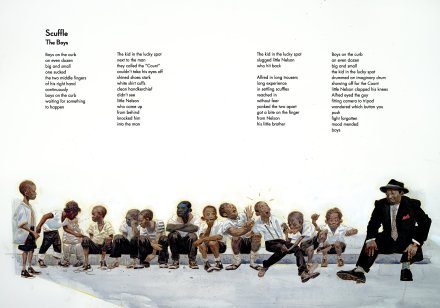
There are boys, too, sitting on the curb, getting into mischief as Hat: Alfred, a boy reveals: “Nice wool felt / Two-inch snap / Brim / Count’s too beat / to give chase / When / Nelson nabs / His bonnet / I’m / On it quick / Down the block / ‘Hand it over, Nelson, before I—’ / Buff the felt / Set the snap / Brim / ‘Your hat, Count Basie.’”

celebrate-picture-books-picture-book-review-jazz-day-scuffle

Image copyright Francis Vallejo, text copyright Roxanne Orgill. Courtesy of Candlewick Press.

Even though The Invitation Said No Instruments, Rex Stewart, cornetist couldn’t help but bring his silver cornet. And once he saw it, Leroy couldn’t help but run up in his short pants and untied shoes to ask “‘Can I try?’ / Lips to mouthpiece / Nothing.” But Rex shows him how it’s done and all heads turn his way. “Leroy again / ‘Can I try?’ / Rex passed the cornet / ‘Make like you’re going to kiss a girl’ / Lips to mouthpiece / Squeak / (Leroy’s too young for girls) / Rex tucked his horn under his arm / The invitation said no instruments.”

Excitement mounts as everyone realizes She’s Here! Maxine Sullivan, singer who “snagged Your Hit Parade at twenty-six / ‘Loch Lomond’ put her on the high road… / got in with a good band / warbling on the radio / chantoosing in the clubs / all that was years ago” before she became a nurse and married and had a daughter. “but she’s here! / come to hang with the cats / reminding all us bass players / and pianists who kept time / on all her records, tours… / reminding us all / how much we miss her.”

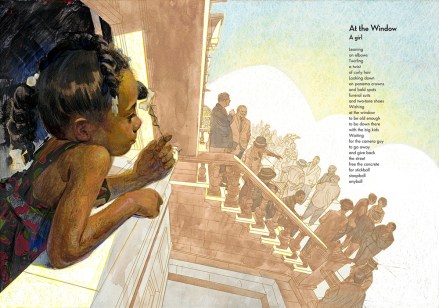
celebrate-picture-books-picture-book-review-jazz-day-at-the-window

Image copyright Francis Vallejo, text copyright Roxanne Orgill. Courtesy of Candlewick Press.

People look out their windows at all the commotion as Eddie Locke strolls up and Thelonious Monk (late as usual) arrives in a taxi. Dizzy Gillespie, Roy Eldridge, J. C. Heard and Gerry Mulligan make an unlikely quartet, and Willie “the Lion” Smith sits on the stoop holding onto his elephant-head cane. Finally, Art Kane calls out Some Kind of Formation, Please! “A plea so desperate / it’s melodic / shuffle / climb the stoop / fan   out   on   the   sidewalk / talk-laugh-roar / smoke-slap-turn / little by little / fifty-seven musicians form an upside-down T / underlined / by twelve boys / just happen to be sitting on the curb… / click / it has to be perfect / for Esquire / Dizzy sticks out his tongue.”

At last the copy of Esquire lands on newsstands, and Alfred pays for a copy with money he’s saved by missing “a month of matinees.” He thinks it was worth it, though, because “…jeez / I’m in a magazine.”

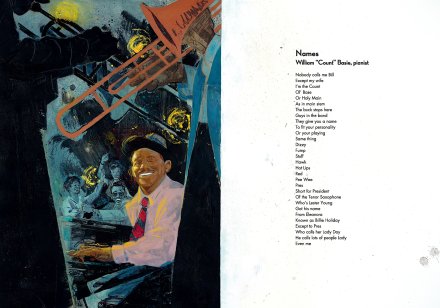
celebrate-picture-books-picture-book-review-jazz-day-names

Image copyright Francis Vallejo, text copyright Roxanne Orgill. Courtesy of Candlewick Press.

A fold-out page of the original photograph lets children and adults see the final product of the photo shoot. Children and adults will also have fun matching the portraits that accompany the poems to their real counterparts. Short biographies of each person in the photograph as well as an Author’s Note, an introduction, and further resources for study add to the comprehensive and loving treatment of its subject that Jazz Day: The Making of a Famous Photograph provides for readers.

Roxane Orgill recreates the syncopation of jazz and the exhilaration of the photo shoot in twenty poems that capture the sights, sounds, conversations, horseplay, and vibe of that special day that forever commemorated the Golden Age of Jazz. The smooth, cool lines of Orgill’s free verse poetry are a joy to read aloud. Full of personality, captivating details, history, and nostalgia, the poems reawaken the past for a new generation.

Working from the actual black-and-white photograph, Francis Vallejo vividly reimagines the scene on 126th Street as well-known and lesser-known jazz musicians came together to represent themselves and their art for Esquire magazine. Vallejo’s acrylic and pastel illustrations bring to life the surprise, camaraderie, and expressions of the men, women, and boys as they mingle, rest, and pass the time until the pose and lighting is right for the shot. As the book opens, readers get a bird’s-eye view of the street and quiet neighborhood, but as the musicians begin arriving the illustrations move in, allowing readers to rub shoulders with the greats of jazz.

For children (and adults) who love photography, jazz, biographies, history, and/or poetry, Jazz Day: The Making of a Famous Photograph is a marvelous choice for home libraries and is highly recommended for school and public libraries.

Ages 8 – 12 and up

Candlewick, 2016 | ISBN 978-1536205633

Learn more about Roxane Orgill and her books on her website!

National Photography Month Activity

celebrate-picture-books-picture-book-review-threads-of-friendship-photo-holder

Spool Photo Holder

With this easy craft you can make a personalized photo holder for your favorite pictures of friends and family!

Supplies

  • Wooden spool with hole through the middle, top to bottom. (A spool without a hole also works if you make a hole in the top with a hammer and nail), 1 ½ -inch or larger, available at craft stores
  • Colorful twine or light-gauge yarn, 3 to 4 yards
  • Alternatively: you can buy a wooden spool of colorful twine at some discount stores
  • 3 pieces of light-gauge wire 12 to 15-inches long
  • Clay or play dough
  • Needle-nose pliers
  • Glue

Directions

  1. Fill hole in spool with clay or play dough, pushing it well in to provide a base for the wire
  2. Wrap the twine or yarn around the spool to desired thickness
  3. Glue down the end of the twine to keep it from unraveling
  4. With the needle-nose pliers, roll down one end of the wire to create a small coil
  5. Repeat with two other lengths of wire
  6. Cut the three wires to different lengths to provide room for all three photographs
  7. Fit the three wires into the center hole on the top of the spool
  8. Push the wires into the clay until they are held securely
  9. Clip photographs into the coils
  10. Display your pictures!

Picture Book Review

April 1—International Pillow Fight Day

celebrate-picture-books-picture-book-review-snoozefest-cover-image

About the Holiday

Pillow fights are fluffy fun that’s more about laughing than combat. Once only enjoyed by siblings, at sleepovers, and to delay bedtime, pillow fights have become the stuff (stuffing?) of mass swatfests worldwide. So grab your pillow, swing with all your might, and let the feathers fly!

SnoozeFest

Written by Samantha Berger | Illustrated by Kristyna Litten


Snuggleford Cuddlebun is the sleepiest sloth in Snoozeville. “Now that sloth can sleep, for a month at a go. / The few time she rises, she moves in slo-mo.” But there is one annual event that sets her heart—and her feet—racing enough to leave her cozy bed—SnoozeFest. “This is the place where the best sleepers go / to snore their way through this naptacular show.” So Snuggleford packs up her her jammies and teddy, her pillow and book and joins the other great sleepers on the bus that will take them to the NuzzleDome.

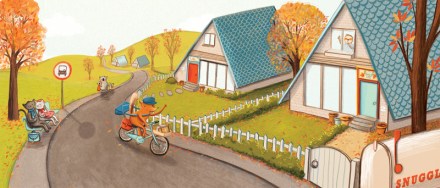
celebrate-picture-books-picture-book-review-snoozefest-snoozeville

Image copyright Kristyn Litten. courtesy of Dial Books for Young Readers, Penguin

As Snuggleford looks for the best place to camp, she sees that she’s in good company. The wildcats, wombats, koala bears, brown bats, squirrels, and armadillos are also setting up tents, laying down sleeping bags, and lounging in hammocks—which is Snuggleford’s favorite too. After finding her spot “she strolls through the stands / for posters and T-shirts / and swag from the bands.” Soon it’s time for the show to begin with the P. J. Parade, where sleepwear from such designers as Diane von FirstInBed and Louis Futon are on full display.

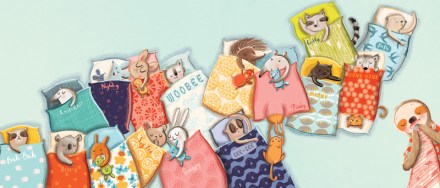
celebrate-picture-books-picture-book-review-snoozefest-sleeping-bags

Image copyright Kristyn Litten. courtesy of Dial Books for Young Readers, Penguin

“Then all the big spotlights dim down in the Dome, / and everyone turns on their night-light from home.” The first band to perform is the “Chamomile Rage” and although the crowd is half asleep by the middle of the first song, “the snoozers yawn deeply, yet still clap for more. / The second act’s also a guaranteed snore.” Then “a poet named Burrows recites a haiku / and imitates rain with his didgeridoo.”  More acts take the stage—the Nocturnal Nesters and the Quiet Quartet, Tranquility Trio and the Drowsy Duet. Yes, “These are the best bands for deep relaxation, / followed by Sweet Dreams and Deep Hiber-Nation.”

For Snuggleford Cuddlebun the concert is all she could want. In fact, “Several days later the SnoozeFest is done. / And who’s still asleep? Why it’s Miss Cuddlebun.” She folds up her things, tosses away her trash, and rides the bus back home. There she climbs into bed and shuts her eyes and dreams of next year’s SnoozeFest.

celebrate-picture-books-picture-book-review-snoozefest-nighttime

Image copyright Kristyn Litten. courtesy of Dial Books for Young Readers, Penguin

Samantha Berger’s SnoozeFest is one of the cutest, most original bedtime books around. With wit and charm Berger makes full use of the festival setting and experience. Her inspired rhymes, adorable band names, and atmosphere that combines just the right amount of excitement and slumber-inducing lilt, will delight kids of all ages and adults as well. From Snoozeville to the NuzzleDome to a full verse of blanket nicknames, Berger has come up with the “wumphiest, coziest, comfiest” words to send little ones off to dreamland.

celebrate-picture-books-picture-book-review-snoozefest-sleeping-suggleford

Image copyright Kristyn Litten. courtesy of Dial Books for Young Readers, Penguin

Krisyna Litten’s illustrations, designed with a vintage-yet-modern air and color palette, are the perfect accompaniment to Berger’s story. Anyone would love to join Litten’s sweet Snuggleford and the other “great sleepers” at SnoozeFest. Snuggleford’s endearing slothy smile and the joyful camaraderie of the other festival goers invite kids to explore every page. The crowd consists of loveable moles, koalas, raccoons, bears, foxes, porcupines, and more adult and baby animals enjoying the show.  Two-page spreads of the darkened festival grounds lit by nightlights and starlight are gorgeous, peaceful landscapes of blues and gold that set a sleepy tone for little readers.

SnoozeFest would be a very welcome addition to any child’s bookshelf for story times and bed times, and would make a perfect gift.

Ages 3 – 7

Dial Books for Young Readers, Penguin, 2015 | ISBN 978-0803740464

You’ll have plenty of fun discovering lots of books, Nickelodeon videos, and more creative stuff by Samantha Berger on her website!

You can catch up with Krisyna Litten on her blog!

You won’t want to snooze through this book trailer!

International Pillow Fight Day Activity

celebrate-picture-books-picture-book-review-pillow-case-craft

Perfect Pillow Case


Decorating your own pillow case gives you distinction during any pillow fight—and guarantees sweet dreams while sleeping too!

Supplies

  • White, or single-color pillow case
  • Fabric markers
  • Cardboard or newspaper

Directions

  1. Iron or smooth out the pillow case
  2. Insert cardboard or newspapers inside the pillow case to keep markers from bleeding through
  3. Design and color your pillow case with the markers

Picture Book Review

March 30 – It’s Music in Our Schools Month

celebrate-picture-books-picture-book-review-hana-hashimoto-sixth-violin-cover

About the Holiday

This annual holiday celebrates the benefits of music education in schools. With budget cuts looming in nearly every school district, the arts are often the first to go. But music inspires creativity and critical thinking and contributes to a better understanding of math and other subjects. School music programs also offer opportunities to children who may otherwise not be able to take lessons and explore their talent. To help out, contact your local school and see what you can do!

Hana Hashimoto, Sixth Violin

Written by Chieri Uegaki | Illustrated by Qin Leng


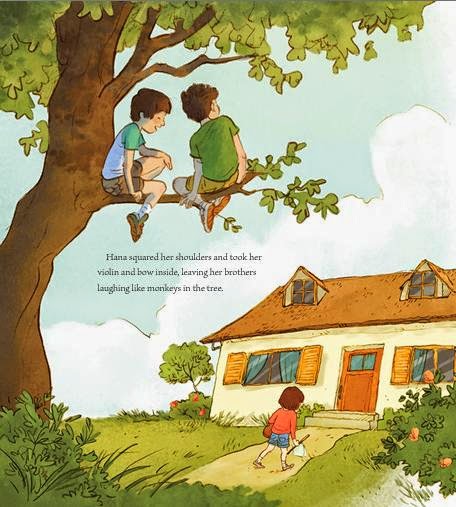
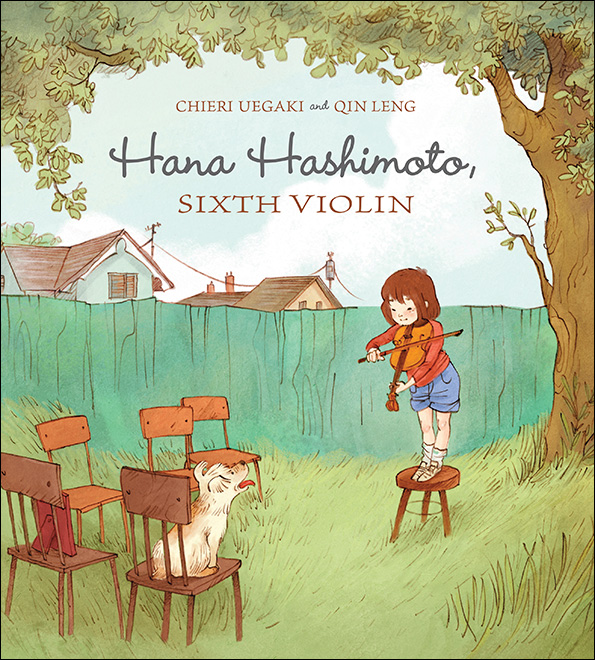
When Hana Hashimoto told her brothers that she had signed up to play her violin in the talent show, they laughed.  “‘That’s just loopy,’” Kenji said, and Koji added ‘‘You can barely play a note.’” They reminded her that it was a talent show and that she was just a beginner. But Hana didn’t listen. “It was true that she was still a beginner. She had only been to three lessons.” But playing the violin was in her blood. Her grandfather, Ojiichan, had once been Second Violin in a symphony orchestra in Kyoto, Japan and had even played for the Imperial Family.

celebrate-picture-books-picture-book-review-hana-hashimoto-sixth-violin-brothers-in-tree

Image copyright Qin Leng, text copyright Chieri Uegaki. Courtesy of Kids Can Press.

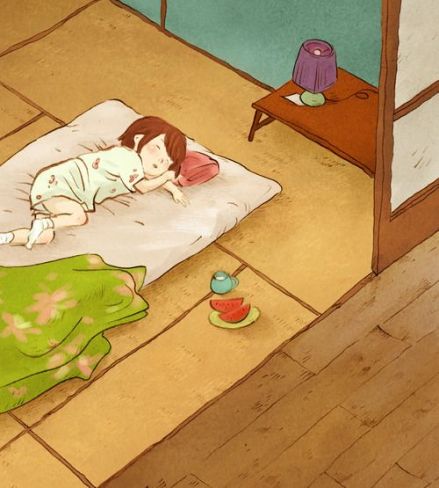
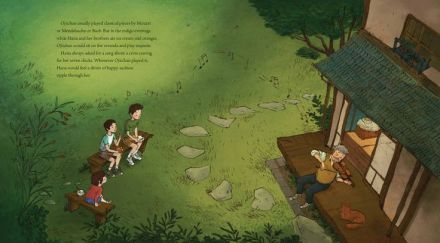
Hana had visited her grandfather that summer, and the sweet notes of his playing had coaxed “her awake as gently as sunshine” every morning. In the evenings her grandfather would take requests from Hana and her brothers. “Hana always asked for a song about a crow cawing for her seven chicks. Whenever Ojiichan played it, Hana would feel a shiver of happy-sadness ripple through her.”

celebrate-picture-books-picture-book-review-hana-hashimoto-sixth-violin-hana-sleeping

Image copyright Qin Leng, text copyright Chieri Uegaki. Courtesy of Kids Can Press.

Ojiichan’s playing was like magic. He could make the violin chirp like crickets, plink like falling raindrops, and send fireflies dancing. At the end of the summer, Hana had decided she also wanted to play the violin and her parents agreed. Hana practiced every day even though her brothers ran away with their hands over their ears. She played for her parents, for her dog, JoJo, and for a photograph of Ojiichan. Sometimes she pretended to play for “an audience so appreciative they called for encore after encore.”

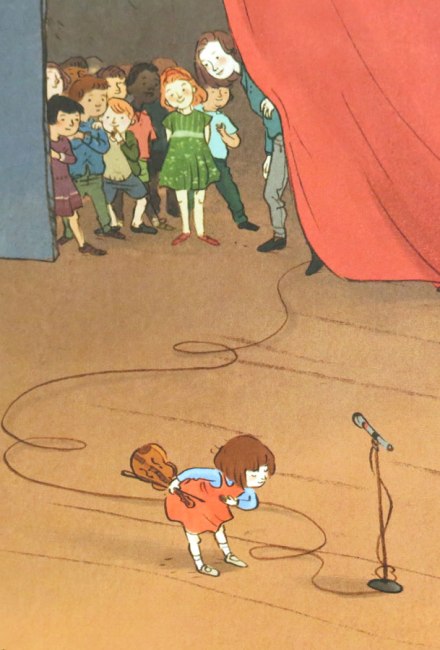
On the night of the talent show, Hana waited backstage for her turn “with a walloping heart.” Five other violinists had already gone before her. Finally, she heard her name. As she strode across the stage as wide as a desert, she had a fleeting feeling that her brothers had been right—that her performance was going to be a disaster. But when she reached her spot near the microphone and gazed out at the audience, she saw her best friend and her parents smiling at her.

celebrate-picture-books-picture-book-review-hana-hashimoto-sixth-violin-listening-to-grandfather

Image copyright Qin Leng, text copyright Chieri Uegaki. Courtesy of Kids Can Press.

Hana took a deep breath and let it out. Suddenly, “everyone seemed to disappear beyond the light shining down on her like a moonbeam” and she remembered her grandfather’s words: “‘Gambarunoyo, Hana-chan.’ Do your best.” Hana told the audience, “‘This is the sound of a mother crow calling her chicks.’” She “played three raw, squawky notes.” Then she played the yowl of her neighbor’s cat at night and the plucky droplets of rain on a paper umbrella. Hana played a world of special sounds, from buzzing bees to squeaking mice to croaking frogs. When she had finished, she said, “‘And that is how I play the violin.’” Then she took a bow.

Later that night Kenji asked Hana for an encore, and she happily played her piece again. Next year, Hana thought, she might be able to play one of her grandfather’s melodies. Before she went to sleep, Hana played another piece she had been practicing. “She imagined that the notes would drift out through the window, past the bright rabbit moon and beyond, and Ojiichan would hear them and smile.”

celebrate-picture-books-picture-book-review-hana-hashimoto-sixth-violin-hana-bows

Image copyright Qin Leng, text copyright Chieri Uegaki. Courtesy of Kids Can Press.

Chieri Uegaki’s gorgeously told story of a little girl’s first performance with her new violin rings true on every page, from her being inspired by her grandfather to her own inspirational performance. Uegaki’s descriptions of the melodies that capture Hana’s heart are as beautiful as the music itself and are a joy to read. Hana’s continued self-confidence in the face of her brothers’ teasing and her own fear is a wonderful lesson for all children. The brothers’ support of Hana after the talent show is a welcome show of familial love, and the touching ending offers encouragement and happiness.

Young readers will love Qin Leng’s evocative illustrations that follow Hana on her musical journey. Notes from the violin pieces Hana admires float from page to page—from her grandfather’s home in Japan to her own room—tying together not only Hana’s fondness for the violin, but her love for her grandfather. Beautiful touches, such as an image of Hana reflected in a pastel blue rain puddle and a night sky twinkling with fireflies, mirror the wonder of childhood, when everything is new and possible.

Hana Hashimoto, Sixth Violin is refreshing encouragement for any child engaging in new experiences or activities. The book’s warmth and inventiveness make it a wonderful gift or addition to home libraries.

Ages 4 – 8

Kids Can Press, 2014 | ISBN 978-1894786331

Enjoy this Hana Hashimoto, Sixth Violin book trailer!

Music in Our Schools Month Activity

celebrate-picture-books-picture-book-review-kids-playing-music-find-the-differences

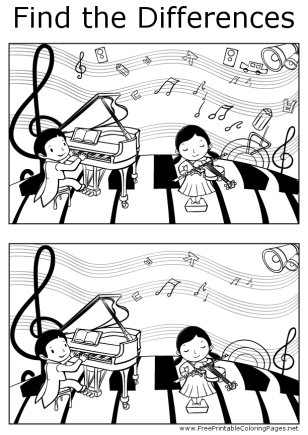
Musical Kids Find the Differences


These two kids are performing a duet! Can you find all of the differences in the second picture on this printable Musical Kids Find the Differences?

Picture Book Review

March 27 – Quirky Country Music Song Titles Day

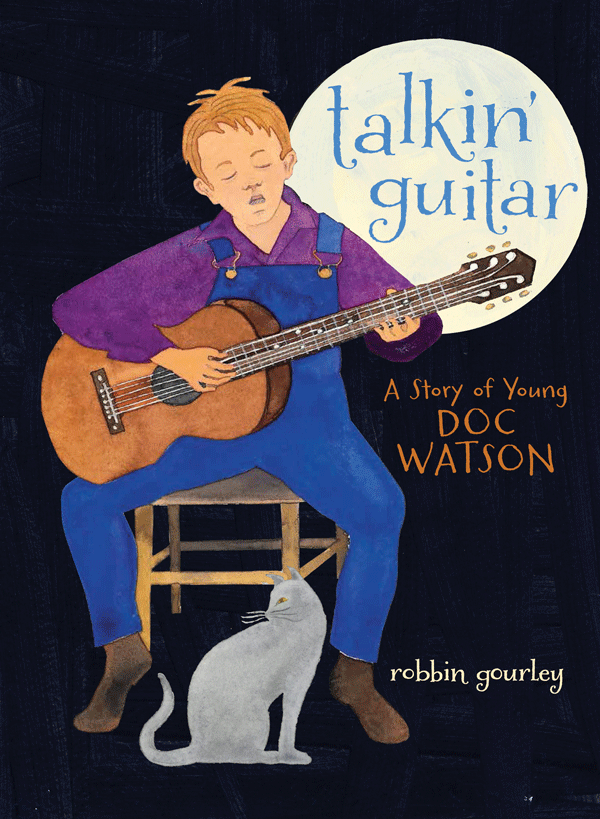
celebrate-picture-books-picture-book-review-talkin-guitar-cover

About the Holiday

Song titles can be evocative of so many emotions, and country song titles seem to take this fact to a whole nuther level. Sure, the travails of heartbreak may cause misery and despair, but I bet you can’t help smiling—just a little—when you read titles like this: I Would Have Writ You A Letter, But I Couldn’t Spell Yuck!, You Were Only A Splinter As I Slid Down The Bannister Of Life, and Did I Shave My Legs for This? So, today, celebrate by finding and listening to some quirky country songs that tickle your fancy.

Talkin’ Guitar: A Story of Young Doc Watson

By Robin Gourley

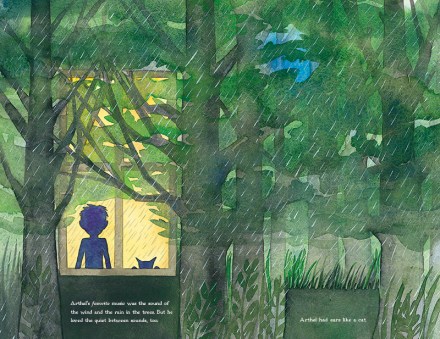
“Yonder, where blue mountains meet the sky, Arthel Watson was born into a world of music.” Music, for Arthel, was much more than his mama’s singing at the end of the day. It was the calls of animals and birds, the burbling river, the whistles of trains, and the clatter of farm machinery. He loved to listen to the rain and the wind and the silence between sounds too. “Arthel had ears like a cat. Maybe it was because he was blind.”

celebrate-picture-books-picture-book-review-talkin-guitar-rain

Image and text copyright Robbin Gourley, courtesy of robbingourley.com

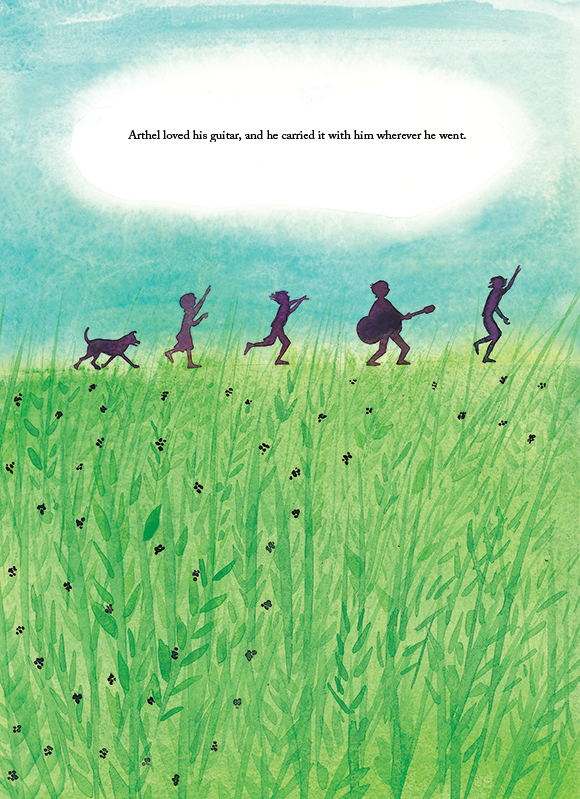
Arthel just couldn’t help but make music whenever and wherever he could. Pots became drums, and cowbells rang like cymbals. Arthel even strung a steel wire across the barn door to strum. When Pappy gave him a harmonica, Arthel practiced until the screechy notes settled into a purr. When Pappy made him a banjo, he practiced until the “rusty door hinge” creak was replaced by spritely melody. One day when Arthel plinked out a few notes on his cousin’s guitar, his father made him a promise. “‘Son, if you can play a song by the time I git home from work, we’ll go into town and buy you your own guitar.’”

celebrate-picture-books-picture-book-review-talkin-guitar-played-guitar-everywhere

Image and text copyright Robbin Gourley, courtesy of robbingourley.com

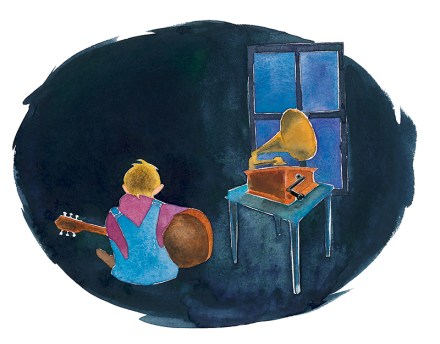
By the end of the day, Arthel had composed a “sweet, simple song” from the few chords he had learned. With a “belly full of butterflies,” he played it for his family and earned himself a guitar. From then on Arthel carried his guitar everywhere, learning from records at home and from songs on the radio. He memorized the rhythms of farm work and the songs of various animals, and between chores he practiced, practiced, practiced. “All those chores and all that practice made him sharp as a whittling knife and tough as a hickory.”

celebrate-picture-books-picture-book-review-talkin-guitar-listening-to-victrola

Image and text copyright Robbin Gourley, courtesy of robbingourley.com

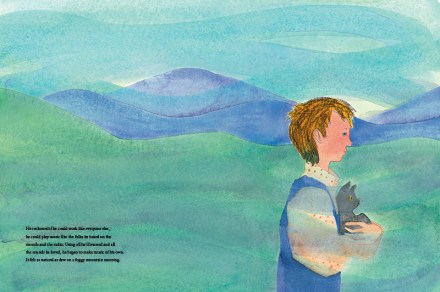
Arthel decided that if he could work just like everyone else, he could probably play music as well as the artists he listened to on records and on the radio. He began to compose his own music. “It felt as natural as dew on a foggy mountain morning.” Arthel played “what he couldn’t see. He could make his guitar sound like a muskrat or a groundhog or a ‘wooly boogie bee’” and sing the stories of the countryside he loved.

An Author’s Note following the text reveals more about Arthel’s life, the influences on his music, and how he earned the nickname “Doc.”

celebrate-picture-books-picture-book-review-talkin-guitar-inspired

Image and text copyright Robbin Gourley, courtesy of robbingourley.com

Robin Gourley’s heartening biography of Doc Watson is perfectly attuned to her young audience. Readers are introduced to Arthel as he soaks in the sounds of life around him and only learn several pages into the story that he was blind. His blindness is not mentioned again except for the subtle acknowledgement that “he reckoned if he could work like everyone else, he could play music like the folks he heard on the records and the radio”—which becomes universal inspiration for all. The emphasis that practice develops natural talent and pays off is also a great lesson for readers who may just be discovering their own talents.

Gourley’s soothing watercolors are suffused with the beautiful pastels of Appalachia, which was both home and muse to Anthel. Vignettes take readers inside Anthel’s home to discover the Victrola and the old radio that were his early teachers and introduce his family, who surrounded him with encouragement as he grew from a child to a young man—always with a guitar in his hands.

Ages 4 – 7

Clarion Books, 2015 | ISBN 978-0544129887

To discover more about Robbin Gourley, her books, and her art, visit her website!

Quirky Country Music Song Titles Day

celebrate-picture-books-picture-book-review-guitar-dot-to-dot

Musical Dot-to-Dot

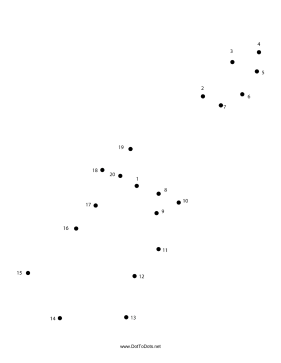
When a musician follows notes, they create a song. What will you find when you follow the numbers on this printable Musical Dot-to-Dot?

Picture Book Review
March 2 – Read Across America Day

celebrate-picture-books-picture-book-review-the-unexpected-love-story-of-alfred-fiddleducling-cover

About the Holiday

Today marks the 20th anniversary of Read Across America Day, which is sponsored by the National Education Association and promotes the joy and discovery that reading provides. Not only is reading fun, studies show that reading to a child from birth improves literacy and language development and leads to a lifelong love for books. Today, visit your local bookstore or library and find some new books to share—or grab some favorites off your shelf and enjoy them again!
The Unexpected Love Story of Alfred Fiddleduckling

By Timothy Basil Ering


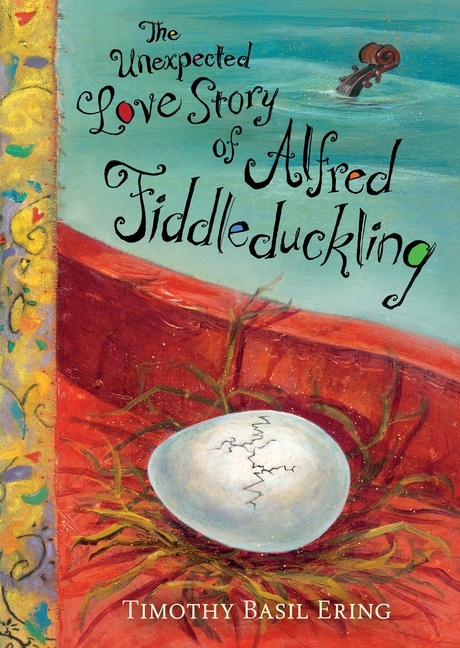
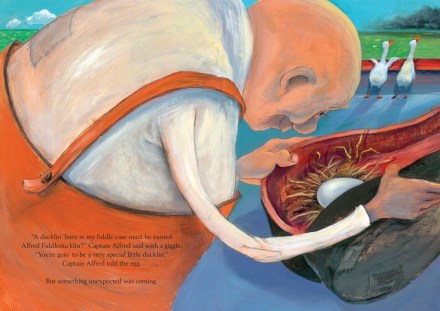
Captain Alfred was sailing home with his boat filled with ducks for his farm. “Nestled safe inside his fiddle case” was one nearly ready-to-hatch egg—a surprise present for his wife. Captain Alfred already had a name picked out for the little one—Alfred Fiddleduckling—and he knew this baby would be very special. But suddenly a “mighty gale whipped the seas into a raging fury” and tossed the little boat and its occupants to and fro. When the storm had blown itself out, a thick, impenetrable fog descended over the ocean.
celebrate-picture-books-picture-book-review-the-unexpected-love-story-of-alfred-fiddleducling-egg

Image and text copyright Timothy Basil Ering, courtesy of Candlewick Press

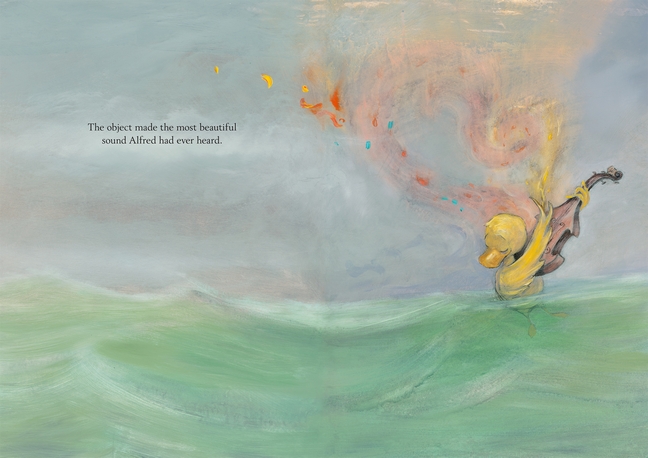
From the porch of a small cottage on the shore’s edge, a woman looked out to sea as “tears of worry dropped from her cheeks, into the mist.” Baby Alfred, however, unaware of these events and hidden by the fog, hatched as the fiddle case floated on the now-calm water. The little duckling looked around and saw something in the water nearby. He paddled out to it and even though it took no notice of him, Alfred “embraced the object with all of his heart.” He “caressed it so that it would not feel as lonely as he did ” and was surprised to hear a most beautiful and unexpected sound.

Alfred immediately fell in love—and imagined that his love was reciprocated. The two drifted along, buoyed by the waves until Alfred’s feet touched ground in a spooky swamp. In a moment, however, the comforting music began again. The sounds, so unexpected in this mist-shrouded swamp, reached the ears of “a beast that was lurking in the tall grasses.” The Beast bounded in the direction of the sound and found Alfred and his love. With drool dripping from its jaws, the beast came closer. Alfred shook, and in his fear “his music became fast and wild!”

celebrate-picture-books-picture-book-review-the-unexpected-love-story-of-alfred-fiddleducling-finds-fiddle

Image and text copyright Timothy Basil Ering, courtesy of Candlewick Press

The beast stood on his hind two legs, rising high and menacing above tiny Alfred and…began to dance. The dog had missed his master’s fiddle playing and he now found a best friend in Alfred. The two trekked through the swamp, searching for home and becoming cold, wet, and helpless as the hours stretched on. The fiddle quivered with music that was as sad and helpless as the two wanderers.

But someone heard those quiet strains—the woman on the porch of the little cottage. “She ran through the fog, straight toward the sound of Alfred’s fiddle. She wrapped her arms around her dog and marveled at the special duckling and his music. “‘Don’t ever stop playing your wonderful music,’” she told Alfred. Alfred played with abandon, pouring out all the happiness in his heart. Out on the sea a raft of ducks and one very surprised captain heard the music…and you can guess what happened next!

celebrate-picture-books-picture-book-review-the-unexpected-love-story-of-alfred-fiddleducling-captain-plays-fiddle

Image copyright Timothy Basil Ering, courtesy of Candlewick Press

Timothy Basil Ering’s wonderfully unique tale of a ship-wrecked duckling and a fiddle who together make beautiful music that reunites a family is captivating. The story holds just the right amount of surprise, suspense, and heart to keep young children riveted to what happens next. Ering’s lyrical phrasing is music to readers’ ears and conveys the various melodies—sweet, quivering, poignant, tempestuous, and finally joyful—that carry the story from one event to another.

Ering’s full-bleed illustrations begin with bright vibrancy that gives way to gauzy grays as the fog rolls in. Despite the weather or ominous surroundings, Alfred remains a bright spot, his yellow fuzz and the multi-colored notes a glowing beacon in the dark. Little readers will love following the confetti notes of Alfred’s playing and guessing the next twist in the plot. The star of the story, plucky little Alfred, is a cutie as  with empathy he embraces the fiddle and bravely ventures through sea and swamp to find home.

The Unexpected Love Story of Alfred Fiddleduckling is joyful, mysterious, and humorous tribute to friendship, love, and the unexpected that would make a great gift and an often-read addition to children’s home libraries.

Ages 2 – 6

Candlewick Press, 2017 | ISBN 978-0763664329

Read Across America Day Activity

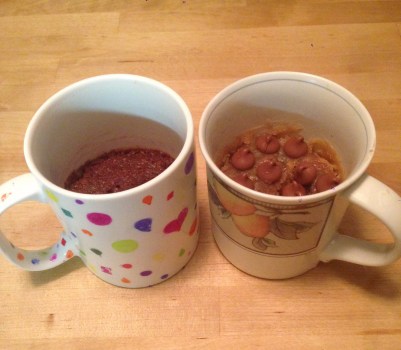
celebrate-picture-books-picture-book-review-mug-cookie

Snuggle-in Mug Cookie Treat


Snuggling up and reading is made even better with a quick and tasty treat! Make this warm mug cookie that takes only minutes to put together and then settle in for some favorite or new stories! Here’s a delicious recipe from Food.com for you to try!

Ingredients

  • 2 Tablespoons butter
  • 2 Tablespoons milk
  • ½ Teaspoon vanilla extract
  • 3 Tablespoons brown sugar
  • 4 Tablespoons flour
  • 2 Tablespoons dark or milk chocolate chips
  • 1 Pinch salt

Directions

  1. Place butter and milk in a microwavable mug. Microwave for 30 seconds to melt the butter and warm the milk.
  2. Stir in the brown sugar and vanilla extract.
  3. Mix in flour, chocolate chips, and salt.
  4. Microwave for about 1 minute on High. (Cooking time is based on the texture of cookie you like)
  5. Cool for 5 minutes before serving
  6. Add toppings such as ice cream, whipped cream, or hot fudge or chocolate sauce

Picture Book Review