March 13 – Good Samaritan Day and Interview with Margie Markarian

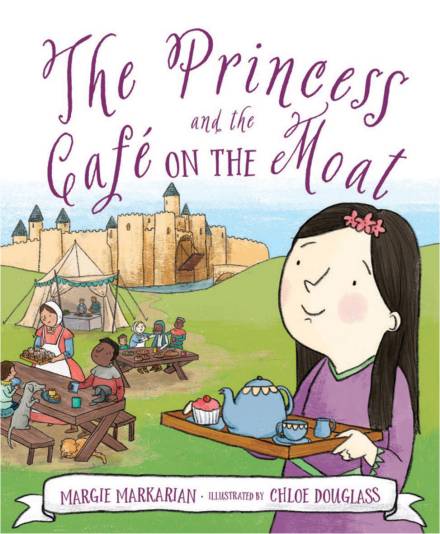
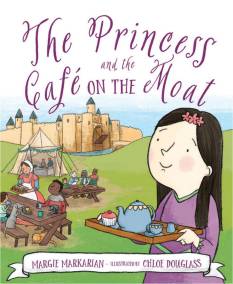
celebrate-picture-books-picture-book-review-the-princess-and-the-cafe-on-the-moat-cover

About the Holiday

A Good Samaritan is someone who sees someone in need of help or kindness and generously offers assistance or a smile. Today, people are encouraged to spend a little extra time to look around and notice those moments when someone could use an extra hand and go to their aid. You never know when a small gesture can have far-reaching effects. Children are particularly good at noticing those who need help or cheering up. You can foster their natural kindness by supporting their ideas and actions for helping their community—just like the little girl’s in today’s book!

The Princess and the Café on the Moat

Written by Margie Markarian | Illustrated by Chloe Douglass


There once was a little princess who lived in a very busy castle. Every morning knights brought news of “enemies defeated, dragons seized, and citizens rescued.” Upstairs, ladies-in-waiting were given their duties for “silks to sew, invitations to ink, and chandeliers to shine.” The princess wanted a special job too, but her voice was never heard above the din, so she went in search of something to occupy her time.
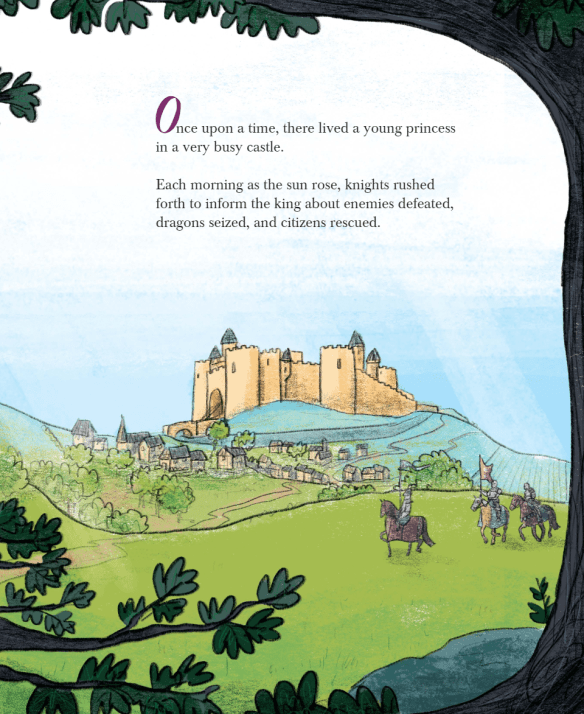
celebrate-picture-books-picture-book-review-the-princess-and-the-cafe-on-the-moat-kingdom

Image copyright Chloe Douglass, 2018, text copyright Margie Markarian, 2018. Courtesy of Sleeping Bear Press.

When she met the court jester, he told her he was too busy learning a routine for the evening’s guests to teach her how to juggle. The wandering minstrel who was playing his mandolin told her, “‘Your fingers are too delicate to pluck these wiry strings.’” And the wise wizard banished her from the tower because his potions were too dangerous. Even the royal baker thought her kitchen was no place for a princess. “The princess’s kind heart and eager spirit were not easily discouraged.” As she wandered past the front gate, she wondered if there were people beyond it who could use her help. Just then the drawbridge descended, and when the guard turned away for a moment, the princess crept by him and ran outside.
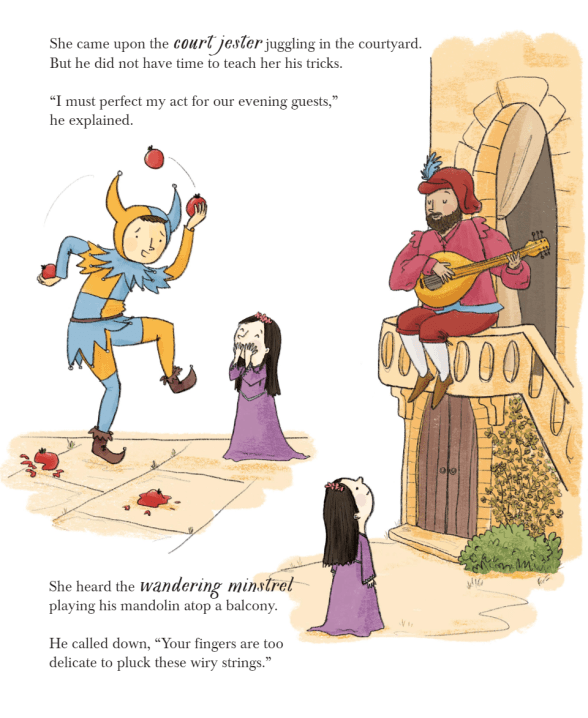
celebrate-picture-books-picture-book-review-the-princess-and-the-cafe-on-the-moat-wizard

Image copyright Chloe Douglass, 2018, text copyright Margie Markarian, 2018. Courtesy of Sleeping Bear Press.

Right outside the castle, she met a “sad old man holding a scrolled parchment.” She approached him and asked why he was so sad. He told her that he had a letter from his far-away son, but because of his weak eyesight, he couldn’t read it. “‘I have time to read your letter and sit awhile,’ said the princess, happy to have found a task so quickly.” Next, she met a worried widow with five children coming down the path. The princess asked why they looked so tired.
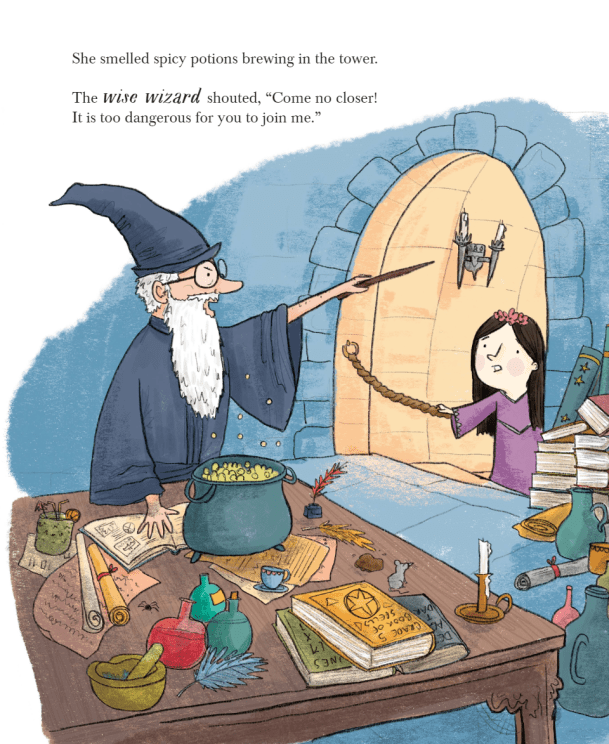
celebrate-picture-books-picture-book-review-the-princess-and-the-cafe-on-the-moat-minstrel

Image copyright Chloe Douglass, 2018, text copyright Margie Markarian, 2018. Courtesy of Sleeping Bear Press.

The woman told her that she had no one to watch her children as she traveled the long way to the village market. The princess happily offered to watch the woman’s children. Soon, “a brave squire limped by the palace where the princess, the old man, and the widow’s children were telling stories and playing games.” When the princess asked the squire what pained him, he told her “‘I gashed by knee in a skirmish many miles ago but have not stopped to tend to it.’” The princess quickly cleaned and bandaged the squire’s knee so he could continue on to the castle.

Back at the castle, though, everything was in an uproar as the king and queen and staff hunted everywhere for the princess. Through a window the king suddenly heard laughter and singing. When the king looked out, he saw that the sound was coming from the princess. Everyone in the castle paraded out through the drawbridge to join the princess and her friends.
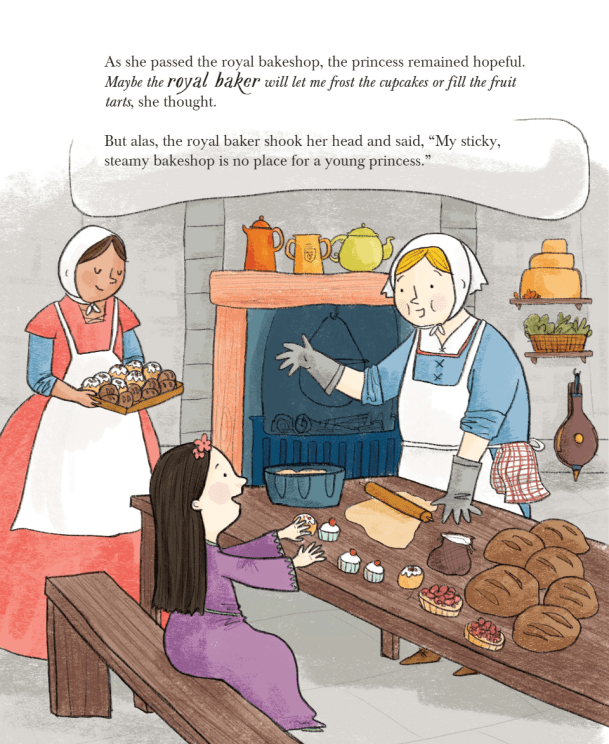
celebrate-picture-books-picture-book-review-the-princess-and-the-cafe-on-the-moat-kitchen

Image copyright Chloe Douglass, 2018, text copyright Margie Markarian, 2018. Courtesy of Sleeping Bear Press.

The princess ran to her mother and father and told them about all the things she had done for the old man, the widow, and the squire. The king and queen “were proud to have such a kindhearted daughter.” The king suggested that they “all celebrate together with treats and refreshments.” From that day on in the afternoon, the drawbridge was dropped and tables and chairs set up. Then the “princess welcomed townspeople and travelers from far and wide to her café on the moat.”

Here, the court jester practiced his juggling, the minstrel shared his music, the wizard made drinks, and the baker created delicious treats. The old man and the widow with her children often came by to meet new friends and relax. And the brave squire enjoyed refreshments while he guarded the castle. The café on the moat welcomed everyone, and “indeed, they all lived happily and busily ever after.”
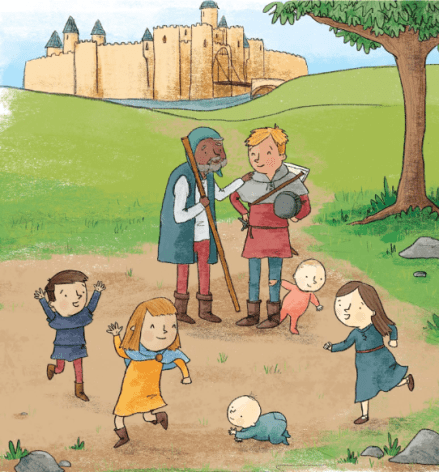
celebrate-picture-books-picture-book-review-the-princess-and-the-cafe-on-the-moat-back-cover

Image copyright Chloe Douglass, 2018, text copyright Margie Markarian, 2018. Courtesy of Sleeping Bear Press.

An Afterword about fairy tales and a kindness activity for children follow the story.

Margie Markarian’s sweet story is an enchanting fairy tale for today’s socially conscious and active kids. Instead of needing rescue, this princess looks for opportunities to help others. When she’s turned away inside the castle, she leaves the comfort of home and reaches out to her community, an idea that children will embrace. Through her cheerful storytelling, Markarian also shows readers that in their talents and kind hearts they already have what it takes to make a difference to others. As the princess opens her café on the moat, children will see that the adults also find ways to support her efforts. Markarian’s language is charmingly “medieval,” making the story fun to read aloud while inspiring listeners.
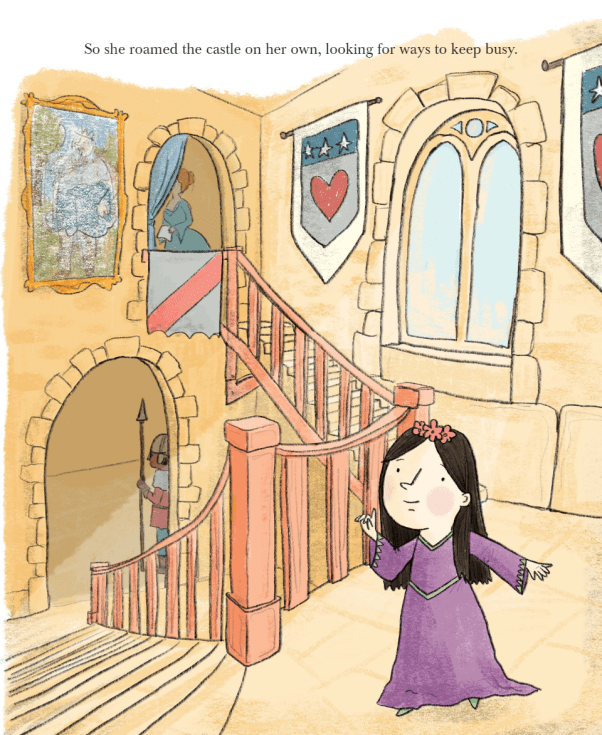
celebrate-picture-books-picture-book-review-the-princess-and-the-cafe-on-the-moat-inside-castle

Image copyright Chloe Douglass, 2018, text copyright Margie Markarian, 2018. Courtesy of Sleeping Bear Press.

Chloe Douglass’s adorable princess is a terrific role model for young readers. Her eagerness to help and positive spirit are evident in her smiles and persistent requests for a job to do. When she ventures out of the castle, she displays obvious empathy for the people she meets, and children will recognize her joy at being able to brighten the townspeople’s day. Despite their busy days, the king and queen are happy and supportive of their daughter. Children will love the bright and detailed images of the castle and town, where the crest of love rules.

The Princess and the Café on the Moat is a charming flip on the traditional fairy tale—one that children will want to hear again and again. It would make a great spring gift and an enriching addition to home and classroom bookshelves.

Ages 5 – 8

Sleeping Bear Press, 2018 | ISBN 978-1585363971

To discover more about Margie Markarian and her picture book and to find fun activities, visit her website. 

Learn more about Chloe Douglass, her books, and her art on her website.

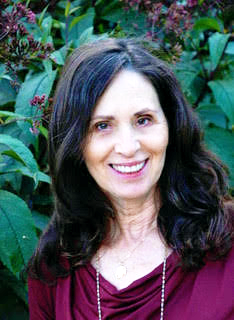
Meet Author Margie Markarian

celebrate-picture-books-picture-book-review-margie-markarian

I was thrilled to talk with Margie Markarian about her new book, the allure of fairy tales, her amazing interactive storytimes, and so much more!

What inspired you to write The Princess and the Café on the Moat?

I wanted to spread a message about being kind, sharing talents, and building a sense of community.  I was inspired, in part, by the idea that kids need and welcome a sense of responsibility, purpose, and belonging just as much as adults. I was also inspired by the idea that children innately have ways of contributing and making a difference. The young princess in the Princess and the Café on the Moat knows this and finds a way to make a difference that ends up bringing the whole kingdom together.

Was there a certain reason you chose the classic fairy tale setting?

Well, I love fairy tales. Children love fairy tales. I felt the traditional fairy tale format would work but that I could modernize it with a café. Also, in a fairy tale, there’s usually a message being played out. I thought my message would play out more subtly and more sweetly as a fairy tale than as a story that takes place in the present day. When I introduce the book to an audience, I call it “a tale for our time from once upon a time.”

I love the can-do attitude and the kindness of the princess. Was there also a reason you chose this character?

I thought a young princess in a very busy castle would create an element of wonder for readers. After all, why would a princess who lives in a castle full of such colorful characters want to dash across a drawbridge to the other side of the moat? Kids often ask me why I called her the “young princess” versus a specific name. It’s because I want all children to be able to see themselves in her, for her to be relatable.

None of the grown-up characters have specific names either. The king and queen represent supportive, loving parents, who are proud of their daughter, even though they are “busy” at the beginning of the story. That’s just how life is sometimes. And it’s the queen who takes the king’s idea of a one-time celebration to the next level of opening a café on the moat with daily hours. It’s a hat’s off to strong women and wise mothers.

What was one of your favorite books when you were a child?

The Tall Book of Nursery Tales. It was a book I took out time and time again from the library. It stood out on the shelf because it was taller than all the other books and it had vibrant illustrations. I had a huge fascination with that fairy tale book in particular, as well as myths, fables, and folk tales from around the world.
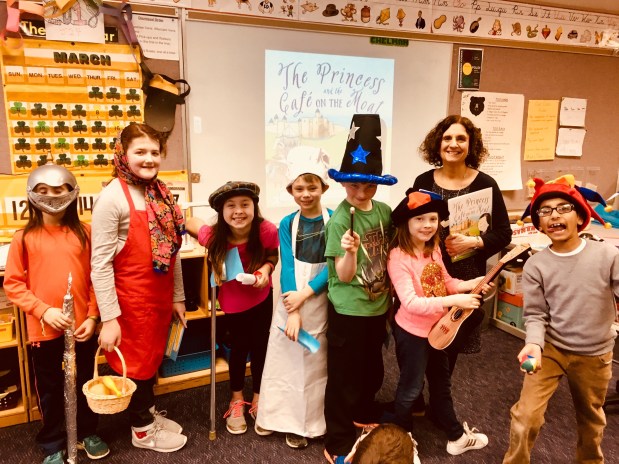
celebrate-picture-books-picture-book-review-margie-markarian-and-class

Third-graders in classroom J24 at Jefferson Elementary School in Franklin, MA and teacher Evan Chelman enjoyed a Princess and the Café on the Moat Reader’s Theater visit with Margie Markarian.

What is the best part about being a children’s author or working in the children’s book field?

The best part is when I get to read to children. They so quickly relate to the story and offer examples or ideas on good deeds they can perform like the princess: “Oh I can read this to the kids I babysit!” or “I always read birthday cards to my grandfather.” In the classroom, I present the story Reader’s Theater style. I ask the teacher to pick seven kids to take on the parts of the characters the princess encounters. Each child has one or two lines at most. They really get into it. I distribute hats and props and they have fun getting into character—the jester juggling the balls, the minstrel plucking the mandolin, the wizard waving the magic wand, the royal baker shaking her head no. Seeing their faces light up, their enthusiasm, and their reactions is wonderful.

Kids in the audience participate, too. I tell them that fairy tales are famous for events that take place in a series of three and invite them to be on the lookout for the ones I included in the story. They’re very responsive to that. Some kids quickly connect my book to a fairy tale they already know. All of the activity and conversation makes them curious about reading, about characters, about the story. And that’s the magic and joy of being an author—sharing the book and getting kids excited and involved.

Could you talk a little about the writing workshops you held for children to produce the Boston Globe Fun Pages?  What a great opportunity that was, especially for kids who are interested in a writing career!

When my daughter was in 2nd grade, her teacher welcomed parental involvement in the classroom. At that time the Boston Globe newspaper published a weekly supplement called the Fun Pages. Children in classrooms at different schools wrote each edition. My daughter’s teacher tapped me to help a group of her students write an issue. There were about five articles in an issue, usually revolving around a theme. We picked our town’s annual 4th of July Festival as a theme and we worked on it for eight weeks.

I did another edition of the Fun Pages with my son’s 4th grade class. We had a chocolate factory in town then so our theme revolved around chocolate. We toured the factory, interviewed the owners, and researched stories about chocolate. I guided the writing and reporting, while also sharing tips on what it takes to be an editor and writer. Any time you can excite kids about the process of writing, it’s a great thing. There’s nothing better than hands-on experiential learning. When it came time to distribute one of the issues, I even dressed up as a news carrier and delivered the papers to the kids in their classroom.

Do you have an anecdote from any event at a bookstore or school that you’d like to share?

As I was signing books at a recent event, a little boy noticed me writing my name, and he asked, “How do you write so fast?” For a moment I thought he was talking about the writing of the book itself, but then I realized he was talking about when I signed my name. He was five and just learning to write. Learning to physically write your name is a big deal when you’re five! It was so sweet, and funny, and naturally inquisitive.
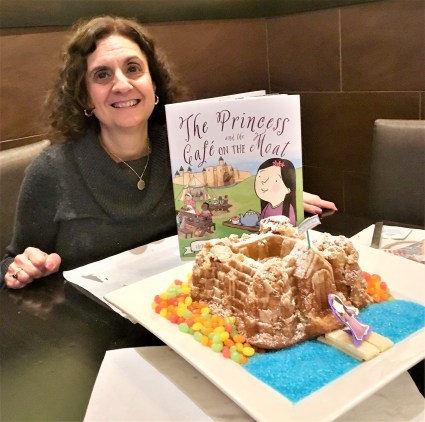
celebrate-picture-books-picture-book-review-margie-markarian-and-cake

If you were going to bake something for the Café on the Moat, what would it be?

Probably gingerbread boys and girls! I bake them at the holidays! Or, gingerbread people shaped like the characters in my book. They could live in the castle cake (with a moat of blue-sugar-sprinkles and jellybeans!) that my brother-in-law baked for the launch of The Princess and the Café on the Moat.

Do you have a favorite place where you like to write? Could you describe it a little?

Even though I have a home office, I enjoy working in cafés because there’s a buzz. I like being a part of the bustle as much as the princess does!  I find the sense of community invigorating. Cafés are where people come together now. A lot of The Princess and the Café on the Moat was written at the bagel café in my hometown. I’ll probably write my next book at the muffin café in the next town over. I spend a lot of time there now.

What is your favorite holiday?

Thanksgiving. It’s special because it’s a holiday that brings people together. No presents required. I like that it’s simply a time to reconnect with family and friends over a meal and give thanks.
celebrate-picture-books-picture-book-review-the-princess-and-the-cafe-on-the-moat-cover

You can find The Princess and the Café on the Moat at these booksellers:

Amazon | An Unlikely Story | Barnes & Noble | Books-a-Million | IndieBound | Sleeping Bear Press

You can connect with Margie Markarian on:

Her Website | FaceBook | Twitter

Good Samaritan Day Activity
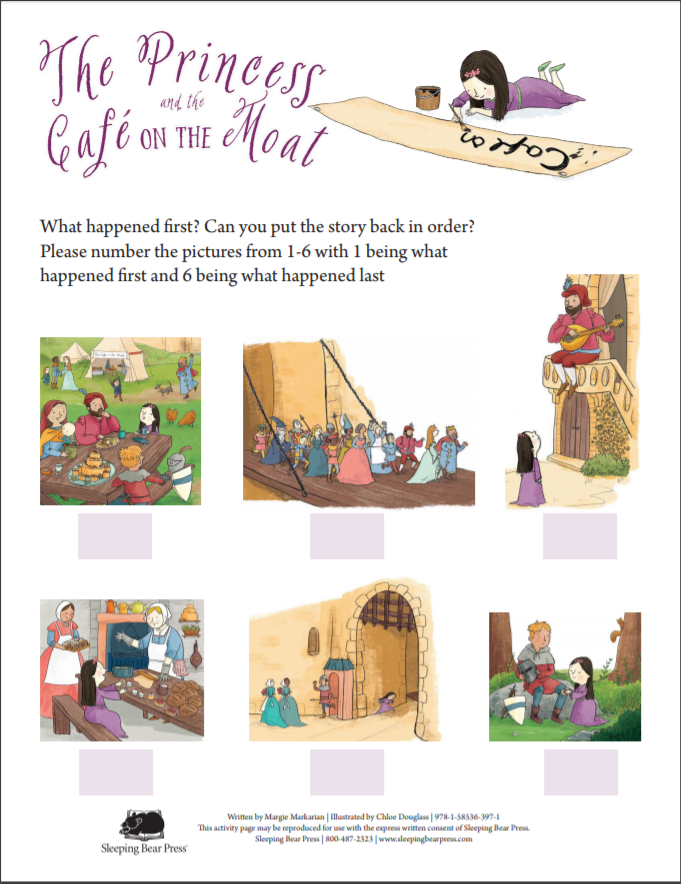
celebrate-picture-books-picture-book-review-the-princess-and-the-cafe-on-the-moat-number sequence-page

The Princess and the Café on the Moat Activities


It’s fun spending the day with the princess in the castle and out in the community helping people! Here are four activity pages to take you there!

The Princess and the Café Coloring Page |Castle Matching PageStory Sequencing Page Write a Fairy Tale Page


Picture Book Review

February 17 – Random Acts of Kindness Day & Interview with Author Marsha Diane Arnold

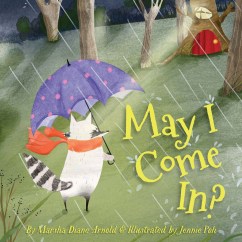
celebrate-picture-books-picture-book-review-may-i-come-in-cover

About the Holiday

Are you a RAKtivist? You know—a Random Acts of Kindness Activist! Sounds awesome, doesn’t it? It is! And all it takes to be a RAKtivist is to do nice things—kind things—for everyone and anyone. These things don’t have to be big, or hard, or expensive, either. In fact, the best kindness acts are free! If you see someone having a bad day, give them a smile. Is someone struggling with a box, a bag or keeping their stuff in their locker? Give them a hand. Does someone always eat lunch alone? Offer to sit with them and have a conversation. You’re also encouraged to give others a card to brighten their day. You’ll find some to print out at the end of this post!

There are as many ways to be a RAKtivist as there are people on the planet. Right now, there are 17,009 registered RAKtivists from ages 14 to 89 in 87 countries! You can join them and learn more about this uplifting holiday on the Random Acts of Kindness Website!

Sleeping Bear Press sent me a copy of May I Come In? to check out, and is partnering with me for a giveaway! Learn more below!

May I Come In?

Written by Marsha Diane Arnold | Illustrated by Jennie Poh


Outside, the rain poured down, and “Raccoon shivered. When “thunder roared, Raccoon quivered.” And the flashes of lightening were just too scary to watch. Raccoon did not like being alone on such a stormy night, so he “grabbed his umbrella and hurried out the door.” Raccoon made his way through muddy Thistle Hollow to his old friend Possum’s tree-trunk den.

celebrate-picture-books-picture-book-review-may-i-come-in-going-out

Image copyright Jennie Pho, 2018, text copyright Marsha Diane Arnold, 2018. Courtesy of Sleeping Bear Press.

There he found Possum nice and dry under his canopy. Raccoon asked, “‘Possum old friend, may I come in?’ / ‘What bad luck,’ Possum replied. ‘My den’s too small for one your size.’” Raccoon climbed down and with a “swish, plish” walked “all the way to Quail’s brambles.” As the wind whipped Raccoon’s scarf, he asked Quail if he could come in. But Quail said her brambles were formed too tight, and Raccoon was too wide to fit inside.

celebrate-picture-books-picture-book-review-may-i-come-in-quail

Image copyright Jennie Pho, 2018, text copyright Marsha Diane Arnold, 2018. Courtesy of Sleeping Bear Press.

Next, Raccoon swish, plished to Woodchuck’s hole. Dug into a hill near an old broken tree and lit by a small candle lamp, Woodchuck’s hole looked cozy. But when Raccoon asked his old friend if he could come in, Woodchuck said, “‘What bad luck. I’ve only room for one to hide.’” Raccoon went away sadly and “stood shaking in the rain. His umbrella blew inside out, His fur felt wet and spongy.” He really did not want to spend the night alone.

celebrate-picture-books-picture-book-review-may-i-come-in-umbrella-inside-out

Image copyright Jennie Pho, 2018, text copyright Marsha Diane Arnold, 2018. Courtesy of Sleeping Bear Press.

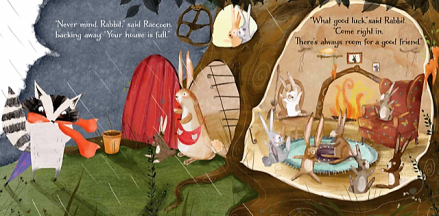
There was one more house to try. Raccoon saw a light glowing in the distance. He hurried nearer and nearer and nearer. He knocked at the door and when Rabbit answered, Raccoon could see all of her little rabbits behind her as they “hopped and bopped to the raindrops.” Raccoon hesitantly asked his question then almost immediately took it back. After all, her house was so full. But Rabbit swung the door open wider. “‘What good luck,’ said Rabbit. ‘Come right in. There’s always room for a good friend.’” Rabbit gave Raccoon a comfortable chair to sit in and brought him a cup of tea.

celebrate-picture-books-picture-book-review-may-i-come-in-cozy-chair

Image copyright Jennie Pho, 2018, text copyright Marsha Diane Arnold, 2018. Courtesy of Sleeping Bear Press.

As the storm raged on, Raccoon hummed and smiled happily, smelling the aroma of carrot stew that filled Rabbit’s home. Soon, there was another knock on Rabbit’s door and three voices rang out: “‘being alone on a night like tonight is scary.’” When Rabbit opened the door this time, there stood Possum, Quail, and Woodchuck. The ten little rabbits just kept hopping and bobbing.

Rabbit and Raccoon gazed at each other knowingly. “‘What good luck,’ they said. ‘Come right in. There’s always room for all our friends.’”

celebrate-picture-books-picture-book-review-may-i-come-in-everyone

Image copyright Jennie Pho, 2018, text copyright Marsha Diane Arnold, 2018. Courtesy of Sleeping Bear Press.

From the very first page, young readers will be engrossed in Marsha Diane Arnold’s sweet story of a raccoon who’s looking for company and comfort on a stormy night. As Raccoon swish, plishes through his neighborhood, knocking on door after door only to be met by excuses for why he can’t come in, children will empathize with him and be cheered when Rabbit joyfully invites him in. Readers will understand that they are sometimes like Raccoon, needing a bit of help or support. They will also see that they can always be like Rabbit, offering kindness and inclusion. Arnold’s lyrical language and repeated phrases invite children to read along, offering another sense of camaraderie during story time.

celebrate-picture-books-picture-book-review-may-i-come-in-small-inset

Jennie Poh’s Thistle Hollow is as cute as its name with cozy dens, brambles, and homes carved into hills and trees and adorable woodland neighbors. The lovely smoky blue-grays and dusky greens enhance the beautiful scenery as raindrops plink, plonk and the wind whips Raccoon’s scarf and umbrella. Alert readers may notice that a single owl watches Raccoon as he makes his way from Possum’s den to Quail’s brambles, but as he approaches Rabbit’s inviting home, a pair of birds snuggle against the wind in a hollow tree. Rabbit’s home is warm, snug, and relaxed as the ten bunnies hop and bop, enjoying some fun with their siblings and guests.

May I Come In? would be a welcome addition to home, classroom, and school libraries to open discussions of kindness, inclusion, and helpfulness for children. The story could easily be adaptable to acting out for a classroom or children’s program to highlight the lesson of inclusion and make it more personal.

Ages 4 – 8

Sleeping Bear Press, 2018 | ISBN 978-1585363940

You’re invited to download the May I Come In? Activity Pages here or from Sleeping Bear Press.

May I Come In? Coloring Page May I Come In?  | Matching PageMay I Come In? Rhyming Page

Discover more about Marsha Diane Arnold and her books on her website.

To learn more about Jennie Poh, her books, and her art work, visit her blog.

Meet Marsha Diane Arnold

celebrate-picture-books-picture-book-review-marsha-diane-arnold

Today, I’m excited to talk with Marsha Diane Arnold about why the theme of kindness is important in the books children read, her real-life May I Come In? moment, and what makes life magical.

Thank you, Celebrate Picture Books for inviting me to your blog. Random Acts of Kindness Day seems a perfect time to chat about my new book May I Come In? which demonstrates kindness in such a sweet way.

What inspired you to write May I Come In??

There really was nothing specific that inspired the story. If anything did influence it, it was the wildlife that lived around my home in California. During the time I wrote May I Come In? I was working on a number of stories with woodland animal characters. With these stories, my characters led the way for me. One of the stories was Waiting for Snow with Badger and Hedgehog as characters. Another is Badger’s Seeds, which is coming out from Sleeping Bear Press in 2019. And then there’s May I Come In? with sweet Raccoon searching for a friend to spend a scary night with.

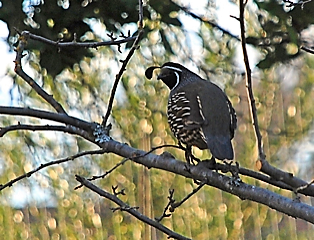
CPB - Marsha Diane Arnold Quail pic

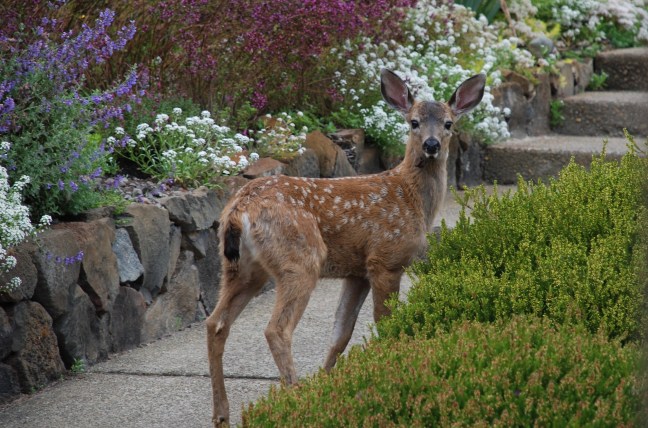
celebrate-pciture-books-picture-book-review-deer-for Marsha-Diane-Arnold-blog-tour-post-interview

Here are two of the animals that shared my McGregor hill home in California. The first may have inspired my May I Come In? Quail character.

When Hurricane Irma hit Florida this fall, you experienced May I Come In? in a personal way. Can you talk about that a little?

At the last minute, Hurricane Irma decided to come almost directly over our little town of Alva! In the photo below, it looks as if I’m inviting everyone into my house, just the way Rabbit did, but this was actually taken after the hurricane, as I was celebrating our house still standing. You may notice on the left that not all our trees did as well.

Although our storm was indeed frightening, it was heart-warming to see all the people who opened their doors to friends, family, and strangers who had to be evacuated from their homes. My husband and I had fourteen people—family, acquaintances, strangers—and two dogs under our roof. We learned, like the characters in May I Come In?, that it was comforting to be with others during a frightening time and that including everyone added to the camaraderie.

celebrate-pciture-books-picture-book-review-house-for Marsha-Diane-Arnold-blog-tour-post-interview

As a child you were surrounded by animals on your farm, you went on to help care for sick animals, and many of your books are written with animal characters. Do animals and their behavior inspire your writing? What animal qualities do you think resonate most with children?

Animals have always inspired and fascinated me. I could spend hours watching them, just being with them. They calm me. They make me laugh. They make me cry. Animals must inspire my writing because I write about them so often in my books, from my first book Heart of a Tiger to my newest, May I Come In?

Many animals have family groups and care for each other in similar ways to humans. Children understand and relate to this. In my two board books Baby Animals Take a Nap and Baby Animals Take a Bath my goal was to show very young children the similarities between animals and humans. We all nap. We all take baths.

When I write using animal characters, I’m really writing about children with human qualities. It’s a type of metaphor. Using animals as characters often allows children to identify more easily with certain perspectives.

What is something you love to do on a rainy day?

When I was growing up in Kansas, I actually enjoyed the lightning and the thunder!

Reading is always a lovely way to spend a rainy day. If there’s a warm fire to sit by, as in May I Come In? it’s even better.

The theme of May I Come In? revolves around the idea of inclusion and kindness. Can you speak a little bit on why it’s important for children’s books to portray these ideals? What changes have you seen over the years in children’s receptivity to these qualities?

Being inclusive is such an important quality, a foundation to living a kind and caring life. Because we humans are molded by our experiences when we are young, reading books that show inclusion and empathy are extremely important.

Even with the changes in our culture and technology, I think children are as receptive to these qualities as ever. But it’s vital we model them to children from their birth, through the first seven “magical” years, and onward. Good books with good messages are one way to do this.

One of the many things I love about May I Come In? is how each of Jennie Poh’s illustrations are so inviting, seeming to welcome the reader in.

celebrate-pciture-books-picture-book-review-interview-with-Marsha-Diane-Arnold

Your readers love meeting you at their school, in libraries, in bookstores, and even through Skype. Do you have an anecdote from an event that you’d like to share?

I’ve had such fun over the years visiting schools. There are so many precious memories.

I’m quite an introvert, so I’m grateful when schools invite me to visit their students. It gets me out of my shell; meeting my readers inspires me to keep writing for them.

A wonderful memory is my being flown into a small town on the Kansas plains by the principal in his airplane! It was a long way from an airport. When I arrived at the school in the morning I was greeted by a huge tornado they’d constructed on top of their school, in honor of my book The Bravest of Us All. Inside the gymnasium was a smaller tornado, three students dressed as cows to celebrate Prancing, Dancing Lily, and so much more. A grand time.

A recent memory involves Walter Jackson Elementary School in Alabama. They’ve been celebrating The Pumpkin Runner for about five years now with their Pumpkin Run Day, which is filled with pumpkin-related activities and a one-mile run for the entire school community, in honor of my book and the surprising ultra-marathoner Cliff Young. Two years ago, I was honored to be invited to join in the festivities by their amazing librarian, Todd McDonald. I spent one day doing presentations and another day playing games and running three miles! Yes, three, as they divided the students into three class groupings. Great educators! Great school! Great fun!

celebrate-picture-books-picture-book-review-pumpkin-run-for Marsha-Diane-Arnold-blog-tour-post-interview

You offer students writing workshops that you call “Funshops,” in which you present images, activities, and brainstorming to spark their imaginations and stories. Could you give an example of an image or activity that you use to fire up kids’ creativity? How do the kids react?

Hmmm. Should I share my favorite? Since it’s Random Acts of Kindness Day, I will!

The Alliteration Game is always a big hit with the students. In the Alliteration game, we take someone’s name and use lots of words that start with the same sound to make a fun sentence.  First, we describe the person in a silly way.  Then we think of an action word, a verb – like hopped or jumped.  After that, depending on the age of students, we might use adverbs to describe how the person does the action – “joyfully jumped” or “happily hopped” – and choose a setting. What’s really fun is that students can then use these sentences as starting places for a funny fiction story. Here’s an example, using my name.

Marsha, the magnificent moose, munched marshmallows in a museum in Manchuria.

Your work has been called “magical” by reviewers, and you also use the word to describe your work, your home in California, and other experiences. What does “magical” mean to you? Where is magic found and what can it do?

I like this definition of “magic” from the Oxford dictionary: “Beautiful or delightful in a way that seems removed from everyday life.”

To me something “magical” is uplifting, something that takes us somewhere else for a moment. But magic can be found almost everywhere, if we open our eyes and ears.  It can sneak up on us and take us by surprise or it can sit beside us and spread its arms around us. I found lots of magic at my home in California where I lived for 35 years – forests, good neighbors, barn owls. Now I’m finding magic in Florida – sandhill cranes, sunsets, ponies down the road.

A journalist once called me “a magician of literary innovations.” I loved that. To me, the best stories have always been magical, taking us away from the house cleaning or the 9-5 job, for a bit of beauty and delight.  So, I took the phrase and ran with it. I used it as the name of my blog Storymagician (inactive at the moment), and I created a Storymagician chant that I share with students when I visit schools. I think all of us can create and use stories to bring a little magic into our lives.

What’s up next for you?

At the moment, I’m doing final editing on my fall 2018 book, Gálapagos Girl with Lee & Low. This is a story inspired by Valentina Cruz who grew up in the Gálapagos Islands.

Also in the fall Mine. Yours. will be out from Kids Can Press, a Canadian company. I’m so honored to be working with them as they usually only publish Canadian authors. Qin Leng is illustrating. I’ve seen some of the early sketches and am so looking forward to the final artwork. Her style is perfect for my story.

Both of these books will be 40 pages long, my first ever 40-page long picture books. As many of you know, most picture books are 32 pages long. It’s interesting to me because Gálapagos Girl is a 500-plus-word story with an author note and back matter and Mine. Yours. is only 25 words! Yet, both editors felt the stories deserved 40 pages.

Another first for me is that Gálapagos Girl is going to be a bilingual book. So much to look forward too!

Since Celebrate Picture Books is a holiday-themed blog, I can’t let you get away without asking a few questions about holidays, so…

What holiday do you enjoy most?

I can’t choose just one!

I love decorating the house for Christmas – all the lights!

I really enjoy Halloween and Easter too. We rarely had candy in our house when my children were young, so trick-or-treating was a big deal. They always made their own costumes, with whatever they could find around the house. There were some pretty interesting ones!

Easter was wondrous. When my children were small we would cut a small branch from one of the manzanita trees in our little forest and bring it into the house to decorate with Easter eggs and treasured objects. We always looked for the Easter bunny in the field behind our house, where many rabbits lived. We spotted him several times over the years.

Then there’s Valentine’s Day, the day we just celebrated. I love the red and pink! When my children were young, we always designed and made our own Valentine’s cards. It’s fitting I’m sharing about May I Come In? during Valentine’s week as both are about holding others close, including them in our hearts and our lives.

Has a holiday ever influenced your writing?

I’ve never really written a story about a holiday, but there’s a Halloween story I started over ten years ago that I never finished. Yet, it keeps tapping me on the shoulder. I plan to take another look at it next month. Writers often return to work that’s been collecting dust for years in the hope that this time new ideas will come to them and the story will be completed and ready for the world.

Where can readers find out more about you, your books, and your school visits?

My website is being updated, but you can find out about all those things at www.marshadianearnold.com. And if you want to learn how to follow your characters through a story, as I mentioned in the first question, you may check out my Writing Wonderful Character-Driven Picture Books at http://www.childrensbookacademy.com/writing-character-driven-stories.html.

Now, let’s all go out and do a random act of kindness!

Thanks, Marsha, for chatting with me today! I wish you all the best with May I Come In? and all of your books!

You can connect with Marsha Diane Arnold on:

Her Author Facebook | Personal Facebook (I welcome all) |Twitter | Her Website

Random Acts of Kindness Day Activity

celebrate-picture-books-picture-book-review-random-acts-of-kindness-cards-feb-2018

Random Acts of Kindness Cards


Here are some cheery cards that are sure to make the recipient’s day happier! Give them to a friend, a family member, your teacher, or your bus driver to show them that you care and that they mean a lot to you!

Random Acts of Kindness Cards Sheet 1Random Acts of Kindness Cards Sheet 2

celebrate-picture-books-picture-book-review-may-i-come-in-cover

You can find May I Come In? at these booksellers:

Amazon | Barnes & Noble | Books-a-Million | IndieBound | MacIntosh Books of Sanibel Island, FL

Picture Book Review


February 4 – National Sweater Day

celebrate-picture-books-picture-book-review-extra-yarn-cover

About the Holiday

Do you live in a place where winter means cold temperatures, snow, and sleet? Then you know how much comfort a cozy sweater can provide! But have you ever thought that sweaters can lower your heat bill? Today’s holiday reminds us that when we put on a sweater, we can turn down the thermostat, saving on fuel, which is beneficial for the environment. Knowing that you’re making a difference as you pull on your favorite sweater and lower that thermostat (even one degree can make a big difference) will make you feel warm inside and out!

Extra Yarn

Written by Mac Barnett | Illustrated by Jon Klassen


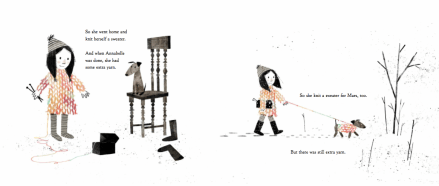
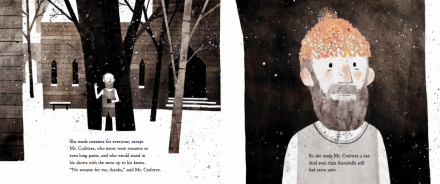
In the dulled world of winter, “Annabelle found a box filled with yarn of every color.” With it she knit herself a sweater, and because she had not run out of yarn, she knit a sweater for her dog, Mars, too. Afterwards, the two went for a walk, and Annabelle carried her box of yarn with her. They happened on Nate and his dog—dreary smudges against the monochrome landscape. “‘You two look ridiculous,’” Nate taunted. “‘You’re just jealous,’ said Annabelle.” Nate denied it, but after Annabelle knit him and his dog their own sweaters, they discovered she was right.

celebrate-picture-books-picture-book-review-extra-yarn-annabelle-knits-sweater

Image copyright Jon Klassen, 2012, text copyright Mac Barnett, 2012. Courtesy of harpercollinschildrens.com

These four sweaters hardly put a dent in the yarn in the box, so Annabelle took it to school. There, the kids in their dark, winter clothes couldn’t stop staring at and whispering about Annabelle. Their teacher, Mr. Norman, shouted for quiet. “‘Annabelle, that sweater of yours is a terrible distraction. I cannot teach with everyone turning around to look at you!’” Annabelle knew just what to do. The class—and even Mr. Norman—looked brighter with their new sweaters. “And when she was done, Annabelle still had extra yarn.”

celebrate-picture-books-picture-book-review-extra-yarn-mr-crabtree

Image copyright Jon Klassen, 2012, text copyright Mac Barnett, 2012. Courtesy of harpercollinschildrens.com

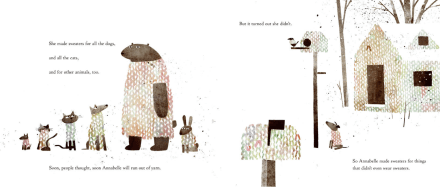
She began knitting sweaters for everyone in town. Mr. Crabtree was the only exception. Since he wore shorts and a t-shirt in even the snowiest weather, Annabelle knit him a cap to keep his bald head warm. When all the people were snug, Annabelle fashioned sweaters for all the animals—from the tiniest birds to the biggest bears. “Soon, people thought, soon Annabelle will run out of yarn. But she didn’t. So Annabelle made sweaters for things that didn’t even wear sweaters.” Suddenly, the town was no longer drab and lifeless.

celebrate-picture-books-picture-book-review-extra-yarn-annabelle-knits-animals-sweaters

Image copyright Jon Klassen, 2012, text copyright Mac Barnett, 2012. Courtesy of harpercollinschildrens.com


Word spread about Annabelle and her endless box of yarn. People came from all over to meet her and see her sweaters. The news even reached a clotheshorse of an archduke, who sailed his ship into port and demanded to see Annabelle. He offered her one million dollars for her box of yarn, but Annabelle turned him down. He raised his offer to two million, but Annabelle shook her head. “‘Ten million!’ shouted the archduke. ‘Take it or leave it!’” “‘Leave it,’ said Annabelle. ‘I won’t sell the yarn.’”

That night the archduke sent robbers to steal Annabelle’s box of yarn, and when they had it, the archduke sailed away under the dark cover of night. In his shadowy castle, the shady archduke opened the box. It was empty. In a fit of rage, he flung the box out the window into the sea, cursing Annabelle with eternal unhappiness. But the box found its way onto an ice floe, and it rode the current back to Annabelle, who was forever after happy.

celebrate-picture-books-picture-book-review-extra-yarn-archduke

Image copyright Jon Klassen, 2012, courtesy of harpercollinschildrens.com

Mac Barnett’s extraordinary story of a box of yarn and a little girl that keeps giving despite teasing, challenges, and attempts to strip her of her gift is an uplifting reminder that even the simplest of gestures can create profound change. With the lilt of a fairy tale but the anchors of reality, Barnett’s tale offers a universal lesson that children and adults can use their individual talents to improve their own lives and those of others. The title of the book may be Extra Yarn, but the question remains: is it the yarn or Annabelle who is special? The final scene proves that goodness and kindness always win out and will find its way back to the giver.

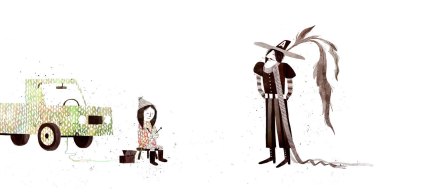
Jon Klassen’s brown, stolid town seems poised to suck readers in to its close, silent emptiness until Annabelle discovers the box of yarn and knits herself a rainbow to wear. With Mars similarly outfitted, they return to the somber outside. Annabelle, at first the only bright spot in the town and school, quickly transforms her classmates and neighbors into colorful individuals with sweaters as unique as they are. After the homes, buildings, mailboxes, and birdhouses acquire their own cozies, the town looks open and inviting. Once the archduke arrives on the scene, the pages turn dusky and gray, but there is one point of light: in the black, nighttime sea the little box floats on an icy raft that shines in the full moonlight.

celebrate-picture-books-picture-book-review-extra-yarn-townspeople

Image copyright Jon Klassen, 2012, courtesy of macbarnett.com

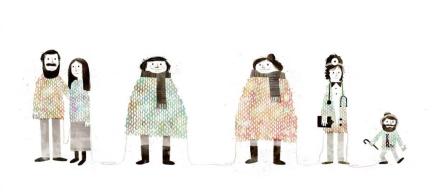
Klassen adds plenty of visual humor here too, as when Mars tangles his yarn leash around a grove of trees, and the archduke demonstrates a penchant for monogramming all of his possessions. Kids will be delighted to see some of their favorite Klassen characters so dandily dressed, and the images of the students and townspeople connected by a leading thread of yarn may help them see that Annabelle not only knit them sweaters but made them a much closer-knit community as well.

Ages 3 – 8

Balzar + Bray, HarperCollins Childrens, 2012 | ISBN 978-0061953385

Want to see what other books Mac Barnett has written? Visit his website and find out!

You can find a gallery of picture books and other artwork by Jon Klassen on tumblr!

National Sweater Day Activity

celebrate-picture-books-picture-book-review-sweater-coloring-page

Design Your Own Sweater


If you could design your own sweater, what would it look like? Would it have stripes? Polka dots? A picture of a puppy, kitten, train, truck, or the logo of your favorite sports team? Use this printable Design Your Own Sweater template and have a bit of fashionable fun!

Picture Book Reviews

January 26 – It’s National Hobby Month

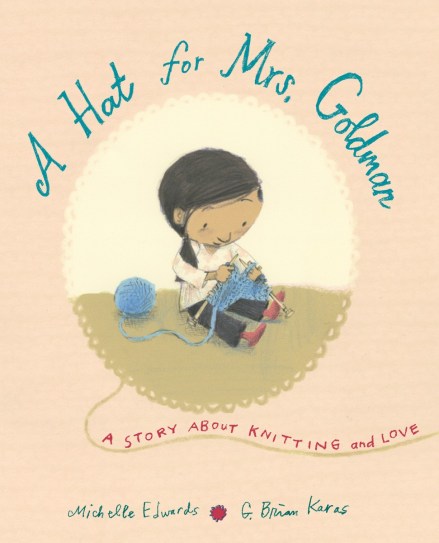
celebrate-picture-books-picture-book-review-a-hat-for-mrs.-goldman-cover

About the Holiday

If you like to take a break from the routine or pressures of the work day and sew, garden, or read, play music, dance, or draw, or if you’ve always wanted to learn a new skill or develop a talent, then this month is for you! During National Hobby Month take some time to research a skill, art, or discipline that strikes your fancy and get started!

A Hat for Mrs. Goldman: A Story about Knitting and Love

Written by Michelle Edwards | Illustrated by G. Brian Karas


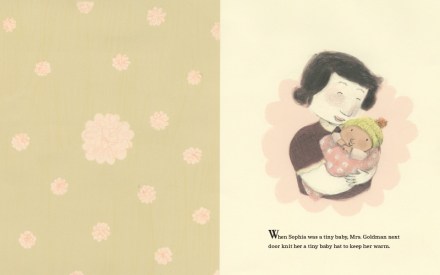
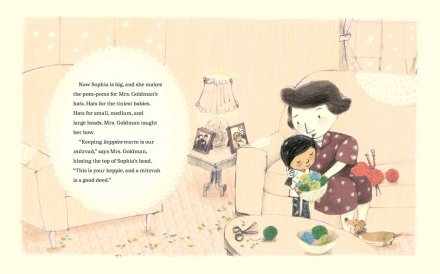
One of the first gifts Sophia received when she was a baby was a knitted hat from her neighbor Mrs. Goldman. Now that Sophia is more grown up, she helps Mrs. Goldman make pom-poms for the hats she knits for other babies, friends, and neighbors. “‘Keeping keppies warm is our mitzvah,’ says Mrs. Goldman, kissing the top of Sophia’s head. ‘This is your keppie, and a mitzvah is a good deed.’”

One day in late autumn Sophia and Mrs. Goldman walk Mrs. Goldman’s dog Fifi. While Fifi is kept warm in a dinosaur sweater and Sophia is cozy in the fuzzy kitten hat and mittens that Mrs. Goldman made them, Mrs. Goldman’s head and ears are unprotected in the icy wind. When Sophia asks her friend why she doesn’t have a hat, Mrs. Goldman tells her “‘I gave it to Mrs. Chen.’”

celebrate-picture-books-picture-book-review-a-hat-for-mrs.-goldman-sophia-as-a-baby

Image copyright G. Brian Karas, 2016, text copyright Michelle Edwards, 2016. Courtesy of Schwartz & Wade

Sophia begins to worry about Mrs. Goldman. Who will knit a hat for her? “Not Mrs. Goldman. She’s too busy knitting for everyone else.’” Last year Mrs. Goldman had tried to teach Sophia to knit, but it was too hard and took too long, so she decided to stick with making pom-poms. But Sophia thinks maybe it’s time to try again. She goes to her knitting bag and pulls out the hat they had started together. “The stiches are straight and even. The soft wool smells like Mrs. Goldman’s chicken soup.”

celebrate-picture-books-picture-book-review-a-hat-for-mrs.-goldman-pom-poms

Image copyright G. Brian Karas, 2016, text copyright Michelle Edwards, 2016. Courtesy of Schwartz & Wade.

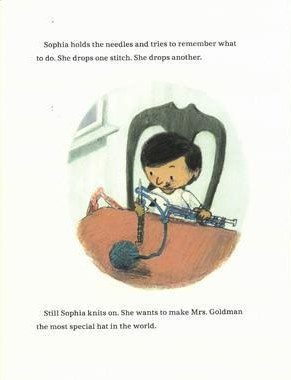
Holding the needles, Sophia thinks about what she was taught. Even though she drops stitches, she continues to knit. “She wants to make Mrs. Goldman the most special hat in the world.” The next day snow falls on Mrs. Goldman’s head as they walk Fifi. Sophia frets, and at home she begins knitting morning, noon, and night to finish her hat. Winter has set in and one day when the pair walk Fifi, “Mrs. Goldman wraps Mr. Goldman’s scarf around her head like she’s a mummy.” But the wind grabs it and rips it away. Sophia catches it, but shivers at the thought of how cold Mrs. Goldman must be.

celebrate-picture-books-picture-book-review-a-hat-for-mrs.-goldman-sophia-and-mrs-goldman

Image copyright G. Brian Karas, 2016, text copyright Michelle Edwards, 2016. Courtesy of Schwartz & Wade.

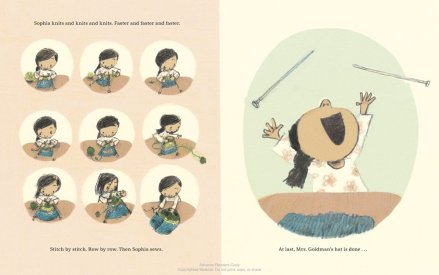
At home Sophia knits in a frenzy, adding row after row of stitches until the hat is finished. When Sophia looks at it, though, she finds holes where they shouldn’t be and lumpy and bumpy areas. She thinks what she has made looks more like a monster than a hat. Sophia takes out the box containing all the hats Mrs. Goldman has made for her, but they are much too small for Mrs. Goldman to wear. While Sophia’s mama and papa have hats made by Mrs. Goldman, she knows she can’t give those away.

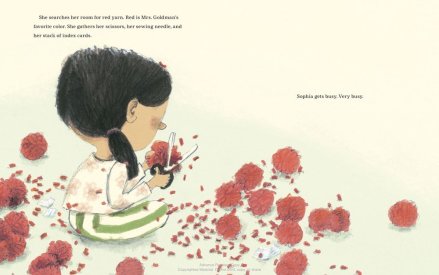
Sophia imagines all the hats she makes with her neighbor and how Mrs. Goldman always tells her that her pom-poms add beauty, and that “‘that’s a mitzvah too.’” Sophia’s heart swells. She finds red yarn—Mrs. Goldman’s favorite color—and her pom-pom making supplies and goes to work. When she is finished and the pom-poms are attached, “Mrs. Goldman’s hat is the most special hat in the world.”

celebrate-picture-books-picture-book-review-a-hat-for-mrs.-goldman-sophia-finishes-hat

Image copyright G. Brian Karas, 2016, text copyright Michelle Edwards, 2016. Courtesy of Schwartz & Wade

Sophia runs next door and surprises Mrs. Goldman with her gift. Mrs. Goldman hugs Sophia and tears come to her eyes. “‘Don’t you like it?’” Sophia asks, but she needn’t worry. “‘I more than like it, I love it,’ declares Mrs. Goldman. ‘Gorgeous. Like Mr. Goldman’s rosebushes. And you know how I love his roses.’” With a kiss for Sophia, Mrs. Goldman begins counting the twenty pom-poms on her hat—“each one made with love.” Mrs. Goldman slips the hat on her head. Now when she and Sophia take Fifi for a walk, Fifi wears her dinosaur sweater, Sophia wears her kitty hat and mittens, and “Mrs. Goldman wears her Sophia hat. Her keppie is toasty warm. And that’s a mitzvah.”

celebrate-picture-books-picture-book-review-a-hat-for-mrs.-goldman-giving-hat

Image copyright G. Brian Karas, 2016, text copyright Michelle Edwards, 2016. Courtesy of Schwartz & Wade.

Michelle Edwards’ heartwarming story of a little girl who sees that her friend is in need and determines to help draws on children’s natural generosity and shows readers that their efforts are recognized and appreciated. Edward’s gentle and well-paced storytelling allows readers to understand the events and thoughts that bring Sophia to once again attempt knitting. Sophia’s solution to use the pom-poms she knows she makes well (and with love) to cover the holes demonstrates not only the ingenious creativity of kids, but also the idea that love can fill the voids in life.

celebrate-picture-books-picture-book-review-a-hat-for-mrs.-goldman-blue-yarn

Image copyright G. Brian Karas, 2016, text copyright Michelle Edwards, 2016. Courtesy of Schwartz & Wade.

Brian Karas imbues the story of Sophia and Mrs. Goldman with a magical wonder that floats from page to page like the fluffy snowflakes that are the catalyst for Sophia’s mitzvah. A combination of full-page illustrations and snapshot images show days spent with Mrs. Goldman as well as the moments, hours, and days that adorable Sophia spends knitting her special hat. Sophia, tongue sticking out in determination, wields her knitting needs; she ponders her holey hat while imagining a frightened Fifi; and scraps of red yarn dot the floor and even sit atop Sophia’s head as she creates pom-pom after pom-pom. When Mrs. Goldman pulls the hat over her own head, kids will feel cheered, while adults may feel a small lump in their throat.

A Hat for Mrs. Goldman is a gem. Its tender portrayal of kindness, love, and close personal relationships makes it an outstanding choice for any child’s home library.

Ages 4 – 8

Schwartz & Wade, 2016 | ISBN 978-0553497106

Discover more about Michelle Edwards and her books, plus activities, recipes, and information on knitting on her website!

Enter a gallery of books, sketches, blog essays, and more by G. Brian Karas on his website!

National Hobby Month Activity

celebrate-picture-books-picture-book-review-winter-hat-match-puzzle

Winter Hat Match Puzzle


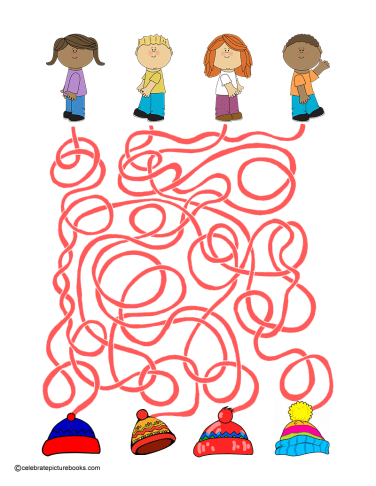
These kids have all lost their hats! Can you follow the paths in this printable Winter Hat Match Puzzle to reunite each child with the right hat?

Picture Book Review
January 5 – National Bird Day

celebrate-picture-books-picture-book-review-lion-and-bird-cover

About the Holiday

Today’s holiday celebrates all our feathered friends from the birds in our backyards to the chickens and turkeys that provide us with food to the penguins of Antarctica. They include wild birds and those in captivity, either as pets or in zoos or other aviaries. National Bird Day was established to promote an awareness of issues concerning the safety, health, and protection of the world’s birds. To celebrate put out birdseed and suet for winter birds or learn a little more about the birds in your area.

The Lion and the Bird

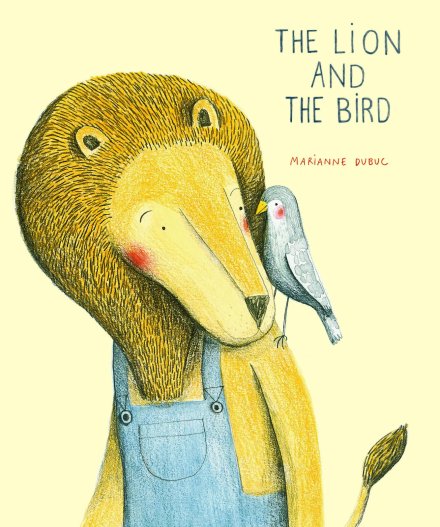
By Marianne Dubuc


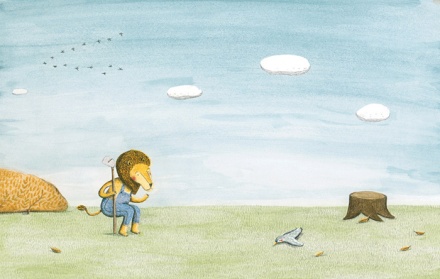
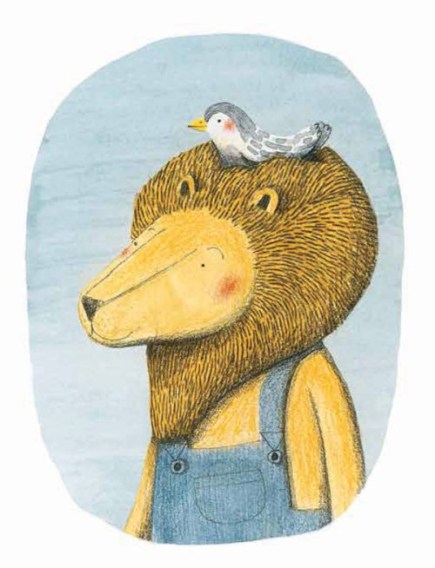
Lion was ready for a day in his garden and had just begun to hoe the rows when he spied a bird lying on the ground. “Oh, poor little thing,” Lion said. He felt he had to do something. He lifted Bird into his paws. Lion settled Bird on a tree stump and bandaged his wing.

celebrate-picture-books-picture-book-review-lion-and-bird-lion-finds-bird

Copyright Marianne Dubuc, 2014, courtesy of mariannedubuc.com.

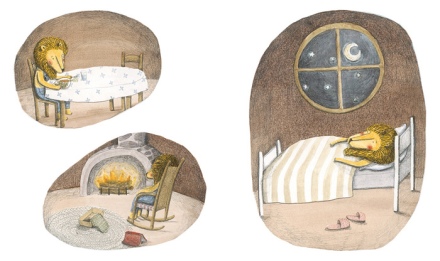
Just then Lion and Bird noticed that Bird’s flock was flying south for the winter. Without hesitation, Lion picked Bird up and placed him gently in his mane. ‘You won’t be cold here,” he told Bird. Then the two went inside Lion’s home, where there was a fire burning in the fireplace and a cozy atmosphere. Lion invited Bird to stay, saying there’s “plenty of room for both of us.”

celebrate-picture-books-picture-book-review-lion-and-bird-bird-in-mane

Copyright Marianne Dubuc, 2014, courtesy of mariannedubuc.com.

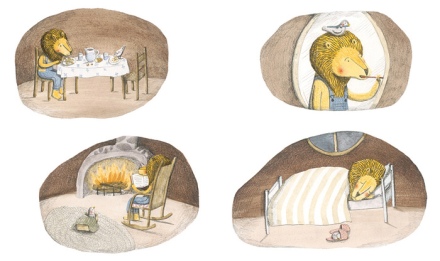
Lion and Bird ate dinner together, and Lion made a warm box for Bird to sit in next to his rocking chair in front of the fire. They sat side by side while Lion read. Then Lion brushed his teeth and Bird brushed his beak and they went to sleep. Bird found a comfortable bed in Lion’s slipper.

Autumn turned to winter with its snow and ice. But Bird was “snug and warm” nestled in Lion’s mane and under a special stocking hat Lion made. They went sledding and ice fishing and spent evenings reading by the fire. The snow piled high, but being with a friend made the winter feel less cold.

celebrate-picture-books-picture-book-review-lion-and-bird-lonely-lion

Copyright Marianne Dubuc, 2014, courtesy of mariannedubuc.com.

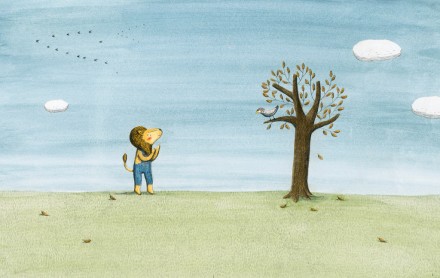
When spring returned the other birds did too. Bird pointed them out to Lion, and Lion told Bird he knew he had to join them. He watched his friend Bird fly off with his flock. “So it goes,” Lion thought. “Sometimes life is like that.” Still, Lion felt sad eating alone, with no one to read to, and without being able to say goodnight to Bird. In summer, Lion’s garden produced a good harvest of bright, red tomatoes, and he spent afternoons reading under his favorite tree.

celebrate-picture-books-picture-book-review-lion-and-bird-bird-stays

Copyright Marianne Dubuc, 2014, courtesy of mariannedubuc.com.

When autumn returned again, Lion wondered about Bird as he watched the flock flying south. Then he heard a familiar song. He looked and found Bird waiting on a branch of the tree. Once again Bird settled into Lion’s mane, and they went home to spend the winter together.

celebrate-picture-books-picture-book-review-lion-and-bird-bird-with-lion

Copyright Marianne Dubuc, 2014, courtesy of mariannedubuc.com.

Marianne Dubuc’s tender story of a deep and abiding friendship shows young readers that even distance and time cannot break bonds when love is shared between two people. Dubuc’s spare but profound text empathizes the warmth, attachment, and camaraderie felt between good friends. Her comforting words point to her poignant images in which Lion and Bird spend time together content in each other’s company. The idea that these two friends may not share the same language makes their devotion to each other all the more touching, and their consideration for each other’s feelings offers a moving lesson in kindness.

The Lion and the Bird is an enriching tale for quiet bedtimes and story times and provides a gentle way for parents, caregivers, and teachers to talk with children about friendship.

Ages 4 – 7

Enchanted Lion Books, 2014 | ISBN 978-1592701513

Discover a gallery of books and other illustration projects by Marianne Dubuc on her website.

National Bird Day Activity

celebrate-picture-books-picture-book-review-let's-go-birding-word-search

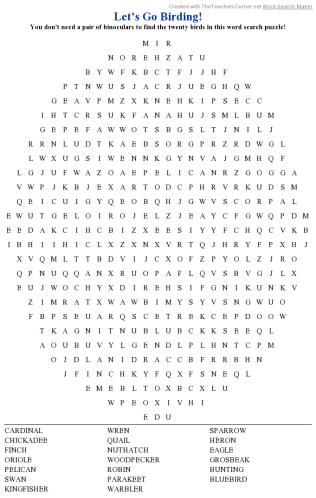
Let’s Go Birding! Word Search Puzzle


There are so many beautiful birds to celebrate on National Birding Day! You can find twenty kinds of birds without even going outside in this printable Let’s Go Birding! Word Search

Let’s Go Birding! Word Search Puzzle | Let’s Go Birding! Word Search Solution

Picture Book Review
 

December 13 – National Day of the Horse

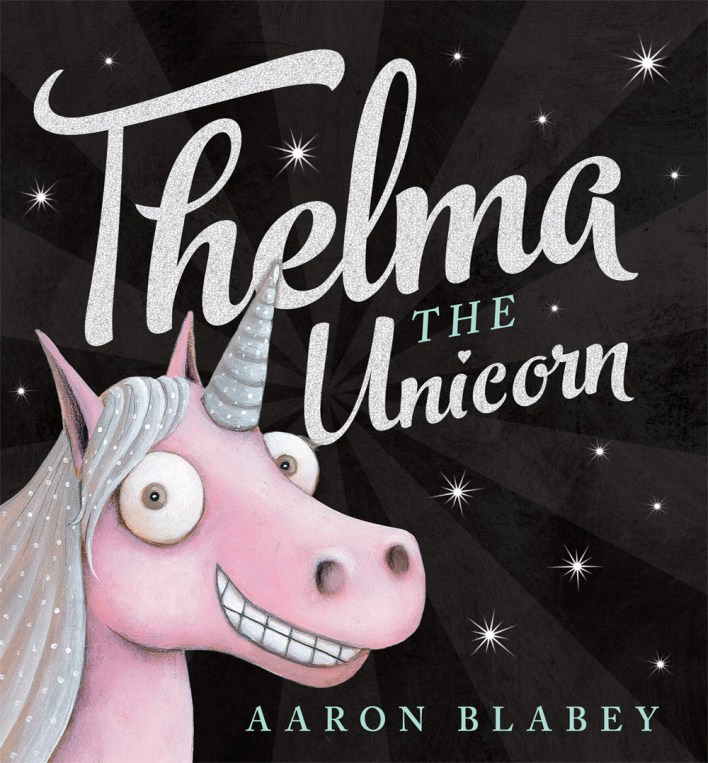
celebrate-picture-books-picture-book-review-thelma-the-unicorn-cover

About the Holiday

Today’s holiday encourages people to commemorate the importance of the horse to the history, culture, and economy of the United States. The domesticated horse that we know today was first introduced by Spanish Explorers. As the country grew, horses became indispensable for transportation, farm and ranch work, and communications. The more than nine million horses that now reside in America depend on people for adequate food, water, shelter, and protection. On this holiday, consider donating to a horse rescue shelter near you.

Thelma the Unicorn

By Aaron Blabey


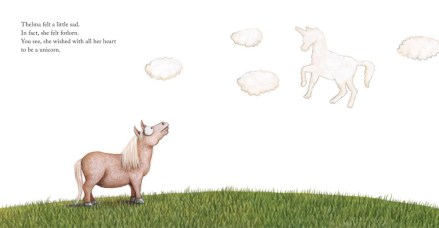
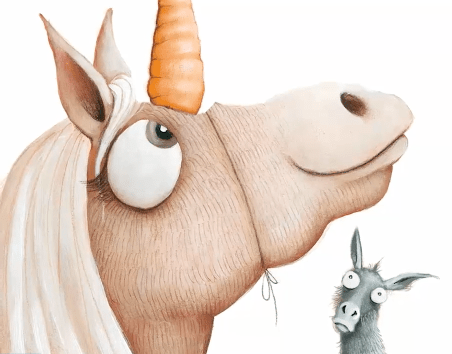
“Thelma felt a little sad. / In fact, she felt forlorn. / You see, she wished with all her heart / to be a unicorn.” Thelma was a little pony—brown and short and overlooked. Her best friend Otis told her, “‘You’re perfect as you are,’” but when Thelma compared herself to the sleek white mare on the farm, she said, “‘I’m not.’” Suddenly, she saw a carrot left over from dinner and had an idea.

celebrate-picture-books-picture-book-review-thelma-the-unicorn-wishing

Copyright Aaron Babey, 2017, courtesy of Scholastic Press.

She tied the carrot to her nose and told Otis, “‘I’ll say that I’m a unicorn! / It might just work… / who knows?’” At this very moment a truck driver passing by caught sight of this spectacle and careened off the side of the road. “As Thelma watched the swerving truck, / it very nearly hit her. / Would you believe that truck was filled / with nice pink paint and glitter?”

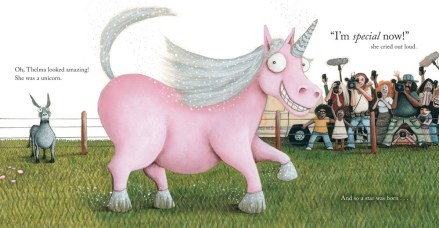
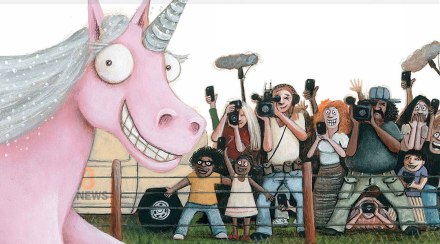
In the blink of an eye Thelma was doused in sparkles and had become what she always dreamed of. She was a unicorn and “special now!” Crowds lined up at the farm gate to see the pink unicorn. The media descended with their cameras and video recorders, and Thelma quickly became a world-wide phenomenon. Everywhere she went fans screamed her name, took pictures, waved signs, and wanted to be near her. She even got her hoofprint on the Walk of Fame.

celebrate-picture-books-picture-book-review-thelma-the-unicorn-becomes-unicorn

Copyright Aaron Babey, 2017, courtesy of Scholastic Press.

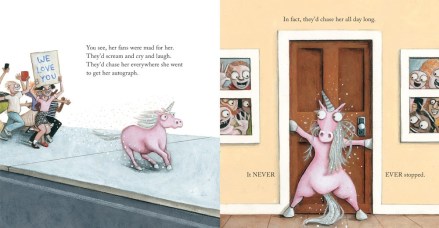
Thelma sailed to foreign ports on a ship named The Fairy Princess, attended by stewards who fulfilled her every wish. “But soon she found that so much fame / was kind of tricky, too….” Her fans mobbed her with crushing zeal, chased after her wherever she went, screamed, cried, laughed, and pointed whenever they saw her, and hounded her day and night for her autograph. “It NEVER EVER stopped.”

When Thelma asked “the screaming crowd” not to chase her anymore, they said “‘We’ll chase you all we want….We’re fans, so it’s allowed.’” Then there were there were the people who “were not her fans at all. / No, some were really mean. / And some just did the meanest things / she’d really ever seen.” Some threw eggs while she roller skated for charity and others held up signs reading “I don’t like unicorns” where she was sure to see them.

celebrate-picture-books-picture-book-review-thelma-the-unicorn-adoring-crowds

Copyright Aaron Babey, 2017, courtesy of Scholastic Press.

Back in her fancy hotel room, all alone and bedraggled, soaked in egg, and with her “horn” losing its luster, Thelma looked at a photo of Otis. “…she felt quite sad, / this famous little pony. / She said, ‘I thought that I’d feel great… / but all I feel is lonely.’” She decided to make a change. She washed off all the pink paint and sparkles and “ditched her magic horn.”

She left and “walked right past the crowd. / They didn’t even notice / She thought how nice that it would be…to see her lovely Otis.” As Thelma stood underneath a tree with Otis, “he asked about her trip.” “‘Oh, it was fun,’” she answered him, “‘But I’d rather be just me.’”

celebrate-picture-books-picture-book-review-thelma-the-unicorn-being-chased

Copyright Aaron Babey, 2017, courtesy of Scholastic Press.

Aaron Blabey’s cautionary tale of a pony who is granted her wish to be “more” than she is, deftly reveals the pitfalls of abandoning your true nature for what appears to be the perks of celebrity with a splash of humor and some no-nonsense honesty. Through Blabey’s smoothly flowing rhymes, readers see that being special is not based on a sparkly appearance that pleases false friends. Instead, each person is remarkable for their unique personalities and talents that true friends will appreciate.

Today’s social media-savvy children will recognize Blabey’s screaming crowds and overzealous fans and will come to understand, with Thelma, that being “in the pink” can be short-lived and glitter soon fades.

celebrate-picture-books-picture-book-review-thelma-the-unicorn-carrot-horn

Copyright Aaron Babey, 2017, courtesy of Scholastic Press.

Blabey’s distinctive illustrations portray Thelma’s transformation from “regular pony” to celebrity unicorn and back again with flair and all the bling that goes along with superstardom. The crowds are giddy, awed, obsessive, and adoring until the backlash starts, which Blabey portrays with candid examples. His final spreads in which Thelma goes unrecognized by her fans and is then lovingly welcomed back by Otis beautifully sum up the theme of the story.

Thelma the Unicorn provides readers and adults a wonderful opportunity to discuss the allure of changing oneself in order to fit in as well as the social media atmosphere that can be so influential in a child’s life. Blabey’s light touch coupled with his honesty makes Thelma the Unicorn a great choice for  home and classroom libraries.

Ages  3 – 7

Scholastic Press, 2017 | ISBN 978-1338158427

Scholastic Press sent me a free copy of Thelma the Unicorn to check out. All opinions are my own.

Discover more about Aaron Blabey, his books, and his art on his website

National Day of the Horse Activity

celebrate-picture-books-picture-book-review-horse-candy-stick-cover

Whoa! Candy Stick Cover


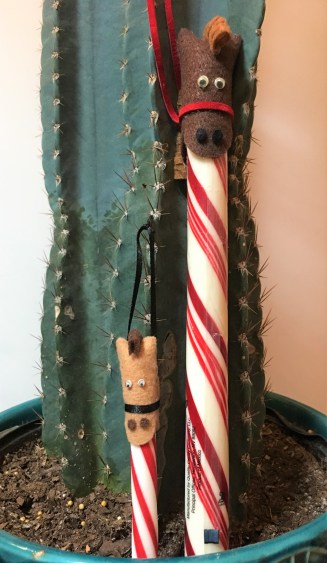
There’s no neigh-saying that this isn’t a cute way to give your favorite candy stick a bit of flair!  With a bit of felt and a few other supplies you can make this horse craft. Alternately, this craft can be used with a cardboard tube or wooden dowel.

Supplies

  • Large or small candy stick, cardboard tube or wooden dowel
  • Felt in whatever color you’d like for your horse
  • Felt in a another color for the mane
  • Black felt for the nostrils
  • Thin ribbon or leather lacing
  • Small googly eyes
  • Fabric glue or hot glue gun
  • Scissors
  • Tweezers

Directions

  1. Cut a piece of felt wide enough to wrap around the stick overlapping a little to glue together. It should be long enough to cover about 1 ½ inches of a small candy stick, about 2 ½ inches of a large candy stick, or about 3 to 4 inches of a cardboard tube or wooden dowel.
  2. Wrap the felt around the stick overlapping the edge about ¼ inch and leaving about ½ inch above the top of the stick.
  3. Glue the felt together along the overlapping edge to make a tube that fits the stick tightly

To make the ears

  1. Push down on the center of the back side of the felt that rises above the top of the stick
  2. Apply a drop of glue
  3. Push the center of the front edge of the felt into the glue
  4. The ears will stick up on the sides of the head

To make the horse’s nose and mouth

  1. Remove the felt head from the stick
  2. Pinch the end together
  3. Starting about ½ inch from the bottom, round the corners of the felt tube with the scissors

To make the nostrils

  1. Cut small circles from the black felt
  2. Glue them to the bottom of the horse’s nose
  3. Glue the googly eyes on the horse’s face

To make the mane

  1. Cut a strip of felt as long as the face by 1 inch wide for a large candy stick; about ¾ inch wide for a small candy stick
  2. Fold the felt in half lengthwise
  3. Glue the edges of the felt together, leaving the top unglued
  4. Snip fringe along the length of the felt
  5. Cut a small curve in the bottom of one end of the length of felt so it will fit over the top of the horse’s head
  6. Glue the rest of the length of felt down the back of the horse’s head

To add the reins

  1. Cut a length of narrow ribbon or leather lacing about 6 inches long
  2. Glue the center of the ribbon or lacing to the horse’s face above the nostrils at the level of the trimmed mouth around to the mane
  3. Tie the ends of the ribbon or lacing together

Picture Book Review
November 13 – World Kindness Day

celebrate-picture-books-picture-book-review-most-people-cover

About the Holiday

Instituted in 1998 by a coalition of nations, World Kindness Day is an international celebration that encourages people around the world to be mindful of others through mutual respect, inclusion, empathy, and gratitude. To celebrate, people are asked to perform acts of kindness—big or small. A simple “hi,” a smile, or an offer of help or support goes a long way in making the world a kinder and better place to live in. But don’t limit your care and concern to just one day. Promoters of the holiday hope that kindness becomes infectious, inspiring good relationships every day of the year.

Most People

Written by Michael Leannah | Illustrated by Jennifer E. Morris


The world is full of people, and if you look around and really look, you’ll notice something amazing: most people are the same! Do you like to smile? Do you like to laugh? Yeah, me too. So do most people! In fact, “most people love to see other people smile and laugh too.” But how about when someone’s sad? Well, “most people want to help when they see someone crying” or when someone is in trouble. “Most people want to make other people—even strangers—feel good. Most people are very good people.”
Sure there are some people who do bad things, but the good people far outnumber the bad people. And bad people can change if they allow the “seed of goodness inside them…to sprout.” Actually, people are a lot like a garden. They love the Earth, and they love being warmed by the sun. Sometimes people “feel like a sour grape in a bunch of sweet grapes.” But you can help make them feel better just by being nice.

celebrate-picture-books-picture-book-review-most-people-biker

Image copyright Jennifer E. Morris, 2017, text copyright Michael Leannah, 2017. Courtesy of Tilbury House Publishing.

When you walk around your neighborhood or play at the park or go to the store, you see people doing the same things. They run and dance and hug their dogs; they read and sing and talk. When people like what someone is doing or wearing or saying, they compliment them. And it’s pretty hard to find someone who doesn’t “smile when they see a baby.”

Most people even like to hear the same words. I bet you know what those are. Right! “Most people glow when they hear or say ‘I love you.’” So when you’re out and about, it’s good to remember that you’re really among “very good people.”

celebrate-picture-books-picture-book-review-most-people-mountain

Copyright Jennifer E. Morris, 2017, courtesy of Tilbury House Publishing.

In today’s world with so many media and social media outlets, bad news often overshadows good news. It can be easy to begin thinking the worst—of things, places, and people. Michael Leannah and Jennifer E. Morris provide a reality check with their book that encourages children and adults to look around and make up their own minds about what they see. In his straightforward text, Leannah gives children easy-to-identify examples of emotions and behavior that they have themselves and can see in other people. He understands that shared experiences and feelings go beyond different clothing, hairstyles, or language to unite us.

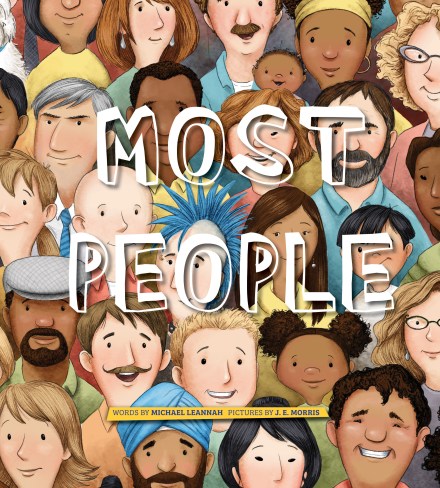
This is where Jennifer E. Morris’s detailed and cheerful illustrations of a diverse community come in. Each spread offers a glimpse into a home or neighborhood to see what people are up to. The first pages invite readers into an apartment, where a mom, a little girl, and her baby brother are having breakfast. Out the big picture window, the sun is just creeping over the rooftops of other nearby apartment buildings. On the windowsill a mitten-shaped cactus seems to wave at the world.

celebrate-picture-books-picture-book-review-most-people-rooftop

Copyright Jennifer E. Morris, 2017, courtesy of jemorris.com.

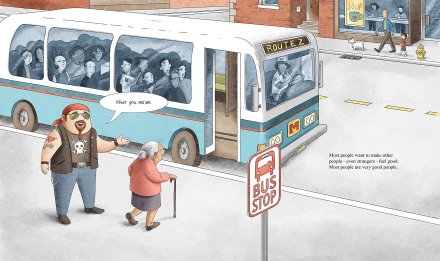
The next spread shows a little boy laughing with his grandpa and grandma. The third spread takes these two families out into the neighborhood and reveals that the little girl and boy are friends. This is a busy community where many different people are engaged in various examples of kindness and inclusion. As the story progresses, children follow these characters as they go about their day. In this way, readers may have preconceived notions challenged—that biker with the tattoos? He’s really just a softy who watches out for an elderly woman—and they’ll see plenty of thoughtfulness in deeds that make a difference.

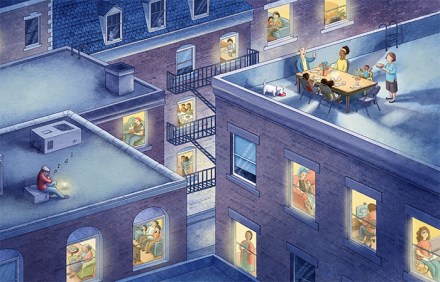
In the evening, it’s time to go back home to the boy’s apartment, where the décor includes a stone sculpture of a face that reminds readers of our common human history, Finally, up on the rooftop, the two friends’ families eat dinner together, while in the illuminated windows of the apartments below, the neighbors are seen enjoying their night.

Most People is an inspiring choice to start a discussion on diversity, empathy, and kindness as well as on analyzing what we hear and see in and on the news. The positive perspective is welcome and provides young readers with comfort and examples of how people in general and they specifically can make a difference with even simple heartfelt gestures. Most People is an excellent book for home, classroom, and library bookshelves.

Ages 5 – 8

Tilbury House Publishers, 2017 | ISBN 978-0884485544

Learn more about Michael Leannah and his books on his website.

You’ll find a gallery of illustration art by Jennifer E. Morris as well as activity pages on her website.

World Kindness Day Activity

celebrate-picture-books-picture-book-review-smile-cards

Share a Smile! Cards


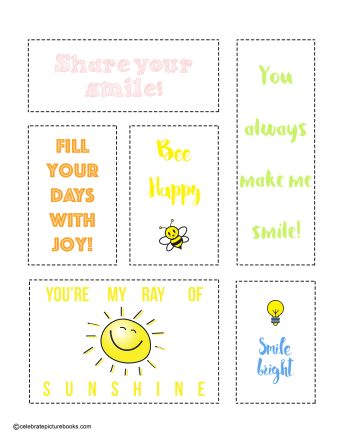
Being kind to someone is as easy as sharing a smile. With these printable Share a Smile! Cards, you can give someone a smile that they can carry with them all day long!

Picture Book Review