March 5 – It’s National Women’s History Month

celebrate-picture-books-picture-book-review-shaking-things-up-cover

About the Holiday

National Woman’s History Month was established by the United States Congress in 1987 to recognize and celebrate the achievements of American women in the past and today. This year’s theme is “Nevertheless She Persisted: Honoring Women Who Fight All Forms of Discrimination against Women” which provides an opportunity to recognize the tireless efforts of women in all walks of life who fight against discrimination to be heard and to achieve their goals. There’s no better time than now to get involved to ensure that all women have equal rights and standing in all areas of their lives.

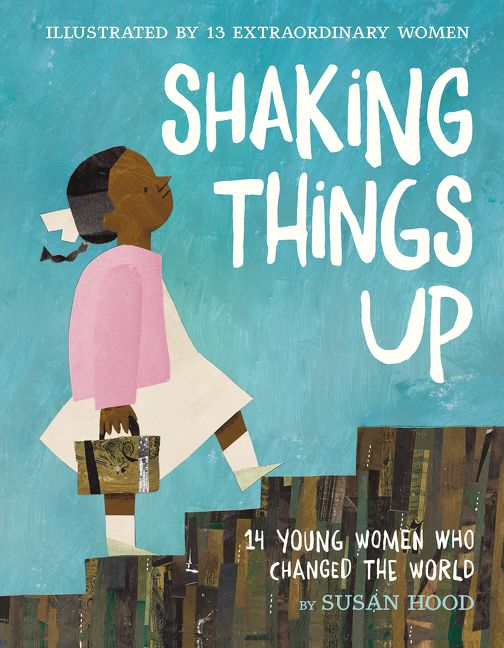
Shaking Things Up: 14 Young Women Who Changed the World

Written by Susan Hood 

Illustrated by Shadra Strickland, Hadley Hooper, Lisa Brown, Emily Winfield Martin, Sara Palacios, Erin K. Robinson, Sophie Blackall, Melissa Sweet, Oge Mora, Isabel Roxas, Julie Morstad, LeUyen Pham, and Selina Alko


This superb collection of biographies in verse highlights not only well-known pioneers but some delightfully fresh names and a few who are influencing the arts, science, and cause of human rights today. Each of the women profiled show the qualities of  bravery, persistence, intelligence, and ability over a vast spectrum of fields. Their success led the way for today’s women and will inspire tomorrow’s.

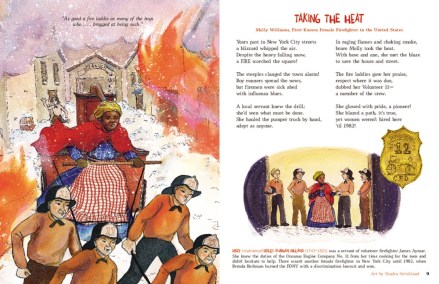
celebrate-picture-books-picture-book-review-shaking-things-up-Molly-Williams

Image copyright Shadra Strickland, 2018, text copyright Susan Hood, 2018. Courtesy of HarperCollins.

Organized on a timeline from the early 1780s to 2014, Shaking Things Up begins with Taking the Heat and Molly Williams, who was the first known female firefighter in America. When the flu knocked out all the members of the Oceanus Fire Department and a fire raged, Molly, the servant of James Aymar, a volunteer fireman, “… knew the drill; / she’d seen what must be done. / she hauled the pumper truck by hand, / adept as anyone.” For her work she was named Volunteer 11 and made part of the crew. It took about two-hundred years before another woman—Brenda Berkman—was added to the New York Fire Department.

celebrate-picture-books-picture-book-review-shaking-things-up-Mary-Anning

Copyright Hadley Hooper, 2018, courtesy of HarperCollins.

Young paleontologists-in-the-making will be amazed by the story of Mary Anning, who, while searching the British coast for fossils to sell to support her family, uncovered the skeleton of an ichthyosaur in 1812. In Buried Treasure, children learn how she went on to discover “the first two complete plesiosaurs and a pterosaur, laying the foundation for Charles Darwin’s theory of evolution.”

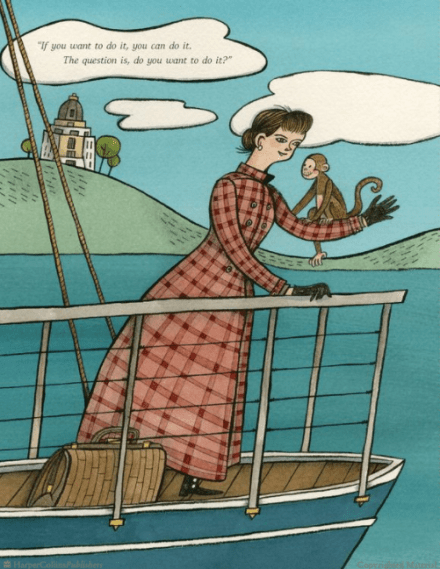
Children who love spies, news reporting, and uncovering the truth will want to know about Nellie Bly, who as an investigative journalist took on disguises to infiltrate institutions and write about “corruption and cruelty.” She was also widely admired for her around-the-world trip that beat Jules Verne’s “80 days” by eight days. As told in Woman of the World: “Bly hopped a ship and told her tale / of all she saw on Earth. / She wrote of camels, temples, jewels / with gutsy wit and mirth.” Nellie was only twenty-five when she undertook her travels in “a record-breaking race. / No soul on Earth had ever sped / the globe at such a pace!”

celebrate-picture-books-picture-book-review-shaking-things-up-Mary-Anning-poem

Image copyright Hadley Hooper, 2018, text copyright Susan Hood, 2018. Courtesy of HarperCollins.

If it weren’t for Annette Kellerman, women may never have made such a splash in swimming. Kellerman was a champion swimmer who began the sport to strengthen her legs after having rickets. Turning the Tide reveals that when she took to the water “without pantaloons—her swimsuit was deemed obscene!” After she was arrested she calmly stated, “who can swim fifty laps / wearing corsets and caps? / Her statement could not be contested,” and she went on to create the modern one-piece swimsuit, changing swimming for women forever.

In The Storyteller, a full alphabet of attributes describes Pura Belpré, a children’s librarian and the New York Public Library’s first Latina librarian. By offering—and often writing—Spanish books and creating programs for the Spanish-speaking community, Belpré revolutionized her library and touched many lives. 

celebrate-picture-books-picture-book-review-shaking-things-up-nellie-bly

Copyright Lisa Brown, 2018, courtesy of HarperCollins.

Children who reach for the stars will be transported by Lift-Off and the inspiration of Mae Jemison, the first female African-American astronaut. When young Mae gazes into the dark night sky, the “glittering stars, swirling galaxies / fill her, thrill her.” It doesn’t matter if she is afraid of the dark and afraid of heights, Mae looks and goes where she wants, where she needs to to learn and understand. And when she’s ready? “Ignition. / All systems are go. / Three / Two / One / Blast off!”

celebrate-picture-books-picture-book-review-shaking-things-up-secret-agents

Image copyright Sophie Blackall, 2018, text copyright Susan Hood, 2018. Courtesy of HarperCollins.

Break It Down reveals the way Angela Zhang attacks the questions she has about the way the world works, questions that lead her to answers and incredible achievements. From creating magic solutions with a Harry Potter potion kit at five years old to discovering answers to questions like why rainbows follow storms at seven years old to using a Stanford University lab at fifteen, Zhang has chipped away “at the ‘black boxes of life,’” including the “biggest black box of all– / a cure for cancer.” For Zhang science is “… both stone and chisel, / and I, your willing apprentice, / yearn to care away life’s mysteries / as a sculptor chisels marble / to find beauty inside.”

celebrate-picture-books-picture-book-review-shaking-things-up-Malala-Yousefzai

Image copyright Selina Alko, 2018, text copyright Susan Hood, 2018. Courtesy of HarperCollins.

Also included are poems about artist Frida Kahlo, World War II secret agents Jacqueline and Eileen Nearne, anti-hunger activist Frances Moore Lappé, civil rights pioneer Ruby Bridges, architect Maya Lin, and Noble Peace Prize winner Malala Yousafzai.

An illustrated timeline precedes the text, and suggested resources for further study on each woman follows the text.

Susan Hood has created fourteen poems that are as unique as the woman they describe. Some rhyming and some free verse, the poems include facts, quotes, intriguing details and the rhythms, sounds, and dreams of these young women. A paragraph following each poem reveals more about the woman and her work. Readers will be awe-struck by the enticing stories that inform each lyrical biography and will long to learn more about the women and their lives.

The theme of individuality is carried through in the illustrations, which are each created by a different illustrator. Colorful, whimsical, and realistic, the illustrations let children see the faces of the women presented, surrounded by their work and set within their time period. Readers will want to linger over the images and discuss the details included. A quotation from each woman accompanies her illustration.

Shaking Things Up offers an inviting way to introduce children to these amazing women and is an excellent reminder that they too can dream of what could be and make it happen. A must for classroom and school libraries, the book would be an inspirational addition to home bookshelves as well.

Ages 4 – 10

HarperCollins, 2018 | ISBN 978-0062699459

Discover more about Susan Hood and her books on her website.

You can learn more about these illustrators on their websites:

Shadra Strickland | Hadley Hooper | Lisa Brown | Emily Winfield Martin | Sara Palacios | Erin K. Robinson | Sophie Blackall | Melissa Sweet | Oge Mora | Isabel Roxas | Julie Morstad | LeUyen Pham | Selina Alko

Check out the Shaking Things Up book trailer!

Women’s History Month Activity

celebrate-picture-books-picture-book-review-freda-kahlo-coloring-page

Amazing Women Coloring Pages


There are so many incredible women to learn about during this month. Today, enjoy these coloring pages of inspiring women.

Mary Anning | Mae Jemison | Freda Kahlo 

Picture Book Review

February 13 – Get a Different Name Day

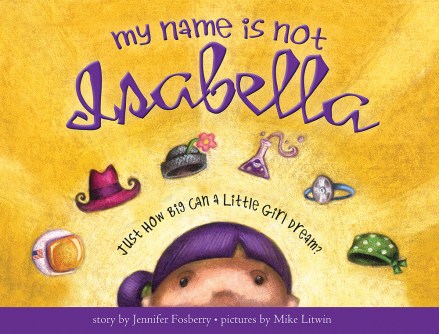
celebrate-picture-books-picture-book-review-my-name-is-not-isabella-cover

About the Holiday

It can be fun to try out new names or special nicknames in forming your identity. For those who are not so fond of their birth name, choosing a new name offers comfort, control, and happiness. Actors, writers, and other creative types sometimes change their name to something that is more memorable, easier to say, is flashier, or has more cred. To celebrate today’s holiday, try on a few different names. If you were going to change yours, what would you pick?

My Name Is Not Isabella: Just How Big Can a Little Girl Dream?

Written by Jennifer Fosberry | Illustrated by Mike Litwin


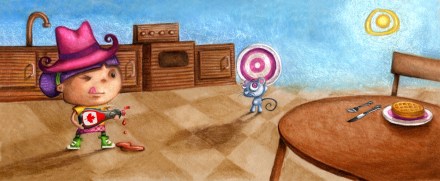
Mom opens her daughter’s bedroom door with a cheery “‘Good morning, Isabella. It’s time to get up and out of bed.’” But the little girl yawns and stretches and most emphatically states, “‘My name is not Isabella!’” Mom plays along, wondering who has then been sleeping here. “‘My name is Sally,’” Isabelle states, “‘The greatest, toughest astronaut there ever was!’” Having Sally Ride in the house is fine with Mom, as long as she puts on her space suit and comes down for breakfast.

celebrate-picture-books-picture-book-review-my-name-is-not-isabella-sally-ride

Image copyright Mike Litwin, 2010, text copyright Jennifer Fosberry, 2010. Courtesy of Sourcebook Jabberwocky.

When the little girl comes to the table, it seems she is no longer Sally. Hmmm… her mother says. She doesn’t know who will eat the delicious waffles she has made. Annie, the greatest, fastest sharpshooter, grabs the syrup and aims for her target.

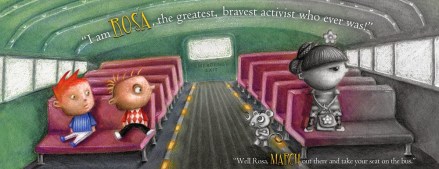
Soon it’s time for school, but when the bus arrives, Annie is nowhere to be found. In her place is “‘Rosa, the greatest, bravest activist that ever was.’ ‘Well, Rosa’” her mother says, “‘March over there and take your seat on the bus.’” School ends, but the bus doesn’t drop off Rosa. Instead, the freshly made chocolate chip cookies will be enjoyed by “‘Marie, the greatest, smartest scientist who ever was.’”

celebrate-picture-books-picture-book-review-my-name-is-not-isabella-rosa-parks

Image copyright Mike Litwin, 2010, text copyright Jennifer Fosberry, 2010. Courtesy of Sourcebook Jabberwocky.

Her mom is happy to see Marie and offers to get the cookies while Marie discovers the answers to her homework. Well, the cookies must fill Marie up, because when dinner rolls around, Elizabeth Blackwell shows up to set the table. At bath time, Elizabeth doesn’t feel like soaking in the relaxing bubbles, so she sends “‘Mommy, the greatest, sweetest mother who ever was,’” instead.

celebrate-picture-books-picture-book-review-my-name-is-not-isabella-marie-curie

Image copyright Mike Litwin, 2010. Courtesy of Sourcebook Jabberwocky.

With pajamas on and teeth brushed the “little girl climbed into bed, [and] the mother says, “‘Good night, Mommy.’” But Mommy is standing near the starlit window, so who is sleeping in the little girl’s bed? “‘Isabella, the sweetest, kindest, smartest, bravest, fastest, toughest, greatest girl that ever was.’” And as she sleeps, she “dreamed about who she would be tomorrow.”

celebrate-picture-books-picture-book-review-my-name-is-not-isabella-annie-oakley

Image copyright Mike Litwin, 2010. Courtesy of Sourcebook Jabberwocky.

In Jennifer Fosberry’s inspiring story, it’s not that the little girl doesn’t want to be Isabella, it’s that she wants to be the best Isabella she can be. In thinking about her role in the world, she’s chosen to emulate five of the most amazing women the world has ever known—and that’s just on day one. Fosberry’s ending, with its view toward tomorrow, allows children to consider all of the influential women throughout history and working today as role models. Her inclusion of “Mommy” as one of Isabella’s heroines is a welcome tribute to the job of motherhood. After all, it’s clear from the way Isabella’s mother supports her daughter’s alter egos without a “Sally who? or a “Rosa who?” that she has taught Isabella about these “greatest” women. It’s just one lesson this mother—and all mothers—teach their children.

celebrate-picture-books-picture-book-review-my-name-is-not-isabella-isabella (2)

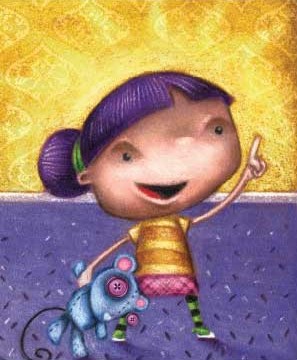
Mike Litwin will enchant readers with his colorful illustrations of Isabella and her transformations. Whimsical details and even the way Isabella’s stuffed toy mouse changes into a real companion for Sally, Rosa, Annie, Marie, and Elizabeth mirrors the power of imagination and education in the formation of a child’s identity and the discovery of their particular talents. Isabella is adorable with her purple hair—just another proof of her individuality—and inspirational in her can-do attitude

Short biographies and portraits of Sally Ride, Rosa Parks, Annie Oakley, Marie Curie, and Elizabeth Blackwell follow the text.

A book that will charm as well as educate, My Name is Not Isabella is a classic that makes a great introduction to the women mentioned in the story and can spur further discovery for younger readers. It would be a welcome addition to home and classroom bookshelves.

Ages 4 – 8

Sourcebooks Jabberwocky, 2010 | ISBN 978-1402243950

Discover more about Jennifer Fosberry and her books on her website.

Learn more about Mike Litwin, his books, and his art on his website.

Get a Different Name Day Activity

celebrate-picture-books-picture-book-review-initial-bookend

First and Last Initials Bookends


You can show your pride in your name (or play with changing it) with this easy craft that will keep all your books tidy on their shelf! This makes a great gift too!

Supplies

  • Sturdy wooden letter blocks in the child’s first and last initials. Or, if the child would like to try on a new name or nickname, the first letter of their new name.
  • Chalkboard or acrylic paint
  • Colored chalk
  • Paint brush


Directions

  1. Paint the letters, let dry
  2. With the chalk write words that describe you or names of your heroines and/or heroes
  3. Display your bookends

Picture Book Review

February 7 – Girls and Women in Sports Day

celebrate-picture-books-picture-book-review-the-girl-who-ran-cover

About the Holiday

Celebrating its 32nd anniversary, National Girls and Women in Sports Day honors all of the girls and women involved in sports at all levels and highlights their extraordinary achievements. It also raises awareness of the positive influence sports can have on those who participate. This year’s theme is “Play Fair, Play IX,” providing a reminder of Title IX, which “ensures that all students receive educational opportunities free from discrimination based on sex.” While programs have expanded for female athletes since the inception of Title IX, many schools still do not provide equal opportunities for girls to participate in the sport of their choice. To learn more about National Girls and Women in Sports Day, find resources, and perhaps get involved yourself, visit ngwsd.org.

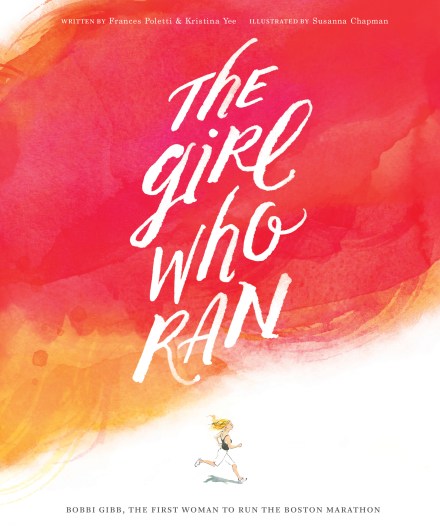
The Girl Who Ran: Bobbi Gibb, the First Woman to Run the Boston Marathon

Written by Frances Poletti and Kristina Yee | Illustrated by Susanna Chapman


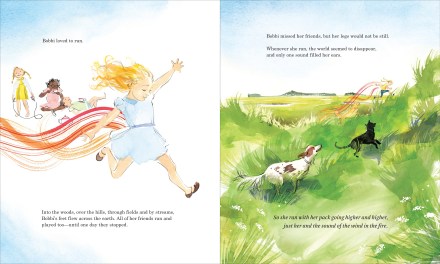
“Bobbi loved to run. Into the woods, over the hills, through fields and by streams, Bobbi’s feet flew across the earth.” When Bobbi was little, she and her friends ran and played together. But as they grew older, her friends found other pursuits while Bobbi still loved to run. She took to the fields with her dogs, “going higher and higher, / just her and the sound of the wind in the fire.”

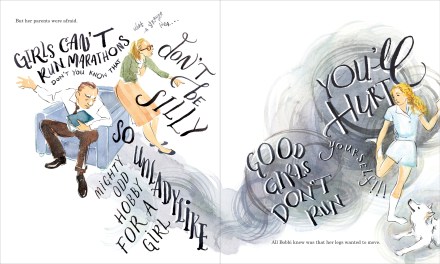
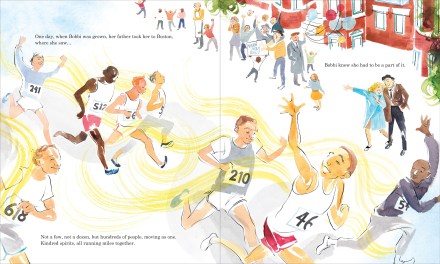
When Bobbi was grown, her father took her to watch the Boston Marathon. She loved the camaraderie of “hundreds of people moving as one. Kindred spirits, all running miles together.” Immediately, she wanted to participate too. When Bobbi told her parents that she wanted to run in the marathon, however, they thought her idea was strange. They told her she would hurt herself and that it was unladylike.

celebrate-picture-books-picture-book-review-the-girl-who-ran-young-bobbi

Image copyright Susanna Chapman, 2017, text copyright, Frances Poletti and Kristina Yee, 2017. Courtesy of Compendium.

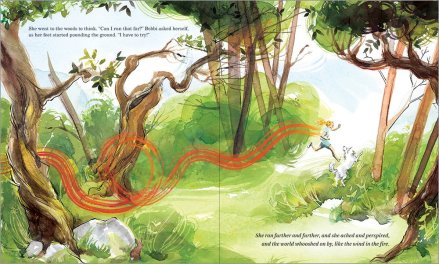
But Bobbie wanted to run. She didn’t know if she could run that far but was determined to try. She trained in the woods, running “further and further, and she ached and perspired, / and the world whooshed on by, like the wind in the fire.” Because she knew her parents disapproved, Bobbi set out on her own across country to train. Every day she ran in a new place—“lush forests in Ohio and Indiana, vast plains in Nebraska and Kansas, majestic mountains in Wyoming and Montana.” She even ran with wild horses out west and up steep Rocky Mountain trails. At night she camped, “tired and happy.”

All of her training seemed for nothing, however, when Bobbi received a letter rejecting her application for the Boston Marathon. The letter said that women were incapable of running marathons, that it was against the rules for a woman to run, and that the rules had been written to protect women from injury. Bobbi was not deterred, however. She went back home and told her parents what she wanted to do. Her father thought she was crazy to attempt it.

celebrate-picture-books-picture-book-review-the-girl-who-ran-woods

Image copyright Susanna Chapman, 2017, text copyright, Frances Poletti and Kristina Yee, 2017. Courtesy of Compendium.

Bobbi knew that the only way she could run would be “to blend in with the men.” Dressed in men’s shorts and a baggy hooded sweatshirt to hide her hair and wearing men’s running shoes (running shoes were not made for women), Bobbi was ready to go. Her father refused to drive her to the race, though. He stormed out of the house, and drove away. Bobbi thought her dream was dashed until her mom came to her room, car keys in hand, and said, “‘Let’s go.”

Hiding in the bushes at the starting line, she sprang out and joined the pack of runners with the bang of the starting pistol. “So she ran with the pack, going higher and higher, / the world whooshing by, like the wind in the fire.” As she ran, she realized that the men around her had seen through her disguise. Bobbi was worried, but the men were supportive. “‘Hey! Are you running the whole way?’ one asked.” She told him she hoped to, but in that sweatshirt, she was getting hotter and hotter. She was afraid that if she took it off, she’d be thrown out of the race.

celebrate-picture-books-picture-book-review-the-girl-who-ran-parents-afraid

Image copyright Susanna Chapman, 2017, text copyright, Frances Poletti and Kristina Yee, 2017. Courtesy of Compendium.

The men around her said they wouldn’t let that happen, so Bobbi took off the sweatshirt. “Word spread quickly throughout the course. A girl was running! They couldn’t believe it!” All along the route, the crowd cheered and encouraged her. Hearing the roar motivated Bobbi to ignore the hard ground and her stiff shoes and face the last steep hill. “Closing her eyes, she imagined she was back in Montana running up the mountains, the soft earth under her feet.”

Her feet were blistered and she was parched with thirst, but she crossed the finish line—ahead of nearly half of the men. Photographers, reporters, and radio presenters swarmed around her to hear her history-making story. From that day on “hearts and minds were forever changed.”

celebrate-picture-books-picture-book-review-the-girl-who-ran-young-Boston-marathon-all-men

Image copyright Susanna Chapman, 2017, text copyright, Frances Poletti and Kristina Yee, 2017. Courtesy of Compendium.

The story of Bobbi Gibbs is one that every girl and boy should know, and Frances Poletti and Kristina Yee’s excellent biography will have readers awe-struck by how she changed the way the world viewed women and their capabilities. A pioneer for women’s rights in every way—from her traveling the country alone to rejecting the prevailing ideas to competing on her own terms—Bobbi Gibbs is an inspiration for achievers everywhere. Poletti and Yee’s conversational storytelling is both lyrical and honest, not stinting on the obstacles Bobbi had to overcome, including race officials, her own parents, and even the fact that running shoes weren’t made for women.

As the marathon approaches, readers will be enthralled by the building suspense. They’ll feel Bobbi’s determination, her disappointment, and her fear that she will be discovered and thrown out of the race, and will cheer along with the crowd at her victory.

celebrate-picture-books-picture-book-review-the-girl-who-ran-crowds

Image copyright Susanna Chapman, 2017, text copyright, Frances Poletti and Kristina Yee, 2017. Courtesy of Compendium.

Susanna Chapman’s gorgeous illustrations are infused with Bobbi’s boundless energy and spirit as she soars over grassy dunes with her dogs at her heels, zips through shady woods, and runs alongside wild horses in the shadow of the Rockies all the while trailing a red swish, representative of the fire within her. The turmoil surrounding Bobbi’s desire to run the Boston Marathon is depicted in words of rebuke, recrimination, and rejection printed in large, emphatic typefaces that swirl around her like a tornado.

The inclusion of the image of Bobbi’s mother with the car keys in hand on the morning of the race is a welcome reminder of the many unknown women of earlier generations who  contributed to the fight for women’s equality. A beautiful double gate-fold illustration of Bobbi crossing the finish line to cheering crowds and the waiting media puts the focus fully on Bobbi and the fire that spurred her on.

An Afterword tells more about Bobbi Gibb, and a timeline of seminal events in the Boston Marathon from 1896 to today, is a fascinating must-read.

The Girl Who Ran is an inspirational biography and revealing history from the not-so-distant past that offers encouragement and triumph. It would be a wonderful addition to home, school, and public libraries.

I received a copy of The Girl Who Ran from Compendium to check out. All opinions are my own.

Ages 8 – 12

Compendium, 2017 | ISBN 978-1943200474

Discover more about Kristina Yee, her books, and her films on her website

Learn more about Susanna Chapman, her books, and her art on her website

Girls and Women in Sports Day Activity

celebrate-picture-books-picture-book-review-pioneering-women-in-sports-puzzle

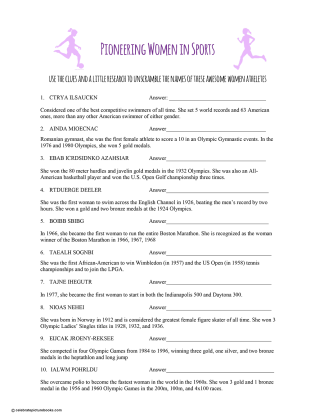
Pioneering Women in Sports Word Scramble Puzzle


In every sport there have been women who have overcome barriers, incredible odds, set records, and inspired others. Using the clues and a little research, can you unscramble the names of these twelve awesome athletes?

Pioneering Women in Sports Word ScramblePioneering Women in Sports Word Scramble Solution

Picture Book Review

January 20 – National Disc Jockey Day

celebrate-picture-books-picture-book-review-when-the-beat-was-born-cover

About the Holiday

National Disc Jockey Day commemorates the death of Albert James Freed, or Moondog, who was an influential disc jockey in the 1950s and is credited with popularizing the term “rock-and-roll.” The idea of using recorded music instead of live performances over the airwaves was tested in 1909, when sixteen-year-old Ray Newby, a student of Charles “Doc” Herrold at Herrold College of Engineering and Wireless in San Fernando, California, became the first to play records on the radio. The idea took off and soon radio broadcasters across the country followed suit. The term Disc Jockey was the brainstorm of radio commentator Walter Winchell in 1934. The 1970s and 1980s saw the rise of Hip-Hop DJs who began using multiple turntables and turntables as instruments to change the music.

When the Beat Was Born: DJ Kool Herc & the Creation of Hip Hop

Written by Laban Carrick Hill | Illustrated by Theodore Taylor III


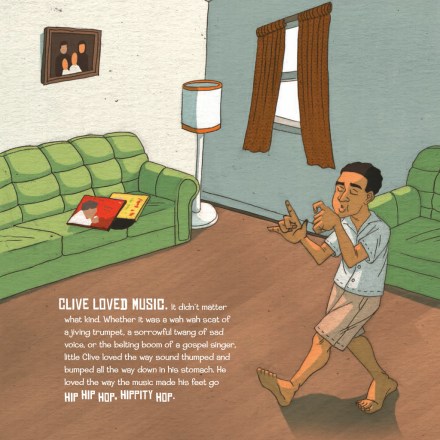
Even as a child “Clive loved music”—all kinds of music. He loved the way it made him feel inside and “the way it made his feet go hip hip hop, hippity hop.” Clive lived on Somerset Lane in Kingston, Jamaica. One of his neighbors was a DJ nicknamed “King George,” who threw the “biggest and baddest” house parties every Saturday night. Clive was too young for parties, but he liked to watch King George and his crew setting up. Clive had never seen so many records in one place.

celebrate-picture-books-picture-book-review-when-the-beat-was-born-clive-loved-music

Image copyright Theodore Tayler III, 2013, text copyright Laban Carrik Hill, 2013. Courtesy of Roaring Brook Press.

“Clive imagined himself as a DJ surrounded by all those records.” He longed to choose just the right one to get the party started. He pictured himself toasting—rapping over the instrumental B side of records and getting people’s feet going hip hip hop, hippity hop, like his did. When Clive was thirteen he moved to Brooklyn, New York with his mom. At first he wasn’t sure he liked his new neighborhood, but then he discovered sports—track, weightlifting, and especially basketball. Clive grew to be six feet, 5 inches tall.

celebrate-picture-books-picture-book-review-when-the-beat-was-born-stacks-of-records

Image copyright Theodore Tayler III, 2013, text copyright Laban Carrik Hill, 2013. Courtesy of Roaring Brook Press.

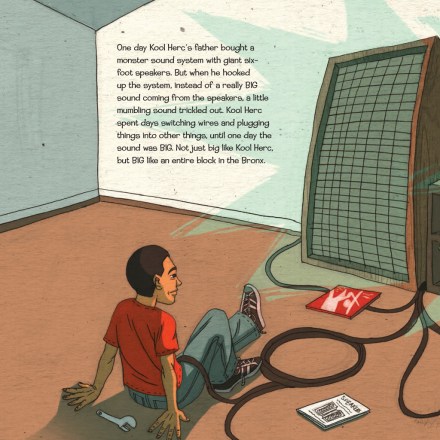
He took to calling “himself ‘cool as Clyde’ after his favorite basketball player, Walt Clyde Frazier.” But to the other kids, Clive was “Hercules.” Clive shortened it to Herc and added “‘Kool’ to make it just right. Kool Herc.” Because of his size, he was able to go to house parties with his mother and listen to the music. One day Kool Herc’s father bought a “giant sound system” with six-foot-tall speakers. But when it was turned on, the sound was puny. Kool Herc worked on it until the sound came blasting out.

celebrate-picture-books-picture-book-review-when-the-beat-was-born-sound-system

Image copyright Theodore Tayler III, 2013, text copyright Laban Carrik Hill, 2013. Courtesy of Roaring Brook Press.

Kool Herc and his younger sister Cindy were ready to put on a party. They rented a rec room in their housing project, posted invitations, and set up the huge sound system. The night of the party, “everybody who was anybody made their way to Sedgewick Avenue for Kool Herc’s hot dance party. That’s when Kool Herc became DJ Kool Herc.”

celebrate-picture-books-picture-book-review-when-the-beat-was-born-DJ-Kool-Herc

Image copyright Theodore Tayler III, 2013, text copyright Laban Carrik Hill, 2013. Courtesy of Roaring Brook Press.

DJ Kool Herc noticed that people danced harder during the instrumental breaks. Kool Herc set up another turntable and put the same record on this turntable too. This way, when one record ended its break, he could play it again on the other. He was able to stretch a ten-second break into 20 minutes or more. Remembering how DJs toasted in Jamaica, DJ Kool Herc began shouting out the names of his friends, compliments about the dancers, and rhymes over the beat.

celebrate-picture-books-picture-book-review-when-the-beat-was-born-dance-party

Image copyright Theodore Tayler III, 2013, text copyright Laban Carrik Hill, 2013. Courtesy of Roaring Brook Press.

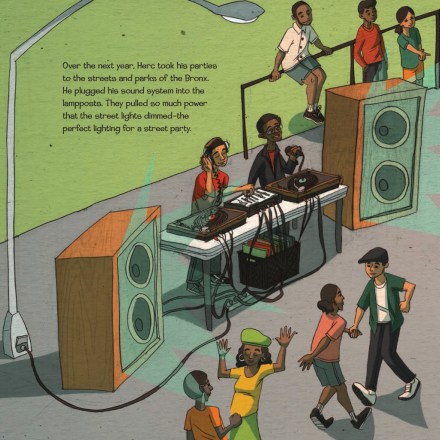
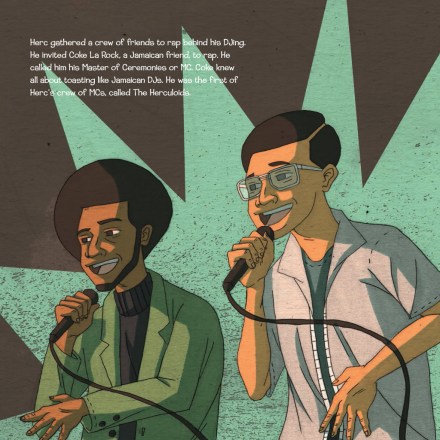
Over the next year, DJ Kool Herc moved his dance parties into the street. When he plugged the sound system into the street lamps, it pulled so much power, the lights dimmed. DJ Kool Herc’s music even turned some of the city’s gang members into the smoothest break dancers in the neighborhood. Kool Herc then invited friends to rap behind the DJ-ing. He called these friends the “Master of Ceremonies” or MCs.

Soon kids were coming from all over New York city to attend DJ Kool Herc’s “biggest, baddest dance parties.” Many “wanted to be DJs just like Kool Herc. Herc didn’t just rock the block. He put the hip hip hop, hippity hop into the world’s heartbeat.”

celebrate-picture-books-picture-book-review-when-the-beat-was-born-the-turtle

Image copyright Theodore Tayler III, 2013, text copyright Laban Carrik Hill, 2013. Courtesy of Roaring Brook Press.

Laben Carrick Hill’s modern biography of a Hip Hop pioneer invites young readers to discover the early years of and influences on the music they love today. Hill superbly structures his story so through the formative details of DJ Kool Herc’s life from childhood into adulthood, readers understand that they too can follow their hearts to achieve their dreams. When the Beat Was Born is inspirational in its depiction of an “ordinary kid” with ingenuity and self-confidence who changed the face of music by combining his multicultural experiences, being open to experimentation, including his friends, and sharing his vision. Straightforward storytelling is punctuated with verses of rap that make reading aloud fun and will engage listeners.

celebrate-picture-books-picture-book-review-when-the-beat-was-born-friends

Image copyright Theodore Tayler III, 2013, text copyright Laban Carrik Hill, 2013. Courtesy of Roaring Brook Press.

In his bold, vibrant illustrations, Theodore Tayler III lets kids in on the not-so-distant past that saw the rise of Hip Hop music, celebrity DJs, and new dance styles. Keeping the focus on DJ Kool Herc—just as Clive kept his eye on his future goals—Taylor reinforces the theme of the book. Scenes of kids lining up to attend DJ Kool Herc’s parties and dancing in the street give the book an inclusive feel. Images of skyscraper-tall stacks of records mirrors Kool Herc’s ambitions, and depictions of breakdancing moves will get kids wanting to try them for themselves.

When the Beat Was Born is a terrific biography for all children, whether they like music and dancing or quieter pursuits. In the classroom, the book would be a great addition to music, history, or biography units.

Ages 6 – 10

Roaring Brook Press, 2013 | ISBN 978-1596435407

Discover more about Laben Carrick Hill and his books on his website

To view a portfolio of artwork, book illustration, videos and more by Theodore Taylor III, visit his website.

National Disc Jockey Day Activity

celebrate-picture-books-picture-book-review-groovy-record-chalkboard-blackboard-craft

Groovy Record Chalkboard & Bulletin Board 


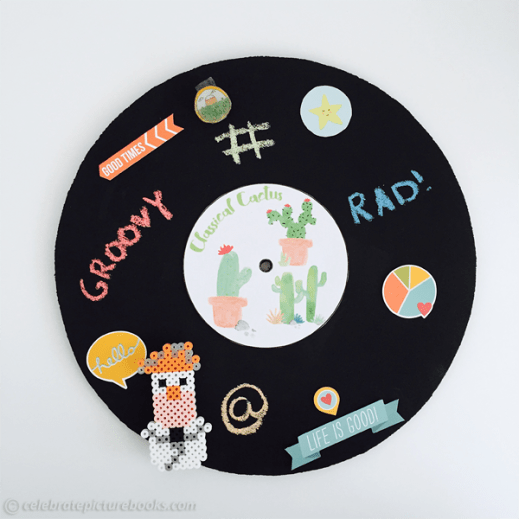
Do you play the piano or another instrument? Would you like to make a record some day? Why wait? In this fun craft you can create your own record bulletin board—and even create your own label art! While this record may not spin on turntables around the world, it will drop in a more important place—your very own room!

Supplies

  • Printable Record Label for you to design
  • Foam board, or a corkboard at least 12-inches x 12-inches square
  • Adhesive cork
  • A 12-inch round plate, record, or other round object to trace OR a compass
  • Chalkboard paint, black
  • X-acto knife
  • Paint brush or foam paint brush
  • Mounting squares

Directions

  1. Cut a section from the adhesive cork a little larger than 12 inches by 12 inches
  2. Affix the cork to the foam board
  3. Trace the 12-inch round object onto the cork/foam board OR use the compass to make a 12-inch circle
  4. With the x-acto knife, carefully cut out the circle (adult help needed for children)
  5. Cut out a ¼ -inch circle in the center of the record bulletin board
  6. Paint the cork, sides and inside the spindle hole with the black chalkboard paint. Let dry
  7. Print the label template and design your own record label
  8. When the paint is dry, glue your label to the center of the bulletin board
  9. Hang your bulletin board with the mounting squares
  10. Decorate!

Picture Book Review


January 13 – Make Your Dream Come True Day

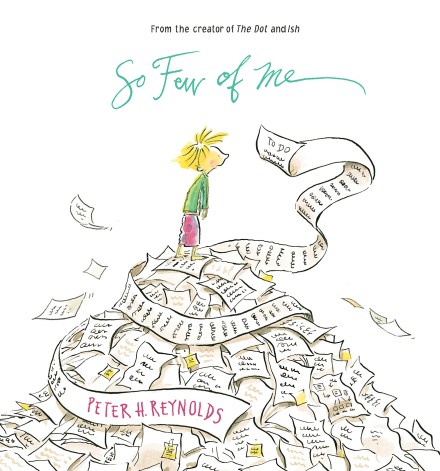
celebrate-picture-books-picture-book-review-happy-dreamer-cover

About the Holiday

Children are asked about their hopes and dreams as soon as they enter school. In kindergarten kids draw about them, and as they grow older, they write about them and begin working to make those dreams a reality. Adults also have goals they want to achieve at work, at home, or just for themselves. Today’s holiday encourages people to define their dream, make a plan, and take the road toward fulfilling it. That spark of inspiration can burn brightly and long and guide you to the future you always wanted!

Happy Dreamer

By Peter H. Reynolds


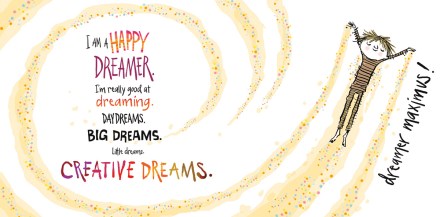
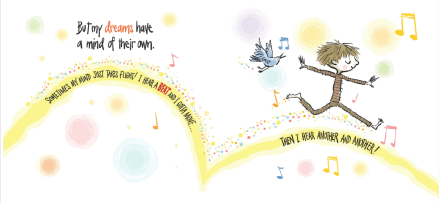
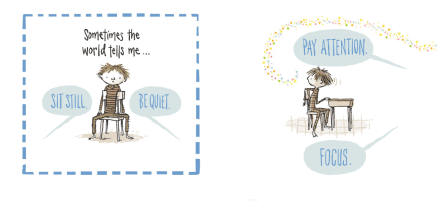
A child floats on a golden, sparkling swirl of their own creation. “I am a happy dreamer,” they say. “I’m really good at dreaming. Daydreams, big dreams, little dreams, creative dreams.” In fact, this child is a “dreamer maximus!” There are times when they’re told to ignore that voice inside…to “sit still” and pay attention. But the music inside is persistent and persuasive, inviting the child to move, to play along and let it out.

celebrate-picture-books-picture-book-review-happy-dreamer-dreamer-maximus

Copyright Peter H. Reynolds, 2017, courtesy of Orchard Books.

Sometimes dreams require quiet. Then the child says, “I make time to stay still and hear myself think—to let go and see what takes shape.” Can you see it too? There are dreams so big, the child reveals, that sometimes “I’m a shout-at-the-top-of-my-lungs dreamer (even if I’m just a loud-inside-my-head dreamer!)”

celebrate-picture-books-picture-book-review-happy-dreamer-musical-beat

Copyright Peter H. Reynolds, 2017, courtesy of Orchard Books.

There are times when dreams come in colors that paint a surprising path, and sometimes there are so many dreams firing at once that they cause “creative chaos.” When you ask make me clean up, the child says, I will, but “cleaning up hides my treasures” and “there is less of ME to show.” When that happens, the child explains, “…I feel alone. BOXED IN.” But there is always an escape, a way to recover the “happy dreams.”

celebrate-picture-books-picture-book-review-happy-dreamer-focus

Copyright Peter H. Reynolds, 2017, courtesy of Orchard Books.

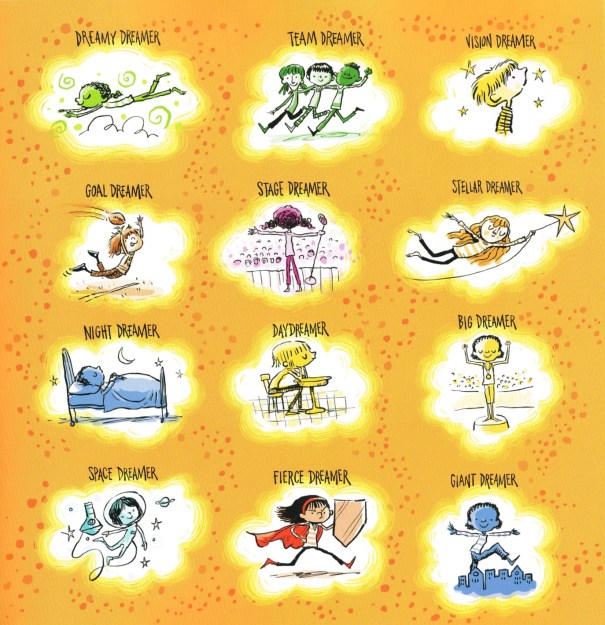
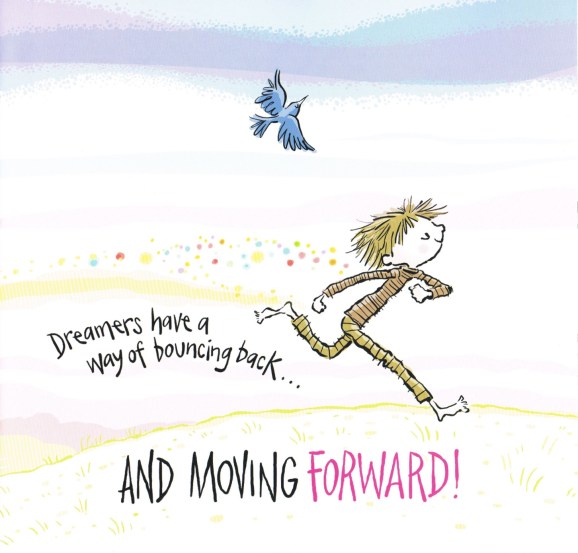
You know what? the child says, “I’m really good at being me. A dreamer—surprising, caring, funny, gentle, smart.” Falling or failing don’t hurt because dreamers always bounce back and keep going. Do you know what kind of dreamer you are? There are so many kinds! What makes you happy? Exploring, working hard, being with family or friends, being alone? Maybe laughing, acting, being wild, being strong. Are you civic-minded, peaceful, thoughtful?

What’s “the best way to be a happy dreamer? Just be YOU.”

celebrate-picture-books-picture-book-review-happy-dreamer-all-kinds-of-dreamers

Copyright Peter H. Reynolds, 2017, courtesy of Orchard Books.

Peter H. Reynolds is always inspirational, finding just the right words to include all readers while speaking directly and intimately to each reader individually. In Happy Dreamer, Reynolds taps into the ways ideas and talents come knocking, whispering, or shouting to be heard and set free. His lyrical language is engaging for even the youngest readers and meaningful for adults as well—on both a personal level and for those who are parents, caregivers, or teachers.

celebrate-picture-books-picture-book-review-happy-dreamer-bouncing-back

Copyright Peter H. Reynolds, 2017, courtesy of Orchard Books.

From the first image in which the child floats on the glowing swirl of dreams, readers will follow the child as they play music, discover shapes in the clouds, swing to lofty heights, shout to the world, paint a rainbow path, create fireworks and treasures, and break free from the restraints of the world that sometimes tamp down dreams. A double gate-fold filled with dreamers will delight readers as they search for just the type of dreamer they are. Written in the first-person and with gender neutral clothing and hairstyle, Happy Dreamer is a universal story.

Empowering, encouraging, and accepting, Happy Dreamer is a superb choice for home and classroom libraries.

Ages 4 – 8 and up

Orchard Books, an imprint of Scholastic, 2017 | ISBN 978-0545865012

Discover more about Peter Reynolds, his books, and his art on his website.

Make Your Dream Come True Day Activity

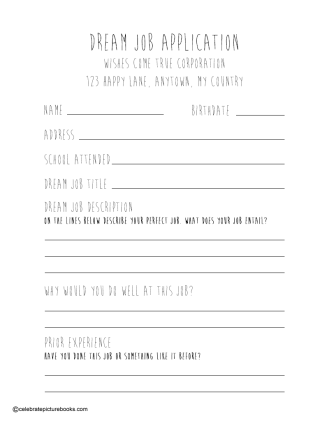
celebrate-picture-books-picture-book-review-dream-job-application-activity

Dream Job Application


Imagine you are applying for your dream job. What would it be? Why are you the right candidate? Have fun with this printable Dream Job Application and start on the road to your happy future!

Picture Book Review

January 9 – Poetry at Work Day

celebrate-picture-books-picture-book-review-a-river-of-words-cover

About the Holiday

Today’s holiday encourages people to consider their jobs, their office environment, their coworkers, and maybe even that snack in the desk drawer through the lens of poetry. You may find inspiration in today’s book about William Carlos Williams, who wrote many of his famous and well-loved poems while working as a physician. Whether you find poignancy or humor in your workplace, take a moment to jot down a few thoughts in free verse or rhyme and share your poem with your friends!  

A River of Words: The Story of William Carlos Williams

Written by Jen Bryant | Illustrated by Melissa Sweet


Willie Williams was just like the other boys in his neighborhood—well, almost. When the other boys went home after a day of playing, Willie took off for the woods and fields behind his house. “As he walked through the high grasses and along the soft dirt paths, Willie watched everything.” He liked to sit next to the Passaic River and listen to the rhythm of the water as it “went slipping and sliding over the smooth rocks, then poured in a torrent over the falls, then quieted again below.”

celebrate-picture-books-picture-book-review-a-river-of-words-high-school

Image copyright Melissa Sweet, 2008, courtesy of Eerdmans Books for Young Readers.

But as Willie grew older, he didn’t have time for these leisurely pursuits. In high school, he was on the track team, attended lots of classes, and had even more homework. His was a rushed and hurried life. Except for in English class. There, when his teacher read poetry, he was taken back to the flow of the river. Each line created pictures in Willie’s mind.

One night, Willie began writing his own poems. He copied the English poets he had learned about in school, using structured beats and rhyming endings. But soon these rules began to frustrate Willie; they didn’t give him the freedom to fully express his thoughts. He wanted to write about what he saw nearby, the things he was familiar with. Things, he said, like “plums, wheelbarrows, and weeds, / fire engines, children, and trees— / things I see when I walk down my street / or look out my window.”

celebrate-picture-books-picture-book-review-a-river-of-words-sparrows

Image copyright Melissa Sweet, 2008, courtesy of Eerdmans Books for Young Readers.

Willie began writing poems the way they came to him, with their own shape and sound. Writing this way made Willie feel free, and he filled notebook after notebook with poems. While Willie wished he could make a living as a poet, writing did not pay much, and he needed to be self-sufficient. Willie’s uncle had been a doctor, and Willie liked the idea of healing people. He wondered, though, if he could be a doctor and still write poetry.

When Willie graduated from high school, he went off to the university to study medicine. There he met the writers Ezra Pound and Hilda Doolittle and the artist Charles Demuth. Spending time with his new friends made his difficult studying easier. After college, Willie returned to his home town of Rutherford and opened his practice. He had so many patients that some people said he was “the busiest man in town.”

celebrate-picture-books-picture-book-review-a-river-of-words-attic-room

Image copyright Melissa Sweet, 2008, courtesy of Eerdmans Books for Young Readers.

No matter how busy he was, however, he found time to write. Sometimes he jotted lines and ideas on his prescription pads. Then, after his long days at work, Willie climbed to his attic room where he studied the notes he’d made and wrote poems late into the night.

A Timeline, Author’s Note, and Illustrators Note about William Carlos Williams follow the text. The endpapers present a selection of Williams’ poetry.

A River of Words: The Story of William Carlos Williams is an inspirational book for children who have creative ideas of their own and would make an excellent addition to classroom and home libraries.

From the title through to the end of her lyrical biography, Jen Bryant captures the flow of William Carlos Williams’ creative and scientific life, which was as purposeful and free as the river that inspired him. Young readers and would-be writers will find much encouragement and insight in Bryant’s story, which reveals that talent and day-to-day life not only can co-exist but can enrich each other. By showing how Williams broke free from the structures of the poetry he copied, Bryant also motivates children to find their own voice.

celebrate-picture-books-picture-book-review-a-river-of-words-plums

Image copyright Melissa Sweet, 2008, courtesy of Eerdmans Books for Young Readers.

Melissa Sweet lends her distinctive collage style of illustration to this story, bringing to life the lines of and natural world reflected in Williams’ poetry. The busy-ness and business of Williams’ days are depicted in vibrant images of winding streets, classrooms, offices, and the outside world where he composed his uniquely revealing poems.

Ages 6 and up

Eerdmans Books for Young Readers, 2008 | ISBN 978-0802853028

Learn more about Jen Bryant and her books on her website!

Discover more about Melissa Sweet, her books, and her art on her website!

Poetry at Work Day Activity

celebrate-picture-books-picture-book-review-grow-a-poem-craft

Grow Your Own Poem


A poem often grows in your imagination like a beautiful plant—starting from the seed of an idea, breaking through your consciousness, and growing and blooming into full form. With this craft you can create a unique poem that is also a piece of art!

Supplies

  • Printable Leaves Template
  • Printable Flower Template
  • Wooden dowel, 36-inch-long, ½-inch diameter, available in craft or hardware stores
  • Green ribbon, 48 inches long
  • Green craft paint
  • Green paper for printing leaves (white paper if children would like to color the leaves)
  • Colored paper for printing flowers (white paper if children would like to color the flowers)
  • Flower pot or box
  • Oasis, clay, or dirt
  • Hole punch
  • Glue
  • Markers or pens for writing words
  • Crayons or colored pencils if children are to color leaves and flowers

Directions

  1. Paint the dowel green, let dry
  2. Print the leaves and flower templates
  3. Cut out the leaves and flowers
  4. Punch a hole in the bottom of the leaves or flowers
  5. Write words, phrases, or full sentences of your poem on the leaf and flower templates
  6. String the leaves and flowers onto the green ribbon (if you want the poem to read from top to bottom string the words onto the ribbon in order from first to last)
  7. Attach the ribbon to the bottom of the pole with glue or tape
  8. Wrap the ribbon around the pole, leaving spaces between the ribbon
  9. Move the leaves and flowers so they stick out from the pole or look the way you want them to.
  10. Put oasis or clay in the flower pot or box
  11. Stick your poem pole in the pot
  12. Display your poem!

celebrate-picture-books-picture-book-review-a-river-of-words-cover

You can find A River of Words at these booksellers

Amazon| Barnes & Noble | Books-a-Million | IndieBound

Picture Book Review

January 2 – Motivation and Inspiration Day & Multicultural Children’s Book Day Review

celebrate-picture-books-picture-book-review-gokul-village-and-the -magic-fountain-cover

About the Holiday

The beginning of a new year is often filled with optimism and excitement. We feel motivated and inspired to try new things, make positive changes, and accomplish goals—not only for ourselves but for the world around us. Finding new and diverse books is a fantastic way to get started.

To honor today’s holiday, I’m posting a review for Multicultural Children’s Book Day, an annual event that takes place every January and, this year, culminates on January 27 with a huge online celebration. Throughout the month bloggers, reviewers, and individuals post reviews of children’s books that offer multicultural themes, characters, and stories that inspire young readers and introduce them to peers, situations, and ideas around the world. To learn more about Multicultural Children’s Day and follow the fun, visit their website and see the information below.
Gokul Village and the Magic Fountain

Written by Jeni Chapman and Bal Das | Illustrated by Charlene Chua


In a faraway land with fresh air and blue skies, Gokul Village was built around “a very special fountain.” The fountain had always provided the people of Gokul Village with “water to drink, wash clothes, and to splash friends.” But now the fountain had fallen into disrepair. The six orbs that circled the pool were dirty and broken, and the pipes were clogged so water could not flow anymore. “The fountain was lonely, except when six friends visited it.”

celebrate-picture-books-picture-book-review-gokul-village-and-the -magic-fountain-gokul

Image copyright Charlene Chua, 2017, text copyright Jeni Chapman and Bal Das, 2017. Courtesy of gokulworld.com.

The friends met at the fountain on the way to school and gathered there in the afternoons. Zoya was an artist and loved to paint pictures of “how beautiful the fountain could be.” Christopher loved to build and had “plans to fix the fountain one day.” Riya was inspired by the music of the dripping water when she played her flute, and Dalai rode his bike faster and faster as he circled the fountain. Jacob would bring his own homemade treats, and Noelle experimented with the drone iDEA that she had designed.

celebrate-picture-books-picture-book-review-gokul-village-and-the -magic-fountain-children

Image copyright Charlene Chua, 2017, text copyright Jeni Chapman and Bal Das, 2017. Courtesy of gokulworld.com.

When the friends played together they imagined that the fountain connected to all the world’s waterways and could take them on adventures. They joined hands and skipped around the fountain singing, “‘Waters of the world, connect us this day. Waters of the world, take us away.’” New Year’s Day was approaching, and the children were looking forward to the big village party. Soon, they would be helping to decorate the square. But one day, Dalai brought bad news. The mayor had canceled the party because the fountain—the centerpiece of the celebration—could not be fixed in time.

The friends were disappointed, but then Christopher had an idea. If they all worked together, he thought, they could fix the fountain in time. They were all in! Riya gave each person a job to do. Noelle was to research the history of the fountain. She and Zoya were to find new orbs to replace the old ones. Christopher was going to fix the pipes. Dalai could restore the broken decorative stonework, and Jacob would keep them all working hard with his snacks.

celebrate-picture-books-picture-book-review-gokul-village-and-the-magic-fountain-fixed-fountain

Image copyright Charlene Chua, 2017, text copyright Jeni Chapman and Bal Das, 2017. Courtesy of gokulworld.com.

The next step was to convince the mayor that they could do it. Dalai, who loved talking with people, met with the mayor and got her approval. “If they could clean up the fountain, the celebration wouldn’t be canceled.” The kids went to work and in two days, the fountain was beautiful and the water flowed again. When the mayor came to look, she declared the New Year’s festival was “back on.”

Suddenly, “the fountain glowed with extra shimmer,” and the water glistened. The orbs shone and granted each child “an extraordinary gift. Notes from Riya’s flute transformed into singing birds.” Zoya could paint pictures in the air. “The beads of Dalai’s bracelet glowed with light.” Jacob’s backpack suddenly filled with all types of cooking ingredients and utensils. Christopher’s tools grew, and iDEA gained the ability to speak.

celebrate-picture-books-picture-book-review-gokul-village-and-the -magic-fountain-song

Image copyright Charlene Chua, 2017, text copyright Jeni Chapman and Bal Das, 2017. Courtesy of gokulworld.com.

iDEA told Noelle to look in the heart of the fountain for its hidden words. There, the kids found an invitation: “The world is big, are you bold? / With my help you’ll soon know. / Say the words. Watch me glow / 1, 2, 3…and off you go!” Then each orb shone with a different color. The children each placed a hand on an orb and sang their song. All at once, they found themselves floating to places they’d always wanted to see. They “saw the jostling, jolly New York City crowd” and watched the ball drop in Times Square to celebrate “the arrival of the New Year.” They joined the Chinese New Year parade and “watched millions of people clap and sway together, hoping for happiness and good fortune for all.” Then they found themselves in the midst of the “dazzling glow of the Diwali festival in India, signifying the power of light over darkness.”

celebrate-picture-books-picture-book-review-gokul-village-and-the -magic-fountain-back-from-travels

Image copyright Charlene Chua, 2017, text copyright Jeni Chapman and Bal Das, 2017. Courtesy of gokulworld.com.

Just as quickly as they had left, the children were back at the fountain. To commemorate their magical adventure, the children decided to name the fountain “‘Friendship Fountain.’” But they had no time to waste! They made decorations inspired by all the celebrations they had seen and hung them in the town square. The next day, Gokul Village’s New Year’s celebration was the best ever.

The six friends were eager to have another adventure. Since Dalai had set the adventure in motion the first time, he whispered, “‘Friendship Fountain awake, Friendship Fountain activate.’” With that, Dalai’s bracelet glowed. Each child touched one of the fountain’s orbs and sang their song. As their voices soared into the sky, they felt themselves being lifted up too. “Where in the world would they go this time?”

celebrate-picture-books-picture-book-review-gokul-village-and-the -magic-fountain-bracelet-glowing

Image copyright Charlene Chua, 2017, text copyright Jeni Chapman and Bal Das, 2017. Courtesy of gokulworld.com.

There is much to entice young readers in Jeni Chapman and Bal Das’s enriching story of six friends who have their sights set on their connections to each other and the world and the positive things they can accomplish. As the diverse group of children is introduced along with their unique talent, readers will recognize their various personalities and be eager to learn more about them. The children’s enthusiasm is infectious as they team up to fix the fountain and are rewarded with magical gifts and a special power to travel the world. Organically incorporating ideas of inclusiveness, cooperation, compromise, volunteering, and teamwork through realistic dialogue, this story is upbeat and affirmative and one that readers will respond to.

celebrate-picture-books-picture-book-review-gokul-village-and-the -magic-fountain-all-kids

Copyright Charlene Chua, 2017, courtesy of gokulworld.com.

Upon opening the book to the first page, children are welcomed into the heart of Gokul Village where homes, each representing a different style of world architecture, circle the fountain. The effect is immediately inviting while introducing the story’s theme of unity. Each of Charlene Chua’s vibrant illustrations is infused with a joyful harmony as the children of diverse ethnicities pursue their individual talents while embracing each other as friends.

For today’s children, the Friendship Fountain—decorated with symbols of love, direction, and world religions—is a fitting metaphor for the global community, and the friends are excellent role models. The children of Gokul have inherited a monument that they love, that can provide for their needs, and that gives them a place to come together. The children want to improve it for all the townspeople, and without hesitation, they go about fixing it. Images of the festivals the children visit are full of light and cheer, and the decorated square shows that there is room for all traditions.

celebrate-picture-books-picture-book-review-gokul-village-and-the -magic-fountain-orbs

Image copyright Charlene Chua, 2017, text copyright Jeni Chapman and Bal Das, 2017. Courtesy of gokulworld.com.

Gokul Village and the Magic Fountain is the first in a planned series of books and other entertainment, including digital shorts, an animated series, and interactive games that prepare “children ages 4 -7 for success by fostering exploration, understanding and celebration of cultural diversity.” The book would be a welcome and relatable addition to home and classroom libraries to foster discussions, learning, and creative projects.

Ages 4 – 7

Big, Bold, Beautiful World Media, 2017 | ISBN 978-0692917381

Discover a portfolio of illustration work by Charlene Chua on her website.

You can find Gokul Village and the Magic Fountain at:

Gokul World | Amazon | Barnes & Noble | Books-a-Million | IndieBound

Motivation and Inspiration Day Activities

celebrate-picture-books-picture-book-review-friendship-bracelet-craft

World Friendship Bracelet


Like Dalai in the story, you can make and wear a special bracelet with colorful beads that represent your friends, your dreams, or various places in the world that you would like to visit.

Supplies

  • Wooden or plastic beads in six colors. For the center beads, get one of each color in a medium size. For the rest of the bracelet, get beads in a smaller size. (Dalai’s bracelet has red, purple, blue, yellow, green, and orange beads.)
  • Elastic, embroidery thread, or string
  • Scissors
  • Sewing needle with a large eye

Directions

  1. Measure your wrist and cut a length of elastic, embroidery thread, or string, leaving it long enough to tie on the first and last beads (and make a loop clasp if using thread or string).
  2. Thread the needle with the elastic, embroidery thread, or string.
  3. Thread the first bead onto the elastic, thread, or string, leaving about a half-inch at the end.
  4. Pull end of thread over bead and tie a knot with the end and the length of string.
  5. Approximate the center of your bracelet and thread several small beads in a color pattern onto the elastic, thread, or string.
  6. Thread the medium beads onto the bracelet in the same color pattern.
  7. Follow with more small beads to finish the bracelet.
  8. Tie the last bead onto the elastic, thread, or string.
  9. To make a loop clasp on the end if using embroidery thread or string, loop the thread or string.

celebrate-picture-books-picture-book-review-a-world-of-friends-word-search-puzzle

A World of Friends Word Search Puzzle


There are friends all over the world waiting to meet you! Learn the word for “Friend” in twenty-one languages and find them all in this printable A World of Friends Word Search Puzzle!

A World of Friends Word Search Puzzle | Word Search Puzzle Solution

celebrate-picture-books-multicultural-children's-book-day-logo-2018

About Multicultural Children’s Book Day

Multicultural Children’s Book Day 2017 (1/27/18) is in its 5th year and was founded by Valarie Budayr from Jump Into A Book and Mia Wenjen from PragmaticMom. Our mission is to raise awareness of the ongoing need to include kids’ books that celebrate diversity in home and school bookshelves while also working diligently to get more of these types of books into the hands of young readers, parents and educators. 

MCBD 2018 is honored to have some amazing Sponsors on board. View our 2018 MCBD Medallion Sponsors here: http://multiculturalchildrensbookday.com/2106-sponsors/mcbd2018-medallion-level-sponsors/

We’d like to also give a shout-out to MCBD’s impressive CoHost Team who not only hosts the book review link-up on celebration day, but who also works tirelessly to spread the word of this event. View our CoHosts: http://multiculturalchildrensbookday.com/about/co-hosts/

TWITTER PARTY Sponsored by Scholastic Book Clubs: MCBD’s super-popular (and crazy-fun) annual Twitter Party will be held 1/27/18 at 9:00pm.

Join the conversation and win one of 12 5-book bundles and one Grand Prize Book Bundle (12 books) that will be given away at the party! http://multiculturalchildrensbookday.com/twitter-party-great-conversations-fun-prizes-chance-readyourworld-1-27-18/

Free Multicultural Books for Teachers: http://bit.ly/1kGZrta

Free Empathy Classroom Kit for Homeschoolers, Organizations, Librarians and Educators: http://multiculturalchildrensbookday.com/teacher-classroom-empathy-kit/


Social Media

Don’t forget to connect with us on social media! Be sure and look for and use our official hashtag #ReadYourWorld.

Picture Book Review