November 6 – Marooned without a Compass Day

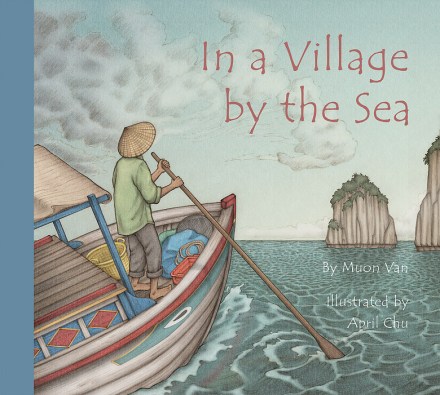
celebrate-picture-books-picture-book-review-in-a-village-by-the-sea-cover

About the Holiday

It may seem appropriate that the origins of this holiday are lost to history, like someone left to languish on a deserted island. But it’s true that—at some time or another—most of us feel marooned without a compass, flailing with decisions about what to do, who to confide in, even who we are. Today is an opportunity to reflect on the direction you are going in life and, if you find you are off course, to steer once more down the right path. It’s comforting to know that someone will be waiting for you when you reach home—wherever that may be.

In a Village by the Sea

Written by Muon Van | Illustrated by April Chu


High on a cliff a small house looks out over the sea, where fishermen are poling their craft and setting their nets. “In that house, high above the waves, is a kitchen.” In the kitchen a warm fire blazes under “a pot of steaming noodle soup.” A woman, preparing ingredients for dinner, watches, mixes, and stirs while the pot simmers.
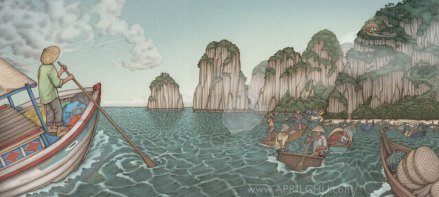
celebrate-picture-books-picture-book-review-in-a-village-by-the-sea-small-house-on-the-cliff

Image copyright April Chu, courtesy of aprilchu.com

“By that woman is a sleepy child, yawning and turning. By that child, tucked in the shadows, is a dusty hole.” If you peer into that hole, you will see something astounding—a brown cricket is “humming and painting.” The cricket, brushes in four hands is surrounded by paints contained in seashells. It is painting a “sudden storm, roaring and flashing.”
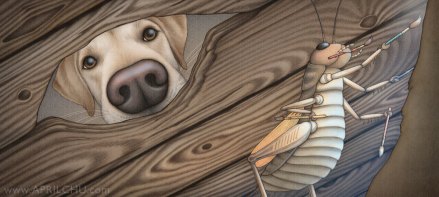
celebrate-picture-books-picture-book-review-in-a-village-by-the-sea-small-house-dog-finds-cricket

Image copyright April Chu, courtesy of aprilchu.com

A white boat rides this roiling sea, rising and dipping with the crashing waves as lightning flashes ahead. Under the cover of the boat’s canvas roof a fisherman eyes the threatening sky and waits for the storm to end. In his hand he opens a precious box. Inside are two pictures: one of a small house high on a hill; the other of a smiling woman holding a little child while their dog looks on. Next to these sits a special cricket.

In the painting there is also a small house, and “in that house is a family waiting for [the fisherman] to come home.”
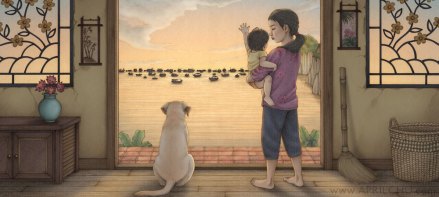
celebrate-picture-books-picture-book-review-in-a-village-by-the-sea-looking-out-the-door

Image copyright April Chu, courtesy of aprilchu.com

Muon Van’s lyrical tale expands and contracts through the eyes of family members to reveal not only the actions and emotions of one afternoon but those that eternally exist in each character’s heart. In the opening page readers view the small house from afar as the husband and father fisherman casts off on his journey. Children are then invited into the kitchen and finally into a small crevice.

Through the cricket’s tiny painting, readers once again see the wider world with its storms and worries. Narrowing the perspective to the fisherman’s view as he looks at his photo box, however, they understand that comfort and reassurance are always close at hand. As the next page zooms out, children are again invited into the little home to join the woman, baby, and vigilant dog as they gaze out into the bay, watching and waiting for one particular boat.

Van’s quiet and simple story holds much universal feeling as it traverses both homey and unpredictable landscapes. As each page depends on the previous one, a gentle suspense builds, enticing readers to follow wherever the story takes them. The inclusion of the “dusty hole,” where a cricket—a symbol of good luck—paints the rest of the story, is irresistible and lends the tale a mystical quality.

celebrate-picture-books-picture-book-review-in-a-village-by-the-sea-on the shore

Image copyright April Chu, courtesy of aprilchu.com

April Chu’s gorgeous paintings transport readers to a Vietnamese fishing village with their delicate and colorful details. The small home glows with the light of paper lanterns and the fire in the stove. As the perspective of the text changes, so does the perspective of Chu’s paintings. When readers peer into the soup pot, bubbling with delicious vegetables, the family’s Labrador gazes up at them, almost begging to know what smells so good. Another bird’s eye view lets kids watch as the dog discovers the hole under the rug, a beautiful device to increase their enjoyment of and wonderment at the story.

Kids will marvel at the cricket’s artistic talent, as the stormy sea churns with whitecaps and lightning flashes from the tip of the small creator’s paintbrush. But it is Chu’s mastery that makes each page so meaningful.

Ages 3 – 10

Creston Books, 2015 | ISBN 978-1939547156

View a porfolio of picture books and other artwork by April Chu on her website!

Marooned without a Compass Day Activity
celebrate-picture-books-picture-book-review-sail-boat-maze

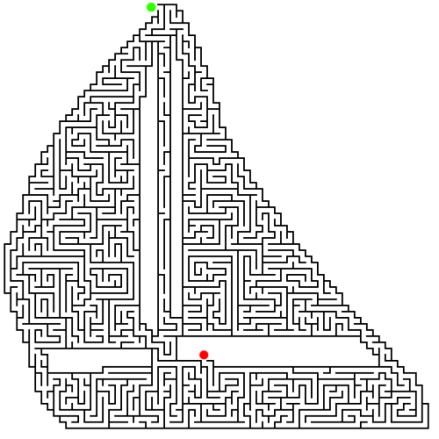
Sailboat Maze


Sometimes getting through a maze is as smooth as sailing on a calm sea—and sometimes the path is a little choppy. Get your pencil ready and chart a path through this printable Sailboat Maze!

Picture Book Review

October 25 – International Artist Day

celebrate-picture-books-picture-book-review-the-noisy-paint-box

About the Holiday

Instituted in 2004 by Chris MacClure, a Canadian artist who specializes in Romantic Realism, National Artist Day celebrates the various forms of art, the artist, and the unique vision each one brings to their work and the world. Whether you like classic or abstract styles, watercolors or oils, sculpture or installations, why not take some time today to visit an art museum or gallery—or page through a collection of prints or a biography like today’s book!

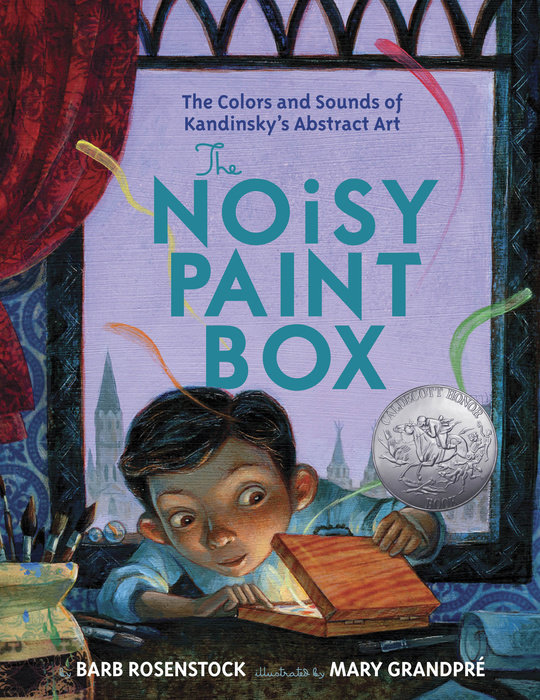
The Noisy Paint Box: The Colors and Sounds of Kandinsky’s Abstract Art

Written by Barb Rosenstock | Illustrated by Mary GrandPré


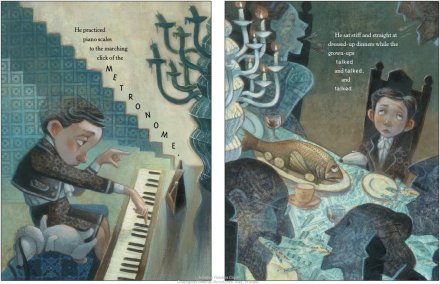
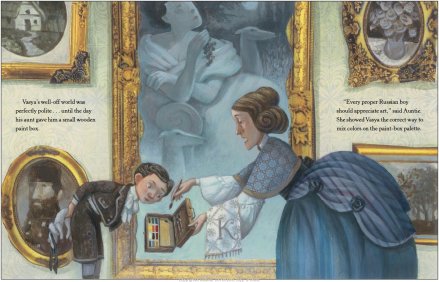
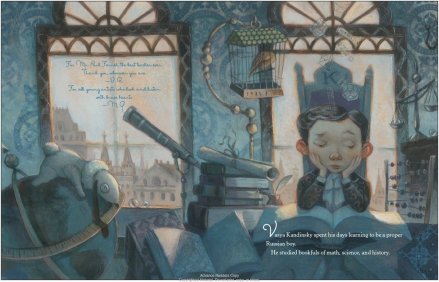
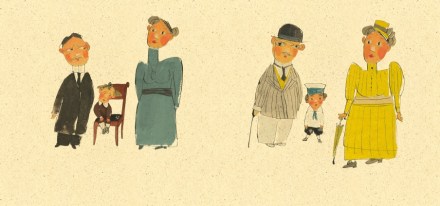
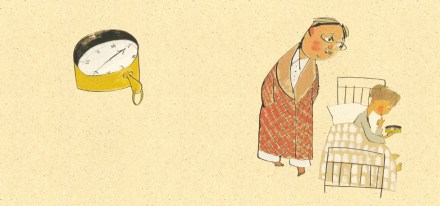
As a Russian child Vasya Kandinsky spends his days absorbed in learning math, science, and history. He takes piano lessons and attends formal dinners where the adults drone on and on. His life is polite, stiff, and colorless until the day his aunt gives him a small wooden paint box. “Every proper Russian boy should appreciate art,” Vasya’s aunt tells him while explaining how to mix colors.

celebrate-picture-books-picture-book-review-the-noisy-paintbox-piano-lessons

Image copyright Mary Grandpré, text copyright Barb Rosenstock. Courtesy of randomhouse.com

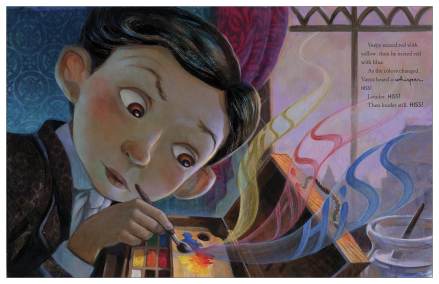
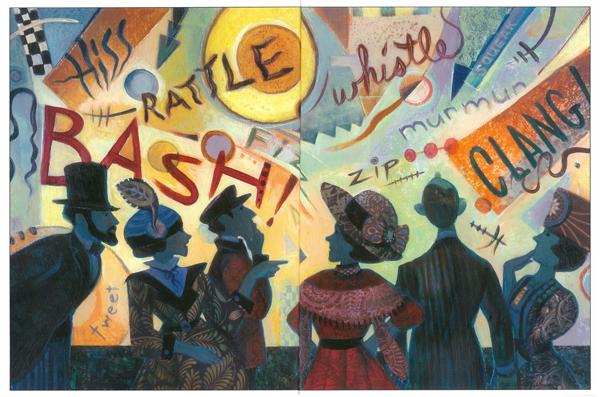
Vasya takes up the brush and combines red with yellow then red with blue. As the colors change to orange and purple, Vasya hears a whisper that grows into a noisy hiss. “‘What is that sound?’” he asks, but no one else hears anything. “The swirling colors trilled like an orchestra tuning up for a magical symphony,” and “Vasya painted the sound of the colors.” A lemon yellow “clinked like the highest notes on the keyboard; a navy blue “vibrated deeply like the lowest cello strings.” Crimsons “blared” and greens “burbled.”

celebrate-picture-books-picture-book-review-the-noisy-paintbox-colors-kandinsky-gets-his-first-paints

Image copyright Mary Grandpré, text copyright Barb Rosenstock. Courtesy of randomhouse.com

Vasya runs downstairs to show his family what he has created. His mother, father, and Auntie look at the canvas with its swoops, shapes, and angles. “What is it supposed to be?” they ask, and send him off to art school to learn how “to draw houses and flowers—just like everyone else.” Vasya finishes school and becomes a lawyer. He leaves his paint box untouched and lives the way he is expected, but the sounds of the colors are always with him.

One evening as he listens to an opera, the music surrounds him with color—“stomping lines of vermilion and coral; caroling triangles in pistachio and garnet; thundering arches of aqua and ebony…” Vasya can hear the colors and see the music. He knows then what he must do. He quits his job teaching law and moves to Germany to be a painter. He surrounds himself with artists and takes classes with famous teachers, and yet people still look at his canvases and asked, “What is it supposed to be?”

celebrate-picture-books-picture-book-review-the-noisy-paintbox-colors-have-sounds

Image copyright Mary Grandpré, text copyright Barb Rosenstock. Courtesy of randomhouse.com

Once again he paints what is expected. His teachers love his houses and flowers, but Vasya does not. His friends understand. They too want to expand the meaning of art. They agree with Vasya when he says, “‘Art should make you feel.’” In his studio Vasya continues to paint the sounds he hears, to give music color and color sound. Bravely, he invites the public to view his paintings, which are named after musical terms—Composition, Accompaniment, Fugue, and more.

This is a new kind of art—abstract art—and it takes a long time before people understand. They look and still ask, “What is it supposed to be?” “It is my art,” Kandinsky replies “How does it make you feel?” 

celebrate-picture-books-picture-book-review-the-noisy-paintbox-colors-kandinsky-at-a-concert

Image copyright Mary Grandpré, courtesy of randomhouse.com

An author’s note telling more about Kandinsky’s life and synesthesia, a genetic condition in which one sense triggers another, follows the story.

In the spirit of full disclosure, Kandinsky is one of my favorite artists, so I was excited to read this biography—I was not disappointed! With so many great artists, their work speaks for itself, but viewers wonder: How did it come about? What influenced the artist? Barb Rosenstock, with lyrical language and beautifully chosen descriptions, reveals the emotions and passion that fueled Kandinsky’s art from his earliest ages: as he walks through Moscow he can’t ignore “the canary-colored mailbox whistling as he rode to work. The scarlet sunset haze ringing above the ancient Kremlin walls.” Rosenstock’s inclusion of the conflicts and opposition Kandinsky faced and overcame will inspire children to listen to their inner voice and makes readers and lovers of his abstract art glad he never gave up.

Mary GrandPré’s unique style brilliantly depicts Kandinsky’s singular vision, allowing readers to experience the way he wielded his paint brush like a conductor’s baton. Vasya’s early life is painted in muted blues and grays, and the boredom on his face as he studies his schoolwork is obvious. Kids will appreciate his one-finger plinking at the piano and the rolled-eyed drowsiness of the formal dinner. Once Vasya is introduced to the paint box, however, GrandPré’s illustrations become vibrant, with swirling colors overlaid with the musical notes that Kandinsky associated with them. His uninhibited painting is gloriously shown as the young boy’s shirt comes untucked and the colors burst from the canvas upon his first painting.

celebrate-picture-books-picture-book-review-kandinsky-studying

Image copyright Mary Grandpré, text copyright Barb Rosenstock. Courtesy of randomhouse.com

As the adults look at his work, the room is again swathed in somber colors. The text revealing that Vasya attended regular art classes to learn to draw houses and flowers is set above a single wilting flower in a vase. The personal tug-of-war Kandinsky experienced even into adulthood is wonderfully rendered: Colors flow into his ears at the opera; he studies his own landscape and still life paintings with misgiving in a hazy studio, and the joy and freedom of his abstract art is demonstrated with wild abandon while a dove escapes its cage. The final image of a child sitting in front of a Kandinsky painting reinforces the idea that his art lives for all and for all time.

Ages 4 – 9

Alfred Knopf, Random House Children’s Books, 2014 | ISBN 978-0307978486

International Artists Day Activity

celebrate-picture-books-picture-book-review-i-love-art-word-search

I Love Art! Word Search 


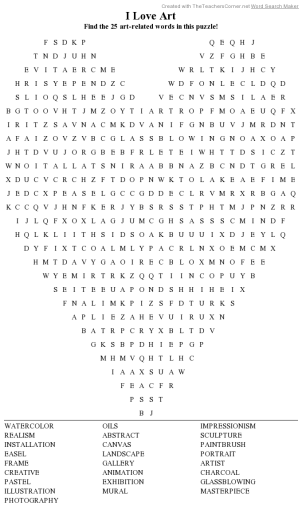
There are twenty-five art-related words for everyone to love in this printable I Love Art! word search puzzle! Here’s the Solution!

Picture Book Review

October 24 – United Nations Day

celebrate-picture-books-picture-book-review-welcome-barroux-cover

About the Holiday

Founded in the aftermath of World War II to promote cooperation among all nations and prevent another devastating conflict, the United Nations is an intergovernmental organization whose purpose has grown to include encouraging social and economic development, protecting human rights, and providing aid in times of natural disasters, famine, and war. Today’s holiday commemorates the establishment of the UN and advocates the remembrance and implementation of its principles for this and future generations.

Welcome

By Barroux


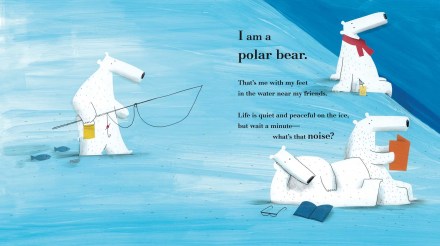
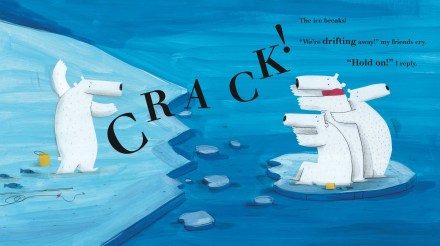
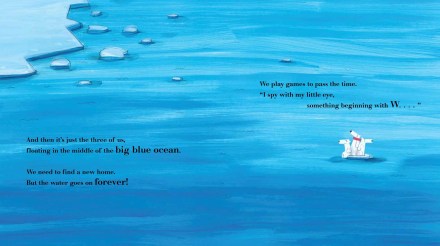
A polar bear sits on the edge of an ice floe enjoying some relaxing time with his friends when he hears an ominous noise. “CRACK! The ice breaks! ‘We’re drifting away!’” his friends cry. In no time at all the three polar bears are adrift in the middle of the sea in need of a new home. They float and float, but “the water goes on forever!” To pass the time the friends play games: “‘I spy with my little eye, something beginning with W…’”

celebrate-picture-books-picture-book-review-welcome-barroux-polar-bears-relaxing

Copyright Barroux, courtesy of little bee books and simonandschuster.com

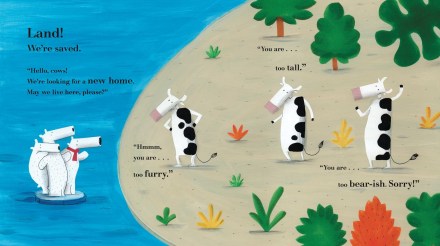
Perhaps days go by. The bears ride out a storm with dark skies and huge waves that threaten to sink them. It’s scary and the trio wants “to find a new home right now!” At last their ice floe—smaller now—approaches a sandy shore. “Land! We’re saved,” cheer the polar bears. They ask the cows on the beach if they can live there, but the cows take exception. The bears are “too furry…too tall…and too bear-ish.” And with a “Sorry!” the cows turn the weary travelers away.

celebrate-picture-books-picture-book-review-welcome-barroux-ice-breaks-away

Copyright Barroux, courtesy of little bee books and simonandschuster.com

Once again on their own, the bears have no choice but to let the current steer them. With standing room for only one their icy raft, they near another beach where a single panda relaxes on pillows in the midst of expansive land. “Yes! This could be our new home,” the polar bears shout. The panda ponders the situation for only a moment before stating, “‘…you are too many. Look around, there’s just not enough room! You can’t live here.’”

celebrate-picture-books-picture-book-review-welcome-barroux-polar-bears-meet-cows

Copyright Barroux, courtesy of little bee books and simonandschuster.com

As the polar bears continue on their journey, their “little ice boat has almost melted” and they are running out of time. They bob next to a tall sea wall. “‘Help us!’” they plead. Behind the wall two giraffes lounge on the beach, too lazy to investigate the noise they hear. The ice floe has melted to a thin disk, with room for only one. The bears are hanging on and about to give up hope when they find an empty island. They jump to shore just in the nick of time and begin enjoying their new home.

celebrate-picture-books-picture-book-review-welcome-barroux-polar-bears-adrift

Copyright Barroux, courtesy of little bee books and simonandschuster.com

It’s not long before a dinghy floats into view with three monkeys on board. “‘Excuse me, we’re looking for a new home. Can you help us please?’” The polar bears stop their game of badminton and step forward. “‘Hmmm,’” they think. “‘You are…

Welcome!’”

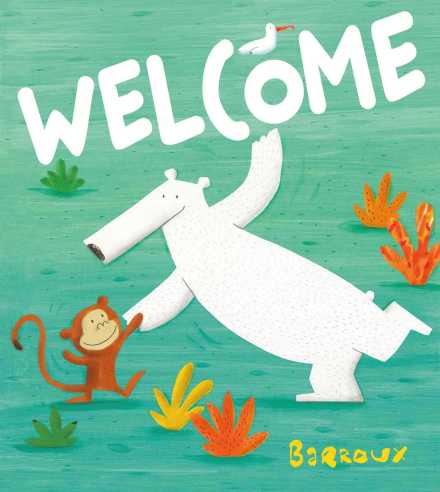
With vibrant blue, full-bleed pages as wide open as the sea itself and three endearing long-nosed polar bears, Barroux has crafted a poignant tale with depth and far-reaching applications for readers of all ages. Inspired by the Syrian refugee crisis, Welcome stands on its own as an uplifting story of friendship and inclusiveness, but also offers an excellent means for beginning a discussion on the world events that children see and have questions about. Employing a bear’s first person point of view and incorporating a child-centric perspective on travel—from the humor of the I Spy game to the perseverance of the bears—Barroux sets just the right tone for his audience.

With sparse text and repetition of the bears’ simple request, the subject matter is handled with sensitivity, not fright, which allows children to understand that the theme of the story is relevant on many levels. Whether the “traveler” comes from near or far, is a classmate, teammate or neighbor, or is even the reader or someone else feeling adrift in a certain situation, children will see that all deserve welcome.

Ages 4 – 8

little bee books, 2916 | ISBN 978-1499804447

United Nations Day Activity

celebrate-picture-books-picture-book-review-UN-day-puzzle

Give Me Your Hand! Puzzle


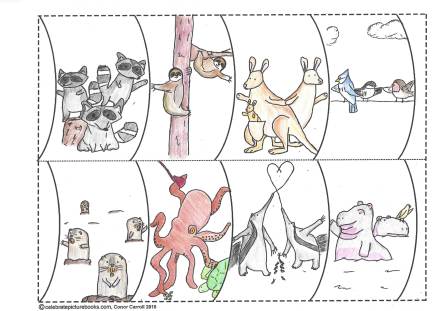
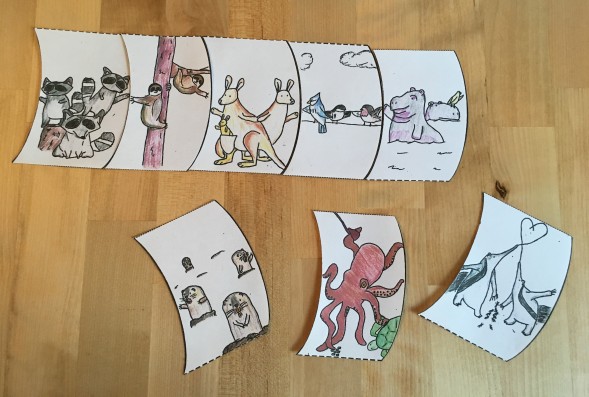
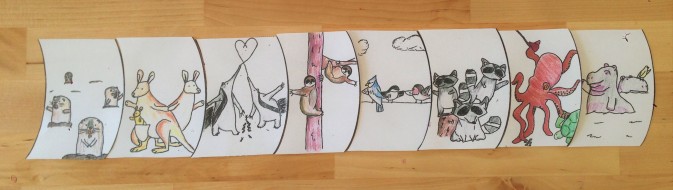
In this printable Give Me Your Hand! Puzzle, everyone is welcomed with a handshake. Offering friendship to all, the interchangeable pieces can be mixed and matched as the animals become buddies with one another.

Supplies

celebrate-picture-books-picture-book-review-UN-day-puzzle

Copyright Conor Carroll, courtesy of celebratepicturebooks.com

Directions

  1. Print the puzzle: to make the puzzle sturdier: Print on heavy stock paper or glue the page to poster board
  2. Color the pictures with colored pencils or crayons
  3. Cut the pieces apart
  4. Switch the pieces around to make many alternate pictures
celebrate-picture-books-picture-book-review-UN-day-puzzle

Copyright Conor Carroll, courtesy of celebratepicturebooks.com

Picture Book Review

Picture Book Review

October 22 – Smart is Cool Day

celebrate-picture-books-picture-book-review-on-a-beam-of-light-cover

About the Holiday

There are many ways to be smart—and they are all very cool! The world needs people who can think differently about all issues to solve problems, create art and literature that reflects our times and present alternate viewpoints, and just to make life funnier, more poignant, more beautiful,more  livable. Today, celebrate your particular way of being smart and share it with others!

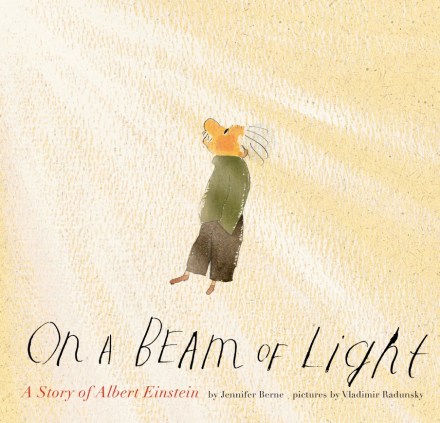
On a Beam of Light: A Story of Albert Einstein

Written by Jennifer Berne | Illustrated by Vladimir Radunsky


More than 100 years ago on a windy March day, a baby boy was born—Albert was his name. Albert turned one without saying a word. When Albert had his second birthday, he still hadn’t said a word. By the age of three Albert had only said a few words. “He just looked around with his big, curious eyes. Looked and wondered. Looked and wondered.” Albert’s parents were a bit worried because he was so different from other kids. But “they loved him…no matter what.”

celebrate-picture-books-picture-book-review-on-a-beam-of-light-albert-as-child

Image copyright Vladimir Radunsky, courtesy of chroniclebooks.com

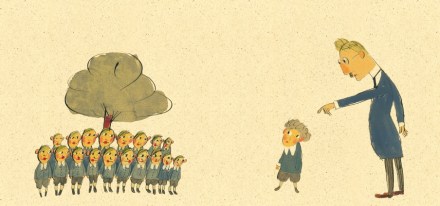
Once when Albert was sick, his father brought him a compass. As he watched the needle automatically spin to point north, “Albert was so amazed his body trembled. Suddenly he knew there were mysteries in the world—hidden and silent, unknown and unseen.” Albert began asking questions wherever he went. His teachers told him he was a “distraction” and that “he would never amount to anything if he didn’t behave like all the other students.” But Albert didn’t want to be like other kids.

celebrate-picture-books-picture-book-review-on-a-beam-of-light-albert-gets-compass

Image copyright Vladimir Radunsky, courtesy of chroniclebooks.com

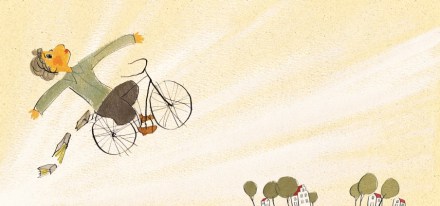
While on his bicycle one afternoon, Albert wondered what it would be like to ride a beam of sunlight. He was excited by this idea and it filled him with questions. He began to study light and sound, heat, magnetism, and gravity. He also read about numbers, which to him were like a secret language. Still, Albert had many more questions. After college he wanted to teach the subjects he loved, but he couldn’t find a job.

Instead, he went to work for the government. His job left him a lot of time to ponder his questions. He watched sugar dissolve in tea and smoke disperse in the air and wondered how that happened. Albert realized that everything is made of tiny particles. While many people didn’t believe it, Albert’s work helped prove the existence of atoms.

celebrate-picture-books-picture-book-review-on-a-beam-of-light-albert-at-school

Image copyright Vladimir Radunsky, courtesy of chroniclebooks.com

Next Albert considered motion and how everything is always moving. “Even sound asleep we’re moving, as our planet circles the sun, and our lives travel into the future. Albert saw time and space as no one ever had before.” He wrote about his theories and sent the articles to magazines that published them all. Scientists asked him to join their research and teach with them. People began to call Albert a genius. Now he could spend all his time thinking, wondering, and imagining—doing what he loved.

His ideas took in huge things—like planets—and infinitesimal things—like the particles inside atoms. To help him think, Albert sailed his little boat and played his violin. Even the kinds of clothes he wore—or didn’t wear—affected his thinking. He loved baggy pants, over-sized sweaters, and NO socks! He was easily recognized around town by his long, white hair.

celebrate-picture-books-picture-book-review-on-a-beam-of-light-albert-riding-bike

Image copyright Vladimir Radunsky, courtesy of chroniclebooks.com

During all these years Albert never forgot about that beam of light he once wanted to ride. He “figured out that no person, no thing, could ever zoom through space as fast as a beam of light.” If that could occur “crazy things” would happen. While only minutes would pass for the traveler, years would go by for those left on earth. This sounded like a ridiculous idea, but since then it has been proven true.

Albert Einstein continued reflecting on the world until the day he died. He asked and answered many questions that had never been posed before. But he also left many, many questions for other generations—maybe even you!—to discover and solve.

Jennifer Berne’s engaging biography of Albert Einstein is a charming and absorbing look at one of the most unique thinkers in history. Her uplifting, conversational storytelling and well-chosen anecdotes from Albert’s childhood and adulthood will keep kids riveted to the story and show them that while Albert Einstein’s ideas may have been out of this world, he was also very much down to earth. On a Beam of Light introduces readers to this fascinating scientist and will also inspire them to find the genius inside themselves.

celebrate-picture-books-picture-book-review-on-a-beam-of-light-atoms

Image copyright Vladimir Radunsky, courtesy of chroniclebooks.com

The childlike, offbeat goache, pen, and ink illustrations of Vladimir Radunsky lend the right amount of lightness and movement to each page, depicting not only Albert and his surroundings but also the endless musings that filled his mind and his days. As Albert grows from a baby to a child, his loving and understanding parents stand by and encourage his gifts; he and his bicycle rocket off on a beam of light; and numbers swirl through the air as Albert rests his head on a stack of books. In a restaurant other patrons are portrayed as simple line drawings, putting the focus on Albert as he ponders a dissolving sugar cube, a device that is used to also depict Albert’s thoughts and scientists of the future who have proven his theories correct. When Albert discovers atoms, he and a family portrait are rendered in dots. The muted colors, mottled paper, and period details allow readers to fully appreciate Albert’s Einstein’s story and contributions.

An Author’s Note and further paragraphs about Einstein’s thought experiments, playful nature, pacifism, and most famous equation, as well as a list of resources follow the text.

On a Beam of Light is a wonderful addition to home libraries for children interested in science, math, ideas, history, and creativity in general. Jennifer Berne’s emphasis on the support Albert received from his parents and his ultimate acceptance within the science community is also welcome comfort for kids who do think differently.

Ages 4 – 9

Chronicle Books, 2016 (paperback) | ISBN 978-1452152110

To view more books by Jennifer Berne, plus pictures by her readers and more, go to her website!

Visit Vladimir Radunsky’s website to see a gallery of his books with pictures!

Smart is Cool Day Activity

celebrate-picture-books-picture-book-review-smart-is-cool-writing-template

I’m Smart Because…


In what way are you smart? Draw a picture or write about your special talent on this printable I’m Smart Because…page.

Picture Book Review

October 19 – Global Dignity Day

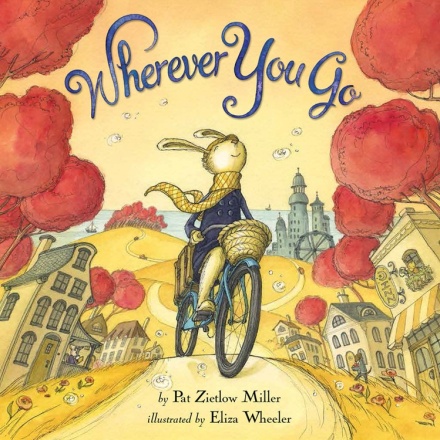
celebrate-picture-books-picture-book-review-wherever-you-go-cover-image

About the Holiday

Established in 2008, Global Dignity Day aspires to inspire and educate young people to understand their self-worth and achieve their goals. Events take place in schools in the Americas, Europe, Asia, the Middle East, Africa, and Oceania. On this day speakers from all walks of life speak to children, revealing experiences from their life and work as it relates to dignity and a sense of self-respect, accomplishment, and interconnectedness.

Students then talk among themselves about what dignity means to them, and many speak their thoughts in front of the class. Following this they write letters to themselves outlining their feelings and aspirations. The letters are collected and handed back to them on the next Global Dignity Day so each child can assess how their life has changed and whether they have achieved their goals or are working toward them.

Today take some time to measure your own sense of dignity and to set goals. Discuss the issue with your child or children and make sure they know that whatever road they choose, they deserve dignity and the opportunities to achieve their full potential.

Wherever You Go

Written by Pat Zietlow Miller | Illustrated by Eliza Wheeler


“When it’s time for a journey, to learn and to grow, / roads guide your footsteps wherever you go. / Roads give you chances to seek and explore. / Want an adventure? / Just open your door.”

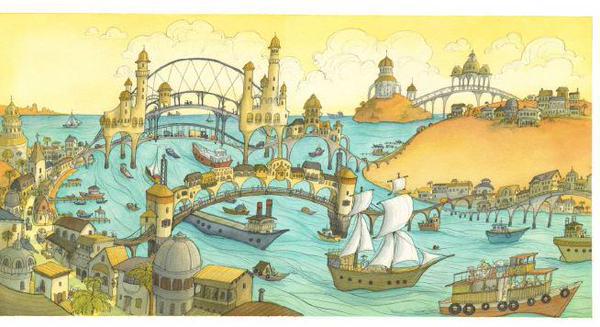
So opens this lovely, inspirational picture book that looks at life through the metaphor of those sometimes straightforward, sometime winding, but always intriguing roads. In these pages “Roads…go” over hills, under bridges, and through valleys. They can take you past vast seas and small streams. “Roads…zoom” through brightly lit cities, and “bend,” taking you on detours “you wouldn’t expect, / showing you various ways to connect.”

Roads can bring you closer to your dreams, but also veer away, giving you choices “To go? / Or to stay?” “Roads…reach” from shore to shore or mountain to mountain, “attaching two places that once were apart.” You can “choose to cross over. Follow your heart.” Some roads are small—only built with one lane, but they merge with another “and the two become one.”

celebrate-picture-books-picture-book-review-wherever-you-go-roads-reach

Image copyright Eliza Wheeler, courtesy of hachettebookgroup.com

With time and change “Roads…grow,” becoming longer and wider and more populated with people you know and those you don’t—yet. Often “Roads…wait. For click-clacking trains / and boats with tall sails. / Slow-going hay wagons carrying bales. / Stoplights and crosswalks, a deer with a friend. / Roads sometimes pause, or just come to an end.”

Roads also rise to dizzying heights and the sense of accomplishment is well worth the climb. From on top “Roads…remember. Every life landmark, the big and the small. / The moments you tripped, the times you stood tall.” At last when you’re ready there are roads that will help you find your way home. So… “Which path should you choose? / That’s easy to see. / The one that will take you / where you wish to be.”

Pat Zietlow Miller’s lyrical journey down the paths life presents is an enchanting quiet-time and story-time read. Wherever You Go also offers parents, caregivers, and teachers a wonderful opportunity to discuss the concepts of self-confidence and self-respect and also the idea that life is made up of many different experiences that can be accepted or rejected like alternate routes on a map. Miller’s rhymes flow as smoothly as an wide open country road, soaring and winding on her exquisite descriptions and word choice. Adult readers may well find a catch in their throat as they read the last line to their children.

Eliza Wheeler captures not only the literal meanings of the lines in Wherever You Go, but also the heart and thoughts of life’s travels. Her softly hued watercolor-and-ink illustrations glow with the promise and possibilities encountered on life’s roads. Intricate details fill every page to show readers that their journeys are shared. Children will enjoy following the main character, a rabbit who rides a bike along a chosen path, but they will also love keeping track of traveling companions met along the way.

Wherever You Go is a fabulous book for all children and makes a wonderful gift for baby showers, new babies, and graduations. The gender-neutral text offers inclusiveness for all.

Ages 4 – 9 (and up)

Little Brown and Company, 2015 | ISBN 978-0316400022

Discover more about Pat Zietlow Miller, her books, and her writing life on her website!

View a portfolio of artwork and a gallery of books by Eliza Wheeler on her website!

Before taking off on your journey, watch this Wherever You Go book trailer!

 Global Dignity Day Activity

celebrate-picture-books-picture-book-review-heart-shaped-letter-template

I Love Myself! Heart-Shaped Letter Tempate


Before you start life’s journey and while you travel the roads you choose, it’s important to believe and remember that you are unique, wonderful, talented, and valuable. Children and adults can use this printable heart-shaped I Love Myself! Letter Template to write a letter to themselves or their children about what makes them such a fantastic person and the goals they want to achieve.

Picture Book Review

October 15 -Bridge Day

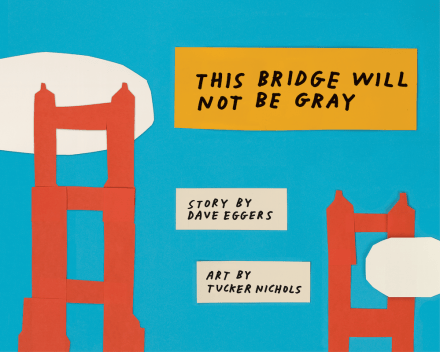
celebrate-picture-books-picture-book-review-this-bridge-will-not-be-gray-cover

About the Holiday

Today’s holiday hosts the largest formalized jumping event in the world and celebrates BASE jumpers, those intrepid souls who test their mettle against the highest points, including buildings, antennas, cliffs, and bridges. Recognized since 1980 Bridge Day is a world-wide event, and while it may not officially be about the bridges, it brings attention to these beautiful architectural marvels while extreme sports aficionados and their fans gather on spans across the globe to have fun.

This Bridge Will Not Be Gray

Written by Dave Eggers | Illustrated by Tucker Nichols


“In the beginning there was a bridge.” Well, to back up a bit there was a bay that led to the Pacific Ocean. The opening between the two shores that enclosed the bay was called the Golden Gate. “On one side of the Golden Gate was the Presidio, a military base at the top of the city of San Francisco. On the other side there were only hills, green and yellow, rising high above the sea.” Beyond these hills towns dotted the coastline.

People traveled between these shores by boat or by driving way out of their way. Many times people had thought about building a bridge across the bay, but they were afraid it would ruin the beauty of the land. At last it was decided that a bridge should be built. The year was 1928 and Joseph Strauss, an expert on bridges, was hired to design it. What he came up with looked more like the skeleton of a roller coaster, and while it would be strong, it would also be ugly.

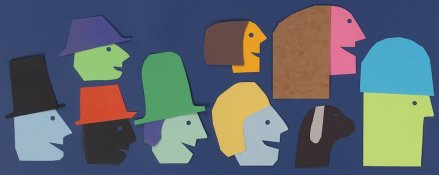
celebrate-picture-books-picture-book-review-this-bridge-will-not-be-gray-people

Image copyright Tucker Nichols, courtesy of mcsweeneys.net

People agreed that for such a beautiful spot, a beautiful bridge was needed. Joseph Strauss then asked for help in developing a plan for the bridge. Leon Moisseiff, known for designing the Manhattan Bridge in New York, came on board. Leon’s idea was for “a suspension bridge, one with swooping lines and tall towers.” The drawings were light and airy and…beautiful. People liked it very much.

“But still the bridge appeared a bit stern in style. So Joseph and Leon asked another person, named Irving Morrow, to help out.” Irving and his wife Gertrude had a different idea about what the bridge could be. With vertical fluting, “art deco flourishes,” pedestrian walkways, and curved lamps lighting the way, “the bridge could be both a bridge and something like art.”

Steelworkers in Maryland, Pennsylvania, and New Jersey built the pieces of the bridge. They were shipped to California by train and by boat. Finally, it was time to construct the bridge. Men had to dive deep into the icy waters of the Pacific Ocean and climb high into the sky while constructing it. It was estimated that it would take 4 years and thousands of workers to finish it.

celebrate-picture-books-picture-book-review-this-bridge-will-not-be-gray-irving-morrow

Image copyright Tucker Nichols, courtesy of mcsweeneys.net

First the tall towers were constructed. The day they were finished was one of “jubilation” and awe as“sometimes the things humans make baffle even the humans who make them. One aspect of the bridge that had not been decided was the color, and many people had opinions on that. “The Navy thought it should be yellow and black so that ships and planes could easily see it.”

“The Army wanted it to look like a candy cane for the same reason the Navy wanted it to look like a tiger with jaundice: so that it would be easily seen by planes and ships.” Most people, though, thought the bridge should be painted black, white, or gray like most other monuments, towers, and buildings. Right now, the bridge was orange—coated with a special anti-rust paint. As Irving Morrow watched the bridge go up, he thought this orange was a beautiful color.

He suggested that the bridge be allowed to stay this color. Others thought he was “nuts.” Never had there been an orange bridge before, “and for a good portion of the human race, because something has not already been, that is a good reason to fear it coming to be.” But the people of San Francisco began to see things Irving’s way. Still, gray seemed to be the safe choice.

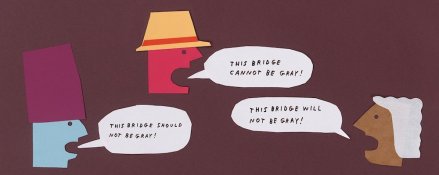
celebrate-picture-books-picture-book-review-this-bridge-will-not-be-gray-people-talking

Image copyright Tucker Nichols, courtesy of mcsweeneys.net

Irving, who was usually a shy and quiet sort, began to get vocal about his color preference as the completion date of the bridge came closer. Other’s began to echo his thoughts and arguments. “This bridge will not be gray!” they said. At last “the powers that be” agreed with Irving. The bridge remained orange: International Orange, in fact.

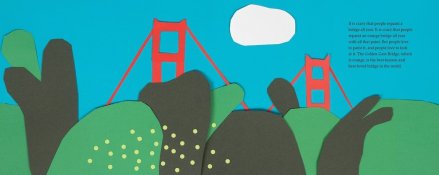
But because the wind, rain, and sun are harsh on the orange bridge, it needs to be repainted every year. Every day some part of it is being painted by dedicated workers. Is that crazy? Maybe, “But people love to paint it, and people love to look at it. The Golden Gate Bridge, which is orange, is the best-known and best-loved bridge in the world” because it is “bold and courageous and unusual and even strange.”

celebrate-picture-books-picture-book-review-this-bridge-will-not-be-gray-golden-gate-bridge

Image copyright Tucker Nichols, courtesy of mcsweeneys.net

San Francisco resident Dave Eggers has written a loving tribute not only about the very distinctive Golden Gate Bridge but to the equally distinctive, quirky, and even courageous Irving Morrow, other architects, and people of the Bay area who saw and championed art where others may only have seen function. Passages of straightforward narration are joined by rivets of whimsically inserted dialogue, soaring description, and moving insight to construct a lyrical story of vision and inspiration that both kids and adults will find fascinating.  

Tucker Nichols’ paper cut illustrations are as playful and full of imagination as a kindergarten classroom. Using simple shapes and a gorgeous palette Nichols crafts portraits, collages, and landscapes that are movingly effective in depicting the San Francisco Bay area, the rising Golden Gate Bridge, and the personalities involved in this fun history of a beloved monument.

This Bridge Will Not Be Gray is a must for school and public libraries, a wonderfully inspiring addition to children’s bookshelves, and a colorful coffee table book for any home.

Ages 4 – 10 and up

McSweeney’s, 2015 | ISBN 978-1940450476

Click here to learn more about Tucker Nichols and his work.

Bridge Day Activity

celebrate-picture-books-picture-book-review-golden-gate-bridge-coloring-page

Golden Gate Bridge Coloring Page


Get out your markers, colored pencils, or crayons and color this printable Golden Gate Bridge Coloring Page!

Picture Book Review

October 7 – Random Acts of Poetry Day

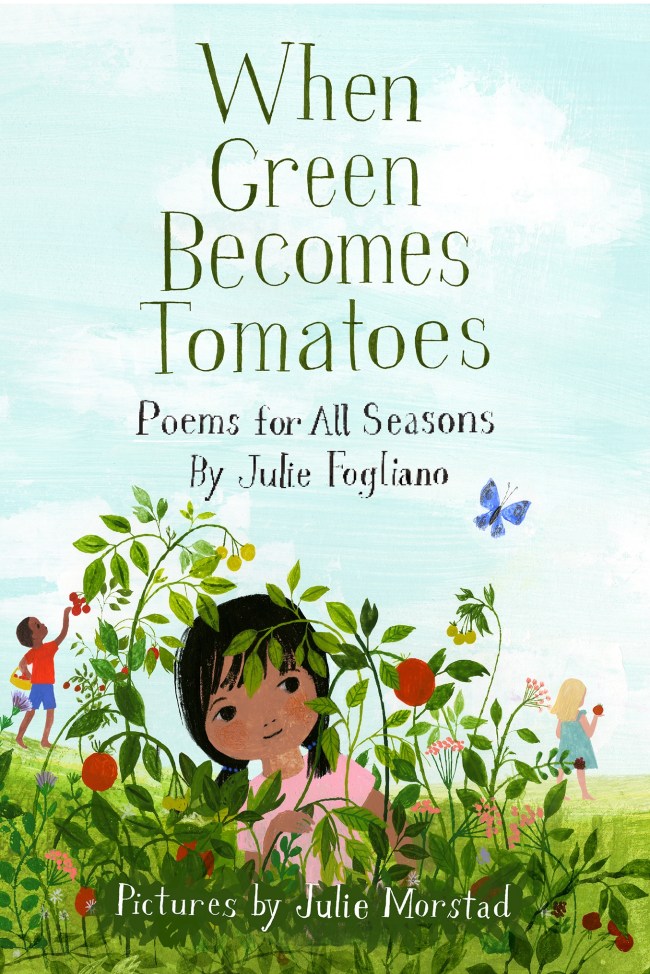
When Green Becomes Tomatoes by Julie Fogliano and Julie Morstad

About the Holiday

Today is the day to unleash your inner poet – without thinking twice about it. What are the words in your heart or in your imagination? Write them down! You don’t have to be Shakespeare for your words, lines, thoughts, jottings – your poems – to have meaning and value. Then share them with family, friends, or even strangers. To celebrate today’s holiday you can also attend a poetry reading or enjoy a volume of verse – like today’s book!

When Green Becomes Tomatoes: Poems for All Seasons

Written by Julie Fogliano | Illustrated by Julie Morstad


Sometimes you wish for just the right words to express a moment in time, a skip of the heart, or a glimpse of color that truly captures the elation, sadness, or awe you feel. Those words live on every page of When Green Becomes Tomatoes: Poems for All Seasons. Each month of the year is represented by three to five dated poems that expose a nugget of inspiration or a spark of recognition about the natural world and our place in it.

Spring begins its reawakening in the poem dated march 20, on which “from a snow covered tree / one bird singing / each tweet poking / a tiny hole / through the edge of winter / and landing carefully / balancing gently / on the tip of spring.”

celebrate-picture-books-picture-book-review-when-green-becomes-tomatoes-spring

Image copyright Julie Morstad, text copyright Julie Fogliano. Courtesy of us.mcmillan.com

Spring is slow in shaking off its winter coat, however, and march 22 finds “just like a tiny, blue hello / a crocus / blooming in the snow” Even though the days continue to dawn chilly and rainy, early flowers long to see the sun. On march 26: “shivering and huddled close / the forever rushing daffodils / wished they had waited.”

With the onset of April and no reprieve from the weather, everyone it seems is tired of the persistence of winter, which sticks around like a party guest who doesn’t know when to go home. On april 3 “today / the sky was too busy sulking to rain / and the sun was exhausted from trying / and everyone / it seemed / had decided / to wear their sadness / on the outside / and even the birds / and all their singing / sounded brokenhearted / inside of all that gray.”

celebrate-picture-books-picture-book-review-when-green-becomes-tomatoes-summer

Image copyright Julie Morstad, text copyright Julie Fogliano. Courtesy of us.mcmillan.com

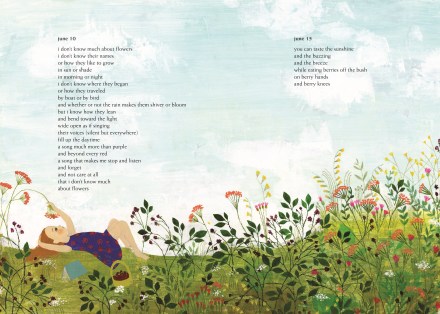
At last summer comes and on june 15 “you can taste the sunshine / and the buzzing / and the breeze / while eating berries off the bush / on berry hands / and berry knees.” The warm days also bring swimming holes and fireflies, and by july 10 “when green becomes tomatoes / there will be sky / and sun / and possibly a cloud or two…” and summer bursts with all the wonder that makes it such a yearned for season. 

Then as summer wanes and the nights grow dark, september 10 makes you look into that deep vast space and think “a star is someone else’s sun / more flicker glow than blinding / a speck of light too far for bright / and too small to make a morning”

celebrate-picture-books-picture-book-review-when-green-becomes-tomatoes-fall

Image copyright Julie Morstad, text copyright Julie Fogliano. Courtesy of us.mcmillan.com

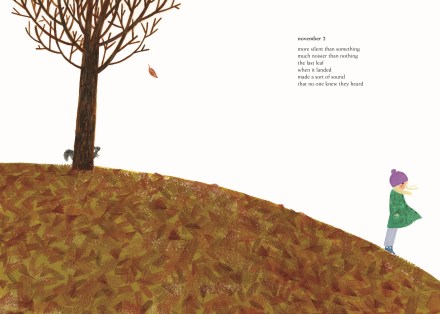
A nip in the air means Fall has come around again. It’s time for sweaters and pumpkins, and for the trees to rest. If you listen carefully, you may hear on november 2 “more silent than something / much noisier than nothing / the last leaf / when it landed / made a sort of sound / that no one knew they heard.”
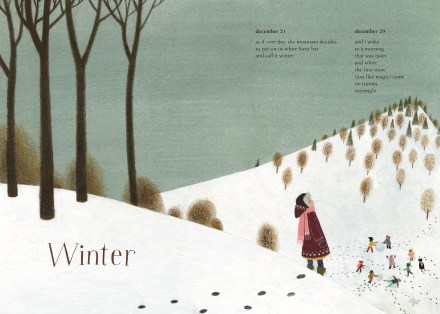
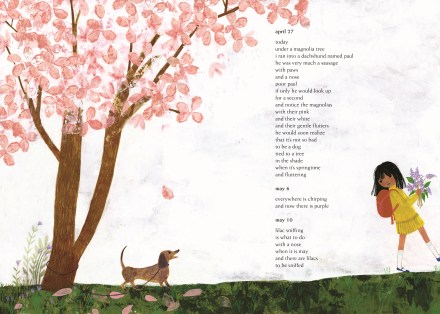
Then on december 21 “as if one day, the mountain decides / to put on its white furry hat / and call it winter” the season has changed, bringing with it crackling, cozy fires and snow, snow, snow. But this too offers its own enchantment on december 29: “and i woke / to a morning / that was quiet / and white / the first snow / (just like magic) came / on tiptoes / overnight.”
celebrate-picture-books-picture-book-review-when-green-becomes-tomatoes-winter

Image copyright Julie Morstad, text copyright Julie Fogliano. Courtesy of us.mcmillan.com

When Green Becomes Tomatoes begins and ends with a poem dated the same day—March 20, the vernal equinox—giving this book a cyclical form that echoes the passing of time. Julie Fogliano’s delicate and gentle poems are a perfect tonic for the busy, non-stop days the year becomes. Instead of letting the surprising, profound, or beautiful moments pass us by Fogliano gives readers a reason and a way to stop and fully enjoy them.  

In Julie Morstad’s gorgeous watercolors of nature and the changing seasons, readers can almost feel the warm sunshine that feeds the vivid spring and summer blooms, the icy breeze that loosens the last leaf of autumn, and the fluffy blanket winter tucks around the earth. The multiethnic children in Morstad’s paintings are thoughtful, charming, and enchanted with the world around them, actively experiencing the marvels of each changing day. 

When Green Becomes Tomatoes contains such lovely verses that readers will want to revisit them over and over – the way the seasons recur and we are always glad to welcome each one back. This volume of poetry would make a wonderful gift and a terrific addition to anyone’s bookshelf.

Ages 6 and up (adults will enjoy these poems too)

Roaring Brook Press, 2016 | ISBN 978-1596438521

You can connect with Julie Fogliano on Facebook!

You’ll find a gallery of picture books, prints, and other illustrations on Julie Morstad‘s website!

Random Acts of Poetry Day Activity

CPB - Plant Poem


Grow a Poem Craft


A poem often grows in your imagination like a beautiful plant—starting from the seed of an idea, breaking through your consciousness, and growing and blooming into full form. With this craft you can create a unique poem that is also an art piece!

Supplies

  • Printable Leaves Template, available here and on the blog post
  • Printable Flower Template, available here and on the blog post
  • Wooden dowel, ½-inch diameter, available in craft or hardware stores
  • Green ribbon
  • Green craft paint
  • Green paper if leaves will be preprinted
  • Colored paper if flowers will be preprinted
  • Flower pot or box
  • Oasis, clay, or dirt
  • Hole punch
  • Glue
  • Markers or pens for writing words
  • Crayons or colored pencils if children are to color leaves and flowers

Directions

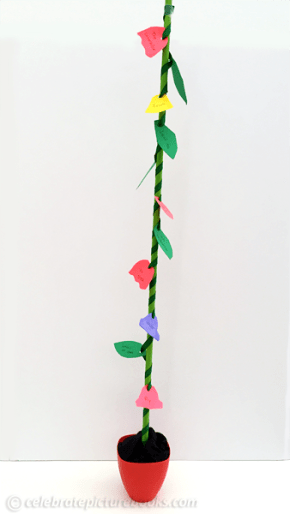
  1. Paint the dowel green, let dry
  2. Print the leaves and flower templates
  3. Cut out the leaves and flowers
  4. Punch a hole in the bottom of the leaves or flowers
  5. Write words, phrases, or full sentences of your poem on the leaves and flowers (you can also write the poem after you have strung the leaves and flowers)
  6. String the leaves and flowers onto the green ribbon (if you want the poem to read from top to bottom string the words onto the ribbon in order from first to last)
  7. Attach the ribbon to the bottom of the pole with glue or tape
  8. Wrap the ribbon around the pole, leaving spaces between the ribbon
  9. Gently arrange the leaves and flowers so they stick out from the pole or look the way you want them to.
  10. Put oasis or clay in the flower pot or box
  11. Stick your poem pole in the pot
  12. Display your poem!

Picture Book Review