September 16 – It’s Classical Music Month

celebrate-picture-books-picture-book-review-hana-hashimoto-sixth-violin-cover

About the Holiday

Classical music has been an inspiration since the earliest instruments were created. The talent and imagination of great composers of the past has been passed down from generation to generation of music lovers, influencing new music all along the journey. To celebrate this month’s holiday, take in a classical music concert or performance or listen to your favorite (or a new) classical music station. If you’ve always wanted to learn to play the piano, violin, or other instrument, take the opportunity this month to sign up for lessons!

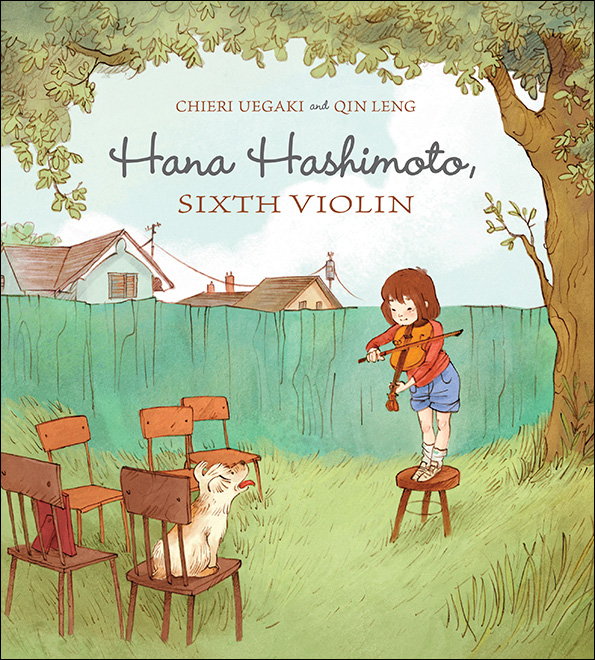
Hana Hashimoto, Sixth Violin

Written by Chieri Uegaki | Illustrated by Qin Leng


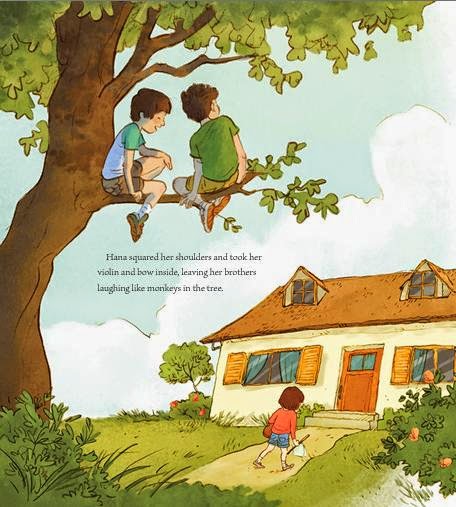
When Hana Hashimoto told her brothers that she had signed up to play her violin in the talent show, they laughed.  “‘That’s just loopy,’” Kenji said, and Koji added ‘‘You can barely play a note.’” They reminded her that it was a talent show and that she was just a beginner. But Hana didn’t listen. “It was true that she was still a beginner. She had only been to three lessons.” But playing the violin was in her blood. Her grandfather, Ojiichan, had once been Second Violin in a symphony orchestra in Kyoto, Japan and had even played for the Imperial Family.
celebrate-picture-books-picture-book-review-hana-hashimoto-sixth-violin-brothers-in-tree

Image copyright Qin Leng, 2014, text copyright Chieri Uegaki, 2014. Courtesy of Kids Can Press.

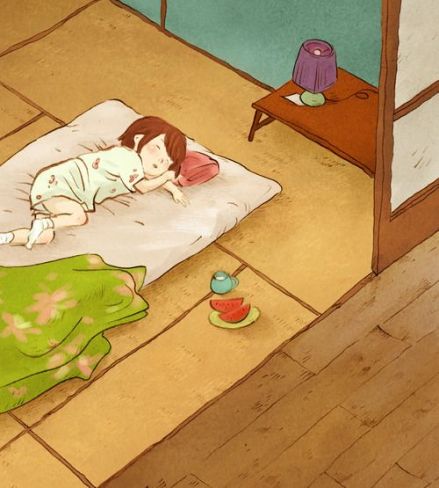
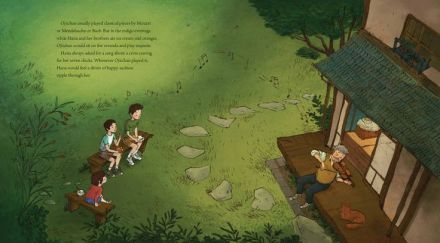
Hana had visited her grandfather that summer, and the sweet notes of his playing had coaxed “her awake as gently as sunshine” every morning. In the evenings her grandfather would take requests from Hana and her brothers. “Hana always asked for a song about a crow cawing for her seven chicks. Whenever Ojiichan played it, Hana would feel a shiver of happy-sadness ripple through her.”
celebrate-picture-books-picture-book-review-hana-hashimoto-sixth-violin-hana-sleeping

Image copyright Qin Leng, 2014, text copyright Chieri Uegaki, 2014. Courtesy of Kids Can Press.

Ojiichan’s playing was like magic. He could make the violin chirp like crickets, plink like falling raindrops, and send fireflies dancing. At the end of the summer, Hana had decided she also wanted to play the violin and her parents agreed. Hana practiced every day even though her brothers ran away with their hands over their ears. She played for her parents, for her dog, JoJo, and for a photograph of Ojiichan. Sometimes she pretended to play for “an audience so appreciative they called for encore after encore.”

On the night of the talent show, Hana waited backstage for her turn “with a walloping heart.” Five other violinists had already gone before her. Finally, she heard her name. As she strode across the stage as wide as a desert, she had a fleeting feeling that her brothers had been right—that her performance was going to be a disaster. But when she reached her spot near the microphone and gazed out at the audience, she saw her best friend and her parents smiling at her.
celebrate-picture-books-picture-book-review-hana-hashimoto-sixth-violin-listening-to-grandfather

Image copyright Qin Leng, 2014, text copyright Chieri Uegaki, 2014. Courtesy of Kids Can Press.

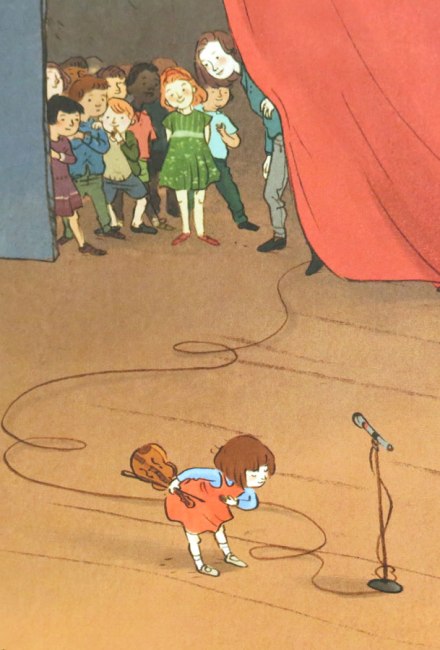
Hana took a deep breath and let it out. Suddenly, “everyone seemed to disappear beyond the light shining down on her like a moonbeam” and she remembered her grandfather’s words: “‘Gambarunoyo, Hana-chan.’ Do your best.” Hana told the audience, “‘This is the sound of a mother crow calling her chicks.’” She “played three raw, squawky notes.” Then she played the yowl of her neighbor’s cat at night and the plucky droplets of rain on a paper umbrella. Hana played a world of special sounds, from buzzing bees to squeaking mice to croaking frogs. When she had finished, she said, “‘And that is how I play the violin.’” Then she took a bow.

Later that night Kenji asked Hana for an encore, and she happily played her piece again. Next year, Hana thought, she might be able to play one of her grandfather’s melodies. Before she went to sleep, Hana played another piece she had been practicing. “She imagined that the notes would drift out through the window, past the bright rabbit moon and beyond, and Ojiichan would hear them and smile.”
celebrate-picture-books-picture-book-review-hana-hashimoto-sixth-violin-hana-bows

Image copyright Qin Leng, 2014, text copyright Chieri Uegaki, 2014. Courtesy of Kids Can Press.

Chieri Uegaki’s gorgeously told story of a little girl’s first performance with her new violin rings true on every page, from her being inspired by her grandfather to her own inspirational performance. Uegaki’s descriptions of the melodies that capture Hana’s heart are as beautiful as the music itself and are a joy to read. Hana’s continued self-confidence in the face of her brothers’ teasing and her own fear is a wonderful lesson for all children. The brothers’ support of Hana after the talent show is a welcome show of familial love, and the touching ending offers encouragement and happiness.

Young readers will love Qin Leng’s evocative illustrations that follow Hana on her musical journey. Notes from the violin pieces Hana admires float from page to page—from her grandfather’s home in Japan to her own room—tying together not only Hana’s fondness for the violin but her love for her grandfather. Beautiful touches, such as an image of Hana reflected in a pastel blue rain puddle and a night sky twinkling with fireflies, mirror the wonder of childhood, when everything is new and possible.

Hana Hashimoto, Sixth Violin is refreshing encouragement for any child engaging in new experiences or activities. The book’s warmth and inventiveness make it a wonderful gift or addition to home libraries.

Ages 4 – 8

Kids Can Press, 2014 | ISBN 978-1894786331

Enjoy this Hana Hashimoto, Sixth Violin book trailer!

Classical Music Month Activity
celebrate-picture-books-picture-book-review-kids-playing-music-find-the-differences

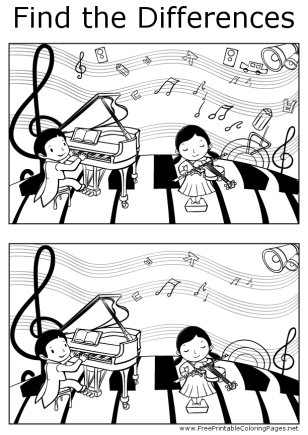
Musical Kids Find the Differences


These two kids are performing a duet! Can you find all of the differences in the second picture on this printable Musical Kids Find the Differences?

Picture Book Review

September 15 – International Dot Day

celebrate-picture-books-picture-book-review-the-dot-cover

About the Holiday

Usually, I match books to existing holidays. Today, though, I have the pleasure of posting a review of a book that established a holiday. On September 15, 2009 teacher Terry Shay introduced his class to Peter H. Reynold’s The Dot. From that one event grew a national and then an international celebration of creativity and the freedom to make art with your heart. All around the world, school children and adults are inspired on this day to make their mark and celebrate creativity, courage, and collaboration.

The Dot

By Peter H. Reynolds


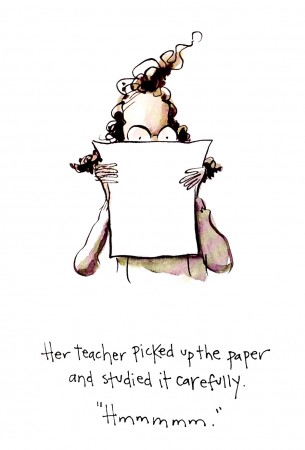
At the end of art class, Vashti looked at her paper. It was still as blank as it was at the beginning of art class. Her teacher came over and took a peek. She saw right away that Vashti had drawn “‘a polar bear in a snowstorm.’” Vashti wasn’t fooled by the joke. “‘I just CAN’T draw,’” she said. But her teacher had a suggestion. “‘Just make a mark and see where it takes you.’”

celebrate-picture-books-picture-book-review-the-dot-vashti-jabs-paper

Copyright Peter H. Reynolds, 2003, courtesy of Candlewick Press.

Vashti jabbed at the paper with a marker, making a dot right in the center. Her teacher studied her drawing carefully then told Vashti to sign it. That, at least, was something Vashti could do. She signed her name and gave the paper to her teacher. At the next week’s art class, Vashti was stunned to see her dot framed and hanging above the teacher’s desk. She looked at the tiny mark and decided that she could do better than that.

celebrate-picture-books-picture-book-review-the-dot-teacher

Copyright Peter H. Reynolds, 2003, courtesy of Candlewick Press.

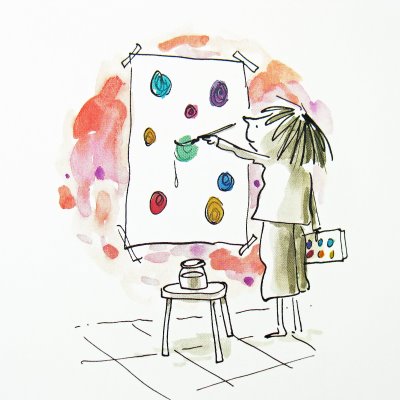
Vashti opened her watercolor set and began. She “painted and painted. A red dot. A purple dot. A yellow dot. A blue dot.” Then she discovered that blue mixed with yellow made a green dot. Vashti went to the easel and began painting lots of little dots in all sorts of colors. She realized if she could make little dots, she could make big dots. She knelt down on the floor with a big piece of paper and a big brush and created a huge dot.

celebrate-picture-books-picture-book-review-the-dot-experimenting-with-dots

Copyright Peter H. Reynolds, 2003, courtesy of Candlewick Press.

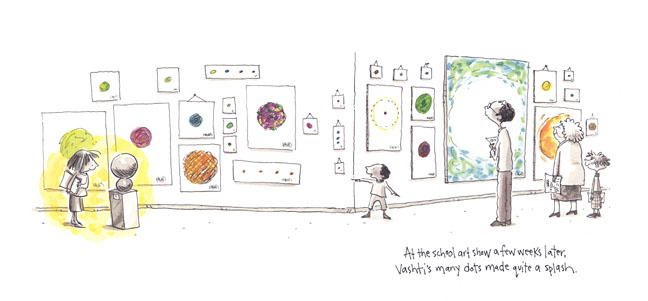
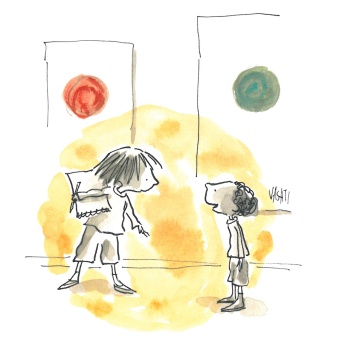
Then on an enormous canvas Vashti “made a dot by not making a dot.” At the school art show, Vashti’s dot paintings covered two walls and were quite a hit. Coming around the corner a little boy spied Vashti. He came close and told her, “‘You’re a really great artist. I wish I could draw.’” Vashti was encouraging, but the little boy said he couldn’t even “‘draw a straight line with a ruler.’”

Vashti wanted to see. She handed the boy a blank sheet of paper. With a quivering pencil, he drew a line and handed the paper back to her. Vashti studied the wavy line for a minute, and then gave the paper back. “‘Please…sign it,’” she said.

celebrate-picture-books-picture-book-review-the-dot-art-show-II

Copyright Peter H. Reynolds, 2003, courtesy of Candlewick Press.

Peter H. Reynold’s classic story of a little girl who believes she can’t draw is inspirational for anyone at any age who listens too closely to that voice in their head that stops them from letting go and doing. Whether it’s painting, writing, changing the décor of one’s house, updating a wardrobe, getting healthy, or even taking a class, the project often seems insurmountable. But what if you could start with a YouTube video, one step, a pair of earrings, a pillow, a word, or…a dot? Reynolds says you can! With his straightforward storytelling, Reynolds gives readers permission to play, experiment, and feel free.

celebrate-picture-books-picture-book-review-the-dot-little-boy

Copyright Peter H. Reynolds, 2003, courtesy of Candlewick Press.

Reynold’s familiar line drawings that sketch out adorable Vashti and her wise teacher are punctuated by the colorful dots that Vashti draws in profusion. Even Vashti, herself, is surrounded by circular auras of color throughout the story, reflecting her talent and creative spirit. The final scene of the art show gallery is a revelation, showing readers that one’s work or life work adds up to an impressive display of the self.

Through and through The Dot is charming, moving, and encouraging. It is a must addition to home libraries, public libraries, and classrooms.

Ages 5 and up

Candlewick Press, 2003 | 978-0763619619

Discover more about International Dot Day, download an Educator’s Guide, and see a gallery of projects on thedotclub.org.

You’ll learn more about Peter H, Reynolds, his books, and his art as well as find lots of inspiration and creative tips on his website!

International Dot Day Activity

celebrate-picture-books-picture-book-review-dots-coloring-page

Decorate the Dots Coloring Page


How would you color these dots? Grab your favorite paints, markers, or crayons and let your imagination fly with this printable Decorate the Dots Coloring Page.

Picture Book Review
 

August 26 – Women’s Equality Day

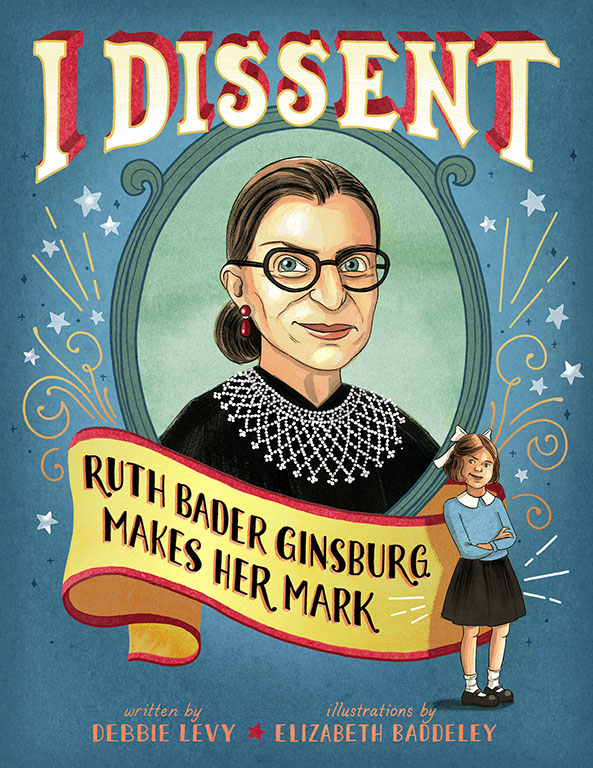
celebrate-picture-books-picture-book-review-i-dissent-cover

About the Holiday

Today’s holiday commemorates the date in 1920 when the 19th Amendment to the Constitution granted women the right to vote. The observance of Women’s Equality Day also calls attention to women’s continuing efforts toward full equality, including equal pay, equal opportunities for education and employment, freedom from discrimination and violence, and equal standing in all communities and situations. Workplaces, libraries, organizations, and public facilities now participate with Women’s Equality Day programs, displays, video showings, or other activities.

I Dissent: Ruth Bader Ginsburg Makes Her Mark

Written by Debbie Levy | Illustrated by Elizabeth Baddeley


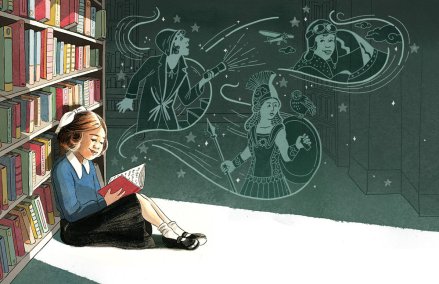
Ruth Bader grew up during the 1940s in Brooklyn, New York’s multicultural neighborhood. It was a time when boys were educated for jobs and bright futures while girls were expected to marry and raise children. Ruth’s mother, Celia Amster Bader, however, “thought girls should also have the chance to make their mark on the world.” She introduced Ruth to books in which she discovered women who used their strength, courage, and intelligence to do big things.

celebrate-picture-books-picture-book-review-i-dissent-in-the-library

Image copyright Elizabeth Baddeley, text copyright Debbie Levy. Courtesy of simonandschuster.com.

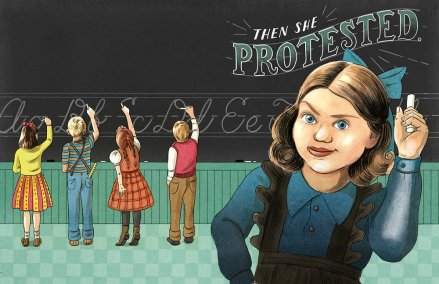
Ruth also saw and felt the sting of prejudice while growing up. Her family was Jewish, and at the time “hotels, restaurants, even entire neighborhoods” denied access to Jews, African Americans, Mexicans, and others. Ruth disagreed and never forgot. She was even discriminated against for being left-handed. In school she was instructed to write with her right hand, but her awkward penmanship earned a D. First, she cried; then she protested by only writing with her left hand—“it turned out she had quite nice handwriting!”

celebrate-picture-books-picture-book-review-i-dissent-in-the-left-handed

Image copyright Elizabeth Baddeley, text copyright Debbie Levy. Courtesy of simonandschuster.com.

During elementary school, Ruth was outstanding in some classes, such as history and English, and did not do so well in others, such as sewing and cooking. Music, especially opera, was another favorite subject—even though she did not have the voice to match her dreams. She excelled in high school and was even chosen as a graduation speaker. But Ruth had been hiding the fact that her mother was very ill. The day before graduation, her mother died. Ruth did not go to her graduation, but she did fulfill her mother’s wish and entered college.

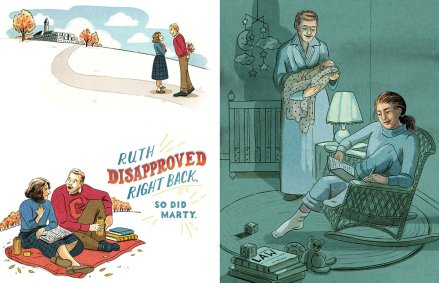
In college Ruth met Marty Ginsberg, and the two fell in love. They both decided to become lawyers to fight prejudice and unfairness in court. People thought this was a great idea for Marty, but disapproved of it for Ruth. “Ruth disapproved right back. So did Marty.” After college they got married, went to law school, and had a baby girl.

celebrate-picture-books-picture-book-review-i-dissent-college

Image copyright Elizabeth Baddeley, text copyright Debbie Levy. Courtesy of simonandschuster.com.

In law school Ruth was one of nine women in a class of 500. She worked hard and tied with another student as first in the class, but after graduation she couldn’t find a job. Employers objected because she was a woman, a mother, and Jewish. Finally, she found work with a judge. Her excellent work for him translated into jobs at one law school after another, and she became “one of the few female law professors in the whole country.”

All around her Ruth saw other women who were denied jobs or paid less than men. Women also had very little voice in courtrooms or in government. Rulings by the Supreme Court, the highest court in America, had helped maintain this inequality. The Court had stated that women were unfit for many jobs because of their “natural and proper timidity and delicacy.” Besides, the Supreme Court also said, “Woman has always been dependent upon man.”

celebrate-picture-books-picture-book-review-i-dissent-in-the-law-school

Image copyright Elizabeth Baddeley, text copyright Debbie Levy. Courtesy of simonandschuster.com.

“Ruth really, really disagreed with this!” So she began fighting in court for equal rights for women. But equal rights for women also meant equal rights for men: Ruth believed men should be able to stay home with children if they wanted to while women worked. “These were fresh ideas in the 1970s. Ruth did not win every case, but she won enough. With each victory, women and men and girls and boys enjoyed a little more equality.”

At home, Ruth’s own family agreed with her. Marty was a successful lawyer and also an accomplished chef who cooked the family’s meals. Ruth went on to become a well-known and well-respected lawyer. President Jimmy Carter asked her to be a judge in Washington DC. Then President Bill Clinton chose her to fill a vacancy on the Supreme Court. “Ruth agreed.”

celebrate-picture-books-picture-book-review-i-dissent-family-life

Image copyright Elizabeth Baddeley, text copyright Debbie Levy. Courtesy of simonandschuster.com.

“In 1993, Justice Ruth Bader Ginsburg became the first Jewish woman on the nation’s highest court.” When the nine justices decide a case, they listen to both sides and then vote. The winning side then writes an opinion explaining their ruling. When Justice Ginsburg votes with the winning side, she wears a special lace collar over her robe. When she does not agree with the ruling, she says, “I dissent” and writes an opinion explaining why. She has a special collar for dissenting too.

Some of her dissensions were influenced by her early experiences. She dissented when “the court wouldn’t help women or African Americans or immigrants who had been treated unfairly at work. She dissented when the court did not protect voting rights for all citizens. She dissented when the court disagreed with schools that offered African Americans a better chance to go to college.” And once when she dissented, Congress and the president agreed with her and overturned the Supreme Court’s ruling.

celebrate-picture-books-picture-book-review-i-dissent-supreme-court

Image copyright Elizabeth Baddeley, text copyright Debbie Levy. Courtesy of simonandschuster.com.

Justice Ruth Bader Ginsburg is now the oldest member of the Supreme Court. Some people think she should retire, but she disagrees. She still has work to do. Over the years, she has “cleared a path for people to follow in her footsteps—girls in college, women in law school, and everyone who wants to be treated without prejudice….Step by step, she has made a difference…one disagreement after another.”

An extensive Author’s Note about Ruth Bader Ginsburg’s life, notes on Supreme Court Cases, and a selected bibliography follow the text.

Debbie Levy’s outstanding biography allows readers to journey with Ruth Bader Ginsburg as her experiences and beliefs lay the foundation for her life’s work. Well-chosen anecdotes from Ginsburg’s childhood make her accessible to kids and may even inspire them to look toward their own futures. Ginsburg’s trajectory from college student to lawyer to judge and finally to the Supreme Court is balanced and uplifting, emphasizing the positive impact of persistence and self-confidence.

Elizabeth Baddeley’s illustrations go hand-in-hand with Levy’s text to fully illuminate the life of Ruth Bader Ginsburg for children. Ginsburg’s intelligence, sense of humor, courage, and principles are evident as she matures from school girl to Supreme Court Justice. Dynamic typography highlights the theme of dissent and disagreement as a force for positive change. The color, expression, and spirit imbued in each page make I Dissent: Ruth Bader Ginsburg Makes Her Mark an exciting and eye-catching read for all children.

I Dissent: Ruth Bader Ginsburg Makes Her Mark is a superb and recommended book for girls and boys. The book’s focus on a woman who continues to make a difference will inspire children and even adult readers to speak up and act on their convictions.

Ages 5 – 9

Simon & Schuster Books for Young Readers, 2016

To learn more about Debbie Levy and her books for children and young adults, visit her website!

Discover a gallery of illustration by Elizabeth Baddeley on her website!

Women’s Equality Day Activity

celebrate-picture-books-picture-book-review-rosie-the-riveter-coloring-page

Rosie the Riveter Coloring Page


Rosie the Riveter became a symbol of strong women during World War II and continues to be an iconic figure today. Print and color this Rosie the Riveter Page then display it to always remember that women can do anything!

Picture Book Review
August 12 – International Youth Month

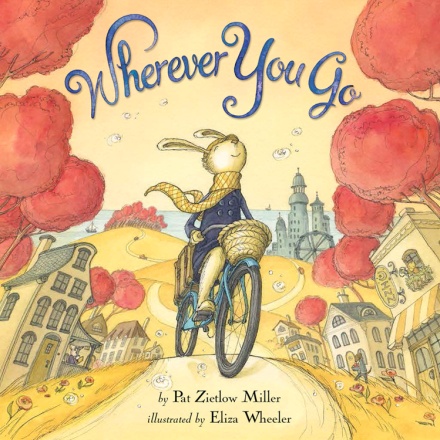
celebrate-picture-books-picture-book-review-wherever-you-go-cover

About the Holiday

International Youth Day was established by United Nations Security Council Resolution 2250 in 2015. Since then there has been “growing recognition that as agents of change, young people are critical actors in conflict prevention and sustaining peace.” The theme for 2017 is Youth Building Peace and celebrates “young people’s contributions to conflict prevention and transformation as well as inclusion, social justice, and sustainable peace.” Children and young adults have many paths to travel as they grow up. We should all work to make the world a better and safer place to live in as they journey through life.

Wherever You Go

Written by Pat Zietlow Miller | Illustrated by Eliza Wheeler


“When it’s time for a journey, to learn and to grow, / roads guide your footsteps wherever you go. / Roads give you chances to seek and explore. / Want an adventure? / Just open your door.”

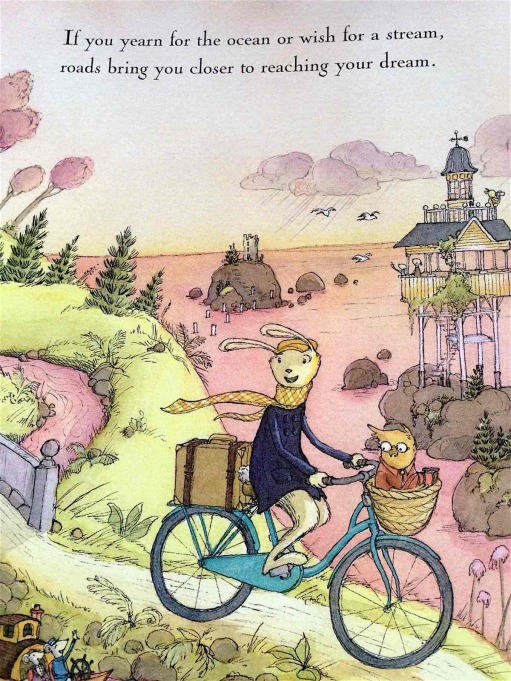
So opens this lovely, inspirational picture book that looks at life through the metaphor of those sometimes straightforward, sometimes winding, but always intriguing roads. In these pages “Roads…go” over hills, under bridges, and through valleys. They can take you past vast seas and small streams. “Roads…zoom” through brightly lit cities, and “bend,” taking you on detours “you wouldn’t expect, / showing you various ways to connect.”

celebrate-picture-books-picture-book-review-wherever-you-go-starting-journey

Image copyright Eliza Wheeler, 2016, text copyright Pat Zietlow Miller. Courtesy of Little Brown Books for Young Readers.

Roads can bring you closer to your dreams or veer away, giving you choices on whether “to go? / Or to stay?” “Roads…reach” from shore to shore or mountain to mountain, “attaching two places that once were apart.” You can “choose to cross over. Follow your heart.” Some roads are small—built with only one lane, but they merge with another “and the two become one.”

celebrate-picture-books-picture-book-review-wherever-you-go-roads-reach

Image copyright Eliza Wheeler, courtesy of hachettebookgroup.com

With time and change “Roads…grow,” becoming longer and wider and more populated with people you know and those you don’t—yet. Often “Roads…wait. For click-clacking trains / and boats with tall sails. / Slow-going hay wagons carrying bales. / Stoplights and crosswalks, a deer with a friend. / Roads sometimes pause, or just come to an end.”

celebrate-picture-books-picture-book-review-wherever-you-go-cliffs

Image copyright Eliza Wheeler, 2015, text copyright Pat Zietlow Miller. Courtesy of Little Brown Books for Young Readers.

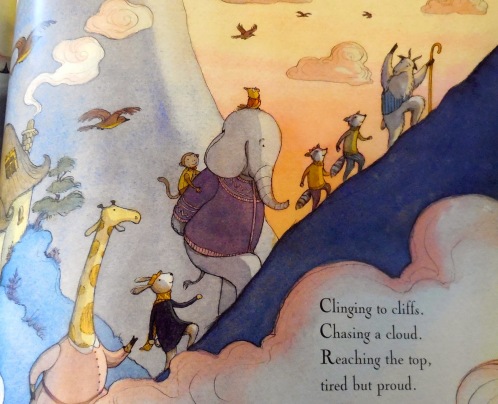
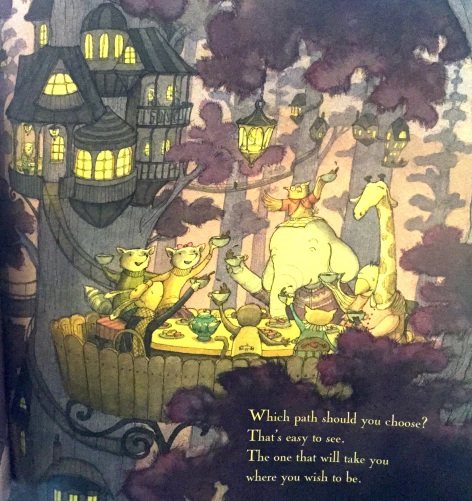
Roads also rise to dizzying heights and the sense of accomplishment is well worth the climb. From on top “Roads…remember. Every life landmark, the big and the small. / The moments you tripped, the times you stood tall.” At last when you’re ready there are roads that will help you find your way home. So… “Which path should you choose? / That’s easy to see. / The one that will take you / where you wish to be.”

celebrate-picture-books-picture-book-review-wherever-you-go-bicycle

Image copyright Eliza Wheeler, 2015, text copyright Pat Zietlow Miller. Courtesy of Little Brown Books for Young Readers.

Pat Zietlow Miller’s lyrical journey down the paths life presents is an enchanting quiet-time and story-time read. Wherever You Go also offers parents, caregivers, and teachers a wonderful opportunity to discuss the concepts of self-confidence and self-respect and also the idea that life is made up of many different experiences that can be accepted or rejected like alternate routes on a map. Miller’s rhymes flow as smoothly as a wide open country road, soaring and winding on her exquisite descriptions and word choices. Adult readers may well find a catch in their throat as they read the last line to their children.

celebrate-picture-books-picture-book-review-wherever-you-go-dinner

Image copyright Eliza Wheeler, 2016, text copyright Pat Zietlow  Miller. Courtesy of Little Brown Books for Young Readers.

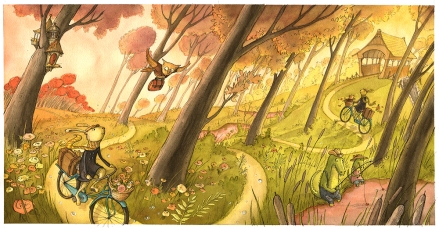
Eliza Wheeler captures not only the literal meanings of the lines in Wherever You Go, but also the heart and thoughts of life’s travels. Her soft-hued watercolor-and-ink illustrations glow with the promise and possibilities encountered on life’s roads. Intricate details fill every page to show readers that their journeys are shared with others. Children will enjoy following the main character, a rabbit who rides a bike along a chosen path, but they will also love keeping track of traveling companions met along the way.

Wherever You Go is a fabulous book for all children and makes a wonderful gift for baby showers, new babies, and graduations. The gender-neutral text offers inclusiveness for all.

Ages 4 – 9 (and up)

Little Brown and Company, 2015 | ISBN 978-0316400022

Discover more about Pat Zietlow Miller, her books, and her writing life on her website!

View a portfolio of artwork and a gallery of books by Eliza Wheeler on her website!

Before taking off on your journey, watch this Wherever You Go book trailer!

International Youth Day Activity

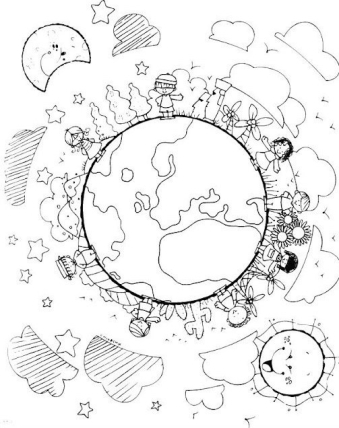
celebrate-picture-books-picture-book-review-kids-around-the-world-coloring-page


Kids around the World Poster


Kids all around the world are working to make the world a more peaceful place. Print, color, and hang this Kids around the World Poster to remind you that you can make a difference through the various roads you choose to take!

Picture Book Review
August 9 – Book Lovers Day

celebrate-picture-books-picture-book-review-ralph-tells-a-story-cover

About the Holiday

Simply stated this is a day when those who love to read can indulge their passion. With so many amazing books available—both new and old—no one could fault you if you call in sick and spend the day reading!

Ralph Tells a Story

By Abby Hanlon


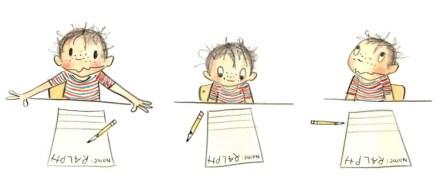
“‘Stories are everywhere!’” Ralph’s teacher sang to her class, but Ralph wasn’t so sure. He didn’t see stories anywhere. It seemed the other kids could make up stories from everything that happened to them, and Ralph’s teacher loved these stories. But when it came time to write, Ralph just stared at his paper or at the ceiling; he could never think of anything. He tried distractions like going to the bathroom or the water fountain, but it didn’t work.

celebrate-picture-books-picture-book-review-ralph-tells-a-story-thinking

Copyright Abby Hanlon, 2012. Courtesy of abbyhanlon.com.

One day Ralph asked his friend Daisy for help. She was surprised that Ralph couldn’t write a story because she had written a bunch about him. One was about the time she combed his hair and another was about when he painted his fingernails black with a marker. In fact she was just stapling all these stories together into a book. Ralph wanted to use the stapler too, but Daisy said he needed a story first.

celebrate-picture-books-picture-book-review-ralph-tells-a-story-classroom

Copyright Abby Hanlon, 2012. Courtesy of Two Lions.

So Ralph “looked for stories out the window, in the aquarium, in [his] desk…and even on the floor.” Lying on the floor reminded Ralph of a time at the park when an inchworm crawled on his knee. Just then his teacher saw him and asked what his story was about. Ralph said the first thing he thought: “Um…um…I saw an inchworm.” His teacher thought that sounded marvelous. But really, Ralph thought, there was no story to tell.

And when Ralph sat down to write it, he immediately got stuck. He asked Daisy to help, but she was too busy writing her own story. Suddenly, the teacher called everyone up to the rug, and she picked Ralph to read his story first. Ralph got up and, clutching his paper to his chest, said, “‘I was at the park and an inchworm crawled on my knee.’” He looked out at the quiet faces gazing up at him.

celebrate-picture-books-picture-book-review-ralph-tells-a-story-on-floor

Copyright Abby Hanlon, 2012. Courtesy of abbyhanlon.com.

Ralph looked at Daisy. She said, “‘Wow! Really? Did it feel squishy, Ralphie? Did you take it home?’” Then everyone started asking questions, and Ralph remembered that something had happened with the inchworm. He began to tell about the day. He had picked up the inchworm and named him Nick. He had “built Nick a house but he just inched away.” Ralph followed Nick and never noticed the baby following him until the baby picked up Nick and put him in his diaper.

celebrate-picture-books-picture-book-review-ralph-tells-a-story-incheworm-story

Copyright Abby Hanlon, 2012. Courtesy of Two Lions.

Ralph asked the baby to give Nick back, but he didn’t. Then Ralph saw Nick escaping from the diaper by crawling up the baby’s belly. He grabbed Nick and ran, and they spent the day playing together. At the end “everybody clapped and cheered” and they wanted to see Ralph’s picture.

Now Ralph is a great writer. He’s written one hundred funny stories and has even drawn covers for some of his favorites. Do you need help writing? Take a few tips from Ralph! 

celebrate-picture-books-picture-book-review-ralph-tells-a-story-story-rug

Copyright Abby Hanlon, 2012. Courtesy of abbyhanlon.com.

Abby Hanlon’s story of a would-be storyteller with writer’s block is as cute as they come. Ralph’s angst at not finding the stories that his classmates seem to pop out so easily will be recognized by anyone who is a bit of a perfectionist when it comes to their endeavors. With gentle humor, Hanlon shows readers that putting oneself out there often turns out okay. Ralph’s inchworm story will keep kids riveted to and giggling over Nick’s fate. Through Daisy, Hanlon also reveals how a good friend can help encourage the kinds of self-confidence that lead to success. Ralph’s writing tips are lighthearted and helpful in getting kids to relax, appreciate their own real-life stories, and open their imaginations.

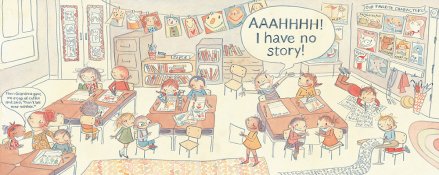
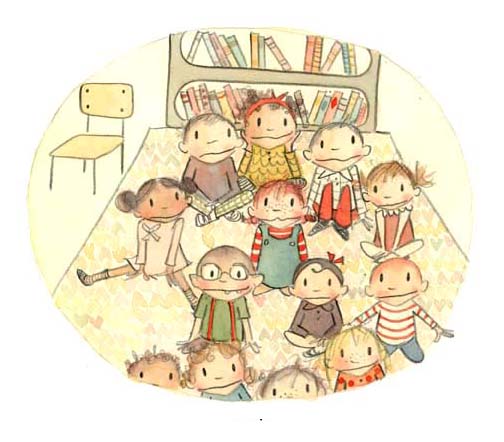
Hanlon’s soft-hued illustrations of a group of adorable, rakish kids draw readers in to Ralph’s creative classroom. Once there, children will want to linger over all the details included. Comics-style dialog bubbles hold humorous asides as well as Ralph’s developing inchworm story. The titles of Ralph’s many stories many inspire kids to make up tales to go with them.

Ralph Tells a Story would be a fantastic classroom book to share during a story-writing unit and a fun addition to home bookshelves for anyone who needs a little encouragement or who loves a funny story.

Ages 5 – 8

Two Lions, 2012 | ISBN 978-0761461807

Book Lovers Day Activity

celebrate-picture-books-picture-book-review-bookworm-bookmark

Bookworm Bookmark


If you love books then you will love this printable Bookworm Bookmark! Just print it out and cut a slit at the mouth. This little worm will happily save your page for you.

Picture Book Review
June 26 – It’s Adopt a Cat Month

celebrate-picture-books-picture-book-review-the-white-cat-and-the-monk

About the Holiday

Just as it sounds, this holiday celebrates all the benefits of owning cat. With so many beautiful breeds of cat to choose from, there’s a perfect pet waiting for you! If you’ve been considering adding a cat or kitten to your family, why not visit an animal shelter and give one – or even two – cats a purr-fect home?

The White Cat and the Monk

Retold by Jo Ellen Bogart | Illustrated by Sydney Smith


In the nighttime a white cat approaches a monastery. He slips through a window and pads along a darkened corridor and down stone steps. He creeps behind a barrel, a vase, and a pitcher standing in a row and adds his shadow to the black mosaic on the floor. He leaps the last few steps and hurries along to the doorway that is leaking a bit of light.

celebrate-picture-books-picture-book-review-the-white-cat-and-the-monk-candle-light

Image copyright Sydney Smith, text copyright Jo Ellen Bogart. Courtesy of Groundwood Books.

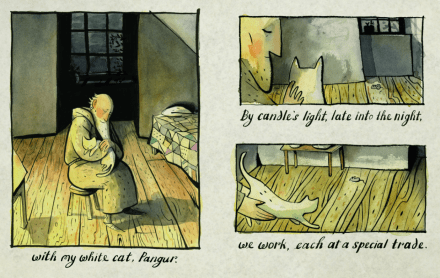
He slips his paw under the door. This a secret signal alerts the occupant of the room, who opens the door to this playful feline. “I, monk and scholar, share my room with my white cat, Pangur,” the old man explains. He lifts Pangur into his arms and strokes him before releasing him to pursue his “special trade.” The monk also returns to his trade—studying ancient manuscripts to understand their meaning.

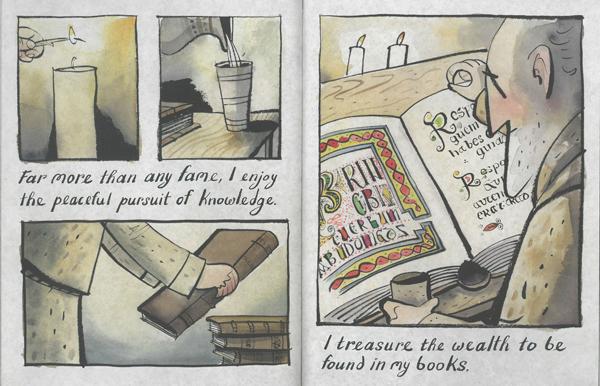
celebrate-pciture-books-picture-book-review-The-White-Cat-and-the-Monk-books

celebrate-picture-books-picture-book-review-the-white-cat-and-the-monk-in-window

The  monk is a dedicated scholar, revealing, “Far more than any fame, I enjoy the peaceful pursuit of knowledge. I treasure the wealth to be found in my books.” Pangur is a dedicated scholar of another kind, studying “the hole that leads to the mouse’s home.” In that moment both man and cat become hunters—one for meaning and the other for prey.

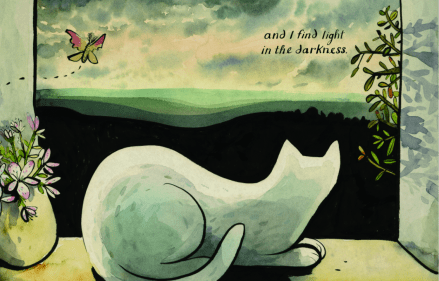
The two do not disturb each other for each is content in his pursuit. Pangur at last “finds his mouse” as the monk finds “light in the darkness.”

celebrate-picture-books-picture-book-review-the-white-cat-and-the-monk-in-window

Image copyright Sydney Smith, text copyright Jo Ellen Bogart. Courtesy of Groundwood Books.

Jo Ellen Bogart’s quiet and graceful retelling of Pangur Bán, a beloved Irish poem from the 9th century is a welcome respite in this age of multitasking and mega-activity. With sparse, but compelling and lyrical language, Bogart uncovers the companionable relationship between the monk and his cat as each follows their heart together.

The fine textured pages of Sydney Smith’s illustrations recall the beauty of parchment as the smooth gray-and-gold line drawings of the monastery’s architecture and characters give way to the vibrant colors of ancient manuscripts and the natural environment. The contentment and friendship of the monk and the cat are sweetly drawn in the characters’ mirrored actions as well as in the depictions of a long-held affection between man and beast in the panels of the manuscript the monk studies. As the monk states, “Ours is a happy tale.”

Reassuring and reaffirming, The White Cat and the Monk honors the individual challenges and quests that make us who we are and would be a wonderful addition to regular quiet-time reading.

Ages 4 and up (this book will be enjoyed by both children and adults)

Groundwood Books, House of Anansi Press, 2016 | ISBN 978-1554987801

You’ll find a gallery of artwork by Sydney Smith on his tumblr!

Adopt a Cat Month Activity

celebrate-picture-books-picture-book-review-cat-toy

Fishing for Playtime Cat Toy


Cats love to chase after bouncing, sliding objects, and they love fish. While this toy may not taste as good as fish, it sure smells better and doesn’t require worms or hooks to attain!

Supplies

  • Old or new child’s sock
  • Fiber Fill
  • Yarn or string
  • Fabric paint or markers
  • Small bell (optional)
  • Catnip (optional)

Directions

  1. Paint or draw fins and eyes on the sock
  2. Fill the sock with fiber fill
  3. Add a teaspoon of catnip (optional)
  4. Add a small bell (optional)
  5. Use the yarn or string to close the opening with a strong knot
  6. Leave a long section of yarn or string to pull or dangle the toy

Picture Book Review
May 21 – “I Need A Patch for That” Day

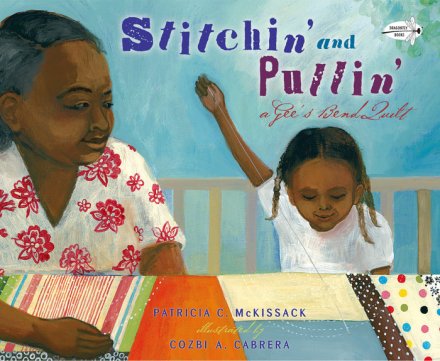
celebrate-picture-books-picture-book-review-stitchin'-and-pullin'-a-gee's-bend-quilt-cover

About the Holiday

Celebrated annually on May 21, “I Need a Patch for That” Day gives a little love to patches of all kinds. Have you been out working in your garden patch? Fabulous! Did you just finish all the requirements for a scouting patch? Good job! Waiting on a fix for the latest software kerfuffle? Who isn’t? Are you a pirate keeping one eye ready for the dark? Argghh! Do you need to patch up a misunderstanding? Good luck! Or maybe you’re a quilter like the amazing women in today’s book who create a patch to remember each of life’s important, inspirational, and formative events. 

Stitchin’ and Pullin’: A Gee’s Bend Quilt

Written by Patricia C. McKissack | Illustrated by Cozbi A. Cabrera


In this story told through poems, a little girl begins telling readers about her life, starting with a recitation on Gee’s Bend Women: “Gee’s Bend women are / Mothers and Grandmothers / Wives / Sisters and Daughters / Widows.” They are every kind of woman you know, doing every type of work and activity. “Gee’s Bend women are / Talented and Creative / Capable / Makers of artful quilts / Unmatched. / Gee’s Bend women are / Relatives / Neighbors / Friends— / Same as me.”

In Who Would Have Thought, the girl muses on how perceptions change. “For as long as anyone can remember,” she says, the women of Gee’s Bend, Alabama have created quilts that were slept under, sat on, and wrapped around the sick or cold. But now those same quilts are “…hanging on museum walls, / their makers famous….”

When she was just a tot “Baby Girl” reveals in Beneath the Quilting Frame, she played under the quilting frame, listening to her “mama, grandma, and great-gran / as they sewed, talked, sang, and laughed / above my tented playground.” She remembers the “steady fingers  /[that] pieced together colorful scraps of familiar cloth / into something / more lovely / than anything they had been before” as her mother sang her a lullaby.

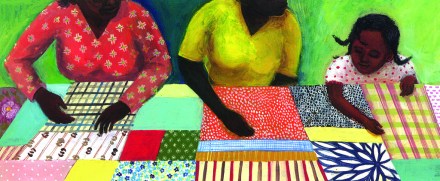
celebrate-picture-books-picture-book-review-stitchin'-and-pullin'-a-gee's-bend-quilt-puzzling-the-pieces

Image copyright Cozbi A. Cabrera, courtesy of Random House Books for Young Readers

In Something Else, “Baby Girl” is growing too big to play underneath the frame. Her legs are becoming longer and her mind is full of “recipes for eleven kinds of jelly…how to get rid of mold…and the words to a hundred hymns and gospel songs” while she waits for her turn at the frame. At last, her time does come, and in Where to Start?, the girl asks her mama how to begin. Her mother answers, “‘Look for the heart. / When you find the heart, / your work will leap to life… / strong, beautiful, and… / independent.’”

In Remembering, the girl thinks about how her mama has told her that “cloth has a memory.” As she chooses the cloth that will become her quilt she recounts the life and the history in each. 

Nothing Wasted sees Grandma pulling apart a red-and-white gingham dress stitch by stitch. Suddenly, the girl knows that this cloth will become the patch that “will be the heart of my quilt.” In Puzzling the Pieces the girl and her grandma stand over the quilting frame fitting the squares together in the perfect way to tell the girl’s story. Her quilt comes together piece by piece to tell the history of Gee’s Bend in The River Island. The brown strips along three sides mirror the muddy waters surrounding her town. The fourth side is a green strip—“a symbol of the fields where my ancestors / worked cotton from can to can’t— / can see in the morning until / can’t see at night.” Lined up next to the green strip are six squares representing the small communities “where families with / the same name / are not kin by blood / but by plantation.”

Being Discovered is portrayed with “a large smoke-gray square”—the color of the Great Depression and the 15 minutes of fame Gee’s Bend garnered when discovered “by sociologists, historians, / educators, and journalists” who came and went, leaving Gee’s Bend “the way it had been / before being discovered.”

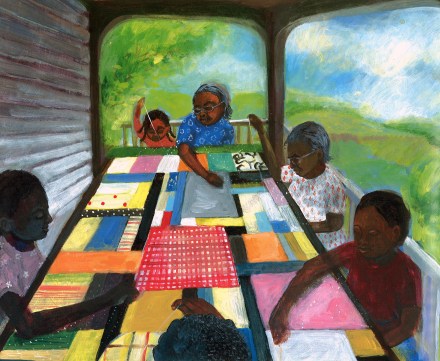
celebrate-picture-books-picture-book-review-stitchin'-and-pullin'-a-gee's-bend-quilt-understanding-comes-later

Image copyright Cozbi A. Cabrera, courtesy of Random House Books for Young Readers

In Colors, the girl’s grandma explains the meanings and feelings behind each colored cloth. “Blue cools. / Red is loud and hard to control, / like fire and a gossiping tongue.” Green, orange, yellow, white, pink, and all the others have their own personalities. “Grandma says, / ‘Colors show how you / feel deep down inside.’”

In Dr. King Brings Hope, the little girl adds “a spotless white patch for the hope Dr. Martin Luther King / brought to the Bend” and goes on to tell how her grandma saw Dr. King at Pleasant Grove Baptist Church and what it meant to her. By and By follows the girl as she adds “golden thank-yous, for James Reeb,” a “bright blue piece of velvet for Viola Liuzzo,” and a “big plaid people circle of white, black, brown, yellow, and red for Reverend Dr. King, all “killed for believing in justice.”

In the 1960s, The Sewing Bee tells, Gee’s Bend quilters were once again discovered. Joining the Bee provided buyers for the handmade quilts, but there were stipulations on the types of quilts that could be made and sold. The girl asks her grandma if she was part of the Bee, to which she replies, “‘more money. Less freedom. I chose to stay free.’”

At last all of the patches are laid out and the time comes to stitch the girl’s quilt. Five women stand at the frame “all stitchin’ and pullin.’” They work “in a slow and steady rhythm” relaxing and enjoying being together until the quilt is finished. In Finished, the last stitch is sewn, and the thread bitten and knotted. The girl has hundreds of ideas for future quilts. “Quilts that are about me, / the place where I live, / and the people / who have been here for generations.”

Further poems unite the history of “Baby Girl,” her family, and neighbors, and an Author’s Note about quilting and the women of Gee’s Bend follow the text.

Patricia McKessack’s free verse poems capture the close relationships and camaraderie of the generations of women who join around the quilting frame to share and pass down their art and their heart. McKessack’s conversational verses, connected page after page like the patches of a quilt, reveal the complexity of this handmade art form in the way intimate talks between friends unveil a life. Readers learn not only about the little girl and her own thoughts, but the history and influence of her immediate family, world events, inspirational figures, and deeply held beliefs that make her who she is and ties her to the other Gee’s Bend women.

Cozbi A. Cabrera’s stunning acrylic paintings take readers inside the heart of the Gee’s Bend women, depicting the girl’s home, the table-sized quilting frame where the women collectively work, the plantations, the protests, and the changes that came but did not unravel the convictions, values, and love of the little girl’s family. Readers can almost hear the talking and singing of the Gee’s Bend women as they stitch their quilts, and the comforting, embracing environment is evident on every page. Cabrera’s portraits of the little girl, her mama, and her grandma are particularly moving. For What Changed, Cabrera depicts a yellow school bus appearing on the dirt road from the right hand corner of the page. In the  driver’s side mirror, a dot of a house is reflected, reminding readers that no matter how far these women are from home, Gee’s Bend is always with them.

Children—and adults—will find Stitchin’ and Pullin’: A Gee’s Bend Quilt inspirational and uplifting. This volume of poetry can be read at one sitting or delved into again and again, making it a wonderful choice for home libraries and a must for school and public libraries.

Ages 5 – 12

Dragonfly Books, Random House, 2016 (paperback edition) | ISBN 978-0399549502

View a gallery  of fashion designs, dolls, and other handmade art work by Cozbi A. Cabrera on her website!
“I Need a Patch for That” Day Activity

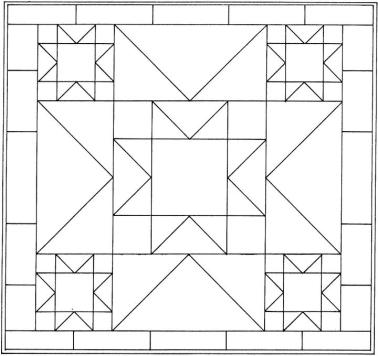
celebrate-picture-books-picture-book-review-stars-quilt-coloring-page

Design a Quilt Coloring Pages


Quilts are so much more than pieces of material sewn together—they’re life stories! Here are two quilt coloring pages for you to design and color. What does each piece mean to you? As you color each section, write a sentence about an event or thought that is important to you.

Quilt Template 1 | Quilt Template 2

Picture Book Review